 |
| |||||||||||||||||||||||||||||||||||||||||||||||||||||||
L 60
Tropical Products Institute
D. S. Trim and C. A. Curran
March 1983
Tropical Products Institute 56/62 Gray's Inn Road
London WC1X 8LU
Overseas Development
Administration
|
| |||||||||||||||||||||||||||||||||||||||||||||||||||||||
Acknowledgements
The team wish to thank everyone in Ecuador involved in this programme for their assistance which was greatly appreciated: the Technical Co-operation Officers working at the Instituto Nacional de Pesca (INP) and the staff of INP, the Instituto Nacional de Galapagos (INGALA), the Charles Darwin Research Station (CDRS) and the Parque Nacional de Galapagos. Special thanks are due to Mr T. W. Bostock and Sr M. Hurtado without whom this visit would not have been possible.
© Crown copyright 1983
This report was produced by the Tropical Products Institute, a British Government organisation which co-operates with developing countries in helping them to derive greater benefit from their plant and animal resources. It specialises in post-harvest problems and will be pleased to answer requests for information and advice addressed to the Director.
Material from this report may be reproduced in any non-advertising, non-profit context provided that the source is acknowledged as follows:
Trim, D. S. and Curran, C. A. (1983) A comparative study of solar and sun drying of fish in Ecuador. Report of the Tropical Products Institute, L 60, vi + 44pp.
Permission for commercial reproduction should, however, be sought from the Head, Publications, Publicity and Public Relations Section, Tropical Products Institute, 56/62 Gray's Inn Road, London WC1X 8LU, England.
No charge is made for single copies of this publication sent to governmental and educational establishments, research institutions and non-profit making organisations working in countries eligible for British Aid. Free copies cannot normally be addressed to individuals by name but only under their official titles.
Tropical Products Institute
ISBN: 0 85954 158 4
ISSN:
0144-
2325
|
| |||||||||||||||||||||||||||||||||||||||||||||||||||||||
Notes
|
Abbreviations used | |
|
AIT |
Asian Institute of Technology |
|
TPI |
Tropical Products Institute |
|
INP |
Instituto Nacional de Pesca |
|
CD RS |
Charles Darwin Research Station |
|
INGALA |
Instituto Nacional de Galapagos |
|
PVC |
Polyvinyl chloride |
Weights and measures
Metric system
Moisture and salt contents are quoted on a wet
weight basis
Acid-insoluble ash contents are quoted on a dry weight basis
Currency
£1 sterling = 65 sucres (May 1981)
|
| |||||||||||||||||||||||||
Comparative Study of Solar and Sun Drying of Fish in Ecuator (NRI)
Summaries
Summary
A comparative study of solar and sun drying of fish in Ecuador
In the search for improved methods of drying fish in tropical developing countries, the use of solar dryers has been investigated. Many designs have been developed for drying agricultural and marine products, some of which have been used with fish; however, no direct comparative exercise has been reported on the relative performance of two or more types.
In March 1981, a two-man team from the Tropical Products Institute (TPI), consisting of a chemical engineer and a fish processing technologist, visited Ecuador for seven weeks to construct and investigate three types of solar dryer for drying of fish. The designs studied were all natural convection dryers and within this report are referred to as: a solar tent dryer, a solar cabinet dryer and an SCD dryer, which has a separate solar collector and drying chamber.
The dryers' comparative effectiveness in drying a charge of 8 kg m~2 of prepared fish was measured by conducting trials at the Charles Darwin Research Station (CD RS), Santa Cruz, Galapagos Islands, using commercially-important local fish species. The results for all three dryers were compared with two sun-drying methods: the local traditional method of drying fish on the prevalent black lava rocks and drying fish on a sloping rack. The aim of the programme was to produce a recommended design for a solar dryer (or dryers) for improved drying of fish, both in Ecuador and, more generally, in developing countries.
All the solar-dried fish were of good quality and were marketable products. The sundried fish were of poorer quality, particularly those dried on the lava rocks: they were contaminated by dirt and sand and had suffered from insect attack. They were, however, of better quality than locally-produced dried salted fish.
The time taken using the solar dryers to dry fish to a moisture
content of 20% was 60 - 65% of the time required for sun drying. In addition it
was possible to achieve lower final moisture contents (c. 13%) resulting in a
more stable product.
Due to the method of loading and operation,
proportionally larger numbers of blowflies were attracted inside the cabinet
dryer. These flies were subsequently killed by the high temperatures and fell
onto the fish: this lowered product quality and could be a serious health
hazard. Mosquito netting draped over the doors would have alleviated this
problem but it was considered that this would not be a practical proposition for
fishermen.
Since the drying rate and product quality for the solar tent and the SCD dryers were similar, the main criteria for dryer selection become cost and ease and time of construction. Considering these factors, on balance, the solar tent dryer is the most suitable for the small-scale artisanal fishermen in tropical countries.
R�sum�
Une �tude comparative en Equateur du s�chage du poisson dans des s�choirs solaires et du s�chage du poisson au soleil
A la recherche de m�thodes perfectionn�es de s�chage du poisson dans les pays tropicaux en vole de d�veloppement, le probl�me de ['utilisation de s�choirs solaires a �t� examin�. De nombreux mod�les ont �t� con�us pour le s�chage des produits de ['agriculture et des produits de la mer, dont certains ont �t� utilis�s pour le poisson; mais aucun essai comparatif direct n'a �t� d�crit en ce qui concerne les performances relatives de deux ou plusieurs types.
En mars 1981, une �quipe de deux hommes de l'Institut des Produits Tropicaux compos�e d'un ing�nieur chimiste et d'un technicien du traitement du poisson, s'est rendue en Equateur pour un s�jour de sept semaines afin de construire et d'�tudier trots types de s�choirs solaires pour le s�chage du poisson. Les mod�les �tudi�s �taient tous des s�choirs � convection naturelle et dans le cadre de ce rapport ils vent d�sign�s par: s�choir solaire 3 tente, s�choir solaire � chambre et s�choir SCD qui a un collecteur solaire et une chambre de s�chage s�par�s.
L'efficacit� comparative des s�choirs pour s�cher une charge de 8 kg m-2 de poisson pr�par� a �t� d�termin�e en proc�dant � des essais � la 'Charles Darwin Research Station,' Santa Cruz, lies Galapagos, en utilisant des esp�ces de poisson locales ayant une importance commerciale. Les r�sultats des trots s�choirs ont �t� compar�s � ceux de deux m�thodes de s�chage au soleil: la m�thode traditionnelle locale de s�chage du poisson sur les rochers de lave noire et le s�chage du poisson sur une claie inclin�e. L'objectif du programme �tait de produire un mod�le recommand� de s�choir solaire (ou de s�choirs solaires) pour un s�chage perfectionn� du poisson en Equateur et, plus g�n�ralement, dans les pays en voie de d�veloppement.
Tout le poisson s�ch� dans les s�choirs solaires �tait de bonne qualit�, donnant des produits vendables. Le poisson s�ch� au soleil �tait de plus mauvaise qualit�, en particulier celui s�ch� sur les rochers de rave: il �tait contamin� par la salet� et le sable et avait subi l'attaque d'insectes. II �tait cependant de meilleure qualit� que le poisson sal� et s�ch� de production locale.
Le temps n�cessaire pour s�cher le poisson dans les s�choirs solaires jusqu'� une teneur en humidit� de 20% repr�sentait 60 �65% du temps n�cessaire pour le s�chage au soleil. De plus, il �tait possible d'atteindre une teneur en humidit� finale plus basse (environ 13%), r�sultant en un produit plus stable.
Du fait de la m�thode de chargement et de fonctionnement, des mouches � viande �taient attir�es en nombre relativement �lev� � int�rieur du s�choir � chambre. Ces mouches �taient par la suite tu�es par les temp�ratures �lev�es et tombaient sur le poisson: ceci abaissait la qualit� du produit et pourrait constituer un risque s�rieux pour la sant�. Une gaze � moustiquaire tendue sur les portes aurait simplifi� le probl�me, mais on a consid�r� que cela ne serait pas une proposition pratique pour les p�cheurs.
Etant donn� que les r�sultats en ce qui concerne la vitesse du s�chage et la qualit� du produit �taient pareils pour les s�choirs solaires � tente et SCD, les principaux crit�res pour le choix d'un s�choir deviennent le prix ainsi que la facilit� et le temps de construction. Compte tenu de ces facteurs, le s�choir solaire � tente est celui qui convient le mieux pour les p�cheurs travaillant sur une petite �chelle artisanale dans les pays tropicaux.
Resumen
Un estudio comparativo en Ecuador del secado de pescado con secadores solares y del secado de pescado al sol
A la b�squeda de mejores m�todos pare secar pescado en los pa�ses tropicales que est�n en v�as de desarrollo, se ha estudiado la posibilidad de emplear secadores solares. Se han dise�ado numerosos sistemas pare el secado de productos agr�colas y marinos (alqunos de los cuales han sido usados con el pescado), pero no se conoce ning�n ejercicio comparativo relativo al rendimiento de dos o m�s tipos.
En marzo de 1981, un equipo de dos hombres del Instituto de Productos Tropicales compuesto por un ingeniero qu�mico y un tecnol�gicos especializado en la elaboraci�n del pescado, visit� Ecuador durante un periodo de siete semanas con el fin de construir y estudiar tres tipos de secador solar pare el secado de pescado. Los dise�os analizados eran todos del tipo de convecci�n natural y en el presente informe se refieren como al secador de tienda de campa�a solar, al secador de armario solar y al secador SCD, el cual incorpora una c�mara de secado y colector solar separados.
Se midi� la eficacia comparativa de los secadores durante el secado de una carga equivalente a 8 kg m-² de pescado preparado mediante ensayos llevados a cabo en la Estaci�n de Investigaci�n Charles Darwin de Santa Cruz, en las Islas Gal�pagos, usando especies de pescado locales de importancia comercial. Los resultados obtenidos con los tres secadores fueron comparados con dos m�todos de secado solar, a saber: el m�todo tradicional local de secar pescado sobre las rocas de lava negra predominantes en la localidad, o bien el de secarlo sobre un caballete inclinado. El objetivo del programa consisti� en producir un dise�o recomendado pare la construcci�n de un secador (o secadores) solar pare mejorar el secado de pescado en Ecuador y, de manera m�s general, en los pa�ses en v�as de desarrollo.
Todo el pescado secado con secadores solares result� de buena calidad y comercializaci�n. Los pescados secados al sol ofrecieron una calidad inferior, especialmente los secados sobre las rocas de lava, los cuales fueron contaminados por suciedad y arena y sufrieron el ataque de insectos. No obstante, ofrecieron una mejor calidad que la del pescado seco salado producido localmente.
El tiempo tardado en secar el pescado usando secadores solares hasta un contenido h�medo de un 20% fue de 60 - 65% del tiempo requerido pare el secado al sol. Adem�s fue posible conseguir un contenido de humedad final m�s bajo (cerca de un 13%), lo cual result� en un producto m�s estable.
Debido al m�todo de carga y operaci�n, fueron atra�das dentro del secador de armario cantidades proporcionalmente mayores de moscardas, las cuales ca�an despu�s muertas sobre el pescado debido a las altas temperaturas, disminuyendo la calidad del producto y presentando un grave peligro pare la salud. La colocaci�n de redes contra mosquitos sobre las puertas podr�a aliviar este problema, pero no se consider� una proposici�n pr�ctica pare los pescadores.
Como el promedio de secado y calidad de producto fueron parecidos pare los secadores de tienda de campa�a solar y SCD, el principal criterio pare la selecci�n de secador consiste en el costo, facilidad y tiempo invertido en la construcci�n. Considerando estos factores equilibradamente, el secador de tienda de campa�a solar resulta el m�s apropiado pare el pescador artesano de peque�a escala en los pa�ses tropicales.
|
| |||||||||||||||||||||||||||||||||||||||||||||||||||||||
Introduction
Fish are an extremely perishable foodstuff. Spoilage occurs as the result of the action of enzymes (autolysis) and bacteria present in the fish, and also chemical oxidation of the fat which causes rancidity. At the high temperatures prevalent in tropical countries, bacterial and enzymic action is enhanced. Fish invariably become putrid within a few hours of capture unless they are preserved or processed in some way to reduce this microbial and autolytic activity and, hence, retard spoilage.
Salting and drying are traditional methods of preserving fish; they have been used for centuries and dried salted products are still popular in many areas, particularly in Africa, SE Asia and Latin America. If the moisture content of fresh fish is reduced during drying to around 25%, bacteria cannot survive and autolytic activity will be greatly reduced, but to prevent mould growth, the moisture content must be reduced to 15%. The presence of salt retards bacterial action and, in addition, it aids the removal of water by osmosis. When salt is added to fish before drying, a final moisture content of 35 - 45% in the flesh, depending on the salt concentration may be sufficiently low to inhibit bacteria.
Traditionally, in tropical countries, many fishermen spread fish on the ground, on rocks or on beaches to dry in the sun. Some fish processors use mats or reeds laid on the ground to prevent contamination of the fish by dirt, mud and sand. Drying fish in this manner has many disadvantages and, in recent years, the use of raised sloping drying racks has been introduced as a simple but often effective improvement (Clucas and Sutcliffe, 1981). A cleaner product is obtained from rack drying since the fish do not come into contact with the ground; also they are less accessible to domestic animals and pests, such as mice, rats and crawling insects, which contaminate or consume them. Protection from rain is simply accomplished by covering the rack with a sheet of waterproof material (e.g. plastic); if fish on the ground are covered, they are protected from falling rain but not from water on the ground itself. Drying rates are higher because air currents are stronger at a metre or so above the ground and air can pass under the fish as well as over them. The use of a sloping rack allows any exudate to drain away.
However, even when racks are used, sun-drying has many limitations: long periods of sunshine without rain are required; drying rates are low and, in areas of high humidity, it is often difficult to dry the fish sufficiently. The quality of sun-dried fish is likely to be low due to slow drying, insect damage and contamination from air-borne dust, and it is difficult to obtain a uniform product.
Thus, in the search for improved drying techniques, the use of solar dryers has been investigated as an alternative to traditional sun drying. Solar dryers employ some means of collecting or concentrating solar radiation with the result that elevated temperatures and, in turn, lower relative humidities are achieved for drying. When using solar dryers, the drying rate can be increased, lower moisture contents can be attained and product quality is higher. The dryers are less susceptible to variations in weather, although drying is obviously slower during inclement weather, and they do provide shelter from the rain. The high internal temperatures discourage the entry of pests into the dryer and can be lethal to any which do enter.
Many forms of solar dryer for use with agricultural and fisheries products have been developed in many parts of the world; only a few of these have been used specifically with fish, and no direct comparative exercise has been reported on the relative performance of any of the types available. It was with this objective that a two-man team, composed of a chemical engineer and a fish processing technologist, from the Tropical Products Institute (TPI) spent seven weeks in Ecuador constructing and operating three types of solar dryer for drying of fish. Relative effectiveness of the dryers was measured by conducting trials with commercially-important local species and the results were compared with sun-drying methods. The evaluation was based on drying efficiency, product quality and basic construction costs. The eventual aim of the programme was to produce a recommended design for a solar dryer (or dryers) for improved drying of fish in many developing countries.
Solar dryers can be categorized into two classes on the basis of the mode of air flow through the dryer, i.e. natural convection or forced convection. Dryers that employ forced convection require a source of motive power, usually electricity, to drive the fan that provides the air flow. In many areas of tropical developing countries, motive power from any source is either unavailable or, at best, unreliable and expensive, and forced-convection dryers would not be a practical proposition for the majority of artisanal fishermen in these areas. Therefore, only natural-convection dryers were investigated in the exercise.
The timing of the programme was chosen to coincide with the period of production of dried salted fish in Ecuador, which occurs during the six months prior to Easter. The fishermen in the Galapagos Islands are the major producers of dried salted fish, but have problems with quality mainly due to inefficient drying. The location for the exercise was the Charles Darwin Research Station (CD RS) on Santa Cruz Island in the Galapagos.
|
| ||||||||||||||||||||||||||||||||||||||||
Comparative Study of Solar and Sun Drying of Fish in Ecuator (NRI)
Section 1 - Equipment and methods
Three natural-convection solar dryers were constructed and operated, and their performance compared with that of two sun-drying methods. Each of these are described in turn. In order to ensure similar loading and to simplify comparison of performance, drying racks or trays of approximately equivalent dimensions (1.8 m X 0.6 m) were built within each of the solar dryers.
Solar dryers
Solar tent dryer
The solar tent dryer was developed by Doe and others, (Doe et al. 1977; Doe, 1979) and initially tested in Bangladesh with fish. TPI has tested this dryer in Africa, SE Asia and Latin America for production of various dried fish products and it has shown considerable promise.
A sketch of the dryer as built at the CDRS is shown in Figure 1, Appendix 1. For this exercise, it differed in one important aspect from the original design of Doe et al., in that both sides of the tent were of clear plastic sheet, whereas for the dryers built in Bangladesh, only the side facing the sun was of clear plastic, the other being of black plastic sheet. The reason for this was that the working site at the CDRS being almost exactly on the equator, the path of the sun was virtually due east to due west for the period of the exercise (April/May). Therefore, it was considered that the slight increase in efficiency of solar collection effected by a side of black plastic would be more than offset by the reduction in the 'greenhouse effect'.
The principle of operation of the tent dryer is that insolation passes through the clear plastic sides and ends of the tent and is absorbed on the black plastic base. Air at the base is thereby heated and rises, thus inducing a draught within the tent. Openings at the base along both sides allow air to be drawn in, and vents in the apex at both ends allow air to exhaust. Some control of the internal temperature, and flow of air through the dryer, can be maintained by adjusting the height of the side openings.
Construction of the dryer was very simple, using a bamboo framework and plastic sheet. Black polyvinyl chloride (PVC) was used for the base of the tent and clear ultra-violet-resistant polyethylene for the sides and ends. Staples were used to attach the plastic sheet to the framework. The drying rack was built along one side of the tent using bamboo and black plastic mesh. Access to the rack was through a movable plastic flap forming half of one end of the tent. The flap could be closed and fastened when not in use. Construction time for the tent dryer was about 6 manhours.
SCD solar dryer
This dryer was developed by Exell and others (Exell and Kornsakoo, 1978; Exell et al., 1979; Exell, 1980) at the Asian Institute of Technology (AIT) in Thailand. It differs principally from the tent dryer in that the solar collector and the drying chamber are distinctly separate as can be seen from the sketch of the dryer in Figure 2, Appendix 1. The dryer was developed for use with paddy but recent work has been conducted at AIT using fish (Exell, private communication).
The solar collector consists of a black plastic base with an inclined transparent plastic cover with a narrow opening across the full width of one end of the collector. Air is heated during its flow through the collector and passes into the drying chamber before exhausting through the chimney. The function of the extended chimney is that the black sides absorb insolation and so heat the air within, thereby enhancing the natural convective flow of air through the dryer.
Identical materials to those used for the solar tent were employed; the base of the collector, the base and back of the drying chamber, and the sides of the chimney were of black PVC, and the collector cover and the top and sides of the drying chamber were of clear polyethylene. Access to the drying rack was provided by plastic flaps on either side of the drying chamber, which also provided a rudimentary means of control of the internal temperature. It should be noted however that for larger models it would be necessary to provide access flaps at the back of the dryer for ease of loading as described by Exell and Kornsakoo, 1978; Exell et al., 1979 and Exell 1980. Construction time for the dryer was about 15 man-hours.
Solar cabinet dryer
This design of dryer was pioneered by Lawand (1966) and the Brace Research Institute (1973) and is probably the most widely-used dryer developed to date, being utilised for a large number of commodities. As its name suggests, and as can be seen from Figure 3, Appendix 1, it is essentially a rectangular cabinet with an inclined transparent cover. The optimum angle of inclination of the cover is dependent upon the geographical latitude (Brace Research Institute, 1973); for the Galapagos this angle was 15°.
Air inlet ports in the base of the cabinet provide an entry for air which is then heated within the cabinet and rises to exhaust through outlet ports in the upper parts of the front and sides. The potential of the cabinet to absorb insolation is enhanced by blackening all interior surfaces. It is normally recommended that the front, sides and base be of double-wall construction with the cavity being filled with a material with good insulation properties, e.g. sawdust. However, the cavity was left unfilled during this exercise to prevent excessive internal temperatures being attained since there is the risk of 'case-hardening' and 'cooking'. Case-hardening is the formation of an impermeable surface layer of the fish, caused by too rapid drying initially, before the moisture in the deeper layers has had an opportunity to diffuse to the surface. The resulting product has a hard, well-dried surface, but the centre remains moist and will spoil.
For this exercise, the cabinet was constructed of plywood on a frame of 50 mm X 50 mm wood; 12-ply thickness sheet was used for the external walls of the sides and front, and top of the base, and 5-ply sheet for the internal walls of the sides and front and the bottom of the base. Two doors of 5-ply sheet formed the back of the cabinet, allowing loading of the trays. All interior surfaces were painted with black matt paint. Plastic hose was used to form ducts through the two walls for the inlet and outlet ports. The cover was a single sheet of clear polyethylene stapled to the frame. The dryer was mounted on legs to facilitate air entry through the base and to reduce the risk of entry of pests into the cabinet. Simple temperature control was achieved by leaving the doors partially open. Construction time for the cabinet dryer was about 25 man-hours.
Sun-drying methods
Drying on rocks
The traditional practice of drying fish in the Galapagos is to spread them on the black lava rocks that abound in the islands. No steps are taken to protect the fish from contact with birds, flies and other pests.
A bed of black rocks was therefore assembled and used in the local manner.
Rack drying
This simple and effective improvement on traditional techniques has been brought into use in recent years in various countries such as Malawi. It consists of an inclined perforated rack supported on a simple framework; it affords some protection of the fish against crawling pests and contamination with dust, but not against flies. The rack built for this exercise was made from black plastic mesh and bamboo poles. Materials, other than plastic mesh, that would allow a virtually unrestricted air movement around the rack could have been used; chicken wire would be one alternative. The drying rack was approximately 1m above the ground.
Fish preparation
A total of ten drying experiments were carried out using two species of locally available, freshly caught fish, lisa (Xenomugil thoburni) and pampano (Trachinotus paitensis). The range of preparation methods and pre-treatments was as follows:
Experiments 1 and 2
Dry salted split lisa:The fish were split according to local custom: they were cut along the backbone from head to tail, the guts and gills were removed and a cut made under the backbone to open out the thick part of the flesh and expose a greater surface area for salting and drying. The fish were carefully washed and the flesh scored. The prepared fish were soaked in 10% brine for 30 minutes to make the product firmer and to allow bleeding. They were then packed in dry salt, using one part salt to three parts fish by weight, and left overnight (for a maximum of approximately 21 hours) in a store.
Experiment 3
Brined split pampano: The fish were split along the backbone, gutted, washed and all but the last third of the backbone removed. The flesh was scored and the fish totally immersed in saturated brine for 40 minutes.
Experiment 4
Brined pampano fillets: Two single fillets were removed from each fish. The fillets were washed, scored and placed in saturated brine for 40 minutes.
Experiments 5 and 7
Brined split lisa: After being prepared in the same manner as for Experiments 1 and 2, the fish were placed in saturated brine for one hour.
Experiments 6 and 8
Unsalted split lisa: The fish were split as described previously but, after washing and scoring, were allowed to drain and were set to dry without salting.
Experiments 9 and 10
Dry salted lisa fillets: Two single fillets were removed from each fish. The fillets were washed and scored prior to salting in the same way as for Experiments 1 and 2 by being soaked in 10% brine for 30 minutes and then packed in dry salt overnight (approximately 12 hours). During this exercise, locally-produced solar salt was used for preparation of brines and for dry salting. After salting, the split fish or fillets were carefully washed to remove excess salt crystals from the surface and were allowed to drain. Each batch of fish was divided into five lots and set to dry in the three solar dryers, on the rack and on the lava rocks simultaneously.
Operating procedure
As can be seen from Plate 1, Appendix 6, the rocks, the rack and the three solar dryers were closely grouped in an open sunny aspect. Care was taken in positioning the dryers to prevent any of the taller dryers throwing shade upon another. A series of plates of the dryers is given in Appendix 6.
Over the four-week period of operation the fish were placed in the dryers in the morning (07.30 - 07.45) and removed in the early evening (17.15 - 17.30). Approximately 8 kg of prepared fish could be accommodated in each of the solar dryers; this loading was maintained during ail the drying experiments. The fish were turned regularly, twice a day, to ensure even drying. At night, the fish were press piled in plastic bins which were kept in a store. When it rained, the fish on the rocks and on the rack were covered with plastic sheets.
Measurements were taken at hourly intervals of the following: insolation using a solarimeter and integrator (Lintronic Ltd, 54 - 58 Bartholomew Close, London, EC1A 7HB), ambient and internal dryer temperatures with a temperature recorder (Grant Instruments (Cambridge) Ltd, Barrington, Cambridge, Cambridgeshire), ambient humidity with a whirling hygrometer (C. F. Casella and Co. Ltd, Regent House, Britannia Walk, London, N1 7ND) and wind speed using an anemometer (C. F. Casella and Co. Ltd).* Each batch of fish was weighed at intervals of three hours during the day. When successive weighings indicated little or no change in weight, the fish were considered effectively dry and were removed from the dryers, allowed to cool, and held in plastic bags in the store. During the course of an experiment, a record was kept on the condition of the fish as they dried.
Adjustment to, and control of, the dryers was deliberately kept to a minimum to simulate their operation by a busy fisherman. Action to control the temperatures within the dryers was minimal. Vents and openings were closed in the early morning and late afternoon in order to raise internal temperatures as quickly as possible and maintain them as long as possible, and reasonable care was taken during the hottest periods of the day to prevent the internal temperatures exceeding 55 - 60°C due to the risk of either case-hardening or cooking occurring.
Final product analysis
Quadruplicate samples of all of the batches of the final dried salted products were analysed for moisture, salt and acid-insoluble ash. Moisture contents of 10 9 samples were determined using an infra-red moisture balance (Model MB-10, Chyro Balance Corp., Japan). Salt contents were determined by macerating 25 9 samples in water and measuring the chloride concentration in the filtered solution by titration with silver nitrate using potassium chromate as indicator (Pearson, 1970). Acid-insoluble ash was determined after digesting the total ash in 10% hydrochloric acid (AOAC, 1980a and b).
|
| ||||||||||||||||||||||||||||||
Comparative Study of Solar and Sun Drying of Fish in Ecuator (NRI)
Section 2 - Results and discussion
Operation of dryers
The data shown in Table 1, Appendix 2, are a summary of the insolation, air speed, ambient temperature and humidity, and internal solar dryer temperatures as recorded over the experimental period.
Figures 4 and 5, Appendix 2, illustrate the hourly variation in incident insolation and internal temperature for the three solar dryers over the course of a day. Figure 4 is typical of a fine day with high insolation and Figure 5 of a cloudy day with low insolation. It can be seen that for the former with insolation of 17,636kJ m2 over the 9-hour period, the internal temperatures of the tent dryer, SCD dryer and cabinet dryer averaged 18°C, 19°C and 19°C higher than ambient, whereas for the cloudy day with insolation of only 8,876kJ m2, their internal temperatures averaged 14°C, 11°C and 14°C higher than ambient. Although, as can be seen from Figure 5, the tent and cabinet dryers achieved higher internal temperatures than did the SCD dryer, examination of Table 1 shows that no one dryer consistently attained higher average daily internal temperatures. It must be borne in mind, however, that the vents and doors of the dryers were more fully opened in the period around midday on sunny days, in order to prevent fish from being cooked or case-hardening occurring; had this not been done then the difference in temperature elevation between fine and cloudy days would have been more marked.
On occasions, the temperature distribution within the solar dryers was tested and it was found that variation of temperature in the vicinity of the drying rack (or trays) was very small: a spread of 4°C was the maximum encountered.
Drying performance
Drying curves obtained for the three solar dryers and the two sun-drying methods for the experiments completed are shown in Figures 6 to 13, Appendix 3, and condensed data showing the drying times for specific changes in moisture content are presented in Tables 2 to 9, Appendix 3. Data for Experiments 5 and 7 are not included because these were prematurely terminated since the drying rates were not sufficiently high to prevent putrefaction of the fish within a few hours of it being set to dry. From these curves and Tables, it is obvious that the solar dryers gave higher drying rates overall than the sun-drying methods; also the solar-dried fish had lower final moisture contents than those dried in the sun, which will be discussed in section 3.
Upon close examination of the data, it can be seen that the difference in drying rates between solar and sun drying was relatively small in the initial stages; indeed for Experiments 1 and 4, as shown in Tables 2 and 5, Appendix 3, the times required to dry down to 40% moisture were very similar for both sun and solar drying. However, as drying proceeded, the rate of moisture loss for the sun-drying methods decreased at a higher rate than did that of the solar dryers. Of the latter, the tent and SCD dryers performed in a very similar manner throughout but the performance of the cabinet dryer was intermediate between the solar dryers and the sun-drying methods, except at low moisture contents (< 30%), when its drying rate was fastest of all, thus enabling it to catch up on the tent and SCD dryers.
Averaged data showing the relative performance of each dryer and sun-drying method for certain changes in moisture content are presented in Table 10, Appendix 3, while Figure 14, Appendix 3, illustrates generalised drying curves for each dryer and sundrying method. Consideration of the controlling parameters of the drying process, air flow and air temperature, and an understanding of the operating principles of solar dryers can help to provide an explanation for the observed dryer performances as outlined.
In the initial stages of drying, it is usually the case that the surface of the material is covered with a thin film of moisture which is continually being removed by the flow of air over the surface and replenished at an equivalent rate by the migration of moisture to the surface from the interior of the material. The rate of drying therefore is very dependent upon the rate of air movement across the surface. The temperature of the air is of much less importance provided that it is above the dewpoint and that sufficient heat is available to provide for the latent heat of evaporation.
In the final stages of drying, the surface of the material can be regarded as effectively free of moisture, with all of that remaining contained within the interior. In this situation the rate of drying is controlled by the temperature gradient from the interior to the surface which in turn is controlled by the temperature of the surrounding air or by radiation incident upon the surface such as insolation. As the rate of moisture removal is considerably less than in the initial stages of drying, the degree of air movement across the surface is of lesser importance. In brief, drying rate is controlled by air movement initially, and by air temperature in the final stages, with both exerting an influence in the intermediate stages.
Relating this to the results obtained, the similarity in drying rate between solar and sun-drying techniques in the initial stages can be explained by the hypothesis that the air movement provided by the natural breezes around the fish spread on the rocks and rack was as effective as the flow of air within the solar dryers caused by natural convection, and that the higher temperatures within the latter had little significant effect. As the fish dried, the degree of air movement exerted progressively less influence, and the higher temperatures within the solar dryers progressively more influence, resulting in the higher drying rates during the later stages.
The difference in performance of the cabinet dryer compared with the tent and SCD dryers may be explained by consideration of the mechanisms operating within the cabinet dryer. The rate of air movement caused by natural convection is proportional to the height of the 'air column' over which the temperature gradient exists. As this height is considerably less for the cabinet dryer than for the tent or SCD dryer, and similar temperatures were attained within each solar dryer, then it is reasonable to hypothesise that the flow of air through the cabinet dryer would be correspondingly less than through the others.
In Figure 14, Appendix 3, the curve BC can be explained thus: in this intermediate stage of drying where both air movement and air temperature exert an influence, the drying rate of the cabinet is less than that of the tent and SCD dryers because of the smaller air flow, but greater than sun drying because of the higher temperature within the cabinet. Within this dryer the fish are placed much closer to the 'hot' black surfaces than in the others and it is reasonable to suppose that the fish themselves would, therefore, attain a higher surface temperature. Unfortunately, it was not possible to verify this experimentally. In Figure 14, the curve CD lies in the region where one would expect temperature to be the rate-controlling parameter, and therefore the higher fish temperature would account for the higher drying rate.
From Table 10, Appendix 3, it can be seen that to dry to a final moisture content of 20%, an acceptable figure for dry salted fish, the solar dryers required 60 - 65% of the time necessary for sun drying: 3 days compared with 5 days. These data enable an estimate of production rates to be made. Under sunny conditions, it can be said that solar-dried fish would require 3 days to attain 20% moisture. Given a capacity for the solar dryers of 8 kg of prepared fish per square metre and a 50% weight loss with dry salted products, then the rate of production of dried salted fish would be approximately 1.25 kg m-2 day-1 . Similar calculations for sun-drying give a production rate of approximately 0.75 kg m-2 day-1 . It should be remembered, however, that these are only indicative figures since they will be affected by shape, size and species of the fish, the nature of the final product (e.g. moisture and salt contents, fillets, split, etc.) and weather conditions.
The difference between the performance of the two sun-drying methods is slight but interesting; Table 10 shows that the fish on the rack initially dried at a faster rate but, at lower moisture contents, their drying rates were lower than those on the rocks. A possible explanation for this might be that the initial higher rate could be due to the better air circulation around the rack, whereas in the final stages, the faster drying of fish spread on the rocks could be due to the higher local air temperatures surrounding the fish as a direct result of their proximity to the black lava rocks.
Product quality
When purchased at the landing site, the lisa and pampano were of excellent quality: they had clear, convex eyes, bright red gills, strong fresh gill and body odours, bright and glossy skins, a firm texture, and several were in rigor mortis. Since ice was not available, they were held in seawater in a shaded position and were processed as soon as possible, thus ensuring only high-quality fish were used for the drying experiments.
Visual examination of the final dried salted products indicated that the solar-dried fish were of good quality and were marketable. The texture was hard and well dried and the products had a pleasant odour. The dry salted fish were of a light yellow colour, whilst the brined products were dark orange, showing signs of rancidity. Sundried products were of poorer quality, particularly the fish dried on the lava rocks; there was sand and dirt adhering to the flesh and the fish had suffered from attack by insects, birds and other animals. However, the-sun-dried products were of better quality than locally-produced dried salted fish, which were generally well salted, but insufficiently dried and had a very strong unpleasant odour. None of the experimental products showed any evidence of mould attack, 'pinking' caused by salt-tolerant bacteria, beetle infestation, or case-hardening.
Under the conditions of these experiments, regardless of the drying method employed, it was not possible to reduce the moisture content of unsalted fish fast enough to retard spoilage. By the second day of drying, these unsalted fish were putrid and, therefore, the trials were discontinued.
It is known (Scott, 1957) that the stability of salted and dried food products depends on their water activity (aw). This is a measure of the free or available water in a food which is able to react chemically or, in spoilage, to support the growth of microorganisms, such as bacteria and moulds (Waterman, 1976). The relationship between moisture content and aw is usually expressed in the form of a sorption isotherm. For dried salted fish it is necessary to consider both the moisture content and the salt content when calculating aw (Doe et al., 1982). Relatively high concentrations of salt have an inhibitive effect on micro-organisms, an obvious exception being the red halophilic bacteria which are salt-tolerant. The aw of pure water is assigned the value of 1 and the aw of a food is expressed as a fraction relative to pure water. Fresh fish have an aw of above 0.95. Most spoilage bacteria will cease to grow in a food whose aw is below 0.90 and the growth of most moulds is inhibited below 0.80. However, halophilic bacteria can grow at an aw as low as 0.75 and some xerophilic moulds as low as 0.65 (Bone, 1969).
Salting and drying both have the effect of reducing aw. During storage, dried fish flesh will absorb moisture from the air at high humidities until an equilibrium is reached. At humidities of above 75%, any salt in the flesh will also absorb moisture. Therefore, during storage, the product becomes wetter, thus increasing the aw, and it will become more susceptible to spoilage by moulds and bacteria. Fish processed in hot, humid tropical climates by salting and subsequent drying are liable to deteriorate during storage through mould growth; those xerophilic moulds causing dun and the brown discoloration associated with localised decay are the most troublesome (Liston, 1980). Poulter et al. (1982) have used isohalic sorption isotherms for cod combined with growth data for the dun mould, Wallemia sebi, to predict the mouldfree shelf-life of dried salted fish under tropical conditions.
The results of the moisture and salt analyses of the final dried salted products, expressed on a wet weight basis are given in Table 11, Appendix 4. They indicate that lower final moisture contents were achieved in the solar dryers: the average moisture content of solar-dried fish was approximately 13%, while that of sun-dried fish was approximately 21%. Dry salted products had an average salt content of 25% and the brined products of 13%.
Using these moisture and salt contents and the method of calculating aw and estimating shelf-life outlined by Poulter et al. (1982), it can be shown that all the solar dried products had an aw of below 0.65 and a predicted mould-free shelf-life of over 450 days. The sun-dried products had an aw of 0.65 and above and would have a predicted mould-free shelf-life of between 100 and 450 days. However, since lisa belong to a family which is of medium fat content and pampano to a family of high fat content (Sidwell et al., 1974), the actual shelf-life of the dried fish may be shorter due to the inevitable onset of rancidity.
During these experiments, the fish were dried until there was no further appreciable weight loss. In commercial practice, it might not be necessary to dry the products to the same extent. Again using the method of Poulter et al., it is possible to suggest that, with a moisture content of 25% in the brined products, or 25 - 45% in the dry salted products (aw = 0.70), a shelf-life of approximately 100 days might be expected. If a longer shelf-life is required, the moisture content would need to be reduced to 15 - 20%, regardless of the salt concentration, to obtain a more stable product. As mentioned earlier in this report, it was not always possible to achieve this lower moisture level during sun drying. Therefore, when using the solar dryers, it is not only possible to achieve higher drying rates but also lower moisture contents and, in turn, a more stable product.
One point to remember, however, is that the actual rate of drying, and therefore the rate of reducing the aw, will affect product quality. Spoilage will occur during drying and will not be retarded until the aw is sufficiently lowered. Therefore, due to the different drying rates, products dried in the cabinet would probably have deteriorated more than products dried in the other two solar dryers, but less than the sun-dried products. This would not necessarily be apparent at the completion of drying but would become so during storage.
Acid-insoluble ash is a useful index of mineral matter, such as dirt or sand, in foodstuffs (Pomeranz and Meloan, 1978). The results of acid-insoluble ash analysis on the final dried salted products, calculated on a dry weight basis, are given in Table 11, Appendix 4. On average, those products which were dried in the solar dryers and on the rack had 1.0% or less acid-insoluble ash whilst those dried on the rocks had 1.3%. These results confirm two expectations: firstly, the fish dried on the rocks were generally more contaminated by dirt, etc. than any of the other fish and, secondly, it was possible to obtain as clean a product by drying on the rack as it was by solar drying.
During the drying process, and subsequent storage of the dried fish, insect infestation is a major problem. In addition to causing losses in quality and quantity, insect pests are potential carriers of pathogenic bacteria and thus represent a serious health hazard (Proctor, 1977; Wood, 1981).
Flies, the major carriers of disease, lay eggs on fish during the early stages of drying, becoming less attracted to them as the flesh dries and hardens. The larvae tunnel into the flesh, causing putrefaction and extensive physical damage. The most important pests of the dried fish are beetles of the family Dermestidae They will invade the fish flesh from the earliest stages of drying but, unlike flies, will continue to be attracted to, and breed in, the dried product.
Blowflies were a large problem during drying in this exercise, particularly with the fish dried on the rocks which were heavily infested with eggs and larvae; infestation also occurred in the rack-dried fish but to a lesser extent. The solar-dried fish showed little evidence of blowfly attack since the flies were killed by the high temperatures within the solar dryers.
When fish are salted, the primary effect of the salt is bactericidal but it also retards insect infestation (Proctor, 1977). This is supported by the evidence of these experiments where blowflies were less attracted to the dry salted products compared to the brined products, but during sun drying the unsalted fish were usually completely covered by flies. When drying brined or unsalted fish, it was necessary to wash the rocks to remove the large piles of eggs laid by the flies.
When loading the tent, the fish were carried into the dryer and spread on the drying rack. However, with the cabinet and SCD dryers, loading was accomplished from outside and a large number of flies were attracted by the fish and, subsequently, ventured inside the dryers; this was particularly noticeable with the cabinet. Escape from the cabinet was more difficult for the flies because the doors were closed immediately following loading. On days of high insolation, most of the flies in the cabinet were killed within three hours of loading the dryer each morning, by which time the internal temperature had reached 55°C or above. When the flies were killed by the high temperatures, they fell onto the fish. This can result in faster spoilage of the product before drying is completed (especially at the higher temperatures achieved within the dryer) and could also be a potential health hazard: both of these problems are due to contamination of the fish by the bacteria carried by the flies. As a result, it is not possible to recommend the use of the cabinet dryer for fish unless further steps are taken to prevent entry of flies. The use of mosquito netting, or a similar material, draped over the doors whilst they are partially open in order to reduce the entry of flies, may help to lessen the problem, but would increase operating costs and involve a more complex operating procedure.
Most of the dead flies in the tent and SCD dryers were found on the floor. The flies are easily removed by sweeping the tent floor, but some means of entry into the SCD dryer is necessary for cleaning purposes. This could be accomplished simply by positioning a flap below the drying rack.
No evidence of beetle attack was found on any of the batches of fish at the end of the drying period. There were dermestid beetles found around the storage area, however, and two months after processing a few dead larvae were found on samples of brined lisa.
A point worthy of mention at this stage is the possible use of solar drying as a means of de-infesting sun-dried fish; the elevated temperatures would kill any insects or lava present on the fish. Szabo (1970) has carried out some investigations on this topic with promising results.
Material and operating costs
Material costs for the solar dryers and sun drying methods were estimated as detailed in Appendix 5 and are summarised as follows:
| |
sucres |
|
Rocks |
- |
|
Rack |
653 |
|
Solar tent |
2,093 |
|
SCD dryer |
2,252 |
|
Solar cabinet |
3,1 10 |
It must be emphasised that these costs are specific to the Galapagos and should not be regarded as applicable to the mainland of Ecuador or elsewhere. Some items, for example plastic sheet and plywood, are particularly expensive in the Galapagos because of the high costs involved in shipping these materials from the mainland.
These costs indicate that there is little difference in material costs between the tent and SCD dryers and that the cabinet is appreciably (c. 40%) more expensive. When construction times are also taken into account (6, 15 and 25 hours respectively for the solar tent, the SCD dryer and the solar cabinet), then the tent dryer appears the simplest and cheapest to construct. Obviously if different, preferably cheaper, materials were used for the solar dryers, then the costs would be altered. Substitute materials which would reduce the cost might be: locally-available coarsely woven material or basket work as an alternative for the plastic mesh for the racks and trays, and walls of local brick or mud construction for the cabinet instead of plywood.
Although in the short time available it was not possible to obtain figures, it is reasonable to assume that the major component in operating costs, excluding that of labour, would be that of maintenance, and in particular that of replacing the plastic sheet. A high proportion of the material cost of the tent and SCD dryers is that of the plastic sheet, 43% and 39% respectively, compared with only 2% for the cabinet dryer. It can therefore be expected that the operating costs of the former will be considerably higher than that of the cabinet.
It has been suggested that clear polyethylene sheet that has been rendered more resistant to degradation by the ultra-violet component of sunlight in order to improve its effective lifetime would reduce operating costs. However, it would seem more likely that physical wear and tear would be the major factor limiting the lifetime of the plastic.
For the purposes of this exercise the solar dryers were used in their recommended manner with only one rack in the drying chamber. However for the tent and SCD dryers, it is considered that production rates could probably be increased and production costs decreased either by the use of additional racks or by hanging the fish within the dryers rather than spreading them on racks.
The dryers used for this exercise were sized for experimental purposes but for some commercial operations there would be a need for larger and more cost-effective dryers. For such dryers, increased attention would have to be paid to control of air flow and temperature, structural stability, especially in areas of high winds, and ease of loading.
|
| |||||||||||||||||||||||||||||||||||||||||||||||||||||||
Section 3 - Conclusions
Comparison of the five drying methods investigated can be based on four criteria:
1 Drying rates
2 Final moisture content
3 Product
quality
4 Costs
Drying rates
There was very little difference in overall drying times between
the three solar dryers, and similarly very little difference between rack drying
and drying on the rocks. However, fish dried in the solar dryers took an average
of about 60 - 65% of the time required for sun drying to achieve a final
moisture content of 20%. Under fine and sunny conditions, fish such as lisa or
pampano would be expected to dry in about 3 days in a solar dryer, compared with
5 days when dried in the sun. Drying times of 4 and 6 days respectively would be
expected with cloudy weather. It should be remembered that these times are only
strictly applicable to conditions appertaining to the Galapagos at a certain
time of the year and are only indicative of performance elsewhere.
As the
initial drying rates for sun and solar drying were similar, and as a reasonably
clean product was obtained by drying on the rack, it may be worthwhile
considering sun drying on a rack initially and then completing drying in a solar
dryer, thus increasing the throughput of the solar dryers.
Final moisture content
The reduction in moisture content possible by drying in a solar dryer (to 13%, on average) was consistently greater than that obtained by sun drying (21%, on average). As explained previously, storage life is dependent in part upon the moisture content and, therefore, solar drying could give a product with a much longer storage life than sun drying. The yield, however, would be slightly less.
Product quality
It was considered that the fish dried in the three solar dryers were, almost without exception, of very high quality. However, for the fish dried in the cabinet dryer, a possible health hazard might exist because of the relatively large numbers of flies which were attracted into the cabinet. Rack-dried fish were judged to be of higher quality than those dried on the rocks, which in turn were better than those dried by the local fishermen.
Costs
The solar dryers each had a capacity of about 8 kg of prepared fish and the rate of production of dried salted fish was approximately 1.25 kg m-2 day-1 . The rate of production by sun drying was 0.75 kg m-2 day-1 for the. same 8 kg capacity. The cost of materials for the tent dryer (2,093 sucres) as built was slightly less than that for the SCD dryer (2,252 sucres) and considerably less than that for the cabinet
dryer (3,110 sucres), using prices currently* applicable in the Galapagos. All three solar dryers were more expensive than the rack (653 sucres) and there were no material costs for the lava rocks. Due to the proportionally lower cost of plastic sheet, which would form the major factor in maintenance costs, the cabinet dryer would be much the cheapest of the solar dryers to operate.
The principles of construction and operation of the tent dryer would be easier to communicate to an artisanal fisherman than those for the SCD and cabinet dryers. In addition, construction time for the tent dryer (6 man-hours) is very low in comparison with that for the SCD and cabinet dryers (15 and 25 man-hours respectively).
In conclusion, it can be said that rack drying gave a better product than drying on the rocks and all the solar dryers gave a better product and at a higher rate than did the sun-drying methods. The cabinet dryer has a major problem with flies which could be a serious health hazard. Even though both dryers performed equally well, on grounds of cost and ease of construction, the tent dryer appears more suitable than the SCD dryer for the individual fisherman. In the Galapagos Islands, the capacity of these solar dryers would be sufficient to dry part of the individual fisherman's daily catch. However, a greater capacity would be required for the larger boats, several of which often return to port together after 15 - 20 days' fishing.
|
| |||||||||||||||||||||||||||||||||||||||||||||||||||||||
References
ASSOCIATION OF OFFICIAL ANALYTICAL CHEMISTS (AOAC) (1980a) Ash. Official methods of analysis, (ea. W. Horowitz), 13th eds, p.289: Washington, DC; AOAC, 1,018pp.
ASSOCIATION OF OFFICIAL ANALYTICAL CHEMISTS (1980b) Acidinsoluble residue (soil). Official methods of analysis, (ea. W. Horowitz), 13th edn, p.799. Washington, DC: AOAC, 1,018pp.
BONE, D. P. (1969) Water activity - its chemistry and application. Food Product Development, 3 (15), 81 - 84.
BRACE RESEARCH INSTITUTE (1973) How to make a solar cabinet dryer for agricultural produce. Ste Anne de Bellevue, Canada: McGilI University, 8pp.
CLUCAS, I. J. and SUTCLIFFE, P. J. (1981) An introduction to fish handling and processing. Report of the Tropical Products Institute, G143, 86pp.
DOE, P. E. (1979) The polythene tent fish dryer: A progress report. Paper presented at the Conference on Agricultural Engineering in National Development 1979. Paper 79/12. Selangor, Malaysia: Universiti Pertanian Malaysia.
DOE, P. E., AHMED, M., MUSLEMUDDIN, M. and SACHITHANANTHAN, K. (1977) A polythene tent dryer for improved sun drying of fish. Food Technology in Australia, 29, 437 - 441.
DOE, P. E., HASHMI, R., POULTER, R. G. and OLLEY, J. (1982) Isohalic sorption isotherms. 1. Determination for dried salted cod (Gadus morrhua). Journal of Food Technology, 17, 125 - 134.
EXELL, R. H. B. (1980) Basic design theory for a simple solar rice dryer. Renewable Energy Review Journal, 1 (2),1 - 14.
EXELL, R. H. B. and KORNSAKOO, S. (1978) A low cost solar rice dryer. Appropriate Technology, 5 (1), 23 - 24.
EXELL, R. H. B., KORNSAKOO, S. and THIRATRAIKOOLCHAI, S. (1979) A low cost solar rice dryer for farmers in South East Asia. Agricultural Mechanisation in Asia, Autumn, pp.75 - 77, 82.
LAWAND, T. A. (1966) A solar cabinet dryer. Solar Energy, 10 (4), 158 - 164.
LISTON, J. (1980) Microbiology in fishery science. In: Advances in fishery science and technology, (ea. J. J. Connell), pp.138 - 157. Surrey: Fishing News (Books) Ltd, 512pp.
PEARSON, D. (1970) The chemical analysis of foods, 6th edn., p. 378. London: J. & A. Churchill, 604pp.
POMERANZ, Y. and MELOAN, C. E. (1978) Food analysis: theory end practice. Westport, Connecticut: AVI Publishing Co. Inc., 709pp.
POULTER, R. G., DOE, P. E. and OLLEY, J. (1982) Isohalic sorption isotherms. 2. Use in prediction of storage life of dried salted fish. Journal of Food Technology, 17, 201 - 210.
PROCTOR, D. L. (1977) The control of insect infestation of fish during processing and storage in the tropics. Proceedings of the Conference on handling, processing and marketing of tropical fish, pp.307 - 311. London: Tropical Products Institute, 511pp.
SCOTT, W. J. (1957) Water relationships of food spoilage micro-organisms. Advances in Food Research, 7, 83 - 127.
SIDWELL, V. D., FONCANNON, P. R., MOORE, N. S. and BONNET, J. C. (1974) Composition of the edible portion of raw (fresh or frozen) crustaceans, finfish and molluscs. 1. Protein, fat, moisture, ash, carbohydrate, energy value and cholesterol. Marine Fisheries Review, 36 (3), 21 - 35.
SZABO, A. (1970) Rapport au Gouvernement du Mali sur les am�liorations possible de l'utilisation des produits de la p�che. Report FAO/UNDP (TA), (2900). Rome: FAO, 27pp.
WATERMAN, J. J. (1976) The production of dried fish. FAO Fisheries Technical Paper, No. 16, 52pp.
WOOD, C. D. (1981)The prevention of losses in cured fish. FAO Fisheries Technical Paper, No. 219, 87pp.
|
| |||||||||||||||||||||||||||||||||||
Comparative Study of Solar and Sun Drying of Fish in Ecuator (NRI)
Appendices
Appendix 1: Solar dryers

Figure 1 - Solar tent dryer

Figure 2 - SCD solar dryer

Figure 3 - Solar cabinet
dryer
Appendix 2: Operating conditions

Table 1 - Summary of drying conditions
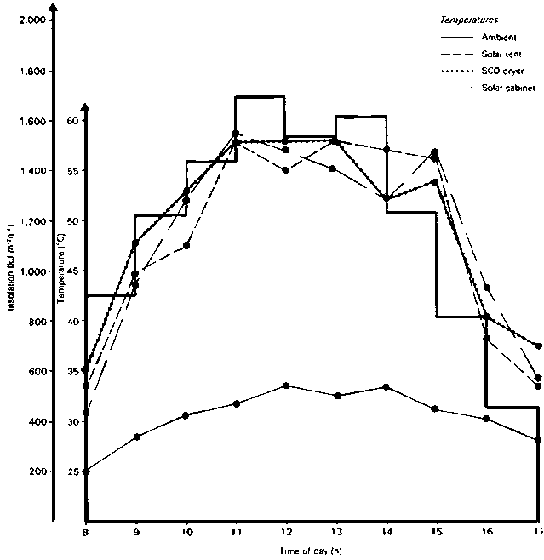
Figure 4 - Insolation and temperature
variation during day with high total insolation (20 April)

Figure 5 - Insolation and temperature
variation during day with low total insolation (29
April)
Appendix 3: Drying performance

Figure 6 - Drying curves for
experiment 1: dry salted split lisa

Figure 7 - Drying curves for
experiment 2: dry salted split lisa

Figure 8 - Drying curves for
experiment 3: brined split pampano

Figure 9 - Drying curves for
experiment 4: brined pampano fillets

Figure 10 - Drying curves for
experiment 5: brined split lisa

Figure 11 - Drying curves for
experiment 7: brined split lisa

Figure 12 - Drying curves for
experiment 9: dry salted lisa fillets

Figure 13 - Drying curves for
experiment 10: dry salted lisa fillets

Figure 14 - Generalised drying curves
Note
Although the moisture content of the prepared fish was not measured prior to drying, it would be expected to be approximately 55 - 65% for dry salted lisa, and 65 - 75% for brined lisa and brined pampano.

Table 2 - Experiment 1: drying times
for dry salted split lisa

Table 3 - Experiment 2: drying times
for dry salted split lisa

Table 4 - Experiment 3: drying times
for brined split pampano

Table 5 - Experiment 4: drying times
for brined pampano fillets

Table 6 - Experiment 5: drying times
for brined split lisa
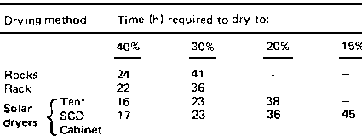
Table 7 - Experiment 7: drying times
for brined split lisa

Table 8 - Experiment 9: drying times
for dry salted lisa fillets

Table 9 - Experiment 10: drying times
for dry salted lisa fillets

Table 10 - Relative performance of
solar dryers and sun-drying
methods
Appendix 4: Final product analysis

Table 11. Moisture, salt and
acid-insoluble ash contents of final dried salted products*
* Salt and moisture contents are calculated on a wet weight basis while acid-insoluble ash contents are on a dry weight basis. Results given are mean values of analyses on either four split fish or eight fillets
Appendix 5: Material costs of rack and solar dryers
|
Rack |
Sucres |
|
4 of 4 m bamboo poles |
220 |
|
1.2 m x 1.0 m black plastic mesh |
324 |
|
String, nails, staples, etc. |
50 |
|
594 | |
|
+ 10% contingency |
59 |
|
Material cost of rack |
653 |
|
Solar tent dryer |
Sucres |
|
12 of 4 m bamboo poles |
660 |
|
3 m x 2 m black PVC sheet |
189 |
|
12 m x 2 m clear polyethylene sheet |
630 |
|
1.2 m x 1.0 m black plastic mesh |
324 |
|
String, nails, staples, etc. |
100 |
|
1,903 | |
|
+ 10% contingency |
190 |
|
Material cost of tent dryer |
2,093 |
|
SCD solar dryer |
Sucres |
|
15 of 4 m bamboo poles |
825 |
|
6 m x 2 m black PVC sheet |
378 |
|
8 m x 2 m clear polyethylene sheet |
420 |
|
1.2 m x 1.0 m black plastic mesh |
324 |
|
String, nails, staples, etc. |
100 |
|
2,047 | |
|
+ 10% contingency |
205 |
|
Material cost of SCD dryer |
2,252 |
|
Solar cabinet dryer |
Sucres |
|
2 sheets of plywood (12-ply) |
1,200 |
|
2 sheets of plywood (5-ply) |
520 |
|
15 m of 50 m x 50 mm wood |
450 |
|
8 m of 25 m x 25 mm wood |
80 |
|
1.2 m x 1.0 m black plastic mesh |
324 |
|
1 m x 2 m clear polyethylene sheet |
53 |
|
Nails, staples, webbing, hose, paint, etc. |
200 |
|
2,827 | |
|
+ 10% contingency |
283 |
|
Material cost of cabinet dryer |
3,110 |