CLOSE THIS BOOKComparative Study of Solar and Sun Drying of Fish in Ecuator (NRI)
Appendices
VIEW THE DOCUMENTAppendix 1: Solar dryers
VIEW THE DOCUMENTAppendix 2: Operating conditions
VIEW THE DOCUMENTAppendix 3: Drying performance
VIEW THE DOCUMENTAppendix 4: Final product analysis
VIEW THE DOCUMENTAppendix 5: Material costs of rack and solar dryers

Comparative Study of Solar and Sun Drying of Fish in Ecuator (NRI)

Appendices

Appendix 1: Solar dryers


Figure 1 - Solar tent dryer


Figure 2 - SCD solar dryer


Figure 3 - Solar cabinet dryer

Appendix 2: Operating conditions


Table 1 - Summary of drying conditions


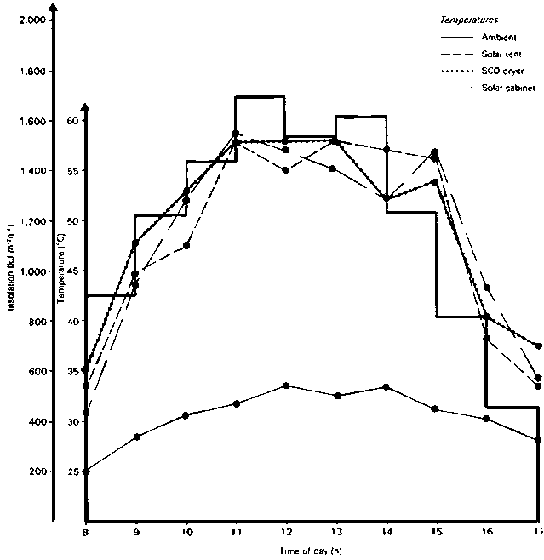
Figure 4 - Insolation and temperature variation during day with high total insolation (20 April)


Figure 5 - Insolation and temperature variation during day with low total insolation (29 April)

Appendix 3: Drying performance


Figure 6 - Drying curves for experiment 1: dry salted split lisa


Figure 7 - Drying curves for experiment 2: dry salted split lisa


Figure 8 - Drying curves for experiment 3: brined split pampano


Figure 9 - Drying curves for experiment 4: brined pampano fillets


Figure 10 - Drying curves for experiment 5: brined split lisa


Figure 11 - Drying curves for experiment 7: brined split lisa


Figure 12 - Drying curves for experiment 9: dry salted lisa fillets


Figure 13 - Drying curves for experiment 10: dry salted lisa fillets


Figure 14 - Generalised drying curves

Note

Although the moisture content of the prepared fish was not measured prior to drying, it would be expected to be approximately 55 - 65% for dry salted lisa, and 65 - 75% for brined lisa and brined pampano.


Table 2 - Experiment 1: drying times for dry salted split lisa


Table 3 - Experiment 2: drying times for dry salted split lisa


Table 4 - Experiment 3: drying times for brined split pampano


Table 5 - Experiment 4: drying times for brined pampano fillets


Table 6 - Experiment 5: drying times for brined split lisa


Table 7 - Experiment 7: drying times for brined split lisa


Table 8 - Experiment 9: drying times for dry salted lisa fillets


Table 9 - Experiment 10: drying times for dry salted lisa fillets


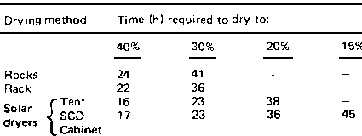
Table 10 - Relative performance of solar dryers and sun-drying methods

Appendix 4: Final product analysis


Table 11. Moisture, salt and acid-insoluble ash contents of final dried salted products*

* Salt and moisture contents are calculated on a wet weight basis while acid-insoluble ash contents are on a dry weight basis. Results given are mean values of analyses on either four split fish or eight fillets

Appendix 5: Material costs of rack and solar dryers

Rack

Sucres

4 of 4 m bamboo poles

220

1.2 m x 1.0 m black plastic mesh

324

String, nails, staples, etc.

50

594


+ 10% contingency

59

Material cost of rack

653

Solar tent dryer

Sucres

12 of 4 m bamboo poles

660

3 m x 2 m black PVC sheet

189

12 m x 2 m clear polyethylene sheet

630

1.2 m x 1.0 m black plastic mesh

324

String, nails, staples, etc.

100

1,903


+ 10% contingency

190

Material cost of tent dryer

2,093

SCD solar dryer

Sucres

15 of 4 m bamboo poles

825

6 m x 2 m black PVC sheet

378

8 m x 2 m clear polyethylene sheet

420

1.2 m x 1.0 m black plastic mesh

324

String, nails, staples, etc.

100

2,047


+ 10% contingency

205

Material cost of SCD dryer

2,252

Solar cabinet dryer

Sucres

2 sheets of plywood (12-ply)

1,200

2 sheets of plywood (5-ply)

520

15 m of 50 m x 50 mm wood

450

8 m of 25 m x 25 mm wood

80

1.2 m x 1.0 m black plastic mesh

324

1 m x 2 m clear polyethylene sheet

53

Nails, staples, webbing, hose, paint, etc.

200

2,827


+ 10% contingency

283

Material cost of cabinet dryer

3,110

TO PREVIOUS SECTION OF BOOK