2. Types of Roof Superstructures
Roof superstructures for housing purposes are normally designed
as roofed upright windows. For roofs having a roof pitch of less than 50
degrees, upright windows with lean-to dormer or with hip roof are recommended.
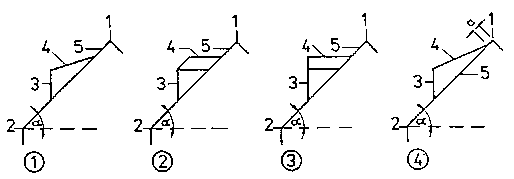
Figure 4 Roof pitch of less
than 50 degrees
(1) Lean-to dormer roof, good solution
(2) Hip roof, good
solution
(3) Gable roof, bad solution, (4) Lean-to dormer roof, bad solution
1 ridge (main roof), 2 eaves (main roof), 3 roof
superstructure, 4 window roof (roof superstructure), 5 rafter (main roof),
a - eaves angle (main roof) a - bonding-in length
in the roofing
For the lean-to dormer it is important that the bonding-in in
the roofing is not too near to the roof ridge. If upright roof windows of roofs
having such pitches are roofed with gable roofs, they make a poor impression.
The ridge of the window roof appears too long - see Fig. 4.
For roof pitches of more than 50 degrees, an upright roof window
roofed with gable roof is recommended.

Figure 5 Roof pitch of more
than 50 degrees
(1) Gable roof, good solution (2) Hip roof, bad solution
(3)Lean-to dormer roof, bad solution
1 ridge (main roof), 2 eaves (main roof), 3 roof
superstructure, 4 window roof (roof superstructure), 5 rafter (main roof),
a - eaves angle (main roof) a - bonding-in length
in the roofing
If in this case the window is roofed with a lean-to dormer or
hip roof, it makes a bad appearance because the ridge line appears too short
(see Fig. 5).
Why does attic completion work also call for roof
superstructures?
_____________________________________________________
Why should the roof superstructure be suited to the existing
roof pitch?
_____________________________________________________