|
| ||||||||||||||||||||||||||||||||||||||||||||||||||||||||||||||||||||||
Ministry of Health
P.O. Box 9083
Dar es Salaam
TANZANIA
© Ministry of Health, United Republic of Tanzania, 1991
ISBN 9976 60 229 4
All rights reserved. No part of this publication may be reproduced without prior written approval of the Ministry of Health, United Republic of Tanzania
PROCEEDINGS OF AN INTERNATIONAL CONFERENCE
of
Experts from Developing Countries on
THE UNITED REPUBLIC OF TANZANIA
MINISTRY OF HEALTH
EDITORIAL COMMITTEE1. Keto E. Mshigeni - Chief Editor
2. M.H.H. Nkunya - Editor
3. V. Fupi - Editor
4. R.L.A. Mahunnah - Editor
5. E.N. Mshiu - Editor
DARES SALAAM UNIVERSITY PRESS
|
| ||||||||||||||||||||||||||||||||||||||||||||||||||||||||||||||||||||||
Foreword
Long before Buddha, long before the advent of Jesus Christ, long before Mohammed, Marco Polo, Christopher Columbus, Vasco da Gama, and Captain James Cook..., the aboriginal people in Africa, Asia, North and South America, and the Central Pacific Islands, used concoctions prepared from a wide range of medicinal plants for treating their sick. In most cases, the information on what plant and what part of the plant cures what disease, in which precise locality it grows, when its curative potency is maximal, how it is prepared, and what dosage should be administered..., was passed on from father to son, and mother to daughter, by word of mouth and by practical field experience, from generation to generation.
But following the "discovery" of North and South America, Asia, Africa, Australia and New Zealand, and the slicing of Third World countries into fragmented pockets with European spheres of influence, the rich heritage of traditional medicinal practices was looked down upon, and branded as primitive. Yet, even in the North, and the West, many pharmaceutical drugs and medicinal syrups administered to patients in modern hospitals, are of plant origin. Indeed, in the Middle Ages (about 500 A.D. to 1450 A.D.), and also following the Renaissance, botany was a mandatory core subject studied by all those aspiring to study human and veterinary medicine.
It has been estimated that over 7000 medicinal compounds in the modern western Pharmacopoeia are derived from plants, and that over 100 pure chemical substances extracted from the higher vascular plants, are used in medicine throughout the world.
It is well established that the majority of the medicinal substances used to-day are extracted from vascular plants occurring in tropical rain forests, where over 50% of the world's vascular plant species are found. Unfortunately, however, the tropical forests, which cover less than 10% of the earth's land surface, are disappearing at an alarming rate, as Man cuts down trees from the forests to provide timber for housing and construction industry, to give room for more land for agriculture, to provide domestic fuel in the form of firewood and charcoal..., and other products whose shortage is caused by the human population explosion. The rapidly vanishing forests are disappearing with many species, some of which have unique curative potency for a wide range of human and livestock diseases.
Some of the endangered vascular plant species in Africa, Asia and Latin America may not possess known curative medicinal value now, but their loss means that our biosphere is being subjected to genetic and chemical impoverishment, since each species has its unique genome and chemistry, which may be useful for solving Man's medical problems of tomorrow. The need for a serious campaign towards the conservation and re-establishment of tropical rainforests, and other endangered ecosystems in Africa, Asia and Latin America, is certainly a must of the day.
But that is not all. The rich ethnobotanical and ethnomedical information in the Third World, which was passed on to us by the ancients, from father-to-son and mother-to-daughter, prior to the advent of European culture, is also vanishing fast. The traditional medicinemen and medicinewomen, like all of us, are given a life span of only three score years and ten. And, since the youths of to-day have a tendency to consider traditional medicinal practice as primitive and unfashionable, few opt to enter into apprenticeship with the practising and experienced healers, whom we are still fortunate to have to-day. Thus when the traditional medicineman or medicinewoman dies, he or she is gone with the rich invaluable information unrecorded. As Mark Plotkin of the World Wildlife Fund has put it, it is as if a library were burned down, and he adds that the situation is actually worse than that (i.e, the burning down of a library) because, if a library is burnt, most of the information can be retrived from other libraries. However, when a traditional healer dies, his or her knowledge is lost, and is lost forever. The need for establishing a close working relationship with the experienced traditional healers, and documenting their medicinal practices before it is too late, is thus one of most urgent, top priority, and critical activities which we must embark upon to-day.
The international conference on traditional medicinal plants, whose proceedings are described in this document, was organised by the Ministry of Health, United Republic of Tanzania, with a view to facilitating the exchange of information between experts on traditional medicinal plants, working in various countries in Africa, Asia and Latin America, and also with traditional healers from some countries in the Third World, and to come with definite recommendations, which are likely to lead to a better and complementary working relationship between experts in traditional medicine and modern medicine.
In this historic conference of its kind, which took place in Arusha, Tanzania, many papers were presented by scientists of widely varied backgrounds: botanists, medical doctors, pharmacists, pharmacologists, chemists, traditional medicine practitioners, sociologists, etc. Poster presentations, and demonstrations of the medicinal plants used for the treatment of various ailments, were also arranged.
Amongst the scientific papers which were presented, some papers, for example indicated that there are good possibilities of developing new pharmaceutics, which are as effective for the cure of malaria as (if not better than) chloroquine. These are extracted from local plants which the village communities use for the treatment of malaria.
Some papers indicated that there are possibilities for developing medicinal substances which are effective for the treatment of asthma, using traditional medicinal herbs. One paper indicated good possibilities for developing the grapple plant, currently exported from Botswana, for the local production of tablets which are effective for the treatment of arthritis. All the participants asserted that traditional medicines should be promoted because of the following reasons:
First, modern medicinal drugs and syrups are becoming increasingly expensive and unaffordable. Indeed, in most cases many Third World countries are unable to meet the high medical bills involved in the importation of the medicines from the North. The countries of the North feel that they must keep the prices of their medicines high because of the exorbitant costs involved in research towards the development of new medicinal drugs, before the drugs are marketed to the international community. It has been estimated that, on the average, the development of a new medicinal drug takes about ten years of research, and costs about U.S $ 40.0 to U.S $ 200.0 million before the marketing stage. A proportion of the prices for the imported drugs apparently goes into the recovery of the initial monetary investments. But this is not always the case. I shall elaborate.
In Botswana, the root tubers of the grapple plant, Hypogophytum procumbens, are sold at 2.0 pula per kilogramme (Botswana currency). The dried tubers are exported to the North, where they are processed into tablets, presumably with no additional ingredients. But when the tablets from the plant are imported back into the country for use as a cure for arthritis, and other ailments they are sold at 213.25 pula per kilogramme. That is, indeed, the pattern throughout the Third World: exporting the dried medicinal plants at an exceptionally low price, and importing the packaged and coated processed medicine at an outrageously high and unaffordable price.
Secondly, it was pointed out that the modern medical facilities in the Third World are inadequate, or totally lacking, in the remote villages, far inland. In most cases, therefore, some 60% - 80% of the inhabitants of rural areas rely on traditional medicinal practices. It is thus important for the respective Governments of Third World countries to recognise this fact, and to come out with solutions on how the traditional medicinemen could be assisted towards administering their medicines at appropriate dosages, and how the scientists in our Universities and various research institutes could collaborate with the traditional medicinemen, and to assist them towards extracting the potent curative substances, with the use of appropriate solvents, where water alone will not do.
Thirdly, many examples are known whereby patients could not be cured with modern medicines, prescribed by some of the best trained modern physicians, and whereby the patients regained vitality, and were completely cured, after being referred to the traditional healers. There is thus a big scope for modern Western-trained health practitioners to learn from the traditional medicinal practices. The cure of malaria by using quinine was, for example, developed from traditional medicinal practices, as will be highlighted in one of the papers included in the proceedings.
We hope the reader will find the information in this document enriching, both culturally and scientifically. We believe also he/she will be interested in making direct contacts with the authors of the various papers, and seek for more information on the various ideas expressed. We believe the reader will particularly be enriched by the messages from the Chairman of the South Commission, His Excellency, Mwalimu Julius K. Nyerere; the President of the United Republic of Tanzania, His Excellency, President Ali Hassan Mwinyi; the then Minister of Health, Honourable Dr. Aaron Chiduo, M.P.; the Director of the World Health Organization (Regional Office for Africa), Dr. G.L. Monekosso; and the then Principal Secretary in the Ministry of Health, Ms Zahra Nuru. The resolutions and recommendations which emanated from the conference, are also likely to be of interest to many. We hope the reader will support all the efforts aimed at developing sustainable programmes which will promote the conservation of our valuable tropical plant heritage, through intensified afforestation, the establishment of gene banks for the endangered species, and initiating stern control measures against indiscriminate exploitation of medicinal plants for export to the North.
Finally, we hope that through the new contacts that have been established between scientists from Africa, Asia, and Latin America, comprehensive collaborative programmes on the utilization, chemical extraction, identification, characterisation and pharmacological testing of medicinal substances from various medicinal plants found in the Third World, will be established, and that these will yield fruitful results.
Keto E.
Mshigeni
Editor-in-Chief
|
| ||||||||||||||||||||||||||||||||||||||||||||||||||||||||||||||||||||||
International and National Organising Comittees
EDITORIAL COMMITTEE
|
1. K.E. Mshigeni |
Chief Editor |
|
2. M.H.H. Nkunya |
|
|
3. V. Fupi | |
|
4. R.L.A. Mahunnah |
|
|
5. E.N. Mshiu |
|
INTERNATIONAL ORGANIZING COMMITTEE
|
1. Hon. Dr. A.D. Chiduo |
Then Minister of Health, United Republic of Tanzania. |
|
2. Hon. Dr. Wiltshire Johnson |
Minister of Health, Sierra Leone. |
|
3. Ms. Zahara Nuru |
Then Principal Secretary, Ministry of Health, Tanzania. |
|
4. Prof. G. L. Monekosso |
African Region Director, WHO, Brazzaville, Congo. |
|
5. Ms. Jain Devaki |
Member of the South Commission, India. |
|
6. Mr. Frank Brancho |
Executive Assistant to the Commissioner, South Commission, Venezuela. |
|
7. Prof. Isaa Lo |
Senegal Faculte de medicine et Pharmacie, University of Dakar. |
|
8. Prof. R. Ansa-Asamoah |
Department of Pharmacology, University of Science and Technology, Kumasi, Ghana. |
|
9. Prof. G.H. Mahran |
Department of Pharmacognosy, |
|
10. Mr. E.N. Mshiu |
University of Cairo, Cairo, Egypt Director, Traditional Medicine Research Unit, Muhimbili Medical Centre, Dar es Salaam, Tanzania. |
NATIONAL ORGANIZING COMMITTEE (TANZANIA)
|
1. Dr. S.P. Dyauli |
Assistant Chief Medical Officer, Ministry of Health. |
|
2. Dr. S.A.C. Waane |
Director, Antiquities Unit, Ministry of Labour, Culture and Social Welfare. |
|
3. Mr. P. Ngaiza |
Ministry of Finance. |
|
4. Mr. C.M. Kalanje |
Ministry of Finance. |
|
5. Mr. W.M. Mtenga |
WHO, Dar es Salaam. |
|
6. Capt. A. Ibrahim |
Ministry of Foreign Affairs. |
|
7. Dr. S. Mnaliwa |
Traditional Medicine, Ministry of Health. |
|
8. Prof. P.M. Sarungi |
Then Director General, Muhimbili Medical Centre. |
|
9. Prof. G.M.P. Mwaluko |
Then Dean, Faculty of Medicine, University of Dar es Salaam. |
|
10. Prof. K.E. Mshigeni |
Director of Postgraduate Studies, University of Dar es Salaam. |
|
11. Ms. R.N. Mollel |
Ag. Private Secretary to the Minister of Health. |
|
12. Mr. J. Zayumba |
Planning Commission. |
|
13. Mr. E. Mnzava |
Director of Forestry, Ministry of Natural Resources and Tourism. |
|
14. Mr. E.N. Mshiu |
Director, Traditional Medicine Research Unit, Muhimbili Medical Centre, Dar es Salaam. |
|
15. Dr. J. Wagao |
South Commission Office, Dar es Salaam. |
|
| ||||||||||||||||||||||||||||||||||||||||||||||||||||||||||||||||||||||
Acknowledgements
Very many individuals made the international conference, whose proceedings are reported in this publication a reality. Many others made the synthesis of the various papers that were presented at the conference into this volume possible. To all these, we wish to express our most profound acknowledgement and gratitude.
More specifically, we wish to acknowledge the encouragement rendered by His Excellency Mwalimu Julius K. Nyerere, Chairman of the South Commission. Indeed, it was Mwalimu's personal interest and initiative that set the ball rolling.
We would also like to take this opportunity to express our deep appreciation and gratitude for the support and encouragement accorded by Mr. Frank Brancho, Executive Assistant to the Commissioner of the South Commission; to Dr. J. Lozoya of the Institute of Traditional Medicine, Mexico; and also to Prof. W. Makene, formerly Dean of the Faculty of Medicine, University of Dar es Salaam and Personal Physician to the Chairman of the South Commission, who (together with Mr. Brancho and Dr. Luzoya) drafted the original objectives of the International Conference whose proceedings are presented in this book.
We wish also to express our deep appreciation and acknowledgement to His Excellency Ali Hassan Mwinyi, President of the United Republic of Tanzania; to Hon. Or. A.D. Chiduo, then Minister of Health, United Republic of Tanzania; H.E. A. Jamal, Tanzania Ambassador in Geneva, whose collective personal interests and commitments, enabled the conference to be successfully executed in Tanzania.
The contributions made by Hon. Dr. W. Johnson, Minister of Health, Sierra Leone; Hon. Professor J.B. Kouri, Deputy Minister of Health, Republic of Cuba; and Ms. Zahra Nuru, then Principal Secretary, Ministry of Health, Tanzania, who graced the conference with their presence and useful inputs, are also deeply acknowledged.
Furthermore, we would wish to express our deep gratitude to all the members of the international and national organising committees, and especially to Hon. Prof. P.M. Sarungi, then Director General of the Muhimbili Medical Centre, Tanzania, and currently Minister of Health, United Republic of Tanzania; Prof. G.M.P. Mwaluko, then Dean of the Faculty of Medicine (incorporating the Muhimbili Medical Centre), and currently the Director General of the Centre; Mr. E.N. Mshiu, Director of the Traditional Medicine Research Unit, Muhimbili Medical Centre; Dr. S.P. Dyauli, Assistant Chief Medical Officer, Ministry of Health, Tanzania; to all the authors of the various papers presented at the conference; to all the interpreters and translators; to all the members of the editorial committee; and to all the other silent and unseen hands, who contributed to the success of the workshop in one way or the other.
Lastly, but perhaps most importantly, we wish to take this opportunity to acknowledge financial support from the UNDP and the World Health Organisation, who provided the financial fuel that set everything in motion. More specifically, we wish to acknowledge the personal interest of Dr. H. Nakajima, Director General of WHO, Geneva; Prof. G. Monekosso, African Region Director, WHO, Brazzaville; Dr. E.A Duale, WHO representative, Tanzania and the Seychelles; Dr. O. Akerele, WHO, Traditional Medicine Programme, Geneva; and Dr. W. M. Mtenga, WHO Office, Dar es Salaam, Tanzania.
To all the others, who deserved to be mentioned by name, and who, indeed, played significant roles towards the success of the conference, but whose names are not included above, we submit our sincere apologies. The full list would have filled many pages.
|
| ||||||||||||||||||||||||||||||||||||||||||||||||||||||||||||||||||||||
Introduction
The promotion and integration of traditional medicines in health care programmes invariably involves people of various disciplines: botanists (contemporary and ethnobotanists), pharmacists, pharmacologists, chemists, traditional healers, physicians, sociologists, policy makers, etc. Experts in all these disciplines, drawn from Africa, Asia, and Latin America, were represented at the International Conference on Medicinal Plants (ICMP). Amongst the three regions of the South, Africa drew the highest representation: there were twenty two countries on the continent represented, with delegates from fifteen countries presenting papers. Second in rank was Latin America, which was represented by eight countries. Asia was represented by only two countries: China and India. Nonetheless, there was a lot to be learnt from them also especially with respect to the conservation of traditional medicinal plants today, and ancient uses of the plants.
The diverse nature of the topics in the many papers presented in the conference sessions did not warrant the arrangement of the papers according to the sessions. Instead, the papers in the proceedings are arranged according to the three geographical regions of the South, i.e., Africa, Asia and Latin America, respectively. The countries in each region and the first authors of each article are, accordingly, arranged alphabetically. It is hoped that this arrangement will assist the reader to quickly find out specific information about a specific region.
In these proceedings the first section comprises the opening session . Here the full texts of the opening speeches, addresses and messages are presented.
Parts One, Two and Three of the proceedings encompass presentations by participants from the African, Asian, and Latin American regions, respectively. Full texts of the papers (in the original languages) are presented in alphabetical order of surnames of the authors of the papers. The Editorial Committee of the conference proceedings was of the opinion that since the majority of the participants were from English-speaking countries, at least the key issues contained in the papers, which had been written in French and Spanish languages, should be translated into English. The translations are presented in Appendix I of the proceedings.
Part Four presents the key issues raised and the summaries of the discussions held in the individual sessions. Part Five presents a General Summary, Recommendations and Resolutions which had emanated from the conference as a whole.
For the benefit of non-English speaking participants, a Spanish text of the key issues presented in the General Summary and Recommendations section was also prepared. This is presented in Appendix I. A list of all the participants from each region is included at the end of the text as Appendix II.
The Editorial Committee thanks the readers in advance, for tolerating any inadequacies of editorial nature which they may find in this volume. It is hoped, nevertheless, that the information contained in the proceedings will be found to be invaluable, and of interest to many.
|
| ||||||||||||||||||||||||||||||
Traditional Medicinal Plants (Dar Es Salaam University Press - Ministry of Health - Tanzania, 1991, 391 p.)
OPENING SESSION: WELCOME AND OPENING ADDRESSES
Welcome address by Hon. Dr. A. D. Chiduo, Minister of Health, United Republic of Tanzania
Your Excellency, the President of the
United
Republic of Tanzania, Hon. Ali Hassan
Mwinyi,
Mr. Chairman,
Distinguished
Guests
Ladies and Gentlemen.
The purpose of my brief address to you this morning is to welcome all of you to Arusha. It gives us great pleasure that persons of your high academic and social standing, have responded so well to our call to attend this conference. The distances you had to travel are long: some of you have come all the way from Latin America, Asia and from within the expansive continent of Africa. For this effort, from your side, we say Thank you
We are in Arusha, a town which ranks third among our major municipalities. It is situated in the northern part of Tanzania, near the border with the Republic of Kenya, our good neighbours. This town is exactly midway between Capetown and Cairo, the two Southern and Northern tips of Africa, ft is situated at the foot of Mount Meru and only 50 km from the well known Mount Kilimanjaro, the highest mountain in Africa. The famous Ngorongoro Crater and Serengeti National Parks, known for their high concentration of wildlife, are within a few hours of driving. The indigenous people of the Arusha region are unique, linguistically, and culturally. Within this Region, we have the Khoisan speaking Hadza, who are hunters and gatherers; the Cushitic speaking agricultural Iraqw; the graceful pure pastoralists, the Maasai; the mixed farming Bantu, the Meru, and its town is characteristically cosmopolitan.
This rich variety of geophysical endowments is well repeated when the plant Kingdom is analysed. Our people have a long tradition and experience in dealing with their health problems, by using naturally occurring substances, including medicinal plants. Before the colonial era, these were the only remedies, and were adequate. The colonial period was not only a wasted one for development of traditional medicine, but was also a serious set bade. There is a need to bring back the development of traditional medicine to its original track, and to utilize modern advances alongside it, in order to achieve maximum benefit for our communities.
Tanzania has been striving to move in that direction, with moderate success due to various factors, including economic ones. Our Traditional .Medicine Research Unit is constrained by shortage of qualified personnel and equipment. We still have to develop a clear - cut policy, and implementation strategies. The existing legislation needs revision, but revision must be followed by an informed and committed staff.
It is due to these circumstance that we have found it necessary to pool ideas, and even the meagre resources, with other developing countries, in this common course. I repeat, again, a word of welcome to each one of you, and request you to kindly bear with us, if you will find any inadequacies.
After these brief remarks, may I now invite the Guest of Honour, His Excellency, the President of the United Republic of Tanzania, Hon. Ali Hassan Mwinyi, to give the Opening Address.
Opening statement by H.E. President Ali Hassan Mwinyi
Mr. Chairman,
Honourable
Ministers,
Distinguished Participants,
Ladies and
Gentlemen.
Allow me, first of all, to express Tanzania's pleasure and gratitude for the honour and privilege to host this international conference on traditional medicinal plants. It is also a great honour for me personally to be invited to open this important conference.
Before I do so, I wish to take this opportunity to extend a very warm welcome to all our distinguished guests who have travelled a long way to come and share their knowledge and experience with us. We in Tanzania are very happy to have you in our midst. We wish you a happy and successful visit to our country. Please feel at home. KARIBU SANA.
I would also like to express my deep appreciation to the World Health Organization (WHO), the United Nations Development Programme (UNDP) and the South Commission for organizing this conference on a subject which is of great interest and importance to all of us in the South. The presence of so many eminent experts and other dignitaries at this conference is a clear testimony of the continued importance of traditional medicine in the South.
As we all know, traditional medicine has for many years, been the main form of treatment of several maladies in many developing countries. But as more and more countries achieved their independence, several governments including that of Tanzania embarked on ambitious programmes to expand modern health services as part of their efforts to improve the quality of life of their people. Those programmes included the expansion and construction of hospitals, health centres, dispensaries and clinics. Efforts to train doctors, nurses and other health service staff were also intensified.
Remarkable progress has been recorded in many developing countries. But the task of providing modern health services in the South is far from being accomplished. Its accomplishment wilt take longer than most of us had expected because the demand for modern health services continues to expand, especially as the population in many of our countries also continues to grow. It will be recalled, for example, that at the time of independence, Tanzania had a population of about 9 million people. Today we are more than 23 million.
But the task of providing modern health services in the South has been made even more difficult by the severe economic crisis which has affected many developing countries. The crisis has greatly undermined the ability of many governments to sustain existing health services, let alone to expand them. As a result of that crisis many hospitals in some of our countries lack essential drugs and equipment, whose prices are rising sharply.
There is a more fundamental factor which needs our close attention. I am sure you know better than I do that modern or allopathic medicine has proved ineffective in the treatment of such maladies as asthma, cancer, heart problems, mental diseases, and now AIDS. Yet evidence does exist that traditional medicine and some medicinal plants do provide hope for the treatment of several maladies, where allopathic medicine has failed. We also know very well that some of the pharmaceutical used in hospitals originate from those medicinal plants which have been traditionally applied by our communities for many years.
All that evidence points to the need for the intensification of research on the exploitation and scientific application of those plants for the benefit of our people. I believe that such research would benefit immensely from the knowledge and practice of those who have been applying the medicinal plants to their patients. It is my sincere hope, therefore, that these engaged in the research on medicinal plants will strive to work in close collaboration and cooperation with prominent traditional medicinemen.
I am confident that the results of the research will not only expand our scientific knowledge of the medicinal plants, but also lead to their optimal utilization in the treatment of many diseases. That will greatly complement the role played by allopathic medicine in the South and reduce the costs of health services, since there is an abundance of medicinal plants in many developing countries. Those important natural resources should be fully exploited for the benefit of the people of the South.
I fully recognize that cooperation among developing countries is essential to ensure the maximum exploitation and utilization of the medicinal plants, abundantly available in the South. Such cooperation is especially important because scientific research on medicinal plants has been going on for a long time in some developing countries. Some have even developed the scientific and technological capacity for the exploitation and utilization of some of those plants.
Cooperation among developing countries in this important field will enhance our collective capacity to identify the most useful medicinal plants available in our respective countries. It will also greatly facilitate an exchange of information and knowledge on their cultivation, processing, distribution and application. Time has, therefore, come for developing countries to establish an organ which wilt bring together the best expertise, which will be charged with the responsibility of coordinating research, monitoring technological developments in the processing of medicinal plants and facilitating the scientific application of traditional medicine. The organ should also look into various legislation which inhibit a broader application of traditional medicine in our societies and recommend measures for correcting them.
South-South Cooperation in the exploitation and application of medicinal plants will also ensure that those natural resources are used for the maximum benefit of the people of the South. As we are all aware the countries of the North have also intensified their search for healing substances from plants which naturally grow in the South. Those countries have the capacity to siphon our natural raw materials at a very low cost and then sell to us the processed products at very high prices.
That is what is happening to our copper, cotton, sisal and other raw materials, which we export to the North at cheap prices. The main cause of our current economic problems is that we have been placed in the perpetual position of exporting cheap raw materials and importing expensive industrial goods from the North. So as the world commodity prices continue to decline, our economic situation also deteriorates.
That could also happen to our medicinal plants. The countries of the North will make every effort to get those plants at very cheap prices and process them in their industries. We will then be placed in the same situation of importing expensive drugs from the developed countries. I call upon the countries of the South to resist those attempts by pooling together their resources and technology in order to strengthen their collective capacity to produce their own drugs from their own plants. That will greatly reduce our independence on the imports of expensive medicine from the developed countries.
By doing so, we will have made a practical contribution to the implementation of our broader objectives for collective self- reliance in the South. Collective self-reliance will not only strengthen our efforts to improve the living conditions of our people, but it will also improve our bargaining power, as we strive to establish more mutually beneficial relationships between the North and the South.
It is my sincere hope, therefore, that this workshop will discuss, among other things, ways and means of strengthening South-South Cooperation in the utilisation of the wide variety of medicinal plants, abundantly available in our countries. I am confident that the recommendations of this workshop will help us move a step forward towards collective self-reliance in this vital sector of health.
I therefore wish you great success in your deliberations.
Message from the Chairman South Commission Mwl. J.K. Nyerere
Dear Friends,
The South Commission has been working since October 1987 and expects to issue its final Report about the middle of this year. The members are now engaged in working on the wording of that Report. It is because of an important meeting in that connection that I am unable to come personally to your Workshop, to say bow important we regard your undertaking to be.
The South Commission's basic message to the countries of the South is this: Build Self-Reliance, nationally and collectively. The present widespread dependence on the developed countries of the world is inimical to our national independence, and reduces our capacity to fight against our underdevelopment and poverty. It is prejudicial to the right of our peoples to improve their own living standards while developing their own roots and preserving their own culture. We must adopt policies and act in such a manner that we Build Self-Reliance.
National Self-Reliance means using your own resources of people, of natural resources, and of knowledge - to the very maximum, before looking elsewhere for these essential components of development. Collective Self-Reliance means cooperation among the countries of the South on a bilateral, sub- Regional, Regional and Global basis, so that the capacities and resources of the South increase the strength of the South and all its members, and enable it to play its necessary and more equal role in the international economy.
Among the resources which we have is the traditional medicine of the countries of the South. Millions of our people still depend on it. They have insufficient access to what is called 'modern medicine', or they have more faith in the healing methods of their parents and grandparents. It is too often scorned or denigrated. Its practitioners are regarded by the elites as ignorant and dangerous - at least in public, for many of those who most denigrate them consult them in private. And the practitioners of traditional medicine do in fact have considerable botanical knowledge; they are in general aware of the link between the mind and the body.
Of course there are incompetents and con-men active in the field of traditional medicine; the best of practitioners rarely understand the scientific background to the herbs which they use, and usually do not realise the dangers which go along with their cures. The importance of hygiene, and the place which prevention can play in maintaining people's health is rarely part of their expertise. And there are many things which modern medicine can now do which rely upon the capacities of high-technology and advanced scientific research, and which are beyond the capacity of even the wisest traditional practitioner. Finally, there is the reality that to such people the use of their knowledge is their livelihood; they guard that knowledge as a great secret and are often reluctant to share it - especially if they have no security or reward in compensation.
But the reality is that people of my generation are alive today because of traditional medical knowledge. So are millions of people much younger than me. The task is not to ignore or overthrow - much less to denigrate - traditional medicine, but to recognise and develop its potently, and help its practitioners to expand their own knowledge. Our scientists have to get the cooperation of traditional practitioners and of elders in our different areas, so as to combine traditional medicine with modern scientific knowledge and techniques. This can be done: it is being done. Many of those present at this Workshop are doing such work.
If we in the South are to become self-reliant nations and if we are to give good and universal health service to our peoples, we must expand this work and give more emphasis to it. That must be part of our health policy. We must not leave this valuable national resource to be developed only by the great international pharmaceutical companies, who will later charge us large royalties for developments based on our plants and minerals.
On behalf of the South Commission I wish to convey our very good wishes for the success of this International Workshop. May you succeed in sharing knowledge about how to modernise traditional medicine so that it gives the maximum service to our people everywhere, and in promoting it as a vital, large, and respected part of Health for All by the year 2000.
Speech by Dr. G. L. Monekosso, World Health Organisation
Mr. President of the United Republic of
Tanzania,
Honourable Ministers,
Your
Excellencies,
Representatives of International
Organizations,
Distinguished Delegates,
Ladies and
Gentlemen
May I first of all, Mr. President, thank you most sincerely for the great honour you have done us by gracing, with your presence, the formal opening of this International Conference of the Countries of the South on Medicinal Plants, so generously hosted in Arusha, following the kind invitation of your government. We are well aware of the great efforts that you, as President of the United Republic of Tanzania, and the Director-General of the World Health Organization have made to ensure the success of this historic meeting of donor and recipient countries.
We are, therefore, happy to voice to your government, in the presence of this august Assembly, our thanks and deep gratitude for all that you have done to achieve health for all Tanzanians by the year 2000, which is our common social objective. Similarly, we salute the decisive action taken by your government, and especially by the Ministry of Health and Tanzanian communities to control disease, postpone death, promote health, and reserve our common community health.
Finally, Mr. President, may I assure you that I am extremely happy to be here, once again, in the United Republic of Tanzania, to which I consider home and which harbours many happy memories; and I would like also to express to you my deep satisfaction at the excellent cooperative relations that exist between the United Republic of Tanzania and the World Health Organization.
Honourable Ministers,
Your
Excellencies,
Representatives of International Organizations,
Your presence today at this ceremonial opening is particularly comforting, since it shows very clearly as we are all now aware, in these difficult times, that the effective solution of problems of international cooperation can only be achieved through concerted approaches to socioeconomic development. That progress and development can only result from a collective will to make positive changes in mental attitudes and living conditions. That is why it is desirable, despite significant improvements in coordination in recent years, that additional efforts must be made to clear away the final obstacles to progress in international health cooperation in traditional medicinal plants.
Our organization has already charted our course, the path to our common objectives. This may be found in the resolutions of the World Health Assembly adopted during the past three years (WHA 40th, 33, WHA 41th, 19th and WHA 42nd, 43). In the African Region Assembly, Resolution AFR/RC28/R3 invited member states of the region "to take appropriate steps to ensure the use of essential drugs and traditional medicinal plants so as to meet the basic needs of communities and promote the development of African pharmaceutical industry", while Resolution AFR/RC34TH/R8 1984 invited member states to "prepare specific legislation governing the practice of traditional medicine within the framework of national health legislation and ensure an adequate budget appropriation to allow the effective launching or development of a programme of traditional medicine". I also recall that in February 1976 my predecessor convened the experts of the region to consider the following terms of reference:
(i) To assess the present situation of traditional medicine in the region.(ii) To identify ways and means of fostering collaboration between traditional and modern medicine.
(iii) To propose material for the working paper of the technical discussions of the twenty sixth session of the regional committee for Africa of WHO.
In November 1979 we organized a workshop in Bamako, Mali, for French-speaking countries on "The Role of Traditional Medicine in the Development of Health Services". In August 1980 a similar workshop was held at Accra, Ghana, for English-speaking countries. The objectives of those two workshops were:
(i) To analyse the experiences of collaboration between practitioners of the two systems of medicine in some African countries.(ii) To formulate a realistic approach for collaboration between the two systems in order to improve health coverage of the population.
Between 1981 and 1985 five collaborative centres were set up: one in Ghana, another in Mali and two in Nigeria. Their number was increased to five in 1985 with the one in Madagascar. The main responsibilities are:
(i) To compile an inventory of medicinal plants with recommended uses.(ii) To verify the therapeutic actions attributed to the listed plants, together with their possible undesirable or toxic effects.
(iii) To carry out studies with a view to improving and standardizing of the form and presentation of traditional medicines.
(iv) To collaborate in training research workers desiring to study traditional medicine and in the improvement of the practices of traditional practitioners.
(v) To carry out studies on the rote of traditional practitioners in primary health care.
In July 1984, we organized a consultation on the coordination of activities relating to traditional medicine in the African region, with the various international and regional organizations and agencies concerned. The objectives of that consultation were:
(i) To evaluate activities related to traditional medicine in the African region.(ii) To propose mechanisms for coordinating work in traditional medicine in the African region, bearing in mind the allocation of responsibilities to the various agencies.
In 1987 the Regional programme created a unit for traditional medicine in Africa. In February 1989, the first meeting of WHO collaborating centres for traditional medicine in the African region was held in Niamey, Niger, with the following objectives:
(i) To identify the priorities of the African region after assessing the current situation in various countries.(ii) To establish guiding principles of a regional strategy for the use of traditional health technologies in the national primary health care policy.
Finally, it is planned this year to examine the programme on traditional medicine in the course of the fortieth session of the regional committee for Africa.
It may be said that this conference comes at the right time, when we are putting all our strength into the battle to promote primary health care. Our meeting today is a clear indication of our determination to make better use of local resources and recover our freedom and identity through self- sufficiency in matters of health. It is also a way of reaffirming our cultural values. I believe very sincerely in international cooperation, but it has its limits. We should, in future, make use of our own raw materials and our capacities, for local production. But we should also be aware that realism requires us to keep a proper balance between folklore and scientism. Folklore, far from serving the objective that we are pursuing, will give the sceptics a pretext for continuing to doubt the values of our civilization. Scientism has far too long been used as a comforting alibi for a stagnation.
The scenario for African health development adopted by the ministers of health, provides a dynamic framework for the rapid and effective implementation of the primary health care approach, especially two of its components: traditional medicine and medicinal plants. The aim in regard to these plants is not to seek systematically to replace all modern drugs, and still less to bring two types of therapy into opposition, but rather to avoid duplication of efforts in order to make optimal use of available resources, and thus meet the need for accessibility of pharmaceuticals, both from the geographical and financial point of view.
To that end the following themes have been chosen:
(i) Ways and means of cooperation to establish a systematic inventory of plants with their uses and comparative analyses.(ii) Promotion of plant culture and processing with a view to obtaining stable and standardized galenical preparations that are recognised to be harmless yet effective, while not overlooking the marketing aspects.
(iii) Problems related to ethnobotany and conservation of medicinal plants.
(iv) Resources for implementation, financing, technical and institutional structures and an appropriate legal framework. That is the arsenal without which nothing cam be done.
These are issues that reflect our concerns at the regional office.
This means that you have our full encouragement and support in your difficult but noble duty. I have no doubt of the results of this forum and I am sure that with the cooperation of so many experts we shall be able to meet the challenge.
We are putting our trust in your skills, your devotion to duty and above all your commitment to work for our common objective: "The achievement of health for all by the year 2000".
Your Excellency, Mr. President, I have taken up much of your valuable time in this somewhat extended address, because great things are at stake, and because I know that your hearts lie in self-reliance development. Our approach to health development in the African region follows the same path, and that is what I have tried to show.
I wish the conference on medicinal plants every success. Thank you for your kind attention.
|
| ||||||||||||||||||||||||||||||||||||||||||||||||||||||||||||||||||||||||||||||||||||||||||||||||||||||||||||||||||||||||||||||||||||||||||||||||||||||||||||||||||||||||||
Traditional Medicinal Plants (Dar Es Salaam University Press - Ministry of Health - Tanzania, 1991, 391 p.)
PART I: USE AND PROMOTION OF TRADITIONAL MEDICINAL PLANTS IN THE AFRICAN REGION
Registration and utilization of herbal remedies in some countries of Eastearn, Central and Southern Africa
OLAWAYO AKERELE,
Programme Manager, Traditional
Medicine
World Health Organization, Geneva
Introduction
Traditional medicine has been practised for the last several thousand years, although it found a place in the WHO programme only twelve years ago.
Traditional medicine is widespread throughout the world in a variety of forms. Its practices are based on beliefs that were in existence, often for hundreds of years, before the development and spread of modern scientific medicine, and that are still prevalent to day.
The recent development and resurgence of traditional medicine activities in the African Region grew out of the political events of the 1960s. With the advent of political independence, Africans felt the need to rediscover their sociocultural identity, and traditional medicine, an integral part of their heritage, and benefited from this return to the fountain-head. In reality, the masses had never stopped making use of traditional medicine, despite the imposition of modern medicine by the colonial powers. Moreover, economic circumstances were making imported techniques and drugs less and less accessible, forcing the authorities to take a fresh look at the problem and study the possibility of using traditional medicine to improve the health of their populations.
In most cases, however, it was necessary to convince the political decision-makers that traditional medicine had something to offer. To this end, the World Health Assembly and the Executive Board passed a number of resolutions in support of traditional medicine globally. In addition, the Regional Committee for Africa passed a number of resolutions reflecting this political will.
Three periods which correspond to very definite political and economic development stages can be distinguished in the development of traditional medicine in the African countries. These are, first, the pre-colonial period, when traditional medicine reigned supreme. Unfortunately, there was no record of traditional practices and materia medica, even though these have contributed to the modern-day therapeutic arsenal. The examples of physostigmine from the Calabar bean and the life-saving vincristine from the African periwinkle, illustrate past and present contributions. The colonial period was marked by the introduction of modern medicine and the suppression of Africa's traditional systems of medicine. Finally, the post-colonial period is represented by a renewed cultural awareness of, and pride in, traditional medicine and its values.
Primary health care has been adopted by all WHO member states, including those on the African continent, as the appropriate strategy, for developing national health systems. This approach has become imperative for technologically less advanced countries, given their present economic crisis. However, even the primary care demands the use of therapeutic preparations, and in the face of declining foreign exchange earnings, governments are finding it increasingly difficult to make essential drugs available to their rapidly growing populations. The use of medicinal plants in traditional medicine thus Finds its natural expression, and further development in primary health care, where in many cases they bridge the gap between the availability of and the demand for essential drugs. It is, however, at this level that the transition from traditional practice to medical care can most readily be made.
In our common efforts to extend coverage of the health services to improve medical care and to control major endemic and epidemic diseases we have often not fully recognized just how important a role medicinal plants play in the health of the peoples of the world. In developing countries, about three-quarters of the population rely on medicinal plants for their primary health care. In technologically advanced societies, consumers preference is shifting from synthetic to natural products and this is dictating the pace of the resurgence and expansion of the use of medicinal plants in therapy in industrialized countries. It is only logical for WHO to collaborate with others to develop activities in this exciting area of manufacture and promotion of the use of new drugs of plant origin by encouraging countries to make fuller use of the natural wealth of medicinal plants, which most of them possess. Some of the currently known herbal medicinal products could substitute imported drugs, which currently require foreign exchange for their purchase. In addition, plants used in traditional medicine hold a great, but still largely unexplored potential, for the development of new drugs against major diseases, such as AIDS, for which no safe, effective treatment is as yet available.
As part of those efforts by WHO, a workshop was organized by the Organization's Programme for Traditional Medicine, in collaboration with the Danish International Development Agency (DANIDA) and hosted by the Ministry of health of Zimbabwe. It was held from 26 June to 6 July 1989 at Kadoma, Zimbabwe.
The workshop was attended by participants from East, Central and Southern Africa and included scientists from Botswana, Kenya, Lesotho, Malawi, Swaziland, United Republic of Tanzania, Zambia and Zimbabwe, representing a variety of disciplines that are crucial to initiating multidisciplinary research in drug development from herbal remedies. These include: pharmacy, pharmacology, phytochemistry, health administration, and clinical sciences.
The workshop was the first of a series for the African Region and was intended to address issues hindering the introduction of traditional remedies into national health systems. Key issues discussed included ensuring safety and efficacy of traditional remedies, as well as associated problems of standards, stability, and dosage formulation. Safety is, indeed, a crucial issue. It is often erroneously believed that products that are natural carry no risk to the consumer. Nothing could be further from the truth. Much of our present-day powerful therapeutic arsenal is derived from plants and plant products.
This workshop was designed to establish a logical "thought process" for decision-making that is related to the utilization of herbal preparations as drugs. The workshop began with presentations from each participating country on the use of traditional medicine. A summary of the current situation with regard to traditional practitioners and the registration of herbal remedies is given below: a series of formal lectures followed, addressing areas such as the importance of medicinal plants in therapy; development of a traditional medicine pharmacopoeia; types and sources of information available on medicinal plants and their chemical constituents; how the information can be evaluated; safety and toxicological testing procedures; and the planning of clinical studies. All participants were then provided with copies of original articles on commonly used plants and challenged to decide whether each could be introduced into their national health system. Using a well-defined decision-making process, the participants answered questions about the safety and efficacy of the plants and categorized them as meriting acceptance without further study, requiring further work, or meriting outright rejection on grounds of toxicity.
It is widely believed that the use of medicinal plants in health care is increasing in the African region, and that trade in these substances is on the rise. However, no valid data are currently available on utilization and trade patterns. Plant-derived remedies currently in use range from traditional preparations such as decoctions to locally manufactured modern formulations in the form of syrups, tablets and capsules, as well as products imported from Asia. This increase in intercontinental trade in plant- derived substances has triggered concern for regulation in countries of East, Central and southern Africa. No regulations related to the use of plant-derived remedies currently exist in these countries. However, national drug legislation to cover manufacture of herbal remedies is being contemplated in all the countries. The necessary registration process should be contingent upon review of available sources of information, quality control of raw material, modern toxicology testing, and good manufacturing practices. In addition, one of the chief contributions that traditional medicine has made and continues to make to health, is the discovery of plants of medical value. "Save Plants that Save Lives" is a call to safeguard this heritage, and regulations should therefore cover conservation measures.
Country presentations at the Workshop described the current regulatory status of traditional medicine and practitioners. This information is summarized below.
Current regulatory status in some countries of East, Central and Southern Africa
Botswana
No regulation related to the use and practice of traditional medicine exists. A provisional council has been appointed to decide what to do, and will probably propose some draft legislation regarding traditional medicine. Modern medicine must be registered in the country of origin.
Kenya
There is no regulation regarding the practice of traditional medicine. The Ministry of Culture and Social Services issues certificates to traditional practitioners, but they must also obtain the permission of the area chief to practise. There is no regulation concerning the manufacture and or use of traditional remedies.
Lesotho
National drug legislation is being formulated and will create some controls for traditional remedies. The proposed regulation will lead to the registration of traditional medicines for an initial period of 8-10 years, based on safety as the sole criterion. Subsequently, registration of traditional remedies will have to be based on efficacy as well as safety.
Malawi
The Pharmacy Medicine and Poisons Act of 1988 does not have any provision regarding the use of traditional medicinal remedies. Since traditional practitioners are not used in the health services, the need to register them has never arisen. Some other provisions of the Act are related to the exclusion of traditional practitioners from practice. For example, "no person shall sell by retail, or supply in circumstances corresponding to retail sale or administer, other than to himself, a medicinal product of a description or a class specified by Order made by the Minister and published in a Gazette except in accordance with prescription given by an appropriate practitioner," which excludes traditional practitioners.
Similarly, Section 17(1)(b) of the Act indicates that "except as is provided by this Act, no person other than a person registered as a pharmacist under this part shall in the course of any trade or business prepare, mix compounds, or dispense any medicinal product or poison except under the supervision of a registered pharmacist". Thus, it can be deduced from this provision that traditional healers should not practice their trade. In practice, however, people are not imprisoned for administering traditional remedies.
According to section 42(2)(a) of the Act, no one is allowed to "sell or supply any product for the purpose of a clinical trial unless that person has a product licence and a clinical trial certificate". This makes it very difficult to assess the efficacy of traditional remedies without following the standard procedures. However, a number of modern medical practitioners have tested the efficacy of some traditional remedies used in Malawi.
Swaziland
There is no government regulation on the use and manufacture of traditional remedies. Modern drugs require registration. Traditional practitioners have been registered since 1974. A list of traditional practitioners is kept by the Swazi National Council, a traditional executive body under the King. In 1981 a Commission for Traditional Medicine was formed by the Minister of Health. The Commission was to recommend ways of organizing the regulation of traditional practitioners and their work as well as to act as a body through which their views are communicated to the government and to the general public.
Tanzania
The legal status of traditional medicine in Tanzania is governed by two statutes namely:
(i) Medical Practitioners and Dentist Ordinance Act, caption 409, section 37, and(ii) Pharmaceutical and Poisons Act 1978, stipulating that substances used in local systems of therapeutics should be utilized in the communities where "the traditional practitioners belong, provided they are not detrimental to the people's lives and health".
The traditional practitioner is registered by a regional or district cultural officer and his drugs are only known to him or herself. The drugs are not registered. Modern drugs are regulated by law.
Zambia
There are no laws prohibiting the practice and use of traditional medicine. However, traditional practitioners must be registered at provincial level and must adhere to laws governing the practice of modern medicines. There is no regulation in respect of the use of traditional remedies.
Zimbabwe
The government has instituted controls over the practice of traditional medicine through the Traditional Medical Practitioners Act 1981. This made provisions for the formation of a Traditional Medical Practitioners Council and the registration of practitioners. An Association of Traditional Practitioners was formed in 1980. It promotes professionalization and gives direction and support to member practitioners.
There is no drug regulation specifically applicable to traditional remedies. Modern drugs circulating in the country must be registered under the Drugs and Allied Substances Control Act (Chapter 320) 1949.
Conclusion
In all of the participating countries, the general feeling is that the future of traditional medicine is bright, because it is widely used and respected, especially by the rural population that constitute the majority. Although no specific studies have been made, costs are considered to be low.
Legislation is needed in all of the countries to recognize and legitimize traditional practitioners. The traditional practitioners should group themselves into associations through which they could interface with the formal system, whether or not they are formally part of it. An association of this nature could be a regulatory body in relation to ethical and professional matters. Without this formal structure, the chaos that exists now is likely to continue.
Steps need to be taken to list the herbal remedies used in each country and their medical indications and properties. This needs to be done before the disappearance of indigenous people, who hold the key to identifying medicinal plants that may result in new drugs of inestimable benefit to the global community. The establishment of their safety, based on published data and/or preclinical scientific studies, should precede the use of manufactured medicinal plants for both self-medication and in national health services. When quality control has been assured, studies for efficacy may then be initiated.
While these are not unrealizable goals, their attainment will require the establishment of an organizational structure that is coupled with dedication and rational analysis of the situation in each country.
Many African countries are focusing on actions at national level that seek to obtain maximum benefit from their natural plant resources. However, medicinal plants should not be valued solely because of the possibility that they offer from import substitution, but because traditional medicine is an avenue to greater self-reliance, based on appropriate technology in accordance with a country's cultural heritage and national resources. As African countries attempt to revitalize and rationalize this heritage, they can look for support from the World Health Organization in their endeavours.
References
Akerele O. (1988) Medicinal Plants and Primary Health Care: An Agenda for Action, Fitoterapia, Volume LIX, No.5, pp. 355-363.
Akerele O., Stott G., Lu Weibo (eds) 1987. The American Journal of Chinese Medicine, Supplement Number 1, The Role of Traditional Medicine in Primary health Care in China.
Bannerman R.H., Burton J., Chen's Wen-Chieh, Traditional Medicine and Health Care Coverage. A reader for health administrators and practitioners.
Djukanovic, V. & Mach, E.P. (eds.) (1975) Alternative Approaches to Meeting Basic Health Needs in Developing Countries: A Joint UNICEF/WHO Study. Geneva, World Health Organization.
Farnsworth, N.R., Akerele, O., Bingel A.S. Soejarto D.D., Zhengang Guo (1985) Medicinal Plants in Therapy, Bulletin of the World health Organization, 63(6): 965-981.
Report of a WHO/DANIDA Inter-country Workshop on the Selection and Use of Traditional Remedies in Primary Health Care, Kadoma, Zimbabwe, 26 June - 6 July 1989 (in press).
World Health Organization. Alma-Ata (1978). Primary Health Care: Report of the International Conference on Primary Health Care, Alma-Ata, USSR, 6.12 September 1978 ("Health for All" series, No. 1).
WHO (1987) Global Medium-Term Programme (Traditional Medicine) covering specific period 1990-1995 (WHO document TRM/MTP/87.1).
A report on the development of a traditional medicine for bronchial asthma
ALUOCH, J.A., KOFI-TSEKPO, W.M.
WAKORI, E.W.T.,
RUKANGA, G.M. and TOLO F.
Kenya Medical Research Institute
Nairobi,
Kenya
ABSTRACT
A traditional medicine for bronchial asthma was identified through interaction with a traditional healer, Mr. Charles Obuya of Rangwe, South Nyanza. The traditional medicine regimen consists of three different liquid preparations:
(1) A cold aqueous root-bark extract used for diagnosing the disease.(2) An oral liquid medicine for regular treatment, prepared by boiling plant roots in water.
(3) An oral liquid medicine for regular treatment, prepared by boiling plant stem and leaves in raw ghee.
This traditional medicine regimen is said to produce curative effects in very few weeks. Basic ethnomedical information indicated a high potential in this medicine and this led us to take more interest in the investigation. Phytochemical screening of the drug plant materials, revealed the presence of flavonoids, terpenoids, alkaloids and glycosides. Preliminary animal toxicity studies indicate that the medicine is reasonably safe. There is abundant evidence that the medication has a promising therapeutic effect in man and a clinical study is being planned. The steps taken so tar in the development of this traditional medicine for bronchial asthma will be discussed.
Introduction
Since traditional medicine has been shown to have intrinsic utility, it should be promoted and its potential developed for wider use and benefit to mankind (WHO, 1978). In view of this, the Traditional Medicines and Drugs Research Centre of the Kenya Medical Research Institute, has been able to establish some form of dialogue with the traditional healers on an interactive basis. This has enhanced research on traditional medicines to establish their efficacy and safety.
Asthma is a common and important disease, characterized by widespread bronchial obstruction that is reversible either spontaneously or with therapy. Its principal causes seem to be allergy, infectious, irritants and psychological reactions (Heiner, et al 1973). The large number of conventional medicines currently in use for the treatment of bronchial asthma, are only able to control the disease but do not provide a complete cure. It has therefore been found necessary to develop an asthma traditional medicine prepared by Mr. Charles Obuya, which appears to be of very high potential.
The steps taken so far in the development of this traditional medicine for bronchial asthma are discussed below.
Ethnomedical investigations
The traditional medicine for bronchial asthma was identified through interaction with a medicineman, Mr. Charles Obuya during field research. Several visits were made to his clinic to observe the treatment procedures, and the patients treated with the medicine.
The preparation and formulation of the medicines were observed. The traditional medicine regimen consisting of three different liquid preparations was noted to be prepared from three different plant materials. A medicine for diagnosing the disease is prepared by extracting a root bark in cold water. The cold extract is then administered intranasally at a single dose of 5 ml into each nostril. This results in profuse mucous secretion from the lungs. An oral liquid medicine is prepared by boiling plant roots in water, and the extract is administered at a dose of 200 ml twice a day for two months. A second oral medicine is prepared by boiling plant stem and leaves in water and raw ghee. This is also administered at a dose of 200 ml twice a day for two months or more, according to the severity of the disease.
The medicinal plants used to prepare the medicines were collected, and correct botanical information was obtained with the assistance of the botanists at the herbarium of the National Museums, Nairobi.
The research activities in the Institute have created interest in over 100 asthma patients, who have sought assistance from the Institute in order to use this traditional medicine for asthma. Our laboratories, on the other hand took this opportunity to monitor the conditions of these patients and found that all have responded to this treatment regime. The high potential observed with this medication has led us to take more interest in the investigations .
Phytochemistry
Phytochemical investigations of the plant materials carried out using thin layer chromatography revealed the presence of flavonoids, terpenoids, alkaloids and glycosides.
Pharmacology and toxicology
Preliminary animal toxicity studies were carried out in mice, and the results obtained indicated that the medicine is reasonably safe.
Isolated tissue experiments carried out using guinea pig tracheal rings revealed some antagonistic effects of one of the asthma preparations on the contractions caused by PGF2X.
Clinical perspectives
The therapeutic claims of this medicine were first evaluated by observing the patients under treatment by Mr. Charles Obuya. The medicineman was then invited to our laboratories to carry out a clinical demonstration under the supervision of two physicians among members of the research team. Long function tests were carried out on the patients before and during treatment with the traditional medicine. A reversal of bronchoconstriction was noted on administration of the traditional medicine (Aluoch et al, 1987), indicating a reasonable level of efficacy. Thus there is abundant evidence that this medication is good and a clinical study is being planned.
Discussion and conclusion
In the context of cultural evolution, traditional medicine has always developed and preserved its role of providing care in all communities (WHO, 1978). Thus even if the active principles have not yet been identified in the plants used in traditional medicine, historical evidence of the value of such plants could result in useful preparations provided they are safe (Farnsworth, et al. 1985). The evaluation of chronic toxicity based on the ethnomedical information obtained from the traditional healer and acute toxicity investigated using laboratory mice, suggested that this asthma medication is reasonably safe. The only side effect observed so far is diarrhoea obtained with the use of the oral preparation boiled in raw ghee and water, but this is eliminated by reducing the dose of this medicine.
There are several possible mechanisms which might account for the anti-asthma effect of this traditional medicine. The presence of terpenoids as revealed by the phytochemical screening, may suggest corticosteroid-like mechanisms, e.g., inhibition of histamine formation or storage and the direct smooth muscle effect of steroids. The pharmacological experiments carried out on guinea pig tracheal ring, seems to suggest a prostaglandin pathway as another possible mechanism of action. Further evaluations of these medicines are in progress.
Special tribute
We pay a special tribute to the medicineman, Mr. Charles Obuya for his interest in our collaboration.
References
Aluoch, J.A., Kofi-Tsekpo, W.M., Were, J.B.O., Oyuga, Wakori, E.K., Nganga, L.W. and Obuya, C.O., (1987). In: Kinoti, S.N., Waiyaki, P.G., Were, J.B.O. (eds) Proc. 8th Annual Med. Sci. Conf. Nairobi, Kenya, p. 344-349.
Farnsworth, N.R. Akerele, O., Bignel, A.S., Soejarto, D.D. and Guo, Z. (1985): Bull. WHO, 63(6): 965-981.
Heiner, D.D., Tashkin, D.P. and Whipp, B.J. (1973): Ann. Inter. Med. 78: 405-419.
WHO (1978): The promotion and development of traditional medicine. Technical Report Series 622, Geneva.
Resume of current research in medicinal plants in Botswana
J. BACON
Chemistry Department
University of Botswana
P/Bag 0022
Gaborone, Botswana
ABSTRACT
The potential for the economic development of medicinal plants use in Botswana has been shown to be very great. Experience gained during the last decade shows the necessity for proper management of resources, and a coherent unified strategy for research to reduce the possibility of exploitation of resources by external concerns. The grapple plant, Harpogophytum procumbens, serves as an excellent example of economic exploitation which has necessitated nationwide cooperation of research and government bodies. Following the lessons learned from the grapple plant, traditional remedies are now being closely examined with a more unified approach. Initially, only medicinal plants that have an immediate economic potential are being studied.
Introduction
In common with all African countries, Botswana has a strong tradition in the use of herbal remedies. As is frequently the case, it is difficult to separate traditional religion from therapeutic properties of administered medicines. The value of any drug is greatly enhanced by the power of suggestion, with the conclusion that any innocuous substance administered under the right conditions of suggestion and belief, can have dramatic healing effects. Belief in the power of a drug is not however, limited to traditional medicine. Clinical trials using placebos will always result in a percentage of cases responding to the "drug". For this reason, it is extremely difficult to study possible medicinal properties of plant species and correlate findings with traditional uses. This is clearly exemplified by the "grapple plant" (Harpogophytum procumbens), which, in recent years, has become Botswana's pre-eminent medicinal plant, known in Europe and the USA as "Devils Claw".
In this paper, the author describes the status of the art with respect to the exploitation of the grapple plant and the herbal tea plant (lippia) in Botswana, for medicinal applications.
The grapple plant
The grapple plant grows only under the semi-arid conditions, and is indigenous in the Kalahari desert and parts of Namibia and Angola. It is a typical desert plant in that it shows adaptation to restricted and sporadic rainfall. Much of the plant mass lies below ground level in the form of a parent tuber, storage tubers and roots. The leaf system is highly susceptible to available water, and in times of drought (which is frequent in the Kalahari) may be inconspicuous, making the plant very difficult to identify or collect. The fruiting body has an endocarp which resembles a grappling hook, from which the plant takes its common name. The storage tubers of the grapple plant have been known in Botswana traditional medicine for generations. However, in Namibia, the plant has almost become extinct, due to systematic destruction by the Namibian farmers. The fruiting body can inflict serious damage to animals, and farmers in Namibia regarded it a menace. Its survival in Botswana is probably explained by its use in traditional medicine, and hence its destruction a taboo.
Studies conducted in 1986 by Kgathi, confirm that the grapple was used in small amounts in traditional medicine. Producers of grapple for the European trade, confirmed that it could be used for stomach disorders in man and to heal wounds in animals. However, according to Taylor (1982), clinical trials in Germany indicated that 60% of arthritis cases can be healed by an extract of the grapple storage tubers, with no observable side effects, apart from the purgative effect. It therefore seems apparent, that traditional medicine has utilized the grapple for its purgative effect rather than for its proven anti-arthritic properties. One reason for this may be that the purgative effect is almost spontaneous, whereas the anti-arthritic properties are discerned over a much longer period of time. If this is indeed the case, then the converse must also be true, i.e., detrimental effects of medicinal plants may not be immediately obvious, such that physiological damage may occur days, weeks, or months after receiving treatment. Western medicine has of course learnt this the hard way as in the case of the drug "Thalidomide".
Although the exact mechanism of the therapeutic action of grapple on arthritic cases is not known, the active components of the storage tubers were identified as far back as 1962, by Lux and Tinmann, who identified iridoid glucosides. Bendul et al., (1979) modified the structure to produce an improved form, procumbide. In 1981, Vanhelen et al., proposed a mechanism for the anti-arthritic properties in which they suggested a conversion from harpogoside to harpagogenine. Research is still continuing in Germany as to the exact mechanism involved with these substances.
The case history of the economical development of the grapple plant serves as an excellent example of beneficial exploitation of natural resources and also possible detrimental exploitation of human resources. During the early 1980's 15-20 tones of dried grapple storage tubers were exported yearly from Botswana to Europe, mainly by Namibian and South African traders.
Iridoid glucosides
In 1987, the National Institute of Research (NIR), concluded that in general, producers of grapple are poor people, and in the Kgalagadi district, only those who desperately needed cash were involved in grapple production, because they needed the cash to purchase their basic needs. However, the report also concluded that although the grapple was being produced as a cash crop, it appeared not to have a detrimental effect on production of subsistence crops and the farming activities. The main reason for this seems to be that harvesting of the grapple takes place during the dry season when subsistence crop production has virtually ceased. It is however, interesting to note that the report found that the majority of grapple producers were women, the socio-economic implications of which need to be examined.
In 1981/1982, the average income earned by a grapple producer in the Kgalagadi District was 97 pula. Even allowing for inflation, this sum is small, but the report concluded that it was significant, particularly if it was used for purchasing such basic needs as food and health care.
The economics involved in the grapple trade, are, at best bewildering, and show the need for legislation. It has been calculated (Kgathi, 1987) that one harvester can collect kilogramme of dry grapple in 6.5 hours for which he receives 2 pula, which, although very small, is comparable with the rate for farm workers. It is nevertheless below the minimum wage for manual workers. Both collectors and traders in grapple require permits, and to ensure sustained yields, a quota system is in operation. In order to sell the grapple to foreign traders, the local traders must have an export permit. On the export permit, the amount and value of the grapple is recorded. However, serious discrepancies between the amount bought from producers and the amount exported have occurred in recent years.
The 1987 NIR report notes that although the export prices are recorded in the export permit, they do not make sense, since they are almost equivalent to the prices at which the trader buys from the producers. The report concluded that the correct prices are not actually declared. According to Taylor (1982), a South African company was prepared to pay 4.50 pula per kg for dried grapple storage tubers. Allowing for inflation, this price can now be expected to be much higher.
In 1982 grapple tablets were on sale in U.S.A. and South Africa, at an average price of 5.60 pula per kg (Taylor, 1982). In 1987 grapple tablets manufactured in Europe were on sale, in Botswana, at 148.25 pula per kg. (Kgathi, 1987). In February 1990, the price is 213.25 pula per kg. There is no evidence to suggest that other ingredients are added to the tablets, suggesting that the dried tubers are simply sterilized and compressed into tablet form. Kgathi (1987) concludes that the difference between trader prices and producer prices is just too wide, even if one allows for transport costs. The report recommends that the government should look into this matter and work out possibilities for increasing the producer prices of grapple. It is also apparent that strategies should be developed to lessen the difference between the trader prices and the tablet manufacturers prices.
In 1989, a non-profit making organization for rural development (Thusano Lefatsheng) approached the Ministry of Agriculture for funds to develop marketing and sustained production of grapple in Botswana. Thusano is a commercial concern, involved in the development of Botswana's natural products. Profits from the company are ploughed back into rural development. Research within Thusano liaises closely with many institutions, including NIR/Agricultural Research Institutions and the University of Botswana, Chemistry Department. Thusano's involvement with the grapple plant has so far been restricted to research on sustained yields and some sale of the product to European markets.
Following discussions with representatives from the Ministry of Agriculture, an advisory committee has been set up by the Ministry, with representatives from various institutions involved in natural product research, parastatals and Ministry of finance. In principle, it has been concluded that the research operations of the various institutions should be coordinated by Thusano, with financial support from the government for the development of veld products.
The immediate aim of Thusano is to start the manufacture of grapple tablets for export. If this can be achieved, Thusano will be able to pay the producers competitive prices for their labour and profits can be re-invested into rural development projects. The primary aim is to remove the control of the marketing of grapple from individuals who do not re-invest in rural development.
The formation of the advisory committee for the development of natural products in Botswana is certainly a step in the right direction. If environmental/economical chemical/agricultural research bodies can coordinate their activities, then repetitions of the abuse of the grapple plant can be avoided. There is no doubt that a coherent research programme coordinated by Thusano will undoubtedly serve rural development far better than ad hoc research in the Chemistry Department of the University of Botswana. Thusano currently has a number of projects under development, and the Chemistry Department of the University of Botswana is actively engaged in research of some of these products.
Lipia javanica
A herbal tea, marketed by Thusano is made from the dried leaves of Lippia javanica. The taste is variously described as that of 'mint' or 'vanilla'. In traditional medicine, the plant has a variety of recorded uses throughout the Southern Africa area. The reported uses of Lippia javanica according to Watt et.al. (1962), are as follows:
Xhosa: infusion of leaf and stem for coughs/colds and bronchial infections: disinfecting anthrax infected mealKwema: cough/cold remedy
Tswana: cough/cold remedy
Zulu: "gangergous rectis" measles, urticaria and rashes.
Zimbabwe: blackwater fever, malaria, dysentery.
Masai: red ointment for body decoration.
Lobedu: colds/nasal haemorrhage.
Shangana: cough remedy
Swati: influenza/colds
Nunguoi Bushmen: Malaria
Tswana: Insect repellent/insecticide
Early research concluded that flowering tops from Tanzania contained 0.4% of an oil rich in ocimene. The leaves contain an oil that yields 65 - 70% of a liquid of molecular formula C10H16O, which has an odour of lemons.
Research within the Department of Chemistry, University of Botswana, in conjunction with the Analytical Chemistry Laboratory of Utrecht University in The Netherlands, has shown that the essential oil yields a liquid of formula C10H16O. However, detailed analysis using various separation techniques and hyphenated techniques such as C10H16O and GC-F.T. etc., show the presence of three compounds of formula C10H16O.
The major component is 3,7-dimethyl-1,3-octadien-5-one, which is a monoterpene with two geometrical isomers as shown:

Figure
These compounds have previously been identified in Tagetes species, specifically, in Tagetes minuta, from which they take their trivial name Tagetones. The antimicrobial action is being studied by Hethely.
The other compound is also a highly unsaturated ketone with a proposed structure as shown below:
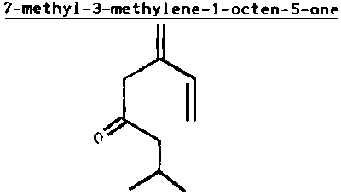
Figure
The decongestant effect of ketonic terpenes is well known (c.f. menthone, etc.) and so it is not surprising that these compounds have a calming effect on respiratory conditions. Similarly, the insect repellant properties of cyclic and acyclic monoterpenes has recently been reported (Wang et al 1985). The anti-microbial properties, however, are rather more difficult to explain on the basis of ketonic structures. However, tagetone exists in equilibrium with the enolic form. This can easily be shown by the temperature dependence of the infrared spectrum. At high temperatures, the carbonyl stretching vibration disappears and a hydroxyl stretching absorption appears instead.
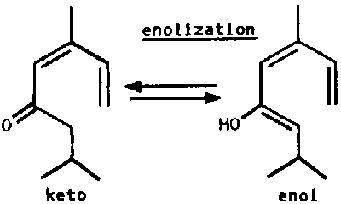
Figure
The formation of an enol may explain the anti-microbial properties since enols are known to show disinfectant properties.
When heated, the above compounds readily polymerize by opening of the double bonds. However, it is suspected that in the case of cis-tagetone, the molecule may also aromatize. This reaction is also possible in the presence of ultra violet light.
The product, thymol, is of course a well known natural product (Thyme oil) and its phenolic nature gives it disinfecting properties.
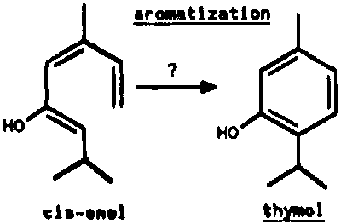
Figure
The potential use of this plant is very promising. However, we feel sure that much of the chemical analysis may be a replication of work that has already been done and unpublished and/or is under investigation in other regional laboratories since there is insufficient liaison between the various groups undertaking research in the field of medicinal plants. Effective research to aid development can only be achieved by a coordinated approach, both nationally and internationally. For this reason, current research into medicinal plants is being restricted to plants which have an 'immediate' commercial potential.
Acknowledgements
I am indebted to the fullest cooperation of the following,: Dr. T. Tietema, National Institute of Research, Gaborone; F. Taylor, Veld Products, Gaborone; Thusano Lefatsheng, Gaborone; Prof. J. H. van der Maas, University of Utrecht, The Netherlands and Phillips Laboratories, The Netherlands.
Reference
Kgathi, D.L. (1987). NIR Research notes (24), University of Botswana.
Hwang, Y., Wu, K., Kumamoto, J., Axelroad, H. and Mulla, M.S. (1985). J. Chem. Ecol., 11, 1297-130.
Taylor, F.W. (1982). The Resource and its Commercial Utilization of Veldproducts, Plan No. T.B. 7/14/80-8, Ministry of Commerce and Industry Government Printer, Gaborone.
Watt, J.M. and Breyer-Brandwisk, M.G. (1962). The Medicinal and Poisonous Plants of Southern and Eastern Africa. 2nd Edn., Livingstone.
The use of data from traditional medicine: Tunisian experience
K. BOUKEF
C.N.T.S., Rue Djetel, Dahmar, Tunisia
ABSTRACT
The industrial, technological and social developments in the world have significantly contributed to a situation whereby man has neglected the development of expanded uses of traditional medicines. However, our knowledge on the adverse side effects of some of the modern medicines, the emergence of diseases which are incurable with modern medicines, and adverse economic conditions particularly in the Third World countries, have re-activated interest on the development of traditional medicines for use in health care systems, all over the world. This trend has called for scientific verification of the efficacy and toxity of these medicines. The new advances require thorough ethnobotanical investigations on medicinal plants; on the traditional uses of the plants; and the mode of preparation of the medicines by the traditional healers. This paper discusses the Tunisian experience on the ethnobotanical survey of medicinal plants. The data obtained in these investigations, are compared with those reported in countries neighbouring Tunisia.
Introduction
During the second half of the twentieth century, there has been rapid technological development in the search for new drugs. Third World laboratories have been "invaded" by newer and more efficient equipment to handle the isolation and identification of the active principles of plants. During the same period, computers have radically transformed, not only our working and living habits, but also our way of thinking.
Despite the above changes, it has been noted that there is paradoxically a trend to return to nature, and to "soft" medicine. Currently research is being carried out almost everywhere in the world, to try to rehabilitate traditional medicine.
In the developed countries, research to rehabilitate traditional medicine has mainly been a result of industrial development, which was geared towards production and consumption, but overlooked the dangers of such consumption. An awareness of the fact that the use of some drugs is dangerous, has led to a scenario whereby people want to go back to the roots, or to the use of medicinal plants.
In the Third World, economic factors have had a role to play in the use of medicinal plants. Due to the economic crisis, some countries are trying very hard to reduce the health budget, particularly the cost of drugs, by advocating the use of medicinal plants and other natural resources.
How can the resources of traditional medicine be used in a rational way? To answer this question, five steps must be followed: (a) taking stock of the resources of traditional medicine; (b) studying similarities in neighbouring countries; (c) modernizing the farming techniques of medicinal plants; (d) establishing procedures for the processing, quality control and standards of plant-derived products; and (e) testing the inocuity and efficiency of plant-derived products, including toxicological tests.
We now turn to a more detailed description of the above steps, with special reference to the experience obtained in Tunisia.
Stock-taking of the resources of traditional medicine
A research was carried out using a questionnaire which was distributed to primary and secondary school teachers all over the country. The research enabled the establishment of an inventory of about 1250 plants used in traditional medicine in Tunisia. Further field research was carried out in most of the regions in the country, and this helped to add 191 more plants to the inventory.
Similarities with neighbouring countries
The neighbouring countries selected for the study were Algeria and Morocco. In Algeria, Merabet carried out research in 1982, and in Morocco, Bellakdar edited a book on traditional medicine in Western Sahara in 1978. He came out with a list, of 250 species.
The study by the current author has managed to establish a list of 24 species which are used in the same way in the three countries, and 41 species which have; the same indications in at least two countries. The traditional use of 18 of the species in the inventory corresponds to characteristics which are already known, or which can be shown scientifically.
The second step described above is necessary, as it adds to the field research, and enables the researcher to sort out the plants listed in the inventory.
Modernization of the farming techniques of medicinal plants
The percentage of active principles found in the plant itself can be improved by genetic engineering and agricultural production of the plants. We will quote here an example of the results obtained with Solanum sodomeum L., a source of solasodine, a raw material which can be used for the semisynthesis of steroid hormones. The species was improved through farming techniques, and the percentage of solasodine was increased from 2.2% to 4.2%.
Establishing procedures for the processing, quality control and standards of plant-derived products
In order to maintain quality, rigid standards have to be set for plant-derived products. A law was passed in 1985 to govern the pharmaceutical industry and the different articles relating to the execution of the law are being worked out.
Testing the inocuity and efficiency of plant-derived products, including toxicological tests
Although an inventory of at least 18 plants (whose activity was demonstrated scientifically) was made, this is not always done for most of the plants used in traditional medicine. This motivated the author and his associates to undertake research aiming at testing the activity of some plants.
(a) Anti-bacterial and anti-fungal activity16 plants were tested against 4 bacteria and 6 fungi species by using the technique of dilution, in a freezing solid environment. Six plants revealed an activity estimated at 5mg/ml, which can compare with the antibiotic, streptomycin, and the antifungal agent, griseofulvin. The six plants were: Pistacia lentiscus, Peganum harmala, Agave americana, Anonis natrix, rubus discolor and Ruta montana.
(b) Plants with cytotoxic activity
22 extracts were tested for their cytotoxic activity. The tests used were those which have been recognized by the C.C.N.S.C., using human cancerous cells (KB), and murine cells. The extract from Pergularia tomentosa was the only one which revealed an activity estimated at DI50 = 20 mg/ml.
(c) Algae used as vermifuge
Alsidium coralinum was tested by HPLC, and kainic acid was found to be present. This acid was isolated by Fuhrman in 1981 from another alga, Digenia simplex, and its vermifuge activity has been demonstrated.
(d) Plants with anti-inflammation activity
Calendula arvensis is used in traditional medicine in Tunisia to treat rheumatism. Several components were isolated and identified, such as amino acids, phenol acids, flavonoids and particularly saponosides. The study on anti-inflammation was carried out using the carragenine test. By measuring levels of hormones such as cortisone and haptoglobin, it was possible to isolate and identify a saponoside, arvensoside "A", which could be the source of this activity.
Discussion and conclusions
The testing of the above activities, and the search for new active principles need great human and material resources. However, we are of the opinion that the best way to carry out and implement successfully a programme which aims at studying the use of traditional cures derived from plants, is to work in an environment which has the following combination of factors:
(a) the use of plant-derived cures must be socially acceptable;(b) there must be expertise in the agricultural and pharmaceutical fields; and
(c) there must be an industrial infrastructure, which deals with the transformation of traditional collections into scientific formulae, which can be prescribed and administered, according to recognized professional medical practice.
Chemical and pharmacological studies of marketed traditional drugs
MESFIN BOGALE*, B.K. NOAMESI** and ERMIAS DAGNE*
*Department of Chemistry
Faculty of Science, Addis Ababa
University
P.O. Box 1176, Addis Ababa, Ethiopia
**Department of Pharmacology
Faculty of
Pharmacy
University of Science and Technology
Kumasi, Ghana.
Introduction
Most of the medicaments used in the traditional medicine of Ethiopia, as indeed in many other countries, are of plant origin. These traditional medicines are obtained in most cases from healers. However, the very common medicaments are obtainable from vendors.
In most markets one does not fail to find a corner which could be considered as an "open pharmacy" and where medicinal plant preparations are spread out to attract the attention of customers. Vendors do not usually prescribe as the customers are quite knowledgeable about the type of drug they wish to purchase.
A survey of 19 medicinal plant markets of Central Ethiopia (Kloos et al. 1978) identified over 40 common medicinal plants sold routinely. This survey showed that Ethiopia has a rich medicinal plant resource. The interdisciplinary studies of clinicians, chemists, pharmacists, botanists agronomists and anthropologists is necessary to develop more efficient uses for these potential resources. Table 1 summarises the results of the survey of Kloos et al.
The proper authentication of medicinal plants and identification of the active ingredients, is invaluable in the assessment of the pharmaceutical value of the traditional medicines. Although the usage of most of the marketed traditional drugs does not require special knowledge, there are instances where overdosage leads to toxic effects, particularly in the use of anthelmintics. Pharmacological studies, therefore, help not only to determine efficacy of these traditional preparations, but also to establish required dosages.
In this paper, we report the results of a study on one of the marketed drugs of Ethiopia. In the indigenous system of medicine in Central Ethiopia, the roots of Taverniera abyssinica (Leguminosae) are known in the Amharic language as 'Dingetegna' signifying "medicine for sudden illness'. The roots are chewed to alleviate severe stomach pain and fever.
T. abyssinica is an endemic species occurring in Ethiopia and grows up to 2 m high in bushland or on limestone, at altitudes between 1700 and 2200 m. Taverniera belongs to a relatively small genus containing only 15 species found in arid regions, from Egypt to India (Thulin, 1983). Three other species are also known to occur in Ethiopia.
Phytochemical investigations of the roots have revealed the presence of a number of compounds including the isoflavonoids formononetin, afrormosin and the pterocarpans medicarpin and 4-hydroxymedicarpin (Duddeck et at., 1987). It has also recently been shown that extracts of the roots of this plant exhibit antipyretic and analgesic properties (Dagne et al, 1990).
The present investigation has been undertaken to evaluate the spasmolytic and other pharmacological activities of the extract of this plant, in order to establish an ethnopharmacological basis for its use in traditional medicine.
Materials and methods
Plant material
The plant material used in this study was purchased from the main market in Addis Ababa from traditional medicine vendors. For botanical authentication of the plant material as T. abyssinica and for voucher specimens see Duddeck et al. (1987).
Extraction
The powdered root (100 g) of T. abyssinica was soaked in 75% ethanol in water for 24 hrs. The concentrated extract was further extracted with butanol. The butanol extract was successively refluxed for 20 min. each with ethyl acetate, acetone and ethanol. The ethanol portion was used to test on the different models. The other extracts were devoid of pharmacological activity.
Pharmacological tests
Four experimental models were employed to investigate the effects of the extract: anti-ulcer, antiasthmatic (in vivo), oxytocic (both in vivo and in vitro) and the isolated guinea-pig ileum. The extract was found to have an effect only on the isolated guinea pig ileum.
Isolated guinea-pig ileum
Adult guinea-pigs weighing 250-350 g were used. Heal segments (ca. 2-3 cm long) were taken from the caecal end. The muscle was suspended in warm (37° C) Tyrodes solution aerated with atmospheric air in a 20-ml organ bath. Contractions of the smooth muscle were monitored by means of the Ugo Basile isotonic transducer with 1 g tension and recorded on the Ugo Basile Gemini 7070 two-channel recorder at a chart speed of 5-mm/min. The tissue was allowed to equilibrate in Tyrode's solution for 30 min. Control contractile response were obtained for acetylcholine. A contact time of 30 sec. and time cycle of 3 min. was maintained. The extract was then introduced into 500 ml of Tyrode's solution in different concentrations. Using this solution acetylcholine-induced contractile responses were again elicited after giving 20 min. for the tissue to equilibrate every time a fresh solution containing a higher concentration of the extract was used.
In another set of experiments, the effects of the extract of the contractile response of the ileum to histamine were similarly investigated.
Statistical analysis
The given data represent mean ± S.E.M. and the statistical significance was evaluated by the Student t-test.
Results
The extract produced no changes on the resting tone of the isolated guinea-pig ileum, i.e. neither a spasmogenic action nor a relaxation of smooth muscle was observed at any of the concentrations tested. Acetylcholine at concentrations of 5, 10 and 20 ng/ml produced concentration- dependent contractions of the ileum. The acetylcholine-induced contractions were significantly (p < 0.001) antagonized by the extract at 500 and 800 ng/ml. Fig. 1 illustrates a typical effect of the extract on the ileal response to acetylcholine and the results are presented in Table 1.
In the presence of the extract, maximal responses to acetylcholine could not be reestablished by increasing the concentrations of acetylcholine. Histamine at 10, 20 and 40 ng/ml also contracted the guinea-pig ileum in a concentration-dependent manner. The inhibitory effects of the extract on the isolated guinea-pig ileum contractions to histamine are illustrated in Fig. 2 and the results are presented in Table 2. As was observed for acetylcholine, in the presence of the extract, maximal responses to higher histamine concentrations were also not attained.
Discussion
Spasms of the gastrointestinal tract and gastric hyperacidity contribute to the symptoms of stomachache. In orthodox pharmaceutical preparations, such as, belladonna extracts, containing alkaloids of the atropine type, are often included in formulations for stomach ailments, because of their spasmolytic actions against acetylcholine-induced spasms (Weimer, 1980). Histamine mediates gastric acid secretion, acting through the H receptors and has been shown to be responsible for gastric pain, particularly in ulcers. To antagonize the histamine, gastric activity H receptor antagonist drugs like cimetidine, have been designed (Douglas, 1980).
Our present preliminary pharmacological investigations of T. abyssinica have illustrated the ability of the extract to antagonize the smooth muscle spasmogenic actions of both acetylcholine and histamine, two of the most important spasmagens responsible for hyperactivity of the gastrointestinal tract. The non-attainment of the maximum control response of acetylcholine and histamine in the presence of the extract suggests the non-competitive nature of the antagonism.
The above findings show that the extract of this plant possesses analgesic and antipyretic properties, confirming the significance of this traditional drug in ethno-medicine.
Acknowledgements
This work was supported by a grant from the Swedish Agency for Research Cooperation with Developing Countries (SAREC).
References
Dagne, E., Yenesew, A., Capasso, F., Mascolo, N., Pinto, A. and Autore, G. (1990). Ethiopian Med. J. (in press).
Douglas, W.W. (1980). "Histamine and 5-HT and their antagonists". In Gilman, A.G., Goodman, L.S. and Gilman, A. (Eds), The Pharmacological Basis of Therapeutics, Macmillan Publishing Co., New York.: 609 - 646.
Duddeck, H., Yenesew, A. and Dagne, E. (1987). Bull. chem. Soc. Ethiopia 1: 36-41.
Kloos, H., Tekle, A., Yohannes, L.W., Yosef, A. and Lemma, A. (1978). Ethiopian Med. J. 16: 33-43.
Thulin, M. (1983). Opera Bot. 68 : 186-188.
Weimer, N. (1980). "Atropine, scoplolamine and related anti- muscarinic drugs". In Gilman, A.G., Goodman, L.S. and Gilman, A. (Eds), The Pharmacological Basis of Therapeutics. Macmillan Publishing Co., New York: 120-137.
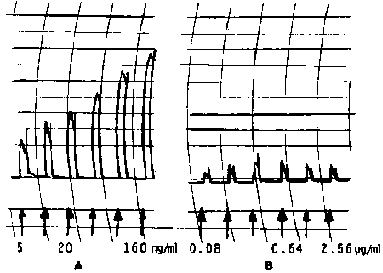
Fig.1. Typical trace showing the
contractile responses of the guinea-pig ileum. 'A' shows control
responses induced by ACh 5, 10, 20, 40, 80 and 160 ng/ml and 'B' shows responses
of the ileum for ACh 0.08, 0.16, 0.32, 0.64, 1.28 and 2.56 ug/ml in the presence
of 500 ug/ml of the extract.
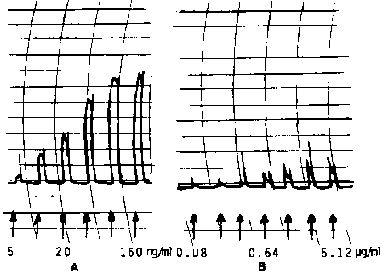
Fig.2. Typical trace showing the
contractile responses of the guinea-pig ileum. 'A' shows control responses
induced by histamine 5, 10, 20, 40, 80 and 160 ng/ml and 'B' shows responses of
the ileum for histamine 0.08, 0.16, 0.32, 0.64, 1.28, 2.56 and 5.12 ug/ml in the
presence of 500 ug/ml of the extract.
Table 1: Some traditional medicinal plants marketed in Ethiopia
|
Plant species |
Vernacular name |
Plant part |
Major use |
|
Hagenia abyssinica |
Kosso |
Flowers |
Taenicide |
|
Embelia schimperi |
Enkoko |
Fruits |
Taenicide |
|
Glinus lotoides |
Metere |
Seeds |
Taenicide |
|
Croton macrostachys |
Bisana |
Bark |
Taenicide |
|
Myrisine africana |
Kechemo |
Seeds |
Taenicide |
|
Cucurbita pepo |
Dubba |
Seeds |
Taenicide |
| |
Arusi kosso |
Root |
Taenicide |
|
Silen macroselen |
Wogert |
Root |
General Medicine |
|
Echinops sp. |
Kabaricho |
Root |
General Medicine |
|
Ajuga remota |
Armagusa | |
General Medicine |
|
Withania somnifera |
Gizawa |
Stem |
General Medicine |
|
T. abyssinica |
Dingetegna |
Root |
General Medicine |
|
Ruta chalepensis |
Tena adam |
Leaves/fruit |
General Medicine |
| |
Altit |
Resin |
General Medicine |
|
Leonotis velutina |
Ras-kimir |
Leaves |
General Medicine |
|
Lepidium sativum |
Feto |
Seeds |
General Medicine |
|
Pychnostachys sp. |
Famfa |
Leaves |
General Medicine |
|
Phytolacca dodecandra |
Endod |
Fruit |
General Medicine |
|
Cucumis prophetarum |
Yemeder-embway |
Hoot |
General Medicine |
|
Artemisia afra |
Chukun |
Stem/leaves |
General Medicine |
|
Vernonia amygdalina |
Grawa |
leaves |
General Medicine |
|
Aloe sp |
Setret |
Leaves |
General Medicine |
|
Thymus serrulatus |
Tosin |
Leaves |
Expectorant |
|
Rubus sp. |
Enjore |
Leaves |
Expectorant |
|
Lantana trifolia |
Kase |
Leaves |
Expectorant |
|
Rubia discolor |
Encheber |
Roots |
Expectorant |
|
Ocimum sp. |
Dama-Kasseh |
Leaves/Stems |
Expectorant |
| |
Taibedle |
Leaves |
Tonic |
| |
Ofgahng |
Leaves |
Tonic |
|
Myrtus communis |
Addes |
Leaves |
Tonic |
|
Coriandrum sativum |
Dembelal |
Leaves |
Tonic |
|
Cymbopogon citratus |
Tej-sar |
Leaves |
Tonic |
|
Rutex abyssinicus |
Mekmeko |
Root |
Tonic |
|
Foenicalum vulgare |
Ariti |
Leaves/Stem |
Tonic |
|
S. longipendunculata |
Etsemenahe |
Root |
Medicomagical |
|
Lagenaria spp. |
Kel |
Fruit |
Medicomagical |
|
Commiphora sp. |
Karbe |
Resin |
Vulneraries |
| |
Dechemarech |
Root |
Vulneraries |
|
Verbena officinale |
Attuch |
Leaves |
Digestant |
|
Laggare sp. |
Kaskase |
Leaves |
Digestant |
Table 2: Traditional medicinal drugs available at the market of Addis Ababa according to a cursory survey conducted in February 1990.
|
Plant species |
Vernacular name |
Plant part |
Major use |
|
Cymbopogon citratus |
Tej-sar |
Leaves |
Buda-besheta |
|
Achyranthes aspera |
Attuch |
Roots |
Dysentery |
|
Mytrus communis |
Addes |
Leaves |
Dysentery |
|
Allium cepa |
Nech-shenkurt |
Bulb |
General Medicine |
|
Echinops sp. |
Kabaricho |
Roots |
General Medicine |
|
Lepidium sativum |
Fetto |
Seeds |
General Medicine |
|
Ocimum lamiifolium |
Dama-kasseh |
Leaves |
General Medicine |
|
Silen macrosilen |
Wogert |
Roots |
General Medicine |
|
Withania somnifera |
Gizawa |
Stem |
General Medicine |
|
Impatients tinctoria |
Ensosela |
Leaves |
Rheumatism |
|
Ajuga remota |
Armagusa |
Leaves |
Stomach |
|
Artemisia afra |
Chukun |
Seeds |
Stomach |
|
Artemisia rehan |
Arriti |
Leaves |
Stomach |
|
Ruta chalepensis |
Tena-adam |
Leaves |
Stomach |
| | | |
seeds |
|
Taverniera abyssinica |
Dingetegna |
Roots |
seeds |
|
Embelia schimperi |
Enkoko |
Fruit |
Taenicide |
|
Ghinus lotoides |
Metere |
Seeds |
Taenicide |
|
Cucurbita pepo |
Duba |
Seeds | |
|
Hagenia abyssinica |
Kosso |
Flowers |
Taenicide |
|
Dovyalis abyssinica |
Koshim |
---- |
Wounds |
| |
Senafech |
Seeds |
--- |
| |
Kosseret |
--- |
--- |
|
Osyris abyssinica |
Kerett |
Roots |
--- |
Research into medicinal plants: The Somali experience
ABDULAHI S. ELMI
Department of Pharmacology
Somali National
University
Mogadishu (Somalia)
Introduction
Herbal drugs have a considerable use throughout the World. In the past centuries, such use was understandably more extensive when related to the density of the populations. Treatment with herbal drugs seemed to be destined to vanish with the development of biomedicine. Instead, what actually happened is that despite the expeditious and impressive progress of "modern medicine" in the course of this century, ethnomedicine has remained the chief therapeutic reliance for hundreds of millions of people.
People have recourse to herbal drugs for a variety of reasons. A large number of persons depend on medicinal plants, mainly because they have no access to modern medicine. These people mostly live in rural areas, or in peripheral slums of big cities. For some people, especially in economically developed countries, plant-derived drugs are associated with memories of good old days. Nostalgia for grandmother's remedies are an inducement for many to try such remedies. Certain people believe that natural products have great efficacy while being devoid of toxic effects. Some people rely on modern medicine for certain diseases, while for others they resort to traditional medicine.
The use of herbal drugs by many is the result of balanced judgement based upon personal experiences, or acquired through reliable scientific sources. Whatever the reasons behind the utilization of herbal drugs, the merits of this system of treatment is unquestionable. It is unfortunate that some people associate it with the nostalgia of the past or link it with poverty. Herbal drugs are neither the medicines of the poor alone nor the remedies for nostalgic people; they are not merely a great potential for delivering health care for all in the future; they are actually an important tool for treatment of millions of people of different culture, social class and status throughout the world.
In today's world therapeutic year of armamentarium, plant products are well represented. Farnsworth points out that one quarter of the total prescription drugs in industrialized countries contain one or more components derived from plants.
Furthermore, scientific research has very often shown that in spite of being based on empirical systems, traditional herbal remedies are the result of long standing positive experience.
It is time that the experience of so many generations be placed at the service of modern man without loosing time or necessarily making use of expensive and sophisticated methods. The goal of improving and exploiting the use of medicinal plants in health care can be achieved with relatively easy means and in reasonable time.
Herbal drugs in Somalia
Traditional medicine uses different methods for curing diseases. The Somali traditional medicine could be divided into: (a) ceremonial healing and (b) practical treatments and herbalism.
Ceremonial healing:
This system is based on the celebration of specific rites. Some of these are purely religious. Others are located in the sphere of the magical and others are a mixture of both. The magic rites deal often with spirits and the treatments are mainly for mental or psychosomatic disorders. Famous among these rites are: the saar, hayaat, mingis, nuumbi, etc.. The religious treatments are based on the islamic teaching, that is the Koran, and give health to the true Muslim believers. Religious healing is for both organic and psychic diseases.
Practical treatments and herbalism:
These systems deal more properly with organic disorders. Most common among these are: (i) cauterization, (ii) scarification and blood letting, (iii) bone-setting, (iv) surgery, and (v) use of herbs. Traditional medical treatments are well approved and widely used by the Somali population. Surveys on traditional medical practices carried out by the Division of Pharmacology of the Faculty of Medicine in different times, showed very high prevalence of this type of medicine within both the rural and the urban communities. Among other information, one survey indicated that in the male population, the administration of herbs reached 73%. Several hundred plants are used in Somali traditional medicine. The confidence of the population to the ability of traditional herbalists is great. The use of plants is not devoid of spiritual rites. In the Somali traditional medicine, there is a great respect for the plant. Eradication of the whole plant is avoided, even if the used part is the root. This shows also a respect to the environment. Healers of the inter-riverine area do not consider the plant as a simple physical entity. Greater part of herbalists feel that the effect of a plant depends not only on its power, but also on the relationship between the collector and the plant itself. Usually, a healer avoids his shadow on the plant while collecting it. He says prayers or recites formulas before cutting the plant. The recited words or formulas may be words from the Koran or prayers to ancestors. It is important that the rules laid down by the ancestors be strictly followed.
Most herbalists make use of no more than 30-40 different plants. Nevertheless, the average number of plants known to the majority of healers is far greater than that. Many herbalists could easily list over 100 plants, indicating the purpose they are used for in traditional medicine. In this they are like the modern physicians, who in spite of the great armamentarium of drugs at their disposal, feel more convenient to prescribe few dozens of drugs during their lifetime. The average inventory of kinds of leaves, stem barks and roots in Mogadishu traditional herbalists' dispensaries do not exceed the number of 35-40 for each. While in the rural areas healers very often go out into the bush in order to collect their own herbs such is not the case in the cities. The herbalists who are also dispensary owners would employ an apprentice, or younger herbalist for this job. They also buy herbs by occasional suppliers. By doing so, much of the magical aureola is neglected. They prefer to pretend that their suppliers have complied to all traditional plant collecting regulations. Many herbalists of the cities probably do not give great importance to the "rules of the ancestors".
Herbalists of big centres may act as healers or simply as dispensers. In fact they may dispense herbs on simple request by the patient or according to another healer's prescription. This is quite a difference compared to their rural counterparts, who gather herbs upon clients needs. Traditional herbalists are allowed to practice their profession without restrictions. On the other hand, the law is not clear on whether clinical trials with plants could be performed.
Research experience
A programme of research into medicinal plants was established by the Somali National University in 1978. Investigation on plants used in traditional medicine is also one of the main lines of research of the Somali Academy of Sciences and Arts. The aims of the research that started in 1978 are:
(a) to foster the accomplishment of better use of medicinal plants lending to the necessary scientific support;(b) to examine the credits of traditional use of medicinal plants in the light of modern science so as to encourage the use of therapeutically effective plants and discourage harmful ones;
(c) to promote the integration of proven valuable knowledge in herbal and modern medicine;
(d) to stimulate and cooperate in the realization of Somali traditional pharmacopoeia;
(e) to reduce the country's drug bill;
(f) to help in creating a national pharmaceutical industry;
(g) to aid in the therapeutic, economic and commercial exploitation of medicinal plants, by promoting their use, culture and exportation.
The research is a multi-disciplinary enterprise requiring the contributions of botanists, chemists, pharmacologists, and clinicians. At the Somali national University, the research on medicinal plants involves the Division of Pharmacology, Faculty of Medicine, the Section of Organic Chemistry, Department of Chemistry, and the Division of Botany at the Faculty of Agriculture.
At the very beginning, in 1978, we designed our programme just following the classical approach for drug research. Great importance was given to the isolation and structure elucidation of active compounds and pharmacological screening on them. After sometime, the team of research realized that the system chosen for the research was not the most appropriate to attain the aims of the programme at reasonable time. Further discussions brought about some changes and a decision was made that the research phases be as follows:
(a) Inventory of botanical identification of plants used in traditional medicine.
(b) Literature survey of the identified plants.
(c) Verification of efficacy of selected plants.
(d) Safety and toxicity assessment of active plants.
(e) Isolation, identification or structure alienation of active principles.
(f) In-depth pharmacological and toxicological evaluation of isolated active substances; and
(g) Production of drugs based on plants containing therapeutically valuable substances.
Extensive work has been accomplished on each of the above phases. The plants to be investigated upon are not chosen at random, but according to clearly set priorities. These priorities are linked to:
(i) the prevalence of the use of the plant among the population;
(ii) the prevalence of the disease for which the plant is used. Additionally, plants used for diseases which have no good cures in modern medicine, are given due consideration.
Regarding the inventory and botanical identification, information on the use of hundreds of plants has been collected by interviewing traditional herbalists. Many plant collecting expeditions have been carried out. All the collected plants have been identified. Samples of collected plants have been sent to internationally important herbaria.
Literature information has been collected for a relevant number of plants. This was partially carried out in Somalia. Lists of names (with synonyms) of identified plants were sent to the WHO collaborating Centre for Traditional Medicine at the University of Illinois, Chicago, USA, for search, through the NAPRALERT computer file. Literature printouts for most of the identified plant species have been obtained from the above Centre. The Medicinal Plants News-letter published by OAUSTRC, also reports literature information on medicinal plants.
Following the above system, extensive experimental research through the use of in vivo and in vitro pharmacological methods has been carried out. The performed activities include: isolated organ tests, antimicrobial and antiparasitic activity, anti-inflammatory activity, anti-ulcer activity and several others. Toxicological studies have been performed on a number of plants.
The isolation and identification of active principles has led to the elucidation of the structure of a number of compounds. Some of these compounds, such as, two 1,3-diarylpropan-2-ol derivatives, called quracol A and quracol B, are new compounds hitherto not found in plants. One of the positive results of this chemical research was the identification of a cocancerigenic compound (a phorbol diester) in a plant species, the oil of which was commercially exploited by a Government agency for use as a purgative.
The last step is the clinical evaluation of efficacy and safety. This is the most difficult phase, especially because of the ethical implications and the long time required for carrying out appropriately controlled clinical trials. We elaborated a strategy that would allow us to monitor some clinical effects before starting with controlled clinical trials. Since the traditional medical practitioners are allowed to practice their profession, we decided to assign a physician to a qualified and licenced healer. The healer's job was mainly observation of the healer while he practises. This arrangement was not difficult, because a practicing healer was in fact among the staff of the Division of Pharmacology. The observations yielded valuable information on several plants.
The research programme has given a lot of interesting and useful results. The new approach has shown to be better suited for the aims of the programme. Nonetheless, it has many shortcomings.
The experience has shown that it still neglects the most important and immediate objective of medicinal plants research in a developing country: the early utilization of these plants in Primary Health Care. Most of the research programmes in developing countries share these drawbacks.
More appropriate method for applicable research
The research into herbal drugs usually makes use of dried plants, while we know that such plants are normally administered by traditional medical practitioners in the fresh state. Moreover, the solvent used by the practitioners is water.
The classical method for research is to dry the plant, store it for some time and then subject it to extractions with different types of solvents. Thus the approach of the researcher is quite different from that of the operators of the type of medicine which is under evaluation. It is clear that the researcher directs the work in a way more compatible with the setup of the research facilities and methodologies. The latter are established according to drug research of pure chemical compounds. In fact the rest of the research sequence is testing on laboratory animals and later on clinical trials as is classically done with synthetic drugs.
Is this method appropriate for plant material? Many plants undeniably lose totally or partially their activity during the drying and storing process. Therefore biological as well as chemical studies must be performed on fresh plants. The use of solvents and fractionation may result in greater concentrations of active compounds and stronger activity. But this is not always the case. In fact, sometimes total activity decreases with fractionation.
The classical method gives undue importance to the isolation of pure active compounds from medicinal plants. While isolation and identification of single active compounds is interesting for studies of structure-activity relationships and may be stimulating for the scientist, it will not contribute to any significant extent to the solution of health problems of developing countries. It is imperative that research methodologies be made more respondent to the principles of traditional medicine and to improved objectives. We must consider that traditional medicine has, in many countries, greater prevalence and accessibility than modern medicine. There is no doubt that the trend will remain the same for many years to come.
For the hundreds of millions of people who live in rural areas, changes of attitude and the established use and acceptance of modern health care facilities will be very gradual. Therefore, the immediate useful arid most important contribution of scientists in this field is how to make the traditional curing systems safer and confirm or disprove the efficacy of the preparations which so many people make use of.
If research into medicinal plants is oriented to reach this very important goal, it can be carried out in an easier, quicker and cheaper way, than the methods which are normally applied in most research centres of developing countries. People in our countries are using herbal remedies although for most of them the toxicity has not been studied. It is the duty of scientists to investigate the toxicity of every product which is consumed by humans. One of the first investigations on all medicinal plants, regardless of their efficacy is, therefore, the study of their toxicity.
The second step is the evaluation of the activity for which the plant, or combination of plants, is used. If for nothing else, it is very unwise and wasteful to use something when it does not serve the purpose for which it is used.
Once enough information has been acquired on the safety and efficacy of a certain traditional remedy, this knowledge must be transferred to those who prescribe the treatments and, possibly, to the clients who make use of such treatments. Normally, the results on the investigations of plants remain in the drawers of the laboratories or in libraries as printed materials and they will never reach the user of the plants.
The method that we deem best respondent to the needs of our communities is as follows:
(a) toxicological study in two species of animals for acute and subacute toxicity;(b) experimental evaluation of the activity for which the supposed remedy is used; and
(c) clinical evaluation for efficacy in humans (where possible this must be preceded by observation of the healer while using the remedy).
The fact that the plant is already used by healers on humans should not, by any means, save it from the necessary ethical obligations during clinical trials.
The advantage of this model is that the costly, sophisticated and time-consuming chemical studies of separation, subsequent fractionations and structure elucidation is avoided. These steps, in fact, are not necessary for the needed progress towards a better use of medicinal plants in health care. This approach takes into account the concepts of traditional and folklore medicine. We cannot expect that traditional medical practitioners make use of pure extracts, or fractions of the plants they use,
The organization of training courses and workshops with the participation of healers would contribute to the improvement of their knowledge and skills and to the consolidation of a safer and more effective community health care system. Healers trained and left to operate in their communities would be the best fabric for Primary Health Care.
The achievement of this goal would be the greatest satisfaction and victory for scientists engaged in research into medicinal plants.
Effect of nitrogen and phosphorus on the essential oil yield and quality of chamomile (Matricaria chamomilla L.) flowers
V.E. EMONGOR*, J.A. CHWEYA*, S.O KEYA* and R.M. MUNAVU**
*Crop Science Department, University of Nairobi
P.O. Box
29053, Nairobi, Kenya
** Department of Chemistry, University of
Nairobi
P.O. Box 30197, Nairobi, Kenya
ABSTRACT
Field experiments were carried out to determine the effect of nitrogen (0, 50, 100, and 150kg N/ha) and phosphorus (0, 17.47, 34.93, and 52.41 kg P/ha) and their interactions on the essential oil yield and composition of chamomile. Nitrogen significantly increased essential oil yield and influenced its composition. Phosphorus did not significantly influence essential oil yield and composition, but low phosphorus rates (17.47 kg P/ha) tended to increase essential oil yield. High phosphorus rates decreased essential oil yield. Application of 17.47 kg P/ha at transplanting and top-dressing later with 50 kg N/ha gave the best results.
Introduction
Chamomile flowers contain an essential oil which is used in the manufacture of drugs for the treatment of such diseases as convulsions in children, diarrhoea, colic and acidity, hysteria, allergy, inflammation of body tissues, sleeplessness and stomach ulcers induced by chemical stress or heat coagulation (Martindale, 1977; Sticher, 1977 and Isaac, 1980). The essential oil also promotes epithelization and granulation, and shows antibacterial and antimycotic effects, through the activity of (-)-a-bisabolol and chamazulene (Isaac, 1979). The oil can also be used for flavouring liquors, colouring foods and making cosmetics (Bailey, 1949 and Kirk and Othmer, 1952). The essential oil content of chamomile flowers is in the range of 0.2-2.0% per unit dry flower weight (Martindale, 1977 and Franz, 1980). The composition and yield of essential oil may be affected by many factors, including plant nutrition (Franz et al., 1978 and Franz. 1982).
Work done elsewhere, and not in Kenya, has shown that nitrogen and phosphorus fertilization increases the yield and essential oil content of the flowers (El-Hamidi et al., 1965; Franz 1981; Singh, 1977 and Meawad et al. 1984). The authors further reported that nitrogen and phosphorus influenced oil composition. Although nitrogen and phosphorus increased chamazulene content in the essential oil, excess nitrogen decreased it. Franz (1983) reported that nitrogen increased the concentration of (-)-a-bisabolol but decreased that of bisabololoxide B. No work on chamomile has been conducted in Kenya.
The importance and usefulness of chamomile essential oil in the pharmaceutical, food, and cosmetics industries and the fact that Kenya is importing a lot of the essential oil, has led to the initiation of studies on chamomile. The objective of this study was to show the effect of nitrogen and phosphorus and their interactions on the essential oil yield and composition of chamomile flowers.
Materials and methods
Field experiments were carried out between August, 1985 and March, 1987 at the Field Station, Faculty of Agriculture, University of Nairobi. Chamomile seeds (variety max et oljea) were sown in the nursery and seedlings were transplanted four weeks after germination, when they had attained 6-7 true leaves. The treatments consisted of 4 levels each of phosphorus (0, 17, 47, 34.93 and 52.41 kg P/ha) and nitrogen (0, 50, 100, and 150 kg N/ha). These were combined factorially to give 16 treatment combinations which were laid down in a split-plot design with three replicates. Phosphorus and nitrogen treatments were allocated to main plots and sub-plots, respectively. Phosphorus and nitrogen were applied at transplanting time and two weeks after transplanting, respectively.
Harvesting of flowers started when 50% of the plants had flowered and continued for 98 days. At every harvest, only flower heads with more than 40% open tubular florets were harvested. The fresh flowers were dried to constant weight in an air-ventilated oven, at 35° C for 5 days and their dry weights were then determined and cumulated. The cumulated dry flowers were then used for extraction in order to determine the quantity and quality of the essential oil.
Determination of the quantity of the essential oil in the dried flowers was based on steam distillation. Clevinger apparatus were used for the extraction using the method described by Trease and Evans (1978) and Kornhauser (1986).
The qualitative analysis of the essential oil was done using gas liquid chromatography (GLC) as outlined by Kirk and Othmer (1952), Trease and Evans (1978) and Kornhauser (1986), with slight modifications on the conditions of the GLC. The conditions of the GLC used were as follows: Apparatus: Gow-mac series 69-750; column: 2.5 m long, 0.25 cm internal diameter; Packing: OV-1 on chromosorb W/HP (100-120); Temperature linear programming, 85- 175°C, 2.5°C per minute; Detector: Flame ionization; Injector temperature: 220°C; Detector temperature: 220°C; Column temperature: 170°C; Carrier gas: Nitrogen (flow rate 25 cm3 per minute); Attenuation: 16; Chart speed: 1 cm per minute; and Range: 10-11. The results presented are means of two trials.
Results discussions
Essential oil yield
Nitrogen fertilization significantly increased essential oil yield per both unit dry flower weight and hectare (Table 1). Increasing nitrogen from 0 to 100 kg N/ha increased essential oil yield per both unit dry flower weight and hectare from 0.627 to 1.036% (65% increase), and 5.85 to 16.64 kg (184% increase), respectively. Nitrogen rate above 100 kg N/ha decreased oil yield. Similar results were reported by El-Hamidi et at., (1965), Franz (1981), Agena (1974), Meawad, (1981) and Meawad et al. (1984); that is nitrogen increased chamomile essential oil content and yield. The increase of essential oil yield due to nitrogen fertilization could be accounted for by the fact that nitrogen played an active role in the development and division of new essential oil cells, cavities, secretory ducts and glandular hairs (Meawad 1981; Meawad et al, 1984 and Agena, 1974). Nitrogen may have increased the essential oil yield because of increased carbohydrate accumulation, gibberellins and auxins concentration in chamomile plants. These were then utilised in the formation of more essential oil cells in the secretory ducts, cavities or glandular hairs (Sacks and Kofranek, 1963; Moore, 1979; Agena, 1974 and Abou-Zeid and El-Sherbeeny, 1974).
Table 1: Effect of nitrogen on essential oil yield of chamomile plants
|
N rates kg N/ha |
Essential oil yield per unit dry flower weight* |
Essential oil yield per plant (Kg/ha) |
|
0 |
0.627a |
5.85a |
|
50 |
0.869c |
13.08b |
|
100 |
1.036d |
16.64b |
|
150 |
0.811b |
13.16b |
* These values are ratios and hence they have no units
Effects of phosphorus and nitrogen and phosphorus interactions on essential oil yield per both unit dry flower weight and hectare were not significant.
Essential oil composition
Nitrogen fertilization significantly increased chamazulene, (-)-a-bisabolol and farnesene concentrations in the essential oil of the flowers (Table 2). Increasing nitrogen from 0 to 50 kg N/ha increased chamazulene, bisabolol, farnesene and cis-spiroether contents by 25, 13, 11 and 15%, respectively. Application of nitrogen above 50 kg N/ha led to a decrease in the contents of these constituents. However, bisabolol content increased throughout with increase in nitrogen. Similar results have been reported by Agena (1974), Franz (1981) and Franz (1983). The increase of chamazulene (matricine), bisabolol, farnesene, and cis-spiroether concentrations in the essential oil of chamomile flowers with increase in nitrogen application could be due to the decrease in the contents of bisabololoxides A and B with increasing nitrogen application. Amino acid metabolism in nitrogen-rich chamomile plants leads to the biosynthesis of chamazulene (matricine), bisabolol, farnesene and cis-spiroether at the expense of bisabololoxides A and B and vice versa (Franz, 1981 and 1983). This implies that the biosynthesis of basic hydrocarbon terpenes (matricine, farnesene and bisabolol) of chamomile are antagonistic to that of the oxygenated terpenes (bisabololoxides and bisabolonoxides).
Nitrogen application significantly decreased the concentrations of both bisabololoxides A and B in the essential oil of the flower (Table 2). Increasing nitrogen from 0 to 150 kg N/ha resulted in a decrease of 27 and 39% in bisabololoxides A and B concentrations, respectively. Franz (1981 and 1983) reported similar results.
Bisabololoxides (A + B) were predominant in the essential oil of the flowers, as they constituted on the average, 54.21% of the total constituents. Other constituents included bisabolol 6.02%, chamazulene 7.76% farnesene, 13.65% and cis-spiroether 7.97%. Mr-lianova and Felklova (1983) reported similar results. They reported that bisabololoxides (A + B) contents in essential oil of chamomile flowers were over 50%. This can be attributed to the fact that the biosynthesis of bisabololoxide A and B, and bisabolol are controlled by dominant and recessive genes, respectively (Franz, 1982).
Phosphorus application and the interaction between nitrogen and phosphorus did not significantly influence essential oil composition of chamomile flowers.
Table 2: Effect of nitrogen on essential oil composition of chamomile flowers
|
N rates |
% |
% |
% |
% |
% |
% |
|
0 |
6.89a |
5.17a |
12.93a |
7.38a |
43.55d |
22.69d |
|
50 |
8.60c |
5.84b |
14.31b |
8.46a |
38.68c |
18.11c |
|
100 |
8.02bc |
6.51c |
13.84ab |
8.13a |
34.82b |
15.09b |
|
150 |
7.45ab |
6.54c |
13.90ab |
7.90a |
31.58a |
13.20a |
Figures followed by same letter(s) down the columns are not significantly different according to Duncan's multiple range test at 5% probability level.
Conclusion and recommendation
The study showed that application of 17.47 kg P/ha (40 Kg phosphorus pentoxide, P2O5/ha) during transplanting and two weeks later top-dressing with 50 kg N/ha, would ensure high essential oil yield which has good quality. The study also showed that nitrogen was important in the biosynthesis of essential oil and its components. However, it is recommended that more research should be done in the field of plant breeding, agronomy (varietal evaluation, plant nutrition, ecological zones), plant biochemistry and economic evaluation of chamomile growing in Kenya.
Acknowledgements
The authors are grateful to the University of Nairobi for financial assistance during the period of this study. They also wish to record their thanks to Dr. B.O. Mochoge of the Department of Soil Science for his assistance during the laboratory work.
References
Abou-Zeid, E.N. and El-Sherbeeny, S.S. (1974): A preliminary study on the effect of GA on quality of volatile oil of Matricaria chamomilla L., Egypt J. Physiol. Sci. 1: 63-70.
Agena, E.A. (1974): Effect of some environmental and soil factors on growth and oil production of chamomile (Matricaria chamomilla L.). Ph.D. thesis, Faculty of Agriculture, Ain Shams University, Egypt.
Bailey, L.H. (1949): Manual of cultivated plants, Macmillan Publishing Co. Inc., New York: 99-991.
El-Hamidi, A. Saley, M. and Hamidi, H. (1965): The effects of fertilizer levels on growth, yield and oil production of Matricaria chamomilla L. Lloydia 28: 245-251.
Franz, C. Holzl, J. and Vomel, A. (1978): Variation in the essential oil of Matricaria chamomilla L. depending on plant age and stage of development. Acta Hort. 73: 229-238.
Franz, C. (1980): Content and composition of the essential oil in flower heads of Matricaria chamomilla L. during its ontogenetical development. Acta Hort. 96: 317-321.
Franz, C. (1981): Zur Quabitation arznei and Gewurzplanzen Habilschrift Tumuchen: 280 Habilitations Schrift, Weinhenstephan: 301-307.
Franz, C. (1982): Genetic, ontogenetic and environmental variability of the constituents of chamomile oil from Chamomilla recutita, Freising-Weinhestephan D-8050/F.R.G.: 299-317.
Franz, C. (1983): Nutrient and water management of medicinal and aromatic plants. Acta Hort. 132: 203-215.
Isaac, O. (1980): Antibacterial and antimycotic effects of bisabolol. Dtsch. Zeg. 120: 567.
Kirk, R. E. and Othmer, D.F. (1952): Encyclopedia of chemical technology 9: 569-591.
Kornhauser, A. (1986): UNESCO University-Industry Co-operation Project on Matricaria chamomilla L., Seminar/Workshop Nairobi. Kenya.
Martindale, W. (1977): The extra pharmacopoeia, 27th edition: 1011- 1021.
Meawad, A. A. (1981): Physiological and anatomical study on gladiolus. Ph.D. thesis, Faculty of Agriculture, Zagazig University, Egypt.
Meawad, A. A., Awad, A. E. and Afify, A. (1984). The effect of nitrogen fertilization and some growth regulators on chamomile plants. Acta Hort. 144: 123-134.
Moore, T.C. (1979): Biochemistry and physiology of plant hormones, Springer Verlag Inc., New York, U.S.A.: 90-142.
Mrlianova, M. and Ferklova, M. (1983): Content of bisabololoxides in flower heads of Matricaria chamomilla L., Farm obz. 52: 257-266.
Sacks, R. M. and Kofranek, A. M. (1963): Comparative cytohistological studies on inhibition and promotion of stem growth in Chrysanthemum morifolium. Amer. J. Bot. 50: 772-779.
Singh, B. (1977): Cultivation and utilisation of mediana (Matricaria chamomilla L.) and aromatic plants in Afal and Kapur, India, RRL. Jammu-Tawi: 350-352.
Sticher, O. (1977). New natural products and plant drugs with pharmacological, biological or therapeutical activity, Proc. 1st Internat. Congress Med. Plants Res., Sec. A., Univ. Munich, Germany: 136-176.
Trease, G. E. and Evans, W. E. (1978): Pharmacognosy. 11th edition, Bailliere, Tindall, London: 255-281, 405-474.
Chemical characterization of pharmacologically active compounds from Synadenium pereskiifolium
KERSTIN HERMANSSON*
LENNARD KENNE*, GEOFREY M.
RUKUNGA**
GUNNAR SAMUELSSON*** and W. M. KOFI-TSEKPO**.
* Department of Organic Chemistry, Arrhenius
Laboratory,
University of Stockholm, S-106 91 Stockholm, Sweden.
** Kenya Medical Research Institute
Traditional Medicines
and Drugs Research Centre
P.O. Box 54840, Nairobi, Kenya.
*** Department of Pharmacognosy
University of Uppsala,
Biomedicum
P.O. Box 579, S-751 Uppsala, Sweden.
ABSTRACT
Synadenium pereskiifolium (Baill.) Guill (Euphorbiaceae) is the key plant among the six plants which are used in the preparation of an anti- asthmatic drug regimen by traditional doctors. Although this plant belongs to the family of poisonous plants, traditional doctors have used it effectively in the treatment of asthma for decades with no adverse effects. Phytochemical screening of the aqueous extract of this plant revealed the presence of glycosides, terpenoids, flavonoids and other phenolic compounds. In order to characterize the pharmacologically active compounds from the aqueous extract of S. pereskiifolium, a method was adopted that was based on ion exchange, gel nitration on sephadex and extraction with organic solvents.
Introduction
Synadenium pereskiifolium (Baill.) Guill, belongs to the family Euphorbiaceae. The plant is used in the preparation of various traditional medicines, the most important preparations being an asthma remedy. S. pereskiifolium has been reported in the literature (Verdicourt and Trump, 1969; Watt and Breyer-Brandwijk, 1962) as a poisonous plant and no therapeutic value has to-date been ascribed to it. There are several publications which have mentioned other plants used traditionally for the treatment of asthma (Adjanohoun, 1983; Oliver, 1960; Nad Karni, 1976; Kokwaro, 1976; Watt and Breyer-Brandwijk, 1962). None of the publications have mentioned S. pereskiifolium as a drug plant for asthma. Yet in the preliminary study in our laboratories, medicines prepared from this plant by a traditional medicineman have shown very promising therapeutic effects on man. Preliminary phytochemical screening revealed that the leaves and stems of the plant contained glycosides, flavonoids and terpenoids.
An aqueous extract of the stems and leaves of S. pereskiifolium showed both contracting and inhibition activity of the isolated Guinea pig ileum. The aqueous extract was thus subjected to a bioassay-guided fractionation according to the scheme for preliminary chemical characterization of pharmacologically active compounds in aqueous plant extracts (Samuelsson et al., 1985).
Experimental
Solutions were concentrated under reduced pressure at temperatures not exceeding 40°C. Proton nuclear magnetic resonance (1H-NMR) spectra were obtained at 270 MHz, and Carbon-13 nuclear magnetic resonance (13C-NMR) spectra were taken at 67.8 MHz on a JOEL GSX-270 spectrometer using sodium 3-trimethysilyl-propanoate-d4 i (TSP, 1H-NMR, D2O) and 1, 4-dioxane (13C-NMR, D2O; 67.40) as internal references. Spectra were obtained at 70°C. Separation of 2-butyl glucosides was performed on Hp-54 fused-silica capillary columns (30 m × 0.3 mm) at 190-250°C, 3°/min. A Hewlett Packard 5970 MSD gas chromatograph - mass spectrometer (GC-MS) was used for GC-MS analysis. Positive FAB-MS spectra were obtained on a JEOL Dx-303 spectrometer.
Plant material
Fresh aerial parts of S. pereskiifolium were collected from South Nyanza, Kenya and transported to Sweden by airfreight. The identity of the plant was established by Dr. Mats Thulin, Department of Systematic Botany, University of Uppsala, Sweden.
Extraction
The fresh material (1.2 kg) was cut to small pieces in a blender with rotating knives and extracted in water (81) by stirring at room temperature overnight. The extract was filtered, concentrated in vacuo in a cyclone evaporator and lyophilized, yielding crude material (41.9 g).
Isolation of glucosides
Crude extract (10 g) was dissolved in water (100 ml) and acetone (1 l) was added with stirring. The precipitate which formed was recovered and lyophilized, yielding 8.0 g of material. An aqueous solution of this material was applied on Dowex 50 (H+) (160 ml) and eluted with water until the effluent was colourless. The eluate was neutralized with ammonia, concentrated in vacuo and lyophilized, yielding 5.0 g of material. The water eluate was partitioned between water (300 ml) and n-butanol (5x200 ml). The aqueous phase was concentrated in vacuo and lyophilized, yielding 4.8g of material. Part of this material (2.5g) was subjected to flash chromatography on silica gel (180 g) eluating with methanol: acetic acid: chloroform (85:10:5v/v). The separation was monitored by thin layer chromatography (TLC) using ethanol: acetic acid: propanol (50:30:10 v/v) and the compounds were visualized by spraying with anisaldehyde-sulphuric acid. One fraction contained a component which gave a green spot on TLC. The solvent from this fraction was evaporated and the material was lyophilized (0.9 g). Further purification of the material (100 g) was performed on Sephadex LH 20. Eluation was performed with water and the separation was monitored by TLC. Fractions containing the compound giving a green spot were combined and lyophilized (56 mg). The yield corresponded to 8.9% of the original aqueous extract of the plant and 0.3% of the fresh plant material. Part of the material was transformed to the acid form by passing it through Dowex 50 (H+). The sodium salt was obtained by evaporating part of the material with sodium bicarbonate followed by purification on a column of Bio-gel P-2. The material was analysed by MS and NMR spectroscopy.
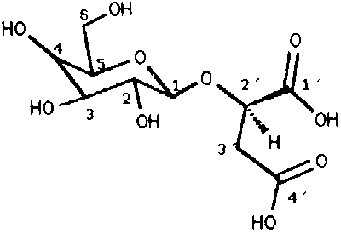
Figure
Acid hydrolysis of the glucoside
The glucoside (43 mg) was treated with 2M trifluoroacetic acid for two hours at 120°C. The reaction mixture was purified over Bio-Gel P-2, eluted with water. A fraction containing pure aglycone was obtained and the latter was shown to be malic acid by NMR and MS spectroscopy and comparison with authentic L-malic acid. Glucose was also isolated from the reaction mixture and identified by sugar analysis and 1H-NMR spectoscopy.
Determination of the absolute configuration
The glucose (2.7 mg) was treated with 2M hydrochloric acid in (+)- 2- butanol (0.2 ml) at 80° for eight hours in a sealed tube (Gerwig, et al, 1978). The mixture was neutralized with silver carbonate and then evaporated to dryness over phosphorus pentoxide. Part of the material was analysed by GC-MS and another part was silylated with a mixture of trimethylchlorosilane-hexamethydisilane (1:3) in pyridine at 22° for thirty minutes, concentrated to dryness, dissolved in ethyl acetate and then analysed by GC-MS. Authentic D-glucose and L-malic acid were treated with racemic and (+)-2-butanol in the same way and injected as references.
Results and discussion
The compound giving green colour with anisaldehyde-sulphuric acid was isolated from S. pereskiifolium as described in the experimental section. Analysis of the 1H and 13C-NMR spectra (Table 1 and 2) showed that the substance consisted of one sugar residue and an aglycone which had one CH2 group, one CH group and two carbonyl carbons. 1H-NMR chemical shifts and coupling constants of the signal from the sugar residue indicated a D- glucopyranoside. The 1H- and 13C-NMR chemical shifts of the CH-signal indicated the presence of a CH-O group (Table 1). Positive FAB-MS produced an ion at m/z 319 (M+Na+) which corresponds to a molecular weight of 296 for the compound. These data, together with the sugar analysis and the determination of the absolute configuration, demonstrated that the substance consists of a b-D-glucopyranosyl group, linked to a hydroxylated dicarboxylic acid. The latter was isolated after acid hydrolysis of the glucoside and separation of the products by chromatography on Bio-Gel P-2.
The 1H-and 13C-NMR spectra of the dicarboxylic acid were compared and found to be identical with spectra of malic acid.
Determination of the absolute configuration of the acid by GC-MS after reaction with 2-(+)-butanol demonstrated it to be L-malic acid. No separation of the D-and L- forms of malic acid could be obtained after the hydroxyl group of the butyl ester was silylated. On the basis of these results, structure 1(2-O-b-D-glucopyranosyl-l-malic acid) was proposed for the isolated compound. This compound inhibited electrically stimulated contractions of the Guinea pig ileum eight times more than the original total aqueous extract. To our knowledge this compound has never been found in higher plants, but itself and the similar D-tartaric acid glucoside have been synthesized by Helferich and Arndt (1965).
Acknowledgements
This work-was partly sponsored by the International Program in the Chemical Sciences at the University of Uppsala, Sweden, which is hereby gratefully acknowledged. Preliminary work was done at the Department of Traditional Medicines and Drugs Research Centre, Kenya Medical Research Institute. A traditional doctor, Mr. C. Obuya, is also gratefully acknowledged for the basic information he gave on the use of the plant.
Table 1: 1H-NMR. Chemical shifts (d values) of 1 isolated from Synadenium pereskiifolium and of L-malic acid (coupling constants Hz in parentheses)
|
Compound |
H-1 |
H-2 |
H-3 |
H-4 |
H-5 |
H-6a |
H-6b |
H-2 |
H-3a |
H-3b |
|
Glucoside (H+) |
4.58 |
3.34 |
3.50 |
3.41 |
3.43 |
3.88 |
3.72 |
4.78 |
2.991 |
2.991 |
|
Glucoside (Na+) |
4.47 |
3.36 |
3.50 |
3.40 |
3.41 |
3.89 |
3.70 |
4.55 |
2.66 |
2.49 |
|
L-malic acid (H+) | | | | | | | |
4.61 |
2.93 |
2.84 |
|
L-malic acid (Na+) | | | | | | | |
4.28 |
2.67 |
2.40 |
Notes
1. The coupling constant could not be obtained from the spectrum. 9 Hz gave the best result in spin simulation experiments.2. Unresolved signals.
Table 2: 13C-NMR Chemical Shifts (d values) of 1 isolated from Synadenium pereskiifolium and L-malic acid
|
Compound |
C-1 |
C-2 |
C-3 |
C-4 |
C-5 |
C-6 |
C-1 |
C-2 |
C-3 |
C-4 |
|
Glucoside (H+) |
102.87 |
73.97 |
76.55 |
70.41 |
76.87 |
61.63 |
174.92 |
74.47 |
38.62 |
174.54 |
|
Glucoside (Na+) |
102.50 |
74.14 |
76.99 |
70.58 |
76.98 |
61.81 |
179.98 |
79.12 |
42.92 |
179.60 |
|
L-malic acid (H+) | | | | | | |
176.60 |
67.07 |
38.98 |
174.62 |
|
L-malic acid (Na+) | | | | | | |
177.71 |
63.53 |
39.65 |
176.66 |
References
Adjanohoun. (ed.) (1983): Traditional Medicine and pharmacopoeia. Agence de Cooperation Culturelle et Technique (Agency for Cultural and Technical cooperation), Paris.
Gerwig, G.J., Kamerling, J. P. and Vliegenthart, J.F.G. (1978): Carbohydr. Res. 62: 349.
Helferich, B. and Arndt, O. (1965): Ann. Chem. 686: 206.
Kokwaro, J. O. (1976): Medicinal Plants of East Africa. East African Literature Bureau. Nairobi.
Nodharni, A. K. (1976): Dr. K. M. Nadkarni's Indian Materia Medica. Popular Prakashan Private Ltd. Bombay.
Oliver, B. (1960): Medicinal Plants of Nigeria, Nigerian College of Arts, Science and Technology, Ibadan.
Samuelsson, G., Kyerematen, G. and Farah, M.H. (1985): J. Ethnopharmacol. 14: 193.
Watt, H.M. and Breyer-Brandwijk, M.G. (1962): The Medicinal and poisonous plants of Southern and Eastern Africa. E. & S Livingstone Ltd. London: 437.
Abietane diterpene quinones from lepechinia bullata
L. T. JONATHAN
Faculty of Science, Chemistry Department
National
University of Lesotho
P.O. Roma 180
LESOTHO
ABSTRACT
Three cytotoxic abietane diterpene quinones, horminone, 7-O-methylhorminone and 6,7-dehydroroyleanone have been isolated for the first time from a methanol (MeOH) extract of Lepechinia bullata (Kunth) Epling (Labiatae). 7-O-methylhorminone is a new natural product, whose structure was unambiguously determined through 1H-13C long range homonuclear correlation (COSY) and heteronuclear correlation (HECTOR) experiments. To date, only a few diterpene quinones have been found to display antitumor activity. In the present study, the three isolates were found to inhibit the growth of P-388 cells although horminone and 7-O-methylhorminone were only marginally active, according to the guidelines of the National Cancer Institute. The compounds did not however, exhibit any significant cytotoxity against KB cells. They represent the first examples of diterpene quinones of the royleanone type to be found cytotoxic against mammalian tumor cells, although horminone has previously been reported to inhibit the growth of Trypanosoma cruzi.
Introduction
Lepechinia bullata (Kunth) Epling (Labiatae), a medicinal plant growing in Colombia, South America, was investigated for antitumour activity. A methanol (MeOH) extract of the above ground parts of the plant was found to be active against P-388 (murine leukaemia) cells (ED50=14.5 mg/ml), but far less sensitive in KB (nasopharyngeal carcinoma) cells (ED50 40.5 mg/ml).
Phytochemical screening of the bioactive MeOH extract afforded three cytotoxic diterpene quinones, viz., horminone (Fester et al., 1956), 7-O-Methylhorminone (Montes, 1969) and 6,7- dehydroroyleanone (Alpandes et al., 1972). 7-O-methylhorminone is a new natural product whose spectroscopic properties were very similar to those of horminone, thus justifying the royleanone type structure (See also Silver, 1968; Delgado et al., 1986):
Lepechinia bullata has not previously been investigated. Other Lepechinia species such as Lepechinia chalepensia (Fester et al., 1956), Lepechinia floribunda (Montes, 1969), Lepechinia speciosa (Alpandes et al, 1972), Lepechinia salviae (Montes et al., 1983), and Lepechinia graveolens (Riscale and Retamar, 1973) have been analysed for their essential oil content. Diterpenes and triterpenes have also been isolated from Lepechinia chamaedryoides (Silva, 1968) and Lepechinia glomerata (Delgado et al., 1986). The isolation and biological screening of the three abietane diterpene quinones from Lepechinia bullata is reported in this paper.
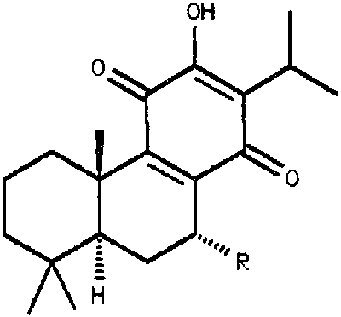
Figure
Materials and methods
Plant material
The aerial parts of Lepechinia bullata were collected in Colombia in May 1976, by a USDA team. Voucher specimens have been deposited at the National Herbarium, Washington D.C., U.S.A.
Isolation and identification
The crude methanol extract, after being washed with petroleum ether, was partitioned between chloroform (CHCl3) and aqueous MeOH. The CHCl3 fraction was chromatographed over silica gel, using CHCl3 as eluting agent. Fractions (500ml) were collected and combined on the basis of thin layer chromatography (tlc) analysis (see fractionation scheme). Fractions 6-19, on standing in the cold room overnight, deposited an orange precipitate, which was purified by preparative tic and recrystallised from CHCl3 to give fraction 3 (see Fig. 1). Fractions 47-48, when left overnight in the cold room, deposited a light-green substance which, on repeated chromatography and recrystallisation, gave Fraction 1. Complete spectral analysis (UV, IR, MS 1H- and 13C-NMR) of Fractions 1 and 3, gave data which were in close agreement with those previously reported for horminone (Hensch et al., 1975) and 6,7-dehydroroyleanone (Hensch et al., 1975), respectively.
Flash chromatography, followed by preparative tic of the yellowish- brown solid obtained by evaporation of fractions 31-42, gave the new compound 2 as yellow needles, mp 126-128°C. It was assigned the structure 7-O-methylhorminone, based on its spectroscopic properties. Its mass spectrum displayed a molecular ion at m/z 346, 14 amu higher than that of horminone (m/z 332), shown by the presence of the methoxyl signal, in both the 1H- and 13C-NMR spectra (d3.45 and 57.3 ppm, respectively). The compound was, therefore, most likely a derivative of horminone, with a methoxyl group at either C-7 or C-12. 12-O-methylhorminone has been synthesised and characterised by Hensch et al. (1975). The 7-O-methyl analogue is hitherto unknown.
Further comparison of the 1H and 13C-NMR spectra of 1 and 2 (Table 2 and 3) showed that the most significant difference between them lies in the chemical shift values for H7 and C7. The methoxyl group in 2 caused the H7 signal to move upfield to d4.32, from d4.73 in 1, and concurrently, C7 absorbed downfield at d0.8 from d63.2. The results are consistent with a methoxyl substituent at C7 and not C12 of horminone.
The uv spectra of 2 provides further evidence for a methoxyl substituent at C7. The absorption at 411 nm exhibited a significant bathochromic shift to 524 nm on addition of NaOH, indicating the presence of a quinonoid hydroxyl group at C12. Similar uv shifts have been reported in diterpene quinones bearing a quinonoid hydroxyl function (Lin et al, 1989).
The stereochemistry at C7 was determined from the 1H-NMR spectrum. Kupchan et al. (1968, 1969) have compared the H-7bH signal of horminone with the H-7ah of taxoquinone, its 7-epimer. They found that at 60 MHz, the H-7bH appeared as a multiplet with W1/2 = 20 Hz, whereas the H-7bH signal was a broad singlet, with W1/2 == 8Hz. In our work, the H7 of 2, measured at 300MHz, was observed as a doublet of doublets with J = 2 and 4Hz, consistent with a b orientation of H7. Compound 2 was, therefore assigned the structure 7-O-methylhorminone.
Biological screening
The MeOH extract and the three isolates were tested for antitumour activity in KB and P-388 cell cultures, according to standard procedures as described previously (Pezzuto et al., 1983, and Arisawa et al, 1984). The results are shown in Table 1. All isolates inhibited the growth of P-388 cells, although 1 and 2 were only marginally active, according to the guidelines of the National Cancer Institute (Geran et al., 1972). They did not, however, show any significant cytotoxicity against KB cells. The three compounds represent the first examples of diterpene quinones of the royleanone type, to be found cytotoxic against mammalian tumour cells. It is worth noting that in both KB and P-388 systems, the unsaturated 6,7-dehydro compound (3) is more active than the 6, 7- saturated structures, leading to speculation that the antitumour activity of these compounds depends on the substitution pattern at the C6-C7 position of these molecules.
Acknowledgements
This work was supported by the Fulbright Program of the United States of America. The Program for Collaborative Research in the Pharmaceutical Sciences (PCRPS), College of Pharmacy, University of Illinois at Chicago, is gratefully acknowledged, for providing the facilities for this investigation. My special thanks go to Dr. Chun-Tao Che, Prof. Harry H.S. Fong, and Prof. Norman R. Farnsworth.
Table 1. Data obtained from pharmacological testing of KB cells (nasopharyngeal carcinoma) and P-388 cells (murine leukemia) with Lepechinia bullata plant extracts and pure compounds
|
Compounds |
|
ED50 |
| |
KB cells |
P-388 cells |
|
Crude MeOH extract |
40.5 mg/ml |
15.5 mg/ml |
|
Horminone |
20.2 mg/ml |
4.6 mg/ml |
|
7-O-methylhorminone |
13.0 mg/ml |
4.8 mg/ml |
|
6,7-dehydroyleanone |
5.7 mg/ml |
1.6 mg/ml |
Table 2. Summary of 1H-NMR of Extracts 1 and 2 (300 MHz, CDCI3)
| |
d (ppm) | |
|
Proton |
Horminone |
7-O-methylhormine |
|
H - 7b |
4.73 (d) |
4.31 (dd) |
|
H - 15 |
3.16 (septet) |
3.18 (septet) |
|
H - 1b |
2.16 (ddd) |
2.68 (ddd) |
|
H - 6a |
1.96 (d) |
2.04 (d) |
|
H - 2b |
1.72 (m) |
1.70 (m) |
|
H - 5 |
1.55 (hidden) |
1.57 (hidden) |
|
H - 3a,b |
1.5 - 2.7 (m) |
1.4 - 1.6 (m) |
|
H - 6a |
1.4 - 1.5 (m) |
1.35 (ddd) |
|
H - 2 |
1.2-1.3 (hidden) |
1.2- 1.3 (m) |
|
Me - 16 |
1.21 (d) |
1.19 (d) |
|
Me - 17 |
1.22 (d) |
1.22 (d) |
|
Me - 20 |
1.22 (s) |
1.22 (d) |
|
H - 1a |
1.1 - 1.2 (m) |
1.1- 1.2 (m) |
|
Me - 1d |
0.98 (s) |
0.95 (s) |
|
Me - 19 |
0.90 (s) |
0.91 (s) |
|
7 - Ome |
- |
3.45 (s) |
Table 3. Summary of data of C-13-NMR of Compunds 1 and 2 (90.8 MHz, CDC13)
| |
d(ppm) | |
|
Carbon |
Horminone (1) |
7-O-methyl-horminone (2) |
|
C - 14 |
189.0 |
186.4 |
|
C - 11 |
183.8 |
184.1 |
|
C - 12 |
151.1 |
150.6 |
|
C - 9 |
147.8 |
147.8 |
|
C - 8 |
143.1 |
141.4 |
|
C - 13 |
124.1 |
124.7 |
|
C - 7 |
63.2 |
70.7 |
|
C - 5 |
45.7 |
45.5 |
|
C - 3 |
41.0 |
41.0 |
|
C - 4 |
39.1 |
39.2 |
|
C - 1 |
35.7 |
35.7 |
|
C - 18 |
33.1 |
33.0 |
|
C - 10 |
33.0 |
33.0 |
|
C - 6 |
25.7 |
22.1 |
|
C - 15 |
23.9 |
24.2 |
|
C - 19 |
21.7 |
21.9 |
|
C - 17 |
19.8 |
19.9 |
|
C - 16 |
19.7 |
19.7 |
|
C - 2 |
18.8 |
18.8 |
|
C - 20 |
18.3 |
18.5 |
|
C - Ome |
- |
57.3 |
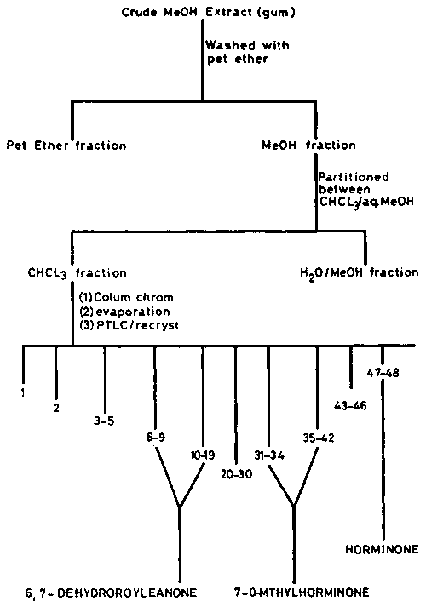
Figure 1: Fractionation scheme for
the extracts from Lepechinia
bullata
Antimicrobial activity of Tanzanian traditional medicinal plants
M.R. KHAN and M.H.H. NKUNYA
Department of Chemistry, University of Dar es Salaam
P.O.
Box 35061, Dar es Salaam, Tanzania
ABSTRACT
A large number of plants used in traditional medicine were screened for antimicrobial activity. In the preliminary screening, Staphylococcus aureus (gram positive bacteria) and Escherichia coli (gram negative bacteria) were used to differentiate between active and non-active plant extracts. The extracts which showed activity were then screened for their antigonococcal and also for antifungal activity. A number of active plants were then phytochemically investigated to isolate the active components. A large number of different types of non-active compounds were also isolated and identified. There is some correlation between the activities and the traditional medicinal uses of the plants studied. Some of the compounds isolated could be responsible for the activity and use of the plants. This paper gives only the in-vitro screening and the results should be used with caution when applied to in-vivo effectiveness in humans. Screening needs to be done in-vivo and the toxicity aspect has to be studied very thoroughly before such crude plant extracts could be given as safe treatment with no serious consequences.
Introduction
In African and most developing countries traditional medicine still forms the backbone of rural medical practice. Medicinal herbs are extensively used for various ailments in these countries. This indicates that some of these medicines, if scientifically evaluated and standardized, could make very valuable medicaments. However, although a number of American (Lucas et al., 1951) and Australian (Atkinson et al., 1955) medicinal herbs have been screened for their medicinal properties, up to now there seem to be no serious attempts to evaluate African medicinal plants in a collective form for their biological activities and medicinal usefulness. However, there are scattered reports of such evaluations for individual or small groups of plants, as it will be noted in various presentations in this conference.
In the literature, it can be noted that Nickell (1959) is among the first researchers to compile an extensive review on biological (antibacterial) activity of vascular plants. Nickell's list of plants included only a few of Tanzanian medicinal plants. We therefore considered it worthwhile to investigate the in vitro antibacterial and antifungal activities of some of the Tanzanian medicinal plants, and ultimately to isolate and identify the active constituents (Sawhney et al., 1978a; Sawhney et al., 1978b: Khan et al., 1979).
We chose to screen the medicinal plants for antifungal activity because, of all human microbial infections, fungal diseases are the most difficult to modify in their course, or to prevent (Lucas et al., 1973; Taylor et al., 1961). It is now becoming more evident that the incidence of such diseases is increasingly becoming prominent.
From the literature (Kokwaro, 1976; Watt et al., 1962) and personal communications with Tanzanian traditional medical practitioners, we established that a number of herbs are used for the treatment of skin diseases, and many of them are said to be very effective. Thus the fruits of Solanum incanum, a weed which is widely distributed in East Africa, are extensively used for the treatment of cutaneous mycotic infections and other pathological conditions. The therapeutic action of the fruits has been attributed to solanine and related glycoalkaloids (Beaman-Mbaya et al., 1976). Similarly, the juice of Emilia sagittata is used for ring worms and athletic's foot. Although no chemical work is reported on this plant, a very potent antimicrobial and pharmacological agent, emiline (1), has been obtained from another plant of the same genus, E. flammea (Tomczyk et al., 1971).
Apart from using Staphylococcus aureus and Escherichia coli as test bacteria, we also included the essay of the crude plant extracts for their antigonococcal activity. This is because gonorrhoea is among the most common venereal diseases, both in rural and urban populations in Africa (Becker, 1973). Despite the introduction of sulphonamides and antibiotics, a large proportion of rural populations in developing countries still rely on local herbs for the treatment of gonorrhoea. Thus, in West Africa for example, cottonwood tree (Bombax sp.), Alchronea cordifolia, A. floribunda, Mussaenda elegans, Craterspermum laurinum and Aframomum baumannii are commonly used (Harley, 1970). There are also similar example in East Africa (Kokwaro, 1976).
In this paper we will give an overview of the results on the screening of crude plant extracts for their antibacterial, antigonococcal and antifungal activity and the phyto-chemical investigations on some of the most active plants.
Antibacterial activity
In all, 134 plant extracts were tested for their activity against S. aureus and E. coli in vitro. An extract which failed to inhibit the growth of the test bacteria was regarded as being inactive. Results are summarized in Table 1, in which the inactive extracts are not shown.
Phytochemical investigations on some of the most active extracts have revealed the active constituents of the plants. Thus the activity of Euclea natalensis can be attributed to 7- methyljuglone (2), mamegakinone (3) and diospyrin (4). These compounds, which were isolated from the plant, have been found to be active against S. aureus and a few other bacteria (Table 2).
The antibacterial activity of Harrisonia abyssinica root bark, which showed an activity against S. aureus, comparable to 5 units of penicillin G, has been traced to be due to the limonoid harrisonin (5) (Kubo et al., 1976). The latter compound, which was the only active component of this plant, showed a minimum inhibitory concentration of 5 mg/ml (Mosile, 1980).
Another most active plant is Acacia nilotica. This plant is known to contain phenylethyl alkaloids and flavonoids. Although these compounds have not been tested, we found the activity to be concentrated in the acidic fraction of the extract, which contains the flavonoids.
Active compounds which have been isolated from some of the most active plant extracts are shown in Chart 1.
Antigonococcal activity
In this category of assay, extracts from 88 Tanzanian medicinal plants were tested for their in vitro activity against Neisseria gonorrhoea isolates from clinical cases, which were isolated and maintained at the Department of Microbiology and Immunology, Faculty of Medicine, University of Dar es Salaam (Sawhney et al, 1978a). Results are shown in Table 3. It is interesting to note that some of the plants used locally for the treatment of gonorrhoea are very active against the pathogenic bacteria. Furthermore, 82% of the plants listed in Table 4 were also active against S. aureus. More than 40% of the plant extracts without antigonococcal activity showed various levels of inhibition of S. aureus. This, in a way, ruled out the effect of nonspecific factors, such as acidity, on the observed activity.
Antifungal activity
In all, 124 plants were screened for activity against the common dermatophyte, Trichophyton mentagrophytes, as well as Candida albicans. Results are summarized in Table 4.
As it can be noted in Table 4, the highest level of antifungal activity was exhibited by extracts of Emillia sagittata, Securrinega virosa (pulp) and Sida serratifolia (roots) (Sawhney et al., 1978b). Apparently, none of these plants is used to treat dermatomycoses in East Africa. Instead these plants are used for miscellaneous ailments, such as eye inflammation, topical dressing for wounds and contusions, diarrhoea, gonorrhoea, pneumonia, pulmonary tuberculosis and dysentery, most of which are bacterial diseases (Kokwaro, 1976; Watt et al, 1962). Incidentally, among the above plants only S. serratifolia showed antibacterial activity in vitro (Table 1). Such results may suggest that either the antibacterial activity is exhibited only in vivo, in patients, or the plants are used just as a matter of tradition. Again, the observed antifungal activity, despite the plants not being used traditionally for fungal related diseases, gives us a good indication that a lot is yet to be discovered regarding the diverse usefulness of medicinal plants.
Phytochemical investigations
We have carried out extensive phytochemical investigations on some of the most active plants shown in Tables 1, 4 and 5, with the aim of isolating the active constituents. Thus from Euclea natalensis we isolated several naphthaquinones, among which the active ones are listed in Table 2 (Khan et al., 1979).
Several triterpenoids and naphthaquinones have been isolated from various Diospyros species (Ebenaceae), but only 7-methyljuglone, diospyrin and mamegakenone were the active compounds in this series. Eleven Cassia species have been analysed for their constituents, and in addition to emodine (6), aloe-emodine (7) and barakol (8), several other anthraquinones have been isolated, some of which were obtained for the first time (Mutasa, et al., 1990).
Maerua angolensis (Capparidaceae) is among the plants which exhibited a high antifungal activity. We have isolated several C12, C14 and C18 fatty acids and esters from this plant, and most of these compounds showed antifungal activity (Nkunya, 1985).
Among the plants of the family Annonaceae, which were included in the screening tests, were those belonging to the genus Uvaria. In the literature some of these plants are reported to possess a wide range of biological activities. Furthermore, these plants have been found to contain compounds with interesting chemical structures, some of which are also the active components of the plant extracts. These findings prompted us to carry out extensive phytochemical investigations of these plants. In the course of these investigations, we have isolated more than forty compounds from nine Uvaria species found in Tanzania. An account of these compounds, regarding their biological activities, has been given by Nkunya (1990, this conference), in a paper on the antimalarial activity of the compounds. Apart from this, the compounds have shown activity against some bacteria and tumour cells. Among the active compounds are (+)-b-senepoxide (9), (+)-pandoxide (10) and (-)-pipoxide (11) (Nkunya et al, 1986). Results on the antibacterial activity are shown in Table 5.
Conclusion
The results discussed in this paper do not claim that the plants we have investigated and the pure compounds therefrom are safe medicines. Their efficacy and safety can only be established by very careful toxicity and pharmacological studies, followed by clinical trials using usual protocols. Our results definitely have provided a basis for further investigations on similar lines, as well as on the toxicity and pharmacological aspects of the extracts, and pure compounds. We hope that the leads presented here will be pursued exhaustively by the scientific community.
References
Atkison, A. and Brice, C. (1955). Austr. J. Exptl. Biol. Med. Sci. 33: 547 - 554.
Beaman-Mbaya, V. and Muhammed, S. I. (1976). Antimicrob. Agents Chemother. 9: 920 - 924.
Becker, N. L. (1973). In Clinical Medicine in Africans in Southern Africa. Campbell, G.D., Seedat, Y.K. and Daynes, G. (Eds). Churchill/Livingstone, London: 465.
Harley, G.W. (1970). Native African Medicine, Frank Cass, London.
Khan, M.R., Mutasa, S.L., Ndaalio, G., Wevers, H. and Sawhney, A.N. (1978): Pakistan J. Sci. Ind. Res. 21: 197 - 199.
Khan, M.R., Ndaalio, G., Nkunya, M.H.H., Wevers, H. and Sawhney, A.N. (1980). Planta Med., Suppl.: 91 - 97.
Kokwaro, J. O. (1976). Medicinal Plants of East Africa, East African Literature Bureau, Nairobi.
Kubo, I., Tanis, S. P., Lee, Y., Miuva, F., Nakanishi, K. and Chapya, A. (1976). Heterocycles 5: 485.
Lucas, A. O. and Gilles, H.M. (1973). A short Textbook of Preventive Medicine for the Tropics. English University Press, London: 127.
Lucas, E. H., Lickfield, A., Gottshall, F. and Jennings, J. C. (1951). Bull. Torrey Bot. Club 78: 310 - 321.
Mosile, F. W. (1980). Chemical studies and antimicrobial activity of some Tanzanian medicinal plants: M.Sc, Thesis, University of Dar es Salaam.
Mutasa, S.L., Khan, M.R. and Jewers, K. (1990). Planta Med. 56: 244.
Nickell, L. G. (1959). Econ. Bot. 13: 281 - 318.
Nkunya, M. H. H. (1985). A search for potentially useful compounds from some Tanzanian plants: In Proc. Sci. Symp. Univ. Dar es Salaam, Publisher: Tanzania Commission for Science and Technology: 73-75.
Nkunya, M. H. H. and Weenen, H. (1986). Chemical investigations of a Tanzanian medicinal plant: Uvaria pandensis Verdc (Annonacese). In: Proc. 3rd Internat. Chem. Conf. Africa, Lome (Togo): 313 - 317.
Nkunya, M. H. H. (1990). Chemical evaluation of Tanzania Medicinal Plants for active constituents as a basis for the medicinal usefulness of the plants. In Proc., this conference.
Sawhney, A. N., Khan, M.R., Ndaalio, G., Nkunya, M.H.H. and Wevers, H. (1978a). Pakistan J. Sci. Ind. Res. 21: 189 - 192.
Sawhney, A. N., Khan, M.R., Ndaalio, G., Nkunya, M. H. H. and Wevers, H. (1978b). Pakistan J. Sci. Ind. Res. 81: 193 - 196.
Taylor, E. P. and D'Arcy, P. F. (1961). Progress in Medicinal Chemistry, Plenum Press, New York: 220.
Tomaczyk, H. and Kohlmuenzer, S. (1971). Herba Pol. 17, 226 (Chem. Abstr. 1972, 77: 1984)
Watt, J. M. and Breyer - Brandwijk, M. G. (1962). Medicinal and Poisonous Plants of Southern and Eastern Africa, 2nd Ed., Livingstone, London.
Table 1: Susceptibility of Staphylococcus aureus and Escherichia coli to various plant extracts
|
Antibacterial activity | |||||
|
Name of the plant |
Family |
Part |
Traditional uses |
Staphylococcus aureus |
Escherichia coli |
|
Anona senegalensis Pers. |
Annonaceae |
Bark |
Intestinal worms, guinea worms, dysentery |
+ |
0 |
|
Uvaria acuminata Oliv. |
Annonaceae |
Roots |
Epilepsy, sunstroke, tonsillitis, lunasy |
+ |
0 |
|
Uvaria acuminata Oliv. |
Annonaceae |
Leaves |
Epilepsy |
+ |
0 |
|
Dictyophleba lucida |
Apocynaceae |
leaves |
No known use |
++ |
++ |
|
Pierre Plumeria rubra L. |
Apocynaceae |
Bark |
Itching, diarrhoea gonorrhoea, dropsy, purgative, skin diseases, syphilis |
++ |
0 |
|
Kigelia africana (Lam.).) Berth |
Bignoniaceae |
Bark |
Wounds, sores, gynaecological conditions, ulcers, abscesses, dysentery |
++ |
0 |
|
Tecomaria capensiss Spach. |
Bignoniaceae |
Leaves |
Pneumonia, bleeding gums, diarrhoea, enteritis |
+++ |
++ |
|
Ehretia amoena Klotzch |
Boraginaceae |
Root-bark |
For pains about the waist (stitch) |
++ |
+ |
|
Boscia salicifolia O. |
Capparidaceae |
Bark |
Chiufa, various women's diseases |
++ |
0 |
|
Boscia salicifolia O. |
Capparidaceae |
Leaves |
Chiufa, remedy for fever in cattle |
++ |
+ |
|
Maerus angolensis D.C. |
Capparidaceae |
Bark |
Roots used for homocidal purposes, treatment of lupus, influenza, toothache |
+ |
0 |
|
Carica papaya L. |
Caricaceae |
Roots |
Venereal diseases, anti-helmintic, akin |
0 |
+ |
|
Elaeodendron schlechteranum (L.) |
Celastraceae |
Roots |
Elaeodendron sp. to abscesses and carbuncles |
++ |
0 |
|
Vernonia hildebrandtii V. |
Compositae |
Leaves stem |
Cough, strangulated hernia, stomach troubles |
+++ |
0 |
|
Cyperus rotundus L. |
Cyperaceae |
Tuber |
Diuretic, emmenagogue, liver and heart desease remedy, headache cure, carminative |
+++ |
0 |
|
Tetracera boiviniana B. |
Dilleniceae |
Root-bark |
No known use |
++ |
0 |
|
Diospyros mespiliformis Hoechst ex DC |
Ebenaceae |
Leaves |
Anthelmintic, wounds & sores, leprosy, dysentery, coughs |
+ |
0 |
|
Euclea natalensis A.DC. |
Ebenaceae |
Root-bark |
Gonorrhoea, syphilis, hookworm, relief of toothache, ulcers |
++ |
0 |
|
Acalypha fruticosa F. |
Euphorbiaceae |
Leaves |
Cholera, stomach ache coughs, chest pains |
++ |
0 |
|
Euphorbia hirta L. |
Euphorbiaceae |
Plant |
Gonorrhoea, dysentery, boils, coughs, ophtholmic, wounds. |
+++ |
++ |
|
Phyllanthus niruri L. |
Euphorbiaceae |
Plant |
Gonorrhoea, ulcers jaundice, sores urino-genital diseases. |
++ |
++ |
|
Phyllanthus reticulatus P. |
Euphorbiaceae |
Leaves |
Gonorrhoea, venereal sores, hookworms, anaemia. |
++ |
0 |
|
Pseudolachmaestylis maprouneaefolia Pax |
Euphorbiaceae |
Bark |
Stomachache, cathartic |
++ |
0 |
|
Ricinus communis L. |
Euphorbiaceae |
Plant |
Venereal diseases, ulcers diarrhoea, fungicidal, eardrop |
++ |
0 |
|
Seccurinega virosa B. |
Euphorbiaceae |
Roots |
Gonorrhoea |
+ |
++ |
|
Hoslundia opposita Vahl |
Labiatae |
Plant |
Gonorrhoea, cystitis, coughs, wounds, liver disease, blennorrhoea, hookworms. |
+++ |
0 |
|
Cassytha filiformis L. |
Lauraceae |
Plant |
For vermin, gonorrhoea dysentery, syphilis, snake bite wounds |
++ |
0 |
|
Acacia mellifera Vahl |
Leguminosae |
Bark |
Syphilis, pneumonia, malaria, sterility, stomachache |
+ |
0 |
|
Acacia nilotica Del. |
Leguminosae |
Plant |
Tuberculosis, pneumonia, gonorrhoea, diarrhoea, smallpox |
+++ |
++ |
|
Acacia robusta Burch. |
Leguminosae |
Root-bark |
No known use |
++++ |
++ |
|
Acacia sieberiana DC. |
Leguminosae |
Bark |
Gonorrhoea, stomachache, diarrhoea, haemorrhage. |
+++ |
0 |
|
Bauhinia reticulata DC. |
Leguminosae |
Plant |
Dysentery, leprosy, roundworms, anthrax, malaria, cough |
++ |
0 |
|
Caesalpinia pulcherrimai Swartz |
Leguminosae |
Flowers |
Lung disease, fever, skin diseases |
+ |
0 |
|
Caesalpinia pulcherrima Swartz |
Leguminosae |
Bark |
Lung disease, fever skin disease |
++ |
0 |
|
Caesalpinia pulcherrima Swartz |
Leguminosae |
Root-bark |
Lung disease, fever skin diseases |
++ |
0 |
|
Cassia abbreviata Oliv. |
Leguminosae |
Dry - roots |
Gonorrhoea, syphilis, diarrhoea, dysentery pneumonia, malaria |
++ |
0 |
|
Cassia fistala L. |
Leguminosae |
Bark |
Dysentery, blackwater fever, anthrax, malaria |
+++ |
0 |
|
Cassia obtusifolia L. |
Leguminosae |
Whole plant |
Stomach troubles |
++ |
+ |
|
Dichrostachys cinerea W. |
Leguminosae |
Stem & branches |
Gonorrhoea, syphilis, skin diseases |
+++ |
+ |
|
Lonchocarpus bussei Harms. |
Leguminosae |
Bark |
Gonorrhoea, cough |
++ |
0 |
|
Peltophorum petocarpum (DC.) K. |
Leguminosae |
Bark |
Dysentery, diarrhoea, colic, sore eyes |
++ |
0 |
|
Pongania pinnata (L.)P. |
Leguminosae |
Leaves Root-bark |
Scabies, cutaneous infection |
++ |
0 |
|
Pongania. Pinnata (L.)P. |
Leguminosae |
Seeds |
Scabies, cutaneous infection |
++ |
0 |
|
Asparagus falcatus L. |
Liliaceae |
Leaves |
Syphilis |
++ |
0 |
|
Sida serratifolia L. |
Malvaceae |
Leaves |
Gonorrhoea |
+++ |
0 |
|
Sida serratifolia L. |
Malvaceae |
Roots |
Gonorrhoea |
+++ |
0 |
|
Psidium guajava L. |
Myrtaceae |
Leaves |
Diarrhoea, skin diseases |
++ |
0 |
|
Brackenridgea zanguebarica Oliv. |
Ochnaceae |
Root-bark |
Wounds, snakebites |
+ |
0 |
|
Ziziphus pubescens Oliv. |
Rhamnaceae |
Leaves |
Pneumonia, diarrhoea dysentery, wounds, skin diseases |
+++ |
0 |
|
Lamprothamnus zanguebaricus Hiern. |
Rubiaceae |
Leaves |
No known use |
++ |
0 |
|
Fagara chalybaea Engl. |
Rutaceae |
Root-bark |
Diarrhoea, coughs, malaria, toothache |
++ |
0 |
|
Allophylus rubifolius (A.Rich.) |
Sapindaceae |
Roots |
Diarrhoea, toothache |
+ |
0 |
|
Solanum incanum L. |
Solanaceae |
Plant |
Pneumonia, ringworms, liver disease, gonorrhoea, syphilis, ear ache |
+ |
0 |
|
Solanum incanum L. |
Solanaceae |
Fruits |
Dandruff, skin diseases, sores and wounds |
++ |
0 |
|
Harrisonia abyssinica Oliv. |
Simaroubaceae |
Root-bark & twig |
Skin diseases, haemorrhoids |
++++ |
0 |
|
Grewia forbesii Harv. ex Mast. |
Tiliaceae |
Bark & roots |
Rheumatism, lumbago, stiff neck |
+++ |
0 |
|
Lantana camara L. |
Verbenaceae |
Leaves |
Coughs, sore throat, colds, conjunctivitis, toothache |
+ |
0 |
|
Premna chrysoclada G. |
Verbenaceae |
Leaves |
Ulcers, venereal diseases |
++ |
0 |
|
Vitex fischeri. G |
Verbenaceae |
Leaves |
Chronic venereal diseases, epilepsy as sedative, skin diseases. |
++ |
0 |
|
Rhoicissus rovoilii P. |
Vitaceae |
Roots |
Wounds, optholmic remedy |
+ |
0 |
Table 1a: Sensitivity of test organisms against a number of standard antibiotics
|
Standard Antibiotics |
diameter of Zones of inhibition (mm) | ||||
| |
+ |
++ |
+++ |
++++ |
Test Organisms |
|
Penicillin G. (Units) |
2 |
3 |
4 |
5 | |
|
Septrin (SXT) (mg) |
15 |
20 |
25 |
30 | |
|
Tetracycline (mg) |
25 |
32 |
42 |
60 |
Staphylococcus aureus (Oxford) |
|
Streptomycin (mg) |
7 |
9 |
12 |
15 | |
|
Sulphathiamoxazole (mg) |
12 |
18 |
24 |
30 | |
|
Nalidixic acid (mg) |
15 |
24 |
30 |
35 | |
|
Furadantoin (mg) |
75 |
100 |
125 |
130 |
Escherichia coli (055) |
|
Gentamycin (mg) |
23 |
30 |
36 |
43 | |
Table 2: Susceptibility of some microorganisms to some naphthoquinones
|
Bacteria |
Zones of inhibition (mm) | ||
| |
7-Methyl-juglone |
Diospyrin |
Mamegakinone |
|
Klobsiella aeroganesae (from urine) |
11 |
9 |
11 |
|
Shigella dysenteriae |
14 |
14 |
9 |
|
Shigella flexnerii |
12 |
11 |
0 |
|
Corynebacterium diphtheriae |
13 |
14 |
- |
|
Bacillus anthracis |
17 |
13 |
- |
|
Bacillus cereus |
9 |
10 |
0 |
|
Salmonella hidelberg |
8 |
8 |
8 |
|
Hamophilus influenzae |
11 |
12 |
10 |
|
Pseudomonas aureginosae |
0 |
0 |
0 |
|
Escherichia coli |
0 |
0 |
0 |
|
Clostridium wolchii |
8 |
0 |
0 |
|
Staphylococcus aureus |
11 |
0 |
22 |
|
Neisseria gonorrhoeae |
24 |
0 |
14 |
The 10 - 15mm zone of inhibition is comparable to the one caused by 25 mg of tetracycline
Table 3: In vitro antigonococcal activity of some Tanzanian medicinal plants
|
Plant |
Family |
Part |
Traditional uses |
Antigonococcal activity |
|
Sclerocarya caffra Sond. |
Anacardiaceae |
Bark |
Dysentery, diarrhoea, gangrenus, rectitis, insecticide |
+ |
|
Uvaria acuminata Oliv. |
Annonaceae |
Leaves |
Epilepsy |
++ |
|
Kigelia africana (Lam.) Benth. |
Bignoniaceae |
Bark |
Wounds, sores, for gynaecological conditions, ulcers, abscesses, dysentery |
++ |
|
Tecomaria capensis Spach. |
Bignoniaceae |
Leaves |
Pneumonia, bleeding gums, diarrhoea, enteritis |
++ |
|
Tetracera boiviniana Baill. |
Dileniceae |
Roots |
No known use |
+ |
|
Euclea natalensis A.DC. |
Ebanaceae |
Root-bark |
Gonorrhoea, diarrhoea, dysentery, bleeding gums |
+ |
|
Phyllanthus reticulatus P. |
Euphorbiaceae |
Leaves |
Gonorrhoea, venereal sores, hookworms, anaemia |
++ |
|
Ricinus communis L. |
Euphorbiaceae |
Plant |
Venereal diseases, ulcers, diarrhoea, fungicidal, eardrop |
+++ |
|
Acacia nilotica Del. |
Leguminosae |
Bark |
Tuberculosis, pneumonia, gonorrhoea, diarrhoea, smallpox |
++++ |
|
Albezia harveyi Fcurn |
Leguminosae |
Roots |
Any intestinal troubles |
+ |
|
Bauhinia reticulatus DC. |
Leguminosae |
Plant |
Dysentery, leprosy, roundworms, anthrax, malaria, cough |
+ |
|
Caesalpinia pulcherrima Swartz. |
Leguminosae |
Flowers |
Lung diseases, fever, skin disease |
+ |
|
Cassia abbreviata Oliv. |
Leguminosae |
Dry roots |
Gonorrhoea, syphilis diarrhoea, dysentery pneumonia, malaria |
+ |
|
Cassia obtusifolia L. |
Leguminosae |
Whole plant |
Stomach troubles |
+++ |
|
Lonchocarpus bussei Harms. |
Leguminosae |
Leaves, roots & bark |
Gonorrhoea, cough |
+ |
|
Malvastrum coramandelianum (L) Garcke. |
Malvaceae |
Plant |
Wounds, diaphoretic, sores |
+ |
|
Sida serratifolia L. |
Malvaceae |
leaves |
Pulmonary tuberculosis, diarrhoea |
+++ |
|
Sida serratifolia L. |
Malvaceae |
Roots |
Gonorrhoea |
++ |
|
Psidium guajava L. |
Myrtaceae |
Leaves |
Diarrhoea, skin diseases |
+ |
|
Ziziphus pubescens Oliv. |
Rhamnaceae |
Stern |
Measles, gonorrhoea |
+ |
|
Fagara chalybaea Engl. |
Rutaceae |
Root-bark |
Diarrhoea, coughs, malaria, toothache |
+++ |
|
Harrisonia abyssinica, O. |
Simarubaceae |
Twig & rootbark |
Skin diseases, haemorrhoids |
+++ |
|
Premna chrysoclada G. |
Verbenaceae |
Leaves |
Ulcers, venereal diseases. |
+ |
The following plants did not show any antigonococcal activity:
Acanthaceae: Barleria prionitis L. (roots, leaves and bark); Amaranthes aspera L. (plant);
Anacardiaceae: Rhus natalensis Bernh. (leaves), Lannea stuhlmannii Engl. (leaves);
Annonaceae: Anona senegalensis Pers (bark), Uvaria acuminata Oliv. (roots);
Apocynaceae: Calotropis gigantea Ait. f. (leaves), Dictyophleba lucida Pierre. (leaves, trunk), Nerium oleander L. (leaves), Plumeria rubra L. (bark);
Araceae: Stylochiton hennigii Engl. (roots and leaves);
Boraginaceae: Ehretia amoena Klotzch. (root bark);
Capparidaceae: Boscia salifolia Oliv. (bark, leaves), Maerua angolensis DC. (bark); Carica papaya L. (leaves, roots, (bark);
Celastraceae: Elaeodendron schlechteranum Loes. (roots);
Combretaceae: Combretum zeyheri Sond. (fruits, plant), Terminalia catappa L. (leaves); Compositae: Aspilia natalensis Willd. (roots), Emilia sagittata D.C. (plant);
Convolvulaceae: Bonamia mossambicensis Hall. f. (roots);
Cyperaceae: Cyperus rotundus L. (tuber);
Ebenaceae: Diospyros mespiliformis Hochst ex DC (leaves);
Euphorbiaceae: Acalypha fruticosa Forsk, (roots), Fluggea virosa Baill. (bark), Phylanthus niruri L. (plant), Pseudolachmaestylis maprouncaefolia Pax. (bark), Securinega virosa Baill, (bark, pulp);
Icacinaceae: Pyrenacantha kaurabassana Baill (tuber, green fruits); Labiatae: Hoslundia opposita Vahl. (leaves), Leonotis nepetaefolia R. Br. (plant);
Lauraceae: Cassytha filiformis L. (plant);
Leguminosae: Acacia robusta Burch (rootbark), A. Senegal Wild. (roots), Adenanthera pavonina L. (seeds), Caesalpinia pulcherrina Swartz (bark), Cassia fistula L. (bark), C. amiculata L. (seeds and bark), Desmodium sp. (plant), Dichrostachys cinerea Wight. Am. (roots), Peltophorum petocarpum K. (roots, bark), Pongania pinnata L. (leaves, rootbark, seeds), Pterocarpus angolensis DC (bark), Stylosanthes fruticosa Alston. (plant), Xeroderris stuhlmannii Taub. (plant);
Liliaceae: Asparagus falcatus L. (plant);
Malvaceae: Sida spinosa L. (leaves);
Rhamnaceae: Ziziphus pubescens Oliv (leaves);
Rubiaceae: Lamprathamnus zanguebaricus Hiern. (leaves);
Rutaceae: Citrus aurantifolia Swingle. (roots);
Sapindaceae: Allophylus rubifolius Engl. (stem);
Solanaceae: Withania somnifera Dun (plant);
Sterculiaceae: Dombeya shupangae K. Schum (leaves), Melhania velutina Forsk. (leaves), Waltheria indica L. (flowers, leaves);
Tiliaceae: Corchorus olitorius L. (fruits and seeds), Grewia forbesii Hary ex Mast. (bark and roots), G. Stuhlmannii K. Schum (roots), Trimimfetta rhomboidea Jacq. (bark and roots);
Verbenaceae: Lantania camara L. (leaves), Vitex fischeri Guerke. (leaves), Vitex sp. (roots);
Vitaceae: Cissus integrifolia Manch. (stem), Rhoicissus rovoilii Planch (roots).
Table 4: Susceptibility of fungi to various plant extracts
|
Plant |
Family |
Part |
Traditional uses |
Antifungal activity |
|
Group A |
| | |
|
|
Plumeria rubra L. |
Apocynaceae |
Bark |
Itching, diarrhoea, gonorrhoea, dropsy, purgative, skin disease, warts, syphilis |
++ |
|
Zizyphus pubescens Oliv. |
Rhamnaceae |
Leaves |
Pneumonia, diarrhoea dysentery, wounds, skin diseases |
++ |
|
Solanum incanum L. |
Solanaceae |
Plant |
Pneumonia, ringworms, liver disease, gonorrhoea, syphilis, earache |
++ |
|
Solanum incanum L. |
Solanaceae |
Fruits |
Dandruff, skin diseases, sores, & wounds |
++ |
|
Harrisonia abyssinica Oliv. |
Simaroubaceae |
Root-bark & twig |
Skin diseases, haemorrhoids. |
+++ |
|
Waltheria indica L. |
Sterculiaceae |
Flowers |
Skin diseases, syphilis, cleansing wounds, coughs, sores. |
+ |
|
Vitex fischeri Guerke. |
Verbenaceae |
Leaves |
Chronic venereal disease, epilepsy, as sedative, skin diseases. |
+ |
|
Group B |
| | |
|
|
Dictyophleba lucida (K. Schum.) Pierre. |
Apocynaceae |
Leaves |
No known use |
+++ |
|
Dictyophleba lucida (K. Schum.) Pierre. |
Apocynaceae |
Trunk |
No known use |
+++ |
|
Holarrhena febrifuga Klotzsch. |
Apocynaceae |
Leaves |
Snake bite, venereal diseases, dysentery |
++ |
|
Ceiba pentandra Gaertn. |
Bombacaceae |
Leaves |
Gonorrhoea and as dressings for wounds |
+ |
|
Boscia salicifolia Oliv. |
Capparidaceae |
Bark |
Rectal infections |
++ |
|
Combretum zeyheri Sond. |
Combretaceae |
Whole plant |
Diarrhoea |
+++ |
|
Emilia sagittata DC. |
Composite |
Whole plant |
For inflammation of eyes, contusion, ulcerative processes, nasal disease syphilis |
++++ |
|
Bonamia mossammbicensis (Klotzsch.) Hall. f. |
Convolvulaceae |
Leaves |
Wounds |
++++ |
|
Bonamia messambicensis (Klotzsch.) Hall. f. |
Convolvulaceae |
Roots |
Wounds |
+++ |
|
Bridelia cathartica B. |
Euphorbiaceae |
Stem |
Purgative, stomach ache |
+ |
|
Phyllanthus reticulatus P. |
Euphorbiaceae |
Plant |
Gonorrhoea, ulcers, jaundice sores, urogenital diseases |
+ |
|
Pseudolachnostylis maprouneaefolia Pax. |
Euphorbiaceae |
Bark |
Stomach ache, cathartic |
++ |
|
Securinega virosa (Wind.) Baill. |
Euphorbiaceae |
Pulp |
Diarrhoea, gonorrhoea, pneumonia |
++++ |
|
Cassia amiculata L. |
Leguminosae |
Bark |
Headache, toothache |
++ |
|
Xeroderris stuhlmanii T.- |
Leguminosae |
Plant |
Colds, chest troubles, elephantisis |
+ |
|
Asparagus falcatus L. |
Liliaceae |
leaves |
Syphilis |
+ |
|
Hibiscus micranthus L. |
Malvaceae |
Plant |
Earache, bronchitis, renal remedy |
++ |
|
Sida serratifolia L. |
Malvaceae |
Leaves |
Pulmonary tuberculosis, diarrhoea |
+++ |
|
Sida serratifolia L. |
Malvaceae |
Roots |
Gonorrhoea |
++++ |
|
Citrus aurantifolia Swingle. |
Rutaceae |
Roots |
Gonorrhoea, dysentery |
++++ |
|
Fagara chalybea Engl. |
Rutaceae |
Root-bark |
Diarrhoea, coughs, malaria, toothhache |
++ |
|
Deinbollia borbonica nica R. |
Sapindaceae |
Roots |
Chest troubles, abdominal pains |
+ |
Plant extracts which did not show any in vitro antifungal activity:
Acanthaceae: Barleria prionitis L. (roots, leaves and bark);
Amaranthaceae: Achyranthes aspera L. (plant);
Anacardiaceae: Rhus natalensis Bernh. (leaves), Lannea stuhlmannii Engl. (leaves);
Annonaceae: Anona senegalensis Pers. (bark), Uvaria acuminata Oliv. (leaves, roots);
Apocynaceae: Calotropis gigantea Ait. F. (leaves), Nerium oleander L. (leaves); Stylochiton hennigii. (roots and leaves);
Bignoniaceae: Kigelia africana Benth. (bark), Tecomaria capensis Spach. (leaves);
Boraginaceae: Ehretia amoena Klotzch. (root bark);
Capparidaceae: Boscia salicifolia Oliv. (leaves), Maerua angolensis DC. (bark, leaves);
Caricaceae: Carica papaya L. (green fruits, bark);
Celastraceae: Elaeodendron schlechteranum Loes. (roots, leaves);
Combretaceae: Combretum zeyheri Sond: (fruits), Terminalia catappa L. (leaves); Compositae: Vernonia hildebranditii Vatke, (leaves and stem), V. cinerea Less. (plant);
Connaraceae: Byrsocarpus orientalis Bak. (plant);
Dilleniceae: Tetracera boiviniana Baill. (rootbark);
Ebenaceae: Diospyros mespiliformis Hochst. ex. DC (leaves);
Euphorbiaceae: Acalypha fruticosa Forsh (leaves, roots), Antidesma venosum E. May. (root bark), Bridelia cathartica Bertol. f. (leaves), Euphorbia hirta L. (plant), Fluggea virosa Baill, (bark), Phyllanthus reticulatus Poir. (leaves), Securinega virusa Baill (roots);
Icacinaceae: Pyrenacantha caurabassana Baill (tuber, green fruits); Labiatae: Hoslundia opposita Vahl (leaves), Leonotis nepetaefolia R. Br. (plant);
Lauraceae: Cassytha piliformis L. (plant);
Leguminosae: Acacia mellifera Vehl. (bark), A. robusta Burch. (root bark), A. senegal Willd. (roots), Adenanthera pavonina L. (seeds, leaves), Bauhinia reticulata DC. (plant), Caesalpinia pulcherrina Swartz. (flowers, rootbark), Cassia fistula L. (bark), C. obtusifolia L. (plant), C. occidentalis L. (plant), Desmodium sp. (plant), Dichrostachys cenerea Wight. Arn.(stem), Peltophorum petocarpum K. (roots, bark), Pongamia pinnata P. (leaves and rootbark), Pterocarpus angolensis DC. (bark), Stylosanthes fruticosa Alston. (plant);
Liliaceae: Asparagus sp. (plant);
Loganiaceae: Strychnos madagascarensis Poir. (root bark);
Malvaceae: Malvastrum coromandelianum Garcke. (plant), Sida cordifolia L. (roots), S. serratifolia L. (plant), S. spinosa L. (roots, leaves);
Ochnaceae: Brackenridgea Zanguebarica Oliv. (root bark);
Rhamnaceae: Zizyphus pubescens Oliv. (stem);
Solanaceae: Withania somnifera Dun. (plant),
Sterculiaceae: Dombeya shupangae K. Schum. (bark, leaves), Melhania velutina Forsk. (leaves), Waltheria indica L. (leaves);
Tiliaceae: Corchorus olitorius L. (fruits and seeds), Grewia stuhlmannii K. Schum. (roots), Triumfetia rhomboidea jacq. (bark and roots);
Verbenaceae: Lantana camara L. (leaves), Vitex sp. (plant, roots);
Vitaceae: Cissus rotundifolia Vahl. (leaves),
Table 5: Zones of inhibition of bacterial growth (nun) by (+)-b-senepoxide and (+)-pandoxide
|
Bacteria |
Zones of inhibition (diameter) | |
| |
(+)-b-senepoxide |
(+)-pandoxide |
|
Escherichia coli |
29 |
20 |
|
Staphylococcus aureus |
20 |
16 |
|
Klebsiella pneumoniae |
23 |
15.5 |
|
Pseudomonas aeroginosa |
20 |
20 |
|
Bacillus subtilis |
22 |
22 |
|
Salmonella typhi |
21 |
19 |
Both the compounds showed bacteristatic activity and no bactericidal properties. (+)-b-Senepoxide showed a minimum inhibitory concentration (MIC) of 62.5 mg/ml.
Chart 1: Some antibacterial compounds from Tanzanian medicinal plants.
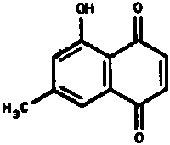
2
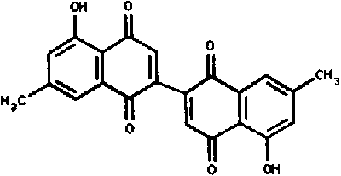
3
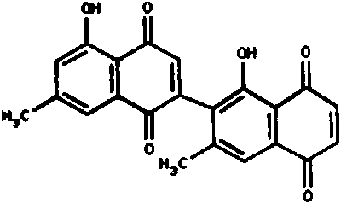
4
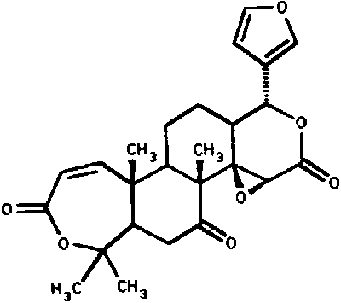
5
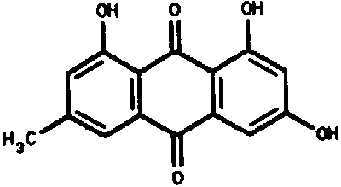
6
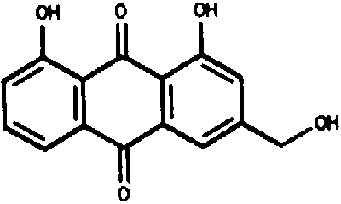
7
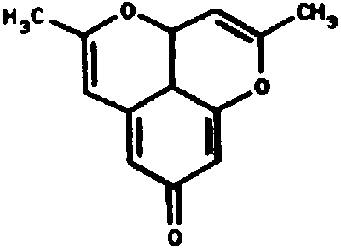
8
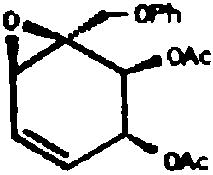
9

10
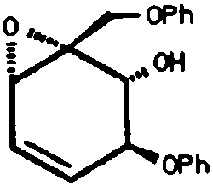
11
Identification of clovanediol: A rare sesquiterpene from the stem bark of canella winterana L. (Canellaceae), using spectrophotometric methods
D.W. KIOY,* A. I. GRAY,** and P. G. WATERMAN**
* Kenya Medical Research Institute (TMDRC),
P.O. BOX 54840,
Nairobi, Kenya.
**Phytochemistry Research Laboratories,
Department of
Pharmacy, University of Strathclyde
Glasgow G1 IXW, U.K.
ABSTRACT
The Canellaceae is a small plant family found in continental Africa, Madagascar and America. In Kenya the two species (Warburgia ugandensis and W. stuhlmannii) that belong to this family are used traditionally as medicines against many aliments. Canella winterana are trees with an aromatic and pungent bark, found in Florida and the West Indies. Its stem bark has been used as a flavouring agent, as spices and as medicine. Previous investigations of the plant have reported the occurrence of monoterpenes, sesquiterpenes, phenylpropanoids and mannitol in the plant. In a re-investigation of the plant, ground stem bark was macerated with petrol, ethyl acetate and methanol. The separation of the extracts chromatographically, that is, column chromatography, vacuum liquid chromatography and high performance liquid chromatography (HPLC) etc., yielded a number of compounds. Of these compounds, one was identified as clovanediol, with the help of nuclear magnetic resonance (NMR), infrared (IR), ultraviolet (UV).
Introduction
The Canellaceae is a small plant family of glabrous, aromatic trees and has been described (Good, 1971 and 1974) as a discontinuous family occurring in America, Africa and Madagascar. The Warburgia species are found in East and Central Africa, and are used traditionally as medicines and spices (Kokwaro, 1976; Watt and Breyer-Brandwijk, 1962; Dale and Greenway, 1961). Canella is a genus consisting of one species, C. winterana and is found in Southern Florida, through the Caribbean, and in Colombia (Hutchinson, 1964). It has been used traditionally as a spice and as medicine (BPC, 1934).
Earlier investigations of the stem bark of Canella reported the occurrence of monoterpenes, eugenol and mannitol (Claus, 1956 and Gibbs, 1974), drimane sesquiterpenes [canellal = muzigadial], 3-methoxy-4, 5-methylenedioxycinnamolide (El-Feraly, 1978 and 1979), and 4, 13-a-epoxymuzigadial (Al-Said et al., 1989). During our re-investigation of the stem bark, we reported on the isolation and identification of myristicin, eugenol, warburganal, mukaadial and 9a-hydroxycinnamolide (Kioy et al., 1989). We now report on the further identification of a tricyclic sesquiterpene, clovanediol (Aebi et al., 1953), using spectroscopic methods.
Materials and method
Plant material
The stem bark of Canella winterana was collected from the coastal bluffs at East End Grand Cayman (Kenya) in August 1981.
Extraction and isolation
Ground stem bark (85 g) was macerated in the cold using petroleum ether (boiling range 40-60°), ethyl acetate, and methanol, in succession. Comparative thin layer chromatography (TLC) of ethyl acetate and methanol extracts showed similar chromatogams, and they were mixed together and separated by means of Vacuum Liquid Chromatography (VLC). Silica gel (Merck, 60 G) chromatography (chloroform, and then a gradient of chloroform and methanol) gave a fraction which contained one major compound. This was purified by HPLC eluting with methanol/chloroform (2:100 v/v) and then by preparative HPLC to yield 18 mg of pure clovanediol.
Physio-chemical measurements
Melting points were determined using a Reichert sub-stage microscope melting point apparatus, and are uncorrected. Specific rotations, [a]D were measured using a Perkin-Elmer model 241 polarimeter. The infra-red (IR) spectrum was recorded as a KBr disc on a Perkin-Elmer model 781 infra-red spectrophotometer. The Proton Nuclear Magnetic Resonance (1H-NMR) spectrum was recorded on a Bruker WH-360 operating at 360 MHz instrument, and the carbon-13 nuclear magnetic resonance (13C-NMR) spectrum was recorded on a Bruker WH-360 instrument operating at 90.56 MHz. High resolution electron impact mass spectral data were obtained on an AEI-MS 902 double focussing instrument by direct probe insertion.
Discussion
The structure of clovanediol was established on the basis of the spectral data, and eventual comparison with literature information. Accurate mass measurements gave the molecular ion at m/z 238, which is consistent with formula C15H26O2. The (13C-NMR) spectrum contained 15 carbon resonances, while Distortionless Enhancement by Polarisation Transfer (DEPT) experiments revealed that these consisted of three methyl, six methylene, three methine and three quaternary carbons.
Combined spectroscopic analysis and extensive single frequency irradiations and nuclear overhauser enhancement (NOE) experiments ultimately established that the isolated compound was clovanediol.
The relative stereochemistry was established by considering the magnitudes of the coupling constants, and by NOE experiments. The melting point was in agreement with the previously reported value of 152-153° (Aebi et al., 1953). This, together with the specific rotation of +6° [reported: +5° (Aedi et al., 1953)], confirmed the structure of clovanediol.
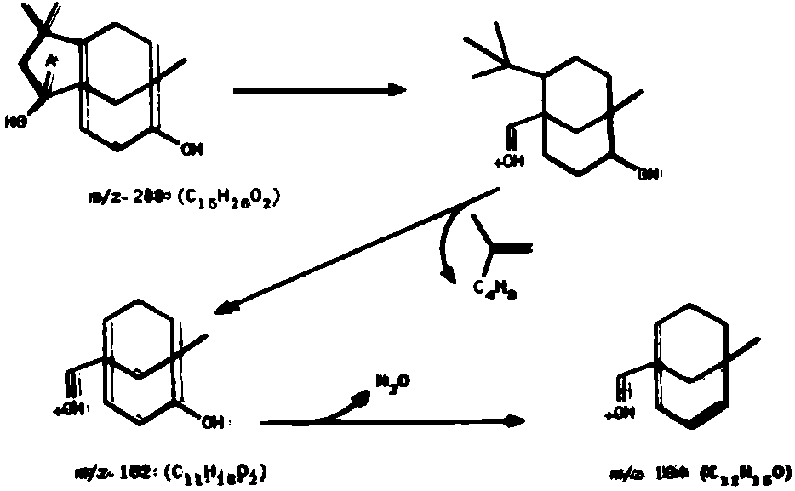
Scheme 2.4b: Proposed
fragmentation pattern for clovanediol (Gupta and Dev. 1971)
Conclusion
The most logical approach towards the discovery of new drugs is through investigation of medicinal plants. This paper discusses an example on how compounds isolated from medicinal plants are identified. Although different physical-chemical methods may be used, the steps outlined in this paper are essential. In some plants, the active compounds are present in very small amounts which would otherwise be difficult to be investigated using other methods. But the use of modern spectroscopic methods has made it possible to carry out complete identification of compounds, even when they are in minute amounts.
The biological activity of clovanediol has not been investigated. However, it would be interesting to see if this compound has any activity.
References
Aebi, A., Barton, D. H. R. and Lindsey, A. S. (1953): J. Chem, Soc. (C): 3124.
Al-Said, M. S. Khalifa, S. I. and El-Peraly, F. S. (1989): Phytochemistry 28: 297.
BPC (1934): 238.
Claus, E. P. (1956): Pharmacognosy, Henry Kimpton, London.
Dale, I. R. and Greenway, P. J. (1961): In Kenya trees and Shrubs, Hatchards. London: 654.
El-Feraly, F., McDhal, A. T. and Onan, K. D. (1978): J. Chem. Soc. Chem. commun.: 75.
El-Feraly, F. S. and Hofftetter, M. D. (1979): J. Nat. Prod. 43: 407.
El-Sherei, M. M., El-Feraly, F. S., El-Sohly, M. A and Stanford, D. F. (1987): Fitoterapia 58: 272.
Gibbs, R. D. (1974): Chemotaxonomy of flowering plants, 2. McGill-Queens University Press, Montreal: 783.
Good, R. (1971): The Geography of flowering plants, 3rd Edition. William Cloves & Sons Ltd. London: 63.
Good, R The Geography of flowering plants, (1973) 4th Edition. William Cloves & Sons Ltd. London: 64.
Gupta, A. S. and Dev, S. (1971): Tetrahedron 27: 635.
Hutchinson, J. (1964): The genera of flowering plants 1. Oxford University Press: 62-65.
Kioy, D., Gray, A. I. and Waterman, P. G. (1989): J. Nat. Prod. 52: 174.
Kokwaro, J. O. (1976): Medicinal Plants of East Africa. East Afr. Lit. Bureau, Nairobi: 45
Watt, J. M. and Breyer - Brandwijk, M. G. (1962): Medicinal and poisonous plants of Southern and Eastern Africa, E. S. Livingstone Ltd., Edinburgh & London.
Williams, D. H. and Fleming, I. (1980): Spectroscopic Methods in Organic Chemistry, 3rd Edition, McGraw Hill Co. (UK) Ltd.
A comparative study of the traditional remedy ''Suma-kala'' and chloroquine as treatment for malaria in the rural areas
NOUHOUM KOITA
The Clinical Section
Traditional Medicine
Division
P.O.Box 1746, Bamako, Mali.
Introduction
Traditional medicine has been utilised by the majority of the World population for thousands of years. Until the beginning of the 19th century, all medicine was traditional (Jellife, 1977). Yet in many developing countries it is true that for the majority of the rural population traditional medicine is the only primary or any other kind of health care available (Heggenhougen et al., 1988). For more than 70% of the population in Africa, traditional medicine is the first, if not the only health care system available in the poor rural and urban areas. In recognition of this fact, the World Health Organization underlined the potential role that traditional medicine may play in reinforcing the health care system through the primary health care approach in developing countries (W.H.O., 1978). The value of traditional medicine may be relative to both its pharmacological and/or biomedical value, as well as its psychological and social values (Heggenhougen et al., 1988).
Medicinal plants and their products have been used in the treatment of malaria throughout the tropics and subtropics. Such experience is not to be ignored. Instead, it should be actively investigated so that basic information can be made available for the preparation of standardized, effective and non-toxic remedies. Quinine, from the bark of Cinchona, whose legend dates from the 17th century (Bruce-Chawatt, 1985; Phillipson, et al., 1986) is an outstanding example of a plant product which has been used for centuries in the treatment of malaria. The Chinese antimalarial, quinghaosu, is another example of this kind. The Ministry of Health in Mali has been trying to study the resources of Malian traditional medicine, with emphasis on the evaluation of the effectiveness of its medicinal plants.
The main purpose of this paper is to analyse and discuss the results of a clinical trial which compares a Malian traditional remedy called "Suma-Kala", with chloroquine, as a treatment for malaria in the rural areas of Mali.
Materials and Methods
A randomized controlled trial of "Suma-Kala" in the treatment of malaria was carried out at the Selingue Health Center, from July to September, 1987.
Preceding the main study, a two weeks training and pilot study took place in the Selingue Health Centre, attended by all personnel involved in the study. The aims of these were to review and standardize the clinical and laboratory techniques and also to test and correct the material and methodology. The ethical problems of the study were discussed. Any complicated case was to be admitted immediately to the health centre for proper management.
Preparatory visits were paid to the local authorities by the doctor of Selingue Health Centre and his team, to explain the objectives of the study, and to ask for their approval and cooperation.
Objectives of the study
The objectives of the study were:
(a) to confirm the antimalarial property of the "Suma- Kala";
(b) to assess the acceptability and tolerance of the "Suma- Kala"; and
(c) to compare its activity with that of a well established standard antimalarial, which, in our case, was chloroquine.
Study area
The study was conducted in four villages in the Selingue area during the rainy season, from July to September in 1987 (Figure 1). Selingue is the National Institute of Public Health Research's rural health centre, in a dam area which deals with water-related diseases. Selingue is 135 km from Bamako. The background information about Selingue area is adapted from Traore (1986).
Human population and randomization
The method used consisted of a randomized control, and partially blind clinical trial. The four villages closest (from 3 to 10 km) to the health centre were chosen for a good follow up and case management in the event of complications. The chief and the health committee of each village chose the place (rooms) where the examination of the patients took place. All patients who thought had "sumaya" (malaria fever) were invited to attend the clinical examination.
All the patients were randomized on their arrival on day 0 and treated. The patients were randomly allocated to the "treatment" group ("Suma-Kala") or the "control" group (chloroquine) alternatively in a group of 10 on arrival. The method of "tossing a coin" was used to decide the order of allocation For the purpose of this study, the patients were told that they were receiving traditional remedies made by the Traditional Medicine Division of their own country by their own countrymen. The treatment was administered on an outpatient, basis. Neither the patient nor the medical team was blind to the treatment since the chloroquine was administered in capsules while the "Suma-Kala" was given as a decoction.
The patients were also questioned on the first day (day 0) about the recent prophylaxis and treatment and their urine was tested for presence of detectable concentration of chloroquine, amodiaquine, quinine, quinidine or mefloquine using the Dill-Glasko test.
A positive result of the Dill-Glasko test excluded the patient from the study. Any patient younger than 5 years and any pregnant woman was excluded.
The following conditions also excluded patients from the study:
(a) parasitaemia less than 5000 malaria parasites per cubic mm of finger blood smears;(b) serious illness conditions such as, liver and kidney failures, acute or chronic pneumonia, hepatitis, and allergy;
(c) presence of serious digestive troubles such as, diarrhoea, intensive vomiting; and
(d) signs of dehydration.

Fig. 1: Map of Mali
Two teams were responsible for the study: one team in the field was in charge of the clinical examination and the blood film preparation without knowing the parasitaemia progress; and the second examined parasitaemia in the laboratory in Selingue Health Centre, without knowing which drug the patient had received. Only the result of the first blood smear (day 0) was communicated the following day (on day 1) to the clinical examination team for exclusion from the study of any patient with a parasitaemia less than 5000 of parasites per cubic mm on the first day (day 0). The other results of parasite count (days 1,3,5,7,14 and 21) were kept secret by the head of the laboratory team until the end of the study. On the other hand, the laboratory team members could not distinguish whether a slide they were examining belonged to a patient under the new drug or not.
Preparation of the drug
Both treatments were administered orally and were continued for seven consecutive days. The chloroquine diphosphate was made by our partners in France for the purpose of the study and presented in 100 milligramme and 300 milligramme capsules. Empty placebo capsules similar to those of chloroquine were made in France and sent to us by "CREDES, Terre des Hommes".
"Suma-Kala" was analysed botanically, chemically and pharmacologically. The detail on its botanical, chemical and pharmacological preliminary studies are available elsewhere in the Traditional Medicine Division in Bamako, Mali (Study of "Suma-Kala" presented to the 1988 meeting of the Scientific Committee of the National Institute of Public Health Research in Bamako).
The "Suma-Kala" is composed of three medicinal plants including Cassia occidentalis L. (locally known as: Mbala mbala), Lippia chevalieri Moldenke (locally known as: Kaniba djan); and Silanthus oleraceae Jacq. (locally known as : Mame - Farimani) (Figures 2, 3 and 4).
"Suma-Kala" was prepared by the galenic section of the Traditional Medicine Division in its laboratory in Bamako, Mali. It was a mixed powder of the leaves of Cassia occidentalis L. and Lippia chevalieri M. and of the flowers of Spilanthus oleracea J. It was presented in a small plastic bag each containing 10 grams of this mixture of powder with the following proportions:
Cassia occidentalis L. 64%
Lippia chevalieri M. 32%
Spilanthus oleraceae J. 4%
Although the population in rural areas in Mali are used to decoction preparation, the patients randomised to "Suma- Kala" were shown on the first day (day 0) how to prepare the decoction. Subsequently they were required to prepare the decoction for themselves daily at home. The decoction was prepared by boiling a bag of 10 grams of "Suma-Kala" in a half litre (500 ml) of water for about 15 minutes. Sugar can be added to sweeten its taste.
Dosage
The treatment was administered to the patients at home (outpatient). The chloroquine treatment was standardized and consisted of swallowing 10 milligrammes per kilogramme body weight during three consecutive days. For the remaining four days of the week, the empty placebo capsules were given so that the duration of the treatment for both drugs lasted for seven consecutive days.
The treatment with "Suma-Kala" consisted of drinking the decoction made from "Suma-Kala", twice a day, for four days, and then once a day for three days. The quantity of "Suma kala" bags and chloroquine capsules for the daily treatment were given to the patients each day after the clinical examination and the making of the blood film for parasitaemia count.
Clinical parameters
A form was used to record each patient's identity and the clinical parameters each day of examination. The biological parameter (parasitaemia) was recorded separately in the laboratory record. In addition to the identity (name, sex, age, village, date of examination, and the observer's name), the clinical record included the follow up of auxiliary temperature, headache, vomiting, shivering, nausea, and the side effects such as allergy and digestive troubles (see copy of the form in annex). These clinical parameters were recorded every day from day 0 (first day of examination) to day 7 (eighth day of examination) for assessing the curative effect of the drugs; and also on days 14 and 21 for assessing the eventual residual protective effect of the drugs.
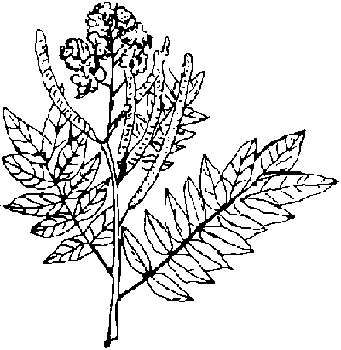
Figure 2: Habit drawing of
Cassia occidentalis
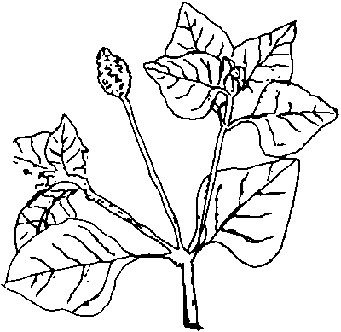
Figure 3 : Habit drawing of
Spilanthus oleracea
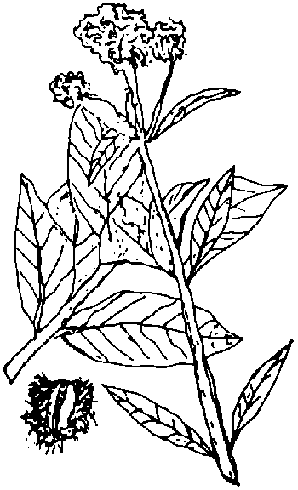
Flgure 4: Habit drawing of lippia
chevalieri
Laboratory methods
The laboratory method used was the malarial parasite count from finger thick and thin blood smears, using the W.H.O. standard techniques (W.H.O., 1984).
The labelling of the slides was carried out with a diamond pencil. The finger of the patient was cleaned with 70% ethanol. Staining of blood was done using Giemsa stain. The films for malaria parasites were collected in the field during the clinical examination on days 0, 1, 3, 5, 7, 14 and 21. All blood films collected were read in the first instance in the laboratory of Selingue Health Centre and cross checked after one month in the parasitology Department of the Medical School in Bamako. The laboratory observer teams were composed in Selingue by the two laboratory technicians under the supervision of the parasitologist head of the laboratory, and in Bamako by one laboratory technician and the physician parasitologist, head of the Parasitology Department of the Medical School.
The thick films were examined using the "farmer ploughing his field" technique: across the film to the opposite edge, and a slight lateral move, then back across the film, a slight lateral move. The process was repeated. For the thin films a "battlement" technique was used traversing the edge of the tail in short vertical and horizontal tracks. The number of parasites per 200 White Blood Cells were counted and parasite density was calculated taking 8,000 WBC per cubic mm as an average WBC count. A simple mathematical formula was used to convert the counts into the number of parasites per cubic mm of blood. For the minimum threshold, W.H.O. suggests 1000 parasites per cubic mm (W.H.O., 1984), but we decided to use 5000 parasites which is according to findings in Africa (Trape, 1985), a useful discriminant for separating children in whom malaria was thought to be the cause of their illness, from those in whom it probably was not. This was because of the fact that most patients in endemic areas of malaria like Selingue, could have a parasitaemia up to 1000 per cubic mm without showing the clinical signs of malaria. Therefore, any patient with a parasite density less than 5000 per cubic mm was excluded from the study.
Data analysis and reports
It was planned to carry out a computer analysis of the data and also at the Statistics Unit, the National Institute of Public Health Research in Bamako, using appropriate statistical tests (Z-test or t-test or Mantel-Haenszel test) to compare the effects of the two drugs. The results were supposed to be diffused at the different levels of utilisation.
Results of the clinical trial
About 3000 people presented with "sumaya" were included in the study. All were randomised on their arrival, then examined and their complaints were examined and treated if necessary. However, according to the criteria for inclusion in the study, only 53 of these patients were eligible for comparing "Suma-Kala" and chloroquine from July to September 1987 in Selingue. Thirty-six of the patients belonged to the "Suma-Kala" treated group and 17 belonged to the chloroquine treated group.
Age and sex distribution
The age and sex distribution is shown in Table 1. The study population was very young: 70% of the 53 patients were under 10 years. Only one patient was older than 25 years (she was 45 years old). Fourty-five percent of the patients were males and 55% were females. The results of the Mantel-Haenszel test have shown that the sex difference between the two groups after allowing for age group was not statistically significant (c2 = 0.030, with a degree of freedom = 1 and p > 0.05). On the other hand, the age group difference between the "Suma-Kala" treated group and the chloroquine treated group controlling for the sex was not significant (Mantel Haenszel c2 = 0.030 with df = 1 and p > 0.05).
Table 1: Age and sex distribution of the study population per treatment
|
Age group |
Suma-Kala |
Chloroquine | ||||
|
(years) |
Males |
Females |
Total |
Males |
Females |
Total |
|
5-9 |
13 |
11 |
24 |
5 |
8 |
13 |
|
10-14 |
2 |
4 |
6 |
1 |
2 |
3 |
|
15-49 |
2 |
4 |
6 |
1 |
0 |
1 |
|
TOTAL |
17 |
19 |
36 |
7 |
10 |
17 |
Follow-up of the study population
Table 2 shows the follow up of the study population per day and age group. The overall proportions of drop-out before the end of the study were similar among the two groups and concerned mainly the first age group (5-9 years). Eighty-six percent of the patients in the "Suma-Kala" group completed the treatment, while 71% in the chloroquine group completed the treatment. Therefore, the follow up was 15% better in the "Summa-Kala" group on day 7. However, this difference between the proportion of patients who completed both treatments was not statistically significant (Z = 0.064, p = 0.95).
Table 2: Follow up of the treatment by the patients per day and per age group
|
"Suma-Kala" treated group |
Chloroquine group | |||||||||
|
Days |
5-9 |
10-14 |
15-19 |
24-25 |
45-49 |
Total |
5-9 |
10-14 |
15-19 |
Total |
|
0 |
24 |
6 |
3 |
2 |
1 |
36 |
13 |
3 |
1 |
17 |
|
1 |
24 |
6 |
3 |
2 |
1 |
36 |
13 |
3 |
1 |
17 |
|
3 |
23 |
6 |
3 |
2 |
1 |
35 |
10 |
3 |
1 |
14 |
|
5 |
20 |
6 |
3 |
2 |
1 |
32 |
8 |
3 |
1 |
12 |
|
7 |
19 |
6 |
3 |
2 |
1 |
31* |
8 |
3 |
1 |
12* |
|
14 |
18 |
5 |
3 |
2 |
1 |
29 |
8 |
3 |
1 |
12 |
|
21 |
17 |
4 |
3 |
2 |
1 |
27 |
6 |
3 |
1 |
10 |
Clinical parameters
Figures 5 and 6 show the proportions of patients who became free of the clinical parameters per treatment and per day of treatment. The comparison of the effects of the two drugs on the clinical parameters show that "Suma-Kala" was as effective as chloroquine, if not better.
We considered an auxiliary temperature of 37.5°C or higher as fever according to findings in Africa (Greenwood et al, 1987; Delfini, 1968; Cobban, 1960). The proportions of patients who had fever, headache, shivering, nausea and vomiting at the start (on day 0) and became free of these clinical parameters after 7 days of "Suma-Kala'' treatment were respectively 59.3 %, 76%, 62.5 %, 93.3%, and 79%, while the proportions of patients free of clinical parameters under chloroquine treatment were respectively 50%, 47%, 80%, 75%% and 68%. The general trend was suggesting a better improvement under "Suma-Kala". However, the difference of the effects of the two drugs against fever, headache, shivering, nausea and vomiting was not statistically significant (all p > 0.05). The same trend of better improvement of the clinical parameters on days 14 and 21 was noticed, but the difference was not statistically significant (p > 0.05).
Side effects
No clinical complication was noticed during the follow up of the patients in spite of the high parasitaemia at the start of the treatment. Few side effects were noticed. Three cases of allergy to chloroquine causing the treatment to be abandoned on day 3 were noticed among the chloroquine group, while none was reported among the "Suma-Kala" group. One case of constipation was declared among the "Suma-Kala" group, and none among the chloroquine group.
The "Suma-Kala" was very well tolerated by the patients. Table 3 shows the proportion of patients developing clinical parameters later, on days 3, 5 or 7, without having them at start. The differences between these proportions using Fisher's exact test were not statistically significant for all (p > 0.05), except for the allergy in which case "Suma-Kala" was better than chloroquine (p < 0.05).
Table 3: Proportion of patients developing clinical parameters later on days 3, 5 or 7 without having them at start
|
Parameters |
"Suma-Kala" group |
Chloroquine group |
|
Fever |
2/9 (22.2%) |
1/7 (14.3%) |
|
Headache |
1/3 (33.3%) |
1/2 (50%) |
|
Shivering |
1/4 (25%) |
2/5 (40%) |
|
Nausea |
0/5 (0%) |
0/13 (0%) |
|
Vomiting |
0/22 (0%) |
0/14 (0%) |
|
Allergy |
0/36 (0%)* |
3/17 (18%)* |
|
Indigestion |
1/36 (3%) |
0/17 (0%) |
* p < 0.05 using Fisher's exact test.
Biological parameters
Plasmodium falciparum was the only type responsible for the malaria infection in our study. The results of the biological parameters are shown in Tables 4 and 5 and in figure 7. These results suggested that chloroquine was more effective than "Suma-Kala" in cleaning the parasites of malaria from the finger blood smears.
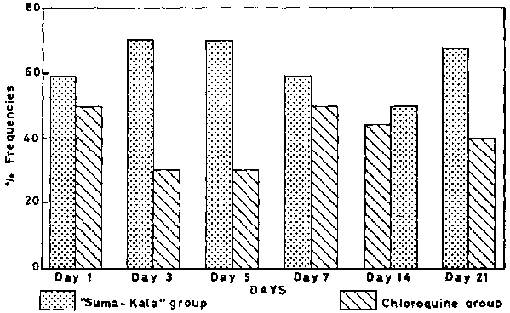
Figure 5: Proportion of patients who
had fever on day 0 and became free from it later per day and treatment
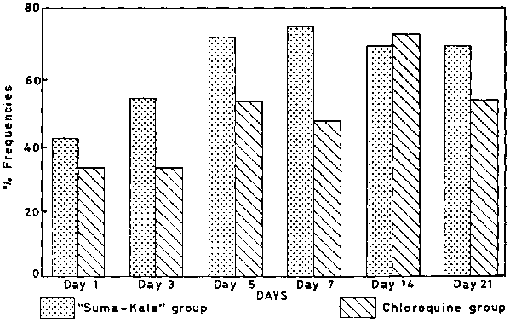
Figure 6: Proportion of patients
with headache on day 0 but none later on per day and per treatment

Figure 7: MEAN LOG (PARASITAEMIA .1)
PER DAY AND PER TREATMENT
Before the treatment started (on day 0), the overall geometric mean of parasite count was 17975.3 among the "Suma-Kala" group for a population of 36 patients, while among the chloroquine group it was 13414.3 for a population of 17 patients. The difference between the parasitaemia of the two groups using mean log (parasitaemia count + 1) was not statistically significant (t-test = 1.37, df = 51, and p > 0.05).
At the end of the 7 days treatment, the geometric mean of parasitaemia count became 153.8 among the "Suma-Kala" group for 31 patients, while in the chloroquine group it became 3.4 for 12 patients. The difference between the means of parasitaemia using the mean log (parasitaemia count +1) became statistically significant (t = 2.98, df = 41 and p < 0.05) (Table 4). These figures in Table 4 were suggesting that chloroquine was better than "Suma-Kala" in cleaning the malaria parasitaemia at the end of both treatments.
Table 4: Mean log (parasitaemia count + 1) and geometric means per day and per treatment
| |
"Suma-Kala" group |
Chloroquine group | ||||
|
Days |
log(cnt+1)N |
SD |
Geom. mean |
log(cnt+1) N |
SD |
Geom. mean |
|
0 |
4.2547 36 |
.3079 |
1795.3 |
4.1276 17 |
.3274 |
13414.3 |
|
1 |
3.8774 36 |
.6282 |
7539.5 |
3.0301 17 |
.9380 |
1046.4 |
|
3 |
2.9449 36 |
1.4131 |
880.0 |
1.3995 13 |
.9204 |
24.1 |
|
5 |
2.4817 32 |
1.4201 |
302.2 |
.7175 12 |
.8457 |
4.2 |
|
7 |
2.1898* 31 |
1.6239 |
153.8 |
.6417* 12 |
1.2096 |
3.4 |
|
14 |
2.3245 28 |
1.6530 |
219.1 |
.1165 12 |
.4036 |
3.0 |
|
21 |
1.8449 26 |
1.6094 |
69.0 |
.5454 10 |
.8921 |
2.5 |
* p > 0.05
Residual effect of the drugs
We expected the protective ("prophylactic" or residual) effect of "Suma-Kala" to be continued one or two weeks after the treatment like the way it usually happens with chloroquine. The data on days 14 and 21 (Tables 4 and 5) were for the study of these eventual residual effects.
The residual effects of "Suma-Kala" against the clinical symptoms of malaria were similar with those of chloroquine. However, the parasitaemia of 5 among the 18 patients of the "Suma-Kala" group with low parasitaemia (less than 1000 parasites per cubic mm) on day 7 (end of both treatments), became high (greater than 1000 parasites per cubic mm) on days 14 and 21, while the patients of the chloroquine group with low parasitaemia on day 7 remained with a low parasitaemia. The difference between these proportions (13/18 and 12/12 or 10/10) was statistically significant (using Fisher's exact test p < 0.05). Although the sample size was small, this result was suggesting that the residual protective effect of "Suma-Kala" was less than that of chloroquine on days 14 and 21.
Table 5 shows the proportions of patients with parasitaemia less than 100 per cubic mm per day and per treatment. At the end of the treatment (day 7), the difference between these proportions (58.1 % versus 92%) was not statistically significant (Z = 1.72 and p = 0.085 > 0.05).
On day 21 also, the proportions of patients with a parasitaemia less than 100 per cubic mm (63 % versus 100%) were not statistically significant (Z = 1.81, p = 0.07 > 0.05).
Table 5: Proportions of patients with parasitaemia less than 1000 per cubic mm per day and per treatment
|
Days |
"Suma-Kala" group |
Chloroquine group |
|
0 |
0/36 (0%) |
0/17 (0%) |
|
1 |
3/36 (8.3% |
10/17 (59%) |
|
3 |
15/35 (43 % |
13/13 (100 %) |
|
5 |
17/32 (53.1 % |
12/12 (100 %) |
|
7 |
18/31 (58.1 %) |
11/12 (92%)* |
|
14 |
16/29 (55.2 %) |
12/12 (100 %) |
|
21 |
17/27 (63 %)* |
10/10 (100 %)* |
* p > 0.05
Discussion of study design and results
A good study design should be made in such a way that any observed difference between the treatment and the control group can be attributed to the real effect of the treatment.
We thought of using the randomized double blind placebo control trial but unfortunately, the drug section could not make placebo for the "Suma-Kala", and it was impossible to make the leaves composing "Suma-Kala" unrecognizable. On the other hand, because of ethical consideration, a control group receiving no treatment or placebo was not thinkable. We finally ended up with a randomized control blind method.
Whenever possible, it is preferable that neither the participant nor the investigator knows which treatment has been received until after the end of the trial.
For future trial if the drug section is able to make a placebo preparation indistinguishable to "Suma-Kala", then we can achieve a double blind method by giving to the control group chloroquine capsules plus a placebo decoction and to the treatment group "Suma-Kala" decoction plus placebo capsules. We randomized alternatively by group of 10, the patients declaring having "Suma-Kala" (malaria) on their arrival to the control and the treatment group. The method of "tossing a coin" was used to decide the order of allocation. The patients were unknown by the examiners and therefore this limited the selection bias. However, the randomization method we used could be improved for instance by randomizing only the eligible patients and by using random number tables with odd numbers (1,3,5,7,9, etc.) corresponding to the chloroquine treated group and even numbers (0,2,4,6,8, etc.) to the "Suma-Kala" treated group (or vice versa).
Instead of numbers, different combinations of letters could also be used to randomize the patients (i.e., AABB, ABBA, ABAB, BBAA, etc., where A is for the control group and B for the treatment group, or vice versa). The order of allocation should be preferably decided before the start of the trial. It is sometimes also desirable to arrange the allocation so that equal numbers of participants will be entered into each group. That is what (Kirkwood (1988) called "restricted randomization" or "randomization with balance."
We had a lot of trust on the patients for following correctly the instruction for the preparation of "Suma-Kala."
The urine of the patient became positive to the Dill- Glasko test, like it happened with chloroquine. Therefore Dill-Glasko test was not performed after day 0 to check whether patients on "Suma-Kala" also gave themselves chloroquine. This could perhaps be avoided by doing the study on patients basis in which case one would have to think about selection biases. For future trials we should find a way to perform spot check.
There is no perfect approach and the field conditions are such that compromise between theory and reality is obligatory. What is essential is to be as close as possible to the ideal as the conditions permit it. The fact that our population was very young, may be due to the high level of our threshold of 5000 parasites per cubic mm, which is easier to get among the young people because the older people in a high endemic area may have already developed their semi-immunity to malarial infection (Bruce-chawatt, 1985; Trape, 1985).
Because of the conditions required for the inclusion in the study, our sample collected during three months seems small. Most of the people of Selingue very often take chloroquine in all cases of fever or for prophylactic purpose. Therefore, the urine in most of the people was positive for the Dill-Glasko test. In these conditions, a reasonable sample size was difficult to obtain in three months and the resources available could not permit a longer stay.
The results so far of the study are interesting for several reasons. To our knowledge this study is perhaps one of the first (if not the first) clinical trials comparing African traditional antimalarial medicinal plants and allopathic antimalarial drugs.
Some preliminary work has been done in some countries but not published (Bray, personal communication). Most of the studies published referred to in vivo experiments on mice infected berghei (Makinde and Obih, 1984; Peter, 1970) or in vitro (Phillipson et al., 1986).
The plants which composed "Suma-Kala" were known in West Africa and used in traditional medicine against several diseases.
Cassia occidentalis L. was the most popular, and the most used by the traditional practitioners mainly against malaria fevers, headache and skin diseases (Kheraro, 1974; Ayensu, 1978; Rozat, 1979; Oliver, 1986, Sofowara, 1982).
The findings have shown that C. occidentalis has antiparasitic and antibacterial activities (Oliver, 1986). Spilanthus oleraceae J. was known too, and used as a medicinal plant in West Africa (Kheraro, 1974; Rozat, 1979). The extracts of its flower-heads killed Anopheles larvae and the whole plant has shown insecticidal properties (Oliver, 1986).
Lippia chevalieri M. was the least popular among the plants which composed "Suma-Kala." However, it was also used as a medicinal plant in West Africa (Kheraro, 1974; Rozat, 1979).
The results of the study have shown that "Suma-Kala" is as effective as chloroquine against the symptomatic signs of malaria. Therefore, the traditional practitioners are quite right in using these medicinal plants against malaria because their diagnosis and prognosis of the disease are mainly based on clinical symptoms.
The current dosage of "Suma-Kala" was less fast than that of chloroquine in suppressing the malaria parasitaemia. The difference between the proportion of patients with parastitaemia less than 1000 parasites per cubic mm, was not statistically significant at the end of the treatment (day 7). However, the difference between the mean log (parasitaemia count + 1) of the two groups was statistically significant. Therefore, chloroquine was more effective than "Suma-Kala" in clearing the parasitaemia.
A parasitaemia of 1000 per cubic mm of finger blood smears is common among the people living in endemic areas like Selingue, and is well tolerated. That is why WHO suggested it as a cut off point (WHO, 1984) and (Trape 1985) suggested a higher level of minimum threshold of 5000. If we consider a parasitaemia of 1000 per cubic mm as "normal" in endemic areas during a period of high infection (raining season) as suggested by many authors (W.H.O., 1984; Trape, 1985; Greenwood et al., 1987), "Suma-Kala" and chloroquine could be considered as having similar effects against malaria, because the difference between the proportion of patients among the two groups having a parasitaemia less than 1000 parasites per cubic mm was not significant at the end of treatment.
It could be interesting to compare the effect of "Suma- Kala" to that of a placebo. But for ethical reasons, a placebo group was not used in our study, and in the literature we did not see any publication referring to placebo effect on malaria. Nevertheless, no case of complication was noticed among our patients in spite of very high parasitaemia cases (some were as high as 80,000 parasites per cubic mm). Furthermore, the difference between the biological parameters (proportion of patients with a parasitaemia less than 1000) on one hand, and between the clinical parameters (proportion of patients with fever, headache, vomiting, nausea, shivering) on the other hand, were not statistically significant. And also, the likely pattern of high parasitaemia in untreated malaria would be the occurrence of clinical malaria with a certain number of complications (for instance convulsions in children) and probably some cases of deafness. Therefore, we were convinced that the effect of "Suma-Kala" was far more than that of a placebo.
The two drugs were well tolerated, but "Suma-Kala" was better tolerated than chloroquine. This was illustrated by three facts. Firstly, the study did not show any side effect from "Suma-Kala", while 3 patients among the chloroquine treated group abandoned the treatment on the third day because of the allergy to chloroquine that they developed. Secondly, the difference between the proportions of patients who have developed later on clinical parameters without having them at start was not statistically significant, except for the allergy to chloroquine noticed among the chloroquine group. Thirdly, the follow-up of the treatment by the patients was 15 % higher among the "Suma-Kala" group.
An attempt was made to measure the protective (residual or "prophylactic") effect of the drug by looking at the clinical and biological (parasitaemia) parameters on days 14 and 21. The interpretation of the data on days 14 and 21 was difficult, because of the size of the sample becoming smaller on one hand, and on the other hand, these data are rather related to the eventual residual protective effect than to the prophylactic effect. Nevertheless, the two drugs seemed to have the same residual protective effect against the clinical parameters, but concerning the biological parameter, "Suma-Kala" seemed to have a less protective effect against malaria reinfection than chloroquine.
Conclusion
Research into medicinal plants should not stop because the herbal medicine still has an immense potentiality to enrich the universal pharmacopoeia.
Although the cooperation between allopathic and traditional medicine is not easy to build, it is necessary because it represents a valuable national resource for many developing countries. Therefore, it should be taken into account for the achievement of the World Health Organization goal of an ideal health for all. In Mali, as elsewhere, the research into traditional medicine should be extended beyond the focus on phytotherapy, and efforts should be made to do more research in the other aspects of traditional medicine because they heal people, even though they may not cure disease. The Malian traditional antimalarial remedy, "Suma-Kala", is working. The study showed that it is as efficient as chloroquine against the clinical symptoms such as fever, headache shivering, vomiting, and nausea, and also that it was better tolerated. However, "Suma-Kala" was not as fast as chloroquine in clearing malaria parasitaemia.
More research should be done in order to improve the mode of administration of "Suma-Kala", and to increase its speed of clearance of malaria parasitaemia. For instance, more research on its dosage and galenic presentation could improve its effects. Although the study has shown interesting results, its design, particularly the sampling method and the 'blindness', could be improved for future clinical trials. A randomised blind control trial could be applied, provided that a placebo for the "Suma-Kala" is available, so that the "control group" will receive chloroquine capsules (or the standard treatment) plus placebo (decoction), and the "treatment group" will receive "Suma-Kala" (or the new drug), plus placebo (capsules).
Meanwhile, the production and commercial exploitation of "Suma-Kala" in Mali should not be delayed. The plants which compose "Suma-Kala" are locally available and could also be locally cultivated. Therefore, the production of "Suma-Kala" should be regarded in the perspective of reducing the burden of drug importation, and also as a potential alternative source of income for the peasants.
Acknowledgements
I am grateful to Prof. Mamadou Koumare for the initiation of contemporary research into traditional medicine in Mali; Ms Gillian Maude for providing invaluable assistance and encouragement in preparing this paper; Drs. Kris Heggenhougen, Thierry Mertens and Dorothy Bray for reading early drafts and giving useful feedback; Drs. Drissa Diallo, Ogobara Doumbo, Moctar Guindo, the people and the personnel of the Selingue Health Centre, and the personnel of the Traditional Medicine Division for actively taking part in designing and implementing the study; Dr. Martin Vitte and her colleagues from "CREDES, Terre des Hommes, France" for funding of the study and the British Council for sponsoring my MSc. course in England.
References
Ayensu, E.S. (1978). Medical Plants of West Africa, Reference Publication, Inc., Michigan, U.S.A: 72-75.
Bray, D.H. Personal Communication, Department of Medical Parasitology of the London School of Hygiene and Tropical Medicine. Keppel Street, London WC1E 7HT, UK.
Bruce-Chwatt, L.J. (1985). Essential Malariology, William Heinemann Medical Books, Second Edition, London.
Cobban, K. McL (1960). Journal of Tropical Medicine and Hygiene, 63: 233-237.
Delfini, L.F. (1968). The Relationship Between Body Temperature and Malaria Parasitaemia in Rural Forest areas of Western Nigeria. W.H.O. Report WHO/MAL 68.654 [Unpublished document].
Greenwood, B.M. et al (1987). Mortality and Morbidity From Malaria Among Children in a Rural Area of the Gambia, West Africa. Transaction of the Royal Society of Tropical Medicine and Hygiene. 81: 478- 486.
Heggenhougen, K. et al (1988). Traditional Medicine and Primary Health Care. EPC Publication No. 188. London Shool and Tropical Medicine, Keppel Street, London WC1E 7HT UK.
Imperato, P.J. (1981). Modern and Traditional Medicine: The case of Mali. Annals of Internal Medicine, 95. No. 5.
Jelliffe, D.B. and Jelliffe, E.F.P. (1977). The Cultural Cul-de-sac of Western Medicine. Transactions of the Royal Society of tropical Medicine and Hygiene 71 (4): 331-334.
Kheraro, J. (1974) . La Pharmacopee Senegalaise Traditionnelle. Plantes Medicinales and Toxiques, ed. Vogot Freres, Paris.
Kirkwood, B.R. (1988). Essentials of Medical Statistics. Sackwell Scientific Publications, Oxford.
Makinde, J.M. and Obih, P.O. (1984). Screening of Morindo lucida Leaf Extract for Antimalarial Action on Plasmodium berghei berghei in mice. African Journal of Medicine and Social Science. 14: 59-63.
Oliver, B. (1986). Medicinal Plants in Tropical West Africa. Cambridge University Press, UK.
Peter, W . (1970). Chemotherapy and Drug Resistance in Malaria. Academic Press, London.
Phillipson, J.D. and O'Nell, M.J. (1986). Antimalarial drugs from plants? Parasitology Today. 2 No. 12: 355-359.
Rozat, T.A. (1979). Plantes Medicinales du Mali. Bamako, Mali.
Sofowora A. (1982). Medicinal Plants and Traditional Medicine in Africa. J. Wiley and sons Limited, Chichester.
Traore M.S. (1986). Schistosomiasis in Selingue. A Man-Made Lake in Mali. A dissertation for the MSC, C.H.D.C. London, School of Hygiene and Tropical Medicine, UK.
Trape J.F. et al. (1985). Criteria for diagnosing clinical malaria among a semi-immune population exposed to intense and perennial transmission. Transactions of the Royal Society of Tropical Medicine and Hygiene, 79: 435-442.
World Health Organization (1978). The Promotion and Development of Traditional Medicine. Technical Report Series, No 622. Geneva.
World Health Organization (1984). Advances in malaria chemotherapy. Technical Report Series No. 711.
Ethnobotany and conservation of medicinal plants
R.L.A. MAHUNNAH and E.N. MSHIU
Traditional Medicine Research Unit
Muhimbili Medical
Centre
P.O. Box 65001
Dar es Salaam, Tanzania
ABSTRACT
Plants are indispensable to man for his livelihood. This paper presents the value of ethnobotany to the search for new biomedical compounds in the tropics. The general values of the rich tropical vascular plant flora as sources of direct therapeutic agents, as sources of starting points for the elaboration of more complex semisynthetic compounds, as sources of substances that can be used as models for new synthetic compounds, and as taxonomic markers for the discovery of new compounds, are highlighted. A case is made for continued research in ethnobotany, since it is estimated that 80% of the people in the Third World rely on traditional medicine for primary health care needs, most of which is plant-derived.
The whole question is addressed from socio-economic perspectives. Of all the plant-derived compounds that are used in the prescription drugs, about 50% originate from the tropics; yet it is here where the greatest threats to plant biodiversity occur. Therefore, concerted ethnobotanical research is directly linked to the urgent need for sustainable conservation programmes. It is proposed that conservation programmes for developing countries take into account both conservation of maximum plant biodiversity and focused approach aimed at individual medicinal plants.
The results should facilitate better management of our medicinal plant genetic resources for sustainable economic harvesting in both in-situ and ex-situ conservation -areas.
Introduction
Our purpose here is to urge that ethnobotanical prospecting, the exploratory process by which new useful plants are discovered, be substantially intensified. However, plant species are being lost at an ever-increasing rate, faster by orders of magnitude than rates of evolutionary replacement. Therefore intensification of ethnobotanical exploration should, of necessity, be linked to the urgent need for sustainable conservation strategies for medicinal plants since human expansionist demands can be expected to wreak environmental deterioration and biotic destruction well into the next century.
This paper specifically urges for an Increased involvement of developing nations in the exploratory and conservatory process, an involvement which, in our view, is warranted on scientific, economic and cultural grounds.
Traditional Therapy
Traditional medicine is a priceless heritage which was created in the historical course of prevention and treatment of diseases over a long period. Today, traditional systems of medicine, which utilize mostly plant-derived prescriptions, remain the source of primary health care for more than 3/4 of the Third World population. It is estimated that a third of all world pharmaceuticals are of plant origin, or if algae, fungi and bacteria are included, then two thirds of all pharmaceuticals are plant based. Therefore, traditional medicine and medicinal plants are indispensable in practice. The rich traditional ethnopharmacopoeia of the Third World's tropical flora is, indeed, indicative of the high utility of indigenous medicinal plants.
Proper development and utilization of traditional medicinal plants, is of great significance in the development of health services and provides for proper take- over of national cultures for developing countries. The merit of traditional therapeutics cannot be over-emphasized. It is easily acceptable to the community, manageable and is of low cost. With the rich traditional medicinal plant resources, efficacy of prevention and treatment of disease can be ensured by appropriate, but comparatively non-sophisticated technology and with minimal side effects. Therefore proper utilization of the traditional medicinal systems by developing nations can make significant contributions towards the implementation of the programme of Health For All by the year 2000.
Drugs from nature
Through most of man's history, botany and medicine were, for all practical purposes, synonymous fields of knowledge. Therefore, the traditional healer, usually an accomplished traditional botanist, represents, probably, the oldest professional man in the evolution of human culture. However, the advent of modern technology and synthetic chemistry has been able to reduce our almost total dependency on the plant kingdom as a source of medicine. Nonetheless, plants have traditionally served as man's most important weapon against pathogens. In fact, it seems that even the Neanderthal man knew and made use of medicinal plants.
What, then, is the value of ethnobotany to the search for new biomedical compounds? Of the hundreds of thousands of species of living plants, only a fraction have been investigated in the laboratory. This poor understanding of plants is particularly acute in the tropics. Consequently, this calls for the urgent need for continued ethnobotanical research. The importance of ethnobotanical enquiry as a cost-effective means of locating new and useful tropical plant compounds, cannot be over-emphasized. Most of the secondary plant compounds employed in modern medicine were first 'discovered' through such investigation. Some 119 pure chemical substances extracted from higher plants, are used in medicines throughout the world, and 74% of these compounds have the same or related use as the plants from which they were derived. The rosy periwinkle, Catharanthus roseus (synonymous to Vinca rosea), represents a classic example of the importance of plants used traditionally by man. This herbaceous plant, native to South-eastern Madagascar, is a source of over 75 alkaloids, two of which, vincristine and vinblastine, are used to treat childhood leukemia and Hodgkin's disease, with a significant success rate. The use of quinine from Cinchona bark to cure clinical malaria, today owes its use by Peruvian Indians in the 17th Century, who employed crude extracts from the Cinchona trees to cure malarial fevers. These are but only a few of what modern medicine owe to ethnobotanical treasures.
There are four basic ways in which plants that are used by tribal peoples are valuable to modern medicine. First, some plants from the tropics are used as sources of direct therapeutic agents. For example, the alkaloid D - tubocurarine, extracted from a liane, Chondradendron tomentosum, is widely used as a muscle relaxant in surgery.
Secondly, tropical plants provide sources of starting points for the elaboration of more complex semi-synthetic compounds. For example, saponin, an extract from Dioscorea, is chemically altered to produce sapogenins, necessary for the manufacture of steroidal drugs. Thirdly tropical flora can serve as sources of substances that can be used as models for new synthetic compounds. Cocaine from the plant Erythroxylum coca, has served as a model for the synthesis of a number of local anesthetics, such as procaine. Lastly, plants can also be used as taxonomic markers for the discovery of new compounds. For example, although little was known of the chemistry of the Orchidaceae, plants of this family were investigated because of its close systematic relationship to the Liliaceae. The research demonstrated that not only was the Orchidaceae rich in alkaloids, but many of these alkaloids were unique and thought to be of extreme interest for the future. This rich natural economic resource needs urgent appraisal to coincide with the current "green wave" of lay interest in herbs and natural plant medicines, which is unparalleled in modern history.
We must consider seriously the importance of medicinal plants in the developing countries. The World Health Organization estimated that 80% of the Third World population rely on traditional medicine for primary health care needs. In many cases, these countries simply cannot afford to spend millions of dollars on imported medicines which they could produce or extract from their tropical forest plants. Indigenous medicines are relatively inexpensive; they are locally available and are usually readily accepted by the people. The ideal situation would be the establishment of local pharmaceutical firms that would create jobs, reduce unemployment, reduce import expenditures, generate foreign exchange, encourage documentation of traditional ethnomedical lore, and be based on the conservation and sustainable use of the tropical forests.
Conservation
What can the medical community do to aid both the struggle to conserve tropical forests and the search for new plant medicines? Many reasons have been presented to the general public: aesthetic, ethical and the like. But the most relevant to the medical profession is the utilitarian, that is, species are of direct benefit to us. The few examples that are given above (drugs from nature), are indicative of the kinds of undiscovered compounds that are undoubtedly there to be discovered.
Tropical forests are complex chemical storehouses that contain many undiscovered biomedical compounds with unrealized potential for use in modern medicine. We can gain access to these materials only if we study and conserve the plant species that contain them. The point that cannot be over-emphasized, and which is at the core of our argument here, is that biotic impoverishment is tantamount to chemical impoverishment. Loss of a species means loss of chemicals of possible use, chemicals potentially unique in nature, not likely to be invented independently in the laboratory.
Clearly, the most urgent conservation problems are occurring in the tropics. While the tropical forests cover less than 10% of the earth's surface, they are believed to contain over 50% of the world's species, and the majority of the endangered species. Extinction is a natural process, yet to view these recent extinctions as natural, is to misinterpret the geological record.
Parallel to this, is the urgent need to document and conserve ethnomedical plant lore, since indigenous knowledge is essential for use, identification and cataloguing of the (tropical) biota. As tribal groups disappear, their knowledge vanishes with them. Thus, the preservation of these groups is not a luxury, but a significant economic opportunity for the developing countries. Failure to document, this lore would represent a tremendous economic and scientific loss to humanity.
Action plan
To achieve these objectives ultimately, some practical issues need to be addressed to. These include:
(a) Formulating clear policies on the practice of traditional medicine. The policies should promote, inter alia, the organization of traditional healers, and realistic integration of traditional and modern medical practices.(b) Promoting the volarization of medicinal and aromatic plants growing in the spontaneous flora, by setting up specialized units in agrobiological, pharmaceutical industrial and quality control aspects.
(c) Promoting the strengthening of research capability in the field of traditional medicinal plants.
(d) Promoting research in the economic mapping of the indigenous vascular plant flora, to identify the qualitative and quantitative natural resources, in medicinal and aromatic plants, in order to render the economic potential profitable.
(e) Promoting ethnobotanical studies to retrieve the vanishing ethnomedicinal information from remote village communities especially the traditional healers.
(f) Promoting the conservation of medicinal and aromatic plants, based on realistic in situ and ex-situ sustainable programmes, i.e., conservation of maximum plant biodiversity and individual plant species, respectively.
(g) Promoting meaningful infra-regional, regional and international cooperation that will enhance the exchange of information and technology of medicinal and aromatic plant genetic resources, without jeopardizing the genetic germ plasm.
References
Earthscan, J. (1982). What's Wildlife worth? International Institute for Environment and Development. London.
Eisner, T. (1988). Chemical Exploration of nature: A Proposal for Action, in Ecology, Economics, and Ethics: The Broken Circle. Yale University Press.
Farnsworth N.R. (1977). Foreword in major medicinal plants. J. Morton and G.C. Thomas. Springfied.
Plotkin, M.J. (1988). Conservation, Ethnobotany, and the Search for New Jungle Medicines: Pharmacognosy Comes of Age Again. Pharmacothera 8:257-262.
Sohultes, R.E. (1979). The Amazonia as a Source of New Economic Plants, Econ. Bot. 33: 259-266.
Swain, T. (1975). Plants in the Development of Modern Medicine.
Tyler, V.E. (1986). Plant Drugs in the Twenty-first Century. Econ. Bot. 40: 279 - 288.
UNESCO. (1978). Tropical Forest Ecosystems: A state of knowledge. Report prepared by UNESCO/UNDP/FAO. Paris.
Wagner, H. and Wolf, P., (1977). New Natural Products and Plant Drugs with Pharmaceutical, Biological and Therapeutic Activity. Springer-verlag. Berlin, New York.
Biotransformation of hydroxyanthraquinone glycosides in Cassia species
S.R. MALELE
Department of Pharmaceutical Sciences
Muhimbili Medical
Centre
P.O. Box 65013
Dar es Salaam, Tanzania.
ABSTRACT
The development and application of tissue cultures in the production, biosynthesis and biotransformation of secondary metabolites is presented. Specific consideration is given to 1, 8 - dihydroxyanthraquinone derivatives of Cassia senna and Cassia artemisiodes. Plant Tissue Cultures, both static (solid) and in suspension (liquid) were established from seeds of same. Conditions for culture growth were investigated and optimised and cultures were maintained by sub-culturing for up to 32 passages.
Qualitative and quantitative analysis of hydroxyanthraquinone derivatives was investigated with emphasis on the application of HPLC. Total content and variation of these compounds in the species was carried out. Five compounds were identified and assayed, namely aloe-emodin, chrysophanol, emodin, physcion and rhein.
Incorporation of radio-active precursors (U-14C-acetate and (2-14C- malonate) were studied in cultures of the species, and their conversion into hydroxyanthraquinone derivatives has been instigated. Cultures were harvested at regular intervals, extracted and the hydroxyanthraquinones separated by HPLC before measurement of incorporated radioactivity.
Fluctuation of the radioactivity in the anthraquinone constituents occurred throughout the passage suggesting that biosynthesis and biotransformation were occurring simultaneously.
Plants of the same species were injected with (2-14C)-malonate, anthraquinones extracted at regular intervals and separated by HPLC prior to measurement of radioactivity.
Introduction
Anthraquinones are the largest group of natural quinones and historically the most important which for a long time have been used as dyes. The derivatives have cathartic activity and are used as purgatives and are widely employed in geriatric and pediatric medicine (Rada et al., 1974). Plant families which are the richest sources of this class of compounds (including important genera) are Polygonaceae (Rheum, Rumex and Polygonum), Rhamnaceae (Rhamaus and Zizyphus), Leguminoceae (Cassia), Rubiaceae (Morinda, Rubia and Galium, and Liliaceae (Threase and Evans, 1983).
Species such as Rheum palmatum (rhubarb), Aloe ferox, Cassia senna, and Rhamnus alnus have long been used as laxative drugs. They contain the anthraquinone derivatives, mainly as glycosides, which on hydrolysis yield aglycones which are hydroxyanthraquinone derivatives. The common polyhydroxyanthraquinone derivatives present in laxative drugs are 1,8 - dihydroxyanthraquinones (1,8 - DHAQ) and typical structures are given in Figure 1.
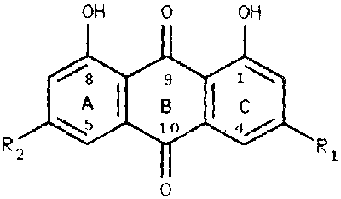
Fig. 1: Typical
polyhydroxyanthraquinones
|
|
R1 |
R2 |
|
Chrysophanol |
Me |
H |
|
Emodin |
Me |
OH |
|
Physcion |
Me |
OMe |
|
Aloe-emodin |
EtOH |
H |
|
Rhein |
CO2H |
H |
Biosynthesis of anthraquinones
Leristner et al., (1969) and Fairbairn et al. (1972) established that naturally occurring anthraquinones are synthesized by two completely separate pathways. Thus those of the emodin type (with substituents in both terminal rings A and C) are usually derived through the acetatemalonate (polyketide) pathway in both higher and lower plants, while the alizarin (without substituents in ring A) type of anthraquinones are derived through the shikimic acid pathway.
Pharmacology and mode of action
Sennosides have the highest purgative activity, followed by rhein monoglcosides, whereas the anthraquinone glycosides are less active and the aglycones have the least activity (Fairbairn et al., 1949, 1965, 1970).
The mechanism of action of anthraquinone glycosides involves the systematic deposition of these compounds to the site of action in the intestine, enzymatic cleavage of the sugar groups and the slow oxidation of the resulting compounds, thus releasing the free anthraquinones which act on the intestines to produce peristalsis (Fairbairn, 1964).
Plant tissue culture
Over the centuries, plants have made a major contribution to the health of mankind, particularly through their use as spices, flavours, fragrances, vegetable oils, soaps, natural gums, resins, drugs, insecticides and other significant industrial, medicinal and agricultural raw materials. Scraag (1986) noted that despite substantial advances in microbial and chemical production methods, plants still remain the source of active ingredients of some 25% of prescribed medicines. The continued demand of these compounds has encouraged scientists to search for reliable alternative sources. One of the significant contributions to the manipulative powers of modern biologists has been the development of tissue culture techniques. Plant cells in culture have been expected to produce secondary metabolites which are characteristic of the whole plant (Rai, 1976). Several patents dealing with the production from cultures of metabolites such as allergens, dios-genin, L-dopa, ginsenosides, glycyrrhixin, etc have been registered (Staba, 1982; Bajaj, 1988).
In this paper the establishment of tissue cultures of Cassia species and the careful phytochemical investigation of the controlled production of the hydroxyanthracene derivatives is discussed. An attempt to devise a sensitive, rapid and efficient analytical technique of these very closely related hydroxyanthracene derivatives by the use of HPLC will also be presented.
Materials and methods
Cultures
Cultures were established from seeds of Cassia artemisioides on Murashige and Skoog's modified tobacco medium. Cultures were incubated in the dark at 25°-27°C and maintained for more than 30 passages, each of 38 days. Static cultures were chosen for subsequent analysis rather than suspension cultures because they proved to give better results in the production of secondary metabolites. Anthraquinone content variation during a single passage of the culture was done with a view to subsequent investigation of the biotransformation of the compounds produced.
Phytochemical investigations
The phytochemical investigations followed the scheme shown in Figure 2.
Sensitivity screening for sennosides showed negative results. Nonetheless purification was carried out by column chromatography and preparative TLC. Five compounds - chrysophanol, emodin, physcion, aloe-emodin and rhein -were isolated and identified spectroscopically (UV, IR and MS) and by comparison of the melting points with those reported for chrysophanol, emodin, physcion, aloe-emodin and rhein.
Radio-tracer studies
Feeding technique
The precursors used were (1-14C)-acetate and (2-14C)-malonate. 0.1 mCi in 5 ml of each of the tracers was separately added onto the callus once the culture showed visible signs of growth. Cells were harvested at regular intervals, extracted and the compounds were separated by high performance liquid chromatography (HPLC). Plants were fed with 14C-malonate and radio-active incorporation monitored at regular intervals by HPLC. The malonate was fed at the leaf-base where an axillary bud was evident. The HPLC instrument consisted of Rheodyne rotary valve which was equipped with a 100 ml loop, in order to collect sufficient eluate from the column for scintillation studies.
Anthraquinones were consistently eluted in the sequence, aloe-emodin, rhein, emodin, chrysophanol and physcion. Using the reverse phase system, this elution sequence is broadly in accordance with their polarities: aloe-emodin polar, and physcion, least polar is eluted last.
Results
The results of the study to investigate the influence of 14C-acetate and 14C-malonate, intermediates in the biosynthesis of polyketides, on the production of hydroxyanthracene derivatives are shown in Figure 3A and 3B and also in Figure 4A and 4B. The incorporation rates of the two radio-tracers and the radio-activity values are given in Table 1.
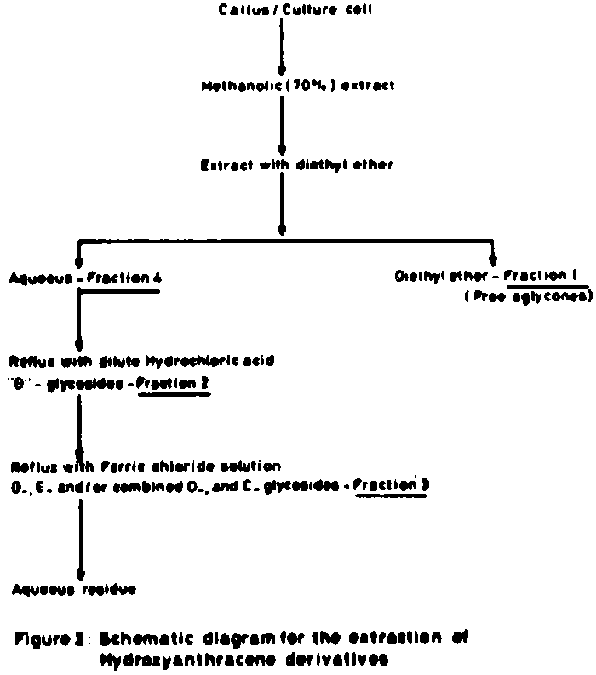
Figure 2 : Schematic diagram for the
entraction of Hydroxyanthracene derivatives
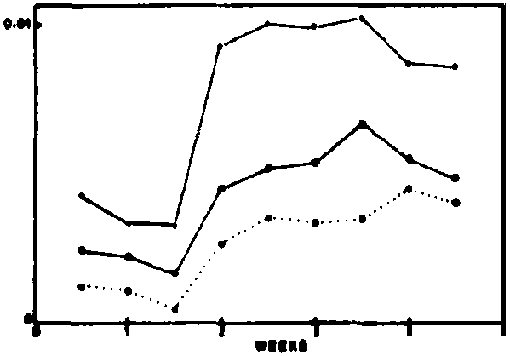
Figure 3A : Influence of acetate and
malenate in rhein production in static cultures of Cassia senna
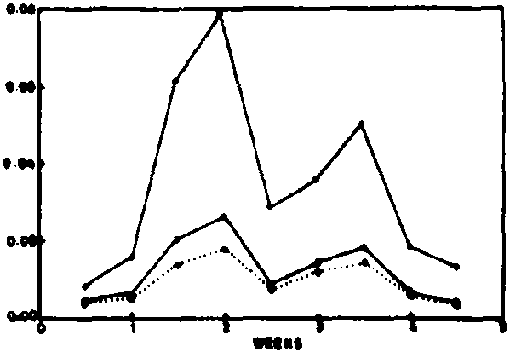
Figure 3B : Influence and
radioactivity incorporation of acetate and malonate in emodin in static cultures
of Cassia senna
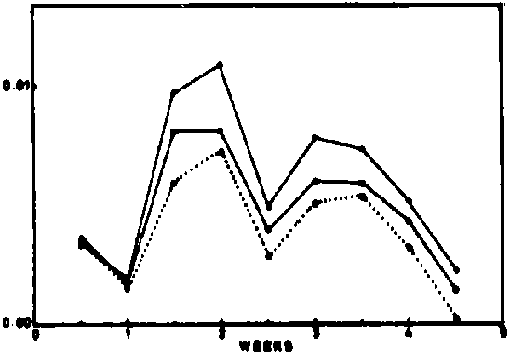
Figure 4A : Influence and
radioactivity incorporation of acetate and malonate in chrysophanol in static
cultures of Cassia senna
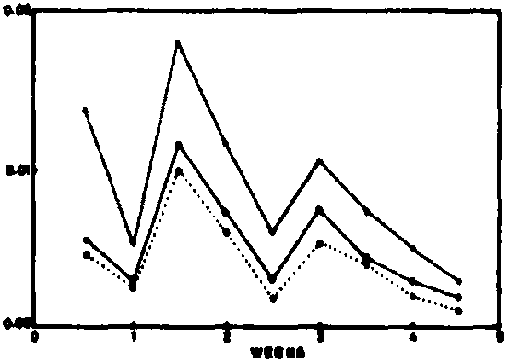
Figure 4B : Influence and
radioactivity incorporation of acetate and malonate in aloe-emodin in static
cultures of Cassia senna
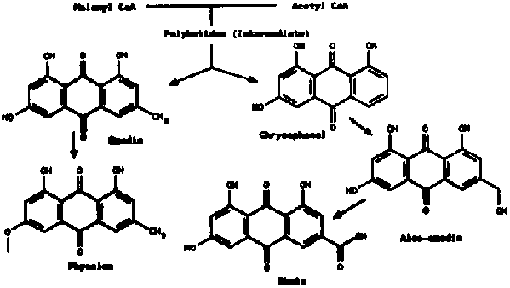
Fig 5 : Suggested transformation of
anthroquinones derivatives
Comments:
(a) Anthracene derivatives were able to absorb the radio- tracers.(b) Malonate was incorporated into hydroxyanthracene compounds at a higher rate than for acetate. The incorporation varied, chrysophanol being highest and with rhein much lower.
The suggested transformation of anthraquinone derivatives is given in Figure 5.
Discussion and Conclusion
From the results above the interconversions shown in Scheme 1 were found to occur.
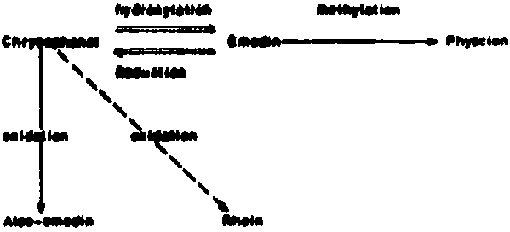
Scheme
1
Le m�dicament indig�ne Africaine: Sa standardisation et son �valuation dans le cadre de la politique des soins de sant� primaires
MAMADOU KOUMARE
WHO Africa Office
Brazaville, Republic of Congo
Sommaire
Le m�dicament indig�ne africain ob�it � des r�gles de pr�paration dont le respect permet d’obtenir des produits d’une standardisation acceptable, qualitativement et quantitativement.
L’�tude des doses th�rapeutiques propos�es par le tradith�rapeute, montre que ces doses sont �galement acceptables.
L’efficacit� th�rapeutique �tudi�e par des essais cliniques compar�s et l’importance de la consommation du rem�de indig�ne africain, constituent les �l�ments de son �valuation. Les r�gles de cette �valuation devrait tenir compte du concept du m�dicament indig�ne africain.
Introduction
Il ne fait plus aujourd’hui aucun doute que les soins de sant� primaires (SSP) offrent l’une des approches les plus viables pour atteindre l’accessibilit� � la sant� pour tous.
En effet, cette approche suppose la prise en compte de toutes les ressources appropri�es disponibles y compris les pratiques et les rem�des des syst�mes indig�nes de soins.
La composante pharmaceutique de cette politique des soins de sant� primaires, de mande la mise � la port�e des populations, g�ographiquement et �conomiquement, des m�dicaments appropri�s.
Malgr� l’engouement populaire, l’acceptabilit� du m�dicament indig�ne africain se heurte aujourd’hui encore � une certaine m�fiance; d’o� la n�cessit� de son �valuation et de sa standardisation afin d’en favoriser son homologation et son inscription sur les listes des m�dicaments essentiels.
Si tout le monde est unanime sur la n�cessit� d’une �valuation, il ne semble pas qu’il en soit de m�me pour le recours aux conditions de mise sur le march� appliqu�es actuelle ment aux nouveaux m�dicaments.
Notre propos n’est point de faire accepter n’importe quel m�dicament pour les soins de sant� primaires, ni encore moins d’opposer le rem�de indig�ne africain au m�dicament europ�en; mais de pr�senter une exp�rience ayant pour objectif de dissiper la m�fiance caus�e par certains pr�jug�s d�favorables et d’aider � r�soudre le probl�me de sant� publique qu’est l’approvisionnement r�gulier des formations sanitaires en m�dicaments.
Si une certaine analogie est apparente dans le concept de m�dicament des deux syst�mes de soins, indig�ne africain et exotique europ�en, il n’en est pas moins vrai que la philosophie qui les soutend est diff�rente: l’un rel�ve de l’esprit analytique, du raisonnement et de l’exp�rimentation; et l’autre, de l’esprit syst�mique, de l’intuition et de l’empirisme.
Au prime abord on pourrait penser que les m�dicaments du syst�me exotique europ�en traitent les causes de la maladie et que ceux du syst�me indig�ne africain soignent les symptomes.
Nous nous empressons d’ajouter qu’il ne serait pas juste de dire que les m�dicaments indig�nes africains ne sont utilis�s que pour des traitements symptomatiques.
Comme nous l’avons d�j� dit et �crit, chacun des deux syst�mes de soins dispose de “m�dicaments �tiologiques” et de “m�dicaments symptomatiques” dont l’�laboration r�pond � certaines r�gles. Il nous � sembl� indispensable et urgent de faire le point sur ces r�gles afin de d�finir leurs limites de fiabilit� et de permettre une meilleure standardisation du rem�de indig�ne africain.
Pour ce faire, nous avons essay� de suivre le processus de son �laboration et de son administration.
Elaboration du m�dicament indig�ne Africain
La m�fiance dont nous avons parl� plus haut, pour ne pas dire la crainte, persiste encore vis-�-vis du rem�de indig�ne africain malgr� l’engouement des populations.
On ne peut nier qu’elle soit justifi�e; mais malheureusement, on accuse trop souvent et abusivement la qualit� ou les doses th�rapeutiques du m�dicament indig�ne.
“Les faux gu�risseurs” sont h�las trop nombreux et il n’est point question de vouloir garantir leurs pr�parations et leur comp�tence.
Loin de nous l’id�e de nier les insuffisances de l’art pharmaceutique traditionnel africain; mais il nous parait injuste de ne pas reconna�tre qu’il existe des r�gles de pr�paration et d’administration bien adapt�es au syst�me. Il suffit pour s’en convaincre, de savoir que dans certains pays on � d�j� proc�d� � la codification des r�gles de la m�decine indig�ne en g�n�ral et du rem�de indig�ne en particulier.
Mati�res premi�res
Nous nous limiterons volontairement aux plant�s m�dicinales qui constituent actuellement la majeure partie de ces mati�res premi�res et dont les techniques de r�colte nous paraissent les plus respect�es pour ne pas dire les mieux standardis�es.
Le respect scrupuleux des r�gles de r�colte trouve son explication dans les craintes que le phytoth�rapeute �prouve dans leur transgression. Le geste qui semble le plus anodin n’est pas n�glig�; et nous ne sommes pas de l’avis de ceux qui ne voient toujours dans leur ex�cution que superstition. Et m�me si une possible superstition il y avait, il serait souhaitable de ne pas la combattre avant d’en conna�tre l’origine ou d’en faire son �valuation compl�te; il y va de la pr�servation de bonnes conditions de remassage et de l’obtention d’�chantillons moyens de mati�res premi�res faciles � tester et � homologuer, � ce point de vue, la pr�sentation sous forme de bottes � retenu notre attention; et nous avons essay� d’en conna�tre le poids approximatif par esp�ces v�g�tales.
Cette homologation, d'apr�s notre modeste exp�rience, est beaucoup plus ais�e au niveau des phytoth�rapeutes qu’au niveau des herboristes soucieux surtout de la vente de leurs produits malgr� l’homog�n�it� apparente des bottes.
L’identification de la plante n’est pas seulement morphologique; c’est un v�ritable diagnose que pratique le phytoth�rapeute � partir �galement des caract�res Il conna�t en outre la p�riode et le lieu de r�colte, la partie de la plante qui lui permettent d’assurer des succ�s constants. Malheureusement beaucoup d’enqu�teurs ne s’en pr�occupent pas sur le terrain et ne posent pas suffisamment de questions. Il est rare que le phytoth�rapeute conserve les mati�res premi�res au del� d’une ann�e; ce qui n’est point le cas chez les herboristes.
A notre avis, avec l’identification faite par le phytoth�rapeute, la connaissance de la partie utilis�e de la plante, des techniques, p�riode et lieu favourable � la r�colte, il est possible d’�tablir les bases d’une homologation acceptable � partir d’�chantillons moyens.
Il est certain, qu’il foudra ensuite que les institutions charg�es de l’�tude des plantes m�dicinales am�liorent progressivement cette connaissance en la compl�tant par d’autres caract�ristiques que ne peuvent appr�cier les tradipraticiens de sant�. C’est la m�thode d’approche qui nous � conduit � d�terminer la bonne p�riode de r�colte, les grands groupes chimiques, les tenues en eau, cendres totales, huiles essentielles, etc.. Si l’�thique m�dicale traditionnelle oblige le phytoth�rapeute au respect rigoureux de r�gles d�finies de r�colte, elle conseille au contraire une adaptation de la pr�paration et du traitement au patient. Cette pratique rend plus difficile une standardisation dans le cadre d’une fabrication industrielle du m�dicament.
Composition du m�dicament
La standardisation qualitative et quantitative de la composition du m�dicament indig�ne africain s’av�re une n�cessit� d�s lors que sa fabrication industrielle ou m�me semi-industrielle est envisag�e; car les r�gles des pr�parations individuelles que peuvent pr�coniser les tradith�rapeutes deviennet difficilement applicables. Il est cependant indispensable de ne pas trop s’en �carter sans analyse critique pr�alable comme nous l’avons d�j� pr�conis� pour les techniques de r�colte.
Sur le plan qualitatif, il n’est point aberrant de constater que certains m�dicaments indig�nes africains contiennent plus de dix constituants. Le seul terme “excipient” de certains m�dicaments qui sont inscrits dans un r�pertoire s�rieux comme le “vidal” peut en contenir autant. C’est pourquoi, il est indispensable comme nous l’avons sugg�r�, de ne rien consid�rer � priori comme inutile. On pourrait cependant, � la lumi�re des entretiens avec le tradith�rapeute et de certains essais chimiques, pharmacologiques et/ou cliniques, �liminer certaines drogues qui ne modifient pas notablement ni l’acceptabilit�, ni la stabilit�, ni l’innocuit� et l’efficacit� du m�dicament. Telle est notre m�thode d’approche.
Concervant les quantit�s, il suffit de se les faire indiquer par le tradith�rapeute, de proc�der aux mesures pond�rales ou volum�triques appropri�es de chaque constituant; celles-ci pouvant ult�rieurement �tre reproduites facilement � partir des moyennes �tablies apr�s plusieurs mesures.
Pour faciliter les modes de pr�paration, nous avons commenc� par adopt� le mat�riel de cousine qu’utilise le tradith�rapeute; puis, au fur et � mesure qu’on �tablissait les valeurs limites de certains caract�res, on rempla�ait ce mat�riel de cuisine par un appareil de pharmacotechnie appropri�e; ainsi on finit par �tablir une certaine �quivalence entre les deux outils de travail et favoriser les �changes et le dialogue entre les syst�mes de soins.
Formes m�dicamenteuses et modes d’obtention
S’il nous � �t� relativement facile d’�tablir des �quivalences entre la t�nuit� des poudres obtenues � partir des tamis locaux de cuisine et ceux de notre broyeur Forplex, il n’en � pas �t� de m�me pour les autres formes gal�niques. On peut cependant affirmer que l’observation rigoureuse des modes op�ratoires permet de garantir, dans une certaine mesure, la reproductibilit� des caract�ristiques des pr�parations et par voie de cons�quence, celle des doses.
C’est ainsi que pour une d�coction par exemple le tradith�rapeute tiendra compte � la fois:
Sur le plan qualitatif de:
(i) la couleur du d�coct�;
(ii) la viscosit�, le cas �ch�ant;
(iii) le go�t (astringence);
Sur le plan quantitatif:
(i) du nombre de bottes de plantes;
(ii) des volumes d’eau au d�but et � la fin de l'op�ration, souvent identiques respectivement par l’immertion et la non-immretion des bottes de plantes et non par le temps d’�bullition.
Le contr�le de cette reproductibilit� peut se faire sur l’extrait sec obtenu � partir du d�coct� en d�finissant qualitativement et quantitativement certaines propri�t�s et caract�ristiques.
Concernant une des critiques les plus fr�quentes, celle des conditions hygi�niques de pr�paration, l� aussi nous pensons qu’il n’est pas juste de dire que le tradith�rapeute n’en � aucun souci. Les techniques de filtration ou de d�cantation et l’usage des r�cipients neufs n’ayant pas encore servi auxquels il � recours, de m�me que la prise en compte des formes pharmaceutiques (surtout le d�coct�; donc apr�s �bullition) et de la voie d’administration (surtout orale ou externe) expliquent en partie la situation.
Nous livrons pour r�flexion un des principes fondamentaux de la m�decine indig�ne africaine:
l’organisme humain � besoin d’un �quilibre symbiotique et ne pourrait subsister dur une st�rilit� absolue.
Administration du m�dicament indig�ne Africain: la posologie
L’existence des doses dans la m�dication traditionnelle africaine � �t� souvent contest�e, � notre avis, on � parfois imput� � tort � cette m�dication des accidents caus�s par l’imprudence des victimes elles-m�mes. Notre propos est beaucoup plus d’affirmer l’existence de doses th�rapeutiques acceptables que de nier l’insuffisance de la pr�cision des unit�s de mesures.
Faire mieux conna�tre les r�gles qui r�gissent la d�termination des doses afin d’en permettre son am�lioration est l’un de nos objectifs.
Comme nous l’avons dit, le respect rigoureux des modes de pr�paration permet d’obtenir des m�dicaments comparables dans des limites qu’appr�cie valablement le tradith�rapeute et qu’une institution sommairement �quip�e peut d�terminer d’une mani�re plus pr�cise. Pour ce faire, sans nous pr�occuper du principe actif, nous cherchons � suivre qualitativement et quantitativement certains constituants (au moins deux) et certaines caract�ristiques (physico-chimies et/ou organoleptiques) qui nous permettent d’attester que les pr�parations sont comparables. L’existence des formes pharmaceutiques non unitaires n�cessite la connaissance des r�gles de mesures des prises avec les moyens utilis�s � cet effet.
Il ne suffit pas par exemple d’utiliser la m�me cuill�re et le m�me produit pour croire que les quantit�s de poudre mesur�es sont �gales. En effet, pour avoir la m�me quantit� il faut obligatoirement respecter la r�gle de la mesure rase.
Par ailleurs, l’utilisation de la cuill�re demande qu’on pr�cise s’il s’agit de la cuill�re � caf�, & dessert ou � soupe.
De m�me, en pratique traditionnelle, il faut savoir que la pinc�e s’effectue verticalement et est limit�e � la premi�re phalange; qu’il faut bien pr�ciser le nombre de doigts, � d�faut duquel on retient la pinc�e � deux doigts.
L’�tude pond�rale des bottes de plantes fra�ches nous � donn� une variation du simple au triple (1,3 � 3,1). Celle des pinc�es une variation de 1 � 2,5 (voir annexes).
Par voie orale, les quantit�s de d�coct� absorb�es par les malades sont fonction de la capacit� de leur estomac dont les limites de variation (1 litre � 1,5 litre pour l’adulte) permettent aux tradith�rapeutes de pr�coniser comme il le font, la boisson de certaines tisanes.
En prenant encore l’exemple du r�pertoire Vidal, on constate que la dose usuelle journali�re chez l’adulte peut varier souvent de 1 � 3 comprim�s; autrement dit, du simple au triple.
La comparaison entre ces diff�rents chiffres nous permet de dire � notre avis que les variations de doses th�rapeutiques pr�conis�es par le tradith�rapeute sont acceptables.
Nous pensons que la d�termination de la dose � administrer d�pend aussi de la comp�tence du praticien; et cela est valable pour les deux syst�mes de m�decine.
C’est au m�decin d’adapter cette dose usuelle journali�re aux diff�rents cas. Seule son exp�rience lui permettra d’�viter les erreurs d’appr�ciations et les accidents. L’attitude du tradith�rapeute comme celle du m�decin sera dict�e par l’�tat g�n�ral du malade, de son sexe, de son �ge, de sa corpulence (pour le tradith�rapeute surtout) ou de son poids (pour le m�dicin) et de la gravit� de son mal.
Evaluation du m�dicament indig�ne Africain
El�ments d’�valuation L’efficacit� th�rapeutique et l’importance de l’usage du m�dicament indig�ne africain constituent sans nulle doute des �l�ments de son �valuation.
· En effet, il n’est point besoin de rappeler ici les bons r�sultats de certaines pr�parations traditionnelles qui sont � la base de la d�couverte de produits purs cristallis�s et de la synth�se de substances analogues.· La popularit� recueillie pendant des d�cennies “(pharmacovigilance estimative)” et la grande consommation d’un m�dicament indig�ne permettent de situer son importance dans la couverture des besoins pharmaceutiques et juger de l’opportunit� de son inscription sur la liste des m�dicaments essentiels.
La m�thode d’�valuation � notre avis, devrait �tre la comparaison (par essais cliniques) avec un m�dicament d�j� existant sur le march� et jouissant d’une tr�s bonne acceptabilit� aussi bien sur le plan de co�t que sur le plan d’efficacit� et de disponibilit�.
Conditions pr�alables de l’�valuation du m�dicament indig�ne africain
La mue sur le march� d’un m�dicament ob�it aujourd’hui � des conditions de rigueur qui, si elles sont n�cessaires et indispensables pour les nouvelles mol�cules, ne nous paraissent pas justifi�es pour le m�dicament indig�ne ayant subi et vaincu l’�preuve du temps apr�s administration � l'esp�ce humaine. Ceci signifie en effet que la pharmacovigilance, autrement dit la surveillance des effets des m�dicaments dans leurs conditions usuelles d’emploi ne lui � pas �t� d�favorable.
Loin de nous l’id�e de nier toute possible toxicit� t�ratog�ne de ces rem�des; mais nous pensons �galement qu’il n’est pas juste de minimiser le fait qu’ils ont vaincu l’�preuve du temps apr�s administration � l’homme et non � un animal de laboratoire. C’est pourquoi, nous pr�conisons une adaptation des conditions administratives et l�gislatives, de mue sur le march� afin quelles soient appropri�es et favorisent l’innovation au lieu de la freiner.
C’est ainsi que nous pensons que cette adaptation doit se faire en autorisant les es sais cliniques compar�s plus rapidement qu’ils ne le sont actuellement; tout au moins l�galement et officiellement.
Le probl�me pos� est plus �thique que scientifique; c’est pourquoi la solution doit �tre conforme � l’�thique de notre environment socio-culturel.
Conclusion
Au terme de cette communication, nous pensons avoir expos� avec assez de clart� notre m�thode d’approche, nos r�sultats et nos conclusions en ce qui concerne la standardisation et l’�valuation du m�dicament indig�ne africain.
Nous nous sommes � comprendre les attitudes et concepts qui sont � la base des insuffisances des pratiques afin de trouver les moyens de les rendre reproductibles.
Nous tenons � ajouter que cette approche ne s’oppose nullement � la prise en compte ult�rieure d’�tudes plus approfondies sur par exemple, s’il existe, le principe actif, sa toxicit� et son m�canisme d’action.
Sans nier leur importance, notre priorit� n’est point de rechercher un principe actif; de d�terminer une DL 50, ou un m�canisme d’action; mais plut�t de s’assurer de la reproductibilit� et de la stabilit� des pr�parations avec des normes de sp�cifications; car il s’agit l� de m�dicaments pour lesquelles l’�preuve de la pharmacovigilance n’a pas �t� d�favorable.
Pour ce faire, nous pensons que la constitution d’�chantillons moyens sur une p�riode donn�e de r�colte et le respect rigoureux de certaines r�gles suffisent.
Le “rem�de indig�ne am�lior�”, comme nous l’avons appel�, peut, � la faveur d’une adaptation des conditions de mise sur le march� conforme � l’�thique de notre environnement socio-culturel, �tre accept� et produit au moins semi-industriellement afin de r�pondre dans l'imm�diat au probl�me de la sant� publique qu’est l’approvisionnement en m�dicaments des formations sanitaires.
Bibliographie
Delmas, �. (1970). Anatomie humaine, descriptive et topographique. Ed. Masson Paris.
Kayser, C. (1963). Physiologie: Fonctions de Nutrition. Ed. Flammarion Paris.
Koumare, M. (1978m). Le Rem�de traditionnel africain et son Evaluation. Bulletin Sante pour Tous, 3: 28-33, Bamako
APPENDICES
1. Evaluation des Bottes de Plantes Fra�ches (en g)
|
No. d’ordre |
Guiera senegalensis |
Diospyros mespiliformis |
Saba senegalensis |
Opilia celtidifolia |
Bridelia ferruginea (saguan) |
Parkia biglobosa (nere) |
|
1 |
110,2 |
185,5 |
182 |
51,5 |
232,2 |
181,5 |
|
2 |
140,4 |
191,8 |
177,5 |
130,2 |
226,1 |
220,9 |
|
3 |
116,1 |
224,4 |
166,4 |
164 |
257,2 |
169,8 |
|
4 |
122,8 |
149,4 |
190,9 |
142,7 |
194,9 |
252 |
|
5 |
161,9 |
184,3 |
155,1 |
105,8 |
206,4 |
184,2 |
|
6 |
130,7 |
230,3 |
138,8 |
115,8 |
184 |
179,2 |
|
7 |
167,6 |
191,8 |
177,5 |
130,4 |
190,6 |
136,5 |
|
8 |
113,5 |
212,5 |
113,2 |
140,2 |
215,7 |
153,2 |
|
9 |
147,9 |
212,3 |
192 |
136,5 |
187,6 |
104,7 |
|
10 |
122 |
207,9 |
189,8 |
94,6 |
194,1 |
193,3 |
|
11 |
1333,1 |
1990,2 |
1683,2 |
1211,7 |
2088,8 |
1775,3 |
|
Average |
133,31 |
199,02 |
168,32 |
121,17 |
208,88 |
177,53 |
2. Calcul des Variations des Mesures de Pinc�es de la Poudre D’asthmagardenia
|
D�signation des s�ries de mesures |
Mesure extra inf�rieure (Mi) |
Mesure extr�me sup�rieure (Ms) |
Report Ms Mi |
|
1 |
0,2073 |
0,5278 |
2,5 |
|
2 |
0,1976 |
0,3212 |
1,6 |
|
3 |
0,1966 |
0,3282 |
1,6 |
|
4 |
0,2310 |
0,3443 |
1,5 |
|
5 |
0,2542 |
0,3600 |
1,4 |
Bottes de Plantes Fra�ches
|
D�signation des plantes |
Mesure extr�me |
Mesure extr�me |
Rapport |
|
Guiera |
110,2 |
167,6 |
1,5 |
|
Diospyros |
149,4 |
230 |
31,5 |
|
Saba |
113,2 |
192 |
1,6 |
|
Opilia |
51,5 |
164 |
3,1 |
|
Bridelia |
184 |
257 |
21,3 |
|
Parkia |
104,7 |
252 |
2,4 |
D’asthmagardenia
|
No. d’odre |
Tare lare + Poudre |
Poudre(g) | |
|
1 |
5,9558 |
6,2604 |
0,3046 |
|
2 |
6,2375 |
6,5157 |
0,2782 |
|
3 |
6,4909 |
6,6982 |
0,2073 |
|
4 |
5,8706 |
6,3035 |
0,4329 |
|
5 |
6,3572 |
6,7570 |
0,3998 |
|
6 |
5,7518 |
6,2796 |
0,5278 |
|
7 |
6,3614 |
6,7975 |
0,4361 |
|
8 |
6,1505 |
6,5910 |
0,4405 |
|
9 |
6,1310 |
6,4805 |
0,3495 |
|
10 |
6,0659 |
6,4950 |
0,4291 |
My = 0,3805 gm
D’asthmagardenia
|
No. d’odre |
Tare Tare + Poudre |
Poudre(g) | |
|
1 |
6,2980 |
6,5042 |
0,2062 |
|
2 |
6,1622 |
6,4777 |
0,3155 |
|
3 |
6,7003 |
6,9084 |
0,2081 |
|
4 |
6,2670 |
6,4646 |
0,1976 |
|
5 |
6,6130 |
6,9342 |
0,3212 |
|
6 |
6,1116 |
6,3390 |
0,2274 |
|
7 |
6,6522 |
6,9386 |
0,2864 |
|
8 |
6,2492 |
6,5276 |
0,2784 |
|
9 |
6,2055 |
6,4426 |
0,2371 |
|
10 |
5,6594 |
5,9298 |
0,2704 |
My 0,2548 g
6. Evaluation de la Pinc�e de la Poudre
D’asthmagardenia
|
No. d’odre |
Tare Tare + Poudre |
Poudre (g) | |
|
1 |
6,2980 |
6,5032 |
0,2052 |
|
2 |
6,1620 |
6,3862 |
0,2242 |
|
3 |
6,7005 |
7,0287 |
0,3282 |
|
4 |
6,2672 |
6,5349 |
0,2677 |
|
5 |
6,6130 |
6,8559 |
0,2429 |
|
6 |
6,1113 |
6,3628 |
0,2515 |
|
7 |
6,6522 |
6,8795 |
0,2273 |
|
8 |
6,2489 |
6,4455 |
0,1966 |
|
9 |
6,2058 |
6,4220 |
0,2162 |
|
10 |
5,6593 |
5,8643 |
0,2050 |
My = 0,2364 g
7. Evaluation de la Pinc�e de la Poudre D'asthmagardenia
|
No. d’odre |
Tare Tare + Poudre |
Poudre (g) | |
|
1 |
6,5,9559 |
6,2130 |
0,2571 |
|
2 |
6,2381 |
6,5824 |
0,3443 |
|
3 |
6,4914 |
6,7793 |
0,2879 |
|
4 |
5,8704 |
6,1430 |
0,2726 |
|
5 |
6,3573 |
6,6548 |
0,2975 |
|
6 |
5,7522 |
6,0433 |
0,2911 |
|
7 |
6,3616 |
6,6746 |
0,3130 |
|
8 |
6,1508 |
6,3818 |
0,2310 |
|
9 |
6,1312 |
6,4310 |
0,2998 |
|
10 |
6,0663 |
6,3322 |
0,2659 |
My = 2860 g
8. Evaluation de la Pinc�e de la Poudre
D’asthmagardenia
|
No. d’odre |
Tare Tare + Poudre |
Poudre (g) | |
|
1 |
8,8108 |
9,1197 |
0,3089 |
|
2 |
6,1620 |
6,4421 |
0,2081 |
|
3 |
6,7005 |
6,9547 |
0,2542 |
|
4 |
6,2673 |
6,5570 |
0,2897 |
|
5 |
6,6130 |
6,9702 |
0,3572 |
|
6 |
6,1112 |
6,4504 |
0,3392 |
|
7 |
6,6524 |
6,0124 |
0,3600 |
|
8 |
6,2493 |
6,5490 |
0,2997 |
|
9 |
6,2057 |
6,5402 |
0,3345 |
|
10 |
5,6595 |
5,9712 |
0,3117 |
My = 3135 g
Chemical Evaluation of Tanzanian medicinal plants for the active constituents as a basis for the medicinal usefulness of the plants
MAYUNGA H. H. NKUNYA*, H. WEENEN**, & D. H. BRAY***
*Department of Chemistry, University of Dar es Salaam P. O. Box 36061, Dar es Salaam, Tanzania** Quest International, P. O. Box 2, 1400 CA Bussum, The Netherlands.
***London School of Hygiene and Tropical Medicine Keppel Street, London WC 1E 7HT, U.K.
ABSTRACT
Drugs derived from medicinal plants still form the basis for rural medical care in most developing countries, apparently either because of lack of modern medical facilities in these areas, or as a supplement to the latter. In practice, most of these drugs offer effective treatment. This is not surprising because about 40% of all pharmaceutical presently in use are derived from natural sources (plants, fungi and other microorganisms, animals, etc.), either used directly as such, or with some modifications. Unfortunately, the we of crude plant extracts without any scientific evaluation, could lead to serious complications. Ineffective drugs could be used just as a matter of belief or tradition; under/over-doses could be taken; highly toxic drugs with short term, long term, or cumulative effects could be prescribed etc. The last two effects, however, are much more difficult to recognise than the others, and hence potentially more serious. In addition to these, the preparation, handling and storage of the drugs could lead to decomposition or transformation of the hitherto active constituents to ineffective and/or harmful products. Thus there is a need to evaluate and establish a scientific rationale for the use of the traditional medicinal plants, through chemical, pharmacological, toxicological and microbiological studies. In this paper, chemical investigations of medicinal plants for the active constituents and the correlation between biological activity of the crude extracts and/or the pure chemical constituents with the medicinal uses of the plants will be discussed.
Introduction
Quite a number of plants are used in different parts of the world for the treatment of various ailments. The medicinal values of most of these plants were recognised since ancient times. In fact, it can correctly be argued that the development of modern pharmaceutical is based on this ancient knowledge of medicinal plants and traditional medicines. Thus presently, about 40% of pharmaceuticals are derived from natural sources (plants, microorganisms, fungi and animals (Farnsworth, 1984). These drugs are used as such, or as derivatives. Moreover, several natural products obtained from medicinal plants, which cannot hitherto be used as such, have offered leads to the development of various pharmaceuticals, as analogues or derivatives.
In developing countries, traditional medicines from plants continue to form the basis of rural medical care. This is so because, obviously, these medicines are easily available and cheap. However, the use of such medicines in their crude forms without establishing scientifically their efficacy and safety could, in a short while or long run, be detrimental to the very health of mankind. Therefore, there is an urgent need to carry out scientific evaluations of these medicines worldwide. After all, apart from the efficacy and safety of traditional medicines, the scientific evaluation may lead to the isolation of a pure active ingredient which otherwise occurs, in minute quantities in the crude drug. And since medicinal plants depend on their geographical location, such isolated active principle can then be synthesized cheaply, so that eventually the drug is available to a larger population. Alternatively, knowledge of the structures of naturally occurring, medicinally useful compounds may give leads to the synthesis of analogues, which could be cheaper, and sometimes even more active than the naturally occurring compounds.
In 1976 we initiated a long term project on the scientific evaluation of Tanzanian medicinal plants, aimed at establishing the active constituents. So far we have studied plants which are used for the treatment of bacterial and fungal diseases (Sawhney et al., 1978a and 1978b; Khan et al., 1980), and those which are used for malaria. Occasionally we also evaluated the isolated compounds for antitumour or other activities. In this paper results of our on-going research on plants used in Tanzania for the treatment of malaria and malaria-related fevers will be discussed. Prof. Khan will present our results on the chemical investigations of plants used for bacterial and fungal diseases (Khan and Nkunya, 1990).
The malaria problem
Malaria is one of the most prevalent tropical and subtropical diseases (WHO, 1982/83). Recently it has been estimated that about 260 million people are infested annually (WHO, 1988). In tropical Africa alone about one million children under 14 years die from the disease annually (Underson, 1986). It is now over forty years since campaigns to eradicate the disease were initiated but, unfortunately, until now there is no success in eradicating this disease in the poor, developing countries. Efforts to develop an antimalarial vaccine have been futile because of the complicated stages of malaria infestation (Mgani, 1990).
Efforts to eradicate the mosquito vector, the Anopheles mosquito, have been futile because of financial and management problems of the eradication programmes. Furthermore, the mosquitoes are now known to be developing resistance against the cheap insecticides, such as DDT, fenitrothin, proppoxur, malathion, clorfoxin, and synthetic pyrethrins, which are generally used in these programmes (WHO, 1984). The use of large quantities of these insecticides also poses an environmental problem, since some of them, such as DDT, are non-biodegradable. The economic difficulties being faced by the affected countries, coupled with the emergence of other killer diseases, such as AIDS, will, most likely, hamper financial commitments in the fight against malaria, particularly the massive mosquito eradication programmes, since these involve huge financial requirements.
Due to the above constraints, at the moment, malaria chemotherapy should be given due attention. But again sad news have emerged in this direction. That is, the most dangerous human malaria parasite, Plasmodium falciparum, is developing resistance against the commonly used cheap drugs such as quinine and chloroquine (Breman and Campbell, 1984). The use of the new drugs, mefloquine, fansidar, amodiaquine, primaquine, etc, in malaria chemotherapy, poses other problems. These drugs are quite expensive and some have serious side effects. They particularly affect human liver, kidneys and the nervous system (Mtulia, 1976). Hence, at present, chloroquine and quinine continue to be prescribed to malaria patients. Larger doses of chloroquine are now being recommended for drug resistant strains of P. falciparum. However, long-term effects of such large doses of chloroquine we still unknown, but could be significant.
Due to the shortcomings discussed above, efforts are now being directed in obtaining drugs which have structural features that are different from those of chloroquine and related drags, and those of sulfa drugs, either synthetically or from plants.
Antimalarials from plants
After the isolation of quinine from Cinchona trees (Sterling, 1977), and artemisinine from Artemisia annua L. (Compositae) (Xu-Ren et al., 1985), it has become apparent that plants are a potential source of antimalarial drugs. Artemisinine (also known as ginghaosu) is one of the most potent antimalarial drugs known at present, which is toxicologically the safest (Xu-Ren et al., 1985). Since this compound has a structural feature which is different from that of any other known antimalarial, parasite resistance to this compound is unlikely to take place in the near future.
The drug is still obtained from the plant where it occurs in small quantities, since its synthesis is still very cumbersome (Gavagan, 1988). This makes the drug to be very expensive. It is, therefore, worthwhile to put more efforts in searching for other potent and abundant antimalarials from medicinal plants, or other sources, while efficient and cheap synthetic methods for artemisinine and its derivatives are being developed. That is why at present enormous efforts are being exerted in searching for antimalarials from medicinal plants, and several leads have so far been obtained. Thus, the vascular plant famines Amaryllidaceae, Meliaceae, Rubiaceae and Simaroubaceae, have been found to include plant species which are active against malaria parasites (Spencer et al., 1947), and several active compounds have been isolated from some of these plants. Several quassinoids, which were isolated from some plants of the family Simaroubaceae, showed potent antimalarial activity in vitro (e.g., see WHO, 1984; Thaithong et al., 1983). The compounds also - owed a strong mammalian cytotoxicity. However, preliminary studies on the structure- activity relationship of quassinoids have shown that the structural requirements for antimalarial activity and cytotoxicity are different (e.g. see Bray et al., 1987). Therefore, one can expect that structural modifications of these compounds to suppress cytotoxicity, if feasible, can be performed to give modified compounds which might be safe antimalarials However, up to now such modifications have not been performed (Phillipson, 1990).
Recently, Prof. Hostettmann from Switzerland has found that the crude extract from Psorospermum febrifugum (Guttiferae) possesses an antimalarial activity at a level similar to that of artemisinine (Hostettmann, 1990). He has isolated the active constituents from the plant, and further evaluation of this compound for its potency as an antimalarial drug is in progress.
Antimalarials from Tanzanian medicinal plants
In our on-going research on Tanzania antimalarial plants, we have screened crude extracts from leaves, stem and root bark of sixty medicinal plants. The results are shown in Table 1 (Weenen et al., 1990). Some of the most active plants were the tubers of Cyperus rotundus L. (Cyperaceae), and the root bark of Hoslundia opposita Vahl. (Labiatae). Chemical studies of the C. rotundus extracts led to the isolation of a number of compounds, some of which were active against the multidrug resistant K1 strain of P. falciparum malarial parasite in vitro. These included a-cyperone (1) and (+)-b-selinene (2) (Weenen et al., 1990b). However, the activity of 2 appeared to be due to decomposition products. Thus, whereas the undercomposed compound was inactive, the decomposed material was active.
We have isolated three new compounds from the root bark of H. opposita which we have named hoslunone (3), hoslundione (4) and hoslundin A (5) (Marandu, 1990). All these compounds were active against P. falciparum malaria parasites in vitro. The crude H. opposita extract also gave several other active compounds, which were in minute quantities, and hence their structures could not be determined. We are now re-investigating the plant in order to obtain larger quantities of the compounds so that their structures can be identified.
Other active plants in our investigation were Margaritaria discoidea (Baill.) Webster (Euphorbiaceae), from which securinine (6) was obtained and found to be the active principle, and Zanthoxylum gilletii (De Wild) Waterm. (Rutaceae), which contains two active compounds, pellitorine (N- isobutyldec-2, 4-dienamide) (7), and fagaramide (8) (Weenen et al., 1990b). Another compound (9) was obtained from the latter plant as well, but this metabolite, despite its novel chemical structure, was inactive (Kinabo, 1990).
All the compounds 1, 3-7 shown above, contain an a,b-unsaturated carbonyl moiety. It is believed that their antimalarial activity is due to the ability of the nucleic acids of P. falciparum malaria parasites to react with the a,b-unsaturated carbonyl moiety, in a Michael addition fashion (Weenen et al., 1990).
We also isolated several compounds from the crude root bark extract of Artemisia afra Wild (Composite) (same genus as Artemisia annua, the source of artemisinine) but none of the isolated compounds had any marked activity (Kinabo, 1989).
Azidarachta indica A. Juss. (Mwarobaini in Swahili)
Azidarachta indica is widely used in East and West Africa for the treatment of malaria and malaria related fevers. We therefore included this plant in our investigations. Results on the antimalarial activity of this plant are given in Table 1 (Weenen et al., 1990a). As it can be noted, the plant showed only a mild activity. Apparently, the active component from this plant, which has recently been isolated in India, occurs in very minute quantities (Philipson, 1990). This might be the reason for the mild activity of the crude extract.
Antimalarials from plants of the genus Uvaria
Uvaria species have proved to be rich in a variety of compounds, some of which exhibit a wide range of biological properties, such as antibacterial, antifungal, and anticancer activities, and pharmacological properties (Leboef et al., 1982). The chemistry and biological activities of these compounds have attracted interests in investigating these plants phytochemically. That is why in the course of our investigations on antimalarial plants, we decided to screen the Uvaria species, which grow in Tanzania, for their antimalarial activity, and ultimately isolate the active principles and/or any other chemically interesting compounds. After all, most of these Uvaria species (commonly known is Mshofu or Msofu) are used for the treatment of malaria (Kokwaro, 1976).
We have screened nine Uvaria species which were collected from different parts of Tanzania. Their activities are summarised in Table 1 (Nkunya, et al., 1990). It can be noted from Table 1 that all nine plants are active against the multidrug resistant K1 strain of P. falciparum malarial parasite, leaf extracts being the least active. Table 1 also shows that most of the activity is concentrated in the less polar or medium polar compounds, which are soluble in petroleum ether or chloroform.
Several compounds have been isolated from the most active extracts, and these have been assayed for their activity against the multidrug resistant K1 strain of P. falciparum malaria parasites (Nkunya, et al., 1990a). C-Benzylated dihydrochalcones (the uvaretins) (Mgani, 1990, Nkunya, 1985), and sesquiterpeneindoles (Nkunya et al., 1987a, Nkunya and Weenen, 1989, Nkunya et al., 1990b) have been found to be the active components of these plants. The activity of the dihydrochalcones was found to depend on the presence of free hydroxyl groups, and on the molecular size of the compounds (Nkunya et al, 1990a). That is, small molecules showed a higher activity than large ones. The activity of the sesquiterpeneindoles appears to be due to the sesquiterpene side chain and not the indole moiety. The presence of an a,b-unsaturated alcohol moiety on the sesquiterpene side chain is also essential for the activity (Nkunya et al., 1990a).
Despite their novel structures, both the benzopyranyl sesquiterpenes, lucidene (13) and tanzanene (14) isolated from U. lucida ssp. Lucida (Weenen et al., 1990c) and U. tanzaniae, respectively (Weenen et al., 1991) and the schefflerins 15 and 16 from U. scheffleri (Nkunya et al., 1990b) are virtually inactive.
The three cyclohexene epoxides, (+) -pandoxide (17), (+)-b-senepoxide (18) and (-)-pipoxide (19), isolated from U. pandensis (compound 18 was also isolated from U. faulknerae), are weakly active. However, these compounds have been found to possess marked antibacterial, antifungal and antitumour activities (Nkunya et al., 1986).
We would like to emphasize that the compounds isolated in our investigations were the major ones. We are presently investigating whether more active minor components are present and whether these compounds can be isolated.
Conclusion
Our studies have indicated that most of the plants which are used for the treatment of malaria show at least some activity against the multidrug resistant K1 strain of P. falciparum malaria parasites. This, thus verifies the scientific basis for the traditional uses of these plants. However, these studies are only preliminary. More investigations for the in vivo activity and toxicity of the active plant extracts and pure compounds, are required for any definitive conclusions.
The results from our studies, and those reported by others, indicate that most of the active components are weakly, or medium polar compounds, which are soluble in petroleum ether or chloroform. However, in traditional medicines, water is the solvent which is used to prepare the extracts and concoctions. This is obviously so because the traditional healer has only water as the solvent for the preparation of his medicines. Thus in most cases the active ingredients in traditional medicines may be in minute concentrations, due to their low solubility in water. Therefore, larger quantities of these medicines are invariably needed for any curative effects. This appears to be the general practice with traditional medical practitioners.
The lack of suitable solvents means that many useful plants may not show any curative properties in traditional medicines, despite some of them containing highly potent compound(s), albeit in minute quantities. Therefore this calls for a massive scientific evaluation of plants so that should there be any potent, but minor component(s) in these plants, they should be characterised, so that efforts to synthesize them, or their analogues, can be initiated, with the objective of getting the compounds in larger quantities.
Acknowledgements
Financial support for this research, for which we are grateful, was obtained from the University of Dar es Salaam, the Norwegian Agency for International Development (NORAD), the Netherlands Universities Foundation for International Cooperation (NUFFIC), and the German Academic Exchange Service (DAAD). We are also grateful to the following people for providing spectral facilities: Prof. Dr. H. Achenbach (University of Erlangen, Germany); Prof. Dr. B. Zwanenburg (University of Nijmegen, The Netherlands); Prof. Dr. P. Waterman (University of Strathclyde, U.K.) and Dr. J. Wijnberg (University of Wageningen, The Netherlands). The plants used in this study were located and identified by Mr. L. B. Mwasumbi (The Herbarium, Botany Department, University of Dar es Salaam). We are grateful to Mr. F. Sung'hwa of the Department of Chemistry, University of Dar es Salaam who skillfully carried out most of the extractions and isolations of the pure compounds.
References
Bray, D.H., M.J. O'Neill, J.D. Phillipson, and D.C. Warhurst. (1987). J. Pharmac. Pharmacol., 39 (Suppl.): 85.
Breman, J.G. and C.C. Campbell. (1984). Bull. WHO. Geneva, 66: 611.
Chan, K.L., M.J. O'Neill, J.D. Phillipson, and D.C. Warhurst. (1986). Planta Med., 52: 105.
Farnsworth, N.R. (1984). In "Natural Products and Drug Development:, Krogsagaard - Larsen, P.; Brogger P.; Christensen, S. and Kofod, H. (Eds), Munksgaard, Copenhagen: 17.
Fandeur, T., C. Moretti, and J. Polonsky. (1985). Planta Med., 51: 20.
Gavagan, H. (1988). New Scientist, 28.
Hostettmann, K. (1990). Personal Communication.
Khan, M.R., G. Ndaalio, M.H.H. Nkunya, H. Wevers, and A.N. Sawhney. (1980). Planta Med. (Suppl.): 91.
Khan, M.R. and M.H.H. Nkunya. (1990). Proc. Internat. Conf. Trad. Med. Plants, Arusha (Tanzania), Feb. 19-23, 1990, these proceedings.
Kinabo, L.S. (1989). Chemical Studies of some Tanzanian antimalarial plants, M.Sc. Thesis, University of D'Salaam.
Kokwaro, J.O. (1976). Medicinal Plants of East Africa, East African Literature Bureau, Nairobi.
Leboeuf, M., A. Cave, P.K. Bhaumik, B. Mukherjee, and R. Mukherjee. (1982). Phytochemistry, 21: 2783.
Marandu, C.J.O. (1990). Isolation and identification of antimalarials and other constituents from Hoslundia opposita (Labiatae), M.Sc. Dissertation, University of Dar es Salaam.
Mgani, Q.A. (1990). Chemical studies of less polar constituents of Tanzania medicinal plants with antimalarial activity, M.Sc. Thesis, University of Dar es Salaam.
Nkunya, M.H.H. (1985). J. Nat. Prod., 48: 999.
Nkunya, M.H.H. and H. Weenen. (1986). Proc. 3rd. Internat. Chem. Conf. Africa, Lome (Togo). AFSAU and University of Benin (Togo): 313.
Nkunya, M.H.H., H. Weenen, and N.J. Koyi. (1987a). Phytochemistry, 26: 2402.
Nkunya, M.H.H., H. Weenen, N.J. Koyi, L. Thus, and B. Zwanenburg. (1987b). Phytochemistry, 26: 2563.
Nkunya, M.H.H. and H. Weenen. (1989). Phytochemistry, 28: 2217.
Nkunya, M.H.H., H. Weenen, D.H. Bray, Q.A. Mgani, and L.B. Mwasumbi, (1991). Planta Med. (in press).
Nkunya, M.H.H., H. Achenbach, C. Renner, R. Waibel, and H. Weenen. (1990). Phytochemistry 29: 1261.
O'Neill, M.J, D.H. Bray, P. Boardman, J.D. Philipson, D.C. Warhurst, W. Peters, and M. Suffness. (1986). Anitmicrob. Agents Chemother, 30: 101.
Phillipson, J.D. (1990). Personal Communication.
Pravanand, K., W. Nutaleum, T. Dechatiwongsen, K.L. Chan, M.J. O'Neill, J.D. Phillipson, and D.C. Warhurst. (1986). Planta Med., 52: 108.
Sawhney, A.N., M.R. Khan, G. Ndaalio, M.H.H. Nkunya, and H. Wevers. (1978a). Pakistan J. Sci. Ind. Res., 21: 193.
Sawhney, A.N., M.R. Khan, G. Ndaalio, M.H.H. Nkunya, and H. Wevers. (1978b). Pakistan J. Sci. Ind. Res., 21: 189.
Spencer, C.F., F.R Koninszy, E.F. Rogers, et al., (1947). Lloydia, 10: 145.
Sterling, L. (1977). Tanzanian Doctor, Heinemann Educational Books (East Africa) Ltd. Nairobi: 28.
Thaithong, S., G.H. Beale, and M. Chutmongkonkul. (1983). Trans. Roy, Soc. Trop. Med. Hyg., 77: 228.
Trager, W., and J. Polonksy. (1981). Am. J. Trop. Med. Hyg., 30: 531.
Underson, W.T. (1986). Africa Events (Science and Technology): 39.
Weenen, H., M.H.H. Nkunya, D.H. Bray, L.B. Mwasumbi, L.S. Kinabo, and V.A.E.B. Kilimali. (1990a): Planta Med., 56: 368.
Weenen, H., M.H.H. Nkunya, D.H. Bray, L.B. Mwasumbi, L.S. Kinabo, and V.A.E.B. Kilimali, and J. Wijnberg. (1990b): Planta Med., 56: 371.
Weenen, H., M.H.H. Nkunya, A. Abdul El-Fadl, S. Harkema, and B. Zwanenburg. (1990c). J. Org. Chem., 55: 5107.
Weenen, H., M.H.H. Nkunya, Q.A. Mgani, H. Anchenbach, M A. Posthumus, and R-Waibel. (1991). J. Org. Chem (in press)
WHO Report (1984): Development of Health Programmes Washington D.C.: 50.
WHO Report (1988): Disease Prevention and Control: 157.
WHO Research Activities, Biennium 1982/83: Malaria Chemotherapy: 113.
WHO Technical Report Series. (1964). Advances in Malaria Chemotherapy, 711: 142.
Xu-Ren Shen, Zhu Quiao-Zhen and Xie Yu Uan. (1985). J. Ethanopharmacol., 14: 233.
Table 1: Antimalarial activity of extracts of Tanzanian plants
|
Family |
Species |
Part useda |
Activityb c | ||
| | | |
PE |
CH2Cl2 |
MeOH |
|
Amarylidaceae |
Crinum stuhlmannii |
W.P. |
N.D. |
N.D. |
** |
| |
C. portifolium |
W.P. |
N.D. |
N.D |
- |
| |
C. papilosum |
W.P. |
N.D. |
N.D. |
*** |
| |
Scadoxus multiflorus |
W.P. |
N.D. |
N.D. |
** |
|
Anacardiaceae |
Ozoroa insignis |
R.B. |
*** |
*** |
- |
| |
Sclerocarya cafra |
S.B. |
- |
- |
- |
| |
Sorindeia madagascariensis |
R.B. |
* |
* |
- |
|
Annonaceae |
Enantia kumeriae |
R.B. |
** |
** |
*** |
| |
Uvaria dependens Eng&Diels |
R.B. |
*** |
* |
- |
| | |
S.B. |
* |
*** |
- |
| | |
leaves |
* |
* |
- |
| |
U. faulknerea Verdc. |
R.B. |
* |
* |
- |
| | |
S.B. |
** |
** |
* |
| | |
leaves |
- |
* |
- |
| |
U. kirkii Hook. f. |
R.B. |
*** |
** |
- |
| | |
S.B. |
*** |
*** |
- |
| | |
leaves |
- |
* |
- |
| |
U. leptocladon Oliv. |
R.B. |
*** |
*** |
** |
| | |
S.B. |
*** |
*** |
* |
| | |
leaves |
- |
* |
* |
| |
U. lucida ssp. lucida Benth. |
R.B. |
*** |
**** |
** |
| | |
S.B. |
*** |
**** |
**** |
| | |
leaves |
** |
*** |
* |
| |
Uvaria sp. (Pande) |
R.B. |
**** |
*** |
* |
| | |
S.B. |
**** |
*** |
* |
| | |
leaves |
* |
** |
** |
| |
U. pandensis Verdc. |
R.B. |
* |
** |
* |
| | |
S.B. |
** |
*** |
- |
| | |
leaves |
* |
* |
* |
| |
U. scheffleri Diels. |
R.B. |
** |
**** |
**** |
| | |
S.B. |
** |
** |
* |
| | |
leaves |
** |
** |
* |
| |
U. tanzaniae Verdc. |
R.B. |
** |
*** |
** |
| | |
S.B. |
*** |
*** |
** |
|
Apocynaceae |
Rauvolfia mombasiana |
R.B. |
* |
*** |
*** |
| | |
S.B. |
N.D. |
N.D. |
- |
|
Araliaceae |
Cussonia arborea |
R.B. |
*** |
*** |
- |
|
Bignoniaceae |
Kigelia africana |
S.B. |
- |
*** |
- |
| | |
leaves |
- |
- |
* |
|
Caesalpinaceae |
Caesalpinia bonduc |
W.P. |
N.D. |
N.D. |
- |
| |
Cassia abbreviata |
R.B. |
** |
* |
* |
| |
C. occidentalis |
W.P. |
- |
- |
- |
| |
Tamarindus indica |
fruits |
N.D. |
N.D. |
- |
|
Celastraceae |
Catha edulis |
aerial |
N.D. |
N.D. |
- |
|
Compositae |
Artemisia afra |
R.B. |
** |
*** |
* |
| | |
aerial |
*** |
*** |
* |
| |
Conyza pyrrhopappa |
leaves |
* |
*** |
** |
| |
Crassocephalum bojeri |
aerial |
* |
*** |
** |
| |
Tridax procumbens |
W.P. |
* |
* |
- |
| |
Vernonia amygdalina |
leaves |
N.D. |
N.D. |
- |
| |
V. colorata |
R.B. |
* |
** |
* |
| | |
S.B. |
- |
** |
- |
| | |
leaves |
- |
** |
- |
|
Cyperaceae |
Cyperus rotundus |
tubers |
*** |
**** |
*** |
| |
|
aerial |
N.D. |
* |
N.D. |
|
Ebenaceae |
Diospyros natalensis |
R.B. |
** |
* |
N.D. |
| |
D. zombensis |
R.B. |
* |
* |
N.D. |
| |
D. greenwayii |
R.B. |
- |
** |
N.D. |
| | |
S.B. |
- |
** |
N.D. |
| | |
leaves |
- |
** |
N.D. |
|
Euphorbiaceae |
Bridelia cathartica |
R.B. |
* |
** |
- |
| |
Clutia robusta |
R.B. |
- |
- |
- |
| |
Margaritaria discoidea |
R.B. |
*** |
*** |
* |
|
Guttiferae |
Vismia orientale |
S.B. |
N.D. |
N.D. |
- |
| | |
leaves |
N.D. |
N.D. |
- |
|
Labiatae |
Hoslundia opposita |
R.B. |
**** |
*** |
* |
| | |
S.B. |
** |
- |
- |
|
Lauraceae |
Ocotea usambarensis |
R.B. |
*** |
*** |
* |
|
Leguminosae |
Acacia clavigera |
S.B. |
* |
* |
- |
| |
Albizia anthelmintica |
S.B. |
- |
- |
- |
| |
Piliostigma thonningii |
S.B. |
* |
* |
*** |
| | |
leaves |
* |
* |
*** |
|
Meliaceae |
Azadirachta indica |
S.B. |
N.D. |
N.D. |
- |
| | |
leaves |
* |
** |
- |
| |
Entandrophragma bussei |
S.B. |
*** |
*** |
* |
|
Myrtaceae |
Psidium guajava |
leaves |
*** |
* |
** |
|
Olacaceae |
Ximenia caffra |
leaves |
- |
* |
* |
|
Plantaginaceae |
Plantago major |
W.P. |
* |
*** |
- |
|
Rhizophoraceae |
Anisophylia obtusifolia |
R.B. |
**** |
- |
- |
| | |
S.B. |
- |
* |
- |
|
Rosaceae |
Parinari exelsa sabin |
S.B. |
*** |
*** |
- |
|
Rubiaceae |
Crossopterix febrifuga |
S.B. |
* |
* |
* |
| |
Gardenia jovis-tonantis |
S.B. |
N.D. |
N.D. |
- |
| | |
leaves |
N.D. |
N.D. |
- |
| | |
fruit |
- |
** |
- |
| |
Vangueria infausta |
R.B. |
- |
*** |
*** |
| | |
S.B. |
N.D. |
N.D. |
* |
|
Rutaceae |
Clausena anisata |
R.B. |
- |
* |
- |
| | |
leaves |
* |
** |
* |
| |
Todalia asiatica |
R.B. |
** |
- |
*** |
| | |
S.B. |
*** |
* |
*** |
| |
Zanthoxylum gilletii |
R.B. |
*** |
*** |
** |
| | |
R.B. |
** |
** |
*** |
| |
Z. xylubeum |
S.B. |
* |
* |
* |
|
Tiliaceae |
Grewia egglingii |
S.B. |
** |
N.D. |
N.D. |
| |
G. forbesii |
leaves |
- |
* |
* |
|
Verbenaceae |
Lantana camara |
R.B. |
**** |
*** |
* |
|
Zygophyaceae |
Balanites aegyptica |
S.B. |
- |
*** |
** |
Keya) W.P. = whole plant; R.B. = root bark; S.B. = stem bark.
b) Antimalarial activities are given in IC50 values and these have been categorized as follows:
****: IC50 = 5 to 9 mg/ml
***: IC50 = 10 to 49 mg/ml
**: IC50 = 50 to 99 mg/ml
*: IC50 = 100 to 499 mg/ml
-: IC50 > 499 mg/ml
N.D.: Not determined.
c) P.E. = petroleum ether (boiling range 40-60°C);
CH2Cl2 = dichloromethane; MeOH = methanol.
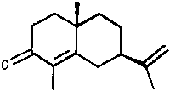
1
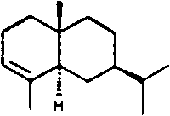
2
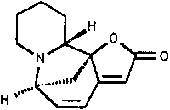
6
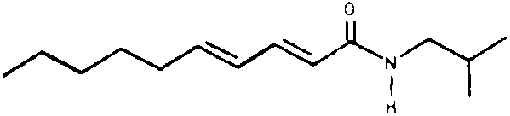
7
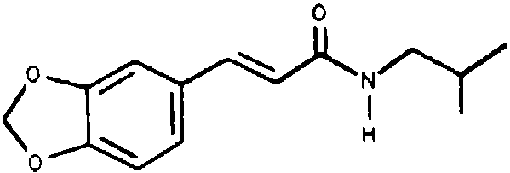
8
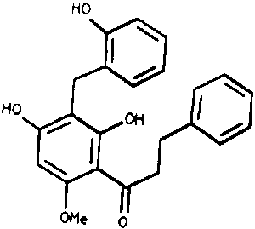
10
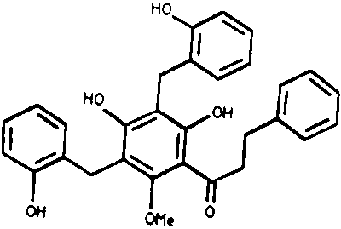
11
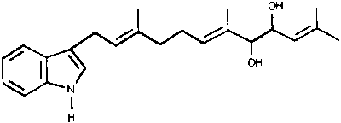
12
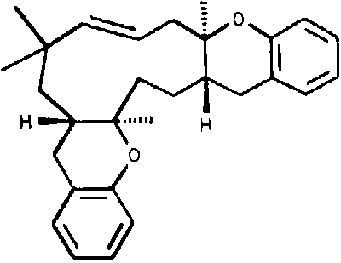
13
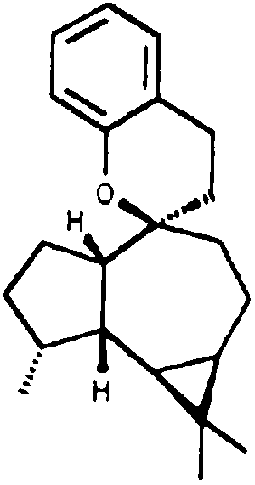
14

15
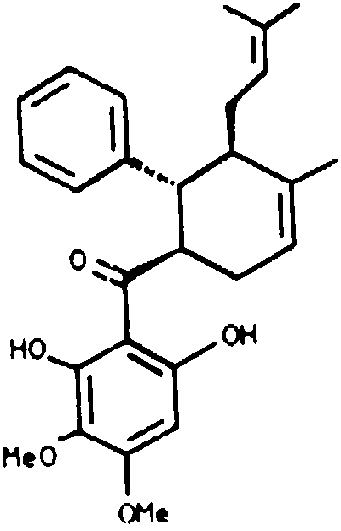
16
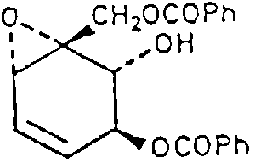
Figure
Ethnobotany and the medicinal plants of the Korup rainforest project area, Cameroon
A. ABONDO,* F. MBENKUM,* and D. THOMAS**
* Institute of Medical Research
& the Study of
Medicinal Plants
P.O. Box I.M.P.M. Yaounde, Cameroon
**Missouri Botanical Garden
P.O. Box 299, St.
Louis
Missouri 63166 - 0299, U.S.A.
ABSTRACT
The Korup Rainforest of Southwestern Cameroon poses the twin challenges of high botanical and high ethnic diversity. Using innovative techniques, we have identified plants used in traditional medicine, that are a basis for both regional primary health care and raw material for pharmaceutical products.
Introduction
Project Background
The Korup Project in Southwestern Cameroon is a joint Cameroon World Wide Fund For Nature (WWF) venture that is aimed at combining rural development with nature conservation on one of Africa's most genetically diverse forests (WWF, 1987).
Two sites constitute the project area (Figure 1). The first is the 126,000 hectare, Korup National Park, where uses are limited to the protection and observation of the forest ecosystem, and the second is a 300,000 hectare area surrounding the park, where an integrated rural development activity takes place. In the second area a spatial approach has been adopted where the land is zoned for different classes of land use.
The project that has been operating since 1987 is very complex and uses a multi-disciplinary approach to attain its goal. The operations are grouped into Natural Resources Management projects and Support Activities that are concerned basically with infrastructural development. Natural Resources Management includes sustainable agricultural systems for the various ecological zones, appropriate agroforestry systems to meet the socio-economic and environmental needs of the area, and the investigation of the potential for sustainable harvesting of the diverse products of the forest, such as, medicinal plants, natural herbicides and pesticides, dyes, gums, resins, leaf proteins, nuts and fruits.
Ethnobotanical Background
In the past, tropical forests were commercially exploited for products, principally timber and little attention was given to the secondary products, though they provided the local people with food, medicines and materials for crafts and construction purposes (Thomas et al., 1989).
The ethnobotanical study that we have undertaken is part of the inventory needed for sound forest management and rural development. The two background components to the study of ethnobotany, especially medicinal plants, are a knowledge of the vegetation, and an understanding of the culture.
Botanical Background
The plant species of the Korup Project area are fairly well known through the botanical inventory carried out by Duncan Thomas with the Missouri Botanical Garden and the Cameroon National Herbarium. The forest is thought to be richer in plants and animal species, perhaps than any other African forest.
This area is dominated by a closed canopy lowland forest with high alpha-diversity, and relatively low beta- diversity. Letouzey (1985) has divided the forest into two associations. The first is made of the Atlantic-Biafran forest, occurring on sandy clays at low attitude of up to 300 m. This is a species rich association, with many gregarious species of the Caesalpinioideae, like Guilbertiodendron. Also, Oubanguia alata, Dichostemma glaucescens and Cola spp. are abundant, especially C. semecarpophylla. The second is the Atlantic-Northwestern association, found on clay soils at higher altitudes 300- 700 m. It has fewer Caesalpinoideae, while Terminalia and Entandrophragma species and Anonidium manii are common. This is the most species - rich association in Cameroon and is also rich in endemics like Medusandra mpomiana. Forest on steep hill sides and ravines are distinctive. Unlike the two associations described above, they are relatively species - poor, but rich in gregarious Cluciaceae such as Garcinia conrauna and G. nobilis. The species Grossera macrantha as well as the rare endemic Nopoleonea equertonii are restricted to these hillside forests.
Ethnocultural Background
Much of the background information on the culture of the area has been drawn from the study of the Northern villages of Korup by Di Nola (1988), a forestry and agricultural visit by Ramshaw (1988) food survey of Mundemba town and Ndian Estate by Malleson (1987), forestry survey in the Korup project by Synnott (1989), a survey on the people of Korup by Devitt (1988), and from being familiar with most prevalent illness of the area and some treatments.
The Korup Project area is ethnically diverse since the boundary between the Bantu people of the Cameroon-Congo group and Semi-Bantu people of the Nigeria - Cameroon Cross River area runs through it (Figure 2). The main ethnic groups of the Cross River area are the Ekoi, the Ejagham, the Ibibio and the Korup, while those of the Cameroon-Congo Bantu Sector are the Uroko and Mbo tribes, to the east of the project area.
Methods
Data collection was preceded by extensive preliminary studies, so as to be familiar with all parts of the project area and design the field work around a viable timetable.
We defined a sampling site as a village. A minimum of two villages were sampled for each ethnic group in the area of study. The four major ethnic groups are the Ejagham, the Upper Balong, the Korup and the Okoko.
Two formal data sets were required for this study, together with a large quantity of information obtained in informal discussions. The data sets were collected in May, June and December 1988, and February to May 1989.
Show-and-tell methods
This was a method used for comparative ethnobotany study to obtain comparative information on plant names and uses.
A standard herbarium that could be examined by villagers as the centre piece of the study was collected from a wide range of habitats in the area. The herbarium contained 260 plant specimens, chosen to test a number of hypotheses concerning plant use in Korup. It enabled us to show all the important structures of plants, such as leaves, flowers and fruits.
By using a fixed set of species instead of a stochastic sub-set of the total flora, direct comparisons were made between data sets. Furthermore, by using an empirical approach where the same specimens were shown in each village, we obtained replicate data sets and built up an overall picture of the names and uses of each species and could easily spot in consistent results.
Walk-in-the woods method
Before the comparative study was carried out, information on plant names and uses was collected by walking around the village and nearby area with our traditional experts and guides. This exercise was known as the "walk in the woods".
This is a standard ethnobotany method used to obtain information through the study of living plants. This approach helped establish the credentials of our informants, identify any useful plants of the area not included in the comparative study, and improved the quality of the comparative data, by obtaining some names in advance that assisted identification of the herbarium specimens.
Traditional treatment and primary health care
Role and Tiers
In developing countries, a large number of people, especially children, die daily of preventable or curable diseases because of lack of simple health care. In most cases this is due to limited resources, poor communication, vast distances, poverty, lack of education etc. (Sofowora, 1982).
As a result of this, traditional medicine has become more accessible to most of the people in rural parts of Africa, where some 80 per cent of the population rely on indigenous forms of medicine. In Korup, where traditional skills exist and where natural resources and phytochemicals are extensively used, it is possible to achieve rural development objectives in the area of primary health care. For example, filaria is widespread in the project area, including both river blindness and loa-loa. The Simulium, whose secondary host is the black fly, is common in all fast -flowing, unshaded streams. Ayong village is situated on the bank of a large stream and with abundant simulian host in the village. According to the villagers, blindness was not a serious problem and that worms in the eye were destroyed using eye drops from Scleria boivinii.
Two tiers of indigenous medicine have been identified in the Korup area. One is traditional medicine proper, that uses specialised skills in diagnosing, preventing or eliminating physical, social and mental diseases. The other, known as "folk" medicine, need not involve a specific medical system, but relates rather to use by traditional remedies by villagers, who do not derive their income from this source.
Although the two tiers are not very distinct and overlap to a considerable extent, folk medicine is regarded as part of the first tier of health care system. For serious illnesses, the patient may seek treatment in the second tier: a traditional practitioner, or a hospital.
Preparation of Herbal Remedies
We cannot adequately assess the importance of drug preparation and other aspects of treatment in Korup because our investigation was botanically oriented.
Although the preparation of individual medicines has not been studied in detail, many customs govern the preparation and administration of each remedy, and these vary from one village to another. Some preparation customs however, appear to be important, such as the condition and time of collection of the material, dose and method or form of administration.
The common forms of preparation are aqueous infusions or decoctions and pastes. The whole plants or plant parts are generally steeped in cold or hot water, or occasionally in cold palm wine or palm gin, locally known as "Afofo". Decoctions are usually prepared with boiling water. In the case of ointments and orally administered medicines, the plants are often ground to a paste with palm oil, and other ingredients like Aframomum melegueta seeds are added.
Infusions and decoctions are frequently drunk or used as enemas, while pastes are eaten, or used as poultices or as ointments. They may even be rubbed on, or put into shallow cuts in the skin, often seven in number. In some cases, medicines are first chewed, and then spat into wounds or incisions. The treatment of fevers is often accompanied by steam baths.
Treatment using plants
The term medicinal plants, when interpreted broadly, includes all plants whose usefulness is derived from specific phytochemicals produced as secondary derivatives of major metabolic pathways (Thomas and Mbenkum, 1987).
Classifications of medicinal plants are frequently based on the type of chemical action involved. We have not used this approach because the study involved neither chemical analysis nor an extensive literature search. Another approach involves the listing of plants under the illnesses or symptoms treated. We have tried to follow this plant as far as possible, despite confusion over what disease or problem the plant was actually treating. We have listed those plants used in traditional medicine, which are quite distinct from ceremonial and magical plants that we have left out.
Conclusion
Traditional medicine is very widely practised in the Korup area, where all villages have at least one traditional practitioner with considerable knowledge, while some remedies are known by most villagers. These treatments are most useful for primary health care and represent the equivalent of non- prescription drugs in orthodox medicine.
Research and extension work are the keys to integrating folk medicine into modern primary health care. The major objective should be to match safe, effective remedies to common illnesses, using local medicinal plants. The problem is that very little is known about fold medicine and traditional medicine proper, and it is impossible to say how effective they are without a lot more research.
In order to accomplish this integration, inventories of medicinal plants and the flora of the various regions must be carried out. This should be followed by consultations between medical doctors, pharmacologists and ethnobotanists, aimed at listing the diseases the villagers can identify and treat, along with the plants to be considered for treating them. Meanwhile, additional phytochemical and pharmacological research should be carried out on important medicinal plants to determine their chemical composition, biological activity, toxic effects and optimal doses. These studies could identify plants which could be used to manufacture medicines for the treatment of numerous common ailments of both humans and animals. These medicines could be used to reduce dependance on imports, and their manufacture would provide a domestic pharmaceutical industry, leading to the development of much local expertise in this field.
Preliminary studies by WWF and Cameroon scientists, have shown that many of the Korup forest plants contain useful chemicals that include fungicides, pesticides, dyes, and even natural contraceptives and aphrodisiac compounds. So far, over 90 substances have been isolated - 38 new to science, with potential commercial use in industry and medicine. Furthermore, one or two species we have identified, contain phytochemicals with anti-viral properties and could be researched as a possible treatment or control of AIDS. It is likely that more will be discovered since much of the flora has not yet been researched.
TREATMENT USING PLANTS OF KORUP
|
Group |
Indications - |
Plants |
Part Used |
Administration |
|
1. FILARIASIS |
ONCHOCERCIASIS |
Scleria boivinii |
Young shoots |
Sap as eye drop |
| |
|
Cleome rutidoesperma |
Aerial parts |
Sap as eye drop |
| |
|
Anchomanes difformis |
Root tubers |
Juice as eye drop |
| |
|
Mangifera indica |
Leaves |
Infusion as enema |
|
2. MYCOSIS |
FUNGAL INFECTIONS |
Cassia alata |
Leaves |
Mashed leave rubbed on skin |
| | | |
Bark |
Decoction for washing |
| | |
Carica papaya |
Aerial |
Latex, rubbed on skin |
| | |
Ficus exasperate |
Leaves |
Rub skin with |
|
3. BACTERIAL AND VIRAL INFECTIONS |
EAR INFECTION |
Cylicomorphus solmsii |
Trunk |
Water from holloro trunk as ear drop |
| | |
Cleome rutidosperma |
Leaves |
Mashed leaves squeezed to nuke ear drop |
| |
EYE INFECTION |
Antrocaryon klaineanum drop |
Fruits |
Juice as eye |
|
| |
Emilia coccinea |
Inflorescence |
Juice as eye drop |
| |
|
Enantia Chlorantha |
Bark |
Eye drop for conjonctivitis |
| | |
Rhektophyllum mirabile |
Stem |
Sap used as eye drop |
| |
|
R. Camerunense | | |
| |
TUBERCULOSIS |
Morinda lucida |
Bark |
Infusion drunk |
| |
|
Treculia obovoidea |
Bark and Leaves |
Infusion drunk |
| |
MEASLES |
Aframomum sp. "tondo" |
Fruits |
Infusion used as enema |
| | | |
Seeds |
Ground seeds rubbed on skin. |
| |
CHICKEN POX |
Citrus lemon |
Fruits |
Fruits Juice rubbed all over body |
| | | |
Leaves and Roots |
Infusion used to wash skin |
| |
TETANUS |
Anthonotha macrophylla |
Leaves |
Mashed leaves with Aframomum melegueta rubbed into cuts in jam to release muscle |
|
4. PARASITES |
INTESTINAL WORMS |
Acanthus montanus |
Leaf |
Infusion as enema |
| |
|
Aframomum hanburyi |
Stem |
Chewed |
| | |
Afrostyra lepedophyllus |
Bark |
Ground and eaten |
| |
|
Canthium manii |
Bark |
Ground and eaten |
| |
|
Dennettia tripetala |
Leaves |
Chewed |
| | |
Neoboutia glabescens |
Root bark |
Ground and chewed with "fu-fu", eaten between 3 and 7 times |
| |
|
Schumanniophyton magnificum |
Bark |
Infusion as enema |
| |
|
Telfaire occidentalis |
Leaves |
Chewed |
| |
MALARIA |
Boehmeria platyphylla |
Leaves |
Cold-water Infusion drunk |
| | |
Enantia chlorantha |
Bark |
Alcohol infusion drunk |
| | |
Eupatorium odorathum |
Leaves |
Decoction drunk |
| |
|
Harungana madagascariensis |
Leaves |
Infusion as enema |
| |
|
Morinda lucida |
Root |
Cold-water infusion drunk |
| |
LICE |
Tephrosis vogelii |
Leaves |
Rubbed |
| | |
Spilanthes uliginosus |
Plant |
Rubbed |
| | |
Cleome rutidosperma |
Leaves |
Rubbed |
|
5.VENERAL DISEASES |
SYPHYLIS |
Sjatrarbiza maccantha |
Leaf |
Infusion taken |
| |
GONORRHOEA |
Anthocleista schweinfurthii |
Bark |
Ground with red oil and eaten |
| | |
Myrianthus arborus |
Bark |
Decoction drunk |
| |
|
Nephrolepis undulate |
Leaves |
Mashed in palm wine and drunk |
| |
CYSITIS |
Bambuss vulgaris |
Leaves |
Infusion drunk often |
| |
VAGINAL INFECTION |
Angylocalys tabbotii |
Seeds |
Decoction of ground seeds |
|
| |
Eribroma oblong |
Pods |
Heated, ground to paste and applied |
| | |
Mucana cochinichinesis |
Seeds |
Decoction used |
| |
BED WETTING |
Barteria fistulosa |
Bark |
Decoction as anemia |
| |
GROIN |
Baillonella toxisperma |
Bark |
Decoction as anema |
| |
ABSCESS |
Clerodendron globuliflorum |
Leaves |
Poultice from heated leaves |
|
| |
Harungana madagascariensis |
Latex |
Rubbed and abcess |
| |
HERNIA |
Afrostyrax lepidophyllus |
Bark |
Aqueous infusion as anema or drink |
| | |
Alstonia boonei |
Bark |
Extract |
| | |
Amaranthus spinous |
Leaves |
Purge |
| | |
Ancistrocarpus densispinus |
Roots |
Aqueous infusion as enema |
| | |
Celtis tessmanii |
Bark |
Aqueous infusion as enema |
| | |
Fagara macrophylla |
Bark |
Aqueous infusion as enema |
| | |
Pycnanthus angolensis |
Aril |
Used to treat hernia |
| |
|
Schumanociophytum magnificum |
Bark |
Infusion as drink |
|
6 REPRODUCTION |
MALE IMPOTENCE |
Angylocalyso tabbottii |
Seeds |
Ground to improve erection |
| | |
Carpolobia lutes |
Bark |
Ground or decoction |
| |
FEMALE INFERTILITY |
Anonidium mannii |
Bark |
Infusion as enema |
| |
|
Jatrorhiza macrantha |
Leaves |
Infusion as vaginal douche |
| | |
Scyphocephalim mannii |
Bark |
Mashed with aframonum melegueta fruits as enema |
| | |
Musanga cecropioides |
Bark |
Mashed with afromonum as enema |
|
|
PREGNANCY COMPLICATION |
Ancistrocarpus densispinosus |
Leaves |
Juice drunks to ease delivery |
|
| |
Cola acuminata |
Seed |
Ground decoction as enema to cause abortion |
| | |
Cola lateritia |
Leaves |
Infusion drunk to avoid miscarriage |
| | |
Cola pachycarpa |
Juice |
Infusion + limestone anema to avoid miscarriage |
| | |
Musanga cecropioides |
Juice |
Used to avoid miscarriage |
| | |
Palisota tracteosa "barteri" |
Leaves |
Infusion as enema to stop bleeding |
| | |
Piper umballatum |
Leaves |
Infusion as enema to stop bleeding |
| | |
Stachytarpheta indica |
Leaves |
Use to stop miscarriage |
| |
CHILD BIRTH |
Alchornea floribunda |
Roots |
Decoction to ease Childbirth |
| | |
Lola acuminata |
Bark |
Decoction as enema kelp delivery for young mothers |
| | |
Laportea evalifolia |
leaves |
Aqueous infusion to advance labour |
| | |
Megraphynium macrostachyum |
Fruits |
Decoction as enema for delayed childbirth |
| | |
Piper guineensi |
Seeds |
Decoction as enema to deliver placenta |
| | |
Raphidophora africana |
Leaves |
Infusion as enema stops bleeding after birth. |
| | |
Tephrosis vogelii |
Roots |
Infusion as enema; accelerates labour |
|
|
TREATMENT OF NEWBORN |
Irvingia gabonensia |
Bark |
Infusion rubbed on albino babies to stop bleeding |
| | |
Massularia acuminata |
Fruits |
Decoction as enema to deduce umbillical hernia |
| |
LACTATION |
Alstonia boonei |
Bark |
Decoction drunk to increase lactation |
| | |
Angylocalyx tabbotii |
Roots |
Infusion drunk to increase lactation |
| | |
Pycnanthus angolensis |
Bark |
Ground bark eaten in food to stimulate lactation |
|
7. WOUNDS AND ACCIDENTS |
WOUNDS |
Angylocalyx tabbotii |
Bark |
Ground bark as dressing |
| | |
Bridelia micrantha |
Bark |
Powder as dressing stops bleeding |
| | |
Aspillia africana |
Leaves |
Juice stops wounds from bleeding |
| | |
Tabernaemontana brachyantha |
Latex |
Used to coagulate blood |
| |
SORES |
Alchornea cordifolia |
Bark |
Powdered and put in sores and infected cuts |
| | |
Dorstenia barteri |
Roots and fruits |
Mashed and used as dressing |
| | |
Paulinia pinnata |
Leaves |
Ground and applied to sores |
| | |
Rauvolfia vomitaria |
Root sap |
Applied to infected wounds |
| |
SNAKE BITE |
Diodia scandens |
Leaves |
Mashed with Ageratum conyzoides leaves and eaten |
| | |
Pycnanthus angolensis |
Bark |
Chewed to get strength to get back home for treatment |
|
8.GASTRO ENTEROLOGICAL |
HEPATITIS JAUNDICE |
Cassia alata |
Leaves |
Hot-water infusion as enema |
| | |
Harungena madagascariensis |
Bark |
Infusion as enema |
| |
|
Pentaclethra macrophylla |
Bark |
Infusion as enema for liver problems |
| |
SPLEEN |
Massulania acuminata |
Fruit |
Decoction from mashed fruits |
| | |
Portulaca oleracea |
Plants |
Infusion from mashed fruits |
| |
STOMACH ABSCESS |
Fegara macrophylla |
Bark |
Infusion as enema |
| |
PILES |
Thonningia sanguinea |
Stem |
Used to treat piles |
|
9. PAIN |
TOOTHACHE |
Alchornea cordifolia |
Leaves |
Chewed and juice retained in month |
| | |
Anchomanes difformis |
Tuber |
Paste rubbed around teeth to cure infected gums |
| | |
Spilanthes uliginosus |
Flowers & Leaves |
Chewed to reduce pain |
| |
CHEST |
Acanthus montanus |
Leaves |
Mashed in red oil and eaten for breathing trouble |
| | |
Dennettia tripetata |
Leaves |
Chewed for chest pain |
| | |
Mimosa pudica |
Plant |
Infusion drunk for chest pain |
| | |
Petersianthus africanus |
Bark |
Boiled, cooled and drunk for chest pain |
| |
WAIST AND SIDE |
Albizia zygia |
Bark |
Powdered, boiled and as enema for side pain |
| | |
Glossocalyx brevipes |
Leaves |
Infusion as enema for waist pain |
|
10. ABDOMINAL PROBLEMS |
DIARRHOEA |
Alchornea floribunda |
Leaves |
Infusion drunk |
| |
|
Anthocleista vogeli |
Bark |
Decoction drunk |
| |
|
Bochmeria plathyphylla |
Leaves |
Mashed and eaten |
| |
|
Lasianthers africana |
Leaves |
Infusion drunk |
| |
|
Trichilia rendelotii |
Root |
Decoction as enema |
| |
PURGATIVE |
Alstonia congensis |
Leaves |
Used to purge |
| |
|
Struchium sparagosphora |
Leaves |
Infusion as enema |
| |
|
Uapaca staudii |
Bark |
Eaten with Ricinodendron fruits |
| |
EMETIC |
Baphia sp. |
Leaves |
Infusion drunk |
| |
|
Scoparia dulcio |
Plant |
Infusion drunk |
Seaweeds in medicine and pharmacy: A global perspective
KETO E. MSHIGENI
Department of Botany
University of Dar es Salaam
P.O.
Box 35091
Dar es Salaam, Tanzania.
ABSTRACT
The term seaweed carries the connotation that the plants under discussion are useless and worthless. In this paper the author reviews the state of the art with respect to the utilisation of seaplants in various parts of the world, and shows that there are more uses of the plants most people realise. Indeed, he concludes that the term seaweed is inappropriate for the marine plants in question. He gives an outline of the utilisation of seaweeds in medicine, in pharmacy, and in various other applications, on a worldwide basis. He advocates that in Africa, seaweeds are a grossly under-exploited resource, and calls for scientists in the region, and in the Third World countries in general, to pursue a regional collaborative approach in the development of the seaweed resources. Finally, he appeals to donor agencies for financial assistance towards the realisation of goals pertaining to the development of the unique marine plant resources.
Introduction
Let me begin my presentation by taking your minds back to the beginning of things; and allow me to start with a quotation from the First Book of Moses in the Bible:
...And God - id, "Let the waters under the heavens be gathered together into one place and let the dry land appear". And it was so. God called the dry land Earth, and the waters that were gathered together, He called Seas. And God saw that it was good" (Genesis 1:9-10, Revised Standard Version).
Allow me to quote further from the same author, in order to drive home the subject of my presentation
...And-God said, "Let the waters bring forth swarms of living creatures...' So God created the great sea monsters, and every living creature that moves... And God saw that it was good. And God blessed them saying, 'Be fruitful and multiply, and fill the waters in the seas...' (Genesis 1:20- 22).
And the seaplants multiplied. In the region of the Atlantic Ocean known as the Sargasso Sea the floating community of Sargassum alone has been estimated to be 5 to 10 million tonnes, fresh weight (Chapman and Chapman, 1980).
The plants that will constitute the subject of this presentation, the seaweeds fall within the framework of the great sea monsters referred to in the book of Genesis. Some may actually attain a height of 30 to 40 metres. This exceeds the height of most of the tall trees found on land. The plants in the sea fall under two broad ecological divisions. The first embraces the tiny microscopic algae, the phytoplankton, which grow in a freely floating condition within the seawater mass. The second division comprises the macroscopic algae which, typically, grow attached to the seabed and other solid objects in the ocean. The latter are referred to as benthic algae. Seaweeds fall within the domain of the benthic algae.
Because we are, essentially, terrestrial mammals, and since many of us were born and raised in far inland localities, we never come to a full understanding of the usefulness and economic potential of the marine plants that are embraced under the term seaweed. The situation is aggravated by the fact that the term "weed", as stated above, carries the connotation of useless and worthless plants. But actually, the marine plants in question have innumerable uses to mankind.
Many seaweeds are edible. When used as food they not only supply the body with a wide range of vitamins and essential mineral elements (including iodine), but some are also rich in protein and digestible carbohydrates (Chapman and Chapman, 1980). The protein content of the blue-green alga Spirulina platensis is, for example, up to 60 -70% protein, on a dry weight basis. This is the highest protein level reported for any plant species (Leonard and Compere, 1967).
The use of seaweeds as food for man goes far back into antiquity. In a book published in China by Sze Teu about 600 B.C., it is stated that some seaweeds are a delicacy, fit for the most honourable guest, even for the King himself (Johnston, 1966). The most widespread uses of seaweeds for food are found among the inhabitants of Japan, Korea, China, Indonesia and Hawaii. The most commonly eaten marine plants arc species of Porphyra, Laminaria, Monostroma, and Undaria. Currently these arc produced largely through farming, and the annual crop production is incredibly high. For Laminaria, the 1983 production figure for China alone was 1.4 million tones, wet weight (or 230,000 tones dry). For Porphyra, the 1981 production figure in Japan alone was 340,000 tones, wet weight (Tseng and Fei, 1987). These seaweeds now constitute a multi- million dollar industry.
The potential utilisation of seaweeds for food in Africa, Latin America and India is an issue which certainly deserves greater attention than has hitherto been the case. Indeed, it is remarkable how singularly little attention has been paid to the algae as food by the inhabitants of these regions.
Many seaweeds could also be developed for use as livestock feed supplements. This is by virtue of their rich content of vitamins and inorganic mineral nutrients, including many trace metals. Some seaweeds are also rich in protein. Indeed, the production of livestock meal supplements from seaweeds constitutes a well developed industry in Western Europe, and especially in Norway and Scotland. Over 20,000 tonnes of the seaweed Ascophyllum nodosum are produced as livestock feed supplements in Norway alone per annum (Jensen, 1978; Chapman and Chapman, 1980).
Considering that many countries in Africa support large population of cattle, goats, sheep, camels, and poultry, and considering the well-documented advantages of using seaweeds as livestock feed supplements (Levring et al., 1969; Chapman and Chapman, 1980), one can see the need for us to pay increasingly greater attention to our seaweed heritage. Seaweeds could also be used as an agricultural fertilizer. When used as manure, they supply the crop plants not only with a wide variety of inorganic mineral nutrients (including the essential trace metals), but also with valuable organic substances which serve as crop pesticides (Fenical, 1983), or as growth hormones (Augier, 1977; Mooney and Van Staden, 1984). Additionally, many seaweeds contain colloidal substances in their cell walls, which could help to bind the soil particles together, improving the crumb-like structure of the soil, and facilitating aeration (Chapman and Chapman, 1980). The use of seaweeds as manure actually goes back to the days of the ancient Chinese, the Vikings, and the Greeks. In France, it is documented that as long ago as 1681, a royal decree was issued, regulating the conditions under which seaweeds could be collected from the shore for application as manure (Aitken and Senn, 1965).
In the more recent times, seaweeds have been developed for the production of liquid agricultural fertilizers, which can be concentrated, and thus be transported more easily for application in the more inland regions. The liquid fertilisers can also be applied foliarly by spraying, with the use of air crafts, etc.
The liquid seaweed fertilizers are marketed under various commercial names, such as Maxicrop, Alginure, etc. (Chapman and Chapman, 1980; Abets and Young, 1983). It is now well documented that plants which are sprayed with the liquid seaweed extracts, not only produce significantly higher crop yields, but are also rendered free of attack by most of the common crop pests. They also become more drought resistant. The use of seaweed for the production of liquid fertilisers is thus now very popular, and is a multi- million dollar industry. Again, the use of seaweed as manure is something which Africa has, on the whole, neglected and to which we must now draw greater attention (Mshigeni, 1983).
Have I drifted away from the theme of the conference too far, and for too long? Yea, but with a purpose. If by using seaweed as food man gets adequate levels of protein, this means that we have freed him from kwashiorkor. If by eating seaweed man gets the essential vitamins, this means that we have freed him from beriberi, scurvy or other hypovitaminoses. If by eating seaweed man gets adequate levels of iodine, this means that we have freed him from goitre. Actually, in localities where seaweeds are regularly eaten as food, goitre is completely unknown. All this could be labelled preventive medicine. But even in curative medicine, there is a big hope in seaweeds.
The fact that there is such a wide range of medicinal products from the vascular plants on land, that two-thirds of our planet is covered with seawater, and that the ocean waters support a wider variety of plant, types than what we are used to seeing on land, one would expect many of the plants in the sea to possess chemical substances which could be used in curative medicine. This is, indeed, the case, as will now be elaborated.
Direct uses of seaweed as medicine
A survey of the literature indicates that the earliest records on the direct utilisation of seaweeds as medicine go back to the days of Emperor Shen Nung who, in 2700 B.C., documented medicinal uses of seaweeds in a Chinese herbal (Moi, 1987). The Chinese Materia Medica, published in the 8th Century A.D., (Chapman and Chapman, 1980), also lists many algae used in medicine (e.g., in the treatment of goitre, for wound-healing and for reducing hypertension, etc.).
In Mediterranean Europe, the Greek physician, Stephanopoli, discovered in 1775 that the red seaweed Alsidium helminthochorton, found on the rocky shores of Corsica, was an efficient vermifuge (Chapman and Chapman, 1960). The Hawaiians have also, from days immemorial, used the seaweed Hypnea nidifica for curing stomach ailments (Reed, 1906). In Indonesia, Hypnea musciformis was also used as a vermifuge from the very ancient times (Zaneveld, 1959).
In New Zealand, the Maori people traditionally harvested the seaweed Durvillea for use as medicine for the treatment of scabies, and also as a vermifuge (Schwimmer and Schwimmer, 1955). In Tonga, the inland pregnant women traditionally used to go to reside on the coast, in order to gather some particular seaweeds, which were believed to be beneficial to them in their pregnancy conditions (Lucas, 1936).
In latin America, South American Indians, from the ancient times, used to collect Sargassum bacciferum for use as a cure for goitre and kidney disorders (Schwimmer and Schwimmer, 1955). In many of the Caribbean Islands, and especially in Cuba, S. vulgare was also widely used as a vermifuge (Chapman and Chapman, 1980).
More recent studies by various scientists in different parts of the world, have revealed that there are more species of seaweeds which are used in traditional medicine than is generally conceived. In the Philippines, Ulva pertusa is used for wound healing. Other Philippine seaweeds used as medicine include Gracilaria lichenoides and Ulva lactuca (Nuqui, 1987). In Malaysia, Acetabularia major is commonly used for the treatment of gall stones, and Chondria armata is used as a vermifuge (Moi, 1987). In China and Hong Kong, species of Sargassum are commonly used for the cure of goitre, coughs, fever, and various tumours; Digenia simplex is used as a vermifuge; Lithothamnium pacificum is used as an expectorant, as a cough remedy, for reducing fever, and for the inhibition of tumours; and Caloglossa leprieuri is used as an antiheminthic agent (Tseng, 1983, Win Shin-Sun, 1987).
In the Mediterranean, in Western Europe, and in North America, Hypnea musciformis is used as a vermifuge; Palmaria palmata is also used as a vermifuge; Dictyopteris polypodioides is used for the cure of lung diseases; and Laminaria digitata was, in 1682, introduced by Dr. C.F. Sloan, for use as a cervical dilator, to facilitate baby delivery (Chapman and Chapman, 1980; Hale and Pion, 1972).
Other documented medicinal uses of seaweeds include their utilisation as an aphrodisiac (e.g., Porphyra sp. in the Philippines, under the name "gamet"); as a cure for menstrual troubles (e.g., Laminaria japonica in China) and also as a cure for syphilis, (e.g. Laminaria saccharina in China (Chapman and Chapman, 1980; Nuqui, 1987).
Curative medicinal substances in seaweeds
For many traditional practices, modern scientific and technological advances have, post facto, revealed that the ancients were, in fact, right. Most of the seaweeds (e.g., Sargassum spp.) which were traditionally used as a cure for goitre, have now been found to contain appreciable high levels of iodine, the curative substance (Chapman and Chapman, 1980). Digenia simplex, which was traditionally used as an anthelminthic agent, has been shown to contain kainic acid and allokainic acid (Levring et al., 1969). For Chondria armata, also used as a vermifuge, the curative substance has been found to be domoic acid. To-day one can buy medicinal drugs manufactured from fronds of Digenia, marketed under the trade name helminal, or digesan, for use against Ascaris lumbricoides.
Recently there has been a rapidly growing awareness on the need for research to be undertaken on the uses of seaweeds for modern medicine. Many species of marine algae have now been screened, and also tested against the common disease-causing bacteria, fungi and protozoans. In these studies the test organisms included gram-positive bacteria such as Staphylococcus aureus and S. pneumoniae, gram-negative bacteria such as Escherichia coli and Pseudomonas aeruginosae and fungi such as Trichophyton mentagrophytes, and the yeast Candida albicans, as well as the protozoan, Trichomonas foetus.
These studies have revealed that many species of seaweeds are biologically active against many of the common disease pathogens. Amongst the Green Algae (or the Chlorophyta), the biologically active members include species of the genera Codium, Halimeda, Ulva, Cladophoropsis Caulerpa and Enteromorpha. Amongst the Phaeophyta (Brown Algae) the taxa with antimicrobial activity include species of Dictyopteris, Zonaria, Ecklonia, Durvillea, Dictyota, Sargassum and Turbinaria. Amongst the Rhodophyta (Red algae) microbial activity has been detected amongst the species of Chondria, Digenia, Laurencia, Caloglossa, Grateloupia, Hypnea and Murayella (Chapman and Chapman, 1980; Tseng, 1983; Baker, 1987; Sivapalan, 1987).
Many scholars are now going beyond the screening stage. They are actively involved in extracting and characterising the active substances responsible for suppressing the growth of, or totally destroying the disease-causing bacteria, fungi or the protozoans referred above. Members of this audience who wish to go deeper into this issue, are referred to the excellent works of (Fenical, 1980, 1983; Fenical and McConnell, 1983; Glombitza, 1977, 1979; Glombitza et al., 1982).
According to Fenical (1983), many seaweeds show the presence of a wide range of biologically active compounds, which are often quite unrelated to those of their terrestrial counterparts. Many blue-green algae, indeed, contain substances which show potent anti-leukemic activity. Extracts from Lyngbya majuscula have recently given rise to a novel powerful antibiotic, malyngolide (Fenical, 1983).
In their recent studies on species of Sargassum that were traditionally used in Chinese herbal medicine for the treatment of cancer, Yamamoto (1974), and Yamamoto et al. (1977, 1982) revealed that the extract from S. fulvellum was active against leukemia and sarcoma tumour cells implanted on mice. Extracts of S. thunbergii were also tested (Yamamoto et al., 1981). In both cases the extracts from the seaweed gave an inhibition ratio of up to 93.7%, which showed a very high promise as an anti-tumour agent. The author referred to above found the anti tumour component to be a polysaccharide, which was suggested to be either a sulphated peptidoglycuronoglycan, or a sulphated glycuronoglycan (Yamamoto et al., 1981, 1982).
Several other species of Sargassum have also been found to contain extracts which are very active against bacteria, including Staphylococcus aureus, Escherichia coli and Salmonella spp. The active anti-bacterial constituent of Sargassum kjellmanianum, has been found to be a cyclopentenone (Fenical, 1983), whose structure has been determined.
Other applications of seaweeds in medicine and pharmacy
Let us now consider the indirect uses of seaweeds in medicine and pharmacy. In addition to their vitamins, inorganic minerals, proteins, and the medicinal compounds discussed above, seaweeds also contain colloidal polysaccharides which are of great significance in industry and commerce. The best known of these is agar, a sulphated galactan which is extensively used in microbiological and public health laboratories, as a culture medium for bacteria and fungi.
The name agar is of Malaysian origin. It was the traditional name for the red seaweed Eucheuma, which the people of Malaysia harvested, dried, and boiled to produce a gel that was used for food. The significance of agar in medicine and pharmacy was not, however, realised in the western world until 1881, when Robert Koch introduced its use for the culture and isolation of pathogenic micro- organisms. Since then agar has become a necessity for every hospital and bacterial research laboratory. Agar is preferred to any other solid culture medium because it is relatively inert, and is not decomposed by most bacteria.
Today most of the agar supplies of the world are extracted from species of the red seaweeds Gracilaria, Gelidiella, Gelidium and Pterocladia, which are well represented on our African shorelines. Indeed, Madagascar exports the agarophyte, Gelidum madagascariense, to Japan.
Another colloidal polysaccharide from seaweeds, which has a wide range of applications in industry and commerce, is carrageenan. This is also a sulphated galactan, extracted from red seaweeds such as Chondrus, Gigartina, Hypnea, Sarconema, and Eucheuma Since 1950, Tanzania has been involved in the export of several species of Eucheuma to Western Europe, where they are processed for carrageenan production. There are now serious efforts in the country, aimed at augmenting the export tonnage of Eucheuma through farming. The colloid from the seaweed, like agar referred to above, readily forms gels in hot water, and is thus referred to as a hydrocolloid.
Carrageenan and agar find innumerable applications in food products, cosmetics, and pharmaceutical industries, as gelling, thickening, emulsifying and stabilising agents. Many chocolate milks and infant food preparations, many medicinal syrups, many ointments ... contain varied proportions of agar or carrageenan. For a more thorough study of these applications, the reader is referred to the excellent works of Levring et al., (1969) and Chapman and Chapman (1980).
The Brown Seaweeds produce a different kind of hydrocolloid, algin, which is a polymer of guluronic and mannuronic acids. The tropical seaweeds containing exploitable quantities of algin include species of Sargassum, Turbinaria, Hormophysa and Cystoseira. In the temperate waters, the most important sources are species of Macrocystis, Laminaria, Ecklonia and Nereocystis. Algin is also extensively used as a gelling thickening, emulsifying and stabilizing agent in many branches of modern industry. These include the textile industries, the pharmaceutical industries, the breweries, and film industries, etc. Many medicinal substances are also delivered to the patients in the form of capsules which are coated with algin. Here again, the reader is referred to the detailed account on algin in the publications by Levring et al., (1969) and Chapman and Chapman (1980). The reader will, indeed, find that medical practitioners indirectly prescribe the use of seaweed colloids more frequently than they normally imagine. Perhaps many of our dentists are also not aware of the fact that dental industries also make very extensive uses of algin, in various dental preparations. Modern physicians additionally make frequent uses of algin as an adsorbent in wound dressing; as a haemostatic in brain and thoracic surgery (Schwimmer and Schurmmer 1955) and in many other medical practices.
Conclusions and recommendations
From what, has been outlined above, it is self evident that the plants discussed in this paper are not weeds in the real sense of the word. The name seaweed is certainly a misnomer for the seaplants it represents.
In this paper the thrust of the discussions has been on the utilisation of seaweeds in medicine and pharmacy. But it has also been shown that the plants could similarly be developed for use as food, fodder, manure, and as source of industrial colloids. To a small extent, there are a few localities in Africa where seaweeds are being exploited on a commercial scale (Mshigeni, 1983; 1987). But, by and large, Africa is a terra incognita with respect to the stage of exploration and mopping of her marine plant resources.
To make any significant step forward towards the development of our seaweed resources for medicine and pharmacy, our Third World institutions of higher learning, and our research and development centres, must attract more scientists into research on the biology, biomass ecology, biochemistry and microbiology of the marine plants in question, than is the case at present. Indeed, we need to pursue a multidisciplinary approach, involving botanists, chemists, medical doctors, sociologists, etc. Currently our progress is curtailed by the lack of an adequate number of well trained scientists, who are working full time on the subject. In view of the fact that most of the Third World countries share this problem, and considering that this could be most effectively solved through regional collaboration, and through the sharing of the human and other available resources, it is recommended that the Third World countries represented in this conference, consider the possibility of establishing a small international Task Force, to dig deeper into the issue of developing our vast, but neglected, marine plant resources. It is recommended also that the donor agencies represented at the conference also consider, favourably, requests for scholarship support, library support, and for the acquisition, of pieces of research equipment, which are so vital in the characterisation of some of the chemical substances contained by the seaplants.
References
Abetz, P. and C.L. Young (1983). The effect of seaweed extract sprays derived from Ascophyllum nodosum on lettuce and cauliflower crops. Bot. Mar., 26: 487- 492.
Aitken, J.B. and T.L. Senn. (1965). Seaweed products as a fertilizer and soil conditioner for horticultural crops. Bot. Mar., 8: 144-148.
Augier, H. (1977). Les hormones des algues. Etat actuel des connaisance. V. Index alphabetique par especes des travaux de caracterisation des hormones endogenes. Bot. Mar., 22: 187-203.
Baker, J.T.(1987). The search for pharmaceuticals from marine algae. In: Furtado, J.I. and Wereko- Brobby, C.Y. (Ed.), Tropical Marine Algal Resources of the Asia-Pacific Region: A Status Report. Commonwealth Science Council Technical Publication Series, Nr. 181, CSC (87) EPP- 4:9-23.
Chapman, V.J. (1970). Seaweeds and their uses. Methuen, London. 304 pp.
Chapman, V.J. and D.J. Chapman (1980). Seaweeds and their uses. 3rd Edition. Chapman and Hall in Assoc. with Methuen, London: 334
Fenical, W. (1980). Diterpenoids. In: Scheuer, P.J. (Ed.), Marine natural products: chemical and biological perspectives. Vol. 1. Academic Press, N.Y.
Fenical, W. (1983). Investigation of benthic marine algae as a source of new pharmaceuticals and agricultural chemicals. In: Tseng, C.K. (Ed.), Proc. Joint China-U.S. Phycol. Symp., Science Press, Beijing. China: 497-521.
Fenical, W. and O.J. McConnel (1978). Antibiotics and antiseptic compounds from the family Bonnemaisoniaceae. Proc. Intl. Seaweed Symp., 9:387-400.
Glombitza, K.W. (1977). Highly hydroxylated phenols of the Phaeophyceae. In: Faulkner, D.F. and Fenical, W. (Eds.), Marine Natural Products Chemistry, Plenum Press, New York: 191-204.
Glombitza, K.W. (1979). Antibiotics from algae. In: Hoppe, Levring, T. and Tanaka, Y. (Eds.), Marine Algae in Pharmaceutical Science. Walter de Gruyter, New York: 303-342.
Glombitza, K.W., M. Foster and W.F. Farnham (1982); Antibiotics from algae. Part 25. Polyhydroxyphenyl ethers from the brown alga Sargassum muticum (Yendo) Fensholt. Part. II Bot. Mar., 25: 449-452.
Hale, R.W. and R.J. Pion (1972). Laminaria: an underutilized clinical adjunct. Clinical Obstet. Gynaeol., 15: 829-850.
Jensen, A. (1978). Industrial utilization of seaweeds in the past, present and future. Proc. Intl. Seaweed Symp., 9: 17-34.
Johnston, H.W. (1966). The biological and economic importance of algae. Part 2. Tuatara, 14: 30-63.
Leonard, J. and P. Compere (1967). Spirulina platensis (Gom.) Geitler: algue bleue de grand valeur alimentaire per sa richesse en proteines. Bull. Jard. Bot. Nat. belg., 37(1): 1-23.
Levring, T., H.A. Hoppe and O.J. Schmid (1969). Marine algae: a survey of research and utilization. Cram de Gruyter & Co., Hamburg. 421 pp.
Moi, P.S. (1987). Marine algal resources in Peninsular Malaysia. In: Futado, J.I. and Wereko-Brobby, C.Y. (Ed.), Tropical Marine Algal Resources of the Asia-Pacific Region: A Status Report. Commonwealth Science Council Technical Publication Series, Nr., 181, CSC (87) EPP-4: 69-76.
Mooney, P.A. and J. Van Staden (1984). Seasonal changes in the levels of cytokinins in Sargassum heterophyllum (Phaeophyceae). Bot. Mar., 27:437- 442.
Mshigeni, K.E. (1983). Algal resources, exploitation and use in East Africa, In Chapman, D.J. and Round, F.E. (Eds.), Progress in Phycological Research, Vol. 2. Elsevier/North Holand Biomed press B.V.: 387-419.
Mshigeni, K.E. (1987). Marine algal resources of Seychelles: a survey of the species occurring on the islands and an assessment of their potential for agriculture, commerce, phycocolloid industry and other uses. Commonwealth Science Council, Technical Publ. Ser., Nr., 196, CSC (87), EPP 7: 1-56.
Nuqui, C.R. (1987). The major groups of Philippine seaweeds. In: Furtado, J.I. and Wereko-Brobby, C.Y. (Eds.), Tropical Marine Algal Resources of the Asia-Pacific Region: A Status Report. CSC Techn. Publ. Ser. Nr. 181, CSC (87) EPP-4: 91 -100.
Reed, M.S. (1906). the economic seaweeds of Hawaii and their food value. Ann. Rept. Hawaii Agric. Expt., 1906: 61-88.
Schwmmer, M. and D. Schwimmer (1955). The role of algae and plankton in medicine. Grune and Stratton, Inc., New York: 85.
Sivapalan, A. (1987). Marine algae of Sri Lanka. In: Furtado, J.I. and Wereko-Brobby, C.Y. (Eds.). Tropical Marine Algal Resources of the Asian- Pacific Region: a Status Report. CSC Techn. Publ. Ser., Nr. 181, CSC (87) EPP-4, 105-107.
Tseng, C.K. (1983). Common Seaweeds in China. Science Press, Beijing China, 316 pp.
Tseng, C.K. and X.G. Fei (1987). Economic aspects of seaweed cultivation. Hydrobiologia 151/152: 167- 172.
Win Shin-Sun, R.S.S. (1987). Marine algal resources of Hong Kong. In: Furtado, J.I. and Wereko-Brobby, C.Y. (Eds Tropical Marine Algal Resources of the Asian Pacific Region: A Status Report. CSC Techn. Publ. Ser., Nr. 181, CSC (87) EPP - 4:31-40.
Yamamoto, I., T. Nagumo, K. Yagi, N. Tomingaga and M. Aoiki (1974). Antitumor effect of seaweeds. I. Antitumor effect of extracts from Sargassum and Laminaria. Jap. J. Exp. Med., 44:543-546.
Yamamoto, I.T. Nagumo, M. Fujihara, M. Takahashi, Y. Ando, M. Okada, and K. Kawai (1977). Antitumor effect of seaweeds. II. Fractionation and partial characterisation of the polysaccharide with antitumor activity from Sargassum fulvellum. Jap. J. Exp. Med., 47: 133-140.
Yamamoto, I., T. Nagumo, M. Takahashi. M. Fujihara, Y. Suzuki and N. Izina (1981). Antitumor effect of seaweeds. III. Antitumor effect of an extract from Sargassum kjellmanianum. Jap. J. Exp. Med., 51:181 - 198.
Yamamoto, I., M. Takahashi, E. Mamura, and H. Maruyama (1982) Antitumor activity of crude extracts from edible marine algae against L-1210 leukemia. Bot. Mar., 25: 455-457.
Zaneveld, J.S. (1959). The utilization of marine algae in tropical South and East Asia, Econ. Bot., 13: 89- 131.
Biotechnology and medicinal plants
E. N. MSHIU
Traditional Medicine Research Unit
P.O. Box 65001
Dar es
Salaam
Tanzania
ABSTRACT
Tie paper reviews issues on biotechnology, and medicinal plants. Third World countries do not have mechanisms for safeguarding sovereignty over their genetic resources, or foe the conservation of tropical products and the traditional knowledge of indigenous people. Advances in biotechnology have heightened interest among biotechnological and pharmaceutical companies in herbal plants and microbiological organisms of the South, as a source of raw materials for new pharmaceutical products. Third world countries must also benefit from their knowledge and biological treasures. Long term conservation measures of their plant resources must thus be put in place. In the process, the indigenous people who enrich the scientists with a wealth of information on traditional medicinal uses of the plants, must be treated with respect, and be given the recognition they deserve.
Introduction
With advances in biotechnology there is renewed and increased interest in the vascular and other plants of the South as a source of raw materials for developing new pharmaceutical products. At least 7000 medical drug compounds in modern Western pharmacopeia are derived from plants. In 1985 the retail value of plant-derived drugs in the industrialized world was estimated to be at least $43 million. In recent decades, pharmaceutical companies have focused on the synthetic production of medicinal products, but the chemists have found it difficult to improve on what nature has provided. In fact, of all the useful plant-derived drugs, only 10 are synthesized in the laboratory. The rest are still extracted from plants.
With advances in plant molecular biology, new cell culture techniques, new bio-assays, and the availability of new and precise analytical methods for screening the plants, discovery of natural products is expanding. A 1988 consultancy report by a United Kingdom firm, Mc Alpine and Warrier, indicated that the market potential for sophisticated herbal drugs in the Western World could range from $4.9 billion to $47 billion by the year 2000, if the AIDS epidemic continued unchecked.
The world's tropical moist forests cover 6% of the earth's surface, and contain at least 50% of all the vascular plant species. It should be noted that, 65 - 75% of higher plant species are indigenous to the rain forests. Little is known about the vast majority of these species, and, because of deforestation, they are becoming extinct at a rate unparalleled in human history. Yet, the rain-forests plants have been considered to be a complex chemical storehouse for modern medicine (Principe, 1989).
The world picture
Less than 1% of tropical forest species have been examined for their possible use to human kind. But at least 1400 plant species of tropical forests are believed to be of potential in curing cancer. It is noted with concern that with tropical forests being destroyed at the rate of up to 100 acres per minute, and the global rate of species extinction now estimated at 400 times faster than in the recent geological past, scientists warn that 20 - 25% of the world's vascular plant species will be lost by the year 2000 (RAFI, 1989).
It is difficult to put a price tag on medicinal plant species, but it helps to consider the enormous social and economic value of a few of our tropical medicinal plant "superstars".
The first example, Madagascar's rosy periwinkle plant (Catharanthus roseus) is a source of at least 60 alkaloids, of which the two important alkaloids, vincristine and vinblastine, have revolutionized the treatment of childhood leukemia and hodgkin's disease. One requires 15 tonnes of the plant leaves to make one ounce of vincristine, which sells for US 9100,000 a pound. Commercial sales of drugs derived from rosy periwinkle total approximately $160 million per year.
The second example is Rauvolfia. Material obtained from the plant, the so-called, "shake root" plant, from monsoon forests in India, contains an alkaloid, reserpine, which forms the base of tranquilizer products, and other drugs used in the treatment of hypertension and schizophrenia. In the early 1980s the retail sales of reserpine-based products in the U.S.A. alone, exceeded $280 million a year. Biotechnological companies and Pharmaceutical Corporations are combing the tropical forests of the Third World countries, in pursuit of exotic medicinal plants as they are interested in natural products screening (RAFI, 1989).
It is reported that, the Japanese and European companies are even more active than the United States counterparts. Few of them are doing their own collections in tropical forests, and some are contracting with third party collectors. For example, Merck Sharpe and Dohme from United States, a leader in natural products discovery, routinely makes contracts for the collection of tropical plants. The company is now in Brazil, searching for a medicinal plant superstar, tiki uba, which has uses as an anti- coagulant. Some of the companies have turned to China, where herbal remedies have been used for centuries. It is reported, for example, that a United State drug company, Up John, is studying ten compounds from the ancient Chinese herbal medicines, with the aim of developing new drugs to fight cancer, cardiovascular diseases, and disorders of the central nervous system. G.D. Searle and Company, is evaluating extracts from Chinese plants used for gastro-intestinal disorders.
It is further reported that the Biotics Company from the United Kingdom started working with the European Commission in 1986 as a commercial broker to supply exotic plants from developing nations, for pharmaceutical screening. Major pharmaceutical companies, such as ICI, Beechams, Rhone Paulen, Glaxo, Hoechst, Novo and Sandoz, expressed interest in obtaining extracts from indigenous plant species from the Third World. According to information available, Biotics Limited, for example, provided Glaxo Pharmaceuticals (UK) with plants from Ghana.
Medicinal substances extracted from vascular and other plants from the South today will become the patented products of biotechnology of tomorrow. The potential for developing new drugs, which may hold promise for curing diseases such as cancer and other life threatening ailments, is great. Despite the potential benefits, there is a historic disregard for Third World cultures from which these plants are extracted.
The discovery of medicinal substances from vascular plants does not just happen by accident. The people who have traditionally lived in tropical forests are the key people to assist the modern scientists in the understanding, utilization and conservation of tropical plant diversity.
Professor Norman Farnsworth of the University of Chicago, U.S.A., estimates that three quarters of all plant-derived drugs were discovered because of their prior use in indigenous medicine. Mark Plotkin of the World Wildlife Fund, observes that "...because you have a Ph.D. and the other guy can't read, it does not mean you know more about botany than he does". He gives the example that forest dwelling Indians employ at least 1,300 plant species for medicine and related purposes.
Worldwide, Third World communities use at least 3000 plant species to control fertility. According to Plotkin, every time one medicineman dies, it is as if a library was burned down. He goes on saying that it is worse than that, because if a library is burned, most of the information can be found in other libraries. However, when a medicineman dies his knowledge is lost, and is lost forever!
The most efficient way to identify plants, and their medicinal properties, is to ask the people who use them (Plotkin 1988). Most healers, in our experience, have no written records of the plants they use.
It should be further added that the demand for the South’s exotic germ plasm is not limited to plants only, nor is collecting restricted to tropical forests and land surfaces. There is also interest in bacteria, algae, fungi and protozoa, and a wide range of marine organisms. These also have potential as sources of valuable pharmaceutical raw materials. For example, Mycosearch, a small biotechnology company in the USA collects fungi samples from around the world, and screens them for valuable natural compounds. The company maintains a collection of over 20,000 fungi, and over 50% of them originate from the tropics. Pharmaceutical companies such as Hoffman La Roche, Dupont, Ciba Geigy, Schering Plough, and others, pay hundreds of dollars per sample for potentially valuable fungi.
Companies such as Smith Kline and French, and the National Cancer Institute (USA), are involved in collecting from tropical waters, corals, sponges, anenomes and other organisms. Sea Pharm, a marine pharmaceutical company from the USA, has a $3.6 million contract with NCI, to collect in tropical seas and elsewhere. Scientists believed that organisms were not capable of growing more than 30 metres below ground but the recent discovery of subsurface microbial collections, located 600 metres below the earth's surface, has uncovered a potentially vast and new frontier for discovering living organisms that may be a future source of pharmaceuticals.
The conservation and utilization of medicinal plants is socially and economically important for our developing nations. WHO estimates that 80% of the World's population depend on traditional herbal medicine. Indeed, herbal medicines offer tremendous economic potential, not only as an export crop, but - the resources for developing locally controlled industry, which can substitute the costly pharmaceutical imports. Such developments are taking place in Thailand, Turkey, the Philippines, and in China, where herbal medicines constitute a big business.
Conclusions
In conclusion, Third World countries should not be the loser in the frantic search by biotechnology and pharmaceutical transnationals in the tropical forests. Our vascular plants in the forests are the raw materials for new drugs and for genetic seed improvement. Plants which can withstand hostile environments, which resist attack by the common pests, or which give more and better fruits are the material of a US 116 billion world seed market.
In 1985, industrialized countries paid at least US $43 billion for plant-derived drugs. Indeed, developing countries get nothing for the plants collected by the gene hunters, on behalf of powerful companies. At least they should pay royalties for the products developed from them (Shand, 1989). Furthermore, industrialized countries have now recognized that the useful properties of the South’s plants are the result of centuries of a careful selection by many generations of peasants, but they are resisting the logical conclusion that developing countries should be compensated for their traditional knowledge and biological storehouse.
The search for new medicinal plants is a race against time. Tropical forests of the Third World hold an incalculable value, as an untapped emporium of germplasm for the development of new drugs. The most powerful scenario is that pharmaceutical and biotechnological interests will become powerful allies in an effort to stop or curtail the destruction of the world's tropical forests. Third World countries and indigenous people should also benefit from their knowledge and biological treasures. Long term conservation measures must be put in place. In the process of collecting the plants, the indigenous people must be treated with respect, and be given the recognition they deserve. Procedures should be developed to compensate the healers and others for the utilization of their knowledge and their biological resources. Here is where we require the cooperation of the Third World countries, for a common plan of action.
Lastly, despite the many constraints which exist in developing countries, such as lack of skilled or trained manpower, lack of technical know-how and financial resources, and shortage of equipment, frequent exchanges of ideas and experience among scientists and technologists should be encouraged and financed, so as to lead to self-reliance, in the various aspects of research and development in the proper utilization and judicious exploitation of herbs, as a natural resource. It is noted that, in developing countries, there are no substitutes for herbal drugs in terms of both cost and availability of raw materials. Hence the technology involved elsewhere, in the revival and use of herbal-based medicines, should be made available to the developing countries for the better use of their natural resources. In this respect, the role of some of the United Nations Organizations such as UNDP, UNESCO, UNIDO, FAO and WHO is vital, in providing necessary assistance in various aspects of research and development, and in improving the efficiency and capability of the local scientists.
References
McAlpine, P. and Warrier, K. (1989). Rural Advancement Fund, International Communique, March 1989.
Plotkin, M.J. (1988). The Economist, April 2.
Principe, P. 1989. The economic value of biological diversity among medicinal plants. OECD Environmental Monograph. Organisation for Economic Cooperation and Development. Paris.
RAFI (1989). Biotechnology and medicinal plants, March 1989.
Phytochemical investigations of four medicinal plants of Malawi: What next?
JEROME D. MSONTHI
Chemistry Department
Chancellor College
University of
Malawi
P.O. Box 280, Zomba, Malawi
ABSTRACT
Results of the phytochemical investigations of four plants of Malawi used in traditional medicine are given. The biological activity of the isolated compounds indicate that information from traditional healers is vital, as it gives useful leads in the selection of medicinal plants to be studied. The question on how the results obtained in phytochemical investigations, such as this, are usefully utilised and developed for the benefit of the people, has not yet been fully addressed at. In this paper suggestions on this issue are given.
Introduction
Research on plants of Malawi used in traditional medicine has gathered momentum. The selection of plants with acclaimed biological properties is made possible from information obtained from traditional healers. The traditional healers in Malawi have formed a professional association called the Herbalists Association of Malawi, chaired by Chief C.W. Mbatata. This Association collaborates with the Government, medical personnel, and scientific researchers, in their endeavour to promote good health to the people of the country, under a politically stable environment prevailing in Malawi.
The information obtained from traditional healers gives useful leads to plants that may have biological activity, and, in most cases, the plants so investigated do show remarkable biological properties.
The plants
In Eastern, Southern and Central Africa, the tuberous roots of Mondia whytei Skeels (Asclepiadaceae, Milkweed family) are ground to a powder, and taken orally in porridge, beer, soup or tea, as an aphrodisiac, and also to treat anorexia, schistosomiasis, constipation, and gonorrhoea (Gelfand et al. 1985). A phenolic glycoside was isolated from the methanol extract of the tubers, using combined chromatographic techniques. The structure of 1 was determined by spectroscopic methods (proton and carbon-13 NMR, ultraviolet and infrared spectroscopy) and by synthesis of the aglycone.
The powdered tuber was extracted successively with dichloromethane, methanol and water at room temperature. The methanol extract was separated by droplet counter current chromatography (DCCC) (chloroform:methanol:isopropanol:water 5:6:1:4, descending mode), followed by column chromatography on Sephadex LH- 20 (Methanol (MeOH)). Final purification was achieved by medium pressure liquid chromatography (MPLC), RP-8 (MeOH-H2O, step-wise gradient).
Acid hydrolysis of the glycoside with 5% ethanolic sulphuric acid afforded the aglycone, xylose and glucose (thin layer chromatography (TLC)). The mass spectral (MS) data indicated that xylose was the terminal sugar. The interglycosidic linkage was deduced from carbon-13 nuclear magnetic resonance (13-NMR) data.
Synthesis of the aglycone from 2,4-dihydroxybenzoic acid was achieved in three steps. Methylation, to give 2-hydroxy-4-methoxymethyl benzoate, followed by reduction to yield 2-hydroxy-4-methoxybenzyl alcohol, and then partial oxidation of the primary alcohol with pyridinium chlorochromate (PCC) to give 2-hydroxy-4-methoxybenzaldehyde, the NMR data of which were identical to those of the aglycone, which was obtained after hydrolysis of the glycoside.
The pharmacological interest in the genus Hypoxis (Hypoxidaceae) arises from its use in traditional medicine by people in Eastern, Central and Southern Africa. Infusions of the tuber are used as a remedy for prostate hypertrophy and uterine cancer (Gelfand et al., 1985).
Compounds so far isolated from various Hypoxis plants are zeatin and zeatin glycoside (Van Staden, 1981), hypoxoside from H. obtusa (Marini-Bettolo et al., 1982), acuminoside from H. acuminata, nyasicoside (Marini-Bettolo et al., 1985), nyasicoside from H. nyasica (Galefi et al., 1987) and 1-(3",4"-dihydroxyphenyl)-5', 4'-dihydroxyphenyl)pent-l-en-4-yne from H. rooperi. These compounds show strong anticancer activity (Drewes et al., 1989).
Phytochemical investigations of Hypoxis obtusa have led to the isolation of a new phenolic glycoside named obtusaside, together with known compounds such as, accuminoside, hypoxososide and nyasoside, from the methanol extract of the whole plant, using chromatographic separation techniques. The structure of the glycoside was established by spectroscopic methods and chemical transformations.
The whole plant was cut into small pieces and extracted with methanol. The methanol extract was washed with dichloromethane and n- butanol, following which, the n-butanol extract was fractioned chromatographically.
Enzymatic hydrolysis of the glycoside with b-D-glucosidase, gave 2,5- dihydroxybenzyl alcohol from the ethyl acetate extract, identified as its triacetate, whereas acid hydrolysis with 5% ethanolic sulphuric acid gave 3- hydroxy-2, 6-dimethoxyethyl benzoate and glucose, as the sole monosaccharide in the aqueous solution (TLC). The presence of glucose was confirmed by the formation of pentaacetyl glucitol, and by comparison with an authentic sample (gas chromatography (GC)).
The glycoside was converted to the hexaacetyl derivative, while permethylation only gave the tetramethyl ether, due to steric hindrance of one phenolic hydroxyl group by the sugar moiety. The glycoside, an off-white armophous powder, gave a dark blue colour with iron (III) chloride, a positive test phenolic hydroxyl groups.
The spectroscopic data was consistent with the structure of the glycoside.
From the methanol extract of the tubers of Hypoxis nyasica, three glycosides: hypoxoside (previously isolated from H. obtusa), nyasoside and nyasicoside were isolated, together with two new monoglucosides named mononyasine A and mononyasine B.
These glycosides have the same aglycones, nyasoside (1-(4'-hydroxyphenyl)-3- (4"-hydroxyphenyl))-1,4-pentadiene. The structures were assigned by comparison of their spectroscopic data (and of the corresponding methyl and tretrahydromethyl derivatives) with those of nyasoside (and tetrahydronyasoside) (Messana et al., 1987).
In our continued studies on plants used in traditional medicine, we undertook the phytochemical investigations of Sesamum angolense Wel. (Pedaliaceae). This plant is used in traditional medicine to treat leprosy and related skin diseases. It is also used as a substitute of soap to wash women's hair. It is also endowed in particular with haemostatic properties and is used in Malawi to prevent bleeding after tooth extraction. Sesangolin and fatty acids have been previously isolated from the steam distillation of the leaves (Msonthi, 1984). The methanol extract of the root bark has resulted in the isolation of two new naphthoxirene derivatives (Potterat et al., 1987), and a new iridoid glucoside methyl antirrinoside-4- carboxylate, sesamoside, together with known compounds; phlomiol, pulchelloside-1, b-hydroxyipolamiide and a phenylpropanoid glycoside called verbasicoside (Potterat et al., 1988).
The methanolic extract from the root bark of S. angolense was submitted to DCCC (chloroform-methanol-isopropanol-water (5:6:1:4) as solvent system in the ascending mode). Further purification by medium pressure liquid chromatography on RP-8 afforded these compounds, which were characterised by spectroscopic methods and by comparison with authentic samples (TLC and HPLC). Tests are underway to determine if these compounds could be responsible for the haemostatic properties of the plant.
Having got these results, there is a need for the government to take action on how best we can utilize these findings, through participation of local pharmaceutical industries and other relevant institutions in developing these compounds for their ultimate use, if any, by the general public.
References
Corey, E.J., and Suggs, J.W. (1975). Tetrahedron Letters, 36: 2647.
Drewes, S.E., Scogings, U.J. and Wentler, G.C. (1989). Phytochemistry, 28: 153.
Galeffi, C., Multari, G., Msonthi, J.D., Nicoletti, M., and Marini- Bettolo, G.B. (1987). Tetrahedron, 43: 3519.
Gelfand, M., Mavi, S., Drummond, R.B. and Ndemera, B. (1985). The Traditional Medical Practitioner in Zimbabwe, Mambo Press, Gweru: 79-81, 83, 207, 286 and 337.
Marini-Bettolo, G.B., Patamia, M. Nocoletti, M., Galeffi, C. and Messana, I. (1982). Tetrahedron, 38: 1983.
Marini-Bettolo, G.B., Nicoletti, M., Messana, I. Galeffi, C., Msonthi, J.D. and Chapya, A.W. (1985). Tetrahedron, 41: 665.
Messana, I., Msonthi, J.D., DeVicente, Y., Multari, G. and Galeffi, C. (1989). Phytochemistry, 28 (10): 2807.
Msonthi, J.D. (1984). Medical Times XIX (11-12): 25.
Potterat, O., Stoeckli-Evans, H., Msonthi, J.D. and Hostettmann, K. (1987). Helvetica Chimica Acta, 70: 1551.
Potterat, O., Msonthi, J.D. and Hostettmann, K. (1988). Phytochemistry, 27 (8): 2677.
Van Staden, J. (1981). Dtsch. Apoth. Ztg, 33: 460, 462, and 464.
The chemistry and pharmacology of the essential oil from the leaves of Hyptis suaveolens (L) Point
C.K. MUTAYABARWA,* S.C. CHHABRA,*
G.M.P. MWALUKO,** J.
FULGENCE,** and W. MSANGI**
*Traditional Medicine Research Unit
** Department of
Pharmacology
Muhimbili Medical Centre
P.O. Box 65001
Dar es Salaam,
Tanzania
Introduction
The use of indigenous plants for medical purposes is one of the greatest heritage our community must be proud of and preserve. Through trial and error, our ancestors collected the knowledge of plants which they used for various reasons. They developed medicines to cure ailments, arrow poisons to paralyse animals and birds, made colours, for decorating ornaments and clothes, cosmetics, perfumes and made preservatives. The proper knowledge of the plants which are useful and authentic is left with old men and women who are just ending their life span, and a few are left. Unlike in other continents, the African herbal knowledge is non-documented, which is resulting into a gradual extinction of traditional methods of healing using herbs and natural salts. We are hereby calling scientists of all professions to come to the rescue of our culture which is useful to none, except ourselves. We won't go in detail mentioning specific drugs in the pharmaceutical shelves which are of plant origin, but it is estimated to be about 60%. We believe that the duty of experts involved in traditional medicine research is to provide scientific basis of the practices of our herbalists aimed at upgrading, improving or authenticating their practices, pointing out without fear, the bogus medicinemen and fake traditional healers and assure medical practitioners that, the drugs made from indigenous plants are as good as modern ones. Thus by doing this the scientific community shall be making a very useful contribution to therapeutic innovation in primary health care in Africa.
We shall now present our research results on one of the medicinal plants commonly found in Tanzania which is called Hyptis suaveolens.
The plant is a herb of about 60 - 90cm tall. It is widely distributed all over Tanzania (Watt and Brandwijk 1969) and it is known by different vernacular names; e.g. Mvumbasi (Swahili), Mkamba (Chagga) and Mwatabazimu (Haya) etc. The plant is used by traditional healers to treat epilepsy, febrile, convulsions and abdominal pains (direct communication with healers). It is also reported to cure parasitic cutaneous diseases and fungal infections.
Chemical analysis of the plant led to the isolation of L-sabinene, d-limonene, fenchone, a-terpinene and felandrene (Mukherje et al. 1964), as well as several triterpenic acids, such as ursolic acid (Misra et al. 1983), diterpenoids, such as suaveolic acid and suaveolol (Misra et al. 1981).
We have extracted the volatile oil from the leaves of Hyptis suaveolens and investigated its chemical nature and then determined the antiepileptic activity of the extract in experimental animals.
Methods
Extraction of the volatile oil
The oil was extracted from fresh leaves by steam distillation using a Cleavenger apparatus. Then the extract was dried using dried sodium sulphate. The oil had a specific gravity of 0.6554 and specific rotation of +0.50°, in chloroform. Twelve normal alkanes C9 to C20 were used as internal standards. Results are reported in Table 3.
Screening for anticonvulsant activity
The anticonvulsant activity of the oil was investigated in white albino mice of the genus Thaillers, weighing 20 - 30 g. The experiment consisted of three parts:
(i) Establishing the working dose of metrazol (Table 1).(ii) Establishing the optimum working dose of the essential oil (Table 2).
(iii) Screening for the anticonvulsant activity of the essential oil as compared to phenobarbitone (Table 4).
Table 1: Establishing a Safe Working Dose for Metrazol
|
Mouse |
Weight(g) |
Time to convulse (Sec) |
Time to Death (Sec) |
|
Gr. Ia |
| | |
|
1 |
24 |
- |
- |
|
2 |
26 |
- |
- |
|
3 |
27 |
- |
- |
|
4 |
28 |
- |
- |
|
5 |
25 |
- |
- |
|
6 |
27 |
- |
- |
|
Gr. IIb |
| | |
|
1 |
29 |
445 |
- |
|
2 |
25 |
120 |
- |
|
3 |
27 |
161 |
- |
|
4 |
28 |
132 |
- |
|
5 |
25 |
170 |
- |
|
6 |
26 |
170 |
- |
|
Gr.IIIc |
| | |
|
1 |
27 |
108 |
180 min lethal dose |
|
2 |
27 |
92 |
106 |
|
3 |
26 |
60 |
200 |
|
4 |
28 |
75 |
150 |
|
5 |
29 |
105 |
- |
|
6 |
28 |
100 |
160 |
aDose give = 50 mg/kg; bDose given = 60 mg/kg; cDose given = 70 mg/kg
Table 2: Establishment of the Safe Working Dose of the Essential Oil of Hyptis Suaveolens
|
Mouse |
Dose of the Hyptis oil Ml/Kg. |
Time to death (sec) and % mortality in brackets |
|
Gr. I |
1.0 |
700 (60) |
|
Gr. II |
0.9 |
3600 (10) |
|
Gr. III |
0.8 |
4800 (1) |
|
Gr. IV |
0.6 |
- |
|
Gr. V |
0.5 |
- |
|
Gr. VI |
0.4 |
- |
|
Gr. VII |
0.3 |
- |
|
Gr. VIII |
0.2 |
- |
|
Gr. IX |
0.1 |
- |
|
Gr. X |
0 (only archis oil) |
- |
*Average weight of the mice was 28 g.
Table 3. Identified Peaks With Retention Time, Kovat's Retention Indices, Area Percentage, and Identification
|
S. No. |
Peak No (Min) |
Retention (Time) Indices |
Kovat’s retention |
Percentage Identification composition |
|
1. |
14 |
14.259 |
916 |
0.026Eumene |
|
2. |
15 |
14.655 |
924 |
0.00915-methyl-3 heptanone |
|
3. |
17 |
15.531 |
939 |
1.6978Benzaldehyde |
|
4. |
18 |
16.238 |
952 |
0.0539 Camphene |
|
5. |
21 |
16.994 |
964 |
2.12952-Octanone |
|
6. |
22 |
17.226 |
968 |
0.0801Sabinene |
|
7. |
23 |
17.575 |
973 |
0.7877b-Pinene |
|
8. |
24 |
18.01 |
980 |
1.5211Octan-3-ol |
|
9. |
25 |
18.299 |
984 |
1.1144Myrcene |
|
10. |
26 |
19.485 |
1006 |
0.0711Phellandrene |
|
11. |
27 |
19.769 |
1006 |
1.0194Benzyl alcohol |
|
12. |
28 |
20.058 |
1011 |
1.00793-Carene |
|
13. |
29 |
20.298 |
1015 |
0.3210a-Terpinene |
|
14. |
30 |
20.474 |
1017 |
2.6766P-cumene |
|
15. |
35 |
24.02 |
1070 |
0.1067Methyl benzoate |
|
16. |
36 |
24.12 |
1071 |
0.1829Fenchone |
|
17. |
37 |
24.55 |
1077 |
9.9796Linolool oxide |
|
18. |
38 |
25.1 |
1084 |
0.6196Linalool |
|
19. |
41 |
26.69 |
1106 |
9.6622Fenchyl alcohol |
|
20. |
43 |
27.67 |
1120 |
0.0288Cresol |
|
21. |
44 |
28.31 |
1130 |
0.483Camphor |
|
22. |
45 |
28.71 |
1135 |
0.0223Benzyl acetate |
|
23. |
46 |
29.16 |
1142 |
0.0347Menthone |
|
24. |
47 |
30.01 |
1154 |
0.5535Borneol |
|
25. |
49 |
30.81 |
1164 |
0.626Menthol |
|
26. |
50 |
31.12 |
1168 |
0.7354Terpinene-4-ol |
|
27. |
51 |
31.82 |
1178 |
1.5883a-Terpeneol |
|
28. |
56 |
34.35 |
1121 |
0.0491Citronellol |
|
29. |
57 |
34.93 |
1220 |
0.0187Cinnamaldehyde |
|
30. |
58 |
35.56 |
1229 |
0.0018Piperitone |
|
31. |
59 |
35.95 |
1235 |
0.0065Geraniol |
|
32. |
60 |
36.23 |
1239 |
0.0054Linalyl acetate |
|
33. |
61 |
36.85 |
1247 |
0.0179Citral (trans) |
|
34. |
63 |
37.92 |
1262 |
0.0615Anethole |
|
35. |
65 |
38.55 |
1271 |
0.0020Bornyl acetate |
|
36. |
66 |
38.98 |
1276 |
0.0137Cinnamyl alcohol |
|
37. |
74 |
42.89 |
1332 |
0.0477Terpinyl acetate |
|
38. |
75 |
43.53 |
1341 |
0.2090Eugenol |
|
39. |
76 |
45.04 |
1363 |
0.0113Nerol acetate |
|
40. |
78 |
46.53 |
1398 |
0.0126Isoeugenol (cis) |
|
41. |
79 |
47.23 |
1398 |
0.1187a-Guaiene |
|
42. |
80 |
47.61 |
1398 |
0.0126b-Guaiene |
|
43. |
82 |
48.57 |
1413 |
0.0394 Longifelone |
|
44. |
83 |
48.95 |
1418 |
0.0245Isoeugenol (trans) |
|
45. |
84 |
49.59 |
1428 |
8.0610b-caryophyllene |
|
46. |
86 |
50.52 |
1443 |
0.0242b-Bulsesene |
|
47. |
87 |
50.86 |
1448 |
0.1643Aromadeodrene |
|
48. |
88 |
51.71 |
1461 |
0.5037Humulene |
|
49. |
89 |
52.23 |
1468 |
0.1324Alloaromadendrene |
|
50. |
90 |
52.86 |
1477 |
0.0244Guaia-3,7 diene |
|
51. |
92 |
53.8 |
1491 |
0.1424b-Bulnesene |
|
52. |
94 |
54.85 |
1507 |
0.0244a-Chigadmarene |
|
53. |
95 |
55.38 |
1515 |
0.1155Nerolidol (cis) |
|
54. |
99 |
57.61 |
1551 |
0.0820Nerolidol (trans) |
|
55. |
100 |
58.3 |
1562 |
0.0391Apitonene-1 |
|
56. |
101 |
58.67 |
1568 |
0.0512Apitonene-2 |
|
57. |
103 |
59.56 |
1582 |
0.4500Caryophyllene oxide |
|
58. |
114 |
65.59 |
1680 |
0.4990Farnesol (trans) |
|
59. |
116 |
67 |
1702 |
0.0308Farnesol (cis) |
Table 4: Anticonvulsant Activity of Hyptis Oil as Compared to Phenobarbitone
|
Volatile oil 0.5 ml/kg body weight |
= VO |
|
Arachis oil added to 1.0 ml |
= AO |
|
Metrazol 70 mg/kg body weight |
= Metrazol |
|
Phenobarbitone 50m g/kg body weight |
= (Pb) |
|
-Ve Control AO + Metrazole |
Test V.O. +MetrazoIe |
+Ve control Pb +Metrazole | ||||||
|
Mouse weight |
Time to Conv.) (Min) |
Time to Death (Min) |
Mouse weight (g) |
Time to conv. (Min) |
Time to Death (Min) |
Mouse weight (g) |
Time to Conv. (Min) |
Time to Death (Min) |
|
A. | | | | | | | | |
|
27 |
120 |
150 |
28 |
- |
- |
30 |
- |
- |
|
28 |
100 |
106 |
24 |
- |
- |
22 |
- |
- |
|
25 |
121 |
138 |
25 |
- |
- |
27 |
- |
- |
|
28 |
108 |
160 |
28 |
- |
- |
28 |
- |
- |
|
26 |
93 |
110 |
30 |
- |
- |
25 |
- |
- |
|
27 |
75 |
102 |
28 |
- |
- |
27 |
- |
- |
|
B. | | | | | | | | |
|
25 |
100 |
145 |
25 |
- |
- |
25 |
- |
- |
|
25 |
75 |
132 |
29 |
- |
- |
28 |
- |
- |
|
28 |
82 |
102 |
22 |
- |
- |
27 |
- |
- |
|
29 |
61 |
121 |
27 |
- |
- |
26 |
- |
- |
|
25 |
99 |
150 |
26 |
- |
- |
29 |
- |
- |
|
26 |
102 |
200 |
25 |
- |
- |
25 |
- |
- |
|
C. | | | | | | | | |
|
25 |
110 |
160 |
25 |
- |
- |
25 |
- |
- |
|
28 |
69 |
109 |
26 |
- |
- |
30 |
- |
- |
|
30 |
95 |
132 |
27 |
- |
- |
25 |
- |
- |
|
22 |
102 |
149 |
22 |
- |
- |
27 |
- |
- |
|
26 |
100 |
140 |
27 |
- |
- |
28 |
- |
- |
|
27 |
82 |
120 |
28 |
- |
- |
25 |
- |
- |
Metrazol (60 mg/kg body weight) is the maximum toxic dose which induced convulsions in mice with minimum mortality rate, whereas 70 mg/kg body weight is the minimum lethal dose causing 99% mortality of the mice. The volatile oil 0.5 ml/kg body weight injected intraperitoneally was safe to mice, but higher doses such as, 1 ml/kg body weight of the volatile oil caused 60% mortality; 0.9 ml/kg body weight caused 10% morality and 0.8 ml/kg body weight caused 1% mortality.
0.5 ml/kg body weight of the Hyptis oil gave 100% protection against metrazol (70 mg/kg) induced convulsions, which was equivalent to the protection offered by phenobarbitone (50 mg/kg).
Discussion
There has not been any report on the anticonvulsant activity of the volatile oil from the leaves of Hyptis suaveolens. The results of the present study show that the volatile oil offered protection against metrazol and induced epileptic convulsions. The results confirm the usage of the leaves by traditional healers in the management of epilepsy. The toxicity of the oil cannot be overlooked as it has high mortality in mice injected intraperitoneally in higher doses (above 0.5 ml/kg). However, since the oil has been used for a long time without any reported toxicity we would advise the traditional healers to continue administering the medicine on a first aid basis using natural methods.
References
Ahmed A. and B.N. Dhawan. (1960). Japanese Journal of Pharmacy, 19: 472
Misra, R.S, T.N. Singh, and J. Upadhyay. (1983). J. Nat. Prod., 44: 735 - 748. Mukherjee, K.S. and R.K.
Mukherjee. (1984) J. Nat. Prod., 42: 377 - 378.
Mwaiwu, J., and P. A. Khan. (1968). Anticonvulsant activity of volatile oil from Tetraleura tetrapera. Elsevier Scientific Publishers Ltd.
Swinyard, E.A. (1949). J. Ann Pharm. A. (Scientific Ed.), 38: 201.
Watt. J.M. and M.G. Brandwijk. (1962). Medicinal and poisonous plans of Southern and Eastern Africa. E and S Livingstone Ltd. Edinburgh and London.
Some CNS effects of Datura stramonium L (Solanaceae) in mice
Z.H. MBWAMBO,* R.L.A. MAHUNNAH,* M. RUNYORO*
J. FULGENCE,**
J.G. SAYI,** and G.M.P. MWALUKO**
*Traditional Medicine Research Unit
**Department of
Clinical Pharmacology
Faculty of Medicine, Muhimbili Medical Centre
P.O.
Box 65001, Dar es Salaam, Tanzania
ABSTRACT
The leaves of Datura stramonium L. (Solanaceae), or mnanaa in Swahili, are used us an additive in local brews to increase the intoxicating effect of the beer. In Tanzania, there are three Datura species which are used medicinally. One of these is D. stramonium. Because of its extensive use by the traditional beer producers, the plant attracted attention for studies on the active ingredients in its leaves. The plant was found to contain a mixture of the alkaloids hyoscyamine, and hyoscine,. Of more interest, was the finding that with the recemization of hyoscyamine, some atropine is formed. When an extract from the leaves was tested in laboratory mice versus phenobarbitone (a known depressant) its effect was found to be closer to that of amphetamine, i.e. behaving as a (CNS) stimulant. The interpretation of this result must be carefully done. However, since the dosage of the leaves put in local brew is unknown, and no one has studied it, there is a strong need for this work to be done. It is tempting to denounce the practice off-hand, yet the potential it possess must be critically and scientifically examined. Is it possible, perhaps, to counteract the CNS alcohol mediated (particularly respiratory centre) depression, with the extract in correct formulations? There are more questions remaining than answers. However this does not remove the potential application of the observed results.
Central nervous system
Introduction
The genus Datura (Solanaceae) comprises of ten species which are globally distributed in the tropics and the warm temperature regions. In Tanzania three species are found, namely, D. stramonium L., D. metal L., and D. innoxia L., which is least represented. All the three species have medicinal properties, and are employed in both traditional and modern medicinal applications. D. stramonium L. is the most widely used species. In Tanzanian traditional medicine, D. stramonium L. is used to alleviate or cure a number of diseases and conditions.
Leaves of the plant are used as an additive in local brews, where they are claimed to increase the intoxicating effect. The flowers are smoked as an asthma remedy. A combination of leaves and roots is used for the treatment of coughs, and snake bites (Chhabra et al., 1989).
D. stramonium L. contains from 0.2 to 0.45% alkaloids, the chief of which are hyoscyamine and hyoscine. But some atropine is also formed from the hyoscyamine by racemization. D. stramonium seeds contain about 0.2% of mydriatic alkaloids and about 15-30% of fixed oils. The roots contain, in addition to hyoscine and hyoscyamine, digitoyl esters of 3, 6 - dihydroxyatropane and 3, 6, 7 - trihydroxytropane, respectively and alkylamines (Trease and Evans, 1978).
Atropine has a stimulant action on the central nervous system, and depresses the nerve endings to the secretory glands and plain muscles. Hyoscine lacks the central stimulant action of atropine, but its sedative properties enable it to be used in the control of motion sickness. Atropine and hyoscine are used, to a large extent, in ophthalmic practice, to dilate the pupil of the eye (Trease and Evans, 1978).
Materials and methods
Powdered leaves of Datura stramonium were soaked in diethyl ether. After 5 min. a 10% ammonia solution was added to make a basic solution (pH 8), which was left to stand for one hour at room temperature. The diethyl ether extract was filtered through cotton wool. To the filtrate, some water was added, and left to stand until a clear separation of the two phases was observed. To the dimethyl ether extract, 1% hydrochloric acid was added followed by gently shaking and subsequent filtration through cotton wool. The filtrate was again treated with 10% ammonia solution, to make a basic medium, and then the alkaloids were extracted with chloroform. The solvent was evaporated at reduced pressure to give viscous liquid extract, which was soluble. This was used in the subsequent experiments.
The following study was, therefore, undertaken with a view to establish the activity of D. stramonium on the Central Nervous System due to its extensive use by traditional beer producers, and as a therapeutic agent in both traditional and modern medicine.
In the subsequent experiments, the drugs used consisted of the following:
(a) amphetamine (dextro): 2.5 mg/kg body weight, dissolved in double distilled water, and injected intraperitoneally;(b) phenobarbitone: 5 mg/kg body weight, dissolved in double distilled water, injected intraperitoneally; and
(c) an extract of D. stramonium: 5 mg/kg body weight, injected intraperitoneally.
The animals used were white albino mice which weighed 25-30 grams (reared in the laboratory, and housed at a concentration of 10 per cage, and with free access to water and food).
The mouse open field consisted of a 46 cm diameter white base, which was divided into 6.5 cm squares by pale blue lines. The wall (30 cm high) which surrounded the base, was made of aluminum sheeting. The apparatus was illuminated by a 60 watt white bulb, positioned 60 cm above the floor of the apparatus. All observations were carried out between 0900 and 1200 hours.
The parameters measured were: (a) ambulation: the number of squares crossed; (b) rearing: the number of times the animal lifted its forepaws and raised itself from the floor (standing on its hind legs); (c) grooming: the number of times the animal stopped and cleaned or preened itself and (d) defaecation: the number of faecal boli deposited during the 3 min observation period.
The data that were obtained were tabulated and analysed statistically and the results that were obtained are summarized in Table 1.
Results
Table 1. Effects of D. stramonium extract on white albino mice as compared to d-amphetamine and phenobarbitone
|
Activity |
Amphetamine |
Phenobarbitone |
Extract |
|
Ambulation |
117 + 13.6 |
*72.3 + 14.4 |
150.3 + 16.53 |
|
Rearing |
10.13 + 2.9 |
3.13 + 1.7 |
**18.9 + 3.6 |
|
Grooming |
2.87 + 1.1 |
4.13 + 1.7 |
2.5 + 0.6 |
|
Defaecation |
0.25 + 0.16 |
0.13 + 0.13 |
1.25 + 0.5 |
* P = 0.003 Extract compared to phenobarbitone
** P = 0.002 Extract compared to phenobarbitone.
It was observed that mice treated with the extract of D. stramonium had an ambulation that was almost similar to that of amphetamine. The extract also significantly increased the rearing activities. The mice given phenobarbitone had decreased ambulation scores.
Discussion
The open field test is a method whereby the emotionality of a rodent is assessed (Candland and Nagy, 1965; Tachibana, 1982 and Halliday, 1966). This test has been widely used to assess the emotional state of animals for the following reasons:
(a) the ease with which animals may be placed into a novel, stressful environment
(b) the ease with which its basic behaviour can be observed and measured
(c) the simplicity of the technique
Some investigators suggest that animals explore or are active because they are fearful. This implies that with continuous exploration, the fear decreases (i.e. familiarization occurs). The opposing viewpoint is that fearful animals explore little until fear decreases. Less fearful animals explore more than animals that are more fearful (Candland and Nagy, 1968). In this case, the central nervous system stimulant amphetamine, was used as a basis for assessing the effects of the extracts of Datura stramonium on the open field behaviour of the white albino.
Since the main alkaloids of the extract are hyoscyamine and hyoscine, the expected results were that, the ambulation would have been decreased significantly, compared to that of amphetamine or similar to that of phenobarbitone, due to their sedative properties. Instead, the extract acted like a stimulant, the open field ambulatory behaviour being similar to that of d-amphetamine. More central nervous system effect tests of the Datura stramonium extracts are being done.
References
Chhabra, S.C., R.L.A. Mahunnah, and E.N., Mshiu, (1989): Plants used in traditional medicine in Eastern Tanzania. VI. Angiosperms (Sapotaceae to Zingiberaceae). J. Ethnopharmacol. (In press).
Chopra, R. N.M., Nayar, S.L. and Chopra, I.C. (1956): A glossary of India Medicinal Plants, Council of scientific and Industrial Research, New Delhi (India).
Halliday, M. S. (1966: Exploration and fear in the rat. In: "Play, exploration and territory in mammals (PA Jewell and C. Loizos Eds.) Academic Press, Inc., New York.
Kokwaro, J.O. (1976): Medical Plants of East Africa, East African Literature Bureau Nairobi: 384pp
Nadkarni, K.M. (1976): Medical uses of Datura species. In A. K. Nadkarni (Ed.), Indian Materia Medica, 1, Popular Prakashan Gvt. Ltd. Bombay.
Tachibana, T. (1982): A comment on confusion in "Open field" studies: Abuse of Nill-Hypothesis significance test. Physiol. Behav. 25, 159-161.
Trease, G.E. and W.C. Evans (1978): Pharmacognosy, 11th Edition, Bailliere Tindall Ltd., London: 812pp.
Watt, J. M., and M. G. Breyer-Brandwijk, (1962): Medicinal and Poisonous Plants of Southern and Eastern Africa, 2nd edn., E. & S. Livingstone Ltd., Edinburgh, London: 1457pp.
Discovery and development of drugs from natural sources
E. NJAU
Tanzania Pharmaceutical Industries Ltd
P. O. Box 7063
Arusha, Tanzania
Introduction
Half a century ago, there were relatively few useful drugs available. However, today there are nearly 1400 drugs in use which are derived from both natural and synthetic resources. Most countries, especially those in the tropics, are endowed with a wealth of natural (often herbal) products as well as inorganic materials which have been explored, and to a lesser extent exploited through the years. During the 19th Century, systematic evaluation of herbal remedies involved the establishment of active substances within these drugs, identification of the properties responsible for their actions, and subsequent synthesis of drugs which were more effective. During this period only as little as 5% or less, of all new molecules isolated were found to be of use as therapeutic agents. Seeking to establish the relationship between structure and activity, eminent scientists of the 19th and 20th centuries including Pasteur, Koch, Lister, Ehrlich, Domagk, Dale, Fleming and others made outstanding contributions to the advancement of knowledge in chemical and biological sciences, which have had remarkable influence on public health.
It is a popularly held opinion that most of these herbal products should be put into use in developing countries to reduce the much needed foreign currency now incurred on imported pharmaceutical products. If this opinion finds general acceptance, one does not see why anyone should go into trouble and expense to discover and develop new drugs. The major reasons for the development of new drugs today include the desire to satisfy intellectual curiosity; the need to improve on the efficacy of existing substances; an effort to control new diseases, e.g. AIDS; and the need to fight drug resistance (mostly antibiotics).
The search for products from natural sources has to go a long way towards meeting such objective goals.
The importance of products from natural sources
Naturally occurring substances form a significant base of raw materials for the chemical and pharmaceutical industry as well as for the cosmetic and food industry. They are a starting point for a series of pharmaceutical products with specific therapeutic efforts, various volatile oils and other products used in cosmetics and skin care products. Aromatic plants are often processed into various extracts used in the alcoholic and soft drink industry and in production of consumer goods such as tea (simple or compound products), spices, syrups, tablets and dry extracts. In countries with developed chemical and pharmaceutical industries, the production of products of natural origin is gaining more and more importance year after year.
Discovery and development
Cardiac glycosides from some Digitalis species are almost certainly the only major discovery of the 18th Century, followed later by morphine from Papaver somniferum, quinine from Cinchona species, atropine from Belladonnae species, papaverine from the family Papaveraceae and cocaine from the Coca plant, Erythroxylon coca, which were isolated from crude drugs (Serturner, 1805 and 1817, Pelletier, et al, 1833, Merck, 1848, Wohler, 1860 and Bowman, 1979). By the end of the 19th Century there were only about 20 useful drugs listed in the first few editions of the British Pharmacopoeia (Bowman, 1979). Indeed most of the molecules isolated were found to be of little or no use as therapeutic agents, and this aroused interest in scientists to look for the relationship between structure and activity. The work of eminent scientists such as Pasteur, Koch, Lister, Ehrlich, Domagk, Dale, Fleming and others during the 19th and 20th centuries resulted in advances which had an impact on public health (Weatherall, 1986).
It is quite obvious that the most important drugs in use today have been developed from natural sources. While we continue with the search and introduction of more drugs from plant sources today, the systematic appraisal of herbal remedies was epitomised by the 19th Century pharmacologist, Rudolph Bucheim, who wrote: "The mission of pharmacology is to establish the active substances within these drugs, to find the properties responsible for their action and to prepare synthetically drugs which are more effective (Bucheim, 1876)." Today we are just as far away from achieving this goal as we were in the last century.
The design of modern drugs has, today, reached a state of sophistication where some of the physical parameters can be predicted by use of computer graphics. However, this has not so far permitted prediction of biological activity of a drug from its chemical structure. So most drugs, whether derived from natural sources, or prepared synthetically, are developed the same way.
Figure 1 shows some of the important scientific operations involved in drug discovery and development. The important stage here is that of identification of "lead compounds", i.e. those with biological activities which are interesting. Essentially, random screening of large numbers of herbs and chemicals is time consuming, expensive and rather wasteful although often there are no short cuts to arrive at a "lead compound".
Constraints of new product development
(i) Approximately 10,000 candidate compounds have to be screened to afford one new chemical entity marketable as a therapeutic agent. This takes about ten years for the work to be completed.(ii) Financial investment for such a task is of the order of 100 - 200 million US dollars for research and development only.
(iii) The commercial risk involved here is that a new product enters a competitive market and has the task of having to establish an adequate earnings level.
(iv) Development of a new product stands the risk of being affected at any time by regulatory intervention or by parent life erosion.
These constraints do apply to the development and introduction of traditional medicinal products although, I would say, the financial risk is not of the same order of magnitude.
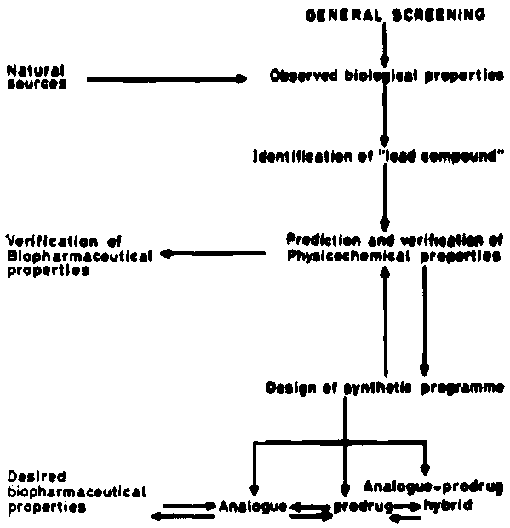
Figure 1: Programme of drug discovery
and development
Patent protection of pharmaceutical products
The maximum duration possible for a patent is laid down by the laws of each country, and lies between 10 years (e.g. Peru and Venezuela) and 20 years (e.g. Belgium and France). The differences between countries are also increased in that the duration of the patent sometimes begins with the filing date (Germany and Switzerland); sometimes with the laying open to public inspection (Japan and Yugoslavia); sometimes with the granting date (USA and Canada), and also in that many places the duration of protection begins later than the duration of the patent. Extension of duration may be obtained on request in certain circumstances, e.g., in the U.K. and Australia.
Yearly fees have to be paid to maintain the patents in force (except in USA and Canada) and the amounts vary from about 20 to 1000 US dollars.
Pharmaceutical products have special patent regulations in many countries. The motives, therefore, are frequently felt to be justified by national expediency and/or social conditions. These can go so far that pharmaceutical products and even processes for the production thereof are denied patent protection, e.g. in Italy. Another means for the erosion of patent protection in this sector is the too great use made of compulsory licenses, for which often an application without any supporting ground is simply insufficient. Great Britain and countries having similar laws and practice, such as Canada, India, etc. are to be noted for this. The granting of a license is at the "discretion" of the competent authority. Opposition to the granting of such licenses, however, at most only delays the granting of a license and is generally never able to prevent it.
In most countries no patent can be obtained for the protection of the pharmaceutical use of a substance because the application of medicaments to the human body is not a technical procedure, i.e., it is not a "new invention which can be put to commercial use" (in the sense of Art. 1 of the patent law), but it is a procedure of medical art. Such patents are granted in principle in some countries such as the USA and France.
The protection of natural products or products of nature can be quite difficult. Only when you have definite controlled processes for arriving at the end products, as is apparent in genetic engineering, can such products withstand scrutiny with respect to novelty, technical progress, and also unobviousness. Where the products are achieved as a result of established extraction procedures the protection of the substances per se, or of the process, may be difficult. Our chances of protection of our traditional medicinal products with existing legislation, seem rather remote.
References
Bowman, W.C. (1979). Scot. Med., 24: 131.
Bucheim, R. (1876). Arch. Expl. Pathol. Pharmakol., 5: 261.
Geiger, P. L. and Hesse, O. (1833). Ann. Chim., 5: 43 and 1833: Ann. Chim., 6: 44 and 7: 269.
Merck, G. (1848). Ann. Chim, 66: 125.
Pelletier, J., and Caventou, E. (1820). Ann. Chim. Phys, (2) 15: 291 and 337.
Poitent, P. J. (1967). The role of industrial Property in the Economic Development of States, Zurich.
Serturner, F. W. A. (1805). J. Pharm. Arzte, 13: 29 Ann. Phys. 55: 36.
Weatherall, M. (1986). Pharmaceut. J., 237: 634.
Wohler, F. (1860). Ann. Chim. 114: 213.
A Survey of medicinal plants in Tabora region, Tanzania
C.K. RUFFO
Tanzania Forestry Research Institute
Lushoto Silviculture
Centre
P.O. Box 95, Lushoto, Tanzania
ABSTRACT
A Survey of medicinal plants was conducted in Tabora Region between December, 1970 and July, 1989. 27 traditional healers from 30 villages in 25 village wards (i.e. about 15% of the Region) were interviewed. Also plants in the field and at the Lushoto herbarium were indentified. A total of 127 plant species belonging to 45 families and 05 genera were identified as medicinal plants used for the treatment of some 66 different human diseases in the region. The family Leguminosae was found to be leading by having 33 different medicinal plant species from 20 genera followed by Euphorbiaceae which had 9 species from 7 genera. Antidotes for snake bites were leading with 32 plant species, followed by stomach-ache and coughs, which had 21 and 14 medicinal plant species, respectively.
Introduction
Traditional medicine in Tanzania, like in other developing countries where medical facilities cannot satisfy national demands, plays a big role in combating both human and animal diseases. It is estimated that about 80% of the people who live in rural areas rely on traditional healers for their treatment using medicinal herbs. However, these medicinal plants have not been well studied, tested or documented. Most of the information is still in the hands of traditional healers (FAO 1986). Due to the current threat brought by diseases like malaria, cancer, hypertension, AIDS and others, it is now high time we carried an international combined effort from both scientists and traditional healers to do some more research on medicinal plants which might give us some positive results. Some of the information which is now available about medicinal plants in Tanzania includes the work of Watt and Breyer -Brandwijk (1962), in a book on Medicinal and Poisonous Plants of Southern and Eastern Africa; Medicinal Plants of East Africa by Kokwaro (1976); and that of Raimo Harjula (1988) who made some ethnomedicinal studies in Meru, Arusha. The Traditional Medicine Research Unit at the Muhimbili Medical Centre in Dar es Salaam is responsible for this work and is currently undertaking some research on traditional medicine. The Tanzania Forestry Research Institute at Lushoto has been conducting some botanical surveys in Dodoma, Singida and East Usambara. Part of this information has been published by FAO (1986). (Some will won be published by Ruffo et al. This paper reports about a survey of medicinal plants which was done in Tabora Region, Tanzania.
Tabora Region has a total area of 7,615km2, and receives an average annual rainfall of 700-800 mm (ICRAF 1988). The main tribe in the region is the Nyamwesi, who live mainly as peasant farmers. According to the 1988 Census, the population in the region was estimated at 1,036,293 people, with an average annual growth of 2.4%. The vegetation of Tabora region is mainly Miyombo or Brachystegia woodland dominated by Brachystegia spiciformis, Julbernardia globiflora and pterocarpus angolensis (Polhill, 1968).
Methodology
A survey of medicinal plants in the Tabora Region of Western Tanzania floristic Region T4, was conducted by the now Tanzania Forestry Research Institute under the Ministry of Lands, Natural Resources and Tourism between December, 1970 and July, 1989 by interviewing 27 traditional healers from 30 villages in 25 village wards, covering about 15% of the Region. Figure 1 shows a map of Tabora region where medicinal plants were surveyed and Appendix 1 gives a list of villages and traditional healers who were interviewed during the survey. These medicinal plants were identified in the field, except for taxonomically difficult plants which had to be collected and pressed for further identification at Lushoto Herbarium. The data for each medicinal plant, including the name of a plant, disease treated, plant part used, method of preparation and dosage, was recorded (Appendix 2). These data were then summarised.
Results
A total of 127 plant species belonging to 45 families and 95 genera, were identified as medicinal plants used for the treatment of 66 different human diseases in the Tabora region. The family Leguminosae was found to be leading by having 33 different medicinal plant species from 20 genera, followed by the Euphorbiaceae, which had 9 species from 7 genera. For the body problems, snake bites were leading with 32 medicinal species, followed by stomach-ache and coughs, which had 21 and 14 medicinal plants, respectively (Table 1 & 2).
Conclusions and recommendations
From the above results obtained from Tabora Region, it can be concluded that Tanzania has a big potential on medicinal plants, especially after comparing with the total of 127 medicinal plants for 66 human diseases from 15% of Tabora region (i.e., 25 village wards out of 166 wards of the 1988 census) and when this is compared with 44.4 million ha. of Tanzania natural forests, containing some 10,000 species of higher plants which also carry a very high degree of species diversity and endemism in the world (Lovett 1988, Lundgren, 1975 and Polhill, 1968).
It was also noted that some of these medicinal plants such as Annona senegalensis, Flacourtia indica and Friesodielsia abovata had multipurpose uses, including edible fruits and fuelwood.
It is therefore recommended that:
(a) Further studies be carried out in other areas of Tabora as well as in other regions of Tanzania to establish a sound basis for further research on medicinal plants.(b) These medicinal plants be collected, screened and tested for their active principles on the diseases for which they are used.
(c) Medicinal plants which prove to be really curative be developed and incorporated with modern medicinal practice.
(d) Silvicultural studies be carried out on medicinal plants in order to facilitate their establishment in villages and botanical gardens.
(e) Traditional healers be encouraged to incorporate their knowledge of medicinal plants with modern medicinal practice.
(f) Medicinal plants of Tanzania be documented in a journal, such as, Journal of Tanzania Traditional Medicine, etc.
(g) An international cooperation for exchange of knowledge and seed samples of medicinal plants be established.
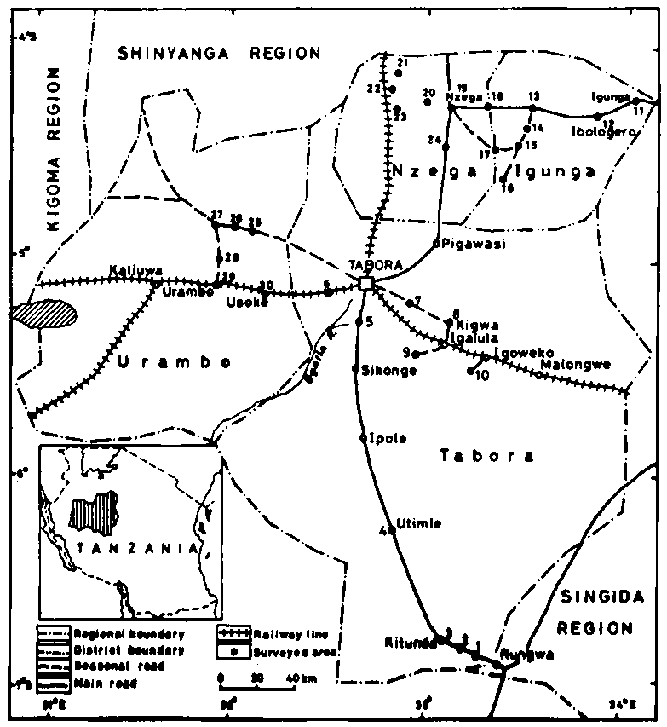
Fig. 1. Map of Tabora Region
showing areas where medicinal plants were surveyed
Acknowledgement
I wish to express my sincere gratitude to Mr. Kitambi, the Acting Director-General, TAFORI, for allowing me to attend this seminar and present this paper, and to Dr. S. M. Maliondo and Mr. Msangi, all of the Silviculture Research Centre, for their kind help in reading the manuscript.
References
FAO (1986): Some medicinal forest plants of Africa and Latin America, FAO Forestry Paper, 67.
Harjula, R. (1980). Mirau and his Practice. Trimed Books Limited, London, 223 pp.
ICRAF (1988). Rapport Afrena Report: A Blueprint for Agroforestry in the Unimodar Upland Plateau of Tanzania, No. 6 ICRAF, Nairobi. 80 pp..
Kokwaro, J.O. (1976): Medicinal Plants of East Africa. East African Literature Bureau, Nairobi. 384 pp.
Lovett, J.C.(1988): Endemism and affinities of the Tanzania Montane Flora Monogr, Syst. Bot. Gard.
Lundgren, B.(l975): Land use of Kenya and Tanzania, Royal College of Forestry, Stockholm. 354 pp.
Polhill, R.M.(1968): Conservation in Africa South of the Sahara Almqvist & Wiksells Boktykeri, AB, Uppsala, Sweden. 326 pp.
Ruffo et al. (In press): "In the Forests of East Usambara: their Resources and their Conservation." IUCN Forest Division, Nairobi.
Tanzania Government (1988): Population Census. Preliminary Report, Dar es Salaam-201 pp.
Watt, J.M. and Brayer - Brandwijk, M.G. (1962). The Medicinal and Poisonous Plants of Southern and Eastern Africa. E. S. Livingstone Ltd, London. 1455 pp.
Table 1: Alphabetical list of medicinal plants from Tabora region with their vernacular (Nyamwezi) names, part(s) used and diseases treated
|
Botanical name |
Vernacular name |
Part used |
Diseases treated |
|
Anacardiaceae |
| | |
|
Lannea schimperi |
Mugumbu |
Bark & root |
Mental disorders and snake bites |
|
Ozoroa reticulata |
Mukalakala |
Bark |
Body swellings, coughs, diarrhoea, gonorrhoea, malaria, epilepsy, prolapse of rectum and stomachache |
|
Annonaceae | |
| |
|
Annona senegalensis |
Mutopetope Mufila Mukonola |
Roots |
Snake bites and Stomachache |
|
Friesodielsia obovata. |
Musalasi |
Roots |
Anaemia, infertility snake bites |
|
Apocynaceae |
| | |
|
Condylocarpon diplorhynchus |
Musonga Musongati Musongalukuga |
Bark & leaves Roots |
Galactogogue, wounds and sores Gonorrhoea, bilharzia and stomachache |
|
Strophanthus eminii |
Musungululu Muvelevele |
Bark & roots |
Asthma, syphilis, Constipation, measles small pox, scabies, epilepsy, spleen and heart diseases |
|
Araceae | |
| |
|
Pistia stratiotes |
Ileve, Maleve |
Roots |
Fire burns |
|
Asclepiadaceae |
| | |
|
Calotropis procera |
Mpumbula |
Roots |
Boils, hydrocele, stomach and tooth ache |
|
Gymnema sylvestre |
Luhaga |
Roots |
Aphrodisiac |
|
Aristolachiaceae |
| | |
|
Aristolachia - |
Kilikamo |
Roots |
Convulsions, petersiana poisoning, stomachache, snake bites |
|
Bignoniaceae |
| | |
|
Kigelia africana |
Mudungwa, Mulegeya, Mwicha, Msanhwa |
Bark, roots |
Convulsions |
|
Boraginaceae |
| | |
|
Trichodesma zeylanicum |
Igungulu |
Roots |
Coughs, poisoning and stomachache |
|
Burseraceae |
| | |
|
Commiphora africana |
Musagasi, Mupondamu, Mutonto |
Bark |
Snake bites and traucoma |
|
Capparidaceae |
| | |
|
Boscia salicifolia |
Muguluka |
Bark, Roots |
Headache, rheumatism, scabies and toothache |
|
Gynandropsis gynandra |
Mugagani |
Leaves |
Colds, coughs, earache and eye-diseases |
|
Celastraceae |
| | |
|
Maytenus-galensis |
Mwezya |
Roots |
Snake bites, infertility and stomachache |
|
Combretaceae |
| | |
|
Combretum cillinum |
Mulandala |
Roots leaves |
Snake bites |
|
C. fragrans |
Muluzyaminzi |
Roots, leaves |
Malaria, wounds and traucoma |
|
C. longispicatum |
Vugoveko |
Roots |
Malaria and snakebites |
|
C. molle |
Mulama |
Leaves |
Earache and wounds |
|
C. obovatum |
Vugoveko |
Roots |
Gonorrhoea |
|
C. zeyheri |
Musana |
Roots, leaves |
Coughs, diarrhoea, rectal prolapse, Snake bites and stomachache |
|
Terminalia mollis |
Mudisi, Mukelenge Mupululu, Muzima |
Bark, roots Leaves |
Bilharzia Coughs, measles, rectal prolapse, and stomachache |
|
Compositae | |
| |
|
Bidens pilosa |
Ndasa |
Leaves |
Wounds and relapsing fevers in children |
|
Vernonia glabra |
Kilulankunja, Mukalinkali |
Roots |
Malaria, gonorrhoea, syphilis and measles |
|
Cyperaceae | |
| |
|
Cyperus articulatus |
Vulago, Vuseli |
Roots |
Intestinal worms |
|
Ebenaceae | |
| |
|
Diosypros fischeri |
Mufuvata |
Roots, leaves |
Snake bites |
|
Euphorbiaceae |
| | |
|
Antidesma venosum |
Musekela |
Roots, leaves |
Snake bites and poisoning |
|
Bridelia duvigneaudi |
Muvuzivuzi |
Roots |
Intestinal worms |
|
Euphorbia candelabrum |
Mulangali |
Twigs |
Constipation |
|
E. grantii |
Mudulansongo |
Roots |
Constipation, epilepsy and snake bites |
|
E. hirta |
Vakikulu |
Leaves |
Menstrual disorders, ringworm and snake bites |
|
Jatropha curcas |
Inyanga |
Seed |
Intestinal worms |
|
Hymenocardia acida |
Mupala |
Leaves |
Coughs, rectal prolapse and stomachache |
|
Oldfieldia dactylophylla |
Muliwanfwengi |
Roots |
Aphrodisiac, gonorrhoea and hernia |
|
Phyllanthus engleri |
Mugogondi, Mung'ong'o Ntandala |
Roots leaves |
Coughs and bilharzia |
|
P. reticulatus |
Muvinzandimi |
Roots, leaves |
Snake bites |
|
Flacourtiaceae |
| | |
|
Flacourtia indica |
Mupugusura, Musingila Musungu |
Roots |
Coughs, snake bites, Infertility and stomachache |
|
Graminae | |
| |
|
Pennisetum purpureum |
Ibingobingo, Isumbu, Vupemba |
Stem Stem |
Measles Infertility |
|
Labiatae | |
| |
|
Ocimum suave |
Ilumbasya, Ilumba |
Twigs |
Colds, fever, Dementia |
|
Leguminosae |
| | |
|
Abrus precatorius |
Muchichi, Mshiti |
Roots |
Aphrodisiac, scabies, smallpox, anaemia, eye and spleen diseases |
|
A. schimperi |
Vugagati |
Roots |
Hypertension and postpartum stomach pains |
|
Acacia drepanolobium |
Vuvula |
Roots |
Abscess and bilharzia |
|
A. hockii |
Munyenyela |
Roots |
Abscess |
|
A. mellifera |
Mugongwa, Ilugala |
Roots |
Impotence |
|
A. nilotica |
Mugulunga, Mudubilo |
Roots |
Anaemia, asthma |
|
A. senegal |
Katita, Mgwata |
Roots |
Abscess |
|
Albizia harveyi |
Mupogolo |
Leaves |
Chest pains, wounds and stomachache |
|
A. petersiana |
Musisigulu |
Roots |
Hernia, and lung |
|
Brachystegia spiciformis |
Mutundu |
Bark |
Coughs and snake bite |
|
Burkea africana |
Muganda, Mukalati |
Bark |
Headache |
|
Cajanus cajan |
Mubalazi, Mutengwa. |
Roots |
Aphrodisiac |
|
Cassia abbreviata |
Mumulimuli, |
Roots |
Hernia, intestinal worms, gonorrhoea, syphilis |
| |
Mulundalunda, |
|
Snake bites, stomachache, bilharzia, sores, malaria, |
| |
Muzoka |
|
postpartum stomach pains and poisoning |
|
C. obtusifolia |
Muzegezega |
Roots |
Hernia, yellow fever, dementia and convulsions |
|
C. singueana |
Mudimwambuli, Musambisambi |
Roots Leaves |
Convulsions, coughs, intestinal worms, malaria, epilepsy and yellow fever |
|
Dalbergia melanoxylon |
Mugombe |
Roots, Leaves |
Convulsions, menstrual disorders, snake bites, traucoma and toothache |
|
D. nitida |
Kafinulambasa |
Roots |
Toothache |
|
Dichrostachys cinerea |
Mutunduli |
Leaves |
Boils, coughs, wounds, galactogogue, snake bites, menstrual disorders and stomachache |
|
Entanda abyssinica |
Mufutwambula |
Roots |
Gonorrhoea, anaemia and hypertension |
|
Isoberlinia angolensis |
Muva |
Bark |
Coughs, wounds and snake bites |
|
Lonchocarpus capassa |
Muvule |
Roots, leaves |
Snake bites |
|
L. bussei |
Muvule |
Roots |
Allergy |
|
Oormocarpum trachycarpum |
Mukondwapuli Muvulwambuli |
Leaves |
Snake bites and pneumonia |
|
Pericopsis angolensis |
Muvunga |
Leaves |
Coughs, fire burns, sores and snake bites |
|
Piliostigma thonningii |
Mutindambogo |
Bark |
Snake bites |
|
Pterocarpus angolensis |
Muninga |
Bark |
Diarrhoea and wounds |
|
P. tinctorius |
Mukulungu |
Bark |
Eye problems |
|
Swartzia madagascariensis |
Kasanda |
Roots |
Malaria and yellow fever |
|
Tamarindus indica |
Musisi |
Leaves |
Malaria, wounds, mental disorders and stomachache |
|
Xeroderris stuhlmannii |
Munyenye, Mjungu |
Bark |
Mastitis and backache |
|
Liliaceae | |
| |
|
Aloe sp. |
Itembwe, Lugaka |
Leaves |
Aphrodisiac, heart pains, impotence, spleen and kidney diseases |
|
Asparagus falcatus |
Kasolanhanga, Sawi |
Roots |
Aphrodisiac, hernia and gonorrhoea |
|
Loganiaceae |
| | |
|
Strychnos innovia |
Mukulwa, Mumundu |
Roots |
Aphrodisiac |
|
S. potatorum |
Mugwegwe, Mupandepande |
Roots, Leaves |
Coughs, malaria and gonorrhoea |
|
S. spinosa |
Mwage |
Roots |
Intestinal worms, gonorrhoea and syphilis |
|
Meliaceae | |
| |
|
Ekabergia benguelensis |
Mutuzya |
Roots |
Mental disorders |
|
Turraea sp. |
Mulingiwe |
Roots |
Convulsions |
|
Menispermaceae |
| | |
|
Cissampelos pareira |
Mukuluwanti |
Roots |
Snake bites, poisoning and stomachache |
|
Moraceae | |
| |
|
Ficus natalensis |
Mulumba |
Bark, twigs |
Whooping cough |
|
F. sycomorus |
Mukuyu |
Bark, twigs |
Diarrhoea |
|
Musaceae | |
| |
|
Musa sapientum |
Idoke |
Flowers |
Asthma |
|
Myrtaceae | |
| |
|
Psidium guajava |
Mupera |
Leaves |
Diarrhoea, malaria and wounds |
|
Ochnaceae | |
| |
|
Ochna schweinfurthii |
Kavulwampako Kawantundwe Kupande |
Roots |
Poisoning and snake bites |
|
Olacaceae | |
| |
|
Ximenia americana |
Munembwa, Mutandwa |
Roots |
Anaemia, hernia, intestinal worms mental disorders |
|
X. caffra |
Munembwa, Mutandwa |
Roots |
Anaemia, hernia, intestinal worms and mental disorders |
|
Oleaceae | |
| |
|
Schrebera trichoclada |
Muputika |
Bark, leaves |
Coughs, snake bites, traucoma, stomachache and eye diseases |
|
Orchidacene |
| | |
|
Anselia africana |
Inyazya |
Stems |
Rheumatism, snake bites and body swelling |
|
Pedaliaceae |
| | |
|
Sesamum angolense |
Mulenda-gwawima Ilendi-lya-wima |
Roots leaves |
Measles and poisoning |
|
Polygalaceae |
| | |
|
Longipenduculata securidaca |
Muteyu |
Roots |
Constipation, hernia, infertility, toothache and stomachache |
|
Rhamnaceae | |
| |
|
Ziziphus mucronata |
Kagovole, Lugugunu |
Roots |
Snake bites and stomachache |
|
Rubiaceae | |
| |
|
Catunaregan spinosa ssp. taylorii. |
Mochangoko, Mupongolo |
Roots |
Cunvulsions, hernia, hypertension and intestinal worms |
|
Fadogia cienkowskii |
Kambolambola |
Roots |
Infertility |
|
Crossopterix febrifuga |
Musaswambeke |
Bark |
Diarrhoea and convulsions |
|
Gardenia ternifolia ssp. jovi stonantis |
Kilindila Mugunda |
Roots |
Coughs, snake bites |
|
Hymenodutylon parvifolium |
Muginya, Mujunguluji Mpepesavakia Muvinzwansanzu |
Roots |
Intestinal worms, snake bites and menstrual disorders |
|
Multidentia evassa varapula |
Mukukumba, Muyogayo |
Roots |
Earache |
|
Rothmania engleriana |
Mkondokondo Mutwinya |
Roots |
Snake bites and stomachache |
|
Rutaceae | |
| |
|
Citrus aurantifolia |
Mudimu |
Leaves |
Asthma |
|
Verpis glomerata |
Mulungusigiti |
Roots |
Body swelling, constipation and infertility |
|
Zathoxylum chalybeum |
Mudali, Mulungulungu |
Roots |
Malaria and body swellings |
|
Sapindaceae |
| | |
|
Zanha africana |
Mukalya |
Roots |
Colds, convulsions stomachache |
|
Sapotaceae | |
| |
|
Chysophyllum bangweolense |
Museveye |
Roots |
Diarrhoea |
|
Manilkara mochisia |
Mukonze |
Bark |
Mastitis |
|
Solanaceae | |
| |
|
Physalis peruviana |
Sinkini |
Roots |
Intestinal worms |
|
Solanum gilo |
Mutole |
Roots |
Hernia |
|
S. incarnum |
Mudulanu, Mutulantu |
Roots |
Constipation, hernia, wounds, tonsillitis and intestinal worms |
|
Sterculiaceae |
| | |
|
Sterculia africana |
Muhozya, Muhoja |
Bark |
Snake bites and mental disorders |
|
Waltheria indica |
Ikumbo-lyaza, ikandagizi |
Roots |
Coughs, poisoning and snake bites |
|
Filiaceae | |
| |
|
Grewia bicolor |
Mukoma |
Roots |
Anaemia and fertility |
|
Umbelliferae |
| | |
|
Steganotaenia araliaceae |
Munyongampembe Mbyotolo |
Roots Leaves |
Snake bites |
|
Verbenaceae |
| | |
|
Clerodendrum capitatum |
Kapolo |
Roots |
Constipation in children |
|
C. myricoides |
Mnindi, Mpugambu |
Leaves |
Dementia |
|
Premna senensis |
Mununhwanhala |
Roots |
Aphrodisiac |
|
Vitex mombassae |
Mutalali, Masumgwi |
Roots |
Diabetes |
|
Vitaceae | |
| |
|
Cissus carnifolia |
Mutandamwaka |
Roots |
Hernia and bilharzia |
|
C. quadrangularis |
Vula-wo-nsuwi |
Roots |
Rectal prolapse |
|
Cissus sp. |
Lonzwe |
Roots |
Hernia and hypertension |
Table 2: A list of diseases and their respective medicinal plants from Tabora region.
|
Disease |
Medicinal Plant |
|
Abscess |
Acacia drepanolobium, A. hockii, A. sieberiana |
|
Acute coughs Aphrodisiac |
Pericopsis angolensis, Schrebera trichoclada Aloe sp., Asparagus falcatus, Abrus precatorius, Cajanus cajan, Gymnema sylvestre, Indigofera rhinchocarpa, Oldifieldia dactylophylla, Premna senensis, Strychnos innocua |
|
Allergy |
Lonchocarpus bussei, Vepris glomerata |
|
Anaemia |
Abrus precatorius, Acacia nilotica, Entada abyssinica, Friesodielsia obovata, Grewia bicolor, Ximenia americana, X. caffra |
|
Ankylostomiasis |
Bridelia duvigneaudii, Cassia singueana, Physalis peruviana, Ximenia americana, X. caffra |
|
Asthma |
Acacia nilotica. Citrus aurantifolia, Musa sapientum, Strophanthus eminii |
|
Backache |
Xeroderris stuhlmanii |
|
Body swellings |
Anselia africana, Ozoroa reticulata, Vepris glomerata, Zanthoxylum chalybeum |
|
Boils |
Calotropis procera, Dichrostachys cinerea |
|
Chest pain |
Albizia harveyi |
|
Colds |
Gardenia ternifolia ssp. jovis-tonantis, Gynandropsis gynandra, Ocimum suave, Zanha africana |
|
Constipation |
Clerodendrum capitatum, Jatropha curcas, Euphorbia candelabrum, E. grantii, Securidaca longependunculata, Solanum incanum, Strophanthus eminii, Vepris glomerata |
|
Convulsions |
Aristolochia petersiana, Caturanegam spinosa, Cassia obtusifolia, C. singueana, Crossopterix febrifuga, Dalbergia melanoxylon, Gardenia ternifolia ssp. jovis-tonantis, Kigelia africana. |
|
Coughs |
Brachystegia spiciformis, Cassia singueana, Combretum zeyheri, Flacourtia indica, Gynandropsis gynandra, Hymenocardia acida, Dichrostachys cinerea, Julbernardia globiflora, Ozoroa reticulata, Phyllanthus englerii, Schrebera trichoclada, Strychnos potatorum, Terminalia sericea, Waltheria indica. |
|
Dementia |
Cassia obtusifolia, Clerodendrum myricoides, Ocimum suave. |
|
Diabetes |
Vintex mombassae |
|
Diarrhoea |
Combretum zeyheri, Chrysophyllum bangweolense, Crossopterix febrifuga, Ficus sycomorus, Ozoroa reticulata, Psidium guajava. |
|
Earache |
Cannabis saliva, Combretum molle, Gynandropsis gynandra, Multidentia crassa. |
|
Epilepsy |
Cassia singueana, Euphorbia granii, Ozoroa reticulata, Strophanthus eminii. |
|
Eye disease |
Abrus precatorius, Gynandropsis gynandra, Pterocarpus angolensis, P. tinctorius, Schrebera trichoclada. |
|
Fire burns |
Pistia stratiotes, Pericopsia angolensis |
|
Fever |
Ocimum suave. |
|
Gonorrhoea |
Asparagus falcatus, Cassia abbreviata, Combretum obovatum, Holarrhena febrifuga, Entada abyssinica, Oldifieldia dactylophylla, Ozoroa reticulata, Strychnos potatorum, Vernonia glabra. |
|
Headache |
Boscia salicifolia, Burkea africana |
|
Head sores |
Cassia abbreviata |
|
Heart pain |
Aloe sp, Strophanthus eminii |
|
Hernia |
Albizia petersiana, Cassia abbreviata, C. obtusifolia, Asparagus falcatus, Caturanegam spinosa ssp. taylorii, Cissua cornifolia, C. sp., Oldifieldia dactylophylla, Securidaca longepedunculata, Solanum incanum, S. gilo, Ximenia americana, X. caffra. |