 |
| ||||||||||||||||||||||||||||||||||||||||||||||||||
© Copyrights NATIONAL ACADEMY PRESS- BOSTID
Washington,
D.C.
1983
|
| ||||||||||||||||||||||||||||||||||||||||||||||||||
Acknowledgements
Report of an Ad Hoc Panel of the Advisory Committee on Technology Innovation Board on Science and Technology for International Development Office of International Affairs National Research Council
In Cooperation with the Pusat Penyelidikan Hutan, Sandakan, Sabah, Malaysia
NATIONAL ACADEMY PRESS
Washington, D.C. 1983
Panel on Mangium
FRANCOIS MERGEN, Pinchot Professor of Forestry and Professor of
Forest Genetics, Yale
University, New Haven, Connecticut, USA, Chairman
CHARLES S. HODGES, Director, Institute of Pacific Islands Forestry, Honolulu, Hawaii, USA
DONALD 1. NICHOLSON, Forest Research Officer, Department of Forestry, Atherton, Queensland, Australia
HUCH POPENOE, Director, International Programs in Agriculture, Unifersity of Florida,Gainesville, Florida, USA
K. FREERK WIERSUM, Department of Forest Management, Agriculture University, Wageningen, The Netherlands
Participants from Pusat Penyelidikan Hutan, Sandakan, Sabah
M. RODERICK BOWEN, FAO Seed Officer
JENNIFER CHONG,
Secretary
T. V. EUSEBIO, Seed Officer
A. J. HEPBURN, Senior Research
Officer
NORMAN JONES, FAO Chief Technical Adviser
RITA TANG, Plantation
Officer
LOW MIN TECK, Plantation Officer
THAM CHEE KEONG, Plantation
Officer
JEREMY WILLIAMS, CUSO volunteer
Other Participants
MASAHULING BENONG, Assistant Tree Breeder, Sabah Softwoods Sdn.
Bhd., Tawau, Sabah
SOEDJADI MARTODIWIRJO, Perum Perhutani, Jakarta,
Indonesia
M. W. McMYN, Project Manager, Sabah Softwoods Sdn. Bhd., Tawau,
Sabah
SHIM PHYAU SOON, Sabah Forestry Development Authority, Kota Kinabalu,
Sabah
SIM BOON LIANC, Tree Breeder, Sabah Softwoods Sdn. Bhd., Tawau,
Sabah
TAN KEE CHONG, Sabah Softwoods Sdn. Bhd., Tawau, Sabah
JOHN W.
TURNBULL, Division of Forest Research, Commonwealth Scientific and Industrial
Research Organisation, Canberra, A.C.T., Australia
ROYLYN L. VOSS, Agronomist
and Soils Specialist, Weyerhaeuser International Incorporated, Pacific Hardwoods
Sdn. Bhd., Lahad Datu, Sabah
* * *
NOEL D. VIETMEYER, Professional Associate, Board on Science and Technology for International Development, Mangium Study Director
National Research Council Staff
F. R. RUSKIN, BOSTlD Editor
MARY JANE ENGQUIST, Staff
Associate
HERTHA HANU, Administrative Secretary
CONSTANCE REGES,
Administrative Secretary
This book is dedicated to the memory of Rumphius (Georg Eberhard Rumpf, 1627-1702), the first to name and describe mangium. Sent to study plant life on the island of Amboina in 1653, Rumphius became one of the outstanding naturalists of the seventeenth century. At the age of 43 he went blind, but so intense was his dedication that, using the eyes of assistants and his own sense of touch, he continued surveying the flora and fauna and the geographical and mineralogical features of the Spice Islands for 30 years more. His drawing of mangium (opposite page) was not published until 1750, and it seems likely that it was made after he lost his sight. In mangium, Rumphius took advantage of its Moluccan name, "mangi-mangi gunong" (Pictures courtesy of Houghton Library, Harvard University, and the Library of Congress, respectively.)
Advisory Committee on Technology Innovation Board on Science and Technology for International Development (BOSTID)
|
| ||||||||||||||||||||||||||||||||||||||||||||||||||
Preface
Acacia mangium is a promising fast-growing leguminous tree. In 1966 an Australian forester, D. I. Nicholson, introduced it to Sabah, Malaysia, from its native habitat, the tropical rainforests of Queensland. At that time Acacia auriculiformis was widely planted in Sabah as a street tree, and Nicholson thought that its close relative, mangium, would be worth testing because of its better form and superior wood.
Mangium proved even more useful than expected. It grew so
well that in 1973 Sabah foresters introduced it into plantation trials. On good
sites it matched growth with better- known fast-growing species; on degraded
lateritic clay and worn-out agricultural lands it outstripped all other trees.
More recently, plantations have been established even in areas dominated by
tenacious tropical weeds such as Imperata grass. It seems likely that this first
experience with mangium in plantations is ushering in a new resource for the
tropics.
Nevertheless, experiences with mangium are few, and it is not our intention to propose the species for immediate, wide-scale commercial planting. Instead, mangium should be incorporated into trials with fastgrowing tropical trees such as leucaena, Pinus caribaea,
Gmelina arborea, and Eucalyptus species. From these trials should emerge a better understanding of mangium's potential usefulness. In 5 to 10 years foresters will know if this is as promising a resource as it seems today.
Mangium is only one of a number of acacias from the humid Australasian tropics. Collectively they make up a group of little-known trees that have been largely untested in forest plantations. This study draws attention to nine of mangium's relatives because virtually nothing describing their promise as crops can be found in literature readily available to an international readership. Fast-growing leguminous trees such as these acacias may become an important weapon in the battle against the rampant deforestation in tropical areas.
To compile this report, the National Research Council sponsored a panel of American, Australian, and Dutch researchers to visit Sabah, Malaysia, and meet with counterparts from Pusat Penyelidikan Hutan (Forest Research Centre). The meetings took place in May 1981 and involved five days of discussions and site visits. The panel is indebted to A. J. Hepburn and his colleagues at Pusat Penyelidikan Hutan for organizing the visits, as well as to the Sabah Forestry Development Authority (SAFODA), Sabah Softwoods Sdn. Bhd., and the Pacific Hardwood Sdn. Bhd. for their help and hospitality.
This report is one of a National Research Council series, Innovations in Tropical Reforestation.
Other titles include:
· Leucaena: Promising Forage and Tree Crop for the Tropics (1977)
· Firewood Crops: Shrub and Tree Species for Energy Production, Volume I (1980)
· So wing Forests from the Air (1981)
· Calliandra: A Versatile Small Tree for the Humid Tropics (1983)
· Casuarinas: Nitrogen-Fixing Trees for adverse Sites (1983)
· Firewood Crops: Shrub and Tree Species for Energy Production, Volume II (1983)
· Leucaena: Promising Forage and Tree Crop for the Tropics (second edition, in preparation)
Information on promising fast-growing trees is also contained in Tropical Legumes: Resources for the Future. To obtain copies, see page 59.
These activities have been conducted under the auspices of the Advisory Committee on Technology Innovation (ACTI) of the Board on Science and Technology for International Development. The purpose of ACTI is the assessment of scientific and technological advances that might prove especially applicable to problems of developing countries. Since its founding in 1971, it has produced about 30 reports covering subjects as diverse as ferrocement construction materials, the winged bean (a high-protein tropical food crop), mosquito control, and techniques to provide more water for arid lands. ACTI reports in print are listed on page 59.
ACTI projects are supported largely by the U.S. Agency for International Development (AID). This study was sponsored by AID'S Office of Technical Resources, Bureau for Asia, and the Office of the Science Advisor. Free distribution of the report is made possible by a grant from AID'S Office of the Science Advisor.
How to cite this report:
National Research Council. 1983.
Mangium and Other Fast-Crowing Acacias for the Humid Tropics. National Academy
Press, Washington,
D.C.
|
| ||||||||||||||||||||||||||||||||||||||||||||||||||
Introduction and Summary
Tropical Deforestation
In many parts of the world the loss of tropical forests has reached severe proportions. Africa, Asia, and Latin America have vast areas of once-forested regions that are now denuded. Wholesale removal of tree cover threatens the already fragile soils. Without trees and their root systems to retain moisture, heavy rains on hillslopes become torrents that erode the land and produce devastating floods that despoil highways, dams, bridges, towns, villages, and farmlands.
There is no end in sight to the destruction of forests: local farmers cut and burn trees to gain land for growing crops; villagers and entrepreneurs harvest wood for fuel as escalating prices preclude the use of kerosene, electricity, and gas for cooking and heating; herdsmen clear more forest and shrub land for grazing; and timber is now the Third World's fourth- or fifth- largest export.
Some countries-Haiti, for instance-have essentially eliminated their forests, while deforestation proceeds rapidly in many others. The denuded land is often lost to coarse, almost useless grasses (such as Imperata cylindrica) or to a wilderness of shrubs and scrubby trees of little value to commerce or villagers. These enormous, virtually unproductive areas are increasing. Some 25 million hectares of Imperata wastelands already cover Thailand, the Philippines, and Indonesia. Traditional reforestation with pines, eucalypts, and other well-known species should be applied more extensively, but the magnitude of the problem demands examination of less well-known species as well.
Tree Legumes
To the general public, legumes usually connote vegetables for the dining table. But to plant scientists, they include not only vegetables but also thousands of shrubs, vines, and tree species. Indeed, the family Leguminosae is the third largest in the plant kingdom. Many of its species are tropical trees whose potential in plantations remains largely untested.
Yet leguminous trees appear to have special attributes that make them particularly promising for combatting devastating tropical deforestation. For example, many are among nature's pioneering plants and colonize newly cleared land. It seems ecologically wise to exploit their innate abilities and use them for revegetating eroding or weed-smothered terrain, halting erosion, and providing a protective ground cover for the regeneration of slower-growing forest species. Furthermore, many everyday wood requirements can be met by small, fast-growing tree legumes. Cultivating them might thus reduce logging elsewhere and thereby help spare the last remnants of the natural forests.
An important characteristic of most legume species is the nodulation on their roots. Within these peppercorn-sized swellings bacteria convert nitrogen gas from the air into soluble compounds that the plant absorbs and utilizes. Thus, for average growth, leguminous plants usually require no nitrogenous fertilizer. Some produce such amounts of nitrogenous compounds-usually in the form of protein in their foliage-that they make excellent forage crops, and the decay of their fallen leaves makes the soil around them nitrogen rich.
Acacias
There are about 1,100 species in the genus Acacia. Most are shrubs or small trees of the dry savannas and arid regions of Australia, Africa, India, and the Americas. A few-such as Acacia mearnsii, a source of tannin for the world's leather industry-are suited to cool, moist areas, both in temperate regions and in tropical highlands. There is, however, a small third group of acacias, which is native to the lowland wet tropics. These species are adapted to hot, humid conditions, and, although comprehensive studies have not been made, they appear to have the characteristic acacia robustness and adaptability. Furthermore, they tend to grow quickly, their wood is hard, dense, and useful for many purposes; and the species examined so far all fix nitrogen.
Because of their innate competitiveness, tropical acacias are probably easy to establish and cultivate. On their natural range many occur in dense, pure stands, suggesting that they might be grown in monoculture without serious pest problems. Some can possibly be direct seeded, (avoiding the expense of nurseries and of transplanting fragile seedlings), and with some, even aerial seeding may prove feasible.
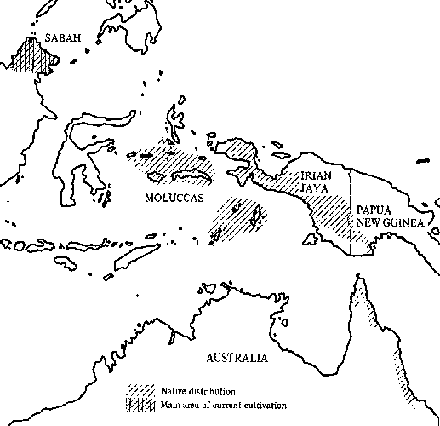
Mangium is native to three small
areas of Queensland, Australia, the southwestern portion of New Guinea, and the
Molucca islands of eastern Indonesia. In the last decade it has been planted
widely in Sabah, Malaysia (where it is, for instance, the principal species in a
200,000-hectare reforestation scheme), but so far it is little known elsewhere.
Mangium
Trees often perform in unexpected ways when introduced to new locations. Growth rates, health, and usefulness in their natural environments are poor guides for predicting performance when they are grown as exotics.
Acacia mangium exemplifies this. In 1966 this tree was introduced to Sabah, Malaysia, from its natural range along the margins of tropical moist forests in Queensland, Australia. It grew so well that it was tested in plantations. There, mangium grew as fast, or faster than, Gmelina arborea and Eucalyptus deglupta, both among the most rapidly growing useful trees in the humid tropics. In 14 years mangium grew up to 30 m tall, with a trunk 40 cm in diameter.
The trees grow so quickly that on good, logged-over sites in Sabah the canopy can close within one year of planting at a spacing of 3 m x 3 m.
On poor sites mangium notably outperformed the other species tested. On disturbed or burned sites, on degraded oxisols (laterite) underlain with volcanic rock, on soils so worn out that shifting cultivation had been abandoned, and on hillslopes infested with weeds such as Imperata cylindrica and Eupatorium species, mangium has grown vigorously. Sabah foresters have now converted more than 15,000 hectares of degraded lands into productive mangium plantations.
Although Sabah is so far the only region with a major mangium planting program, trial plots have been established in other parts of Malaysia and in other countries: Papua New Guinea in 1969, Nepal in 1976, the Philippines in 1977, Bangladesh in 1978, Hawaii in 1979, Cameroon and Costa Rica in 1980, and Indonrsia in 1980 and 1981.
From the successes generally reported in these various areas it seems likely that mangium has the potential to become a widespread and important tropical resource.
Mangium grows with relatively good form in plantations. The main bole is usually straight and clear. The tree nodulates profusely, coppices, and responds to silvicultural manipulation.
Plantations are easy to establish. Natural seed production is prolific. To extract the seeds from the pods requires some expertise, but dry seeds store well and germinate readily after simple, but essential, pretreatment. Nursery procedures are uncomplicated, and, like other acacias, the tree can probably be direct sown on many sites.
A noteworthy feature is mangium's ability to grow on soils with pH as low as 4.2. This is important because such acid soils are widespread in the tropics and is an attribute that distinguishes mangium from some other leguminous trees such as leucaena, which require a pH above 5.5.
Mangium's wood is a dense, all-purpose hardwood with an attractive, medium-brown colon It is of high quality and has been likened to black walnut in properties (see chapter 4). It has potential for sawn timber, molding, furniture, veneer, firewood, and charcoal. The wood is also promising for pulp, paper, and particle board.
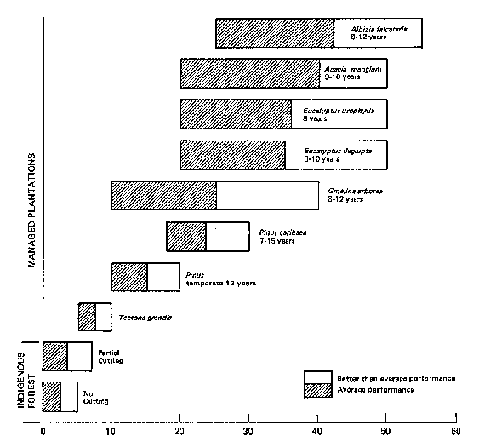
Although mangium's wood is
considerably denser than most other fast-growing species, its volume growth in
Sabah ranks with that of the most productive trees known. (This chart, courtesy
of J. Davidson, is based on volume-yield data reported in the literature.)
The trees are useful for shade, ornamental purposes, screening, boundaries, and windbreaks, as well as for use in agroforestry and erosion control. The leaves can serve as forage for livestock. The tree generates considerable amounts of fallen branches and dead leaves that can be gathered for fuel-an important benefit in view of the current firewood shortages in many tropical countries.
In sum, mangium seems to be a species worth testing widely in the tropics, especially on problem lands. Chapters 2, 3, and 4 will discuss the plant's characteristics, cultivation, and utilization.
Mangium's Limitations
The extent to which mangium will adapt to climatic conditions differing from those in its natural habitat has yet to be determined. Nevertheless, successful growth will probably be limited to low-altitude, humid, tropical regions where rainfall is high and temperatures are equable year-round.
Soil moisture is an important consideration in choosing a site to cultivate mangium. Rainfall in its native habitat and in Sabah is reliable and is normally more than 2,000 mm annually. Soil moisture usually remains high throughout the year. Prolonged dry periods slow up or halt the tree's growth.
Mangium may possibly produce allergens or irritants. The dust from the pods that are pounded during seed extraction causes a respiratory reaction in some people, and, while it is possible that the pollen may be allergenic to those individuals, no hint of this has been reported.
It seems unlikely that such a useful tree could become a weed, but this is a possibility, especially if poor provenances are introduced.
Other Acacias of the Australasian Tropics
Like mangium, some other acacias from the rainforests of northern Australia, Papua New Guinea, and eastern Indonesia also seem to be hardy, irrepressible, and suited to a wide range of soils, climates, and environments. In chapter 5 of this report, Acacia aulacocarpa, Acacia auriculiformis, Acacia cincinnata, Acacia crassicarpa, and others are singled out.
|
| ||||||||||||||||||||||||||||||||||||||||||||||||||
The Tree
Description
A leguminous tree species of the subfamily Mimosoideae, Acacia mangium grows as tall as 30 m, with a straight bole that may be unbranched for more than half its total height. Mature trees are usually more than 15 m high, but on adverse sites they may not reach 10 m. Stem diameters up to 90 cm have been measured in the natural forests of Queensland and Papua New Guinea. Slight fluting is generally present in the lower bole, reducing the tree's value for veneer. Trees grown in the open have globular crowns, but in plantations crowns are columnar. A type of self-pruning in which the lower branches die begins at an early age. Older trees have a thick, rough, hard bark that is furrowed longitudinally and varies from dark brown to fawn.
Newly germinated mangium seedlings have compound leaves made up of many leaflets. This juvenile foliage is like that of Leucaena, Albizia, and other species of the subfamily Mimosoideae. However, after a few weeks mangium no longer produces these true leaves. Instead, the leaf stalk and main axis of each compound leaf flattens and is transformed into a "phyllode." Phyllodes look like the leaves of common plants. They are simple, parallel veined, and exceptionally large-up to about 25 cm x 10 cm. These give mangium trees an entirely different appearance from most species of the subfamily Mimosoideae, including many other Acacia species.
Mangium's inflorescence is a loose spike, up to 10 cm long, made up of small white or cream flowers. It seems probable that neighboring trees normally cross-pollinate the flowers, but self-pollination is also possible.
After fertilization the flowers develop into green pods that darken to become blackish-brown at maturity. Initially straight, the pods twist and intertwine into irregularly spiralled clusters. In Queensland the time between flowering and seed maturity is about 7 months, though there is some evidence for a shorter maturation time in its northern range; in Sabah 6 months is considered average.

Acacia mangium. (Drawing by Gillian
Rankin, courtesy of Queensland Herbarium, Indooroopilly, Queensland, Australia)
]
Seeds are arranged longitudinally within the pod. A bright-orange ribbon, known as a funicle, attaches each seed to the pod. Ripe pods dehisce along a single margin, and the mature, black, hard-coated seeds (3-5 mm long) hang out on their orange funicles. Within a few days, especially in strong winds, the funicles separate from the pod, and the seeds, with their orange ribbons still attached, fall to the ground. The colorful funicle seems to attract ants and birds, and this may help to disperse the seed.
Mangium flowers precociously in Sabah, and viable seed can be harvested 24 months after planting.
Natural Distribution and Habitat
Mangium is indigenous to northeastern Australia, Papua New Guinea, and eastern Indonesia (the Moluccas and Irian Jaya). Populations extend from a northern limit in Irian Jaya of 0°.50'S to the most southern occurrence in Queensland, Australia, at about 19°S.
The best-known stands are in Australia, where mangium occurs discontinuously along the eastern coast of Queensland between Ingham and the Jardine River. In this region the trees are typically found at elevations below 100 m, but two stands occur at elevations of 450 m and 720 m. While the Indonesian and Papua New Guinean occurrences are not well documented, they also appear limited to low elevations. They stretch from Taliabu in the Moluccas of Indonesia to Wuroi and the Oriomo River in the Western Province of Papua New Guinea.
In its native habitat mangium is found on the fringes of mangrove and melaleuca stands as well as in riverine forests grading into grassland. It does not occur in mature rainforest but is most often found on the forest margins. Normally, the trees occur in small groups; only occasionally do they dominate large areas.
Mangium is a pioneer species. It establishes itself after sites have been disturbed. For instance, it commonly grows beside tracks and roadsides and along the edges of sugarcane plantations in Queensland. Ground fires, a characteristic of its native habitat, often scar its bark, and fire appears to play a vital ecological role by periodically disturbing sites for its natural establishment.
Temperature
In its native habitat in Queensland, the hottest month (December or January) has a mean maximum temperature of 31°-34°C, and the coolest month has a mean minimum temperature of 12°-16°C. Sabah, too, has high temperatures, with similar maximums, but minimums there range from 22° to 25°C.
Mangium does not normally occur in areas that receive frost. However, it will survive light frost.
Rainfall
Mangium is a tree for wet sites. Dry spells slow its growth drastically, and currently available provenances (geographic seed sources) are probably unsuitable for areas with long dry seasons.
In mangium's native habitat, the annual rainfall varies from 1,000 mm to more than 4,500 mm. A notable concentration of the trees occurs in the Mission Beach-Tully area of Queensland that receives about 4,400 mm per year, with a relatively dry period (about 700 mm) for 4 months. A pattern of a relatively dry winter and spring and a wet summer and autumn is typical of all Australian areas to which mangium is native.
In Sabah the mean annual rainfall varies from 1,500 to 3,100 mm. Successful plantations have been established in localities receiving more than 2,000 mm of rain annually. Soil moisture usually remains high throughout the year.
Shade Tolerance
Like most pioneer species, mangium grows best in full sunlight. In shade, it remains stunted and spindly.
Soils
Mangium grows satisfactorily on eroded, rocky, thin mineral soils and also on deeply weathered or alluvial soils. In Queensland the trees are generally found on acidic ultisols and only rarely on soils derived from basic rocks. On Seram (Indonesia) the species is reported to occur on ultisols (red-yellow podsols) with a calcareous substrate. In Sabah the species has been planted both on entisols and ultisols, many of them acidic, with a pH as low as 4.5.
Phosphate levels are as low as 0.2 ppm on some soils where mangium grows, but rapid growth rates cannot be expected on such sites.
Symbioses
Mangium, like most legumes, forms a mutually beneficial symbiosis with soil bacteria of the genus Rhizobium. The bacteria penetrate young rootless in the aerated surface soil layers and multiply to form nodular swellings on the root surface. In the nodules the bacteria absorb nitrogen gas from air in the soil, transforming it into nitrogen-containing organic and inorganic compounds. Mangium normally has large and prolific nodules and usually requires no nitrogen fertilizer because the Rhizobium bacteria alone provide enough nitrogenous compounds to sustain the tree's growth.
A symbiotic relationship with the mycorrhizal fungus Thelephora ramariodes has been identified in Sabah. Fungi of this type benefit plants by helping them absorb micro- and macronutrients, especially phosphorus. This allows the trees to grow better in soils deficient in readily available minerals.
The plant's recent success in widely differing parts of the tropics suggests that suitable bacteria and fungi for these symbioses are widespread.
|
| ||||||||||||||||||||||||||||||||||||||||||||||||||
Production and Management
Establishment
Mangium is a robust plant, producing a vigorous root system and surviving many adversities. Its seed germinates well in the nursery provided it is properly pretreated, and the seedlings are relatively easily established in the field.
The trees can be planted using nursery-raised seedlings-either containerized or bare rooted. Also, plantations can probably be established by direct seeding, or mangium can be vegetatively propagated by airlayering, cuttings, or grafted stock. Natural regeneration takes place readily, but disturbance of the understory, as by fire, is usually necessary for large- scale natural regeneration. Stumps of young trees coppice.
Fruiting is prolific. Individual trees in a 14-year-old mangium plantation in Sabah produce as much as 1 kg of seed per year; the average is 0.4 kg.
Seed pods are collected when they turn brown at the end of the dry season. They are dried in the sun (or in warm air) for 24-48 hours and are then broken either by 10 minutes of tumbling in a cement mixer with heavy wooden blocks or by beating in a commercial thresher. (Both processes may produce irritating dust, and operators should wear a respirator.) The seeds are then sieved clean of pod debris and winnowed by hand or machine to remove chaff. The bright-orange funicles remain attached to most seed. There are 80,000-110,000 seeds per kg, and each kg of ripe pods yields about 90 g of seeds.
Storing the seed presents no problem. Once dried (to 6-8 percent moisture content) and placed in an airtight container, the seed maintains a germinability of 75-80 percent for several years.
Seed Treatment
Seeds of mangium, like those of most acacias, germinate poorly unless the impervious seed coat is pierced so that the endosperm and embryo can take up water. This is normally achieved by boiling some water, removing it from the heat source, and immediately pouring in the seed. After 30 seconds the hot water is poured off and replaced by tap water (25°C). The seed is then allowed to soak overnight. The volumes are important: 1 part seed to 10 parts boiling water is best, and the 30-second treatment time should be carefully observed. The pretreated seed can be dried and stored for later use, at which time no further treatment is required.
Sabah foresters broadcast the treated seeds on prepared nursery beds and cover them lightly with fine sand or soil. Germination starts within 2-3 days and is complete in 8-10 days. When the first pair of leaflets shows, the seedlings are transplanted into perforated plastic bags (16-20 cm X 5-7 cm). (Seed lots of high germinability can be sown directly in the plastic bags.)
Seedlings are transplanted to the field when they reach 25-30 cm in height (2-3 months). By this time, prolific nodulation occurs, and the seedlings' roots have picked up mycorrhizae. No inoculation with rhizobia or mycorrhizae is needed, at least in Sabah and Bangladesh.
Plantation Management
Planting is done during the rainy season. Although the site is usually burnt to remove grass competition, and large trees and shrubs are felled, little further site preparation is needed. In some Imperata areas, trampling around the planting hole is the only preparation. Optimum spacing has not yet been determined, but 3 m x 3 m is commonly used. The rapid shading of the ground is important for suppressing vigorous tropical weeds. In heavy stands of Imperata grass an area surrounding each seedling is often cleared with a machete at 1.5, 3, and 5 months, and weeds between the rows are also slashed at the third month. (Mangium trees are particularly susceptible to herbicides.) The stands are then given no more attention, and canopy closure takes place 9 months to 3 years later, depending on the fertility and weediness of the site.
In Sabah, fertilizer practices vary. On most sites the trees so far have shown little response to fertilizer, and usually mangium plantations are not fertilized. However, 100 g of rock phosphate is sometimes applied in the hole at the time of planting, and on extremely poor soils fertilizer is sometimes needed.
Recommendations on thinning and other plantation management practices are not yet available.
Growth Rate
On good sites mangium grows quickly (see Table 1). In Sabah some specimens have reached 23 m in height in 9 years. Average increases in diameter of 2-3 cm per year are common. Untended stands have produced 415 m3 of timber per ha after 9 years, representing an annual yield of 46 m3 per ha.
On poor sites, such as those with soils that are shallow, low in nutrients, badly disturbed, compacted, or seasonally inundated, production is less, but annual yields exceeding 20 m3 per ha have often been achieved. In the oldest plot trials, the trees reached a mean height of 25 m and a mean diameter of 27 cm at age 13 years. The largest tree was 25 m tall and 51 cm in diameter.
In commercial plantations at Sabah Softwoods, mangium grows as high as 3 m in the first year, with an expected annual growth of 5 m in height and 4 cm in diameter in the following 3 years. Average stands of 4-year-old trees are annually producing 27 m3 per ha, with the most productive stands yielding 44 m3 per ha. This growth is comparable to that of Eucalyptus deglupta and other fast-growing species.
In the Philippines mangium has grown well at Pagbilao, Mindanao. In 3 years it reached an average height of 8.3 m with a diameter of 9.4 cm. In trial plantings by a paper company, 2- year-old trees reached an average height of 5.8 m, with an average diameter of 7.1 cm at one site and an average total height of 6.8 m and an average diameter of 7.7 cm at another.
In Bangladesh some plots on good sites average 8 m in height and 15 cm in diameter at 2 years of age. Trials on poor sites, such as gravelly soil over a lateritic hardpan, indicate the growth reached is only half of that but is still better than several provenances of Eucalyptus camaldulensis, E. tereticornis, end E. brassiana.
In Hawaii, trials of trees for energy production show that after 2 years on a poorly drained site mangium averaged 6 m in height and 6.8 cm in diameter and outperformed 10 species of Eucalyptus. On other sites, however, several of the eucalypts proved superior.
TABLE I Mangium Yields in Various Locations in Sabah
| | |
MAI |
Mean |
Mean |
|
|
|
Age |
Volume |
Height |
Diameter |
Spacing |
|
Location |
(years) |
m3/ha/year |
(m) |
(cm) |
(m) |
|
Brumas(a) |
4 |
44.5 |
20.7 |
14.3 |
2.4 x 2.4 |
|
Brumas(b) |
4 |
13.8 |
18.1 |
11.5 |
3 x 3 |
|
Gum Gum(c) |
13 |
- |
25.0 |
27.0 |
2.4 x 2.4 |
|
Sibuga(d) |
10 |
43.9 |
23.0 |
20.0 |
2.4 x 2.4 |
|
Sook (e) |
6 |
- |
17.0 |
13.4 |
3 x 3 |
|
Jalan Madu (f) |
13 |
- |
20.0 |
30.0 |
2.4 x 2.4 |
|
Jalan Lee (g) |
9 |
- |
17.0 |
21.0 |
3 x 3 |
Locations:
(a) Logged-over forest (burned, little soil disturbance; sandy-clay, pH 4-5 (plantation conditions, more than 50 ha).
(b) Logged-over forest (burned with compaction due to logging; plantation conditions, more than 50 ha).
(c) Logged-over forest (burned with compaction due to logging; plantation conditions, more than 50 ha.
(d) Grassland, flat lowland with periodic flooding (trial plot 0.04 ha).
(e) Grasslands-bracken, alluvial soil with surface of compacted fine white sand of various depths (espacement trial, total area 1.42 ha).
(f) Badly eroded heavy cover of Imperata, sandstone shale (firebreak).
(g) Heavy cover of Imperata, alluvial (firebreak). The figure given is an average: the firebreak extended from alluvial wash at the foot of the slope to skeletal rocky soil at the top of a 90 m hill. Actual growth ranged from 20.7 m mean height and 26.5 cm diameter to 11.0 m height and 14.6 cm diameter, demonstrating a sensitivity to site even in this tolerant species. (Information from N. Jones)
In Costa Rica mangium does well on good sites, averaging a height of 8 m and a diameter of 9 cm after 2 years.
Diseases and Pests
Mangium is affected by some diseases and pests, but the problems they cause have not yet been serious. The worst is a heart rot that is white and fibrous and is surrounded by a dark stain. It has been found in 12 percent of the stems cut in one 44-month-old plantation in Sabah, although such extensive decay in such young trees is uncommon elsewhere. Neither the cause of the disease nor its mode of entry is known at this time.
In Sabah, "pink disease" caused by Corticium salmonicolor is occasionally observed attacking the trunk of mangium, resulting in the death of the crowns. So far this disease appears to be of little consequence, since few trees are affected.
In a nursery in Hawaii, mangium seedlings have been heavily attacked by a powdery mildew (Oidium species). Nearby Acacia koa and Acacia melanoxylon seedlings were free of the disease.
Several insects affecting mangium have been reported in Sabah. At least three undetermined species of pinhole borers (of the families Platypodidae and Scolytidae) sometimes attack a high percentage of trees, especially on poor sites. The living tree suffers little, but the insects'galleries could lower the timber quality.
Also in Sabah, carpenter ants (Camponotus species) and subterranean termites (Coptotermes species) have been found forming galleries in the heartwood of young trees, and a Cerambycid wood borer (Xystocera species) has been observed attacking mangium in some localized areas. The carpenter ant may be a potentially serious problem; up to 32 percent of the trees were attacked in one area. An undetermined species of bagworm sometimes causes severe defoliation in Sabah, but trees quickly recover. Mangium seedlings are sometimes also defoliated by Hyphomeces squamosus.
Like many other Acacia species, mangium is susceptible to attack by scale insects and mealy bugs, particularly at the seedling and sapling stages.
Other Plantation Problems
In its first few years of life mangium can be damaged or killed by fire, and where a heavy grass cover is present fire must be excluded. Older trees suffer bole damage from "hot" fires but are only killed if the grass and weed cover is exceptionally thick around the tree base.
Cattle, goats, and other livestock will browse mangium foliage and should be kept away from plantations at least for the first year.
In Sabah it has been noted that some extremely vigorous specimens in mangium plantations have seed pods intermediate in character with those of Acacia auriculiformis. Hybridization between the two species has now been demonstrated. Some hybrids grow with mangium's straight trunk and long bole; others, however, have the poor form of Acacia auriculiformis. Because this hybridization results in progeny of various forms and growth, some of which are of less-desirable quality, it is not advisable to grow mangium and Acacia auriculiformis in proximity.
|
| ||||||||||||||||||||||||||||||||||||||||||||||||||
Wood Products and Uses
Mangium is a promising timber species. Its sapwood is narrow
and light colored. Its heartwood is medium brown, hard, strong, and durable in
well-ventilated situations, although not in ground contact. The grain is
straight on the tangential face and slightly interlocked on the radial face. A
pleasing fiddlehead pattern sometimes occurs.
Seasoning
The wood seasons fairly rapidly and without developing serious defects. In Sabah it is used for most purposes after 3 months of air drying. Warping, end splitting, and surface checking are negligible. In the early stage of seasoning, however, heartwood areas can collapse, particularly on quartersawn boards.
The timber responds satisfactorily to preservative treatment. It is fairly easily impregnated using standard techniques such as the full-cell pressure method.
Mechanical Properties
Some properties of a single mangium board submitted to the Forest Products Laboratory in Madison, Wisconsin, are given in Table 2. The specific gravity, the modulus of elasticity, and the hardness values are similar to those of black walnut (Juglans nigra), one of the finest cabinet woods of North America. The modulus of rupture and the compression values are somewhat higher than those of walnut.
TABLE 2 Physical Properties of Mangium Wood(a)
|
Property |
Measurement |
|
Specific gravity (weight and volume) |
0.56 |
|
Specific gravity (oven-dry weight/green volume) |
0.50(b) |
|
Modulus of rupture (kilopascals) |
106,000 |
|
Modulus of elasticity (kilojoules) |
11,600 |
|
Compression (parallel) | |
|
Maximum crush (kilopascals) |
60,000 |
|
Modulus of elasticity (kilojoules) |
14,800 |
|
Hardness (newtons) |
4,900 |
(a) The figures are based on a single board at a moisture
content of 11 percent.
(b) Estimated.
Source: J. Winandy, Forest Products
Laboratory, Madison, Wisconsin.
Although the wood sample used in these tests had a specific gravity of 0.56, plantation-grown timber is more commonly between 0.4 and 0.45. Timber from natural stands is normally about 0.6.
The wood planes well and sands easily, producing a lustrous, smooth surface without torn fibers. It also drills satisfactorily, but the base should be supported to prevent unevenness around the edge of the drilled holes. The timber turns well, requiring only low to moderate pressure. Boards can be nailed without splitting, even at their ends.
Uses
Mangium wood makes attractive furniture and cabinets, door frames, window parts, moldings, cabinets, and sliced veneer. It is also employed as a light-duty building timber for uses such as framing and weatherboarding.
Because of its density and calorific value (4,800-4,900 kcal per kg), the wood makes good fuel. Although the tree has not been planted on a large scale for firewood, it appears well suited for this purpose.
Seven- and eight-year-old plantations produce wood that makes excellent particle board. Quality particle board is also produced from a mixture of 30 percent mangium and 70 percent Albizia falcataria.
The fiber length in mangium wood is 1.0-1.2 mm. In tests in Australia, unbleached and bleached pulps have been produced satisfactorily from 9-year-old plantation-grown mangium from Sabah. With the sulfate process, wood chips and wood-plus-bark required only moderate amounts of alkali to yield in excess of 50 percent of screened pulp with excellent papermaking properties. With the neutral sulfite semichemical process, pulp yields were even higher, ranging from 61 to 75 percent.
The pulps were readily bleached to brightness levels acceptable for use in fine papers. They proved comparable to the pulps from commercial eucalypts and are suitable for the manufacture of products such as liner boards, bags, wrapping papers, and multiwall sacks. Because of its density and pulp yield, it was concluded that mangium wood should command higher prices than other fast-growing plantation pulpwoods such as Gmelina arborea, Albizia falcataria, Anthocephalus chinensis, and Eucalyptus deglupta.
|
| ||||||||||||||||||||||||||||||||||||||||||||||||||
Other Acacias from the Australasian Tropics
Mangium is not the only Acacia species that comes from the humid tropical region of northern Australia, Papua New Guinea, and eastern Indonesia. In or near its native habitat, notably in northern Australia, are also found Acacia aulacocarpa, A. auriculiformis, A. baker), A. cincinnata, A. crassicarpa, A. hylonoma, A. polystachya, A. solandri, and A. spirorbis.
These trees may have a much wider promise in tropical forestry than has been previously recognized. They have wood properties similar to those of mangium and may also prove to be fast growing. They appear to be adaptable, colonizing species that may grow with little help in some problem soils that are poor in nutrients. They produce root nodules profusely and often survive on land low in nitrogen and organic matter where most other tree species fail.
Few of these species have been tried in plantations, but they seem able to withstand root competition from nearby trees and may adapt well to cultivation. They produce seeds profusely and almost continually from an early age. All produce excellent fuelwood and other useful wood products. Their potential qualities-especially the probable capacity to enrich poor soils-make them worthy of pilot-scale testing. They may prove particularly valuable in slowing erosion and in reclaiming deforested sites in a wide array of climates from warm temperate to tropical. A more detailed discussion of each of them follows.
Acacia aulacocarpa
Although never utilized extensively outside Australia and Papua New Guinea, Acacia aulacocarpa+ seems to have promise for use in other tropical areas. It has been successfully introduced into lowland Malaysia and is being tried in plantations there. Moreover, it is reportedly showing remarkable promise in trial plots on the infertile white sands (spodosols) of Guyana, reaching an average height of around 12 m in 3 years.
Acacia aulacocarpa is related to Acacia crassicarpa (see below) and more distantly to Acacia auriculiformis (also below). It has a wide geographic range, from coastal districts of central New South Wales through eastern Queensland to the northern part of the Northern Territory and southern New Guinea. In the more temperate part of its range it is a small tree, growing best on rainforest margins and along streams, where it forms dense stands. It also commonly occurs on poor soils in eucalypt woodlands. In New Guinea it attains a height of 40 m and occurs mainly in wooded savannas with other Acacia and Melaleuca species.
Its leaves (phyllodes) are much shorter than those of mangium. Its pale-yellow flowers occur in spikes; its oblong pods are transversely veined, about 2 cm wide, and have undulate margins. Often the trees have poor form, but some specimens are straight bunked. Strict seedsource selection as well as extensive provenance trials are suggested before plantations are established.
Native stands of this species are found from near sea level to 900 m in climatic zones that are tropical or subtropical and humid or subhumid. The trees can withstand high temperatures-exceeding 32°C for an average of 280 days a year and 38°C for 70 days in some areas. Its native habitat gets few or no frosts. A few stands occur in wetter areas of the semiarid climatic zone in northern Australia where in some years the annual rainfall may be as low as 500 mm. However, more commonly, the average annual rainfall measures between 900 and 4,000 mm, an extremely wide range.
The trees grow in widely varying soils, including deep sands (stabilized sand dunes, for instance), ultisols, spodosols, and hard and gravelly clays, as well as in humus loams of good quality.
In Australia Acacia aulococarpa wood is marketed with that of mangium and three other acacias under the trade names black wattle or brown salwood. The narrow sapwood is pale yellow. The heartwood is dark brown, hard, strong, moderately durable to durable, and moderately heavy (specific gravity about 0.6). It is used for framing, weatherboards, and joinery, and is an attractive timber for furniture and cabinetmaking. It is also a good fuel.
Acacia auriculiformis
Acacia auriculiformis ranges from Queensland (north of about 15° S), to the northern parts of the Northern Territory, across southern New Guinea to the Kei Islands of Indonesia. It occurs in closed forests along streams, adjacent to mangroves, behind beaches, and in more open forests, often on sand. It is a resilient, vigorously growing small tree, reaching 30 m tall under favorable conditions in the northern part of its range.
The tree will grow, with practically no maintenance, in a wide range of deep or shallow soils. It produces profuse bundles of root nodules and often survives on land so low in nitrogen and organic matter that most eucalypts and other tree species fail.
Acacia auriculiformis looks much like Acacia aulacocarpa and Acacia crassicarpa (see below), but the fine veins of the phyllodes are anastomose (interconnected), the pods are narrower and more undulate than those of Acacia aulacocarpa, and the funicle encircles each seed.
Acacia auriculiformis thrives in hot climates with mean annual temperatures of 26°C and above. Although it survives in areas with less than 1,500 mm annual rainfall, it is better suited to climates with annual rainfall from 2,000 mm to more than 2,500 mm and with several dry months. Normally it is cultivated only at low elevations.
In trials in Papua New Guinea, trees have reached 6 m in 2 years (diameter 5 cm) and up to 17 m in 8 years. In Malaysia, transplanted seedlings on clay soils have reached a height of 9-12 m after 3 years; on nutrient-poor, sandy soils they reached 6 m in 3 years. In comparison trials in Sabah, Acacia auriculiformis grew at a similar rate to mangium.
The trunks of Acacia auriculiformis are generally crooked. However, the native plants show considerable variation in form. In Papua New Guinea, for instance, straight-stemmed specimens have been discovered (see illustration) and marked for seed collection. And in Sabah some straight-stemmed individuals have also been observed. Thus, through selection and breeding there seem to be good prospects for improving this species for plantation production.
As a source of wood pulp Acacia auriculiformis has definite potential. Tests concluded in Australia have shown that the wood of 10-year-old trees (grown in Papua New Guinea) yields a high amount of pulp with excellent papermaking properties. The wood is well suited for fuel, and the tree is already established in fuelwood plantations in Indonesia.
With its dense foliage-which remains through the hot season- Acacia auriculiformis makes a useful shade tree and soil cover crop. It withstands city heat better than most broad-leaved trees and requires little attention. It is, however, a messy species and is being removed from Singapore's streets because of its excessive litter.
All leaves are shed annually, and in China the abundant litter of branches and dried leaves, both of which are useful as household fuel, annually amounts to 4.5-6 tons per hectare. On Java as many as 3 tons of leaves and 2 tons of twigs and branches per hectare have been measured beneath the trees.
In the 1960s China obtained seeds of Acacia auriculiformis from Australia. The tree has since become an important afforestation species in southern China. According to a recent report plantations on Hainan Island are showing annual growth up to 3-4 m in height and 2-3 cm in diameter. The wood is used primarily for fuel but is employed for making farm tools and furniture as well.
Acacia bakeri
In Australia Acacia bakeri has been utilized in a limited way as cabinet timber. It is native to a small subtropical area (25°-29°S) at low elevations in or near remnants of rainforests, usually on loamy soils. A century ago specimens up to 45 m tall and 1 m in diameter were recorded, but at present they rarely exceed 8 m in height. This is because the lowland rainforests of southern Queensland and northern New South Wales where Acacia baker) once occurred extensively have been almost completely destroyed.
Little is known of the biology of Acacia baker). Its almost elliptical phyllodes are up to 13 cm long and 6 cm wide with 3 prominent longitudinal veins. Its flowering is irregular in late spring, and its pods mature at the wettest time of the year (February), the seeds sometimes germinating in the pod before they fall.
The wood is porous, open grained, not very durable, and tends to discolor and warp on seasoning. It produces considerable dust on turning.
Because of the destruction of most natural stands, seed is likely to be difficult to obtain.
Acacia cincinnata
This fast-growing tree reaches about 25 m in height and 30 cm in diameter in favorable situations, but it is commonly a small tree of only 8-10 m. It colonizes disturbed areas, and in dense stands its form is good. Probably it is short-lived. No production figures are available, but it seems to have potential as a short-rotation industrial wood.
Acacia cincinnata has a discontinuous distribution in Queensland, between 16° and 28°S. In the northern part of its range the climate is hot, humid, and mainly frost free; in southern localities it is warm, humid to subhumid, and with occasional frosts. Throughout much of its area this species grows on the rainforest fringes, but in the south it is mainly associated with open eucalypt forests.
Because of its wide range of native habitats, it is important to select seed from areas with climate similar to that of the planting site.
Acacia crassicarpa
Commonly occurring close to the beach, Acacia crassicarpa seems to tolerate salt spray and high salinity in the soil. It tends to occupy drier and less-favorable habitats than either mangium or Acacia aulacocarpa.
A small tree or large shrub, Acacia crassicarpa usually grows to heights of 6-15 m, although trees taller than 30 m have been reported in Papua New Guinea. It is found mainly in the coastal lowlands of northern Queensland and on the Oriomo Plateau of Papua New Guinea at elevations ranging from near sea level to about 700 m.
Acacia crassicarpa has close affinities with Acacia aulacocarpa but a more restricted geographic range, occurring from about 20°S latitude in coastal Queensland to about 8°S in southern New Guinea. In Queensland it is often found in open eucalypt woodlands on slightly drier and less-fertile situations than those occupied by Acacia aulacocarpa. In New Guinea the two species occur in similar ecological ranges.
Acacia crassicarpa differs from Acacia aulacocarpa in that it has oblong pods, more than 2.5 cm wide, and with margins that are not undulate. Its phyllodes tend to be larger, with long pulvinuses that have a yellowish tinge, particularly when dry.
Acacia hylonoma
Acacia hylonoma occurs in an extremely limited area in lowland rainforest southeast of Cairns, Queensland (about 17° S), where annual average rainfall is about 2,000 mm. It grows to about 18 m tall with a diameter of 20 cm. It is reported to flower profusely and sets abundant seed. It has not been exploited in any way.
Acacia polystachya
Although not now used commercially, Acacia polystachya may be of value as a tree crop for infertile sandy soils. It occurs naturally in northeastern Australia, where its geographic range is similar to that of mangium. It tends to grow in drier situations than mangium, however, and is most common in open eucalypt forest and in stunted forests near the sea. It also occurs in riverine rainforests and on granitic soils, where it reaches 24 m in height with a diameter of 50 cm.
Natural hybrids of Acacia polystachya and Acacia auriculiformis have been found in Australia, and hybrids with mangium are also likely.
Acacia solandri
Usually a small tree, Acacia solandri is found in light rainforest or more open communities close to the sea. It also occurs on islands off the coast of Queensland as well as in Melanesia. Specimens with a clear bole of 20 m have been recorded from a Vanuatu (New Hebrides) rainforest. A specimen with a diameter of 80 cm has been reported from a Queensland rainforest. Acacia solandri is closely related to Acacia spirorbis (see below), and the two are expected to behave similarly. Indeed, it seems likely that the two are identical and that one of them is misnamed.
Acacia spirorbis
A small tree, Acacia spirorbis may reach 15-20 m in height and often 40-60 cm in diameter. It is native to New Caledonia and Vanuatu and grows on the drier sides of the islands (1,500-2,000 mm annual rainfall) on neutral (pH 6-7), coral-derived soils. It also colonizes wetter sites (2,000-3,000 mm annual rainfall) having acid (pH 5-6), basalt-derived soils. On Erromanga (19°S) it has colonized large areas, forming almost pure stands on better coral- and basalt-derived soils, on the drier side of the island (1,600-2,000 mm, temperature 16°-30°C, altitude 0-400 m).
Its timber is hard, dense, and durable in contact with the ground. The government of Vanuatu plans to use it for energy production, either as charcoal or firewood. It probably occupies the same niche as mangium, but it has not yet been tested in plantations. The trees are believed to fix nitrogen; they set seeds prolifically and should be easy to raise.
|
| ||||||||||||||||||||||||||||||
Mangium and other Fast-growing Acacias for the Humid Tropics (BOSTID, 1983, 56 p.)
Recommendations and Research Needs
Experience with cultivating mangium in plantations is limited to a few sites. Many more studies are needed before its true potential can be realized. Recommendations follow for research on mangium and the other promising Acacia species discussed in this report.
Adaptability Trials
As a result of its promising early results, mangium has been planted on an increasingly large commercial scale in Sabah. However, to assess its potential elsewhere, trials to compare its performance with that of other fast-growing tropical trees are now required. These trials will indicate mangium's relative advantages and limitations and will provide the technical foundation needed to make decisions on where and whether to establish plantations. Ideally, the trials in different countries should employ seed from the same provenances and should use a common methodology at each location so that generalizations to even more sites can be made.
Also, a number of trial sites should be selected to test the response of various mangium provenances to different soils, elevations, latitudes, temperatures, moisture, and pests.
Moreover, local organizations concerned with forestry, forage production, and erosion control should set up mangium demonstration plots of their own. These will enable researchers and officials in the area to familiarize themselves with the plant and, if warranted, to start or encourage plantation programs.
Seed Supply
This species holds such high potential that a large number of requests for seed is anticipated. To meet this demand, there is needed an organized international mangium seed distribution service. A system of seed certification would be helpful because each recipient should be given quality seed if the plant's potential is to be assessed rapidly.
Ensuring the quality of seed is not easy with this prolific-seeding, early-flowering, outbreeding species. It is important, therefore, to collect only from well-developed, late- flowering trees with desirable characteristics.
Silvicultural Research
Basic research should be undertaken on the biology of the species and on management techniques that address areas of uncertainty. For example:
· Nitrogen fixation and the organisms responsible (with emphasis on selecting rhizobia, determining the need for inoculation, and choosing the type of inoculum for different soils).
· Mycorrhizal associations-especially to determine whether adequate inoculation occurs naturally when mangium is planted in new areas.
· Site-tolerance factors, including pH range, resistance to fire and drought, altitude requirements, as well as response to macronutrients (phosphorus, sulfur, potassium, calcium, magnesium) and micronutrients (molybdenum, zinc, copper, boron).
· Susceptibility to diseases and pests (especially heart-rot, damping off, carpenter ants, and pinhole borers).
· Nursery techniques: tests to determine the optimum nursery period and seedling size for field planting, for instance.
· Plantation management: site preparation, spacing, rotation, thinning, pruning, coppicing, and silvicultural characteristics.
· Flowering and seed production, including the effect of daylength and genetic influences, self-incompatibility, and outcrossing or selfpollination.
· Mangium breeding, including genetic improvement and maintenance of a wide genetic base; inheritance of important characters, especially for commercial use (for example, bole straightness, fluting, branch size, and persistence in plantations); and selections of superior types for wide-scale use.
Wood Properties
Research is needed on mangium wood, including anatomy, machining characteristics, durability, interlocking grain, and drying. Research on products such as tannin, charcoal, and extractives also would be useful.
Other Australasian Acacias
In trials of mangium, other tropical acacias with similar properties and from similar habitats should be included, if possible, so that the true potential of this collection of little-studied species can be assessed. So little is known about them that on particular sites they may prove superior to mangium.
To support such trials, reliable sources of seeds are imperative. It is recommended that Australian and Papua New Guinean seed suppliers and foresters, both government and commercial, make special efforts to collect and distribute seed of quality specimens and promising provenances of Acacia auriculiformis, A. aulacocarpa, A. baker) A. cincinnata, A. crassicarpa, A. hylonoma, A. polystachya, and the two Pacific Island species A. solandri and A. spirorbis.
A special effort should be made to collect seed from native trees that have good stem form, as well as from any well-formed trees in existing plantations. It is important to improve Acacia auriculiformis, in particular, because it is increasingly used in the tropics.
Germ Plasm Collection
A comprehensive germ plasm collection of all these tropical acacias should be initiated and stored at a safe location with controlled-environment seed-storage facilities. The number of seed sources currently available must be expanded so that a more fully representative set of provenances is available for species testing in tree-improvement programs. A detailed collection in the natural stands of mangium and other tropical acacias in Indonesia and Papua New Guinea is particularly needed.
Despite considerable land clearing where mangium occurs, it is not likely to become an endangered species in Queensland. However, several provenances are endangered, and to ensure supplies of quality seed the areas where they grow should be protected and preserved.
A Selected Readings
Acacia mangium
Andin, N. A. 1980. Acacia mangium: a resource to be developed. Canopy 6(10):1 and 11.
Ardikusuma, R. 1. 1954. Planting experiments with exotic tree species in the gardens of the Forest Research Institute. Rimba Indonesia 3:437-484 (in Indonesian with English summary).
Bowen, M. R. 1980. Acacia mangium: a note on seed collection, handling and storage techniques, Seed Series No. 3. FAO/UNDP-MAL/78/009. Forest Research Centre, Sandakan, Sabah, Malaysia.
Bowen, M. R., and T. V. Eusebio. 1982. Acacia mangium: updated information on seed collection and handling and germination testing. Seed Series No. 5. FAO/UNDP-MAL/78/009. Forest Research Centre, Sandakan, Sabah, Malaysia.
Darmono, R., Sindusuwarno, and Dayanto Indro Utomo. 1981. Introducing Acacia mangium. Duta Rimba 7(48):29-30.
Food and Agriculture Organization. 1982. Variation in Acacia mangium Willd. Based on the work of L. Pedley, Consultant's Report No. 8. FAO/UNDP-MAL 78/009. FAO, Rome, Italy.
Hall, N., J. W. Turnbull, J. C. Doran, and P. N. Martensz. 1980. Acacia mangium Willd. Australian Acacia Series Leaflet No. 9, CSIRO, Division of Forest Research, Canberra, Australia. 2 pp.
Jones, N., and C. Tham. 1980. A report on the visit to some of the Acacia forests of Papua New Guinea and Queensland. Working Paper No. 2. FAO/UNDP-MAU/78/009, Forest Research Centre, Sandakan, Sabah, Malaysia.
Logan, A. F., and V. Balodis. 1982. The pulping and papermaking characteristics of plantation-grown Acacia mangium from Sabah. Malaysian Forester 45(2):217-233.
National Research Council. 1979. Tropical Legumes: Resources for the Future. National Academy of Sciences, Washington, D.C., USA (Acacia mangium, p. 194; Acacia auriculiformis, p. 165).
Nicholson, D. I. 1981. The natural occurrence and conservation status of Acacia mangium Willd. in Australia. Technical Note No. 5. Department of Forestry, Queensland, Australia.
Pedley, L. ]964. Notes on Acacia, chiefly from Queensland. 1. Proceedings of the Royal Society of Queensland 74:53-60.
Pedley, L. 1964. Notes on Acacia, chiefly from Queensland. II. Proceedings of the Royal Society of Queensland 75:29-35.
Pedley, L. 1975. Revision of the extra-Australian species of Acacia subg. Heterophyllum. Contributions from Queensland Herbarium 18: 14-15.
Pedley, L. 1978. A revision of Acacia Mill. in Queensland. Austrobaileya, 1 (2): 170-171.
Pollard, J. F. 1969. Ulu Kukut Plantation 1966-69, Laporan Penyelidik Hutan Negeri Sabah, 1969. pp. 114-118. Forest Department, Sandakan, Sabah, Malaysia.
Skelton, D. J. 1982. Provenance seed collection of Acacia mangium Willd. in Western Province, Papua New Guinea, October 1980. Working Paper No. 10. FAO/UNDP- MAL/78/009. Forest Research Center, Forest Department, Sandakan, Sabah, Malaysia.
Tan, Y. K. 1979. The properties of Acacia mangium from Sabah Research Plantation. Timber Research and Technical Training Centre, Forest Department, Sarawak, Malaysia.
Tham, C. K. 1976. Introduction to a plantation species-Acacia mangium Willd. Sixth Malaysian Forestry Conference. Kuching, Sarawak, Malaysia.
Tham, C. K. 1979. Trials of Acacia mangium Willd. as a plantation species in Sabah. Forest Genetic Resources Information No. 9, Forestry Occasional Paper, 1979/1. FAO. Rome, Italy, pp. 32-35.
Tham, C. K. 1980. Acacia mangium Willd., a plantation species for Imperata cylindrica (L) Beauv. grassland in Sabah. FAO/UNDP-MAL/78/009. Forest Research Centre, Forest Department, Sandakan, Sabah, Malaysia. Also presented to lUFRO Conference, Aguas de Sao Pedao, S.P., Brazil, August 1980.
Tham, C. K., and Liew, T. C. 1977. Prospects of forest plantation in the tropics with particular reference to Sabah. Pulp and Paper Seminar. Kuching, Sarawak, Malaysia.
Acacia aulacocarpa
David, C. A. 1980. Albizia and Acacia species trials in white sands: three years after outplanting. Guyana Forestry Commission, Georgetown, Guyana.
Hall, N., J. W. Turnbull, and P. N. Martensz. 1980. Acacia aulacocarpa A. Cunn. ex Benth. Australian Acacia Series Leaflet No. 10, Division of Forest Research, Canberra, Australia, CSIRO, 2 pp.
Mitchell, B. A. 1964. Ornamental, roadside and shade trees. Malayan Forester 27:96-145.
Pedley, L. 1975. Revision of the extra-Australian species of Acacia subg. Heterophyllum. pp. 14-15. Contributions from Queensland Herbarium No. 18, Queensland Herbarium, Department of Primary Industries, Brisbane, Australia.
Pedley, L. 1978. A revision of Acacia Mill. in Queensland. Austrobaileya, 1(2):148.
Watson, C. J. J. 1963. Valuable Queensland Timbers. Queensland Forest Service Pamphlet No. 4. Government Printer, Brisbane, Australia.
Watson, C. J. J. 1964. Queensland building timbers and specifications for their use. Queensland Forest Service Pamphlet No. 5. Government Printer, Brisbane, Australia.
Acacia auriculiformis
Banerjee, A. K. 1973. Plantations of Acacia auriculaeformis (Berth.) A. Cunn. in West BengaL Indian Forester 99:533-540.
Fenton, R., R. E. Roper, and G. R. Watt. 1977. Lowland tropical hardwoods-an annotated bibliography. External Aid Department, Wellington, New Zealand.
Hall, N., J. W. Turnbull, and P. N. Martensz. 1980. Acacia auriculiformis A. Cunn. ex Benth. Australian Acacia Series Leaflet No. 8. Division of Forest Research, Canberra: CSIRO, 2 pp.
Lamb, D. 1975. Kunjingini Plantations 1965-1975. Tropical Forestry Research Note Sr. 24. Department of Forests, P.O. Box 5055, Boroko, Papua New Guinea. 17 pp.
Logan, A. F., and V. Balodis. 1982. Pulping and papermaking characteristics of plantation-grown Acacia mangium from Sabah. The Malaysian Forester45(2):211-236.
Logan, A. F., and F. H. Phillips. 1977. Hardwood Species for Reforestation in Tropical Areas. Paper presented at the 18th Forests Products Research Conference, May 1977, Melbourne, Australia.
Nicholson, D. 1. 1965. A note on Acacia auriculaeformis A. Cunn. ex Benth. in Sabah. Malayan Forester 28(3):243-244.
Phillips, F. H., and A. F. Logan. 1976. Papua New Guinea hardwoods: future source of papermaking. Appita 30(1):29-40.
Phillips, F. H., A. F. Logan, and V. Balodis. 1979. Suitability of tropical forests for pulpwood: mixed hardwoods, residues and reforestation species. Tappi 62(3):77-81.
Ratnasabapathy, M. 1974. Acacia auriculaeformis and Casuarina equisetifolia-the urban invaders. Malayan Nature Journal 28:18-21.
Sastroamidjojo, J. S. 1964. Acacia auriculiformis A. Cunn. Rimba Indonesia 9(3):214-225.
Verdcourt, B. 1979. Manual of New Guinea Legumes. Division of Botany, Office of Forests,
Lae, Papua New Guinea.
Wiersum, K. F., and A. Ramlan. 1982. Cultivation of Acacia auriculiformis on Java,
Indonesia. Commonwealth Forestry Review 61(2):135-144.
Zhen Hai-Shui and Huang Rung-Cong. 1982. The Best Fast Growing Species of Forest
Energy Resource. Acacia auriculiformis Cunn. Paper presented at the Biomass Conversion
Technologies Symposium, Chengdu, People's Republic of China, November 26-30, 1982
Acacia cincinnata
Bowen, M. R., and T. V. Eusebio. 1982. Possible Acacia species for use in Sabah plantations (excluding A. mangium). Forest Research Centre, Sandakan, Sabah, Malaysia, FAO/UNDP-MAL/78/009, Working Paper No. 6.
Pedley, L. 1978. A revision of Acacia Mill. in Queensland. Austrobaileya 1(2): 169.
Acacia crassicarpa
Bowen, M. R., and T. V. Eusebio. 1982. Possible Acacia species for use in Sabah plantations (excluding A. mangium). Forest Research Centre, Sandakan, Sabah, Malaysia, FAO/UNDP-MAL/78/009, Working Paper No. 6.
Pedley, L. 1978. A revision of Acacia Mill. in Queensland. Austrobaileya, 1(2):147-148.
B Research Contacts and Seed Sources
The Food and Agriculture Organization (FAO) in 1981 and 1982 sponsored provenance collections of Acacia mangium by the Commonwealth Scientific and Industrial Organization (CSIRO), Australia; the Office of Forests, Papua New Guinea; and the Directorate General of Forestry, Indonesia. Collections will lead to international provenance trials of this species. Seed will be available from: Seed Centre, CSIRO Division of Forest Research, P.O. Box 4008, Canberra, A.C.T. 2600, Australia.
Other mangium research contacts are listed below, followed by contacts for other species.
Acacia mangium
Australia
John Davidson, Chief Consultant, Eucalyptus and Forestry Services, P.O. Box 419, Armidale, N.S.W. 2350
Division of Chemical Technology, CSIRO, P.O. Box 310, South Melbourne, Victoria 3205 (A.F. Logan and V. Balodis, pulping and papermaking characteristics)
John Doran, CSIRO, Division of Forest Research, P.O. Box 4008, Canberra, A.C.T. 2600
Ian Drew, Technical Officer, Department of Forestry, Brisbane, Queensland 4001
Vince Moriarty, Australian Tropical Plant Supplies, Julatten, Queensland 4880
D. I. Nicholson, Forest Research Officer, Department of Forestry, P.O. Box 210, Atherton, Queensland 4883
Les Pedley, Assistant Director, Queensland Herbarium, Meiers Road, Indooroopilly, Queensland 4068
Wally Smith, Timber Utilization Branch, Division of Technical Service, 366 Upper Roma Street, Brisbane
Geoff Stocker, Division of Forest Research, CSIRO, Atherton, Queensland
John W. Turnbull, CSIRO, Division of Forest Research, P.O. Box 4008, Canberra, A.C.T. 2600
Bangladesh
M. Omar Ali, Director, Forest Research Institute, P.O. Box 273, Chittagong
Cameroon
Per Enander, Forestry Division, B. P. 22 (Cellucam), Edea
India
S. Palit, Silviculturist North, Laden La Road, Post and District Darjeeling, West Bengal
Italy
Chief, Forest Management Division, FAO, via delle Terme di Caracalla, 00100 Rome
C. Palmberg, Forest Resources Division, FAO, via delle Terme di Caracalla, 00100 Rome
Malaysia
L. T. Hong, Forest Research Institute, Kepong
Pacific Hardwood Sdn. Bdh., W.D.T. 57, Lahad Datu, Sabah
Sabah Forestry Development Authority (SAFODA), Locked Mailbag 122, Kota Kinabalu, Sabah (General Manager)
Sabah Softwoods Sdn. Bhd., P.O. Box 137, Tawau, Sabah (M.W. McMyn, Project Manager)
Pusat Penyelidikan Hutan, P.O. Box 1407, Sandakan, Sabah (Senior Research Officer, Tham Chee Keong, and M. Roderick Bowen, FAO Seed Officer)
Nepal
Forest Institute, Hetauda.
Papua New Guinea
Director, Office of Forests, Department of Primary Industries, P.O. Box 5055, Boroko, Port Moresby
Dave J. Skelton, Forest Officer, Forest Management Research Branch, P.O. Box 2116, Yomba, Madang
Philippines
Forest Research Institute, College, Laguna 3720 (Filiberto S. Pollisco, Director)
Manila Seedling Bank Foundation, Inc., Quezon Boulevard Extension, corner EDSA, Quezon City (C.C. Abergas, L. Palacpac, G. Voliente)
Paper Industries Corporation of the Philippines (PICOP), Mangagoy, Surigao del Sur, Mindanao
United Kingdom l.A.S. Gibson, Moor Cottage, Lower Street, Ninfield, East Sussex TN33 9EA, England
United States
Department of Horticulture, University of Hawaii, Honolulu, Hawaii 96822 (James L. Brewbaker and R. Van den Belt)
Institute of Pacific Islands Forestry, 1151 Punchbowl St., Room 323, Honolulu, Hawaii 96813 (Charles S. Hodges, Roger Skolmen, and Craig D. Whitesell)
Nitrogen Fixing Tree Association, P.O. Box 680, Waimanalo, Hawaii 96795
Acacia aulacocarpa
Australia
John Davidson, Chief Consultant, Eucalyptus and Forestry Services, P.O. Box 419, Armidale, N.S.W. 2350
B.A. Mitchell, South Australian Regional Station, CSIRO, Division of Forest Research, P.O. Box 946, Mt. Gambier, South Australia 5290
D.l. Nicholson, Forest Research Officer, Department of Forestry, P.O. Box 210, Atherton, Queensland 4883
Les Pedley, Assistant Director, Queensland Herbarium, Meiers Road, Indooroopilly, Queensland 4068
Ian Drew, Technical Officer, Department of Forestry, Brisbane, Queensland 4883
J.W. Turnbull, CSIRO, Division of Forest Research, P.O. BOX 4008, Canberra, A.C.T. 2600
Guyana
Chief Silviculturist, Forest Department, Kingston, Georgetown
Malaysia
Forestry Research Institute, Kepong, Selangor
Acacia auriculiformis
Australia
John Davidson, Chief Consultant' Eucalyptus and Forestry Services, P.O. Box 419, Armidale, N.S.W. 2350
Division of Chemical Technology, CSIRO, P.O. Box 310, South Melbourne, Victoria 3205 (A.F. Logan and F.H. Phillips)
Division of Forest Research, CSIRO, Northern Territory Regional Station, Private Bag 44, Winnellie, N.T. 5789 (L. Brigden)
J.C. Doran, CSIRO, Division of Forest Research, P.O. Box 4008, Canberra, A.C.T. 2600
C.R. Dunlop, Animal Industry and Agriculture Branch, Department of Northern Territory, P.O. Box 5150, Darwin, N.T. 5794
J.W. Turnbull, CSIRO, Division of Forest Research, P.O. Box 4008, Canberra, A.C.T. 2600
Guyana
Assistant Conservator of Forests (Silviculture and Research), Forest Department, Kings ton, Georgetown
India
A.K. Banerjee, Development Manager, The Titaghur Paper Mills Co. Ltd., Raw Material and Coal Section' Chartered Bank Buildings, Calcutta 700001
Indonesia
Forest Research Institute, Jalan Gunung Batu, P.O. Box 66, Bogor 1. Soerianegara, BlOTROP-SEAMEO, Kebun Raya, Bogor
Malaysia
Department of Botany, University of Malaya, Kuala Lumpur (M. Ratnasabapathy and B.C. Stone)
Forest Research Institute, Kepong, Selangor (F.S.P. Ng and T.B. Peh)
Ibu Pejabat Jabatan Hutan (Forest Department Headquarters), Kuching, Sarawak (Hue Seng Lee and C. Phang)
Senior Research Officer, Forest Research Centre, P.O. Box 1407, Sandakan, Sabah
People's Republic of China
Institute of Tropical Forestry, Guangchow Lungdong, Guangdong Province (Huang Rung Cong and Zhen Hai-Shui)
The Netherlands
K. F. Wiersum, Department of Forest Management, "Hinkeloord," Gen. Foulkesweg 64, 6700 AH, Wageningen
Nigeria
M.B. Shado, Savanna Forestry Research Station, Forestry Research Institute, P.M.B 1039, Samaru, Zaria
Papua New Guinea
Forest Products Research Centre, P.O. Box 1358, Boroko, Port Moresby
Office of Forests, P.O. Box 5055, Boroko, Port Moresby
Solomon Islands
B.R. Thomson, Forest Research Officer, Forestry Division, Munda, New Georgia
Other Tropical Acacias
Australia
John Davidson, Chief Consultant, Eucalyptus and Forestry Services, P.O. Box 419, Armidale, N.S.W. 2350
D.l. Nicholson, Forest Research Officer, Department of Forestry, P.O. Box 210, Atherton, Queensland 4883
L. Pedley, Assistant Director, Queensland Herbarium, Meiers Road, Indooroopilly, Queensland 4068
G. Stocker, Division of Forest Research, CSIRO, P.O. Box 273, Atherton, Queensland 4883
J.W. Turnbull, CSIRO, Division of Forest Research, P.O. Box 4008, Canberra, A.C.T. 2600
Papua New Guinea
D. Skelton, Forest Officer, Forest Management Research Branch, Madang
Vanuatu
Chief Forest Officer, Department of Agriculture, Vila
C Biographical Sketches of Panel Members
FRANCOlS MERGEN, Pinchot Professor of Forestry and Professor of Forest Genetics, Yale University, was Dean of the School of Forestry and Environmental Studies at Yale during 1965-1975. He received his B.A. from Luxembourg College and B.Sc.F. from the University of New Brunswick in 1950 and his M.F. in ecology in 1951 and Ph.D. (forest genetics) in 1954 from Yale. He is especially knowledgeable about francophone Africa and was chairman of the Sahel program of the Board on Science and Technology for International Development and a member of the Advisory Committee on Technology Innovation. He was research collaborator at the Brookhaven National Laboratory, 1960-1965. He was the recipient of the Award for Outstanding Achievement in Biological Research by the Society of American Foresters in 1966 and was Distinguished Professor (Fulbright-EIays Program) in Yugoslavia, 1975. Before joining the Yale faculty, Dr. Mergen served as project leader in forest genetics for the U.S. Forest Service in Florida. He has served as a consultant to FAO, foreign governments, and private forestry companies and has traveled extensively in the tropical countries of Asia, Africa, and Latin America.
CHARLES HODGES is Chief Plant Pathologist and Director of the Institute of Pacific Islands Forestry, U.S. Department of Agriculture, Forest Service, Honolulu, Hawaii. He received his B.S. (1952) in forestry and M.S. (1954) in forest pathology from the University of Idaho and Ph.D. (1958) in mycology from the University of Georgia. His entire career has been spent with the U.S. Forest Service where he has worked in forest management of national forests and conducted research in the areas of pine management, nursery management, mycology, and pathology. During 1973-1975 he was on special assignament to FAG in Brazil to determine the major forest tree diseases in that country and to help establish a forest pathology research program within the Brazilian Forest Service. He has worked as a consultant in forest pathology to several South American countries and has traveled widely in the American, Pacific Island, and Southeast Asian tropics. He has collaborated in several projects in Eastern Europe and is active in international forestry and plant pathology organizations.
D. I. NICHOLSON is Forest Research Officer with the Department of Forestry, Atherton, Queensland. He received his education at Sydney University and the Australian Forestry School, Canberra, from which he was graduated in 1949. He worked with the Australian Forestry and Timber Bureau, Canberra, until 1954 on general silvicultural research and tree breeding. He then joined the Overseas Civil Service and spent 1 year in East Africa before joining the Forest Department in Sabah, where he worked on silvicultural and ecological research, chiefly in relation to regeneration of tropical highland forests after logging. He joined the Queensland Department of Forestry in 1965 and has worked on rainforest silviculture and management as well as with plantation species and tree breeding. He spent two periods with FAO (1968-1969 and 1978) on management of Southeast Asian dipterocarp forests.
HUGH L. POPENOE is Professor of Soils, Agronomy, Botany, and Geography and Director of the Center for Tropical Agriculture and International Programs (Agriculture) at the University of Florida. He received his B.S. from the University of California, Davis, in 1951, and his Ph.D. in soils from the University of Florida in 1960. His principal research interest has been in the area of tropical agriculture and land use. His early work in shifting cultivation is one of the few contributions to knowledge of this system. He has traveled and worked in most of the countries in the tropical areas of Latin America, Asia, and Africa. He is past Chairman of the Board of Trustees of the Escuela Agricola Panamericana in Honduras, Visiting Lecturer on Tropical Public Health at the Harvard School of Public Health, and is a Fellow of the American Association for the Advancement of Science, the American Society of Agronomy, the American Geographical Society, and the International Soils Science Society. He is Chairman of the Advisory Committee on Technology Innovation and a member of the Board on Science and Technology for International Development.
K. FREERK WlERSUM is staff member of the Forestry Institute "Hinkeloord," Wageningen Agricultural University, The Netherlands, where he worked first at the Department of Silviculture and is now at the Department of Forest Management. He completed his ingenieurs degree (M.Sc. equivalent) in tropical forest ecology and silviculture at Wageningen University in 1973 after having done field work in Surinam, Costa Rica, and Spain. After graduation he worked for 6 years in Indonesia, first in a UNDP/FAO watershed management project in Central Java, and then joined the Hinkeloord Forestry Institute where he was seconded to the Institute of Ecology, Padjadjaran University, at Bandung. He was also a guest lecturer at the forestry faculty of the Gadjah Mada University in Yogyakarta. During this period he worked on aspects of watershed management, agroforestry, and forest ecology. In Wageningen he continued studying aspects of agroforestry, fuelwood problems, and strategies for afforestation.
NOEL D. VIETMEYER, staff officer for this study, is Professional Associate of the Board on Science and Technology for International Development. A New Zealander with a Ph.D. in organic chemistry from the University of California, Berkeley, he now works on innovations in science that are important for developing countries.
Advisory Committee on Technology Innovation
HUGH POPENOE, Director, International Programs in Agriculture, University of Florida, Gainesville, Florida, Chairman,
Members
WILLIAM BRADLEY, Consultant, New Hope, Pennsylvania
HAROLD DREGNE, Director, International Center for Arid and Semi-Arid Land Studies, Texas Tech University, Lubbock, Texas (member through 1981)
ELMER L. GADEN, JR., Department of Chemical Engineering, University of Virginia, Charlottesville, Virginia
CARL N. HODGES, Director, Environmental Research Laboratory, Tucson, Arizona
CYRUS MCKELL, Native Plants, Inc., Salt Lake City, Utah
FRANCOIS MERGEN, Pinchot Professor of Forestry, School of Forestry and Environmental Studies, Yale University, New Haven, Connecticut (member through 1982)
DONALD L. PLUCKNETT, Consultative Group on International Agricultural Research, Washington, D.C.
THEODORE SUDIA, Deputy Science Advisor to the Secretary of Interior, Department of Interior, Washington, D.C.
Board on Science and Technology for International Development
GEORGE BUGLIARELLO, President, Polytechnic Institute of New York, Brooklyn, New York,
Chairman
Members
SAMUEL P. ASPER, Educational Commission for Foreign Medical Graduates, Philadelphia, Pennsylvania
DAVID BELL, Department of Population Sciences, Harvard School of Public Health, Boston, Massachusetts
LEONARD BERRY, Professor, Graduate School of Geography, Clark University, Worcester, Massachusetts
ERNEST J. BRISKEY, Dean, School of Agriculture, Oregon State University, Corvallis, Oregon
HARRISON S. BROWN, Director, Resources Systems Institute, East-West Center, Honolulu, Hawaii
ROBERT H. BURRIS, Department of Biochemistry, University of Wisconsin, Madison, Wisconsin
CLAUDIA JEAN CARR, Associate Professor, Conservation and Resource Studies, University of California at Berkeley, Berkeley, California
NATE FIELDS, Director, Developing Markets, Control Data Corporation, Minneapolis, Minnesota
ROLAND J. FUCHS, Chairman, Department of Geography, University of Hawaii at Manoa, Honolulu, Hawaii
ELMER L. GADEN, JR., Department of Chemical Engineering, University of Virginia, Charlottesville, Virginia
JOHN HOWARD GIBBONS, Director, U.S. Congress, Office of Technology Assessment, Washington, D.C.
N. BRUCE HANNAY, Foreign Secretary, National Academy of Engineering, Washington, D.C.
WILLIAM HUGHES, Director, Engineering Energy Laboratory, Oklahoma State University, Stillwater, Oklahoma
WILLIAM A. W. KREBS, Vice President, Arthur D. Little, Inc., Acorn Park, Cambridge, Massachusetts
GEORGE I. LYTHCOTT, University of Wisconsin, School of Medicine, Madison, Wisconsin
JANICE E. PERLMAN, Executive Director, Committee for a New New York, New York City Partnership, New York, New York
HUGH POPENOE, Director, International Programs in Agriculture, University of Florida, Gainesville, Florida
FREDERICK C. ROBBINS, President, Institute of Medicine, National Academy of Sciences, Washington, D.C.
WALTER A. ROSENBLlTH, Foreign Secretary, National Academy of Sciences, Washington, D.C.
FREDERICK SEITZ, President Emeritus, The Rockefeller University, New York, New York
RALPH HERBERT SMUCKLER, Dean of International Studies and Programs, Michigan State University, East Lansing, Michigan
GILBERT F. WHITE, Institute of Behavioral Science, University of. Colorado, Boulder, Colorado
BILL C. WRIGHT, Assistant Dean for International Programs, Oklahoma State University, Stillwater, Oklahoma
JOHN C. HURLEY, Director
MICHAEL G. C. McDONALD DOW, Associate Director/Studies
MICHAEL P. GREENE, Associate Director/Research Grants
The National Academy of Sciences
The National Academy of Sciences was established in 1863 by Act of Congress a a private, nonprofit, self-governing membership corporation for the furtherance of science and technology, required to advise the federal government upon request within its fields of competence. Under its corporate charter the Academy established the National Research Council in 1916, the National Academy of Engineering in 1964, and the Institute of Medicine in 1970.
The National Research Council
The National Research Council was established by the National Academy of Science in 1916 to associate the broad community of science and technology with the Academy's purposes of furthering knowledge and of advising the federal government. The Council operates in accordance with general policies determined by the Academy under the authority of its congressional charter of 1863, which establishes the Academy as a private, nonprofit, self-governing membership corporation. The Council has become the principal operating agency of both the National Academy of Sciences and the National Academy of Engineering in the conduct of their services to the government, the public, and the scientific and engineering communities. It is administered jointly by both Academies and the Institute of Medicine. The National Academy of Engineering and the Institute of Medicine were established in 1964 and 1970, respectively, under the charter of the National Academy of Sciences.
The Office of International Affairs
The Office of International Affairs is responsible for many of the international activities of the Academy and the Research Council. Its primary objectives are to enhance U.S. scientific cooperation with other countries; to mobilize the U.S. scientific community for technical assistance to developing nations; and to coordinate international projects throughout the institution.
The Board on Science and Technology for International Development
The Board on Science and Technology for International Development (BOSTID) of the Office of International Affairs addresses a range of issues arising from the ways in which science and technology in developing countries can stimulate and complement the complex processes of social and economic development. It oversees a broad program of bilateral workshops with scientific organizations in developing countries and conducts special studies. BOSTID's Advisory Committee on Technology Innovation publishes topical reviews of unconventional technical processes and biological resources of potential importance to developing countries.