 |
| ||||||||||||||||||||||||||||||||||||||||||||||||||||||||||||||||||||||||||||||||||||||||||||||||||||||||||||||||||||||||||||||||||||||||||||||||||||||||||||||||||||||||||||||||||||||||||||||||||||||||||||||||||||||||||||||||||||||||||||||||||||||||||||||||||||||||||||||||||||||||||||||||||||||||||||||||||||||||||||||||||||||||||||||||||||||||||||||||||||||||||||||||||||||||||||||||||||||||||||||||||||||||||||||||||||||||||||||||||||||||||||||||||||||||||||||||||||||||||||||||||||||||||||||||||||||||||||||||||||||||||||||||||||||||||||||||||||||||||||||||||||||||||||||||||||||||||||||||||||||||||||||||||||||||||||||||||||||||||||||||||||||||||||||||||||||||||||||||||||||||||||||||||||||||||||||||||||||||||||||||||||||||||||||||||||||||||||||||||||||||||||||||||||||||||||||||||||||||||||||||||||||||||||||||||||||||||||||||||||||||||||||||||||||||||||||||||||||||||||||||||||||||||||||||||||||||||||||||||||||||||||||||||||||||||||||||||||||||||||||||||||||||||||||||||||||||||||||||||||||


|
| |||||||||||||||||||||||||||||||||||||||||||||||||||||||||||||||||||||||||||||||||||||||||||||||||||||||||||||||||||||||||||||||||||||||||||||||||||||||||||||||||||||||||||||||||||||||||||||||||||||||||||
Ideas for Growing Food Under Difficult Conditions
a
compilation of the first 51 Echo Development notes bulletin
by Laura S. Meitzner and Martin L. Price
ECHO: North Fort Myers, Florida
To all who labor in so many fields.
...if you spend
yourselves in behalf of the hungry and satisfy the needs of the oppressed, then
your light will rise in the darkness, and your night will become like the
noonday. The Lord will guide you always; he will satisfy your needs in a
sun-scorched land and will strengthen your frame. You will be like a well-
watered garden, like a spring whose waters never fail. Isaiah 58: 10-11 (NIV)
Amaranth to Zai Holes: Ideas for Growing Food Under Difficult Conditions 1996 by Educational Concerns for Hunger Organization, Inc. All rights reserved Published by ECHO Printed in the United States of America
ISBN 0-9653360-0-X
To purchase this book or for more information contact: ECHO 17430 Durrance Road North Fort Myers, FL 33917-2239 USA Telephone (941) 543-3246 Fax (941) 543-5317 Electronic mail ECHO@xc.org Web site https://www.xc.org/echo The price of this book is $29.95 plus postage; price may increase after 1998.
In addition to the book, the two latest ECHO development note bulletins 52 and 53, about 30 technical bulletins about tropical agriculture, and two basic documents; principles about agroforestry and good nutrition in the farm, are added at the end.
|
| |||||||||||||||||||||||||||||||||||||||||||||||||||||||||||||||||||||||||||||||||||||||||||||||||||||||||||||||||||||||||||||||||||||||||||||||||||||||||||||||||||||||||||||||||||||||||||||||||||||||||||
Other ECHO publications
The other ECHO publications are added at the end of the last
chapter 18 are:
EDN ECHO DEVELOPMENT NOTES 52
EDN ECHO DEVELOPMENT NOTES
53
TECHNICAL BULLETINS ABOUT TROPICAL AGRICULTURE
PRINCIPLES ABOUT
AGROFORESTRY
GOOD NUTRITION IN THE
FARM
|
| |||||||||||||||||||||||||||||||||||||||||||||||||||||||||||||||||||||||||||||||||||||||||||||||||||||||||||||||||||||||||||||||||||||||||||||||||||||||||||||||||||||||||||||||||||||||||||||||||||||||||||
About this book
This is a book of practical ideas. It is written for people who help those who live and make their living under difficult conditions in the tropics and subtropics. What should a development worker do to assist a community? There are no simple answers, but there are many possibilities-plants, techniques, and technologies-which hold potential. For fifteen years, ECHO has sought out information on these ideas for the quarterly networking bulletin ECHO Development Notes (EDN). Many people have contributed their insights to share with our network of over 4000 people in 140 countries. If you are interested in improving the lives of small farmers, we welcome your active participation in our network.
This book is based on the first fifty-one issues of EDN. The ideas in EDN come from questions or experiences of field workers, the scientific research done in support of their work, and many newsletters from around the world which ECHO's staff monitor for worthy items. This collection is not intended to be a complete handbook. There are important topics which are not mentioned, and in many cases you are referred to other resources for background information or specialized details.
Since no innovation can be guaranteed success in any location, ECHO encourages development workers to be experimenters. Trying ideas which have worked elsewhere and testing plants which are appreciated in another part of the world are first steps toward discovering something valuable for your own situation. As you read these chapters, some ideas will strike you as promising for your region, while others will not be applicable in your site. What is accepted in one area will be rejected in another. Keep in mind that the world is a very, very large place, and often discovering the right niche for a new plant or technique can make a big difference. Visionary open-mindedness and a critical eye can together help you define which ideas to consider for experimentation and adaptation.
ECHO's primary focus in the field of agricultural development is with little-known tropical plants or improved varieties of common plants. Our seedbank has selected vegetables, fruits, grains, cover crops, and trees with potential to produce well in challenging environmental conditions. EDN also includes information on other topics of importance to the small farmer. This book lists many organizations which specialize in various areas, and we can direct you to them with questions related to their fields of expertise.
All organizations, publishers, and many individuals mentioned in this text were contacted during 1995 and 1996 to confirm current addresses, prices, and services. Every effort was made to update the information wherever possible. However, books go out of print and prices change, so after 1996 you should confirm availability and prices before ordering any items mentioned. Please let us know of any changes you find so we can stay updated.
We sincerely hope that this information will assist you in your work, and we encourage you to write ECHO with your questions and experiences. If you are not already a member of ECHO's network, write for an application for ECHO Development Notes. We look forward to hearing from you!
|
| |||||||||||||||||||||||||||||||||||||||||||||||||||||||||||||||||||||||||||||||||||||||||||||||||||||||||||||||||||||||||||||||||||||||||||||||||||||||||||||||||||||||||||||||||||||||||||||||||||||||||||
Acknowledgements
ECHO is a networking organization. Many people have contributed their insights and experiences, or called to our attention relevant materials, or provided us with seeds. This book would not have been possible without them. Keep writing to us!
Christi Sobel is the primary illustrator of this book, designing the cover and most of the artwork. We appreciate her fine talent, versatility, flexibility, and service. An Eastern College graduate with degrees in studio art and biology, her work combines her love of art and fascination with the intricacies of nature. Christi works in several art media and can be contacted for freelance work at 219 White Church Road, Brooktondale, NY 14817, USA.
We appreciate Dr. Frank Martin's willingness to share his expertise by writing numerous technical documents, several of which are included in this book. It is also a pleasure to thank Herb Perry for his faithful help in editing each chapter, and all the staff and interns at ECHO who offered encouragement and assistance.
Some pictures were also taken from the copyright-free books Clip Art for Development and The Copy Book. These resources are reviewed on page 363. We thank Ann Winterbotham and the other artists who also donated their work.
|
| |||||||||||||||||||||||||||||||||||||||||||||||||||||||||||||||||||||||||||||||||||||||||||||||||||||||||||||||||||||||||||||||||||||||||||||||||||||||||||||||||||||||||||||||||||||||||||||
Amaranth to Zai Holes, Ideas for Growing Food under Difficult Conditions (ECHO, 1996, 397 p.)
1: Basics of agricultural development
There are certain basic and important questions we receive which are so encompassing that we cannot answer them in a personal letter. One such question is, "I have just begun work in this country. My degree is not in agriculture, but I want to help local farmers. They know much more than I do about farming in this area, but there must be some ways to make improvements. Where do I begin?" This chapter gives a framework of theories and ideas on getting started in agricultural development, guidelines for selecting crops and innovations, some resources to assist you in the field, and a model for experimental work in your community.
Background in agricultural development
TECHNICAL NOTE: A GUIDE FOR BEGINNERS IN SMALL-SCALE TROPICAL AGRICULTURE by Dr. Franklin W. Martin, a researcher and consultant on small farming systems in the tropics.
You want to help people in the tropics. Beautiful! The tropics are waiting for you. No matter what your abilities, you can offer your service to others in the tropics. Your concern for the physical and spiritual well- being of people can be translated into fruitful work. Your first asset is your goodwill, your willingness to serve.
As you begin to get acquainted with the tropics, you will find that common problems include the production and use of food. Among the poor, those that most need your help, obtaining one's daily bread is a constant concern. This is not only a question of eating. It is first a matter of production, second of distribution and storage, and third of preparation of meals and balancing of the diet. It is highly probable that when you arrive in the tropics you will not have all the knowledge you need of food production and use in order to help tropical people with their priority needs. It does not matter what experience and training you may have had in your temperate homeland; you cannot be fully prepared in advance. This is normal, and do not let it discourage you. Frequently, however, to accomplish your purposes you will need to help others with their needs to produce and use food better.
The tropics are different from the temperate zones. While in theory it might be possible to produce food crops all year round, in reality a wide range of biological and social factors determine what crops are produced and during which seasons. The soils are formed by different processes than those of the temperate zone. They tend to be acidic and heavy, with low natural fertility; but there are numerous exceptions. Day length is short during part of the year, but never as short as in the temperate zone during the winter. Day lengths are longer 6 months later, but never as long as in the temperate zone during the summer. Many tropical plants are very sensitive to length of day, and flower in response to small differences.
Time and length of the rainy season vary, making some climates very dry while others have regular rains almost all year. The most common weather pattern in the tropics is the monsoon, characterized by drought during short days and rain during long days. Tropical crops are often distinctive from the crops of the temperate zone, but even when they are the same, the varieties are almost always different. The methods of producing them are highly varied, but usually include small-scale techniques. Even the layout of the garden is different, often an irregular and undisciplined mixing of trees and vines with mostly perennial vegetables. Add to these differences those due to local custom, food preferences, and personal preferences and you will quickly understand that the tropics are not like home.
This is a problem only if you make it so. If you try to teach in the tropics the patterns and customs that you are familiar with, you will almost always fail. Therefore, your task will be first to learn the techniques that local people are already using. In so doing your respect, understanding, knowledge and abilities will grow, and you will pave the way towards improvement of the local techniques. It can help you become a small-scale food production expert.
Nature of small-scale tropical agriculture
The scale of agriculture in the tropics ranges from the small household farm to very large farms. Tropical agriculture is usually labor-intensive, seldom machinery-intensive. Large farms, sometimes called plantations, are often concerned with production of crops that can be exported. Large and medium-sized farms are always concerned with sales and making a profit.
On the other hand, small-scale agriculture has a double purpose: subsistence (feeding the family) and marketing (cash or barter). Food which is produced on the subsistence farm is itself a savings in that income need not be expended. However, subsistence is more than just a way of life. It is often the only alternative that a family has. The food produced on the small farm is often not just a financial matter, but also a matter of life or death. This is the reason that some small farmers seem to follow traditions rigidly and resist change. The price of a mistake may be too high.
The crops grown on the small tropical farm are usually basic subsistence crops: grains, legumes, roots and tubers. These crops often are the best crops to grow to sell, for they are the crops used in great amounts by others. Often very little attention is paid to fruits and vegetables. Fruits are often neglected because they are so abundantly produced, at least during their season, that they are available to most and surpluses are difficult to sell. Their value in the diet, chiefly in terms of vitamins but sometimes carbohydrates and oils, is seldom appreciated. Vegetables, as known in the temperate zone, are produced even less than fruits, but there are many exceptions to this rule. European vegetables are often unadapted, but can be produced in the highlands, during the cool season, or when varieties adapted to heat or other specific conditions are available.
There are many tropical vegetables that are seldom if ever seen in the temperate zone. Newcomers to the tropics do not recognize them and may wrongly assume that the local people do not grow vegetables. Many of these are the young and tender leaves of shrubs and trees. Some are wild but protected, and others are conscientiously planted. Any one of them is likely to be many times more nutritious than civilized lettuce. Some tropical vegetables have many edible parts including young leaves, shoot tips, flowers, tender pods, immature seeds, dried seeds, and roots or tubers. People often know these other uses of local vegetables, while they may be unaware of many uses of introduced plants.
When starting out, experimentation with very obscure tropical plants is not advisable. The properties of most plants that have a great deal of potential for the small farm are known and described somewhere (though often in hard-to-find publications). The first place to start is always by learning from local people. Then you may also look for plants which may be unknown in your location, but are important in other parts of the world. You can learn about many of these plants through ECHO Development Notes, and seeds for many of them are available from ECHO's seedbank. But remember, learning from local people is always the best way to start.
Small-scale tropical agriculture is also characterized by small amounts of available resources, especially purchased inputs. While labor tends to be abundant, it might be committed to other tasks. Purchased fertilizer or pesticides might be out of the reach of the small farmer. Some small farmers may lack even the most elementary hand tools. Techniques you introduce should ideally be capable of reaching the people with few resources, and yet afford opportunity to those who can take advantage of more advanced technology.
It is appropriate here to discuss what some consider a resource: credit. Indeed, there are many places where agriculture is deemed impossible without credit. As a general rule, the larger the farm, the more easily credit can be obtained. Yet, credit implies an obligation. Farmers, small or large, assume an obligation every time they accept credit. The obligation is hard and absolute, while the ability to pay is soft and full of risks. Small farmers are usually better off when they do not resort to borrowing. Without borrowing the farming risk is the same, or less, and the profit is the same or greater. You must decide whether credit is a resource or liability.
Tropical agriculture on a small scale is an adaptation. In many respects it is the result of an evolutionary process, the growth and change of small farmers in response to the physical and social environments they face. Change is a never-ending process. Agriculture may need to change rapidly sometimes, or not at all at other times. The techniques of small-scale agriculture should not be considered primitive, but as adaptations to reality. They should not be considered sacred and unchangeable either, because change is inevitable. Change represents opportunity: for innovation, for experimentation, for winning cooperation, and for bettering life physically and spiritually.
Finally, small-scale tropical agriculture represents an integration. In the sense used here, integration is the use of one resource to stimulate the production of an "unrelated" output. As simple examples, integration might be the use of crop residues to increase animal production, and the use of manures to increase crop production. Integration is a way of maximizing outputs (food for the family, farm products for sale, etc.) and minimizing inputs (purchase, labor). Integration on small tropical farms is often lacking even when possible. Integrating is one of the easiest ways to contribute to the welfare of the farm family, and may cost no more than some thought and discussion or demonstration.
Some ideas for integrating activities include:
1. Use of moveable cages where animals might feed on and destroy weeds, scratch the soil, and deposit manure in garden areas. This can be done with moveable cages on tethers.
2. Restraining chickens from household gardens.
3. Use of crop residues as litter in animal cages, and subsequent use as compost.
4. Weed control with mulches that are later incorporated into the soil as compost.
5. Off-season green manuring with appropriate species.
6. Disposal of human waste in deep pits, later planted to trees.
7. Use of crop residues as fuel, as building material (roofing, etc.), and as clothes.
8. Use of animal furs or skins as clothes and shoes.
9. Location of small animal cages and outbuildings under fruit trees.
10.Use of ashes as fertilizer and in soap making.
11.Use of trees with edible products as fence posts. Rat control with poisonous seeds of fence trees (Gliricidia sepium).
12.Uses of crop plants for a variety of compatible uses.
13.Location of farming facilities to permit labor saving.
14.Planting crops taking into account the amount of family labor that will be available later.
In most cases farmers have integrated many aspects of their operations. However, on almost all farms there are still opportunities to be discovered. Integration cannot be practiced until all elements of the farmers' systems are understood!
Some common problems
Water. Water is almost always a problem with small-scale agriculture in the tropics. The availability of water will determine what crops can be grown and at what seasons. However, availability of water to the plant is conditioned by many factors, especially the nature and treatment of the soil. Water management is complex, and therefore only generalities can be given in this publication.
Excess water can damage crops by flooding (excluding oxygen from the soil), loosening roots followed by lodging (falling over) of plants, leaching away nutrients, eroding soil, stimulating weed growth, and making work in the fields difficult. The first solution to excess water is to reduce its effects by providing better systems of drainage (ditches, furrows, or planting mounds).
Lack of water is a constant problem. One solution is to use irrigation. If this cannot be done, loss of water is partially controlled by plowing, terracing, use of pits to capture runoff, mulching, incorporating organic material in the soil, etc. Drought requires the use of appropriate crops (millet is more drought resistant than sorghum; sorghum more than corn). Some crops have drought-resistant varieties. Some soils retain water so well that certain crops can be planted and grown to maturity after rain ceases, without addition of more water. You can expect that small farms will need water management systems to maximize production.
Weeds. Weeds are a major problem on every tropical farm, large or small. As living plants they compete with crop plants for space, light, water and nutrients, and thus reduce yield. Furthermore, they usually produce their seeds before cultivated crops do, and thus assure their future. Seeds of many species live for years in the ground, and cultivation to destroy existing weeds brings previously buried seeds to the surface where they can germinate. Weed control is a major subject. A brief guide to weed control has been printed by ECHO and is available by request.
The major goal of weed control is to reduce the competition with cultivated crops. The elimination of weeds from a field is impossible. Often when one pesky species is controlled, another arises to fill its niche. Practical control is achieved through one or a combination of methods, which might include reduction of germination, reducing the growth rate, or killing the weed during its growth.
It is almost always possible to improve weed control on the small farm. Better weed control will almost always improve yields. Yet, you should be aware that weeds can be tolerated in some situations. It may be uneconomical to control them, especially if they are few in number, not very competitive, or only present as the crop is maturing. A good rule for the time of control is as early as possible.
Soil Fertility. Problems with the fertility of the soil almost always occur on the small tropical farm. Only on those farms of exceedingly rich soil where primary or secondary forest has been cut does one occasionally find fertility that cannot be improved. Soil fertility problems vary in terms of nutrients that are lacking. A soil analysis may be helpful, but is often not adequate. It will not measure other equally important factors such as the availability of nutrients that are present (this is determined in part by the form in which they are held), or the texture of the soil. It appears that the field is very complicated, and it is! The best analysis of the soil may be a small-scale trial of its ability to support crops.
Nevertheless, some very important generalities can be made. No matter what the nutrient problem of the soil, improvement can be made by the addition to the soil of organic material (any refuse from dead plants and animals). This material is best if first composted (rotted by fermentation, producing heat). This is feasible in the home garden, but may not be feasible on the farm. Useful results can be obtained when the organic material is mixed into the soil, or even when it is applied as a deep layer on top of the soil. For best results large amounts are needed. It is difficult to apply too much. The most useful organic material is animal manure. Crop refuse often contains abundant carbon, but little nitrogen. Applying some nitrogen in the form of manure or as chemical fertilizer is desirable. Growing of a crop that can later serve as organic material (green manure crop) is often good practice. The best of such crops are legumes, including the vigorous velvet bean and lablab bean.
Where sufficient organic material is not available, mineral fertilizer will almost always improve yields. When no guidelines are available, equal parts of nitrogen, phosphorus, and potassium can be used. The first 100 kg/hectare gives the most dramatic response. Since crop growth may be limited by factors other than fertility, very high rates (e.g. 1000 kg/hectare) are seldom economical on the small farm. Too much mineral fertilizer, especially nitrogen, may even reduce crop yields. It will result in crops that are too soft, have few roots or tubers, or are susceptible to drought.
Appropriate Species and Varieties. Newcomers in a rural area often try to help local people by quickly introducing something that they know to be useful through their previous experience elsewhere. This is such a common error that each would-be reformer or teacher must be on guard for this mistake. Techniques developed elsewhere often do not work out when transferred to another area. New crops are often ill-adapted or not culturally accepted. New varieties of an acceptable crop may fail for numerous reasons. Nevertheless, often the introduction of a better variety of an already commonly used crop will dramatically improve the welfare of the people. It is appropriate to look for innovations. Just remember that all innovations must be carefully tested in the immediate area.
The testing of a new variety can be very complicated or very simple. The simplest approach is to grow the new variety alongside the old, using the same techniques for both, and to harvest, eat, sell, and store both with the farmer, who will rapidly discover which is better. A more advanced approach is to become familiar with what other agencies are testing or developing, and test these materials first.
An even more complicated task is to describe the deficiencies of the existing varieties with the production systems, and to seek the advice of an expert. Often a newcomer will see a problem without understanding it. Low yields, for example, can be caused by a large number of factors. Very high yields are utopian, and may be achievable only when all growing conditions are maximized or all limiting factors are controlled. You may never achieve the maximum, but with improved techniques and better varieties, you should be able to improve yields. What should you do? Proceed cautiously. Find out what has been attempted. Find the rationale behind existing varieties and techniques, and then proceed with caution. Look for new crop varieties first from the agricultural experiment stations and departments of agriculture in the region or country, and from your colleagues in similar situations.
Finally, crop adaptation is often very location- and technique-specific. Changes of area and of technique may change the variety desired. There is no end to the development of new techniques or the testing of new varieties. Don't expect to reach perfection, but strive for improvement.
Pests and Diseases. Every crop plant has its pests and diseases. While the crops, their pests, and diseases may be different in the tropics, the principles of control are about the same. These are mentioned in ECHO's document "Control of Weeds, Insects and Diseases on the Small Farm or Home Garden." Pests and diseases may limit the production of a given crop in a particular region. When resistant varieties are available, their use is usually the most satisfactory and least expensive control. However, resistance cannot be obtained for many crops.
The use of chemical controls has many disadvantages: danger to the user and to others, possible contamination of the farm, killing of beneficial insects, and increased costs. Very often partial control can be achieved by changes in the method of production or cultural practices. Usually farmers know something about these conditions, but may not have developed an integrated approach in which all knowledge available is incorporated into the system of control. There is great opportunity for progress on the small tropical farm through control of diseases and pests. Quite often the disease or pest problem occurs after harvest; thus special knowledge of appropriate harvesting and post-harvesting practices is important.
Interaction of Agriculture and Human Welfare. Agriculture on the small tropical farm is intimately related to the health of the farm families. Both ignorance and custom, as well as lack of food or facilities, may interact with farming plans, food produced and methods of use. A knowledge of good nutrition and good hygiene is desirable if farm families are to be helped. A newcomer who chooses to accept local customs uncritically may literally die. By example and by teaching, families can be taught the basics of nutrition and hygiene.
Nutrition. Farm families often fall far short of eating balanced diets of the four basic food groups (meats and eggs, milk and milk products, breadstuffs, and vegetables and fruits). In the third world, three kinds of malnutrition are evident, often combined: protein, carbohydrate, and vitamin and mineral. Ample information is available in this field and often is printed in the local language and is related to local custom. Publications are usually available from local government agencies.
Attacking only part of the nutritional problem is seldom the solution. An integrated approach is almost always necessary, including growing the right foods, producing animals, and using the foods rightly. Sometimes good nutrition involves introducing foods into the diet that are not customarily used. This is often difficult because people do not change their preferences easily. Sometimes the new food can be incorporated into traditional dishes. Sometimes acceptance begins first with the children.
Some of the crops or foods with great nutritional promise are high-lysine corn (also called hard endosperm opaque-2 corn) which is useful for its balanced amino acids, leaves of many kinds for vitamins A and C, new legumes for protein (including white in place of colored beans), soybeans for soybean milk, seeds of heavy- seeding squashes and their relatives for protein and edible oil.
On the other hand, rural peoples of the third world often eat more than enough starches, and thus might consume too many calories in relation to oil, protein, vitamins, and minerals. This is often because such foods are readily available. These people may need to adopt new dietary habits for a healthier diet.
Hygiene. The life span of rural people is often shortened due to poor hygiene. Dehydration of babies due to diarrhea is a major problem in the third world. Some of the basic problems in hygiene are the following: Pigs and chickens distribute their excrement throughout the yard, and thus parasites and intestinal infections are common. Personal hygiene (use of toilet or latrine, bathing, washing before eating) may be difficult, impossible, or neglected. Proper precautions may not be used for preparation, storage, or consumption of food. Water for drinking and bathing may be contaminated. Disease-bearing pests may be present.
In advanced countries, the normal practices followed for good hygiene are so common that their essential nature is overlooked. It is dangerous to assume that rural conditions are equally valid alternatives. Good hygiene is always desirable and often will make a life-or-death difference.
Family Economy. Farm families, like many others, need money. The lack of money often leads to poor nutrition. A pig on a small farm may be saved to sell when there is great need. The eggs are collected not to eat, but to sell. Crops are grown which have a market, not for their nutritional contributions.
A good farming system integrates crop production (food, feed, fuel), animal production, and making money, with preserving and improving health. (Growing vegetables for a cash crop can sometimes increase on-farm vegetable consumption because there are so many nutritious but not marketable culls.)
Steps toward improving small-scale agriculture
As with many good things in life, improvement of small-scale agriculture is not easy. Since every region (and indeed every farm) is distinctive, there are no automatic solutions to the improvement of agriculture. Nevertheless, from the experience of many persons, a few principles can be instilled as follows:
Literature. Agriculture requires information. Follow this document with other publications that teach principles. Be sure to obtain a subscription to ECHO Development Notes (free for those who work overseas with small farmers) and your own copy of this book, plus back issues after EDN 51. Enrich your library with publications of the country or region in which you will serve. Be cautious with information developed for other regions or countries with different soils, climates, and social-economic conditions. Do not believe that miracle solutions can be found or that any publication will solve your problems. Information is like a set of tools to be used judiciously.
Diagnosis. The first step in improving rural agriculture is to ask the right questions so as to arrive at a diagnosis. These may include the following, and others: What land is available, and what are its limitations? What crops are grown, during what seasons, with what techniques, and with what results? How are the crops harvested, stored, transported, and used? What crop residues remain, and what is done with them? What animals are produced on the farm, using what techniques? What is done with the animals and their by-products? What do people eat? How is food prepared and stored? What parts of the diet are inadequate? How does this change with time of year? How does animal production interact with human welfare? What do people buy, trade or share? Where do they get the money? What markets exist for new products? What purchased inputs are available (tools, mineral fertilizers, fungicides, etc.)? What is the health of the people? What are the social and economic factors influencing distribution and marketing? What is the infant mortality rate and the life expectancy? Does the diet appear balanced? From what diseases do people suffer? As answers are compiled, you will form an impression of the fundamental problems in the community. In addition to general problems faced by everyone, there will be idiosyncratic problems belonging to specific families or persons. Some decisions will need to be made about the most important problems to be attacked as well as their root causes. The fundamental problems may not be agricultural.
Selection of Alternatives. From this point, the discussion will concern only agriculture, the theme of this article. While other problems are too numerous and complex to be discussed here, they merit equal or perhaps greater concern.
From the diagnosis of the agricultural situation, plan several alternatives. The closer the alternatives are to current practices, the more likely they will succeed. Select rational alternatives, based on knowledge and previous experience if possible. They may have experimental aspects (in the sense that one can never be sure of the results). By organizing alternatives that address real problems as the people perceive them, chances for success are enhanced. Some of the alternatives may be...
A new crop, a new variety
An improved system of soil
preparation
A different season of planting
A changed physical arrangement
of the plants
A better way of fertilizing
A better nursery (if the crops
are transplanted)
A new way to control weeds or pests
Improved harvest or
storage
Better ways of food preparation
New uses of crop residues
Similarly, additional alternatives may be sought for the animal component of the farm.
Testing Alternatives. Try selected alternatives first in plantings completely managed by the innovator. These plantings could be in schools, churches, backyard gardens or rented fields. Test alternatives alongside plantings which use the farmers' technology. As soon as possible, involve farmers in testing alternatives alongside their own plantings. The same principles are applicable if the alternatives include storage or cooking techniques or any other aspect of production and use of food. Trials should be made for comparisons before new technology is introduced to farmers or cooks. If the alternatives require new markets or marketing techniques, these should also be worked out before the alternatives are presented to farmers.
In normal practice, a foreign innovator is closely watched. It is a serious error to introduce a technology that is not a significant improvement. (However, you should expect some disappointing results along with successes on your personal trial plots!) On the other hand, successful aspects of a technology (successful alternatives) will be watched and tried by others.
Verification in Farmers' Situations. Even when new alternatives have been demonstrated to be successful they must be verified in the hands of the farmers. Farmers will put them into use in their own way and will find strengths and weaknesses not obvious to the innovators. These verification trials allow farmers to adapt and adopt innovations useful for them. A grassroots approach is the most useful in the spreading of innovations; but as acceptance becomes generalized, new doors may be opened for more formal training in agriculture, food processing, nutrition, and hygiene.
Relating to Local People. While learning about a new culture it is not necessary and may, in fact, be undesirable to practice wholehearted local rural ways. You may wish to dress, eat, and balance the diet, practice hygiene, and comfort yourself in your own way. But, private and personal practices which are so important to you may not be appropriate for the people around you. The virtues of tolerance, understanding, and appreciation ought to be your guidelines at every step of the way. You will undoubtedly find that those you work with are loveable and will love you.
Summary
The Best Ways To Help A Small Farm: Become acquainted with what people do, diagnose first, select alternatives, try them out in small experiments-first under your control and then progressively with farmers. Promote that which proves to be better. Never give up, because improvement is always possible.
THE CHALLENGE OF AGRICULTURAL MISSIONS: Notes from ECHO's staff. Doing agricultural missions is not an easy task. Many mission agencies with projects in evangelism, health, education, water, sanitation etc. hesitate to add agricultural projects to their program. Why? Because it is often much less clear what they should do to have a major impact in agriculture than it is in these other areas. It has been said that if you can provide clean drinking water and build latrines you take care of up to 80% of a village's health problems. Likewise, medicines already exist to treat most of the diseases in the developing world. But, if a community is "sick" due to the poverty of farmers, it is much less clear what should be done.
Requirements for a satisfactory agricultural project include the following: It must involve only minimal risk to local farmers who are already living on the edge. It must be something they are not already doing. The plants or innovations should be suited for local conditions, culturally appropriate, and address a felt need among the people. It should not exceed realistic labor and time investments for the users. It should make such a major difference that farmers will readily adapt the innovation on their own. And, it must have a ready market (or be liked as food locally) if it involves sale of a product.
It is almost impossible to meet all of these criteria and some projects have failed miserably. But, there have been successes and well-prepared agricultural missionaries are still needed. Below are a few ideas to keep in mind for designing a successful agricultural project. The list is not all-inclusive, but these are points that come up over and over again.
Be committed to the people and the work. Effective change takes time. Get to know the people and understand their needs. Live with them, learn their language and culture. Earn the right to help them. Cultivate your powers of observation; keep your eyes open. Go as a learner, see why people do things the way they do (most things are done for a reason, even if it seems foolish to you at first). Practice humility and listening. Admit when you are wrong, and expect good ideas to come from local counterparts. Be flexible, as you may become involved in more than you expected. You may find yourself involved in agriculture, regardless of your background in food production or skills and responsibilities in other areas.
Nationals, the people from the communities, must own the project. If they are not involved in every aspect from start to finish, your work will not effect lasting improvements. Use local resources and technologies which are appropriate. Do not do for the farmers what they can do for themselves. As far as possible, they should provide the labor and materials needed. Teach folks to teach others and do not make yourself indispensable. You will not be there forever. All this helps people keep their dignity, avoid dependency, and assure sustainability. Whenever possible work with the government and leadership, not against it.
Identify a few important technologies and test them. There are a lot of technologies which have already been proven in a particular setting. These are well worth a trial in similar circumstances, but nearly everything will require some adaptations to the local situation. A good approach might be to start by promoting a good idea from one area of the country or world in a new area, and work with it until it is recognized as an improvement. Be patient. We visited missionary Bob Ekblad in Honduras who rented the worst piece of land on a very visible hillside along a well-travelled road. People thought he was crazy to try to farm such poor, steep land, but after watching the contour ditches and other soil improvement processes work effectively, they adapted and adopted these practices and soon enjoyed reduced soil erosion and much-improved yields. Even some abandoned fields were brought back into production.
Sometimes you may be called upon to develop a new technology from scratch. If so, be prepared and committed to adapting and promoting the idea over the long term. Joshua Tsujimoto, who developed a raised bed mini-greenhouse system for out-of-season vegetable production in Bangladesh, tells how farmers laughed at him and suggested that they would benefit more if he were sent home and his missionary support divided among the people. But after many years of trials and errors, he developed a very workable system for people to produce vegetables in the rainy season when no one else can, thus greatly increasing their incomes. Persevere.
Expect frustration. We once read that a farmer in the Philippines was able to multiply his cash income 15 times by planting disease-resistant tomatoes. But he declined to plant them again because of social pressures from his less successful family and neighbors. Resist the temptation to become cynical or overly critical when reactions to your efforts are not as you had hoped. We have also heard over and over of plants which succeed brilliantly in one area or season but fail miserably in another. Anticipate such problems.
Start small and be an experimenter. Identify naturally innovative farmers in your area and work with them. Do not be overeager to convince many farmers to implement ideas you have not tried personally or locally; in doing so, you may inadvertently do more damage than good and lose respect in the community. Keep things simple. Truly good ideas will often spread themselves without elaborate promotion.
ECHO's role is to help you find technical ideas to try. You must evaluate which innovations hold potential for your area, and weigh the risks and benefits of introducing these ideas in your community. This book will not teach you the process of community development; it is meant as a resource for people seeking ideas with potential to improve the life of small farming families. But this process of development is essential, and we encourage you to consider the social, cultural, and spiritual aspects of your work alongside the technical part. A few books which deal with the development process are highlighted below.
Book reviews
TWO EARS OF CORN AND OTHER WORLD NEIGHBORS MATERIALS. We have had countless occasions to recommend Two Ears of Corn: A Guide to People-Centered Agricultural Improvement (250 pp.) by Roland Bunch since it was published in 1982. Those of you with minimal experience and reading in the area of community development could find it revolutionary. The rest will find it helpful, as well as a good introduction for those coming to work with you. If you have not read a book such as this I would put it in the must read category. The needs around you are too great to ignore them just because you are not an "expert." But there is great wisdom in learning what you can before moving ahead. We arranged for a copy to be sent to John Douglas in Zambia after he asked our comments on some interesting agricultural projects that he was beginning. He wrote back, "I don't think I have ever read anything that had such a practical grasp of both village problems and solutions. I can already see that the book will make a difference in the way we carry out our program."
The book is divided into 5 sections: (1) General orientation (2) Getting started (3) Choosing and using technology (4) Administration and (5) Expansion and Consolidation. Here are some selected chapter headings: The program goals; the program area; planning; start slowly, start small; limit the technology; choosing an appropriate technology; small-scale experimentation; teaching the technology; employees; supporting services; evaluation and phase-out; multiplying our efforts; building institutions; integrated programs. I especially appreciated the chapter on small-scale experimentation because this is at the heart of much that ECHO does. The author shows that it is possible to find new and better methods or resources with your own experiments and by involving the farmers in experimentation.
You can order the book in English, French, or Spanish for $7.95 each plus $7.50 airmail postage from World Neighbors, 4127 NW 122 St., Oklahoma City, OK 73120-8869, USA; phone 800/242-6387 or 405/752-9700; fax 405/752-9393. Orders for 10 or more receive a 20% discount. Other organizations have also translated it into Indonesian, Vietnamese, and Portuguese; while these languages cannot be ordered from World Neighbors, they can give you the addresses to contact.
World Neighbors also has an excellent catalogue of filmstrips, videos, and printed materials designed to be easily understood by village audiences. The materials are practical and relevant for communities, and can be used for training extension workers. Many of the filmstrips are available in English, French, Spanish, Portuguese, and Hindi. Topics include specific areas in community development, health and nutrition, family planning, small animal raising, and agriculture, trees, and soil conservation. A few filmstrip titles from the latter category are "Planting cultivated pastures," "Fodder trees," "In-row tillage," "New dryland farming technology," "How to take soil samples," "Using the A-frame," "Quinua: protein for the highlands," "Growing mushrooms in tropical climates," and "The use of velvet bean to improve cropping land." A few projectors and accessories are available through them as well. Order the catalog from the above address.
PEOPLE IN RURAL DEVELOPMENT (228 pp.) by Peter Batchelor, veteran agricultural missionary in Africa, is an excellent, thoughtful book on Christ-centered agricultural development. Chapter titles include: People First, Getting Started, The Church and the Rural Poor, Good Stewards, Classroom and Fields, On the Job Training, Health the Key, An Appropriate Response, Whole Families, Workers, Ownership, Working Together, and God and Development. Contact the Paternoster Press/STL, P.O. Box 300, Kingstown Broadway, Carlisle, Cumbria CA3 0QS, UK; fax 0228 51 49 49.
PARTNERS WITH THE POOR (158 pp.) by Jerry Aaker is subtitled "An emerging approach to Relief and Development." The author writes a personal journey through 25 years of international service with church agencies, tracing different trends in assistance, education, relief, and transformation. It is a fine resource for those who wish to examine different theories and issues in development. Order from Friendship Press, P.O. Box 37844, Cincinnati, OH 45222-0844, USA ($12.95).
SOYBEANS AND THE KINGDOM OF GOD: AN APPROACH TO HOLISTIC MISSION (159 pp.) by Sharon Soper recounts her work with developing and promoting soybean flour while serving as a nurse in Bolivia. She discusses how holistic theology of God's kingdom, culture change, and value differences related to the technology of introducing soybeans into the diet. Available from Evangelical Mennonite Mission Conference, Box 52059, Niakwa P.O., Winnipeg, MB, CANADA R2M 5P9; fax (204) 256-7384; Cnd$13 in Canada, US$11 in USA, and US$13 International, postage included.
"COMMUNITY DEVELOPMENT AND CHRISTIAN DISCIPLESHIP: The Wedding of the Great Commandment and the Great Commission" by Gary Hipp offers a brief introduction to an effective relationship of Christian faith and works in a development situation. Contact Mission: Moving Mountains, P.O. Box 1168, Burnsville, MN 55337-1168, USA.
Selecting suitable tropical crops
THE MOST-ASKED QUESTION. What question do we receive the most frequently from ECHO's network? Easily it is some variation of, "What crops can people consider for the region where I work?" This is usually followed by some description of climate, soils, etc. Often some especially difficult condition is outlined-too much or too little rain, farms that are too small, steep, rocky, hot, infertile, swampy, or remote.
This is also one of the most frustrating questions to try to answer. We asked Dr. Frank Martin to put together something that would help you answer the question for yourself. He found it the most difficult assignment we have given him. "It should be possible to characterize soil and climate so that areas that are similar, even though widely scattered, could use the same technology. In practice this has proven very difficult." He knows of two large projects which tried to accomplish this, but neither turned up anything that appears to be useful. "The old- fashioned technique of a variety trial is still the best method to determine the value of a particular crop for your region."
The article that follows contains three levels of complexity. In one table, the most complex, he pulls together 140 crops, including both annuals and perennials, and vegetable, field and fruit crops. It will be useful as a rough screen to chose or eliminate crops you might consider. Other tables list several plants based only on rainfall amount and distribution and on temperature. No attempt was made to prepare an exhaustive list. For each of these climates, he has chosen several useful and probably familiar plants that would be well worth a try.
Technical note: selecting the right crop for your location in the tropics or in the subtropics
by Dr. Franklin W. Martin
Introduction
"What crops can I grow?" Consultants in tropical agriculture often receive letters from Peace Corps volunteers, teachers, missionaries, students, and those who have followed their careers to the tropics, with the question, "What crops can I grow?" Leaders and literate farmers often look for new alternatives to basic crops that do not bring in the income desired and write, "What other crops can I grow?" Conscientious persons from the developing world, and even from academic institutions in the United States ask the same question. Choosing the right crop or crops for a particular place is a common problem, and the information necessary for answering the question is not widely available or easily found. Knowledge of agriculture tends to accumulate in regional pockets that represent ecological zones. While the majority of those that write may understand their own area quite well, they are much less familiar with the broader situation or the whole of the tropics and subtropics.
Improvement of Local Agriculture. Quantity and quality of agricultural produce, and usually the diversity as well, can always be improved. However, it is a mistake to assume in any situation that improvements are easy. Agricultural systems represent biological, socio- economic, and technical evolutionary adaptations to particular ecological systems. Agricultural systems are followed because they work under the local circumstances, or at least they work better than easily visualized alternatives.
It is sometimes relatively simple to improve the technology of third world agriculture, yet investigators are often puzzled why the technology is not readily adopted by farmers. Usually the answer is in the socio-economic aspects of the system, which are frequently overlooked. In highly technical systems, yields and quality might already be high. Improving such agriculture is like shooting at a moving target, hard to achieve a hit.
Traditional approaches to answering the question. The most obvious and useful technique to answering the question, "What crops can be grown?" is to observe and talk with local farmers. They are wealthy in appropriate technology with deep and sometimes almost poetic understanding of their particular crops and production systems. Following farmers' techniques, especially those of farmer-leaders or farmer-innovators, one is practically assured of a crop. Yet, farmers have their roots in tradition. Even excellent farmers may be unaware of what farmers do in an adjacent valley or region. They may not know of improved varieties or technological advances. They will seldom be aware of the world situation, or at times even the local market, and how it affects their crops. Thus, the expertise of farmers is valuable but limited.
A second source of information is that of agricultural statistics. While few countries have as extensive a system as that found in the United States, all countries maintain some records of production, and these clearly show what crops are grown, and usually what acreage and what yield. If a crop is already grown in substantial quantity in a region, then you can be sure it is a crop that not only can be grown, but that can also make money-and that it can be improved.
A third technique is to talk to the local agricultural agent, or, if possible, the nearest agricultural extension office or experiment station. The structure of the system developed to help local agriculture varies, but these people have some knowledge of the crops of the region. They will know which crops the government emphasizes (usually the money makers) and often the improved varieties and technology. Do not underrate them and their potential answers to your queries. While the above traditional sources of information may not be adequate, it would be foolish to start any serious long-term endeavor without consulting these sources.
A fourth technique is to observe the wild plants on the land as an indication of what crops can be successfully produced. This technique has not been developed to the extent that it would be a useful tool, and has as a disadvantage the requirement of special knowledge of the flora. Furthermore, in some regions the original native flora has been destroyed.
An integrated approach. This kind of approach tries to use local, national, and internationally available information to answer the question. The ecological situation is emphasized here. If one can learn to distinguish ecological zones and learns the ecological requirements and preferences of crops of the world, then one can match crops with zones with a high degree of confidence that a given crop can be grown in a given locality. But, even so, always remember that there are other questions to be asked.
Principal factors determining crop potential
The principal factors that determine crop potential are both internal (genetic) and external (environment). Not only do species of plants vary with respect to their genetic potentials and responses to environment, but even within a given species different varieties or different individuals are distinct in adaptation.
Availability of water. Water occurs everywhere, including in the driest desert. Nevertheless, not all water is available for plant growth. For example, water in the air is not available to most plants. Since almost all crop plants grow in the soil, water availability for practical purposes is the water available to plants in the soil. When excess water falls on the soil, a part may run off even before it can enter, and part of that which enters will be held in the soil by physical and chemical forces. In dry climates runoff can be reduced by contour planting, by furrows oriented crosswise to rain-carrying winds, by plowing, and other treatments on the soil surface. Plants can also be planted at the bottom of furrows or in pits to increase their chance to obtain water. The remainder of the water will move deeper into the soil attracted by gravity until it comes to rest on an impenetrable basin or joins an underground stream or aquifer.
Water is lost from the soil not only by percolation downward but also by evaporation on the surface. The rate of evaporation depends on the water-holding capacity of the soil, and also on environmental conditions, chiefly temperature, relative humidity, and wind. In general, sandy soils hold the least available moisture, clay soils and soils of high organic matter hold the most. The water-holding capacity of the soil can be increased, for practical purposes, chiefly by the addition of organic material to the soil. Plants can remove water from the excess flowing through the soil, from basins or aquifers, and from the water that is physically and chemically held in the soil, up to a limit. From a practical standpoint, water availability to a plant is determined also by its ability to retrieve water, with a large and efficient root system. Competing plants (other crops or weeds) also reduce the water available to a particular plant.
Seeds may need water almost continuously in order to germinate, and seedlings may need extra water to grow. The growing plant needs large quantities of water, but may be very adept at getting water because of its root system. The plant that is maturing seeds, fruits or tubers often needs less water. A plant that matures in a short period may avoid drought by its ability to mature when water is available.
Life zones (as defined by Holdridge, see Table I) depend in part on the amount of water received annually. The yearly average rainfall, much more than the extremes, dictates the kinds of woody perennial plants that can be grown without irrigation in a particular zone. The suitability of an annual crop plant for growth in a particular region, however, depends not only on life zone, but also on the water availability through irrigation and through water conservation methods. Distribution of rainfall must also be taken into account in interpreting the life zones. If rainfall occurs over a relatively short period, followed by a dry season, some annual crops might not be able to mature.
Temperature. Temperature affects plant growth directly and indirectly. As temperature increases, chemical activity increases and thus over a certain range, higher temperatures increase growth. However, protoplasm cannot survive excessively hot temperatures. At the other extreme, many plants cannot survive temperatures below freezing. Special organs may be more susceptible to heat (reproductive organs, flowers) or to cold (succulent organs). Some organs, particularly some seeds, may resist both heat and cold. Furthermore, loss of water from plants and soil is increased by high temperatures (as well as by low humidity and wind).
Plants are adapted to particular climates in part by their ability to grow and reproduce at certain temperatures. Among vegetable crops one can distinguish cool season crops (cabbage, lettuce) from hot season crops (corn, squash). Some crops grow best where days are hot and nights are cool (tomato). Life zones as defined by Holdridge depend not only on annual rainfall but also on mean annual temperature.
Altitude and Latitude. Altitude influences temperature and in this way affects plant growth. As altitude increases, temperature decreases. Latitude influences temperature by influencing the amount of light intercepted by a unit area. It also influences daylength. Daylength influences plant growth through hormonal mechanisms which are part of a plants adaptability. For example, short-day plants require or flower best in short days. Long- day plants often flower best only during long days. Some plants are day-neutral and their flowering is not influenced by day length.
Thus, life zones are influenced chiefly by annual rainfall and mean annual temperature. Some of the world's life zones as defined by Holdridge are given in the table. In any region of the earth a person should be able to determine the life zone by weather records. It may now be impossible to do so from the vegetation. Agricultural zones, however, are determined also by availability of irrigation water.
Soil acidity. The acidity of the soil, defined in terms of pH, is a third important factor determining crop potential. While almost all crops grow well in soils with slightly acid pH (6.5), nevertheless crops differ in their tolerance of acidic (low pH) and alkaline (high pH) conditions. The acidity of the soil can be increased with the use of acid forming fertilizers (such as sulphates) and organic materials, or decreased with the addition of lime. These are common agricultural practices. Usually soils of the humid tropics are acid and those of the dry tropics alkaline, but there are exceptions.
Prediction of suitable crops
Use of Table I and the Appendix.
As a first step in determining whether a particular new crop (old crops are obviously suitable) may be suitable for your region, determine the life zone for the region from annual rainfall and temperature. Determine the normal pH of the soil of the region. Consult Table I and the Appendix.
A second step. Classify your environment in a less formal manner than that of Holdridge. First, classify the environment during the period of maximum rains as follows: cool (C), intermediate (IT), or hot (H). Then consult Table II for annual crops and Table III for perennial crops.
Note in Table II that irrigation changes everything. If temperatures are favorable, all vegetables can be grown in a dry climate where water is added. This is probably true of fruits as well. Note also the other considerations in the case of some of the other crops.
Finally, you can use Table IV if your region falls into one of the following categories: hot humid tropics; tropical monsoon; dry tropics; beach climate; wet, cool highlands; and dry, cool lowlands. Consult the portion of the table which corresponds to your climate and find the grains, legumes, vegetables and other crops most likely to be a success.
Table I. Ecological or life zones of the tropics, sub tropics, and warm temperate zones

Table I. Ecological or life zones
of the tropics, sub tropics, and warm temperate zones.
T = Tropical
d = dry forest
S = Subtropical
m = moist forest
W = Warm temperate
r = rain forest
C = Cool temperate
t = thorn steppe (if tropical) or woodland (if warm temperate)
B = Boreal
v = very dry forest
w = wet forest
x = desert scrub (if tropical or subtropical) or bush (if temperate)
NOTE: In the Appendix you will see life zone symbols of more than two letters. For example, okra grows in life zones Wdm and Txm. The capital letters refer to tropical, subtropical or warm temperate climates. The small letters are for types of vegetation as determined by the life zones. Using the chart you can see that okra will grow in warm temperate dry forests, warm temperate moist forests, tropical dessert scrub and tropical moist forest climates.
Table II. Annual crops (or perennial crops grown as annuals) - climatic needs crop : rainfall - temperature - other considerations
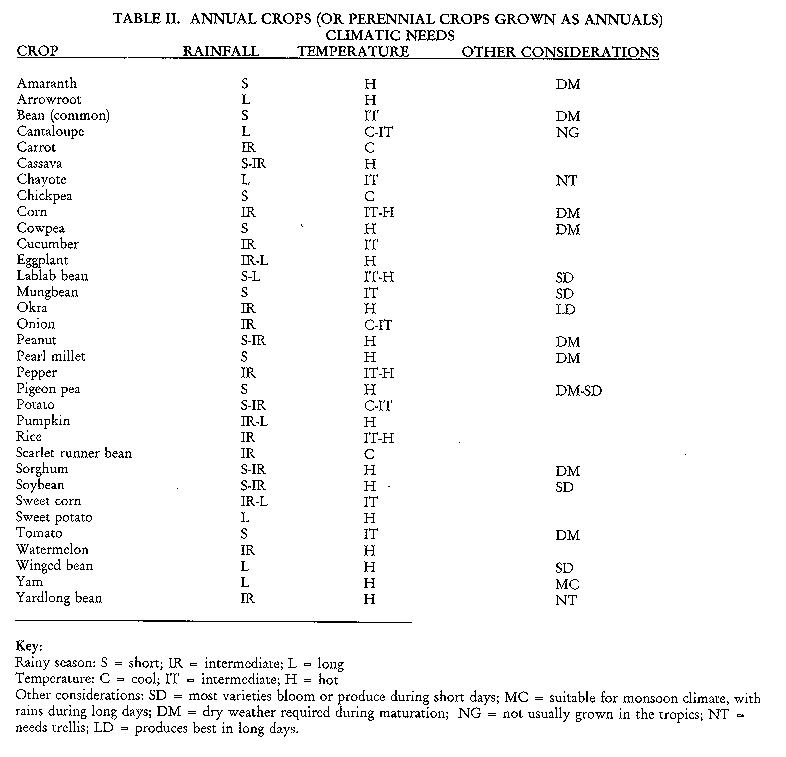
Table II: . Annual crops: climatic
needs
CLIMATIC NEEDS
crop:
rainfall
temperature
other considerations
Amaranth
S
H
DM
Arrowroot
L
H
Bean (common)
S
IT
DM
Cantaloupe
L
C-IT
NG
Carrot
IR
C
Cassava
S-IR
H
Chayote
L
IT
NT
Chickpea
S
C
Corn
IR
IT-H
DM
Cowpea
S
H
DM
Cucumber
IR
IT
Eggplant
IR-L
H
Lablab bean
S-L
IT-H
SD
Mungbean
S
IT
SD
Okra
IR
H
LD
Onion
IR
C-IT
Peanut
S-IR
H
DM P
earl millet
S
H
DM
Pepper
IR
IT-H
Pigeon pea
S
H
DM-SD
Potato
S-IR
C-IT
Pumpkin
IR-L
H
Rice
IR
IT-H
Scarlet runner bean
IR
C
Sorghum
S-IR
H
DM
Soybean
S-IR
H
SD S
weet corn
IR-L
IT
Sweet potato
L
H
Tomato
S
IT
DM
Watermelon
IR
H
Winged bean
L
H
SD
Yam
L
H
MC
Yardlong bean
IR
H
NT
Key: Rainy season: S = short; IR = intermediate; L = long Temperature: C = cool; IT = intermediate; H = hot Other considerations: SD = most varieties bloom or produce during short days; MC = suitable for monsoon climate, with rains during long days; DM = dry weather required during maturation; NG = not usually grown in the tropics; NT = needs trellis; LD = produces best in long days.
Table III. Important perennial and tree crops climatic needs
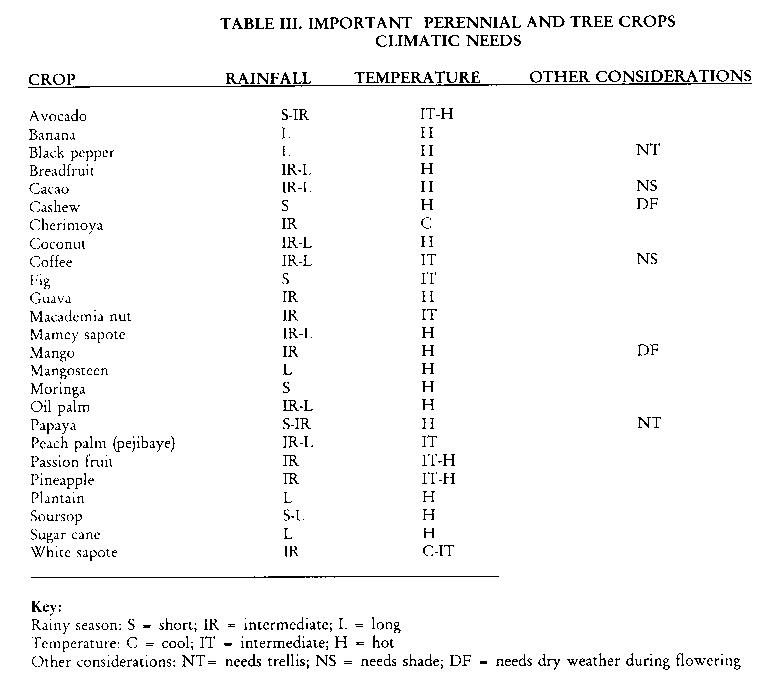
Table III: Important perennial and
tree crops climatic needs
|
crop |
rainfall |
temperature |
other considerations |
|
Avocado |
S-IR |
IT-H | |
|
Banana |
L |
H | |
|
Black pepper |
L |
H |
NT |
|
Breadfruit |
IR-L |
H | |
|
Cacao |
IR-L |
H |
NS |
|
Cashew |
S |
H |
DF |
|
Cherimoya |
IR |
C | |
|
Coconut |
IR-L |
H | |
|
Coffee |
IR-L |
IT |
NS |
|
Fig |
S |
IT | |
|
Guava |
IR |
H | |
|
Macademia nut |
IR |
IT | |
|
Mamey sapote |
IR-L |
H | |
|
Mango |
IR |
H |
DF |
|
Mangosteen |
L |
H | |
|
Moringa |
S |
H | |
|
Oil palm |
IR-L |
H | |
|
Papaya |
S-IR |
H |
NT |
|
Peach palm (pejibaye) |
IR-L |
IT | |
|
Passion fruit |
IR |
IT-H | |
|
Pineapple |
IR |
IT-H | |
|
Plantain |
L |
H | |
|
Soursop |
S-L |
H | |
|
Sugar cane |
L |
H | |
|
White sapote |
IR |
C-IT | |
Key: Rainy season: S = short; IR = intermediate; L = long Temperature: C = cool; IT = intermediate; H = hot Other considerations: NT= needs trellis; NS = needs shade; DF = needs dry weather during flowering
Table IV. Suggested crops for specific climatic zones
GRAINS, LEGUMES, VEGETABLES, FRUITS, AND OTHER
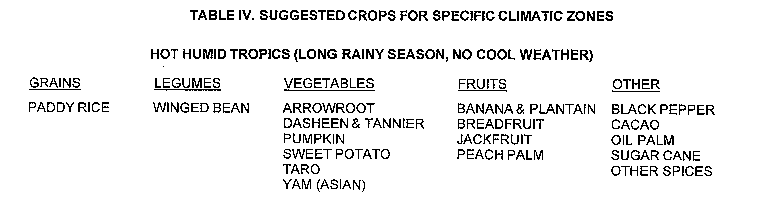
Suggested crops for HOT HUMID
TROPICS (Long Rainy Season, No Cool Weather)
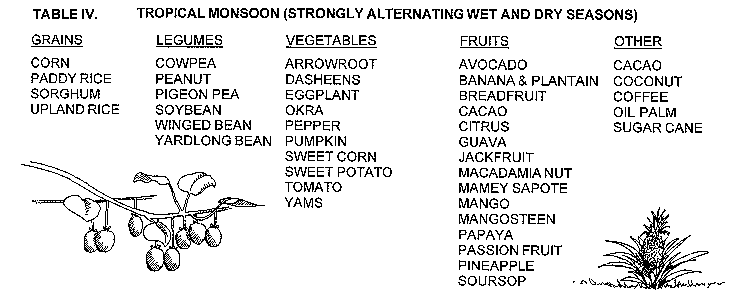
Suggested crops for TROPICAL
MONSOON (Strongly Alternating Wet And Dry Seasons)

Suggested crops for DRY TROPICS
(A Long, Hot Dry Season With A Short Or Irregular Rainy Season)
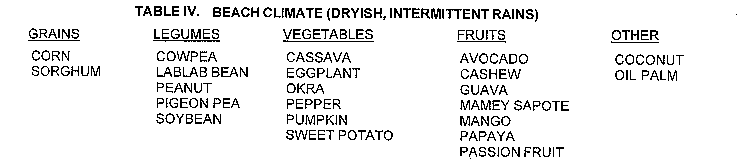
Suggested crops for BEACH CLIMATE
(Dryish, Intermittent Rains)
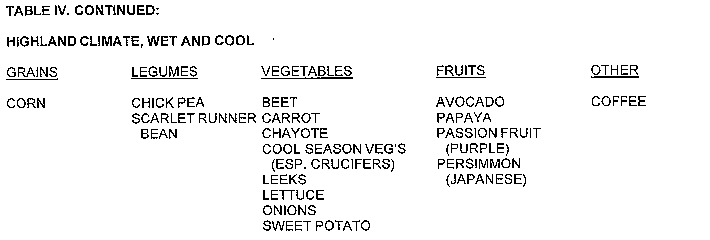
Suggested crops for HIGHLAND
CLIMATE, Wet And Cool
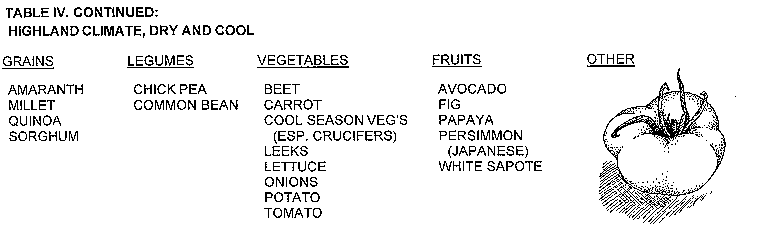
Suggested crops for HIGHLAND
CLIMATE, Dry And
Cool
Discussion
In principle, it should be possible to characterize soil and climate so that areas that are similar, even though widely scattered, could use the same technology. In practice this has proved very difficult. As the number of factors increases sufficiently to carefully characterize sites, those that are similar become smaller and smaller in number. Researchers often refer to "site-specific technology." This simply means that any particular technology is specifically suited only to the site for which it was designed. This is true whether the technology is cultural techniques or pest control methods.
Two very large projects were specifically designed to overcome the problems of site-specific technology. In one of these the technology was to be developed at specific sites and demonstrated to be useful at similar sites. This project was unable to fulfill its objectives. In a second project years of experimentation at distant locations finally came through with a mathematical model to predict the yield of a crop at one location based on its performance at other locations. All test locations had to be thoroughly characterized. This has been done with only one crop, corn (maize). The technique is too cumbersome to be of practical value, and the old-fashioned technique of a varietal trial is still the best method of determining the value of a particular crop or technology.
There are no final answers to the questions, "What crop should I grow?" and "How should the crop be grown?" Superficially, agriculture is simply crops, climate, and land. But in reality each is extremely complex, requiring knowledge, experience, and judgment. On the other hand, the crop production potentialities are revealed by trial and error. There is no substitute for hard work and a sharp eye.
Some logical questions follow "What crop can I grow?" The answers may require considerably more study. What are appropriate varieties? Where can seed be obtained, and how can it be maintained? What are the appropriate seasons for planting? How can it best be fertilized? What insects, other pests, and diseases may occur, and how can they be controlled? When and how is the crop to be harvested? How can it be stored, processed and utilized? Will people accept it? Will it be economical in terms of energy, time, and money? Part of ECHO's work is to give you perspectives on these issues to equip you to answer such questions.
Appendix I. Maximum ecological amplitudes for some tropical crops
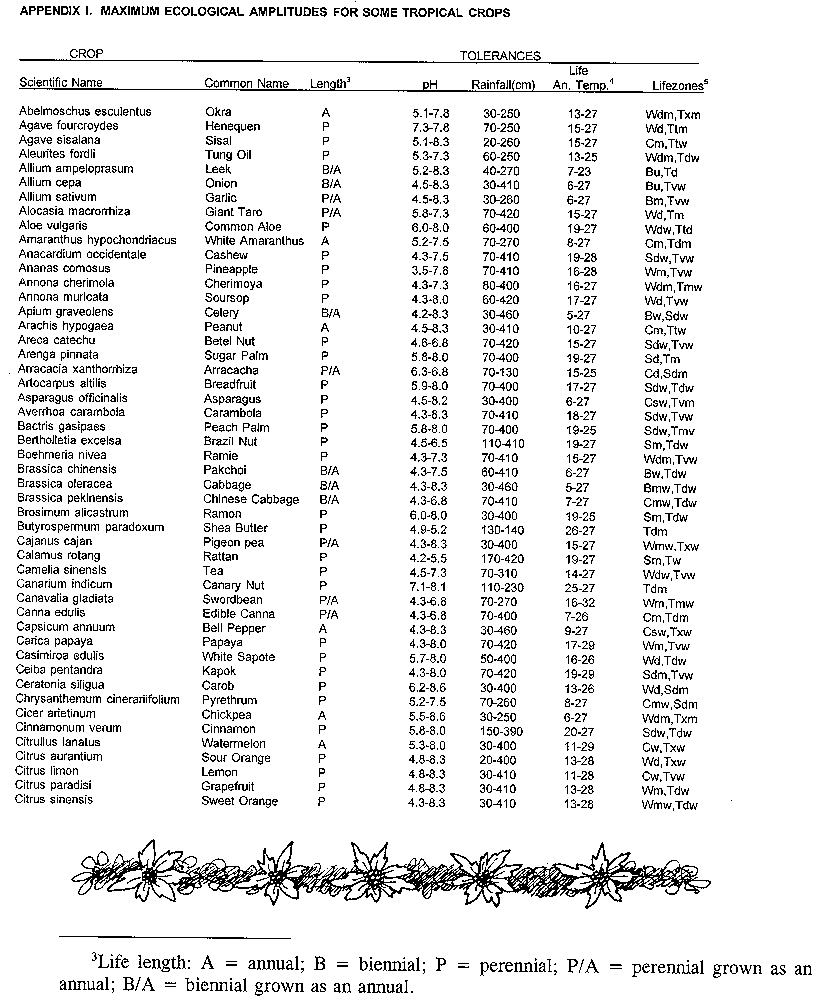
Table: Maximum ecological
amplitudes for some crops (1)
Table: Maximum
ecological amplitudes for some crops (2)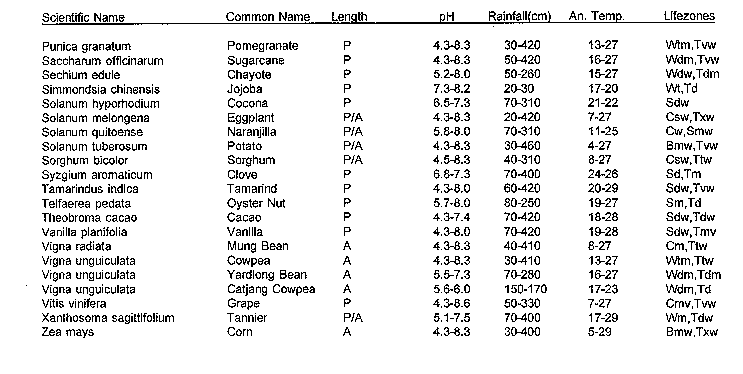
Table: Maximum ecological amplitudes for some crops
(3)
Technical note: Comparison charts of tropical crops
by Dr. Franklin W. Martin and Michael P. Fennema
Introduction to the charts :
The question of what crops should be grown and how they should be used are never completely answered. Furthermore, there is no document or person that can provide all the answers desired. Agriculture always involves trial and error, experimenting and risking, learning and adjusting. These charts supply you with information to help you in making choices about which crops to try in your location. Crops are compared by categories to permit selection based on knowing how the crop can tolerate the conditions in your area. These comparison charts complement ECHO's catalog of "Seeds Available from ECHO," although the charts include a broader range of crops than offered in the catalog. It serves as another basic source of information on the most important crops of the tropics.

Chart 1 Comparison of Grain
Crops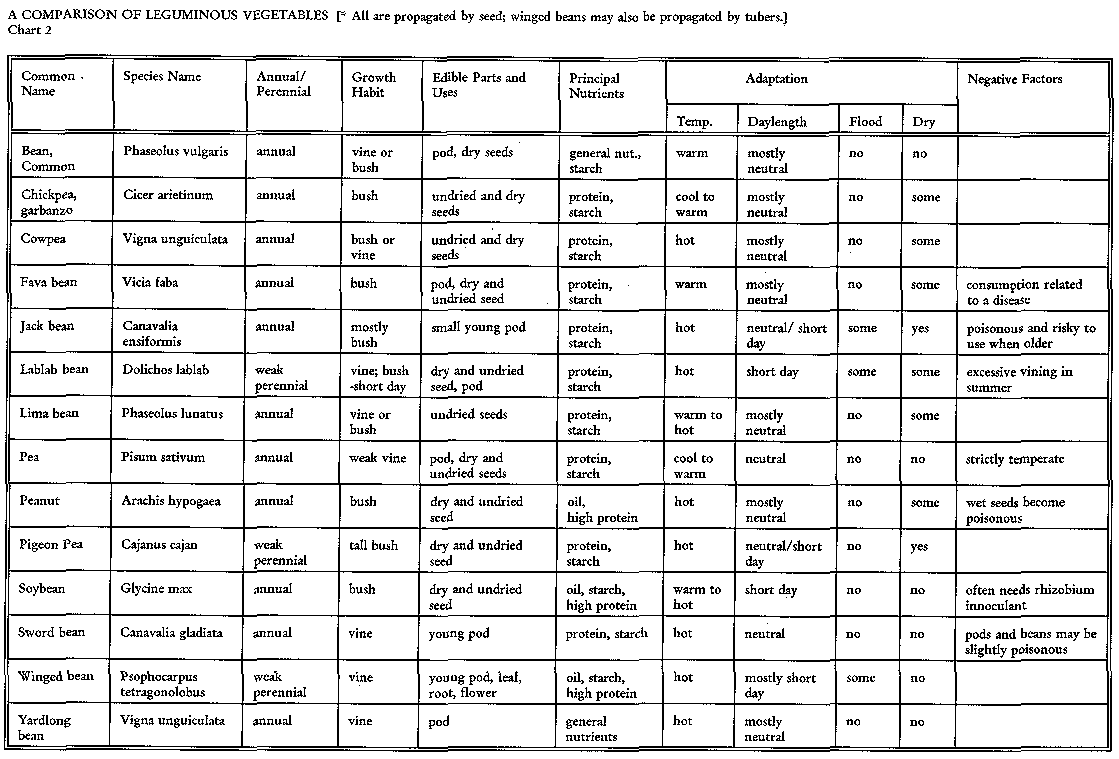
Chart 2 Comparison of Leguminous
Vegetables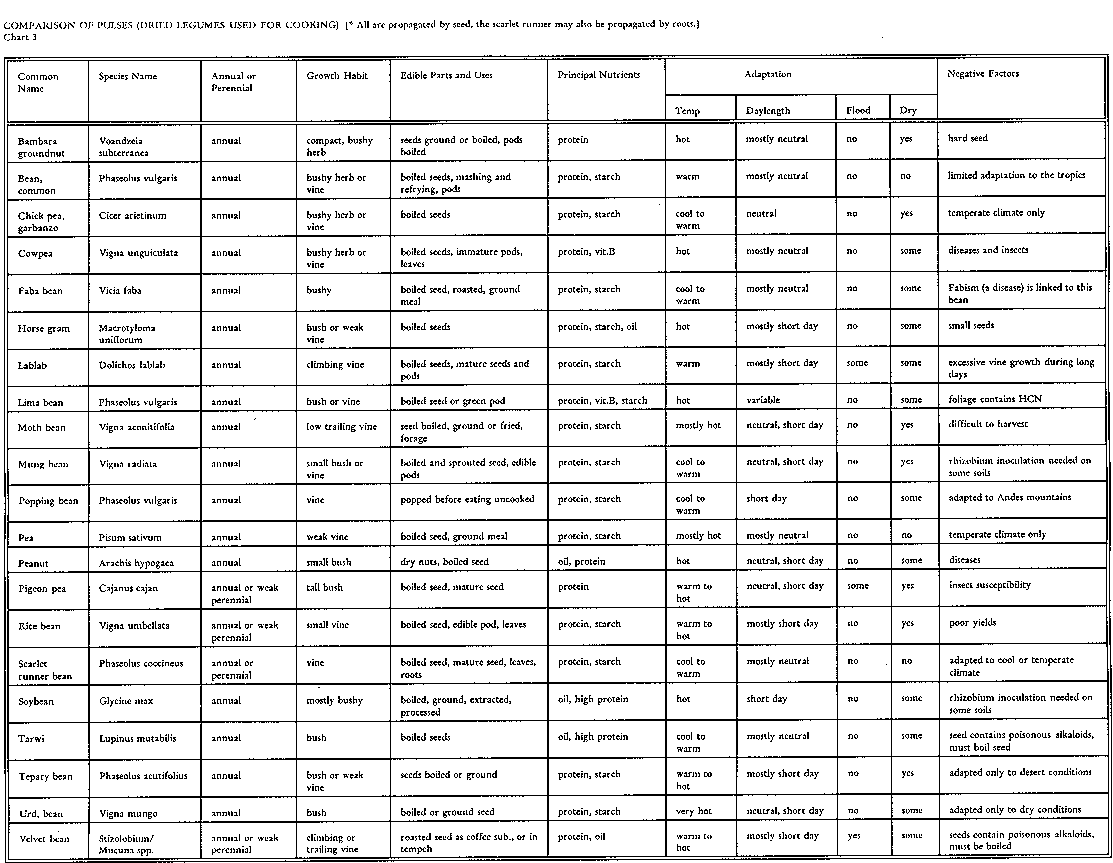
Chart 3 Comparison of
Pulses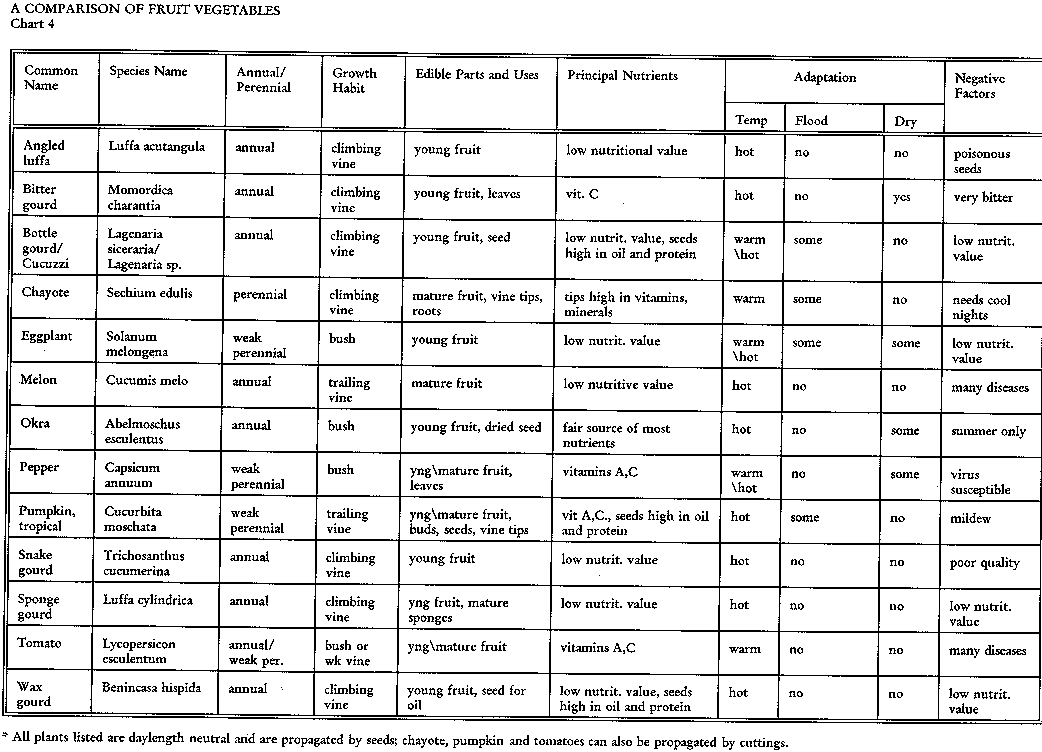
Chart 4 Comparison of Fruit
Vegetables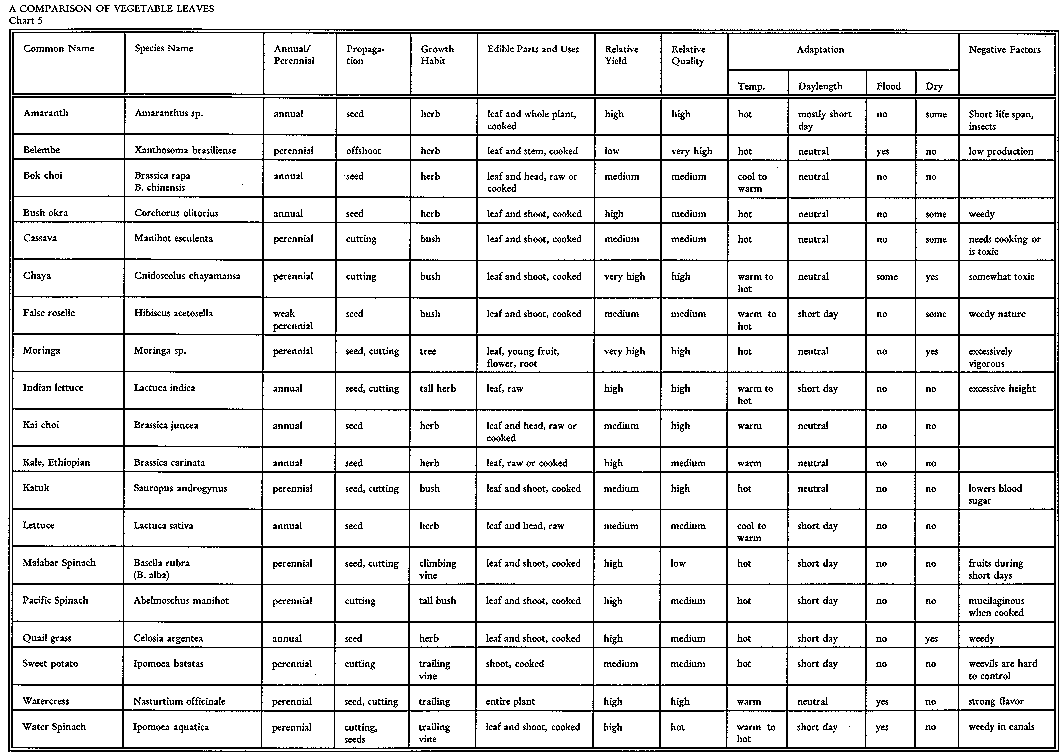
Chart 5 Comparison of Vegetable
Leaves
Chart 6 Comparison of Roots and
Tubers
Chart 7 Comparison of Miscellaneous
Vegetables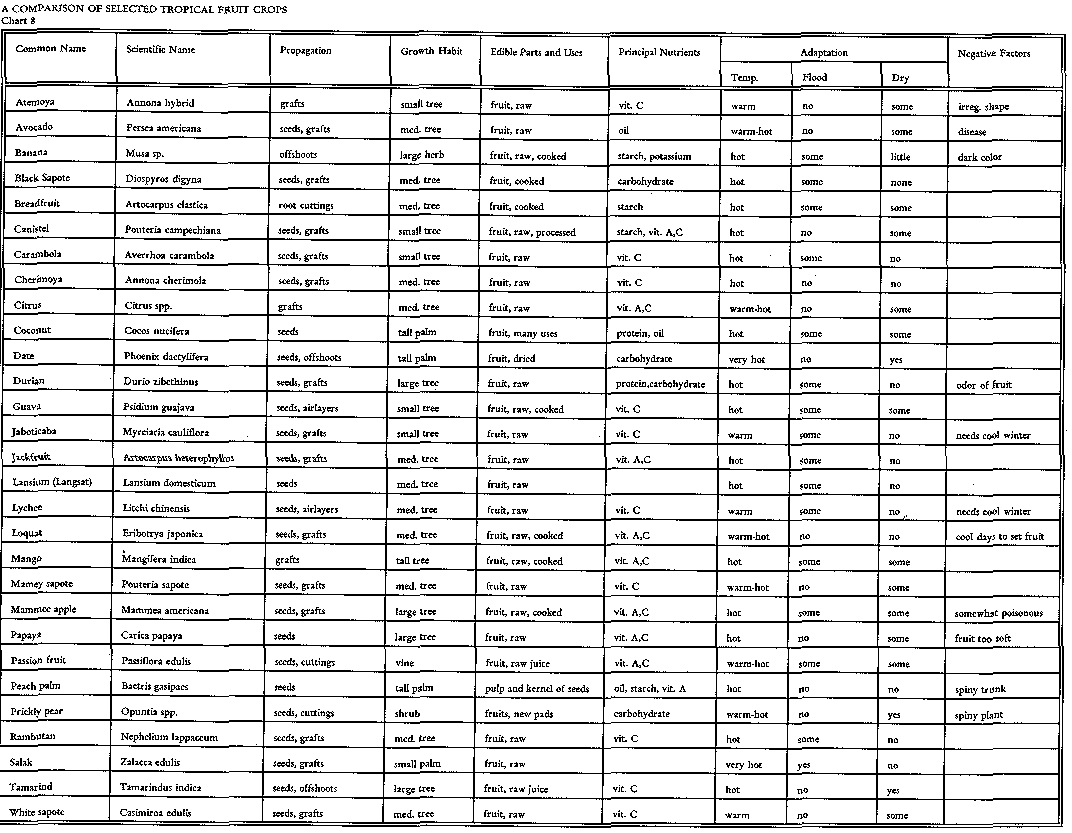
Chart 8 Comparison of Selected
Tropical Fruit Crops
Chart 9 Comparison of Nut
Crops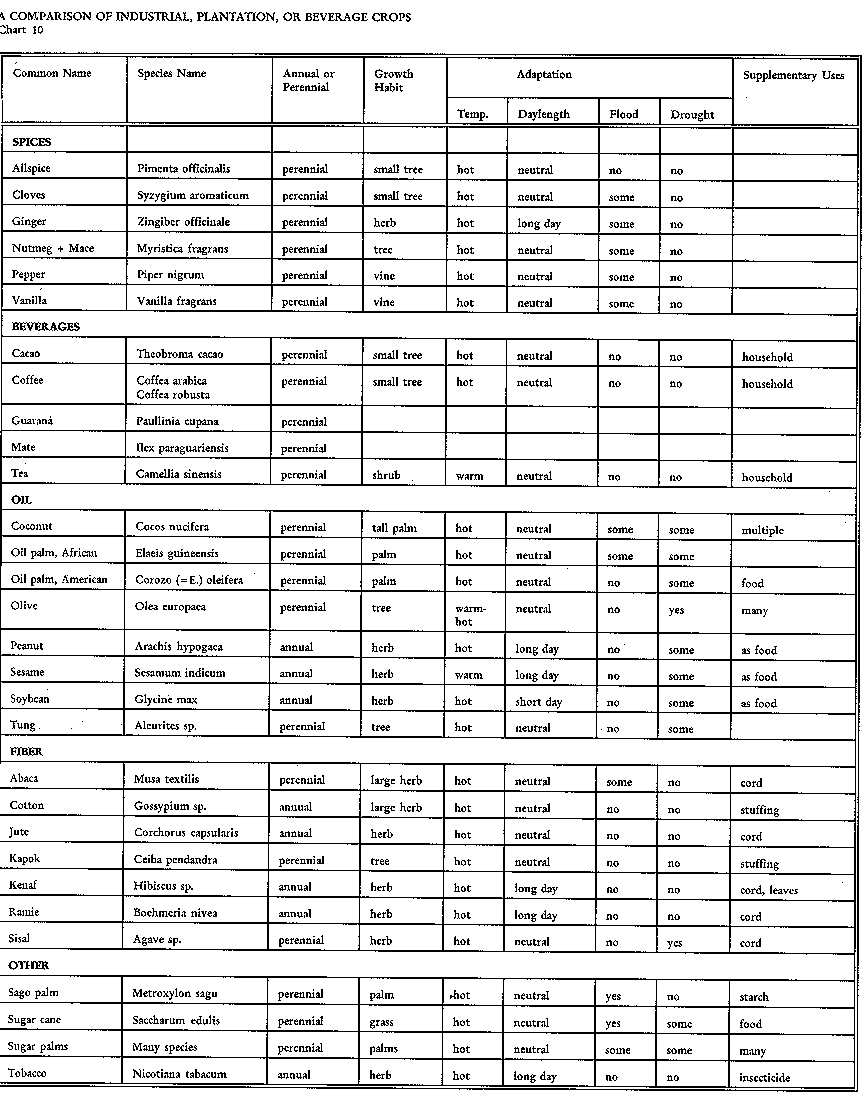
Chart 10 Comparison of Industrial,
Plantation, or Beverage Crops
Chart 11
Comparison of Ground Covers and Green Manures
All of the plants mentioned in this chart 11 can be used as feed for animals. However, cutting them for feed limits their effectiveness as green manures and cover crops. The distinction between green manures and cover crops is minimal, and often the two words are used interchangeably. The following definitions show the difference in emphasis of the two terms. Green manure crops are those grown for the purpose of incorporation when the plant is fresh and green (thus high in nitrogen), resulting in soil enrichment and a greater water holding capacity. Ground cover crops grow vigorously to outcompete weeds and provide a good soil covering and mulch. These crops are also good for soil improvement and erosion prevention.
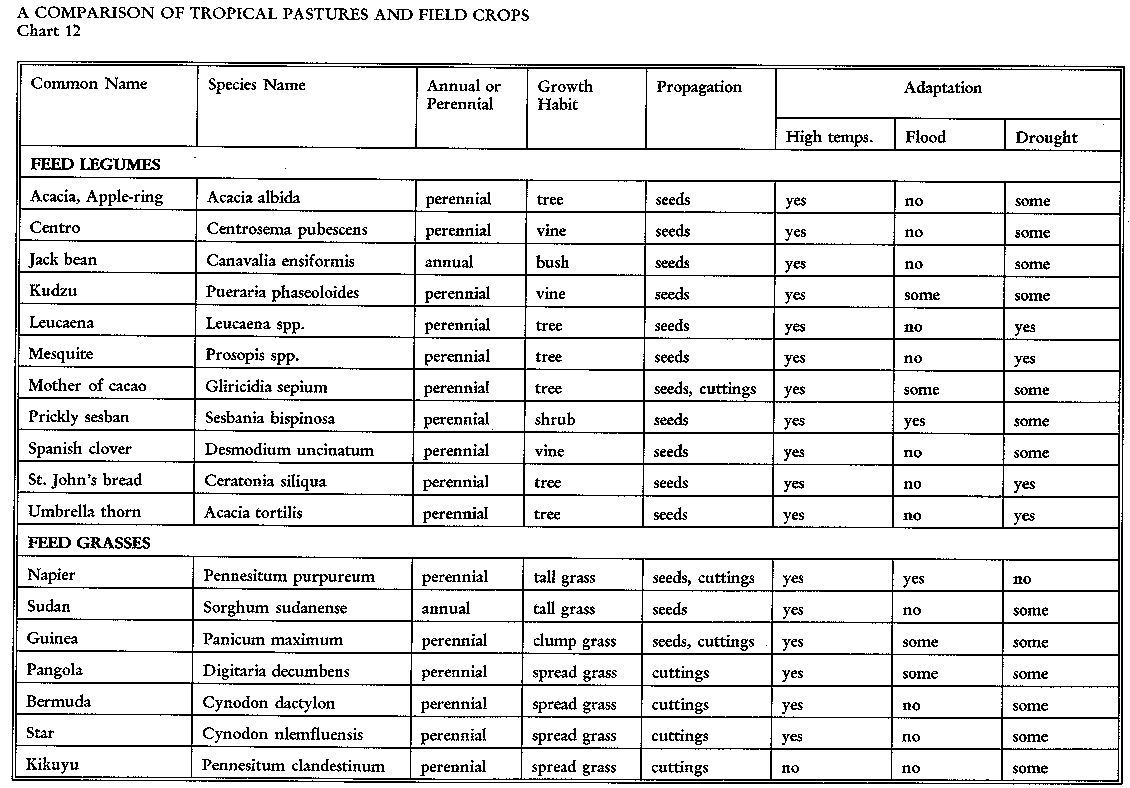
Chart 12 Comparison of Tropical
Pastures and Field Crops
Chart 13 Comparison of
Special Purpose
Trees
What seed would you take to an uninhabited tropical island?
Dr. Frank Martin is the author of several books and articles on tropical subsistence farming and a frequent consultant to ECHO. We received from him the following interesting note:
"If I were to go to an uninhabited island in the hot, humid tropics, taking with me the seeds with which I think I could best provide myself food, I think I would take the following.
Roots and Tubers: (1) sweet potatoes-the variety 'Gem' (orange-fleshed) and some white-fleshed types, (2) yams-Dioscorea alata and D. esculenta, selected varieties, (3) cassava-some true seed to start my own, (4) Queensland arrowroot (Canna edulis), very easy to grow and productive.
Grains: (1) corn, (2) okra, for edible seed and well as green fruit, (3) wax gourd (Benincasa hispida) for edible seed as well as squash-like fruit.
Legumes: (1) Catjang cowpeas (climbing, disease resistant forms), (2) winged bean, (3) Dolichos lablab beans, (4) asparagus beans.
Leafy Vegetables: (1) chaya, (2) sunset hibiscus, (3) Tahitian taro (Xanthosoma brasiliensis), (4) Tropical or Indian lettuce (Lactuca indica).
Fruit Vegetables :(1) tropical pumpkin, (2) okra, (3) small-fruited, indeterminate tomatoes, (4) hot pepper, (5) ensalada pepper, selected for its edible leaves.
Trees :(1) bananas, (2) breadfruit, (3) limes (West Indian, from seed), (4) tamarind, (5) papaya, (6) mangoes (from seed, turpentine type but selected)."
Several of Dr. Martin's publications (co-authored by Ruth Rubert�) are available from ECHO. We are reprinting their book Edible Leaves of the Tropics (see chapter on Tropical Vegetables). Techniques and Plants for the Tropical Subsistence Farm (see below) is an excellent introduction to a wide variety of food plants adapted to hot, humid regions.
How can I garden in the hot humid tropics?
Letters from EDN readers often contain questions similar to this. Even experienced gardeners can get discouraged when they move to the humid tropics from a temperate country and plant the vegetables they know from home. Others of you have not had gardening experience in any climate, but now face the need to learn quickly. The approach of the two books described below is so different that they complement each other very well.
The best way to begin gardening in hot humid regions is to try those plants that God has clearly made for such climates. However, temperate crops are often in demand because of the increased variety that they add to the diet and their value as a cash crop to replace imported vegetables. Techniques and Plants for the Tropical Subsistence Farm is oriented toward plants that are adapted to the tropics. Growing Vegetables in Fiji is more oriented toward growing temperate vegetables, with some discussion of other vegetables.
Dr. Frank Martin and Ruth Rubert� with the USDA's Tropical Agriculture Research Station in Puerto Rico wrote a 56-page book called Techniques and Plants for the Tropical Subsistence Farm. (It is now out of print, but ECHO sells a photocopied version in a binder for $5 plus postage.) It is an excellent introduction to a wide variety of foods that are adapted to hot, humid regions. Its scope is a bit broader than only gardening, as the title implies. The table of contents lists: overall planning; vegetables and cereals (leaves, legumes, roots and tubers, fruit vegetables, cereals); trees (fruit trees, vegetable trees, leguminous trees, trees for wood); forage crops (site selection & preparation, planting, management, grazing, storage, selecting forages, grasses, legumes, misc. forages). Their approach to insect control is less specific with an emphasis on organic methods. (It is quite likely that insect control is less of a problem with the native tropical plants.) Here are some excerpts.
"Phosphorous is an essential, limiting element in tropical soils as often as nitrogen. It is important in stimulating root development and is necessary for fruit and seed development. Although it is common enough in the soil, most of it is insoluble, unavailable for plant use. Manure, compost and cover crops do not add enough phosphorous to the soil" and tend to become insoluble when they are added. He then discusses deficiency symptoms. Commercial fertilizers are one source. "Bonemeal is a useful additive though much of its phosphorous is insoluble. Marine organic materials (seaweeds, fish) are other good sources. There does not seem to be an easy solution to the problem, but a soil with adequate humus and good aeration slowly releases soluble phosphates from the insoluble forms."
"Indian or tropical lettuce (Lactuca indica) from Southeast Asia is considered by some to be the best lettuce for the hot humid tropics. Like all lettuces, it requires a fertile soil. Seeds are small and seedlings require careful attention. [Ed: So many plants come up wild we no longer need to replant, however.] The plants grow rapidly and produce large succulent leaves. These may be harvested individually, or the tops may be snapped off... [to be] replaced rapidly by new growth. Once flowering begins, it cannot be suppressed, but leaves may be harvested until exhausted. Year-round production is easily achieved by planting every 3-4 months. Yields are excellent and the plants can be grown in pots. The lettuce is somewhat bitter in taste, but its flavor and texture are perfect for mixed salads." [Ed: It is also excellent as a cooked green. ECHO has seed.]
Kirk Dahlgren worked as the Rural Development Director for the Peace Corps in Fiji. He wrote a 123-page book for the Peace Corps called Growing Vegetables in Fiji. This book is an excellent general introduction to gardening in the tropics (or elsewhere for that matter). We think so much of the book that we have reprinted it (US$5 plus postage). As mentioned earlier, a special emphasis is placed on growing temperate vegetables. The climate is hot and humid in much of the country, similar to conditions faced by many of you. His writing is clear and choice of subjects excellent. He has an unusual ability to get right to the most important points and to explain them clearly in as few words as possible. The table of contents lists: the Fiji vegetable crop environment; building and maintaining soils; cultural methods of vegetables; the garden crops of Fiji; growing vegetables under plastic; composting and mulching. Some examples follow.
"The culture of many of these new crops required the learning of a totally foreign propagation method-the use of seeds." Traditional Fijian crops are propagated vegetatively, i.e. a piece of the plant other than a seed is used to produce new plants. "The vegetable crops the missionaries brought evolved in temperate zones where plants needed to produce resistant bodies, i.e. seeds, to survive the harsh winters." Crops the Indians brought had a similar need to survive dry months. Because in Fiji the weather is always just right for the plants to grow, it is often advantageous for plants to reproduce through means other than seeds.
Here is an excerpt from the discussion of carrots. "Fiji relies largely on carrot imports to satisfy local demand. Carrots do well in Fiji, however. ...Carrots are small-seeded, slow-germinating, and slow to establish so require a steady supply of moisture and a high measure of weed control. Quick growth produces better carrots. Carrots are high in vitamin A and have good keeping qualities." He then gives recommended varieties and detailed cultural procedures. "Show extra attention to weed control. Weeds in carrots can be controlled by spraying with kerosene at the three-true-leaf stage. The rate is 450 liters/ha (45 ml/square meter). Spray on a sunny day for best control." Diseases, pests and their control [usually chemical rather than organic] are discussed for each vegetable. He lists three common problems: cavities caused by calcium deficiency, galls caused by nematodes, and split root tips caused by excess soil nitrogen.
Resource centers for agricultural development
SUMMARY OF TRAINING OPPORTUNITIES IN AGRICULTURE FOR MISSIONARIES. A number of organizations are responding to the need for training of those going to work in third world agriculture and/or appropriate technology. ECHO has a Technical Note which summarizes the offerings of many of the programs that we know about. Write ECHO for "Where Can I Get Training for Agricultural Missions?"
WHAT HAS BEEN YOUR EXPERIENCE WITH THE INTERNATIONAL RESEARCH CENTERS?
Many of you are aware of the network of international agricultural research centers that have been responsible for much of the green revolution. They are usually known by abbreviations: ILRI in Ethiopia and Kenya, CIAT in Colombia, ICRISAT in India, IRRI in the Philippines, IITA in Nigeria, etc. Each center focuses on just a few areas of agriculture and maintains the international germplasm (seed or other propagative material) for a few "mandate crops." This enables them to avoid duplication of effort and develop an unusual depth of expertise in those areas. (Universities, in contrast, typically cover all areas of agriculture but in less depth.)
How can we extract the most ready-to-use information from the centers? (We appreciate it when those of you who work at these centers call items to our attention or give feedback to items in EDN). These centers work primarily through governmental extension networks, but they seem quite open to helping "small" groups too.
We are interested in how these international centers can help folks in ECHO's network, typically a hands-on person in the field with a private voluntary organization (PVO). If you have approached one of the centers and found them helpful in a particular way, drop ECHO a line with details. I would also like to know if you tried to get information or seeds and were not successful. Many government agencies are increasingly recognizing the valuable role PVOs play in development. Most scientists at these centers are eager to see their discoveries implemented. On the other hand, they are very busy with their primary task of research and cannot write lots of letters. We would like to have a practical guide to what you can and cannot expect from the centers, how you decide where and to whom to write, etc., all based both on their literature and your experience. The small farmer, the international research centers and your work will benefit if we increase the use that you make of this incredible resource. Please write!
Most of these centers also maintain genebanks (seeds or other material) which you may contact as a source for information and perhaps seed of their respective staple crops. (For example, ECHO often refers seed requests for major crops to one of these centers.) The addresses and areas of expertise of each center are as follows:
AVRDC (Asian Vegetable Research and Development Center), Box 42, Shanhua, Tainan 741, Taiwan, ROC; fax (8866) 583-0009; https://www.avrdc.org.tw. Tomato, pepper, onions, eggplant, beans, and other vegetables.
CATIE (Centro Agron�mico Tropical de Investigaci�n y Ense�anza), Turrialba 7170, COSTA RICA; https://www.catie.ac.cr/. Research and education on sustainable tropical agricultural systems for the small farmer. Areas include livestock genetics and nutrition, coffee, cacao, agroforestry, and fruit crops.
CIAT (Centro Internacional de Agricultura Tropical), Apartado Postal 6713, Cali, COLOMBIA; fax (57)2-4450-273; https://www.ciat.cgiar.org. Germplasm development in beans, cassava, rice, tropical forages.
CIFOR (Centre for International Forestry Research), PO Box 6596, JKPWB, Jakarta 10065, INDONESIA; fax (62)251-32-6433; https://www.cgiar.org;80/cifor. Conserving and improving productivity of tropical forest ecosystems.
CIMMYT (Centro Internacional de Mejoramiento de Ma�z y Trigo), Lisboa 27, Apartado Postal 6-641, 06600 MEXICO D.F.; fax (52)726-7559; https://www.cimmyt.mx. Increasing productivity of resources committed to maize, wheat, and triticale.
Note: Web sites for the centers below have the format https://www.cgiar.org;80/acronym [as CIFOR above]. CIP (Centro Internacional de la Papa), Apartado 1558, Lima 100, PERU; fax (51)14-351570. Potato and sweet potato improvement, Andean roots and tubers. Natural resources conservation in the Andean region.
ICARDA (International Center for Agricultural Research in Dry Areas), P.O. Box 5466, Aleppo, SYRIAN ARAB REPUBLIC; fax (963)21-225105 or 213490. Increasing productivity of farming system involving wheat, barley, legumes, and forages in North Africa and West Asia.
ICLARM (International Centre for Living Aquatic Resources Management), MC PO Box 2631 Makati Central Post Office, 0718 Makati, Metro Manila, PHILIPPINES; fax (63)2-816-3183. Improving production and management of aquatic resources in developing countries.
ICRAF (International Centre for Research in Agroforestry), United Nations Avenue, PO Box 30677, Nairobi, KENYA; fax (254)2-521001. Mitigating tropical deforestation, land depletion, rural poverty through improved agroforestry systems.
ICRISAT (International Crops Research Institute for the Semi-Arid Tropics), Patancheru 502 324, Andhra Pradesh, INDIA; fax (91)40-241239. Contributing to more sustainable agricultural production systems through improved productivity and resources management of sorghum, pearl millet, chickpea, pigeonpea and groundnut.
IIMI (International Irrigation Management Institute), PO Box 2075, Colombo, SRI LANKA; fax (94)1-866854. Strengthening the development, dissemination and adoption of lasting improvements in irrigated agriculture in developing countries. IITA (International Institute of Tropical Agriculture), P.O. Box 5320, Ibadan, NIGERIA; fax 874-1772276 (no country code required). Sustainable and increasing food production in the humid/subhumid tropics in partnership with African national research systems particularly on maize, plantain, soybean, cowpea, yam, rice, and cassava.
ILRI (International Livestock Research Institute), P.O. Box 30709, Nairobi, KENYA; fax (254-2)631499; e-mail ILRI-Kenya@cgnet.com, and P.O. Box 5689, Addis Ababa, ETHIOPIA; fax (251-1)611892; e-mail ILRI-Ethiopia@cgnet.com. Animal health, genetics, feed, and natural resource management.
IPGRI (International Plant Genetic Resources Institute), Via delle Sette Chiese 142, Rome 00145, ITALY; fax (39)6-575-0309. Conserving genepools of current and potential crops and forages. Supports and coordinates genetic resource conservation through regional groups.
IRRI (International Rice Research Institute), P.O. Box 933, Manila, PHILIPPINES; fax (63)2-891-1292. Generating and disseminating rice-related knowledge and technology of short- and long-term environmental, social, and economic benefit.
ISNAR (International Service for National Agricultural Research), P.O. Box 93375, AJ-2509 The Hague, NETHERLANDS; fax (31)70-3819677. Institutional development and strengthening of national agricultural research systems.
WARDA (West Africa Rice Development Association), 01 BP 2551, Bouake 01, IVORY COAST; fax (225)634714. Improving rice varieties and production methods among smallholder farm families in the upland/inland swamp continuum, the Sahel, mangrove swamps, inland swamps, upland conditions, and irrigated conditions.
HOW DO I BEGIN AN EXPERIMENTAL/ DEMONSTRATION WORK? Chris Alexander in Zambia asked about how to develop a testing site at the church. I very much encourage this "experimental" approach. God has filled this creation with far more resources than most of us ever imagine. We only need to learn about them and then find which ones can be a blessing to our communities. You can never be sure that any new plant or technique will work until it has been tested in the community where it is being considered. Just remember not to be embarrassed by "failures." If in your personal garden you do not have some things that are not working out, you are probably "playing it too safe," doing things you know will succeed rather than trying many new things, some of which will fail and some be outstanding. Above all, never think that special university training in research is needed to do your own "adaptive" research. (Adaptive research is trying things that have worked elsewhere to see if and how they can be adapted to your community). Several of you have reported how the small farmers themselves enjoy being involved in the research process. Roland Bunch told me that he believes teaching farmers to be experimenters may be more important in the long run than the particular technologies he introduces.
Much of ECHO Development Notes is written for this very purpose, to suggest new things that you might want to try. So in a real sense, we are continually answering this question. The seeds you request through ECHO are likewise a good place to start. This collection of ideas from EDN should be a starting point. You should soon have enough ideas to keep busy for a few years.
THE SMALL FARM RESOURCE DEVELOPMENT PROJECT: A MODEL FOR BEGINNING OR STRENGTHENING YOUR AGRICULTURAL WORK.
INTRODUCTION. During the course of each year a number of individuals working in community development spend some days studying and planning at ECHO. In reality their felt need is not so much for a bit more knowledge (study), but for a project plan for how they are going to help local farmers. A number of such visitors have told me that the single most helpful thing I shared with them during their visit was the concept of the Small Farm Resource Development Project.
The central idea is that development organizations wishing to do agricultural projects have little choice but to do some of their own experimentation. Although many might wish it were so, no expert can come into a community and plainly tell what new idea to begin introducing. Such an expert can suggest many things to try, but little or nothing that one can safely talk farmers into adopting tomorrow.
Many rural development organizations who work in medicine, public health, education, water, sanitation, etc. hesitate to add agricultural components, perhaps because it is less clear what they should do to have a major impact in agriculture than in their other areas of emphasis. The bottom line of everything ECHO does comes down to this very point. How can we help you devise a project plan that will make a significant difference in the lives of peasant farmers?
WHAT IS NEEDED? See page 10 for some characteristics of a satisfactory agricultural project. I have often heard development workers say something like, "I have no need for additional technical information. What I need is more insight as to how to get farmers to act on what I already have to offer." Perhaps. But more likely the problem is that the ideas are not nearly good enough. Although there may be few if any ideas which you can be certain will meet all criteria, there is hope. It is just that there is a step between getting the idea and beginning the extension work. Many things have the potential to be as successful in the community as they have been elsewhere in the world. They just need to be screened and fine-tuned under local conditions and on local farms.
(Ready-to-go agriculture projects do exist, especially in the veterinarian field, where much universally applicable knowledge is available. If chickens are dying of Newcastle's disease, for example, a vaccination program could be immediately useful. Exceptions would also be found if the organization were to come across an innovation that has already been proven in the community but the extension work has not yet been done. But be careful. I saw one such project where a local group had proven that pineapples would thrive. Several private and government pineapple projects soon sprang up. Pineapples were so cheap two years later they were hardly worth harvesting. The average development project gives far too little emphasis to marketing study and projections.)
THE SMALL FARM RESOURCE DEVELOPMENT PROJECT. Both your supporters at home and the farmers you serve have high expectations of you. They are going to look for great (and quick) success in whatever you try, and you will lose credibility quickly if you start things that fail-unless everyone knows up front that you are first going to be doing trials.
Much of the pressure is eliminated if you say something like the following: "Everyone knows that a lot of new ideas outsiders bring in are worthless. But there are a lot of things that have brought an improved life to farmers similar to you in other parts of the world. I'm going to be trying several of those things. Most of them probably will not be worth very much. But probably one or a few will be something that will be very useful to you."
"I invite you to watch the progress of things that we will be trying here at the Small Farm Resource Development Center (SFRDC). When we sort out which ones seem to be really interesting, you can help us by doing a small trial on your own farm."
The purpose of the SFRDC is to evaluate in the community ideas that have been proven elsewhere. The most promising ideas are adapted to become the backbone of the agricultural outreach. This adaptive research, as it is called, is done directly by the private or voluntary organization (PVO) and local farmers. The same approach is adaptable to almost any size project, whether you establish a formal SFRDC or not. The "Center" can be as simple as an individual development worker's garden or as complex as an organization's headquarters' farm.
We use two names, one for the project itself and one for the piece of land where initial trials are done. The Small Farm Resource Development Project (SFRDP) coordinates trials on a central site called the "Small Farm Resource Development Center" (SFRDC) as well as on fields of individual farmers. Any new ideas, techniques, crops or new varieties of a local crop are first evaluated at the SFRDC. The most promising will be further tested through on-farm trials in the community, thereby also teaching local farmers to do their own testing of new ideas. Marketing studies may also be done.
THE OUTCOME: The goals of the SFRDP include (1) finding new sources of income, food and employment, (2) improving the profitability and reliability of present farming operations, (3) backing these up with marketing studies and market development activities, (4) improving both economic security and nutritional balance by including a greater diversity of crops, (5) reducing vulnerability to global economic swings by minimizing the need for imported items in operation of the farm, and (6) reversal of the ecological problems caused by erosion and deforestation.
The SFRDP can have two distinct functions. One, the experimental component, is to test and adapt new ideas which have potential to aid the community in development. This is not the kind of research done at universities, but rather adaptive experiments to make sure what has worked elsewhere can be reliably expected to work in this particular community. The other, the demonstration and training component, is to use the center and on-farm trials as a teaching tool. It can be a base from which promising results are taught to your future extension staff and to other interested development groups or farmers in the country. Depending on whether training and teaching is a high priority of your program, this second aspect can be a major or minor component of the center. Charlie Forst, who helped develop a SFRDC for a school in Haiti (the Haitian American Friendship Foundation), described his goal as "developing the farm as a textbook."
WHERE SHOULD TRIALS BE DONE? Trials should be carried out both at a central SFRDC site and by local farmers on their own land. Each has its strengths and limitations.
It will be important to have a central focal point for visibility, both locally and with the diverse private and governmental groups in the country who might wish to learn from the SFRDC. It is also necessary to have a central location where a preliminary screening of new ideas can take place. Experiments that may have less likelihood of success should only be done at the central site initially until such time as they are shown to have definite promise.
Before Tom Post (see below) had an opportunity to establish a SFRDC, some on-farm trials were underway. It seemed like a great idea. The government research station had identified onions as a profitable cash crop that was being imported into the country. They also had selected varieties and developed cultural practices. But unknown to anyone, there was a disease in that particular part of Belize that ruined the onions. If the SFRDC had been in existence, the first trials would have been done there and farmers would not have had such a visible initial discouragement.
The on-farm trials are economically more efficient, are more representative of the diverse micro-climates, soil types, etc., increase visibility in the community, help farmers learn the experimental approach, give them a sense of ownership in the project, and greatly reduce the likelihood of poor choices for subsequent introductions. Once a success is proven in on-farm trials, much of the work of extension is already done. On-farm experiments will always be on a small scale so that the risk to any farmer is minor.
Project Global Village (PGV) in Honduras wondered if subtropical apples might be the basis for a development project at a remote site very high in the mountains. We helped them arrange to bring in 1,000 subtropical apple trees, which were evaluated entirely with on-farm trials. I believe they were distributed to a couple hundred farmers. This fall I was told that they now have over 200,000 trees in the ground (no one knows for sure how many because farmers now graft their own trees).
A REAL-LIFE EXAMPLE. In the mid 1980's ECHO suggested to Tom Post, country director for the Christian Reformed World Relief Committee (CRWRC) in Belize, that they establish a SFRDP in Corozal Town. Tom shared the following observations on the value of the project.
"1. It provides a place to try crops on our own land that will not hurt the farmers if the crops should fail. We had begun our work directly with farmers before we had the SFRDP. Due to initial failures we dropped from 30 interested farmers to 3 the first year. Now negative results are just part of the expected outcomes of any large number of trials at the Center. For example, we failed to make money on an egg project that had originally looked good, but found that farmers could make money on broilers. A combined solar and wood burning grain dryer that we built turned out to have a design flaw and burned down-but it only involved the SFRDC.
"2. Even though we have degrees in tropical agriculture and years of experience, we need self- confidence and confidence in what we are about to promote. The same applies to the local extension staff. The SFRDC allows us to convince ourselves that what we are recommending really works.
"3. Consistently ideas had to be adapted to the regional climate and local management methods.
"4. It serves as a point of contact between our organization and Belizian institutions (other voluntary organizations, governmental ministries and agricultural research agencies). It gives our small group much more visibility and a "location" where we have a large sign by the highway "Small Farm Resource Development Center." Visitors can see and recognize quality work. We also are now seeing other groups picking up on some of our results. One has ordered 4,000 pounds each of velvet bean and jack bean seed.
"5. The SFRDP concept provides a bridge between the two worlds of research and the small farmer. Most agricultural research is still done on experiment stations with inputs that are not available to many small farmers and goals usually oriented toward more mechanized approaches.
"6. It is a valuable investment in the future. Development organizations tend to go for near-term results, using only ideas which are known to have a high probability of success. A result is that we do not consider other options. At the SFRDC we can try things that, for lack of experience, leave us less certain of success but hold a great deal of promise. Use of the moringa tree was in that category; now it is looking more and more like a sure success for our projects.
"7. It provides a valuable hands-on opportunity for North American supporters to be involved in ways that go beyond just giving donations. Donors feel an increasing need to know for themselves the benefit of their help. If work teams do projects in the village, they may be doing things that the local people can do for themselves [and resentment can result]. But projects done at the SFRDC will not disrupt village life and will be a genuine help to our work. North Americans can try out their skills without doing harm by their trial-and-error learning.
"8. The first-hand experience with a range of ideas (alley cropping, leguminous trees, pasture improvement, in- row cultivation, moringa, neem, small-scale irrigation) has been extremely valuable for me personally in my additional responsibility of project consulting in Central America."
From my reading before actually working in development, I had the impression that farmers were so resistant to change that they would certainly not be interested in doing experiments. I have been pleasantly surprised from reports in our network at how eager farmers are to do experiments, if they have confidence that some of them are worthwhile. Tom Post took me to visit some participating farmers in Belize. Each farmer had a particular experiment he was doing. One eagerly showed us some others he had come up with on his own.
SOME SPECIAL BENEFITS. Expensive infrastructures are avoided. No commitment need be made to multi-year funding. The SFRDP can be continued as long as its results are a clear benefit (or until so many good, proven ideas are available that the extension staff has all it can use) and can be discontinued at any time with minimal waste of money.
Although we had been discussing with Project Global Village the possibility of starting a SFRDP, the apple project ended up having so much potential that all efforts went into its development. Always keep in mind that the SFRDP is there to benefit farmers, not to do research. If you invest little in infrastructure, efforts can be rechanneled at any time without waste.
OTHER POSSIBILITIES.
(1) Once a set of workable technologies have been proven, the sponsoring organization might wish to set up a demonstration area at the SFRDC to use in training. I do not automatically call the SFRDC a "demonstration farm" because that concept has not worked in some situations and cultures. The SFRDC is a place where trials are done, and assumes the added role of a demonstration farm only if that approach seems suited to the local situation.
(2) If an agricultural college or training center is nearby, opportunities for collaboration may exist. The students would benefit by gaining hands-on experience in a very applied kind of research. The SFRDC would benefit by being able to do many more experiments by using the free student labor.
(3) Increasingly donors want to see and experience the work first-hand. Although a missions study tour has advantages over a "work team," in my opinion, many feel obligated to work with their hands to justify the expense of the trip. So "work teams" have become increasingly popular. Having them work on projects in the village which villagers could have easily done themselves can foster resentment. Projects can usually be found on the SFRDC that provide a rewarding experience for the volunteers, which benefit the project, and which avoid misunderstandings within the community. At the same time they can work with and get to know the local people and culture and worship with them.
(4) Many American colleges send their students overseas for a few months of exposure to third world conditions and cultures, but it is difficult to find assignments for which they are qualified. Poor command of language and lack of fully developed cultural sensitivity normally limit the effectiveness of such short-term people. They often return disillusioned because they did not do much of significance. However, the student working primarily with the experimental phase of the program could begin making a useful contribution the day after his/her arrival! Students would come to work under supervision of the SFRDP staff, not to introduce change into the society.
(5) Periodically a professor looking for a sabbatical opportunity calls to explore whether he/she might do something in the area of world hunger. You might put out a call for help from such a person.
WHAT KIND OF TRIALS SHOULD BE DONE? The primary focus of the small farmer is raising crops and livestock and related activities. Depending upon need, the SFRDP may concentrate on: finding new crops or improved varieties of presently cultivated crops; conserving topsoil; storing grain; increasing yield and decreasing labor; seeking better techniques for cultivation of crops that will not require cash (and foreign exchange) for purchase of inputs; animal husbandry; growing feed for animals; aquaculture; post-harvest storage and handling. The farm is free to use a mix of organic and chemical methods depending on your philosophy and the local situation.
Growing for export markets is very risky for the typical, relatively small, organization in ECHO's network. Don't even think of exporting unless a large, proven organization is already doing it and your farmers are just plugging into their program. Even then, one fruit fly scare or United Nations embargo can bring disaster.
Appropriate technologies may be chosen for the demonstration part of the farm, but they usually are included in the experimental component only at a minor level. Chances are there are so many good designs already that what is needed is someone with perspective to pick the one or two best suited and go with them, rather than making new designs. As a general rule, I believe that westerners are more enthused about appropriate technology than are most peasant farmers. (There are surprises though. Three organizations which built self-composting toilets for their staff in Central America told me that the toilets generated intense interest in the community.)
WHERE DO WE GET IDEAS FOR THE TRIALS? The place to start is to carefully observe what farmers already do, ask where they feel that they need help (though remember they will not know to ask for things they have never heard about) and consider how to make their work easier or farms more productive with their current crops. Networking within your country will turn up promising ideas that have already been proven not too far away. Each issue of EDN contains many suggestions and seed offers that could become the basis for trials. Careful study of the back issues of EDN should give you more ideas than you will have time to try.
TAKING THE LONG VIEW. Development projects seem to proceed in units of a few years, but communities develop over long periods. Trials should be directed at both short- and long-term needs of the community. Some ideas should be selected with the anticipation that in the very near term (less than a year) they will be ready to go. (An unfortunate side effect of the short term nature of most projects, especially funding for them, is that only ideas with near-term payoff get serious attention.) Some trials that will not be completed for years should be started right away, e.g. in evaluating fruit tree varieties, trees should be planted so they can begin growing. If you start a SFRDP please keep us closely informed of your experience and what you learn.
|
| |||||||||||||||||||||||||||||||||||
Amaranth to Zai Holes, Ideas for Growing Food under Difficult Conditions (ECHO, 1996, 397 p.)
2: Vegetables and small fruits in the tropics
Vegetables and small fruits supply essential vitamins and minerals while adding variety and interest to the diet. Produce can also bring a high price in the market and provide additional household income. Vegetable use varies by region, culture, and social group. One of the first changes people make when they have more income is increasing the diversity in their diets, so you may observe more interest in vegetables and small fruits as families earn more.
Since vegetables and fruits are known to have a significant impact on health and nutrition, many people are interested in promoting their greater production and use. Many vegetables native to the tropics continue producing for months or years, and these treasures should not be overlooked in favor of temperate vegetables which must be continually replanted. This chapter features resources, perspectives, and information on growing the many vegetables and fruits which have proven themselves under difficult conditions in the tropics.
Resources and perspectives - book reviews
ECHO'S INVENTORY OF TROPICAL VEGETABLES.
How many kinds of vegetables did God create? You can count the hundreds in this 157-page publication by Dr. Frank Martin, Victor Doku and Ruth Rubert�. Plants are considered in alphabetical order by family, with good indices for genus and common names. Within each family the "major" vegetables, if any, are described by a paragraph with standardized format, while the hundreds of minor vegetables receive only a single line (scientific and common names, type of growth, country of origin, plant part eaten, and whether cultivated or wild). The uses, and any poisonous properties, are noted when known. Thumbing through the book is the best way to find vegetables of a particular country. A very complete bibliography lists the most important sources of further information. Remember that this is an inventory, not a detailed description of everything you might want to know about the plants.
This may be the most complete listing of tropical vegetables ever developed. Because we did not consider the "market" large enough to pay printing costs, we have "published" it as a xeroxed copy in a binder. While most valuable in libraries, many will want a copy on their own desks. At US$20 ($15 for private voluntary organizations) plus postage it is a bargain considering the years of work that went into the book, and the difficulty of getting the information elsewhere. Available from ECHO.
EDIBLE LEAVES OF THE TROPICS (about 240 pp.) by Franklin W. Martin and Ruth M. Rubert� discusses the value of leaves in the diet and describes hundreds of edible leaves. Green leafy vegetables, common weeds, tropical trees, spices and teas, and temperate vegetables in the tropics are included. There is some information on toxic leaves and the culture of green-leaved vegetables. This book has been out of print since the early 1980s, but is in the process of being reprinted by ECHO. It will probably be available in late 1996. Write for details.
GROWING VEGETABLES IN FIJI AVAILABLE FROM ECHO. ECHO receives letters every month from individuals who did not grow up in the tropics, but who now find themselves called upon to do vegetable gardening under tropical conditions. Some have not had previous gardening experience in any climate. Now they may even be expected to teach the subject. Kirk Dahlgren authored this helpful, concise book while working as a Peace Corps director in Fiji. He discusses both tropical vegetables and techniques for growing temperate vegetables for which there may be considerable demand (and potential profit) in the tropics. We found it so useful both in teaching basic gardening techniques and in bridging the gap between temperate experience and tropical realities that we reprinted it. Growing Vegetables in Fiji costs US$5 plus postage ($2.25 N. Am.; $3.50 S. Am.; $5 elsewhere).
We find that people moving to the tropics make two opposite mistakes. One is to assume that in the tropics they will easily be able to grow the kind of vegetables they knew from temperate climates. The other is to assume too quickly that it cannot be done. While many temperate vegetables will not grow in most tropical locations, every so often we find someone succeeding with a vegetable we might have urged them not even to try. Experiments in your garden will cost little and may yield big rewards!
ECONOMIC PLANTS OF IMPORTANCE IN HAITI (44 pp.) is a very helpful book by Dr. Terry Berke. "When I was teaching at the American University in Les Cayes I often had only the Creole name of a plant. Once I had the scientific name I could usually find information about it in my reference books."
The book is not exactly a bilingual dictionary, but it can be used that way. A large table lists the names of a great many plants and the family to which they belong. Trees, vegetables, wild plants, and fruits are all listed. English, Creole and scientific names are alphabetized together. You then turn to the body of the book where each family is discussed. In that discussion the scientific, English and Creole names of the family members are listed along with a very brief discussion of each plant and its uses. This book was extremely helpful on a trip to Haiti. Often we were given the Creole name and had no idea what the plant was-until we checked it out in this book.
For easy reference to more common plants, the book includes one page of scientific names of common vegetables, followed by the English and Creole names. Another page does the same for fruit and multi-purpose trees. ECHO is publishing the book in-house as needed. The price is $3.50 plus postage.
SEVERAL AGRICULTURAL BOOKS IN SPANISH. Dr. Keith Andrews, director of the Panamerican School of Agriculture in Zamorano, Honduras, sent several of their agricultural books for ECHO's library. The books and their prices appear below. Write for ordering information to the bookstore at Zamorano, P.O. Box 93, Tegucigalpa, HONDURAS, Central America. (This well-known school is oriented towards hands-on, practical agriculture. After a guided tour by one of their students, I was envious of the practical experience their graduates receive. As I recall, students work half a day in the area they are currently studying. If studying animal science, then they may rotate through raising animals, butchering, making cheese, processing milk, etc. If studying horticulture, then caring for vegetables, harvesting fruit, selling in the fresh produce store, etc.)
The books include: Cebolla, ajo y puerro (47 pp., $8); Cultivo de la soya (61, $8); Gu�a pr�ctica para el manejo de malezas (222, $18), Horticultura manual de pr�cticas de campo (180, $10); Manejo integrado de plagas insectiles en la agricultura (623, $30); Ordenes y familias de insectos de Centroamerica (179, $10); Principios y pr�cticas de mejoramiento de plantas (119, $8); Producci�n de cabras y ovejas en el tr�pico (174, $15).
Other books, which I have not seen, which might be of interest: Ca�a de az�car (104 pp., $5); Gu�a pr�ctica de cultivo de hortalizas (81, $12); Manual de laboratorio nutrici�n animal (110, $8); Manual de Laboratorio de introducci�n a suelos (81, $5); Microbiolog�a ($15); Pr�ctica de campo muestreo de nematodos (11, $3); Principios pr�cticos para la producci�n de cultivos (119, $10).
THE ASIAN VEGETABLE RESEARCH AND DEVELOPMENT CENTER conducts research, crop improvement, and offers seed for research and many publications on tropical vegetables. Write to Office of Publications and Communications, AVRDC, Box 42, Shanhua Tainan 741, Taiwan ROC; phone 8866 583 7801; fax 8866 583 0009; e-mail opc@netra.avrdc.org.tw; https://www.avrdc.org.tw.
"I WANT TO TEACH HOME VEGETABLE GARDENING" is one of the most frequent requests ECHO receives from people in the field. Small, biointensive household vegetable gardens can supply the vitamins and minerals often lacking in the diet of rural families. For this reason, most rural development groups have promoted home gardens at one time or another, and some have met with acceptance and enthusiasm.
Many more of these educational efforts, however, have been discontinued once the development staff have left the community. It is worthwhile to encourage people to grow and eat fresh fruits and vegetables, so promoting home gardens seems a simple and effective step in that direction. But the fact that gardening projects all around the world often fail to achieve permanence should make us especially cautious to launch such a program. Some guidelines are given below to help you evaluate the need for gardening education in your area and to identify some limitations to gardening.
If you are new to an area, your first step should be to observe the current growing practices and diet in the region. It could be that you see people growing vegetables for the market, but they do not eat them at home; in that case, simply growing more vegetables will not improve the diversity in their diets. Or it could be that you do not recognize gardening activities, but people eat many vegetables-for example, wild greens which they gather or perennial plants that are not obviously cultivated. If people are already gardening, you do not need to teach them, but it might be appropriate to examine more productive techniques or evaluate some new plants which could be added to their system. If they are not gardening, there is probably a whole complex of reasons why they are not, and it would be wise to consider the limiting factors before beginning a promotional program. As always, the goal should be discovering the most appropriate way to meet the needs in the community, rather than introducing any particular system. Keep in mind that a truly appropriate technique may spread by itself. My [LSM] observations from one area highlight a few reasons people may not garden.
In the Andean region of Ecuador, much effort has been poured into "teaching" various methods of vegetable gardening with little long-term adoption of the practice. Most people do not grow their own produce. The most common reasons farmers give include the following: seed supply is erratic and of varying quality (especially seeds distributed free often had poor germination), necessary vegetables could be easily and economically purchased in the market, lack of a regular water source for irrigation, lack of motivation to grow vegetables, difficulty of protecting the garden from free-ranging animals ("neighbors' chickens" are a serious problem), no market for their products, and dislike of vegetables. Pest problems are not reported as a serious limiting factor, and the Andean climate favors the production of a wide variety of vegetable crops.
The primary limitations to home gardening are related to food habits/values and farming systems. Vegetables have low priority in the Andean diet. For example, traditional Andean foods contain little if any vegetable portion: drinks are grain-based, and meat (cuy [guinea pig], beef, chicken, etc.) and starches (potato and many other native root/tuber crops) are often served without the complement of vegetables. A few green peas or carrots are tossed into the soup, onion is used to flavor meats and soups, some beets or radishes may top the rice, and hot peppers and tomatoes are used in hot sauce, but vegetables make few other appearances on the Andean table. As in much of Latin America-unlike tropical regions of Africa and Asia-leafy greens are viewed as animal food rather than important in human nutrition. People gather some wild greens to add to soups in times of food scarcity, but these foods have a poor reputation and they are not cultivated or preferred.
Chickens, and to a lesser extent other animals, are a primary reason that people are unable to grow vegetables. Chickens are rarely confined, and their scavenging of insects and scraps around the house makes important contributions at little cost. However, their scratching quickly destroys garden beds and seedlings, and the necessary fences may be too expensive or difficult for people to construct before they begin a garden. Some people said that for this reason, communal gardens met with greater success than individual gardens-only one tall fence had to be constructed to protect everyone's crops together. People who did have gardens were often ingenious in the construction of their fences-using a variety of materials such as scrap wood, old plastic, shrubs, etc. Another important factor to understand is the key role played by the animals raised around the home, especially cuyes and pigs. Some people fed their garden vegetables to their animals, so it was clear that animal production was more important to the families than eating the vegetables.
I occasionally noticed one house which had extensive vegetable plantings in an otherwise gardenless community. When asked how they had such a nice garden, the families' most common responses related to health or economic benefits. People who maintained gardens on their own knew about the nutritional value of the vegetables, often explaining some specific improvement in the health of their children, such as their teeth or energy level. Others noted the extra income from selling their vegetables. People who found a market and made money from their gardens tended to have large, well-tended gardens which produced continuously with irrigation. These benefits made gardening worthwhile, even for people who did not grow vegetables simply because they liked them.
Vegetables and small fruits in the tropics
AMARANTH IS A DROUGHT-RESISTANT, FLAVORFUL GREEN. (Refer to page 75 for more information on amaranth seed.) Amaranths are cultivated worldwide as fast-growing, short-lived annuals. The leaves are high in calcium and iron. With their relatively high oxalic acid content, leaves should be boiled before eating. Some species can be weedy due to their high seed production, and leaf-eating caterpillars are a major pest. ECHO has many varieties of vegetable amaranths (mostly Amaranthus tricolor) which are favored for their leaves, although leaves of grain amaranths may also be eaten. We usually send two or three varieties when we receive a request, but if amaranth already grows in your area and you want to conduct a larger variety trial, specify that in your letter and we will send more.
ANDEAN BLACKBERRY. One of my fondest memories from Victor Wynne's farm in Haiti (at 6,000 feet) is the juice made from this Andean berry (Rubus glaucus, mora de castilla). It thrives on his farm, bearing over a very long season. Victor says that it bears most of the year, although berries do not command a high price.
According to the book Lost Crops of the Incas, this blackberry is native from the southern highlands of Mexico to the northern Andes. It is widely cultivated in gardens in Ecuador and Colombia. "It is said to be superior in flavor and quality to most cultivated blackberries and raspberries. ...They are especially juicy and make excellent jam, which tastes like jam made from black raspberries."
This plant may be suitable for those working with peasant farmers at higher altitudes in the tropics. The plants are normally propagated by tip layers or stem pieces because they yield sooner, but they can also be started from seed. You must have the patience to baby the seed until it germinates. Victor says, "We kept our original seed continuously moist for at least two months before any seed germinated. Trays should be covered with some air-breathing transparent film to prevent drying out." They grow well on many kinds of soil. In well-tended plantings, annual yields are said to reach 20 tons per hectare.
ECHO does not have seed at present; we would like to receive some from our network in the Andean region.
BRAZILIAN SPINACH IS A GOOD SOURCE OF GREENS. Cory Thede in the Brazilian Amazon reports: "Brazilian Spinach (Alternanthera sissoo, also Samba lettuce, sissoo spinach) forms a thick ground cover. It creeps and roots from nodes over a large area. It responds well to fertilizer. A pest (centipede?) eats holes in the leaves at certain times of the year, but this only damages the appearance a bit. Once planted, it can be maintained permanently, as a perennial. Propagate it by cuttings placed in the ground, with some shade (palm fronds for a week or two); it is very hardy, but keep it moist while rooting. It grows fast but is not invasive. Brazilians usually eat it raw in salads with oil/vinegar, tomato, and onion, although the literature recommends cooking it. This, together with lettuce and collards, are the most common greens in the area. In fact, it is better-liked than lettuce. Branches are sold in the market-pull leaves off the stems and eat the young vine tips._ If you work in the humid tropics, ECHO can provide cuttings if you visit us in Florida or ship them to you just before you leave the States. The cuttings would not survive overseas mail.
BUSH OKRA FROM ECHO GREW WELL. HOW DO WE EAT IT? Klaus Prinz wrote from Thailand, "We could not figure out how to eat the small pods. They ripened quite fast, though, so that a lot of seed was collected." Bush okra is a misleading name. It is actually grown for its leaves, which are cooked and eaten. It is called bush okra because its seed pods look a lot like very small okra pods. The scientific name is Corchorus olitorius, also called jute mallow and Egyptian spinach. It is a major source of food from the Middle East to Tropical Africa. The fibers are used in twine, cloth and burlap bags. The better vegetable varieties are smaller and more branched than those selected especially for fiber, but all have edible leaves. A related species, C. capsullaris, is the better known source of jute. The plants tolerate wide extremes of soil, are easy to grow and are resistant to drought and heat. Leaves may be dried for later use as a tea or cooked vegetable. They require little cooking. The leaves are mucilaginous (slimy), like okra, so may be offensive to some people. Plants reach over 3 feet (1 m) high and are about 20 inches (50 cm) in diameter. [The above information is from Frank Martin's Edible Leaves of the Tropics.] Want to give it a try? We have plenty of seed.
CASSAVA LEAVES. Cory Thede also mentions: "Brazilians also dry and powder cassava leaves and add them to foods-this is a very handy form of storage, especially for moms who don't want to leave the house to collect leaves during the cooking. Eating leaves is not too common a practice here, so maybe the powder disguises them well enough to be accepted, especially when used to enrich soups."
We asked David Kennedy with Leaf for Life for his perspective on using dried cassava leaves as a food, since cassava contains substances that produce hydrocyanic acid (HCN) when fresh leaves are eaten or pulverized. "HCN is a fairly common toxin in food. Cassava, lima beans, and sprouted sorghum have caused HCN poisonings. Acute HCN poisoning is quite rare. The minimum lethal dose is estimated at 0.5-3.5 mg per kg of body weight. So a child weighing 20 kg would need to consume between 10 and 70 mg of HCN. Ten grams of a low-HCN variety of dried cassava leaf would contain something like 0.08 mg. Chronic toxicity (also quite rare) has been reported mainly where there is a great dependence on cassava and a very low protein intake. Damage to the nervous system and especially the optic nerve can be caused by chronic exposure to HCN. Low consumption of proteins, especially sulfur-bearing amino acids, cigarette smoking, and air pollution all intensify the body's negative reaction to HCN.
"One would be tempted to steer clear of cassava leaves altogether to avoid any toxicity problems, except that the plant has several important attributes as a leaf crop, yielding large quantities of leaf that is high in dry matter, protein, and micronutrients...throughout the year in most locations. ...People are currently eating cassava leaves as a vegetable in much of Africa, and parts of Asia, and Latin America. I think the question is not whether to eat cassava leaves, but rather how to. Encouraging the use of low-HCN varieties is critical to this effort. A grinding technique that ruptures cell walls will dramatically increase the rate and total amount of HCN that disperses into the air. It is important that the leaves be ground when fresh, and quite well pulped, not just shredded. The loss of HCN is very dramatic then during drying." He sent us a Ministry of Agriculture publication from Brazil which showed the following HCN content for one variety (Cigana) of cassava: fresh-737 ppm; flour from a leaf dried whole- 123.89 ppm; flour from a shredded leaf-75.58 ppm; and 33.60 ppm when dried after thorough pulping. The potential nutritional benefits of using leaves of this common and productive crop is considerable. (For more on this topic, refer to page 265 in the Food Science chapter.)
CARROT EMERGENCE IN CLAY SOIL. (The following is taken from the July 1993 issue of HortIdeas.) Researchers in Brazil "tested various techniques to boost the emergence rate of carrot seedlings in heavy clay soil. Shading the seed bed worked better than mulching with organic materials such as sawdust and straw; adding a layer of sand resulted in poorer emergence than with bare soil." The HortIdeas editors add that they have "had no complaints about our stands of carrots since we began, several years back, covering the rows with boards until a high percentage of the seedlings break through the soil surface."
HIGH-CAROTENE CARROT SEED AVAILABLE. Dr. C.E. Peterson wrote, "It is generally agreed that vitamin A is the third most serious nutritional deficiency in the world, following total calories and protein. It is estimated that in four Asian countries 250,000 children become totally blind and many more partially blind each year due to vitamin A deficiency. ... Standard varieties of carrots have 80-100 ppm. The USDA hybrid A Plus has over 150 ppm." The Beta III carrot (not a hybrid) is a "market carrot" with a carotene content of 180-320 ppm. To give an idea for how much is needed, he said that one pound of an experimental variety that has 560 ppm would provide enough vitamin A for an adult for a month. "By comparison, the levels in some vegetables are: tomato 0.5 ppm, Chinese cabbage 23 ppm, kale or mustard greens 18 ppm." ECHO has trial packets of the A Plus and Beta III; if they grow well for you, you may order seed in quantity from commercial sources. Seed for the A Plus carrot may be available in bulk from Asgrow Seed Company, 4420A Bankers Circle, Doraville, GA 30360, USA; phone 800/234-1056, and Park Seed Co., Cokesbury Rd., Greenwood, SC 29647, USA; phone 800/845-3366. Order the Beta III from Asgrow as well. (If you have difficulty locating Beta III seed, contact Mr. E. Hansen in Kalamazoo, MI, USA, at phone 616/384-5545; fax 616/384-5647.)
Dr. P.W. Simon with the USDA at the University of Wisconsin wrote, "Vitamin A is necessary for normal vision and eye health, mucous membrane and skin health and disease resistance. A U.S. nutrition survey indicated that 40% of Spanish Americans, 20% of blacks and 10% of whites suffer from vitamin A deficiency. [It can cause] night blindness, permanent blindness and even death."
In developing countries, 90% of the vitamin A is typically from plants. The body converts carotene from the plants into vitamin A. Excess consumption of vitamin A itself is toxic, but the body regulates the carotene-to- vitamin A conversion so that toxic amounts of vitamin A are not produced, even when high amounts of carotene are consumed.
Here are some other interesting comments on carrots from Dr. Simon. Carrots tend to be less sweet if the nighttime temperatures are high, if light intensity is low and if there is a lot of organic matter in the soil. Store under refrigeration or delay the harvest. Do not store in a sealed plastic bag, since they need to "breathe" and will spoil. Do not store carrots near apples or pears, as the ethylene gas that these fruits emit will cause the carrots to become bitter. Carotene is relatively stable during processing-between 5- 20% of it is lost when canned.
The Beta III carrot contains three times as much carotene as typical carrots. "To completely fulfill adult vitamin A needs with Beta III, 140 average sized roots (11 kg) would be required per person per year. This would require approximately one square meter of land." Dr. Simon says, "The major problem with the Beta III is its long thin 'imperator' shape, in contrast to the short broad roots grown everywhere else in the world but in the U.S.A." His present research is looking for the short, broad root shape and even higher carotene content. He is also looking into solving the difficult problem of carrot production in the lowland tropics. This brings us to another important topic: can you grow your own carrot seed?
UBERLANDIA CARROTS WILL SET SEED IN THE TROPICS. In the spring of 1992, William Tabeka wrote from Uganda. He wanted to grow carrots, but seed was not available. We sent information on the difficulties of producing carrot seed in the tropics. Carrots are biennials; they normally spend a winter dormant in the ground, then produce seed the second year. We also enclosed just a few seeds from a packet we had just received from Dr. Warwick Kerr in Brazil. He said that this carrot, called 'Uberlandia,' would set seed even in the tropics, and would do so in a single season.
Our interest in this carrot increased greatly when Mr. Tabeka sent us this picture of himself standing by what appeared to be carrots in full bloom. I wrote right away inquiring if that is indeed what I saw, and what he thought of the taste. He replied, "I assure you that the carrots really did put on seeds. The taste of the root is good and there is a difference, because that one which put on seeds has a root that is a bit longer than the others (some high carotene carrot seeds we had sent). There is no difference at all in the appearance of the seeds." A recent letter says he is now growing carrots from seeds that he harvested during the last rainy season.
We planted a few plots in the spring to produce seed for our seedbank. By early summer, they blossomed heavily and eventually produced seed. We need to work on timing to see if we can get seed during the dry season, as the heat and humidity of our rainy summers make it difficult to obtain high quality seed. Nonetheless, we can now offer our network seed with about 70% germination.
We allowed most plants to go to seed, so we have little information on size or taste of the roots (by the time seed was mature, the roots had shriveled up). I sampled two 3-inch carrots, trying them both raw and boiled. I prefer the varieties I am used to, but if they were the only carrots available, I would be glad to have them. In other trials, we found great variation in the plots, from commercial-sized, bright orange carrots to small yellow roots. Someone familiar with plant breeding could do a great service to the small farmer. Presumably a variety with superior qualities could be developed which would also still produce its own seed. ECHO has plenty of seed, and we continue to select better-quality carrots each year. If you try this seed, we will be VERY interested in your experience with and impressions of this carrot.
Dr. Kerr provided more information about these carrots. "Carrots do not usually flower in the tropics. Eighty years ago a group of Portuguese growers planted carrots from Portugal and the Madeira Island in the southernmost state of Brazil. Some of these plants flowered and produced seed. Plant breeders from Sao Paulo and Brasilia independently collected seeds and developed varieties called 'Tropics' and 'Brasilia.'
"I used these two in my work at the Federal Universities of Maranhao and, currently, of Uberlandia. For five generations I selected the best carrots using the following criteria: (1) size between 12-18 cm, (2) parallel sides, (3) red xylem, (4) resistance to local diseases, (5) late flowering, (6) no green on the top of the root. I call the resulting cultivar 'Uberlandia.' The vitamin A content (carotene) is between 9,000 and 11,000 I.U.
"It is advisable that people who grow the carrot in other areas carry out their own selection. Here is how to do it. After 90 days dig up all the carrots. Select the best 30 according to the above standards or standards of your own. Re-plant these carrots right away and allow to go to seed. The red xylem can be observed by cutting 3 cm of the inferior tip (narrow end) of the carrot. Discard if the xylem is yellow."
Dr. Kerr has made a great contribution to third world gardeners. In the USA, nearly all work by private industry and much of the work done at universities is for a hybrid so that people will need to purchase seeds each year and money will be available to fund research programs. We need more breeders working on seeds for the poor.
CHAYA IS ONE OF THE MOST PRODUCTIVE LEAFY VEGETABLES AND AN INCREDIBLY RESISTANT PLANT. Chaya, Cnidoscolus chayamansa, is native to the drier parts of Central America and Mexico, where it is grown in dooryards, often as a hedge. Consequently it has been no surprise to find that it is very resistant to drought. Ross Clemenger planted some cuttings in northern Colombia after visiting us. The weather turned so dry that he had to sell a lot of cattle for lack of forage. The chaya, however, flourished. What has been surprising is that chaya is equally resistant to our terribly hot, humid, rainy summers. In fifteen years neither disease nor insects have been a problem. The only things that have harmed our chaya are freezes and standing water. It will come back from the ground after a freeze, but is killed by a few days of standing water. Plants can reach 10 feet (3 m) in height and about 5 feet (1.7 m) in diameter.
The young leaves are used to wrap tamales or are eaten with the thick terminal stems cooked as greens. They have a firmer texture than most greens I have eaten. If people in your area eat greens, I think they would likely develop a taste for chaya. For example, an American friend who married a Mexican woman has become quite fond of chaya, and says they like to serve it at least twice weekly. Another friend of Chinese descent is enthusiastic when we take her a bag of chaya leaves, even though it is not a plant she had in China.
Chaya is one of the most valuable green leafy vegetables. It was among the "underexploited" food plants popularized by the National Academy of Sciences. Leaves are reportedly high in protein, calcium, iron, carotene and A, C, and B vitamins. One consideration with chaya is that it should not be eaten raw. It contains cyanogenic glycosides, which can lead to cyanide poisoning. These are inactivated and released as a gas by frying or boiling for 5 minutes. (We discard the cooking water, but that is not essential.) Brief stir-frying is not adequate cooking.
If you work in Central America, you may have heard of Chaya brava in your area. The leaf petioles and stems of this variety contain tiny stinging hairs which make it necessary to wear gloves when harvesting the leaves. Some have brushed against the plant with their bare skin and were left with a red rash. Please note that ECHO now has a non-stinging variety (mansa) available for distribution. If stinging chaya grows in your region, it may be difficult to convince people to harvest and eat it. People who ordered chaya from ECHO before 1990 received a variety with a few stinging hairs; if it was successful, you might want to order this one which is from Belize.
Chaya is easily propagated by cuttings. Though it is frequently in bloom, it almost never sets seed-a quality which nearly eliminates its weed potential. Fortunately, because it is so resistant to dry weather, we can get live cuttings to you. We did a simulated tropical mailing. Several packages of chaya cuttings, prepared in different ways, were left in our hot workshop during the summer to simulate delayed overseas delivery. They were then removed at 1-4 week intervals and planted. We had good results at up to three weeks, and some survived after four weeks. We sent a package to Asia which was received 10 days later. They trimmed the bottoms and placed the cuttings in fresh coconut milk. In half an hour the surviving small leaflets had regained turgidity. Several cuttings survived. (Some of the edible hibiscus cuttings also survived the trip, so perhaps we can begin sending those as well.) We sent some cuttings in a regular envelope to Dr. Warwick Kerr in Brazil. He now distributes cuttings in the local church and reports that his family eats them at least twice a week.
Arkhit Pradhan in India wrote, "Chaya is all over now from your original cuttings. It's in maybe thirty villages in the hills. People have found it will grow when other greens are not coming through with the rains-strange plant."
If you want to try chaya in your area and think a small airmail package can reach you in three weeks, we will send you a few cuttings. This will cost us a few dollars in postage, so please only order if you will promptly care for the cuttings. Water the soil moderately but do not keep overly wet while cuttings are starting.
Cory Thede in Santarem, Brazil, writes: "Chaya is iguana-proof! Leaves are within their reach, but they don't touch them. Though it is exceptionally productive in some parts of the world, it grew erratically here-I think a dry-season mite stunted its growth. I did not see much use being made of it in this area.
"Propagate chaya by OLD (grey, not green) thin stalks if they are to be transported, as these have less pith and weight. (For immediate planting, any part will do.) When it arrives, cut off any rotting parts but you probably do not need to make new cuts if it is healing well. Be sure to plant it right side up, so leaf scars look like smiles not frowns. The bud is above the leaf scar. Leaves are flavorful when cooked with ham, onion, salt, and pepper." [Ed: I prefer them with salt and vinegar.]
EGGPLANT PRUNING. Warwick Kerr, head of the biology department at the Universidad Federal do Maranhao in Brazil, prunes his eggplants and African eggplants. The second crop (the farmers call it the "second life") is 30% greater than the first in spite of the death of 10-15% of the plants after pruning. Here is how he does it. When each eggplant has produced 20-30 fruits and the plantation looks old, he cuts the plants at a height of 30 cm, then removes the cut branches from the garden as far as possible or burns them. Finally he applies chicken manure, his cheapest fertilizer, irrigates and sprays the stalks with insecticide and fungicide. All plants that happened to acquire a virus usually die upon pruning, so he collects his seed from the second crop.
GRAPES IN WARMER CLIMATES. The following excerpt on grapes is taken from an article by Rick Parkhurst in the California Rare Fruit Growers newsletter (1981 #2). "For a long time it has been known that the 'wound effect' can replace the cold requirement in grapes. This means that the plant is pruned very severely every year. In the tropics more than 90% of the previous season's growth is removed by pruning. This severe cutting back helps the plant to break the rest period. When the fruit is harvested the plant is pruned. In three or four weeks, new growth appears and in three or four months new fruits ripen. The grapes in the tropics give two regular crops each year. Once this principle was realized, grape-growing spread throughout India, Thailand and other tropical countries."
Some additional information comes from a one-page response to a question on grapes that I found in VITA's files called "Grape Vine Management in the Tropics." "Grape vine management in the tropics is a problem: vines tend to be short-lived, produce small crops, and require special care. Grapes like a period with temperatures below 0 C. Attempts in the tropics have not been very successful; plants continuously grow, produce clusters, rebud, remain evergreen, and eventually burn out. However, there are tricks that have been developed for use under dry tropical conditions to simulate a dormancy period. If the vine is forced into two growth cycles, one in the wet season and the other in the dry season, it will produce. By pruning at the beginning of the wet season, a growth cycle is initiated in which a small crop may result. Following this, the vine is pruned again to induce another cycle of growth. It is during the dry season that the main crop results in quality grapes. Irrigation is used in conjunction with pruning to assist the plant during this cycle. (It is a very common practice to leave too much wood on the plants when pruning and this causes poor quality and premature burn-out of plants). In the dry warm climates of Peru, India and places in Brazil, [the dry season has] simulated a dormancy period." James Smith reports that he ate excellent grapes in the mountains of Cameroon. Grapes are now a commercial crop at a winery just a few miles from ECHO, where most years we have no freezing temperatures.
Muscadine grapes are native to Florida and do not require much cold. They grow as single berries rather than in bunches, and they are very resistant to pests and diseases. Most muscadines are eaten fresh. ECHO has fact sheets on muscadine grapes from the University of Florida for those who are interested.
JICAMA (PACHYRHIZUS EROSUS) TUBERS MIGHT BE AN EXCELLENT CASH CROP FOR YOU TO CONSIDER.

Jicama tubers as excellent cash
crop
Of the many new food crops that we have tried at ECHO, I consider this the one above all that should be added to most Florida gardens. For many of you, it is already an important food crop, but others have never heard of it. This is a common trait of the "underexploited" food plants that are in our seed bank. Most of them are familiar to and liked by at least some of our readers. Very few are wild "weeds" that are being promoted for the first time as food. I will list some of the common names to help you decide whether you already know this plant: j�cama (Mexico and the United States), yam bean (not the African yam bean), ahipa (S. America), dolique tubereux or pais patate (French), fan-ko (Chinese), sankalu (India), or sinkamas (Philippines).
J�cama is a leguminous vine grown for its edible tuber. The most unique feature of this tuber is that it remains crunchy after cooking. For that reason it can be used in any recipe that calls for water chestnuts. In a local supermarket we can buy water chestnuts for about $8 per pound. A 5 x 12 ft. raised bed could probably grow 25 pounds of jicama easily. It retails locally at 75 cents per pound. To the North American tastes of my wife Bonnie and me, recipes lose nothing by making the substitution. We felt like rich folks during the j�cama season, adding jicama extravagantly to water chestnut recipes. It was even the hit of a fondue dinner that we served. Slices of the tuber are eaten raw in salads or with chili pepper and lemon juice, or another dip.
Tuberous root development is initiated by short days. We have planted seed at several times of the year here at ECHO in SW Florida. Regardless of planting date, tubers were not formed until days became very short, around December. For this reason, it is unlikely that jicama can be grown commercially in the USA except in southern Florida and perhaps southern Texas. For maximum size the tubers were usually harvested in January and February. Vines planted in early spring were so vigorous by the time short days gave the signal to produce tubers that very large, distorted tubers burst from the ground. Tubers from seeds planted in May and June had the best combination of large size and good appearance. Seeds planted in August gave apple size tubers, though the taste and crispness were superior.
The following paragraph is excerpted from the National Academy of Sciences book Tropical Legumes: Resources for the Future. J�cama is among the most vigorous-growing legumes. It has coarse, hairy, climbing vines that can reach 5 m long. Although they grow well in locations ranging from subtropical to tropical and dry to wet, for good yields they require a hot climate with moderate rainfall. They tolerate some drought but are sensitive to frost. When plants are propagated from seed, 5-9 warm months are needed to produce larger tubers, but propagating from small tubers greatly reduces the growing time (to as little as 3 months in Mexico). Flowers are sometimes plucked by hand, doubling the yield. [I found no difference in yield in a simple trial in which I picked flowers from half of a small plot. Tubers appear to form only as days become shorter.] Yields average 40-50 t/ha in Mexico's Bajio region. Experimental plots have yielded 80 or 90 t/ha. The tubers contain 3-5 times the protein of such root crops as cassava, potato, sweet potato and taro. However, the proportion of solids in fresh j�cama in only about half that of other tubers because of the high moisture content.
All of the above-ground parts of the plant contain the insecticide rotenone. I would not recommend eating the pods, although immature pods are reportedly eaten at a certain stage in the Philippines. Much of the above- ground portion of the plant can be used as an insecticide, although there are plants better suited to this preparation (such as Tephrosia). One report from scientists in Senegal suggests crushing 2 kg of mature seed into a fine powder and mixing with 400 liters of water. After one day, finely strain the mixture to remove all the seed matter, then apply to plants to protect from a variety of insect pests.
We would like to hear from you if you have experience with j�cama in any of three areas. (1) Can the foliage be fed to rabbits, cattle, goats or other animals? (2) Do people use it as an insecticide and, if so, how do they prepare and apply it? (3) If there are special varieties that you think might be of interest to us and others and you can send us some seed to get started, let us know and we will send you a plant import permit. If you would like to try growing j�cama and seed is not available in your country, write us for a small packet of free seed.
ETHIOPIAN KALE GIVES SEED IN THE TROPICS.
Kale is the favorite green in my family, both for its taste, texture and nutrition. A drawback is that it does not set seed in the tropics. Dr. Warwick Kerr in Brazil sent us seed of the "Ethiopian kale" (Brassica carinata) which does produce seed. According to Cornucopia, "tender leaves and young stems, up to 12 inches high, can be eaten raw in salads. Older leaves and stems are cooked and served like collards or mustard. The inflorescence may be used as a broccoli-like vegetable. Seeds are the source of an edible oil." This kale has grown exceptionally at ECHO for years, and we have received many other positive reports on this hardy, productive plant from around the world. It grew so well in missionary Mark Vogan's gardens in Ecuador that he incorporated it into his rabbit feeding system and allows it to grow as a "weed" wherever it sprouts for this purpose.
KATUK (Sauropus androgynus) is one of the staple vegetables in Borneo, where it is sometimes grown as an edible hedge. It is one of our favorite summertime greens at ECHO. All greens, whether cooked or raw, are important nutritionally and can be tasty in various dishes. However, few are known especially for their unique taste. Katuk is delicious; after chewing a raw leaf or stem tip a few times you can notice a pea-like or nutty flavor. The leaves can be quickly stripped from the stem by pulling it between your fingers. Tender tips, leaves, flowers, and small fruits are eaten.
There is another use for katuk in Borneo. By using plenty of fertilizer and irrigation and a bit of shade, they are able to make the tips grow very quickly. The top 5 inches (13 cm) are harvested (there will be only few leaves) and sold to the finest restaurants. I ordered them at the Hilton Hotel in Borneo then watched as they were cooked. The bottom inch was discarded to ensure only tender tips would be prepared and the remaining 4 inches were cut in two. These were then stir fried for perhaps 60 seconds. They can be eaten raw as well. Malaysian Borneo hopes to export these to Japan as "tropical asparagus." (Of course, it is not really asparagus). A delegate at our Agricultural Missions Conference reported that katuk tips are now being grown and marketed in Hawaii.
Katuk is native to the lowland rain forest understory and prefers a hot, humid climate. It will grow in shade or full sun, and it tolerates occasional flooding and acidic soils. Under ideal conditions, it can grow up to 1.5 m per month. However, stem diameter does not grow apace with length and it soon gets so tall that it falls over, earning its description in Edible Leaves of the Tropics as "an awkward plant." In cultivation, it must be regularly trimmed for optimal production of new shoots. Be sure to keep it pruned to between 3-6 feet (1-2 m) high.
Plant about 2-3 feet apart in full sun or partial shade. Because they use shade cloth in Borneo for producing tender tips, I grow it under the eaves on the north end of my house. An additional benefit here is that plenty of water will fall on the plants from the roof even after a light rain and it will get only filtered light. Some people recommend katuk for alley cropping systems with nitrogen-fixing trees. We have had no disease or insect problems at ECHO, although slugs are reportedly a problem among new cuttings or seedlings in some areas. Katuk will produce abundantly throughout the warm months. During the coldest 2-3 months of winter at ECHO, plants may appear a bit sickly, stop growing, and be less tasty until new growth resumes with warm weather.
Katuk is easily propagated by moderately woody cuttings (20-30 cm long, with at least two nodes), though they can be slow to establish. If you visit ECHO on your way to the field, you can pick up some cuttings. During short days, there will be a lot of small blossoms underneath the stem, which can be stripped right along with the leaves and cooked. Our katuk, vegetatively propagated for some time, flowered but did not produce seed until we acquired plants from a different source (when they produced seed immediately); it is possible that separate plants are required for seed production or some varieties are selected for or against seed production. ECHO seedbank intern Jim Richard collected seed in December and allowed it to air dry until it was planted in January. It germinated in about 3 months. Since 1996 was the first year we successfully grew katuk from seed, we cannot guarantee that we will be able to distribute it from our seedbank, but if you are willing to wait you can request seed from ECHO and we will put your name on a waiting list until seeds are ready in January.
According to Cory Thede in Brazil, "Katuk and false roselle (Hibiscus acetosella) are easy to start from cuttings of any part of the plant, old or new growth (even in the dry season). Strip off most leaves and put the cutting directly into the ground under partial shade. They are survivors and palatable to most people. The false roselle was especially popular because of the red-purple color and sour, tangy flavor. Katuk is a light producer of greens compared to others I grew." [ECHO also has seed of false roselle.]
KIWIFRUIT (ACTINIDIA DELICIOSA) IN THE TROPICS. I have always discouraged people who wrote from the tropics asking where they could obtain plants of this New Zealand vining fruit. It is definitely not a tropical fruit. For example, the newsletter of the Rare Fruit Council International in Florida in 1987 says that kiwi has been tried all over Florida and has never been successful. (The plants grow well, but do not fruit.) So I assumed that it would be even more difficult in the tropics.
A few years ago I toured the farm of my friend Victor Wynne, at just over 2000 meters in Haiti. To my surprise there were vigorous kiwifruit vines and, hanging under them, were several kiwifruit. That does not mean you should all rush off your orders for kiwi plants. First of all, he planted them in 1983 (variety 'Abbott') and later almost tore them out when they never bore. In 1988, he got a few fruit. Though there were several more fruit after the sixth year, it was not at all clear if there was any commercial potential. That will all depend upon how heavily and reliably they bear.
There is a fantastic annual networking newsletter to promote cooperation and communication among kiwifruit enthusiasts, called the Kiwifruit Enthusiasts Journal. Each issue is like a large magazine, the 1993 issue (#6) having 193 pages. It is a grassroots newsletter, with over 100 people from 12 countries contributing to one issue we saw. Advertisements provide sources for the plants. They do not take subscriptions because its publication frequency depends on who volunteers to help. For the next issue or a back issue send US$14.95 plus shipping ($2.25 in USA; $3.75 overseas surface; $11.25 airmail) to Friends of the Trees, P.O. Box 4469, Bellingham, WA 98227, USA; tel/fax 360/738-4972; e-mail trees@pacificrim.net; https://www.pacificrim.net/~trees.
Much of the work seems to be toward extending the range in which kiwifruit can be grown, especially looking for cold-hardiness. To help you evaluate the chances in your area, here are the countries where commercial plantings exist, according to the Enthusiasts newsletter: New Zealand (half of all production), California in the USA, France, Italy, Japan, Israel, Chile, Greece, Yugoslavia, Hungary, Korea, Australia, Spain, and British Columbia in Canada. The newsletter says the coming rage will be smooth-skinned kiwifruit and colored kiwifruit (red, yellow and purple skinned).
Michael Pilarski, editor of the kiwifruit journal, sent us this summary on varieties: "Kiwifruit can be grown in the tropics and subtropics in high elevation areas which receive winter cold periods. The 'Hayward' variety most often seen in the marketplace is one of the poorest choices. The best varieties for low chill areas identified to date by the KEJ network are 'Elmwood' (large-fruited, early bearing); 'Vincent'; 'Dexter' (from Australia); and 'Koryoku' (from Japan). Even more likely of success are the species: Actinidia chinensis (large-fruited, smooth- skinned and sweeter than A. deliciosa) and A. melanandra (small-fruited, red, sweet fruit)." He is probably the best contact on the subject (see above for Friends of the Trees address).
Kiwifruit is no longer the "get rich quick" crop it once was; it is "over-planted" and prices are dropping on the international market. Some recent plantings made with the help of high-interest loans are going bankrupt. If your country does not produce kiwifruit and your region has just the right microclimate so that you have any chance of producing, kiwifruit might be a long shot for a high- value home market. It is not for most of our network and I would not even think of participating in the export market from a country marginally suited to the crop. If you do try kiwifruit, be sure to let us and Michael Pilarski know the results.
Dr. Campbell gave the following comments in our video tape series on tropical fruits. Kiwifruit is a fruit of warm temperate climates, not of the cooler subtropics. It needs substantial cooling hours (around 45 F/7 C or cooler). Temperatures in the 50s ( F) may have the same effect, but in many more hours. To make matters worse, periods of hot weather during the "cool season" can counteract some of the effect of cool days. When the bearing season arrives, it is important that nighttime temperatures not be too high. (That is presumably why kiwifruit are not a commercial crop in the southeastern part of the United States.) In subtropical mountains suitable conditions might be found, but he speculated that the frequent cloud cover might reduce performance.
Here are some other interesting tidbits from the Enthusiast. Kiwifruit is especially nutritious because the seeds are eaten. (It is technically a "berry.") A five-ounce kiwifruit has more potassium (450 mg) than a six-inch banana (370 mg). It has almost twice the vitamin C of a medium orange. Avocado is one of the few fruits with a lot of vitamin E; kiwifruit has twice that amount. The skin does not need to be removed (and contains many of the fruit's nutrients). Just scrub off the fuzz with a vegetable brush. In cooked foods, the fuzz virtually disappears and the skin adds a tang and chewable substance not unlike citrus peel. "When pureeing kiwifruit it is important not to over-blend. If the tiny black seeds are crushed, they will turn the drink or soup bitter."
TROPICAL LETTUCE. Dr. Frank Martin gave us our initial start on a tropical lettuce, Lactuca indica, also called Indian lettuce. This has grown well in both the hot, wet summer and the colder winter of southern Florida. During the summer it grows to about 8 feet (2.5 m) high. Winter size is about half that. The rather large leaves can be eaten raw or cooked. According to Dr. Martin's book Edible Leaves of the Tropics, it is commonly grown in the Orient, mainly cooked as greens, but it can be eaten raw. We have found it to be quite disease and insect resistant. It is more bitter than the popular lettuces of temperate regions, though after the first bite the bitterness is little noticed. After cooking or when served with vinegar the bitterness is not present. Some local friends have become quite excited about it. Bonnie and I use it as a lettuce only when the weather is too hot for regular lettuce, but it fills a real void during those hot periods. It is good cooked by itself or mixed with other edible leaves at any time. If you are in a region where lettuce does not grow well, write for a free packet of seed. We will be interested to see how it does in different areas. It might even be a good lettuce for a rain forest.
LETTUCE (LACTUCA SATIVA) VARIETIES SUITED FOR HOT AREAS. Montello. Our readers in the warm lowlands probably have a problem growing lettuce. I attended the combined annual meeting of the Caribbean Food Crops Society and the tropical region of the American Society of Horticultural Sciences in Trinidad. One of the field trips was to visit a commercial lettuce operation. They were growing very nice lettuce for the hotel and other markets, even though the location appeared to be near sea level. The variety was 'Montello.' The plants were under shade cloth in long narrow bags filled with artificial potting mix and carefully watered. They looked beautiful, though I did not get to open up a head. They may not be as tightly packed as iceberg lettuce grown in a temperate region, but the quality is apparently quite acceptable. It has large, dark green heads and reportedly ships well. Timing is crucial because the plants do go on to bolt. We saw one bolted planting that had apparently matured when the market could not take them all. Rhine Fecho, who has started an Episcopalian agricultural school in Haiti, told me that he was growing this same variety in full sun, in soil, in August near sea level.
ECHO has purchased 'Montello' lettuce seed and will send a small trial packet to our overseas readers who wish to try it. You should be able to increase your own seed (or purchase in bulk from Twilley Seeds, P.O. Box 65, Trevose, PA 19053-0065, USA). Bend seed heads into bags and shake off the mature seed. We have found that the fluff can be removed from the seed by placing it in a jar and stirring vigorously with a fork. Alternatively, harvest plants when 30-50% of the seeds show white fluff and dry for a few days. Seed can be stored in airtight containers in the tropics for 6 months if dried to 8-10% moisture. (One way to get seeds this dry is to leave them in a closed container with excess desiccant and keep replacing the desiccant with fresh until it remains dry. This is seen easily if you have a small amount of desiccant that turns color when wet. Lacking the indicator, you will have to use your judgment.) In a cool dry place (refrigerator) it can be stored 6 years.
Roy Danforth wrote from Zaire that the Montello lettuce "is superb. It heads very nicely and is not bitter. It is similar to the iceberg variety. It heads after it has produced a good salad bowl's worth of leaves and produces a lot of good viable seed, which I've started spreading around everywhere." Roy works 3 degrees north of the equator. In our own summer gardens we find it difficult to grow. We have free trial seed packets for third world workers (U.S. readers should request our seed sales list).
Queensland. Pat and Connie Lahr gave us a packet of seed for this lettuce after a visit to Australia. Pat believes it is grown primarily by an association of organic market gardeners. As far as he knows seed is not sold commercially. It is a big leaf lettuce that appears to be exceptionally resistant to bolting. Leaves are large, somewhat resembling a cos-type lettuce, with an attractive yellowish hue. In Australia they say it produces 8 weeks in summer, up to 14 weeks in winter and that it is best to use lower leaves.
My main interest is their apparent resistance to heat. We have not done carefully controlled experiments, but 'Queensland' appears to outlast most of our lettuce varieties when the warm season arrives. Each time we grow it I wonder, "Is this ever going to bolt so we can save seed?" (A key to preventing bolting is to make sure the plants are never water stressed. It might well be that they would bolt quickly if we did not have irrigation.) ECHO produces a small quantity of seed for our network. Be sure to save your own seed if it does well.
Several people wrote concerning their results with 'Queensland' lettuce. Ken Turner in the Philippines says "it was the best of 10 leaf lettuces tested, for ease of growing, durability and taste. I'm impressed. If leaf lettuce could just become an alternative here to head lettuce, this could be a winner. Head lettuce sells for $3 per kg in some months." Victor Sanders wrote, "'Queensland' lettuce does very well here in Haiti (in the mountains of La Gonave). We are getting all the lettuce we need during the dry season. I am growing it [with your rooftop garden methods] but on top of the ground. This method is working well in that it greatly reduces water loss in the soil below."
Maioba is Brazilian in origin, noted as high in vitamin A and resistant to acidic soils. Available from ECHO.
Anuenue is bred for resistance to tip-burning and heading under warm growing conditions. You may purchase it in bulk from the University of Hawaii (Seed Program, Department of Horticulture, 3190 Maile Way, Room 112, Honolulu, HI 96822, USA; they only ship to US addresses; phone 808/956-7890).
LUFFA GOURD (Luffa acutangula-angled and L. cylindrica-smooth; preferred for sponges) is well known in temperate countries for producing "sponges." The plant prefers hot growing seasons and is a productive vegetable in the tropics. Young fruits can be eaten raw or cooked. In Asia, the young leaves, flowers, flower buds, and roasted seeds are all eaten. Immature fruits may be harvested about 2 months after planting, while the mature fruits used for "sponges" require 4-5 months. Submerse mature fruits in water for a week so the fruit disintegrates, then wash and dry the fibers, bleaching with hydrogen peroxide before drying if desired.
MALABAR SPINACH (Basella alba, B. rubra) is a very succulent vine grown throughout the tropics for the young leaves and stems, often used as a potherb. The flavor is mild, and the leaves are somewhat mucilaginous when cooked. They can also be eaten raw. It is tolerant of many soil types. Plant seeds or vine cuttings to establish the plants, and harvest regularly. This is a productive, low-maintenance perennial with few pest problems, although nematode damage is so severe at ECHO that it only thrives in soils high in organic matter.
MORINGA REPORT. Cory Thede in Santarem, Brazil, wrote: "We have a marked dry season of 5 months or so. Moringa (M. oleifera) did well in the city but didn't grow well in infertile rural soils. Maybe calcium from the cement, and possibly other nutrients that accumulate in the city, made the difference. Iguanas are a serious garden pest in the area, and they like it...they try to climb even a young plant to eat the leaves, but it is fragile and they knock it over. The young leaves are easy to prepare for cooking; avoid the tough stems of the older leaves. A moringa hedgerow is a convenient way to assure a steady supply of young leaves." This is a very important, drought-resistant vegetable tree. Be sure to see the chapter on Multipurpose Trees for much more information on moringa.
NEW ZEALAND SPINACH GROWING HINTS from James Gordley in Panama. "I am having great results with New Zealand spinach, Tetragonia tetragonioides. [Ed: This is a popular spinach substitute in hot parts of the USA. Because most seed catalogs carry the seed, ECHO does not. One seed source is Burpee, Warminster, PA 18974, USA.] By tying it up on chicken wire it takes very little space and the leaves are kept off of the ground. Before using the wire I had trouble with mold growing on the underside of the leaves. Not anymore. I also find it helpful to use a straw mulch around the plants, especially during hard tropical rain storms, to keep the leaves from being splashed with mud. The muddy leaves also become diseased. With the mulch and wire, neither are problems. I harvest the leaves and allow the stalk to remain on the wire. Within days new leaves have grown out and one cannot see where the leaves were removed. We clean the leaves then soak for three minutes in a solution of 1 tablespoon of 3% hydrogen peroxide in 1 quart of water. There is no aftertaste from the peroxide."
"OKINAWA 'PURPLE' SPINACH (Gynura crepioides) looks similar to a local Brazilian weed-both are purple under the leaves, but the weed has an upright growth habit and is an annual. The cultivated type, which may be a selected weed, is perennial, branching, and tends to fall over, making a bush. It grows very well and is pest-free. It has a tasty, pine-like flavor and did well in poor soils. Mix it with other vegetables; the unique flavor may be too strong on its own." Cory Thede reports this success from Santarem, Brazil. Cuttings available at ECHO.
AFRICAN OKRA VARIETY IN ECHO'S SEEDBANK continues to produce when days are short, unlike many okras. The pods are edible to a fairly large size. This variety was much sought after by Haitians when they saw it in full leaf and producing in the Central Plateau in August, when their other okras had died. If okra is already grown in your area, this one may be well worth a trial for comparison.
ONIONS IN THE TROPICS AND SUBTROPICS. A case could be made that onions are one of two universal vegetables that are cherished in almost every culture, tomatoes being the other. Both are difficult to grow in many tropical and subtropical climates. Where a vegetable is both popular and difficult to grow, it brings a good price. If a way can be found to grow that crop, both local farmers and consumers will benefit. While attending a horticulture conference in Honduras, Scott Sherman and I had an opportunity to visit with Dr. Lesley Currah. She travels the third world working with onion researchers. The interview follows. Be sure to note the offer of seed for a variety trial of these onions in the chapter on Germplasm.
Q. Tell us more about the Natural Resources Institute where you
work.
A. The NRI is an agency of the British government, the Overseas
Development Administration. Their purpose is to use science and technology to
help people in third world countries develop using their own natural resources.
Help is offered to any country eligible to receive British aid.
Q. What is your assignment?
A. I work in the fruit, vegetable
and root section. My current assignment is an evaluation of onion production and
storage in low latitudes. A particular interest is to expand onion production in
very wet climates and on islands at sea level. Our approach is fourfold. (1) We
are promoting a network of contacts on onions in the tropics through a
newsletter called "Onion Newsletter for the Tropics." (2) We evaluate onion
varieties through trials done by collaborators around the world. (3) We provide
training in how to do a trial and interpret the results. (4) We maintain a gene
bank of interesting onion accessions.
Q. Often a development worker from a temperate climate will plant onion seed from home only to find that it only makes "little green onions," no bulbs. Explain what is happening.
A. Onions are very sensitive to day length. The kind of onion that is grown in the higher latitudes requires long day length to form bulbs. When onions are grown during short days it is important to plant what are called "short day onions."
Q. Is there a sharp border between long and short day varieties or are there degrees of short-day-ness?
A. There are several intermediate degrees, which would be common in places like north Texas or Spain. A well organized seed catalog will not just say whether onions are "short" or "long" day varieties. They will organize them under day lengths, e.g. 11-13 hour, 12-14 hour etc. Some varieties like Beth Alpha in Israel go to less than 12 hours. These mature around Christmas. However, because the quality of onions harvested at mid-winter is often inferior, e.g. with more double bulbs, farmers usually want onions to mature as days begin to lengthen but before the rains have started.
Q. What does happen if you plant a long day onion near the
equator?
A. As you said, they grow into little green onions. They may thicken
a little at the base. They may actually be preferable for producing little green
onions because the short day types might begin forming bulbs too soon.
Q. Do onion sets exist for short day onions?
A. Many in the
tropics use the set system to get onions going near the end of the rainy season
in order to extend the onion harvest forward in time. Probably 30% of the onions
in Bangladesh are grown that way. Sets are commercially available in Zimbabwe.
However, the quality of onions grown from sets can be inferior, for example with
more double bulbs.
Q. How would a farmer make his/her own sets?
A. Just as the
hot season is starting, sow seeds at a very close spacing. Do not thin the
onions. Harvest at ½ inch (1.25 cm) diameter or else they will bolt. If
they are sufficiently crowded and if it is well past the day length where the
variety would normally bulb, they will die down naturally. It may take a few
seasons of trial and error to get it right. Keep the sets in an airy, warm
place, such as just under the rafters.
Q. Under what conditions might a farmer be able to save his/her
own onion seed?
A. This is difficult. You need a variety that will easily
bolt (send up a flower stalk) the second year. You do not want any variety that
bolts the first year because that trait would create havoc in your harvest.
Select bulbs from the best onions and store until the next season. Timing then
becomes important. If you plant too soon while daily temperatures are increasing
they may go into bulbing mode and split rather than flower. Wait to plant the
bulbs until the average daily temperatures have started decreasing. The stalk
gets a lot of diseases so, unless it is very dry, you may need to spray a lot.
Q. What do you look for in a variety trial?
A. You would want
most varieties in your trial to be acceptable to local people. If onions are
eaten raw, you want varieties which are mild; if cooked, pungent onions that
store well. The pungency, by the way, depends not only on the variety of onion
but also on how much sulfur is in the soil. You would want to look for onions
where a high percentage of the harvested bulbs are marketable and where the
bulbs store well. Even the shape and color may affect marketability and price.
Q. How should onions be stored?
A. We are writing a bulletin
on storing onions in the tropics. The humidity should be about 75% and the
temperature 25-30 C. If the temperatures drop much below 18 C the onions may
begin to sprout. For example, in Zimbabwe we found that stored onions began
sprouting when evening temperatures dropped to 15 C. This is somewhat dependent
upon variety, but only to a limited degree. Light is not a very important
factor. Light may cause some fading of red onions on the surface only. Light can
also cause some green color to develop in white onions.
Q. Do short day onions store reasonably well?
A. Yes, but
there is room for improvement. The Israelis have been working to select grano
and granex types that will store for a long time. The factors they select for
are ability of the bulb to go into a good dormant period and qualities in the
skin that will protect the bulb. Their varieties are being tested all over the
tropics.
Q. I notice a lot of short day onions named "grano" or "granex," followed by a number. What are these?
A. Texas grano onions came from onions in Spain which over-winter well in the field, but have poor storage characteristics in general. The granex series is hybrid, the grano open-pollinated (non-hybrid).
Q. This brings up an important question. If you are working where it is possible to produce your own onion seed, would it be a big mistake to save seed from a hybrid onion?
A. No, if you are prepared to do a little selection, and if the hybrid is much better than the locally available varieties, you might end up ahead. For example, in India the Pusa Ratnar variety came from the red granex hybrid. You might have some problems with male sterility in early generations.
Q. How are onions pollinated?
A. Onion pollen is sticky, so
there is not much wind pollination. They are pollinated by insects, such as
honeybees. Some seed producers throw dead chickens in the field to attract blow
flies. Some crawling insects are also pollinators.
Q. Some of the special seeds that ECHO distributes have come from members of our overseas network. Is there any way in which they might help you?
A. I am interested in any traditionally maintained, locally grown onion. However, the needs of our seed bank require that we obtain about 50 g of any new accession. England is so far north that we are unable to increase the seed ourselves. If someone has an onion that might be of interest, they should first write and tell me as much about it as they can, and why they value the onion. My address is Lesley Currah, Horticulture Research International, Wellesbourne, Warwick, CV35 9EF, UK.
PASSION FRUITS FOR HIGHER ALTITUDES.
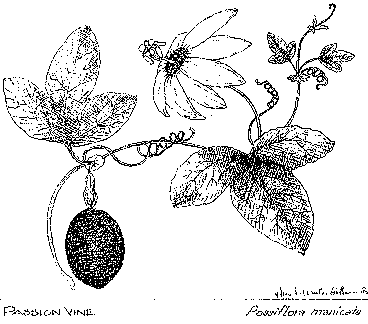
Passion fruits for higher altitude
Two of the passion fruits covered in Lost Crops of the Incas are the sweet grenadilla, Passiflora ligularis, also called sweet passion fruit and the purple passion fruit, Passiflora edulis. Victor Wynne in Haiti says, "I particularly recommend the sweet passion fruit to anyone with growing conditions approximating ours, perhaps over 5,000 feet, and a good depth of soil or subsoil to hold moisture during dry spells. The fruit never fails to sell locally to the supermarkets at a good price. It takes about six months for the young vines to get established, and they should be protected from strong sun. We have strung a horizontal wire on 8 foot posts set 1.5 feet into the ground. The fruit is borne on side branches which reach almost to the ground." He would like to get away from posts and wire and is experimenting with trees. The vine "is in no way a killer of trees (i.e. it does not smother them as do some other Passifloras). It is more moderate in its growth." Unlike the yellow passion fruit grown in the lowlands, this one "does not fall when ripe, so must be picked. Thus, a support tree should have a structure allowing one to climb up to reach the fruit."
According to the Lost Crops book, this fruit has been grown as low as 800 meters and as high as 3,000 meters in Bolivia and Colombia. Because of its strong rind, "it transports well without injury. Consequently Colombia is now exporting this fruit to Europe." It flourishes in Hawaii and is grown somewhat in New Zealand. "This plant sets fruit less abundantly than the common passion fruit, but can produce two crops a year. Because of its resistance to root and collar rot, it is a useful rootstock for other passion fruit species. ...Some people find [the taste] too sweet and flat, which is why lime juice is often added."
ECHO sometimes has small quantities of seeds of these varieties. Please let us know if you have seed to spare. This fruit is already grown in most tropical countries, so you may be able to find seed locally.
SEMINOLE PUMPKIN IS A MULTIPURPOSE, PRODUCTIVE VEGETABLE. I had wanted to get seed for the Seminole pumpkin ever since Dr. Julia Morton sent me a copy of her article: "The Sturdy Seminole Pumpkin Provides Much Food with Little Effort." We finally obtained seed and planted a single hill in an out-of-the-way spot and gave it almost no attention. It vined through weeds in a large area and produced 20-30 pumpkins, which we ate using winter squash recipes. We love the flavor, finding it a great tropical substitute for the popular acorn squash. Each is a convenient size, somewhat bigger than a large grapefruit. ECHO has seed of several varieties. If it produces in your climate, you will be able to save your own seed.

seminole pumpkin multipurpose
vegetable
Julia Morton writes, "It will spread over the ground, drape a fence or climb a tree; needs to be fertilized only at planting time; requires no protection from insects. The fruit, variable in form and size, is hard-shelled when mature and keeps at room temperature for months, is excellent baked, steamed, or made into pies. The Indians sliced, sun-dried and stored surplus pumpkins. Very young tender fruits are delicious boiled and mashed; the male flowers are excellent dipped in batter and fried. Thus the vine produces three totally different vegetables. This is an ideal crop for the home gardener. The portion of the vine which has borne will die back, but vigorous runners, which root at the nodes, will keep on growing, flowering and fruiting, yielding a continuous supply."
The fruits were seen hanging from oak trees by early settlers as they canoed through the Florida's Everglades. The native tribes girdled the bark of oak trees to kill them, then planted the pumpkin at the base (a technique we are not recommending!). ECHO also has several other varieties of pumpkins which you may request if they produce well in your area.
QUAIL GRASS (CELOSIA ARGENTEA) IS AN EXCELLENT SPINACH SUBSTITUTE FOR HOT WEATHER.

Quail grass
Often folks from the States form the opinion that vegetables will not grow under the difficult tropical conditions where they work. It would be more accurate to say that vegetables which they knew in the temperate zone may not thrive there. You will find gardening to be much easier if you grow food plants that God made for climates like yours. Quail grass is a good example. Even in temperate regions spinach only does well in the cooler part of the season and certainly will not grow in the hot tropics. Quail grass, on the other hand, will grow to about 8 feet when spaced about a foot apart and has leaves which taste very much like spinach. (It might be more productive to plant much more closely than that, however.) Roy Danforth tried it in Zaire. He wrote that he was very pleased that it tasted so much like spinach. More important, the local folks are quite interested in it also.
I understand that it is already an important vegetable in parts of Africa and elsewhere. It is not a grass at all, but is in the same genus as the ornamental celosia and cocks comb. Young growing tips or older leaves are cooked for only a few minutes to soften. The water becomes an unappetizing black, but the leaves are an attractive green. The taste is spinach-like with no trace of bitterness. The cooking water should be discarded because it contains oxalic acid.
We sometimes like to cook greens in a steamer. When we cooked quail grass that way the leaves were black and had an unpleasant taste that we had not noticed before. Apparently the black pigment and the oxalic acid that are normally removed in the cooking water were all left in the steamed leaves.
I have found no specific nutritional information, but it is in the same family as amaranth and is claimed to be similar except lower in protein. The leaves should be high in vitamins A and C, iron and calcium. The calcium would not be available because it is tied up by oxalic acid. The oxalic acid should pose no danger unless leaves were eaten in unusually large quantities.
Like its ornamental relatives, quail grass is attractive in its own right. When the days become shorter in late August it is covered with purple blooms. The inflorescence becomes longer and longer, remaining purple at the tip. The basal end turns brown and contains ripe seeds while the tip continues to bloom (and attract bees and other insects). A row in the garden is attractive with or without blossoms.
I have often wished for a vegetable that grew like a weed without all the tender loving care that is so often needed. Quail grass is such a vegetable. Every place I have grown it, it reseeds itself abundantly. We need do no work to grow it. It definitely could become a weed problem (although an edible problem). We have had no disease problems and very little insect damage. It is susceptible to nematodes, so a mulch is helpful. It is killed by standing water or freezing temperatures, but does quite well in our cool winter as well as the hot summer. ECHO has plenty of seed. Please share your results with us.
Peace Corps volunteer Jessica Jacklet tested a packet of quail grass at her site in Panama. Few vegetables were grown in that area, as most vegetables performed very poorly. This picture shows Jessica (5'10" tall) standing by the quail grass, which was reportedly untouched by insects. The foliage was rich and dark with lovely purple flowers. Those who started growing quail grass are very proud about its exceptional growth. She introduced the plant as "purple spinach" to the villagers, who are learning ways to incorporate the leaves into their recipes. So far, people have added the leaves to a rice and lentil dish, and one containing eggs and tomatoes. This very productive plant is hardy and attractive, and it merits trial in more areas.
RHUBARB GROWN AS AN ANNUAL. Rhubarb is a common perennial plant in temperate regions, and it thrives vegetatively in cool highland regions in the tropics. In the Andes of Ecuador, it is widely appreciated among farmers, and many seek root divisions so they may continuously harvest their own rhubarb at home. People make sauces, pies, and juices of the tart stems. However, rhubarb is not adapted to the tropics, and the plant will not survive the extended heat and humidity of tropical lowlands. If you are now in the tropics and miss cooking with rhubarb, you will be happy to know it can be grown as an annual from seed. We grew the red- stalked variety 'Victoria' ("the deepest red of all seed-grown types") from the Park Seed Co., Cokesbury Rd., Greenwood, SC 29647, USA. In Florida, we plant the seeds in August, transplant in October, and harvest rhubarb through the cool winter season. The plant gradually dies off through the summer.
Ralph Kusserow in Tanzania wrote, "You mentioned in EDN about growing rhubarb as an annual. I have been doing that now for several years and it works. We just start taking from it as soon as it is ready. The plants always die eventually from some sort of root rot. I have to watch that I don't overwater it." Most stems of seed- grown rhubarb will be green rather than the intense red selected through vegetative propagation, but tasting a rhubarb pie in the subtropics made us overlook that quickly!
STRAWBERRIES. Strawberries would seem to be an "underexploited" cash crop in some countries. For example, Jose Postigo began a project at about 3,000 feet in the Dominican Republic, using U.S. varieties. Within a year he was selling dozens of boxes of beautiful berries in the capital. Several women also created jobs making jam from excess or older berries in their homes.
Strawberries bred for temperate zones only flower in long days, so varieties used in most of the U.S. would not yield fruit at low latitudes. You must grow day-neutral varieties in the shorter days of the tropics. The following are listed in a publication from California: 'Douglas,' 'Pajaro,' 'Vista,' 'Brighton,' 'Hecker,' and 'Aptos.'
Here at ECHO I have been pleased at the size and quality of berries and plants grown from seed. (Strawberries are normally propagated by runners.) I have not compared them to commercial varieties, but it is a good way to introduce plants to remote locations. Angelino Chipana and Abdon Paredes in Bolivia gave me a picture of a successful plot they began from seed. Though a few others say the plants are living, we have received no other reports of successful plantings. Some reported the plants were eaten by ants. Many had no germination. This could be related to heat, though ours always germinate even in the hot greenhouse in the summer. If you know of strawberries being grown in the tropics at other than higher altitudes, send us details. We are always interested in "tricks" to grow crops outside of their normal environment.
ECHO does not carry strawberry seed. The "Sweetheart" variety can be ordered from Park Seed Co., Cokesbury Rd., Greenwood, SC 29647, USA (25 seeds for about $2 plus postage; they bear the same year they are planted). If you can get fruit of the 'Douglas' variety, blend at a low speed in a blender, then separate and dry the tiny seeds. Plant by scattering on top of moist potting mix and patting with your hand to barely embed the seed into the soil. To make sure the top of the soil never dries out, place a glass or plastic sheet over the pot until they begin to emerge. Be sure NO sunlight hits the pot or it will overheat with the plastic covering. An alternative might be to set the pot in a basin containing an inch or so of water. We have pulled together considerable information on strawberries in the tropics; contact ECHO if you have more questions. If you are in the tropics but not at least 3000 feet (1000 m) elevation or on a very dry but irrigated farm, forget strawberries.
SWISS CHARD. Dale Gunnar in southern Texas writes, "We harvest swiss chard year-round. When we pull up the old stalks in late winter or early spring, we bury sections of the stalk. These quickly root and send up new growth. This is much faster than reseeding." Over the years, ECHO has received many reports from our network that Swiss chard produces well and long. It does well for us only during our mild winter season.
THAILAND LONG BEAN (VIGNA UNGUICULATA) PRODUCES ABUNDANTLY IN THE RAINY SEASON.

Thailand longbean
Gary Rohwer writes from Nigeria: "The nature of the wet, humid growing season makes beans the best crop to fight against hunger and improve nutrition in this area. In particular, the Thailand Long Bean [a cowpea with an edible 10-inch pod] is a very impressive variety. It resembles a bean which is grown in Nigeria and eaten by the people here, so there is no problem in introducing this variety. The most impressive factor is that this variety grows so quickly. The beans which the people here have been planting only produce once in a growing season, but Thailand Long Bean could be planted three times if not four during the rainy season. I have introduced the bean and people have really been excited about it. If it was planted on a large scale here, they could really see the results." ECHO grows seed for our seedbank during the summer.
TOMATOES IN THE TROPICS AND SUBTROPICS. Tomatoes and onions are the most universally known vegetables. They are so versatile that they are readily accepted in most cultures. One of the most common statements we hear from development workers in the field is, "They grow good tomatoes here, but only small cherry or plum types. I think there would be a lot of market potential for some of the large types that we have in our gardens back home. Could you send me some seed of big tomatoes so I can introduce them here?"
People in the lowland tropics only grow the smaller (cherry and plum or roma) types for good reason: fruit set of large market tomatoes is very poor in many hot, tropical areas. If you have a variety of large tomato that is healthy and flowering, then the reason it is not setting most likely has to do with temperature. Both daytime highs and nighttime lows have a variety of effects on the ability of a tomato to set fruit. Small tomatoes seem to be less adversely affected by these extremes, which is why those types are the ones in local markets. We had hoped to find clear-cut guidelines but could not, so we will venture our own: If daytime temperatures are not less than 33 C (92 F) and nighttime temperatures less than 22 C (72 F) you may experience difficulties. If daytime temperatures are over 40 C (104 F) or nighttime temperatures over 26 C (79 F) you will almost surely have poor fruit set and possibly damaged fruit.
These may not be bad rules-of-thumb, but as so often happens in real life, the reasons are too complex to be precise. Here are some of the factors so you can understand what is happening, and possibly find a solution.
Effect of nighttime temperatures. These can be either too low or too high. Temperatures at night that do not drop to at least 79 F are clearly damaging to fruit set. Cultivars that were developed for early production in temperate regions had to be able to also set fruit earlier-when temperatures were low. These cultivars can set fruit as low as 4.4 C (40 F). On the other hand, cultivars developed for warm climates typically will not set fruit if night temperatures fall below 10 C (50 F).
Pollen grains must germinate before the ovule can be fertilized. At 25 C (77 F) germination takes about an hour; at 10 C (50 F), 5 hours; at 5 C, (41 F) 21 hours. Once it germinates, the pollen tube must grow until it reaches the ovule. This growth rate increases with temperature from 10-35 C (50-95 F), but is reduced outside that range. The ovule may deteriorate before it is fertilized.
Effect of high daytime temperatures. The anther must dehisce (burst open) before its pollen grains can be released. This process is inhibited by temperatures that are too high. At temperatures over 35 C (95 F) the surfaces of both the pollen grain and the stigma may dry out, which causes poor fruit set. The pollen germination rate increases with temperatures up to a point, but over 37 C (99 F) germination is greatly inhibited.
A high of 40 C (104 F) seems to be a critical point. Exposure to temperatures greater than this can damage both ovules and pollen production. E.g., if the ovule has been exposed to very high temperatures nine days before flowering, it can deteriorate. Once fertilized, the endosperm of the developing seed can deteriorate at over 40 C (104 F) for between 1-8 days after fertilization.
The difference between daytime highs and nighttime lows (diurnal variation) is also important. In regions and seasons where days are long, tomatoes are not productive unless the difference between day and night temperatures is at least 10 F. We have been told that a very high diurnal variation, as might occur in a desert or high in the mountains, can apparently overcome some of the effects of high temperatures listed above.
Fruits that do set at high temperatures are often so badly damaged or misshaped that they are not marketable. Also red varieties tend to become more orange at higher temperatures. This is because synthesis of the red pigment, lycopene, is slowed at high temperature but the orange pigment, _-carotene, continues to accumulate normally. Presumably tomatoes grown under shade cloth would be a little less damaged by heat.
[References used for the above discussion: Vegetables: Characteristics, Production and Marketing by Lincoln Peirce, Wiley & Sons, 1987; The Tomato Crop, Atherton and Rudich, Chapman & Hall publishers, 1988; personal conversation with Dr. Don Maynard, Florida Gulf Coast Research and Education Center.]
ECHO offers two types of tomato seed: open-pollinated disease-resistant varieties, and trial samples of a hybrid heat-tolerant variety. AVRDC (see p. 50) and other tomato breeders are continually looking for more varieties which combine these traits, and we will make this seed available to you as it comes to ECHO. We also have varieties high in vitamin A. Tomato varieties always include a series of letters that represent their disease resistances: V for Verticillium wilt, F1 and F2 for Fusarium wilt races 1 and 2, respectively, T for tobacco mosaic virus, N for nematodes. In the tropics you want to see as many letters as possible.
The disease-resistant tomatoes developed for Florida are mixed together in a variety trial packet. We selected only open-pollinated ones (standard or non-hybrid, so you can save your own seed). Note that these were developed for our mild winter, so they are not selected for hot, humid weather. Their resistances are listed. Tropic is a stake-type tomato resistant to V, F, T, gray leaf spot, leaf molds, tolerant to early blight. Walter is resistant to F1, F2, gray leaf spot. Hayslip is a fresh market variety with determinant vines (i. e. do not need staking) resistant to V, F1, F2, grey leafspot, resistant to blossom end rot, black shoulder, catface and cracking. Florida MH 1 is a high yielding variety that is very resistant to F1, F2, V, T, grey leaf spot, leaf molds, and graywall. Floradade is a determinant variety especially adapted to V infected alkaline soils. It is resistant to V, F1, F2, gray leafspot. If you only want to try one variety, we can package it separately for you; be specific in your request to us if that is the case. ECHO periodically updates the mixture of seeds in our variety trial as we hear of great successes with other varieties, so you may receive a different mix than what is listed here. For larger quantities of these varieties and many more (both standard and hybrids) suited to the tropics, we recommend Kilgore Seed Company, 1400 West First Street, Sanford, FL 32771, USA; phone 407/323-6630. They have good prices.
Ordinarily, there is little use doing a trial with hybrid seed if you could not import seed after the trial, so we will only send hybrids if you specifically ask for them. However, some people have reported good success with planting a few tomato plants from a packet of hybrid seeds, then multiplying plants by cuttings. In that case, you would not need quantities of hybrid seed but could still benefit from the advantages that hybrids offer. Be sure to impress upon farmers that seed saved from hybrid fruits will not produce the same quality of fruit as the parent. We do not normally recommend hybrids because growers cannot save their own seed, but it is best not to be too dogmatic. There may be many situations in which purchasing seed will make economic sense if farmers can get a significantly higher price for out-of-season tomatoes or if for the first time large tomatoes were available. Also, because many superior genes are in hybrid plants, you might use them in developing a plant just right for your location by selecting the few outstanding plants each year.
'Solar Set' is a fresh market hybrid tomato that sets fruit moderately well under high temperature (92 F [33 C] day, 72 F [22 C] night) and high humidity conditions. It was developed by Dr. Jay Scott at the University of Florida to extend the tomato season by a few weeks at either end of the normal season. It was not developed to produce throughout our terribly hot, humid summer, and in fact succumbs rather quickly to disease in the summer. The hope is that it will produce tomatoes a few weeks earlier than other varieties, bringing a superior price. Presumably it might also extend the season into somewhat warmer weather, although the premium price for end of season tomatoes will be less than that commanded by the first tomatoes of the year. This tomato is described as having large fruit with few defects even under adverse weather conditions. 'Solar Set' does not flower earlier than other cultivars, nor do fruit ripen more quickly. The improved earliness is entirely a result of a greater number of fruit which set early in the plants' development. It is resistant to Fusarium races 1 and 2, Verticillium, and gray leafspot. It is apparently not resistant to nematodes. ECHO's experience is that it is more prone to disease than several other tomatoes, as we might expect from the few types of resistance listed for it.
'Solar Set' is distributed by the Asgrow Seed Company (4420A Bankers Circle, Doraville, GA 30360, USA; phone 800/234-1056; fax 770/416-0108). We spoke with Tom McBride at Asgrow about the variety. So far results have been very good in areas where tomatoes flower at high temperatures. 'Solar Set' is a determinate variety, unlike many of our readers may be used to (called indeterminate). In other words, relatively short plants will flower and set fruit for a relatively short period of time (30-40 days), but they fruit heavily and will do a good job of holding what fruit does set. While the tomato is a warm season plant, there is a point where it may be too warm for good germination (probably around 100 degrees). Because this is a hybrid, the seed is relatively expensive. Asgrow's smallest unit in 1996 is 2000 seeds, which costs about US$30.
ECHO can send you a trial packet to test them; if they are very successful, you may purchase a large quantity of seed from Asgrow or reproduce plants by cuttings. ECHO has obtained one of the larger cans and will send as many seeds as you want for $1.50 per 100 seeds, including postage (count approximate). Before deciding to test them, remember that difficulties in obtaining smaller quantities of seed may make a trial of little interest to you.
The Tomato Growers Supply Company (P.O. Box 2237, Fort Myers, FL 33902, USA; phone 941/768-1119; fax 941/768-3476) has a huge selection of tomato varieties, including the productive 'Heatwave VFFA' hybrid (also determinate) which yields best when daytime temperatures are 90-96 F (32-35.5 C). They feature many heirloom varieties especially noted for disease resistance, if that is your main problem in growing tomatoes. Processing types are also mentioned. Their catalog lists several pages of sweet and hot peppers as well.
TOMATOES RESIST FLOODING IF GRAFTED TO EGGPLANT. The AVRDC (see p.50) in Taiwan is interested in improving tomato harvests during the hot, humid part of the year when supply is short and prices are high. A special problem can be flooding during tropical storms.
Scientists noticed that eggplants which grew next to tomatoes survived a flood that killed the tomatoes. Simple experiments showed that they could easily graft tomato onto the eggplant rootstock. (They were not able to graft pepper to eggplant.) This led to trials in 1993 in which a tomato variety selected for its ability to produce in hot weather was grafted to eggplants. (Their choice was Taichung ASVEG #4.)
"Flooding, which occurred after the first harvest of tomato, killed ungrafted plants whereas all tomato:eggplant grafts survived to produce more fruit. Early flooding (at 32 days and 40 days after transplanting) did not diminish growth and yield of the control.... This agrees with our observation in other species that early flooding does not necessarily result in plant mortality. Young root systems probably recover following flooding due to their superficial distribution near the soil surface which dries out first when flooding ceases."
The eggplant should be sown first and the tomato seed planted as the growing point of the eggplant appears above the cotyledons (2-3 weeks later). If necessary, tomato scions (budwood) can be kept in the refrigerator for up to two weeks, but must be wrapped with newspaper and covered in a plastic bag. (The same is not true for eggplant scions.) Tomato scions were made when the plant reached the three true-leaf stage by cutting at an angle of 30.
Simple rubber tubing, of the type used for bicycle valves, was used to hold the scion onto the stock. The tubing was cut at the same 30 angle. Then the rubber tubing plus scion were slipped onto the cut surface of the eggplant stem. Lining the angle of the cut of the scion with the angle of the cut on the tubing helps to correctly position the scion/rootstock surfaces. They can graft 150-200 seedlings per hour. To reduce grafting costs, they are experimenting with pinching the tops to form two stems so they can plant farther apart.
The plants were kept at 85% relative humidity. The tubing was cut 3-7 days after grafting so as not to restrict stem growth. At the same time plants were removed from the high humidity conditions and hardened off before transplanting. Thanks to Dr. David Midmore at AVRDC for supplying the picture and details from their 1993 annual report. For a copy of the article, write him at AVRDC, P.O. Box 42, Shanhua Tainan 741, Taiwan ROC.
WAX GOURD (Benincasa hispida) or Chinese wintermelon is the best cucurbit for seed oil in the hot, humid tropics. The large fruit (ECHO has grown some a meter long, and they are reported to twice that) has crispy white flesh, and its waxy coating helps give it a long storage life (up to a year without refrigeration). Young gourds are used like chayote, in stretching soups and stews. In China, mature gourds are used as soup pots: they are hollowed out and filled with soup ingredients, "capped" with the cut lid of the gourd, and steamed for up to six hours. Wax gourd prefers high temperatures and moderate rainfall; it does not do well in very high humidity. Hand pollination aids fruit production. Unlike other cucurbits, wax gourd does not contain vitamin A. It has few pests and diseases in most areas.
HAVE YOU TRIED WINGED BEANS, PSOPHOCARPUS TETRAGONOLOBUS? There has been so much promotion of the winged bean that I find myself thinking all of our readers know about it. However, it is too important a plant to fail to bring it to your attention. This legume will vine up a four-meter pole. Nearly all parts are edible and high in protein. The leaves can be cooked like spinach and are quite tasty. The long four-sided pods with serrate "wings" running the length of the corners can be eaten like green beans. The dried seeds are the nutritional equivalent of soybeans. Fried flowers taste like mushrooms. When production is over, the stems can be fed to cattle, and most varieties have edible tubers that contain up to eight times the protein of an Irish potato.
The winged bean is native to the Asian tropics. When I have tried growing green beans during the hot, humid Florida summers, they have always been killed by disease or insects before they could produce pods. Winged beans, on the other hand, seem to resist almost everything except nematodes if well fertilized and watered.
We can send you seeds of a few varieties and a short technical note on the cultivation, preparation, and nutritional value of winged beans. Most varieties only bloom during short days, so they do not bloom and produce pods in Florida until mid-October. On the other hand, there are a few day- neutral varieties that get excellent yields right through the long days of summer. If you are far enough from the equator that this can be a problem, request the day-neutral seed from us. For others, we will send a selection of perhaps four regular varieties.
Winged bean seeds need to be scarified before planting. Alan Lee had less than 50% germination a month after planting his winged bean seeds. "I dug up the ungerminated seeds and nicked them all a few times with the corner of a razor blade, then replanted them. Within a week several had germinated and I expect more." Seeds will not germinate until they have absorbed water. Scarification softens or opens the seed coat so water can be absorbed. Nick the seed with a knife or file or strike it across cement as in striking a match. Some seeds are soaked overnight. (Leucaena seeds are put in water that has just been boiled then left overnight. If you have any hard seeds that fail to germinate, it is possible the seed may still be viable. It may need to be scarified.)
After fourteen years of growing winged beans and distributing seed, we have come to believe that their potential has been overstated. Only very special recipes make the dried seeds appealing in taste. Pods are acceptable to the North American taste, but other beans are usually preferred. Leaves and raw flowers are quite good but probably limited to household use. No one at ECHO cares much for the tubers. (If the beans were propagated by tubers year after year, as is the practice with some other beans, it is possible that they might develop more in size and be more useful, although the texture might deteriorate.) Our impression from our network is that no one has had a major success introducing winged beans. In its countries of origin, winged bean products continue to be popular. It is worth trial for its many virtues, but do not expect as much of its market potential as early reports indicate.
|
| ||||||||||||||||||||||||||||||||||||||||||
Amaranth to Zai Holes, Ideas for Growing Food under Difficult Conditions (ECHO, 1996, 397 p.)
3: Staple crops
Staple crops are those which are most common in people's diets. Large expanses of land are dedicated to growing these foods, compared to the smaller areas planted in fruits and vegetables. In the third world, the staples are often a starch (grain or root crop) and a pulse (dried legume seed, beans). The starch gives energy and a feeling of fullness in the stomach, while the pulse provides protein.
These crops are so important to so many people that many have spread far beyond their centers of origin; many types of cassava, corn, rice, soybeans, and pigeon peas are grown around the world. Major research centers devote much of their resources to studying and improving these crops. Other crops, such as amaranth, quinoa, and tepary beans remain localized, but they hold great potential for thriving in other places with similar conditions. ECHO's focus is on these little-known plants and some varieties of the common crops which have special characteristics.
Grain crops
AMARANTH SEED. Amaranth grain, corn and beans were probably the primary foods of the Aztecs. The Aztecs unfortunately practiced a religious observance in which they would mix blood from a human sacrifice with popped amaranth grain. They formed this into a statue of a war god, worshiped the statue, then ate it. The Conquistadors considered this a mockery of the eucharist (communion) so banned both the religion and cultivation of the grain in 1517. Amaranth has existed primarily as a wild weed since that time.
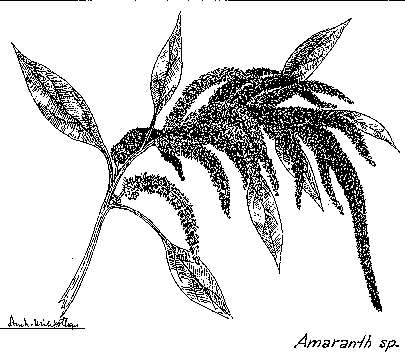
Amaranth seed
Amaranth received much research attention in the 1970s and 80s because: (1) it is more resistant to drought than corn, (2) it does fairly well in nutrient deficient soil, (3) it produces yields that compare favorably with corn and rice, (4) the grain is high in protein of unusually high quality, and (5) the leaves also have a good balance of proteins and may be cooked like spinach. Much of the research was done by Rodale Institute (known for their many publications, including Organic Gardening magazine). They enlisted thousands of readers to do backyard experiments with different varieties of amaranth that they brought in from around the world. (This is a model for the kind of world-wide data we hope to gather as you report back to us on the seeds we send you.)
The protein is high in lysine, which accounts for 5% of total protein. It also has a very high "chemical score," a calculated value in which the higher numbers are the more perfect match for ideal human nutrition. For example, the chemical score for amaranth is 75-87, corn 44, wheat 57, sorghum 48, peanut 52, soybean 68, cow's milk 72. However, I have read results of feeding trials with rats where they did not do well at all on a corn/amaranth diet compared to corn and soybean. There are some anti- nutritional factors in raw amaranth that limits its use as a feed. Cooking improves this. Other drawbacks include small size of the seed that makes it difficult to thresh by machine and oxalic acid in the leaves that might tie up too much dietary calcium if eaten frequently in high amounts. You may request a summary of nutritional and cultivation information from ECHO. (See the chapter on Human Health for a perspective on nutritional limitations of amaranth.)
When evaluating amaranth for your area, you should try more than one species and variety, because the variability is considerable. A few of those we grew this year looked absolutely horrible, while others were truly beautiful crops. Amaranthus cruentus and A. hypochondriacus are grown primarily for their grain and A. tricolor for its leaves. Leaves of any variety can be eaten, however. Doug and Ruth Welcha are trying several of these varieties in Zaire. They just wrote that one variety (ECHO's #81-039) that they received earlier from Rodale grew 7 to 8 feet in composted soil. "Most of our neighbors demanded seeds, so it has been distributed near and far. But they are using it as a vegetable." This was one of the most prolific grain types for us.
Lloyd Rowlands sent us these comments from Zaire: "I planted two varieties of Amaranthus cruentus that I got from ECHO. I was pleasantly surprised by the yield. I gave a small quantity to my workman to try cooking. He tried it roasted-awful. Then he tried cooking it like rice-and asked me for seed! Variety 81-037 out-yielded 81-039. They were sown December 3 and harvested in March." ECHO has many varieties of amaranth seed, both types grown primarily for grain and those grown for their edible leaves. Please indicate with your order which type of amaranth you wish to try; we will send several varieties.
BUCKWHEAT: EDIBLE LEAVES, SEED SET, SUCCESS, AND A RECIPE. In the chapter on Domestic Animals we mention the experience with buckwheat, Fagopyrum esculentum, reported by John Trossel. He said this quick-maturing crop can be harvested two months after planting. Seed that we sent to a lower elevation (about 4,000 feet) in Honduras also reportedly did well. The newsletter HortIdeas quotes from an Indian journal that the leaves of this "broad-leaved 'grain' with remarkable soil-building abilities are edible. In fact, they are eaten regularly by people living in the higher ranges of the Himalayas. They are simply cooked with seasonings in boiling water for a short time. The leaves contain 4.5% protein on a fresh weight basis and are reasonably high in calcium and iron."
Buckwheat does best in cool and humid climates and is definitely not suited for the tropical lowlands. If you work at an appropriate site, we can send you a small packet to get started. Poultry can eat the seeds whole, but for other animals it must be ground. Some of our readers, wanting to make a flour for human use, have given up on buckwheat because it is difficult to prepare into a pure flour when grinding. (If you have had experience preparing buckwheat flour, please share it with us.)
Kevin Hendricksen with the Peace Corps in Honduras wrote, "I planted buckwheat at 1500 m in early June in an area that receives 1000 mm rainfall. The plants grew quickly, flowered in about five weeks, reached a height of 12-15 inches. But the seeds produced were empty and did not sprout when planted. I made another planting of the original seed from ECHO in July with the same results." We asked Dr. Obendorf at Cornell University for some ideas on what may have caused the empty seed. He said that the optimal temperature for flowering and early seed set of buckwheat is 18 C; at 25 C, there is 40% loss of seed set and seed weight. The plants flower over a period of about 6 weeks, but most of the seed set is during the first 2-3 weeks of flowering. Hollow seeds are probably those which are set late and form seeds which do not fill in. Under temperature stress, the early flowers will abort. Later flowers, however, may set seed, but it will be sterile. Other possibilities include inadequate pollination by bees or drought sensitivity.
Bill Lewis from Ethiopia visited ECHO and gave a good report on buckwheat seeds he obtained from our seedbank. When his family left Ethiopia, they left some plants nearly ready for harvest, and they were eager to see how the plant was used in their absence. He returned to Africa and sent this update: "We only had a few months to try it at about 5000 feet. We left our seed with church members when we went on furlough. We found that they love it. By adding a little wheat flour or oil they say it is as good as anything they have. I have some church property now with water available, so I will grow buckwheat continuously until the next rainy season for seed. We are really excited about the possibilities! The buckwheat here matures in 9-10 weeks and is prolific. The bees really love it. We will also be trying other things-even your chaya!" He also asked for recipes.
Martin Price offers this family recipe for buckwheat pancakes. Growing up in Ohio, we had buckwheat pancakes almost every morning from the time the weather cooled down in the fall until it became warm again in the spring. The reason it required cool weather is that we fermented the buckwheat on the cool porch or in the sparsely heated kitchen. To start, we mixed buckwheat 50:50 with wheat flour, then added some yeast and enough water to make a thick paste. By the next morning it had expanded to 2-3 times its original size. We then added enough water for a nice consistency for pouring pancakes. We never liked it the first morning, but ate it anyway. That night we added more of the buckwheat/wheat flour mix (but no more yeast) and the process was repeated. After the third day, the pancakes were absolutely delicious and gave a wonderful aroma when cooking. People who have eaten buckwheat pancakes from a mix (not fermented) do not know how good the sourdough approach can be. It is like a totally different food, and it is very filling in a pleasant way.
NEW VARIETIES OF HIGH-LYSINE CORN SHOW PROMISE FOR THE SMALL FARM. A variety of corn that contains much higher concentrations of the amino acid lysine than normal corn was developed by Dr. Ed Mertz at Purdue University in the 1960s. Lysine is the essential amino acid that is most limiting in diets composed mainly of cereals. One way to get extra lysine is to mix cereals with beans. The high-lysine corn, however, would be much more nutritious than regular corn for folks or animals that do not have a good mixture of legumes with their corn.
The high-lysine corn has not been widely accepted because its yields were inferior and the texture was not as acceptable for human diets in many countries. Dr. Mertz visited ECHO on his way home from the International Center for Improvement of Wheat and Maize (CIMMYT) in Mexico. He was quite excited because CIMMYT had just completed yield trials in several countries with some new varieties that have equaled or outperformed the best open-pollinated varieties and which have the preferred texture.
Open-pollinated corn is the kind farmers plant year after year using seed that they harvest (as opposed to purchased hybrid corn). Most of you know that if farmers save and plant their own seed the next year from hybrid varieties, subsequent yields can be variable and much less productive. CIMMYT is to be congratulated for concentrating on open-pollinated corn, which is more appropriate than hybrid corn for those farming at near subsistence levels. If there is no sacrifice of yield, high-lysine varieties should be seriously considered for the small farm. Human and animal health would both be improved. Some farmers in the United States claim that they save $2-10 per hog when they feed high-lysine corn, mainly because it allows them to reduce the amount of soybeans in the diet by up to 25%. They also claim fewer veterinarian expenses. (I have seen no scientific studies on either point.)
If you want to try the new corn, you should be cautious about a few things. First, an unusual trait of the high- lysine corn is that if it is pollinated by normal corn the crop that is harvested will not be high in lysine. Therefore, if it were introduced to an occasional small farm which is immediately surrounded by fields of regular corn, the extra nutritional benefits might not be present. All farmers in an area should agree to grow the high- lysine crop unless fields were somewhat isolated. Second, there is risk in changing all of a farmer's crop to a single new variety. Quite likely the local varieties have developed resistances to disease and insects common to the area. Although the new varieties have no doubt been developed with resistance to common tropical stresses, there is some risk (and scientific loss) if the old varieties are no longer grown.
The director of the Maize program at CIMMYT told us that it would be best if ECHO's network would write CIMMYT for seed, rather than sending seed to ECHO for redistribution. This would enable them to send appropriate types. They have both highland and lowland varieties and also different grain types and maturities, so tell them something about your climate, altitude, length of season and any preferences as to type and texture of the corn so they can make the best choice. Write CIMMYT, Londres 40, Apdo. Postal 6-641, Col. Juarez Deleg. Cuauhtemoc, 06600 Mexico, D.F. MEXICO.
DROUGHT-TOLERANT CORNS FROM 'PLANTS OF THE SOUTHWEST' CATALOG. Posole Corn: "Large, plump ears on vigorous, drought-tolerant plants. The traditional variety of dry dent corn for making posole, the hominy and one of the finest dishes of the Southwest. 100 days." Papago: "Small, slender cream- colored ears on this drought-tolerant corn adapted to the extremely arid region of southern Arizona. Larger in wetter climates or with regular irrigation. Grind into meal for tamales. Excellent for harsh, dry sites. 80 days." Buhrow's White Desert Sweet Corn (ask for it even if not listed in their catalog): "A new cross of papago with a white corn to produce a sweet corn that will open pollinate between 90-100 F. It is remarkably drought tolerant and has been known to bear when deeply watered only 3 times in a season, but your yield will be greater with more frequent waterings. Grows 5-9 feet with 6-9 inch ears." [NOTE ON CORN: We bought this from a commercial seed company, so it should be disease free. If corn is important in your area, be watchful and destroy the plants if any new disease should ever appear.] ECHO can send you a small packet to evaluate. Though you can save your own seed, it is best to have a minimum population of perhaps 200 plants in a field to prevent inbreeding. You can later order larger quantities from Plants of the Southwest, Agua Fria, Rt. 6 Box 11A; Santa Fe, NM 87505, USA; phone 505/471-2212; phone orders 800/788-7333; fax orders 505/438-8800 ($20 minimum). Their catalog features many other drought-tolerant corns and plants you may wish to try.
DOING YOUR OWN CORN (MAIZE) IMPROVEMENT. Bob Short in Mexico teaches farmers to improve their own open-pollinated (not hybrid) corn varieties. The people already select the best ears for seed, but the selection is made from a pile after the harvest. Selection based on ear size only can cause more problems than you might think. This brings up an interesting story.
In the early 1900s in the United States a popular magazine, "Wallace's Farmer," and a professor at Iowa State University promoted corn competitions. These became annual events all over the midwest. Judging was based on a vision of the ideal corn: uniform ears, 10 inches long, with even rows and deep kernels shaped like a keystone. At one of the professor's talks a 16-year-old boy (the editor's son) asked whether seed from the ideal ear would produce more corn than any other. "Of course," he replied, though he had not tried it. The boy's persistence made him nervous, so he collected 25 ears of the best show corn and 25 of the poorest. The highest yield came from an ear no corn-show judge would look at twice. As a whole, the highest-ranked show ears produced less than those that ranked lowest. The boy went on to school and later formed what became the largest corn seed company in the world, Pioneer Hybrid, and eventually was Secretary of Agriculture.
Bob finds that even after selecting the best ears for seed, about half of the plants produce a poor ear, if any at all. Bob decided that the basic traits that he wanted were present in one plant or another in the field of "criollo" corn, though not necessarily on the same plant. He wrote, "Our method of selection is simple. The first thing we do is de-tassle the poor plants before pollination. This ensures that reasonably good plants will be the male parents of the corn. Then we select the ears to be kept for seed in the field. We take from the best plants which produce a good ear, taking into account the quality of the roots, stem, disease resistance, leaf area, etc." The important difference in this method is that good ears come from plants that are also known to be good.
"We have seen problems of inbreeding, so now recommend that seed come from fields that are at least half a hectare in size and that a minimum of 400 ears be selected. The selected ears are shelled and the seeds are thoroughly mixed together and saved for the next planting."
Bob says that they have definitely improved the quality of their own corn. It is difficult to convince farmers to change to it though because improvement is too slow to be seen quickly. A few are beginning to try it and he hopes that in 5-10 years it may be widespread.
I asked Dr. David Unander, a plant breeder on ECHO's Board of Directors, to comment. Highlights of his reply follow. "How many ears should one save to avoid inbreeding? Plant breeding texts and research suggest a minimum of 30 plants to avoid serious inbreeding, but much more is better. Unneeded seed can always be eaten. The extent of inbreeding is a function of the percentage of the population saved and will increase substantially if much less than 10% of the harvest is saved and mixed in the seed bin."
Dave suggests a way to further improve the technique. "Because differences among plants depend on the local spot in which the corn plant is grown, mentally divide the field into little blocks of 10-20 plants each (or more in a larger field). Be sure to select the best ear or ears from each of these imaginary blocks. Plants with mediocre genetic traits may have done well just because they grew in an unusually fertile spot, and plants that are outstanding may have done poorly if they grew in a poor part of the field." [This would also help to keep in your pool of seeds traits that would enable the best performance possible in those poor parts of the field.]
A special merit of Bob's method is "that he has thought out exactly what he wants to select: he has a mental picture of what a good corn plant would be like for his area. This is one of the most important things to establish before beginning any breeding program."
QUINOA, CHENOPODIUM QUINOA, IS A NUTRITIOUS GRAIN FROM THE ANDES.
"While no single food can supply all of the essential life-sustaining nutrients, quinoa comes as close as any other.... It holds exceptional promise as a weaning food."1 This crop was a staple in ancient times, second in importance only to corn in the Incan empire, and it is still an important grain crop in Bolivia, Chile, Ecuador, Peru, and Colombia. "Its grain is rich in protein and contains a better amino acid balance than the protein in most cereals. ...Today it is made into flour for baked goods, breakfast cereals, beer, soups, desserts and even livestock feed. When cooked in water, it swells and becomes almost transparent. It has a mild taste and a firm texture like that of wild rice.... Traditionally, quinoa is prepared like common rice or is used to thicken soups, but some varieties are also popped like popcorn."
"Quinoa has demonstrated value as a partial wheat-flour substitute for enriching unleavened bread, cakes, and cookies. Blends of 70% wheat and 30% quinoa flour produce fully acceptable loaf breads."2 Quinoa is called a "pseudocereal" because its use is similar to that of cereals but the plant is not in the grass family. Seeds are produced in large sorghum-like clusters and may shatter easily. They contain 58% starch, 5% sugar, 12-23% protein and 4-5% fat. It is a hardy plant, growing to 0.5-3 meters tall, maturing in 5-6 months with short day length. A drawback is that seeds of most varieties contain saponins, which impart a bitter flavor unless washed out in cold water or milled out.
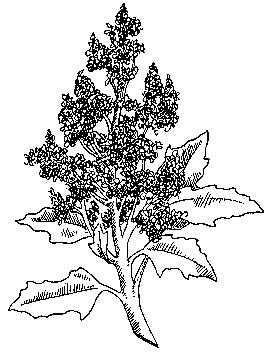
Quinoa has an exceptionally
nutritious balance of protein, fat, oil and starch
"Quinoa has an exceptionally nutritious balance of protein, fat, oil and starch. The embryo takes up a greater proportion of the seeds than in normal cereals, so the protein content is high. Quinoa seeds average 16% protein but can contain up to 23%, more than twice the level in common cereals." According to Underexploited Tropical Plants with Promising Economic Value, quinoa may prove to be a better protein source than most of the true cereals. It is "high in the essential amino acids lysine, methionine and cystine, making it complementary both to other grains (which are notably deficient in lysine) and to legumes such as beans (which are deficient in methionine and cystine). Quinoa is higher than wheat, corn or white rice in iron (6.6 mg, 4.6, 3.7, and 0 mg respectively.), phosphorus (449, 224, 207 and 143 mg), and calcium (141, 36, 6 and 8 mg)."
Quinoa's large seedheads and broad leaves make it look something like a cross between sorghum and spinach. Visitors who see quinoa at ECHO before seed heads form almost always think it is the (edible) weed lambsquarter, to which it is closely related. The leaves are eaten fresh or cooked. Nitrates and oxalates, high enough in some greens to be a health concern, are very low in quinoa leaves.
Quinoa has been grown almost exclusively in the Andean countries which were formerly part of the Incan empire. In the Andes, it is primarily a food of campesinos, although in some areas it is gaining popularity among wealthier urban classes who realize its nutritional benefits. The increased interest in these countries of origin is due in part to efforts of local governments and increasing interest in healthful foods, and in part to its growing popularity in western countries, where new, tasty and healthful foods bring a premium price.
Quinoa is known for its resistance to tough conditions. It will grow where corn will not because of cool weather and dry conditions. During a devastating drought in the altiplano in 1982-83, 66% of Bolivia's potato crop was lost, 25% of corn, 54% of barley, 44% of wheat, 34% of cassava but only 7% of quinoa. In Peru the figures were 27% potato, 6% corn, 26% barley, and 0% for quinoa.
There is great diversity in plant characteristics. "A classification based on ecotype recognizes five basic categories. (1) Valley type, grown in valleys from 2,000-3,600 m. Tall, branched, long growth periods. (2) Altiplano type, frost hardy, short, unbranched, short growth periods and compact seedheads. (3) Salar type, native to the salt flats in the Bolivian altiplano. (4) Chilean type, grown at low elevation sites between 34 S and 41 S in Chile, will flower even with long days. (5) Subtropical, located in intermontane valleys in Bolivia, intensely green plants that turn orange at maturity and have small, white or yellow-orange seeds."
Farmers and scientists in parts of the industrialized world where weather in the summer months resembles weather in the Andes have been trying to develop quinoa as a crop since the early 1980s. Because they originated near the equator where days are short, most varieties are daylength sensitive (require short days to flower) and do not do well. However, there are varieties which grow near sea level in Chile where days are long. These have proved more adaptable to high latitudes.
A drawback to quinoa production and use on a small scale is that the seeds contain saponins in the seed coat, which cause the grain to be extremely bitter. They can easily be mechanically removed with appropriate equipment. Lacking such equipment, the grain can be rinsed or soaked in water to dissolve the saponins. However, it is more difficult to get a uniform product this way. I spoke with Dr. Duane Johnson at Colorado State University about quinoa and its potential. He had just returned from harvesting his experimental plots of quinoa in Colorado.
Q. We know that the equatorial types require short days to produce seed but that Chilean types do not. Do Chilean quinoas actually require long days or are they day-neutral (produce in any daylength)?
A. They are day-neutral. That means that if ECHO sends Chilean seed to its network, it should not fail because of daylength. However, people in equatorial highlands would probably prefer equatorial types. They tend to have larger, white seeds; Chilean quinoas are smaller and colored. White seeds are generally softer and it is easier to remove the bitter saponins. Chilean types are harder and more extensive work is required to remove the saponins.
Q. The Chilean types are unbranched. Does that mean they should be planted more densely than equatorial types?
A. Yes. We plant 2 pounds/acre of equatorial seed but 5 pounds/acre with Chilean. That corresponds to a plant spacing of 3-4 inches (7.6-10 cm) and 2 inches (5 cm) respectively. Most farmers in Colorado use rows 16 inches (40 cm) wide, but some use 8 and others 20 inches (20 and 50 cm), depending on moisture. (If rainfall is limiting, having fewer plants with wider spacing will require less water.)
Q. What are the climatic boundaries beyond which quinoa has little potential? Will Chilean sea level types do well in tropical lowlands?
A. They have the greatest heat tolerance, but we don't recommend them where temperatures exceed 92 F/33 C, especially during the flowering period (July here in Colorado). We have quinoa growing from Finland to Australia, but mostly in temperate regions. Quinoa is very susceptible to downy and powdery mildew. It likes low humidity. Cool nights are probably important, though I have no data to prove that. It does well here where temperatures average 80 F day, 45 F night (27 C and 7 C). It does not do as well in broad valleys where night temperatures remain rather high, though at 7,000 feet it does great even in valleys.
[NOTE: Because it flourishes at high altitudes (2500-4000 m), we thought we might have a chance of growing quinoa at ECHO in southern Florida during the cool winter season. It has exceeded our expectations in some years, growing quite vigorously and forming grain. We are interested in examining it more closely to determine whether it has potential for a much wider range of climates. Dr. Russell Seibert at the Marie Selby Gardens told me that he thinks he has heard reports of it growing quite successfully in Alaska. An association, Sierra Blanca Associates, 2560 S. Jackson, Denver, CO 80210, USA, has been formed for its promotion and trial. It grows best where maximum temperatures do not exceed 90 F (32 C) and night temperatures are cool.]
Q. Are there subtropical quinoas?
A. There are related
species, mainly back garden types. They grow, for example, in parts of Mexico.
[Ed: Can anyone give ECHO some seed?]
Q. I read that the equatorial quinoas grow so well in Colorado
that they might make good forage.
A. Equatorial types produce tremendous
biomass here, but we get no seed production. It could be used for forage only if
we imported seeds.
Q. How complex is it to remove saponins at the "village"
level?
A. It is pretty simple. Pillsbury Co. gave us a $7,000 rice dehuller
(a carborundum stone that spins and knocks the coating off, designed for 3rd
world countries). It works even with the harder Chilean types, though they
require 2 passes. Once dehulled it tastes just as good. Actually I prefer the
Chilean varieties, which to me have a richer, nuttier flavor. I find the
equatorial types somewhat bland.
Q. Do the saponins give the color to the seed coat? If so, can you learn anything important by noting the color of the grain, e.g. whether birds might avoid it?
A. The saponins are buried in a pericarp, like the rind on an orange. Color does not really tell you anything useful. There is no correlation between color and bird resistance.
Q. What is the status of saponin-free varieties? Are they more
prone to insect and disease loss?
A. We are currently investigating these
varieties, but I have some hesitation after this year's results. Birds were
definitely a more serious problem with saponin-free varieties-I'd estimate 30%
loss to bird damage. This is in middle of a 150-mile valley with no trees within
2 miles of the plots. But migrating birds found it (other grain fields had been
harvested). [Ed: Has anyone noticed whether bird damage is a more serious
problem in general on farms making heavy use of agroforestry techniques?]
Q. I read that in early trials in Colorado improved, selected varieties from South America did not do as well as less selected varieties. Presumably the loss in variability during the selection process lost some traits that were important in Colorado. So should I offer your selected varieties to ECHO's network or will they likewise perform less well than the original seed might have done?
A. We find that selected lines from South America aren't as good for us. The same may be true of our varieties when tried elsewhere. We have selected two: Apelawa and Colorado 407. I maintained the old original material, which would probably be better for widespread preliminary trials.
Q. Is quinoa becoming commercialized outside the Andes?
A.
About 500 acres are grown in Colorado and 200 each in Washington and Wyoming. It
is processed and sold to health food industries. Until this year 50% was sold
here and 50% went to Europe. This year 99% will be sold in the USA. Europeans
are now buying from South America. Nestle invested $5,000,000 in Ecuador in
research in quinoa. Starch from quinoa is being used in synthetic cream
products. The market for quinoa is increasing. Canada is becoming a dominant
force, growing 2,000 acres last year.
Q. Where are the main places for seed of diverse types? Are Andean countries hesitant to share seed?
A. Ecuador and Bolivia are very helpful in exchanging seeds with us. INIAP in Ecuador has equatorial types; write Estaci�n Experimental Sta. Catalina, Km 14, Panamericana Sur, Quito, ECUADOR; fax 593 2 504 240. For Bolivia you should go and see what you can find. [NOTE: ECHO has many of the lines used in breeding by INIAP, if you want to select from domesticated but widely varying strains. Dr. John McCamant, Sierra Blanca Associates, 2560 S. Jackson, Denver, CO 80210, USA, also gladly shares from his sizeable quinoa collection.]
Q. Do you have any final comments?
A. There is a southern
Bolivian type that I like very much. But it requires a longer season than we
have in Colorado (105 days). I like it because it has larger seed and a softer
pericarp, but is day-neutral.
If you want to try growing quinoa in your area, write to ECHO for sample packets. Dr. Johnson sent ECHO enough Chilean quinoa seed to send small introductory packets to our overseas network. These should bloom under the broadest range of day lengths (assuming that temperature and other conditions are right). We also have the virtually saponin-free commercial variety 'Tunkahu�n' from the highlands of Ecuador. Our seedbank has several other varieties you may try, if you are interested in doing a broad trial with quinoa. We do not consider quinoa worth trying in hot, humid lowlands nor where high temperatures are much over 92 F/33 C.
[This article relied heavily on the book 2Lost Crops of the Incas, the National Academy Press, 1989, and an article 1"Quinoa: Grain of the Incas" by David Cusack, in The Ecologist Vol 14: 21-31, 1984. David, an early member of ECHO's network, was shot and killed during a 1984 trip to South America to collect quinoa seed.]
A FARMER'S PRIMER ON GROWING RICE. This book was written at the International Rice Research Institute (IRRI) to help the progressive rice farmer understand "why and how the improved rice varieties and farm technology increase production." The book answers questions such as why more fertilizer should be used in the dry season and how water depth affects seedling growth. It is clear and concise. The major part of each page is an illustration or diagram. Only a few words of explanation and clarification occur on the page. Some knowledge of rice production is assumed. For example, the mechanics of planting a seed bed, transplanting, harvesting, pest control and disease prevention are not covered. It does cover the life cycle of the rice plant in great detail and tells how the treatment of the rice plant at each stage will affect the final yield. Selected topics in the book are when and why to add fertilizers, factors affecting growth, factors affecting lodging, how to use yield components, control of weeds, carbohydrate production by the plant, use of herbicides and how to judge a rice crop at flowering. The book should be extremely helpful to an agriculturalist who is involved in training farmers. The illustrations and diagrams could be enlarged and used in teaching. The revised 1992 edition (219 pp.) costs US$3.25 plus postage. (The 1979 edition is available in Kiswahili for US$2.75 plus postage.) Order catalog from Information Center, IRRI, P.O. Box 933, 1099 Manila, PHILIPPINES. Their catalog lists local suppliers around the world which charge less postage and give faster delivery. IRRI has an excellent catalog and is your best contact for questions related to rice. ECHO does not carry rice seed.
GIZA SORGHUM FOR FOOD AND FUEL. Dr. Axtell at Purdue University gave us a packet of seed of this special Egyptian grain sorghum and explained that in Egypt the stalks sometimes sold for more than the grain because of its superior burning characteristics. The grain is of good quality, though it can be damaged by rains near harvest. (As we have threshed it by hand, it seems that it is hard to remove all the "glumes" from the grain too.) Though we sent out several packets of seed in subsequent years, it was a long time before anyone in our network reported any excitement over it. Paul Butz's report from Peru is both encouraging and humorous.
ECHO was only able to send a small packet. Paul wrote that only 6 of 16 seeds germinated. Then two of these died of some disease. Later goats got in and ate half of the remaining four. The two that were left produced seed heads-then birds ate most of the seeds. By covering the heads with plastic bags he managed to get 200 seeds. Unlike in temperate climates where sorghum is an annual, a stalk that is cut back in the tropics may tiller (send up new stalks). Each of the two plants sent up 3-5 new stalks which in turn produced seed.
The immediate purpose of Paul's work is to "produce fuel for firing bricks in this area" as well as for cooking. They were expecting to plant a hectare which they calculated would produce enough fuel for the brick operation, giving at least three cuttings a year. Write ECHO if you would like to try seed of this sorghum.
"BIRD-RESISTANT" GRAIN SORGHUM. I [MLP] am especially pleased to make this offer because it relates to the subject of my three years post-doctoral research at Purdue University. Grain sorghum is one of the world's major cereals, grown primarily in locations which are just a bit too dry for reliable yields of corn. The plant looks like corn when young. Then a stalk emerges from the top of the plant on which a head of grain develops. Unlike corn, where the grain is protected by a husk, the sorghum grains are fully exposed. In some cases an entire field can be lost to birds.
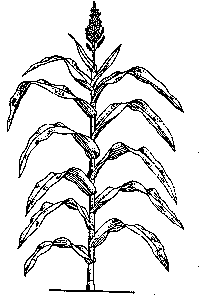
bird-resistant" grain sorghum
There are two ways to protect the grain, neither very acceptable. One is to have the children or older people stay by the fields during the most susceptible weeks and scare the birds away. The other is to grow varieties which have a high tannin content. I once led a trial in Puerto Rico in which regular and high-tannin sorghums were grown on 3 acres. My plans for measuring degrees of damage by birds were discarded because there was 100% destruction of the kind with no tannin. The high-tannin varieties scarcely lost a grain.
So why is tannin not a good option? Tannin is the substance in green fruits (e.g. persimmons or banana) that causes your mouth to pucker up. The tannin binds with proteins, causing them to come out of solution. If this happens in your mouth, the lubricating proteins of saliva are removed, resulting in the puckery sensation. In the digestive tract they may tie up proteins in the diet or, worse yet, digestive enzymes. The consequences are serious. In feeding trials with rats and chickens, the animals grow much slower, or sometimes even lose weight, with rations based on high-tannin sorghum compared to varieties with no tannin.
Farmers face a terrible choice. Grow regular sorghum and risk low yields due to bird damage or high-tannin sorghum and get good yields of grain that is very bad nutritionally.
Dr. Larry Butler at Purdue gave me the good news that Dr. John York at the University of Arkansas and Roger Bullard with the U. S. Fish and Wildlife Service have a sorghum with no tannin that birds seldom bother. Dr. Butler's feeding trials showed that it was as good a feed as any other sorghum.
Dr. Butler says, "In trials in Indiana for two summers the new variety was not damaged at all, whereas susceptible lines in the same fields were totally destroyed. However, one planting in Puerto Rico, where the sorghum was planted next to some millet (a common ingredient in bird feed), was wiped out. So in special cases it can still be damaged."
Trials have been conducted in Brazil, Kenya and Tanzania. You might want to wait until a lot more research has been done. But if you would like to get in on a tiny trial yourself, Dr. Butler gave us enough seed to send you a trial packet. Plant a row in the same field as your other sorghum and see if there is a difference. I asked if it was important to plant in a separate location, thinking that perhaps the birds needed to learn that a particular patch of grain was not "tasty." He said that birds seem to be able to distinguish individual resistant sorghums right in the row. Be sure to let us know what you find. We will pass the results on to Dr. Butler.
Dr. York has just released the variety, called AR 3048. He said that no yield trials have been done. (I think it was released primarily for use by plant breeders.) It is a triple dwarf, which means it may only get to be knee high. The plants are just now blooming at ECHO at a height of about 3 feet (1 m). That does not mean yields will necessarily be low, as many commercial varieties are dwarf. Although the short stalks mean that there is less danger of lodging (falling over) in wind, there will not be long stalks after harvest for other uses.
Dr. York reported a trial in which 2% of grain was lost during the "milk" stage of grain development to birds with AR 3048 and 86% for a control. There was some loss in that case after the grain was more mature ("dough" stage). He had earlier released another variety which proved to be resistant some years and not in others. There are a lot of mysteries in just what is happening and what is responsible for this "bird resistance."
If you are inclined a bit toward plant breeding, note that this bird resistance is a recessive trait. If you cross with another variety the seed will produce plants that are not resistant.
Saidou Jallow in the Gambia reported: "The bird resistant dwarf sorghum did absolutely well. I find no fault in it. Both the people in my village and surrounding villages like it. I hope in the near future it will be widespread in the area because it has the following advantages: short duration, wind resistance, and less or no disease."
Dr. Butler did send this caution about the bird-resistant sorghum. In some parts of the world people roast sorghum, as with corn (roasting ears) in the United States. Larry cautions about consuming this variety fresh roasted. "The roasting would not detoxify the cyanogenic glycoside dhurrin, which seems to be responsible for its bird resistance. The levels of dhurrin are higher at the dough stage than in the mature grain. The conventional processing method (grinding and wetting and cooking) does eliminate the cyanide." He adds that in both Kenya and India he "was told that if food supplies are scarce it is better to have a small amount of sorghum than maize, because one is more satisfied and can work longer on sorghum. I presume slower digestibility is the reason." This would assure a slow release of nutrients to the body over a longer period of time.
Pulse crops
FOOD LEGUMES (1979) is an exceptionally useful book to which we frequently refer. We turn several times each month to this 435-page book to find alternate names, main uses, preferred climate, possible toxicity, etc. Let us look at Vigna unguiculata (cowpea) for an example of their treatment. Seven major common names and three botanical names are given at the top, followed by 119 other common names and the countries where these names are used. The next 14 pages cover a detailed botanical description, origin and distribution, cultivation conditions, planting procedure, pests and diseases, growth period, harvesting and handling, primary product, yield, main use, subsidiary uses, secondary and waste products, special features, processing, and products and trade, followed by 13 pages of bibliography.
Twenty-seven legumes are covered: adzuki bean, asparagus bean, bambara groundnut, broad bean, chick pea, cluster bean, cowpea, grass pea, haricot bean, horse gram, hyacinth bean, jack bean, Kersting's groundnut, lentil, lima bean, moth bean, mung bean, pea, pigeon pea, rice bean, runner bean, sword bean, tepary bean, urd bean, velvet bean, and winged bean. No charge is made for single copies requested by government, research, educational, or and non-profit groups in countries eligible for British Government Aid (most developing countries). Write on official letterhead. Available to others for £15 including surface postage. Order from Publications Distribution Office, Natural Resources Institute, Central Avenue, Chatham Maritime, Kent ME4 4TB, UK; phone 44-1634-880088.
DROUGHT-TOLERANT, EARLY-MATURING 'CRIMSON' LENTIL. The Arid Lands Newsletter of the University of Arizona recently featured the new 'Crimson' variety of lentil (Lens culinaris), now available to farmers in the U.S. This particular variety is derived from Egyptian germplasm and is particularly well adapted to low rainfall, an early bloomer, tall and upright in growth habit, and a good yielder. Pods contain 2 or 3 seeds, seed coats are light brown with some darkly mottled spots, cotyledons are bright red-orange. The USDA registration article states that "these seed quality traits are distinguishing features of the cultivar and should appeal to international markets." In field trials no serious insect or disease problems were noted. Write ECHO if you would like a trial packet.
"SWEET" LUPIN (LUPINUS ALBUS) SEED. Dave Sweere and Gary Riestenberg with the United States Agricultural Development Corporation contacted ECHO and offered us seed of "sweet" lupin. The following is based on material written by Drs. Fred and Nancy Elliott, who developed the varieties for the company. Most North Americans know lupins as an ornamental or as a wildflower in the Rocky Mountains that can make cattle and sheep sick. But Europeans know it as a commercial crop which, for generations, has provided nutritious feed for their farm animals. In the South American Andes, people have eaten a lupin called tarwi for centuries. Lupins contain alkaloids, which cause a bitter taste and toxic effect when eaten. Andean people soak the beans for several days in running water to remove the alkaloids, then make a gruel which is often fed to babies or into a flour used in many breads and noodle recipes. The same procedure was described by Florentinus in 218 A.D. and is still used in Egypt and Italy to prepare lupins for animal feed. Lupins were grown for human and animal food centuries before Christ. The Roman author Varro reported that every Roman inn had a "labrum lupinarum," a basin used to soak out the alkaloids.
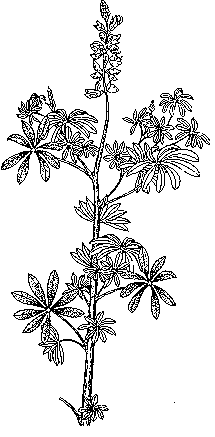
sweet lupin
In this century "sweet" varieties of lupins have been developed which lack the bitter alkaloids. In many countries these are now grown like soybeans. The quality of the protein is similar to the soybean. In the processing of soybean meal the oils are removed and the meal is heated to inactivate the trypsin inhi- bitors and other compounds that inhibit digestion. Such processing is not necessary with the sweet lupins. They can be fed directly to animals, including poultry, pigs, cattle and sheep. Because no heat treatment is needed they are a natural for the small farmer in remote areas. Getting enough protein to maintain good egg production is often a problem. Dr. Elliott says that studies at the University of Minnesota and Tufts University indicate that lupins can provide an adequate poultry diet.
Another advantage over many legumes is that the lupins do not produce gas in the intestines (technically one says they do not produce flatulence). Many beans contain the complex sugars raffinose, stachyose and xylose which are not digestible by humans and many other animals. However, after they have moved into the intestine they are attacked by microorganisms which can break them down. In the process they produce gas. This could be a special consideration if you are looking for a legume to put in baby food. Gerry sent us several kinds of pasta that they sell commercially (too early for a report on taste). Their recipes are proprietary, but he suggested that up to 30% lupin flour could be used.
Who should try lupins? Lupins would be a good crop to try at higher elevations, depending on your latitude. The book Food Legumes says that they are successful in Kenya between 5000-8000 feet (1500-2400 meters). In fact they can tolerate temperatures down to 16 F (-9 C). The tropical lowlands would not be suitable for lupins because the seeds will not set if the temperature is high during flowering (over 90 F or 30 C). Farmers can grow a crop of lupins in the cool season and, because it is a legume, it will add nitrogen to the soil for the next crop. Lupins may be thought of as suited to the more northerly parts of the temperate region. This is because breeders have had success in adapting them to cold regions. Remember, though, that they originated in the Mediterranean. The variety ECHO was given should be one of the more adaptable. The same book says that this particular species (there are several other species) will tolerate mildly acid to mildly alkaline soils of only moderate fertility. They have been grown on saline (i.e. salty) soils in the Sudan and Egypt. I asked whether it would work to save your own seed. The answer is a qualified yes. Every time you grow the crop, roughly 2-10 plants per thousand mutate back to the alkaloid type. Because this is a dominant trait, the quality gradually diminishes. Gerry says that this variety, "altra," is one of the more stable. They have had excellent results through 7 years and expect they can go for 14 years. They have a clean-up program in which a large number of people go through one of the smaller fields tasting a seed from each plant. If the taste is bitter the plant is pulled out. The harvest is then used to start a new lot of seed that can be increased for about 10 years. You could either buy new seed every so often or go through the same exercise yourself.
MARAMA BEAN, TYLOSEMA ESCULENTUM, FOR VERY ARID REGIONS. Thanks to several people in ECHO's network, we are able to offer marama bean seed to those working in very arid regions. But what is a marama bean? I rely on the book Tropical Legumes: Resources for the Future for the following discussion. It is a wild plant prized by people living in and around the Kalahari in southern Africa. In Botswana and Namibia it is an important part of the diet in remote regions. It is a rich source of protein and energy in regions where few conventional crops can survive. It grows in some areas that receive up to 800 mm rainfall (32 inches) and in others where rainfall is so slight and erratic that in some years almost no rain falls at all.
The plant has long viny stems, but it is a creeper rather than a climber. They hug the ground, presumably avoiding drying winds. Seed pods contain 1-6 seeds about the diameter of a thumb nail. They are never eaten raw. After roasting they have a delicious nutty flavor that has been compared to roasted cashew nuts. Europeans in southern Africa grind the roasted seeds and use them as a culinary substitute for almonds. Africans boil them with cornmeal or grind them to a powder that is boiled in water to make either a porridge or a cocoa-like beverage. Raw seeds store well and remain edible for years. Protein content of seeds range from 30-39% (comparable to soybean). Oil content is 36-43% (about twice that of soybean). Like other legumes, the protein is rich in the amino acid lysine (5%) and deficient in methionine (0.7%).
During cooler months stems die back, but the underground tuber produces new stems when warm weather returns. The tuber can attain a weight of over 10 kg after a few years. (The plant at ECHO produced a tuber larger than a basketball.) Young tubers are dug in the Kalahari at about 1 kg. Tubers more than 2 years old are fibrous and/or astringent. Baked, boiled or roasted they have a sweet, pleasant flavor. They contain up to 90% water (important to surviving the dry periods) and are an important emergency source of water. [A bit of trivia: I have been told that it is the tuber from which water is squeezed in the movie "The Gods Must Be Crazy."] Tubers contain 9% protein on a dry weight basis. Tropical Legumes states that "of all the plants described in this book, the marama bean is perhaps the least developed" in scientific study or plant breeding efforts to improve it.
Dr. Stanford sent the following hints on germinating the seeds. Keep them warm (they come from the Kalahari Desert). Seeds germinate after a rainstorm has swept the land, and the soil has moistened deeply, but the surface is drying. The thick shell, almost 1 mm, is extremely hard. When wetted, it swells tremendously. Then the germ and endosperm will absorb water, and germination starts. But for that to occur, you must first scratch the outside with a file. Do NOT try to hasten germination by dropping the bean into water. Be patient-let it imbibe slowly by planting it in moist (not wet) soil or potting medium. Plants prefer neutral to acid soil or sand.
Galen Sauder in Botswana supplied us with some seed and wrote, "I was excited to receive your request for marama beans. The day before it arrived I was helping some people harvest these beans. They were growing by the side of the road in an area that had received rains. I could have filled my pick-up if I had all day. The beans seem to like the gutters of the road where water collects. Last year I had some of these beans. After they were roasted the woody shell cracked off and inside is a delicious nut tasting like a hickory smoked cashew."
NUTRITIVE VALUE OF NU�AS (POPPING BEANS). An article by van Beem et. al., in the April-June 1992 issue of Economic Botany addresses this topic. But first, what are popping beans?
Nu�as are varieties of (American) common beans, Phaseolus vulgaris, which burst when toasted. In spite of the common name "popping beans," they do not actually pop. Rather, when heated in hot oil or on a hot dry pan, they expand and split open. This is all the cooking they require. "The resulting product has a powdery texture with a taste between that of popcorn and roasted peanuts." Most of our staff very much enjoyed the very few beans that we could spare for eating as a snack.
Nu�as are cultivated in the highlands of Ecuador and Bolivia between 2,000 and 3,000 meters. In regions where firewood is scarce, the benefit of these beans obviously extends much beyond their unique taste. Most beans must normally be boiled for a long time to be adequately softened. This time is even longer in the mountains where the boiling point of water is well below 100 C. Nu�as require only 3-4 minutes of cooking.
The plants are the "pole bean" type. They seem to be susceptible to common bean diseases. We can only keep the plants alive in the winter months here in southern Florida, so I doubt very much if you would succeed with them in any area where common beans do not grow well. They are also daylength sensitive. ECHO sent seed to several gardeners across the United States. Although the plants often did well, they bloomed and produced only in those few locations where they were still alive in late fall and winter when the days were short.
"The unique texture and taste of popped nu�as appears to be related to their high starch content. The high starch levels may also explain the 'filling effect' [appetite satisfied] nu�as have after consuming 15-20 seeds, as bean starches have been reported as being less digestible than cereal starches." [Ed: His thinking may be that materials that cannot be digested remain longer in the gut so the person feels full.]
There is no difference in moisture content between nu�as and other common beans, but in nu�as there is less space for steam to diffuse upon heating. "The steam forced expansion of these [limited] spaces is thought to contribute to the popping mechanism." Protein content is slightly lower in nu�as than in other common beans (20.0% vs. 22.2%); starch (40.9% vs 35.5%) and amylose (18.1% vs 17.2%) are higher. The percentage of protein which can be digested was slightly lower in popped than in boiled nu�as (76.6% vs 79.1%). "Nu�as stored at optimum conditions retain indefinitely their ability to pop. However, under market place conditions, nu�as lose their popping ability 2-3 months after harvest due to seed hardening. ... shop owners then will try to sell them as a dry bean cultivar. However, when nu�as are boiled, they take a long time to reach an edible state and the broth in which they are cooked is 'watery' when compared to the thick broth of dry bean varieties."
The authors were concerned as to whether the short cooking time might be inadequate to destroy the antinutritional factors in common beans, especially tannins and lectins. Tannin levels in beans are low, though they do slightly reduce digestibility of protein. Lectins, the principle toxins in common beans, are more worrisome, as they interfere with absorption of nutrients from food. Lectins are themselves proteins, comprising about 10% of the total bean protein. Fortunately lectins appear to be denatured by the higher temperatures of roasting because popped beans had a similar or lower level than boiled beans.
Individuals working in areas where common beans are an important crop might well want to take a look at nu�as. They probably have some export potential to the States because of the publicity they have received in recent years and the limited locations where they can be grown. In fact, one variety of seed that we are offering we purchased from a health food store in California. If you work where these beans are common and have helpful insights (especially as to how varieties may differ from each other), please write. These have grown very vigorously at ECHO through the years.
RESEARCH ON NU�AS (POPPING BEANS). The international research center CIAT in Cali, Colombia is working (on a small scale) with nu�as. Dr. Jeffery White, CIAT bean physiologist, says the beans do not produce well and are susceptible to most bean diseases, so farmers grow them less and less. "In fact, the crop is probably disappearing." Dr. Julia Kornegay at CIAT has crossed popping bean varieties with disease-resistant common beans and sent the progeny to Peru for testing. But when crossed with ordinary beans, the offspring lose their popping ability. Special breeding techniques are needed to recover that trait.
"There are about 30 types of nu�as that differ in seed size, shape and color, but all taste similar. ...They retain their popping ability for years if stored at low temperature and low humidity. But they lose the popping trait in a few months if stored improperly." Dr. Kornegay would like to see popping beans marketed internationally.
PIGEONPEA VARIETIES FROM ICRISAT. We often tell people that ECHO specializes in growing food under difficult conditions. The pigeonpea, Cajanus cajan, is a prime example of a tough but nutritious plant for just such cases. This article is directed toward two audiences. For some of you, pigeonpea is already an important crop. You will mainly be interested in the information about and seeds for the vegetable pigeonpea varieties. For others who are not familiar with pigeonpea at all, the general discussion of pigeonpea is for you.
THE PIGEONPEA. (The following information is gleaned from a very helpful book, Pigeonpeas: a Valuable Crop of the Tropics, by Julia Morton, Roger Smith, A. Lugo- Lopez and R. Abrams, available for about US$7 from Dr. Eduardo Schroder; BNF Laboratory; Dept. of Agronomy and Soils; Univ. of Puerto Rico; Mayaguez, PR 00709- 5000. They also have a similar book on mung beans at the same price.) Why might you wish to grow pigeonpeas? I think of three principal reasons. (1) They grow under poor soil conditions. (2) They are tolerant of dry weather. (3) They are a nutritious, high- protein pulse crop. Other reasons include: (4) Leaves can be used for animal feed. (5) The fast-growing plants make good shade for other crops, e.g. vegetables, herbs, vanilla. (6) Plants are perennial for up to 5 years. (7) Woody parts can be used for firewood. (8) Water and nutrients from deep in the soil can be caught by its deep taproot.
The pigeonpea is a shrub that grows from one to a few meters tall and perhaps two meters wide, unless special short-season varieties are chosen. Most types flower when the days are 11 to 11 1/2 hours long, but varieties responding to both shorter and longer day lengths are available, and some will flower at any time of the year. Usually flowering begins in 120-150 days and seed maturity in 250 days, but these figures can be as early as 60 and 100 days respectively.
It is often advisable on a small farm to have one area for higher value crops, where the soil has been improved by concentrating the limited amount of manure and mulch, and where some irrigation is available. On the remaining, larger part of the farm, plants which yield in less fertile soil and require only normal rainfall are desired. Plants such as cassava, sweet potato and pigeonpeas fall into this later category. A few pigeonpeas are also often grown near the house for ease of harvest. For household use "indeterminate" varieties are wanted because they will produce a few pods each day over a long season. I recall visiting a dry part of the Dominican Republic during the dry season. Very little was green in the gardens, but pigeonpeas were green and providing a small daily harvest. They do best where annual rainfall ranges from 500-1,500 mm (20-60 inches) a year. The range of suitable elevations depends on latitude. In Venezuela they are grown up to 3,000 meters, in Jamaica up to 1,100 meters. In Hawaii they failed to set seed at 1,000 meters.
"When cultivated for the seeds, pigeonpeas are grown as an annual or biennial because the productivity declines after the first year and drops considerably after the third year. When grown for forage or green manure, it is usually maintained no more than five years. The plant will die in about 10-12 years."
"No regrowth occurs when plants are cut off at ground level, but regrowth is satisfactory with cutting heights ranging from 0.15 to 1.5 meters. Vigor declines and plant mortality increases somewhat after a first cutting and more markedly after a second cutting."
"The pigeonpea is noted for greater soil adaptability than other legumes [nitrogen fixing plants]. ... It performs well in a wide range of soil types. It can endure soil salinity of 0.0005 g NaCl/g. It seems well adapted to a soil pH as low as 5 and as high as 8." Plants also are rather resistant to nematodes.
VEGETABLE PIGEONPEA. (The following is taken from a booklet by the same title by ICRISAT, the International Crops Research Institute for the Semi-Arid Tropics, Pantancheru, Andhra Pradesh 502 324, INDIA. The booklet has four interesting and complicated recipes which are in the Indian tradition.)
Pigeonpeas are most commonly used as a pulse crop. (Pulses are leguminous crops, the dried seeds of which are used as human food.) When used as a "vegetable," the pea is picked when the seeds have reached physiological maturity, that is, when they are fully grown but just before they lose their green color. At this stage the green seed is more nutritious than the dry seed because it has more protein, sugar and fat. In addition, its protein is more digestible. "There are considerably lower quantities of the sugars that produce gas (flatulence) in the green seeds." The dried seeds contain somewhat more minerals. See Table I.
Table I. Comparison of some nutritional constituents of green and mature pigeonpeas on a dry-weight basis.
|
Constituent |
Green Seed |
Mature Seed |
|
Protein (%) |
21.0 |
18.8 |
|
Protein digestibility (%) |
66.8 |
58.5 |
|
Trypsin inhibitor (units/mg) |
2.8 |
9.9 |
|
Starch (%) |
44.8 |
53.0 |
|
Starch digestibility |
53.0 |
36.2 |
|
Amylase inhibitor (units/mg) |
17.3 |
26.9 |
|
Soluble sugars |
5.1 |
3.1 |
|
Flatulence factors (g/100g sol. sugar) |
10.3 |
53.5 |
|
Crude fiber (%) |
8.2 |
6.6 |
|
Fat (%) |
2.3 |
1.9 |
Minerals and trace elements (mg/100g)
|
Calcium |
94.6 |
120.8 |
|
Magnesium |
113.7 |
122.0 |
|
Copper |
1.4 |
1.3 |
|
Iron |
4.6 |
3.9 |
|
Zinc |
2.5 |
2.3 |
In comparison with green peas, the vegetable pigeonpea takes longer to cook and is not as sweet, but is much more nutritious. On a fresh weight basis, it has greater edible portion (72% vs 53%), more protein, carbohydrates, fiber and fat than green pea. It also has more minerals and much more of some vitamins (469 vs. 83 vit. A/100g; 0.3 vs. 0.01 vit. B2; 25 vs. 9 vit. C).
"The best vegetable pigeonpea cultivars have long pods, with as many as 9 large sweet seeds which are easily removed from the shell." Sweetness is also desirable. In contrast, what is usually sold in Indian markets for use as a vegetable are small pods with small seeds. "Consumers prefer vegetable pigeonpea with green pods, ... but tests ... have shown that differences in pod color are not related to cooking time, taste or quality." However, cultivars grown from white seeds leave clear rather than colored cooking water. The large pods are especially attractive to insects. Insect damage can also be greater in cultivars that have the pods clustered in bunches at the tops of the plants, but these varieties are also shorter and are easier to spray with insecticides and easier to harvest. If the rainy season is long, or the field is irrigated, pods may be produced as long as the plant remains free of disease and the mean temperature remains about 15-30 degrees C. A yield of 11 t/ha of green pods in five pickings was obtained on one plot. Harvest the pods just before the seeds start to lose their bright green color. Because pod color at this stage will be different with different varieties, you will need to sample seeds to find when it is best to harvest. In the Caribbean, harvesting has been mechanized by adapting green bean pickers.
If you would like to try pulse-type or vegetable pigeonpea, ECHO can send you a small variety trial. If you are already familiar with pigeonpea and wish to do a major trial, write to ICRISAT; Patancheru, Andhra Pradesh 502 324, INDIA, and tell them details of the trial you intend to undertake.
SOYBEAN CROP PRODUCTION BULLETIN AVAILABLE FROM ECHO. Dr. Frank Martin wrote this bulletin because soybean is one of the most important food plants of the world and is growing in importance in Third World countries. It produces more protein and oil per unit of land than almost any other crop and can substitute for meat and to some extent for milk. In 7 pages he discusses cooking/processing methods, climatic and soil needs, varieties and their differences, care of seed, and culture of soybean. (Write ECHO to receive the complete bulletin.) Many of you no doubt share my skepticism as to whether you would personally enjoy eating soybean and whether it would be accepted in your community. Yet I have seen examples where it has become much appreciated in a new community. The trick is that soybean must have special processing and be used in special ways. Here are some basic processing methods from the bulletin.
SHELLED GREEN SEEDS are boiled until tender (boil pods first for easier shelling). Cooked beans can be eaten as is or used in other dishes. Frank describes their flavor as "unique but very good."
PREBOILED BEANS. Normal boiling of dry soybeans results in an "off flavor." This can be avoided by destroying the enzyme that causes the problem by preboiling the beans. Bring to a boil two parts water, add one part soybeans and boil for 5 minutes. Meanwhile, boil four parts water. Remove seeds from the first water, rinse, and boil in the second water for 5 minutes. Discard the water and rinse. These are called "preboiled soybeans."
BOILED SOYBEANS are made by boiling preboiled beans until soft. Use as desired. Alternatively the soft beans can be mashed and used to enrich baked products.
SOYBEAN NUTS are made by deep frying preboiled soybeans for 12 minutes at 350 F. Drain and salt.
SOYBEAN MILK. Grind preboiled soybeans as fine as possible, using a home blender, a hand mill, or an electric mill. The ground soybeans should be low in grittiness. Mix one part ground, preboiled beans to two parts water. Filter with a cloth or colander. The liquid is left to stand one hour and is then decanted or filtered. The liquid portion is then boiled gently for one hour. This is soybean milk.
FRIED BEAN CAKE. The residue from filtering (or the precipitate from letting the filtrate settle) can be used for fried bean cake. Mix 4 parts residue with 1 part flour. Fry slowly in an oiled frying pan.
CHEESE (TOFU). Soak beans (not preboiled beans) overnight in water. Discard water and rinse. Grind as fine as possible (see above). Mix three parts water to one part ground soybean. Filter through a cheese cloth. Heat to boiling, stirring to avoid scorching. While the milk is still boiling, add one part of a precipitating solution as follows: 1% solution of MgSO4 (Epsom salts)-one part solution to 8 parts milk, or vinegar-one part solution to 66 parts milk. Curd formation occurs immediately. After 15 minutes filter through cheesecloth, discarding the solution. Wash curd twice. Press to shape and to remove water. Use this as a cheese substitute in cooked dishes.
ECHO sometimes has seed of the soybean varieties Davis (subtropical) and Duocrop (tropical) mentioned in the Soybean Crop Production Bulletin. We also have two other subtropical/temperate varieties developed for the southeastern United States, Braxton and Wright. We can send only enough to see how a small row will perform. If you are at low to moderate latitudes in the tropics, request Duocrop; at high elevations or in the subtropics request the other three.
If soybeans have not been grown in an area before, it is more important than with some legumes that the seeds be inoculated with rhizobia. Without this they may be inefficient at fixing their own nitrogen. ECHO does not carry inoculants; we refer you to the Haile-Dean Seed Co., P.O. Box 1458, Winter Garden, FL 32787, USA; phone 800/423-7333. They generally have bulk inoculant year-round, as they supply many tropical regions. If you start growing soybeans, finding inoculant may be a big problem for many of you. The good news is that a little bit goes a long way (a small $2 packet treats 2 bushels of seed). If there is a local farm supply store, perhaps they can order inoculant for you.
TEPARY BEANS RESIST DROUGHT. (We relied on the books Tropical Legumes: Resources for the Future by NAS, 1979, and Food Legumes by Daisy E. Kay, 1979, in preparing this note.) A frequent question ECHO receives from people working in the semi-arid tropics is, "It is so dry here! What plants can we grow with so little rain?" The tepary bean, Phaseolus acutifolius, is a promising crop for semi-arid to arid regions with infrequent but heavy rains and extreme heat.
This native plant of the Sonoran desert in western North America has been an important cultivated food of native Americans for over 5,000 years. When planted toward the end of the rainy season, tepary beans may receive sufficient moisture in a few heavy rains early in their growth to mature and produce quickly, even when conditions at the end of their life cycle are extremely hot and dry. Sometimes, when planted in recently water- logged soils of certain types, production is possible without any additional rain. Richard Pratt at Purdue University had results of yield trials where he compared the effect of drought on teparies and on common beans. As he cut back on water, the yield of common beans decreased steadily whereas the yield of tepary beans actually increased up to a point before they also eventually dropped off. Tepary beans have good potential to yield when very little other food is available.
The countless landraces and local varieties vary widely in color, seed size, and growth habit, but most yield their high-protein crop just 60-90 days after planting. The leaves and young pods are a leguminous forage nutritionally comparable to alfalfa. Dried pods may also be fed to animals. Plants are bushy to semi-vining on dry land, with more extensive vining and foliage growth when water is plentiful. The seeds and trifoliate leaves are a bit smaller than in the common bean. Because they are extremely resistant to common bacterial blight, which affects other beans in the tropics, they are used in breeding programs to impart this resistance to the (American) common bean Phaseolus vulgaris.
Tepary beans can thrive in areas with as little as 500-600mm (20-24 in) rain per year, and seed production drops with over 1000mm/year (40 in). Seeds are generally planted 10-20 cm (4-8 in) deep to utilize the lower water reserves. Plants often receive 3 or 4 irrigations in the early stages of growth. (Continued irrigation can actually lead to increased vegetative growth and lower seed yield.) Teparies prefer well-drained soils and are fairly tolerant of alkaline or saline soils. They may mature more quickly at mid elevations than coastal regions.
We consider them one of the more promising plants for arid regions. For example, Peter Welle got quick and heavy yields in Haiti in spite of hot, dry weather and calcareous soils. Robert Hargrave from Kenya wrote, "I wanted to report on the tepary beans I picked up when I visited ECHO in 1989. They have proved very promising. During the last rainy season (Nov. 1990 to January 1991) I recorded yields up to 1500 kg/ha on the yellow tepary beans. Admittedly we had higher than average rainfall (over 200 mm, 8 inches), but common field beans would not have produced. Some of my Kenyan friends have also grown and eaten the (brown) tepary beans, and reported favorably on them. I also conducted some inoculant trials with Rhizobium donated by a professor from Trier University in Germany who is conducting studies in this area. It appears that, at least here, there is no need for special inoculant." Dr. Leon at CATIE says that tepary beans can be found in the market on the Pacific coast of Mexico. He has read that they were introduced as a cover crop in the Sahel of Africa, and that people on their own initiative began eating the bean. (We would appreciate more information on this from our African readers.) Dr. Hidalgo at CIAT believes the relatively low yield and a flavor that is inferior to common beans are the main problems with commercialization. But he added that, "As a crop for subsistence farming, its potential is excellent. It doesn't stop growing even when it flowers. So if a stress occurs after the first flowers, it has a high capacity to recuperate."
Despite tepary bean's apparent potential to produce food quickly in semi-arid regions, not much attention has been given to research and improvement of this species by the scientific community. Some obstacles to introduction into new areas include disease problems (in climates where it is not adapted), sensitivity to some salty soils of semi-arid zones, poor productivity in humid regions, tendency toward short-day flowering, frost damage (nighttime temperatures must be above 8 C/46 F), unusually small and flat appearance of the bean, a sweet taste different from the common bean, and long cooking time after long periods of storage. (According to Linda MacElwee of Native Seeds/SEARCH in Arizona, they can take up to 4 hours of boiling, even after soaking, if they have been stored for some time. Even fresh teparies can take longer to cook than many common beans.) Teparies may also cause flatulence and therefore are not recommended as food for babies under one year old.
Agronomists at the United States Department of Agriculture in Mayag�ez, Puerto Rico, chose 11 cultivated lines from 70 accessions of tepary after evaluating and selecting under varying environmental conditions. They studied yield, seed size, protein and anti-nutritive factors, and resistance of each line to six diseases.
They found that tepary beans performed best and yielded more than the common bean under higher temperatures in dry regions. (Linda MacElwee says they will produce at 46 C/115 F.) The seed protein concentration for the tested varieties ranged from 17.8 to 26.8%, and anti-nutrients that interfere with protein digestibility were on average less than in the common bean. All lines were resistant to common bacterial blight and susceptible to the bean common mosaic virus, but the lines had varying resistance or tolerance to rust, ashy stem blight, bean golden mosaic virus, and Fusarium wilt.
The seeds supplied to ECHO are photoperiod-insensitive, virus-free, and selected for high yield and disease resistance; in addition, they may be more tolerant of excess rain than other tepary varieties.
We planted the tepary beans in our own semi-arid greenhouse as a trial. They germinated immediately and grew impressively well with none of the disease problems usually evident on tepary beans at ECHO [note: we do not send out the tepary seed grown at ECHO because of the risk of transmitting diseases common here]. In two months, most of the varieties already have pods and continue to flower. There is quite a bit of variation in foliage produced, flowering time, and leaf size. We asked Dr. Phillip Miklas, who sent us the disease-resistant varieties, the following questions on the potential of tepary beans:
Q. In what climates have you found tepary beans to outperform
other beans?
A. Tepary beans are outstanding for hot climates, in some cases
yielding over three times as much as dry beans when high temperatures cause
common bean flowers to abort. They are well-suited to areas which suffer
periodic drought. For example, in places which often, but not always, receive
enough rain for common beans, you might plant a few plots of tepary beans as an
insurance crop. However, in extremely rainy periods, tepary beans will produce a
lot of vegetation, but very little or no seed.
Q. The seeds of the disease-resistant beans you supplied are smaller than the seeds we receive from Arizona. Can a grower select for larger seed and, if so, will that affect protein levels?
A. These are true-breeding lines of tepary beans; the plants produced should be genetically similar. It is not likely that you will find wide variation in seed size. Any selection of that nature, though, would not significantly affect other characteristics of the bean.
Q. Are the diseases observed in the study usually a major problem in arid to semi-arid zones, or are they primarily present in humid areas? Is there an advantage for people in extremely arid zones in using the selected disease-resistant varieties over other (larger-seeded) ones?
A. The diseases are present in many tropical climates. For example, common bacterial blight occurs mainly in hot, humid areas, and ashy stem blight occurs in hot, dry areas. One thing to remember is that the strains of each pathogen vary in each region; in other words, we were only able to select for resistance to the strains in our area, but different strains may be present in a new area.
Q. Do you have any comments concerning unique cultural
requirements?
A. Fertilization should not be necessary. If you fertilize
before the plants have emerged from the soil, nitrogen- fixing nodules may not
form. So delay any fertilization until after the seeds have sprouted. [Tepary
beans can nodulate with the broad cowpea/lima bean/Canavalia/mung bean group of
rhizobia. Under very hot or dry conditions, the nitrogen-fixing bacteria will
not persist strongly from one season to the next. In such conditions it may be
best to inoculate the seeds.]
It is very important with tepary beans to try them at different times in the season to determine their best "window" in the local climate. Do not give up on them if they don't succeed on the first try; planting again at a different time may produce better results.
Q. How easily can tepary beans be crossed with other local beans
to impart disease resistance?
A. This is not possible at the field level.
Q. Are there other reasons why someone might want to grow tepary beans if they could grow common beans?
A. Tepary beans often produce at a different time of year than other beans, when it is too hot or dry to grow common beans. In addition, they are an excellent crop for drought insurance in areas with occasional dry years; people in such areas may want to maintain a plot of tepary beans in case the common beans do not receive enough rain. They may also be used as a green manure in some areas, although that is not their primary use now.
Q. Do tepary beans have potential as a green manure/cover crop for arid zones? (ECHO has heard of this in the Caribbean.)
A. Since tepary bean is a short-lived annual, it doesn't have as much potential as a cover crop as some other plants would. One of its great potential uses may be in an intercropping system with sorghum during the dry season.
Dr. Miklas has sent ECHO seed of these eleven varieties to distribute to our network. We have combined them according to color (white, grey, black, yellow-brown, and red). When ordering seed, please indicate the dry bean color preferences (if any) for your region.
We and Dr. Miklas (USDA-ARS, P.O. Box 70, Mayag�ez, Puerto Rico 00681) are very eager to hear how these varieties perform for you and are accepted in your area. ECHO also has larger-seeded virus-free native varieties from Arizona (white and yellow). Our source is Native Seeds/SEARCH, 2509 N. Campbell Ave. #325, Tucson, AZ 85719, USA. They carry 18 varieties of tepary bean; write for their seed catalog for more information on these and many other dryland plants. Please note that people with year-round humid weather would probably be wasting their time with this trial. For example, we cannot grow tepary beans at ECHO in the summer.
WINGED BEANS. See pages 70-71.
CAUSES OF BEAN BLOSSOM DROP. James Chrisantus in Kenya asked why all the blossoms fell off his winged beans, thus producing no beans. ECHO asked Dr. Andrew Duncan of Oregon State University. His reply concerns beans in general. "The two major causes of bean blossom drop are high temperatures over 90 F (32 C) and drought. Beans selected for temperate zones are more sensitive than those native to the humid tropics and sub-tropics. If beans have been growing under moderate (very favorable) conditions, then the imposition of stresses is even more damaging." Drought stress can occur even when the soil holds considerable water. For example, when soil moisture levels are at half of the field capacity [soils contain half as much water as they can hold without being flooded], and relative humidity is low (<25%), even a 5 mile per hour (8 km/h) breeze can cause moisture stress. "Root damage by diseases, insects or deep cultivation should also be checked. A long shot is improper use of pesticides. Beans are very sensitive to the 2,4-D type herbicides, even the vapors from a distance. Solvents included in insect sprays can damage blossoms and leaves."
Root and tuber crops
SWEET POTATO CROP PRODUCTION BULLETIN, by Dr. Frank Martin. Dr. Martin is one of the leading sweet potato breeders, so it is fitting that he treat the subject of his first scientific love. The following is a condensed version; write ECHO for the complete bulletin.
Sweet potatoes (Ipomoea batatas) are the sixth or seventh most-produced food crop in the world. What makes it such a great crop? It is relatively easy to grow, is relatively free of pests and diseases, has relatively high produc- tivity, and is always good food, principally starch, some protein and vitamin C, and, in orange varieties, rich in vitamin A. In addition, the young leaves, rich in protein and most vitamins, are also good food. Furthermore, both sweet potato tubers and vines are excellent animal food.
Its ability to produce in poor soils make it an especially good crop for poor tropical soils where fertilizer is not available. If the leaves are also used as food, sweet potato will probably produce more nutrients per acre than any other crop under those conditions. (Cassava also produces well on poor soils and also has both edible roots and leaves. Its main advantage over sweet potato is drought tolerance. Sweet potato has the advantage in nutrients because polyphenolics in the cassava leaf combine with protein during cooking and reduce the amount of protein that is digestible.)
PRINCIPLE USES OF SWEET POTATOES. Leaves can be harvested during the second and third months of production. Only the tender stem and young, not-fully-developed leaves should be taken. The leaves and stems are boiled for 15-20 minutes. You are already familiar with recipes for boiled or baked sweet potatoes. (By the way, baking converts part of the starch to the sugar maltose, thus increasing sweetness.) There are other, less familiar, uses. The mashed pulp of boiled sweet potato can also be used as a partial substitute for wheat flour in baked products such as pancakes, cakes, flat breads, cookies, pies, fritters, or even bread. It can also be processed further, as you will see.
To make osmotically modified boiled sweet potato, the peeled and trimmed sweet potatoes are cut into thin (1/8") slices, placed in water 2 hours (moved once in a while) and then boiled. The products will be clearer, less sweet, and milder than those made from untreated sweet potatoes. (What is happening chemically is that the enzymes and substrates responsible for polyphenolic oxidation are partially lost, as well as some of the sugars.)
Sweet potato flour is much more difficult to make than potato flour because the reducing sugars readily released from the starch combine with free amino acids to produce disagreeable colors, odors, and flavors. To avoid this the peeled sweet potato can be shredded, and the shreds immersed in water 2 hours. This process works better if the water is changed 2-3 times. The shreds are drained and then dried, first in the shade (with air movement or wind) and later in the sun (in some cases, drying over the stove or in an oven will be necessary). The brittle shreds are easily crushed to flour, or this can be done rapidly in a household blender. The flour can be stored for 6 months or more in sealed containers. It can be used as a substitute for wheat flour in the following amounts: 100% in white sauces, 25-50% in cookies, cakes and flat breads, and 15-20% in breads. From the water, starch can be recovered (see below).
Starch can be produced by grinding the peeled sweet potato in a mill or blender as finely as possible, and mixing with 5-10 times its weight in water. The starch settles out, and the water is carefully poured away (this can be used as pig feed). The starch is then mixed with water 1-3 times more and the process is repeated. After the last settling the water is carefully drained and the starch is dried on a metal surface in the sun. It can be used as is any starch, such as corn or potato starch, and can be stored in sealed containers for a year or more.
A breakfast food similar to "cereal" can be made from any sweet potato. The sweet potato is grated (not as finely ground as for starch), suspended in water, and filtered through a cloth. The liquid is saved for starch, the residue is suspended 1-3 times more in water, and filtering is repeated. The portion of the sweet potato that does not pass through the filter is then dried and lightly toasted on a hot plate (over the fire). The toasting is very delicate. The product must be stirred and turned almost continuously, and should not become sticky and jellified. The toasted product can be stored in sealed containers and eaten with milk without further cooking, or can be used much like starch or flour, imparting its characteristic flavor.
CULTURE OF THE SWEET POTATO. Sweet potato is a hot weather crop. It is difficult to imagine an earthly environment that is too hot for sweet potato. In general, hot temperatures only speed up its growth. On the other hand sweet potatoes will survive at any temperature above freezing, and are very productive at temperatures that are comfortable for humans as well.
Depending upon variety, sweet potatoes may be ready for harvest after 10 weeks or may require up to 9 months in the field. The majority of the varieties can be harvested after 4 1/2 months in the field. Cool conditions can extend the needed growth period to 8-9 months. Early varieties (10 weeks) are in the process of development. Sweet potatoes from an individual planting may be harvested as needed over a three to four month harvest season.
If the soil is well aerated with medium texture the sweet potatoes need not be planted on ridges. They can be produced in heavy soils if formed into ridges for drainage and increased aeration. Sweet potatoes are often grown in sandy soils. Too much nitrogen results in abundant foliage and low and/or late yields. They can tolerate light drought in the second and third month of growth, and often fairly severe drought in the fourth or fifth month.
There are too many varieties to try to describe them all. Because of all this variation it may well be worth your while to collect several varieties within your country for local variety trials and preference tests. It is probably more useful to talk about some of the differences found. Internal color is the first difference you will see: white varieties (no vitamin A), yellow (little vitamin A) and orange (high vitamin A). Most varieties are chosen for sweetness, though Dr. Martin has developed non-sweet varieties which people that do not care for sweet potatoes may enjoy. [Ed: this was the case with me.] Texture ranges from dry (least preferred) to intermediate (often preferred) and moist (common in orange roots). Most plants are running (vining), a few are bunch varieties.
For practical purposes, in the tropics sweet potatoes are produced from cuttings of existing vines. (Only in the temperate zone is it necessary to conserve storage roots during the winter and stimulate them to grow in the spring as a source of sprouts for planting.) Where sweet potatoes are not grown year round, special plantings will have to be made as sources of cuttings, in which case it may be possible to obtain as many as 30 cuttings per plant. Usually best results are obtained by planting cuttings at an angle with about 2/3 of the cutting below the soil.
Cuttings should be 12-18 inches long. Shorter cuttings can be used if the distance between nodes is not excessive. The vines should be vigorous but not too soft and succulent. Old thickened, diseased, and leafless cuttings should be avoided. It is not necessary to remove any leaves from the cuttings. Cuttings should be gathered together in convenient-sized bundles, tied, or wrapped in burlap. These bundles should be held 1-3 days in a shady, protected area and maintained moist. This will stimulate root production, and even though the initial roots may be broken on transplanting the cutting will be more ready to establish itself if allowed to pre-root as described. If weevils are a problem, immerse cuttings for 5 minutes in a drum containing 0.1% carbofuran. Use gloves. Plant within 24 hours. This treatment eliminates weevils within the cuttings.
The area selected for planting should be as far from previous sweet potato plantings and its morning glory relatives as possible. One foot (30cm) between plants in a row is a minimum. Individual plants will yield more if given up to 1 square yard (meter) of space, but many roots will be excessively large. These large roots are edible but likely to be irregular in shape and unsightly. The layout of rows or beds will depend on the machinery or methods used for soil preparation.
Newly planted cuttings need watering frequently for 1-3 weeks. Once new growth begins water only when visible wilting is seen. Very little water will be necessary the fourth and fifth months. Remember, too much foliage means poor or late storage-root growth. Excessive foliage with poor yields is usually due to too heavy fertilization, especially with nitrogen. Any method that destroys part of the foliage tends to decrease this problem. Try feeding a portion of the vines to animals. [Dr. Martin told me of seeing men drag thorn bushes through the patch to tear up some of the leaves.]
There is no perfect time for harvests. Early harvest results in less yield, smaller roots, less insect damage, less cracking, milder flavors, and poor storeability. Late harvest results in the reverse. If insects are not a problem, partial or periodic harvest from 3 to 8 months may be possible. Cut away the vines before harvest. These can be fed to animals. As soon as possible after digging, remove the sweet potatoes from the sun. The roots should be sorted. Very small roots can be fed to animals. Damaged roots can be used immediately or processed as previously described. Sound roots can be stored at cool temperatures (minimum 55 F, 13 C) for 2-8 weeks. Rot of roots in storage is reduced by curing at high (80-90%) humidity and high (90-95 F) temperature for 4-5 days. Cured roots can be stored at the recommended temperature for up to 1 year.
SWEET POTATO CULTIVARS AVAILABLE. We grew and compared several of Dr. Frank Martin's sweet potatoes, both the non-sweet and sweet varieties. We selected six superior cultivars based on a combination of traits, including: uniqueness (not available elsewhere), yield, sugar content, ease of processing, texture, shape, color, time to maturity and reliable yield. These are the ones we will distribute from now on.
Cuttings are typically available July through October. Please send $5 to help with postage and handling if that is possible. Since the danger of introducing a new disease or insect is so much greater with fresh plant tissue than with seeds, we will only send them after receiving a government plant import permit from you. Be sure to designate which varieties you would like. If a phytosanitary certificate (certified disease and insect free) is required by the permit, enclose an additional $20 per order. If you use a USA address, check with us first. Many states in the US have restrictions on shipping sweet potatoes into the state. It is much better to pick up the cuttings on a visit to ECHO en route to your country, as cuttings may not survive very well in shipping.
Varieties selected were: "Topaz" (orange and sweet, closest to typical US varieties but 50% higher yielding for us, somewhat less uniform, some drought resistance; "Ivoire" (non-sweet, "Irish" potato substitute, very dry if harvested after 12 weeks); "Viola" (purple skin, white flesh, sweet, good flavor, has done well everywhere); "Colorette" (low in sweetness, high yielding, light orange flesh, light purple outside); "Suabor" (large, sweet, smooth, early maturing, yellow when cooked); and "Toquecita" (good yield, white skin and flesh, sweet, large tuber, but highly lobed, excellent for processing).
SWEET POTATO COOKBOOK. We have appreciated contributions from Dr. Frank Martin on many topics over the years. His main professional interest, however, is the breeding of sweet potatoes. When his technical expertise and personal interest in cooking was teamed with the skills of writer and agriculturalist Ruth Rubert� and amateur gourmet cook (and professional engineer) Jos� Herrera, this unique and valuable cookbook resulted.
Frank's personal acquaintance with scientists and sweet potato enthusiasts from many countries has made him aware of many delightful recipes that make this book an outstanding addition to the kitchen library. But it is his familiarity with the different kinds of sweet potatoes that makes the book especially unique. The type of sweet potato influences its cooking. Each type is better for some purposes than for others. The cookbook includes recipes designed to take advantage of these different types: dessert, tropical, white staple or orange staple types.
Dessert type sweet potatoes are very sweet, usually moist in the mouth, and almost always orange. On cooking in any manner, sweetness increases markedly. The flavor may seem carrot-like or even oily to some people. Tropical type sweet potatoes are less sweet, often dry in the mouth, and white, cream or yellow. Flavor is highly variable. These are the kinds of sweet potatoes most often found in the tropics, but a few are grown in the USA (Yellow Jersey, Rojoblanca and the Cuban boniatos of Florida). Cooking in any form increases sweetness. White staple "non-sweet" types were developed by Frank just before he retired. They are not sweet or are only very slightly sweet. Sweetness does not increase, or increases only slightly, upon cooking. They are often, but not necessarily, dry and need to be mashed to make them attractive to most palates. The flavor is usually neutral. They are white, whitish, cream, or pale yellow in color. Yellow staple type sweet potatoes is the orange-colored equivalent of the white staple type. They have a large amount of provitamin A and may taste like a carrot to some people.
Sweet potatoes are one of the world's most important food crops, surpassed only by wheat, rice, corn, Irish potato, and barley. Frank says they have the potential to be an even more important crop for peasant farmers (and the rest of us for that matter). The key to increasing their usefulness may surprise you-get rid of the sweetness! "Irish" potatoes (which really came from South America) are a temperate crop and poorly adapted to the hot, humid tropics. Yet their taste and cooking versatility are appreciated around the world. Dr. Martin believes that "bland" sweet potatoes, which could be used like Irish potatoes, could become a major part of tropical diets in a way more traditional varieties never could. These non-sweet or staple type sweet potatoes are almost a new crop. I have never cared much for sweet potatoes, but I very much enjoy the non-sweet varieties (with butter and chopped onion). Both taste and texture more similar to the potato, though still different.
Sweet potatoes are easy to grow, relatively free of pests, highly productive, and always good food. They produce in poor tropical soils without the benefit of fertilizers, tolerate drought once established, and thrive in tropical heat. Americans are often surprised to learn that sweet potato leaves are a popular vegetable in many countries. When both leaves and tubers are used for food, sweet potatoes will probably produce more nutrition per acre than any other crop. This all adds up to one fantastic crop for small land-holders in the tropics and sub-tropics. The cost of the book from ECHO is $6.00 plus postage.
LIVING SUPPORT POLES FOR YAMS (Diascorea spp.). [From "The Garden to Kitchen Newsletter" quoting Mike Benge with USAID.] This process is being used by farmers near the University of the Philippines at Los Ba�os. Fast-growing, nitrogen-fixing trees such as leucaena, gliricidia, or calliandra are planted ahead of time to shade out grasses. Yams are planted near the base of the tree after weeds are controlled. When the tuber begins to form, the tree bark is removed about 40 cm from the ground. This causes leaves to drop, giving full sun, mulch, fertilizer and support for the vine and eventually provides firewood. One strong sucker is left from the new tree growth below the girdled area to produce another tree.
Peter Afekoro in Nigeria writes that a lot of farmers are now using the growing branches of the moringa tree as a source of stake material for yam vines. The interesting aspect to him is that when you cut the young tree for the stake, it sends up 6-10 new trunks for use next year. [It tends to be weak, fast-rotting wood, however.] We discovered quite by accident here at ECHO that yams love to grow right up living moringa trees. The light shade does not seem to harm them at all, nor do the vines seem to harm the moringa tree.
The April 1990 issue of Agroforestry Today reports that farmers in Kenya's eastern highlands are using a local tree, Commiphora zimmermannii, (local names: mutunguka, mururi, kitungati) as stakes for both yam and passion fruit. It is drought tolerant, easily rooted from green stakes, slow growing with few lateral roots that might compete with crops, has no large dense canopy to shade crops, and thrives under frequent pollarding. (Pollarding is cutting back severely to a certain height, then letting new branches form near the top.) "Heavy vines would kill many trees, but Kenyan farmers claim that the mururi, once established, is permanent." A picture shows a farmer with yams on living stakes that appear to be about head high and were planted 20 years ago. "Few species could survive under these dense and heavy vines." It is also popular as living fences and is legally recognized as boundary markers because it is so permanent. If any of our Kenyan readers can supply ECHO with enough seed (if it produces seed) to make up 30 or so packets to offer to our network in other countries, please send details including postage costs and any insights you may have about growing the tree.
|
| |||||||||||||||||||||||||||||||||||||||||||||||||
Amaranth to Zai Holes, Ideas for Growing Food under Difficult Conditions (ECHO, 1996, 397 p.)
4: Multipurpose trees
All trees are multipurpose. They bring subsoil nutrients to the surface, provide shade, and slow erosion. Many trees provide fodder, living fenceposts, fruit and other edible parts, shade, insecticides, and wood; they all have some role in soil stabilization and offer quality- of-life benefits like beauty and a shelter for informal gatherings. Working with trees is an important investment which can be significant to the future of your community. Developing agroforestry systems, tree nurseries, and fruit and nut tree species is most appropriate for those with a long-term commitment in an area. Learning the valued qualities of the trees already present in and native to your area is a good starting point. Ask about the best local woods for fuel, construction, musical instruments, stakes, and other uses; ask children about the season and flavor of native fruits. Observe closely how various species are propagated, harvested, and protected. This chapter gives ideas and information on the many uses of trees in agricultural systems, various species, and working with trees.
Trees in agricultural systems
ICRAF is the International Centre for Research in Agroforestry, headquartered at United Nations Avenue, P.O. Box 30677, Nairobi, KENYA. Their research is directed at mitigating tropical deforestation, land depletion, and rural poverty through improved agroforestry systems. ICRAF (1992 Annual Report) defines agroforestry as "land-use systems and practices where woody perennials are deliberately integrated with crops and/or animals on the same land management unit. The integration can be either in spatial mixture or in temporal sequence. There are normally both ecological and economic interactions" between the trees and other components of an agroforestry system. ICRAF focuses on sustainable technologies for small landholders in the humid to semi-arid zones of the tropics. They have a wide variety of excellent publications and are a good contact for questions related to the use of various tree species in agricultural systems.
"PRINCIPLES OF AGROFORESTRY" (10 pp.) by Dr. Frank Martin and Scott Sherman is a basic introduction for those with little or no prior experience in this field. They define agroforestry as "the integration of trees, plants, and animals in conservative, long-term, productive systems." Agroforestry is seen as an approach to agriculture, not a single finished technology. Benefits for the farmer include: food, feed, fuel, fiber, soil conser- vation and renewed soil fertility. Tables include: trees with edible products; principle agroforestry species; successful examples from various locations; successful examples of integrating trees and crops; and seed suppliers. The tables are followed by a section of definitions, a bibliography, and two pages of related resources and organizations. Available from ECHO for $3; free to development workers.
A TOOL KIT FOR FOLKS INVOLVED IN AGROFORESTRY. IIRR's Agroforestry Technology Information Kit is just the kind of practical resource we are always looking for. The kit is a collection of practical, well- illustrated summary sheets on various technologies related to agroforestry and sustainable agriculture in the tropics. It was originally designed for use by social forestry officers and technicians in the Philippines. Some of the common names of plants will not be familiar to most, but the information contained in the kit would be of interest to a wide range of development workers.
Topics are divided into the following basic categories (followed by a sampling of topics): Soil and Water Conservation Technologies and Agroforestry Systems (SALT-1, alley cropping, in-row tillage, A-frame use and construction, vegetative barriers, controlling cogon [grass], etc.); Annual Cropping System (cover crop selection, upland rice cultivation, root crops, cultural pest management, etc.); Seeds and Plant Propagation (seed collection, processing, testing, storage, and pre-germination treatments; tree nursery establishment and management; plant propagation, transplanting, etc.); Trees and Their Management (SALT-3, boundary plantings and shelter belts, pruning, fruit trees for harsh environments, growing bamboos, bank stabilization, species comparisons, etc.); Livestock Production (SALT-2, forced feeding, housing, plant-based medications, intensive feed gardens); and Home-Lot Technologies (medicinal plants, bio-intensive gardening with agroforestry, mini-ponds for dry areas, fertilizer from farm wastes, etc.). There is probably nothing in the kit that ECHO does not already have in our resource center. However, to have it all summarized in a highly pictorial manner is very helpful. Basically, it is a collection of simple, proven, basic, sustainable technologies with potential for further exploitation by resource- poor farmers. Kits are available in booklet form for US$27 from IIRR, 475 Riverside Drive, Room 1035, New York, NY 10115, USA; phone: 212/870-2992; fax 212/870-2981; e-mail iirr@cce.cornell.edu. Kits are also available (US$8/P200 plus postage, very reasonable in Asia) from the IIRR headquarters in the Philippines at IIRR Bookstore, Silang, Cavite 4118, PHILIPPINES; phone 63-969-9451; fax 63-969-9937.
AGROFORESTRY TODAY is published by ICRAF, a non-profit international research body governed by a board with equal representation from developed and developing countries. ICRAF's mandate is to "initiate, stimulate and support research leading to more sustainable and productive land use in developing countries through integration of trees in land-use systems." The articles were more practical and applied than their research orientation had led me to expect. Articles in the one issue included "Agroforestry: a very social science," "Readings in social agroforestry" [a bibliography], "The great eucalyptus debate," "The apple ring Acacia", and an article on beekeeping and forestry. I will quote from the latter.
" 'The secret of extending the period when flowers are available to bees,' says Dr. Michel Baumer [ICRAF staff], 'is paradoxical.' Best results are achieved by planting trees which are actually somewhat ill-suited to their environment. 'If you plant trees that are well-suited to an area, they'll flower when all the other trees flower,' he says. 'But those which are not at their ecological optimum, which are slightly marginal to local conditions, will often produce their flowers at a different moment than their neighbors. Some trees under these conditions even react by producing more flowers than normal.
" 'For example, Eucalyptus gomphocephala gives better results in some places in North Africa than on its native sandy plains of southwestern Australia. There are tens of thousands of flowers on an adult eucalyptus .... Even one tree represents a considerable source of nourishment for a bee colony.' ...A tree of great potential for dryland beekeepers is the apple ring acacia, Faidherbia albida, also called Acacia albida. For beekeepers in the Sahel-Sudan area it has the advantage of producing flowers at the end of the rains (most trees in this area flower before or during the rainy season) and it is the main source of nectar and pollen, if not the only one, during two or three critical months.'"
Subscriptions are US$40 for individuals. Those unable to pay may state their case for a free subscription. Order from ICRAF, United Nations Avenue, Gigiri, P.O. Box 30677, Nairobi, KENYA; phone (254 2) 521450; fax (254 2) 521001; e-mail ICRAF@CGNET.COM. It is also available in French and Chinese.
"ALTERNATIVES TO SLASH-AND-BURN" BULLETIN. ICRAF is coordinating a "Global Initiative for Alternatives to Slash-and-Burn Agriculture." Publication of this quarterly bulletin is part of that effort. It highlights ASB activities around the world, including research at three benchmark sites in Cameroon, Brazil and Indonesia and related training programs. Add your name to the mailing list by writing ASB Update; ICRAF; P.O. Box 30677; Nairobi, KENYA; fax (254 2) 521 318; e-mail D.BANDY@CGNET.COM.
AGROFORESTRY STUDY TOURS. (Abstracted from Agroforestry Today.) Technical and Study Tours, Ltd. organizes study tours in Kenya focusing on agroforestry, agriculture, forestry and the environment, as well as wildlife safaris. Participants can become acquainted with more than a dozen successful agroforestry projects, meet with ICRAF staff, make use of ICRAF facilities, and visit their field station at Machakos. Contact Technical and Study Tours, P.O. Box 50982, Nairobi, KENYA; phone (254-2) 791227/780461; fax (254-2) 780461.
RESTORATION FORESTRY: AN INTERNATIONAL GUIDE TO SUSTAINABLE FORESTRY PRACTICES edited by Michael Pilarski, 1994, 528 pp. It is difficult to put together a resource this comprehensive! This well-researched and -indexed reference manual distills 15 years of dedicated experience in this field. Over 50 authors contributed, and it serves as a sourcebook for information on over 2400 forestry books, articles, organizations, periodicals, and individuals. It is an excellent and international overview of sustainable forestry. Model forestry projects are described, university degrees in forestry are mentioned, and complete contact information is given for most entries. Available for US$26.95 plus postage ($4.05 in USA; $6.75 overseas surface; $21 overseas airmail) from Friends of the Trees, P.O. Box 4469, Bellingham, WA 98227, USA; tel/fax 509/485-2705.
A NETWORKING NEWSLETTER FOR AFRICA. Since 1990 the Methodist Church Division of Social Responsibility and the Methodist Relief and Development Fund have produced a networking newsletter called Africa Link. It is part of their Africa Water and Agroforestry Program, and it is published twice a year in English and French. Typical contents include brief news items provided by members telling what they are doing, conferences or workshops they have held or plan to hold, and references to resources available in Africa. Each recent issue has included a complete reprint of an article selected from another publication which the editor believes would be of interest to members. An item we gleaned from the last issue (how to keep rats from young oil palm trees) appears in Chapter 8. African development workers can write them at Methodist Relief and Development Fund; Division of Social Responsibility; 1 Central Buildings; Westminster, London SW1H 9NH, UK; phone 071 222 8010; fax 071 799 2153.
DIRECTORY OF INTERNATIONAL TRAINING AND EDUCATIONAL OPPORTUNITIES IN AGROFORESTRY. Several have asked us where you could go for a degree in agroforestry, a question that we have not found easy to answer. So we welcome publication of this 78-page book by the United States Department of Agriculture. "One of the most severe limitations to the successful adoption of agroforestry land-use systems has been the dearth of personnel with the knowledge and skills to integrate the various disciplines required in researching, planning and managing agroforestry interventions." The book covers universities and other institutions, degrees and short courses, in the USA and overseas. This 1993 book is free from Robin Maille, USDA Forest Service, International Forestry, Franklin Ct. Building #5500W, P.O. Box 96538, Washington, DC 20090-6538. ICRAF/Nairobi is now preparing and publishing this directory, and they are working on a 1995 edition, as new programs and courses are coming on line all the time. To order a copy or to let them know about a course your institution offers, write ICRAF at their address above.
SHADE FOR INCREASED SOIL FERTILITY UNDER TREES. A report by John Wilson in the January-March 1990 issue of Agroforestry Today suggests that shade may be one of the leading factors for increased soil fertility in agroforestry systems. We know that agroforestry systems can increase soil fertility, presumably by pulling nutrients from deeper in the soil or by nitrogen fixation from leguminous trees. There are frequent reports of improved grass growth under tree canopies, but the grasses grown under the canopies may be species which prefer shade over full sun. For example, an Australian study reported "a 250% higher yield of Panicum maximum under the canopy of a leguminous tree, Albizia lebbeck, than outside the canopy in full sun." Dr. Wilson's work found a 30% increase in growth of the grass Paspalum notatum under 50% shade of the non- leguminous Eucalyptus grandis and a 70% increase in total nitrogen in the grass compared with grass in full sun.
As evidence for his theory, Dr. Wilson cites an experiment he performed in an open pasture field of Panicum maximum where shade was the only factor. Areas were covered with shade cloth so that the sunlight was 50% of its normal intensity. The total herbage yield in shaded areas increased 43%, nitrogen in the leaves increased 43%, and the soil nitrogen increased 106%. He attributes this to lowered soil temperatures (maximum centigrade temperatures of 30-36 under shade verses 45-50 in full sun). The lower soil temperature promotes microbial activity and soil mineralization. "This influence is important in areas where the soil nitrogen level is a limitation to crop or pasture growth."
NEMATODES IN AGROFORESTRY. Nematodes are tiny "wire worms" that abound in the soil. The root- knot nematode, Meloidogyne incognita, is one of the most infamous, both for its devastating effect on crops and the ease with which its presence can be identified. It causes knots to form on the roots, in some cases making roots look something like a string of beads. Other kinds of nematodes also cause major crop losses, but require a nematologist to identify them.
The increasing use of agroforestry systems in which trees and shrubs are permanently grown in close association with annual crops raises an interesting question. How do these associations affect nematode damage, especially if the trees are themselves hosts for nematode survival and population build-up? This question is addressed in an article in Agroforestry Today by Mia D'Hondt-Defrancq (April-June 1993, pp. 5-9), from which the following is abstracted.
"Two types of interaction between trees and crops affect nematode populations. Direct interactions take place where the nematode population is directly influenced by the introduction of a species of plant new to the area or a new species of nematode." Indirect influences occur when the nematode population is altered by the local environment.
Direct Influences. Some species of trees and shrubs actually reduce the number of certain species of nematodes. This might be due to a chemical that is exuded which kills nematodes. In other cases the tree or shrub acts as a trap-host (it attracts nematodes but prevents their reproduction).
"In Nigeria, for example, the deliberate planting of Leucaena leucocephala in a fallow period dramatically reduced parasitic nematode populations in the soil. When the fallow was converted to leucaena alley-cropped with maize, the population of parasitic spiral and root lesion nematodes remained low. In West Africa, Sesbania rostrata acts as a trap host for the Hirshmaniella species of nematode that are prevalent in flooded areas where rice is grown."
"In cases where trees and shrubs are suitable hosts for harmful nematodes ... [the damage] may increase drastically. This is because the host will not only allow continuous build-up of the nematode population but will become a very efficient reservoir from which attacks can be made [on future crops]." For example, there were many more nematodes within 2.5 meters of a sesbania hedgerow in the Rwandan highlands than there were 5 meters from the row. In Malawi studies suggest that Acacia, Leucaena and Sesbania species can act as good hosts for root- knot nematodes. Presumably crops susceptible to this nematode will be more seriously attacked when grown in alleys with these trees. "Similar problems can be expected if Tamarindus indica or certain species of Acacia, Albizia and Casuarina are planted where the burrowing nematode is a threat to crops such as banana or vegetables."
Indirect Influences. Trees can reduce nematode problems by indirect interactions. For example, many crop plants have some natural resistance to nematode attack, but this is reduced by high air and soil temperatures (both of which are reduced by shade). Trees and shrubs can also reduce soil erosion and hence prevent the spread of nematodes that are attached to soil particles. To the extent that trees reduce growth of weeds that harbor nematodes, crop losses may be reduced. If benefits of the trees cause crops to be more vigorous, this in itself can reduce nematode injury. "There is also evidence that leachates from the litter of certain trees and shrubs [Ed: water that has soaked through the litter] have nematicidal properties, e.g. Azadirachta indica (neem), Ricinus communis (castor bean) and Leucaena leucocephala."
Indirect interactions can be negative. Plowing reduces nematode density. Reduced cultivation in an alley crop system can thus enhance nematode populations.
I have often wondered if knots caused by nematodes might not sometimes be confused with galls caused by nitrogen-fixing rhizobia. How can you tell them apart? "The nitrogen-fixing galls are readily identified because they are easily rubbed off from the roots and are often pink-red inside."
Many leguminous trees are also good hosts for nematodes. Nematode infection may reduce rhizobial colonization and, hence, nitrogen fixation.
"The following trees have been found to be resistant to the widespread Meloidogyne incognita (root-knot nematode): Acacia senegal, Acacia tumida, Anacardium occidentale, Azadirachta indica, Cassia obtusifolia, Cupressus sempervirens, Eucalyptus camaldulensis, Leucaena leucocephala (found resistant in most countries), Sesbania tetraptera and varieties of Sesbania macrocarpa." The author did not provide a list of trees that definitely are harmed by nematodes. He did mention that Sesbania sesban failed in east Africa due to nematodes. Sesbania grandiflora is badly damaged by them at ECHO.
ALLEY CROPPING TO SUSTAIN YIELDS. (By Daniel Sonke, ECHO staff.) Alley cropping is an agroforestry technique which has been widely promoted in agriculture development programs throughout the tropics. Many studies report increased harvests in alley crops versus control plots without trees. However, a report from ICRAF in Kenya suggests that alley cropping has been too widely promoted in areas for which it is not suited. The ICRAF report states that alley cropping should not be practiced in dry climates with acidic soils or in areas of low fertility. In some instances the competition between crop and tree roots negates the expected benefits of alley cropping. In others, yield increases were over-estimated because of procedural mistakes.
We contacted Dr. P.K. Nair at the University of Florida Department of Forestry for his perspective. Dr. Nair is a founding scientist of ICRAF, where he worked as a principal scientist for about 10 years. That interview is found later in this article, but first we will review the basics of alley cropping.
A BRIEF OVERVIEW OF ALLEY CROPPING. Alley cropping (AC) is the practice of growing food crops in alleys between hedgerows of trees or shrubs which are regularly "coppiced," or severely pruned. Sometimes the prunings of these trees are placed on the soil as a mulch around the food crops. As this mulch decomposes, its nutrients become available to the crops. Trees with roots which grow deeper than those of typical crops are used to bring nutrients up from the subsoil. Nitrogen-fixing trees are often used to maintain an input of nitrogen into the cropping system. In this way, soil fertility is maintained or improved despite the removal of nutrients in the crop harvest. Typically an AC system consists of trees planted 20-50 cm apart in straight rows which are 4 to 6 m apart (rows may follow the contour if on a slope). The specific width of alleys depends on many factors, including average rainfall and the crops grown.
A version of alley cropping called the SALT technique (Sloping Agricultural Land Technology) was designed to control erosion (see Chapter 5 on Farming Systems). In SALT, trees are planted only a few cm apart in double rows (rows 50 cm apart). The double rows, which follow the contour, reduce the chance of an opening through which water could flow. As water passes through the double hedgerow, it is slowed down and much of the suspended soil is dropped, eventually forming a terrace of sorts. Crops are grown in alleys between the double rows. The hedgerows in alley-cropped systems provide other benefits, including fodder and firewood, though some uses compete with their use as mulch and green manure. One report from an African region with limited trees states that farmers highly prized AC because they could grow more stakes for their yam gardens. ECHO used Moringa oleifera for its demonstration alley because leaves can be used for human food or animal feed.
Periodically the hedgerows must be pruned. For use as forage or mulch, a general guideline is to cut the trees by the time they reach 3 m in height or the stem diameter is more than 1 cm. The trees should be cut to 1 m or less. For some crops research has been done to determine whether timing of pruning is important for optimum nutrient availability. Delays in pruning may result in a "woody" mulch which does not decompose adequately. Obviously, AC is a labor-intensive venture not suited to farms with a labor shortage.
Some commonly recommended tree species are Leucaena spp., Calliandra calothyrsus, Gliricidia sepium, Senna siamea, Sesbania sesban, Grevillea robusta, and Acacia spp. Sometimes one may find that a native species is better adapted to local conditions and pests. Some general characteristics of a useful species are: -can be easily established -is fast-growing, producing much biomass -is deep-rooted, without many shallow, lateral roots -sends out new growth rapidly after repeated severe prunings -provides useful by-products (firewood, fodder, stakes) -has high protein (nitrogen) content in the foliage -has a compact canopy to prevent crop shading.
INTERVIEW WITH DR. NAIR.
Q. What do you think of the ICRAF report on AC?
A. The report
has been blown out of proportion in some journals. The limitations cited are not
new revelations. We have been saying from the beginning that AC is not suited to
areas with limited water supply. In more humid zones it works beautifully well.
In Kenya, for example, AC works very well in the humid regions, but very poorly
in the drier regions. Unfortunately, too much eagerness by some people has
caused it to be established without regard to its limitations.
Q. For what environments do you recommend AC?
A. Areas with
poor soils and plenty of available moisture, where fertilizer is limited, and/or
subsistence level agriculture is used. AC is effective on gentle slopes for
preventing soil erosion; Haiti has working examples of this. I should caution
that a plentiful low-cost labor supply is very necessary as well.
Q. What about the ICRAF recommendation against AC on acidic
soils?
A. I have seen successful examples on acidic soils in high rainfall
areas (which is where acidic soils often occur) when appropriate tree species
are used.
Q. What characteristics would you look for in a useful tree
species?
A. High biomass production and nitrogen-fixation are desirable. The
tree shape must not produce excessive shade to the crop. Generally species with
small leaves or leaflets rather than broad leaves are used because of more rapid
decomposition. Decomposition rate can be important; in some situations very
rapid decomposition may result in the nutrients becoming unavailable to the
crop. Where organic matter is lacking in the soil, slower decomposition may be
desirable to improve soil. Leaves with high lignin or tannin may decompose too
slowly. Each situation is different.
The trees chosen should not harbor pests of the crops, including birds for some crops and regions. Nor should the trees themselves be susceptible to pests. In Asia psyllids have destroyed many agroforestry projects using leucaena. Diversifying the species used in a region lowers the risk of losses to insects or diseases. Deep-rooting species are important; shallow-rooting species compete with the crop.
Q. Can the severe pruning of a tree alter its rooting pattern, causing a deep-rooting tree species to produce shallow roots which might compete with crops?
A. This is an area in which we are presently conducting research. I do not want to make a claim without concluding the research. [Ed: We hope to report on this when research is available.]
Q. Can you make a general recommendation on how wide the alleys
should be?
A. Alley width depends on the crop needs, available moisture, and
the amount of mulch desired. Much research has been done using different alley
widths. I encourage people to consult the research applicable to their
situation. Keep in mind that more narrow alleys means more tree area and less
crop area. The increased tree growth produces more mulch which should increase
harvests. Finding the optimum balance between mulch production and crop area is
the goal.
Q. Is AC self-sustaining in the long term?
A. As in any
system, occasional inputs of nutrients result in longer-term sustainability. AC
is designed for areas where fertilizers are limited, but over time even limited
inputs will be beneficial. It is also important to realize that removing biomass
from the system in the form of firewood or animal fodder makes it less
sustainable over time. Although this produces benefits to the farmer, it
requires more inputs to compensate. In Haiti the theft of firewood from
hedgerows frustrates farmers' efforts to be sustainable. [End of interview.]
The ICRAF report criticized that some alley crop research stations have produced faulty crop yield data due to improper procedure. At two sites mulch was imported into the system to produce better mulch than the hedgerows actually produced. At another semi-arid site tree roots spread 15 m and actually grew into the plot which was supposed to be a no-tree control plot, which suffered reduced yields from root interference without the shade and mulch benefits of AC. One method suggested to correct this was to dig a trench around the AC system to prevent roots from influencing crops around it. Senna species are also being used in experiments, since their black roots can be easily distinguished from others. If you wish to do your own experiments on AC in your area, we encourage you to use similar methods to obtain good data. If you do have experience or data on AC successes or failures, ECHO would like to hear from you.
Mike Benge, USAID, Washington D.C., wrote in response to our article on alley cropping. "Many of the alley cropping systems ran into trouble with root competition when started with cuttings. Cuttings develop extensive lateral root systems, not true tap roots; however, they may develop pseudo tap roots. This causes severe competition for both moisture and nutrients. Gliricidia is a case in point. IITA started the alleys with Gliricidia cuttings, but after a while discontinued because of competition. They began to plant seedlings instead, which did not develop the extensive lateral roots, and found that competition was greatly reduced.
"From my observations in the field, once a tap root is cut, often it will not regenerate. Rather it develops a more extensive lateral root system and pseudo tap roots, which never reach the depth of a true tap root. This is extremely important in water-stressed areas. I suspect that aerial pruning in root trainers may have a similar effect; however, I have seen no research to prove or disprove this assumption."
FORESTRY CONSULTING ASSIGNMENTS. Are you looking for some new challenges when your present assignment ends? William Helin, with the U.S. Dept. of Agriculture Forest Service, wrote us about a listing of potential consultants maintained by the International Skills Roster; International Forestry; USDA Forest Service; P.O. Box 96538; Washington, DC 20090-6538; USA; or contact Ej Caplan by phone 202/273-4695. The database, which has 3000 experts in forestry, natural resource subjects, and disaster management, is used when the U.S. Forest Service, Peace Corps, USAID, or other development agencies request the help of consultants.
The skills most frequently requested relate to small-scale village forestry, farm forestry, or social forestry projects. There is increasing demand for expertise in resource management, environmental assessment, and land use planning. Consultants are requested in agroforestry, economics, environmental education, sociology, training, watershed management and wood energy. Other requests are for drylands forestry, nursery operations, plantation management, shelterbelts, soil conservation, and specialist skills related to these areas. Requests for long-term assignments of two years or more are almost always for persons with previous overseas experience, such as with the Peace Corps or PVOs. Most require either French or Spanish.
Multipurpose trees
THE NITROGEN FIXING TREE ASSOCIATION (NFTA) became part of Winrock International's FACT Net (Forest, Farm, and Community Tree Network) in January 1996. The FACT net is a resource for information on both nitrogen-fixing and non-N-fixing multipurpose trees. They offer a technical advisory service for people with questions about the species, maintain worldwide seed source directories, and produce "FACT Sheets" (6/year) on various species and research reports, among other publications. (In the past we have mentioned NFTA's tree seedbank that was an outstanding resource to development organizations. That service is no longer available.)
For membership information, contact FACT Net, Winrock International, 38 Winrock Drive, Morrilton, AR 72110-9537, USA; phone 501/727-5435; fax 501/727-5417; e-mail forestry@msmail.winrock.org. The forestry staff provides a "global extension service" and can answer your questions by mail, phone, fax, and the Internet. This network is one of your best resources for information on many tree species. Some publications are available in Spanish, French, Indonesian, and Chinese; be sure to ask. The full set of about 100 FACT sheets on various species costs US$12 plus postage.
MULTIPURPOSE TREES AND SHRUBS: Sources of Seeds and Inoculants by Peter G. Von Carlowitz and published by ICRAF is helpful in locating seed sources of MPTs (multipurpose trees) and shrubs. (Another book, Cornucopia, is a great sourcebook for hard-to-find food plants. See the chapter on Seeds and Germplasm.)
Chapter 1 is a 40-page table listing: species name, seed suppliers and quantities available, number of seeds/kg, typical germination rates, and seed pretreatments. Chapter 2 is a country-by-country listing of information on the suppliers mentioned in Chapter 1: address, phone, telex, cable and fax numbers, type of institution (governmental, commercial, research, etc.), documentation available, currencies accepted, and forms of payment.
Chapter 3 is divided into thirds: an overview of nitrogen-fixing bacteria and other beneficial micro-organisms, a table of host species and related information, and a listing of inoculant suppliers. Chapters 1-3 end with an annotated bibliography of related readings. Chapter 4 has tables to help match the right tree or shrub with the right climate and use. The rest of the chapter is a comprehensive listing of species profiles from ICRAF's MPT database. Available (US$25 plus US$10 for surface mail; airmail rate supplied on request) from: Head of Information, ICRAF, P.O. Box 30677, Nairobi, KENYA.
HONEY-PRODUCING TREES SUITABLE FOR MULTIPLE USE. We phoned Dr. G. F. Townsend at the University of Guelph to answer a Peace Corps volunteer's question concerning the pros and cons of the African hive. Dr. Townsend is a leading authority on beekeeping in the tropics. He has been receiving ECHO Development Notes, so knows the kind of material we publish. When I asked if there were any things he would like to write up and share with our readers, he quickly volunteered the topic of this note. (I mention this as a hint for others, scientists or development workers. Have you learned something that can be shared with our readers?) The highlights of his notes follow. You can request the Technical Note from ECHO which contains the entire article. We do not like to feature plants unless we can provide seed, but we have been unsuccessful in obtaining seed of this entire list of trees. Please let us know if you could provide some to us.
What better way is there to solve the firewood problem than by planting fast growing trees that will also produce food and fodder? Some of the most suitable trees for this purpose are also valuable honey-producing trees that have nitrogen-fixing properties which will support grasses. Many of these trees are very adaptable to dryland conditions where the problem is most acute. A large proportion of the honey produced in tropical areas comes from trees, in contrast to the temperate regions where it is produced mostly from forage crops.
The growing of trees could make a community almost self-sufficient. Some of these trees, such as Prosopis species will produce food for humans and fodder for livestock within 3-5 years from seed, even in arid regions. They can be thinned for firewood and will support growth of dryland grasses. The beekeeping businesses they can support not only provide a valuable energy food but local and foreign currency from sale of beeswax. Work in Kenya has shown that beekeeping in many cases doubled or tripled the family income with no requirement for land and very little investment. With suitable infrastructure, no investment was needed at all.
The following trees are the most suitable for this purpose. [For additional information consult the book Firewood Crops by the National Academy of Sciences; unfortunately it is currently out of print. If you need more detailed information on these species, write the FACT Net at the address above.]
HONEY-PRODUCING TREES SUITABLE FOR MULTIPLE USES
|
TREE |
OTHER USES |
|
A. Humid Areas | |
|
1. Calliandra calothyrsus |
Firewood, animal fodder. Fast-growing. |
|
2. Gliricidia sepium |
Firewood, fencing, animal fodder. |
|
3. Gmelina arborea |
Firewood, timber. |
|
4. Guazuma ulmifolia |
Firewood, timber, animal fodder, edible fruit. |
|
5. Mangroves: Avicennia nitida |
Excellent charcoal. |
|
Laguncularia racemosa |
Resins, tannin, pulp. |
|
6. Syzygium cumini |
Firewood, shade. |
|
B. Tropical Highlands | |
|
1. Eucalyptus flobulus |
Firewood, tools, poles, pulp. |
|
2. Grevillea robusta |
Firewood, cabinet wood, shade for coffee or tea. |
|
3. Inga vera |
Firewood, furniture, shade, food, seed pulp. |
|
C. Arid Regions | |
|
1. Acacia senegal |
Charcoal, poles, implements, gum arabic, fodder, food: dried seeds. |
|
2. Acacia tortilis |
Firewood, fence posts, animal fodder. Fast growing. |
|
3. Albizia lebbek |
Firewood, furniture, animal fodder. Tolerates salt. |
|
4. Albizia citriodora |
Firewood, poles, railroad ties, citronella. |
|
5. Eucalyptus camaldulensis |
Firewood, excellent charcoal, termite-resistant wood, pulp. |
|
6. Eucalyptus citriodora |
Firewood, posts, general construction, fodder, food: pods. |
|
7. Pithecellobium dulce |
Firewood, posts, general construction, fodder, food: pods. |
|
8. Prosopis spp. |
Firewood, fence posts, fodder: leaves & seeds, food: seeds, erosion control. |
|
.. pallida |
Fast growing, tolerates salt, arid conditions, up to 300 m. |
|
.. juliflora |
Tolerates very arid regions up to 1500 m. May be weedy. |
(The table "Other Important Tropical Honey-Producing Plants" is included in the Technical Note.)
TREES AND SHRUBS OF THE SAHEL: THEIR CHARACTERISTICS AND USES, by Hans-Jurgen von Maydell, 1990. Someone in our network in Mali brought this book to our attention. This beautiful 525-page book is still relatively compact (15x21 cm) for ease of carrying with you into the field.
The most striking feature is the large number of color photographs. Color photos illustrate the entire tree as well as such closeups as bark, foliage, flowers, fruits and/or seeds. For each tree, one page is devoted to photos and one to a written summary of key points (scientific name, family, description, distribution, site requirements, uses and references). Often, presumably for more important trees, additional pages of pictures and text are given. Appendices give vernacular names (in Bambara, Djerma, French, Gourmanche, Haussa, More, Peulh, Serer, Tamachek and Wolof); seed weights, pictures of seeds and fruits; and a list of botanical terms in English, German and French.
Order from Deutsche Gesellschaft f�r Technische Zusammenarbeit (GTZ); Dag-Hammarskjold-Weg 1-5; Postfach 5180; D-65726 Eschborn 1; GERMANY. If you write on official letterhead explaining how you would use it in your work with agricultural development in the Sahel, a free copy may be available. Those who do not qualify for a free copy can order from Margraf Verlag, P.O. Box 105, 97985 Weikersheim, GERMANY; fax 49-(0)7934- 8156; about US$49 plus postage.
SPECIES SELECTION FOR DIFFERENT CLIMATES AND USES. The Nitrogen Fixing Tree Association sent us this helpful list. Species followed by (*) have thorns.
Arid/Semi-arid Plants For Fuelwood/Charcoal.
Acacia
acuminata, A. aneura, A. aulocacarpa, A. farnesiana (*), A. nilotica (*),
Casuarina cunninghamiana, C. equisetifolia, Haematoxylon brasiletto (*),
Parkinsonia aculeata (*), Prosopis pallida (*). Ibid. for Animal Fodder. Acacia
albida, A. acuminata, A. aulocacarpa, A. nilotica (*), Cajanus cajan. Ibid. for
Green Manure. Cajanus cajan.
Humid Lowland/Midland (0-1000 m) for
Fuelwood/Charcoal.
Acacia auriculiformis, A. mangium, Calliandra calothyrsus,
Casuarina cunninghamiana, C. equisetifolia, Enterolobium cyclocarpum, Gliricidia
sepium, Leucaena leucocephala, Mimosa scabrella, Samanea saman. Ibid. for
Fodder. Acacia angustissima, Enterolobium cyclocarpum, Erythrina poeppigiana,
Gliricidia sepium, Leucaena leucocephala, Sesbania grandiflora, S. sesban. Ibid.
for Timber/Fuelwood. Acacia confusa, A. mangium, Albizia falcataria, Dalbergia
retusa, Enterolobium cyclocarpum, Leucaena leucocephala, Samanea saman. Ibid.
for Green Manure. Acacia angustissima, Albizia falcataria, Calliandra
calothyrsus, Erythrina poeppigiana, Flemingia macrophylla, Gliricidia sepium,
Leucaena leucocephala, Mimosa scabrella, Sesbania grandiflora, Sesbania sesban.
Tropical Midland/Highlands for Fuelwood/Charcoal.
Acacia
mearnsii, Alnus acuminata, A. rubra, Leucaena diversifolia. Ibid. for Fodder.
Acacia angustissima, Chamaecytisus palmensis, Leucaena diversifolia. Ibid. for
Timber/Fuelwood. Artocarpus fraxinifolius, Alnus acuminata, A. rubra, Leucaena
diversifolia. Ibid. for Green Manure. Acacia angustissima, Leucaena
diversifolia.
The Kenya Forestry Seed Centre seed catalog has the most complete listing we have seen. Nine pages of the catalog give "Climate Zones and Species Suitability" based on humidity/rainfall, altitude, and mean annual temperature. These charts provide an important guide before you purchase seeds; for example, there are relatively few species suitable for over 2400 m altitude, but these lists give you a place to start. (We were not able to contact them at their Nairobi or Kikuyu addresses, so ECHO can send you the listing.)
THE NEW FORESTS PROJECT provides packets of tree seeds, technical information, and training materials free of charge to groups interested in starting reforestation projects with fast-growing, nitrogen-fixing trees. Available for distribution are seeds of Cajanus cajan (pigeon pea), Leucaena leucocephala, Gliricidia sepium, Robinia pseudoacacia (black locust) and Prosopis juliflora (mesquite). Write The New Forests Project, 731 8th St. SE, Washington, DC 20003, USA; phone 202/547-3800; fax 202/546-4784. Include an environmental description of your area, including elevation, rainfall, temperatures, soil type, and the purpose of the tree planting.
"FODDER TREE LEGUMES: Multipurpose Species for Agriculture" is a six-week course (offered in Nov/Dec in 1996) in Queensland, Australia. Participants learn about the range and characteristics of fodder tree species available and evaluate roles in animal production and soil protection. Cost in 1996 is A$12,000 (about US$8760) plus airfare to and from Brisbane. Write to Fodder Tree Legumes, Course Secretariat, Dept. of Agriculture, The University of Queensland, St. Lucia, Queensland 4072, AUSTRALIA; phone 61 7 365 2062; fax 61 7 365 1188.
ACACIA ANGUSTISSIMA AND CALLIANDRA CALOTHYRSUS. Lloyd Rowlands in Zaire wrote: "Another thing I am trying is Acacia angustissima. It out-performed 10 other species of trees from our NFTA trial. After 2 1/2 years it is 5 meters tall and about 6 cm thick! It is far better than leucaena in this area. I want to try incorporating it into an alley-cropping system. [Ed: In alley cropping, crops are planted in "alleys" between rows of trees that are planted a few inches apart and kept cut back to a few feet in height.] I have no other information on the species. Even NFTA, who sent the seed, has little information." (Neither does ECHO; please send us what you know.)
"The trial also included Acacia auriculaformis, A. melanoxylon, A. mearnsii, Calliandra calothyrsus, Casuarina cunninghamiana, Chamaecytisus palmensis, Leucaena diversifolia, Mimosa scabrella and Sesbania sesban. Due to drought, weeds and termites, only the first 5 species survived two years. After planting, the trees received no special treatment, as I was trying to do nothing that local farmers would not provide."
In a later letter, Lloyd wrote, "About 5 weeks ago a fire swept through the trees. Although all were killed above ground, A. angustissima are re-sprouting from the base and already average 55 cm high. Some are almost a meter tall. "This would seem to indicate that this species has good coppicing ability [i.e., ability to resprout from the base]. So they should be well suited to an alley cropping system.
"Calliandra is showing some signs of recovery with some shoots about 10 cm tall. Some nearby Leucaena leucocephala trees also burned. These are showing very poor signs of recovery. I cut down one tree. The wood is very hard, difficult to whittle with my rather sharp knife. I expect it will make good firewood or charcoal."
ECHO received a few seeds from NFTA and some from the International Livestock Research Center in Ethiopia. Seeds must be scarified by placing in hot water in the morning and left there while it cools and perhaps most of the day. Seeds are available only to our overseas network.
Robert Brook at the Lowlands Agricultural Experiment Station, Papua New Guinea, wrote: "In a past EDN, Lloyd Rowlands shared his experience with Acacia angustissima in Zaire. Here in Papua New Guinea we have been testing this tree alongside other leguminous species.
"At both sea level and at 1650 meters (4900 feet) it outperformed all other species, including Leucaena leucocephala K8 (and other varieties of leucaena). At sea level it grew at an average rate of 35 cm per month and after 8 months had a stem diameter of 5 cm. At 1650 meters it grew in 22 months to 2.6 meters tall with a stem diameter of 4.3 cm. Both are well watered sites. I have also planted at 2200 m, but have no results yet.
"The Royal Botanic Garden, Kew, England passed on the following information about this species. It comes from Texas, Mexico and Central America and is found from sea level to 2600 m. It prefers open sites, but is adapted to a wide range of habitats. It has a tendency to be something of a weed (an important point).
"Concerning the 'weediness' of A. angustissima, at our 1650 meter site naturally sown seeds do not germinate for a year or so, which indicates a dormant period. After this period seeds seem to germinate readily. It does not seem to set seed readily at sea level. For germination in the nursery, scarification (soaking in 90 degree C water for 30-60 seconds) is necessary. I have experienced no problems germinating it in a sawdust medium at sea level, but it does very poorly when sown directly in the field at low elevations; at higher altitudes it grows readily when field sown. Its fodder quality is reported from Australia to be poor, with low digestibility of nitrogen.
"Calliandra houstoniana is similar to the better known C. calothyrsus, but produces foliage even more profusely and naturally forms a more dense hedge. It looks like a good prospect for alley farming and erosion control barriers. C. calothyrsus is reported to have a high tannin content in the foliage, which makes it a problem for use as a fodder. I do not know if C. houstoniana has the same characteristics. It flowers profusely and butterflies love it, so it might be useful for bee keeping. Its glossy green foliage and relatively compact form (2.5-3 meters at sea level) make it a good ornamental.
"Our work with these and numbers of other species continues at a wide range of sites, so readers may like to write to find our latest results." His address is Lowlands Agricultural Experiment Station; P.O. Keravat; East New Britain Province; PAPUA NEW GUINEA.
GLIRICIDIA SEPIUM. Gliricidia is a fast-growing leguminous tree for frost-free tropical regions with 450- 3500mm rainfall. It is used for fodder, living fences, green manure, contour plantings, fuelwood, etc. It is fairly termite resistant. This species is native to Central American and Mexico. See Chapter 8 on Plant Protection for information on using this tree to kill rats.
LEUCAENA LEUCOCEPHALA.
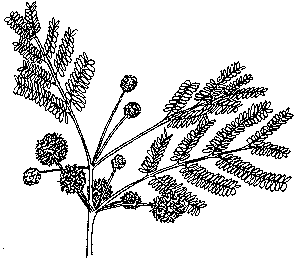
Leucaena leucocephala is a
fast-growing, leguminous tree
"I want to plant Leucaena, but which type should I choose?" Leucaena leucocephala is a fast-growing, leguminous tree that nearly all of you have heard about. It has been used for reforestation, for firewood, and as a forage crop that can equal alfalfa in nutritional value. Researchers have given it much attention in recent years. We have compiled the following recommendations from various sources in our files, especially from material provided by Dr. James Brewbaker, professor of horticulture and genetics at the University of Hawaii. There are three basic types of leucaena trees: Hawaiian, Salvador, and Peru. There are also crosses between these. You need to chose the type that best fills your needs. The Hawaiian type is short and bushy. Because its yield of wood and foliage is low compared to the other two types, this would probably be a poor choice. The Salvador type (Hawaiian giant) is tall and tree-like. The trees can grow 60 feet in height in 5 years. The best varieties of this type are K28 and K67. K67 is the best variety for projects that need high seed production. The Peru type is tall with extensive branching. The trees are good for forage; K6 is a good variety. An excellent forage-type leucaena is the Cunningham (K500) which was developed in Australia. It is a cross between the Salvador and Peru types.
Dr. Brewbaker has strongly recommended that we distribute more than one variety. He says, "...this is a self-pollinated, pure-line species, and it is a long-lived tree. We want to avoid spreading one variety over very large areas." (We presume this is because there is less danger of total loss from an insect or disease outbreak if several varieties have been planted.) His particular recommendation is that we distribute K28, K67 and K500. ECHO has these types among others and will be happy to send you several small packets for trial. If you want larger quantities or different varieties, write to us requesting a list of leucaena suppliers. We have addresses for suppliers in Asia, Australia, North and South America. We can also send a practical, two-page write-up by Dr. Brewbaker on how to germinate, transplant, collect and store seeds, etc.
Varieties K4 and K743 (hybrid) are low in mimosine, a chemical present in leucaena which can be toxic to animals when eaten in large quantities. Leucaena diversifolia is better for higher altitudes (500-2000m) than L. leucocephala; ECHO usually carries two varieties of this species.
See Chapter 8 on Plant Protection for information on the psyllid problems in Leucaena.
EYE-CATCHING LEUCAENA. Terry Waller wrote from Equatorial Guinea: "The velvet bean you sent before we were transferred to Bolivia was the most prolific and several church members were growing them in villages. The K8 variety of leucaena also grew great and we were able to introduce the concept of agroforestry. A recent letter from one of the farmers mentioned a surprising result: the aesthetic influence of agroforestry. He said that people from all over his neighborhood were coming by his garden (he lives in a very crowded slum area) and having pictures taken. Then they would get interested in the more practical aspects. Poor people like to feel good about their surroundings too."
THE MORINGA TREE, MORINGA OLEIFERA, IS CALLED MOTHER'S BEST FRIEND. That is one way they sometimes refer to this tree in the Philippines where the leaves of the malunggay, as they call it, are cooked and fed to babies. Other names for it include horseradish tree and drumstick tree (India) and benzolive (Haiti). Moringa is one of the most successful plants in ECHO's seedbank. Moringa tree leaves, pods, and roots are eaten; flowers are loved by bees; and seeds are powdered and used to purify water from murky rivers. I believe it is one of the most exciting and versatile plants that we have in our seedbank of tropical plants.
The leaflets can be stripped from the feathery, fern-like leaves and used in any spinach recipe. Small trees can be pulled up after a few months and the taproot ground, mixed with vinegar and salt and used in place of horseradish. Very young plants can be used as a tender vegetable. After about 8 months the tree begins to flower and continues year round. The flowers can be eaten or used to make a tea. They are also good for beekeepers. The young pods can be cooked and have a taste reminiscent of asparagus. The green peas and surrounding white material can be removed from larger pods and cooked in various ways. Seeds from mature pods (which can be 2 feet long) can be browned in a skillet, mashed and placed in boiling water, which causes an excellent cooking or lubricating oil to float to the surface. The oil reportedly does not become rancid and was once sold as "ben oil." The wood is very, very soft, though the tree is a good living fencepost. It makes acceptable firewood but poor charcoal.
It is an extremely fast-growing tree. Roy Danforth in Zaire wrote, "The trees grow more rapidly than papaya, with one three month old tree reaching 8 feet. I never knew there would be such a tree." The tree in our organic garden grew to about 15 feet in 9 months, and had been cut back twice to make it branch out more. It is well to prune trees frequently when they are young or they will become lanky and difficult to harvest. Where people begin breaking off tender tips to cook when trees are about 4 or 5 feet tall, the trees become bushier.
The folks to whom we have sent the tree in Africa have been pleased at its resistance to dry weather. Rob Van Os rated its growth, yield and potential as exceptional and added that it "can be planted after the other crops, even near the end of the rains." He has introduced it into several villages already. The first plants grew so well for Gary Shepherd in Nepal that he had us arrange for sending him 1,000 of the large seeds. He reports that at five months one was 12 feet tall and most were 6 feet.
There is more good news. The edible parts are exceptionally nutritious! Frank Martin says in Survival and Subsistence in the Tropics that "among the leafy vegetables, one stands out as particularly good, the horseradish tree. The leaves are outstanding as a source of vitamin A and, when raw, vitamin C. They are a good source of B vitamins and among the best plant sources of minerals. The calcium content is very high for a plant. Phosphorous is low, as it should be. The content of iron is very good (it is reportedly prescribed for anemia in the Philippines). They are an excellent source of protein and a very low source of fat and carbohydrates. Thus the leaves are one of the best plant foods that can be found." In his Edible Leaves of the Tropics he adds that the leaves are incomparable as a source of the sulfur-containing amino acids methionine and cystine, which are often in short supply.
It responds well to mulch, water and fertilizer. It is set back when our water table stays for long at an inch or two below the surface. We planted one right in the middle of our vegetable garden for its light shade. The branches are much too brittle to support someone climbing the tree. It is not harmed by frost, but can be killed to the ground by freezes. It quickly sends out new growth from the trunk when cut, or from the ground when frozen. Living fences can be continually cut back to a few feet.
CULTIVATION. I quote Alicia Ray, who wrote a booklet on the benzolive in Haiti some time ago. "It seems to thrive in impossible places-even near the sea, in bad soil and dry areas. Seeds sprout readily in one or two weeks. Alternatively one can plant a branch and within a week or two it will have established itself. It is often cut back year after year in fence rows and is not killed. Because of this, in order to keep an abundant supply of leaves, flowers and pods within easy reach, "topping out" is useful. At least once a year one can cut the tree off 3 or 4 feet above the ground. It will readily sprout again and all the valuable products will remain within safe, easy reach."
Scott Josiah writes that the Pan American Development Foundation in Haiti planted many kilometers of moringa as a living hedgerow on the contour of steep slopes, with mixed results. "In some cases, the growth has been excellent, nearly comparable to that of Leucaena leucocephala. However, M. oleifera has generally been a moderate performer, and seems rather sensitive to droughty sites and/or limited rainfall."
Beth Mayhood with Grace Mountain Mission wanted to establish a model vegetable garden on a small piece of land. "It was windswept and sunbaked with no natural barriers or trees in the area. Soils were poor and very alkaline. The salt content was also high. We started in January to prepare large quantities of compost. In April holes were dug in the poor soil and filled with compost. Benzolive trees planted in seedbeds germinated in 3-4 days. In 9 weeks they were transplanted in between the garden beds, around the edge of the 200 x 250 ft area and in a double row about 5 ft apart in the middle. The trees protected against the prevailing winds." I saw slides of this spot later. It was impressive. The light shade of the tree is a considerable help to most vegetables.
I cannot emphasize enough how important it is to use pruning of some sort. If left to itself the tree becomes quite tall and lanky. This method of cutting it back to 4 feet each year sounds good. One method I tried with some success was to cut each branch back a foot after it had grown 2 feet until it was a multibranched shrub. Alternatively, normal harvesting can have the same effect if begun while the tree is young. Beth Mayhood wrote, "We liked them so much we began picking the growing tips to boil as a spinach several times a week. This picking of the growing tips caused the tree to branch. Our constantly pruned trees became thick-limbed and many-branched."
I am told that when grown for its roots, the seeds are sometimes planted in a row like vegetables.
COOKING THE LEAVES. Alicia Ray writes, "Of all parts of the tree, it is the leaves that are most extensively used. The growing tips and young leaves are best. [Ed: However, we sometimes pull the leaflets off in our hands and cook them without regard to age.] Unlike other kinds of edible leaves, benzolive leaves do not become bitter as they grow older, only tougher. When you prepare the leaves, always remove them from the woody stems which do not soften. [Ed: We did not know this the first time we served them. It was like having wire in the dish.]
"The leaves can be used any way you would use spinach. One easy way to cook them is this: Steam 2 cups freshly picked leaves for just a few minutes in one cup water, seasoned with an onion, butter and salt. Vary or add other seasonings according to your taste. In India, the leaves are used in vegetable curries, for seasoning and in pickles. Let your imagination be your guide."
Ross Haliburton in Pakistan wrote, "We planted moringa seeds in April and, with hand watering, they have grown well. The tender leaves from six plants have been regularly used like spinach since July. A group of Afghan refugee men (chiefs and nurserymen caring for small nurseries in the refugee villages) visited us. When they saw the moringa trees they immediately asked for seed. We believe this tree has potential as a green vegetable in refugee villages, where there is a general lack of greens, especially through the summer."
Dr. Warwick Kerr wrote from Brazil that while he was the president of the State University of Maranhao, he organized a group of students and professors to carry out an extension project. They planted 25,000 moringa seedlings (all descendants from one small packet we sent him in an envelope a few years ago). "I like the moringa omelet that my wife prepares almost every morning. Collect a bowl of leaves, wash and fry for five minutes with sliced onions, garlic and salt. While this is cooling, minced tomato and onion are lightly fried then mixed with the fried moringa. Half a cup of this mix, two eggs and a spoon of any bullion soup mix are stirred and then cooked. It is delicious!" [He added that the chaya cuttings we sent made it fine and he has now distributed many plants in the community. "My wife is cooking it at least once a week and prepares it in many ways. This was the most sensational introduction: 8 small stalks in a regular airmail envelope!"]
Ronald Watts in Zimbabwe sent a copy of a letter to the editor that he wrote concerning moringa. It was published in "Productive Farming" magazine. "...I noticed several villages growing trees that I was unfamiliar with. They turned out to be Moringa oleifera. What was remarkable is that they were being grown for their leaves. One homestead had over 30 of these trees growing in a circle. In 36 years of wandering around Africa this was the first time I had seen trees grown in a traditional village purely for their leaves. The farmers said that the leaves were in high demand from their neighbors particularly in times of famine. Fresh leaves appear towards the end of the dry season when green food is in short supply. This tree would seem to have immense potential for improving human diets particularly in the hot and dry areas of Zambia and Zimbabwe. ...[Moringa] would seem to have great potential for feeding livestock. Several Zambian farmers who have tried leucaena for this purpose have been disappointed because it is extremely susceptible to termite damage. Moringa has the advantage that it is less susceptible and can be grown from cuttings. A 2-meter cutting means that from the day of planting the top of the tree should be out of reach of goats." Ronald says that though palatable to termites, moringa seems to be able to resist the challenge, particularly when grown from cuttings.
We have printed many success stories with the moringa tree. But cultures differ. Mr. C. N. Okonkwo in Nigeria ran into problems with acceptance. "All the seeds germinated and some are providing pods. Unfortunately I have not been able to convince any of the farmers to eat the leaves, except myself. The reasons are three: (a) the leaves have no eye appeal, (b) the leaves have a foul smell, (c) the growing tips have no commercial value. I am not disputing the claims regarding moringa. But in a community where so many broad-leaved vegetables thrive abundantly and some fetch good money, it is not hard to see why farmers look at this scanty small-leaved tree with some doubt."
COOKING THE PODS. Alicia Ray writes, "When young, horseradish tree pods are edible whole, with a delicate flavor like asparagus. They can be used from the time they emerge from the flower cluster until they become too woody to snap easily. The largest ones usable in this way will probably be 12 to 15 inches long and 1/4 inch in diameter. At this state they can be prepared in many ways. Here are three:
1. Cut the pods into one inch lengths. Add onion, butter and salt. Boil for ten minutes or until tender.
2. Steam the pods without seasonings, then marinade in a mixture of oil, vinegar, salt, pepper, garlic and parsley.
3. An acceptable "mock asparagus" soup can be made by boiling the cut pods until tender, seasoned with onion. Add milk, thicken and season to taste. Even if the pods pass the stage where they snap easily they can still be used. You can cut them into three inch lengths, boil until tender (about 15 minutes), and eat as you would artichokes. Or you can scrape the pods to remove the woody outer fibers before cooking."
COOKING THE PEAS. Alicia Ray writes that the seeds, or "peas," can "be used from the time they begin to form until they begin to turn yellow and their shells begin to harden. Only experience can tell you at what stage to harvest the pods for their peas.
"To open the pod, take it in both hands and twist. With your thumbnail slit open the pod along the line that appears. Remove the peas with their soft winged shells intact and as much soft white flesh as you can by scraping the inside of the pod with the side of a spoon. Place the peas and flesh in a strainer and wash well to remove the sticky, bitter film that coats them. (Or better still, blanch them for a few minutes, then pour off the water before boiling again in fresh water.) Now they are ready to use in any recipe you would use for green peas. They can be boiled as they are, seasoned with onion, butter and salt, much the same as the leaves and young pods. They can be cooked with rice as you would any bean.
"In India the peas are prepared using this recipe:
12-15 horseradish tree pods1 medium onion, diced
4 cups
grated coconut
2 bouillon cubes
2 inches ginger root
4 T. oil or bacon
grease
1 clove garlic
2 eggs, hard boiled
salt, pepper to taste
"Blanch both peas and pods' flesh, drain. Remove milk from 2 1/2 cups grated coconut by squeezing water through it two or three times. Crush ginger root and garlic, save half for later. Mix peas, flesh, coconut milk, ginger and garlic together with onion, bouillon cubes, oil, salt and pepper. Bring to a boil and cook until the peas are soft, about 20 minutes. Fry remaining coconut until brown. Fry remaining half of crushed ginger root and garlic in 2 T. oil. Dice eggs. Add coconut, ginger, garlic and eggs to first mixture, heat through. Serves 6.
THE DRY SEEDS. The dry seeds are apparently not used for human food, perhaps because the bitter coating has hardened. They are used for their oil, which is about 28% by weight. The oil can be removed by an oil press. I have heard reports that the residual cake is not safe to feed to animals, but I have not seen the results of any studies. Write to me if you have details. If an oil press is not available, seeds can be roasted or browned on a skillet, ground, then added to boiling water. The oil floats to the surface. Alicia Ray says that roasting is, however, not necessary.
Randy Creswell in Mali wrote, "The Khassonkes in Mali have been growing moringa trees for their leaves as far back as anyone's knowledge seems to go. Besides leaves, we have found good profit in a high quality edible oil readily pressable from the seeds. We are planting 1500 moringa seedlings."
THE FLOWERS. A visitor who had spent time in the Pacific area told me recently that the flowers are eaten there. Unfortunately, I do not recall details. Perhaps our readers can help. Alicia Ray says they are used in Haiti for a cold remedy. Water is boiled, then a cluster of flowers is placed to steep in it for about 5 minutes. Add a little sugar and drink as needed. It is very effective!
THE ROOTS. The tree is uprooted and the roots grated like horseradish. Alicia Ray says to one cup grated root add 1/2 cup white vinegar and 1/4 t. salt. "Chill for one hour. This sauce can be stored for a long time in the refrigerator." The following caution quotes from a recent review by Dr. Julia Morton in Economic Botany.
"The root, best known in India and the Far East, is extremely pungent. When the plant is only 60 cm tall, it can be pulled up, its root scraped, ground up and vinegar and salt added to make a popular condiment much like true horseradish. ...The root bark must be completely removed since it contains two alkaloids allied to ephedrine - benzylamine (moringine), which is not physiologically active, and the toxic moringinine which acts on the sympathetic nerve endings as well as on the cardiac and smooth muscles all over the body. Also present is the potent antibiotic and fungicide, pterygospermin. The alkaloid, spirachin (a nerve paralyzant) has been found in the roots.... Even when free of bark, the condiment, in excess, may be harmful." (The key words are "in excess"-the body can detoxify small amounts of a great many things.)
USE AS AN ANTIBIOTIC. A study at University of San Carlos in Guatemala is summarized. Herbal applications are commonly used to treat skin infections in developing countries, although few investigations are conducted to validate scientifically their popular use. A previous study had showed that moringa seeds are effective against skin infecting bacteria Staphylococcus aureus and Pseudomonas aeruginosa in vitro (i. e. in a test tube). This study showed that mice infected with S. aureus recovered as quickly with a specially prepared aqueous extract of moringa seed as with the antibiotic neomycin.
This study proves only the effectiveness of moringa as they prepared it. That preparation could be done in any country, but not with just household utensils. It was prepared by infusing 10 g powdered moringa seeds in 100 ml of 45 C water for 2 hours. The part that is a bit more complicated is reducing the 100 ml down to 10 ml by placing it in a rotavaporator. This is a very common piece of laboratory equipment which continually rotates a flask containing the liquid. An aspirator attached to a faucet produces a modest vacuum when the water is turned on. A rubber tube from the aspirator is connected to the rotavaporator, reducing the pressure and causing the water to evaporate rather quickly without boiling it. The ointment was prepared by placing 10% of the extract in vaseline. (We can send a copy of the article to medical personnel.)
Are you in a situation where there is a shortage of antibiotics? This ointment could be prepared for use in the local community wherever there is electricity and running water. Simpler methods, better suited to preparation as needed in the home, might also be effective. I hope someone will devise and test such preparations.
ECHO can provide trial-sized quantities of Moringa oleifera from the trees on our farm. For those seeking other potential sources we can recommend the following: Christas Cactus, 529 W. Pima, Coolidge, AZ 85228, USA; phone 602/723-4185. Greenleaf Seeds, P.O. Box 98, Conway, MA 01341, USA; phone 413/628-4750 (No telephone orders). Of the Jungle, P.O. Box 1801, Sebastapol, CA 95473, USA. Peace Seeds, 2385 S.E. Thompson Street, Corvallis, OR 97333, USA; phone 503/752-0421. Peter B. Dow & Co., P.O. Box 696, Gisborne 3800, NEW ZEALAND; fax (079) 78 844. Ellison Horticultural Ltd., P.O. Box 365, Nowra, N.S.W. 2541, AUSTRALIA; phone 6144-214255. Kumar International, Ajitmal 206121, Etawah, Uttar Pradesh, INDIA. Samuel Ratnam, Inland & Foreign Trading Co., Block 79A, Indus Road #04-418, SINGAPORE 169589; phone 2722711; fax 2716118.
Tom Post in Belize mentioned that his moringas are growing so well he now needs recipes. The Philippine book Learn to Eat Malunggay has 18 pages of recipes; write to ECHO for a photocopy.
Refer to Chapter 11 on Human Health for information on using moringa in water clarification.
If moringa does not already grow in your region, you may request a trial packet of the marble-sized seed. It grows wild in many places (such as Haiti and the Dominican Republic) where people do not know it is edible. The moringa is one of God's abundant resources for the struggle against world hunger.
MORINGA STENOPETALA. Moringa oleifera, native to India, is the number one seed in our seedbank, in terms of number of requests and positive reports. When we learned that a moringa native to Ethiopia had larger edible leaves, more drought resistance, and larger seeds (important for those using moringa to purify water), we were obviously interested. Dr. Samia Jahn shared some seed with us in the past, but our supply is very erratic; if you request seed (FOR OVERSEAS NETWORK ONLY), be aware that you may have to wait a while to receive the seed. If this is your first interest in moringa, please do initial trials with M. oleifera. If you have had success with M. oleifera, it may be time to try this "new" species.
Michael Madany wrote from Somalia of his comparison trial with seed received from elsewhere a few years ago. "In spite of the initial rapid growth of M. oleifera, in drier years the species has not done well without some watering. The M. stenopetala, by contrast, has the lushest green foliage and continued to grow during the exceptionally long dry season from last August until this April. We began cooking leaves and young shoots in April (taste of the two species very similar). We obviously aren't eating it fast enough, since two large limbs have fallen under their own weight." Freezes damaged our one M. stenopetala, forcing subsequent branching from low on the trunk. Consequently, I have not seen a "normal" mature tree. Dr. Jahn says that in the Sudan M. oleifera develops into a slender tree, M. stenopetala into a round shrub-like tree. Before the first freeze, however, a few important differences became clear. The trunk is considerably thicker at the base, the tree seems more vigorous, the leaves are larger, and if tasted raw the leaves are milder.
The more bushy M. stenopetala can be planted as a wind break. "Seedlings were planted in a windy corner at a spacing of 1 m. As soon as the upper branches of the tree grew broader, they were cut and the trees responded by more profuse growth of their lower branches, thus thickening the hedge. Vegetables cultivated behind it profited from this protection."
M. stenopetala has been grown as an ornamental in private gardens of Europeans in Kenya, reaching 10-12 meters and their trunk diameter is at least 2-3 times as thick as that of M. oleifera in Sudan. In Ethiopia it is cultivated as high as 1800 meters (5400 feet), where people use ash as the main fertilizer. By the end of a long dry season the trees may have lost their leaves.
We have been disappointed that ECHO's 8-year-old M. stenopetala tree has not yet flowered. We thought it was due to its having been badly damaged by two freezes. Dr. Jahn cites reports that M. stenopetala trees are not as quick to set flowers as M. oleifera. In Sudan the first flowers appeared after 2 1/2 years, compared to 11 months for M. oleifera. Charlie Forst in Haiti reported that his tree flowered in 15 months, grown from a cutting, which may make the difference. In the central plateau of Haiti, the low-branching, large-leaved M. stenopetala has far superior growth in the dry season. It is in full leaf after months without rain, while M. oleifera suffers after severe drought.
Michael Madany wrote again, this time from Kenya. "Since I am quoted in EDN with regard to our experience with Moringa stenopetala in southern Somalia, I'd like to send a few more comments. The last time I saw the trees we planted in February 1986 was January 1990. They had only flowered once (in 1987 or 1988; only a few flowers) and never set seed. Thus, whenever I wanted to plant more, I was obliged to use cuttings. As far as a source of green vegetable matter in the dry season, the tree surpasses its domestic relative Moringa oleifera in that climate (bimodal rainfall of 400-800 mm; 20-40 C). However, for the purpose of producing water-purifying seeds it seems to be not so successful, at least in the first 5 years. I am mystified as to the reasons for this. The provenance for our trees was over 500 km west at a considerably higher elevation." Michael mentions that during the civil war in Somalia the project buildings were destroyed and "all the trees in our garden were cut down."
Jay Ram wrote from the Pacific Neem Mission in Hawaii. "My Moringa stenopetala tree is now 10 feet tall and growing vigorously. I really share your enthusiasm for this wonderful tree. It is one of the best species we have come across. Fast growing with good form, and high palatability. In fact, I commonly will eat the boiled leaves by themselves, [something I do not do with Moringa oleifera which is common on the island]."
There is another interesting difference. The roots of M. oleifera are used as a condiment similar to horseradish. With M. stenopetala it is the bark that is so used.
Dr. Jahn reports on work in the Sudan which shows that optimum light for germination of all moringa species is half shade. When sown in the hotter weather of mid-April, germination percentages for M. stenopetala and M. oleifera were only 54 and 40 percent, compared to 92 and 94 percent in half shade. During the cool dry season there was little difference. Both moringa species can be started from cuttings. However, trees grown from cuttings are known to have much shorter roots. Where longer roots are an advantage for stabilization or access to water, seedlings are clearly preferable.
ECHO does not have a regular source for M. stenopetala. Watch future EDNs for availability, or write to be on our waiting list (send last date we should send seed).
THE NEEM TREE (AZADIRACHTA INDICA) FOR REFORESTATION AND AN EFFECTIVE INSECTICIDE. I first encountered the neem tree in Haiti, where hundreds have been planted along highways. I understand that it was chosen in part because it would grow very quickly and encourage the people that reforestation was possible. When I last visited Grace Mountain Mission in Port-au-Prince, there were 15-20 foot neem trees where there had been nothing a year before! Its seeds contain an especially effective natural insecticide. See Chapter 8 on Plant Protection for more on using neem as an insecticide.
The tree originated in India or Burma, where it is used widely for its insecticidal and medicinal properties. It is also grown in much of Africa, primarily for firewood. Seeds contain up to 40% oil which can be used for soap or lamp fuel. The residual neem cake is a good fertilizer with some nematicidal properties. (It is the neem oil that is primarily used as an insecticide; water extracts of powdered kernels also can be used in this way.) Neem is fast-growing and drought resistant, excellent for reforestation of semiarid lands. It is an evergreen (except in extreme drought) and valued for its shade-especially in cities-and windbreak protection. It grows best in deep, well-drained sandy areas, but thrives even on acid soils. It may fail in silty or clay soils and in waterlogged sites. To plant, pick fully ripe seeds directly from the tree and plant immediately. The trees may be direct sown or transplanted, and they benefit greatly from tillage, weeding, irrigation, and some fertilization in the first few months of growth (or after transplanting). Neem has been established in many countries throughout the tropics; there is a good chance you may find seed in country if you make inquiries.
A good source of additional information is the National Academy of Sciences publication Neem: A Tree for Solving Global Problems. It is available from: BOSTID Publications-HA 476, 2101 Constitution Avenue N. W., Washington, D.C. 20418, USA. ECHO now has it available for sale for $19.00 plus $2.00 postage in the USA. If you work with small farmers in the developing world, write ECHO before ordering about how this book would be useful in your work; you may qualify for a substantial discount.
Ordering neem seed can be difficult. The seeds may be viable for less than a month. You are strongly encouraged to find local sources of the seed. When ECHO receives an order, we hold the orders until either our tree produces (which it does not do every year) or we obtain a fresh shipment from overseas. For those visiting ECHO, we often have seedlings available in our nursery. We also refer you to some potential U.S. sources:
EXTRACT: AgriDyne Technologies, Inc., 417 Wakara Way, Salt Lake City, UT 84108, (801)583-3500; fax 583-2945. Ringer, Valley View Road, Eden Prairie, MN 55344. Jim Walter, W.R. Grace Washington Research Center, 7379 Route 32, Columbia, MD 20861, (410)531-4000.
SEED: Seeds are only available on a seasonable basis, as they must be planted within 3-4 weeks of harvest.
Agricultural Research Service (ARS), US Department of Agriculture (USDA), 13601 Old Cutler Road, Miami, FL 33158, (305)238-9321. The Kerr Center for Sustainable Agriculture, Vero Beach Research Station, 7055 Cherry Lane, Vero Beach, FL 32966, (407)562-3802. Robert Barnum, Possum Trot Nursery, 14955 S.W. 214th Street, Miami, FL 33187, (305)251-5040. FLAG Unit, International Livestock Centre for Africa(ILCA), P.O. Box 5689, Addis Ababa, Ethiopia. The Tree Seed Program, Ministry of Energy and Regional Development, P.O. Box 21522, Nairobi, Kenya.
SEEDLINGS: Saleem Ahmed, East-West Center, 1777 East-West Road, Honolulu, Hawaii 96848, USA; phone 808/944-7111. Robert Barnum, Possum Trot Nursery, 14955 S.W. 214th Street, Miami, FL 33187; phone 305/251-5040. John Conrick, Winter Park, FL; phone 407/384-7616. Chip Gardner, CA; phone 209/674-9543. Pacific Tree Farms, 4301 Lynnwood Drive, Chula Vista, CA 92010 ($36 per plant, no seeds). Marlin Huffman, Plantation Botanicals, Inc., PO Box 128, Felda, FL 33930; 813/675-2984, fax: 675-4591, (top quality West African germplasm from Larson, planted mid-1991). Sandy Mush Herb Nursery, Rt. 2, Surrett Cove Rd, Leicester, NC 28748; 704/683-2014, (root cuttings).
INFORMATION:
The Neem Association, 1511 Oneco Avenue, Winter Park, FL 32789, USA. (May be closed.) Axel Bosselmann, POB 1166, Charters Towers, 4820 Qld., AUSTRALIA (publishes Neem Notes).
OVERSEAS SEED SOURCES (for those working overseas only please):
Jean Hanson, ILCA, FLAG Unit, P. O. Box 5689, Addis Ababa, ETHIOPIA.
The Tree Seed Program, Ministry of Energy & Regional Development, P. O. Box 21552, Nairobi, KENYA.
Henry Doubleday Research Association, Ryton-on-Dunsmore, Coventry, CV8 3LG, UK; phone 0203-303517. H.E. Ostmark, Ph.D., Director of Research,
FHA (Fundaci�n Hondure�a de Investigaci�n Agr�cola, Apartado Postal 2067, San Pedro Sula, HONDURAS; phone 504/68-2078, 68-2470; fax 504/68-2313 (willing to fill requests for Neem from Central America. Available September only).
Rene D. Haller, Baobab Farm Limited, P.O. Box 81995, Mombasa, KENYA; Telex 21265; phone 485729/754/501.
Roy B. McKenzie, McKenzie Agrisystems, Ltd., PO Box 95979, Mombasa, KENYA; phone 433460 Mombasa, 747131 Nairobi; fax 432309 Mombasa.
Tanzania, Forestry Research Institute, Silviculture Research Centre, P.O. Box 95, Lushoto, TANZANIA.
Forestry Research Institute of Malawi, P.O. Box 270, Zomba, MALAWI; phone 522866/522548.
Kenya Forestry Seed Centre, Kenya Forestry Research Institute, P.O. Box 20412, Nairobi, KENYA, phone: 0154-32541.
Regional Seed Centre, Forestry Commission, Forest Research Centre, P.O. Box H.G. 595 Highlands, Harare, ZIMBABWE; phone 47070/46878/9.
Nathanael Ariyo Olonire, P.O. Box 2674, Sokoto, NIGERIA, West Africa (bulk neem seed, leaves etc.).
Professor S.X. Charles, Director, "Thayagam", 172 K.P. Road, NAGERCOIL-629001, Kanyakumari District, Tamil Nadu, S. INDIA.
India Nursery & Seeds Sales Corporation, P.O. Box 4314, 36/962 DDA Flats, Kalkaji, New Delhi-19, INDIA (neem seed bulk).
Shivalik Seeds Corporation, 47 Panditwari, P.O. Prem Nagar, Dehra Dun -248 007 (UP), INDIA; phone 91 135683348; fax 91 135 29944.
Kimberly Seeds, 51 King Edward Rd, Osborne Park 6017, AUSTRALIA; phone (09) 4464377 (neem seed bulk).
Green Gold Intl., 14071/5, Prabhat Nagar, Dholewal, Ludhiana 141003, INDIA; phone 0091(161)535461; fax 009(161)28515, 34793 (neem seed or stem cuttings from superior seeds for rooting under mist).
CROSS-POLLINATE TO GET NEEM SEED. Norman Siegel in Mexico asked about a neem tree that did not bear seed. They ended up with only one tree from the seed packet we sent. This can easily happen because neem seeds are only viable for perhaps a month. "We have been reproducing it by cuttings but it has not yet seeded." The problem may be that neem must be cross-pollinated with an unrelated neem tree. We planted two neem trees at ECHO, about 200 meters apart. We waited in vain for fruit to set the first two years after they reached blooming age. The next year we had a small tree in a pot that was blooming, so positioned it on a small platform near one side of the larger tree. That year we had fruits in a circumference of a few feet around where that pot had sat. I have never read of this requirement, but in most real-life situations other trees would be nearby.
We planted a second tree beside our one tree. Last year it bloomed, and both trees produced fruit. We grafted this tree onto the more distant tree. The tiny grafts gave a few blossoms and I believe we got some fruit. Our Edible Landscape Nursery is preparing to sell neem trees with an unrelated graft so that home owners who only have room for one tree can get seed. A veneer graft takes well.
By the way, a 26 F freeze had this effect on our seven-foot neem tree: I had water spraying on the tree that night at about 4 feet. It was fine from there down, but after some weeks the leaves above 4 feet dropped. Eventually all parts that were not protected with water spray died.
NEEM IN AFRICA. Ralph Kusserow in Tanzania wrote, "After reading about the neem tree in EDN I really wanted to try it, but was afraid to order seed because it is viable for such a short time. Then I found that we have it here in Tanzania, though not in our area. In case you have anyone else in a Swahili-speaking area, it might help to know that it is called mwarobaini in Swahili. That means the "forty tree," so called because it supposedly makes medicines to treat 40 diseases. ...My main interest in neem is your report that the leaves can make a tea to deter termites. One of our friends has built a house every year for three years because of termite damage to the grass roof. I am anxious to see if neem leaf juice might be used in this situation."
PAULOWNIA, CHINA'S WONDER TREE. I asked Zhu Zhachua with the Chinese Academy of Forestry in Beijing, China for Paulownia seed after reading about it in IDRC Reports. [IDRC Reports is published by the Canadian aid agency, IDRC. Every issue is interesting. Contact IDRC, P.O. Box 8500, Ottawa, Ontario, CANADA K1G 3H9; internet mag@idrc.ca.] Two species of this broad leaf tree, Paulownia glabrata and P. elongata, are now widely planted in China, where it is adapted to most of their climatic zones. A 15 cm long root cutting can grow 18 feet (6 m) the first season. A 5-year-old tree can reach 17 m and have a 30 cm trunk diameter. Leaves make good animal fodder. It is planted for timber (though not of the highest quality) and firewood. It is intercropped with crops such as wheat, corn, millet and vegetables, to protect against wind, for shade, and as a green manure. Intercropped land in China has increased from 20,000 hectares in 1970 to 1.3 million today. For example, using 10 m rows and 5 m spacing in a wheat field, the yield of wheat was the same as in open-field cultivation. When the distance between the rows was increased to 20-40 m, the yield actually increased 7-10%. There are Paulownia plantations in the USA for export to Japan. ECHO does not have Paulownia seed; we refer you to Dr. Peter Beckjord at the National Paulownia Center, 10908 Dresden Dr., Beltsville, MD 20705, USA; phone 301/937-4635. You must send him US$1 to cover postage for basic instructions, a brochure, and an introductory packet of 500-1000 seeds. He also has much more information available if your trials go well.
SESBANIA ACULEATA FOR FIREWOOD THAT GROWS UNDER TOUGH CONDITIONS. Bob Burns in Bangladesh sent us a few seeds of this plant, also called Sesbania bispinosa, prickly sesban and dhaincha. According to the book Firewood Crops by the National Academy of Sciences, this is a quick-growing shrub that can produce a low-density firewood in only six months. In Vietnam it is grown in rice fields and its stems harvested for firewood before the rice crop is planted. It is a legume that nodulates vigorously. Its fibers are very similar to birch, one of the best trees for paper. Stems can be processed into a jute-like fiber, used for making fishing nets, sacks and sails. Other uses include for windbreaks, erosion control, cover crop and green manure. The leaves reportedly make good cattle fodder. It is well adapted to difficult soils. It will grow on saline and alkaline wastelands and wet, almost waterlogged soils, even in areas that often remain barren for want of suitable crops. No seed treatment is required. It grows so well that it is excellent at suppressing vigorous weeds such as Imperata cylindrica. (If you did not want the tree, it might itself become a serious weed pest.)
SESBANIA SESBAN RECOMMENDED FOR ALLEY FARMING AT HIGHER ELEVATIONS. (Common names: sesban, Egyptian rattle pod, suriminta, soriminta.) It is a great help to us when scientists in ECHO's network take the initiative to let us know about items of likely interest to our readers. A good example of this is a letter from Simon Chater at the International Livestock Centre for Africa (ILCA). He wrote, "A good alternative to leucaena for alley farming in highland areas (above 1800 meters) seems to be Sesbania sesban. We are growing this in hedgerows on broadbeds and ridges made with specially adapted ploughs in heavy clay soil. They are yielding 800 kg to 6 tonnes per hectare per year, depending on the cropping pattern. Under difficult highland conditions (frost, hail) in soils prone to erosion and waterlogging, this browse legume tree looks to be the most promising thing we have yet tried."
According to a paper from NFTA, Sesbanias: A Treasure of Diversity, sesban is "adapted to arid and semi-arid regions up to about 1200 m and to acid soils." I asked Nancy Glover at NFTA about this difference in recommended altitudes. Nancy said that there is a lot of confusion about limitations of altitude. Reported altitude requirements are so dependent on the latitude that they are often not at all comparable. It is possible that the two countries have quite different varieties.
The following information comes from the National Academy of Sciences book Firewood Crops, Vol. II. Sesban is a fast-growing, short-lived tree that regenerates rapidly after pruning. It is a copiously branched shrub growing no more than 6 meters. The wood yields an excellent gunpowder charcoal. Stems have been used for arrows, pipes, roofing for huts and, in fact, sesban is cultivated as a substitute for bamboo. Flowers are eaten as a vegetable, leaves eaten in Thailand, and the high protein seeds (33.7% protein) are a famine food in India (seeds must be soaked 3 days then cooked for half an hour to remove the toxic constituent caravanine). In India it is planted as a green manure in both dry and wet rice fields, plowed under before planting the rice. It is also used in India as a windbreak and shade for vegetables and as a support for grape, black pepper and cucurbits. It withstands acid soils, periodic flooding and waterlogging. It can endure 0.4-1% salt as a seedling and 0.9-1.4% near maturity. No seed treatment is required before planting. There are a lot of insect and fungus problems. The tasty leaves must be protected from cattle. (ILCA in Ethiopia originally supplied ECHO with some seed. They have since merged with ILRAD in Kenya to form ILRI, the International Livestock Research Institute. You may still be able to obtain seeds from ILRI at P.O. Box 5689, Addis Ababa, ETHIOPIA.)
SESBANIA GRANDIFLORA. Eliazar T. Rose of the New Hope Leprosy Trust, India, wrote, "I keep reading of people trying and promoting Moringa trees and from the seeds you sent us we have seen hundreds of trees extended. But wherever moringa grows here so does the Sesbania grandiflora. This is strong in the winds, grows just as fast, produces far more edible beans and flowers and is more attractive as fodder to goats and cows. If anything, after many years I would say first to sesbania and second to moringa."
[Editor: These are valuable comments. It shows how different two locations can be. When I planted the first moringa tree at ECHO I also planted a Sesbania grandiflora beside it. It indeed grew just as quickly. That fall a tiny "inch worm" totally defoliated the tree. When it happened the second year the tree died. We have tried many times since then. Each time we have had to spray the tree frequently to control the inch worms and even then eventually lost the tree to nematodes, which are as bad in our sandy soil as they ever get. It is one of the few important trees we just cannot seem to grow. We usually can send a small packet of seeds (which we obtain elsewhere) if you would like to see how it does in your area. If you need information on its use, make note of that with your request.]
TAGASASTE, CHAMAECYTISUS PALMENSIS, A TEMPERATE COUNTERPART OF LEUCAENA. The following is abstracted from the NFTA description. A small, shrubby tree from the extremely arid volcanic slopes of the Canary Islands holds promise for fodder, firewood and other uses in tropical highlands, Mediterranean climates and temperate regions. There are no thorns. Canary Island farmers have depended for centuries on tagasaste as fodder during the long, dry summers. New Zealand and Australian farmers are trying it today in cut-and-carry systems. Leaves contain 20-24% protein. All grazing animals and pigs and poultry readily consume the leaves. There are no reports of toxicity. Plant as a hedge for wind and sun protection. Coppicing ability is excellent (i.e. they come back when cut). It is the first tree to flower in the spring, so it is excellent for bees. Wood is popular for lathe work. It has potential for alley cropping. During the 2-3 year establishing phase, pruning back to ground level encourages multiple stems and self-protection when grazing commences. Sheep may eat the bark and kill trees. Tagasaste prefers sandy soils, but thrives on gravels, loams, limestone and laterites, as well as slag heaps and mining dumps. It does best with an annual rainfall of 350-1600 mm and soil pH of 5.0-7.0. Soils must be free draining to prevent root rot. Can survive winters of -9 degrees C. Can be inoculated with cowpea inoculant. Few insect problems. (ECHO has difficulties getting seed of tagasaste. If it grows in your area, we would like to hear from you and send you our seed import permit.)
Fruit and nut species
FRUITS OF WARM CLIMATES by Julia Morton is an authoritative source for information on sub/tropical fruits from around the world. Possibly our most-used reference book at ECHO, this 505-page hardcover book has comprehensive information, excellent photographs, and practical growing hints for over 150 well- and lesser-known fruits and related species. It offers regional names, complete information on varieties, food value and toxicities, propagation, harvesting and storage, and medicinal uses, etc. of the various fruits. It is an indispensable resource for anyone who works extensively with tropical fruit production. Order from ECHO for US$75 plus postage ($5.50 within the US; $10 to Canada or Mexico) by credit card or check drawn on a US bank. Due to the weight and value of this book, we cannot ship overseas.
"TROPICAL FRUIT PRODUCTION AND RESEARCH" is a very popular graduate course that has been offered every other year at the University of Florida's Tropical Research and Education Center by Dr. Carl Campbell. When ECHO hired Scott Sherman as Assistant Director in 1988 the first thing he did was take that course. Although Carl is "retired" he still teams up with Dr. Jonathan Crane, the man who assumed his position, to offer the course in the summer (approximately mid-May to mid-June). This course is geared toward highly motivated students. You must register for credit through the university and pay tuition (which will be out-of-state for most of you). There are no special scholarships. A B.S. degree in a plant or agricultural science is a prerequisite (with some exceptions). Enrollment is limited. Lectures and field trips take place between 8 and 5 weekdays, so the course requires a full-time commitment. Contact Dr. Crane at TREC, 18905 S.W. 280 St., Homestead, FL 33031, USA; phone 305/246-6393; fax 305/246-7003. The course will be offered in 1996.
ECHO'S VIDEO SERIES ON TROPICAL FRUITS. Dr. Carl Campbell is well known to readers of EDN. His answers to your tropical fruit questions have appeared in many issues. Until his recent retirement, Carl was professor of tropical fruit at the University of Florida, responsible for teaching, research and extension. He is also known to many Floridians for his popularity on the speaking circuit at the many tropical fruit clubs in this State. His knowledge of and enthusiasm for the subject of tropical fruit is contagious.
Imagine standing under a mango tree with Carl while he shared the most interesting and helpful things he knew about mangoes. Then envision going to other trees and doing the same thing for 10, 20 or 30 minutes: avocado, canistel, loquat, macadamia etc. I had this privilege during four different seasons, videotaping his discussion. ECHO intern Mary Cockram, a communications and agriculture graduate of Cornell, then spent hours editing it down to approximately 8 hours of teaching. Now you too can meet Carl under some of his favorite trees!
The first tape in the series, called "Introduction to Tropical Fruit," was made last. We found that people coming to ECHO to study before heading overseas were so unfamiliar with tropical fruits that they did not even know it was a subject they should want to learn about. I must admit that 20 years ago, when reading the account of Adam and Eve in the Garden of Eden, I would envision them eating apples, pears, cherries and other temperate fruits. Most Americans would be hard pressed to even name a tropical fruit other than banana, pineapple, mango, and avocado. So we asked Carl to put together a 70-minute slide presentation. Fruits of the lowlands, middle elevations and then high elevations are discussed in order, each divided into major fruits, lesser known fruits with considerable potential, and locally important fruits. Every time I see it I am not only enthused again for the potential of tropical fruits in development projects, but am struck with awe at the richness of the world God has created for our joy and benefit.
The only other tape that was not made "standing under the trees" is the one on papaya and coconut. Carl's discussion of these two fruits is based around a series of slides.
The tape on grafting tropical fruit will be of special interest to many of you. Closeup photography and Carl's running comments show several of the most useful grafting techniques. After viewing this tape a few times, then getting some hands- on practice, you should have a powerful new tool for your ministry. You can use the tape in teaching if you provide the commentary in the local language.
TAPE # 1 - (73:03 minutes) Introduction to Tropical Fruit.
TAPE # 2 - (81:58 min). Part I. Grafting Tropical Fruit (60:08 min); Part II. Avocados (21:50 min).
TAPE # 3 - (85:13 min). Part I. Guava, pineapple and macadamia (34:30 min); Part II. Mamey sapote, sapodilla, eugenia family, jaboticaba, velvet apple, black sapote, white sapote, white mombin, strawberry tree (50:43 min).
TAPE # 4 - (79:02 min). Part I. Atemoya, passion fruit, inga, loquat and naranjilla (29:15 min); Part II. Akee, tamarind, jujube, carissa (21:16 min); Part III. Carambola, canistel, monstera, barbados cherry (28:31).
TAPE # 5 - (69:12 min). Part I. Mangoes (40:00 min); Part II. Papaya, coconut (29:12 min).
TAPE # 6 - (67:36 min). Part I. Banana and jackfruit (26:00 min); Part II. A conversation with Carl Campbell about tropical fruit and development (41:36 min).
ORDERING INFORMATION. Several have written asking us to remember that the world uses three video systems. We have done so, though the duplicating costs for other than NTSC tapes (NTSC is the system used in the USA) are much higher. Each NTSC tape sells for $29.95 plus shipping and handling; all six for $150. Prices in the other two systems, PAL and SECAM, are $40 per tape, $200 per set. FOR POSTAGE: contact ECHO. Payment must be in US dollars, either a check drawn on a US bank or your credit card (send authorization to use it and expiration date). Please add 6% sales tax for orders shipped to Florida addresses.
We are offering a subsidized price for only those readers who work directly through non- profit organizations to help peasant farmers or urban gardeners in the Third World. These qualify for a 50% discount on the price of tapes. Explain the nature of your work and name of the non-profit organization (unless it is on file with your EDN application). This discount applies also to PAL or SECAM, although in SECAM that price represents less than our costs of reproduction alone.
We are excited at the potential of video for taking the training to you. (Of course people studying at ECHO can study them here at no cost.) Other series are being planned. We welcome suggested topics. Maybe you could even offer some raw footage of your own on a special local technique that we could include in a future video. We especially want an evaluation of this series from those who use them.
TROPICAL AND SUBTROPICAL FRUIT TREES FOR ARID REGIONS. I spent some time in conversation with Dr. Carl Campbell recently about fruit trees for areas that are arid for much of the year. Dr. Campbell, researcher and state extensionist for tropical fruit in Florida, has been the source of other information in these pages. Sentences or phrases preceded by an asterisk mean that we need more information that some of you may be able to supply.
Balanites. This desert date is one of the toughest of trees in Ethiopia and Somalia. It is "survival fare," as the edible small fruit is bitter, but it is high in carbohydrate and is not toxic. *Who can get us some seed to share? Prickly pear cactus, Opuntia spp., can be quite productive. [Popenoe's Manual of Tropical and Subtropical Fruits (MTSF) says that the best varieties can produce on lean sandy or rocky soil, ill-suited for growing ordinary crops, with yields up to 18,000 pounds of fruit to the acre which would contain about 2500 pounds of sugar.] *Varieties have been selected but we have little information on this. There is some commercial production in California, Italy and North Africa. The fruits are quite tasty, about the size of a lemon. They can be started from seed, but more commonly from joints. Carl thinks quite highly of this fruit. MTSF says, "An important advantage is the regularity of the yearly crop. They begin to bear about 3 years after planting and continue for many years". If you cannot find plants locally you can write us for seed. I have not yet located a supply, so be patient. Indian jujube (Zizyphus jujuba) tolerates both fairly wet or fairly dry conditions and will grow in near desert conditions. It is a very vigorous and hearty tree that will take about anything except freezes. It is extremely productive and has few disease problems. Though it grows to a good size, it can be pruned into any shape and would be good for espalier. People feed leaves to goats during dry weather. Carl knows of no named varieties. Do not confuse this with the Chinese jujube which is hardy even into the Ohio valley in the USA but will not do well in warm climates like southern Florida. ECHO has seed each year around February. Imbe (Garcinia livingstonei) grows in some pretty arid places and is fairly productive, though it is not a desert tree. It has a bulbous base underground like many arid and fire-resistant trees. It is so closely related to the mangosteen that it can be used as mangosteen rootstock. Quoting from Sturrock's Fruits for Southern Florida, it is "quite hardy in southern Florida and grows equally well on the acid sandy soils and alkaline rock soils. [To be hardy here means it can stand high rain and humidity also.] (Several generations of) trees grown from seed were quite fruitful with little variation in fruits. There are male and female trees. The stiff, unsymmetrical growth and the grey-green stiff foliage give it an unusual and striking appearance. ...The small orange-colored fruits have a thick tough skin and a very large seed. The small amount of juicy acidulous pulp has a pleasant flavor. It is, however, more a curiosity than an economic fruit."
APPLES FOR THE HIGHLAND TROPICS. We became acquainted with Jim Abbott in 1982 when we were looking for someone willing to give attention to small overseas orders. Some of you will remember the "bench grafted" apple trees that he offered some years ago. These apple roots with scions grafted to them were so small that up to 30 could be shipped in a package the size of a shoe box. There were a few successes, but most shipments had died in transit.
I called Jim for an update. He has had better luck with bench grafted trees that were ordered in sufficient quantity to ship by air freight (faster than regular airmail). However, several of them still have died within a few months.
Now he prefers to dig up established but quite young trees, much younger than would be dug for domestic shipment. Typically he chooses plants 12-18 inches tall that were budded in May or July and dug in the winter. They are still small enough that a person could fit 100 trees into a suitcase.
Advance planning is essential, even with small orders. Jim likes to begin correspondence early in the year, but can only ship when the trees are dormant (mid-December through March). If you travel to the States, it would be ideal to talk with him by phone. Whenever possible it is best to transport the trees in a suitcase when returning home or when someone is visiting. Otherwise there may need to be an exchange of letters to determine just how the trees are to be shipped and how many dollars to send him in advance to cover shipping-which can be more than the price of the trees. Jim figures that the maximum safe time for trees to be in the mail is about two weeks. The trees themselves are US$2.50. (They would be less if you are ordering several hundred, but unless apples are already proven in your area I would hesitate to start with that many.)
Jim can provide a phytosanitary certificate if requested. You will need to check with your government to obtain necessary permits for importing trees. A very small hand-carried or mailed package might be allowed into some countries, but the risk of a large, expensive shipment dying in customs is too great not to investigate beforehand.
Recently Jim has sent fairly large orders to Ethiopia, and 28,000 trees to Honduras where a Japanese project has built a cooler to keep trees dormant until planting season. In Honduras (I believe at about 7,000 feet) the Excelsior plum and hood pear are also doing well. Chet Thomas wrote that the trees in Project Global Village's planting high in the mountains in Honduras did not need to be defoliated to blossom. They seemed to bloom frequently, even while apples were ripening on the tree. I heard the same thing from a site in Rwanda. Jim reported that blueberries are apparently doing well at one site in Honduras.
So what should you do? (1) I hate to ever say "never," but I would not bother with subtropical "temperate" fruits at elevations less than 3,000 feet (1,000 m). The cutoff elevation will be higher near the equator than at higher latitudes. Islands may have more moderate climates than sites well inland on continents. If I was at 6,000 feet I would begin to think of subtropical "temperate" fruits very seriously. (2) Write to Jim Abbott early enough to allow a few exchanges of correspondence. He will need to have payment for trees and shipping in advance. The address is Monticello Garden Nursery, 1200 Mahan Dr., Monticello, FL 32344, USA; phone 904/997-5482 or - 7202; fax 904/997-6759. (3) If you want them to come airfreight, how is word to be gotten to you quickly that they have been sent? It is much easier if you or a friend can hand-carry the trees. (4) Start small.
CASHEW AS A CASH CROP: IS IT AS GOOD AS IT APPEARS? You would be surprised how often we receive a question similar to this. It does indeed do very well on poor soil. However, Dr. Campbell has mentioned to me that it is seldom a successful development project. One serious problem is the terribly toxic fumes that are produced during processing. They can be safely processed on a large scale, but it is not simple to do. The Natural Resources Institute (Publications Distribution Office, NRI, Central Avenue, Chatham Maritime, Kent, ME4 4TB, UK) has some intermediate technology designs for processing cashews. My guess looking at the picture is that it would cost several thousand dollars.
I was replying to a question on cashews from Tom Taylor in Guyana when Dr. Frank Martin came by to begin work on a new teaching video for us on tropical root crops. I asked his opinion. Dr. Martin said that while cashew is often touted for areas where soils are poor, the tree has serious fruit setting problems. If there is excess moisture during flowering the fruit will not form. He gave this example. "A project I was consulting with in northern Haiti asked me to look at cashews. I questioned many farmers very carefully. It turns out that even though the climate is dry, there is enough condensation of water at night to impede fruit development." That does not mean it is never a good choice. "I have never seen it grow as well as it does in central Panama." Dr. Martin said that if you have not already had a successful experience with cashews (including good fruit set) in the particular area being considered, be careful.
He also pointed out that cashew trees are associated with poverty worldwide. There is so much labor involved that there is little income produced per person. So it has little promise unless there is cheap labor. "It is a poor person's crop and a crop for poor soils." If you know of a cashew project that would lead you to a different opinion, we would like to hear about it.
FLORIDA CITRUS PUBLICATIONS. Ed Noyes in Zaire wrote us about problems he was having with citrus, wondering if extension bulletins in Florida covered the topic. This led us to the Fruit Crops Extension office. (They used to publish a range of booklets on various topics, but that service is no longer available.) The information is now available for sale in book form; some titles are: Nutrition of FL Citrus, FL Dooryard Citrus, Rootstocks for FL Citrus, Citrus Disease and Insect Flashcards; FL Citrus Varieties, and Citrus Spray Guide. Each costs about $10 plus postage. Order from Florida Cooperative Extension; 2109 Fifield Hall; Gainesville, FL 32611, USA; phone 800/226-1764; fax 904/392-2628. [If you write to ECHO for information on a particular fruit, we may send you the 2-page University of Florida's Fruit Crops Fact Sheet on that plant.]
SOME NOTES ON GUAVAS from Wilson Popenoe's (out of print) classic book Manual of Tropical and Subtropical Fruits: "The guava is used primarily for jelly-making and other cooking purposes." "It is one of the least exacting of all tropical fruits in cultural requirements." "The guava succeeds on nearly every type of soil." "Plants should be set 10-15 feet apart." "It is the custom to propagate by seed, but choice varieties must be perpetuated vegetatively." "Both shield budding and patch budding are successful." "A simple method of propagation is to cut the soil 2-3 feet from the tree, severing the roots. Sprouts will soon make their appearance. When they are of suitable size they may be transplanted, giving a tree exactly like the parent tree." "The guava is subject to numerous insect and fungus enemies." "Unlike the preceding species, the strawberry guava is subtropical and can be grown wherever citrus succeeds."
THE JABOTICABA TREE, MYRCIARIA CAULIFLORA. A lot of local interest and publicity came our way with the opening of ECHO's "Edible Landscape Nursery." Our goal is to raise a portion of the expense of running this ministry by selling edible plants for both the yards and gardens of people in our local community. At the same time we are having a lot of fun acquainting our neighbors with some of the wonderful plants with which God has blessed our world.
A personal favorite is the jaboticaba tree. If I could rename it, I would call it "the grape tree." Early each spring the tree is loaded with purple fruits the size of large grapes. Fruits contain one seed which is larger than a grape seed but small enough that there is a lot of flesh to enjoy. The flavor and texture remind me somewhat of a muscadine grape. Uses are also similar to muscadine grapes. They can be eaten fresh, but the peel is tough enough that people often spit it out. They can be processed in ways similar to grapes, such as in jelly or wine. The visual appeal of the tree is striking. The trunk and larger branches, which are attractive in their own right, are suddenly covered with fluffy blossoms (in contrast to most fruit trees which set fruit on smaller branches). Soon the purple fruits almost hide the larger limbs.
There are drawbacks. The major limitation is that it is so slow to produce. Although Julia Morton's Fruits of Warm Climates mentions side veneer grafting, inarching and air layering, the conventional wisdom around here is that one might just as well start from a seedling. Seedlings are slow to begin bearing, typically about 9 years. Trees are very slow growing, reaching a maximum height of perhaps 30-40 feet. A second limitation is that they are not for the hot lowlands. They like a mountainous or subtropical area. At ECHO they only blossom during the coolest few months of the year. In some ideal (cooler) locations they produce several times a year. The tree is not harmed by frosts, nor by a freeze if it is light enough that it would not kill citrus.
If the weather cooperates, ECHO can share seeds each March. We will combine requests and fill at harvest time. Be sure to plant the seeds immediately, as they do not have a long life.
ARE MACADAMIA NUTS A GOOD CROP FOR BELIZE? Several have expressed an interest in macadamia nuts as a cash crop in one country or another, so our answer to this question may be of interest to many. Carl Campbell says, "Poor yield is a very common problem where people have planted in the Americas. In Hawaii they figure their break even point at about 100 pounds of nuts per mature tree. By comparison, in Florida we get 15-20 pounds. Macadamia trees seem to do best in the areas where coffee does best. Processing is a problem too. People have put in little plantings, only to find that they cannot get the nuts processed. Some have even shipped from Central America to Hawaii for processing. Many of those who have been in it the longest seem discouraged." Carl adds that Macadamia tetrafolia, the rough spiny leafed and rough shelled macadamia, is the preferred rootstock. M. integrefolia is the other macadamia.
COMMENTS ON WORMS AND POLYEMBRYONY IN MANGOES. William Boykin in Zambia wrote, "We had 40 trees of peach mangoes. They are a lovely orange color, have very little fiber and are delicious. For four years we had only a small crop and nearly all that did mature were full of worms. On the other hand, the common local mangoes hardly ever have worms-but they are very stringy and fibrous. As a result we had most of the peach mangoes cut down and planted the common variety. Is there anything we can do to control the worms in the few remaining peach mangoes?"
I phoned Dr. Carl Campbell. As usual, I learned more than just what I phoned to ask. Carl said the pest is most likely the larvae of the fruit fly, most species of which like mangoes. There is very little that can be done. It is considered impractical to spray an entire area to get rid of the fruit fly. However, in Central America some folks get a crude molasses from the sugar mill at very low cost and mix malathion with it. Carl does not know the proportions or dilution. A swath is then sprayed onto leaves as a person with a backpack sprayer walks down the row of trees. Because it is a bait, it is not necessary to cover all the leaves or even every tree. Flies are attracted to the bait and are killed by the insecticide. He has seen it work fairly well with the Mexican fruit fly in Honduras. To make sure your species of fruit fly is attracted to the bait, try placing molasses on a few leaves and see if it attracts flies. I asked at what stage this should be done. Carl replied that control would be important about 3-4 weeks before the fruit is mature. Carl referred me to Dr. Jorge Pena, a specialist in insect control with tropical fruit, to answer my question of, "Why is it not used in Florida if it works so easily?" Dr. Pena said it is used by some. The problem is that it is not specific and kills a lot of beneficial insects as well. [For this reason you should definitely use it only during that key time when the fruit is susceptible to infestation.] People also make traps out of vinegar, hydrolyzed protein or anything that will ferment, plus insecticide. This method is used mostly in greenhouse and research plots.
Is there a general rule that fibrous mangoes are less susceptible to insect damage? Not necessarily, but there are great varietal differences in insect susceptibility between fruits of many species, including mangoes. I always urge our readers to do some of their own experimenting. Plant a lot of mango seeds here and there and see what kind of fruit each yields. Perhaps you will come up with a superior mango that is even more resistant to the fruit fly! Carl is all for that, but said to watch out for polyembryonic mangoes. If you are still interested after that big word, read on.
Chances are extremely high that the local fibrous mango is polyembryonic. This means that each seed contains not only the embryo that resulted from cross-fertilization (called a gametic embryo), but also several (nucellar) embryos that developed from the parent tree's own tissue, the nucellus. Several trees may emerge from the single seed, but one of the stronger nucellar ones are more likely to survive. This can be a benefit if you like the parent tree and want to start identical trees from seed. But if you want to start trees hoping that some will be better than the parent you are out of luck. You can tell if you have the polyembryonic type by removing the husk from the seed. You will find a lot of cotyledons curled around each other. If it is monoembryonic, you will find two big cotyledons and a single embryo. Trees coming from monoembryonic seed will have a combination of genes from two parents, resulting in many different combinations of traits.
In summary, if you want to try to develop a better mango, get seed from as many sources as possible, and concentrate on monoembryonic seeds. (Citrus presents a similar situation. It would be a shame to plant 100 citrus trees hoping for a few superior ones only to find that all were polyembryonic and "came true" from seed.)
MANGO TREES THAT DO NOT PRODUCE. Jack Mahaney wrote us after visiting Gary Dawson in Venezuela. "While they have many large, mature mango trees, no fruit is borne. There are heavy crops at other stations within a hundred miles or less. What is needed in order to produce fruit?"
I called our standby for tropical fruit questions, Dr. Carl Campbell, who was familiar with the problem. The most common cause is a location where the trees bloom during periods of high humidity and temperature. This leads to anthracnose infection of the flowers and no fruit set. It can be controlled by spraying with fungicides, such as those containing copper, carbamate (e.g. Maneb), or benylate. It is so humid in southern Florida that Florida growers are wiped out most years unless they spray. There are varieties from Southeast Asia that will do better under such conditions. He mentioned varieties Saigon, Florigon, Pico and Carabao.
It is very difficult to get tropical fruit trees shipped overseas. If you know someone who has the tree, can you have seed sent? The good news is that all of these varieties are polyembryonic and consequently most trees will be just like their parents. The bad news is that mango seeds are viable for only a couple weeks after removed from the seed and dried. I asked whether you could extend the life of the seed by wrapping it in wet paper towels. Carl explained that mold is a terrible problem with seeds stored this way. The best approach is to surface sterilize the seed by dipping it in 10% chlorox, then pack it in barely moist (no free moisture should be visible) activated charcoal and ship in a plastic bag. (Might regular charcoal substitute for activated charcoal?)
There are locations where the trees do not even bloom. (Carl said you need to be alert because sometimes people have insisted their trees do not bloom, but more careful observers contradict them.) Fungicides will be no help there. For example, he has seen large areas in the Philippines where mangoes do not bloom. This appears to be due to the uniformity of high rainfall and temperature which does not permit the trees to have their normal dormancy. In 1972 scientists in the Philippines found that if they spray the leaves with as little as 10 g/liter of potassium nitrate, the buds will start elongating within 2-3 weeks and will bloom within a month. Spraying is done only once, but the trees are drenched completely. They time the spray to have bloom and fruit growth during the least stressful season possible. Apparently it is effective only when the tree has attained a "ripeness to flower." Signs of this stage include: leaves become dull green or greenish brown and brittle when crushed with the hand and the tree has an appearance of suspended growth. Another use of this technique is to induce earlier flowering to beat the market and get higher prices for the mangoes. The fruiting season can be advanced several months in the Philippines.
INTRODUCING NATIVE FRUITS IN ZAIRE. Roy Danforth and Paul Noren, Zaire. "It was slow going at the beginning of our program as people used to refuse to plant fruit trees for reasons such as, 'I'll die before the tree starts fruiting' or 'if a man eats fruit, he'll get a hernia and have to be operated on' or 'fruit gives me diarrhea.' But now jakfruit, canistel, rollinia, black sapote, yellow passion fruit, abiu and inga are big favorites with the local people.
"We now have several hundred species of fruits, nuts and other useful trees/vines and have planted them out in various locations ranging from a single tree in someone's yard to several acres in an orchard. Some species have little potential to help the people here as they take too long to come into production or the fruit is not of good quality.
"However, we have hit upon several really good winners for this area. The top vote getter with the local people is the canistel (Pouteria campechiana-see drawing), simply because it is good food. Its taste is similar to the sweet potato that is widely grown and eaten here [Ed: except that canistel does not need to be cooked.] Rollinia (an Annona) is a close second as it is a large fruit with a lot of edible flesh.
"Jackfruit (Artocarpus heterophyllus) is becoming more and more popular. Though not everyone appreciates it, those that do cannot get enough of it. More jackfruit trees have been planted than any other tree and many come into production in less than two years! Because they are seedlings, there is enough variation in fruit taste, consistency, latex content, etc. to find one that will please most everyone. ...The abiu is coming on strong as a popular fruit because the variety we are using has a short 2-year bearing age and produces large quantities of delicious fruit.
"A difficult problem here is thievery. These fruits are so popular that most of the fruit gets stolen off the trees before they are ripe. We get reports from everywhere that when villagers plant trees in their yards, the trees are dug up in the night and taken to who-knows-where.
"Other fruits that people continue to buy from the nursery include those that existed in the area before we started the agroforestry program. These include ambarella (Spondias cytherea), breadfruit, coconut, citrus, avocado and mango. Of the last three it is the grafted trees that are selling. Of the native Zairian fruit trees, only one has been developed extensively and that is the safu or Dacryodes edulis. There are quite a few cultivars of this species that are much larger and less sour than the wild ones and they come nearly true to seed." You can order seeds from them on an exchange basis or pay equivalent to US$1 for each tree type requested.
Roy Danforth, Paul Noren, and other missionaries with the Evangelical Covenant Church have, since 1978, worked with Zairian leaders in promoting programs such as agroforestry, animal husbandry, fish farming, appropriate technology, and rural development. If you want to visit them, fly Europe down to Bangui on a commercial airbus. Then take a small Caesna plane into NW Zaire and to the station near the town of Businga. One aspect of their work involves establishing "tree gardens" around villagers' homes to supply food, fiber, shelter, fuelwood, and other benefits of trees. They have a collection of trees that amounts to over 500 different species (mostly fruit) that they have received from sources all over the world, including ECHO. They feel that exchanging seeds and information has been the key element in the success of their agroforestry program and hope that more people get involved in networking. They published a small book, The Native Fruits of Zaire (US$25/copy), a free annual newsletter, and an agroforestry seed list ($2). Roy and Paul can be contacted at B.P. 1377, Bangui, CENTRAL AFRICAN REPUBLIC. (In the US, the book is available from Roy's father, Mr. S.C. Danforth, 6934 Lake Tree Ln., Citrus Heights, CA 95621; phone 916/729-6934.)
Working with trees
LIMIT FERTILIZER AFTER TRANSPLANTING TREES AND SHRUBS. [The following is adapted from the May 1993 issue of The Avant Gardener.] This has long been an accepted but unproven rule. Now a study by Dr. Warren at the North Carolina State University "has shown that root growth decreases as the amount of nitrogen fertilizer is increased. Nitrogen apparently does not enhance regeneration of roots pruned during digging.
"Many studies have demonstrated that after root loss, growth is redistributed in favor of making new roots. Above-ground growth slows as nutrients are transferred to the roots. So it is a mistake to apply fertilizer in an attempt to stimulate top growth, since the plant's 'instinct' is to regenerate a full root system. NCSU experiments showed that replacing damaged roots is slowed at a rate directly correlated to the amount of nitrogen fertilizer used. This may negatively impact transplant survival and prolong the establishment period. Little or no nitrogen should be applied in the first year after transplanting."
ECHO asked Dr. Warren to clarify some points. Does this apply only when the plant has been dug up and root damage has occurred, or also when a plant is carefully transplanted from a pot into the soil? "I have no direct data, but I believe it applies to all transplanted material since establishment is still dependent upon generating new roots into surrounding soil." Do you mean to add no fertilizer or just no nitrogen fertilizer? "The data is only applicable to nitrogen fertilizer. I would make sure there are adequate levels of P and K. Recent information suggests that these two do not interfere with root growth."
WATERING CUPS USED IN PLANTING TREES. Joel Matthews in Niger wrote, "In experimenting with direct seeding and transplanting seedlings, I have found that a trench with 'watering cups' greatly increased survivability of new seedlings in hot, dry sun scorched areas." In an area where Joel wanted to make a living fence, he dug a narrow trench about 8 inches (20 cm) deep. At spots where a tree was to be planted, he loosened the soil perhaps another 8 inches deep and made a slight depression for hand watering if needed. He calls these "watering cups."
"When preparing my living fence, I only did a portion as a trench; the others were in a slight depression. I direct seeded Ziziphus mauritiaca and Z. spina christi in mid May. After a 3 week moist period we had almost a full month without rain. The result-80% of the seedlings in the trench survived with periodic watering, whereas only 40% of the seedlings with watering cup only but no trench survived. My trial with no watering cups and no trench saw only about a 20% survival rate." Benefits cited include: lower soil temperature, greater moisture retention, wind protection, protection from animals, overhead shading possible (e.g. by placing corn stalks over the trench), water catchment, and improved microclimate. [Might birds be less likely to dig up seeds or pull up young seedlings?]
SUCCESSFUL METHOD OF TAKING FRUIT TREES FROM THE STATES TO ZAIRE. See above about Roy Danforth's large collection of tropical fruit trees. He collected many potted trees while in the States one winter. "In all I bare-rooted and bagged 315 trees, threw them into trunks and carried them for 4 1/2 days. I'm pleased to report that not one of them died in transport."
Here is Roy's procedure. (1) Shake the tree to remove most of the dirt from the roots. (2) Dip the roots in a bucket of clean water to rinse off the remaining dirt. (3) Spray the roots with a solution of 50% hydrogen peroxide and water, which releases oxygen for the plant to use in transit. (4) Shake off excess water, then slip a baggie [plastic sandwich bag] around the roots only and tie it tightly around the trunk. (5) Severely prune back [those trees which are too large for your suitcase], though do not remove leaves from what is left. Spray the leaves with an antitranspirant. [Roy used Poly-Trap, but there are many on the market. They form a polymeric film around the leaves and reduce the loss of water by transpiration. They are used commercially to treat seedlings before setting them in the field to reduce shock.] (6) Use no medium, such as sphagnum moss, for the roots because it is unnecessary and causes a lot of fuss with the plant inspectors. (7) Do not place bags on the tops, as this will increase the possibility of rot. (8) Lay the trees in the trunk, making certain they will remain stationary by careful positioning and use of padding. "I was worried about the temperature during our overnight in Paris in February, but it apparently had no effect." Roy is generous in sharing seeds and cuttings. Write him at B.P. 1377, Bangui, CENTRAL AFRICAN REPUBLIC.
MUD DIP FOR ROOTS WHEN TRANSPLANTING. From Eddie Visser in Guatemala: "While transplanting citrus and leucaena seedlings into the ground, the soil would sometimes crumble off, leaving the roots of the transplant exposed. When this happened we dipped the roots into a mud solution, so that the mud adhered to the roots. Almost all the transplants we did this to are still living. The ones we did not do this to died."
Timothy Volk with the Mennonite Central Committee in Nigeria wrote, "I noted Eddie Visser's comment on coating roots of seedlings with a mud solution. I recently was on a study tour in Togo and saw villagers doing the same thing. However, rather than using mud alone, they also mix in some cow manure and sand. We were able to see that the seedlings (leucaena mostly) did not dry out during the day and that earlier planted seedlings were doing very well despite a poor rainy season. In addition the manure provides a small amount of nutrients to promote early root growth."
TREE SPACING NUMBERS. How many trees would you need per hectare for a particular spacing between trees? The following comes from a booklet published in Colombia, C�mo crecen los �rboles.
|
Distance Between Trees (in meters) |
Trees per Hectare |
|
2.0 x 2.0 |
2,500 |
|
2.5 x 2.5 |
1,600 |
|
3.0 x 3.0 |
1,111 |
|
4.0 x 4.0 |
625 |
GROW SMALL FRUIT TREES IN CIRCLES. (Excerpted from an article on permaculture in India in the International Agricultural Development, April 1992.) "A novel idea has been to grow some fruit trees, like bananas and coconuts, in circles about 3 meters in diameter. Inside the circle a thick layer of humus builds up. Circle planting makes it easier to water the trees. When trees are planted in a line they have to be watered separately, but in a circle watering occurs once from the center. There is also less shading of adjacent crops."
DANGER SIGNAL OF HEAVY FLOWERING. Peter Storey wrote from England: "In EDN you mentioned the 'hopeful' sign that many neem trees are going through a period of heavy flowering. This is not a hopeful sign. Unusually heavy flowering in trees can be a sign that the tree is having one last fling. It will use up its carbohydrate reserves and may die the next season. One of the signs of citrus decline is heavy flowering which is followed by death of the tree in one or two years.
"When plants (trees in particular) have a higher proportion of carbohydrates than nitrogen, their regulatory mechanism senses that they have plenty of reserves to produce fruit and so produce many flowers. In the opposite case, when nitrogen is higher than normal, the plant produces more leaves so as to make more carbohydrates.
"When roots are damaged by disease or pruning, the plant is less able to take up nitrogen and the ratio of carbohydrates to nitrogen increases. This is a signal to the plant that things are not so good and that it is likely to die. To ensure that it reproduces itself, it sends out a lot of flowers."
This reminds me of the technique of girdling used by some homeowners to bring fruit trees into earlier bearing. A complete circle is cut around the trunk wide enough to shock the tree but narrow enough that it eventually fills in and does not kill it.
"THE LIVING FENCE, ITS ROLE ON THE SMALL FARM," (6 pp.) by Dr. Frank Martin is a brief overview listing advantages and disadvantages of living fences. Five exceptionally useful living fence trees are briefly discussed. Finally, a 3-page table lists 66 species that have been used in living fences, their climatic adaptation, method of propagation, size, whether pruning is necessary, and other uses. Available from ECHO.
HEDGES FOR RESOURCE-POOR LAND USERS IN DEVELOPING COUNTRIES
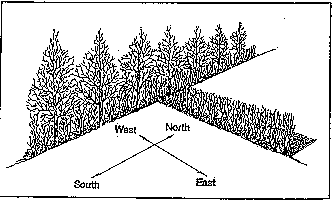
hedges for resource-poor land
users
When we offered our small Technical Note on living fences (above), I asked whether anyone knew of a well-illustrated and carefully written book on the subject of living fences. J�rg Henninger in Paraguay told us about this book. He wrote, "Its 256 pages give orientation about techniques for establishing and management of hedgerows, uses and functions, social and economic issues and a list of species applicable. It has about 57 tables and 92 figures. I love this book because it is by far the most complete one I know."
Now that I have the book, I can understand his enthusiasm. The book is exceptionally thorough, perhaps to a fault. (My personal preference is for a "get to the point" briefer style of writing.) I have selected a few highlights to give you a flavor of the book, and because the information itself is worthy of a note in EDN.
"Lac production on hedges can be an incentive for soil conservation." Shellac is made from the resinous secretion by the lac insects. Several host hedge species are listed, including acacias and pigeon pea Cajanus cajan. "In Thailand lac lice raised on pigeon peas planted on contour bunds for erosion control has been promoted by one project. Loss of cropping area to the hedge row can be more than compensated by selling of stick lac and pigeon peas."
For many farmers the only option is a stockproof hedge without barbed wire. Such a hedge should be low- growing, sturdy, multi-stemmed from the base (or low branching), dense branching with rigid or entangling branches and a spreading crown, small, sparsely distributed leaves that cast little shade, have spines, prickles or thorns, be resistant to fire, trampling and browsing; require little upkeep; be capable of regeneration if damaged. Not many plants meet these characteristics. So often a mixture of plants are used to fill in the gaps and strengthen the barrier. The following categories can be distinguished: framework plants, fillers, and entanglers. Four pages with 15 tables list trees and shrubs (names only) with high potential for: food, forage, fuelwood, timber, soil conservation, ornamentals, fillers, irritants, entanglers, fence reinforcers, garden hedge, windbreak hedge, general security hedge, live fence post, tropical highlands, humid tropics, arid & semi-arid tropics.
The weakness of the book, for development workers, is that you can read a great deal and still not have much of an idea as to what to do locally. I found the four brief case studies especially relevant, and wish there had been four hundred. Two case studies are summarized next.
Villagers in Huancal, Peru (3600 meters, temperate cold, 600 mm rainfall) developed this system after natural vegetation disappeared. Small fields are surrounded by a living fence of Cassia. Annual crops are grown followed by a fallow period in which animals graze in the fields. Just before planting the trees are coppiced, leaves used for mulch and wood dried for firewood. The Cassia has been growing 4 years and the cycle starts again. A study showed that Cassia (planted 1.5 m apart in the fence row) makes an average family self-sufficient in their annual fuel requirement.
In arid watersheds, many flood plain farming communities have disappeared or shrunk because the land bases have been destroyed by flood. In contrast farmers in the upper Rio San Miguel have maintained a fairly stable agroecosystem. Use of living fences is a key reason.
Living fences are planted along the margins of the riverbank. Farming takes place on the floodplain. Flood water carries a heavy load of top soil from overgrazed rangeland upstream. As the flood begins to overflow into the space between the fencerows and the edge of the cultivated area, the force of the water is broken by the trees and by brush that is deliberately thrown in around their bases. (The brush also helps keeps cattle out.) The sediment load of the less rapidly moving water settles out behind the trees, fertilizing the fields. The fences also retard erosion and cutting of new channels. Eventually enough alluvium is accumulated behind the fencerows that cultivation can be extended right up to the row of trees [elevation is increased].
To make hedgerows, cuttings are taken from Populus fremontii (a cottonwood tree) and Salix gooddingii (a willow). Brush from various local species is woven between these vertical posts. Cuttings (3-4 m) are trimmed from all branches and leaves and planted in trenches (1.5x0.5x0.5 m) at a planting distance of 0.5-0.75 m. One cottonwood is planted between a dozen willows. Mature trees in older fencerows are pruned so that the trunk is about 2 meters.
The book was published by the GTZ, which will often send a book at no charge to a non-profit development group working in the developing world. You might write on official letterhead to see if you qualify. The address is GTZ; Postfach 5180; D-65726 Eschborn; GERMANY; fax 06196-797352. Those who do not qualify for a free copy can order for about US$26 plus postage from Margraf Verlag, P.O. Box 105, 97985 Weikersheim, GERMANY; fax 49-(0)7934-8156.
THE ITTO TROPICAL FOREST UPDATE is published quarterly in English, French, and Spanish by the International Tropical Timber Organization as a forum for information exchange on aspects of sustainable tropical forestry. This resource can keep you up-to-date on courses and current literature, make contacts working in your area, and give information on organizations and topics on forest management. The March 1996 issue featured fire in tropical forests around the world, production and trade of tropical logs, a country profile of Bolivia, details of upcoming seminars, and several pages of input from readers. This newsletter is free from the Editor, ITTO Tropical Forest Update, ITTO Secretariat, International Organizations Center-5th Floor, Pacifico-Yokohama, 1-1- 1, Minato-Mirai, Nishi-ku, Yokohama 220, JAPAN; phone 81-45-223 1110; fax 81-45-223-1111; e-mail asarre@itto.or.jp.
|
| ||||||||||||||||||||||||||||||||||||||||||||||||||||||||
Amaranth to Zai Holes, Ideas for Growing Food under Difficult Conditions (ECHO, 1996, 397 p.)
5: Farming systems and gardening techniques
Many small farmers must grow their crops on small tracts of marginal land, which may be dry or hilly or remote. These difficult growing conditions require special techniques suited to the situation. This chapter contains some ideas which can be adapted for local circumstances.
Most of the ideas in ECHO Development Notes are concerned with sustainable agriculture, that which promotes a wise and creative use of resources to provide food and employment for the long term. People growing in marginal situations can benefit from networking, learning about techniques which have met with success both locally and in distant areas with similar challenges. We list training opportunities and publications which offer guiding principles and ideas to implement for sustainable food production. Please let us know of similar local groups which have been helpful to you.
Dryland techniques and mulches
See the Water Resources chapter for an introduction to farming in semi-arid regions.
ZAI HOLES HARNESS TERMITES TO INCREASE CROP YIELDS.
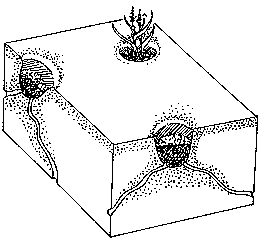
zai holes using termites to
increase crop yields
Tony Rinaudo in Niger wrote of his experience using zai holes [see picture]. "Oxfam, working in Burkina Faso, promotes this method of tillage. This is a traditional practice of digging a 20x20 cm hole 10 cm deep during the dry season and filling it with mulch such as crop residue or manures. This leads to increased termite activity [note termite tunnels] which, in turn, increases the rate of water infiltration when the rains come [see dotted areas on the diagram]. Millet is planted in the individual holes, which also help protect the seedlings from wind damage (100 km/hr winds at planting time are not uncommon).
"Where farmers are using it, it is making a big impact on crop yields. Soils here are infertile and if farmers have manure at all they just broadcast it on top of their fields. Much of this is baked, blown and washed away. If the manure and organic matter are placed in a zai hole, losses are minimized and nutrients are concentrated where the plant can use them. Crop plants have a competitive advantage over weeds that are not in the zai hole.
"Zai holes also allow greater water infiltration. The technique was originally used for hard pan soils which are uncultivatable using traditional farming methods. We convinced one farmer to try zais on a small plot of barren land. He did and harvested 100 kgs of corn and 15 kgs of sorghum. The next year farmers in 20 villages dug over 50,000 zai holes! We urged farmers to also try zai holes in their sandy soils. The results were so convincing that many are now digging holes on their own initiative." Tony also wrote of one area in which millet yields were often less than 350 kg/hectare; with zai holes, the yields reached 1000-2000 kg/ha. Farmers in 87 villages dug almost two million zai holes for their millet.
"For some time we have been trying to re-establish cassava as a major crop in the district. There have been more failures than successes because of the harsh climate and poor soils. ...In 1993 we only received 1/3-1/4 of the average rainfall (130-240 mm). In spite of this, because we insisted that farmers dig zai holes, 80% of the 44 ha planted survived. Even in good years we have never had such a high success rate using other planting practices."
Tony also added, "Keep an eye on developments in the food use of Australian acacias. I believe these trees will be very important in semi-arid to arid subsistence agriculture in the future. Last year farmers here planted over 4,000 trees with a view to food production. They did this with no promise of food or money payments from us."
Chris Reij of the Free University of Amsterdam presented to the Club du Sahel some of his findings on zai holes in Burkina Faso, where they are an adaptation of a traditional planting method. The following is a summary taken from an article sent to ECHO. The zai or planting pockets are generally 25-30 cm across and 15-20 cm deep, spaced 80 cm or so apart. They are often dug on land so badly degraded that water cannot infiltrate, so the holes collect and concentrate runoff. Organic matter added in the hole provides nutrients for the plants and stimulates termite activity, which can improve the hole. In one area, farmers with zai holes harvested 960 kg/ha of sorghum, while others harvested 610 kg/ha. Tree seeds have also been successfully established in zai holes. A major advantage of these planting pockets is their ability to efficiently harvest rainfall and reduce runoff, thus improving overall soil moisture and fertility. Farmers in Burkina Faso also spread straw on their fields to achieve the same benefits.
Note that different species of termites behave differently, so a technique you read about in EDN may not work where you live. Victor Sanders showed me termite nests high up in trees in Haiti. He tried painting the trunk with neem leaf tea, which was reported to stop termite damage in Mali. It had no effect in keeping this kind of termite from nesting in the tree. The zai hole technology described above is used where the "composting" species of termites is present, able to convert and enrich organic matter into good soil for the seedlings. However, the water harvesting and other benefits of this idea could be helpful even where there are no such termites.
GRASS MULCH: AN INNOVATIVE WAY OF GARDENING IN THE DRY TROPICS (by Scott Sherman). When I visited Jamaica, I learned that farmers in south St. Elizabeth Parish were growing a good crop of scallions. What was unique is that they relied on rainfall in an area that is normally too dry for intensive vegetable production without irrigation. In fact, they were growing tomatoes, cucumbers, carrots, green beans etc. where traditionally yam, cassava, tree crops and a few drought tolerant legumes predominated. Working with the Jamaica Agricultural Foundation and the University of Florida, Mac and Pat Davis set out to study this indigenous system of growing vegetables in a guinea grass mulch. The following is based on their two-part study of scallion production.
Rainfall averages 125 cm (50 inches) annually during two brief periods in the spring and fall. In addition warm temperatures and high winds combine to rapidly dry the soil after the rains. Farmers have found that mulching with guinea grass (Panicum maximum) not only conserves moisture, but offers other benefits as well.
In the study, all critical steps (i.e. mulching, planting, cultivation, and harvest) were carried out by local farmers in accordance with local practices. Replicated plots were all treated identically (weeded, mulched with a layer of guinea grass and planted) except that after planting the mulch cover was removed from half the plots. Undisturbed fallow plots were left adjacent to each replication for comparison purposes.
Plots mulched with Guinea grass were found to have significantly lower soil temperatures than the unmulched plots. [Ed: Based on a graph in the article, afternoon soil temperatures appear to have averaged about 4 C less with mulch.]
Mulched plots maintained a significantly higher soil moisture content than unmulched or fallow plots. As the dry season progressed and moisture became limiting, growth rates in the mulched plots were superior to those of the unmulched plots (leaf counts were 40% higher at first harvest).
Guinea grass mulch also greatly reduced the amount of weeds (weed counts being up to five times as great in the unmulched plots). Plots were harvested five times. Total yields, marketable yields, and mean bulb diameters were all greater in the mulched plots than the unmulched. Over the course of the experiment, mulched plots produced 75% more bulbs than unmulched plots.
According to Mac, the mulch system is used by all the farmers in the area and no vegetable production is attempted without it. In addition to providing mulch for the principle crops, the grass is also an important part of the crop rotation, serving as a cover crop and sometimes as food for animals. While most farmers keep part of their land in grass and part in vegetable production, farmers with very small farms purchase the grass needed for mulch while those with larger farms grow extra for sale.
The second study focused more on soils, which in the area are well-structured, red or brown bauxitic loams with high aluminum content and near neutral pH. In addition to the benefits mentioned above, this study showed a strong correlation between mulching practices and extractable soil phosphorus.
This finely tuned system appears to be well adapted to growing scallions and other vegetables in that climate. The Davises believe that similar grass-mulch systems could be adapted to other dry areas. Guinea grass seems to be a particularly good mulch because it easily reseeds itself, produces a lot of biomass, dries down quickly and decomposes slowly. While preparing mulch requires extra labor, less time is spent in weeding, watering etc.
Might such a system allow farmers in other dry areas to intensively produce certain vegetables where they may not otherwise be grown? The author believes so. Such a system would not only increase the farmers' profit potential over traditional crops in a region, but also provide a means for improving the nutritional status of a community. Mac suggests "the best approach would be to begin on a small scale with subsistence garden plots until farmers become familiar with the technique and some marketing infrastructure can be developed." We would be interested to hear if any of our readers have run across similar systems. Gene Purvis, now working in Costa Rica, says that he used a grass mulch system in Panama. Normally his garden took daily watering. He reduced the time of each watering AND reduced the frequency to two times a week by running poly pipe with small holes drilled in it under a cover of chopped paragua grass. He said that any tough, slow decomposing grass, when cut dry, would work well. Rice hulls worked well. Chopping the grass had several advantages.
Martin Gingerich in Haiti learned about a traditional system using Guinea grass in Haiti. This is in an area near La Valee Jacmel at about 800-1000 meters and 2,000 mm (80 inches) of rainfall. He wrote, "Just like the example from Jamaica, the system is used by all farmers in the area and no planting is attempted without it. We couldn't find anyone who remembers when people started using the system. It is older than those using it today."
"Farmers grow mostly corn, beans and some cabbage. There are plots that have only Guinea grass, often owned by larger landholders. Once a year the grass is harvested. A farmer wanting to plant a grain crop in the coming months will purchase and harvest a plot of Guinea grass, which he spreads over the entire field that he intends to plant. These are not large fields. The next step is to tie an animal in the plot to eat and trample the grass. They use horses, burros, mules, cattle and goats. Pigs are tied near the house and their refuse is carried to the field. After the farmer removes the animal from the field he lets it set 2-3 weeks. He then deeply tills the field with a pickaxe, incorporating some of the Guinea grass and leaving some on the surface. Planting is soon after tillage."
COLORED PLASTIC MULCHES have been found to improve yields and fruit quality in some vegetable crops, according to studies around the US. Black plastic mulches reduce weeds, conserve soil moisture, and warm the soil in cold climates. Colored mulches provide these benefits while also reflecting light up to the plants, giving yield benefits such as larger fruit or earlier maturity. Crops seem to have "preferred colors"; one review (in AVG 2/95) cited yield increases of 14-22% over black mulch in cucumber (with red mulch), peppers (yellow, silver), squash (blue, red), and tomato (red, brown).
We called USDA researcher Dr. Michael Kasperbauer, who studies plant response to the light spectrum. He explained that not all shades of color have the same effect on yields. The key factors are the amount of reflected far-red and the ratio of far-red to red light, which can only be measured with a spectroradiometer. A high FR:R ratio of the reflected light stimulates above-ground growth, so many fruit crops respond favorably on certain red mulches. Tomatoes on red mulch yield 15- 20% more fruit during the first two weeks of harvest than plants on black mulch. Cotton plants produce more bolls with longer fibers. Pigments which reflect a low FR:R ratio, in contrast, stimulate root growth.
Some colors (such as yellow) attract insects, and growers can use this factor in pest management. In one trial, cucumber beetles infested yellow-mulched rows first; it may be possible to attract pests to one area of a field for spot treatment. Colored mulches tend to cost more than black plastic, and manufacturers have yet to standardize the color intensity in the mulches for best production. This idea may be worth some experimentation in your fields. Research in this area began by painting black plastic with different colors. Let us know your results.
THICK MULCH FOR NO-TILL GARDENS. I (MLP) first read of this method of gardening in Organic Gardening where it was referred to as permanent mulch gardening. My reaction was that there must be something wrong with anything so easy or everyone would be using it. But our garden has performed so exceptionally well with so little work using this method that we have now converted all of our growing beds to this system.
Ruth Stout first popularized this method in her book No-Work Gardening (Rodale Press). She noticed that under a small stack of hay that she removed in the early spring, there was no need to till the ground. From that time on, her garden had at least a 6-inch (15 cm) layer of mulch 12 months of the year. At the appropriate seasons she simply removed mulch from a row or spot for a transplant, and planted.
The first season. We began our no-till garden in an area of well-grassed lawn. In several years of continuous production, it was never plowed, cultivated, spaded or hoed. The first season it is necessary to do some extra steps if you start with an uncultivated area as we did. It is described in the March 1981 issue of Organic Gardening in an article by Jamie Jobb called "Tossing an Instant Garden." (ECHO will send a copy of this article to overseas development workers who request it.) A layer of newspapers is spread over the area. They should be no less than 3 sheets thick and well overlapped at the edges. Then organic materials of any kind are placed on top. We use either chipped wood that is given to us by the power company when they trim along the power lines, or grass clippings. You could experiment with other materials that may be available to you such as rice hulls, sugar cane bagasse, tall cut grass, leaves, coffee pulp, etc. The method works because weeds are not able to push their way up through newspapers and a layer of mulch, but roots can go down through wet newspaper. Wherever a seed is to be planted a small mound of earth is placed on top of the newspaper (or a narrow row of soil about one inch thick is used if seeds are small and to be planted closely together). The mulch is then pulled back against the earth and a thin layer put on top of it to prevent drying of the soil. The seeds must be watered more frequently than when planted in tilled soil because the thin layer of soil can dry out quickly. When we pulled mature plants at the end of the first season we found that some roots had gone through the paper and others had grown along the top of the paper to the first edge, then underneath for normal growth. Transplants do surprisingly well when simply planted into the sod through a hole cut in the paper.
Subsequent seasons. The procedure with newspapers is for the first season only. Before the season is over you will find that the newspaper and the sod have decayed and turned to compost. From then on if you keep a layer of mulch about 6 inches thick over the area, the soil beneath will be ready to plant whenever you wish. Our garden has been in continuous use since the day it was first planted. We use the word "no-till" because it is analogous to the system of farming by the same name in which herbicides are used just before planting, then seeds are planted directly into unplowed sod. However, this method uses no herbicides.
What are the advantages? (1) Gardens can be started in any area without the need to plough or spade. You can plant in areas that would be difficult to plough, such as around dead trees or in rocky soil. Grasses and other weeds are better controlled than if the ground had been cultivated. (2) There is much, much less work involved in controlling weeds. But it is a no-till, not a no-work, garden! It can take a lot of time gathering and placing the mulch periodically around the plants. And some weeds will come up that must be removed. (3) Less water is needed for irrigation. (4) The soil is kept cooler. This can be a disadvantage, however, for colder areas. If soil temperatures are too low, the mulch can be raked back in areas to be planted a few days before planting, so that the sun can strike the soil directly. The soil will be dark after a few months of no-till gardening and should warm up quickly. (5) Soil moisture and temperature are more uniform, an advantage for most plants. (6) Nematodes will likely be kept under control. The soil environment is much less suited to nematode growth than, for example, the hot dry sand found in our area. Furthermore, some fungi found in the decaying organic matter will kill nematodes. We have had some signs of root-knot nematodes in the no-till garden, but they have not been a problem after the first few months of operation. It is almost impossible to garden in the same plot for more than one season here without the heavy use of nematicides with normal gardening techniques. We have not yet had to use any nematicide. (7) The only need for a compost pile is for a small one to put large or diseased plants or weeds. When the mulch decays, it is automatically compost and is already in place! Earthworms will soon help carry organic matter down into the soil. (8) Soil erosion from sloping land should be less of a problem.
We periodically add a fertilizer with complete micronutrients. This is necessary in our sandy soil and high rainfall. If you wish to use completely organic methods, remember that you have a mulched garden but not a composted one until at least one season has passed and the mulch has had time to decay. We have not had problems with acidity in spite of all the wood chips that we use. If this becomes a problem you would need to use lime.
At first thought you might think that we would run into a nitrogen deficiency by adding so much undecomposed organic matter. As you probably know, adding a lot of fresh organic matter with a lot of carbon and little nitrogen can actually harm plant growth the first season. The reason is that the micro-organisms use up all available nitrogen in the process of decaying the rest of the material. This nitrogen will become available later when the microorganisms die, but it presents a short term problem. The no-till garden does not have this problem because the mulch is not incorporated into the soil. All of the decay is taking place above-ground. So there is no way for microorganisms growing in the mulch to remove nitrogen from the soil. Once the mulch is decomposed it is incorporated slowly into the soil by leaching, mechanical mixing during the planting process and by earthworms.
We have had no unusual problems with insects or other pests. There is always the possibility that in your area there will be some pest that will find the mulch to be an ideal home and may give you problems. People often ask if inks on the newspaper will add toxic heavy metals. Such metals are only found in colored print. Anyhow, such a small amount of newspaper is used, and only once, that we consider it perfectly harmless.
I believe that the no-till gardening method may give you far better gardens with much less work. Some ECHO visitors who could no longer garden for health reasons are gardening with the no-till method! But as with nearly everything that we suggest, it is presented as an idea with which you can experiment under your conditions. Only you can evaluate its potential for your area. It should certainly be thoroughly tried before introducing it into the community. We will be very interested to learn of your success or problems with it. Please let us hear from you if you try it.
There is only one disadvantage that we have found to this heavy use of mulch. It tends to frost on top of mulch at a few degrees higher temperature than elsewhere. Possible problems we had worried about, such as more insect damage or fungal diseases, did not materialize. Be sure not to make a thick, dense, layer of mulch that prevents air penetration into the soil as it can kill trees. I do not know just how thick that would need to be, but would presume a foot of packed, matted grass clippings would be dangerous for example. If you are using this method, we would like to hear how it is working for you.
By the way, a graduate student at Purdue University studied farming methods of early Mayans. He discovered that Mayan farmers spread banana leaves over the land to retain soil moisture and keep out competing weeds. Planting was done through individual holes dug through the banana-leaf mulch!
RICE HULL MULCH. Ralph Kusserow in Tanzania wrote with an interesting observation. Some of the beds were mulched with grass and some with rice hulls. He noticed that chickens did considerable damage in the beds mulched with grass but seldom bothered those mulched with rice hulls. He was intending to mulch everything with rice hulls the next time.
More recently he wrote, "The red glow on this paper is a reflection from my face." This year the chickens ravaged the beds mulched with rice hulls. He attributes the difference to the weather. "Last year was very dry and the mulch quickly formed a crust over the top. Although we have not had a large amount of rain this year, at the beginning of the season it rained at least a little almost every day for six weeks. That kept the rice hulls soft so that the crust did not form, making it easy for the chickens to scratch it. When the normal weather pattern returned, with a heavy rain followed by a week or so of sun with no rain, the crust formed and the chickens have not bothered coming into the garden at all."
He only noticed one problem with rice hull mulch. The crust that forms tends to cause water from a light rain or a watering can to run off. So he forms the rice hulls like a bowl around each plant to make watering easier. There was one other temporary problem. The light-colored mulch reflected the heat and made it hotter than usual. However within several days the mulch darkens, then both looks and feels better.
Hillside techniques
INNOVATIVE METHODS OF TERRACING.
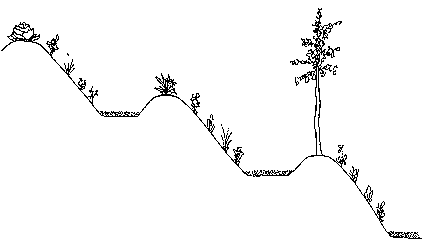
digging trenches along level
contours and form elevated ridges for tree planting
I made a special trip to Haiti about a year ago to meet Victor Wynne and to see his interesting small farm in the mountains. After walking through eroded hillsides and unimpressive "fields," we suddenly came to a beautiful productive area that seemed like the Garden of Eden by contrast. Victor has experimented with better methods of terracing for some time, combining his training as an engineer and his love of plants. He has at least three distinct systems. He has written a description of one to share with our network, which follows.
"There can be no viable long-term agricultural cropping or reforestation on hillside or mountain slopes, unless these slopes are first protected from soil erosion in heavy rainfalls. Protective measures to conserve soil must come first. The scheme which we have found to be entirely satisfactory consists not of terracing, but of digging trenches along level contours and using the material from the trenches to form elevated ridges for tree planting. The ridges are always made at right angles to the level contours. The work must always commence at a drainage divide and proceed downward. Otherwise runoff from above may destroy your work.
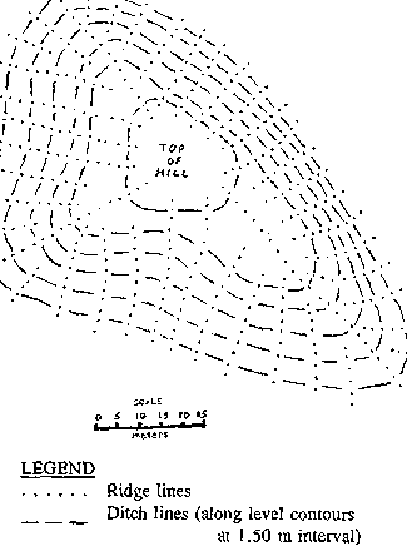
accompanying contour map of a
section of hilly terrain
"The accompanying contour map of a section of hilly terrain illustrates the scheme. The level contours, shown by dashed lines, are laid out so that there is a 1.5 meter difference in elevation. This has been found to be a satisfactory spacing on most slopes for intercepting and temporarily holding runoff from heavy rains. In practice there is no need to make a map. A few level lines are staked out on the ground, starting just below the hill summit, at the stated 1.5 meter vertical elevation difference between them. A small inexpensive line-level hung onto a nylon string provides an easy way of laying out these level lines. With taller stakes readily visible, one chooses and marks the ridge lines roughly perpendicular to the direction of the trenches and spaced six or seven meters apart. This rather close spacing eliminates the necessity of any hauling of excavated ditch material, as all can be thrown by shovel from trenches to ridges. The ridges are represented on our contour map by the dotted lines. Trenches should be at least 30 cm in depth, and a minimum of 60 cm wide, with a level bottom. Of course, where the ridges are to be the trenches need not be dug out. Thus the trenches consist of short sections of ditch. Very careful leveling is less important than it would be for a long extended ditch.
"The hillside is now ready for agroforestry plantings. In general the ridges will be reserved for tree planting because of the greater soil depth. The rectangular plots between ridges and ditches can be used for annual cash or subsistence crops." He is having great success with Mimosa scabrella trees. This species might be the higher altitude equivalent of the leucaena. It is dying out where the roots encounter limestone. These trees are planted on the ridges with Andean blackberry plants growing on wires strung between the trees. He likes this berry because it produces year round. The juice he served from the berry was outstanding. Victor says it will only grow at higher elevations, over 4000 feet.
"Well, that is all there is to it. Simple isn't it?-but fully effective. So let's save our mountain soils!" For his complete description, plus my own description of two other distinctive methods he has been using, write for our Technical Note "Terracing on the Wynne Farm in Haiti."
SALT PROJECT (SLOPING AGRICULTURAL LAND TECHNOLOGY). The Mindanao Baptist Rural Life Center in the Philippines has done excellent work with farming sloping land. Harold Watson (the director), Ken Turner, and Peace Corps volunteer Joseph Profitt sent us a description of the technique. SALT has been used at the center since 1979. Its purpose is to protect hilly soil from erosion and to provide nutrients for plants.

protect hilly soil from erosion 1
First lay out the land in contour lines using an A-frame (see next article). Space the contour lines about 4-6 meters apart. Next plow and harrow a 1 meter band along each contour until prepared for planting. Plant two rows of Leucaena leucocephala (or other species) on each band, during the rainy season, in furrows 0.5 meters apart and about 2.5 cm deep. If a large tree or stone is directly on the contour line, plant the double row around it, one row above and one below the obstacle. Soak the seed overnight in water to speed germination. [Ed: Many people place seeds in hot water then allow to soak without further heating over night.] Discard any seeds that float because they will not germinate. Plant seeds quite densely, about 1 cm apart; cover with fine soil and press down firmly. After germination, replant any spaces in the rows. Weed the seedlings until they are well established. To allow fast growth, seedlings can be gradually thinned out (every other tree) over a 3-4 year period. When the trees are large the final spacing should be 4-8 inches. This will require about 20 kilograms of seed per hectare, depending on the distance between the contour lines.
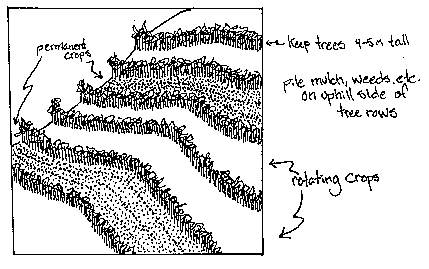
protect hilly soil from erosion 2
The leucaena can be left to grow until it becomes 4-5 meters high, at which time it will form a shade which will kill the grasses and eliminate the need for hand cutting to prepare for cultivation of the soil. If you must cultivate the land to plant crops in the 4-6 meter wide strips between the rows before the trees reach this height, you must plow alter- nately. In other words, one strip is plowed, the strip between the next higher two bands is left untouched, the next is plowed, etc. The unplowed strips will help hold soil that may wash down from above. When the leucaena is fully grown you can cultivate in every strip. Permanent crops such as coffee, bananas, and citrus can be set out at the same time as the leucaena seeds. The soil should not be plowed for these crops and only ring weeding should be used until the leucaena trees are large enough to hold the soil. Once a month cut down the continuously growing trees, but leave at least one meter of the stem. Pile the leaves and twigs at the base of your crops. This will provide both a mulch and nutrients. As you continue farming the land, gather excess straw, stalks, twigs, branches, leaves, rocks, and stones and pile them at the base of the trees on the uphill side as an erosion barrier. Over the years this will build up strong, permanent, naturally green and beautiful terraces-which will anchor your precious soil in its right place.

protect hilly soil from erosion 3
Every third strip is planted to a permanent crop such as fruit trees. The two intervening strips are planted to field crops like corn or cassava. The field crops should be rotated. For example, pineapple might be planted after beans have been harvested. If you want more information on this technique, contact ECHO for the 10-page illustrated Technical Note. The Center has many other demonstrations which integrate forestry, forages, animals, and home gardening techniques. They also sell seed of several species. Contact Mindanao Baptist Rural Life Center, P.O. Box 94, Davao City 8000, PHILIPPINES. [The fertilizer and mulch benefits of SALT are so great that a similar system is used even on flat land where erosion is not a problem. There it is called alley cropping.]
HOW TO MAKE AND USE AN A-FRAME. The A-frame is an accurate and extremely simple tool for measuring and marking level contours on a hillside field. You will need two straight and sturdy stakes or boards about 2 meters long and a third about 1 meter long, 3 nails, a string, and either a rock or bottle filled with rocks. A-frames are alongside the hoe and machete as essential tools on many mountain farms for preserving mountain soils.

making an A-frame used for the
sloping land project
Nail the two long boards together at one end with a single nail. Leave the nail sticking out about half a centimeter so the string can be tied to it. Next nail the shorter board to the other two to make an "A", as shown in the drawing. Tie the string onto the nail and hang the plumb at the other end of the string so that it will swing freely, but below the horizontal board.
Next you need to find where the string will be touching the horizontal board when the two ends are on level ground. If you are certain that you have a level spot you can just make the mark where the string is resting. Rotate the A-frame 180 degrees and set it back on exactly the same spot. If the string is not on the same mark the location was not level. A method for any terrain is to drive two stakes about 10 centimeters wide into the ground, spaced so you can hold the A-frame with one leg on each stake. Mark where the plumb line touches the cross member, then rotate the frame 180 degrees and repeat. Place a large mark exactly half way between the two marks. This should be where the plumb line will touch the cross member when it is on level ground. To double check, drive the higher stake lower until the plumb line touches the mark, indicating that the frame is level. At this point you can rotate the frame 180 degrees and the plumb line will still contact the same mark.
To mark out a contour, place a stake into the ground at the starting point and put one leg of the A-frame next to the stake, on the uphill side. Locate the other leg of the A-frame where the plumb line crosses the level mark, then drive a stake by the leg, on the downhill side. This becomes the new starting stake. Continue in this way across the hillside. [This is based on a verbal description by Larry Sell in Honduras.]
There is nothing new under the sun. Someone sent us the book Ramesses the Great about ancient Egyptian civilizations. On page 140 is a picture of an A-frame. The caption said it is made from wood and limestone and was one of the tools selected for burial in the tomb of "the Servant in the Place of Truth Sennedjem."
SEMBRADORES DE ESPERANZA: CONSERVAR PARA CULTIVAR Y VIVIR, by Monika Hesse-Rodr�guez. 252 pages, Spanish only. This exceptionally well-illustrated book arose from the experiences of agricultural transformation in mountainous southern Honduras. It details the practical techniques implemented to promote soil conservation in a community-oriented development program.
The author advocates a cautious and flexible approach to agricultural change, and the reader is constantly reminded that a successful method is one which works for an individual farmer in the family field. For that reason, the author presents many alternatives and ideas for site-specific adaptation. The introduction to the techniques used to conserve soil on sloping land, covers the theory, methods, advantages, and drawbacks of the following areas: the construction and multiple uses of an A-frame, many forms of terracing, vermiculture, agroforestry, green manures, low-tillage systems, intercropping, living fences, and windbreaks.
This book will be useful to community leaders and extension agents, who can benefit both from the insights into implementing agricultural change in a rural community as well as the various techniques discussed. The book constantly references the farmers' own experience, complete with testimonies from individuals about the use of each technique in his or her own field, clear photographs of over 30 unique applications of the conservation measures in farmers' plots, and questions for reflection in a group training course context. The reader can visualize the end results through numerous line drawings and photos throughout the text. The format would seem to be easily adapted for teaching and extension. The many illustrations make this a great book for non-Spanish speakers who want to work on their agricultural vocabulary.
Thanks to Judith Castro for sending a review copy. You can order a copy for US$5 (plus $5 postage, for up to 3 books) from Se�or Juan Bautista Mej�a, Servicio de Publicaciones del Obispado de Choluteca, Apdo 40, Choluteca, HONDURAS.
CUIDEMOS NUESTRA TIERRA: UNA VIDA MEJOR MEDIANTE EL APROVECHAMIENTO DE LOS RECURSOS EN EL CAMPO. Edited by Alberto de la Rosa and Werner Moosbrugger; 69 pages and full-color poster, Spanish only. This short book accompanies a large poster which depicts a mountainous campesino community with ecologically sound agricultural systems. Each page of the book amplifies one area of the poster scene and briefly defines the illustrated technique, explains its advantages and implementation, and suggests discussion questions and activities related to the topic. Among the 28 areas promoted are: soil improvement techniques, water system management, use of native crops, farm inventory, intercropping, school gardens, grazing and use of farm animals, and various erosion control measures.
The poster could be very useful in a classroom and serve as a reference for instruction on the environmental and economic advantages of integrating these ideas into village practices. The manual is not technical and serves primarily to explain the concepts attractively presented in the poster. The strong point of the book is that it positively outlines how the proposed techniques can address common problems of many campesino communities, offering other incidental benefits as well. The book (US$14) and poster (US$9) are available from Werner Moosbrugger, AA 100409, Bogot� 10, COLOMBIA. Also available (for $12) is a brochure describing a simple way to solve the waste problems faced by poor urban communities. Prices include postage.
Intercropping
INTERCROPPING OF SUGAR CANE. The following is quoted from an article "Malnutrition in the well-off farmer" in the World Development Forum (no longer in print), which I believe they got from Ceres. "Researchers in Nairobi, surprised to find malnutrition among the families of relatively well-paid sugar-cane workers, devised an ingenious corrective." By marginal widening of the row crop spacing, they found "room for two protein-rich, non-cash crops (maize and beans) which could be harvested within three months of planting. As cane takes 22 months to mature, it proved possible to snatch two successive inter-row crops before the spreading roots of the cane feel any adverse effects from the competition." A great side benefit is that the need for cane weeding was reduced. (The reason for the malnutrition among the workers and their families was that the need for cash for buying property, consumer goods, schooling, and physical assets competed with their need for food.)
I believe this has the potential to be one of those innovations that development workers are always seeking: something that can have a large and immediate impact and limited risk. (This assumes, of course, that it is not already a local practice.) So we are dedicating considerable space to the subject of intercropping with sugar cane.
Many of you work where there is not enough good land to go around. Intercropping on land previously used solely for cane is almost the same as finding new land. It is a way to produce food for local consumption on land that was previously used primarily to earn foreign exchange. It reduces risk of total loss due to crop failure because even if something like a hurricane destroys the long season (several months) cane crop, some financial return will have been realized. Cash flow is improved. It might even slightly reduce the pressure to clear new marginal land.
The Canadian aid agency, IDRC, featured the work of Dr. Govinden on this topic in their magazine IDRC Reports and were able to put me in touch with him for more information. He graciously sent detailed reports of this work in Mauritius. The following is based on his articles.
Dr. Govinden writes, "We have several teams working on intercropping of sugarcane with various food crops at the Mauritius Sugar Industry Research Institute. Intercropping with sugar cane is practiced on a large scale and is responsible for 77% of the potatoes, 60% of the groundnuts and 50% of the maize (corn) produced in the country. Additionally, small planters grow a wide range of vegetables in their sugarcane fields. These include beans, peas, tomato, cabbage, pepper, and okra, to name a few."
Farmers in Mauritius have been intercropping with sugar cane on a small scale for over a century. The practice picked up during the shortages of World War II, but only "took off" during the past 10-20 years. "Intercropping with sugar cane is widespread in India, Philippines, Mauritius, Reunion, and Taiwan.... It is practiced on a limited scale in Brazil, China, Colombia, Egypt and Indonesia."
MAIZE (CORN). Unlike potato, maize reduces the sugar cane yield, due primarily to competition for light by the tall maize plants. The extent of reduction depends on the height, time to maturity, and leafiness of the maize. No evidence has been found of any effect of intercropping on insect or disease damage, either positive or negative. Mechanical harvesting is a problem.
Sugarcane can be and often is grown on lands too steep for maize. Intercropping of sugarcane on such lands allows the production of some maize without leading to soil erosion. In fact the maize confers additional protection to the soil from the erosive action of rain during the establishment period of the cane. In Mauritius there are two cane planting seasons. "In the first season, maize is harvested before and, in the second season, after the cane. The peak labor demands therefore do not overlap."
"The success of intercropping depends on maximizing the complementarity and minimizing the competition between the component crops. ...It has been suggested that maize and sugarcane are too similar for there to be benefits from the intercrop." However, there is still an important difference that can be exploited-the difference in the time at which each crop makes use of the growth resources.
"Sugarcane is planted in wide rows (1.4-1.6 m). It takes 2-3 weeks to germinate, grows slowly for the first few months and does not cover the soil until about 4-5 months after planting. In the case of ratoons, canopy closure occurs earlier, in about 3-3.5 months. [A ratoon crop is a crop that comes up from the roots after a previous crop was harvested.] During the first 3-4 months, the cane makes little demand on the available ... space, light, water and nutrients. These can therefore be used to produce compatible intercrops.
"Maize ... grows fast and achieves canopy closure in 1-1.5 months. Early maturing cultivars can be harvested within 3-3.5 months after planting, before the cane canopy closes."
Because maize is taller than the young cane, it is important to use short and early maturing varieties. "Moreover, a balance must be found between planting enough maize to give worthwhile yields and using higher densities that can lead to competition with the cane. Much of the cane yield reductions from intercropping with maize can be attributed to the use of tall and late-maturing maize cultivars planted at excessive densities."
Dr. Govinden calls the potential row between the rows of cane the "interrow." When maize is planted in each interrow it "does not compete with cane for underground resources. When the cane row width is 1.6 m, the maize plants are 0.8 m away from the cane. Maize roots do not extend that far and therefore do not have access to fertilizers placed in the cane row. The maize must therefore be fertilized separately."
Maize growth occurs during the first two phases of sugarcane growth: germination and tillering. [Tillering refers to the plant sending up additional stalks.] Germination is not affected by intercropping, but tiller formation is often seriously reduced. "As soon as the [maize] is removed, however, tillering resumes normally and, in time, much of the adverse effects disappear." There is even a name for the ability of sugar cane to overcome initial setbacks: "rattrapage." If rattrapage is to be complete, it is important that there be adequate water, nutrients and no weeds after the intercrop is removed. If cane farmers use herbicides, maize is an especially good intercrop because both crops react similarly to herbicides.
"Once sugarcane is planted, it is usually not replanted for several years; 8 years on the average in Mauritius." Ratoon crops grow more quickly than newly planted cane and hence are more competitive with maize. However, maize has less adverse effects on the cane when it is a ratoon cane crop. Consequently, Dr. Govinden suggests leaving the interrow between newly planted cane for other crops such as potato, beans, and groundnuts that are less competitive than maize and which themselves do better with newly planted cane than in ratoon cane. The maize would then be intercropped with the ratoon cane. "With time the ratoons encroach upon the interrow space, making [further] intercropping more difficult. Maize is indeed one of the few crops that can be successfully intercropped with 2nd or 3rd generation ratoons."
"In order to create more space for intercropping of 3rd or older ratoons, it has been proposed to plant the cane in paired rows." In Mauritius, two rows of cane were planted at only 0.95 m apart separated from the next pair of rows by 2.25 m. Success was variable. Sometimes cane yield was reduced.
Here are his suggested guidelines to developing cultural practices for maize/cane intercropping in your area.
TIME OF PLANTING. "In order to minimize the adverse effects of maize on cane, the maize should be planted as soon as possible after the cane. This ensures that the cane will have enough time after the maize harvest to offset initial setbacks. In practice, the maize may be planted up to 3 weeks after the cane."
LAND PREPARATION. "The land preparation for plant cane [i.e. not ratoon cane] is adequate for the maize as well. The cane furrows should not be too deep since it is difficult to plant maize mechanically on high ridges. In ratoon cane which is not burned at harvest, the trash must be lined up, usually in alternate interrows. The maize is then planted in the free interrows...".
VARIETIES. "Only short-statured and early-maturing varieties should be used in order to minimize competitive effects on the cane. The plant height should be less than 2 m and the crop cycle from sowing to physiological maturity should be between 85 and 95 days. Since maize yield is a direct function of the length of the crop cycle, the balance between a longer cycle for higher maize yields and a shorter cycle to minimize adverse effects on cane can only be found after experimentation under local conditions."
PLANTING PATTERNS AND PLANT DENSITY. "Various planting patterns are possible. In Mauritius, whether in plant or ratoon cane, one row of maize is planted in alternate interrows of cane [i.e. as you walk across the field you encounter cane, cane, maize, cane, cane, ...]. It is possible to grow one row of maize in every interrow of cane, but shading of cane is more pronounced when the cane rows are bordered by maize on both sides."
"Maize plant population density may be varied between 15,000 and 30,000 plants per hectare (20,000 plants per hectare is recommended in Mauritius). A lower density ensures that the maize has no effect on the cane but the yield of maize is also lower. In areas where the cane growing season is long and where the cane is more competitive, the maize plant density may be increased."
FERTILIZATION. "A good rule is to base the recommendation on the response of sole-cropped maize and to apply as much fertilizer per plant as in pure stands." [And to likewise fertilize the cane as a sole-cropped plant.]
IRRIGATION. "In areas where surface irrigation is used, the cane furrows should not be too deep, otherwise the ridge in the interrow on which the maize is grown may not be properly watered." In drip irrigation systems, a separate drip line is needed for the maize.
WEED CONTROL. [I usually assume that few readers work with farmers who have access to agrochemicals. Because this technique might be done by peasant farmers but on large commercial farms, such may not be the case. In fact, it is quite likely that the cane field has already been treated. This may present a problem with some potential intercrops that are unrelated to cane.] Grasses and broad-leaved weeds are controlled with a pre- emergence application of "Primagram" (a mixture of atrazine and metolachlor). [Imagine what that would do to a subsequently planted intercrop of beans!] If grass is not a problem, use atrazine alone. Nutsedge can be controlled with "Basagran DF" or 2,4-D amine which should be applied underneath the maize canopy after it has grown to knee height.
HARVEST. "In pure stands, maize may be left to dry in the field, but in sugarcane interrows, it should be harvested soon after physiological maturity in order to minimize shading of the cane. The grain must then be dried."
MAIN PROBLEMS. "Sugarcane is sometimes called the lazy man's crop. The management of sugarcane intercropped with maize is more difficult; careful attention must be paid to details. Timeliness of operations is important. Main problems relate to mechanization and to pests and diseases." Mechanization of planting is easy, with one row maize planters. Harvesting is more difficult and is still done by hand in Mauritius.
"Perhaps the major objection to intercropping sugarcane with maize is the fear of increasing pests and diseases common to the two crops." Especially downy mildew, sugarcane mosaic virus and maize streak virus. "In South East Asia where downy mildews are a problem, intercropping ... is possible so long as resistant maize cultivars are used." [There appears to be little information on the subject, but no reported serious problems.]
"Sugarcane and maize have several pests in common, mainly borers. ... One report from India indicates that when sugarcane is intercropped with maize, the difference in borer infestation was negligible." "The fact that insecticides are not used in cane certainly helps to maintain the activity of biological control agents."
POTATOES. Potatoes are the most successful intercrop. Potatoes do not reduce the yield of the cane and conversely sugar cane does not affect potato yields. Each crop is fertilized separately according to its recommended needs.
GROUNDNUT (PEANUT). Groundnuts resemble potatoes in that they do not adversely affect cane yields. They differ from potatoes in that fertilizer requirements on cane lands are very low; so low that most growers do not use any fertilizers. Work is underway to determine to what extent groundnuts may provide fixed nitrogen to the cane.
BEANS. Dry beans do not reduce yields of cane. Recent results indicate they may be able to grow beans in the interrows left free when maize is intercropped with sugar cane. (Remember that cane does better if maize is not grown on both sides of the cane row.) An advantage over many crops is that beans have a relatively short life and require less water than most crops.
GENERAL COMMENTS. In contrast to what is commonly observed in other countries, intercropping of sugar cane with food crops in Mauritius is much more popular with the corporate sector (sugar estates) than with the small holders. In some cases the estates produce the maize, potato and groundnut themselves. Others rent the cane interrows to planters for a few months. The reason may be that small landholders have two jobs and lack the extra time to do intercropping. The timing of some food crops cultivation may be complementary to sugar cane in terms of labor use.
In many countries the large plantations "have the best lands and infrastructure and have access to inputs such as fertilizers and irrigation. They should therefore also share the burden of producing food. This they can do by intercropping their sugarcane with food crops.... They need not do it themselves, but could rent out the interrows or make them available freely to landless peasants for the purpose of intercropping as is commonly done in Mauritius."
Thanks to Dr. Govinden for sharing this information. ECHO is very interested to hear about your own experience if you try intercropping with sugar cane, or details of local practice if it is already done. EGUSI CAN REDUCE WEEDS IN CORN. A recent article on weed control by the International Institute of Tropical Agriculture (IITA) in Nigeria says, "In most parts of West Africa, farmers grow egusi, Citrullus lanatus, a spreading herbaceous plant grown widely for its seed, at a wide spacing to maximize fruit size. Studies at IITA and elsewhere show that crops such as maize and cassava interplanted with egusi need to be weeded only once (within 2-3 weeks) after planting if the melon is grown at densities of 20,000 plants per hectare." Without egusi the field had to be weeded 2-3 times. "Ground cover by egusi suppresses weeds until the melon is harvested, by which time the crops have developed a canopy cover of their own." [Ed: Egusi, related to watermelon, looks and grows much the same way. Vines do not climb.]
STRIGA CONTROLLED IN PEARL MILLET BY INTERCROPPING WITH COWPEA. The parasitic weed Striga hermonthica is a major problem in African millet fields. International Agricultural Development (Jan/Feb 1994) reports that dense intercropping of cowpea in millet stands can reduce Striga emergence. Farmers in Mali commonly plant the two crops together, but the cowpea is only sparsely planted out of concern for reduced millet yields. A denser planting of cowpea cools and shades the soil and increases the relative humidity of the soil surface. Researchers were unsure which effect of intercropping reduced weed emergence.
Cowpea roots are known to stimulate Striga germination underground, but the close intercropping reduced the weed's emergence from the soil. Researchers achieved best yield results by high-density intercropping of cowpea with local short-cycle millet. Long cycle (120-day) millet had reduced yield in dense intercropping.
Sustainable systems: resources and training opportunities
EDUCATIONAL AND TRAINING OPPORTUNITIES IN SUSTAINABLE AGRICULTURE, 8th ed., 1995. This USDA educational booklet lists over 100 programs for those interested in studying or gaining experience through university programs, farms, and other organizations in the U.S. and Canada. The institution, contact person, and a brief description of the programs offered are listed. The booklet is available at no cost from Alternative Farming Systems Information Center, National Agricultural Library, Room 304, 10301 Baltimore Blvd., Beltsville, MD 20705-2351; telephone: (301) 504-6559; fax: (301) 504-6409.
A RESOURCE LIST FROM APPROPRIATE TECHNOLOGY TRANSFER FOR RURAL AREAS gives addresses and brief information about internships, apprenticeships, and sustainable growing learning opportunities. The 21-page list includes on-farm experience and other training programs all over the USA. Write ATTRA at P.O. Box 3657, Fayetteville, AR 72702, USA; phone 501/442-9824 or 800/346-9140; fax 501/442-9842.
EXTENSION AND EDUCATION MATERIALS FOR SUSTAINABLE AGRICULTURE: Volumes 1 and 2 (edited by James King and Charles Francis), is a 390-page compilation of ideas and examples of practical teaching materials related to sustainable agriculture. Topics included are cropping systems, nitrogen use, preventative weed management, economics, and lease structures and landlord-tenant agreements. Teaching methods include decision cases, lectures, and discussion topics. A number of curricula from universities and colleges, including lists of topics and references, are given in detail. Cost of each volume is $10, including postage; however, single copies will be supplied free to U.S. addresses while supplies last. Order from Center for Sustainable Agricultural Systems, 225 Keim Hall, University of Nebraska, Lincoln, NE 68583-0949, USA; phone 402/472-2056; fax 402/472-4104; e-mail CSAS003@UNLVM.UNL.EDU.
FARMING FOR THE FUTURE: AN INTRODUCTION TO LOW-EXTERNAL-INPUT AND SUSTAINABLE AGRICULTURE (250 pp.) was written to help development workers assist resource-poor farmers develop productive, sustainable farming systems using locally available resources.
The main themes are: LEISA (low-external-input and sustainable agriculture) and PTD (participatory technology development). The first is an approach that seeks to maximize the use of locally available resources, both human and natural, in ways that are economically, ecologically and socially sound. External inputs are seen as complementary rather than foundational. PTD stresses the combination of indigenous and scientific knowledge to find solutions to farmers' problems. PTD is seen as a stepping stone to LEISA. The book provides background theory, practical ideas, and sources of up-to-date information. Field examples liberally sprinkle the text to illustrate key principles and techniques of LEISA.
Chapter 1 explores the need for sustainable agriculture. Chapter 2 considers the farm as a system and decision making at the farm level. Chapter 3 is titled "Technology development by farmers" and focuses on traditional farming systems, farmer experimentation, farmer innovation and farmers' limitations. Chapter 4 introduces basic concepts of agroecology. Chapter 5 deals with principles upon which to build productive, "site-appropriate" forms of LEISA. Chapter 6 deals with developing LEISA systems in the Tropics. Chapters 7 and 8 deal with PTD and linking farmers and scientists in developing LEISA technologies.
Both missionaries and ECHO's interns have found it a helpful resource. It is often checked out when we look for it and our first copy is already dog-eared. There are many helpful photographs, graphs and drawings as well as numerous boxes giving examples from the field to illustrate key points. What I find particularly helpful is the 72 pages of appendices which alone make it a valuable resource. Appendix A lists specific promising techniques such as: composting, green manuring, use of trap and decoy crops, natural medicines, water harvesting techniques, etc. Appendix B is a glossary of key terms. Appendix C contains a list of suggestions for further reading, an annotated bibliography on sustainable agriculture in the tropics and addresses of organizations concerned with sustainable agriculture. There is also a very good index. This book is thorough and filled with good ideas. The down side to any book that seeks to be exceptionally complete and detailed is that a lot of words are sometimes used to state the obvious for the sake of completeness.
The authors (Coen Reijntjes, Bertus Haverkort, and Ann Waters-Bayer) are all on staff at ILEIA (see below) in the Netherlands. Individual copies are available for about £7 from the publisher: MacMillan Press, Houndmills, Basingstoke, Hampshire RG21 2XS, UK; phone 44-256-29242; fax 44-256-810526. Available in French (360 pp.; revised francophone bibliography) for FF170 from Karthala, 22-24 Blvd Arago, 75013 Paris, FRANCE; fax 33-1-45352705.
ILEIA NEWSLETTER ON LOW-EXTERNAL-INPUT AGRICULTURE. ILEIA, the Information Centre for "Low-External-Input and Sustainable Agriculture" (LEISA), changed their name in 1996 to the Centre for Research and Information Exchange in Ecologically Sound Agriculture. They have been sharing information on sustainable agriculture since 1982. Their quarterly ILEIA Newsletter (actually it is more like a magazine) currently goes out to more than 10,000 individuals and organizations worldwide.
Each issue focuses on a central theme, such as natural pest control, agroforestry, farmer's networks, etc. One issue included articles on: raising mushrooms as a means of supplementing women's income, using ewe milk, crossbreeding cattle, biological water purification, starting a local library, designing a seed system for smallholders, and smallholder beekeeping. Networking is a goal of each issue with articles based on specific cases from around the world. Contributions of articles are welcomed. Whenever possible, sources of additional information are provided. Each issue reviews new literature and highlights other useful resources relevant to sustainable agricultural development. We have found the newsletter to be a great resource. Yearly subscriptions are $13.75 for individuals in the third world and students worldwide and $27.50 for others. Third world organizations may ask for free subscriptions. Write to ILEIA, Kastanjelaan 5, P.O. Box 64, NL-3830 AB Leusden, NETHERLANDS; phone 31-33-4943086; fax 31-33-4951779; e-mail ileia@ileia.nl.
FRENCH BOOKS ON TROPICAL AGRICULTURE. We forwarded this request from Ron Angert in Haiti to Pete Ekstrand in Zaire. We excerpt his reply. You may want to write to these places for current catalogs for books on other topics as well. "These are the best I have seen. We use them for our teaching here. The ones from the French Foreign Ministry are not too expensive either. Unfortunately one of the best has been out of print for a couple years. It is Precis D'Elevage du Porc en Zone Tropicale. It is excellent! This and a host of other excellent books on agriculture and animal husbandry in the tropics come from the French Ministry of Cooperation and Development. Write them for their complete catalog: Direction De La Documentation Francaise, 29, quai Voltaire, 75344 Paris Cedex 07, FRANCE; phone (1) 40 15 70 00.
[Ed: We obtained catalogs and include the price after each title. US$1=4.9FF in 1/96.] "I have purchased or seen and recommend the following from the French Ministry: Memento de L'Agronome (180FF) is an excellent handbook on everything: soils, climate, crops, husbandry, pathology, etc. Memento Du Forestier (160FF) is an excellent book on forestry. It does not cover reforestation and does cover fish culture. [None of the following books were in the 1996 catalog; write for current information.] Manuel d'Hygien du Betail et de la Prophylaxie des Maladies Contagieuses en Zone Tropicale is brief and to the point, sort of a field manual. Precis du Petit Elevage is an excellent treatment of poultry and rabbits. Manuel de construction des Batiments pour l'Elevage en Zone Tropicale gives plans for cattle, pork, chickens, and the needs of each. Manuel sur les Paturages Tropicaux et les Cultures Fourrageres is an excellent discussion of pastures and their management. Manuel d'Alimentation des Ruminants Domestiques en Milieu Tropical is an excellent analysis of all foods for ruminants and the needs of these animals, including suggested rations. Precis de Parasitologie Veterinaire Tropicale gives an excellent coverage of parasites found in the tropics.
"Les Principales Cultures en Afrique Centrale is an excellent book on the cultivation of ALL tropical crops. It is in-depth and covers all the diseases and the processing of the crops. Order from Patrimoine Du Musee Royal De L'Afrique Centrale, 13 steenweg op Leuven, B-1980 Tervuren, Belgie-BELGIUM. Agriculture Tropicale en Milieu Paysan Africain (770 FB) does an excellent job on all the basics of agriculture and could be used as a text for the beginning classes without changes. It has incredible pictures on the basics: soils, biology, fertilizers, nutrition, water and its movements, spacings, composting, etc. You may even want to learn to read French once you see it!" (I ordered it. He is right, I sure wish I could read it. The pictures are intriguing.) Order from Terres et Vie, 13, rue Laurent Delvaux, 1400 Nivelles, BELGIUM, or Enda Pronat, B.P. 3370, Dakar, SENEGAL. (Terres et Vie also has the excellent series "Land and Life" which receive comparable reviews. The illustrations make these books very useful. Contact Terres et Vie, Rue Laurent Delvaux 13, 1400 Nivelles, BELGIUM; or CTA, Postbus 380, 6700 AJ Wageningen, NETHERLANDS.)
LES QUATRE SAISONS DU JARDINAGE, an organic gardening magazine in French, is available from the association Terre Vivante in southern France. The publication is a lively mix of practical information on selection and organic culture of featured fruits and vegetables, ideas on techniques and simple equipment of use to the farmer, and articles related to animals, ecology, and cooking. Most pages have good color photos or summary diagrams and charts. The magazine is temperate in focus, but gives new ideas on methods which may be adapted. Six issues per year cost 219FF (about US$42), overseas.
Those who may be passing through France may wish to visit the Terre Vivante European Ecological Center, which has working demonstrations on sustainable living. Those interested in Les Quatre Saisons or the Center can contact Terre Vivante, Domaine de Raud, B.P. 20, 38711, MENS C�dex, France; fax: 76.34.84.02.
IIRR (INTERNATIONAL INSTITUTE OF RURAL RECONSTRUCTION) PUBLICATIONS. We mentioned IIRR's Agroforestry Technology Information Kit as a good summary of proven agroforestry technologies. Four more publications worth mentioning: Farmer-Proven Integrated Agriculture-Aquaculture: A Technology Information Kit($15), Low-External-Input Rice Production (LIRP) Technology Information Kit($17), The Bio- Intensive Approach to Small-Scale Household Food Production($16) and Resource Book on Sustainable Agriculture for the Uplands($15). The first three are along the same lines as the Agroforestry Kit; practical, well-illustrated collections of proven, basic, sustainable technologies for resource-poor farmers. Each is a collection of individual packets in a folder rather than a book.

the IIRR resource bookcd-rom
project
The Resource Book is a 200-page collection of articles on topics such as: soil and water conservation, land tenure, animal production, intensive feed gardens, agroforestry, and agroforestry seed technology. Another title which we have not seen, but may be of interest to some is: Participatory Approach to Rural AIDS Education: A Workshop Manual($16).
Each is available by ordering prepaid from IIRR, 475 Riverside Drive, Room 1035, New York, NY 10115, USA; phone 212/870-2992; 212/870-2981; e-mail iirr@cce.cornell.edu. Prices of each are noted above, postage and handling is an additional 15% for U.S. orders and 20% for overseas orders (surface mail). In Asia, contact their Philippine office for much lower prices due to postage: IIRR Bookstore, Silang, Cavite 4118, PHILIPPINES; phone: 63-969-9451; fax 63-969-9937; e-mail iirr@phil.gn.apc.org.
A GUIDE TO SPANISH-LANGUAGE SUSTAINABLE AG PUBLICATIONS (90 pp.) has English abstracts of 74 easy-to-read publications in Spanish on sustainable farming. Availability and reading level for each document are listed. Send a check or money order for $10 payable to "U.C. Regents" at University of California Sustainable Agriculture Research and Education Program, Davis, CA 95616-8716, USA.
HOW TO GROW MORE VEGETABLES... by John Jeavons is the basic guide to the biointensive method of food production, which maximizes resource efficiency in sustainable food production. Complete growing guides are given for hundreds of crops, and garden planning and preparation is highlighted. This book is packed full of information. Available in English, Spanish, French, German, Russian, Hindi, and Braille at various prices ($6- 19); write for a current Bountiful Gardens catalog (free to US addresses, US$2 elsewhere) from Ecology Action, 5798 Ridgewood Road, Willits, CA 95490, USA; phone orders 707/459-6410, or see it on the Internet at https://www.olympus.net/gardens/welcome.html.
NATURAL FARMING NETWORK links agencies cooperating to promote working examples of sustainable agriculture in Zimbabwe. They also have some excellent publications. Production Without Destruction (188 pp.) is a primer on organic growing and a manual for teachers of sustainable systems. It would also serve as an excellent handbook for the beginner in tropical agriculture. Clearly-written text, with charts/pictures on most pages, make this a valuable textbook or reference tool on a wide variety of topics. Chapters include: Agriculture and ecological systems, Soil, Water, Plant propagation, Trees, Pests and Weeds, Managing a sustainable farm, Improved gardening practices, Dryland cropping, Integrating animals, and more. See the review of Natural Pest and Disease Control, one of the most practical resources we have seen on this topic, in the chapter on Plant Protection. All prices include surface shipping: Production Without Destruction is US$7 on the African continent; $9 elsewhere; Pest and Disease Control is US$6 within Africa; $8 elsewhere, from the Natural Farming Network, P.O. Box CY 301, Causeway, Harare, ZIMBABWE; fax 723056.
These books are also available in local currencies through the following organizations, which may be able to help you with other aspects related to sustainable agriculture: BOTSWANA: Attn. R. Clarke, Permaculture Trust of Botswana, P Bag 47, Serowe; KENYA: Attn. J. Ngugi Mutura, Sustainable Agricultural Community Dev't Programme (SACDEP), P.O. Box 44752, Nairobi; LESOTHO: Attn. M. Letela, Berea Agricultural Group, Assumption High School, Bag Box 572, Teyateyaneng 200; SOUTH AFRICA: Attn. C. Nottingham, Planner Bee Plant Care, P.O. Box 3093, Cresta 2118, Johannesburg; TANZANIA: Attn. C. C. Rwechungura, Tanzania Org. of Permaculture Promoters (TOPP), P.O. Box 9421, Dar es Salaam.
ORGANIC FARMING FOR SUSTAINABILITY IN EAST AFRICA is a series of 3-week workshops annually for 4 years (until 1999). Open to NGO or government professional extension and training staff in East Africa. Contact Mr. J. W. Njoroge, Kenya Institute for Organic Farming, P.O. Box 34972, Nairobi, KENYA.
THE PELUM ASSOCIATION (participatory ecological land-use management) works throughout east and southern Africa to promote sustainable resource use. Their practice-oriented workshops (Zambia, Tanzania, and elsewhere) cover course design, training materials development, and facilitation and information sifting skills for trainers in sustainable agriculture. For more information, write the Workshop Coordinator, PELUM Association, PO Box CY 301, Harare, ZIMBABWE; fax 263-4-744470. (In Zambia, also contact Chileshe Chilangwa, Harvest Help, Box 36548, Lusaka; in Tanzania, Cleophas Rwechungura, TOPP, Box 9421, Dar es Salaam.) ORGANIC MATTERS, A NETWORKING NEWSLETTER IN THE PHILIPPINES. Those of you working in the Philippines or abroad will surely want to receive this publication on Philippine Low-External-Input Sustainable Agriculture (LEISA). The articles are interesting because they deal with farmers' actual experiences with many of the techniques about which we routinely write and correspond. Organic Matters is published three times a year and wants to be a medium for exchange of experiences, information and discussions about LEISA. Recent issues presented a wide range of articles about gender and LEISA, participatory methods, food security, upland LEISA, and using marine organisms as organic fertilizers. Subscriptions are free. Write to Organic Matters, SNV, P.O. Box 7463, Domestic Road, 1300 Pasay City, Metro Manila, PHILIPPINES; e-mail SNVPHIL@misa-pfi.net.
SUSTAINABLE AGRICULTURE AND THE ENVIRONMENT IN THE HUMID TROPICS (702 pp., hardcover, US$49.95 in North America) provides an overview of sustainable land use options, including many forestry systems, for wet zones in the tropics. Two thirds of the book gives in-depth accounts of population, agronomic, historic, economic, resource, policy, and other factors related to land use planning in seven countries. This book would be particularly useful to those in the countries profiled: Brazil, Ivory Coast, Indonesia, Malaysia, Mexico, the Philippines, and Zaire. Contact National Academy Press, 2101 Constitution Ave. NW, Box 285, Washington, D.C. 20055, USA; phone 800/624-6242 or 202/334-3313; fax 202/334-2451; https://www.nap.edu.
APPRENTICESHIP IN ECOLOGICAL HORTICULTURE is offered for six months each year by the University of California, Santa Cruz. The program emphasizes hands-on learning "with instruction in traditional organic horticulture, stressing ecological interactions between plants, soils, climate, insects and pathogens." Some formal classes are held, but most instruction occurs through the actual work of growing, harvesting and marketing produce. Apprentices gain experience in organic production on both a hand-dug garden scale and a tractor- cultivated field scale. The program runs from April to October; applications are due early November (earlier for international applicants).
The apprenticeship is held at the University's 25-acre farm and 2-acre garden. The garden is the site where the French-intensive biodynamic method of horticulture first gained recognition in the United States. The 1996 tuition is $2200; some scholarships are available. Graduates receive a "Certificate in Ecological Horticulture" and 15-20 extension credits. (Whether these transfer to other institutions is at the discretion of those institutions.) Students live on the farm in tents. (It does not rain at that time of year.) For an application and further details write to Apprenticeship Coordinator, Center for Agroecology and Sustainable Food Systems, University of California, 1156 High St., Santa Cruz, CA 95064 USA; phone 408/459-2321; fax 408/459-2799.
INTERNSHIPS IN REGENERATIVE AGRICULTURE. The Rodale Institute Experimental Farm hires interns to assist scientists in research plot establishment and maintenance, data collection and report writing. This year they will have about 12 paid openings in the farming systems, new crops, horticulture, and entomology programs. Starting and ending times are flexible, but generally run April through October. Unpaid internships can be negotiated throughout the year. Write Kim Frederick, Rodale Institute Experimental Farm, 611 Siegfriedale Road, Kutztown, PA 19530, USA.
"SUSTAINABLE AGRICULTURE: PRINCIPLES AND PRACTICES" course is offered (June 24-August 16 in 1996) at the University of California-Davis (8 units, pass/fail grading, $613). Lectures, laboratories and discussions are combined with three mornings of practical field experience each week and numerous field trips. Emphasis is on the biology and management of agroecosystems. The social, economic and political aspects of agriculture are also examined. Most examples are drawn from California agriculture, but international topics are also discussed. Contact Mark Van Horn, Student Experimental Farm, Dept. of Agronomy, Univ. of California, Davis, CA 95616, USA; phone 916/752-7645.
"SUSTAINABLE DEVELOPMENT FOR THE WORLD/Desarrollo Sostenible para el Mundo." Two 14-day intensive courses (one in western Oregon, USA-$750, and one in Tlaxcala, Mexican tropical highlands-$1100) are sponsored by the Zopilote Association. The courses are opportunities to exchange experiences and practical tools for sustainable living. Contact Zopilote Association, Box 123, Cottage Grove, OR 97424, USA; phone 541/942-2005/fax -3021. The Cob Cottage Company at the same address has courses on building earthen houses.
CORRESPONDENCE COURSE ON PLANT PROPAGATION. Pennsylvania State University offers the undergraduate course "Hort 202: Plant Propagation" (3 credits) by mail. It has received awards in a national competition sponsored by the University Correspondence Course Association. Total cost to take Hort 202 at home is $492.65, which covers the tuition, two textbooks, a study guide and two video tapes. You can register through the Independent Learning Program, Pennsylvania State University, 128 Mitchell Bldg., University Park, PA 16802-3693, USA; phone 1/800/252-3592 in PA, 458-3617 elsewhere, or 814/865-5403.
Poem by Larry Fisher
After 15 years of EDN, I guess it is not too much to include a bit of levity.
Economists, agronomists and planners of late Have discovered a new way to pontificate. Beyond mere jargon, like "Success Enhancement," "Integrated Development," and "Rural Advancement." Working in all their infinite wisdom They're trying to define a "Farming System." To answer the question for all of you "Why do farmers do what they do?"
At universities and experiment stations 'round the globe, In offices, labs and on farms they probe; Through consultancy surveys in developing nations, Upstream and downstream experimentations, With yield rates, inputs and multiple regressions, Attempting to explain that profoundest of questions With the diverse hypotheses that each eschew On why farmers do what they do.
Variability and generalization, Indigenous knowledge and maximization, The issues discussed, the factors controlled, Computers click, theories unfold. Papers get published, conferences convened, Projects are funded; it becomes obscene When predictably they conclude in the Final Review That a more generous grant might give them a clue As to why farmers do what they do.
Somewhere farmers plow and plant, Milk their cows, work and chant. After the interviews, trials and calculations The experts retire to their research stations. And the farmers continue to grow their corn While old women die and children are born. The men swap stories and drink their brew, And they scratch their heads and wonder anew, "Why do scientists do what they do?"
|
| ||||||||||||||||||||||||||||||||||||||||||
Amaranth to Zai Holes, Ideas for Growing Food under Difficult Conditions (ECHO, 1996, 397 p.)
6: Soil health and plant nutrition
Productive, resistant plants start with healthy soil. Crops need not only adequate nutrients, but a favorable soil structure and environment for optimal growth. In the tropics, soil conditions vary widely, and many small farmers are forced to grow their crops in very poor soils which require special methods for food production. Green manures and cover crops, which afford some protection from weathering elements and may improve the soil, have proven themselves in the field for their contribution to soil health and conservation. This chapter also offers some ideas on planting materials and fertilizers for improved plant nutrition.
Soil types
COMPOSTING AND HILL CULTURE. There are three problems with the "proper" way to make fine compost. First, it is more work than most of us, including the subsistence farmer, have time to do. Secondly, most garden and farm residue is too big to decompose quickly unless a lot of work is done with a machete or shredder. Thirdly, humans like immediate gratification, something that only the most elegantly constructed compost piles can offer; the others take forever. We have been working on some methods to get around all of these problems, but now find they have already done that in Germany, with "hugelkultur" (hill culture). The following is taken from The Avant Gardener monthly newsletter.
"A hole 6 inches (15 cm) deep and 5 to 6 feet (1.7 m) wide is dug of any desired length and running north-south. In the bottom, twigs, branches and rotting logs are laid [I would put things like broccoli stems here too]. Then the sod removed when making the hole is laid face down on the wood layer. On top of this goes a deep layer of rotting leaves ...and green wastes.... Next comes a layer of fresh, nearly finished compost. Finally all this is topped with soil mixed with rich, mature compost. The completed mound can be as high as 30 inches (76 cm). Hugelkultur experts advise planting leaf and head vegetables such as lettuce, spinach, cabbage and cauliflower, plus tomatoes and cucumbers, the first year when there is considerable heating from the composting. The next year ... root crops can be added. The mound will last 7 years, its height gradually lessening and in the final year a perennial such as asparagus is planted."
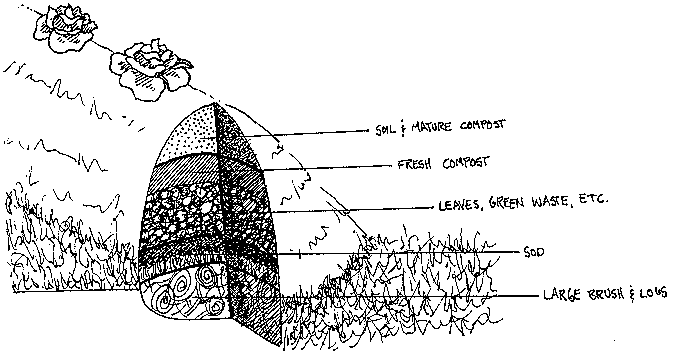
composting and hill culture
[Subscriptions to The Avant Gardener for a year are $20 in USA; $24 overseas. Write to The Avant Gardener, Box 489, New York, NY 10028, USA. Though it is definitely oriented toward temperate horticulture, often ornamental, some of our tropical readers will find some articles helpful and interesting from time to time.]
The systems we are trying are quite similar. We make layers of whatever material we have available. By being able to plant immediately we not only get that "instant gratification" but also are able to make better use of scarce land by continuing to use the area for planting. Because it is in use, there is no hurry for the whole pile to decompose so there is no need for turning or chopping up the coarse material. You also have all the advantages of a raised bed. We are using fertilizer at least this first season because our top compost layer is thin and the decay inside may cause nutrient deficiencies at first. If we had manure tea we would water with it frequently. Instead we often use a soluble fertilizer, pouring it right over the leaves. Since we never seem to have enough compost, I will tear up some of these "hills" after a year or so rather than following the German scheme exactly.
Heat from decomposition may not be too serious a problem on a smaller scale. We have very nice carrots right now in a 12-inch (30 cm) tall 2 x 4 foot (60 x 120 cm) bottomless box that we placed on a cement slab and filled to the top with grass clippings and a bit of fertilizer. We then placed about 3 inches (7 cm) of potting mix on top and planted the seeds. By the time the roots reached the grass it had apparently cooled down.
Those of you with large amounts of rainfall are often discouraged to see the bit of fertilizer you were able to procure leached away by rains. Hill culture might help because the microorganisms that decay the organic matter in the interior of the hill use the same nutrients that plants use. As nutrients are leached into the pile they are "recycled" by these microorganisms and turned into compost.
THE HAITI MIX FOR STARTING SEEDLINGS. Many formulas for artificial potting soil give outstanding results when starting vegetable, flower or tree seedlings. The problem is that ingredients are expensive or not available in many locations. For example, at ECHO we start our seeds in a 1:1:1 mixture of peat moss, perlite and vermiculite. When Tom Post in Belize asked about using sugar cane for such a mix, I asked Jerry Larson with Double Harvest in Haiti about their experience. In the process of growing millions of tree seedlings, they have acquired a lot of experience with what they now call the "Haiti mix." His comments follow.
The basic ingredients are 5 parts sugarcane bagasse, 1 part rice hulls and 1 part sandy loam soil. Before they are mixed the sugarcane bagasse must be well decomposed. The best indicator is the color. Bagasse with a light yellow color has decomposed very little and must not be used. As decomposition proceeds the color goes through shades of red to dark brown or almost black. A dark cinnamon red color verging on brown indicates that the bagasse is acceptable, but the darker color is preferable. It is important that no undecomposed bagasse get into the mix.
The decomposed bagasse is finely shredded in a silage chopper and mixed with the other ingredients. A heating and sterilization process is initiated by adding urea to the mix at the rate of 1 pound per cubic meter of mix. [Ed: If you do not have urea, I would imagine other nitrogen sources could be used. Even ordinary fertilizer could probably be used, but it would make control of nutrients in the final mix less precise.] There is usually sufficient moisture in the bagasse to "kick off" the heating process. Within 2-3 days the temperature in the center should be about 145 F (62 C). Next the pile is turned inside out so that all parts will be heated equally. After just one more day the pile is flattened and packed down to stop the heating process. At this point the mix is in an unstable state and thorough packing is necessary if the heating process is to be controlled. Continued heating not only burns up nutrient value in the mix but, if allowed to continue unchecked, will chemically alter the mix and make it toxic to plants.
An effective method of packing is to drive over the flattened pile with a tractor. After that the pile can be left for several weeks or months with no damage. If the pile cannot be packed that tightly and if it is to be used within a short time span (several days), then it is permissible to have several men pack it by walking over it until it is as tightly packed as they can get it. Just before the mix is used, it is passed through a 3/8 inch hardware cloth to remove the larger particles. Five to six pounds of 12-35-24 fertilizer (depending on the stage of decomposition of the bagasse) is added per cubic meter along with 2 ounces of F-5-3 micronutrients. The mix should be used immediately because the fertilizer will otherwise cause it to heat up again and alter the nutrient balance. In this last stage, only as much mix as is going to be used each day should be prepared.
A PEAT SUBSTITUTE MADE FROM COCONUTS. [The following is based on an article by Alan Meerow in Country Folks Grower South, November 1993.] Coir is the fibrous part of the coconut husk. The long fibers are "extracted and sold to make brushes, automobile seats, mattress stuffing, drainage pipe filters, twine, etc. Traditionally the short fibers and dust left behind have accumulated as a waste product for which no industrial use had been discovered." Tests in Australia and Europe show that this product makes a remarkably adequate substitute for peat. "The Lignocell company in Sri Lanka (where over 2.5 billion coconuts are processed each year) has become the leading processor [of coir]."
Coir has a high lignin cellulose content, which keeps the piles that traditionally accumulate around processing plants from breaking down. The same property inhibits breakdown of coir pith when used as a growing medium.
The pith is very similar to peat in appearance. It is light to dark brown, with 0.2-2.0 mm particle size. "Unlike sphagnum peat, there are no sticks or other extraneous matter." A study in Australia found "superior structural stability, water absorption ability and cation exchange capacity compared to sphagnum peat." There are reports that coir from sources other than Sri Lanka have contained chlorides at levels toxic to many plants. Perhaps this is a result of the processing method. In any event, watch out for that if you begin using the pith.
"Lignocell processes the pith into highly compressed bricks roughly 8x4x2 inches (20x10x5 cm), each weighing 1.5 pounds (0.7 kg). They are exported for the retail market in 12-brick packages. The 12 bricks fluff out when re-wet into 4 cubic feet (0.1 m3) of ready-to-use material. Each brick absorbs about 2 gallons (7.6 liters) of water. I have been impressed by the ease with which coir pith re-wets after it has been thoroughly dehydrated."
The February 1996 HortIdeas cites research which cautions that coir can contain high levels of chlorine, which could affect seed germination. Leaching reduces chlorine levels quickly, and it is best to use coir that has been aged for at least one year.
[Ed: When I (LSM) was an intern at the Royal Botanic Gardens, Kew, we used coir rather than peat because of the adverse environmental impact on British peat bogs. Most of the horticultural staff preferred it to peat anyway. It worked well with nearly all plants, though they said it was not sufficiently acidic for the carnivorous plants. The coir surface can appear dry even when saturated below, so be careful to avoid overwatering.]
REMOVING SALTS FROM CONTAINER-GROWN PLANTS. I [MLP] vividly remember as a toddler watching my father boil down a can of saline water to show all the salt that was left behind. I think of that when week after week I water a potted plant during a long dry season or in a greenhouse where it never receives rain. As the water evaporates or is taken up by the plants, more and more salt builds up. Sometimes you can even see a white crust appear on top.
David Silber writes in the June 1992 issue of The Fruit Gardener that one way to correct this problem is to "semi- annually leach the soil with tap water (rainwater is better) that has been acidified to a pH of 4.0. I use a commercial grower's acid blend containing nitric and phosphoric acid. But you can also use vinegar as an acidifier: 2 tablespoons per gallon of water will yield the desired pH. The solution should be flushed through the growing container three times. In my experience the leaching water went in at a pH of 4 and came out at 6.5. This effectively removes lime and bicarbonates as well as sodium. I've used this on miracle fruit, coffee, pitomba, jaboticaba and lychee. The plants responded within two weeks with a new flush of normal leaves."
ECHO used this technique in the greenhouse where we grow rain forest plants. Plants were not thriving and leaf margins were turning brown on some species. They seemed generally healthier after the treatment.
The Fruit Gardener is published six times yearly by the California Rare Fruit Growers chapters. Membership/subscriptions: $16 in USA; $25 Canada/Mexico; $30 foreign surface mail; $40 foreign airmail. Write: California Rare Fruit Growers, The Fullerton Arboretum, California State University at Fullerton, Fullerton, CA 92634 USA.
SALINE AGRICULTURE: SALT-TOLERANT PLANTS FOR DEVELOPING COUNTRIES is a 143-page book published by the National Academy of Sciences (1990). Like the other NAS books of this nature, it is a very readable overview of lesser-known resources for a difficult situation. Salt-tolerant crops (halophytes) might utilize land and water that are unsuitable for salt-sensitive plants. Looked at from a different angle, farmers whose poverty limits them to their present location where soils or water are salty might eke out a better living.
There are limitations, in part because relatively little agricultural research has been done with these crops. Salt- tolerant plants usually have poor agronomic qualities (e.g. there may be wide variations in germination and maturation times). Seeds of grasses and grains tend to shatter and fall to the ground. The foliage may not be suitable for fodder because of its high salt content. Nutritional (or anti-nutritional) characteristics have, in many cases, never been studied in the laboratory.
Sections are devoted to food, fuel, forages, and
fibers.
FOOD: grains and oilseeds, tubers and foliage, leaf protein, fruits,
traditional crops.
FUEL: fuelwood trees and shrubs, liquid fuels, gaseous
fuels.
FODDER: grasses, shrubs, trees.
FIBER ET. AL.: essential oils,
gums, oils and resins, pulp and fiber, bioactive derivatives, landscape plants.
Some of the plants we have talked about in EDN are discussed as having some degree of salt tolerance. The leucaena tree, Leucaena leucocephala, has been grown on coastal sandy soil in Pakistan through irrigation with saline water. Trees even survived when 20% seawater was used in the irrigation water, although yields were reduced by 50%. [See below for more information.] Jojoba (Simmondsia chinensis) is relatively salt tolerant, growing near the Dead Sea with brackish water irrigation in Israel. Quinoa (Chenopodium quinoa) germinated in a mixture of 1/3 sea water and 2/3 fresh water, though it would not continue to grow at that salinity. In the salt flats of southern Bolivia, quinoa is one of the few crop plants grown. In this arid region (230 mm/9 inches) rainfall, quinoa is planted in holes about 40 cm (16 inches) deep where the soil is damp. As the plant grows, soil is filled in around it. With wide stretches of salt beds nearby, the environment is certainly saline, but no measurements have been reported. [The book does not say whether they are using specially selected strains of quinoa.] Neem (Azadirachta indica) seedlings have been grown successfully in Pakistan on sandy soil using irrigation water with approximately 10,000 ppm salt. [Pure sea water is 35,000 ppm.] A neem plantation has been established near Mecca in Saudi Arabia to provide shade for Muslim pilgrims. Water with approximately 2500 ppm salt was used for irrigation.
Only two conventional crops have halophytic ancestors: beets and date palms. Both can be irrigated with brackish water without serious loss of yield. Asparagus is remarkably tolerant of salt. In Tunisia, where irrigation water contains 6,500 ppm salt, asparagus yields are about the same as in areas irrigated with fresh water. [ECHO staff Cory Thede comments that he remembers reading somewhere about applying salt for weed control in asparagus.] Barley is the most salt-tolerant cereal grain. At the University of Arizona, a special strain of barley yielded 4,000 kg per hectare when irrigated with groundwater with half the salinity of seawater. Selected strains were grown at the University of California on sand dunes with the following yields in kg/ha and salinities: 3,102 with fresh water; 2,390 for 1/3 sea water; 458 for 100% seawater. (Unfortunately the book says very little about vegetables. For some help on that subject, see "Helpful Facts About Salinity" below.)
Anyone working with salinity problems will surely want this book. If you are working with a governmental or non-profit organization, you may write the NAS on official letterhead, explain your work in no more than one paragraph, and ask if they might send you a free copy. The price in the US is $15. The address is Board of Science and Technology for International Development, Publications and Information Services (HA-476E), Office of International Affairs, National Research Council, 2101 Constitution Avenue, Washington, D.C. 20418, USA.
SALT TOLERANCE IN LEUCAENA? Dr. James Brewbaker at the University of Hawaii commented on the note above that leucaena has salt tolerance. "Leucaena's salt tolerance is effective only along shore lines where calcium levels are high. As with many other plant species, the tolerance of 'salt' is a complex subject, for salt can represent a great assortment of chemicals. Generally, the major difference is seen when comparing coastal salinity (highly calcareous) with inland evaporative salinity (e.g. Salt Lake), which is usually not calcareous. Leucaena tolerates the former, not the latter."
Calcareous refers to soils with high calcium content, primarily coral-derived soils with accompanying high pH. Arid regions naturally have areas of high salinity due to evaporation and salt accumulation; such soils are often lower in calcium, higher in sodium, and thus more toxic to plants.
A few nitrogen-fixing trees do handle the salty non-calcareous soils. The best work with these is at CAZRI (Central Arid Zone Research Institute of India) in Jodhpur, India. (Please send us their complete address and more information about their work if you know it. Thanks!)
SOME HELPFUL FACTS ABOUT SALINITY. I pulled the following facts from Knott's Handbook for Vegetable Growers. On units of measurement: The following gives a helpful perspective when reading salinity literature that talks about ppm and millimohs per cm (sometimes written mmho/cm). 1 ppm (part per million) = 1 gram in 1,000 liters of water; ppm x 1,000 = 1%; 1,000 micromhos per cm (a unit of measure for electrical conductivity) = approximately 700 ppm; 1,000 micromohs per cm means that one ton of salt would be in the water that would cover one acre of land to a depth of 1 foot.
The handbook lists several vegetables and the mmho/cm in the soil that reduce yields by 25%. Beet (10), spinach (7), tomato and broccoli (6), cabbage, cucumber, muskmelon, potato, corn and sweet potato (4), lettuce, pepper, radish, onion and carrot (3), bean (2). So beets would be the best vegetable for saline soils, beans the worst.
Some general rules listed for likely crop response to salinity follow. 0-2 mmho/cm, mostly negligible; 2-4, yields of very sensitive crops may be restricted; 4-8, yields of many crops restricted; 8-16, only tolerant crops yield satisfactorily; above 16 only a few very tolerant crops yield satisfactorily.
PLANTING IN FRESH VOLCANIC ASH. Two members of our network in the Philippines asked what we could find out about this subject. Planting season is now near for farmers near Mt. Pinatubo. We called Dr. Allen Busacca at Washington State University about gardening in volcanic ash and what impact layers of ash will have on agricultural soils.
"Most of our experience has been with revegetation of natural areas (Mt. St. Helens) rather than agricultural lands. While we generally think of volcanic soils as rich agriculturally, that is only after thousands of years of weathering. It has been my experience that ash is relatively neutral. Initially it is silica-rich, like crushed glass. In the case of the Mt. St. Helens volcano it was not very toxic. It is probably best to incorporate it up to maybe 6 inches (not an easy thing to do without equipment)."
"Not all volcanic ash is created equal. The best way to deal with a larger quantity depends upon whether it is light and fluffy or a fine, coarse pumice."
He referred us to Dr. Jeff Smith who was involved in some agricultural studies for the USDA. Dr. Smith said that there has been surprisingly little study of agriculture in fresh volcanic ash. "It will probably be a bit on the alkaline side and almost certainly will contain a lot of salts. So the first year only the most salt tolerant vegetables and grains should be grown. He is pretty sure that if they plant salt sensitive vegetables directly into the ash they will not thrive. On the other hand, there are volcanos where the ash was more like glass. Incorporating into the soil seems to help a lot."
There are no extension bulletins on the subject that he knows about. This would be a good research topic for one of our readers in the scientific community. If anyone has ever seen an extension bulletin or especially helpful research paper, or if you have had personal experience, we would like to hear from you.
ECHO's network shared quite a few helpful experiences. Ken Turner with Mercy Corps sent an interesting letter and pictures. "I guess I'm your reporter on the spot. Our community and my home (until the eruption) is 15 km from Mt. Pinatubo. We evacuated June 7, two days before the first major eruption. One of our staff returned a few weeks later. It looked pretty dismal.
"Now it is a different story. Some pretty amazing harvests have drawn a lot of attention. Banana planted a few weeks before the eruption produced a good crop. Most amazing was the watermelon harvest-more than twice the yields of past years, melons (sugar baby variety) twice the size on the average and still sweet, and vines more than twice the usual length.
"The ash is now about 8 inches (20 cm) deep. The soil has remained moist (and I suspect cool) under the sand, even after 3 months of dry weather. I did not check the pH, but 30 km from the mountain the pH is about neutral. It appears that sweet potato is thriving in rice fields 30 km from the volcano.
"The crops and generally lush growth is encouraging farmers to return, even though the road is likely to become impassible early in the rainy season. "
Victoria Coronel with IRRI sent very specific and helpful recommendations. Highlights are summarized. The eruption of Mt. Pinatubo brought havoc to more than 38,000 ha of farmland. Even though the Philippines has several active volcanos, they could find no published reports of studies on revegetation.
Some findings from the Mt. St. Helens volcano in the United States are relevant. (1) Ash has a lower permeability than soil. This means that flood water will remain longer on the surfaces of the ash-covered soils. (2) The ash layer acts as a surface mulch both reflecting solar radiation (increasing photosynthesis) and impeding water flow and evaporation from the soil to the atmosphere. An estimated 40-60% of the light is reflected. Peak daytime soil temperatures beneath 2-3 cm of ash were 6-10 C lower than adjacent sites where ash had been incorporated into the soil. (3) The abrasive effect of ash particles is harmful to insects. Unfortunately beneficial insects were the most affected.
Studies from Mt. Galunggung in Indonesia provided the following insights. (1) Crop yields were still high in areas with up to 20 cm of volcanic materials. Productivity declined with greater amounts. (2) Yields of rice and other food crops were high when the ratio of volcanic materials to soil were as high as 5:5 and 7:3. If there is less than 20 cm of ash, plowing into the soil seems the easiest solution. If deposits are deeper, adding organic matter may be needed (20 t/ha manure or other organic materials). Dumping organic waste from Manila has been suggested, but transportation is a problem. Green manure crops may be the answer.
The following cropping pattern was suggested if volcanic materials are less than 20 cm and the irrigation system is intact. After plowing 30 cm deep (a 7:3 ratio of volcanic materials to soil), plant rice-rice-corn/ soybean or rice- rice-leaf onion. For 20-30 cm thick deposits, plow the volcanic material when dry, incorporating any organic material that is available. Food crops can be planted in the early rainy season. Rice and corn are not generally recommended. If volcanic materials exceed 50 cm, pineapple would be suitable since it thrives well in sandy soil with pH range of 4.5-7.l5 and requires minimum care and inputs. Hybrid coconuts can also be planted. Fruits like guavas, nangka [jackfruit], papaya and banana grew well, even better than before the eruption of Mt. Galunggung.
Preliminary tests show some rice varieties do better than others. The top 3 were all varieties grown in acidic areas of Indonesia. In one area, corn exhibited early leaf yellowing (corn requires a lot of nitrogen). Sweet potato gave the best growth, followed by kangkong and cassava. Green manures also gave initial excellent growth. A second eruption destroyed the experiment.
IRRI recommends that the above fruit trees be planted as quickly as possible for the longer term; that sweet potato, cassava, kangkong and green manures be planted for the intermediate term; that livestock that eat roots (e.g. swine) be associated with sweet potato and cassava growing; that aerial seeding of green manures, including ipil-ipil [leucaena], be considered.
Scientists desiring to see the entire report, "Mt. Pinatubo-Controlled Revegetation" by B. S. Vergara and V. Coronel can write to Dr. Coronel at IRRI, P. O. Box 933, 1099 Manila, PHILIPPINES. Workers outside of Asia can write to ECHO.
RESOURCES ON SOIL HEALTH. We asked Marianne Sarrantonio, author of the handbook Methodologies for Screening Soil-Improving Legumes and professor of agroecology at Slippery Rock University, Pennsylvania, USA, to recommend a few hands-on resources from the emerging science of soil health (or soil quality). (This book is available in English and Spanish from Rodale Institute, 611 Siegfriedale Rd., Kutztown, PA 19530, USA.) "Local extension groups in your area are a good place to check for hands-on manuals on composting and green manures. I think that Grace Gershuny's books The Soul of the Soil and Start with the Soil are excellent for those without science training." Contact John Doran (ARS-Nebraska, USA, 402/472-1510) after mid-1996 about his how-to manual for measuring and monitoring soil health.
Green manures and cover crops
THE INTERNATIONAL COVER CROP CLEARINGHOUSE (CIDICCO is the Spanish acronym, for Centro Internacional de Informaci�n sobre Cultivos de Cobertura) was established in 1990 to provide an exchange of ideas, information and experiences among groups and individuals interested in promoting cover crops among village farmers. They collect and distribute information on leguminous cover crops and green manures from both scientists and practitioners in the field, document field experiences with cover crops, publish technical reports and the newsletter "Cover Crop News," and coordinate networking among members. (ECHO is normally able to provide packets of seed for any of the plants they mention.)
The publications are often field experience-based descriptions of cover cropping systems (highlighting velvet bean, lablab, jack bean, and other legumes) and management practices. Clear information regarding cultivation is given to help you adapt the system in your area. The publications give a very balanced perspective on the use of cover crops, defining where they can be useful as well as mentioning limitations for the farmer. Most are available in Spanish and English and cost $1.50-2.50; write CIDICCO for a publications list.
The director of the program is Milton Flores. Milton would love to hear from you whether you are experienced with green manures or just beginning to try them. You do not need to be an "expert." If there is something going on in your community which he might like to see, be sure to describe it. To receive their newsletter write: Milton Flores, CIDICCO, Apdo. 4443, Tegucigalpa, MDC, HONDURAS; phone (504) 32- 7471, 32-9870, 39-5851; fax (504) 39-9896; e-mail cidicco@nicarao.apc.org.
ENTHUSIASM FOR COVER CROPS is contagious. Roland Bunch wrote, "Our extensionists in Honduras who have worked in some of the most successful programs in Central America told me several times that they have never before seen a technology develop so much enthusiasm and take off with so little program effort. They have done virtually no promotional work on it, yet it is taking off like wildfire. The program is harvesting seed by the 100 pound bag and cannot meet even a fraction of the demand." He mentioned that one farmer told him he is saving $100 per year in coffee purchases by using the roasted beans of one ground cover, velvet bean, as a coffee substitute. Doug and Ruth Welch mentioned that it is used in this way in Zaire also.
GREEN MANURE CROPS OFFER TREMENDOUS ADVANTAGES TO THE SMALL FARM IN THE THIRD WORLD (1985). By Roland Bunch, at the time with World Neighbors, Honduras. (Now a consultant with COSECHA, Apdo. 3586, Tegucigalpa, HONDURAS, Central America.)
Green manure crops are crops which are grown to be turned under to increase soil fertility. Leguminous green manure crops, i.e. those which can make nitrogen fertilizers from atmospheric nitrogen, can offer small-scale third world farmers a tremendous number of advantages:
1) They provide large quantities of nitrogen for the soil.
2) They add many tons of organic matter to the soil, thereby improving topsoil depth, water-holding capacity, nutrient content, friability, and texture of the soil.
3) Since the green manure crop grows in place, it presents no transportation problems, in contrast to either compost or chemical fertilizers.
4) Green manure crops require absolutely no capital outlay after the initial purchase of seed. They require no chemical inputs, so dependency on outside sources of fertilizer, nutrients, and pesticides is reduced.
5) Green manure crops can shade the soil up to eleven months out of the year, a factor extremely important in tropical climates for preservation of soil moisture and organic matter.
6) The cover they provide for the soil protects the soil from wind or water erosion.
7) Green manure crops provide generous amounts of high protein fodder for animals, which can be especially valuable if it is available during the last months of the dry season (since fodder at this time of year is the limiting factor in traditional animal-raising in much of the third world).
8) Some green manure crops provide human food, including various kinds of edible beans, peas, and pods.
9) Green manure crops can provide a cash income, by selling firewood, food or feed (and maybe seed).
10) They often provide an incentive for people to abandon harmful traditional practices, such as burning crop residues or letting animals loose in the dry season to devour everything in sight.
11) Some green manures can control weeds when intercropped with grains, eliminating costly weeding operations.
Something like 30% of all the increases in harvests achieved by small farmers in the third world during the last three decades has been achieved through the use of chemical fertilizers. Should petroleum prices shoot up once again, as could easily happen sometime in the next decade, prices of chemical fertilizers could easily become too expensive to be economically feasible for use with traditional basic grains. Almost overnight, third world basic grain production could plummet, causing famines the extent of which would make the present situation in Africa seem mild by comparison. Widespread use of green manure crops could avert much of this impact.
Comparison with Compost. As composting is a technology that is often recommended for third world development programs, it might be useful to compare composting with the use of green manure crops.
1) Compost merely decomposes the organic matter one already has, whereas a green manure crop can often add over 40 tons of additional organic matter per hectare. Inasmuch as organic matter is often in short supply on villagers' farms (or is already being recycled), this is an important consideration.
2) At best, compost will return to one's field about 98% of the nitrogen one started out with. A green manure crop, however, will add considerable quantities of new nitrogen to the system.
3) A compost heap takes a tremendous amount of work, as anyone who has made one can attest. Though compost will often pay in a vegetable garden, it is not economical when used on basic grain crops such as corn or millet. On the other hand, although a green manure crop takes a bit of labor to plant (using a dibble stick) and a fair amount of labor to incorporate, it takes much less labor then a compost heap. And in some cases where the green manure crop is intercropped among traditional crops (such as corn, sorghum, or millet), it covers the ground so well that one or even two weeding operations can be eliminated, thereby actually bringing a net savings in labor.
4) Compost heaps require water, so they are made near a water supply but at a distance from where they will be applied. Green manure crops take advantage of available rain water, and are planted where they will be used.
5) Compost cannot be used as a food source, either for animals or humans.
A Few Ideas About What to Look For. The major problem with green manure use around the third world is that village farmers cannot afford to give up land in order to grow "just" a soil amend- ment. Or when they have the land, they cannot spare the labor. However, there are three ways in which these objections can be overcome. In many situations only one of these will be appropriate, in others two. Only rarely is none of them appropriate.
1) Green manure crops can often be planted among traditional row crops, especially corn, sorghum, and millet, without decreasing the production of the main crop at all the first year, and usually with major increases in the major crop in succeeding years. The major instance in which this is not possible is when people are already intercropping two or three other crops with their major grain.
2) Green manure crops can often be intercropped with basic grains toward the middle or end of the growing season, with the idea that their major growth would occur during the dry season, thereby using land that would not ordinarily be under cultivation.
3) Where multiple-year fallows and/or shifting agriculture is used, green manures can be planted on land the first year it is to go fallow, cutting the fallow period to one year instead of 3-15 years.
What characteristics should we look for, then, in a legume that will be useful under these circumstances?
1) It must be a non-woody annual with vigorous growth.
2) It should grow well in the poorest of soils in the area, without needing any kind of fertilizer.
3) One must be able to plant it in local fields with no special soil preparation, and either with a dibble stick or, preferably, by broadcasting the seed.
4) The plant must have few natural enemies so that it will grow vigorously without pesticides or major labor requirements.
5) The legume should either be very shade-resistant (for intercropping) or drought-resistant (for growing into or through the dry season).
6) If possible, it should first cover the ground well, then climb any stalks that remain in the field.
7) If possible, the green manure crop should be edible by animals and/or humans.
Some Already Known Possibilities. For details on species used as green manures, see the following article.
Miscellaneous Observations.
1) What can be done in areas where animals are let loose during the dry season while the green manure crop is still growing? One approach is to first show people the results of the green manure plant on an enclosed piece of land. Next get a good number of people to try it out, perhaps timing the planting to get a good start before the animals are let loose. Those who experiment first can often be motivated to spread the word to others with the idea that the destruction for each person will be less if more people plant it. Eventually, if enough people plant it, community pressure will make everyone keep his animals locked up (except in cases where the person with all the animals is a large landowner).
2) On very steep hillsides, something must be done to keep the organic matter from washing away. Piling crop residues along rough contour lines can help, as can contour ditches. Another possibility is incorporating the green manure immediately after cutting it, but this is hard work before the rains come (if the soil is a heavy one), and once the rains have come, people generally do not have extra time.
3) On flatter land, the green manure should usually be cut and allowed to dry for a couple of weeks before incorporating it (if during the dry season). The labor saved in incorporating it will be worth more to the farmer than the small amount of fertility lost. In one case farmers cut holes in the Canavalia (jack bean) cover to plant corn when the rains came, cut down the Canavalia entirely about two weeks later and replanted the Canavalia. Then, two weeks later, they incorporated the dead Canavalia vegetation. In this manner, they avoided both weeding operations in their cornfields!
4) Where weather is unreliable, a combination of similar plants, one of which is more drought-resistant (e.g. jackbean and velvetbean) reduces risk of total loss, yet assures a vigorous crop if rains are plentiful.
5) In West Africa, we are trying a system of planting a perennial every sixth row (pigeon pea), and then gathering the corn or millet residues under the pigeon pea plants at the end of the year, to be distributed six months or so later when well-mixed with pigeon pea leaves, which have a better carbon-to-nitrogen ratio. The presence of the pigeon pea trees (already known as a cash crop) will also prevent burning of residues.
6) On South and Southeast Asian hillside areas, Leucaena leucocephala is planted as a contour barrier and constantly pruned, thereby providing erosion protection, some green manure, and firewood (see the booklet produced by World Neighbors called "Leucaena-based Farming"). This produces less green manure than other systems, but can be used where green manure cannot be intercropped among traditional crops.
7) We certainly would welcome any experience you have in this subject. Much more information and experi- mentation must be done. We are still learning about this, but the positive response from hundreds of villagers and dozens of other programs has made us decide to share what little we know as soon as possible so we can all work together to learn more about it. I would think that, right now, the most important subjects we need to learn more about are:
a) What legumes will work above 1,800 m?
b) What additional plants will work at any elevation?
c) Do adaptive research to see which of these technologies will work outside the Southern Mexico/Central American habitat that this information comes from.
d) Which legumes can be broadcast rather than planted with a dibble stick?
e) Which of these green manure crops provide the best yield increases with which basic grain crops?
f) What green manure crops would be best under high rainfall conditions?
WHAT WE HAVE LEARNED TO DATE ABOUT GREEN MANURE CROPS FOR SMALL FARMERS (1987, contributed by Roland Bunch). [CIDICCO (see above) now offers the recent technical report "The Use of Green Manures by Villager Farmers" (1995, 7 pp., by Roland Bunch) in English or Spanish for US$3 including postage. Those considering implementing and promoting a green manure (GM) system would benefit from reading this article. It outlines the following topics: advantages and disadvantages of GMs for villager farmers, achieving the adoption of GMs, research priorities, and promising species for low, intermediate, and high elevations.] Here we present a few other insights from Roland Bunch regarding GM systems and the species often incorporated into the system.
In spite of the advantages of green manures, their use seldom became common among farmers in the third world. They cannot afford to give up scarce cropland just to grow a soil amendment. If they do have the land, they cannot afford the labor. Nor are they generally willing to spend money to improve crops grown for subsistence, because they earn no money from them with which to replace what they have spent.
World Neighbors/Central America has found a number of ways to overcome most of these problems to the extent that farmers have accepted green manures faster than any other agricultural technology with which we've worked through the years. One program sold 65 pounds of seed last year to local farmers and 1500 pounds this year in the same area with minimal promotion.
To summarize some ways to produce green manure without reducing at all the land used for other crops:
(1) Plant among traditional row crops.
(2) Intercrop near harvest of the first crop timed so green manure will grow primarily during the dry season.
(3) Where shifting agriculture is practiced, plant during the first fallow year to shorten the fallow period.
(4) Plant under fruit or coffee trees.
(5) Plant leguminous trees along soil conservation ditches on hillsides.
(6) Alley cropping. In Central America our work has used the first four possibilities. We have had the most success with jack bean and velvet bean.
Jack bean (Canavalia ensiformis) is an incredibly drought-resistant, shade-tolerant, hardy legume that grows well in extremely poor, droughty soils (and apparently less well in fairly fertile soils). There are two kinds of jack bean, one that climbs and thoroughly covers the soil, and another that has a bushy growth habit and does not climb at all. It begins flowering after 4-5 months, then produces seed pods continuously for at least the next year. It will grow through some 5-6 months of dry season if above about 600 meters and can serve to shade the soil during this time to prevent loss of organic matter. Under 500 meters it will often stop growing after about 3 months without rain and may even drop its leaves if soils are thin and temperatures exceptionally high. The stem will become somewhat woody, but only if left for seed and under fairly warm conditions.
Jack beans grow vigorously at sea level, and can be used as a green manure crop up to about 1600-1800 meters. It does not thrive in soils with excess water. They do very well in corn fields, but are preferred over velvet beans only when it is too dry for velvet beans to thrive. This tends to be the case where corn has been replaced with sorghum or millet due to insufficient rainfall. I have seen it grow vigorously on soil so badly eroded and depleted that no weeds would grow there at all.
The jack bean will be eaten by grazing animals, but is liked less than other green manures. Hence jack beans are preferable where animal damage is feared. Non-climbing varieties are proving to be very good for weed control and nitrogen fixation under fruit trees. It has virtually no natural pests or diseases. Its leaves are sprinkled on leaf-cutter ant hills to eliminate them. [Ed: I am told that ants carry leaves into the mounds as food for the fungi upon which they live. Jack bean leaves reportedly kill the fungi. Dr. Warwick Kerr in Brazil writes that planting sesame near the mounds has a similar effect].
Jack bean should be planted in soil that has been cultivated within 3 years and weeded very recently (although at elevations below 500 meters or in sandier soils, cultivation may not be needed). We use 4-5 seeds per square meter in order to control weed growth. (In corn fields an important advantage of this and the velvet bean is that use of these plants may entirely eliminate at least the second weeding). Jack bean has even been planted in fields already intercropped with both corn and beans in Haiti (Bois de Laurence) without much adverse effect on even the beans. If planted in a corn or sorghum field, it should be seeded within 15-30 days of the primary crop, depending on climate, speed of growth of the other crop, etc. It can be planted with a dibble-stick (at 2 seeds/m2) or broadcast (at 4 seeds/m2), though if broadcast it will take another 2 weeks or so to germinate unless soaked in water overnight before planting.
People can eat immature pods like green beans when they are about 7-8 inches long. In Southeast Asia the mature beans are eaten, but we have not been able to find out how. Cooking must be sufficient to eliminate certain substances in the mature bean that inhibit the assimilation of calcium by the body.
In summary, jack bean can be used in grain fields, under orchard trees or to shorten fallow periods, but is not as vigorous as the velvet bean and should be used only when conditions are too severe for the velvet bean to do well. Under borderline conditions, perhaps mixtures of the two would function best.
Velvet bean (Mucuna spp. and other scientific names) is by far the most promising green manure that we have worked with in Central America. It covers the soil completely and then climbs as high as its support allows (up to well over 6 meters). It is highly palatable to animals and has found wide acceptance in our Honduras program areas as a coffee substitute. Especially encouraging is that there are at least 4 large areas where velvet bean use has spontaneously spread from village to village without any outside intervention (in Mexico to shorten fallows and in Honduras to intercrop with corn).
Velvet beans first cover the ground almost completely, then climb vigorously. Where corn stalks are present, it will eventually form a mat of leaves at about the top of the stalks, with little more than stems and pods underneath. Stems remain thin and nonwoody throughout the plant's life. The plant dies after it has set seed. [Ed: Seeing velvet bean growing to the tops of pine trees at ECHO prompts many to ask if it might not take over like kudzu in the southeastern USA. This might happen were it not that the plants die after seed set. It was a major U.S. crop for years, and I never heard of such problems.]
Sometimes velvet bean roots produce solid clusters of dark red nodules that are 4 cm. in diameter. We think that heavy nodulation occurs most frequently in infertile or sandy soils. Like jack bean, the velvet bean will volunteer heavily the second year if seed is allowed to mature and fall on the ground. In fact, farmers in Chiapas get good growth each year in their corn fields without bothering to reseed it. They harvest 4 T/Ha. of monocropped corn planted year after year on the same land under typical jungle conditions, using chemical fertilizer plus velvet bean.
About the only soils in which velvet bean has not done well for us are those that are waterlogged or have a pH of 4.5 or less. Like the jack bean, it needs to be planted in a field that is either sandy or has been cultivated within the last 3 years. Velvet bean will take a bit cooler climate than jack bean, but still does best at sea level and does poorly over 2,000 meters. In cool climates it will grow 3-4 months into the dry season, but is not as drought-resistant as jack bean. Velvet bean grows even more vigorously than jack bean under less harsh conditions, but in areas of severe drought, jack bean will out-perform velvet bean.
The velvet bean is presently our species of choice, in most cases, for growing in corn fields, rehabilitating depleted land, and weed control. It has been used in Guatemala and parts of Honduras to eliminate serious weeds such as nutgrass (Cyperus rotundus), Bermuda grass (Cynodon dactylon) and imperata grass (Imperata cylindrica). I am not aware of what is required to do this, though I would guess that the grass must be cut back and the velvet bean then allowed to grow a full 6 months in order to choke out the weeds.
It is an extremely good, fairly palatable high-protein fodder for most animals, especially cattle, and is eaten by virtually all animals except, sometimes, chickens. Thus, like the lablab bean, it can be an important source of high protein fodder well into the dry season, when many domestic animals are losing weight for lack of food.
We were taken off guard by the degree of acceptance of the dry beans as a coffee substitute. Having introduced it as a coffee stretcher (to be used 50-50 with coffee), we found that people were soon drinking it straight. Use is so widespread after just one year that a group of women is roasting and grinding the bean and selling some 40 pounds a week under the name "nutricoffee."
Like the jack bean, velvet bean is native to Central America. However, there are two kinds. The more common one has an extremely irritating itchy powder on the mature pod. Villagers who know this plant will not want to plant the non-itchy-powder varieties until they have been shown that the pods are harmless. We would under no circumstances recommend that anyone use the irritating kind with small farmers.
Slugs damage velvet bean in warm climates (though much less than regular dry beans). Rabbits, leaf-cutter ants (its only serious insect pest here) and iguanas are other pests. In some locations rats used the velvet bean stems to climb up and eat the corn. Planting the beans later or cutting its tendrils when it gets too large has helped with this problem. It must be watched and cut back if planted near trees.
Everything said above about planting jack bean also applies to velvet bean. However, fine tuning is needed to determine when to plant velvet bean in local corn fields. This is affected by speed of growth of the native corn, climate, soil fertility and existence of problems with rats. One should plant as soon after the corn as possible to get maximum velvet bean growth and weed control, but not so soon that the velvet bean outgrows the corn or causes rat problems. Especially in fertile or heavily fertilized soils, the velvet bean grows very rapidly and may even need to be pruned once to retard its progress.
Corn crops growing where velvet bean or jack bean have been incorporated can often do extremely well without any initial fertilization with chemicals, but will often show signs of nitrogen deficiency by tassling time. Farmers in our programs in Honduras almost always add a side dressing of urea to these crops. In general we recommend this practice where fertilizer is available and affordable. Over the long run, one would think phosphorous would also be needed, but in the short-run neither visible symptoms nor level of yields would indicate much problem with this element. Quite likely the increased organic matter is increasing the availability of soil phosphorous enough that deficiencies are not yet a problem.
In corn fields, the velvet bean produces an average of about 6-7 pounds of above-ground organic matter (wet weight) per square meter (30 T/Ha), but has produced twice that. The effect on subsequent plantings is roughly equal per pound to that of cow manure or half that of chicken manure, although this varies from field to field. When incorporated into the soil, the velvet bean often approximately doubles subsequent corn yields and when used as a mulch increases yields by about 35%. Even dry bean yields following velvet beans have shown yield increases of over 100%.
[Ed: Even though leaving the residue as a mulch has many benefits (erosion control, weed control, moisture retention), the greater effect on corn yields after incorporation might lead you to incorporate residues rather than leave them as a mulch. All nutrients probably become available in one season when incorporated, whereas they are more slowly released when left as a mulch, accounting for the greater effect. However, almost surely some or much of the remaining nutrients will benefit the second and subsequent corn crops. Roland and I asked during a regenerative agriculture conference at Rodale International for a perspective on this question. The consensus was that over several years the total amount of nutrients available for plants is about the same whether residues are left as a mulch or incorporated. We would welcome your input on this question. I recommend a no-till approach except in famine situations where immediate yield is imperative.]
Farmers in areas with enough moisture for two crops of corn or sorghum started doing the following. The green manure (velvet bean or jack bean) is intercropped with the first grain crop. After harvesting the grain they cut the residue and green manure down, leaving this on the surface as a mulch. The second crop is planted 20 days later with a dibble stick right through holes cut in the mass of dead velvet bean. There is usually a net saving of labor because planting and cutting of the green manure requires less work than the two weeding operations that are thus saved with the second crop. This is the sort of technology one dreams of, but rarely finds: net savings of labor, zero cash cost, decreased risk (the mulch gives some protection from erosion and drought), increased productivity, increased soil fertility and increased protein intake for animals or people.
In Togo velvet bean grew well and was incorporated into the soil 5 months before planting corn. There was virtually no response to the green manure. Our hypothesis is that the green manure was burned or leeched out. We are now testing whether under such conditions a green mulch (jack bean for instance) throughout the dry season will be able to reduce surface temperatures sufficiently to maintain organic matter. We have serious doubts about the claims that organic matter in tropical soils are impossible to maintain.
Recently villager nutrition groups have discovered that by toasting the velvet bean somewhat less than they do to make coffee, they have been able to produce a really passable hot chocolate. By grinding the flour finely, they have even been able to use a recipe for soybean cake to make "velvet bean cake." [See the chapter on Human Health for information on using velvet bean as a food source.]
The Lablab bean (Dolichos lablab or Lablab purpureus) is a legume very similar in appearance to the velvet bean, but even faster growing where soils are fairly fertile. It has not been as valuable to us because of its need for somewhat more fertile soils and occasional insect problems, but may well be important to us later on when the other green manures have raised fertility sufficiently. The lablab bean is almost as drought-resistant as the jack bean, is very shade-tolerant, and is among the most palatable of legumes for animals (definitely preferred over velvet bean or jack bean). Lablab beans grow well from sea level up to about 1,500 meters. They require well-drained soils.
Lablab beans start flowering after 3 months and continue most of the first year, producing seed as well as remaining green. If soils are deep enough and other conditions permit, it will grow right through the dry season. I have seen plants that survived 3 years in droughty areas of the central plateau of Haiti. [Ed: In the sandy soils at ECHO lablab beans get nematodes so badly that it is difficult to keep them alive an entire year]. It nodulates profusely, producing mostly white nodules. Whereas the velvet bean growth is reduced if it has nothing to climb, plants in thick stands of lablab beans will begin to climb up each other. Another difference from the velvet or jack bean is that the lablab bean can be cut off nearly at ground level and will grow again, although with somewhat less vigor.
Lablab beans are traditionally planted toward the end of the agricultural cycle in some villages in Honduras to provide dry-season pasture for animals. It is also edible, and in some places, such as Haiti and West Africa, is widely appreciated as a regular food. Young pods or immature beans can be eaten green (beans taste similar to a sweet pea-a white-seeded variety is best for this). Dry lablab beans can be substituted for dry beans in most recipes. [Ed: Young pods of some varieties are quite tasty when cooked. Dr. Andrew Duncan recently told me that he saw a variety with an exceptionally wide pod growing on sides of village houses in Bangladesh.]
Where it grows well, the lablab bean has produced a phenomenal 11 kg per square meter (110 T/Ha) of above- ground organic matter (wet weight). Though we have had problems with insect attacks, its growth is so vigorous that it still usually grows as fast as the velvet bean. It grows so quickly that it should not be planted in corn until at least two months after corn is planted. Because animals prefer it to almost anything else, lablab beans cannot be grown where animals run free.
In pure stands, lablab beans should be planted about 10/m2. We have not found a good system yet for planting in corn fields because of its rapid growth, but it should be possible with heavy pruning (which it withstands well). The lablab bean requires either a recently cultivated or a sandy soil.
Many other species and varieties may already be present in your area and better-suited than these species. Other possibilities for low elevations (0-1500m, warm) include: Clitoria ternatea (butterfly pea; very drought-resistant but small-leaved, not covering the soil well, grows well at sea level), Canavalia gladiata (sword bean, like jack bean), various native Vignas, Crotalarias, Cajanus cajan (pigeon pea), Pueraria phaseoloides (tropical kudzu, different from the temperate weedy species) and many others. For intermediate elevations (1500-<3000 m): Phaseolus coccineus (scarlet runner bean, 'chinapopo'; reseeds naturally, does not need pruning; see the excellent CIDICCO full-color report on this species, 48 pp., US$8), Melilotus albus (sweet clover; may be difficult to eradicate), Lathyrus nigrivalvis (choreque; Guatemalan highland crop for the dry season, produces much biomass, but requires very fertile soil and a few years to produce well in new areas; needs cold but is not frost tolerant; grown on fertile land 1800-2100 m) non-leguminous Raphanus sativus (forage turnip; very fast production of much biomass) and Avena spp. (oats), Pisum sativum (peas) and Vicia spp. For high elevations (>3000 m), options are much more limited: Lupinus mutabilis (tarwi; excellent fixer of nitrogen) and Vicia faba (fava bean, broadbean). There is much room and need for experimentation and developments on the scientific and community levels with additional species.
Continuing research needs. If you have been experimenting with green manures, CIDICCO, Roland Bunch, and ECHO would like to see whatever information you have put together. Among the most important subjects we need to learn more about are: (1) What legumes will work above 1,800 meters? (2) What additional plants will work at any elevation? (3) What GMs will work best under wet tropical conditions? (4) In what ways must these recommendations be modified for areas outside of the Caribbean basin area from which they have come?
We still need tremendous amounts of information on GM systems. We need to learn about additional species for intercropping with major crops, for rotation with other GMs, and species suitable for various niches. Much more data is needed on how to manage these GMs in different soil and climatic conditions and the best techniques for management of the system. Attention to how various species can be grown together is also needed.
[Ed: ECHO has small packets of seed of many (but not all) of these species available for trial. We usually have: velvet bean, jack and sword beans, lablabs, pigeon pea, butterfly pea, tropical kudzu, and fava beans. (If you have seed of other species available you can share, let us know and we will send you our plant import permit.) Please note that our packets are for small trial plots; we do not have large quantities. If you want to buy larger quantities we will try to send you a source. We also have the "90-day" velvet bean that was grown in the south- eastern part of the USA 50 years ago. At the time of the last corn cultivation farmers would plant this velvet bean. Both corn and beans were left in the field. Cattle were allowed to feed in the fields a couple of hours each day in the fall and winter, reportedly getting very fat. This variety is not sensitive to day length so produces 3 months after planting. The tropical kind only produces when days are short (flowering starts in November at ECHO). The 90-day kind has some of the itch-producing hairs Roland refers to, but not nearly as many as I have seen on the wild "pica-pica" in Honduras.]
INNOVATIONS IN GREEN MANURES (1995). Roland Bunch sent an intriguing report on his visit to the state of Santa Catarina in Brazil to see the work of EPAGRI. "It was, technologically speaking, the most impressive piece of work with small farmers that I have ever witnessed: highly innovative, aimed at a crying need throughout the third world, very popular with the farmers, widely disseminated, and with results in better economic standards among the farmers."
"Probably the most important issue of all is that we must get away from the escalating dependency on velvet bean (at least in Central America)." The following is abstracted from Roland's report.
The project has been continuing for 13 years, on both flat coastal areas and mountains. The technologies include contour grass barriers and orienting crop rows on the contour, but by far the most popular aspect of their work is green manures/cover crops (GMCCs). These plants are used to fertilize and condition the soil, usually left on the soil surface rather than buried. They are valued both as green mulches while growing and dead mulches after being cut. The vast majority of farmers use a traditional animal-drawn tool called a "rolo-faca" (knife roller?) which knocks over and cuts up the GMCC. Then with other animal-drawn instruments, they clear a narrow furrow from the mulch and plant their next crop. The resulting mulch both reduces or simplifies weeding and noticeably increases soil fertility. The majority of farmers who have used any of these systems for more than 5-6 years are no longer plowing, evolving from a minimum-tillage system to a no-till system. Seeds of the succeeding crop are merely hand-drilled into the soil. Some farmers' animal-drawn plows are rusting in abandonment.
The project works intensively with some 60 species of GMCC and have seen widespread adoption of about 25. We very much need to continue finding new species and varieties of GMCCs. Also, if we are to avoid having more and more insect and disease problems with GMCCs, we must practice rotation with them just as we rotate major crops. Furthermore, we must avoid becoming dependent on one or two species, lest we fall into the trap that Leucaena-based programs did in Southeast Asia when psyllid insects defoliated thousands of hectares of the world's most successful alley cropping. More specifically, for those many programs totally dependent on the velvet bean as a green manure crop, it should be noted that in southeastern Paraguay, a fungus has wiped out two of the four varieties of velvet bean that were previously used in the area.
Maintaining soil cover is much more important in preventing erosion than terraces or soil conservation barriers, live or dead. Roland says, "This is the first program I have seen which took this fact to heart, and was able to convince the farmers of its value through their own observation and experience. Thus, one more nail has been pounded into the coffin of our old bag of tricks, which featured contour ditches, grass or tree barriers, and contour rock walls. We are not ready to abandon these practices entirely, but certainly we are in the middle of a process of re-examination which will probably result in a major de-emphasis in our use of at least rock walls and contour ditches."
"The overall quantity of biomass is more important, relative to amount of nitrogen fixed, than we had previously assumed." For example, both oats and turnips are widely used as GMCCs. This makes sense if covering the soil and achieving a no-till system are as important to the farmer as are supplying nutrients to the soil.
The possibilities of GMCCs to fit into a wider and wider number of cropping systems was confirmed. Farmers were using GMCCs in cropping systems based on corn, onions, cassava, and fruit trees. Also Roland was shown photographs of GMCCs associated with wheat, grapes, tomatoes, soybeans, and sorghum. There is a tremendous need for farmer experimentation to discover new species and ways to adapt to differing agricultural systems. No agronomist-staffed research stations will ever be able to investigate and refine all the possibilities.
Probably the single most important result of the Brazilian work is that by eliminating the need for most of the weeding and all of the plowing, the small farmer is at much less of a competitive disadvantage with the large, mechanized farmer. Small farmers, especially on hillsides, were never able to carry out the really heavy and expensive labors of plowing and weeding as cheaply as could the mechanized farmer. The answer lies not in the mechanization of these jobs, but in their elimination.
Roland cites a study by Flores and Estrada which compared no-till velvet bean-based system with a neighboring mechanized modern system in Honduras. The velvet bean system was less productive, but the costs per ton of corn produced were 30% less.
JACK BEAN REPORT from Don Mansfield in Mali: "I planted jack beans (Canavalia ensiformis) in terrible soil (red clay with very little top soil). They were planted September 26 and are growing like mad, yet we have had no rain since October 9. I planted them as a ground cover for land just cleared and a green manure. We have been staking the ox there. He eats the grass and does not touch the jack beans. I am really surprised and pleased at how well they are doing. I had the seed and figured I had nothing to lose by planting them."
AN OBSCURE USE FOR JACK BEANS (for your interest only). Terry Waller sent us an article in the San Angelo Standard Times about a Texas couple that grows 5 acres of jack beans every year. A chemical company in Oklahoma, "Organon Teknica Corp., uses them to make the chemical that filters blood in a dialysis machine. They say jack beans are the only way they can make it."
COMMERCIAL LABLAB BEAN VARIETIES. Lablab beans (Dolichos lablab) are one of the "big three" green manure crops that our readers have been requesting since Roland Bunch's articles in EDN. Because so many of you are now growing lablab beans, we thought you might like to compare their growth to two top commercial varieties in Australia. We purchased varieties 'Rongai' and 'Highworth' from Sauers seed company (P.O. Box 117, Rockhampton 4700, Queensland, AUSTRALIA; fax 61-79-22-2219).
The catalog describes the two. 'Rongai' was derived from the original introduction of lablab from Kenya in 1952. It was released in 1962. It has white flowers and brown seeds. 'Highworth' came from southern India. It was selected from a large range of lines for its early flowering, high seed yield and satisfactory dry matter production. Both varieties have similar vegetative growth, but Highworth flowers are purple and the black seeds are slightly smaller. Flowering begins 3-4 weeks earlier than Rongai in northern Queensland and up to 6 weeks earlier in Central Queensland. Pod maturity of Highworth is more uniform and because the pods are borne well above the foliage, seed harvesting is simplified and seed yields are higher.
SUNN HEMP AS GREEN MANURE. Fr. Gerold Rupper reports that sunn hemp is receiving widespread acceptance as a versatile green manure in East Africa. His sunn hemp seed bank distributed 150 tons of seed last year. He sent information about his work with sunn hemp in Tanzania, as well as seed of the species he grows, Crotalaria ochroleuca.
Though sunn hemp has a totally different growth habit than the green manures we have featured in the past, it has many of the same uses. It is a vigorous upright legume growing 2 meters tall. (The velvet bean, jack bean and lablab bean are all vines.) Among other things, they use it to improve the soil, kill weeds, feed livestock, and control erosion.
It is especially suited for fruit groves because, unlike vining ground covers, continual vigilance to keep it from covering the trees is not necessary. They are using it with banana, plantain, citrus, and coconut. It can be cut at any time and left in the field as mulch. If it is cut one foot (30 cm) from the ground it will grow a second time. He stresses that not less than 10 kilo of seed per acre must be planted.
Fr. Rupper wrote, "In Hanendi, sunn hemp was planted in an orchard affected badly by insects. When it had grown a bit, the insects left the trees and started to live on the sunn hemp. When the sunn hemp was cut for mulching, the insects returned to the orange trees." "Just this week we were informed that insects which attacked the freshly planted maize moved to inter-cropped sunn hemp, ate the roots and are perishing."
Crotalaria is known to contain toxins, but this variety is free of toxin (except perhaps the seed) and is fed to livestock. It is cut about 3 months after planting. It is best cut in the morning, but keeps until evening. Later in the season cattle can be allowed to graze in the sunn hemp field, but they must not be allowed to spend more than about one hour in the area. [He does not say why.] Later he wrote us that "this year our farmer stopped cutting sunn hemp, instead allowing his 120-cow herd to feed freely in fields after first spending an hour in a grass field. The cows even ate dry stems." Fr. Rupper also says that the seeds should not be stored in a closed room where people are working.
The seeds are used to keep weevils from stored rice and maize. Sunn hemp seeds are spread over the ground and bags put on top of the seeds. This procedure is continued, layering sunn hemp seed and bags of stored grain. After about 9 months, the process must be repeated. As with velvet bean, farmers are especially appreciative of its usefulness in controlling weeds and improving the texture of the soil. He tells farmers, "If you have no chemical fertilizer when the season starts, plant sunn hemp between your food crops. If fertilizer arrives you may still be able to use it. If not, use sunn hemp and you will at least get a modest crop." Other uses are applying the dry stems and any husks to trees or gardens as mulch, or as bedding for livestock.
The seeds, about the size of millet, are mixed with two parts of coarse sand and broadcast by hand. They do not need to be covered, although it might be well to draw a branch across the newly planted field. They sprout after a few days and develop a strong root. Growth is rather slow until they reach about one foot, then they quickly grow to 2 meters or more. It is fairly drought resistant, recovering well when rains return. Plants bear seed after 3-4 months and die after 6 months. However, if they are cut back to about one foot (30 cm) above the ground, they again develop new leaves.
If planted densely in a well-prepared field, no further work is needed (except to keep out animals). Sometimes it is interplanted with maize. Some species of Crotalaria are useful in suppressing nematodes, but we do not know if this is one of them.
Another species of crotalaria, Crotalaria juncea, was released by the University of Hawaii (but no longer distributed by them; now available from Hikiola Coop, P.O. Box 231, Hoolehua, HI 96729, USA; phone 808/567-6774). 'Tropic Sun' is included in rotation with vegetables, ornamentals and others to add nitrogen, organic matter, suppress weeds, control erosion and reduce root-knot nematodes. In 60 days it can produce 145 pounds of nitrogen and 3 tons of dry matter per acre. Seed should be broadcast at the rate of 40-60 pounds per acre and covered 1/2 inch deep. High populations make the stems more succulent and hence better for incorporation into the soil. If allowed to grow too tall, stems become fibrous and difficult to deal with. Seeds can be inoculated with cowpea inoculant to maximize nitrogen fixation [presumably not needed where cowpeas are commonly grown]. It also lacks the poisonous alkaloids that make some Crotalaria species poisonous to livestock.
ECHO has trial-size packets of both species. For larger quantities of C. ochroleuca write to Fr. Rupper; St. Benedict's Abbey; P. O. Peramiho, TANZANIA, East Africa. (Seed is $7 per kilogram including postage and he always offers phytosanitary certificates.)
TROPICAL KUDZU USED AS GREEN MANURE IN ZAIRE. Pete Ekstrand just visited us and had this account from the Paul Carlson Medical Program in Zaire. They have found that Pueraria phaseoloides (tropical kudzu or puero) grows vigorously and can even smother the vigorous native imperata grass if the grass is manually bent over. (This is not the same kudzu, P. lobata, that took over so much land in Alabama and elsewhere.) They then cut circles perhaps 2 meters wide and plant fruit trees, coffee etc. in the middle. It had not rained for 60 days when he visited and the ground in the circles was hard and dry. But one arm length under the ground cover the soil was moist and could be molded with the hand!
VELVET BEAN SUCCESS IN THE REPUBLIC OF BENIN. Velvet bean, Mucuna spp., has probably had more impact on farmers lives than any plant distributed from our seedbank. For review: velvet bean is an extremely vigorous vine that grows well in moderately poor soil, is drought resistant, and fixes a lot of nitrogen on its roots. It is interplanted with corn as a green manure. Soon after the corn matures, it covers the entire field, killing weeds. It can even kill vigorous grasses like imperata grass. It is cut back and left in place just before corn planting time. This kills the vine, which now protects the soil from erosion, retains moisture, and eventually turns into compost.
How effective can it be? Tom Post reported that in Belize it had doubled and, in some cases even tripled, corn yields. A Project Global Village publication in Honduras reported up to 4-fold increases in corn yields. The amount by which velvet bean can increase yields clearly varies greatly from place to place. If the soil is sufficiently depleted, it has the potential to make an enormous difference.
The latest annual research from the International Institute for Tropical Agriculture in Nigeria reports on their experience in Benin. Demonstration plots of different kinds were established in farmers' fields. Groups of farmers met periodically to observe the results and to discuss what experiments they would want to do on their own fields. They were especially impressed that velvet beans could smother young shoots of the vigorous weed "spear grass" (Imperata cylindrica). Farmers harvested 80% more corn with velvet bean than on continuously cropped land. Farmers that chose an alternative experiment (pigeon pea) had only a very modest improvement.
Next farmers with "completely depleted fields" were given two optional experiments: plant acacia trees for a multi-year fallow or velvet bean. Many planted velvet bean one month after sowing corn, during the first rainy season, then let it grow into a dense cover during the second rainy season. The results were dramatic. They recorded, on average, a 10-fold increase in corn yield (from 200 to 2,000 kg per hectare). National extension authorities are now applying this technology in all zones where soils are depleted and imperata is a problem.
The article ascribes the success of the effort to several factors. Farmers were not just involved in the experiments but also in choosing which experiments to do. A range of options were presented. Farmers had a chance to see demonstration plots showing the effects of technologies before they made a selection. They were not simply told about hypothetical benefits and asked to make a selection. Finally, the effect of velvet beans on corn yield plus the bonus of imperata control had a decisive impact.
LEGUME COVER CROPS IN ORCHARDS OR PLANTATIONS. This is the theme of "Cover Crop News" #7. A brief summary of the insightful six-page report follows. For a copy or to receive this bulletin (US$1.50/issue, published twice a year), write CIDICCO, Apdo. Postal 4443, Tegucigalpa MDC, HONDURAS, Central America; phone 504/32-7471 or 39-9870; fax 504/39-9896; e- mail cidicco@nicarao.apc.org.
Since the early 1900s legumes have been used as cover crops in oil palm plantations in Asia. More recently it is being evaluated for other trees: soursop (Annona muricata) in Costa Rica, citrus in Honduras and Surinam, bananas in Panama, etc. Primary benefits are controlling weeds, reducing production costs and use of chemicals, and increasing yields.
The largest oil palm plantation in Honduras has had an aggressive program of intercropping legumes for 15 years (at least 1,000 hectares). Weeding is one of the greatest expenses in the early years of establishing oil palms. They begin producing after three years, but it is six years before the canopy is dense enough to restrict weed growth. Many fruit trees never provide enough shade to substantially restrict weed growth.
Tropical kudzu (Pueraria phaseoloides) is the most commonly used legume. Seeds are small and slow to emerge, so one must start with a weed-free field, planting 5-8 kg of seed/ha. Full soil coverage occurs in about 10 months, so some weeding is required. Once established, the vine tends to climb trees. Cutting circles around the trees is the main labor in established fields.
There is so much shade in an established oil palm plantation that kudzu growth is reduced. At that time a more shade-tolerant legume, Desmodium ovalifolium, is planted at this particular plantation. A further benefit is that it does not climb trees. In Belize, "A privately owned farm called Parrot Hill operates several hundred hectares of citrus plantations covered with Desmodium."
Often farmers grow corn between rows in a new plantation. In this case, the legume of choice is velvet bean because it is much faster to establish. The drawback to velvet bean is that its vigorous growth requires much more frequent pruning around trees. [At ECHO velvet beans easily reach the tops of pine trees, though they have never hurt the trees.] CIDICCO is a networking organization. If you have had experience in this area, they (and ECHO) would like to learn details from you, especially from readers in Asia.
Fertilizers
"WHAT ABOUT RHIZOBIA INOCULANTS? I don't recall any mention of them in the 'Seeds Available from ECHO' listing. Isn't it likely that many of the legume seeds will need rather specific rhizobia inoculants at planting time?" wrote Bob Tillotson in Thailand. "Does the seed [velvet bean] need to be inoculated to fix nitrogen or will it naturally do it on its own?" from Jim Triplett in Guam. Similar questions regarding legume inoculation come up often. The following attempt to answer these questions is based on an article by Dr. Paul Singleton with NifTAL which was sent to us by one of our readers, Brian Hilton. The article, "Enhancing Farmer Income Through Inoculation of Legumes with Rhizobia: A Cost Effective Biotechnology for Small Farmers," addresses a series of questions. We will summarize these and add a few others.
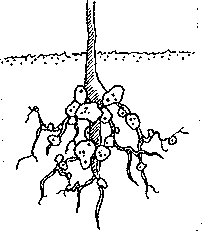
Rhizobia live in nodules on the
roots and can be easily seen
What are rhizobia and what do they do? Rhizobia is a genus of soil bacteria that infect the roots of legumes and can fix (make available to the plant) atmospheric nitrogen. Unlike disease-causing bacteria, rhizobia enter into a symbiotic relationship with the plant. The legume provides the bacteria with energy and the bacteria provides the legume with nitrogen in a form it can use.
Does one rhizobium work with every legume? No, rhizobia are selective and grouped according to which legume species they will colonize. The rhizobia of some species, e.g. leucaena, are very specific. Others cross- inoculate many species. For example the "cowpea family of inoculant" will inoculate Acacia albida, Cajanus cajan (pigeon pea), Desmodium spp., Lespedeza spp., Mucuna spp. (velvet bean). Some species, such as peanut, called "promiscuous," can be inoculated with any of a number of rhizobia. Often one rhizobium strain will provide some biological nitrogen fixation (BNF) but will be less effective than another. Unless some strain of inoculant suited to the legume species you are growing is present in the soil, no BNF will take place.
Which of my crops are most likely to respond to inoculation? Responses are likely from species whose rhizobia are quite specialized such as soybeans and leucaena. Areas with a distinct long dry season of 6-8 months are also likely to respond due to existing rhizobia populations dropping off more quickly under these conditions.
How do I know if I need to inoculate my plant? Rhizobia live in nodules on the roots and can be easily seen. Well nodulated legumes will have nodules on the tap root. (Dig the plant and remove the soil carefully or the nodules will fall off.) Not all nodules are effective, however. Cut several nodules in half. Nodules that are effectively fixing nitrogen will usually be red or pink inside.
How are rhizobia introduced? Most commonly legume seeds are coated with the appropriate inoculant just prior to planting. A sugar or gum arabic "sticker" is used to attach the powdery inoculant to the seed. If healthy, nodulating plants of the same species are already growing in the area the proper rhizobia should already be available and need not be purchased. Just add about 5 g of soil from such a plot to each hole as seeds are planted.
Can I maintain my own inoculant? Yes. After a successful crop, soil will always retain some inoculum until the next season. Replanting the same species in the same soil year round will serve to increase inoculum for that crop. But, this practice may also increase the occurrence of some diseases.
Why doesn't ECHO carry inoculant for the legume seeds it distributes? This would seem to be the wise thing to do. However, it is challenging enough to preserve and monitor the viability of our stored seeds. Viability of inoculum is even more difficult to monitor and maintain which is why we leave this enterprise to those set up to do the job well.
How much rhizobium is needed to inoculate a seed? It takes about 100 grams of inoculant to sufficiently treat one pound of leucaena seeds. A hectare of soybeans requires 286 grams of inoculant. Quality is more important than quantity. The best inoculant contains a billion rhizobia per gram, but it doesn't take long for quality to drop. This is why inoculation is done just prior to planting. Since you can't tell if inoculant is good or bad by looking at it, care should be taken to purchase from a good source and handle it properly. Inoculant should be protected from heat, light and desiccation and used as soon as possible. If a cool storage area is not available, a pot buried in a shady area is a good option. If transportation is required, a container covered with a damp cloth works well.
Where can rhizobia be obtained? Many countries manufacture inoculants for a number of crops. Contact your local agricultural extension agency or national department of agriculture to see if they have the inoculant you are looking for. If it needs to be imported, probably the best source for trees would be AgroForester Tropical Seeds (P.O. Box 428, Holualoa, HI 96725, USA; phone 808/326-4670; fax 808/324-4129; e-mail agroforester@igc.org). Liphatech Company (3101 West Custer Avenue, Milwaukee, WI 53209, USA; phone 800/558-1003 or 414/351- 1476; fax 414/351-1847) has inoculant of many species, including GMCCs which are not trees. ECHO has a running list of sources we have come across to date; let us know if you cannot find a source. More information on this topic can be obtained by contacting the University of Hawaii NifTAL Center (Nitrogen fixation by Tropical Agricultural Legumes; 1000 Holomua Road, Paia, HI 96779, USA; phone 808/579-9568; fax 808/579- 8516; e-mail NifTAL@.hawaii.edu). Other possibilities include the international agricultural research center nearest you (e.g. CATIE, CIAT, ICRISAT, IITA, IRRI, etc.), UNESCO (Microbial Resource Centre, Karolinska Institute, 10401 Stockholm, SWEDEN), or the BNF Resource Centre (Soil Microbiology Research Group, Rhizobium Building, Soil Science Division, Department of Agriculture, Bangkok 10900, THAILAND; fax 662- 5614768). Some concluding remarks: Each situation is different. If farmers can obtain inoculant quickly and reasonably it can be a low-cost input with high returns. If planting something like soybeans for the first time in an area, special efforts should be made to obtain proper inoculant. Legumes will grow without rhizobia, they will just require mineral sources of nitrogen like other plants. Even with proper inoculation, factors like low phosphorous, low pH and insect damage will limit yield. It should also be noted that it can take up to 20 days for biological nitrogen fixation to get going, so an application of nitrogen just after germination can help even if rhizobia are present.
HOW ADEQUATE IS CHICKEN MANURE TEA AS A FERTILIZER? One aspect of ECHO's ministry is behind the scenes for most of our readers. We help college professors and students in the sciences identify research projects that would be of benefit to the small farmer. Several ideas that could be done at an undergraduate level are written up in what we call Academic Opportunity Sheets. Nathan Duddles, while an undergraduate at California Polytechnic University, did an outstanding job answering the above question. I should think his 100-page report is of master's thesis quality.
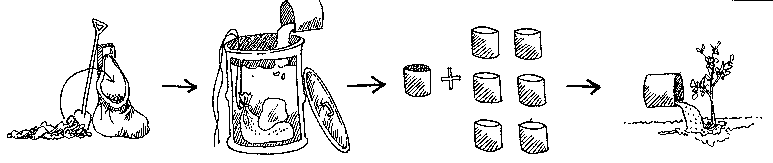
chicken manure tea as fertilizer
He placed fresh chicken manure in a burlap bag, added a rock to make sure it did not float, and set it in water in a 35 gallon garbage can. If you were making such a tea, how long would you let it set to get out most of the nutrients? Nathan measured nitrogen in the "tea" each week and found that with 20 pounds of manure the maximum was nearly reached after only 1 week. It took 3 weeks with 35 and 50 pounds. However, the concen- tration apparently became so high that bacteria stopped working because he got even less nitrogen with 50 pounds than with 35 pounds.
How does the tea compare to an ideal hydroponic solution? He measured several nutrients in the tea made from 20 pounds after 4 weeks. After diluting it to a fourth its original concentration he compared it to one such standard hydroponic solution. The tea concentrations followed by the standard are: total nitrogen (219; 175), nitrate (4; 145), ammonium (215; 30), phosphorous (54; 65), potassium (295; 400), calcium (6; 197), sodium (62; 0), magnesium (0; 2), iron (0; 2), manganese (0; 0.5), copper (0; 0.03), zinc (0.05; 0.05). The major nutrients and zinc are adequate. Only calcium and tiny amounts of iron, manganese and copper would need to come from another source. Unless you are growing hydroponically where all nutrients must come from the tea, these should be available from the soil or compost. He suggests that lowering the pH from 7.3 to near 6 might provide some of these, or some might come from dilute sea water.
Total nitrogen was ideal, though it would preferably be in the nitrate rather than ammonium form. However, the tomatoes grown with the tea or a hydroponic solution (somewhat different and less ideal than the one above unfortunately) grew only marginally better with the chemical preparation.
Tomatoes were grown in wood chips to see how the tea would work with our rooftop gardens and in sand or sawdust for comparison. Growth in wood chips was superior in every case, apparently because the other two were so wet that roots could not get enough air. He analyzed the concentrations of nutrients present in plant tissues and found that the only significant difference was that plants grown with manure had more sodium. The micronutrients must have come from the growing medium. We have a Technical Note on this subject for those interested in more details.
HOW TO MAKE A FISH EMULSION FERTILIZER. We had been asked this question but I never knew the answer until Organic Gardening answered it in their February 1990 issue. It does not make me want to go to my suburban home and try it, but I could see its use on the small farm.
"Place fish scraps in a large container and add water. Cover the top securely with a cloth plus a wire screen to keep out animals and insects. Put the container in a sunny location to ferment for 8 to 12 weeks. You can add a small amount of citrus oil or other scent to mask some of the odor, but be sure to keep the container where your neighbors won't complain. Try to avoid spilling any fish scraps or fishy water on the ground, where they will attract animals. When finished, a layer of mineral-rich oil will float on the water, and fish scales will have sunk to the bottom. Skim off the oil and store in a tight-fitting container. To use, dilute 1 cup of oil with 5 gallons of water. Your homemade fish emulsion will be rich in nitrogen, phosphorous and many trace elements, but generally low in calcium."
PIGEON PEA AND CHICKPEA RELEASE PHOSPHATES. (Based on an article in International Agricultural Development, April 1992.) We all know that legumes such as these two plants add nitrogen to the soil. Now scientists at ICRISAT in India have shown that they make available more phosphates. They do not add phosphate to the soil, but rather break up phosphate compounds in such a manner that phosphate that was already present but unusable by plants is now available. If you work where phosphate is one of the most limiting nutrients (a common situation in tropical soils), you might want to work these crops into your rotation.

pigeon pea release phosphates
How do they work? Studies show that the roots of pigeon pea exude acids (piscidic acid) which release phosphorous when it is bound up with iron. Chick peas release another acid (mallic acid) from both roots and shoots. In calcareous soils (alkaline soils with high calcium content), this acid breaks up insoluble calcium phosphate. Normally this release would only occur if the pH of the soil were lowered.
Both plants "are deep rooted, so their ability to release more phosphates means that valuable nutrients are being brought up from the deeper soil layers. Residues from both crops are adding extra phosphates which will benefit the crops which follow in the rotation. It is possible that some varieties ... exude more acid than others. So this trait could be another characteristic for selection [by plant breeders]."
PLANT TISSUE NUTRIENT TESTS AVAILABLE AT OHIO STATE UNIVERSITY. This technique is more sophisticated than most of you will require, but readers do occasionally ask us where they can get leaves of a plant analyzed to see what nutrient is causing a certain symptom. "Are the leaves yellow for lack of nitrogen or iron?" The theory behind this technique is that the ideal place to look for a nutrient deficiency is in the plant itself, rather than the soil. For example, even though a soil test might show that a particular nutrient is present in the soil in adequate amounts, a deficiency of that nutrient could still be causing the deficiency symptoms if for some reason (e.g. high pH) the plant could not take it up. A foliar spray with that nutrient might solve the problem.
I read in a newsletter that the Ohio State University experiment station offers this service at a good price. I wrote asking how one could get soil or plant material into the States for analysis. Professor Maurice Watson said you need to obtain a customs permit number from them, then send samples to them directly for analysis. No doubt many other Land Grant Universities offer similar services.
The standard plant tissue analysis for nitrogen, phosphorus, potassium, calcium, magnesium, manganese, iron, copper, zinc and boron costs $12.00. The standard soil test for pH, lime deficit, available phosphorus, exchangeable potassium, calcium and magnesium, cation exchange capacity and percent base saturation costs $6.00. Many other tests are offered, such as organic matter, available minerals, and heavy metals. Write the Ohio State University; R.E.A.L.; Ohio Agricultural Research and Development Center; Wooster, OH 44691; USA; phone 216/263-3760. Prices quoted were in effect April 1995. Be sure to write them for current prices, detailed instructions on how to take samples, how much to send, etc. before submitting any samples.
"FEEDING AND BALANCING THE SOIL" is a five-day short course taught by Neal Kinsey, author of Hands- On Agronomy, about $475 registration fee includes lunches. Offered annually (during July in 1995), at Little Creek Acres, a non-profit demonstration farm for sustainable agriculture. Other courses are offered from time to time. For information write Center for Living in Harmony, 13802 Little Creek Lane, Valley Center, CA 92082, USA; phone 619/749-9634; fax 619/749-0720.
INTERNATIONAL AG-SIEVE is "a sifting of news in regenerative agriculture." This publication changed format in 1995 to 4-page information sheets on specific topics in ecologically sound agriculture. Issue #1 was on vermicomposting (using worms to produce high-quality fertilizer); issue #2 discussed the benefits of soil- improving legumes. Each edition has basic information, contacts, and publications on the theme. Readers are encouraged to follow up specific questions with the professional references listed. An index of available issues is sent periodically to individuals on the mailing list, and readers select the issues they wish to receive (about $4/issue). They hope to publish 12 issues per year. Send your name, address, and a brief description of your work to International Ag-Sieve, Rodale Institute, 611 Siegfriedale Rd., Kutztown, PA 19530, USA; phone 610/683-1400; fax 610/683-8548.
|
| |||||||||||||||||||||||||||||||||||
Amaranth to Zai Holes, Ideas for Growing Food under Difficult Conditions (ECHO, 1996, 397 p.)
7: Water resources
Life and agriculture are dependent on water. One of the most frequent questions ECHO receives from the field reflects the need for strategies to produce food in dryland areas or in the dry season. The erratic and unpredictable rainfall in much of the tropics makes food production difficult; months of drought bake and harden the soils, so the torrential rains which follow lead to erosion. People without sufficient water for cooking and personal use are not able to irrigate crops during the dry season. This chapter gives some ideas on soil and water conservation in times of water shortage and seasonal abundance.
Arid region farming primer
by Dr. Frank W. Martin
INTRODUCTION. In every region of the world it is necessary to find or develop appropriate techniques for agriculture. A large part of the surface of the world is arid, characterized as too dry for conventional rain fed agriculture. Yet, millions of people live in such regions, and if current trends in population increase continue, there will soon be millions more. These people must eat, and the wisest course for them is to produce their own food. Yet, the techniques are so varied that only a very large volume would cover the entire subject. This publication is only a primer, an introduction to appropriate techniques. More extensive treatments are mentioned in the bibliography. In many cases the most suitable techniques for a particular region may be those already developed by the local inhabitants. In some cases it will be difficult to improve on local techniques, but at times even simple and inexpensive innovations may be almost revolutionary. This bulletin suggests that one must begin to improve local agriculture in arid zones by learning what is already there. Then both techniques and plants that may be useful in specific situations are suggested.
Definitions and degrees of aridity. "Arid" implies prolonged dryness, and is used with respect to the climate and the land below it. In such regions the ability to produce agricultural crops is restricted. Usually on arid lands the potential evaporation of water from the land exceeds the rainfall. The land may be characterized according to the degree of aridity as dry forest, chaparral or brushland, grassland or savannah, or desert. "Arid" does not adequately characterize the soils, however, for they may vary in many ways. Often they are alkaline or saline.
Several degrees of dryness must be recognized. The first is where the dry climate is modified by seasonal rainy seasons. In such a region it might be possible to produce a wide range of annual crops during the short rainy season, enough to sustain animals and feed mankind, although few food or feed trees might be feasible without special techniques. The second situation is a year round aridity, sometimes modified by light or irregular rains, which might make production of crops impossible. The third situation is where water is brought in by wells, canals, or other means so that normal agriculture can exist, in spite of the aridity of the climate. This primer concerns the first two situations, but not the third. There are techniques suitable for all arid regions.
Principal arid regions of the world. Arid regions are often extensive, but in the tropics it is common, even on a small island, to find arid regions near regions of abundant rainfall. The large arid regions are:
NORTH AMERICA
The Sonoran Desert
Much of Western USA
CENTRAL AMERICA
The Pacific Coast
AFRICA
The Sahara Desert
The Sahel
The Kalahari
Desert
East Africa
SOUTH AMERICA
The Atacama Desert
The Serrano of Brazil
ASIA
The Middle East
The Indian or Thar Desert
The
Namub Desert
The Karakum Desert
The Gobi Desert
AUSTRALIA :
The Central Deserts
However, while the above mentioned regions may constitute the most arid regions, nevertheless, there are many more areas, large and small, where aridity is a problem.
PRINCIPAL PROBLEMS OF AGRICULTURE IN ARID REGIONS
Water. Water is absolutely necessary for all plant and animal life. Plants have evolved that are capable of living and reproducing in semi-arid, arid, and even desert regions. However, as aridity increases, fewer and fewer species are adapted, and the potential biomass is reduced.
Plants are adapted to aridity by several mechanisms. There are plants with a short life cycle that can germinate, grow, and produce during a very short period of available moisture. There are plants with deep or extensive root systems which have the ability to gather water over a wide area. There are plants which store up water in their tissues and release it very slowly. There are plants that are protected from water loss by wax or other impediments. There are plants with very small or narrow leaves, thus reducing water loss. There are plants in which the tissues themselves can withstand much desiccation without dying. Crop plants in arid regions may have any or a combination of such mechanisms.
Water that falls in arid regions may be of little use for crop plants because the amount is too small to penetrate the soil sufficiently, or it may run through a porous soil too quickly, or it may run off too quickly. Furthermore, weedy species may be so adept at utilizing scarce water that they rob the water from crops. On the other hand, some soils store water so efficiently that it is possible to grow crops over an extensive period of drought.
Water from rivers, lakes and wells in arid regions may have problems of quality, especially the presence of excess minerals. The use of irrigation water might lead to the accumulation of salts in the soil resulting in alkalinity or salinity, which might then limit crop production. The removal of salt from the soil is very difficult.
In all arid regions a major challenge is to manage water appropriately. The purpose of such management is to obtain water, to conserve it, to use it efficiently, and to avoid damage to the soil.
Heat and Wind. The major effects of heat and wind are to increase the rate of evaporation, and thus to increase the effects of aridity. Wind may also cause mechanical damage to crops. Both are combatted by changing the microclimate. The effects of winds can be reduced by windbreaks (lines of trees perpendicular to the direction of prevailing winds). Some useful tall species are tamarisk, casuarina, and eucalyptus. A windbreak can consist of trees and other plants of varying height. As a general rule, a windbreak is effective over an area 2.5 times the height of the tree. One must remember, however, that a windbreak may also rob crops of light, water and nutrients. Thus, the advantages of a windbreak must be weighed against the disadvantages in any particular environment. Windbreaks can also be constructed of non-living materials, which are likely to be expensive.
Heat is received principally from the sun and can be reduced by shading. But, shading also reduces the yields of plants. A light shade such as that below a coconut planting or a protective screen or lathwork can be useful in reducing heat and retaining moisture, with only a minimum loss of yield.
Soils. Soils of the arid tropics are highly variable, as they are in any climate. Nevertheless, it is possible to make some generalizations about such soils. Because of the low rainfall and consequently reduced plant growth, organic material is produced slowly. Yet, again because of low rainfall, it may be broken down slowly as well. The amount of organic material in the soil, and thus the potential fertility, is likely to be high in semi-arid zones, low in deserts.
Because of low rainfall in desert soils, minerals derived from breakdown of rocks are not leached from the soil. In some cases where the soil is periodically flooded or irrigated the soil might be saline as well. Such soils support few crops. Soils of the semi-arid and arid zones might support few plants on the surface, but a good part of the biomass might be in the soil itself as roots. Shrubby desert plants often have very hard woody roots that may be a physical barrier to agriculture.
Disease and Pest Problems. Arid regions have their fair share of disease and pest problems. However, these may often be quite different from those of wetter regions. Nematodes are often a severe problem in sandy soils. No general rules are useful, and indeed, agriculture anticipates diseases and pests, and their parasites as well.
AGRICULTURAL TECHNIQUES FOR ARID LANDS
Many of the techniques for agriculture in arid lands are not very different from those in other climatic zones. The unique problems of arid lands are almost entirely related to water or its effects over long or short times. Therefore, the discussion here revolves around two questions: "How to capture existing water," and "How to use water wisely."
How to Capture Existing Water. Much of the water that falls on arid lands is lost by runoff, deep penetration into sands, or by evaporation. Runoff can be captured for later use in natural or nature-like ways, or in manmade structures. These include the following:
1. Furrows, and diking of furrows, ditches, and pits following contours to slow the runoff of water and permit deeper penetration.
2. Similar structures reinforced by bench terraces, vegetative strips, or trees for alley cropping.
3. Crescent-shaped basins arranged to gather water for one or more trees.
4. Reservoirs of water, such as natural or constructed shallow basins along roads which capture runoff, earth structures that lead water into aquifers (underground streams), rock or clay-lined underground basins.
5. Other man-made structures. These include cisterns (household or community sized clay, stone, or concrete tanks, check dams (small structures that impede water movement in a stream), and conventional dams.
How to Obtain New Water. In many arid regions water can be obtained from wells. The depth of the well necessary to obtain water may vary a few to thousands of feet. Water in wells is either fossil (stored over impermeable layers for thousands of years), or from water that has entered the soil from rain, and is therefore stored rainwater. Both sources of water are limited and can be exhausted.
New water is also obtained by condensation from the air, either onto metal screens or plastic (the principle of the solar still) or onto foliage. Ingenious systems can be developed to capture this condensation. This source of water depends on nighttime temperatures that lower to the point of condensation.
How to Conserve Existing Water. Water that is conserved is just as valuable as water that is obtained, and conservation is one of the best strategies for arid zones. There are many techniques, here presented only as lists.
At the level of the home: Reduce water use in the home. Capture gray water (from kitchen and bath) for later use in the garden. Use overflow from septic tanks to irrigate trees.
On the farm or garden: Reduce evaporation with windbreaks and light shade. Plant in the best soil, and lead runoff water to it. Plant in furrows, pits, or swales. Establish plants in a nursery in pots, when feasible, for later transplanting. Keep the soil rich in organic material. Use drought resistant crops or varieties, when possible. Maximize use of trees that produce food in arid regions. Plant during appropriate seasons. Use mulch, but not in excess. Irrigate efficiently (usually the most efficient system is drip irrigation). Keep weeds down. Eliminate crop plants as soon as they finish producing.
Other techniques: Hillside farming. The special aspect of hillside farming that merits attention here is that water rapidly runs off and often causes erosion. Thus, hillsides can be arid even in an otherwise wetter climate. The techniques required for successful hillside farming are those that capture water, minimize runoff and erosion, and help build soil fertility. Some techniques are very simple, such as plowing along the contour and leaving vegetative strips between planting. Some are more complex and expensive, and may require engineering, such as building bench terraces, correcting gullies, and building ponds and dams.
The most elegant techniques and probably the most satisfactory are associated with the use of multiple purpose legumes in systems of alley cropping. Trees along the contours are used to gradually develop terraces and meanwhile enrich soil by capturing nitrogen and bringing up deeply buried nutrients, making them available in foliage, used as fertilizer. In addition, such trees may furnish firewood, feed, or occasionally food.
The crops for hillsides should be those with very deep roots or that can take advantage of short times of availability of water.
Use of trees. Trees will often be the most useful crop plants in arid regions, for with deep roots they can make maximum use of water. Trees will need special protection when they are planted, including irrigation in time of need. A good tree crop ought to fill many purposes.
Residual moisture. In some soils in arid regions with short rainy seasons, crops are planted near the end of the rainy season and even after rains have ceased in order to take advantage of moisture stored in the soil. Tepary beans are produced using this principle. Melons are often used as such crops in Central America.
Alternate years. A common practice in arid regions is to plant only every other year. During the year when the ground is left fallow, weeds, which use up the water in the soil, are controlled. This type of planting is suitable only for soils with a large capacity to store water. This will be evident when the crops or weeds on a soil remain green for a long period after rains have ceased.
Feeding of animals. Crop residues, both harvested and those left in the fields, may be used as feed during dry seasons. Animals such as cattle, goats, sheep, hogs, chickens, and ducks clean up the field and can help eliminate weed seeds, and, of course, they also leave their manure.
CROP PLANTS FOR TROPICAL ARID REGIONS
Crop plants for arid regions are those that survive and produce in spite of aridity. However, in almost all of these crops, seeds must be germinated or cuttings must be rooted under conditions of almost normal water availability. Therefore, when one speaks of tolerance of dry conditions one is talking mostly about the drought tolerance of the growing or mature plant. In the following tables, plants that are useful in arid regions are considered. These plants vary in ability to tolerate aridity and in yields under arid conditions. Choosing the right crops for arid regions might involve considerable experimentation in a particular region, and, in fact, the development of suitable production systems might require years. This should come as no surprise. Native systems, as crude as they may appear, usually represent the accumulated wisdom of centuries of experimentation. If this is so, how can one hope to make an improvement? The answer is often in the introduction of species or varieties unknown in the region. In other cases it is the introduction of technologies developed in other regions (see page 185 for resources).
TABLE 1. FOOD PLANTS FOR DRY REGIONS OF THE TROPICS
Degree of Tolerance (0=none to 3=high)
CEREAL GRAINS
|
Scientific name |
Common name |
|
|
Zea mays |
Corn |
1 |
|
Sorghum bicolor |
Sorghum |
1.5 |
|
Pennisetum americanum |
Pearl Millet |
2.5 |
Degree of Tolerance (0=none to 3=high)
GRAIN LEGUMES
|
Phaseolus vulgaris |
Common Bean |
1 |
|
Vigna unguiculata |
Cowpea |
1.5 |
|
Cajanus cajan |
Pigeon Pea |
2 |
|
Dolichos lablab |
Lablab Bean |
2 |
|
Vigna radiata |
Mung Bean |
2 |
|
Phaseolus acutifolius |
Tepary Bean |
2.5 |
|
Vigna aconitifolia |
Mat Bean |
2.5 |
|
Tylosema esculentum |
Marama Bean |
3 |
Degree of Tolerance (0=none to 3=high)
LEAFY VEGETABLES
|
Symphytum officinale |
Comfrey |
1 |
|
Manihot esculenta |
Cassava |
1 |
|
Cnidoscolus chayamansa |
Chaya |
2 |
|
Moringa oleifera |
Moringa |
2 |
|
Leucaena leucocephala |
Leucaena |
2.5 |
Degree of Tolerance (0=none to 3=high)
ROOT CROPS
|
Dioscorea rotundata |
White Yam |
1 |
|
Manihot esculenta |
Cassava |
2 |
|
Sphenostylis stenocarpa |
African Yam Bean |
2 |
Degree of Tolerance (0=none to 3=high)
VEGETABLES
|
Citrullus lanatus |
Watermelon |
1 |
|
Cucurbita mixta |
Mixta Squash |
1.5 |
|
Cynara scolymus |
Globe Artichoke |
1 |
|
Abelmoschus esculentus |
Okra |
1.5 |
Degree of Tolerance (0=none to 3=high)
FRUIT TREES
|
Carica papaya |
Papaya |
1 |
|
Pouteria campechiana |
Canistel |
1 |
|
Psidium guajava |
Guava |
1 |
|
Spondias cytherea |
Golden Apple |
1 |
|
Olea europaea |
Olive |
1.5 |
|
Tamarindus indica |
Tamarind |
1.5 |
|
Zizyphus jujuba |
Jujube |
1.5 |
|
Carissa carandus |
Karanda |
2 |
|
Dovyalis abyssinica |
Dove Plum |
2 |
|
Punica granatum |
Pomegranate |
2 |
|
Anacardium occidentale |
Cashew |
2.5 |
|
Opuntia spp. |
Prickly Pear Cactus |
2.5 |
|
Phoenix dactylifera |
Date |
3 |
Degree of Tolerance (0=none to 3=high)
OIL PLANTS
|
Pentaclethra macrophylla |
Owala Oil |
1 |
|
Helianthus annuus |
Sunflower |
1 |
|
Butyrospermum paradoxum |
Shea Butter |
2 |
Degree of Tolerance (0=none to 3=high)
MISCELLANEOUS
|
Catha edulis |
Khat |
2 |
TABLE 2. NON-FOOD PLANTS FOR ARID REGIONS
Degree of Tolerance (0=none to 3=high)
FEED LEGUMES
|
Scientific Name |
Common Name |
|
|
Gliricidia sepium |
Mother of Cacao |
1.5 |
|
Ceratonia siliqua |
St. John's Bread |
1.5 |
|
Prosopis spp. |
Mesquite |
2 |
|
Leucaena leucocephala |
Leucaena |
2.5 |
|
Acacia albida |
Apple Ring Acacia |
2.5 |
|
Acacia tortilis |
Umbrella thorn |
2.5 |
|
Parkinsonia aculeata |
Jerusalem Thorn |
3 |
Degree of Tolerance (0=none to 3=high)
FEED GRASSES
|
Cynodon dactylon |
Bermuda Grass |
1 |
|
Digitaria decumbens |
Pangola Grass |
1 |
|
Sorghum sudanense |
Sudan |
1 |
Degree of Tolerance (0=none to 3=high)
FIBER PLANTS
|
Gossypium barbadense |
Sea Island Cotton |
1 |
|
Agave fourcroydes |
Henequen |
2 |
|
Agave sisalana |
Sisal |
2.5 |
Degree of Tolerance (0=none to 3=high)
TIMBER PLANTS
|
Swietenia mahogoni |
Mahogany |
1 |
|
Acacia tortilis |
Umbrella Thorn |
2.5 |
Degree of Tolerance (0=none to 3=high)
PLANTS FOR ALLEY CROPPING
|
Gliricidia sepium |
Mother of Cacao |
1.5 |
|
Cajanus cajan |
Pigeon Pea |
2 |
|
Leucaena leucocephala |
Leucaena |
2.5 |
Degree of Tolerance (0=none to 3=high)
GROUND COVER
|
Dolichos lablab |
Lablab Bean |
2 |
|
Canavalia ensiformis |
Jack Bean |
1.5 |
Degree of Tolerance (0=none to 3=high)
WINDBREAK
|
Casuarina spp. |
Casuarina |
2 |
|
Eucalyptus spp. |
Eucalyptus |
1.5 |
|
Tamarisk spp. |
Tamarisk |
2.5 |
Degree of Tolerance (0=none to 3=high)
LIVING FENCE
|
Gliricidia sepium |
Mother of Cacao |
1.5 |
|
Bursera simaruba |
Gumbo Limbo |
1.5 |
|
Acacia nilotica |
Babul Acacia |
2.5 |
|
Euphorbia tirucali |
Pencil Euphorbia |
3 |
ANIMALS FOR DRY REGIONS OF THE TROPICS
Why Animals? In dry regions of the tropics where agriculture is always difficult, animals are frequently more capable of utilizing the often abundant plants that are available, and many times can be fed with crop residues. While some feed crops are given in Table 2, the most important feeds in many regions will be those which grow by themselves, naturally and untended. Sometimes improvement of this natural fodder by fertilizing, watering, or selected weeding may be the best solution to increasing the yield of animal feed. In addition, appropriate care of animals is necessary, and even poor herdsmen are often very skilled in raising animals.
Animals on the farm can be used for a wide variety of purposes. In addition to excellent food in the form of eggs, milk and meat, animals serve as beasts of burden, and can be trained to handle difficult jobs on the farm. The dung is a useful resource for crop production but is also used in plastering walls and floors, and when dry, as fuel. Animal wool, hair, or fur can be used in bedding and clothing.
Principal Animals and Their Characteristics. Cattle. In many arid regions the production of cattle might be the best way to make use of land. Cattle feed principally on grasses, but also benefit from legumes. They are much less apt to graze or browse on shrubs than goats. They are very adept at finding something useful to eat on grasslands, even during the dry season. Cattle may be used for milk, for meat, for farm labor, and for their hides and other by-products. There are many breeds of cattle, often used for a single purpose, or at times serving for two or more main purposes, and some of these will be much more adapted to a given situation than others. Choosing the appropriate breed or strain of cattle will always be important.
The carrying capacity of land, the number of cattle (or, other animals that can be raised on it), will vary widely, and can determine the success or failure of a given venture. Cattle may graze in open range or fenced pastures, but in either case, rotation is necessary in order to not destroy the future potential of the grazing area. Improvement of the grazing area can be achieved by the introduction of new grasses or legumes, by fertilization, occasionally by fire (a risky process), by killing poisonous plants, and by eliminating brush and some trees. Some breeds will gain more on a given pasture than others.
Since cattle raising is a capital-intensive effort (even the cattle represent considerable capital), a great deal of investigation and local knowledge is desirable before embarking on such an enterprise. On the other hand, raising the family cow is possible almost everywhere and can be the foundation of success on the small farm.
Goats. Goats may be produced for about the same purposes as cattle, and their smaller size makes them suitable for many situations. They are often grazed on open range in arid regions. They are browsers (nibble at a variety of plants), and sometimes are better adapted to production of useful meat than cattle, especially in heavy shrubland. While goats may be raised for milk, the really fine milk varieties are not well adapted in the tropics.
Sheep. In addition to the wool-bearing sheep of the temperate zone, there exist hair sheep which are much better adapted to the tropics. In addition to their value in producing meat, such sheep are often used to control weeds in orchards, and thus constitute a profit-producing biological control.
Burros. The small donkey of the drylands of the world is supremely adapted to living off the browse and meager feed often available, and for its size is surprisingly strong and a magnificent beast of burden. Not to be laughed at, the burro can easily be adapted to useful roles on the farm, including basic transportation and pulling carts.
Camels. This species is best adapted to very dry areas where agriculture is very limited.
The choice of animals for the farm in the arid tropics, and the techniques used to raise such animals are very important, and vary considerably from one region to another.
Feed Crops. After adaptation, no element in the production of animals is more important than feed. Farmers may be quite conscious of acceptable treatments in care and breeding of their animals. They may not be aware of the progress that could be made by improvement of feeds, even though such advice may be available through local agricultural experiment stations, extension services, or the department of agriculture. A first step in improving animal production should be to learn how farmers are feeding animals, and the second step is to learn what feeding practices are recommended. A third possible step, much more difficult, is to learn the feeding practices in areas of similar soils and climates.
A major problem in the production of animals is what to feed them during the dry season. An efficient production system includes solving this problem in advance. Some of the potential solutions include: dry season irrigation of pastures; restricted grazing of pastures during wet seasons so that feed will remain for the dry season; harvest and storage of wet feed as silage; harvest and storage of dry feed as hay, or as seed, in the case of grain crops; cultivation of feed crops adapted to arid zones; and migration to more productive areas.
One of the most useful possibilities for increasing dry season feed is the use of crop residues. The value of such residues as feed varies, and sometimes other substances are added to enhance palatability or nutritive value. In a well-managed agricultural enterprise of any kind, it will be useful to look for such potential uses of residues.
Another solution to the problem of dry season feed shortage is to reduce the size of the herd as the dry season approaches. The frequent practice of letting animals go hungry cannot be recommended as good husbandry.
USEFUL PUBLICATIONS AND ADDITIONAL RESOURCES (prepared by ECHO staff).
Agroforestry Technology Information Kit by The International Institute of Rural Reconstruction (475 Riverside Drive, Room 1035, New York, NY 10115, USA) cost: $27. Kits are also available as well from their headquarters in the Philippines: IIRR, Silang, Cavite 4118, PHILIPPINES.
Agroforestry in Dryland Africa by Rockeleau, D., Weber, F. and Field-Juma, A. 1988, ICRAF (International Centre for Research in Agroforestry, P.O. Box 30677, Nairobi, KENYA). 311 pp. cost: $31.00.
Crops of the Drier Regions of the Tropics by D. Gibbon and A. Pain, available from Longman Scientific & Technical, Longman Group UK Ltd., Longman House, Burnt Mill, Harlow, Essex CM20 2JE, UK.
ECHO's Technical Note on Dry Farming by Randy Creswell, cost $3.00.
Haloph: A Data Base of Salt-Tolerant Plants of the World by James A. Aronson, 1989, Office of Arid Lands Studies (The University of Arizona, 845 North Park Ave., Tucson, AZ 85719, USA).
Lost Crops of Africa, Volume 1: Grains (NAS), limited supply available from ECHO. More Water for Arid Lands: Promising Technologies and Research Opportunities and Saline Agriculture: Salt-Tolerant Plants for Developing Countries, both by National Academy of Science (National Research Council, Office of International Affairs, 2101 Constitution Avenue, Washington, D.C. 20418, USA). Order from AgAccess, P.O. Box 2008, Davis, CA 95617, USA; phone 916/756-7177.
The Challenge of the Negev by Dr. Evenari (Ben-Gurion University of the Negev, P.O. Box 1025, Beer-Sheva 84110 ISRAEL).
Food from Dryland Gardens by David A. Cleveland and Daniela Soleri (Center for People, Food and Environment, 344 South Third Ave., Tucson, AZ 85701, USA). A comprehensive handbook.
Practical Guide to Dryland Farming Series: Introduction to Soil and Water Conservation Practices; Contour Farming with Living Barriers; Integrated Farm Management; and Planting Tree Crops by World Neighbors in Indonesia (Studio Driya Media; Jl. Tubagus Ismail Raya No. 15; Bandung, West Java 40143; Indonesia) available at $4 per booklet from World Neighbors, 4127 NW 122 St., Oklahoma City, OK 73120-8869, USA; phone 405/752-9700.
Seed Sources for Arid Land Gardeners: see the chapter on Seeds and Germplasm.
Information Sources for Arid Land Gardeners: Office of Arid Land Studies (The University of Arizona, 845 North Park Ave., Tucson, AZ 85719, USA).
The Center for People, Food and Environment (344 South Third Ave., Tucson, AZ 85701, USA).
Maricopa Agricultural Center (37860 W. Smith-Enke Rd., Maricopa, AZ 85239, USA).
Int'l Crops Research Institute for the Semi-Arid Tropics (Patancheru, P.O. Andhra Pradesh 502-324, INDIA).
International Center for Agricultural Research in the Dry Areas (P.O. Box 5466, Aleppo, SYRIA).
Drought Defenders Project (Henry Doubleday Research Assn., Ryton-on-Dunsmore, Coventry, CV8 3LG, UK).
Arid Lands Information Network (174 Banbury Road, Oxford, OX2 7DZ, UK). Publish "Baobab," a networking publication for those working in arid lands. International Institute for Environment and Development (3 Endsleigh St., London, WC1H ODD, UK; phone +44 71-388-2117; fax +44 71-388-2826; e-mail iieddrylands@gn.apc.org). Publish the quarterly "HARAMATA, Bulletin of the Drylands."
SEPASAL (Survey of Economic Plants for Arid and Semiarid Lands, Centre for Economic Botany, Royal Botanic Gardens, Kew, Richmond, Surrey TW9 3AE, UK; fax +44 81-332-5278). Plant information database.
Video: Looking After our Land: Soil and Water Conservation in Dryland Africa. (Oxfam Publications, c/o BEBC, P.O. Box 1496, Parkstone, Poole, Dorset BH12 3YD, UK; phone 01202 715555; fax 01202 715556.) A two-hour tape (£14.95) and an illustrated 88-page book (£8.95); specify whether you want the English or French version and whether your video equipment uses the PAL, SECAM or NTSC system.
Dryland techniques and water resources
A TECHNICAL NOTE ON DRY FARMING by Randy Creswell in Mali, West Africa, is available from ECHO. This 18-page note gives specific technical guidelines for growing plants in arid regions. Randy defines dry farming as "the profitable production of crops, without irrigation, on land with a low average or highly variable rainfall." The document gives practical steps for increasing water absorption, reducing the loss of soil moisture, suitable cropping systems, mulching, plowing and tillage, planting, and a series of tables on requirements of drought-resistant crops. Available from ECHO for US$3 (free to development workers).
You may know of special techniques or plants for arid regions that may also help other readers. The quality of EDN is greatly increased as our readers share their best ideas with us. Please write!
PARTIALLY BURIED FLOWER POTS OR TIN CANS SAVE IN WATERING. Like many of you, we have a very long dry season at ECHO. Many plants are beyond the reach of our irrigation system. Even though we have the luxury of reaching them with a garden hose, it can still be quite a task (and waste of water) to get the soil sufficiently wet in the root zone of a fairly recent planting. Often I have had the water flowing for five minutes only to find that the soil is dry an inch below the surface. Forming a shallow basin around the tree can help, but it must be reconstructed and much of the water remains near the surface and quickly evaporates.
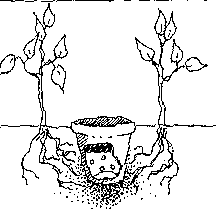
partially buried flower pots or
tin cans save in watering
Now when we transplant a tree we bury an old flower pot with drainage holes just outside the rootball. The size is not too important; we use about a 15 cm (6 inch) diameter pot. When watering we quickly fill the pot once or twice and we are done. All the water is channeled directly into the soil near the rootball. Sometimes we throw a pinch of fertilizer into the pot.
This is a takeoff on a technique you may have read about. In some arid regions farmers grow plants next to a buried porous clay pot. That would no doubt provide a slower more controlled release of water, but it has two disadvantages. First, it sounds expensive (if such pots are even available). Secondly, the very slow release of water would encourage roots to concentrate only around the pot. The water rather quickly leaks out of the regular flower pot (no doubt some is lost to the plant when it is young) but forms a "ball" of moist soil into which a large quantity of roots can grow.
In parts of my own garden I have started using this technique for vegetables and flowers also. I place the bottom of the pot about 3 inches deep and cluster plants around it, the number and spacing depending on the size of the mature plant. A benefit I had not anticipated is that small weed seeds near the surface of the soil are less likely to germinate because the surface remains dry.
I was pleased to read in the July-September 1991 issue of Agroforestry Today that a farmer in Kenya has devised and used a very similar approach. George Nti'Gitonga "realized that the normal period for planting-during the rainy season-was not the best time to establish seedlings. There were two reasons: a labor bottleneck due to work [with other crops]... and difficulties in working the heavy clay soils when they were wet." Also he knew the rains might not come.
"So Mr. Nti'Gitonga plants his trees during the dry season, when the soil is powdery and he and his family have more time.... He buries an old tin can next to each tree seedling with a small hole punched near the bottom on the side facing the tree. The farmer fills the can with water, which runs out quickly into the dry soil. He then fills the can again and covers it with a stone (to prevent evaporation).... Using this method he needs to water his seedlings only once a week. In fact, they can survive 2-3 weeks without additional watering." Using this method, he has established 25,000 trees on his farm. Recently he won first prize in a national contest to reward farmers for outstanding contributions to rural tree planting.
Dr. Carl Campbell at the University of Florida responded to this article: "I was especially interested to read about the use of pots or cans sunken into the ground for watering plants. I have been doing that in a limited way for a long time too, and have seen and read about many cases in which the method is used. For me a useful variation is to leave the container above ground, on the surface, so it can be moved to water more than one plant. I like to use large plastic jugs with a very tiny hole when I am going to be gone for a few days and have some tender, newly planted trees."
CAPTURING WATER FROM FOG for household or agricultural use is a promising technology. It is not a new idea: African nomads and Andean people have long taken advantage of trees' natural water-catching properties by collecting morning dew or using the water trapped by forests. But now scientists around the world are working to enable more dryland communities to harvest the fog water in their regions.
The technology is simple: polypropylene meshes are set up vertically in areas with dense fog and light winds. As the fog passes through the mesh, the suspended water droplets are caught by the net and drip down into a collection trough and are channeled into a storage tank. Water captured by the nets is of excellent quality-fog is a long-term sustainable resource much more reliable in both availability and safety than groundwater in many areas. This technology is best suited to upland areas with persistent fogs that limit visibility to 100 m or less and light winds (about 10 km/h) needed to carry the fog through the mesh. The knitted polypropylene meshes known to be effective are inexpensive (about US$0.25 per m2), durable, and available from many sources worldwide.
In 1995, three ECHO staff visited one site just north of Quito, Ecuador, in which the water-catching nets have been successfully installed. The area near the Mitad del Mundo ("Middle of the World") equatorial monument is a dry, eroded zone plagued by dust storms. Nearby is a fertile volcanic crater called Pululahua, an ecological reserve known for its unique vegetation. The people above the crater can see the near-constant fog from distant humid valleys which blows across the crater and over their dry land. A few years ago, trial fog collectors of 1 m2 were erected on the ridge above the crater (at 2830 m elevation) to catch water droplets in the fog that passes through the nets. The trial collectors harvested up to 20 liters of water a day, with a daily annual average of 12 liters. Based on these results, sixty-three 4.5 m x 6 m mesh panels were set up on the ridge and are now capturing water for the nearby arid community.
Fog collection is one of the most hopeful water-harvesting technologies for certain zones. It is not suited to every area, however, and trial nets are a wise investment if you believe fog collection has promise in your area. Some limitations include very strong winds which can damage the collectors, not enough wind, insufficiently dense fog, and inaccessible sites. A collector (two vertical posts mounted in well-packed holes and anchored with strong cables, mesh secured with cables, and a plastic collection trough) with a 50 m2 surface area could cost US$300- 500, which could cost significantly less than buying water from trucks, for example.
Dr. Robert Schemenauer of Environment Canada is a cloud physicist and one of the primary researcher-promoters of fog collection. He sent ECHO some excellent publications on site evaluation for fog harvesting, details on setting up a trial net, sources of mesh, and more. Write to ECHO for this introductory information if you see a potential for your area. Address more specific correspondence to Dr. Schemenauer at Atmospheric Environment Service, 4905 Dufferin St., Downsview, Ontario M3H 5T4 CANADA; fax: 416/739-4211. There will be a July 1998 conference on fog collection in Vancouver, BC, Canada; write Dr. Schemenauer for more details.
DRIP IRRIGATION was demonstrated at ECHO's 1995 conference by Dick Chapin and former ECHO intern Beth Adams, who taught vegetable production in Malawi. Chapin Watermatics produces "bucket kits" of gravity- run drip irrigation used in vegetable garden projects in developing countries. These kits enable people to produce vegetables with the same efficient use of water that commercial drip systems provide.
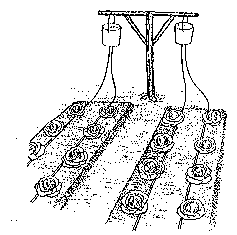
drip irrigation
The system consists of a 5-gallon bucket mounted 1 m above soil level, a filter- stopper fitted into a hole in the bottom of the bucket, two connecting tubes, and two 50-foot (15m) lines of 15-mil drip tape with outlets 12" (30cm) apart. (Buckets are not provided with the kits.) Prepare the garden beds 15 m x 1 m for two rows of plants. Lay one drip line along each side on the surface of the bed. Fill the buckets and transplant alongside the drip tapes near the holes. The buckets need to be filled twice daily with water; soluble fertilizer or manure tea can be used as needed. Mulch placed over the tape reduces surface evaporation. The kits can produce vegetables for up to 5 years if carefully maintained.
ECHO is evaluating this drip system in some of our garden beds. The plants are growing very well. We anticipate that foliar diseases, sometimes spread by overhead irrigation, should be reduced. The kits are suitable for vegetable production in our dry season. Dick Chapin offers a free demonstration kit, literature, and video for agricultural missionaries in developing countries. Further kits can be purchased for a small fee. Contact Dick Chapin at 368 N. Colorado Ave., Watertown, NY 13601, USA; phone 315/786-8120 or 788-0891; fax 315/782-1490.
WAYS OF WATER: RUN-OFF, IRRIGATION AND DRAINAGE (382 pp.) by Hugues Dupriez and Philippe De Leener is an excellent handbook on water management, full of clear diagrams and photos (both close-ups and aerial). Topics are grouped into bite- sized lessons several pages long. Section headings include water and soil, water in plants, water in the air, surface water, watering crops, irrigation methods and efficiency, and lifting water. This is a comprehensive resource, readable with well- illustrated details on every topic. VANISHING LAND AND WATER: SOIL AND WATER CONSERVATION IN DRY LANDS (117 pp.) by J.L. Chleq and H. Dupriez is another book in the same series. This one covers erosion causes and control, wells, and water lifting. It is also illustrated in the same style; see 'page' at right. Available in French and English. African, Caribbean, and Pacific nationals may contact CTA, Postbus 380, 6700 AJ Wageningen, NETHERLANDS; also available (£13.99 and £5.95, respectively) from IT Publications; see below under "Waterlines."
LOOKING AFTER OUR LAND: SOIL AND WATER CONSERVATION IN DRYLAND AFRICA. Oxfam and the arid lands unit of the International Institute for Environment and Development have teamed up to make a video and book duo that is a welcome addition to our video library. The book contains many excellent pictures and illustrations, and the tape is informative with a lot of content at a modest price.
Oxfam writes, "The book and video have been produced expressly for development workers in arid and semi-arid Africa, but will also be of general interest to a wider audience... It is suitable for use in workshops and discussion groups and the material is reinforced by the book. [Ed: I would go further than that. The book gives a lot of technical details that either are not in the video or were not obvious, but which you are going to need when time comes to try the methods.]
"The video and book are about the main lessons to be learned from new approaches to soil and water conservation in sub-Saharan Africa. Six case studies, two each from Burkina Faso, Kenya and Mali, show how, in the wake of many failures, some success has been achieved in projects where the participation of local people has been recognized as the crucial issue." The authors/producers deal with both the social and technical side of the work.
The 2-hour tape costs £14.95 and the very well illustrated 88-page book £8.95. Order from Oxfam Publications, c/o BEBC, PO Box 1496, Parkstone, Poole, Dorset BH12 3YD, UK; phone 01202 715555; fax 01202 715556. BE SURE TO SPECIFY whether you want the English or French version AND whether your video equipment uses the PAL, SECAM or NTSC system. Add for postage: 20% in the UK, 35% Far East and 25% elsewhere. (The book only is available for US$14.95 from Humanities Press, 165 First Ave., Atlantic Highlands, NJ 07716, USA; phone 908/872-1441.)
PRACTICAL GUIDE TO DRYLAND FARMING SERIES. Lucy Fisher with World Neighbors in Indonesia sent us a copy of this wonderful set. I am excited about it for several reasons. It is unbelievably well illustrated with detailed drawings. It deals with subjects that are of great interest to many development workers. It describes in detail several of the techniques that have been the basis for some dramatically effective projects by many groups in various countries. Finally, at $4 per booklet, it is a good price.
Titles of the four units are: Introduction to soil and water conservation practices, Contour farming with living barriers, Integrated farm management, and Planting tree crops.
Lucy wrote, "We have been reading EDN for several years, and have found much that has been relevant to the agricultural programs we assist in Southeast Asia. Perhaps some of your readers would be interested in the agricultural extension booklets used in the programs we support here in Indonesia and the Philippines." Originally published in Indonesian, they are now available in English.
"While the methodologies discussed are specifically applicable to the conditions found in the semi-arid regions of SE Indonesia, many are relevant throughout the uplands in the tropics.
"The first book, 44 pages, discusses the basic principles of soil and water conservation on sloping land. Design, construction, use and maintenance of contour-based systems (hedgerows, rock barriers and bench terraces) to reduce erosion and increase rain water absorption are described.
"The second book, 40 pages, considers the reasons for contour farming with terraces as well as methodology. Details include finding the contour lines of the slope, dike/ditch preparation, hedgerow species selection and planting, maintenance of terraces, and alternative uses for the living barriers (which include a variety of leguminous shrubs and grasses).
"The third book, 36 pages, covers integration and diversification of upland farming activities to reduce risk and increase farm productivity. Soil and water conservation is promoted as the basis for integrated farming. Topics include soil fertility, cropping practices and patterns, livestock, tree crops, cover crops, wood production and environmental conservation.
"The fourth book, 38 pages, covers integration of tree crops into the farming system, uses of tree crops, propagation methods (seed, stakes, grafting, air-layering), nursery construction and maintenance, planting out/transplanting, and subsequent care of trees. It also includes a planning worksheet and tables of suggested tree species according to use."
Booklets are $4 each plus postage, English only. Order from World Neighbors, 4127 NW 122 St., Oklahoma City, OK 73120-8869, USA; phone 800/242-6387 or 405/752-9700; fax 405/752-9393. For the Bahasa Indonesian version, write to Studio Driya Media, Jl. Makmur, 16 Bandung, West Java, INDONESIA.
HANDBOOK FOR AGROHYDROLOGY (281 pp.) provides details on the practical aspects of hydrological research in agriculture. If you are evaluating the need for runoff water or rainwater collection and soil erosion control, learning about soil moisture, designing a water harvesting plan, or processing water statistics, this book will be extremely useful to you. The book is written for agricultural staff without hydrological expertise who work in developing countries, where proper use of limited resources is critical but extensive data is usually not available. Some mathematical/chemical background is necessary in using this book, although the text is clear enough to be very informative for even the beginner in this field.

water harvesting from a tree
Agrohydrology uses an understanding of water processes to increase crop production, largely by optimizing soil moisture. The three main sections of the book are: Runoff and its measurement, Water harvesting and field structures, and Data analysis. The equipment used in data collection is also covered in depth.
The chapter "Water Harvesting and Field Structures" covers three scales of systems. Micro systems concentrate water over an area of less than 1 meter, such as tied ridges and furrows (construction details and examples from Botswana and Zimbabwe). Meso techniques gather runoff from within a few meters, such as zai holes, contour bunds or ridges, diamond-shaped basins, and strip tillage. Macro systems, including broad flat catchments over large areas, are described with details on their feasibility and design.
The book is available for £30 including surface mail from Publications Distribution Office, Natural Resources Institute, Central Avenue, Chatham Maritime, Kent ME4 4TB, UK. No charge is made for single copies sent to governmental, educational, research, and non-profit organizations in countries eligible for British Government Aid. Use your official title and write on letterhead when requesting a free copy.
"WATERLINES" FROM IT PUBLICATIONS is "the world's only magazine devoted entirely to low-cost water supply and sanitation. It is written for professionals-administrators or engineers, project managers or policymakers, trainers or workers in the field." It is quarterly, and the cost for individuals is £15/$28 per year (£21/$40 airmail). ECHO has not seen this magazine, but coming from IT, we expect that it would be very useful. Write to subscribe and request a catalog: IT Publications, 103-105 Southampton Row, London WC1B 4HH, UK; phone +44 171 436 9761; fax +44 171 436 2013. The IT catalog lists over 60 of the best books on water conservation, supply, sanitation, scarcity, irrigation, pumps, filtration, and harvesting.
THE ARID LANDS INFORMATION NETWORK (ALIN) in Senegal is an organization primarily for field workers to share their practical knowledge of development work in arid and semi-arid areas of Africa. They offer networking opportunities with other people doing similar work in your area, helpful booklets on development topics, and the fine publication Baobob. Baobob is written three times a year (English and French) by ALIN members who exchange ideas and experiences in community development in Africa. Members receive all ALIN publications free of charge. Membership is free to all individuals working in dryland areas of Africa; paid subscriptions are available for other organizations and individuals. Write ALIN at Casier Postal 3, Dakar-Fann, SENEGAL; phone 221 25 18 08; fax 221 25 45 21. Direct all subscription enquiries for Baobob to Sally Lane, ALIN, 274 Banbury Road, Oxford OX2 7DZ, UK; tel 44 865 312402; fax 44 865 312600.
TRAINING IN INFRASTRUCTURE FOR DEVELOPING COUNTRIES. Water, Engineering and Development Centre (WEDC) sent us information about their unique courses. WEDC is a unit within Loughborough University of Technology devoted to training, research and consulting related to the planning, provision, operation and maintenance of water supplies, sanitation and physical infrastructure in developing countries. They offer an interesting variety of short courses (3-12 weeks) and Masters-level courses.
Examples of 12-week diploma programs include "Irrigation and Water Resources," "Community Technology for Rural Development," "Groundwater Development," Infrastructure for Low-income Urban Housing," "Management of Municipal Services," Project Preparation for Environmental Engineering," "Solid Waste and Environmental Management," "Urban Water Supply," "Wastewater and Irrigation," et. al. Shorter courses are offered on related topics. Special individual study programs, in-country training, and Masters or Doctorate research is also possible.
Twelve-month MSc courses which focus on developing countries include "Water and Waste Engineering," "Water and Environmental Management," "Urban Engineering," "Urban Water Supply," "Technology and Management for Rural Development," and "Planning and Management of Urban Services." These programs cost £9,250 in 1996-97 for continuous study.
Request fliers giving details and costs for any of the above from the Admissions Secretary, WEDC, Loughborough University of Technology, Leicestershire, LE11 3TU, ENGLAND; phone 0(44)1509 222885; fax 0(44)1509 211079; e-mail wedc@lut.ac.uk.
THE URBAN AGRICULTURE NETWORK has been active since 1993, and now has 3000 members in 40 (primarily developing) countries.
|
| |||||||||||||||||||||||||||||||||||||||||||||||||
Amaranth to Zai Holes, Ideas for Growing Food under Difficult Conditions (ECHO, 1996, 397 p.)
8: Plant protection and pest control
Protecting plants from pests, diseases, and predators is part of any agricultural system. Start by promoting healthy soil which grows strong, resistant plants, and learn about timing and conditions of disease and pest outbreaks. Attention to cultural controls, such as field preparation and correct time of sowing and harvest, can prevent disease or avoid insect outbreaks. Diversity of crops provides security from major losses. Commercial pesticides may be too costly or risky without controlled application or protective equipment, and disruptive of beneficial insects.
Close and frequent observations of plant health and other organisms in the field are instructive for the newcomer to tropical agriculture. Learn to distinguish beneficial and harmful insects. Discuss your findings with farmers, and experiment with locally-used control strategies to determine effectiveness. The best control is to prevent an outbreak if possible, and to use treatments of minimal toxicity when necessary. This chapter collects some of the ideas shared with ECHO through the years on prevention and control of disease, insect and small pests, and larger animals which damage crops in the field. ECHO is always looking for more ideas on these subjects from the field; send us what you learn for future networking through EDN.
Resources
TWO EXCEPTIONAL BOOKS ON NATURAL PEST CONTROL. Most of you have encountered traditional crop protection strategies or sprays made from local plants to control pest outbreaks in the field or in stored products. There are as many practices of insect control as there are villages, and it is extremely difficult to gather this valuable information. These books compile clear, practical details on prevention and remedies for plant protection. Natural Crop Protection Based on Local Farm Resources in the Tropics and Subtropics by Gaby Stoll (188 pp.) offers many preventive and curative measures used effectively by farmers around the world. Primary pests in field or storage of major crops are described with host plants, distribution, life cycle, damage pattern, and various control measures. The methods of crop and storage protection include thorough information on over 27 insecticidal plant groups and brief mention of other substances and techniques. Available in English, French, German, Spanish, Thai, and Singhalese. Single copies are US$29 plus postage from: Margraf Verlag, Postfach 105, 97985 Weikersheim, GERMANY. You may also order for 35 SFr. (about US$27) from the publisher, AGRECOL, c/o Oekozentrum, CH-4438 Langenbruck, SWITZERLAND; phone 062/601420; fax 062/601640. (AGRECOL is a networking and information center for sustainable agriculture in the developing world. Their publications are excellent and usually available in several languages; ask for the catalog. The (Spanish or French) resource guides are bibliographies to useful literature and organizations.)
Natural Pest and Disease Control by Henry Elwell and Anita Maas (128 pp.; fine illustrations by Rose Elwell, see right) is a comprehensive collection of strategies used by farmers in southern and central Africa. This kind of resource is hard to find. The book includes guidelines for prevention, many remedies for common problems, and plant names in five regional languages. The information on action, targets, detailed preparation and application, other uses, and warnings for over 66 cultivated and wild plants in insecticidal/repellent sprays is hard to find in other sources. One chapter on "miscellaneous substances and methods" gives details on using ash, milk, noise, baking soda, traps, etc. to control pests and disease. Order for US$6 within Africa/$8 elsewhere from the Natural Farming Network-Zimbabwe, P.O. Box CY 301, Causeway, Harare, ZIMBABWE; phone 726538/731541; fax 263-4-723056. (See the Natural Farming Network article in the chapter on Farming Systems to order from other African countries.)
"BIOLOGICAL CONTROL OF ARTHROPOD PESTS AND WEEDS" is run each May at Silwood Park, UK. This is a "practical 'hands-on' training course on how to use natural enemies as biological control agents in tropical and temperate agriculture, forestry, and biodiversity conservation. We welcome participants from crop protection research and extension services, universities and rural development NGOs." The course studies predators, parasites, and diseases which control insect pests; insects and fungal diseases as weed controls; and the practical aspects of evaluating, rearing, and releasing the natural enemies. Cost is £3450 (about US$5200), including fees, accommodation, and food. No scholarships are available from IIBC. Contact Stephanie Williamson, International Institute of Biological Control (IIBC), Silwood Park, Ascot, Berks, SL5 7TA, UK; phone 44 1344 872999; fax 44 1344 875007; e-mail s.williamson@CABI.org.
THE COMPENDIUM OF PLANT DISEASE SERIES is valuable in identifying crop diseases. Bacterial and fungal diseases of plants are notoriously difficult to diagnose in the field. This series offers excellent descriptions of symptoms and clear photographs of affected plants so you know what problem to address. Each soft cover book covers one or more specific crops, such as sweet potato, bean, corn, barley, cotton, potato, citrus, peanut, onion and garlic, alfalfa, and other fruits, grains, and ornamental species. Each has a comprehensive description of the diseases (some also include insect and nematode pests) of that crop, including the symptoms, causes and pathogens, disease cycle, and specific options for control. The controls presented include preventive steps, cultural techniques, optimal timing of chemical application, and effects on other crops and subsequent seasons. There is also a section on nutritional deficiencies and environmental stresses on the plants, and a very complete, descriptive glossary. High-quality color plates illustrate the problems discussed in the text; some are distinctive enough to use in diagnosis.
The series is available from the American Phytopathological Society, 3340 Pilot Knob Road, St. Paul, MN 55121- 2097; phone 612/454-7250; fax 612/454-0766. The books are 50-200 pages long, and cost $30 US/$37 overseas. With that price, most people won't be able to purchase very many in the series. You may want to concentrate on those food or market/export crops which are nutritional or economic staples in the region, particularly where production seems limited by unidentified disease problems.
INSECTS IN YOUR GARDEN IN HAITIAN CREOLE. Ed Russell wrote this 117-page book in Creole called Ens�k Nan Jaden Nou (Insects in Your Garden) while working with the Baptist Mission. "This book grew out of my own lack of knowledge about insect pests. I would buy pesticides that came in a plain brown bag or a used food oil can. So I had no idea how to use them properly. Talking with others, I found that there is a great abuse of pesticides in Haiti. ...The book has its roots in a brief agriculture course I was teaching at the request of a local cooperative.
"The book is divided into 5 chapters. Chapter 1: insect life histories and the identification of some common beneficial and pest insects; Chapter 2: pesticides, their dangers, proper use, and how to make home-made pesticides; Chapter 3: first aid information for pesticide poisoning; Chapter 4: a table of Latin, Creole, English and French names for the insects and botanical pesticide sources discussed in the book; Chapter 5: a table of various crops, common pests that attack them, and pesticide treatments that can be used.
"The book is neither complete nor perfect, since I do not profess to be an expert on insect matters." Ed told us that it is weak in two areas. 1. Geographic coverage. He is most familiar with problems in the Cul-de-Sac and Fort Jacque area. 2. It lacks information about some pesticides because many insecticides sold in Haiti are not sold in the U.S. He also said he did not discuss cultural methods of control, such as floating row covers, that he believed were out of reach of peasant farmers. The book is written for people doing extension work, not peasant farmers themselves.
The Baptist Mission is printing the book on a laser printer as needed and selling it in the Mountain Maid store at the mission. I think every development worker in Haiti knows where the mission is located. The cost is $7/copy, including postage. The address if ordering from outside of Haiti is Mountain Maid, Baptist Haiti Mission, Box 15650, West Palm Beach, FL 33416. Ed says, "Since I am no longer working in Haiti, other interested people may want to work on future revisions." This could easily be done because of the print-as-needed approach. If anyone wishes to do this in the future, contact Wally Turnbull at the Baptist Mission.
RODALE INSTITUTE is well-known in the United States as the publisher of the popular home gardening magazine Organic Gardening. Rodale has many good publications on natural pest control, mostly oriented for temperate regions. Ask for titles and availability from Rodale Press, 33 E. Minor St., Emmaus, PA 18098, USA.
PLANT PROTECTION IMPROVEMENT PROGRAM (PPIP) FOR EAST AND SOUTHERN AFRICA. Johan Morner, the PPIP Manager, writes that "PPIP is striving to increase its contacts with non-governmental organizations" which work in certain countries of east and southern Africa. If you work in that region and are involved in any of the activities listed below, you may be able to obtain financial and/or technical support from PPIP. It is funded by Swedish foreign aid.
"Examples of the types of activities that might qualify for support are (1) training courses on new pest control methods, (2) pest surveys and yield loss assessment in small-scale farming, (3) research into new and appropriate pest control-indigenous methods, natural pesticides, cultural practices, (4) development of extension materials and methods on appropriate pest control practices and the safe use of pesticides." For further information, contact the PPIP Coordination Unit, Swedish University of Agricultural Sciences, PO Box 7044, S-75007 Uppsala, SWEDEN; phone 46 18 672516; fax 46 18 672890; e-mail johan.morner@entom.slu.se.
Plant protection treatments
USE STP TO MAKE "YELLOW STICKY TRAPS." Yellow sticky traps are used in greenhouses and elsewhere to monitor and even reduce populations of certain insects. Because many insects are especially attracted to yellow objects, they will settle onto a yellow card. If a transparent sticky substance is on the card, they will be trapped. It is easy to use even in remote locations, if you can find an adhesive.
HortIdeas reports that Agriculture Canada researchers have successfully used STP oil treatment. STP traps caught about as many insects as "Stickem," a commercially available coating for sticky traps. I do not know how many countries have STP or a similar product, but there is no town in the United States too small to have this famous additive for motor oil.
They found that STP can be uniformly applied with a paint brush to cardboard traps outdoors (4x11 inch cardboard painted on both sides with two coats of bright yellow alkyl semi-gloss paint, which made the cards waterproof). The STP does not cloud up when damp, it allows easy repositioning of trapped insects for identification, it does not drip and make a mess and it rarely traps large insects. A drawback is that traps must be re-coated after a heavy rain.
MORE ON INSECT TRAPS. For many growing papaya in the Americas, the papaya fruit fly, Toxotrypana curvicauda is a major pest. These insects, resembling a wasp in appearance, use their long ovipositor to lay eggs inside the seed cavity of the fruit. Larvae feed on the seeds, burrow out of the fruit, drop to the ground, and pupate in the soil.
Dr. Hal Reed recently sent us an article discussing the use of a simple trapping system for this pest. This basically consisted of a sticky-coated fruit mimic (12.7 cm diameter green sphere), coated with a controlled release formulation of a synthetic sex pheromone. In field tests, up to 10 female papaya fruit flies were caught per trap per week. Dr. Reed mentioned that a co-worker of his recently returning from Costa Rica reported very good success with lower pheromone dosages and believes it will prove to be a good survey tool and control method.
The pheromone is not commercially available yet, but a few researchers in Costa Rica and Florida are in the developing stages of making it so (in 1996). In the meantime, Dr. Reed suggests that the spheres alone would catch some flies (3 per week in the report) and afford limited fruit protection. He said that the spherical shape, 12.7 cm size and green color are key. "Perhaps one could use green balloons covered with tree sap." We will be very interested in hearing from any readers who try this approach.
We were referred to Rex Renfro, a farmer and integrated pest management consultant in Florida's tropical fruit region, who has first-hand experience with the method. In fact, he was involved in the initial USDA work. Rex does not believe it has commercial potential here because the "stickum traps" had to be removed and cleaned every ten days. "The green sphere would become black with insect bodies." Also the papaya fruit flies seemed to be repelled by the smell of the trapped insects. The cost of labor is prohibitive here, but this might not be a limiting factor in other countries. Because of the cost problem, research will probably be directed toward non- sticky traps with pheromone attractant and insecticide.
Does it work? Like a true scientist, Rex was hesitant because he did not have enough data to do a statistical analysis. "A negative result [i.e. lack of fly damage] is hard to prove without a detailed experiment, and we lacked funding for that." What he observed, though, was that they would have a fruit fly problem, would put up the traps, and the problem would disappear. After removing the traps the problem arose again and again disappeared when the traps were put up. He cannot rule out the possibility that this occurred by chance.
Rex added that those who spray their fields should first carefully note the time of day when flies are seen in the field. They normally live in more dense vegetation and travel to the papaya field at a certain time each day. In Florida that is mid-afternoon; in Costa Rica it is in the morning.
How many traps are enough? Rex put one on each tree on the outer row. The flies do not migrate very far into a papaya field, except when their population is unusually high, so the outer perimeter is sufficient. To attach them he simply pushed a welding rod into the plastic sphere, then pushed the other end right into the trunk of the tree. It did not seem to hurt the tree.
Other tips on controlling the pest: Because young larva need seeds as a food source, use seedless varieties or those with thicker walled fruits (the ovipositor is just so long). It is very important to remove and bury (over 6" deep) all fallen infected fruit. At ECHO we had some trees that bore poor quality fruit, so we left it on the ground. Soon we had so many flies that every single fruit on the farm was filled with larvae.
HOW CAN I GROW LADY BIRD BEETLES (COCCINELLA SPP.) IN CAPTIVITY? Harold Watson in the Philippines noticed that lady bird beetles were eating the plant lice that have done so much damage recently to leucaena trees in that country. He asked how he could grow them in quantity to release into special problem areas.
We visited Dennis Warkenten at the Yoder Brothers nursery near ECHO, one of the largest plant nurseries in the USA. Dennis is involved in both research and technical application of pest control operations, including biological control whenever possible. The answer was surprising.
It is true that these beetles are sold commercially in the States. However, to their knowledge, they were not raised in captivity. There are certain places in the mountains near our west coast where huge populations of the beetles come to rest during the winter. They are scooped up by the shovelful while they are dormant. When eventually warmed up, they resume activity. They mentioned that it is really not an effective approach for an individual to bring lady bird beetles into his garden because they are "programmed" to disperse when they resume activity (they were all clumped together before), so the first thing they do is leave the garden. Dennis also checked a reference for diets used in mass-rearing insects and found no reference to lady bird beetles.
A few years later, Wayne Niles, now a missionary in Haiti, visited ECHO. He had just done a laboratory project in a biological control course at the University of Florida in which he mass-produced ladybugs! We asked him to put his experience in writing for members of the ECHO network who might face this need. His comments follow:
"Raising insect enemies of harmful insects is fairly easy once you get a knack for it. In a developing country an enterprising student or villager might be taught to rear such insects as a means of livelihood, selling the insects as pest control. You need suitable containers, a food supply, and a few minutes each day for sanitation and feeding. Large numbers of natural enemies are not necessary if you can pre-inoculate your plants before the pests build up. The juvenile stages are voracious and render the best control because they do not fly away. Adults leave eggs and move on.
"A reasonable strategy would be to maintain several dozen females on artificial media in captivity and to regularly transport the eggs they lay (on leaves, for example) out to the field near sites of potential pest infestation. This augmentation of the natural ladybug population is necessary because they require 2-3 weeks per generation and would build up more slowly than aphids or psyllids.
"A word of caution, however. Be sure the ladybugs you are rearing will devour your pest. I am amazed by the diversity of ladybug species and their specificity of diet. Collect and rear only those adults that you are absolutely certain are eating your pest (not the honeydew they produce or the mold growing on the honeydew)."
The adult ladybug beetles were collected from an aphid-infested field, then were maintained in 9 cm plastic petri dishes. The female beetles were fed all the aphids that they could eat. The aphids were collected by holding an infested plant over a stiff piece of paper and beating the plant. They could be kept for up to two weeks in a tightly capped plastic bottle at 4 C. The mean daily aphid consumption by adults was 36 and mean daily egg production was 25. Larvae ate an average of 190 aphids over a 19-day period before reaching adulthood.
He enclosed a photocopy of a few paragraphs from an article by Li concerning the mass rearing of ladybugs on artificial media in China. If you do not always have a source of aphids and want to see this article, drop us a note. "I suspect adequate results can be obtained without the hormones and other exotic materials in the Chinese recipes. One can always throw a few aphids into the artificial media to supply whatever is lacking." One example was the ladybug Cryptolaemus montrouzieri, which is used to control mealybugs. It can be mass produced in the laboratory using mealybugs (grown on pumpkin or buds of potato) as food, but adults can be reared with a semi-artificial diet consisting of powdered milk, honey, yeast, a little royal jelly and dry mealybugs. Another ladybug diet contained 5 g pig liver, 0.5 g brewer's yeast, 1 g honey, and 0.05 g vitamin C (plus optional preservative).
EXPERIENCES WITH THE NEEM TREE AS AN INSECTICIDE. (For an introduction to neem and information on neem seed and products, refer to Chapter 4 on Multipurpose Trees.)
The tree originated in India or Burma, but is widely grown in much of Africa. It is used widely in India for its insecticidal and medicinal properties, but primarily for firewood in Africa. There are several active compounds, concentrated primarily in the seeds. Some inhibit larval development and reduce female fertility, others act as repellents and antifeedants. These compounds are most effective against the following families: Coleoptera (beetles and their larvae), Lepidoptera (caterpillars) and Orthoptera (grasshoppers and locusts). There are some reports of control of aphids, scales and whiteflies.
Large quantities of neem are not needed for insecticidal use. For example, 2 ml of oil mixed with 1 kg of beans which are to be stored protects against pests; 25g of ground kernels or 50g of ground seeds extracted with 1 liter of water by standing overnight then filtered through tissue can be sprayed with a knapsack sprayer. For harvest and treatment of seeds, in many areas seeds are easy to collect from the ground because birds or fruit bats eat the juicy and sweet fruits and spit out the kernels. Where this does not occur, the harvested ripe fruits need to be pulped. If water is available the risk of infection by fungi can be reduced by washing the grains after collecting them.
For further processing (oil, water extracts) and the storage the kernels should be well dried by spreading these on a hard ground in the sun. To avoid molding, kernels should always be stored in a well-aerated recipient such as a jute sack. Never store them in a plastic bag. Molding can be due to aflatoxin-producing fungi, a substance which is highly toxic to human beings even in low concentrations. To prepare seeds for planting dry them carefully, if possible in the shade, because temperatures above 45oC will reduce germination. Storage for more than one month will also decrease the rate of germination. For immediate sowing kernels do not have to be dried. (The above is excerpted from a Technical Note by M. Dreyer in Togo.)
There are many active ingredients in neem, but azadirachtin is perhaps most important. It is found in both leaves and seeds. For over 25 years, Professor Ahmed Sadiq in Sudan has been working with the use of neem in pest control, and CARE has started trials in collaboration with him. The seeds have about twice the potency of leaves, but seeds are only available for 3-4 months each year, so they are working with leaves. Leaves are dried in the shade, because the ultraviolet rays from the sun will break down the active ingredient. When the leaves are dry, they are crushed to a powder in a mortar and pestle. They can then be used directly for dusting crops or as a powder in stored foods. The powder can also be mixed with water and sprayed on crops.
Most farmers like to see pests drop dead right away. Neem does not have this effect, with a few exceptions. Its main effect is as a repellent. If insects do eat the treated plant, the neem has a hormonal and growth-regulator effect. Local farmers have used it only one year. Those who treated okra with it said grasshoppers avoided treated plants.
Farmers who treated watermelon seeds with neem powder said that rats which normally eat the seeds did not eat the treated seeds. Neem is not usually thought of for rodent control, but it has a flavor which perhaps the rats did not like. (The above is abstracted from an article in the magazine Baobab, #5, 1990. They in turn learned it from "The Farming World" of BBC World Service.)
Dick Lockman in Pakistan says that they use the dried leaves for moth protection of woolen clothing in storage. A few leaves in the pockets and scattered among the items prevent moth damage. R. N. Mall in Pakistan wrote, "We learned during the Health Education Program that in some villages the seeds are crushed and the oil is being used against head lice, which is quite effective."
Don Mansfield in Mali had success using neem leaf tea to control termites (note below), but he tried another neem recipe with disappointing results. He had heard of placing a mixture of dry neem leaves and ashes in barrels of peanuts. "I put a thin coating about every foot. It has been almost impossible to keep peanuts here for any length of time without serious damage by the weevils. The people here use a powder of DDT and Malathion, which seems very dangerous when they intend to eat the peanuts." Why did it not work, since even wood ash by itself is supposed to be effective? The book Natural Crop Protection suggests the effect of ash is in part due to its filling the small spaces between the seeds. Newly hatched weevils have more difficulty finding partners and are forced to deposit all their eggs on a small number of seeds, thus preventing an explosive buildup of populations. Even a large amount of sand is often effective. Perhaps this experiment should be repeated, mixing the ashes thoroughly with the seeds rather than layering them.
INFLUENCES OF NEEM ON NEMATODES. "There is evidence that leachates from the litter of certain trees and shrubs [Ed: water that has soaked through the litter] have nematicidal properties, e.g. Azadirachta indica (neem), Ricinus communis (castor bean) and Leucaena leucocephala." Farmers in Sao Luis put 1 kg of neem leaves per square meter in the soil (25 cm deep) before planting carrots in order to control soil nematodes, according to Dr. Warwick Kerr in Brazil.
PESTICIDE FROM SEED OF THE NEEM TREE MARKETED IN FLORIDA. The following is abstracted from HortIdeas: "Margosan-O, the first commercial insecticide derived from the seeds of the neem tree (Azadirachta indica), is registered by the Environmental Protection Agency and is being test marketed. So far its official use is limited to greenhouse use on bedding plants, potted plants, foliage plants... and other non-food crops." This formulation is used as a systemic insecticide. That means that rather than just being located on the surface it is moved throughout the plant following drenching of the soil. It appears to be practically nontoxic to mammals, birds and many beneficial insects, including honey bees. It is also biodegradable.
SOMETHING NEEM WILL NOT DO. There has been a stream of reports concerning how extracts from seeds or leaves of the neem tree can control various insects and even some fungal diseases. Unfortunately, a study in England has shown that azadirachtin, the principle active ingredient from neem, has a negligible effect on the feeding behavior of slugs. (This information taken from HortIdeas, March 1992, p 33.)
CAN A "PESTICIDE TREE" SUCH AS NEEM HAVE SERIOUS INSECT PESTS? The ILEIA Newsletter (March 1990) says that a scale insect, Aonidiella orientalis (oriental scale) is often associated with neem trees in Africa and elsewhere. It is not harmful under normal conditions, but outbreaks can become serious when plants are stressed. For example, the drop in groundwater level when Lake Chad dried out led to an outbreak.
"Several scale insect species exist on neem, avoiding the insecticidal components of the host by uptake of plant juice from the phloem. This is practically free of azadirachtin," the major insect control chemical in neem. They conclude that fear of a pest like the psyllid that almost wiped out leucaena in Asia is not justified, but beware of monocultures of neem (i.e. large plantings containing only neem trees).
DEVASTATING DISEASE OF NEEM TREES IN WEST AFRICA (1992 report). We are suddenly hearing from many in our network about this disaster. Mike Benge with USAID phoned to alert us to the problem and to say that they were sending a team to investigate. Steve Maranz in Niger writes that the neem disease has now reached all the way to Senegal. [Ed: That's as far west as one can go in Africa.] "It should be noted that to the villagers here, none of the products and services rendered by neem compare to its value as a shade tree. When there is nothing in the bare landscape between you and the blazing sun, the thick shade of a neem is heavenly. So much more the loss, then, when a 20 year old neem tree dies." On a related note, Steve writes, "I saw that our cowpeas were infested with beetles (I assume the bruchid beetles one reads about). I asked our field technician if he had ever used neem oil to control these pests. His answer was interesting. He said he knew it was effective, but would rather lose half his cowpeas than have to taste neem in his food. This is from someone who eats kola nuts every day, which are as bitter as quinine."
Steve sent a copy of a letter from George Eaton, director USAID mission to Niger written to the United Nations representative in Niger (and directed toward the broader development community) concerning this disease. Because of the importance of this problem, I will quote at length.
"Early this year the Government of Niger requested assistance from USAID/Niger to carry out an investigation and determine the nature of the disease. ...an investigation was conducted by plant pathologist Dr. Paul Batra in June/July. Dr. Batra confirmed the existence of an apparently widely dispersed disease affecting large numbers of neem trees. ...[He] collected plant material and soil samples which were analyzed in the United States. The disease has been provisionally diagnosed as an infection by a soil-borne fungus." [Mike Benge says they are still unsure of the cause.]
"Subsequent investigations by CARE/Niger staff in the Maggia Valley have confirmed that a very high percentage (100% of their sample) of the mature pollarded neem [i.e. the tops cut off, probably to use in firewood] and over 15% of the younger neem were affected. In addition 100% of the 1991 planting stock and many private woodlots are affected, as well as neem seedlings in the Tahoua nursery. As a result, CARE/Niger has proposed no further planting of neem until further notice.
"Subsequent investigations in and around Niamey by USAID/Niger staff have confirmed a high incidence of the disease in mature trees planted around town, ... in the Niamey Greenbelt, as well as in younger trees in several urban plantations. ...it has been noticed that the outer layer of the cambium of diseased trees (just under the bark) is bright red. This is true for trees that show external signs of the disease (e.g. a dead branch) as well as for those that do not yet show these signs. We are in the process of obtaining samples [elsewhere. If the same symptoms are present], this would provide a way of more easily diagnosing the disease at an earlier stage."
He then explains how neem was brought from the Indian subcontinent to Sudan in 1925, from there to Nigeria in 1935, then to Senegal in 1944 and Mali in 1953. It presumably came from Nigeria to Niger in the 1940's, where it is the principal species for reforestation (currently 2 million trees). "Given the high probability that most neem planted in West Africa come from a very narrow genetic base, it is expected that little resistance to this disease is likely to be found in the local population. USAID, ICRISAT Sahelian Center and possibly others are continuing to study the problem."
This last statement should be expanded. Sometimes a single packet of seed planted for evaluation gives such good results that a large project develops from its offspring. Possibly every seed in that packet came from one or a few related trees. There is nothing wrong with this in itself. But if large acreages are planted and a disease or insect problem arises that seriously harms the trees, it is possible that every tree will be equally susceptible. In the tree's country of origin a lot of genetic diversity would exist, possibly including resistance to the current problem.
An example of such vulnerability might be the kiwi fruit industry in New Zealand. At a New Crops Symposium, a scientist from New Zealand said that kiwi fruit was introduced to his country some years ago by a missionary who brought seed from China. He said it is quite possible that every seed might have come from a single fruit. They are working now to make sure there is a broader genetic base by bringing in plants from China.
Have you had such success with a tree species that thousands of trees might someday be planted? Can all the trees be traced to a single packet of seeds? If so, you should consider obtaining additional packets from different locations, preferably from the center of origin of that tree. If you have one variety of a species that is particularly desirable, e.g. a particular kind of leucaena, it is especially likely that it has a limited genetic pool to call upon in time of need. In a case like this you should seek out additional leucaena varieties, even if some are not quite as good for your purposes as your favorite.
This is also a good time to mention again how important it is to have as wide a number of species as possible making up the core of your development efforts. As any one species becomes more widely used, the likelihood that an epidemic might occur increases and the greater the damage it can cause your program.
Later, Mike Benge with USAID sent a copy of a telegram he received from scientists working on the problem, which I summarize: "While there are still many neem trees (particularly in plantations) that continue to suffer from decline, many other neems (in villages, along roadsides and in the Majjia Valley windbreaks) have leafed out and gone through a period of unusually heavy flowering. In some cases the same trees have flowered twice in the last several months. While this is a hopeful sign, it is still too early to tell whether the new foliage will be maintained. We are continuing to monitor the situation closely."
The disorder is clearly distinct from the neem scale insect problem reported in the area. No evidence was found supporting earlier reports that a verticillium fungus is causing the disease. In fact there is no evidence for any "primary infectious disease." Three fungi have been isolated at ICRISAT, but are believed to play only a secondary role. There are no signs of either viruses or mycoplasma-like-organisms. "Hodges, Beatty and Boa have concluded that the disorder resembles a type of disease commonly known as 'decline' and is most likely caused not by a pathogen but by one or several types of abiotic environmental stresses."
TEPHROSIA VOGELII FOR INSECT CONTROL AND GREEN MANURE. Several members of our network wrote us about this plant for different reasons.
Beth Adams wrote from Malawi, "I planted several rows of leucaena trees on the edges of terraces, for green manure and erosion control. They are doing well and beginning to flower. I've found a shrub that seems to be much better though, fish bean or Tephrosia vogelii. It produces an incredible amount of leaf matter, grows very quickly, and is very easy to establish.. I planted them about 2 feet apart and now, 7 months later, they are almost a solid wall. They are not used as fodder."
"I have been very impressed with fish bean as an insecticide. Some of my students told me they had used the leaves to kill caterpillars, so we tried it. It killed every caterpillar overnight. It was incredible since most natural insecticides don't seem to work that quickly. We did an experiment on an okra crop that was full of aphids using Malathion, tephrosia bean extract, soap (1 teaspoon per liter) and a tephrosia/soap mixture. The latter had the best results, tephrosia and Malathion were about the same, and soap was least effective. We've not been able to use neem because the trees planted in 1992 keep dying back and then regrowing. So I am encouraging students to plant tephrosia since it is much easier to establish here and can be used as a green manure as well."
Emmanuel Soko in Tanzania is an extensionist working with Fr. Rupper, who has frequently written and shared seeds. Emmanuel shared how tephrosia is used for insect control in grain storage. "Take fresh leaves and dry them under the sun. Grind the dried leaves into a powder. Mix 100 grams of powder with 100 kg of maize to control maize weevils and the larger grain borer; with 100 kg of beans to control the bean bruchids. The chemical is effective up to three months. After that time the process must be repeated.
"The plant has many other uses. To control ticks, lice and flies, animals (cattle, sheep, goats, pets) are washed with the extract of the plant. To make the extract, fresh leaves and branches are pounded in a mortar. This is diluted with five times that volume of water before applying to the animals.
"To make an insecticide, allow the above mixture to soak overnight or boil it for 30 minutes. Add a bit of soap to help the spray stick to the leaves. It can be used with garden vegetables, fruits and field crops, to control termites, ants, beetles, aphids, cutworms, various bugs and weevils, stalk borers, flies etc.
"In the evening the walls of the room, especially corners, are beaten with fresh tephrosia branches to repel mosquitoes, lice, ticks, cockroaches, etc. It is fed to animals for intestinal problems."
Roland Lesseps sent a copy of a fact sheet written by his colleague Andy McDavid at the Kasisi Agricultural Training Center in Zambia, from which a few excerpts follow.
"It has been used as a fish poison for hundreds of years and an insecticide for over a hundred." "Cattle deaths have been reported as a result of drinking water of poisoned fish ponds. Also, reports have been made from one village of people getting sick after eating fish poisoned with the extract. I do not advise its use as a fish poison.
"The shrub may grow as rapidly as 2-3 meters in 7 months. The compound leaves contain the highest concentration of rotenoids, which are responsible for its insecticidal effectiveness. ...Its compounds are effective against a number of different pests (tested at least 90% effective against termites, citrus aphids, red spider mites). They break down in about 7 days (2-3 days in bright sunlight)." Seeds should "be soaked in water for about 24 hours for good germination (about 90%). Plant about 1 meter apart." If very large numbers are planted, use 35,000 seeds per ha for greatest leaf yield.
"In harvesting, only the leaves need to be taken off the shrub. ... If removed carefully, the shrub will continue to produce leaves for ... extract or mulch. The most effective concentration for killing insects was found to be 20 g of leaves for every 100 ml of water. If a scale is not available, take the amount of leaves equal to the weight of an empty 300 ml coke bottle, then add 7 coke bottles full of water. ...The crushing of leaves does not need to be done perfectly; a plastic feed bag and large rock can be used." After soaking for 2 hours (NOT in direct sunlight) filter the suspension through a cloth and use directly in the sprayer.
"It is important that the spray have contact with the pest. If the pest is underneath the leaves, be sure to actually hit the pests. ...If all the spray is not used immediately, it will still be approximately 70% effective 24 hours later, IF kept out of direct sunlight." Beyond that its potency drops quickly. The "used" leaves may be reused for a second extract. Tests have not determined concentrations to use but have shown that effective chemicals are left. "The leaves contain an antifeedant, so termites will not eat it. In areas of heavy termite infestation this mulch can be very helpful."
Seeds are available from Emmanuel or Fr. Rupper at P.O. Box 1, Peramiho, TANZANIA, East Africa. If you want more than a small trial packet, correspond with them to determine how much money to send. ECHO also has trial packets.
Samuel Ratnam in Singapore sent a technical note on Tephrosia vogelii. "The tree has a resemblance to Tephrosia candida. However, its pods are larger, longer and very hairy. ... After 5-6 months of growth, the average green material per hectare is about 27 tons. The yield of nitrogen is 112 kg per ha." He adds, "It is used there mainly as a bush green manure in rubber and oil palm plantations and as a shade tree for young tea, cocoa, coffee, and rubber." His company, Inland and Foreign Trading Co., harvests and sells tephrosia seed (Block 79A, Indus Road # 04-418/420; Singapore, 0316; phone 2722711; fax 2716118).
Steve Kennedy in Nepal grew the seeds we sent him and reported back to us: "The tephrosia plants are about a year old and are three meters high. We had no insect problems until flowering, but now about 10% of the flowers have been attacked by aphids. Apparently the flowers do not have the insecticidal compounds that are found in the leaves. I have mixed dried and pounded leaves with water and used as an insect spray on ants and various kinds of caterpillars, with good effect. Caterpillars died after some hours. Spraying or even scattering dried leaves across the path of ants coming into the house stopped them for a few days. I sprayed the tephrosia solution on the tephrosia flowers and two days later had no more aphids. Other expatriates and Nepali co-workers have expressed an interest in planting and using this species in their gardens."
FIGHT MILDEW WITH BAKING SODA. The Avant Gardener newsletter reports that ordinary baking soda (sodium bicarbonate) has both prevented and cured powdery mildew on strawberries, eggplant and cucumbers when sprayed weekly at the rate of 1/4 ounce per gallon of water. Powdery mildew is a fungus disease of plants that is most common when days are warm and nights cool. The leaves have a readily visible powdery coating on top. Its incidence is increased by high humidity. In India, powdery mildew was controlled on pea plants by spraying every two weeks with garlic oil. (These generous folks gave us blanket permission to excerpt from their newsletter for your benefit. Their address is P.O. Box 489, New York, NY 10028, USA; $20 per year in USA; $24 overseas.)
MORINGA LEAVES TO PREVENT DAMPING-OFF DISEASE OF SEEDLINGS. Christoph Ochsenbein, an extension officer in Cameroon, requested seeds of Moringa oleifera because he had read they could be used to control damping off. I had heard this rumor, so asked him where he read this. It is in a table in the book Natural Crop Protection (see above). An anonymous, unpublished Filipino handbook is cited as the source. It claims that moringa leaves are worked into the soil one week before sowing. This time is sufficient to release the effective substances into the soil. This seems feasible because antibiotic substances are known to be in parts of the moringa tree. The main use is protecting seedlings in seedbeds. We will list this in a "wish list" publication we send to professors identifying certain hunger-related subjects needing research. In the meantime, if you do a controlled experiment with it, let us know the results.
BLOSSOM END ROT ON TOMATOES. While a fellow gardener and I were sharing gardening experiences the other day, he mentioned that he had added too much nitrogen and caused blossom end rot. This is a very common problem with tomatoes. A spot begins to rot where the blossom was originally attached (opposite from where the stem attaches). I replied that it is calcium deficiency that causes blossom end rot.
It turns out that we were both right. The March/April issue of National Gardening Magazine quotes Ohio State tomato physiologist Dale Kretchman, "Nitrogen fertilizer will encourage lush top growth, at the expense of the root system. The plant will get too big for its roots to supply it with other nutrients and water, and you set the stage for blossom end rot, which is really a response to calcium deficiency. There is no doubt that gardeners [in the USA] fertilize their tomatoes too much."
BUNCHY TOP ON PAPAYA. Some of ECHO's Malaysia exotica papaya trees developed what I presumed to be the disease "bunchy top." Because this is a viral disease, we did nothing to try to control it. Fruit production almost stopped, and what did ripen was so low in sugar as to be uninteresting. We cut the trees and have replanted.
Yong Lee Ming at the Tenom agriculture experiment station in Malaysia sent us some fresh seed, and some important information. "The problem may not be due to a virus. The symptom you described appears to be similar to what we have in Malaysia, but so far is not a big problem and often easily controlled. The so-called bunchy top symptom is often caused by thrips and/or a fungus." He sent us a research report done in Malaysia called "Bunchy and malformed top of papaya cv. 'exsotica' caused by Thrips parvispinus and Clado sporium oxysporum." (Write us if a copy of the article would be helpful.) Excerpts follow.
A previously unrecognized disease of papaya (cv. exsotica) was first observed on nursery plants, then in the field, where more than 50% of plants were affected. Plants showing the symptoms, bunchy and malformed tops, were slow to recover, and had almost no yield if infection occurred before fruiting.
"At a cursory glance, the symptom appeared similar to papaya mosaic virus disease which has not been reported in Malaysia thus far. Closer examination, revealed that the leaves did not exhibit the marked chlorosis and vein clearing of the crown leaves which are characteristic of papaya mosaic disease."
Subsequent research showed conclusively that the syndrome was due to the attack of thrips followed by infection of young leaves with the fungus C. oxysporum. The fungicide benomyl alternated weekly with mancozeb gave complete control. Control of thrips with insecticide was partially effective, but not recommended. It is believed that the thrips are pollinating agents as well; inadequate pollination in papaya may lead to premature fruit drop and reduced fruit size. The cultivar exsotica (developed for its disease resistance) was more susceptible than some other Malaysian cultivars.
[It is almost impossible to hear the "s" in 'exsotica.' I missed it when I was first given this seed in Malaysia and have introduced it widely as 'exotica.' At this late date I will not try to change it back. Besides, 'exotica' has intriguing connotations in our culture and I have become attached to it. I guess this is a living example of how languages change.] For a small packet of Dr. Ming's seed, drop us a line. Bonnie and I much prefer its flavor to any of the other solo papaya cultivars.
CORNELL PREVENTIVE SPRAY is used weekly on ECHO's farm on plants which are susceptible to insect or disease. We mix 5 T (tablespoons) vegetable oil, 1 T baking soda, and 4 T Safer's soap OR 2 teaspoons liquid dishsoap (like Ivory liquid) in one gallon of water. As with any spray, test on a small area if used for the first time on a plant before spraying a large area. The baking soda is apparently helpful in fungal control (see above).
COOKING OIL SPRAY FOR HOME GARDENS. The February 12, 1991 issue of the Wall Street Journal reports that the U. S. Department of Agriculture is recommending that home gardeners use a cooking oil spray to control aphids, white flies and spider mites. "Mix one tablespoon of dishwashing detergent to one cup of oil (soybean oil was used in the trials, but the implication is that other kinds are suitable), then mix between 1-2½ teaspoons of the oil-plus-detergent with one cup of water. The detergent causes the oil to emulsify in the water so that it can be sprayed. Spray directly on plants every 10 days. Eggplants, carrots, lettuce, celery, watermelons, peppers and cucumbers have been successfully protected by the spray, but it burns leaves of squash, cauliflower and red cabbage leaves. Researchers claim that the oil spray is only about one-third as costly as commercial pesticides with equivalent effectiveness." [Thanks to both HortIdeas and Central American Development Foundation for referring us to the article. The latter added a note, "Do not use palm or coconut oil because if not used promptly they will gel within 24 hours."]
MAKING YOUR OWN BIOLOGICAL INSECTICIDES. (From Int'l Ag-Sieve, Aug-Sept 1988.) The cassava hornworm is being controlled without chemicals in Brazil. Farmers collect hornworm larvae that are infected with a particular viral disease in the field. These diseased larvae are liquefied in blenders and combined with water. The larvae can be frozen and stored. When sprayed on the crop, the virus kills 90-100% of the hornworm larvae. The method is disseminated now in Brazil and frozen virus can even be purchased. Another article reports on a U.S. farmer who uses a similar approach to control soybean caterpillars on his 500-acre farm with a bacterial disease. He grinds dead caterpillars found in the field into a powder which he freezes for use the following summer.
The June 1988 issue of the Cassava Newsletter contained a lot more details about using this method. I am passing it on in some depth not only for those who have a problem with this particular worm, but as an example of an approach that might be successful with many pests.
The cassava hornworm (Erinnyis ello) damages seed stakes, destroys leaves, and increases the incidence of blight. The field is searched for larvae that have a disease caused by the Baculovirus. You can identify them because dead or near-dead larvae are found hanging from leaf petioles by their "false feet". Use only recently killed larvae (those that break open easily and spurt a whitish liquid). Mash 10-12 large larvae (7-9 cm long) or 22 medium-sized larvae (4-6 cm long) in water and strain the solution through a clean cloth or very fine strainer so that it will not clog your sprayer. The filtered liquid containing the Baculovirus is mixed with sufficient water to spray one hectare of cassava.
The best time to spray is 5 days after the larvae hatch. As a rough guideline, apply the virus when the field is infested with 5-7 small larvae (as small as 2 cm) per plant. Younger, smaller plants need protection at a lower population of larvae than do larger plants. Inspect the field at least weekly. Larvae hide on the underside of leaves or in the apical buds. Inspection needs to be thorough because larvae longer than 5 cm are not satisfactorily controlled by the virus.
Larvae become infected only after eating the virus. They stop causing damage after 4 days and die a couple of days later. Spray in the early morning or dusk to avoid the hottest part of the day.
Only recently killed larvae should be collected. If they cannot be used immediately, place them in a container and freeze them. Thaw the frozen larvae before preparing the solution. (It might be a good idea to keep some frozen larvae in case you cannot find diseased caterpillars next season.)
In the initial experiments, larvae in the control plots (no spray) began dying about the same time as those that were sprayed. This shows that the virus can be spread easily, perhaps by wind, rain, people, insects, or birds. This allows it to reach places which the spray did not directly contact.
This work with the cassava hornworm brings to mind something I have been wondering about for some time. Suppose ECHO mailed you in a regular envelope a small packet of Bacillus thuringiensis powder (Dipel), a bacterial spore that is used widely to control many kinds of caterpillars. Would you be able to kill a few cater- pillars with it, then make a spray to kill even more, soon building up a large enough reserve for large-scale use?
I first considered this when Mac Renfro brought a brief note in an old issue of Mother Earth News to my attention. The author sprayed caterpillars, subsequently blended the diseased caterpillars in warm milk and incubated this for a time. This was then used to spray more caterpillars. The work reported in the International Ag-Sieve makes me think the warm milk and incubation might not be needed. Want to give it a try? We will send a very small amount of this harmless (to people) powder if you agree to share your results with us.
A RESEARCH IDEA: CAN AN ORGANIC CATERPILLAR CONTROL BE MADE IN A COCONUT? Bacillus thuringiensis is a common and effective organic method for control of caterpillars and other insects. Though not unusually expensive for an insecticide, its cost can be prohibitive to many small farmers. "BT," as it is sometimes called, is a living bacterium sprayed on plant leaves. Young, growing caterpillars can get a fatal intestinal disease after just one bite of a sprayed leaf. They usually stop feeding quickly and die in a day or so.
A technique has been developed in Peru for multiplying populations of a related Bacillus thuringiensis that is effective in killing mosquito larvae. This raises an interesting possibility that the BT used to kill caterpillars could be multiplied in the same manner. (We have been told that some commercial BT preparations contain the toxin rather than live bacteria. Obviously such preparations would be inappropriate for this technique.)
Mike Fennema, a former ECHO intern now with the CRWRC in Cambodia, shared with us a correspondence he had with Dr. Humberto Guerra of the Instituto de Medicina Tropical Alexander von Humboldt, Universidad Peruana Cayetano Heredia, A.P. 4314, Lima 100, Peru (e- mail: hguerra@upch.edu.pe) concerning the work. Some of our readers have access to a laboratory where they might be able to investigate this.
"Ripe coconuts that appear to be free of fungal infection are chosen. The area of the 'eyes' is cleared of coconut fibers with a stiff steel brush. A large nail, fitted with a handle, is dipped in alcohol and flamed using a lit candle. This is then used to perforate the coconut, using a twisting motion.
"The inoculum, containing some 10,000 bacteria, is introduced through the hole, then the hole is closed with a piece of cotton and sealed using wax drippings from the candle. The coconut is left at room temperature for 48-96 hours." Because their goal is to control mosquito larvae, the coconuts are cut open and the contents dispersed into ponds.
"The inoculum is being prepared in the laboratory under aseptic conditions. A better-equipped bacteriology lab is necessary, and toxicity tests should be performed. It is not recommended to pass the culture from coconut to coconut because a fungal or bacterial contaminant could appear and the Bacillus culture be lost. The toxicity test we use is to determine the LD50 of each preparation against mosquito larvae."
Large animals
"HOW DO I KEEP BIRDS OUT OF THE GARDEN?" Comments like "How can we keep birds from damaging the ripening millet?" or "How can we 'parrot-proof' our corn?" come up year after year. Bird damage to ripening grain is a common problem. Commercial methods available in the States include: sound repellents (electric, propane, pyrotechnics), taste repellents, visual repellents ("scare-eye" balloons, fake snakes), chemicals that make them timid or uneasy, and various netting or screening materials. It is common knowledge that birds quickly become accustomed to some of these and others are inappropriate for the small-holder overseas.
One relatively "low-tech" approach effective in keeping away at least some bird species is the use of a reflecting mylar tape suspended between posts. These "bird tapes" are about 1.3 cm/0.5 in wide with metallic red color on one side and silver on the other. When properly strung between rows they reflect the sun and move in the wind in such a way as to effectively continue scaring birds away.
An article in HortIdeas (vol 9, number 3, pg 26) mentions the use of mylar tape to control birds in strawberries. Drive strong stakes into the ground no more than 10 m (30 ft) apart. You will need mylar tape, strings (50 cm/20 in long) to connect the mylar tape to the post, and strong adhesive tape to secure the mylar to the strings. About 12 cm (5 in) above the ground, tie the strings to the stakes, leaving 20 cm (8 in) of each end of the string free. Make an "eye" with strong adhesive tape on one end of the mylar tape. Run the strings through this "eye" and tie. Stretch the mylar tape tightly to the next stake. Twist 3 or 4 times and attach in the same manner to that stake. This design allows the mylar to rotate in a breeze without knotting or breaking.
Suspend the tape just above the ground so it can move freely without hitting crops and weeds. Tighten it if it stretches out and replace when the shiny coating wears off (about 6 weeks in the sun). Suppliers: Modern Agri- Products (322 Main St., Lynden, WA 98264; phone 800/352-7496 or 360/354-8884; fax 360/354-8885) who carries "Birdscare Flash Tape"-minimum order: five 290-foot rolls for $15.00 plus postage ($3 in USA); also Brookstine, 1655 Bassford Drive, Mexico, MO 65265-1382, USA, has "Sparkle and Startle"-one 200-foot roll is $5 plus postage.
Some people in Florida keep birds from landing in their pools by stringing monofilament lines (i.e. fishing line) over them. These are hardly noticeable to us, but birds see them. HortIdeas (vol 9, number 4, pg 42) says that a similar approach is used to protect corn and berries. Drive 2-meter/6-foot stakes in the ground around the garden. String the line at about eye-level around the perimeter of the plot and criss-cross it in the middle. According to Cornell University biologists, the reason for success of this technique may be that the fishing line mimics the "impedimenta" warning strings spiders construct near their webs to keep birds from flying through them and destroying their work.
Rosalyn Rappaport, author of Controlling Crop Pests and Diseases, says that West African farmers bend the sorghum heads over when it is nearly ripe to make it hard for seed-eating birds to reach the grain. She also mentions "humming tape," which involves stretching video or cassette tape between posts. When a breeze blows over the tape it hums, which scares birds away. The tape should be about 5 mm wide and should not break when pulled. How you string the tape is crucial. Place posts 4-5 m/15 ft apart and stretch tapes tautly perpendicular to the prevailing winds without any twists. If wind direction is variable, orient them at assorted angles. Hang them high enough to be above the crop at maturity. When protecting large areas (0.5 hectare/1.2 acres or more), place lines 10-20 m/32-65 ft apart. Video or cassette tape will stretch more than commercial tapes and should be replaced every 5 or 6 weeks.
One farmer told us that shooting birds worked fine for him until they learned to avoid the field he was hiding in. He then found that if two people walked into a field and only one walked out, the birds would return. Apparently birds can't count. Some farmers kill one bird and hang it from a stick in the field to scare other ones away.
Tom Datema said that farmers in Sierra Leone keep birds from eating newly planted corn seeds by planting in cone-shaped holes about 20 cm deep. By the time the birds can reach the seedlings, they are too big for them to bother.
Joy Niland in South Africa wrote, "An idea which has proved quite effective in some places is to secure thin, dark-coloured string in a zig-zag pattern across the bed. The string should be about 3 cm above ground level. When the birds try to walk in the beds they trip over the string and generally fly off to less hazardous places. The string also acts as a deterrent to small animals."
If you try any of these methods, please let us know your results. We would also like to hear of other approaches to bird control that you or farmers you work with have personally found to be effective.
WHEN CRAB BURROWS CAUSE WASHOUT OF CANALS. David Ramse asked what he could do about this plague of his work in Nepal. We passed the question on to Dr. Bryan Duncan at Auburn University's International Center for Aquaculture. "I have had to worry a lot about crabs in my coastal pond work, and know of no easy preventive measures. One simply has to patrol ones dikes, canals, etc. and stop crab activity as soon as it appears. Here are a few 'home remedies.' (1) Introduce quicklime, pesticides or other noxious substances into burrows. (2) Introduction of fine rice bran into burrows is said to foul the gills and cause suffocation. (3) Use a stick with a metal hook on the end to pull the crabs from the burrow. (4) Let your imagination be your guide." If any of you have a proven method let us know.
KEEPING ELEPHANTS OUT OF THE FIELDS. I always imagined that elephant damage to a field was akin to hurricane danger at ECHO-it could happen but it might be years before it does. This view changed when I visited Kristin Kroll at her Food for the Hungry project in Marsabit, Kenya. Her experimental plot of Buhrow's white desert sweet corn had been destroyed just before my visit. (It had been doing well and was almost ready to harvest, by the way.) If I recall correctly, elephant damage was so prevalent that people seldom bothered growing crops. Elephants also can be dangerous. Two farmers and a little girl had been killed in the past year, I was told, when they accidentally came across elephants after dark. Kristin was able to obtain a grant for an electric fence, which I understand admirably controlled the problem. But what alternatives are available where an electric fence is too expensive or might be stolen?
A Mennonite missionary told me that some 70 years ago in Tanzania the British government wanted to keep elephants north of an area where crops were grown. It was bounded on two sides by two large bodies of water, I believe he said about 30 miles apart. The government constructed a trench approximately 4 feet wide and 4 feet deep between the two bodies of water. Elephants reportedly are so large that they will not try to cross such a trench. I mentioned this to Harrison Akabala from Kenya who visited ECHO. His face brightened and he said, "That is how farmers near the river keep hippopotamuses from their fields. They dig trenches."
Do any of our readers have first-hand knowledge of this technique, and how well it works, or of the old project in Tanzania? Someone told me that elephants will fill in a trench to cross to the other side. I can also imagine that if the land is sloping, the trenches could cause erosion. And if the land is flat, they might fill with water and lead to mosquito-born diseases or bilharzia. This is a problem I never expect to face at ECHO, so we would like to hear more from those with experience.
The following is excerpted from material from George Atkins. "Henry and Jill Neusinger went as volunteers to Sri Lanka where they developed a demonstration smallholding. Although they had some fencing, in the early days they lost most of their crops and some fruit trees because of the elephants. So Henry set about developing an elephant-proof fence and he managed to create one that really did work!
"The fence consisted of stakes about 2 feet long and 6 inches in diameter. The idea was to bury them in the ground with the points up. With the top sharpened the elephant cannot or will not put his foot on them. No damage is done because elephants kick forward when they walk. The points extend 6 to 9 inches above the ground. This height is very important. Too high out of the ground and the elephants pull them out, or push with their feet and lever them out of the ground. They are very intelligent and if they think they can push out the stakes they will. Of course, if the stakes are too low in the ground, the elephants can just tread on them. So they have to be high enough that the elephant cannot tread on them, yet not so high that he can push them over. They must also be pointed so he cannot get a grip on them with his trunk and pull them up.
"They did trials with tame elephants and tested 5 different methods: distance between stakes, height, point and no points. The only method that succeeded had 9 inches (23 cm) between stakes. The fence is 5.5 feet (1.7 m) wide and runs around the perimeter of the village. It took a lot of effort and expense to build a fence like this, but the village people were losing something like $8,000 worth of crops a year, less than the cost of the fence. They used hardwood. Maintenance consisted of spraying with herbicide to keep down the growth on the stakes. If white ants got to the wood, they also had to spray with pesticide. They expect it to last 20 years."
Jim Ardill in Ethiopia wrote details of a similar technique. "Strong wooden poles, about 15-20 cm diameter and 1 meter long, are sharpened on one end and driven or dug into the ground until about 25 cm are exposed. (Leaving the upper end flat makes the driving part much easier.) Cut the exposed end into a sharp point. Position these spikelike poles at about 30-40 cm intervals in a band about 2 meters wide for a barrier to elephants. Clean off the bark to make the poles slippery and make sure any knots or protrusions are removed (making it difficult to grasp with the trunk). Treat the poles with tar or diesel oil to enhance the lifespan, or a similar pole can be made from concrete. I trust that these ideas will be helpful to someone."
PROTECTING TREES FROM GOATS. This item is excerpted from Rurcon News. "Axel Bosselmann, writing from the University of Tasmania, describes how he stopped his goats from ring-barking and doing other damage to trees. He painted the trees with a mixture of goat, chicken and cow manure, and mud slaked with water or diluted urine. The mixture was applied at the level of his outstretched arms to the bark, branches and twigs and lightly over buds and leaves. It proved effective in keeping the goats away for about a month during the heavy rains before the trees needed repainting."
Roland Bunch in Honduras says, "In Bolivia some years ago, I stumbled across some villagers who had painted some eucalyptus trees with a mixture of water and goat manure, much like your recipe. This had completely stopped the goats from destroying the trees. I would guess this would work with many animals that are territorial in nature."
"HOW CAN WE KEEP GOATS AND OTHER ANIMALS FROM EATING TREE SEEDLINGS WHEN FARMERS PLANT LEUCAENA?" The following is adapted from a discussion of this problem in the March 1985 issue of the Heifer Project Exchange newsletter (free from Heifer Project, P.O. Box 808, Little Rock, AR 72203, USA; phone 501/376-6836).
(1) The nursery must be surrounded by a fence. An effective and inexpensive fence for goats can be built by cutting thorn bushes and stacking them around the nursery. (2) Convince farmers to control their animals before the project starts. This will be more easily done if they are told and believe that the trees will later be a renewable source of food for their animals. (3) Use the "bare-stem" transplanting method to help the seedlings survive grazing by animals. Follow these steps:
Start the nursery at least three months before the rainy season, so that the leucaena seedlings will be at least three feet tall when the rains begin. Soak the seed bed thoroughly before transplanting, so the seedlings can be pulled out of the soil easily. Strip all but the top leaves off the seedlings. If the uprooted seedlings will not be planted for over 12 hours, pack the roots in mud to keep them from drying out. Plant a high number of trees per acre (at least 3,000). Goats will be more likely to eat only the lower leaves and move on to the other trees when the planting is dense. It is better to develop a certain area well and expand the reforested area each rainy season than to spread the trees too thinly. There are three reasons for the success of this method. (1) Because the seedlings will have almost no leaves until the grass turns green, goats and other animals are less likely to be attracted to them. (2) The seedlings can better survive grazing because the root system is already quite well developed. (3) When the leaves start to appear, the seedling is tall enough that the lower branches can be grazed and the upper leaves will allow the tree to grow and establish itself.
IGUANAS ARE A GARDEN PEST for Cory Thede in Brazil. His trials (about 600 miles up the Amazon) were devastated by various lizards. He reports: "The iguanas are 1-2 feet nose to tail, with green/brown/black colors. They eat both false roselle and katuk, but not chaya. Now that we have a dozen cattle, I'm succeeding with vegetables I couldn't grow here two years ago, thanks to the manure. ...Part of the success is that I avoid the plant-eating lizards and ants by hiding or 'camouflage planting' in weeds rather than on bare soil, which the people prefer around their houses. By planting the seeds among weed vines, the seedlings are not found among all the leaves.

iguana
"Some control the iguanas by draping old fishnet over seedbeds for transplants. The elevated gardens are easily covered. [Most gardens are on raised platforms.] Seedlings can grow up through the net, and iguanas/lizards avoid it. I killed a few iguana pests in rat traps. They hide in scrap woodpiles, so keep these away from the garden. In another area (Jurut� area in N Brazil), iguanas ate the pigeon peas, but in Santarem, they didn't touch them-perhaps from the resemblance to a similar- leaved stinging vine that grew as a yard weed in Santarem."
KEEPING MONKEYS AND BABOONS OUT OF YOUR CROPS. William Boykin in Zambia asked if anyone in our network has found a way to keep monkeys from fruits, vegetables and peanuts (other than a gun). We asked for your ideas on this and many members of out network contributed helpful solutions. Be forewarned that this article contains some graphic descriptions of controls used in the field which we do not endorse.
Fr. Gerold Rupper in Tanzania sent us the following. It involves a plant that is an old "friend" to our readers- sunn hemp. Sunn hemp is receiving widespread acceptance as a green manure in East Africa. The species they grow is Crotalaria ochroleuca. Fr. Rupper writes, "Early in the campaign for planting sunn hemp (also called zanziberica), we got a report from a youth group that monkeys had been afraid to traverse a belt of sunn hemp around their field of maize. I could not ask the monkeys why they did so. But one can imagine that first of all it is a strange sight to see sunn hemp growing together and forming a barrier. Secondly, the husks give a clattering sound, which may disturb the monkeys. [Ed: the word "crotalaria" comes from the Greek root 'crotal' meaning a rattle or castanet. The genus for rattlesnake is Crotalus.] Thirdly, if they are caught stealing maize, it is almost impossible to flee through the sunn hemp field as the branches form a rather strong network like wire. In the case of maize [corn] there is some synchronization between the maize and sunn hemp. The husks of both crops form about the same time (depending on the maize variety). People let the corn dry in the fields, at which time the barrier effect of sunn hemp becomes important. We have developed a new method of planting sunn hemp. Two rows of maize alternate with one row of sunn hemp. Here the maize is well protected against monkeys.
"By the way, here is another story. Some years ago Tanzania feared an invasion from South Africa. People were told to dig pits and cover them. Of course, before people went into hiding, snakes and other reptiles made their home there. So we sunn hemp people told them to grow sunn hemp. The plants form a solid black coverage where chickens etc. feel very safe from preying birds. If an invasion had come, they would have never suspected that sunn hemp fields are the best air shelters, although not yet listed as a war technology."
Fr. Rupper's comments about how the upright plants fall into each other helps me understand a problem we have had. ECHO grows only very small plots of each plant for our seedbank, perhaps only 2 rows deep. The sunn hemp plots usually look terrible because they fall over. Apparently that is what they are supposed to do, but in the field they fall into each other and so hold each other up. There must be a sermon illustration in there.
[ECHO can send a small packet of sunn hemp seed; see the chapter on soil health for more information. We usually also send another species developed by the University of Hawaii, Crotalaria juncea. You can determine which does best in your conditions. People in Tanzania can contact Fr. Rupper at St. Benedict's Abbey, P.O. Peramiho, TANZANIA. He says that people in Zambia can obtain seeds from Ginnie Goodfellow, Box 61, Siavonga; Marleen Kramer, Dioz. Development Committee, Box 450014, Mpika or White Fathers Missions in Mbala, Kasama and Mansa dioceses.]
Sina Luchen with the Ministry of Agriculture in Zambia sent suggestions on controlling monkeys. "Some years ago I happened to stay in a place where monkeys were a major pest. From my experience, the most effective control method against monkeys is the use of a sharp pitched bell in the field which is rung at intervals of about 30 minutes. This need not be a complicated bell. A small metallic object struck against a hanging piece of rail or old plough disc is adequate. Monkeys are frightened at the sound of the bell. Clearing vegetation around the fields also helps, as monkeys prefer to hide in the bushes surrounding the field to scan for human presence before moving on the crop.
"I stayed where there were pet monkeys for 8 years and learned a few things about their behavior. Monkeys fear cattle. The sight of cattle sends a monkey in a frenzy panic. Our monkeys used to help us detect the presence of stray cattle in the unfenced orchard. Maybe there is a way to use cattle in fending off monkeys."
Cheru Tessema in Ethiopia asked local farmers how they keep monkeys out of their fields. "They catch one monkey in a trap and paint it so that it is a different color than the other monkeys. When they set the differently colored monkey loose it runs to join its group. The whole group runs in fear of the different looking monkey approaching them. The released monkey doesn't know that it looks different and keeps on following its group, thus driving them far from a given farm."
Rev. Herbert Perry, a former missionary in Zimbabwe, wrote in response to this method from Ethiopia. "I suspect your report is somewhat incomplete. Studies of monkey life and behavior have been conducted over a number of years by field workers who routinely dye a monkey so that it may be identified and observed over a period of time. As far as I know, there is no evidence that the alteration in color in any way disturbs the rest of the clan."
"In Zimbabwe monkeys and baboons are frightened away in a way similar to that report, except that instead of paint farmers use the animal's own blood. [Ed: This becomes gory and neither I nor Rev. Perry recommend it. However, it is worth knowing about people's practices.] After trapping a single animal, they strap it securely to a board and proceed to flay large areas of the animal's body, releasing it as a bleeding mass of screaming pain. When this animal attempts to rejoin its compatriots, they indeed are frightened off. Eventually, of course, the wounded animal dies. It strikes me as being unnecessarily cruel and inhumane." If any readers have first-hand and successful experience with the painted monkey technique, please send us every detail you can think of about the process and its effect. It might save a lot of animals from being tortured.
J. D. Balarin in Kenya says that monkeys were a pest on the large banana plantation on the Baobab Farm. "We used a dog on a running line as a deterrent and it worked. A less gruesome solution."
C. H. Hansen in Zimbabwe wrote concerning the monkey painting. "When I worked in the copper belt in Zambia a neighbor told me about the same trick: catching and painting a baboon with bright colors. Only they also drenched it in perfumes and evil smelling chemicals. He said that scared off the troop with the victim in hot pursuit and that they would eventually turn around and kill the victim. Of course, this just moves the problem to some one else's farm."
Fr. Gerold Rupper in Tanzania wrote again about monkeys. "After all you have to kill them if you do not want to simply drive them away from your own field into your neighbor's farm. The common method in this part of Africa is to locate the herd of monkeys. Then you fix a large net on trees for a length of 30 meters. The 'killers' hide themselves behind thick trees with knob-kerries (sticks with knobs). Another group of men, in the very early dawn, chase the herd toward the net. They bypass the trees with the men in hiding, arrive at the net, try to climb it, and are caught in its meshes. They are then killed by the men with knob-kerries. The tribesmen hired for this cruel work get to eat the monkeys." Fr. Rupper prefers using the borders of sunn hemp to protect his own field.
Roger Sharland in Kenya has worse problems with baboons, followed by monkeys, jackals, porcupines, squirrels and rats! He wrote, "After a time of telling people 'We know the problem but can't help,' we decided to do something about it." Someone suggested a development organization buy baboon tails, but that would lead to dependency. He realized that baboons were not always a problem and are not as bad everywhere, so they began interviewing older men and seeing what other communities are doing. I report what was told to Roger, even though some are gruesome.
The common principle seems to be to make the animal so afraid of man that it will not risk coming near your patch for food. In the past people lived in larger communities and had a relatively smaller periphery to defend against animals. People then waged war continually on baboons who became afraid of man and looked elsewhere for food. Some folks located where they roost then went on a baboon hunt. They would burn around the tree or rock and shoot large numbers as they came down. For those who use bows and arrows, this tends to be a big social event. One solution is to encourage eating baboon meat. One medical assistant shot a baboon but did not kill it. It ran away and he has not had trouble with baboons since, even though he is in an area that has a lot of problems with baboons.
Another solution that Roger thinks is practical and seems to work is to put chili powder on the paths that the baboons always use in coming to the garden. Baboons always rub their eyes when they sit down, getting the powder into their eyes. This either frightens them away or makes them easier to shoot. Supposedly in one region baboons became afraid of men but not women, so the men would dress as women and carry a short bow under their skirt, though Roger says this presumably would not work often!
Continue to let us know other ideas you have. It is a pressing problem for many communities.
PORCUPINE CONTROL. Michi Vojta, a Peace Corps volunteer in Kenya, wrote, "One problem that discourages planting of tuber crops (sweet potato, cassava, etc.) is porcupines and other burrowing animals that substantially reduce harvest. Any suggestions to protect foods from the burrowing ones?"
Porcupines live in many habitats, from tropical forests to sandy semi-arid regions, and create extensive underground burrows with several entrances where they shelter and breed. Most are nonselective vegetarians and can be major pests in orchards or areas of reforestation by eating all parts of seedlings and girdling mature trees. In cultivated areas, they may damage root and tuber crops, pumpkins, melons, maize, vegetables-and irrigation tubing. They usually forage alone at night. Porcupines are hunted by large birds-of-prey, wildcats, pythons, scavengers, and even, in various countries, for human food.
Joe Brooks with the Denver Wildlife Research Center writes that porcupines in Pakistan died when they ate bait set out to poison wild boar. The bait was wheat flour or grain, corn oil, brown sugar/molasses, anticoagulant poison (warfarin or coumatetralyl) at a concentration of 0.025%, and enough water to make a stiff dough, rolled into small balls. He suggests that since the porcupines damage root crops, it might be worth trying cubed pieces of the affected crops mixed with the anticoagulant concentrate for a bait. (See below for information about using Gliricidia sepium as a similar rodenticide.) It is also possible to fumigate the burrows with 5-10 aluminum phosphide tablets per burrow system, but care must be taken to close all entrances to the burrow system except the one to be treated.
Porcupines find their food by hearing it fall, feeling it with their whiskers, or with their keen sense of smell. K.S. Ramalingam, visiting ECHO from India, says it is important to make rat baits smell appealing with ghee butter or groundnuts, and to stir them with a stick to avoid imparting the human smell. We have heard of fresh mint tea being poured on the ground or sprayed on plants in Thailand as a rat repellent; similar techniques might work for porcupines. To keep rodents off the bark of young trees, farmers in the Solomon Islands wrap them with a local thorny vine and make bamboo "collars" for the trees. Indian farmers grow sunflowers and build perches to encourage owls and birds-of-prey to perch in their fields and eat rodents. Might the sunken bucket trap (see below) be adapted for porcupines? If anyone in our network has more ideas for control of burrowing animals, please let us know so we can share your idea with others.
SUCCESS WITH HOMEMADE MOUSETRAP. Barry Rands in Mali reports that his gardener recently caught 150 mice in one night with four traps in their garden. Here is what he does. Barry emphasizes that this is not his idea, but is borrowed from local folks that have been doing this for years. He has popularized the technique by including it in his extension program.

a succesful homemade mouse trap
Remove the top from a 20 liter oil can and set the open can (or similar size container or bucket) in the ground so the top edge is flush with the surface. Fill the container water to within 8 cm of the top. Sprinkle sweepings from a millet threshing floor on the surface and around the trap to provide both camouflage and bait. Replace with fresh bait each evening. Other materials that would float would probably serve the same purpose. The mice come at night to eat, drink or play (they are not sure why the trap is so attractive) and fall into the trap by the dozens and drown.
Three or four such traps set around the perimeter of a small (1,000 m2) garden should be sufficient for rodent control, depending on the severity of the problem. Where containers are in short supply you can dig a 40 x 30 cm deep hole then line it with clay or cement to make it hold water. He has also successfully used a brew made from the pods of Acacia nilotica as a sealant.
When floating camouflage bait is not available, he has successfully used two pieces of cloth stretched over the trap with a 5 cm (larger if your rodents are bigger) gap in between. A bait such as millet, corn or other grain is then placed on the cloth and somehow the mice manage to fall in!
There is reference to a similar trap in Natural Crop Protection, which suggests floating a few peanuts and placing a generous ring of peanut butter 3 cm below the rim of the container.
GLIRICIDIA SEPIUM (MOTHER OF CACAO, MATA RATON, RAT KILLER) USED IN RAT CONTROL. Some people use Gliricidia to kill rats. Roland Bunch has seen the following done in Honduras. A few good-sized pieces of bark are stripped from the tree and boiled in water with about 20 pounds of corn. The corn is then tossed into the fields. Both rats and mice are killed by the treated corn. It is not as effective as regular commercial rat poison but it does work and is less lethal in case of an accident. It takes a day or two before they start finding dead rats and mice in the fields. We have heard rumors of other methods, including some manner of fermenting the leaves. We asked for help from our readers and received several responses, though not enough to provide a "recipe."
Mike Benge with USAID sent us a 1966 technical report by Harry Hockman titled "Mechanism of Rodenticidal Activity of Gliricidia sepium." The author claims that it is commonly used in Central America as both a rodenticide and an insecticide.
Dr. Hockman isolated a substance called coumarin from the leaves of gliricidia. Although this compound is itself not especially toxic, it is converted by bacteria into dicoumerol. This is chemically so similar to vitamin A that it interferes with the normal role of vitamin A in permitting the blood to clot. This was shown in 1948 to be effective in killing rodents. It is not a rapidly acting substance, but repeated doses result in fatal hemorrhages within a few days. Rats fed baits containing dicoumerol feed freely and do not develop the bait shyness that is so common with other rodenticides. This eventually led to the well known rat poison D-Con (which is actually not dicoumerol but a synthetic substance, warfarin, with a somewhat similar structure that is even more effective).
The authors looked into how Central Americans have used gliricidia. "In southern Mexico the bark or leaves are ground and mixed with damp corn flour or spread on bananas. In Panama the leaves are ground or mashed and then mixed with grain. At this point, however, there are two versions of the proper procedure. One method requires that the bait be cooked or steeped and dried before use, and the other that the uncooked mixture be used. At either locality it is worthy of note that the ground leaves are mixed with grain and allowed to ferment under the conditions of high humidity and temperature that exist in these areas." Others observed that "when rats eat it, their hair stands straight up and they bloat up and die in 4-5 days. This is the type of clinical picture one would expect from a hemorrhagic poison. Unfortunately no autopsy has been performed on a rat killed by gliricidia."
Dr. Hockman quotes research in which rats "fed a normal diet of unincubated gliricidia leaves in amount of 1.5 grams three times a day for six days showed no pathological changes. Those fed on incubated leaves in amounts of 1.5 grams three times a day for six days showed clear signs of hemorrhage in the gut, lung, and spleen."
This research went no further because there were more potent synthetic rat poisons. That may be valid for the U.S. market, but a natural rat poison that could be obtained at no cost to peasant farmers would be an enormous blessing to the third world. (Alternatively it might lead to small-scale village industries.)
I highly recommend this project to our readers within the scientific community. We need more precise "recipes" ready for village-level use with more detailed experiments to show the effect. What is the best method of preparation? With what should it be mixed, and how, to make an attractive bait? How much does a rat need to eat to be killed? How long will it be before the effect takes place? Is there much variation in effectiveness between gliricidia trees from different locations? How long and in what manner can the product be stored? Does it have a short life so it is useful only as produced on the farm, or can it be produced, stored and sold in the city?
Dr. Hockman says that "Gliricidia has two additional uses that one would not normally associate with a toxic plant. First, the young shoots are nontoxic to humans and are considered to be a delicacy in some parts of Central America. Second, silage composed of two-thirds corn and one-third Gliricidia leaves is more acceptable to and shows greater weight gains in cattle than either plant alone." It is commonly used as feed for animals Other uses include living fences, green manure, poles for yams, alley cropping and in barriers for erosion control. Most of you will find gliricidia seeds or cuttings available locally. If not, we can send a small packet of seed. We can send a copy of the article to scientists considering this as a research project. I have summarized all the general material, so the only additional information is highly technical and of no use except for laboratory research.
KEEPING RATS AWAY FROM OIL PALMS. The following is taken from West Africa Link. "Rev. Noah Kyireh, agronomist at the Nyankomasi Methodist Agricultural Project, has found an effective method of keeping rodents away from young oil palms. The young trees can be attacked by rodents, which will eat the stem right at ground level, killing the tree. Wire netting placed around the tree is not completely successful because the rodents can dig under the wire and still get to the tree. Noah Kyireh has been putting logs of dry wood around young oil palms at a distance of some 20 centimeters from the stem. It is the tropical fire ants, which subsequently inhabit the dry wood, which then keep the rodents away. He says it is much more effective than the use of wire netting, and certainly much cheaper."
Insect and mollusk pests
WHAT IS THE HUGE GRUB THAT IS EATING BANANA ROOTS? Mat Huber sent us a large beetle in a bottle of alcohol. The beetle, larger and longer than your thumb, is causing serious damage to bananas in his part of Haiti. Dr. Frank Martin identified it as Cosmopolites sordidus, considered to be the number two problem of banana in the Caribbean, second only to Cigateca disease. It usually occurs in coastal locations; in the interior it usually does not limit banana production. (However, Mat is well inland and it is serious.)
Symptoms are a listless appearance of the plant and spindly leaves. About the only thing that can be done is when digging pups, clean them with a machete so carefully that you will notice damage if the beetle is present on the pup. Use only borer-free pups on clean land. The beetle is large but not very mobile, so infestation of the new planting might not occur if sufficiently distant from infested bananas. His reference book recommends treating pups with a systemic insecticide. Their recommendation, however, is an organophosphate now outlawed in this country because it could kill people!
BLISTER BEETLE CONTROL. Sina Luchen with the Ministry of Agriculture in Zambia sent suggestions on controlling blister beetles (drawing by Rose Elwell). "Recently we had an unusually high infestation of blister beetles (Mylabris sp.) in okra. This can be a devastating pest to a number of crops including beans, cowpeas, cucurbits, and maize by eating flowers, pollen and tender pods. One recommended method of control is hand picking. This must be done with care because the beetles secrete a liquid that causes blisters when it falls on human skin. Intensive sprayings with a number of recommended insecticides could not help much. ...I came across an agricultural bulletin from Lesotho in which it was reported that farmers there were controlling the beetle by use of blue containers filled with soapy water. This insect is irresistibly attracted to the color blue, flies into the container and drowns.
"We tried the technique. We bought 4 blue containers, filled them with detergent and placed them among the experimental plots which covered an area of 180 square meters. On the first day in an 8 hour period, 1200 beetles had drowned. It is recommended to cover the outside of the containers to avoid beetles hitting on the sides. Over a number of days, the infestation of the pest became drastically reduced. ...If the drowned insects are scooped out daily, the detergent can be reused for a number of days without having to change the liquid."
IDEAS FOR CONTROLLING CHICKPEA POD BORER. (From Int'l Agricultural Development, Jan/Feb 1994.) Chickpea leaves and pods exude extremely acidic (pH 2) droplets which repel most pests from attacking the plant. But recently the pod borer, which eats the contents of the pods, has become tolerant to the acid and has devastated crops in Asia. Pod borers have become resistant to many insecticides, and biological control is difficult because beneficial insects do not tolerate the acidic conditions.
Scientists at ICRISAT are breeding low-acid chickpeas and recommend wider planting which gives birds (like cattle egrets) paths to walk through the field to eat the caterpillars. Another creative way to control the pest is to intercrop the chickpeas with coriander, a commercial spice crop. Coriander has an umbel flower (like carrots or Queen Anne's Lace) which serves as a "platform" for predator insects to enjoy nectar and sun and an acid-free home from which they can attack the pod borer. Research showed that using these techniques enables Indian farmers to quadruple their chickpea yields.
TRENCH TRAPS CONTROL COLORADO POTATO BEETLE. Researchers at AgCanada and Cornell University have developed a technique to control the Colorado potato beetle, a major pest not only of potato but also of tomato and eggplant. The beetle is native to Mexico, where it actually feeds on two wild Solanaceous weedy relatives rather than the domesticated potato. It has spread throughout the United States (except California), from western Europe through the Mediterranean region all the way to China. Entomologist Prof. Ward Tingey of Cornell said that the beetle will likely reach North Korea by the year 2000. It is primarily a temperate pest, and does not exist as a crop pest south of Mexico or in the Andes, where potatoes are native. If this beetle is not a problem in your area, the technique may still be helpful with other beetles.
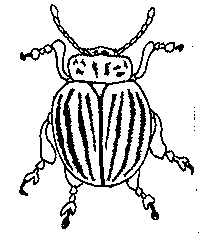
the Colorado potato beetle
The Colorado potato beetle has become resistant to many pesticides. An innovative technique developed by AgCanada and researched by Cornell is the use of "trench traps" to catch the beetles as they walk out of fields in search of new food sources or places to overwinter.
This technique, like most successful pest control programs, relies on a knowledge of the insect's biological cycle. Farmers often rotate their potato crops to adjoining plots of land in an effort to control the beetle's damage to their plants. The effectiveness of this practice is increased by digging deep (minimum 30 cm/12 in, and up to 91 cm/3 feet) trenches around their fields and lining them with 1.5 mil black plastic mulch.
Potato beetles emerge from their winter hibernation in the soil in the previous year's field and disperse to the new field by walking up to 45 m (150 ft) from their hibernation site. They do not generally fly to find new food sources, as many other pests do. In an effort to reach the new potato field, the beetles fall into the plastic-lined trench, and, unable to crawl out, starve to death within 10-14 days.
The design of the trench is important to the success of this control method. It must have at least a 65 angle. The plastic lining is also key in the control: the beetles are able to climb out of the trenches if the plastic is clean (as when new, or just after a rain) due to their fine leg hairs, but they cannot crawl out when the plastic is coated with fine dust particles. Prof. Tingey recommends that growers place their trenches next to roads or well-used pathways so that they are redusted after a rain. Drainage of the trench is effected by perforating the trench bottom every 3m/10 feet. Though some insects may escape the trenches through these perforations, in test areas they have often been killed by a fungus, Beauveria bassiana, which thrives in the dark, moist areas below the trench. Farmers find masses of white webbed fungus on dead beetles when they peel back the plastic.
The technique can be used at both ends of the season: at the beginning, to trap insects as they attempt to enter a field, and at the end, as they leave the field to overwinter after the potato foliage is killed before the potato harvest. One main disadvantage is that the plastic does not usually last more than one year and needs to be replaced as new areas are dug.
The technique is not presently being used for control of other pests, although presumably it could be used for other beetles which disperse primarily through walking or crawling rather than flying. In Controlling Crop Pests and Diseases, Rosalyn Rappaport writes that army worms and cutworms, which migrate into crops by crawling, can be trapped and killed in ditches dug around plants. She specifies that the "side of the ditch nearest the crop must be straight, though it need not be more than 10 cm (4 in) deep. The worms cannot crawl up a sheer slope." In many situations, the plastic lining for the trench may not be necessary, and you could experiment with alternatives. (Scott Sherman used a cut-away PVC pipe buried at ground level to catch chinch bugs.) If you have field success with variations on these methods, please let us know.
James Gordley in Panama responded to this note on using trenches to control potato beetles. "I was experimenting with raising potatoes under different mulches. I would lay old carpet in my garden after working the ground in the spring. Every 30 cm I cut a slit in the carpet and inserted a seed potato. To my surprise there were no potato beetles on the plants growing through the carpet, while the plants in the next row (without carpet) had beetles on them. This was true for 3 years in a row. This method also produced potatoes 2 weeks ahead of my other plantings which were sown the same day. "Another method for beetle control is to run a handful of the insects in some water through the blender. Strain the juice and add 1/2 cup to 1 gallon of water. Spray this solution on the infected plants. Within 2 days there were no more beetles on the plants, and I saw many dead beetles on the ground. The 'beetle concentrate' can be frozen in small portions and then used as needed."
FLY CONTROL WITH MUSCOVY DUCKS. The Heifer Project Exchange quotes Jim Rankin in Togo. "People are seldom bothered by flies because they keep Muscovy ducks. For a fetish ceremony they killed a number of ducks. He opened the crops to see what they had eaten. Each one was filled with hundreds of flies."
BioOptions vol 1 page 6, 1990, also addressed this subject. Don Mock, extension livestock entomologist at Kansas State University says, "The Muscovy duck and the cattle egret may someday be enlisted as a major natural weapon of defence against the housefly and the horse and deer fly." A Canadian study with dairy calves showed that Muscovy ducks removed 30 times more houseflies than manufactured flytraps, baitcards, flypaper, or flysheets. The ducks also ate spilled feed, eliminating a fly breeding site.
FRUIT FLY TRAP MADE FROM BASIL. [The following is taken from a note in Ileia Newsletter, vol 9, # 3, p. 31.] "In Keralea (southern India) fruit fly (Dacus dorsalis and D. cucurbitae) incidence is severe in mango trees. P. Reghunath and M. Indira describe a low-cost technology to combat this insect pest."
A fruit fly trap is prepared as follows: "20 g of Ocimum sanctum (holy basil) leaves are crushed and the extract together with the crushed leaves are placed inside a coconut shell, which is then filled with 100 ml water. To increase the keeping quality of the extract, 0.5 g citric acid is added and the extract is then poisoned by mixing 0.5 g carbofuran 3G. The traps are suspended from mango tree branches at a rate of 4 traps per tree. The fruit flies feed on the ocimum extract and are killed in a few minutes. In our trial, over a hundred flies per week were caught in this way.
"To successfully control pests we advise an integrated strategy. Set the traps in the trees at the above rate, as soon as fruit set begins and continue till harvest. Change the traps every week and set fresh traps. When the population of flies is heavy, give a spray with malathion 0.1% and sugar 2%. Collect and destroy attacked fruits that rot and drop down."
CATCHING FLIES WITH VINEGAR AND HONEY. Jimmy Richardson in Australia wrote, "Your note on a fruit fly trap made from basil and insecticide prompts me to send the simple plans for the one that we use. The trap uses harmless ingredients VERY effectively against the fruit fly. To make the trap, cut two holes about 4 fingers high from the bottom in the side of a 2-liter container with a screw-on cap. To suspend the trap, drill a hole in the center of the cap, then push a double width of string through and knot on the inside.

. Flies enter the container and
fall into the attractant.
"To make the attractant mixture, mix 1 cup of vinegar, 2 cups of water and 1 tablespoon of honey and shake well. Fill the trap to just below the holes with this mixture and hang the container about 5 feet high. Flies enter the container and fall into the attractant. I estimate it is 90-95% effective, and no poisons."
LEAF-CUTTER ANTS ARE A CHALLENGE TO MANY. Marianne Frederick contacted ECHO with a vivid description of problems of leaf-cutter ants in Guyana. She said that farmers even tried building water filled moats around plants but the ants built leaf bridges and crossed right over. She wonders if there are controls that do not involve commercial insecticides.
Dr. Keith Andrews at Zamorano in Honduras told us of a technique using freshly cut leaves of jack bean Canavalia ensiformis. The following comes from "The use of jackbean as a biological control for leaf-cutting ants" in Biotropica, vol 11(4) 1979 pp 313-14. Five to 15 kg of leaves were placed nightly on top of and around mounds covering an area of 25 to 100 square meters for three consecutive nights. All the leaves disappeared by the following morning, the ants apparently preferring them over the plants surrounding the colony ...[including citrus, cashew and mango trees]. A single three-night treatment usually resulted in complete cessation of ant activity for periods ranging from four months to five years (when observation ended). Infrequently, very small black ants (possibly forms of the same species) would appear 2-3 weeks following treatment of the colonies. Because of their random and disorganized activity, they were controlled with small doses of insecticide.
"It is presumed that the effect of jackbean on leaf-cutting ant colonies is due to the action of fungicides such as demethylhomopterocarpin contained in jackbean leaves on the ants' fungus gardens." The ants carry the leaves into the mound where they are normally transformed by fungal activity into the food upon which they depend. That's about all the article reported, and no data was included.
Tom Post had trouble establishing neem trees in Belize because of leaf-cutter ant damage. "They would strip whole trees. I planted jack bean around the trees. When the plants got about a foot tall all damage stopped. But there was no evidence that they were stripping jackbean leaves. In fact, we placed leaves on their trails and on the mound and ants would not pick them up. A project in El Salvador likewise found they would not pick up leaves spread on the trail or the mound."
Dr. Warwick Kerr in Brazil writes that "One recent research revealed that sesame, Sesamum indicum, protects the plantations against leaf-cutter ants, Atta sexden. The ants bring it to the ant hill and it stops growth of fungi."
Leaf-cutter ants are a serious problem. Let us know if you try jack bean or sesame control, or if you have another method. There are too many unanswered questions to recommend the method with much conviction. This would be a good research project for some of the scientists among our readers.
Alfredo Petrov in Cochabamba, Bolivia shared his experience in controlling leaf-cutter ants. "I work in a semi- arid valley, 2,700 meters above sea level. Leaf-cutter ants have defoliated our peach trees, rose bushes, potato fields and tree plantation seedlings. So they are not only a problem of the humid tropics.
"The best protection for tall plants with narrow stems, such as roses or young peach trees, is loosely-wadded sheep wool tied around the stem! Ants don't like to cross it and it is almost totally effective. Local sheep conveniently deposit the necessary tufts of wool on our barbed wire fences. This method is not practical for older trees with thick trunks or for tree nurseries with thousands of seedlings.
"For trees with thick trunks, merely whitewashing a section of the trunk with lime seems to somewhat reduce leaf- cutter damage. We mix the lime with mucilaginous cactus (Opuntia sp.) juice to help it stick on longer. Perhaps the black ants don't like to cross the contrasting white background, which makes their black march easily visible to predators?
"Several Bolivians have recommended wrapping fruit tree trunks with sticky tape, sticky side outward. I haven't found this to be very practical; in our intense mountain sunshine it doesn't last long - the tape soon dries out and turns brittle. There is a sticky liquid sold in the USA for painting on tree trunks to trap crawling pests called "Tanglefoot". Does anyone have more information on this? [Ed: This product is indeed very sticky, not affected by temperature or weather, and very effective at trapping insects until it traps a lot of dirt and no longer has a sticky surface. It does not dry out and can last several months. The price in one U.S. catalogue is $25/5 lbs-not exactly inexpensive; does anyone have experience with alternatives? See page 198 for description of using STP oil treatment as a substitute.]
"One local person suggested that I protect prized plants with a circle of sugar poured on the ground around the stem. I don't know why this would work, and haven't been desperate enough to try it yet. One successful elderly farmer has effectively protected his potato field with a barrier strip of organic debris taken from distant ant colonies. Presumably the ants avoid the smell of ants from other ant colonies.
"The other philosophy is to find the local ant colonies and kill them, instead of protecting the plants directly. This is usually done by sprinkling powerful insecticide powders around the entrance holes, a practice to which I am ecologically opposed. Since human urine contains a fungicide, I tried attacking a colony's fungus garden by pouring urine down the entrance hole. It did get rid of the colony, but took several applications a day for eight days-too much trouble for more than one colony."
Marsha Hanzi in Bahia, Brazil wrote that leaf-cutter ants are the "janitors" of a forest ecosystem. They remove weak plants and produce compost richer than worm castings, enriching the soil and preparing it to support trees. "These ants dominate the scene where most organic matter has been removed [so] if we increase the amount of organic matter on the ground (by planting leguminous trees and pruning them every two months during the rainy season), the leaf-cutters go back to cleaning out the system without serious damage to our crops and trees.
"This I can affirm from personal experience; in the first year of my permaculture system, on hardened poor clays, the ants cut everything I planted. Today, three years later, they still exist, and sometimes nibble something, but normally go next door and cut the neighbor's plants! (His soil has very little organic matter.)"
To begin building a system in highly degraded areas with leaf-cutter ants in a balanced role, she recommends planting local pioneer plants every meter and pruning them frequently to build organic matter and restore soil fertility. Bananas can also be used, three meters apart. Then she looks for leguminous trees adapted to the area; Marsha has not lost leguminous trees to ants. She uses native Ingas, Erythrina, and Gliricidia in the humid and transitional zones and plants food plants among these species. In transitional zones, she has seen cashew and guava trees growing in ant mounds; perhaps their thick leathery leaves make them less prone to attack.
One creative idea for keeping the ants off new plantings is to distract the ants by planting "enormous quantities of pigeon pea (Cajanus cajan), which has incredible resprouting capacity if eaten by the ants. Ants prefer the flowers of these to practically anything else other than, perhaps, young citrus trees, which need to be protected. Although planting sesame does work, killing the fungi which feed the young, I prefer to feed the ants and not kill them" for their long-term benefits to the soil. She also suggests that guinea fowl and chickens might help control the ant population in outbreak situations. She welcomes correspondence at: Instituto de Permacultura da Bahia, Condom�nio Aguas Finas QE L4, Lauro de Freitas, Bahia, BRAZIL, CEP 42700-000; fax 55 71 378 1520.
FALLEN ORANGES FILLED WITH INSECTS. Jiwan Dewan in Nepal wrote that half of his navel orange fruit was dropping and was filled with maggots. I called Dr. Carl Campbell for help. Carl said this is a tough one to figure out, but here are some thoughts. The first step is to determine if the insects are causing the drop or if they are a secondary cause, entering after some other problem. The letter did not say at what stage they dropped, whether as very young fruit or more mature fruit. If it is the mature fruit that is dropping, then it is perhaps more likely that the problem is directly caused by eggs laid in the fruit.
Fruit drops are very serious some years in Florida. It turns out to be due to the fungus anthracnose that is attacking the blossoms combined with both thrips and midges feeding on the ovaries of the flowers. A careful look at the blooms will show if there is either fungus or insect damage. It could be that a fungicide at bloom time would solve the problem. Another common cause of fruit drop is dry weather. If it does not rain at least an inch a week one should irrigate (if that is a possibility). Citrus is very sensitive to lack of water.
It would help to know whether it is fly, beetle or lepidoptera larvae in the fruit. Here is a rough way to tell. Fly larvae have no legs, whereas both beetle and lepidoptera larvae do. Beetle larvae "look like grubs." Lepidoptera larvae tend to be longer and slimmer than beetle larvae and somewhat flattened.
If the fallen fruits are of a good size, see if there are any obvious puncture wounds. In the equatorial tropics an adult fruit-piercing moth causes a lot of problems in citrus. Usually no one even knows the moth is around. It pierces the fruit and sucks juice at night, then quickly leaves. What most people see is the fungal lesion that develops around the spot.
MEALYBUG CONTROL. In 1991, Wayne Teel in Mozambique asked about controlling cassava mealybug (Phenacoccus manihoti) without commercial insecticides. The mealybug destroyed up to 80% of the cassava crop.
Natural Crop Protection says that cow urine is used against mealy bugs, thrips, mites, and other insects in Sri Lanka. Cows are penned overnight on a concrete floor which slopes to a tank. Collected urine stands exposed to sun for 2 weeks, then is diluted with 1-6 parts water and applied to plants. Tender vegetables require a more dilute urine solution than fully grown trees, as too concentrated a solution can burn the leaves. Test dilutions on different plants.
The 1995 World Food Prize was awarded to Dr. Hans Herren for his successful efforts in finding and implementing the biological control of the cassava mealybug in Africa. Based at Nigeria's International Institute of Tropical Agriculture, Dr. Herren coordinated the worldwide collaboration (1979-1992) which resulted in mealybug control in 95% of the cassava-growing zones of Africa. Researchers found natural enemies in the pest's South American home, and tested them in Africa. The most successful was the parasitic wasp Epidinocarsis lopezi, which was released in Nigeria in 1981. This wasp has been dispersed and established throughout Africa. We hope it has reached Mozambique by now.
LEUCAENA PSYLLID OUTBREAK AND CONTROL. Pest outbreaks can be sudden and devastating. After years of promoting Leucaena leucocephala for erosion control on hillsides and an important tree in agroforestry systems, the psyllid became a serious problem in Asia in 1986. Control efforts included screening for psyllid- resistant leucaenas and introducing parasitic wasps for biological control. This "story" illustrates many important principles of plant protection and pest control: avoiding dependency on just a few species and achieving a balance between pest and predator insects. Below, you can follow the development of solutions to this problem.
FROM MARCH 1986: INSECT PEST CAUSING SERIOUS DAMAGE TO LEUCAENA PLANTINGS IN THE PHILIPPINES. Five of our readers in the Philippines have written about this problem. It is a good warning to others also that there is always danger in planting incredibly large areas to one species. The Nitrogen Fixing Tree Association (NFTA) has published a two page analysis of the problem. It is caused by psyllid insects (Heteropsylla spp.) or jumping plant lice, which have spread rapidly around the world in the past few years. The insects are native to the Caribbean and eastern Mexico, where they seldom cause severe damage because of natural predators. This suggests that introduction of predators [or even gradual natural build-up of local predators?] may be the best control. Some ladybird beetle larvae are outstanding predators, e.g. Curinus abdominalis. The insects are not spread by seeds. The most likely methods include high-altitude air movements, cargo in airplanes, or illicitly shipped live plants.
What can we learn? I would be hesitant to rely exclusively on one species of tree for a particular purpose. Leucaena may outperform most trees in your setting, but other species have exceptional qualities as well. In the long run, a mixture is better. Also, you can plant more than one variety of leucaena. Folks who write to ECHO for seed are sent four leucaena varieties for this very reason. Readers who are heavily involved in reforestation should receive the NFTA bulletins on a wide variety of species with potential for their area; write Winrock International, Petit Jean Mountain, Rt. 3, Box 376, Morrilton, Arkansas 72110-9537, USA.
FROM OCTOBER 1993: PSYLLID-RESISTANT LEUCAENA. We asked Mark Powell at the Nitrogen Fixing Tree Association what Leucaena leucocephala variety he would recommend where psyllid insects are a problem. He sent us a variety called K636, the top performer in their 'New Giants' trial at Waimanalo, Hawaii. "Although this variety has performed well especially after it achieves heights above 5 meters, it will support large psyllid population buildup which can defoliate all juvenile leaves. It has been observed that it tends to retain its older leaves during periods of high psyllid pressure." The K8 variety was one favored giant type several years ago, but it is now "disfavored due to its relatively high susceptibility to psyllid defoliation."
FROM JUNE 1992: LEUCAENA PSYLLID IN AFRICA. Mike Benge with USAID tells us that the leucaena psyllid that had such a devastating effect on leucaena trees in parts of Asia (e.g. Philippines) has reached Africa. It has been identified on the islands of Mauritius and Reunion. ICRAF and the CAB International Institute of Biological Control (IIBC) are coordinating the design of a strategy for biological control of this pest. Host- specific parasitic wasps found in the Americas as well as other natural enemies are bringing it under control in Asia. "In situations like this I do not believe that resistant varieties are the best answer. People should be cautioned not to lay too many hopes on resistance as breeding takes a long time and insects adapt so quickly and so well. They are like people, when sirloin isn't available anymore they'll eat hamburger."
IN 1995 AND 1996, Mike Benge with USAID gave us an update on the damage to leucaena trees by the psyllid insect in Asia. "The introduction of the parasitic wasp seems to have reduced the damage to a somewhat acceptable economical level." "The biocontrol of the psyllid in SE Asia has gone well with the host-specific parasitic wasps Psyllaephagus yaseeni and Tamarixia leucaenae (the region); ladybird and ladybug beetles Olla abdominialis and Curinus coerulus (particularly in Indonesia); and other naturally-occurring [controls] such as spiders." "A survey in the Philippines conducted by Winrock...determined that leucaena is still the tree of choice by farmers. The leucaena systems heavily damaged in the past are recouping and are productive again in most places. As you know, the psyllid has spread to Africa, and there is now an effort to introduce the parasitic wasps there...the IIBC in England is involved."
USING GRAPEFRUIT TO CONTROL SLUGS? The "Letters" section of Organic Gardening Magazine contained the following suggestion. The writer lived in Oregon where she was "surrounded by slugs." She tried oyster shells, rough bark dust, rosemary, hunting them down and sprinkling salt on them and beer baits, and found them all inadequate. "Then I discovered grapefruit. After you've used the pulpy insides for breakfast, set the rinds (with a little pulp left) upside down igloo-style around your garden." She says that the slugs will hide underneath the grapefruit and die. We have no slug problem at ECHO, so we cannot verify this technique. If you do, please let us know whether it worked. This seems too good to be true, but it would be wonderful it is does work.
IRON SULFATE MOLLUSCICIDE. The horticultural newsletter HortIdeas (September 1990 and April 1992) has reviewed several reports on using iron sulfate (green vitriol) to control slugs. "Recent laboratory trials in England support the notion that iron sulfate is rapidly absorbed by slugs which contact it and is highly toxic to slugs. ...Iron sulfate is cheap, easily available, and not very toxic to humans." In fact "it is a widely prescribed iron supplement for people suffering from anemia."
A subscriber in Spain, Brian Lynas, reports great success by spraying or sprinkling (especially following rain) a solution of iron sulfate. "For over a year I have intermittently sprayed iron sulfate solution around lettuces, brassicas [Ed: cabbage family] and any other plants which were under attack from mollusks. The concentration does not seem to be critical. I use four heaping teaspoons in a five-quart sprayer (twice that concentration if using a watering can) on the soil around slug-attracting plants. ...I've sprayed the soil and also sprayed the plants directly. There's no doubt that either is effective, especially if you can directly spray the mollusks themselves.
"The spray seems to act as a contact poison, so if the animals are wetted or have to cross a sprayed area like a leaf, they die. Unfortunately, when sprayed onto soil, the soluble iron sulfate is quickly changed to insoluble hydrous iron oxides and is ... inactivated.
"Iron sulfate burns some sensitive (usually young) plants. The damage is minor, and my impression is that the anti-mollusk benefit far outweighs the disadvantage. In fact, ferrous sulfate solution at around 3% strength is often used for correcting iron deficiencies by direct spraying on foliage.
"Regular spraying-especially after rains-around the plant bases where the creatures hide, as well as generally around the cultivated area, dramatically decreases the mollusk population with almost immediate effect. [In Mallorca] a small conical snail occurs by the hundreds of thousands. A couple months ago these were infesting a patch in which I'd planted small brassicas and lettuces. Sometimes each plant would have 30 or more snails lying around underneath. I sprayed the solution over them, and they evidently all died. What's more, it seems this killed ... the eggs also, for even now there are practically no mollusks in the area."
GARLIC TO KILL SNAILS? Drs. D.K. Singh and A. Singh at the University of Gorakhpur in India looked at the molluscicidal properties of an extract of common garlic, Allium sativum. Aquatic snails, Lymnaea acuminata, an intermediate host for parasites which cause fascioliasis of cattle, were used in the experiment. Ten snails were placed in each aquarium. The required amount of garlic cloves was minced in 5 ml water, homogenized for 5 minutes [in a blender], and centrifuged at 1000 g for 10 minutes and added to the water. [Ed: For other than experimental use, this procedure could be greatly simplified; e.g. filtering could probably replace centrifuging.] Each experiment was repeated six times. Concentrations are expressed as weight of garlic clove per liter.
The LC50 value (the Lethal Concentration required to kill 50% of the snails) was both dose and time dependent. Thus with an increase in exposure time, the LC50 of garlic decreased from 55 mg per liter at 24 hours to 30 at 48 hours and 12 at 96 hours. The LC90 (the concentration to skill 90% of the snails) at 96 hours was 36 mg garlic.
How does this compare with commercial molluscicides? The 96 hour LC50 of two synthetic molluscicides is higher (i.e. less effective): phorate is 15 mg and carbaryl is 14 compared to 12 for garlic. However, the standard molluscicide niclosamide has five times higher toxicity in 24 hours (LC50 = 12 mg) than garlic (55 mg). The authors believe that if the active ingredient were further purified, it would probably be more toxic than the best synthetic.
NEEM LEAF TEA TO CONTROL TERMITES. We seldom hear of any natural control that works with termites. Don Mansfield in Mali sent the following. "A Norwegian missionary here in Mali told me how to control termite damage to trees with neem leaf tea (Azadirachta indica). A barrel or bucket is filled with green neem leaves. They cover the leaves with water and after 4 days use the liquid against termites. I don't know whether it kills them or just keeps them away. The missionaries swear it really works.
"It has been a great success for me. Most of the time when I've used it, it has been setting for at least 2 weeks. When I see where the termites are starting up a tree or pole, I knock them and their clay off. Then I take a paint brush and paint the whole area where the termites had been on with the tea. I make sure that plenty runs down around the base. Twice I have had to do it a second time after about a week, but all the other times I have only done it once and the termites have not come back. It has been 5 or 6 months since I treated a few mango trees, and they have not been bothered since."
TERMITE-RESISTANT TREE reported by Roland Lesseps, S. J., in Zambia. "Termites here make it very difficult to establish tree seedlings in the field. In some places at Kasisi we have lost about 90% of our Leucaena leucocephala seedlings. So we are always on the lookout for a tree that is termite resistant. An excellent one is Senna (Cassia) siamea. We planted four rows four years ago (about 70 trees per row) in a field terribly infested with termites. Almost all the trees are alive and growing luxuriantly. We have coppiced them three times and used the leaves in compost piles. The cut branches make good poles or firewood. We earlier fed the leaves to cattle, then we heard at an ICRAF meeting that the leaves, though eaten by goats, are not good for cattle."
SUGGESTIONS TO HELP AGROFORESTERS REDUCE SEEDLING LOSSES FROM TERMITES. [Taken from Agroforestry Today, July-Sept. 1990 pp 4-6].
1. Select trees that are resistant to termites. These include species of Cassia, Acacia, Grevillea, Markhamia, and Terminalia.
2. Use plant extracts and minerals as protectants. These include finely chopped leaves of Euphorbia tirucalli or wood ash applied to planting holes; leaf or berry extracts of Aloe graminicola, Melia azedarach [Ed: Chinaberry, a freeze-tolerant relative of neem], Lippia javanica or Ocimum sp. (basil); and leaf mulches of Cassia siamea or Azadirachta indica (neem).
3. Plant extra seedlings, to allow for termite losses, both in the nursery and after planting out.
4. Use containers of polyethylene tubing. Pots made of banana fibre should not be used for seedlings where termites are a threat. It is of paramount importance at transplanting to remove the plastic sleeve carefully and retain an intact soil-root ball.
5. Use healthy and vigorous planting stock. Any root pruning should be scheduled to allow sufficient recovery and repair of damaged tissues before transplanting.
6. Give nursery stock enough water just before planting out.
7. Plant seedlings on time, soon after the first annual crops are sown or when the soil is wet to a depth of 20-30 cm.
8. Provide substitute food sources for termites. This could involve leaving as much cleared plant debris as possible on the soil surface when preparing tree planting sites; using organic manure in planting holes; ring weeding rather than clear-weeding stands of young seedlings; retaining grass residues as mulch in and around planting holes; and placing a row of cut banana pseudostems along nursery perimeters.
9. Apply spot treatments of a controlled-release granular formulation of carbosulfan (0.3 to 1.0 grams active ingredient per plant). Other non-persistent insecticides such as chlorpyrifos and carbofuran are not recommended due to severe phytotoxic effects.
Research is currently in progress on another novel approach to control of subterranean termites [which rely on fungi to make suitable food from decaying vegetation carried into the colony]. This approach is to apply fungicides to deprive them of their major food source by controlling these symbiotic fungi.
ARE BRUCHID BEETLES THE SAME AS WEEVILS? We have mentioned using cooking oil to control bruchid beetles in stored seeds. We were asked if they are the same as weevils. Good question. The answer is yes. Quoting from Insect Life, "There are two general groups of seed borers: species that feed in green or living seeds and those that attack dry seeds. The [former] deposit eggs in the seeds by means of a long ovipositor that penetrates the flesh of the fruit. The adults usually emerge after the fruits have decayed. The latter, the common feeders upon dried seeds, are known as weevils." Several generations can develop in a container of stored seeds.
SHORT-TERM HEATING KILLS COWPEA WEEVILS. The January 1992 issue of HortIdeas reports that two Purdue University entomologists have developed an extremely low-cost technique for ridding dried cowpeas of weevils (Callosobruchus maculatus). If you have some clear plastic, a piece of dark cloth, a few rocks, a semi- sunny day, and about an hour, you should be able to eradicate the weevils in a few pounds of cowpeas.
"A simple solar heater was made by placing a 3 ft x 3 ft (1 m2) black plastic sheet on the ground, adding 1 kg (2.2 pounds) of cowpeas (spread out only one layer thick), and adding a cover of clear plastic sheeting, held down at the edges by rocks. It was discovered that the ambient temperature doesn't affect the temperature inside the solar heater very much on clear or bright-hazy days; the temperature inside cowpeas within the solar heater was 149 F 15 minutes after exposure began on a slightly hazy day at noon."
After solar heating for different times, the numbers of beetles emerging were counted (time in minutes followed by numbers in parentheses): 0 (227 adults), 30 (12 adults), 60 (2 adults), 120 (no adults), 180 (no adults). The treatment did not significantly alter either cooking times or germination percentages. The seeds did lose water, which was probably beneficial. Different types and colors were tried for the sheet on the ground (including cloth) and seemed to make little difference. This time, in all cases no adults emerged after a 45-minute treatment.
SWEET POTATO WEEVIL PROBLEMS. Matt Huber wrote from Haiti, "An insect is severely damaging the roots of sweet potatoes. What can be done?" He sent us a jar containing several of the tiny worms (a few mm long) in alcohol. Dr. Frank Martin identified them as sweet potato weevils, and made these recommendations for their control. It is very important to plant where sweet potatoes have not grown for about a year. It is also important to keep any wild relatives of the sweet potato from the field (e.g. morning glories). When cuttings are taken to start a new planting, soak them for up to 24 hours in a 1% solution of a systemic insecticide. One such insecticide is furadan. This will prevent introduction of the weevil into the new field.
He mentioned that the tubers are damaged extensively. Frank said that the observation that there is this much damage most likely means that farmers are using a long maturing variety [or are "storing" them in the field, harvesting as needed]. Sweet potatoes differ widely in time required for maturity. Matt needs to search for some short-maturing alternatives. In the meantime, harvest as early as possible.
|
| |||||||||||||||||||||||||||||||||||||||||||||||||||||||||||||||||||||||||||||||||||||||||||
Amaranth to Zai Holes, Ideas for Growing Food under Difficult Conditions (ECHO, 1996, 397 p.)
9: Domestic animals
Animals are very important to the small farm. Their integration into farming activities provides uses for many byproducts of the farm. They provide high-quality food, income, fertilizer, status, companionship, transportation, labor, and much more for rural families. But seasonal feed shortage and parasite problems can frustrate people's efforts in animal husbandry. This chapter highlights information and resources on raising and caring for animals in the tropics.
Working with animals
NEWSLETTER ON ANIMAL HUSBANDRY IN THE THIRD WORLD. When people contact ECHO with questions on animals in development, we usually refer them to Heifer Project International (HPI), a group which specializes in that area (much like ECHO "specializes" in plants). If your outreach into the community includes working with animals, you will find the Heifer Project Exchange to be an excellent complement to ECHO Development Notes. The 4-page newsletter (now also with a 2-page insert called "Women in Livestock Development") is sent four times a year at no charge to development workers in the third world. They wrote that "we are happy to send it to those involved in livestock production projects upon receipt of their addresses and a description of their work." I am sure they would send it to others for a small donation to help cover expenses.
The Exchange shares with ECHO a determination to make available sufficient information so that you can act on what you read. I have not found tantalizing articles that leave me frustrated because the key practical information or address has been omitted. Articles are a mix of practical information and techniques with occasional comments providing perspective on a particular question. They also direct you to reprints, publications, and conferences on animal-related topics.
Let me pick some items from some past issues: "A goat medicine cabinet" suggesting medications that should be kept on hand by those working with goats; announcement of an upcoming seminar on beekeeping; a discussion of Caseous lymphadenitis in goats; plans for a manure-heated brooder; a method for pasteurizing milk on a small scale; midwifery for shepherds; lambing supplies check list; design for a Zimbabwe fly trap.
I especially appreciate the section called "Practical Materials which Readers May Find Useful." This is a very brief summary of articles that have come to their attention. In most cases they will send a free copy upon request from readers. If you would profit from the Heifer Project Exchange or want to receive Heifer's full publication list on development and livestock manuals, write to the editor Jerry Aaker, Heifer Project International, 1015 S. Louisiana, P.O. Box 808, Little Rock, AR 72203, USA; phone 501/376-6836; fax 501/376-8906.
LIVESTOCK FOR A SMALL EARTH: The role of animals in a just and sustainable world. Ed. by Jerry Aaker, 111 pages. The authors are all staff at Heifer Project, which provides technical training, livestock, and organizational assistance to rural community groups in developing areas. They present a theory and process of sustainable rural development which includes animals in the system because of their many benefits to the small farm family. Dotted with insights and case histories from HPI's fifty years of experience around the world, the text is a readable blend of facts and ideas. Emphasis is on the ecological and social facets of the work, although the book also provides practical suggestions for the beginner in village- level sustainable animal agriculture. It includes ideas developed by HPI such as "passing on the gift," in which recipients of female animals are required to give an offspring to another family in the community, and its implementation in several cultures.
There is an extensive bibliography on sustainable agriculture, rural development, and technical manuals on animal husbandry and related topics. This is an extremely useful book for a broad spectrum of people, from development workers to policy makers, who want to understand the key role of livestock in both the tangible and intangible sides of community development. Further information about HPI and copies of the book (send $10; includes shipping) are available from Heifer Project International at the above address.
TRAINING IN ANIMAL TRACTION. Don Mansfield in Mali asked where he could get training in animal traction. We can recommend a good book, Animal Traction by the Peace Corps (245 pp., available for about US$40 from ERIC Document Reproduction Service, EDR/CBIS Federal, 7420 Fullerton Rd., Suite 110, Springfield, VA 22153-2852, USA; phone 800/443-3742 or 703/440-1400). However, the subject is so complex that hands-on experience would be a great help.
Tillers International offers training in animal power, blacksmithing, woodworking, and international rural development. The goal of Tillers is to develop low-capital rural technology, including animal-powered agriculture, along with metal and woodworking support skills, so small farmers can achieve self-reliance. The program director, Richard Roosenberg, spent three years working with oxen as a Peace Corps volunteer in Benin. The program maintains a considerable interest in Third World applications. They have workshops, internships, and specialized training for North American and international students who want to receive hands-on instruction and opportunities for low-cost research in these fields. Tillers also studies and modifies designs and publishes a technical newsletter called The Tillers Report; subscriptions are $25 for 2 years, and 15 backsets are available for $25. Write for a current publications list, which includes full-scale yoke construction plans. Workshops (1-5 days) and international development courses are given February through December on topics such as the following: ox driving and training, rope making, blacksmithing, woodwrighting, agricultural tool making, selection and care of oxen, draft horse use, animal-powered field work, sustainable pasture practices, building rural infrastructure, draft logging, road building, sweet sorghum molasses, timber framing and barn raising, etc. Tillers also has a highly competitive internship program which runs for 3-9 months from April through November. Interns are paid according to experience and skills. Write Tillers International, 5239 South 24th St., Kalamazoo, MI 49002, USA; phone 616/344-3233; fax 616/385-2329.
TECHNICAL NOTE ON OX YOKES. Tillers International also has a series of TechGuides. Titles include: Full-scale yoke plans; Hay baler construction plans; Training young steers ($3); Selecting and pairing oxen ($3); Advanced training of oxen ($8); Slip-scraper construction and operation ($4); Animal-driven shaft power ($4); Measuring draft power ($2.50); Bricken, brakes, head yokes for restraining loads behind oxen ($1.50); Wood- framed harrow ($2.50); Manual hay baler ($3.50); Simple forecart design ($1.50); and the MOP over-the-row weeder ($3). Postage is $2 per order. Order from Tillers at the above address.
One 10-page technical note is called Tillers Tech Guide: Neck Yoke Design and Fit, ideas from dropped hitch point traditions ($3). ECHO claims no expertise in this area. But this appears to contain the kind of practical, applied, and well-illustrated information that might be helpful to you. I quote from the introduction.
"I was struck by the importance of yoke fit and design when training the first pair of oxen at Tillers. I had worked with a number of pairs in West Africa... I began training with a simple yoke like I had used in the African project. It had a pole for a beam, steel rods for bows, and a clevis extending behind the beam for hitching. After a few weeks the team pulled a stone boat willingly, but if I stepped onto it, they would stop.
"Then I placed an historic yoke on the team. They did not mind its extra weight and readily pulled the stone boat. I stepped on and they continued to pull without hesitation. A second person got on and the team still pulled. It took the weight of a third person to discourage them. I was amazed that changing the yoke permitted adding about 330 pounds (150 kg) to their load. I immediately started analyzing that old yoke and reading...about traditional yoke design and dynamics. Obviously these yokes were superior in some simple ways."
AN EXCELLENT RESOURCE FOR FORAGE SEED AND INFORMATION. I have found folks at ILCA (the International Livestock Research Centre for Africa-see note below) in Ethiopia to be unusually eager to help, including taking the initiative to get information to us at ECHO. I wrote to Dr. John R. Lazier, forage agronomist, asking if folks who read this newsletter would be able to request small quantities of seed. I realize that few of you are with research organizations or large programs of any kind. He replied, "ILCA does provide seed in small quantities to requestors, and your readers would be no exception." If you are doing a serious search for better forages for your region and cannot find seed for a particular forage plant, you might contact them for a small packet of that seed.
"ILCA is collecting germplasm of potential value to small farmers for cut-and-carry, grazing, browse and dual-purpose use (food and fodder)." They are especially interested in leguminous forages. They also publish a forage research newsletter (about 30 pages each), but this is quite technical and would only be of interest to the few of you who do a lot with forages.
Two International Agricultural Research Centers merge. The International Laboratory for Research on Animal Diseases (ILRAD) in Kenya and the International Livestock Centre for Africa (ILCA) merged in 1996. The new entity is the International Livestock Research Institute (ILRI) and will be located in both Kenya and Ethiopia. The addresses are P.O. Box 5689, Addis Ababa, ETHIOPIA and P.O. Box 30709, Nairobi, KENYA.
WINROCK INTERNATIONAL MAY BE ABLE TO ANSWER SPECIFIC QUESTIONS ABOUT LIVESTOCK. If something comes up in your work that you cannot answer, this free service by Winrock can be quite helpful. Some of the more frequently asked questions have led them to prepare Tech Notes on the topic. These 2-4 page notes are available in English or Spanish, at no cost to development specialists. Topics to date are: Protein sources for swine in the tropics; Alternative feeds for pigs in the tropics; Mammalian coccidiosis; Internal parasites in sheep and goats; Poultry and salmonella; Colostrum for the newborn; Vaccination and the Needle; Diarrhea in young livestock; Stocking rates in the tropics; Facilities for rearing young stock; Feeding the lactating female; Selection and management of replacements; Methods of animal identification; Establishing an artificial insemination service; and Techniques for feeding young ruminants. Their address is 38 Winrock Drive, Morrilton, AR 72110, USA.
WORKING WITH TRADITIONAL HERDERS. H.P. and Nancy Harmon work with people in the Transkei who are traditionally herders and whose first love is animals. Population pressures have forced the people to turn to cultivating the land, much of which is eroding badly.
H. P. wrote that they start with the proposition that it is acceptable to raise livestock. Rather than entice people away from raising livestock, they first work with kinds of livestock that, with careful control, have little negative effect on the environment compared to herds of grazing animals: chickens, ducks, geese, pigs. "After people have these animals and are successful with them, then we are able to talk about the other animals (sheep, goats, cows, horses, donkeys), what is a sustainable stocking ratio, etc.
"We are able to increase farmers' interest in agriculture by having them plant some crops specifically to benefit their animals (e.g. comfrey, leucaena, winter oats). We are also able to talk about planting trees for soil stabilization and nitrogen fixation as side benefits from [their primary concern] for planting trees for forage.
"This is slow work, but we seem to be successful where others have failed because we accept people's right to prefer raising animals to cultivated agriculture. The ironic thing is that having accepted that fact, we now find that their interest in improving their agricultural methods is growing quite fast. I think this is because the benefits also extend to their animals and because they see that we are not trying to replace their animals with cultivated agriculture. ... the environment is slowly being brought back into balance as well. People are raising more small stock, which hardly ever overtax the land, and planting more trees so that the amount of fodder available is constantly increasing."
Feeds and animal nutrition
"FORAGES FOR THE SMALL FARM" TECHNICAL NOTE by Dr. Frank Martin addresses a topic about which we are occasionally asked and with which we have little first-hand experience. Though written with the needs of the small farmer in mind, this document probably best fits the needs of those with more than just a few animals to feed and who farm at least several hectares and perhaps even have some mechanized equipment. It addresses the following: the need for forages on the small farm; site selection; species selection; basic botany of grasses and legumes and the role both play in animal nutrition; the benefits and disadvantages of grazing verses "cut and carry" systems; general principles of forage management; and recommended forages for various sites and purposes. As ECHO carries relatively few forage species, an addenda has been prepared that lists sources for seed and further information. This document is larger than most of the ones we distribute so we ask that only those that really feel their work would benefit from such a document request free copies ($3.50 to those not directly involved in development).
THE SMALL-SCALE MANUFACTURE OF COMPOUND ANIMAL FEED. Stephan von Malortie in Egypt asks: "...my main questions right now are in the field of feeding tables. I am trying to make guidelines for feedcrop use in different areas of the country."
I immediately thought of this book from the Natural Resources Institute. Chapters in this 87-page book include: Economic background to the industry, Nutrient requirements and feed formulation, Feed ingredients: characteristics and supplies, Outline of the feed manufacturing process, and Financial appraisal of small-scale production. These chapters are well-written, short, and to-the-point.
The 40 pages of appendices are especially useful. Appendix 1, Nutrient Specifications, includes detailed tables covering poultry, pig, ruminant, rabbit, and fish feeds. Appendix 2, Feed Formulations lists typical ingredients and proportions for small feed mills in Asia and Africa as well as normal maximum limits to ingredient inclusion. Appendix 3, Composition of raw materials, presents an exhaustive listing of the percentages of various nutrients in a wide variety of possible materials (from barley and buckwheat to spent brewer's yeast and feather meal). Another table lists the typical fatty acid composition of common fats and oils and a table of toxic or undesirable factors in feed ingredients (i.e. velvet bean contains trypsin inhibitors and needs to be heated to avoid problems, shea nut cake contains saponins and should make up no more than 2.5% of a feed). Appendix 4, Feed Processing, has diagrams of typical feed mills, tables comparing motor sizes and capital costs, a table of typical bulk densities of raw materials, etc. Appendix 5, Appraisal of Small-Scale Production Projects has a checklist of information to help decide project feasibility followed by detailed working tables for full financial analysis.
We have already found this publication a great aid in answering technical requests from our network. If your work includes the manufacture of your own animal feeds from locally available materials, this book may be a good addition to your library. Copies are available for £10.00 from: Publications Distribution Office, NRI, Central Ave., Chatham Maritime, Kent ME4 4TB, UK. No charge is made for single copies sent to government, educational, research, and non-profit organizations working in countries eligible for British Government Aid (most developing countries). Use official titles when ordering.
FEED ANALYSES. If you have been mixing your own animal feed rations, you might be interested in Ohio State University's feed analyses, although some knowledge of animal science would be necessary to interpret the results. Dairy feed standard analysis will measure dry matter, total crude protein, phosphorus, potassium, calcium, magnesium, sodium, manganese, iron, copper, zinc, neutral detergent fiber, estimated sulfur, and estimated energy for $21.00. The beef feed analysis ($20.00) is the same except it measures acid detergent fiber and does not estimate energy. Swine feed analysis includes dry matter, total crude protein, potassium, calcium, magnesium, zinc, manganese, copper and iron for $23.00.
Write the Ohio State University; R.E.A.L.; Ohio Agricultural Research and Development Center; Wooster, OH 44691; USA; phone 216/263-3760. Prices quoted were in effect April 1995. Be sure to write them for current prices, detailed instructions on how to take samples, how much to send, etc. before submitting any samples.
USE OF TREES BY LIVESTOCK SERIES. Nick Davison, press officer for the Natural Resources Institute, sent us this new series. The attractive 18-30 page booklets deal with a particular genus of tree (Gliricidia, Erythrina, Calliandra, Ficus, Cassia, Quercus, Acacia, and Prosopis species). One booklet discusses anti-nutritive factors found in trees used as feed. The goal of the series is to bring together the information on selected genera which can increase the fodder supply for ruminants.
The series should be an especially helpful tool for agriculture teachers. There are 800-900 species of Acacia and 44 species of Prosopis. Looking at them one at a time would be out of the question in the classroom. Considering each as a group, how they differ and what they have in common in terms of livestock feed, is a handy approach.
A few items from the booklet on anti-nutritive factors follows. Hydrogen cyanide is potentially the most serious anti-nutritional factor in fodder trees. Symptoms of cyanide poisoning are labored breathing, intense red conjunctiva (whites of the eyes), frothing at the mouth, bloat, convulsions and a staggering gait. Post-mortem examination often reveals a characteristic smell of almonds from the stomach contents. A full stomach tends to buffer the absorption of cyanide in ruminants, possibly due to its reaction with sugars or sulphur compounds to form harmless compounds. Poisoning is more likely to occur during drought or feed scarcity, when hungry animals consume large amounts of a particular feed over a short period of time. Avoid feeding pods that are wet. Physically separate potentially dangerous feeds from water sources. Cold water appears to encourage the release of cyanide. Mix potentially toxic feeds with sulphur or molasses, or feed them in conjunction with licks that contain these substances.
Do not be too quick to decide that a tree species can or cannot be used for fodder based on a report you read or even your own quick test. "There are many contradictions in the literature regarding the acceptability of fodder from trees and shrubs." Some possible reasons follow. Acceptability can change during the year. For example, milk goats consume more gliricidia when foliage is older with mature leaves. As the growing season progresses, the proportion of mature leaves increases and leads to improved consumption by goats. In some cases it may take several days for animals to accept a new feed, but once accustomed they may consume it readily. Preference for one feed over another does not mean that they will not eat it when it is the only choice. Within a single species, differences can exist between varieties, individual trees and even between parts of the same tree. Acceptability can be influenced by climate and soil conditions. For example, acceptability of the same varieties of Stylosanthes spp. in Australia varies greatly between the sandy, infertile soils of one region and the fertile soils of another.
The booklets are £2 each. Groups working with community development in countries eligible for British aid can request single free copies by writing Publications Distribution Office, NRI, Central Avenue, Chatham Maritime, Kent ME4 4TB, UK.
FORAGES DIFFER GREATLY IN DIGESTIBILITY. As a general rule, tropical forages tend to have more lignin than do temperate forages. The lignin is not only indigestible but also reduces the digestibility of some of the cellulose in the plant. This lower digestibility causes the material the ruminant eats to remain in the rumen for a longer time. The result is that the animal not only is getting less from what it eats but it cannot eat more until the rumen empties. A profitable area of research is developing varieties of forages or introducing new species which give greater yields and have a greater digestibility and a better balance of nutrients. The lushness of a field of tropical grass can be deceiving.
For information or seeds for tropical pastures I most often refer to Better Pastures for the Tropics updated in 1992 by Frank Sauer and Sons, P.O. Box 117, Rockhampton 4700, Queensland, AUSTRALIA. This 77-page, glossy, magazine-size book with many color pictures and line drawings is both attractive and instructive. At A$20 (about US$15), it is still a considerable bargain. Chapters include improving tropical and subtropical pastures, establishing pastures, selecting species and mixes, seed quality, management of improved pastures, pasture grasses, and pasture legumes. They also have sowing guide tables that list rainfall range, seeds per kg, sowing rate, and tolerance to drought, water logging, frost and low fertility. When writing them be sure to ask for their seed price list. I know of no other source for many of these seeds.
A Guide to Better Pastures for the Tropics and Sub-Tropics was first published in 1980. (In May 1995, a new edition is under revision.) The foreword says it "is now well established as an elementary text" on the subject. The chapter titles are similar to the Sauers book, except for one on pasture species for irrigation or high altitude country. It has fewer pictures but appears to have more text and perhaps to cover more plants. For both books and many related, more specific publications, ask for the current booklist from the Tropical Grassland Society of Australia, Inc., c/o CSIRO, 306 Carmody Road, St. Lucia, Queensland 4067, AUSTRALIA. Credit card orders can be made by phone (07-3770209) or fax (07-3713946).
'ALFAGRAZE,' A FORAGE ALFALFA. Many of us know alfalfa as a nutritious, temperate, leguminous, hay crop. We usually do not think of it as a species to be grazed. After 12 years of testing and development, scientists at the University of Georgia have developed the high yielding, grazing tolerant variety called 'Alfagraze'. This cultivar is based on a broad genetic base of 22 cultivars and 1,100 introductions, but was developed for the dual purpose of grazing and hay production for farmers in the States. We do not know how it will do overseas. Dr. Clarence Bryner, a consultant in pasture projects, believes it merits trial and has purchased enough to enable our readers to give it a try. To stand any chance of success at all the pH of your soil must be over 6.5 and you must be able to protect the alfalfa from grazing animals until it reaches full maturity. (After establishment it can be kept grazed to 4 inches/10 cm.) If your work involves peasant farmers, you know the pH of your soil to be over 6.5 and you can protect a trial from grazing, we can send you a small amount of seed.
BUCKWHEAT IS A FAST CROP FOR COOL AREAS. One of the most important questions faced by our readers is how to feed animals when farmers cannot purchase commercial rations. Please write us about your personal experiences in this area so we can share your ideas with the rest of ECHO's network.
John Troesle says that he gets a crop of buckwheat (Fagopyrum esculentum) in about two months in Monte Verde, Costa Rica. They are near the "cloud forest" at something over 3,000 feet (1000 m). Potentially this could give several crops per year. It does best in cool, humid climates and is known for being disease-free. It is an excellent crop for beekeepers too. It is normally grown in northern temperate countries. In parts of Poland and Russia it is a basic item in human diets, but is used mostly for animal feed in the States. However, I had sourdough buckwheat pancakes nearly every morning during winters when I was growing up in Ohio and still love them (although those who did not grow up with them don't seem to like my pancakes as much as I do!).
I asked Dr. Hill at N. C. State University about its usefulness in animal feed. It is not as palatable as most cereals, so should not be used in more than 1/3 of the ration. It is best to grind it for all animals except for poultry, which apparently do well eating it whole. It is a substitute for grain in dairy rations. The nutritional value is about 10-15% less than oats. In the States yields range up to 40 bushels per acre. When used in too high a concentration in pig rations it makes soft pork. This means that fats are too unsaturated and tend to be runny. (Because unsaturated fats are said to be less likely to lead to high cholesterol levels I wonder if pork that is more unsaturated might not be a great thing for human nutrition.) If you are in a region where it is cool and moist, but with no frost, for at least two months, this might be an interesting crop to try.
CAN CITRUS RESIDUE BE USED FOR ANIMAL FEED? Someone in our network asked us this question. The following is abstracted from a University of Florida bulletin "Citrus Feeds for Beef Cattle." Although the bulletin is directed toward cattle, similar results would probably be found with other ruminants. To the best of my knowledge the residues are not fed to monogastric animals such as pigs or chickens, because much of the material would be indigestible.
Dried citrus pulp is high in calcium and digestible energy, but low in digestible protein and phosphorus. (What is the difference between, for example, "digestible" energy and just plain energy? Just because something is present in a food does not mean an animal's digestive system can make use of it. Only the digestible protein is available to an animal; the rest is excreted in the manure.)
When good quality citrus pulp makes up no more than 40% of the ration, and is properly supplemented with protein and phosphorus, it has a feeding value 85-90% of shelled corn. It is highly palatable, i.e. is readily eaten. (We have purchased beef feed containing citrus residue. The smell was wonderful.)
Citrus pulp is classified as a "bulky concentrate feed" because it is a bulky material that is also relatively high in digestible energy. Because it is relatively low in protein (approximately 6%) it is primarily an "energy feedstuff with roughage properties." The bulkiness of citrus residue limits how far it can be transported economically. The volume can be greatly reduced by pelletizing. Its density can be increased from 13 pounds per cubic foot to 42. The reduced volume not only makes transportation less expensive, but also cattle can hold more and might gain a bit faster.
Dried citrus meal (the material that passes through sieves while dried citrus pulp is being made) can be used as a substitute for cottonseed or soybean meal.
The more relevant question for most of our readers, who will not have the facilities to process citrus waste, is the feeding value of fresh wet pulp. It is not widely used today in the States because of the expense of transporting and handling a material containing 70-85% water. Fresh grapefruit was fed routinely by Florida farmers before the dried product became available. Fresh grapefruit is more palatable than orange pulp.
The greater the water content of the pulp the lower the nutritional value. It is basically a carbohydrate (energy) feed, so supplements are necessary. If fed in a feedlot, supplements must include protein, a dry carbohydrate material, a source of roughage, vitamin A and minerals. If fed as a supplement to pasture, it is important to also feed protein and minerals. During the 1940s, several experiments were done on making silage from citrus waste. Including some hay or sugarcane improved the quality and palatability.
IS THERE A BENEFIT TO HAYMAKING? When compared to making hay, much less work is involved if livestock are simply allowed to graze on dead grasses during the dry season. "A major benefit of haymaking is that the nutritional value of green grass hay is substantially better than standing brown grass. Nitrogen content was on the average more than 50% higher in hay, and in vitro dry matter digestibility of hay [Ed: a laboratory test to estimate how much of the material a ruminant animal can digest] was 60% greater in a study conducted by the International Livestock Center for Africa." (Taken from the International Ag-Sieve #6, 1992.)
RAISING PIGS ON MORINGA LEAVES is a system developed by missionary Paul Ronk in Jeremie, Haiti. Some people object to raising pigs because "pigs eat people food" and compete with humans. Paul tested and introduced a new feeding system based on moringa and leucaena leaves.
Every pig in Haiti was killed in 1981 because of the threat of an outbreak of the highly contagious African swine fever. Paul Ronk first went to Haiti to assist the U.S.-supported repopulation efforts which began in 1985. He found that the intensive production systems promoted along with the new pigs taken to Haiti were unsuitable for most Haitian farmers. Farmers were taught to use commercial hog feeds which were not too expensive initially but soon were priced far beyond the reach of small farmers. Paul witnessed many failures in the reintroduction projects due to the lack of adequate feed for the animals.
In 1991, the Ronk family moved to Jeremie in southwest Haiti. There were no pigs in the area when Paul arrived, so he decided to design and test a pig production system appropriate for the Haitian farmers. Before going to Haiti in 1987, he had spent several days at ECHO, and what he learned about trees with nutritious leaves led him to design a leaf-based feeding system which did not compete with humans for food. Four years later, the program has distributed 418 pigs. He estimates that now there are 5000 pigs in an 80-mile radius of Jeremie. Paul says that he must now address transport and marketing.
Regular food supply is critical to the health and successful raising of pigs. Farmers who wish to receive a pig are required to attend two weeks of training in which they learn the leaf-based feeding system, management of the trees, and basic veterinary care for their animal. They take home seeds of moringa (M. oleifera) and leucaena (L. leucocephala) for planting, and in six months an extensionist makes a field check on their farms to make sure the trees have become established. Paul reports that farmers have little trouble maintaining these species in his area. Farmers must have 100 trees each of both species before they receive their pig.
Farmers have a brief refresher course on veterinary care, then return home with a 12-week-old gilt (female pig) which weighs 30-40 pounds (13.6-18 kg). Monthly extension visits are made to each farm. Gilts reach 200 pounds (90.7 kg) in 12-14 months, at which time they are bred to selected boars. Piglets are born in 150 days; these pigs average 7 to a litter, while the world average is 8 and traditional Haitian pigs (before 1981) averaged only 3. The female pick of the litter is taken back to the mission at 8 weeks (about 20 lbs/9 kg), where it is nourished on commercial feeds for 3-4 weeks, until it is given to another farmer and the cycle begins again. Paul mentioned that the few weeks of commercial feed is not necessary, but is just a nutritional boost for the pig.
Moringa has many advantages in this system. Not only is it extremely nutritious and common in the area, it also withstands frequent severe prunings and can be cut short yet out of the reach of goats. Approximately 30 moringa trees, 10 leucaena trees, and a small quantity of other leaves such as banana and yam are needed to support each pig. The optimum diet in this system is about 70% moringa, 10% leucaena, and 20% other leaves. It is possible to feed pigs 100% moringa, but it is important that the diet not contain more than 30% leucaena, as the toxins have negative effects from infertility to death when given in high quantities. (Pigs with leucaena toxicity are identified by hair loss, a malnourished look, and inability to breed. If this happens, feed no more leucaena for 3 months and give high-protein feeds.)
Paul reports that the meat from these pigs is lean and tastes the same as pigs raised on other feeds. He describes the meat of sugarcane-fed hogs as fatty-watery. If sugarcane must be fed to the animals, it needs to be finely chopped-otherwise they expend more energy in chewing than they gain from calories. Dried leaves may make better feed, but Paul has found the drying process too laborious to justify the benefit in his situation. If you have questions for Paul Ronk, write him at Lynx Air International, P.O. Box 407139, Ft. Lauderdale, FL 33340, USA. ECHO will be EXTREMELY interested to learn of your results and/or innovations if you try this system.
NEEM SEED AS A FEED INGREDIENT. As more and more neem trees, Azadirachta indica, are planted in reforestation projects around the world, large quantities of neem seed are becoming available. We have written before of the usefulness of neem oil in making a home-grown spray for insects. Now four Nigerian scientists have shown that the ground seeds can replace up to 28% of the corn and cotton seed meal in a rabbit ration. (The Journal of Applied Rabbit Research, vol. 13, pp 125-126, 1990. We can send a copy of the article upon request.)
Fresh neem fruits were soaked for one day, after which the pulp was removed manually and discarded. The seeds were washed, dried several days, then ground. Four diets were prepared, each calculated to contain 18% protein. Each diet was fed to a set of nine rabbits and statistical studies were made of the results.
| |
Feed |
Ingredient |
Diet |
Composition (%) |
|
for each set of nine rabbits | ||||
|
Number of Rabbits |
9 |
9 |
9 |
9 |
|
Neem Seed Meal |
0 |
10 |
20 |
30 |
|
CORN |
54 |
45 |
36 |
27 |
|
Cotton Seed Meal |
18 |
17 |
16 |
15 |
|
Fish Meal |
2 |
2 |
2 |
2 |
|
Blood Meal |
2 |
2 |
2 |
2 |
|
Rice Hulls |
20 |
20 |
20 |
20 |
|
Bone Meal |
1 |
1 |
1 |
1 |
|
Limestone |
1 |
1 |
1 |
1 |
|
Salt |
0.5 |
0.5 |
0.5 |
0.5 |
|
Vitamin/mineral mx |
0.50.5 |
0.5 |
0.5 | |
|
Total |
100 |
100 |
100 |
100 |
|
Number of Rabbits |
9 |
9 |
9 |
9 |
|
Avg. Daily gain(g) |
12.1 |
14.5 |
11.1 |
2.14 |
|
Avg. Daily Feed Consumption (g) |
69 |
74 |
74 |
49 |
|
Deaths |
0 |
0 |
0 |
3 |
The statistical analysis showed that the greater daily gain with 10% neem seed meal is statistically significant. The authors speculate that the foul-smelling odor of neem seed meal and bitter taste account for the lesser amount of feed eaten with the highest level of neem.
Note that in these experiments the entire seed was ground. Many farmers might prefer to extract the oil first. This would presumably remove some of the bitter tasting substances. The extracted meal would contain a higher percent of protein, but less energy. Without the oil, the extracted neem seed would presumably more closely resemble the cotton seed meal (meals have had the oil removed) than corn. I would speculate that it could replace cotton seed meal or even soybean meal.
HOW SHOULD I TREAT SOYBEANS SO THEY CAN BE FED TO ANIMALS? Dick Both in Haiti asked us this question. Like many of you, he has found varieties of soybeans that do quite well. They are one of the best sources of protein supplement for animals, a difficult problem on the remote, small farm. Chickens and pigs, for example, are supposed to be fed over 15% protein, yet even a pure corn diet would not go over 10%. Raw soybeans, however, contain a substance called a trypsin inhibitor. It renders the enzyme trypsin incapable of digesting food. This helps protect soybeans from pests, but is a serious nutritional problem.
Commercially, the oil is expelled from soybeans and the meal is heated. The heat destroys the inhibitor. Not many of you will have the equipment to expel oil. I asked Dr. Charles Hill in the Poultry Science Dept. at North Carolina State University for advice. He said that they use an autoclave, heating ground soybeans in about a 1 inch layer for 15 to 20 minutes at 15 psi. He thought that if you could rig up a device to provide steam heat at atmospheric pressure, 30 to 60 minutes would be adequate. It is best to grind the beans first. Dr. Garren at Western Carolina University said he has found that 10% raw soybeans was acceptable in rations for laying hens.
Several of you have asked for a commercial appropriate technology oil expeller. You might want to write to S. P. Engineering Corp., P. O. Box 218, 79/7, Latouche Road, Kanpur, INDIA. (They have several models of "table" oil expellers which were designed for cottage industries. Models require either a 3 or 5 horse power motor.) A source of information about the Sundhara village oil expeller and other designs is FAKT, c/o M. Dietz, R. Metzler, or C. Zarate, Buro Furtwangen, Stephan Blattmann Str. 11, 78120 Furtwangen, GERMANY; fax 49 772 35373.
SUGAR CAN BE USED IN PIG DIETS. I do not know how cost effective this would be, but with the depressed prices of sugar it might be of interest to you. The April 1986 issue of Agricultural Science Digest summarized a report in Australian Agriculture that pigs will grow faster and produce a better quality carcass if they eat plenty of sugar. Sugar was used to replace the cereal content of a normal ration. Pigs were switched to a 75% sugar and 25% soybean, meat and blood meal plus trace elements diet when they weighed 25 kg. Pigs on the sugar diet reached their 80 kg slaughter weight 10 days earlier than those fed conventional rations (710 g weight gain per day compared to 612 g). The carcasses of the sugar-fed pigs was 80% edible compared to a more normal 75% for pigs fed the control diet. The authors point out that because sugar has no fiber content, protein sources that are too high in fiber to be used normally in pig rations can now be used. (The only problem with the low-fiber diet was some diarrhea the first day.)
Bees
BEEKEEPING & DEVELOPMENT, AN "EDN" FOR BEEKEEPERS. This quarterly networking newsletter specializes in information related to all aspects of beekeeping in the tropics and subtropics. A typical issue contains: news briefs related to past, present, and future happenings around the world; practical beekeeping tips, like how to make your own smoker, how to build a hive out of mud bricks and concrete, and queen rearing with African bees. Feature articles deal with case studies and special issues (e.g. tropical trees for beekeepers). Useful bits of information related to job openings, books, meetings and resources of interest to beekeepers in the tropics round out each issue.
One tidbit we recently picked up is how to use a paper clip (with 4 mm inner measurement) as a queen excluder. Newsletter subscriptions (4/year) are £16.00 (US$35). Folks living in developing countries may also pay by beeswax barter or request a sponsored subscription. In addition to the newsletter, they distribute a variety of educational materials, provide free expert advice to those on the field and can assist in project planning and implementation, teaching, organizing seminars, preparing documentation, etc. Write Bees For Development, Troy, Monmouth, NP5 4AB, UK; phone: 44(0) 16007 13648; fax: 44(0) 16007 16167; e-mail 100410.2631@CompuServe.COM.
INDEPENDENT STUDY COURSE ON TROPICAL BEEKEEPING. The University of Guelph publishes many independent study courses on topics in agriculture. The course "Tropical Beekeeping" was written by Dr. Townsend who wrote the article on trees for beekeepers in EDN. It is based on his experiences in directing apiculture programs in Kenya and Sri Lanka and consulting in South and Central America and elsewhere. It details the behavior, management and pests of the African, Asian and Africanized bees, and examines beekeeping in the South Pacific and Caribbean. Processing, marketing, hive designs and protective equipment are also covered. There are 120 color slides on microfiche, a text, a cassette tape and a fiche viewer. The cost is C$70, (about US$50) including surface postage. Write to Independent Study, OAC ACCESS, Univ. of Guelph, Guelph, Ontario N1G 2W1, CANADA; e-mail to request a catalog is handbook@access.uoguelph.ca. They also have an advanced apiculture course for C$225 (Tropical Beekeeping is the last part of the latter).
BEEKEEPING OF THE ASSASSIN BEES/LA ABEJA AFRICANIZADA. (Review by Dr. David Unander.) Since being introduced into Brazil in 1957, African honeybees have been spreading through the tropical and subtropical parts of the Americas. They readily interbreed with the honeybees of European ancestry, so that today it is correct to speak of the honeybees through much of Latin America as being Africanized; that is, most of the wild bees and many of the bees in hives now have at least some African ancestry and behavior traits.
Can Africanized bees be successfully kept, or are they too dangerous? The newspaper where I live, normally not overly hysterical, once devoted the cover story of its Sunday magazine to predictions of great personal danger to citizens and grave economic loss to farmers as the "killer bees" begin to arrive in California. Dr. Dario Espina- Perez, a Latin American entomologist and beekeeper, disagrees strongly with this B-movie scenario in his excellent book.
He begins with a very interesting chapter on tropical apiculture (beekeeping) per se. He discusses, for example, problems with heat, humidity, termites and dry seasons; various options for hive construction; how to move established wild colonies from undesired places, such as the eave of a house, to a hive; evaluating the apiculture potential of a region; and problems from agricultural insecticides. A chapter on African honeybees describes in what ways they differ from their European cousins. In particular, they are smaller, tend to swarm more often, are more aggressive and seem to produce 50-100% more honey.
He carefully makes the point that all bees are aggressive some of the time. The aggression of Africanized bees has been found to vary with region and altitude. The higher the altitude, for example, the more pacific their behavior becomes. (I hope this is good news for some of you living in mountainous areas). Like all honeybees, they are most aggressive when they perceive their hive as being threatened, and least aggressive when collecting pollen (unless directly stepped on). There is a chapter on bee aggression; how it is regulated in the hive, how a stinger works, different human reactions to the venom, including allergic reactions and, of great value, a list of medications to have on hand for various numbers of stings and reactions to them.
After this foundation, there are four chapters with recommended management techniques for Africanized bees organized under: (a) controlling aggression, (b) controlling swarming, (c) controlling migration, and (d) miscellaneous tips. He has a well-developed plan for maintaining breeding colonies of both European-ancestry and local Africanized bees, with hives for honey production using hybrid bees. There is a good discussion of where to place-and where not to place-Africanized hives. For example, Africanized bees do not like vibrations from highways nor strong smells of any origin near the hive. Also there is a review of necessary bee-keeping equipment. I learned that Africanized bees react most negatively to dark colors, better to white, and best of all to orange. There are various recommendations for hive dimensions and openings, honey harvesting schedules, keeping track of new queens, and other management techniques, in order to control the swarming and migratory tendencies of these bees.
Additional ideas are contained in five appendices. There are also some pages of references. One appendix contains the minutes from a question and answer session between Honduran beekeepers and a round table of entomologists and beekeepers experienced with Africanized bees, followed by detailed recommendations for Honduras beekeepers which were worked out at that meeting.
Excellent diagrams and photos illustrate successful apiculture operations with Africanized bees by various Latin American beekeepers. There are also photos of hive structures he advises against. Although the Africanized bees are not the "killer bees" of Hollywood, it seems clear that their aggression merits enough respect that some low- cost apiculture techniques which were previously acceptable in the Americas are no longer safe; beekeeping will now need greater forethought and some additional equipment.
La Abeja Africanizada by Dar�o Espina P., 158 pp., US$4; or Beekeeping of the Assassin Bees, 170 pp., US$6 are published by Instituto Technol�gico de Costa Rica, Editorial Technol�gica de Costa Rica, Apartado 159-7050, Cartago, COSTA RICA. If you are a beekeeper in the Americas, it would be a good investment.
Dr. Hal Reed, an entomologist at Oral Roberts University, wrote, "The review states that the Africanized bees readily interbreed with honey bees of European ancestry. This is not entirely correct. Recent evidence published in Nature and discussed at the recent National Entomology meeting indicate that very little interbreeding is taking place between the European and African strains. Indeed, researchers feel that the leading edge of the invasive population in Mexico is almost purely African, like the original bees introduced in Brazil. There is disagreement about the degree, if any, of interbreeding."
Dave Unander wrote, "Debate continues among scientists regarding the extent to which the African bees are hybridizing with European bees as they migrate northward. (All honeybees in the Americas are believed to have been introductions since Columbus.) If there is substantial mixing of the populations, it is hoped that the undesired behavioral traits of the African bees, such as aggressiveness, might be modified. At this time evidence seems to suggest that bees of purely African ancestry out-compete the hybrid African-European bees. Several prominent bee scientists believe they have data, however, suggesting that the advancing bees are hybrids. Whether they are or not, they so far do not seem to be changing their behavior. So all of the changes in beekeeping methods recommended by Dr. Espina continue to be relevant. As of the summer of 1991, African bees have entered the United States and are expected to ultimately establish themselves from throughout the southern USA to the temperate region of Argentina."
IS THE NEEM TREE HARMFUL TO HONEYBEES? Dave Morneau in the Central Plateau of Haiti asked us about the Haitian beekeepers' belief that neem (Azadirachta indica) or chinaberry (Melia azedarach) blossom nectar is harmful to honeybees, since leaves and seeds are widely used to control insects. We checked ECHO's library and found no written evidence to support this concern.
Neem: A Tree for Solving Global Problems reports that neem is benign to most beneficial insects, and "[insects] that feed on nectar or other insects rarely contact significant concentrations of neem products." The authors cite a study which found that "only after repeated spraying of highly concentrated neem products onto plants in flower were worker bees at all affected. Under these extreme conditions, the workers carried contaminated pollen or nectar to the hives and fed it to the brood. Small hives then showed insect-growth-regulating effects; however, medium-sized and large bee populations were unaffected."
Beekeeping in India mentions that neem is an erratic producer of nectar, but that the chinaberry does not seem to be visited by bees. Another source lists neem in its list of common nectar sources for Sri Lanka, flowering in May and June. A table in Agroforestry in Dryland Africa shows that providing fodder for bees is a major use of neem and a secondary use of chinaberry. Finally, the thorough Handbook of Plants with Pest-Control Properties does not include either neem or chinaberry in its group of plants which are toxic to honeybees. A visitor from India told us that bees are used to pollinate the extensive neem orchards in his area. Based on our research, we cannot confirm the Haitian farmers' concern that neem could harm their beehives.
Dr. Nicola Bradbear with Bees for Development responded to this article. "Here at Bees for Development we have never received information that either [neem or chinaberry] is harmful to bees. On the contrary, both are frequently cited as excellent sources of pollen and nectar for honeybees (see for example Honeybee Flora of Ethiopia pp. 340-345). It would not be in the interest of flowering plants to produce pollen and nectar that are toxic to possible pollinating insects. ...In Beekeeping and Development 27 we carried news of research in India which indicated that [spraying with] neem derivatives did not deter three bee species from visiting coconut spathes having receptive female flowers with nectar. However the research did not indicate whether the derivatives were toxic to the bees."
WHEN HONEYBEES BECOME DRUNK. According to the October 1992 issue of Apis, drunk bees can be a problem. An Australian scientist studying beekeeping practices in Kenya observed strange behavior. Drunk bees had difficulty coordinating their actions. They may die or be unable to return to their hive. When they do make it to the entrance, strange acting drunk bees are rejected by the guard bees. Finally, drunk bees are more vulnerable to predators.
Apparently local beekeepers were feeding hives weak sugar solutions, which often fermented. Fermentation of weak sugar syrup can be avoided by feeding bees stronger solutions and/or ensuring that the sugar water is consumed quickly. "Because many beekeepers do feed sugar syrup during marginal times, this brings into focus another possible reason colonies might suffer either autumn collapse or spring decline in population."
HOW DO THE AFRICANS HANDLE AFRICAN BEES? I know of folks in the Americas who are giving up beekeeping because of problems that arose when the African bees migrated into their areas. On the other hand, a beekeeper told me of a government project that was proposed to some farmers in Argentina some time ago to supposedly get rid of the African bees there. The beekeepers were not interested because of the higher yields of honey with the African bees. Our readers in Africa work with these bees all the time, so I wrote to Neal Eash in Botswana and asked if he could recommend a practical beekeeping guide for handling African bees. He sent us an excellent book called the "Beekeeping Handbook." You can order it from the Beekeeping Officer, Dept. of Field Services, Ministry of Agriculture, Private Bag 003, Gaborone, BOTSWANA, Southern Africa. You can order them for $2 each, postage paid by surface mail. There is a discount price of $1.50 for 10 or more books.
I think you will find this basic 76-page book to be an excellent and practical guide. It is especially surprising to see pictures of men and boys wearing short-sleeved shirts and shorts handling the African bees. Neal wrote, "My father kept bees. I remember putting on coveralls and heavy gloves, tying pant legs and shirt sleeves and we still got stung. It took a little courage here the first time I worked with bees in a pair of shorts, a T-shirt and straw hat, but I rarely get stung by this so-called 'vicious' bee anymore." He did mention that he recently was stung 7 times when a frame broke just as he ran out of smoke. The Heifer Project Exchange says the book can also be ordered from International Bee Research Assoc., Hill House, Gerrards Cross, Bucks SL9 ONR, ENGLAND.
ONE EXPERIENCE WITH BEES IN AFRICA. Herb Perry gave us this report of an experience with bees while at the Mt. Silinda Mission in southeastern Zimbabwe, located in a subtropical rain forest at 1500m elevation. "One day on returning to my home in a car, I found a large group of African children along with my own children inside the house where my wife was busy extracting bees from the children's hair. It seems they were all playing outside when suddenly the bees attacked and the children all ran screaming into the house. Once inside my wife took to dunking the children's heads in basins of water in an effort to remove the bees from the hair in which they were lodged. This seemed to work, but of course the bees' stingers remained in the scalp and the bees soon died. For about half an hour in the vicinity of our home, nothing moved without being attacked by an angry horde. After things had quieted down somewhat I ventured outside to survey the area. We had a flock of chickens, and they were all dead. We also had a cat which had recently produced a litter of kittens. The mother cat had disappeared into the forest, but the kittens were all dead. The mother returned eventually, but had been stung repeatedly all over her head. Our dog suffered the same fate. He also sought refuge in the forest, and also returned with many stings on his face. Laundry that had been hung on a line to dry, and which had blown in the breeze, had also been stung. The bees appeared to attack anything that moved. We can only guess at what made them become so ferociously hostile, but it has been suggested that perhaps a chicken had eaten one, or someone had carelessly swatted one. At any rate it was a terrifying experience for everyone, especially the children and the animals.
"In spite of the perils involved, many African families would harvest the honey from these wild bees whose hives were generally to be found in hollow trees in the forest. The honey was always very dark, very much like molasses in appearance. Generally speaking the honey would be gathered during the early morning or late afternoon, suggesting perhaps that the bees are inclined to be more docile during these periods."
STOPPING BEES. Suppose a situation arises where you must quickly eliminate an exposed group of bees. For example, a swarm is hanging in a school yard or a truck carrying hives has upset. How can you kill or immobilize the bees?
Dr. Eric Mussen, a California extension bee keeper, writes in his newsletter From the U.C. Apiaries, "The answer in many cases, especially in areas of Africanized bees, is 'soap water.' Mix one cup of dish washing detergent in a gallon of water and apply to the swarm using any sprayer. He says it is just as effective as using a flame thrower.
Dr. Mussen believes this works because detergents are "wetting agents." This means that water sticks to every surface of the bee instead of running off. The bees are unable to fly with wet wings [and perhaps heavier body weight when wet?]. The spiracles, or breathing holes, which normally are able to repel water, are entered by the "wetter" water, suffocating the bee.
Do not use it near a hive where it might get on the comb, if you want the hive to return to normal activity. [The above is based on an article in Apis, the state of Florida beekeepers' newsletter.]
Camels
INTRODUCING THE CAMEL, by Peter Grill. Lamar Witmer in Kenya sent us a copy of this unique book. He wrote, "I've read a number of books about camels. The one I am sending you is the one I believe to be the most useful as a single guide for development workers among pastoralists who herd camels. It emphasizes practical concerns rather than purely scientific ones. It was written from the perspective of eastern Africa, which may limit its usefulness in other regions.
"One of the problems is that it was printed by special project money in 1987 and only a limited supply remains." Well, we agreed that it was a practical and unique book that should be easily available. So it was reprinted by the Mennonite Central Committee Office in the USA for distribution by ECHO.
It is a 149-page, spiral bound book. Chapter titles include: habitat of camels; camel adaptations to heat stress; reproduction (reproductive habits, rutting behavior, signs of oestrus, oestrus cycle, coitus, pregnancy testing, parturition); raising camel calves; establishing a camel breeding herd; products from the camel (milk production, composition and products, meat, blood, hides and wool, misc.); the riding camel (uses, selecting, pace, selecting by age, training, handling, weight bearing, breaking the lead, riding saddle), camels as beasts of burden (potential uses, capacity, age for training, moving a camel train, loading a camel, types of baggage saddles, making a baggage saddle, draft camels, plowing with the camel, other uses as a power source); buying camels (marketing system, difficulties, selecting, determining the age); feeding and watering camels (eating habits, feeding management, watering, drinking rate); common camel health problems in Kenya (general health, signs of a sick camel, examining the camel, common health problems, diseases [protozoal, bacterial, viral, internal parasites, external parasites, other problems]); developing a record system.
An excerpt from the feeding chapter follows. "Camels are primarily browsers. This gives them an advantage over cattle because they will eat leaves from trees in addition to grass much more readily than cattle will. ... [This] makes them ideal animals to add to the livestock mix of commercial ranches. Some ranchers in Kenya have added camels to their cattle and small stock ranching system so that they can use the camels to open up new pasture areas for the small stock. In dense brush the camels are brought in to browse the bushes. This breaks up some of the dense brush so that the goats can come in and browse the lower branches. The goats thin out the foliage so that the sun can reach the grasses. The additional sunlight increases the growth of the grass so that the cattle and sheep have more to eat. ... they increase the carrying capacity of the land for cattle and sheep in addition to the meat and milk from camels who are eating what would normally be unused by the other stock." Available from ECHO for $5 plus postage.
Cavies
TECHNICAL NOTE "MEAT PRODUCTION ON THE SMALL FARM WITH CAVY (GUINEA PIG)" by Dr. Frank Martin, 6 pages. The cavy is a rodent that was domesticated in the Andes as a source of meat. Because it is small, it can be eaten by a small family in one meal and does not require refrigeration. The meat is much like that of a rabbit, with low fat content. The cavy multiplies rapidly, though not at the rate that folk literature would suggest. With breeding as recommended in the technical note, one pair might produce 260 new pairs in 2 years. The wide variety of foods that the cavy will eat is a benefit. In parts of Latin America, cavy breeds much larger than those common in the United States are used. Request the note from ECHO.
Chickens
IMPROVING BACKYARD CHICKEN PRODUCTION. "Probably more people are directly involved in chicken production throughout the world than in any other single agricultural enterprise," according to Dr. John Bishop, a poultry specialist who has worked extensively in Latin America and Africa to improve the production of traditional small-farm poultry. Maintaining and improving the productivity of backyard chicken flocks is important for the well-being of rural families.
Backyard producers value chickens for their adaptability, contributions to the family's income and nutrition, and for insect control and fertilizers in the garden. In most family flocks, chickens scavenge plant or food residues and insects around the home. With minimal care, they can hatch and raise chicks, produce high-value meat, and give eggs which meet a strategic nutritional need of children. Live chickens sold for meat bring a good price and are a primary source of household income. (This is why "new" fowl are not always quick to catch on in village settings: farmers raise chickens because they sell easily in markets- not primarily for home use or egg production-and it would be harder to sell more unusual birds.)
"The efficiency of backyard animal production lies in the fact that it utilizes excess family labor and surplus on-farm feed" with few purchased inputs, so income from sale of the chickens is virtually all profit. High-input, large-scale poultry systems are obviously not suitable for family flocks, and even "transitional" systems of 200-300 birds which apply large-scale technologies (such as hatchery breeds, balanced feeds, and artificial lighting and brooding) to small farms are rarely successful.
It is extremely difficult for families to maintain flock numbers and replace birds which are lost or sold if they cannot produce chicks on their farm. Buying replacement chicks from a hatchery is expensive and can be disastrous for household chicken production. Hatchery birds may require artificial incubation, disease control measures, or special feeds not available on the small farm. All these effects are serious for the farm family, but the loss of hens' broodiness (readiness to set on eggs for hatching) is particularly serious.
When hatchery roosters cross with traditional hens, flocks can lose their ability to hatch and raise chicks in just one generation. In Ecuador, for example, the commercial hatcheries surrounding the cities may "dump" their extra birds (mostly roosters) in rural areas at low prices. While traditional ('criollo') hens are selected for broodiness, superior egg-laying hatchery varieties are not broody or show only incomplete broodiness, such as laying eggs but not setting consistently. This can quickly make the farmer dependent on buying incubated hatchery stock, which may not perform well in backyard conditions. People who substitute them for criollo birds may have little success with incubator hatching methods in areas of erratic electricity.
Farmers who have encountered this problem learn quickly. Dr. Bishop told of a worker in the Amazonian region of Ecuador who was improving a flock to share with local indigenous farmers. When the farmers saw one white bird they said, "We don't want to contaminate our flocks." They then told how a specialist gave them "superior" white roosters, and they had to get rid of their flocks and start over with chickens from tribes that had not participated. Broodiness is a key link in the small-scale poultry production system, since the producer sells hens, not eggs. Of criollo birds in a backyard management situation, only one third of a flock usually lay each day; one third laid the day before, and the other third are setting or caring for chicks.
Dr. Bishop suggested that development projects make it their policy to avoid dealing in hatchery birds (even traditional breeds like Rhode Island Reds have lost most of their ability to successfully hatch eggs) and purchased feeds. He named the following key elements for economically viable family poultry production. (1) Use small-scale production systems with low purchased inputs and minimized risk. (2) Choose appropriate breeding stock which can incubate and brood replacement chicks by natural reproduction. (3) Apply the fundamental pest and disease control practices outlined below.
Basic, inexpensive disease control markedly increases the survival and productivity of a family flock. Traditional chickens that are vaccinated and treated for common infections and parasites are usually hardy enough to thrive in backyard conditions. The following four preventive practices, given every three months, will eliminate most health problems in poultry flocks: vaccination in the eye for the Newcastle disease virus (which is highly infectious and can kill the whole flock), deworming for roundworms and tapeworms, dusting under wings for irritating external parasites such as lice, and treatment for chronic respiratory disease which lowers production.
As for nutrition, the main limiting factor in traditional production is inadequate energy in the feed available to backyard birds. Scavenging chickens can usually fulfill their protein, vitamin, and mineral requirements, but are unable to obtain sufficient energy for adequate growth and egg production. Small amounts of supplemental grains such as corn can yield impressive results in weight gain and egg production. It is often more profitable to convert surplus grain into eggs and birds for sale than to sell the grain directly, since in many areas a chicken sells for more than a whole sack of corn.
Consider a permanent flock stabilized at 12 adult hens and one rooster. The farmer could let one broody hen set per month with 10-12 eggs and thus produce at least 4 replacement chicks per month, after losses in incubation and brooding. A hen takes about 4 months to raise her chicks, so at any given time about 4 of the 12 permanent hens would be caring for chicks, leaving the other 8 hens for egg laying. Without supplemental energy feed, the farmer would probably only get 2 eggs per day. By feeding the twelve hens one pound of corn per day, the 8 laying hens will give an average of 4 eggs per day. This system would produce 4 replacement chicks and about 10 dozen eggs per month. For the farmer, the broody hens likely earn more by raising 4 chickens for sale than the value of 4 months of eggs.
Dr. Bishop says that where the traditional flocks have disappeared or are being eroded, it is necessary to establish multiplier flocks of appropriate breeding stock which can naturally incubate and brood replacement chicks. He has a foundation breeder flock in Ohio of "Triple Production Reds" (meat, eggs, and chicks), and can provide a limited supply of hatching eggs for a starter multiplier flock. He is the founding director of the nonprofit ministry Poultry Development Service, 11806 SR 347, Marysville, OH 43040; tel: 513/348-2344. For more information on this subject and details on the disease control measures, write to ECHO for Dr. Bishop's Technical Note "Chickens: Backyard Production in the Humid Tropics." To inquire about receiving hatching eggs, contact Dr. Bishop directly.
Fish
DRY FISHPONDS BECOME OASES OF PRODUCTIVITY. (Excerpted from Spore August 1994, p. 12.) "Fishponds are a relatively new innovation for farmers in Malawi. ... [During the 1992 drought] farmers with fishponds were able to harvest the fish before the ponds dried out. ... the farmers were then able to plant vegetables in the pond. This gave them an extra crop when other farmers were unable to grow anything."
AUBURN UNIVERSITY IS EXCEPTIONALLY SUPPORTIVE OF PVO WORK IN AQUACULTURE. I spent a stimulating week at Auburn University's International Aquaculture Program. I have never seen such a concentration of both faculty and graduate students who were eager for opportunities to help private voluntary organizations (PVO's) with aquaculture problems and opportunities! Auburn will assist you with technical information, ideas from their development experiences, and even "tailoring" training for visitors or requesters.
They offer an annual eight-week aquaculture training program (in 1995 it was July-September). The comprehensive course is designed for fisheries technicians and administrators, as well as for those who practice aquaculture with PVOs. The emphasis is on practical experience and techniques appropriate for developing countries. Cost in 1995 was $4000 plus living expenses. Write to ATP Coordinator, Department of Fisheries and Allied Aquacultures, Auburn University, AL 36849-5419 USA; phone 205/844-4786; fax 205/844-9208. If you are looking for staff with expertise in this area, you may also want to mention your need to Dr. Bryan Duncan of the International Center for Aquaculture at Auburn University; he may be able to refer some graduate students to assist you in your project.
CONSULTING HELP IN WATER RESOURCE MANAGEMENT, FISHERIES AND AQUACULTURE. The Auburn University staff are exceptionally knowledgeable about third world applications in these areas and have been ready to help with technical information.
Living Water International (LWI) started with Auburn scientists. Dr. Bryan Duncan writes that LWI "is an association of specialists in water resource management, fisheries and aquaculture. LWI was founded to provide information and technical assistance to Christian missions, and similar humanitarian organizations with limited resources working in developing countries. LWI associates hold graduate degrees in their specialties, and are experienced in working and living internationally.
"Specialists are qualified in the following: aquacultural production; freshwater capture fisheries; aquatic ecology and environmental assessment; site assessment and design of aquacultural facilities; harvesting and storage of surface water for multiple use; water quality; integration of agriculture and aquaculture; project feasibility, design, implementation and evaluation; education and training.
"LWI provides services, rather than funding, to other organizations. LWI may be approached directly by organizations desiring assistance, and a response will be tailored where possible to meet the needs and resources of the requesting organization. Write Living Water International, 805 Cary Drive, Auburn, AL 36830, USA."
NEW BULLETIN SERIES: WATER HARVESTING AND AQUACULTURE FOR RURAL DEVELOPMENT. The Water Harvesting/Aquaculture Project (WH/AP) at Auburn University has designed this new series primarily for development workers and extensionists with little or no prior experience in the area. The booklets are very practical with a writing style that is easy to read and not overly technical (about half the information is presented in diagrams and illustrations). All are available in English, French, and Spanish.
The series contains 20 booklets so far. General manuals include: Transporting fish, Feeding your fish, Intro. to water harvesting, Eliminating unwanted fish and harmful insects from fish ponds, Intro. to polyculture of fish, Intro. to fish culture in ponds, Intro. to aquaculture, Fish culture in rice paddies, and Intro. to intensive cage culture of warmwater fish. Fertilization manuals are: Intro. to fish pond fertilization and Chemical/Organic fertilizers for fish ponds. Tilapia manuals include: Intro. to Tilapia, Reproductive biology of Oreochromis niloticus, Intro. to Oreochromis niloticus fry and fingerling production systems, Net enclosure system for Oreochromis niloticus fry and fingerling production, Production of mixed-sex Oreochromis niloticus fingerlings in earthen ponds, Culture of hand-sexed male tilapia, Single pond system for sustainable production of Oreochromis niloticus, and Oreochromis niloticus production in tanks.
We will share one helpful hint mentioned in the manual "Transporting fish." A key to success is, of course, to have plenty of oxygen in the container. If it is necessary to have very many fish in the transporting container, or if the trip is unusually long, the oxygen added at the pickup point (if any) may become exhausted. But if you can purchase hydrogen peroxide, which is widely available around the world in pharmacies, you can actually generate oxygen.
Dip a 2 liter plastic bag (26 x 26 cm) in clean water several times to get it wet, then shake to remove excess water. Place 1 gram of fish liver in the bag then crush it by hand. Add 40 ml of 6% by weight hydrogen peroxide, then quickly expel all the air and seal the bag with an elastic band and shake it. Within 5 minutes the bag will be filled with oxygen. Use a tube to connect the oxygen bag with the transport bag and squeeze to transfer the oxygen. Do not squeeze liquid from the oxygen bag as it may kill fish. If the transport bag is not completely filled, use a tire pump to finish filling it.
If none of this is possible, you should at least periodically bubble air through the container using a tire pump.
WH/AP intends to continue the series with new booklets being published and old ones updated as long as funding allows. Brochures are free of charge, although you may be charged for postage. (Specify language preference.) The brochures are also available on floppy disk in MacIntosh format. They ask that development workers interested in obtaining copies have their field office write, listing the particular titles wanted, to Dr. Bryan Duncan, International Center for Aquaculture, Auburn University, AL 36849-5419, USA.
HOW TO GROW FISH IN THE MOUNTAINS is by Joe Richter, a missionary-biologist with FARMS in the Philippines. He wrote this book for the farmer and has done a good job of keeping it simple yet covering a great deal of practical information. Every one of its 37 pages is illustrated with one or more drawings. Topics covered are: why grow fish; common cultured fish; pond construction; fingerlings and their production; sexing brood fish; predators; fertilizing and feeding; integrated fish farming; harvesting; and common mistakes in growing fish. You may order the book from ECHO ($5 including postage). Here are some excerpts.
A simple test will determine if your pond site will hold water. "Dig several holes, a bit deeper than your intended pond bottom. Fill with water and observe. If the water still disappears after several fillings, the site may not be suitable for a pond. But if the water remains in the holes the soil is suitable for a pond." Because of the danger of theft, "submerged wire firmly staked into the pond bottom will hinder fishing and netting. Barbed wire may be necessary." Are all fingerlings of good quality? "No! ...inbreeding (breeding between relatives) will produce poor quality fingerlings. In-breeding is a problem in using fingerlings from your own pond, because some of your original stock will be related to each other. [Avoid] stunted fingerlings, fish that may be several months old but still are very small due to lack of food in the pond they came from. They may be already sexually mature and will quickly reproduce and fill your pond with unwanted fingerlings. These stunted fish will grow very slowly." Farmers in the mountains should produce their own fingerlings. "You will need a 1/2 meter deep brood pond that is easy to net and to drain. Initial brood fish need to come from a reliable hatchery. Stock one male for every three females. Stock at a rate of 200 kilograms of brood fish per hectare (e.g. 40 fish weighing 50 grams in 100 square meters)."
"For every kilogram of fish in your pond you can add 80-160 grams of wet manure daily. If your manure is dry, add only 20-40 grams." "Sunny days are best for manure application. The morning is the best time to manure, so the nutrients can be used during the sunny part of the day. Afternoon application can cause a loss of oxygen during the night which can kill the fish." "How do I know when I am fertilizing enough? An easy test is to bend over and place your hand under the water. If your hand disappears before your elbow reaches the water, the pond has enough fertilizer. You should never be able to see the pond bottom." "Carp will eat some of your fingerlings and may allow your tilapia to grow to a larger size."
THE INSTITUTE OF AQUACULTURE at the University of Stirling, Scotland, is a resource center which concentrates on nutrition, reproduction and genetics, disease, and environmental studies in aquaculture. They offer many (commercial) consultancy services. The Institute offers studies through the doctoral level, as well as several short courses. You may inquire about their publications and services at: Institute of Aquaculture, University of Stirling, Stirling FK9 4LA, Scotland, UK.
Muscovies
MUSCOVY DUCKS FOR DEVELOPMENT PROJECTS IN THE TROPICS. We mentioned that both Frank Martin with the USDA and Fred Harder with the Heifer Project had told us that for really efficient meat production in the tropics we should be looking at Muscovy ducks. I asked if any of our readers could help us out from their own experience. We received some interesting replies.
Fremont Reiger in Botswana wrote, "Along with our rabbits and a few laying hens, we kept quite a few Muscovy ducks in Zaire. We had duck as our favorite Sunday dinner. We found them much more hardy than chickens-once you got them past the early few days. As hatchlings they were very susceptible to drowning in waterers, rain, getting killed by predators, etc. But once they were a week or two old, they were almost disease free, and grew very rapidly. We fed them chicken mash and often had a hen and her new brood on grass in a false bottom pen/house combination that we moved each day over new grazing grass. I have seen Muscovy ducks in many countries under varied conditions. They seem to thrive everywhere. Taboos against duck meat were a problem in Zaire with some groups. Fencing is easy because ducks normally require a quite low fence. An occasional one may take off and end up outside the pen. We had to build some small pens to keep drakes away from new ducklings, for they would kill them. They do not need water to swim in, but need lots of water to drink, which they dirty quickly by mixing feed in their water. Setting hens also need water to wet their feathers to maintain incubation humidity conditions."
Cheryl Campbell wrote from Zaire. "I have had good success with Muscovies. Unlike rabbits, cattle, goats and local chickens, the ducks need no veterinary products or special feed requirements. Where we work we can never count on medicines or feed supplements. Muscovies like water but survive well on only a dish pan full. They breed readily on land and are not as well equipped for swimming as are other ducks. There is no need to make a pond for them. They are better foragers than most ducks. Here in the village they survive quite well on foraging only. They take much less care than rabbits.
"They come in various colors. Ours are black and white. The Africans think the black ones are less susceptible to hawks. We started with one male and two female adults. After 8 months we have had about 25 eggs to eat and 45 ducks of various sizes to eat. We had losses from drakes killing ducklings until we separated them. You must keep the ducklings out of the rain and tall wet grass. I keep them penned up in the rabbit house at night. In fact, I raise the ducks with rabbits because they clean up all the feed that the rabbits spill. Make sure that the feeder and waterer are close together and that the waterer is shallow enough that they cannot get trapped in it and drown. I use a basin with a small log in it so they can get out. They need to have enough water to keep their noses clean. Feeding can be just a nice lawn if you don't mind them wandering. They usually will return to their pen before dark. They eat insects and grass enough to keep them healthy. I supplement my older ducks with manioc flour mixed with very little millet and corn. Or I feed millet if I have a lot. They can survive from scavenging around the yard, but grow very slowly. When I can feed them a high protein ration with soybean flour or dried fish in a millet base during the first 2-3 weeks, they grow much faster.
"Nesting boxes need not be fancy, just a corner in a dry place. No floor or ceiling is needed: let them nest on the ground-fowl eggs often need the extra moisture. Provide some dry grass or straw for nesting material, then partition them from any disturbances in a 3-sided box. They lay about 9-16 eggs, then set for 33-35 days.
"Spacing in the pens is important because too many ducks can result in cannibalism. You will know when there are too many because there is a definite pecking order, with the youngest the most affected. After 3 age groups were put together we noticed the fourth group was not well accepted. So we put all the older ducks in a new pen and start to fill the old one again. Once they are old enough to defend themselves we can add them to the older ducks. Drakes especially tend to fight more if they are crowded. In other words, it is nice to have an extra pen."
Geoff Clerke in Papua New Guinea sent us a good 8-page mimeographed article called "Muscovy Ducks for PNG Villages." (We can send you a copy of this upon request.) Here are a few highlights. The Muscovy is ideally suited for PNG village conditions where farmers rely on natural incubation and foraging. You need good shade, because the ducks may get sick if they stay in the sun for long. Do not put them near a pig fence because hogs kill and eat ducks. If possible, feed commercial feed for 6 weeks. A duckling will eat about 3 kg. In the highlands you might need a brooder for extra heat for the first two weeks. To do this, make a small round enclosure about 1 m in diameter with flat iron, woven bamboo, cardboard, etc. and cover it with old bags, leaving an uncovered strip about 30 cm wide in the middle. Put a kerosene lamp inside the strip not covered by the bags.
After 6 weeks, ducks can be fed entirely on locally produced food: sweet potatoes, taro, banana, pumpkin, choko, etc. Ducks will eat anything that humans eat, but their food must be cooked. Follow this rule to know how much feed to give them: If they eat everything within half an hour they are still hungry; cook more the next time. If they start to wander away from the feed after half an hour and some is left, they have had enough. Feeding locally-produced feed is not enough. They must be able to graze/forage daily in order to get enough protein, mainly from insects and grass seeds which are not found on bare ground or in short grass. Even a very big fence is not enough because as soon as all the grass is finished it will become bare and hard from grazing and trampling. There must be no fence around a duck house: a fenced-in project is a project that will fail. It is better to have a few ducks lost to dogs or other predators than to have the whole flock dying due to protein deficiency. Lack of protein will result in poor growth, never getting heavy enough to eat. Also, lack of feathers will let them get cold and die. Finally, they will never lay eggs.
In selecting breeding stock, choose the heaviest drake with a belly parallel to the ground. Do not keep any drake which looks like it is standing with the breast much higher than the belly. Do not keep more than 10 ducks for breeding; otherwise, it is probable that the garden produce will be in short supply to feed the flock and all the birds will do poorly. Hens can be kept for 3 years and drakes 2. Ducks start to lay at 8 and 1/2 to 9 months. The first eggs are small and should not be used for hatching, as they are likely to be either sterile or to give small and weak birds. If a duck does not lay eggs, it should be eaten or sold. It can be recognized because (1) it is heavier than the other birds, (2) the flesh around the eyes is red, like a drake, instead of being pink or orange, (3) the space between the two pelvic bones is about 1 finger wide instead of 2 or 3. Eat or sell ducks at 4 months unless they are to become breeding stock. [There is much more practical information like this in the PNG write- up.]
ECHO no longer has Muscovies. We found that muscovies would periodically swing through planting areas eating young vegetables. We fenced in the pond and clipped their wings to keep them in, but then predators killed most of them. When our local bobcat problem is not too serious, we maintain a flock of Khaki Campbell ducks, known for their egg-laying. Ducks are hardy, low-maintenance animals, suited for flooded areas in the tropics where chickens or other animals may not thrive.
Where can you obtain muscovy ducks? Try to obtain ducks in your own country. If this is difficult, you might ask Heifer Project (see above) for help in locating a source; they may know of one near you. Dr. Jim DeVries at Heifer Project said that Muscovy ducklings are especially difficult to ship, even in the States. If they do not receive special care within 48 hours, the losses will be high. It would probably be best to ship eggs, but they are very difficult to hatch in an incubator. He recommended that you hatch them under a chicken or duck.
Rabbits
INSIGHTS ON RAISING RABBITS IN THE TROPICS. I have talked with some development workers who have been very positive about the role of rabbits in their work. Others have been equally negative. Fremont Regier has worked for some time in Zaire and now in Botswana. He was recommended to me as one who is both successful and enthusiastic about rabbits. So I wrote and asked him why rabbits catch on with one person/place and fail with another. He not only sent a thoughtful reply to this question but included a write-up for volunteers called "Some planning ideas to remember when considering rabbit production as a church project." We will be happy to send you a copy of all of this upon request. Here are some highlights summarized for you.
"In questioning many one-time rabbit raisers who later abandoned the work, I got many reasons why they stopped. Some said their rabbits died, others that they couldn't sell them, or that they had no food. In questioning other raisers who had continued to raise rabbits, I was told that rabbits do not die for no reason (hunger or ill care of dirty cages cause it), that these people had no trouble selling any rabbits they had and that feed was available. I surmised that in many cases it boils down to the fact that it just takes too much time and work for some people. Not that this is necessarily bad. But you can't raise rabbits with no work or with as little work as an equal number of chickens would take."
Another problem is the greater need for management. "A person can have a flock of chickens, throw them a bit of grain occasionally, shut them up in his kitchen at night and get away with it. Much more is required of the rabbit raiser. We found that it is best to start with a farmer who has had no experience with rabbits than with one who has 'raised' rabbits before under improper methods such as letting them run around the house. Also, farmers need regular visits to train, give new ideas, support, trouble-shoot etc. ...In areas where the traditional scavenger method of animal husbandry has been practiced, where animals are largely left to find their own livelihood, a fundamental change in attitude must take place for rabbits to be successful. To cage and regularly feed the animal is quite foreign, especially when the farmer and his family may be hungry. We must not underestimate this educational process."
To be economically feasible, the rabbit project must be based primarily on large amounts of green roughage. Though weight gain will not be as rapid, the gains will be inexpensive. The beauty of the rabbit in this situation is that it converts cheap roughage unfit for human consumption into meat of very high quality.
We then received an unexpected letter on the same subject from Gary Shepard in Nepal. "About 8 years ago I tried raising rabbits in the village, but nearly all the 80 young died and I gave up. Last fall I got a few tips and raising rabbits has caught on like wildfire now. The important points were: (1) Clean the pen daily, i.e., throw out all old grass, etc. (2) keep feed off the bottom of the pen by either building a feed rack or tying it up. (3) Make sure villagers build pens with bottom slats of bamboo or wooden rods so that it is as self cleaning as possible. (4) Avoid giving grass that is wet during the hot season. Though you might get away with it for a month or more, one day you will find that a bunch have died overnight. Cut grass in the morning and spread it out to dry excess moisture in a sheltered place (on top of the pen) and feed it in the evening. In the evening you can cut grass and dry it overnight. Rabbits do OK on a 90% banana leaf diet, but prefer a mix of foliage, weeds, etc. (5) Some books say not to give salt. This may be OK for cold climates, but if you don't, you risk the mother killing and eating her young, as is common here in the monsoon season. (I have never known it to happen to those who feed a little salt.) I put it in with a little ground grain made damp with water. Our villagers feed their rabbits a lot of mustard cake. They are far more profitable than chickens and require comparatively little grain."
We really appreciate receiving such letters. Let us hear from you about things experience has taught you.
KINNEY MITCHELL REPORTS ON HIS EXPERIENCE WITH RABBITS IN ST. KITTS. For some years we have followed Kinney's work with rabbits, which turned out to be quite a successful project. He kindly wrote up some highlights from his experience.
"We tried three basic diets. Rabbits that were fed 50% pellets and 50% green matter did best. Those fed only locally produced commercial pellets did second best. Those fed only greens suffered some losses due to feeding improper materials, but as a whole survived and grew, but not as fast.
"Many locally grown things that are considered rabbit feed turn out to be very harmful to rabbits. A healthy adult rabbit begins to suffer when these traditional bushes are introduced.
"We fed velvet bean, leucaena and banana leaves. Others added sugar cane tops, grasses and sweet potato and black-eyed pea (cowpea) vines. Most of our rabbits preferred velvet beans over other leaves (sweet potato, black eye pea, or green bean vines) or pellets, though a few preferred banana leaves. Bunnies began to eat the velvet bean leaves as soon as they could hop out of the nest box. We never had trouble from rabbits eating velvet bean leaves. They also ate the vine part. By the way, when cutting the velvet beans a brown stain got on my hands and clothes. This usually washed right off. [MLP: I stained my shirt with velvet bean vine and did not wash it off immediately. My wife, who excels in removing stains, could not save the shirt. Sweet potato vines will do the same thing.]
"We planted the velvet beans around the outside of the rabbit barn. They grew up the sides and actually covered the top of the barn. The shade helped keep the rabbits cool. The vines lived 3 years and grew vigorously, in both the hot and dry season. While we were heavily harvesting the leaves they would not make beans, but made tons of leaves. [Ed: Supposedly velvet bean vines die after the seeds mature. The lack of seed production is probably why these lived so long]. I guess the manure from the rabbits made them grow so well. Mice began to live in the leaves, but our cat kept them under control. We harvested the vines that hung over the front of the barn, and from the back and sides as they became too thick.
"Our barn is made from split bamboo for a roof. Once the velvet beans covered the roof, it was quite water tight and cool. We placed bamboo around the bottom to a height of 2.5-3 feet to keep out dogs and wire fencing on up to the top to keep out other things. The bamboo lasted 3 years.
"Our rabbits really liked the leucaena. They would eat the leaves and tender green stems and would also chew on the wooden stems. They seemed to enjoy pulling the soft bark off to eat and then chew on the wooden parts. We fed a lot of leucaena and never saw any problems, such as hair loss which is a reported problem with non- ruminants. Our leucaena are all improved types. Rabbits would also eat the dwarf wild leucaena that grows here if they were hungry, but it seems bitter and they did not like it very much. The improved leucaenas were preferred over pellets. Bunnies would also eat it as soon as they left the nest.
"Rabbits also liked banana leaves, which my tropical agriculture book says are very nutritious. The mature rabbits also liked the center part of the leaf, which has a celery-like texture. I cut the leaf away from the center part, then split the center 3/4 of its length. I could then hang these from the top of the cage so I did not need to worry about them getting soiled. Rabbits had to be very full not to eat all of them quickly.
"Rabbits also like the moringa and winged bean leaves, though we did not have enough of either to be very important.
"SOME PROBLEMS WE ENCOUNTERED [AND HOW WE ADDRESSED THEM]. 'I don't want to eat rabbit.' We invited 40 young adults from our Sunday school class for a party at our house and served rabbit- fried, baked, BBQed, stewed with tomato and rice, rabbit with rice, and rabbit salad. Everyone ate heartily-over 30 rabbits. After that we never had to worry about people being willing to eat rabbit. It is now a special meat for holidays and special occasions. I recently had to make 40 pounds of rabbit salad for a wedding reception.
" 'Rabbits do not need water.' The common belief here is that animals (cows, sheep, goats, rabbits) get all the water they need from the grass and leaves that they eat. Some time after the class for new rabbit raisers, one said to me, 'Brother Kinney, you cannot believe how much better my rabbits do when I give them water.' I told him his milk cow would give more milk too if he watered it-and sure enough it did.
" 'Rabbits can survive on local brush.' As mentioned earlier, those that ate a lot of local bushes soon got sick and died. Rabbits that did not soon prospered and got fat. The smart raisers noticed the difference and changed their ways. The others would not listen to advice and soon had no rabbits.
" 'Rabbits will not grow in St. Kitts. They get diarrhea and die.' This belief has come about because of poor diet and a poor local strain of rabbit. The main rabbit raiser had a sickly, inbred strain. After he replaced his herd with our rabbits and changed his feeding, the diseases went away. We have a rule that if a rabbit gets sick, kill it. We do not try to doctor them. We do not want to keep sick rabbits around nor pass on any genetic susceptibility to disease. We have raised over 500 rabbits and butchered 300-400 more. During this time we lost 1 to mastitis (infected mammary gland), 1 to an unknown disease, 1 broke its neck during a thunder storm (and several mysteriously opened their cage door, jumped out and re-latched the door). We started with 6 unrelated females and 2 unrelated males. The next year we added the same number of unrelated rabbits. We tattooed all the breeding animals and kept careful records so as not to interbreed."
RAISING RABBITS IN PITS. Jeanette Swackhammer in Cameroon writes that she has "heard of a method of raising rabbits in the Sahel where rabbits were kept in pits. The rabbits would then dig their own burrows in the sides of the pits and would come out into the middle to feed. Some sort of enclosure was made to cover the entrance to their dens in order that they could be caught." This keeps them much cooler. It obviously would not work in sandy soil, nor during a rainy season unless drainage could be provided. I would expect rabbits to select a site in the open pit where manure would be concentrated, in which case it could be removed. However, disease could spread rapidly if it entered the flock. If you have had experience with this, let us know.
NEST BOX BEHAVIOR OF RABBITS. At ECHO's weekly seminar our interns share highlights of what they have studied during the week. I found the article that J. R. Crouse summarized on nest box behavior of rabbits so interesting that I asked him to write it up for you. Some of the things we worried about when we got our first rabbits, I now know, were normal rabbit behavior. He based the following on an article by Dr. James I. McNitt and George L. Moody, Jr. in the Journal of Applied Rabbit Research (Vol. 10, no. 4, 01987; publication discontinued in 1992).
It may well seem that a doe does not take much interest in her offspring. Closer examination, however, reveals that the reproductive behavior of the domestic rabbit is apparently based upon that of its relative, the wild rabbit. "Non-interest" behavior towards kits may actually enhance their chances of survival in the wild. Unlike many other domestic animals, does only nurse their young once per day, and for only a short period. In the wild this behavior has survival value because the infrequent, brief visits to the nest area by the doe decrease the chance of detection by predators. Domestic does also will not retrieve their young if they climb out of the nest box. Wild rabbit nests are built at the lower end of the burrow, causing all strays to be returned to the nest by gravity. Thus, the wild doe has had no selected behavior for kit retrieval.
As mentioned above, the doe is in the nest box for nursing for only a short time. The blind kits benefit if they are ready to receive the mother for suckling. Observation by Dr. McNitt showed that at about 22 hours since the previous nursing, the kits actively gathered in a group on top of the nesting material. It is critical that each kit nurse, as a missed suckling period decreases its chance of survival. Rabbit raisers who cover up the young when exposed may be interfering with their preparation for nursing. A few seconds after the doe has entered the nest box, the young contact the nipple. This quick detection is facilitated by pheromones (chemicals the mother secretes which are detected by smell).
Does were further observed depositing a few fecal pellets in the nest box at each nursing. Kits showed excitement over this event and nibbled on the pellets. Dr. McNitt feels this normal behavior (different from definite nest fouling) may be a means of inoculating the kits with intestinal microorganisms.
Another interesting observation was urination by the kits during nursing. After nursing, the kits vigorously dug into, and fluffed up, the nesting material. These may be adapted behaviors to promote drying of the nest in order to maintain nest health. The nest is only wetted (and immediately dried) once per day, instead of continually being soiled.
When kits open their eyes at about 10 days, they are approximately three times as large as at birth and have greatly improved motor coordination. Because larger kits will displace smaller kits in the struggle for space in the nest box, the boxes should be removed as early as possible. This will allow ample nursing space and opportunity. Two weeks is the maximum time to keep young in a nest box.
MANUAL ON RAISING RABBITS FROM HEIFER PROJECT. Dr. Steven Lukefahr sent us a copy of his new book, The Rabbit Project Manual: A Trainer's Manual for Meat Rabbit Project Development. In addition to coordinating the International Small Livestock Research Center at Alabama A&M University, Dr. Lukefahr works closely with Heifer Project International assisting rabbit projects around the world.
Two things make this book different from most rabbit books in our reference library. First, it is written with Third World applications in mind. Second, it is a "trainer's manual," presented in the form of "Instructional Modules." Each module is designed to complement a development worker's own personal experience raising rabbits as he prepares lessons to share with others.
The book is divided into two sections: Instructional Modules and Stages of Rabbit Project Development. The 11 modules cover all the bases (breeds and selection, housing, feeds and feeding, reproduction, disease control, marketing etc.). Modules are well illustrated by diagrams, charts, and photographs and each one is followed by suggested lesson plans, training activities and helpful references. The second section, Stages of Rabbit Project Development, deals with the logistics of rabbit project development, covering: project feasibility, project design, project monitoring and project evaluation.
Copies of this spiral bound, 8 1/5" x 11", 103 page book are available by writing the publisher: Heifer Project International, P.O. Box 808, Little Rock, AR 72203, USA. A donation of US$10 is suggested.
HOW GREAT IS THE DANGER THAT RABBITS MIGHT ESCAPE FROM YOUR PROJECT AND "CREATE ANOTHER AUSTRALIA"? I asked this question of Fremont Regier in Botswana after he had been so kind in answering other questions. His reply follows: "I've heard this argument before but I believe it is a rather ridiculous one. The problem in Australia was caused by the introduction of wild rabbits, not of domestic rabbits. J. E. Owen in "Rabbit Production in Tropical Developing Countries: A Review," Tropical Science, 1976, 18 (4) pages 203-210 says, 'One aspect of rabbit keeping which causes concern to many developing countries is the potential threat of escaped domestic stock and their effects upon other agricultural enterprises. The unfortunate experience in Australia is probably responsible for this. It should be pointed out, however, that in Australia in the mid-19th century domestic rabbits were kept in almost every town and city. Those which were liberated or known to have escaped gave little or no trouble, except around Sydney where they became established and merely constituted a local nuisance. However, this problem paled into insignificance compared with the damage caused by wild rabbits which were introduced later on. All successful mainland invasions (of England, Australia, New Zealand and South America) have developed from the introduction of wild stock. But even in Australia wild rabbits have not spread into the tropical parts of the country.
" 'There are many instances of escaped domestic rabbits multiplying on small islands, to the detriment of the vegetation in both tropical and non-tropical climates. The burrowing habit has undoubtedly helped them to withstand periods of very high temperature and water shortage in warm countries. On large land masses such as Africa, escaped domestic stock are extremely unlikely to cause serious problems. On small islands with no natural predators, however, the situation may be very different, although the island of Malta has both wild and domestic rabbit populations and has suffered no such problems. In these situations expert advice from ecologists who are familiar with local circumstances should be sought.'"
The cited article by Owen is included in ECHO's Technical Note "Observations on Raising Rabbits in the Tropics." Also included is a review of some of the literature available from World Neighbors. The most unusual is a manuscript called "Commercial Rabbitry Handbook." This is written by two Ghanaians who have an interesting method of reducing labor and number of cages by housing rabbits in large groups which they call intensive gangs. Even does about ready to kindle are caged in pairs. Also interesting is a method called "rotary crossing" that they use to ensure that a uniform number of bunnies are produced each week even in a large rabbitry. Request this Note from ECHO if you are interested.
Health and parasites
TWO SERIES ON VETERINARY CARE. Raising Healthy [Animals] Under Primitive Conditions. These booklets provide a lot of information! Each booklet (80-180 pages) summarizes basic care of an animal, with housing and equipment, flock/herd management and nutrition, and disease and parasite prevention and control. The books are like summaries of a textbook on each animal. Nutrient components of various tropical feeds is particularly interesting. Medicines and dosages for common illnesses are also listed, for those with access to commercial treatments.
The booklets are written by veterinarians with Christian Veterinary Mission. Titles in the series include Pigs, Rabbits, Fish, Goats, Beef Cattle, Poultry (also in Spanish: Aves de Corral), and Dairy Cattle. Booklets are US$5 each in developing countries, $7.50 elsewhere. Books on Horses, Sheep, and Drugs and Their Usage are expected in 1996. Look for: Slaughter and Preservation of Meat, Where There Is No Vet (in the style of WTINDoctor), and some translations of these books into Spanish and French in 1997. Write Dr. Leroy Dorminy, the founder of Christian Veterinary Mission, 19303 Fremont Ave N, Seattle, WA 98133, USA; phone 206/546- 7343; e-mail ald@CRISTA.wa.com.
Ethnoveterinary Medicine in Asia: an information kit on traditional health care practices is another excellent publication by IIRR. This 4-part kit (400 pp.) outlines remedies using locally available plants and simple techniques. Traditional practices throughout Asia were collected and discussed among workshop delegates from seven Asian countries.
The booklets are in IIRR's very hands-on, well-illustrated style. The first book includes the preparation of medicinal plants, simple surgeries, and a list of all the ethnoveterinary plants (about 250) listed in the series. Many of the plants are weeds or food plants common in the tropics; some are specific to Asia. The other three books are on ruminants, swine, and poultry. Diseases are discussed according to symptoms, causes, prevention, and treatment. Practical dosages and complete instructions for preparing and administering the herbal medicines are given in every case.

eliminating ticks with tobacco
leaves
A few examples from each book should give you an idea of the material. For ruminants: treat constipation with a salted banana blossom; 10 plants used for internal parasites; safe management of infectious diseases; and simple housing models. For swine: treat piglet anemia with Moringa leaf extract; use Leucaena seeds to treat for roundworm; and various rinses for eye infections. For poultry: smoking bird houses for ticks, lice, and mites (see picture from the book); and how to care for infected wounds using oil and ash. To order: in the US, send a check for US$17.25 payable to IIRR; overseas, pay only by int'l money order, US$18 for overseas surface mail at IIRR, 475 Riverside Dr., Room 1035, New York, NY 10115, USA; phone 212/870-2992/fax -2981; e-mail iirr@cce.cornell.edu. In Asia, contact IIRR Bookstore, Silang, Cavite 4118, PHILIPPINES; phone (63-9-69)-9451/fax -9937; e-mail iirr@phil.gn.apc.org. Pay US$11.40 in the Philippines, $18 airmail within Asia.
NATURAL VETERINARY MEDICINE by Uly Matzigkeit. The Swiss agricultural information network, AGRECOL, has published a 183-page book on ectoparasites of animals in the tropics (i.e. in contrast to internal parasites). They see this as a sequel to their exceptionally useful book Natural Crop Protection in the Tropics by Gaby Stoll. Consequently, 80 pages are devoted to "Insecticidal, repellent and wound healing plants." The botany and propagation of the plant is summarized (often a botanical drawing is pictured to help in identification), then uses are briefly discussed and references listed. Sometimes I find this crucial how-to section frustratingly brief with many unanswered questions, but this is probably due to the inadequacies in the literature upon which they had to rely. A research scientist could find a wealth of research ideas by looking for these gaps.
The first 86 pages discuss the ectoparasites of primary importance. Each section includes a picture of the parasite (see picture from the book), a discussion of its life cycle, hosts, symptoms/damage and control measures. Some "gems" from the general discussion follow.

ectoparasites
"Plant preparations applied for ticks should be applied especially when resistance to ticks is low. Some factors having influence on tick resistance are: (1) Livestock shows its lowest resistance in tropical autumn. (2) Female calves are more resistant to ticks than males. (3) Young cows are more resistant than old ones and sucking calves more than their mothers. (4) Pregnancy might lower resistance, especially in the last stage. (5) Lactation also lowers resistance, especially at the end of lactation.
"It is of great importance to assure a confrontation of cattle with ticks and tick vector diseases in areas where anaplasmosis and babesiosis is prevalent (not more than 10 engorged female ticks/animal!). Animals kept tick-free for long periods will lose their immunity to these diseases and a heavy reinfection might be fatal. Newborn animals should not be kept tick free for the first half year, when they can gain a natural immunity."
The book can be ordered in English or French for about US$25 plus postage from Margraf Verlag, P.O. Box 105, 97985 Weikersheim, GERMANY; fax 49-(0)7934-8156. The book is also available for 28.50 SFr (about US$23) plus postage from AGRECOL, c/o Oekozentrum, CH-4438, Langenbruck, SWITZERLAND. By the way, we asked if an endoparasite book is planned, but it is not.
POULTRY IN TICK CONTROL ON CATTLE. Nicola Mears wrote, "Here in coastal Ecuador the area has been transformed in the last 20 years from tropical forest to cattle farms, so the ecology has changed dramatically. Perhaps this is why we have a population of ticks that is absolutely out of proportion. Controlling them has become worse over the past 5 years. All animals must be sprayed with insecticide at least weekly. Until a correct dose was established many cattle and horses were lost (and who knows how many children were affected). I am continually asked if there is a biological control for ticks."
The International Centre of Insect Physiology and Ecology in Nairobi says that poultry might be able to play an important role in reducing tick populations. A brief excerpt from Spore magazine quotes their studies as showing that engorged ticks generally drop from their hosts either late in the evening or early in the morning. This leads them to suggest that, if cattle are kept in their kraals [enclosures] at those times, and chickens are allowed access to the kraals, the chickens would pick up the engorged ticks.
Marsha Hanzi with the Instituto de Permacultura da Bahia in Brazil wrote, "Regarding ticks on cattle, this is also a serious problem in the Brazilian altiplano, where it has been successfully kept within limits with the guinea fowl. They have the advantage over the chicken of liking the hot climate and of adapting to the wild. They virtually become wildlife, living and reproducing without human aid.
"Proliferation of ticks is a sign of soil degradation, at least here in Brazil. On our farm we had an outbreak only when the pasture became old, even though the neighbors farms were always infested. Healthy animals on healthy soil have relatively few ticks. I personally suspect it has to do with microelements which are often deficient in tropical soils. One homeopathic doctor suggested that adding a little sulfur to the cattle's drinking water helps increase resistance. It seemed to work in our case."
These comments were from L. E. Andrews in Houston, Texas: "I think the solution is with guinea fowl rather than chickens. They love to eat ticks, as well as beetles, spiders, flies, etc. A big plus is that they eat snakes. We have a lot of copperheads in this area. A friend bought some land that was infested with copperheads and some rattlesnakes. In 3-4 years after bringing in some guinea fowl you could not find a snake on the property. They eat the small snakes and gang up on larger ones, pecking them to death. They also eat young mice. They are the best watch dog you can have to alert you of any activity at night.
"I'd recommend raising the young (called keets) in a pen near the feed lot to help them bond to the cattle. Feed them just a little grain and a lot of ticks (you could hire kids to collect the ticks). When they are mature, they will form teams moving through the fields and feed lot. Feed them only a little bit, at night, in the feedlot with the cattle to encourage them to center around that area."
[Ed.: Thanks for the good suggestions. Beware, though, if you have a lot of mulched gardens. Several years ago ECHO obtained 12 guinea fowl because I read that they would go through gardens eating only insects and leaving plants alone. A week after we turned them loose on the farm we butchered them all. They did not eat the plants, but they were a disaster in our heavily mulched gardens. Their constant scratching quickly dug out some plants and buried others. If we did not use so much mulch they would have become a permanent fixture here.]
David Showalter in Paraguay said, "Concerning ticks, one farmer keeps chickens in a grove of trees, where they run loose. When the cattle come into the woods in the heat of the day, the chickens eat the ticks right off of the cattle. The cattle get used to this and do not seem to mind."
From Daniel Priest in Bolivia: "I just received the latest EDN and noticed that people continue mentioning chickens for tick control in cattle. Since I have had a little experience with this, I thought I would write.
"First, good 'indicus' (hump on the back) cattle are naturally very resistant. Crossing with European breeds usually gives potential for higher production, but also greatly increases the tick problem. There is a wide variation in degree of tick resistance in those cross-bred cattle, so selection can be very effective.
"Several years ago I bought Brown Swiss bulls to cross with Nelore. The bulls, and their progeny, had a very high capacity for picking up ticks. The cattle would come to loaf in the yard where we also raised chickens. The chickens would pick the cattle clean, even jumping a couple of feet in the air to grab a juicer, and the cattle seemed to enjoy it. A side advantage was the nutrition of the chickens.
"After about three years I started to notice indications of a significant transfer of fertility from the pasture to the loafing area. Because of this I stopped letting the cattle spend much time in the same area. Now, although the cattle do spend a little time near the chickens, both cattle and chickens seem to have lost the custom. Apparently the two must spend a good bit of time together to get acquainted and start to help each other out.
"A practice that is becoming more widely used in Brazil is the feeding of the aerial part of the cassava plant to cattle. It must be chopped and left for a day before feeding to lower the toxicity. Not only does it contain around 12% crude protein, but it controls ticks, probably due to the small amount of prussic acid remaining even after drying for a day. Although this practice is encouraged by Brazilian researchers, I still wonder if it might not adversely affect the beneficial micro-organisms in the rumen as well as the ticks." [Does anyone have more information concerning this? Perhaps an extension bulletin from Brazil?]
TICK CONTROL POTENTIAL. According to a USDA press release, young ticks died and adult ticks shied away when they touched extracts from an African plant, Commiphora erythraea (Haddi tree). A syrupy oil bearing the chemicals was made from the thick gum of the plant. "In Africa, the oil is rubbed on cattle to repel ticks and insects and soothe cuts, bruises and scabies. It is also used as a perfume because of its pleasant odor. The plant is closely related to myrrh, known for its Biblical reference as a gift of one of the wise men." We have been unsuccessful in obtaining seed for this plant, or even to learn any of its common names. Can anyone in Africa help with information or seeds?
HOMEMADE DEWORMER FOR GOATS. According to the September 1991 Sustainable Agriculture Newsletter, some small farmers in the Philippines are using ipil ipil (Leucaena leucocephala) seeds to deworm young goats. About 50-100 young seeds are removed from the pods and are pounded to form a paste. This is mixed with 5-8 ounces of water and given to the goats as an oral drench. The laxative effect kills or expels the ascaris (Ascaris lumbricoides?) and other stomach worms.
VETERINARY STUDENTS AT MICHIGAN STATE UNIVERSITY ARE AVAILABLE TO ANSWER QUESTIONS. Since 1986, students in the veterinary department at MSU who have an interest in Third World development have been organized to help missionaries and others doing similar work when animal health problems perplex them. They get an average of 10-20 requests per year. There are two main ways in which they have helped people to date. (1) People have written with disease symptoms and they have tried to diagnose the likely problem. A few times someone from MSU or known to them has been traveling in the area and was able to actually visit to assist with especially difficult problems. (2) They have sent literature that they believe will answer a problem, or particular articles that someone has requested.
Contact the faculty director Dr. Edward C. Mather, Coordinator of International Programs, G-100 Veterinary Medical Center, College of Veterinary Medicine, Michigan State University, East Lansing, MI 48824-1314, USA; phone 517/432-2388; fax 517/432- 1037.
COURSE IN TROPICAL ANIMAL HEALTH AND PRODUCTION (IN FRENCH). After receiving his masters in horticulture from Florida, Pete Ekstrand went to the Prince Leopold Institute of Tropical Medicine in Antwerp, Belgium for a year of study before beginning work in Zaire. I could tell from his exciting letters that he was gaining much from the studies, so I asked him to write a bit about the school. "The course lasts for ten months (early October through June). It consists of two programs, one in animal health and hygiene and the other in animal production. In the first program we studied tick-borne diseases, trypanosomiasis, other protozoan diseases, insect control, infectious disease and the role of veterinarians in prophylactic campaigns. In the second we studied agronomy, fodder crops and natural pastures, animal husbandry, management of farms and stations, construction, molasses and non-protein nitrogen, agricultural by-products, trade policies, wildlife use, hydrobiology, fish farming, handling of hides and skins, biometry and statistics.
"So what do I think of it? I have thoroughly enjoyed the course! Although French is a second language and I was able to study it only four months, I have had no problem following and understanding the material, except for the expected new vocabulary. In fact, they greatly helped my French. The students this year are from Bolivia, Spain, Zaire, Benin, Ghana, Cameroon, Ivory Coast, Togo, Belgium and the USA (myself). It has been enjoyable and enlightening to talk with them about situations and potentials in their countries. The professors have had experience in developing countries and are current in what they teach. I have been impressed with their knowledge and understanding of all the parameters involved in development. I am sure the year will greatly benefit my future work in Zaire."
The only fee mentioned in the catalog is 42,000 BF registration, about US$1400. For more information, write to Institut de M�decine Tropicale Prince L�opold; D�partement de Production et Sant� Animales Tropicales; Nationalestraat 155, B-2000 Antwerpen, BELGIQUE; phone 32/3/2476666; fax 32/3/2161431. BASIC SEED HARVEST GUIDELINES FROM ECHO'S SEEDBANK. VOLUNTEERS IN COOPERATIVE ASSISTANCE (VOCA) is a nonprofit organization which recruits volunteer consultants (farmers, executives, and specialists who are US citizens with at least 10 years' field experience) for short-term assignments in developing countries and emerging democracies.
|
| ||||||||||||||||||||||||||||||||||||||||||
Amaranth to Zai Holes, Ideas for Growing Food under Difficult Conditions (ECHO, 1996, 397 p.)
10: Food science
The goal of most agricultural development is to improve people's nutrition, with an increase in quality, quantity, and diversity of food produced. Each issue of ECHO Development Notes discusses plants and techniques which can enable farmers to produce more food of higher nutritional value. Beyond increased production of more nutritious crops, there is much to be done to improve nutrition. It is important to know about food preparations which enhance nutrition, and some recipes to make new plants palatable and appealing.
Another major area deserving attention is protecting food during storage. Significant percentages of harvested foods are lost to pests and spoilage. Improved techniques for protecting and preserving products can have a tremendous impact on available food supplies and nutrition during seasonal food shortages. This chapter offers ideas on improving nutrition through new methods of food storage and preparation.
Nutrition
TECHNICAL NOTE "A BEGINNER'S GUIDE TO NUTRITION ON THE
SMALL
FARM" by Dr. Frank Martin is a primer for those with little or no
experience in this area. He offers some simple guidelines for a balanced diet.
Discussed are nutrients in food, recommended daily allowances, individual
differences and special needs, balancing the diet, and what to do when milk is
missing from the diet. Available from ECHO.
NUTRITION RESEARCH PROGRAM at Judson College involves undergraduate biochemistry and cell biology students in nutrition-related research for developing countries. They have studied the toxin levels in velvet beans (see Chapter 11 on Human Health), and determined which methods are most suitable on the home scale; they plan to pursue similar research with jack bean. Interested students and others should contact Dr. Rolf Myhrman, Nutrition Research Program, Judson College, 1151 N. State St., Elgin, IL 60123, USA; phone 708/695-2500.
A SIMPLE WAY TO IMPROVE STARCHY "WEANING FOODS." The following is abstracted from information provided by Noel Vietmeyer (U.S. National Academy of Sciences) in the June 1993 issue of Spore.
"Throughout the developing world boiled starchy grains and roots are given as weaning food.... Boiled starch is so thick and pasty that it is difficult for the very young to swallow enough to gain adequate nourishment." Germinated grains release enzymes that break down starch (as in the process of malting). "A very small quantity of malted millet or sorghum flour added to a pot of mush made from corn meal, cassava, arrowroot, potato or other boiled staples turns it to liquid in minutes. It is liquid enough for the baby to swallow but dense enough to be filling. It is also more tasty because most of the starch has been converted to sugar." [Ed: Sprouted sorghum should not be eaten because of its cyanide content, but 2-3 grains should be harmless.]
We found further information in the book Food from Dryland Gardens, p. 332. It states that you can make 100 g of a millet porridge of suitable consistency for a weaning food that contains 25 kcal of energy and 0.4 gram of protein. On the other hand, 100 g of porridge of the same consistency made with addition of malt contains 83 kcal and 1.3 g of protein. We spoke with Mark Dafforn, Noel's assistant, for more details.
Q. Is this process actually used in some location among the poor or is it a totally new idea? Where did the idea come from?
A. Baby food manufacturers in developed countries routinely liquify their products, but it has a very short track record in developing countries. Noel found the recommendation in a technical report on a Swedish Development Agency (SEDA) project. It has been used in Tanzania and India, and the idea has now been picked up and is being tried in several other places. No one-including ourselves-has done a comprehensive look at its usefulness.
In a way, the concept of liquefying staples is like oral rehydration therapy (ORT) twenty years ago...an idea that was so simple it was ignored by scientists but picked up by desperate development workers-and since then ORT has saved hundreds of thousands of lives at a few pennies apiece.
Q. Does malting change the nutritional value of the
porridge?
A. The porridge will be more runny, but that is because the water
that was tied up in the starch is released. The starch is essentially
predigested. All the original nutrients are still there.
Here is how malnutrition can develop if the porridge is not malted. Children in third world countries often go through a nutritional crisis when they are weaned. Babies are often weaned directly onto traditional adult porridges. Because babies have trouble swallowing the thick porridge, mothers dilute it with water. It can be so diluted that the child's stomach is filled without eating as much food as he or she should. Also, if unboiled water is used, disease organisms are introduced.
Q. The directions said "a small quantity" per pot of mush. How
much is a small quantity?
A. Let's say a teaspoon, half a teaspoon, or even
less malt for a big bowl. As you know, enzymes are catalysts which speed up
reactions without being used up in the process. If you use less enzyme it will
take longer. Of course, if the mush is really thick-think of dry mashed
potatoes-it doesn't contain enough water to liquify in the first place.
Q. Where does one get malt? We used to buy malted milk shakes.
Is this the same thing?
A. I think there's usually an important difference.
In those malts the enzyme (called amylase) has been deactivated by heat so you
get the flavor but you don't get runny milk shakes! (By the way, so little malt
is used in liquefying staples that traditional flavors aren't overwhelmed.) You
can usually purchase malt flour at health food stores. It's often called
brewer's malt, because it's used to convert the starches in grains to sugars as
the first step in making beer. By the way, please point out that though malt is
used in brewing, it has no alcoholic content itself...that comes later, from
fermenting sugars with yeast.
Q. Let's be very specific. When you used sprouted wheat, did you mash the fresh sprouts, or did you dry them first and then make them into a flour?
A. Well, actually I just crushed the fresh sprouts between my fingers, and stirred. The amylase content is reportedly highest just after the seed has softened and begun to burst.
Q. Are there other applications?
A. It can be used with
people needing a liquid diet with a high nutrient density. A starch based dish
like mashed potatoes can be liquified while still retaining its familiar taste.
If your readers have other ideas or experiences, we'd be glad to know. Just ask
them to drop a brief, informal note to us at the National Academy of Sciences,
2101 Constitution Avenue, Washington, D.C. 20418, USA. [End of interview.]
Isabel Carter, editor of Footsteps, provided additional details about using "power flour" to convert thick porridge into a sweeter, more runny food for infants. The following is abstracted from the September 1992 Footsteps. "Grains can be germinated by leaving them in water for a day. [Ed: They will not have spouted but the biochemical transformations involved in germination will begin.] During the sprouting process they develop high concentrations of amylase [the enzyme that converts starch to sugar]. Soak cereal grains (maize, rice, millet) for up to one day in a covered pot or bucket. Legumes such as mung beans, haricot beans and cowpeas can also be germinated. They need longer soaking-up to two days. Dry the grains well in the sun. If sorghum is the main cereal, this can also be used to make power flour, but it must be allowed to act for a few minutes, then the porridge must be cooked for a few additional minutes. Mill as usual for ordinary grains." They recommend using either cereal grain flour alone or a mix of 1 part legume to 2-3 parts cereal. Power Flour is available commercially in Tanzania as "kimea" and in India as "ARF" (amylase-rich flour).
This issue also had some interesting comments about fermented foods. Fermented cereals "are widely used in Africa. Fermented legumes are often used in Indonesia and other Asian countries. The advantage ... is that naturally occurring bacteria [make the food acidic]. This improves the taste and also has the advantage that diarrhoea-causing germs cannot grow so easily. ...Because of lack of time and fuel, mothers are usually not able to prepare fresh food throughout the day, especially for feeding young children who need several meals a day. In a recent study in Ghana, it was found that the number of diarrhoea-causing organisms in food prepared using fermentation was less than half that in food which had been prepared freshly, then left lying around. The fermentation process also breaks down some of the fiber in the food and increases iron absorption. [The traditional process lasts 48 hours, not long enough to produce alcohol.] Why have people stopped using fermented food? A study in Kenya suggests that health workers feel that traditional fermented foods are not modern, and should be discouraged." Footsteps always includes this kind of practical information. It is free to individuals working to promote health and development. Specify English, French or Spanish. Write to Tear Fund, Footsteps, 100 Church Road, Teddington, Middx TW11 8QE, UK.
CAN THE TRYPSIN INHIBITOR IN SOYBEANS BE OVERCOME BY GERMINATING THE SEEDS? In Chapter 9, we discussed treatment of soybeans to inactivate the trypsin inhibitor prior to feeding to animals. Someone wrote suggesting that sprouting might have the same effect without the need to use a heat treatment. We found an interesting article that looks at various methods of preparing soybeans for food, including sprouting, in the Journal of Plant Foods, 1983, 5, 31-37, (1983). Whole soybeans were soaked in water at 50 C for 3 hours, then allowed to germinate for 3 days, with a daily spray of water. Seed coats were discarded (I presume to make them more acceptable in human diets) and beans were dried in a hot air oven. The trypsin activity dropped from 107.5 in raw soybean to 59.7 in the germinated product. In a feeding trial with rats, rats fed a casein control (a milk product with exceptionally high quality protein) gained 64 grams in 4 weeks, rats fed raw soybeans gained 20.5 grams and rats fed germin- ated soybean gained 42.8 grams. Unfortunately the article did not test soybeans that had been treated for use in commercial animal feed. This information would have been very helpful. What is my conclusion? Without more information, I would suggest that heat treatment is preferable, but sprouting is a lot better than using raw soybeans.
RELATIVE NUTRIENT VALUES OF FRUITS. We made a "score" for each fruit by adding up its percent of the U.S. Recommended Daily Allowance (USRDA) for 9 nutrients plus fiber. (We printed only 3, because the others were usually low.) There is no USRDA for fiber or potassium (K), so we used 25 g for fiber and 3500 mg for K. For example, a quarter of a cantaloupe has 86% of the USRDA for vitamin A, 94% for vitamin C, 12% for potassium, 6% for folate, 4% each for fiber and niacin, 3% for thiamin, 2% each for iron and riboflavin, and 1% for calcium. After rounding, that adds up to a score of 213. Numbers for canned fruit are for two halves or slices, including the juice. If no number was available for a nutrient, we assigned it a value of 0, which makes the scores for some fruits lower than they should be.

nutrient value of fruits
A NEW IDEA FOR AN EMERGENCY MILK SUBSTITUTE IN WEST AFRICA. Ken Flemmer with Adventist Relief and Development International sent us the following report from two of his staff, Jim and Yoko Rankin. It concerns a totally new use for the egusi melon.
During a training seminar in Ghana a local farmer stated "that his wife did not have sufficient milk to feed their 6- month-old baby. Our first thoughts went to soy milk, but as they do not have soybeans it was not a practical solution. Also, soy milk is not easy to prepare and becomes acidulated very quickly."
"Someone suggested agushi melon seed [Ed: this is surely a Ghanian spelling of egusi]. I set up the blender, took 100 grams dehulled agushi seed and blended it with two cups (400 ml) of water and tasted it, added another cup of water, 2 teaspoons of honey and 1/4 teaspoon of salt and behold, we had a milk tastier and creamier than soy milk with a closer texture resemblance to real milk."
"The dry dehulled seeds resemble a large pumpkin seed. In the village every home has stone mills or small grinding plates. The seeds are easily crushed into a peanut butter consistency. Mixed with water, honey and salt -instant raw milk. To make it equal to mother's milk we found that we must add 6/7 cup of water per 1 cup (100 g) dehulled seed. It does not form gas and the school children who have tasted it have not complained of any problems."
"The agushi melon grows throughout Togo, Ghana, Cote d'Ivoire and Benin [Ed: also Nigeria, Zaire and probably elsewhere]. One type has large seed and a very thin papery hull which slips off when seeds are rubbed between the palms of the hand. The other two types have a very hard shell on seeds that are slightly larger than cantaloupe seed. We have tried making milk from all three types, but the smaller varieties with hulls intact make a slightly bitter tasting milk. I presume that if the hulls can be removed the bitter taste would disappear."
I mentioned all this to gardener Glen Munro in Indiana, lamenting that we had no idea how the "milk" tasted. Surprisingly, Glen had grown egusi in the summer and could do a few trials for us. Here are some highlights of his experience. Unlike in Ghana, he did not dehull the seeds.
"I blended 75 g seed, 1.5 cup water, 1/16 teaspoon salt and 1 teaspoon honey in our Osterizer blender at the 'liquify' setting. After straining I had 1/3 cup of meal and 1.5 cup of what looked like milk. It had a subtle raw cucumber-like taste. The meal was similar to corn meal mush with a distinct feel of some additional fiber and a raw flavor. After boiling the flavor was unchanged, but good. The flavor was a bit strong, but I believe I could adjust to eating it as a breakfast cereal.
"I repeated, using a Vita-Mix juice blender that more completely pulverized the seed, leaving out the honey. I then did a taste test with various additives, using 2% milk as a standard (rating of 5). The raw cucumber taste came through in all samples, but was hardly noticeable with Hershey chocolate syrup added (rating of 5-). After drinking 2 ounces, though, I noticed an itchy feeling in my throat, I think due to the fine fiber. Adding honey or maple syrup gave drinks that I rated as 4+."

Agushi melon
The variety of egusi that ECHO distributes has seeds larger than watermelon seeds. Egusi, Citrullus lanatus ssp. colocynthoides, looks like a watermelon while growing, but the white flesh of the round, over 6-inch diameter fruits is bitter and inedible.
Of course, just because something looks and tastes like milk does not mean it can be a milk replacement. We found no information comparing the nutritional value of egusi to milk, but did find a very helpful article Chemical, Functional and Nutritional Properties of Egusi Seed Protein Products (J. Food Sci, 47, 829-835, 1982). We can send a copy if you are interested in that much detail. Dehulled seeds contain approximately 50% oil and 30% protein. They are good sources for the essential amino acids arginine, tryptophan and methionine, and vitamins B1, B2 and niacin and the elements sulfur, calcium, magnesium, manganese, potassium, phosphorous, iron and zinc. Egusi has potential as a source of calcium and niacin in low-milk-consuming regions.
Biological indices of protein quality were "lower than soybean but comparable to or higher than most oilseeds." The most limiting amino acids are lysine followed by threonine. "Histidine has been known to be an essential amino acid for infants. ...Thus the low content of histidine in egusi seed should be considered in the use of this product in food formulations, especially if the foods are intended for infants."
Heating the "milk" is going to be a problem. Glen writes, "as soon as the liquid felt hot to my finger it began to curdle. By the time it boiled it was clumped into 1/4 to 1/2 inch (0.6-1.2 cm) diameter particles that easily broke up when stirred."
One visitor from Africa told me that whenever a group of men were standing around talking, their hands were usually busy dehulling egusi seeds. It is ground into a paste and mixed with a variety of condiments to make stews, is made into a substance like peanut butter, roasted, cooked in soups, etc. The Paulsons in Central African Republic tell us that dry dehulled seeds can be placed on a skillet and popped like puffed rice. They add that egusi is one fruit that monkeys do not bother.
It is usually intercropped, e.g. with corn, coffee and cotton. After 4 weeks of growth the plants completely cover the soil surface. Flowering occurs 4-5 weeks after planting and fruits mature at 7-8 weeks. Fruits are softened by beating with a club and allowed to rot for about a week to make the seeds easier to remove. Seeds are washed and dried for storage.
Since it is such an important crop in West and Central Africa, it is surprising that we have heard no reports of acceptance elsewhere from people to whom we have sent seed. Perhaps its possible use as an emergency milk will make a difference. ECHO has seeds if you would like to try egusi. Please let us know if you try this technique.
Fr. Gerold Rupper in Tanzania wrote concerning mothers with insufficient milk for nursing. "This was the problem which led to the introduction of soybeans into southern Tanzania. But the scheme is only succeeding because we were fortunate to get the solution for making pure soy flour without any nasty taste-remove the hulls (skin). The flour tastes like chocolate. It keeps fresh for at least one month under our conditions. It is true that the milk does not keep long, but this is the case with any milk."
MORINGA AND CAROTENE. Dr. C. E. Peterson wrote, "I have removed fresh moringa leaves and left them overnight in my greenhouse, where they very promptly dry and can be rubbed over a screen to make a powder. The fresh weight value of beta-carotene is about 88 ppm and the dried leaves will be about 300 ppm, equal to some of our best high-carotene carrots.
"Even if addition to rice were to be limited to a teaspoon or so without any detectable flavor change, if it were done 2-3 times a day every day it could be a very substantial source of vitamin A where deficiency is causing blindness and other serious health problems."
I would add that if people eat soups, substantially more of this powder could be added. Joel Matthews in Niger says people there preserve dried moringa leaves (not crushed) for use during the dry season as a food. They use it in their sauces. One popular food is a mixture of leaves and peanut press cake.
Dr. Warwick Kerr in Brazil wrote, "Concerning moringa, Drs. Rodrigues, Godoi and I tested the leaves and found them to contain 22,000 units of vitamin A per 100 g, more than reported in the literature [Ed: my sources list 11,500]. This means that one glass of leaves gives the daily dosage of vitamin A to 10 people!"
LEAF CONCENTRATE (LC) is an extremely nutritious food used to alleviate malnutrition. The process of making LC separates the protein, vitamins, and minerals from the fibrous portion of fresh green leaves. LC can be made from by-product leaves of commercial vegetables (beets, broccoli, etc.) or even from productive forages or cover crops not normally used as human food. Incorporated into local recipes, it boosts the nutritional content of a variety of foods.
LC is very rich in vitamin A, iron, calcium, high-quality protein, and other key dietary elements. Green leaves are very efficient producers of these nutrients, and leaf products can be the lowest cost source of iron and vitamin A, critical nutrients often missing in poor diets. LC technology is most appropriate for nutrition programs with groups of children, pregnant or nursing women, or elderly people who suffer from dietary deficiencies. For a community project designed to supplement children's diets, mechanized equipment costs about US$1500.
The basic process for making LC is to harvest and wash fresh leaves, grind them to a pulp, press juice from the pulp, bring the juice to a boil, separate out the curds which form in the heated juice, and press the liquid out of the curd. The solid portion of the mild-flavored curd is the leaf concentrate, which can be added to traditional recipes fresh or preserved in various forms. David Kennedy of Leaf For Life (see below) visited ECHO and prepared some pasta using LC made from broccoli leaves (in a household blender) and flour; even the staff who ate only a small portion of this (green) pasta for lunch did not feel hungry for the rest of the afternoon due to the high protein content of the leaf concentrate.
One difficulty in introducing LC-enriched foods is that the concentrate imparts an intense green color to the foods. Considerable work on recipe development has been helpful. One recipe which can substantially increase the leaf nutrient intake by children takes advantage of the bright color: green LC lemonade. To make the syrup, dissolve two kilograms of sugar and 40 g of salt in 1 liter of lemon juice. Mix this into 1 kg of moist LC. The mixture is ground or blended in a high speed mixer until smooth, then bottled. The concentrate is stable for months. Prepare the lemonade by mixing 30 ml of syrup in 200 ml of water. Combining the LC with a good source of vitamin C improves the body's absorption of the leaves' iron as well. A pitcher of LC lemonade made from moringa leaves was served at a staff dinner at ECHO. Most people seemed surprised at how tasty it was, though a few added extra sugar to reduce a "green grassy taste."
It is important to remember that not every leaf is suitable for LC production. David Kennedy states that "many edible leaf crops such as Basella alba [Malabar spinach], sweet potatoes, chaya, okra, lettuce, and many cucurbit family leaves do not work well. Leaves that are too wet or dry (above 90% or below 80% water) don't usually work well in the LC process. Neither do leaves that are acidic like sorrel or dock [Rumex sp.]; mucilaginous leaves like Basella alba, purslane [Portulaca oleracea] or roselle [Hibiscus sabdariffa].
"A fairly large number of edible leaves, such as sweet potatoes and mulberry, form a curd that is very fine and hard to separate. In some leaves, like cassava, phenolic compounds combine with proteins when the leaves are pulped and render the protein much less available to the body. Amaranth consistently gives lower yields of LC than leaves from legumes like alfalfa, cowpeas, peas, berseem clover or common beans or from wheat. Amaranth typically makes a fine curd that is difficult to separate in filter cloth.
"[Disagreeable] taste often has to do with poorly made LC that is either burnt during coagulation, made from partially spoiled leaves, has spoiled during storage, or very often was inadequately pressed. When the moist curd is not pressed to about 60% moisture there are often strong flavors from saponins or other antinutritional substances like oxalic acid and nitrates remaining in the curd. ...When the leaves are well pulped and pressed, the residual fiber is pale green in color and far too fibrous to make an acceptable human food."
Very small scale LC production without some mechanization is generally not feasible because of the very high labor demands on women. LC yields are substantially lower when leaves are pulped and strained by hand compared to mechanical grinders and presses. About 50 g of LC may be produced from 1000 g of fresh leaves, and "a fair amount of that will be lost sticking to the pan or clinging to the filter cloth. Making tiny amounts of LC involves a lot of clean-up relative to the benefit. Effective LC programs will necessarily have powered leaf grinding equipment...for sufficient cell rupture, and at least a manual hydraulic press for adequate separation of the juice from the fiber and of the curd from the whey.
"I also think they need to operate on a larger scale; probably processing a minimum of 100 kg of fresh leaf crop per day and more likely 500 or 1000 kg per day. These projects are most likely to succeed where there is commercial production of leguminous forage crops such as alfalfa, berseem, or cowpeas that can be used for preparing LC. The issues of quality control, preservation of the LC, economic use of the fiber, and distribution become much more important as one moves from a domestic to a village or cooperative level of production.
"A project processing a ton of leaf crop per day should be able to provide about 3300 children with 6 g of dried LC or 15 g of fresh LC per day. This can make a genuine contribution to community health, but it requires some infrastructure, capital, and organization. In many villages where malnutrition is prevalent, conditions don't indicate that LC is likely to be a cost-effective food for nutrition intervention. In many of these areas, simpler techniques to increase consumption and improve utilization of leaf crops will probably be more appropriate. These techniques include better leaf crop selection, and improved methods of blanching, drying, and grinding of leaves, as well as innovative uses of dried leaf powders."
The organization Leaf For Life (called Find Your Feet in the UK) has been investigating and promoting LC for improved nutrition in tropical villages for thirty years. They also work with simpler techniques to better utilize leaf crops for food enrichment, such as drying leaves in ways that maintain more of their nutrients. They have a comprehensive, experience-based "Field manual for small scale leaf concentrate programs" (192 pp.) which details processing of LC, basic nutrition, information for evaluating and growing various leaf crop species, economic considerations in organizing a LC program, and recipes from around the world. The manual is available in English (Spanish translation in process) for US$20 within the US/$25 overseas surface mail from Leaf For Life, 260 Radford Hollow Road, Big Hill, KY 40405, USA; tel/fax: 606/986-5418. In the UK, contact Find Your Feet, 37/39 Great Guildford St., London, SE1 0ES; fax 44 1 71 261 9291.
VALOR NUTRITIVO Y USOS EN ALIMENTACION HUMANA DE ALGUNOS CULTIVOS AUTOCTONOS SUBEXPLOTADOS DE MESOAMERICA, by FAO. 115 pages, Spanish only. The book was written to help professionals working in agriculture, food science, and nutrition promote Mesoamerican crops to contribute to the nutritional and economic development of the region. It provides a brief overview of native Central American fruits, vegetables, roots and tubers, and cereals. Each plant receives a two-page description with plant family, scientific and common names, nutritional value, uses, geographic distribution, morphological description, and areas of needed research. Information on known toxicities of some of these plants was lacking; for example, no reference to toxicity was given in the description of chaya, which contains cyanide. Each plant has an accompanying color picture.
As a nutritional guide, this book does not offer much information on the indigenous uses or agricultural practices for the described plants. It is a good introduction to anyone interested in becoming familiar with native Central American plants and their nutritional contribution to the diet. Available free upon request from Dr. Cecilio Mor�n, Oficial Regional de Pol�tica Alimentaria y Nutrici�n, Oficina Regional de la FAO para Am�rica Latina y el Caribe, Casilla 10095, Santiago, Chile; fax (56-2) 2182547.
TOXICITY AND FOOD SECURITY: A review of health effects of cyanide exposure from cassava and of ways to prevent these effects. For several years I have been on the lookout for something that could provide a perspective on this important question. Many thanks to Dr. Hans Rosling for sending the 31-page booklet with the above title that he wrote for UNICEF. It is just what I had hoped to find. The subject is so important that I have summarized much more of the material than in a normal review. I include the extra detail so you will be able to anticipate when conditions such as dietary limitations, economic changes or social turmoil might cause a problem to suddenly appear.
Dr. Rosling does not like the statement "cassava contains cyanide." A food that contained pure hydrogen cyanide could be easily detoxified (it would be driven off as a gas by cooking). If any free cyanide is present in cassava, it can easily be driven off into the air by temperatures over 28 C (82 F).
The "cyanide" in cassava is actually a complex and very stable molecule called linamarin, one part of which is a cyanide molecule. If that part of the molecule is broken off it will become cyanide. Compounds such as this that produce cyanide when broken down are called "cyanogenic" compounds. Some cyanogenic compounds are broken down by boiling. For example, although chaya leaves contain a cyanogenic compound, the cyanide is driven off by boiling for 5 minutes.
Unfortunately the cyanogenic compound in cassava is largely unaffected by boiling. Boiling whole pieces of cassava does little to reduce the danger of cyanide poisoning (although boiling fermented or grated cassava will remove most of the cyanide, as we will see later).
Linamarin is not itself toxic. If some of it is absorbed from the gut into the blood it is probably excreted unchanged in the urine. The "cyanide" in linamarin can be liberated in two ways. First, enzymes secreted by microbes in the gut can decompose linamarin, liberating cyanide in the process. Second, certain enzymes in the cassava root itself can liberate cyanide from linamarin. In the intact plant, these enzymes never get a chance to degrade linamarin because they are stored in separate places. But when the root structure is disrupted by grating or fermentation, the two come into contact and cyanide is liberated (and will evaporate at temperatures of 28 C or higher).
I am preparing this review while visiting a major cassava-growing area in the Amazon Basin of Brazil. It is interesting to fit observations about farmers' practices into the understanding provided by the book. For example, I am told that the roots are fermented and/or grated (which puts the enzyme and linamarin together), then washed with water and squeezed. Free cyanide is washed out in the water. As the water is left to stand, tapioca settles to the bottom. If a hog or other animal drinks this water, unless it is cooked or considerable time has elapsed, they reportedly can die quickly from the dissolved cyanide. There would be very little cyanide nor linamarin remaining in either the tapioca or the ground, dried cassava, which are consumed in large amounts along with fish.
"Considerable cassava consumption has developed in some areas using processing methods like sun drying, which are very ineffective in removing cyanide. This has probably been possible because initially only the less toxic sweet varieties were used. When these varieties were later replaced by more productive toxic varieties, the established processing practices may suddenly have become insufficient. ... this is probably the case in many cassava growing areas of East Africa. ... sun drying for long periods is not fully efficient, although levels will be lower than after only a few days of drying."
"From the toxicological aspect, strict adherence to the method is as important as the type of method. Soaking in water ... as well as grating and sack-fermenting processes ... are effective as long as the soaking or fermenting steps are not shortened and fermentation conditions are not changed. Sun drying, if performed according to traditional practices, should be extended over several weeks. Populations using prolonged sun drying probably rely on infestation of insects in the roots to achieve a sufficient removal of cyanide.
What if there is an emergency situation in which the water for soaking or some necessary equipment is lacking? A method emerging in coastal Tanzania and Mozambique and Rwanda which "is probably an appropriate and effective way of reducing the cyanide" is called dry fermentation. "A pile of peeled root pieces is covered with leaves or peels for 3-4 days, after which each root piece is completely covered by a black mould growth. The root pieces are dried in the sun and as much of the mould is removed as possible. These pieces are finally consumed after pounding. Unfortunately this method seems to result in a very high exposure to aflatoxins from the mould growth...aflatoxin exposure must thus also be considered as a possible side-effect when cassava provides food security in drought-affected areas." Aflatoxins cause liver damage and are powerful carcinogens.
What happens to cyanide in the body? The body is protected from cyanide in two steps. The blood contains a substance which can, within minutes, bind up to 10 mg of cyanide. This is then taken to the liver and detoxified in a process that takes a few hours.
If more than 10 mg of cyanide is consumed, but not enough to be fatal, it is converted to a far less toxic substance called thiocyanate. The thiocyanate is eventually excreted in the urine. This detoxification process requires the element sulfur, which is obtained from protein in the diet. In protein deficient diets the detoxification process ceases to operate. So lack of protein in the diet accentuates the toxicity of cassava. "It should be noted that considerable amounts of fish are consumed in areas of the Amazon, the Congo basin and southern India where cassava has been established as the dominating staple for centuries."
If other food is not available, "an adult will consume daily about ... 0.5 kg dry (1.5 kg wet) weight of cassava." "The newly developed high-producing varieties with less cyanide-yielding capacity still contain 50-100 mg of cyanide per kg of fresh weight. This amount will easily be removed by processing, but if roots are consumed unprocessed, even these varieties may cause intoxication." ["Intoxication" is medical terminology for "have a toxic effect."]
Diseases related to cassava toxicity: immediate symptoms. Symptoms usually occur 4-6 hours after a meal and consist of vertigo (dizziness), vomiting, collapse and, in some cases, death within 1-2 hours. Antidotes are effective, safe and cheap. Intravenous injection of thiosulfate will increase the sulfur available to convert cyanide to thiocyanate. Nitrite acts more rapidly but must be handled with care as an overdose is itself toxic.
Cyanide intake from cassava is probably a factor in two types of paralysis. In tropical ataxic neuropathy, one of the sensory tracts in the spinal cord is damaged. This results in an uncoordinated gait called ataxia. It occurred in Nigeria, mostly in adult males, with successive occurrences over several years. High cyanide intake with low protein diets were suggested causes.
Epidemic spastic paraparesis occurs mainly among women and children. It permanently cripples the victim "from one day to the next" [in a 24 hour period?] by damaging parts of the spinal cord that transmit signals for movement. Muscles are not flaccid, as in polio, so the legs usually support affected persons sufficiently to let them stand, especially if supported by a stick. Walking is often uncontrolled jerks. Outbreaks have been reported in two locations in Zaire during the dry season and during a drought in one location each in Tanzania and Mozambique.
In each of these four cases cassava was the only food available in quantity and roots were inefficiently processed. This disease has never been reported from a population that did not consume cassava, nor from populations eating balanced diets.
In Mozambique 1102 people were stricken. Cassava was the only food due to a drought [hence no protein for the body's own detoxification process]. Once other foods were gone, they did not have enough processed cassava to replace them. Also the people wanted to leave the roots in the ground as long as possible so that they would grow bigger. When they finally harvested, the people had no time for the lengthy sun-drying process. Studies on this population indicated "that acute intoxication may appear when cyanide intake reaches 30 mg in 24 hours."
Health workers should be aware of the following possible causes of cyanide poisoning: 1) varieties that are normally sweet may produce high levels of linamarin under adverse conditions; 2) a new, but toxic, variety may be introduced to the market and surprise people; 3) hungry, unsupervised children have been known to eat toxic roots in spite of their bitterness; and 4) cassava is sometimes introduced without adequate training in processing methods.
Diseases related to cassava: delayed symptoms. Other diseases develop only after exposure to cyanide over a long period of time. Continuous exposure to insufficiently processed cassava can lead to goiter and cretinism. This problem is especially prevalent in Africa. The thyroid gland, situated in front of the neck, is not normally visible. Its main function is to produce iodine-containing hormones that regulate body metabolism. If the diet contains too little iodine the thyroid gland becomes larger so as to be more efficient in extracting what little iodine is in the blood. Some children born to iodine-deficient mothers suffer from cretinism (mental retardation and stunted growth).
How is inadequately processed cassava responsible? The thiocyanate produced when cyanide is detoxified (see above) interferes with uptake of iodine by the thyroid gland. Fortunately this interference can happen only when iodine intake is already low, below 200 micrograms per day. Populations in northern Zaire with very low iodine in the diet and who regularly ate inadequately processed cassava suffered from severe endemic goiter and a high prevalence of cretinism. When iodine supplements were used the goiter problem decreased considerably even though the cassava was still not adequately processed due to adverse conditions.
Do all varieties of cassava contain cyanide? The hundreds of cassava varieties are grouped according to taste into bitter and sweet. The bitter varieties generally have more linamarin than the sweet, but there is no clear-cut division into the two groups. "Cassava-growing peasants plant several varieties. The sweet ones in smaller amounts are eaten as snacks or cooked fresh as vegetables. The bitter varieties are grown in large quantities to serve as staple food after processing."
In most cassava-growing areas the bitter and more toxic varieties have been found to be more productive, probably because of the toxicity. For example, monkeys and wild pigs will not feed on toxic varieties. "Peasants often plant small amounts of sweet varieties in the center of a field of toxic varieties" to keep animals from eating the former.
"Breeding programs should continue to take cyanide levels into consideration, but so far no high yielding variety has been found that makes processing unnecessary." "Even 'high-yielding low-cyanide' varieties developed by IITA in Nigeria have a cyanide-yielding capacity of about 5-10 mg of cyanide per 100 g of fresh weight. ...consumption of these new varieties without any processing may still result in considerable cyanide exposure. ... strict adherence to efficient processing methods is still needed if large amounts of roots from these new varieties are consumed."
Dr. Rosling has offered copies of his book Cassava Toxicity and Food Security free of charge as long as they are available. Write him at International Child Health Unit, Dept. of Pediatrics, S-751 85 Uppsala, Sweden.
An update from Dr. Rosling. Three recent articles give additional details on the occurrence of spastic paraparesis in the Bandundo region of Zaire (110 live and 24 dead cases). The start of these outbreaks in 1974 coincided with the completion of a new tarmac road to the capital, which facilitated the transport of cassava and made it the main cash crop. "The affected population consumed flour made from short-soaked (one day) cassava roots and thus had high dietary exposure to cyanide (urinary thiocyanate in 31 children was 757 vs. 50 units for a population where cassava had been soaked for the normal three days)."
"The reason for processing shortcuts ... [is that cassava is] exclusively produced and processed by women in very poor households. Roots are short-soaked when women are in a 'hurry' to gain cash."
SWEET AND BITTER CASSAVA AND CYANIDE CONTENT. Dr. M. Bokanga writes in the March 1993 issue of IITA Research that "varieties of cassava classified as sweet may have a high cyanogenic potential and those classified as bitter may be low." He measures cyanide as "cyanogenic potential" because pure cyanide does not occur in cassava-it is produced upon processing or eating. A panel rated several cassava varieties as bitter or nonbitter. Taste was not a reliable indicator of cyanogenic potential. Nonbitter varieties ranged from 0.91 to 10.6 mg cyanide per 100 g fresh weight of cassava. The range for bitter varieties was 5.0 to 39.9 mg.
Boiling is not an adequate method for detoxifying cassava, but it does reduce the toxin, according to the authors. "Boiling cassava roots, which is considered minimal processing, reduces the cyanogenic potential by at least half." This conflicts with the book Toxicity and Food Security reviewed above. Other processing methods can reduce it by more than 90%.
ARE RAW VEGETABLES MORE NUTRITIOUS THAN COOKED ONES? People taking the educational tour at ECHO often ask, "Can this vegetable be eaten raw?" The unexpressed implication may be that raw vegetables are better for you. Delia Hammock, registered dietitian and nutrition editor for Good Housekeeping magazine says this is not necessarily the case. "While it's true that overcooking reduces the nutritive value of all foods and even moderate heat can destroy certain vitamins, raw foods are not always more nutritious. Some raw foods contain natural substances that actually block the digestion of nutrients or interfere with the absorption or use of vitamins. Cooking inactivates these nutrient blockers." There are also many examples of toxic substances in plants that are detoxified by cooking.
In addition, the digestibility of many foods is improved as heat alters their physical structure. "Cooking carrots breaks down the cell walls making more of the carotenes available for absorption by the body. While on average only 5 percent of the beta-carotene is absorbed from a raw carrot, cooking makes 25-30 percent available. This is a 5-6 fold increase. Pureeing cooked carrots boosts absorption even more."
Storage and preservation
IS MORNING ALWAYS THE BEST TIME TO HARVEST VEGETABLES AND HERBS? Not in the case of basil. National Gardening magazine (July/August 1994) reports findings from a University of Michigan project that basil picked in the evening stored twice as long as basil picked in the morning. A possible explanation is that basil picked in the evening has just spent the day building up sugars. This may somehow help it to survive the shock of being cut longer than basil that has been actively growing all night (and using up sugars).
No extrapolation was made to other plants. In light of the magnitude of the effect, however, it might be worth checking the influence of harvest time on leafy vegetables or herbs if you are having trouble with storage life.
INSECTS IN TROPICAL STORES (A POSTER). The Natural Resources Institute has a poster with color pictures of 14 insects which are found where food is stored in the tropics. Accompanying an enlarged photo of each insect are the scientific and common names, a guide to actual size, and notes on the commodities they damage and their biological development and behavior. From NRI, Publications Distribution Office, Central Ave, Chatham Maritime, Kent ME4 4TB, UK.
USE OF VEGETABLE OILS TO PROTECT STORED BEANS FROM BRUCHID BEETLE ATTACK. Steve Mason at Purdue University sent us this interesting article on research done at CIAT in Colombia, which was inspired by an ancient Indian method. African palm oil or crude (i.e. unpurified) cottonseed oil were applied to dry beans, Phaseolus vulgaris, at a rate of 5 ml of oil per kg of beans, and tumbled at 35 rpm for 5 minutes. They were then infested with bruchid beetles, Zabrotes subfasciatus, at 1 day and again at 75 days. After 6 months the adults were counted. The untreated controls averaged 251 beetles, the African palm oil had none and the crude cotton seed oil averaged 0.2 beetles per 100 g sample of beans. Treatment with 1 ml of oil per kg of beans was less effective (6.4 and 5.2 beetles per 100 g). It is not clear how the oils work. Dormant oil sprays on fruit trees are thought to interfere with insect respiration. Their action must be more complex, however, because other work has shown that insects completely deprived of oxygen still live longer than those treated with oil.
Other oils (purified cottonseed, maize or corn, purified soybean, crude or purified coconut palm) averaged roughly 75% reduction in the number of beetles, but this may not be enough for consumer needs. Cottonseed oil even reduced the number of beetles emerging when the oil was applied after the larvae had penetrated the seeds, but only from 650 to 387. The added oils did not decrease germination of the beans. Manual mixing of the oil and beans for 5 minutes in a glass jar was much less effective than tumbling, apparently because the surface of the beans was less completely covered. Crude oils are not only cheaper than refined oils, but also contain more antioxidants. These delay rancidity, which might affect taste. Of course the treatments are not toxic. Based on prices of oil and beans in 1978, the oil would cost 0.5% of the market price of beans.
The April 1986 issue of Agricultural Science Digest summarized a report in Agriculture, Ecosystems and Environment showing good control of rice weevils in stored corn (maize). Shelled corn was shaken with peanut, coconut or palm oils at a rate of 1, 5 and 10 ml of oil per kg of grain, until the grain was evenly coated. Adult weevils were then introduced. Most were killed within a day and all were dead within a week at the 5 and 10 ml/kg concentrations. Few eggs were laid and fewer offspring hatched. After 60 days the 10 ml treatment was reinfected with adult weevils. Again nearly all were dead within one day, except for the palm oil treatment. (Palm oil gave the best results in the earlier study.) The oil treatment did not affect germination of treated seed corn, nor water uptake during cooking.
Burus Ali in Nigeria reports they have had success controlling weevils in their community projects by adding 1 tablespoonful (about 5 ml) of peanut (groundnut) oil to each kilogram of cowpeas. In this way, 1 liter of oil will treat about 200 kg (440 pounds) of peas. After thorough mixing, peas treated this way can keep 4-6 months without any problem. Beetles lay their eggs on the surface, then larvae bore into the seed and later emerge as mature beetles leaving a characteristic hole. Oil interferes with egg laying and development of larvae. Once inside the seed, oil has no effect. If about 6 months after treatment farmers begin to see holes left by emerging beetles, they can extend protection easily up to a year by a second identical treatment. This is based on a procedure recommended by the International Institute of Tropical Agriculture in Nigeria. (Oil treatment reportedly works with cereals too. We would like to hear of your experiences with oil treatment.)
BANANA JUICE PROTECTS SEEDS FROM INSECTS. Duane Neuenburg wrote from Mozambique, "While working at a German hospital/orphanage in Uganda I observed an effective seed storage method to protect against insect damage. They immersed beans and maize kernels momentarily in a vat of banana juice. The juice is the material from which they ferment an alcoholic beverage (rombe), only they used it before fermentation in this application. They then spread the seeds on a rack to dry. As soon as they were dried they were placed in sacks. The seeds showed no damage 4 months later." This is a new one to us at ECHO. Has anyone else seen this method? How is the banana juice prepared? Have you seen it tried with an untreated control to prove whether or not there is a difference? Do you have any idea why it works (if it does)?
THE SIMPLEST WAY TO CONTROL BEAN BEETLES. According to the Michigan State University News-Bulletin, a graduate student from Tanzania, Martha Quentin, and her research advisor, Dr. J.R. Miller, developed a simple solution to one of the world's major food storage problems. The following is taken from that article and the authors' technical publication, "Bean Tumbling as a Control Measure for the Common Bean Weevil."
Weevil larvae bore entry holes in the bean surface and eat the insides, leaving empty shells. Fumigation methods are effective, but are not always possible [or desirable] in the third world. Quentin attacked the problem by studying how soft-bodied larvae are physically able to bore through the smooth hard surface of a dried bean.
They learned that the larvae scrape the holes with their mouths, but first must brace themselves against a hard surface-a neighboring bean or the wall of a container holding the beans. A bean that does not abut another bean or other hard surface cannot be invaded.
They also learned that it takes 19-24 hours for a weevil to bore an entry hole. They hit on the idea of occasionally tumbling stored beans in order to dislodge weevil larvae before they could finish scraping their holes.
They calculated that it would be highly unlikely after tumbling that a previously started hole would still be close enough to an abutting surface to be useful to a larva. The larvae would have to start new holes.
Experiments proved them right. "Rather than the normal 20-fold increase per generation, beetle populations in tumbled beans fell to 1/3 of the starting population." Tumbling intact beans morning and evening in a variety of glass and plastic containers, as well as burlap bags, consistently gained excellent results. The tumbled containers had 97 to 98% fewer weevils than were found in stationary control containers. Even when many of the beans had been cracked during harvesting, results were excellent (95%). After only two or three days, the larvae, except for the few that manage to enter a bean, either starve or are crushed by the tumbling.
How was the tumbling done? "Sacks of beans were twice turned end-over-end 2-3 times a day. Tumbling was faithfully conducted until about one week after inspection revealed no live adults."
Will tumbling be a useful control for other storage pests? "Tumbling is unlikely to be as disruptive to the cowpea weevil, whose larvae bore directly into beans from eggs glued to the seed surface." Several criteria of pest biology are listed to help in evaluating the likely success of tumbling. But even if the pest biology is not known, "regular tumbling could be attempted, just to see if there were benefits worth the modest effort."
APPROPRIATE TECHNOLOGY JUICE PASTEURIZER. The "tubular juice pasteurizer," as it is formally called, strikes me as an "appropriate technology" with unusual promise.

benefit of an inexpensive juice
pasteurizer
It is designed for situations where a large quantity of fruit is available for a limited period of time and for which there is no ready market or where marketing is not feasible because of difficulties in transporting the fruit to market. It also assumes a segment of the population would benefit either financially or nutritionally if it could produce an inexpensive pasteurized fruit drink.
The technology was developed in the late 1980s by Dr. Phil Crandall and colleagues while he was with the University of Florida's Lake Alfred Experiment Station. Dr. Crandall's team developed the pasteurizer specifically for difficult third world situations. His criteria included: low cost, no moving parts, easy to build, easy to move, rugged, and providing agitation (for even heating). Heating lowers quality, so an emphasis was placed on what he called HTST (high temperature short time). The result is a pasteurizer which can be carried by one person to the most remote site.
ECHO waited on this innovation for several years in hopes that the pasteurizer would become available commercially. It now appears that this will not happen. We had a volunteer, Dale Fritz, make four units for ECHO and are convinced that this simple device can be made in any country with no special tools or mechanical skills for a little over $100 counting accessories. So here are the details.
Pasteurization of fresh citrus juice requires a temperature of 90 C (194 F) for a few seconds. Calculations showed that an acid fruit juice could be pasteurized by passing it through a stainless steel coil of precise dimensions that was immersed in a container of boiling water. Dr. Crandall bent a 6 m (20 ft) length of stainless steel tubing into nine coils 19 cm (7.5 in) in diameter by wrapping by hand around a cylinder of the appropriate size (he said the cylinder could be something as simple as a log). The tubing used was grade 316 seamless, 9.5 mm outside diameter and 7.7 mm inside diameter. Inlet and outlet tubes protruded 30 cm over the sides of the can and were connected to plastic tubes. The coil rested on a block of wood to prevent it from touching the bottom of the can.
The length of time the juice is in the coil is controlled by hydrostatic pressure. The inlet to the coil is attached via a tube (he used tygon) to a plastic funnel into which the juice is poured. The higher the funnel, the greater the pressure and so the faster the juice flows. In practice it is usually fastened about 1 meter above the coil. The temperature of the juice as it leaves the coil is periodically checked. If it is too low, the funnel is lowered to reduce the flow rate; if too high, it is raised.
Juice is collected in recycled bottles. Dr. Crandall used brown beer bottles, but soft drink bottles would also work well. After attaching a cap, bottles are laid on their side for 3 minutes to sterilize the cap, then are cooled in running water (if available).
Dr. Crandall says that juice can be stored without refrigeration for some months. Pasteurization did not significantly decrease vitamin C content, but 3 months' storage at 21 C did, by about the amount that would be expected for pasteurized juice stored at that temperature. However, each bottle (375 ml) still contained over three times the US recommended daily allowance of 60 mg. Effects on color were similar. An instrument that measured the vacuum in the bottle showed that no fermentation had occurred after 3 months. Though there is no microbial degradation, chemical oxidation of canned or pasteurized foods still occurs. So the lower the storage temperature the better.
To keep the water boiling efficiently, construct a simple oven with loose bricks (see illustration). Dr. Crandall built it from used housing bricks to make a 40 cm diameter circle with an air draft in the front and out the top. An iron grate at 55 cm supported the fire and another at 75 cm supported the can.

construct a simple oven with loose
bricks
A tasting panel of 21 experienced assessors graded juices from 1 (dislike extremely) to 9 (like extremely). The fresh orange juice was rated 7.2 (liked moderately); pasteurized 4.2 (disliked slightly). Dr. Crandall suggests this may be due to the panel's familiarity with commercial juice, which has flavoring oils added after heating.
I tasted the orange juice while visiting the Small Farm Resource Development Center in Belize (Christian Reformed World Relief Committee). Tom Post took me to a small store operated out of a home. If I recall correctly, the owner spent about 10� on juice and labor and sold the juice for 30�, about half the price of a bottle of cola. I found the taste similar to other pasteurized orange juice, which is always a much different taste than fresh juice. The next season Tom took the pasteurizer to different communities which kept the bottles for their own use during the Christmas season. This was in 1991.
In 1994 I called Tom for an update. He had been assigned outside the country for some time and then returned. The pasteurizer was not being used. He cited three reasons. Belize is relatively well off for a third world country; the cost of a drink is not prohibitive for most, so they are not that motivated to use the pasteurizer. "If I had been around promoting it, they would have been happy enough to use it. But their interest is not great enough to take the initiative in seeking it out." Also there are fewer oranges around than appears at first sight, especially when large quantities are picked for processing. Finally, the season of excess ripe fruit is extremely short there, only a couple weeks or so. The pasteurizer would have been much more successful if there was some juice available for processing at many other times of the year.
This brings up the subject of what other juice can be processed. About the only limit is that it must be an acidic juice (pH<4.5; safer to say <4.0). This includes apple, some tomatoes, lemon, lime, passion fruit, cashew etc. Dr. Crandall only experimented with orange and apple juice and a drink similar to one liked in Nepal called "orange squash" (25% orange concentrate, 42.5% sugar and 32.5% water).
The apple juice only required a temperature of 80 C, so the height of the funnel was raised accordingly. The taste panel rating was essentially unchanged (7.0 and 6.7 for fresh and pasteurized juice respectively). The "orange squash" was not evaluated.
If someone was willing to do some "recipe developing," it should be possible to come up with some very tasty juices. Different fruits, mixtures of fruits, and adding sugar or flavorings could all be tried. Concentrates to be mixed with water or lemon juice and sugar by the consumer might be popular. If the juice is not quite acidic enough, it could be adjusted with a bit of lemon, lime or passion fruit. Also consider: Andean blackberry, guava/passion fruit, tamarind, grapefruit, soursop, red mombin, etc.
Dale Fritz said it cost him $25 to make a coil (made from seamless stainless steel 3/8 inch od x 20 ft long, type 316 tubing). He checked out the current retail price of other accessories that would be needed. Input and outflow tubing $1.60; thermometer $11.90 - $19.95; bottle capper $29.95; bottle caps, 10 gross for $19.00; a potato ricer/fruit press, $8.99; funnels about $1.50. You would also need a 5 gallon metal bucket with lid, bottles, container for the extracted juice, a pitcher for pouring, a stick to support the funnel and material for the fire box. He points out that the USA and Canada use different sized beer bottles, so one must be sure the size of caps and bottle capper is right for the country. [Dr. Crandall has never found this to be a problem.] He said that both are readily available in stores that sell supplies to people who make their own beer.
I phoned Dr. Crandall to clarify some points. The interview follows.
Q. Your article states that orange juice was heated to 90 C and apple to 80 C. How do we know what temperature a juice will require?
A. I would just recommend that every juice be heated to 90 . The microbes in orange juice are probably killed at a lower temperature, but it must reach that temperature to inactivate an enzyme called pectin esterase. Have you noticed that a couple days after you extract fresh orange juice there is a clear layer on top and "crud" on the bottom? When this enzyme breaks down esters in the juice, some complex acids are formed. These combine with calcium to make something that at the molecular level might be described as a 'fish net,' which settles to the bottom. Apple juice does not have this enzyme, so it does not need the extra temperature. Solids still settle out in apple juice for a different reason. This is going to happen even with the most sophisticated equipment.
Q. What is the margin for error in temperature?
A. This
depends on how great a content of microbial life is in the juice and on the pH.
A target temperature of 90 C allows some margin for error. The pH (a measure of
acidity) is really important. Below 4.5 clostridia spores will not germinate
even if they are present. Over pH 4.5 one bottle could kill a person! You should
have some pH test paper which turns different colors based on pH. With simple
equipment, it might be well to shoot for a pH of 4.0 for an extra margin of
safety.
Q. How is the pH lowered?
A. Just add lemon or lime or any
other very sour juice. Be sure not to have acidic juices in contact with lead,
aluminum or copper containers as the acid can react to produce toxic heavy
metals compounds.
Q. At what pH is food too sour to enjoy? Give us a
perspective.
A. Apple and pineapple juices are less than 4.5. Tomato juice is
borderline (caution!). Most citrus juice is about 3.5; lemons and limes are
about 2.0.
Q. Are all citrus equally suited for pasteurizing?
A. The
citrus that are easy to peel, like mandarins, make terrible juice. A chemical is
formed (a lactone) that tastes like kerosene. That is why you almost never see
pasteurized tangerine juice on the market. Use oranges that are difficult to
peel.
Always run the raw juice through a strainer or colander to remove larger particles, which might plug up the coil. We chose a small diameter coil because it makes the "ride" through the coil more turbulent for the juice. This assures that every bit of it is in contact with the hot sides of the tube and reaches 90 C.
Q. Do you have any thoughts on mixtures of juices and
flavorings?
A. Almost any culture will prefer a colored, sweet and acidic
juice. Add some passion fruit for color, acid and flavor and sugar for
sweetness. For a first test, heat some juice in a pan on the stove, let it cool,
then taste. If you like it, you will love it when pasteurized in the coil (which
is a lot gentler treatment than heating in a pan).
Q. Where do you buy bottle caps in the third world?
A. I
recommend recycling bottle caps. You can simply flare out the sides on an
appropriately sized rock, then cap it down tightly on the bottle with the bottle
capper.
Q. Is there danger of using bottles in which chemical poisons
have been stored?
A. Every bottle must be cleaned in hot, soapy water. After
that if the human nose cannot detect a smell it is very unlikely that enough of
something will be present to cause a serious health problem.
ECHO recommends that you purchase all the parts that you can in the country where you work. Dale is putting together 4 complete kits for ECHO. One we will set up at ECHO (and demonstrate during our agricultural missions conference!) and one we are sending to Haiti where we are helping with a Small Farm Resource Center (at Bohoc near Pignon).
LARGE CAPACITY SOLAR RICE DRYER. Harry Leightner in Costa Rica asked me to keep my eyes open for a solar dryer with a capacity large enough to dry beans. They must be harvested during the wet season and dried before they can be shelled. We obtained plans for a one ton solar rice dryer from the Renewable Energy Resources Information Center (RERIC) in Thailand which appears to be well tested and is recommended for the drying of many products in addition to rice, including beans, fish, cocoa, coffee, cassava, maize, bananas, coconuts, et. al. For a handbook, contact the Director/RERIC, AIT., P.O. Box 2754, Bangkok, THAILAND. Part One is intended mainly for agricultural scientists and officials and gives general information on the background, design calculations and principles involved. Part Two is intended for those who will make and use the dryer. This part includes 86 photographs and 45 figures and is in considerable detail. They estimate the cost of materials in Thailand to be $112, or $57 if free locally grown bamboo is available (1982 prices). If you give this a try, please consider sharing your experiences with us and our other readers.
WOOD ASH TO PRESERVE TOMATOES FOR MONTHS. Ken Hargesheimer sent us a copy of the "From Garden to Kitchen" newsletter published by UNICEF. It provides a way for Pacific Island populations to share gardening and nutrition information suited to the local region. If you are in the Pacific Islands, you are eligible to receive this newsletter (no fee). Write South Pacific Commission Community Education Training Centre, c/o UNDP, Private Mail Bag, Suva, FIJI; phone 300439; fax (679) 301667. The following is from issue #10.
Farmers know all too well the problem of large quantities of tomatoes (and low prices) during season, followed by short supply and higher prices. The Bureau of Education in the Philippines says you can extend the season in which tomatoes are available. Fresh tomatoes can be preserved in wood ash for up to three months.
Preserve only newly picked tomatoes which are ripe but not soft and overripe. They must be free of bruises and blemishes. Select a wooden or cardboard box or woven basket and line it with paper. Gather cool ash from the cooking fire and sift to remove sharp particles. Spread the ash evenly on the bottom, 1.5 inches (4 cm) thick. Arrange the tomatoes upside down (stem end facing down) in one layer and pour another thin layer of ash on top. Continue layering tomatoes and ash until the container is full. Cover and seal the container and keep in a cool dry place. [The article does not say how to cover and seal. My best guess is to cover with ash then a loose-fitting cover to keep the ash from being disturbed.] The skin will wrinkle but the pulp inside will remain juicy.
The article does not mention what effect the wrinkling of the skin has on marketability. If you try this method, I would be interested in your observations.
CASHEW FRUIT DRYING AND NUT PROCESSING. [Summarized from an article in the September 1990 Appropriate Technology.] The cashew "apple" is a bell-shaped pseudocarp which holds the "nut" below it. The "apple" (or fruit) is often used for juice, preserves, candy, and jam in Asia. The first step in drying the fruit is to boil the apples in salty water for 15 minutes to remove the bitter taste that is unpleasant to some. Then the apples are perforated and compressed in specially cured wooden devices. The compressed apples are then boiled in sugar for two hours. Some 350 kg of sugar are used with every 1,000 apples with enough water to cover the apples. The sugar is re-used twice.
The boiled apples are then dried in a solar drier. The apples are put in 1.2m x 0.6 m wire trays to a depth of 2.5 cm, inside a 1.5 m x 1.2 m wooden cabinet which is covered with plastic film. Underneath the wire trays there is a black collector plate. The cabinet is inclined at 80 , set toward the east in the morning and moved during the day. The apples are dried in one day and have a shelf-life of 6-8 months.
This has been extremely successful. By 1985, over 5,000 kg of cashew produce had been marketed and orders for 1987 were more than 35,000 kg. This provides employment for 2,000 families at £5.00 (rather than £1.50) a day.
Ian Wallace, Igreja Evangelica da Guine-Bissau, wrote on cashew: "On the whole I am not greatly enamored with cashew as a crop and would advise anyone thinking of large-scale cashew production to proceed with caution." His letter arrived just as I had visited some sites in the Amazon basin where cashews seemed to produce well and was wondering if I had been too negative (see page 123). Perhaps someone in our network knows of a very successful cashew project. If so, please drop me a line. I would like to correspond with you. Ian's helpful observations follow:
"I was interested in your article on cashew production. Here vast areas of virgin bush have been cleared and planted with cashew trees in the past 10 years. Certainly the crop has not fulfilled all that was expected of it. Perhaps expectations were too high, or orchards are inadequately tended. Because the initial stages of raising the trees is so straightforward, there is a tendency to sit and wait for the tree to do its stuff with many orchards remaining uncleaned. The crop is unreliable.
"The little that is processed locally is of poor quality, the toxic skin being burnt off in an open fire. The majority of the nuts are exchanged by the government for rice then shipped raw to foreign processing centers. The true value of the crop remains unrealized since much of the profit is only added after processing. We have seen a disastrous fall in rice production as well. It is easier to collect cashew nuts and exchange them for imported rice than it is to work the rice fields. Although this is obviously a fault of the exchange policy, it is hard to see an alternative. There are no other markets for unprocessed nuts and the government has no other means of paying.
"You are right in saying that it is a labor intensive crop. Harvest time involves an army of workers, many of whom are children from age 6 upwards who are taken out of school for that purpose. It is rare to see men involved in the harvest. It appears that the system which is evolving is oppressive to the weaker members of the community, who rarely see any great benefit from the harvest.
"Cashew production has aggravated another social problem, drunkenness. The squeezed juice ferments quickly and without human intervention, to make a strong alcoholic drink in days. The cashew wine is available in far greater quantities than palm wine. Cashew season sees a very marked increase in drunkenness."
Food preparation
BREADFRUIT BREAD. Another interesting item in the UNICEF "From Garden to Kitchen" newsletter (see above) was this recipe for one loaf of bread using 25% (by volume) grated cooked breadfruit and 75% wheat flour (originally from the Methodist Handicraft and Farming School in Fiji). If breadfruit goes to waste where you live, this is a good use and will cut down on need for imported wheat flour.
Sift 1 3/4 cup flour, 3 teaspoons baking powder and a dash of salt. Pound very ripe breadfruit until mushy. Mix 1 1/4 cup breadfruit pulp, 1/3 cup oil, 2 tablespoons of milk, 2 eggs. Add 2/3 cup sugar. Stir into flour mixture, pour into greased pan and bake 1 hour at 350 F (175 C).
STORING COOKED EGGS. Just because eggs can be stored for some time without refrigeration does not mean the same is true of cooked eggs, according to Science News (August 10, 1985). "In its raw state, the egg has several antimicrobial defenses. The cuticle, or outside portion of the shell, protects the eggs from bacterial invasion as long as this layer remains intact." The shell membrane may be an even more resistant barrier for bacteria. Furthermore an enzyme called lysozyme in the shell membrane and in the egg white destroys many bacteria. Cooking not only inactivates the egg's lysozyme, but also enlarges the shell's pores. The most important breakdown in defenses may occur when boiled eggs are cooled in water. The egg's contraction during cooling creates an air pocket which produces a vacuum that can draw in bacteria present in the cooling water.
Eggs that were cooled in water that had been inoculated with botulism spores resulted in the toxin being produced in the eggs. Because botulism bacteria thrive in the absence of oxygen, eggs stored in complete absence of oxygen spoiled first (2-3 days), those in tightly sealed plastic storage containers in a week and those in open air about 8 days.
So keep these three facts in mind: (1) Hard-boiled eggs spoil more quickly than uncooked eggs and should be refrigerated. (2) Cooling in the air may be preferable to cooling in water, especially if the water is not pure. (3) It is better not to store them in air-tight containers.
WHAT IS THE HOT PEPPER AROMA that is released when they are heated in cooking oil? The substance that makes peppers hot, capsaicin, breaks down into vanillin and some other substances. Vanillin is the main flavor in vanilla. (Abstracted from Organic Gardening, p. 25, April 1993.)
PINEAPPLE JUICE SHORTENS COOKING TIME OF BEANS. Amaglo Newton at the University of Science in Kumasi, Ghana is excited about a discovery of one of his masters students, Viggo Dodoo-Ghana. "For some time I have been working to introduce soybeans to some missionaries. One major problem is the difficult cooking properties of the bean. ...[We now find that] a group of proteolytic enzymes (bromelin) found in pineapple juice is able to digest the outer seedcoat and ease the difficulty of cooking the bean.
"The beans are soaked for 6-10 hours in water to which pineapple juice has been added. It is then easy to peel off the seed coat. The cooking is then easy." [Ed: There is a good chance that the enzyme has been destroyed in canned juice, in which case you would need to make fresh juice.]
A few years ago Roland Bunch told me that women in Guanople, Honduras used papaya leaves when they cooked beans. Apparently papain in the leaves softened the seed coat also. I have no further details. A volunteer tried cooking some beans the way we imagined the process would be, but the taste was so bitter they were inedible.
Both of these approaches might be worth pursuing. A shorter cooking time for beans would both be more convenient for the cook and use less firewood. If you experiment, let us know the results.
SQUASH CATSUP. When I give educational talks, I help the audience visualize the importance of new plant introductions by asking them to imagine what Italian cooking must have been like before the tomato was introduced from the Andes. Where would fast foods be without catsup? This recipe from "From Garden to Kitchen" (see above) stretches my imagination a bit. But many of you work where it is difficult to grow tomatoes. If it works, and you could get used to orange catsup, it might be worth a try. "Squash catsup can be made using squash [or tropical pumpkin] puree cooked with varying amounts of vinegar, salt, pepper, sugar and other spices. Corn flour is used as a binder and thickener." Presumably winter squash or tropical pumpkin would be interchangeable.
Another interesting squash/pumpkin recipe is suggested. "Mix 7 parts of squash puree and 3 parts corn flour then form into chips and dry. Later they are deep fried in oil...."
PREPARE DIFFUSION-PROCESSED SWEET POTATO AT HOME. Dr. Frank Martin is a research specialist in sweet potato breeding. He writes, " A persistent nagging question is why people don't eat and don't want to eat more sweet potatoes. We believe this is due to sweetness itself, as well as flavors and textures that are not liked. We developed a new product that anyone can make at home that is less sweet, of more agreeable texture, and of better flavor than most sweet potatoes. People who don't like sweet potatoes do like our product. Please try this recipe in your kitchen and let us know what you think: (1) Peel the sweet potato and eliminate any bad spots. (2) Cut very carefully into slices about 1/8" (3mm) thick. (3) Cover the slices with water. Leave for two hours, moving slices 3-4 times so that all sides are exposed to the water. (4) Discard the water and rinse. (5) Boil 20 minutes. (6) Discard the water. (7) Mash. At this time salt, milk or margarine can be added. (8) Serve mixed with mayonnaise or salad dressings, beans or bean sauce, meats or gravy, or mixed into soups. It can also be molded into patties and fried. The product is best used fresh, and should not be stored for long periods."
HOW ARE WINGED BEANS COOKED? Peace Corps volunteer Henry Kobie in Liberia wrote that he has had considerable success introducing winged beans, but folks know little about how to cook them. I thought our readers might be interested in what we turned up for him. I have often wondered why a plant that has received so much attention, because of its potential both for production in hot humid climates and also for its high nutritional value, is not making a greater global impact. Uncertainty on how to use it is no doubt part of the problem.
The most difficult question is how to prepare the mature seeds. A few years ago I asked a researcher at CIAT in Colombia why they were not eaten on a large scale. He said that if I had ever tasted them I would know! The long cooking time required to soften whole, mature beans is also a problem in firewood-short countries. I think we can take a lesson from the soybean. In the countries where soybean is an important food, they have developed rather elaborate and unusual processing methods (making "milk", tempeh, etc.). The winged bean seed is nutritionally comparable to the soybean and, I suspect, requires similar processing methods.
A friend here in town makes a spread from ground up mature winged bean seeds that I quite enjoyed. He adapted this and other recipes from soybean recipes in "Recipes for a Small Planet." Perhaps you could adapt it to local conditions, at least for the palates of our American readers. The ingredients are 2/3 c dry beans cooked until tender, a large onion sauteed in oil with a bit of garlic, juice of 2 lemons, a tablespoon soy sauce, 1/4 cup sesame butter (or any nut butter), 1/2 cup roasted and ground sesame seed, and 1/2 tsp salt.
The National Academy of Sciences' most recent booklet on the "Winged Bean: A High Protein Crop for the Tropics" (1981) is quite helpful. The following are excerpts adapted from that booklet, with my comments in [ ]. Pods are the most popular part of the plant in most countries where the bean is grown and the easiest to introduce as food. They can be eaten raw or used in salads, soups, stews and curries and may be boiled in water or coconut milk or sauteed in oil. [If you grasp the pod in both hands it should be flexible. If not it will be too stringy to eat. Varieties differ in how long pods can grow before becoming fibrous.] In Papua New Guinea, pods that are too fibrous to eat whole are often steamed in oil drums or the "mumu" pit, or baked in open fires; the seeds and mucilage are then scraped out and eaten. [This is probably of higher nutritional value because protein accumulates as the pods mature.] Alternatively, the half-ripe seeds can be removed from the pod and cooked. The immature pod provides primarily bulk with comparatively low energy content, but is valuable for the minerals and vitamins. No adverse effects have been reported from cooked immature pods. [A missionary recently told me that he required his workers to eat at least one raw bean at the beginning of each day. They were seriously under- nourished. They soon began feeling so much better that they ate it on their own and requested seed.]
The seeds are the most nutritious part. They can be steamed, boiled, fried, roasted, fermented, or made into milk, tofu (bean curd) or tempeh. Because of antinutritional substances, they should be soaked overnight, then boiled in water until tender, with the soaking liquid discarded. [I understand that some varieties from regions that grow winged beans primarily for tubers may have more toxic substances present in the seeds, so be cautious if collecting your own varieties in such places.] If seeds are soaked in a hot, 1-percent sodium bicarbonate [as in Arm and Hammer soda] solution, the hard seed coats are more easily removed. Mature seeds are more difficult to dehull by this process because the cotyledons swell and press firmly against the hull. When fried or baked, they make a delicious nut-like snack. The high temperature breaks open the tough seed coat. It is not certain, however, whether this method of cooking removes the antinutritional substances. Sprouted winged bean seed can be used as an alternative to mung bean sprouts. Extracting oil from winged bean seeds leaves a high-protein meal. Infants fed winged bean meal suffer little or no flatulus discomfort [gas]. In storage the seeds show remarkable resistance to bruchid beetles which are such a bad pest of stored legumes.
Tubers have several times the protein of potatoes. They can be boiled, steamed, fried or baked. The brown skin peels off readily after 40 minutes of cooking, leaving a white or cream-colored flesh that is firm and moist, with a distinctive nutty, earthy flavor. They are always eaten cooked.
Winged bean sprouts and shoots may be eaten raw or cooked as green vegetables. The top three sets of leaflets are the most tender; they taste slightly sweet. They have an average amount of protein, but are exceptionally high in the amino acid tryptophan. Thus even a small amount of the leaves can greatly improve tryptophan-deficient diets, e.g. those based on corn. Adding cooked leaves to diets of weaned infants and preschool children is recommended for the minerals and vitamin A precursor. The latter is among the highest ever recorded in green leaves of tropical plants. Excessive consumption of raw leaves has produced dizziness, nausea and flatulence, so large amounts of raw leaves should not be encouraged. Properly cooked they are safe in quantity. Also flowers can be eaten raw. When steamed or fried they have the color and consistency of mushrooms.
Commercial efforts were just getting underway when the book was published. Efforts are underway to make flour. A gruel for weaning infants has been produced in Ghana. Mixed with corn, it provides the nutritive equivalent of milk. In Thailand a similar gruel made of winged bean meal, rice, and banana is being fed to refugees from Cambodia. Because of its similarity to the soybean, many soybean recipes are being tried. Tempeh and tofu are made commercially in Indonesia. Both white milk and a chocolate-flavored milk have been made from the seed in Thailand and sterilized for longer shelf life. Researchers have made tasty snacks from tubers sliced thin, fried and salted, or softened in sugar syrup. Immature pods are used in pickles commercially in South India. One researcher in Indonesia has made a coffee substitute by roasting the seed (the grounds are edible) and a tobacco substitute from the dried leaf. Both of these should be free of alkaloids.
By the way, the dry pod left after threshing contains 10% protein and has been tested satisfactorily in animal feeds. In Thailand this pod residue is being used successfully as a medium for growing straw mushrooms.
Let me know if you are able to adapt any of these ideas and what the people's reactions are. We would be especially interested to know of any successful introductions you have made and how the local people prepare them. Winged beans are native to hot, humid tropical regions. If you have had success introducing them into other climates we would especially like to know the details (e.g. in dry or high altitude regions).
WINGED BEAN RECIPES. Dr. Andy Duncan sent us several recipes; write us for a photocopy. Dr. Frank Martin sent this information on winged bean seeds: "Probably no region of the tropics uses the seeds regularly as food. Seeds are parched in Java, but probably only immature seeds are used. They are used for making a vegetable curd similar to tofu from soybean, but our experience showed that such curds are definitely inferior to those of soybean. The 4-hour cooking time is an obstacle [to use of the seed]. ...The heavy seed has been suggested to cause abdominal pain. The evidence is persuasive that dry winged bean seeds are difficult to eat."
This was "confirmed in tests of 20 different lines.... Seeds left to soak absorbed water slowly, and some not at all. Three or four hours were required to cook soaked beans, and then some remained hard and unswollen. Cooked beans were harsh and nut-like, acceptable as an occasional food, but not attractive to the eye or the palate. When cooked beans were ground into soups and flavored with other ingredients, an acceptable product was obtained. Although variety differences were seen, these were not sufficient to permit selection of lines of acceptable value."
Frank suggested a different method of cooking. "The beans treated in this fashion are very soft. Even the seed coats are pliable and edible. Such beans have a mild and agreeable flavor comparable to that of other beans. Tests so far suggest that people who eat beans regularly accept them readily. [They can be] used in many traditional dishes. Not all varieties are equally suited to this technique. In many, a few seeds remain hard, and many are intermediate. In these lines, however, the softened seeds can be separated from the hard seeds with a large mesh screen. Here is that better method:
"Measure the volume of beans to be cooked. Rinse and add 5 volumes of water. To the water add 1% sodium bicarbonate sold as soda or baking powder [about 1/2 teaspoon per cup of water]. Boil the beans and simmer for 3 minutes. Remove from heat and soak the beans in the solution overnight. The following day, discard the soaking water, rinse twice with fresh water and boil in double their volume of fresh water for 20 to 25 minutes."
FOOD CYCLE TECHNOLOGY SOURCEBOOKS are eleven well-illustrated manuals (40-70 pages) which discuss different aspects of food processing, both traditional practices from around the world and modern equipment and techniques. With specific, basic information on technology choice for individuals and small businesses, they are most relevant for people who introduce innovations in food processing. Each book has a helpful checklist for planning your project or enterprise before you begin.
Most ideas involve a purchased technology upgrade, suitable for medium-scale processing with commercial potential. However, interesting and simple local technologies are also included. For example, the book on Root Crop Processing mentions the "wedge press, an adaptation of a traditional Chinese press used to extract oil. Tree stumps or logs provide support for a wooden beam inserted between them [see drawing]. Sacks of grated pulp are placed on the beam and pressure is applied when wooden wedges are hammered into the space between the sacks and tree stump."
The eleven titles are: Oil, Fruit and Vegetable, Cereal, Fish, Root Crop, and *Dairy Processing; Drying; Packaging; Storage; *Rural Transport; and *Women's Roles in the Innovation of Food Cycle Technologies. The books are particularly helpful for those interested in adding value to harvests by processing crops for storage or market. Available for US$13.50 (* for $15.50) plus postage. Discounts are available for orders of 10 or more books. Request the catalog from Women, Ink.; 777 United Nations Plaza, New York, NY 10017 USA; phone 212/687-8633; fax 212/661-2704.
CULTIVOS ANDINOS SUBEXPLOTADOS Y SU APORTE A LA ALIMENTACION, by Mario Tapia, FAO. 205 pages, Spanish only. This book was prepared by the FAO to provide practical knowledge of Andean ecology and agriculture, the domestication of Andean species and agricultural techniques used to grow these plants, agroindustrial potential, and their nutritional value and use. The task of the book is to provide a base to develop and improve underexploited Andean crops.
The book begins with a brief history of the domestication of Andean plants. There are listings of wild relatives of modern Andean crops and the plants cultivated at the time of the Spanish invasion. The book also contains ecological classifications of different areas of the Andes, and the elevations at which the principal Andean plants are grown. However, most of the book provides detailed information of principal Andean cereal, tuber, and root crops (quinoa, ka�iwa, amaranth, tarwi, oca, ulluco, isa�o, arracacha, yac�n, maca, and chago). For each crop there is a botanical description, comparison of varieties, cultivation and rotational practices, pests and diseases, brief harvesting and storage techniques, uses, and nutritional value tables. The book contains excellent color pictures and diagrams of the different Andean species. The cereal crops quinoa, ka�iwa, amaranth, and tarwi receive more attention than many others. The author briefly explains indigenous and mechanized practices to remove toxins present in some plants. He also devotes a chapter to the commercial development of underexploited Andean crops so that indigenous people might benefit from growing their native plants.
The book is written for people who conduct research oriented toward larger-scale development. However, the book could be helpful to anyone working in the Andes in agriculture or nutrition. For anyone interested in introducing Andean crops into their own communities, it is a good starting point with many references.
MANUAL SOBRE UTILIZACION DE LOS CULTIVOS ANDINOS (121 pp., FAO) is a recipe source complementary to the above book. Traditional and non-traditional soups, drinks, desserts, breads, and other dishes are included. Most of these recipes include several Andean crops and would be most appropriate for the region. The books are only available in Spanish (with some Quechua throughout the text). Available free upon request from Dr. Cecilio Mor�n, Oficial Regional de Pol�tica Alimentaria y Nutrici�n, Oficina Regional de la FAO para Am�rica Latina y el Caribe, Casilla 10095, Santiago, CHILE; fax (56-2) 2182547.
|
| |||||||||||||||||||||||||||||||||||||||||||||||||
Amaranth to Zai Holes, Ideas for Growing Food under Difficult Conditions (ECHO, 1996, 397 p.)
11: Human health care
Health care encompasses many areas: improved quality of life, better nutrition, safety, building good relationships, and prevention and cure of illness and disease. This chapter presents resources and ideas you may use in promoting health in your community. There are many resources available for training and technical assistance. We also focus on how several plants mentioned elsewhere in this book may be used in medicine.
Health care
SOME REFLECTIONS. No doubt the word "hunger" in ECHO's name leads people to think of hunger as ECHO's only concern. ECHO is involved in much more than alleviating hunger. I often tell people that even if no one was dying of starvation in the world, ECHO would still be ministering to the poor in the name of Christ. So would most of our readers. There is much more to life than not dying of hunger! It is the quality of life that is our concern, spiritual and physical-the same things for which we all work and pray for ourselves and our families. The following letter is an eloquent example of this greater need. (It is from Cesar Maes, a Belgian Catholic priest in Guatemala, and was forwarded to us by Mel West.)
"Our new fish pond is a source of joy. How important is entertainment for development projects? How important is it in the lives of well-off people? A project that only takes the stomach into account is crippled from the start. There is more in a human being than a stomach and one can still feel hungry in many ways even when well fed.
"Don Tomas had to wait 75 years for an opportunity to see fishes. He showed his plastic bag with some colored little carp. 'Look, Padrecito, how beautiful!' And he hurried home to his water pit. There are hundreds of pits and miniponds in a wide environment and uncountable are the children and adults having lots of fun with them. The fact that several carp are already the size of a frying pan increases the enthusiasm. People tenderly look at the fishes. They smile, and believe in God. Wonder is the most intimate relative of faith.
"Humble people dream around the fish pond. It took a lot of time to remove hundreds of tons of dirt, using wheelbarrows and primitive implements. It was worth-while. They had never seen swallows skimming the water, never felt the sensation of a quivering fishing rod when a fish wriggles at the hook, never seen a water lily, never miraculously stayed dry floating on water [in a boat]. Their delight is our joy. The model farm becomes with this huge pond an entertainment area especially for families. It is the only one in our highland.
"Healthy entertainment is scarce. This partially explains the alcohol abuses, the sexual deviations and the vulnerable family ties. It also explains the successful religious meetings where they do a lot of singing, usually mishandling guitars."
RESOURCE CENTER WELCOMES INQUIRIES FROM COMMUNITY HEALTH WORKERS. MAP International is a non-profit Christian global health organization providing donated medicines, medical supplies, and development training services to over 300 missions, denominations, and national church groups around the world. MAP's Learning Resource Center has a collection of helpful reference materials related to community health and development in the third world. Christians involved in health work in the third world are welcome to write to them for information difficult to obtain locally (much like ECHO addresses questions related to your agricultural work). A full-time librarian responds to requests for information with photocopies ($0.10/page), suggested readings, and recommendations from MAP's stock of publications for sale. On-site use of the resource center is also welcomed. Direct inquiries to Flor Oamil, Learning Resource Center, MAP International, 2200 Glynco Parkway, P.O. Box 215000, Brunswick, GA 31521-5000, USA; phone 912/265-6010; fax 912/265-6170.
THE APPROPRIATE TECHNOLOGY INSTITUTE (ATI) offers training modules at Providence Farm in North Carolina. ATI prepares missionaries to use technology appropriately as they assist in church planting movements. The 12-week courses run in the spring and are repeated in the early fall. The training is devoted to spiritual, cross-cultural, and technical preparation for overseas living in the areas of appropriate technologies, food production, and community health systems. Participants examine a holistic approach to development (sprinkled throughout the other courses) and experience community living in an isolated setting throughout the course. The extensive readings and the technical preparation in the curriculum cover most aspects of village living a missionary is likely to encounter overseas. Instructors for each module are highly qualified, and the learning is largely hands-on. Those not able to participate in the full curriculum can take one or more of the modules (each lasts about a month). Total cost for the full 12-week program is approximately $1500/couple, $850 single.
They also offer 2-week intensive courses in missionary medicine (in March, June, and November if classes fill). These are designed to prepare students to use the Village Medical Manual as a diagnostic tool for common health issues in developing countries. Total cost of the medical course is $362 per person. Write for other times and places the course will be offered. Contact ATI, P.O. Box 1126, Marion, NC 28752, USA; phone 704/738-3891; fax 704/738-3946.
MEDICAL AMBASSADORS INTERNATIONAL offers a program in Community Health Evangelism "developed and tested over many years to train people who want to establish a community-based health care program which also integrates evangelism and discipleship. We can also assist those who have already established their own program and want to integrate evangelism and discipleship components." They quote a past participant: "My organization talks about integration of physical and spiritual but they do not tell me how to do it. This training has given me the How-To's to help us establish such a work."
The one-week training in Colorado Springs is in October and costs $300 for room, board and tuition. Contact Missionary Internship, P.O. Box 50110, Colorado Springs, CO 80949; phone 209/524-0600; fax 209/571-3538.
Health risks
HOW CONCERNED SHOULD I BE THAT LEAD MAY CONTAMINATE URBAN GARDENS? This question was asked by Craig Shuck with World Concern. I spoke with Dr. Nina Bassuk, the program director of Cornell University's Urban Horticulture Institute and asked her to give us a perspective on this question. There are two situations where lead may be a problem: (1) if you are gardening near a busy highway and (2) if you are planting in the rubble of a building in which lead paint had been used. Of the two, the second is the more serious. Dr. Bassuk said that there is no reason to panic over the question. If your entire diet is not from such a garden and children are over 6 years old, there is no reason for real concern. There would be some concern for children under 6 for whom a large portion of their diet came from a lead contaminated garden. However, if they play in the area, the hand to mouth ingestion of lead is far more serious. Plants naturally exclude most of the lead. She believes that contamination by cars would only be a serious problem for gardens planted quite close to cars on a busy highway.
She has developed a "cure" for such soils, based on experiments from urban gardens in New York City. The cure calls for adding large amounts of organic matter such as compost or manure and maintaining the pH near neutral. In soils containing large amounts of lead, organic matter representing at least 25% of the total volume may be needed. Lettuce grown in soils with 40-50% organic matter had zero lead uptake, even though the concentrations in the soil were as high as 3,000 ppm. The organic matter is more effective if it is well decomposed. When the pH drops below 6.0, the level of lead uptake increases. [However, that much organic matter should itself help buffer the pH.] Adjusting the pH to levels >6.5 is also effective against cadmium, another toxic heavy metal.
Leafy and root crops such as lettuce, spinach, potatoes and beets are likely to absorb lead. Crops grown for seed or fruit such as corn, tomatoes, beans, squash, eggplant and peppers normally do not absorb lead from soil in any appreciable amount. In spite of organic matter in the soil, plants near a busy highway can still become con- taminated as lead from exhaust is deposited directly on the leaves. Water removes only a small amount of the lead, but 1% vinegar added to the water or 0.5% dishwashing liquid removed it effectively. FUTURE FERTILITY: Transforming Human Waste into Human Wealth by John Beeby addresses a question many development workers face. "The soil here is so depleted and so few inputs are available. Is it safe to recycle human waste into our fields or gardens?" This book takes a careful look at the topic of processing human urine and manure so it may be safely added to the soil to sustain productivity. For those of you in areas where human waste is currently unmanaged and causes the spread of disease, this book may be very helpful in defining treatment options you could implement. Nine different methods for recycling manure (aquaculture, algae, solar heating, composting, trees, grains, etc.) are outlined and compared based on purification levels, resources required, and the value of the finished product as fertilizer. This book will answer many of your questions about how to manage a waste recycling system safely and effectively. The 164-page book is US$18.50 plus postage ($4.50 within the USA; others write for exact cost) from: Bountiful Gardens, 18001 Shafer Ranch Rd., Willits, CA 95490- 9626, USA.
MORINGA SEEDS USED IN WATER PURIFICATION. We learned of another use for the multipurpose tree Moringa oleifera from Dr. Samia Al Azharia Jahn with the Deutsche Gesellschaft fur Technische Zusammenarbeit (GTZ) in Germany. Suspensions of the ground seed of the moringa tree are used as primary coagulants to clarify Nile water. At high turbidities their action was almost as fast as that of alum, and at medium and low turbidities >30 FTU it was comparable with the optimum dose and proper stirring technique. The doses required did not exceed 250 mg/l.
Coagulating the solid matter in water so that it can be easily removed can remove a good portion of the suspended bacteria. "River water is always faecally polluted. At our sampling site the total coliforms amounted during the flood season to 1600-18,000 per 100 ml. Turbidity reductions to 10 FTU were achieved after one hour, reducing the coliforms to 1-200 per 100 ml. Good clarification is obtained if a small cloth bag filled with the powdered seeds of the moringa is swirled round in the turbid water." "With raw water turbidities below 30 FTU no satisfactory removal of suspended matter can be achieved unless the seed suspension is used in combination with alum."
The material can clarify not only highly turbid muddy water but also waters of medium and low turbidity which may appear milky and opaque or sometimes yellowish or greyish (showing annual turbidity fluctuations between 50-300 FTU, such as the White Nile or several African lakes). During the cool season, complete clarification, which takes only one hour in warmer water, may take two hours unless the water is left in the sun for some time to raise its temperature."
The number of seeds required for treatment depends on the local average weight of their white kernels, found to range from 130-320 mg in different clones. "In the case of the Blue Nile, for example, water of low turbidity in the initial and final flood season needs doses equivalent to about one quarter of a 200 mg seed per liter, water of medium turbidities needs half a seed per liter and at high turbidities the dose should be 1-1.5 seeds per liter." Water from a different river will require different quantities of clarifier because of variable characteristics of suspended material. Simple experiments in a jar will determine the best dose.
To prepare the seed for use as a coagulant, remove the seed coats and the "wings." The white kernel is then crushed to a powder, using a mortar or placing in a cloth on top of a stone and crushing. The powder should be mixed with a small amount of clear water (about a 2% suspension) in a small bottle. Close the bottle, then shake at least 5 minutes to obtain a good water extract. This milky extract is then poured through a tea strainer before being added to the turbid water. It is even better to put some thin clean wide-mesh cotton cloth on the strainer.
"The milky white suspension has to be added to the turbid water and stirred fast for at least one minute. If a wooden soup whisk is used, the nails sometimes present in these gadgets should be replaced by small wooden sticks. After that the floc will not form unless it is stirred slowly and regularly (15-20 rotations per minute) for about five minutes." "After stirring the treated water should be covered and left to settle for at least an hour." If moved or shaken before then, clarification will take much longer or fail to reach completion. The GTZ is planning implementation projects in Indonesia and Kenya. Dr. Jahn has retired, but you may still write her at GTZ, Abt. 414; Postfach 5180; D-65726 Eschborn, GERMANY.
Dr. Samia Al Azharia Jahn has written a 539-page book, Proper Use of African Natural Coagulants for Rural Water Supplies. (Chapter titles: Annual fluctuations in raw water quality, Water treatment with traditional plant coagulants, Special microbiological and toxicological studies on water purification, Cultivation of moringa trees, Introducing domestic water treatment to rural people, Practical guide to domestic water coagulation and hygienic water storage). Much of the book is devoted to moringa. French and Spanish translations are in preparation. The book may be available from the Deutsche Gesellschaft fur Technische Zusammenarbeit (GTZ) at the address above; fax 06196-79-73-17. Dr. Jahn has sent us seed for two related, more drought-tolerant species which, if we get them to produce, we will offer to you. Dr. Jahn would like to hear from you if you are working with moringa in a major way.
She also sent us an article from the East African Medical Journal that investigated whether water treated with moringa seed powder might be toxic to people. Pounded seeds were fed to rats for 6 weeks with no toxic effects. "As the plant material acts as a flocculent [makes solids come together and settle], one might assume that most of it will get trapped in the sediment and only easily dissolvable substances will be present in the water." Furthermore, moringa "seeds are used for food; they are roasted like peanuts, pounded for tea and curries are prepared from the green pods." [I have not heard of the mature dried seeds being eaten, and at least the variety we have is quite distasteful, so I wonder if these food uses are not all for green seeds.]
Dr. Mike Benge with the forestry department of AID has put together a 196-page photocopied compilation on moringa which he titles "Moringa: a Multipurpose Vegetable and Tree That Purifies Water." He wrote, "If you have people who would like this kind of information, just send their addresses." You should contact him at Agroforestry, G/ENV, Rm. 413-E, SA-18, Agency for International Development, Washington, D.C. 20523- 1812, USA; phone 703/875-4063; fax 703/875-4639; e-mail mbenge@usaid.gov.
USING MORINGA ON A LARGER SCALE. Use of moringa seed on a small scale (household level) to purify water has been mentioned. Dr. Geoff Folkard at the University of Leicester in England sent us articles concerning recent work in Malawi. "This is the first time that Moringa oleifera seed has been used as a primary coagulant [to clarify water in a treatment plant] at this scale (flow rate 16 m3 per hour)."
The water plant normally uses alum, an imported chemical, to clarify the water. They only had enough seed to run the plant six hours. Water quality was monitored before and after the switch from alum to moringa was made. There was no deterioration in performance. They used twice as much moringa as alum (50 mg/ml of moringa seed vs. 75 mg/ml).
Laboratory trials show that using alum and moringa together (they call it co-coagulation) can give superior results to either used alone. Moringa seed (either M. oleifera or M. stenopetala) was equivalent to alum and even superior in water of unusually high turbidity. (If you are interested in the chemistry involved, the active ingredients in moringa seed have been identified as two small water-soluble proteins with a net positive charge.)
"For many countries, imported alum is the major cost element in the provision of potable water. Malawi currently spends in excess of £220,000 each year on imported alum. Switching to moringa would both save foreign exchange and generate farm and employment income.
"Further full scale trials in Malawi are planned for January 1994. It is hoped that demonstrations for interested parties from other developing countries will be arranged." Dr. Folkard's address is University of Leicester, University Road, Leicester LE1 7RH, England. Write him for his 1995 technical reports if you have serious interest in large-scale water treatment.
Dr. Folkard is now working on extracting the oil from moringa seed. Preliminary tests indicate that the cake remaining after the oil is extracted is still able to clarify water. He is conducting further tests. Because the oil is quite valuable, this could have a big impact on the economic viability of a moringa-based water treatment program. A LIVING FENCE THAT MIGHT BE DEADLY? The following is based on a note in the October-December 1991 issue of Agroforestry Today, which in turn is based on an article in The Economist (July 6, 1991 pp 86-87) and The Lancet (May 30, 1987 pp 1257-58).
"Farmers near Kabale in Kenya describe traditions, now considered superstitious, that certain euphorbias cause cancer when planted near the homestead." [Euphorbias in Africa fill many of the environmental niches that are filled by cacti in the Americas.] Now the carcinogenic effects of one common living fence species, Euphorbia tirucalli, have been described. The active carcinogen has been found not only in the plant itself, but in extracts from nearby soil, vegetables and drinking water. "The report suggests that Burkitt's lymphoma, a common childhood cancer in East Africa, is caused in part by consumption of water and vegetables from sites near this euphorbia." The plant grows profusely in Kenya's Eastern, Western and Nyanza Provinces and in parts of Tanzania. In southwestern Uganda it is widely planted as a living fence to exclude livestock from protected springs, suggesting the frightening prospect that water that has been assumed safe is in fact very hazardous. It is also commonly used as a living fence to protect food crops.
Antinutritive factors and plant toxins
TAKE A LESSON FROM THE DEER. I worked one summer in the laboratory of forage scientist Dr. VanSoest at Cornell University. He said we should learn a lesson from the deer. Deer can eat plants with no ill effect that are poisonous to cattle. The difference is that deer are browsers. They eat a small amount of one thing, then move on to many other things during the course of the day. In contrast, when a cow likes something it keeps eating. The body is capable of detoxifying small amounts of a great many things. This is sound advice to keep in mind when evaluating plant nutrition and toxicities.
I have thought of that many times since working with so many kinds of plants at ECHO. No doubt a steady diet of some would be harmful, as is the case with many common foods like cassava which contains cyanide or spinach with oxalates. There is a comforting degree of safety in "browsing" among a large selection of foods. Not only will your body more likely be able to detoxify the small amounts of any particular toxin, but it is more likely to find at least a minimal amount of the various nutrients it requires. All the more reason to work to bring diversity to the diets of people with whom we work.
A PERSPECTIVE ON NUTRITIONAL LIMITATIONS OF AMARANTH. (Excerpted from ECHO's Technical Note on amaranth.) Based on the content of nutrients, amaranth seed and leaves are exceptionally nutritious. Amounts of vitamin C, iron, carotene, calcium, folic acid and protein are especially high in the leaves. There are reports that the incidence of blindness in children due to poor nutrition has been reduced with the use of 50 to 100 g of amaranth leaves per day. On a dry weight basis, the protein content of the leaves is about 30%. Amaranth seeds have more protein than many grains (15%) and this protein is high in the amino acid lysine that is usually low in cereals, and sulfur-containing amino acids that are usually low in legumes. Based only on an analysis of those nutrients that are present, amaranth would seem to be almost a "miracle food."
The presence of rather high amounts of oxalic acid and nitrates place some limitation on the quantity of leaves that should be consumed daily. The amount of oxalic acid is roughly the same as that found in spinach and chard. Excessive amounts (over 100 g per day?) may result in a level of oxalic acid that begins to reduce the availability of calcium in humans. This is especially a concern if calcium intake levels are low to begin with. Nitrate in vegetable portions of amaranth is a concern because it is hypothesized that nitrates may be chemically changed in our digestive tracts into poisonous nitrosamines. Evidence for this is lacking at the present time. Nevertheless, over 100 g per day may be an unsafe amount to eat according to some scientists. The levels of both oxalic acid and nitrates are reduced by boiling the leaves like a spinach, then discarding the water.
The seed should be as nutritious as cow's milk or soybeans, based only on the quality and amount of protein present. But there are apparently some "anti-nutritional" factors in raw amaranth that lead to quite unexpected results in feeding trials. Performance is improved somewhat by cooking. For example, Dr. Peter Cheeke at the University of Oregon compared the rate of weight gain for rats on diet of corn and ground amaranth seed (Amaranthus hypochondriacus), either raw or cooked. The average daily gain for rats on the corn-soybean diet during the first 20 days was 3.9 grams. Rats fed the corn-amaranth diet gained on 0.3 grams per day. The average daily gain for rats fed corn and cooked amaranth was 1.6 grams. Raw amaranth seed is extremely unpalatable to rats (i.e. they will not eat it readily). This does not seem to be improved much by cooking. In another study, Dr. Cheeke found that after 11 days on corn-amaranth diet, rats "had an unthrifty, hunched-up appearance, and exhibited symptoms typical of semi-starvation."
I phoned Dr. Cheeke to get his perspective on the seriousness of these negative results. He told me that there are definitely toxins and/or anti- nutritional factors in the raw grain and that it is less of a problem with cooked grain. He said that a scientist in Australia has been feeding raw amaranth seed to poultry as the major component of the diet. He found that chickens went into spasms, convulsions, and finally died. This unidentified factor causes liver damage. Other problems are caused by saponins, including the unpalatability. But to keep this in perspective, Dr. Cheeke pointed out that there are few raw foodstuffs which do not have problems. Raw soybeans contain 10 kinds of toxins. Raw kidney beans will kill rats, but the problem is eliminated by cooking. The key seems to be to use the seed in moderate amounts and to cook it. I asked whether I could say that unless people had little other than amaranth to eat, there should be no problem. He thought that this was probably a fair statement. It is our opinion that more research needs to be done before we can recommend amaranth grain as a major ingredient in animal feed. To our knowledge it has not been shown whether these factors decrease the value of amaranth in human nutrition. It is quite possible that some varieties may lack these anti-nutritional factors. Until more work is done, however, the feeding trial results must moderate our otherwise enthusiastic promotion of amaranth grain. But remember, the Aztecs did quite well on at least selected varieties!
TOXIC PLANTS CONSUMED BY GOATS MAY AFFECT HUMANS WHO DRINK THEIR MILK. A reader sent us an interesting news note from the August 1983 issue of Popular Science. Dr. Donald Crosby at the University of California at Davis reported that a woman from a backwoods area had a deformed baby. Dr. Crosby noted a striking resemblance to the deformed limbs of calves born to cows that forage such toxic plants as lupines. Throughout her pregnancy, the woman had drunk milk from a goat that had foraged freely in an area where lupines are abundant. Dr. Crosby then fed lupine seeds to a goat and found dangerous levels of the toxins in the milk four hours later. The goat in question had also given birth to deformed offspring. The evidence is circumstantial, but persuasive. It is something you should keep in mind.
CAN PEACH PITS BE USED AS FOOD? Dennis Zehr wrote from Lesotho that they are blessed with an abundance of peach trees. The children eat the pits in limited quantity and they have been fed in limited amounts to chickens. He asked about their safety.
We passed the question on to Dr. Julia Morton. "As with certain varieties of lima bean and cassava, kernels of the peach, bitter almond, chokecherry, apricot and apple contain cyanogenic glycosides which, under certain conditions, release hydrogen cyanide gas. Some have caused human and animal fatalities when consumed in quantity. Pre-soaking and thorough cooking may render them safe for animal feed. But marketing would be a hazard as one would have no control of the manner in which they would be used. Peach kernels have been employed in homicide." It does not sound like it is worth the risk.
DO NOT EAT SPROUTED SORGHUM. You have heard of the added nutritional benefits that can come from sprouting seeds before eating them. Grain sorghum is an example of how it is not safe to assume that any edible seed can be eaten after sprouting. According to an article in Science News, this practice used to be recommended to improve the nutritional value of sorghum. The sprouts were eaten fresh or dried and ground into a meal. "The average fatal dose of HCN (cyanide) is 50 to 60 mg, and this amount was readily obtained from sprouts grown from 100 grams of sorghum seed. Consumption in a single meal of sorghum sprouts or the dried product derived from 100 g of seed is entirely possible." Dried sprouts retained the high levels of cyanide. The authors say this presents a special risk to people with chronic cyanide poisoning from diets high in cassava and sorghum grain. Sprouting could increase the already serious levels of cyanide in their diets by as much as 500 to 1000 fold. We now have the original research article and will share it with you if this is a matter of special concern.
IS VELVET BEAN SAFE TO EAT? [NOTE: Read the following articles to see the development of research's answer and current perspective on this question.] Velvet bean is generating so much interest and the pressure to use it for human food is considerable. The multiple uses of velvet bean (Mucuna spp.) as a green manure plant, for weed and erosion control and for moisture conservation has been discussed (see chapter on Soil Health). Its use in Central America is increasing rapidly. It is among the most frequently requested seed in ECHO's seedbank and others are starting to get excited too. For example, Felix Quero in the Philippines says, "What impresses us most is its aggressiveness. It could even compete with the problem grass Imperata cylindrica and has potential of at the same time controlling this grass and providing food."
Yet its safety as a human food is questionable. The book Food Legumes says the plants are mainly used for grazing although mature seeds are also fed to animals. "They are used mainly for feeding cattle or sheep [i.e. ruminants] and can only be fed to pigs if they constitute less than 25% of the diet. They are considered unsuitable for poultry." [This may not be as bad as it sounds if, as I presume, they are speaking of raw beans. You cannot feed very much raw soybean either and a raw kidney bean diet will kill rats.] "Velvet beans can be used as a human food but require considerable care in their preparation... In many parts of Africa and Asia they are regarded as a famine food. The toxic principle can be removed by boiling and soaking the seeds in several changes of water."
Their safety is a very important question. The vines produce beans abundantly. It would be a terrible waste to not use such a nutritious bean [28-32% protein] for human food unless it is indeed dangerous. For example, when I visited the World Neighbors project in Honduras last December a drought had destroyed the regular bean crop. Yet there was a heavy yield of velvet beans. Because velvet beans were all they had, I understand that the people were eating and enjoying them regularly. They boiled them with corn, removed the seed coats by hand, then ground equal amounts of beans and corn to make tortillas. I also enjoyed refried velvet beans there.
Roland Bunch reports that velvet bean coffee is becoming popular in their project area, where it is sold as "nutricafe." Daniel Salcedo's organization Pueblo to People wanted to market nutricafe in the States to provide income to small farmers in Honduras. He mentions that older people who have had trouble with coffee because it is diuretic (increases urination) love nutricafe, which does not have this effect. (The "nutri" part of the name is probably misleading. Daniel told me he had brewed nutricafe tested for protein and found little.) But if the toxic material is removed by boiling the beans and discarding the water, might this be a dangerous drink? Or does roasting the beans or the boiling process itself render it harmless?
TOXICITY. The instruction to "boil in several changes of water" does not provide perspective. The same warning could mean that velvet beans that are not so prepared could prove fatal with a single meal or that they would cause some slight symptom if consumed regularly for a year-or any degree in between.
The most likely toxic principle is L-dopa. Velvet beans contain so much L-dopa (6-9% of the dry weight of seeds with seed coats removed) that they are the primary natural source of this compound. It is one of the most effective drugs against Parkinson's disease. Neurophysiologist Dr. Judy Toronchuk tells us that L-dopa causes neurological symptoms. These can include hyperactivity, muscle spasms, cardiac irritability, hypotension and vasoconstriction. But it causes nausea at much lower doses. "So probably if people were to ingest the un-degraded L-dopa they would voluntarily stop eating it, due to nausea, before they had eaten enough to affect the brain."
Judy checked with a pharmacology professor. He felt that the L-dopa would break down sufficiently with cooking, particularly if cooked in water. It breaks down readily in the presence of moisture and forms the harmless pigment melanin. In fact the drug must be stored in dry, brown bottles which must not be allowed to exceed room temperature. (Might beans that have been stored for a year in the hot, humid tropics have less L-dopa than freshly harvested beans?)
There is also an unusual compound (a cyclic imino acid) that presumably is a natural derivative of L-dopa. The articles I reviewed mentioned no biological effect of this compound.
RESEARCH. This brings us to an aspect of ECHO's ministry that is not normally visible to our network. Many undergraduate programs require research as part of the science major. ECHO encourages such students and their professors to undertake projects that would benefit small farmers in the third world. One of the projects we suggested in our "Research Opportunities" write-up was to look into this question of safety of velvet bean. Senior premedical major Sarah Kramer and her advisor Dr. Bob Kistler at Bethel College in Minnesota did just that, and came up with some very interesting information.
First, a computerized literature search turned up two journal article reports of people eating velvet beans. One study mentioned that they found a village in Ghana where some people ate velvet bean daily. Another study found that rural people in southern Nigeria use it as a soup thickener by first boiling to remove the hard seed coat, then grinding it.
Tom Post in Belize forwarded us a report like none other I have encountered from the book Poisonous Plants of the United States and Canada by J. M. Kingsbury. Using the velvet bean grown in Florida years ago "even boiled for an extended time, the beans were unpalatable and produced, an hour or more after ingestion, symptoms of nausea and discomfort. While cooking, the beans gave off a volatile substance which produced a smarting sensation in the eyes and a pronounced headache among those experimenting with them." This is so unlike recent reports where the tropical velvet bean is being used that there must be considerable differences in toxicity between varieties. ECHO distributes two varieties of velvet beans. One is the kind that has no itch-producing fuzz on the pods and produces seed only during short days. We call it our "tropical velvet bean." That is the one we normally send overseas unless specified differently. Seeds may be white, mottled or colored. The other is the less vigorous kind grown in the southeastern USA which we call the 90-day velvet bean and is possibly the kind mentioned in this report. However, Sarah's experiments with mice described below were with this 90-day type and she found no such problems.
Sarah's computer search turned up a rat feeding trial in Ghana using velvet beans. Results were reported in terms of grams of weight gain per gram of protein eaten (the protein efficiency ratio or PER). Rats fed raw beans lost weight (PER -3.03). The PER for rats fed autoclaved (i.e. pressure cooked) beans was 2.31, and for rats fed only the ideal diet it was 3.41. The lower value for beans does not necessarily mean there was still some toxicity. The protein of many legumes is not always digestible, or may be lower in one of the essential amino acids than the ideal control diet. The latter appears to be the case here because rats fed autoclaved beans to which the amino acid methionine (which is often in inadequate supply in legume seeds) was added had a PER of 3.59.
A study in the States showed that the likely benefit to the plant of such a high concentration of L-dopa is protection of the seed. "Mature seeds of velvet bean are conspicuously free from attack by small mammals and insects." Small amounts of L-dopa that they added to an insect diet produced toxic effects. Concentrations as high as found in velvet bean seeds inhibited feeding completely.
THE FEEDING EXPERIMENT. Sarah did a 27-day feeding trial with mice. She used the 90-day variety of velvet bean because we did not have enough of the tropical kind to do a feeding trial. Four mice were assigned to each of 9 experiments. The control mice were fed commercial mouse chow. When an experimental diet was used, every third day 4.0 grams of the control diet (mouse chow) was added to provide nutrients missing in the experimental diet. This amount was chosen because that was the average daily amount eaten by rats fed only the control diet. Mice fed the control diet gained 8 grams. Mice fed the control plus the amino acid methionine gained 7.5 grams, which statistically was not significantly different at the 1% confidence level.
[A note to those not familiar with statistics. In everyday English we use the word "significant" about the same as the phrase "a lot." "A Mercedes is significantly more expensive than a Volkswagon" means it costs "a lot" more. A scientist uses the word differently. If the weight of rats in two experiments is "significantly" different we mean that statistically speaking the probability is small that random chance could have accounted for the results.]
EFFECT OF "NUTRICAFE." One set of mice was fed the control diet except that velvet bean coffee was the only thing available to drink. Beans were roasted at 300 F on a cookie sheet for one hour. To make coffee, 40 g of roasted beans were boiled in 700 ml of water for one hour. Mice gained 10.2 grams, which was not significantly different from the control.
EFFECT OF RAW VELVET BEANS. Mice fed raw beans lost 5.6 grams. With added methionine they lost 6 grams. This could be caused by the L-dopa, but so many harmful things occur in raw bean seeds that some other cause cannot be ruled out. This was significantly different from the control.
EFFECT OF BOILING THE BEANS. Beans that had been soaked with one change of water were boiled 30 minutes (40 g in 700 ml water) then another 30 minutes in fresh water. They gained 4.8 grams. Mice fed boiled beans with added methionine gained 3.8 grams. These were not significantly different from the control.
For your consideration, Doug Welch in Malawi wrote, "Velvet beans are consumed here. They were displayed at the trade fair as one of the beans produced for consumption. There is a story of how villagers fled when attacked and left some partially cooked velvet beans. The hungry raiders ate them and all died. They have to cook the beans twice."
EFFECT OF ROASTING THE BEANS. Mice fed beans roasted at 300 F on a cookie sheet for one hour gained 1.5 grams. Those fed roasted beans plus methionine gained 3.0 grams. Both were significantly less than the control but not than the cooked beans.
WHAT PERSPECTIVE CAN WE GIVE? There is not enough evidence to say with certainty that there are no problems from eating cooked velvet beans. We very much need more research, but human need does not wait for science. What should you recommend in the meantime? Considering everything that has been said above, if velvet beans were available and I was hungry or my diet was low in protein, I would definitely eat them after thorough cooking. If I were neither hungry nor malnourished, but was living at a subsistence level, I would occasionally eat velvet beans. (I am none of the above and do not eat velvet beans except as a curiosity if they are offered.) I would definitely eat modest servings at first, and consider changing my cooking methods if nausea occurred. I would warn families of possible symptoms and ask them to report any problems to me. I would not eat the wild velvet beans unless forced to do so and would be doubly cautious. The same would go for any new variety that I might obtain unless I knew that it was eaten elsewhere. I would feed them freely to pigs and chickens only if I had the firewood to cook them first. If at all possible I would "take a lesson from the deer" and browse small quantities of many foods, not eating too much of one thing.
New evidence has led us to offer the following guidelines at present. Has there been a failure of the bean crop in your area, but velvet beans are abundant? If so, it is almost certainly better to make use of velvet bean than to suffer hunger or protein malnutrition. Is the food situation a bit less desperate than that, but people still do not have enough to eat? If so, consider using velvet beans in moderation and not every day. Are there plenty of alternative sources of protein? If so, do not eat the velvet beans. Velvet bean coffee has a lot of dopa in it. It should not be consumed regularly.
NEW INFORMATION ON THE TOXIC SUBSTANCE IN VELVET BEANS. Velvet beans are being grown more widely, because corn yields can be increased considerably by intercropping with velvet beans. Velvet beans have potential to be a significant food. Bean yields are high, sometimes when common beans fail due to drought. The beans are nutritious, with a high protein content. Many recipes have been developed for their use and people enjoy the taste. Herein lies a major dilemma for farmers and their advisors. About 5% of the weight of the bean is a psychoactive substance called "dopa." Dopa is still a commonly prescribed treatment for Parkinson's disease, though it has side effects such as uncontrolled muscle twitches and, in extreme cases, even psychotic disorders including schizophrenia.
Dr. Rolf Myhrman brought both good and bad news on the subject at ECHO's Conference for Agricultural Missions. In his lab at Judson College in Illinois, he has been studying dopa in velvet beans from different countries and after different methods of preparation for human consumption. One thought has been that one might get rid of the dopa by removing all the seed coats. This can be easily done by hand after cooking. However, Rolf was unable to detect any dopa in the seed coats.
One major use of velvet bean by humans is to make a coffee substitute. (The coffee is called "nutri cafe" in Central America and the bean is sometimes called "Nescafe bean.") Ideally, the dopa would either be destroyed by the heat or remain in the grounds, leaving the coffee free of dopa. Rolf found, on the contrary, that making "coffee" is an ideal way to extract intact dopa! "An 8-ounce cup of velvet bean coffee can be expected to contain between 250 and 300 mg of dopa. For comparison, a physician might start a Parkinson's patient on 500-1,000 mg of dopa per day." [The other side of the question is whether someone with Parkinson's disease, but who cannot afford prescription dopa, could drink velvet bean coffee as a treatment. Do any physicians in our network have ideas on this?]
Rolf is working closely with Dr. Dan Buckles at CIMMYT, the International Center for Improvement of Corn and Wheat. According to Dr. Buckles, many people in Ghana eat velvet beans most days, using them primarily as a soup thickener. People in Benin mix 10-30% velvet bean flour with corn meal. Various preparation techniques are being used and sent to Rolf for analysis.
The good news is that a large fraction of the dopa can be removed from beans by grinding and soaking in water. Simple detoxification techniques might soon be available to remove most of the dopa. "Soaking the powder in room-temperature water, even for only two minutes, removes over half of the dopa. A second two-minute soak removed another 29%. Eighty percent is removed in two short soaking periods." Soaking 5-10 minutes does not remove additional dopa.
Using 50 C water is no more effective than water at room temperature. However, soaking 5 minutes in boiling water removed 89% of the dopa and repeating the soak removed 99%.
Dr. Buckles sent Rolf velvet beans from a community in Ghana where people regularly eat velvet beans. Might these be extra low in dopa? Surprisingly, they had even more dopa than some others. Rolf suspected that they are detoxifying the beans and requested details of food preparation methods.
"We now understand how the Ghanians remove the dopa. They boil the beans 45-60 minutes, discard the water, add cool water and let the beans cool, then discard that water. Although our extraction techniques have all been with flour, it does not surprise me that they are removing a significant amount from whole beans by boiling."
You may contact Dr. Myhrman at fax 708/695-0407 or e-mail rmyhrman@nslsilus.org. This work began when Rolf requested an ECHO publication called Hunger-Related Research Opportunities, which lists research projects that could be performed with a modest budget that would benefit peasant farmers.
SPANISH-ENGLISH VELVET BEAN RECIPES. Aware of all these cautions, some of you still may decide it is necessary to use velvet bean as a food source, if people are hungry or suffer from protein deficiencies and there are no other alternatives. When I visited the World Neighbors project in Honduras a few years ago they were in the midst of a drought. The crop of common beans had failed, but the velvet beans produced abundantly. This led to efforts to incorporate velvet bean into local recipes. Additionally, new recipes were developed based on their work with soybean, after changes to improve the taste and consistency.
Milton Flores of CIDICCO shares his own experience. "Although many people are eating the velvet bean in more than one way, we are careful to caution them to use it with care. We have observed symptoms such as drowsiness and headaches. This is especially true when people mix several [velvet bean] dishes at a time. In my own opinion, some people are more sensitive than others. I can stand only one cup of velvet bean coffee and one or two velvet bean tortillas at one time. When we have cooking demonstrations, with several dishes prepared and offered at the same time, it is usual that a couple people report symptoms like those I have mentioned. Most people, however, do not seem to be affected in any way."
A recipe book can make everything look very straightforward and safe. Eating velvet bean has not been proven to be safe, but it is safer than trying to live without protein. (I imagine other beans could be made to fit into these interesting recipes.) World Neighbors/ACORDE has made available the Spanish-English recipe book Nutri-Cocina/Nutri-Kitchen. It gives guidelines for using seeds of this productive green manure crop to prepare 23 foods. The toasted nutri-flour and mashed cooked beans are used to prepare hot, high-protein drinks, tortillas, doughnuts, ravioli, pasta, and several sweet cakes and desserts. Ingredients are simple and common, and the directions are complete and easy to follow. You can order the book for US$7 plus postage: $3 in US/$7 overseas, from World Neighbors, 4127 NW 122 St., Oklahoma City, OK 73120-8869, USA; phone 405/752-9700; fax 405/752-9393; e-mail 635893@mcimail.com. If you are in Central America, contact the regional office of Vecinos Mundiales, Aptdo. Postal 3385, Tegucigalpa, HONDURAS; tel/fax (504) 32-7471. They are an excellent source of information on the uses of velvet bean in Central America.
ARE JACK BEANS SAFE TO EAT? I have become uneasy recently. I can tell by letters that some of you are excited at the human food potential of the large seeds from the high-yielding jack beans (Canavalia ensiformis) that we sent. They are edible, but read the following cautions carefully. (You may react like one reader who was frustrated at my discussion of whether velvet beans are safe to eat. He wanted to know either "yes" or "no." Unfortunately, the world is often ambiguous.)
The book Food Legumes says, "The mature dry seeds can be used as food, but are not popular because of their unattractive flavor and texture, and the fact that they require soaking and boiling in salt water for several hours to remove the toxic constituents and to soften them. [Ed: Flavor and texture might be less of a problem if beans were just one ingredient in a recipe.] In Indonesia they are often boiled twice, left in running water for 2 days after the removal of the seed-coat, then fermented 3-4 days and finally cooked once more." "Dried seeds can be used in livestock feed, but are not very palatable and can cause outbreaks of poisoning unless cooked or limited to less than 30% of the total feed."
Legumes in Human Nutrition says "the flowers, leaves and immature pods and seeds are used as vegetables." The Handbook of Tropical Food Crops says, "Foliage and seeds often contain poisonous substances and these have been implicated in occasional fatal poisonings. ...Apparently the amounts of poisonous substances vary with age of plant, maturity of seed, and possibly with environmental factors. Some varieties contain such small quantities of poisonous substances that they are commonly eaten and are considered harmless. There is no easy way to distinguish poisonous from nonpoisonous varieties. The commonly used varieties are not dangerously poisonous, judging from their popular usage."
Roland Bunch in Honduras says to "make sure people boil the bean and change the water twice. This means there will be an extra expense in firewood, but it is necessary to prevent ... problems." Tom Post in Belize says people there cut the immature pods into pieces and serve them in soups.
Young jack bean pods can be eaten as a vegetable without any special precautions. Allen Voelkel wrote from Mexico, "I received approximately nine jack bean seeds. These I planted around the school. Some of the plants got destroyed, others were neglected but, year after year, the plants continued to pop up around the place. I was tremendously impressed by their resistance to drought. At the time, they were the only green thing in sight for miles, and they were one of the few plants that could withstand the ever devouring leaf-cutter ants. One of our workers took some of the seeds out to a community and showed a family how to plant and, then later, to prepare [the young pods] to eat. The family loved them, and they continue to grow them as a garden vegetable. Apparently other families are now interested."
A CAUTION ABOUT USING MORINGA TREE ROOTS AS A HORSERADISH SUBSTITUTE. An extensive review of uses of the moringa tree, written by Dr. Julia Morton, appeared in Economic Botany. I thought I should bring one paragraph to your attention.
"The root, best known in India and the Far East, is extremely pungent. When the plant is only 60 cm tall, it can be pulled up, its root scraped, ground up and vinegar and salt added to make a popular condiment much like true horseradish. ...The root bark must be completely removed since it contains two alkaloids allied to ephedrine- benzylamine (moringine), which is not physiologically active, and the toxic moringinine which acts on the sympathetic nerve endings as well as on the cardiac and smooth muscles all over the body. Also present is the potent antibiotic and fungicide, pterygospermin. The alkaloid, spirachin (a nerve paralyzant) has been found in the roots.... Even when free of bark, the condiment, in excess, may be harmful." The key words are "in excess": take a lesson from the deer (see above).
Disease and treatments
WHERE THERE IS NO DOCTOR AND OTHER RESOURCES. This book by David Werner is so widely used that most of you in the field probably already have a copy. An extremely useful health handbook for villages, it includes helpful signs in diagnosis and simple, basic treatments common in tropical situations. It is readable and easy to use, and would be a useful tool in health teaching. Copies are available at bookstores around the world and in several languages. If you cannot find it locally, write The Hesperian Foundation, P.O. Box 1692, Palo Alto, CA 94302, USA. You may also want to use other books in the same style and level of practicality: Where There is No Dentist, Disabled Village Children, and Helping Health Workers Learn. These are all handbooks which are both interesting and immediately applicable in your work.
VITAMIN A USED IN TREATMENT OF MEASLES. Don Mansfield with William Carey International University brought the following item in the Footsteps newsletter to our attention. "Children with severe measles do benefit from having a capsule of vitamin A. Two studies from South Africa and Tanzania have shown that childhood mortality from measles can be reduced by about 30% if a capsule of 200,000 is given on each of two successive days. In fact, the World Health Organization recommends that this should be the routine management of measles where there is obvious vitamin A deficiency or where the proportion of children dying from episodes of measles exceeds 1%."
Don adds, "In Mali we had kids die every year from measles. We had hundreds of bottles of vitamin A that had been donated. JoAnn just never knew to use it for measles. Maybe EDN can help get the word out to remote mission clinics."
ELECTRIC SHOCK AS FIRST AID FOR POISONOUS BITES. I received the following account of scorpion bites from Don and JoAnn Mansfield in Mali. Don works in agriculture; JoAnn runs the clinic.
"The missionary I replaced had told me how to treat scorpion stings with a pair of 'electric shockers.' Frankly I did not believe it. Three weeks after we arrived a woman we knew came to the clinic. She had been stung on the side of her foot by a BIG scorpion of the kind that are common here. She was bent over with pain. We had nothing but an antihistamine, which did not help. I told her about the shock treatment. She was in so much pain that she was willing to try anything.
"We could not find the equipment my predecessor had told me about, but we did have a Briggs and Stratton power plant. I put the metal portion of the spark plug wire right on the spot where she had been stung, and had someone pull the rope. She jerked, but kept on moaning, hardly noticing the shock. The second pull had the same result. After the third pull she immediately straightened up, stopped moaning and began to leave. I stopped her and asked about the pain. She had none.

shock treatment for scorpion bites
"In the next couple years we treated 4 or 5 more people similarly. In one case, where the sting was in a difficult spot to shock, there was still pain although it was a lot better. The others had total relief from pain, sometimes with one pull. None took more than three pulls."
Research into treating poisonous bites with electric shock began with Dr. Ron Guderian, a missionary in Ecuador, wondering about a widespread notion in Ecuador that electricity was therapeutic for snakebite. We wrote to Dr. Guderian for an update. A summary of his comments follow:
"In the laboratory we are trying to determine how the electric shock actually deactivates the venom, or what protein components the shock affects and how. This would give us the scientific basis to say how the shock works, not just that it appears to on trial." [The electric field changes the three-dimensional structure of the toxin, converting the venom to inert material. The shock eliminates the venom's biological activity.]
"We have been using the electric shock as a first aid measure for snake bites in Ecuador since 1980 and have found some very interesting results. If the shock treatment is given at the site of the bite and in an appropriate time frame, there is no reaction on the part of the person bitten." Shock has been used as first aid on the venomous bites of Portuguese men-of-war, Conga ants, scorpions, spiders, and even poison oak. It is used for snakes with hemotoxic venom which destroys blood cells and coagulation proteins, and does not have the same action on neurotoxic snakes (such as the cobra, mamba, and coral snakes).
"In the past two months we have treated several patients who have come to us 4-6 hours after being bitten. The site of the bite and surrounding tissues were edematous [Ed: in other words, venom had definitely been injected]. Having no other resource, the electric shock was given on the chance that it might help in some manner [Ed: Even though shock treatment is normally done much sooner than 4-6 hours]. To our surprise, the swelling decreased and in three days the site of the bite and surrounding tissues were normal. Without treatment, swelling usually increases and can last for weeks. The reduction is important because swelling causes much of the secondary complications from snake bites." In addition, the shock kills the anaerobic bacteria present in the bite which can lead to tissue death on the site.
THIS IS ONLY FOR USE IN REMOTE LOCATIONS WHERE ANTI-VENOM IS NOT AVAILABLE. "To answer your question, yes, shock should be used only if anti-venom is not available. Shock is not used along with anti-venom, nor in place of it. I have recorded 353 reports [by 1995] of the use of electrical shock with positive results."
TECHNICAL DETAILS. NEVER USE CURRENT FROM THE POWER COMPANY OR ALTERNATING CURRENT FROM YOUR OWN GENERATORS! "You need a DC pulsating electric current, 20-25 Kv and only milliamps of current. [An AC current can affect the heart; DC does not.] The best source of shock that we have found is the spark plug of an auxiliary gas motor such as a chain saw, motorcycle or outboard motor. Shock can also be applied directly from the coil of a car. Again let me say that this is experimental. The most important concept is that the patient be treated as soon as possible, preferably within 10-20 minutes. Otherwise permanent tissue damage may have already occurred.
"Most snake bites occur on the limbs. Ground the limb on the side opposite the bite. Hold the electrodes in place with tape as contact is otherwise broken during the discharge. Apply the shock directly to the bite for 2 seconds, rest and repeat 2- 3 times depending on the size of the snake." [Don Stilwell with SIM sent us a summary of a conversation with Dr. Guderian saying that the larger and more potent the snake and the more venom injected, the more shocks may be necessary, even up to eight discharges.]
To be effective, the skin should be washed (with alcohol, if available) and dried; sweat is a good conductor. Ground the plate on the opposite side of the bite and apply the shock on the bite marks for best penetration of the skin (skin is very resistant, and 15,000-20,000 volts are needed to penetrate it). After this first aid is applied, send the patient to a medical center for evaluation. They should take 2 cc's of blood and put it in a clear tube undisturbed for 20 minutes. Tilt after 20 minutes; if a clot has formed, the patient should be fine. Repeat this test every 6 hours for 48 hours, and if clots still form, the patient may go home. If clots do not form, give antivenom; this may be necessary if treatment is delayed.

shock treatment
Dr. Guderian requests that, if you use this method, please keep a record of patients treated and note the type and location of bite, type of snake, time elapse between bite and treatment, source for current and patient's response. "Since we are still collecting data to prove that this method works in other parts of the world, I would appreciate receiving any such data." His address is Hospital Vozandes, HCJB Casilla 17-17-691, Quito, ECUADOR, South America; fax 593-2-447-263; e-mail rguderian@mhs.hcjb.com.ec. ECHO would like to know your results too.
REACTION TO BEE STINGS. The July 1987 issue of Florida's cooperative extension service bulletin on beekeeping, Apis, dedicated all four pages to the subject of reaction to bee stings (ask for a copy if you are very interested). The facts are even subject to controversy in the medical profession. The normal "local" reaction is "pain, swelling, redness, and itching... [such people are] at little risk of death unless the mouth or throat is affected so that the respiratory tract is obstructed." "Many people continue to believe that because they swell up they are at risk of losing their life when stung by bees. Ironically, it may in fact be the reverse. Those far more at risk may show no reactions to stings at all." It is systemic or allergic reactions that can be life-threatening. "There is no evidence that the very few who die as a result of a bee sting come from the pool of those who once before sustained a systemic reaction. On the contrary, no reaction at all may be a more ominous predictor of a lethal outcome on a subsequent sting." Stings inside the mouth and on the eyeball require special attention and are so very serious that when working with bees a veil should always be worn.
Death usually comes from multiple causes, not simple anaphylactic shock or allergy. In fact, most allergic reactions are in children, while 90% of those who die of bee stings are over age 25. "One may readily see how (1) a hot summer day, plus (2) strenuous exercise, plus (3) coronary atherosclerosis, plus (4) a bee may add up to death, whether or not one invokes an allergic mechanism...." "Panic by the person stung or those around him/her can produce a systemic reaction in itself." "The frightening aspect of being stung cannot be ruled out as a cause of a systemic reaction. A patient who suddenly develops hives, shortness of breath (sometimes with bronchospasm) and giddiness ... is terrified, as are those about him. The patient may think he is going to die, as may his family or physician. What people need to know is that the vast majority of patients, particularly if aged under 25, will quickly recover. ... patients who have these terrifying experiences need to know that there is no evidence either that they came to the brink of death or that they are at greater risk of dying from a subsequent sting than anyone else."
The conclusion: "the risk of fatality ... is lower than previously thought. What must be emphasized, however, is that environmental factors and physical well being of the individual being stung cannot be ignored when judging who is at risk of dying from a bee sting. Nor can perceptions by the individual being stung. Panic by the person stung or those around him/her can produce a systemic reaction in itself.
IS THE AFRICANIZED BEE STING MORE LETHAL THAN THAT OF ITALIAN BEES? David Unander sent us a report in Nature which concluded that the lethality of Africanized ("killer") bees is entirely due to their tendency to attack in mass. In South and Central America colony defenses result in attacks during which thousands of stings may be inflicted on one individual. "Although attacks of 300-500 stings have been survived without treatment, more than 500 stings are commonly fatal." Venom was collected from worker honeybees in Arizona and Africanized bees in Costa Rica. Analysis of venom pooled from 1,000 bees of each type showed that European bees contained more venom (145 micrograms dry weight) than the smaller Africanized bees (94 micrograms). In a trial with mice, the lethal dose for the purified venom was identical for both kinds of bees with one strain of mice. For the other strain of mice, the dose of Africanized bee venom required to have the same effect as honeybee venom was considerably higher (7.1 vs 4.6 mg/kg).
DO MOSQUITOES CARRY THE AIDS VIRUS? In case you are worrying about this frequent rumor, the following is quoted from World Development Forum, November, 1986. "The Pasteur Institute's Jean-Claude Chermann, a co-discoverer of the AIDS virus in 1983, says they do. A study in Zaire of 50 insects, reports Asia Week, indicated that all-including mosquitoes, tsetse flies and cockroaches-were infected. But the reassuring news is that the 'insects don't carry nearly enough of the virus to infect a human.' There is no way, he said, that the virus could be transmitted to humans by mosquitoes or other insects."
NEWSLETTER ON AIDS in Latin America. Bolet�n SIDA is a Spanish language bulletin published three times a year by MAP-Latin America. "We have produced this bulletin to inform the Evangelical churches in Latin America about the advance of the disease, its consequences, the methods of prevention, treatment and accompanying emotional issues for those affected. We hope to stimulate the church to take part in the struggle against AIDS." To subscribe (no charge, but donations welcome) send them your name and address. Also mention the kind of work you do and whether your work currently involves you in AIDS issues. Write MAP, Bolet�n SIDA, Casilla 17-08-8184, Quito, ECUADOR; phone (593-2) 452-373; fax (593-2) 435-500.
MALARIA VACCINE WITH ARTEMISIA. Because malaria is caused by a protozoan (a small animal) rather than bacteria or a virus, a vaccine has been difficult to develop. Experiments in Colombia suggest that it may be possible, however. They synthesized several polypeptides which are identical to segments of proteins on the protozoan. (Proteins are very large polypeptides.) Monkeys inoculated with the right mixture of these polypeptides developed partial to complete immunity to malaria. It has not yet been tried in humans. If you want a copy of the article let us know. (It is pretty heavy biochemistry.)
The following is abstracted from World Watch, May/June 1994. "More than 20 years ago Chinese scientists confirmed the antimalarial qualities of artemisinin, ... extracted from a fern- like plant Artemisia annua." This plant has been used as an anti-malarial drug for more than 1,500 years. Now derivatives of artemisinin that can be taken orally or injected have been developed and are widely used in Southeast Asia, and in parts of Africa and Latin America. The injectable form acts more rapidly than any other antimalarial and is effective against multi- drug-resistant parasites. It is not yet approved in any developed country.
The article in World Watch says that clinical trials have now been done and that "40-66% of participants were protected from the most common and deadly strain, Plasmodium falciparum, which is responsible for 95% of malaria cases." "Although Patarroyo's initial field trials were criticized because they did not meet international protocols, he answered their skepticism by conducting trials that did meet those standards. One of those trials, completed in 1992 in Ecuador, showed that the vaccine was successful in protecting 66% of the volunteers from the common malaria strain." It has been tested on 41,000 people in South America. Finally the World Health Organization and the Walter Reed Army Institute of Research are beginning tests in Africa and Asia.
"Meanwhile, other researchers are ... studying the feasibility of altering the mosquito's genetic makeup so that it will be unable to carry and transmit the parasite to humans." [Presumably this mosquito would compete with normal mosquitos for food and breeding grounds, so the number capable of infecting people would drop.]
HOMEMADE MOSQUITO REPELLENT FROM NEEM. Dr. V.P. Sharma, Director of the Malaria Research Centre in New Delhi, says the repellent is particularly effective against the Anopheles mosquito which spreads malaria. When the preparation is applied to the body, mosquitoes are effectively repelled. Low-cost neem oil is mixed with coconut oil in concentrations of 1-2%. This information is taken from Neem News, vol 1, p. 4, published by the Neem Association, 1511 Oneco Ave., Winter Park, FL 32789, USA. The non-profit association is organized to promote communication between neem scientists, growers and producers; promote its various uses and seek other uses; promote research to develop superior varieties of neem and to develop new uses.
POTENTIAL CONTRACEPTIVE FROM NEEM TREE OIL. I do not normally include items in EDN that are not yet ready for use. Because we have mentioned neem so often, though, I thought you would be interested in this item taken from Agroforestry Today. Indian scientists have isolated a neem oil extract which they believe can be refined into a birth control agent for women. They report it has spermicidal qualities and also can prevent a fertilized egg from being implanted in the uterus, possibly by interfering with estrogens. Unfortunately their "ultimate aim is to refine it into a powder that can be synthesized in the laboratory." I hope someone follows up to see whether a technique might be developed for making contraceptives directly from neem in a simple laboratory that could be set up anywhere.
ORAL VACCINE FOR TYPHOID. When I think of typhoid shots I think of finding time for three trips to a doctor, major soreness and some fever. A trip that comes up suddenly often does not allow time for completing the series. So when Glen Munro told me that he was immunized with no noticeable side effects by taking four pills, one every other day, I asked for details. He said the immunity is supposed to last 5 years. The series cost him $30. It is a live vaccine and must be refrigerated at all times. It is manufactured by the Swiss Serum and Vaccine Inst., Berne, Switzerland. I contacted Andy Murai at their U.S. subsidiary, Berna Products Corporation, 4216 Ponce de Leon Blvd., Coral Gables, FL 33146; phone 800/533-5899 or 305/443-2900; fax 305/567-1043. He said they are glad to ship overseas, even if orders are small.
EFFECTIVENESS OF A MORINGA SEED EXTRACT IN TREATING A SKIN INFECTION. There are powerful antibiotic and fungicidal effects of pterygospermin from the flowers and roots of the moringa tree. Now Axel Bosselmann has brought to our attention a study by Drs. Caceres and Lopez at the University of San Carlos in Guatemala. The article is summarized below.
Herbal applications are commonly used to treat skin infections in developing countries, although few investigations are conducted to validate scientifically their popular use. The small drought-resistant Moringa oleifera tree produces edible leaves, pods, flowers and roots. A previous study had showed that seeds are effective against skin infecting bacteria Staphylococcus aureus and Pseudomonas aeruginosa in vitro (i.e. in a test tube). This study showed that mice infected with S. aureus recovered as quickly with a specially prepared aqueous extract of moringa seed as with the antibiotic neomycin.
This study proves only the effectiveness of moringa as they prepared it. That preparation could be done in any country, but not with just household utensils. It was prepared by infusing 10 g powdered moringa seeds in 100 ml of 45 C water for 2 hours. The part that is a bit more complicated is reducing the 100 ml down to 10 ml by placing it in a rotavaporator. This is a very common piece of laboratory equipment which continually rotates a flask containing the liquid. An aspirator attached to a faucet produces a modest vacuum when the water is turned on. A rubber tube from the aspirator is connected to the rotavaporator, reducing the pressure and causing the water to evaporate rather quickly without boiling it. The ointment was prepared by placing 10% of the extract in vaseline. (We can send a copy of the article to medical personnel.)
Are you in a situation where there is a shortage of antibiotics? This ointment could be prepared for use in the local community anyplace where there is electricity and running water. I would not be surprised if much simpler methods, better suited to preparation as needed in the home, might not also be effective. I hope someone will devise and test such preparations.
USING NEEM LEAVES TO TREAT SCABIES. Larry Radice, of Maryknoll Fathers and Brothers in Tanzania, wrote, "After reading in EDN about use of moringa to treat a skin infection, I thought I might share with you and your readers my experience using neem tree leaves to treat scabies. (Scabies, also called seven year itch, is especially common in children. It causes very itchy little bumps that can appear all over the body, but are most common between fingers, on wrists, the waist and genitals. It is caused by little animals similar to tiny ticks or chiggers, which tunnel under the skin.)
"I lived in Tanzania for almost 8 years. One day while visiting a friend's home I noticed his daughter had a very bad case of scabies. ... I was told that she had gone to the local clinic, bought some medicine, but it had run out and the scabies had not cleared up. ... Her scalp was horribly encrusted and she had no hair in the infected area.
"I knew that neem tree leaves had insecticidal properties and that scabies is caused by a small mite. So I thought it would be worth a try.... I had the mother take neem tree leaves, about a hand full, and pound them into a mush adding a bit of water. I believe she then heated this, boiling off the excess water and leaving a paste. I told her to apply the poultice to the infected area twice a day for five days, leaving it to dry on the scalp.
"When I visited the home again two weeks later I had hardly said hello before she was excitedly telling me that her daughter was well. In fact by the third day the scabies was drying and by the end of that first week she could see new hair growing. When I saw the child the scabies were gone. I suggested the cure two other times and in both cases I later heard that the scabies had cleared up, but I did not get to see those results for myself."
In response to this letter, Dr. S. X. Charles at the Medical and Cancer Research and Treatment Center in India sent us the results of a study of 814 people treated with neem and turmeric. Scabies is normally treated with a scrub bath, boiling the fomites (clothes and bed linens), and application of benzyl benzoate. "The drug caused skin reaction when rubbed on the face, and children accidentally rubbing it ... in the eyes was common." Where There is No Doctor recommends a homemade but dangerous alternative to those who cannot afford the benzyl benzoate. In this, the very toxic insecticide lindane is mixed with 15 parts of vaseline. The neem method is far less toxic and essentially free.
"Fresh neem leaves and turmeric are ground to a paste in the proportion of 4:1 by weight. The measurement that is taught to mothers is a handful of neem leaves and a piece of turmeric ½ the length of the index finger. This paste is rubbed all over the body and left to dry. The procedure is repeated daily until the patient is cured. (Boiling clothes and scrub bath is carried out daily before application of the paste.)
"Paste rubbed on the face has not caused any skin reaction or other toxic symptoms. Because of the bitter taste, chances of children swallowing it was remote, and even if swallowed [is not toxic]." "Of the 824 cases, 98% showed complete cure within 3-15 days of treatment. Those cases (95.8%) with localized lesions showed cure in 3-5 days. When lesions were all over the body and there was secondary infection, treatment needed for a cure was 6-15 days. Failure of treatment was only 2%. The reasons for failure were irregular application of paste and not doing the preliminary treatment of scrub bath and boiling of fomites to prevent reinfection."
HONEY AS A DRESSING FOR WOUNDS. (Based on an article in the October 1992 issue of Apis.) New Zealand bee scientist Dr. Peter Molan says that "honey is used in many countries in the treatment of burns, blisters, bed sores and major wounds. Honey has long been used as a wound dressing and is probably the perfect substance for such a use. Not only is it antibiotic (killing almost all bacteria), it also keeps the wound from dehydrating. Almost all other wound dressings either keep the wound dry (avoiding infection, but leading to scarring), or moist (avoiding the severe effects of dehydration, but making a great medium for bacteria to grow).
"Honey is also better than man-made antibiotics, Dr. Molan contends, because such antibiotics actually slow down the rate of cell growth. The moisture-attracting nature of honey, on the other hand, pulls body fluids and nutrients to the wound surface where they help speed skin growth and healing."
"All honey gives off hydrogen peroxide, a known antibiotic. The hydrogen peroxide is produced when the glucose in honey reacts with oxygen. The problem with peroxide as an antibiotic is that in large concentrations it breaks down in the presence of a common enzyme, producing the characteristic fizz we see when we put it on a cut. Because it is produced slowly in honey, at a low level, the peroxide doesn't loose its effectiveness. Provided honey is kept away from light, the enzyme which breaks down the hydrogen peroxide won't even activate."
Dr. Molan has now discovered a second antibacterial property, present in some but not all New Zealand honey. It has been shown to be effective against Helicobacter pylori, which is thought to be the major cause of stomach ulcers. Tests will begin soon in which patients will be given a tablespoon of this honey five times a day. This substance also works against highly resistant bacteria such as the MSRA bacterium which is gaining a reputation for closing down hospital wards.
DON'T LIMIT CALCIUM WHILE TRYING TO PREVENT KIDNEY STONES. (Adapted from Science News, Vol 143, March 27, 1993.) Most kidney stones are made up of crystals of calcium and a naturally- occurring substance in some plants called oxalates. Many plants contain such high amounts of oxalates that we must temper our enthusiasm for those plants. Amaranth leaves and carambola fruit are good examples.
The conventional wisdom is that people with kidney stones should cut back on calcium in their diet. According to a study reported in the New England Journal of Medicine, men who ate a diet rich in calcium had a 34% lower risk of kidney stones than men who followed a restricted calcium diet.
"This goes against everything we have been taught," said one of the authors, kidney specialist Gary Curhan. He suggests that the reason may be that oxalates in the diet combine with calcium in the intestine in normal diets, creating insoluble crystals that are excreted. A low calcium diet would allow more oxalate to enter the bloodstream and eventually form insoluble crystals with calcium in the kidneys.
Dr. Curhan is not recommending added calcium, but that calcium not be reduced. I cannot help but wonder, though, whether taking extra calcium when I am going to be eating high oxalate foods might result in more of the oxalates being excreted harmlessly.
On a side note, the same study also found that men who ate a potassium-rich diet had a 50% lower risk of stones than those who ate the least amount of potassium. Bananas, oranges and grapefruit are good sources of potassium.
HERBALGRAM is the journal of the American Botanical Council and the Herb Research Foundation. For those interested in botany and pharmacology, this will make a fascinating read. Articles often discuss toxicities and traditional medicinal uses of various plants, with a chemical-scientific focus. We often find an interesting but otherwise obscure abstract about a new use for one of the tropical plants we have on ECHO's farm. The book list is unbelievable; we often wish we had the budget to buy everything on the page! Subscriptions are $25/year, $60/3 years; foreign subscriptions add $10/year. Write the American Botanical Council, P.O. Box 201660, Austin, TX 78720, USA; phone 512/331-8868; fax 512/331-1924.
CAB INTERNATIONAL (CABI) HEALTH AND DISEASE PUBLICATIONS provide up-to-date medical information on a wide variety of topics. (CABI also works with agriculture, forestry, and natural resource management in developing countries.) The latest catalog mentions a new health and disease database which covers parasitology, tropical diseases, communicable diseases, human nutrition, public health, and medicinal and poisonous plants. The catalog lists newsletters, journals, books, and computer resources. Items listed are expensive, but this is a good resource for those needing specific medical information on a variety of health problems in tropical countries. Request information from CAB International, Wallingford, Oxon OX10 8DE, UK; phone (01491)832111; fax (01491)883508; e-mail cabi@cabi.org; https://www.cabi.org/.
|
| |||||||||||||||||||||||||||||||||||||||||||||||||
Amaranth to Zai Holes, Ideas for Growing Food under Difficult Conditions (ECHO, 1996, 397 p.)
12: Seeds and germplasm
Many people's first thought about ECHO is "seeds." Our seedbank specializes in little- known plants with great potential to provide food under difficult growing conditions. We also have several improved varieties of common plants. Each year we distribute hundreds of trial seed packets to development workers who grow them in their own gardens. If the plants produce well and are accepted, they may harvest the seed and distribute it in the community. In this way, a community in one part of the world may benefit from the plants of another region to which they might otherwise not have access.
Plant introduction through seeds and germplasm (living tissue that can be grown into a plant) holds tremendous promise for improving nutrition and food production. This book contains information on many such plants which can thrive in poor soils, drought, and other stresses. There are also dangers and risks in plant introduction about which we need to be aware. This chapter discusses working with underexploited plants, seeds and other germplasm, and seed production and sources.
ECHO's seedbank
ORDERING SEEDS FROM ECHO. Only people who work overseas helping small farmers should write for free trial seed packets from ECHO; those who qualify include overseas missionaries, development workers, extension agents, and scientists. People who do not qualify for free trial seed packets include individual farmers anywhere in the world, home gardeners in North America and Europe, and others who do not work directly to benefit small farmers. Those not involved in development work must pay US$2.50 per packet of seeds, postage included. People overseas should write ECHO for a current seed catalog, which is updated periodically. (Those in North America may purchase our descriptive catalog of selected seeds appropriate for outside the tropics; cost is $1 plus $1 postage.)
HISTORY AND PURPOSE OF ECHO'S SEEDBANK. The seedbank was begun in response to the National Academy of Sciences book Underexploited Tropical Plants with Promising Economic Value (1975), which described 36 plants selected as among the most promising plants for tropical regions. Unfortunately, at the time (and even today) there were few accessible sources for seeds or cuttings of these plants. Few scientists and research institutions were able to supply seed for these plants. ECHO was convinced of the tremendous benefit from putting seeds for these plants into your hands, so our seedbank was established for this purpose.
ECHO's seedbank began in 1981 with the top recommendations of tropical plant specialist Dr. Frank Martin-quail grass, amaranths, tropical pumpkins, lablab beans, tropical lettuce, and more. In 1996 our seedbank holds over 1200 accessions, and we actively maintain and distribute about 125 of these. We grow out most accessions to produce seed on ECHO's farm in Florida; we purchase others which will not grow on our site or for reasons of seed purity or disease we choose to obtain from another source. We do not carry seeds of many staple crops, as there are large organizations committed to research and improvement of these crops. We do not supply common vegetable or fruit seeds, which are commercially available through seed catalogs.
Our seedbank is a central part of ECHO's work. Though these plants are exciting, how much of your effort should go into working with them? Given the frequent difficulty in introducing a new food to a culture, it would most likely be unwise for you to make introduction of these promising but unusual plants a cornerstone of your work. You need to make an immediate impact on your community. Probably you have found some things that do this with little risk. Furthermore, people usually expect project results within a few years. A project to get winged beans, for example, widely accepted in your country would not be likely to succeed in that short time.
We believe that working with PVOs presents an ideal way to introduce such plants however. Why? Because you or your organization have made a long-term commitment to your region and can see the long-term possibilities. What is unlikely in 3 years becomes possible in 10 or 30 years. We are just as concerned with the people who will be living there in 30 years as we are for those today-and they may use winged beans as a staple! For example, the potato was introduced to Rwanda by European missionaries in the early 1900s. The people would not eat it. Today it has become a staple and 45,000 hectares are grown.
The cost of trying a few of these special plants is almost nothing. I cannot think of many things which can have such an impact in the long term at such a small cost today. Initial acceptance will probably come as a crop to be consumed by the farmer, with cash crop possibilities coming much later if at all. Do not feel embarrassed if you cannot report back to us that the masses are now growing the crop. Such reports are rare. If something catches on in 10 years, do not forget about us! We would be greatly encouraged to hear about it.
When you consider which "new" plants you want to try from ECHO's seedbank, it is often good to start with something which can be easily incorporated into the local diet. For example, while West Africans who eat a variety of leaves may readily accept a new leafy vegetable, a community in Latin America which considers leaves as animal food may not accept the same plant, no matter how tasty your recipes. People who eat soups often readily add a new plant to the soup pot. Watch for local cooking techniques which can be used with other plants. Be prepared for surprises, too: people in the community may find the new plants appealing for their novelty value, as occurred with rhubarb in highland Ecuador. Quail grass from ECHO spread rapidly through a village in Panama in part because people appreciated its colorful and ornamental appearance.
THE NATURE OF PLANT INTRODUCTION: SOME IMPORTANT CAUTIONS. ECHO supplies small seed packets for trial. It is important to understand that the plants must be treated at first as experimental before making recommendations to members of your community. Many, many development workers have introduced and promoted "miracle technologies" and "wonder plants" before giving them adequate trial and experimentation on site. Not even studies in the same country can guarantee acceptance or success. Hasty introductions of new ideas or plants are likely to encounter serious problems. Farmers may have planted their fields with the new varieties or invested their savings in the new tool when the problems surface; perhaps a pest or disease strikes, or the equipment is faulty or unsuitable. In the end, farming families will suffer, and the development worker will understandably have a very difficult time promoting any further ideas or innovations. People may lose confidence or trust, with serious consequences for your work or ministry.
There are many advantages to conducting your own trials before disseminating seeds in the wider community. It is important to know whether the plant can grow in your area before farmers devote land and time to cultivating it. Through conducting trials you may find the best "window" in your seasons for the optimal performance. You receive only a small packet of seeds from ECHO; if the plants produce well, you will have plenty of seeds to share. If the plants do not grow and produce seed, perhaps they are not suited to your region. Should the species be enthusiastically accepted, ECHO can refer you to commercial sources for some seeds if you need larger quantities or want to broaden the genetic base. If the plant holds great promise in your area, it is best to obtain more seeds from another source before the planting areas become too large. Genetic diversity not only offers potential for superior plants to be identified, but also affords protection in case of disease outbreak. (See the discussion of the Small Farm Resource Development Project in the first chapter for more about conducting trials.)
Beyond avoiding the risk of total planting failure, small trials allow you to evaluate the "weed potential" of certain species in your area. Watch the planting carefully the first few seasons to make sure it is not likely to become a problem plant. Unfortunately, one definition of a weed, "plants which thrive under stressed conditions, often with high seed production," fits some of the plants in ECHO's seedbank. We are very aware of this risk and have in fact eliminated certain species from our seedbank when the danger of introducing a weed seemed too great. However, hardy plants which can establish themselves may be a great blessing in many situations; for example, it is difficult to imagine a tree which could become a pest in certain areas of Africa or Haiti with severe fuelwood shortages. Sending out only small trial packets of seed is another safeguard against introducing a weed, as too- aggressive plants may be identified and controlled easily in a small area. Finally, remember that the plants in ECHO's seedbank are commonly accepted food plants somewhere in the world, even if very localized. In this, too, there is a measure of safety as we can all learn and benefit from the years of plant selection by people in other parts of the world.
ECHO's seedbank is very small. We do not guarantee the seed count in each package, the viability may sometimes be low, and there may only be a small number of seeds in your packet if our supplies are limited and demand is great. We cannot supply quantities of seed for routine production. Rather, we expect you to increase your own seed if the performance of the plant warrants this. Sometimes we may send more than one variety of a requested seed, so that you may determine which of these gives superior performance in your region.
In all cases, we look upon those who request seed as collaborators with us in field trials. This does not mean that you must do elaborate experimentation, but we do expect you to take time to write to us after the food has been harvested, letting us know your general impressions on its suitability to the region and the culture. A seed trial report form (in English, French, or Spanish) is sent along with your seeds. We enter your results in our database and use this information to make more refined recommendations to others and to share with interested scientists. These reports are very important to us, to be aware of germination or weediness problems, as well as to learn of successful introductions and acceptance of the plant in the community. We are always glad to receive the seed trial reports, but we also have special interest in longer-term results of plant introductions and the effects of ECHO's work. If you receive seed from ECHO and the plants are adopted in the fields and gardens in your area, please let us know.
TRANSPORTING SEEDS AND CUTTINGS. We should all be aware of the danger of inadvertently introducing a new pest or disease to an area along with a new plant. This is a serious concern, and it is one of the reasons we do not distribute major cereal grains or commercially important crops. Many pest outbreaks (the cassava mealybug in Africa and hundreds more such cases) have occurred when someone carried an infected/infested plant to a new area which lacked the natural predators or controls of the pest's native habitat. We do not send seeds known or suspected to carry such problems. All of our seeds are treated with fungicide and insecticide to minimize this risk. You should also keep a close watch on new plants for pests and diseases, and let us know of any problems you experience.
ECHO will send you the seeds you order, treated as described above. You are responsible for the seeds upon arrival. The next time you are in the capital city of your country, you might inquire about any special procedures for importing seed, then send us any required forms with your order. (If your plant import permit requires a phytosanitary certificate, the certificates are issued by a government plant inspector certifying that he/she has visited the farm, seen the plant material and that it is free of disease and insects. These are most likely going to be required for shipments of live plants or cuttings. We must pay the inspector $20 for the certificate, so please enclose that amount with any order requiring it.)
Like many universities, ECHO has an "unofficial" phytosanitary certificate in which we certify that, to the best of our knowledge, seed came from disease-free and insect-free plants and that the seeds have been treated with insecticide and fungicide. If requested, we enclose this with seed orders large enough to require a package. If you believe this certificate would be helpful you can request that we enclose it. However, it will not be enough with higher-risk imports, such as cuttings or roots of sweet potatoes, and certainly will not suffice if your import permit requires an official phytosanitary certificate.
WHEN YOU SEND SEED TO ECHO. Our seedbank has been greatly enriched by seeds sent by overseas members of ECHO's network. If you have seeds to share, write first telling why you think we might be interested and giving as much information as you can. If it is a seed that we could use, we will send a green and yellow mailing label (a plant import permit) issued in our name by the Department of Agriculture. All you need to do then is put the seeds in a package, identify each packet, and use the permit as your mailing label. The seeds will be forwarded to us after inspection.
When you send seed to ECHO, please treat it with a modest amount of insecticide. Please do not cover the seeds in quantities of powders; our customs inspectors do not appreciate that, and they may dispose of overtreated seed. We do need to be careful about pests. Years ago, there were two containers of seed sitting on my desk, each with a different type of adult insect pest crawling all over them, both sent to us from overseas. Fortunately the containers were well sealed and I was able to destroy the pests promptly. In another instance I was not so fortunate. I had a bouquet of a dozen dried sorghum heads in a vase, each a different type from Purdue University's International Sorghum Variety Trial, which I had cherished for twelve years. Someone sent an envelope of corn from overseas, and it was left in my office for a few weeks. One day I noticed that small insects had emerged from the seeds inside the envelope. I immediately put the envelope in the freezer to kill the insects, and I disposed of the grain. A few weeks later, however, the same insect was discovered destroying my sorghum bouquet; by that time, it was too late to save the bouquet, and it had to be discarded as well.
A related issue: please do not send infested seed or a diseased leaf or soil in an envelope for us to identify. ECHO does not have an entomologist on staff, and we cannot have your problem getting loose at ECHO! If it is important to know what the insect is and you cannot find someone in country to identify it, you might be able to send it in alcohol. Be sure it is in a very sturdy and tightly sealed container. However, a description might be sufficient. In most cases, precise identification is not important. Given the lack of resources available in most peasant farming situations, it is usually enough, for example, to know that it is some kind of caterpillar or some kind of grain weevil. The low-technology options for control that are available are probably generic caterpillar controls or generic weevil controls anyway.
GETTING YOUR OWN SEED IMPORT PERMIT. It is easy for U.S. citizens to obtain their own permit. Permits are designed for mailing seeds to the States, but usually help get you through customs with modest amounts of permitted seeds that you are carrying with you. Some plants are not allowed entry, especially those listed as "noxious weeds." It might also be more difficult (and dangerous) to bring seeds of crops of major economic importance in the States. The inspector probably would not let you bring citrus or corn because of the economic damage that could be done by introduction of a new disease or pest. Permits can be easily obtained by any citizen by writing to Permit Unit, USDA, APHIS, PPQ, 4700 River Rd., Unit 136, Riverdale, MD 20737, USA; phone 301/734-8645; fax 301/734-5786. The USDA must first send you a formal application, so allow plenty of time for two exchanges by mail. Permits are good only for the particular port of entry that you specify (so ECHO's Miami permit cannot be used in New York). For living plants, you also need a post-entry quarantine permit and a place (it could be a residence) where the plant will be kept and federally inspected for two years.
Storing seed
ECHO'S SEEDBANK HAS FOIL-LINED SEED PACKAGES. The lengthy trip in the mail and, sometimes, time sitting on your shelf waiting for the rainy season, is hard on seeds. The two best ways to increase the life of seeds are to reduce moisture and temperature. The foil in our seed packages forms a moisture barrier. Each seed lot is dried and treated with insecticide and fungicide. Seeds are measured into labelled packets, which are sealed with a quick brush of an iron (like those used to iron clothes). If you can put the sealed packets in a refrigerator you should have a much improved chance of good germination. You can reseal them with an iron if you wish.
BASIC SEED HARVEST GUIDELINES FROM ECHO'S SEEDBANK. For plants with seeds that mature and dry on the plant, like corn, beans, amaranth, millet, sorghum, peas, lettuce, tarwi, kaniwa, etc.: Only harvest fully mature seed. The plant may start to die before the seed is ready. Harvest seed when dry (not wet with morning dew or after a rain). A good guide is when the first seeds are exposed or shatter (fall to the ground), as with the grains, or when pods are brown and crisp, for beans. (Amaranth can be a difficult plant to harvest-keep a close eye on it so you don't miss the seeds and lose them as they fall; you may even need to "milk" the seed clusters a few times to get the seed as it matures.) To avoid bean borers and fungal problems, however, it is best to harvest continuously toward the end of the season, so mature seeds do not stay in the garden too long. Many of these seeds can simply be threshed or shelled and cleaned from debris by winnowing with the wind or a fan.
For plants with fleshy fruits, like gourds, squashes, pumpkins, and peppers: Be patient. Only harvest fully mature fruits. The plant may be completely dead by the time the seed is ready for harvest. Remove fruits from plants and allow them to get soft, past the point you would want to eat them (except pumpkins, which do not soften, but do ripen during a few months after removal from the vine). Seeds are perfect for harvest if they separate easily from the flesh when rubbed out under water, for example. Scoop all the seeds and flesh into a large bowl or bucket of water, and work the seeds free with your fingers. Healthy, mature seeds will usually sink, although if all the floating seeds look better than those sinking, the case may be reversed for your plant. (Sometimes, good pumpkin seeds may float, while dead ones sink. Many cucurbit seeds, among others, have a 'dormant' period after harvest, so wait a few months to test the germination. In one case, freshly harvested, dried pumpkin seeds had zero germination, but another test several months later had over 80% germination.) This makes it very easy to clean the seed: simply rub the flesh away from the seeds, and tip the dirty water and flesh off the top; add more water, swirl the bowl, and pour off that water; continue for a few more washes until only the seed is left at the bottom; strain and dry immediately. Please note that seeds should not be left in the water for a long time, as they may absorb water, swell, and start to germinate. Some seeds benefit from a period of "fermenting" in the water before cleaning the seeds from the fruits; in tomato, for example, this treatment is said to reduce some of the diseases which can affect the seedling during germination.
SURFACE CLEANING. Seeds are treated in an antibiotic solution (10% bleach is good) for 2 minutes. This eliminates much of the bacteria or fungi from the seed surface. (Vinegar has some antibiotic action. If that is all you have available you might wish to experiment on a small scale to determine how much you could use without reducing viability. I do not know how effective this would be.) Seeds are then washed in clean water.
DRYING. Be sure seeds are completely dry before storage. (Fruit seeds are exceptions to this rule, as many do not survive drying; see below.) This is best accomplished slowly and gently; after threshing or cleaning, allow most seeds about a week in a very dry place for this process to be complete.
Some basic principles to keep in mind: Once a seed is dry, it is best to keep it dry, even if that means leaving some chaff in with the seed or leaving a bit of dried "skin" on the seed. Do not re-moisten seed once it has begun to dry. Internal moisture is more damaging to seeds in storage than heat. Your seed may dry adequately simply by spreading it out on a screen in the sun for a day or two; avoid oven-drying, as it is often too fast or hot and can kill the seeds. Temperatures over 96 F can damage seeds. Stir drying seeds once a day to ensure even drying. Dry seeds break rather than bend and shatter when hit with a hammer. Then store the seeds in airtight containers with proper labels identifying the seed and date of harvest. Store in a cool, dry place if that is available. The humidity is the most critical factor; seeds can live in hot, dry deserts for much longer than in a cool but damp environment.
The bean seedbank at CIAT in Colombia places dry seeds in a chamber containing a desiccant to reduce moisture below 10%. This has probably been achieved if the color indicator on the desiccant has not changed over a period of about 5 days with the seeds present. In the past, we adapted this procedure, placing dried seeds in a small open container on top of some Drierite in the bottom of a large-mouth peanut butter jar with the lid tightly closed. We mixed a small amount of the more expensive colored indicator with the inexpensive white Drierite. If the blue turned to pink in only a couple days, we replace the Drierite. Once it remained blue for nearly a week we assumed that moisture content of the seeds was below 10%. If you cannot purchase Drierite or other desiccant, Organic Gardening magazine says that you can use an equal volume of powdered milk (perhaps with a few crystals of indicator desiccant thrown in?). Desiccant (or milk, rice, etc.) can be rejuvenated by heating for a time in an oven at a low temperature. You may be able to locate some kind of desiccant at a nearby medical clinic.
RULES OF THUMB FOR SEED STORAGE CONDITIONS. We contacted two knowledgeable seed experts for details. Bob Heisey with Peto Seed Company, a supplier to the major retail seed catalogs, said that if saving seed for only a few years (not for decades, as in projects to preserve rare varieties), you can use this rule of thumb to store on open shelving in an air-conditioned room: the temperature in Fahrenheit plus the relative humidity should be less than 100. For example, if I can afford to keep a room at 70 F I would need to get the relative humidity to 30 or lower. [For those who have forgotten the formula, you can convert Centigrade to Fahrenheit as follows: F = 9/5 C + 32.] If the humidity of the entire room cannot be lowered that far, you can store seed in airtight containers together with a desiccant to absorb excess moisture. Effective desiccants include charcoal, powdered milk, rice or other material which you have noticed absorbs water. The desiccant should first be dried at very low setting in an oven.
Ron Hurov, a botanist formerly in the seed business, believes that this rule of thumb is not adequate. He says that the main objective in storing seed is to reduce respiration. This is accomplished in three ways; adjusting temperature, humidity, and oxygen levels where seeds are located. Temperature: All seeds should be stored just above freezing level (34-35 C). An inexpensive walk-in unit or commercial refrigerator is sufficient. Humidity: Through Ron's experience, he has characterized seed into three areas: wet, semi-wet, and dry. The rule of thumb here is to copy a plant's natural environment. If the plant likes it wet, such as the botanical family Araceae, then store the seeds in water. A semi-wet example would be the Citrus family. A plant family stored in dry conditions is Leguminoseae. Oxygen: Seeds should be kept in airtight containers free of oxygen. Vacuum sealing is ideal. A cheap ($150) vacuum sealer/dryer can be purchased through a health food company. The best suggestion for an airtight container is a mason jar. Ziploc bags and other plastic containers are not good enough.
THE COMMUNITY SEEDBANK KIT. Millions of people have been fed by the higher yields as farmers switched to new "green revolution" varieties. But what happens to all those varieties that farmers used to grow? Some of them are the result of plant selection through centuries. "The introduction of modern grain varieties in the Mid East has led to widespread losses of traditional varieties. African rice is nearly extinct in its native homelands. ...a variety called IR-36 now extends over 60% of the rice lands of Southeast Asia where, only a few years ago, thousands of farmer varieties were common. ...the black beauty egg plant is ... destroying its own diversity in the Sudan."
These lost varieties may have traits that would be invaluable if, for example, a new disease strikes. One of those varieties might be much better adapted to difficult growing conditions in another part of the country that wishes to begin growing the crop. They will also be invaluable to producing future "green revolution" crops. This loss of genetic diversity is of equal concern to the small farmer, the international center and the big seed company.
The purpose of the Community Seedbank Kit is to help private volunteer agencies develop community seedbanks to collect, preserve and assure easy community availability of seeds of crops in their region before further "genetic erosion" takes place. The kit is not a book. Rather, it is a loose collection of several 4-15 page sections. Topics include: Building the bank (the need); Building the bank (practical); The role of the voluntary agency; Sources and resources; Overview and issues.
The section on building the bank (practical) discusses how to select the crops to be collected, timing the collection, the collection strategy once you are in the field, documentation, seed cleaning and drying, seed storage, collection grow-outs and a table indicating whether a seed is self- or cross-pollinated and its relative storability index.
If you can envision your organization undertaking such a project, the kit will be a great help. They anticipate future revisions. If those include some case studies and greater detail on practical techniques such as testing seed viability and appropriate technology alternatives to seed drying and storage, the kit will be even more helpful. The price is $4.50 in North America, or $8.50 (including airmail) elsewhere. Indicate whether you prefer English, French or Spanish. Order from Rural Advancement Foundation International (RAFI-USA), P.O. Box 655, Pittsboro, NC 27312; phone 919/542-1396.
LOST CROPS OF THE INCAS. The National Research Council of the U.S. National Academy of Sciences produced this book, and it is one of their best in the underexploited plants series. This series opened for me the world of plants that God has given to humanity which are still used in only a few countries and are little known elsewhere. This series ultimately led ECHO to establish our seedbank of underexploited plants. If you write to ECHO for information on any of the Andean crops, we will probably turn here first to answer your questions.
This book, written under the leadership of Dr. Noel Vietmeyer and a panel of experts, takes a close look at the wealth of plants native to the Andes mountains of South America. The region that gave us the pepper and potato has a lot more yet to offer. All together, 31 little-known fruits, nuts, grains, legumes, vegetables, and root crops are described in some detail. A chapter is devoted to each plant and includes a general introduction; prospects for the crop in the Andes, other developing countries, and industrialized regions; the plant's uses, nutrition, agronomy, harvesting, and limitations; and research needs. Chapters end with a short synopsis useful for people interested in growing the plant. Each chapter is well-illustrated with several photographs and drawings. The book provides an introduction to and stimulates interest in these crops, providing a valuable overview.
With the notable exceptions of the pepper and potato, Andean crops are seldom seen outside their native habitat. This is surprising in light of the wealth of crops that were developed over the centuries under the extremes of soil, rainfall, and temperatures of the Incas' vast empire. Many of the crops are quite nutritious and have only recently attracted the attention of researchers, but have the potential for worldwide usefulness.
Root crops include: achira (Canna edulis), containing a starch with unusually large grains; ahipa (Pachyrhizus ahipa), a legume whose sweet roots remain crunchy even after cooking; arracacha (Arracacia xanthorrhiza, pictured), carrot-like roots that can be boiled as a table vegetable; maca (Lepidium meyenii), a sweet, tangy delicacy in the highlands; mashua (Tropaeolum tuberosum), a staple that requires little labor; mauka (Mirabilis expansa), a "cassava of the highlands" that turns sweet after lying in the sun; oca (Oxalis tuberosa), a very hardy staple; little known potatoes (Solanum sp.) that have potential as germplasm; ulluco (Ullucus tuberosus), a brightly colored source of carbohydrates; and yac�n (Polymnia sonchifolia), a sweet, yet almost calorie-free tuber.
Legumes detailed in the book include: basul (Erythrina edulis), a tree with large edible seeds; nu�as or popping beans (Phaseolus vulgaris), which are popped rather than boiled and make a tasty snack; and tarwi (Lupinus mutabilis), a lupine richer in protein than beans and peanuts with as much oil as soybeans. Vegetables include lesser-known peppers (Capsicum sp.) and squashes (Cucurbita sp.).
Several fruits have particular promise, especially in specialty markets: unusual or large berries (Vaccinium sp., Myrtus sp., and Rubus sp.); capuli cherries (Prunus capuli), a popular city tree; cherimoya (Annona cherimola, pictured), a delicious fruit grown commercially in the Mediterranean; goldenberries (Physalis peruviana), a very flavorful jam berry; highland papayas (Carica sp.), which have potential as germplasm; lucuma (Pouteria lucuma), a staple fruit which bears year round; naranjilla (Solanum quitoense), a good fruit for juices; pacay (Inga sp.), a sweet-fleshed pod; passion fruit (Passiflora sp.) that are superior to most commonly known cultivars; pepino (Solanum muricatum), a prospect for premium fruit; and tamarillo (Cyphomandra betacea), a popular juice fruit.
Three grains were also researched: kaniwa (Chenopodium pallidicaule), a nutritious grain with 16-19% protein; kiwicha (Amaranthus caudatus), with good quality protein high in lysine; and quinoa (Chenopodium quinoa), a better- known protein source. Two nuts are listed as well: Quito palm (Parajubaea cocoides), a high producer of tiny coconuts; and walnuts (Juglans neotropica), a fast-growing tree with good quality nuts.
It is particularly difficult for ECHO to keep seed in our seedbank of Andean crops, as most of them do not produce seed in Florida. With some exceptions, high altitude crops are the most difficult in the world for us to propagate. Between Florida's normal seasons and our "semi-arid" and "rain forest" greenhouses, we can duplicate many climates. Duplicating a very long but cool growing season is our greatest challenge. If you work in the Andes and would be willing to supply us with seed for crops, ask for our "Andean seeds wish list" and we will send you a plant import permit.
The book (415 pp.) is being reprinted with color photocopies by Craig Dremann at Redwood City Seed Co., Box 361, Redwood City, CA 94064, USA; phone 415/325-7333. Cost is $40 including surface mail. For airmail add: Americas, $12; Europe, $16; Pacific Rim, $20. His home page is https://www.Batnet.Com/rwc-feed/.
LOST CROPS OF AFRICA. VOLUME 1: GRAINS (383 pp.) is the newest in the National Academy of Sciences series on very promising but little-known or neglected species. Writing was funded by USAID. This inspiring volume (the first of three which are planned) discusses the potential of African grains for producing food and other products in Africa and around the world.
The series is "intended as a tool for economic development" among those who may promote these crops for local cultivation, develop markets for the grains, and explore the multiple uses of these species. The species discussed in this series were selected from nominations by people around the world. The information given about the crops helps readers to understand and appreciate the unique value of each plant and evaluate its potential for a given area. There are also very insightful appendixes on "potential breakthroughs" in some of the most pressing problems for development workers, including grain handling and child nutrition.
The species covered include: African rice, finger millet, fonio (acha), pearl millets, sorghums (subsistence, commercial, specialty, and fuel and utility types), tef, other cultivated grains (guinea millet, emmer, irregular barley, and Ethiopian oats), and wild grains. These plants offer much promise because they tolerate many extreme growing conditions and produce well with minimal inputs. They are generally nutritious and offer new flavors. They also offer other benefits; for example, the "fuel and utility sorghums" are used as firewood, liquid fuels, soil reclamation, wind erosion protection, weed control, crop support, fibers, brooms, and animal feeds. As with all the NAS books, further reading and many research contacts are given for each crop.
Readers in Western countries can purchase the book for $24.95 plus $4.00 surface postage and handling. Noel Vietmeyer and Mark Dafforn with the National Research Council told us they can think of no group more likely to make use of this book than those of you in ECHO's network who work in Africa. So they will donate enough books to send you a free copy while our supply lasts. IF you are already a member of ECHO's overseas network working in any third world country you may request one free copy of the book by writing clearly the address where the book is to be sent and enclosing postage if your work is not in Africa. For addresses in Africa only ECHO will pay surface postage. For all others (and in Africa if you want airmail) please send appropriate postage: surface $4; airmail Latin America, $6.00; airmail Europe, $11.00; airmail Africa and Asia, $11.70. MasterCard and Visa or checks in US dollars written on a US bank are the only payments we can accept.
Germination and propagation
MEASURING THE VIABILITY OF YOUR SEEDS. It is a good idea to check the viability of your seeds before planting time. If the percent that germinate is low, you will know to plant a larger number of seeds. It is very important to test the germination of seeds that you have stored, and old garden seeds that have been given to your project. Local farmers can be seriously hurt if they rely on those seeds when the critical planting time comes, only to find that they germinate poorly or not at all.
We used this method to check the seeds in our seedbank. Remove a representative sample (do not select the biggest seeds) of 20 seeds or more from the container and label it. (The sample size depends on how many seeds are available. The larger the sample, the more reliable the results.) Soak the sample in 10% bleach for two minutes, then drain and rinse with water. Distribute the seeds on a clean damp paper or cloth towel and roll it carefully into a long cylinder. Enclose it in a plastic bag and store it in a warm damp place. Label each roll. Record the number of seeds that have germinated each day or two. Remove those that germinate, and replace the roll until the next inspection. Remember that seeds vary widely in the time it takes to germinate. Some germinate in 3 days, while others take 3 weeks or even longer for many fruit seeds. (Once we had a vegetable ivory palm come up from a seed that we had planted 16 months earlier!) Finally, calculate the percent that have germinated.
David Knight in Zaire asked, "Why is it necessary to count the germination on each of several days?" There are two criteria for good seed that the viability test measures: how many will germinate and how uniformly they will germinate. Sometimes a few seeds in a package will germinate quickly, followed by a few each day for several days. For example, winged beans often have non-uniform germination rates. Some kind of fruit tree seeds can do this to an extreme. It is helpful to know what to expect so you will know to keep watering. If you only want to know the percent that will germinate eventually, you can wait a few weeks to make the count. A disadvantage of uneven germination is that thinning and harvesting is extra work when plants germinate and grow at different times, but a strength is that more of the seeds are likely to survive in the event of a drought or some interruption just after planting.
ECHO tries to test the germination of each active accession in our seedbank at least annually. The procedure we currently use measures emergence from the soil, in addition to seed viability as described above. (A seed may be alive, and it may even germinate, but emergence is the true test if it is to take root and grow.) It is a simpler test and allows us to transplant the plants after the test, as well. Count out, label, and plant a sample of seeds. Record the tally every week to obtain your germination rate.
GERMINATING SEEDS CONTAINING CHEMICAL INHIBITORS. Seeds of some wild species contain chemicals that inhibit germination. "For such species, continuous leaching in running water for up to two weeks is needed-washing or soaking is not enough." A recently published book, Germination of Local Native Plant Seed for Revegetation, Tree Planting and Direct Seeding Projects (Murray Ralph, A$13.45 from Granny Smith), gives a novel solution. "The seed is placed in a permeable bag, such as a nylon stocking, and hung in your toilet cistern. The cycles of soaking and flushing produced in the cistern are ideal for easy breaking of the chemical-based dormancy." (Adapted from Quandong, Vol 21 #2, 1995; Nut and Tree Crops Centre, P.O. Box 27, Subiaco, WA 6008, AUSTRALIA.)
TROPICAL ONION SEED GERMINATION was poor, according to the seed trial reports many of you returned to us. Onion seeds are short-lived, so we were not surprised to see some reports of low germination in the field. However, the onion seeds in our seedbank were continuously tested for acceptable germination, and at ECHO we successfully grew many of the onion varieties for evaluation. Based on your results, we asked the researchers who supplied ECHO with the onion trials to send us fresh seed. This comment from their letter may explain why some people enjoyed great onion harvests while others had no germination:
"Please note that the onion seed sent to you is packaged very dry, so the packets should be opened and the seed allowed to take in moisture from the atmosphere overnight before the seed is sown. You risk damaging the seed by imbibition [water uptake] injury if it is sown straight from the packet into damp ground. Another approach is to sow the seed into dry ground, then water it the following day. This also allows it to equilibrate naturally before it gets wet. Seed not wanted for use at once should be resealed in the foil packet immediately after removal of the amount you need, not allowed to remain open to the air for long."
It is generally good to let well-dried seeds sealed in airtight packets absorb some moisture from the air before planting them directly in wet soil. Other seeds harvested at ECHO for our seedbank are dried thoroughly, but not so much that such imbibition injury is likely.
If you had poor results with the onion trials, write ECHO for more seed and let us know your results using this method. Your seed trial reports are very important to us in identifying problems such as this, as well as learning of successful introductions of the crops in our seedbank. Harvest report forms which accompany the seeds should be returned to ECHO. People interested in conducting an extensive onion study should contact Dr. Lesley Currah, Horticulture Research International, Wellesbourne, Warwick CV35 9EF, UK.
CHART ON PROCEDURES FOR GROWING TROPICAL FRUIT FROM SEED. The California Rare Fruit Growers publish the excellent magazine Fruit Gardener, which would be extremely interesting to folks working with fruits in the tropics. We copied a table from one issue that lists storage life of seeds, type of storage that is needed, dormancy breaking requirements, days to germination and cold hardiness. It covers 92 genera. We will send a photocopy to you upon request. Subscriptions (6/year) are US$16 in US, $25 Canada/Mexico, $30 foreign surface, $40 airmail from California Rare Fruit Growers, The Fullerton Arboretum, CA State University, Fullerton, CA 92634; 714/638-1796. This is among the favorite magazines in ECHO's library.
WILL CARAMBOLA TREES COME TRUE FROM SEED? Carambola fruit, Averrhoa carambola, also known as "star fruit" has gone from an obscure, inexpensive fruit in the U.S. to an exceptionally expensive "yuppie" fruit. When sliced, the star shape makes it popular on top of fruit salads, added to stir-fried vegetables, dried, or as a decorative addition to desserts. Most people in southern Florida who have tasted the old dooryard seedling trees find the fruit too sour to be of interest. They are usually amazed to taste the new, sweet grafted varieties. Since carambola bears at a young age and produces one of the heaviest crops of any small tree over a long season, the good varieties are great dooryard trees.
We wondered what would happen if ECHO sent out seed taken from fruit of one of the superior trees. Would it give fruit just like the parent, or would the fruit be sour and unappealing? To find out, we planted seven seeds taken from the commercial yellow Florida variety 'Arkin.' The great variation in shape and flavor is such a good demonstration of why people prefer grafted fruit trees (where every tree is like its parent) that we have left the entire planting to use in our educational program.
Trees began to produce fruit in 2-3 years. Four give orange fruit, but on three the fruit turns from green to nearly white, to pale orange as it ripens. Two of the orange-fruited trees are very sour, one is moderately sour, and the other is sweet. Two of the light-colored fruits are slightly sour with fair flavor, but we think that one tastes as good as or better than commercial varieties. (It will not become a commercial variety because the ideal commercial shape here is long with short "wings," which are less likely to be damaged in shipping. All these seedlings were shorter and had longer wings than the commercial varieties.) Several are good enough to leave for fruit production.
If you do not have sweet carambola in your country, you may request a packet of seed and we will send seed when available. Seeds reportedly cannot be stored, so we will probably send them in moist peat moss. They may be germinating by the time they arrive, so plant at once. You will probably find that you like fruit from some trees very much and some not at all. You may even find one that will be so good it will become a new variety for your country. (At ECHO we graft our best varieties to limbs of trees with sour fruit.)
ECHO's interns tell us carambola is one of their favorite juices. They remove any green tips on the "wings" (which can have an off-flavor) and mix with some kind of citrus juice and sugar. Dr. Julia Morton warns that the content of oxalates is so high that the fruit should not be consumed in large quantity. The less sour varieties have less oxalic acid. (An ECHO intern once read a research report which stated that most of the oxalates are found in the "wing tips" of the fruit, so presumably cutting off the tips could reduce the oxalate content. We have not been able to locate the report to confirm this, however.)
WHAT VARIETIES OF CITRUS WILL GROW TRUE FROM SEED? Jerry Larson with Double Harvest in Haiti asked us what varieties of citrus might come true from seed. I checked with Dr. Carl Campbell at the University of Florida Extension research center, who gives us many in-depth, insightful answers to tropical fruit questions from our readers. He said that a great number of citrus trees will come true from seed. You can tell by examining a few seeds from the tree. Peel off the outer and inner seed coat; if the seed is polyembryonic (i.e. has many embryos) it will come true. (In some of the polyembryonic citrus, some of the embryos are of gametic origin and therefore do not come true. The percentage varies by species and variety.) I asked what it would look like if it were polyembryonic. Carl said that the various embryos would be convoluted upon each other. If it is mono-embryonic there will be one embryo with two distinct cotyledons. Almost any sweet orange will come true from seed, as well as key limes, grapefruit, tangerine and tangelo. Two varieties that will not come true from seed are temple and pomelo.
What are the advantages and disadvantages of growing citrus from seed when that is possible? One obvious advantage is that it is much less labor intensive to simply sow citrus seeds and eliminate the grafting step. Another advantage is that the seedling will most likely be free from viruses that sometimes get into the budwood that is used for grafting large numbers of trees. I asked Carl about reports that non-grafted citrus trees live longer, up to twice as long, as grafted trees. He said that this can be true, depending on the number and kinds of disease organisms that may be present in the budwood. If one uses certified disease-free budwood, and if there are no microorganisms present that we do not even know to look for yet, then there should be no difference in the longevity of the trees.
One advantage to grafting is that one can combine the best traits of the above ground part of the tree with the best adapted rootstock for the particular soils and conditions of the area. A seedling will tend to grow upright, tending toward a single trunk, and becoming quite thorny. A grafted tree will be more highly branched. The seedling tree will not fruit for 6-7 years, contrasted to 3-4 years for a grafted tree. The earlier fruiting of the grafted tree is partly responsible for the more highly branched form of growth. Apparently the weight of the fruit after about 3 years bends the branches and causes new buds to begin growing, resulting in a more highly branched tree. But not all of the reasons for the differences between seedling and grafted trees are known.
If you live in an area where citrus is not a major crop but would like to introduce it, you might consider trying some of the polyembryonic seeds. If you are more adventuresome, in a few years also plant some accepted rootstock varieties for grafting using budwood from the new trees you have introduced. If you prefer to start with a Florida variety rather than a good local variety, and want only a few seeds, we can at times provide them. If you want larger amounts, request a price list from Chuck Reed at Reed Brothers Citrus (see below), who routinely ship overseas; he can provide phytosanitary certificates if you so request and include your full address and phone number. I asked about the danger of introducing a new disease. This does not appear to be a problem with citrus seed. A citrus disease has never been proven to have been introduced by seed.
PURCHASE OF CITRUS SEEDS AND BUDWOOD. Carl Berg, a Peace Corps volunteer in Ecuador, inquired about citrus rootstock and how best to introduce assorted varieties of citrus into his part of the country. I phoned Reed Brothers Citrus for help.
Some rootstocks that they recommend for almost anyone, anywhere (though they sell many more) are: sour orange (no longer a commercial variety in Florida, as it is susceptible to the tristeza virus), 'Carrizo' citrange, 'Swingle' citrumelo, 'Cleopatra' mandarin and Poncirus trifoliata (trifoliate orange). If there is no danger of freeze or frost, he would add to the list 'Volkameriana' for lemons and limes. Order sour orange and Poncirus before September of the year before so they can specially acquire seeds for you.
The prices per quart range from $40 to $70, so most of ECHO's collaborators would be unable to try more than perhaps one variety. I asked if he would be willing to prepare an assortment in smaller packets. He agreed to the following. You can send him $50 for an assortment of some or all of those mentioned above, ask for an assortment of citrus that will come true from seed, or a combination of these options. He will arrange packet size to make the bill come out to $50. We agreed to allow him some flexibility, as he would not have time for precise measurements, etc. You will receive approximately 1.5 pounds of seed. I would recommend that you add about $20 for airmail postage, as citrus seeds begin to lose viability within a few weeks after removal from refrigerated storage. Alternatively, if someone in the States is about to visit you, the seeds could be sent to them via UPS. Mr. Reed is doing this as a favor to help your work and does not assume responsibility for delivery by international mail systems. Send your order, mentioning the ECHO package arrangement, to Mr. Reed at Reed Brothers Citrus, P.O. Box 1863, Dundee, FL 33838, USA; phone 941/439-1916; fax 941/439-4268.
The citrus canker scare in Florida has been cleared up, so Reed Brothers Citrus can ship budwood again; write them for a price list. You should be aware that many countries have strict budwood regulations, so check on your regulations before purchasing.
ANSWERS TO SOME QUESTIONS ON CITRUS. Two of our readers asked some interesting questions about citrus. We called Reed Brothers Citrus (see above) for some help.
Q. (From William Boykin in Zambia.) "The navels, valencias and hamlins do not have the sweet flavors we had hoped. Is there anything we can do, or might it be the rootstock? We budded onto cape lemon."
A. The cape lemon rootstock is your major problem. Lemon rootstocks produce big quantities of fruit, but the quality is always poor. Lemon rootstock is for commercial juice production where they want to emphasize quantity. They then mix with smaller amounts of other juices to get the right taste. An advantage of the lemon stock is rapid growth, it being more vigorous than other stock. However, this also results in poor taste. Climate can also cause inferior taste. It would help if the climate were cooler. I would suggest budding onto either Carizzo or sour orange. They may not allow sour orange into the country because it is so susceptible to tristeza. For example, Brazil's citrus industry was wiped out some years ago by tristeza. But it depends a lot on how virulent is the strain in your country. It is so good that I would take the risk and not worry too much about tristeza. My third choice would be Cleopatra mandarin. The disadvantage with it is foot rot. This world-wide problem is caused when workers injure the root while cultivating. It is most susceptible during the first 5 years. The safest thing would be to use a combination of rootstocks. Then it will be unlikely that you will be wiped out.
If you wish to plant some true-to-type seeds I would recommend two varieties: ridge pineapple or what is called "old sweet seedling." By the way, any true-to-type seedling [plant grown from seed that will give fruit like the parent tree] is susceptible to foot rot.
Q. (From Peter van Lonkhuyzen in Haiti.) I have used budwood from some three year old trees that are not bearing fruit yet. Someone told me that by using such young trees my grafted trees will start bearing late and never will give good yields. Is this true?
A. A grafted tree will normally start bearing some fruit within a year. The fact that the parent trees you used were not bearing at three years suggests that they were seedlings. If so, you will have to wait about as long as if you had planted the seed.
There is one way you can get some quick budwood. Take budwood from a mature bearing tree and graft onto a rootstock in your area. As soon as this has grown to produce some branches, you can use this to bud other trees. They call this "first generation budwood." However, the second generation of trees should not be used for budding until they have started bearing.
Q. What rootstock should I use that is resistant to both drought and tristeza?
A. Sour orange is drought resistant, but if you want tristeza resistance also I would recommend Carizzo. Of course, even that is only drought resistant to a point. True-to-type seedlings will never tolerate drought as well as the normal rootstocks. I might also mention that a rooted cutting from any variety of citrus will have about half the normal life expectancy of a grafted citrus, due to susceptibility to a range of root diseases.
Q. How is it possible that in some places they have Washington naval trees without thorns while somewhere else the same variety has thorns?
A. There can be some differences in thorniness within a variety. In the one location they must have budded from trees that did not have thorns. You will still have some thorns of course. Alternatively, the thorny ones could be seedlings, as they tend to have more thorns.
I also asked about susceptibility to Phytophthora root rot. He said that rough lemon is one of the worst root stocks in regions where Phytophthora is a problem. It once was the primary root stock in Florida, but has been totally replaced. All citrus trees are susceptible to Phytophthora root rot to some degree. If a workman injures a root and the organism is in the soil, it can enter and damage the tree. It can then kill after a few months or just reduce production. Some trees in a row may become infected and others not. Budwood is not infected.
ARE THERE DWARF CITRUS TREES? Robert Weaver in Thailand asked us. From Dr. Carl Campbell: Yes, there are dwarfing citrus rootstocks. The research station in Florida has a few. I asked why almost no one is planting them. Carl said it is not that there is a problem so much as that no one knows just what to expect. The risk that in 8 or 9 years the tree might die is too great for large-scale movement to the untested rootstock.
GROWING YOUR OWN GRAFTED SUBTROPICAL VARIETIES OF DECIDUOUS FRUIT TREES. Dennis Desmond in Ecuador asked some interesting questions concerning a project to produce 5,000 fruit trees (subtropical varieties of temperate fruit) annually for local farmers. He already has a few apple, peach, pear, plum and apricot trees going that he can use for grafting material. Now he wants to begin growing rootstock [seedlings to which superior varieties will be grafted]. I know a lot of you have similar questions. For example, what kind of apple seed should he buy, where would he get it, what pretreatment is needed, etc. This prompted a call to Dr. Wayne Sherman in the Fruit Crops Department of the University of Florida. A summary of this most interesting conversation follows.
In the States nurseries buy rootstock (very young trees) from specialized companies, usually in Washington and Oregon. Unless a particular name is specified, they most likely were grown from seed collected at cider mills. Dr. Sherman said that the easiest solution in the tropics also gives the best results-simply save seed from the subtropical fruits that are already bearing on your present trees. For example, Anna and Dorsett Golden apples will give better rootstock for a mountainous site in the tropics than would purchased seed taken from a cider mill in the States.
How can one get dwarf trees? He said that this is going to be expensive and hard to get. There is no good history of how they will do in the tropics, although the seedling stock is well adapted.
What about "clonal" propagation where trees are grown from root cuttings? The problem is that every tree will be genetically identical, in contrast to seedling trees which have a lot of genetic variability. If a particular pest comes along that is able to attack one of the trees, it will also successfully attack all the other clonally propagated trees! If trees came from seedlings there would be a much better chance that some would be resistant. For example, wooly aphids could wipe out an entire orchard if it were clonally propagated, but not if the rootstock came from seeds.
What kind of pretreatment is needed? After removing seeds from the apple, wash them. Put 100-500 moist seeds in a brown paper towel, roll the towel up, and place it in a refrigerator at normal refrigerator temperatures (40-50 F) for a month. Keep the towel moist. After a month start checking to see if seeds are germinating. They will probably start to germinate after about six weeks (longer if you were not starting with seed from the subtropical apples). At that point plant the entire bunch of seeds.
You should likewise save your own seeds from subtropical peaches. Crack the shell and put only the kernel in the moist paper towel. They should be ready to plant in about eight weeks. In three months they will be over two feet tall and are ready to T-bud. Five months later they can be set into the field. (In contrast apple trees must grow a year before grafting and another year before being set into the field.)
At higher elevations you may find a "Spanish" type of cling peach growing. If root knot nematodes are a problem in your area, however, you will have big trouble because peaches are susceptible to this pest. There is a nematode-resistant variety called nemaguard that is used for peach rootstock, but this would have to be purchased from a temperate country (importing a large package of peach seeds will not be easy or cheap). I asked if you could plant a nemaguard seed then in a few years have your own nematode resistant seeds. He doubts that it would ever produce because it requires such a long period of chilling. Clonal propagation of peach trees from the roots is very difficult.
Pears are treated the same as apples, again using any locally available pear seed. Plums are treated the same as peach. However, many prefer to graft plums onto the peach rootstock. Dr. Sherman said that plum seedlings vary so tremendously in vigor that three-fourths of them may not be usable. Apricots can likewise be grafted onto peach rootstock. (Do not graft peaches onto plum or apricot, nor plum to apricot, nor apricot to plum.)
DIFFICULTY GERMINATING PAULOWNIA TREES? We received many reports that our seed for Paulownia trees (no longer in ECHO's seedbank) is not germinating. Recently, "Tree Project News" reported that paulownia is extremely sensitive to shade and requires intensive light for germination and seedling growth. To determine whether light and surface planting were necessary, we undertook a simple trial in our greenhouse to ascertain the viability of our seed and the proper germinating conditions.
Nearly all seeds germinated in all of the experiments. What is different when the seeds are planted at ECHO? We can only guess. One possibility is that people are expecting a much larger seedling. Paulownia seedlings are very small (approximately 2-5 mm across) and can easily be overlooked or mistaken for weeds. The seeds did not germinate for three weeks, a bit longer than most familiar garden seeds. People may be giving up too quickly. Seedlings are exceptionally subject to damping off (being killed by fungus disease). They can probably germinate and die before they are even noticed.
Here is what we did. First we used sterile potting soil, in 6-packs. In one trial the seeds were barely covered with soil, placed in regular lighting, and received watering once per day. The second trial was similar except that the seeds were placed directly on the soil surface and placed in a mist chamber (soil was kept moist by a mist every few minutes). In the third trial the seeds were placed directly on the soil surface, covered with clear plastic and placed out of direct sunlight. They were watered once a day. In most cases, 5-6 out of 6 seeds germinated, even when in the shade. The shaded trial, however, evidenced distorted growth of the small seedlings.
Here are our recommendations. You will need to give these seeds daily or twice daily care. Use sterile potting soil or treat with fungicide. Just barely cover the seeds (this will mean that they can dry out easily). Good intentions are not good enough-you must make sure that they never dry out whatever it takes to ensure that. If this will be too difficult, cover with a clear plastic, which must be removed as soon as they germinate to prevent fungal disease. Water very carefully so as not to wash seeds away or cover them too deeply by disturbing the soil. Place in bright light but not in direct sunlight. If sterile potting soil is not available you can sterilize your own by heating the soil over a fire or in an oven long enough to kill all microorganisms. If it is heated inside, the soil can give off a bad smell.
(By the way, ECHO no longer carries Paulownia seeds. The trees were discovered growing wild in West Virginia, USA in the late 1970s and since then they have received a lot of attention from researchers. A good source of information and seeds is Dr. Peter Beckjord at the National Paulownia Center, 10908 Dresden Dr., Beltsville, MD 20705, USA; phone 301/937-4635. You must send him US$1 to cover postage for basic instructions, a brochure, and an introductory packet of 500-1000 seeds. He also has much more information available if your trials go well. A source of P. tomentosa and P. fortunei is the Early Bird Nursery, c/o David Sutton, 2975 Salem Rd., Parrottsville, TN 37843, USA.)
Seed production and sources
AGRICULTURAL AND HORTICULTURAL SEEDS. We turn to this useful 531-page book by the Food and Agriculture Organization to answer such questions as whether one of you can produce your own onion or cabbage or tomato seed in your region and, if so, how. The book is in two parts. Part I covers general principles, such as development, evaluation and choice of varieties, agronomy, drying, cleaning and storage, quality control and evaluation and seed distribution. Part II covers seed production of specific crops (11 cereal crops, 6 drug crops, 6 fiber crops, some florist crops, 13 grain legume and pulse crops, 8 forage crops, 10 oil crops, 9 tropical tree crops, and 22 common vegetables). For each crop, typical subjects include climate and soil, planting and cultivation, nutrition and irrigation, pollination and isolation, diseases and pests, and harvesting and threshing seed. Order for US$26 (minus the 35% discount for developing countries) plus postage from Distribution & Sales Section, Food & Agriculture Organization, Via delle Terme di Caracalla, 00100 Rome, ITALY, or ask them if there is an FAO agent in your country. Price will not be the same in each country. In the USA, order from UNIPUB, 4611 F Assembly Drive, Lanham, MD 20706-4391.
CORNUCOPIA: A SOURCE BOOK OF EDIBLE PLANTS is one of those books I always wished someone would write. We are contacted weekly by folks looking for hard-to-find seeds. Our own seedbank contains many species, but as a service to our network we try to find a source if it is something we do not carry. Until Cornucopia, this was accomplished by looking one-at-a-time through the many catalogs we have accumulated over the years. If only someone would make a master index of all suppliers, world wide. Well, it's done.
In this 677-page paperback Steve Facciola has compiled descriptions and sources for 3,000 species of food plants (7,000 varieties). Names and addresses are supplied for more than 1,300 sources worldwide. Almost any edible plant you can imagine can be found, from vegetables and herbs to rare fruits and edible flowers. There are 226 pages of botanical listings by family (including fungi, algae, and bacteria) followed by 308 pages of cultivar listings, and 53 pages of sources. Then there's nearly 100 pages of useful information in the indices and appendices (vernacular names, uses of edible parts, families and genera, etc.).
Let's say we are looking for quinoa. The index of vernacular names tells us the Latin name is Chenopodium quinoa. The index of families and genera tells us that Chenopodium is found on page 66. On page 67 quinoa is listed as follows: "Chenopodium quinoa-Quinoa, Petty rice {S} The nutritious seeds are used in soups, stews, breads, biscuits, cakes, cereals, and pasta, or made into tempeh and chicha. Young leaves can be used like spinach. Sprouted seeds are eaten in salads. An alkaline ash from the burned stems is chewed with coca leaf. Andean South America, cultivated." This entry is followed by 2 references and 13 different sources, both for seed (planting) and grain (eating). We are then referred to page 460 for information on cultivars (23 listed with descriptions and sources) and page 485 for specific information on methods of sprouting quinoa seeds.
The book is a wealth of information. Prices including postage are $37.75 US; overseas $40.25 surface and about $56 airmail. Order from Kampong Publications, 1870 Sunrise Drive, Vista, CA 92084, USA. (See the chapter on Multipurpose Trees for details on a similar sourcebook for multipurpose trees and inoculants.)
ARE FREE SEEDS A GOOD IDEA? We frequently get letters lamenting that gardeners cannot obtain vegetable seed. Dr. Henry Munger at Cornell University told me that a seed company tried to get started in the Philippines some years ago. About the same time both a U.S. agency and Mrs. Marcos began a free seed distribution program. He believes this put the company out of business. The donors soon tired of giving away seeds, leaving the people with no place to buy them.
The owner of a small seed store in a tropical country told me there was an onion seed shortage in his region the year I visited him. He had used his hard-earned foreign exchange to import onion seed the previous year. Then one day a nearby mission began selling onion seed at much below wholesale price, as someone had given them the seed. The next year the seedsman was wise enough not to get caught with onion seed again, but the mission did not give away seed that year. Consequently there was a shortage of seed for one of the major crops of the region.
With very few exceptions, farmers can save their own seed from plants grown from the kind of seed that ECHO provides. In the long run, it is much more helpful to enable local people to take care of themselves than to bail them out sporadically with gifts. This is the ministry that ECHO is continuing and expanding. Development is more lasting than relief.
SEEDS FOR THE AMERICAS sends garden seeds to participating agencies throughout Latin America and the Caribbean (please only write if you are in these areas). End users might include needy individual families, orphanages, schools, churches, 4H clubs, community groups, prisons, etc. One unit of 1,400 packets of seeds normally include 12 kinds of vegetable and two kinds of flower seeds for each garden, packed 100 packets of each seed per bag. The quality of the seed is checked by Mississippi State University before packing. They charge 3� per package to help defray costs.
I asked whether seeds were selected for various micro-climates. "The seed we distribute is very well received, but has not been tested in all the microclimates in which they may be used. In many cases the varieties/hybrids are superior to what is available locally. Seeds distributed in the program are for vegetables that are normally grown and have proven successful in many places in Latin America and the Caribbean." If your organization is interested, contact John Batcha for further details: 4947 Foxbriar Trail, Charlotte, NC 28269, USA; phone/fax 704/597-7789; e-mail GGFG89A@ prodigy.com. This is one resource for those situations in which supplying free seeds to gardeners may be appropriate. But please also consider the following issues.
Some words of caution. Though such seeds can be a blessing, you need to be aware of certain pitfalls. If your idea is to just request seeds and then give them out, please don't.
1. This is old seed, and it might not germinate. ECHO has planted seeds that were donated to us. Most of the time, the results are excellent. But every so often we have done the work of preparing the soil, planting and watering only to find that the seed was dead. That is frustrating to anyone-and can quickly ruin your credibility. Damage can be even worse. If there is a short period during which gardens must be planted, there might be no time left for replanting. Your effort to save them the cost of seed may have lost them their entire harvest.
I would absolutely never distribute free seed to farmers unless I had tested its viability first. Just plant a few seeds from a packet or two of each variety near your home and see what percent comes up. There is no need to use normal spacing, as this is just a test. Perhaps 50 seeds half an inch apart would suffice. Not all packets of a particular vegetable may be good; some may have been in a store without air conditioning. One way to make sure that the occasional farmer does not get one of these bad packets is to open every packet of that species, mix thoroughly, and check viability in bulk. If it is acceptable, repackage in some manner.
2. The seed may be good, but the vegetable will not grow in your location. If farmers or gardeners in your area are used to and fond of the idea of experimenting, they may enjoy finding out. Others may lose interest very quickly. Except to such experimenters, I would never give out seed for a vegetable I had not grown myself or seen grown in the community. (If your climate is mild due to high elevation and rainfall is uniform, there is a good chance that most temperate vegetables will grow. If you are in the hot lowlands, many will not.)
3. Only some varieties of a vegetable may be adapted to your area. For example, varieties may differ in susceptibility to disease. Most varieties of cucumber will not produce here in our hot, humid summers, but the 'Poinsette' variety does give some fruit. Be especially wary of onion seeds. Only seeds marked "short day onions" have any chance of forming bulbs in the short days found in the tropics and subtropics. Others will produce leaves and stems for green onions.
4. You can disrupt local businesses, as in the article above. Any retailers who may be selling seeds in your community provide an essential service. If you distribute free seeds on any substantial scale to people who normally buy from a local business, they may stop carrying seed or reduce inventory. What will farmers do in a year or two when you are on furlough for a year or distributing seeds is no longer a priority for you?
5. The seed may be a hybrid. For many vegetables, seed saved from hybrid plants gives unpredictable results and often inferior plants. If farmers do not save their own seed, hybrid seed might be preferred. But if some farmers save their own seed for the next season, they may be hurt next year and you may not even know you caused it.
SAVING SEEDS FROM HYBRIDS? [The following is based on an article in International Agricultural Development July/August 1994.] Research aimed at transferring the "apomixis" gene from a wild grass into rice could result in farmers being able to save seed year after year from hybrid plants. Normally the special traits that cause farmers to purchase hybrid seeds are lost if seed from that crop are saved and planted and yields may be low and unreliable. "Plants with the apomixis gene are able to reproduce asexually through their own seeds" (i.e. without cross-pollination). So these seeds would be identical to the original hybrid seed. "Although the apomixis gene occurs in around 300 wild plants, it is rare in crops of economic importance. Wild plants are so different that scientists have had little success in transferring their genes into domesticated crops."
Scientists at CIAT in Colombia have identified "markers" for apomixis in a grass called brachiaria and confirmed that in this grass a single dominant gene controls apomixis ("This is a little like finding the road signs"). When the gene is found, the next step is to clone it into unrelated crops. "Cloning may take 3-5 years."
BAMBOO BREEDING. Have you ever thought how frustrating it would be to be a graduate student in plant breeding studying bamboo? You could only make the crosses between varieties when they flowered. In bamboo, flowering occurs most commonly after 30 years, but can be on other multiples of 15, even 120 years for different species. Then there is the problem that the two varieties you wanted to cross might not flower at the same time. That is why this terribly important plant has never been improved by plant breeding.
Dr. Larry Butler at Purdue University alerted us to a breakthrough (Nature, vol. 344, p 291, 1990). Researchers have found that "tissue cultured shoots from bamboo seedlings on medium supplemented with cytokinin [a plant hormone] and coconut milk flowered ... after only three subcultures." The varieties they work with would normally flower after 30 years. Similar advances have been found with other species. For example, date palm shoots can be made to flower in five months after tissue culture rather than the usual 9 years.
There should now be "an explosion of new types [of bamboo]...". There is plenty of variation to chose from in making crosses. "Leaves, for example, vary between species from great sheets 4.l5 meters long and 30 centimeters wide (on a plant only 3 meters high) to hair-like threads." "Bamboo hay has four times the protein content of hay from grasses and paper from bamboo is much better than newsprint."
WHERE CAN I FIND SEED FOR BREADFRUIT? We were recently asked that question. Actually breadfruit does not produce seed. It must be propagated asexually. On a recent trip to Malaysia, however, I learned from Dr. Lee Ming Yong at the Tenom Agricultural Experiment Station that they are able to V-graft breadfruit onto breadnut trees. The breadnut has a lot of seeds.
HOW TO PRODUCE CARROT SEED WHERE WINTERS ARE NOT COLD. We often hear from people in our network who want to do gardening projects, but who are frustrated because seeds are not available in local stores or people cannot afford the seeds.
We have become so dependent on seed companies that we forget they have only been around a century or so. Except for situations where weather interferes with the harvest, there should be no need to purchase seed for any non-hybrid vegetable that produces seed in your garden. Just save your own seed. (Seeds saved from hybrid plants usually give unsatisfactory results, which is why we do not recommend hybrid plants for most situations. Because it is difficult to tell if a seed-containing vegetable in the local market has been grown from hybrid seed, it is safer to start with known non-hybrid seed. On the other hand, local produce may have been grown from especially well adapted varieties passed on from generation to generation, so it may be worth a try.)
There is a tendency for people who grew up in temperate climates to think only of vegetables that were popular there. Do not forget that the bulk of vegetables in a tropical garden should probably be what I refer to as "plants that God created for that climate." However, the temperate vegetables are good and often bring premium prices if a way can be found to obtain seed and to grow them.
Not every temperate vegetable will produce seeds in the tropics. If the following grow in your community, you should have no problem saving your own seed: pumpkins, squash, eggplant, cucumber, lettuce, peppers, corn, radish, or tomato. You will probably need to purchase onion, leek, carrot, kale, beet, and cabbage seed. However, if you are willing to do some extra work, there is a way to produce carrot seed in most climates where carrots will grow. [ECHO has seed of the Uberlandia carrot which produces seed in one season in the tropics. However, this carrot is presently not selected enough to be of immediate commercial value: there is much variation in the carrots and the quality is generally lower than commercial carrot varieties.] The Beta III carrot from ECHO is not a hybrid, so you can use it to produce your own seed. The following is abstracted from a bulletin provided by Dr. Simon, who works extensively with carrots.
Carrots do not produce seed in the tropics because they are biennials. Carrots need two growing seasons with a period of cold (vernalization) in between. To produce seed, first grow plants and harvest roots as you normally would. Discard or eat any that are not "ideal" carrots. Pencil-sized roots will do, but larger roots are preferable.
Trim the tops back to 2-4 cm, trim off lateral and fibrous roots, gently wash off the soil, and remove any yellowing leaves. Let the carrots dry on a shelf out of the sun until no surface moisture remains, pack in paper bags with an equal volume of wood shavings, and place in closed polyethylene bags in the refrigerator (2-5 C). After several weeks when water droplets accumulate inside the plastic bags, puncture the bags.
Even with all these precautions, carrots are very susceptible to infection during storage. In commercial production the roots are dipped in fungicide before vernalization, but this is dangerous unless you are CERTAIN that no one will be tempted to eat the carrots.
The next season plant the vernalized roots, taking care to keep them well-watered but not in standing water. Seed stalk development will be evident in 4 to 6 weeks. It is very difficult to produce carrot seed where warm humid climates favor microbial growth. Control of fungal diseases and insect pests is essential. If the wild carrot, queen anne's lace, grows nearby, it will cross and yield white-rooted plants.
Pollination is by bees or flies. Alternatively, pollen movement is possible by hand or brush, but seed set will often be low. Within 4-6 weeks after pollination the developing seed turns brown. Before the seed shatters, harvest and place into paper bags to dry completely. If rains occur just before harvest, the yield of seed can be reduced drastically. Perhaps you can adjust planting time to increase the likelihood of dry weather while seeds are ripening. Remove spines from dry seed by rubbing. Because carrot seed requires no dormant period, the seed is now ready to plant. Store dry seed in a moisture-proof container in a refrigerator if possible.
HOW FAR APART MUST CORN BE KEPT TO PREVENT CROSS-POLLINATION BY OTHER LOCAL VARIETIES? Ray Vander Zaag in Haiti asked this question because he wanted to increase seed for the high lysine corn. I referred to Agricultural and Horticultural Seeds for the following summary. Because corn is pollinated by the wind, a considerable distance is required to eliminate the possibility of cross-pollination. In U.S. seed production, different varieties are isolated at least 180 meters, though the distance depends on normal wind velocity in the area. In South Africa varieties are kept 360-740 meters apart.
Natural barriers such as tall trees are useful, and give extra safety in case of very strong winds. Often several rows of the same variety are planted around the field as "border rows." The seed from these border rows are used as food, but not saved for seed. A good general practice would be to harvest seed from the interior parts of the field if neighboring farmers are growing other varieties of corn.
If the ideal distance cannot be maintained, you can reduce the required distance by either (1) increasing the size of your field or (2) planting several border rows. For example, a 16 hectare field requires 165 meters separation from other varieties and a 4 hectare field 200 meters. The effect of having several border rows can be dramatic. The same 16 and 4 hectare fields with 13 border rows require only 15 and 50 meters separation, respectively.
GROWING GARLIC. Why is garlic grown using vegetative material rather than seeds? The Asian Vegetable Research and Development Center (AVRDC) publication Centerpoint says it is because of sterility in garlic. This limits scientists' ability to improve the plant as well. Recently AVRDC scientist Dr. C. S. Pathak found garlic clones that flower. So far, eight clones of this flowering type have been collected in Taiwan, but pollen fertility was noted in only one. Hand-pollination resulted in excellent fruit development with healthy embryos. "This points to the possibility of seed production in tropical garlic."
Laura Raab wrote from Kenya: "Some time ago I asked you how to get garlic to sprout and you referred me to Dr. Pathak with AVRDC in Taiwan. His answer is so simple that I thought it might benefit others. He said that the problem in sprouting garlic cloves may not be dependent only on temperature. The age of the bulb is equally important. If bulbs are freshly harvested, it is very difficult to get them sprouted. Bulbs which have been stored for 3-4 months will easily sprout once you put them in soil."
SAVING YOUR OWN LETTUCE SEED. Beth Adams and Mike Fennema in Haiti had decent production with three varieties of lettuce, but some started to go to seed. They asked whether they needed to be concerned about cross-pollination between varieties and for suggestions on harvesting. A frequent problem with lettuce in the tropics, or during hot weather anywhere, is that the plants quickly bolt (send up seed stalks). That is actually good news for seed production, as long as rainfall and humidity are not so high that the seeds are damaged. If the variety performed reasonably well for you, and was not a hybrid, it should not be difficult to save your own seed. The following is excerpted from Agricultural and Horticultural Seeds.
Lettuce is mainly self-pollinated, but there can be 1-6% cross-pollination by insects. For pure seed production different varieties should be isolated by at least 30-60 meters OR separated 2-4 meters by a thick fence or tall- growing crop. The seed stalk may not be able to emerge from varieties with compact heads. In such cases the heads can be removed or cut in quarters with a sharp knife when mature.
Seed ripens unevenly and fully mature seed shatters readily. For large scale seed production it is advisable to harvest when 30-50% of the seeds in heads show white fluff. Heads are left on the ground for a few days to dry. In the U.S.A. plants are cut and windrowed when most flower heads are still yellow, and left to dry. These are later harvested with a combine. For hand harvesting, people either pick individual flower heads as they ripen or bend plants into a large bag and shake gently to remove ripe seed.
ECHO intern Karen Ebey found an easy way to separate the tiny black seeds of lettuce from the fluffy material to which they are attached. She placed the freshly harvested material in a cup and stirred briskly with a fork. The seeds quickly settled to the bottom. Seeds can be stored up to six years in a cool, dry place. In the tropics it can be stored in airtight containers for six months if thoroughly dried first to a moisture content of 8-10%.
ONION VARIETY TRIAL. Dr. Lesley Currah has put together seed for a large onion variety trial that she sends to researchers around the world. Most members of ECHO's network would not have the resources to qualify to participate in such a large trial. However, she has sent one trial for ECHO to subdivide and make mini- trials available to you. We divided them into sets of six varieties each. We will send two sets at no charge to development workers assisting peasant farmers or to university researchers. When you report the results you can request another set. She asks that you be sure to include the best local varieties in your trial for comparison.
Dr. Currah is interested in learning how the onions grown from these seeds perform in many different environments. If you are willing to take some careful data, indicate this in your letter. We will then send some special report forms that she has provided, rather than ECHO's general forms. Formal researchers who need both more varieties and more seeds of each, write to Dr. Currah directly to inquire about joining her onion research network: Horticulture Research International, Wellesbourne, Warwick CV35 9EF, UK; fax 0789-470552.
THE SOLO PAPAYAS ARE GREAT, BUT... We received a request from Honduras wanting to know where they could purchase several pounds of solo papaya seeds. Solo papayas have two (at least) special characteristics: (1) Each tree produces fruit, so you do not have to worry about whether a tree is a male or female and (2) the fruit are grapefruit-sized, about the right size for one meal and by far the most popular size in the U.S. market.
I understand the urgency to grow something on a large scale and take advantage of an export market. However, as a scientist I am always cautious about doing anything on a large scale until the new species or variety has been tried under local conditions. The solo papaya is at special risk, including the definite possibility of a serious crop failure. Though a failure might not occur right away, it would always be a threat. I called Dr. Carl Campbell at the University of Florida experiment station for more details.
Dr. Campbell said that papaya ring spot disease is a serious problem here in Florida and is definitely present in Honduras. Because the solo types are so popular on the export market, people are planting them in the Caribbean in spite of the threat of disease, but may have to cut them down and replant every year or two. They apparently think the superior market price is worth it.
There is a resistant variety, however, called the Cariflora. It was developed at the experiment station in Florida. Dr. List, the man in charge of this research, said there is heavy disease pressure in Central America, both with the ring spot and a couple other viruses. Solo papayas do not do well there at all. He has only seen virus-free solo papayas in one location in Central America (in Costa Rica). He felt our friend would probably not even get a crop. One man in Costa Rica who tried many varieties had to cut down the solo varieties without a harvest.
Because these virus diseases seem to attack cucurbits (e.g. cucumber), it may be difficult to grow solo papayas if there are serious cucurbit virus diseases in the area. Ordinary solo papayas have been taken out of production now in Taiwan. They currently grow only the Cariflora. It is about grapefruit size, neither as small nor as sweet as the solo. However, it is close to the general size demanded in U.S. markets. ECHO has a small quantity of seed in our seedbank to share with people overseas. By the way, the regular solo papayas do great for us here in southwest Florida and just might for you as well. You can order seed inexpensively from the Seed Program, Dept. of Horticulture, University of Hawaii, 3190 Maile Way, Room 112, Honolulu, Hawaii, 96822, USA.
MALAYSIA EXOTICA PAPAYA (Overseas network only). I toured agricultural research stations in Malaysia with a group. I especially enjoyed the papaya we were served by Dr. Tony Lamb at the Tenom Agriculture Experiment Station.
The "solo" sunrise papaya from Hawaii that is so successful commercially does not do exceptionally well in Malaysia. (It also does not do well in many parts of Central America and the Caribbean, where it is badly affected by virus diseases.) However, the solo has many positive characteristics. Every tree will bear fruit, in contrast with most papayas for which half of the trees are males which bear nothing. The fruit is small enough (grapefruit size) that the entire fruit can be used without the need to store leftovers. The flavor is good and there is no objectionable smell.
So the sunrise solo was crossed with suban, a local Malaysian papaya, then backcrossed again to solo. The resulting fruits have a deep orange color and great taste and smell. The trees are better adapted to the heat and other conditions in Malaysia.
We can share some small packets with our network. If they do well for you, you can keep the line pure by harvesting seed only from the hermaphroditic fruit (same flower has both male and female parts). Dr. Lamb said that if you plant seed from a hermaphroditic papaya, 1/3 of the trees will be female (F) and 2/3 will be hermaphroditic (H). (Half of the trees grown from seeds of female solo trees pollinated by solo trees will be 1/2 F and 1/2 H. Trees grown from seeds of a female solo pollinated by a male tree will be 1/3 each H, F, and M.) At the research station trees are marked either F or H, then seed is saved only from the H trees. Hermaphroditic fruits bring a better price too. They are oblong with a small seed cavity compared to fruits of female trees which are round with a large seed cavity.
WHY IS THERE SUCH HIGH TURNOVER IN THE TREE SEED BUSINESS? Starting a tree seed company would be one of my last choices if my goal were to make money. The reasons for my opinion may also explain why there are so few companies that specialize in this for a long period of time.
The market for seed of a particular tree is impossible to predict. Much depends on what publicity that tree has recently received or what the latest research results have been. In a given year, one group may receive a grant to do a large project and decide to order a large quantity of seed for a particular tree-but perhaps no other group in the world is making a large planting of that tree that year. The storage life of tree seeds ranges from a few weeks to years, and in some cases no one even knows.
About the only way to keep the company's inventory under control and still assure the customer of quality seed is to collect seed after receiving the order. This is the policy of many companies, so do not be surprised if you cannot just mail off a check and receive seed in a few weeks. Especially if you have a large project, be prepared to make your order months ahead of the time you will need the seed. If seed comes from stock on hand, be sure to ask when it was harvested, how it was stored, and the life expectancy of the seed.
ROY DANFORTH AND PAUL NOREN'S TROPICAL FRUIT TREE PROJECT IN ZAIRE. [Excerpted from their December 1990 "Zaire Rare Fruit Newsletter."] The agroforestry project has suddenly captured the interest of the Zairians like never before! Nurseries have been established in selected villages for a faster method of fruit tree distribution. This has proven very successful as many of these villages have trees planted every- where: people's yards, school or church yards, etc. They cannot keep up with the demand. The interest in fruit trees is on the rise because food is more scarce, because some of the trees are starting to fruit, and the growers really enjoy the new tastes! Rollinias, jackfruits, star apples and canistels are coming into production and are immediately becoming favorites with the Zairian people.
Seed is available on an exchange basis [though it is hard to imagine that anyone would have something that Roy and Paul still need!] or payment of one U.S. dollar per small packet. [Ed: I'm sure they will lose money at $1 per packet, so be generous if you can. ECHO seeks special funding to give things to our network, but Roy is one of you, which means that his funding is for work in his community.]
I am taking the liberty of listing just a few of the trees for which he is offering seed. The number(s) in parenthesis show the month(s) during which seed can typically be collected; e.g. (12-3) means December through March. Get orders in early so they can plan to collect what you need. His list contains many, many more trees that are not yet fruiting, that are lesser known or that are reforestation species. To get a copy of his list, write Roy Danforth, B.P. 1377, Bangui, CENTRAL AFRICAN REPUBLIC.
Achras sapota, Sapodilla (4); Adansonia digitata, Baobob (8); Anacardium occidentale, Cashew (12-3); Artocarpus altilis, Breadnut (most); Artocarpus heterophyllus, Jackfruit (most); Averrhoa carambola, Carambola (most); Cinnamomum zeylandicum, Cinnamon (rare); Coffea spp. (liberica), coffee (1-2); Coffea robusta, Coffee (10 & 1-2); Coffea arabica, C. arabica x C. robusta, Coffee (most); Cola acuminata, kola nut (most); Elaeis guineensis, Oil palm (most); Eriobotrya japonica, Loquat (8); Garcinia livingstoneii, Imbe (all); Garcinia mangostana, Mangosteen (7,8); Macadamia tetraphylla, Macadamia (1- 2); Morus indica, Mulberry (most); Muntingia calabura, Strawberry tree (most); Murraya koenigii, Curryleaf tree (most); Nephelium lappaceum, Rambutan (8-9); Passiflora spp., passion fruit (most); Pouteria caimito, Abiu (6); Psidium spp., Guava spp. (8); Theobroma cacao, Cocoa (8-12); Treculia africana, African breadnut (8); Zizyphus mauritiana, Indian jujube (8).
MORE SEED SOURCES. It is very difficult to keep current information about seed companies. Unless they regularly send us new catalogs, we cannot be sure they are still in business or in the same location. We appreciate it when our network lets us know of their experiences with buying seed or plants: reasonable prices, helpful service, prompt delivery, quality of the plants, etc. If you try to contact a company listed here without success, please let us know that as well. The following list includes the most current information we have on seed or plant suppliers. If you cannot find sources of the seed you need through these groups, we can try to locate another source for you. Continue to let us know of more sources.
Wide selection and vegetables. The Inland & Foreign Trading Co. (Block 79A, Indus Road #04-418/420, Singapore 0316; phone 2722711; fax 2716118) is an excellent source of leguminous cover crop and pasture species (specialty), fruit trees, ornamental and flowering trees, and more. J.L. Hudson, Seedsman (Star Route 2, Box 337, La Honda, CA 94020, USA) offers a tremendous variety of seeds in the "Ethnobotanical Catalog of Seeds," including agroforestry species, unusual vegetables, flowers and ornamentals, and plants used medicinally, in small packets and at very reasonable prices. Seed Savers Exchange (3076 North Winn Rd., Decorah, IA 52101, USA) members maintain a tremendous variety of rare heirloom vegetable, herb, fruit, and other seeds. Native Seeds/SEARCH (2509 N. Campbell Ave. #325, Tucson, AZ 85719, USA; phone 520/327-9123; fax 520/327-5821) offers a 50% discount to native peoples on their tremendous selection of amaranth, beans, chili peppers, corn, cucurbits, okra, tomatoes, flowers, and more, suitable for very hot and dry conditions; some are adapted to higher altitudes as well. High Altitude Gardens (P.O. Box 1048, Hailey, ID 83333, USA; phone 208/788-4363; fax 208/788-3452; e-mail higarden@micron.net) specializes in frost-tolerant, quick-maturing varieties for cold climates; their catalog lists over 300 varieties of vegetables, plus herbs, wildflowers, and grasses. The University of Hawaii (Seed Program, Department of Horticulture, 3190 Maile Way, Room 112, Honolulu, HI 96822, USA; they only ship to US addresses; phone 808/956-7890) offers high- quality seed of select varieties of solo papaya, pole bean, lettuce, sweet corn, eggplant, tomato, and other vegetables. Shivalik Seeds Corporation (47, Panditwari, P.O. Premnagar, Dehra Dun-248 007 (U.P.), INDIA; phone 91-135-683 348; fax 91-135-29944) offers seeds of a wide range of (agro)forestry, medicinal, horticultural, ornamental plants. CIMMYT (Centro Internacional de Mejoramiento de Ma�z y Trigo, Lisboa 27, Apartado Postal 6-641, 06600, MEXICO D.F.) has improved varieties of corn and wheat, including Quality Protein Maize. Plants of the Southwest (Agua Fria, Rt. 6 Box 11-A, Santa Fe, NM 87505, USA; phone 505/471-2212; fax 505/438-8800) has corn, cover crops and vegetables for arid gardens. Richters Herb Specialists (Goodwood, Ontario LOC 1AO, CANADA; phone 905/640-6677; fax -6641; e-mail orderdesk@richters.com) has a very complete herb listing. Tomato Growers Supply Co. (P.O. Box 2237, Fort Myers, FL 33902, USA; phone 941/768-1119; fax -3476) has a huge selection of tomato and pepper varieties. Twilley Seed Co. (P.O. Box 65, Trevose, PA 19053, USA) has common temperate vegetable and flower seeds. Pax World Service compiled a list of 36 non-profit international seed distributors in 1996; write them at 1111 16th St., NW, Suite 120, Washington, D.C. 20036, USA; phone 202/293-7290; fax 202/293-7023; e-mail paxwldsvc@aol.com; web site http://members.aol.com/paxwldsvc.
Fruit trees. ECHO has an Edible Landscape Nursery, which includes many varieties of tropical fruits. ECHO does not ship plants at all, but if you visit us en route overseas, you might be able to take a few plants or cuttings with you. The Pacific Tree Farms (4301 Lynwood Drive; Chula Vista, CA 91910, USA; phone 619/422-2400) has quite a listing of grafted or air-layered tropical fruit trees, NOT SEEDS, for sale. They are expensive (average US$38). However, if you want one tree of a particular variety to provide you with budwood in a year or two, they may be the answer. They will ship overseas, but that will be expensive too. The Chestnut Hill Nursery (Rt. 1, Box 341, Alachua, FL 32615, USA; phone 800/669-2067 or 904/462-2820; fax 904/462-4330) specializes in chestnuts, persimmons, and temperate/subtropical fruits (apple, pear, peach, fig, grapes, blueberry, citrus, berries, etc.) and nuts at reasonable prices. Peter B. Dow & Co. (P.O. Box 696, Gisborne 3800, NEW ZEALAND) is listed in Cornucopia as a source of fruit tree seeds. Fruit Spirit Botanical Gardens (Dorroughby, N.S.W., AUSTRALIA 2480; phone 066 895 192) has a very extensive listing of tropical fruits and nuts, gingers, and other plants. Small packets are A$5, and bulk seed is available. The Borneo Collection (Treefarm, El Arish, North Queensland 4855, AUSTRALIA) has South American, Southeast Asian, and Borneo species available seasonally. CATIE (Centro Agron�mico Tropical de Investigaci�n y Ense�anza, BLSF, Turrialba, COSTA RICA) supplies fruit and forest trees.
Pasture and/or tree seeds. Samuel Ratnam, the director of The Inland & Foreign Trading Co. (see above), sent us a 2-page listing (prices only upon specific inquiry) of pasture, cover crop and shrub/tree seeds, which they have marketed for 40 years, especially to plantations, ranches and reforestation programs. Many pasture grasses and legumes are available from Frank Sauer and Sons (P.O. Box 117, Rockhampton 4700, Queensland, AUSTRALIA). The Australian Revegetation Corporation (Kimseed; 42 Sarich Court, Osborn Park 6017, Western Australia; phone 09-446-4377; fax 09- 446-3444) catalog lists over 200 different species of Acacia, 19 species of Casuarina, over 500 species of Eucalyptus, and much more. Tropical, subtropical and temperate grasses and legumes for pastures and ground covers are also listed; for example, they have 9 species (29 varieties) of Trifolium (clovers) and 9 varieties of Medicago (alfalfa). M.L. Farrar PTY. LTD. (P.O. Box 1046, Bomaderry NSW 2541, AUSTRALIA; phone 044-217966; fax 044- 210051) has a huge selection of trees. Agroforester Tropical Seeds (P.O. Box 428, Holualoa, HI 96725, USA; fax 808/324-4129; e-mail agroforester@igc.org) sells seed and also produces Rhizobium inoculants. The Australasian Tree Crops Sourcebook (1994; A$12 from Granny Smith's Bookshop, P.O. Box 27, Subiaco, WA 6008, AUSTRALIA; fax 61-9-385-1612) is full of information on fruit, oil, and nut crops, and organizations of tree crop growers.
The Henry Doubleday Research Association (Ryton-on-Dunsmore, Coventry CV8 3LG, UK; phone 01203- 303517; fax 01203-639229; e-mail pharris@hdra.demon.co.uk; Attn. Dr. Phil Harris), a registered charity in the United Kingdom, makes available easily understood information and advice on tropical organic agriculture to farmers, NGOs, self-help groups, schools, and other organizations in developing countries, helping them function more effectively in their extension, demonstration, and education roles. The HDRA also assists groups in selecting tree species for their required purposes, providing technical and practical details for their cultivation and use. Where available, they may provide small quantities of tree and shrub seed for local evaluation. Lusume Services (P.O. Box 42, Magoye, ZAMBIA) has a variety of multipurpose and fruit tree seeds at reasonable prices. For the Latin American Bank of Forestry Seeds, write to CATIE Seedbank, Box 111, Turrialba 7170, COSTA RICA. The Endangered Species (P.O. Box 1830, Tustin, CA 92680, USA; phone 714/544-9505; fax 714/669- 0740) catalog lists 140 kinds of bamboo and 105 palms (plants only). SETROPA (P.O. Box 203, 1400 AE Bussom, HOLLAND; phone 31/2152-58754; fax 31/2152-65424) has many tree seeds, with some legumes and grasses. Green Gold International (14071, Street 5, Prabhat Nagar, Dholewal, Ludhiana-114 003, INDIA; phone 91-1662-32326; fax 91-161-401513 or 91-1662-32120) specializes in seed and wax-sealed cuttings of neem; about 300 tree species are in their catalog.
Dr. Jean Hanson, head of ILCA's Forage Genetic Resources Section wrote, "The ILCA genebank holds about 12,000 accessions of a wide range of forage legumes, grass and fodder tree species. Small experimental quantities of seeds are available free of charge for forage research and development workers. It usually takes up to a month to fill seed requests." For large projects, they publish a catalogue in 3 volumes. Volume 1: multipurpose trees and large shrubs; Volume 2: tropical lowland forages; Volume 3: temperate and tropical highland forages. "ILCA also has a Herbage Seed Unit that can provide larger quantities of a limited range of species to begin local forage seed multiplication programmes. You may wish to mention our service in your newsletter so that readers can write to request seeds." We have always found the people at ILCA to be very responsive and open to helping development workers. If you are having trouble finding something, keep them in mind. (Note: in 1996, ILCA merged with ILRAD-Kenya to form ILRI, the International Livestock Research Institute. We hope these same services are still available. The address is P.O. Box 5689, Addis Ababa, ETHIOPIA.)
If you still cannot find what you want, the FACT Net (see Chapter 4 on Multipurpose Trees) has addresses of other commercial tree seed companies, including a two-page listing of tree seed companies in the Pacific. Remember to order well in advance of planting date, because tree seed companies often must fill orders from the next harvest.
|
| |||||||||||||||||||||||||||||||||||
Amaranth to Zai Holes, Ideas for Growing Food under Difficult Conditions (ECHO, 1996, 397 p.)
13: Energy and technologies
Appropriate technologies can reduce tiresome labor and increase the efficiency of the rural family in their work at home and in the fields. There are many simple machines, tools, utensils, pumps, and other items which can make significant improvements in people's lives, but not all are suitable for the living situation. Development workers must be particularly cautious with introducing and promoting new technologies too hastily. It is essential to determine the needs and commitment of the community toward new methods.
There are many excellent organizations and resources with counsel and publications on energy systems, labor-saving devices, construction, and other areas. ECHO does not specialize in appropriate technologies, and people who send us technical questions on these areas are usually referred to the organizations listed here for specialist assistance.
Organizations and resources
APPROPRIATE TECHNOLOGY MICROFICHE LIBRARY. This "library that fits in a shoebox" is one of the most comprehensive resources we have seen! The Library includes the complete text of 1000 of the best books (138,000 pages) on village-level A.T. and sustainable development. It includes many out-of-print materials, classic field resources like Where There Is No Doctor and the VITA Village Technology Handbook, and extensive sections on agriculture, animal husbandry, health, construction, water systems, and small industries. At $895 it costs about 5% of a similar paper library. This would be a great resource on the field; perhaps you can ask your supporters to sponsor this as a project. The Library includes a copy of the Appropriate Technology Sourcebook, which gives a careful review of every book in the Library. You may order the Sourcebook separately for $23.95 paperback/$29.95 hardcover. (This 800-page annotated guide to appropriate technology literature includes reviews of 1150 of the best books on "village technology" from around the world. The purpose is not to give enough information to get to work, but books and plans are reviewed in sufficient detail to help you decide whether to purchase them. Ordering information is given for each book.) They plan to release this on CD-ROM in mid- 1996. Three microfiche readers are also available, for $250 (office use), $375 (briefcase style), and $625 (prints from the screen). Contact the Appropriate Technology Institute, W110 Engineering Research Center, Colorado State University, Fort Collins, CO 80523, USA; phone 800/648-8043 or 970/491-7189; fax 970/491-2729.
VOLUNTEERS IN TECHNICAL ASSISTANCE (VITA) has an information service which provides technical help to people working in the developing world. Most of you have probably written to VITA from time to time with questions or requests for plans for appropriate technology items. Their publications on a wide variety of topics are clearly written and the plans are easy to follow. Ask them about their free services in support of development workers. For general information and technical service, write to 1600 Wilson Blvd., Suite 500, Arlington, VA 22209; phone 703/276-1800; fax 703/243-1865. Address publications orders and inquiries to P.O. Box 605, Herndon, VA 22070, USA.
INTERMEDIATE TECHNOLOGY'S TECHNICAL ENQUIRY UNIT can answer specific, detailed questions on a wide range of technical matters, offering information, referrals, and advisory services. They are an excellent contact if you are seeking some particular equipment. Direct your questions to Technical Enquiry Unit at ITDG, Myson House, Railway Terrace, Rugby CV21 3HT, UK; fax +44 -1788 540270; e-mail itdg@gn.apc.org. IT also has country offices in Sri Lanka, Zimbabwe, Bangladesh, Peru, Kenya, and Sudan.
FAKT ASSOCIATION FOR APPROPRIATE TECHNOLOGY can answer questions about technological problems. There is no charge for this service. FAKT consultants assist other organizations in finding socially and environmentally compatible solutions to challenges. They also identify and promote local consultancy structures in-country. FAKT can serve as a resource on the technologies of mini-hydropower, renewable energies, water supply and sanitation, food science/technology, and hospital technology. Their consultancy (with fees) includes planning technical projects, participatory project management, vocational training and craft promotion, evaluations and studies, and training programs and seminars. Contact FAKT Association for Appropriate Technology, Gansheidestr. 43, D-70184 Stuttgart, GERMANY; phone (0711) 21095-0; fax (0711) 21095-55.
SIFAT (Servants In Faith And Technology/Southern Institute For Appropriate Technology) offers practicums in appropriate technologies in Alabama and a few sites in South America. When people contact ECHO who want further training or information on technologies designed for developing countries, we often refer them to SIFAT. They have year-long internships, short courses, Learn & Serve teams, and cross-cultural seminars for short-term mission. Eight-week sessions include principles of community development, cross-cultural communication, and appropriate technologies for basic human needs (1996 cost: US$1200, or $150/week, including room, tuition, food, building materials, and books). Students learn water management, sustainable agriculture, alternate energy, and health and sanitation. Special hands-on projects are arranged depending on the interests of the student.
Write for a brochure. SIFAT will consider requests for financial aid to cover tuition, room, and board while at SIFAT, though these arrangements must always be made well before you leave home. In no case will they cover travel expenses. The government will not grant education visas to attend SIFAT because they are not a degree- granting institution, so citizens from other countries should apply for a tourist visa. They are located on a 180- acre farm approximately halfway between Atlanta, Georgia, and Birmingham, Alabama. Rt. 1 Box D-14, Lineville, AL 36266 USA; phone 205/396-2015; fax 205/396-2501.
THE APPROPRIATE TECHNOLOGY INSTITUTE: see information in Chapter 11 on Human Health (p.283).
APPROPRIATE TECHNOLOGY MAGAZINE FROM IT PUBLICATIONS is an excellent resource on a wide variety of AT topics. Each issue features some topic in depth and includes many case studies and practical ideas from around the world. This quarterly publication is £15/$28 for private individuals via surface mail; airmail postage is £6/$12 additional. You may write for a free index, and many back issues are still available. Write IT Publications, 103-105 Southampton Row, London WC1B 4HH, UK.
AN APPROPRIATE TECHNOLOGY NEWSLETTER. Rus Alit (inventor of the Rus pump; see below) has started an Appropriate Technology Newsletter. We asked how to subscribe. "The receiver will be asked to subscribe after the first three issues. We will give free issues [Ed: write to Rus, not to ECHO] to those who are contributing articles. It will be a quarterly newsletter, costing US$10 per year. Each issue will focus on one particular innovation and will include case study, implications of change, technical details, reference to other AT innovations, and resources available in World Vision Australia department." Write Rus Alit, 7 Bonython St, Rochedale Queensland 4123, Brisbane, AUSTRALIA; phone/fax (07) 341-2371.
MENNONITE HARDWARE STORE IS UNIQUE. When we parked in front of Lehman's Hardware store in Kidron, Ohio, we had to pick a spot between the horse-drawn carriages common in this Amish/Mennonite community. Reflecting the local tradition of continuing with older ways, Lehman's sells items I have not seen in any other store. There were several makes of wood-burning cookstoves, which I had not seen since I was a small child, complete with all kinds of accessories. I saw washboards, hand-powered washing machines, all types of wood working tools, kerosene, gas and gasoline lamps and accessories, sausage stuffers, bottle cappers, fruit peelers and pitters, large copper kettles, many kinds of cast iron cookware, hand-operated grain mills, many types of wood-heating stoves, a gas or kerosene refrigerator and a gas freezer, hydraulic rams and other hand pumps, cream separators, home pasteurizers, etc.
Mr. Lehman took a ten-year leave of absence to serve as a missionary with the Mennonite Central Committee in Zaire. "Soon after my return we decided to print a mail order catalog.... Partly in recognition of the loyal, volume buying of the larger missions and partly as our small contribution to the efforts of missionaries we developed special discounted prices on many of the items commonly used in the 'bush'." They will send the $2 catalog free if you write on letterhead of your mission board. HOWEVER, if you want it sent airmail please send $3 for postage. If you are a missionary, it is IMPORTANT to also ask for the special missionary "non-electric" price list. To call for quotes or advice on replacement parts, phone 216/857-5757. Write to Lehman's, One Lehman Circle, P.O. Box 41, Kidron, OH 44636-0041, USA.
CECOCO "GUIDE BOOK FOR RURAL COTTAGE AND SMALL & MEDIUM SCALE INDUSTRIES AND PADDY RICE CULTIVATION" is a catalog of a great variety of agricultural, food processing, and small industry equipment (for making ropes, looms, paper bags and boxes, wire, bamboo products, and more). It is very unique with products that are difficult to find elsewhere. Send a description of the equipment you are looking for or ask for a list of products from CECOCO, P.O. Box 8, Ibaraki City, Osaka 567, JAPAN.
INFORMATION AND ADVICE AVAILABLE ON BUILDING IN THE TROPICS. When Dr. Reuben Sperling visited with us to discuss structural aspects of roof top gardens, he mentioned that he used to work with the overseas division of the Building Research Establishment in England. After seeing the practical literature they have published I am convinced that many of our readers should know about this group. I quote from their literature:
"One of the Division's most important publications is the series of Overseas Building Notes, distributed to readers in over 80 countries. The Notes are published approximately six times a year and recent titles have included 'Preservation of timber for tropical buildings', Stabilized soil blocks for building', Roofs in hot dry climates' and 'The management of resources on construction sites.'" Many papers are written by experts from third world institutions. "Several hundred inquiries are answered each year. Similarly many research workers, builders, architects, housing managers and students from all over the world visit the Division each year ... [to discuss] building research or building techniques in use elsewhere."
I have copies of some of their publications. Although this is far removed from my expertise, they seem to be very practical and understandable. You can obtain copies for a small charge (or perhaps free if you explain what you are doing). Here are some selected titles: Small buildings in earthquake areas; Termites and tropical building; Brickmaking in developing countries; Health aspects of latrine construction; Timber in tropical building; Bitumen coverings for flat roofs; Low cost housing in urban and peri-urban areas; Rice husk ash cement; Building for comfort; and Disease reduction by improved house construction. Address your requests to BRE Bookshop, Building Research Establishment, Garston, Watford, WD2 7JR, UK.
ENGINEERING MINISTRIES INTERNATIONAL (EMI) PROVIDES FREE HELP TO CHRISTIAN MINISTRIES. Engineering Ministries International (EMI) is a group of evangelical professional architects and engineers who volunteer their services "to proclaim the love of Jesus Christ through the work of Christian relief projects." They have experience in such fields as structural engineering, architectural planning, hydraulics (including hydrogeology and water supply), electrical and mechanical engineering, and surveying. EMI's Director, Michael Orsillo, has years of education and experience in civil engineering, and he is also an ordained minister.
Many mission buildings and churches are built with little or no professional design work. EMI is able to provide competent design assistance at a fraction of the cost of professional consulting services. Often the cost of assistance is off-set by a savings in material costs, time over-runs or future maintenance problems. They are presently working with plans for an orphanage in Honduras, a low-budget church in India, a water system for an Ethiopian women's hospital, and a youth camp in Indonesia.
In order to be eligible for this technical assistance from EMI, projects must minister to the needs of the poor, directly proclaim the gospel of Christ, and have realistic possibilities for funding the building of the project once the design is completed. EMI's design services are provided free of charge. They do not fund the cost of construction. For more information, contact Mr. Michael Orsillo, Engineering Ministries International, 110 S. Weber, Suite 104, Colorado Springs, CO 80903, USA; phone 719/633-2078; fax 719/633-2970.
MICRO-HYDROPOWER SOURCEBOOK. This book deals with a topic beyond my expertise. However, I can tell that it would be "must reading" if I were trying to decide whether to begin a project to harness waterpower, and even more so if I decided to go ahead with the project! ("Micro-hydropower" refers to plants that generate less than 100 kilowatts of electricity.)
This 285-page book is exceptionally well-illustrated with 200 photos of case examples of facilities in the third world and about as many drawings. It has a variety of designs, approaches and case studies. It provides the theory as well as practical guidelines required to plan, design, and implement micro-hydropower schemes. Chapter topics include measuring head and discharge, streamflow, site selection and layout, construction of the facility, turbines, electrical vs. mechanical power, governing, electrical aspects, and case studies.
I wrote the author, Allen Inversin, asking whether most of our readers would not find electrical generation more technical than they could handle. He replied, "I should note that the Sourcebook focuses not only on electricity generation, but possibly more importantly on the generation of mechanical power to directly drive agro-processing equipment. As it turns out, the most successful microhydropower projects are those which provide mechanical power to mill grain, hull rice and expel oil from oil seed. The success of such programs in Nepal is due wholly to the fact that the focus ... is on productive, income-generating end uses. ...the generation of electricity is a secondary benefit, which is generally realized only after the plants have already generated the income to cover their costs."
The books may not be available after mid-1996. The cost is $22 plus shipping. Individuals working in a volunteer capacity overseas qualify for a special price of $18 plus shipping. Shipping costs $6 for surface mail. For airmail add $10 in Latin America, $15 in Europe and Africa and $20 in Asia. Order from NRECA International Foundation; Attn: Sourcebook; 1800 Massachusetts Avenue, N.W.; Washington, D. C. 20036-1883; USA; phone 202/857-9622; e-mail 74720.551@compuserve.com.
In response to this review in EDN, John and Caryl Busman wrote of their experience in Tamil Nadu State in southern India. "Although power was provided erratically and at widely varying voltages, farmers did everything possible to connect their irrigation pumps to the 'grid.' Attractive electrical rates and low maintenance costs compared to bullocks or diesel made the decision to switch an easy one. That one state ended up with a million electric pumps on small irrigation wells.
"The question is, Who fixes things when they break? The informal sharing of knowledge has created a whole new group of technicians. Little villages would have 4-5 people who knew the business of rewinding motors. You would see motors hauled to town on ox carts for service, with quick turn around time for repair. What is most interesting is that this has all happened within 20 years."
HYDRONET is an international newsletter for the dissemination of information on micro-hydro power techniques and experiences. It is published in English, Spanish, and Indonesian three times a year. Contact Intermediate Technology, 15B Alfred Place, Colombo 3, SRI LANKA; phone 577455/6/7; fax 577458; e-mail itsrilan@sri.lanka.net.
NEW DESIGNS FOR RURAL ELECTRIFICATION (80 pp.) describes the technical and organizational innovations which enabled a power company in Nepal to reduce costs and maximize benefits of supplying electricity to rural subsistence communities. Topics such as the cost of grid extension, utility poles which can be easily carried to remote areas, housewiring alternatives, low-wattage electric cookers, users' organizations to coordinate the villagers and the electric utility company, and community motivators are included. Many pictures are included. Cost is $20 including airmail postage. Order from NRECA International Foundation, Attn: New Designs for RE, 1800 Massachusetts Avenue, N.W., Washington, D.C. 20036-1883, USA; phone 202/857-9622; e-mail 74720.551@compuserve.com.
MAKING WHEELS: A TECHNICAL MANUAL ON WHEEL MANUFACTURE (153 pp.) is a well-illustrated and detailed book on this low-cost technology based on a hand-operated bending device. Rims can be made for bicycles, carts, and cars. An assembly jig ensures that wheels are constructed to a consistent high quality. Readers should have good metal-working skills. Available for $28.95 plus postage from Women, Ink., 777 UN Plaza, New York, NY 10017, USA; phone 212/687-8633; fax 212/661-2704; or £14.95 from Intermediate Technology Publications, 103/105 Southampton Row, London WC1B 4HH, UK; fax 44 171 436 2013; e-mail itpubs@gn.apc.org. Ask for their catalog and a list of distributors in developing countries.
Technologies
"HOW TO MAKE A ROPE AND WASHER PUMP." Robert Lambert wrote this 32-page booklet for the Intermediate Technology Development Group. The manual shows how to make a simple, cheap pump suitable for smallholding and garden use (see illustration from the book). The pump, which can raise water up to 6 meters (18 feet) from a stream, pond or well, has been field-tested in Tanzania and Zimbabwe. An output of 1 liter per second at 5 meters can be sustained, enough to irrigate 1/4 hectare if pumped 20 hours a week.
It is designed especially for irrigation of small plots. Providing "supplementary irrigation to crops at critical periods of growth can greatly increase the yield ... [or even] make the difference between a good crop and total failure." It is "particularly valuable for vegetable production in the dry season when vegetables may be grown only through the use of irrigation. [And prices received will be higher.]"

rope and washer pump
"The rope and washer pump is ... capable of lifting relatively large volumes of water from a water hole or well to its own height [but no higher]." "A rope is pulled up through a pipe by means of a pulley wheel [an old tire]. Fixed to the rope are flexible rubber washers [cut from a tire] whose diameter is slightly less than the internal diameter of the pipe." As the washers are pulled up through the pipe "water is drawn up and discharged at the top. The rope and washers pass around the pulley wheel and return to the bottom of the pipe."
Every moving part is out in the open and can be hand made with simple tools. The cost of materials in Zimbabwe in 1989 was US$30. A video tape is also available. I cannot review the one I purchased because I forgot that England uses a different video system than we do. However, the booklet is so profusely and well illustrated that I see little need for a video. Order from Intermediate Technology Publications, 103/105 Southampton Row, London WC1B 4HH, UK; fax 44 171 436 2013; e-mail itpubs@gn.apc.org. The price is £5.95 (about $11.50) plus 20% surface postage, 40% airmail. In the USA, order IT Publications from Women, Ink., 777 UN Plaza, New York, NY 10017. They also have distributors in 15 other countries; write or e-mail for one of their excellent catalogs or addresses of local sources near you.
THE RUS PUMP.

Rus pump design
Wayne DeYoung in Haiti writes about a pump that he is sure will interest our network. It was used in a water well project by Dan Cook and others in Haiti. Wayne believes that it has phenomenal value for many gardening situations along rivers or ponds or where a hand dug well is available. "Dan is doing a gardening project where water is the main limitation. They dug a 45 foot deep well at 50� a foot, only to find that pumps were outrageously priced, especially now with the United Nations embargo. Then he heard that the Reeves in Gonaive had made a pump from PVC pipe. He bought about 50 feet each of 1¼ and 3/4 inch pipe for US $50." Wayne then describes how homemade foot valves were attached to the bottom of each string of pipe and the 3/4 inch string fitted inside the larger one. [Ed: A "string of pipe" refers to a series of pieces of pipe connected to make a long section.] "By pumping the 3/4 inch pipe up and down it pumps water beautifully, at least 5 gallon a minute."
World Vision Australia forwarded a package of brochures for our review (see below to order). The brochures were "developed by our appropriate technologist, Rus Alit, who has traveled extensively introducing the technologies to developing countries." When I saw the size of the brochures I wondered how enough could be included to be useful-each is a single 8½ x 11-inch sheet of paper. But they are clever, to-the-point, and very well illustrated. The brochure on the Rus pump describes how it "has gained wide acceptance in South East Asia and the Pacific because it works well, is cheap and is easy to build." The main components are PVC pipes, a piece of hard wood and a tiny scrap cut from a discarded tire. It can pull water from a well up to 6 meters (18 feet). [The rope and washer pump mentioned above is also made from readily available materials. The model we recently built at ECHO quickly became a hit on our educational tours. It is especially useful for higher volume irrigation where water is pumped a modest height, e.g. up the bank of a stream into the field. It would not work in a narrow tube well.]
Our own appreciation for the Rus pump was heightened when Merrill Esch, who was studying at ECHO in preparation for work in Honduras, built a Rus pump for ECHO from the Australian design. It is unbelievably simple to build. The only part that might be difficult for some would be making the hardwood valve. Merrill even simplified that by using a 2-inch long piece of bamboo. Note that if the inside pipe is extra long, water can be lifted quite a distance. The bottom section of the Rus pump lifts water by suction, perhaps 6 meters (18 feet), then pushes it the rest of the way.
Diagram: Design for the Rus pump, courtesy of World Vision Australia and Rus Alit.
Notes from ECHO's experience with the Rus pump built by Merrill: (1) Selecting a piece of bamboo of the appropriate diameter is easier than making a hollow hardwood cylinder. (2) Rubber flaps made from innertubes are not thick enough. Cut them from tires as the bulletin says. (3) PVC pipe often comes with one end enlarged so that the next piece will fit into it. Merrill found that using this enlarged end for the upper valve made just the right fit inside the larger pipe. He just forced the bamboo into the end and did not need to make any special fittings. Note, however, that we have not used the pump under field conditions.
The complete series of 14 brochures (Rus Pump, Making a Hydraulic Ram, Digging a Tube Well, Making Ferro Cement Water Tanks, Making a Water Filter, Water Sealed Toilet, Stoves, A-Frame, Mud Bricks, and others) is available from to World Vision of Australia for A$10.50 (about US$8) plus about A$5 postage. If you work with any technologies, it is well worth having the whole set. Videos are also available; ask for ordering information. Write Bookstore, World Vision Australia, G.P.O. Box 399C, Melbourne, Vic 3001, AUSTRALIA; phone (03) 287-2233; fax (03) 287-2427. Contact World Vision in your country for more information on the technologies.
THE ROWER PUMP, WEST AFRICAN VERSION. Timothy Volk with the Mennonite Central Committee in Nigeria was prompted by the note on the Rus pump to write about the rower pump that MCC is successfully introducing in Nigeria. "The rower pump is rapidly gaining acceptance here, especially for dry season gardening. The [1994] price for the pump is 500 Naira (US$12.50), compared to 10,000 Naira for a gas powered pump."
The name "rower" comes from its mode of operation. A person sits on a log and "rows" back and forth to pump the water. "It is feasible to pump 60 liters per minute over long periods of time." Water can be lifted up to 6 meters.
The rower pump concept was developed in Bangladesh, where they are today mass-produced and used primarily in irrigation. The West African version made design changes to lower its cost and simplify its construction. For example, in the Bengali version the piston and foot valve are made from machined aluminum and injection-molded polyethylene, while the corresponding parts in the West African pump are handmade from PVC plastic.

a Rower pump
A detailed and well-written 36-page book, MCC West African Rower Pump, is published by the Africa desk of the MCC. They donated a few copies for ECHO to distribute to interested members of our network. If you want it sent via airmail enclose postage ($2 in the Americas, $4 elsewhere). The rower pump appears to be more difficult to make than the Rus pump, but not too much of a challenge for a mechanically-oriented person. In return for the extra work, the advantage is a higher volume of water and less effort.
HOMEMADE WATER REPELLENT FOR WOOD. Don Bernd wrote to ask what we would recommend to counter molding of "leather, books, accordion, and wood furniture" in extreme humidity in his part of Colombia. The U.S. Forest Service bulletin, "Wood Finishing: Water Repellents and Water-Repellent Preservatives," describes a method for treating wood that is exposed to weathering (but above ground). It is not clear from the publication what effect it would have on indoor wood exposed to extreme humidity, but it is worth a try. They treated experimental wood window sash and frames with the preservative whose formula is detailed below. The window units are in good condition after 20 years' exposure even though all the original paint has weathered away. Untreated painted window units decayed severely and fell off the test fence after only 6 years' exposure.
Extreme caution should be exercised in preparing the water repellent because the organic materials, especially the hot paraffin, are quite flammable. It is best to prepare it outside. Do not use a direct flame or heat near a flame such as the pilot light on a stove. To make one gallon of repellent, melt 1 oz. of paraffin wax in the top unit of a double boiler. Pour this into enough solvent to make a final volume of one gallon, stirring vigorously. The solvent should be at room temperature and can be either turpentine, mineral spirits or paint thinner. After these two are mixed, add 1.5 cups of boiled linseed oil. Exterior-grade varnish can be used in place of boiled linseed oil, but twice the volume (three cups) should be used. The preservative can be applied by brushing or dipping. The wood can be painted after it is dried if desired.
Even more protection can be obtained by including 1.75 cups of pentachlorophenol concentrate 10:1 (40%). The solution is then called a water-repellent preservative. Because this substance is poisonous it should be limited to outside use. Remember that it may be toxic to animals and plants. For (a little) additional information and a good list of product suppliers, request the free publication FPL-0124 from Information Services, U.S. Department of Agriculture, Forest Products Laboratory, Forest Service, 1 Gifford Pinchot Dr., Madison, WI 53705-2398, USA; fax 608/231-9592. (They offer their recent publications on wood utilization research to provide technical information on wood processing, timber economics, tropical woods, wood protection, and related topics.)
PRESERVING WOODEN BEE HIVES It is possible that the water repellent just described would be especially helpful for treating wood that is to be used in constructing bee hives. But be careful if you add toxic chemicals to turn it into a water-repellent preservative. Professor G.F. Townsend at the University of Guelph in Ontario, Canada wrote the following: "In tropical countries it is necessary to either use wood that is resistant to termites and ants, or to treat the wooden parts of the hive. If you wish to stay away from any of the wood preservatives, the equipment may be dipped in a very hot solution of paraffin wax (about 158 C) for a two-minute period. Sometimes up to 50% rosin or some beeswax may be added to this mixture. This procedure is dangerous unless special equipment is devised for the dipping and heating. The only wood preservative which is relatively non- toxic to bees is copper naphthanate. ...If only paint is used, it should be an oil-base paint containing aluminum."
"WICK" SUGGESTED TO PRESERVE UNTREATED POLES. (Taken from Living Off the Land, April 1982.) Joy Horton in Loja, Ecuador wraps posts and poles to several inches above the expected ground level with burlap or newspaper soaked with a mixture of used motor oil and creosote. The wrapped post is then placed in a hole and more of the mixture poured onto the wick. Further treatments are applied twice yearly to the part of the wick that remains above ground. She does not recommend this method for garden stakes or trellises, as the mixture is toxic to plants. (Each issue of Living Off the Land is a "subtropic newsletter" which features one plant, usually a fruit, including recipes. It is oriented primarily to Florida readers. A one year subscription of 5 issues is $15 overseas airmail from Geraventure Corp., P.O. Box 2131, Melbourne, FL 32902-2131, USA. The editor, Marian Van Atta, also has a number of books available; write for a listing.)
PEDAL-POWERED VEHICLES. Ken Hargesheimer wrote, "There is nothing that costs so little that does so much for a third world family as a bicycle trailer. Mine is a chassis on which various units (e.g. pickup for hauling children, animals, tools or a tanker) can be mounted. It requires no welding. I can send all kinds of information and plans to anyone interested." He also sent us a list of other designers, makers, etc. of pedal-powered vehicles and equipment, including people in many other US states, Canada, Kenya, and India. The products include a bicycle ambulance, weeder/harvesters, mowers, a grain reaper, and more. In the US send a self-addressed stamped envelope and $1 for copies; overseas send two International Postal Reply Coupons. His address is P.O. Box 1901, Lubbock, TX 79408, USA; phone/fax 806/744-8517.
SAWDUST USED TO FILL OLD TRACTOR TIRES. CERES, the magazine of the Food and Agriculture Organization, reported a method for using old puncture-prone tractor tires in making ox carts (September/October 1984 issue). Farmers would not accept metal wheels and could not afford new tires. Engineers settled on using old tires filled with sawdust. They are not susceptible to puncture and provide almost the same ride as air-filled tires. The cart carries 500 kg.
SIMPLE SAWDUST COOKERS. Dale Fritz, a volunteer appropriate technologist who came to ECHO after years of experience in Afghanistan, built some simple stoves to heat our greenhouses with sawdust on a few cold nights this winter. They were modeled after "sawdust cookers" which run on dry sawdust, wood shavings, rice hulls, or similar materials, producing a moderate heat for an extended time.

simple stoves to heat our
greenhouses with sawdust
A simple stove can be made from a gallon tin can with the top removed and a 1.5-inch (3.8 cm) hole cut in the middle of the bottom. Insert a metal or PVC pipe or wooden pole vertically in the hole, and add dry sawdust in layers, packing it down firmly before adding more. Fine, highly compressed sawdust burns longer than coarse or loose material. When the can is full, carefully remove the pipe or pole straight out of the sawdust to form a flue. Twist it slowly as you pull to keep from knocking particles loose. Place the can on two bricks which touch on one corner. Air will enter the bottom hole and be drawn up the flue by the flame. Light some paper and put it under the flue to ignite the sawdust. The sawdust will burn from the red-hot central core outward with an almost invisible flame.
Place two metal pieces across the top of the can on which to set the pot, while holding it high enough to maintain a draft for the flame. Dale found that the smoke could be reduced by cutting a 1.5-inch hole in the removed top and replacing it on the stove after packing in the sawdust. To nearly eliminate smoke, cover the outside edges of the top with a small amount of soil or sand. This lid sinks down as the sawdust is consumed.
To make the stove burn longer, increase the stove's diameter. Test stoves at ECHO 6 inches in diameter and 8 inches high (15 and 20 cm) burned for three hours, although toward the end the heat was not intense. A stove 16 inches in diameter and 20 inches high (41 and 51 cm) burned for over 8 hours. To make the stove hotter, use a taller container or join two cans together.
Regulate the rate of burning by opening or closing the base bricks to modify air flow. It is possible to extinguish the stove by cutting off the air flow on the top or bottom and relight the unused sawdust later, although rice hulls continue to smolder and cannot be reused. Other suitable fuels include chaff, coffee bean hulls, straw, or mixes of these materials. With some materials, ash will collapse inward and it may be necessary to gently clean out the bottom vent hole to maintain air flow.
Charlie Forst says that he used these cookers much of his four years in Zaire. "I saw them in use years ago by sawmill cooks in West Virginia. I often cooked breakfast in Zaire using rice hulls or coffee hulls. As long as the material is dry, it can be packed in a few minutes and the fire lit. After breakfast I would put rice or beans on the stove and let it burn out.
"Usually you do not even see smoke, just an almost invisible blue flame. But a gummy black layer does appear on the bottom of your pan. I made my stove about 8 inches (20 cm) diameter and 16 (40 cm) inches high. When visiting in one of the poorer sections of Kinshasa, Zaire, I saw quite a few people using variations on the stove, using waste from casket makers or other carpenters."
It is also possible to construct a similar stove out of bricks, with vertical and horizontal flues. Depending on the pots and other conditions, it may be more fuel-efficient to place the support bars for the pot lower in the stove so the pot can be sunk into the stove, making better use of the heat.
HOW CAN I SIMULATE LONG DAYS TO MAKE PLANTS BLOOM? Many plants respond to the length of days. For example, most winged beans will bloom only when days are short; most onions will only form bulbs when days are long, etc. In some cases (including the above examples) varieties are available that do not have these day-length restrictions. But what can you do when such varieties are not available?
It turns out that what daylength-sensitive plants are actually measuring is the length of the night. For example, a temperate plant that blooms and produces seed when the days are long is actually responding to the short nights of summer. If you live in the tropics where nights are never as short as they are during the summer in temperate regions, you might still be able to get it to produce seed by interrupting the night with a period of artificial light. The plant will respond as though it had experienced two short nights-or one long day!
For another example, suppose you want to make cuttings of a temperate plant that in its native climate grows all summer (short nights) and blooms in the fall (nights about the same as are found all year in the tropics). There is a good chance it will bloom continually in the tropics, which makes it difficult to make cuttings. You can probably make it stop blooming by artificially shortening the nights.
Alan Ferguson in Bangladesh recently wrote us for information on how much darkness or light has to be provided to induce flowering, and how this could be measured without equipment. I passed the letter on to Carl Scharfenberg, a member of ECHO's Board of Directors. Carl is also vice-president for research at Yoder Brothers Nursery, one of the largest commercial nurseries in the States. They make frequent use of techniques for altering day lengths in their business, both artificial darkness when they need long nights and lighting when they need shorter nights.
Carl said the norm is to use 10 foot candles of light for the four hours between 10 P.M. and 2 A.M. A good rule of thumb is that if you divide the total watts of your lights by the area covered you should have 1 watt per square foot. If you use florescent lighting instead of incandescent, the number should be 0.6 watts per square foot.
Here is a neat trick they use to reduce the amount of electricity (which could be even more important if you must generate your own). They have found that they can divide the area into two parts. The lights in one area are left on for 5 minutes, then they are shut off and lights in the other area are left on 5 minutes. This is repeated 5 minutes on and 5 minutes off in each area for the four hours. This works just as well as four continuous hours of illumination, but uses half the electricity.
What about the opposite need: darkness to make longer nights for short day plants? This requires "nights" with less than 1 foot candle of illumination for about 13 hours. Carl uses a rule of thumb that it must be so dark that you cannot read a newspaper. A black polyethylene plastic cover works well.
CASSETTE PLAYER AND RADIO NEED NO BATTERIES. A few of you are in places where batteries are hard to come by and short-lived. We purchased a new cassette-tape player with a built-in generator and crank. By turning the crank at a rather moderate rate, the cassette operates just as though it had batteries. It plays at a uniform rate even if the cranking rate is irregular. It has a fast forward, rewind, and volume control, but does not record. It also runs on 4 flashlight batteries, 110 volts, 220 volts and either 6 or 12 volt car batteries. You must provide the adaptor for use in a car. They are available only to persons in the third world for use in their Christian work. Language Recordings International sells "The Messenger" for US$27 plus postage; contact them at P.O. Box 40181, Pasadena, CA 91114, USA; phone 213/250-0207.
Spore (Feb. 1996) featured the wind-up radio "Freeplay," with 20 seconds of winding producing 40 minutes of listening time. The radio will play for 7,000-20,000 hours. It can be used anywhere to receive VHF-FM, MW- AM, and Short Wave frequencies. Cost: US$35-45 plus shipping. Write Baygen Agency, 6 White Horse Dr., Epsom, Surrey KT18 7LY, UK.
SERRATED HAND HOE. I-Tech (P.O. Box 413, Veneta, OR 97487, USA) is an organization specializing in appropriate technologies. Public disclosures are made of all innovations so that they are in the public domain. They have developed plans for many improved labor-saving devices, including rice and wheat hullers, weeding spades from masonry trowels, a bean thresher using a manual lawn mower, and more. The serrated hand hoe is a useful tool: note the metal blade hand hoe with grooves.
The hoe normally uses a straight edge to cut plant roots and stems. This can be improved by grinding slanted grooves or notches on its cutting edge. The grooves give a serrated edge to the hoe and keep the plant from sliding out of the cutting edge as it is being cut. Grooves are slanted at a slight angle, those on the right side slanting one direction and those on the left in the other.
It also requires less force to hoe with a serrated edge, for two reasons. First, the serrated edge has less surface area for initial contact with the plant. The result is that the entire momentum of the swinging hoe is transferred to a smaller area of the plant, giving a deeper cut. Second, the grooves also tear as well as cut. The tearing action is enhanced by slanting the grooves.
The modification can be done with a hand-held electric grinder in a few minutes. Grooves are approximately 0.8 mm (1/32 inch) deep by 16 mm (5/8 inch) long, spaced 13 mm (1/2 inch) apart. They are ground on the flat side of the hoe that faces the worker. Grooves ground on the flat side of the hoe will not wear out as quickly as those ground on the beveled side facing the earth, away from the worker. Grooves are also retained when the blade is sharpened on the beveled side. As the hoe wears, the sharp edges of the grooves are exposed.
|
| ||||||||||||||||||||||||||||||||||||||||||
Amaranth to Zai Holes, Ideas for Growing Food under Difficult Conditions (ECHO, 1996, 397 p.)
14: From farm to market
Farmers everywhere want to make money from their produce. But they may find that if there is considerable money to be made on a particular crop, so many farmers will grow it that the market is soon flooded. Consequently, development groups are often looking for ways to grow a popular crop out of season, to convert it to a new form, to preserve it for later marketing, or to find a new crop or niche market. Over the years, we have come across some ideas and perspectives which are reported in this chapter.
Be aware, however, that projects requiring the cooperation of many people, demanding a high level of quality control, or depending entirely on marketing abroad are risky and are probably beyond the scope of what most NGOs will want to do. ECHO, and most people in our network, specialize in microdevelopment, "one family at a time." We hope that reading about these ideas leads you to consider what to look for in developing a small business. We also mention some ways you can use the expertise you gain in the field.
Small businesses
OUT-OF-SEASON VEGETABLE PRODUCTION AND BANYAN LEAF POTS IN BANGLADESH. We have enjoyed our visits from Joshua Tsujimoto. Joshua retired early from a career as a commercial vegetable grower in New York to become an agricultural advisor in Bangladesh. Though he could think of some things that might increase yields, he faced a serious dilemma. Crops are planted near the end of the rains in the fall. Consequently, all growers come to market at the same time in the spring, causing a large surplus and forcing prices to unprofitable levels. If he helped them increase yields it would only cause an even greater oversupply.
His solution was to develop techniques to grow vegetables outside their normal season. Farmers who could come to market even a few weeks before or after the normal season would get premium prices and provide much-needed vegetables when they were not available to the population.
Joshua begins by making very high raised beds (about 1 foot or 30 cm) just before the rains begin. This ensures plenty of oxygen for the roots even during heavy rainfall. He mixes compost and organic material into the beds. Sloping drainage canals help carry water out of the fields. Then he constructs a "rain umbrella" or mini- greenhouse. This is a shelter made from 1.25 cm (0.5 inch) thick bamboo hoops placed one meter apart on top of the bed and covered with a one meter wide sheet of clear polyethylene plastic. This protects the soil from puddling and erosion in the monsoon rains. The leaves of plants are also less susceptible to disease because they are not wet so much of the time. The mini-greenhouse allows farmers to grow their own seedlings, since the erosion and heavy pounding of the rains usually make it difficult to start seedlings.
The same structure also serves as a "sun umbrella" unless the plants get too large. "As tomato vines became too large under the plastic shelter, we began to train them to grow outside on top of the umbrella. Where the row was under a banyan tree the growth was still normal, but in the full sun the growing tips were stunted, with leaves curled and puckered and showing symptoms which everyone had assumed were caused by viral diseases. We now believe it is caused by the intense direct sunlight. We are planting leucaena trees 3 meters apart in both directions to provide shade. Until the leucaena trees are large enough to provide light shade, the plastic structures can be redesigned to handle larger plants." When they are new it may be necessary to make them more opaque by painting the underside with muddy water, but soon the intense sun will make the plastic itself sufficiently cloudy. Joshua has also grown Sesbanias (tolerant of waterlogged soils) in the drainage canals as green manures for the raised beds.
Growing Vegetables in Fiji by Kirk Dahlgren (available from ECHO) has a chapter on growing vegetables under plastic. The main work there has been with tomatoes, but there are many possibilities. "A wide variety of vegetables can be grown in the off-season. Heat-tolerant varieties of cauliflower form tight curds when protected from rain and direct sunlight. Heat-tolerant cabbage forms good heads under plastic. Lettuce forms large and relatively tight heads with no bitterness. French beans also grow well." Joshua also makes seedling starting pots from banyan leaves. Root damage in transplanting can set plants back considerably, especially in the intense tropical sun. The leaf seedling pots avoid disturbing the roots, and Joshua says that this one simple trick gives farmers a harvest about two weeks early. He uses a leaf from a banyan tree and curls it into the shape of an ice cream cone (see drawing). If you do not have banyan trees, you can find some local leaf that will give the same shape, per- haps after cutting with scissors. The outer flap is pinned into place with a short bamboo toothpick. The new pots should be nested into each other as they dry to remain perfectly round. (With a little practice a person can make 100 an hour. Sometimes people come to Joshua with financial needs that he wants to help, and he finds it convenient to pay them for making a few hundred of these pots.) When needed the pots are nearly filled with moist soil, leaving space to hold enough water to soak the soil when watering. The whole pot can be planted in the field. Be sure that the leaf is entirely covered with soil or it might act as a wick and pull moisture from the soil.
MUSHROOM CULTIVATION IN THE TROPICS. Nigel Florida with CUSO in the Gambia wrote, "I see no reference in EDN to mushrooms. Is anyone in the ECHO network having success with mushroom cultivation on a small scale, village-based industry?"
Dr. Jason Yapp, Agricultural Services & Development Manager, Rural Development Corporation, in Malaysia wrote, "I would like to reply to Nigel Florida's inquiry. Our organization has been successful in introducing the cultivation of shiitake mushrooms to our target poor farmers (income less than M$500 [about US$200] per month). The elevation is 700-1500 m and night/day temperatures are 15 /30 C. We have a central factory to pack, sterilize, and inoculate spawn. Currently we have over 250 contract farmers involved and are expanding to produce 10,000 bags per day. Our current efficiency is only 0.18 kg mushroom per 1.2 kg bag. Main problems are high contamination of the bags, high temperature and low humidity leading to small thin mushrooms (grade C). Trials are in progress to produce other lowland mushrooms." He sent us a 1-page leaflet on the production of shiitake mushrooms. If you want to correspond with Dr. Yapp, his address is Korporasi Pembangunan Desa, Beg Berkunci 86, 88998 Kota Kinabalu, Sabah, MALAYSIA.
We can heartily recommend the book Technical Guidelines for Mushroom Growing in the Tropics (155 pp.). This color-illustrated guide is a must for anyone contemplating such a project. (Overseas readers can order from the FAO, Distribution and Sales Section, Via delle Terme di Caracalla, 00100, Rome, ITALY, or through the FAO sales agent in your country. U.S. and Canadian readers can order for $20 plus postage from Unipub, 4611-F Assembly Drive, Lanham, MD 20706-4391, USA; phone 800/274-4888; fax 800/865-3450; e-mail query@kraus.com.)
Nutritionally, mushrooms contain more protein than leafy and root vegetables and fruits and rank high for vitamin content. Although devoid of vitamin A, mushrooms make up for this with their high riboflavin, thiamine and nicotinic acids. "Their content of the anti-pellagra vitamin, niacin, is nearly equal to levels found in pork or beef." They are also good sources of essential minerals such as calcium and phosphorous. Low in cholesterol and calories, mushrooms are often referred to as "slimming foods."
Mushrooms can be grown almost anywhere as long as the conditions for their growth and cultivation are provided. "Mushroom cultivation, however, is not a simple business. It involves a number of operations that must be coordinated. These include selection of a suitable ... culture of the mushroom, preparation of spawn and substrate, inoculation of the substrate, crop care, harvesting, preservation of the mushroom, and marketing. Introduction of a mushroom technology does not take place in a vacuum." In many successful mushroom growing regions, higher technology operations of preparing spawn and substrate are done by a central business with the specialized technology. This is then distributed to individual farmers.
The book covers the following topics: introductory considerations, biology of the mushroom (life cycle, identification, poisonous mushrooms, genetics and breeding, food value), equipment of a mushroom laboratory, culture and media preparation, culture of the fungus, preservation of mycelium, growing techniques, environmental factors, cultural problems and solutions, major contaminants of mushroom culture, pest prevention, mushroom preservation and processing, and utilization of spent mushroom compost.
The type of substrate [growing medium] depends upon the species of mushroom. For example, the shiitake mushroom fruits on logs or sawdust; the straw mushroom on rice straw, banana leaves and other materials, whether composted or not; the button mushroom fruits only on composted substrates.
While mushroom growing may be possible and profitable in your location, it is going to take a lot of attention to detail to develop the techniques. People who have tried growing mushrooms at ECHO have had both complete failures and moderate successes. It does take some determination.
You may be fortunate enough to have someone in the community who already has perfected the techniques. Hopefully someone also sells spawn and perhaps medium. In that case, you would only need to pay attention to detail and do what you were taught. For example, those working in or near the Philippines can attend one of the workshops offered by one of the book's authors, Dr. Quimio, whose Quality Control and Training Center has offered training courses on mushroom farming specific to the type of mushroom and the technology desired. To inquire about the course (not to order the book) you may write to her at the Dept. of Plant Pathology, University of the Philippines at Los Banos College, Laguna, PHILIPPINES. (We were unable to contact her during 1995 at this address.)
The Ghana Export Promotion Council is attempting to make Ghana a major exporter of mushrooms. They are involved in production of pure spawn for mushroom growers and run three-week training courses for commercial growers. Write them at P.O. Box M146, Accra, GHANA. (Condensed from Spore, December 1992.)
A U.S. company with a free color brochure and an 80-page catalog ($3 plus $2.50 international postage) for mushroom growers worldwide is Fungi Perfecti, P.O. Box 7634, Olympia, WA 98507, USA; phone 800/780- 9126; fax 206/426-9377; e-mail mycomedia@aol.com; https://www.halcyon.com/mycomed/fppage.html. They are "a complete resource for equipment, cultures, and technologies for growing mushrooms." Another source offering books, teaching videos, information, and supplies is Mushroompeople, Box 220, Summertown, TN 38483-4495; phone 800/386-4495 (also fax) or 615/964-2200.
BEFORE YOU GET EXCITED ABOUT SPICE PRODUCTION, CONSIDER THIS. (Condensed from Spore, December 1992.) Perhaps growing up on a small farm in Ohio made me a cynic, but it seems that any farm product that is at all profitable will be overproduced within a few years. It is happening to spices.
Three years ago black pepper sold for US$2,428 per ton. By mid-1992 it had fallen to $1,000. The price of cloves dropped from $5 per pound a decade ago to 80� (because Indonesia, which imported vast quantities to flavor cigarettes, now produces its own). In Madagascar, clove trees are being cut for firewood. Vanilla pods dropped from $74 per kg to $50. Madagascar had vanilla stocks at the end of 1990 equal to 2-3 years' total world consumption!
Are there any [temporary] bright spots? Markets for chili and paprika peppers remain strong and there is some room for growth. The market for cassia and cinnamon is steady because of their use in cola drinks. Allspice is in short supply and prices have risen. The use of spices which are used as a natural coloring (e.g. paprika and turmeric) may increase. Some spices, e.g. black pepper and vanilla, can be successfully intercropped. Black pepper grows well using coconut tree trunks as part of its support. "It is quite clear that 'Will it grow?' is not the first question to be asked. 'Will it sell?' is a better starting point."
COMMENTS FROM DR. TONY LAMB ON SPICES (AND OTHER TOPICS). Dr. Lamb of the Tenom Agriculture Experiment Station shared these interesting insights during a tour of Malaysia.
(1) The standard ground cover mix used in rubber plantations is centrosema and pueraria. The latter does not produce seed in Malaysia, so must be imported.
(2) Fruit consumption per person in Malaysia is going up a lot as people become more health-conscious. The result is a large increase in imports of temperate fruit. They are trying to improve the quality and diversity of locally grown fruit.
(3) In choosing trees to provide shade crops, he prefers Leucaena leucocephala or L. diversifolia to Gliricidia sepium (sometimes called mother of cacao). L. diversifolia produces a lighter shade than gliricidia. A drawback to L. leucocephala is that it produces too many seedlings, but a sterile cross with L. diversifolia produces no seeds. However, it must be propagated asexually.
(4) Cloves bear in 6 years in Malaysia and bring a good price. Indonesia planted 200,000 hectares, now it is being wiped out by disease!
(5) Cinnamon prices are very poor ($2 per kg), making this labor intensive crop economically feasible only where labor is exceptionally cheap.
(6) Branch bores are a terrible problem with mangos. Even 3 inch branches fall off the tree.
(7) We are interested in backyard fruit to reduce imports, e. g. using the jaboticaba tree as a substitute for grapes. [ECHO's jaboticaba tree is producing a bumper crop. We can send a few seeds to overseas readers. Trees take about 9 years to bear, and there are no short cuts. They must have plenty of moisture and acidity, so only order if this fits your situation.]
(8) According to a USDA publication, a fruit is considered to have been introduced when 20% of the population recognizes the fruit.
(9) Farmers make $2,000-$2,400 per acre per year from mandarins, but must destroy the trees after about 6 years due to disease buildup. Each orange brings 20 cents.
(10) Nutmeg trees are hard to start in a dry climate, but then they do well. All of his are female. Be cautious if you are thinking of starting a big nutmeg project. A single 300-acre farm could supply the entire world market.
A NEW REARING METHOD FOR COCHINEAL INSECTS. The red dye, carmine, comes from the bodies of female cochineal insects, Dactylopius coccus. In Peru and the Canary Islands, these have for centuries been reared on prickly pear cactus plants, Opuntia ficus-indica. The insect can only survive on varieties of this plant. With use of synthetic dyes for human consumption coming under increasing criticism, the demand for natural dyes is increasing.
In parts of southern Africa there are large, aggressive wild stands of prickly pear, but rainfall patterns and intensity make it impossible to grow the insects on plants in the open. Any rainfall washes insects from the plants and they do not survive. A new rearing method allows them to make use of the vast supply of healthy plants, according to Economic Botany (vol 4, pp. 154-162, 1993). "Healthy, fully mature terminal [pads] are suspended from hooks inside large sheds (90 m2) after they have been seeded with crawlers (immature stages of the insect)." After three months in the summer to five months in winter, the mature females are harvested by placing the pad over a container and blowing compressed air over them. Some females are allowed to reproduce. All females are eventually dried at 60 C for 2 days before exportation.
"Preliminary estimates are that annual production of dried cochineal insects for a rearing unit of 90 m2 will be 75 kg. Based on a world price of US$40 per kg, this represents a gross income of US$3,000." They estimate that 3- 4 rearing units could be maintained for every densely populated hectare of cactus."
This work was done by Dr. H. G. Zimmermann, director of the Plant Protection Research Institute in South Africa (Agricultural Research Council, Private Bag X134 Pretoria 0001, Republic of South Africa). He told ECHO that his research had to be stopped for lack of funding. The original research paper he sent us lists the following problems that still need to be solved. (1) 80% or more of immature crawlers are lost. (2) Optimum temperatures are not known. Also conditions leading to periodic excessive decay of pads are unknown. (3) Contamination of the insect population by D. opuntiae can be a problem. (This insect was brought into South Africa as a biological control of prickly pear cactus.)
PASSION FRUIT PROJECT IS ESPECIALLY SUCCESSFUL IN PUERTO RICO. George Gaskins initiated a cooperative venture among small farmers in the mountains south of San Juan in the late 1970s. They purchased used processing equipment from Hawaii and began selling passion fruit juice. One key to their success was careful advance marketing work. Another key was crosses they made between local passion fruit varieties and varieties from Hawaii and South America. Farmers are now earning $3,000 per year per acre of steeply sloped mountain land! When I visited I asked whether he could help small farmers around the Caribbean by purchasing fruit from them. He writes, "I have been pondering that issue for some time. I may suggest that we can buy and process tamarind. This fruit is probably abundantly wild in most of the Caribbean and can ship well.... We would be able to buy this 'pulp' in quantities. ...This may work out for other fruits and/or products as well."
The Wall Street Journal did a story on this project in 1985. "Starting from nothing in 1976, Puerto Rico now produces more than 3,000 tons of passion fruit a year. Two dozen new juices and drinks have come out using the juice. The industry's annual sales are estimated at $10 million and rising."
A SMALL CANNING BUSINESS SEALING IN METAL CANS. Don Mansfield in Mali wrote that he knew of household businesses among Eskimos in Alaska in which fish were canned in tin cans. It is of course simpler to preserve food in glass jars. This is fine for home use where the jars can be recycled, but may make competition in the marketplace impossible. Don mentioned the Wisconsin Aluminum Foundry Co. as the source of the equipment so we contacted them. You may have a local source for such equipment, but we provide this information for those who do not. If you wish to follow up on this discussion, you can write Attn: Philip Jacobs, P.O. Box 246, Manitowoc, Wisconsin 54221, USA; phone 414/682-8627; fax -4090.
Mr. Philip Jacobs responded with helpful literature, but no details of small- scale operations in the third world. When asked, he said he knew that they were used that way, but would not disclose any specifics. Although they do not actively court such business, he will be happy to quote prices to any of our readers. They are willing to sell in units as small as one, but be sure to specify how many you are interested in purchasing to receive the quantity price. He will then send a pro-forma invoice. The Master Can Sealers cost US$299-1295; Senior Can Sealers (with Fly Wheel, pictured) are $895-1995.
Hand operated can sealers indeed cost less than I would have expected. Their "Automatic Master Sealer" ($299) is equipped to seal can sizes 1,2,2 1/2, and 3 (half pint, pint, 30-ounce and quart). (The price includes equipment only for #2. It is not clear what that equipment is, but hopefully it is a rather inexpensive adaptor.) Their "Senior Automatic Sealer" ($895) will seal sizes 10 and 12 (4 and 5 quarts) as well as the smaller ones if you have the right equipment (adaptor?). They also have other models, some with motors. The company also has a line of aluminum pressure cookers with large capacity that appear to be heavy-duty equipment. They use a metal-to-metal seal, so you would not have problems replacing gaskets. Ask about those too, when you write.
Another source of hand-operated can sealers is Ives-Way Products, 2030 North Nicole, Round Lake Beach, IL 60073, USA; phone 847/740-0658. Prices look very reasonable: $115-495. They sent us some very helpful information and a catalog illustrating their models which "offer many choices in can sizes for fruit, vegetable, meat, poultry, and fish canning. The same basic sealer is used for all models. The required chucks, spacers, and extensions are furnished with each model to adapt the basic sealer to the can sizes shown. The durability...has been proven by over forty years of consumer use. Complete operating instructions and recipes are included with each sealer." They explained the standard naming of can sizes: "Each dimension is expressed as a three-digit number. The first digit gives the number of whole inches, while the next two give the additional fraction of the dimension expressed as sixteenths of an inch. The first number given in the size of each can is the diameter, and the second number is the height. For example, the 303x406 can is 3-3/16" diameter x 4-6/16" high." Dimensions are "overall," including the entire seams. Ives-Way does not carry pressure canners, gauges, or other canning equipment.
Mr. Jacobs mentioned two free mimeographed bulletins that are exceptionally practical and thorough. "Home Preservation of Fishery Products" (22 pp.) and "Home Canning of Fishery Products" (44 pp.) are both available from the U.S. Dept. of the Interior, U.S. Fish and Wildlife Service, Bureau of Commercial Fisheries, Washington, D.C. 20240, USA. The former discusses preservation methods other than canning: corning, brine salting, dry salting, drying, smoking, pickling. The latter discusses canning with detailed discussions for specific fish and shellfish. For example, the author points out that if tin cans are to be used with fish or shellfish, the cans should be lined with "C" enamel, unless vinegar is added. The reason is that fish and shellfish liberate sulfide compounds when heated to high temperatures. This causes a discoloration of the inside of plain tin cans than can be transferred to the food. Because of thinner walls and greater ability to conduct heat, tin cans require a shorter cooking time than glass, and cool more rapidly. You might also wish to obtain "Home Canning of Meat and Poultry", Home and Garden Bulletin #106, free from the Office of Govt. and Public Affairs, USDA, Washington, DC 20250, USA. By the way, the latter says that plain tin cans should be used for canning meats, rather than C-enamel, R-enamel and sanitary-enamel. Fat in meat or poultry causes the enamel to peel off inside the can, making it appear unappetizing (though not harmful).
If you have had experience with small-scale commercial canneries I would appreciate hearing as many details as you have time to write. It is a subject of interest to many. I am interested in both technical details and a perspective on the potential of canning for small businesses based on your own experience.
CECOCO SELLS EQUIPMENT FOR COTTAGE INDUSTRIES. There is great potential for small scale industries in the third world, both to generate employment and to reduce the need for imports. The CECOCO company in Japan has a fascinating array of machinery for rural cottage and small and medium scale industries. When you write for information you are sent a few sheets of prices and short descriptions. To really understand what is available and, especially, to make decisions about purchase you should see their 160-page catalog (we got it in 1985 for US$20). I have not personally seen any of their equipment, but it sounds great. To give you an idea, let me share some items as I leaf through the catalog. Their address is CECOCO, P.O. Box 8, Ibaraki City, Osaka 567, JAPAN.
With their equipment you could make any of these products: tooth picks, wooden ice cream spoons, paper clips, hair pins, safety pins, snap buttons, wire, barbed wire, window screen, nails, screws, nuts, bolts, springs, chains, zippers, chalk, paper boxes, tapioca and potato starch, rope and straw mats. The section on rice begins with hand and foot operated equipment (thresher, winnower, two-man hand huller, paddy separator, and polisher) followed by quite a variety of power machinery. Other food processing sections include flour milling, noodle machine, oil expeller, bakery equipment, coffee pulping, roasting and milling equipment, power and hand sugar cane squeezers, all kinds of equipment to handle fish for food or fish meal. Then there is cotton processing machinery, a wide variety of pumps, all kinds of mills for feeds, egg incubators, peanut roaster, peanut butter machine, rice straw softener, small and medium scale saw mills, equipment for tilling fields, printing presses, basic manpower units to drive other machines, many coconut husk processing machines, pulverizers and grinders, and cane processing machines. Happy shopping!
THE WOOD-MIZER COMPANY HELPS CHRISTIAN MISSIONS AND SCHOOLS WITH PORTABLE SAWMILLS. In some parts of the world lumber is most expensive where trees are most abundant-in remote forested sites. Since these remote locations do not have processing equipment, logs are hauled away and lumber is hauled back.
For twelve years the Wood-Mizer Sawmill Company has helped missionaries and organized local Christian ministries who need wood for building schools and churches by donating half of the cost of a portable sawmill. They also like to see the local people reap more of the benefits from their own trees. One example is Pacific Island Ministries in Papua New Guinea (PNG). This mission, which has a school in a remote area, intends to establish a sawmill in each nearby village so they can produce their own lumber. These small sawmills can produce 500-800 board feet per day. The mission will buy some lumber from them for school construction, and the communities will market the rest.
The project began when the mission learned that Japanese businessmen had met with the community leaders. The missionary realized that if each community had a sawmill, it could easily make 10 times what the foreign companies were offering. And since the local people cherish their forest, they want to cut on a selected basis rather than clear-cut.
In another PNG community, Beechwood Ltd. bought logs as cheaply as 5� per board foot for sale within the country. They still went out of business because of the high cost of transporting logs out of the remote area. With a portable sawmill, people do not move the sawdust, water and slabs, but only dried lumber. Wood has two kinds of water, free and bound. Free water between the wood cells is 80-90% removed by a week or two of air drying. (A typical rain forest tree is 60-80% water, but the water content of air-dried boards is about 20%.) Bound or intracellular water is harder to remove, but this extra drying step, accomplished with solar kilns or other methods, can significantly increase the value of the lumber.
"Value added" is the key concept. The sawmills enable people to sell boards rather than rough logs, and well- dried boards bring an even better price. For this reason, solar kilns are also part of Wood-Mizer's donations program where appropriate (two 1500-board-ft kilns may be needed with each sawmill). For example, the cheapest sawn lumber might be worth 80�-$1 per (air-dried) board foot when sold in country. Exotic species roughly sawn (not dried) might only bring 25�, but may sell for at least $2-4 per board foot after solar kiln drying. At these prices, solar kiln-dried exotic species could even be profitably flown out of the area for export.
There are other situations where a lumber project could fit the goals of a development organization. Darryl Mortensen in Mexico wrote us this summer that a field survey by AMEXTRA, a Mexican development organization, turned up some incredible statistics. He writes, "200,000 trees have been ordered for the reforestation program in Chiapas. Many trees have been cut down ... to clear land for planting. A recent survey showed that there is salable lumber in logs that are just lying on farmland which farmers want to clear for crops. AMEXTRA is looking into ways to market this lumber rather than burning it, as there is sometimes more than $500 worth of lumber on a single farm which would be more income for the farmer than 2-3 years of planting corn." A portable sawmill may be used in this situation.
Envision the following scene. Fell a tall tree. After removing the branches, cut the tree into logs of the desired length, so the cut logs remain end-to-end. Carry the sawmill to the site and set up beside the first log. This 10-minute set-up involves fastening the mill to skids 10-12 feet (3-3.6 meters) long to give it stability. Two to three people roll the first log onto the mill with cant hooks. As soon as this log is sawn into lumber, slide the mill along the length of the tree to the second log. Repeat the process until the entire tree is sawn. If the log is on a hillside, place blocks under the mill to make it level before sawing. Stack the boards criss-crossed (X) against a strong tree for 10-12 days to air-dry before carrying them out of the area, perhaps to the site of the solar kiln.
How portable is the sawmill? Wood-Mizer makes many models of portable sawmills, any of which can be transported where there is a road. For really difficult sites, they recommend the LT20 (see photo), a model that is no longer produced, but which the company occasionally takes in on trades. It can be dismantled and put in the back of a truck in 10 minutes. The heaviest piece is 67 pounds. Twelve people can carry the sawmill and accessories into off-road sites; some have been carried as far as 15 miles.
"One of our questions before giving a sawmill is whether they know the local Forestry Department people. We require that recipients replant trees at a ratio of 100:1. Any Wood-Mizer sawmill and future parts and supplies are available at a 50% discount. Any non-profit organization actively involved in meeting human need may apply. Christian missions in developing countries are given priority. Decisive factors are the organization's goals and prospects for long-term use." The first step is to write Wood-Mizer to explain your program and how the sawmill would fit into it. If this meets the company's criteria, you will be sent a formal application. It could be three months to four years before you get the mill, depending on the waiting list. Even if you do not meet their donation criteria, any licensed, accredited educational institution can receive a 25% discount.
Glen Munro is the coordinator of the sawmill donations. You can write him at Wood-Mizer, 8180 West Tenth Street, Indianapolis, IN 46214-2400, USA; phone 800/553-0182 or 317/271-1542; fax 317/273-1011.
EDEN VALLEY INSTITUTE OFFERS TRAINING IN ORGANIC FARMING AND MARKETING. We enjoyed getting to know farm director Joel Meyer when he spent some days using ECHO's library. The school farm specializes in small farm operation for schools, missions and family-based market gardening. They offer a course "designed especially for small farm management, with emphasis on food production for schools and market gardening through an apprenticeship experience for one full growing season. Classroom instruction and field application are blended together. The course trains individuals in the science of biological gardening so they are prepared to instruct others." The program is run by and for Seventh-Day Adventists, but is open to all Christians interested in agricultural missions (US or overseas). The main focus is commercial-scale, hands-on organic and vegetarian market gardening.
The course outline includes: A philosophy of agriculture and medical missionary work; Biblical principles in nature and agriculture; practical Christianity; biological crop management; food preservation and storage; agriculture equipment and maintenance; energy efficient greenhouse design and operation; fruit culture; methods of crop marketing. This course usually runs mid- January through mid-October and costs about $1850, including room and board.
In December they offer an intensive seminar "for the serious gardener or commercial producer" on various topics, which in the past have included participatory food production and balancing soil fertility. (The 5-day course costs $325 including room and board.) Contact Steve Meyer or Paul Kidney for more information at 6263 North County Road 29, Loveland, CO 80538-9598, USA; phone 303/667-9225.
HAS ANYONE TRIED MAKING AND SELLING...? We always appreciate letters from our network which give details of how people in your community have found ways to process and market their products in new ways. ECHO sometimes receives requests for help evaluating the market potential of some crop, product, or industry in an area. While we cannot address that from our office, you should know that several publishers have many case studies on marketing and microenterprise which may be of interest to you. Consult the NRI, IT, IIRR, and GTZ catalogs reviewed in this book for a wide selection of resources. (Some in our library include: Traditional Candlemaking and Making Wheels from IT; Microenterprise Development in the Philippines from IIRR; and one in Spanish on small garbage collection businesses, sponsored by GTZ.) The catalogs of FAO (Viale delle Terme di Caracalla, 00100 Rome, ITALY) and UNIPUB (4611-F Assembly Drive, Lanham, MD 20706; phone 800/274- 4888; fax 800/865-3450; e-mail query@kraus.com) have many economic development resources.
Employment ideas
INTENT NETWORKS PROFESSIONALS. Intent (formerly called U.S. Association of Tentmakers) is a membership organization of professionals who work (or are seeking opportunities to work) within their profession in other countries. They are motivated to live and minister overseas by their Christian faith. Write P.O. Box 35, Cascade, CO 80809-0035, USA; phone 800/781-8728 or 719/471-6600; fax 800/829-8728 or 719/684-9391; e- mail 74203.1311@compuserve.com.
ECONOMIC DEVELOPMENT PROGRAMS AT EASTERN COLLEGE. Eastern is a Christian college which offers graduate M.S. and M.B.A. programs in economic development; students choose a "global" or "urban" focus. Degrees can be combined with an M.Div. from Eastern Baptist Theological Seminary. We have met many satisfied students of this course, and the faculty is excellent. Contact the Graduate Admissions Office, Eastern College, 10 Fairview Drive, St. Davids, PA 19087-3696, USA; phone 610/341-5972; fax 610/341-1466.
CONSULTING AS A CAREER OPTION. Many in ECHO's network have unique combinations of specialized training, work experience, and language proficiency. If you find yourself between jobs, consulting can be an attractive option. Some have even made careers as consultants, using their expertise as professional advisors.
Many firms in the Washington, D.C. area specialize in putting together proposals in response to formal "Requests for Proposals" (called RFPs) by government agencies. Most of these positions are not filled by their own technical staff. Rather, they each have large computerized databases with names and qualifications of potential consultants with the right combination of skills needed for various projects. I posed the following questions to Walter Price in Washington, D.C., who at one time worked as projects coordinator for one of the major contractors.
Q) Explain how this system works.
A) Let's say that an RFP
calls for a team that includes someone with an expertise in sweet potatoes and
knowledge of Swahili. The project coordinator would contact those people whom
the computer identified as having those skills. If you were that person, he
would describe the assignment and ask whether you might be available for a
certain time period. If you are interested, your resume will be included with
the proposal. You are under no obligation to hold that time open, however,
because the grant may not be awarded.
Q) If your work is in a remote overseas location, how is he to
get in touch with you?
A) That can be a problem. If he cannot find you
quickly, he usually has 10 or 50 other qualified people he can call. If you are
in a hard-to-get-to place overseas, have someone in the States take telephone
calls/fax for you and have him tell the consulting firm that you will get back
to them right away.
Q) This can clearly be a good way to get some interesting
assignments. How is the pay?
A) The pay can be very good indeed. However, the
government usually has restrictions that do not let your pay exceed your
previous salary by more than a modest amount. This can result in some awkward
situations for people who have worked sacrificially at very low wages with a
non-profit organization. The good news is that with each job you can notch the
salary up a bit and eventually catch up.
Q) What about extreme cases? Surely a Peace Corps volunteer or missionary with valuable experience in agroforestry and a master's degree who earned less than US$1000 a month would not be expected to continue working for so little?
A) There is room to negotiate. But if you really want a consulting job, don't scare them off by stating too rigidly your salary expectations. You are far better off to get them interested in you, then talk salary. Do not say you won't work for less than $150 per day unless you really mean it-they probably won't call you. Sell them on your qualifications; later argue that you should not be penalized too severely for your volunteer spirit.
Q) It would seem to be difficult to make a career of such assignments because there can be a lot of "down time" between successful proposals that include you. Also, if you are in a remote overseas assignment it may be more difficult to get included in proposals. Is this correct?
A) There can be a lot of down time, but a lot of consultants get hired again and again by the same place(s). For example, I once went to work for the World Bank on a three-month contract and left four years later. Actually the kind of contract you have discussed so far is Chapter One of a two-chapter story. One can sometimes obtain a position quickly through organizations that have won Indefinite Quantity Contracts (IQCs).
Q) What is an IQC?
A) Many government agencies working in
development issue "Indefinite Quantity Contracts" for consulting in fields such
as agriculture, rural development, urban development, housing, business &
accounting, health, education, etc. Their purpose is to enable the government to
hire consultants for needs that come up unexpectedly and require a response too
quickly to follow all the channels of making a request for proposal, etc. Also
it would not be cost-effective for the government to do all that paperwork for
every small project that came up.
When AID, for example, put out an RFP for an IQC, I had to demonstrate that our firm had the ability to handle the contracts. By the time the contract was awarded, very few of the original experts whose resumes were used would still be available. In effect, they were used to show that we had the capability of fielding such a team of experts. The IQC obligated us to give service to AID, but neither we nor they knew for sure how much demand there would be for services. The contract assures at least a minimal level of funding (let's say $500,000) and a ceiling (perhaps $2,000,000). So we were on-call, usually with very short notice.
Herein lies the key for those who make a successful career of consulting. If you know which firms have current IQC contracts you don't need to waste your time writing to those who have no money. You need to spend time on the street "marketing" yourself, but it should be to agencies with IQCs who at any moment may receive a call asking them to field a team of experts. Don't limit yourself to IQCs in agriculture. IQCs in other fields such as rural development or training and education may need an agriculturalist too. Q) How can someone ever learn which companies have these IQCs? A) The freedom of information law makes this public information (free). Request "a list of contractors with AID IQC contracts," by writing AID, MS/OP/PS/SUP, Rm 1472, SA 14, Washington, D.C. 20523-1418, USA or phone 703/875-1047 (the Office of Procurement).
This next information is less useful, but there may be times when you want to know every agency with an AID contract in your country. The "Yellow Book" is a phone book-sized global listing of all contracts and subcontracts made by AID. Probably the AID office in your country would have a copy.
Q) What are the specialties with IQCs?
A) The latest 17-page
listing has the following: accounting and financial management, agriculture,
rural development, data processing, development evaluations, development
management, energy, foreign language training, health, water supply and
sanitation, housing and urban development, macroeconomic analysis, nutrition,
and remote sensing.
Q) Is AID the primary source of contract work for agricultural
development?
A) Many consider that assignments with the World Bank,
International Development Bank, United Nations, International Fund for
Agricultural Development are tops in prestige and pay. However, AID is the real
"bread and butter" source.
Q) Without naming names, can you give some examples of people who have made a successful career as contractors?
A) I've worked on three assignments with an agronomist from California who is very successful at getting repeat assignments for the World Bank. Several things stand out about him.
1. He is very specialized, i.e. does not claim to be all things to all people.
2. He is extremely productive. Consultants are paid by the day. He makes sure the boss gets his money's worth and that the boss knows that.
3. He does not mix pleasure with work. In the field he is no-nonsense: sociable and friendly, but mainly he talks and thinks business.
4. He never loses sight of the fact that the Bank is primarily interested in the final product. His work is always done exactly like the Bank wants it and always ahead of time.
5. He avoids controversy. He will discuss anything important to his work, but avoids getting sucked into needless controversies about a project or program and offending colleagues.
6. He is genuinely interested in people. The next time you see him he will ask about your family-by name-and will remember everything you have told him.
7. He stays in contact. He doesn't make a nuisance of himself, but finds ways to let you know he is around and available.
8. He does every assignment like it is his first (i.e. does not get too comfortable and disregard quality).
9. He dresses like agency colleagues; when in doubt he overdresses.
10. He never makes snide comments about the contracting agency (he leaves that to insiders).
Another example is a Peruvian economist who has worked for 20 years with all the "best" agencies. How does he do it? I have observed him over 10 years. He is a clone of the agronomist.
Q) Can only US citizens work under IQC contracts?
A) I have
checked with both AID and a contractor. Both say that work done under an IQC in
another country can use people who are not U.S. citizens.
Q) Do you have any final comments?
A) You'll have something
set up and it may be suddenly cancelled, so don't put all your eggs in one
basket.
VOLUNTEERS IN COOPERATIVE ASSISTANCE (VOCA) is a nonprofit organization which recruits volunteer consultants (farmers, executives, and specialists who are US citizens with at least 10 years' field experience) for short-term assignments in developing countries and emerging democracies. Volunteers share technical assistance and business/agricultural expertise. Projects usually last 2-12 weeks. VOCA does not pay a consulting fee, but all project-related expenses are covered, including travel. Examples of assignments span from resource conservation to poultry production to tofu processing to expertise with tropical fruits. If you are interested in using your field experience as a volunteer consultant, contact Samuel Driggers, Jr., VOCA, Pacific Regional Office, 1008 "S" Street, Suite B, Sacramento, CA 95814, USA; phone 800/556-1620; fax 916/556-1630; e-mail VOCA-CALIFORNIA@voca.org. If you are in the field and believe that a short-term VOCA consultant could assist you in your work, contact the VOCA Headquarters directly at 50 F Street, N.W., Suite 1075, Washington, D.C. 20001; phone 202/383-4961. Most requests for volunteers come from foreign national host organizations.
For your economic interest
SUPPLEMENTAL CURRENCY. Currency serves two uses in a community. It buys goods and services from outside the community. Until then, it recirculates within the community making economic activity possible. A common lament heard throughout much of our overseas network is, "It just makes no sense. Willing labor goes unused and local produce and goods unsold because no one in the community has money. This remote area has so little to 'export' out of the region that very little money comes in to it."
A missionary once told me, "Even if our projects had no effect themselves, the ripple effects of the money we spend recirculating in the community is in itself an enormous value." In my less restrained thinking, I have pondered, "If all this productive potential sits unused for lack of currency, then why not create a local currency, valueless except for goods and services in that community?" The idea seemed intriguing, far out and probably illegal.
You can imagine my surprise to read in the September 1993 issue of Mother Earth News that two years ago a group in the community around Ithaca, New York (the location of Cornell University) created a supplemental currency called HOURS. A one HOUR note is worth one hour of labor, or its equivalent in "barter" for other goods and services. It is accepted by an increasing number of people (laborers, farmers market vendors, baby sitters, hair dressers), and businesses such as restaurants. One credit union even accepts HOURS for deposits, though not with any equivalency with dollars.
Supplemental currency may well be illegal in the country where you work, and it is still a "far out" idea. But it is sure a fascinating article. You can order a Hometown Money Starter Kit, including forms, laws, barter articles, past and future issues of their newsletter, sample currency for about $25 (in US dollars!) from the group that started the Ithaca project: Ithaca Money, Box 6578, Ithaca, NY 14851, USA. MARKETS SATURATED WITH FREE GRAIN. A questionnaire that ECHO sent to its "network" asked, "What are your most frustrating problems?" A missionary in Africa replied, "Free food distribution that puts the local farmers out of business." Where drought or war has resulted in famine such relief is important. However, we need to be very careful before handing out free commodities on a large scale. [The following example is excerpted from Rurcon News by Peter Batchelor, 4 Churchfield, Wincanton, Somerset BA9 9AJ, England.] "All too frequently one hears of well-meaning aid agencies getting grain to needy areas so late that the free gifts coincide with the harvest from local farmers. In 1984 farmers in Chad only produced 58% of the country's grain requirements, so tons of food aid were needed. In 1985 about 114% of needed food was produced in-country, but food aid continued. In March 1986, 1000 tons of grain were released by FAO in Bongor. Grain prices dropped from about 50 pence a kilo to 5 pence. Farmers thus have no incentive to grow more than their families require and there could well be another famine on the way. An alternative to dumping grain is to store it. Good grain silos at family, community and regional levels should be a priority." If you are a Christian missionary in Africa you should ask to receive Peter's newsletter; write RURCON, Nigeria Bible Translation Centre, Old Airport Road, P.O. Box 6617, Jos, NIGERIA. Much of his time is spent in personally visiting missionaries. I believe his special expertise is in ways to work with small third world farmers. He might even show up at your door some day! ECHOECHOECHOECHOECHOECHO
|
| |||||||||||||||||||||||||||||||||||
Amaranth to Zai Holes, Ideas for Growing Food under Difficult Conditions (ECHO, 1996, 397 p.)
15: Training and missionary resources
ECHO provides technical assistance to help you find practical, sustainable ways to address world hunger. We are motivated out of a Christian concern for obedience to Christ and love for our neighbors. This chapter lists many training opportunities and resources for working in development and groups that assist missionaries in their service.
Training and learning resources
INTERACTIVE VIDEOS ON DEVELOPMENT FROM WORLD VISION AUSTRALIA. Two excellent video workshops have been produced by Dr. John Steward and the staff of World Vision Australia. The Gift That Releases: First Steps in People-Centered Development is a tool to assist groups beginning to think about the factors which affect marginalized peoples, and it challenges the participants to evaluate their response to the poor. Mike Fennema reported that this video was extremely helpful in training farmer-extensionists in Cambodia. He found that these "first steps" encouraged the facilitator staff to examine their own attitudes toward and expectations of the farmers with whom they worked, and to consider how they could relate to them in the most beneficial way. The videos give input from experienced people around the world and promote discussion among the workshop participants, so people are motivated to apply the lessons to their own situation.
Biblical Holism: Where God, People, and Deeds Connect traces the Bible's teaching on holistic ministry to integrate development and evangelism. Our world views make a practical difference in why and how we work. The workshop fosters personal reflection, applied in life. Both series include the following materials: a 170- minute video tape, audio tapes for review or where video is not available, and workbook/study guides. Each video workshop is US$149.95 plus postage; workbooks alone are US$24.95. (Before buying the workshops, you may request a free introductory video from WV in Australia, Zimbabwe, or the UK or MARC in the USA.) Order from MARC Publications, 121 E. Huntington Dr., Monrovia, CA 91016-3400, USA; phone 800/777-7752; fax 818/301-7786; e-mail MARCpubs@wvi.org. They are also available for A$99 plus $7 postage from World Vision Australia Bookstore at GPO Box 399C, Melbourne, Vic 3001; phone 613 9287-2297; fax -2427; e-mail AUSTRALIA_BOOKSHOPO@wvi.org.
WORLD VISION AUSTRALIA PUBLICATIONS. The Bridge invites readers along on individual's journeys and insights into working with the poor. It is published by WV's Development Services Department, which educates about people-change and community development in the two-thirds world. The Department provides advice and service to students and missionaries who are considering involvement in cross-cultural rural development, with a focus on sustainability and empowerment.
Each issue (about A$8 plus postage) chronicles the experiences and reflections of different people in various roles in development. The issues include: 1) Christian Missionaries in Community Work; 2) Environmental Implications of Development Assistance; 3) A Journey in Development (on Michael Duncan's incarnational approach to serving the poor in Manila's slums); 4) Book Reviews: Christian Transformation; 5) Not Relief-But Release: Learning Among Poor Partners (holistic ministry); 6) Starting Small, Slow, and Sure: Hope Grows in Cambodia; 7) Who Holds the Stick? Hope Grows in Cambodia; 8) Sidetracked!-For the Kingdom (Rus Alit's ministry through appropriate technologies); 9) Discipleship, Development, and Pain (an extension of #3 above, highly recommended for those wrestling with theology and response amidst poverty); 10) Elephants, Water Pumps...and Other Signs of Transformation; 11) The Provincial Development Approach in Cebu. Order from WVA Bookstore (above).
The Global Issues Bulletin (6/year) provides abstracts and access to photocopied articles on topics related to the two-thirds world. You can quickly scan the summaries and book reviews, then conveniently order the items you want from World Vision. The editors screen over a hundred international journals for relevant articles. Summaries are given on the topics of aging, agriculture, aid agencies, children and war, debt, development, economics, environment, families, human rights, landmines, tourism, women, World Bank, and much more. New books are also reviewed and are available from the WV Bookshop. Subscriptions are A$35 in Australia/A$45 Pacific/A$55 elsewhere (airmail). Contact World Vision Australia Information Centre at GPO Box 399C, Melbourne, Vic 3001; phone 613 9287-2294; fax -2427; e-mail infoserv@wva.org.au.
TOGETHER MAGAZINE PUBLISHED BY WORLD VISION INTERNATIONAL. Many people have suggested to ECHO over the years that in addition to the technical notes in ECHO Development Notes, we should include articles and case studies on working with communities and discussion of issues in the broad field of development. One reason we do not do this is that we have so little expertise in this area. The other reason is that Together and other publications are already doing the job. "Together is published quarterly as a service to those who minister to the poor and needy of the world in the name of Jesus Christ. It is intended to bring them encouragement and stimulus as they offer God's wholeness in a broken world."
Here are some articles that appeared in recent issues. "Transformational development," "Loan associations as bridges to social development," "The poor and the affluent: theological issues," "Through the valley of the shadow [of war]," "Mines still plague Cambodia," "The aftermath of violence," "Communities that heal," "Social justice is nothing new for evangelicals," "Is your evaluation unit effective?," "Communities respond to AIDS," "To do or to be...Is that the question?," "Forgiveness and reconciliation: a foundation for development," "Prayer in evaluation," and more. Each issue features different perspectives on a theme. Together is sent free of charge to those engaged in Christian ministry in the third world; others and those in developed countries may subscribe for US$15. Particular back issues can be sent as long as they are in stock. Write to Together, World Vision International, 121 East Huntington Drive, Monrovia, CA 91016-3400, USA; phone 818/303-8811; fax 818/301-7786.
FOOTSTEPS, A QUARTERLY NEWSLETTER FOR CHRISTIANS IN RURAL DEVELOPMENT. This is one of the essential publications for people working in community health and development. "The idea is to encourage Christians world-wide who are working to promote rural development, many of whom may feel isolated-whether through physical isolation, spiritual isolation, lack of resources or simply through frustrating work situations. We hope it provides a stimulus of new ideas and enthusiasm." Each issue follows a particular theme; past ones have featured vision problems, credit schemes, women's health, home gardens, training, literacy, small livestock, and sanitation.
The theme of the 16-page December 1995 issue is fish farming. The lead article discusses the basic considerations in raising fish: water, oxygen, food, and safety. Simple, clear guidelines are given for determining whether a pond site can hold water, adding organic fertilizers, and signs and remedies for oxygen shortage. Other articles give details on sealing and building fish ponds, raising fingerlings, and using fish in rice paddies. Illustrations are excellent. Readers' letters, resources, a Bible study on Jesus' breakfast of fish based on John 21, notes on neem, a Thai raised bed gardening system, and agroforestry in the Dominican Republic are also included.
An issue on water gives two case studies, a success and a failure, and suggestions on working with community water projects. Another article gives two teaching aids to convince mothers of the need to prevent dehydration. One illustration shows a healthy baby drawn on a plastic bag filled with water. After a small hole is made, and water drains out, the baby begins looking wrinkled and ill. When one of the mothers pours water into the bag faster than it is going out, the baby becomes normal again. Two well-illustrated pages give instructions for making ferro-cement water tanks to catch rainwater. The description of an innovative radio program on Radio Rurale in Chad could give you some helpful ideas for a radio outreach. Hints on growing vegetables when there is little water, a Bible study based on the theme of water, and other articles also appear.
Footsteps is free to individuals working to promote health and development. It is available in English, French, Portuguese, and Spanish. Readers are invited to contribute views, articles, letters, and photos. To be placed on the mailing list, give brief details of your work and your language preference to Footsteps Mailing List, Tear Fund, 100 Church Road, Teddington, Middlesex, TW11 8QE, UK; phone (0) 181 977 9144.
HEART MISSIONARY TRAINING INSTITUTE prepares missionaries to live in third world settings through practical training in a simulated village. Students learn appropriate technologies, primary health, nutrition, cross- cultural communication and development, small animal husbandry, and intensive gardening. Training sessions are 1-15 weeks or can be tailored for groups. HEART is 2 hours from ECHO. Contact HEART Institute, 5301 U.S. Hwy. 27 South, Lake Wales, FL 33853, USA; phone 941/638-1188; fax 941/638-1472.
AGRICULTUAL CHRISTIAN FELLOWSHIP NEWSLETTER serves as an "encouragement for Australians in overseas development, challenging to mission, informing for prayer, and a technical resource service." This is a networking group which enables members to get in touch with others doing similar work and share experiences from the field (much like EDN for Australia). People write with updates and stories from their mission work. Courses and conferences, many recent publications, news on upcoming initiatives, and technical information are also included in the newsletter's sixteen pages. Membership is a biennial donation of A$20; free to missionaries. Write Agricultural Christian Fellowship, c/o GPO, Box 399C, Melbourne, Victoria 3001, AUSTRALIA.
HORT IDEAS IS AN INTERESTING AND HELPFUL NEWSLETTER. Occasionally people write us that they read EDN as soon as it arrives. Hort Ideas is in that category for myself. Gregory and Patricia Williams, the authors of this 12-page monthly newsletter, scan the horticultural literature and other newsletters, attend the most important horticultural conferences, look over advertisements, and correspond with a large base of sub- scribers to select the most relevant information for condensing into a paragraph or two. They scan both technical and popular sources. Addresses are always provided to get a copy of the full article, place an order, or write for further information. I put at least one article from most issues in my file to share with EDN readers. Here are excerpts of several examples.
Not all composts are created equal... at least with respect to their abilities to suppress damping-off (a fungus disease which kills seedlings soon after they emerge). Composted hardwood bark, composted sewage sludge and certain other organic materials have disease-suppressing effects. Recent research at the Ohio Agricultural Research and Development Center has shown that organic materials composted at high temperatures (above 140 F) can actually be conducive to damping-off due to Pythium ultimum. Only materials composted at lower temperatures are suppressive, apparently because higher temperatures kill the microorganisms that are antagonistic to Pythium. The bottom line is to get compost from the cool edge of the pile, rather than the hot center, if you want to control damping off of seedlings. High temperature composting kills pathogenic microorganisms, but it can kill some beneficial ones too.
Curved cucumbers? Here's why. Experiments in Japan show clearly that curvature is an abnormal condition due to shading or too few leaves per fruit. Cucumbers curve when they aren't getting enough food! Straight cucumbers result from early thinning to make sure the leaf area per fruit is large, and by trellising to minimize shading of the leaves.
Aluminum sulfate for slugs. Most molluscicides are based on methiocarb or metaldehyde. [Many gardeners are reluctant to use these poisonous chemicals.] Experiments at the Long Ashton Research Station in Great Britain suggest that aluminum sulfate works as well as, or even better than, these more toxic chemicals. It also costs less and is easy to apply. All commercial molluscicides were found to protect Chinese cabbage seedlings during the first four days following application, then damage increased. So frequent applications may be needed. This makes a less toxic treatment even more important. Some results suggest that aluminum sulfate acts mainly as a repellent, not as a poison, which would lead to a slower buildup of resistance. Adding aluminum sulfate at a rate of 5 pounds per 1000 square feet won't lower the soil pH very much; 10 times that rate is needed to lower the pH from 7.5 to 6.5.
Because items for Hort Ideas are selected for its primary clientele of readers in the USA, many will, of course, not be directly relevant to tropical small farms. Also, the field of horticulture includes landscaping and ornamentals, which may or may not be important where you work. If you are heavily involved in horticulture, though, I think you will become an avid subscriber. Subscriptions are US$20 in US; $26 Canada/Mexico; Overseas: $30 surface, $35 air mail. Write Hort Ideas, 460 Black Lick Rd., Gravel Switch, KY 40328, USA.
HONEY BEE, A NEWSLETTER ABOUT FARMER'S INNOVATIONS. Honey Bee is a newsletter specializing in reporting indigenous knowledge and grassroots creativity. The focus is on documenting farmers' innovations and experimentation in sustainable technologies. Hundreds of innovations have been summarized to date. Some examples follow.
Volume 3(2) mentions how farmers in the Tungbhadra area of India control leaf miner damage on groundnuts by flooding the fields overnight. Volume 2(1) mentions that tribal farmers in the Bharuch district control rats in wheat fields by intercropping with sunflowers. It is believed this provides sturdy support for the owls that kill and eat the rats at night. The same issue tells about controlling termites with castor cake, castor oil, kerosene, rotation with castor bean, or irrigation.
It is important to remember that reports of indigenous knowledge document what people do. This does not prove that they either are or are not effective. You might look at each issue as providing numerous ideas for experimentation.
Honey Bee is a publication of SRISTI (Society for Research and Initiatives for Sustainable Technologies and Institutions). This group would like to be in touch with other members of ECHO's network interested in sharing "local knowledge." Write Prof. Anil K. Gupta, Editor, Indian Institute of Management, Vastrapur, Ahmedabad 380 015, INDIA. Honey Bee is published in 7 Indian languages, and they are interested in translations and adaptations for other parts of the world. Subscriptions can be paid in US dollars to "SRISTI Innovations": $5 for small farmers, $15 for development workers, and $30 for professionals. Write for other arrangements if unable to afford a subscription.
THIRD WORLD RESOURCE GUIDE is a review of 425 organizations, 95 periodicals, and 275 other references useful for those involved in sustainable agriculture, forestry, and development worldwide. The index by country helps you locate other groups in your area with similar concerns, as well as identify organizations which give assistance in particular fields. The Guide includes many small groups not found in other lists, though it was printed in May 1993 and some of the information is outdated. Order for US$6 in US/$8 airmail overseas. One copy is sent free of charge to small organizations in developing countries. (There is also a service called TERN- Traveler's Earth Repair Network-which links travelers with host organizations working in over 100 countries; ask about becoming a TERN traveler or host.) Contact Friends of the Trees, P.O. Box 4469, Bellingham, WA 98227, USA; phone/fax 360/738-4972; e-mail trees@pacificrim.net.
AUDIO-FORUM SPECIALIZES IN AUDIO FOREIGN LANGUAGE SELF-STUDY COURSES. Audio- Forum, "The Language Source" offers 264 courses in 91 languages. They retail selected materials produced by others, including the Foreign Service Institute series in those languages where this is available. (The FSI series in Spanish was extremely helpful to me some years ago.) The catalog also contains a variety of language-learning aids, such as ethnic music, travel guides, foreign-language films, and books on language learning.
In addition to the most commonly studied languages (Spanish, French, German, Italian, Japanese, and Russian), they have courses in Afrikaans, Albanian, Amharic, Arabic, Armenian, Azerbaijani, Bulgarian, Burmese, Cantonese, Cajun, Catalan, Cherokee, Chickasaw, Chinese, Chinyanja, Choctaw, Czech, Danish, Dutch, Esperanto, Estonian, Finnish, Fula, Gaelic Scots, Georgian, Greek, Haitian Creole, Hausa, Hawaiian, Hebrew, Hindi, Hungarian, Icelandic, Igbo, Indonesian, Irish, Kazakh, Khmer, Kiowa, Kirundi, Korean, Lakota, Latin, Latvian, Lenape, Lithuanian, Malay, Mandarin, Mohawk, Mongolian, More, Navajo, Northern and Southern Sotho, Norwegian, Persian, Polish, Portuguese, Romanian, Salish, Sanskrit, Serbo-Croatian, Shona, Sinhalese, Slovak, Swahili, Swedish, Tagalog, Telugu, Thai, Tibetan, Tlingit, Tswana, Turkish, Twi, Ukranian, Urdu, Uzbek, Vietnamese, Welsh, Xhosa, Yiddish, Yoruba, and Zulu. A free catalog is available by writing Audio-Forum, 96 Broad St., Guilford, CT 06437, USA. There is also a London office, but we have no address for it.
SPANISH IN THE FIELD. The AgAccess Company released this set consisting of a 248-page illustrated book, 4 cassette tapes and a pocket farm and agribusiness dictionary. If you or your employees work with Spanish- speaking farmers and are not fluent in Spanish, this is a great investment. It is designed to teach the unique agricultural and mechanical terms that few Spanish courses cover.
Chapters in the book are: pay, hiring and firing; time, weather and calendar; directions and measures; tools, containers and materials; soil preparation; irrigation; machinery and parts, safety in the field and shop, how to drive; health problems, accidents; chemical spraying; grapes; cotton; trees; row crops, produce; grains and cereals.
The book is primarily vocabulary, sentences that one might want to say while working on the subject of the chapter, and drawings with parts named. The tapes primarily consist of sentences followed by the Spanish translation. Although I have a good general knowledge of Spanish, I have never heard much of the daily hands-on agricultural vocabulary. I am finding it helpful to listen to the tapes over breakfast or while driving. The price is $59.95 plus shipping. Order from AgAccess, P.O. Box 2008, Davis, CA 95617, USA; phone 916/756-7177; fax 916/756-7188. They have a very wide selection of agricultural books. You might want to ask for their catalog.
THE DEVELOPING COUNTRIES FARM RADIO NETWORK (DCFRN) PRODUCES INFORMATIVE SCRIPTS FOR THIRD WORLD FARMERS. They produce packages of twelve scripts which are meant to be read directly to the small farmer via radio segments lasting a few minutes per topic. (ECHO's publications, on the other hand, are directed to development agents and assume at least a high school education.) The radio scripts have simple, low-cost techniques of benefit to the small farmer with limited resources and difficult conditions. The practical information can help the farm family increase their food supplies and improve health and nutrition. The ideas in the DCFRN scripts can be used in community education for many years. Often the detailed script, which is available in English, Spanish or French, is translated into the local language and read by a local announcer. But its use is not limited to radio. Many have found that they can use the script (which is supplemented with diagrams and drawings) to prepare materials for their own person-to-person agricultural extension work. There is no charge to receive the scripts. The units are sent quarterly and recipients are asked to fill out an evaluation and report back on how they used the material. Write to: Developing Countries Farm Radio Network, 40 Dundas Street West, Box 12, Suite 227B, Toronto, Ontario, CANADA M5G 2C2; phone/fax 416/593-3752; e-mail dcfrn@web.apc.org. For East and Southern Africa, write to the Network partner: Livai Matarirano, Programme Manager, Farm Radio Network, P.O. Box 308, Harare, ZIMBABWE; phone/fax 263-4- 495317; e-mail africare@mango.zw.
THE INTERNATIONAL INSTITUTE OF RURAL RECONSTRUCTION offers short courses for rural development professionals. IIRR trains leaders in participatory, people-centered, sustainable approaches to solving the problems of the world's poor. The courses are repeated annually, but you should allow plenty of time for registration as they tend to fill quickly. They run 2-4 weeks at their campus in the Philippines. Participants must be proficient in English, willing and able to participate in intensive training, and have rural development experience (3 years or more) related to the course of interest. Fees range from US$1300-2500.
Topics include (dates given are for 1997): Development Communication (2/24-3/21), Environmental Management: Integrated conservation and development (3/10-28), Rural Development Management (4/7-5/2 and 8/4-29), Gender Analysis in agriculture, forestry and natural resources (5/5-23), Systems in Community-Managed Health (6/2-27), Training of Trainers on sustainable agriculture (7/7-25), Regenerative Agriculture (9/1-26), Applying Indigenous knowledge in development (9/29-10/17), Development Approaches in the Third World (10/13-24), and Household Food Security through Home Gardening (11/24-12/12). For more information and an application, contact: Mila Resma, Training Division, International Institute of Rural Reconstruction, Silang, Cavite 4118, Philippines; phone 63-96-402-0891; fax 63-2- 522-2494; e-mail iirr@phil.gn.apc.org. Completed applications should be received no later than 2-3 months prior to the start of the course.
ROLAND BUNCH IS A DEVELOPMENT ADVISER with the training organization COSECHA, whose purpose is to spread knowledge and use of the "people-centered development" process, as described in his book Two Ears of Corn. COSECHA's address is Apartado 3586, Tegucigalpa, HONDURAS; phone (504) 76-6140, ext. 2132; fax (504) 76-6241. Roland Bunch is also the Head of the Department of Rural Development at the Panamerican Agricultural School in Honduras.
THE UNIVERSITY OF FLORIDA SPONSORS SHORT COURSES (1-3 weeks) in international development and technical assistance. Some of the courses offered in 1995 include: "Agroforestry Systems: Design and Management," "Vegetable Production and Management for International Markets," "Embryo Transfer in Cattle," "Post-Harvest Technology for Horticultural Crops," and a series on "Farming Systems Research and Extension." Course fees are $1450-2500. Contact the University of Florida, International Programs/FANR, Training Unit, P.O. Box 110329, Gainesville, FL 32611-0329, USA; phone 904/392-1965; fax 904/392-7127; e-mail itd@gnv.ifas.ufl.edu.
NATURAL RESOURCES INSTITUTE, part of the British overseas aid program, offers many practically-based training courses: "Grain Storage Management," "Post-harvest Horticulture," "Pesticide Residue Analysis," "Handling and Quality of Fish in the Tropics," "Mycotoxins," "Basic Food Microbiology," and "Microbial Insecticides." Courses range from 12-15 weeks and cost £7000-10000, plus fares and accomodation. Candidates from countries eligible for British Government Aid may be able to obtain financial support. Individual training programs are also available in Resource Assessment and Farming Systems Development, Integrated Pest Management, and Food Science and Crop Utilization. For more information, contact Training Contracts Officer, NRI, Central Avenue, Chatham Maritime, Kent ME4 4TB, UNITED KINGDOM; phone 44 1634 880088; fax 44 1634 880066/77; e-mail NRI@UKC.AC.UK. (NRI also publishes many technical booklets on land resources, forestry, and the processing, storing, and marketing tropical products. See below for details.)
CORRESPONDENCE STUDY OR DISTANCE LEARNING IN AGRICULTURE AND DEVELOPMENT. ECHO is often asked where people can do college-level agricultural study by correspondence (through the mail rather than living at a university). Distance learning is a great alternative for people who want to sharpen their skills or earn a degree while remaining on the field, and with electronic communication it is more popular and easier than ever. The following programs offer individual courses or entire degrees by distance education. We asked people in our network to send us information on their programs. Please continue to let us know about new offerings you find, and we will keep updating our list at ECHO.
Pennsylvania State University, Independent Learning Program, 207 Mitchell Building, University Park, PA 16802-3601, USA; phone 800/252-3592 or 814/865-5403. Penn State has over 300 credit and noncredit courses which can be applied toward a degree or taken individually. Of most interest to ECHO's network might be the noncredit courses, which look interesting and are very inexpensive (average about US$20). Some of these titles include: Farm management for part-time and small farmers, soil and water conservation, soil fertility and management, sheep husbandry, stock feeding, animal breeding, Beef production, Breeds of dairy cattle, Silos and silage, Beekeeping, Dressing and curing meat, Ice cream manufacture, Plant propagation, Small fruits, Production of market turkeys, Rabbit production, Small woodlot forestry, Microbiology, Campground development, and more.
Pacific Christian College, Graduate Studies, 2500 E. Nutwood Ave., Fullerton, CA 92631, USA; phone 800/762-1294 ext. 641; fax 714/738-4564; e-mail AlanR@xc.org. Among several other graduate programs, PCC has an MBA, MS, and Certificate in International Development with a field-based, task-oriented component in collaboration with Food for the Hungry International. The program provides training in disaster relief and community development for enrolled workers in developing countries. This is a new opportunity for Christian workers to continue graduate studies while in the field.
SACRED Africa (Sustainable Agricultural Centre for Research and Development in Africa), P.O. Box 2275, Bungoma, KENYA; phone 254-0337-30293, writes: "We offer a 3-month training course for extensionists, researchers, development workers, and policy makers on sustainable agriculture. We have a set of theory and practical courses which participants take in their own place of work. The topics covered include compost making; soil-improving legumes; adaptive research; seed selection, preservation, and banking; botanical pesticides; community development; soil fertility management; etc. The course costs US$1000 per participant."
University of East Anglia, School of Development Studies, Norwich NR4 7TJ, UK; phone +44-(0)603-592331; fax -505262. UEA offers diplomas, Masters, and Doctoral programs in various fields related to development. Some members of ECHO's network have been able to stay on the field while completing Ph.D. degrees in the school's "overseas-based research program," in which the university supervisor visits the student's site.
University of Guelph, Independent Study, OAC ACCESS, Guelph, Ontario N1G 2W1, CANADA; email to request a catalog and calendar is handbook@access.uoguelph.ca. Guelph offers complete diplomas, (shorter) certificates, and individual courses in horticulture and agriculture via independent learning. These are oriented for temperate climates. Some course titles include: Principles and practices of soil science, Livestock production systems, Business management, Weed control, Advanced beekeeping (includes tropical), Soil conservation, Energy on the farm, Forages, Field machinery, Animal diseases and parasites, Dairy goat production, Meat technology, Managing small rural enterprise, Urban tree management, Safe pesticide handling and storage, and others. Many of the horticultural courses are related to landscaping. Fees range from C$70 to C$275 per course, and average about C$200 (about US$140).
University of London, The External Programme, Wye College, Ashford, Kent TN25 5AH, UK; phone 01233 812401; fax 01233 812138; e-mail ep@wye.ac.uk. Wye College offers M.Sc. and postgraduate diplomas by distance education in agricultural development, environmental management, agricultural economics, food industry management and marketing, and more. The program began in 1988, and we have heard many good reports from its students who are in ECHO's network. We recently received these comments from Andrew Betts, who studied agricultural development: "The course was well organized and of a high academic standard. It was largely economics-based and is likely to appeal to those in higher level positions...and there are new courses that would have more appeal to grassroots development workers. As with all distance learning courses, prospective students should not underestimate the discipline required to undertake the course. It was definitely worth the effort. The course has already proven useful in my current job, and I believe in securing and carrying out my next one too. The courses are not cheap-but it should be possible to obtain grants towards taking them, as I did."
University of Zimbabwe, Centre for Distance Education, P.O. Box MP 167, Mount Pleasant, Harare, ZIMBABWE. John Mautsa wrote that the university will be opening a B.Sc. Agriculture degree by distance learning in 1997.
Wheaton College, Extension and Continuing Education, Wheaton, IL 60187, USA; phone 800/325-8718 or 708/752-5944; fax 708/752-5935. Wheaton offers graduate credit and non-credit courses in theology, Bible, Chinese ministry, and evangelism.
PUBLICATIONS CATALOG OF THE NATURAL RESOURCES INSTITUTE (NRI). This is a superb resource. How does one review a 60-page catalog of books in a few paragraphs? For starters, NRI is part of the British overseas aid program. Their goal is to alleviate poverty in developing countries by increasing the productivity of renewable natural resources. They work in resource assessment and farming systems, integrated pest management, food storage, processing, packaging, transport and marketing.
Among their titles are the most useful books in our library. Single copies of their several hundred titles are available at no charge to organizations working in countries that are eligible for British aid. I will list JUST A VERY FEW titles under each category in their book catalog to give a "feel" for the range of subjects. Some are large books; many others are booklets. Many are relevant to community-level development; others are oriented more toward research or country-wide development. To order a catalog, write NRI, Central Avenue, Chatham Maritime, Kent, ME4 4TB, UK; phone +44 1634 880088. (Most titles published since 1980 are available on microfiche; contact Chadwyck-Healey Ltd., The Quorum, Barnwell Road, Cambridge CB5 8SW, UK; phone +44 1223 215512.) A partial listing follows:
Land Resources: Revised Classification of the Soils of Belize; Development Prospects of the Southern Rift Valley in Ethiopia; A Soil Survey of Seychelles; Development of the Water Resources of Bali. Forestry: Pulping Characteristics of Hardwood Species Growing in Plantations in Fiji [there are many studies of pulping characteristics of specific trees]; Field Guide to Forest Trees of Ghana; Charcoal Production Handbook. Crop Production: Onions in Tropical Regions; Root Crops; Food Legumes.
Processing of Non-Food Crops: Processing of Oil Palm Fruit and its Products [most of the rest relate to dye products]. Processing of Food Crops: Processing of Macadamia Nuts; Starch Extraction: Checklist of Commercially Available Machinery. Food Storage: Food Storage Manual; Storage and Handling of Onions; Evaluation of Structures Suitable for Emergency Storage in Tropical Countries. Grain After Harvest: Training in Grain Post-harvest Technology for Developing Countries; Fumigation Technology for Developing Countries.
Pests: Constraints on Adoption of IPM in Developing Countries; Pest Control in ... [several titles: Groundnuts; Tropical Legumes; Tropical Onions; Tropical Root Crops; Tropical Tomatoes]; Locust and Grasshopper Agricultural Manual; The Desert Locust Pocket Book [a great many locust titles, most very technical]. Post Harvest Technology: Guidelines for Management of Insect Pests and their Natural Enemies in Wetland Rice; Use of Plants and Minerals as Traditional Protectants of Stored Products.
Animal Feeds and Products: Production of Protein Foods and Concentrates from Oilseeds; Small-Scale Manufacture of Compound Animal Feed; Manufacture of Leather Uppers; Rabbit as a Producer of Meat and Skins in Developing Countries. Fish: An Illustrated Guide to Fish Preparation; Fish Handling, Preservation and Processing in the Tropics; Comparative Study of Solar and Sun Drying of Fish in Ecuador.
Producer Gas: Wood and Agricultural Residue Combustion Systems: Survey of Commercially Available Equipment; Producer Gas: Its Potential and Application in Developing Countries; Anaerobic Digesters for Small- scale Vegetable Processing Plants. Rural Technologies: Pedal-Powered Grain Mill; Charcoal Production using a Transportable Metal Kiln; Heat Production from Sawdust. Industrial Economics: Manufacture of Dry-cell Batteries; Industrial Profile of Breadmaking; Economic Aspects of Small-scale Fish Freezing; Tanning of Hides and Skins; Tomato Paste or Puree: An Industrial Profile; Industrial Profile of Small-scale Expelling of Vegetable Oil; Guide to Economics of Dehydration of Vegetables in Developing Countries.
Marketing: Methodologies for Studying Agricultural Markets in Developing Countries; Selected Markets for Chilies and paprika; Market for Dried Fruit in the United Kingdom, Germany and France. [There are many other highly specific marketing studies.]
FAO PUBLICATIONS CATALOG lists a great variety of titles useful in agricultural development, available from Food and Agriculture Organization of the UN, Viale delle Terme di Caracalla, 00100 Rome, ITALY.
BOSTID REPORTS (Board on Science and Technology for International Development) from the U.S. National Research Council includes many titles EDN readers will recognize. The publications give a basic look at a topic to stimulate interest, serve as a technical reference, and facilitate research contacts. Although many are out of print, several which are still available include Lost Crops of Africa; various topics on fuel alternatives for developing countries; Agroforestry in the West African Sahel; Conserving Biodiversity: A Research Agenda for Development Agencies; Mangium and Other Fast-Growing Acacias for the Humid Tropics; books on Calliandra, Casuarinas, Leucaena, and Neem; The Water Buffalo; Butterfly Farming in Papua New Guinea; Little-Known Asian Animals; Microlivestock; Saline Agriculture: Salt-Tolerant Plants for Developing Countries; Vetiver Grass; and more. Request a publications catalog listing regional distributors from BOSTID/FO-2060Z, 2101 Constitution Ave. NW, Washington, D.C. 20418, USA.
PEACE CORPS MANUALS are some of the best resources on a wide variety of topics-easy-to-read, practical, and complete. The manuals are in the public domain, so they may be copied. Peace Corps publications are no longer available free from PC offices; they can now be purchased from: National Technical Information Service, 5285 Port Royal Rd., Springfield, VA 22161, USA; phone 703/487-4650; and ERIC Document Reproduction Service, EDR/CBIS Federal, 7420 Fullerton Rd., Suite 110, Springfield, VA 22153- 2852, USA; phone 800/443-3742 or 703/440-1400. We priced a few, about $30-40. Some of the manuals can be found on the internet at https://www.clark.net/pub/peace/PeaceCorps.html.
THE SOCIETY FOR ECONOMIC BOTANY is an international scientific organization which encourages research on the past, present, and future uses of plants. Members from a variety of disciplines are interested in useful plants, plant products, or the relationship of plants and people. The excellent quarterly journal Economic Botany often publishes comprehensive articles about many of the plants in ECHO's seedbank, and it is a very useful resource in our library. Annual membership is US$40; $25 for students. For further information, write Lucille N. Kaplan, Dept. of Anthropology, Univ. of Massachusetts, 100 Morrisey Blvd., Boston, MA 02125- 3393, USA; phone 617/287-6850; fax 617/287-6650.
BOTANICA DE LOS CULTIVOS TROPICALES. This 445-page, Spanish language paperback is written "to give students of agronomy in Latin America basic information about origin, diversity and structure of cultivated plants in the tropics." The abundant detailed line drawings are especially impressive. It is somewhat like the famous Purseglove's "Tropical Crops," with better illustrations design. Order for about US$18 (plus postage which varies by region) from IICA, SEDE Central, Apdo. Postal 55-2200, Coronado, San Jos�, COSTA RICA.
A FLORA OF THE ANDES IN SPANISH. Werner Moosbrugger sent us this book from the Corporaci�n Aut�noma Regional de las Cuencas de los R�o Bogot�, GTZ, and Kreditanstalt fur Wiederaufbau. El Manto de La Tierra: Flora de los Andes (332 pp.) is filled with beautiful color photographs of 150 trees or shrubs of economic value growing in the Andes. It is easily carried, measuring 5x8 inches (13x20 cm). Two pages are given to each tree. One page contains two color pictures: a close-up showing leaves, flowers and seed or fruit and one showing the entire plant. The second page shows family, scientific and common names, a code for the major uses and discussions of morphology, geographic distribution, propagation and growth and particular uses. There are indices for leaf type, scientific name, common name and climate (hot, temperate, cold). It is available for about US$11 plus shipping costs (about $5-10 airmail, depending on your location). Please order from Werner Moosbrugger, Apdo. Aereo 100409, Bogota 10, COLOMBIA, South America; fax 235-89-94.
COPYRIGHT-FREE ILLUSTRATIONS FOR USE IN DEVELOPMENT WORK. Illustrations attract interest and help you communicate more effectively, but it can be difficult to find good pictures dealing with agriculture and related topics in developing countries. These are two resources designed for extension communicators who are not artists but need to produce interesting printed materials. You may trace them, enlarge them, scan them into your computer, or whatever you wish. Use them in posters, pamphlets, books, magazines, and transparencies. We used many pictures from both these resources in producing the book you are reading. The authors of Clip Art for Development contacted a number of artists and communicators and assembled more than 150 pages of copyright-free line drawings which illustrate people, farming practices, livestock and crops in developing countries. We turn here first when we need a clear, simple drawing of common plants and animals. The price is $11 plus shipping ($4 US, $5 surface elsewhere, $12 airmail). Professor Eric Abbott, Dept. of Journalism and Mass Communication, Iowa State University, Ames, IA 50011, USA.
If we need more elaborate drawings or expressive pictures of people, we turn to The Copy Book (110 pp.). A highlight in this book is the wide variety of styles included, from simple line sketches to more complex scenes in ethnic art. This costs £10.95 (about US$21) plus postage from: IT Publications, 103-105 Southampton Row, London WC1B 4HH, UK; fax 44 171 436 2013; e-mail itpubs@gn.apc.org. Ask for distributor catalogs in your country.
MORE INFORMATION SERVICES FOR TECHNICAL QUESTIONS. Here are several more resources which address technical questions. Agromisa, P.O. Box 41, 6700 AA Wageningen, NETHERLANDS; fax (31) 317 419178; e-mail agromisa@tool.nl. Agromisa offers a question-and-answer service about small-scale agriculture and related topics. They also publish low-cost practical 'Agrodoks' in English, French, Spanish, and Portuguese, available from CTA (below). The services are free to people from most African, Caribbean, and Pacific countries. CTA (Technical Center for Agricultural and Rural Cooperation), Postbus 380, 6700 AJ Wageningen, NETHERLANDS; fax (31) 317 460067; name@cta.nl. CTA publishes the always relevant, informative, and fascinating bulletin Spore (in our must-read category), plus about 50 titles a year on topics in tropical agriculture and rural development. CIRAD (Centre de Coop�ration Internationale en Recherche Agronomique pour le D�veloppement), B.P. 5035, 34032 Montpellier CEDEX 1, FRANCE; fax (33) 6761 5820; e-mail radigon@ist.cirad.fr. An information center and technical question service on a wide variety of agricultural topics, principally in Africa. IFOAM (International Federation of Organic Agriculture Movements), Okozentrum Imsbach, 66636 Tholey-Theley, GERMANY; fax (49) 6853 30110; e-mail IFOAM-SECRETARY@oln.comlink.apc.org. IFOAM promotes sustainable food production, holds conferences, and exchanges knowledge on organic agriculture.
Missionary services
INTERNATIONAL AID INC. IS A GREAT RESOURCE FOR OVERSEAS MISSIONARIES! Several missionaries have told us what a help this organization has been. International Aid Inc. is a Christian relief organization that serves missionaries (both Catholic and Protestant) by providing food, clothing, medical supplies, hospital equipment, personal care items, etc. to mission boards and missionary families to be used and distributed among the people they serve.
Over 1900 missionary families visit the Supply and Service Center each year, where they can select from a wide range of products including: small appliances, office and school supplies, baby-care items, vitamins, and over-the- counter medications. They are also assisted in areas such as: furlough housing, travel and transportation, insurance, agriculture, water supply etc. Items can also be mail ordered. "Customers" pay only 10% of the retail value of merchandise as a handling charge. Products are donated by U.S. consumer goods manufacturers and labor is provided by volunteers.
Medical missions should write for their medical supplies catalog. An average of 15 semi-truck loads of supplies are shipped monthly to established missions or churches in third world nations. Items include food, clothing, medical supplies, hospital equipment, tools, seeds, tractors, vitamins. Regular visits to recipients of larger orders monitor use of the goods. An entire warehouse is set aside for medical supplies, including used equipment donated by hospitals who seek the very latest for their own use.
Though the help is given in the name of Christ, they are also glad to assist secular organizations doing relief/development work in the third world. National relief or development programs are also eligible for assistance, not just U.S. missionaries. Anyone visiting the Michigan warehouse to make personal pickups must have a formal letter confirming their employment on official letterhead (unless they already know you). Mail orders are accepted only for USA addresses for missionaries who need materials to take with them overseas. Direct shipments overseas are by shipping container load only. For more information, write or call: International Aid Inc., 17011 W. Hickory, Spring Lake, MI 49456, USA; phone 616/846-7490; fax 616/846-3842.
SERVANTHOOD: THE VOCATION OF THE CHRISTIAN (121 pp.) by Darrow Miller, Food for the Hungry, 1985. Quite likely you began preparing for your present work as you came to realize in your own life that you were called to serve both God and others, rather than live for yourself. It is even likely that you have taught on this subject, seeking for your students a vision-expanding, life-changing encounter with the Scriptures.
Servanthood is not like most books. Each chapter begins with a half-page of three segments which he calls "review," "preview" (what the chapter will help you understand) and "know and do" (what personal change should result from this understanding). The rest of each chapter is an interesting mix of comments, quotes from other authors, Scripture to study, and questions to think about (with space in which to write your answers).
You can use Servanthood in several ways. The place to start is to use it yourself as a personal study guide. It then lends itself exceptionally well as the basis for a course on servanthood, perhaps in your church or for a series of talks for a visiting work team. He wrote it to encourage a group of Christian high school students from the States as they prepared for a work project in the Dominican Republic. Food for the Hungry uses it in training new staff members. They go through it as a group, but he asks students not to fill in any of the blanks. Then after they have been overseas for a few months and culture shock has begun to set in, they go through it again, this time carefully responding to all the questions. "Consistently over five years students later list the servanthood course as the single thing from their training that helped them most."
A few quotes give you a flavor for the book. "The revolutionary thing about this teaching is that these people [in a New Testament passage addressing slaves] to whom first-century culture affords no choice at all, are addressed as free moral agents. Paul gave personal moral responsibility to those who had no legal or moral status in their culture. He made decision-makers of people who were forbidden to make decisions."
[When confronted with the problem of hunger and poverty, people say, "What could I do?"] "The trouble is with the question. 'What could I do?' is the wrong thing to ask. Before we ask what we, as individuals, could do, we need to ask the personal question of commitment-'Am I willing to serve?' A person can be shown a thousand needs and be given ten thousand opportunities for service; but if there is no commitment to serve, the question will always be 'What could I do?' If a person has a commitment to act and to serve, then God will indicate the appropriate service."
You may order for $10 (includes shipping to anywhere in the world) from Food for the Hungry, 7729 E. Greenway Rd., Scottsdale, AZ 85260, USA. (Make the check out to "Food for the Hungry," but please write "Attn: Darrow Miller" on your order.)
A BOOK TO HELP YOU WRITE MORE INTERESTING LETTERS TO YOUR SUPPORTERS. Many in ECHO's network periodically write newsletters to those individuals and churches who support them with prayer and finances. A publication that can add life and effectiveness to those letters is Bored Readers Don't Pray Much by Carrie Sydnor Coffman. Many times I have heard my wife Bonnie exclaim about how unusually interesting Carrie's latest newsletter was, so I was not too surprised to learn that she published a book on the subject.
One of the strikingly unique things about Carrie's letters is that no matter how much might have happened since the last letter, she only tells about one thing. "The problem with most missionaries' prayer letters is the attempt to share an abundance of data. ...As a result there is not sufficient space to include enough interesting details about anything to capture the reader's interest." Several pages of the book are devoted to how to select one good idea. Each is illustrated with a good example of that approach from an actual letter she has seen.
About half of the book is devoted to very helpful suggestions on how to take (black and white) photos for the newsletter (of course, complete with pictures). Many would be equally applicable to taking slides for the talks you give back home.
I found the section on taking pictures of people with black skin especially helpful. Carrie points out that faces of Africans often turn out almost totally black with almost no detail. To solve this, take the camera off automatic and hold it so that a black person's face almost entirely fills the frame while you set the light meter. If you take the photo at this setting, the black face will look more like the shade of an Asian's face. To correct for this, alter your aperture one half stop smaller. For example, if the reading was f 5.6, move it half of the way to f 8.0 (there will probably be a click at the half-way point). If your friend is standing by a white person, the latter will look white as a ghost. But this is not a problem. A custom lab can fix that easily. If there are several whites and blacks, options are fewer. People must either be grouped by race so the lab can darken the section where the whites are [this will probably look like your group practices segregation!], or the black faces will be obscure or the white faces pasty white. She illustrates the latter with a photo of a large mixed group that she took to illustrate that African leadership was trained and taking over from missionaries. The perfectly exposed smiling black faces stand out, the white faces are visible but almost fading away. It is a striking picture that was reproduced widely. The book sells for $15 plus postage (surface mail $2 in North America and $3 overseas; airmail $10) from Apples of Gold, 242-B Muldrow Court, Norman, OK 73069-5253, USA; phone 405/321-5332; fax 405/329-7063.
SERVANTS' MISSIONARY SERVICE. Kristin Kroll (Food for the Hungry, Kenya) writes that the periodic letters she sends to her supporters around the world are handled by this unique organization. Their primary purpose is to publish and mail prayer letters of over 300 Christian missionaries. To encourage supporters to write notes to you, they place at the bottom of each letter a "ShortNote." This can be returned to them in the envelope provided and they send it air mail to you. Kristin says, "They do a nice job, really quickly, it does not cost much, and a lot of people who never would have written send in the ShortNotes."
Founders Ron and Sue Faircloth say your letter can be sent to them by mail, fax, email, or on computer disk. They can scan photos, drawings, signatures, and clip art into the computer. Average turn-around time is 5-7 working days. For a list of prices and policies, write them at Servants' Missionary Service, Inc., PO Box 3488, Columbia, SC 29230-3488; phone 803/754-2929; fax 803/786-8903; e-mail 70413.2445@compuserve.com.
"THE BEACON: MISSIONARY INFORMATION EXCHANGE" is a very handy 8-page collection of information and contacts on many topics of interest to missionaries, including general information, audio-visuals and communication, pest control, medicines and health, and nutrition. There are many useful items on each page, and if you are on the field or furlough, you will want to receive this publication. Robert Hicks has been publishing this bulletin for 30 years. Write to "The Beacon," 23225 Berkley, Oak Park, MI 48237, USA.
There are about 55 items in the latest issue. Here is just a sampling of the topics: several books to assist in ministry with various people groups, a service that provides missionaries and church workers with vehicles while in the U.S., a digest of missions news, resources for deaf ministry, Mission Aviation Fellowship Web sites, an international law firm which provides legal advice, a new Nicaraguan Protestant University, missionary health insurance, home insect controls, small business development groups, and more.
BIBLES FOR THE BLIND AND DISABLED are available free on audio cassette in 40 languages. Recipients must send verification of the impairment with their order. Some Bible studies are also available. New Testaments are available in Arabic, Bangala, Cakchiquel, Czech, English, French, German, Haitian Creole, Hausa, Hindi, Hungarian, Indonesian, Italian, Japanese, Kalenjin, Korean, Luba Kaonde, Luganda, Maasai, Mabaan, Malayalam, Mandarin, Ndebele, Nepali, Polish, Portuguese, Romanian, Russian, Slovak, Spanish, Swahili, Tagalog, Telugu, Thai, Tigrinya, Uduk, Ukrainian, Urdu, and Zande. Write the Bible Alliance, P.O. Box 621, Bradenton, FL 34206, USA; phone 941/748-3031; fax 941/748-2625.
MAP-LATIN AMERICA has formed a Christian Transformation Network for mutual encouragement among churches and people interested in the meaning and practice of social transformation in Latin America. Contact the Red Cristiana de Transformaci�n Integral, Casilla 17-08-8184, Quito, ECUADOR, South America; e-mail map@map.ecx.ec.
|
| |||||||||||||||||||||||||||||||||||
Amaranth to Zai Holes, Ideas for Growing Food under Difficult Conditions (ECHO, 1996, 397 p.)
16: Oils
Nearly every community uses oil in cooking. In some cases oil is a primary ingredient for flavor and energy, delivering needed calories and fats in a concentrated form (while in North America many people are concerned about limiting oil in their diets). Because processing equipment, oil crops, or both are frequently not available in a particular community, oil must be imported from elsewhere in-country if not from abroad. Development workers often write us with questions about producing oil locally in their communities. In future issues of EDN we hope to address this subject in more detail; these articles are an introduction to the topic.
Oil crops
BUFFALO GOURD IS ANOTHER CANDIDATE FOR FOOD AND FUEL. ECHO has grown buffalo gourds in our "semi-arid" greenhouse for several years. Until recently I was not overly enthused about it, even though it is one of the National Academy of Sciences "underexploited" plants. It has some impressive traits, but I did not imagine that many in our network would actually use it. My enthusiasm took a quantum leap when Dave Unander told me about the work of Drs. Wayne Bragg and Eugene Schultz and Debra Duke on its use as a cooking fuel.
The buffalo gourd, Cucurbita foetidissima, is a potential source of oil for animals and humans. On barren, arid land it may match the performance of traditional protein and oil sources such as peanuts and sunflower, both of which require more water. It is a vigorous perennial that grows wild on wastelands in Mexico and the southwestern United States. The fruits, 8 cm in diameter, are allowed to dry out and then can be "threshed." One hectare can produce 2.5 tons of seeds, which contain 30-35% protein and 34% oil. The crushed seeds yield a polyunsaturated oil (that is the "good" kind as far as cholesterol is concerned) and the pulp is fed to cattle. North American Indians used the seed for food and soapy extracts of the fruit pulp and vine for washing clothes and cleaning hides. (This was surely not for a fresh-scented soap though. As the species name implies, the vine has a foul smell!)
Wayne says that within a few years the plant can develop a "colony" that covers an area 35 feet across and roots of the original plant can be nearly as large as a person. By then the roots are too difficult to dig and the "mother plant" soaks up all available water. Consequently he harvests most roots about 3 months after planting, at which time they may be the size of a large carrot. He leaves a few plants because wherever a bit of soil and water is placed over the sprawling vine, roots will develop. In this way a continuing colony is sustained, which can be selectively harvested as needed. He would not let any plant get over three years old or it will absorb too much of the available water.
Wayne and colleagues found that they can harvest more biomass from the roots (11 metric tons per hectare in 3 months) than from limbs of the common dryland firewood tree crop, mesquite (6 metric tons per hectare in 12 months). Roots are cut into thin segments, with some thin slivers, and sun dried. Roots are slower to ignite than wood, which is where the slivers help. Frequent feeding with small charges of roots is desirable. Size of the grate openings may need to be increased, as the root fuel requires more draft than wood. With enough air they produce no more smoke than wood, but do produce more ash.
Like wood, roots burn with flames until about 80% consumed, then coals burn at a lower rate. Flames are about half as high as wood (charcoal has no flames). Roots burn a third as fast as wood but 3.7 times as fast as charcoal. Because of lower heating value than charcoal they only release heat 1.6 times as fast as charcoal, but water can be heated about twice as fast as on a charcoal fire. The authors attribute this to efficiency of capture of heat from a root fire being about 1.25 times greater than from charcoal.
Cooking tests with women in Mexico, Niger and Senegal have been positive and some communities are now using rootfuel in Mexico. They say the smoke is not irritating. ECHO has seed if you would like to try this plant. do not request the seed if you have a long humid season with plenty of water; other crops are much better. We have never been able to keep a plant alive at ECHO through the summer, even in our semi-arid greenhouse.
CUCURBIT SEEDS AS POSSIBLE OIL AND PROTEIN SOURCES FOR SMALL-SCALE HOUSEHOLD USE IN THE HOT HUMID TROPICS. Dr. Frank Martin wrote an article on this topic for us. You may have a copy upon request. Here is a summary of the highlights. Oils are necessary in the diet as a source of non-saturated fatty acids. They also are a concentrated source of energy, give flavor to foods and are used as a cooking medium in the kitchen. How can oils be produced at the level of the individual household in the tropics?
On a small scale, animal fats are more easily obtained from small animals than plant fats can be obtained from plants. Animal fats can be stored 1-2 weeks or more without refrigeration, but plant fats are less stable and more readily turn rancid. Most plant fats contain a good proportion of non-saturated fatty acids (palm oils are an exception) and are therefore more useful nutritionally.
Most plant oils are stored in the seeds. It is not necessary to extract the oil to obtain its nutritional value, but this is often desirable for other reasons. It is also often desirable to remove the hulls. A convenient way to use the fats without first extracting them is to prepare a vegetable curd. This is done by grinding the seeds in water, filtering, and precipitating the protein with an appropriate agent, such as lime juice, vinegar or epsom salts. Most of the oil comes out with the protein.
In the tropics there is often a shortage of oil in the diet and/or cooking oil for the kitchen. It is difficult to mature many of the most typical oil crops during the rainy season. A suitable crop for small scale oil production in the tropics should be an annual, or a perennial that produces during the first or second year. The oil producing fruit or seed should be available year round or the seed should be storable for oil production year round. It is also useful if the seeds are also good sources of protein.
The oil palm outproduces all other species. Its oil is principally saturated. The coconut palm is also excellent. The oil can be extracted at the household level. Because of the space and time required, however, they may not be convenient crops for the small household. The soybean, peanut and possibly winged bean are suitable for high quality cooking oil, but are very difficult to extract on a small scale. They are excellent sources of non-saturated fatty acids. Okra seed is another possibility.
Cucurbit seeds as oil sources. Cucurbit seeds [e.g. melons, squashes, pumpkins] contain about 50% oil and up to 35% protein after dehulling. Most of their oil is non-saturated fatty acids, thus of high nutritional value. Conjugated fatty acids of some cucurbit oils make them quite useful as drying oils. The proteins are typically deficient in lysine and sulfur amino acids.
There are many precedents for using cucurbit seeds for oil in the tropics. Two species of Telfaria (oyster nut) are used for their large oily seeds in Africa. Hodgsonia (lard fruit) is a perennial vine with large, fatty seeds that has been domesticated as an oil source in China. In West Africa, seeds of watermelon are used as commercial sources of oil. These and seeds of egusi and bottle gourd are used in melon soups for their oil and protein content. (Seeds of Luffa acutangula and L. cylindrica, the angled and sponge luffa gourds, are bitter and may be poisonous.)
Most cucurbits cannot be grown except when there is a pronounced dry season because of disease problems. The most successful species for the humid tropics, from our experience in Puerto Rico, are Benincasa hispida, the wax gourd, and Cucurbita moschata, the tropical pumpkin. If fruits are carefully protected from excess moisture, Lagenaria siceraria, the bottle gourd, can also be grown.
The wax gourd is perhaps the best of the cucurbits as a source of seed oil for the hot, humid tropics. It can be produced any season of the year. Though the fruits may rot during the rainy season, they can be protected by growing the vines on trellises or by placing thick but porous supports between the fruit and the wet ground. The fruits are very large and very seedy. If the fruits are sound, they can be stored for many months, even a full year, until used. Or, the seeds can be removed and dried. Per hectare yields of seeds have been estimated in our fields as 500 kg/ha. [Ed: The fruits of some varieties are covered with a white wax that keeps microorganisms from attacking. The white flesh is eaten much as a summer squash, though is somewhat more firm.]
Seeds of cucurbits can usually be readily separated from the pulp. Sometimes a light fermentation of the wet seeds for 1-3 days is useful to clean the pulp from the seeds. Fresh, wet seeds can be chewed without further processing or are toasted. They can be used in soups with or without removing hulls. The naked seeds of the hull-less pumpkin, Cucurbita pepo, are especially desirable because they lack a seed coat. Stored seeds contain most of their nutrient content for years and are convenient for rapid use later. Dried seeds can be ground into a nutritious oily meal.
In our own laboratories we have emphasized the preparation of vegetable curds. All of the cucurbits with the exception of the Luffa species produced a very satisfactory vegetable curd, as good as tofu from soybeans. They were rich in protein and oil and contained only insignificant traces of the seed coat. However, the curds are usually very fine and difficult to separate from the whey by filtration. In the case of wax gourd, vinegar or lime juice gave a more manageable curd. We consider these results preliminary, but very promising.
Hand presses and solvent based methods of oil extraction may be used. We consider these too advanced for the smallest households, but have not yet found a satisfactory alternative.
ECHO can provide seed for luffa, wax gourd, tropical pumpkin and bottle gourd. We have not yet found lard fruit. We found seeds for oyster nut and planted it at ECHO. One vine TOTALLY covered a tall pine tree from top to the ground; because of its weed potential, we do not distribute seed of this plant.
EGUSI SEEDS ARE HIGH IN OIL AND PROTEIN. Egusi (Citrullus lanatus ssp. colocynthoides) looks like a watermelon while growing. Although the 6-inch diameter round fruits also look like watermelon, the white, bitter flesh is inedible. According to Dr. John Cherry with the USDA, the dehulled seeds contain approximately 50% oil and 30% protein. They are good sources for the essential amino acids arginine, tryptophan and methionine, and vitamins B1, B2, and niacin and S, Ca, Mg, Mn, K, P, Fe and Zn. He believes it has potential as a source of calcium and niacin in low milk consuming regions. It is a very popular food in Nigeria, Zaire, and elsewhere in Africa. For example, over 360,000 hectares were grown in Nigeria during the 1970-1971 season. One visitor from Africa told me that whenever a group of men were standing around talking their hands were usually busy dehulling egusi. It is ground into a paste and mixed with a variety of condiments to make stews, made into a substance like peanut butter, roasted, cooked in soups etc. After partial removal of the oil seeds may be ground into meal which is used to make patties that serve as a meat substitute or sold as a dry powder that is a base for soups. The Paulsons in Central African Republic tell me that dry dehulled seeds can be placed on a skillet and popped like puffed rice. They add that this is one fruit that monkeys do not bother.
Dr. Ezumah at IITA in Nigeria writes that egusi is traditionally intercropped (92% of the time) in Nigeria. Egusi improves the performance of the associated crops, he says, but its own yields are 50% lower than when planted by itself. Yields of 600-1000 kg/ha have been achieved in sole crop plots. (The Paulsons mention it being interplanted with corn, coffee and cotton.) After 4 weeks of growth the plants completely cover the soil surface, helping in weed control. Flowering occurs about 4-5 weeks after planting and fruits mature at 7-8 weeks after planting. Fruits are softened by beating with a piece of wood and allowed to rot for a week to make the seeds easier to remove. Seeds are washed in a running stream and dried for storage. He is working at crossing egusi and watermelon so both fruit and seed could be used. (Egusi seed is larger than normal watermelon seed.)
I asked Ruth Welch in Zaire to send us some recipes and to find out whether any animal would eat the fruits. We can forward a few recipes from Ruth to you. Local farmers said that no livestock would eat the fruits, though they had seen antelope and elephants eat them. ECHO has seed in our seedbank.
JOJOBA IN PERSPECTIVE. Jojoba (pronounced ho-HO-ba), Simmondsia chinensis, is a hardy shrub which grows wild in the Sonoran desert in northern Mexico and southwest USA. Its seeds contain an oil, which is really a liquid wax, that is very similar in properties to sperm whale oil. This kind of wax is difficult and expensive to synthesize in commercial quantities, so the demand for jojoba or sperm whale oil seems sure to continue. The oil is excellent as a lubricant under high pressures and temperatures. (The Christian Science Monitor says that a few drops of jojoba oil added to transmission fluid has been found to reduce internal temperature 20 F and in turn double the life of the transmission.) It is an excellent agent for controlling foaming in penicillin, requiring only 1/6 the amount of sperm whale oil used for the same purpose. Its main use is in cosmetics.
Years ago, jojoba received a lot of publicity and many areas were planted with great enthusiasm and hopes of great returns. Many countries had interest in trying jojoba, which was hardly surprising: a desert shrub producing acorn-size seeds with 40% oil that sold for $200 per gallon was interesting indeed! Most plantations were established from seed, which produced plants of varying quality. (Superior plants can be propagated by tissue culture or cuttings.) Plants are either male or female, but the sex cannot be determined until flowering. Jojoba has a life expectancy of at least 100 years (quite a long-term investment!). Native jojoba plantations can be found in areas with less than 12 inches (300 mm) of rain per year, but optimal growth occurs with 15-18 inches (380-450 mm). It can withstand grazing and apparently makes good forage. Plants grow to 3 feet under water and grazing stress, but can be 9 feet tall under ideal conditions.
During this time of heavy publicity, many people were tempted to plant jojoba on a large scale right away, because it takes 3-5 years for plantings to begin production. But many scientists urged caution until more was known, especially about growing jojoba in more tropical latitudes. Dr. Lemoyne Hogan at the University of Arizona knew of five-year-old plants flowering and fruiting at 4 S in Brazil, so long day length is not a requirement to get fruit. Reports based on greenhouse work in Australia had suggested that some cold was needed. He stressed that jojoba is not suited if rainfall is over 30 inches (760 mm) or if soils are poorly drained. He stressed that jojoba does need nutrients. Regarding the temptation to plant widely rather than do trials first, he replied, "They had better do trials! That's what I keep urging people. It is crazy."
In 1995 we wrote David Palzkill at the University of Arizona, USA, for an updated perspective on its potential after the initial years of promotion. Excerpts from his comments follow. "A lot has changed with jojoba during the past 15 years! It is still slowly developing as a new crop; however, many large failures have occurred with attempts to grow it, especially in the warmer developing countries. I think it still has a future, but income will not be anywhere near the amounts which we spoke of in the early 1980s. Interest in jojoba remains high, but few new plantings are being made, and the market has not expanded as quickly as some had hoped-there was no dependable seed supply from year to year.
"Most of the early commercial plantings have failed, for a variety of reasons. Most were started from seed which produced very non-uniform and relatively low-yielding plantings. Many were established in areas where jojoba was not adapted. Also, it cost more to manage than was originally expected, and prices paid for the seed were lower than expected. Early promotional packages were exaggerated, both in terms of the yields and projected selling price of the seed for oil extraction. In the early years of commercial development, jojoba was promoted for many regions of the world in which no test plantings had ever been made. It has since been discovered that many of these regions do not receive sufficient cool temperatures to overcome flower bud dormancy (jojoba has a chilling requirement, much like peaches)."
Is jojoba still a good cash crop? "It depends! For some people with existing plantings, it is. I do not think that now is a good time for anyone to start major new commercial plantings unless they can afford to lose their investment money. I do think it is still worth doing small test plantings in various regions to learn how to manage the crop, and to identify locally adapted varieties. Jojoba is also a good landscape plant for wind and dust control, and can serve as forage for livestock."
"The size of the market has not grown much in recent years, and the price of the seed has been as low as $0.50 per pound, at which US growers cannot even cover costs. Oil price is now $30-40 per gallon, not the $200 as at one time. Many of the 'potential' uses mentioned in the 1970s and 80s have not yet been realized."
What has been learned from field experiences about growing jojoba and cultural practices in the crop? "Plantation failures have occurred in many places due to insufficient chilling to overcome flower bud dormancy. We even suspect that we have a problem with this in areas of Arizona (where jojoba is native) after warm winters. There are individual plants which do not require chilling, and the amount of chilling required varies with the variety. Variety tests need to be conducted before establishing plantings in a new area. In the mid-1980s, frost was a severe problem, and much has been learned about management to avoid frost damage. Mechanical harvesters have been developed and are in use; however, improvements are still needed. Superior varieties have been developed by several groups (in Arizona, Australia, Israel, California), but are not yet in wide use. Procedures have been improved for asexual propagation by cuttings or tissue culture, and if interest increases again, it will be possible to propagate desired clonal varieties fairly quickly. Problems with insects, diseases, weeds, salinity, etc. have been encountered."
VERNONIA GALAMENSIS: A POTENTIAL NEW INDUSTRIAL OIL CROP FOR SEMI-ARID AREAS OF THE TROPICS AND SUB-TROPICS. Researchers have been working since 1983 to make vernonia a commercial crop in Zimbabwe. This plant holds potential to bring income to the poorest semi-arid regions of the country; it has grown in areas with less than 600 mm rainfall and thrives in sandy soils. Vernonia is a weedy annual, wild in much of tropical Africa, resembling a thornless thistle. It is grown for its seeds which contain 40% oil, of which 80% is a "naturally" epoxidized vernolic fatty acid. There is a large industrial market for synthetically epoxidized vegetable oils (such as linseed or soybean), but the epoxidation process is expensive. Vernonia oil (VO) is epoxidized already, and may be able to fill some of those market niches. VO is also much less viscous than the synthetically epoxidized oils. The latter are semi-solids at 50 F (10 C) and can no longer be poured at 32 F (0 C), while VO can be poured even below the freezing point.
Where might the market be? Several possibilities are being researched at universities and industrial laboratories right now. Most have to do with its special physical properties, especially the fact that the "epoxy" structure is highly reactive with certain chemicals, unlike most fatty acids which are not epoxidized. Eastern Michigan University's Coatings Research Institute (CRI) foresees the possibility that one pint (one half liter) of VO could be used in each of the 325 million gallons of alkyd-resin paints produced each year in the U.S.A. alone. The solvents that evaporate from paint have been identified as major contributors to photochemical smog in California and elsewhere. The low viscosity of vernonia oil should make it a good solvent in paint manufacture and the highly reactive epoxy group will cause it to become chemically bound in the dried paint rather than evaporating into the atmosphere. Other potential uses include lubricants, adhesives, plastic formulations, protective coatings, cosmetics, detergents, a raw product for nylons, and much more.
The meal that is left after expelling the oil contains 43% crude protein. No feeding trials have been done (in May 1996), but research on use of the meal as an animal feed is underway.
A porous, well-drained soil is essential. Vernonia will not grow on heavy clay. There have been no major problems with insects, nematodes, or disease. It tolerates full sun and can also grow in partial shade. It should be suitable for agroforestry, serving as an annual cash crop while trees are getting established. I asked Dr. Robert Perdue, who has worked with vernonia for many years, about its weed potential. "I have never seen it as a weed in farmer's fields. A West African variety does become a weed, but we [are not using] that one."
Collaborative efforts have been focused on the vernonia trials at Africa University in Zimbabwe, where research is centered and a seed oil processing facility has been established. The major problems reported in 1996 were crop loss due to winter frosts and up to 50% seed loss during post-harvest treatments. The primary needs are a better understanding of the agronomic requirements (including optimum fertilization) and a day-neutral cultivar which can grow during the summer months to take advantage of the rains from November through early April. (Vernonia is a short-day plant, flowering only in April in Zimbabwe regardless of its planting date. Currently, irrigation must be used as seeds are sown in February and harvested in August. A daylength-insensitive plant could be planted earlier to coincide with the rainy season.) There are several promising germplasm lines for early-maturing or day-neutral varieties. There is still much work to be done on market development for vernonia oil, but some progress has been made.
If a market suddenly becomes available, the person who has learned the basics of production and has accumulated some seed will be in a profitable position. (If you want to do a modest trial, write ECHO for some seed for trial.) Those who develop a serious interest should contact Dr. Folahan Ayorinde, Dept. of Chemistry, Howard University, Washington, D.C. 20059, USA; phone 202/806-6908; fax 202/806-5442; e-mail ayorinde@cldc.howard.edu; or Dr. Fanuel Tagwira, School of Agriculture, Africa University, P.O. Box 1320, Mutare, ZIMBABWE; e-mail tagwira@africau.uz.zw.
Oil processing
Back Issues of "Oilseed Press" Available
How Can I Get Palm Oil from Oil Palms? Castor Bean Oil A Few Small-Scale Press Resources and Manufacturers
OIL PROCESSING is one book in the Food Cycle Technology series. See review in Chapter 10, Food Science.
BACK ISSUES OF "OILSEED PRESS" AVAILABLE from Appropriate Technology International, 1828 L Street NW, Washington, D.C. 20036, USA; phone 202/293-4600; fax 202/293-4598; e-mail atintl@igc.apc.org. "Oilseed Press" has ceased publication, but the journal written to "promote small-scale oilseed processing in Africa" may be replaced by a new one from the Africa offices. ATI also produced a 20-minute video on manufacturing and promoting ram presses called "The Regional OILS Project: A Quiet Revolution," available from USAID or ATI/OILS offices around Africa.
The September 1994 issue had some helpful features excerpted here. The picture shown here is from a ram press poster by artist Salimini Sille printed in this issue. Sunflower seedcake (SFS) is used as an affordable feed for ruminants, pigs, and chickens. SFS is high in protein (25-35%) and phosphorous, which are often lacking in animal diets based on crop residues. Optimize digestion and reduce waste by milling the seedcake particles to smaller sizes before feeding. Combine the seedcake with energy sources such as cereal grains and residues for best results. The following guidelines were given: "Cattle: 2 kg of protein-rich SFS will dramatically increase production if the current diet is high in roughage. Swine: a mix of one part SFS to one part cereal grain or residues represents a good balance of protein, energy, vitamins, and minerals. Poultry: A mixture of 30% SFS and 70% cereal residue will provide a sufficiently nutritious ration for moderate production."
The same issue addressed the process of introducing oilseed presses into new areas. ATI has found that sending plans or even a prototype machine is simply not effective to begin manufacturing and using ram presses. Some of their observations follow. First of all, a feasibility study should be done to assess the suitability and profitability of oilseeds for growers and small- scale processors before any technologies are introduced. Quality seed, with a high oil content and soft shells which will not damage the oil press, is essential. Individual attempts to improve the ram press have often resulted in heavier, harder to operate, and more expensive designs which do not actually improve performance. Learning to manufacture a press usually requires an intense week of hands-on training; copying from plans is simply not enough. The extension activities for sustainable dissemination are the most complex step, requiring a concerted effort. Contact ATI at the above address for the OILS address near you in Africa. They may be able to help you evaluate the potential of oilseeds in your area.
HOW CAN I GET PALM OIL FROM OIL PALMS? Lennie Clement in Nigeria asked this after our article about using palm oil to control bruchid beetles in stored beans. The following is summarized from the Liklik Buk.
The oil may be extracted easily at the village level, and used for cooking, or in making soap or oil for lamps. Palm oil is very rich in vitamin A. First, harvest nuts in bunches. A chisel with a long handle might be helpful in cutting the main stem of the bunch. Break nuts off the cluster and wash them. Boil them for 30 minutes in a large can [which I presume contains some water]. Squeeze the boiled nuts in a screw-type press. The juice that comes out is mostly water, but also contains considerable oil. Some small bits of pulp will also be present. When the oil rises to the top, pour it off. Filter the oil by pouring it through a sieve to remove bits of pulp. If oil will be used immediately, no further treatment is needed. If the oil is to be stored for weeks or months, it must be heated briefly to sterilize it. The authors did not know how hot, but recommended it be quite hot but not allowed to burn. It is common in West Africa where a screw press is not available to cook the nuts in a drum and skim off the oil as it rises to the surface. This is less efficient than using the oil press.
Palm kernels can be fed to pigs, which quickly learn to crack the shell. Too many palm kernels causes a very yellow fat, and the high fiber slows growth. The high-yielding oil palms produce well with this process. Other oil palms may or may not contain enough oil to be worthwhile.
CASTOR BEAN OIL was the subject of a question from Laura Raab in Kenya. She inquired about using castor bean oil to treat constipation in the village. While it is used medicinally in some areas, castor bean contains the deadly poison ricin. The CRC Handbook of Alternative Cash Crops says: "The seeds contain 2.8- 3% toxic substances, requiring 2.5-20 seeds to kill a man, [although] chewing a single seed may be fatal to a child." Processed castor oil can be used in foods. How is that done? Oil Processing states that "Only castor oil which has been processed using sophisticated technology can be used for medicinal purposes." Exercise much caution when working with castor oil. (Better treatments for constipation include high-fiber foods like bran or cassava, drinking lots of liquids, eating fruit, or milk of magnesia.)
We came across another use of castor seeds in the 1990 #5 Baobab. People in Cameroon use castor oil as an insecticide spray against a variety of pests. The directions are as follows: "Take 4 glassfuls of seeds with the husks still on them (0.5 kg) or 5 glasses of shelled seeds; crush or grind them. Heat the powder for 10 minutes in 2 liters of water. Then add 2 large spoonfuls of kerosene and a small amount of soap. This mixture is filtered, diluted in 10 liters of water and used immediately."
A FEW SMALL-SCALE PRESS RESOURCES AND MANUFACTURERS. Watch future issues of EDN for more on the topic of oil crops and oil processing. Appropriate Technology Vol. 20, No. 2, September 1993 (pp. 17-18) has an extremely helpful chart on "Principles of Oil Extraction" for seeds/beans, nuts, and fruits. Small-Scale Food Processing (158 pp.) and Tools for Agriculture (238 pp.) help you identify and find the most suitable technology and equipment for your needs-including oil processing. The chapters give insights on the topic and list sources for palm nut crackers and a wide variety of presses and expellers in many countries. [The books are available free from CTA only for nationals of the 70 ACP countries (most of Africa and the Caribbean, and several Pacific Islands); write CTA, Postbus 380, 6700 AJ, Wageningen, Netherlands. Others can order the books from Intermediate Technology Publications, 103-105 Southampton Row, London WC1B 4HH, UK; fax +44 171 436 2013, or in the US from Women, Ink., 777 United Nations Plaza, Third Floor, New York, NY 10017; fax 212/661-2704; each book costs £30 or US$58.50 plus postage.]
There are many manufacturers of oil expellers, and choosing one which is appropriate is an important task requiring good information and careful evaluation. Regular availability of local seed is critical, and the new equipment may carry challenges of their own. You will probably want to consult with both local organizations and IT, CTA, FAKT, or other groups listed in this book who offer specialized assistance on technical subjects. Here we list just a few contacts for those who want to pursue this independently.
CECOCO has a powered oil expeller; write P.O. Box 8, Ibaraki City, Osaka 567, JAPAN. The Sundhara expeller was developed in Nepal through collaboration with FAKT; contact H. Martin Dietz, Reinhold Metzler, and Carlos Zarate at FAKT, Buro Furtwangen, Stephan Blattman Str. 11, 7743 Furtwangen, GERMANY; fax +49 772 35373. The KOMET spindle-press uses 'cold' pressing (no heating required); contact IBG Monforts GMBH & Co., Postfach 200853, D4050 Monchengladbach 2, GERMANY. The ram press, inexpensive and operated by one person, was developed in Tanzania; contact Appropriate Technology International, 1331 H St NW, Washington, D.C. 20005, USA. For the Tinytech from India, contact Technical Enquiry Unit, Intermediate Technology, Myson House, Rugby CV21 3HT, UK, or Tinytech Plants, Near Mallavia Wadi, Gandal Road, Rajkot - 360 002, INDIA. A variety of table oil expellers are offered by the S.P. Engineering Corporation, P.B. No. 218, 79/7, Latouche Road, Kanpur, INDIA (last contacted ECHO in 1983) or Sheonagar, Bahraich - 271 801, U.P., INDIA. There are many, many more contacts; be sure to check with local organizations first.
|
| ||||||||||||||||||||||||||||||||||||||||||
Amaranth to Zai Holes, Ideas for Growing Food under Difficult Conditions (ECHO, 1996, 397 p.)
17: Above-ground (urban) gardens
Urban food production is an area which has been too frequently overlooked by development planners, considering global urbanization and the surprisingly large amount of food already produced in cities. Beyond the sites traditionally used by urban gardeners, there is considerable potential to involve millions of urban families, who may not at first thought seem to have a location to garden. This untapped potential is found where there is plenty of sunshine but either no soil or the soil does not lend itself to cultivation. ECHO and others have developed several "above-ground" techniques suited for such sites.
Where might sites for these above-ground gardens be found? For starters, in many cities there are countless hectares of sturdy, flat cement rooftops and many more hectares of tin roofs on insubstantial shanties. There are also steep hillsides, extremely poor soils, yards of rock or cement, spaces around tree roots, and places where land tenure is so unstable that only portable gardens are attractive.
Such areas were a natural challenge for us, since one of ECHO's purposes is to help people grow food under difficult conditions. There are few "soils" worse for gardening than a cement slab, a pile of rocks, a corrugated roof or a mass of tree roots. However, large areas of such unused but potentially prime growing space are often located in cities, near large markets and numbers of underemployed people. The potential value of creating growing areas in such locations is obvious.
Since 1982, ECHO has been working on methods for gardening in such situations, which are not nearly as difficult a challenge for gardening as one might think. In fact, cement slabs have become one of our favorite gardening spots in Florida, where sandy soils and nematodes make in-ground gardening a challenge. Urban gardening has a reputation of not being very successful. This chapter takes a second look at growing food in the city.
Overview of above-ground gardening
SOME CRITERIA FOR ABOVE-GROUND GARDENS. (1) They must be made from local materials, not from something imported into the country. (2) They must be inexpensive to construct, preferably using recycled materials approaching no cost at all. (3) They must have a very low weight per area of growing space (unless located on the ground). (4) The emphasis should be on obtaining satisfactory production with minimal inputs, rather than maximum possible production with high inputs (which is the usual goal of hydroponics). (5) No instruments or analyses should be needed for routine operation.
A LOOK AT FOUR ABOVE-GROUND GARDENING METHODS. [Please note: One inch (") = 2.54 cm.]
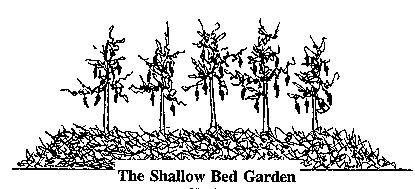
Shallow Bed Garden
The Shallow Bed Garden is a 3-6" bed of compost. To keep weight to a minimum, no soil is used. If compost is not available (a likely situation), plants can be successfully grown in fresh organic matter of many kinds. Such beds are fertilized and covered with at least a thin covering of compost or soil. Almost any vegetable can be grown in shallow beds. Once the beds are established, they are like regular gardens except in their need for more frequent watering.
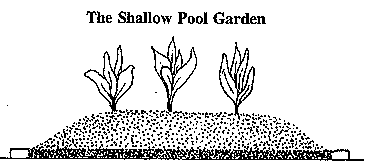
Shallow Pool Garden
The Shallow Pool Garden consists of a shallow pool of water 0.5-3" deep. Usually a sheet of plastic of the desired size is formed into a pool by laying sticks under each of the sides. Shallow beds made of any material that does not tend to become waterlogged are then built in the pool, extending at least 2" above the water line. The length of time between waterings can be extended by making a bucket waterer. [To make a bucket waterer, drill a 3/8" hole into the tight-fitting lid of a 5-gallon plastic bucket, about 1 inch from the edge of the lid. Fill the bucket with water (optionally containing a soluble fertilizer) and place it upside down in a cleared spot in the "pool."] Place a stick under the bucket lid at the point nearest the hole to allow air to enter under the bucket. This results in a constant shallow pool of nutrient solution in the bed, the depth of which is determined by how much the stick raises the edge of the bucket.

Wick Garden
The Wick Garden consists of a piece of polyester cloth (the "wick") laid out on a flat area in the shape of the desired garden and a 5-gallon bucket waterer (see above) placed directly on the wick. Set the root balls (the roots and soil attached to plants in their starting containers) of transplants directly on the wick. Finish the beds by filling in around the plants to a depth of 3-6" with some extremely airy material such as pine needles, pieces of coconut husk, or even cola cans. It is important that this material be something that will not become waterlogged. Leave a section of the cloth clear to hold the upside-down bucket. The wicking action of the cloth spreads water and nutrients to the roots, which grow above and below the surface of the cloth. Sometimes the cloth is first covered with a thin layer (0.5-1") of compost or potting soil. Best results are found with short or trailing vegetables and herbs, such as onions, radishes, lettuce and mint.
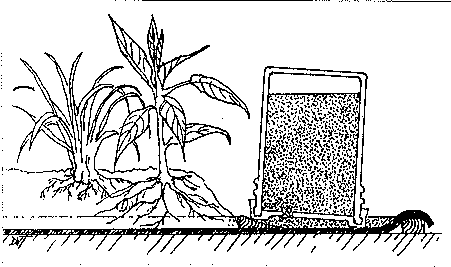
Tire Garden
Tire Gardens. The tire gardens are portable gardens that can literally go almost anywhere. The garden is made from an old tire and a small sheet of plastic film (e.g. a garbage bag). Construction is simple and elegant. Lay a tire flat on the ground. Note that the top rim is a mirror image of the bottom rim. With a knife or machete, cut off the top rim. Place a piece of plastic inside the tire on the bottom rim, large enough so that an inch or two of plastic stands up along the walls of the tire. Now turn the top rim that has been cut off upside down. It fits like a lock on the bottom rim, holding the plastic firmly in place. Fill with growing medium, usually starting with lightweight, airy materials on the bottom and soil or compost on the surface. If the plastic is trimmed to near the bottom of the tire, the garden will essentially be a portable "shallow bed garden." If the plastic is left so that a pool of water is formed, it will be more like the "shallow pool garden."
OTHER BENEFITS OF ABOVE-GROUND GARDENING TECHNIQUES. Protection from animals and floods. There are substantial areas along the Amazon in Brazil where all gardening is done in shallow beds on platforms. Local people have differing explanations for why this is done. This has an obvious advantage in flood-prone areas where even houses are sometimes built on stilts. But platform gardens are the primary gardening method even where it never floods. Wayne Smith reports that people in his area plant gardens on platforms to avoid damage by animals. "They make a platform of sticks, an old canoe etc. from 4-7 feet tall, place a layer of dirt and ashes/cinders on top, and then grow mainly green onions." (We have also heard that some farmers of Mayan descent in southern Mexico use the same technique.) Soils in some regions of the Amazon basin are highly acidic and contain so much aluminum that it is toxic to many vegetables. The improved growing medium that is concentrated on the platforms may give much better results in such situations.
Gardens for the handicapped. Shallow beds on platforms (that can be inexpensive because the gardens weigh so little) make gardening available to people with physical handicaps that prevent them from working in the soil. If platforms are placed at the right height, people in wheelchairs can garden easily.
Avoidance of soil diseases and pests. Root-knot nematodes are such a problem in our soils in Florida that susceptible plants cannot be grown unless the soil is sterilized. However, some fungi that live on decaying organic material kill nematodes. If we have enough organic matter in the soil we can sometimes get around the nematode problem. If we have 100% organic matter (as in a shallow bed and wick gardens) or no soil (as in the wick gardens), we have no root-knot nematodes. (After a few growing seasons, the decay process is essentially over. At this point the nematode-killing fungi may no longer be present and nematodes can again become a problem, unless the bed is renovated with fresh organic matter.)
Situations where there is a serious problem with the soil may lend themselves to above-ground gardening even in rural areas. One season we planted a few rows of green beans in the soil and, right beside them, a few more rows in a shallow bed garden. This bed was made of grass clippings just as though it were on a cement slab, except that it was in direct contact with the soil. Roots of beans from the grass clippings were totally nematode free; roots in the soil were covered with knots. Often at ECHO nematodes kill sugar snap peas before they bear, except when planted in a shallow bed of grass clippings on top of the soil.
Ability to garden in the shade of trees. Many heat-sensitive plants thrive better in some shade in the hot tropics. Above-ground techniques can be used to make beds on a sheet of plastic under trees. Tree roots are not damaged by tillage; the plastic prevents them from interfering with the vegetables; and many plants benefit from light shade. Tire gardens can be placed anywhere that provides enough light, even directly on protruding tree roots.
LIMITING FACTORS IN ABOVE-GROUND GARDENING. It is not difficult to list possible problems with above-ground gardens. The poor may live in homes with rooftops that cannot even bear the weight of a person. Those with the most substantial rooftops may have the least incentive to garden on them. Fertilizers may not be available, especially those with micronutrients. People may not be prepared to give daily care to a garden. It may be difficult to develop a uniform formula for making the gardens when only recycled materials are considered. Water may be scarce and have to be purchased. Compost is usually not available unless people make their own, and motivation to do this may be lacking. Urban gardening projects in general have a reputation of little payoff among many in the development community.
There are situations where any of these problems may be critical. However, the world is a very, very large place. A creative perspective and innovative attitude is necessary to see successful above-ground projects develop. An idea that, if successful, promises to make acres of prime, presently unused, arable "land" suddenly available for producing food and some income, is deserving of special effort. We can begin with those thousands of situations where the above problems are not limiting-while we consider how to include more people.
It is imperative that your first community project succeed. Do not involve many people in above-ground gardening until you are sure you know what will work and have done it for at least one season. The success of the first community project is more important than saving on every possible ingredient. I think particularly of fertilizers. In every conversation it inevitably comes up, "Why not use manure tea instead of fertilizer?" It is possible, but it is not foolproof. (See discussion of this topic below under "Constructing the shallow bed.") It is almost certain that some gardeners will fail not because the methods themselves have a problem but because of inadequate concentration of nutrients in the manure tea. It is quite possibly cheaper (and certainly less offensive to the neighborhood) to use fertilizer than to haul in manure from the countryside. But more importantly, if it fails you will probably not get a second chance with the people who tried your "far out" idea of above-ground gardening.
Also, as with any new enterprise, consider the market before promising people that they can make money on their gardens. A Colombian organization developed a shallow bed/hydroponic system with many similarities to what we discuss in this chapter. The project used donated rubbish-rice bran from a mill and wooden crates from an auto parts shop-and recycled polythene from commercial flower farms. It cost families less than $5 to set up one square meter plot and under $9 per year to operate it, using commercial hydroponic fertilizer. In addition to what the 130 participating families used themselves, the cooperative sold over three tons of vegetables each month. A major supermarket chain bought produce from the community. Once a week produce was brought in, weighed, and paid for on the spot. From the sale of vegetables grown on the roof, the organization could pay the rent on their center. This enterprise was highly publicized, and apparently very successful for many years. ECHO was never able to make contact with the project directors. We heard that the project ended once the funding stopped, due to difficulty in obtaining the hydroponic nutrients. While it was operating, the key ingredient was that when each garden was planted, the market for its produce was guaranteed. It may be unrealistic for an informal group of gardeners to provide the quality control and regular supply required by a supermarket contract. Marketing is crucial, but to be sustainable it may need to be limited to individuals selling through established local channels.
WHERE ARE THESE ABOVE-GROUND METHODS BEING USED TODAY? There are examples of urban gardening and above-ground gardening to be found on some scale in most cities (see review of Urban Agriculture at the end of this chapter). There is a section on ECHO's home page for updates on above-ground gardening projects in process. Send us information on what you are doing so it can be included.
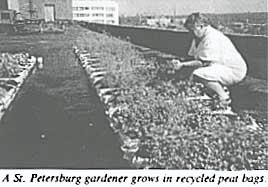
a roof garden
ECHO and several people in our network have been involved in projects for a number of years. A group called "Haiti Gardens" is very active in and around Port-au-Prince. ECHO staff member Dan Sonke visited some of those gardens in March 1996. We can send a copy of his trip report to interested visitors. They are using traditional methods on vacant land and also tire gardens both on rooftops and at ground level. The Christian Reformed World Relief Committee is in the beginning stages in 1996 of evaluating tire gardens for diverse settings in San Salvador, El Salvador.
ECHO and the Center for Citizen Initiatives have together sponsored a rooftop gardening program in St. Petersburg, Russia. The combination of a population that loves gardening, a shortage of food, and an exceptionally high educational level makes this an ideal location. Nearly every citizen lives and works in buildings with huge flat cement rooftops. The main problem is in getting official permission to use the roofs. Institutions can more easily establish rooftop gardens than can individuals because the director of the institution that decides to establish the garden also controls the roof. There are now about 20 rooftop gardens in St. Petersburg. One garden on an apartment building has become a mini-farm, producing onions, herbs, and growing some container berry plants for resale. In 1995 a large garden was planted on the roof of the main prison in St. Petersburg. In 1996 a garden on an orphanage rooftop is beginning in Moscow.
"WHAT ABOUT HYDROPONICS?" AND NON-RECIRCULATING HYDROPONICS. People often get excited about hydroponics for third world situations. I have never been among them. Hydroponic systems tend to be expensive, require energy and equipment for circulation of the water to get oxygen and nutrients to the roots, and demand close monitoring of nutrient concentrations. Its value is in situations where expense of production and price of product are very high, e.g. growing winter greenhouse tomatoes near a large northern city. The 3- or 4-fold yield increases from high-technology hydroponics may pay in such situations. I am unaware of many third world situations in that category, especially which would involve peasant farmers. Also, if a pump breaks down where parts are unavailable or the power goes off, the entire planting can be lost. Dr. Hideo Imai at the Asian Vegetable Research and Development Center in Taiwan sent us a description of a non-recirculating hydroponics system he developed (an abbreviated version was published in HortScience, vol 23, 906-907 (1988)). This system gets around these problems to a considerable degree. His discussion of air and water-nutrient roots is also helpful in understanding plant growth where there is at times a high water table. The following is abstracted from his reports.
Plant roots require oxygen, but I had not realized until Dr. Imai's paper that not all portions of a plant's roots require the same amount of oxygen. Plants can form what he calls oxygen (O) roots and water/nutrient (W/N) roots. Roots exposed to air specialize in taking up oxygen; those immersed in water specialize in taking up water and nutrients.

smaller adaptation of his
non-recirculating hydroponic system
This figure (from Dr. Imai) shows a schematic of a smaller adaptation of his non-recirculating hydroponic system. In the commercial unit, plants are suspended in holes cut in a lid that covers a 0.5 meter deep trough. The roots extend through the air, spread out onto a net, and then pass into water a few centimeters below the net. The purpose of the net is to provide support for extra O roots, which spread out over the screen. A smaller number of W/N roots drop on down into the water, but no further than 15 cm due to the limited amount of dissolved oxygen.
When the water level drops, the W/N roots change into O roots, a process taking only 2-4 days. However, this is not reversible. If solution is returned to the original depth the plants wilt within a few hours and do not recover. I can confirm this personally. When my interns left for the holidays it fell to me to maintain our first unit. I was surprised at how many gallons it took to get the water back to where I mistakenly thought it had been maintained. Water now covered roots that had been transformed into air roots. By the next evening the plants looked almost like they had been through a frost, and they did not recover.
ECHO did some interesting trials with the non-recirculating concept at the Caribbean Marine Research Center in the Bahamas. We thought the concept had potential for islands with only rock for soil. They had an unused commercial hydroponic unit in a greenhouse. We disconnected the pumps and grew very acceptable tomatoes, cucumbers and peppers with non-recirculating nutrient solution in each trough.
I am not recommending this system for most situations. After many trials we consider it too expensive, too heavy for a rooftop, a serious breeding ground for mosquitoes, and too temperamental for mass use. We did learn from it some important things about how plants grow, and it also influenced the development of the other systems we recommend. The shallow pool garden, for example, allows space for the O roots throughout the growing media and the W/N roots in the pool of water. However, the shallow pool is an improvement over the hydroponic system described above in that the depth of the pool, formed by placing sticks under the edges of the plastic, is constant. Overwatering as I mistakenly did in the system above would not kill the plant in the shallow pool, as the extra water would simply overflow the pool, leaving the O roots intact in the growing medium above the pool.
If you are interested in pursuing this approach further, Dr. Bernard A. Kratky at the University of Hawaii (461 W. Lanikaula, Hilo, HI 96720, USA) has done considerable research over many years and can provide you with technical details. He produced a 38-minute video demonstrating three non-circulating hydroponic methods (US$29 in USA; $35 overseas postpaid) and a new book (39 pages, 10 illustrations; $8.95 plus postage), both titled Non- Circulating Hydroponic Methods. Order the video from UHH College of Agriculture, 200 W. Kawili St., Hilo, HI 96720, USA. The book is sold by DPL Hawaii, 39 W. Lanikaula, Hilo, HI 96720; phone 808/935-8785.
Technical details of above-ground gardens
THE SHALLOW BED GARDEN has the most in common with ordinary gardening techniques. If you have enough compost or quality potting soil to make a 3"-deep bed, this technique is straightforward and most of the following discussion would not be needed. The main difference from regular raised bed gardening is that it must be watered at least daily. It does not use more water, but it must be watered more frequently.
Shape of the Shallow Bed Garden. Like most people, when I first began thinking of gardening on rooftops I envisioned gardening in rather deep containers. Container gardens, however, can be heavy and moderately expensive. If they are too small, larger vegetable plants may grow but give little produce.
Our first model garden consisted of a three foot deep bed of wood chips. (Wood chips are much lighter than soil.) We got the idea from local nurseries. They sell to apartment dwellers half-bushel bean hampers filled with wood chips and each containing a single tomato plant to be grown on their balcony. Gardeners are instructed to pour water containing a soluble fertilizer over the plant each day. The hampers work well and the taste of the tomatoes is exceptional.
Our deep garden used large amounts of fertilizer. A very important point to remember in working with organic matter that has not yet decomposed is that the microorganisms that cause organic matter to decay use the same fertilizer elements as do plants. This becomes a special problem if, as is the case with wood chips, the material itself is low in nutrients. The decay process can use up the nutrients, leaving the plants anemic. (These nutrients are not permanently lost. They will become available months later when the bed has been transformed into compost.) Some plants thrived, others always showed nutrient deficiencies.
After several trials, we discovered that beds only 3 inches deep were not only lighter in weight but gave better results. After several years of growing in shallow beds, I would now describe the ideal rooftop garden as being at least 3 feet (1 meter) wide and only a few inches deep.
The ability of vegetables to grow in shallow beds should not have surprised us. Greenhouse tomatoes, lettuce and cucumbers are often grown hydroponically in long rectangular bags 6-12 inches wide and a couple inches high that are filled with planting mix. Plants thrive even with such a small root volume because just the right amount of water containing a soluble fertilizer is continually dripped into the medium.
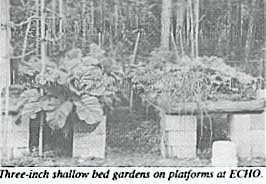
shallow bed gardens on platforms
Roots do not require much volume when there is plenty of water and nutrients. Why do roots normally cover a much larger volume? When watering is sporadic a large volume of soil (with roots throughout) is required to hold enough water to keep the plant supplied between waterings. The primary question about how thick the shallow bed must be comes down to this: How often are you prepared to water?
Often people wrongly assume that only shallow-rooted plants will thrive in a shallow bed. Except for tubers where the edible part exceeds the size of the bed, we have not found this to be true. Although a shallow-rooted plant cannot take advantage of a deep bed (its roots will not reach to the bottom), a deep-rooted plant can adapt to take advantage of the space in a wide but shallow container, as this carrot has done.
The question of weight. We place great emphasis on developing very light-weight beds for rooftop applications. That is why we use no soil and we like to keep the depth to only 3 inches. Individual soil particles typically weigh approximately 2.75 times as much as an equal volume of water. There are spaces between the tiny soil particles, however, which can account for up to 50% of the volume of a good garden soil. It is the worst case (heaviest soil) that concerns us in considering any possible danger to the roof, so we will consider the weight after a drenching rain and assume that every space is filled with water. Such saturated soil weighs 1.9 times as much as an equal volume of water. Individual particles of organic matter typically weigh slightly more than water (1.1 to 1.4 times) and the spaces between them are much more than 50% of volume. So in a worse case, i.e. a totally flooded bed of fully decayed, compact organic matter, the weight would be at most 1.2 times that of water. In most cases, the weight will be almost the same as an equal volume of water.
The weight can still be considerable. This table compares the weight of 3" (7.6 cm) and 8" (20.3 cm) deep beds that are 4 feet wide and 8 feet long (1.22 m x 2.44 m), one with soil and one with well decomposed organic matter, both fully saturated with water.
Maximum weights of four rooftop gardens.
|
Depth |
Weight | |
| |
well-decomposed organic matter |
good garden soil |
|
3" |
598 lbs (272 kg) |
947 lbs (430 kg) |
|
8" |
1,595 lbs (725 kg) |
2,552 lbs (1,147 kg) |
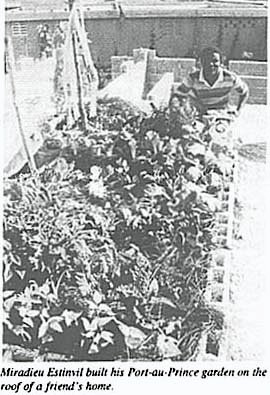
building a garden on a friend's
home roof
At ECHO we usually have no sides to the gardens in order to keep material cost to a minimum. If cement block sides were used, the weight and cost would be considerably greater. Based on what we have seen, we have been more cautious than necessary. As you can see in the pictures, some gardeners in Haiti are using concrete blocks for sides and depths equal to the 8 inches of the blocks. No problems have been reported although I saw perhaps half a dozen gardens. If there is any doubt about safety, remember to put the heaviest items (like a barrel of water) directly over walls.
Materials for the Shallow Bed Garden. No material will serve better for making a shallow bed than fresh compost-if you have it. Most of this discussion becomes necessary only if the people with whom you intend to work do not have affordable access to quality compost or potting mixes. In that case, because the mix of free materials is always different from one city to another, it may be necessary to do your own trials for a season or two and do some problem solving. The end goal is to have a foolproof, low-cost gardening system tailor-made for your situation.
A garden can be planted in fresh organic material if one does not have compost. Since the inexpensive raw materials available for making the garden differ from place to place, the techniques used may need to be varied, depending upon what materials are used. The choice depends mostly on what is being thrown away in the area. We have used wood chips because they are free from the electric company after they trim along the electric lines. Our favorite material is grass clippings. Contractors who mow lawns for homeowners would much rather give ECHO their load of grass clippings than pay the county landfill to take them. Barbara Daniels in California, who developed a similar method of above-ground gardening, prefers a mixture of tree leaves. Perhaps the best results may come from a mixture of materials, which can include weeds.
Waste materials in the developing world will likely be different but equally useful. Perhaps bagasse (i.e. sugar cane waste), rice hulls, coconut husks, weeds, leaves or even manure are available in your community. In Haiti, the fine particles left in bags of charcoal are being incorporated into the mix. (Sawdust is available in places, but would be my last choice. It will use up fertilizer even faster than wood chips, because of the greater surface area, and it easily becomes waterlogged.) No matter what organic material you use, after one or two growing seasons it will have decomposed into a beautiful compost.
The beds do not need to contain organic matter as long as the material is fine enough to hold sufficient water. For example, gravel has been used in various hydroponic systems for years. Non-organic media have an initial advantage in that the lack of decomposition means that only the plants, not the decaying bed, are using up your fertilizer, but in the long run non-organic beds are more fickle. A sudden imbalance in nutrients or swing in pH (acidity or alkalinity) can more easily develop. Organic matter, even if only partially decayed, acts as a buffer to prevent extremes. This happens because after a few weeks nutrients begin to be released from the decaying material. If the plants need more of a particular nutrient than your solution is supplying, the bed itself provides a certain amount of it. Conversely, organic material is able to absorb, for later release, some of the excess nutrient you might add. It also resists changes in pH.
As we considered various recyclable materials, shredded tires came to mind. Recycled rubber seemed to offer an inexpensive addition to the growing medium and its use would solve an environmental problem at the same time. After several trials we have failed to get good growth with this product. It is just as well. The August 1994 HortIdeas cited research which found that chrysanthemums grown in soil mixes with even small proportions of shredded tires did not fare as well as plants in rubber-free media. The plants grown in rubber had zinc levels 74 times higher than normal, which could lead to toxicity levels for some species. For now it may be best to avoid using tires in your soil mix. (We have had no such problems growing plants in our tire containers, however. Nor would we expect it, as the surface area with which roots are in direct contact with rubber in shredded tire mixes is thousands of times greater than the minimal contact with a tire wall.)
Experiment with mixtures. When possible, if compost is not available, we like to use a mixture of materials. Mixtures are especially good because you have more flexibility to create the kind of environment that roots like. It is also likely that if a needed nutrient is not released as one component begins to decay, it will be by another. You can include many common garbage items. One of our more interesting beds is made of approximately 40% by volume cola cans (with slits cut into the sides so roots can enter that well-aerated interior). The other 60% is grass clippings mixed between and placed on top of the cans. The advantages are that it provides good aeration and a deep bed with exceptionally low weight. Ordinary garden fertilizers are added when necessary.
A 2-5 inch layer of weeds packed closely together and covered with perhaps a couple inches of grass clippings or (better) compost from a previous bed works well. The 6-8 inch deep bed for corn was made in this way. A benefit to placing weeds on the bottom (rather than grass clippings, for example) is that there are more air spaces between the weeds, which is better for roots.
Once you have settled on the materials for garden construction, the available fertilizers, and the vegetables to be grown, you will be able to develop straightforward, detailed instructions for your unique system of shallow bed gardening. That is what you will pass on to new gardeners in your community.
Constructing the Shallow Bed. An important factor that makes these beds inexpensive is that no container is necessary. Depending on the material used, sides may not even be needed, especially if a mulch is placed on top of the bed. We only use sides for platform gardens or where appearance is important. We have had a lot of heavy rains and strong winds over the years. The only bed that gave us a serious erosion problem was one in which we used a large amount of silt from the bottom of a fish pond.
The shape of shallow beds is determined by the same considerations that one uses in making raised beds. They can be of any length, but a break for a path every 8-12 feet is helpful. They should be just wide enough (4-5 feet) that a person can reach to the middle of the bed. Thought should also be given to maximum use of space. A path down the length of the rooftop with beds and aisles going off to either side is probably the most efficient.
If a sheet of plastic is available, we like to use it for a base. If the garden is on a rooftop we believe it may minimize discoloration of the roof and slow any possible seepage into cracks that might exist. No doubt it will always be moist under the plastic, but that is less of a worry than a considerable supply of water in direct contact with the roof. If the garden is on top of ground in a situation where there is some problem, it keeps the growing medium and roots completely isolated from the soil.
Let us use grass clippings as an example. We leave the grass clippings in large piles until needed. It is best to let them decompose in a pile for at least a few weeks because the high temperatures in the piles allow much of the composting process to take place there rather than in our garden. Also we believe (no data) that most pesticides that might have been on or in the grass clippings are destroyed during this time as well. If the pile of grass clippings is not too old, the contents will be fluffy and moldy. (Be careful breathing the dust. I have developed quite an allergy to it, though no other staff are affected.) Start with a pile high enough to allow for shrinkage during the initial preparation and continuing as the bed decays.
Thoroughly wet the pile. Often the clippings do not want to absorb water-even after adding a lot of water, the clippings half an inch deep may be dry. When this happens, add a few tablespoons of laundry detergent (any variety) to the watering can and pour evenly over the surface. Detergents fall under a class of compounds known scientifically as wetting agents or surfactants (surface-active-agents). They help water adhere to surfaces. While adding water, if the clippings are fluffy, walk over the bed and stomp down the grass as much as possible. If the bed is made of other materials that do not need to be compressed, such as wood chips, rice hulls, or dense clumps of grass clippings that have spent several months in a pile, the materials are simply placed in the bed, wet down with detergent solution, and fertilized. This will help keep the materials constantly moist, and so hasten decay.
Whenever possible, cover new beds with an inch or more of compost before fertilizing and planting. Remember that compost is the ideal medium. The shallow layer of compost is a perfect place for a seedling to begin its life. We are using these other materials only because we lack enough compost.
Finally we add an ordinary garden fertilizer and dolomitic limestone. If it is 10/10/10 fertilizer, we add 5 pounds per 100 square feet. (The numbers refer to the percent of nitrogen, phosphorous and potassium, respectively.) If it is 5/5/5, we add twice that amount, etc. Neither the exact numbers nor the exact amounts are that important. There are many other fertilizer formulations on the market. You might only be able to get something like 8/6/10, for example. Don't worry about it. Just avoid extremes like 36/10/10 used for lawns or something like 10/0/10 which would be a special purpose formulation completely lacking in phosphorous.
We always use fertilizer with micronutrients (that is elements needed only in minor amounts). If you cannot find that kind of fertilizer, the micronutrients that will soon be released by the decaying organic material may be sufficient. One can often buy micronutrient formulations separately and inexpensively. These would be used in small amounts, following directions for a regular garden. Added micronutrients are a must with any system that is not based on organic matter. (A quick way of providing these micronutrients, if they are not contained in the fertilizer, is to apply some manure or to water the garden with a manure tea made by soaking a bag of manure in a barrel of water for a few weeks.)
If you cannot find dolomitic limestone (dolomite), I doubt if it will matter too much as long as some of the organic matter has begun to decay. Go ahead and add regular limestone instead. The main function of the dolomite is not to control acidity (this has never been a problem for us) but as a source of the two minor nutrients: calcium and magnesium. (Ordinary limestone adds calcium, dolomite adds both calcium and magnesium.) A commonly available alternative source for concentrated magnesium is epsom salts.
Whether you use fertilizer or manure and manure tea depends on your location (and philosophy). In many urban situations it is easier to obtain fertilizer than manure. Remember that your goal is to have a foolproof system that can be taught to and duplicated by dozens of gardeners. You can develop very precise instructions for a system designed to use a particular commercial fertilizer, but it will be much more difficult with manure tea. The response of plants to manure depends upon the age of the manure, the animal's diet, how much bedding is included in the manure, and on the kind of animal. (Goat manure is reportedly one of the best manures for hydroponic systems. This may be because goats are browsers, eating a little from many kinds of plants each day. Consequently their manure has a composite of nutrients found in a wide variety of plants.) Do not just assume that people cannot afford fertilizers, especially if the produce is to be sold.
Jeff McManus uses water hyacinth for above-ground gardening in Bangladesh. Water hyacinth (Eichhornia crassipes) is one of the most prolific plants on earth. This floating weed chokes waterways around the world. People in Bangladesh clear their ponds and rivers of the floating plants and pile them on the banks. They plant vegetables in the water hyacinth, and these mounds become "floating gardens" in the monsoon season. The McManus family grows lettuce, papayas, tomatoes, and very productive roses in boxes filled with water hyacinth harvested from nearby nutrient-rich waters. They chop the plants into small pieces, let them compost for two weeks with daily turning, and plant directly in the compost. Jeff mixes the compost with a little manure and some wood shavings, but does not add extra fertilizer, since the water hyacinth is an efficient collector of nutrients. The spongy plants hold a lot of water, so very little watering is needed. The box gardens work best with fresh material; reused compost seems to promote diseases in the plants.
Planting in the new bed. Planting seeds or transplants into shallow bed gardens made of compost is done as in any other garden. Planting directly into beds of organic material that has not yet decomposed requires some special techniques. Larger seeds like peas or beans can usually be planted directly if the medium is made of a material that packs closely enough together to remain moist most of the day and make close contact with the seed to keep it wet. Seeds must be deep enough into the medium to remain moist but shallow enough to be able to grow to the surface after germination. (The top inch or so of many materials, e. g. nearly fresh grass clippings, tend to dry out.) You may need to water a few times each day until they germinate. We have also had the opposite problem with older, matted grass clippings which stayed too wet.
Smaller seeds, like carrots, require compost or soil or something of very similar texture to get started. If you cannot cover the entire bed, just form a 1-2 inch deep trench in the packed down grass clippings, fill it with compost or soil, and plant in this trench. Even this small amount of compost will provide an environment for the seed and initial roots that is just like they would experience in any garden. A useful technique for germinating carrots, even in a regular garden, is to place a board on top of the row. This ensures that the top cm of the soil remains moist. Look under it daily until you see the first seeds germinating, then remove it.
Transplanting likewise can demand special care if the medium is not similar in texture to soil. We often make a small hole, insert the transplant, and fill in around it with several handfuls of compost or soil.
Keep a close watch on the appearance of the vegetables. At the first sign of nutrient deficiency, add a bit more fertilizer. With high-nitrogen materials like grass clippings, this may only need to be done once or twice, or not at all. With low nitrogen materials like wood chips it will be necessary to add fertilizer frequently. A small amount of solid fertilizer can be sprinkled around the plants, taking care not to get it in direct contact with leaves or stems. Our best wood chip gardens were grown by watering every other day with a solution of soluble fertilizer or manure tea. Most soluble fertilizers are made to pour directly on the leaves (some nutrients can be absorbed through the leaves of some plants). This is especially helpful if a deficiency has already appeared. If possible have a spray bottle on hand filled with a soluble fertilizer. Use it as "medicine" to spray plants when any deficiency appears.
Refurbishing the Shallow Bed-Subsequent Seasons. You may be surprised at two things: (1) how quickly the depth of the bed drops as the material turns to compost and (2) how quickly a beautiful compost is formed. Because there is no soil in the beds, the material turns deep black and may eventually look like peat. The bed must be refurbished after harvest whenever it has shrunk to less than the desired depth or has become so dense that it holds too much water. Alternatively, the bed can be recycled: dismantled and the compost which has formed in it used as the top layer in constructing new beds.
If the bed is still deep enough for another growing season, all that may be necessary is to apply fertilizer. The bed should not need as much fertilizer as when it was new. Much of the bed, depending on its original composition, has now been converted to compost. This is not a delicate system, like hydroponics, with exacting fertilizer requirements. I trust that any frustration at not finding rigorous details on the amount of fertilizer will be more than compensated by having a bed that allows some flexibility. More fertilizer will be needed if you have heavy rains that leach away nutrients. WATCH YOUR PLANTS FOR CLUES ON WHAT THEY NEED.
The task of refurbishing is much easier than making the original bed, because we are now starting with a considerable amount of compost. Rather than layering new organic material (e.g. grass clippings) on top of the bed, it is best to remove the composted material, layer the new material onto the empty bed, then place the remains of the old bed back on top. We add some fertilizer (less than with a totally new bed) and water.
There are two reasons to refurbish in this way. First, the older material can become so dense that, if left at the bottom of the bed, aeration might be poor. This is not a problem when it is placed on top of the less compact fresh organic material. Second, it is much easier to plant into the composted material than it would be into the fresh material.
What plants will grow in a shallow bed? We have had success with a wide variety of vegetables: amaranth, broccoli, cabbage, cow peas, corn, eggplant, cucumber, green beans, herbs (rosemary, tarragon, basil, sage, mints, chives), kale, kohlrabi, lettuce, okra, onions, quail grass, radishes, sugar snap peas, tomatoes, winged beans and a variety of flowers. It is easier to say what crops may give problems. We stay away from large vines, such as tropical pumpkins, jicama or sweet potatoes, that have such a large leaf area that they quickly deplete the reserve of water in the shallow bed. The shallow pool method described below may be better for these large plants; however, with sufficient volume (either a deeper bed or fewer plants in a bed) or more frequent watering, there should be no problem growing vines such as pumpkin or watermelon, letting them flow over the side of the building or over rocky soil. Root crops require deeper beds. We have grown acceptable carrots in grass clippings, but had to make the bed about 8 inches deep. It shrank so much during the growing season that the carrots stuck out of the top by an inch and had L-shaped roots because the bed was too shallow. Carrots grown in wood chips were distorted because of the twists and turns the taproot made to avoid wood chips.
The Shallow Bed garden is the most foolproof. Especially when made of compost, it differs little from gardening in the soil. The main differences are its need for daily watering and the shallow roots (to which plants show a surprising ability to adapt). The ability to grow vegetables in fresh organic material while it is being turned to compost is a very attractive feature.
SHALLOW POOL GARDENS. Daily watering required by shallow bed gardens can be a problem. Pat Lahr, a missionary in Haiti, developed an ingenious system using a 5-gallon bucket to provide continuous water to the bed.
Pat used a principle that farmers have used for decades to automatically water animals. A 3/8" hole is drilled in the lid (one inch from the edge) of a 5-gallon bucket. The bucket, optionally filled with nutrient solution (manure tea or water containing a complete hydroponic fertilizer), is placed upside down in the pool. The side of the lid nearest the hole is placed on a stick just thick enough to provide the desired depth of water. Water flows from the bucket until the pool of water rises to the point that air can no longer get under the lid and into the bucket. This ensures a continual, shallow pool of water. When the pool level drops enough to allow a few bubbles of air into the bucket, more water flows into the pool.
In our first trial with the system, we used only a 6" layer of pine needles and hydroponic solution to grow an okra plant in a 4 ft square shallow pool garden. It fell over when it was two feet tall, but shoots grew rapidly from several points along the stem. These new shoots, supported by the portion of stem on the ground and the now substantially larger root mass, did not fall over and grew into an exceptionally large, bushy and productive okra plant. Incredibly, we found that the leaves transpired 5 gallons of water on a hot summer day. Results are more reliable the closer you come to a normal garden. Today our shallow pool gardens are basically shallow bed gardens sitting in the pool and extending at least 2-3 inches above the maximum water level.
The roots of most food plants and flowers require plenty of air to thrive. You may have heard that "more houseplants are killed by overwatering than by underwatering." The problem with overwatering is not that the roots do not like to stay moist, but that if heavily watered, water fills most of the spaces ordinarily filled by air in dry soil. Likewise, if you filled the shallow pool with heavy clay, it might remain so moist that few plants would grow for lack of air. (We have nothing but sand here in Florida, so have never been able to try a clay soil.) Now the concept of air roots and water/nutrient roots in the earlier discussion on non-recirculating hydroponics becomes important. We want to design a medium that will encourage the growth of both.
There is an element of artistry involved in creating the medium. You need to create a medium with such large air spaces that no matter how much water is around, the roots will still find plenty of air, but dense enough that water in the pool can move up by capillary action and keep the medium moist. One way to achieve good aeration in the States is to include perlite in the medium. Perlite is a special inorganic material sold to make potting mixes very airy. One formula we frequently use is "Cornell mix." The Cornell mix contains 1/3 perlite, 1/3 peat moss and 1/3 vermiculite. In third world settings perlite is too expensive to consider. There are several alternatives.
If you have compost or any mix that has a lot of small air spaces, it may work well with most plants. A good way to create air spaces is to incorporate small particles of either organic or inorganic material. We have found that it works well to have a bottom layer of inorganic material (that will not decay) in the pool itself (sand, small gravel, small pieces of lightweight volcanic rock, cola cans with slits cut in the sides to allow roots to get inside) then to cover this with small pieces of fresh organic matter (pieces of coconut husk, corn cobs, rice hulls, weeds, wood chips). Finally we place a layer of compost on top. In such a mix, roots will always be able to find air even right at water level.
There is one other step in the above description that will improve performance. We have found that all these large air spaces can be so effective that there may be no connection left to pull water by capillary action up to the top of the bed. The result is that until new plants develop roots deep enough to reach the water and form water/nutrient roots, the beds must be hand-watered from above. This can be solved by including spaces where "columns" of compost extend clear into the base of the pool. Newly planted beds should probably still be supplemented with hand-watering until seedlings have a good start.
Why do we recommend using inorganic material in the pool itself? In our first version we did use all organic materials. The bed of pole beans did quite well-until the bottom material rotted and the level of the bed dropped. When this happened, many of the air roots ended up in standing water. As discussed above, this is harmful (even fatal) for the plant. With decay-resistant materials like cans or coconut husk pieces extending above the water level, the bed can never sink into the pool.
"Appropriate technology" refers to technologies which are sustainable and affordable in your situation. The following two examples are given to encourage you to look for what might be available locally. An "appropriate technology" shallow pool garden in Florida can be made from the inexpensive plastic wading pools sold for children. Make drainage holes three inches up the sides. After a coat of redwood paint, they make attractive, circular raised bed gardens instantly. Place an empty one-gallon flower pot in the center on the bottom of the pool as a "monitoring well": a quick glance allows us to monitor the water level and judge when to add more. (Formerly we used a depth of one inch, but less frequent watering is needed with the deeper reservoir. Tree roots also managed to find the lower drainage holes and end up growing in the garden itself!) A ground-level shallow pool garden could be constructed with a rim of rocks, or even soil, covered with a sheet of plastic. If elevated, wooden boxes lined with plastic can be used. To keep costs to a minimum, the tire gardens constructed to retain a pool of water would seem to be the most durable and inexpensive.
A variation of this technique, "appropriate" to Florida, that visitors find especially attractive, is what we call "eave trough gardens." The ends of an eave trough (normally used to divert water as it runs off of a roof) are bent upward so it holds about a 1" pool of water. The trough is then filled with medium as in the shallow pool garden. Instead of a bucket one can use inverted glass or plastic bottles to extend the time between watering. This technique is useful only for small plants (unless a trellis and very frequent watering are used). Leaf lettuce, onions and kohlrabi do quite well, as does the flower called "impatiens."
In the Shallow Pool garden, the volume available for air roots seems to be a limiting factor for larger plants. Most larger vegetables only produce well with at least 3 inches of soil above the water level. (Okra is an exception. It seems to be very adaptable to and forgiving of any of these systems, even suspended just above the water in a pile of pine needles! When we finally pulled out the single okra plant in a 4 ft2 shallow pool we found a dense 1" thick mat of roots. See the picture two pages back.)
WICK GARDENS. Similar principles are involved in another innovation of the Lahrs in Haiti. Pieces of polyester cloth are laid out to the dimensions of the desired bed. Seedlings are transplanted into a deep bed of an airy material such as pine needles, as was done in the shallow pool system. The bottom of each root ball must touch the cloth. The 5-gallon bucket is placed upside-down (no stick to raise one side of the bucket this time) on a piece of cloth extending from the side of the garden. I am not sure how air gets into the bucket. Apparently a seal develops between the lid and cloth and the space between them is filled with solution which "wicks" out and keeps the entire cloth-covered area drenched in nutrient solution.

watering shallow pool gardens
Polyester cloth is chosen rather than a natural fabric because it is slower to decompose. Natural materials such as wool or cotton are composed of building blocks common to many living organisms (amino acids or glucose respectively) and are readily attacked by a variety of microorganisms.
The cloth moves water within your bed as surely as a pipe might carry water to a garden. Just as you would chose a pipe that was large enough for the job, you should use the thickest cloth you can find. A very thin cloth that we used failed to transport enough water. Alternatively you can use more than one layer of cloth. After harvest you will find that there are two thin mats of roots, one covering the top surface of the cloth and one between the cloth and the cement.
The portion of rooftop used for a wick garden must be very nearly flat. If the slope is great enough to cause water to flow, it will continue flowing right off the edge of the cloth. If the slope is just a little too steep for either the wick or shallow pool techniques, we have had success by using a combination of the two. We made a cement rim along the lower edges of the garden only, then covered the entire area to be gardened with a cloth. Where the pool stops the water continues up grade to the rest of the garden because of wicking action. The bucket must be positioned at some point lower than the top edge of the rim, or the pool will overflow.
Capillary mats are sold through greenhouse supply catalogs. Commercial growers of bedding plants place the mat on a flat surface, keep it moistened with nutrient solution, and place pots with cuttings or seeds directly on the mat. (We purchased some of the material and compared it to polyester cloth; we noticed no difference).
It is difficult to imagine a garden that is lighter in weight than a wick garden. When a shallow bed or shallow pool garden has been newly constructed out of undecayed organic matter, it is sometimes tricky to add just the right amount of fertilizer to provide for the needs of both the plants and the microorganisms that are turning the bed into compost. This is not a problem with the wick systems (the rate of decay of the fluffy pile of pine needles is not rapid enough to be much of a factor).
The most serious disadvantage is that the wick method is almost strictly a low-technology hydroponic system. As such, very complete hydroponic fertilizers must be used. This means that not only must the major nutrients (nitrogen, phosphorous and potassium) be supplied in the nutrient solution, but the two minor nutrients (calcium and magnesium) and important micronutrients (iron, manganese, zinc, boron, copper and molybdenum) as well. Other elements may be important to plants but are probably present in sufficiently high concentrations that they do not need to be added.
In some situations community development projects can readily obtain hydroponic fertilizers or the ingredients to mix their own. Making your own is technically not difficult, but could not be done by the average gardener. A little hydroponic fertilizer goes a long way because, unlike field fertilizers, less inert fill is used in making soluble fertilizers. It is not unreasonable to import such fertilizers yourself as long as the project makes economic sense and a steady supply is assured.
Gardeners will fail if at any time an incomplete fertilizer is used in a system containing no or little organic matter. Let me share an example of our own. At one point we switched from a fertilizer shipped 2,000 miles by a hydroponics supply company to a fertilizer that could be purchased locally. The description led us to think it contained everything needed to maintain a soilless mix. The plants started out exceptionally well, then began wilting, leaves became discolored, roots failed to develop and many died. It turns out that the fertilizer contained every nutrient EXCEPT magnesium. The manufacturer apparently assumed that magnesium would have already been added to any soilless mix and that the fertilizer could "maintain" the mix without containing magnesium.
The precise demands placed on the fertilizers can be reduced by placing a very shallow layer of compost or potting mix on top of the wick. We have grown very nice lettuce, radishes and green onions using no more than an inch of such medium. The plants can obtain almost any micronutrient they need from the compost. It also provides extra space for root growth and gives a bit more support to the plants.
During the rainy season, the wick method works better with something like pine needles that retains almost no moisture rather than dense materials like grass clippings. Peppers planted on a wick covered with 2" of packed grass clippings grew three times as fast near the bucket as those a foot farther away. We believe it is because the dense grass clippings held a considerable amount of water after each rain and so did not put any demand on the bucket for water (hence received no nutrients). This is less of a problem if compost or field fertilizer is spread across the wick and just water is in the bucket.
The bucket provides a sufficient reservoir of water that the garden should go for a day without attention. However, once the bucket is empty you are instantly out of water. (In contrast, a shallow bed may contain less water, but the plants run out more slowly as they must extract water from the medium with increasing difficulty.) In practice, I highly recommend that any of these gardens be tended daily, especially once the plants are bigger. Used plastic buckets can be purchased in Florida for a dollar or less from bakeries or paint stores. The price can be much higher in some locations. If the price is high in relation to a day's wage, it is not only more difficult for the poor to afford, it is in danger of theft.
TIRE GARDENS. I visited Doug VanHaitsma and his national colleagues in El Salvador to evaluate the potential of urban gardening in a low-income part of San Salvador. After seeing slides of all the methods that we have explored, everyone chose the tire gardens as most relevant for their needs.
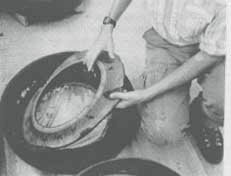
tire garden construction
The tire gardens are the "jeep" of above-ground gardening methods: portable gardens that can literally go almost anywhere. The garden is made from an old tire and a small sheet of plastic film (e.g. a garbage bag). The group in El Salvador had fun moving a tire garden to unlikely places for a garden: on a flat rock, on a steep hillside supported on the downhill side with rocks, on the roots under a tree. If there is danger of theft or damage by chickens and goats, the tire can be placed on top of something, even along the edge of the tin roof of a shanty. (People often put pieces of iron on this type of roof to keep it from blowing away because there is not enough framing to adequately secure the corrugated roofing, so a few gardens might not be a problem.)
If a vegetable needs full sun in the winter it can be set there, then gradually moved into the shade of a tree as the season approaches when the sun is overhead. If the garden is on a rooftop, it can be placed on sticks or stones so that air can circulate underneath, keeping the roof surface dry. If gardeners themselves have to move, they can take their gardens and their improved soil to their new home. When ECHO staff member Dan Holcombe (in picture) returned from his vacation to the church in Mexico City where he had a rooftop tire garden, he found it flourishing-on a different building. The church moved it to add a second story to their original building.
Construction is simple and elegant. Lay a tire flat on the ground. Note that the top rim is a mirror image of the bottom rim. With a knife or machete, cut off the top rim. Place a piece of plastic inside the tire on the bottom rim, large enough so that an inch or two of plastic stands up along the walls of the tire. Now turn the top rim that has been cut off upside down. It fits like a lock on the bottom rim, holding the plastic firmly in place. If the plastic is trimmed to near the bottom of the tire, the garden will essentially be a portable "shallow bed garden." If the plastic is left so that a pool of water is formed, it will be more like the "shallow pool garden."
Any suitable soil, compost or potting mix can be used to fill the tire. You will need to judge when/if fertilizer is needed, based on what you use for a medium and how plants are growing. At ECHO we sometimes place an empty flower pot or a PVC pipe in the center so that we can see how much (if any) water is standing in the bottom and so judge when to water. We usually incorporate something with a lot of air space into the medium. This also helps extend the growing medium that is usually in short supply, and makes the garden much lighter. At ECHO we use cola cans with holes cut into the sides so roots can penetrate the can. In El Salvador coconut husks, which are everywhere, were broken up and incorporated. In Mexico City, Dan used a layer of alfalfa hay to provide initial aeration plus subsequent nutrients.
Urban agriculture resources
THE URBAN AGRICULTURE NETWORK has been active since 1993, and now has 3000 members in 40 (primarily developing) countries. Network staff wrote the book reviewed below. They have an information and technical referral service on UA, assist networking among groups who work in adjacent countries, sponsor regional workshops and newsletters, advise on UA policy, and support research of people doing graduate degrees related to UA. They have an extensive library in Washington, D.C., which network members may use during a visit. Contact Jac Smit (President) at 1711 Lamont St., N.W., Washington, D.C. 20010, USA; phone 202/483- 8130; fax 202/986-6732; e-mail 72144.3446@compuserve.com; they are developing a web page.
URBAN AGRICULTURE: FOOD, JOBS AND SUSTAINABLE CITIES (300 pp., from the Urban Agriculture Network and the United Nations Development Programme) examines factors which influence urban food production systems (including animals) worldwide. This is the most comprehensive resource we have seen on the topic. One of the authors set out to promote urban agriculture, but soon realized that documenting existing activities would be a major task in itself. The book is researched thoroughly, includes many case studies and pictures, and gives helpful perspectives on the current status and potential of food and income production in the city. Topics include: history of urban agriculture (UA), different classes of urban farmers, spaces used for UA, organizations which influence UA, benefits, problems, constraints, and promoting urban agriculture through policy. The book presents a convincing case for urban food production.
Here are a few of the insights excerpted from the book to give you an idea for the variety of its content. As an operational rule of thumb, "urban" is distinguished here as the agricultural product that gets to city markets or consumers the same day it is harvested. By the year 2000, 57% of the poor in developing countries will live in urban areas, up from about 33% in 1988. As many as 80% of the families in some smaller Asian and Siberian cities are engaged in agriculture. Hong Kong, the densest large city in the world, may produce within its boundaries two thirds of the poultry and close to half of the vegetables eaten by its citizens. Singapore is fully self-reliant in meat production. Recent migrants to the city have a difficult time putting together the resources necessary to grow and market their produce; they need time to adapt rural technologies to their new urban environment. The book is available from the UA Network above or UNDP, Urban Development Unit, DC1- 2080, One United Nations Plaza, New York, NY 10017, USA; fax 212/906-6471.
CITIES FEEDING PEOPLE: AN EXAMINATION OF URBAN AGRICULTURE IN EAST AFRICA (146 pp.) argues the case that urban food production should have a larger role in providing food for city dwellers. The book, published by IDRC in Canada, documents the extensive role of urban agriculture already practiced in East Africa, with detailed case studies from Tanzania, Uganda, Kenya, and Ethiopia. This study is insightful for people seeking to understand and promote food production in the cities. The book costs US$14.95 plus shipping from UNIPUB, 4611-F Assembly Drive, Lanham, MD 20706, USA; phone 800/274-4888 or 301/459-7666; fax 800/865-3450; e-mail query@kraus.com.
|
| |||||||||||||||||||||||||||||||||||||||||||||||||||||||||||||||||||||||||||||||||||||||||||||||||||||||||||||||||||||||||||||||||||||||||||||||||||||||||||||||||||||||||||||||||||||||||||||||||||||||||||
18: What is ECHO?
PURPOSE.
ECHO is a nonprofit, interdenominational Christian
organization which serves to strengthen the work of both missionaries and
national churches as they reach out to those who are farming under difficult
conditions. Our aim is "to prepare God's people for works of service, so that
the body of Christ may be built up" (Ephesians 4:12). We also gladly help other
individuals and groups who are doing similar work (e.g. national extension
agents and scientists). ECHO does not send out workers; rather, we assist those
who are already in the field by serving as a technical resource.
TECHNICAL INFORMATION AND EDN.
ECHO serves as a technical
resource for people who help people grow food. Each week we receive 20-35
letters from around the world requesting information, seeds, or contacts in a
particular field. Our library and files are used to answer your questions
whenever we can; we may also refer you to individuals, publications, or
organizations that specialize in your area.
Our quarterly technical networking bulletin ECHO Development Notes (EDN) is available in English and Spanish. This network has grown from 35 people in 1981 to over 4000 people in 140 countries today. Recipients are agricultural development workers, missionaries, health workers, teachers, managers, scientists, and others who devote at least part of their time to helping small farmers make a living under difficult conditions. Martin Price wrote EDN from 1981 until Laura Meitzner joined as co-editor in January 1995. Updated indexes of EDN are available upon request. Back issues of EDN can be purchased (this book contains #1-51).
Your letters relating your experiences is one primary way we learn of new ideas to share with others through EDN. Though we are able to quote from only a small number of the letters we receive, you never know when something you say might be shared with others in our network. If for some reason you do not want to be quoted in EDN or if you wish to place any restrictions on ECHO referring to your work, please note this in large print at the top of each letter.
EDN is copyrighted. However, we always gladly give permission for non-profit organizations to quote, abstract from, or reprint in whole or in part occasional EDN articles in their regular newsletters. Consider this a blanket authorization for such use. (For-profit users wanting to quote more than a few paragraphs or anyone wanting to regularly publish EDN in another language, please write for permission.) We do have two requirements for any use of our material. 1) Mention that the source is ECHO Development Notes, giving the date of publication and address. Be clear whether you are quoting directly or abstracting. 2) It is very important that you delete any reference to free seeds. We grow enough seed for our own network of development workers, but not for large numbers of people beyond that. There are so many farmers in the world that we limit our free seed distribution to people working with church and mission agencies or development, educational or research organizations. Others can purchase seed for $2.75 per packet, postage included. If you want to include offers of seed, contact us to see whether we might happen to have an extra large amount. We might give permission for another newsletter to extend our offer to their own network of development workers, or we might have enough to be able to sell you a modest quantity of seed to distribute.
SEEDS. We maintain a small seedbank with over 125 active accessions of hard-to-find plants with great promise for people growing their food under challenging environmental conditions. We specialize in tropical plants which are particularly hardy (to drought, heat, flooding, etc.) or valuable to nutrition (high in particular nutrients). Write us for a current seed list. We do not carry common garden seeds available through commercial suppliers. See the chapter on Germplasm for details on ECHO's seedbank.
VIDEOS. We produce videos on technical subjects of interest to people in our network. This is "training" for you while you are serving in the field. We currently have series on tropical fruit crops, root crops, and urban gardening. Write for current information. Please indicate which video format you use: NTSC (N. America, Japan and parts of Asia, and wherever exported); PAL (UK, parts of N. Europe, Asia, and some anglophone African countries); and SECAM (France, eastern Europe, and some francophone African countries).
CREDIT CARD ORDERS. Most of ECHO's services providing seed and information are sent free-of-charge to our overseas network. However, there are times when payment is required, e.g., purchase of books or video tapes, phytosanitary inspections, third party purchases, etc. We will not accept any check that is not written for US funds and on a bank located in the USA (otherwise the bank charges are prohibitive). On the other hand, it is easy to accept payment via Master Card or Visa from anywhere in the world. So ECHO spent the $1,000 needed to purchase an EMS (Electronic Merchant System) allowing us to accept credit card orders. All we need from you is a letter giving your Visa or Master Card number, the card's expiration date, and a note from you giving us authorization to charge on your account.
CONTACTING ECHO.
You may contact ECHO by letter, telephone,
fax, or electronic mail. E-mail and fax provide us with almost instantaneous
communication. However, always include your postal address on your fax or e-mail
message. Occasionally when we try to reply to requests electronically, the
messages are returned, leaving us no way to contact the individual. Also, ECHO
cannot afford the high cost of responding by overseas fax. If you want an
immediate reply by fax, please include a master/visa card number, expiration
date and your signature authorizing us to bill the card for the overseas call.
Otherwise be sure to include your address and we will reply by airmail. You may
also access our technical information on our Web site, https://www.xc.org/echo.
VISITING ECHO.
We welcome you to visit us! Your visit
benefits ECHO, and we value every opportunity to meet people in the ECHO network
and learn more about your work. A few slides of your agricultural work would be
welcome. You should plan about an hour for a tour and up to two hours for
conversation/consultation about your work. Arrange your visit as many weeks in
advance as possible. (Members of the public who are not working overseas are
also welcome to visit our farm for an informative tour. These tours are offered
every Tuesday, Friday, Saturday at 10 A.M.) If you would like to study while
here, plan on a day or several weeks. We do not have a formal program, but
provide the opportunity and environment in which to learn, including our
specialized library and demonstrations of new plants and techniques on our farm.
Many key resources are for sale in our bookshop. This is open to those who are
working (even a small amount of their time) with small farmers or urban
gardeners or have firm plans to do so. If you only have a day to study, you will
likely spend it jotting down notes about books you would like to obtain and
photocopying items of interest. Most longer-term visitors spend mornings at
hands-on projects around the farm with the interns and the afternoons studying.
Write for more information. ECHO is in the middle of a popular area for tourism,
particularly in the winter months (November-April) when the weather is very
pleasant. Fort Myers has a major airport, served by many airlines, and is 3
hours by car from the Miami airport. Though we can meet you at the Fort Myers
airport, there is no public transportation in our rural area. You may want to
bring or rent a car if you wish to stay more than a few days. If you need a time
of "technical refreshment," plan a visit.
ANNUAL AGRICULTURAL MISSIONS CONFERENCE. This conference, begun in 1994, is open to anyone doing or preparing to do agricultural development work in a third world setting. It is held around the beginning of November every year. This is a time for people from around the world to get together for networking, learning from several keynote speakers and other people in the field, attending workshops on the farm, and using our library. Many conference delegates really appreciate the opportunity to exchange experiences with other people who do similar work and understand the challenges. Watch EDN for conference announcements, or write to receive information about the next one.
SOME THINGS ECHO DOES NOT DO.
We sometimes receive requests
for things which we cannot do. It will save us needless correspondence if you
read this section carefully. We do not: offer money to carry out any project or
cover any travel expenses; suggest contacts to find funding; help in locating a
place to study or provide scholarships; arrange schedules, write supporting
letters to an embassy, make contacts or help in any other way in conjunction
with a visit to this country; or give away anything that has not been mentioned
as free in EDN.
We do not provide seeds for farmers' gardens. What we do offer is a single packet of seed for a plant new to your area, not readily available through seed catalogs, for you to try on an experimental basis. You can save your own seed after that, if the plant does well, and never be dependent on anyone for that seed again. (Please do not write for a supply of common temperate vegetable seeds.) There are so many millions of farmers in the world, it is obvious that our small organization cannot help them all directly. We must channel our help through people like you who work with organizations that in turn help peasant farmers or urban gardeners. Please do not give our address to private farmers. If you need help in answering their questions, please write us yourself.
INTERNS.
Each year we hire six recent college graduates as
interns (plus one special internship in public relations/non-profit organization
management). They must have a strong Christian commitment and a desire to work
with small farmers or urban gardeners in the third world, as it is a training
opportunity for them. The interns have major responsibilities for operation of
the seedbank and farm. Only U.S. citizens or others with papers authorizing them
to work in the U.S. can be considered, unless an overseas sponsor handles all
financial details. Interns are given housing and paid a modest salary. After
their year on ECHO's farm, they have a three-month overseas experience, usually
in Haiti. After that, many continue on to graduate school, while others take
positions with agricultural missions or development organizations. Let us know
if you have job openings which could be filled by a graduated intern.
ECHO'S FARM.
ECHO is located on a 12.5-acre demonstration
farm, which features many of the plants and several technologies you read about
in EDN. The farm is used as a teaching tool, for seed production, and in
explaining to visitors some of the challenges faced in food production overseas
and the work of ECHO. Of our four greenhouses, one is reserved for seed testing
and plant propagation, one houses plants which require trellises, one simulates
a "rain forest" climate and plants, while the other is a model "semi-arid"
greenhouse, used to grow some of the plants adapted to very dry conditions. We
have several kinds of animals- usually a few sheep, goats, bees, rabbits,
chickens, ducks, and occasionally quail, guinea pigs, a pig, or a water buffalo.
There are demonstrations on aquaculture, rooftop gardening, and various planting
systems. Most of the plants in ECHO's seed catalog are grown on the farm at some
point during the year.
ECHO is located about 30 minutes from the coast of southwest Florida. We receive almost daily rainfall and thunderstorms through the hot, humid summer months, and flooding can be a severe problem. Winters provide a beautiful temperate growing season, but occasional frosts or freezes require us to watch the weather reports closely and protect the sensitive tropical plants on cold nights. Our soil is basically sand, and we have serious problems with nematodes. Growing food in Florida's variable climate and poor soils is excellent training for the conditions the interns may encounter when they go overseas.
OUR FUNDING.
ECHO is supported entirely by donations and an
occasional grant. Our annual budget in 1996 was around US$500,000. We do not ask
or expect donations from the EDN network, though we have appreciated it when
some have included ECHO in their giving. [Note: ECHO cannot provide funding to
other organizations.]
SPECIAL INTERESTS.
ECHO would like to collaborate closely
with groups seriously interested in urban gardening. Acres of "land" are
represented by flat rooftops in tropical cities. Gardens can be on the rooftops
of institutions, such as schools or orphanages, or homes. Something with so much
potential is worth considerable effort to find a way around any technical,
social and economic problems. If you might be interested, send a note describing
your urban ministry and we can correspond from there. Also let us know if you
are planning a Small Farm Resource Development Project. We always appreciate
hearing from you about your implementation and adaptation of ideas written in
this book and future issues of EDN.
A BRIEF HISTORY OF ECHO (BY MARTIN PRICE).
ECHO began its
current ministries humbly in 1981, staffed by myself, my wife Bonnie (as a
volunteer), one intern, and sometimes a few faithful volunteers. Every question
answered or receipt acknowledged was done personally by myself on a typewriter.
In 1996 we have 9 permanent staff members and 7 interns. Volunteers donate over
9000 hours of time each year. Office work is facilitated by 11 computers. All
these people and resources are here to serve you in the name of Christ as you
serve others.
Soon our tiny overseas network began sending in technical questions. To help with answering, twice a week Bonnie would take a stack of books to a store six miles away to photocopy the pages I had selected. When the ministry was new, we were unsure what the need overseas would be. I remember calling my intern during our first vacation to see whether any overseas mail had arrived. At first we received perhaps 20 letters a month. Now we regularly receive 20-35 letters from around the world each week, and one staff member spends most of his time answering the requests.
The occasional visitors who came by for a tour sat around our kitchen table to see our first slide presentation projected onto the freezer door. We called it the "appropriate technology projection screen." Now ECHO has become something of a tourist attraction and is also in demand for school tours. In 1995, over 6000 visitors took our educational tours. Visitors now view a slide program in our bookstore/visitor reception center.
Some years we lost most of our tropical plants to "unexpected" freezes. The most important and sensitive plants are now protected in 4 greenhouses, and a new irrigation and freeze protection system will allow us to plant tropical trees in areas which suffered regular cold damage without protection.
After our first year, one missionary asked if he could spend a few weeks at ECHO studying before going overseas. Now we have seen folks stopping by for a day, a week or even for several months of hands-on study on the farm in preparation for their work in many of the 140 countries in ECHO's network. A special benefit for those who work at ECHO is that we have gotten to know and now count as friends so many of you.
God has greatly blessed our first fifteen years. Now we are evaluating ways to be of even greater service to you in the coming years. We have several ideas. However, we are determined to not jeopardize the quality of our present set of services in order to add new ones. Our annual agricultural missions conference, a missionary-in- residence program (in which someone from the field stays at ECHO for a month or more while on furlough to assist in a special project and mentor the interns), launching a collaborative initiative with Living Water International as an aquaculture resource, and making our technical information electronically accessible are recent areas of expansion. We appreciate your feedback on how we are currently serving you, and how our assistance may be improved.
ECHO only has an impact on the world as we are able in some way, great or small, to help you to have a more effective outreach. ECHO's staff and Board of Trustees is committed to do all that we can, with God's help, to help you to be an even greater blessing to a hurting world.
|
| |||||||||||||||||||||||||||||||||||||||||||||||||||||||||||||||||||||||||||||||||||||||||||||||||||||||||||||||||||||||||||||||||||||||||||||||||||||||||||||||||||||||||||||||||||||||||||||||||||||||||||
Additional ECHO publications
|
| |||||||||||||||||||||||||||||||||||||||||||||||||||||||||||||||||||||||||||||||||||||||||||||||||||||||||
Amaranth to Zai Holes, Ideas for Growing Food under Difficult Conditions (ECHO, 1996, 397 p.)
ECHO development notes - issue 52
Echo Development Notes
Issue 52, April 1996
Edited By Martin L. Price And Laura S. Meitzner
In memoriam Scott Sherman, age 36
ECHO and Scott's family were dealt a severe blow on January 10 when Scott, ECHO's Assistant Director, died unexpectedly after a brief illness. He is survived by his wife Kelly (formerly ECHO's Director of Public Relations), a two-year-old son Levi, a baby girl Hosanna Joy born in March, and his parents and sister.
Many in our network either knew Scott or corresponded with him. For the last eight years he spent over half of his work time answering the technical questions that arrive daily. He was unique in being able to spend hours at the computer writing careful replies to inquiries, or in the library or on the phone researching answers to difficult questions.
How will his death affect ECHO's ministry? He was exceptional at organizing information. A common phrase around ECHO was "Ask Scott." He would either know the answer or have it for us in a few minutes from his incredible computer databases. This trait has made the transition much easier than might be expected as we learn how to locate and use all the things he had on computer.
ECHO's 1995 Five Year Plan emphasized cross-training so that there would be no essential function at ECHO that only one person knew how to do. This has served us well in the face of this tragedy-and will be emphasized even more in the future. ECHO's technical writer, Laura Meitzner; nursery manager, Peggy Kemna; and Scott's assistant, Dan Sonke, have ably taken up the assignment of answering your inquiries.
So keep them coming. We know from Jesus' words in the Bible (John 5:24) "Most assuredly I say to you, whoever hears my word and believes in Him who sent me has everlasting life. He shall not come into judgment but has passed from death into life." Scott heard, believed, and worked harder than most of us to make his life like that of Christ. So our grief is moderated by the knowledge that he is now with the Lord. Return to INDEX.
Tropical high-altitude growing conditions
seem quite similar to the temperate-zone summer growing season. North American workers in the lowland tropics expect to "relearn" agriculture in their new settings, since the climates and crops of the lowland tropics are so different from temperate regions. But at higher elevations in the tropics, where cooler temperatures favor Brassicas, apples, and other familiar "temperate" plants over "tropical" crops, they feel right at home-but should they? We asked our network to identify unique factors in growing food at high altitudes in the tropics.
Latitude (distance from the equator) is very important when discussing altitude (height above sea level). While "high elevation" crops may be found at 1500 m in Central America at 15°N, the same plants may start growing at a much higher altitude in Ecuador at 0° latitude. You must adjust for your latitude when reading "altitude limitations" given for plants, such as tree species recommended for reforestation in a certain area.
Microclimates and climatic instability are very important aspects of growing food in the highlands. The complex ecological mosaic of mountain ranges and valleys determines wind and rain patterns, leads to marked temperature differences within a small area, and creates many microclimates which farmers can identify and use in their planning. The topography also produces wide variation in soil type and fertility and phenomena such as localized frost pockets. Paul Bueker in Ecuador writes that "microclimates are somewhat unstable over time. Rainy and dry seasons, hail, frost, and pest cycles are harder to predict than in temperate climates. There is an extra degree of randomness in the growing conditions and therefore less certainty for agricultural investment. The variations are not extreme, but they are sufficient to cause real problems in agriculture." Farmers in the Andean highlands cope with this variability and uncertainty by staggering plantings through time, planting in several plots at different altitudes, and maintaining a diversity of crops.
Alfredo Petrov works with gardening and reforestation in Bolivia between 2700 m and 4100 m (at about 18°S). "At high altitudes, our sunlight is extremely intense: the atmosphere is thinner and so absorbs less of the shorter wavelengths like UV, and the sun angle is higher [than in the temperate zone], resulting in less shade, higher soil surface temperatures, and more evaporation. The intense sunlight is not a problem in temperate lowlands, regardless of temperature. The sun is great for solar energy, but young seedlings can get fried by the burning light. Two things that help combat this are artificial semi-shade and walls or thick hedges to reduce wind and evaporation. We use a black net for partial shade in our tree nurseries; results were poor before we started using this. Even native tree seedlings in the wild have a much higher mortality out in the open than in the shade of their mother tree. It was found in the high-altitude deserts of California and Arizona that the most important factor in growth of cultivated plants is walls for wind protection."
Intense sunlight and other climatic factors can result in extreme weathering of exposed soils in the highlands. Bare soil at high altitudes can quickly lose its fertility. Hillside fields are also particularly vulnerable to erosion, and heavy rains and strong winds can quickly carry the soil off a slope. Soil protection and conservation techniques, such as creating living barriers along contour lines or planting trees, may be priorities in mountainous areas. Windbreaks and soil cover are more critical in the tropics than in temperate areas which have snow cover for several months of the year.
Many workers new to the tropical highlands are thrilled to discover a very pleasant climate with temperatures that could produce food year-round (with sufficient water, which is often a seasonal problem). They discover that crop yields are not directly comparable to temperate areas. Short days result in less photosynthesis, and together with the relatively low average temperatures, the same crops may take much longer to mature at high elevations in the tropics than in temperate areas. Alfredo Petrov notes that vegetables do not reach the sizes they do at higher latitudes, even with optimal fertilizer and watering. (At the other extreme, huge vegetables are grown in Alaska.)
Some crops require long or short days to flower, so plants must be selected for their adaptation to tropical daylengths and grown in the proper window for seed production. Plants which can flower regardless of the hours of light are called 'day-neutral,' such as tomatoes, peppers, eggplants, sweet peas, artichokes, and most cucurbits. Photoperiod-sensitive plants are classified as long-day or short-day. Long-day plants are those which flower at some time during the long days (in reality, short nights), including spinach, sugar beets, radishes, Chinese cabbage, and most onions and carrots of temperate origin. Short-day plants only flower and set seed during short days. Examples include pigeon peas, chayote, roselle, amaranth, j�cama, and most winged beans. (Daylength also affects plant growth responses other than flowering. For example, short days favor root and tuber growth in many tropical crops: white and sweet potatoes, taro, yam, j�cama, Jerusalem artichoke, and cassava.)
In addition, many temperate plants are not adapted to the daily temperature extremes common in the highlands. Alfredo Petrov tells of a treeless Bolivian village at 4000 m in which a Canadian student initiated a tree-planting project. Since winter night temperatures sink to -20° C in that area, the student tested Siberian elm trees, which withstand temperatures even lower than -20° C in their native range. However, the village's temperature usually reaches +20° C by 11 AM. All the trees died, perhaps due to the temperature fluctuations which never allowed them to go dormant.
Many traditional highland foods, such as quinoa in the Andes and buckwheat in Asia, are well adapted to high altitude conditions and are exceptionally nutritious. However, the temperatures may simply be too cold at very high altitudes to grow the variety and quantity of foods needed for optimal nutrition. In addressing the cold limitations, Food for the Hungry-Bolivia has had great success with mini-greenhouses in the highlands at 3000-4200 m. Greenhouses enable people to grow vegetables and other crops under plastic where previously there was little food production, despite the abundant sunlight. In Ecuador at 2900 m, I [LSM] found that the biointensive vegetable gardens, which were planted in beds filled 1 m deep with undecomposed organic material, did not show the frost damage evident in adjacent gardens planted in normal soil. The heat generated by the 'composting' in the beds apparently protected the plants from cold damage.
Most highland crops do not thrive in ECHO's climate, so we do not specialize in crops suitable for cooler, highland areas. A university in a highland zone may provide good information on plants adapted to your conditions. At present, we do not know of any one organization which connects people working in highland agriculture worldwide, although there are many interested individuals. ECHO is building a list of resource groups for people working in highland regions; if you work in the mountains, please write us with information about your organization and services.
The seed company High Altitude Gardens (P.O. Box 1048, Hailey, ID 83333, USA; phone 208/788-4363; fax 208/788-3452; e-mail higarden@micron.net) specializes in frost-tolerant, quick-maturing varieties which do well in cold climates. Their catalog ($3) lists over 300 varieties of vegetables, plus herbs, wildflowers, and grasses. The cover crops resource CIDICCO has a bulletin on "Using Legumes in Traditional High Altitude Farming Systems" (US$1.50). Write them with your experiences and ask for a publications list: CIDICCO, Aptdo. Postal 4443, Tegucigalpa, MDC, HONDURAS; fax 504/39-9896; e-mail cidicco@nicarao.apc.org. The catalog of the Kenya Forestry Seed Centre (Kari, P.O. Box 74, Kikuyu, KENYA) has an exceptional listing of tree species categorized by their suitability in various climate zones; contact them or ECHO for a copy of their seed list.
A great introduction to crops adapted to the highlands is Lost Crops of the Incas (EDN 29-1). It is out of print, but is being reproduced, with color photocopies of its excellent pictures, from Craig at Redwood City Seed Co., Box 361, Redwood City, CA 94064, USA. Cost is $40 including surface mail. For airmail add: Americas, $12; Europe, $16; Pacific Rim, $20. His home page is https://www.Batnet.Com/rwc-feed/. Return to INDEX.
Portable gardens made from old tires.
We have hardly mentioned rooftop/above-ground gardening since EDN 30, but activity has continued in this area both at ECHO and a few other locations. Last summer a large garden was grown on the roof of the main prison in St. Petersburg, Russia, and 18 other rooftops there had gardens ranging from small to substantial. We are exchanging weekly e-mail messages with a group in Moscow that expects to begin work this summer.
I [MLP] recently visited Doug Van Haitsma and his national colleagues in El Salvador to evaluate the potential of urban gardening in a low-income part of San Salvador. After seeing slides of all the methods mentioned in EDN as well as tire gardens, everyone chose the tire gardens as most relevant for their needs. I share their enthusiasm. (The method seems to have been developed or at least promoted by a United Nations project).
Portable gardens that can literally go almost anywhere are made from old tires and a small sheet of plastic film (e.g. garbage bag). The group in El Salvador had fun moving a tire garden to unlikely places for a garden: on a flat rock, on a steep hillside supported on the downhill side with rocks, on the roots under a tree. If there is danger of theft or damage by chickens and goats, the tire can be placed on top of something, even along the edge of the tin roof of a shanty. (People often put pieces of iron on this type of roof to keep it from blowing away because there is not enough framing to adequately secure the corrugated roofing, so one or two gardens might not be a problem.)
If a vegetable needs full sun in the winter it can be set there, then gradually moved into the shade of a tree as the season approaches when the sun is overhead. If the garden is on a rooftop, it can be placed on sticks or stones so that air can circulate underneath, keeping the roof surface dry. If gardeners themselves have to move, they can take their gardens and the improved soil they contain to their new home. When ECHO staff member Dan Holcombe (see picture) returned from vacation to the church in Mexico City where he had a rooftop tire garden, he found it flourishing-on a different building. The church moved it to add a second story to the original building.
Construction is simple and elegant. Lay a tire flat on the ground. Note that the top rim is a mirror image of the bottom rim. With a knife or machete, cut off the top rim. Place a piece of plastic inside the tire on the bottom rim, large enough so that an inch or two of plastic stands up along the walls of the tire. Now turn the top rim that has been cut off upside down. It fits like a lock on the bottom rim, holding the plastic firmly in place.
Any suitable soil, compost or potting mix can be used to fill the tire. You will need to judge when/if fertilizer is needed, based on what you use for a medium and how plants are growing. At ECHO we sometimes place an empty flower pot or a PVC pipe in the center so that we can see how much (if any) water is standing in the bottom and so judge when to water. We usually incorporate something with a lot of air space into the medium. This helps extend the growing medium that is usually in short supply, and makes the garden much lighter. At ECHO we use cola cans with holes cut into the sides so roots can penetrate the can. In El Salvador coconut husks, which are everywhere, were broken up and incorporated. In Mexico City, Dan used a layer of alfalfa hay to provide initial aeration plus subsequent nutrients. Return to INDEX.
Neem seed shelf life
is generally very low; seeds may not germinate after 3-4 weeks in storage. The Green Gold International seed company (EDN 51-3) recently wrote us of their method for extending the viability of neem seed. "As you know, neem seeds lose their viability quickly if they are swept from the floor. We collect the seeds right from the tree which maintains better seed keeping quality. ...The shelf life of the neem seed can be improved if green drupes with slight yellow tinge are collected right from the tree, depulped quickly through running water, dried slowly in the shade, then stored at low temperature (4°C) after treating with fungicide. In this way the seed life can be improved up to 7-8 months." Return to INDEX.
How toxic is the herbicide 2,4-d?
[Abstracted from HortIdeas February 1996].
This is the most widely used herbicide in the world and the third most widely used in the USA. The US Environmental Protection Agency has required that it be re-registered to assure its safety. Several years ago I [MLP] spent a summer in laboratory research on 2,4-D. People were not yet so conscious of delayed injury from chemicals, so I often had it on my hands. When I heard that the EPA was taking a new look, I recalled that time with concern.
After completion of nearly all of the more than 200 studies required for re-registration, members of the pesticide industry task force presented results in a symposium. "None of the studies suggest that the chemical poses any significant risk when used properly." Various experts reported the following: when ingested orally [eaten] it is less toxic than caffeine and about as toxic as aspirin; it has low reproductive toxicity; it does not cause birth defects or genetic damage; it has low potential for damaging the central nervous system; there is little risk of exposure from eating crops treated with the herbicide; it rapidly degrades into non-toxic materials in the soil; it is improbable that it is carcinogenic.
For those not familiar with 2,4-D, it mimics a plant growth hormone, causing uncontrolled growth and curling, leading to death after several days. Grasses are not affected because they contain an enzyme that destroys the herbicide, but most broad-leafed plants are killed. Return to INDEX.
The nitrogen fixing tree association
is now part of the FACT Net (Forest, Farm, and Community Tree Network). Their publication formats will remain the same but will now cover both N-fixing and non-N-fixing multipurpose tree species. You can still address all your questions on various species and tree management to their "global extension service." They are one of the best resources for selecting, planting, and maintaining trees. To join the FACT Net, request publications, or present technical questions, write FACT Net, Winrock International, 38 Winrock Dr., Morrilton, AR 72110-9537; phone 501/727-5435; fax 501/727-5417;
Seeds for the americas
sends garden seeds to participating agencies throughout Latin America and the Caribbean. End users might include needy individual families, orphanages, schools, churches, 4H clubs, community groups, prisons, etc. One unit of 1,400 packets of seeds normally include 12 kinds of vegetable and two kinds of flower seeds for each garden, packed 100 packets of each seed per bag. The quality of the seed is checked by Mississippi State University before packing. They charge 3¢ per package to help defray costs.
I asked whether seeds were selected for various micro-climates. "The seed we distribute is very well received, but has not been tested in all the microclimates in which they may be used. In many cases the varieties/hybrids are superior to what is available locally. Seeds distributed in the program are for vegetables that are normally grown and have proven successful in many places in Latin America and the Caribbean."
If your organization is interested, contact John Batcha for further details: 4947 Foxbriar Trail, Charlotte, NC 28269, USA; phone/fax 704/597-7789; e-mail GGFG89A@ prodigy.com. Please do not write if you do not work in Latin America or the Caribbean. Return to INDEX.
Home-grown beans produce less gas
The November 1995 Organic Gardening quoted Dr. George Hosfield, a dry bean researcher with the USDA. "Despite being dried and stored, the beans you grow in your own garden are fresh. Store-bought beans are anywhere from 6 months to a year older than homegrown. As those beans age they get harder. Hardened beans are less likely to soak up water and soften when cooked. The result is starch that doesn't cook no matter how long you leave your beans on the stove. The starch goes through your stomach undigested, passes into the large intestine and [produces] gas." He suggests storing the beans in as ideal conditions as possible, namely "a dark place where the temperature [in degrees F] and [percent] humidity added together are less than 100." [Ed: This is the same formula often used for seedbank conditions.]
"As further insurance against flatulence [gas], soak your beans overnight before cooking them and discard the water. Then when you cook them, make sure the water temperature gets up to at least 200°F. If you don't eat beans regularly, gradually introduce them into your diet. Eating small amounts of beans frequently, rather than a lot of them once a month, also helps minimize [gas]." Return to INDEX.
Announcements from echo
E-MAIL AND FAX provide us with almost instantaneous communication these days. We have been receiving many requests by these methods. However, always include your postal address on your fax or e-mail message. Recently we tried to reply to several requests electronically, but the messages were returned, leaving us no way to contact the individual. Also, ECHO cannot afford the high cost of responding by overseas fax.
Note our new e-mail number, ECHO@xc.org. (This is a "cross-connect" account with Missionary Aviation Fellowship. Its purpose is to provide a constant address from which e-mail is forwarded to whatever address you give. It could even follow you from country to country if you do a lot of travel. ECHO still uses the old Compuserve number, but we don't want to commit to it forever. ECHO@xc.org will always deliver to whatever internet access company we happen to be using. The cost is $40 per year. Contact them at helpdesk@xc.org).
ECHO is placing all of our technical publications on the World Wide Web (https://www.xc.org/echo). Though not yet completed, our web site is active and already contains much material. Many of you cannot access the Web because it requires a direct connection to the internet. We just learned that there is a way to retrieve documents from the Web using regular e-mail.
If you already have some familiarity with the Web and would like to try it, you should get a file called "Doctor Bob's Guide to Offline Internet Access" which will give details. Retrieve this file by sending an e-mail to one of the addresses below:
In the Americas: mail-server@rtfm.mit.edu
Enter only this
line in the BODY of the note:
send
usenet/news.answers/internet-services/access-via-email
In Europe and Asia: mailbase@mailbase.ac.uk
Enter only this
line in the BODY of the note:
send lis-iis e-access-inet.txt
Return to
INDEX.
Echoes from our network
Joel Matthews in Niger sent a photo of a pigeon pea he had received from ECHO two years ago. "The short-duration pigeon pea (#89-077) has done quite well. We are continuing to experiment with this variety as an intercrop with millet. The local pigeon peas take too long to mature for use as a rain-fed crop." The picture shows a plant only 3 months old with a lot of flowers and many full pods. Joel planted it in July with no inoculant. Thanks for the good report!
Mike Salomons with the Mennonite Central Committee in Zaire sent us his seed trial report form. The tropical onions (see EDN 39-1) have attracted a lot of interest when two varieties produced good bulbs, but local seed supply is a problem in his area. Of the two sweet corn varieties from ECHO's seedbank ('Buhrow's White Desert Sweet' and 'Hawaiian Supersweet'): "A lot of the corn here is eaten fresh, so the advantages of these types are that they are ready a month or so before the field corn varieties, and they taste sweet. Local people were very surprised by how sweet it is, and lots have asked for seed to grow corn for their kids." [Both these sweet corn varieties are open-pollinated (not hybrids), so you may save and distribute your own seed.]
"Quinoa has attracted a lot of curiosity...'What is that?' People here eat a lot of leaves, so I think it may have potential for that, as well as for the seed. ...they seemed to produce very well. One problem was that quite a few seed heads broke off because of the weight of the seeds. I could use more information on quinoa. When do you harvest it? How do you get rid of the saponins on a small-scale, village level? How do you cook and eat it?"
Let us address two issues he raises. First, the problem of local supply of onion seed. In EDN 39 we asked onion researcher Dr. Lesley Currah, "Under what conditions might a farmer be able to save his/her own onion seed?" She replied that it can be difficult. "You need a variety that will easily bolt (send up a flower stalk) the second year. You do not want any variety that bolts the first year because that trait would create havoc in your harvest. Select bulbs from the best onions and store until the next season. Timing then becomes important. If you plant too soon while daily temperatures are increasing they may go into bulbing mode and split rather than flower. Wait to plant the bulbs until the average daily temperatures have started decreasing. The stalk gets a lot of diseases so, unless it is very dry, you may need to spray a lot."
Now, the questions about quinoa. Saponins are bitter, toxic anti-nutritive substances which must be removed before cooking, or the food may be too bitter to eat. (The laboratory method of testing saponin content is to place 0.5 g quinoa grains in a 16 x 160 mm test tube with 5 ml distilled water. Cap the test tube and shake for 30 seconds. Allow to sit 30 minutes then shake another 30 seconds. Saponins produce a foam on the surface of the water; 'sweet' quinoas will have very little if any foam, while 'bitter' varieties may have up to 8 cm of foam.)
Saponin elimination from traditional varieties involves washing the seedcoats, which contain most of the saponins. Grain can be washed 1:8 in water, sometimes with up to 20 changes of the soapy water. Grains are rubbed on a hard surface (rock, tile, etc.) with much water, but this can damage and lose many grains. Another method is putting grains in a cloth sack and agitating it in running water or placing the sack in a stream. Where available, grains can be put with water in a blender on medium speed, changing the water until the grains are no longer bitter. Mechanical 'dehullers' may also be used, such as barley dehullers or rice polishers.
Quinoa breeding has largely been focused on selecting "sweet" (low saponin) varieties, although these may suffer increased bird damage. ECHO now has seed of the new commercial variety 'Tunkahu�n' selected by INIAP for the highlands of Ecuador. The saponin content is so low (0.06%) that seeds need only a light rinse before cooking. It has large leaves, and it is recommended for 2200-3400 m at the equator (lower at higher latitudes), with 600-1200 mm rain/year. Development workers overseas may request a free packet of this variety; $2.50 to others.
According to an INIAP booklet, quinoa must be sown when the soil is very moist and harvested in the dry season when the plant turns yellow and/or loses its leaves and the grain resists pressure of the fingernail. Harvesting in the Andes is usually done manually with sickles, early in the morning (afternoon harvests drop more of the dried grains). If there is no danger of rain and birds are not a problem, the grain can be left in the field to dry, but many seeds may drop if plants are left in the field too long. If there is excess humidity when the grains are mature, they may germinate while still in the seedheads. Threshing is carried out by beating the seedheads, or using modified cereal threshers for very dry grain. After threshing, dry the grains in the sun.
Quinoa is usually cooked in soups or as with other cereals. It contains no gluten, so pure quinoa flour bread is not recommended, although it may be added (10-20%) to bread and other baked goods. A good cookbook of Andean crops with many quinoa recipes is available in Spanish from FAO-Chile (see EDN 47-7/8).
If you have had good success with your quinoa trials so far, Dr. John McCamant (at Sierra Blanca Associates, 2560 S. Jackson, Denver, CO 80210, USA) is a specialist in quinoa breeding and has a big quinoa collection from various regions in the Andes. He will share seed samples if you would like to try a few more varieties. Return to INDEX.
Upcoming events
Aquaculture Workshop, November 15 and 16, 1996 at ECHO. An intensive two-day aquaculture workshop will be held immediately after ECHO's conference this fall. It will be taught by Living Waters International (LWI) staff, most of whom are professors at Auburn University's International Aquaculture Center. Details are still being arranged. It is being held right after the conference (at ECHO) to minimize travel costs for people wanting to attend both events.
Two additions to resource speakers at ECHO's Third Annual Agricultural Missions Conference (November 12-14, 1996) are Dr. Bryan Duncan, head of Auburn's International Aquaculture Center, and Dr. Uday Yadav, a specialist in using mycorrhizal fungi to obtain greater growth of trees in reforestation projects and to help get trees established in severely denuded areas.
Agricultural Missions Conference in Haiti. ECHO is making serious plans to sponsor a conference in Haiti sometime in the spring of 1997 to enhance networking among the many groups working in that country. The conference language will be Creole with translation into English available. It will be held near Cap Haitien. We are gathering a list now of people who want to be kept informed of plans. Write "Haiti Conference" on the envelope. Registration limited to 150 people. Return to INDEX.
Books and other resources
LOST CROPS OF AFRICA. VOLUME 1: GRAINS (383 pp.)
is now available from ECHO! This is the newest in the National Academy of Sciences series on very promising but little-known or neglected species. Writing was funded by USAID. This inspiring volume (the first of three which are planned) discusses the potential of African grains for producing food and other products in Africa and around the world.
The series is "intended as a tool for economic development" among those who may promote these crops for local cultivation, develop markets for the grains, and explore the multiple uses of these species. The species discussed in this series were selected from nominations by people around the world (see EDN 29-3). The information given about the crops helps readers to understand and appreciate the unique value of each plant and evaluate its potential for a given area. There are also very insightful appendixes on "potential breakthroughs" in some of the most pressing problems for development workers, including grain handling and child nutrition.
The species covered include: African rice, finger millet, fonio (acha), pearl millets, sorghums (subsistence, commercial, specialty, and fuel and utility types), tef, other cultivated grains (guinea millet, emmer, irregular barley, and Ethiopian oats), and wild grains. These plants offer much promise because they tolerate many extreme growing conditions and produce well with minimal inputs. They are generally nutritious and offer new flavors. They also offer other benefits; for example, the "fuel and utility sorghums" are used as firewood, liquid fuels, soil reclamation, wind erosion protection, weed control, crop support, fibers, brooms, and animal feeds. As with all the NAS books, further reading and many research contacts are given for each crop.
Noel Vietmeyer and Mark Dafforn with the National Research Council told us they can think of no group more likely to make use of this book than those of you in ECHO's network who work in Africa. So they will donate enough books to send you a free copy while our supply lasts. IF you are already a member of ECHO's overseas network working in any Third World country you may request one free copy of the book by writing clearly the address where the book is to be sent and enclosing postage if your work is not in Africa.
For addresses in Africa only ECHO will pay surface postage. Readers in Western countries can purchase the book for $24.95 plus $4.00 surface postage and handling. For all others (and in Africa if you want airmail) please send appropriate postage: surface $4; airmail Latin America, $6.00; airmail Europe, $11.00; airmail Africa and Asia, $11.70. MasterCard and Visa or checks in US dollars written on a US bank are the only payments we can accept.
"INTRODUCTION TO TROPICAL ROOT CROPS" VIDEOS FROM ECHO.
(Reviewed by Dr. Al Gebben, retired professor of botany at Calvin College.) ECHO has produced two videotapes on tropical root and tuber crops featuring Dr. Frank Martin, a familiar name to ECHO's network as author of many of our technical notes. Dr. Martin is a retired research scientist in tropical crops, long associated with the USDA research station in Puerto Rico, and a frequent consultant to ECHO on a variety of technical questions. This new video series covers one of his specialties.
In Part I (35 minutes) of the series, Dr. Martin provides insights on the nutrition, agricultural origins, adaptations, propagation, growth rate to maturity, seasonality, storability, processing, food values, and insect and disease problems of six categories of tropical root and tuber crops: potatoes, sweet potatoes, cassava, true yams, taro or dasheens, and tanias. Each category noted above is compared for the crop characteristics mentioned.
In Parts II-V, Dr. Martin gives detailed descriptions of individual root crops using live plant materials. He describes plant propagation and plant culture, frequently illustrating the techniques in the field. In addition, methods of food preparation are sometimes demonstrated in the kitchen. Food processing tips are included along with discussions of potential problems and methods of control for pests and diseases within the root crop category. In Part II (47 mins.), true yams are described. In Part III (38 mins., beginning the second videotape), he discusses corm-producing aroid species such as tanias, taros, eddoes and dasheens. Cassava constitutes Part IV (32 mins.), and sweet potatoes, Part V (43 mins.).
The nutritional value of most root crops is limited primarily to calorie-providers or "belly-fillers" in Dr. Martin's words. They frequently are the starch staples in tropical diets, much as the cereal grains are in temperate regions. Some provide additional benefits as sources of dietary fiber or as sources of vitamins A and C. Limited amounts of protein are contained in all of them; however, some like the potato and yams are much better sources of protein than the others. Dr. Martin stresses that root crops by themselves are not a source of a complete diet, just as no single food crop, by itself, can be considered a source of a complete diet.
Tropical root crops are differently adapted to tropical climatic conditions. The white potato needs moderate rainfall in regions with cool nights and warm days. Sweet potatoes and cassava require a hot climate but need only moderate rainfall. Cassava is quite drought tolerant. Taro and tania root crops are very "thirsty." Taro often is grown in paddy culture but tania is normally grown in wet upland conditions.
Root crops also differ greatly in their growth rate to maturity. Whereas white potato may be harvested in 2-3 months, sweet potato requires 5 months in the tropics and up to 7 months in the temperate regions. Cassava commonly requires up to 18 months to maturity but early varieties may require only 10-12 months. Yams commonly require 8-11 months to maturity; taros and tannias 10 months to a year. Information on harvesting times is helpful in planning farming systems. The video series may help you define whether a new crop would be suited to your area, or to better understand common crops in your area that you may not know much about.
Dr. Al Gebben also prepared several excellent study helps to accompany the video series, which will be sent with the video. Outlines and study questions guide you through each section, highlighting some main points of the material in the video. A few questions answered in the videos include: Which of the tropical root crops do not store well? How can you tell when yams are ready for harvest? What parts of the tannias are used for seed material? How should a dasheen corm be prepared for eating? What is tapioca, and how is it prepared? What other plants may harbor the sweet potato weevil?
You may purchase the Introduction to Tropical Root Crop video series from ECHO. The two-tape set costs US$32 in VHS/NTSC format (used in the USA), $50 in PAL or SECAM [specify which], plus postage. Postage is $5 in the Americas, $11 elsewhere.
MOVABLE CHICKEN HOUSING PLANS.
Dr. John Bishop (see EDN 50-1) wrote two technical notes on housing chickens in a "protected free-range" system. These houses give small farmers a relatively inexpensive alternative to fencing while protecting birds from predators and garden areas from free-range chickens. There are two documents: "Movable Henhouse with Free-Access Range Run for Single Sire Flock of 25" and "Movable Brooderhouse with Free-Access Range Run for Natural Reproduction of 25 Chicks." Complete building instructions and diagrams are given for each range run. They use minimal housing materials and include wire-covered range areas, with a lift bar for moving to a new site. Plans for homemade feeders and waterers are also given. Available from Heifer Project Exchange, P.O. Box 808, Little Rock, AR 72203, USA.
TWO GUIDES TO APPROPRIATE EQUIPMENT.
It is important to have the right tool for the job. Tools for Agriculture (238 pp.), now in its fourth edition, can help you identify and find the most suitable tool for your situation. This is an unbelievable resource for anyone who uses agricultural equipment from plows and threshers to oil expellers, pumps, and shovels. Thought-provoking and informative chapters discuss various processes and equipment used in land preparation, sowing and fertilizing, pest control, harvesting, water lifting, livestock care, and beekeeping. The text will help you evaluate which technologies are suitable for your work and area. Then, many manufacturers (mostly in developing countries) are listed for the equipment. [In addition, the publishers maintain an agricultural tools database which is periodically updated. Specific, detailed questions on a wide range of technical matters may be directed to their Technical Enquiry Unit at ITDG, Myson House, Railway Terrace, Rugby CV21 3HT, UK; fax +44 -1788 540270; e-mail itdg@gn.apc.org.]
Small-Scale Food Processing (158 pp.) gives you information about and sources for the equipment needed for preserving and packaging products (including vegetable oils, baked goods, beverages, milk and meat products, and more). As an example, the chapter on fruit and vegetable products outlines basic production stages and equipment required for jams, marmalades, chutneys, sauces, and dried products. The "packing" stage refers you to an illustrated section on the back of the book which lists sources for various sealers in 12 countries. Half of the book is the directory; it includes sources (many in India and the UK) for slicers, hullers, mills, packaging equipment, and much more.
The books are available free from CTA only for nationals of the 70 ACP countries (most of Africa and the Caribbean, and several Pacific Island nations); write CTA, Postbus 380, 6700 AJ, Wageningen, Netherlands. Non-ACP nationals can order the books directly from Intermediate Technology Publications, 103-105 Southampton Row, London WC1B 4HH, UK; fax +44 171 436 2013, or in the US from Women, Ink., 777 United Nations Plaza, Third Floor, New York, NY 10017; fax 212/661-2704; each book costs £30 or US$58.50 plus postage. Ask for their catalogs for some of the best new books in development and technologies. Return to INDEX.
THIS ISSUE is copyrighted 1996. Subscriptions are $10 per year ($5 for students). Persons working with small farmers or urban gardeners in the Third World should request an application for a free subscription. Issues #1-51 will soon be reprinted in an updated and expanded book form (see EDN 51-7). ECHO is a non-profit, Christian organization that helps you help the poor in the Third World to grow food.
ECHO DEVELOPMENT NOTES - ISSUE # 52
17430 DURRANCE
ROAD
NORTH FORT MYERS, FL 33917-2239 U.S.A.
PHONE 941/543-3246 FAX
941/543-5317
E-MAIL
ECHO@xc.org
|
| |||||||||||||||||||||||||||||||||||||||||||||||||||||||||||||||||||||||||||||||||||||||||||||||||||||||||
Amaranth to Zai Holes, Ideas for Growing Food under Difficult Conditions (ECHO, 1996, 397 p.)
ECHO development notes: issue 53
Echo Development Notes
Issue 53, July 1996
Edited By
Martin L. Price and Laura S.
Meitzner
Fifty-one issues of edn in one book!
ECHO Development Notes informs you about plants, resources, technologies, and contacts to improve food production in the tropics. We link a worldwide network of people so you can learn about and try ideas which have succeeded in other regions. Amaranth to Zai Holes: Ideas for Growing Food Under Difficult Conditions (404 pp.) is an updated and expanded compilation of the first fifty-one issues of EDN, from 1981 to January 1996. We hope this is a resource you cannot do without!
The articles are arranged by topic: Basics of agricultural development, Tropical vegetables and fruits, Staple Crops, Multipurpose trees, Farming Systems, Soil health, Water resources, Pest control, Animals, Food science, Human health, Seeds, Technologies, From farm to market, Training and missionary resources, Oil crops, and Above-ground gardening.
The chapters offer a combination of details on ideas you can try right now, some research questions, and key books and organizations. It is a handbook for choosing and testing new ideas, as well as a basic reference book to guide you to tropical plants suited to your climate, contacts specializing in each field, and sources for seed and equipment. The book gives you a head start on finding your own answers to a wide variety of questions.
We have worked hard to make it inviting for you to use: almost every page has an illustration, and a new index makes it easier to find the information you need. We updated articles and contacts, included our most-requested Technical Notes, and direct you to many of the resources we use at ECHO to answer your technical questions. Even if you have a backset of EDN, you will appreciate the current information and easy-to-use format.
We hope that most members of our network order a copy of Amaranth to Zai Holes. The book costs US$29.95 plus postage in North America, but there is a special discount for members of ECHO's overseas network. If you qualify for a free subscription to EDN, prices are as follows: in the Americas, US$25 includes airmail; in Europe, Africa, and Asia, $25 includes surface mail and $35 includes air mail. We accept only US dollars. Write a check to "ECHO" or give us your Mastercard/Visa number, and expiration date and signed authorization to charge your account. To order a large quantity, contact us first for shipping details. This will be a great resource as you evaluate new ways to help people produce their food and make a living in the tropics. Return to Index.
Position announcement.
ECHO is adding a senior staff position in 1996 or 1997. The person chosen will have several years' experience in areas that will make him or her a great resource person for our network.
ECHO emphasizes the use of plants in agricultural development, but we have become a resource center for a broad range of issues faced by those working with small farmers. Consequently we need a core of people who are knowledgeable about many things and who have alert minds to filter all they hear and read for relevant ideas, techniques, information and seed sources to enrich the ministry of those in our network. In a few years we will probably have 3-4 technical people, each specializing in 1/3 to 1/4 of the areas of interest that ECHO covers.
The person chosen must have a devout Christian walk that can be a model for and earn respect from staff and interns; first-rate technical competence on a wide range of agricultural issues relevant to development and mission work; perspective that comes from extensive experience; a teacher's heart, to mentor interns and students; "perceived stature" as a valued consultant so that members of ECHO's network will consider a visit to us even more valuable; be very approachable, apt to listen first, then share just the right things to meet the expressed need. Requirements include at least a bachelor's degree and US citizenship or permission already granted to work in the USA. If you are interested, write first for more details and an application. (E-mail version is available.) Return to Index.
The nutritive value of chaya, one of the most productive green vegetables
The nutritive value of chaya, one of the most productive green vegetables, was the subject of a recent question at ECHO. Many of you wrote for Moringa seed in response to the article on a leaf-based diet for pigs (EDN 51-1). Some asked, "Are there other plants which can be used in the same way?"
We immediately thought of chaya (Cnidoscolus chayamansa, EDN 18-2), an attractive perennial shrub native to Mexico which produces abundant quantities of large, dark green leaves. Chaya thrives on a wide range of soils in both hot, rainy climates and areas with occasional drought. It grows very quickly, especially at higher temperatures, and resprouts well after harvesting. Young leaves and the thick, tender stem tips are cut and boiled as a spinach. It is a tasty vegetable, and is exceptionally high in protein, calcium, iron, and vitamin A. Chaya is virtually pest-free and has low weed potential, as it is propagated only by cuttings and does not generally produce seed. As a year-round source of high-quality food in a wide range of conditions, it is one of the most important plants at ECHO. [Important: many chaya varieties have stinging hairs which are very irritating during harvest. ECHO now distributes only a non-stinging variety, which we obtained from Belize about 10 years ago. If only the stinging ones are present in your area, you might wish to introduce this superior variety.]
If you request chaya from ECHO, we will send several stalks wrapped in paper; cuttings can survive for several weeks in the mail. Trim any blackened areas on the ends. Be sure to put the correct end in the ground, so the leaf scars look like smiles, not frowns. Chaya (especially a new cutting) prefers good drainage, but can survive some waterlogging. Since leaves are larger and more tender when grown in partial shade, many people like to plant chaya near a tree that provides light shade. Avoid contact with the irritating white, sticky sap when harvesting. Harvest often enough so the new shoots stay within arm's reach, or coppice the whole plant and allow for regrowth. You will quickly have sufficient stems to share.
For its great nutritional value, exceptional drought tolerance, and productivity, chaya would seem a logical choice for animal feed, in addition to its primary use as a vegetable for people. However, uncooked chaya contains hydrocyanic glucosides, which release hydrogen cyanide when eaten. The toxicity is eliminated after a few minutes of boiling. We wondered about its effect on animals, which would eat uncooked leaves.
We asked Dr. Ricardo Bressani, retired head of the Institute of Nutrition for Central America and Panama, about using dehydrated chaya leaves as a feed ingredient. "As far as I know, studies with pigs have not been conducted. Amaranth and many other leaves are used in pig feeding in many countries. Usually, leaves which are edible are consumed by pigs, but I have not seen pigs consume chaya which is often found as part of fences in rural areas, probably due to the toxins it contains. On the other hand, if it is processed and dried, it may be part of the feed, since antiphysiological factors are partially or totally destroyed. On the basis of the nutrient content of chaya leaves, it would be worth the effort to conduct more feeding trials with pigs."
Dr. Bressani directed us to the article "Chemical composition of chaya leaf meal (CLM) and availability of its amino acids to chicks" (Anim. Feed Sci. Tech., 30: 155-162). Chaya leaves were cut, air dried, and ground to produce CLM, which can be stored in air-tight containers. The study found that CLM was high in calcium, iron, and had a moderately high availability of amino acids (which make up proteins), comparable to many tropical legume leaves. Overall availability was 84%, but CLM was low in the sulfur-bearing amino acids cystine (66.7%) and methionine (69.9%).
No anti-tryptic activity was detected in the CLM. (Trypsin is an enzyme which splits proteins in the process of digestion. Many uncooked plants contain substances that inactivate this enzyme.) The samples did contain hydrocyanic glucosides and oxalates. The former may account for the low availability of sulfur-containing amino acids, because the body uses sulfur in the process of detoxifying cyanide.
Perhaps we can gain a perspective by considering another plant that has cyanide-producing substances. Cassava leaves, which also contain these glucosides, are commonly dried and stored in Brazil. Cory Thede reported on their convenient use in soups (EDN 49-6). We asked David Kennedy with Leaf for Life for his perspective on using dried cassava leaves as a food, since cassava contains substances that produce hydrocyanic acid (HCN) when fresh leaves are eaten or pulverized. "HCN is a fairly common toxin in food. Cassava, lima beans, and sprouted sorghum have caused HCN poisonings. Acute [severe, sudden onset] HCN poisoning is quite rare. The minimum lethal dose is estimated at 0.5-3.5 mg per kg of body weight. So a child weighing 20 kg would need to consume between 10 and 70 mg of HCN. Ten grams of a low-HCN variety of dried cassava leaf would contain something like 0.08 mg. Chronic toxicity (also quite rare) has been reported mainly where there is a great dependence on cassava and a very low protein intake. Damage to the nervous system and especially the optic nerve can be caused by chronic exposure to HCN. Low consumption of proteins, especially sulfur-bearing amino acids, cigarette smoking, and air pollution all intensify the body's negative reaction to HCN.
"One would be tempted to steer clear of cassava leaves altogether to avoid any toxicity problems, except that the plant has several important attributes as a leaf crop, yielding large quantities of leaf that is high in dry matter, protein, and micronutrients...throughout the year in most locations. ...People are currently eating cassava leaves as a vegetable in much of Africa, and parts of Asia, and Latin America. I think the question is not whether to eat cassava leaves, but rather how to. Encouraging the use of low-HCN varieties is critical to this effort. A grinding technique that ruptures cell walls will dramatically increase the rate and total amount of HCN that disperses into the air. It is important that the leaves be ground when fresh, and quite well pulped, not just shredded. The loss of HCN is very dramatic then during drying."
David Kennedy sent us a Ministry of Agriculture publication from Brazil which showed the following HCN content for one variety (Cigana) of cassava: fresh-737 ppm; flour from a leaf dried whole-123.89 ppm; flour from a shredded leaf-75.58 ppm; and 33.60 ppm when dried after thorough pulping (a 95% reduction). This report showed a lot of variation in HCN content based on variety and drying method (in the shade or an oven), but all varieties showed greater drops in HCN content with increased pulping. Leaves of the six varieties tested ranged from 48-123 ppm dried whole, 20-78 ppm when shredded, and 7-36 ppm when pulped.
We cannot say for certain that this data for cassava can be applied to chaya, but it may help you decide how these leaves may be used in animal feeds. We have not been able to find data on the HCN content of raw chaya [please let us know if any of the scientists in our network have tested this!]. Drying the leaves to any extent would almost certainly reduce HCN content, and cutting them first would be even better. If you decide to use significant amounts of chaya, you can be totally safe by boiling the leaves for a few minutes before feeding it to the pigs. Chaya definitely has potential as a source of cheap protein in poultry diets, although no optimal levels of inclusion are available at this point. (As a guideline, poultry specialist Dr. John Bishop recommends that a chicken's diet consist of no more than 5-10% leaf meal on a dry weight basis, since leaves are high in fiber with low digestibility.) Start with small amounts, and let ECHO know the results if you use CLM in your feed mixes. Return to Index.
Solar water disinfection
can be used to reduce bacteria counts in small volumes of drinking water at the individual household level. The simple technique of putting water in plastic bags or other containers and exposing it to the sun for 2-6 hours inactivated up to 100% of the bacteria in contaminated water. Scientists at Brace Research Institute in Quebec, Canada have been working with solar water disinfection since 1988. Several of their recent research reports are summarized below.
It was found that near ultraviolet (UV) radiation of 300- 400 nm had a bactericidal effect apart from temperature: "water temperatures from 12-43�C did not affect the inactivation of bacteria." The bactericidal effect of the radiation is affected by the turbidity of the water, the materials of the container, and the climate. Highly turbid and contaminated water is not easily disinfected by the sun, so it is best to settle and/or filter the water before putting it in the sun. On cloud cover: "The time for complete elimination of pathogenic bacteria was found to vary from 2 hours in hot arid areas to 5 hours in humid tropical regions or when clouds partly obscured the sun." "An average solar intensity of about 600 W/m2 over 4-6 hours must be maintained in order to permit the complete elimination of all bacteria in a water sample." Obviously, best results can be achieved around midday when the sun is strongest.
What is the best container to use? Many tests have been done with various materials. In general, clear containers are better than tinted ones. Transparent plastic bottles and glass jars, while they may be used, have many formulations and they can give inconsistent results and may transmit poorly in the required UV range. The two best containers were transparent plastic bags (disinfecting "to a level of zero coliforms on almost all occasions when the water was exposed for 6 hours or more") and open metal (aluminum) pans. The advantages of the pans over plastic bags are their greater capacity and durability. Containers should be capped or sealed with thin plastic wrap (usually with UV transmission levels 90%) to prevent contamination, especially in dusty areas.
For more information and publications from the Brace Research Institute, contact the Publications Department, Faculty of Engineering, P.O. Box 900, Macdonald College of McGill University, Ste. Anne de Bellevue, Quebec, CANADA H9X 3V9 phone 1-514-398-7833 fax 1-514-398-7767 email AE12000@Musica.McGill.CA. Return to Index.
''Why don't my tomatoes set fruit?''
is a common question asked by gardeners from temperate climates who move to the tropics. A related question is, "Local markets only have cherry or plum type tomatoes. Can you send seed of a larger tomato?"
If you have a tomato plant that is healthy and flowering but not setting fruit, the reason is likely related to temperature. Both daytime highs and nighttime lows have a variety of effects on the ability of a tomato to set fruit. Cherry, plum, and other small tomatoes seem to be less adversely affected by these extremes, which is why those types are the ones in local markets. We had hoped to find clear-cut guidelines, but could not, so we will venture our own: If daytime temperatures are not less than 33�C (92�F) and nighttime temperatures less than 22�C (72�F), you may experience difficulty. If daytime temperatures are over 40�C (104�F) or nighttime temperatures over 26�C (79�F), you will almost surely have poor fruit set and possibly damaged fruit.
These are fine rules-of-thumb, but the reasons are too complex to be precise. Understanding some of the factors may help you find a solution.
Nighttime temperatures. These can be too low or too high. Night temperatures that do not drop to at least 26�C (78�F) are clearly damaging to fruit set. Cultivars developed for early production in temperate regions are able to also set fruit earlier-when temperatures are low, some as low as 4.4�C (40�F). On the other hand, those developed for warm climates typically will not set fruit if temperatures fall below 10�C (50�F).
Pollen grains must germinate before the ovule can be fertilized. At 25�C (77�F) germination takes about an hour; at 10�C (50�F), 5 hours; at 5�C (41�F), 21 hours. Once it germinates, the pollen tube must grow until it reaches the ovule. Growth rate increases with temperature from 10-35�C (50-95�F), but is reduced outside that range. The ovule may deteriorate before it is fertilized.
High daytime temperatures. The anther must dehisce (burst open) before pollen grains can be released. This process is inhibited by temperatures that are too high. Over 35�C (95�F), the surfaces of both the pollen grain and the stigma may dry out, causing poor fruit set. The pollen germination rate increases with temperatures up to a point, but is inhibited over 37�C (99�F).
A high of 40�C (104�F) seems to be a critical point. Exposure to temperatures greater than this can damage both ovules and pollen production. E.g., if the ovule has been exposed to very high temperatures nine days before flowering, it can deteriorate. Once fertilized, the endosperm of the developing seed can deteriorate over 40�C (104�F) for between 1-8 days after fertilization.
The difference between daytime highs and nighttime lows (diurnal variation). In regions and seasons where days are long, tomatoes are not productive unless the difference between day and night temperatures is at least 5.5 C� (10 F�). We have been told that a very high diurnal variation, as might occur in a desert or high in the mountains, can apparently overcome some of the above effects of high temperatures.
Fruits that do set at high temperatures are often so badly damaged or misshaped that they are not marketable. Red varieties may become more orange at higher temperatures. This is because synthesis of the red pigment, lycopene, is slowed at high temperature but the orange pigment, �- carotene, continues to accumulate normally.
Heat-tolerant varieties have been developed which can extend the range a bit. Recent examples are 'Solar Set' and 'Heatwave' which are supposed to give improved fruit set at temperatures around 32-35�C (low 90s F). Presumably tomatoes grown under shadecloth would be a little less damaged by heat.
[References: Vegetables: Characteristics, Production and Marketing by Lincoln Peirce, Wiley & Sons, 1987; The Tomato Crop, Atherton and Rudich, Chapman & Hall, 1988; personal conversation with Dr. Don Maynard, Florida Gulf Coast Research and Education Center.] Return to Index.
Insights from a biogas project.
Technical information is often much easier to obtain than perspective on its use. Rus Alit's discussion on biogas digesters in his newsletter Appropriate Technology (vol. 6, 1995) shows the value of perspective.
Biogas is produced by placing a slurry of animal manure in a closed container. Gas bubbles to the surface and is collected for cooking or lighting. Excess water, rich in nutrients released from the decaying manure, is directed towards gardens or fish ponds. It sounds wonderful-so why do we not see these inexpensive units everywhere?
Rus faced two problems in his village in Indonesia: lack of fuel for lighting and loose pigs that destroyed gardens and spread disease. "Obtaining methane gas is usually the main attraction ... unfortunately [in most cases] there is not enough manure to run the system...." Rus says that to get enough gas for cooking and lighting for a family, we need one cow or buffalo or two mature pigs PER PERSON. So a family of five would need 10 pigs or five cows. What about using human manure? "Don't put your hope on generating much out of human excreta. It doesn't produce much gas. I ran a unit using the product of 20 orphanage children, and the gas produced hardly matches the production of gas from a couple pigs." He feels that the primary value is in using the effluent as fertilizer. [Ed: I question whether there is a linear relation between people and required manure. Surely adding one family member does not put that much more demand on the rice pot or lighting system.]
The inexpensive $70 design had a fatal flaw when a key component rusted out. But his project succeeded at his second goal. People had to fence in their pigs to collect the valuable manure. The roaming pig problem is now history. No more are the neighbors fighting each other over damage caused by the others' pigs. "Even though biogas is not operating anymore, the pig fences are there to stay." Fungal infections caused by scattered pig manure are virtually gone and tapeworms are curbed.
His newsletter, published by World Vision Australia, is available free to development workers. Each 4-page issue deals with one subject. Write Rus at 7 Bonython St., Rochedale, 4123 AUSTRALIA. Return to Index.
Malnutrition and child mortality
[Excepted from Cornell Focus, vol 5, 1996.]
According to Dr. David Pelletier with the Division of Nutritional Science at Cornell University, "More than half of all children's deaths in the Third World are due to malnutrition's interactive effects on disease. Of these deaths, more than 80% are due to mild-to-moderate, not severe, malnutrition." His research group developed a model to estimate malnutrition based on age-to-weight data. "Children with severe malnutrition have a risk of death 8.4 times higher than children who are adequately nourished. Children with moderate malnutrition have a 4.6 higher risk, and those with mild malnutrition have a 2.5 higher risk." Return to Index.
List of distance learning courses is available from ECHO.
Thanks to those who sent us information on your correspondence courses. We learned of several graduate degree programs in development as well as single courses you may take in agricultural topics. ECHO can now send (by mail or e- mail) a list of universities which offer these courses, or you can find it on our home page. Return to Index.
From ECHO's seedbank
The following plants are new to our seedbank. Trial packets are free to those ALREADY IN ECHO'S NETWORK working with small farmers overseas; others please send $2.50/packet. Tropical vegetable soybean variety trial, Glycine max: from the Asian Vegetable Research and Dev't Center, Taiwan (a May 1996 summary of their work stated that AVRDC's improved vegetable soybean varieties are planted in 93% of the total vegetable growing area in tropical Asia). Short-duration pigeon pea, Cajanus cajan: see EDN 29-4, 52-5; two new accessions from ICRISAT. Rio Grande ´Bloody Mary' red corn, Zea mays: from New Mexico, USA, grows to 2m, 1-2 ears, makes a fine flour, feed. ´Cariflora' papaya, Carica papaya: resistant to papaya ring spot virus; not a solo variety. Atemoya, Annona squamosa X A. cherimola: delicious, fast-growing fruit tree for tropical lowlands; not tolerant of waterlogging. Cherimoya, Annona cherimola: creamy Andean fruit grown as a delicacy; requiring close management (including hand pollination, careful harvesting); difficult to ship; 1500m elevation at equator (cool but not cold temperatures); 1200mm rain during growing season. Malabar spinach, Basella rubra: we have seed again of our large-leafed, vigorous variety; (mucilaginous) leaf crop suited for humid regions; easy to cultivate; requires trellis. Fodder turnips and forage kale: for cool highland regions, fast-growing short-season from Sharpes International Seeds, England. Acacia mangium: fast- growing N-fixing tree tolerates low-fertility, very acidic soils in humid tropics; used for eradication of Imperata grass; not flood tolerant. A. auriculiformis: widely adaptable to harsh sites (pH 3-9), Imperata eradication. Erythrina berteroana: leguminous shade tree suited to wide climatic range; alley cropping and windbreaks; propagate by cuttings. Caesalpinia spinosa/Coulteria tinctorea (known as "tara" in Bolivia): slow-growing, leguminous, very drought-resistant tree for high altitudes; young seeds reportedly edible by humans but mature seeds toxic; not palatable to goats. ´Lee' or American joint vetch, Aeschynomene americana: green manure, forage good for low areas or drainage ditches, 1000mm rain.
Request the following from Dr. Phillip W. Simon, Dept. of Horticulture, University of Wisconsin, Madison, WI 53706, USA; fax 608/262-4743; psimon@facstaff.wisc. edu. High-carotene cucumbers, a cross of commercial US varieties and a Chinese variety yield a large proportion of yellow-orange fruits. This is a new release from the University of Wisconsin with potential to add Vitamin A to the diet. You may request a packet for trial and selection in your area from Dr. Simon (not ECHO). Return to Index.
Echoes from our network
Isabel Carter, Footsteps Editor, United Kingdom. "At ECHO's first conference, I shared a vision about the year 2000 being a year of Jubilee when the backlog of Third World debt should be cancelled as a one-off celebration of the millennium. It was following the response from the audience that I was encouraged enough to pursue this vision. A billion people in the Third World are trapped under a mountain of debt they can never pay back. Individuals can declare bankruptcy-countries cannot. Africa now spends four times more paying interest on its debts than on health care. Over half a million children die each year because of cutbacks in their health services. The poor are bearing the burden of debts incurred by previous governments or corrupt dictators. For a billion people, development is being thrown into reverse.
"Much has happened since the ECHO conference. A group of dedicated people have been meeting and planning for over a year. Countless letters, applications, and contacts have been made. In April 1996, the Jubilee 2000 office opened in Christian Aid HQ London. We now have charity status and an enthusiastic Administrator and Coordinator in place! We are encouraging 'sister' groups to establish around the world. Jubilee 2000 is an idea whose time has come, a practical solution to a problem that has been afflicting hundreds of millions of people for over fifteen years. It will only succeed with massive public support. Please join us!" For more information write Jubilee 2000, P.O. Box 100, London SE1 7RT, UK; phone +44 0171 620 4444; e-mail j2000@gn.apc.org.
Don and Nancy Richards with YWAM in Labria, Amazonas, Brazil, reported seeing very, very small fire ants which "guard" trees from leaf-cutter ants, according to farmers in the area. The fire ant nests look like thick tree bark and hang on the tree trunks. Someone collected a nest and secured it to one tree, then attached vines from that tree to neighboring fruit trees. The 15 trees connected by vines had no leaf-cutter ant damage. Some neighboring trees (not connected by vines) were completely stripped by leaf-cutter ants. This is very interesting, but we have written everything we know. Has anyone else heard of this?
Bill Lewis from Ethiopia recently visited ECHO and gave a good report on buckwheat seeds he obtained from our seedbank. When his family left Ethiopia, they left some plants nearly ready for harvest, and they were eager to see how the plant was used in their absence. He returned to Africa and sent this update: "We only had a few months to try it at about 5000 feet. We left our seed with church members when we went on furlough. We found that they love it. By adding a little wheat flour or oil they say it is as good as anything they have. I have some church property now with water available, so I will grow buckwheat continuously until the next rainy season for seed. We are really excited about the possibilities! The buckwheat here matures in 9-10 weeks and is prolific. The bees really love it. We will also be trying other things-even some of your chaya!" ECHO has buckwheat seed if you would like to try it in the highlands.
Martin Price offers this family recipe for buckwheat pancakes. Growing up in Ohio, we had buckwheat pancakes almost every morning from the time the weather cooled down in the fall until it became warm again in the spring. The reason it required cool weather is that we fermented the buckwheat on the cool porch or in the sparsely heated kitchen. To start, we mixed buckwheat 50:50 with wheat flour, then added some yeast and enough water to make a thick paste. By the next morning it had expanded to 2-3 times its original size. We then added enough water for a nice consistency for pouring pancakes. We never liked it the first morning, but ate it anyway. That night we added more of the buckwheat/wheat flour mix (but no more yeast) and the process was repeated. After the third day, the pancakes were absolutely delicious and gave a wonderful aroma when cooking. Buckwheat pancakes from a mix (not fermented) do not compare to how good the sourdough approach can be. It is like a totally different food, and it is very filling. Return to Index.
Upcoming events
ECHO's Agricultural Missions Conference (Nov 12-14, 1996): a registration form for the conference and the aquaculture conference immediately following is enclosed with this issue. We hope to see you here! Aquaculture Workshop (Nov 15-16, also at ECHO) is an introduction to technological levels and appropriate role of aquaculture in farming systems, pond site selection and management, fish biology, project planning, and specific small group discussion times. Price for overseas members of ECHO's network is US$25; $90 for others.
´Course Design and Delivery' Workshops for Trainers in Sustainable Agriculture to be held in Kitwe, ZAMBIA (2-20 Sept 1996) and Arusha, TANZANIA (27 Oct-15 Nov 1996). The yearly practice-oriented workshops cover course design, training materials development, and facilitation and information sifting skills. The courses are sponsored by the PELUM Association (participatory ecological land-use management), which works throughout east and southern Africa to promote sustainable resource use. Write: Workshop Coordinator, PELUM Association, PO Box CY 301, Harare, ZIMBABWE; fax 263-4- 744470. (In Zambia, also contact Chileshe Chilangwa, Harvest Help, Box 36548, Lusaka; in Tanzania, Cleophas Rwechungura, TOPP, Box 9421, Dar es Salaam.)
Agroforestry Short Course, 30 Sept.-14 Dec. 1996, œ3500 plus living expenses (about œ1200). These courses are designed for master's-level professionals who want to learn about recent advances in agroforestry. Subjects include: Systems and practices, Measurement and modelling of ecophysiological interactions, Multipurpose tree species, Applied sociology in project design, and resource economics. Write Dr. R.M. Brook, Short Course Coordinator, School of Agricultural and Forest Sciences, University of Wales, Bangor, Gwynedd LL57 2UW, UK; fax (01248) 354997; e-mail r.m.brook@ bangor.ac.uk. Individualized training in agroforestry may also be available at the university (œ1400/month).
"Forestry for Sustainable Development" will be the theme of the next World Forestry Congress, to be held in Antalya, Turkey, on 13-22 October 1997. A huge spectrum of topics will be addressed in the technical program. They expect people of all backgrounds and experience to attend. Contact Mr. Mesut Kamiloglu, Secretary-General, XI World Forestry Congress, Ministry of Forestry, Ataturk Bulvari 153, Ankara, TURKEY; fax 90.312.4179160; e-mail obdi-f@servis.net.tr or luis.botero@fao.org. Return to Index.
Books and other resources
The Tropical Perennial Vegetable Series by Jay Ram and Nancy Glover features plants especially suited to lowland, moist conditions. Perennial vegetables require less care than annuals, and they provide a regular source of nutritious greens for home use; some also have commercial potential. This practical series gives the botany, ecology, uses and preparation, nutritional value, cultivation and management, propagation, pests and diseases, limitations, and sources for the vegetables. Even people already quite familiar with the vegetables will find the information useful. ECHO distributes seed or cuttings of many of the species. We recently found that even some of the more succulent plants can survive at least three weeks in the mail if old stem cuttings are taken.
The ten plants covered are chayote, perennial cucumber (ivy gourd), tree kale, sissoo spinach, katuk, moringa, okinawan spinach, celery stem taro, tropical lettuce, and chaya. These include several of the most promising and productive tropical vegetables, deserving a space in home gardens. The set of leaflets (36 pp. total) is available from ECHO: US$5.50 in N Amer; $6.50 in C/S Amer; $7.50 elsewhere.
Urban Agriculture: Food, Jobs, and Sustainable Cities (328 pp., from the Urban Agriculture Network and the United Nations Development Programme) examines factors which influence urban food production systems worldwide. This is the most comprehensive resource we have seen on this topic. One of the authors set out to promote urban farming, but soon realized that documenting existing activities would be a major task in itself. The book is researched thoroughly, includes many case studies and pictures, and gives great perspectives on the current status and potential of food and income production in the city. Topics include: history of urban agriculture (UA), different classes of urban farmers, spaces used for UA, organizations which influence UA, benefits, problems, constraints, and promoting urban agriculture through policy.
Here are a few of the insights excerpted from the book to give you an idea for the variety of its content. As an operational rule of thumb, "urban" is distinguished here as the agricultural product that gets to city markets or consumers the same day it is harvested. By the year 2000, 57% of the poor in developing countries will live in urban areas, up from about 33% in 1988. As many as 80% of the families in some smaller Asian and Siberian cities are engaged in agriculture. Hong Kong, the densest large city in the world, may produce within its boundaries two thirds of the poultry and close to half of the vegetables eaten by its citizens. Singapore is fully self- reliant in meat production. Recent migrants to the city have a difficult time putting together the resources necessary to grow and market their produce; they need time to adapt rural technologies to their new urban environment. The book is available from the Urban Agriculture network (see below) or UNDP, Urban Development Unit, DC1-2080, One United Nations Plaza, New York, NY 10017, USA; fax 212/906-6471.
The Urban Agriculture Network has been active since 1992, and now has 3000 members in 40 (primarily developing) countries. Network staff wrote the above book. They have an information and technical referral service on UA, assist networking among groups who work in adjacent countries, sponsor regional workshops and newsletters, advise on UA policy, and support research of people doing graduate degrees related to UA. They have an extensive library in Washington, D.C., which network members may use during a visit. Contact Jac Smit (President) at 1711 Lamont St., N.W., Washington, D.C. 20010, USA; phone 202/483-8130; fax 202/986-6732; e- mail 72144.3446@compuserve.com; https://www.cityfarmer.org.
Root Crops (380 pp.) by Daisy Kay is a handbook on 42 species. While ECHO's tropical root crop video (EDN 52-7) covers the major crops, this book also includes those of local importance. The cultivation conditions and planting procedures, details of harvesting, and descriptions of the products and processing are particularly helpful if the crops are new to your area. Nine species of yam (Dioscorea spp.) are individually described, along with many native Andean and Asian plants. The book costs œ15 including surface postage; make check payable to CAB International and send the order to Publications Distribution Office, NRI, Central Ave, Chatham Maritime, Kent ME4 4TB, UK. Ask for their excellent catalog if you have not seen it. NOTE: No charge is made for single copies of publications requested by government, educational, research, or non-profit organizations in countries eligible for British aid. Use your official title when writing.
Re-Entry: Making the Transition from Missions to Life at Home (150 pp.) by Peter Jordan, YWAM, 1992. Many of you in our network are missionaries. Hopefully you feel professionally fulfilled, life is interesting and full of meaning because of the important work you are doing, you are respected in the community, and in some cases you have never felt so close to God because of the marvelous things you see Him doing and the close fellowship with national workers and other missionaries.
When the day comes to leave this work and return to your home country, the re-entry can be devastating. Preparing for re-entry is a neglected area that I am convinced, after reading this book, should be given very serious attention by anyone about to return home. The author and his wife head YWAM Associates International, a ministry to the alumni of Youth With A Mission. This group involves large numbers of short-term missionaries, so they have had a lot of experience watching re-entries and the problems that can develop. They suggest things to evaluate in your situation, things to avoid, and steps to take. A few excerpts give the "flavor" of the book.
"Closure is the art of bringing to a satisfactory conclusion the passage of life through which we have just passed ... without carrying burdens of guilt or false expectations. [Failure to bring closure] means you will never truly leave the mission field behind ... it will thwart a positive re- entry experience...." "Instead of focusing on having to leave work unfinished, focus on whether it is God's will for you to leave."
Be sure conflict with fellow workers is not the reason you are leaving. "It is not necessarily wrong to be disappointed when expectations are not met. But it is wrong to let that ... fester into bitterness. ...it will be a stumbling block the rest of your life." "Set aside some time to assess what changes have occurred in your life during your absence from home. ...How do you think people back home are going to react to these changes in you?" "One change you will probably notice is much greater understanding and acceptance of people from other races and ethnic groups. ...it is easy to anticipate that there may be some conflicts back home ...."
Often missionaries have worked with Christians of many different doctrines and become more responsive to and accepting of other doctrinal points of view. "If you go home seeking to change the convictions of people in your church, you are likely to meet with a negative, even hostile response. So be wise in how you share things." "You may well have to overcome your own jealousy" as friends back home have prospered financially while you seem to have gone backward."
"One young lady wanted to speak in front of her whole church, but realized that the pastor was not comfortable [with this]." She sent him a "list of questions he might like to ask her in an interview, with a brief idea of the answers she would give. This worked out wonderfully."
The 150-page book sells for US$8. (The publisher is giving a quantity discount-$3.50; $2.80 if over 60-to mission agencies who order before Sept. 1, 1996.) For individual missionaries, the price of one copy will be $5 if you mention ECHO on your order, plus postage (for 1-2 books): N. Amer. $3; overseas surface $6/airmail $11. Make checks out to "YWAM Associates" and send to Peter Jordan at P.O. Box 2060, Point Roberts, WA 98281, USA; phone 604/274-9926; fax 604/271-5000; e- mail 103005,3043@compuserve.com.
Animal Traction training videos by Palabana in Zambia give a high-quality, thorough introduction to the use of oxen in draft power. There are six sections (about 20 minutes each): Training and Selection of Draft Animals (breaking, training exercises, general commands); Yoke making (detailed measurements and procedures); Riem, stroop, and halter making (clear close-ups demonstration using local materials); Plowing and weeding (furrow- making. Groups working in Africa should contact them first with details of their work; some discounts may be available.
If you work with animal traction, you should also know about Tillers International. Write for information on their courses and newsletter at 5239 South 24th St., Kalamazoo, MI 49002, USA; phone 616/344-3233; fax 616/385-2329.
THIS ISSUE is copyrighted 1996. Subscriptions are $10 per year ($5 for students). Persons working with small farmers or urban gardeners in the third world should request an application for a free subscription. Issues #1-51 (revised) are available in book form as Amaranth to Zai Holes: Ideas for Growing Food Under Difficult Conditions. Cost is US$29.95 plus postage; there is a discount for missionaries and development workers in developing countries (see page 1 of this issue). ECHO is a non-profit, Christian organization that helps you help the poor in the third world to grow food. Return to Index.
ECHO DEVELOPMENT NOTES - ISSUE # 53
17430 DURRANCE
ROAD
NORTH FORT MYERS, FL 33917-2239 U.S.A.
PHONE 941/543-3246 FAX
941/543-5317
E-MAIL
ECHO@xc.org
|
| |||||||||||||||||||||||||||||||||||||||||||||||||||||||||||||||||||||||||||||||||||||||||||||||||||||||||||||||||||||||||||||||||||||||||||||||||||||||||||||||||||||||||||||||||||||||||||||||||||||||||||||||||||||||||||||||||||||||||||||||||||||||||||||||||||||||||||||||||||||||||||||||
Amaranth to Zai Holes, Ideas for Growing Food under Difficult Conditions (ECHO, 1996, 397 p.)
28 additional technical notes about tropical agriculture
A few alternate seed sources that we commonly use
· CATIE (Centro Agronomico Tropical de Investigacion Ensenanza), BLSF, Turialba, Costa Rica, Central America. Supplies fruit and forest trees.
· Cornucopia: A Source Book of Edible Plants. Supplies sources for 7000 varieties (see EDN 35-6). From Kampong Publications, 1870 Sunrise Drive, Vista, CA 92084. Incl. postage: $37.50 US; $40.25 surface/$56 air overseas.
· CIMMYT (Centro Internacional de Mejoramiento de Maiz y Trigo), Londres 40, Apartado Postal 6-641, 06600, Mexico. Improved varieties of corn and wheat, including Quality Protein Maize.
· Fruit Spirit, Botanical Garden, Dorroughby, NSW, Australia 2480. Unusual fruit, nut, ginger and other crops.
· Multipurpose Trees and Shrubs: Sources of Seeds and Innoculants. By Peter C. Von Carlowitz, ICRAF, P.O. Box 30677, Nairobi, Kenya.
· High Altitude Gardens, P.O. Box 4619, Ketchum, ID 83340. Some vegetable selections suited to higher elevations.
· Inland & Foreign Trading Co., LTD., Block 79A, Indus Road #04(c)418/420, 0316, Singapore. Legumes, pasture grasses, special purpose trees.
· J.L.Hudson, Seedsman, P.O. Box 1058, Redwood City, CA 94064. Ethnobotanical catalogue of a wide variety of plants.
· National Tree Seed Centre (NTSP), PO Box 373, Morogoro, Tanzania; tel: +255 56 31 NTSP TZ. Provides more than 100 tree species for most purposes.
· Plants of the Southwest, Agua Fria, Rt 6 Box 11-A, Santa Fe NM, 87501. Phone and Customer Service Orders: (9-5 MST M-Fri.) (505)471-2212, Fax: (505)471-2212. Corn, cover crops and vegetables for arid gardens.
· Phoenix Seeds, P.O. Box 94619, Tazmania 7331, Australia. Vegetables, trees, winged beans, jicama.
· Richters Herb Specialists, Goodwood, ONT LOC 1AO Canada. Very complete herb listing.
· SETROPA, P.O. Box 203, 1400 A.E. Bussum, Holland. Trees and forages.
· Shivalik Seeds Corporation, 47 Panditwari, P.O. Prem Nagar, Dehra Dun-248 007 (UP), India. Phone: 91 135 683348. Fax: 91 135 29944. Seeds of a wide range of (agro)forestry, medicinal, horticultural, ornamental plants.
· Tomato Growers Supply Co., P.O. Box 2237, Fort Myers, FL 33902. Wide variety of tomato and pepper varieties.
· Twilley Seed Co., P. O. Box 65, Trevose, PA 19053, USA. Ordinary temperate vegetable and flower seeds.
· University of Hawaii, Seed Program, Dept. of Horticulture, 3190 Maile Way, Rm. 12, Honolulu, HI 96822. Limited range of selected/improved tropical vegetables and papayas.
Amaranth - grain and vegetable
amaranthus hypochondriacus, a. cruentus (grain) & a.
tricolor (vegetable) amaranth
Compiled by G. Kelly O'Brien and Martin L.
Price
Characteristics
Amaranth is a plant with an upright growth habit, cultivated for both its seeds which are used as a grain and its leaves which are used as a vegetble. Both the leaves and seeds contain protein of an unusually high quality. The grain is milled for flour or popped like popcorn. The leaves of both the grain and vegetable types may be eaten raw or cooked. The amaranths that are grown principally for vegetable use have better tasting leaves then the grain types.
Amaranth has been cultivated for more than 8,000 years, dating back at least to the Mayan civilization of South and Central America. It was a staple of the Aztecs and was incorporated into their religious ceremonies. In 1516 the conquistadores prohibited the growing of amaranth. In that area today only a limited amount of grain is grown, most of which is popped and mixed with honey to make "alegria" candy. However, much of the genetic base has been maintained because amaranth has continued growing in the area as a weed.
Amaranth is considered native to South and Central America, but over 400 varieties are found throughout the world in both temperate and tropical climates. Vegetable amaranth has been used in China for 400 years, and is commonly found in the Caribbean and Africa.
Amaranths are moderately branched from a main stem. Grain types form large loose panicles at the tips of the stems. Vegetable types form flowers and seeds along the stems. They are indeterminate in growth habit, but may set seed at a smaller size during short days. Grain amaranth grown in winter at ECHO (southern Florida) began flowering at less than half of the height of amaranth growing in May. Grain types may grow 1 to 2 meters tall and produce yields comparable to rice or maize. Amaranth has the "C-4" photosynthetic pathway (along with such plants as corn and sorghum), which enables it to be uniquely efficient in utilizing sunlight and nutrients at high temperatures. It is more drought-resistant than corn.
Nutritional value
As can be seen in Table I, amaranth is quite nutritious. Amounts of vitamin C, iron, carotene, calcium, folic acid and protein are especially high. There are reports that the incidence of blindness in children due to poor nutrition has been reduced with the use of 50 to 100 g of amaranth leaves per day. On a dry weight basis, the content of protein in leaves is approximately 30%. The presence of rather high amounts of oxalic acid and nitrates places some limitation on the quantity of amaranth leaves that can be consumed daily. The amount of oxalic acid is roughly the same as that found in spinach and chard. Excessive amounts (over 100 g per day?) may result in a level of oxalic acid that begins to reduce the availability of calcium in humans. This is especially a concern if calcium intake levels are low to begin with. Nitrate in vegetable portions of amaranth is a concern because it is hypothesized that nitrates may be chemically changed in our digestive tracts into poisonous nitrosamines. Evidence for this is lacking at the present time. Nevertheless, over 100 g per day may be an unsafe amount to eat, according to scientists. The levels of both oxalic acid and nitrates are reduced by boiling the leaves like a spinach, then discarding the water.
Amaranth grain has more protein than corn, for example, and the protein is of an unusually high quality. The protein is high in the amino acid lysine, which is the limiting amino acid in cereals like maize, wheat and rice. The protein is also relatively rich in the sulfur- containing amino acids, which are normally limiting in the pulse crops (e.g. beans). The "protein complement" of amaranth grain is very near to the levels recommended by FAO/WHO. It has a protein score of 67 to 87. Protein scores are determined by taking the ratio of the essential amino acids to the level for those amino acids recommended by FAO/WHO, and multiplying by 100. By comparison, wheat (14% protein) scores 47, soybeans (37%) score 68-89, rice (7%) scores 69, maize (9%) scores 35.
Although amaranth is theoretically close to the ideal, combining it with another grain increases the quality to very close to the FAO/WHO standards. Weight gain studies with rats point out, however, that the actual nutritional value is considerably less than would be expected from the above considerations. This is apparently due to certain anti-nutritional factors in raw amaranth. Performance is improved somewhat by cooking. For example, Dr. Peter Cheeke at the University of Oregon compared the rate of weight gain by 120 gram rats fed a corn-soybean diet to rats fed a diet of corn and seed from A. hypochondriacus, either raw or cooked. The average daily gain for rats on the corn-soybean diet during the first 20 days was 3.9 grams. Rats fed the corn-amaranth diet gained only 0.3 grams per day. The average daily gain for rats fed corn and cooked amaranth was 1.6 grams. Raw amaranth seed is extremely unpalatable to rats (i.e. they will not eat it readily). Cooked seed also does not seem to be very palatable, though it smelled good to Dr. Cheeke.
In another study, Dr. Cheeke found that after 11 days on a corn-amaranth diet, rats (which weighed 120 g initially) "had an unthrifty hunched-up appearance, and exhibited symptoms typical of semi-starvation". We phoned Dr. Cheeke to get his perspective on the seriousness of these negative results. He told us that there are definitely toxins and/or anti-nutritional factors in the raw grain, and that it is less of a problem with cooked grain. He said that a scientist in Australia had been feeding raw amaranth seed to poultry as the major component of the diet. He found that chickens went into spasms, convulsions, and finally died. This unidentified factor causes liver damage. Other problems are caused by saponins, including unpalatability.
But to keep this in perspective, Dr. Cheeke pointed out that there are few raw foodstuffs which do not have problems. Raw soybeans contain 10 kinds of toxins. Raw kidney beans will kill rats, but the problem is eliminated by cooking. The key seems to be to use the grain in moderate amounts, and to cook it. We asked whether we could say that there would be no problem unless people had little other than amaranth to eat. He thought that this was probably a fair statement.
It is our opinion that more research needs to be done before we can recommend amaranth grain as a major ingredient in animal feed. To our knowledge it has not been shown whether these factors decrease the value of amaranth in human nutrition. Until more work is done, however, the feeding trial results must moderate our otherwise enthusiastic promotion of grain amaranth.
Compiled from J.N. Cole, Amaranth: from the Past, for the Future Rodale Press, Emmaus, PA (1979)
Cultivation-vegetable types
There appears to be considerable latitude in choice of plant densities. One approach is to plant dense stands (5-10 cm spacing), and harvest by uprooting when the plants are 5-7 weeks old. Another common approach is to sow less densely (15-30 cm spacing), and harvest by cutting the stem tips and plucking tender leaves periodically beginning when the plants are about 15 cm tall (4-6 weeks old). Seeds may be planted in a nursery for subsequent transplanting or sown directly where plants are to be grown.
Transplanting is a very efficient use of seeds, and allows the growing area to be weeded just before the seedlings are transplanted. The very small size of the seeds, however, means that a few seeds go a long way. The number of seeds saved is probably not a sufficient justification for the extra work involved in transplanting. On the other hand, gaining a two-week jump on the weeds can be significant because amaranth seedlings are not vigorous growers when very young.
Planting in a nursery also reduces risk of loss due to disease such as damping off. Direct seeding involves much less labor, but incurs a greater risk of poor stand due to diseases and predators of young seedlings and to poor competition with weeds in the crucial initial couple of weeks. If direct seeding is used, sowing should probably be in rows to facilitate cultivation.
Whether sown in the nursery or field, seeds need to be planted about 4 mm deep (or covered with 4 mm of soil) for good germination. Because of the shallow depth, special care must be taken to prevent drying out of the soil until plants are established. Tansplanting or thinning may be done in about two weeks when plants should be 5-10 cm tall. Delay in transplanting for even one week can reduce total yield. When harvesting by repeated clippings, a two- or three-week interval is common through the end of the season (usually the shortened days of fall). Both the yield and quality of leaves are higher with more frequent clippings. When the vegetative stage ends and flowering begins, subsequent harvests are lower in both quality and quantity. Flowering may be promoted by short days, water stress or other environmental stresses. The stress that comes with delayed transplanting also can cause the plants to flower more quickly. It is reported that plucking flower heads from the plant may prolong the vegetative phase of growth.
Amaranth is generally considered tolerant of nematodes and is even recommended as a rotation crop to reduce nematode populations for subsequent crops. However, one article reports the presence of root knot nematodes on amaranth roots. Control of nematodes is such a serious problem that it is important to know whether or not amaranth can be used to control them and/or whether it can be planted where nematodes are a problem. We will include this question in our list of research projects that could be done at Christian colleges. It is possible that the discrepancy in reported results is because varieties differ in their suceptibility to nematodes.
Amaranth is susceptible to damping-off disease, root rot, caterpillars and stem borers. It thrives in 30-35o C temperatures. It tolerates poor fertility and drought. However, plant quality is poor under stressful conditions. There is good response to fertilizer.
Cultivation-grain types
Recommendations for plant spacings vary widely for grain amaranth. One recommendation is to space 23 cm between plants and 75 cm between rows. This corresponds to a planting density of 38,000 plants per hectare (15,400 per acre). Seeding rates up to nine times this density have been used successfully! It would seem that if harvesting is to be done by hand the less dense spacings are advisable. This results in fewer but larger heads which can be harvested more quickly. Closer plant spacing may be advisable for mechanical harvesting.
The decision as to whether to transplant or direct seed is subject to the same considerations that were discussed for vegetable amaranth. Cultivation is essential until plants have reached a size where the leaf canopy can shade out weeds. After the plants are about 30 cm tall, it is helpful to mound soil from the centers of the rows up around the plants. This helps to reduce lodging (plants blowing over in the wind), suffocates weeds around the plant, and uproots weeds between rows.
Grain amaranth is grown from tropical lowlands to 3500 m in the Himalayas. In the tropics, altitudes above 1000 m are considered best. Although it tolerates droughts and low fertility, it does much better under conditions that are considered ideal for maize (corn). It may be intercropped with maize, beans, peppers or squash. In some pure stands it has yielded as well as the world average yields for maize or rice (2000 kg/ha).
Loss of the tiny seeds by shattering before or during harvest can be a problem, especially with mechanical harvesting. (There are approximately 1100 seeds per gram of amaranth.) The seeds are mature when they can be easily separated from the heads upon rubbing between the hands. Seeds can be chewed to test whether they have passed beyond the "dough stage." Heads should be cut from the stalk and side branches as soon as possible after they have reached maturity. Heads should be dried if necessary, keeping green plant parts to a mnimum. Once dry, the seeds are knocked from the heads, fofted through an ordinary window scree, and winnowed to remove chaff.
Although three or four farmers are planting small (around 10 acre) plots in the USA , as of this writing (1982), there appear to remain serious problems with mechanical harvesting. Primary among these problems are the tendency for plants to lodge, and the loss of grain during harvesting. Grain should be dried to about 9% moisture for safe storage. It is reported that grain remains viable for up to seven years. We left heads stacked in a building for 5 summer months (high humidity and temperatures in the 90's). Viability still appears to be high.
Preparation
Vegetable amaranth leaves and stems or entire plants may be eaten raw or cooked as spinach. As discussed earlier, however, cooking and discarding the water will remove potentially harmful oxalates and nitrates. The seeds from grain amaranth can be ground for use as a good quality flour for breads or pastries. It must be combined with wheat flour for a yeast dough. The Organic Farming and Research Center (Rodale) has used a 50:50 ratio successfully, but they sugest that the percent of amaranth could be even greater if desired. They state that "amaranth flour contributes to the sweetness and moistness of a baked good".
Alternatively, seeds can be popped like popcorn. The people at Rodale say that popped amaranth can be used: in confections bound with sorghum, molasses or honey; in high- energy granola and granola bars; in cheese spreads; to flavor salad dressings; in breadings for chicken and fish; in crackers, pie crusts and breads; and as toppings for casseroles and desserts. Several recipes can be found in the book Amaranth: from the Past, for the Future by Rodale Press.
Other reading material
We found the research results published in Proceedings of the Second Amaranth Conference to be especially helpful. It is available from Rodale Press, Emmaus, PA 18049 for $15.00. For those interested in larger-scale production, Amaranth Grain Production Guide 1982 would be helpful. As far as we know there is no charge. Order it from Rodale Press. Rodale has other material that would be helpful if you wish to pursue the subject in depth.
How do I harvest amaranth?
Basically, you must thrash it like mankind has always done until the invention of the thrashing machine. The three stages include: let the heads dry out, knock the grain from the heads, and winnow the grain. Many of you live where local folks know far more than I about such techniques. For others, here is what we do with small quantities of seed (which must be kept separate from other varieties). Cut the heads when the grain appears to be mature, and put them somewhere to dry. If left too long much of the grain may shatter (fall to the ground). Grain easily shatters from the dried heads. Put a few heads in a burlap bag and beat it against the cement floor a few times to knock it loose, or strike the bags with a stick. Then place the grain in a 5-gallon bucket (many other containers would be suitable).
You will notice that a lot of chaff comes along with the grain. This is where winnowing comes in. Place an empty 5-gallon bucket in front of a fan and, cautiously at first, pour some grain and chaff into the empty bucket. A steady wind will accomplish the same thing as the fan, but a gusty wind will cause problems. The grain is more dense and will fall closer to the fan than the chaff. Quickly one begins to get a feel for how far the buckets should be from the fan, and at what height to hold the one bucket in order for the grain to land in the empty bucket and the chaff to blow far enough to miss it. Pour the grain back and forth until it appears to be clean. Final cleanup can be done by swirling and shaking the grain around gently. Remaining chaff will "float" to the top like ice in water, and can be removed by hand.
Arid region farming primer
By Franklin W. Martin
Introduction
Why this primer is desirable. In every region of the world it is necessary to find or develop appropriate techniques for agriculture. A large part of the surface of the world is arid, characterized as too dry for conventional rain fed agriculture. Yet, millions of people live in such regions, and if current trends in population increase continue, there will soon be millions more. These people must eat, and the wisest course for them is to produce their own food. Yet, the techniques are so varied that only a very large volume would cover the entire subject. This publication is only a primer, an introduction to appropriate techniques. More extensive treatments are mentioned in the bibliography. In many cases the most suitable techniques for a particular region may be those already developed by the local inhabitants. In some cases it will be difficult to improve on local techniques, but at times even simple and inexpensive innovations may be almost revolutionary. This bulletin suggests that one must begin to improve local agriculture in arid zones by learning what is already there. Then both techniques and plants that may be useful in specific situations are suggested.
Definitions and degrees of aridity. Arid implies prolonged dryness, and is used with respect to the climate itself, and the land below it. In such regions the ability to produce agricultural crops is restricted. Usually on arid lands the potential evaporation of water from the land exceeds the rainfall. The land may be characterized according to the degree of aridity as dry forest, chaparral or brushland, grassland or savannah, or desert. The word, "arid" does not adequately characterize the soils, however, for they may vary in many ways. Often they are alkaline or saline.
Several degrees of dryness must be recognized. The first is where the dry climate is modified by seasonal rainy seasons. In such a region it might be possible to produce a wide range of annual crops during the short rainy season, enough to sustain animals and feed mankind, although few food or feed trees might be feasible without special techniques.
The second situation is a year round aridity, sometimes modified by light or irregular rains, which might make production of crops impossible.
The third situation is where water is brought in by wells, canals, or other means so that normal agriculture can exist, in spite of the aridity of the climate. This primer concerns the first two situations, but not the third. There are techniques suitable for all arid regions.
Principal arid regions of the world. The arid regions of the world are often very extensive, but in the tropics it is common, even on a small island, to find arid regions not far from regions of abundant rainfall. Some of the larger arid regions are:
However, while the above mentioned regions may constitute the most arid regions, nevertheless, there are many more areas, large and small, where aridity is a problem.
PRINCIPAL PROBLEMS OF AGRICULTURE IN ARID REGIONS
Water.
Water is absolutely necessary for all plant and animal life. Plants have evolved
that are capable of living and reproducing in semi arid, arid, and even desert
regions. However, as aridity increases, fewer and fewer species are adapted, and
the potential biomass is reduced.
Plants are adapted to aridity by several mechanisms. There are plants with a short life cycle that can germinate, grow, and produce during a very short period of available moisture. There are plants with deep or extensive root systems which have the ability to gather water over a wide area. There are plants which store up water in their tissues and release it very slowly. There are plants that are protected from water loss by wax or other impediments. There are plants with very small or narrow leaves, thus reducing water loss. There are plants in which the tissues themselves can withstand much desiccation without dying. Crop plants in arid regions may have any or a combination of such mechanisms.
Water that falls in arid regions may be of little use for crop plants because the amount is too small to penetrate the soil sufficiently, or it may run through a porous soil too quickly, or it may run off too quickly. Furthermore, weedy species may be so adept at utilizing scarce water that they rob the water from crops. On the other hand, some soils can store water so efficiently that is possible to grow crops in such soils over an extensive period of drought.
Water from rivers, lakes and wells in arid regions may have problems of quality, especially the presence of excess minerals. The use of irrigation water might lead to the accumulation of salts in the soil resulting in alkalinity or salinity, which might then limit crop production. The removal of salt from the soil is very difficult.
In all arid regions a major challenge is to manage water appropriately. The purpose of such management is to obtain water, to conserve it, to use it efficiently, and to avoid damage to the soil.
Heat and Wind. The major effects of heat and wind are to increase the rate of evaporation of water, and thus to increase the effects of aridity. Wind may also cause mechanical damage to crops. Both are combatted by changing the microclimate. The effects of winds can be reduced by windbreaks (lines of trees perpendicular to the direction of prevailing winds). Some useful tall species are tamarisk, casuarina, and eucalyptus. A windbreak can consist of trees and other plants of varying height. As a general rule, a windbreak is effective over an area two and a half times the height of the tree. One must remember, however, that a windbreak may also rob crops of light, water and nutrients. Thus, the advantages of a windbreak must be weighed against the disadvantages in any particular environment. Windbreaks can also be constructed of non-living materials, which are likely to be expensive.
Heat is received principally from the sun and can be reduced by shading. But, shading also reduces the yields of plants. A light shade such as that below a coconut planting or a protective screen or lathwork can be useful in reducing heat and retaining moisture, with only a minimum loss of yield.
Soils. Soils of the arid tropics are highly variable, as they are in any climate. Nevertheless, it is possible to make some generalizations about such soils. Because of the low rainfall and consequently reduced plant growth, organic material is produced slowly. Yet, again because of low rainfall, it may be broken down slowly as well. The amount of organic material in the soil, and thus the potential fertility, is likely to be high in semi-arid zones, low in deserts.
Because of low rainfall in desert soils minerals derived from breakdown of rocks are not leached from the soil. In some cases where the soil is periodically flooded or irrigated the soil might be saline as well. Such soils support few crops.
Soils of the semi-arid and arid zones might support few plants on the surface, but a good part of the biomass might be in the soil itself as roots. Shrubby desert plants often have very hard woody roots that may be a physical barrier to agriculture.
Disease and Pest Problems. Arid regions have their fair share of disease and pest problems. However, these may often be quite different from those of wetter regions. Nematodes are often a severe problem in sandy soils. No general rules are useful, and indeed, agriculture anticipates diseases and pests, and their parasites as well.
Agricultural techniques for arid lands
Many of the techniques for agriculture in arid lands are not very different from those in other climatic zones. The unique problems of arid lands are almost entirely related to water or its effects over long or short times. Therefore, the discussion here revolves around two questions, "How to capture existing water", and "how to use water wisely".
How to Capture Existing Water. Much of the water that falls on arid lands is lost by runoff, deep penetration into sands, or by evaporation. Runoff can be captured for later use in natural or nature-like ways, or in manmade structures. These include the following:
1. Furrows, and diking of furrows, ditches, and pits following contours to slow the runoff of water and permit deeper penetration.
2. Similar structures reinforced by bench terraces, vegetative strips, or trees for alley cropping.
3. Crescent-shaped basins arranged to gather water for one or more trees.
4. Reservoirs of water, such as natural or constructed shallow basins along roads which capture runoff, earth structures that lead water into aquifers (underground streams), rock or clay-lined underground basins.
5. Other man-made structures. These include cisterns (household or community sized clay, stone, or concrete tanks, check dams (small structures that impede water movement in a stream), and conventional dams.
How to Obtain New Water. In many arid regions water can be obtained from wells. The depth of the well necessary to obtain water may vary a few to thousands of feet. Water in wells is either fossil (stored over impermeable layers for thousands of years), or from water that has entered the soil from rain, and is therefore stored rainwater. Both sources of water are limited and can be exhausted.
New water is also obtained by condensation from the air, either onto metal screens or plastic (the principle of the solar still) or onto foliage. Ingenious systems can be developed to capture this condensation. This source of water depends on nighttime temperatures that lower to the point of condensation.
How to Conserve Existing Water. Water that is conserved is just as valuable as water that is obtained, and is one of the best strategies for arid zones. There are many techniques, here presented only as lists.
Citrus propagation and rootstocks
by dr. Martin L. price, executive director
In response to various questions from overseas, we have tracked down some answers that are of general interest to our readers. These have been published in past issues of ECHO DEVELOPMENT NOTES. This technical note reprints those in their entirety. It also adds a couple of helpful tables that were provided by the Holm Citrus Nursery concerning characteristics of citrus rootstock and varieties of citrus.
FROM ISSUE #5:WHAT VARIETIES OF CITRUS WILL GROW TRUE FROM SEED? Jerry Larson with Double Harvest in Haiti asked us what varieties of citrus might come true from seed. I checked with Dr. Carl Campbell at the University of Florida Extension research center. Carl has given me many in-depth, insightful answers to tropical fruit questions sent by several of our readers. He said that a great number of citrus trees will come true from seed. There is a way that you can tell by examining a few seeds from the tree. Peel off the outer and inner seed coat. It the seed is polyembryonic, i.e. has many embryos, it will come true. I asked what it would look like if it were polyembryonic. Carl said that the various embryos would be convoluted upon each other. If it is mono-embryonic there will be one embryo with two distinct cotyledons. Almost any sweet orange will come true from seed, as well as key limes, grapefruit, tangerine and tangelo. Two varieties that will not come true from seed are temple and pomelo.
What are the advantages and disadvantages of growing citrus from seed when that is possible? One obvious advantage is that it is much less labor intensive to simply sow citrus seeds and eliminate the grafting step. Another advantage is that the seedling will most likely be free from viruses that sometimes get into the budwood that is used for grafting large numbers of trees. I asked Carl about reports that non-grafted citrus trees live longer, up to twice as long, as grafted trees. He said that this can be true, depending on the number and kinds of disease organisms that may be present in the budwood. If one uses certified disease-free budwood, and if there are no microorganisms present that we don't even know to look for yet, then there should be no difference in the longevity of the trees.
One advantage to grafting is that one can combine the best traits of the above ground part of the tree with the best adapted rootstock for the particular soils and conditions of the area. A seedling will tend to grow upright, tending toward a single trunk, and becoming quite thorny. A grafted tree will be more highly branched. The seedling tree will not fruit for 6-7 years, contrasted to the 3-4 years for a grafted tree. The earlier fruiting of the grafted tree is partly responsible for the more highly branched form of growth. Apparently the weight of the fruit after about 3 years bends the branches and causes new buds to begin growing, resulting in a more highly branched tree. But not all of the reasons for the differences between seedling and grafted trees are known.
If you live in an area where citrus is not a major crop but would like to introduce it, you might consider trying some of the polyembryonic seeds. If you are more adventuresome, in a few years also plant some accepted rootstock varieties for grafting using budwood from the new trees you have introduced. If you prefer to start with a Florida variety rather than a good local variety, and want only a few seeds, we can at times provide them. If you want larger amounts, we have located a supplier, Lawrence Reed at Holm Citrus Seed Co., who routinely ships overseas. Seed currently sells for $30 per pound plus airfreight. He can provide phytosanitary certificates if you so request and include your full address and phone number. I asked about the danger of introducing a new disease. He said this does not appear to be a problem with citrus seed. There has never been an instance where a citrus disease has been proven to have been introduced by seed. They are sending me a one page guide to help select seed for rootstock. I will send you a photocopy upon request. If you have money on deposit with us, we will be glad to place orders for you.
I asked Dr. Campbell to proof-read the above. He added that in some of the polyembyronic citrus, some of the embryos are of gametic origin and therefore do not come true. The percentage varies by species and variety.
FROM ISSUE #7: SUGGESTIONS FOR PURCHASE OF CITRUS SEEDS. Carl Berg, a Peace Corps volunteer in Ecuador, inquired about citrus rootstock and how best to introduce assorted varieties of citrus into his part of the country. I phoned Mr. Reed at Holmes Citrus Nursery for help.
There are five rootstocks that he recommends for anyone, anywhere (though he sells 18). These five are: sour orange, 'Carrizo' citrange, 'Swingle', 'Cleopatra' mandarin and Poncirus trifoliata. If there is no danger of freeze or frost, he would add to the list the following: Citrus macrophylla (for extremely warm climate, but poor fruit quality), 'Rangpur' lime, 'Palestine' lime, 'Milam' and volkameriana. We also sent Carl budwood of superior varieties to bud onto wild citrus. These will be used to bud the new rootstock when it is ready.
The prices per quart range from $30 to $125, so most of ECHO's collaborators would be unable to try more than perhaps one variety. I asked if he would be willing to prepare an assortment in smaller packets. He agreed to the following. You can send him $40 for an assortment of the first 5 mentioned above, all ten mentioned above, an assortment of citrus that will come true from seed (see E D N #5), or any combination of these. He will arrange packet size to make the bill come out to $40. We agreed to allow him some flexibility, as he would not have time for precise measurements, etc. You will receive approximately 1.5 pounds of seed. I would recommend that you add about $20 for airmail postage, as citrus seeds begin to lose viability within a couple weeks after removal from refrigerated storage. Alternatively, you may know someone in the States that is about to visit you. The seeds could be sent to them via UPS. Mr. Holmes is doing this as a favor to help your work and does not assume responsibility for delivery by international mail systems. Send your order, mentioning the ECHO package arrangement, to Mr. Chuck Reed, Reed Brothers' Citrus, P.O. Box 1863, Dundee, FL 33838 (Phone 813/439-1916).
I also asked about susceptiility to Phytophthora root rot. He said that rough lemon is one of the worst root stocks in regions where Phytophthora is a problem. It once was the primary root stock in Florida, but has been totally replaced. All citrus trees are susceptible to Phytophthora root rot to some degree. If a workman injures a root and the organism is in the soil, it can enter and damage the tree. It can then kill after a few months or just reduce production. Some trees in a row may become infected and others not. Budwood is not infected.
FROM ISSUE #12: ANSWERS TO SOME QUESTIONS ON CITRUS.Two of our readers asked some interesting questions about citrus. We called Larry Reed at Holm Citrus nursery who has so often been helpful. The questions and answers are of general interest, so I repeat them here.
Q. (From William Boykin in Zambia). "The navels, valencias and hamlins do not have the sweet flavors we had hoped. Is there anything we can do, or might it be the rootstock? We budded onto cape lemon."
A. The cape lemon rootstock is your major problem. Lemon rootstocks produce big quantities of fruit, but the quality is always poor. Lemon rootstock is for commercial juice production where they want to emphasize quantity. They then mix with smaller amounts of other juices to get the right taste. An advantage of the lemon stock is rapid growth, it being more vigorous than other stock. However, this also results in poor taste. Climate can also cause inferior taste. It would help if the climate were cooler. I would suggest budding onto either Carizzo or sour orange. They may not allow sour orange into the country because it is so susceptible to Tristeza. For example, Brazil's citrus industry was wiped out some years ago by tristeza. But it depends a lot on how virulent is the strain in your country. It is so good that I would take the risk and not worry too much about tristeza. My third choice would be Cleopatra mandarin. The disadvantage with it is foot rot. This world-wide problem is caused when workers injure the root while cultivating. It is most susceptible during the first 5 years. The safest thing would be to use a combination of rootstocks. Then it will be unlikely that you will be wiped out.
If you wish to plant some true-to-type seeds I would recommend two varieties: ridge pineapple or what is called "old sweet seedling." By the way, any true-to-type seedling [plant grown from seed that will give fruit like the parent tree] is susceptible to foot rot.
Q. (From Peter van Lonkhuyzen in Haiti). I have used budwood from some three year old trees that are not bearing fruit yet. Someone told me that by using such young trees my grafted trees will start bearing late and never will give good yields. Is this true?
A. A grafted tree will normally start bearing some fruit within a year. The fact that the parent trees you used were not bearing at three years suggests that they were seedlings. If so, you will have to wait about as long as if you had planted the seed.
There is one way you can get some quick budwood. Take budwood from a mature bearing tree and graft onto a rootstock in your area. As soon as this has grown to produce some branches, you can use this to bud other trees. They call this "first generation budwood." However, the second generation of trees should not be used for budding until they have started bearing.
Q. What rootstock should I use that is resistant to both drought and tristeza?
A. Sour orange is drought resistant, but if you want tristeza resistance also I would recommend Carizzo. Of course, even that is only drought resistant to a point. True-to-type seedlings will never tolerate drought as well as the normal rootstocks. I might also mention that a rooted cutting from any variety of citrus will have about half the normal life expectancy of a grafted citrus, due to susceptibility to a range of root diseases.
Q. How is it possible that in some places they have Washington naval trees without thorns while somewhere else the same variety has thorns?
A. There can be some differences in thorniness within a variety. In the one location they must have budded from trees that did not have thorns. You will still have some thorns of course. Alternatively, the thorny ones could be seedlings, as they tend to have more thorns.
Cucurbit seeds
Echo technical note a-2
As possible oil and protein sources
for small scale and household use in the hot humid tropics
By Franklin W.
Martin Mayaguez Institute of Tropical Agriculture Mayaguez, Puerto Rico
Introduction. Oils are necessary in the diet as a source of non-saturated fatty acids, in order to give flavor to foods, as sources of fuel for the body, and in addition, are used in the kitchen as a cooking medium. The problem of interest here is how to produce the oils needed at the level of the individual household, in the tropical household. This problem has several aspects of interest.
On a small scale, animal fats are more easily obtained from small animals than plant fats obtained from plants. Animal fats are fairly stable, can be used one or two weeks or more even without refrigeration, and are fairly well accepted. They do not contain sufficient non-saturated fatty acid (palm oils, however, are an exception to this rule.) Plant fats are therefore more useful to the body from a nutritional standpoint, but they are less stable, and easily turn rancid. Most plant oils occur as stored materials in seeds. To use the fats it is often necessary or at least desirable to remove the seed coats from the seeds. In order to obtain the nutritional value of the non-saturated fatty acids it is not necessary to extract the oils from the plants. Thus, the kernels can be used in many different ways. A convenient form to use the fats of some seeds is as a vegetable curd. This is prepared by grinding the seeds in water, filtering, and precipitating the protein with an appropriate agent such as lime juice, vinegar, or epsom salts. Most of the oil as well as the protein is extracted and precipitated, the former by occlusion in the protein.
In the hot humid tropics there is often a shortage of oil in the diet, or cooking oil in the kitchen. It is difficult to mature many of the most typical oil crops during the rainy season. While large scale techniques for extracting the oil are available in some cases, they are not necessarily the best for the small scale everyday needs of the tropical household. There is a need for appropriate crop sources of oil in the humid tropics, and for techniques for their use.
A suitable crop for oil production on a small scale should be an annual, or a perennial that produces during the first or second year. The oil-producing fruit or seed should be available year round, or, as an alternative, the seed should be storable so that oil can be produced year round. It is also very useful if the seeds that are sources of oils are also good sources of protein.
Principal tropical plant oil sources. In the tropics fats are obtained from the seeds of numerous plants, many wild or produced on only a local scale. The most important plant sources of oil in the tropics are given on Table 1. In terms of production per unit area, the oil palm, Elaeis guineensis Jacq. outproduces all other species as an oil source. These oils can be extracted at the household level, and are extremely useful. Palms need space and time to grow, of course, an thus are not convenient crops for the small household.
The soybean, peanut, and possibly the winged bean are suitable sources of high quality cooking oil, but are very difficult to extract on a small scale. They are all excellent as sources of non-saturated fatty acids in the diet. Cotton and okra seeds are other possibilities. Cotton seed is seldom produced on a household scale, but okra seed is often available on the small farm and can be considered a potential source of oil. In both crops the presence of gossypol or related substances in the seeds limits current use. However, lines low or free of gossypol are also feasible.
Cucurbitaceous seeds as oil sources. The uses of cucurbit seeds as sources of oils and proteins have been reviewed by Jacks, et al. (1972). After the hull is removed, cucurbit seeds contain about 50 percent oil and up to 35 percent proteins. Most of their oil is made up of non-saturated fatty acids, thus of high nutritional values. Conjugated fatty acids among some cucurbit oils make them highly useful as drying oils. [I.e. they combine readily with oxygen to form an elastic, waterproof film. Ed.] The proteins, on the other hand, are principally of the globulin type, and are deficient in lysine but also in sulfur-bearing amino acid. Protein efficiency ratios of about 30 to 70 (that of powdered skim milk is 80) have been measured. The PER improves with addition of lysine.
The uses of cucurbit seeds for their high protein and oil content have many precedents. In tropical Africa two species of Telfaria (see Table 2) are used for their large oily seeds. Hodgsonia, a perennial vine with large, fatty seeds, has been domesticated as an oil source in China (Chien, 1963), where it is known as the lard fruit. Cucurbita mixta was domesticated in pre-Colombian Mexico and Central America chiefly for its seeds, sources of protein and oil. The nutritive value of pumpkin seed is improved when the meal is mixed with soy flour or supplemental lysine (Craveola & Cervantes, 1965). In West Africa, the seeds of Citrullus lanatus are used as commercial sources of oil (Omidiji, 1977). These and seeds of Cucumeropsis edulis and Lagenaria siceraria are used in melon soups for their oil and protein content. Important species used for oil are given in Table 2.
As a general rule, cucurbitaceous plants prefer dry climates, and many are so riddled with disease in the humid tropics that production is impossible. When there is a pronounced dry season it is often possible to grow the vines, produce the fruits, and store the seeds for use as needed. A few species useful for their seeds can be grown in the humid tropics as shown by our experience in Puerto Rico. The most successful species are Benincasa hispida, the wax gourd, and Cucurbita moschata, the tropical pumpkin. If fruits are carefully protected from excess moisture, Lagenaria siceraria, the bottle gourd, can also be grown. In Table 3, experience at Mayaguez, Puerto Rico is summarized.
Benincasa hispida is perhaps the best of the cucurbits as a source of seed oil for the hot, humid tropics. It can be produced at any season of the year. During the rainy season the fruits are susceptible to rotting. They can be protected by growing the vines on trellises or by placing thick but porous supports between the fruit and the wet ground. The fruits are very large, and are very seedy. If the fruits are sound, they can be stored for many months, even a full year, until used. Or, the seeds can be removed and dried, as later discussed. Per hectare yields of these seeds have been estimated in our fields as 500 kg/hectare.
Uses of cucurbit seeds. Seeds of cucurbits can usually be readily separated from the stringy pulp to which they are attached. Sometimes a light fermentation for 24-72 hours of the wetted seeds is useful to clean the seeds of pulp. The cleaned seeds are carefully washed and can then be processed for use or dried for storage.
Fresh, wet seeds sometimes are chewed without further processing. They also can be toasted, with or without light salting. Or, they can be cooked into soups with or without removing hulls. Naked or almost naked seeds of Cucurbita pepo are especially desirable for such uses because of the lack of seed coat. This means, also that the concentration of oil and protein are very high, and the concentration of fiber is very low in the edible part.
If the seeds are to be stored, they should be carefully dried in the sun or at lowest settings in an oven. Stored seeds retain most of their nutrient content for years and are convenient for rapid later use. The seeds can then be cooked with or without dehulling, or can be ground into a nutritious oily meal.
At our own laboratories we have emphasized the preparation of vegetable curds from cucurbit seeds as an unique method of using the protein and oil. In table 4, the results of tests in Mayaguez, Puerto Rico are summarized.
All of the cucurbits with the exception of the Luffa species produced a very satisfactory vegetable curd, as good as tofu from soybeans. These curds were rich in protein and oil and contained no more than minor and insignificant traces of the seed coat. However, the vegetable curds are usually very fine and difficult to separate from the whey by filtration. In one case, Benincasa, the use of vinegar or lime juice yields a better, more manageable curd.
We consider these results preliminary but very promising. Studies of the protein and oil content of the Benincasa seeds and curd are planned.
Although hand presses can be used to remove oil from cucurbit seed, we consider these and solvent based practices unsuitable for the small household. We have not yet found a satisfactory solution to the need to produce cooking oil from the seed by small scale household processes.
Thus, preliminary consideration of cucurbita seeds as sources of vegetable oils are promising. Extensive further studies are needed to select appropriate species and varieties, and to develop appropriate techniques at the household level.
SOURCE OF FAT LIMITATION NOTE
African Oil palm Awkward for
small scale production
Coconut Palm Awkward for small scale
production
SoybeanTropical Varieties needed. Suitable in many areas
Peanut
Suitable in many areas
Safflower Requires dry climate
Sesame Needs dry
climate
Sunflower Pollination often poor in tropics
Flax Not adapted to
the tropics
Castor bean Not suitable for household production
Cotton seed
Not suitable for household production
Okra Under investigation, probable
small to large scale value
SPECIES NOTES
Benincasa hispida Wax gourd. Appears very
suitable for the hot, humid tropics. Seeds seldom used for food.
Citrullus
lanatus Watermelon, selected varieties. Definite preferences for dry climate, a
West African species.
Cucumeropsis edulis Egusi. Definite preference for dry
areas. Used in West Africa.
Cucurbita maxima Squash. Domesticated chiefly for
its flesh principally temperate zone.
Cucurbita mixta Squash. Domesticated
and used for edible seeds. Dry area.
Cucurbita moschata Pumpkin. Seeds
edible, but this species is grown chiefly for its flesh.
Cucurbita pepo
Squash. Widely used for its fruits and to a lesser extent for its
seeds.
Hodgsonia macrocarpa Lard fruit. Recently domesticated in China,
subtropical.
Lagenaria siceraria Bottle gourd. Seeds edible, but used chiefly
in West Africa, prefers dry conditions.
Luffa acutangula Angled luffa. Seeds
and seed oils very bitter, poisonous
Luffa cylindrica Sponge gourd. Seed and
seed oils bitter, may be poisonous.
Telfairia occidentalis Oyster nut. Seeds
roasted or rendered, wet tropical Africa.
Telfairia pedata Oyster nut. Seeds
roasted or rendered, dry tropical Africa.
SPECIES WINTER SUMMER
Benincasa hispida Excellent yields
Excellent yields, fruit rots
Citrillus lanatus Low yields Complete
failure
Cucumeropsis edulis Low yields Complete failure
Cucurbita mixta
Fair yields Complete failure
Cucurbita moschata Good yields Fair
yields
Lagenaria siceraria Excellent yields Fair yields
Luffa acutangula
Fair yields Fair yields
Luffa cylindrica Fair yields Fair yields
Telfairea
occidentalis Low yields Low
yields
Literature cited
1. Chien, H.S.U. 1963, "Lard Fruit", domesticated in China. Euphytica 12(3): 261-262.
2. Craviota, R. O., & Cervantes, M. 1965, Estudio sobre proteinas y aminoacidos de alimentos mexicanos. Ciencia 24: 83-88.
3. Curtis, L. C. 1948. The use of naked seed in cucurbita pepo as a source of high quality liquid vegetable fat, as a high analysis protein, as a new confection, and as a sandwich spread. Proc. Amer. Soc. Hort. Sci. 52:403-406.
4. Jacks, T. J., Henserling, T. P., and Yatsu, L. Y., 1972, Cucurbit seeds I. Characteristics and uses of Oils and Proteins. A. review. Econ. Bot. 26:135-141.
5. Omidiji, M. O., 1977, Tropical Cucurbitaceous Oil plants of Nigeria. Vegetables of the Hot Humid Tropics, 2:37-39.
Dry farming
Echo technical note a-8
DEFINITION:Dry Farming is the profitable production of crops, without irrigation, of land with a low average or highly variable rainfall.
Fundamental principles
1. Farm practices must conserve and utilize the available
rainfall to the fullest extent.
2. Quick maturing, drought resistant crops
must be
grown.
Requirements
1. Rainfall must be greater than 10 inches per year
(250mm).
2. Wind and heat must not cause excessive evaporation at critical
stages of plant growth.
3. Soil should be deep (preferably 10 feet - 3
meters) with no clay, sand, or gravel seams to interfere with capillary movement
of water. The minimum feasible soil depth is 18 inches (450mm) but water storage
capability and drought resistance increases with increasing soil depth.
To obtain maximum storage of moisture under any rainfall condition, the soil must absorb as much water as possible when it rains and losses by evaporation or transpiration must be kept to a minimum.
I. Increase water absorption
A. PREVENT A WATER SEAL AT SURFACE. Probably the greatest deterrent to a high rate of water absorbtion is the tendency for soils to puddle at the surface and form a seal against water intake. The beating action of raindrops tends to break down cloddiness and disperse the soil.
1. By tillage, create a rough, cloddy surface which lengthens the time necessary for the rain to break down the clods and seal the surface. For seed bed preparation in general, small seeds should have a finer, mellower bed than large seeds.
2. After harvest, create a stubble mulch on the surface. Such material not only prevents raindrops from inpinging directly on the soil, but impedes the flow of water down the slope, increasing absorbtion time.
B. REDUCE THE RUNOFF OF WATER. To the extent that waterlogging is not a problem, the runoff of water and its attendant erosion must be stopped.
1. Cropland should be as level as possible.
2. All tillage and plantings must run across (or perpendicular to) the slope of the land. Such ridges will impede the downward movement of water.
3. For every two feet of vertical drop or 250 feet of horizontal run, the field should either have bunds or contour strips (details of these practices are discussed later).
II. Reducing the loss of soil moisture
A. REDUCING SOIL EVAPORATION. Water in the soil exists as a continuous film surrounding each grain. As water near the surface evaporates, water is drawn up from below to replace it, thinning the film. When it becomes too thin for plant roots to absorb, wilting occurs.
1. Shelter belts of trees or shrubs reduce wind speeds and cast shadows which can reduce evaporation 10 to 30 percent by itself and also reduce wind erosion.
2. Mulching reduces the surface speeds of wind and reduces soil temperatures.
3. Shallow tilling can create a dirt mulch 2 to 3 inches deep which dries out easily but is discontinuous from the subsurface water, preventing further loss. Tillage must be repeated after each rain to restore the discontinuity. This is most workable where rainfall occurs in a few major rainfalls with relatively long intervals in between.
B. REDUCING TRANSPIRATION. All growing plants extract water form the soil and evaporate it from their leaves and stems in a process known as transpiration.
1. Weeds compete not only for soil nutrients, but water as well and so their control is critical.
2. Selection of crop is significant as well. Dwarf varieties have less surface and so lose less water. Some plants close their stomae when it is hot, reducing their water loss. Others, like corn, curl their leaves during hot afternoon and open them at night, effectively changing their surface area in response to conditions.
3. In dry farming, the number and spacing of plants is reduced so that fewer plants compete for soil moisture. The exception to this occurs when allowances for insect, bird, and rodent loss must be made at planting.
4. Where rainfall is frequently marginal to insufficient, drought "insurance" can be obtained by clear fallowing a sufficient area. An area clear of growing vegetation with a properly maintained stubble and soil mulch can retain 20 to 70 percent of the precipitation received until the next year. Where 5 to 6 acres each year per family have been so set aside in India, the specter of famine due to drought has been eliminated.
5. Post harvest tillage will create stubble and dirt mulches and destroy weeds before the onset of the dry season.
III. Dry farming practices
Dry farming builds upon a knowledge of general agriculture but carries out its practices in the light of the significant probability that this year or next will be a drought. The following agriculture practices are discussed with this back-ground.
A. BUNDING. The first essential step in dry farming is bunding. The land is surveyed and level contours determined every hundred feet. For unusual slopes, it is recommended that for every fall of two feet, a bund 18 to 24 inches in height be constructed. Even when land is fairly flat, a 12 inch high bund every 250 feet is still found useful. Excess storm water is released by constructing periodic waste weirs with a sill of one-half bund height. This will retain water and minimize the loss of topsoil.
In order to make the bunds, land must be marked by the surveyor with bund lines. A few feet on either side of it, the land should be plowed and harrowed. The bund former should be worked along the bund twice, side by side, leaving a furrow in between. This furrow in the middle should be filled in with soil from the plowed portions on both sides, by means of a scraper. The outlets or "waste weirs" should be constructed of stones.
The natural drainage of the area must not be completely stopped but should be controlled by providing suitable outlets for excess storm water to pass gradually, without carrying much silt with it, and after fully saturating the soil and subsoil. The major natural drains in each village area or watershed must be properly maintained so that all fields have some outlet for the extra storm water.
B. STRIP CROPPING. Strip cropping is a technique that serves to control erosion and increase water absorbtion thereby maintaining soil fertility and plant response. In effect, it employs several good farming practices such as crop rotation, contour cultivation, stubble mulching, etc.
By growing in alternating strips crops that permit erosion and exposure of soil soil and crops that inhibit these actions, several functions are performed:
1. Slope length is maintained.
2. Movement of runoff water is
checked.
3. Runoff water is desilted.
4. Absorption of rainwater by soil
is increased.
5. Dense foliage of the erosion resisting crop prevents rain
from beating directly on the soil surface.
Strips are, of course, planted perpendicular to either the slope of the land or the prevailing wind direction, according to whether water or wind presents the more serious erosion potential. Additionally, crops which do not resist erosion should be rotated with crops which do. Research has shown that:
1. A normal seed rate of groundnut (peanut) is an efficient and suitable crop for checking erosion.
2. The normal seed rate of leguminous crops other than goundnut does not provide sufficiently dense canopy to prevent raindrops from beating the soil surface; is should be raised to three times the normal seed rate.
3. On the average, the most effective width of contour strips for cereals such as sorghum and millet is 72 feet and for the intervening legume, 24 feet. As slopes vary, so do the optimum strip widths, as shown below:
C. SUMMER FALLOW. All of the principles of water conservation and utilization pertaining to dry-farming will not make a crop grow if sufficient rain does not fall. Where the soil depth exceeds 18 inches (450mm), however, it has been shown that it is possible to store water as soil moisture from one year to the next by the use of proper summer fallow techniques. With a soil depth of 10 to 15 feet, up to 75% of the incident water may be retained though 20% to 40% is more normal. Thus, in an area that averages sufficient rainfall for crop growth, it will be rare that the sum of the stored water and incident water will not be sufficient for crop production. Where families in India have faithfully set aside 5 to 6 acres for summer fallow each year, drought-induced famine has been virtually eliminated.
The partial loss of a crop in the year of fallow is offset to a great extent by a very much increased yield in the year of cropping. Such increased yield in a year of failure of the general crop in the surrounding areas, has a far greater value than a normal crop of a good season.
In order to accomplish this objective, the soil must be loose and permeable to soak up the rainfall and the dirt/stubble and mulch must be maintained to minimize evaporation. The land is worked with a tine-cultivator followed by occasional harrowing, particularly after rainfall, and weeds (which use as much or more water as crops) must not be allowed to grow. Though this expenditure on cultivation is relatively small, neglecting to provide the surface mulch at any time may cause more moisture to evaporate in a few, hot days than would fall during the whole season.
Experience has shown that where rainfall is 10 to 15 inches per year (250 to 375 mm/yr.) a clear fallow every other year is necessary and, at 15 to 20 inches per year (375 to 500mm/yr.), every third year.
D. MULCHES:
1. MECHANISM OF SOIL DRYING. Water easily enters porous soil and, as it seeps downward, becomes absorbed as films of water around the soil grains. These films form a continuous column of water to the surface of the soil. The film tends to remain the same thickness around all the soil grains with which it is in contact. This film of water in the soil is known as the capillary water and is the source of water for the plants.
The sun, wind, and dry air will cause evaporation at the surface, thus reducing the thickness of the film at the surface. The thicker films in the subsoil will rise to equalize the distribution again. This will continue until the films are so thin that the plant roots can draw no further moisture from them. The result is drought.
2. STUBBLE MULCH. Stubble mulching aims at disrupting the soil drying process by protecting the soil surface at all times, either with a growing crop or with crop residues left on the surface during fallows. To be effective, at least one ton per hectacre must cover the surface, and the maximum benefit per unit residue is obtained at about two tons per hectacre. Benefit may still be obtained at 8 tons per hectacre.
The first benefit of a stubble mulch is that wind speed is reduced at the surface by up to 99%, significantly reducing losses by evaporation. In addition, crop and weed residues can improve water penetration and decrease water runoff losses by a factor of 2 to 6 times and reduce wind and water erosion by factors of 4 to 8 relative to a bare fallow field.
There are two limitations to the advantages of stubble mulch farming:
a. Dead surface vegetative matter can provide a home/breeding ground for plant diseases, insects or rodents. Use of a mulch not related to the succeeding crops will minimize much of the disease and insect effects. Use of stubble mulch only in the dry season will minimize all biological activity.
b. For decomposition, the ideal carbon to nitrogen ratio (C/N) is 25 to 30. Dry, woody, or non-green straw, stalks, etc. have a C/N of 50 to 100. This tends to slow decomposition and deplete soil nitrogen temporarily. Nitrogen is a major requirement for protein synthesis by plants. A stubble mulch during a biologically active period such as the rainy season, should only be used when either:
1. Soil nitrogen is very high.
2. Plant nitrogen needs are
very low (such as cassava).
3. A nitrogen-containing fertilizer is used.
To obtain the benefit of mulching on soil structure without causing temporary de-nitrification, the mulch can be composted before adding it to the soil. Rapid bacterial action in the tropics makes composting less beneficial than in temperate climates but may still be worthwhile.
3. DIRT MULCH. Dirt mulching aims at disrupting the soil drying process with tillage techniques that separate the upper layer of the soil from the lower layers, making the soil moisture film discontinuous. In addition the soil surface is made more receptive to water intake.
Principles of dirt mulching:
a. Effectiveness increases with increasing depth to a limit of to 4 inches (75 to 100mm).
b. Increasing the dirt mulch depth decreases the available fertile soil.
c. The effectiveness of dirt mulches decrease with age. Consequently it must be recreated by shallow tillage of harrowing after each rain or each month (whichever is more frequent).
d. The crumb form of dirt mulch (particles greater than 1mm) is more effective and resists wind erosion more than the dust form.
e. Dirt mulches can only be properly made when the soil is moist.
f. For a climate with a "rainy" growing season and a hot, windy, dry season, dirt mulching should only be performed during the rainy season and with a growing crop to slow the wind and water and hold the soil.
The improper use of a dirt mulch presents serious erosion potential. The "dust bowl" condition in the great plains of the U.S. that destroyed or damaged millions of acres of prime cropland was a direct consequence of the abuse of the dirt mulch.
E. PLOWING/TILLAGE PRACTICES. Plowing, when the soil is in the proper condition, wears the soil into thin layers, and forces the layers past each other. If the soil is too wet when plowed (especially if it is heavy), the soil crumbs or granules are destroyed, thus puddling or compacting the soil. When the soil is too dry, the soil tends to pulverize and form dust. Plows with steep moldboards have the greatest pulverizing action upon the soil. The plow with the less steep moldboard has less tendency to puddle the soil and is of less draft.
1. Purposes of Tillage Operations:
a. To produce a rough, cloddy surface that will increase moisture absorption and reduce runoff, as well as erosion from wind and water.
b. To control/destroy weeds that compete with crop for sunlight, nutrients, and water.
c. To destroy or prevent the formation of a hard pan (sole) which can develop after repeated shallow plowing or harrowing. This hard pan can stunt root growth, reduce water storage, and check the capillary rise of water from the subsoil.
d. Promote bacterial activity by aerating soil, encouraging the decay of residues and the release of nutrients.
2. Time of Tillage:
a. Plowing, like planting, is sensitive to moisture and neither should be done when soil is either too wet or dry. In the arid and semiarid tropics, proper moisture conditions are likely to occur only at the beginning of the rainy season and should be done on the same day. If possible, planting should immediately following plowing, with seed rows centered on the furrow slices. A crosswise harrowing will cover seeds and close air spaces, thus creating a dirt mulch and keeping out the drying winds. If the crop is then harrowed/cultivated several times during the season, especially after rains, much moisture will be conserved. The proper soil moisture condition for plowing is indicated by a manual soil test. The usual test is to squeeze a handful of soil. If it sticks together in a ball and does not readily crumble under slight pressure by the thumb and finger, it is too wet for plowing or working. If it does not stick in a ball, it is too dry. When examining soils, samples should be taken both at and a few inches below the surface. Soil that sticks to the plow or to other tools is usually too wet. A shiny, unbroken surface of the turned furrow is another indication of excessive soil moisture. In general, sandy soils and those containing high proportions of organic matter bear plowing and working at higher moisture contents than do heavy clay soils.
b. In semi-arid regions, the soil after harvest time is generally too dry for good plowing. Yet if the field is left uncultivated, this dry condition may become even worse and weeds will also grow and go to seed. The field should be harrowed (or plowed without moldboard) and crop residues left to form a stubble mulch to absorb/retain moisture and soil until the rains return. Stubble should not be immediately covered and incorporated in the soil unless rodent or insect infestation is heavy (and even then burning should be considered). It has been well demonstrated that it is normally impossible to raise the soil organic matter content in areas where temperatures are high for long 0periods. When moisture is present, the rates of oxidation are extremely high and incorporated organic matter is lost quickly. The benefits thus derived from decomposition, as occurs in the more temperate regions, are not normally experienced. When left on the surface, however, organic matter does not decay so rapidly. Incorporation with the soils will tend to depress the levels of available nitrogen, to the detriment of crops if soil nitrogen is low. If soil nitrogen levels are adequate, the incorporation of residues to the soil may be beneficial if done with spring plowing at the start of the rainy season.
3. Depth of Plowing
a. Variation with Soil Type. Generally speaking, heavy clay soils should be plowed deeper than light, sandy soils, in order to promote circulation of the air and bacterial activity. Deep plowing on sandy soils, which are naturally porous and open, tends to disconnect the seed bed from the subsoil and speeds soil drying by too free a circulation of air in the soil.
b. Depth Affects Moisture Reservoir. In semi-arid climates, the greatest advantage to be gained from deep plowing (5-8 inches) is the development of a comparatively large moisture reservoir. When land is not plowed more than 3 or 4 inches deep for a period of years, a hard plow sole is very likely to form, through which roots and rain can only penetrate with difficulty. A shallow plow sole will saturate quickly with rainwater and increase runoff rates. As a rule, tillage below 5-6 inches also causes increased evaporation rates, losing precious water. This deep plowing need not necessarily be done annually. Depending on soil and rainfall, a deep plowing of 5-6 inches every 2 to 5 years is satisfactory. As noted earlier, the soil mulch attains maximum effectiveness at a depth of 3-4 inches which can be maintained with a hand harrow/cultivator.
c. Exposure of Acidic Subsoil. Deep plowing in some clay and loam soils will reduce yields for one or two seasons afterward as a result of an acidic subsoil. This may be dealt with by liming the soil (neutralizing the acidity) or by varying the depth of the plowing slowly so that the acidic subsoil is exposed a little at a time. This practice will also eliminate the plow sole.
4. Seed Bed Preparation. In general, smaller seeds require a finer, mellower seed bed than larger seeds. Seeds germinate and plants grow more readily on a reasonably fine, well prepared soil than on a coarse, lumpy one, and thorough preparation reduces the work of planting and caring for the crops. It is possible to overdo the preparation of soils. They should be brought to a granular rather than a powder-fine condition for planting.
F. PLANTING
1. In rows: Planting of crops should be in rows to permit inter-tillage as described later.
2. Planting density: Limited moisture dictates the necessity for wider row spacing and lower rates of seeding (by one-half to two-thirds) than are used in moisture abundant areas. The resulting reduced plant population provides more moisture and nutrients per plant and thus enhances the possibility of the crop reaching maturity before the supplies are exhausted. Cereals should be planted 7 to 14 inches (18 to 35 cm) apart and crops such as millet, sorghum, sesame, safflower, etc. in rows 28 to 42 inches (70 to 105 cm) apart. In some cases, the practice of planting 2 or 4 rows and skipping one is successful in further increasing the efficiency of moisture utilization. In general, with limited rain, higher seed rates produce more straw/stubble at the expense of grain production. (See Table II, below)
G. INTERTILLAGE/INTERCULTIVATION. Crops sown in rows can take advantage of intertillage practices which serve three basic functions:
1. Easy weeding without meticulous hand labor. Weeds compete for moisture and nutrients, thus they should be destroyed while small, before they have grown more than 2 or 3 leaves. If seeds are broadcast, or thickly sown, they can at best only be cultivated manually, a back-breaking task.
2. Increase the formation of nitrates by bacteria. Intercultivation aerates the soil and forms a mulch of dead weeds and stubble on which bacteria operate and form nitrates. Cultivation for this purpose should be undertaken during the early period of plant growth, and should be relatively deep, on the order of 2-3 inches.
3. Intertillage conserves moisture by the formation of a dirt mulch as described earlier. It is imperative that cultivation be performed after rainfalls. Even a light rain can re-form capillary connections between the stored soil moisture and the surface of the ground. After a few drying days like that, it is possible for soil moisture to be lower than before the rainfall.
H. CROP ROTATION AND VARIETIES.
1. UNIQUE ASPECTS OF CROP ROTATION FOR DRY FARMING. One of the first principles of dry farming with regard to cropping practices is that crop rotation as practiced in more humid regions is not necessarily recommended in semiarid lands. The following constitute the chief differences:
a. Only a limited number of crops are adapted to the climatic
conditions and the farmer must sow the crop best suited to the moisture
conditions encountered at that time.
b. Moisture is so dominantly limiting,
that "soil improving" crops are much less effective than in more humid areas.
c. Success with rigid or complex sequences is difficult in the face of widely varying rainfall.
2. REASONS FOR CROP ROTATION. There are five basic reasons why crop rotation should be practiced:
a. Moisture Conservation: Any system of crop rotation should be planned with moisture requirements as the main consideration. For a given set of climatic conditions, a crop may be described as either moisture dissipating or conserving. After harvest of a moisture conserving crop, the soil contains more moisture than at planting. This reserve of moisture can help guarantee the succeeding crop. (see paper on Determining the Water Needs of Plants). Crops which are sown in rows so that intertillage and dirt mulching can be practiced tend to be moisture conserving. Under sowing may also assist in conservation. Moisture may be insufficient to both grow a crop and conserve enough water to ensure the succeeding crop. In such a case it is necessary to utilize the dirt and stubble mulched fallow in the rotation. If annual rainfall is 10 to 15 inches (250 to 375 mm) this will be needed at least every other year; if rainfall is 15 to 20 inches (375-500mm) at least one in every three. In the West African sahel drought may be expected one year in four. Between 1968-1973 the rate was one year in two. In a situation like this, setting aside mulched fallow each year for moisture conservation will significantly aid survival. Where this has been faithfully practiced in similar areas in India, the specter of famine by drought has been virtually eliminated.
b. Pest Control. Where related crops are successively planted in the same place, viruses, molds, blights, and selective insect pests tend to build up in the soil. Crop rotation that leaves at least two years in between subject plants in the same location will eliminate the abnormal buildup of most such pests for most crops.
c. Erosion Control. Plants which are thickly planted or which produce a thick ground cover tend to resist erosion much better than those which are intertilled or tend to be moisture conserving. Loss of soil due to erosion is a significant dry farming problem and erosion controlling crops should be included in a rotation, preferably in a strip cropping mode.
d. Soil Nutrients and Structure. When related crops are successively planted, specific soil minerals and nutrients are withdrawn faster than they can be replaced by decay or subsoil movement. This selective depletion causes a soil to be "worn out" quickly. Simple rotation of crops makes depletion more uniform so that soils "wear out" more slowly. The planting of legumes (such as gram or groundnut or alfalfa) with their nitrogen fixing capabilities tends to restore soil fertility. The use of green manures (plowing under of a green crop, such as alfalfa, rather than harvesting) can also aid soil nutrients and texture but benefits may be short lived in the tropics and difficult for Third World farmers. The planting of any deep or thickly rooted plants (such as grasses, alfalfa, etc.) tends to improve soil structure and draw subsoil nutrients to the surface like a natural fallow and can increase pasturage during dry periods. Crops like cassava which require relatively little soil nutrients may also be grown for rotation or when soil is almost worn out.
e. Distribution of Labor and Risk. It is generally advisable for the subsistence farmer to grow all crops in the rotation scheme simultaneously, apportioning to each crop the fraction of fields that it requires. This helps the scheduling and distribution of labor at the bottlenecks (planting, harvesting, etc.) so that the entire crop need not be done simultaneously. There is also a reduced risk of total crop failure and increased variety/nutrition in the diet.
3. CROPS AND VARIETIES. Choice of varieties is important. Varieties which have proven excellent in irrigated or high rainfall areas are generally unsuited for dryland conditions. Many attempts at dryland farming have failed, largely due to lack of recognition of the requirements for the variety selection.
a. Variety Requirements For Dry Farming
1. Short-stemmed varieties with limited leaf surface minimize transpiration.
2. Deep, prolific root systems enhance moisture utilization.
3. Quick-maturing varieties are important in order that the crop may develop prior to the hottest and driest part of the year and mature before moisture supplies are completely exhausted.
b. Climatic Requirements of Crops in Brief
1. The TABLES below list favorable conditions for various annual crops.
HIGH TEMPERATURE TOLERANCE
Cotton, Groundnut, Chilies, (favor
jute & yams only in humid tropics)
DROUGHT RESISTANCE
Common Millet, Barley, Chickpeas,
Safflower (lower temperatures), Sorghum, Bullrush Millet, [Phaseolus] crops,
[radiatus] (gram mung bean), Cassava, Castorbean, Sesame, Groundnut (Spanish
variety), Pigeon peas, Sunflower
LOWER TEMPERATURES FAVOR
Wheat, Potato, Sugar, Tomato,
Safflower
VERY HIGH RAINFALL
Rice, Cassava, Yam tolerance
WIDE CLIMATIC TOLERANCE
Size, Soybean, Groundnut (Valencia
& Virginia type), [Phaseolus lunatis,] Kenaf, Hemp, Sweet Potato, Sugar
Cane,
Tobacco
Muscovy ducks for png villages
Echo technical note b-2
(This is an original manuscript by F. Bauer, Poultry Research Center, Labu, Papua New Guinea. It has merely been retyped by ECHO to make it more compact for airmail.)
Breed description
The Muscovy is a heavy bird, suitable mainly for meat production. Under good management, with proper feeding, the drakes (male ducks) will reach 4.0-4.5 kg and the ducks 2.0-2.5 kg at 16 weeks, which is usually the age at which the birds are sold to be eaten. Most of the Muscovys are pure white but black ones also exist. There is also a full range between black and white. All the birds develop red flesh around their eyes and at the base of their bills. In older drakes, it may even appear on the back of the neck and wings. With good feed, the ducks will lay about 90 eggs per year and will hatch ducklings very successfully. The breed is very hardy and can get alot of its feed requirement in foraging. Traditionally, the PNG Farmer does not feed its poultry and relies on natural incubation for breeding. The Muscovy duck is ideally suited for the PNG village conditions.
Raising ducklings from 0 to 6 weeks
A. Site of the projects. For a duck project, choose a place:
(1) close to the village, to be able to look after the ducks
easily,
(2) where there is good shade (if the ducks stay a long time in the
sun, they may get sick),
(3) where there is green fresh grass for the ducks
to eat and find insects,
(4) not close to a pig fence (very often, pigs kill
and eat ducks),
(5) where hawks do not usually fly,
(6) near a creek or
pond, if possible.
Avoid places that are dry, sunny, or covered with kunai grass.
B. Housing. A small house of 3 x 5 m, made out of bush material will be enough for 20 ducklings. Make two windows to give plenty of light inside this house, as ducklings will not grow well in a dark place. Make the house cat and dog proof. In a corner of the house, make a small, covered room (of about .5 x .5 x .3 m) where the ducklings can go and sleep or huddle together out of the wind if they are cold. On the floor, put some deep litter. This can be sawdust, shavings, coffee skin or dry, finely chopped kunai. This deep litter should never become wet.
C. Feeding. Although it is a bit costly, it is recommended to feed the ducklings with a commercial feed for the first six weeks. Broiler starter, pullet starter, broiler finisher are suitable. Do not use layer mash or crumble, pullet grower or developer as these feeds are too low in protein. A duckling will eat about 3 kg of feed for this period. At the end of the fifth week, start to feed some locally produced feed with the commercial ration. Anything that people eat is suitable for ducklings. Choko, both leaves and fruits is very good for ducks. Cook the feed.
D. Water. Water must be available inside the house all the time. Troughs made out of bamboo are quite good. It is better to have a creek or a pond where the ducks will be able to drink and wash later on, but it is not absolutely necessary. 44 gallon drums cut lengthwise, or a big cooking pot in the ground will be enough, provided that they are refilled regularly.
E. Looking after the ducklings. On the coast, and up to 1000 m, the ducklings can look after themselves very well. For the first five weeks, they must stay inside the house all the time. During the sixth week, they can start to go out, a few hours every day. It would be best to have somebody to check them during that time. In the Highlands (above 1000 m), cold weather might be a problem for the first two weeks. Here are a few possible solutions: (1) Keep the ducklings in a centrally situated brooder for two weeks before distribution. (2) Make a small round enclosure, about one meter in diameter with flat iron, woven bamboo, strong cardboard box, etc. and cover it with old bags, leaving an uncovered strip, about 30 cm wide in the middle. Put a kerosene lamp inside the enclosure, in the strip not covered by the bags. (3) Take a box (beer carton or the like) and make a few holes in it. Every night, or when the weather is very cold, put the ducklings in the box and close it. Let the ducklings out in the morning, or when the weather improves. During the day, do not keep the ducklings inside the box for more than two hours. (A beer carton will be enough for 10 ducklings.)
Raising ducks from six weeks to four months
After six weeks, the ducks can be fed entirely on locally produced feed-sweet potatoes, taro, banana, pumpkin, choko, etc. Anything good for people is good for ducks. The food must be cooked. To know how much feed to give to the ducks, follow this simple rule: If the ducks eat everything within half an hour and nothing is left, they are still hungry. Cook more next time. If after half an hour, the ducks start to wander away from the feed, and some of it is still left, they have had enough.
Feeding ducks locally produced feed is not enough. Every day, they must be able to graze. It is only in grazing that ducks will get the protein necessary for their growth. These proteins will mainly be insects and grass seeds which are not found on bare ground or in short grass. Even a very big fence will not give enough grazing land because as soon as all the grass is finished, the ground will be laid bare and hard by grazing and trampling of the duck feet. There must be no fence around a duck house. A fenced-in project is a project which will fail. It is better to have a few ducks lost to dogs or other predators than to have the whole flock dying due to protein deficiency. Protein deficiency will result in:
(1) Poor growth-the duck will never be heavy enough to
eat,
(2) no feathers-the duck will be cold, sick and will die,
(3) no
eggs-the duck will never lay eggs.
The best way to look after ducks after six weeks is to keep them overnight in the house, Let the ducks out at about 8 o'clock in the morning. They will be hungry and active and look for insects and grass. Before sunset, feed the ducks. It will help if the owner always calls his ducks in the same manner (call, bell, etc. ). They willcome quickly by themselves and will not need to be rounded up. Lock the duck for the night. Put water in the house. At four months, the ducks will have reached their biggest weight. Under village conditions, it will be about 2.0 kg for the drakes and 1.2 kg for the ducks. They should then be eaten or sold as after that their meat will become quite tough. Do not keep a small duck in the hope that it will grow fatter. It is usually a waste of time and feed.
Breeding ducks
As it is cheaper for a farmer to produce his
own ducklings than to buy them from the outside, he should do his own breeding.
Only the best ducks and drakes must be kept for breeding. In this way only, the
ducklings hatched on the project will be strong and healthy. Do not keep any
birds that have deformed wings, with the tip of wings pointing outside.
Otherwise, there will be more and more of them on the project. Do not keep any
bird that is smaller than the rest of the flock. Big parent birds produce big
ducklings. The ducks kept for breeding will be the heaviest ones, of round
appearance and with a belly that is close to the ground. The drake will be the
heaviest one, with a belly parallel to the ground. Do not keep any drake which
looks like it is standing with the breast much higher than the belly. Do not
keep more than 10 ducks for breeding. Otherwise, it is probable that the garden
produces will be in short supply to feed the flock and all the birds will do
poorly. Keep two drakes for up to five ducks and three for up to ten ducks.
Ducks can be kept for up to three years, but drakes should be changed every
second year as after that they do not mate regularly and fertility decreases.
Laying
Under village conditions, ducks will start to lay eggs at 8 1/2 - 9 months of age. The first eggs will be small and should not be used for hatching. Small eggs are likely to be sterile (they will not produce a duckling) and even if they hatch, the duckling will be small and weak and will probably die within the first week. An egg is big enough for hatching when it weighs more than 72 g or if its diameter is more than 45 mm. The easiest way to check if an egg is suitable for breeding is to make a hole of exactly 45 mm in a piece of plywood or timber. If the egg passes through the hole, it is too small and must be eaten or sold. If it does not pass through the hole, it must be kept for breeding. The poultry Research Centre at Labu has a few of these measuring holes.
A duck will lay between 10 and 20 eggs. After that it will
become broody and sit. If the ducklings are taken away from the mother after
hatching, it will start to lay again after two to four months, depending on
feeding. There is no laying seasons for ducks in Papua New Guinea. They lay all
through the year. If it happens that, in a project, ducks are not laying after
12 months, there is something wrong. Most probably, the ducks are underfed and
protein deficient. They will never lay eggs and all the ducks should be eaten or
sold and the project terminated. However, it happens that healthy ducks (fully
feathered, weighing more than 1.3 kg) do not lay, for some, yet unknown, reason.
If this happens, shift the project to a new site, in a different type of
vegetation. If there is no improvement within the next six months, terminate the
project. In many projects, it happens that a duck does not lay. It should be
eaten or sold as soon as it is noticed. A non-laying duck can be recognised by
the following signs: (1) it is heavier than the other birds,
(2) the flesh
around the eyes is very red, like a drake instead of being pink or
orange,
(3) the space between the two pelvic bones (pointing on both sides of
the vent) is about one finger wide instead of 2 or 3.
Nests
Nests should be provided for the ducks to lay their eggs. There should be at least as many nests as there are mothers. Otherwise, they will disturb each other for favorite nests or try to sit two to a nest which is a bad thing. Two mothers in a nest will hatch less ducklings than one alone as more eggs will roll out and more ducklings will be trampled under their feet.
The nests should be about 30 x 30 x 40 cm (12 x 12 x 16") and be covered. This should prevent two mothers sitting together and drakes attempting to mate a sitting mother. Put a strip of timber, about 5 cm (2") wide in front of the nest, to prevent eggs from rolling out and to provide bedding such as sawdust, coffee skin, etc. Keep the nest clean at all times.
Role of the drake
It is widely believed on Papua New Guinea
that a male is necessary for a female bird (chicken, duck, turkey, etc.) to lay
eggs. This is not true. A female bird will lay as long as it has enough good
feed and it is not sick. If a male (rooster, drake, tom turkey, etc.) is
present, the birds will mate and the eggs wil be fertile and hatch. If there is
no mate, the egg will be sterile, will rot, and will never hatch even if the
mother sits. If a duck does not lay, do not blame the drake and try to replace
it, but improve feeding or look for disease.
Handling of eggs
Another false belief is that if eggs are
handled by people, they will not hatch anymore. Fresh eggs can be picked up and
stored in a house for up to seven days. They will still be hatched if given to a
duck to sit on. Eggs that are warm because a mother is sitting on them can also
be handled but they must be quickly put back under the mother, before they cool
off. A warm egg which cools off for a long time will become bad and rot.
However, if eggs roll out of the nest during the night, it usually pays to put
them back in the nest as most of them will still hatch. This is true at least
for the coastal areas.
Hatching
Muscovy ducks have to sit for five weeks (35-37
days) before the ducklings will hatch. It will take between 12 and 24 hours
between the first crack on the shell and the times when the duckling is fully
out. As a rule, do not try to help the duckling to hatch. The only exceptions
are if the duckling's head is already free but the rest of the body is "glued"
to the egg shell or if the shell is cracked all around and the duckling does not
have the strength to make the complete break through.
Do not enlarge a small crack. Normally, all the eggs should hatch within two days (as the ducklings start to develop inside the eggs only when the mother starts to sit non-stop). If after these two days there are still some eggs left, they should be checked. If the egg looks blue or has blue spots or streaks, or if when it is shaken it sounds like water is inside, it is bad and must be thrown away.
If the egg looks shiny and white, and if it stays warm even if the mother walks away for a while, it is a good one. It will be best to give it to another sitting mother. If there are none, the old mother can keep sitting, but not more than two weeks otherwise it will lose too much weight and might die. When there are no more eggs in the nest, clean it and put some fresh bedding material in it.
Care of the ducklings
It is best to raise the ducklings away
from the rest of the flock as quite often drakes or other ducks will pick at and
kill day old ducklings as they come out of the nest. Take the ducklings away
from the mother as soon as they are completely dry and fluffy and raise them in
the way described earlier. One can either use a part of the old duck house or
build a completely new one to raise these new batches of ducklings. Experience
has shown that the best results are obtained if commercial feed is used for the
first six weeks. Otherwise, mortality will be very high. At the end of the sixth
week, the ducklings can go out on their own and join the rest of the flock.
Do not keep more than 40 ducklings at any time. Otherwise, it is most likely that garden produces will be in short supply and the ducks will not grow well. If more than 40 ducklings hatch at about the same time, it would be best to sell some to other interested farmers. Eat or sell the ducks as they reach 4 months unless some are needed to replace older ducks or drakes. When this new stock is mature and starts to breed, eat or sell the older ones. Do not let your breeding stock increase to more than 10 duck and 3 drakes as bigger numbers will not fit with subsistence farming.
Fruit crops
Tropical fruit tree crops are extremely variable in almost all relevant characteristics, including method of propagation, growth habit, use of the fruit, nutritional value, and adaptation. While seldom used as staple foods, their nutritional contribution (frequently vitamin C and sometimes vitamin A), is of great importance. Most fruits contain carbohydrates, frequently in the form of sugars, and often as starch. Relatively easy crops to produce wherever they are adapted, fruit crops are a welcome and useful addition to any small farm.
ECHO has budwood available from some superior varieties of some of these fruit trees. Budwood must be grafted to an appropriate rootstock within a very short time. If it is properly treated, some budwood will last for almost 1 week. If you are interested in obtaining budwood for grafting to trees overseas and you are presently in the U.S. and plan to pass through Florida, ECHO can supply you with scions (budwood) if you drop in just before flying overseas. Budwood may not be available at all seasons. Another option would be for us to send it via overnight express to you. You would need to cover the express charges. (ECHO also has a good video on grafting and also has available rootstock for visitors to practice grafting techniques). Fruit trees for which we only have seed are labeled "S"; those available for budwood cuttings are labeled "BW". Some of the seeds have short viability, and therefore are not kept in the seedbank, but we can put you on a waiting list and send seeds for these in season. We also sell grafted trees, but do not ship these. Some of the best trees in ECHO's collection are the following:
See A Comparison of Selected Tropical Fruit Crops
· Atemoya.Annona squamosa x A. cherimola. (S) Thrives in lowland tropics; seeds will usually become another atemoya but occasionally grows into one of the parents-grafting very common; germination time averages at about 4 weeks; delicious fruit.
· Barbados Cherry.Malpighia glabra. Propagated by cuttings, not by seed. High in vitamin C.
· Black Sapote. Diospyros digyna. (S).
· Carambola. Averrhoa carambola. (S, BW). Available Aug-June.
· Cherimoya. Annona cherimola. (S). This creamy Andean fruit requires close management (hand pollination and careful harvesting). Requires >1500 m elevation at equator and >1200 mm rain during growing season.
· Jaboticaba. Myciaria cauliflora. Available late fall/spring. (EDN 32-2, 34-2).
· Loquat. Eriobotyra japonica. (S, BW). Seeds viable for 8 days, available Feb-Mar.
· Papaya. Carica papaya (S). Sunrise, Waimanalo, Malaysia exotica. New Cariflora var. (EDN 15-4, 26-3, 32-1, 41-3).
· Passionfruit. Passiflora edulis. (S). Purple. Yellow produces a large oblong fruit with great juice yield; hand-pollinate to collect pure seed. (EDN 29-3).
· Soursop (Guanabana). Annona muricata.
· Surinam Cherry. Eugenia uniflora.. High in vitamin A.
· Jujube. Ziziphus sp. Burmese 'Salay Zee Thee'. Prolific bearer; thorny; cold, drought and flood tolerant.
Fruit vegetables
Crops in the category of fruit vegetables are a group of species almost entirely from two families, Cucurbitaceae and Solanaceae, which have little in common except that they are fruits. Most are of modest nutritional value, but all contain useful dietary fiber. Few are highly valuable as fruit vegetables, including the tropical pumpkin, the pepper, and the tomato. Others could be exploited for their seeds, which are especially rich in proteins and oils. However, others contain poisonous seeds (e.g., Luffa). Some produce edible leaves or shoot tips. Some species, especially tomato and pepper, are used as condiments and may contribute useful amounts of nutrients to the diet in this form. Some may have one or many improved varieties, which should be compared to local varieties for best results.
See A Comparison of Fruit Vegetables
· Achuffa (Pepino de Comer).Cyclanthera edulis. Fruits like hollow cucumber, may also be stuffed before cooking or pickling. Temporarily out of stock.
· Bottle gourd.Lagenaria siceraria. (Calabash or Birdhouse gourd). Edible only when very small. (EDN 8-3). Gourds used as containers/vessels; very prolific in subtropics. Buffalo gourd. Cucurbita foetidissima. Roots used for firewood; seed rich in oil and protein; requires long periods of warm dry weather; edible oil made from crushed seeds; native Americans used fruit, pulp, and vines as soap.
· Cucuzzi (Italian squash).Lagenaria sp. Does well in very hot weather; fruits harvested when 18" long; can be used as a container when dried.
· Eggplant.Solanum melongena. Selected varieties of purple, white and striped available. (EDN 14-4).
· Loofah (sponge gourd). Luffa acutangula. Preferred as a vegetable; ridged fruit eaten when young. Luffa cylindrica. Smooth fruit, edible when young. Both species are vigorous climbing vines. Seeds toxic.
· Okra. Hibiscus esculenta. African type; likes the hot weather, but will produce in winter, unlike most okras.
· Pepper, Ensalada. Capsicum chinense. Perennial; produces small fruits that are usually not hot but have the taste and smell of hot peppers. Leaves can be cooked like spinach. Also available is Capsicum frutescens.
· Pumpkin. Cucurbita moschata. Tropical or Calabaza varieties: La Primera, Brian, CBDE, Trinidad, and Tropical mix. Seminole varieties: Acorn, Ingram Billie, Hardy, and Seminole mix. Vigorous, productive vines. (EDN 8-3, 18-2, 37-3).
· Snake gourd. Trichosanthes cucumerina. Young fruits eaten cooked; climbing vine.
· Tamarillo or Tree tomato.Cyphomandra betacea. Red Andean fruits used raw, in juice or jams. Requires high altitudes. Low-germination seeds available only.
· Tomato. Lycopersicon esculentum. Varieties with high vitamin A: Alcobaca-Beta (in breeding, its hybrids have high betas and extended shelf life), Floradade-Beta, Kewalo-Beta. Disease-resistant varieties offered individually or as a variety trial: Hayslip, Florida MH1, Tropic, Walter, Floradade. Others (can bear in summer): Open-pollinated-Matlinka, Saladette; Hybrids-Solar Set, Heatwave: not very disease-resistant but are able to set fruit at higher temperatures. Seed cannot be saved, as they are hybrids. (EDN 24-1, 32-1, 36-4).
· Wax gourd or Chinese wintermelon. Benincasa hispida. Best cucurbit for seed oil in hot humid tropics; flesh eaten as a summer squash; the fruit can be stored for many months. (EDN 2-5, 8-3).
Grain crops
Grain crops are those that produce an edible dry seed which can be stored for a long period of time. The seeds of grain crops are normally milled to produce a flour, but sometimes they are softened by cooking and/or chemical treatment. The majority have high protein content accompanied by a good content of B vitamins. Some have fair to high oil content and/or Vitamin E. In addition, most have good quantities of carbohydrates, usually as starch. As a group, the grains are used chiefly in the production of breads. Grain crops are literally the staff of life for billions of people. The three most important food crops in the world are wheat, rice, and corn. Somewhat similar grasses include pasta wheat, barley, sorghum, pearl millet, rye, and triticale (a potentially important hybrid between wheat and rye).Teff is a major grain crop in Ethiopia. Buckwheat is an important grain crop from China, but it is not a grass. Amaranth, kaniwa, and quinoa, used extensively in the past by American Indians, are highly nutritious non-grass grains (called pseudo-cereals). Varietal differences are important ingrains. Individual cultivars often have particular seasonal and climatic adaptations. As a rule, crops are planted during a wet season and must mature during dry weather.
See A Comparison of Grain Crops.
· Amaranth.Amaranthus cruentus: Mexican R104 (Rodale). Manna: good producer. Amaranthus hypochondriacus: low growth habit, easy to harvest mechanically (Rodale). HH4/HH5-large yellow heads, excellent yields (USDA). (EDN 3-1, 4-1, 16-5, 23-6).
· Buckwheat. Fagopyrum esculentum. Cool, humid climates. Harvest two months after planting. Short season high altitude nurse crop used to shade ground; green manure; seed high in lysine; used in honey production ;wide soil tolerance; not for hot areas; needs good soil moisture throughout growing season; frost-intolerant. (EDN 10-3, 38-2).
· Corn. Zea mays. Blue-100 day, large full ears, dark blue kernels, drought tolerant and disease resistant; Posole-100 day, large plump ears, drought tolerant flour corn. Papago-80 day, small slender cream-colored ears, drought tolerant flour corn. Rio Grande Red-110 day, 7 ft stalks, 1-2 ears of dark red kernals, this is a drought tolerant flour corn. Larger quantities available from Plants of the Southwest. [Sweet corn: see Miscellaneous Vegetables.] (EDN 16-1, 20-3,4,5, 21-3, 23-6, 28-2).
· Kaniwa. Chenopodium pallidicaule. High protein (16-19%), with well-balanced amino acids; does well on poor, rocky soils at high elevations; also survives frost; temporarily out of stock but would appreciate any sources or information on this plant.
· Millet. Echinochloa turnerana. (Channel Millet)-temporarily out of stock.
· Eleusine coracana (Dragon's Claw or Finger Millet). Less susceptible to bird damage than other millets listed below, low protein, long storage life, sea level to 2500 meters, cool moist climate; tillers.
· Pennisetum americanum (Candlestick Millet). Similar to Pearl millet.
· Pennisetum glaucum (Pearl Millet). Grain not as susceptible to Striga as other species, but very bird susceptible. Plant residue used for livestock feed, house building, fencing, and fuel. Harvesting may be irregular.
· Setaria italica (Foxtail Millet). Cooked whole, or made into meal, plant is used for hay or silage. Highly drought tolerant. Sea level to 200 m.
· Panicum sp. (Proso or Hog's Millet) Used as human and animal food, much the same as rice, or in flour. Short season, high in amino acids and carbohydrates. Wide soil variety, not frost tolerant, low water requirement, but not as drought resistant as other grains, due to shallow roots.
· Oats, Naked. Avena nuda. An oat that has no hull.
· Quinoa. Chenopodium quinoa. High protein; seeds eaten like rice; grows well at high elevations on poorly drained lands, in cold areas and in drought. Day-neutral and equatorial varieties available (EDN 4-4, 11-3, 46-1,2,3). 'Ingapirca' has very low saponins requiring only light washing; best for very high altitudes, 3000-3600 m on equator; wind, frost and drought tolerant; 400-800 mm rain/yr; not tolerant of humidity. 'Tunkahuan' also has low saponins requiring only light rinsing; 2200-3400 m on equator; 600- 1200 mm rain/year, humidity-tolerant. 'Appelawa', 'Kaslala' are our Bolivian types, and 'Colorado 407' is a Chilean type.
· Sorghum. Sorghum bicolor. Giza 114-stalks also burned as fuel (Egypt). Bird-resistant-dwarf variety low in tannins; do not roast (EDN 46-5)(EDN 25-1, 32-6). Sweet Sorghum and Striga-resistant varieties available.
· Teff. Eragrostis tef. Red and White types. Ethiopian staple in bread. Small seeds, self-pollinated, 3' tall, matures in 4 months.
Ground covers and green manures
This group includes any rapidly growing crop that covers and protects the soil and that can be left as a mulch or plowed under to enrich the soil. Legumes are emphasized because of their ability to fix nitrogen and the large amount of foliage (and thus organic matter) produced. As a group, these crops are adapted principally to the hot, somewhat moist, tropics, but some are adapted to all tropical climates. They can all be established by seed, but some root at the nodes and can be established from cuttings. ECHO does not provide inoculants; see Agroforester, Liphatec, and BNF in listing at back for sources.
· Butterfly pea. Clitoria ternatea. Very drought tolerant, but does not compete well with weeds.
· Cowpea. Vigna unguiculata, V. vexillata. See Pulses.
· Hairy Indigo. Indigofera hirsuta. Summer cover crop in Florida; reseeding annual; nematode-suppressant; prefers well drained and droughty sites; for hay and grazing.
· Jack bean. Canavalia ensiformis. Drought tolerant; see under Leguminous Vegetables. (EDN 12-1, 20-2).
· Kudzu, tropical. Pueraria phaseoloides. Not the weedy temperate kudzu (EDN 12-6, 42-5).
· Lablab bean. Dolichos lablab . White, Rongai, and Highworth are excellent field varieties. Choose one or a variety trial; see under Leguminous Vegetables. (EDN 12-1).
· "Lee" or American Joint Vetch. Aeschynomene americana. Green manure and forage good for low areas or drainage ditches, >1000 mm rain.
· Sword bean. Canavalia gladiata. Drought tolerant; see under Leguminous Vegetables.
· Sunnhemp. Crotalaria juncea is becoming popular in East Africa. Crotalaria ochroleuca is an upright, non-vining legume; good for intercropping. Not poisonous to livestock, unlike most Crotalarias (EDN 26-5). C. ochroleuca may have poisonous seeds, forage before it goes to seed.
· Tephrosia. Tephrosia vogelii. Used as green manure and insect control. (EDN 42-5).
· Velvet bean. Mucuna deeringiana. Vigorous, drought resistant; see under Pulses. Tropical and 90-Day. (EDN 12-1,33-1).
· Winged bean.Psophocarpus etragonolobus. See under Leguminous Vegetables.
Green manure crops
Updated February 1993
by ECHO Staff
Tremendous advantages to the small farm in the third
world
Taken from EDN 12, written by Roland Bunch, World Neighbors
Jack bean. Canavalia ensiformis.
Velvet bean. Mucuna deeringiana.
Lablab bean. Dolichos lablab.
Sunnhemp. Crotalaria juncea.
A Poor Man's Plow.
Green manure crops are crops which are grown to be turned under to increase soil fertility. Leguminous green manure crops, i.e. those which can make nitrogen fertilizers from atmospheric nitrogen, can offer small-scale Third World Farmers a tremendous number of advantages:
1) They provide large quantities of nitrogen for the soil.
2) They add many tons of organic matter to the soil, thereby improving topsoil depth, water- holding capacity, nutrient content, friability, and texture of the soil.
3) Inasmuch as the green manure crop grows in place, it presents no transportation problems, in contrast to either compost or chemical fertilizers.
4) Green manure crops require absolutely no capital outlay after the initial purchase of a handful of seed. Because they require no chemical inputs, dependency on outside sources of fertilizer, nutrients, and pesticides is reduced.
5) Green manure crops can shade the soil up to eleven months out of the year, a factor extremely important in tropical climates for preservation of soil moisture and organic matter.
6) The cover they provide for the soil protects the soil from wind or water erosion.
7) Green manure crops provide generous amounts of high protein fodder for animals, which can be especially valuable if it is available during the last months of the dry season (inasmuch as fodder at this time of year is the limiting factor in traditional animal-raising in much of the Third World).
8) Some green manure crops provide human food, including various kinds of edible beans, peas, and pods.
9) Green manure crops can provide a cash income, by selling firewood, food or feed (and maybe seed).
10) They often provide an incentive for people to abandon harmful traditional practices, such as burning crop residues or letting animals loose in the dry season to devour everything in sight.
11) Some green manures, when intercropped with basic grains, can control most weeds, thereby eliminating costly weeding operations.
Something like 30% of all the increases in harvests achieved by small farmers in the third World during the last three decades has been achieved through the use of chemical fertilizers. Should petroleum prices shoot up once again, as could easily happen sometime in the next decade, prices of chemical fertilizers could easily become too expensive to be economically feasible for use with traditional basic grains. Almost overnight, Third world basic grain production could plummet, causing famines the extent of which would make the present situation in Africa seem mild by comparison. Widespread use of green manure crops could avert much of this impact.
Comparison with Compost
Inasmuch as composting is a
technology that is often recommended for Third World development programs, it
might be useful to compare composting with the use of green manure crops.
1) Compost merely decomposes the organic matter one already has, whereas a green manure crop can often add over 40 tons of additional organic matter per hectare. Inasmuch as organic matter is often in short supply on villagers' farms (or is already being recycled), this is an important consideration.
2) At best, compost will return to one's field about 98% of the nitrogen one started out with. A green manure crop, however, will add considerable quantities of new nitrogen to the system.
3) A compost heap takes a tremendous amount of work, as anyone who has personally made one can attest. Though compost will often pay in a vegetable garden, it is not economical when used on basic grain crops such as corn or millet. On the other hand, although a green manure crop takes a bit of labor to plant (using a dibble stick) and a fair amount of labor to incorporate, it takes nowhere near the labor a compost heap does. And in some cases where the green manure crop is intercropped among traditional crops (such as corn, sorghum, or millet), it covers the ground so well that one or even two weeding operations can be eliminated, thereby actually bringing a net savings in labor.
4) A compost heap requires water. This often means it is made near a water supply but at a fair distance from where it is to be applied. Green manure crops are planted to take advantage of available rain water, and are planted right where they will be used.
5) Compost cannot be used as a food source, either for animals or humans.
A Few Ideas About What to Look For The major problem with green manure use around the Third world is that village farmers cannot afford to give up land in order to just grow a soil amendment. Or when they have the land, they cannot spare the labor. However, there are three ways in which these objections can be overcome. In many situations only one of these will be appropriate, in others two. Experience so far seems to indicate that only rarely is none of them appropriate.
1) Green manure crops can often be planted amount traditional row crops, especially corn, sorghum, and millet, without decreasing the production of the main crop at al the first year, and usually with major increases in the major crop in succeeding years. The major instance in which this is not possible is when people are already intercropping two or three other crops with their major grain.
2) Green manure crops can often be intercropped with basic grains toward the middle or end of the growing season, with the idea that their major growth would occur during the dry season, thereby using land that would not ordinarily be under cultivation.
3) Wherever multiple-year fallows and/or shifting agriculture is used, green manures can be planted on land the first year it is to go fallow. Thus the period of fallow can be cut to one year instead of three to fifteen years.
What characteristics should we look for, then, in a legume that will be useful under these circumstances?
1) It must be a non-woody annual with vigorous growth.
2) It should grow well in the poorest of soils in the area, without needing any kind of fertilizer.
3) One must be able to plant it in local fields with no special soil preparation, and either with a dibble stick or, preferably, by broadcasting the seed.
4) The plant must have few enough natural enemies that it will grow vigorously without the use of any pesticides or major labor requirements.
5) The legume should either be very shade- resistant (for intercropping) or drought-resistant (for growing into or through the dry season).
6) If possible, it should first cover the ground well, then climb any stalks that remain in the field.
7) If possible, the green manure crop should be edible by animals and/or humans.
Some Already Known Possibilities
Although a good deal of
research still needs to be done in finding adequate plants (far too much of the
extant research has been done on fertile experimental stations or with the use
of chemical fertilizers, thereby making it virtually useless to small farmers),
there are a few species that seem to fit most of these conditions admirable well
in certain parts of the world:
1) Canavalia ensiformis(jackbean, etc.) is highly shade and drought-resistant covers the soil, climbs extremely well, and is edible by animals. It does well from sea-level to about 1,800 m. It has almost no natural disease or insect pests. It can be dibble-sticked (at 2 seeds/sq.m.) or broadcast (at 4 per sq.m.) in among other crops. I have seen it grow vigorously on soil so badly eroded and depleted that no weeds would grow there at all. A high-protein fodder, the pods and beans can also be eaten by humans if certain precautions are taken.
2) Stizolobium spp. (velvetbean) covers the soil and climbs much like the jackbean. It grows even more vigorously than the jackbean under less harsh conditions (in Yucatan, where droughtiness is always a problem the jackbean does better in years of low rainfall, whereas the velvetbean does better when rain fall is higher than normal, but still scarce). Be sure to use a variety that does not have the irritating itchy powder on the pod (we have such a variety from Honduras). It grows from sea-level to 2,000 m. So far no natural diseases or pests have been observed in Central America, where it is native. It can be dibble-sticked (2 seeds/sq. m.). A high-protein fodder, the beans can also be toasted and ground to make a tasty high-protein "coffee", or used to "stretch" real coffee.
3) Clitoria ternatea is even more drought- resistant then the Canavalia, although being small-leafed, it does not cover the soil well. We really do not have much experience with this plant yet. It grows well at sea-level.
4) Dolichos lablab etc. (lablab bean) also covers the soil and climbs, much like the velvetbean. On semi-fertile soils around 1,200 to 1600 m., it grows very well with good shade-resistance, and so fast that it should not be planted in corn until at least 2 months after corn is planted. I do not have wider experience with this plant yet. It produces good forage.
[Ed: Young pods of some varieties are quite tasty when cooked. Dr. Andrew Duncan recently told me that he saw a variety with an exceptionally wide pod growing on sides of village houses in Bangladesh.]
Miscellaneous Observations
1) What can be done in areas where
animals are let loose during the dry season while the green manure crop is still
growing? One approach is to first show people the results of the green manure
plant on an enclosed piece of land. Next get a good number of people to try it
out, perhaps timing the planting to get a good start before the animals are let
loose. Those who experiment first can often be motivated to spread the word to
others with the idea that the destruction for each person will be less if more
people plant it. Eventually, if enough people plant it, community pressure will
make everyone keep his animals locked up (except in cases where the person with
all the animals is a large landowner).
2) On very steep hillsides, something must be done to keep the organic matter from washing away. Piling crop residues along roughly contour lines can help, as can contour ditches. Another possibility is incorporating the green manure immediately after cutting it, but this is hard work before the rains come (if soil is a heavy one), and once the rains have come, people generally do not have extra time.
3) On flatter land, the green manure should usually be cut and allowed to dry for a couple of weeks before incorporating it (if during the dry season). The labor saved in incorporating it will be worth more to the farmer than the small amount of fertility lost. In one case farmers cut holes in the Canavalia cover to plant corn when the rains came, cut down the Canavalia entirely about two weeks later and replanted the Canavalia. Then, two weeks later, they incorporated the dead Canavalia vegetation. In this manner, they avoided both weeding operations in their cornfields!
4) Where weather is unreliable, a combination of similar plants, one of which is more drought- resistant (e.g. jackbean and velvetbean) reduces risk of total loss, yet assures a vigorous crop if rains are plentiful.
5) In West Africa, we are trying a system of planting a perennial every sixth row (pigeon pea), and then gathering the corn or millet residues under the pigeon pea plants at the end of the year, to be distributed six months or so later when well-mixed with better C:N pigeon pea leaves. The presence of the pigeon pea trees (already known as a cash crop) will also prevent burning of residues.
6) On South and Southeast Asian hillside areas, Leucaene leucocephala is planted as a contour barrier and constantly pruned, thereby providing erosion protection, some green manure, and firewood (see the booklet produced by World Neighbors called Leucaene-based Farming). This produces less green manure than other systems, but can be sued where green manure cannot be intercropped among traditional crops.
7) We certainly would welcome any experience yo have in this subject. Much more information and experimentation must be done. We readily admit we are just getting started at this, but the positive response from hundreds of villagers and dozens of other programs has made us decide to share what little we know as soon as possible so we can all work together to learn more about it. I would think that, right now, the most important subjects we need to learn more about are:
a) What legumes will work above 1,800 m.?
b) What additional plants will work at any elevation?
c) Do adaptive research to see what of these technologies will work outside the Southern Mexico/Central American habitat that this information comes from.
d) Which legumes can be broadcast rather than planted with a dibble stick?
e) Which of these green manure crops provide the best yield increases with which basic grain crops?
f) What green manure crops would be best under high rainfall conditions?
g) Where can I get seed?
Thanks a million Rolland! (Martin speaking now). We have a modest amount of one vigorous variety of velvet bean that we can share. We will fill seed requests for Rolland's variety of velvet bean as well as Clitora ternatea, sword bean and jack bean in January if it does not freeze this year. We have plenty of lablab beans, pigeon peas and leucaena, including a variety that is hopefully less toxic because it is low in mimosine. If we cannot supply seed, we will see if Rolland can help, though note that he cannot meet the local demand. Please note that seeds for jackbean, swordbean, and velvetbean are quite large. We will send approximately 6 seeds of these, which will come in a very bulky envelope or a small package (if such packages do not get through to you, perhaps someone will be visiting that can bring them in). This will give you a few plants to begin increasing your own seed. Do not ask for pigeon pea if it is an important crop in your area, as you do not need it and we want to minimize risk of diseases of established crops. If you want more than 6 seeds of the larger seeded varieties, please send a couple dollars to help with postage. Some of you have ideas and experience with groundcovers. Let us hear from you.
A comment on green manure from zaire
Pete Ekstrand just visited us and had this account from the Paul Carlson Medical Program in Zaire. They have found that Pueraria phaseoloides (tropical kudzu or puero) grows vigorously and can even smother the vigorous native imperata grass if the grass is manually bent over. This is not the same kudzu that took over so much land in Alabama and elsewhere. They then cut circles perhaps 2 meters wide and plant fruit trees, coffee, etc. in the middle. It had not rained for 60 days when he visited and the ground in the circles was hard and dry. But one arm length under the ground cover the soil was moist and could be molded with the hand! We have not succeeded in harvesting our own seed, so let me refer you to the Yates Seed Co., P.O. Box 117, Rockhampton, 4700 Australia. Yates is an excellent source for a large number of tropical pastures.
update: what we have learned to date about green manure crops
for small farmers
Taken from EDN 20, written by Roland Bunch, World Neighbors
In spite of the advantages of green manures, their use has seldom become common among farmers in the Third world. They cannot afford to give up scarce cropland just to grow a soil amendment. If they do have the land, they cannot afford the labor. Nor are they generally willing to spend money to improve crops grown for subsistence, because they earn no money to improve crops grown for subsistence, because they earn no money from them with which to replace what they have spent. World Neighbors/Central America has found a number of ways to overcome most of these problems to the extent that farmers have accepted green manures faster than any other agricultural technology with which we've worked through the years. One program sold 65 pounds of seed last year to local farmers and 1500 pounds this year in the same area with minimal promotion. There are six ways to produce green manure without reducing at all the land used for other crops.
(1) Plant among traditional row crops.
(2) Intercrop near harvest of the first crop timed so green manure will grow primarily during the dry season.
(3) Where shifting agriculture is practiced, plant during the first fallow year to shorten the fallow period.
(4) Alley cropping.
In Central America our work has used the first four possibilities. We have had the most success with jack bean and velvet bean.
Industrial crops
These crops are unrelated in terms of botanical relationship, growth habit and uses, although all are well adapted to some season of the tropics. These crops are not important in most small farm situations. ECHO does occasionally carry a few.
See A Comparison of Industrial Crops
· Jojoba. Simmondsia chinensis. Oil can be extracted from the seeds; drought tolerant. (EDN 3-4,5).
· Sunflower. Helianthus annus. Rustov variety. Edible seeds high in oil.
· Vernonia. Vernonia glamensis. Contains a naturally epoxidized oil useful in paints. (EDN 27-1).
· Kenaf. Hibiscus cannabinus. Fiber/paper pulp crop, frost intolerant; photoperiod sensitive; well drained soils, no flooding; ample rain during growing periods. 'SF459' resistant to southern rootknot nematode and soil-borne fungi.
The lablab bean as green manure
The Lablab Bean (Dolichos lablab or Lablab purpureus) is a legume very similar in appearance to the velvet bean, but even faster growing where soils are fairly fertile. It has not been as valuable to us because of its need for somewhat more fertile soils and occasional insect problems, but may well be important to us later on when the other green manures have raised fertility sufficiently. The lablab bean is almost as drought-resistant as the jack bean, is very shade- tolerant, and is among the most palatable of legumes for animals (definitely preferred over velvet bean or jack bean). Lablab beans grow well from sea level up to about 1500 meters. They require well-drained soils. Lablab beans start flowering after 3 months and continue most of the first year, producing seed as well as remaining green. If soils are deep enough and other conditions permit, it will grow right through the dry season. I have seen plants that survived 3 years in droughty areas of the central plateau of Haiti. [Ed: in the sandy soils at ECHO lablab beans get nematodes so badly that it is difficult to keep them alive an entire year]. It nodulates profusely, producing mostly white nodules. Whereas the velvet bean growth is reduced if it has nothing to climb, plants in thick stands of lablab beans will begin to climb up each other. Another difference from the velvet or jack bean is that the lablab bean can be cut off nearly at ground level and will grow again, although with somewhat less vigor. Lablab beans are traditionally planted toward the end of the agricultural cycle in come villages in Honduras to provide dry-season pasture for animals. It is also edible, and in some places, such as Haiti and West Africa, is widely appreciated as a regular food. Young pods or immature beans can be eaten green (beans taste similar to a sweet pea - a white seeded variety is best for this). Dry lablab beans can be substituted for dry beans in most recipes. Where it grows well, the lablab bean has produced a phenomenal 11 kg per square meter (110 T/Ha) of above ground organic matter (wet weight). Though we have had problems with insect attacks, its growth is so vigorous that it still usually grows as fast as the velvet bean. Because animals prefer it to almost anything else, lablab beans cannot be grown where animals run free. In pure stands, lablab beans should be planted about 10/square meter. We have not found a good system yet for planting in corn fields because of its rapid growth, but it should be possible with heavy pruning (which it withstands well). The lablab bean requires either a recently cultivated or a sandy soil. Continuing research needs. If you have been experimenting with green manures, please send me whatever information you have put together [Ed: Please send a copy to ECHO too]. I think the most important subjects we need to learn more about are:
· (1) What legumes will work above 1,800 meters?
· (2) What additional plants will work at any elevation?
· (3) What green manures will work best under wet tropical conditions?
· (4) In what ways must these recommendations be modified for areasoutside of the caribbean basin area from which they have come?
Martin speaking now ... Thanks a million Rolland. ECHO will send a small packet of any seed mentioned in this article. If you want to buy larger quantities we will try to find a source. We also have the "90" day " velvet bean that was grown in the southeastern part of the USA 50 years ago. At the time of the last corn cultivation farmers would plant this velvet bean. Both corn and beans were left in the field. Cattle were allowed to feed in the fields a couple of hours each day in the fall and winter, reportedly getting very fat. This variety is not sensitive to day length so produces 3 months after planting. The tropical kind only produces when days are short (flowering starts in November at ECHO). The 90 day kind has some of the itch-producing hairs Rolland refers to, but not nearly as many as I have seen on the wild "pica-pica" in Honduras.
Leafy vegetables
Leafy vegetables are among the easiest to obtain in the tropics and are of great importance in the diet. They contain protein, vitamins A and C and B complex, and minerals, especially calcium and iron, but also magnesium and phosphorus. All contain large amounts of dietary fiber and are low in carbohydrates and fat. Dark green leaves are usually more nutritious than lighter or yellowish leaves. Loose leaves are better than leaves in heads. Young leaves are more nutritious and easier to digest than old leaves.
Leaves often contain toxic substances, of which the most common are oxalic acid, nitrates, glycosides of hydrocyanic acid, and alkaloids. Most leaves should be cooked to reduce toxicity. Leaves should be boiled about 20 minutes, and the cooking water should be discarded. A cup of cooked leaves will give the body as much fiber as it needs. It is wise when eating leaves to vary the species used as food. Only the leaves known to be edible raw should be eaten raw. These include moringa, katuk, lettuce, edible hibiscus, and false roselle.
Many tropical leaf vegetables are perennials. They yield a maximum amount of useful food with a minimum amount of labor. Leaf vegetables respond favorably to rich growing conditions, especially lots of nitrogen fertilizer, for this leads to lush, soft growth. But well fertilized vegetables may contain excess nitrates, harmful to babies and other small children.
See A Comparison of Vegetable Leaves
· Amaranth. Amaranthus tricolor. Greenleaf R108-green with white stripes (Rodale). Tigerleaf-green with red stripes (Rodale). Calliloo-Jamaican; productive, prolific; weed potential; less sensitive to day length. Tasty stems. (EDN 3-1, 4-1).
· Bush okra (Jute mallow, Egyptian spinach). Corchorus olitorius. Only leaves and growing tips eaten; must be cooked; fibers used in twine and burlap sacks; likes heat and water, but is tolerant of drought and humidity. (EDN 21-5).
· Chaya. Cnidoscolus chayamansa. Spineless variety; cuttings only; must boil leaves 5 minutes, discard water, repeat. (EDN 18-2).
· False roselle. Hibiscus acetosella. Tangy, deep maroon leaves eaten raw or cooked; flowers blended with lemonade or in teas give a bright purple color.
· Moringa. Moringa oleifera. Leaves, flowers, and young pods edible; young roots blended with vinegar as horseradish; seeds used to purify water. Moringa stenopetala: larger leaves than M. oleifera providing more shade; stockier, bushier, more vigorous tree; leaves have milder taste when eaten rare; more drought-resistant and has bigger seeds; only occasionally available. (EDN 10-1, 11-7, 21-5, 22-6, 32-5, 35-2, 37-4, 42-2, 43-2).
· Indian (tropical) lettuce. Lactuca indica. Prolific, productive; leaves bitter (serve with vinegar or cooked). (EDN 4-5, 8-4). Available fall of 1996 if harvest goes well.
· Malabar Spinach or Ceylon. Basella alba-White stems; climbing vine; tender stems and succulent leaves edible; likes heat and lots of moisture. Basella rubra-Red stems, large leaves, vigorous; suited for humid regions; easy to cultivate; requires trellis. Boil and discard water to prepare.
· Kale (Ethiopian). Brassica carinata. Unlike most kale, will produce seed in the tropics.
· Katuk. Sauropus androgynus. Cuttings in U.S. only; seed availability highly variable; young stem tips eaten.
· Lettuce. Lactuca sativa. Montello (North American), Maioba (Brazilian-high in vitamin A, resists acidic soils) seeds available fall of 1996 if harvest goes well, Anuenue (Hawaiian), and Queensland (Australian)-slower to bolt in hot weather. (EDN 14-3, 34-4, 41-5).
· Quail grass. Celosia argentia. Upright growth, three varieties available: red leaved, green leaved, and cockscomb (var. cristata). Boiled leaves of all three are tasty. Flowers dry nicely. (EDN 8-2).
· Sweet potato. Ipomea batatas. Leaves and shoot tips eaten boiled. SEE DESCRIPTION UNDER 'ROOTS AND TUBERS'.
Leguminous vegetables
Immature legume pods and green seeds are used as vegetables. The green pods contain good quantities of most nutrients, especially protein, vitamins, and minerals, but little of oils and carbohydrates. They also add useful fiber to the diet. They can be adequately prepared by boiling for 20 minutes. The immature seeds contain similar nutrients to the mature seed with some Vitamin A and C, and are easier to digest than dried, cooked seeds. A few leguminous vegetables contain toxic substances. All should be well cooked before eating. Good production requires the appropriate variety and season. However, they need not mature during dry weather. As can be seen by comparing the charts (order from ECHO) concerning pulses (grain legumes) and leguminous vegetables, many species are used for both purposes.
See A Comparison of Leguminous Vegetables.
· Bush bean, green podded. Phaseolus vulgaris. 'Contender'- 55 day. Grows to 6 1/2" flavorful, stringless, and fleshy beans. Resistant to powdery mildew and bean mosaic virus; does better than most at ECHO, but we have never found a bush bean that will produce during our hot, humid summers.
· Chickpea (Garbanzo). Cicer arietum. Cool season crop, very drought tolerant; immature beans used as a vegetable.
· Cowpea. Vigna unguiculata. Thailand longbean (catjang). See Pulses.
· Fava or broad bean. Vicia faba. Cool season crop suitable for high altitudes. 'Quitumbe' is a smaller seed preferred for making flours; 2800-3400 m on equator; 800 mm rain in growing season; pH 5-6.
· Jackbean. Canavalia ensiformis. Ideal pH 5-6. Very young pods edible; mature bean HIGHLY TOXIC; very drought tolerant.(EDN 20-2,25-2).
· Lablab bean.Dolichos lablab. Ideal pH 5-6.5. Red-best variety for eating young pods because even relatively large pods are still tender. Field varieties(mix available): Highworth, White, Rongai-edible but pods become fibrous at a young stage. (EDN 20-5, 30-1).
· Pigeon pea. Cajanus Cajan. "Vegetable" types have larger green seeds than pulse varieties. Very adaptable to many soils. A mixed variety trial and a short-duration variety are available (EDN 29-4,5, 38-6).
· Soybean. Glycine max. AVRDC Tropical vegetable soybean variety trial.
· Sword bean.Canavalia gladiata. Only very young pods edible; mature beans HIGHLY TOXIC; drought tolerant.
· Winged bean. Psophocarpus tetragonolobus. Bogor-very vigorous vine, short pods. Square-produces edible tuber. Chimbu-long, crimson pods, moderate vigor. Flat-remains flexible even when long; transports better because pods lay flat. Siempre-good yields. Day-neutral-tuber-producing, recommended for longer days and higher latitudes (EDN 9-1, 11-6).
· Yardlong bean (Asparagus bean). Vigna sesquipedalis. Purple-podded-productive; attractive color; shorter than green-podded. Green- podded yard-long bean. Guilin-from China; long and thin.
The moringa tree
by Dr. Martin L. price, executive director
Updated 2/93 by
echo staff
THE MORINGA TREE, MORINGA OLEIFERA, IS CALLED "MOTHER'S BEST FRIEND". That is one way they sometimes refer to this tree in the Philippines where the leaves of the malunggay, as they call it, are cooked and fed to babies. Other names for it include the benzolive tree (Haiti), malunggay (Philippines), horseradish tree (Florida), and drumstick tree (India). I believe it is one of the most exciting plants that we have in our seedbank. The leaflets can be stripped from the feathery, fern-like leaves and used in any spinach recipe. Small trees can be pulled up after a few months and the taproot ground, mixed with vinegar and salt and used in place of horseradish. Very young plants can be used as a tender vegetable. After about 8 months the tree begins to flower and continues year round. The flowers can be eaten or used to make a tea. They are also good for beekeepers. The young pods can be cooked and reportedly have a taste reminiscent of asparagus. The green peas and surrounding white material can be removed from larger pods and cooked in various ways.
Seeds from mature pods (which can be 2 feet long) can be browned in a skillet, mashed and placed in boiling water, which causes an excellent cooking or lubricating oil to float to the surface. The oil reportedly does not become rancid and was once sold as ben oil. The wood is very, very soft, though the tree is a good living fencepost. It makes acceptable firewood but poor charcoal. It is an extremely fast growing tree.
Roy Danforth in Zaire wrote, "The trees grow more rapidly than papaya, with one three month old tree reaching 8 feet. I never knew there would be such a tree." The tree in our organic garden grew to about 15 feet in 9 months, and had been cut back several times to make it branch out more.
It is well to prune trees frequently when they are young or they will become lanky and difficult to harvest. Where folks begin breaking off tender tips to cook when trees are about 4 or 5 feet tall, the trees become much more bushy.
The folks to whom we have sent the tree in Africa have been pleased at its resistance to dry weather. Rob Van Os rated its growth, yield and potential as exceptional and added that it "can be planted after the other crops, even near the end of the rains." He has introduced it into several villages already.
The first plants grew so well for Gary Shepherd in Nepal that he had us arrange for 1,000 of the large seeds. He reports that at five months one was 12 feet tall and most were 6 feet.
There is more good news. The edible parts are exceptionally nutritious! Frank Martin says in Survival and Subsistence in the Tropics that "among the leafy vegetables, one stands out as particularly good, the horseradish tree. The leaves are outstanding as a source of vitamin A and, when raw, vitamin C. They are a good source of B vitamins and among the best plant sources of minerals. The calcium content is very high for a plant. Phosphorous is low, as it should be. The content of iron is very good (it is reportedly prescribed for anemia in the Philippines). They are an excellent source of protein and a very low source of fat and carbohydrates. Thus the leaves are one of the best plant foods that can be found." In his Edible Leaves of the Tropics he adds that the leaves are incomparable as a source of the sulfur-containing amino acids methionine and cystine, which are often in short supply.
Dennis Rempel in Burkina Faso reported on seed we had sent. "Folks loved the leaves. In fact it is supposedly found locally, though I have yet to be shown any. They say it is rare but highly prized to be added to sauces. Everyone wants more."
We have found that it responds well to mulch, water and fertilizer. It is set back when our water table stays for long at an inch or two below the surface. We planted one right in the middle of our vegetable garden for its light shade. The branches are so brittle that I would hesitate to climb it, though Roger Magliore in the Dominican Republic says that children readily climb the trees. It is not harmed by frost, but can be killed to the ground by freezes. It quickly sends out new growth from the trunk when cut, or from the ground when frozen. I understand that living fences can be continually cut back to a few feet.
We learned of another unexpected use from Dr. Samia Al Azharia Jahn with the Deutsche Gsellschaft fur Technische Zusammenarbeit in Germany. Suspensions of the ground seed of the benzolive tree are used as primary coagulants. They can "clarify Nile water of any degree of visible turbudity." At high turbid- ities their action was almost as fast as that of alum, but at medium and low turbidities it was slower. The doses required did not exceed 250 mg/l. Coagulating the solid matter in water so that it can be easily removed can remove a good portion of the suspended bacteria. "River water is always faecally polluted. At our sampling site the total coliforms ammounted during the flood season to 1600-18,000 per 100 ml. Turbidity reductions to 10 FTU were achieved after one hour, reducing the coliforms to 1-200 per 100 ml". "Good clarification is obtained if a small cloth bag filled with the powdered seeds of the benzolive is swirled round in the turbid water"
The material can clarify not only highly turbid muddy water but also waters of medium and low turbidity which may appear milky and opaque or sometimes yellowish or greyish. During the cool season complete clarification, which takes only one hour in hot water, may take two hours unless the water is left in the sun for some time to raise its temperature." "In the case of the Blue Nile, for example, water of low turbidity in the initial and final flood season needs doses equivalent to about one quarter of a seed per liter, water of medium turbidities needs half a seed per liter and at high turbidities the dose should be 1-1.5 seeds per liter.". Water from a different river will require different quantities of clarifier because of variable characteristics of suspended material. Simple experiments in a jar will determine the best dose.
To prepare the seed for use as a coagulant, remove the seed coats and the quot;wings". The white kernel is then crushed to a powder, using a motar or placing in a cloth on top of a stone and crushing. The powder should be mixed with a small amount of water, stirred in a small cup, then poured through a tea strainer before being added to the turbie water. It is even better to spread a thin piece of clean cloth on the strainer. "The milky white suspension has to be added to the turbid water and stirred fast. If a wooden soup whisk is used, the nails sometimes present in these gadgets should be replaced by small wooden sticks. Continue fast stirring for at least half a minute. After that the floc will not form unless it is stirred slowly and regularly (15-20 rotations per minute) for about five minutes." "After stirring the treated water should be covered and left to settle for at least an hour." If moved or shaken before then, clarification will take much longer or fail to reach completion. The GTZ is planning implementation projects with counterparts in Indonesia and Kenya. You may write to him at GTZ, FB 332; Dag-Hammarskjold-Weg 1-2; Postfach 5180; D-6236 Eschborn 1 bei Frankfurt/Main, West Germany.
CULTIVATION
I quote Alicia Ray, who wrote a booklet on the benzolive in Haiti some time ago. "It seems to thrive in impossible places - even near the sea, in bad soil and dry areas. Seeds sprout readily in one or two weeks. Alternatively one can plant a branch and within a week or two it will have estab- lished itself. It is often cut back year after year in fence rows and is not killed. Because of this, in order to keep an abundant supply of leaves, flowers and pods within easy reach, "topping out" is useful. At least once a year one can cut the tree off 3 or 4 feet above the ground. It will readily sprout again and all the valuable products will remain within safe, easy reach.".
Beth Mayhood with Grace Mountain Mission wanted to establish a model vegetable garden on a small piece of land. "It was windswept and sunbaked with no natural barriers or trees in the area. Soils were poor and very alkaline. The salt content was also high. We started in January to prepare large quantities of compost. In April holes were dug in the poor soil and filled with compost. Benzolive trees planted in seedbeds germinated in 3-4 days. In 9 weeks they were transplanted in between the garden beds, around the edge of the 200 x 250 ft area and in a double row about 5 ft apart in the middle. The trees protected against the prevailing inds." I saw slides of this spot later. It was impressive. The light shade of the tree is a considerable help to most vegetables.
I cannot emphasize enough how important it is to use pruning of some sort. If left to itself the tree becomes quite tall and lanky. This method of cutting it back to 4 feet each year sounds good. One method I tried with some success was to cut each branch back a foot after it had grown 2 feet until it was a multibranched shrub. Alternatively, normal harvesting can have the same effect if begun while the tree is young.
Beth Mayhood wrote, "We liked them so much we began picking the growing tips to boil as a spinach several times a week. This picking of the growing tips caused the tree to branch. Our constantly pruned trees became thick-limbed and many-branched." I am told that when grown for its roots, the seeds are sometimes planted in a row like vegetables.
COOKING THE LEAVES. Alicia Ray writes, "Of all parts of the tree, it is the leaves that are most extensively used. The growing tips and young leaves are best. [However, we sometimes pull the leaflets off in our hands and cook them without regard to age]. Unlike other kinds of edible leaves, benzolive leaves do not become bitter as they grow older, only tougher. When you prepare the leaves, always remove them from the woody stems which do not soften. [We did not know this the first time we served them. It was almost like having wire in the dish]. "The leaves can be used any way you would use spinach. One easy way to cook them is this: Steam 2 cups freshly picked leaves for just a few minutes in one cup water, seasoned with an onion, butter and salt. Vary or add other seasons according to your taste. In India leaves are used in vegetable curries, for seasoning and in pickles. Let your imagination be your guide."
COOKING THE PODS. Alicia Ray writes, "When young, horseradish tree pods are edible whole, with a delicate flavor like asparagus. They can be used from the time they emerge from the flower cluster until they become too woody to snap easily. The largest ones usable in this way will probably be 12 to 15 inches long and 1/4 inch in diameter. At this state they can be prepared in many ways. Here are three:
1. Cut the pods into one inch lengths. Add onion, butter and salt. Boil for ten minutes or until tender.
2. Steam the pods without seasonings, then marinade in a mixture of oil, vinegar, salt, pepper, garlic and parsley.
3. An acceptable "mock asparagus" soup can be made by boiling until tender, the cut pods seasoned with onion.
Add milk, thicken and season to taste. "Even if the pods pass the stage where they snap easily they can still be used. You can cut them into three inch lengths, boil until tender (about 15 minutes), and eat as you would artichokes. Or you can scrape the pods to remove the woody outer fibers before cooking."
COOKING THE PEAS. Alicia Ray writes that the seeds, or "peas," can "be used from the time they begin to form until they begin to turn yellow and their shells begin to harden. Only experience can tell you at what stage to harvest the pods for their peas. "To open the pod, take it in both hands and twist. With your thumbnail slit open the pod along the line that appears. Remove the peas with their soft winged shells intact and as much soft white flesh as you can by scraping the inside of the pod with the side of a spoon. Place the peas and flesh in a strainer and wash well to remove the sticky, bitter film that coats them. (Or better still, blanch them for a few minutes, then pour off the water before boiling again in fresh water). Now they are ready to use in any recipe you would use for green peas. They can be boiled as they are, seasoned with onion, butter and salt, much the same as the leaves and young pods. They can be cooked with rice as you would any bean.
"In India the peas are prepared using this recipe:
12-15 horseradish tree pods
1 medium onion, diced
4 cups
grated coconut
2 bouillon cubes
2 inches ginger root
4 T. oil or bacon
grease
1 clove garlic
2 eggs, hard boiled salt, pepper to taste
"Blanch both peas and pods flesh, drain. Remove milk from 2 1/2 cups grated coconut by squeezing water through it two or three times. Crush ginger root and garlic, save half for later. Mix peas, flesh, coconut milk, ginger and garlic together with onion, bouillon cubes, oil, salt and pepper. Bring to a boil and cook until the peas are soft, about 20 minutes. Fry remaining coconut until brown. Fry remaining half of crushed ginger root and garlic in 2 T. oil. Dice eggs. Add coconut, ginger, garlic and eggs to first mixture, heat through. Serves 6.
THE DRY SEEDS. The dry seeds are apparently not used for human food, perhaps because the bitter coating has now become hardened. They are used for their oil, which is about 28% by weight. The oil can be removed by an oil press. I have heard reports that the residual cake is not safe to feed to animals, but I have not seen the results of any studies. Write to me if you have details. If an oil press is not available, seeds can be roasted or browned on a skillet, ground, then added to boiling water. The oil floats to the surface. Alicia Ray says that roasting is, however, not necessary.
THE FLOWERS. A visitor who had spent time in the Pacific area told me recently that the flowers are eaten there. Unfortunately, I do not recall details. Perhaps our readers can help. Alicia Ray says they are used in Haiti for a cold remedy. Water is boiled, then a cluster of flowers is placed to steep in it for about 5 minutes. Add a little sugar and drink as needed. It is very effective!
THE ROOTS. The tree is uprooted and the roots grated like horseradish. Alicia Ray says to one cup grated root add 1/2 cup white vinegar and 1/4 t. salt. "Chill for one hour. This sauce can be stored for a long time in the refrigerator." The following caution appeared in EDN 35. It begins by quoting from a recent review by Dr. Julia Morton in "Economic Botany." "The root, best known in India and the Far East, is extremely pungent. When the plant is only 60 cm tall, it can be pulled up, its root scraped, ground up and vinegar and salt added to make a popular condiment much like true horseradish. ...The root bark must be completely removed since it contains two alkaloids allied to ephedrine - benzylamine (moringine), which is not physiologically active, and the toxic moringinine which acts on the sympathetic nerve endings as well as on the cardiac and smooth muscles all over the body. Also present is the potent antibiotic and fungicide, pterygospermin. The alkaloid, spirachin (a nerve paralyzant) has been found in the roots.... Even when free of bark, the condiment, in excess, may be harmful." The key words are "in excess."
I worked one summer in the laboratory of forage scientist Dr. VanSoest at Cornell University. He said we should learn a lesson from the deer. Deer can eat plants with no ill effect that are poisonous to cattle. The difference is that deer are browsers. They eat a small amount of one thing, then move on to many other things during the course of the day. In contrast, when a cow likes something it keeps eating. "The body is capable of detoxifying small amounts of a great many things." I have thought of that many times since working with so many kinds of plants at ECHO. No doubt a steady diet of some would be harmful, as is the case with many common foods like cassava which contains cyanide or spinach with oxalates. There is a comforting degree of safety in "browsing" among a large selection of foods. Not only will your body more likely be able to detoxify the small amounts of any particular toxin, but it is more likely to find at least a minimal amount of the various nutrients it requires. All the more reason to work to bring diversity to the diets of people with whom we work.
USE AS AN ANTIBIOTIC. A study at University of San Carlos in Guatemala was summarized in EDN 37. Herbal applications are commonly used to treat skin infections in developing countries, although few investigations are conducted to validate scientifically their popular use. A previous study had showed that moringa seeds are effective against skin infecting bacteria Staphylococcus aureus and Pseudomonas aeruginosa in vitro (i. e. in a test tube). This study showed that mice infected with S. aureus recovered as quickly with a specially prepared aqueous extract of moringa seed as with the antibiotic neomycin. This study proves only the effectiveness of moringa as they prepared it. That preparation could be done in any country, but not with just household untensils. It was prepared by infusing 10 g powdered moringa seeds in 100 ml of 45�C water for 2 hours. The part that is a bit more complicated is reducing the 100 ml down to 10 ml by placing it in a rotavaporator. This is a very common piece of laboratory equipment which continually rotates a flask containing the liquid. An aspirator attached to a faucet produces a modest vacuum when the water is turned on. A rubber tube from the aspirator is connected to the rotavaporator, reducing the pressure and causing the water to evaporate rather quickly without boiling it. The ointment was prepared by placing 10% of the extract in vaseline. (We can send a copy of the article to medical personnel).
Are you in a situation where there is a shortage of antibiotics? This ointment could be prepared for use in the local community anyplace where there is electricity and running water. I would not be surprised if much simpler methods, better suited to preparation as needed in the home, might not also be effective. I hope someone will devise and test such preparations.
OTHER SPECIES. Over the years Moringa oleifera has been the number one seed in our seedbank, in terms of number of requests and positive reports. When we learned that Moringa stenopetala, a species native to Ethiopia had larger edible leaves, more drought resistance, and larger seeds (important for those using moringa to purify water) we were eager to learn more. When Dr. Samia Jahn, sent a modest supply of seeds for us to share with with those in our network we mentioned it in ECHO Development Notes issue 32.
It has been our experience that M. stenopetala produces a stockier, bushier, more vigorous tree. The trunk is considerably thicker at the base and the leaves are noticably larger. Reports from Africa tell us that this species does much better under drought conditons than M. oleifera, but by the end of a long dry season they may still loose their leaves. In Kenya trees have reached 10-12 meters in height. In Sudan trunk diameters are at least 2-3 times as thick as those of M. oleifera In Ethiopia it is cultivated as high as 1800 meters (5400 feet). Reports are consistent that M. stenopetala trees are not as quick to set flowers as M. oleifera. In Sudan the first flowers appeared after 2 1/2 years, compared to 11 months for M. oleifera. At ECHO, our 4 year old trees have yet to set flowers, but they have also been dama ged by two freezes.
Both species will start from cuttings. M. stenopetala leaves taste similar to M. oleifera when cooked and milder if tasted raw. One interesting difference is that it is the roots of M. oleifera are used as a condiment similar to horseradish. With M. stenopetala it is the bark that is used.
While our trees have not produced to date, we are occasionally sent a fresh shipment from Ethiopia. Those in our overseas network can request to be placed on a waiting list for a free packet. We cannot take U.S. orders at this time. (See EDN 32-5 and 36-8 for more discussion of this plant). ECHO can usually provide trial-sized quantities of Moringa oleifera ($2.75 per packet; free to Third World development organizations) from the trees on our farm.
For those seeking other potential sources we can recommend the following:
· Christas Cactus, 529 W. Pima, Coolidge, AZ 85228, p: 602/723-4185
· Greenleaf Seeds, P.O. Box 98, Conway, MASS 01341, p: 413/628-4750 (No telephone orders)
· Of the Jungle, P.O. Box 1801, Sebastapol, CA 95473
· Peace Seeds, 2385 S.E. Thompson Street, Corvallis, OR 97333, p: 503/752-0421
· Peter B. Dow & Co., P.O. Box 696, Gisborne 3800, NEW ZEALAND, f: (079) 78 844
· Ellison Horticultural PTY.Ltd., P.O. Box 365, Nowra, N.S.W. 2541 AUSTRALIA p: 6144-214255
· Kumar International, Ajitmal 206121, Etawah, Uttar Pradesh, INDIA.
· Samuel Ratnam, Inland & Foreign Trading Co., (Block 79A, Indus Road #04-418/420, SINGAPORE, p: 0316 p 2722711, f: 2716118)
Recipes to learn to eat moringa
Vegetable Rolls
1 c pigeon or Congo pea, boiled and 1 loaf sliced
bread
mashed 3 eggs, beaten
1 c young buko*, chopped 1/3 c all-purpose
flour
1/2 c moringa leaves 1/2 c winged bean (optional)
1/4c red pepper,
chopped 1 c squash, grated
1/4 c carrots, chopped 5 tbsp margarine
1/4 c
peanut, boiled 2 T salt
1/2 c green papaya, chopped 1/2 c pork, ground
1
bulb garlic, chopped (optional) 1 head onion, chopped (optional)
Mix all
ingredients above. Wrap in banana leaves, and steam for 45 minutes.
Pigeon Pea or Congo Pea, Papapa, Moringa and Winged Bean Rice
1 c young pigeon or Congo pea, 1/2 c shrimp, shelled &
diced
boiled 1 medium onion, chopped
1/2 shredded green papaya 5 segments
garlic
1/4 c strips of winged bean Oil for frying
1/2 c chicken, boiled
& sliced Salt to taste
into cubes Accent or MSG
Saute the garlic and
onions. Add chicken, shrimp, peas, green papaya, and winged beans. Add salt and
Accent or MSG. Cook the papaya and winged beans until tender. Remove, and let
cool. Wrap in rice paper. Fry in deep hot oil. Serve hot with sweet and sour
sauce.
Sauted Pigeon Pea or Congo Pea, Papaya, Moringa and Winged Bean with Liver
1-1/4 c pigeon or Congo pea 1/2 c liver
3 quarts water 3 T
salt
3/4 c cooking oil 2 c rice washings
4 segments garlic 1-3/4 c winged
bean
1-1/4 c tomatoes 2 cup moringa leaves
Boil peas until cooked. Set
aside. Saute garlic, onion and tomatoes. Add liver. Cover and cook until liver
is tender. Season. Add rice washings. Add winged bean and papaya. Cover and cook
10 minutes. Add cookoed peas and moringa leaves. Serve hot.
Pigeon Pea or Congo Pea with Pork and Banana Blossom
1 c peas 1 c winged bean
1 pc banana blossom 1/2 moringa
leaves
1 leg pork Ginger
1 c roselle Salt to taste
Smoke pork until
golden brown. Remove from fire, and cut into cubes about 2 inches in size. Boil
peas and pork leg until tender. Add ginger and salt to taste. Add banana
blossoms and winged beans. When tender, add roselle and onions.
Broiled Milk Fish with Pigeon Pea or Congo Pea
21 medium size milk fish (broiled with Green onions scales)
2
tomatoes
2 c fresh peas medium size green papaya
1 bunch winged bean Salt,
MSC or Accent to taste
2 cups moringa leaves
Boil fresh peas until soft.
Add tomatoes and salt to taste. Add broiled fish. When done, add winged beans
and green papaya. Add moringa, and garnish with green onions.
Chicken with Pigeon or Congo Pea, Papaya, Moringa and Winged Bean
1"1 medium size chicken 1 onion
1-1/2 c boiled pigeon or
Congo pea 1 tomato
2 pcs green medium size papaya 3 cloves garlic
1 c
winged bean Salt, MSC or Accent to taste
1 c moringa leaves
Saute garlic,
onion and tomatoes. Add sliced chicken, boiled peas, and boil for 20 minutes.
Then add papaya and winged bean, and boil another 10 minutes. Add MSC or Accent
and salt to taste. Put in moringa leaves before removing from fire. Serve hot.
Pigeon or Congo Pea, Papaya, Moringa and Winged Bean with Dried Minnow and Coconut Milk
1 c dried minnow 1 c green papaya, cubed
1 T fish sauce 1 c
winged bean, cut into 2" length
1-1/4 t salt 1/4 c red pepper
1 c cubed
squash 1 c coconut milk (second extraction)
2 c fresh pigeon or Congo pea 1/4
c sliced tomatoes
Heat second extraction of coconut milk with dried minnow
and fish sauce. Cook for 10 minutes. Season with salt. Add squash and cook for 3
minutes. Add fresh peas, green papaya, red pepper, winged beans, and tomatoes;
cook for 4 minutes. Add coconut milk and moringa leaves. Remove from fire, and
serve hot.
Vegetable Ukoy*
1 c shredded green papaya 1 or 2 eggs, beaten
1 T green onion
leaves, chopped 2 T flour
1 T sweet pepper Vegetable oil to fry
1/2 c
pigeon or Congo pea (fresh or MSG or Accent, salt, and white
dried), boiled
& mashed pepper to taste
Mix all ingredients. Drop by spooonful into hot
oil. Fry until brown. Serve with calamansi* juice.
Pork's Leg with Pigeon Pea or Congo Pea, Papaya, Moringa and Winged Bean
1 whole pork leg 1 c moringa leaves
2 c pigeon or Congo pea 2
pcs tomatoes
1 bunch winged bean 1 pc onion
1 medium green papaya Salt to
taste
Boil porkk leg until tender. Add garlic, tomatoes and onions. Add peas
and cook until soft. When done, add winged bean and green papaya. Add moringa
leaves. Season to taste.
Pigeon Pea or Congo Pea, Papaya, Moringa and Winged Bean Sweet Potato Ring
1 yellow cassava 1 c coconut milk (second extraction)
1 c
peas, boiled 1 c shrimp juice
1 c shelled shrimp 1/2 c coconut milk (first
extraction)
1 c cubed green papaya 1/4 c tomato, sliced
Boil the yellow
cassava cubes, and drain; set aside. Boil the peas, shelled shrimp, shrimp
juice, tomatoes, green onion bulbs, ginger, coconut milk (second extraction).
Season it with soy. Add winged beans and payapa cubes, and cook for 3 minutes.
Add pure coconut milk and cook for 2 minutes. Add moringa leaves, and cover.
remove from fire. Arrange the cooked yellow cassava along the side of the
container to make a bedding, and place the peas, papaya, moringa and wing bean
mixture at the center; garnish with green onions. (I wonder if this is the
correct procedure for this recipe.)
Pigeon Pea or Congo Pea, Papaya, Moringa and Winged Bean in Nest
1/2 c peas 1/2 c moringa
1/2 c papaya 8 pcs winged bean
1
c cassava, boiled 10 pcs shrimp
1 small onion 1/2 c squash (thinly
sliced)
Mash the cassava with margarine; set aside. Saute galic, onion and
ginger. Add shredded papayas, squash, winged bean and boiled peas. Boil until
the vegetables are cooked. (I wonder if this is the correct procedure for this
recipe.)
Binulay (Binalot Na Gula)*
1 c ground beef and pork 1/2 c flour
2 tsp salt 1 tsp white
pepper
1/2 MSG or Accent 1 tbsp full onion
1 egg, unbeaten 1/2 c winged
bean, chopped
1/4 c carrots 1/4 c papaya
1/2 c pigeon or Congo pea
Mix
thoroughly all the above ingredients. Wrap in banana leaves, and steam until
cooked. Let it cool, and slice thinly. Then fry.
Pigeon Pea or Congo Pea, Papaya, Moringa and Winged Bean Hamburger
1 c boiled peas, mashed 1/2 c papaya, chopped
1/2 c string
beans, chopped 1/2 c flour
1/2 c moringa 2 eggs
1 big size onion, chopped
2 segments garlic
Oil to fry; salt to taste
Saute garlic, onions and
tomatoes. Add mashed peas, papaya, winged beans, and set aside. Beat eggs and
add flour. Add moringa leaves to sauted ingredients, and mix with beaten eggs.
Pigeon Pea or Congo Pea Guinat-An*
3 pcs tomatoes 6 pcs winged bean
1 medium papaya 5 pcs
moringa
1 c coconut milk 1 tsp fish paste
1/2 c punao (forage grass) 1
tbsp salt
Boil pigeon or Congo peas until soft. Add salt and fish paste;
continue boiling. Add papaya, winged beans and punao. Boil until soft and done.
Add moringa, coconut milk, and the rest of the ingredients.
Lawot-Lawot*
1/2 c pigeon or Congo pea seeds 1 c moringa
1 c kalabasa* 1 c
bitter melon
3 young taro leaves 1 spinach (purple)
1/2 c winged bean 2
regular size sweet red pepper
1 tsp sliced ginger 1 tsp iodized salt
2
stalks green onions 1 c thick coconut milk
1 stalk lemon grass 2 c thin
coconut milk
Select fresh tender vegetables that are free from blemishes. wash whole and slice to desired sizes; set aside. Bring to boil1 c thin coconut milk. Add pre-cooked pigeon or Congo pea, squash, and young taro leaves. Boil for 5 minutes. Add remaining 1 c thin coconut milk, winged beans, bitter melon and spices. Boil for 2 minutes. Add thick coconut milk and leafy vegetables. Allow to boil. Remove from fire. Serve while hot.
Pochero a la Berding Gulay
1 c peeled & sliced unripe papaya 3 stems green onions
1
c moringa leaves 1 small pc ginger (thinly sliced)
1 c green beans or winged
beans 1 tbsp cooking oil
3 pcs ripe tomato 5 black pepper, whole
3 pc ripe
banana (gardaba) 3 c rice water, strained
1 c dried minnow Salt to taste
1
clove garlic
Saute the garlic and ginger in cooking oil until slightly brown. Add the rice water and bring to a boil. Add the banana, beans and black pepper. Cover, and continue to boil. When half-done add the sliced papaya, dried minnow, tomatoes, green onions, and salt to taste. Lastly, add the moringa leaves. Remove from fire when done, and serve while hot. 8 servings.
Masquadilla Torta*
1/2 moringa leaves 1/4 c powdered dried dried minnow
1 c
winged bean pods, finely 3 pcs tomato, sliced
chopped 3 eggs, beaten
1/2 c
shredded papaya 1/2 c onion, sliced
3/4 c shredded squash 5 segments
garlic
1/2 c powdered mung bean Salt & pepper to taste
Mix moringa pods, leaves, shredded papaya, squash, powdered dried minnow, powdered mung bean, tomatoes, beaten eggs, onion, garlic, salt and pepper to taste. Place one piece of 5 by 5 banana leaf on a plate, and pour the mixturer on it. Then fry in hot fat until golden brown. Garnish with sliced tomatoes, onions and calamansi*. 8 servings.
Pigeon or Congo Pea, Papaya, Moringa, Winged Bean Chicken Guinat-An*
3 pcs tomato 8 pcs winged bean
1 small papaya 1 c coconut
milk
1 c boiled pigeon or Congo pea 1 c palm heart
2-1/2 c sliced chicken
3 pcs garlic
1 c moringa leaves 1 small ginger
3 c water 1 onion
Salt
to taste
Saute garlic, onions, tomatoes and ginger in hot oil. Add the sliced chicken and boil with salt. Then add thewater, and boil until the chicken is soft. Add the papaya, palm heart, winged bean and pigeon or Congo pea. Lastly, add the moringa and coconut milk. Season to taste.
Sauted Vegetables with Cassava
2 c boiled pigeon or Congo pea shells* 1 c mongo bean,
yard-long
1/2 c moringa 1 c green bean or cowpea
3 c water 1 c papaya
1
c cubed cassava Oil, garlic, tomatoes, onions and salt
Saute garlic, onion, and tomatoes, with green shells. Add beans, peas, papaya and cubed cassava. Add water and salt to taste. Boil until tender.
Pigeon Pea or Congo Pea, Papaya, Moringa and Winged Bean Lampirong*
3 c lampirong 1/2 c peas or mung beans, boiled
1 c winged
bean 1/2 c moringa
2 c yam or potato bean 1 tsp fish paste
1 c kalabasa
Saute lampirong in tomatoes, oil, garlic and onion. Add fish paste, and cook until tender. Add boiled mung bean or pigeon pea, winged bean, and squash. Lastly, add yam bean and moringa. Season with salt and pepper to taste.
Vegetable Delight
1 c pure coconut milk 1 small pc ginger
1/3 c pure coconut
milk reserve 3 pcs bell pepper, green& red,
5 pcs fish, preferably
tilapia quartered
1 onion bulb, sliced 1-2 tbsp cooking oil
1 head garlic,
crushed 1 tsp crushed black pepper
3 pcs tomatoes, quartered 1/2 c pigeon or
Congo pea
8-10 winged beans or string beans, 1 c cubed yellow sweet
potato
quartered 2"1/2 moringa leaves
Saute garlic in oil until brown. Add onion. Transfer to unglazed cooking pot, then add 1 cup pure coconut milk, winged beans, pigeon or Congo pea, yellow sweet potato, fish, and ginger. Let it boil until half-done. Add bell peppers and tomatoes. Season with salt and crushed pepper. Add the rest of the coconut milk and moringa. Boil for 5 minutes, and serve.
Patalbog*
1 red papaya 4 c water
1 c moringa leaves 1 tsp salt
1 c
winged beans Ginger and seasoning to taste
1 c pigeon or Congo pea
Wash
peas and papaya (which has been sliced ito elongated pieces). Remove young
moringa leaves from stems, and place in a cup. Slice winged beans to desired
size, and wwash. Pare ginger, and pound. Place all ingredients in a casserole
accordingly. Cook for 15 minutes or until all vegetables are tender. Serve hot.
4 servings.
Pigeon or Congo Pea, Papaya, Moringa and Winged Bean with Dried Fish
2 c sliced winged bean 1 c thick coconut milk
1/2 c mature
peas 2 medium size dried fish (marabara-an)
1 c sliced green papaya 1 c young
moringa leaves
1 medium size dried yellow sweet 1 tsp soy sauce
potato 1 c
thin coconut
Boil 2 cups thin coconut milk with peas, camote, and papaya. Add dried fish and winged beans. Cook for 5 minutes. Add thick coconut milk and soy sauce. Cook until it boils. Add moringa leaves, and cover. Remove from fire. Serve hot.
Sauted Young Pigeon or Congo Peas
2 c dried minnow 2 tbsp oil
2 c moringa leaves 2 tsp soy
sauce
1 c young pigeon or Congo pea 1 medium size onion
1/2 c slided
tomato 3 cloves garlic
1 c sliced squash Salt to taste
Saute garlic, onions and tomatoes. Add fish, squash and peas, and cover. Cook for 10 miinutes. Add moringa leaves, and continue cooking for 3 minutes. Remove from fire and serve hot.
Dinengdeng
1 c pigeon or Congo pea, boiled 1 tbsp fish paste or salted
fish
1 c green papaya, sliced into small pieces 1 pc ginger
1 c moringa
leaves 2 medium tomatoes, sliced
1 c winged beans, sliced into strips
Roasted walking catfish or mullet P>Boil 2 cups water in a casserole. Add the fish paste, ginger, and roasted fish for 15 minutes. Then add the previously boiled peas, green papaya, and winged beans. Cook until tender. Add the moringa leaves last, and cook 2-3 minutes more. Add a pinch of MSG or Accent, and salt to taste. Serve hot. 4 servings.
Pinamilit Na "Haluwan" (Dalag)*
1 c tinapa (roasted fish) 1 head onion
4 cups coconut milk 1
small ginger
2 cups water 1 pc papaya
1 cup moringa leaves Black pepper to
taste
Boil the coconut milk with water. After boiling, mix the fish with the spices for 5 minutes. Add the papaya and let it boil for 5 minutes, then add the moringa leaves. Cook for 5 minutes more. Remove from fire. Serve hot. 4 servMSG or Accentings.
Papaya Pancit*
Papaya, unripe Cooking oil
Onion Garlic
Cabbage Soy
sauce
Shrimp or dried fish Salt to taste
Pepper, red & green MSG or
Accent
1/2 c shrimp paste
Saute the garlic untilk golden brown. Add the sliced onion, pepper, and shrimp orOnion dried fish. Add 1 c of water. Add sliced caggage, shredded papaya, and soy sauce. Cook until tender. Add salt and MSC or Accent to taste. Serve hot.
3-in-1 Recipe
1/2 c coconut milk, diluted 1/2 c shrimp paste
1 c dried
shrimp 2 pcs green pepper, (cut into strips)
1/2 papaya, unripe, cut into
strips 1 segment garlic, minced
3 c moringa leaves Onion
Boil coconut milk, shrimp, garlic, and onions for 10 minutes. Season with shrimp paste, and continue stirring. Add cooked peas, papaya, green pepper, and moringa leaves. Cook 5 minutes longer. Serve h ot. 6 servings.
Pigeon or Congo Pea, Papaya, Moringa and Winged Bean Chop Suey
2/3 c mashed boiled peas 1/4 c chopped onion
1/4 c blanched
moringa leaves 1-1/2 c rice washing
1/3 c chopped shelled shrimp 2 tbsp
flour
1 pc beaten chicken egg 1/2 c edible oil
1/2 c shell meat* 2
segments garlic
1 small half-ripe papaya, sliced thinly 1/2 c shrimp
juice
3 pcs winged bean, sliced crosswise Salt to taste
2 pcs sliced red
& green pepper Pinch of white pepper
Combine mashed peas, winged beans, shrimp, one-half of the beaten egg, 1 tbsp flour, half of the bulb onion; season with white pepper and salt to taste. Mix well and form into small balls and fry./ Saute garlic, remining onion and shell meat. Add salt and shrimp juice. Let it simmer for 2 minutes. Add fried pea balls, papaya, winged bean and rice washing. Bring to boil for 3 minutes. Beat 1 tbsp flour to the remaining beaten egg, and pour in; add red and green pepper, then salt to taste. Sprinkle with white pepper and serve hot for 6 persons.
Pigeon or Congo Pea with Blanched Dried Minnow
2 c pigeon pea seeds, fresh or dried 6 c rice washing
1 c
blanched dried minnow 1 medium size onion
4 medium sizie tomatoes 1 tbsp salt
Peel and slice onion. Wash tomatoes, and cut into cubes. Add to the rice washing together with the pea seeds. Add salt and boil until peas are tender enough. Then add the blanched dried minnow, and boil for 5 minutes. Serve hot. Good for 6 servings.
Notes
1 The flower of this wild banana is extensively used as a vegetable, as are those of other bananas.
2 The meat from a young unripened coconut that has a jelly-like consistency.
3 Yams may be used as a substitute.
4 Coconut milk is extracted by squeezing the meat of a freshly grated coconut. The first squeezing is called kakang gata. A second squeezing is used after water is added to the remaining coconut meat, and this is called gata or coconut reserve.
5 Unknown at this time. Further inquiries are being made to the Food and Nutrition Research Center of the Philippines, and this information can be obtained by writing to the author at a later date.
6 Lumpia wrappers are made from rice or wheat flour dough and are paper-thin, and pliable when dampened.
7 See Section I, "Introduction".
8 The green pods of moringa can be used as a substitute for okra.
9 What portion of this plant (leaf or grain) is used is unknown at this time. It is a common forage grass. Further inquiries are being made to the Food and Nutrition Research Center of the Philippines, and this information can be obtained by writing to the author at a later date.
10 Rice washing is the water used to wash the rice the second or third times after the dirt and insects have been washed out. It contains a powder from the rice, and is thought to preserve some of the nutritional value of the rice.
11 The leaves of this plant are used as a spinach substitute; fruit are used to make wine, jellies, and a variety of other products (with a flavor similar to cranberries), and used in drinks because of its bright red coloring.
12 Saba is both a term for a specific species of banana, as well as a generic term for wild and cultivated bananas and for plantains. Wild or cooking bananas or plaintains are used both as a vegetable (green), and as a fruit (ripe), and the flowers are used as a vegetable.
13 Sitaw (sitoa) is a generic name for a number of green beans (including green cowpeas), as well as for dried cowpeas.
14 The heart of almost all palms can be cooked and eaten as a vegetable.
Miscellaneous vegetables
Miscellaneous vegetables do not fit conveniently into other classifications. These are often popular vegetables in the tropics, and some are especially nutritious and/or well adapted to a specific, harsh environment.
See A Comparison of Miscellaneous Vegetables
· Buffalo gourd. Cucurbita foetidissima. Vigorous perennial; seeds are high in protein and oil; roots are an excellent fuel crop; does well in dry areas with low humidity. (EDN 25-1).
· Egusi.Citrullus lanatus ssp. colocynthoides. Only the seeds are used, with 30% protein and 50% oil; FLESH TOXIC; very drought tolerant. (EDN 7-1, 41-4).
· Onion. Allium sp. Tropical variety trial; produces bulbs during short days; not for sale in the US. (EDN 39-1,2) When available.
· Rhubarb. Rheum rhaponticum. Can be grown from seed (not roots) as an annual in Florida. (EDN 26-2).
· Roselle.Hibiscus sabdariffa. Also "sorrel"; sour-flavored calyx used in drinks and sauces; edible leaves.
· Sweet corn.Zea mays. Hawaiian Supersweet #9A. Buhrow's white desert sweet-does well in dry areas (temporarily out of stock). See Grain Crops for other corn varieties.
The poor man's plow
by Lewis Baker
The plow is used to prepare the land for planting. The plow does several things, but most importantly it removes from the surface of the soil the vegetation that would interfere with planting, such as weeds and residues of previous crops. The plow requires a lot of energy to turn over the upper layer of soil, and so a powerful tractor is used to pull the plow. But tractors cannot be used on steep slopes; and even if they could, they are very costly to buy and operate. Therefore, farmers with scarce economic resources have to use other means to prepare their land for planting.
In some areas farmers use oxen to pull their plows, or they use heavy hoes powered by human energy to prepare the soil; however, most poor farmers use fire to prepare the land for planting. Fire is the poor man's plow because it, like the tractor or ox-drawn plow, removes from the surface of the soil the vegetation that would interfere with planting. The tractor-drawn plow does this by turning over the upper layer of soil and covering and mixing with the soil, the weeds, and residues of previous crops. But the use of fire converts them all to ashes and smoke.
Although fire clears the surface of the land to facilitate planting, it also does a lot of harm because it destroys the organic materials. (The organic materials of rotted leaves, branches, and stems add nutrients to the soil and help it to hold the moisture that the growing plants need.) Fire also destroys many of the beneficial microbes of the soil, which are very necessary for its fertility. And, then, fire leaves the land bare and defenseless when the heavy rains come. On hilly land the rains wash away the bare earth, and carry much of the good soil to the creeks and rivers where it is lost forever.
Thus it is that the poor farmer, by using fire, is destroying the health and wealth of the land that God has been preparing for thousands of years. But God is very great and very wise. God has given to humankind-to the poor farmer-some plants that fertilize the soil, and these same plants also protect the soil from eroding when the heavy rains come. These plants cover the soil and choke out the weeds, but once they are cut they dry up and rot very quickly. In other words, God has given to the poor farmer another plow that improves the soil and does not harm it as fire does. There are several kinds of these plants, all of them legumes, which can be used as the poor man's plow, and God has arranged things in such a way that beneficial microbes which fertilize the soil can live and multiply in the roots of the leguminous plants.
One of these plants is called Velvet Bean (Mucuna deeringiana), but you may know it by some other name. It is a spreading and climbing vine with many leaves similar to those of ordinary beans, but larger. The pods appear at the beginning of the dry season and they form in bunches. They look something like bean pods, but they are much thicker, and they are covered with fuzz when they are immature. This fuzz does not irritate the skin as does the fuzz on the pods of some similar plants. The mature pods turn black, and the seeds are round. They may be black, white, gray or mottled. The velvet bean is very easy to grow and once established it will cover the ground, and in a very few months it will smother out all the weeds. After the weeds are gone it is relatively easy to chop up the lush growth of the velvet bean. Since it rots very quickly it presents little difficulty to the farmer who plants by hand. Without burning, one can then plant corn, rice, or any other crop in the soil which is protected by the mulch formed from the velvet bean. The plants of velvet bean which sprout up after a different crop is planted can be pulled out quite easily, so they do not present a serious problem.
Another plant not quite so well known is called Tropical Kudzu (Pueraria phaseoloides) (not the same species as found in southern USA). It is also a vigorously growing vine that covers the ground, fertilizes it, protects it against erosion, and chokes out the weeds. The leaves are very similar to those of the velvet bean, but the pods and the seeds are quite different. The pod is long and very thin-almost as thin as the lead of a pencil. Each pod has about 30 small round seeds, brown in color, and very hard. When the pods are mature they turn black, and with the heat of the sun they spring open to scatter the seeds.
Another leguminous plant native to some forested areas is known variously as Ox's Eye or Deer's Eye (We at ECHO are unfamiliar with this species). It has similar properties to the velvet bean and kudzu, in that it fertilizes and protects the soil and smothers out the weeds. The vine is heavier than either of the other two plants mentioned, and the leaves are larger but with the same general shape. The seeds are less numerous, but they are very large. Each pod usually has from two to four of these black seeds shaped something like large checkers. They remind people of the eye of an ox, cow, or deer- hence, the popular name.
It may be necessary to experiment with different ways and times of planting to learn how to obtain the greatest benefits from any of these plants. For example, in one area a person could try planting velvet bean with corn when the corn is knee-high, using three seeds per hill, with the hills two meters apart. In other areas, different times, different densities, and different distances could be tried with a view to comparing the results. The goal would be to have the legume well established when the corn is harvested, without the corn having suffered. After the corn is harvested, the velvet bean should be given enough time to cover the ground and smother out the weeds. Also, enough velvet bean seed should be harvested for replanting before cutting it down to plant another crop of corn.
God has made these leguminous plants-velvet bean, kudzu, cow's eyes, and others-to help maintain and increase the fertility of the soil. But farmers must cooperate with God by gathering the seed and planting it at the appropriate time in the appropriate place. With God's guidance we can learn to use these marvelous plants that He has given us, and farmers rich and poor can have a better life-a life that glorifies Him who has placed us as stewards over the earth and all that is in it.
Pulses (grain legumes)
Pulses are legumes which produce seeds that are harvested when dry, then cooked for human food. They are high in protein and can substitute for meat in the diet. Oil content ranges from almost none to high. They also provide good quantities of B vitamins. Carbohydrate contents vary, but often include long chain carbohydrates that are difficult to digest and lead to flatulence (gas). Most grain legumes contain antinutrients or poisonous substances and need to be thoroughly cooked before eating. Under proper conditions they can be stored for many years.
Some grain legumes are commonly used for other purposes, as edible leaves or leguminous vegetables, in which case the same species will be mentioned in more than one section of this publication. Most tropical grain legumes are annuals, but some are weakly perennial. Their climatic adaptation varies, and some have severe insect and disease problems which limit their use. Variety trials are desirable, as there may be considerable variation within a species. ECHO's varieties represent a small proportion of those available, and there are many minor species not in ECHO's collection.
See A Comparison of Pulses
· Bush bean. Phaseolus vulgaris. 'Contender'-see Leguminous vegetables.
· Chickpea (Garbanzo). Cicer arietum. Cool-season crop; drought tolerant; immature beans used as a vegetable.
· Cowpea. Vigna unquiculata. Thailand long bean (catjang)-very productive climbing or trailing vine; 8-10" pods; must be harvested before it becomes stringy; tasty, disease-resistant. Yardlong beans. (EDN 23-6).
· Cowpea. Vigna sinensis. Cowpea (black-eyed pea).
· Fava or broad bean. Vicia faba. See Leguminous Vegetables.
· Hopi Red Lima bean. Phaseolus lunatus. Very drought tolerant.
· Horse gram. Dolichos biflorus. Tolerates drought and poor soils; small seeds; rarely attacked by insects or disease; eaten boiled or fried.
· Lablab bean. Dolichos lablab. (See Leguminous Vegetables.) All varieties (Red, White, Rongai, and Highworth) can be used as pulses. (EDN 20-5, 31-3).
· Lentil. Lens culinaris. Crimson variety of drought-resistant Middle Eastern pulse. Early blooming date. (EDN 40-7).
· Marama bean. Tylosema esculentum. Drought-resistant bean from Kalahari desert; roast in the shell to get a hickory-smoked cashew taste. (EDN 42-2).
· Moth bean. Vigna acontifolia. Yellow brown-annual vine; small seeds; mat-like growth that protects soil surface; adapted to poor soils but needs good drainage; needs short days; highly drought tolerant; 22-24% protein.
· Mung bean (Green gram). Phaseolus aureus. Early-maturing bush or slightly vine-like herb; high-yielding, widely adaptable.
· Nuna (Popping bean). Phaseolus vulgaris. Requires short days to flower.(EDN 29-1).
· Pigeon pea. Cajanus cajan Khaki-indeterminate, large seeds, from Puerto Rico. 2-B Bush-determinate, from Puerto Rico. Peruvian. Black-seeded. Martha White/Goya. Short duration. Gray. (EDN 29-4,5, 38-6).
· Rice bean. Vigna umbellata. Slender twining vine; drought resistant; needs well-drained soils; intercropped, often with rice.
· Soybean Glycine max.Duocrop-tropical. Braxton and Wright-temperate. Davis-subtropical. (EDN 15-2, 24-3, 25-5). Temporarily out of stock.
· Tarwi.Lupinus mutabilis. High in protein and oil, does well on marginal soils. High altitude crop; does not produce seed in Florida. (EDN 29-1).
· Tepary bean. Phaseolus acutifolius. Intolerant of frost and standing water; requires low humidity; very drought tolerant; yields variable and generally low. Only virus-free seed is sent overseas. Also may select a disease-resistant variety trial; select best colors for your area: white, black, yellow/tan, gray, red speckled (EDN 2-2, 11-3, 34-6). Note: many people groups are particular in what color of bean they will eat.
· Urd bean, yellow. Phaseolus mungo. Also called black gram; differs from mung bean in that urd beans have erect pods, longer hairs and longer seeds; more drought resistant than mung beans.
· Velvet bean. Mucuna deeringiana. All varieties vigorous, somewhat drought tolerant; good green manures; beans used in various recipes, or roasted and ground as a coffee substitute, although they may be dangerous to eat. Tropical-requires short days (long nights) for flowering and pod production. 90-day-day length neutral, but less vigorous than the tropical type; has irritating hairs, so cover arms during harvest. NOTE: IT MAY NOT BE SAFE TO EAT THE BEANS, THOUGH SOME DO. EXERCISE CAUTION AND WATCH FOR ANY SIDE EFFECTS. (EDN 20-3, 24-4,5,6, 31-6, 37-1,2, 43-5).
· Winged bean.Psophocarpus tetragonolubus Request TN for cooking information. See under Leguminous Vegetables.
Rabbit raising in the tropics
Echo technical note # b-1
Compiled by Martin L. Price, Director of ECHO
Some development workers in the third world are very enthusiastic about rabbit raising projects. Others are equally negative. Why do they have such different opinions? The following began when I wrote to Fremont Regier in Botswana and presented this perplexing question to him. Fremont had been mentioned to me a couple of times as a person who enthusiastically and successfully used rabbits in development projects.
This is not a treatise on all you need to know to raise rabbits in the tropics. Rather you should view it as a "conversation" with some experienced people about certain aspects of raising rabbits. This collection may be expanded in the future, so I welcome suggestions and ideas from your own experience, pro or con. When writing, specify whether I can (1) use your name and (2) identify your organization and country when quoting you.
Letter from fremont regier, mennonite central committee, Botswana (and earlier in Zaire)
I find your question concerning why rabbits catch on in one place or with one person and fail to do so in another place or with another person quite interesting. I've given this question a good deal of thought. There are some givens which must be present for rabbit raising to go in eveloping poorer countries in rural villages. Let me list a few of them which may seem very simple and obvious, but nevertheless critical.
Adequate source of cheap roughage. To be economically feasible a rabbit project cannot depend on expensive purchased commercial rations (unless a very high degree of management is available along with good transport and marketing facilities). To go well, rabbits must be raised by village farmers in areas where climate and other conditions permit the farmer to cut free, or nearly free, green roughage in large quantities. This cuts down on the need for grain. Though neither production nor weight-for-age will be as great, the gains will be inexpensive. The beauty of the rabbit in this situation is that it converts cheap roughage unfit for human consumption into meat of very high quality.
Proper housing. A large variety of forest and other materials can be used to build rabbit hutches. But a decent hutch is required to provide healthy surroundings, adequate light and protection from dogs and thieves. It must be made from inexpensive local materials, with the possible exception of wires mesh floors. Rabbits must be kept properly apart to control breeding. Hutches must last long enough that the farmer does not become discouraged at constantly having to repair them.
Management. Rabbits are very forgiving. You can get away with a lot. But certain minimum standards must be kept. Breeding, feeding, housing, record keeping,weaning and health maintenance must be done to keep the project operating. A man can have a flock of chickens, throw them a bit of grain occasionally, shut them up in his kitchen at night and get away with it. Much more is required of the rabbit raiser. We found that it is best to start with a farmer who has had no experience with rabbits and help him get started. The man who has "raised" rabbits before under improper methods of letting them run around the house and not in proper cages is less likely to succeed than the one who starts from scratch and "does it right". Extension work is essential here. Farmers need regular visits to their farms to encourage, train, support, trouble-shoot, give new ideas, etc. Occasional seminars, tours, field trips to visit other farmers' rabbit projects and other group activities serve to encourage and maintain interest.
Labor. As said earlier, a flock of chickens can take very little time under the traditional "scavenger" method of husbandry, but rabbits, each one in its cage, take much more work. In questioning many one-time rabbit raisers who later abandoned the work, I got many reasons why they had stopped. Some said their rabbits died, others that they couldn't sell them, or that they had no food. In questioning other raisers who had continued to raise them, I was told that rabbits do not die for no reason (hunger or ill care or dirty cages cause it), that they had no trouble selling all that they had for sale and that feed was available. I surmised that what it boiled down to in many cases was that it just takes too much time and work for some people. I'm not saying this is bad. If a person doesn't want to be that tied down to a set amount of labor daily, that is O.K. To many it just is not worth it. But you can't raise rabbits with no work or with as little work as would be required for an equal number of chickens. We learned to be wary of the would-be rabbit raiser who had a hard time staying at home. One of our extension agents would refuse to help set up anyone in rabbits who was unmarried or owned a motor bike! His theory was that such young men ran around too much and would not be at home with the project on a regular basis. At the same time I've seen fathers teach their sons to care for their rabbits in their absence and a beautiful family project developed giving occasion to teach the value of honest labor, discipline and husbandry.
Yes, some people are very negative about rabbits and others enthusiastic. Rabbit raising is not for everyone. In the same given area some will take to it, others not. And areas differ. One village will have a good group of interested raisers, others none. One development project with volunteer American extension agents will be successful in promoting rabbit raising, another similar project with similar extension agents in similar programs will be unsuccessful and become discouraged. I've even seen some of those volunteer agents from America unsuccessful in their own rabbitry. I don't know the secret. But I feel it lies in interest, real desire, sincere joy at farming and animal husbandry, willingness to work hard, determination to hang in there until it pays off, horse sense, a "feel" for animals.... and I suppose some mystery factor we can't put our fingers on.
In areas where the traditional "scavenger" method of animal husbandry has been practiced (where the animals are largely left to find their own livelihood) a fundamental change in attitude or educational process must take place for rabbits to be practical and successful. To cage and regularly feed the animal is very foreign. Especially when the farmer and his family may be hungry. We must not underestimate the significance of this educational process and fundamental change that must occur here. Very important in this all is discipline of thinking and living which has been traditional for some people.
You might find some assistance in the materials available on rabbits from World Neighbors, 5116 Portland Ave., Oklahoma City, OK 73112. I am enclosing a copy of a letter about rabbit raising that I wrote to someone else recently. It goes into more detail on some of the management questions. If I can be of further assistance, don't hesitate to contact us again. [Ed: See p.6 on World Neighbors material.]
Letter from fremont responding to someone's questions about management of rabbits
Thank you for your letter. I am very much interested and excited about rabbit raising. We have just started again after our move to Gaborone, raising rabbits for the family. We have had litters of 10, 13, 14, and 10 as our beginning! Though I cannot answer all of your questions, I will make an attempt on some of them.
1. How do you penetrate the villages with the practical helps of rabbits and the gospel?
To properly respond to this would, of course, involve volumes on anthropology, rural sociology, Christian love and patience and theology. But I'll mention several points.
I'm not quite comfortable with the word "penetrate" in the question, and would prefer a softer word such as "enter" or "present" or "approach". We need to come humbly, as learners and fellow travellers on life's road.
To be of significant service in effectively sharing the good news of the Gospel one needs to be accepted in a given village. An entry is needed. I'm most excited about working through the local church if one exists. I like the approach that God cares for His people and is concerned with every fact of their daily life: spiritual, social, political, economic, etc. These are all parts of the Gospel good news. God created the world. We are His husbandry people. We have esponsibility to care for, conserve and replenish the earth, to practice stewardship and Biblical ecology and to share the produce God's world will give us if properly tended, in cooperation with His laws of nature, with others in the community. These are all parts of the Good News of the Gospel.
If a local church exists in the village, working through its leadership/members provides a good entry, as one endeavors to facilitate their work and become assistant to their work.
Other points of entry through which it is necessary to work are the local chief or headman, school teachers, government agricultural agents, health workers, family welfare workers and other leadership/service types who may be present. In all cases initiative and bottom-up participation must be sought at all costs. Top-downing will not, in the long run, produce real on-going development nor is it Christian or consistent with Christ's examples. One must participate in village life and learn the language, customs, etc. to the extent of being accepted as a trusted friend before one can expect to make much impact or initiate change.
In our work in Zaire we were known in most villages as workers of the Mennonite Church which had been there for many years. Therefore we needed no introduction. Had the church not been there, our introduction would have taken longer. Our approach was, as extension workers, to visit the local clan chief and other leaders mentioned above. On initial visits to given villages we tried to come as learners to hear what their problems were. Some of their requests we could refer to other departments of the church or to other agencies. We would try to get people to think together on what they locally could do about it, looking at their resources and others available to them. It is unwise to do for anyone something that person can do for him/her self.
In the small livestock program specifically we would come to know those who were interested in rabbit raising. We would suggest materials from the forest needed to build hutches and promise to be back in a month to help any farmers who had their materials cut ready to build the hutches. These hutch building times became real community endeavors. Others would gather around to help, thus learning how to build their own hutches. After they had obtained breeding stock at the center from others already in rabbit production, we'd do follow-up extension work on care, feeding, management and financial record of rabbit keeping.
Each of the village visits was a beautiful opportunity to share with farmers and their families around the campfire at night about the issues mentioned above of God's involvement in His creation and our life. Occasional seminars of one or two days on rabbit raising in a central village and group tours to visit each others' projects increased interest and proficiency. We also imported wire mesh to sell to those who wanted it for floors for greater efficiency and life of the hutch. A cooperative was formed for marketing.
2. What possibilities do you see in raising rabbits in Nigeria?
The Nigerian government in the early seventies was pushing backyard rabbit production. I'm not sure of the present state of the program. Basically I do not think the weather is adverse there. Rabbits can stand a wide range of weather and climatic conditions if properly housed and cared for. To be practical for rural villagers cheap sources of greens must be available. Purchased prepared rations as pellets , etc. are so expensive and hard to come by in many cases that extremely fine management is needed to make it profitable. This level of management as well as the marketing and transportation infrastructure is often lacking in rural village situations. therefore, one needs to depend on such items as wild greens, (e.g. palm branches and various weeds) those leaves from field crops like cabbage and lettuce that are not used for human consumption, corn plants after the corn is harvested for roasting ears, planted crops like Stylo santhis, peanut vines, etc. These free or cheap sources of greens form the bulk of the diet and smaller amounts of grains are necessary. However some rain is necessary, especially for nursing does and growing fryers. If not using prepared portions, salt will be a necessary supplement as well. If there is sufficient rain for greens to grow and some grain is available, feed is no problem.
Culturally, some people do have taboos or are unaccustomed to eating rabbit meat, but with proper information on raising, slaughtering and preparation we've found this to not be too much of a problem.
3. Would raising chickens be complimentary to raising rabbits?
We used to call rabbits the "poor man's project" as opposed to chickens. To be profitable, chickens need more sophisticated diets, veterinary medicine and more frequent marketing of highly perishable produce (eggs) than rabbits. These inputs are often too expensive or unavailable to the rural village farmer. (That is if one wants to go with improved breeds on a commercially viable basis). An improved cock with local native hens running in the village is a good little sort of thing, but not too much of a commercial venture. However, where these necessary poultry inputs are available to a farmer, we have found that chickens and rabbits go well together. In fact, I like to run chickens under my rabbit hutches part of each day to clean up on the grain or pellets the rabbits inevitably spill. Other than this, I don't suppose there is too much complimentarily between rabbits and chickens. Rabbits don't compete with humans for grains as strongly as do chickens, another advantage for rabbits.
Rabbits do compliment well with vegetable raising, however. As extra greens are available they are fed to rabbits, the manure goes back on the plots, etc. A good cycle is possible there.
4. Would you consider any vegetables or plants that could be preventative measure for diseases?
In case of rabbit or poultry feed, I know of no plants that could be used as preventative measures for disease other than the normal dietary components necessary to provide health and strong resistance to disease.
Letter from gary shepherd
Sometimes one of our readers will
take time to write to us, quite on his own initiative, about something he has
learned from personal experience. A timely example of this is this letter from
Gary Shepherd in Nepal which arrived soon after the letter from Fremont. Gary's
letter follows. "About 8 years ago I tried raising rabbits in the village, but
nearly all the 80 young died and I gave up. Last fall I got a few tips and
raising rabbits has caught on like wildfire now. The important points were:
(1) Clean the pen daily, i.e. throw out all old grass etc.
(2) Keep feed off of the bottom of the pen by either building a feed rack or tying it up.
(3) Make sure villagers build pens with bottom slats of bamboo or wooden rods so that it is as self-cleaning as possible.
(4) Avoid giving grass that is wet during the hot season. Though you might get away with it for a month or more, one day you will find that a bunch have died overnight. Cut grass in the morning and spread it out to dry excess moisture in a sheltered place (on top of the pen) and feed it in the evening. In the evening you can cut grass again and dry it overnight. Rabbits do OK on a 90% banana leaf diet, but prefer a mix of foliage, weeds, etc.
(5) Some books say not to give salt. I put it in with a little ground grain made damp with water. Our villagers feed their rabbits a lot of mustard cake. They are far more profitable than chickens and require comparatively little grain."
Fremont's reply to my second letter
I wrote to Fremont a
second time with some additional questions that were not addressed in his first
letter. His reply follows:
Dear Martin,
Thanks for your kind letter of 25 August, 1982. It is very gratifying to realize my letter and other information I sent was useful. Yes, you may go ahead and include my address in what you send out to people in this connection. [Editor: You may write to him at P.O. Box 33, Gaborone, Botswana] Let me attempt to answer your other questions.
1.) Too many rabbits die from heat in hot climates to make them profitable: We never had rabbits die from the heat in Zaire or in our short experience in Botswana, though some other countries would have even higher temperatures. Higher temperatures do lower growth rates as feed consumption goes down and does are also harder to breed when it is very hot.
2.) You can't feed a rabbit very much green matter or it will bloat and die: I have heard that fresh green matter with dew still on it will cause rabbits to bloat. For that reason some farmers would cut their greens in the morning when they were fresh, crisp and sweet and then hold them for evening feeding which works well since rabbits are night feeders. I've also heard that changing kinds of greens feed suddenly can cause trouble, but I've never had trouble with that. Farmers in Zaire fed a tremendous variety of greens with no ill effects. I have heard that Paw-paw tree leaves cause diarrhea but in moderate amounts they have never caused any problems for me. Just now we are feeding our rabbits enormous amounts of cabbage, lettuce and cauliflower leaves that we get from grocery stores in the city and we have no problems. And it saves us a lot on expensive commercial pellets. Basically, it is safe to say that practically anything from the garden, forest or kitchen can be run through the rabbit hutch - banana and paw-paw peels, pineapple cores, palm branches, corn stalks, peanut and sweet-pea vines, weeds, alfalfa, stylo-santhis. If they eat it, fine; if not, it goes on out to the compost pile with the manure.
3.) The danger of escaped rabbits is too great. They could end up being another Australia: I've heard this argument before also, but actually it is a rather ridiculous one, I think. The Australia thing was caused by the introduction of wild rabbits, not of domestic rabbits. J.E. Owen in "Rabbit Production in Tropical Developing Countries : A Review." Tropical Science, 1976, 18 (4), pages 203-210, on pages 207-208 says: "One aspect of rabbit keeping which causes concern to many developing countries is the potential threat of escaped domestic stock and their effects upon other agricultural enterprises. The unfortunate experience in Australia is probably responsible for this. It should be pointed out, however, that in Australia in the mid-19th century domestic rabbits were kept in almost every town and city. Those which were liberated or known to have escaped gave little or no trouble, except around Sidney where they became established and merely constituted a local nuisance (Fenner and Ratcliffe, 1955). However, this problem paled into insignificance compare with the damage caused by wild rabbits which were introduced later on. All successful mainland invasions, of England, Australia, New Zealand, and South America have developed from the introduction of wild stock (Flux, 1974,1975, 1976, personal communication), but even in Australia wild rabbits have not spread into the tropical parts of the country.
There are many instances of escaped domestic rabbits multiplying on small islands, to the detriment of the vegetation, in both tropical and non-tropical climates (Watson, 1961; O'Farrell, 1965; Flux, 1974, 1975, 1976, personal communication). The burrowing habit has undoubtedly helped them to withstand periods of very high temperature and water shortage in warm countries (Hayward, 1961) On large land masses, such as Africa, escaped domestic stock are extremely unlikely to cause serious problems. On small islands with no natural predators, however, the situation may be very different, although the island of Malta has both wild and domestic rabbit population and has suffered no such problems. In these situations expert advice from ecologists who are familiar with local circumstances should be sought." Incidentally, if you don't have Owen's Article, it would be a valuable one to get. It is a good summary and his reference list is helpful.
No, I've not had experience with the feeding of leaves of leguminous trees, but it does sound like a workable idea if such trees were available in abundance. Rabbits can eat large volumes of green material and care would have to be taken in harvesting leaves to avoid killing the trees.
Some planning ideas to remember when considering rabbit production as a church development project to help village farmers by fremont regier
Introduction. Rabbits have a number of valuable advantages that make their production quite inviting. One doe can produce 4-6 litters of 6-8 young each per year. That means one doe can easily give you 25 or more young per year. Multiply that number by the number of does you may have to arrive at your annual production given proper husbandry and management practices. Multiply this number then by 1 or 2 kilograms and you see the potential of meat production in rabbits.
Rabbits consume large amounts of forage - greens of many types - which people do not eat. They convert this forage into meat which people do eat. Anyone with fields or a garden will have maize stalks, sweet potato vines, fruit peelings, peanut vines, cabbage or lettuce leaves, carrot tops or any number of other greens in addition to lots of wild plants and kitchen garbage on which rabbits thrive. Many of these greens would otherwise go to waste. They would need, however, a bit of grain each day.
These animals produce a highly acceptable, very nutritious meat. When slaughtered, they give meat for a family-size meal. They are easy to prepare in a number of ways. The pelts can be used for clothing, hats, to cover bicycle seats, etc. and their use could spark a village industry/crafts project.
To start a rabbit project one does not need a large initial investment. One can begin with home-built hutches and 1 or 2 does plus the breeding buck which all together represent a small outlay of cash. They respond well to good management but are surprisingly forgiving of poorer management. They give good returns for the inputs invested. Any size of project can be profitable depending upon the resources of time, money and materials the individual rabbit farmer may have.
Rabbit raising makes an excellent family enterprise. Children in the family learn about life, production, the joy and value of hard work, and cooperation in caring for their rabbits. My three children each owns one doe in our family rabbitry and are saving money for college with the returns from their doe's offspring. They are learning about the possibilities and joy of working in harmony with God and His creation to increase food production.
Rabbits fit well into a balanced farming scheme. Their manure is very valuable for vegetable gardening to fertilize the soil. Unlike poultry manure, it will not burn the plants and can be applied directly to the plant or its roots. Excess and waste from the vegetable gardening project goes to feed the rabbits, setting up a profitable cycle and aiding the balance of nature.
A rabbit farm takes little space. Rabbit production is very adaptable. The farmer can be as inte nsive or extensive as his condition, materials, possibilities and wishes dictate.
Some Suggestions:
1. Keep the production unit at your center simple and small. You will want to save all your resources of energy, time, and money possible for the more important extension phase of your program. A small production unit will allow you this time, while still giving valuable experience in learning to raise rabbits. A unit of 5 to 10 does will give you lots of breeding stock to sell to beginning farmers. Very soon new farmers wanting to start new projects can buy their initial breeding stock from other farmers. In a short time, then, your center will become less and less important in selling breeding stock and village farmers will sell to each other, thus increasing their income.
2. Use breeds locally available and adapted. Don't worry about getting some sort of exotic stock from far away. Locally successful rabbit breeders can provide you with good stock. Several does from one breeder and a buck from an unrelated herd will be a good start. Then select replacement stock from the mothers producing the largest, fastest growing litters. Both you and the village farmer can improve your stock better this way than by trying exotic imports.
3. Be innovative. Use local materials as much as possible for hutch construction. Maybe stone hutches with stone floors, using deep litter will work for you. You may prefer to use woven wire mesh for the floors, but materials like bamboo for the rest of the hutch. Thus you will save money, but even more importantly you will be giving a practical example to the village farmers wishing to start their own projects.
NOTE: If you use the deep litter method it will always be dry. Mothers will make their nests to kindle babies right in the litter. If you use wire mesh floors, you will need to supply nesting boxes for your does.
4. Read all you can get on rabbit production. There are a number of books on rabbit production in available. If you write to World Neighbors, Oklahoma City, Oklahoma USA, they will send you an English copy of the rabbit production manual village level, for Zaire conditions, but it has a lot of material applicable anywhere.
5. Base your whole rabbit project on extension. An aggressive extension program will be the most important part of your project. Get out where the people are! You can follow up farmers who purchase starting stock from you or elsewhere or who are already raising rabbits. You can give them on-the-farm assistance in husbandry, nutrition, management. The most wonderful production center will be of little value to your project if it is not made valuable to village farmers through extension services. Visiting rabbit farmers on extension tours give you a chance to get the pulse of what's going on in the village. This awareness will help you to orientate your whole project to village needs and actualities.
Very basically, an extension program will give excellent opportunities for your staff to communicate their faith in God to people in a natural atmosphere under conditions conducive to discussion. Many meaningful relationships can be built through extension work, giving witness to Christ through natural channels which farmers understand. God in His care for us created the world for our husbandry. He is interested in how we use it and our welfare on the earth. Man is not only physical or economic. Man is also social and spiritual. Faith in Christ and eternal values can be built on relationships built through good extension work.
6. Use short, intensive courses for training in rabbit raising. Farmers can come to your production center for one or several days to study together the essentials of rabbit raising. Rabbits do require lots of work, proper technique, sanitation, etc., so training is essential. But don't plan courses that take farmers away from their homes and fields for months at a time and alienate them from their communities. Follow-up seminars or short courses can also be held in villages where farmers come together for learning about rabbits. Training can thus be part of your extension program. Learning farmers can also work as apprentices with more experienced rabbit raisers to learn very practical lessons to put to work on their own farms. You can hold recurring training sessions. Repetition is helpful. New things come up as farmers share their experiences, and they learn a lot from each other.
7. Don't do anything for the village farmer which he could do for himself. We are thinking here of hutch construction, breeding of does, weaning, cleaning hutches, feeding, marketing, etc. This is to help save your time, and even more importantly to help the farmer to become a good rabbit raiser soon. Rather than doing it for him, help him to do it himself through extension on his own farm.
Comments on world neighbors material
In light of Fremont's reference to their material on rabbits, I phoned Karen Shallenberger at World Neighbors. They have one formal publication on rabbits. Ask for "Learning to Raise Rabbits". This is a back issue of their quarterly newsletter, World Neighbors in Action. Each issue is dedicated to one topic. Subscriptions cost $3.00, and back issues are 75 cents (airmail included). If you already have a good book on raising rabbits I do not believe you will find much new information. But it is a very good 8-page condensation of how to raise rabbits.
The other material consisted of photocopied typewritten manuscripts. Because of expense of postage (they are bulky), you should order these only if seriously interested. One of these is "Housing of Rabbits in Africa". This is a summary of the different housing in which rabbits are raised in Africa and some of the basic criteria to keep in mind when designing housing for rabbits. An appendix reports on a project in northern Ghana where construction material is so limited that the project relied on round mud huts with rabbits on the floor.
I found the most new ideas in a manuscript called "Commercial Rabbitry Handbook". It is written by Lovelace and Divine Odonicor, who appear to be entrepreneurs in the Volta region of Ghana. The most unusual idea (based on what I have read) is their method of reducing labor and number of cages by housing rabbits in large groups which they call intensive gangs. They call the system of having each producer buck and doe in separate cubicles "subsistence rabbitry" because they cannot make enough with that system to expand. Even does who are about ready to kindle are paired two per cage. Here does must be of similar size and due about the same time. They should also be the same breed and be of similar physical fitness. They found that the does do not discriminate so much in milking bunnies, so when one doe is weak the other helps in feeding all of the bunnies.
They feed a variety of greens. In addition, "dry groundnut tops and guinea grass (Panicum) are of remarkable importance alongside wheat bran, corn chaff, sorghum or dried brewers mash mixed with 5% fish meal and 25% ground dry cassava peels, and salted to taste".
Their system of "rotary crossing" was especially interesting, though I found it hard to follow. This system ensures that production of bunnies will be uniform each week. With large numbers of rabbits it could become difficult to remember when to do what. The best way to explain this system is to consider what they would be doing at different days of the week. In the diagram below you can see that they have divided the rabbits in their "production" area into 11 groups. There are 12 sections, but one of these is empty at all times. Light does are those ready to breed, and heavy does are pregnant.
Schematic diagram of the production section
If you visited
early Monday morning you would find one of the light doe sections occupied by a
number of rabbits (let's randomly say L-2 was filled). The other section, L-1,
is empty. All four heavy doe sections are filled. One section contains rabbits
that are 1 week pregnant, another 2 weeks, etc. For convenience, let us say that
H-1 is due to bear this week, H-2 next week, etc. Likewise, all six kindling
sections are filled with does and bunnies. One section contains bunnies that are
six weeks old, another 5, etc. Let us say that bunnies in K-1 were born six
weeks ago, K-2 five weeks, etc.
The first thing Monday morning, bunnies in K-1 are weaned and transferred to a "bunnies section". The does are transferred to the empty section L-1, and are now considered light does. Newly emptied cages are cleaned up. On Tuesday, the heavy does that are about due are transferred from H-1 to the newly emptied section K-1. On Wednesday (and through the rest of the week, if needed), the light does in L-1 are bred and transferred to the newly emptied section K1. Note that when these does are transferred to the kindling sections in four weeks they will be 28 days pregnant (less, if bred later in the week). This assures that they will have been in their new quarters a few days before giving birth.
The following Monday the whole cycle is repeated. Bunnies are transferred from K-2 to bunnies section, and does to L-1. On Tuesday, heavy does are transferred from H -2 to K-2 in preparation for kindling. Light does in L-1 are bred starting on Wednesday, and transferred to H-2. Twelve weeks (one quarter) elapse between the time of breeding, passing through each of the 12 sections, and the next breeding.
Miscellaneous comments
In the past month both Dr. Frank
Martin, with USDA in Puerto Rico, and Fred Harder, with Heifer project, have
commented favorably about rabbits. Both added that for really efficient meat
production, though, we should consider Muscovy ducks. If you have had experience
with Muscovy ducks in the third world, please let me hear from you.
Fred Pettit told me that he raised angora rabbits in Ecuador. Twice a day he would feed them fresh alfalfa just as it was going into flower, enough so a little would be left over at the time of the next feeding. Very occasionally, if it was available, he would give them a little corn. Every couple of weeks he threw in a mineral supplement with a little grain. He never watered the rabbits! Apparently they got enough water from the fresh feed. (But before you try that, remember that his temperatures never rose about 78o F.)
Roots and tubers
The root and tuber crops are all perennials or biennials by virtue of the storage root. The perennials contain large amounts of starch-their chief contribution to the diet-while the biennials contain very little. The perennials contribute some protein to the diet as well as starch, but this varies among the species. All roots and tubers also contain vitamin C, but only carrots and sweet potatoes contain useful amounts of vitamin A. Many roots and tubers contain toxic substances or antinutrients. As a general rule, it is best to cook them before eating. However, some cultivars of cassava may be acutely or chronically poisonous even after cooking.
Roots and tubers are extremely important crops on a worldwide basis and should be included on every farm. ECHO's collection contains a few selected cultivars of some of the best.
See A Comparison of Roots and Tubers
· Carrot.Daucus carota. Beta 3 (hybrid)-over 300 ppm carotene (Standard U.S varieties contain 60-80 ppm). Uberlandia-Brazilian; sets seed in the tropics in one season. (EDN 8-4, 12-1, 16-3, 31-3,4, 43-1, 44-4).
· Jicama. Pachyrrhizus erosus. Eat tuber raw; also remains crunchy like water chestnuts when cooked; low nutritional value; requires short days for tuber production; leaves and seeds contain the poison rotenone. (EDN 6-1).
· Sweet potato. Ipomoea batatas. ONLY SHIPPED OVERSEAS WITH IMPORT PERMITS; PHYTOSANITARY INSPECTION IS REQUIRED ($30 PER ORDER). Write with your needs and for instructions. We do not ship outside of Florida within the USA. Varieties: 'Topaz'-orange and sweet, closest to typical US varieties but 50% higher yields; somewhat less uniform. 'Ivoire'-non-sweet, "Irish" potato substitute; very dry if harvested after 12 weeks. 'Viola'-purple skin, white flesh, sweet, good flavor, has done well everywhere. 'Colorette'-low in sweetness, high yielding, light orange flesh, light purple outside. 'Suabor'-large, sweet, smooth, early maturing, yellow when cooked. 'Toquecita'-large, white flesh and skin, non-sweet, excellent for processing. (EDN 4-2, 22-2, 25-3, 28-6, 33-1).
· Wild Mung beans.Vigna vexillata. Cowpea relative with edible tubers.
· Winged beans.Psophocarpus tetragonolobus. Almost all varieties produce high protein edible tubers.
Special purpose trees
In addition to the more conventional crops, many trees are used around the small farm for a wide variety of purposes. These trees have little in common except that many of them are legumes. Leguminous trees are exceptionally valuable for the nitrogen they add when their leaves fall off, or their roots die back. A single species of tree often serves multiple purposes and if a legume is frequently called a multiple purpose legume. The potential uses of trees on the small farm are many, including the production of food, feed, industrial raw materials, lumber, and fuel; living fences, alley cropping, shade, source of nutrients for the soil, and erosion control. Altitude ranges (in meters) are given as a guide. We have a Technical Note on the Principles of Agroforestry if you are interested in this area.
NOTE: Our tree seed inventory changes frequently. Most are added when we purchase or are given some seeds, and are deleted when that runs out. Moringa and leucaena are the only ones we always try to have on hand. We recommend the suppliers on the last page for most of your tree seed needs.
See Comparison Chart for Special Purpose Trees.
· Acacia angustissima (Prairie acacia). Large shrub. Pods eaten in Mexico. Provides fuel wood. Used in tanning.(EDN 34-5).
· Acacia auriculiformis. Widely adaptable to harsh climates (pH 3-9). Used for eradication of Imperata grass. Acacia mangium. To 720 m. Very fast growing on acidic degraded soils, needs full sun. Good timber and fuel wood, high quality charcoal. Quickly suppresses aggressive weeds. Not drought, flood, or wind tolerant; not good for fodder or coppicing.
· Albizia lebbek. aka Woman's tongue; for reforesting dry alkaline soil.
· Albizia lucida. Fast-growing, nitrogen fixing tree.
· Azadirachta indica . Neem. Seeds viable <1 month; available seasonally. To 1500 m. Extremely drought resistant, grows quickly to yield fuelwood, excellent charcoal, and durable timber. Seeds used to make insecticide; twigs as toothbrushes. Various medicinal uses with caution.
· Bursera simaruba (Gumbo limbo). To 1000 m. Used as a living fence, for timber and fuelwood. Coppices well, tolerates salty conditions. Poor drought resistance.
· Calliandra calothyrsus. To 1900 m. Vigorous, bushy, fast-growing reforestation tree; leaves used as fodder; excellent coppicing, fuelwood production. Moderate drought resistance; good for humid tropics. Prolific flowering for honeybees. Some weed potential.
· Erythrina berteroana. Small tree used as living fence, living trellis, forage. Dense foliage; soft wood; poor drought resistance.
· Flemingia macrophyla. 'Wild Hops' Woody, leguminous, deep-rooting shrub. Grows up to 2,000 m and needs 1-200 mm of rain per year. Tolerates droughts, poor drainage, acid soils, and high aluminum. Useful for fodder, alley farming, fuelwood, and green manure.
· Gliricidia sepium. Fast growing, living fences, green manure, fodder, beekeepers.
· Grevillea robusta. Silky Oak. From 1000-2400 m in tropics. Excellent timber; for high altitudes and wide climatic range. Requires medium soil fertility. Moderate drought resistance; windfirm. Some weed potential. Temporarily out of stock.
· Leucaena. Leucaena diversifolia.. Better than L. leucocephala for 500-2000 m and higher rainfall levels. Not drought tolerant. Fodder quality lower than L. leucocephala but lower in mimosine. Hedgerows, intercropping, alley cropping. Varieties K156; K784- low/mid-altitude; growth superior to K156; psyllid-resistant.
· Leucaena leucocephala. To 1000 m. pH 4.3-8.7, ideal 6.1-8. Moderate drought tolerance. Fast growth, coppices well. Leaves a fodder supplement (small amounts only). Salvador (Hawaiian giant) varieties. K28, K67[high seed production]-tall and tree-like. Peruvian K6-tall with extensive branching; good forage. Cunningham K500-excellent forage. K4-low in mimosine, a toxin when fed to animals in quantity. K636-resistant to the defoliating psyllid.
· Moringa. Moringa oleifera. To 1000 m. Drought resistant. Grows well on infertile, dry soils. Coppices well. Light crown density good for intercropping with many crops. Does not fix nitrogen. Multi-purpose: see under Leafy Vegetables. Moringa stenopetala. Larger leaves and seeds, more drought resistant than M. oleifera. (EDN 32-5).
· Sapium sebifarum. Chinese tallow. To 2000 m. Seed oil and fat used for soaps and candles. Not drought resistant. Frost tolerant; insect and disease resistant. Tolerates a range of soils. Used in erosion control. May have weed potential.
· Sesbania grandiflora. To 800 m. Perennial tree with rapid early growth even on flooded/waterlogged sites; good fodder, green manure, pulpwood; edible leaves and flowers. Not drought tolerant. Prune lightly; does not coppice well.
· Sesbania rostrata. Annual shrub legume which grows to 5 meters in height and is exceptional at fixing nitrogen (forms nodules on stems). Green manure. Grows in hot rainy season, mostly in low-lying flooded and waterlogged soils. pH range of 2-4.8. Short days may induce flowering.
· Sesbania sesban. From 300-1800 m. Fast-growing perennial with moderate drought resistance, good coppicing ability(EDN 17-2).
· Tagasaste. Chamaecytisus palmensis (TN). Temperate counterpart of leucaena. Used in alley cropping in upland tropics. Tolerant of marginal soils, drought, and wind. Palatable high-protein fodder. Harvest regularly for best production.
Sunnhemp as a green manure
Based on EDN issues 26 and 36. Fr. Gerold Rupper in Tanzania reports that sunn hemp (Crotalaria ochroleuca) is receiving widespread acceptance as a versatile green manure in East Africa. The jack bean, velvet bean and lablab bean are all vines. Sunn hemp is a vigorous upright legume growing 2 meters tall. When planted in narrow rows, mature plants tend to fall over. When planted in the field plants tend to hold each other up. While sunn hemp has a different growth habit than most of the green manures we have featured, the uses are much the same, including: weed control, livestock feed, and erosion control. Sunn hemp is especially suited for weed control in fruit groves because, unlike vining ground covers, continual vigilance to keep it from covering the trees is not necessary. It is being used with banana, plantain, citrus, and coconut. It can be cut at any time and left in the field as mulch. If it is cut one foot (30 cm) from the ground it will grow a second time. Fr. Ruber stresses that not less than 10 kilo of seed per acre must be planted.
Fr. Rupper wrote, "In Hanendi, sunn hemp was planted in an orchard affected badly by insects. When it had grown a bit, the insects left the trees and started to live on the sunn hemp. When the sunn hemp was cut for mulching, the insects returned to the orange trees." "Just this week we were informed that insects which attacked the freshly planted maize moved to inter-cropped sunn hemp, ate the roots and are perishing." Crotalaria is known to contain toxins, but this variety is free of toxin, except perhaps the seed. It is cut about 3 months after planting. It is best cut in the morning, but keeps until evening. Later in the season cattle can be allowed to graze in the sunn hemp field. One farmer noted that after first spending an hour in a grass field, his cows even ate the dry stems.
Fr. Ruper mentions that cattle must not be allowed to spend more than about one hour in the area. [He does not say why.] He also says that the seeds should not be stored in a closed room where people are working. Sunn hemp seeds are used to keep weevils from stored rice and maize. Sunn hemp seeds are spread over the ground and bags put on top of the seeds. This procedure is continued, layering sunn hemp seed and bags of stored grain. After about 9 months, the process must be repeated.
When we asked our EDN readers for suggestions on how to keep monkeys out of the garden, Fr. Rupper wrote: "Early in the campaign for planting sunn hemp (also called zanziberica), we got a report from a youth group that monkeys had been afraid to traverse a belt of sunn hemp around their field of maize. I could not ask the monkeys why they did so. But one can imagine that first of all it is a strange sight to see sunn hemp growing together and forming a barrier.
Secondly, the husks give a clattering sound, which may disturb the monkeys. [Editor: The genus for rattle snake is crotalus coming from the Greek root crotal meaning a rattle or castanet].
Thirdly, if they are caught stealing maize, it is almost impossible to flee through the sunn hemp field as the branches form a rather strong network like wire. In the case of maize [corn] there is some synchronization between the crop and sunn hemp. The husks of both crops form about the same time (depending on the variety of maize). People like to let the corn dry in the fields, at which time the barrier effect of sunn hemp becomes important....
Meanwhile we have developed a new method of planting sunn hemp. Two rows of maize alternate with one row of sunn hemp. Here the maize is well protected against monkeys." As with velvet bean, farmers are especially appreciative of its usefulness in controlling weeds and improving the texture of the soil. He tells farmers, "If you have no chemical fertilizer when the season starts, plant sunn hemp between your food crops. If fertilizer arrives you may still be able to use it. If not, use sunn hemp and you will at least get a modest crop." According to Fr. Rupper sunn hemp will completely kill striga. A simple alley cropping system has been developed for controlling this important weed. When a field is ploughed and sowed to corn or sorghum, sunn hemp is sown along with the grain at a rate of 10 kilos (mixed with 20 kilos of sand) per acre. At weeding time, sunn hemp is left standing in every third row, knowing that it will kill the crop.
After seven or eight months sunn hemp seeds are harvested and the dry stems are placed in the furrows and buried. If this is practiced each year you have a sustainable system free of striga. Other uses for sunn hemp include: applying the dry stems and any husks to trees or gardens as mulch, or as bedding for livestock. The seeds, about the size of millet, are mixed with two parts of coarse sand and broadcast by hand. They do not need to be covered, although it might be well to draw a branch across the newly planted field. They sprout after a few days and develop a strong root. Growth is rather slow until they reach about one foot, then they quickly grow to 2 meters or more. Sunn hemp is fairly drought resistant, recovering well when rains return. Plants bare seed after 3-4 months and die after 6 months. However, if they are cut back to about one foot (30 cm) above the ground, they again develop new leaves. If planted densely in a well-prepared field, no further work is needed (except to keep out animals).
Sometimes sunn hemp is interplanted with maize. Some species of Crotalaria are also useful in suppressing nematodes, but we do not know if this is one of them. ECHO also carries another species of sunn hemp, Crotalaria juncea.
Variety 'Tropic Sun', released by the University of Hawaii, is included in rotation with vegetables, ornamentals and others to add nitrogen, organic matter, suppress weeds, control erosion and reduce root-knot nematodes. In 60 days it can produce 145 pounds of nitrogen and 3 tons of dry matter per acre. Seed should be broadcast at the rate of 40-60 pounds per acre and covered 1/2 inch deep. High populations make the stems more succulent and hence better for incorporation into the soil. If allowed to grow too tall, stems become fibrous and difficult to deal with. Seeds can be inoculated with cowpea inoculant to maximize nitrogen fixation [presumably not needed where cowpeas are commonly grown]. It also lacks the poisonous alkaloids that make some species of crotalaria poisonous to livestock.
The sweet potato
by Franklin W. Martin
Why grow sweet potatoes?
Sweet potatoes are already the 6th or 7th most produced food crop in the world, surpassed only by wheat, rice, corn, potato, barley, and possibly cassava. Among the reasons that sweet potato is a great crop is that it is relatively easy to grow, relatively free of pests and diseases, has relatively high productivity, and is always good food, principally starch, some protein and vitamin C, and, in orange varieties, rich in vitamin A. In addition, the young leaves, rich in protein and most vitamins, are also good food. Furthermore, the sweet potato is an excellent animal food. Its ability to produce in poor soils makes the sweet potato an especially good crop for poor tropical soils where fertilizer is not available. If the leaves are also used as food, sweet potato will probably produce more nutrients per acre than almost any other crop under those conditions. (The other tropical crop which produces well on poor soils and also has both edible roots and leaves is cassava. It has an advantage over sweet potato in drought tolerance, but sweet potato has the advantage in nutrients. That is because substances called polyphenols in the cassava leaf combine with protein during cooking and reduce the amount of protein that is digestible.) Nevertheless, like all crops the sweet potato must be produced with understanding in order to obtain maximum yields. It should never be treated with neglect.
Principle uses of sweet potatoes, and techniques
Leaves. The sweet potato plant can be harvested for leaves during the 2nd and 3rd months of production. Only the tender stem and young, not fully developed leaves, which constitute the distal 2-4 inches of the growing stem, should be taken. The leaves and stems are boiled for 15-20 minutes, washed, seasoned, and served.
Boiled sweet potato. The sweet potato is washed, peeled and trimmed, cut into 1 inch thick slices or cubes, and boiled 18-20 minutes. The boiling water is then discarded. The sweet potato can then be served as is, mashed, or combined in many dishes (casseroles). The mashed pulp can be used as a partial substitute for wheat flour in baked products such as pancakes, cakes, flat breads, cookies, fritters, or even bread.
Baked sweet potato. The entire sweet potato is wrapped and then baked in a modern or primitive oven until soft (one hour at 350 degrees C). During baking of most sweet potatoes, part of the starch is converted to the reducing sugar, maltose, thus increasing sweetness.
Osmotically modified boiled sweet potato. The peeled and trimmed sweet potatoes can be cut into thin (1/8") slices, placed in water 2 hours (moved once in a while) and then boiled. The products will be clearer, less sweet, and milder than those made from untreated sweet potatoes. (What is happening chemically is that the enzymes and substrates responsible for polyphenolic oxidation are partially lost, as well as some of the sugars).
Sweet potato flour. The flour of sweet potato is much more difficult to make than that of potato because the reducing sugars readily released from the starch combine with free amino acids to produce disagreeable colors, odors, and flavors. To avoid this the peeled sweet potato can be shredded, and the shreds immersed in water 2 hours. This process works better if the water is changed 2-3 times. The shreds are drained and then dried, first in the shade (with air movement or wind) and later in the sun (in some cases, drying over the stove or in an oven will be necessary). The brittle shreds are easily crushed to flour, or this can be done rapidly in a household blender. The flour can be stored for 6 months or more in sealed containers. It can be used as a substitute for wheat flour in the following amounts: 100% in white sauces, 25-50% in cookies, cakes and flat breads, and 15-20% in breads. From the water, starch can be recovered (see below).
Starch production. The peeled sweet potato is ground in a mill or blender as finely as possible, and mixed with 5-10 times its weight in water. The starch settles out, and the water is carefully poured away (can be used as pig feed). The starch is then mixed with water 1-3 times more and the process is repeated. After the last settling the water is carefully drained and the starch is dried on a metal surface in the sun. It can be used as is any starch, such as corn or potato starch, and can be stored in sealed containers for a year or more.
Breakfast cereal. A breakfast food similar to "cereal" can be made from any sweet potato. The sweet potato is grated (not as finely ground as for starch), suspended in water, and filtered through a cloth. The liquid is saved for starch, the residue is suspended 1-3 times more in water, and filtering is repeated. The portion of the sweet potato that does not
Tropical pasture and feed crops
A wide variety of plants can be used as pasture and feed in the tropics. Over the years a limited number have become of great importance because of their adaptation, ease of growth, high yields, and nutritional value. Most of these are either grasses or legumes. Most of the grasses are highly suitable for permanent pastures, although a few are usually cut and carried to the animals. Unfortunately, there are few legume and grass combinations that are compatible in pastures of the tropics; however, we have recently added several new legumes suitable for mixed pastures and are eager to hear how they grow in various areas. In the case of leucaena and grass as a combination, an appropriate diet consist of 1/3 of the legume to 2/3 of the grass. Some of the legumes in our seedbank are trees. During drought or in the arid areas, the tree leaves are sometimes the only feed available.
See A Comparison of Tropical Pasture and Field Crops
· Alfalfa 'Alfagraze'. Medicago sativa. High-yielding, graze-tolerant alfalfa developed for Florida; soil pH>6.5 (EDN 40-6).
· Buckwheat. Fagopyrum esculentum. See Grain Crops.
· Centrosema pascuorum 'Cavalcade'. Prostrate annual legume for seasonally dry tropics; extremely drought-tolerant. Survives seasonal flooding. Wide soil adaptation, pH 5-8.5 and sand to heavy clay. Requires high growing season temperatures.
· Clover, Cherokee Red. Trifolium pratense. Warm [not hot]-climate clover suitable for tropical highlands; N-fixing legume that can be multiple cut, producing high biomass; likes loams with good moisture; is root-knot nematode tolerant.
· Clover, Crimson. Trifolium incarnatum. Cold-tolerant legume sown in autumn for overwintering and harvest in spring; grows fast; fixes N.
· Clover, Osceola White. Trifolium repens. Perennial warm [not hot]-climate clover suitable for tropical highlands. Can not tolerate long dry seasons and remain a perennial.
· Cratylia argentea.A shrub legume well adapted to very acidic soils of low fertility, grows and establishes quickly, drought tolerant; palatable forage if leaves are wilted for a few hours after cutting.
· Desmanthus virgatus. A browse shrub which is palatable, aggressive, persistent, non-toxic to livestock, tolerates heavy grazing, and fixes nitrogen.
· Desmodium intortum, Greenleaf.
Perennial legume which grows well in cool temperatures; frost susceptible;
produces seed in short days. Tolerates acid conditions and poorly drained or
waterlogged soils. Not for areas with less than 890 mm rain.
· Desmodium rensonii. Highly preferred for SALT
technique in the Philippines (EDN 14-1). ECHO is looking for more information on
this plant; please write to us if you have experience to report.
· Forage peanut, Arachis hypogea 'Pintoi'. Persistent perennial for well-drained soils of moderate fertility and >1000mm rain. Our seeds have exhibited very low germination-ask for large amounts.
· Glycine. Neonotonia wightii. Perennial vining legume for areas with 760-1525mm annual rain. Requires moderately fertile soils, good drainage; not tolerant of waterlogged or very acidic soils. High nitrogen production. Often intercropped with grasses, but can be slow to establish. 'Cooper' is early flowering, vigorous, drought resistant. 'Malawi' is slower to establish but withstands heavy grazing and adverse weather conditions in poor soils.
· Hairy Indigo. Indigofera hirsuta.See Ground Covers and Green Manures.
· Jack bean. Canavalia ensiformis. Not preferred by livestock, but they will eat it when other choices disappear in the dry season. See under Leguminous Vegetables.
· Joint Vetch, American. Aeschynomene americana. Short-lived perennial for wetland areas (>1000mm annual rain), including low-lying ditches with seasonal flooding. Regenerates well naturally in pastures. Also used as a green manure. Aeschynomene evenia also availablle.
· Kudzu, tropical. Pueraria phaseoloides. Not the weedy temperate kudzu; vigorous ground cover. (EDN 12-6).
· Lablab bean. Dolichos lablab.. (see above). Highworth and Rongai make excellent feed crops. Very vigorous annual; grows well in warm, humid conditions but is also drought resistant. Cool tolerant. Palatable; produces much high-protein feed. See Leguminous Vegetables.
· Leucaena. Leucaena diversifolia. Better than L. leucocephala for 500-2000 m and higher rainfall levels. Not drought tolerant. Fodder quality lower than L. leucocephala but lower in mimosine. Varieties K-156 and K-784 are good for hedgerows, intercropping, and alley cropping. Leucaena leucocephala. To 1000 m. pH 4.3-8.7, ideal 6.1-8. Moderate drought tolerance; not for acid soils. Fast growth, coppices well. Leaves a fodder supplement (small amounts only). Salvador (Hawaiian giant) varieties. K28, K67 [high seed production]-tall and tree-like. Peruvian K6-tall with extensive branching; good forage. Cunningham K500-excellent forage. K4, K743 [hybrid]-low in mimosine, a toxin when fed to animals in quantity. K636-resistant to the defoliating psyllid.
· Siratro. Macroptilium atropurpureum. Deep-rooted perennial for areas with 760-1780mm annual rain. Withstands heat and drought on a wide range of soils. Establishes quickly; persistent even under heavy grazing. Seeds viable in soil to 5 years.
· Sorghum (Forage). Sorghum bicolor. Stalks can at times cause cyanide poisoning in livestock.
· Stylo. Common Stylo, Stylosanthes guianensis 'Cook': suited to warm humid zones with >1525mm annual rain; tolerant of low fertility, acidic, and poorly drained soils; varies in palatability to animals. This cultivar is of highlands origin, vigorous, high yielding. Caribbean Stylo, Stylosanthes hamata 'Verano': suitable for 600-1700mm annual rain; heat-loving plant; cold impairs growth. Shrubby Stylo, Stylosanthes scabra 'Seca': hardy perennial; very drought tolerant; thrives on infertile soils.
The velvet bean as green manure
Velvet bean (Stizolobium pruriens orMucuna deeringiana) is the most promising green manure that we have worked with in Central America. It covers the soil completely and then climbs as high as its support allows (up to well over 6 meters). It is highly palatable to animals and has gained wide acceptance in our Honduras program areas as a coffee substitute. Especially encouraging is that there are at least 4 large areas where velvet bean use has spontaneously spread from village to village without any outside intervention (in Mexico to shorten fallows and in Honduras to intercrop with corn). Velvet beans first cover the ground almost completely, then climb vigorously. Where corn stalks are present, it will eventually form a mat of leaves at about the top of the stalks, with little more than stems and pods underneath. Stems remain thin and nonwoody throughout the plant's life. The plant dies after it has set seed.
[Ed: Seeing velvet bean growing to the tops of pine trees at ECHO prompts many to ask if it might not take over like kudzu in the southeastern USA. This might happen were it not that the plants die after seed set. It was a major US crop for years, and I never heard of such problems.]
Sometimes velvet bean roots produce solid clusters of dark red nodules that are 4 cm in diameter. We think that heavy nodulation occurs most frequently in infertile or sandy soils.
Like jack bean, the velvet bean will volunteer heavily the second year if seed is allowed to mature and fall on the ground. In fact, farmers in Chiapas get growth each year in their corn fields without bothering to reseed it. They harvest 4 T/Ha. of monocroppped corn planted year after year on the same land under typical jungle conditions, using chemical fertilizer plus velvet bean.
About the only soils in which velvet bean has not done well for us are those that are waterlogged or have a ph of 4.5 or less. Like the jack bean, it needs to be planted in a field that is either sandy or has been cultivated within the last 3 years. Velvet bean will take a bit cooler climate than jack bean, but still does best at sea level and does poorly over 2,000 meters. In cool climates it will grow 3-4 months into the dry season, but is not as drought-resistant as jack bean.
The velvet bean is presently our species of choice, in most cases, for growing in corn fields, rehabilitating depleted land, and weed control. It has been used in Guatemala and parts of Honduras to eliminate serious weeds such as nutgrass (Cyperus rotundus), Bermuda grass (Cynodon dactilon) and imperata grass (Imperate cylindrica). I am not aware of what is required to do this, though I would guess that the grass must be cut back and the velvet bean then allowed to grow a full 6 months in order to choke out the weeds. It is an extremely good, fairly palatable high- protein fodder for most animals, especially cattle, and is eaten by virtually all animals except, sometimes, chickens. Thus, like the lablab bean, it can be an important source of high protein fodder well into the dry season, when many domestic animals are losing weight for lack of food. We were taken off guard by the degree of acceptance of the dry beans as a coffee substitute. Having introduced it as a coffee stretcher (to be used 50-50 with coffee), we found that people were soon drinking it straight. Use is so widespread after just one year that a group of women is roasting and grinding the bean and selling some 40 pounds a week under the name "nutricoffee".
Like the jack bean, velvet bean is native to Central America. However, there are two kinds. The more common one has an extremely irritating itchy powder on the mature pod. Villagers who know this plant will not want to plant the non-itchy-powder varieties until they've been shown that the pods are harmless. We would under no circumstances recommend that anyone use the irritating kind with small farmers. Slugs damage velvet bean in warm climates (though much less than regular dry beans). Rabbits, leaf-cutter ants (its only serious insect pest here) and iguanas are other pests.
In some locations rats used the velvet bean stems to climb up and eat the corn. Planting the beans later or cutting its tendrils when it gets too large has helped with this problem. It must be watched and cut back if planted near trees. Everything said above about planting jack bean also applies to velvet bean. However, fine tuning is needed to determine when to plant velvet bean in local corn fields. This is affected by speed of growth of the native corn, climate, soil fertility and existence of problems with rats. One should plant as soon after the corn as possible to get maximum velvet bean growth and weed control, but not so soon that the velvet bean outgrows the corn or causes rat problems. Especially in fertile or heavily fertilized soils, the velvet bean grows very rapidly and may even need to be pruned once to retard its progress.
Corn crops growing where velvet bean or jack bean have been incorporated can often do extremely well without any initial fertilization with chemicals, but will often show signs of nitrogen deficiency by tassling time. Farmers in our programs in Honduras almost always add a side dressing or urea to these crops. In general we recommend this practice where fertilizer is available and affordable. Over the long run, one would think phosphorous would also be needed, but in the short-run neither visible symptoms nor level of yields would indicate much problem with this element. Quite likely the increased organic matter is increasing the availability of soil phosphorous enough that deficiencies just are not a problem.
In corn fields, the velvet bean produces an average of about 6-7 pounds of above-ground organic matter (wet weight) per square meter (30 T/Ha), but has produced twice that. The effect on subsequent plantings is roughly equal per pound to that of cow manure or half that of chicken manure, although this varies from field to field. When incorporated into the soil, the velvet bean often approximately doubles subsequent corn yields and when used as a mulch increases yields by about 35%. Even dry bean yields following velvet beans have shown yield increases of over 100%.
Farmers in areas with enough moisture for two crops of corn or sorghum have recently started doing the following. The green manure (velvet bean or jack bean) is intercropped with the first grain crop. After harvesting the grain they cut the residue and green manure down, leaving this on the surface as a mulch. The second crop is planted 20 days later with a dibble stick right through holes cut in the mass of dead velvet bean. There is usually a net saving of labor because planting and cutting of the green manure requires less work than the two weeding operations that are thus saved with the second crop. This is the sort of technology one dreams of, but rarely finds: net savings of labor, zero cash cost, decreased risk (the mulch gives some protection from erosion and drought), increased productivity, increased soil fertility and increased protein intake for animals or people.
In Togo velvet bean grew well and was incorporated into the soil 5 months before planting corn. There was virtually no response to the green manure. Our hypothesis is that the green manure was burned or leached out. We are now testing whether under such conditions a green mulch (jack bean for instance) throughout the dry season will be able to reduce surface temperatures sufficiently to maintain organic matter. We have serious doubts about the claims that organic matter in tropical soils are impossible to maintain. Recently villager nutrition groups have discovered that by toasting the velvet bean somewhat less than they do to make coffee, they have been able to produce a really passable hot chocolate. By grinding the flour finely, they have even been able to use a recipe for soybean cake to make "velvet bean cake".
|
| ||||||||||||||||||||||||||||||||||||||||||||||||||||||||||||||||||||||||||||||||||||||||||||||||||||||||||||||||
Amaranth to Zai Holes, Ideas for Growing Food under Difficult Conditions (ECHO, 1996, 397 p.)
Principles of agroforestry
ECHO Basic Document # 4
PRINCIPLES OF AGROFORESTRY
by Franklin W. Martin and Scott D.
Sherman
Introduction
What is agroforestry?
In simplest language, agroforestry is the production of trees and of non-tree crops or animals on the same piece of land. The crops can be grown together at the same time, can be grown in rotation, or can even be grown in separate plots when materials from one are used to benefit another. However, this simple definition fails to take into account the integrated concepts associated with agroforestry which makes this system of land management possibly the most self-sustaining and ecologically sound of any agricultural system.
Thus a second definition of agroforestry would be the integration of trees, plants, and animals in conservative, long-term, productive systems. Agroforestry can be considered more as an approach than as a single finished technology. Although several finished systems have been devised and tested, such technology may require adjustment for particular situations. The flexibility of the agroforestry approach is one of its advantages.
Why agroforestry?
Agroforestry systems make maximum use of the land. Every part of the land is considered suitable for plants that are useful. Emphasis is placed on perennial, multiple purpose crops that are planted once but yield benefits over a long period of time. Furthermore, systems of agroforestry are designed for beneficial interactions of the crop plants, and to reduce unfavorable interactions. They are designed to reduce the risks associated with agriculture, small scale or large, and to increase the sustainability of agriculture.
Agroforestry practices normally help conserve, and even improve, the soil. Agroforestry includes a recognition of the interactions of crops, both favorable and unfavorable. The most common interaction is competition, which may be for light, water, or soil nutrients. Competition invariably reduces the growth and yield of any crop. Yet competition occurs in monoculture as well and this need not be more deleterious in agroforestry systems. Interactions may be complementary, as in the case of trees, pasture, and foraging animals, where trees provide shade and/or forage, and animals provide manure.
Agroforestry systems are designed to produce a range of benefits including food, feed, fuels, often fibers, and usually renewed soil fertility. Agroforestry systems take advantage of trees for many uses, to hold the soil, to increase fertility through nitrogen fixation, or through bringing minerals from deep in the soil and depositing them by leaf-fall, to provide shade, construction materials, foods and fuel. Agroforestry systems may be thought of as principle parts of the farm system itself, which contains many other sub-systems which together define a way of life.
Summary of benefits of agroforestry (see definitions)
Improved year-round production of food and of useful and salable
products.
Improved year-round use of labor and resources.
Protection and
improvement of soils (especially when legumes are included) and of water
sources.
Increased efficiency in use of land.
Short term food production
offsetting cost of establishment of trees.
Furnishing of shade for vegetable
or other crops that require it or tolerate it.
Medium and long term
production of fruits.
Long term production of fuel and timber.
Increase of
total production to eat or to
sell.
Land
Agroforestry is not a system of pots on the balcony nor for the greenhouse. It is a system to manage the agricultural resource, land, for the benefits of the owner, and the long term welfare of society. While this is appropriate for all land, it is especially important in the case of hillside farming where agriculture may lead to rapid loss of soil. Normally land will be what the farmer owns (farmers that rent land may have little interest in the long term benefits of agroforestry), and thus farmers must think conservatively, how the land can be maintained over long periods of time.
The trees
In agroforestry, particular attention is placed on multiple purpose trees or perennial shrubs. The most important of these trees are the legumes because of their ability to fix nitrogen and thus make it available to other plants. The roles of trees on the small farm may include the following:
Sources of fruits, nuts, edible leaves, and other foods.
Sources of construction material, posts, lumber, branches for use as wattle (a fabrication of poles interwoven with slender branches etc.), thatching.
Sources of non-edible materials, including sap, resins, tannins, insecticides, and medicinal compounds.
Sources of fuel.
Beautification.
Shade.
Soil
conservation, especially on hillsides.
Improvement of soil fertility.
In order to plan for the use of these trees in agroforestry systems considerable knowledge of their properties is necessary. Desirable information includes the uses described above, the climatic adaptations of the species, including adaptations to various soils and stresses, the size and form of the canopy as well as the root system, and the suitability for various agroforestry practices. Some of the most common uses of trees in agroforestry systems are:
Individual trees in home gardens, around houses, paths, and public places.
Dispersed trees in cropland and pastures.
Lines of trees with
crops between (alley cropping).
Strips of vegetation along contours or water
ways.
Living fences and borderlines, boundaries.
Windbreaks.
Improved
fallows.
Terraces on hills.
Small earthworks.
Erosion control on
hillsides, gullies, channels.
Woodlots for the production of fuel and
timber.
Non-tree crops
Any crop plant can be used in agroforestry systems. The choice of crop plants in designing such systems should be based on those crops already produced in a particular region either for marketing, feeding animals, or for home consumption, or that have great promise for production in the region. In keeping with the philosophy of agroforestry, however, certain other values should be pursued in the choice of crops, including:
Crops for making money.
Crops for feeding the
farmer.
Crops for good nutrition.
Crops for self sufficiency.
Crops for
feeding the animals.
Crops for protecting the soil.
Thus, selection of crops requires a judgement based on knowledge of the crops, adaptations, production uses, as well as family needs, opportunities for barter, and markets. Any farm animal can be used in agroforestry systems. The choice of animal will be based on such values as:
Animals for making money.
Animals for feeding the
farmer.
Animals for supplying labor.
Animals for non-food
products.
Animals for using crop residues.
Animals for furnishing
manure.
Getting started with agroforestry systems
Decide whether agroforestry systems are appropriate.
Describe family and community needs.
Find the limiting constraints in agriculture, including markets and marketing.
List the potential benefits of an agroforestry system in the region in question, and their relative importance. Then decide if it is worth the effort to develop one.
Consider whether the people of the region are willing or capable of adopting a system.
Design asystem.
Select the area.
Characterize it (describe it, its strengths, weaknesses) with respect to existing soil, water, and crops.
List the needs that could be met with an agroforestry system.
Characterize the crops desired by minimum space requirements, water and fertilizer needs, and shade tolerance.
Select the trees, shrubs, or grasses to be used.
If the system is temporary:
Plan the features of soil erosion control, earthworks, and gully maintenance first.
Plan spacing of fruit trees according to final spacing requirements.
Plan a succession of annual or short-lived perennials beginning with the most shade tolerant for the final years of intercropping.
If the system is permanent:
Plan the proportion of the permanent fruit and lumber trees on the basis of relative importance to the farmer.
Plan the spacing of long-term trees on the basis of final space requirements times 0.5.
Plan succession of annual and perennial understory crops, including crops for soil protection and enrichment.
As large permanent trees grow, adjust planting plan to place shade tolerant crops in most shady areas.
In temporary and permanent systems:
Keep all ground in crops or protective covers at all times.
Try the system on a small scale first.
Measure the inputs and outputs of the system.
Evaluate whether the benefits expected have been achieved.
Look for the desired plant materials or for suitable substitutes locally (Table 5).
Expand or extend any new system cautiously.
Source abbreviations
Definitions
|
Alley Cropping: |
Growing annual crops between rows of trees. |
|
Beautification: |
Planting trees for ornamental purposes. |
|
Boundary Plantings: |
Trees planted along boundaries or property lines to mark them well. |
|
Dispersed Trees: |
Trees planted alone or in small numbers on pastures or otherwise treeless areas. |
|
Earthworks: |
Constructions made of earth, usually to conserve or control water. |
|
Improved Fallows: |
Areas left to grow up in selected trees as part of a trees-crop rotation system. |
|
Individual Trees: |
Trees occurring alone, whether spontaneously or planted. |
|
Living Fences: |
Fences in which the poles are living trees, or in which all of the fence consists of closely-spaced trees. |
|
Nectar Crop: |
Trees valuable as a source of nectar for honey bees. |
|
Terraces: |
Level areas constructed along the contours of hills, often but not necessarily planted with trees. |
|
Vegetative Strips: |
Long, narrow areas of any type of vegetation, usually planted along contours for erosion control; may include trees. |
|
Woodlot: |
An area planted to trees for fuel, or timber. |
Bibliography and useful publications
Buck, L. 1988. Agroforestry Extension Training Sourcebook Cooperative for American Relief Everywhere. (CARE) International New York, N.Y., 540 pp.
Fernandez, Pamela G., guest ed. Sustainable Agricultural Newsletter, September 1990, dedicated to agroforestry seeds with an extensive listing of suppliers around the world. CUSO, 17 Phaholyothin, Golf Village, Phaholyothin Road, Bangkhen, Bangkok 10900 Thailand. free
Folliot, Peter F. and Thames, John L. 1983. Environmentally Sound Small-Scale Forestry Projects, Guidelines for Planning. Volunteers in Technical Assistance (VITA). Arlington, VA, 109 pp. $9.75 (see CODEL below)
Forestry/Fuelwood Research and Development Project. 1992 Growing Multipurpose Trees on Small Farms. Bangkok, Thailand: Winrock International. 195 + ix pp. (including 41 species fact cards). To order in the USA, call: 703/351-4006 and request book order no. PNABR667.
IITA (no date) Alley Cropping, A Stable Alternative to Shifting Cultivation. International Institute of Tropical Agriculture, Ibadan, Nigeria, 25 pp. (available for $1.00 from NFTA, see resources).
IIRR, 1990, Agroforestry Technology Information Kit. The International Institute of Rural Reconstruction, 475 Riverside Drive, Room 1270, New York, NY 10115 ($20.00). Kits are probably available as well from their office in the Philippines: IIRR, Silang, Cavite 4118, PHILIPPINES. Nitrogen Fixing Trees for Wastelands. FAO Regional Office for Asia and the Pacific, Maliwan Mansion, Phra Atit Road, Bangkok, THAILAND.
NAIR, P.K.R. Classification of Agroforestry Systems. Agroforestry Systems 3: 97-128.
National Academy of Sciences. 1980, Firewood Crops, Shrub and Tree Species for Energy Production, Vol I, Washington, D.C., 236 pp. (available free to those actively working in development: BOSTID (JH-217D), National Research Council, 2101 Constitution Avenue, Washington, D. C. 20418, USA).
National Academy of Sciences. 1983, Firewood Crops, Shrub and Tree Species for Energy Production, Vol II, Washington, D.C., 92 pp. (see vol I).
Rockeleau, D., Weber, F. and Field-Juma, A. 1988. Agroforestry in Dryland Africa. International Centre for Research in Agroforestry (ICRAF). Nairobi, Kenya, 311 pp. $31.00
Save The Children/US, Thailand. 1992, Collection, Storage, and Treatment of Tree Seeds: A Handbook for Small, Farm Tree Planters. The FAO Regional Wood Energy Development Programme in Asia, Bangkok, Thailand.
Shankarnarayan, R. A. (Ed.) 1984. Agroforestry in Arid and Semi-arid Zones. Jodphur, India, ICAR Central Arid Zone Research Institute, 295 pp.
Teel, W.A., 1984. A Pocket Directory of Trees and Shrubs in Kenya. Kenyan Energy Non-Governmental Organization (KENGO). Nairobi, Kenya, 151 pp.
Thuvesson, D. (Ed.) Forests, Trees and People Newsletter, Swedish University of Agricultural Sciences/IRDC, Box 7005, S-750 07 Uppsala, Sweden. (Quarterly publication distributed to those interested in and/or working with community forestry activities). free
USAID 1987. Windbreak and Shelterbelt Technology for Increasing Agricultural Production. United States Agency for International Development, Washington, D. C. 219 pp.
Liegel, Leon H.; Venator, Charles R. A technical guide for forest nursery management in the Caribbean and Latin America, Gen. Tech. Rep. SO©67. New Orleans, LA: U.S. Department of Agriculture, Forest Service, Southern Forest Experiment Station; 1987. 156p.
von Carlowitz, P. 1986. Multipurpose Tree and Shrub Seed Directory. International Center for Research in Agroforestry, Nairobi, Kenya. 265 pp. $24.00
VSO (no date). If a Tree Falls: A VSO Guide to Raising and Planting Trees in Kenya. Voluntary Services Overseas
Wesley, S.B. (Ed.) Agroforestry Today, ICRAF. Nairobi, Kenya, quarterly. (Subscriptions for development workers and scientists are free (see ICRAF below).
Related echo publications
ECHO Crop Production Bulletin: Coconuts Bananas & Bread Fruit ($2.00)
ECHO Technical Notes: Comments on Citrus($2.00) Honey Producing Trees Suitable for Multiple Use ($1.00)Insecticidal Properties of Neem ($1.50) Living Fences ($1.50) Moringa: It's Many Uses ($2.00)
Articles: Australian Suppliers of Tree Seed ($1.00)IFAS Citrus Publications ($1.00)Jojoba: How to Grow it ($1.00)Key to Mango Flowering ($1.00) Learn to Eat Malunggay ($3.00)Leucaena and Growing Giant Leucaena ($1.50) Paulownia: China's Wonder Tree ($1.50) Fruit Tree Seed Characteristics Table ($1.50) Sesbanias: A Treasure of Diversity ($1.50)Sloping Agricultural Land Technology ($3.00) Tagasaste ($1.00)
Related resources and organizations
Agroforestry Seed Information Clearing House (Pamela Fernandez, Department of Agronomy, University of the Philippines at Los Banos, College, Laguna 3720, PHILIPPINES) Information
ATSC (Australian Tree Seed Centre, CSIRO Division of Forestry and Forest Products, PO Box 4008 Queen Victoria Terrace, Canberra, ACT 2600, AUSTRALIA) Seeds
CARE (660 First Ave., New York, NY 10016, USA) Information
Carter Seed Co (475 Mar Vista Drive, Vista CA 92083, USA) Seeds
Centro Agromomico Tropical de Investigacion y Esperanza (CATIE, Turrialba, Cartage, COSTA RICA, 56-6431/56-0169). Information & Seeds
Centro de Mejoramiento Genetico y Banco de Semillas Forestales de Nicaragua (Magaly Urbina M., Director, Km. 12 1/2 Carretera Norte, Managua, Nicaragua, phone; 505-2 31622, fax: 505-2 31623). Seeds
DANIDA (Forest Seed Centre, Krogerupvij 3A, DK-3050, Humleback, DENMARK). A project of the Danish International Development Agency offering information and library service, publications and training to countries which Denmark renders support. Information
Florida Keys Native Nursery Inc, 102 Mohawk St., Tavernier, FL 33070. Seeds Forestry Fuelwood Research and Development Project (F/FRED, Winrock International, 1611N. Kent St. Suite 600, Arlington, VA 22209, USA). Information
Forestry Support Program (International Forestry, USDA Forest Service, P.O. Box 96090, Washington, DC 20090©6090). Provides technical assistance in forestry and natural resources to USAID and U.S. Peace Corps.
Henry Doubleday Research Association (Dr. Phil Harris, Overseas Projects Coordinator, HDRA, Ryton-on-Dunsmore, Coventry, CV8 3LG, UK). Information & seed for groups working in Africa and the Indian sub-continent, especially drought tolerant Prosopis species.
Inland & Foreign Trading Co. (Block 79A, Indus Road #04-418/420, SINGAPORE, 0316. Information & Seeds
Institute of Tropical Forestry (P.O. Box 25000, Rio Piedras, PR 00928-2500, USA). Information
International Centre for Research in Agroforestry (ICRAF, P.O. Box 30677, Nairobi, KENYA, e mail: icraf@cgnet.com) Newsletter, Information & Seeds
International Livestock Center for Africa (ILCA, P.O. Box 5689, Addis Ababa, ETHIOPIA). Information and Seeds
International Society of Tropical Foresters (ISTF, 5400 Grosvenor Lane , Bethesda, MD 20814, USA). Newsletter and Information
J.R. Palmer, IUFRO (International Union of Forest Research Organizations, A-1131, Wien-Schonbrunn, Austria KENGO (P.O. Box 48197, Nairobi, KENYA) Information
Kenya Forestry Seed Centre (Kari, P.O. Box 74, Kikuyu, KENYA). Seeds
Kimseed (Australian Revegetation Corporation Ltd., 51 King Edward Road, Osborne Park 6017, Western Australia), extensive inventory of arid land trees & shrubs and equipment for planting, harvesting etc.
Kumar International (Ajitmal 206121, Etawah (UP), INDIA). Seeds
The New Forests Project (731 Eighth Street, SE, Washington, D.C. 20003). Seeds & Information.
Nitrogen Fixing Tree Association (c/o Winrock International, Petit Jean Mountain, Morrilton, AR 72110-9537, Ph 501/727-5435, Fax 501/727-5417). Newsletter, Information
NifTAL Project (Department of Agronomy and Soil Science, University of Hawaii, P.O. Box 0, Paia, HI 96779, USA). Rhizobia
Oxford Forestry Institute, Plant Science Department, South Parks Road, Oxford OX1 3RB, UK. Seeds
Peace Corps (Information Collection and Exchange, 1990 K Street NW, Room 808 Washington, DC 20526, USA). Information
Petawawa National Forestry Institute (Chalk River, Ontario K0J 1JO). Seeds for research purposes.
Roy Danforth (Imeloko Agroforestry Project, B.P. 1377, Bangui, Central African Republic). Working to promote agroforestry as an alterative to "slash and burn" farming in Africa. Seeds (375+ species of tropical fruit trees)
RWEDP (Regional Wood Energy Development Programme in Asia, FAO/RAPA, 39 Maliwan Mansion Phra Athit Road, Bangkok 10200, THAILAND. Information
SETROPA (P.O. Box 203, 1400 AE Bussum, HOLLAND). Seeds
Shivalik Seeds Corporation (Panditwari, P.O. Prem Nagar, Dehra Dun - 248007 (UP), INDIA). Seeds
The Bharatiya Agro Industries Foundation (´Kamdhenu', Senapati Bapat Marag, Pune-411 016, INDIA). Seeds
Tree Crops Centre (PO Box 27, Subiaco, WA 6008, AUSTRALIA). Information
Tree Seed Program (Ministry of Energy & Regional Development, P.O. Box 21552, Nairobi, KENYA). Seeds
University of Hawaii at Manoa (Department of Agronomy & Soil Science, U. of H. at Manoa, 190 East-West Road, Honolulu, HI 96822, USA). Seeds
|
| ||||||||||||||||||||||||||||||||||||||||||||||||||||||||||||||||||||||||||||||||||||
Amaranth to Zai Holes, Ideas for Growing Food under Difficult Conditions (ECHO, 1996, 397 p.)
Good nutrition on the small farm
A beginners guide
ECHO Basic Document # 5
GOOD NUTRITION ON THE SMALL FARM A BEGINNERS GUIDE
by
Franklin W. Martin and Scott D.
Sherman
Why Nutrition?
Human beings are so much alike! Yet, probably in no one characteristic are we as alike as in our nutritional needs. It is easy to forget that eating is more than just a pleasure. It is the act of replenishing ourselves with what we need to build and repair our bodies, to keep us vigorous and healthy, and to fuel us for the activities of life.
Good nutrition is perhaps the most basic factor associated with health, a prerequisite to happiness, basic for a sane spirit. Furthermore, the facts of good nutrition are already well known and very little has been done in the last 25 years to enhance our knowledge. Simple rules can be learned by anyone and followed without attention to counting calories. It is not necessary to know the details of the nutritional content of foods in order to create a balanced diet.
What is a balanced diet?
It is a diet that gives one all of what one needs in more or less the quantity that is needed. This bulletin permits you to balance the diet with only a few simple rules. You need only learn the 5 common food groups (all foods will fit into them) and about the amount you will need of each food group each day. Yet this bulletin attempts to educate you further, to give you sufficient knowledge to be able to resist food fads and irrational diets, and to interpret the "nutritional" advertisements one is surrounded by today.
Furthermore, you may be interested in the spiritual well being of others. How can you help them spiritually if they suffer from hunger or malnutrition? You may owe your people the knowledge given here. Finally, although all people need the same foods, they may need them in different amounts due to special conditions of the moment. This bulletin will help you interpret individual differences and special needs.
Why the small farm?
The truth is that nutritional needs are the same everywhere. But on the small farm one may have the opportunity to produce food not only to sell, but to fill his own needs. To raise the right crops and animals requires an understanding of nutritional needs, as shown here. Furthermore it may require the special knowledge of how to preserve foods during times of plenty, to be used later in times of scarcity. However, this knowledge is not covered in this bulletin.
Nutrients in foods
The nutrients in food can be divided into major and minor classes. Major, as used here, only signifies that a nutrient is needed in large quantities. The major nutrients are water, carbohydrates, fats, and proteins.
Water makes up to 80% of the body's weight. Lack of water will kill in 4-5 days.
Carbohydrates are of three types: Sugars (easily digested), starches (more slowly digested) and fiber (not digested, but necessary). The first two sources are a source of energy. The third is important in elimination of body waste.
Fats are a very concentrated source of energy common in plant and animal foods. As a general rule, plant fats (except palm fats) are more healthy to the body than animal fats.
Proteins are necessary for the building of the body (growth) and for repair of the normal and injured body.
Minor nutrients are the vitamins and minerals, very essential to health. There are 13 essential vitamins, the fat soluble (A,D,E, and K) and the water soluble (C and the various B's). Minerals are needed in small amounts (calcium, phosphorus, potassium, sodium, chlorine) and those needed in minute amounts (iron, iodine, zinc, and several others). To balance the diet (make the diet adequate) it is not necessary to know the uses of the individual vitamins or minerals. However it does require a wide variety of foods that contain them.
Recommended daily allowances
While each person needs a different amount of nutrients according to size, age, sex, state, and lifestyle, nevertheless an average can be calculated as follows:
|
NUTRIENT |
AVERAGE AMOUNT NEEDED DAILY |
|
Protein |
45- 65 grams |
|
Carbohydrates |
200-260 grams |
|
Fats |
27- 60 grams |
|
Water |
According to thirst |
FAT SOLUBLE VITAMINS:
|
A |
5000 International units |
|
D |
400 International units |
|
E |
30 International units |
|
K |
0.4 milligrams |
WATER SOLUBLE VITAMINS:
|
B-1 Thiamin |
1.5 milligrams |
|
B-2 Riboflavin |
1.7 milligrams |
|
B-3 Niacin |
20 milligrams |
|
B-6 |
2 milligrams |
|
B-12 |
6 micrograms |
|
Biotin |
0.3 milligram |
|
Pantothenic acid |
10 milligrams |
|
C |
45 milligrams |
MAJOR MINERALS*
|
Calcium |
1 gram |
|
Phosphorus |
1 gram |
|
Magnesium |
400 milligrams |
|
Potassium |
1 gram |
MINOR MINERALS:
|
Iron |
18 milligrams |
|
Zinc |
15 milligrams |
|
Copper |
2 milligrams |
|
Iodine |
150 micrograms |
* It is generally assumed that sodium and chlorine requirements are easily met during eating normal foods. The more frequent problem is too much.
The amounts required of some nutrients can be higher under certain circumstances, as follows:
|
Under nutrition |
requires more food or better balance of food |
|
Fatness |
requires less sugars, starches, and fats |
|
Pregnancy |
requires a richer diet |
|
Lactation |
requires a richer diet |
|
Heavy work |
requires more foods rich in calories |
|
Growth |
requires a higher proportion of proteins |
|
Old age |
requires careful watching of diet, especially vitamins and minerals |
Heart problems require reduction in total fat, animal fat, and salt
Natural foods and products made from them contain irregular amounts of nutrients. No one food contains all nutrients. Therefore, to obtain a balanced (adequate) diet, one has to eat a variety of foods. This can be done in two ways:
1. Knowing all the nutrient contents of all foods and calculating the nutrients of the foods eaten (a very difficult method).
2. Classifying foods in nutrient categories, and then using the recommended number of servings of each group (a relatively easy method).
Five natural food groups
1. Milk and dairy products: milk in any form including yogurt, ice milk, ice cream, cottage cheese, cheese
2. Meat, eggs, fish, dry beans (cooked)
3. Grains and their products including products made from corn or wheat flour, rice and oats. Includes whole wheat and enriched white bread, breakfast cereals, biscuits, muffins, waffles, pancakes, pasta, grits, tortillas.
4. Green and yellow fruits, including tomatoes, leafy vegetables, pumpkin, mango, papaya, citrus.
5. Sweets (including sugar, candies, jams, jellies, syrups, soft drinks, some toppings), fats (butter, margarine, lard, salad dressing, mayonnaise, cooking oil) and roots and tubers (yams, sweet potatoes, cassava, taro, potatoes).
Balancing the diet with the five food groups
To balance the diet, try to obtain daily the number of servings indicated of each food group. Interpret one serving as the amount that might be served at one meal consisting of five equal servings of food.
|
Milk and dairy products |
3 servings |
|
Meat, eggs, legume seeds |
3 servings |
|
Grains and cereals |
4 servings |
|
Vegetables and fruits |
4 servings |
|
Fats and sweets |
May be unnecessary in most diets. Use to fill the appetite or give extra calories when needed. |
When milk is missing
Milk and dairy products furnish good quantities of calcium, vitamin A, B vitamins, and protein to the diet. Milk is practically a complete food, especially for children. Fortunately, there is some overlapping in the nutrient contents of foods, and therefore, when milk and its products are not available, substitution is possible. The best food to substitute would be dark green leafy vegetables, especially chaya, moringa, cassava leaves, katuk, Pacific spinach (Abelmoschus), celosia and amaranth. Also useful are increased amounts of green pods, especially of legumes, soy milk (can be made at home), shellfish, and fish in general.
Potential Sources for Information on Nutrition
Dr. Clive E. West, Dept. of Human Nutrition, Wageningen Agricultural University, De Dreijen 12, 6703 BC Wageningen, The Netherlands (put out a good Food Composition Table of foods commonly eaten in East Africa).
Janet Glassman, Rodale Press Information Services, 33 East Minor Street, Emmaus, PA 18098, USA (publish "The Vitamin A+ Sieve").
Dr. D.S. McLaren, International Centre for Eye Health, 27©29 Cayton Street, London EC1V 9EJ, U.K., Fax: 903 206770 (Publish "Xerophthalmia Club").
Family Food Production & Nutrition Project, UNICEF Pacific Operations, c/o UNDP, Private Mail Bay, Suva, FIJI
Outreach, c/o UNEP Information Service, United Nations Environment Programme, P.O. Box 30552, Nairobi, KENYA
S.M. Mohd Idris, Coordinator, People's Health Network, Third World Network, 87 Cantonment Road, 10250 Penang, MALAYSIA
Program in Appropriate Technology in Health, 4 Nickerson St., Seattle, WA 98109©1699, Phone: 206/285-3500
Medical Assistance Program International, 2200 Glynco Parkway, P.O. Box 50, Brunswick, GA 31521-0050, Phone: 912/265-6010.
The Medical Benevolence Foundation, 320 Highway 190 W. Woodville, TX 75979-9717.
Medical Ambassidors International, P.O. Box 6645, Modesto, CA 95357-6645.
Health Development International, P.O. Box 40294, Pasadena, CA 91114, Phone 818/797-1200, FAX 818/398-2491
TEAR Fund, 100 Church Road, Teddington, Middlesex TW11 8QE, U.K.
World Health Organization, UN Liaison Office, Room DC2-0956/0976, United Nations, New York, NY 10017, Phone: 212/963-6004.