 |
| ||||||||||||||||||||||||||||||||||||||||||||||||||||||||||||||||||||
|
| ||||||||||||||||||||||||||||||||||||||||||||||||||||||||||||||||||||
1994
IIRR
The International Institute of Rural Reconstruction is a nonprofit, nongovernment organization that aims to improve the quality of lives of the rural poor in developing countries through rural reconstruction: a sustainable, integrated, people-centered development strategy generated through practical field experiences.
IIRR publications are not copyrighted. The Institute encourages the translation, adaptation and copying of materials for noncommercial use, providing an acknowledgement to IIRR is included.
Correct citation: IIRR. 1994. Ethnoveterinary medicine in Asia: An information kit on traditional animal health care practices 4 vols. International Institute of Rural Reconstruction, Silang, Cavite, Philippines.
Published 1994 by the International Institute of Rural Reconstruction Silang, Cavite 4118 Philippines
Printed in the Philippines
ISBN 0-942-717-627
|
| ||||||||||||||||||||||||||||||||||||||||||||||||||||||||||||||||||||
Collaborating organizations
Brot Bread for the World
f�r die Welt P.O. Box 10 11
42
D-70010 Stuttgart, Germany
Heifer Project
INTERNATIONAL
1015 South Louisiana P.O. Box 808 Little Rock, Arkansas 72203, U.S.A.
THE WORLD BANK
Small Grants Program 1818 H Street, N.W. Washington, D.C. 20433 U.S.A.
German Appropriate
Technology Exchange
Dag-Hammarskj�ld-Weg 1 P.O. Box 5180 65726 Eschborn, Germany
International Institute of Rural Reconstruction
Y.C. James Yen Center Silang, Cavite 4118 Philippines
Participants
and workshop staff
Participants
Nita Abena (Philippines)
Jayvir V. Anjaria
(India)
Luka Choemuen (Thailand)
Baldwin Dy (Philippines)
Mila
Gracia Ejercito (Philippines)
Tomas J. Fernandez, Jr. (Philippines)
Nitya
S. Ghotge (India)
Scott Killough (USA)
Vinai Klunsorn
(Thailand)
Sivagurunathar Kumaraswamy (Sri Lanka)
Chheng Heat Leao
(Cambodia)
Carmencita Mateo (Philippines)
Evelyn Mathias
(Germany)
Constance McCorkle (USA)
Sommay Mekhagnomdara (Laos)
Tri
Budhi Murdiati (Indonesia)
H.D. Wasantha Piyadasa (Sri Lanka)
Sagari R.
Ramdas (India)
Piyasak Sukarnthapong (Thailand)
Aem Wangklang
(Thailand)
Medino A. Yebron (Philippines)
Translators
Montawadee Krutmechai
Winai Yothinsirikul
Steering committee and workshop management
Nita Abena
Mila Gracia Ejercito
Scott Killough
Evelyn
Mathias
(Workshop Coordinator)
Paul Mundy
Jim Oprecio
Jimmy
Ronquillo
Editors
David Abbass
Lyn Capistrano-Doren
Constance
McCorkle
Raylene Montes
Paul Mundy
Jimmy Ronquillo
Sheila
Siar
Desktop publishing
Carmenia May Magno
Jel Montoya
Angie Poblete
Artists
Florante C. Belardo
Ricardo E. Cantada
Peaches
Gamboa
Arnold Gardon
Ronie Ramacula
Bernie Remoquillo
Logistics
Lhai S. Kasala
Lorna Villaflor
Support
Thess Aquino
Carding Belenzo
Paulit
Garcia
Gerry Medina
Jel Montoya
Rollie
Ramos
|
| ||||||||||||||||||||||||||||||||||||||||||||||||||||||||||||||||||||
Introduction to the workshop process
Introducing Western technologies in developing countries can have side effects and disadvantages that may outnumber their benefits. Western veterinary medicine is no exception. Drawbacks include:
· Drugs are unavailable in rural areas or their supply is erratic.· Imported drugs are expensive.
· Many stockraisers either underdose to save money, or overdose because they do not understand the instructions for use.
Stockraisers would often be better off if they knew ethnoveterinary remedies and practices for the most common animal diseases. Such remedies and practices reflect centuries of experience and trial and error, they are adapted to the local culture and environmental conditions, and they are inexpensive and locally available.
Local veterinary practices have been systematically recorded and documented for more than a decade, but the results have found little application in development efforts. There are two reasons for this:
· Many international and national organizations have not yet recognized the role and potential contribution of ethnoveterinary medicine in development. This contrasts with the case in human ethnomedicine, which has been widely recognized and used by development organizations.
Little written information exists on practices that work and can be recommended. Without any guidelines on what to use and what not to use, development professionals hesitate to integrate ethnoveterinary practices into project design and implementation.
These manuals aim to overcome the latter constraint. They will facilitate the use of ethnoveterinary medicine and enable project designers and field personnel to tap this valuable resource. They are a ready-to- use package on ethnoveterinary remedies and practices that can be implemented and recommended in villages.
The manuals demonstrate that ethnoveterinary science contains many valuable, traditional practices which can serve as low-cost and practical alternatives for rural communities throughout the world. However, much remains to be done to document, assess and understand the wide range of ethnoveterinary practices used across the globe. We hope that the compilation of these practices will serve as an inspiration to the veterinary science and pharmacology research community to undertake studies to validate traditional livestock practices. We also hope that the simple, practical and low-cost practices outlined in these manuals will benefit rural households and communities whose livelihood involves livestock production.
How these manuals were compiled
The International Institute of Rural Reconstruction (JIM) has pioneered a rapid, efficient way to produce information materials through the use of participatory workshops. Such workshops bring together academics, officials, nongovernment organization staff, extension personnel and farmers, together with editors and artists in intensive, one- or two-week sessions to write, edit, illustrate and critique the materials. A complete set of materials can be drawn up within this brief period. Only minor editing and refinement are necessary to obtain material that is ready to print. This workshop process has two major advantages: it reduces the total amount of time needed to develop information materials and it profits from the expertise and resources of a wide range of participants and their organizations.
This approach was used to compile the ethnoveterinary manuals. Preparations for the workshop started several months before the actual workshop date. A steering committee composed of staff members of IIRR and the Philippine Program of Heifer Project International contacted organizations and asked them to recommend individuals who had experience in the application of ethnoveterinary medicine at the field level or had tested such remedies in farm animals. The steering committee also developed a list of tentative topics and sent it to recommended candidates for two purposes: (1) to ask them to verify suggested topics and suggest additional ones and (2) to discover in which areas they could contribute.
Finally, some 20 participants were selected on the basis of the following criteria: (1) country (no more than four per country in tropical Asia), (2) regional distribution within country, (3) extensive field or laboratory experience with ethnoveterinary medicine; and (4) potential contributions of the participant to avoid overlap and ensure a broad coverage of topics.
Based on the participants' responses to the topic list, the steering committee assigned six or seven specific topics to each participant and asked him or her to compile first drafts along guidelines provided. Participants brought these drafts as well as other resource materials to the workshop.
For the workshop proper, some 20 participants from Cambodia, India, Indonesia, Laos, the Philippines, Sri Lanka, Thailand and the USA met at IIRR on July 11-24, 1994. They included scientists, staff members of NGOs working at the field level and farmers.
During the workshop, the participants presented the drafts they had prepared, discussed these and critiqued them in plenary sessions. After each presentation, participants named additional remedies used in their countries for the disease or problem under discussion. Thus, the original drafts were enriched with remedies from several other countries in Asia.
All remedies were discussed and either accepted against a commonly agreed upon set of criteria, or rejected by the group if participants regarded them as harmful, dangerous or ineffective according to their professional judgement. Some topics were dropped, others combined or added. Editors and artists from IIRR helped each participant make the suggested changes in his or her topic. Through this process, second drafts of about 80 topics were developed and discussed.
The second drafts were again presented in three groups, one each for ruminants, swine and poultry. Each group discussed the drafts in detail, editing and checking the validity of each remedy. Again, editors and artists integrated the revisions to text and illustrations. The resulting third drafts then underwent a final review by the IIRR editorial team and were prepared for printing.
Because the final version of the topics reflected the inputs not only from those who had originally drafted the text but also from many other participants, it was decided not to name specific authors for each topic but to identify the entire group as authors for the complete set of manuals.
The initial stimulus for these manuals came from Dr. Julian Gonsalves of the International Institute of Rural Reconstruction (IIRR). We would like to thank him for his support. IIRR would also like to thank the workshop participants for their hard work and invaluable contributions during the workshop. Without them, producing this set of materials would not have been possible.
The workshop and the printing of these manuals were supported by Bread for the World, Heifer Project International (HPI), the World Bank's Small Grants Program, the German Appropriate Technology Exchange Service (GATE) of the German Agency for Technical Cooperation (GTZ) and IIRR. The Research Institute for Veterinary Science in Bogor, Indonesia, supported the participation of the participant from Indonesia.
|
| ||||||||||||||||||||||||||||||||||||||||||||||||||||||||||||||||||||
How to use these manuals
Audience and content
The ethnoveterinary information in this set of manuals is intended for use in the field by animal husbandry and agricultural extension personnel (both government and NGO), paraveterinarians, local livestock healers and veterinarians. The manuals can serve as reference materials for livestock care and treatment, can be used to validate or cross-check existing practices and experiences from throughout Asia and can be a source of inspiration to further test ethnoveterinary practices.
The manuals describe indigenous practices which have been shared by the workshop participants. They focus on the tropical region of Asia because areas across this similar agro-climatic zone will have similar flora. This helps to ensure that the plantbased ethnoveterinary remedies recommended in the manuals will be widely available and equally applicable.
Structure and organization of the manuals
The set is divided into four Booklets, three of which are species-specific: ruminants (small and large), swine and poultry. This fourth Booklet contains topics which are general in nature, are not species-specific and are. therefore, applicable to any of the species presented in the manuals.
The topics in the species-specific manuals are not necessarily divided along disease categories, but rather have been broadly presented to include the whole spectrum of "conditions" which a field practitioner may encounter in the care and management of livestock. Additionally, the manuals do not solely present a curative perspective to livestock care, but also include a range of traditional practices (e.g., housing, feeding, breeding, etc.) that focus on maintaining animal health and preventing diseases.
Cross-references (e.g., "see Housing") refer the reader to other relevant sections of the manuals. The References section contains publications that were consulted during the workshop to validate any particular remedy or that contain information on ethnoveterinary medicine.
Because of linguistic diversity across the region, the various remedies list the ingredients by their botanical (or Latin) name and a common English name. Many widely practiced remedies use commonly available and widely known species (e.g., garlic, ginger, coconut, banana, guava), so will be widely applicable. For such species, only the English name may appear in the text. The corresponding Latin name can be found in the Glossary of English and botanical names (page 46 in this manual). The Glossary of medicinal plants (page 49) provides the botanical name, the various plant Parts used and the known uses for each of the plants mentioned in the manuals.
@ This symbol highlights precautions to heed when using a
treatment.
# This symbol highlights reminders.
$ This symbol marks diseases that can affect humans.
Topics which describe a disease or condition present the following information:
|
Symptoms |
key symptom(s) by which the disease can be identified. |
|
Causes |
primary cause(s) of the disease. |
|
Prevention |
appropriate preventive measure(s) to avoid disease onset. |
|
Treatment |
a detailed description of the treatment(s). |
The treatments or remedies which require multiple ingredients are presented in a step-by-step "recipe" format which lists all ingredients to be used and describes how to prepare them. Many remedies which require only a single ingredient are presented in tables. Each remedy is identified by the "·" mark; where several remedies are presented, the choice of the remedy is left to the user. The specific socio-religious context of any given remedy has not been included, even though this may be critically important within the culture where the remedy or practice originates.
Intellectual property rights
All remedies and most dosages are based on local stockraisers' practices. Most treatments are widely used within a country or region and cannot be attributed to a single person or village. In a few cases, a remedy is known to be used by a certain individual. For such remedies, the individual's name and village are given.
Validation of practices
After each treatment, the countries where the treatment is practiced (as validated by the workshop group or through references) are presented in boldface. Immediately after the names of the countries is a series of numbers that reflect the validation criteria used in the workshop:
1 Workshop participants agreed that the treatment would be useful.2 Treatment is widely used in a region or a country (some remedies were also validated against practices from outside Asia).
3 Workshop participants had first-hand knowledge of the remedy's use on-farm.
4 Traditional healers are known to use the remedy.
5 The remedy is cited in the literature in one of two ways: (1) it is used to treat the same problem in humans or another animal species; or (2) this plant has proven pharmacological activity to treat the problem in question. For instance, laboratory tests have shown that Nicotiana tabacum (tobacco) leaf extract is effective against Staphylococcus aureus bacteria in vitro (Syat 1990). This tends to support the use of tobacco leaves in treating wounds.
6 The remedy has been scientifically validated as effective to treat the problem in the livestock species in question. Relevant references are given under the corresponding plant name in the Glossary of medicinal plants.
As can be seen from the validation codes after each remedy, relatively few treatments have been scientifically validated in the species in question (code 6). The wide use of some other plants or remedies in several locations or countries, however, lends support for the farmers' claim that these remedies are effective. It also suggests the need for careful scientific evaluation of these remedies, both in the laboratory and in clinical trials.
Because of the lack of scientific testing, it is not possible to vouch that every ingredient in every remedy acts directly to solve the problem in question. There may be additive, synergetic or nutritional effects that help alleviate the problem. It must be stressed again that these are remedies used by farmers and stockraisers. The workshop participants and IIRR have made every attempt to ensure that the remedies are effective and are not harmful. However, they cannot guarantee this or be held liable for any problems that arise from applying these practices.
Dosages
Dosages and preparation methods in indigenous practice are often imprecise and vary widely between individuals and regions. The dosages and methods given are those that, according to the professional judgement and experience of the workshop participants, are most suitable, are easy to prepare and are likely to be effective.
Unless noted to the contrary, all dosage quantities for treatments are for single dosage applications; in other words, each treatment should be prepared at the time of application according to the quantities specified. Dosages for treatments in swine are usually given in terms of live body weight (a simple calculation procedure for estimating live body weight for all species is explained on page 31). Remedies for ruminants are generally stated in terms of dosages for adult cattle or buffaloes. It is important to use appropriate dosages: for instance, a dose for an adult cow could kill a goat; on the other hand, a dose suitable for a goat may have no effect on a cow. Dosages for poultry are usually the amount needed to treat 10 adult birds.
Where possible, simple measurements (handful, cup, etc.) have been given for ease of use by field practitioners. More detailed measurements (milliliters, etc.) are also given to allow a practitioner to be as precise as the particular conditions may allow. The section on Common ''nils of measurement (page 28) gives approximate equivalents for various measures used.
|
| ||||||||||||||||||||||||||||||||||||||||||||||||||||||||||||||||||||
Identification, collection and preparation of medicinal plants
Identification
Make sure that you know exactly which plant to use to treat a problem. The names of plants vary from one place to another. Different plant species may have the same local name. The botanical name of each plant used in these manuals is given with each remedy, except for the most common plants. Here are some things to check to make sure you use the right plant.
Type of plant
· Approximate size of the
plant.
· Type: tree, woody, shrub, vine,
grass.
· The position of flower or fruit in
the plant (such as on the ton of stem. in the branches).
Leaves
· Approximative size
· Shape (number of leaflets or lobes, with ridges or
not) and color.
· Texture (smooth or rough,
with hair or not).
· Position and arrangement
of the
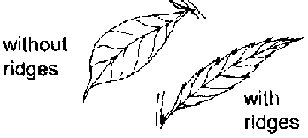
Leaves
Flowers
· Type of flower; type of
inflorescence.
· Size, color and shape of
flowers and bud.

Flowers
Fruits
· Approximate size.
· Shape, color when young or ripe.
· Seed present or not.
· Size, shape and color of seeds.
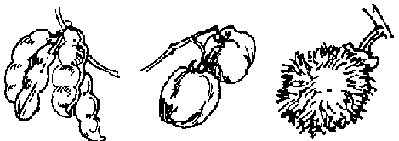
Fruits
Bark
· Present or not.
· Color and texture (smooth or rough).
Collection
Know which materials to collect and what time to collect them. The content of the active ingredient may depend on the plant part, stage of growth, season of harvest, method of handling during collection, physical condition of its collection place and storage.
Leaves and stems are best collected during daytime and when the plant is about to bloom.
Flowers that have a smell are best collected when the flower buds are just about to open and in the morning when the sun is still low. Other flowers should be collected when they are in full bloom. Sometimes, collection should be done in batches since flowers do not bloom at the same time.
Unless the recipe says that unripe fruits will be used, fruits should be collected when they are ripe. Fleshy fruits which deteriorate rapidly should be gathered when they are somewhat ripe, preferably in the early morning or at nightfall.
Seeds are usually collected from thoroughly ripened fruits. Some dry-textured fruits fall off the plant or split open easily when fully ripened. As a result, seeds are easily scattered and lost. It is advisable to collect such fruits as soon as they start ripening.
Barks should be collected when the plants are in bloom or in vigorous growth. Barks should be collected from the trunk and branches.
Roots and other underground parts (e.g., rhizome, rootstock, stem tuber, bulb and stolon) are best collected when the plant is in full growth.
# Reminder
Avoid collecting plants in a way that kills the plant or damages its surroundings. Before collecting any, determine first how much of the plant and what parts are needed to prevent wastage. Collect only the plant parts you need. For instance, if you need only the leaves, take only the leaves and only the number that you need. Medicinal plants should be conserved to ensure their continuous supply.
After collection
Sorting and cleaning
Clean plant parts of soil and dust.
Plants that may have been exposed to pesticides should not be used. If you have no other choice, they should be washed properly in clear water. Clean and wash plants as quickly as possible to avoid damaging them.
Drying
Air-drying is the best way of drying herbal plants. Drying at high temperatures will destroy plant ingredients. Spread the plant materials thinly and evenly over an old newspaper, a bamboo mat, or chicken-wire screen. Put in the shade until the materials are dry. Drying can be done through artificial heat, especially in the rainy season. Heating devices vary from one place to another.
Cutting, trimming, grinding, chopping
These are done for various reasons:
· To increase the efficacy of the plants materials.
· To allow more active ingredients to go into the preparation.
· To reduce the toxicity or adverse effects of certain drugs.
· To shorten the duration of drying.
· To make the plant material more convenient to store.
Storing
Medicinal plants should be properly stored to preserve their quality. Otherwise, they may be attacked by insects, mites and fungus. Storage can also ensure the continuous supply and availability of the materials whenever they are needed. Dried plants should be kept in covered plastic containers or bottles. These should be covered tightly and kept in a cool, dry place away from sunlight. Label the container properly with the name of the plant and the date when it was collected. Do not use any stored herbal plant which has molds or is discolored.
Preparing herbal medicine
Plant materials can be either fresh or dry, depending on the need and preparation. If dried plants are to be used as a substitute for fresh parts, adjust the quantity or the weight since water is lost during drying.
Decoction
Boil the plant parts in water, preferably for 15-20 minutes from the time the water has started boiling. Some healers recommend boiling the plant materials until the original volume of the water is reduced to one half. Some plants are soaked or moistened. Ideally, plant materials should be decocted twice in order to extract their active ingredients thoroughly. Strain or filter the liquid either while it is still hot or after cooling.
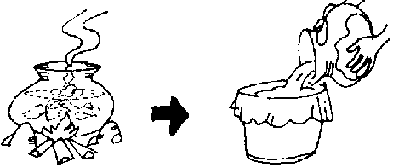
Decoction
Infusion
Pour hot or cold water onto the fresh or dry plant material and allow it to stand. Cover the preparation tightly to stop important ingredients from being lost. The length of time needed to prepare an infusion depends on the type of plant material and whether the water is hot or cold. In general, hot infusions need to stand for only 5-15 minutes; cold infusions may require up to 24 hours. Filter the preparation (and allow hot liquid to cool) before administering to the sick animal.
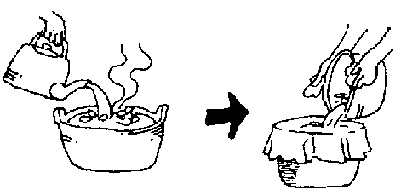
Infusion
Powder
Pound and grind the dried plant materials into coarse, intermediate or fine particle sizes. Sift the powder (once or several times) through coarse or fine sieves to get the required particle size.

Powder
Juice
Pound the fresh plant materials, then pass them through a cheesecloth or any fine piece of cloth in order to get the juice. Or you may just squeeze the plant parts to extract the juice.

Juice
Poultice or paste
A poultice is a moist, semisolid preparation which is applied directly on the skin. Prepare it by grinding the plant materials (either fresh or dry), sometimes with a little oil, water, molasses, honey, or other liquids.

Poultice or paste
Bolus
A bolus is made by pounding fresh or dried plant material' and adding sufficient binding agent such as honey or molasses. Roll it or shape it with your hand to make a round or oval ball

Bolus
|
| ||||||||||||||||||||||||||||||||||||||||||||||||||||||||||||||||||||
Application of herbal medicine
Drenching
The application of liquid preparation through the mouth is called drenching. It can be used for swine, ruminants and poultry. Hold the head level so that the medicine does not an into the lungs. For swine and ruminants, use a bamboo tube, a softdrink bottle, a wine bottle or a bottle gourd. Use a dropper or straw for poultry.

Drenching
Swine
· Lie the animal on its front on the ground and tie it down or ask someone to hold it.
· Tie the snout with a piece of rope. Hold one end of the rope tightly or tie it to a post so the animal's mouth is open and it cannot bite your hands or the bottle. Put the end of the bottle into the mouth and slowly pour the liquid into the mouth. Make sure the animal swallows the liquid.

Swine

Swine - continue
Ruminants
1 Tie the animal to a tree or pole.2 With small ruminants, mount the animal and hold it between your thighs.
3 With one hand, hold the upper jaw so that the animal opens its mouth. With cattle and buffaloes, you can use a rope through the nose ring to hold the mouth open. With the other hand, put the end of the bottle in the side of the animal's mouth and slowly pour the liquid into the mouth.
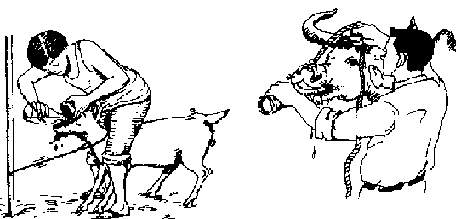
Ruminants
Chickens
Birds can be held by the person who will administer the medicine or by someone else. Use a syringe or dropper or you can use a rice or sorghum straw.
Hold the upper beak with the left thumb or first finger. Push the lower beak down with your finger or the medicine dropper. Hold the head level so the medicine does not go into the lungs.
Drop or squirt the medicine into the mouth.
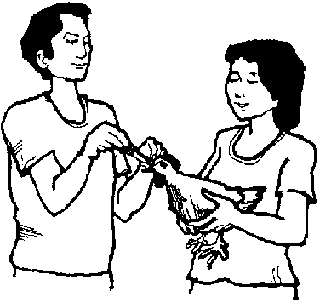
Chickens
Force-feeding
The application of solid preparations through the mouth is called "force-feeding". It is used for ruminants, swine and poultry. The procedure is similar to that for drenching. After you have put the solid medicines into the mouth, make sure that the animal swallows them. In ruminants, this can be done by massaging the throat. An easy way to force-feed animals is to put solid medicines either into a banana or cooked sweet potatoes and feed this to the animal.

Force-feeding
Medicine mixed with feed and water
In all species, both liquid and solid medicines can be given with feed and water. They can be:
· Mixed thoroughly with the feed.· Mixed with some of the feed; give the remaining feed only if the animal has eaten all of the medicated part. To treat individual poultry, put the bird and the medicated feed together under a basket until the feed has been eaten.
· Dissolved in drinking water. Use only as much water as the animal can drink at one time.
· Sprinkled on the feed ("top-dressing").
Topical application
Poultice
· A poultice is a soft, usually heated preparation that is applied to a sore or inflammation.· If necessary, keep the poultice on if necessary by tying a cloth or strip of banana trunk or coconut leaves over it.
Poultices are used for swine, ruminants and poultry.
Fomentation
A fomentation is a warm, moist substance (such as a wet cloth) applied to the affected parts of the body. It is used to ease pain and inflammation in swine and ruminants.
Compress
A compress is similar to a fomentation, but is always dry.
This is used for swine and ruminants.
Direct application
Rub the preparation directly on the affected part.
This is used for swine, ruminants and poultry.
Nasal application
Drop medicine directly into the nostril or apply it as vapor as shown in the illustrations. This is used in all species.
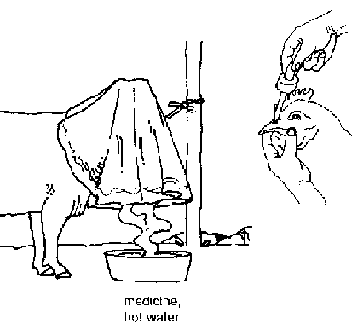
Nasal application
Vaginal application
This application is used in cows and sows that have an infection of the birth canal, for example: after retained placenta or other birthing difficulties.
To apply solid medicines
1 Clip your nails, clean your hands thoroughly and apply vegetable oil to them as a lubricant.2 Clean the animal's vulva with soap and warm water.
3 Take the medicine in one hand and cup this hand into a cone-shape.
4 Insert this hand into the vagina when the muscles of the birth canal are relaxed (for instance, between contractions during birthing). Leave the medicine in the vagina and slowly pull your hand out.
To flush the vagina with liquids
1 Clean and wash the stalk of a papaya leaf and lubricate its tip with vegetable oil.
2 Insert the stalk slowly about 10 cm deep into the vagina.
3 Pour the liquid medicine into the vagina through the hollow stalk until the liquid flows over.
Anal application
This can be used for ruminants and swine.
1 Shape the medicine into a small ball.2 Carefully push it into the animal's anus. If this is difficult, dip the ball into the water or oil before inserting it in the anus.
In the eye
This can be used in all species.
Use a rice straw, sorghum straw, medicine dropper or plastic dropper. Apply remedy directly into the eyes.
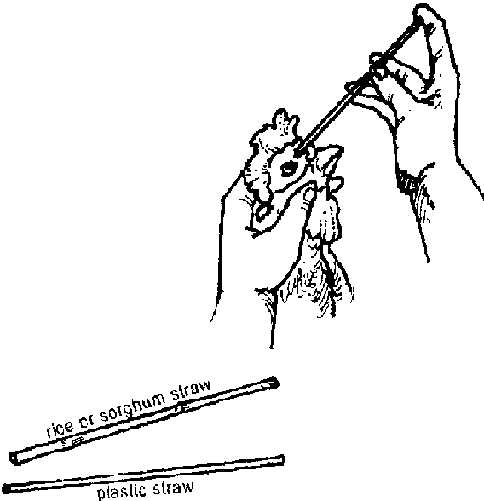
In the eye
Fumigation
Fumigation is the use of smoke to drive away insects.
Burn dried leaves. Cover the fire with fresh banana leaves to make a lot of smoke.

Fumigation
Hanging bouquet
Bind plants into a bouquet and hang inside the houses. This can be used for poultry, swine and ruminants.

Hanging
bouquet
|
| ||||||||||||||||||||||||||||||||||||||||||||||||||||||||||||||||||||
Common units of measurement
Many farmers do not have accurate ways of measuring ingredients for medicines. For many of the remedies in these manuals, accurate dosages are neither appropriate nor possible. This section gives some approximate equivalents for commonly available measures. Common containers, such as glasses, cups, spoons and bottles, may vary from country to country or even within countries. You should check that these equivalents are correct for your area before using them.
Liquid
· Cup (Philippines)
· Cups (teacup, India)
· Spoons
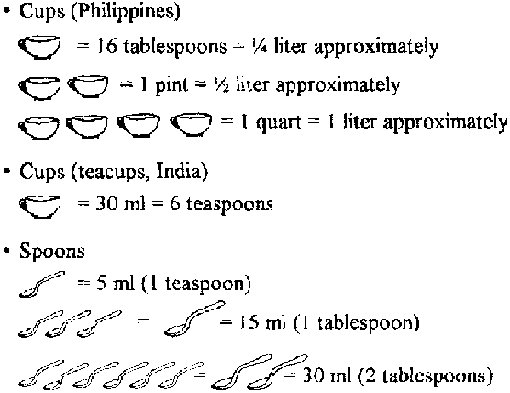
Common units of measurement
Bottles (Philippines)

Common units of measurement
Bottles (India)

Common units of measurement
Bottles are often marked with their volume. Common sizes are 1 liter, 750 ml, 375 ml and 320 ml.
Drinking glass (Philippines)

Common units of measurement
Drinking glass
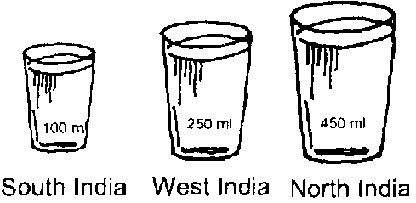
Common units of measurement
Dropper

Common units of measurement
Powder

Powder

Figure

Figure
Chopped leaves
150-200 leaves of Azadirachta indica = 1 handful
300 leaves
of Ocimum sp. = 1 handful
15-25 leaves of Eucalyptus tereticornis = 1
handful
10 leaves of Areca catechu = 1
handful
|
| ||||||||||||||||||||||||||||||||||||||||||||||||||||||||||||||||||||
Estimating live weight
Cattle and buffaloes
Measure the chest girth of large ruminants with a tape measure or a string. Use the table below to estimate the weight.
|
Girth |
Weight |
Girth |
Weight |
Girth |
Weight |
|
65 |
35 |
125 |
170 |
185 |
508 |
|
70 |
40 |
130 |
190 |
190 |
552 |
|
75 |
45 |
135 |
210 |
195 |
598 |
|
80 |
50 |
140 |
230 |
200 |
648 |
|
85 |
59 |
145 |
252 |
205 |
698 |
|
90 |
69 |
150 |
272 |
210 |
748 |
|
95 |
79 |
155 |
295 |
215 |
798 |
|
100 |
89 |
160 |
325 |
220 |
850 |
|
105 |
103 |
165 |
360 |
225 |
905 |
|
110 |
118 |
170 |
392 |
230 |
969 |
|
115 |
134 |
175 |
427 | | |
|
120 |
150 |
180 |
467 | | |
Source: Veterinary Research Institute, Sri Lanka
Small ruminants
Measure the heart girth of small ruminants (goats or sheep) using a tape measure or string. Pull the tape tight. Use the table below to estimate the weight.
|
Heart girth |
Body weight |
Heart girth |
Body weight | ||||
|
(in) |
(cm) |
(Ib) |
(kg) |
(in) |
(cm) |
(lb) |
(kg) |
|
10 ¾ |
27.3 |
5 |
2.3 |
18 ¾ |
47.6 |
25 |
11.3 |
|
11 ¼ |
28.6 |
5½ |
2.5 |
19¼ |
48.9 |
27 |
12.2 |
|
11 ¾ |
29.9 |
6 |
2.7 |
19 ¾ |
50.2 |
29 |
13.2 |
|
12 ¼ |
31.1 |
6½ |
3 |
20 ¼ |
51.4 |
31 |
14.1 |
|
12 3/ |
32.4 |
7 |
3.2 |
20 ¾ |
52.7 |
33 |
15 |
|
13 ¼ |
33.7 |
8 |
3.6 |
21 ¼ |
53.9 |
35 |
15.9 |
|
13 ¾ |
34.9 |
9 |
4.1 |
21 ¾ |
55.3 |
37 |
16.8 |
|
14 ¼ |
36.2 |
10 |
4.5 |
22 ¼ |
56.5 |
39 |
17.7 |
|
14 ¾ |
37.5 |
11 |
5 |
22 ¾ |
57.8 |
42 |
19.1 |
|
15 ¼ |
38.7 |
12 |
5.4 |
23¼ |
59.1 |
45 |
20.4 |
|
15 ¾ |
40 |
13 |
5.9 |
23 ¾ |
60.3 |
48 |
21.8 |
|
16 ¼ |
41.3 |
15 |
6.8 |
24¼ |
61.6 |
51 |
23.1 |
|
16 ¾ |
42.7 |
17 |
7.7 |
24 ¾ |
62.9 |
54 |
24.5 |
|
17¼ |
43.8 |
19 |
8.6 |
25¼ |
64.1 |
57 |
25.8 |
|
17 ¾ |
45.1 |
21 |
9.5 |
25 ¾ |
65.4 |
60 |
27.2 |
|
18 ¼ |
46.4 |
23 |
10.4 |
26 ¼ |
66 7 |
63 |
28.6 |
|
Heart girth |
Body weight | ||
|
(in) |
(cm) |
(lb) |
(kg) |
|
26¾ |
67.9 |
66 |
29.9 |
|
27¼ |
69.2 |
69 |
31.3 |
|
27¾ |
70.5 |
72 |
32.7 |
|
28 ¼ |
71.7 |
75 |
34 |
|
28¾ |
73 |
78 |
35.4 |
|
29 ¼ |
74.3 |
81 |
36.7 |
|
29 ¾ |
75.6 |
84 |
38.1 |
|
30¼ |
76.8 |
87 |
39.5 |
|
30¾ |
78 |
90 |
40.8 |
|
31 ¼ |
79.4 |
93 |
42.2 |
|
31¾ |
80.7 |
97 |
44 |
|
32 ¼ |
81.9 |
101 |
45.8 |
|
32 ¾ |
83.2 |
105 |
47.6 |
|
33¼ |
84.5 |
110 |
499 |
|
33¾ |
85.7 |
115 |
52.2 |
|
34 ¼ |
87 |
120 |
54.4 |
|
34 ¾ |
88.3 |
125 |
56.7 |
|
35 ¼ |
89.5 |
130 |
59 |
|
35 ¾ |
90.8 |
135 |
61.2 |
|
36¼ |
92.1 |
140 |
63.5 |
|
36 ¾ |
93.4 |
145 |
65.8 |
|
37 ¼ |
94.6 |
150 |
68.1 |
|
37 ¾ |
95.9 |
155 |
70.3 |
|
38 ¼ |
97.2 |
160 |
72.6 |
|
38 ¾ |
98.4 |
165 |
74.8 |
|
39¼ |
99.7 |
170 |
77.1 |
|
39 ¾ |
101 |
175 |
79.4 |
|
40¼ |
102.2 |
180 |
81.6 |
|
40 ¾ |
103.5 |
185 |
83.9 |
|
41 ¼ |
104.8 |
190 |
86.2 |
|
41¾ |
106.1 |
195 |
88.4 |
Source: Sinn (1983)
Swine
Live weight of swine can be estimated by measuring the body length (from the back of the head to the tail head) and the heart girth of the animal with a tape measure. Using the table below, an approximate weight can be calculated. For example, if the body length is 130 cm and the heart girth 110 cm, the swine weighs about 105 kg.
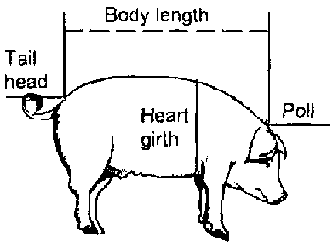
Swine

Body
length
|
| ||||||||||||||||||||||||||||||||||||||||||||||||||||||||||||||||||||
Simple surgical techniques
Fractures
A fracture is a crack or a break in a bone. Fractures are caused by accidents or falls. If a fracture is not treated immediately, the affected area may not regain its normal function.
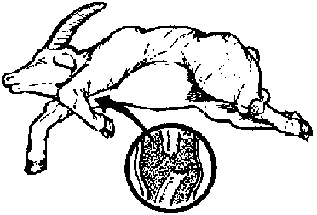
Fractures
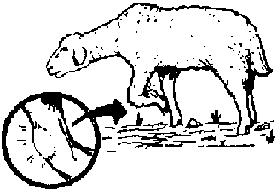
Symptoms
Symptoms
· Swelling at the site of fracture which does not subside.
· The fracture site is painful.
· You can hear a crackling sound when you touch or move the fracture.
· The animal has difficulty using the affected area.

The fracture site is painful
Prevention
· Avoid accidents or falls of your livestock while using draft animals or when sending them out to graze in hilly areas.
· Take extra care with pregnant animals. Their bones are much weaker than other animals'.
Treatments
To treat pain
Boil 4-7 tablespoons of fresh, mature roots of Mimosa pudica (sensitive plant) in 500 ml of water for 10 minutes. For adult cattle and buffaloes, drench this amount of the liquid once a day for 3 days. Caution: prolonged use of Mimosa pudica can be dangerous.
For minor fractures and cracks in the bone
Grind a handful of fresh Symphytum officinale (comfrey) leaves and use as a poultice. Change the poultice once a day for 1 week until the animal regains the use of its limb.
For more serious fractures
Follow these steps:
1 Put the animal in a comfortable position.2 Boil 1 kg of fresh leaves of Cissampelos pareira in 1 liter of water for half an hour. Drench adult cattle and buffaloes with 200 ml of the decoction (give 100 ml to calves, goats or sheep). This will relax the animal's muscles an hour after drinking.
3 Position animal carefully and comfortably, with the affected area facing upwards.
4 Using a rope, straighten the affected limb and align the bones. Be careful not to hurt the animal.
5 Shave the hair and clean the affected area with clean water.
6 Pour vegetable oil on newspaper. Wrap several layers of newspaper around the joint as a cast to keep the joint from moving. This helps reduce the swelling slightly. Leave on for one day.
7 The next day, remove the newspaper. Tie a clean cloth around the area to cover the fracture and protect the skin.
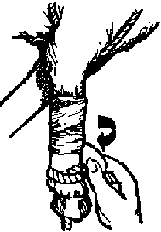
Wrap several layers of newspaper
8 Position splints to keep the joint from moving. Normally, four splints are needed around the leg.
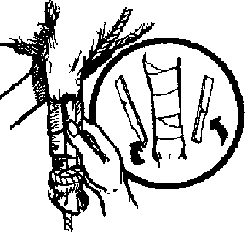
Four splints are needed around the
leg.
9 Dip strips of clean cloth in one of the plaster mixtures (see box) and bandage firmly around the limb. The bandage must not be too tight; you should be able to insert your finger under it.

The bandage must not be too tight
10 Leave the cast on for 710 days in young animals. Depending on the type of the fracture, it may take 3-4 weeks in adult animals before the cast can be removed.

Depending on the type of the
fracture
How to make plaster
Use one of the following mixtures to make plaster. Make enough of the mixture to cover the fracture site. Dip strips of cloth in this mixture.
· Grind 2 bricks and mix with a sufficient quantity of egg white to make a smooth plaster. (Western India. 1, 2, 3, 4)· Mix 10 egg whites, 3 teaspoons of latex from Euphorbia neriifolia and 2 teaspoons of red oxide of mercury. (Western India. 1, 2, 3, 4)
· Grind a handful of Tamarindus indica (tamarind) leaves and mix it with anthill mud. Add a little water to make a fine paste. (Western India. 1, 2, 3, 4)
· Mix equal amounts of fresh goat milk, fresh goat droppings (from a goat stall), ash and egg whites. (Western India. 1, 2, 3, 4)
Splints
Splints support fractures and prevent the broken bone from moving. Splints must be made of stiff but light material, such as bamboo, the stalk of coconut or palmyra palm leaves, or the bark of Areca catechu.
After treating the fracture
The bone takes approximately 3-6 weeks to heal, depending on the age of the animal and its health. Bones of young animals heal faster. Too much movement of the affected part will delay healing.
· Allow the animal to rest.
· Give the animal easily digestible and nutritious feed.
· Add a handful of ground limestone, chalk or eggshells to every 10 kg of feed.
· If the cast falls off, replace it immediately with a fresh one.
Bone fractures in very large ruminants are difficult to treat. This is especially true for fractures in the upper limbs. Such animals may develop sores. In this case, consult a professional (a local expert, respected healer or veterinarian).
Working animals may never regain the full use of the affected part. They may not be able to pull heavy carts or plows. In most cases, it will be most practical to sell or slaughter the animal.
Warts
Warts are small, solid growths on the surface of skin. Warts on the tongue can interfere with eating. Warts around the nostrils block the breathing passage. Warts on the teats make milking painful for the animal. Warts on the penis hinder the passage of urine.

Warts
Treatment

Treatment
Remove the wart using any of the following:
· Tie a thread or 3-4 strands of horse hair tightly around the wart. This will cut off the blood supply to the wart. It will shrink, dry up and eventually fall off. (1, 2, 3, 4, 5)· Apply 1 or several drops of latex of Euphorbia neriifolia or the latex from a papaya trunk, fruit or leaves on the wart. The amount of latex depends on the size of the wart. Apply twice a day until the wart falls off. (1, 2, 3, 4)
· Crush 2-3 fresh leaves and petals of a single flower of Calendula officinalis (calendula). Extract the juice and apply at least 3 drops on the wart twice a day until the wart falls off. The amount of juice depends on the size of the wart. (1, 2, 3, 4)
· Tie an entire Piper belle (betel) leaf over the wart like a bandage. Use a string to keep the leaf in place. Change the bandage twice a day until the wart falls off. Also used to treat abscesses (see below). (1, 2, 3, 4)
· Mix 2-3 crystals of copper sulfate with a drop of water. Apply on the wart using a matchstick. Caution: Copper sulfate is strong enough to burn your fingers. (1, 2, 3, 4)
· Squeeze 1-2 cloves of garlic directly onto the wart. Do this once a day till the wart falls off. (1, 2, 3, 4)
Abscesses
Symptoms
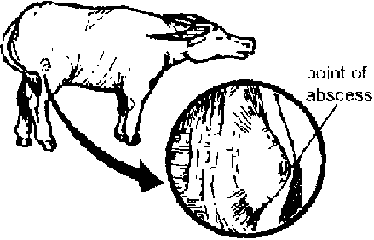
Symptoms
An abscess is a rounded, hot, painful swelling full of pus. A single or many abscesses may be found on the body.
Cause
Abscesses may have various causes, including infected wounds, irritants on the skin and internal disease. They may also be caused by using dirty instruments, syringes or needles. If the animal has fever as well as abscesses, it may have an infectious disease (see Infectious diseases in species-specific manuals). Infected matter from an abscess which falls on open wounds may cause more abscesses, severe pain and swelling.
Prevention
· Keep the animal clean and
well-fed.
· Clean and sterilize syringes,
knives and other instruments before using them on animals.
· Clean wounds properly (see Wounds in species-specific
manuals).
Treatment
Use any of the treatments below twice a day until the abscess has dried up. If the animal has fever, see also Fever in species-specific manuals. If the abscess does not subside, or if there are other symptoms, check the section on Infectious diseases and other sections. Consider getting help from a professional.
· Grind a handful of fresh neem leaves to make a paste. Apply it on the affected area as a poultice.
· Grind a handful of Odina wadder (sesharam) leaves and mix with half this amount of vegetable oil. Apply it on the abscess.
· Tie a Piper betle (betel) leaf over the abscess to drain it (see Warts on page 40).
· Make a paste from 5 teaspoons of turmeric rhizome powder and 5 teaspoons of water. Apply on the abscess.
· Rub a block of Pterocarpus santalinus (red sanderswood) against a rough stone to make a powder. Make a paste from 5 teaspoons of this powder with 5 teaspoons of water and apply on the affected area.
· Mix equal amounts of salt and water and pour on the abscess.
· Mix equal amounts of slaked lime (calcium hydroxide) and water. Mix this with an equal amount of lemon juice and apply on the abscess.
· Crush 10-20 fresh Mentha piperita or M. cordifolia opiz (mint) leaves and apply on top of the abscess as a poultice.
· Boil 1 part of young, chopped leaves of Spondias pinnate with 2 parts of clean water. Boil for 1015 minutes. Use the decoction to wash the abscess.
|
| ||||||||||||||||||||||||||||||||||||||||||||||||||||||||||||||||||||
Treating castration wounds
The practice of castration is very old. Castration checks unwanted breeding, prepares young male animals for draft work, fattens males for good meat production and makes the animal docile. Farmers castrate their animals using various methods. In the Philippines and in Sri Lanka, some farmers use a sterilized blade and two long forceps.

Treating castration wounds
Antiseptics to prevent infection
After castration, apply any of the following remedies:
· Wash the wound with water boiled with guava leaves that has been allowed to cool. Do this for 3 consecutive days. (Philippines. 1, 2, 3, 4, 5)· Chop and pound 1 to 3 mature, fresh banana leaves (depending on how big the wound is). Extract the latex by straining the chopped leaves through a clean cloth or gauze. Apply latex on the wound after the animal's wash in the early morning and the evening. Do this every day until the wound heals. (Philippines. 1, 2, 3, 4, 5)
· Apply 2 handfuls of hot, cooked rice to the wound. This will stop bleeding. (Philippines. 1, 2, 3, 4)
· Mix 1 part brown sugar and 1 part coconut oil and apply on the wound. (Cambodia. 1, 2)
· Mix 1 part lime (calcium hydroxide) powder and 1 part brown sugar and apply to the wound. (Cambodia. 1, 2)
If swelling occurs
· Splash 2-3 cups clean, cold water on the swollen part 23 times a day. (India. 1, 2, 3, 4)· Pound dry turmeric (Curcuma domestica) rhizome with water to make a paste. Apply on the wound till the wound heals. (India, Philippines. 1, 2)
· Crush 5-10 comfrey (Symphytum officinale) leaves. Apply to the wound. (Philippines. 1, 2, 3, 4)
· Boil a handful of neem or guava leaves in 1 liter of water for about 15 minutes. Let cool down and sprinkle on and around the wound. (India, Philippines. 1, 2, 3, 4)
|
| ||||||||||||||||||||||||||||||||||||||||||||||||||||||||||||||||||||
Glossary of english and botanical names
This glossary lists plants mentioned in the manuals that are known widely by their common English name. Further information on each plant and a full list of other plants mentioned in the manuals can be found in the Glossary of medicinal plants, page 49.
avocado
Persea americana
banana
Musa sp.
barley
Hordeum sativum
betel
Piper betle
camphor
Cinnamomum camphora
cassava
Manihot esculenta
castor
Ricinus communis
chickpea
Cicer arietinum
chilli
Capsicum annum
coconut
Cocos nucifera
cotton
Gossypium sp.
cowpea
Vigna sinensis or Vigna unguiculata
cumin
Cuminum cyminum
fennel
Foeniculum vulgare
fenugreek
Trigonella foenum-graecum
finger millet
Eleusine coracana
garlic
Allium sativum
ginger
Zingiber officinale
greengram
Phaseolus aureus
groundnut (peanut)
Arachis hypogaea
guava
Psidium gunjava
hemp
Cannabis sativa
horsegram
Dolichos uniflorus
jackfruit
Artocarpus heterophyllus
lentil
Lens esculenta
linseed
Linum usitatissimum
maize
Zea mays
mango
Mangifera indica
millet
Pennisetum typhoideum
mungbean
Phaseolus radiatus
mustard
Brassica nigra
neem
Azadirachta indica
nipa
Nypa fructicans
nutmeg
Myristica fragrans
onion
Allium cepa
palmyra palm
Borassus flabellifer
papaya
Carica papaya
pepper
Piper nigrum
pigeonpea
Cajanus cajan
pineapple
Ananas sativus
pomegranate
Punica granatum
rice
Oryza sativa
ricebean
Phaseolus calcaratus
rosewood
Dalbergia nigra
rubber
Hevea brasiliensis
sandalwood
Santalum album
sesame
Sesamum indicum
sorghum
Sorghum vulgare
soybean
Glycine max
sunflower
Helianthus annus
sweet potato
Ipomoea batatas
tamarind
Tamarindus indica
tard
Colocasia esculenta
tea
Camellia sinensis
tobacco
Nicotiana tabacum
turmeric
Curcuma longa or
Curcuma domestica
water hyacinth
Eichhornia crassipes
watermelon
Citrullus lanatus
wheat
Triticum
aestivum
|
| ||||||||||||||||||||||||||||||||||||||||||||||||||||||||||||||||||||
Glossary of medicinal plants
This glossary lists all ethnoveterinary plants that are mentioned in the manuals. It does not include poisonous plants described in the section Poisoning in Ruminants.
The plants are ordered alphabetically by their botanical name. In addition to the botanical name, each entry provides the English name if known, the various plant Parts used and the known uses for each plant part mentioned in the manuals. The only exception is bamboo because it consists of several different genera and species. Therefore, it was not always possible to determine which genus or species was meant when farmers use "bamboo." Therefore, only the English name is given.
To make it easy for the reader to find the section in the manuals that corresponds to each use, the wording of the "known uses" closely follows or includes the headings of the chapter titles where the plants and treatments are mentioned.
In a few cases, a reference in [ ] is added after a specific plant part and known use. It refers to the publication which contains the scientific validation for the plant's efficacy in treating the problem in the livestock species in question (marked in the corresponding chapter and treatment with code No. 6). The complete citation of the reference appears in the section on References.
Abelmoschus esculentus
Ladyfinger, Okra
Parts used
Leaf, root and seed
Usage
Decreased milk flow
Booklet
Ruminants

Abelmoschus esculentus
Abrus precatorius
Prayer beads
Parts used
Leaf
Usage
Fowl pox
Booklet
Poultry

Abrus precatorius
Acacia arabica
Parts used
Bark
Leaf and pod
Whole plant
Usage
Vaginal bleeding (Pregnancy and
birthing)
Feed
Fencing (Housing)
Booklet
Ruminants
Ruminants
Ruminants

Acacia arabica
Acacia catechu
Catachu
Parts used
Sap
Usage
Wounds and diarrhea
Booklet
Ruminants
Acacia concinna
Parts used
Leaf
Usage
Bloat
Booklet
Ruminants
Acacia farnesiana
Parts used
Whole plant
Usage
Fencing (Housing)
Booklet
Ruminants
Acacia insuavis
Parts used
Branch
Usage
Diarrhea
Booklet
Poultry
Acacia rugata
Parts used
Pod
Usage
Coughs and colds
Booklet
Swine
Acacia spp.
Parts used
Whole plant
Usage
Fencing (Housing)
Booklet
Poultry
Acorus calamus
Parts used
Root
Usage
Eye disease
Booklet
Ruminants
Acorus calamus
Actinopetris fennis
Parts used
Leaf
Usage
Bleeding
Booklet
Ruminants
Adhatoda vasica
Parts used
Leaves, rhizome
Usage
Coughs and colds
Booklet
Ruminants
Aegale marmelos
Indian Bael
Parts used
Bark, flower, fruit, leaf, root,
stem
Fruit
Usage
Dehydration
Diarrhea
Booklet
Ruminants
Ruminants
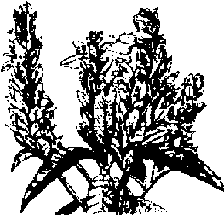
Aegale marmelos
Albizzia myriophylla
Parts used
Bark
Usage
Coughs and colds
Booklet Swine
Allium cepa
Onion
Parts used
Bulb
Usage
Coughs and colds, fungus
Booklet
Poultry
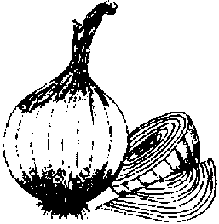
Allium cepa
Allium sativum
Garlic
Parts used
Bulb
Usage
After birth, coughs and colds, newborn's navel,
wounds
Retained placenta (Breeding)
Appetizer, coughs and colds, feed,
fungus, wounds
Diarrhea
Intestinal worms
Warts (Surgery)
Booklet
[Reference]
Ruminants
Swine
Poultry
Poultry[Rao et al.
1983]
Poultry [Yebron 1994]
General information
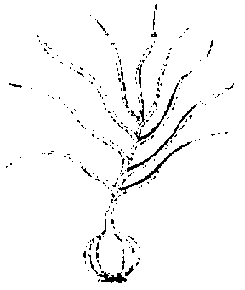
Allium sativum
Aloe vera
Aloe
Parts used
Leaf
Usage
Constipation, eye disease, pregnancy and
birthing difficulties, wounds
Wounds
Booklet
Ruminants
Poultry

Aloe vera
Alpinia galanga
Greater galangal
Parts used
Rhizome
Usage
Appetizer, coughs and colds, fungus
Booklet
Ruminants

Alpinia galanga
Alstonia scholaris
Parts used
Bark, leaf and stem
Usage
Appetizer
Booklet
Swine

Alstonia scholaris
Amaranthus gracilis
Parts used
Leaf
Usage
Care during pregnancy (Breeding), constipation
Booklet
Swine
Amaranthus spinosus
Parts used
Leaf
Usage
Care during pregnancy (Breeding), constipation
Booklet
Swine

Amaranthus spinosus
Ananas sativus
Pineapple
Parts used
Fruit wastes
Usage
Feed
Booklet
Ruminants
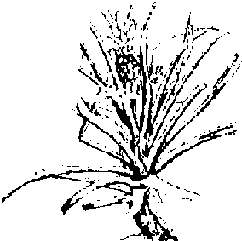
Ananas sativus
Andrographis paniculata
Bitters
Parts used
Stem
Juice
Whole plant
Usage
Diarrhea
Newcastle disease (Infectious
diseases)
Coughs and colds
Booklet
Poultry
Poultry
Poultry
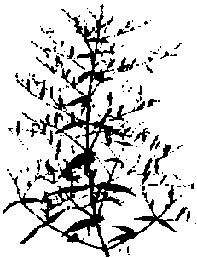
Andrographis paniculata
Andropogon annulatus
Marvel grass
Parts used
Leaf
Usage
Decreased milk flow
Booklet
Ruminants
Andropogon citrates
See Cymbopogon citratus
Annona muricata
Sour sop
Parts used
Seed
Leaves
Usage
Lice
Foot rot, wound.
Booklet
Swine
Ruminants

Annona muricata
Annona reticulata
Parts used
Seed
Usage
Lice
Booklet
Swine
Annona squamosa
Sugar apple, custard apple, sweet sop
Parts used
Fruit
Leaf
Seed
Usage
Wounds
Bleeding, foot rot, wounds
Eye,
disease, internal parasites
Lice, scabies
Tick and lice
Wounds
Booklet
Poultly
Ruminants
Swine
Swine
Poultry,
ruminants
Poultry

Annona squamosa
Arachis hypogaea
Ground nut, peanut
Parts used
Seed
Usage
After birth
Feed
Decreased milk flow
Booklet
Ruminants
Poultry, ruminants and
swine
Ruminants
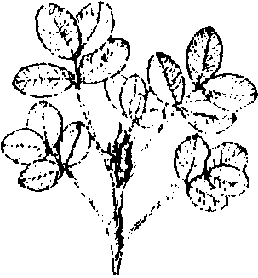
Arachis hypogaea
Areca catechu
Betel nut
Part used
Nut
Usage
Internal parasites
Intestinal
worms
Liverflukes
Booklet
Ruminants, swine
Poultry
Ruminants

Areca catechu
Aristolochia bracteata
Worm killer
Parts used
Leaf
Usage
Constipation, internal parasites
Booklet
Ruminants
Artemisia vulgaris
Parts used
Leaf
Root and stem
Usage
Internal parasites, scabies
Scabies
Booklet
Swine
Swine

Artemisia vulgaris
Artocarpus heterophyllus
Jack fruit
Parts used
Leaf and fruit
Usage
After birth, feed, wounds
Booklet
Ruminants

Artocarpus heterophyllus
Azadirachta indica
Neem tree
Parts used
Bark
Leaf
Seed
Whole plant
Usage
Diarrhea, ticks and lice, wounds
Abscesses
(Surgery), castration wound
Bleeding, feed, fever, foot rot, lice, udder
infection, wounds
Wounds
Ticks
Insect repellent (Housing)
Booklet
Poultry
General
information
Ruminants
Swine
Ruminants
Ruminants

Azadirachta indica
Azima tetracantha
Parts used
Root or leaf
Usage
Diarrhea
Booklet
Poultry
Bamboo (Bambusa sp. and other genera)
Parts used
Leaf, shoot
Stem
Usage
Retained placenta (Pregnancy and birthing), feed
(After birth)
Housing
Booklet
Ruminants
Poultry, ruminants, swine

Bamboo
Barleria lupulina
Mahua
Parts used
Leaf
Usage
Snake bite
Booklet
Ruminants
Bassia latifolia
Indian butter tree
Parts used
Flower
Usage
Feed (After birth)
Booklet
Ruminants
Berberis aristata
Parts used
Leaf, stem
Usage
Eye disease
Booklet
Ruminants
Bixa orellana
Parts used
Seed
Usage
Intestinal worms
Booklet
Poultry

Bixa orellana
Blumea balsamifera
Parts used
Leaf
Usage
Fever
Booklet
Swine

Blumea balsamifera
Boerhaavia diffusa
Parts used
Whole plant
Usage
Difficulty in urinating
Booklet
Ruminants
Borassus flabellifer
Palmyra tree
Parts used
Flower
Leaf, wood
Usage
Bleeding
Housing
Booklet
Ruminants
Ruminants, swine
Brassica integrifolia
Parts used
Seed
Usage
Coughs and colds
Booklet
Ruminants
Brassica nigra or juncea
Mustard
Parts used
Seed
Usage
Appetizer
Feed, ticks and lice
Sprains
Booklet
Swine
Poultry
Ruminants
Breynia patens
Parts used
Bark, leaf
Usage
Decreased milk flow
Booklet
Ruminants
Cajanus cajan
Pigeon pea
Parts used
Leaf and pod
Usage
Feed
Booklet
Ruminants and swine

Cajanus cajan
Calendula officinalis
Calendula
Parts used
Flower, leaf and petal
Usage
Warts (Surgery)
Booklet
General information
Camellia sinensis
Tea
Parts used
Leaf
Usage
Bleeding, dehydration, diarrhea,
poisoning
Eye disease
Booklet
Ruminants
Swine

Camellia sinensis
Cannabis sativa
Hemp
Parts used
Stalk
Usage
Housing
Booklet
Ruminants
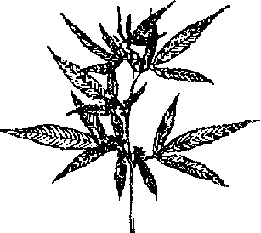
Cannabis sativa
Capsicum annum or frutescens
Chilli
Parts used
Fruit, seed
Usage
Appetizer
Fowl pox
Booklet
Ruminants, poultry
Poultry

Capsicum annum or frutescens
Careya sphaerica
Parts used
Bark
Usage
Dehydration, wounds
Booklet
Ruminants
Carica papaya
Papaya
Parts used
Fruit
Leaf
Latex of fruit or
stem
Seed
Latex of trunk, fruit and leaf
Usage
Constipation
Intestinal worms
After
birth
Intestinal worms
Internal parasites
Warts (Surgery)
Booklet
Swine
Poultry
Ruminants
Poultry
[Mursof, 1990]
Ruminants
General information
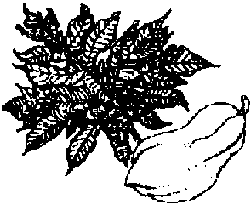
Carica papaya
Cassia alata
Ringworm bush
Parts used
Leaf
Stem, bark, fruit
Usage
Scabies
Fungus infection
Scabies
Booklet
Swine, ruminants
Ruminants
Swine

Cassia alata
Cassia siamea
Parts used
Leaf
Usage
Appetizer
Booklet
Ruminants

Cassia siamea
Cassia tora
Parts used Leaf, seed
Usage
Fungus
Booklet
Ruminants
Centrosema spp.
Parts used
Leaf
Usage
Feed
Booklet
Ruminants
Chromolaena odorata
Parts used
Leaf
Usage
Wounds
Booklet
Swine
Chrysanthemum indicum
Chrysanthemum
Parts used
Leaf
Usage
Scabies
Booklet
Swine

Chrysanthemum indicum
Chrysophyllum cainito
Star apple
Parts used
Leaf
Usage
Diarrhea, foot rot, internal parasites,
wounds
Diarrhea
Booklet
Ruminants
Swine
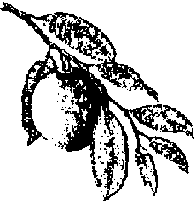
Chrysophyllum cainito
Cicer arietinum
Chick pea
Parts used
Seed hulls
Usage
Feed
Booklet
Ruminants
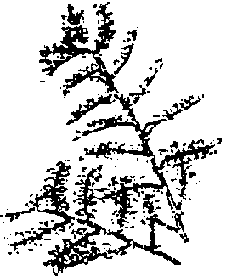
Cicer arietinum
Cinnamomum camphora
Camphor
Parts used
Wood
Usage
Coughs and colds
Booklet
Ruminants

Cinnamomum camphora
Cissampelos pareira
Velvet leaf
Parts used
Leaf
Usage
Fractures (Surgery)
Booklet
General information
Citrullus lanatus
Watermelon
Parts used
Rind of fruit
Usage
Water source (Feeding)
Booklet
Swine
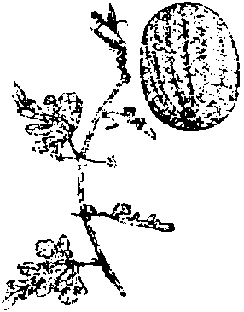
Citrullus lanatus
Citrus acida
Parts used
Bark
Usage
Ticks and lice
Booklet
Poultry
Citrus bergamia
Lemon
Parts used Fruit
Usage
Sprains
Booklet
Ruminants
Citrus madurensis
Parts used
Leaf
Usage
Fever
Booklet
Swine
Citrus medica
Citron tree
|
Parts used |
Usage |
Booklet |
|
Leaf |
Fever |
Swine |
| |
Coughs and colds |
Ruminants |

Citrus medica
Coccinia grandis
Parts used
Leaf
Usage
Eye disease
Booklet
Ruminants
Cocos nucifera
Coconut
|
Parts used |
Usage |
Booklet |
|
Husk |
Lice, diarrhea Scabies, fungus |
Swine Ruminants |
|
Leaf |
Housing |
Ruminants, swine |
|
Meat |
Appetizers |
Ruminants |
| |
Feed |
Swine, poultry |
| |
Internal parasites |
Swine |
|
Oil |
Castration wounds |
General information |
| |
Constipation, scabies, ticks |
Ruminants |
| |
Scabies, udder infection, diarrhea |
Swine |
| |
Wounds |
Poultry |
|
Shell |
Diarrhea |
Ruminants, swine |
| |
Lice, scabies |
Swine |
|
Water |
Appetizer |
Ruminants, poultry |
| |
Diarrhea |
Swine |
| |
Diarrhea, dehydration |
Ruminants |
| |
Eye disease, poisoning |
Ruminants, swine |
| |
Heat stress |
Poultry |
|
Wood |
Housing |
Poultry |

Cocos nucifera
Colocasia esculenta
Taro
|
Parts used |
Usage |
Booklet |
|
Leaf |
Feed |
Ruminants |
|
Corm |
Feed |
Swine |
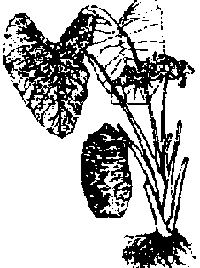
Colocasia esculenta
Couroupita guianensis
Cannon-ball tree
Parts used
Fruit
Usage
To stimulate heat
Booklet
Ruminants
Crataeva nurvala
Parts used
Whole plant
Usage
Difficulty in urinating
Booklet
Ruminants
Crotolaria juncea
Sun hemp
Parts used
Fresh leaves
Usage
Feed (After birth)
Booklet
Ruminants

Crotolaria juncea
Cuminum cyminum
Cumin
Parts used
Seed (dried)
Usage
After birth, diarrhea
Booklet
Ruminants
Curcuma longa or domestica
Turmeric
|
Parts used |
Usage |
Booklet |
|
Rhizome |
Abscesses (Surgery), castration wounds |
General information |
| |
Coughs and colds |
Poultry, ruminants |
| |
Fungal diseases, diarrhea, intestinal worms, feed |
Poultry |
| |
Ticks, constipation, udder infection, bleeding, eye disease, sprains |
Ruminants |
| |
Wounds |
Ruminants, swine, poultry |
|
Whole plant |
Cough and colds, sprains |
Ruminants |
| |
Swine pox |
Swine |

Curcuma longa or domestica
Cymbopogon citratus
Lemon grass
|
Parts used |
Usage |
Booklet |
|
Leaf |
Ticks, lice and mites |
Poultry |
| |
Sprains |
Ruminants |

Cymbopogon citratus
Cynodon dactylon
Bermuda grass
|
Parts used |
Usage |
Booklet |
|
Grass stalk |
Bleeding |
Ruminants |
|
Leaf |
Bleeding, wounds, decreased milk flow |
Ruminants |
Dalbergia nigra
Rosewood
|
Parts used |
Usage |
Booklet |
|
Wood |
Housing |
Ruminants |
Desmodium triflorum
|
Parts used |
Usage |
Booklet |
|
Leaf |
Eye sidease |
Ruminants |
Dioscorea alata
Yam
Parts used
Tuber
Usage
Feed
Booklet
Swine

Dioscorea alata
Dioscorea esculenta
Tugui
Parts used
Tuber
Usage
Feed
Booklet
Swine

Dioscorea esculenta
Diospyros ebenum
Parts used
Leaf
Usage
Ticks and lice
Booklet
Poultry
Diospyros mollis
|
Parts used |
Usage |
Booklet |
|
Fruit |
Cough and colds |
Swine |
| |
Internal parasites |
Swine, ruminants |
Dolichos uniflorus
Horsegram
|
Parts used |
Usage |
Booklet |
|
Seed |
Feed |
Poultry |
| |
After birth |
Ruminants |
Dolichos catjung
See Vigna unguiculata
Eichhornia crassipes
Water hyacinth
Parts used
Leaf
Usage
Feed
Booklet
Swine
Eleusine coracana
Finger millet
Parts used
Seed
Usage
After birth
Booklet
Ruminants
Embelia ribes
Parts used
Fruit
Usage
Bloat
Booklet
Ruminants
Erythrina indica
Parts used
Leaf
Usage
Cough and colds
Booklet
Ruminants
Eucalyptus globulus
Eucalyptus
|
Parts used |
Usage |
Booklet |
|
Leaf |
Fever, sprains |
Ruminants |
| |
Wounds |
Poultry |
|
Whole plant |
Insect repellent |
Ruminants |
| | |
(Housing) |
Eugenia caryophyllus
Clove
Parts used
Root clove and bark
Usage
Diarrhea
Booklet
Swine
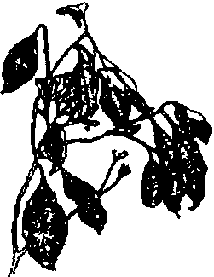
Eugenia caryophyllus
Eugenia jambolana
Jambul or black plum
Parts used
Bark
Usage
Bleeding
Booklet
Ruminants
Eupatorium odoratum
|
Parts used |
Usage |
Booklet |
|
Leaf |
Bleeding, wounds |
Ruminants |
| |
Wounds |
Swine |
|
Whole plant |
Foot rot Ruminants |
|
Euphorbia hirta
Parts used
Latex from stem
Usage
Eye disease
Booklet
Ruminants

Euphorbia hirta
Euphorbia neriifolia
Common milk hedge
Parts used
Latex
Usage
Fractures and warts (Surgery)
Booklet
General information

Euphorbia neriifolia
Ferula assa-foetida
Asafoetida
Parts used
Resin
Usage
Bloat, after birth
Booklet
Ruminants
Ficus bengalensis
Banyan tree
|
Parts used |
Usage |
Booklet |
|
Bark |
Bleeding |
Ruminants |
|
Latex |
Wounds |
Ruminants, poultry |
|
Leaf |
Feed |
Ruminants |
Ficus hauili
Parts used
Bark
Usage
Wounds
Booklet
Ruminants
Ficus minahassae
Parts used
Leaf
Usage
Udder infection
Booklet
Swine
Ficus racemosa
Parts used
Leaf
Usage
Sprains
Booklet
Ruminants
Foeniculum vulgare
Fennel
Parts used
Seed
Usage
Appetizer, after birth
Booklet
Ruminants
Fumaria officinalis
Parts used
Leaf
Usage
Udder infection
Booklet
Ruminants
Gardenia gummifera
Parts used
Resin
Usage Bloat
Booklet
Ruminants
Gardenia jasminoides
Gardenia
Parts used
Stem
Usage
Fever
Booklet
Ruminants
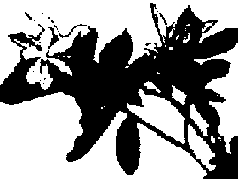
Gardenia jasminoides
Gaultheria fragrantissima
Parts used
Leaf
Usage
Sprains
Booklet
Ruminants
Gmelina arborea
Parts used Leaf
Usage
Coughs and colds
Booklet
Ruminants

Gmelina arborea
Gliricidia septum
Gliricidia
|
Parts used |
Usage |
Booklet |
|
Bark and root |
Scabies, sprains |
Swine |
|
Leaf |
Lice |
Swine |
| |
Feed scabies |
Ruminants. swine |

Gliricidia septum
Glycine max
Soy bean
|
Parts used |
Usage |
Booklet |
|
Seed |
After birth |
Ruminants |
| |
Constipation, sprains |
Swine |
| |
Feed |
Poultry, swine, ruminants |

Glycine max
Glycyrrhiza glabra
Liquorice
|
Parts used |
Usage |
Booklet |
|
Stem |
Wounds |
Ruminants |
|
Whole plant |
Coughs and colds |
Ruminants |
Gossypium sp.
Cotton
|
Parts used |
Usage |
Booklet |
|
Leaf |
Retained placenta |
Swine |
|
Seed |
Decreased milk flow |
Ruminants |
| |
Feed |
Poultry, ruminants |
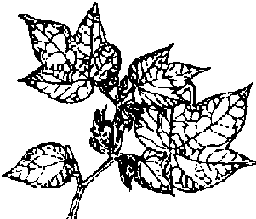
Gossypium sp.
Helianthus annus
Sunflower
Parts used
Seed
Usage
Feed
Booklet
Poultry, ruminants

Helianthus annus
Heliotropium indicum
Indian heliotrope
Parts used
Mature leaf
Usage
Coughs and colds
Booklet [Reference] Poultry [Fernandez, 1990]
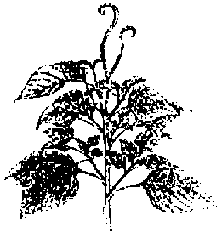
Heliotropium indicum
Hevea brasiliensis
Rubber
Parts used
Seed
Usage
Feed
Booklet
Ruminants

Hevea brasiliensis
Hibiscus rosa-sinensis
Hibiscus
|
Parts used |
Usage |
Booklet |
|
Flower |
Fever |
Swine |
| |
Wound |
Ruminants |
|
Leaf |
Sprains, wound |
Ruminants |
| |
Fever |
Swine |

Hibiscus rosa-sinensis
Holarrhena antidysenterica
Parts used
Seed and bark
Usage
Diarrhea
Booklet
Ruminants

Holarrhena antidysenterica
Hordeum sativum
Barley
Parts used
Grain
Usage
Feed
Booklet
Poultry
Hoya ovalifolia
Parts used
Leaf
Usage
Sprains
Booklet
Ruminants
Hyoscyamus niger
Black or common henbane
Parts used
Whole plant
Usage
Difficulty in urinating
Booklet
Ruminants

Hyoscyamus niger
Imperata cylindrica
Cogon grass
Parts used
Leaf
Usage
Housing
Booklet
Ruminants, swine

Imperata cylindrica
Ipomea aquatica
Swamp cabbage, water spinach
Parts used
Leaf and stem
Usage
Care during pregnancy (Breeding)
Booklet
Swine

Ipomea aquatica
Ipomea batatas
Sweet potato
Parts used
Leaf
Leaf and stem
Root
Usage
Appetizer, constipation
Feed
Care during
pregnancy (Breeding)
Feed
Booklet
Swine
Swine and poultry
Swine
Swine

Ipomea batatas
Jatropha curcas
Parts used
Leaf
Usage
Bleeding
Booklet
Ruminants
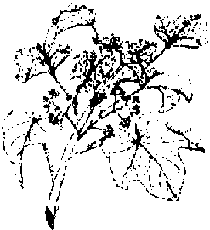
Jatropha curcas
Jasminum sambac
Arabian jasmine
Parts used
Flower
Whole plant
Usage
Eye disease
Ticks and lice
Booklet
Ruminants
Poultry

Jasminum sambac
Lagerstroemia speciosa
Banaba
Parts used
Leaf
Usage
Wounds
Booklet
Ruminants
Lansium domesticum
Parts used
Seed
Usage
Intestinal worms
Booklet
Poultry

Lansium domesticum
Launaea pinnatifida
Pathri grass
Parts used
Leaf
Usage
Decreased milk flow
Booklet
Ruminants
Lawsonia inermis
Henna
Parts used
Leaf
Usage
Constipation
Booklet
Ruminants
Lens esculenta
Lentil
Parts used
Husk
Usage
Decreased milk flow, feed
Booklet
Ruminants
Leucaena leucocephala
Parts used
Leaf
Seed
Usage
Feed
Internal parasites
Booklet
Ruminants, swine, poultry
Swine

Leucaena leucocephala
Leptadenia reticulata
Parts used
Bark
Leaf
Whole plant
Usage
Decreased milk flow
Decreased milk flow, feed
(After birth)
Eye disease
Decreased milk flow, antiabortion, to stimulate
heat
Booklet
Ruminants
Ruminants
Swine
Ruminants
Linum usitatissimum
Linseed
Parts used
Seed
Usage
Feed
Poisoning, constipation retained
placenta
Booklet
Poultry
Ruminants
Litsea sabifera
Parts used
Leaf
Usage
Udder infection
Booklet
Ruminants
Mangifera indica
Mango
Parts used
Bark
Peel, kernel, leaf, fruit pulp
Usage
Bleeding
Feed (After birth)
Booklet
Ruminants
Ruminants
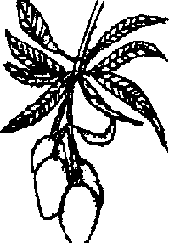
Mangifera indica
Manihot esculenta
Cassava
Parts used
Leaf
Root
Usage
Feed (After birth)
Feed
Booklet
Ruminants
Ruminants, swine

Manihot esculenta
Marantha arudinacea
Arrowroot
Parts used
Root
Usage
Feed
Booklet
Swine
Melia azedarach
Persian lilac or common bead tree
Parts used
Leaves
Usage
Scabies
Booklet
Ruminants

Melia azedarach
Mentha arvensis
Japanese mint
Parts used
Leaf
Usage
Sprains
Booklet
Ruminants

Mentha arvensis
Mentha cordifolia Opiz
Marsh mint
Parts used
Leaves
Usage
Abscesses (Surgery)
Booklet
General information

Mentha cordifolia Opiz
Mentha piperita
Pepper mint
Parts used
Leaf
Usage
Abscesses (Surgery)
Sprains
Booklet
General information
Ruminants
Mimosa pudica
Sensitive plant Touch-me-not
Parts used
Bark
Leaf
Root
Usage
Sprains
Internal
parasites
Sprains
Castration wounds pain (Surgery)
Booklet [Reference]
Swine
Ruminants
Swine [Tan
1981]
General information

Mimosa pudica
Mimusops elonga
Parts used
Seeds
Usage
Cough and colds
Booklet
Ruminants
Mitragyna speciosa
Parts used
Leaves
Usage
Dehydration
Booklet
Ruminants
Michelia champaca
Parts used
Bark
Usage
Wounds
Booklet
Ruminants
Momordica charantia
Bitter gourd
Parts used
Leaf
Fruit and root
Usage
Anemia
Internal parasites
Diarrhea
Booklet [Reference]
Swine [Micu and Mateo
1986]
Swine
Ruminants
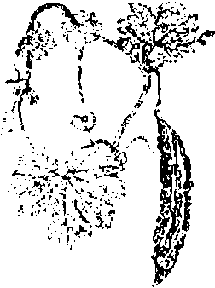
Momordica charantia
Morinda citrifolia
Indian mulberry
Parts used
Fruit
Leaf
Usage
Internal parasites
Appetizer
Booklet
Ruminants
Ruminants

Morinda citrifolia
Moringa oleifera
Horseradish tree or drumstick
Parts used
Leaf
Stem bark
Seed
Usage
Anemia, feed
Wounds, cough and colds, after
birth
Coughs and colds
Internal parasites
Booklet [Reference]
Swine [Micu and Mateo
1986]
Ruminants
Ruminants
Swine
Mucuna pruriens
Cow-witch
Parts used
Seed
Usage
To stimulate heat
Booklet
Ruminants
Murraya koenigii
Curry - leaf tree
Parts used
Leaf
Usage
Appetizer
Booklet
Poultry
Musa sp.
Banana
|
Parts used |
Usage |
Booklet |
|
Blossom |
Constipation |
Ruminants |
|
Fruit |
Bleeding, foot-and- mouth disease |
Ruminants |
|
Latex |
Castration wounds |
General information |
|
Leaf |
Bedding (Breeding, care of newborn), wounds |
Swine |
| |
Bloat, constipation, housing |
Ruminants |
|
Stem |
Fungus |
Ruminants |
|
Trunk |
Water source (Feeding) |
Swine |

Musa sp.
Myristica fragrans
Nutmeg
Parts used
Fruit
Usage
Diarrhea
Booklet
Poultry

Myristica fragrans
Nephelium lappaceum
Rambutan
Parts used
Leaf, bark
Usage
Fever
Booklet
Ruminants
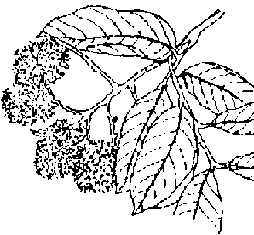
Nephelium lappaceum
Nicotiana tabacum
Tobacco
Parts used
Leaf
Usage
Ticks and lice
Ticks, wounds
Udder
infection
Booklet
Poultry
Ruminants
Swine

Nicotiana tabacum
Nigella sativa
Black cummin
Parts used
Seeds
Usage
Decreased milk flow
Retained
placenta
(Pregnancy and birthing)
Booklet
Ruminants
Ruminants
Nypa fructicans
Nipa
Parts used
Leaf
Usage
Housing
Booklet
Ruminants, swine
Ochna serrulata
Parts used
Root
Usage
Snake bite
Booklet
Ruminants
Ocimum sanctum
Holy basil
|
Parts used |
Usage |
Booklet |
|
Leaf |
Bleeding, coughs and colds, eye disease, udder infection, wounds |
Ruminants |
| |
Coughs and colds, ticks and lice |
Poultry |
| |
Mosquito control |
Poultry |
| |
Mosquito control |
Ruminants |

Ocimum sanctum
Ocimum basilicum
Sweet basil
|
Parts used |
Usage |
Booklet |
|
Leaf |
Bleeding, cough and colds, udder infection |
Ruminants |
|
Pulp |
Bleeding |
Ruminants |
Ocimum basilicum
Odina wodier
Besharam
Parts used
Leaf
Usage
Abscesses (Surgery)
Booklet
General information
Orthosiphon spicata
Parts used
Leaf
Usage
Difficulty in urinating
Booklet
Ruminants
Oryza sativa
Rice
|
Parts used |
Usage |
Booklet |
|
Bran |
Decreased milk flow |
Ruminants |
| |
Feed |
Ruminants, swine |
|
Seed |
Appetizer, decreased milk flow, dehydration, snakebite, wounds |
Ruminants |
| |
Care during pregnancy |
Swine |
| |
Castration wounds |
General information |
| |
Coughs and colds |
Poultry |
| |
Diarrhea |
Poultry, swine |
| |
Feed |
Poultry, ruminants |
|
Straw |
Bedding (Housing) |
Ruminants, poultry |
| |
Bedding (Care of newborn) |
Swine |
| |
Feed |
Ruminants |

Oryza sativa
Panicum isachne
Parts used
Leaf
Usage
Decreased milk flow
Booklet
Ruminants
Papaver somniferum
Poppy
Parts used
Fruit gum
Usage
Diarrhea
Booklet
Swine

Papaver somniferum
Pathos secundes
Parts used
Whole plant
Usage
Sprains
Booklet
Ruminants
Pavetta indica
Parts used
Whole plant
Usage
Difficulty in urinating
Booklet
Ruminants
Pedalium maurex
|
Parts used |
Usage |
Booklet |
|
Leaf, stem, fruit |
After birth |
Ruminants |
|
Bark |
Retained placenta |
Ruminants |
Pennisetum typhoideum
Millet
|
Parts used |
Usage |
Booklet |
|
Seed, straw |
Feed |
Ruminants |
|
Seed |
Feed |
Poultry |
| |
After birth |
Ruminants |
Persea americana
Avocado
Parts used
Leaf
Usage
Wounds, foot rot
Booklet
Ruminants

Persea americana
Peucadenum graveolens
|
Parts used |
Usage |
Booklet |
|
Seed |
Appetizer |
Swine |
| |
Bloat |
Ruminants |
| |
Retained placenta |
Ruminants |
Phaseolus aureus
Green gram
Parts used
Bean
Usage
Feed
Booklet
Poultry
Phaseolus calcaratus
Rice bean
Parts used
Seed
Usage
Feed
Booklet
Ruminants
Phaseolus mungo
Black gram
Parts used
Bean
Usage
Feed
Booklet
Poultry

Phaseolus mungo
Phaseolus radiatus
Mung bean
Parts used
Seed
Usage
Feed
Booklet
Ruminants, swine, poultry
Phyllanthus emblica
|
Parts used |
Usage |
Booklet |
|
Fruit |
Appetizer |
Ruminants |
|
Seed |
Wounds |
Ruminants |
Picrorrhiza kurrooa
|
Parts used |
Usage |
Booklet |
|
Root |
Appetizer |
Swine |
| |
Fever |
Swine, ruminants |
Piper betle
Betel pepper
|
Parts used |
Usage |
Booklet |
|
Leaf |
Abscesses, warts |
General information |
| |
Eye disease |
Ruminants |
| |
Housing, retained placenta (Breeding), udder infection |
Swine |

Piper betle
Piper nigrum
Black pepper
|
Parts used |
Usage |
Booklet |
|
Seed |
After birth, coughs and colds, decreased milk flow |
Ruminants |
| |
Fowl pax |
Poultry |
| |
Retained placenta |
Swine |

Piper nigrum
Plumbago zeylanica
Ceylon leadwort
Parts used
Bark
Usage
Bleeding
Booklet
Ruminants
Plumeria acuminata
Temple flower
Parts used
Leaf, bark
Usage
Internal parasites
Booklet
Swine
Pongomia glabra
Parts used
Seed
Usage
Wounds
Booklet
Ruminants
Premna odorata
Alagau
|
Parts used |
Usage |
Booklet |
|
Leaf |
Ticks and lice |
Poultry |
| |
Lice |
Swine |
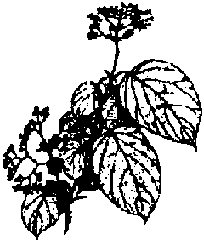
Premna odorata
Psidium guajava
Guava
|
Parts used |
Usage |
Booklet |
|
Leaf |
Castration wounds |
General information |
| |
Retained placenta |
Ruminants |
| |
Udder infection, diarrhea |
Swine, ruminants |
| |
Wounds |
Swine |
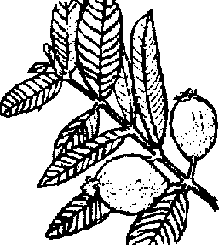
Psidium guajava
Pterocarpus macrocarpus
Parts used
Bark
Usage
Foot rot,
wounds
Booklet
Ruminants
Pterocarpus santalinus
Red Sanderswood
|
Parts used |
Usage |
Booklet |
|
Wood |
Abscesses (Surgery) |
General information |
Punica granatum
Pomegranate
|
Parts used |
Usage |
Booklet |
|
Bark |
Intestinal worms |
Poultry |
|
Fruit |
Intestinal worms |
Poultry |
| |
Eye disease |
Swine |
|
Leaf |
Eye disease |
Ruminants |
| |
Diarrhea |
Swine |
|
Root |
Internal parasites |
Ruminants |
|
Stem |
Diarrhea |
Swine |

Punica granatum
Quisqualis indica
Parts used
Leaf and seed
Usage
Intestinal worms
Booklet
Poultry

Quisqualis indica
Ricinus communis
Castor
|
Parts used |
Usage |
Booklet |
|
Leaf |
Feed (After birth) |
Ruminants |
|
Seed (oil) |
Bloat |
Ruminants |
| |
Constipation |
Swine and ruminants |
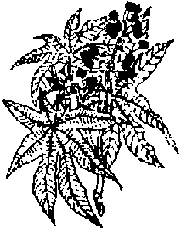
Ricinus communis
Saccharum officinarum
Sugar cane
|
Parts used |
Usage |
Booklet |
|
Juice from stem |
Decreased milk flow |
Ruminants |
|
Leaves or juice from stem |
Difficulty in urinating |
Ruminants |
|
Stalk, top, molasses |
Feed |
Ruminants |
Saccharum officinarum
Sansevieria sp.
Parts used
Root
Usage
Snake bite
Booklet
Ruminants
Santalum album
Sandalwood
Parts used
Wood
Usage
Wounds
Booklet
Swine
Sapindus rarak
Parts used
Fruit
Usage
Eye disease
Booklet
Ruminants
Saraca indica
Ashoka tree
|
Parts used |
Usage |
Booklet |
|
Bark |
Bleeding |
Ruminants |
| |
Retained placenta |
Ruminants |
| |
(Pregnancy and birthing) | |
Sauropus androgynus
Katuk
Parts used
Leaf
Usage
After birth
Booklet
Ruminants
Semen nelumbinis
Lotus
|
Parts used |
Usage |
Booklet |
|
Seed |
Breeding |
Swine |
| |
Nutrition |
Piglet |
Sesamum indicum
Sesame
|
Parts used |
Usage |
Booklet |
|
Seed |
Constipation |
Swine |
| |
Feed |
Poultry, ruminants |
| |
Vaginal bleeding |
Ruminants |
| |
Wounds |
Ruminants |

Sesamum indicum
Sesbania aegyptiaca
Parts used
Seed and bark
Usage
Diarrhea
Booklet
Poultry
Sesbania grandiflora
Katurai
Parts used
Bark
Usage
Dehydration, wounds
Booklet
Ruminants
Sida cordiofolia
Country mallow
Parts used
Whole plant
Usage
To stimulate heat
Booklet
Ruminants
Sorghum vulgare
Sorghum
Parts used
Seed
Usage
Feed, after birth
Booklet
Ruminants
Spondias pinnata or Spondias mangifera
Indian wild mango
|
Parts used |
Usage |
Booklet [Reference] |
|
Leaf |
Abscesses (Surgery) |
General information |
| |
Coughs and colds |
Poultry [Fernandez, 1990] |
| |
Tapeworm |
Swine |
|
Whole plant |
Wounds |
Swine |

Spondias pinnata or Spondias
mangifera
Stachyta jamaicensis
Parts used
Leaf
Usage
Udder infection
Booklet
Swine
Sterculia foetida
Wild almond
Parts used
Pod
Usage
Eye disease
Booklet
Swine
Swertia chirata
|
Parts used |
Usage |
Booklet |
|
Whole plant |
Appetizer, fever |
Swine |
| |
Fever |
Ruminants |
Symphytum officinale
Comfrey
|
Parts used |
Usage |
Booklet |
|
Leaf |
Castration wounds |
General information |
| |
Fractures (Surgery) |
General information |
| |
Sprains |
Ruminants |

Symphytum officinale
Tamarindus indica
Tamarind
|
Parts used |
Usage |
Booklet |
|
Bark |
Internal parasites |
Swine |
|
Fruit |
Appetizer, bloat, fever, internal parasites |
Ruminants |
| |
Constipation |
Ruminants, swine |
| |
Cough and colds |
Swine |
|
Leaves |
Fever, cough and colds |
Ruminants |
| |
Fractures (Surgery) |
General information |
| |
Internal parasites |
Swine |
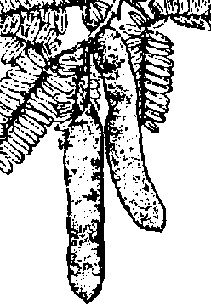
Tamarindus indica
Tectona grandis Teak
|
Parts used |
Usage |
Booklet |
|
Leaf, bark |
Poisoning |
Ruminants |
|
Wood |
Housing |
Ruminants |
Terminalia arjuna
Parts used
Bark
Usage
Bleeding
Booklet
Ruminants
Terminalia belerica
Parts used
Seed
Usage
Wounds
Booklet
Ruminants
Terminalia chebula
|
Parts used |
Usage |
Booklet |
|
Fruit |
Appetizer, bloat |
Ruminants |
|
Seed |
Wounds |
Ruminants |

Terminalia chebula
Thunbergia laurifolia
Parts used
Root
Usage
Poisoning
Booklet
Ruminants
Tinospora spp.
|
Parts used |
Usage |
Booklet |
|
Whole plant |
Scabies |
Swine |
|
Vine |
Appetizer, internal parasites |
Ruminants |
| |
Diarrhea |
Poultry |
Trachyspermum ami
Bishop's weed
|
Parts used |
Usage |
Booklet |
|
Seed |
Appetizer |
Swine |
| |
Diarrhea, bloat, appetizer |
Ruminants |
| |
Retained placenta |
Ruminants |
Tribulus terrestis
Parts used
Whole plant
Usage
Difficulty in urinating
Booklet
Ruminants
Trigonella foenum-graecum
Fenugreek
|
Parts used |
Usage |
Booklet |
|
Leat |
Foot-and-mouth disease (Infectious diseases) |
Ruminants |
|
Seed |
Appetizer |
Swine |
| |
Coughs and colds, coryza |
Poultry |
| |
Diarrhea |
Ruminants, poultry |
| |
Retained placenta(Pregnancy and birthing), after birth |
Ruminants |
Triticum aestivum
Wheat
|
Parts used |
Usage |
Booklet |
|
Bran |
Feed |
Ruminants |
|
Seed |
Decreased milk flow |
Ruminants |
| |
Diarrhea |
Poultry |
| |
Feed |
Ruminants, poultry |
|
Straw |
Bedding (Housing) |
Ruminants |
Veronica anthelmintica
|
Parts used |
Usage |
Booklet |
|
Seed, leaf, whole plant |
Appetizer |
Swine |
|
Seed |
Diarrhea |
Ruminants |
Vigna sinensis or unguiculata
Cowpea
Parts used
Seed
Usage
Feed
Booklet
Ruminants, poultry
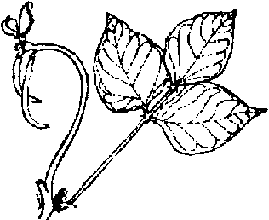
Vigna sinensis or unguiculata
Vitex negundo
Five-leaved chastetree
|
Parts used |
Usage |
Booklet |
|
Leaf |
Sprains, fever |
Ruminants |
| |
Wounds, ticks and lice |
Poultry |
Vitex negundo
Withania somnifera
Winter cherry
Parts used
Root
Usage
Decreased milk flow
Booklet
Ruminants
Xylia kerii
Parts used
Bark
Usage
Dehydration, wounds
Booklet
Ruminants
Zea mays
Maize
|
Parts used |
Usage |
Booklet |
|
Grain |
Feed |
Swine, poultry |
|
Straw, seed |
feed |
Ruminants |

Zea mays
Zingiber cassumunar
Common ginger
|
Parts used |
Usage |
Booklet |
|
Rhizome |
Diarrhea |
Swine |
| |
Internal parasites |
Ruminants |
Zingiber officinale
Ginger
|
Parts used |
Usage |
Booklet |
|
Rhizome |
Appetizer, coughs and colds |
Poultry, ruminants |
| |
Appetizer, eye disease, retained placenta |
Swine |
| |
Bloat, diarrhea, retained placenta |
Ruminants |

Zingiber officinale
Zingiber zerumbet
|
Parts used |
Usage |
Booklet |
|
Rhizome |
Coughs and colds |
Ruminants |
|
Rhizome |
Diarrhea |
Swine |
|
| ||||||||||||||||||||||||||||||||||||||||||||||||||||||||||||||||||||
Ethnoveterinary question list
If you work on livestock production in villages, it is important to know and understand local animal health care practices. Here is a list of questions to ask livestock raisers when recording information on ethnoveterinary medicine. The questions are for guidance only; they should be adapted to local conditions and the situation of each livestock raiser.
Background information
· Who in the household is responsible for, manages, or treats sick animals?
· What are the local seasons of the year? How do they affect livestock diseases?
· What species of livestock are kept? What breed, age or other categories are considered relevant for animal health?
Disease names
· Elicit the names of all livestock diseases in the area, by species, seasons and other locally relevant variables.
· Cross-check all terms for duplications, overlaps, confusions and omissions.
· Decide which diseases warrant further investigation in the question list below.
The question list
Ask these questions for each disease you have identified above.
1. What species, breeds, ages and sexes of animals are affected by this disease?2. Is there seasonality or other timing to the appearance of the disease?
3. Does it usually affect one animal or a group of animals at the same time? Does it spread from animal to animal (i.e., is it contagious or infectious)?
4. What causes the disease natural/physical causes, supernatural/non-physical causes, or both? Describe.
5. Are there ways to prevent/avoid this disease? If so, what are they?
6. Describe the main symptoms, if possible, in order of progression and timing, i.e., what is the first symptom seen and when? What is the second symptom seen and when? etc. Also, what is the symptom, if any, that makes you decide it is this specific disease?
7. Are traditional treatments available? What are they? Where/how are they obtained? What happens when they are used? (Please be as specific as possible.)
8. Are modern treatments available? What are they? Where/how are they obtained? What happens when they are used? (Please be as specific as possible.)
9. What usually happens if the animal is not treated?
10. When did you last have (or for areas with few livestock per household, hear of) an animal with this disease? What did you do and what happened to the animal?
Source: Based on Grandin and Young (forthcoming).
|
| ||||||||||||||||||||||||||||||||||||||||||||||||||||||||||||||||||||
Glossary of technical terms
These manuals avoid using technical terms if at all possible. Sometimes, however, using a technical word is unavoidable. This glossary contains such words and other terms found in books on veterinary medicine.
A
Abortifacient. Causes abortion or miscarriage.
Abscess. A collection of pus in the tissue.
Acaricide. Chemical used for tick (external parasite) control.
Active principle. Ingredient or the chemical component of a crude drug which has a therapeutic effect.
Acute. Condition which is critical, sudden and of short duration.
After birth. Placenta and other membranes expelled after birth.
Allergen. Substance capable of inducing an allergic response.
Allergy. Hypersensitivity of the body cells to specific substances such as antigens and allergens, resulting in various types of reactions.
Alterative. A substance which alters a condition by a gradual change toward restoration of health.
Analgesic. Pain-reliever or pain-killer.
Anaphrodisiac. A drug that represses sexual desire.
Anemia. Number of red blood cells and quantity of hemoglobin in blood reduced below normal.
Anesthetic. An agent which causes total or partial loss of sensation.
Anhidrotic. An agent that suppresses perspiration.
Anodyne. A soothing agent which eases pain.
Anthelmintic. An agent that removes intestinal worms from the host animal.
Antibiotic. A chemical substance produced by a microorganism that has the capacity to kill or inhibit the growth of other microorganisms.
Antibody. Immunoglobulin molecule that is found normally in the body but is elicited after contact with an antigen.
Anticoagulant. Agent preventing or retarding blood clotting.
Anticolic. Agent that relieves abdominal pain by expelling gas from the stomach and intestines.
Antidote. A treatment which counteracts or destroys the effect of poisons or other medicines.
Antidyspeptic. Acts against nausea due to indigestion.
Antiemetic. An agent that relieves vomiting.
Antigen. A substance capable of inducing an immune response.
Antiherpetic. Drug for skin inflammations.
Antipyretic. Substance that lowers body temperature to the normal level; used against fever.
Antirheumatic. Medicine for rheumatism.
Antiseptic. An agent for destroying or inhibiting diseasecausing bacteria.
Antisialic. Checking the flow of saliva.
Antispasmodic. Prevents or relieves muscular spasms or cramps.
Antitussive. An agent that relieves coughing.
Aphrodisiac. A drug that arouses sexual desire.
Aperient. A gentle purgative.
Aromatic. Emits fragrant odor; used to make medicinal preparations more palatable.
Ascariasis. Infestation by the intestinal parasite Ascaris.
Ascarid. A roundworm (nematode parasite) found in the intestine of pigs, birds, ruminants, horses and humans.
Astringent. Shrinks tissues and prevents secretion of fluids from wounds.
B
Bacteria. Microscopic organisms.
Balm. A soothing or healing medicine.
Balsam. A semifluid, resinous vegetable juice.
Balsamic. Healing or soothing agent.
Bladder. The organ which is reservoir for urine, or gall, in body.
Boil. Infected, painful, hard swelling of the skin.
C
Carminative. An agent that relieves flatulence.
Catarrh. Inflammation of nose and mucous membranes.
Cathartic. Causes cleansing of the bowels.
Chronic. Condition which is recurring and of long duration.
Colic. Gas pain.
Collyrium. An eyewash or lotion for the eyes.
Colostrum. Viscid yellow milk, high in protein and micro-nutrients, produced by mothers after birth.
Compress. A wet, folded cloth soaked in a solution and applied firmly to a part of the body.
Congestion. Abnormal accumulation of blood in a part.
Concoction. A preparation from crude materials, made by combining different ingredients.
Constipation. Infrequent or difficult bowel movement with hard stools caused by functional or organic disorders or improper diet.
Contagious. Diseases which are readily passed on to others.
Contamination. The soiling or making inferior by contact, as by introduction of organisms into a wound.
Contusion. Injury to tissues caused by blunt force which did not disrupt or lacerate the skin.
Convulsion. A violent involuntary contraction of a muscle or muscles.
Costive. An agent that produces constipation.
D
Decoctions. Solutions representing the water-soluble constituents of plant drugs prepared by boiling the drug in water.
Decongestant. An agent that reduces congestion or swelling.
Demulcent. A soothing medicine or application.
Depressant. Agent that reduces functional activity.
Depurative. Purifying agent; normally applied to bloodpurifiers.
Dermatitis. Inflammation of the skin.
Detergent. Cleansing agent.
Diagnosis. The determination of the nature of a case of disease. Includes: (1) the name, (2) the cause and (3) the prognosis.
Diaphoretic. An agent that promotes profuse perspiration.
Diarrhea. Abnormal frequency and fluidity of stool discharges.
Digestant. Aids or promotes digestion.
Disease. Any departure from a state of health.
Diuretic. A drug or preparation that promotes urine production.
Dosage. The determination and regulation of the size, frequency and number of doses.
Dose. The quantity of a specified medication to be administered at one time that cures or mitigates illness.
Drench. Giving medicines in liquid form by mouth and forcing the animal to drink.
Dysentery. Inflammation of the large intestines with evacuation of liquid and bloody stool and painful straining.
Dyspepsia. Indigestion characterized by nausea.
Dysuria. Difficult discharge of urine.
E
Eczema. Inflammatory skin disease characterized by redness, itching and formation of scales and crusts.
Edema. Abnormal accumulation of fluids in the tissues.
Emetic. Causes vomiting
Emollient. An agent that softens or soothes the skin, or soothes an irritated internal surface.
Encephalitis. Inflammation of the brain.
Enema. Any liquid preparation introduced into the rectum.
Enteritis. Inflammation of the intestines.
Epidemic. A sudden outbreak of disease in a relatively small area.
Estrus. Heat, the condition of being receptive to breeding.
Etiology. The study or theory of the cause(s) of any disease; the sum of knowledge regarding causes.
Eupeptic. Promotes good digestion.
Expectorant. Promotes ejection of fluid from the lungs and trachea.
F
Febrifuge. A remedy for fever.
Fever. Increase in the body temperature; an abnormally high body temperature.
Flatulence. Gas formation in the alimentary canal.
Fluid extract. Liquid preparation of vegetable drug containing alcohol as a solvent or as a preservative or both.
Fomentation. Application of warm, moist substances such as wet cloth to ease pain and inflammation.
Fracture. Breaking of a bone.
G
Galactagogue. An agent that promotes milk flow.
Gastroenteritis. Inflammation of the stomach and intestines characterized by pain, nausea and disease germs.
Germicide. Destroy disease germs.
Gestation. Period of pregnancy term of life of offspring within womb.
H
Health. A normal condition of body and mind.
Hematoma. A swelling filled with blood.
Hemorrhage. Excessive bleeding.
Hemorrhoid. Painful swelling formed by dilation of a vein in the anus; usually accompanied by bleeding and constipation; piles.
Hygiene. The science of health and its preservation.
Hypnotic. Induces sleep.
I
Immune. Resistant to a disease due to the formation of antibodies.
Immunity. The body is defense against disease; can be passed on to offspring through colostrum, or through exposure and naturally developed defenses (vaccinations/inoculations).
Infectious. Disease conditions which can be passed on to others (see Contagious).
Inflammation. The reaction of living tissues to injury infection or irritation; characterized by pain swelling, redness and heat.
Infusion. Herbal remedy preparation which involves adding hot or cold water to plant part(s) and allowing to stand (with cover), usually for about 15 minutes; an infusion can be either hot or cold.
Internal medicine. Branch of medicine not involving surgery.
Invigorant. Strengthening, energy-giving agent.
L
Larva. An independent, immature stage in the life cycle of an animal or insect in which it is unlike the parent and must undergo changes in form and size to reach the adult stage.
Laxative. Encourages defecation.
Lesions. Alterations of skin due to skin disease.
Liniment. A medicated liquid, usually containing alcohol, camphor and an oil, applied to the skin to relieve pain or stiffness.
M
Macerate. Cold water extract of a plant or crude drug, also, to soften or separate by soaking.
Massage. Rubbing or kneading the muscles.
Mastitis. Inflammation of the udder due to infection.
Medicine. (1) any drug or remedy (2) the art or science of healing diseases—the diagnosis and treatment of a case of disease.
Milk fever. Critical condition after calving when cow cannot stand and may quickly die unless given calcium therapy.
Mixture. A combination of different elements or ingredients.
N
Narcotic. A drug, which, in moderate doses, alleviates pain, reduces sensibility, produces sleep; in large amounts, induces stupor, coma or convulsions.
Nausea. Upset stomach, with the inclination to vomit.
Nervine. Soothing to the nerves; provides nervous relaxation.
Nutrient. Nourishing substance.
O
Obstuent. Any agent that causes obstruction (e.g., in the wind pipe or intestine).
Ointment. Combination of juice or plant part with oil (e.g., coconut oil) and starch.
P
Pandemic. An outbreak of disease occurring over a very wide area, affecting a large percentage of the population.
Paralysis. Inability to move a muscle or group of muscles, often coupled with loss of sensation in the affected area.
Parasites. Any organisms which have a harmful effect or cause a disease condition; usually refers to worms, ticks, fleas' mites, lice, leeches, etc.
Parturient. Giving birth or pertaining to birth.
Parturition. The act of giving birth; calving.
Pathology. The science that deals with the study of disease.
Pelvic. The area around the anus and the hips.
Pharmacognosy. The study of the biology, chemistry and pharmacology of plant drugs and species.
Pharmacology. The study of the action of chemicals and drugs in the body.
Placenta. The sac inside which the fetus grows and is attached to the mother's womb through which it is nourished.
Plaster. A mixture of materials that hardens; used for immobilizing body parts.
Preventive medicine. Branch of study and practice which aims at prevention of disease.
Poison. A substance that, in relatively small amounts, may cause structural damage or functional disturbance.
Post partum. After a birth.
Poultice. A soft, usually heated preparation spread on a cloth and applied to a sore or inflammation.
Prognosis. A forecast as to the probable result of a case of disease; the prospect as to recovery from a disease afforded by the nature and symptoms of the case; may be: (1) favorable, (2) guarded, (3) unfavorable.
Prolapsed rectum. The lower portion of the intestinal tract comes out of the anus.
Prolapsed uterus. The uterus descends into the vagina and may be seen at the vaginal opening.
Prophylactic. Preventing against disease.
Pulmonary. Pertaining to the lungs.
Purgative. Causing evacuation from the intestines.
R
Refrigerant. Relieving fever and thirst. Rejuvenator. Causes renewed vitality. Repellent. An agent that repels or drives off other organisms.
Resolvent. An agent that promotes the subsidence of an inflammation or the softening and disappearance of a swelling.
Restorative. Aids in regaining normal vigor.
Retained placenta. A disease condition in which the placenta is not expelled after calving, requiring treatment.
Revulsive. Diverts disease from one part of the body to another.
Rinse. To wash out with water.
Rubefacient. An external skin application causing redness of the skin.
Ruminant. An animal that has a stomach with four complete cavities and regurgitates undigested food from the rumen and masticates it when at rest (e.g., cattle, buffalo, sheep, goat).
S
Secretion. The liquid products of glands.
Sedative. An agent that calms the nerves.
Sign. Any objective evidence of a disease.
Soak. To thoroughly wet or saturate with liquid.
Soporific. An agent that induces sleep.
Specific agent. Remedy that has a special effect on a particular disease.
Sporadic. An outbreak of disease in a single or scattered location.
Sprain. A violent and sudden twist of a joint.
Starchy water. Water full of starch.
Steam. The vapor which rises from boiling water
Sterile. Free from living germs or bacteria.
Stimulant. Increases or hastens body activity.
Stomachic. Stimulates activity of the stomach.
Stomatitis. Inflammation of the mouth.
Styptic. Stops bleeding with an astringent.
Sudorific. An agent that causes sweating.
Symptom. Any functional evidence of disease or of a patient's condition.
Syndrome. The aggregate of symptoms associated with a particular disease.
T
Therapeutics. Branch of medicine associated with the use of remedies and the treatment of diseases.
Tincture. Alcoholic extract of a plant drug.
Tonic. Produces healthy muscular condition and reaction.
Treatment. Application of therapeutic measures.
U
Ulcer. A superficial inflammation or sore of the skin or mucus membrane discharging pus.
V
Vagina. The portion of the female reproductive tract through which the baby animal must pass. It is separated from the uterus by the cervix.
Vermicide. An agent lethal to worms or intestinal animal parasites.
Vermifuge. An agent that expels the worms or intestinal animal parasites; anthelmintic.
Vesicant. An agent that produces blisters.
Virus. A minute organism which causes disease.
Vulnerably. An agent that promotes the healing of wounds.
Vulva. The opening below a female animal's tailhead to which the urinary and reproductive tracts are attached, which swells at time of estrus and more so at calving time.
Sources
Agravante, et al. (1985)
Blood and Studdert (1988)
Co
(1989)
GuzmanLadion (1985)
Jensen and Kaeberle (1975)
Lewis
(1977)
Nadkarni (1992)
Padua, et al.
(1978)
|
| ||||||||||||||||||||||||||||||||||||||||||||||||||||||||||||||||||||
Participants' profile
Nita Cueva-Abena
Intemational Institute of
Rural
Reconstruction (IIRR)
Silang, Cavite, Philippines
Tel (0969) 9451
Fax
9937
Dr. Abena has a B. S. degree from Aquinas University and a D.V.M. degree from the University of the Philippines, Diliman, Quezon City, Philippines. Her experience includes clinical practice with food and companion animals, rural development and extension work and consultancies for commercial swine farms. Currently, she is IlRR's swine production coordinator. Among other things, she conducts training on swine production and basic animal health care for farmers. She has done research on ethnoveterinary practices in Cavite province, Philippines, and has used herbal remedies during her clinical work. Dr. Abena is a Filipina.
Jayvir V. Anjaria
C/5, Sonarika Apt.
Nr. Panjarapole,
Atira Road
Ahmedabad 380 015, India
Tel 091-079 - 404910
Fax c/o
091-079 - 425332
An Indian national, Dr. Jayvir V. Anjaria is a retired professor of pharmacology and, currently, a consultant to the pharmaceuticals and herbal drug industry. His experience includes 11 years of field work in veterinary medicine, 21 years in teaching, research and administration and 10 years as an international consultant. Dr. Anjaria has travelled to various countries, including the USA, UK, France and Canada. He has received four National Awards in India for his efforts in indigenous drug research.
Luka Choemuen
115 M.2 T. Rimkok A. Muang
Chiangrai
57100
Thailand
Tel (053) 713-169
Fax (053) 713-169
Mr. Choemuen is the agricultural manager of the Development and Education Project for Akha (a hill tribe in Thailand). He graduated from Chiangrai Teachers' College with a bachelor's degree in agriculture and education. He has served as a teacher, trainer and coordinator for animal raising, farming, irrigation and the administration of a revolving credit fund. He is a Thai citizen.
Baldwin L. Dy
Philippine Animal Health Center
Bureau of
Animal Industry
BAI CPD, Visayas Avenue
Diliman, Quezon City,
Philippines
Tel/Fax 99-21-77
Dr. Dy is a Filipino veterinarian at the Epidemiology Section of the Philippine Animal Health Center, Bureau of Animal Industry, Department of Agriculture. He has been involved in ethnoveterinary documentation, research and development, application, practice and extension for the past eight years. He is currently involved in animal disease investigations and surveillance in the Philippines.
Mila Gracia A. Ejercito
1070 M. Ocampo St.
Bo. Obrero,
Tondo
Manila, Philippines
Tel 35-32-60
Fax 818-76-18; 587-919
Dr. Ejercito is a Filipino veterinarian with the Philippine program of Heifer Project International. She provides farmerlevel training to grass-root organizations nationwide on proper livestock production management.
Tomas J. Fernandez, Jr.
Department of Animal Science
and
Veterinary Medicine
ViSCA, Baybay, Leyte 6521A
Philippines
Dr. Fernandez, Jr. is the Head of the College of Veterinary Medicine at the Visayas State College of Agriculture, Baybay, Leyte, Philippines. He has been doing research on ethnoveterinary medicine for 10 years, studying the toxicity and efficacy of herbal remedies. Dr. Fernandez earned his D.V.M and M.S. degrees at the University of the Philippines, Diliman, Quezon City and his Ph.D. at the Centre for Tropical Veterinary Medicine at the Royal Faculty of Veterinary Medicine, Edinburgh University, Edinburgh, Scotland. Dr. Fernandez is a Filipino.
Nitya Sambamurti Ghotge
ANTHRA
10, Lantana Gardens N.D.A.
Road
Bavahan, Poona 411021, India
Tel 0212-369065
Dr. Ghotge received her degree in veterinary sciences and animal husbandry from the College of Veterinary Sciences, Haryana Agricultural University, Hisar, India, and her master's degree in veterinary surgery from Bombay Veterinary College, India. She has worked extensively as a veterinary researcher and consultant to NGOs, animal welfare organizations, zoological parks and research organizations. She has developed educational and training materials for rural and urban animal owners and health workers and has conducted training programs in urban and rural areas, especially directed towards rural women. She is interested in alternative systems of animal medicine and care and has collected and documented indigenous veterinary practices in different parts of Western India. Dr. Ghotge has also worked as a small-animal practitioner and surgeon for several years. She is an Indian citizen.
Vinai Klunsorn
Northern Agriculture Development Center (NADC)
65
Sutape, Amphur Muang
Chiangmai, Thailand
Tel (053) 279080, 276490
Mr. Klunsorn is the agricultural officer of NADC. He finished high vocational level in animal science from Maejo Agricultural College, Chiangmai, Thailand in 1970. He formerly raised fish and swine as a private business. He was also the agricultural extension worker in the highland area around Chiangmai, Thailand, for a UNDP Project. One of his major current responsibilities is to administer a revolving fund for animal raising for rural people. Mr. Klunsorn is a Thai citizen.
S. Kumaraswamy
Agroskills Consultancy
7711, Isipatana
Mawata
Colombo 5, Sri Lanka
Tel (01) 508129, 508130
Fax (01) 584124
Dr. Kumaraswamy, a Sri Lankan, is a veterinarian. He has 15 years experience in clinical practice and he has done research in animal reproduction for 10 years. He was also deputy director of the Department of Animal Production, Sri Lanka, provincial director of the Department of Animal Production and advisor to the Ministry of Agriculture, Government of Sri Lanka. He is presently a director and consultant of Agroskills Consultancy and a freelance consultant.
Chheng Heat Leao
2440 E. Van Owen Avenue
Orange, CA 92667,
USA
Tel Work/Daytime (714) 5711980
Home/Nighttime (714) 633-6416
Fax
(714) 571 -1974
Dr. Leao, a Cambodian, is a veterinarian trained in animal production. He was the provincial chief of the Veterinary Department in Cambodia for 19 years. He worked closely with Cambodian farmers in animal production and the eradication of contagious animal diseases. Dr. Leao also taught veterinary students at the universities in Cambodia. He now lives in California. Since 1985 he has been providing teaching materials in Khmer for his young colleagues in Cambodia through the American Friends' Service Committee, for which he is a veterinary consultant.
Carmencita Directo-Mateo
Institute of Animal
Science
University of the Philippines at Los Ba�os
College, Laguna,
Philippines
Tel 1092551
Fax 109-2547
Dr. Mateo is a Filipino veterinarian and animal nutritionist with D.V.M., M.Sc. and Ph.D degrees. She has been involved in university research on the utilization of medicinal plants for animal health care in the Philippines. She has published on this topic and participated in workshops, conferences and seminars addressing ethnoveterinary concerns.
Evelyn Mathias
Intemational Institute of
Rural
Reconstruction (IIRR)
Silang, Cavite 4118
Philippines
Tel
0969-9451
Fax 0969 9937
Dr. Mathias holds a Dr. med. vet. degree (equivalent to Ph.D.) in veterinary medicine and a D.V.M. degree, both from the University of Giessen in her native Germany and an M.S. in international development from Iowa State University, USA. She has performed field research on goats' feeding behavior in Tunisia, the reproductive physiology of swamp buffaloes in Thailand and ethnoveterinary medicine in Indonesia. She has conducted extensive literature reviews of ethnoveterinary medicine and indigenous tree management worldwide. From 1981 to 1985, she was a visiting lecturer at Bogor Agricultural University in Indonesia. From 1988 to 1992, she was a research associate with the Center for Indigenous Knowledge for Agriculture and Rural Development (CIKARD) at Iowa State University. Currently, she is the coordinator of the Regional Program for the Promotion of Indigenous Knowledge in Asia at IIRR. There, she works on the retrieval and application of indigenous knowledge in development and promotes regional networking.
Constance M. McCorkle
7767 Trevino Lane
Falls
Church
Virginia 22043, USA
Tel (703) 2041837
Dr. McCorkle holds an M.A. in linguistics and an M.A. and a Ph.D. in anthropology from Stanford University. Currently, she works as a consultant in agriculture, environment and rural development worldwide. She previously served as director of USAID's staff environmental training program and as director of research for USAID's global gender-in-development project. From 1985 to 1990, as a faculty member in the University of Missouri's Department of Rural Sociology, she coordinated the Sociology Project of the Small Ruminant-Collaborative Research Support Program (SRCRSP). Dr. McCorkle began work in ethnoveterinary medicine in 1980 while conducting the SR-CRSP research in Peru. In 1986, she published the first article describing the field of ethnoveterinary research and development (Journal of Ethnobiology, 6: 129149). She has since designed and conducted research and published several articles on ethnoveterinary medicine, traditional healers and paraveterinary extension in Latin America and Africa. She is currently editing a multi-author volume (with Schillhorn van Veen and Mathias) on ethnoveterinary medicine worldwide. She is a US citizen.
Sommay Mekhagnomdara
National Institute Vaccine Production
(NIVP)
B.P. 1298
Nonteng, Vientianne, Laos
Tel 612017-612028
Fax c/o
Quaker Service 856-21-314370
Dr. Sommay, a Lao citizen, is the head of the Veterinary Division of the National Institute for Vaccine Production. He is also Quaker Service's coordinator for the improvement of veterinary field services. He has published two Booklets: Village veterinary worker training handbook and Indigenous chicken raising in Laos.
Tri Budhi Murdiati
Balitvet-Research Institute for Veterinary
Science
Jln. Martadinata 30
Bogor 16114, Indonesia
Tel (0251)
331048
Fax (0251) 336425
Dr. Tri Budhi Murdiati holds an M.Sc. in toxicology from Sydney University (Australia) and a Ph.D. in poisonous plants from James Cook University (also in Australia). She worked for three years with the Research Institute for Animal Production in Bogor, Indonesia. In 1984, she joined the Research Institute for Veterinary Science, where she is currently a research scientist. Dr. Murdiati has conducted a number of laboratory trials and village studies on ethnoveterinary medicine. She has also done research on residues of antibiotics in livestock products and the environmental impact of livestock methodology. She is an Indonesian citizen.
H.D. Wasantha Piyadasa
Provincial Director's Office
(West)
Livestock Farrn
Welisera, Ragama
Sri Lanka
Tel 01 538474
Dr. Piyadasa, a Sri Lankan, has 17 years of experience in clinical practice with livestock and other animals species, in veterinary acupuncture and in the use of herbal medicine in animals. He completed his B.S. degree in veterinary science in 1975 and an M.Sc. in animal physiology in 1984, both from Peradenya University. He is currently involved in swine development activities in the Department of Animal Production and Health, Sri Lanka.
Piyasak Sukarnthapong
North East Thailand (NET)
Foundation
Post Office Box 2, Amphur Muang
Surin 32000, Thailand
Tel
511-172
Mr. Sukarnthapong has been in charge of the Northeast Thailand Foundation's livestock project since 1990. He conducts training and implements field activities with villagers in the project's target area. The livestock project focuses on medicines and animal health care. It emphasizes a blend of indigenous technologies and practices with Western science. Mr. Sukarnthapong has five years of experience in beef cattle production. He is a Thai citizen.
Sagari R. Ramdas
ANTHRA
A-21 Sainikpuri
Secunderabad
500594, India
Tel 040-862826; 040-863167
Fax 040-690892
Dr. Ramdas is a graduate of the College of Veterinary Sciences, Haryana Agricultural University, Hisar, India, and holds a master's degree in animal breeding and genetics from the University of California—Davis, USA. She has wide professional experience with different rural livestock production problems in India, ranging from tribal to semi-nomadic shepherding systems. As a veterinary consultant to various NGOs, Dr. Ramdas has trained animal paramedics, specifically rural women, and developed training and educational materials which are now used for alternative health systems (especially homeopathy) for the prevention and cure of animal disease. She is deeply involved in the collection and practical application of indigenous veterinary practices. An Indian citizen, Dr. Ramdas is working with rural communities in South India.
Aem Wangklang
36 Moo 4 Ban Nongsai
Tambol Lamprick, Amphur
Kornburi
Nakornrachasima, 30250
Thailand
Mr. Wangklang is a Thai farmer. He cultivates cassava and raises 40 cows and 200 chickens. He has 20 years of experience in using herbal medicine for animals. He is a member of the Committee of the Lamprick Livestock Farmer Association.
Medino A. Yebron
College of Veterinary Medicine
Central
Mindanao University
University Town
8710 Musuan, Bukidnon
Philippines
Dr. Yebron is a veterinarian at the College of Veterinary Medicine of Central Mindanao University in Bukidnon, Philippines. He is an associate professor and former dean of that college, which conducted more than 30 studies and theses on herbal medicine and related indigenous practices. Dr. Yebron holds an M.S. degree with a major in veterinary pathology. He has been teaching and doing research and extension work for the last 18 years. He is concurrently the coordinator of the Philippines-Belgium Animal Disease Diagnostic Laboratory.
|
| ||||||||||||||||||||||||||||||||||||||||||||||||||||||||||||||||||||
References
Adjid, R.M.A. 1990. Survey of Traditional Medicine Use for Sheep Health Problems by OPP Farmers in the Bogor District of West Java. Working Paper No. 118. Small Ruminant- Collaborative Research Support Program, Balai Penelitian Ternak, Pusat Penelitian den Pengembangan Peternakan, Bogor, Indonesia.
Agravante, Marie Denise, Jovita G. Reyes, Florenda I. Santiago and Angelita G. Reyes. 1985. Philippine Plants (Their Medicinal, Culinary and Cosmetic Values). REX Book Store, Manila, Philippines.
Anjaria, Jayvir V. 1986. Traditional (Indigenous) Veterinary Medicine Project: Recent Trends in the Use of Traditional (Indigenous) Veterinary Drugs in Animal Health and Production. Veterinary Research Institute, Gannornwa, Peradeniya, Sri Lanka.
Anjaria, Jayvir V. 1994. Traditional Veterinary Medicine in India: Research and Development—An Overview. Unpublished paper. Available at the Library of the International Institute of Rural Reconstruction, Silang, Cavite, Philippines.
Blood, D.C. and V. P. Studdert. 1988. Bailliere's Comprehensive Veterinary Dictionary. Bailliere Tindall: London.
Co, Leonardo L. 1989. Common Medicinal Plants of the Cordillera Region (Northern Luzon, Philippines). Community Health Education, Services and Training in the Cordillera Region (CHESTCORE), Baguio City, Philippines.
Dayrit, Ricardo El. S. 1979. Swine Raising. International Institute of Rural Reconstruction, Silang, Cavite, Philippines.
Evans, William Charles. 1989 (13th edition). Trease and Evans' Pharmacognosy. Bailli�re Tindall, London, UK.
FAO. 1991. Traditional Veterinary Medicine in Indonesia. FAO Regional Office for Asia and the Pacific, Bangkok, Thailand.
FAO. 1991. Traditional Veterinary Medicine in Nepal. FAO Regional Office for Asia and the Pacific, Bangkok, Thailand.
FAO. 1991. Traditional Veterinary Medicine in Sri Lanka. FAO Regional Office for Asia and the Pacific, Bangkok, Thailand.
FAO. 1992. Traditional Veterinary Medicine in the Philippines. FAO Regional Office for Asia and the Pacific, Bangkok, Thailand
Fernandez, T. J. 1990. Medicinal Plants for Haemophilus gallinarum Infection in Chickens. ASEAN Journal on Science and Technology for Development. 7 (22): 99-107.
Fernandez, T. J. 1991. Local Plants Having Anthelmintic Values. ASEAN Journal on Science and Technology for Development. 8 (2):115-119.
Fernandez T. J., D. N. Amihan and E. E. Ceniza. 1992. Anthelmintic Principle of Local Plants. Terminal Report Submitted to ODREX, Visayas State College of Agriculture, Baybay, Leyte, Philippines.
Fernandez T. J. and F. B. Braga. 1992. Anthelmintic Value of Some Local Plants. Annual Report Submitted to ODREX, Visayas State College of Agriculture, Baybay, Leyte, Philippines.
Fernandez, T. J. and L. A. Galvez. 1994. Phytochemical and Pharmacological Studies of Indigenous Plants. Paper presented during the in-house review in May 1994 at DASVM, Visayas State College of Agriculture, Baybay, Leyte, Philippines.
Fernandez, T. J. and N. P. Rosillo. 1994. Anthelmintic Value of Some Local Plants. Paper presented during the in-house review in May 1994 at DASVM, Visayas State College of Agriculture, Baybay, Leyte, Philippines.
Grandin, Barbara and John Young. Forthcoming. Collection and Use of Ethnoveterinary Data in Community-based Animal Health Programs. In: McCorkle, C., E. Mathias and T. Schillhorn van Veen (eds.). Ethnoveterinary Research and Development. IT Publishers. London.
Guzman, Constancio C. de. 1990. Herbs and Spices: Sweet Basil, Dill, Coriander and Fennel. Technology and Livelihood Resource Center, Manila, Philippines.
Guzman-Ladion, Herminia de. 1985. Healing Wonders of Herbs. Philippine Publishing-House, Manila, Philippines.
Jensen, L.A. and M. L. Kaeberle. 1975. Course Outline for Livestock Disease Prevention 487. Iowa State University Research Foundation, Ames, lowa, USA.
Lewis, Walter H. 1977. Medical Botany: Plants Affecting Man's Health. John Wiley and Sons, New York.
Loculan, Ma. D. and C. D. Matco. 1986. Utilization of Medicinal Plants for Animal Health Care. Philippine Journal of Veterinary and Animal Science 12 (3&4): 1-7
Ludgate, Patrick J. 1989. Kumpulan Peragaan Dalam Rangka. Penelitian Ternak Kambing den Domba di Pedesaan. Balai Penelitian Ternak, Pusat Penelitian den Pengembangan Peternakan, Bogor, Indonesia.
Mateo, Carmencita D. 1 9X6. Medicinal Plants for Animal Health Care. Animal Production Technology. 2 (1): 26 32.
Mateo, Carmencita D. 1987. use of Herhal Medicine in Disease Control and Prevention in Livestock. Animal Husbandry and Agricultural Journal. (April): 14-17.
Mathias-Mundy, Evelyn and Constance M. McCorkle. 1989. Ethnoveterinary Medicine: An Annotated Bibliography. Bibliographies in Technology and Social Change No. 6. Iowa State University Research Foundation, Ames, Iowa, USA.
Mathias-Mundy, Evelyn and Tri Budhi Murdiati (eds.). 1991. Traditional Veterinary Medicine for Small Ruminants in Java. Indonesian Small Ruminant Network, Bogor, Indonesia.
Mathias-Mundy, Evelyn, Sri Wahyuni, Tri Budhi Murdiati, Agus Suparyanto, Dwi Priyanto, Isbandi, Beriajaya and Harini Sangat-Roemantyo. 1992. Traditional Animal Health Care for Goats and Sheep in West Java: A Comparison of Three Villages. Working Paper No. 139. Small Ruminant- Collaborative Research Support Program, Balai Penelitian Ternak, Pusat Penelitian den Pengembangan Peternakan, Bogor, Indonesia.
Micu, E. D. and C. D. Mateo. 1986. The Potential Use of Ampalaya (Momordica charantia Linn.), Malunggay (Moringa oleifera) and Kalasiman (Portulaca oleracea Linn) Extracts in the Prevention of Piglet Anemia. Philippine Journal of Veterinary and Animal Science. l 2 (3 & 4): 24-30.
Morton, Julia F. 1977 Major Medicinal Plants: Botany, Culture and Uses. Charles C. Thomas Publisher, Springfield, USA.
Murdiati, T.B. and J. Manurung. 1991. Uji Daun Ketepeng (Cassia alata L.) untuk Pengobatan Penyakit Kulit (Psoroptes Cuniculi) pada Kelinci. Research Institute for Animal Disease, Bogor, Indonesia.
Mursof, E. P. 1990. Pengendalian Ascaridia galli pada Ayam Petelur Dengangetah Papaya (Carica papaya Linn.). MS Thesis. Institut Pertaian Bogor, Indonesia.
Nadkarni, A. K. 1992. Indian Materia Medical Vols. 1 and 2. Popular Prakashan Private Ltd., 35C Tardeo Road, Popular Press Bldg., Bombay - 400034, India.
Oliveros-Belardo, Luz. 1981. Herbal Medication in the Philippines and the Search of its Scientific Basis. Occasional Paper, Research Center, De La Salle University, Philippines.
Padua, Ludivina S. de, Gregorio C. Lugod and Juan V. Pancho. 1977 (Vol. I), 1978 (Vol.II), 1981 (Vol. III), 1989 (Vol. IV). Handbook on Philippine Medicinal Plants. Documentation and Information Section Office of the Director of Research, University of the Philippines at Los Ba�os, Philippines.
Perry, Lily M. 1980. Medicinal Plants of East and Southeast Asia: Attributed Properties and Uses. Massachusetts Institute of Technology Press, Cambridge, UK.
PCARRD. 1988. The Philippines Recommends for Animal Health Care. Philippine Council for Agriculture and Resources Research and Development, Los Ba�os, Laguna, Philippines.
Prajapati, R. B. and L. S. Hiregoudar. 1976. Treatment of Psoroptic Mange of Buffaloes with Mineral and Plant Oil. Indian Veterinary Journal. 53: 150151.
Quisumbing, Eduardo. 1978. Medicinal Plants of the Philippines. Katha Publishing, Manila, Philippines.
Rao, V. N., H. C. Joshi and Abhay Kumar. 1983. Therapeutic Efficacy of Garlic (Allium sativum) Against E. cold Infections in Chickens. Avian Research. 67 (1): 26-27.
Sastroamidjojo, A. Senso. 1988. Obat Asli Indonesia. Penerbit Din Rakyat, Indonesia.
Satyavani, G.V., M. K. Raina and M. Sharma (eds.). 1976. Medicinal Plants of India (Vol 1). Indian Council of Medical Research New Delhi India.
Satyavani, G.V., and Ashok K. Gupta (eds). 1987. Medicinal Plants of India. (Vol II). Indian Council of Medical Research, New Delhi, India.
Sinn, Rosalee. 1983. Raising Goats for Milk and Meat. Heifer Project International, Arkansas, USA.
Sri Wahyuni, Tri Budhi Murdiati, Beriajaya, Harini SangatRoemantyo, Agus Suparyanto, Dwi Priyanto, Isbandi and Evelyn Mathias-Mundy. 1992. The Sociology of Animal Health: Traditional Veterinary Knowledge in Cinangka, West Java, Indonesia: A Case Study. Working Paper No. 127. Small Ruminant—Collaborative Support Research Program, Balai Penelitian Ternak, Pusat Penelitian den Pengembangan Peternakan, Bogor, Indonesia.
Somehit, Ponpangan and Suparb Poobrasert. 1991. Edible and Poisonous Plants in Thai Forests. Second edition (in Thai). O.S. Printing House, Bangkok, Thailand.
Somsuk Madehaehiap. 1991. Medicinal Plants. First edition (in Thai). Praepitaya Publishing, Bangkok, Thailand.
Suyat, Gaudencio dela Cruz. 1990. In Vitro Study on the Antibacterial Effect of Tobacco Leaf Extract on Staphylococcus aureus. Undergraduate Thesis, Department of Veterinary Pharmacology, College of Veterinary Medicine and Science, Central Luzon State University, Mu�oz, Nueva Ecija, Philippines.
Syamsuhidayat, Sri Sugati and Johnny Ria Hutapea. 1991. Inventaris Tanaman Obat Indonesia. (1). Badan Penelitian den Pengembangan Kesehatan, Jakarta, Indonesia.
Tan, Michael. 1981. Philippine Medicinal Plants in Common Use, their Phytochemistry and Pharmacology. Alay Kapwa Kilusang Pangkalusugan (AKAP), Philippines.
Tylor,E. Varro, Lynn R. Brady and James E. Robbers. 1988. (9th edition). Pharmacognosy. Lea and Febiger, Philadelphia, USA.
Vohora, S. B. 1989. Research on Medicinal Plants in India: A Review on Reviews. Indian Drugs. 26 (10): 526-532.
WHO. 1989. Medicinal Plants in China. World Health Organization, Regional Office for the Western Pacific, Manila, Philippines.
WHO. 1990. Medicinal Plants in Viet Nam. World Health Organization, Regional Office for the Western Pacific, Manila, Philippines.
Yebron, Medino A. 1994. Results of Thesis Research on Medicinal Plants at Central Mindanao University. Paper compiled for Ethnoveterinary Kit Production Workshop held at the International Institute of Rural Reconstruction, Silang, Cavite, Philippines, July 11-24, 1994.