 |
| ||||||||||||||||||||||||||||||||||||||||||||||||||||||||||||||||||||||||
|
| ||||||||||||||||||||||||||||||||||||||||||||||||||||||||||||||||||||||||
Foreword
These manuals have been written with the simplest language possible for the convenience of the intended user-the animal health practitioners or ("pare-vets") working in isolated rural communities. It is not designed to be a complete veterinary medicine reference material. But rather, aims to present the most important animal health problems commonly encountered and some of the most effective, but simple treatments.
The manuals are based upon experiences documented through a series of intensive field work activities over a one-year period with a group of livestock small-holders living and working in Cavite province of the Philippines. The manuals were first produced in a draft form in early 1994. It was then pretested by a group of small-scale animal producers in June of that year.
The manuals arc divided into four separate booklets:
1 Restraining animals and simple treatments
2 Basic husbandry practices and veterinary care
3 Disease control and treatment
4 Herbal medicine for animals
Herbal plants mentioned in this booklet arc the most common ones used by farmers in Cavite, Philippines, to treat certain animal diseases.
If no specific animal species is mentioned the remedy can be used for all livestock. Amount of herbal medicine may differ with animals age and size.
We hope that this manual will help rural animal health practitioners to identify and remedy common health problems which they may encounter in their work. Further, we hope that this humble contribution will truly help practicing "para-vets" to make greater contributions as partners in the veterinary profession.
We would like to gratefully acknowledge the funding support provided by the Canada Fund-Philippines of the CIDA through the Canadian Embassy. Their support financed the fieldwork upon which these manuals are based, as well as the actual production and printing of the manuals. Their continued assistance to the betterment of the rural communities of the Philippines is greatly appreciated.
Nita Cueva Abena wrote the first draft of these manuals. Ms. Abena is a practicing rural veterinarian. She has worked with a feedmill operated by a cooperative and has worked as a veterinarian within rural development and extension programs. She is presently involved with two veterinary clinics which cater to both food and companion animals. She is also a consultant to swine production farms.
|
Translation |
Ray Montes |
|
llustrations |
Ric Cantada |
|
Production coordinator |
Jaime Ronquillo |
|
Editor-in-chief |
Paul Mundy |
|
Editors |
Jaime Ronquillo |
| |
David Abbass |
| |
Evelyn Manthias |
|
Desktop |
Mamet Magno |
| |
Jel Montoya |
|
| ||||||||||||||||||||||||||||||||||||||||||||||||||||||||||||||||||||||||
Growing and using herbal medicine
Cultivation and planting
It is best to plant medicinal plants during the rainy season.
Collection
What to collect
Collect only the recommended plant part.
When to collect
Collect ingredients in the morning or on a sunny day.
How to collect
· If the part to be used is seed, the fruit must be fully ripe before harvest.
· If the whole fruit is to be used, it should be collected before reaching maturity.
· If the underground part is to be used, collect the plant part before it starts flowering.
· The bark should be collected from the trunk and branches when the plants are in bloom or in vigorous growth.
· Collecting should be done by handpicking.
· Avoid collecting plant parts that are discolored, have insect bites and have other signs of injury.
Preparation
Use containers like earthenware pot. The most common way of preparing herbal medicine is to boil the plant material in water for 15-20 minutes after the water has started to boil. The fluid is called a "decoction" and should be used within 12-24 hours.
Usage
· Use only the prescribed dose. Dosages given are in ranges (e.g., 2-3 liters). The lower number applies to young animals while the larger number to adult animals.
· Use only one plant at a time.
Drying and storage
Properly dried leaves crumble easily.

FIG. 1. Properly dried leaves crumble
easily.
Herbs can either be air- or sun dried. Small amounts can be dried in large transparent containers. Large amounts can be hung in bundles or baskets outdoors. Protect herbs from molds, insects or rodents by puffing them in glass containers. Write the plant name and date of collection on the containers.
|
| ||||||||||||||||||||||||||||||||||||||||||||||||||||||||||||||||||||||||
Allium sativum
Garlic
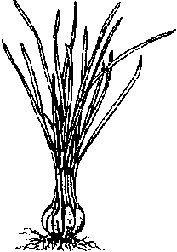
FIG. 1. Allium sativum -Garlic

FIG. 2. Allium sativum -Propagation
|
Plant part |
Indication |
Preparation |
Dosage |
|
Cloves |
Poisoning |
Burn 3 heads of garlic, pulverize and mix with 1 glass of water. |
Give as drench. |
|
| ||||||||||||||||||||||||||||||||||||||||||||||||||||||||||||||||||||||||
Areca catechu
Betel nut
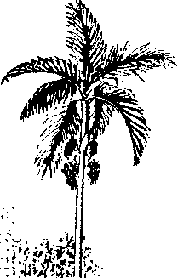
FIG. 1. Areca catechu -Betel nut
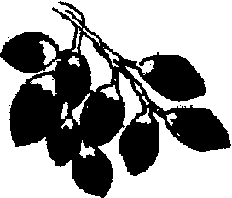
FIG. 2. Areca catechu -Propagation
|
Plant part |
Indication |
Preparation |
Dosage |
|
Fresh nut |
Intestinal worms |
Pound and mix with enough amount of water to facilitate drenching. |
Give the whole mixture as drench. |
|
| ||||||||||||||||||||||||||||||||||||||||||||||||||||||||||||||||||||||||
Blumea balsamifera
Camphor

FIG. 1. Blumea balsamifera -Camphor

FIG. 2. Blumea balsamifera
-Propagation
|
Plant part |
Indication |
Preparation |
Dosage |
|
Fresh leaves |
Cold |
Boil leaves for 15-20 minutes in 1 liter of water |
Give decoction as drench, 1/2- liter, 2x a day for 1-3 days. |
|
| ||||||||||||||||||||||||||||||||||||||||||||||||||||||||||||||||||||||||
Carica papaya papaya

FIG.1.Carica papaya -Papaya

FIG.2.Carica papaya -Propagation
|
Plant part |
Indication |
Preparation |
Dosage |
|
Dried seeds |
Fluke infestation |
Pound air-dried ripe seeds and add a little water. |
Drench the mixture, once a day for 6 days. |
|
| ||||||||||||||||||||||||||||||||||||||||||||||||||||||||||||||||||||||||
Cocos nucifera

FIG.1.Coconut (Young)

FIG.2.Coconut-Propagation
|
Plant part |
Indication |
Preparation |
Dosage |
|
Water |
Dehydration |
Mix water from 3-5 young coconuts with a cup of brown sugar and a little salt |
Give solution as drench 3x a day until animal recovers. |
|
Charcoal |
Diarrhea |
Pound and mix with feed. Grind coconut shell charcoal to a powder and mix with water. Adult cattle and buffaloes: 1 cup of powdered coconut shell mixed in 500 ml of water. Calves, goats and sheep: Half of the above amount. |
Divide the mixture into several rations and feed the animal one ration at a time until it recovers. Drench animal 3 times a day |
|
Powder(from the external part of the shell) |
External wound or cuts |
Scrape external part of the shell to collect powder (amount will depend on the size of the wound). |
Apply on clean wound 2-3x a day for 3 days. |
|
| ||||||||||||||||||||||||||||||||||||||||||||||||||||||||||||||||||||||||
Chrysophyllum cainito

FIG.1. Chrysophyllum cainito-Star
apple

FIG.2.Chrysophyllum
cainito-Propagation
|
Plant part |
Indication |
Preparation |
Dosage |
|
Fresh leaves |
Diarrhea |
Boil half a kilo |
Adult cattle and buffaloes: |
|
| ||||||||||||||||||||||||||||||||||||||||||||||||||||||||||||||||||||||||
Gliricidia septum

FIG.1.Gliricidia septum -Madre de
cacao

FIG.2.Gliricidia septum -Propagation
|
Plant part |
Indication |
Preparation |
Dosage |
|
Fresh leaves |
External parasites |
Pound the leaves (the number of leaves will depend on the severity of the infestation). |
Swine and ruminants: Apply the juice of leaves on the affected
area. |
|
Fresh leaves |
Warts |
As above. |
Apply the juice and massage the affected part 2-3x a day until the warts disappear. |
|
| ||||||||||||||||||||||||||||||||||||||||||||||||||||||||||||||||||||||||
Momordica charantia

FIG. 1. Momordica charantia-Bitter
gourd

FIG. 2. Momordica
charantia-Propagation
|
Plant part |
Indication |
Preparation |
Dosage |
|
Fresh leaves |
Intestinal worms |
Pound 1/2 kg of leaves. Extract the juice of the leaves and divide into small doses. |
Pips: Give 1 dose of the juice as drench 1-3x a day. Repeat the procedure after 2 weeks. |
|
Fresh leaves |
Anemia |
Pound a handful of leaves. |
Piglet: Give S drops (1 cc) of juice per piglet 2x a day for 3-4 days. The juice extracted will be enough for 7-8 piglets. |
|
| ||||||||||||||||||||||||||||||||||||||||||||||||||||||||||||||||||||||||
Moringa oleifera
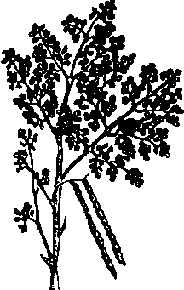
FIG. 1. Moringa oleifera -Horseradish

FIG. 2. Moringa oleifera -Propagation
|
Plant part |
Indication |
Preparation |
Dosage |
|
Fresh leaves |
Anemia |
Pound 1/2- 1 kg of leaves and extract the juice. |
Piglet: Give 5 drops (1 cc) of juice per piglet as drench 2-3x a day for 3-4 days. |
|
| ||||||||||||||||||||||||||||||||||||||||||||||||||||||||||||||||||||||||
Musa sapientum

FIG. 1. Musa sapientum -Banana

FIG. 2. Musa sapientum -Propagation
|
Plant part |
Indication |
Preparation |
Dosage |
|
Fresh leaves |
Bloat |
Chop 2 leaves for calves, sheep and goats or 3-5 leaves for adult cattle and buffaloes. |
Feed to animal 2x a day until it recovers. (This is only applicable during the early stage of the abnormality.) |
|
Fresh leaves |
Bleeding wound |
Steam 1 leaf over boiling water. |
Ruminants and pigs: Apply the leaf on the wound. Do this2-3x a day until the wound heals. |
|
| ||||||||||||||||||||||||||||||||||||||||||||||||||||||||||||||||||||||||
Premna odorata

FIG. 1. Premna odorata- Alagau

FIG. 2. Premna odorata-Propagation
|
Plant part |
Indication |
Preparation |
Dosage |
|
Fresh leaves |
Wound with maggots |
Pound 3-S leaves and extract the juice. |
Apply the juice on the wound 2-3x a day for 3-4 days. |
|
Fresh leaves |
Fever, colds cough |
Boil 8-15 leaves in 2-3 glasses of water |
Give 1/2-1 cup as drench 2-3x a day for 3 days. |
|
Fresh leaves |
Mite infestation |
Poultry: Hang leaves in roosts/house until the leaves are fully dried. | |
|
| ||||||||||||||||||||||||||||||||||||||||||||||||||||||||||||||||||||||||
Psidium guajava

FIG. 1. Psidium guajava -Guava

FIG. 2. Psidium guajava -Propagation
|
Plant part |
Indication |
Preparation |
Dosage |
|
Fresh leaves |
Diarrhea |
Boil 1/2 kilo of leaves in 3 glasses of water. |
Adult cattle and buffaloes: Give decoction as drench 2x a day for 3-4 days. Calves, sheep and goats: Half of the amount given above. |
|
Fresh leaves |
Severe wounds |
Pound 5-10 leaves. |
Ruminants, pigs and poultry: Apply juice on clean wound 2-3x a day for 3-4 days. |
|
| ||||||||||||||||||||||||||||||||||||||||||||||||||||||||||||||||||||||||
Tamarindus indica

FIG. 1. Tamarindus indica -Tamarind

FIG. 2. Tamarindus indica
-Propagation
|
Plant part |
Indication |
Preparation |
Dosage |
|
Fresh leaves |
Fever Colds Cough |
Boil 1 kg of leaves in 1 gallon of water. Divide the decoction into small doses. |
Adult ruminants: Drench the animal with 1 dose of the decoction 2-3x a day until the animal recovers. Young ruminants: 1/3-1/2 the dosage given above. |
|
| ||||||||||||||||||||||||||||||||||||||||||||||||||||||||||||||||||||||||
Tinosphora rumpii
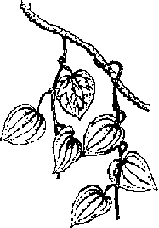
FIG. 1. Tinosphora rumpii

FIG. 2. Tinosphora rumpii-
Propagation
|
Plant part |
Indication |
Preparation |
Dosage |
|
Fresh stems |
Intestinal parasites |
Soak 1/2 kilo of pounded stems in 1 liter of water. |
Adult cattle and buffaloes?: Give whole solution as drench Repeat after 2 weeks. Calves, sheep and goats: Half of the dosage given above. |
|
| ||||||||||||||||||||||||||||||||||||||||||||||||||||||||||||||||||||||||
Vitex negundo

FIG. 1 Vitex negundo- Five-leaved
chaste tree

FIG. 2 Vitex negundo- Propagation
|
Plant part |
Indication |
Preparation |
Dosage |
|
Fresh leaves |
Fever Colds Cough |
Boil 1/2 kg of leaves for 15-20 minutes in 2 liters of water. |
Adult ruminants: Give the decoction as drench 2-3x a day for 3-4
days. |
|
Fresh leaves |
Mite infestation |
Poultry: Hang the leaves in the roost of chickens. | |