 |
| ||||||||||||||||||||||||||||||||||||||||||||||||||||||||||||||||||||||||||||||||||||
|
| ||||||||||||||||||||||||||||||||||||||||||||||||||||||||||||||||||||||||||||||||||||
Foreword
These manuals have been written with the simplest language possible for the convenience of the intended user-the animal health practitioners or ("para-vets") working in isolated rural communities. It is not designed to be a complete veterinary medicine reference material. But rather, aims to present the most important animal health problems commonly encountered and some of the most effective, but simple treatments.
The manuals are based upon experiences documented through a series of intensive field work activities over a one-year period with a group of livestock small-holders living and working in Cavite province of the Philippines. The manuals were first produced in a draft form in early 1994. The manuals were then protested by a group of small-scale animal producers in June of that year. The manuals are divided into four separate booklets:
1. Restraining animals and simple treatments
2 Basic husbandry practices and veterinary care
3 Disease control and treatment
4 Herbal medicine for animals
Common antibiotics, hormone vitamins and dewormers mentioned are mostly in solution. For dosages on the mixtures prescribed, see page 12 of Restraining animals and simple treatments.
We hope that these manuals will help rural animal health practitioners to identify and remedy common health problems which they may encounter in their work. Further, we hope that this humble contribution will truly help practicing 'pare-vets" to make greater contributions as partners in the veterinary profession.
We would like to gratefully acknowledge the funding support provided by the Canada Fund-Philippines of the CIDA through the Canadian Embassy. Their support financed the fieldwork upon which these manuals are based, as well as the actual production and printing of the manuals. Their continued assistance to the betterment of the rural communities of the Philippines is greatly appreciated.
Nita Cueva-Abena wrote the first draft of these manuals. Ms. Abena is a practicing rural veterinarian. She has worked with a feedmill operated by a cooperative and has worked as a veterinarian within rural development and extension programs. She is presently involved with two veterinary clinics which cater to both food and companion animals. She is also a consultant to swine production farms.
|
Translation |
Ray Montes |
|
Illustrations |
Ric Cantada |
|
Production coordinator |
Jaime Ronquillo |
|
Editor-in-chief |
Paul Mundy |
|
Editors |
Jaime Ronquillo |
| |
David Abbass |
| |
Evelyn Mathias |
|
Desktop |
Mamet Magno |
| |
Jel Montoya |
|
| ||||||||||||||||||||||||||||||||||||||||||||||||||||||||||||||||||||||||||||||||||||
Body parts of farm animals

Bull

Cow

Boar

Sow

Rooster

Hen

Buck

Doe
|
| ||||||||||||||||||||||||||||||||||||||||||||||||||||||||||||||||||||||||||||||||||||
Names of farm animals
| |
Cattle |
Buffalo |
|
Newly born |
Calf |
Caracalf |
|
Young male |
Bullcalf |
Bullcalf |
|
Young female |
Heifer |
Heifer |
|
Adult male |
Bull |
Bull |
|
Adult female |
Cow |
Caracow |
|
Castrated male |
Steer |
Steer |
| |
Goat |
Pig |
|
Newly born |
Kid |
Suckling |
|
Young male |
Buck |
Shote |
|
Young female |
Doeling |
Gilt |
|
Adult male |
Buck |
Boar |
|
Adult female |
Doe |
Sow |
|
Castrated male |
Wether |
Barrow |
| |
Chicken |
|
Newly born |
Chick |
|
Young male |
Cockerel |
|
Young female |
Pullet |
|
Adult male |
Rooster |
|
Adult female |
Hen |
|
| ||||||||||||||||||||||||||||||||||||||||||||||||||||||||||||||||||||||||||||||||||||
Farm animals and their young
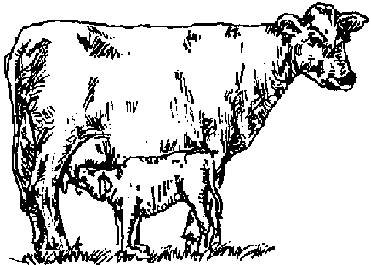
Cattle
Breeding age: 14-18 months Pregnancy: 9 months Offspring: calf
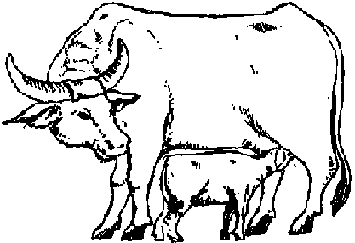
Buffalo
Breeding age: 2 years Pregnancy: 11 months Offspring: 1 calf
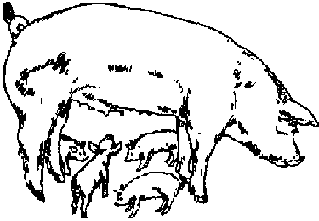
Pig
Breeding age: 8 months Pregnancy: 3 months + 3 weeks + 3 days Offspring: 9 piglets
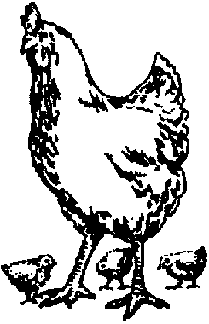
Chicken
Breeding age: 44 months Incubation: 21 days Offspring: 10-15 chicks
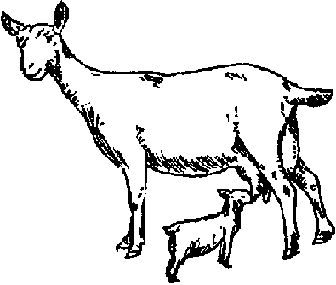
Goat
Breeding age: 10-12 months Pregnancy: 5 months Offspring: 1-3 kids
|
| ||||||||||||||||||||||||||||||||||||||||||||||||||||||||||||||||||||||||||||||||||||
Livestock production
| |
Cattle |
Buffalo* |
Goat |
Pig |
|
Sexual maturity** |
9 mos |
1 year + |
6-8 mos |
5-6 mos |
|
Breeding age** |
14-18 mos |
2 years + |
10-12 mos |
8 mos |
|
Heat cycle |
about 3 weeks |
about 3 weeks |
about 3 weeks |
about 3 weeks |
|
Duration of heat |
up to 1 day |
up to 1 day |
1-3 days |
1-2 days |
|
Duration of pregnancy |
9 months |
11 months |
5 months |
3 months, 3 weeks, 3 days |
|
No. of offspring |
1 calf |
1 calf |
1-3 kids |
9 piglets |
|
Milk production |
Varies: Local breeds up to 8 kg per day for about 10 months, exotic breeds can produce much more. |
1-3 kg per day for about 8 months |
0.5 liters per day for about 3 months |
30 days |
|
Weaning age |
Depends on management system. Important is that newborn animals are given colostrum (the first milk of a mother) as soon as possible after birth. | | |
|
|
Castration age |
150 days |
150 days |
30-60 days |
14 days |
*Figures in this column refer to the Philippine carabao.**Figures in this table are approximate only. Actual figures may depend on the breed, the individual animal, feeding and other factors.
|
| ||||||||||||||||||||||||||||||||||||||||||||||||||||||||||||||||||||||||||||||||||||
Reproduction of poultry
| |
Age of breeding laying eggs |
Hatching period of eggs |
|
Chicken |
Months |
21 days |
|
Duck |
5-7 months |
28 days |
|
Goose |
5-7 months |
29-31 days |
|
Turkey |
5-7 months |
28 days |
|
| ||||||||||||||||||||||||||||||||||||||||||||||||||||||||||||||||||||||||||||||||||||
Breeding
Cow/Caracow
A heifer should not be bred before she reaches 18 months in order for her to make the best cow. For first calving, she should not be bred to a bull of her own breed. This is to avoid difficult birthing.
Heat cycle
Most cows come into heat every 18 to 24 days all year round. Most cows are in heat for one whole day. The best time to breed is either near the end of the heat cycle.
A heifer or cow is in heat if she shows the following signs:
- String of clear mucus on her tail or hindquarters.
- Trying to ride other animals.
- Wandering around.
- Bawling or crying.
Pregnancy examination
At about five or six months after the cow has been last bred, make a fist and gently but firmly bump it into the cow's right side, in the flank. If the animal is pregnant, you will be able to feel a hard lump move. This is the calf. After six months, you can no longer feel the calf in this way because the calf is now located further down the abdominal cavity.
Drying up the cow/caracow
If you are milking the cow, you should stop milking her at six to eight weeks before she is due to give birth.
Taking care of the pregnant cow/caracow
Proper feeding is important for the pregnant cow. A good ration consists of legumes, silage and grain. A pregnant cow also needs salt, water and minerals. See section on Nutrition for details.
Doe
Heat detection
Does are in heat when they show the following signs:
- Bleating
- Running back and forth.
- Wagging their tails often.
- Riding other does or allowing themselves to be ridden.
- Drop in milk production.
The doe's heat lasts from one to three days.
Pregnancy
Be sure to exercise the does daily. Approximately 5 months (150 days) after breeding, the does will kid.
Pigs
Heat detection
Common signs of heat:
- The sow's vulva is swollen and reddish.- Watery vaginal discharge.
- Sow is restless.
- During the early phase of heat, sow mounts other pigs. At the peak of heat, sow allows herself to be mounted by other pigs.
- Sow stands still when she feels pressure on her back.
Heat lasts about 24 hours. When not pregnant, sow exhibits heat every 21 days.
How to induce heat
Some sows do not come to heat at the expected time. Here are some methods used by farmers to induce heat:
- Gently stroke the sow's vulva with a freshly cut papaya stalk every morning for 3-5 days.- Spray the sow's pen with boar's urine every morning for 3-5 days.
- Bring the sow to the boar or place the sow in a pen next to the boar.
Mating A sow should be mated twice, preferably late in the afternoon of the first day of heat and early in the morning of the second day.
Do not mate animals during the hot time of the day.
Assistance
Young boars often do not know the proper way to mount a sow. Assist the boar to avoid injury to boar and sow.
Pregnancy detection
If a sow does not show signs of heat three weeks after mating, then she is pregnant.
Care during pregnancy
- Separate pregnant sows from other animals.
- Protect
pregnant sows from high temperatures.
- Avoid transporting pregnant
sows.
- Provide ample fresh water.
- Provide space for sow to walk
in.
- Provide a farrowing pen for each pregnant sow.
- Gradually reduce
concentrate ration one week before farrowing and or weaning. (See
Nutrition.)
- If sow is constipated, feed her with sweet potato leaves.
Dates of breeding and birthing
Cow
|
Date of breeding |
Approximate date of birthing |
Date of breeding |
Approximate date of birthing | ||||
|
Jan |
1 |
Oct |
10 |
Jul |
16 |
Apr |
24 |
| |
8 | |
17 | |
23 |
May |
1 |
| |
15 | |
24 | |
30 | |
8 |
| |
22 | |
31 |
Aug |
6 | |
15 |
| |
29 |
Nov |
7 | |
13 | |
22 |
|
Feb |
5 | |
14 | |
20 | |
29 |
| |
12 | |
21 | |
27 |
Jun |
5 |
| |
9 | |
28 |
Sep |
3 | |
12 |
| |
26 |
Dec |
5 | |
10 | |
19 |
|
Mar |
5 | |
12 | |
17 | |
26 |
| |
12 | |
19 | |
24 |
Jul |
3 |
| |
19 | |
26 |
Oct |
1 | |
10 |
| |
26 |
Jan |
2 | |
8 | |
17 |
|
Apr |
2 | |
9 | |
15 | |
24 |
| |
9 | |
16 | |
22 | |
31 |
| |
16 | |
23 | |
29 |
Aug |
7 |
| |
23 | |
30 |
Nov |
5 | |
14 |
| |
30 |
Feb |
6 | |
12 | |
21 |
|
May |
7 | |
13 | |
19 | |
28 |
| |
14 | |
20 | |
26 |
Sep |
4 |
| |
21 | |
27 |
Dec |
3 | |
11 |
| |
28 |
Mar |
6 | |
10 | |
18 |
|
Jun |
4 | |
13 | |
17 | |
25 |
| |
11 | |
20 | |
24 |
Oct |
2 |
| |
18 | |
27 | |
31 |
9 | |
| |
25 |
April |
3 | | | | |
|
Jul |
2 | |
10 | | | | |
| |
9 | |
17 | | | | |
Source: J.W. Bailey. 1977. Veterinary Handbook for Cattlemen. New York: Springer.
Caracow
|
Date of breeding |
Approximate date of birthing |
Date of service |
Approximate date of birthing | ||||
|
Jan |
1 |
Nov |
16 |
Jul |
16 |
May |
31 |
| |
8 | |
23 | |
23 |
June |
7 |
| |
15 | |
30 | |
30 | |
14 |
| |
22 |
Dec |
7 |
Aug |
6 | |
21 |
| |
29 | |
14 | |
13 | |
28 |
|
Feb |
5 | |
21 | |
20 |
Jul |
5 |
| |
12 | |
28 | |
27 | |
12 |
| |
19 |
Jan |
4 |
Sep |
3 | |
19 |
| |
26 | |
11 | |
10 | |
26 |
|
Mar |
5 | |
18 | |
17 |
Aug |
2 |
| |
12 | |
25 | |
24 | |
9 |
| |
19 |
Feb |
1 |
Oct |
1 | |
16 |
| |
26 | |
8 | |
8 | |
23 |
|
Apr |
2 | |
15 | |
15 | |
30 |
| |
9 | |
22 | |
22 |
Sep |
6 |
| |
16 |
Mar |
1 | |
29 | |
13 |
| |
23 | |
8 |
Nov |
5 | |
20 |
| |
30 | |
15 | |
12 | |
27 |
|
May |
7 | |
22 | |
19 |
Oct |
4 |
|
14 | |
29 | |
26 | |
11 | |
| |
21 |
Apr |
5 |
Dec |
3 | |
18 |
|
28 | |
12 | |
10 | |
25 | |
|
Jun |
4 | |
19 | |
17 |
Nov |
1 |
| |
11 | |
26 | |
24 | |
8 |
| |
18 |
May |
3 | |
31 | |
15 |
| |
25 | |
10 | | | | |
|
Jul |
2 | |
17 | | | | |
| |
9 | |
24 | | | | |
Source Adapted from Valente Villegas. 1965. Carabao Husbandry. Manila, Philippines: D. P. Perez.
Sow
|
Date of breeding |
Approximate date of birthing |
Date of service |
Approximate date of birthing | ||||
|
Jan |
1 |
Apr |
26 |
Jul |
16 |
Nov |
8 |
| |
8 |
May |
3 | |
23 | |
15 |
| |
15 | |
10 | |
30 | |
22 |
| |
22 | |
17 |
Aug |
6 | |
29 |
| |
29 | |
24 | |
13 |
Dec |
6 |
|
Feb |
5 | |
31 | |
20 | |
13 |
| |
12 |
Jun |
7 | |
27 | |
20 |
| |
19 | |
14 |
Sep |
3 | |
27 |
| |
26 | |
21 | |
10 |
Jan |
3 |
|
Mar |
5 | |
28 | |
17 | |
10 |
| |
12 |
Jul |
5 | |
24 | |
17 |
| |
19 | |
12 |
Oct |
1 | |
24 |
| |
26 | |
19 | |
8 | |
31 |
|
Apr |
2 | |
26 | |
15 |
Feb |
7 |
| |
9 |
Aug |
2 |
22 | | |
14 |
| |
16 | |
9 | |
29 | |
21 |
| |
23 | |
16 |
Nov |
5 | |
28 |
| |
30 | |
23 | |
12 |
Mar |
7 |
|
May |
7 | |
30 | |
19 | |
14 |
| |
14 |
Sep |
6 | |
26 | |
21 |
| |
21 | |
13 |
Dec |
3 | |
28 |
| |
28 | |
20 | |
10 |
Apr |
4 |
|
Jun |
4 | |
27 | |
17 | |
11 |
| |
11 |
Oct |
4 | |
24 | |
18 |
| |
18 | |
11 | |
31 | |
25 |
| |
25 | |
18 | | | | |
|
Jul |
2 | |
25 | | | | |
| |
9 |
Nov |
1 | | | | |
Source: Adapted from Dirk van Loon. 1983. Small-scale Pig Raising. Charlotte, Vermont: Garden Way.
Goat
|
Date of breeding |
Approximate date of birthing |
Date of service |
Approximate date of birthing | ||||
|
Jan |
1 |
May |
31 |
Jul |
16 |
Dec |
13 |
| |
8 |
Jun |
7 | |
23 | |
20 |
| |
15 | |
14 | |
30 | |
27 |
| |
22 | |
21 |
Aug |
6 |
Jan |
3 |
| |
29 | |
28 | |
13 | |
10 |
|
Feb |
5 |
Jul |
5 | |
20 | |
17 |
| |
12 | |
12 | |
27 | |
24 |
| |
13 | |
19 |
Sep |
3 | |
31 |
| |
26 | |
26 | |
10 |
Feb |
7 |
|
Mar |
5 |
Aug |
2 | |
17 | |
14 |
| |
12 | |
9 | |
24 | |
21 |
| |
19 | |
16 |
Oct |
1 | |
28 |
| |
26 | |
23 | |
8 |
Mar |
7 |
|
Apr |
2 | |
30 | |
15 | |
14 |
| |
9 |
Sep |
6 | |
22 | |
21 |
| |
16 | |
13 | |
29 | |
28 |
| |
23 | |
20 |
Nov |
5 |
Apr |
4 |
| |
30 | |
27 | |
12 | |
11 |
|
May |
7 |
Oct |
4 | |
19 | |
18 |
| |
14 | |
11 | |
26 | |
25 |
| |
21 | |
18 |
Dec |
3 |
May |
2 |
| |
28 | |
25 | |
10 | |
9 |
|
Jun |
4 |
Nov |
1 | |
17 | |
16 |
| |
11 | |
8 | |
24 | |
23 |
| |
18 | |
15 | |
31 | |
30 |
| |
25 | |
22 | | | | |
|
Jul |
2 | |
29 | | | | |
| |
9 |
Dec |
6 | | | | |
|
| ||||||||||||||||||||||||||||||||||||||||||||||||||||||||||||||||||||||||||||||||||||
Care of calves and kids at birth
When a calf has been delivered, check whether it is breathing. If not, do one or a combination of the following:
Grasp the animal's hindlegs and raise them so fluids will be drained.
- Swing or shake the animal.

- Clean its mouth by removing the
mucus with your fingers.
- Tickle the nasal cavity with a piece of rice straw.
- Slap
or gently massage the rib
- If these fail, do artificial respiration by
blowing air into the mouth of the young animal.
When breathing has started, dry the young animal with a rough cloth. Dab the navel with diluted tincture of iodine. Help a weak animal suck colostrum (the first milk) from the mother.
|
| ||||||||||||||||||||||||||||||||||||||||||||||||||||||||||||||||||||||||||||||||||||
Care of piglets
After birth, piglets are wet and covered with a thin mucus membrane. This membrane will dry and disappear very quickly. Most piglets will not need special attention from the hammer.
Reviving newborn piglets A newborn piglet may appear lifeless. Here are some methods for reviving piglets:
- Clear the piglet's nose and mouth of mucus.- Gently shake the piglet with its head down to drain the mucus.
- Briskly rub a cloth up and down the piglet's back.
- Gently blow air into the piglet's nose; or hold the piglet on its back and gently pump the back legs forward and back until the piglet breathes.
- Dip the piglet into a bucket of water.
Keeping piglets warm
- Rub the piglet with vegetable oil.
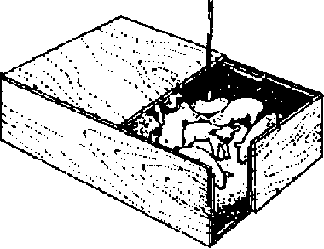
- Put the piglets in a box.
- Provide a heating lamp (if electricity is available).
- Use chopped, dry rice straw or dried banana leaves for bedding. Slim rim hails straw or charcoal in a metal bucket to supply warmth.
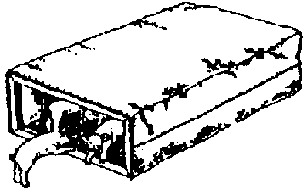
Caution: Make sure the hot bucket
does not burn the pigs or the pen.
Avoiding crushing newborn animals
Until they learn to get out from under her when she lies down, newborn piglets can easily be crushed by their mother. The harrowing area should have barriers to prevent the sow from crushing the piglets. After the first two week, the barriers can be removed.

Avoiding crushing newborn animals
Getting piglets to suckle
Sows develop their own styles of nursing. Some stand up; other lie an their side. After a day or two, each piglet will establish ownership of a teat. In a small litter, piglet may share the extra team. Weaker piglets get the hind teats. A sow may be able to feed more piglets than she has teats. But generally, it is better to take extra piglets away and place them with another recently harrowed sow or to raise the extra piglets on cow's milk.
Reminder: Make sure the piglets get the first milk from their natural mother before moving them to a foster mother.
|
| ||||||||||||||||||||||||||||||||||||||||||||||||||||||||||||||||||||||||||||||||||||
Feeding orphaned animals
Provide a foster mother to orphaned animals. If a foster mower is not available, prepare supplemental feed.
Cattle and goats
Supplemental feed for young orphaned calves and kids:
- 1 gallon of caracow's milk
- a pinch of Neomycin
- 1 egg white
- 1 tsp vegetable oil
When about 2 weeks old, add solid food in the form of small amounts of concentrate. Allow the young animal to gradually nibble soft forage.
Pigs
A mixture of the following can be used as supplemental feed for young orphaned piglets:
- 1 quart of cow's milk
- 4 tbsp of syrup made from boiled mixture of water and sugar
- 1 egg
- a pinch of Neomycin
Here's how to feed orphaned piglets with the supplemental feed:
1. Hold the piglet by the head.2. Insert your clean little finger into the piglet's mouth.
3. Gradually lower the piglet's head into a bowl of prepared supplemental feed. The piglet will start to suck. This procedure also applies to calves and kids.
4. Continue feeding piglets until they can be switched to a dry pre-starter ration.
For cattle, goats and pigs, the new mother will not usually allow the animals for adoption to suck her milk. If you see this, do the following:
- Rub the whole body of the animals for adoption and the young of the foster mother with any of the following:
-urine of the foster mother
-milk. of the foster mower
-alcohol
-vinegar
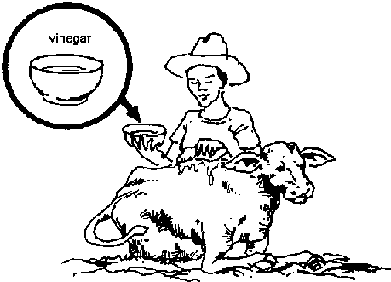
Rubbing the body
Keep the foster young animals in a box together, with the young of the foster mother, so their smells will blend.
|
| ||||||||||||||||||||||||||||||||||||||||||||||||||||||||||||||||||||||||||||||||||||
Nutrition
Good nutrition is important for the health of animals. Proper nutrition helps an animal fight disease and parasites. Good nutrition also enables an animal to respond well to vaccination.
The amount and quality of nutrients required for good health and efficient production vary according to age, sex and level of production. They vary between ruminants (four-stomached animals) like cattle, water buffaloes and goats, and simple stomached animals like pigs and chickens. Ruminants have four digestive compartments:
- rumen or paunch
- reticulum or honeycomb
- omasum or manyplies
- abomasum or true stomach.
All animals need protein, carbohydrates, fats, vitamins, minerals and water.
Nutrients in excess of an animal's minimum requirements are used for production and growth. A reduction of feed intake by five percent will decrease weight gain by 10 percent.
Parts of a compound stomach
Ruminants (cattle, buffaloes, sheep and goats) have a stomach made of four parts.
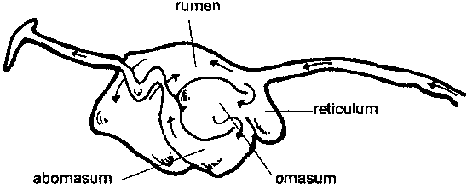
Ruminants’ stomach
Protein is the most costly source of all nutrients. It is particularly important for reproduction, growth and milk production.
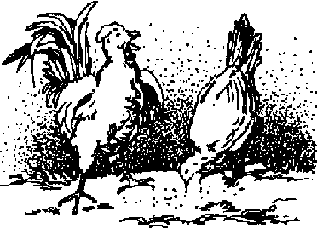
Reproduction
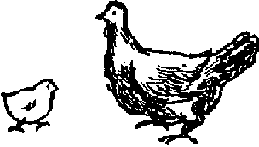
Growth
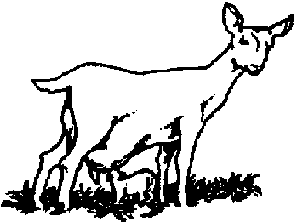
Lactation
Examples of protein sources
- Leucaena leaves
- Fish meal
- Centrosema
-
Soybean
- Rice bran (D1)
Crude protein content of feeds (in percentage)
|
|
Ruminants |
|
Milk replacement |
20 |
|
Cad starter |
18 |
|
Dairy concentrate |
16 |
|
Beef concentrate |
13 |
| |
Pig |
|
Pre-starter |
22 |
|
Hog starter |
18 |
|
Hog grower |
16 |
|
Hog fattener |
14 |
|
Hog breeder |
14 |
| |
Poultry (layer) |
|
Chicken starter |
20 |
|
Chicken grower |
16 |
|
Chicken Dyer |
18 |
| |
Poultry (meat) |
|
Broiler starter |
21 |
|
Broiler finisher |
18 |
|
Chick booster |
24 |
Carbohydrates are the most important source of energy for animals. The major function is to provide energy for:
- grown
- muscular activity
- reproduction and lactation
- maintenance of body temperature.
Examples of energy sources
- Corn/rice bran
- Molasses
- Rice straw
- Root crops
Fats provide an easily digested, concentrated source of energy for animals. They:
- supply essential fatty acids needed for coronal growth
- help in the absorption of vitamins soluble in fat.
Examples of fats
- Copra
- Tallow
Vitamins are required in very small amounts to facilitate the normal functioning of the body.
Vitamin sources soluble in fat (A, D, E, K)
- Yellow corn
- Grass
- Legumes
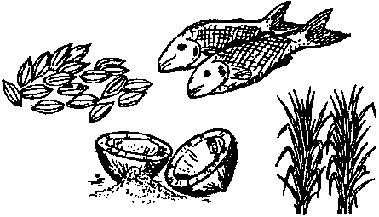
Vitamin sources
Vitamin sources soluble in water (C and B complex)
- Fish meal
- Grass
- Legumes
Minerals aid in the development of bones. Salt is an example of a common mineral. Feeds, such as grains, do not contain enough salt to sustain livestock. Therefore, salt must be supplied as a ration supplement.
Examples of grasses
Napier grass
- Perennial.
- Drought-resistant.
- Less palatable when
fully grown.
- High-yielding.
- Easier to plant than guinea grass or pare
grass.
Guinea grass
- Perennial.
- Shade-tolerant.
- Higher-yielding than
Napier grass.
Para grass
- Grows well in water-logged areas.
Examples of legumes
Centrosema
- Perennial climbing vine.
Leucaena
- Excellent for animal growing but not for fattening.
Feeding ruminants
Ruminants browse. They eat a variety of feedstuffs. They like to eat the tender new growth and barks of trees and shrubs.
They should have free access to salt and calcium supplements. Salt should be crushed or in granules, not blocks, because ruminants may not get enough salt off a block. Egg shell is a low-cost source of calcium. Shells should be dried, crushed or pulverized and mixed with the regular feed ration.
Fresh water should always be provided.
Examples of feed rations for fattening of cattle and buffaloes
This is fed to animals age 6 months and above.
1. Mix 1 tablespoon of urea with 15 liters of water.
2. Set
aside for 2 hours to release ammonia.
3. Add 4 tablespoons of molasses. Give
as drinking water in the morning.
Caution: Do not use too much urea as it cause poisoning.
Rice straw is a cheap feedstuff for ruminants. It can be enriched by mixing it with other nutrients such as molasses. A simple method is described below:
"Spaghetti"
1. Immerse dried rice straw in water for 4 hours.
2. Dissolve
4 gallons of molasses in 12 gallons of water. Add 3 kg of urea.
3. Add rice
straw to the mixture.
4. Feed to animal.
This feed mixture is given 60-90 days before slaughter.
1. Gather about 20 kg of fresh ipil-ipil (Leucaena sp.) leaves. Remove the midribs and pound the leaves.
2. Extract the juice.
3. Add 1-2 kg of fine rice bran mixed with 15-19 liters of water.
4. Add a handful of salt and mix thoroughly.
Divide the mixture into two portions. Feed one portion in the morning and the other in the evening. Use a bamboo tube (locally known as supak), measuring about 6 cm in diameter and 30 cm long, to feed the mixture. (See Administering medicine in Restraining animals and simple treatments.)
Note: Feed the animal with the mixture 6 times a day for best results.
Other home-made rations for large ruminants
- Pound 15-20 kg fresh leaves of ipil-ipil (Leucaena sp.). Extract the juice. Add 15 liters of clean water and 0.1 kg of salt.
- Finely chop 15-20 kg of gabi tubers (the kind that humans eat). Add 15 liters of water and 0.1 kg of salt.
Divide the above mixtures into two portions. Give one ration in the morning and another in the evening. Rations are given through the supak.
The above rations can also be given to small ruminants, like goats. Reduce the amount of ingredients needed to produce a ration.
Feeding rations for pigs
Breeders
Breeding animals (not pregnant or lactating) should be given
brood sow or breeder's mash.
Feed the gilt/sow 1.5 to 1.7 kg per day until
bred and becomes pregnant.
Pregnant
Pregnant gilts/sows should be fed with gestation mash.
For
the first 14 days, feed 1.6 to 1.8 kg per day.
From the 15th-80th day, feed
1.6 to 2.0 kg per day.
From the 81st-107th day, feed 2.5 kg per day.
From
the 108th-1 14th day, feed 1.2 kg per day.
Nursing sows/gilts
Nursing or lactating gilts/saws should be fed with lactation
mash.
For the first 3 days, feed 0.6 to 0.7 kg per day.
From the 4th-6th
day, feed 0.8 to 1 kg per day.
From the 7th-10th day, feed 1.2 to 1.8 kg per
day.
From the 1 1th-24th day, feed 2.0 kg per day.
From the 25th-27th day,
feed 1.8 to 1.2 kg per day.
From the 28th-30th day, feed 1.2 to 8 kg per day.
After Me 30th day, piglets should be weaned.
Fatteners
Pre-starter feeds for the first month.
Starter mash for the
2nd-3rd month.
Grower mash for the 4th-5th month.
Finisher/fattener mash
rattan for the 6th month.
After the 6th month, pigs will be ready for market.
Note: Pre-starter mash, starter mash and hog grower should be fed without limit.
Low-cost feeds for pigs
Each of the following mixtures can be consumed by 3 heads of starter pigs (2-3 months old) for 2-3 days:
- Mix 5.4 kg of fine rice bran with 4.6 kg of cam bran.
- Mix 6.3 kg of midlings (bindlid) with 3.6 kg of corn gluten. he following mimes are for fatteners:
- Mix 7 kg of rice bran with 3 kg of sapal (coconut waste product).
- Mix 5 kg of sweet potato roots vim 5 kg of ipil-ipil (Leuacaena sp.) leaves.
- Mix 3 kg of cassava roots with 7 kg of fine rice bran.
- Mix the following:
-3 kg com bran
-2 kg molasses
-1.5 kg tugui root (Dioscorea esculenta)
-1.0 kg fish washings (e.g., fish guts, gills, scales)
-2.5 kg ipil-ipil leaves
Feeding pigs
The amount of feed given depends on age, stage of growth, of reproduction, health status and degree of activity. Unlimited feeding only applies in the pre-starter, hog starter and hog grower stages-the stages where protein and carbohydrates are needed the most.
At 2 ½ months of gestation, fetuses are at their peak growth stage. The sow's feed should be increased.
Milk production reaches its peak in the third and fourth weeks after birthing. The amount of feed given at this stage should be high. Milk production starts to decline in the middle of the 4th week. Piglets can be weaned to decrease milk letdown. Decrease the amount of feeds given.
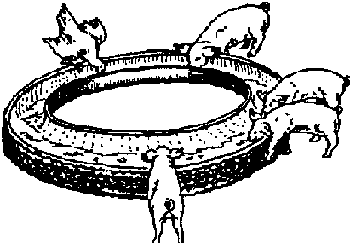
Feeding pigs
Feeding rations for chickens
Broiler ration (meat)
Starter ration for the first 5 weeks. Finisher ration for the 6th week.
Layer ration (egg)
Starter ration for the first 7 weeks. Grower ration for the 7th-20th week. Layer ration for 20-week-old layers.
The laying age for chickens is 24 to 85 weeks.
Home-made rations for chickens
Mix the following:
- 4 cans (1 kg) yellow corn or broken rice
- 1.5 cans fine rice bran
- 2 pints ground snails
- 1.5 cans copra oil
- 0.5 can mung bean, string beans or lima beans
- 0.5 can dry Leucaena leaves
- 1 tablespoon salt
- 1 handful lime or powdered oyster shell

Home-made rations for
chickens
|
| ||||||||||||||||||||||||||||||||||||||||||||||||||||||||||||||||||||||||||||||||||||
Deworming
Parasites are a problem in countries with tropical climates like the Philippines. Animals catch parasites from soil and grasses.
Regular deworming with chemical or herbal preparations can reduce the amount of parasites in your animals.
Deworming means removing worms from the digestive system, particularly from the stomach, intestine and liver. Deworming makes the animal more resistant to diseases. It helps the animal grow faster, perform better and produce better milk, meat and eggs.
Symptoms of worm infestation
- Animal lacks vigor.
- It has a poor appetite.
- Its body
weight decreases.
- It shows diarrhea with mucus, blood or worms.
- It
eats soil or other organic matters.
- It has rough hair coat.
- It has
anemia.
Parasites hurt animals by:
- Absorbing digested nutrients.
- Sucking blood.
- Causing mechanical obstruction.
- Destroying tissue.
- Secreting toxins.
Preventing worm infestation in animals
- Proper nutrition.
- Avoid overstocking.
- Practice
pasture rotation.
- Avoid keeping several types of livestock together (e.g.,
goats and cattle).
- Observe cleanliness.
Considerations in deworming animals
Do not deworm animals that are:
- Weak and sick. They need medication; delay deworming.
- Pregnant.
- Lactating.
- Laying.
Common internal parasites
Roundworms/ascaris:
Affect ruminants (cattle, water buffaloes, goats), pigs and poultry.
Tapeworms:
Affect ruminants, pigs and chicken.
Leaf-shaped worms(liver flukes):
Affect ruminants.

Roundworms, tapeworms and leaf-shaped
worms
Guidelines for a deworming program
- Identify the kind of worm present.
- Deworm the animals
regularly.
- Deworm young animals 23 times a year, adult animals at least
once a year.
- Improve grazing management.
Characteristics of a good dewormer
- It will not easily cause poisoning
- It can kill various
worms.
- It is easy to administer.
- It is economical.
- It stays in
the tissues for a short period of time.
Common dewormers used
|
Animal |
Western drug* |
Herbal |
|
Cattle, |
Valbazen, TSD, |
Stems of makabuhay |
|
water buffalo, |
Latigo 50, 500 |
(Tinosphora rumpii) |
|
goat |
Pidro |
Papaya seeds |
|
Pigs |
Latigo 50, 500 |
Leucaena seeds |
| |
|
Pidro |
|
Chickens |
Pidro |
Areca nut or bunga |
* The drugs listed in this column are brand names. The generic names for each drug are as follows:
Valbazen and TSD - Albendazole
Latigo 50, 500 - Tetramizole
Pidro - Piperazine
An indigenous way to deworm animals
Beer/Soy sauce. A bottle of beer or soy sauce is given to cattle and water buffalo for deworming. An egg can be mixed with the beer or soy sauce.

Beer/Soy sauce
Deworming program for livestock and poultry
|
Age |
1st dose |
2nd dose |
Remarks |
|
Cattle, water buffaloes, goats | |||
|
Young |
1 or 2 months |
3-4 months until 1 year |
Against all worms |
|
Adult Breeders |
| |
Once a year 2 weeks before breeding |
|
Pigs | |||
|
Piglets | |
|
Few days after weaning(before vaccination) |
|
Breeders | |
|
Twice a year before breeding and before giving birth |
|
Chicken | |||
|
Young |
2 months |
Repeat after 2 weeks |
|
|
Breeders | |
|
Before onset of breeding and laying period |
|
| ||||||||||||||||||||||||||||||||||||||||||||||||||||||||||||||||||||||||||||||||||||
Vaccination
A vaccine produces immunity or protection against a given disease. Vaccination stimulates the production of antibodies.
It is important to vaccinate animals because:
- Vaccinated animals become more resistant to outbreaks of disease.
- Vaccinated animals suffer less and recover faster from the effects of disease.
Forms of vaccine
- Powder with solvent—mix, then inject. (Example: hog
cholera vaccine)
- Liquid (Example: hemorrhagic septicemia vaccine)
Antiserum can also protect animals against diseases. It comes from the blood serum of an animal which contains antibodies for a specific disease.
Comparison between vaccine and antiserum
| |
Vaccine |
Serum |
|
Immunity |
Develops in two weeks |
Quick-acting |
| |
Long-acting |
Short-acting |
| |
Active |
Passive |
|
Dose |
Small quantity |
Large quantity |
|
Site of injection |
One site divided and injected into different sites. |
A single large dose |
|
Antibodies |
Produced by the body in response to the vaccine. |
Supplied by the injection. |
Antibiotics are chemical substances produced by bacteria to inhibit or kill other bacteria. Antibiotics are useful to treat bacterial diseases. They are sometimes given regularly to healthy animals to prevent them from getting sick and to improve their production. This practice, however, should be discouraged because it may harm the health of people who consume the meat and milk of these animals.
Vitamins are found in foods. Animals need small regular amounts for growth, health and survival. Feeding or injecting vitamins can make animals more resistant against diseases.
Comparison between vaccination and injection of antibiotics and vitamins
| |
Vaccination |
Vitamin injection |
Antibiotic injection |
|
Condition of animal |
Healthy |
Healthy or sick |
Sick |
|
Handling and storage |
Strictly observed |
Less critical, (though expire or spoil) |
Less critical (though expire or spoil) |
|
Purpose |
Produce immunity |
Increase resistance |
Inhibit or kill bacteria |
|
Time of day |
Early morning or late afternoon |
Anytime as needed |
Anytime as needed |
Guidelines and precautions
- Vaccines spoil easily. Special care and precautions are necessary for their proper use.
- Only a veterinarian or a person who has special training and experience in the use of vaccines should vaccinate.
- Avoid vaccinating an animal in very hot weather.
- Vaccinate before anticipated disease outbreak.
- Do not consider vaccination as a substitute for sanitation and other preventive management practices.
- Use sterile instruments.
- Use the recommended solvent.
- Avoid contamination with other chemicals.
- Bum or bury empty bottles and vials of vaccines.
- Do not use left-over vaccines.
- Do not vaccinate weak, sick, pregnant, unhealthy, stressed and very young animals.
- To avoid contamination, use separate needles for injecting the animal and for dissolving the vaccine.
- Follow the instructions on the packaging.
Steps in administering a vaccine
1. Assess the health status and age of the animal.
2.
Properly restrain the animal. (See booklet on Restraining animals and simple
treatments.)
3. Dissolve and mix the vaccine (if needed) with its
solvent.
4. Clean and disinfect the preferred site for injection.
5.
Administer the recommended amount in the right location.
6. Properly identify
vaccinated animals.
7. Closely observe vaccinated animals for allergic
reactions.
Handling and storage
Vaccines are made from disease-causing microorganisms. They must be handled carefully and stored properly. Improper handling and storage may cause them to lose their effect or, worse, make them dangerous agents. They should be refrigerated but not frozen. Store in a styro foam box with ice or in refrigerators.
Factors which limit animal's response to vaccine
|
- Infections |
- Poisoning |
|
- Improper dosage |
- Improper handling |
|
- Heat stress |
- Improper administration |
Common brand names of vaccines for livestock and poultry
Ruminants
- Foot and mouth disease vaccine
Dosage: 2 cc per animal, regardless of size.
- Hemorrhagic septicemia vaccine Dosage: 2 cc per animal,
regardless of size.
- Anti tetanus serum Dosage: minimum of 1500
international units
Pigs
- Hog cholera vaccine comes in pairs-the powder and the solvent. Brand names: Suvac, Pigvax and Vadimune Dosage: 2 cc per animal, regardless of size
Chickens
- Newcastle disease vaccine like NCD B1B1 should be used for young chickens only, NCD La Sota for adult chickens Dosage: a drop of NCD B1B1 in the eye/nostril per bird; 0.5 cc of NCD La Sota per bird
- Fowl pox vaccine
Vaccinating poultry
Poultry vaccines come in pairs-the powder and its accompanying solvent.
Intraocular or through the eye
This is used when vaccinating day-old chicks against Newcastle disease. (See page 39.)
Procedure
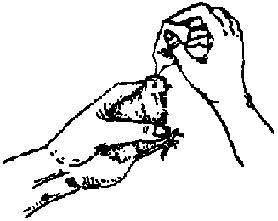
1. Hold the chick firmly, not too
loose or too tight.
2. Put one drop of vaccine into one of its eyes and let the chick blink before releasing it.
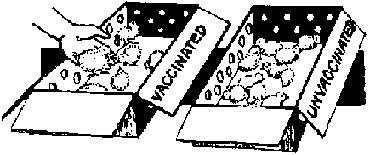
3. Separate the vaccinated from the
unvaccinated chicks.
Intranasal or in the nose
This method can also be used in administering Newcastle disease vaccine. Follow the same procedure as in intraocular, but apply the vaccine in one of the nostrils. Such vaccines are available in poultry supply stores.
Wing web or through the wing
This is done to vaccinate chickens against fowl pox.
1. Get an assistant to hold the chicken and spread one of its wings. Vaccination site is the wing web or inner side of the wings.
2. After thoroughly mixing the vaccine (fowl pox vaccine), dip the applicator into the vaccine, then immediately pierce it through the win. web.
3. Examine for "takes" after 10 days. " Takers" are small swellings with scabs formed at the vaccination point ten days after the vaccination procedure. Lack of such a reaction indicates:
- Vaccine is less effective or has no effect at all.
- Presence of existing antibodies.
- Improper vaccination.
Takes are only applicable to fowl pox vaccination.
Water vaccination
When mixing vaccines in drinking water:
- Do not use chlorinated water or water treated with antibiotics or disinfectants.
- Do not give the vaccine in metal containers or drinkers.
- Three hours before giving the vaccines, deprive the birds with water to induce thirst.
- Provide enough drinkers.

Applicator
Intramuscular or through the muscles
1. Mix the required amount of solvent with the vaccine before vaccination.
2. Disinfect the breast or thigh muscle of the chicken by rubbing it with cotton moistened with 70 percent alcohol.
3. Fill the syringe with the prescribed quantity of the vaccine-water solution.
4. Inject 0.5 cc of the solution into the muscle of the chicken.

Intramuscular vaccinating
Suggested vaccination program for livestock and poultry
|
Ruminants |
| | |
|
|
Vaccine |
1st dose |
2nd dose |
Next dose |
Route |
|
Foot-and- mouth disease |
2-3 mos |
6-8 mos |
Annually |
In the muscle |
|
Hemorrhagic septicemia |
2-3 mos |
6-8 mos |
Annually |
Under the skin |
|
Anti-tetanus |
6 months | |
|
In the muscle |
|
Pigs | ||||
|
Vaccine |
1st dose |
2nd dose |
Next dose |
Route |
|
Foot-and-mouth- disease |
1-2 mos for breeders |
3-4 mos |
Semi-annually |
In the muscle |
|
Hog cholera |
1-2 mos |
6 mos(for replacements) |
Semi- |
In the muscle annually for breeders. After weaning for piglets. |
|
Chickens | ||||
|
Vaccine |
1st dose |
2nd dose |
Next dose |
Route |
|
Newcastle disease |
1-2 weeks |
3-5 weeks |
Before laying eggs drop |
Eye/nose |
|
Fowl pox |
34 weeks | |
Before |
Wing web laying eggs |
|
| ||||||||||||||||||||||||||||||||||||||||||||||||||||||||||||||||||||||||||||||||||||
Castration
Castration is the process of removing the testicles of male animals.
Reasons for castration
- Improves quality of meat.
- Prevents male animals from acquiring undesirable sexual traits.
- Makes the animal easier to handle.
- Prevents undesirable breeding.
- Aids in growth and fattening.

Scrotum area
Preferred age for castration
- Bull - 2-3 months old
- Buck - 2 months old
- Piglet - 2 weeks old
- Boars can be castrated when no longer needed as breeders.
Young animals are easier to handle. Their wounds bleed less and heal faster.
Caution: Avoid castrating sick or stressed animals, e.g., animals with fever or recently vaccinated animals. If possible, perform this minor surgical operation during the dry season. Wounds heal faster during the dry season.
Prepare the following before castration:
- Blade or sharp knife
- Forceps
- Thread (if needed)
- Cotton
- 70% alcohol
- Diluted iodine
- Pine tar
- Fly repellents (e.g., Negasunt, Gusanex)
Castrating large animals
1. Properly restrain the animal. Refer to booklet on Restraining
animals and simple treatments.
2. Wash your hands with clean water and
soap.
3. Disinfect the surgical instruments and the scrotal area with 70%
alcohol or diluted iodine.

4. Hold testicles in between the
thumb and forefinger, pressing one toward the bottom of the scrotum.

5. Using a razor blade or sharp
knife, make a small incision at the bottom of the scrotum. The incision should
be just long enough for the testicle to be removed.

6. Pull the sac containing the
testicle out of the scrotum.

7. Clamp the blood vessels with 2
pairs of forceps. Or, use an emasculator or long-nose pliers. If instruments are
not available, make a knot with a thread around blood vessel.
8. After two minutes, remove the first forcep and make a knot with sterilized thread around the cord.

9. Cut the cord 1-1.5 cm below the
second forceps. Wait for 1-2 minutes before removing the second forcep.
10. If available, apply a fly repellent, such as Pine tar,
Negasunt or Gusanex.
11. Follow the same procedure for the other
testicle.
12. Inject 1,500 I.U. of antitetanus toxin serum into the hip
muscle to prevent tetanus.
Procedure for castrating piglets
This procedure applies only to piglets 2-3 weeks old.

1. Properly restrain the animal. A
small piglet can also be held on a table top on its back
2. Wash your hands with clean water and soap.

3. Wash and disinfect the area around
the testicle.

4. Push each testicle outward.

5. Make an incision at the bottom of
each of the scrotums.

6. Pull the cord out.
7. Clamp with one pair of forceps.
8. Cut the cord below the
forceps.
9. Remove forceps after 1-2 minutes.
10. Apply fly
repellent.
11. Provide a clean and dry pen for the newly castrated piglets.
Castration of piglet can be done without forceps. After pulling the cord outward, twist the cord several times. Cut the cord when it turns white.
Care for newly castrated animals
- Always keep pens dry and clean.
- Provide clean water and nutritious feeds.
Indigenous practices in castrating animals
Pukpok system
An old way of castrating bulls by farmers is the pukpok system or the crushing, method. They use either a big stone or a hard piece of wood to crush the testicles.
Full moon
Farmers prefer their animals castrated during a full moon. They believe that the wounds will heal faster.
Hot day
Farmers throw testicles removed during castration on top of roofs made of galvanized iron. They believe that the testicles dry up faster and so will the castration wound.

Full moon and hot day
Wood ash
Ash is applied to castration wounds.
Hot cooked rice
Some farmers apply hot cooked rice to castration wounds to stop bleeding and, at the same time, to reduce the risk of bacterial infection.
|
| ||||||||||||||||||||||||||||||||||||||||||||||||||||||||||||||||||||||||||||||||||||
Hoof trimming
A hoof is the horny part of the feet of cattle, water buffaloes, goats and pigs. Hooves should be trimmed regularly. The hooves of animals kept indoors grow fast and often in irregular shares.
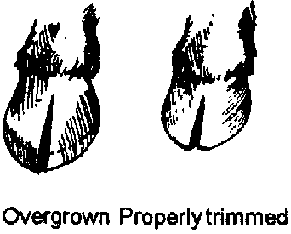
Overgrown and properly trimmed
Trimming the hooves of a large animal
1. Restrain the animal. Cast down wild animals only.
2. Tie the legs together to avoid being kicked.
3. If chisel and hammer are used, the animal does not have to be cast down. Place a leg on a fiat piece of wood (to reduce shock awing hammering)

4. Start trimming at sides, then
around the entire hoof Front and sides are normally harder. It should be trimmed
up to the level of the hoof.
Trimming the hooves of small animals
1. Restrain the animal.
2. Trim sides with the use of a sharp
knife around the entire hoof.
Instruments needed
Large animals
- Chisel
- Hammer
- Piece of flat wood.
Small animals
- Sharp knife.
|
| ||||||||||||||||||||||||||||||||||||||||||||||||||||||||||||||||||||||||||||||||||||
Dehorning
Dehomed animals require less space in feeders. The danger of serious injuries from horns is also avoided.
Methods of dehorning cattle, water buffaloes and goats
Hot iron
This method is commonly used to dehorn older animals (4-5 months old). It is quick and bloodless.
1. Restrain the animal.
2. Select a capped-head dehomer that
fits the horn to be removed.
3. Heat the capped-head in fire until it is
cherry-red in color.
4. Fit it to the here of the horn
Things needed
- Cappedhead dehorner
- Fly repellent like pine tar
5. Turn the handle around to completely encircle the hoary.
Remove the horn and bum also the tip of the horn bud with the same red-hot
dehomer.
6. Apply a fly repellant, either Pine tar or Negasunt or Gusanex.

Hot iron
Chemical
Things needed
- Caustic potash stick
- Vaseline or vegetable oil
-
Scissors
- Vinegar
- Plastic/rubber gloves. if available. If not, take
extra care in applying potash.
Important
DON'T use caustic potash stick if:
- It is raining. It could burn the face or other parts of the animal.
- Several calves or kids run together.
- Young and mother are together.
A caustic potash stick is used to disbud animals, 4-10 days old.

1. Remove hair from and the base of
the hoary.

2. Apply oil abaft one-half inches
around the base of the horn.

3. Wearing rubber gloves, dip one end
of the potash stick in water.

4. Rub stick around the base of the
horn until it starts to bleed. Then, stop rubbing.
If burning occurs on the side of the head, wash the area with a solution of I part vinegar and 3 parts water.
5. Follow same procedure with the other horn bud.
6. Place
disbudded animals in an individual
pen.
|
| ||||||||||||||||||||||||||||||||||||||||||||||||||||||||||||||||||||||||||||||||||||
Clipping milk teeth of piglets
Newborn piglets have 4 pairs of sharp teeth, 2 pairs on the lower and upper jaws.
Clipping these teeth will reduce the incidence of injury to the udder of the row and to the other piglets.
1. Clip teeth close to the gums.

2. Smoothen the clipped edges using a
nail cutter or clipper.
Items needed
- Clipper or
- Nail
cutter
|
| ||||||||||||||||||||||||||||||||||||||||||||||||||||||||||||||||||||||||||||||||||||
Disinfection of pen and equipment
Disinfect pen and equipment after use to kill germs. Disinfectants help prevent animals from dying and improve animal production.
When to disinfect
- 2-3 times a week during a disease outbreak.
- If the number
of animals getting sick rises.
- If the number of animals dying rises.
Commonly used disinfectants
Lye
Soak 1 kg of wood ash in 1 can (kerosene) of water overnight. Use the water extract (lye) to disinfect the pen. Avoid getting in contact with lye for it could cause a burning sensation on the skin and the eyes.
Creoline
Mix 1 teaspoon of creoline with 1 liter of water using a stick. Use the solution to disinfect the pen.
Lysol
Mix 1 teaspoon of Iysol with 1 liter of water. Use the solution to disinfect the pen.
Tips about disinfectants
- They are harmless to humans and animals when applied in the
right amount.
- If possible, use gloves when handling.
- Do not expose
disinfectants to sunlight.
- Close the bottles tightly.
How to disinfect?
1. Clean the pen or house. Clean the ceiling first, then the wall and lastly the floor. Thoroughly dry the area.
2. Remove drinkers and feeders (if possible).
3. Use a detergent to loosen dirt and organic matter sticking to all surfaces. Warm or hot water increases the cleaning performance of the solution.
4. After using the detergent, rinse the pen with clean water.
5 Disinfect with any of the above examples of disinfectants.

Disinfection
|
| ||||||||||||||||||||||||||||||||||||||||||||||||||||||||||||||||||||||||||||||||||||
Waste management and disposal
Dispose animal wastes properly to control diseases and to prevent air and water pollution. Apply livestock and poultry manure as fertilizer for crops and grasses.
Animal waste has several benefits:
- Nutrients are added to the soil.
- Soil cultivation is improved.
- The water-holding capacity of the soil is improved.
- Soil erosion through wind and water is lessened.
Among animal manure, poultry droppings have the highest commercial and nutritive value because of their high nitrogen content, needed by plants.
Another use of chicken manure
Farmers in Bulalo, Cavite, Philippines, apply chicken manure around newly sown seeds and planted seedlings to ward off field mice. The manure of other animals can also fertilize the soil; but only chicken manure can prevent mice from destroying seeds and seedlings.
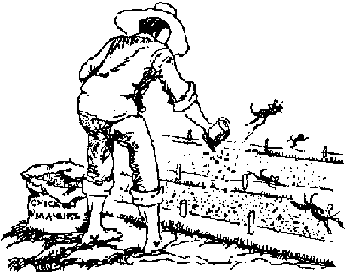
Another use of chicken manure
Disposal of carcasses
Dispose of animal carcasses properly to prevent the spread of infections and diseases.
Suggested precautions
- Cover dead animals immediately, so insects arid other animals will not feed on them prior to proper disposal.
- Never deposit carcasses on or near streams.
- Dig a hole 6 feet deep, right beside the carcass. Roll the dead animal into the hole.
- Sprinkle large amounts of lime, wood ash or kerosene over the carcass then fill in the hole with soil.
- Protect the area from stray dogs which might carry away parts of the carcass and spread disease. Cover with stones or logs to prevent dogs from digging up the carcass.

Disposal of
carcasses
|
| ||||||||||||||||||||||||||||||||||||||||||||||||||||||||||||||||||||||||||||||||||||
Pesticides
Pesticides are substances which kill or repel pests.
Most pesticides are harmful to people and animals when they enter the body through the mouth, skin or nose, Skin contact is most difficult to prevent.
Safe disposal of chemical pesticides and their containers
To avoid accidental poisoning of people and animals, carefully dispose of empty containers and unused pesticides. Bury these in a pit far from any water source to avoid contamination.
Burn empty pesticide bags and cardboard containers in the open. Keep away from the smoke. Cover the ashes with soil. Ensure that the buried ashes can not contaminate water sources.

Burning empty pesticides bags
Signs of pesticide poisoning in animals
- Swaying
- Incoordination
- Vomiting
- Sleepiness
-
Frothy mouth
Botanical pesticides
Botanical pesticides are formulations made from plants and other materials found in the environment. They are less toxic than commercial pesticides and can be prepared by farmers.
Example
Ingredients
1 kg Gliricidia (madre de cacao) leaves
2 tablespoons vinegar
1 gallon water powdered detergent (enough to saturate the water)
To saturate the water add powdered detergent until no more powder will dissolve.
Tools needed
- Strainer
- Sprayer
1. Pound 1 kg of Gliricidia leaves.
2. Soak overnight in 1 gallon of water.
3. Add 2 tablespoons of vinegar.
4. Strain.
5. Add powdered detergent to the solution.
6. Spray or bathe the animal with the solution.

Botanical pesticides preparing
This natural pesticide can control external parasites like mites ticks and lice.