 |
| ||||||||||||||||||||||||||||||||||||||||||||||||||||||||
|
| ||||||||||||||||||||||||||||||||||||||||||||||||||||||||
IIRR
|
| ||||||||||||||||||||||||||||||||||||||||||||||||||||||||
Foreword
These manuals have been written with the simplest language possible for the convenience of the intended user -the animal health practitioners or ("pare-vets") working in isolated rural communities. It is not designed to be a complete veterinary medicine reference material. But rather, aims to present the most important animal health problems commonly encountered and some of the most effective, but simple treatments.
The manuals are based upon experiences documented through a series of intensive field work activities over a one-year period with a group of livestock small-holders living and working in Cavite province of the Philippines. The manuals were first produced in a draft form in early 1994. The manuals were then pretested by a group of small-scale animal producers in June of that year.
The manuals are divided into four separate booklets
1. Restraining animals and simple treatments
2. Basic
husbandry practices and veterinary care
3. Disease control and
treatment
4. Herbal medicine for animals
Common antibiotics, hormone vitamins and dewormers mentioned are mostly in solution. For dosages on the mixtures prescribed see page 12 of Restraining animals and simple treatments.
We hope that these manuals will help rural animal health practitioners to identify and remedy common health problems which they may encounter in their work. Further, we hope that this humble contribution will truly help practicing "para-vets" to make greater contributions as partners in the veterinary profession.
We would like to gratefully acknowledge the funding support provided by the Canada Fund-Philippines of the CIDA trough the Canadian Embassy. Their support financed the fieldwork upon which these manuals are based, as well as the actual production and printing of the manuals. Their continued assistance to the betterment of the rural communities of the Philippines is greatly appreciated.
Nita Cueva-Abena wrote the first draft of these manuals. Ms. Abena is a practicing rural veterinarian. She has worked with a feedmill operated by a cooperative and has worked as a veterinarian within rural development and extension programs. She is presently involved with two veterinary clinics which cater to both food and companion animals. She is also a consultant to swine production farms.
|
Translation |
Ray Mantes |
|
Illustrations |
RicCantada |
|
Production coordinator |
Jaime Ronquillo |
|
Editor-in-chief |
Paul Mundy |
|
Editors |
Jaime Ronquillo |
| |
David Abbass |
| |
Evelyn Mathias |
|
Desktop |
Mamet Magno |
| |
Jel Montoya |
|
| ||||||||||||||||||||||||||||||||||||||||||||||||||||||||
Restraining animals
Occasionally, livestock must be restrained for examination and treatment.
Restrain animals with care to ensure safety and a minimum of stress.
Cattle and water buffalo
Grasping the nostrils with thumb and fingers

This is used for thoroughly
domesticated cattle and water buffaloes.
Upper jaw held up by a rope
Procedure

1. Double an eight-foot long light
rope or sash cord in the middle.
2. Thread the two ends through the resulting loop to form
another loop.
3. Slip it slowly over the animal's upper jaw towards the back
of the mouth and pull it tight.
4. Tie the other ends of the rope to a post.
Be sure that the head is slightly elevated.
Grasping the tail
Procedure
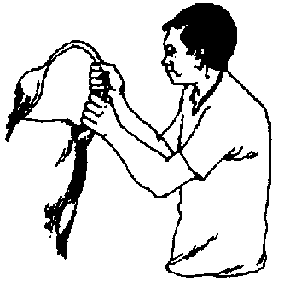
Hold firmly the base of ithe tail and
raise it straight over the back of the animal. This is done to restrain the
hindquarter section of cattle and water buffaloes.
"Figure 8" method

Wind a rope to create a "Figure 8"
around the hocks (just above the main joint). This is used to restrain animals
with mastitis (inflamed mammary gland).
Procedure
1. With the use of a light rope, place a "Figure 8" around the hocks. Do not tie the rope. It could cause lameness to the animal.
2. A second person should keep tension on the rope to prevent the animal from walking.
Chute
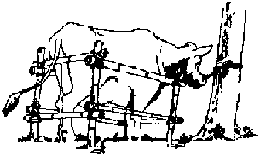
Figure
Bamboo poles can be used to make a chute. This will Evict the animal's movement and prevent it from kicking.
Procedure
1. Put up four bamboo posts near a tree. They should be strong and wide enough to enclose either cattle or water buffaloes.
2. Guide the animal inside the structure and tie the nose lead closely to a tree or post.
3. Close the chute at the rear end by tying two short poles, one below the anal region and the other at the level of the shanks.
Double-loop method
This method has the advantage of reducing the possibility of injury to either the penis or mammary organ of the animal.
Procedure

1. Tie the animal to a post or tree
with the use of a rope.
2. Double a long rope. Put the middle of the long rope over the
neck of the animal.
3. Pass one end below the elbow, pass over the back and
down the groin at the other side.
4. Do the same with the other end of the
long rope on the other side of the animal.
5. Pull the two ends of the rope.
Tying legs to a post or tree trunk
Procedure
1. Tie both forelegs to a post or tree trunk.

2. Then, tie the hindlegs to another
post or tree trunk.
Tying all legs together
Procedure
1. First, tie the forelegs together.
2. Then, tie the hindlegs together.

3. Lastly, tie the fore and hindlegs
together.
Restraining a calf
Procedure
1. Position yourself at side of the calf.
2. Bend over the animal.
3. Reach over the animal and grasp the fore and hind legs farthest from you.

4. Set the animal down on its side.
Goat
Since goats are smaller than cattle and water buffaloes, they are easier to restrain.
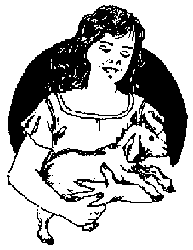
Cradling a kid.

Holding a goat between your knees.

Pinning goat to a solid wall with
knees.
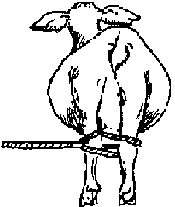
"Figure 8" around the hocks
Stanchion
A stanchion is a restraining device that loosely clamps a goat's neck limiting its forward and backward motion while permitting some lateral motion. Stanchions can be made of bamboo or wood.
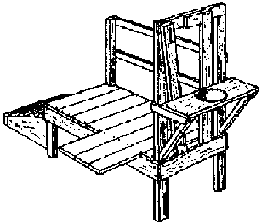
They can also be built to restrain
large ruminants.
It can be used in:
- milking;
- dehorning;
- castration;
- hoof trimming; and,
- clipping of hair.
Pigs
Slipping a rope around the snout
Procedure
1. Double a rope and slip the loop around the pig's snout, behind the pair of long teeth.

2. Fasten it to a tree or to a sturdy
post.
Restraining smaller pigs
- Hold the animal's hindlegs firmly.

- Press the body between your knees.
Restraining very large pigs
- Lay the animal on its side.

-Tie the snout and hind legs to
posts.

-Tie the animal's snout, then its
hindlegs to a post.
Poultry

To restrain poultry, hold the bird by
the legs and turn it upside
down.
|
| ||||||||||||||||||||||||||||||||||||||||||||||||||||||||
Physical examination
Physical examinations can help you learn what's wrong with you animal. Start with the simple things. Look for the following:
- unusual behavior;
- unusual appearance of skin and hair;
- unusual odor, discharges;
- difficulty in walking;
- swelling of joints;
- feces staining the rear;
- high temperature.
Caution: Do not give any medication before taking the temperature of the animal unless you are sure that the animal is sick.
How to take the temperature of an animal
The temperature of the animal is taken at the rectum. Take the animal's temperature before administering any medication.
Procedure

Basic parts of thermometer
1. Shake the thermometer to bring the mercury level below the normal temperature of the animal.
2. For cattle, buffaloes, goats and pigs, hold the tail and insert the thermometer, one to two inches into the rectum, with the mercury bulb first.
Caution: Never pull the tail while taking the temperature.
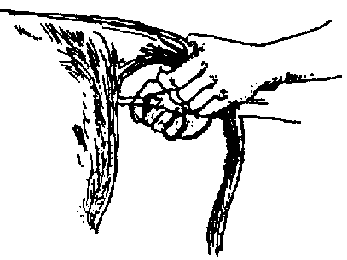
3. Leave the thermometer in position
for three minutes. When the bulb with mercury is warmed, the mercury rises.
4. Read after three minutes.
5. After reading, shake the
thermometer again so the mercury is shaken back into the bulb.
6. Clean and
return the thermometer to its case.
If your reading is two or more degrees centigrade higher than the normal temperature, then your animal is sick. Start medicating the animal with the use of either herbal or western medicine. The temperature should decline within 24 hours. If it continues to rise, medication is not working; hence, there is a need to change the kind of medicine used.
A below-normal temperature indicates shock or a dying animal. A rise of several degrees during the day and return to normal at night may indicate chronic infections.
A disease is acute when it is severe but of short duration. There is a rise in temperature for several days.
Normal body temperature of some animals
|
Animal |
Normal Temperature |
Range (°C) |
|
Cattle |
38.5 |
37.5—39.5 |
|
Water buffaloes |
39.0 |
38.5—39.9 |
|
Goats |
39.3 |
38.5—40.0 |
|
Pigs |
39.4 |
38.8—40.0 |
|
Chickens |
41.8 |
40.5—43.0 |
|
| ||||||||||||||||||||||||||||||||||||||||||||||||||||||||
Paraveterinary kit
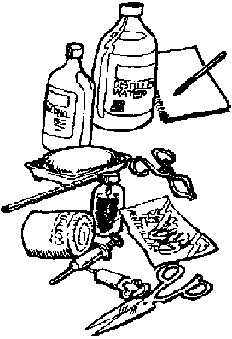
A simple paraveterinary kit should
contain the following:
- Veterinary syringe
- Non-disposable needles
- Cotton
- 70¾ alcohol
- Iodine
- Commonly used antibiotic, like Penicillin
- Thermometer
- Distilled water
- Soap
- Pair of forceps
- Pair of scissors
- Notebook and Den.
How to care for a paraveterinary kit
- Keep all medicines out of reach of children.
- Label all medicines.
- Indicate directions for use.
- Note expiration dates.
- Always use sterilized instruments.
|
| ||||||||||||||||||||||||||||||||||||||||||||||||||||||||
Dosages
How much medicine should you use?
The amount of medicine to use depends an several factors:
- The type and stage of the disease. Generally, more severe cases need more medicine.- The species and weight of the animal. Larger, heavier animals usually need more medicine than small or young ones.
- The type and composition of the medicine. Medicines come in different formulations. Plus, the formulation might vary between brands of the same type of medicine and from country to county.
What is important is not the weight of the tablet or the amount of liquid, but the amount of the active ingredient. Same tablets contain 5 mg of the active ingredient, diners contain 10 mg or more. You might have to mix some medicines yourself from powder or concentrated solution.
Active ingredients
The active ingredient in a medicine is the substance that does the work of curing or preventing the disease.
In addition to the active ingredient, medicines might also contain water, a binder to make the medicine stick together in a tablet, and other ingredients.
Some medicines have more than one active ingredient (such as penicillin streptomycin, which contains two antibiotics: penicillin and streptomycin). Check to make sure that both can be used for a particular problem.
Measuring active ingredients
The amount of active ingredient in a medicine is normally measured in milligrams.
For liquid medicines, the concentration of active ingredient is normally given in milligrams of the ingredient per milliliter of the medicine (mg/ml).
For tablets and capsules, the concentration is normally given in milligrams per tablet or capsule.
Antibiotics and vitamins are sometimes measured in special units, called International Units or IU instead of milligrams.
Read the label
Because of these variations, it is not possible to give a firm general rule on how much medicine to use. However, here are some guidelines.
Read the label on the medicine carefully. (If you bought the medicine without a label, ask the store owner for instructions.) Follow the directions on how much medicine to use, how to apply it and how often to repeat the treatment. The section Reading drug labels on page 19 gives an example of a typical label.
The medicine label might tell you to apply a certain amount of medicine per kilogram of the animal's body weight. Use the tables on pages 20 to 23 to estimate the bodyweight.
If you are not sure how much medicine to use, or how to apply it, ask someone with more experience. Veterinarians, experienced livestock raisers and the owner of the store where you bought the medicine are good sources of information.
Applying the wrong amount
It can be dangerous to apply either too little or too much of a medicine.
- Applying too much medicine can harm or even kill the animal.- Applying too little medicine can have at least two consequences:
- It might fail to cure the problem.
- The disease organisms might become resistant to the medicine. This makes the disease more difficult to treat.
This is especially a problem if you stop treatment early, before the recommended time is over (for instance, if the animal seems to be recovering but still carries the disease bacteria). Some bacteria might survive and be more resistant to the medicine next time.
Remember: use only the recommended dosages, and follow the instructions fully.
Follow the law
Laws in many countries prohibit non-veterinarians from treating animals with certain types of medicine, for example antibiotics. These laws aim to avoid harming animal and human health and to prevent misuse through ignorance.
Calculating dosages
Some medicine labels tell you very
clearly how much medicine to
apply for a certain type of animal.
Example
(from the medicine label)
Dosage Piglets 1.0-2.0 ml (1st-4th day of
life)
Calves 4.0-8.0 ml (1st week of life)
Such cases are easy: just
follow the instructions on the label.
Calculating dosage based on body weight Other labels require you to do some simple arithmetic. You might have to calculate the amount of medicine required from the body weight. Example (from the medicine label)
Dosage 1 ml/10 kg body weight If your animal weighs 90 kg, you should apply 9 ml of the medicine. (See the tables on pages 20 to 23 to estimate the body weight.)
Calculating dosage based on active ingredient
Sometimes, the label tells you only the concentration of active ingredient and the amount of active ingredient to apply per kilogram of bodyweight. You must calculate the amount of medicine to use. This takes a little more arithmetic (a pocket calculator can come in handy). Here's how to do it:
First, measure or estimate the body weight of the animal.
Example
A sick cow has a girth of 120 cm.
The table on page 20 shows
that this animal weighs about 150 kg.
Calculate the amount of active
ingredient you need to use.
The medicine label says the dosage is 20 mg/kg body weight/day.
- Animal weighs 150 kg
- Dosage = 20 mg/kg body weight
- 20 mg/kg x 150 kg = 300 mg of the active ingredient. Check how much active ingredient the medicine captains.
Example
The medicine label says that each 5 ml (I teaspoon) contains
125
mg of dihydrostreptomycin sulfate.
- Therefore, 1 ml of the medicine contains 25 mg of dibydrostreptomycin (the active ingredient). Calculate how much medicine contains this amount of active ingredient.
Example
- 1 ml contains 25 mg of dihydrostreptomycin.- You need 300 mg of the active ingredient. - Therefore you need 300/25 = 12 ml of the medicine.
|
| ||||||||||||||||||||||||||||||||||||||||||||||||||||||||
Common units of measurement
The use of any equipment will depend on:
- Availability
- Simplicity in use
- Familiarity of the user.
- Region-specific.
Liquid
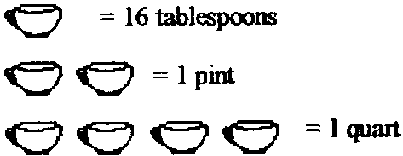
Cups
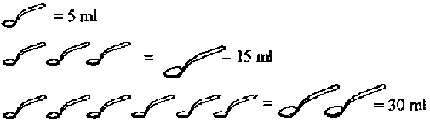
Spoons

Drinking glass
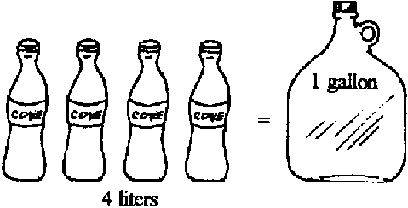
Bottles
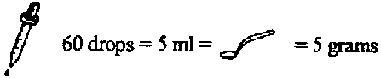
Dropper

Powder
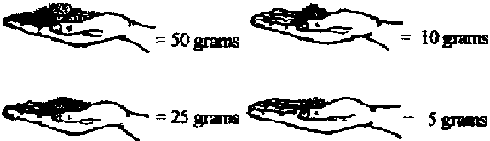
Weight depends on the size of the
ingredients.
|
| ||||||||||||||||||||||||||||||||||||||||||||||||||||||||
Reading drug labels
Sample prescription
TSD Total Spectrum Dewormer Albendazole suspension (3,400 mg In
100 ml)
For most effective treatment of all types of worms in cattle carabao,
goat, sheep (For Animal Use Only).
Indications:
|
States the use of drug |
For the effective control of all stages of roundworms, lungworms, tapeworms and flukes in cattle, carabaos, goats and sheep. It also reduces hatching of worm and fluke eggs. The spectrum of efficacy covers the common destructive parasites. |
| |
Gastro-intestinal roundworm: |
| |
Bunostomum spp., Capillaris spp., Cooperia spp., Haemonchus spp., |
|
|
Nematodirus spp., Oesophagostomum spp., Strongyloides spp., |
| |
Trichuris spp, Trichuris spp. |
| |
Lungworm: |
| |
Dictyocaulus viviparus |
| |
Tapeworm: |
| |
Moniezia spp., baas and segments |
| |
Liverflukes: |
| |
Fasciola gigantica, Fasciola hapatica |
| |
Formula: content |
| |
Each 100 ml contains 3,400 mg of Albendazole. |
|
States how to the use |
Dosage and directions for use: |
| |
TDS is given orally as a drench in a single dose. The regular dose is 15 |
|
|
ml (1 tbsp) per 45 kg bodyweight for cattle and cambsos. |
| |
Precautions: |
| |
1. Strictly ensure dosage of TSD administered with respect |
| |
bodyweight. |
| |
2. Care must be taken when dosing young animals, those that are weak |
|
|
(thin and undernourished). |
| |
3. Observe 10 days withdrawal period prior to slaughter for human |
|
|
consumption. |
| |
4. Do not deworm lactating animals when milk is used for human |
| |
consumption. |
| |
5. Drench pregnant sheep and goats only after the first month of |
| |
pregnancy. |
|
Reminders |
KEEP OUT OF REACH OF CHILDREN. |
| |
SHAKE BOTTLE BEFOR USING. |
| |
STORE AT ROOM TEMPERATURE. |
| |
AND AVOID EXPOSURE TO SUNLIGHT |
|
| ||||||||||||||||||||||||||||||||||||||||||||||||||||||||
Estimating live weight
Estimating your animal's weight is important not only for monitoring growth but also in determining dosages of certain medicines. To estimate live weight you will need a tape measure and a weight chart.
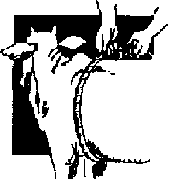
Large ruminants
Live weight of large ruminants can be estimated by measuring the chest girth with a tape measure or a calibrated string Approximate weight can be calculated using the table below.
|
Girth |
Weight |
|
(cm) |
(kg) |
|
65 |
35 |
|
70 |
40 |
|
75 |
45 |
|
80 |
50 |
|
85 |
59 |
|
90 |
69 |
|
95 |
79 |
|
100 |
89 |
|
105 |
103 |
|
110 |
118 |
|
115 |
134 |
|
120 |
150 |
|
125 |
170 |
|
130 |
190 |
|
135 |
210 |
|
1 40 |
230 |
|
145 |
252 |
|
150 |
272 |
|
155 |
295 |
|
160 |
325 |
|
165 |
360 |
|
170 |
392 |
|
175 |
477 |
|
180 |
467 |
|
155 |
508 |
|
190 |
552 |
|
195 |
598 |
|
200 |
648 |
|
205 |
698 |
|
210 |
748 |
|
215 |
798 |
|
220 |
850 |
|
225 |
905 |
|
230 |
969 |
Source: Veterinary Research Institute, Sri Lanka
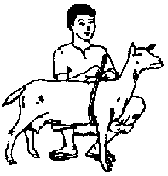
Small ruminants
Measure the heart girth of small ruminants (goats or sheep) using a tape measure or string. Pull the tape tight Use the table below to estimate the weight.
|
Hearth girth |
Body weight | ||
|
(in) |
(cm) |
(lb) |
(kg) |
|
10 ¾ |
27.3 |
5 |
2.3 |
|
11¾ |
28.6 |
5 ¾ |
2.5 |
|
11 ¾ |
29.9 |
6 |
2.7 |
|
12¼ |
31.1 |
6 ½ |
3 |
|
12 ¾ |
32.4 |
7 |
3.2 |
|
13 ¼ |
33.7 |
8 |
3.6 |
|
13 ¾ |
34 9 |
9 |
4.1 |
|
14 ¾ |
36.2 |
10 |
4.5 |
|
14¾ |
37.5 |
11 |
5 |
|
15 ¼ |
38.7 |
12 |
5.4 |
|
15 ¾ |
40 |
13 |
5.9 |
|
16 ¼ |
41.3 |
15 |
6.8 |
|
16 ¾ |
42.7 |
17 |
7.7 |
|
17 ¾ |
43.8 |
19 |
8.6 |
|
17 ¾ |
45.1 |
21 |
9.5 |
|
18 ¼ |
46.4 |
23 |
10.4 |
|
18 ¾ |
47.6 |
25 |
11.3 |
|
19 ¼ |
48.9 |
27 |
12.2 |
|
19 ¾ |
50.2 |
29 |
13.2 |
|
20 ¼ |
51.4 |
31 |
14.1 |
|
20 ¾ |
52.7 |
33 |
15 |
|
21 ¼ |
53.9 |
35 |
15.9 |
|
21 ¾ |
55.3 |
37 |
16.8 |
|
22 ¾ |
56.5 |
39 |
17.7 |
|
22 ¾ |
57.8 |
42 |
19.1 |
|
23 ¾ |
59.1 |
45 |
20.4 |
|
23 ¾ |
60.3 |
48 |
21.8 |
|
24 ¾ |
61.6 |
51 |
23.1 |
|
24 ¾ |
62.9 |
54 |
24.5 |
|
25 ¾ |
64.1 |
57 |
25.8 |
|
25 ¾ |
65.4 |
60 |
27.2 |
|
26 ¾ |
66.7 |
63 |
28.6 |
|
26 ¾ |
67.9 |
66 |
29.9 |
|
27 ¾ |
69.2 |
69 |
31.3 |
|
27 ¾ |
70.5 |
72 |
32.7 |
|
28 ¾ |
71.7 |
75 |
34 |
|
28 ¾ |
73 |
78 |
35.4 |
|
29 ¾ |
74.3 |
81 |
36.7 |
|
29 ¾ |
75.6 |
84 |
38.1 |
|
30 ¾ |
76.8 |
87 |
39.5 |
|
30 ¾ |
78 |
90 |
40.8 |
|
31 ¾ |
79.4 |
93 |
42.2 |
|
31 ¼ |
80.7 |
97 |
44 |
|
32 ¾ |
81.9 |
101 |
45.8 |
|
32 ¾ |
83.2 |
105 |
47.6 |
|
33 ¾ |
84.5 |
110 |
49.9 |
|
33 ¾ |
85.7 |
115 |
52.2 |
|
34 ¾ |
87 |
120 |
54.4 |
|
34 ¾ |
88.3 |
125 |
56.7 |
|
35 ¾ |
89.5 |
130 |
59 |
|
35 ¾ |
90.8 |
135 |
61.2 |
|
36 ¾ |
92.1 |
140 |
63.5 |
|
36 ¾ |
93.4 |
145 |
65.8 |
|
37 ¾ |
94.6 |
150 |
68.1 |
|
37 ¾ |
95.9 |
155 |
70.3 |
|
38 ¾ |
97.2 |
160 |
72.6 |
|
38 ¾ |
98.4 |
165 |
74.8 |
|
39 ¾ |
99.7 |
170 |
77.1 |
|
39 ¾ |
101 |
175 |
79.4 |
|
40 ¾ |
102.2 |
180 |
81.6 |
|
40 ¾ |
103.5 |
185 |
83.9 |
|
41 ¼ |
104.8 |
190 |
86.2 |
|
41 ¾ |
106.1 |
195 |
88.4 |
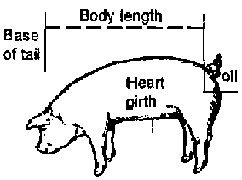
Swine
Live weight of swine can be estimated by measuring the body length (from the back of the head to the base of the tail) and the heart girth of the animal with a tape measure. Using the table below, an approximate weight can be calculated For example, if the body length is 130 cm and the heart girth is 110 cm, the swine weighs about 105 kg.
|
Heart girth (cm) | |||||||
| |
80 |
90 |
100 |
110 |
120 |
130 |
140 |
|
Body weight (kg) | |||||||
|
80 |
36 |
40 |
48 |
60 |
75 |
94 |
116 |
|
90 |
42 |
47 |
55 |
67 |
82 |
101 |
123 |
|
100 |
50 |
55 |
63 |
75 |
90 |
108 |
130 |
|
110 |
59 |
64 |
72 |
84 |
90 |
117 |
139 |
|
120 |
69 |
74 |
82 |
94 |
109 |
120 |
150 |
|
130 |
80 |
85 |
94 |
105 |
120 |
139 |
161 |
|
140 |
93 |
98 |
106 |
118 |
133 |
151 |
173 |
|
150 |
107 |
111 |
120 |
132 |
147 |
165 |
187 |
Weighing piglets
Usually, piglets are weighed for sale. There are several ways to weigh a piglet.
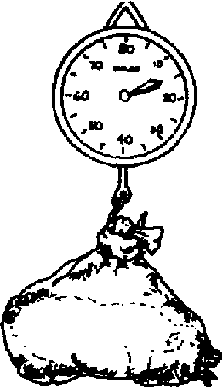
Place piglets in sack or box and hang
from scale.
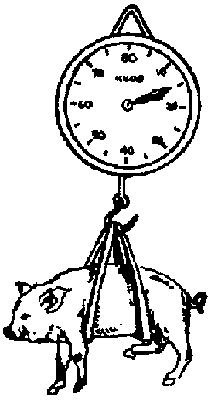
Hang a piglet on a scale, using a
strap looped under its belly.

Weighing pigs over 50 kilos
There are two common ways of determining the weight of pigs over 50 kg. These are:
Weigh the animal on a platform scale. Estimate its weight using an ordinary tape measure.
|
| ||||||||||||||||||||||||||||||||||||||||||||||||||||||||
Administering medicine
Medicine can be given either through the mouth (oral administration) or trough injection (parenteral administration).
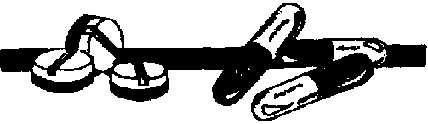
Oral administration
The most common forms of medicine given to livestock and poultry are pills, liquids and powders. Pills include tablets and capsules.
Drenching
Drenching is the forced pouring of liquid preparations down the throat of an animal. This method can be used for ruminants, pigs and poultry. In all animals, hold the head elevated so that the medicine does not enter the lungs.
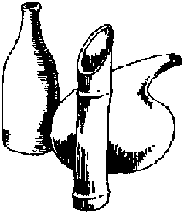
You can use:
- bamboo tube
- gourd
- plastic bottle
Procedure
Ruminants
1. Tie the animal to a coconut tree or pole.
2. Elevate the nose until it forms a straight line with the
neck.
Caution: Do not use a glass bottle. It can break and cause damage to
the animal. Do not raise the head too high for it can interfere with swallowing.
Do not pour the liquid abruptly into the animal's throat.
3. Allow about a minute for the animal to swallow and breathe before giving succeeding doses. Lower the head immediately when the animal starts to cough.
Caution: Do not pull the tongue out of the mouth. It needs to be free for swallowing.

4. Drench the medicine as seen in the
illustration.
Pigs
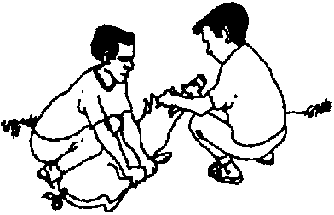
- Set the animal on its side on the
ground or have an assistant and hold it down, while you drench.
Or
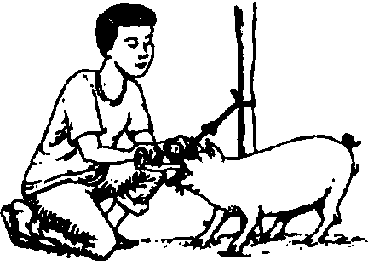
- Tie the upper snout with a piece of
rope. Tie the rope to a post; hold it tightly. Drench.
Chickens
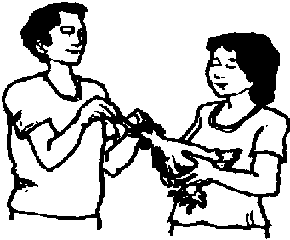
Things needed:
- syringe without the needle, or
- dropper, or
- rice or sorghum straw, or
- plastic straw
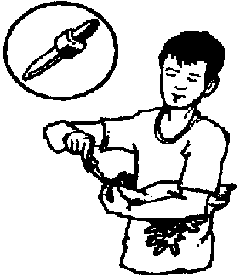
An assistant may be needed to hold
the chicken.
1. Hold the upper beak with the left thumb (if right
banded).
2. Push the lower beak with the right index finger.
3. Administer
the medicine.
Solid medicines
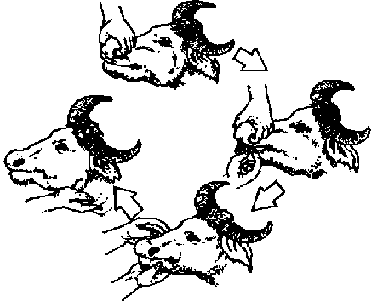
Application of solid medicine through
the mouth. Examples of solid medicines are boluses, tablets and capsules.
Procedure
Ruminants
1. Hold the animal by the nostrils.
2. Insert the solid
medicine through the side of the mouth.
3. Immediately close the animal's
mouth.
4. Slightly massage the throat to ensure that the animal swallows the
medicine.
Pigs and poultry
Solid medicines given to pigs and poultry are usually pulverized and mixed with feed or drinking water.
Medicated feed or drinking water
Medicines with objectionable taste and odor are hard to administer. Mask the odor and the taste of the drug in water or feed by adding salt, sugar or molasses.
Procedure
1. Mix or sprinkle the remedy thoroughly with the feed or
water.
2. Add salt sugar or molasses to the mixture.
3. Divide into
portions and feed to animal.
Parenteral administration
Some medicines do not work if they are fed to the animal. These medicines have to be injected, depending on the type of medicine, into the muscle (intramuscular), into the blood (intravenous), or under the skin (subcutaneous).
Instruments/things needed for injection:
- syringe.
- needle/s. cotton.
- 70¾ alcohol.
Syringe
Syringes are used to inject liquid drugs. They are usually scaled in cubic centimeters (cc).
|
Needle |
Length and size of needles |
|
The length and size of needle |
For large animals |
|
to be used depend on: |
1.0 x gauge 16 |
|
- the animal's size, |
For medium-sized animals |
|
- the animal's age |
1.0 x gauge 18 |
|
- the body part to be injected. |
For small animals |
| |
0.5 x gauge 21 |
Needles can be disposable or non-disposable.
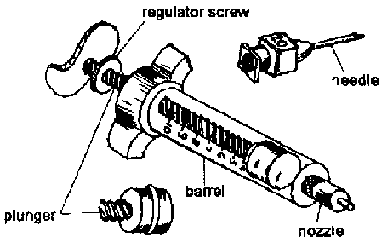
Parts of a syringe
Filling a syringe with undiluted drug
1. Shake the bottle containing the drug. Caution: Always rub the stopper of bottles drugs with a clean cloth or cotton moistened with 70¾ alcohol before injecting the needle into it.
2. Force the needle through the stopper of the solvent.
3. Hold the bottle upside down and fill the syringe with solvent or distilled water.
4. Inject the distilled water into another bottle containing the powdered medicine.
5. Shake until the powdered medicine dissolves completely.
6. Fill the syringe with the dissolved medicine.
7. Push the plunger to remove all air from the sysringe until liquid starts to cane out
8. Inject into the appropriate site of the animal's body.
Another faster way to fill a syringe with dissolved medicine
1. Fill the barrel of the syringe with air by pulling the plunger outward.
2. Push the needle through the stopper.
3. Hold the bottle upside down.
4. Press some air from the syringe into the bottle.
5. Pull the plunger down and suck in some fluid.
6. Continue to pump in this manner until syringe is full. Reminder: Clean and sterilize the syringe and needle after every use. Keep in a clean place.
Cleaning and sterilizing a syringe and needle
Unclean instruments like syringes, needles and forceps can be carriers of microorganisms from a sick animal to a healthy one. One way to avoid or prevent the spread of microorganisms is through proper cleaning and sterilization.
1. Take the syringe apart.
2. Wash every part in tap water and get rid of any trace of blood or dirt.
3. Boil in water for 20 minutes or soak in 1 part chlorine (chlorox) mixed with 7 parts of water.
4. Allow the solution to enter inside the syringe and needle.
5. Dry them in a clean and sterilized pan.
6. Put needle and syringe together; touch only the base of the needle and the bottom of the plunger.
Common ways of giving injection to animals
Intramuscular injection
Most drugs are injected into the muscle because it is easily done.
Any large muscle tissue like the hip or neck can be used for the injection. Use the recommended length and size of needles.
Medicine injected can be oil- or water-based. Medicine injected is rapidly absorbed.
Procedure
1. Be sure to do the following: —Restrain the animal properly. —Clean and disinfect the injection site.
2. Take the needle off the syringe.
3. Slap the injection site with the back of the hand.
4. Plunge the needle quickly into the muscle.
5. Attach the syringe to the needle. If blood enters the syringe a blood vessel is hit. Do not inject unless you 've hit the right site. Repeat the process until no blood is seen.
6. Inject the drug.
- While pulling the needle out massage the area. It will aid in the absorption of the medicine and reduce leakage through the puncture in the skin
Sites for intramuscular injection
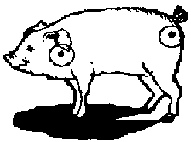
Pig
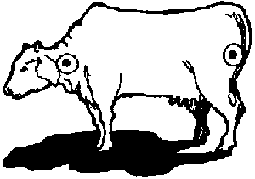
Cow
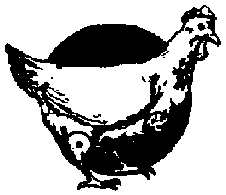
Chicken

Water buffalo
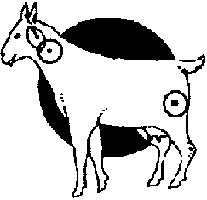
Goat
Intravenous injection
Intravenous injection is done when giving large amounts of drugs. The drug gets into the bloodstream quickly, but this requires extra caution. Only recommended solutions should be injected through the vein. Drugs should be given very slowly. The common sites are the ear and jugular veins.
Procedure
- Apply pressure on the vein to make it swell so you can find it more easily.
- Push the needle into the vein. When the needle enters the vein, blood will enter the syringe through the needle.
- Take pressure off or release the vein.
- Slowly inject the rest of the content of the syringe.
- Once finished, remove the needle.
- Apply pressure on the site with cotton moistened with 70¾ alcohol.
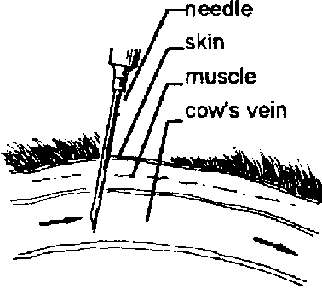
WRONG

CORRECT
Common sites for intravenous injection

Chicken

Pig
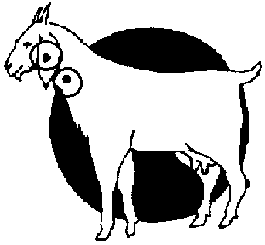
Goat
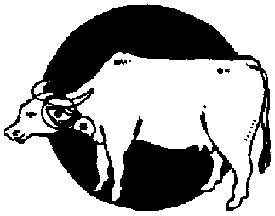
Water buffalo

Cow
Subcutaneous injection (under the skill)
This injection is given directly under the skin. It is painless and easy to administer. It is used only for certain recommended drugs. Common sites for subcutaneous injection are the neck and flank where there is loose skin. Absorption of drug is slow.
Reminder: If large doses are to be given, it is best to inject at several sites.
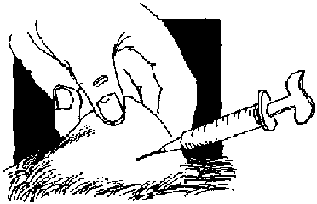
Procedure for subcutaneous injection
- Choose an area where there is loose skin.
- Raise the loose skin and insert the needle.
- Inject the drug. You should be able to feel the fluid under the skin.
- After injection is completed, massage the site as this aids in the absorption and reduces leakage of the drug.
Reminder: For mass vaccination, lifting a skin fold is not necessary provided the right size of the needle is used.
|
| ||||||||||||||||||||||||||||||||||||||||||||||||||||||||
Emergency procedures
An emergency case is any condition which endangers the life of your animal and which requires immediate attention.
Guidelines in handling emergency cases
- Quickly evaluate the condition of the animal and closely monitor it. If possible, transfer the animal to a more comfortable place.
- Be calm in handling the situation.
- Protect the animal from other stresses.
- Continue with specific treatment as needed.
- If you diagnose the disease to be contagious, separate all healthy animals from the sick ones. Do not mix with other herd. Practice quarantine.
- In cases of infectious disease outbreaks, report immediately to the nearest office of the Bureau of Animal Industry.
Disease conditions which require immediate action are:
- Poisoning
- Fresh (bloody) wounds
- Bloat
- Fracture.
Poisoning
Young calves and kids are curious and, therefore, particularly susceptible to poisoning. However, young and old, male and female animals can be poisoned.
Common causes
- Eating plants sprayed with pesticide.
- Eating toxic
plants.
Examples of poisonous plants:
—young shoots of urai/Kulitis (Amarantus spinosus); —bark and seeds of tubang bakod (Jathrotas curcas); —leaves of sapinit (Lantana camara); -fronds of pakong bundok or wild ferns.
- Licking or drinking water contaminated with pesticides.
-
Eating old or moldy feeds.
- Eating excessive amounts of salt.
-
Overexposure of animals to pesticides used in the treatment of external
parasites.
Symptoms
|
Ruminants |
Pigs |
|
- Salivation |
- Salivation |
|
- Abdominal pain |
- Arched back |
|
- Bloat |
- Weakness |
|
- Diarrhea in arsenic poisoning |
- Fever |
|
- Constipation in lead poisoning |
- Staggering or swaying |
| |
- Bleeding from the mouth |
| |
- Swollen face |
Chicken
Symptoms of poisoning in chicken are seldom seen.
Treatment
Treatment for poisoning will depend on the.
External poisoning
- Immediately bathe the animal. Repeatedly wet the animal until its condition improves.
Internal poisoning (except chicken)
Make the animal vomit by giving any one of the following:
- For adults, tablespoonful of salt placed at the back of the tongue; 1 teaspoonful for young animals.- Mix 3 tablespoonfuls of salt in 1 liter of water. Drench.
- Bum and pulverize 3 heads of garlic. Mix with 1 cup of water. Drench.
Caution: Avoid making the animal vomit if it is having convulsion or is stiff.- After the animal has vomited, drench 5-10 egg whites.
- Drench the cattle and water buffaloes once with 1 liter of paraffin oil or vegetable oil, e.g., coconut oil.
Fresh (bloody) wounds
Cuts to body tissue may be caused by:
- Injuries from sharp objects.
- Fights and bites.
Wounds heal by forming a scar. The scar starts to form in the first three days after the injury. The healing process is faster if the skin is brought together and if there is no infection.
Remember: If an animal has a wound, stop the bleeding first before cleaning and treating it.
Minor wounds
Minor or small wounds may heal by themselves. If the wound needs attention:
1. Take a clean cloth or a piece of cotton and a pail of warm, soapy water.2. Carefully clean the wound from inside-out. Pick out any pieces of dirt or soak the wound long enough to soften any dried blood or serum.
3. Rinse it well with clean water.
4. Pat it dry with clean cloth or cotton.
5. Spray fly repellent, if available.
How to control severe external bleeding
1. Put pressure on the bleeding wound by tying a freshly laundered clean cloth.
2. If severe bleeding continues, tie a tight bandage or clean cloth above the point of bleeding. Loosen the tight bandage every 15-20 minutes. If bleeding does not stop, seek professional help.
Stitching a wound
If the edges of the skin do not come together, the wound should be stitched. Old, dirty and infected wounds should not be dosed. Treat this wound with "AB-C" (refer to treatment of wounds).
Things needed:
- Ordinary sewing needle
- Thread
- Cotton
- 70¾ alcohol
How to stitch a wound
1. Boil sewing needle and a thin thread for 20 minutes. Tip: If no timer is available, put some rice grains along with the needle and thread. It takes 20 minutes for rice grains to be cooked.2. Wash your hands with soap and clean water.
3. Remove the dirt in the wound and wash it with soap and water.
4. Stitch the wound.
- Make the first stitch in the middle of the wound. This will be the basis for spacing of other sutures to be properly placed at regular intervals.- Make additional stitches to close the wound. Leave stitches for 10-15 days for complete healing.
- Remove the thread by cutting it on one side of the knot. Pull the knot.
5. If available, spray fly repellent.
Some common stitches
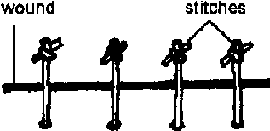
Simple interrupted suture

Continuous suture
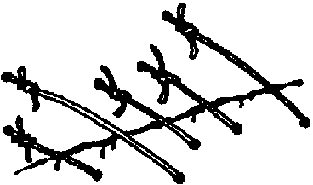
Interrupted sutures for deep wounds
Indigenous ways of treating minor wounds
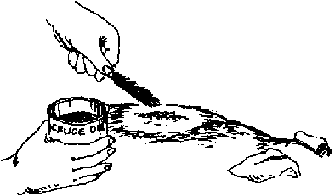
- Crude oil
Using a feather, apply crude oil to wounds infested with maggots.
- Patani (Phaseolus lunatus)
Pound a handful of leaves. Apply the juice on the maggotinfested wound, three times a day until the wound is healed.
- "A -B- C"
This is used to treat old wounds that do not heal. Collect equal amounts of fresh leaves of avocado (Persea americana), banaba (Anona muricata) and star apple (Chrysophyllum cainito). Boil the leaves in a part of water for 20 minutes. Cool. Use a clean cloth dipped in the water to wash the wound. Do this twice a day until the wound is healed.
Prevention
- Keep the animal areas free of sharp objects.
Bloat
Bloat is the abnormal accumulation of gas in the stomach of animals, especially ruminants. It is common among adult animals.
Common causes of bloat
- Eating too many leguminous younger grasses or grasses that have been overly fertilized with nitrogen.
- Sudden changes to certain types of feed rations.
- Eating ripe fruits and other feedstuffs that ferment easily.
- Eating plastic or foreign matter.
- Constipation.
- Tumors in the neck region.
Symptoms
- Animal's abdomen is enlarged on the left side. It sounds like
a drum when you tap it.
- Thick and foamy saliva
- Stops eating or
chewing.
- Fast breathing.
- Restlessness.
- Hind legs kicking the
abdomen.
- Bluish color of the gums.
Treatment
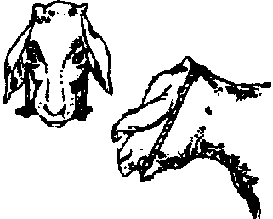
All bloat cases cannot be treated in the same way. Why? Because bloat occurs for several reasons. Here are some things one can do to help save the life of a bloated animal. You can do one or two of the following measures:
- Tie a large stick or rope crosswise in the mouth. A small rope is fastened to each end. The free ends are tied tightly together behind the ears. Draw them well back in the corners of the mouth.

- Keep the animal walking.
- Feed the animal with a pile of chopped banana leaves.
- Knead the left side of the stomach to force the gas out of the rumen.
- In extreme emergency cases, pierce the left side of the animal, between the last rib and the hip bone, four fingers below the backbone.
Bloat that starts suddenly is very dangerous. It can kill the animal within a few hours if not treated. Watch for these symptoms:
- The animal lies down on the ground
- The legs are stiff, spread out when standing.
- The animal refuses to move.
- Green discharge with chewed feed comes out of its nose and mouth.
If you see these symptoms, pierce the left side of the stomach as the last resort. Then, seek professional help.
Piercing the stomach
Things needed
- Cotton
- 70¾ alcohol
- Bamboo stem hollow inside)
or sharp knife.
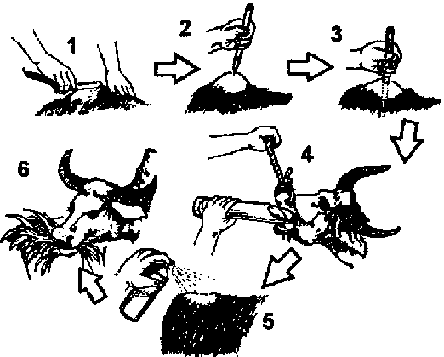
Procedure
1. Shave and disinfect the area.
2. Puncture the bloated animal at the highest point (toward the backbone) of the bloat with the use of a bamboo stem or knife.
3. Insert the bamboo stem or knife further to let the gas escape without contaminating the surrounding areas.
4. After the gas is released, drench the animal with any one of these mixtures:
- Half pint of warm milk and half pint of kerosene Repeat treatment every half hour.- Powdered detergent dissolved in water. In severe cases, put a handful of powdered detergent at the back of the tongue.
- Vegetable oil. One half pint for young animals and one pint for adult animals.
5. If available, spray a fly repellant on the wound.
6. Reduce the animal's grain and water ration for one week.

If a sharp knife was used in piercing
the stomach, do not immediately remove the knife. instead, turn the knife to
enlarge the passage. Once the gas is released, remove the knife and spray a fly
repellent on wound. In case the wound is quite big and the content of the
stomach spread inside, suture the wound and inject the animal with penicillin.
Fracture
A break or a crack in a bone is called a fracture. It is usually caused by accidents or falls. Unless it is immediately treated, the affected area may become useless. A severely fractured animal which is not used for breeding can be slaughtered immediately for food.
Fractures to some parts, like the nose and ribs, usually heal without treatment.
Symptoms
- Swelling at the fracture site.
- The fracture site is
painful to the touch.
- You can hear a crackling sound when you touch or move
the fracture.
- The animal has difficulty using the affected part.
-
Fractured leg often appears longer than the healthy leg.
Treatment for minor fractures
1. Position the animal carefully and comfortably.
2. Straighten the fractured leg and align the bones. For larger animals, a rope can be used to pull a broken bone into alignment
3. If possible, shave the affected area. Clean the affix ted part with clean water. Pat dry.
4. Wrap the entire leg leg a clean clean Do not make it so tight that the blood circulation is cut off.

Newspapers can also be used to
immobilize the animal.
- Pour vegetable oil on the newspaper. Wrap several layers of newspaper around the joint as a cast to keep it from moving. This helps reduce the swelling slightly. Leave on for 1 day.
- The next day, remove the newspaper. Tie a clean cloth around the area to cover the fracture and protect the skin.
- Tape thin, stiff bamboo sticks on all sides of the padded leg to keep it from bending at the factured site. Extend the splint above and below the adjacent joints. Normally, four splints are needed around a leg.
- Tie a clean cloth around the leg. It must not be too tight. You should be able to insert your finger under it.
For a young animal, healing occurs in 10 days; while adult animals will take one to two months. Too much movement of the affected limb will delay healing.
After treating the fracture
- Allow animal to rest.
- Give the animal nutritious
feed.
- Add a handful of ground limestone or eggshells to every 10 kg of
feed.
- If the splint falls off, replace it immediately with a fresh
one.
|
| ||||||||||||||||||||||||||||||||||||||||||||||||||||||||
When to call a veterinarian
It is neither practical nor necessary to call a veterinarian for every little thing that goes wrong with your animals. It is sometimes difficult to decide when to ask a veterinarian for help. Call a veterinarian for unusual cases, such as the following:
- Animal has not eaten for more than 24 hours.
- Animal has a temperature of 41 degrees Centigrade or higher.
- Animal shows signs of fits.
- Animal is shaking.
- Animal falls down and is unable to get up again.
- Animal suffers from recurring diarrhea.
- Ongoing weight loss despite a good appetite.
- Animal shows signs of a contagious disease.
- One of your animals dies suddenly.
|
| ||||||||||||||||||||||||||||||||||||||||||||||||||||||||
Glossary
A
Agalactia. Absence of milk or failure to secrete milk.
Anemia. Condition in which the blood is deficient either in quality or quantity.
Antibiotic. Germ-killing substance produced by bacteria or mold.
Antibodies. Body particles produced in response to infection or administration of vaccines or serum.
Antiserum. A serum containing antibodies against a particular disease.
Antitoxin. Antibody capable of combining with and neutralizing a specific toxin.
B
Bacteria. One celled organisms belonging to the plant kingdom.
Barrow. Male pig castrated before it reaches sexual maturity.
Bloat. An abnormal accumulation of gas in the rumen of cattle, water buffaloes and goats.
Boar. An uncastrated male pig.
Buck. Sexually mature, uncastrated male goat.
Bull. Sexually mature, uncastrated male cattle or water buffalo.
C
Cast. Stuck in a downward position.
Chronic. A disease with slow onset, long in duration and somewhat resistant to treatment.
Cockerel. A male domestic fowl less than one year old.
Colostrum. The first milk secreted by the mother after giving birth, characterized by high protein and antibodies.
Constipation. Abnormally delayed or infrequent passage of dry, hardened feces.
Convulsion. A violent, involuntary contraction of a muscle or muscles.
D
Decoction. Process of boiling plant parts in water for 15-20 minutes or until the water is reduced to half its original volume.
Diarrhea Frequent bowel movements with more or less fluid feces.
Disease. Impairment of the normal state of living animal or plant.
Drench To give liquid medicine to animals.
E
Ewe. Mature female goat or sheep.
F
Farrowing. Birthing in pigs.
Fetus. An unborn developing animal.
Fever. A rise in body temperature above the normal.
Foot rot. An infection that attacks the feet of cattle, water buffaloes and goats.
G
Gilt. A female pig that has not fallowed or has just farowed for the first time.
H
Heifer. A young cow that has not had a calf.
Hemorrhage. Heavy or uncontrolled bleeding.
Hen. A female of domestic fowl that is more than one-year old.
Hock. Tarsal joint in hind limb of animals.
Hog cholera Highly infectious, often fatal, viral disease of pigs.
Hoof. A horny covering protecting the foot of certain animals like cattle and goats.
Hormone. Chemical substance produced in an organ and transported to another organ to produce a specific effect.
I
Immunity. Capacity to resist a particular disease or level of resistance to a particular infection.
Impaction. Lodging of something in a body passage or cavity.
International unit (IU). Quantity of antibiotics and vitamins that produces a particular effect agreed upon internationally.
J
Jugular veins Large veins on each side of the neck.
L
Lactation. Secretion of milk by a female mamal.
Lice. Small, flat, gray, oval-shaped, blood-sucking insects that are parasitic on warm-bloodied animals.
Ligate. Tie off.
M
Maggots. Soft-bodied, legless larva of certain flies.
Mastitis. Inflammation of the mammary gland.
Mites. Small parasites that feed on blood and live in the roosts and litter of poultry.
Mucus. Watery secretion of the mucus gland.
Mummified. Decayed fetus.
O
Oxytocin. A hormone used to aid new mothers having difficulty letting down their milk or to cause uterine contractions during a difficult birth
P
Paralysis. Loss of normal power of motion.
Parenteral. Administering medicines by means other than the digestive system.
Parasite. Organism deriving nourishment from a living animal or plant
Passive immunity. Resistance gained by the injection of serum containing antibodies or by ingestion of colostrum
Placenta Membrane that contains the fetus in the uterus.
Peritoneum. Transparent serous membrane that lines the cavily of the abdomen
Predisposing cause. Anything which renders an animal liable to an attack of disease.
Prescription. A written direction for the preparation and use of medicine.
Pullet. A hen less than a year old.
Q
Quarantine. To isolate an animal
R
Rale. A soft crackling sound heard in the lungs. Not normally heard in healthy lungs
Regurgitate. To return the contents of the rumen to the mouth for further mastication.
Rooster. A cock; an adult male fowl.
Ruminants. Animals that chew cud, such as cattle, water buffaloes sheer and goats.
S
Scours. Severe diarrhea in farm animals.
Scrotum. External sac or pouch containing the testicles.
Sedative. Medicine that lessens pain or agitation.
Serum. Watery portion of blood left after clotting.
Soluble. Capable of changing form or changing into solution.
Sow. A female pig that has farrowed at least once.
Stanchion. A device that fits loosely armed an animal's neck and limits forward and backward motion.
Stillbirth Viable fetus that is born dead.
Suture. To sew; material used for closing wounds.
Susceptible. Non-resistant.
Symptom. Sign or signal.
Syringe. An instrument used to inject fluid into or remove fluid from the body.
T
Third eyelid. White to pinkish membrane found at the inner comer of the eye.
Ticks. Blood-sucking, disease-carrying, Sat, parasitic insects that attach to warm bloodied animals.
Tunic. White, tough membrane surrounding the testicle.
U
Udder. Marnrnary gland.
Uterus. Muscular, fleshy pouch where fetus grows In the female.
V
Vaccine. A suspension of live, killed or weakened virus or bacteria administered to healthy animals to build up immunity to disease.
Vesicle. Blister-like sac containing fluid.
Virus. Microorganism that reproduces itself and obtains its energy from the body cells it enters; there are no completely effective treatments for any viral infection.
Z
Zoonosis. Disease transmissible from animal to human.