 |
| ||||||||||||||||||||||||||||||||||||||||||||||||||||||||||||||||||||||||||||||||||||||||||||||||||||||||||||||||||||||||||||||||||||||||||||
by
Dr. A. Ananie Arkutu, FRCOG
Illustrations by
Regina C. Faul-Doyle
Design by
Smart Design Inc.
Layout and production by
Timothy Showalter
Published by
Family Care International,
Inc.
588 Broadway, Suite 503, New York, NY 10012, USA
Tel:
(212) 941-5300 Fax: (212) 941-5563
Telex: 210474
This book is dedicated to my wife, Joy, and to my daughters, Ayele, Norvishi, and Senanu.
A very special thanks to Ann Starrs for her tireless and invaluable assistance with editing, testing, and producing this publication, and for her encouragement and support. My thanks also to Caryn Levitt, Rikka Trangsrud, and other staff at FCI for their help in the production and review process. Finally, I would like to express my appreciation to the following people for their cooperation and contributions to the publication of this book:
Editorial review of text and illustrations by:
Joan Combellick, C.N.M. Sylvia Deganus, M.D., Komfo-Anokye
Teaching Hospital, Kumasi, Ghana
Betty Farrell, American College of
Nurse-Midwives
Staff from the Family Planning Association of Kenya
(FPAK)
Jane Ferguson, Adolescent Health Programme, World Health
Organization Barbara Kwast, MotherCare
J.M. Kyallo, African Medical
and Research Foundation (AMREF), Nairobi, Kenya
Margaret Marshall,
American College of Nurse-Midwives
Mary Memia, African Medical and
Research Foundation (AMREF), Nairobi, Kenya
Susan Murray, Institute of
Child Health, University of London
Elizabeth Odai, Senior Nursing
Officer, Dodowa Rural Health Post, Ghana
Chinyelu Okafor, University
of Nigeria/Enugu Campus, Nigeria
Rahna Rizzuto
Joyce Safe,
Chief Nursing Officer, Ministry of Health, Tanzania
Assistance in pre-testing was provided by:
Botswana:
Mabel Magowe, Midwifery Training Programme, Institute of Health Sciences, Gaborone Staff at United Nations Children's Fund, Gaborone Gladys Mogapi and other staff at Princess Marina Hospital, Gaborone
Ghana:
Mrs. Kate Agyei-Sakyi, Midwifery Training School,
Koforidua
Julianna Lamptey, Adabraka Polyclinic, Accra
Dr.
Henrietta Odoi-Agyarko and staff at the Maternal Child Health/Family Planning
Unit, Ministry of Health, Accra
Stella Nyinah, Safe Motherhood
Programme Officer, UNICEF/Accra
Gertrude Owusu and other staff from
the Health Education Unit, Ministry of Health, Accra
Staff at Prampram
Health Post, Dangme-West District
Members of the Safe Motherhood Task
Force
Dr. J. Taylor, Department of Obstetrics/Gynaecology, Central
Hospital, Koforidua
Kenya:
Staff at the following clinics of the Family Planning
Association of Kenya (FPAK):
Thika, Ribiero, Eastleigh, Phoenix House,
and Nakuru
Florence Manguyu and staff, Kenya Medical Women's
Association
Staff at Training Unit, Ministry of Health,
Nairobi
Staff at National Council of Churches of Kenya (NCCK)
Nigeria:
Safe Motherhood Officers, Health Zone A
Mrs.
Augustine Ifesma Ezeilo, Abakpa-Nike Health Centre, Enugu
R.E.N. Ugwu,
State MCH/FP Coordinator, Ministry of Health, Enugu
Staff at Uwani
Health Centre, Enugu-South
Dr. A. Ananie Arkutu works with the United Nations
Population Fund (UNFPA).
The views and opinions expressed in this book
are those of the author and not necessarily those of UNFPA.
© Family Care International Inc., 1995. Second Edition. Printed in the USA.
Not-for-profit organisations may use any of the material in this publication freely as long as it is not used for commercial purposes. FCI would appreciate acknowledgements and copies when possible.
Photo Credits (cover): UNICEF/90-061/Nigeria/Sean Sprague,
UNICEF/90-046/Mauritania/Lauren Goodsmith,
UNICEF/86-022/Kenya/Yann
Gamblin, UNICEF/89-033/Mozambique/John Isaac,
UN Photo Library
11528621 Burkina Faso/Kay
Muldoon.
|
| ||||||||||||||||||||||||||||||||||||||||||||||||||||||||||||||||||||||||||||||||||||||||||||||||||||||||||||||||||||||||||||||||||||||||||||
PREFACE
As an obstetrician/gynaecologist who has worked in public health in Africa for many years, I have had the opportunity and the privilege to see women's health issues from a variety of perspectives. As a physician, I have delivered babies and cared for hundreds of women. As a programme manager, I have tried to ensure that essential services are available to meet women's needs. In the process, I have seen the powerful effect that information can have in changing women's lives by helping them gain the knowledge and the confidence to take care of themselves.
My main motivation in writing this book, therefore, was to present the basic information that women need to go through life in a healthy state of mind and body. Many women's health problems, including the complications of childbearing, could be prevented, or made less serious, if two things could be achieved: first, if women understood better how to take care of themselves before, during, and after pregnancy; and second, if they could recognise the early signs of complications and get treatment. Women's health and happiness is an important and valuable goal in itself. Experience from around the world has shown that it is also a basic requirement for a healthy baby, and indeed for a healthy family.
Many women cannot read, and their access to radio, television, and printed materials is often limited. Whatever information they receive about health issues usually comes from trained health workers, especially nurses and midwives. This book is meant to serve as a resource to help these health workers provide complete and accurate information on women's health needs and problems. By using simple language and including many illustrations and boxes that summarise key points, my hope is that this book will be used for face-to-face counselling, for small group discussions, and to prepare posters, pamphlets, and other educational materials on women's health. It can also be used by others in the community who share information with women; these may include representatives of women's groups, traditional healers or birth attendants, and local leaders, as well as neighbours, family, friends - and women themselves.
This publication is a revised edition of Your Health, Your Pregnancy: A Guide for the African Woman, which was published in 1992. This new edition reflects the recommendations and responses of readers and users throughout Africa who participated in an evaluation of the first edition. Four major changes have been made: first, the book is targeted more specifically for health personnel and others who work with women at the community level; second, it covers a broader range of reproductive health issues, including the needs of adolescents; third, it includes more references to traditional practices and beliefs; and fourth, it contains many more illustrations and boxes. The book still emphasizes pregnancy and childbirth, because the complications of childbearing remain the leading cause of death and illness among women in Africa today.
Healthy Women, Healthy Mothers is the first of a set of materials published by Family Care International. The other two publications are Getting the Message Out: Designing an Information Campaign on Women's Health, a booklet that outlines the step-by-step process of producing health education materials on women's health; and Strengthening Communication Skills for Women's Health: A Training Guide. (Information on how to request copies of these publications is provided in the order form at the end of this book.) Together or individually, these publications are designed to help organisations in Africa - ministries of health, family planning associations, women's groups, church organisations, and others working at the community level - in their efforts to promote better health for women and to reduce the number of deaths and disabilities caused by pregnancy and childbirth.
I hope that the information in this book will reach many of the women in Africa for whom pregnancy entails such hope and, sometimes, fear. It is written for the sake of their families, for the sake of their unborn children, and most of all for the sake of the women themselves.
|
| ||||||||||||||||||||||||||||||
Healthy Women, Healthy Mothers - An Information Guide - Second Edition (FCI, 1995, 241 p.)
Chapter One - THE SCOPE AND CONSEQUENCES OF WOMEN'S HEALTH PROBLEMS
Giving Birth, Facing Death
Most African cultures value children highly. But few people - including women themselves - understand the risks involved in bearing children. Women in Africa die much more frequently from the complications of pregnancy and childbirth than women in Europe and North America. In sub-Saharan Africa, these complications are sometimes the most common cause of death for women of childbearing age. In fact, the World Health Organization estimates that one out of every 22 women in Africa dies from pregnancy-related complications (see Table 1.1). For every woman who dies, between 50 and 100 other women suffer from an illness or disability caused by childbearing. This means that every year, more than 150,000 African women die, and millions of women suffer a serious illness, because of pregnancy and childbirth.
Most of these deaths and illnesses could be prevented if three basic goals could be met:
1. If women were in good health before their pregnancies began;
2. If they had good medical care during and after pregnancy; and
3. If they sought help promptly when the problem started.
In addition, family planning can help save thousands of lives by preventing unsafe or unwanted pregnancies. Many women who die during childbirth may not have wanted to be pregnant in the first place because their health was poor, or they had many children already, or they did not have the income to support another child.
Other Women's Health Problems
While complications of childbirth are perhaps the most common health problems women face, they are not the only ones. Other health problems can also cause pain, discomfort, or even death. For example, sexually transmitted diseases are becoming more and more common in Africa today; they affect thousands of women, and if they are not treated they can lead to infertility or even death. AIDS is also spreading quickly throughout Africa. In some countries this disease, which cannot be cured, is killing more adult women than any other illness.
Table 1.1: Lifetime Risk of Maternal Death
|
REGION/SUB-REGION |
LIFETIME RISK OF MATERNAL DEATH | |
|
World |
1 in 67 | |
|
Industrial countries |
1 in 1,687 | |
|
Developing countries |
1 in 51 | |
|
Africa: |
1 in 22 | |
| |
North |
1 in 47 |
| |
East |
1 in 18 |
| |
Middle |
1 in 20 |
| |
West |
1 in 18 |
| |
South |
1 in 68 |
|
Asia |
1 in 57 | |
|
South America |
1 in 115 | |
|
North America |
1 in 2,671 | |
|
Europe |
1 in 2,1 32 | |
Many women suffer greatly even while they continue to carry out their day-to-day tasks. Their backs may ache from bending over a hoe or chopping firewood; they may develop a cough from breathing too much smoke from cooking fires; sometimes they are beaten by husbands, fathers, or brothers. Women may also have a pain in their private parts that they do not understand, or are embarrassed to talk about. Older women can develop cancers or other diseases in the womb, but few women know the signs of these diseases or what can be done to prevent or treat them. Most often women do not visit a health facility for their aches and pains, and rarely talk about them even with friends and family. But all these problems affect how women feel, and all of them deserve attention and treatment.
Implications of Women's Poor Health
As everyone knows, being sick or suffering from aches and pain affects every aspect of daily life. A woman who is unwell and exhausted finds it difficult, if not impossible, to carry out her everyday responsibilities. It is also hard for her to participate in programmes that could help her and her family, such as literacy or training classes, savings schemes, or community meetings. Being healthy is a requirement for women to have a positive attitude and participate fully in their communities.
The social and economic consequences of women's health problems are serious, although often they are not recognised or talked about. Women do many things for their families; they care for the children and elderly, and do the majority of household tasks. Often they grow most of the food the family eats, and earn the money that pays for essential needs like clothing, medical care, and even school fees. When a woman dies or is unwell, all these tasks are neglected. Often the death of a woman means the break-up of the family. If not, her daughters will probably have to stop school and stay home to take care of the younger children.
Conclusion: The Need for Action to Improve Women's Health
Women are tired and ill often, and far too many of them die. This is a problem not only for them, but also for the communities and nations where they live. Much of this illness and suffering could be prevented. In the past, however, women's health needs were often neglected. Since the global Safe Motherhood Initiative was launched in 1987, governments and international agencies around the world have begun focusing more attention on the health of mothers. In particular, more efforts are now being made to train health and family planning workers, provide supplies and equipment, and help women reach medical facilities. Equally important, governments and non-governmental organisations, including women's groups, are working hard to provide women with the information that will enable them to take better care of themselves. These efforts are paying off, but much remains to be done.
This book is one tool in the campaign to improve women's health. The chapters that follow describe the causes of women's health problems, especially those related to pregnancy and childbirth, and explain what can be done to prevent or treat those problems. Maternal and child health workers are often the only source of medical care and information women have. It is therefore critically important that they take responsibility for ensuring that women are educated and informed about the full range of health issues that they face. Governments, women's groups, religious organisations, and local communities can also work together to make sure that the services and information are available to save women's lives. This way, countless tragedies can be prevented, and countless children will be given a better chance in life.
|
| |||||||||||||||||||||||||||||||||||||||||||||
Healthy Women, Healthy Mothers - An Information Guide - Second Edition (FCI, 1995, 241 p.)
Chapter Two - ROOT CAUSES OF POOR HEALTH
The most common medical problems that cause death and illness among women, and ways to prevent or treat them, are discussed in the chapters that follow. These medical complications, however, are only the most visible signs of deeper problems that put women at risk of death and injury. This chapter discusses some of these deeply-rooted problems, which are related to women's low social and economic status. Recognising that women's health is affected by their education, their income, and their role in the family is an important step in improving the services women receive. It can help health workers be more understanding of the obstacles and constraints that women face. It can also motivate leaders in the community to take action to address some of these deeply-rooted problems. The solutions are rarely clear or simple. But in the long run, doing something about them can save the lives of many women, and improve the quality of life for even more.
Poor Nutrition and General Health
POOR NUTRITION
It is a tradition in many families that men and boys eat first (and have the best part of the meal), followed by the girls and finally the mother. In practice, when the family is poor, this often means that girls and women do not get enough to eat, especially of the foods that help them grow and gain strength. As a result, some girls do not grow as big as they could be. When women are small, and especially if their hips are narrow, labour can be difficult and they may not be able to deliver a baby safely.
Poor nutrition can cause other problems as well. Being undernourished makes people weak and more vulnerable to disease. Since poor nutrition is more common among females than males in many places, they are more likely to suffer from this problem. In addition, women have different nutritional needs. Once they begin menstruating, and especially when they are pregnant, they need much more iron in their diets than men do. Without sufficient iron, women become anaemic, especially if they are pregnant. In fact, 50-80% of pregnant women are anaemic in many African countries.
If a woman becomes pregnant when she is already poorly nourished, she is much more likely than a well-fed woman to suffer from complications like infection, severe bleeding, and premature labour (see Figure 2.1). She is also more likely to have a baby that is small and underweight. One out of six infants born in Africa is dangerously underweight (less than 2,500 grams or a little over five pounds). These infants are more than ten times more likely to die than babies of normal weight.
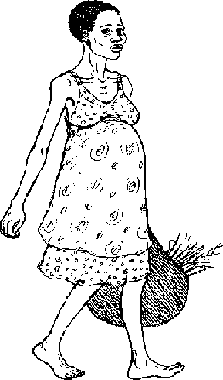
Figure 2.1: Poor Nutrition
During Pregnancy:
Women who are poorly nourished are more likely to suffer complications during pregnancy than well-fed women. They are also more likely to have underweight babies. Women need to eat enough food, and food of the right kind, during pregnancy.
It is important, therefore, to ensure that girls and women get adequate food not only while they are pregnant or breastfeeding, but also during childhood, adolescence, and before and after pregnancy. Chapter 6 provides more information on proper nutrition, especially during pregnancy.
POOR GENERAL HEALTH
There are many diseases and injuries that affect women as well as men. Sometimes women are more likely to get a certain disease because of the type of work they do, or because their bodies are different from men's. For example, women may be more likely to get malaria and schistosomiasis because much of their work (washing clothes, fetching water) requires them to be near water sources where these diseases are most often transmitted. Women are also more vulnerable than men to certain infections, such as sexually transmitted diseases. They can develop illnesses in their reproductive organs that can cause discomfort and even death. Chapter 18 describes the most common sexually transmitted diseases, and how to prevent or treat them. Chapter 20 explains some of the other problems and diseases that can affect women's reproductive systems.
Many women do not know the signs of serious illness, or they just accept that pain and discomfort are their normal lot in life. Even if they do know the symptoms, they may not have time to pay attention to themselves, or they may not want to spend money on their own needs. But women -and their families - need to understand that thinking about themselves is good for the whole family. Because of the many responsibilities they have, it is important for everyone that they be strong and healthy. Health workers, as well as others in the community who talk with women and their families, can help provide information on how to stay in good health, and how to recognise a serious illness. They can also encourage women to get proper medical treatment when a problem develops, and encourage husbands and other family members to be supportive as well.
VIOLENCE AGAINST WOMEN
Violence against women is common throughout the world, although people are very reluctant to talk about it openly. Studies have found that between 25 and 60% of women say that they have been beaten, raped, or abused by their husband or sexual partner. Rape and abuse of young girls and adolescents is also common, although rarely reported. Some studies even indicate that violence is more common when a woman is pregnant.
This violence has many consequences: some women die, others suffer from broken bones, miscarriages, or other injuries. Many women who are beaten become depressed or anxious, and some even try to commit suicide. Health workers, as well as family members and others in the community, can help by looking for signs of abuse, such as bruises and cuts. They can ask questions about what they see, in a way that is gentle and non-critical, rather than closing their eyes. And they can, of course, provide medical care, counselling, and support to women who are abused.
FEMALE GENITAL MUTILATION
In many areas of Africa, girls are subjected to the sometimes fatal practice often referred to as female circumcision, but which is more accurately called female genital mutilation (FGM). FGM is a traditional practice in which part or all of the external reproductive organs of the female are removed (see Chapter 3).
There are three main forms of genital mutilation. In the mildest form, the tip of the clitoris is cut off. In the second type, the entire clitoris and part of the outer lips of the vagina are removed. In the most extreme form, after the clitoris and the lips of the vagina are cut off, the opening of the vagina is sewn together, leaving only a small hole through which menstrual blood can escape.
This painful practice may be performed on baby girls, girls nearing puberty, adolescents, and sometimes on grown women right before or after they deliver a baby. It is usually performed without anaesthesia, using unclean instruments. If the victim does not die immediately from shock or severe bleeding, she may well die from the infection that often follows. If she survives, she is likely to suffer permanently from painful sexual intercourse because of heavy scarring around the vaginal opening. These scars can also cause serious difficulties during birth.
Different people give various reasons for performing FGM. Some say it is to enhance the sexual pleasure of the man, or to reduce the sexual desire of the woman and ensure that she is faithful to her husband. In some cultures a woman who has not had this operation is considered "unmarriageable". FGM is, however, an extremely dangerous and harmful practice that kills or injures thousands of young girls each year. There is a strong and active movement to abolish it, and many governments have condemned the practice. In areas where it is practised, health workers and local leaders have a responsibility to educate community members about the dangers of FGM, and to find ways to discourage it.
Lack of Education
Educating girls and women improves their health and that of their children. Some studies have shown, for example, that high literacy rates among women are more important for reducing the number of infant deaths than having a large number of doctors. Why? Because the more education a woman has, the more likely she is to make the right decisions concerning the health of her children. For example, an educated woman is more likely to:
· Use health services when she herself is sick, seek medical care for her children, and act on information about how to stay in good health;· Take measures to prevent disease (such as following proper hygiene and using mosquito nets) and avoid harmful traditional practices;
· Delay marriage and childbearing until she is prepared for it physically, emotionally, and financially;
· Use family planning to space her pregnancies and limit the total number of children;
· Take advantage of training and credit programmes, participate in income-generating projects, or use other opportunities that can help her earn more income and be more productive;
· Participate in decision-making in the family, such as whether to take someone to a health clinic when he or she is sick.
Despite the clear benefits of female education, many girls do not go to school at all, or leave school early. In Africa, only an estimated 26% of adult women know how to read. Families have many reasons for not sending girls to school; girls are often needed to help with child care, cooking, or other chores. When school fees are high, many families are reluctant to spend money on educating girls. Sometimes parents believe that the topics taught in school are not useful or appropriate for girls, or they may be afraid that the girls will be exposed to "wrong ways" if they attend school.
But if families and local leaders understood the benefits of education, these concerns could be overcome. They might be convinced to allow girls to attend school, and stay in school longer. It is an important investment in their future health and well-being, and that of their children and families. As an African educator said many years ago, "Educate a man, and you educate an individual; educate a woman, and you educate a nation".
Early Age at Marriage
Women in Africa tend to marry at a very young age. Often they are married by age 16 or 17, and in some areas even by age 12 or 13. There are many reasons for this practice. For example, if a girl's family is poor her parents may be eager to receive the bride price or to be relieved of the burden of paying for her food, clothing, and general care. In other cases a girl may marry early because her family wants to avoid the risk of an illegitimate birth.
But there are good reasons to delay marriage. As discussed in Chapter 7, it is better for a girl to wait at least until the age of 18 before becoming pregnant, because her body is better able to survive the demands of pregnancy and childbirth. Also, an early start to childbearing almost always means many children; too many pregnancies, too close together, can pose a serious threat to a woman's health and survival.
In addition, getting married and becoming pregnant often means a girl has to stop going to school. This limits her future opportunities and deprives her of the benefits of education. Finally, marriage at a young age for girls means their husbands are usually older, often by many years. Young wives are likely to be shy and dependent; for example, they may be reluctant to ask a husband for money to go to a health facility, and they may be less likely to talk about what they want or need. Since early marriage usually deprives girls of the opportunity to gain knowledge and skills for themselves, this dependence on others can be life-long.
In general, therefore, early marriage carries various risks to the health and future of a girl, and parents should protect their daughters from these consequences. Health workers can help prevent these problems by talking to parents about this issue, and explaining to them the dangers of childbearing at too young an age.
Heavy Workload
Almost all women in Africa work very hard. Some studies have shown that the average work day for a woman in a rural area is twice as long as a man's. Whether a woman works as a farmer in the village or a professor in the capital city, she is likely to spend from dawn until night taking care of the house and children, as well as growing crops or earning money. Often this work is very demanding physically. In most cases, work begins at a young age; girls are usually working hard by the age of seven or eight, helping to care for younger children, cleaning, cooking, gathering firewood, and collecting water.
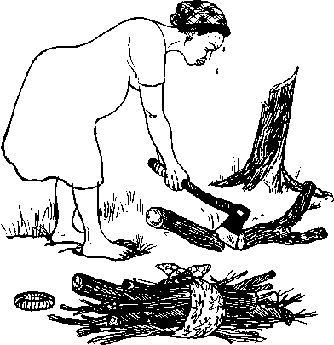
Figure 2.2: Heavy
Workload
Working too hard can make a woman tired and strain her body. This can lead to complications during pregnancy and childbirth. Women should be encouraged to avoid work that is too demanding physically. Family members can help by taking on such tasks.
The burden of these duties creates a number of problems for girls and women. First, it means that they are tired and worn out much of the time. Overwork, especially in combination with poor nutrition, makes women more likely to get sick. Chapter 6 provides guidelines on diet, rest, and workload for women during pregnancy; many of these guidelines can be used when women are not pregnant as well.
Second, too much work means women and girls have less time to attend school or adult education classes, less time to go to a health facility if they are ill, and less time to join a cooperative or a women's group. Staying in good health requires time, attention, and information, as well as money; many women do not have enough of any of these things, especially if they are working too hard on daily chores.
Women's workloads can be reduced by having family members help women more, or by using machines or technologies that save women time and ease their work. These include water pumps, milling machines, and stoves that use less fuel. Within both the family and the community, much could be done to help reduce the amount of time and energy women must spend on their daily tasks, and to help them earn more money as well.
Low Social, Legal, and Economic Status
"Women's status" means the way women are treated, how they are viewed in their community, what they are able to do, and what their legal rights are. The most important aspects of women's status are whether women have access to money, training, credit, and other resources, and how much freedom they have to make decisions for themselves and their families. Status also depends on how the members of a woman's family and community view her; in many parts of Africa, for example, how much respect a woman receives depends largely on how many children she has. The desire for status can lead women to continue having children even when pregnancy and childbirth carry serious health risks. In addition, it is a sad truth that most tasks that are viewed as "women's work", such as housework, child care, farming, gathering fuel and water, and in some cases teaching and nursing, are seen as less important to the family and community than "men's work".
LACK OF CONTROL OVER RESOURCES
In many families, women have very little say over how money is spent, even if they helped earn it. Studies have shown, however, that women are more likely than men to spend money for the good of the family. Both women and their families would benefit if women played a larger role in deciding how money is spent in the family and the community. If a woman has no money, she may not be able to go for antenatal care, get medicines, or buy more food when she needs it (for example, while she is pregnant or breastfeeding).
Women also have little access to other types of resources, such as training or credit programmes, machines or equipment that could make their tasks easier (plows, water pumps, fuel-efficient stoves), or technical advice and supplies (seeds, fertiliser, pesticides). Even general information, which is also an important resource, may not be available to them. For example, surveys have shown that women tend to know less than men about how to protect themselves against diseases such as AIDS.
This lack of access to resources makes women's work harder and less productive, and contributes to their lower income and their poor health. A woman is especially likely to lack access to resources when she is alone (because she is widowed or divorced, or because her husband has other wives or is working somewhere else). In many countries a woman is not allowed to have custody of her children, own or inherit property, earn income, or participate in public affairs without the permission of her husband or father. Since 25-45% of households in sub-Saharan Africa are run by a woman who is not married or whose husband is away, these restrictions on women's activities limit their ability to take care of themselves and raise their children properly.
ROLE IN DECISION-MAKING
Often, women are not consulted when decisions are being made about the family or the community. Men usually make the major decisions about where to live, what to buy, whether the children go to school, and whether money can be spent on things like health care. Often it is the man alone who decides whether or not family planning should be used to limit the number of children or space births. In many countries a woman may not be able to get services from a family planning clinic or even a health centre without permission from her husband. In some communities, committees made up only of men decide about things like whether a water pump is installed, or a maternity clinic is built. Often, therefore, women's needs and preferences are neglected, and their knowledge and experience are not used to help guide decisions in the community.
Conclusion
In many countries the status of women is gradually changing. More women and girls are being educated, which helps them gain respect and makes it more likely that they will be able to participate in decision-making in the family and community. Attitudes toward women are also changing as women join local organisations and are elected as leaders in their communities. Laws affecting women and families are being modified to give women more freedom and recognise their rights.
But there is much more that could be done. Health workers and others in the community can help by talking to people about the issues involved, and explaining the benefits of raising women's status and improving their health. More specifically, they can give advice and encouragement to husbands and families so that women will be able to go for medical care when necessary, participate in educational programmes, and have fewer children if they want to. Women themselves can help by raising their children to appreciate women's abilities and recognise the value of their contributions in the home and the community. These changes come slowly, and they must respect and conform to local cultures; but the changes must come, for the sake of women and their children.
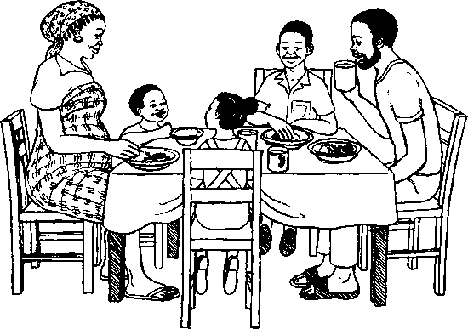
Figure 2.3: A Happy, Healthy
Family
Having the number of children that the family can afford helps ensure that the mother, father, and children are happy and healthy.
|
Summary: Root Causes of Poor Health Social and economic conditions can contribute to the health problems of girls and women, especially during and after pregnancy. These conditions include: POOR NUTRITION: Girls and women often get less food than they need. Once they have reached adolescence, they have special nutritional needs that are different from those of males. This is especially true during and just after pregnancy. Poor diet and inadequate nutrition can make girls and women weak, and more vulnerable to illness. POOR GENERAL HEALTH: Women are exposed to many diseases; they are especially vulnerable to diseases in their reproductive organs. In addition, in some parts of Africa they are subjected to female genital mutilation, which can cause severe health problems or even death. Violence against women, including beatings by husbands, can be a major cause of injury and death. LACK OF EDUCATION: Girls are less likely to go to school than boys. This means that they do not have the chance to gain the basic knowledge and skills which would help them earn money, take care of themselves, and participate in decisions in the family and community. EARLY AGE AT MARRIAGE: In many countries girls get married very young. This means that they become pregnant at too young an age, which can increase the risk of complications. Also, early marriage usually means that they have to leave school, and often leaves them dependent on their husbands. HEAVY WORKLOAD: Women and girls spend long hours working at home, in the fields, or in offices. These long hours leave them with little time to take care of themselves. The demands of work may also make them tired and more likely to become ill, especially if they are pregnant. LOW SOCIAL, LEGAL, AND ECONOMIC STATUS: Women are rarely allowed to influence decisions in the family or community. They often have few rights under traditional laws, and have little control over money or other resources. These problems contribute to women's poor health by preventing them from getting medical care and limiting the amount of money they can spend on food or other necessities for themselves. It is important for health workers to understand the obstacles women face in their daily lives, and how these can affect women's health and well-being. Recognising the problems is also important for others in the community, so that they can try and address these problems. Governments, non-governmental groups, and individuals can and should work together to improve the conditions of women's lives, so that women and their families benefit. |
|
|
| ||||||||||||||||||||
Healthy Women, Healthy Mothers - An Information Guide - Second Edition (FCI, 1995, 241 p.)
Chapter Three - THE REPRODUCTIVE PARTS OF THE FEMALE AND MALE BODIES
The Female Body
The parts of the female body that are involved in pregnancy and childbearing are called the reproductive organs. They include the two ovaries, the two fallopian tubes, the uterus (womb), and the vagina. These organs lie inside the lower part of the abdomen, called the pelvis, and are protected by bones and muscles (see Figure 3.1). The breasts are also affected by pregnancy and, of course, are essential for breastfeeding the baby.
Many people, even adults, do not know about the organs inside the body, and do not understand how pregnancy happens. This chapter provides a basic description and illustrations of the organs involved, and is helpful for understanding later chapters on "How Pregnancy Happens" (Chapter 4), "Family Planning and Child Spacing" (Chapter 17), and "Infertility" (Chapter 19). The parts of the body are referred to here using technical terms. Terms from local languages can be used for group discussions or counselling instead of, or in addition to, the terms used here.
THE OVARIES
A woman has two ovaries, one on either side of the womb; each one is the size of a small nut. The ovaries produce the eggs which, if fertilised by sperm from the man, will develop into a baby during the following nine months. This process is described in Chapter 4. The ovaries also produce two important female hormones called oestrogen and progesterone. These hormones greatly influence the growth, development, and function of the entire female body, and especially the reproductive organs, throughout a woman's life. For example, hormones cause the breasts to grow, and cause menstruation every month.

Figure 3.1: Internal
Reproductive Organs of the Female
The two fallopian tubes connect the ovaries to the womb on either side (see Figure 3.1). The tubes are 4-5 inches (10-12 centimetres) long. When the egg is released from one of the ovaries every month, it is pulled into the fallopian tube and is very gently moved along the tube towards the womb. The man's sperm meets and fertilises the egg inside the fallopian tube. The fertilised egg then begins a slow journey to the womb, which it reaches about five days after being released from the ovary.
THE UTERUS (WOMB)
Before pregnancy, the womb is about the size of a small mango or pear. It is about 3-4 inches (nine centimetres) long, and weighs only two ounces (60 grams). The lower end of the womb is called the cervix, and connects with the upper part of the vagina. The fertilised egg attaches itself to the lining on the inside of the womb, and the womb then protects and nourishes the new life until a fully developed baby is born. During pregnancy, the womb gradually grows to hold the growing baby, the bag of fluid which surrounds it, and the placenta (the afterbirth). By the time the baby is born, the womb alone weighs about two pounds (nearly a kilo) and holds an average of ten pounds or about five kilos (the baby, placenta, and the fluid around the baby).
THE CERVIX
The cervix is sometimes called the neck of the womb. It connects the womb to the vagina, and normally has a very small opening. During pregnancy this opening stays small, so that the baby stays inside the womb. During labour the cervix opens up (dilates) so that the baby can be born.
THE VAGINA
The vagina is the channel between the womb and the outside. Menstrual blood flows out of the womb through the vagina. The vagina also produces fluids; the amount of fluids, and their colour and texture, varies at different times of the month. During sexual intercourse, the man puts his penis inside the vagina. When he "comes" or ejaculates, sperm from the penis enters the vagina. It then passes through the womb and into the fallopian tube, where it may fertilise the egg. During childbirth the baby leaves the womb and enters the world through the vagina. This is why it is sometimes called the "birth canal". The walls of the vagina are elastic and can stretch to allow the passage of the baby's head and body.
THE VULVA
The vulva is the area around the opening of the vagina which can be seen from the outside (see Figure 3.2). The outer folds of skin, called the labia majora, are thick and covered with hair. The two inner folds of skin, called the labia minora, are much thinner. These inner folds form a hood around the clitoris, a small, sensitive organ above the vagina that responds to stimulation and makes sexual intercourse pleasurable. Inside the vaginal opening is a pair of glands that produce a thin fluid which moistens the vagina, especially during sexual excitement. In countries where female genital mutilation is practised, some women may have either the clitoris, or the clitoris and labia, removed. In some cases the labia may be sewn together (see Chapter 2 for a discussion on the effects of female genital mutilation).

Figure 3.2: External
Reproductive Organs of the Female (Vulva)
THE BREASTS
The main external feature of the breast is the nipple and the dark skin around it, called the areola. Inside, the breasts consist of fat and sacs called "glands" that produce milk. In many women, one breast is larger than the other. Often, both breasts swell slightly during the menstrual period. During pregnancy, the glands grow in size as they produce milk (see Figure 3.3); often some liquid comes out of the nipple even before the baby is born.

Figure 3.3: Breasts of the
Adult
Female
The Male Body
The man plays a brief but vitally important role in reproduction. He produces the sperm which fertilises the egg to begin a new life. After fertilisation, the man's biological role in pregnancy is over, although his responsibility toward the woman and child continue. As described below, a man's major reproductive organs lie outside his body.
THE TESTES (TESTICLES)
The two testes produce the sperm which fertilise the woman's egg to start the process of reproduction. They are two egg-shaped organs, in front of and between the thighs, within a sac of skin known as the scrotum (see Figure 3.4). From puberty until old age, men's testes produce sperm all the time. While a woman releases one egg every month, a man releases 100-300 million sperm every time he ejaculates, or reaches climax, during sexual intercourse. During ejaculation, the sperm are carried in a liquid called semen that is produced by the man's reproductive organs. The semen passes through a tube called the vas deferens and out of the penis. One of the millions of sperm may reach an egg and fertilise it; the rest simply die in a few days and disappear.
THE PENIS
The penis is the organ that carries the semen with the sperm into the vagina. During sexual excitement, blood is pumped into the muscles of the penis. This makes the penis stiffen or become erect so it can enter the vagina. Although both semen and urine pass through the tube called the urethra in the penis, at the time of ejaculation the opening from the bladder is closed so that only semen comes out of the penis. After ejaculation, the blood quickly drains away into the body and the penis returns to its normal state.

Figure 3.4: Reproductive Organs
of the Male
|
Summary: The Reproductive Parts of the Female and Male Bodies The female and male bodies play different but complementary roles in creating a baby. THE FEMALE BODY: THE OVARIES produce the eggs which are fertilised by the man; fertilised eggs grow to become babies. The ovaries also produce hormones that influence the development of the female body. THE MALE BODY: THE TESTES are two egg-shaped organs in front of and between the thighs, inside a sac of skin called the scrotum. The testes produce the sperm which fertilise the woman's egg to begin reproduction. THE PENIS is the organ that places the sperm in the woman's vagina. The sperm are carried in a liquid called semen produced in the man's body. |
|
| ||||||||||||||||||||||||||||||
Healthy Women, Healthy Mothers - An Information Guide - Second Edition (FCI, 1995, 241 p.)
Chapter Four - HOW PREGNANCY HAPPENS
Menstruation or ''The Period''
Once every month or so the tissues lining the inside of the womb come away and are passed out through the vagina with some blood. This is called menstruation and is often referred to as "having a period". Each period can last from 2-8 days; 4-6 days is the average. Periods continue throughout a woman's reproductive life. Periods usually start between the ages of 12 and 15 years; this is known as the menarche. Periods usually stop altogether between the ages of 40 and 50 years; this is known as menopause. However, the age at which menstrual periods begin or end can vary.
The length of the menstrual cycle is the interval from the beginning of one period to the beginning of the next period (see Figure 4.1). It is usually about 28 days but can vary between 21 and 35 days, or even more. The length of each period, as well as the amount of bleeding, varies from woman to woman. It may also vary in the same woman from time to time. For the first couple of years that a girl has her periods, they may not occur regularly. The same is true for women who are going through menopause, when the periods gradually stop coming altogether. In addition, other factors such as illness, anxiety, or depression can speed up, delay, or prevent menstruation (see Chapter 20). A woman who is very thin or who exercises a great deal may also not menstruate regularly.
What causes menstruation? Menstruation only occurs when a woman is not pregnant. After a menstrual period, the lining of the womb starts to build up and prepare itself to receive a fertilised egg. If no fertilised egg reaches the womb within 2-3 weeks, the lining of the womb breaks down, and the bits of tissue leave the womb during the menstrual period about a week later.
When a baby is conceived and a fertilised egg reaches the inside lining of the womb, the breakdown of the womb's lining stops. Women do not have their periods during pregnancy, and usually the menstrual period does not start again until several months after the baby is born. Breastfeeding delays the return of the period even longer, depending on how often and how long the woman breast-feeds (see Chapter 15).
During a menstrual period, most women use clean cloths, sanitary napkins, or fresh tampons to absorb the blood. It is important to keep the outside genital area clean in order to avoid infections. It is not necessary to wash the inside of the vagina, since it cleanses itself naturally after each period. Washing the inside of the vagina, especially if harsh chemicals or soaps are used, can irritate the inside.
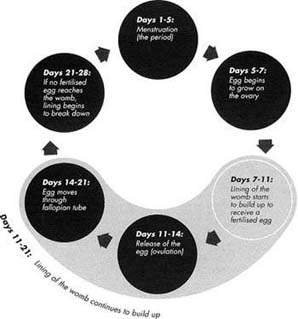
Figure 4.1: The Menstrual
Cycle
The average menstrual cycle lasts 28 days from the start of one period to the start of the next. The first day of the menstrual period is counted as "Day 1" of the cycle. A woman can get pregnant only if she has sexual intercourse just before ovulation, or the day she ovulates. In an average 28-day cycle, a woman can get pregnant if she has intercourse on days 11-14.
Ovulation or the Release of the Egg
Each month, a mature egg is released from one of the ovaries; this is called ovulation. Once released by the ovary, the egg moves into the fallopian tube (see Figure 4.2). The egg can survive for only about one day (24 hours) in the fallopian tube. If it is not fertilised by a sperm within that time, it dissolves or flows out of the body.
Ovulation occurs in the middle of the menstrual cycle, or about halfway between periods (13-15 days before a woman's next period). Some women can tell when they ovulate because they feel a sharp pain on the left or right side of the abdomen (in the ovary), because they bleed a little bit from the vagina, or because the fluid that comes out of the vagina is clear and slippery. Since a woman can only become pregnant right around the time she ovulates, learning these signs of ovulation can help women identify their fertile time (see explanation of natural family planning in Chapter 17). However, it is often difficult to know when ovulation is taking place. For many women the only way to tell is when the period begins about 14 days after ovulation - or when they become pregnant!
Fertilisation and Implantation
For fertilisation to occur, the sperm must find the egg within one day (24 hours) of the time the egg leaves the ovary (see Figure 4.3). The sperm itself survives for 2-3 days (48-72 hours) within the woman's body. So fertilisation can occur if a woman has sexual intercourse during a five-day period - one, two, or three days before ovulation, the day of ovulation, or one day after.
While still in the tube, the fertilised egg begins to divide and grow. At the same time, it continues to move through the tube towards the womb. It takes an average of five days to reach the inside of the womb. Within two days of reaching the womb, the fertilised egg attaches itself to the lining of the womb. This process is known as implantation (see Figure 4.3).
THE PLACENTA (AFTERBIRTH) AND UMBILICAL CORD
After the fertilised egg is implanted, the lining of the womb where it is attached develops into thick, spongy tissue called the placenta. One side of the placenta is attached to the inside wall of the womb. The other side is attached to a structure called the umbilical cord, which connects the placenta to the baby (see Figure 4.4).
During pregnancy the placenta acts like a filter; it allows food and oxygen in the mother's blood to go through the umbilical cord to the baby. It also allows body waste from the baby to pass back through to the mother's blood. Chemicals called antibodies, which are produced by the mother to fight against certain infections, also pass through the placenta to the baby. These antibodies continue to protect the baby from infections for several months after birth. Some harmful substances such as germs which cause diseases like syphilis and rubella (German measles), as well as drugs, may also be passed to the baby through the placenta.
The fully developed placenta weighs around one pound (450 grams) at the time of delivery. After the baby is born, the placenta has done its job and is pushed out through the vagina; it is often called the afterbirth. The umbilical cord is no longer needed to nourish the baby, and can now be tied and cut. The stump is left to dry up and fall off (see Chapter 14).
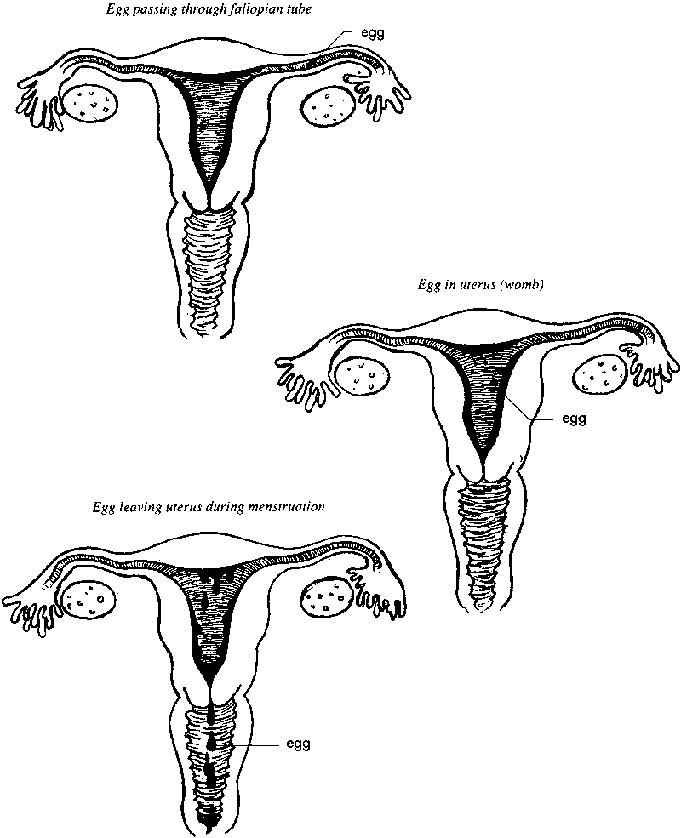
Figure 4.2: The Process of
Menstruation
An unfertilised egg leaves the womb through the process of menstruation.
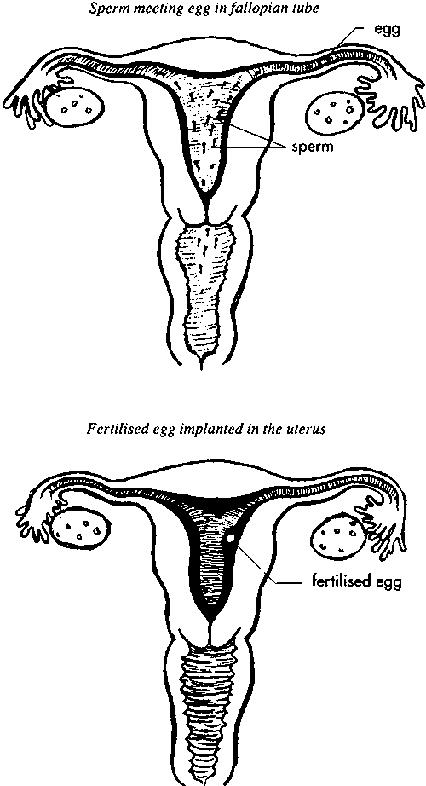
Figure 4.3: Fertilisation and
Implantation of the
Egg
Growth and Development of the Baby
Fertilisation marks the beginning of a nine-month process of growth and development in which a fertilised egg becomes a human baby. Before fertilisation, the egg is no bigger than the tip of a very fine needle. The sperm that unites with the egg is even smaller. Yet through a process of division, growth, and development, the baby at birth weighs around 6-7 pounds (about 3 kilos), many million times the weight of the egg and sperm from which it started.
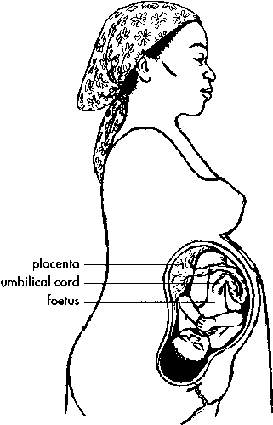
Figure 4.4: Contents of the
Womb
During pregnancy the womb holds the foetus, the umbilical cord, and the placenta, which is attached to the inside lining of the womb.
Immediately after fertilisation the egg begins dividing in half. First it splits into two cells, then each cell splits into two again, until finally there are billions of different cells which make up the human body. As the cells multiply, they become specialised. Some cells grow into muscle, others become the brain, stomach, and other organs, while still others will become nerves, bone, or blood.
Human beings grow faster during the time in the womb than at any other time in life (see Figure 4.5). By the time the first period is missed, about two weeks after fertilisation, the new baby, called an embryo, already measures one-quarter of an inch (more than one-half centimetre). A bag of water has formed around the embryo and will protect it from bumping and external injury until birth. By the second missed period, the embryo is only about one inch (2½ centimetres) long, but the bones, muscles, nerves, eyes, ears, and major blood vessels can be identified. The heart is already beating and the liver, kidneys, and stomach have been formed, although they are not yet working.
After the third month, the embryo is called a foetus. By the fifth month, the mother can usually feel the foetus move. In general, during pregnancy the foetus moves, turns, swallows, urinates, sleeps, and responds to loud noises. Between the fifth and sixth months (approximately 24 weeks), the heartbeat is strong enough to be heard with a special instrument called a foetoscope.
By the eighth month or 32 weeks, the foetus weighs about 3½ pounds (1,500 grams) and is about 17 inches (40 centimetres) long. During the next two months, the baby grows and gains weight so that at birth the average baby weighs around 6-7 pounds (about 3 kilos) and is about 20 inches (50 centimetres) long.
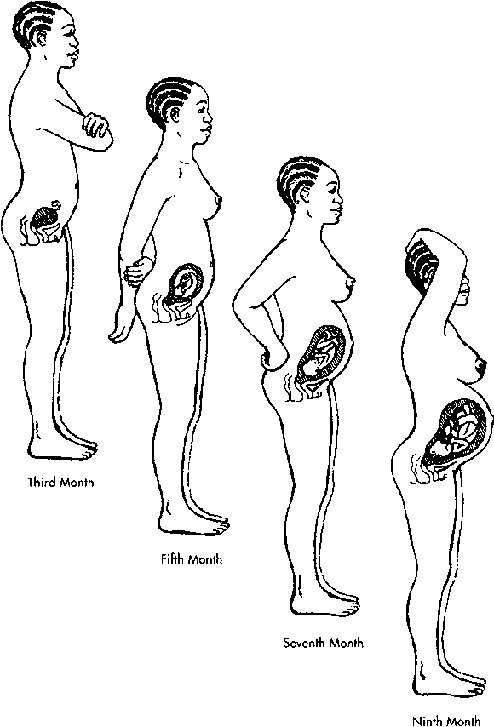
Figure 4.5: Growth and
Development of the Baby Inside the Womb
The foetus grows rapidly inside the womb during pregnancy; by the time it is born it weighs 6-7 pounds (3 kilos) and is about 20 inches (50 centimetres) long.
|
Summary: How Pregnancy Happens Pregnancy occurs when an egg from the woman is united with a sperm from the man, and the fertilised egg then attaches itself to the inside of the woman's womb. The steps involved in the development of pregnancy include: MENSTRUATION: Menstruation, or "the period", happens when the lining on the inside of the womb comes away and is passed out through the vagina with some blood. It occurs approximately once per month as long as a woman is not pregnant. Menstrual periods usually begin between the ages of 12 and 15 years, and last until the age of 40-50 years or so. A woman can get pregnant if she has sexual intercourse with a man about halfway between her periods, although this varies. OVULATION: Ovulation is the release of an egg from one of the woman's ovaries each month. FERTILISATION AND IMPLANTATION: Fertilisation occurs when the man's sperm unites with the woman's egg. The sperm must reach the egg within 24 hours of the time the egg is released from the ovary. Once fertilised, the egg begins to divide and grow. At the same time, it begins to move through the fallopian tube to the womb. When it reaches the womb it attaches itself to the inside. GROWTH AND DEVELOPMENT OF THE BABY: As the baby grows, the organs, nerves, muscles, and bones that make up the human body are formed. The growth of the baby inside the womb takes approximately nine months. At the beginning of this period the egg is the size of the tip of a needle; at the end, the average baby weighs 6-7 pounds. |
|
|
| |||||||||||||||||||||||||||||||||||
Healthy Women, Healthy Mothers - An Information Guide - Second Edition (FCI, 1995, 241 p.)
Chapter Five - WHAT WILL THE BABY BE LIKE?
A baby develops from the union between the mother's egg and the father's sperm. This union determines what the child will be like, such as how tall he or she will be, what colour the eyes will be, and what the shape of the nose and mouth will be. How the parents pass these characteristics to their child is called genetics.
Each cell in the human body contains 46 structures called chromosomes. The reproductive cells, that is, the male sperm and the female egg, each contain only 23 chromosomes - half as many as all other cells in the human body. Each chromosome is made up of many genes, and it is these genes, half of which come from the father and half from the mother, that combine to determine what a person will be like.
Boy or Girl?
Some families would rather have sons than daughters, and in parts of Africa women are blamed if they do not bear sons. Some wives have been divorced for not producing a son. In actual fact, however, it is the father, not the mother, who determines whether the baby is a boy or a girl.
How? A sperm contains 22 regular chromosomes and one sex chromosome, either X (female) or Y (male). All eggs contain 22 regular chromosomes and one sex chromosome, which is always X (female). If a sperm with a Y chromosome fertilises the egg, the baby will be a boy, and if a sperm with an X chromosome fertilises the egg, the baby will be a girl (see Figure 5.1).
Inherited Characteristics
Children inherit other characteristics from their parents besides height and the colour of their eyes. Certain physical or mental disorders can also be passed from one generation to the next. Among Africans, or people of African descent, two well-known conditions that can be passed from parents to their children are sickle cell disease and albinism.

Figure 5.1: How the Sex of the
Baby is Determined
SICKLE CELL DISEASE
Sickle cell disease affects the blood cells and, in particular, the ability of the blood to carry oxygen to the tissues of the body. The disorder is quite common in Africa. In its severe forms, it causes a great deal of illness, pain, and even early death. It can also cause serious complications during pregnancy.
The abnormality which causes sickle cell disease is contained in the genes a person inherits from his or her parents. If both parents suffer from the disease -that is, they each have a pair of sickle cell genes - all their children will have the disease. On the other hand, if both parents are carriers - that is, they each have one sickle cell gene - each child has a 25% chance of being completely normal, a 50% chance of being a carrier, and a 25% chance of having the severe form of the disease. It is possible for a couple to produce a number of children with sickle cell disease even if both parents are only carriers; it is equally possible for such a couple to produce a number of children who do not have the disease. If one parent is normal and the other parent is a carrier, each child has a 50% chance of being born completely normal, and a 50% chance of being a carrier.
All couples, therefore, should have a blood test to determine whether they have the sickle cell disorder before they try to have a baby. Couples who are likely to have a baby with sickle cell disease should be informed about their chances, so that they can decide whether to run the risk or, perhaps, adopt a baby instead.
ALBINISM
Albinos lack skin pigmentation - that is, their skin is white instead of dark, their hair is light yellow instead of black, and their eyes are blue instead of brown or black. Albinism is another condition common in Africa that children inherit from their parents. It cannot be caught or "transmitted" from person to person; it can only be passed from parent to child. Both parents of an albino must either be albinos or carriers. Because albinos lack skin pigmentation which protects people from the sun, they are more likely to get skin cancer from being in the sun too much. Albinos should always cover their skin as much as possible and avoid being in the sun.
Twins or Multiple Births
On average, about one out of every 85 pregnancies results in the birth of twins. Triplets, quadruplets, and higher numbers are less common. A woman who is a twin herself, or who has a close relative such as a mother or sister who is a twin, has a higher chance of having twins. Older women and women who are very fertile (more likely to release two eggs at once) are also more likely to have twins.
There are two types of twins, identical and fraternal. About one-fourth of all twins are identical. This means they develop from the same fertilised egg which, for reasons not properly understood, divides into two separate groups of cells, each of which then develops into a separate individual. But because they develop from a single fertilised egg, identical twins have exactly the same genes. They are always the same sex, and not surprisingly, look almost exactly alike.
Fraternal twins develop when, at ovulation, a woman's ovaries release two eggs instead of just one. Both eggs are then fertilised by different sperm, and grow in the womb at the same time. Apart from growing inside the same womb at the same time, fraternal twins have no more in common than any two children of the same parents. They may be of different sex.
Is the Baby Healthy and Normal?
When a mother hears her newborn baby cry for the first time, many thoughts and feelings may come to her: Is it a boy or girl? Is it healthy? Does it have any deformities?
Unfortunately, a small percentage of babies are born with some form of abnormality. These can be minor, such as a cleft palate (a problem with the upper lip and top of the mouth), or more serious, such as mental retardation or heart problems. Considering the millions of changes that take place between fertilisation and birth, it is a miracle that the overwhelming majority of children are born healthy and normal. As discussed in Chapter 9, most foetuses that have severe abnormalities miscarry by themselves. Some abnormalities, such as a cleft palate, can be corrected by an operation, especially if it is done while the child is still very young. Others cannot, so the child and his or her family must learn how to manage, and try to help that child develop as fully as possible. While this can be difficult, it can also help make a family closer and more caring.
WHAT CAUSES ABNORMALITIES IN A BABY?
In the past, and still in some countries today, a deformity in the baby was thought to be the result of witchcraft, adultery, sin, or a curse. Today, the causes of some abnormalities are still not known, although many are. For example. Down's Syndrome (mental retardation) is due to problems in the baby's genes that can come from either the father's sperm or the mother's egg. Other abnormalities can be caused by illness during pregnancy, such as German measles or syphilis. Some medicines, if taken during pregnancy, can also cause abnormalities. For example, tetracycline (an antibiotic) can cause damage to the baby's teeth and bones. It is also considered unsafe for a pregnant woman to be exposed to too many X-rays, especially during early pregnancy. Some common chemicals used for farming or in factories can find their way into water, food, or air; if the concentrations are high enough, these chemicals can cause birth defects.
It is almost impossible to identify exactly what causes an abnormality in a baby. In most cases, only common-sense precautions can be taken, such as getting tested (and, if necessary, treated) for syphilis. Mothers should also avoid alcohol, drugs, X-rays, and harsh chemicals during pregnancy. Proper nutrition can help ensure that the baby is as healthy as possible. When all precautions are taken, the chances are overwhelmingly in favour of the child being completely healthy and normal.
|
Summary: What Will the Baby Be Like? The way a child looks, as well as other characteristics, is passed on from the parents. These characteristics include: BOY OR GIRL: It is sperm from the father, not the mother's egg, that determines the sex of the baby. TWINS: Identical twins look alike because they come from the same egg in the mother's womb. Fraternal twins do not necessarily look alike, because they come from two different eggs even though they grow in the womb at the same time. ABNORMALITIES: Some disorders or conditions, such as albinism and sickle cell disease, are passed on from the parents to the children. Others can be caused by drugs the mother takes or illnesses she has during pregnancy. Many of these can be avoided if the mother takes proper precautions during pregnancy. |
|
|
| |||||||||||||||||||||||||||||||||||
Healthy Women, Healthy Mothers - An Information Guide - Second Edition (FCI, 1995, 241 p.)
Chapter Six - EARLY PREGNANCY AND SELF-CARE
Signs of Pregnancy
There is usually no one sure sign that tells a woman she is pregnant. Rather, there may be a number of signs, especially during the first few weeks. A missed period is probably the first reason to suspect pregnancy. If a woman has regular periods, had sexual intercourse recently without using contraception, and has not had her period on time, she is probably pregnant.
Other signs include swelling or a feeling of tenderness in the breasts, or a tingling feeling in the nipples. One-third to one-half of all pregnant women feel sick to their stomachs and may vomit. This is often called "morning sickness", although it can happen any time of day. Many women need to pass urine more frequently. A few women tire more easily or feel dizzy, particularly during the first three months of pregnancy. Sometimes women have strong desires or cravings for particular foods.
There can be other explanations besides pregnancy for any of the signs mentioned above; for example, a woman with anaemia may feel tired and dizzy. Generally, however, women know when they are pregnant, especially if they have had babies before. Some hospitals or clinics can confirm the pregnancy; they may be able to test for certain chemicals that are found in the urine of pregnant women. Sometimes a midwife, nurse, or doctor can determine if a woman is pregnant by performing a vaginal examination.
Once a woman knows that she is pregnant, especially if this is the first time, many questions come to mind. When is the baby due? Will it be a normal pregnancy and will the labour be normal or difficult? When should she go for medical care? What should she do to make sure her pregnancy is as healthy as possible? What are the danger signs? The next few chapters of this book will answer these and other questions on how to help women go through the experience of pregnancy, labour, and birth safely, and end up with a healthy baby in their arms. Pregnancy is a very special period in a woman's life, and she has special needs. She and her family are responsible for making sure that she receives the care and attention she needs.
|
Box 6.1: Early Signs of Pregnancy THINGS A WOMAN MAY NOTICE HERSELF: · A missed period THINGS THE DOCTOR, NURSE, MIDWIFE, OR TRAINED BIRTH ATTENDANT CAN DO: · Examine the vagina to look for changes in the neck of the womb · Test the urine or blood to look for chemicals that indicate pregnancy (only in a properly-equipped health facility) |
Changes During Pregnancy
A woman undergoes many physical and emotional changes during pregnancy. Many of the changes occur because her body has to be prepared to meet the needs of the baby during pregnancy, and also for the actual birth and breastfeeding.
CHANGES IN THE WOMB
By the sixth week of pregnancy, the womb is already enlarged. It will continue to grow to accommodate the baby, its bag of water, and the placenta. At 13 weeks, the womb and the baby have grown large enough to be felt by a health worker. From this time until the 36th week, the womb grows at the rate of about one finger width every week. By the 36th week the top of the womb has nearly reached the level of the rib cage. Sometimes it will drop a little around the 38th week when the baby's head begins to descend into the birth canal.
CHANGES IN THE BLOOD
During pregnancy the amount of blood in a woman's body increases by about 30% in order to meet the rapidly in- creasing needs of the baby. To move all this blood around inside the body, the woman's heart grows a little bigger and works harder. This is a normal condition, and is not a sign that complications are developing.
CHANGES IN THE BREASTS
Some of the earliest changes caused by pregnancy are in the breasts, which must be prepared to feed the newborn. More blood flows to the breasts, making them tender. A tingling sensation can also be felt, and the breasts actually grow bigger and feel heavier. The dark skin around the nipples becomes darker, and the nipples themselves stick out more. Very early in pregnancy milk is already being produced. Many women may see a yellowish liquid come from their breasts during pregnancy. This is the first milk, called colostrum, and is quite normal.
EMOTIONAL CHANGES
Feelings and moods may change during pregnancy, partly because of changes in a woman's body chemicals (hormones) and partly in response to the prospect of having and raising a child. A woman may be happy one minute and tearful the next. Many women are anxious and fearful about whether their children will be normal, whether they will be able to cope with labour, and whether they will be able to look after the new baby. It may help the woman to talk about her feelings, either with a health worker, her husband, or with another woman - a sister, mother, or friend - who has been pregnant. Some women may feel sad for a brief period after delivery, but most women feel better and happier.
In some areas, people believe that the baby will be harmed if the mother feels strong emotions, especially anger, during the pregnancy. For example, they believe anger might cause a miscarriage or put a knot in the umbilical cord. While it is better for a woman's own health and happiness if she is not under stress during pregnancy, there is no evidence that anger or sadness can cause problems for the baby's health.
When Is the Baby Due?
Pregnancy normally lasts 40 weeks from the date the last normal menstrual period started. The length of the pregnancy is the same for both boy and girl babies. A pregnancy that has lasted 37 weeks or more is said to have "reached term", and labour can be expected to start any time.
To calculate the expected date of delivery, add seven days to the first day of the last menstrual period, then count forward nine months. For example, if the last period started on 15 January, add seven days to arrive at 22 January. Now count forward nine months to October. The expected date of delivery is 22 October. Table 6.1 can be used to calculate the expected date of delivery. The expected date of delivery is not an exact date. The baby may actually be born as much as two weeks before or after that calculated date.
Self-Care During Pregnancy
One of the most important things a woman can do as soon as she thinks she is pregnant is visit a health facility for antenatal care, ideally by the fourth month of pregnancy and sooner if possible. An early visit can detect complications such as anaemia or a sexually transmitted disease. These complications can then be treated before the pregnancy advances and the problem becomes serious. It is also important to make sure the woman has a. tetanus injection. Chapter 7 describes what happens during antenatal visits.

Table 6.1: How to Calculate the
Estimated Date of Delivery
The calculation is made from the first day of the last menstrual period. In each row, the top line of figures represents the first day of the menstrual period; the bottom line of figures represents the corresponding expected date of delivery.EXAMPLE: If the first day of the woman's last menstrual period was 1 January, the expected date of delivery would be 8 October. Or if the first day was 18 April, the expected date of delivery would be 23 January
There are a number of reasons why a woman might not attend antenatal care early or often enough, or not go at all. She may not understand the benefits of antenatal care, so she sees no reason to go. Her husband or family may not think it is important, and may discourage her from going or refuse to give her money for transport or fees. Some women believe it is bad luck to talk about the pregnancy before the fifth or sixth month because they think it may attract witches or evil people who will harm the baby.
It is important for health workers and others who are providing health education to understand why a woman might not be attending antenatal care. These beliefs can then be addressed directly. In addition, the benefits of early and regular antenatal attendance should be clearly explained to the woman and her family. They should know that antenatal care gives a trained health worker a chance to make sure that the woman is healthy, and find out if there is something wrong that needs special care. If found early and properly treated, many problems do not become dangerous to the mother or baby.
Other things women should know to improve their health and make them more comfortable during pregnancy include:
WORKLOAD, REST, AND SLEEP
Most women work very hard - in the home, on the farm, or in the office. Many continue to work just as hard or even harder when they are pregnant. Too much physically demanding work during pregnancy can contribute to problems with the pregnancy, such as miscarriage, premature labour, or underweight infants, especially if a woman is not eating enough (see section on Diet and Nutrition later on in this chapter).
Pregnancy is hard work in itself; the body is trying to feed a growing baby, and as the pregnancy advances a woman carries about 25 pounds (11 kilos) more weight than usual. This is like carrying a bucket of water all the time. Too much hard work, especially gathering firewood, carrying water, and working in the fields, can strain a woman's body and make her too weak to withstand the physical demands of pregnancy and childbirth.
Women should, therefore, be encouraged to avoid heavy physical labour during pregnancy, especially work such as lifting and carrying heavy loads, walking for many hours, and digging or weeding for long periods. Other members of the family should help with these tasks. If they cannot be given up completely, women should make sure they rest as much as possible between tasks. Regular work and chores may be continued as long as they are not too tiring.
A pregnant woman should also get as much rest as possible; she should lie down for an hour or so during the day, and sleep between six and ten hours every night. Near the end of her pregnancy it may be difficult for her to get a good night's sleep because of the size and movements of the baby. Lying on the side is often the most comfortable position and improves the blood supply to the baby.
EXERCISE AND RECREATION
Women need regular exercise when pregnant but, as in most things, moderation is best. If their daily activities do not require much physical exercise, taking a walk every day helps women stay healthy and feel good. Special exercises can help women prepare for delivery and a speedy recovery after the baby is born, improve muscle tone, aid digestion, prevent constipation, and assure restful sleep. Some of these exercises are shown in Figures 6.1-6.4.
Some women avoid their normal social activities when they are pregnant. There is no need for this, since pregnancy is a natural and normal event; women can continue their usual recreational and social activities for as long as they want to.
ILLNESS
Getting sick during pregnancy is especially uncomfortable and unpleasant, partly because of the pregnancy itself and partly because some medicines need to be avoided during pregnancy (see below). In addition, some diseases such as malaria can cause serious problems during pregnancy. For these reasons, women need to be especially careful to avoid diseases and infections when they are pregnant. For example, they should use mosquito nets on their beds when they sleep, and avoid water that is known to carry diseases like schistosomiasis.
PERSONAL HYGIENE
Bathing every day, or every other day, is refreshing for most pregnant women; it also reduces the chance of getting an infection or illness. It is especially important to take care of the breasts and the genital area by washing often with clean water; harsh chemicals or strong detergents are not necessary, and can even be harmful.
CLOTHING
In the often hot and humid climates of most African countries, loose clothes made of light cotton material are ideal. Well-fitting brassieres can help support the breasts as they get bigger and more tender. Comfortable shoes with flat or low heels can relieve aches in the feet, legs, and back.
TRAVEL
It is perfectly safe to travel during pregnancy, although pregnant women should avoid discomfort and exhaustion. If a woman must make a long journey by road, she should be encouraged to stop frequently to stretch her legs, drink plenty of liquids, and empty her bladder. If she has to walk for some distance, she should stop often to rest, and she should not carry a heavy load. Families and communities can help by organising other means of transport (bicycle, motorcycle, or car) when a pregnant woman has to go to a health centre or somewhere else.
ALCOHOL AND SMOKING
Alcohol in the mother's blood passes through the placenta to the baby. Women who drink heavily risk having babies with serious problems, including mental retardation and physical deformities. Since it is not known exactly how much alcohol is dangerous to a baby, women should be counselled to avoid it completely.
Smoking during pregnancy is unquestionably harmful as it interferes with the blood flow from the mother to the baby. Babies born to women who smoke during pregnancy are often smaller than babies of non-smoking mothers; smaller babies are more likely to be sick. It is best if women who smoke can stop before pregnancy, or as soon as possible during the pregnancy. Women who are unable to stop may at least be able to cut back the number of cigarettes they smoke each day if they know it will help their baby to be healthy.
Exercises to Strengthen Muscles Used During Pregnancy and Delivery

Figure 6.1: Pelvic Rock (helps
relieve backache and pressure in abdomen and strengthens stomach
muscles)
1. Get down on hands and knees, as shown in top figure.
2. Pull in abdomen and lift buttocks, as shown in bottom figure. Hold for a count of five.
3. Gently relax abdomen and buttocks, allowing the curve of the back to return.
4. Repeat 5-6 times.
Exercises to Strengthen Muscles Used During Pregnancy and Delivery

Figure 6.2: Head and Shoulder
Lift (strengthens muscles in abdomen)
1. Lie on back with knees bent, feet flat on the floor, and arms at sides as shown.2. Raise head and shoulders and tighten abdominal muscles. Hold for a count of five. Do not hold breath.
3. Lie back and relax.
4. Repeat 5-10 times.
Exercises to Strengthen Muscles Used During Pregnancy and Delivery

Figure 6.3: Squat (strengthens
leg muscles)
1. Stand while holding onto something to help keep balance. Keep feet apart.
2. Slowly bend knees, keeping back straight and keeping knees and feet apart.
3. Rise slowly, keeping hold of the object for balance.
4. Repeat 3-5 times.
NOTE: Do not do this exercise if knees hurt.
Exercises to Strengthen Muscles Used During Pregnancy and Delivery
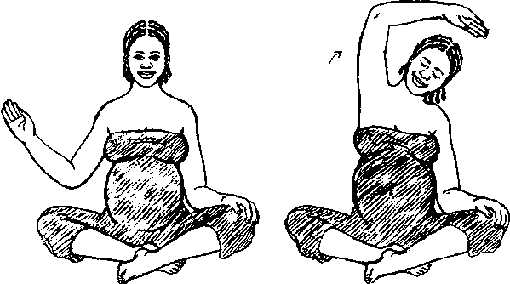
Figure 6.4: Rib Cage Lift
(strengthens leg muscles and makes it easier to breathe)
1. Sit with legs crossed as shown.2. Curve arm over head, hold it, and return to the original position.
3. Repeat 4-5 times, then do the same with the other arm.
Kegel Exercise (strengthens muscles that help make delivery easier, and reduces the chance of complications during delivery)
1. Tighten the muscles around the anal opening and in the vagina (as if holding back urine). Hold for a count of three, then relax.
2. Repeat 5-10 times. This exercise can be done anytime during the day when sitting down.
NOTE: There is no illustration for the Kegel exercise.
MEDICINES, HERBS, AND X-RAYS
Medicines taken during pregnancy pass through the placenta to the baby. Because no medicine is completely free of side-effects, and because the baby is more likely to suffer from these side-effects, medicines should be avoided during pregnancy. This is particularly true for medicines purchased from drug peddlers or chemists that are not prescribed by a doctor. It is especially important to avoid medicines during the first three months of pregnancy when the fertilised egg is undergoing the most rapid process of growth and development. Medicines taken at this particular time may cause abnormalities in the baby.
Mothers who are addicted to drugs have babies who are also addicted. In addition to going through withdrawal during their first few days, these babies are often smaller or are born too early, and they may develop much more slowly.
There are some exceptions to the "no medicines" rule. They include medicines prescribed by a trained health worker to prevent malaria, and tablets to supplement the diet with iron and vitamins. Other medications may be prescribed by a doctor for specific problems related to pregnancy, such as high blood pressure. If a woman is taking a prescribed medication before pregnancy, she should continue to take it until she has discussed the matter with a doctor as early as possible in the pregnancy.
Herbs or herbal potions that women sometimes take may also contain drugs. For example, some herbs can be addictive; others can cause the womb to contract, which can be very dangerous. If possible, it is best to find out what kinds of herbs a woman is taking during pregnancy, if any, and try to determine whether they have any harmful effect. Most teas, for example, are fine. If an herb could be dangerous, the woman should be discouraged from taking it, and other, harmless herbs should be encouraged instead.
X-rays should be avoided during pregnancy, especially during the early weeks. If an X-ray is absolutely necessary, the woman's abdomen should be well shielded from the rays.
ENVIRONMENTAL HAZARDS
Some chemicals can cause serious problems in a baby, as well as the mother, if she is exposed to them during pregnancy. For example, some hair dyes can be absorbed through the skin and can cause birth defects. Pesticides (chemicals used to kill insects) can also be absorbed by the body and can damage the unborn baby. Herbicides (chemicals used to kill weeds) can cause miscarriages. It is best if pregnant women avoid breathing the fumes of such chemicals and avoid having skin contact with them.
SEXUAL INTERCOURSE
Women, as well as men, often have questions about the effects of sexual intercourse during pregnancy, although they may be reluctant to ask. Traditional beliefs regarding this topic are common. For example, some people believe that intercourse is necessary during pregnancy because they think the man's semen helps the baby grow. While this is not true, couples should know that they can continue to have normal sexual relations during pregnancy as long as they want to. It will not hurt the baby or mother unless there is bleeding from the vagina, signs of premature labour, or the bag of water has broken. Some women feel no desire for sex during pregnancy; others do, and may even feel increased desire. As pregnancy advances, however, sex may be uncomfortable. Women should be encouraged to discuss their feelings, try different positions during sexual intercourse, and find other ways to be close to their husbands or partners.
Diet and Nutrition During Pregnancy
Pregnancy makes many demands on a woman's body, especially in terms of nutritional status. During pregnancy the fertilised egg grows from a cell not bigger than the tip of a fine needle to a human being weighing 6-7 pounds (3 kilos) at birth. All the food required by the egg to form the baby's body must be provided by the mother during the nine months of pregnancy.
During pregnancy, the baby's needs will be met before those of the woman. For example, if a woman does not get enough food or enough of a particular vitamin, her body will give the baby what it needs first, and then use whatever is left over - which may not be enough. Lack of some vitamins or minerals in the diet can cause illness. For example, anaemia is caused by lack of iron, and goiter is caused by lack of iodine. Therefore, it is critically important that a woman gains enough weight during pregnancy and eats the right foods in order to meet her own energy and nutritional needs, as well as those of her baby.
After pregnancy, breastfeeding places even greater nutritional demands on a woman's body, especially during the first 4-6 months. Depending on how long breastfeeding continues, it can take two or more years for a woman's body to recover fully. Thus women who have many children close together (less than two years apart) do not have a chance to recover from one pregnancy to the next. Their nutritional reserves get used up, and they tend to become sick often and tire easily. Women will enjoy pregnancy more and feel healthier if they are able to plan to have their next pregnancy when their other children are at least two years old or more, and when they are in good health and well nourished.
WEIGHT GAIN
On average, women should gain about 20-30 pounds (9-13 kilos) during pregnancy, although many women - especially if they are underweight to begin with -gain less than this. This includes the 6-7 pounds of the baby itself, as well as the placenta, the growth in the womb, the increase in the size of the breasts, fat deposits, and increases in the blood and body fluids. Often there is very little weight gain during the first few months, and many women even lose several pounds. After the fourth month, however, a pregnant woman usually gains about four pounds (two kilos) each month.
If there is not enough weight gain and the woman is very thin to begin with, there is a chance the baby may weigh too little - less than 5½ pounds (2½ kilos). Underweight babies are five times more likely to die during their first year of life. They are also more likely to have illnesses such as diarrhoea, anaemia, and colic. If they survive, they are more likely to be mentally retarded. Underweight women are also more likely to suffer from problems during pregnancy and delivery, since their bodies may not be as strong as they need to be.
Some women intentionally try to avoid gaining too much weight during pregnancy, because they believe the baby will be smaller and easier to deliver if they do not eat too much. This custom, often called "eating down", can be very harmful; both the woman and the baby may suffer from problems caused by a poor diet, and both face a higher risk of illness and death. The custom is also unnecessary for a healthy woman of normal size, who is not likely to develop problems with obstructed labour. If she is very short or very young, a woman may need to be advised to deliver in a health facility where medical help is available.
TYPES OF FOODS
Pregnant women should follow a normal, healthy diet. The most important rule is for them to eat enough of the different types of foods to meet their needs and those of the developing baby. Some women have strong desires for certain types of foods, or develop strong dislikes for other foods that they previously enjoyed. Both reactions are normal, and women should be encouraged to eat what they want and avoid what they don't want as long as they eat what is healthy. The following are some of the different types of food that must be included in a daily diet (see Figure 6.5).
Energy-giving foods: These include the so-called starchy foods like maize or corn, potatoes, yams, plantains, cassava, rice, millet bread, etc. Fats are also an important source of energy. They include the oils used for cooking, such as palm kernel oil, coconut oil, and groundnut oil, as well as fat from animal sources, such as butter. A pregnant woman should eat four servings of food from this group every day.
Body-building foods: These include both meats and vegetables that provide the necessary materials, called proteins, for building the many types of tissues that form the human body. Good sources of animal protein include meat, fish, milk, and eggs. Vegetable sources include beans (which are healthiest if they are eaten with a starchy food such as rice or yams), groundnuts, and the leaves of some plants. A pregnant or breastfeeding woman should eat three servings of food from the body-building group each day.
Protective foods: Vitamins are special substances present in many types of food. The body needs small amounts of different vitamins for normal growth and development. Lack of vitamins gives rise to illness. Good sources of essential vitamins are liver, yeast, fish, and eggs. These foods can also provide many of the minerals (such as calcium, iron, iodine, and copper) needed for normal body functions and the growth of the baby. Other good sources of vitamins include fruits and vegetables such as oranges, bananas, pineapples, mangoes, pawpaw, tomatoes, okra, garden eggs, and carrots. They also provide roughage, which helps to keep the bowels moving regularly. A pregnant woman should eat three servings of food from the protective group, especially fruits and vegetables, each day.
A normal, healthy diet contains adequate amounts of vitamins and minerals. Only iron and folic acid, which are essential for preventing anaemia and nourishing both mother and baby, usually need to be taken regularly in addition to the normal diet during pregnancy. Antenatal clinics should provide these, and encourage women to take them by explaining their benefits.
Most of the foods mentioned above are available in local markets, depending sometimes on the season. Imported foods are not only expensive, they are often not readily available.
Women should also drink plenty of liquids, especially clean water, during pregnancy. This helps prevent constipation and urinary tract infections.

Figure 6.5: Food Groups and
Proper Nutrition During Pregnancy
During pregnancy and breastfeeding, a woman's daily diet should include foods from all three groups
HOW MUCH FOOD IS ENOUGH?
A woman's energy and nutritional needs increase by about 15% during pregnancy and by about 25% while breastfeeding. This means that if the average non-pregnant woman needs about 2,000 calories of energy each day, she needs 2,300 calories during pregnancy, and 2,500 calories while breastfeeding.
TRADITIONAL ATTITUDES AND TABOOS ABOUT FOOD
Depending on where a woman lives, there may be certain rules and traditions about what may and may not be eaten during pregnancy. Most of these traditions are harmless.
Much harm can be done, however, if a woman is prevented from eating what she needs during pregnancy. In many countries, for example, pregnant women are told they are not supposed to eat eggs, milk, or other foods that are excellent sources of vitamins and protein. When it comes to deciding what to eat and what not to eat, women and their families should remember two rules. First, if it is all right for a woman to eat it when she is not pregnant, it is all right to eat it when she is pregnant. Second, if it does not hurt men to eat it, it is not likely to harm a woman or her baby.
|
Summary: Early Pregnancy and Self-Care DOS: PREGNANT WOMEN SHOULD: · Go for antenatal care as soon as they know they are pregnant and at least three or four times during pregnancy DO NOTS: PREGNANT WOMEN SHOULD NOT: · Lift or carry heavy loads · Be exposed to chemicals such as hair dyes, pesticides to kill insects, or herbicides to destroy weeds |
|
| |||||||||||||||||||||||||||||||||||
Healthy Women, Healthy Mothers - An Information Guide - Second Edition (FCI, 1995, 241 p.)
Chapter Seven - ANTENATAL CARE
Antenatal care is health care and education provided during pregnancy. The main goals of antenatal care are to ensure that the mother and baby are in good health, and that any problems during the pregnancy are recognised and treated promptly.
Pregnancy is not an illness, and the majority of women have normal pregnancies, safe deliveries, and healthy babies. Some women, however, do develop complications during the course of pregnancy. Some of these complications may be minor but others may be severe, even life-threatening to the mother, baby, or both. Regular visits to an antenatal clinic enable the midwife, nurse, or doctor to recognise the first signs of many pregnancy complications. Some traditional birth attendants (TBAs) have also been trained to recognise the signs of complications and to know when a woman must be taken to a hospital. The complication can then be treated before it becomes serious, or arrangements can be made to handle it safely.
The First Antenatal Visit
Ideally, a woman should make her first antenatal visit by the time she is four months pregnant, or even earlier. During this visit, a thorough history is taken and a physical examination is carried out. Certain laboratory tests will also be done if the facility has the resources and equipment. In most countries, some type of antenatal card is used to record the information gathered during the interview, laboratory tests, and physical examination. The findings are used to assess how healthy the woman is during her pregnancy, to identify potential problems she or her baby may have, and to record the effects of whatever treatment she is given.
PERSONAL HISTORY
During the first interview a thorough personal history should be taken, including questions about the following issues:
General characteristics:
· age· number of living children
· number of dead children, if any
· last normal menstrual period
· regularity of periods before pregnancy
· use of contraception before pregnancy
History of current pregnancy:
· problems developed during this pregnancy· antenatal care received elsewhere
· medications taken
Obstetric history:
· year of each pregnancy and outcome, including any problems before, during, or after birth (such as prolonged labour, retained placenta, fever after the delivery, fits, or convulsions)· place of delivery
· type of delivery (normal, forceps, vacuum, or Caesarean section)
· whether delivery was pre-term or full-term
· weight of each baby delivered
· number of abortions, miscarriages, and ectopic pregnancies, if any
Medical/surgical history:
· current use of medications· known allergies to medications
· medical problems, including sickle cell disease, heart disease, diabetes, asthma, tuberculosis, hypertension, or jaundice
· past operations or surgery, or past blood transfusions · sexually transmitted diseases and treatment
Family history:
· family members with medical problems such as high blood pressure, diabetes, cancer, or genetic problems· whether any relatives have had twins
· whether any relatives had babies born with birth defects, including mental retardation
Social history:
· occupation· current use of drugs
· use of cigarettes or alcohol
· living situation
· support from the father of the baby
· whether pregnancy is wanted
Some of the information may not be available, either because the woman does not know it or because she does not want to talk about it for some reason. Probably the most important information to get is whether the woman has had any problems with this pregnancy, or any serious complications with a previous pregnancy or delivery.
PHYSICAL EXAMINATION
After a personal history is obtained, the midwife, nurse, or doctor carries out a thorough, head-to-toe examination of the woman. He or she looks for signs of disorders, such as anaemia. Height and weight are measured and blood pressure is taken (see Figures 7.1 and 7.2). The size of the woman's womb is measured to check the baby's growth and, after 20 weeks of pregnancy, the baby's heart may be listened to with a special stethoscope called a foetoscope.
What Will Happen During the Antenatal Visits?
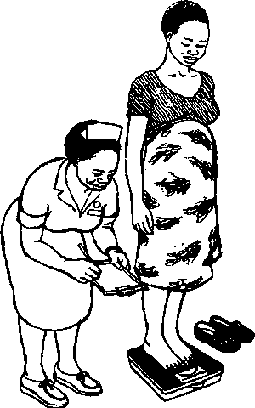
Figure 7.1: Measuring
Weight
A pregnant woman's weight should be measured at every antenatal visit.
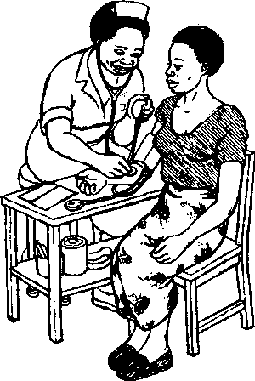
Figure 7.2: Measuring Blood
Pressure
A pregnant woman's blood pressure should also be measured at every antenatal visit.
LABORATORY TESTS
Depending on the facilities available at the clinic or hospital, certain laboratory tests may be carried out before or after the physical examination. Urine may be tested at every antenatal visit. Tests on blood and vaginal fluids are usually done only once or twice during the pregnancy (see Figure 7.3). Laboratory tests usually include the following:
HAEMOGLOBIN: This indicates whether the iron levels in the blood are high enough, and whether a woman is anaemic.
SICKLING TEST: If a woman suffers from sickle cell disease, she will need very close and careful supervision during pregnancy and labour because this condition may become more severe unless it is expertly managed. Women who are only carriers of sickle cell disease as opposed to actually having it (see Chapter 5) are not at increased risk during pregnancy. However, the sickle cell status of the baby's father should be checked if possible, and counselling should be provided about risks, if any, to the baby.
BLOOD GROUPING: Tests to find out a woman's blood group are useful in case a blood transfusion is needed later. Sometimes tests are also carried out to determine if the woman has a blood type called rhesus negative, which is associated with a higher rate of complications for the mother and child. Women with this blood type need extra care during their pregnancies and deliveries.
SEXUALLY TRANSMITTED DISEASES (STDs): Most STDs can be treated effectively if they are diagnosed early. It is important that this be done, since some STDs such as syphilis and gonorrhoea can threaten the health of the mother and baby. Blood tests or tests done on fluid from the vagina (see Chapter 18) are used to diagnose these diseases, if the facilities are available. In some countries where STDs are common but laboratory facilities are not available, the Ministry of Health may recommend that any woman who has an unusual discharge or fluid from the vagina, or other symptoms, be treated for an STD. There are special charts that can be provided for health workers to use this system of diagnosis and treatment.
URINE TESTS: Urine is tested for two things: sugar, which suggests diabetes; and protein, which may indicate an infection or pregnancy-related hypertension (see Chapter 9).
MEDICATIONS (TABLETS AND INJECTIONS)
There are a few basic medicines that can help a woman have a healthy pregnancy. First, a woman should be immunised against tetanus, a disease that could kill the baby (see Figure 7.4). The first dose can be given at the first antenatal visit; the second dose should be given four weeks later. Second, in areas where malaria is common, Ministries of Health sometimes recommend that pregnant women should be given chloroquine or a related medicine; local guidelines should be checked. Third, iron tablets, folic acid, and vitamins are often given to prevent anaemia and make sure the mother and baby get the right nutrients.
What Will Happen During the Antenatal Visits?
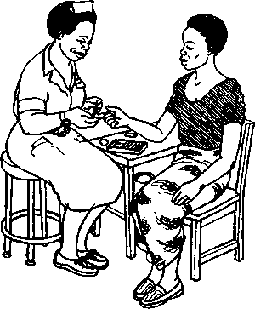
Figure 7.3: Blood Test
Blood should be tested at least two times during the pregnancy to determine if the woman has anaemia or other complications.
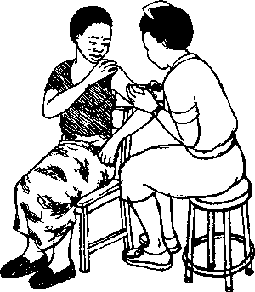
Figure 7.4: Tetanus-Toxoid
Immunisation
(first visit, and again four weeks later as a booster dose) Every pregnant woman should be given a tetanus-toxoid immunisation to protect herself and her baby.
What Will Happen During the Antenatal Visits?
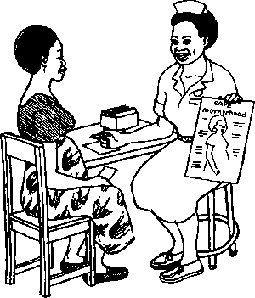
Figure 7.5: Health Education
and Counselling
The nurse or midwife should provide information and advice to the pregnant woman on how to take care of herself, and answer any questions that she may have.
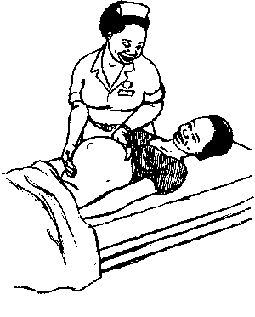
Figure 7.6:
Examination
An examination to make sure the baby is growing normally. Toward the end of pregnancy, the baby's position or "lie" can also be checked.
HEALTH EDUCATION
Information from the personal history, physical examination, and laboratory tests can be used as the basis for a discussion about what the woman can and should do to stay in good health (see Figure 7.5). She should be encouraged to ask questions or talk about any special problems she might have. Some women may be shy about asking questions; the health worker can help by using simple, understandable language to explain what was done and what the findings mean. It is especially important to explain any danger signs or complications the woman may have, and what should be done about them (see Chapters 9 and 11). In addition, basic information should be offered on nutrition, danger signs, personal hygiene, typical discomforts and what to do about them, and the baby's stage of development (see Chapters 4, 6, and 8).
Health education can be spread throughout the pregnancy; it is best not to go over too many topics at any one time. At the end of every antenatal visit, the next visit should be scheduled.
Later Antenatal Visits
Even women who are healthy and have no problems should have at least three or four antenatal visits to ensure that the pregnancy and delivery are free of problems. Women who have a problem, or are at risk of developing one, should go more often. Ideally, the first visit should be no later than the fourth month of pregnancy. All women should be sure to visit the antenatal clinic in the ninth month to check on the lie of the baby (see Chapter 11) and look for any other last-minute problems that can develop. Women should be encouraged to come to all antenatal visits even if they feel fine and do not seem to have any problems. Some of the serious complications of pregnancy do not show any signs until very advanced. To provide proper care, a clinic should be staffed with qualified medical personnel (a trained nurse, midwife, or doctor) and have the supplies and equipment to provide the services described above.
During later antenatal visits, the midwife, nurse, or doctor will be on the lockout for any complications that might develop. At each visit the woman is weighed, her blood pressure is checked, and usually her urine is tested. Half way through the pregnancy her blood is tested again to check for anaemia. At every visit her abdomen is measured and felt to make sure the baby is growing normally and, towards the end of pregnancy, that the baby is lying in the right position (see Figure 7.6). At times it is necessary to carry out some new tests or repeat old ones to rule out problems. Health education and counselling should be provided, based on the findings of the examination. In particular, the question of where the woman should deliver the baby needs to be discussed (see next section). Toward the end of the pregnancy, family planning methods can be discussed so that women know the options available to them after their babies are born (see Chapter 17).
|
Box 7.1: What Should Happen During an Antenatal Visit FIRST VISIT: This visit should occur as soon as the woman thinks she is pregnant, no later than the fourth month of pregnancy · A personal history is taken Measures height and weight · Certain tests are done using samples of: Blood Urine · Certain medicines may be given, including: Iron tablets (to prevent anaemia) · Appropriate health education and counselling is provided, depending on the stage of pregnancy LATER VISITS: At least 3 or 4 additional visits should be made. One visit should be in the last month of pregnancy · A history of problems since the last visit is taken Measuring the growth of the foetus and listening to the heart · Appropriate health education and counselling is provided, depending on the stage of pregnancy · Advice is given on where to deliver, based on the woman's health and history (the advice may change during the pregnancy, based on whether problems are treated or new ones develop) |
|
Deciding on Where to Deliver
Sometime during the pregnancy, the question of where the baby will be born needs to be discussed. The most important issues are whether there are any complications and whether the delivery is likely to be difficult. As discussed below, a woman who has a health problem or is at risk of developing a serious complication should deliver in a health centre or hospital. A woman who has had no problems with her current pregnancy or with any earlier pregnancies may be able to deliver safely at home, as long as she has a trained birth attendant with her. In fact, however, many women who should deliver in a health facility, or who would like to, end up delivering at home. Often this is because they do not know what the danger signs of pregnancy are, or they lack funds to pay for transportation, medicines, or fees. Or it may be that they simply cannot get transport when the time comes.
Health staff and others in the community can help by making sure that women and their families are aware of danger signs during pregnancy and delivery. Families should know what to do if a complication develops, and especially where to take women if help is needed. They can also help by mobilising funds, and by making arrangements for transport when necessary. Some hospitals have maternity waiting homes nearby. Women who are at risk of developing a complication, or who want to deliver in the hospital but live far away, can go to these waiting homes when labour is expected and stay there until after the delivery. That way if a complication does develop, they are right there at the hospital and can receive the care they need.
The following sections look at the choices for places to deliver.
HOME DELIVERY
The majority of deliveries in Africa take place at home, often attended by an untrained person such as a relative or neighbour. While most of the time both the mother and baby end up fine and healthy, home delivery can be dangerous. An untrained attendant may not know the proper procedures for a safe, normal delivery. Even more importantly, he or she may not know what to do if a serious problem arises. In most countries, many TBAs have been trained in the basic principles of safe delivery. Often, they have also been provided with TBA kits that include most of the basic supplies needed for a clean delivery. If the delivery is taking place at home, it is best if a trained birth attendant is there to spot trouble early and take the necessary action before the problem becomes serious or life threatening. The basic requirements for a safe delivery are listed in Chapter 10. Chapter 11 describes the signs of complications during delivery.
CLINIC OR MATERNITY CENTRE
Clinics and maternity centres are generally staffed by trained midwives. At a private facilities, the midwife may charge a fee for the delivery and for any medicines she may provide. If a woman has had one or two normal deliveries in the past and has had no complications with her current pregnancy, a clinic or maternity centre may be a safe place for her to deliver, provided it is clean and the midwife is well trained and experienced. She should know how to recognise emergencies, how to take appropriate first measures, and when to refer the patient to the nearest hospital.
HOSPITAL DELIVERY
Most women recognise that a hospital is the safest place to deliver, as long as it is staffed by trained medical personnel and has the supplies and equipment to deal with an emergency if one develops. Sometimes, however, hospitals are more expensive, and families do not think they can afford to pay for a hospital delivery. Other times, local hospitals do not have the proper supplies and equipment, which means the family may have to buy whatever is needed.
In addition, some women just do not like to deliver in hospitals. There are many reasons for this. Hospitals can be overcrowded, noisy, and impersonal. Their rules and routines can seem strange or frightening, and they may do things that are not always comfortable for women. Sometimes hospitals do not allow certain rituals, or they may require families to bring clothes for the baby, which some women consider bad luck. Some women are afraid of hospitals, because they believe women are brought there to die.
Medical personnel can help address these fears by explaining hospital procedures, and the reasons for them, in clear, simple terms. They can also help by being kind and sympathetic, and by allowing women and their families to carry out whatever rituals they are used to, as long as they do not harm the mother or baby. These steps can help make hospitals less frightening, and make women more willing to deliver there when necessary.
The following sections describe pregnancies that have a higher-than-average risk of developing complications. If a woman falls into any of these categories, arrangements should be made for her to deliver in a hospital. This is especially important if she has two or more of these conditions. While the chances are that the labour and delivery will be normal, it is better to take precautions; otherwise the life of the mother or baby may be lost.
High-Risk Pregnancies
Some women are more likely than others to suffer a complication, because of their age, the number of times they have been pregnant, because they have had problems with past pregnancies, or because their general health is not good. Even if a woman falls into one of these groups, which are described in more detail below, she is still likely to have a healthy pregnancy and delivery. She should, however, be treated with extra care; she should be encouraged to go for antenatal care early and often, and to follow the advice of a doctor, nurse, or midwife about what to do during pregnancy and where to deliver. If she is delivering outside a hospital, it is especially important to have a trained, experienced attendant present and to have transport ready in case a serious complication develops.
However, even women who are perfectly healthy can still develop complications during pregnancy or childbirth. All women, therefore, need to be familiar with danger signs, and be ready to go to a health facility if necessary. Danger signs during pregnancy are described in Chapter 9. Danger signs during labour and delivery are discussed in Chapter 11.
ADOLESCENTS: PREGNANCIES TOO EARLY
Adolescents, especially those less than 17 years old, are more likely to have problems, especially during labour. The physical demands of pregnancy and delivery are especially difficult for them to handle because their bodies are still growing and developing. This is especially true if they are having their first baby. During pregnancy, young teenagers are more likely than women aged 20-24 years old to develop the following complications, which are described in later chapters:
· High blood pressure (pre-eclampsia)
· Premature labour
· Prolonged and/or obstructed labour
· Low birth weight infants

Figure 7.7: Adolescent
Pregnancy
Pregnancy can be more difficult for teenagers both physically and emotionally. They have a higher risk of developing complications because their bodies are still growing and developing. A pregnant teenager may have to leave school, and may not know how to care for her new baby.
They should therefore be advised to deliver in a hospital or with a trained midwife or doctor in attendance. Other issues related to adolescent health are discussed in Chapter 21.
OLDER WOMEN: PREGNANCIES TOO LATE
Women who are older (over 35 and especially over 40) are also more likely to have serious complications during pregnancy or labour, especially if they already have a large number of children. They may suffer from (see Chapters 9 and II):
· High blood pressure· Problems with the placenta
· Problems with the baby, including a very large baby, deformities, mental retardation, miscarriage, and abnormal presentation (the baby is not lying head down)
While it is certainly possible for older women to have problem-free pregnancies and deliver healthy babies, they should be encouraged to seek more careful medical attention during pregnancy and delivery.
MULTI-PARITY: TOO MANY PREGNANCIES
After the fifth or sixth pregnancy, women are more likely to have complications, including high blood pressure, anaemia, and abnormal presentation of the baby. The main risks are problems caused by weakened muscles in the womb such as heavy bleeding, long labour, and rupture of the womb. Therefore, women who have had many children are advised to deliver in a hospital.
SPACING: PREGNANCIES TOO CLOSE TOGETHER
Pregnancy, delivery, and breastfeeding put a considerable strain on a woman's body; pregnancies less than two years apart increase this strain. Severe anaemia, for example, is common in women with frequent pregnancies. Older mothers who have had a large number of pregnancies close together face a much higher risk of dying during pregnancy and labour.
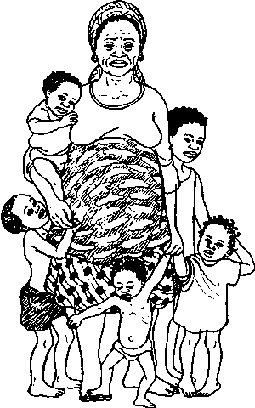
Figure 7.8: Pregnancy in Older
Women
Women who are older (over 40 years of age) and have already had many pregnancies (more than five) have a higher risk of complications during pregnancy and delivery.
HEIGHT
If a woman is less than 5 feet tall (150 centimetres), she is more likely than taller women to experience obstructed (blocked) labour. This is why height is measured during antenatal care. Similarly, if a woman has some physical problem with her back, hips, or legs, she should deliver in a hospital because such conditions may make it difficult for the baby to pass through the birth canal.
POOR OBSTETRIC HISTORY
Many complications of pregnancy and labour tend to happen more than once. If a woman had problems with an earlier pregnancy, she should be strongly encouraged to deliver in a hospital under trained medical supervision. These problems include:
· If the last two or three pregnancies resulted in miscarriage, this may happen again. A woman should get careful medical attention during the pregnancy, and deliver with the help of a trained midwife or doctor.
· If labour started early (before 37 weeks) in a previous pregnancy, it is likely to happen again. She should be especially careful to rest and avoid hard work to try to prevent premature labour. The signs of early labour should be carefully explained to the woman. She should also be encouraged to go to a hospital where premature infants can be adequately cared for in case labour does start too soon.
· If severe bleeding occurred before or after a previous delivery, it is likely to recur. Blood transfusions are sometimes necessary, so the woman should deliver in a health facility where transfusions can be done.
· If a woman had obstructed labour during a previous delivery, and especially if she had a fistula (a hole between the vagina and the urinary tract that allows urine to drip into the vagina, she should deliver in a hospital (see Chapter 11).
· If a woman delivered by Caesarean section in the past, she may need to have the operation again. This depends on the kind of incision that was made in the womb; with some incisions the scar tissue is not as strong as the rest of the womb, and it could rupture (see Chapter 12). These women should avoid labour entirely, and arrangements should be made for them to have a repeat Caesarean section. While some women can have a normal delivery after a Caesarean section, all women who have had the operation should have a trained medical attendant with them and be ready to go to the hospital if necessary.
· Women who have had a Caesarean section in the past may be reluctant to go to hospital for the next delivery because they are afraid of having another operation. A health worker should explain the risks to them, and urge them to deliver in a hospital in order to prevent a tragedy. If possible, the medical records from the previous surgery should be obtained in order to plan what kind of delivery to have.
MEDICAL CONDITIONS OR PROBLEMS WITH CURRENT PREGNANCY
If a woman is pregnant with twins, or suffering from certain medical conditions before pregnancy, she will need careful supervision during pregnancy and labour. In most cases, this supervision can only be provided in a well-staffed and fully equipped hospital. These conditions include:
· High blood pressure (hypertension)
· Diabetes
· Heart disease
· Tuberculosis
· Kidney disease
· Obesity (overweight)
· Sickle cell disease
· Severe anaemia
These problems are discussed in Chapter 11.
|
Summary: Antenatal Care All women, regardless of how healthy they feel, should have at least three or four antenatal visits during their pregnancies. Women who have health problems should go more often, as recommended by a doctor, nurse, or midwife. The first antenatal visit should take place before the fourth month of pregnancy if possible. It involves: A personal history Later visits involve many of the same steps. These tests and examinations enable the midwife, nurse, or doctor to find out if there are any problems that need to be treated, or if the woman is likely to have complications with delivery. All women should be sure to make at least one visit in the ninth month of pregnancy. In this final visit, the health worker will look for any complications and make sure everything is ready for a safe delivery. Women who fall into the following groups should be treated with extra care during pregnancy, and should deliver in a health facility if possible: Adolescents (especially those under age 1 7) Older women (especially those over age 40) Women who have had many pregnancies (five or more previous births) Women whose pregnancies are too close together (less than two years apart) Shorter women (less than five feet or 150 centimetres) Women who had a problem with an earlier pregnancy or delivery (prolonged or obstructed labour, repeated miscarriages, premature labour, severe bleeding, or delivery by an operation) Women who have a medical problem with their current pregnancy (bleeding during pregnancy, high blood pressure, severe anaemia, sickle cell disease, diabetes, heart disease, tuberculosis, kidney disease) |
|
|
| ||||||||||||||||||||||||||||||||||||||||||||||||||||||||||||||||||||||||||||||||||||||||||||||||||||||||||||||||||||||||||||||||||||||||||||
Chapter Eight - MINOR DISCOMFORTS DURING PREGNANCY
Many women experience some discomfort or minor complaints during pregnancy. Although these discomforts are not dangerous, they can be troublesome. It is important for women to learn what is normal and what is dangerous. For problems that are not life-threatening, it is helpful to explain to women what they can do to ease the discomfort on their own, and to listen to them with sympathy and kindness. This helps create trust and understanding between the health worker and the woman, and makes the job of caring for her easier.
MORNING SICKNESS
About one-third to one-half of pregnant women feel nausea (discomfort in the stomach) during the early weeks of pregnancy. Although it is called morning sickness, women may also feel unwell in the early evening or at other times of day. It generally goes away by about the third month of pregnancy. If it usually happens in the morning, it may help the woman to eat a piece of dry biscuit, yam, or banana before getting out of bed. If she feels nausea at other times during the day, it may help to eat smaller meals more frequently, rather than two or three big meals a day. If the nausea and vomiting are severe or persist after the third month, or if they interfere seriously with eating, the woman should go to a health facility.
HEARTBURN
Heartburn, in spite of the name, has nothing to do with the heart. It is a burning sensation in the throat and chest caused by indigestion. It tends to occur towards the end of pregnancy when the enlarged womb pushes up the stomach. This causes small amounts of stomach acid to pass upwards. Women should try to eat several small meals every day, not eat spicy or oily foods, and avoid lying down immediately after eating.
|
Box 8.1: Common Discomforts and When to Expect Them FIRST TRIMESTER · Morning sickness or nausea and vomiting SECOND TRIMESTER · Tiredness THIRD TRIMESTER · Tiredness · Swelling in the ankles and feet |
CONSTIPATION (NO BOWEL MOVEMENT)
Constipation during pregnancy is quite common. It occurs because the contractions of the bowel which move digested food through the body are slowed by the hormones of pregnancy. Eating lots of vegetables and fruits, drinking a lot of water, and exercising regularly can help keep the bowels working normally. Enemas should be avoided unless recommended by a doctor, nurse, or midwife.
VARICOSE (SWOLLEN) VEINS
Varicose veins are caused by the blood collecting in the veins, particularly in the veins of the legs. They may appear for the first time during pregnancy, or become worse. This is because the body produces more blood during pregnancy, and because the weight of the baby makes the blood collect in the legs. Women can make themselves more comfortable by propping up their feet when sitting, and by making sure they do not stand for long periods of time. Regular exercise also improves the circulation of blood in the legs. Varicose veins improve after delivery, but will not disappear altogether.
HAEMORRHOIDS (PILES)
Haemorrhoids are varicose veins around the anal opening. They may cause pain and bleeding during bowel movements and are made worse by constipation (hard stool). Haemorrhoids may be relieved by avoiding long periods of sitting, and by eating foods that promote easy bowel movements (fresh fruits and vegetables in particular). The pain can be relieved by warm baths or suppositories.
VAGINAL DISCHARGE
The normal fluids in the vagina tend to increase during pregnancy. This is nothing to worry about unless the discharge becomes greenish, yellowish, or bubbly, and is accompanied by itching or an unpleasant odour. Changes like these are usually signs of an infection. If a woman develops these problems, a laboratory test may be necessary to identify the cause and determine the best treatment. If the facilities are not available to do laboratory tests, there are guidelines available that specify which antibiotics to give when signs of a vaginal infection are present (see Chapter 18).
BACKACHE
As the baby grows heavier and a woman's balance changes, her lower back is put under increasing strain. Keeping the back straight when standing and sitting may help relieve or prevent backache. There are also exercises that may help to relieve the strain (see Figures 8.1-8.3).
Ways to Relieve Backache and Avoid Straining the Back
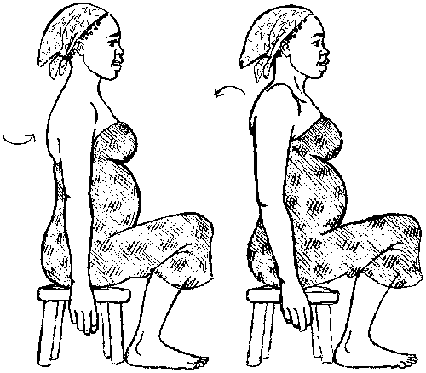
Figure 8.1: Shoulder
Circles
1. Sit with arms hanging to the side.
2. Lift shoulders up towards ears.
3. Move shoulders back.
4. Relax shoulders and return to the starting position.
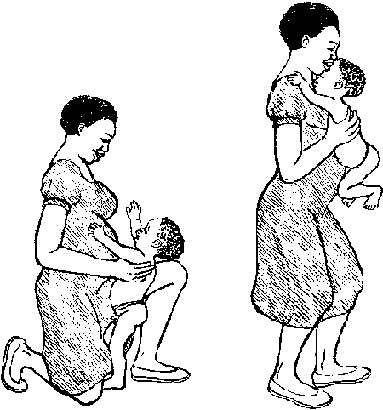
Figure 8.2: How to Lift
Something
1. Place one foot forward and bend down on the other knee.2. Bring the child or object close. Rise slowly with front foot flat on the floor and use back foot to push up and for balance.
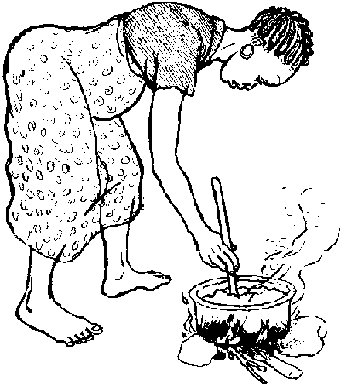
Figure 8.3A: How to Reach
Things on the Ground
Do not bend over at the waist to reach things on the ground.
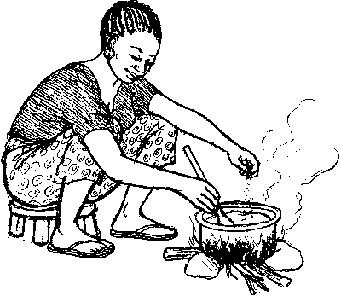
Figure 8.3B: How to Reach Things
on the Ground
Instead, squat down by bending knees and keeping back straight.
LEG CRAMPS
Cramps in the muscles of the legs, especially the calf, frequently occur towards the end of pregnancy. To relieve the cramp, women can try gradually stretching the leg out straight with the toes pointed back towards the body (see Figure 8.4). Rubbing does not usually help as much as stretching out the muscle.
SWELLING IN ANKLES AND FEET
It is normal to have some swelling in the ankles and feet during pregnancy. Swelling in the wrists or hands is less common. Swelling occurs because the body is keeping more fluid in the tissues than normal. Women should be advised to avoid tight cuffs, bracelets, shoes, or rings. If the swelling increases too much these may be difficult and painful to remove. If the swelling increases suddenly or causes very rapid weight gain, women should go to a health facility to have their blood pressure and urine checked for pre-eclampsia, which is a life-threatening complication (see Chapter 9).
SHORTNESS OF BREATH AND TIREDNESS
It is not unusual for women to get tired easily, especially during the first three months or so of pregnancy. The body is adjusting to many new changes. Towards the end of pregnancy, the womb takes up so much room that breathing may become difficult. This does not necessarily mean there is anything wrong. The shortness of breath goes away as soon as the baby is born. If, however, a woman becomes very short of breath, has chest pains, has a very high pulse rate, or remains tired even after resting, she may be suffering from heart disease, anaemia, or some other problem. She should go to a health facility for an examination.
ABDOMINAL DISCOMFORT
As pregnancy continues, women may experience occasional cramps or discomfort in the lower part of the abdomen. This is often due to stretching of the abdomen or the baby moving about too much. It may be relieved by sitting or lying down. Drinking plenty of fluids can also help prevent this problem. Toward the end of pregnancy women may notice irregular contractions of the womb. These are quite normal. But if a woman is still a month or more before her due date and the contractions become increasingly strong and regular and do not go away after resting, she should be advised to go to a health facility.
URINARY DISCOMFORT
During the first and last months of pregnancy, as the uterus and baby are pressing on the bladder, a woman may feel the need to urinate more often than normal. Drinking a lot of water and urinating often may help prevent infections. Signs of infection may include a painful burning sensation when urinating and a constant need to urinate with little or no urine actually passing. If a woman has these signs she should go to a health facility immediately for medicine, since urinary infections can become worse very quickly.
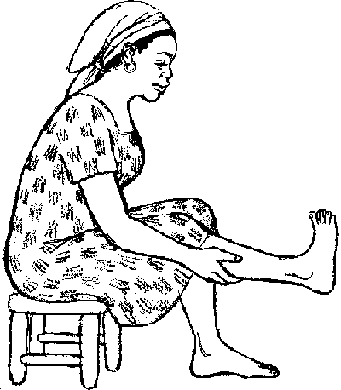
Figure 8.4: How to Stretch Out
a Cramp in the Calf of the Leg
Stretch the leg out straight and point the toes back toward the body.
|
Summary: Minor Discomforts During Pregnancy There are a number of minor problems that a woman can have during pregnancy. Most of them can be taken care of within the home; none of them are life-threatening. The most common complications, and what to do about them, are: MORNING SICKNESS: Eat smaller meals more frequently, instead of several big meals. URINARY DISCOMFORT: Drink lots of water and urinate often. If there is pain, go to a health facility. |
|
| |||||||||||||||||||||||||
Healthy Women, Healthy Mothers - An Information Guide - Second Edition (FCI, 1995, 241 p.)
Chapter Nine - SERIOUS COMPLICATIONS DURING PREGNANCY
During any pregnancy, complications can arise. Some of them are relatively minor, as discussed in the previous chapter. Others, however, can be serious and may require medical attention. These include problems that are caused by pregnancy, as well as conditions that existed before but are made worse by the pregnancy. Some are life threatening, so it is important for women and their families to know which ones are dangerous and which ones are not. They should also know what to expect, and what to do when a problem occurs. This chapter discusses some of the more serious complications of pregnancy.
Problems Caused by Pregnancy
The problems described in this next section are, for the most part, complications that are caused by pregnancy.
MISCARRIAGE AND ABORTION
Not all pregnancies last the normal nine months (40 weeks) and result in the birth of a baby. In some cases pregnancy ends by itself; this is called a miscarriage or spontaneous abortion. Miscarriages usually occur before the 26th week. In some cases an operation is carried out to end the pregnancy; this is called induced abortion.
MISCARRIAGE OR SPONTANEOUS ABORTION:
Out of every one hundred pregnancies, ten to twenty end in miscarriage. Miscarriage occurs when the pregnancy ends before the baby has any chance of survival. Most miscarriages occur in the first 12 weeks of pregnancy.
What causes a miscarriage? By far the most common reason is that something is wrong with the fertilised egg. When examined under a microscope, 60% of all pregnancies that miscarry show signs of serious problems with the fertilised egg. If the egg had continued to grow and develop, it would have resulted in a baby with severe abnormalities such as deformed or missing organs. Miscarriage, therefore, can sometimes be nature's way of dealing with such problems.
A miscarriage may also result if a woman has a serious illness such as malaria or syphilis, a severe fall, or a problem with her reproductive organs. Some miscarriages occur because the pregnancy was ectopic. This means the fertilised egg was implanted someplace other than the womb, usually in the fallopian tube. Ectopic pregnancies almost always miscarry and can be very dangerous; they are discussed later in this chapter.
THE SIGNS OF A MISCARRIAGE: There are two main signs of a miscarriage: bleeding from the vagina, and pain in the lower abdomen. The bleeding is usually slight to begin with, but gets heavier and soon big clots appear. Both the bleeding and the pain can be quite similar to those accompanying a heavy menstrual period, especially for an early miscarriage. It may therefore be difficult to tell when a miscarriage happens, especially if pregnancy was never suspected.
"COMPLETE" MISCARRIAGES: A miscarriage is described as "complete" when all the tissues of the developing embryo or foetus and the placenta have passed out through the vagina. With a complete miscarriage, the bleeding will stop after a few days. In this case a woman should rest and avoid any heavy lifting or exercise for 2-3 weeks. Sexual intercourse and tub baths should also be avoided during this time, as they increase a woman's chances of getting an infection. To clean herself, she should use a wet cloth or towel instead. A normal miscarriage should not cause any problems, but a woman should go for a check-up at a health clinic in the first week after the bleeding has stopped, even if she feels fine, to make sure no harm has been done. Furthermore, women with any bleeding that is not a menstrual period, whether pregnancy is suspected or not, should be encouraged to have a thorough examination.
INCOMPLETE MISCARRIAGES: A miscarriage is incomplete when part of the foetus or placenta remains inside the womb. A miscarriage is more likely to be incomplete if it happens between the tenth and twentieth week of pregnancy. Bleeding continues and there is a good chance that the dead tissues inside the womb will become infected, which usually causes fever and pain in the abdomen (see Figure 9.1). When a miscarriage is incomplete, the womb must be completely emptied as soon as possible by a trained health worker in a hospital or clinic. If an incomplete miscarriage becomes infected, it can lead to fever and pain in the reproductive organs that does not go away. If the infection is not treated it can cause scarring in the fallopian tubes, which can make a woman infertile. If a woman has any signs of infection after a miscarriage, she should go immediately for a check-up.
After a miscarriage, especially an incomplete one, a woman should wait several months before trying to get pregnant again. During this time a family planning method should be used to avoid pregnancy (see Chapter 17).
REPEATED MISCARRIAGES: Some women have miscarriages again and again. Sometimes it is possible to figure out why this happens. For example, there may be a weakness in the neck of the womb which can be corrected by closing it with a stitch during pregnancy. But often, no medical explanation can be found even after lengthy tests and investigations. After one or two miscarriages early in pregnancy, a woman should be reassured not to worry. Even a woman who has had three or more early miscarriages has a 75% chance of carrying the next pregnancy to term. But after the third or fourth miscarriage, or if a miscarriage occurs late in pregnancy, a woman should be encouraged to have a medical examination to see if any explanation can be found.
INDUCED ABORTION: Miscarriages are also called "spontaneous abortions", which means they start on their own. There are, however, times when a woman ends the pregnancy by an "induced abortion". There are various reasons why a woman might want to end her pregnancy. Some illnesses can make pregnancy dangerous to a woman's health, and an induced abortion may be necessary to preserve her health or even to save her life. In these cases, an abortion can be legally performed by a doctor in most African countries. In some countries, abortion may also be legal if the foetus has a severe abnormality, or if the pregnancy is the result of rape or incest.
A woman may also want to end a pregnancy because she is not married or because her husband has left her. Or, she and her husband may have many children already and feel they cannot afford to take care of any more. If a woman does not want to become pregnant, the best thing for her to do is to use a method of contraception to prevent a pregnancy before it starts. No contraceptive method is perfect, however, and neither are people; so unintended pregnancy does happen. In situations where abortion is legal, the procedure is usually performed early in the pregnancy, during the first three months. The woman is given an injection to reduce the pain, and then a doctor cleans out the womb using instruments that are inserted through the vagina. The operation usually takes about 15 minutes. If it is done by a trained person, with proper equipment and in a clean environment, the operation is not dangerous.
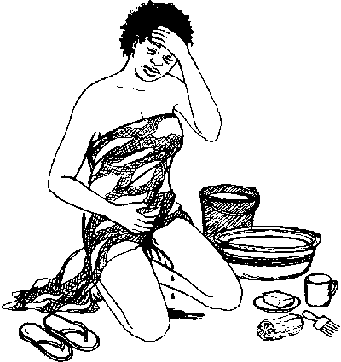
Figure 9.1: Complications of
Miscarriage or Abortion
An incomplete miscarriage or unsafe abortion can result in severe bleeding, infection, and fever. If a miscarriage occurs and any of these signs develop, the woman should go immediately to a hospital or clinic.
Where abortion is not legal, women may still try to end their pregnancies - by themselves, with the help of a traditional healer or birth attendant, or in an illegal abortion clinic. Some of the traditional methods used include inserting a twig into the womb; swallowing a special tea, chemical, or fruit; taking a very large dose of a drug like chloroquine; douching (washing out) the vagina with a harsh chemical like bleach; or having someone massage the abdomen very roughly. Most of these methods are not effective, and many are extremely dangerous to the woman's health. These procedures are often performed in secret and in unclean conditions by untrained people. Even abortions performed by health professionals in medical facilities can be unsafe if they are not done carefully, or if the equipment or the environment is not clean.
If an unsafe method is used to induce an abortion, the woman is likely to have a major infection in her reproductive organs. In some cases, a hole is made in the womb. Both problems are very serious; they can cause death or long-term illness, and are likely to make the woman infertile.
If for some reason a woman has had an induced abortion and she develops any of the signs in Box 9.1 below, she should go to a hospital for treatment immediately. Delay can mean death. The health workers and family members who are helping her should treat her with kindness and sympathy, since she is likely to be frightened and in pain. It is important to gain her trust and reassure her that she will not be punished or blamed. Otherwise she is unlikely to tell the truth about what has happened, which makes it harder to provide the correct medical treatment.
|
Box 9.1: Post-Abortion Danger Signs FEVER OR CHILLS |
ANAEMIA
Anaemia is a common complication of pregnancy. In anaemic women, the blood does not have enough iron in it, and is not able to carry enough oxygen to the body. This is often called "weak blood". Even if a woman had a normal amount of iron before pregnancy, more is needed during pregnancy. In fact, two or three times as much is needed to meet the needs of mother and baby. If anaemia existed before pregnancy, the increased need for iron will make the anaemia worse.
Unfortunately, many women start pregnancy with some degree of anaemia. It can be caused by a number of things:
· A diet that is low in iron-rich foods such as liver, eggs, lean meat, and leafy green vegetables. Foods with vitamin C (oranges, pawpaw, mangoes) also help the body absorb iron from other foods.· A parasite (malaria, hookworm, schistosomiasis) in the blood or body that reduces the amount of iron.
· Repeated pregnancies without adequate time in between to recover physically, which uses up iron.
· Sickle cell disease or some other blood disorder.
· Heavy menstrual periods may lead to anaemia over time, since women lose iron during their periods each month.
THE SIGNS OF ANAEMIA: A woman who is anaemic usually feels tired and weak most of the time; she may also feel dizzy and out of breath. Her skin may be unusually pale on the insides of her eyelids (conjunctivae), gums, and tongue, as well as the palms of her hands and the soles of her feet (see Figure 9.2). While these signs can be used as a warning, it is best for her to go to a hospital or clinic that can diagnose the disease through a blood test and find out how serious it is. Blood testing for anaemia may be done more than once during the pregnancy.
WHY IS ANAEMIA SERIOUS? If anaemia is not identified and properly treated early, it will get worse during pregnancy. Very severe anaemia can cause heart failure, miscarriage, or premature labour. Anaemia can also make other problems, like infection or bleeding, even more life-threatening. The blood of an anaemic woman is already weak, and excessive bleeding during an abortion (spontaneous or induced) or following delivery can be very dangerous. Anaemic women also have less ability to fight off infections, especially after an abortion or an operation.

Figure 9.2: Checking for Signs
of Anaemia
If a woman is feeling tired, weak, and dizzy, or if the insides of her eyelids or her palms are especially pale, she might have anaemia. She should go to a hospital or clinic for a test.
WAYS TO PREVENT ANAEMIA: The best way for a woman to avoid severe anaemia is to not be anaemic when pregnancy starts. Eating a diet rich in the foods listed above, and allowing plenty of time between pregnancies (two to three years) will help. Avoiding malaria and other diseases will also help prevent anaemia.
Even if a woman is not anaemic, once she is pregnant she should take iron tablets regularly as prescribed by a trained health worker. Sometimes these tablets will include folic acid or other vitamins. It is best for her to take them with food. Some women find that the tablets make them feel sick, and are therefore reluctant to take them. The benefits of taking the tablets should be carefully and thoroughly explained to them, and they should be advised to take the tablets with food to minimise the discomfort. Iron tablets should not be taken with milk, since milk can prevent the body from using the iron.
TREATMENT OF ANAEMIA: If treatment with iron tablets is started early enough, there is usually time to correct the anaemia before delivery. In severe cases, if there is not enough time for this treatment to work, or if a woman loses a great deal of blood at delivery, it may be necessary to give a blood transfusion. This can be a risky procedure.
PRE-ECLAMPSIA AND ECLAMPSIA
Pre-eclampsia (high blood pressure caused by pregnancy) can occur anytime during pregnancy, but it usually occurs towards the end (after the 28th week). No one knows what causes this serious condition, but it is most common in young women in their first pregnancy. If pre-eclampsia is not treated, it may lead to full-blown eclampsia.
SIGNS OF PRE-ECLAMPSIA: Pre-eclampsia is also known as pregnancy-induced hypertension. It has three major signs:
1. Swelling of the feet, hands and fingers, and face (see Figure 9.3): Some swelling of the ankles during pregnancy is not unusual, especially if a woman has been standing for a while. But if the swelling is present when the woman first wakes up in the morning, or if her shoes are too tight and there is swelling in the face, she should be advised to go to a clinic to see if she has pre-eclampsia. Many women are not aware that such swelling indicates a potentially serious complication. Health education during antenatal care should explain the signs and seriousness of pre-eclampsia in terms that they can understand.2. A rise in the blood pressure: An increase to 140/90 mmHg or above, or an increase in the blood pressure of 30 mmHg systolic and 15 mmHg diastolic in comparison to earlier measures, is a sign of severe hypertension or high blood pressure. This can only be detected by measuring the blood pressure.
3. Protein in the urine: This too can be found only by a test at the clinic.
EFFECTS OF PRE-ECLAMPSIA ON MOTHER AND BABY: In mild cases, a woman may feel no ill effects apart from swelling of the feet, ankles, hands, and face. But if pre-eclampsia is not treated properly and promptly, it can lead to high blood pressure, kidney damage, and increasing amounts of fluid in the body. The baby may not receive enough oxygen and food, and may be small and weak. A woman may develop severe headaches, blurred vision, spots before her eyes, and vomiting. These are signs that the most serious stage of this complication, called eclampsia, may be developing. Eclampsia, in which a woman has fits or convulsions and loses consciousness, is a life-threatening complication for both mother and child. It can occur late in pregnancy, during delivery, or shortly after the baby is born (within two days or 48 hours).
WHAT TO DO: If signs of pre-eclampsia exist, a woman should go to a hospital. Local treatments with herbs and other mixtures are generally not effective. The woman may need total bed rest to prevent pre-eclampsia from getting worse. If resting at home does not work, she may need to enter the hospital for rest and treatment under supervision. Sometimes sedatives or medications are needed to reduce the blood pressure. A woman should understand the danger of the situation so that she knows why these measures are necessary. Sometimes women are reluctant to take these measures because they often feel fine, even though their blood pressure may be dangerously high.

Figure 9.3: Oedema
Swelling in the feet, hands and fingers, as well as the face, is a sign of pre-eclampsia. A woman with these signs should go to a clinic to have her blood pressure and urine checked.
In severe cases, when eclampsia is developing, a woman must get immediate, expert treatment in a hospital. If she starts having fits, she should be prevented from hurting herself, but should not be held down forcibly. The handle of a spoon wrapped in a cloth should be put into her mouth to prevent her from biting her tongue. When the fit is over and she is being taken to the hospital, she should be placed in a lying-down position on her side. It is essential that the baby be delivered as soon as possible; this is necessary to save the lives of both mother and baby. Sometimes an operation is necessary.
SEVERE VOMITING
Morning sickness, sometimes accompanied by vomiting, is a relatively common complaint during the first three months of pregnancy. It is not normal, however, if the vomiting persists or is severe, or if it occurs late in pregnancy or causes weight loss and severe dehydration. A woman should be advised to rest in bed at home or in the hospital for a few days, avoid fatty foods, and not drink too much water at one time. If the vomiting continues in spite of this treatment, she may become very dehydrated. It may be necessary to give fluids and nourishment through a vein in the arm.
TOO MUCH WEIGHT GAIN
During pregnancy, most women put on weight - around 20-30 pounds (10-12 kilos) on average. Most of the weight gain occurs after the fourth month, when women gain roughly four pounds (two kilos) per month. If a woman gains a lot of weight suddenly (more than two pounds or one kilo in a single week) when she has been eating normally, her body may be keeping too much water. This could be a sign of pre-eclampsia; the woman should go to a health facility to have her blood pressure and urine checked, and to be examined by a trained health worker.
NOT ENOUGH WEIGHT GAIN
After the first three months, most women gain weight steadily during the rest of the pregnancy. If the weight gain is less than two pounds (one kilo) per month after the third month, this may be a sign that the baby is not growing as it should. This may be caused by not eating enough or working too hard. It may also be caused by some illnesses, such as tuberculosis or AIDS, or by a placenta that is not carrying enough oxygen and food to the baby. The woman should go see a trained health worker for an examination.
Failure to gain any weight over a number of weeks, or actually losing weight, is an even more serious sign, and needs immediate evaluation by a doctor. Losing weight when eating normally may be a sign that the mother has a serious disease, and may mean that the baby's life is in danger.
BLEEDING EARLY IN PREGNANCY
Slight bleeding from the vagina may occur in early pregnancy (before 26 weeks). A woman who has slight bleeding should lie down and rest for 2-3 days.
Typical causes of this bleeding include implantation bleeding (when the fertilised egg attaches itself to the lining of the womb), an infection in the vagina, irritation caused by herbal douches, and threatened miscarriage. If the bleeding is accompanied by cramps or if it gets worse, the woman should go to a health facility.
BLEEDING LATE IN PREGNANCY
Any bleeding from the vagina during the last four months of pregnancy (after 26 weeks), however slight, must be taken very seriously. A woman should go to a hospital immediately, as she may need a blood transfusion and possibly an operation. Someone should go with her who can donate blood if a transfusion is needed.
Bleeding from the vagina during late pregnancy is called antepartum haemorrhage. It is a sign of two possible problems:
PLACENTA PRAEVIA: Normally, the placenta is attached to the womb high up and out of the way of the baby. Occasionally (in about one out of every 200 pregnancies), the placenta lies low down in the womb, blocking the way the baby has to pass during delivery. This situation is called placenta praevia and frequently causes bleeding in the latter half of pregnancy. In this type of haemorrhage, there are usually small "warning bleeds" earlier in the pregnancy, and the bleeding is not usually accompanied by pain. It may be necessary to deliver the baby by Caesarean section."ACCIDENTAL" HAEMORRHAGE: Bleeding sometimes occurs behind the placenta, even when it is in the normal place, if it separates partially from the womb. The cause of this condition, which is also called abruptio placenta, is not known.
It usually occurs without any "warning bleeds" and is nearly always accompanied by sudden and severe pain in the abdomen and/or back. When the placenta separates, it cuts off food and oxygen to the baby, who may be born dead. Sometimes this separation can happen without any of the blood coming out of the vagina. The only sign in this case may be sudden and severe abdominal pain and tenseness of the womb.
Labour may or may not start soon after an accidental haemorrhage. If the baby is still alive when the mother reaches the hospital, the doctor will try to deliver the baby as soon as possible, sometimes by Caesarean section. A woman who has had this problem runs the risk of postpartum haemorrhage. She should be kept in a hospital and observed for at least 24 hours after delivery.
ECTOPIC OR TUBAL PREGNANCY
Sometimes a fertilised egg does not reach the womb within seven days of being fertilised. It may then attach itself in the tissues surrounding it, often in the fallopian tube. Implantation somewhere other than the inside of the womb is known as ectopic pregnancy. When this happens, the thin walls of the fallopian tube cannot stretch adequately to hold the growing embryo for more than a few weeks. The wall of the tube ruptures or breaks, and severe bleeding occurs inside the body.
SIGNS OF AN ECTOPIC PREGNANCY: At the beginning, an ectopic pregnancy appears similar to a normal pregnancy: menstrual periods stop, and some of the other signs may develop such as the breasts getting bigger. There are two signs that indicate the pregnancy is ectopic rather than normal: bleeding from the vagina, and pain in the abdomen. If a woman has these symptoms, she should go to a doctor immediately for treatment. If the tube ruptures (breaks), she will experience severe, sudden pain and may also vomit or faint. She will need to go to the hospital immediately for surgery, and perhaps a blood transfusion. If possible, someone should go with her who can donate blood for a transfusion in case it is necessary.
PREVENTING ECTOPIC PREGNANCY: Unfortunately, ectopic pregnancies are very common in many areas. Most often they happen because a previous infection of the reproductive organs has damaged the fallopian tube, preventing the egg from reaching the womb. Women who have had a sexually transmitted disease are more likely to have an ectopic pregnancy (see Chapter 18). If a woman has an infection in the reproductive organs, she can reduce her chances of both infertility and ectopic pregnancy by seeking treatment promptly and following instructions carefully.
TWINS (MULTIPLE PREGNANCY)
Having twins is not really a complication. If a woman is carrying twins, however, she is more likely to develop some of the complications described above, such as premature labour, anaemia, or pre-eclampsia. The complications tend to occur earlier than one would expect. Women with twins are also more likely to start labour early. A woman carrying twins should be advised to rest as much as possible during pregnancy in order to avoid or delay the onset of these complications. She should go for antenatal care regularly and often.
Existing Problems that Can Be Made Worse by Pregnancy
A pregnant woman can be affected by an illness just like anyone else. In her case, however, the effects of the illness may be more serious because of the pregnancy. Diseases like malaria and diabetes, for example, become more serious or more difficult to control during pregnancy. Conditions that can be made worse by pregnancy include:
MALARIA
Malaria is a common disease in many parts of Africa that is transmitted through mosquito bites. The symptoms are high fever, severe headaches, and sometimes vomiting. When a pregnant woman suffers an attack of malaria, it can result in miscarriage, premature labour, stillbirth, or an underweight baby. In addition, pregnancy may make women more susceptible to malaria and its complications. Malaria also increases a woman's chances of developing severe anaemia.
It is important, therefore, for pregnant women to take all possible steps to avoid malaria and to get treatment as soon as possible if they do get the disease. Women should be advised to sleep under a mosquito net, stay indoors during the evening, and take anti-malaria tablets if prescribed by a doctor, nurse, or midwife.
DIABETES
Diabetes is a disease marked by the presence of sugar in the urine and blood. It is more difficult to control the disease during pregnancy, and sometimes it is necessary for a pregnant woman with diabetes to be hospitalized. If a woman is diabetic, her infant may be either bigger or smaller than normal, depending on the stage and seriousness of the disease. In both cases the baby can develop problems. Women with diabetes are also more likely to develop complications like pre-eclampsia and urinary tract infections. Some women develop diabetes only during pregnancy, which usually goes away after the baby is born.
A woman with diabetes needs careful supervision throughout pregnancy to check the amount of sugar in her urine and blood. With the correct diet and proper care, serious complications can be avoided or treated. Sometimes it is necessary to start labour a little early. Women with diabetes must have careful antenatal care and deliver in a health facility.
SICKLE CELL DISEASE
This inherited blood disorder is very common in parts of Africa. Its symptoms include frequent attacks of severe pain in the bones, anaemia, and fever, especially during the cold and rainy season. Jaundice can also be a sign. Women with this disorder should go for antenatal care often to make sure that the pregnancy is going well. They should deliver in a hospital if possible, since they might need a blood transfusion and the baby might need special care as well.
There is no known treatment for sickle cell disease. Since attacks are often brought on by fever, infections like malaria should be avoided as much as possible. Women with sickle cell disease should report immediately to a health facility as soon as an attack begins.
Sickle-cell carriers can be diagnosed easily by a simple and reliable laboratory test. Every African woman should have her blood tested for this disorder, ideally before pregnancy. Since sickle cell disease is inherited from both parents (see Chapter 5), it is important that both parents be tested to determine if the baby is likely to be affected. This is especially true if one of them has the disease.
HEART DISEASE
A pregnant woman with heart disease needs careful supervision. Pregnancy requires a lot of extra work for the heart, because the body produces more blood. If a woman has a long and exhausting labour she risks going into heart failure. She should have trained help with delivery, ideally in a hospital. Under proper care and supervision, most women with known heart problems have normal, safe pregnancies and labours.
JAUNDICE
Jaundice is a yellow discolouration of the whites of the eyes, and is a common sign of liver disease. The most common type of liver disease is due to an infection called hepatitis A. The main signs of this disease are fever and chills; nausea and vomiting; abdominal pain; and especially yellowness of the eyes and passing dark urine. It is usually a mild disease which has no serious effects on the mother or the baby. In rare cases, especially when there is high fever and vomiting, it may lead to miscarriage or an early start to labour.
There is no special treatment for infectious hepatitis A. Women should be advised to rest in bed and drink as much liquid as possible. The illness usually clears up in about three to four weeks. Because hepatitis A is easily passed from one person to another through contact with stool or contaminated food or water, women should be counselled on careful hygiene. They should also avoid close contact with anyone who has the disease.
Hepatitis B, a viral infection of the liver, is a chronic, untreatable infection. Often people with this infection will remain in a healthy "carrier" state in which they do not feel sick but may infect others. In some cases, however, it may lead to severe liver damage and death. There is no known cure for the infection, although adults and infants may be protected from the disease by a series of vaccinations. Unlike hepatitis A, hepatitis B is transmitted through contact with blood and body fluids.
TUBERCULOSIS
Tuberculosis is a disease of the lungs, marked by a deep, persistent cough. Women with tuberculosis are more likely to suffer from miscarriage or premature labour, so they need special care during pregnancy. During labour, it is important that a woman with tuberculosis does not become exhausted. She should deliver in a hospital or health facility, and may need to have an assisted delivery (see Chapter 12).
OBESITY
Women who are very overweight may be at higher risk of some complications, especially obstructed labour and high blood pressure (pre-eclampsia). They should go for antenatal care often during pregnancy, and deliver in a health facility if possible.
|
Summary: Serious Complications During Pregnancy Some serious complications can be caused by pregnancy. In other cases a woman may have had a condition or disease which is made worse by pregnancy. It is important for women and their families to know the signs of serious complications, and to know what to do. If a woman develops any of the following signs, she should go to a hospital or health centre IMMEDIATELY: High fever If a woman develops any of the following signs, she should visit a health centre as soon as possible because a serious complication may be developing: Pale eyelids, tongue, gums, or palms; always feeling tired and short of breath (anaemia) Not enough weight gain |
|
| ||||||||||||||||||||||||||||||
Healthy Women, Healthy Mothers - An Information Guide - Second Edition (FCI, 1995, 241 p.)
Chapter Ten - LABOUR
Labour is the process by which a woman delivers her baby into the world. Normally labour lasts about 5-18 hours, but this varies a lot. Labour requires great effort from the woman; it is often accompanied by pain, anxiety, and physical exhaustion. Despite the hard work of labour, however, most women also feel a deep sense of satisfaction in their accomplishment and love for their new child.
Planning for the Delivery
Plans for delivery should be made before labour begins. As described in Chapter 7, a decision should be made about where the baby will be delivered and who will help the mother during delivery. These decisions should be based on how healthy the woman is and whether there were any signs that she was likely to have a complicated delivery. Wherever the delivery takes place, essential supplies should be gathered, and transportation should be arranged in case a complication develops. The requirements for a safe delivery are listed in Box 10.1.
How Does Labour Start?
Nobody knows the full answer to this question. Labour appears to be caused by changes in the levels of hormones and other chemicals in the blood, but no one knows for sure. There are three signs that may indicate labour is starting: regular contractions of the womb, the "show", and a gush of water from the vagina. These three signs of labour do not necessarily occur in any particular order, and some women may never see any show or break their water. Usually, however, when these signs occur labour is beginning and preparations should be made for delivery.
|
Box 10.1: Basic Requirements for Proper Care During Delivery Whether the delivery takes place at home, in a clinic, or at the hospital, certain basic requirements should be met. These include: 1. The delivery room should be clean, have fresh air, and offer some privacy. 4. If the delivery is taking place at home or in a local clinic, arrangements should be made to have transport available. That way, if a serious complication develops, valuable time is not wasted while the family searches for a vehicle and petrol, or for some other means to get to the hospital (see Chapter 11 for signs of serious complications during delivery). |
|
Box 10.2: True vs. False Labour TRUE LABOUR · Contractions get stronger, longer, and closer together FALSE LABOUR · Contractions remain the same strength, length, and time apart · The cervix does not change |
CONTRACTIONS
During the last four weeks of pregnancy, a woman may notice occasional painful contractions of the womb. They may be regular, but do not last very long. These are called "false labour pains". True labour pains are caused by regular, rhythmic contractions of the womb. They are usually felt in the lower back first, then spread to the front. At the beginning, they occur every 10-15 minutes and last only a few seconds. As labour progresses, the contractions occur more and more frequently, last longer, and become stronger. These contractions are the most reliable sign that labour has actually started.
THE "SHOW"
During pregnancy, the neck of the womb or cervix is plugged by thick mucus. When labour starts, this mucus plug often comes out, together with a little bit of blood, as the cervix begins to open. This spotting of blood and mucus is called the show; it is not a flow like a heavy menstrual period. If there is a lot of blood or if the bleeding continues, the woman should go to a health facility immediately. This can be a sign of a serious complication.
GUSHING OF WATER
During labour, the bag of water surrounding the baby in the womb often tears, and the water escapes through the vagina in a "gush". Usually several cupfuls of fluid come out, although it may seem like more. This process is called rupture of membranes. It is usually caused by the contractions of the womb. It does not always happen, however, and some babies are born inside their unbroken bags of water.
The Stages of Labour
The process of labour has been divided into three stages.
THE FIRST STAGE
The first stage of labour is the period during which the cervix opens or dilates from a fraction of an inch (a few millimetres) to about four inches (ten centimetres). At the end of the first stage, the opening is large enough to allow the baby's head to pass through. This stage is marked by regular, painful contractions of the womb and can be the longest and most tiring of the three stages. Contractions gradually occur more often and last longer, until they come every 2-3 minutes and last about 40-50 seconds. This can be a very anxious as well as difficult time for the woman in labour because it requires great physical effort. In hospitals, some women may receive an injection to help reduce the pain. Usually this is not given if it is very early in labour or very near delivery (because it may make it harder for the baby to breathe after being born).
It is important for women to understand that with each set of contractions, the neck of the womb is gradually opening and the baby is being pushed towards the outside. At this early stage, while the neck of the womb is opening, the woman should be discouraged from pushing or "bearing down". Pushing too early can cause the neck of the womb to become swollen or damaged.
Probably the most trying period during the first stage is the period towards the end called "transition". By this time, the contractions seem to come very quickly without much rest in between. Often women begin to feel a strong urge to bear down or push as the baby's head descends into the birth canal.
For women having their first baby this stage of labour usually lasts between 8 and 18 hours. With later pregnancies this stage is usually shorter. A woman who is in hard labour (strong, regular contractions) for more than 12 hours should be taken to a hospital.
COMFORT AND SUPPORT IN LABOUR: Labour is a physically and emotionally demanding experience. A woman in labour must focus all of her attention and energy on completing the process of bringing new life into the world. For this reason it is important that she is given support during labour and birth, and made to feel as comfortable as possible.
When labour starts and the pain or discomfort is still mild, women usually appreciate doing something that distracts them: talking, walking around, eating a light meal, and drinking fluids. As labour progresses, the discomfort may prevent them from doing these things. Breathing deeply and relaxing between contractions can help relieve the intensity of labour. A massage, shower, or bath can be helpful. Women should also be encouraged to pass urine frequently, as a full bladder can contribute to problems during labour. Most women feel comforted by having someone with them, such as their mother, sister, friend, or husband. This can help them relax and may make the labour and delivery easier. A woman in labour should not be left alone.
If there are no complications and labour is progressing normally, women should be encouraged to be out of bed and walking around. Toward the end of labour, they should be allowed to find the position that is most comfortable for them. Figures 10.1-10.4 show some possible positions for delivery, both at home and in the hospital or health centre.
Positions for Delivery
A woman should be as comfortable as possible during delivery. The positions shown are good because they make it easier for the baby to pass through the birth canal. Whatever position makes it easiest for the woman to breathe and push is best.
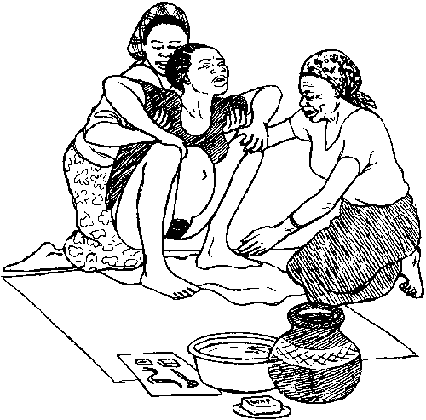
Figure 10.1: Squatting
The woman should be supported from behind.
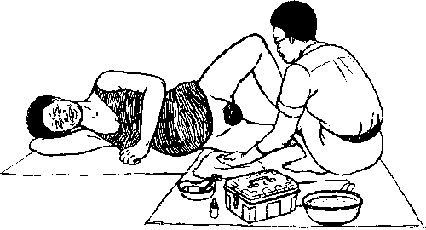
Figure 10.2: Lying on
Side
This position may be more comfortable for some women.
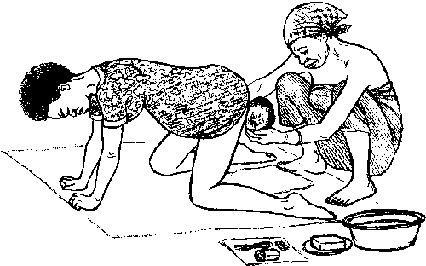
Figure 10.3: On All
Fours
This position is sometimes used in home deliveries. Care needs to be taken to make sure that the baby is fully supported as it comes out of the vagina.
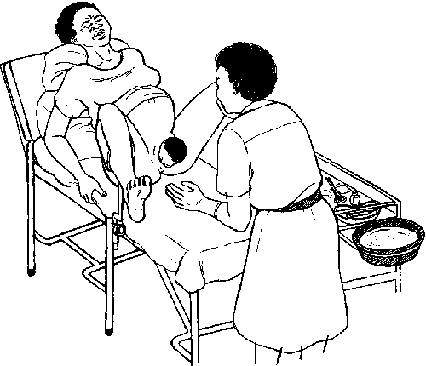
Figure 10.4: Hospital Delivery
(sitting semi-upright)
Most hospitals and health centres have delivery beds; the woman sits with her back supported and her knees apart.
USE OF THE PARTOGRAPH: In many hospitals and health centres, a partograph is used to measure the progress of labour during the first stage (see Figure 10.5). To use a partograph, a trained midwife measures the dilatation (opening) of the neck of the womb every four hours. These measurements are recorded on the partograph form, along with measurements of the woman's blood pressure, pulse, the frequency of the contractions, and the heart rate of the baby. If labour is not progressing rapidly enough, this can be seen easily by looking at the partograph, and appropriate action can be taken. Many midwives and doctors have been trained to use a partograph. Its use is a standard procedure in most hospitals and health centres today.
THE SECOND STAGE
This is the stage when the baby is actually delivered into the world. The neck of the womb is now fully open (about 4 inches or 10 centimetres) and the baby can be pushed out. Women often feel a strong urge to push or bear down with each contraction. They should be encouraged to push with each contraction and relax in between. This encouragement and reassurance is especially important if this is their first baby. Women generally feel better overall during the second stage: they know they are almost finished and they are actively pushing to bring their babies into the world. For a woman's first delivery, the second stage generally lasts around one hour. For women who have had babies before, this stage usually lasts around 15 minutes but may last as long as one hour. If a woman is in this stage for more than one hour, she needs to be taken to a hospital.
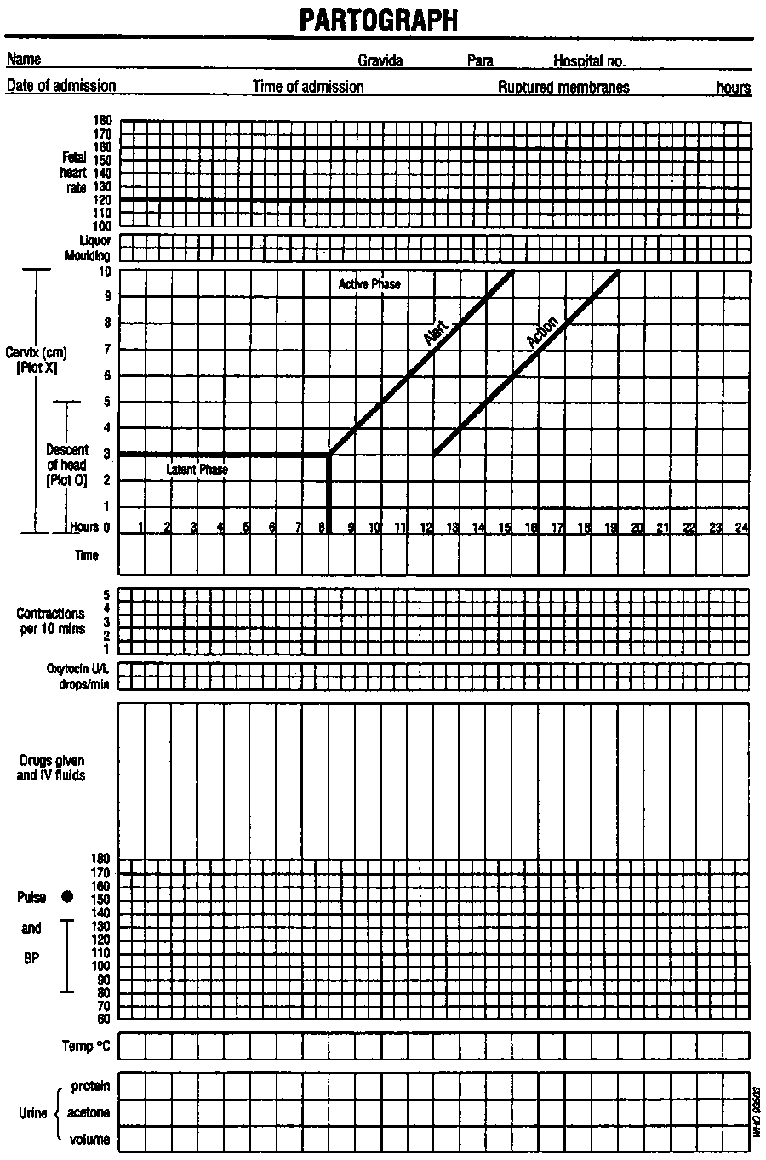
Figure 10.5: Using a Partograph
to Measure the Progress of Labour
The partograph is a chart used to record information on the progress of labour (contractions, dilatation, blood pressure, pulse, and foetal heart rate). If labour is not progressing correctly, the partograph provides an early warning (the "alert line"), and shows when referral or other action may be necessary (the "action line").
THE THIRD STAGE
Labour is almost over after the baby comes out, but not quite. The placenta or afterbirth has yet to be delivered. The time between the birth of the baby and the delivery of the placenta is called the third stage (see Figure 10.6). It is usually a brief period lasting only 5-15 minutes, but it still carries some potential danger to the mother. Immediately after the birth of the baby, the contractions of the womb cause the placenta to separate from the wall of the womb. The next few contractions push the placenta into the vagina. It is then gently delivered by a birth assistant while the woman bears down just as she did with the birth of the baby. This stage is always accompanied by some bleeding. The birth attendant should not pull on the umbilical cord or push on the abdomen to make the placenta come out. This can cause severe bleeding, and can be very dangerous.
The baby may be put to the breast immediately while waiting for the placenta to come out (see Figure 10.7). Not only does this get the baby off to a good start, but it will also cause contractions which help the placenta separate and control bleeding. In most places, a procedure called "active management of the third stage" is used to ensure that the placenta comes out. In this procedure, as soon as the baby is delivered, the midwife or doctor first makes sure that it is not a twin delivery. Then the woman is given an injection with a drug called an oxytocin that helps promote contractions of the womb. This drug helps the womb push the placenta out quickly, and reduces the chances that there will be a lot of bleeding.
If the bleeding does not stop after the placenta is delivered, or if the bleeding is excessive, immediate assistance should be sought (see the next chapter on complications during labour).
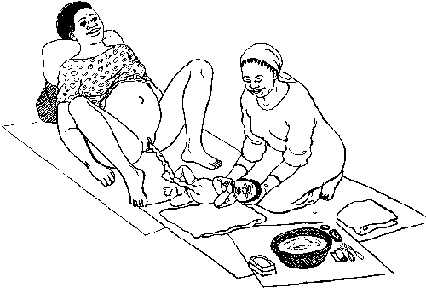
Figure 10.6: Waiting for
Delivery of the Placenta
After the baby has been delivered, the womb will continue to contract to push the placenta (afterbirth) out.
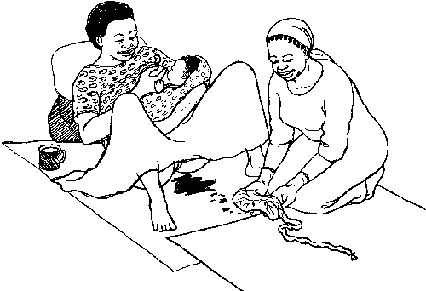
Figure 10.7: Delivery of the
Placenta and Care of the Newborn
The baby should be put to the breast immediately following delivery. The baby's sucking causes the womb to contract, which helps push out the placenta and stop bleeding.
|
Summary: Labour Labour is the process by which a baby is delivered into the world. It normally lasts 5-18 hours, but can be much shorter in a woman who has had a baby before. THERE ARE THREE SIGNS THAT LABOUR IS BEGINNING: Regular, painful contractions of the womb. LABOUR IS DIVIDED INTO THREE STAGES: FIRST STAGE: The neck of the womb begins to open and the contractions become more frequent. The baby begins to push down the birth canal. This stage generally lasts between 5 and 18 hours. THIRD STAGE: From the birth of the baby to the delivery of the placenta. This stage generally lasts 5-30 minutes. |
|
| ||||||||||||||||||||||||||||||||||||||||||||||||||
Healthy Women, Healthy Mothers - An Information Guide - Second Edition (FCI, 1995, 241 p.)
Chapter Eleven - COMPLICATIONS ARISING DURING LABOUR
The majority of women experience no problems or complications once labour has started. Sometimes, however, problems do arise that require skilled management and care. Women and their families, as well as others in the community, need to know about these problems, and what to do if they develop.
Premature Rupture of the Membranes
Premature rupture of the membranes is the sudden gush of water from the vagina several days or even weeks before labour actually begins. By itself, it is not necessarily dangerous. The problem is that once the bag of water is ruptured, the woman can get an infection which can endanger her life and especially the life of the baby. Therefore, a woman whose membranes rupture early needs to be taken to a health facility for special care.
There is little that can be done to prevent premature rupture of the membranes. If the membranes rupture when the pregnancy is near term (36 weeks or later), but labour does not start within 24 hours, artificial means may be used to start labour at a hospital. The woman may also wait in the hospital for labour to start on its own. During this time she should be observed carefully and treated if any signs of infection develop.
If the membranes rupture before 36 weeks, the baby may be too small to live, so labour is usually not started artificially. In such cases, everything possible must be done to prevent infection, delay labour, and give the baby time to mature. The woman should be advised to stay in bed. She should also be advised to avoid getting an infection by not taking tub baths (she should take a shower or sponge bath instead), not having sexual intercourse, and not having vaginal examinations except with a sterile instrument. She may be given antibiotics to prevent an infection. It is best for her to stay in a hospital that can care properly for the baby if it is born early.
|
Box 11.1: Complications and Care During Labour When complications develop during labour and delivery, it is often necessary for the midwife, nurse, or doctor to intervene. It may be necessary to refer the woman to a hospital where the complication can be managed. She may feel frightened and out of control. By remembering a few basic principles, the health worker can help her relax and feel proud of the difficult experience she has had. · No woman "fails" when she is having a baby. Whatever the complication - whether delivering by Caesarean section, or in extreme cases delivering a baby that has died in the womb - women should be praised and supported throughout the experience. If a traditional birth attendant or relative has accompanied the woman to the hospital, she should also be praised and encouraged for recognising the problem and bringing the woman. · All women should be encouraged to ask questions and receive answers about their care. When emergencies occur, it is sometimes necessary to take action without providing an explanation. Although quick action is necessary at times, women and their families have the right to know what is being done and why, and to ask questions. |
Abnormal Lie or Presentation
Towards the end of pregnancy, about 95% of babies come to lie in the womb with their heads pointing downwards, so that the head is delivered first (see Figure 11.1). In 4-5% of cases, the baby lies with the feet or buttocks pointing down; these cases are called breech presentations (see Figure 11.2). Rarely, the baby may lie diagonally with the shoulder ready to come out first; this is called transverse lie (see Figure 11.3). All cases where the baby's head does not come out first are abnormal; childbirth may be more difficult and can result in injury or death of the baby or the mother. Transverse lie is especially dangerous, and should always be referred to a hospital. Abnormal lie is most common in women who have had many babies before, or those carrying twins (see Figure 11.4). It is usually possible for a trained person to tell whether the baby is lying in an abnormal position towards the end of the pregnancy. A trained and skillful person must assist in such deliveries. In some cases a Caesarean section (see next chapter) may be necessary.
Positions of the Baby
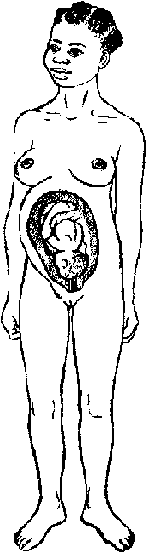
Figure 11.1: Normal
Presentation (head down)

Figure 11.2: Breech
Presentation (feet or buttocks first)
A breech presentation should be referred to a health facility if possible.

Figure 11.3: Transverse Lie
(shoulder or arm first)
A transverse lie should always be delivered in a health facility; an operation may be necessary.
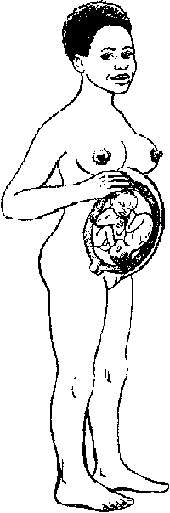
Figure 11.4: Twins
Women bearing twins are more likely to have complications such as obstructed or prolonged labour. There is also a higher risk of abnormal presentation such as breech or transverse. For this reason twins should he delivered in a health facility if possible.
Obstructed Labour
This is the most common complication of labour in Africa, and one of the most dangerous. Labour is obstructed if the baby cannot be delivered normally through the birth canal without serious damage or injury to the mother or baby. Obstructed labour can sometimes be predicted during antenatal care, long before labour starts. Usually, however, the problem is only recognised after the woman has been in labour for many hours without making any progress.
CAUSES OF OBSTRUCTED LABOUR: Labour is obstructed when the baby is too big to pass through the mother's birth canal. Women in the following categories are more likely to have obstructed labour:
· Women who are less than 5 feet tall (150 centimetres). These women may have difficulties during childbirth because their pelvises may be smaller than normal. That is why height is measured during antenatal visits.· Girls in their early teens, even if they are taller than 5 feet (see Chapter 21). This is because the pelvis grows more slowly than the rest of a girl's body, so the pelvis can be quite narrow in a girl under the age of 15 or 16 even if she is tall.
· Women with certain abnormalities of the spine or lower limbs. These affect the size or shape of the pelvis, and can therefore cause obstructed labour. Women with such abnormalities need careful attention during the antenatal period, and special supervision during labour.
· Women who have undergone female genital mutilation. These women often have scars in the vaginal area that may cause obstructed labour. Any woman who has had this operation should deliver in a hospital if possible.
· Women with babies that are unusually big. The average baby weighs around 6-7 pounds (about 3 kilos) at birth; babies much larger than this may be difficult to deliver normally. Babies of older women and of women suffering from diabetes tend to be heavier and bigger than average. A larger-than-average baby can sometimes be detected during antenatal care, and it may be recommended that the delivery take place in a hospital.
· Women with babies who are lying abnormally in the womb. Any abnormal presentation, such as breech, can also lead to obstructed labour. This is true even if the mother's pelvis is normal and the baby is of normal size.
In some parts of Africa, people believe that obstructed labour means the woman was unfaithful to her husband or misbehaved in some other way. Often, they believe that the baby will not be born until the woman has confessed what she did wrong. The families of pregnant women should understand that obstructed labour has nothing to do with a woman's past behaviour. It is a life-threatening condition for both the mother and baby. A woman with obstructed labour is in desperate need of medical attention, and needs to be taken to a hospital immediately so she can receive trained assistance.
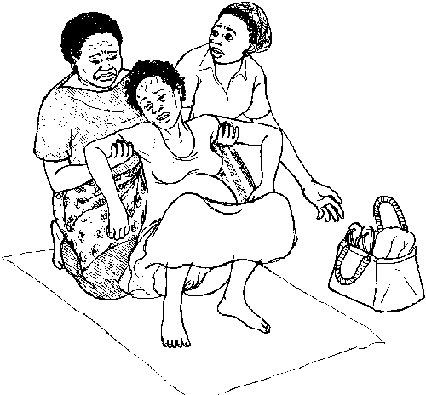
Figure 11.5: Obstructed
Labour
Obstructed labour is very dangerous for the woman and baby. If a woman has been in labour for 12 hours or more she should be taken to a hospital; she may need special help or an operation to deliver.
WHY IS OBSTRUCTED LABOUR DANGEROUS?
First, if labour continues for too long (over 12 hours) both mother and baby may become exhausted (see Figure 11.5). The mother may become very dry (dehydrated) because after many hours in labour she has perspired a lot and lost a great deal of body water. Second, the mother may catch an infection during the long hours in labour. The infection can spread upwards into the womb and affect the baby too. Third, if something is not done quickly to relieve the obstruction, the womb will continue to contract powerfully to try to push the baby out, and may tear or rupture. Severe bleeding may occur inside the abdomen. This will soon lead to shock in a mother already exhausted and dehydrated from prolonged labour.
If a woman is in labour for more than 12 hours without being able to deliver the baby, she should be taken to a hospital where she can be properly examined. Sometimes it is necessary to perform an operation to deliver the baby.
FISTULAE: During obstructed labour, the baby's head presses hard on the soft tissues of the mother's pelvic organs such as the bladder (the organ that holds urine) or the rectum (the organ leading from the bowel to the outside). After many hours or sometimes days of this pressure, the tissues pressed between the baby's head and the mother's bones die. After a few days they fall away, leaving a hole between the vagina and the urinary bladder or the rectum. If the bladder is torn, urine leaks uncontrollably through the vagina. If the rectum is torn, faeces pass out through the vagina without control. The constant flow of urine or faeces and the smell are extremely unpleasant for the woman. As a result, sometimes she is rejected by her husband, her neighbours, and even her family.
These holes between the vagina and the bladder or the rectum are called fistulae. Unfortunately, they are quite common in many parts of Africa. They develop especially often in young girls of 12, 13, or 14 years who become pregnant before their birth canals are big enough. These young girls, just starting their adult lives, are condemned to being social outcasts unless they can undergo an operation to repair the hole. This operation can be quite expensive and is not always successful.
Prolonged Labour
Labour is "prolonged" when it continues for many hours without making any real progress towards delivery of the baby. The most common cause of prolonged labour is obstructed labour, as discussed in the previous section. Labour can also be prolonged for other reasons as well. Sometimes the womb is not contracting as it should, or the contractions even stop altogether. This is especially common in a woman having her first child. Other times the neck of the womb is not opening up enough to allow the baby to come out.
Normal labour can last anywhere from 5-18 hours. It can be longer in a woman having her first baby. It can be difficult for someone who is not a midwife or doctor to tell when labour is prolonged. In health facilities, partographs are often used to detect when labour is "too long", or when no progress is being made and action is therefore necessary (see Chapter 10). If a partograph is not being used (for example, if delivery is taking place at home), it is usually recommended that a woman who has been in labour for 12 hours without any signs that the baby is coming out should be taken to a hospital or health centre. This is especially true if the trip will be a long one.
Sometimes when the bag of water has broken, the liquid that comes out is coloured green or brown. This is called meconium and is a sign that the baby has passed his or her first stool (bowel movement). It may also be a sign that the baby is having a problem. If this happens, the birth attendant should check for other signs of distress, for example by listening to the baby's heartbeat. If this sign is noted, the mother should be taken to a hospital quickly.
Pre-Eclampsia And Eclampsia
These conditions often occur in the late stages of pregnancy (see details in Chapter 9). If they are not properly controlled during pregnancy, they can become worse during labour. Sometimes they appear for the first time during or after labour. Eclampsia causes fits or convulsions and loss of consciousness or coma (see Figure 11.6). It is especially likely to start suddenly during labour or even soon after the birth of the baby. Severe pre-eclampsia or eclampsia during labour may make it necessary to deliver the baby by Caesarean section. A woman who starts having fits before, during, or after labour should be taken immediately to a hospital for medical care, because her life is in danger.
Haemorrhage (Heavy Bleeding) During Labour
Haemorrhage, or heavy bleeding, during labour, can be caused by obstructed labour or by problems with the placenta. The placenta may be lying below the baby, which can cause bleeding when the neck of the womb begins to open (see Chapter 9). An accidental haemorrhage can occur if the placenta separates from the womb too early. Haemorrhage can also be caused if the womb ruptures or is torn during labour. Whatever the cause, blood loss of more than two cups during labour requires skilled care in a hospital, because loss of a lot of blood endangers the mother and baby.

Figure 11.6: Eclampsia
Eclampsia causes fits or convulsions, and may cause a woman to faint. If a woman begins to have fits before, during, or after delivery, she should be taken to a hospital as soon as the fit stops.
Postpartum Haemorrhage
Haemorrhage after the birth of the baby (postpartum) is always a serious problem. If bleeding has not stopped half an hour after the placenta has come out, or if it is severe (more than two cupfuls), the woman should be taken to a hospital as quickly as possible since she needs urgent attention (see Figure 11.7). Normal postpartum flow is similar to that of a heavy menstrual period. Postpartum haemorrhage can be due to a number of causes:
RETAINED PLACENTA: Sometimes the placenta does not separate completely from the wall of the womb after the baby is born. The womb cannot contract properly, and bleeding from the womb where the placenta is attached may occur. If the placenta has not come out and the woman is bleeding heavily, she should be taken to a health facility immediately. If the bleeding is minimal but the placenta has not come out within 30 minutes of the baby's birth, it is usually necessary to remove it. This is especially true if a drug called an oxytocin has been given to make the womb contract (see Chapter 10). If the placenta is not removed, the mother is likely to bleed again or go into shock. The procedure for removing the placenta is called manual removal of the placenta and should be done at a health facility; it is described in the next chapter. If trained help is not available, loss of blood may lead to shock or death in a woman already exhausted from the hard work of labour. Women who develop this complication are quite likely to do so again in later deliveries.

Figure 11.7: Postpartum
Haemorrhage (heavy bleeding)
Postpartum haemorrhage after the birth of the baby is extremely dangerous. If the bleeding is severe (more than two cups) or prolonged (continues more than half an hour after the delivery of the placenta), the woman should be taken to the hospital as soon as possible.
WEAK UTERUS: In some cases the uterus may be weak or stretched out, and bleeding does not stop after delivery. This can happen because of prolonged labour, or because the woman has had too many pregnancies. It may be necessary to give her drugs to help the uterus contract. The drugs can be given either through an injection or an intravenous line. Breast-feeding, vigorous massage of the uterus, and emptying the bladder may also help with this problem. Sometimes bleeding occurs because the abdomen was massaged too hard or squeezed during the third stage of labour. This practice is dangerous and should be avoided.
RUPTURE OF THE UTERUS: If labour is obstructed and the baby cannot come out, the womb may tear or "rupture". Sometimes, if the woman is delivering at home, she may be given herbs to take during labour that cause contractions; these herbs can be very dangerous and may cause the womb to tear. This can also happen if the woman had a Caesarean section with a previous delivery and is trying to have a vaginal delivery this time. Whatever the cause, rupture of the uterus is a very serious, life-threatening complication. It must be dealt with in a hospital where an operation can be carried out to save the woman's life.
TORN VAGINA OR CERVIX: Sometimes the lips of the vagina or the cervix (neck of the womb) are torn during delivery. This can happen if the baby is very large, or if the presentation was abnormal (for example, breech or transverse). It can also happen if the woman was subject to female genital mutilation, which can leave heavy scars in the vaginal area which are then torn during delivery (see Chapter 2). A torn cervix or vagina will usually continue to bleed until it is stitched up. This should be done by a trained midwife or doctor in a properly equipped facility.
|
Summary: Complications Arising During Labour Most women go through labour and delivery with no complications. Sometimes, however, complications can arise. This can happen even if there were no warning signs during pregnancy. Women with the following signs should be taken to a hospital or well-equipped health centre for proper care: Strong labour (contractions) that lasts for 1 2 hours without the baby being delivered Meconium, a green or brown fluid, is seen after the bag of water breaks |
|
| ||||||||||||||||||||||||||||||||||||||||
Healthy Women, Healthy Mothers - An Information Guide - Second Edition (FCI, 1995, 241 p.)
Chapter Twelve - SOME OBSTETRIC OPERATIONS AND PROCEDURES
This chapter describes procedures that may be performed during labour or delivery in a hospital or other properly equipped health facility. It also explains why these procedures may become necessary. Only trained medical or midwifery personnel in a well-equipped facility should perform these procedures.
Induction of Labour (Starting Labour Artificially)
Labour normally starts by itself about the 40th week of pregnancy. About 30 of every 100 babies are born before their due dates. About ten of every 100 babies are born more than ten days after their due dates. If labour has not started by itself after the 42nd week, however, it may be necessary to start labour artificially. If there are signs that the baby is not doing well (for example, the mother has not felt the baby move for 24 hours or more), it is definitely time for the mother to be taken to a hospital for evaluation. The baby's life may be at risk. Other possible reasons for starting labour artificially include pregnancy complications such as pre-eclampsia, diabetes, premature rupture of the membranes, or a previous pregnancy that has resulted in the birth of a dead baby around term.
Labour can be induced by giving the woman an enema which irritates the bowel and can cause the womb to start contracting. Sometimes a special drug called an oxytocin is given to cause the womb to contract. This drug is given in the form of a slow drip through a vein in the arm. It may take quite a long time for labour to start when these methods are used.
Labour can also be induced by artificial rupture of the membranes. With this procedure the bag of water surrounding the baby is punctured and the fluid is allowed to drain away. The effect is the same as when the membranes rupture by themselves; labour usually starts within a few hours. This procedure is usually no more uncomfortable than a vaginal exam.
Inducing labour may not be effective unless the cervix is "ripe" or ready for labour to start. Inducing labour works best if the cervix is already open a little bit, and the baby's head is low. If an attempt to start labour is unsuccessful, a Caesarean section may be necessary.
Episiotomy
An episiotomy is a deliberate, clean cut made at the outside entrance of the vagina (see Figure 12.1). It is sometimes done when it appears that the delivery of the baby's head is likely to cause a tear in the opening of the vagina. It may also be done to speed the delivery of a distressed baby. Usually a pain-killing injection is given to the area before the cut is made. After the baby is born the cut is stitched up. The stitches may have to be removed after a few days. In many cases, when catgut is used, they dissolve by themselves and do not need to be removed. Women often feel very sore for a while around the episiotomy, but this usually disappears within a few weeks. Good hygiene is necessary to prevent an infection.
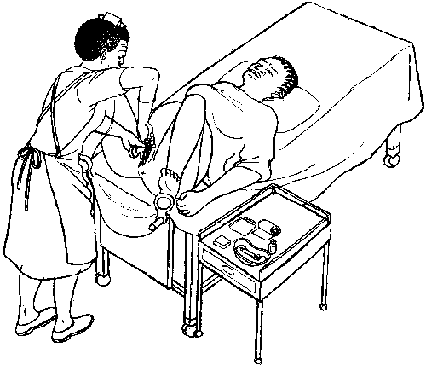
Figure 12.1: Episiotomy
An episiotomy is an incision or cut made at the entrance of the vagina during labour.
In women who have undergone female genital mutilation (female circumcision), the entrance to the vagina may be tightly closed and the surrounding tissues hardened by scarring. Normal delivery is impossible without further severe damage. A large episiotomy is often necessary to permit delivery through the vagina.
Forceps or Vacuum Delivery
An obstetric forceps is an instrument that is specially designed to help pull the baby out of the vagina or birth canal. There are usually two reasons for forceps delivery. If the first stage of labour is very long, a woman may be too exhausted to make the final effort to push the baby out. Also, if the baby shows signs of distress it may become necessary to shorten the second stage of labour. A forceps delivery can be quite uncomfortable or painful. A local anaesthetic is usually injected into the nerves around the birth canal in order to lessen the pain. Occasionally, a general anaesthetic may be required.
Another procedure to pull the baby out is vacuum extraction. With this procedure a metal or plastic cup is applied to the baby's head and attached by means of a vacuum. By pulling on the cup, the baby is gradually pulled out of the birth canal.
After a forceps delivery or vacuum extraction, there may be marks made by the instrument on the face or head of the baby for a few days. These are nothing to worry about; they will soon disappear.
Manual Removal of the Placenta
If the placenta fails to separate from the womb at the end of the second stage of labour, it may be necessary to remove it manually. A trained health worker can do this. The procedure involves using a catheter, then putting a sterile, gloved hand into the womb and gently separating the placenta from the womb. The placenta should then be checked to make sure it is complete, and that no pieces were left in the womb. An oxytocic drug is given to help make the womb contract. Antibiotics are also given to prevent an infection. The woman should be given iron tablets to prevent anaemia.
The procedure can be rather uncomfortable after the strain of childbirth. To avoid discomfort, an anaesthetic may be given, but it is not always necessary. If the placenta was retained in a past delivery it may happen again. Women who have had retained placenta before should have future deliveries in a clinic or hospital where a trained person can remove the placenta manually if necessary.
Delivery by an Operation
For the health and safety of both mother and baby, it is sometimes necessary to deliver the baby by an operation. There are two types of operations most commonly performed: Caesarean section and symphysiotomy.
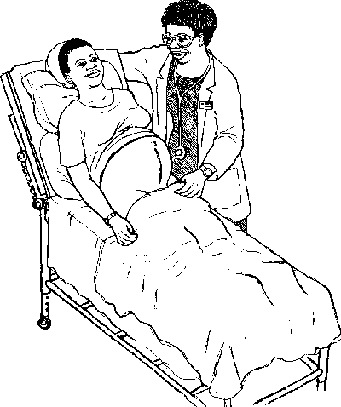
Figure 12.2: Caesarean
Section
A Caesarean section is an operation in which the abdomen and womb are cut open and the baby and placenta are removed. The womb and abdomen are stitched up and left to heal.
"Classical" or Vertical Incision
If a previous Caesarean section was done with a vertical cut in the uterus, the woman should have a Caesarean section with all future deliveries.
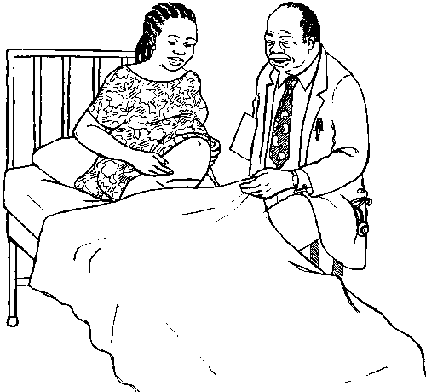
Transverse Incision
If a previous Caesarean section was done with a transverse or horizontal cut in the lower part of the uterus, it may be possible for the woman to deliver normally. However, she should deliver in a hospital in case an operation is necessary.
CAESAREAN SECTION: A Caesarean section is a major operation in which the abdomen and womb are cut open and the baby and placenta are removed. The womb is not removed; it is stitched up and left to heal (see Figure 12.2). The operation has to be performed under general or local anaesthesia to make sure the woman does not feel anything. Such an operation should be performed only in a fully equipped hospital and by someone who has been well trained to perform the procedure. There are several reasons why a Caesarean section might become necessary:
· Prolonged labour - that is, labour that has lasted more than 12-18 hours without any sign that the baby is going to come out safely. This could be due to several reasons, but the most frequent cause of prolonged labour is when there is an obstruction (see Chapter 11).· Abnormal presentation (see Chapter 11).
· Heavy bleeding before delivery (see Chapter 9) or, occasionally, heavy bleeding during labour (see Chapter 11).
· Severe hypertension, pre-eclampsia, or full eclampsia (see Chapters 9 and 11).
· Signs that the baby is in distress, such as a slow or irregular heartbeat.
· A previous Caesarean section. Depending on the type of Caesarean section that was done and the reason it was done, it may be necessary to repeat the Caesarean section. It may be possible for the woman to have a normal delivery through the vagina if the baby is a normal size and is lying head-down, if the woman had only one previous Caesarean section, and if the scar was in the lower part of the womb. Even if a normal delivery is being attempted, it should take place in a hospital in case another Caesarean section becomes necessary.
· Previous pregnancies that have ended in a stillbirth, or diabetes or severe heart disease in the woman.
The risk of dying from a Caesarean section is higher than for a normal delivery, largely because of an increased risk of infection. A Caesarean section should be carried out only if it is really necessary.
SYMPHYSIOTOMY: When labour is obstructed, a symphysiotomy is sometimes performed. In this operation, a small cut is made at the top of the pubic bone so that the bones around the birth canal can be opened a little more to allow the baby to pass through. The operation is performed with anaesthesia.
|
Summary: Some Obstetric Operations and Procedures Sometimes during labour it is necessary to perform procedures which will facilitate delivery. These should only be performed by properly trained personnel using appropriate equipment. | |
|
CIRCUMSTANCES |
PROCEDURE |
|
No labour after 42 weeks Slow heartbeat in the baby, or other signs that the baby might be in trouble Pre-eclampsia or diabetes Early rupture of membranes when the baby is near term |
INDUCTION OF LABOUR: Methods include: giving an enema artificial rupture of membranes |
|
Scar tissue in the vagina due to genital mutilation Signs of distress in the baby |
EPISIOTOMY: A cut is made at the entrance to the vagina to enlarge the opening for delivery. It is sewn up after delivery. Drugs are used to stop the pain. |
|
Exhaustion on the part of the mother Signs of distress in the baby |
FORCEPS OR VACUUM EXTRACTION: The baby is pulled out of the birth canal using forceps or a vacuum. |
|
Failure of the placenta to separate from the womb after the baby is born |
MANUAL REMOVAL OF PLACENTA: A doctor or trained midwife uses his or her hand to separate the placenta from the womb. |
|
Prolonged labour Obstructed labour Heavy bleeding Hypertension/pre-eclampsia/eclampsia Previous Caesarean section (depending on the type of scar) Transverse lie near the due date Fistula during a previous delivery |
CAESAREAN SECTION: The abdomen and womb are cut open and the baby is removed. The abdomen and womb are then stitched closed. Sometimes when labour is obstructed, a symphisiotomy is performed. |
|
| ||||||||||||||||||||||||||||||||||||||||
Healthy Women, Healthy Mothers - An Information Guide - Second Edition (FCI, 1995, 241 p.)
Chapter Thirteen - THE POSTPARTUM PERIOD (SIX WEEKS FOLLOWING DELIVERY)
A woman's body goes through remarkable changes during pregnancy, ending in the physical effort of the birth itself. After the birth she needs a period of recovery so that she can return to feeling strong and healthy. This is especially important since the woman must also care for her newborn during this time. This period of rest and recovery is called the postpartum period. It covers about six weeks during which the body returns to the normal state and the woman adjusts to life with her child. The husband and other family members can help during this time by assuming responsibility for household tasks (see Figure 13.1).
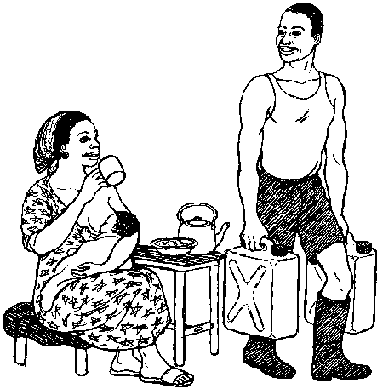
Figure 13.1: Rest During the
Postpartum Period
After giving birth the woman needs time (about six weeks) to return to feeling healthy and strong, and to care for her newborn. Family members can help by taking on household tasks.
The first few days immediately after delivery are often called the lying-in period. In many countries, there is a tradition that women rest for anywhere from one week to six months after delivery. This tradition recognises the hard work they have done - and the work they still have ahead. Many women may enjoy and appreciate this time of rest. However, they should also feel free to return to their normal activities when they feel ready.
Changes After Delivery
EMOTIONAL CHANGES
Childbirth is a deeply emotional experience that often affects a woman's mood and behaviour. Many women have extreme mood changes after their babies are born. They may feel happy and relaxed one minute, and anxious, depressed, or tearful the next. The responsibility of caring for a new baby can feel confining or demanding. Relationships with other loved ones seem to change. For most women, these feelings fade and go away as time passes. What women need most at this time is support, understanding, and help from their friends and families. If a woman is feeling anxious and depressed and these feelings do not go away, she may need special help at a health facility that can provide psychiatric counselling or therapy. This is especially important if she talks seriously of hurting either herself or her baby, or makes an attempt to do so.
PHYSICAL CHANGES
Chapter 6 discussed the physical changes a woman's body goes through during pregnancy. These changes are reversed during the first six weeks or so after the baby is born. The first noticeable change, of course, is the loss of weight when the baby and the placenta, plus the bag of water, are delivered. The changes continue until most organs - womb, heart, etc. - have returned to the way they were before the pregnancy.
Immediately after delivery, the womb weighs about two pounds (one kilo). It soon begins to get smaller; by the end of the fourth week it has returned almost to its original size and position in the pelvis. The overstretched soft tissues of the birth canal also return to normal. Breastfeeding helps this process by stimulating the womb to contract. This also helps reduce the amount of fluid (lochia) that comes from the womb during the first couple of weeks after delivery.
Immediately after delivery the lochia is bright red because it contains mostly blood. A clean cloth or cotton pad can be used to absorb the blood. The area can be washed gently to help prevent an infection. Women should be told to avoid tampons, douching, and intercourse at this time as they may increase the risk of infection. Over the next several weeks, the lochia changes to a dark brown colour, then to pale cream. The amount of the discharge becomes smaller over time and then completely stops, usually by the end of the fourth week. At first, it has a heavy smell which is not unpleasant. If the amount of the lochia increases, or has a bad smell, the woman may have an infection. If so, she should go to a clinic for a check-up and treatment immediately. Other signs of infection may include fever; chills; abdominal pain; a red, swollen, painful area in one of the breasts or in the leg; or very painful urination.
RETURN OF MENSTRUATION: If a woman breastfeeds without giving the baby any other milk or formula, her periods may not return for six or more months after delivery. If she is not breastfeeding, menstruation usually begins 4-6 weeks after delivery. Exactly when menstrual periods return may vary from one pregnancy to another. Women should know, however, that it is possible to get pregnant even before menstruation starts again if no family planning method is used.
RESUMPTION OF ACTIVITIES AFTER AN UNCOMPLICATED DELIVERY: Women recover from labour and feel ready for their usual activities at different times. It depends on many things, such as how many other children she has, how much family support is provided, and how the new baby is adapting. There are no firm rules about this, and women should be encouraged to let their own feelings be their guide.
RESUMPTION OF ACTIVITIES AFTER A CAESAREAN SECTION OR SYMPHYSIOTOMY: A woman who has undergone a Caesarean section or symphysiotomy will take longer to recover from the delivery than a woman who did not have any complications. She will need to stay longer in the hospital. After she returns home, she will also need extra help and rest. If any drainage, redness, increased pain, or swelling appears at the site of the incision, she should go immediately to a clinic for evaluation. A woman who has had a symphysiotomy may need to wear a tight band around her abdomen and hips to support her pelvis as it heals.
CARE OF HAEMORRHOIDS: Many women develop haemorrhoids or enlarged blood vessels around the anus late in pregnancy or after delivery. These usually shrink after delivery, but they can cause a lot of discomfort. Eating lots of fresh fruit and vegetables and drinking plenty of liquids will help reduce constipation, which makes the haemorrhoids worse. Medicated creams and suppositories may also be used.
POSTPARTUM EXERCISES: Postpartum exercises can help a woman regain her energy, muscle tone, and feeling of well-being. These exercises may be started when a woman is thoroughly recovered from the delivery, and should be done for about 15-20 minutes a day. The exercises are not difficult and should not be tiring (see Figures 13.2-13.4).
Postpartum Exercises
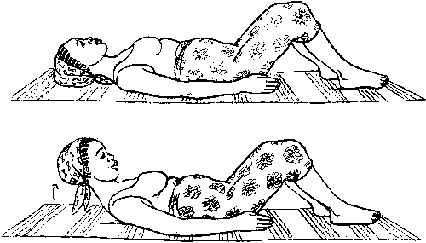
Figure 13.2: Head
Lifts
1. Lie on back with arms at sides. Bend knees with feet flat on floor.
2. Raise head a little, breathing out. Then lower head slowly, breathing in.
3. Repeat the exercises 5-10 times.
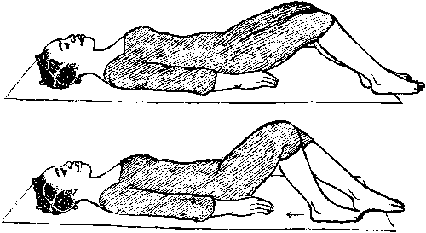
Figure 13.3: Leg
Slides
1. Lie on back with arms at sides. Bend knees a little, with feet flat on floor.2. Slide foot back toward buttocks, keeping right foot flat on floor and bending knee. Slide leg back down.
3. Repeat 10-15 times for each leg.
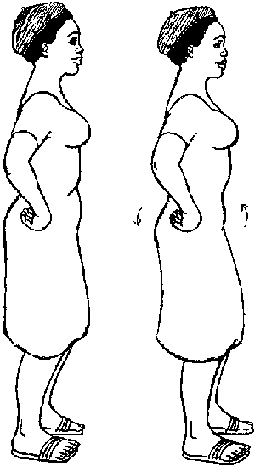
Figure 13.4: Pelvic
Tilts
1. Stand with feet shoulder-width apart and knees slightly bent.2. Push hips forward a little, tightening stomach muscles. Hold for a count of 5-10, then repeat 5 times.
Possible Complications
There are three serious complications that can develop in the period after delivery: eclampsia (within the first two days or 48 hours after delivery), infection, and haemorrhage (heavy bleeding). Eclampsia, fits caused by high blood pressure, is discussed in Chapter 9. Infection is most often caused by prolonged labour or early rupture of the membranes. It can also be due to poor hygiene during a delivery (for example, if the birth attendant's hands or instruments were not clean), or it can happen after a Caesarean section. The signs of a severe infection are fever, headaches, pain in the lower abdomen, bad-smelling vaginal discharge, and vomiting or diarrhoea (see Figure 13.5). These are dangerous signs, and a woman should go to a clinic or hospital immediately if she has them.
Haemorrhage can happen as late as ten days or more after delivery. If the placenta did not come out completely after delivery, bleeding may continue and become heavy. If the lochia is still bright red two weeks after delivery, she should go to a health facility.
Other complications that can develop after delivery are anaemia and fistulae. Anaemia is discussed in Chapter 9. Fistulae, which are holes that can develop between the vagina and the urinary tract or rectum, are discussed in Chapter 11.
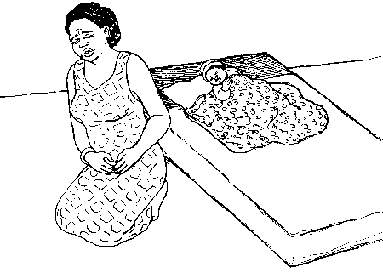
Figure 13.5: Sepsis or
Infection in the Postpartum Period
Signs of postpartum sepsis include fever, headaches, pain in the lower abdomen, foul-smelling vaginal discharge, and vomiting or diarrhoea. A woman with these signs should be taken to a clinic or hospital.
|
Box 13.1: Postpartum Danger Signs If a woman has any of the following danger signs after she has delivered her baby, she should seek care immediately: · fainting, fits, or convulsions · paleness in the gums, eyelids, tongue, or palms |
Postpartum Clinic Visit
Ideally, a new mother should visit a health facility for her first postpartum visit, or be visited by a health worker at home, within 7-10 days of delivery (see Figure 13.6). This is especially true if she delivered at home. This first visit is important to make sure that the woman and the infant are recovering from the labour and delivery. If all is well, the next visit should be about six weeks after the birth of the baby. Both the mother and infant should have a thorough physical examination, and the infant should be immunised. In addition, this is an excellent opportunity to answer any questions the woman may have about breastfeeding, sexual relations, family planning, immunisations for the baby, sleep, or other topics.
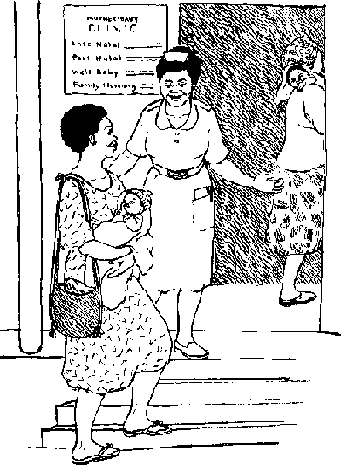
Figure 13.6: Postpartum
Care
A mother should visit a health facility, or be visited at home, within 7-10 days after delivery for a postpartum check-up.
Resumption of Sexual Relations and Contraception
There are no firm rules about when to resume sexual intercourse after delivery. In general, sexual intercourse during the first six weeks after delivery should be avoided due to the risk of infection. At the very least, sexual relations should be delayed until all bleeding has stopped. After that, women should resume intercourse as they feel comfortable and interested. Whenever sexual relations are resumed, it is important to use an effective family planning method so that the woman does not become pregnant while the baby is still only a few months old. There are several types of contraceptives suitable for women who are breastfeeding (see Box 13.2).
|
Box 13.2: Family Planning Methods for Breastfeeding Mothers Women who are breastfeeding should not use contraceptive methods that contain oestrogen (such as combined oral contraceptives), because oestrogen reduces the amount of breast milk that is produced. Other methods that are appropriate for breastfeeding mothers, which are described in Chapter 17, include: · lactational amenorrhoea method (LAM) · barrier methods (condoms, spermicide, or the diaphragm) |
Diet
After childbirth, women need to eat well in order to regain their strength and recover from the labour and delivery. They should continue to take iron tablets to prevent anaemia, especially since they lost blood during delivery. If a woman is breastfeeding, her diet should include extra food and drink (see Chapter 6). Breastfeeding mothers need to eat even more than they did while pregnant, as breastfeeding places great demands on nutritional reserves. They should also be certain to drink plenty of liquids. If a woman is not breastfeeding, she can eat as she normally would. As during pregnancy, it is perfectly safe for a woman to eat almost anything she eats when she is not pregnant. The only things she should avoid are alcoholic drinks.
|
Summary: The Postpartum Period During the six weeks after delivery, the mother experiences a number of physical and emotional changes: she may feel sad or tearful after the stress of pregnancy and labour Serious complications can still develop after a woman has given birth. She should be taken to a clinic immediately if she has any of the following signs: eclampsia, shown by fits or convulsions During the postpartum period, women should watch their bodies carefully, eat well, and resume normal physical activities when they feel able. They can also do exercises to help regain their strength. They should go for a postpartum check-up within one week of delivery if possible, or be visited at home by a health worker. They should have another checkup about six weeks after delivery, which should include information and counselling on family planning. |
|
| ||||||||||||||||||||||||||||||
Healthy Women, Healthy Mothers - An Information Guide - Second Edition (FCI, 1995, 241 p.)
Chapter Fourteen - HOW TO CARE FOR THE NEWBORN BABY
Newborn babies need a lot of care and help. If both mother and baby are healthy, there are a few simple steps that will help the baby get a good start. If the baby has a problem and the mother is not already in a hospital or health facility, she may need to go to a health facility in order to get the problem treated.
First Steps in Caring for the Baby
As soon as the baby is born, there are a few steps that must be taken right away. These are:
KEEPING THE BABY WARM
The very first step is to wipe the mucus from the baby's mouth and nose so that the baby can start breathing. It is important to have a trained attendant who knows how to help the baby start breathing if necessary.
Next, the rest of the baby's body should be dried with a soft, clean cloth or towel, and then wrapped in a warm cloth and given to the mother to hold close to her body. Newborn babies get cold much more easily than adults or older children, so babies must be kept warm and dry. The room where the baby is being delivered should be kept warm if possible. Since most heat loss occurs through the head, the baby should wear a hat or be wrapped in a blanket so the top of the head is covered.
The baby should lie on his or her side with the head slightly lower than the body. This will help drain mucus and fluids from the newborn's mouth and nose.
CUTTING AND CARE OF THE CORD
Right after the infant is born, the umbilical cord is still providing oxygen. It should be left alone until it is no longer pulsing (this can be felt by holding the cord between the thumb and forefinger). Then, it should be clamped or tied shut in two places: one tie or clamp should be about two finger widths from the baby's belly, and the other tie about two finger widths closer to the mother (see Figure 14.1). The cord should be cut between the two ties, using clean, sterilised scissors or a new razor blade. The instrument used to cut the cord must be sterile. If it is not, the baby may get tetanus, a very dangerous disease.
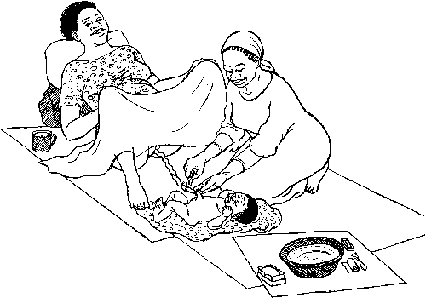
Figure 14.1: Proper Cutting of
Umbilical Cord
The umbilical cord should be tied or clamped as shown, then cut between the two ties using sterilised scissors or a new razor blade.
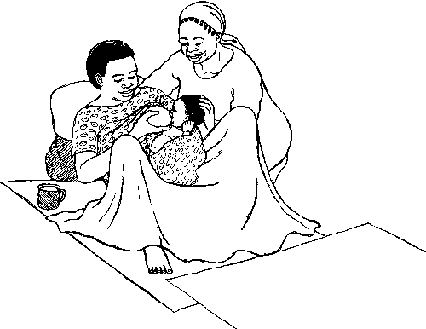
Figure 14.2: Putting the
Newborn Baby to the Breast
The baby should be breastfed immediately following delivery. The liquid that comes from the breast at this time, called colostrum, is very good for the baby and protects against illness.
The stump of the cord on the baby's belly should be kept clean and open to the air to dry. By no means should things like mud, cow's dung, herbs, or other substances be put on it, as these are likely to cause infection. If the cord stump gets moist it should be left more open to the air. If it begins to bleed or have a bad smell, it could be infected, and should be looked at by a trained health worker.
PUTTING THE BABY TO THE BREAST
The baby should be put to the breast immediately after delivery (see Figure 14.2). Contact with the mother's body helps give the baby warmth and comfort. Breastfeeding should be started right away, as long as the baby is alert and interested. The milk that comes from the breasts right after delivery, called colostrum, is very good for the baby and protects against sickness (see Chapter 15). Breastfeeding immediately also tells the mother's body that the baby has been delivered, and helps the placenta come out and the womb begin to return to its normal size right away. Sugar water or formula should never be given to a newborn baby. This can make the baby reluctant to take the breast, and can cause serious illness if the water is not clean, or if the cup or bottle is unclean. The sooner and more frequently the baby breastfeeds, the sooner the mother's milk will start coming and the more there will be.
EXAMINATION OF THE BABY
If the delivery occurs in a health facility, or if a trained health worker attends the delivery, the baby should be checked soon after birth. A midwife, nurse, or doctor should check the baby's pulse and heartbeat, make sure the baby is breathing well, and check to make sure the baby's colour is good and that the body is normal. The baby should also be weighed, and the weight should be recorded (see Figure 14.3).
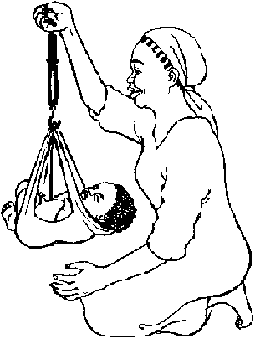
Figure 14.3: Examination and
Weighing of Newborn Baby
Soon after birth the baby should be weighed, and the information should be recorded on a growth monitoring chart.
Infants Requiring Special Care
Infants who may require special care from a trained health worker include those who are born too early, who are underweight (less than 2,500 grams or 51/2 pounds), who were delivered by Caesarean section, or who are twins. These infants may need assistance to help them breathe, keep them warm, and possibly to treat complications they may have. If the mother had a complication or illness during her pregnancy, such as high blood pressure, diabetes, or bleeding from the vagina, the infant is also more likely to need special care. This is another reason why a woman should deliver in a hospital or health facility if she has a complication or illness during pregnancy: that way both mother and baby can be cared for properly.
|
Box 14.1: Normal Physical Characteristics of a Newborn The baby's hands and feet may be slightly blue immediately after birth. The eyes may be uncoordinated and appear slightly crossed for the first several days or weeks. The stump of the umbilical cord is very moist at the beginning; it dries slowly until it falls off in a week to ten days. The baby's genitals may appear swollen for the first few days. The breasts of some babies are slightly swollen. This is an effect of the hormones from the mother, and will gradually disappear. Some baby girls bleed a little from their vaginas. This is like a small period caused by the mother's hormones. The baby will have two small soft spots on the top of the head that will slowly close during the first year. The size of these soft spots, called fontanelles, varies from baby to baby. Some babies are covered with fine hair that falls off during the first few months. Some babies, especially those that are born early, are covered with a creamy white substance called vernix. This can be wiped off after birth, and is not a sign of any problem. Many babies have small pimples covering their faces and bodies. These slowly go away during the first few days or weeks. |
Later Care of the Infant
There are many important steps to making sure the baby is healthy and happy. These include proper breastfeeding and weaning, protecting the baby from infections, knowing the signs of illness such as jaundice or anaemia, and what to do if the baby gets diarrhoea or starts vomiting. If the mother did not deliver in a health facility, she should go to one within 7-10 days to have the baby checked, and to have an examination herself. She should also receive guidance on how best to care for the baby, and what to do if the baby gets sick.
IMMUNISATION
Infants need to be protected against the diseases that are the most common causes of infant and child death. These include measles, whooping cough, and tetanus. Polio also disables one out of every 200 children who has not been protected by immunisation. All children should be fully immunised by the time they are one year old. The proper times to immunise a child are presented in Box 14.2 below.
|
Box 14.2: Immunisation Schedule for Infants* |
||
|
AGE |
ANTIGEN |
DISEASE TO BE IMMUNISED AGAINST |
|
At birth |
BCG (and polio) |
Tuberculosis (and polio in some countries) |
|
6 weeks |
DPT and polio (first dose) |
Diphtheria, whooping cough (pertussis), tetanus, polio |
|
10 weeks |
DPT and polio (second dose) |
Diphtheria, whooping cough, tetanus, polio |
|
14 weeks |
DPT and polio (third dose) |
Diphtheria, whooping cough, tetanus, polio |
|
9 months |
Measles |
Measles |
|
* Immunisation schedules may vary slightly in different countries. | ||
Parents should be aware that a child may cry or develop a fever, rash, or small sore after an injection. These are normal after-effects and should not be a cause for worry. The child should be given plenty of food and liquids, preferably breast milk. If the problem seems serious or lasts more than three days, the child should be taken to a health centre.
|
Summary: How to Care for the Newborn Baby Infants need care as soon as they are born. The first steps in caring for the newborn baby include: Cleaning the baby's mouth and nose, and drying the rest of the baby's body Later care of the infant includes proper breastfeeding and diet, treatment of common illnesses like diarrhoea, and immunisation to protect the baby against the major diseases of childhood. |
|
| |||||||||||||||||||||||||||||||||||
Healthy Women, Healthy Mothers - An Information Guide - Second Edition (FCI, 1995, 241 p.)
Chapter Fifteen - BREASTFEEDING
Every child should be breastfed, and should receive only breast milk for the first four months of life. Infants who are not breastfed are twice as likely to die as those who are. The breasts have undergone many changes during pregnancy so that the mother's milk will also be ready when the baby is born. The more a baby is fed at the breasts, the more milk the breasts produce. Artificial milk should only be used when absolutely necessary.
Advantages of Breastfeeding
There are many reasons why breast-feeding is better than bottle feeding. They include:
· Breast milk is the most natural food for a baby, and is the easiest food to digest. Cow's milk, on the other hand, does not have the right combination of vitamins, nutrients, and fats, and sometimes a human baby cannot even digest it. If infant formulas are not mixed correctly, they can be too weak and will not nourish the baby properly. Also, the breast milk changes as the baby matures to meet the baby's complete nutritional needs at that time.· As long as the mother's nipples are clean, breast milk is always clean and free from germs that cause infection, and is always at the right temperature. Even if the mother is sick, her breast milk is safe for the baby. But if formula is mixed with contaminated water or in a dirty bottle, it can give the baby diarrhoea.
· Breast milk contains substances called antibodies which protect the baby from many types of infections and other illnesses, especially during the first six months. Formulas and the milk of animals do not contain these antibodies. That is why babies who get only breast milk are healthier and have fewer attacks of diarrhoea than babies who are fed with artificial milk.
· Touching and looking at the baby during breastfeeding makes both mother and baby feel close and secure.
· Having the baby suck the breast immediately after birth helps the womb contract and push out the placenta. During the first few days after the baby is born, the baby's sucking helps the womb return to its normal size.
· If a woman gives only breast milk to her baby and breastfeeds on demand (whenever the infant wants to eat), ovulation and menstruation are delayed for about six months. The mother is therefore protected from getting pregnant again (see description of Lactational Amenorrhoea Method in Chapter 17).
· Breast milk is free, and it is always available. Artificial milk is expensive and is not always available. It takes time to prepare artificial milk to bottle feed the baby, and few homes can afford the equipment and fuel to sterilise the feeding bottles properly.
The Process of Breastfeeding
WHEN TO START
Breastfeeding should start as soon as the baby is born. Immediately after delivery, the mother should be given her baby to hold and put to her breast. The baby's sucking has two advantages. First, it stimulates the womb to contract and therefore helps stop bleeding. Second, it stimulates the milk to begin to flow from the breast.
For the first couple of days, the breasts will produce only the thick yellowish fluid called colostrum. In many cultures, people believe that colostrum is useless or even harmful to the baby, so women don't breastfeed during this time. In fact, colostrum is very good for babies; it is rich in antibodies, protein, minerals, and important vitamins. Women often say they have no milk during this period, but they should be encouraged not to worry. The baby does not need much food or other liquids during the first two or three days. Early sucking also helps prepare the nipples for when the baby gets hungry and begins to suck hard. Usually, by the end of the second or third day, milk begins to flow from the breasts. The more often and the harder it sucks the baby sucks, the more the milk flows.
During the first few days, breast-feeding may cause some painful cramping of the womb and short flows of blood from the vagina. Although it is uncomfortable, this actually helps the womb return to its normal size and reduces overall blood loss. This discomfort soon stops (see Box 15.1).
|
Box 15.1: Comfort Measures for Breastfeeding Mothers During the first few days, breastfeeding may be uncomfortable for the mother. She should be reassured that this discomfort soon passes. The following measures can also help: · Breastfeed as soon as possible after delivery, or as soon as the baby is alert and interested · Hold the baby in different positions while breastfeeding |
HOW OFTEN TO BREASTFEED
How often the baby is fed will depend on both the mother and the baby. There are no firm rules. It is more natural to feed the baby when he or she is hungry, rather than according to a certain time schedule. In the beginning, the baby may want to feed as often as 10-12 times a day, including at least three or four times during the night. This is demanding, but small frequent feedings are better for the baby. Also, the more often the baby breastfeeds, the more milk the mother produces.
HOW LONG TO BREASTFEED
Breastfeeding can continue for as long as the mother feels comfortable doing it. In many countries, babies breastfeed for a year or more. For the first four months, the baby needs only breast milk. There is no need for any other food or liquid, not even water; breast milk contains everything the baby needs. After that time, the baby will need other foods in addition to breast milk. Breastfeeding should continue for another 12-18 months while the child gets more and more solid foods. New foods must be introduced gradually.
Reasons Given for Not Breastfeeding and How to Respond
Mothers give many reasons why they do not think they can breastfeed. Some of them include:
· "My breasts are too small and cannot produce enough milk to satisfy the baby". The amount of milk produced by the breasts does not depend on their size.Rather, it depends on how often and for how long the baby breastfeeds, and how soon after birth breastfeeding begins.
· "Breastfeeding ties me down too much". Certainly, for working mothers, breastfeeding poses some challenges. But even if the mother breastfeeds only a few times a day after starting back to work, the baby continues to receive the benefits of breastfeeding and is usually healthier. Pumping milk from the breasts can help ensure that they continue to produce enough milk. If facilities are available, breast milk can be refrigerated or frozen and given to the infant later.
· "Breastfeeding can be tiring". That's true, and breastfeeding may seem like a burden, especially when a woman is already tired after a day's work. But preparing an artificial formula properly before giving it to the baby can be just as tiring. Also, many women find the process of breastfeeding relaxing; it gives them time to be close to the baby.
· "I'm sick and have to stop". If a woman gets sick, breastfeeding should continue for as long as possible. The baby probably will not catch the mother's illness. In fact, the baby receives protection from the mother because of the antibodies passed on through the breast milk. A sick baby may eat less, but breast milk is still the best food and the one the baby can digest most easily.
· "My baby must be weaned because I'm pregnant again". Instead, if the mother's diet is adequate and she gets plenty of rest, she can continue to breastfeed for as long as she produces milk and feels able to do so.
Possible Problems During Breastfeeding
Even with the most willing mother and contented baby, problems may arise during breastfeeding. It is useful to know what might happen and how to prevent or cope with problems.
CRACKED OR SORE NIPPLES: This problem is usually the result of having the baby in a poor position for breastfeeding. For example, it may happen when the baby does not have the area around the nipple (the areola) as well as the nipple itself in the mouth. It can also happen when the baby sucks for a very long time in the same position, when the breasts are too full, when there is friction against tight and ill-fitting brassieres, or if the mother uses irritating soaps or other substances on the nipples. If a woman has cracked and sore nipples, she should be given the following advice:
1. Start feeding on the less painful breast.2. If the baby has already breastfed for a long time and is only sucking for comfort, stop breastfeeding and comfort the baby some other way.
3. Always check to make sure that the areola, as well as the entire nipple, is in the baby's mouth.
4. Air dry the nipples carefully before covering them up.
5. Apply breast milk to the dry nipple. Breast milk has natural antibodies that will help prevent infection. Again, the breast should be thoroughly air dried before being covered up again.
6. Change positions during breastfeeding so that the baby latches on to different areas of the areola (see Figure 15.1).
Figure 15.1: Positions for Breastfeeding
Holding the baby in different positions while breastfeeding can help make the process more comfortable, and prevent problems like cracked or sore nipples. It is also important to make sure the dark area around the nipple, as well as the nipple itself, is in the baby's mouth.

Figure 15.1.A: Positions for
Breastfeeding

Figure 15.1.B: Positions for
Breastfeeding

Figure 15.1.C: Positions for
Breastfeeding

Figure 15.1.D: Positions for
Breastfeeding
BREAST ENGORGEMENT: The breasts can get too full if the baby does not feed often enough or does not thoroughly empty all parts of the breasts. Engorged breasts can be quite painful and cause fever. To prevent breast engorgement, the woman should breastfeed the baby often and be sure that at each feeding, both breasts are emptied. Changing positions during breastfeeding will also help empty the breasts. If necessary, the breast milk can be pumped from the breast to relieve engorgement.
If the baby has trouble attaching to the nipple because the breasts are engorged and the nipple has flattened, warm soaks or a warm shower and gentle rubbing of the nipple will help the milk begin to flow to relieve engorgement. Then the nipple and areola will be softer so that the baby will be able to suck more easily.
INFECTED BREASTS: Sometimes breasts become infected and cause fever and pain. Infection usually follows breast engorgement or cracked nipples. The woman may need medical treatment. Most importantly, she should continue to breastfeed on both breasts. The baby cannot catch the infection and breast-feeding will help relieve the problem.
BREAST ABSCESS: An abscess is an infection that forms a collection of white pus. Breast abscesses are rare but serious, and will need treatment in a clinic where the abscess can be cut open and drained. During this time the woman should stop feeding the baby from that breast for a while. If the pain allows, milk may be gently squeezed from the breast at regular intervals. The baby may be fed from the healthy breast until the infected one is healed.
FLAT OR INVERTED NIPPLES: If a woman has nipples that turn inward or remain flat rather than standing up, she should be reassured that she will also be able to breastfeed. The sucking of the baby will pull the nipple out. It may take longer for the baby to suck at first, but usually the problem does not last.
|
Summary: Breastfeeding Every child should be breastfed. Breastfeeding should start immediately after birth, and the baby should receive only breastmilk for the first four months. Infants who are not breastfed are more likely to become ill and die than those who are. Some advantages of breastfeeding are: Breast milk is natural and easy to digest. Sometimes complications can arise; for the most part, they are not serious enough to stop breastfeeding altogether. They include: Cracked or sore nipples: Make sure the entire nipple as well as the dark area around it is in the baby's mouth; change the baby's position frequently. Breast abscess: Treat the infected breast. Feed the baby from the healthy breast. |
|
| ||||||||||||||||||||||||||||||||||||||||
Healthy Women, Healthy Mothers - An Information Guide - Second Edition (FCI, 1995, 241 p.)
Chapter Sixteen - THE ROLE OF MEN AND OTHER FAMILY MEMBERS
Chapters 3 and 4 describe the man's biological role in reproduction. Chapter 5 shows that it is the man's contribution (the sperm) that determines the sex of the baby. Beyond this biological role, a man has an extremely important and useful part to play during pregnancy, and afterwards when he becomes a father. Other family members, such as the baby's grandparents and "aunties", can also help and give advice.
During Pregnancy and Childbirth
Although pregnancy is not an illness, it makes great physical and emotional demands on the mother. Her husband or partner, as well as other members of the family, need to understand and appreciate the discomfort, anxieties, and tiredness that pregnancy may cause in a woman. Whenever possible, the man or some other family member should take over physically tiring tasks like working in the fields, lifting or carrying heavy loads, washing, and scrubbing floors (see Figure 16.1). Others can assist by taking care of the children. The man can also help by providing encouragement and emotional support, by trying not to make demands on her, and by not criticising her.
The man can learn about the pregnancy along with the mother. This will enable him to help her more effectively, and understand what she is going through. It will also help him feel more involved. If he is interested, he should be encouraged to accompany the woman when she goes to the health centre for antenatal care and health education. He can learn about what happens during pregnancy and what needs to be done to help the woman stay in good health. He can also learn about the danger signs during pregnancy and delivery, so that if a complication develops he knows when the woman needs to go to a hospital or health centre. Men should understand that good nutrition and medical care during pregnancy and childbirth are important. The man can also help in very practical ways by making sure the woman eats well, and by providing whatever money is necessary to pay for transport, fees, or medicines (Figure 16.2). As the time for delivery approaches, the man or other family members should arrange to have transport ready in case an emergency develops.

Figure 16.1: How the Man Can
Help During Pregnancy
Husbands and other family members can help by taking over physically demanding tasks like carrying heavy loads.
If this is the family's first baby, the man may have doubts about his ability to be a good father, just as a woman may have doubts about her ability to be a good mother. It will help to talk about these feelings, as well as any other concerns about how having a baby will affect the family.
During labour and childbirth, the man cannot share the physical effort. Men, however, should be encouraged to stay with their wives during the labour and delivery to provide comfort and support. This will help the man feel a closer attachment to the new baby and have a greater appreciation and sense of responsibility towards the mother.
After Delivery
The first six weeks after the birth of the baby can be an especially trying time for the whole family. The woman has just been through an exhausting and profound experience, physically and emotionally. Both mother and father have to adapt to a new person in their lives and meet the baby's increasing demands and needs, including breastfeeding. Sometimes these responsibilities may seem overwhelming, and parents may doubt their ability to cope. During this time, the father can play a vital role in giving the mother and baby understanding, support, affection, and help with day-to-day tasks (see Figure 16.3). Other family members often provide very valuable help during this period, giving the mother time to recover and adjust.
After the child is born, the man can contribute to having a healthy and happy family by ensuring that the mother is well fed, and that both the mother and baby receive medical care. He should be aware of danger signs that might indicate that the mother or baby is unwell and needs to go to a health facility.
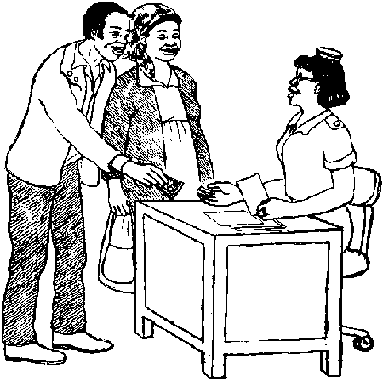
Figure 16.2: Ensuring that the
Woman Receives Medical Care
One important role for husbands during and after pregnancy is to make sure that the woman receives proper medical care, and to provide money to pay for clinic fees.
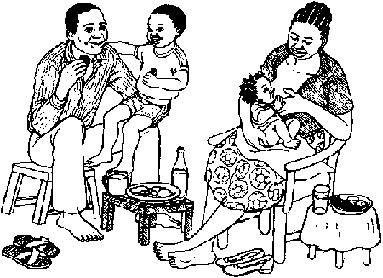
Figure 16.3: How Families Can
Help After the Delivery
After the baby is born, the father and other family members can help with day-to-day tasks like caring for the older children while the mother adjusts to her new responsibilities.
In Family Planning
On average, it takes two or more years before a woman has fully recovered from the demands of pregnancy and birth. The first two years are also critical in the growth and development of the child. Many child deaths happen because the mother becomes pregnant again too soon and has to stop breastfeeding her child when she stops producing breast milk.
One very important way a man can help the new mother is to protect her from becoming pregnant for at least two years after the birth of their last child. He can seek advice from a doctor or family planning clinic about methods of contraception, either alone or, even better, with the woman. He can go with her to a family planning clinic to help select an effective and appropriate method of contraception (see Figure 16.4). After choosing a method, he should be supportive and cooperate in using whatever method was selected (see Chapter 17).
During Child-Rearing
In many societies the man is still seen as the one who provides for and protects the family. But he can and should help with raising the children in other ways as well. The parents should make decisions together about caring for the children - for example, when to take them to a health facility and when they should start school. He can also help counsel and advise them as teenagers, discussing issues like when to get married and what career or job they should train for. The man and other family members can share the task of watching the children and should help teach the children how to cope with responsibilities as they grow up. In particular, a father can and should ensure that his daughters are given the same opportunities as his sons in terms of education, health care, and other benefits.

Figure 16.4: Couple Discussing
Family Planning at Clinic
A family planning counsellor can explain the various contraceptive methods that are available. The couple can then discuss the methods and decide together which one is most appropriate for them.
|
Box 16.1: Methods of Family Planning for the Man Most methods of family planning are used by the woman. There are several methods, however, where the man takes the lead. These methods are (see Chapter 1 7 for more information on family planning): · WITHDRAWAL: With this method, the man withdraws his penis from the woman's vagina just before he ejaculates or "comes". It requires a great deal of self-control from the man, and is not very reliable. · VASECTOMY: Vasectomy, or male sterilisation, is a minor operation in which the doctor makes a small cut in the man's scrotum, then cuts and ties the tubes that carry sperm. After the operation, the man can have sexual relations just as before, but he can no longer make a woman pregnant. The method is permanent. |
Communication
At all times during a couple's life together it is important that they find ways to communicate openly and honestly with each other. Men and women can play an equal role in finding ways to talk about and solve problems. Sometimes, problems exist because couples do not communicate. For example, a woman may think that her husband does not approve of family planning, but when the topic is actually discussed she may find out that he does approve. She may also be afraid of asking for money to pay for medicines or medical care, even though the man may be supportive if he understands why they are important. Health workers can help this communication by encouraging both men and women to become actively involved in pregnancy, birth, child-rearing, and family planning decisions. They can also encourage couples to discuss problems such as sexually transmitted diseases, as well as all the day-to-day events that affect the health and well-being of the family.
|
Summary: The Role of Men and Other Family Members Other family members, including the baby's grandparents, "aunties", and especially the father, can help the woman in many ways before, during, and after pregnancy. Some of the ways to help include: Learning about pregnancy and what should be done to help the woman stay healthy, such as proper diet and rest. They can also learn about the danger signs of pregnancy. Helping to care for and raise the children. |
|
| |||||||||||||||||||||||||
Healthy Women, Healthy Mothers - An Information Guide - Second Edition (FCI, 1995, 241 p.)
Chapter Seventeen - FAMILY PLANNING AND CHILD SPACING
Family planning refers to the actions couples take to have the desired number of children, when they are wanted. Using a method of family planning means allowing choice, not chance, to determine the number and spacing of children. Planning the family helps protect the woman's and the children's health, and preserves the well-being of the whole family. Decisions about family planning should be made by a woman and man together, since most family planning methods require cooperation to make them work.
The Benefits of Family Planning
Family planning is not a new idea in Africa. For generations, couples have found ways to avoid getting pregnant until they are ready to have a child, or to limit the number of children they have. Most African cultures have always known, for example, that having another baby when the elder child is still too young would be bad for that older child. The Ghanaian word "kwashiorkor" describes the malnourishment of a child weaned too early because his or her mother became pregnant again too quickly. Traditions such as breastfeeding for a long time and avoiding sexual relations for months or even years after the birth of a child (for example, until the child can walk) ensured that a woman could recover fully from one pregnancy before becoming pregnant again. These traditions also ensured that each child could have the mother's full attention during the important early years.
Family planning improves the health of children and mothers. Children are more likely to fall ill and die if they are born too close together (less than two years apart), or born after the mother has already had many children (five, six, or more). Having too many children too quickly also increases the mother's risk of having complications during pregnancy and delivery. As discussed in Chapter 7, if a woman becomes pregnant when she is too young (under 16 or 17 years) or too old (over 40 years), her chances of having a complication are increased.
Finally, family planning helps the entire family - father, older children, and even grandparents. Raising children requires a lot of time, energy, and money, especially if children are given the food, clothing, education, and other opportunities they need to have a good chance in life. By helping parents have the number of children they can raise properly, family planning helps ensure that there are more resources available for every person in the family.
Methods of Contraception
Contraception means preventing pregnancy; a contraceptive is a drug or device used to prevent pregnancy. There are many different contraceptive methods. Most are reversible; that is, a woman will be able to become pregnant again after she has stopped using the method. Some methods, such as surgical sterilisation, are permanent, meaning a woman cannot become pregnant ever again. All methods are designed to work in one of two ways: either they prevent the man's sperm and the woman's egg from coming together, or they prevent the fertilised egg from implanting in the womb.
The effectiveness of a contraceptive method can be described in terms of its "failure rate". If a method has a failure rate of 10%, for example, it means that if 100 couples relied on this method to prevent pregnancy, ten of the women would become pregnant during a year. If 100 couples were not using any method of contraception at all, about 80 of them would become pregnant within the year.
Many factors can influence a couple's decision about whether to use contraception, and which method to use. These factors include:
· Whether the couple wants to stop having children or just delay the next birth by a certain period,· How old they are,
· The number of children in the family, and their ages,
· Whether the mother is currently breastfeeding,
· Whether the mother or father have any health problems,
· What kind of lifestyle the family has,
· The side-effects, advantages, and disadvantages of the different methods.
Their decision will also depend on what methods of contraception are available. Not all those described here may be found at local clinics. Couples should discuss the various methods with a counsellor or health worker at a family planning clinic before deciding which one to use. This chapter only gives basic information about each type of family planning. It does not give all the instructions necessary for use.
BARRIER METHODS OF CONTRACEPTION
Barrier methods prevent the sperm and the egg from uniting, thus preventing fertilisation. Two of these methods - male and female condoms made from latex rubber - are also the only family planning methods that have been proven to offer protection against sexually transmitted diseases (STDs), including AIDS (see Chapter 18). Therefore, women who are at risk of STD or HIV infection (that is, women who have more than one sexual partner, or whose partner has other partners) should be encouraged to use condoms. If they are using another family planning method, they should be urged to use condoms as well.
Barrier methods are largely free of side-effects. They do, however, require the couple to make certain preparations before having sexual intercourse.
CONDOM OR SHEATH
Description: The condom is a soft tube made of latex rubber and closed at one end. It is put on the man's erect penis before sexual intercourse (see Figure 17.1). When the man ejaculates, the semen containing the sperm is collected in the tip of the condom. There is a small chance that the condom may tear during sexual inter-course, especially if it is not worn correctly or if it was not stored in a cool place before it was used. It is also important that the man be careful to withdraw his erect penis from the vagina, with the condom still on, so the semen does not spill into the vagina.
Condoms are supplied in different sizes, shapes, and colours; they may come with or without lubrication or spermicide. They should be used only once; they are likely to tear if used a second time.
Effectiveness: Condoms have an average failure rate of around 12%. However, this rate reflects not a failure of condoms but a failure to use them properly. If they are always used correctly and consistently, condoms can be much more effective. If a condom is used with a spermicide (see below), the combined effectiveness is similar to that of oral contraceptives (a failure rate of around 3%).
SPERMICIDES
Description: Spermicides are chemical contraceptives that prevent pregnancy by destroying sperm. They are available in a variety of forms: creams, jellies, foaming tablets, aerosol cans, and suppositories. They are put into the vagina 5-10 minutes before sexual intercourse. Sometimes they are used in combination with other barrier methods (condoms, diaphragms, etc.), which provides greater protection against pregnancy. Spermicides are available at chemists' shops and have no known side-effects apart from occasionally causing skin irritation in some women and men. They also provide some protection against some types of sexually transmitted diseases.
Effectiveness: By themselves, Spermicides are only moderately effective as contraceptives (with a failure rate of 21%). When used with other barrier methods, such as the condom or diaphragm, they are much more effective.

Figure 17.1: Condom or
Sheath
A tube made of thin rubber that is placed over the man's penis before sexual intercourse (see next page).
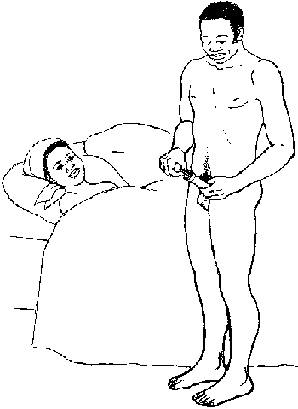
Figure 17.1: Condom or Sheath
(cont.)
The steps in proper use of a condom include:
1. Place the condom over the erect penis, holding or pinching the tip of the condom so that there is some space;

Figure
2. Unroll the condom down the erect penis;3. Hold the base of the condom when withdrawing from the vagina so that the condom is not left inside and so that none of the semen spills.
FEMALE CONDOM
Description: The female condom is a relatively new form of contraception which is still not available in many areas. It is a thin rubber sheath with two flexible rings, one attached to each end (see Figure 17.2). One ring, at the closed end of the sheath, is placed inside the woman's vagina similar to the way a diaphragm would be inserted, and serves as an anchor. The other ring at the open end of the sheath stays outside the vagina and partially covers the lips of the vagina. It is used once and then thrown away. It also offers some protection against sexually transmitted diseases.
Effectiveness: The typical failure rate among users of the female condom is 21%.

Figure 17.2: Female
Condom
A thin rubber tube with rings at each end. It is inserted into the vagina before intercourse. This new method is not yet available in many areas.
DIAPHRAGM
Description: The diaphragm is a shallow rubber cup with a flexible rim. The woman puts spermicide inside the cup, then inserts it into the vagina before intercourse (see Figure 17.3). When correctly fitted and in its proper position, the diaphragm covers the opening of the womb and prevents semen from entering. Diaphragms come in different sizes; a woman must have a vaginal exam by a trained health worker to find out what size is right for her. A woman must also be taught the correct way to insert the diaphragm, and to check that it is in the correct position before sexual intercourse.
The diaphragm must remain in place for at least six hours and not more than 24 hours after intercourse. If the woman has intercourse again while she is still wearing the diaphragm, she should insert more spermicide into her vagina without removing the diaphragm. After it has been used, it needs to be gently washed with soap and water, air dried, and stored in a cool place. The diaphragm can be used again and again, although it should be checked periodically to make sure no holes have developed.
Effectiveness: The typical failure rate of the diaphragm is about 18%.
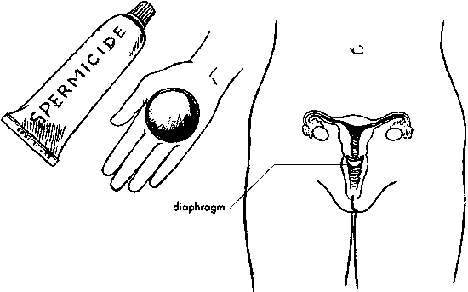
Figure 17.3: Diaphragm with
Spermicide
A shallow rubber cup that is filled with spermicide, then placed inside the vagina before intercourse so that it covers the cervix.
CERVICAL AND VAULT CAPS
Description: These devices, also made of soft rubber, are an alternative to the diaphragm for some women (see Figure 17.4). They act in a similar way to the diaphragm but are smaller and cover only the cervix. After being inserted into the vagina, they work by preventing semen from entering the womb. They also come in different sizes and are used together with a spermicide. They can be left in longer than a diaphragm (up to 48 hours).
Effectiveness: The failure rate of cervical caps varies from around 18% for women who have had no children to 36% for those who have, because of differences in the cervix and vagina.
CONTRACEPTIVE SPONGE
Description: The contraceptive sponge is a small round sponge containing spermicide. It is moistened with water, then placed inside the vagina before sexual intercourse. Each sponge is used only once, and should be thrown away after use. As long as it is left in, it will provide contraceptive protection for up to 24 hours no matter how many times intercourse occurs. It should be taken out six hours after intercourse.
Effectiveness: Failure rates are 36% for women who have had children before and 18% for those who have not.
ORAL CONTRACEPTIVES
These tablets, often referred to as "the pill", contain artificial forms of hormones (chemicals) produced by the body. The most common type of pill is called the combined oral contraceptive, or COC for short. The other type is called the progestogen-only pill (POP), or the "mini-pill". To use either one of these pills, a woman swallows one tablet at the same time every day, whether or not she and her partner have sexual intercourse (see Figure 17.5). Pills should not be shared with anyone else.

Figure 17.4: Cervical
Cap
Similar to the diaphragm, except it is smaller. It is also used with spermicide.
If a woman misses taking the pill for even a few days, it is possible for her to get pregnant. If a woman misses a pill for three or more days in a row, she should use a condom or other barrier method to protect against the risk of pregnancy. Most women do remember to take the pill regularly. Others may have difficulty remembering to take their pills every day. If a woman has problems remembering to take the pills, she should seek advice from a family planning clinic about other contraceptive options or how to restart the pills.
Women on oral contraceptives should see a health worker at least once a year to be checked. Some women believe they should only use the pill for a year or two, and then stop. This is not necessary; the method can be used for many years, provided the woman has regular check-ups.
COMBINED ORAL CONTRACEPTIVES (COCs)
Description: COCs contain a small amount of both types of hormones normally produced by a woman's body: oestrogen and progestogen. COCs prevent pregnancy by preventing ovulation.
Oral contraceptives may cause side-effects in some women. Usually these side-effects go away after the first three months. They may include: feeling sick in the stomach, weight gain, headaches, depression, breast tenderness, and irregular menstrual bleeding. If these side-effects do not go away, the woman may want to switch to a different kind of pill, or to another method.
Usually oral contraceptives reduce the amount of blood lost during menstruation.
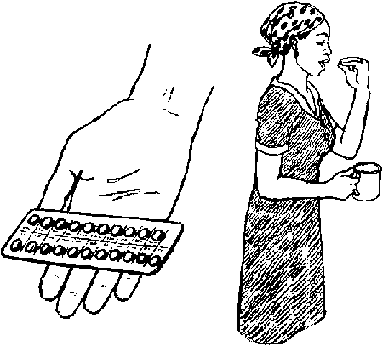
Figure 17.5: Oral
Contraceptives
Tablets that contain hormones; the woman swallows one tablet each day.
|
Box 17.1: Who Should Not Use Combined Oral Contraceptives A woman should not use oral contraceptives if there is any chance she may be pregnant, or if she: · Smokes cigarettes and is over the age of 35 High blood pressure If she has any of these conditions and uses COCs, the condition may worsen or may require more careful monitoring. |
Although some women are concerned by this, they can be reassured that it is not because the blood is staying inside. It happens because the lining of the womb builds up less when a woman is taking oral contraceptives. COCs also offer protection against some infections of the reproductive organs. When a woman stops taking the pill she is usually able to get pregnant again quite soon.
The most serious, and rarest, side-effect of the pill is that some women develop blood clots. If she falls into one of the categories listed in Box 17.1, a woman is more likely to develop complications from using the pill and should therefore use another method. For healthy women who do not have one of these risk factors, taking the pill is less dangerous than having a baby.
Effectiveness: Oral contraceptives are highly effective; their typical failure rate is around 3%.
PROGESTOGEN-ONLY PILL (MINI-PILL)
Description: POPs contain only progestogen, and no oestrogen. They work in three ways: they make the mucus (liquid) produced by the cervix too thick for the sperm to go through, they change the lining of the womb so that it is difficult for a fertilised egg to attach itself, and they decrease ovulation. POPs can cause small amounts of bleeding from the vagina between menstrual periods; this may be inconvenient, but is not dangerous. They are ideal contraceptives for women who are breastfeeding a baby under six months of age. Since POPs do not contain oestrogen, they are relatively free of the more serious side-effects of COCs. Because POPs are a lower dose pill, it is important that they are taken at the same time every day. Women who miss one day are at much greater risk of becoming pregnant than those taking COCs.
Effectiveness: POPs are almost as effective as COCs in preventing pregnancy; their failure rate is also around 3%.
LONG-ACTING CONTRACEPTIVES
Long-acting contraceptives were designed to be easier to use. They need no special preparations before sexual intercourse, as condoms and foam do. And the woman does not have to remember to do something every day, as she must with the pill. Three types of long-acting contraceptives are injectables, implants, and intrauterine devices (IUDs).
INJECTABLES
Description: Injectable contraceptives contain progestogen. An injection is given every two or three months, depending on the type, either in the woman's arm or buttocks (see Figure 17.6). The hormones in injectables prevent pregnancy by causing changes in a woman's body similar to those caused by progestogen-only pills (see above). Injectables can be used while breastfeeding the baby, since they do not decrease breast milk. They do have certain side-effects, however. These include:
· Menstrual periods may become irregular or infrequent, or even stop altogether. This side-effect may be inconvenient but is not dangerous.· Once a woman stops using the injectable, she may not begin ovulating and become fertile again for some time, occasionally for as long as 12-14 months.
Effectiveness: Injectables are extremely effective; their failure rate is 0.3%.

Figure 17.6: Injectable
Contraceptive
An injection that is given to the woman every two or three months, depending on the type of injectable; the injection may be given in the arm or in the buttocks.
IMPLANTS (NORPLANT)
Description: Norplant consists of a set of six small, thin plastic tubes containing progestogen. They are placed under the skin of the upper arm through a small cut, during a minor operation (see Figure 17.7). Norplant must be inserted by a trained health worker, who will also remove it later. Once implanted the tubes cannot be seen easily, although they may be felt if the skin in that area is squeezed. Norplant prevents pregnancy by slowly releasing a little of the hormone into the body every day.
Norplant contains a smaller dose of progestogen than the pill or the injectable. It therefore has some of the same side-effects as other hormonal methods, especially the effects on menstruation, but these side-effects are usually minimal. During the first several months, bleeding may be irregular. There may be spotting in between periods, or the periods may be longer or more frequent. Usually menstrual periods will resume their normal pattern within 9-12 months. Once Norplant is removed, fertility returns quickly.
Effectiveness: Norplant is highly effective, with a failure rate of 0.09%. It remains effective for up to five years. It is slightly less effective in women who weigh more than 154 pounds (70 kilos).
INTRAUTERINE DEVICES (IUDs) Description: IUDs are plastic devices inserted into the womb through the vagina by a trained person. They are left in place for a period of time to prevent pregnancy (see Figure 17.8). Some are coated with copper, and some contain small amounts of the female hormone progestogen. Most IUDs have a short "tail" or string that the woman can feel by putting her fingers into her vagina. Generally the string is not felt during sexual intercourse by either partner.
Figure 17.7: Implants
(Norplant)
Six small plastic tubes that are placed underneath the skin in the woman's upper arm through a small cut. The operation must be performed by a trained health worker.
Although IUDs need to be put in by a trained person, very little supervision or follow-up is necessary afterwards. A visit to a doctor or nurse once a year is required to check the position of the device.
IUDs are not suitable for all women, however, because they increase the risk of infection in the reproductive organs. A woman should not use the IUD if she has recently had a sexually transmitted disease or had a serious infection of the reproductive organs in the past. She should also avoid the IUD if she has many sexual partners or her partner has other sexual partners. If she bleeds very heavily during menstruation, or has a disease of the womb such as fibroids, she should not use an IUD.
Side-effects of the IUD may include:
· Bleeding from the womb and pain in the abdomen or back sometimes occur for a few days after an IUD is inserted. Spotting between periods and heavier bleeding during a period may also occur. Both of these symptoms should stop about three months after the IUD is inserted.· The IUD may come out of the womb by itself, especially during a period, although this is not common. A woman should be taught to make sure the IUD is in place after each menstrual period. She can do this by feeling for the "tail" which lies within reach in the vagina.
Effectiveness: Once correctly inserted, an IUD can be left in place and remains effective for several years. IUDs have a low failure rate: from 0.1% to 2%, depending on the type used.

Figure 17.8: Intrauterine
Device (IUD)
A device that is inserted into the womb through the vagina by a trained health worker.
MALE AND FEMALE STERILISATION
Sterilisation is the most effective and safest form of long-term contraception available. It is also permanent. Therefore, a couple should be very sure they do not want any more children before choosing this method. Sterilisation may also be a good choice if pregnancy would seriously endanger a woman's health. Although it has been possible in a few cases to reverse the operation, success is very rare. Both men and women sometimes fear that sterilisation will make them "cold" or change their sex life, self-image, or energy level. They should be counselled and reassured that the operation will not affect their ability to perform sexually, or their capacity to enjoy sex.
MALE STERILISATION OR VASECTOMY
Description: Vasectomy, or male sterilisation, is a simple and minor operation. It can be performed by a trained person who need not be a doctor. First, an injection is made to numb or deaden the skin of the scrotum so that the man will feel no pain. A small incision (cut) is then made in the skin, and the vas deferens tube, which carries the sperm from the testes to the penis, is cut. The two ends are tied separately. The same procedure is carried out on the tube on the other side (see Figure 17.9).
If performed by a trained person in accordance with proper medical procedures, the incision heals quickly, leaving only a tiny scar. There may be slight infection or a small swelling at the incision, which will soon disappear. A new "no scalpel" method is also becoming more widely available. With this method a special instrument is used to make a small puncture in the skin instead of a scalpel incision. Because there is no cut, this method appears to have an even lower complication rate.

Figure 17.9: Male
Sterilisation
A minor operation during which the tubes that carry sperm are cut and closed. The operation must be performed by a trained health worker.
After the man has the operation, he can still have sexual intercourse and ejaculate semen (liquid). However, the semen will not contain any sperm to fertilise the egg. Immediately after the operation is performed, sperm may still be passing with the semen. An additional form of contraception should be used for the first 15 ejaculations until all the sperm has been cleared.
Effectiveness: Male sterilisation has a failure rate of 0.15%.
FEMALE STERILISATION OR TUBAL LIGATION
Description: Sterilisation in the female involves cutting each fallopian tube in two and tying or burning the two ends separately (see Figure 17.10). To reach the fallopian tubes, the doctor gives the woman a pain-killing injection so that she will not feel anything, then cuts the skin of the abdomen. The most common procedure currently used is called the mini-laparotomy. With this procedure, the cut is made just above the pubic hair. The actual procedure is relatively simple, and the risk of complications is low if performed by a trained person in a good clinical setting. The risks of female sterilisation are higher, however, than for male sterilisation. This is because the operation is more serious. The most common complication is infection at the site of the cut. Other possible complications, which occur very rarely, are injury to the womb, bladder, or intestine. After this operation, a woman will continue to have periods as she did before.
Effectiveness: Female sterilisation has a failure rate of 0.4%.
NATURAL METHODS OF FAMILY PLANNING
Description: Natural methods of family planning include all methods that do not involve taking any drugs or using a device to prevent pregnancy. Most of these methods involve finding out when during the menstrual cycle ovulation occurs. The woman then needs to cooperate with her partner to avoid sexual relations during the days when she is likely to get pregnant. Sometimes couples combine natural family planning with the use of barrier methods. This means they use natural methods to determine when the woman is likely to get pregnant, and use a condom, diaphragm, or other barrier method during those days.
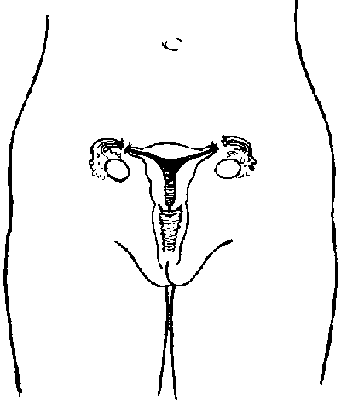
Figure 17.10: Female
Sterilisation
An operation in which the tubes that carry the eggs to the womb are cut and sealed. The operation must be performed by a trained health worker.
Menstruation and ovulation are described in Chapter 4. That chapter describes the process by which a woman's body releases a mature egg, ready to be fertilised by the man's sperm. A woman can become pregnant if she has sexual intercourse one, two, or three days before ovulating, the day of ovulation, or one day after. This period is known as the fertile phase. The rest of the menstrual cycle, when there is no egg to be fertilised, is the infertile phase or the "safe period". To use the natural method of family planning, couples have to avoid sexual intercourse during the fertile phase. Since it can be difficult to tell exactly when ovulation takes place, the best way is to avoid intercourse for about ten days out of every month around the time of the fertile phase.
There are several ways to find out when ovulation occurs. These methods are described only briefly here. If a couple is interested in using one of these methods, they should ask a trained health care provider for more details. These methods can also be used when a woman is trying to become pregnant to help her identify her fertile time.
CALENDAR METHOD: It is possible to use a calendar to estimate the fertile period. If a woman has a very regular cycle (that is, menstruation occurs every 28 days or very close to that), this method is fairly easy to use. Since ovulation occurs about 14 days before the next period is due, a woman should count backward 14 days from when her next period is expected to calculate the day she will ovulate. She should avoid sex from about seven days before that day until about two days after. If a woman's menstrual periods are not very regular, this method can still be used, but it is much more difficult and complicated. A record must be kept for about eight months, and then calculations made to determine the approximate fertile phase.
TEMPERATURE METHOD: A woman's body temperature rises slightly (½ degree centigrade) immediately before ovulation and remains high for several days. To identify her fertile period, a woman must record her body temperature (taken before getting out of bed in the morning) for several months. This indicates when in her menstrual cycle ovulation is taking place. This method may be difficult or impossible to use if her temperature rises because of malaria or other diseases. It can also be difficult to obtain a thermometer, and for people to read and record the temperature properly.
CERVICAL MUCUS TEST: The cervix, or the neck of the womb, produces a fluid called mucus which has a different thickness on different days of the menstrual cycle. Around the time of ovulation, there is a lot of mucus and it feels watery, thin, and slimy. Intercourse should be avoided at this time. During the rest of the cycle, there is not as much mucus and it feels thicker and drier. In order to test the mucus, a woman can put her finger into her vagina and feel the texture of the secretions. During ovulation the mucus makes a long string between the fingers when separated.
There are other methods of family planning that are considered "natural" because they do not involve using any devices or medicines. These methods differ from the ones described above because they do not depend on calculating when ovulation occurs.
WITHDRAWAL: This method of avoiding pregnancy requires the man to withdraw his penis from the vagina before he ejaculates or "comes". It is undoubtedly the most widely used form of family planning since Biblical times. The main problems are that it requires great self-control on the part of the man, and is not very reliable.
LACTATIONAL AMENORRHOEA METHOD (LAM):
In most women, breastfeeding delays ovulation and the return of menstruation. In fact, a woman is protected against pregnancy as much as 98% of the time for the first six months after having a baby, if the following conditions are met: she has not started her menstrual periods, and she is fully breastfeeding (giving the baby only breast milk, and feeding on demand). If her menstrual period starts or if she begins giving the baby food supplements, she must immediately start using another family planning method to avoid pregnancy. The preferred methods during this time are barrier methods or methods that rely on the hormone progestogen (mini-pills, injectables, or implants). Methods that include the hormone oestrogen reduce the mother's supply of breast milk.
The natural family planning methods described above are the only types of family planning approved by the Catholic Church. There are no physical side-effects as there may be from drugs or devices. For some women, however, it can be very difficult to determine exactly when ovulation occurs, which is why these methods have a relatively high failure rate.
Effectiveness: The overall failure rate of natural methods of family planning is about 20%. This may be greatly improved depending on the motivation and willingness of the couple, and if two or more methods are combined.
TRADITIONAL METHODS
Most cultures have a variety of traditional methods that are believed to prevent pregnancy. These include using charms or spells, such as tying a string around the waist, drinking teas made from certain leaves or roots, or eating certain foods. There is no scientific evidence that these methods work; in fact, there is quite a bit of evidence that they do not. Some people also believe that jumping up and down or exercising in other ways just after sexual intercourse will prevent pregnancy. Sometimes women try douching, or washing the semen out of the vagina, immediately after intercourse. These methods do not work because sperm reach the womb and the fallopian tubes very quickly. Less than a minute after the man has ejaculated in the vagina, sperm have already reached the fallopian tubes. If an egg is available, a sperm may have already fertilised it.
As long as a traditional method does no harm, there is no reason to discourage people from practising it; but they should be strongly advised to use another method as well, such as one of the methods described earlier in this chapter.
|
Summary: Family Planning and Child Spacing |
|
|
FAMILY PLANNING METHODS VARY WIDELY, AND CAN BE DIVIDED INTO SEVERAL CATEGORIES: |
FAILURE RATE: |
|
BARRIER METHODS: These prevent the sperm from fertilising the egg. CONDOM: A latex rubber tube which is closed at one end. It is placed on the man's penis before sexual intercourse. |
12% |
|
FEMALE CONDOM: A thin rubber sheath which is placed inside the vagina before sexual intercourse. |
21% |
|
SPERMICIDES: Chemical contraceptives placed inside the vagina before intercourse. Often used together with other barrier methods. |
21% |
|
DIAPHRAGM: A rubber cup with a flexible rim. It is inserted into the vagina before intercourse and placed so that it covers the opening of the womb. |
18% |
|
CERVICAL CAP: A small rubber cup similar to the diaphragm. |
18-36% |
|
SPONGE: A sponge with spermicide. It is placed inside the vagina before intercourse. |
18-36% |
|
ORAL CONTRACEPTIVES ("THE PILL"). Tablets containing hormones. The woman has to swallow a tablet every day. | |
|
COMBINED ORAL CONTRACEPTIVES (COCs): Contain oestrogen and progestogen. |
3% |
|
PROGESTOGEN-ONLY PILLS (POPs, OR "MINI-PILLS"): Contain only progestogen. |
3% |
|
LONG-ACTING CONTRACEPTIVES INJECTABLES: An injection containing hormones that prevents ovulation. Given to the woman every 2-3 months. |
0.3% |
|
IMPLANTS: Several small, thin plastic tubes that are placed in the upper arm of the woman through a minor operation. The tubes contain a hormone that prevents ovulation. The implants must be inserted by a trained health worker. |
0.09% |
|
INTRAUTERINE DEVICE (IUD): A plastic device inserted in the womb by a trained health worker. |
0.1-2% |
|
Family Planning and Child Spacing (cont.) |
|
|
FAMILY PLANNING METHODS VARY WIDELY, AND CAN BE DIVIDED INTO SEVERAL CATEGORIES: |
FAILURE RATE: |
|
SURGICAL CONTRACEPTION: These two methods are permanent and irreversible. Both must be carried out in a properly equipped health facility, by a trained health worker. | |
|
MALE STERILISATION (VASECTOMY): An operation in which the vas deferens, which carries sperm, is cut and sealed. This prevents sperm (but not semen) from leaving the man's body. |
0.15% |
|
FEMALE STERILISATION (TUBAL LIGATION): An operation in which each fallopian tube is cut and tied to prevent the eggs from reaching the womb. |
0.4% |
|
NATURAL METHODS: These include a variety of methods that do not involve the use of medicines or devices to prevent pregnancy. For most of these methods, the woman uses various signs or calculations to determine when she can become pregnant, and avoids having intercourse during that time. |
20% |
|
| ||||||||||||||||||||||||||||||
Healthy Women, Healthy Mothers - An Information Guide - Second Edition (FCI, 1995, 241 p.)
Chapter Eighteen - SEXUALLY TRANSMITTED DISEASES
Sexually transmitted diseases (STDs) are diseases that are passed from one person to another through sexual intercourse. They are sometimes called "venereal diseases". Some STDs can cause very serious complications and even death. Often, a person may have more than one STD at a time. It is very important to be aware of how STDs are caught as well as the signs of STDs.
Sexually transmitted diseases are widespread throughout the world, and they are on the increase almost everywhere. Many factors account for the growing number of people who have STDs. Many more people live in or travel to large cities these days, separated from their families. This gives them more opportunities, or more temptation, to have sexual relations with someone other than their husband or wife. Also, many people become sexually active before marriage.
In addition, many of the germs that cause STDs are easily transmitted from person to person. It is possible to catch the disease even after only one act of sexual intercourse with an infected person. Some STDs can no longer be treated successfully with the medicines that were used in the past, because the germs that cause the disease are now resistant to the medicines. For these reasons, STDs are becoming more common in many areas. Anyone can get an STD - not just prostitutes or people with "loose morals".
The Most Common STDs
Many different types of germs can cause STDs. The most common STDs are gonorrhoea, chlamydia, syphilis, chancroid, genital herpes, genital warts, trichomonas, and AIDS. The next few pages will focus on those STDs that have important and significant health implications.
STDs are a problem not only because they cause pain and illness, but also because they can cause long-term complications in a woman and her child, as well as in a man. Some STDs can be passed from mother to baby either during pregnancy or during delivery. This can cause serious illness in the baby.
Most men can tell when they have an STD because there are usually clear signs. Women, however, often have an STD without knowing it, because there are often no signs that they have the disease. Sometimes only an experienced and trained person can find signs of an STD in a woman. This is especially true during pregnancy, when many STD symptoms (for example, an increase in the amount of fluid produced by the vagina) are mistaken for side-effects of pregnancy itself. Sometimes it is necessary to examine samples of a woman's blood or vaginal discharge to find out if she has an STD, and which type of STD she has.
Counselling and treating women and men with STDs requires sensitivity and understanding. People are often embarrassed or ashamed of having an STD. They may not want to talk about their symptoms or how they got the disease. It helps if the health workers who are treating them are patient and non-judgmental. They should not be blamed for getting the disease. It is also very important for health workers to encourage both men and women to tell their sexual partners that they also need to go for treatment. Otherwise, the person can be reinfected if he or she has sexual relations with the infected person again.
If a woman needs to have a vaginal examination to diagnose an STD, it may help her feel more comfortable if the tests and procedures being used are explained to her. If she has to be referred to another health facility or hospital for laboratory tests and treatment, the importance of this treatment should be clearly explained.
If a treatment is not effective for some reason, referral may be necessary so that another drug can be prescribed.
GONORRHOEA
Gonorrhoea is the most common STD. In men, the disease usually causes a burning sensation when passing urine and a thick discharge from the penis. These symptoms begin within a week of being infected (see Figure 18.1). Some women have the same symptoms - pain with urination and discharge from the vagina -but about 80% of women have no symptoms at all. Therefore, it is very important for a man to tell his wife or sexual partner that he has the disease, since she is likely to have it as well but may not know it. Even if there are no symptoms, the disease can be transmitted. It is possible to catch gonorrhoea from just one act of sexual intercourse with an infected person.
Gonorrhoea can be a serious disease. It can usually be treated with penicillin, but not always. If penicillin is not effective, other drugs that can be used are cefixime, ceftriaxone, ciprofloxacin (which should not be given to pregnant women), and spectinomycin. If the symptoms do not go away within a week of treatment, the patient needs to go back to the clinic and get another type of antibiotic. All the tablets prescribed by the doctor must be taken to make sure the disease is completely gone.
If a pregnant woman has gonorrhoea that is not treated, there is a chance that her baby will catch the infection in the eyes. This can lead to blindness. If a woman has gonorrhoea repeatedly or does not seek treatment, she may develop pelvic inflammatory disease (PID), an infection of the reproductive organs. PID is a very serious disease. Its signs are constant lower abdominal pain, painful menstruation and menstrual disorders, fever, and bad-smelling vaginal discharge (see Figure 18.2). Sometimes the symptoms of PID go away without treatment, but this does not mean that the disease has been cured. There can still be serious complications. If a woman with PID does not get treatment, the fallopian tubes can become blocked from scarring, and she can become infertile. Some 15-20% of women who develop PID become infertile (see Chapter 19).

Figure 18.1: Signs of an STD in
Men
The most common STDs are gonorrhoea and chlamydia; signs of these diseases in men include a burning sensation while urinating, and a thick discharge from the penis. They can be treated in most health clinics, and in special STD clinics.
Figure 18.2: Signs of Pelvic
Inflammatory Disease (PID)
If an STD such as gonorrhoea or chlamydia is not treated, it can lead to PID. The signs of PID are constant pain in the lower abdomen, painful menstruation, fever, and bad-smelling discharge from the vagina. A woman with these signs should seek treatment immediately.
CHLAMYDIA
Chlamydia is an infection of the tissues lining the urethra and the opening of the womb. It is becoming common in Africa. In some countries, as many as one in five women attending antenatal clinics have the infection without even being aware of it. The signs of chlamydia are similar to those of gonorrhoea, except they are usually milder. Up to 75% of people with chlamydia have no symptoms at all. The disease can be treated with tetracycline or doxycycline, although these should not be given to pregnant women. Alternative treatments are erythromycin or sulfisoxazole.
If not treated correctly, chlamydia can lead to the same complications as gonorrhoea, such as PID and infertility. It can also cause infertility in men. If a pregnant woman has chlamydia and is not treated, her baby is likely to weigh less than normal because the disease affects the growth in the womb. The baby can also catch the infection during delivery. If untreated, this may cause an eye infection or, in severe cases, pneumonia in the newbom.
SYPHILIS
Syphilis has been around for thousands of years. At one time it appeared to be on the decline as a result of the widespread use of penicillin. Recent studies indicate, however, that the disease is becoming more common. Syphilis is a very serious disease for women, especially pregnant women, because it can be passed on to the baby during pregnancy or labour, with tragic consequences. One-third of the babies born to women with untreated syphilis are born dead. Another third are born with syphilis. Children born with syphilis are often deaf, blind, or mentally retarded; many of them die very young.
Like other STDs, syphilis is transmitted during sexual intercourse with an infected person. The first signs of syphilis usually show up about 25 days after infection, but are easy to overlook. They consist of a small and painless sore in the genital area or vagina, which heals by itself in 3-4 weeks. There may be swellings in the genital area which are not painful. The second stage of syphilis is marked by fever, headaches, and pain in the bones and muscles, usually 6-8 weeks after infection. A rash, which causes no itching, appears on the body, particularly on the soles of the feet and palms of the hands. Warts may appear in the genital area.
The third and last stage of syphilis may not appear for many years; in some cases, as long as 15 or 20 years. By this time the disease has attacked almost the entire body: the heart and major blood vessels, the bones, and the nervous system, including the brain. Late syphilis causes insanity and eventually death from damage to one of these organs. This late stage of the disease is rarely seen any- more because syphilis can be effectively treated at any stage with injections of penicillin.
CHANCROID (GENITAL SORES)
This disease causes shallow, painful sores or ulcers around the genital area and inside the vagina. The sores are accompanied by painful swelling in the genital area. Without treatment, the sores take 2-3 months to heal. Women often have the disease without developing any symptoms, but they can still transmit the disease if they have sexual intercourse. Chancroid does not affect newborns. Like syphilis, it can be treated with penicillin. Chancroid is a serious cause for concern because a woman with chancroid has a high risk of getting the virus that causes AIDS if she has sexual relations with someone who has that virus.
GENITAL HERPES
Herpes is a disease that causes painful, swollen blisters or sores on the penis in a man, and in the vagina of a woman. It can also cause sores in the anus. These sores are usually tender or itchy. The disease is caused by a virus. Unfortunately, herpes cannot be cured. After the first outbreak has healed, the sores can come back. The disease can be transmitted when the sores are actually present, or just before the sores come back. It is possible to tell when the sores are coming because there is a feeling of burning or itching at the place where the sore will come. Sex should be avoided or a condom should be used from the time the itching is felt until the sore has completely disappeared and the skin is whole again. Herpes is not a serious disease in itself, although it can be uncomfortable; but the open sores can make a person much more likely to catch other STDs, including AIDS. A pregnant woman who has an active outbreak of herpes at the time of delivery should have a Caesarean section. The baby can catch the disease by coming into contact with the sores.
GENITAL WARTS
Genital warts are fleshy growths in the genital area caused by a virus. They are not painful. They are easily transmitted from person to person by sexual contact. The warts can be removed, but they are likely to grow again. Treatment usually involves applying an acid preparation repeatedly to the warts. There are many types of viruses that can cause genital warts. Some of these viruses have been linked to an increased risk of getting cancer of the cervix. A woman who has genital warts should have a Pap smear every year to check for cervical cancer.
TRICHOMONAS
Trichomonas is an infection caused by germs or bacteria. The signs are increased fluid from the vagina, and fluid that looks frothy. Itching and pain with urination may also be signs of a trichomonas infection. The disease is diagnosed by looking at fluid from the vagina under a microscope. It may cause low birth weight babies, or premature labour. Trichomonas is easily treated with metronidazole.
CANDIDIASIS
Candidiasis is actually not a sexually transmitted disease, although its symptoms - increased fluid from the vagina and itching - may be confused with other, more serious infections. Candidiasis, otherwise known as a "yeast infection", occurs when some of the bacteria or germs that are normally found in the vagina grow out of control. It can be diagnosed by examining a sample of fluid from the vagina under a microscope. It is treated with medicated suppositories or creams placed in the vagina. Wearing loose clothing or cotton underwear and not douching will help prevent yeast infections. Candidiasis is common during pregnancy, but it will not hurt the baby. If a woman has Candidiasis repeatedly, or if the case is very severe, it may be a sign that she is infected with HIV.
BACTERIAL VAGINOSIS
Like candidiasis, bacterial vaginosis (BV) is not considered a sexually transmitted disease. The signs of BV are an increase in the fluids from the vagina, vaginal fluids that have a bad smell, and sometimes itching. As with candidiasis, the disease is diagnosed by looking at the vaginal fluids under a microscope. It is treated with metronidazole. If a pregnant woman has BV it should be treated since it may cause premature rupture of membranes. However, the disease poses no direct threat to the baby.
Acquired Immune Deficiency Syndrome (AIDS)
AIDS is a very serious STD, a deadly disease for which there is no cure. The disease is the result of infection with the virus known as the human immunodeficiency virus, or HIV. Everyone infected by HIV will eventually develop the disease AIDS.
The virus kills by attacking and destroying certain white cells in the blood that defend the body against diseases. Once a person is infected, the virus can remain in the body for many years without any sign that something is wrong. This phase can last for as little as a few months, or as long as ten years. During this phase an infected person appears healthy and may not even know he or she has the virus, but the disease can be transmitted to others.
Once AIDS actually develops, the infected person begins to get sick often because the body is less able to fight off diseases. In Africa, the most common symptoms are fever, diarrhoea that will not go away, severe weight loss, persistent cough, tiredness, loss of appetite, and skin diseases. The most common diseases developed by people with AIDS are tuberculosis, cancer, meningitis, pneumonia, and - for women - gynaecological infections.
HOW IS HIV TRANSMITTED?
HIV infection is spreading very quickly in sub-Saharan Africa. Scientists believe that already about eight million people are infected, and more than 600,000 have developed the disease. HIV is not transmitted in any of the following ways: by sitting on toilet seats, sharing drinking cups or utensils, touching or other casual physical contact with an infected person (such as hugging or shaking hands), or mosquito bites. The virus can be transmitted in three ways:
SEXUAL TRANSMISSION: The virus is usually passed from one infected person to another through sexual intercourse. About 80-85% of the people in Africa who have HIV were infected through sexual transmission. This happens because the virus is present in the semen or vaginal fluids of an infected person. Sometimes the virus is caught during only one act of sexual intercourse with an infected person. Other times a person has sex many times with an infected person and still does not get the virus. To help protect themselves against the virus, people should:
· Use latex (rubber) condoms every time they have intercourse.· Avoid sexual intercourse if they or their sexual partners have a sexually transmitted disease. If one person has an STD and one person also has HIV, the chances of transmitting HIV are very high.
· Avoid having sexual relations with different people. In fact, the best way to avoid getting AIDS is to stay with one person who does not have the HIV virus and who does not have sexual relations with other people.
· Avoid causing scrapes, cuts, or scratches in the genital area when having sexual intercourse. Women who have been circumcised may be at increased risk for catching the virus, since sexual intercourse is more likely to cause bleeding and cuts. Anal sex should also be avoided since this causes sores that can easily be infected by the HIV virus.
TRANSMISSION THROUGH BLOOD OR BLOOD
PRODUCTS: Since the virus is present in the blood of an infected person, it is possible to catch it if some infected blood gets inside the body. This can happen through blood transfusions with infected blood, or through injections with a needle that has not been sterilised. Women sometimes need blood transfusions during pregnancy and childbirth if they have severe bleeding or a serious case of anaemia. This means they are especially likely to get HIV through transfusions with infected blood. It has also been suggested that some rituals, such as female genital mutilation, male circumcision, and scarification (tribal markings), could transmit the virus by sharing blood on instruments. The best way to avoid transmission through blood is for health workers to:
· Make sure that needles and surgical instruments are always sterilised.· For blood transfusions, use only blood that has been tested.
· Wear surgical gloves during delivery, when there is the risk of being exposed to large amounts of blood.
In addition, communities should be encouraged to avoid rituals that involve cutting the skin, or to make sure that the instruments are sterilised.
MOTHER TO INFANT: If a pregnant woman is infected with the HIV virus, her infant will also get the virus in about 25% of the cases. HIV-infected infants usually become seriously ill by the age of six months. Most die before they are two years old. It is not known for sure whether transmission from mother to child takes place before, during, or after childbirth. HIV can be present in the milk of an infected mother, and there have been a few cases where the virus was transmitted to a baby through breast milk. However, because breastfeeding has so many benefits for the baby (see Chapter 15), it is recommended that women continue breastfeeding even if they are infected with HIV.
HOW TO TELL IF A PERSON HAS BEEN INFECTED BY HIV
The only way to tell whether someone has been infected by HIV is to have a blood test to see whether the antibodies to HIV are in the blood. Otherwise infection can only be confirmed when the disease AIDS has developed.
The blood test for HIV antibodies is fairly widely available now. Most hospitals and blood banks can do it. Some cities have clinics or counselling centres that can perform the blood test (see Figure 18.3). It is important to get diagnosed early so that the infected person can take steps not to infect other people.

Figure 18.3: Testing and
Counselling for HIV/AIDS
Many cities now have clinics or centres where a person's blood can be tested for signs of HIV, the virus that causes AIDS. Couples may want to be tested before marrying, or before having a child. The test should always be accompanied by counselling from a trained person.
|
Box 18.1: Key Facts About AIDS AIDS is an STD which is 100% fatal; there is no cure. AIDS weakens the body's immune system, making it susceptible to other diseases which lead to death. | |
|
HOW AIDS IS TRANSMITTED: SEXUALLY: During sexual intercourse |
WAYS TO AVOID IT: · Don't have intercourse with more than one person · Don't have intercourse that causes cuts or scrapes in the genital area · Avoid having intercourse with people who already have HIV or other STDs · Always use a condom |
|
THROUGH BLOOD: By contact with HIV-infected blood, such as from a needle, a blood transfusion, or a cut |
· Only use sterile needles · Use surgical gloves · Test blood used for transfusions, and use only non-infected blood · Avoid genital mutilation and rituals that cause bleeding |
|
FROM MOTHER TO INFANT: A pregnant woman who has HIV can pass it along to her infant |
· A woman who is HIV positive should not get pregnant |
|
Signs of HIV/AIDS: The only way to tell if someone has HIV is through a blood test. Even people who appear healthy can have the virus, and can infect others. | |
IS IT POSSIBLE TO PREVENT OR CURE AIDS?
Right now, there is no cure for AIDS. Nor is it likely that there will be any vaccine in the near future. If a person is already infected, certain medicines may delay the onset of symptoms. These medicines are very expensive, however, and are only available in Europe and the United States.
The best way to avoid getting infected with HIV is not to have sexual relationships at all, or to have relations only with someone who is not infected and is faithful. The next best option is to use a condom, but condoms are not 100% effective. A condom can prevent sexual transmission of the HIV virus only if it is used correctly so that no semen spills, and if the condom does not break. Even if they have been stored properly, about one out of every 100 condoms breaks. Another way to reduce the chance that a condom will break is to make sure that the vagina of the woman is wet or lubricated. Creams or oils can be used (except for petroleum jelly, which can damage the condom).
Many women find it very difficult to start a discussion about AIDS with their husbands, and to suggest that they use condoms. It might appear that they think their husbands are not being faithful, or it might make their husbands suspect them. One way to begin talking is to raise the possibility of infection from an injection or blood transfusion. This way, AIDS can be brought up without talking about sexual relations right away. AIDS can be a life or death issue. Everyone owes it to themselves, their children, and their families to do something if they think there is a chance they have been infected, or might become infected.
Prevention and Treatment of STDs
The popular saying "prevention is better than cure" is very true in the case of sexually transmitted diseases. In the first place, anyone can have an STD. Since the signs are often difficult to see, it is hard to tell who has an STD. Therefore, having sexual intercourse with a number of people should be avoided, since this increases the chance that one of them might have an STD. People who continue to have sexual relations with several partners should at least use condoms. Condoms, particularly if used together with spermicides, offer protection against catching STDs, although this protection is not 100% guaranteed.
In women, the signs of STDs are often not obvious, so diagnosis is more difficult. Those who believe they might have an infection should go to a health facility. Any unusual amount of vaginal discharge, pain during urination, or sudden lower abdominal pain should be investigated. Ulcers, sores, or warts around the genital area also require a visit to a health facility. All women should get a blood test early in pregnancy to check for syphilis so that treatment can be given soon to protect the baby.
Health centres or clinics, especially in rural areas, do not always have the laboratory facilities to test for STDs. Various organisations have developed charts that say what kind of treatment can be given, depending on the symptoms the person has and his or her sexual history (for example, a woman whose husband has a discharge from his penis is almost certain to have gonorrhoea or chlamydia). If the Ministry of Health has accepted this system, these charts should be available. Health workers need to be trained in how to use them.
AIDS and genital herpes are the only STDs which cannot be cured. All other STDs can be treated, as long as the medicines are available. That is why it is important to go to a health facility immediately after getting an STD. Some of the medicines can be quite expensive, but often only a single dose is needed. People should not take medicines without going to a clinic first, since taking medicine without proper directions can cause problems. Herbs or other treatments may also be available from traditional healers. These may not do any harm, but little is known about them. Therefore, people should be advised to use medicines from regular clinics.
|
Summary: Sexually Transmitted Diseases The following are the most common signs that someone has an STD. But often, people can have an STD without showing any signs or symptoms that they are ill. | |
|
SIGNS IN WOMEN: |
SIGNS IN MEN: |
|
Sores or bumps inside the vagina, or around the entrance |
Sores on or around the penis or anus |
|
to the vagina or anus |
Discharge (fluid) from the penis |
|
Pain during urination |
Pain during urination |
|
Discharge from the vagina that is: bad-smelling All STDs except genital herpes and AIDS can be treated, as long as they are identified early enough. If an STD is not treated it can lead to pelvic inflammatory disease, which can make a woman infertile. The signs of PID are: Pain or tenderness in the lower abdomen High fever Pain during menstruation (the period), or pain and bleeding during sexual intercourse Bad-smelling discharge from the vagina | |
|
| ||||||||||||||||||||||||||||||
Healthy Women, Healthy Mothers - An Information Guide - Second Edition (FCI, 1995, 241 p.)
Chapter Nineteen - INFERTILITY
A couple is described as infertile if the woman has not gotten pregnant after having normal sexual intercourse two or three times a week without using any contraception for at least one year. Normally, 85 out of 100 young couples who want to have a child can do so within a year of trying. The chances are slightly lower if the woman is over the age of 30, and significantly lower if she is over the age of 40.
Sexually transmitted diseases and other infections of the reproductive organs are fairly common (see Chapter 18). These infections can cause permanent damage to the reproductive organs of both men and women. As a result of these diseases, as many as one in four couples in Africa may experience some difficulty getting pregnant. In a culture where fertility is highly prized and children are seen as gifts from God or a sign of approval from ancestors, infertility may be regarded as a great misfortune for the couple. It can be especially hard for a woman. She may suffer unhappiness, social rejection, and a sense of personal failure in a society where childbearing is seen as one of the most valuable contributions a woman can make to the family.
This chapter will review some of the common causes of infertility. It will also review tests and investigations that can be conducted to try to find the causes of infertility, as well as possible treatments and their chances of success.
Causes of Infertility
Infertility is a problem involving two people. On average, the cause of the problem lies with the man 40% of the time and with the woman 40% of the time. In the remaining 20% of cases, both the man and the woman contribute to the problem.
CAUSES OF INFERTILITY IN MEN
As discussed in Chapter 3, the man's role in reproduction involves producing sperm and transporting them into the woman's vagina. Male infertility has two main causes:
POOR QUALITY OF SEMEN: Most infertile men have poor quality semen, especially a low number of sperm or sperm that cannot move. There may be too little semen (the normal amount in each ejaculation is about one spoonful), or it may be too thick or too watery. The causes of poor semen quality include:
· Physical factors such as excessive heat due to wearing tight underwear or working for long periods near ovens or furnaces; direct injury to the testes; excessive smoking and drinking; drug abuse, especially the use of marijuana, heroin, cocaine, etc.; any general and prolonged illness; and certain specific diseases such as diabetes or thyroid disease.· Infection or disease of the testes; for example, mumps infection after puberty.
· Failure of the testes to descend from the abdomen at an early age.
· Abnormally small testes.
INABILITY TO DEPOSIT SEMEN IN THE VAGINA:
The failure to deposit semen in the vagina can be due to a number of reasons. Sometimes the semen cannot come out of the testes because the passage is blocked (see Figure 19.1). This can result from a sexually transmitted disease, especially gonorrhoea or chlamydia (see Chapter 18). Tuberculosis can have the same effect. Impotence, the inability to have an erection or to maintain it during sexual intercourse, is another fairly common cause of infertility. It can be caused by emotional, psychological, or physical stress. Sometimes the man ejaculates his semen before the penis is inside the vagina; this is called premature ejaculation.

Figure 19.1: Blockage of the
Vas Deferens
A common cause of infertility in men is blockage of the vas deferens, the tube that carries sperm out of the penis. It is usually caused by a sexually transmitted disease such as gonorrhoea or chlamydia.
CAUSES OF INFERTILITY IN WOMEN
For a woman to become pregnant, several things must happen, as described in Chapter 4:
· An egg must be released from the ovaries (ovulation);· The egg must find its way into the fallopian tube where fertilisation takes place;
· After fertilisation, the egg must be moved along the fallopian tube to reach the womb within seven days;
· The lining of the womb must be properly prepared for the egg to attach itself securely.
If for some reason any of these conditions is not met, pregnancy cannot occur. The common causes of infertility in women include the following:
FAILURE TO OVULATE (ANOVULATION): Ovulation is a complicated process, which involves parts of the brain, the ovaries themselves, and several chemicals produced by different organs in the body. A problem with any of these organs can make ovulation irregular or infrequent, or cause it to stop altogether. In most cases, a woman's menstrual periods will be irregular or stop altogether if she is not ovulating. Failure to ovulate is the cause of infertility for about 20% of infertile women.
TUBAL BLOCKAGE: By far the most frequent cause of infertility in women in Africa (about 75% of cases) is blockage of the fallopian tubes. The blockage may prevent the sperm from reaching the egg, or it may prevent the fertilised egg from reaching the womb (see Figure 19.2). It is usually caused by infection, which in turn is most often due to:

Figure 19.2: Blockage of the
fallopian Tubes
The most common cause of infertility in women is blockage of the fallopian tubes. It is usually caused by repeated cases of gonorrhoea or chlamydia.
· STDs, particularly repeated attacks of gonorrhoea and chlamydia (see Chapter 18).· Infection of the reproductive organs following miscarriage or, more often, unsafe induced abortion. Infection can damage the fallopian tubes as described above, or it can damage the lining of the womb and make it difficult for the fertilised egg to implant itself. Infection can also cause constant pain in the pelvis; this pain may be so severe that sexual intercourse is not possible.
Tests and Counselling for an Infertile Couple
In order for the testing or investigation of infertility to be complete, both the man and the woman must cooperate and participate fully. Often they must also cooperate for the treatment to be successful. A couple should understand that the proper investigation may take a year or even longer. It involves many tests, so it can cost a lot of money, cause a lot of inconveniences, and take a lot of time. For many of the tests, the couple must have immediate access to the hospital or clinic where the investigation is being done. For these reasons, it would be very difficult, if not impossible, for a couple who is poor or who lives far from the hospital to go through the investigation. Finally, the couple must be prepared to accept an unfavourable outcome of the tests without blame.
WHEN SHOULD TESTING BEGIN AND WHAT WILL IT INVOLVE?
If a woman has not conceived after having regular sexual intercourse (without contraception) for one year, she may want to begin investigations, especially if she is more than 25 years old. Testing will involve the following steps:
COUNSELLING: The first meeting with the doctor is extremely important, and both husband and wife must attend. The doctor will want to have a full and frank discussion with the couple about their general health, past medical history, social habits, and attitudes towards children in general and their specific problem in particular. They will be asked questions about their sexual relationship: the frequency and timing of sexual intercourse, and whether or not they have any problems. After this general discussion, the doctor may talk to each member of the couple alone because there may be things one partner does not want to say in front of the other.
PHYSICAL EXAMINATION: After discussions with the couple, the doctor will examine the man and woman separately to rule out any illness or other obvious medical explanation for infertility. After these examinations, the couple and doctor need to decide whether further tests are needed and when to start. Some of these tests are described briefly below. A specialist should be consulted for more information.
TESTS FOR INFERTILITY IN MEN: It is easier to find out whether it is the man who is infertile, so tests should usually begin with him.
· Semen analysis: The aim of semen analysis is to find out if the man is producing enough normal sperm capable of fertilising an egg. The most important things to look for are number of sperm and the percentage of sperm that is active. The doctor will explain how the semen is collected.· Biopsy of the testes: Since the sperm are produced by the testes, the doctor may suggest an examination under a microscope of the tissue of the testes. This involves making a small cut in the skin and the testes and removing a tiny bit of tissue.
TESTS FOR INFERTILITY IN WOMEN: Many tests can be carried out on women who have difficulty getting pregnant. To understand some of the tests described here, it will be helpful to look again at Chapter 4 where the processes of menstruation, ovulation, fertilisation, and implantation are described. It will also be helpful to read Chapter 17 on family planning.
· Tests for ovulation: Chapter 17 described several ways to identify a woman's "fertile phase", that is, the phase during her menstrual cycle when she can become pregnant. These methods - the calendar, temperature, and cervical mucus methods - provide some indication that she has ovulated. However, the tests take a lot of time, and are not very reliable.· Tests for tubal patency: There are two tests that can be done to find out whether the fallopian tubes are blocked. They require advanced equipment or an operation, and are therefore expensive. For more information, a specialist should be consulted.
· Cervical mucus test: The mucus or fluid produced by the cervix can either help or hinder the movement of the sperm into the cervix, through the womb, and into the fallopian tubes. On rare occasions, the cervical mucus and the fluids in the vagina may contain chemicals (antibodies) that paralyse or inhibit sperm.
· Tests after intercourse: For this test, the woman goes to the hospital within six hours of having sexual intercourse. A specimen of semen combined with cervical and vaginal fluids is examined under a microscope to detect the number of live and mobile sperm.
Treatment of Infertility
There is no general treatment or "cure" for infertility. In general, treatment depends on the specific cause of infertility for that couple. The majority of couples who seek advice, testing, and treatment for infertility do conceive. As many as 50% of the women become pregnant within 12 to 18 months of starting the investigation, most of them even before investigations are completed or treatment has started. Another 20% of couples achieve pregnancy and have a baby when the cause of their infertility is treated.
When no obvious explanation can be found for infertility, counselling may improve the couple's chances of achieving pregnancy. For example, advice on general health, regular exercise, and avoiding excessive drinking and smoking can sometimes help. The couple can also be taught how to identify the most fertile phase in the woman's menstrual cycle, when sexual intercourse is most likely to result in pregnancy.
Unfortunately, about three out of ten couples (30%) who come for help do not conceive. In these cases, adopting a child to love and raise is an option.
TREATMENT OF INFERTILITY IN MEN
The majority of infertile men produce too few sperm, or no sperm at all. A few men who have this problem can be helped by treatment with male hormones, but in general not much can be done to increase the number of sperm.
TREATMENT OF INFERTILITY IN WOMEN
ANOVULATION: When a woman does not ovulate regularly, she can be treated with drugs or hormones to induce ovulation. This treatment can be expensive, however, and only about 40% of women who receive it and begin ovulating regularly become pregnant. There is also a high chance that women who receive treatment for anovulation will produce twins or multiple births. For reasons that are not fully understood, pregnancies that result from this treatment often miscarry.
TUBAL BLOCKAGE: Most cases of infertility in women are due to blockage of the fallopian tubes caused by previous infection. Such women often need an operation to try to open up the fallopian tubes. An operation may also be needed to repair problems in the womb. The chances of becoming pregnant after such operations are not very good.
Summary: Infertility
Many factors can make a couple unable to have children. The problem can be either with the woman or with the man. The major causes of infertility are:
|
CAUSES OF INFERTILITY IN MEN |
CAUSES OF INFERTILITY IN WOMEN |
|
Poor quality of semen: Not enough sperm Inability to put semen in the vagina, caused by: Blockage of the tube in the man's penis that carries the semen. This is usually due to sexually transmitted diseases TREATMENT: The most common cause of infertility in men is inadequate sperm. Some men can be treated with male hormones, but in general not much can be done. |
Failure to ovulate (release an egg) Blockage of the fallopian tubes that carry the egg to the womb, usually due to infection of the reproductive organs, caused by: Sexually transmitted diseases, especially gonorrhoea or chlamydia (see Chapter 1 8) TREATMENT: If the problem is with ovulation, some women can be treated with hormones. This is not always successful. If the problem is blocked fallopian tubes, an operation can be tried, but again this is not often successful. |
|
| |||||||||||||||||||||||||
Healthy Women, Healthy Mothers - An Information Guide - Second Edition (FCI, 1995, 241 p.)
Chapter Twenty - OTHER REPRODUCTIVE HEALTH NEEDS
The Gynaecological Exam
Many women do not have routine gynaecological examinations. This may be because they lack money, because there is no clinic or hospital nearby that can do the exam, or simply because they do not know that such exams are important. If possible, women should have examinations and screening tests of their reproductive systems every 2-3 years even when they are feeling fine. This is especially true because many sexually transmitted diseases, cancers, and other gynaecological problems do not show symptoms until the illness is very far advanced. By then it may be difficult or even impossible to treat the problem effectively.
HISTORY: The first part of a routine gynaecological examination involves taking a careful history. Information should be gathered on the woman's age, gynaecological-obstetric history, medical-surgical history, family history, and social history. Specific problems, questions, and family planning choices are then discussed.
PHYSICAL EXAMINATION: A complete physical examination is then done, including an examination of the breasts and vagina. The vaginal exam usually has two parts. First the vagina and cervix are inspected with a speculum - an instrument placed inside the woman's vagina which, when opened, allows the health worker to check for any sores, bleeding, unusual fluids, or unhealthy tissue in the vagina or on the cervix. If the lab facilities are available, a Papanicolaou exam or Pap smear (a test for cervical cancer) may be done at this time. Swabs may be taken to test for infections like gonorrhoea and chlamydia. Genital warts, herpes blisters, and the sores caused by syphilis are other things that could be found during this part of the vaginal examination (see Chapter 18 on Sexually Transmitted Diseases).
The second part of the vaginal examination is done by placing one hand on the woman's abdomen and two gloved fingers inside the vagina. The size and tenderness of the womb, cervix, and ovaries can then be felt between the two hands. A rectal examination may or may not be done, depending on symptoms.
Many women find this part of the physical examination uncomfortable and embarrassing. It will help them to relax if they are told what is being done, and why it is done. A cloth or drape placed over the abdomen and thighs may also help them feel more comfortable.
LABORATORY TESTING: If the health facility has the necessary equipment and supplies, laboratory testing may include blood tests for sexually transmitted diseases such as HIV and syphilis. It may also include a complete blood count to look for anaemia.
Any problems found during the history, physical examination, or laboratory testing should be followed up as necessary. If a family planning method has been chosen, the health worker reviews its use, side-effects, and danger signs (see Chapter 17 on Family Planning and Child Spacing).
Self-Care and Monitoring
In addition to regular visits to a health facility, women can also monitor their own health. Health education that teaches women how to care for themselves and how to recognise danger signs is critical, especially in places where access to good medical care is limited.
BREAST SELF-EXAMINATION: It is perfectly normal for women to have lumps in their breasts. These can change in size and shape at different points in the menstrual cycle. Sometimes - fortunately, quite rarely - a lump in the breast that does not go away and does not change in size can be a sign of breast cancer. Most cases of breast cancer can be discovered by women themselves. For this reason it is important that women learn how to examine their own breasts, and how to tell when there is something wrong.
Breast self-examination should be done once a month, about one week after menstruation stops. Before menstruating, the examination is more difficult because the breasts are often more tender and slightly swollen. Women who have already gone through menopause, or women who are pregnant, may choose any time of the month that is easy for them to remember.
During the first part of the examination, women look at their own breasts in a mirror, if one is available. They should look first with their arms down and then with their arms raised, to check for any differences between the two sides (see Figure 20.1). It is normal to have breasts that are unequal in size. Signs of an abnormality would include: dimpling or puckering in one area, one nipple turning in a different direction, swelling, enlarged veins in a non-pregnant woman, or sores.
The second part of breast self-examination requires lying down and gently pressing all parts of the breast tissue against the chest. It is best if the arm next to the breast being examined is raised and placed under the head (see Figure 20.2). The area under the armpit should also be examined. Any lump that is new or feels different from a previous examination should be inspected at a hospital that can do the necessary tests and, if necessary, surgery. In most African countries, this treatment is available at teaching hospitals, usually in the capital city. It is important to begin treatment as soon as possible.

Figure 20.1: Breast Self-Exam
while Standing or Kneeling
A woman should examine her breasts once each month. The first part of the exam should be done by standing in front of a mirror if available, and looking at the breasts.
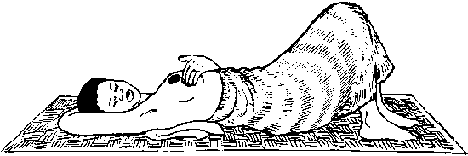
Figure 20.2: Breast Self-Exam
while Lying Down
The second part of the monthly breast exam should be done lying down. The woman should press each part of the breast to check for lumps.
Other Reproductive Health Problems
MENSTRUAL IRREGULARITIES: Contraceptive methods that contain hormones (like oral contraceptives, implants, injectables, and some lUDs) can cause changes in a woman's normal menstrual cycle. The changes may include some bleeding in between periods, prolonged bleeding, or much less bleeding than normal. Stress, sudden weight loss, or weight gain are other reasons that bleeding patterns may change. In addition, the following women might have irregular periods: young girls who have recently started menstruating, women starting menopause, and women who recently delivered a baby.
However, unusual bleeding in a woman who does not belong to one of these groups may indicate cancer, an infection, or hormonal problems. In this case the woman needs to be examined by a doctor. Unusual bleeding may include prolonged bleeding, frequent bleeding, or very reduced bleeding. It may or may not be accompanied by pain. Women who have already passed menopause (no bleeding for one year) and start bleeding again should go as soon as possible for evaluation at a hospital.
PELVIC PAIN: Pain in the pelvis or abdomen that is not the normal discomfort of ovulation or menstruation can be a sign of a problem. There are two types of pain that are a cause for worry: pain that occurs during sexual intercourse, and pain that is constant.
Physical causes of painful intercourse may include vaginal infections or infections of the pelvic organs, female genital mutilation, bladder infections, cancers, uterine prolapse, and poorly healed episiotomies. An examination by a midwife or doctor is usually necessary to determine what the cause is. Women who are going through menopause (see page 193) and women who are breast-feeding may also find intercourse uncomfortable. This can be caused by the lack of fluids in the vagina, which is normal for women during this period. Using creams or oils during intercourse may help with this problem.
Painful intercourse may also be due to emotional or psychological difficulties. Women who are forced to have sex against their will or in ways that are not pleasurable will often find the experience painful. Sexual intercourse is a very private and personal topic, and many women are reluctant to talk about it. If they do admit to having a problem, however, there are various things a health worker can do to try to help. If there is a physical cause, such as lack of fluids in the vagina, they can advise the woman to use cream or oil. They can also encourage the woman to try speaking more openly with her husband or sexual partner about her individual needs and preferences.
Women who are abused, psychologically or physically, should be helped to make realistic changes or, if possible, leave the relationship entirely. Because the subject of abuse is difficult to talk about, and because some degree of abuse is accepted in many cultures, many women find it easiest to describe their physical symptoms first. By asking open-ended questions about sexual relations in a non-judgmental, supportive way, health care providers can give women the opportunity to discuss problems more openly.
Constant pelvic pain is most often caused by infections. Other causes can include cysts, cancers, endometriosis (a disease in which the inner lining of the womb starts to grow on the other parts of the internal organs), or other diseases of the pelvic organs. Women experiencing such pain should go to a hospital for evaluation.
|
Box 20.1: Signs of Reproductive Tract Problems There are various signs that could indicate a problem with the reproductive organs. These include: · Prolonged bleeding from the vagina (more than ten days) If a woman is using a contraceptive method that contains hormones (the pill, implants, injectables, or some IUDs), unusual bleeding is common, and is not a cause for worry. OTHER SIGNS OF A PROBLEM INCLUDE: · Pain during sexual intercourse · Constant pain in the pelvis |
URINARY TRACT INFECTIONS: Symptoms of urinary tract infections include pain when urinating, having to urinate frequently, and blood in the urine. Women with these symptoms should go to a clinic for treatment immediately, since infections in the bladder and lower urinary tract may spread quickly to the kidneys. Kidney infection is a much more dangerous and painful illness. Women with kidney infections often have high fever and chills, nausea, vomiting, and back pain. Permanent scarring or damage to the kidneys may occur if not treated promptly. Admission to a hospital for treatment is often necessary.
Urinary tract infections can be avoided with good personal hygiene, especially by cleaning from front to back after a bowel movement in order to avoid bringing any of the stool near the urinary opening. Other steps that can help avoid infections include drinking plenty of fluids, urinating often (especially just after having intercourse), and wearing cotton under-wear or clothing that allows the area to stay dry. Having sexual intercourse very frequently or vigorously may also contribute to urinary tract infections. If a woman using a diaphragm experiences frequent infections, she should have the size of the diaphragm carefully checked or try a different form of contraception.
MENOPAUSE: Most women go through menopause between the ages of 45 and 55. During this time, their menstrual cycles usually become irregular and eventually stop altogether (see Box 20.2). They may experience short periods of sweating or flushing, rapid beating of the heart, and sleep disturbances. These changes naturally occur as the hormonal balance changes and the ovaries stop releasing eggs.
In addition to physical changes, menopause is also a time of emotional change, as women come to the end of their childbearing years. This may mean assuming a new role in the family or the community. For some women this can be a difficult process, and they may need extra support and understanding from their family members. Menopause may also be accompanied by new feelings of freedom, energy, and increased sexual desires.
CANCERS OF THE WOMB: The womb, like other organs in the body, can be afflicted with cancer. The part of the womb known as the cervix is the most frequently affected. Generally this disease is only found in older women (over age 40-45), although it can occur in women who are in their thirties. Women who have had genital warts (see Chapter 18) are more likely to develop cervical cancer, although any woman can develop the disease.
The most common sign of cancer of the womb or cervix is irregular bleeding from the vagina. This bleeding may start after menopause, or it may occur after sexual intercourse. This bleeding is a sign that the disease has already started spreading, so a woman with this symptom should go immediately to a hospital for an examination and treatment.
The disease is difficult to treat once it has reached the cancerous stage. Only a few hospitals in Africa can provide the necessary treatment. This treatment can involve an operation to remove the cancer from the cervix, or radiation therapy. Sometimes the entire womb and cervix have to be removed. While the prospect is a frightening one, it may be necessary to save the woman's life.
|
Box 20.2: Evaluating Unusual Bleeding During Menopause Menstrual periods normally become irregular as women start menopause. Women going through menopause should go to a health facility if: · bleeding occurs more frequently than once every three weeks · bleeding starts again after menstrual periods have stopped for a year or more |
Cancer of the cervix can be detected much earlier by the special test called a Pap smear, which was described earlier in this chapter. In its early stages, the disease can be treated much more easily, if the facilities are available. However, few health facilities can do the test. Some Ministries of Health are starting programmes to test for the early signs of cancer of the cervix, especially in older women. If possible, any woman over the age of 30-35 should be encouraged to go to a hospital or other health facility that can do the Pap test, especially if she has had genital warts. It could save her life.
|
Summary: Other Reproductive Health Needs Women can have other problems related to their reproductive organs besides STDs and complications of pregnancy. Knowing about these problems, and how to prevent or defect them, can help a woman to get proper care early. MONITORING AND SELF-CARE Gynaecological examination: This examination should be performed every 2-3 years if possible, even when the woman is feeling healthy. It involves taking a medical history, a complete physical examination (including the breasts and vagina), and laboratory tests. OTHER REPRODUCTIVE HEALTH PROBLEMS Menstrual irregularities: Menstrual changes such as irregular periods, prolonged periods, or no periods can occur if a woman is using certain family planning methods, or if she is sick. However, they can also be signs of a disease in the reproductive organs. A woman with menstrual irregularities should go for an examination. Cancers of the womb: Cancer of the cervix is very serious and must be detected and attended to as soon as possible. Signs of the disease are bleeding from the vagina after sexual intercourse, or bleeding after menopause. In the early stages, the cancer can be detected by a test called the Pap smear. |
|
| ||||||||||||||||||||||||||||||||||||||||
Healthy Women, Healthy Mothers - An Information Guide - Second Edition (FCI, 1995, 241 p.)
Chapter Twenty-One - ADOLESCENT HEALTH
Numerous health surveys and social studies have shown that in many African countries today:
· Most teenagers (60-70%) are sexually active. As a result, in some areas as many as 70% of girls have been pregnant at least once by the time they are 18 years old;· Sexual activity at an early age is associated with several serious risks and complications;
· The majority of sexually active adolescents are unaware of these risks, or are dangerously misinformed about the potential consequences of their behaviour;
· As a group, adolescents lack access to health and social services, or are reluctant to use these services even when they are available (see Figure 21.1).
This chapter discusses some of the problems associated with sexual activity in young people, and examines why and how complications arise. It also suggests how young people, especially young women, can be helped to avoid problems related to sexual activity. Many of the health issues discussed here, such as sexually transmitted diseases and problems with pregnancy, are discussed in detail in other chapters as well.
Adolescence is the stage when a child grows and develops into an adult. In terms of age, adolescence begins at 10-12 years and continues until the age of 18-19 years. The change from childhood to adulthood is a gradual process that occurs at different ages and at different speeds in different people. It is always marked by profound changes in the individual.
· PHYSICAL CHANGES: During adolescence, both boys and girls generally grow and gain weight quickly. Their genital organs also increase in size. Other changes take place as well, such as the growth of hair in the genital area and (for boys) on the face.

Figure 21.1: Adolescent
Visiting a Health Clinic
Many teenagers do not feel comfortable in health clinics; other patients, or sometimes the health workers themselves, may make them feel unwelcome. As a consequence, they may not get the health services they need. Health workers can help by treating teenagers with sympathy and understanding, and by ensuring confidentiality.
· BIOLOGICAL MATURATION: At the same time that the body is maturing on the outside, the internal reproductive organs are also changing. In boys, the testes begin to produce sperm. In girls, the ovaries begin to release eggs, and they begin to menstruate. This usually happens between the ages of 12 and 15, although it can happen earlier or later (see Chapters 3 and 4).· PSYCHOLOGICAL CHANGES: Boys and girls become increasingly self-conscious and aware of the changes taking place in their bodies during adolescence. They also begin to be aware of their own sexuality, and feel sexual desire, sometimes quite strongly. This is nearly always a difficult period emotionally, as young people struggle to understand their own feelings and reactions. Their capacity to think in abstract terms and to empathize with others also develops during this time.
· SOCIAL ADJUSTMENT: In most African societies, becoming accepted as an adult is determined more by tradition and cultural values than by age or physical size. Adolescence can be a difficult and confusing period. Adolescents may want to be recognised as adults, but their peers, parents, and society in general may not see them that way yet. Many societies practise rituals to recognise that girls and boys are becoming adults. These rituals are important because they help the adolescent feel that everyone recognises him or her as an adult, and because they can mean new responsibilities as well as new freedoms.
Adolescent Sexuality
Sexual activity among adolescents is both widespread and increasing, contrary to what many parents, teachers, health workers, and religious leaders may believe. The growing numbers of pregnancies and abortions among teenagers, both in and out of school, confirm that many young people are indeed sexually active.
Biologically, boys as young as 14 or 15 years old can father a child. Girls can become pregnant at an even younger age - 12-14 years - even before they have had their first menstrual period. While many African cultures favour or promote early marriage and childbearing, especially for girls, pregnancy before the age of 18-20 years may be harmful to the health and well-being of the girl. Specifically, it can involve serious obstetrical, psychological, and other health risks. For young girls, sexual activity and pregnancy may be the result of sexual abuse or exploitation, often by older men. For others, it is a reaction to the urgings of boys of their own age who are feeling sexual desires and needs. Other girls may be exploring their own sexual feelings.
Adults who talk with and counsel adolescents, whether they are parents, teachers, health workers, or others, need to understand the many different feelings and pressures that young people have, especially with regard to sexuality. First, adults need to address their own reluctance to talk about sexual issues. Next, they need to recognise that talking with young people is easier if they do not make judgments or criticise. It is more effective to be supportive and offer guidance in a way that the adolescent boy or girl will understand and accept. After all, advice is no good if it is not acted upon.
Health Risks of Adolescent Pregnancy and Childbearing
Having a child always carries a certain risk, and complications from childbearing may occur regardless of the age of the mother. However, the risk of having serious complications during pregnancy or childbirth is much higher for girls in their early teens than for women aged 20-24 years or older. The major difference between girls in their early teens and older women is that girls aged 12-16 years are still growing. The pelvis or bony birth canal of a girl can grow wider by as much as 20% between the time she begins menstruating and the time she is 16 years old. This widening of the pelvis can make the crucial difference between a safe delivery and obstructed labour. In addition, most adolescent girls are not yet capable of fulfilling all the responsibilities of an adult. In particular, they are not yet ready to have children themselves.
Because they are often inexperienced, poor, and alone, their infants are more likely to be sick and poorly fed. The major risks that young teenagers and their babies face during pregnancy and childbirth include:
· ANAEMIA: A high proportion of teenagers are anaemic before they become pregnant, usually because of poor nutrition. The anaemia tends to get worse during pregnancy unless treated (see Chapter 9).· ABORTION: The majority of teenage pregnancies are unplanned, unwanted, and come as a complete shock. Many teenagers attempt to terminate the pregnancy. Since they usually lack the funds and the information to get a safe abortion, they often resort to illegal, unskilled abortionists who operate with dirty instruments in unclean surroundings. The results of unsafe abortions can be tragic; they can include infection, injury to the reproductive organs, or even death. Other common consequences are pelvic inflammatory disease (PID) and infertility (see Chapters 18 and 19).
· PRE-ECLAMPSIA: The risk of developing high blood pressure during pregnancy is greater for teenagers. So is the danger that the condition will progress to eclampsia or fits (see Chapter 11).
· PREMATURITY AND LOW BIRTH WEIGHT: Teenagers are more likely than older women to go into labour early. Even when the pregnancy goes to term, the babies of adolescent mothers tend to weigh less than full-term babies of older women. Babies born early, and underweight babies, are more likely to get various diseases such as respiratory infections and diarrhoea. They have a higher risk of death before their first birthdays.
· PROLONGED LABOUR: Labour usually lasts longer for teenagers than for older women for two reasons:
· the contractions of the womb, although strong and painful, may be quite irregular and therefore not effective in opening up the neck of the womb or pushing the baby down;· the mother's birth canal or pelvis may be too narrow for the baby to pass through.
Whatever the cause, prolonged labour carries risks for both mother and baby. These include infection, exhaustion, injury, or even death.
Because of the risks faced by teenage mothers, they need more tender loving care than most. Pregnant teenagers should be encouraged to report early for antenatal care. They should receive supportive and sympathetic care during pregnancy, labour, and the early weeks after delivery. If they receive good care, the vast majority of them will come through safely and deliver healthy children.
Other Reproductive Health Problems of Adolescents
Apart from pregnancy and its related risks, sexual activity among adolescents carries other dangers.
SEXUALLY TRANSMITTED DISEASES (STDs) AND HIV/AIDS: Young people are just as likely as adults to catch sexually transmitted diseases - gonorrhoea, chlamydia, syphilis, etc. - as a result of sexual intercourse with an infected person. However, young people with STDs are less likely than adults to seek help and proper treatment. This may be due to ignorance, inexperience, fear, or shyness. It can have serious consequences; when treatment is delayed, the risk of complications such as pelvic inflammatory disease or infertility is much higher.
Adolescent girls may be even more at risk of infection with HIV/AIDS than older women, for both social and physiological reasons. Socially, young women and girls are often targeted for sex by older men (sugar daddies) who believe that young teenagers are less likely to have been infected with HIV (see Figure 21.2). These youngsters may be shyer and more reluctant to say no, or to ask the man to use a condom. As a result, they find themselves at greater risk of infection. Physically, if an adolescent girl is not yet fully grown, having sexual intercourse can be painful, and may result in sores or scrapes in the genital area. These make it easier for her to get an STD, including AIDS.
PELVIC INFLAMMATORY DISEASE (PID): Any infection of the genital organs, whether following an abortion or sexually transmitted disease, can spread to other pelvic organs unless it is treated promptly and effectively. The major signs of pelvic inflammatory disease, as discussed in Chapter 18, include fever, pain in the lower part of the abdomen, pain during sexual intercourse, bad-smelling vaginal discharge, and heavy bleeding during menstruation. PID often results in damage and scarring of the fallopian tubes, and can lead to infertility or ectopic pregnancy (see Chapter 19).

Figure 21.2: "Sugar
Daddy"
Many teenage girls are tempted into sexual activity by older men, who may offer them money or presents in exchange for sexual favours.
Psychological and Social Consequences of Adolescent Sexuality
Young people, especially young women, face other problems and disadvantages as a result of early sexual activity. Besides struggling to understand and cope with their sexual feelings, young people also have to deal with their own ignorance and confusion. They may feel a sense of guilt, fear of discovery and disapproval from parents, or outright rejection. For the young teenager this can be a major psychological trauma.
Girls who become pregnant almost invariably have to drop out of school, thereby losing their chance for a good education or missing out on opportunities for training (see Figure 21.3). This means it will be much more difficult for them to acquire useful and practical skills that could help them to earn a living and contribute economically to the welfare of their families as well as themselves.
Girls who marry young and start childbearing early tend to lack social and survival skills. They may become completely dependent on their husbands for their needs. Such women may have low self-esteem and tend to believe that the only useful contribution they can make in life is to have many children.

Figure 21.3: Consequences of
Teenage Pregnancy
Schoolgirls who become pregnant are usually forced to leave school. They may lose the chance for education and training that can provide opportunities later in life.
The Role of the Health Worker
The health worker has two major roles to play in meeting the reproductive health needs of young people who are sexually active. The first role, of course, is to provide health care. This includes good antenatal, delivery, and postpartum care for the pregnant adolescent (see Chapters 6-13). It also includes family planning information, counselling, and services in order to prevent unwanted pregnancies (see Chapter 17). And it includes guidance on how to prevent STDs, and treatment for them when necessary (see Chapter 18). The second role of the health worker is to be an educator and a counsellor for young people themselves, their parents, and their guardians, as well as the community at large (see Figure 21.4).
Married or single, the sexually active teenager runs the risks described above. Parents, teachers, community and religious leaders, as well as teenagers themselves, need to understand that waiting until a later age - 18 or 20 years - to begin sexual activity has important health and social benefits for all. The health worker is in a unique and privileged position to provide this information and education.
Some health workers may find it difficult to provide information and services to young people because they may see it as encouraging promiscuity among the young. This is understandable, given the personal experience, religious beliefs, and principles of many health workers, and the traditional and cultural values in society.
Health workers must appreciate, however, the need for empathy and understanding in dealing with young people. For many troubled teens, the health worker is the only person they can turn to for support and help. A health worker knows the risks that sexually active teenagers are exposed to, and the potential consequences of failing to provide adequate care. Health workers should therefore strive to prevent any negative feelings or judgments from coming between them and the young person in need of help and attention. They have a responsibility to provide adolescents with information on sexual and reproductive health. They also have a responsibility for making health and family planning services available to them, or referring them to a place where they can get care.
As respected and knowledgable persons in the community, health workers can also play a role in encouraging parents and others to understand the issues involved in teenage sexual activity. They can help the community look for positive and constructive ways to deal with the issues, and help inform and reassure parents themselves. Sometimes health workers can play a valuable role in encouraging communication and understanding between teenagers and their parents.

Figure 21.4: Adolescent and
Mother Being Counselled by a Health Worker
Health workers can be an important source of information and guidance for teenagers and their parents on issues related to sexuality and reproductive health. They can encourage parents to be more understanding and communicate more openly with teenage children.
|
Summary: Adolescent Health Adolescents face many physical and psychological problems related to sexual activity. Young women who become pregnant face a higher risk than older women of developing the following complications: Anaemia Because so many adolescents do not understand how their bodies work, and because they do not have access to health and family planning services, many teenage pregnancies are unplanned. As a consequence, adolescent pregnancies often end in abortions - many of which are performed incorrectly and unsafely, leading to tragic deaths or disabilities. Adolescents who are sexually active also risk getting a sexually transmitted disease. However, they are less likely to know the symptoms, and less likely to seek help. The health worker is one of the most important participants in the adolescent's life as a provider of both services and information. Sensitivity and sympathy are essential in talking with, and treating, adolescents. |
|
| ||||||||||||||||||||||||||||||||||||||||||||||||||||||||||||||||||||||||||||||||||||||||||||||||||||||||||||||||||||||||||||||||||||||||||||
GLOSSARY
Abdomen: The part of the body below the chest that contains the stomach, liver, bladder, and reproductive organs.
Abnormal lie or presentation: When the baby is not lying in the womb with the head pointed downwards at the time of delivery. The most common abnormal presentation is breech.
Abortion: The ending of a pregnancy before the foetus is able to live outside the mother's body. It can happen anytime up to the 26th week of pregnancy, but usually happens before the 12th week. It can happen on its own (spontaneous abortion or "miscarriage"), or it can be caused by an operation or procedure (induced abortion).
Adolescence: The period between childhood and adulthood, usually considered ages 10-12 to 18-19.
Afterbirth: see placenta.
AIDS (Acquired Immune Deficiency Syndrome): An incurable disease caused by a virus called HIV (human immunodeficiency virus). It affects the blood, making the body unable to fight against other diseases. It can be transmitted during sexual intercourse, from mother to infant during pregnancy, or by getting infected blood in the body (for example, during a blood transfusion).
Albinism: A condition in which a person lacks pigmentation, so the skin is white, the hair is white or light yellow, and the eyes are blue. It is inherited by a child from the parents.
Amniocentesis: Removal of amniotic fluid by inserting a needle through a woman's abdomen into the bag of water that surrounds the baby. The fluid is tested to detect abnormalities in the baby.
Amniotic fluid: The fluid that surrounds and protects the baby inside the womb before it is born.
Anaemia: A condition in which the blood gets thin and does not have enough red blood cells to carry oxygen to the parts of the body. It is often caused by lack of iron in the diet. Signs include tiredness; pale gums, tongue, eyelids, palms and soles of the feet; and lack of energy.
Anaesthesia: Drugs used to put people to sleep or to make part of the body numb so that they will not feel any pain or discomfort during an operation.
Anovulation: Failure to ovulate or release an egg. Anovulation is a cause of infertility, since pregnancy cannot take place if no egg is released.
Antibody: A substance produced in the body to fight against organisms (germs) that cause diseases.
Areola: The dark-coloured skin around the nipple.
Bacterial vaginosis (BV): An infection caused by germs in the vagina, characterised by bad-smelling, grayish discharge from the vagina.
Bag of water: The sac inside the womb that holds the amniotic fluid and the foetus.
Barrier method: A method of family planning that involves using a device, such as a condom or diaphragm, to prevent the sperm and egg from uniting.
Birth canal: See vagina.
Bladder: The organ in which urine is stored before leaving the body.
Blood transfusion: The replacement of blood in a body by injecting blood from another person into the veins. It is often needed after haemorrhage, or in severe cases of anaemia.
Breech presentation: When the baby is lying with the buttocks or feet lowest in the womb, so that the buttocks or feet come out first rather than the head.
Caesarean section: An operation in which a baby is delivered by cutting open the abdomen and womb and removing the baby and the placenta. The womb and abdomen are then sewn closed.
Candidiasis: An infection that occurs when bacteria or germs in the vagina grow out of control. Signs are increased fluid from the vagina and itching.
Carbohydrates: Substances in food that provide energy for the body; they include sugars and starches.
Cervical cancer: A disease that causes the cells of the cervix to grow abnormally. If not treated, it can cause death. Signs include irregular bleeding from the vagina, such as bleeding after menopause or after sexual intercourse.
Cervical cap: A small rubber cup placed by a woman over her cervix before sexual intercourse to prevent pregnancy. It is smaller than a diaphragm.
Cervical dilatation: The process through which labour contractions cause the cervix to open to ten centimetres so that the baby can pass out of the womb and be born. Dilatation occurs during the first stage of labour.
Cervical effacement: The process through which labour contractions cause the cervix to get very thin. It accompanies dilatation.
Cervix: The opening or neck of the womb.
Chancroid: A sexually transmitted disease that causes painful sores in the genital area.
Chlamydia: A sexually transmitted disease that may cause painful urination and discharge from the penis (in men) or from the vagina (in women).
Chromosomes: Structures found in each cell in the human body that determine what the body looks like. Each cell contains 46 chromosomes, except for the reproductive cells, the sperm and the egg, which contain 23 chromosomes each.
Circumcision: The removal of the foreskin of a man's penis. For female circumcision, see female genital mutilation.
Clitoris: The small, oval organ in a woman's vulva that gives a woman the sensation of sexual excitement and pleasure.
Colostrum: A thick yellowish liquid produced by the breast the first 2-3 days after birth, before breast milk starts coming out. It contains protein and antibodies, and is very good for babies.
Coma: Complete loss of consciousness, like a deep sleep from which a person cannot be woken up. It can be the result of a wide variety of serious medical complications.
Condom: A rubber sheath that covers the penis during sexual intercourse to prevent the semen from entering the vagina. It is used to prevent pregnancy and the spread of sexually transmitted diseases.
Contraception: Any method a man or woman uses to prevent pregnancy.
Contraceptive sponge: A small sponge containing spermicide that is placed inside the vagina before sexual intercourse to prevent pregnancy.
Contractions: Squeezing or tightening of the muscles of the womb. Contractions push the baby out of the womb during delivery. Regular, strong contractions are the most reliable sign that labour is beginning.
Depo-Provera: See injectable contraceptives.
Diabetes: A disease in which the body is unable to use sugar properly. Signs of the disease are sugar in the urine, urinating a lot, feeling very thirsty, and eating too much. If untreated, it can cause weakness, headache, vomiting, coma, and finally death.
Diaphragm: A flexible rubber cup that a woman puts over her cervix before sexual intercourse to prevent pregnancy.
Dilatation: See cervical dilatation.
Douche: Washing out the inside of the vagina with a liquid.
Down's syndrome: A serious condition that a baby may be born with, characterised by mental retardation, slanted eyes, and a broad, short forehead.
Eclampsia: Sudden fits or convulsions which may lead to coma, especially during late pregnancy or after childbirth. One out of 200 patients with pre-eclampsia will develop eclampsia. Signs that fits may develop include severe headaches, dizziness, and seeing spots or flashing lights.
Ectopic pregnancy: Implantation and development of a fertilised egg outside the womb, usually in the fallopian tubes. Often results in spontaneous abortion, and can cause severe bleeding or death.
Egg: A cell which, when released from a woman's ovary, may be fertilised by a man's sperm. A fertilised egg grows to become a human baby.
Ejaculation: The expulsion of semen from the penis at the climax of sexual intercourse.
Embryo: The name for a baby in the very early stages of development, usually between the second and eighth weeks of pregnancy.
Endometrium: The inside lining of the womb. After fertilisation, the egg attaches itself to the endometrium and develops. The endometrial lining is what is shed during menstruation.
Episiotomy: A small cut sometimes made by the doctor or midwife in the outside entrance to the vagina at the very end of labour. The cut allows the baby to come out more quickly or more easily.
Erection: When blood is pumped into the penis during sexual excitement, making it stiff and erect.
Expected date of delivery (EDD): The date when a baby is expected to be born. This date falls on the fortieth week of pregnancy, starting from the first day of the last menstrual period.
Fallopian tubes: The tubes that connect the two ovaries to the womb. Eggs must pass through the tubes to reach the womb, and the sperm must enter the tubes in order to fertilise the eggs.
False labour: Contractions of the womb that may feel like labour pains. However, they do not last and do not become increasingly painful and regular.
Female condom: A rubber sheath with two flexible rings that is placed inside the vagina before sexual intercourse and protects against pregnancy and sexually transmitted diseases.
Female genital mutilation: A traditional practice in which all or part of the external reproductive organs of the female are removed.
Fertile period: The 3-4 days during a woman's menstrual cycle when she can become pregnant.
Fertilisation: The joining of a woman's egg with a man's sperm inside a fallopian tube.
Fibroids: Unusual growths inside the womb. If they grow too rapidly or if there are many of them, they can cause problems such as too much bleeding during menstruation, or premature labour.
Fistula: A hole that develops between the vagina and the rectum or bladder, often as a result of obstructed labour.
Foetoscope: A special stethoscope that is used to listen to a baby's heartbeat during pregnancy.
Foetus: The term for a baby in the womb from the third month of pregnancy until birth.
Forceps: Instruments sometimes used during delivery to grasp the baby's head and help pull it out of the birth canal.
Genital warts: fleshy growths in the genital area caused by a sexually transmitted disease.
Genitals: The external sexual organs of a man (penis, testes) and woman (vulva).
Gestation: The process of carrying a developing foetus in the womb; pregnancy.
Gonorrhoea: A sexually transmitted disease that can cause discharge from the vagina or penis.
Haemoglobin test: A test that indicates whether or not a woman is anaemic by measuring the amount of iron in her blood.
Haemorrhage: Heavy bleeding.
Haemorrhoids: Varicose veins of the rectum. They are common during the later stages of pregnancy. Avoiding constipation by eating lots of fruits and vegetables and drinking lots of water can help prevent haemorrhoids.
Hepatitis A (infectious): A disease of the liver that can be easily transmitted from one person to another through contact with faeces (stool). The symptoms include pain and swelling in the liver, fever, general aches, vomiting, and jaundice.
Hepatitis B (viral): A disease that is transmitted through blood or body fluids which has no known cure. A person infected with this disease may experience severe liver damage and die, or may remain a relatively healthy carrier of the disease.
Herpes: An infection that causes small painful blisters, usually on or around the genitals or around the mouth. There is no cure for the infection. It can only be transmitted during or immediately before an outbreak of blisters, which come and go.
Hormones: Chemicals produced by the body to do a special job. For example, oestrogen and progesterone are hormones that regulate a woman's menstrual cycle and the changes in her reproductive organs during pregnancy.
Human Immunodeficiency Virus (HIV): The virus that causes the incurable disease AIDS. The virus is transmitted through contact with the blood, semen, or vaginal fluids of an infected person. The virus destroys the body's ability to fight infections.
Hypertension: High blood pressure. It can be caused by various diseases, including heart disease, kidney disease, and pre-eclampsia.
Implantation: The process by which a fertilised egg attaches itself to the inside of the womb.
Induction of labour: Using medication or rupturing the bag of water which surrounds the baby in order to start labour artificially. This procedure is done only if the mother or baby would be endangered by continuing the pregnancy.
Infertility: The inability to become pregnant.
Injectable contraceptives: Hormones that are injected into a woman's arm or buttocks every two or three months to prevent pregnancy.
Intrauterine device (IUD): A small device placed inside a woman's womb to prevent pregnancy.
Involution: The return of the womb to normal size after childbirth.
Jaundice: A yellow colour of the eyes. It is a sign of disease in the liver, blood, or other organs.
Labia: The inner ("labia minora") and outer ("labia majora") lips of the vagina.
Labour: The process by which a baby is born, especially the contractions of the womb that push out the baby and the placenta.
Laparoscopy: A surgical operation in which a small cut is made in a woman's abdomen, and a special instrument is used to look at her reproductive organs.
Last menstrual period (LMP): The last normal period before a pregnancy. Often used to calculate the expected date of delivery (EDD).
Lie of the foetus: The direction of the foetus's body inside the womb; see transverse lie.
Lochia: The discharge (fluid) that comes from the womb after delivery. It consists of blood, mucus, and tissue.
Malaria: A disease that is transmitted by the bites of mosquitoes. Signs of the disease are high fever, headaches, and sometimes vomiting. Malaria can cause anaemia and other complications during pregnancy.
Mastitis: An infection of the breast, usually in the first weeks or months of nursing a baby. It causes part of the breast to become hot, red, and swollen.
Meconium: A baby's first bowel movement.
Menarche: The first menstrual period. It usually occurs between the ages of 12 and 15, although it can happen as early as nine years or as late as 17 years.
Menopause: The time when a woman stops having monthly periods, usually between the ages of 45 and 55.
Menstrual cycle: From the start of one menstrual period to the start of the next, usually about 28 days. Various changes occur in the ovaries and the womb during the menstrual cycle, caused by hormones.
Menstruation or menstrual period: The flow of blood and tissue from the womb, usually occurring once a month. The flow usually lasts 3-7 days. Menstruation starts at menarche around age 12-15, and ends with menopause at around age 45-55.
Minerals: Substances such as iron that are found in the body and are essential for body functions and the growth of the baby. As they are used by the body, they must be replaced by eating foods that provide minerals.
Miscarriage: see abortion (spontaneous).
Morning sickness: The feeling of nausea that women often feel during the first 12 weeks or so of pregnancy; it can last all day.
Obstructed labour: Labour is obstructed when the baby cannot be delivered through the birth canal without serious damage to the mother or the baby. It can happen if the mother's birth canal is too small to permit the passage of a normal-sized baby, or if the baby is too big.
Oestrogen: The female sex hormone produced by the ovaries. They are responsible for the monthly changes in the womb, and also for the development of the breasts and the growth of hair on the vulva.
Oral contraceptives: Pills or tablets containing female hormones. A woman swallows one pill each day in order to avoid pregnancy.
Ovaries: Two small organs in a woman's abdomen that are connected to the womb by the fallopian tubes. The ovaries produce the eggs that join with a man's sperm to make a baby.
Ovulation: The release of an egg from one of the ovaries. It usually occurs 14 days before the next menstrual period.
Oxytocin: A drug that causes the womb to contract. This drug is used if labour needs to be started artificially (see induction of labour). It is also used after the baby has been delivered to stop bleeding.
Pap smear: A test in which some cells are taken from the cervix and examined. It is used to detect the early signs of cervical cancer.
Partograph: A form that is used to measure the progress of labour by recording the timing of contractions, cervical dilatation, blood pressure, and pulse. Use of the partograph provides an early warning when labour is not progressing as expected, and indicates that an operation or other intervention might be necessary.
Pelvic inflammatory disease (PID): An infection of the reproductive organs that can result in infertility. It is often caused by a sexually transmitted disease. Signs of the disease include pain in the lower abdomen, pain during menstruation, fever, and bad-smelling discharge from the vagina.
Penis: The male sexual organ.
Placenta or afterbirth: The lining inside the womb where the foetus is attached. Food, oxygen, and antibodies pass through the placenta to the foetus from the mother's body.
Placenta praevia: A condition where the placenta lies low in the womb, blocking the passage of the baby during delivery.
Postpartum: The period after the delivery of the baby; usually defined as the six weeks after birth.
Post-term pregnancy: A pregnancy that lasts longer than 42 weeks (more than two weeks past the due date).
Pre-eclampsia: A condition during pregnancy characterised by increasing hypertension (high blood pressure), headaches, protein in the urine, and swelling of the ankles, feet, hands, and face. If this condition is not treated, eclampsia can develop.
Premature baby: A baby born before term, or before 37 weeks of gestation.
Presentation of the foetus: The position of the foetus in the womb, specifically which part of the foetus is lowest in the birth canal. Normally babies lie in various positions as they grow, but as the time of delivery approaches most infants turn head down.
Pre-term labour: Labour which begins before the end of the 37th week of pregnancy.
Progesterone: A female hormone (chemical produced by the body) that causes changes in the womb, helps in the development of the placenta, and affects the development of the breasts.
Prolapse of the uterus: A condition in which the muscles that hold the womb in place are weak; sometimes the womb starts to come out through the cervix. It can happen after a woman has had too many children.
Prolapsed cord: A condition in which the baby's umbilical cord comes down into the vagina before the baby's head during delivery. This is a life-threatening problem which can lead to the death of the baby unless immediate action is taken.
Prolonged labour: Labour lasting more than 12 hours.
Protein: A substance found in various types of foods, especially meat, eggs, milk, beans, and some vegetables. It is essential for growth and development of the body.
Puerperium: The 42 days (six weeks) following the birth of the child. The womb returns to normal during this time.
Quickening: The first movements of the baby felt by a pregnant woman; usually occurs between 18 and 22 weeks.
Retained placenta: A placenta that remains inside the womb after the birth of the baby. If not removed as soon as possible by a trained health worker, a retained placenta can cause heavy bleeding.
Scrotum: The pouch of skin that contains the man's testes.
Semen: The thick, whitish liquid that comes out of the man's penis during ejaculation, and carries the sperm.
Sexual intercourse: The act by which the man's erect penis is placed inside the vagina of the woman; also called sexual relations.
Sexually transmitted diseases (STDs): Diseases that can be transmitted by having sexual relations with an infected person; they include chlamydia, gonorrhoea, syphilis, and AIDS, among others.
Show: A pinkish mucus or light spotting of blood that often signals the start of labour.
Sickle-cell disease: A disease that affects the blood cells, causing anaemia. It can also cause fever and pain in the joints and in the abdomen. It is passed from parent to child.
Speculum: A medical instrument used to examine the vagina and cervix.
Sperm: The male sex cells formed inside the male testes. They fertilise the female egg to start a new life.
Spermicides: A variety of creams, jellies, foams, or suppositories that are inserted into the vagina to destroy sperm and thereby prevent pregnancy.
Sterilisation: Male sterilisation (vasectomy) is an operation in which the vas deferens is cut and sealed, leaving the man unable to make a woman pregnant. Female sterilisation (tubal ligation) is an operation in which the woman's fallopian tubes are cut and sealed, making her unable to become pregnant.
Stillbirth: The birth of a dead foetus.
Symphysiotomy: An operation that is sometimes done during delivery when labour is obstructed. A cut is made at the top of the pubic bone to enlarge the birth canal and allow the baby to pass through.
Syphilis: A sexually transmitted disease that in its first stage causes small, painful sores in the genital area. Later stages are marked by fever, headaches, and pain in the bones and muscles.
Tampon: A tight pack of cotton or other material placed inside the vagina during menstruation to absorb blood. A string is attached to the bottom so the tampon can be pulled out.
Testes/Testicles: The male reproductive organs that produce sperm and male hormones.
Tetanus: A disease that may affect a newborn baby, and is often fatal. It causes stiffness in the neck, arching of the back, and spasms, so that the baby cannot breastfeed. It can be prevented if the mother receives tetanus toxoid immunisation during pregnancy.
Transverse lie: A condition in which the baby lies diagonally in the womb with the shoulder ready to come out first; it often results in obstructed labour.
Trichomonas: An infection in the vagina caused by germs or bacteria. It causes increased frothy fluid to come from the vagina.
Tubal ligation: The removal of a portion of a woman's fallopian tubes to prevent eggs from reaching the womb and thereby prevent pregnancy. It is a permanent method of contraception, also called female sterilisation.
Twins: The growth, development, and birth of two babies in the womb at the same time.
Ultrasound: A machine that uses sound waves to create a "picture" of the baby. It is used to evaluate certain problems during pregnancy.
Umbilical cord: The cord that connects the baby to the placenta on the inside of the mother's womb. When the stump of the cord has dried up and fallen off, the navel (belly button) remains on the infant's stomach.
Urethra: The tube that connects the bladder to the outside of the body in both men and women. The urethra is used to pass urine outside the body. In the male, sperm also pass through the urethra.
Urinary tract infection: An infection of the urethra or bladder. Symptoms include pain when urinating and having to urinate frequently.
Urine: The yellow fluid produced by the body that carries away substances the body no longer needs.
Uterus/Womb: The muscular organ inside a woman's belly in which a baby develops.
Vacuum extraction: The use of a small suction cup placed on the top of a baby's head during delivery to help pull the baby out of the birth canal.
Vagina: The passage that goes from a woman's womb to the outside. It is also called the birth canal.
Varicose veins: Abnormal swelling of the veins, especially in the legs. It is common during pregnancy.
Vas deferens: The tube that moves the sperm from the testes to the urethra.
Vasectomy: An operation to prevent pregnancy in which a portion of a man's vas deferens is cut in order to prevent sperm from leaving through the penis. Also called male sterilisation.
Virus: A tiny organism, invisible to the eye, that causes certain diseases.
Vitamins: Substances that are necessary for the growth and development of the body. They do not provide energy for the body, but small amounts are needed for good health. A woman who is pregnant or breastfeeding needs more vitamins than usual.
Vulva: The external female reproductive organs.
Womb: see uterus.
Zygote: An egg that has been fertilised by a sperm.
|
| ||||||||||||||||||||||||||||||||||||||||||||||||||||||||||||||||||||||||||||||||||||||||||||||||||||||||||||||||||||||||||||||||||||||||||||
LIST OF RESOURCES ON WOMEN'S REPRODUCTIVE HEALTH
GENERAL REFERENCES ON WOMEN'S HEALTH AND SAFE MOTHERHOOD
Staffan Bergstrom, Anders Molin, and W. George Povey, editors. International Maternal Health Care 1992: The Challenge Beyond the Year 2000. Uppsala, Sweden: Dept. of Ob/Gyn, Uppsala University, 1993.
Marie-Therese Feuerstein. Turning the Tide: Safe Motherhood, a District Action Manual. London, England: Macmillan Press Ltd., 1993.
Janie Hampton and Julia Cleves Mosse. Healthy Mothers, Healthy Babies: Pregnancy and Birth in the Sub-Tropics. London, England: Macmillan Press Ltd., 1991.
Marge Koblinsky, Judith Timyan, and Jill Gay, editors. The Health of Women: A Global Perspective. Boulder, Colorado, USA: Westview Press, 1993.
Robert Lande. "Controlling Sexually Transmitted Diseases". Population Reports, Series L, No. 9, June 1993.
Cheryl Lettenmeier, et al. "Mothers' Lives Matter: Maternal Health in the Community". Population Reports, Series L, No. 7, September 1988.
Anne Tinker and Marjorie Koblinsky. Making Motherhood Safe. Washington, DC, USA: World Bank Discussion Papers #202, 1993.
Anne Tinker, et al. Women's Health and Nutrition: Making a Difference. Washington, DC, USA: World Bank Discussion Papers #256, 1994.
Helen Wallace and Kanti Giri. Health Care of Women and Children in Developing Countries. Oakland, California, USA: Third Party Publishing Company, 1990.
Facts for Life: A Communication Challenge. New York, New York: United Nations Children's Fund (UNICEF), 1989; revised 1993.
TECHNICAL MANUALS ON MATERNAL AND WOMEN'S HEALTH
Victoria Adjayi. A Textbook of Midwifery. London, England: Macmillan Publishers Ltd., 1980 (reprinted 1989).
Ebun Delano. Guide to Family Planning. Ibadan, Nigeria: Spectrum Books Limited, 1988 (new edition, 1990).
F. Driessen. Obstetric Problems: A Practical Manual. Nairobi, Kenya: African Medical and Research Foundation, 1991.
Robert A. Hatcher, et al. Contraceptive Technology: 16th Revised Edition. New York, New York, USA: Irvington Publishers, 1994.
Margaret Anne Marshall and Sandra Tebben Buffington. Life-Saving Skills Manual for Midwives. Washington, DC, USA: American College of Nurse-Midwives, 1991.
O.C.A. McNeil (editor). Procedure Manual for Nurses and Midwives. Nairobi, Kenya: African Medical and Research Foundation, 1989.
Training Course in Women's Health. Chapel Hill, North Carolina, USA: Institute for Development Training, 1993. (11 modules, covering a range of topics in women's health)
WORLD HEALTH ORGANIZATION SAFE MOTHERHOOD PUBLICATIONS
The following publications can be obtained by writing to: WHO, Maternal Health and Safe Motherhood Programme, 1211 Geneva 27, Switzerland.
Carla AbouZahr and Erica Royston, eds. Maternal Mortality: A Global Factbook. World Health Organization, 1992 (ISBN 92 4 159001 7).
A.B. Miller. Cervical Cancer Screening Programmes: Managerial Guidelines. World Health Organization, 1992 (ISBN 92 4 154447 3).
Cleone Rooney. Antenatal Care and Maternal Health: How Effective Is It? World Health Organization, 1992 (WHO/MSM/92.4).
E. Royston and S. Armstrong, eds. Preventing Maternal Deaths. World Health Organization, 1989 (ISBN 92 4 156128 9).
The Application of the WHO Partograph in the Management of Labour. World Health Organization, 1994 (WHO/FHE/MSM/94.4).
Care of Mother and Baby at the Health Centre: A Practical Guide. World Health Organization, 1994 (WHO/FHE/MSM/94.2).
Detecting Pre-Eclampsia: A Practical Guide. World Health Organization, 1992 (WHO/MCH/MSM/92.3).
Essential Elements of Obstetric Care at First Referral Level. World Health Organization, 1991 (ISBN 92 4 1544244).
Guidelines for Introducing Simple Delivery Kits at the Community Level. World Health Organization, 1987 (WHO/MCH/87.4).
Hypertensive Disorders of Pregnancy. World Health Organization, 1991 (WHO/MCH/91.4).
Maternal and Perinatal Infections. World Health Organization, 1991 (WHO/MCH/91.10).
Obstetric and Contraceptive Surgery at the District Hospital: A Practical Guide. World Health Organization, 1992 (WHO/MCH/MSM/92.8).
Obstetric Fistulae - A Review of Available Information. World Health Organization, 1991 (WHO/MCH/91.5).
The Partograph: A Managerial Tool for the Prevention of Prolonged Labour (Sections I, II, III, and IV). World Health Organization, 1993 (WHO/FHE/MSM/93.8, 9, 10, 11).
The Prevention and Treatment of Obstetric Fistulae. World Health Organization, 1989 (WHO/FHE/89.5).
The Prevention and Management of Postpartum Haemmorhage. World Health Organization, 1989 (WHO/MCH/90.7).
The Risks to Women of Pregnancy and Childbearing in Adolescence: A Selected Annotated Bibliography. World Health Organization, 1989 (WHO/MCH/89.5).
Women's Groups, NGOs and Safe Motherhood. World Health Organization, 1992 (WHO/FHE/MSM/92.3).
MOTHERCARE PROJECT PUBLICATIONS/JOHN SNOW, INC.
The following publications can be obtained by writing to: MotherCare Project/John Snow, Inc., 1616 North Fort Myer Drive, Arlington, VA, 22209. USA.
Management of Obstetric and Neonatal Emergencies in Community Health Centers. MotherCare Project/John Snow, Inc., 1993 (INCAP Pub. No. MDI/002).
Barbara Kwast, Suellen Miller, and Colleen Conroy. Management of Life-Threatening Obstetrical Emergencies. MotherCare Project/John Snow, Inc., undated.
Abigail Harrison. Assessing Maternal and Peri-Neonatal Health: Tools and Methods. MotherCare Project/John Snow, Inc., 1994.
|
| ||||||||||||||||||||||||||||||||||||||||||||||||||||||||||||||||||||||||||||||||||||||||||||||||||||||||||||||||||||||||||||||||||||||||||||
RELATED PUBLICATIONS AVAILABLE FROM FAMILY CARE INTERNATIONAL
· Getting the Message Out: Designing an Information Campaign on Women's Health is a step-by-step guide to help local organisations develop, produce, and evaluate educational materials and messages for their communities. The booklet includes sample messages, checklists, questionnaires, and a list of resources.· Strengthening Communication Skills for Women's Health: A Training Guide is a model training curriculum designed to help improve the communication and interpersonal skills of health workers. Through the use of role-playing and other exercises this curriculum helps build listening skills, information-sharing techniques, and sensitivity to clients' needs.
|
No. of Copies |
Title |
Price # 1 |
Price #2 |
|
|
Healthy Women, Healthy Mothers: An Information Guide |
$10 per copy |
1 -4 copies: free |
|
|
Getting the Message Out: Designing an Information Campaign on Women's Health |
$5 per copy |
1 - 4 copies: free |
|
|
Strengthening Communication Skills for Women's Health: A Training Guide |
$5 per copy |
1 - 4 copies: free |
|
|
|
All 3 publications: $18 |
|
|
|
|
|
Total amount included |
|
Name |
| |
|
|
Title |
| |
|
|
Organisation |
| |
|
|
Postal address |
| |
|
|
City/State |
| |
|
|
Zip code |
| |
|
|
Country |
| |
|
Make checks payable to Family Care International and return form
to:
FCI, 588 Broadway, Suite 503, New York, NY 10012, USA
tel: (212)
941-5300, fax: (212)
941-5563
|
| ||||||||||||||||||||||||||||||||||||||||||||||||||||||||||||||||||||||||||||||||||||||||||||||||||||||||||||||||||||||||||||||||||||||||||||
EVALUATION FORM
HEALTHY WOMEN, HEALTHY MOTHERS:
AN INFORMATION
GUIDE
Recipients of Healthy Women, Healthy Mothers: An Information Guide are requested to complete the following evaluation form and return it to Family Care International (FCI). Your comments and suggestions are crucial for enabling us to assess the value of our materials and plan for future publications to be distributed in Africa and elsewhere.
Please fill in your name and address in the space below, then answer the following questions, using a scale of one to five as shown. Additional comments are welcome, and can be written in at the end of each section, or in response to the questions at the end of the form. A mailing label with FCI's address is provided. If you would like to receive additional copies of Healthy Women, Healthy Mothers or its companion publications for free (1 -4 copies of each publication), please complete the order form on the last page.
Name__________________________________________________
Title___________________________________________________
Organisation Address _____________________________________
Telephone ____________ Fax ______________ email___________
Please tell us how you are using Health Women, Healthy Mothers (check all that apply):
As a reference for developing educational materials (pamphlets, posters, etc...)
|
A. OVERALL/CONTENT |
Poor |
|
Good |
|
Excellent |
|
1. How would you rate the book overall?........... |
|
|
|
|
|
| |
Not At All |
Somewhat |
Very | ||
|
2. How useful is the book?.......................................... |
|
|
|
|
|
|
3. How relevant is the information in the book?.......... |
|
|
|
|
|
|
4. How comprehensive are the contents? .................. |
|
|
|
|
|
|
5. How technically accurate are the contents?............ |
|
|
|
|
|
|
6. How clear and easy to understand is the writing?... |
|
|
|
|
|
|
7. How appropriate is the reading level?..................... |
|
|
|
|
|
| | | | | | |
|
Comments:____________________________________________________ | |||||
| |
| | | | |
|
B. ILLUSTRATIONS |
Not At All |
Somewhat |
Very | ||
|
1. How useful are the illustrations?.......................... |
|
|
|
|
|
|
2. How culturally appropriate are the illustrations?... |
|
|
|
|
|
|
3. How well are the illustrations linked to the text?.... |
|
|
|
|
|
|
4. In terms of the number of illustrations, does the book have:
| |||||
| | |||||
|
Comments:____________________________________________________ | |||||
| |
|||||
|
C. BOXES |
Not At All |
Somewhat |
Very | ||
|
1. How useful are the boxes?.................................. |
|
|
|
|
|
|
2. How well do the boxes summarise the major points of the book?............................................ |
|
|
|
|
|
|
3. In terms of the number of boxes, does the book have:
......... | |||||
| | |||||
|
Comments:____________________________________________________ | |||||
| |
|||||
|
D. INDEX |
Not At All |
Somewhat |
Very | ||
|
1. Did you use the index? | | | | | |
|
2. How useful is the index?.................................. |
|
|
|
|
|
|
3. How easy was it to use?.................................. |
|
|
|
|
|
|
4. In terms of the number of entries, does the index have:
........ | |||||
| | |||||
|
Comments:____________________________________________________ | |||||
| |
|||||
|
E. GLOSSARY |
Not At All |
Somewhat |
Very | ||
|
1. Did you use the glossary? | | | | | |
|
2. How useful is the glossary?.............................. |
|
|
|
|
|
|
3. How understandable are the definitions?.......... |
|
|
|
|
|
|
4. In terms of the number of entries, does the glossary have:
.... | |||||
| | |||||
|
Comments:____________________________________________________ | |||||
| |
|||||
|
F. DESIGN |
Poor |
Good |
Excellent | ||
|
1. How would you rate the overall design of the book (size, layout, binding, etc.)?.................... |
|
|
|
|
|
|
2. How would you rate the cover?................................ |
|
|
|
|
|
|
3. How would you rate the size and design of the type? |
|
|
|
|
|
|
4. How would you rate the spiral binding?................... |
|
|
|
|
|
|
5. Do you think the size of the book is:
............................... | |||||
|
Comments:____________________________________________________ | |||||
If you have time, we would appreciate your responses to the following questions:
1. What chapters of the book do you think are most
useful? Why?
.........................
.........................................................................................................................................
.........................................................................................................................................
.........................................................................................................................................
2. What chapters of the book do you think are least
useful? Why?
.........................
.........................................................................................................................................
.........................................................................................................................................
.........................................................................................................................................
3. Were there any sections of the book which you found
culturally inappropriate? In what
way?
.........................................................................................................................................
.........................................................................................................................................
.........................................................................................................................................
4. Were there any topics that were not fully covered or were
oversimplified? Which? Are there any topics that should be added to the book?
Which?...................................................................
.........................................................................................................................................
.........................................................................................................................................
.........................................................................................................................................
5. Were there any sections or chapters where the wording was
confusing or unclear?
Which?
.........................................................................................................................................
.........................................................................................................................................
.........................................................................................................................................
6. Do you think any of the illustrations should be changed? If
so, how?
.................
.........................................................................................................................................
.........................................................................................................................................
.........................................................................................................................................
7. Do you think the design of the book should be changed? If so,
how?...................
.........................................................................................................................................
.........................................................................................................................................
.........................................................................................................................................
Thank you for your time and assistance. Feel free to provide any additional comments or suggestions.
|
If you would like additional copies of FCI's publications (up to 4 are free), please specify below:
Strengthening Communication
Skills for Women's Health: A Training Guide |
Family Care International
588 Broadway, Suite
503
New York, NY 10012, USA
Tel: 1 (212)
941-5300
Fax: 1 (212)
941-5563