 |
| ||||||||||||||||||||||||||||||||||||||||||||||||||||||||||||||||||||||||||||||||||||||||||||||||||||||||
|
| ||||||||||||||||||||||||||||||||||||||||||||||||||||||||||||||||||||||||||||||||||||||||||||||||||||||||
NOTICE TO EDUCATORS
This issue of OUTREACH is intended to offer a miscellany of ideas for educators who may find some - but not necessarily all - of the content and/or methods of presentation suitable for adaptation.
ACKNOWLEDGEMENTS
OUTREACH would like to thank Stephanie Wood and Robert Engel for their help in the preparation of this issue of OUTREACH.
LOCATION MAP
The map below shows the location of countries mentioned in OUTREACH issue no. 66:
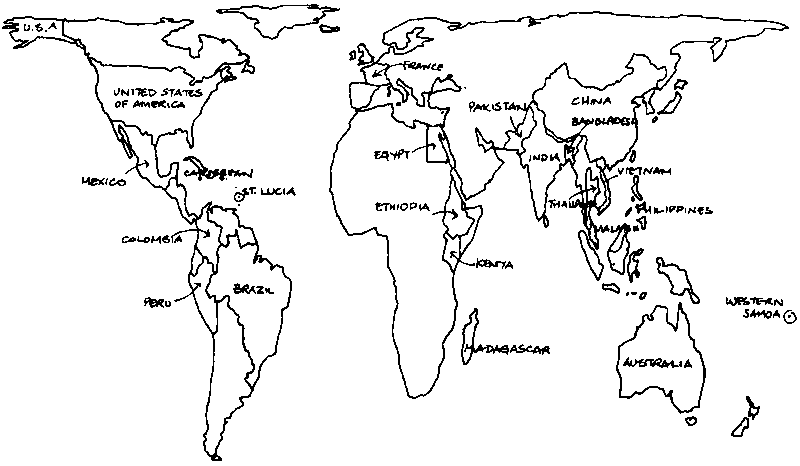
Figure
|
| ||||||||||||||||||||||||||||||||||||||||||||||||||||||||||||||||||||||||||||||||||||||||||||||||||||||||
Articles on herbal medicines that have appeared in back issues of OUTREACH
|
|
issue |
page(s) |
|
The toothache tree |
16 |
14-15 |
|
Relieving muscle pains |
40 |
3-5 |
|
Plants and health: news in brief |
40 |
5-6 |
|
The Glory lily |
40 |
6-7 |
|
| ||||||||||||||||||||||||||||||||||||||||||||||||||||||||||||||||||||||||||||||||||||||||||||||||||||||||
Contents
Using the chart below, you can see at glance which fields of interest are touched upon in this OUTREACH pack.
Letters in the chart indicate the following:
a - articles
b - stories
c - activities and games
d - teachers’/parents’ page
e - resources
|
Topic |
General |
Africa |
Asia |
Middle East |
Latin America & the Caribbean |
Deserts |
Forests |
Wetlands |
Oceans |
Mountains |
Grasslands | |
|
Land |
(L) | | | | | | | | | | | |
|
Water |
(Wa) | | | | | | | | | | | |
|
Atmosphere |
(A) | | | | | | | | | | | |
|
Wildlife |
(Wi) |
abcde |
c |
a | |
a | |
ae | | | | |
|
People |
(P) | | | | | | | | | | | |
|
Human Habitation |
(Ha) | | | | | | | | | | | |
|
Health and Sanitation |
(He) |
abcde |
ac |
a | |
ac | | | | | | |
|
Food and Nutrition |
(F&N) | |
| | | | | | | | | |
|
Energy |
(E) | | | | | | | | | | | |
Reading levels:
I - for young children aged 8-10 years
II - for school children aged 11 - 13 and adults with basic literacy skills
III - for teachers and/or people with a secondary education
|
|
Topic |
Reading Level |
|
Articles |
| |
|
Plants that kill can often cure (plus exercise) |
Wi/He |
II/III |
|
War on drugs: the tobacco connection |
He |
III |
|
Traditional medicine to graduate |
He |
III |
|
Indigenous treatment for drug dependence in Thailand |
Wi/He |
III |
|
Identifying health protecting customs |
He |
II/III |
|
Revival of traditional medicine in Amazonia |
Wi/He |
II/III |
|
Biodiversity and health |
Wi/He |
III |
|
Barefoot doctors |
He |
II/III |
|
How a rainforest in Western Samoa was saved |
Wi |
II |
| | | |
|
Stories |
| |
|
Pills and potions |
Wi/He |
II |
| | | |
|
Activities and Games | | |
|
The effect of plant chemicals on animals |
Wi |
II/III |
|
A disappearing storehouse of medicinal plants |
Wi/He |
II |
|
The effect of plant chemicals on humans |
Wi/He |
II/III |
|
Traditional herbal medicine and ‘modern’ medicine |
He |
II/III |
|
Using local plants to treat intestinal worms |
Wi/He |
II/III |
|
Treating cuts and wounds |
Wi/He |
II/III |
|
A simple and effective cough syrup we can prepare at little cost from the plants we find around us |
Wi/He |
II/III |
|
Decode the drug |
Wi/He |
II |
| | | |
|
Teachers’/Parents’ Page | |
|
|
Discovering the uses of medicinal plants in your neighbourhood |
Wi/He |
III |
| | | |
|
Resources |
| |
|
Understanding medicinal plants teaching materials |
Wi/He |
III |
|
Film: Jungle pharmacy |
Wi/He |
III |
|
Film and teaching suggestions - Herbal medicine: fact or fiction |
Wi/He |
III |
|
| ||||||||||||||||||||||||||||||||||||||||||||||||||||||||||||||||||||||||||||||||||||||||||||||||||||||||
Plants that kill can often cure (plus exercise)
Plants are chemical factories. From simple starting points of water, carbon dioxide, oxygen, nitrates, a few trace elements and many enzymes, they can manufacture intricate chemical compounds.
Some of these chemicals are produced to protect the plant from grazing animals or other plants that may try to grow too near and compete for light or nutrients. If the plant does not have a physical way of protecting itself - by spines, hairs or thick coverings, for example - it is very likely to have survived by its chemical wits.
Here are examples of how plant poisons foil pests:
* Tomatoes and potatoes make a chemical that prevents creatures from digesting their food, and these pests starve to death.* The wild potato pretends to be a frightened aphid by producing a chemical these insects use to signal fear to one another. Believing fellow aphids are in danger, these pests run away.
* Chemicals called limonoids, produced by citrus fruit, may taste bitter to us, but they kill or stunt the growth of insect pests.
* Members of the carrot family produce a sneaky poison. A pest chewing leaves in the shade of the plant is safe. But once out in the sun, the chemical changes into a deadly poison.
Aspirin, quinine, opium, curare and hundreds of other drugs have evolved in plants as chemical weapons against pests. The drugs work because they change the body’s chemistry. When a small creature - say, a beetle - eats a meal containing a drug, the animal may get a big enough dose to drive it mad, make it ill, prevent it from having babies, even kill it. As we are so much larger than a plant’s intended victim, if we take a beetle-size dose, our body chemistry changes but not so drastically.
Medicines are derived from chemicals that form plants’ chemical warfare. So medicines are by nature poisons. While drugs can be useful in treating disease and in surgery, these same chemicals may be harmful - even deadly - to humans in large doses.
Exercise
Look closely at an orange skin. Each dot on its surface holds a droplet of oil inside. That oil, when released, smells delicious to us, but it is deadly to insects.
Sniff the orange. Then, break the skin with your fingernail as Sniff the orange. Then, break the skin with your fingernail as if you were an insect trying to get into the fruit. Sniff again.
Grate the whole surface of an orange, and put the grated skin into a bottle. A lot of oil is released, and this can kill flies and many other insects within two hours.
Rub grated orange skin into your dog’s fur to kill its fleas. The dog will smell “grate” too!
|
| ||||||||||||||||||||||||||||||||||||||||||||||||||||||||||||||||||||||||||||||||||||||||||||||||||||||||
The effect of plant chemicals on animals
World Wide Fund for Nature (WWF-UK)
Weyside
Park,
Godalming, Surrey GU7 1XR
ENGLAND
The activity below is taken from:
“Science for
Survival: Plants and Rainforests in the Classroom” by Adam Cade, published
in 1988 by the Richmond Publishing Co. Ltd. Copyright: Adam Cade, Richmond
Publishing Co. Ltd., WWF-UK
This publication forms part of the WWF-UK Environmental Education Project. The activity may be reproduced for non-profit, educational purposes provided the source is acknowledged.
___________________
Rainforest plants seem to possess many more chemical than physical defences. Their simple, thin leaves and bark offer very little physical protection against grazers such as monkeys or insects. So, more often then not, the plants live by their chemical wits.
Rainforest people have used naturally-occurring herbicides and pesticides for a whole range of uses. Many animals in the rainforest are hunted using poison darts. For example, in Malaysia, the Orang Asli people use the milky sap from the Ipoh tree for their blowpipe darts as it contains a toxin called antiarin. The Punan people of Sarawak, Malaysia, also use this latex to heal festering wounds or snake bites. The antidote to this poisonous plant chemical is obtained from the bark of a local shrub.
In this investigation, you will find out how effective different plants are as pesticides.
You will need
Plastic aquarium with lid (or other containers)
Snails/slugs
(unfed for 2 days)
Filter paper squares (2x2 cm)
Plant leaves (lettuce,
cabbage, carrot, bracken, rhododendron, rosemary)
6 beakers

Choice of 6

No choice
What to do
1. Prepare plant leaf solutions by heating samples of the above leaves separately in beakers of water.2. Soak a filter paper square in each of the six plant leaf solutions.
3. Dry the squares and write the plant name on each square in pencil.
4. Set up a food preference test in one of the following ways:
a) 6 animals in 1 container with 1 of each of the squares.
b) 1 animal in 1 container with 1 square. Repeat 6 times with different squares.
5. After about 24 hours record qualitatively or quantitatively how much of each of the squares has been eaten.
Discussion of results
Is there any indication that any of the plant solutions used contain chemicals which protect the plant from being grazed? Explain your answer.
Extension
1. Devise and carry out investigations to find out if other plants contain natural pesticides.2. Does concentration of the plant extract have an effect on how useful it is as a pesticide?
3. Try using solvents other than water to prepare plant extracts, e.g. propanone. Does this affect their usefulness as pesticides?
Discussion of results
Write a report of your methods and findings.
Note for teachers
1. Snails and slugs may be able to digest cellulose because they possess commensal bacteria in their gut which produce cellulase enzymes. It may be best to use just one species of similar-sized individuals.2. The amount of each square that is eaten could be found by weighing dry squares before and after the investigation or by tracing round the eaten squares onto graph paper and calculating the area eaten.
3. Some bracken contains cyanogenic compounds (cyanide), as does rhododendron. Rosemary is an aromatic herb containing an essential oil, bitter chemical and tannin. Different solvents for these chemicals will vary their effectiveness. Other plants such as onion, laurel, sage, mint, ginger etc. could be used.
4. This investigation provides an excellent opportunity for discussion of animal welfare issues and respect for life. Obviously pests compete with humans. Research is needed Into environmentally-acceptable pesticides or, better still, repellents. The plant extracts will not kill the slugs or snails but will only act as repellents.
|
| ||||||||||||||||||||||||||||||||||||||||||||||||||||||||||||||||||||||||||||||||||||||||||||||||||||||||
A disappearing storehouse of medicinal plants
The rosy periwinkle (Catharanthus roseus), a relative of some common house plants, has saved three-quarters of the world’s children who suffer from leukaemia, a type of cancer. It has also led research into many synthetic drugs which could be anti-cancerous.

rosy periwinkle
Unscramble the letters below to find out where this plant comes from:
S A C A R A D A G M
Little of the natural vegetation of this island country remains, and most of the rest is in danger. A close relative of the Rosy Periwinkle, Catharanthus coriaceus (also from this island nation) is critically endangered from bush fires. This plant, too, may have valuable chemicals to offer - if it does not become extinct first.
Answer: MADAGASCAR
|
| ||||||||||||||||||||||||||||||||||||||||||||||||||||||||||||||||||||||||||||||||||||||||||||||||||||||||
The effect of plant chemicals on humans
World Wide Fund for Nature (WWF-UK)
Weyside
Park,
Godalming, Surrey GU7 1XR
ENGLAND
The activity below is taken from:
“Science for
Survival: Plants and Rainforests in the Classroom” by Adam Cade, published
in 1988 by the Richmond Publishing Co. Ltd. Copyright Adam Cade, Richmond
Publishing Co. Ltd. WWF-UK.
This publication forms part of the WWF-UK Environmental Education Project. The activity may be reproduced for non-profit, educational purposes provided the source is acknowledged.
Scientists are continually discovering new properties of chemicals found in plants. This is true even for well-known chemicals such as caffeine. We know that caffeine, found in coffee beans, increases the pulse rate and acts as a stimulant, but recent research suggests that coffee may increase our blood cholesterol level, too. Other research has shown that caffeine may have an effect against certain viruses such as herpes.
In the investigation below, you will find out how caffeine affects your pulse rate:
You will need
1 cup of ordinary black coffee
1 cup of decaffeinated black coffee
1 cup of warm water
Stopwatch
What to do
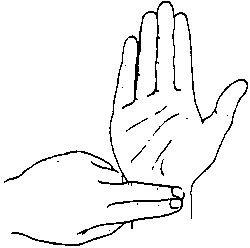
1. Three volunteer pupils (or multiples of three) should record their pulse rates over 1 minute.
Figure2. Each volunteer must then drink one of the three drinks.
3. They must record their pulse rate again over 1 minute at intervals of 5. 10 and 15 minutes.
4. Copy and complete the following table.
|
Period (minutes) |
Pulse rate per minute | ||
| |
ordinary coffee |
decaffeinated coffee |
water |
|
0 | | | |
|
5 | | | |
|
10 | | | |
|
15 | | | |
|
% change in pulse rate (0 - 5 mins) | |
| |
5. Draw a graph of the pulse rate over 15 minutes for each of the three volunteers.
Discussion of results
1. Does the pulse rate vary between the pupils before drinking?
2. Which drink produced the greatest change in pulse rate 15 minutes after drinking?
3. What are the limitations of this investigation?
Extension
1. Repeat the investigation, but do not tell the volunteers which drink they are being given. Does this affect the results?2. Find out what the term placebo means. How is it related to the tests you have just done?
Note for teachers
1. Coffee can raise the pulse rate by up to 20%, often minutes after drinking.
2. Ideally, the temperature of each drink should be the same.
|
| ||||||||||||||||||||||||||||||||||||||||||||||||||||||||||||||||||||||||||||||||||||||||||||||||||||||||
War on drugs: the tobacco connection
Some 10,000 people die worldwide each year from the effect of illicit drugs, writes Peter G. Bourne in the Los Angeles Times, but: “More than 2.5 million die from the effects of tobacco. More Colombians die from the effects of American tobacco than do Americans from cocaine, and more Thais die from our tobacco than do Americans from Southeast Asian heroin.”
At the same time that the administration is campaigning to prevent drug trafficking to the U.S., writes Bourne, who is president of the American Association for World Health, “our government is actively promoting the sale of U.S. tobacco products to the rest of the world.” It has “threatened three countries with trade sanctions for refusing to open up their markets to United States tobacco products, and is threatening other countries that have banned or are strictly regulating their advertisement and promotion. It is a modern version of the Opium Wars of the 1840s, when the British sent a military force to compel the Chinese government... to continue to allow its population to be supplied by British and American opium merchants.”
The United States, Bourne argues, “can not plausibly lead the global effort to control drug trafficking while it remains the world’s primary purveyor of drug-related death and disease through the export of its tobacco products.” A shift in U.S. policy “would go far to re-establish the sagging credibility of the President’s anti-drug effort and provide strong leadership for the war on drugs worldwide.”
from: World Development Forum Vol. 7 No. 17, September 30, 1989
World Development Forum is a twice-monthly report of facts, trends and opinion in international development. It is published as a public service by the Hunger Project.
This article may be reproduced, but please credit source.
Address all inquiries to Peggy Streit, Editor, World Development Forum, 1300 19th Street, NW, Suite 407, Washington, DC 20036, USA
|
| ||||||||||||||||||||||||||||||||||||||||||||||||||||||||||||||||||||||||||||||||||||||||||||||||||||||||
Traditional herbal medicine and “modern” medicine
The statements below - which describe either traditional herbal medicine or “modern” western medicines - are incomplete. Fill in the gaps using either the phrase “traditional medicines” or “modern medicines”.
1. Some 40% of _______ come from natural plant or animal products, or contain artificially-produced copies of natural chemicals.2. In the Third World, 75%-90% of rural dwellers (up to 3.5 billion people) rely on _______ as their primary health care.
3. _______ are made in a laboratory, and are tested for quality and strength in order that they may be as safe as possible when used for the correct purpose.
4. _______ have usually been tested so that their effect on human health is known.
5. ______ are part of the local culture, and knowledge about how to prepare and use them has been passed down through the ages from parents to children.
6. _______ are usually packaged so the drugs are sterile and labelled to show the name, strength, safety warnings, expiry date and directions for use.
7. _______ are usually made from plants, whose strength, stability and purity differ with each quantity made.
8. In many cases, the full effects of _______ are not known, but they continue to be used because of cultural habits.
9. _______ are not packaged under laboratory conditions, and so may be contaminated.
10. _______ are rarely labelled with their name, strength, safety warnings or directions for use.
11. In the Third World, many people cannot afford to pay the prices for _______.
12. Pharmacies, hospitals and clinics, where _______ are available, are often located far away from communities where many people live.
13. In less developed countries, _______ offer a cheap, readily available and familiar way of healing.
14. There are useful, useless and harmful _______ and ______
Answers
1. modern medicines; 2. traditional medicines; 3. modern medicines; 4. modern medicines; 5. traditional medicines; 6. modern medicines; 7. traditional medicines; 8. traditional medicines; 9. traditional medicines; 10. traditional medicines; 11. modern medicines; 12. modern medicines; 13. traditional medicines; 14. traditional medicines, modern medicines.
|
| ||||||||||||||||||||||||||||||||||||||||||||||||||||||||||||||||||||||||||||||||||||||||||||||||||||||||
Using local plants to treat intestinal worms
Information on home remedies is from:
“Home Remedies:
Health Care at the Doorstep” World Neighbors in Action No. 18 World
Neighbors, 5116 North Portland Avenue, Oklahoma City, OK 73112, U.S.A.
Source of other information:
“Where There is No
Doctor” by David Werner, published by the Hesperian Foundation, (Copyright
1977)
The Hesperian Foundation, P.O. Box 1692, Palo Alto, California
94302, U.S.A.
If reproduced, please credit these sources.
There are many types of worms and other tiny creatures that live in people’s intestines and cause disease. Here are some remedies - using plants - for the treatment of hookworm, roundworm and pinworm (threadworm).
HOOKWORM
|
Length: 1 cm. |
|

Hookworm infection can be one of the most damaging diseases in childhood. Hookworms may be present in the gut in large numbers without a worm ever being seen in a person’s stool (faeces). Any child who is anaemic, very pale or eats dirt, may have hookworm. If possible his/her stools should be tested.
How hookworms are spread
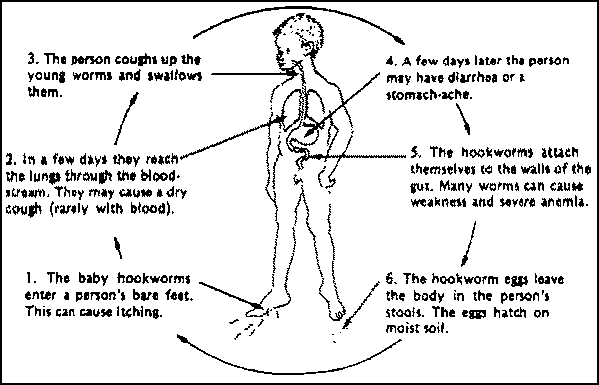
Figure
Treatment
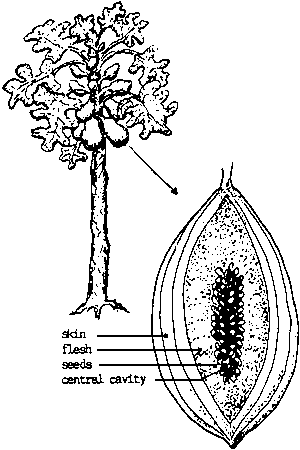
Eat ground seeds of papaya, or chew whole seeds.
Adults: Take 1 tablespoon (15 ml.) before bedtime, after a light meal.
Children over 6 years old: Take 1 teaspoon (5 ml.)
(Pregnant women should not use this remedy.)
Treat anaemia by eating foods rich in iron. Meat, fish, chicken and eggs are high in iron. Liver is especially high. Dark green vegetables, beans, peas and lentils also have some iron.
Prevention
Build and use latrines.
Do not let children go barefoot.
|
Ripe papayas or pawpaws (Carica papaya) are rich in vitamins and also aid digestion. Eating than is especially helpful for weak or old people who complain of upset stomaches when they eat chicken, meat or eggs. Papaya makes these foods easier to digest. |
ROUNDWORM (Ascaris)
Length: 20 to 30 cm.
Colour: pink or white

Figure
Many roundworm in the intestines may cause discomfort, indigestion and weakness. Children with many roundworm often have very large, swollen bellies. Rarely, roundworm causes asthma, fits or a dangerous obstruction or blockage in the gut. When a child has a fever, the worms sometimes come out in the stools or crawl out through the mouth or nose. Occasionally, they crawl into the airway and cause gagging.
How roundworms are spread
Through lack of cleanliness, the roundworm eggs pass from one person’s stools to another person’s mouth. Once the eggs are swallowed, young worms hatch and enter the bloodstream. This may cause general itching. The worms then travel to the lungs, sometimes causing a dry cough or, at worst, pneumonia with coughing of blood. The young worms are coughed up, swallowed and reach the intestines, where they grow to full size.
Treatment
(1) Papaya milk (the liquid that oozes out when an unripe papaya fruit is squeezed) is an adult remedy. Take 1 teaspoon (5 ml.) the first thing in the morning for 2 days.(2) Treat with banana root ash. Mix 1 tablespoon (15 ml.) into a glass of water and allow it to stand overnight. Drink the clear fluid at the top of the glass the first thing in the morning.
Prevention
Follow basic rules of cleanliness. For example:
Use latrines.
Wash hands before eating or handling food.
Protect food from flies.
PINWORM (Threadworm, Enterobius)
|
Length: 1 cm. |
|

Pinworms are not dangerous, but itching may disturb a child’s sleep.
How pinworms are spread
These worms lay thousands of eggs just outside the anus (ass hole). This causes itching, especially at night. When a child scratches, the eggs stick under his/her fingernails, and are carried to food and other objects. In this way, the eggs reach the child’s own mouth or the mouths of others, causing infections of pinworms.
Treatment
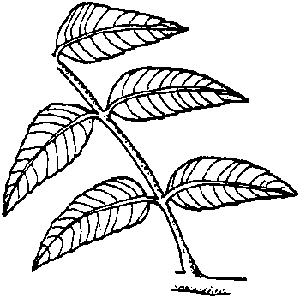
Pinworm can be treated with ground tender leaves of the neem tree. Each morning for 7 days, adults should take 1 teaspoonful (5 ml.) and children, ½ teaspoonful (2½ ml.). Stop taking leaves for the following 7 days. Then, repeat the same treatment for 7 more days. Total duration of treatment: 21 days.
Also, put vaseline in and around the sufferer’s anus at bedtime to help stop itching. A child who has pinworms should wear tight nappies (diapers) or pants while sleeping to prevent scratching of anus. Cut the child’s fingernails short.
|
The leaves of the neem tree (Azadirachta indica), when ground up or boiled, may also be used in the treatment of scabies. Add tumeric powder to the concentrate, and for 3 days apply it to the skin after bathing. |
Prevention
Cleanliness is the best prevention of pinworm. Even if medicine gets rid of the worms, they will be picked up again if care is not taken with personal hygiene. Pinworms only live for about 6 weeks. By carefully keeping a child clean, most of the worms will be gone within a few weeks, even without medicine. Wash the child’s hands and buttocks (anal area) when he/she wakes up and after the child has a bowel movement. The child should always wash his/her hands before eating. Change the child’s clothes and bathe him/her often - wash the buttocks and nails especially well.
|
| ||||||||||||||||||||||||||||||||||||||||||||||||||||||||||||||||||||||||||||||||||||||||||||||||||||||||
Treating cuts and wounds
Many of us cut ourselves by accident. With most accidents, there is not much bleeding. To treat cuts which are not very serious, follow these easy directions:
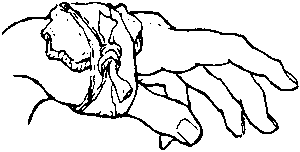
1. Stop the bleeding by applying direct pressure on the wound with a clean cloth or dressing.2. Wash the wound with clean, boiled water in order to prevent infection.
3. Wrap the wound with a clean dressing or bandage, but do not wrap too tightly. If the dressing should become dirty, replace it with a clean one after washing the wound with boiled water again.
4. Again, do not put dirt or soil on a cut. Soil carries germs.
5. If the wound becomes infected, seek the help of your clinic or doctor.
Source: Pied Crew’s Environment Special Magazine
Health issue 1: “First Aid”
Pied Crow, CARE/Kenya,
P.O. Box 43864, Nairobi, KENYA
|
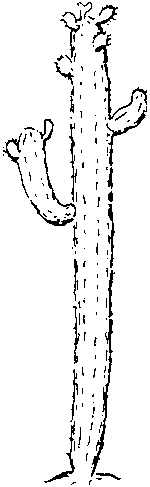
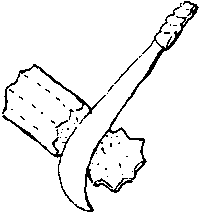
HOW A CACTUS CAN HELP STOP A WOUND FROM BLEEDING Cactus juice can be used to clean wounds when there is no boiled water and no way to get any. Cardon cactus also helps stop a wound from bleeding, because the juice makes the cut blood vessels squeeze shut.
Source: “Where There is No Doctor” by David Werner
published by the Hesperian Foundation, 1977. |
|
USING GINGER TO TREAT A CUT
1. Remove the skin from a piece of ginger, wash it and pat dry with a clean cloth. Source: “Home Remedies: Health Care at the
Doorstep” World Neighbors in Action No. 18 |
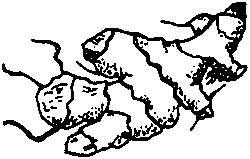
|
| ||||||||||||||||||||||||||||||||||||||||||||||||||||||||||||||||||||||||||||||||||||||||||||||||||||||||
Understanding medicinal plants teaching materials available from World Neighbors
TEACHING RESOURCES
World Neighbors International Headquarters
5116
North Portland Avenue
Oklahoma City, OK 73112, U.S.A.
With the help of many friends all over the world and especially in the Philippines and Indonesia, World Neighbors, in cooperation with AKAP, has produced a six-part filmstrip series, a set of four full-color posters and a 48-page booklet on the use of medicinal plants entitled Understanding Medicinal Plants.
The six filmstrips contain a total of 213 full-color, horizontal frames which are numbered consecutively so that they may be mounted and used as slides. There are over 100 different plants pictured and identified by name and use. The filmstrips are subtitled:
· Part One - The Role of Traditional Medicine
· Part Two - Aromatic Plants
· Part Three - Plants Which Work On The Stomach and Intestines
· Part Four - Plants Which Are Both Food and Medicine
· Part Five - Plants With Powerful Action
· Part Six - Methods of Preparation
The entire set of six filmstrips, along with the script booklet, is available for U.S. $50.00. The four filmstrips in which the plants are identified - Parts Two, Three, Four and Five - are available for U.S. $35.00. Individual filmstrips cost U.S. $9.50.
Sixty-four plants are pictured and identified on the four posters. The plants are grouped as they are in the filmstrips: according to aromatic plants, plants which work on the stomach and intestines, plants which are both food and medicine and plants with powerful action. The set of four posters costs U.S. $10.00.
If you are interested, but haven’t much money, the script booklet alone costs U.S. $5.00. All prices include surface postage.
|
| ||||||||||||||||||||||||||||||||||||||||||||||||||||||||||||||||||||||||||||||||||||||||||||||||||||||||
Traditional medicine to graduate
Mostafa Kamal Majumder
The Panos Institute
8 Alfred
Place,
London WC1E 7EB
UNITED KINGDOM
The following article, “Traditional Medicine to Graduate” by Mostafa Kamal Majumder is reprinted from PANOSCOPE (July 1989 - No. 13).
PANOSCOPE is produced six times a year by the Panos Institute. This article may be reproduced but with attribution to Panos.
BANGLADESH July 1989
Faced with all the severe health problems of one of the world’s poorest countries and recovering from two years’ devastating floods, Bangladesh this month opens a new graduate college of medicine.
But the graduates won’t be studying Western medicine. With support from the World Health Organization (WHO), they will be learning the techniques of traditional Unani (Muslim) and Ayurvedic (Hindu) healing.
In an attempt to reach the WHO’S target of “Health for all by the year 2000”. Bangladesh has embarked on a programme to reinvigorate Unani and Ayurvedic medicines alongside the present public health delivery system, which is based on Western medicine.
According to the director of the project for the development of indigenous medicines, Colonel (retd) Ishaque Huq, the traditional healers are already playing the key role in primary health care: they live and operate in the villages, where 85% of the Bangladeshi live, but where physicians educated in Western medicine don’t want to go.
The traditional medicines are very effective, Huq says. Many common ailments such as fever, diarrhoea, dysentery, piles, indigestion, common colds, coughs, headaches, cuts and burn injuries, can be tackled at the village level by the use of herbs and without imported technology.
Now Ayurvedic and Unani medicines have been put under the national drug administration, and efforts are underway to impose quality and price control.
So far, 850 drug manufacturing licences for the traditional systems have been issued. But quality control has been difficult - because an individual item of medicine can have as many as 50 ingredients, and different manufacturers follow different formulas according to different books.
A standard national formula for the Unani and Ayurvedic systems is being prepared by an expert committee with WHO assistance and this will make quality control easier. The government has pledged to open a separate directorate under the Ministry of Health and Family Planning, to deal with the traditional systems.
Meanwhile, about 600 traditional healers who have had no formal education or training have been given two-month crash courses to help them be more effective in their work.
The new graduate college will offer a six-year course including a one-year internship in an attached 100-bed hospital; 50 students will be trained in Ayurvedic, and 50 in Unani medicine. The course curriculums have been finalised and 10 specially trained teachers appointed.
The two traditional systems have been popular for centuries throughout Bangladesh - especially in the rural areas where Western medicines were unavailable until recently.
Long neglect and official patronage for Western medicine forced the traditional systems into decline. The systems also suffered two major historical setbacks: the partition of India, and later the separation of Bangladesh from West Pakistan.
After the 1947 partition of India, most of the qualified Ayurvedic physicians left Bangladesh (then called East Pakistan). The kitchen gardens of essential medicinal plants that they had individually maintained were lost with them.
The second setback came during the 1971 war of independence which created Bangladesh. Jogesh Chandra Ghose, the soul behind the country’s biggest Ayurvedic pharmacy - the Sadhana Aushadhalaya - was killed and the owner-managers of the biggest Unani medicines manufacturers, Hamad Dawakhana, left for Pakistan. Before 1971, the Sadhana Aushadhalaya pharmacy had even exported medicine.
Under the new plans, says Ishaque Huq, one old Unani medical college - which produced only secondary-level diplomas - is to be redeveloped, and three more higher secondary level Unani and Ayurvedic colleges are to be established at Chittagong, Khulna and Rajshahi. The government is also supporting 10 other privately run colleges.
At present, there are about 700 Unani and Ayurvedic physicians who have higher secondary level diplomas and 500 others trained by way of short courses. An estimated 30,000 healers are also practising in market-places, on trains, launches, steamers, and buses.
In comparison, about 12,000 Western-style graduate doctors operate through half a dozen specialised medical institutes, eight medical college hospitals, about 60 district hospitals and about 450 health complexes at local levels under the public health care delivery system.
But where will the traditional healers get continued supplies of the precious medicinal plants they need? Some 300 such plants out of about 500 identified so far in the country are now in regular use, says Ahmed Mozharul Huq, the Chief Scientific Officer of the Bangladesh National Herbarium.
According to one estimate, he says, the 56 major Unani and Ayurvedic medicine manufacturers each year use about 408 tonnes of fruit, seeds and tree bark, 336 tonnes of shrubs, and 386 tonnes of herbs. But the large medicine manufacturers do not have plantations of their own, and collect raw materials through agents or markets.
Continued extraction of medicinal plants from jungles without any effort at planned cultivation and conservation has made about 25 species of plants so scarce that their collection from forests is no longer viable commercially, says a pharmacist at the local Ayurvedic pharmacy. Hence large-scale producers have started importing such plants.
Mostafa Kamal Majumder is a Bangladeshi journalist specialising in development issues.
|
| ||||||||||||||||||||||||||||||||||||||||||||||||||||||||||||||||||||||||||||||||||||||||||||||||||||||||
Film: Jungle pharmacy
FILM RESOURCES
The information below is taken from:
MOVING PICTURES
BULLETIN issue: January 1989.
MOVING PICTURES BULLETIN, published by TVE,
is a quarterly guide to films on development and the environment.
COUNTRY: UK
YEAR: 1988
LENGTH: 52’
LANGUAGE: English
PRODUCTION CO: Central Television for Channel 4, with WWF International and Television Trust for the Environment
PRODUCER: Herbie Girardet
DIRECTOR: Jamie Hartzell
DISTRIBUTOR: Central Independent Television International, 35-38 Portman Square, London WIA 2HZ. Telex: 24337
THIRD WORLD DISTRIBUTION: Television Trust for the Environment, 46 Charlotte St. London WIP ILX. Telex: 291721
As international concern grows over the plight of the world’s remaining tropical rainforests, JUNGLE PHARMACY investigates the untapped wealth of medicinal plants now threatened with extinction in the Amazon - and the traditional knowledge of the shaman, the tribal healers, whose fate is bound up with that of the forests.
Over a quarter of Western medicines contain plant toxins - half deriving from tropical forest species. Forest plants have been the source of some of the most effective drugs in the history of pharmacology; quinine - crucial in the fight against malaria; curare, used as a muscle relaxant in major surgery; Madagascar’s rosy periwinkle, providing an important new treatment for leukaemia and Hodgkin’s disease. There is even the possibility that, in the future, tropical forest species may yield a cure for Aids.
But so far only 2% of forest flora have been screened for their pharmaceutical potential. Jamie Hartzell films a medicinal plant course in the Peruvian jungle village of Santo Rosa, where groups of Indians have come together to pool their knowledge of plant remedies. The use of plants varies from tribe to tribe: the aim of the course is to keep the knowledge of their properties alive. Many of these remedies are currently being investigated in the research department run by Professor Norman Farnsworth at Chicago’s University of Illinois. Even if the research yields no marketable drugs, it provides solid medical justification of their use by the Indians.
The danger is that Western drug companies will simply exploit local knowledge of plant species for their own profit, without the Indians reaping any of the economic benefit. This, says anthropologist Darrell Posey, would be just another form of neo-colonialism - ransacking a systematic knowledge built up over thousands of years.
Posey has spent the last 12 years in northern Brazil studying the Kayapo Indians and their use of the forest. The Indians, he believes, demonstrate an ideal model for sustainable development, managing the forest in a way that actually increases its biological diversity. And biological diversity may be the key to feeding a growing world population. As Dr Albers Schonberg, director of natural products at Merck, New Jersey, explains: “if we want genetic engineering, we need genetic diversity.” The hope must now be that new scientific interest in the flora and fauna of the tropical forests can bring a halt in their wholesale destruction.
|
HOW TO GET HOLD OF THE FILMS AVAILABILITY: Unless otherwise specified, the distributor deals with requests for both TV sales and non-theatric use (ie, showing the films to a non-fee-paying audience). Some films may only be available for broadcast. Films available for non-theatric use are usually supplied on VHS cassettes which you can keep. Some films can be borrowed free of charge or hired for a small fee. FORMATS: Most films are available on all video cassette formats, (U-Matic High Band, U-Matic Low Band, VHS and Betamax), and on 1” tape for broadcasters. Some films may also be available on 16 mm. Always specify which formal you require. LANGUAGE VERSIONS: If the film is not available in your language, you can usually obtain an international version (ie, sound without commentary) and a commentary script which can be translated. This enables you to dub the film into your own language. |
|
| ||||||||||||||||||||||||||||||||||||||||||||||||||||||||||||||||||||||||||||||||||||||||||||||||||||||||
Indigenous treatment for drug dependence in Thailand
Vichai Poshyachinda
United Nations Educational, Scientific and Cultural
Organization (UNESCO)
7 place de Fontenoy,
75700 Paris,
FRANCE
The following article is reprinted from:
Impact of
Science on Society no. 133 (Vol. 34, No. 1) 1984: “Man’s
addictions and how to deal with them”
The text may be freely reproduced and translated provided that mention is made of the author and source.
The author, a physician, is associate professor and chief, Drug Dependence Research Centre, Institute of Health Research, in Bangkok. Dr Poshyachinda wishes to thank Professor Dr Payom Tantiwatana, of the Faculty of Pharmacy at Chulalongkorn University, for her significant contribution to this article. He adds that ‘without her knowledge of herbal medicine, this report could not have been completed’. The author’s address at his institute is: 5th Flow, Institute Building 2, Soi Chulalongkorn 62, Pyathai Road, Bangkok (Thailand).
Treatment for drug dependence in Thailand, available for more than a century, is administered in Buddhist temples and is based on herbal medicine. The rate of success of this farm of treatment is at least equal to that based on modern drugs, begun about twenty-five years ago. This confirms the valuable contribution of the traditional cultural and social environments to the cure and rehabilitation of drug dependants. The need to study further such therapeutic experience is emphasized.
The history of opium dependence in Thailand has existed for many centuries. In the early days, society witnessed behavioural manifestations and suffered devastating problems related to opium dependence. Society attempted to contain and eradicate its problems by legally enforced control. But records exist also that reveal experience and knowledge based on therapeutic practice. This knowledge and its techniques could be specified as the earliest indigenous development in Thailand of treatment for opium dependence.
Although modern drug-dependence treatment has been widely established since 1959, the service can hardly meet the need for treatment of the country’s large and widespread population dependent on drugs. In response to need and perhaps out of the humanitarian concern for the suffering of those dependent on drugs, a fair number of treatment techniques are again emerging from the public sector-concurrent with but independent of services emerging from modern medical institutions. Thousands of the drug-dependent have already received this indigenous treatment. Even though the effectiveness of many of these indigenous models remains unclear, the evidence as to their remarkable acceptability by drug-users and their partial success are undeniable. Because modern treatment cannot yet claim dramatic success, it is perhaps time to appraise critically the indigenous practice. The key to its success (or failure) can be valuable knowledge in the further development of appropriate treatment for drug dependence.
Historical review
The withdrawal signs and symptoms of opium dependence - yawning, feeling hot and cold, weakness, nausea, vomiting, and death from diarrhoea - were clearly described in the edict of King Rama II that declared the prohibition of the purchase, sale and smoking of opium (1801).1 Later, this knowledge was officially prescribed as the diagnostic criteria of opium dependence for violators of the opium-smoking prohibition who would not confess.2 A description of the treatment for opium dependence first appeared in a royal decree prohibiting the smoking of opium (1809).3 This decree advocated self-treatment by a gradual reduction of the daily dose until complete abstinence by the addict.
The earliest major report on the treatment for opium dependence appeared in official records during the reign of King Rama V. This report summarizes information gathered in 1908 and subsequent experience with the experiment in treatment between June 1909 and July 1910.4
The information assembled in 1908 revealed that opium dependence was being treated by many types of medicine, most of which contained opium dross mixed with other ingredients. There was a special recipe, called Japanese medicine, by which the drug dependant could effectively replace the smoking of opium, taking one tablet each morning and one each evening. This medicine induced a feeling of intoxication inferior to the euphoric effect of opium smoke. The conclusion was reached that the opium smoker became dependent on this medicament rather than on opium. Another method for treatment by herbal medicine (see box) was studied extensively by interviewing a traditional Chinese healer and his clients. At that time, this treatment had been given to twenty-four opium dependants. All but one had relapsed to the use of opium. Interviews were made of four of the patients, one of whom was the non-relapsed subject just mentioned.
|
Herbal treatment for opium addiction | |||
| | |||
|
The dependent subject is first given a physical examination, for patients having tuberculosis, cancer or fever cannot be treated. (A patient with fever can be treated after disappearance of his fever.) The best time for treatment is during the rainy and cold seasons. On the first day, the patient takes opium as usual. Recipe A is given the first time in the evening, between 5 and 6 o’clock. During the night, recipe A is given three times: at 9, at midnight and at 3 in the morning. On the second day, recipe A is given at dawn, at 9 a.m., then at 2, then at 5 p.m. and during the night as in the first night. The same procedure is repeated on the third day. If there is much restlessness during the second day, the intervals between doses can be shortened. If there are signs of throat irritation, the patient can be given recipe B. | |||
| | |||
|
The patient usually has no abnormal signs and symptoms the first day. Diarrhoea and a craving for opium commonly occur the second day; on the third day, the diarrhoea is more severe, and some patients may be delirious. There may be a relationship between the severity of these signs and symptoms and the degree of dependence. Close surveillance is required during the second and third days of treatment. On the fourth day, the patient takes steam-baths in the morning, noon and evening (see recipe C); during the two days following, the patient steam-bathes in the morning and evening only. The diarrhoea and craving for opium will stop on the fourth day. | |||
| | |||
|
The total time of treatment is thus six days. | |||
| | |||
|
Recipe A (powdered drug): | |||
|
Pomegranate rind (Punica granatum Linn.) |
2 portions |
} | |
|
Bark of pomegranate root |
1 portion |
} |
Combine to form first part |
|
Bark of lime root (Citrus limon Burm.) |
1 portion |
} | |
|
Bark of Plumeria acuminata Ait. |
1 portion |
} | |
|
Root of Datura metel Linn. |
2 portions |
} |
Combine to form second part |
|
Seed of Datura metel Linn. |
1 portion |
} | |
| | |||
|
The six ingredients are dried in the sun and ground to powder, the Plumeria acuminata Ait. and Datura metel Linn. also being roasted before grinding. | |||
| | |||
|
The ingredients are stored separately, then mixed before use. Each dose weighs about 1.1 g, taken as a suspension in hot water. | |||
| | |||
|
Recipe B (for irritation of the throat): | |||
|
Use table salt mixed with lime juice, to which is added a trace of Borneol (a camphor-like preparation, the name of which is related to Borneo). Take as required to relieve irritation. | |||
| | |||
|
Recipe C (for steam-bath): | |||
|
Loves of Zingiber cassumunar Roxb. | |||
|
Salt | |||
|
Betel (Piper betel Linn.) leaves | |||
|
Leaves of Blumea balsamifera DC | |||
|
Jasmine (Fasminum sambac Ait.) leaves | |||
|
Guava (Psidium guajava Linn.) leaves | |||
|
Pomegranate (Punica granatum Linn.) leaves | |||
|
Leaves of Piper longum Linn. | |||
|
Krathum (Anthocephalus cadamba) leaves | |||
| | |||
|
The ingredients are mixed in equal portions, amounting to about two large handfuls for a large pot of water. The water should cover the ingredients and be heated to the boiling point. The steaming pot is then brought to the steam-bath, to which it is added. | |||
| | |||
|
(Note: The above is taken from a document originally prepared in the Thai language.) | |||
After the interviews, the traditional Chinese healer was recruited in the official service and entrusted with the treatment of opium-dependent convicts. Treatment was also offered to public volunteers. Between June 1909 and July 1910, 375 cases were treated: 201 convicts and 174 volunteers. The report on these stated that there were no relapses and that, furthermore, no physical danger was observed. No description was offered, however, as to the method of evaluation or its duration. Five additional cases were then treated under close observation of the authorities, from the preparation of the medicine to the termination of the treatment.
The report concluded that this treatment with herbal medicine has three distinct advantages. First, the treatment is applicable to all opium-smokers, regardless of the duration of their dependence; the treatment is contra-indicated in opium smokers suffering from complications of tuberculosis or fever. Secondly, after treatment, the patient is not only free from the craving for opium; he is also repelled by the smell of opium smoke. And, thirdly, a relapse towards the use of opium can occur only because of a determination to smoke the product (rather than because of a craving).
In addition to this report, there is also a record of the experience of four physicians (two Thai and two foreign) who, after learning the procedure, had treated two groups of opium smokers - two and nine cases, respectively. After treatment, the subjects were asked to try opium-smoking under observation. Both groups showed signs of revulsion to the smell of opium smoke, and vomited on attempting to smoke. One subject was interviewed one year after treatment; he reported a persistent feeling of repulsion to the smell of opium smoke and that he lacked a craving for opium.
Because of these encouraging observations, the authorities launched another clinical trial with the study of thirty-three cases.5 The study of these treatments was rather similar to what is described in the report mentioned above. The follow-up (although the number of cases and time elapsed were not specified) revealed two cases of relapse.
Current indigenous treatment
To Thais (particularly the rural population), the Buddhist temple is not only a religious institution; it is an all-embracing sanctuary where people commonly enter in order to seek education, counselling, temporary shelter and even the treatment of illness. The strong belief in Buddhism is witnessed by the fact that much of the rural population, frequent drinkers of alcoholic beverages, will abstain during the Buddhist Lent. Priests are fully aware of the public’s recognition and expectations regarding their role in society. Hence it is most natural that the tremendous need of the drug-dependent population for treatment should lead them to the welcoming hands of the temple. Countless drug dependants, through their own volition or because of family coercion, have entered priesthood in search of abstinence from drugs. Throughout the country, a vast number of Buddhist temples and their priests serve in this role at the present time. The methods of care, the experience and its results, behind temple walls, remain an unrivalled pool of traditional knowledge.
During the last two decades, a few of the temples have gradually developed into treatment centres for drug dependence. They have become well known not only in Thailand, but abroad as well. The treatment records of centres such as that of Tam Kraborg in Saraburi Province, the Tam Talu centre in Ratchaburi Province, and Wat Pah Pang in Chiangmai Province show registration of patients from Burma, India, the Lao People’s Democratic Republic, Malaysia, Singapore and elsewhere. The number of drug dependants treated is fairly large, e.g. 35,962 cases at Tam Kraborg between 1966 and 1977,6 about 10,000 cases at Tam Talu between 1973 and 1997,7 and 3,483 at Wat Pah Pang between July 1977 and December 1978;8 at Wat Tha Shee Sri Su Munklaram, there were 1,893 cases between 1975 and 1979.
Treatment method in Buddhist temples
It should be mentioned at this point that the following material is derived, through arbitrary selection, from the five well-known centres; Tam Kraborg and Tam Talu, Wat Pah Pang and Wat Sri Soda, and Wat Tha Shee Sri Su Munklaram. These are considered to have unique approaches to treatment. It is beyond the scope of this report to provide detailed descriptions of each temple’s treatment method, but some have already been reported elsewhere.9-13
All temples have an interview procedure to confirm the voluntary motivation of each patient. The Tam Kraborg centre has the most elaborate procedure, whereby the patient learns in detail of the treatment’s procedures and regulations and he is asked to reconsider carefully whether he still wishes to enter treatment. For admission to treatment, an identification document is commonly required, and the client must fill and sign an enrolment form. The registrant is required to be accompanied by a parent or other senior relative to certify the enrolment form.
Various types of records are kept relating to basic demography, history, and types of drug use. Physical fitness to receive treatment is evaluated according to the knowledge and means available locally. Some temples having volunteer health workers can give professional physical examinations. Registrants appearing too weak or having obvious, complicating illness are usually barred from treatment.
The treatment proper to each temple has its own characteristics. Wat Sri Soda uses spiritual treatment, with the patient carrying out a mock funeral of his evil self. Its implication is the rebirth of a new, clean person. Herbal medicines are not used. The dependant on opiates who has severe withdrawal problems is given relief by taking tablets containing some opium. Intensive counselling and religious teaching are offered.
Patients at Tam Kraborg and Tam Talu are required to take a vow of abstinence for life, on the occasion of a religious ceremony, and a regimen of herbal medicine taken orally follows. At Tam Kraborg, a herbal steam-bath is taken in conjunction with the taking of herbal medicine orally. At Tam Talu, supportive treatment is given in the form of patent drugs-tonic and vitamins, while at Tam Kraborg none is given. After treatment with herbal medicine, a period of physical recuperation follows, accompanied by periodic counselling and religious teaching.
Various forms of physical exercise are encouraged. After this period, the patients can elect to enter the priesthood - but they must demonstrate their sincerity in this respect. The length of time they spend in the priesthood is determined, of course, by their own wishes. At Wat Pah Pang and Wat Tha Shee, the treatment relies solely on herbal medicine. The former uses herbal medicine taken only orally, while the latter supplements herbal remedies taken orally with herbal steam-baths.
Medications and mock funerals
Unlike the historical record concerning herbal medications, the recipes for herbal medicine are not currently known outside the temple. Tam Talu is the only temple using three recipes; each is reserved for clients who are dependent on specific drugs. One recipe is reserved for those dependent on opiates, while another is kept for those dependent on solvents and cannabis. The third recipe is used in cases of dependence on kratom (Mitragyna speciosa), a local herb containing the stimulant mitragynine, C23H30N2O4.
The other temples have only one recipe, but the dosage is varied according to the severity of dependence and the physical condition of the subject. Observation of the effects on patients, however, demonstrate two types of response. The recipes used at Wat Pah Pang, Tam Talu and Wat Tha Shee induce semi-consciousness or unconsciousness and delirium for periods of a half a day to a day and a half. It is obvious that such an effect is meant to counteract the signs and symptoms of physical withdrawal from the opiates. The herbal action is most likely via the central nervous system.
The herbal remedy used at Tam Kraborg is uniquely different from the others. Severe vomiting is the immediate and only reaction. A priest relates that the herbal substances dean the body of the toxicity produced by the addictive drug. The intended effects of the herbs, in this case, are not totally different from the aims of the mock funeral at Wat Sri Soda. The difference lies in the physical and spiritual means applied. The Tam Kraborg treatment is remarkable from another point of view, too: no attempt is made to relieve the patient of the physical suffering attending the signs and symptoms of withdrawal. The severe vomiting for five consecutive days aggravates, furthermore, the physical suffering - almost as an intentional punishment (although such has never been alluded to).
Among the counselling and religious teachings practised, only the Tam Talu method includes meditation.
Administering treatment
Buddhist temples, like other religious institutions, are supported by public contributions, and their services are subsidized by the community. Tam Traborg and Tam Talu have a high turnover of patients and groups of patrons who organize fund-raising and assist in the temples’ financial management, For the treatment of addicts, there is no regular charge. In some centres, however, where the duration of treatment is fairly long, the administrative organizers advise the patients and their families that contributions are appreciated for the subsistence of their patients.
The daily activities in these temples associated with treatment services require much manpower, and the resident priests and lay volunteers are the temples’ principal resources. Mutual assistance among the patients is another remarkably consistent aid. In Wat Pah Pang and Wat Tha Shee, treatment lasts a few days only and consists of treatment with herbal medicine. The patient’s accompanying parents and relatives take care of the patient until his discharge, and the temples need practically no additional help. Minimal assistance to maintain the simple facilities is easily provided by the resident priests and a few lay volunteers.
Outcome of treatment
In general, then are no drop-outs from treatment at the temples of Tam Kraborg and Tam Talu, there, the duration of the programmes is extremely short and the patients are treated by herbal medicine most of this time. The treatment procedures simply allow no chance that a drop-out will occur. The extended treatment at Tam Talu, however, and the severe physical suffering in the Tam Kraborg programme over a ten-day period have resulted in only a few drop-outs among thousands of patients.
As to drug abstinence, all the temples try to evaluate the outcome by whatever means are feasible under the circumstances. Information is received directly from the abstainers or their families when they return to the temple in order to express their gratitude. Postal inquiries have been conducted by some temples but, because of a lack of systematic approach, the impressions reported by the temples cannot be taken as reliable evaluations. Even so, a certain degree of success is a fact.
Follow-up studies of groups treated at Tam Kraborg and Wat Tha Shee were carried out by the Drug Dependence Research Centre, Institute of Health Research, Chulalongkorn University. In this Tam Kraborg group, the abstinence me after discharge among heroin users from Bangkok was about 20 per cent and, among those from provincial cities, about 30 per cent. Most recidivists resumed using heroin within three months. The users were spending less money on the drug, however; the Bangkok recidivists were spending (on average) about 30 per cent, and those from provincial towns about 40 per cent of what they had spent in the thirty day before admission. The employment status of about 60 per cent of the heroin users reporting abstinence was unchanged, and an improvement was reported in about 30 per cent of the cases. One-third of me recidivists showed further deterioration in their employment status, half remained the same, and about 10 per cent reported improvement.14 The opium smokers (coming mostly from provincial centres) had an abstinence rate of about 50 per cent after six months. Their employment status remained unchanged, but it is to be noted that this group was fairly stable economically to begin with.15
The group from Wat Tha Shee is quite different from that at Tam Kraborg. Instead of being dependants on opiates, these are alcoholics in the majority (about 73 per cent), whereas the opiate dependants constitute about 4 per cent of the group. The group’s abstinence rate six months after discharge is about 60 per cent. The employment status of mot cases (70 per cent) after treatment remains the same, and the rates of improvement and deterioration are about the same.
A few comments
The historical record reflects the existence of a perhaps truly indigenous treatment for opium dependence, as practised in a community by a traditional healer, with its subsequent development by public authorities into an institutionalized programme. The treatment described has depended upon herbal medicine alone. Among the herbs specified in recipe A, Datura metel Linn. appears to be the main ingredient. All parts of this plant contain hyoscyamine, hyoscine and atropine - the first two of these alkaloids having psychotropic action that can induce unconsciousness and hallucination.
Tolerance to the anti-opiates has not been properly studied. In 1978, a physician reported the results of a clinical trial conducted in a rural hospital, using the herbal medicine recipe. His subjects comprised twenty-nine opium dependants and three heroin-takers. A sensation of repulsion to the smoke from opium and heroin was reported in all cases, according to a control study made after the treatment. A follow-up study, made after an unspecified interval, indicated a relapse rate of 23.6 per cent.16 The results of this study, although still inconclusive (according to its author), confirm to a certain extent observations found in the historical record. Further study is much needed in order to understand the pathological action of the alkaloids and other active ingredients of the recipe. The real potential of the herbal medication thus remains obscure.
The brief descriptions of the current, indigenous practices found in the various temples may suffice to demonstrate that - though the treatment was developed in the temples - a certain degree of knowledge concerning modern medical treatment has been blended with the purely native knowledge. The complexity of the treatment has ranged from simple to high, and the uncomplicated treatment by herbal medicine may not be totally lacking a psychological component. Belief in the competence of the religious institution can be a very subtle element in the mind of the patient, inspiring him to enter treatment and supporting him to continue drug abstention after his discharge.
The absence of drop-outs during treatment reflects rather clearly the acceptability of the treatment process, and there are probably many intangible elements influencing this factor. The sanctity of the temple probably offers considerable attraction to those dependent on drugs, whose behaviour is both illegal and antisocial. The sentiments of the transgressor make him particularly sensitive to all forms of threat, even the perceived but unexpressed menace of rejection. The religious domain offers security and, additionally, moral forgiveness rooted deeply in our culture and traditions. The uniqueness of what is offered is founded on a sincere intention to help. Procedures that may appear punitive are justified unquestionably in the best interests of the patient. Modern treatment, with its aura of humanity combined with legal immunity, may compete with the temple only with difficulty.
Community participation; religious codes
The voluntary nature of the personnel engaged in care ensures a dedication leading to an atmosphere of caring and efficiency. There are many advantages to this. To the patient, the feeling of care imparts a sense of peaceful relaxation, it creates a rapport of trust, too. The willingness to serve on the part of the staff reduces bickering conflict and self-centred animosity towards the tiring work. Daily tasks become optimized of themselves, so that there is no need to institute authoritarian management. Another subtle advantage is the absence of a need for an obligatory system of rewards made by management. The whole combination relieves the temple of economic strain and a complex managerial task.
Treatment at the temples is perhaps the closest thing to an ideal model in terms of community participation. Funding support, volunteer staff and family involvement demonstrate the general public’s active engagement, as well as that of both the local community and of families, in the treatment programme.
It would be highly prejudiced to believe that the programme of temple treatment is without disadvantages. The lack of modern knowledge in pharmacology and pathologic physiology, for example, probably causes the temples some difficulty concerning toxicity related to treatment by herbal medicine. Although the efficacy of the herbal recipes is still unclear, acutely systematic observation - through well-designed trial-and-error studies - should be able to enhance the intended effect. The question remains, of course, whether it is feasible to do so, given the currently incomplete state of our knowledge of herbal medicine.
The strong element of community participation which helps to create and maintain the temple treatment lacks a firm organizational infrastructure essential and crucial to the stability and continuity of such service. A large centre suffers more in this respect than a small one because of the heavy dependence upon a fairly large group of patrons for administrative support. The task of maintaining the service is, indeed, taxing to the patrons. There are times when the service must be suspended, to be resumed later, because of lack of management assistance. Such irregularity prevents the temples from offering the full potential of their services. A similar disadvantage is evident among the volunteer personnel. Few can maintain their contributions over extended periods.
Religious codes establishing limits to the activities of the priesthood, particularly in regard to financial matters, leave the temples depending totally upon lay volunteers. With the best of intentions, mismanagement can occur, bringing an undeserved taint to the religious institution. The heavy load causes a strain on the obligatory religious liturgy, adducing much controversy on the orthodoxy of a temple’s overall activities.
Conclusion
Regardless of philosophical considerations, there is no doubt that current indigenous treatment for drug dependence undertaken by the Buddhist temples has brought a major social service to (otherwise unmet) needs of the populace dependent on drugs. And this contribution is one not only in humanitarian service, but also one nude to knowledge and technology in general. Much of this valuable contribution has not yet come to the attention of the official administration and the scientific community. There has been encouraging evidence of such cognizance in recent years, but it is still far from adequate.
Notes
1-16. (Because most of the literature cited by the author is in the Thai language, interested readers should contact the Editor to obtain the author’s complete bibliography by post.)
|
| ||||||||||||||||||||||||||||||||||||||||||||||||||||||||||||||||||||||||||||||||||||||||||||||||||||||||
Identifying health-protecting customs
The challenge for the health worker or educator is not to ‘change people’s behaviour.’ It is to help people understand, respect and build upon what is healthy in their own culture. Every area has unique traditions and customs that protect health. Beneficial customs should be encouraged. Here are some examples:
|
In several parts of the world, people use bee’s honey to treat burns.
The concentrated sugar in honey prevents bacterial growth. Recently, doctors have been experimenting with similar treatment of burns. |

|
In West Africa, villagers eat yams during most of the year. But during the rainy harvest season, eating yams is ‘taboo’. Scientists have found that this custom makes medical sense. Yams contain small amounts of a poison (thiocyanate) that helps control sickle cell anemia. This kind of anemia causes many problems and sometimes death. But it also helps protect people against malaria, So the tradition of eating yams only when malaria is less common (the dry season), helps protect people against both sickle cell anemia and malaria.
|

|
In Mexico, long before penicillin had been discovered, villagers were treating women with ‘childbed fever’ by giving them a tea brewed from the underground fungus gardens of leaf-cutting ants.
It is likely that this fungus is related to penicillin. |

Source: “Helping Health Workers Learn” by David
Werner and Bill Bower, published by the Hesperian Foundation. Copyright 1982,
the Hesperian Foundation.
The Hesperian Foundation, P.O. Box 1692,
Palo Alto CA 94302 U.S.A.
This information may be reproduced without permission of the authors or publisher provided copies are distributed free or at cost - not for profit. The authors would appreciate being sent a copy of any material in which text or illustrations have been used.
|
| ||||||||||||||||||||||||||||||||||||||||||||||||||||||||||||||||||||||||||||||||||||||||||||||||||||||||
A simple and effective cough syrup we can prepare at little cost from the plants we find around us
World Neighbors International Headquarters
5116
North Portland Avenue
Oklahoma City, OK 73112
U.S.A.
The information below is reprinted from:
World Neighbors In Action, Vol. 15, No. 4E “Interest Grows In Nature’s Medicine For Us”
World Neighbors In Action is published by World Neighbors, a non-governmental, non-sectarian, worldwide people-to-people movement, building understanding through cooperative self-help projects in newly-developing countries.
If this remedy is reproduced, please credit: World Neighbors
Much of the information in this newsletter comes from a book entitled “Lampuyan: Ideas For Community Projects On Medicinal Plants”. For more information, write to: AKAP Research, 66 J.P. Rizal, Project 4, Quezon City, Philippines.
Effective Cough Syrup Can Be Made From Tamarind, Ginger and Lime
For simple coughs caused by colds and bronchitis, an effective syrup treatment can be prepared from tamarind leaves, ginger root and lime juice.
This syrup acts as an expectorant, which means it promotes the secretion of mucus or phlegm from the respiratory tract and helps us cough this mucus up and out.
The warming volatile oils are found in tamarind leaves as well as ginger root, so the syrup warms and soothes the respiratory passages. The juice of lime is added for flavoring, but it also contains volatile oil and vitamin C.
This syrup should be used only as a remedy for simple coughs from colds. If the cough persists for more than a week, consult a health worker. This syrup is not a remedy for serious coughs, such as those associated with tuberculosis, whooping cough, diphtheria and pneumonia.
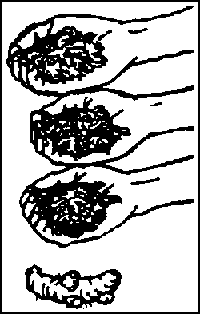
1. Use three handfuls of fresh
tamarind leaves and one medium-size ginger root.
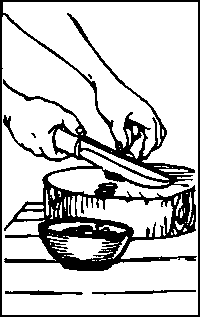
2. Cut the ginger root into thin
slices.
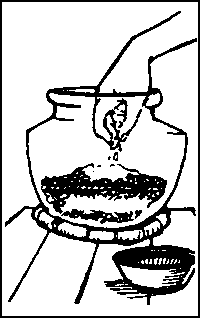
3. Put the tamarind leaves into a
clay pot. Then put the ginger on top of the leaves.
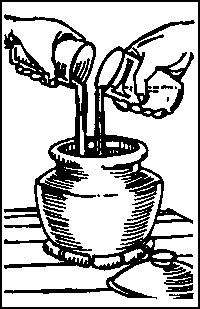
4. Add two glasses of water.
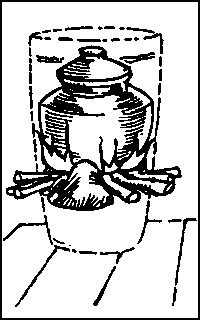
5. Boil for about 30 minutes or
until there is only one glass of liquid.
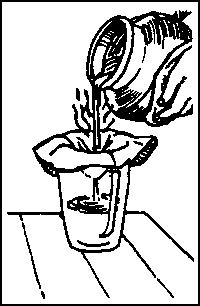
6. Strain the mixture to obtain
the liquid.
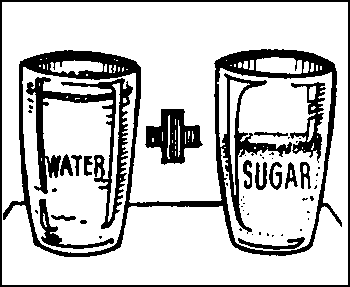
7. Measure the liquid. For every
one glass of liquid, add one-half glass of sugar.
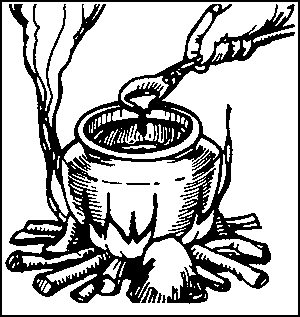
8. Boil the liquid and the sugar
mixture until it becomes a thick syrup.
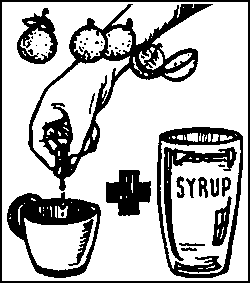
9. Let the mixture cool. Then add
the juice from three to five lime fruits.
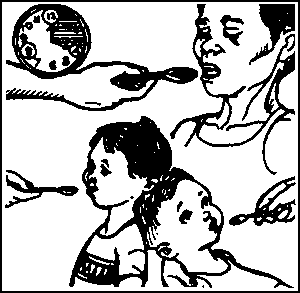
10. Take the syrup every three to
four hours. For adults, take one tablespoon each time. For children, take one
teaspoon each time. For infants, give one-half
teaspoon.
|
| ||||||||||||||||||||||||||||||||||||||||||||||||||||||||||||||||||||||||||||||||||||||||||||||||||||||||
Discovering the uses of medicinal plants in your neighbourhood
TEACHERS’/PARENTS’ PAGE
World Neighbors International Headquarters
5116
North Portland Avenue
Oklahoma City, OK 73112
U.S.A.
The ideas below are taken from:
World Neighbors In Action Vol. 15 No. 4E “Interest Grows In Nature’s Medicine For Us”.
World Neighbors In Action is a newsletter published by World Neighbors.
If reproduced, please give credit to: World Neighbors
The best sources of information on medicinal plants are not found in books. People within your community have the knowledge and the skills for preparing treatments using local plants. The traditional healer knows much, and may be willing to share knowledge if you and your students are sincere in your interest to learn. Older people in your community often have experience in the use of medicinal plants. Everyone has something to share and something to learn.
Below are some ideas on ways to discover the uses of medicinal plants in your neighbourhood. (It would be a good idea to do classwork on plants in general before focussing on medicinal plants. For example, make sure students know about the different parts of plants and their functions.)
* Call together the people for a community meeting where everyone can exchange information and experiences. One person can act as moderator, and other students can take down notes. These notes can be the beginning of your own community handbook.* Organize a field trip for your students to explore the area around your neighbourhood - in the gardens, by the river, up the mountains, in the forest. Ask people who know many of the medicinal plants to be your guides and teachers. You and your students can learn to use your senses in identifying the plants. Remember what each plant and its parts look like. Better still, make drawings. Remember the smells of the leaves, fruits, flowers and bark; how smooth or rough the plant feels; how it tastes - if the guide says its okay to do so. (Be careful not to swallow anything.) Make notes about the plants. Ask your guides questions, too. Do the plants grow only in certain places? At what times of the year do the plants flower and fruit? How are the plants pollinated and how are their seeds dispersed? Are the plants becoming more rare and so harder to find?
* Make a medicinal plant album. Use the notes collected at the community meeting and/or the field trip. Also include the students’ drawings of the plants. Be sure to include all the local names of the plants. Describe the illnesses they act against; the parts of the plants used; how the treatments are prepared and the dosage or method of treatment. Try to present the information so that people who cannot read well may understand it.
If you are interested and able, both OUTREACH and World Neighbors would welcome information about your experiences with medicinal plants. Others might benefit from your knowledge.
Two ways to present information in a medicinal plant album. (An index of plant species and treatments would be useful.)* Start a small garden of medicinal plants. Seeds can be collected from plants growing in the region, or cuttings can be taken from healthy young plants. With some plants, you can divide the roots, taking some but always leaving the main root so the plant can continue to grow.
* involve your local health workers in your medicinal plants projects. They, too, have much to share and learn.

|
| ||||||||||||||||||||||||||||||||||||||||||||||||||||||||||||||||||||||||||||||||||||||||||||||||||||||||
Film and teaching suggestions - Herbal medicine: fact or fiction?
FILM RESOURCES
Below is a description of the UNICEF film, “Herbal Medicine: Fact or Fiction”, and a guide designed to help discussion leaders incorporate the film into a school curriculum or into a pre-planned programme on international development issues. In the guide, activities (designated by an asterisk *) illustrate or enlarge upon the concepts of culture, technology, environment, self-sufficiency and preventive medicine. The film and activities will help students better understand the medical needs of developing nations and consider new approaches to meeting than. (Try some of the activities even if it is not possible to obtain a copy of the film.)
|
178 |
HERBAL MEDICINE: FACT OR FICTION? |
| |
16 mm film |
| |
26 minutes, 6 seconds |
| |
English, French, Spanish, Arabic |
| |
UNICEF co-produced with FAO, PAHO, UNDP, UNDPI, UNEP, UNESCO, UNIDO, WHO, and the New York State Education Department |
SYNOPSIS
Herbal Medicine: Fact or Fiction? makes the case for a humanistic, rational approach to the use of herbal or plant-based medicine. The film is designed to sensitize audiences to this often misunderstood and frequently derided aspect of ancient and modern medicine. If the health care needs of developing nations are to be met by the year 2000, the effectiveness of herbal medicine must be assessed and additional research on its potential contribution undertaken. The film examines both traditional and modern uses of plants in medicine throughout the world and highlights the benefits of using local plant resources instead of importing expensive manufactured drugs. The role of herbs in preventive medicine is explored; the danger of herbal poisoning is also reviewed.

Figure
|
HOW TO OBTAIN THIS UNICEF FILM Limited copies of individual titles are available at no cost to UNICEF National Committees and country offices. Duplication costs will be charged for larger orders. Therefore, please indicate charge code when necessary. UNICEF is pleased to accommodate orders from NGOs, broadcast and cable stations and other interested organizations. Information on duplication costs is available on request. When ordering, please indicate title, order number, language version, format and colour standard, and address requests to: the UNICEF office or National Committee in your
country |
OBJECTIVES
As a result of viewing the film, Herbal Medicine: Fact or Fiction?, and on completion of suggested activities, viewers in developed and developing nations will:
understand that man has effectively used plants throughout the ages to cure disease;
DISCUSSION TOPICS AND ACTIVITIES
PREVIEWING ACTIVITIES
* The film focuses on herbal medicine as it is practiced throughout the world. Before viewing the film, students should locate the following places on a world map:
· Mexico
· Egypt
· New York State
· France
· Kenya
· Viet Nam
· India
· China
* Next have the viewer consider the title of the film, Herbal Medicine: Fact or Fiction?
Does the title of the film suggest that most people don’t believe in herbal medicine?Does the title suggest that herbal medicine may be effective in ways that are not immediately obvious?
CULTURE Herbs were the first medicines used by pre-historic man. They are, therefore, part of every cultural tradition. The film asks the questions: Where did it begin? How did man discover that plants could cure?
* Based on their viewing of the film, have members of the group discuss the origins of herbal medicine.
What role did animals play in the discovery of medicinal herbs?
What role did observation play in the discovery?
How universal were these discoveries?
* Using an encyclopedia or other such reference books, have viewers investigate the work of some of the following medical pioneers and trace their relationship to herbal medicine:
Susruta
Pen Ts’ ao Chino
Hua Tu
Hippocrates
Dioscorides
Galen
Paracelsus
Nicholas Culpepper
William Withering
Avicene
Charaka
Li Shih-chen
TECHNOLOGY Medicine from plants exists not only in poor and developing countries, but in industrialized nations as well. The two kinds of medicine, modern and herbal, are not opposed to one another, but are, rather, interrelated. If the health needs of the world are to be met, then there is a compelling reason to investigate medicinal plants.
* Primitive man depended upon herbal medicine, yet even today, in the United States, as many as 25% of all prescriptions have at least one active ingredient derived from a plant source. Have viewers examine the chart below. Then, using their own experience plus evidence from the film, have them compile a list of additional herb-based medicines.
HERB-BASED MEDICINES AND THEIR USES
quinine: anti-malaria
digitalis:
heart
barbasco: contraceptive
morphine: powerful
pain-killer
cocaine: local anesthetic
rauwolfia:
hypertension
pecacuanha: induces vomiting
salicylic acid:
pain killer, reduce fever
* After viewers have seen the film, have them analyze the longstanding differences between traditional and modern medicine.
What can traditional and modern medical systems learn from one another?What attitude have the Chinese and Indians assumed regarding the synthesis of modern and traditional techniques?
Why do people in some parts of the world prefer traditional methods even when modern medical care is available?
* Have viewers examine the following quotation from Dr. Halfdan Mahler, Director-General of the World Health Organization.
“Two years ago we in WHO pledged ourselves to an ambitious target: to provide health for all by the year 2000. This ambitious goal is, quite simply, beyond the scope of the present health care systems and personnel trained in modern medicine.With less than 20 years to go, and since it is unlikely that the least developed countries can even dream of having enough of the orthodox type of personnel, it is clear that unorthodox solutions must be sought. The training of health auxiliaries, traditional midwives and healers may seem very disagreeable to some policy makers, but if the solution is the right one to help people, we should have the courage to insist that this is the best policy in the long run, and is by no means an expedient acceptance of an inferior solution.
Let us not be in any doubt: modern medicine has a great deal still to learn from the collector of herbs. And already a number of Ministries of Health, in the developing countries especially, are carefully analysing the potions and decoctions used by traditional healers to determine whether their active ingredients have healing powers that “science” has overlooked. Whatever the outcome of such scientific testing, there is no doubt that the judicious use of such herbs, flowers and other plants for palliative purposes in primary health care can make a major contribution towards reducing a developing country’s drug bill.”
Why is the goal of “Health For All by the Year 2000” beyond the scope of the present health care systems’?
What unorthodox solutions does Dr. Mahler propose?
Why does Dr. Mahler hope to see more research in the field of herbal medicine?
What are the economic implications of the judicious use of herbs?
Why might these proposals seem disagreeable to some policy makers?
ENVIRONMENT During the past 20 years, the industrial world has experienced a dramatic revival of interest in herbs. Many individuals are intrigued by the delicious natural flavouring and the nutritional value of herbs; others are deeply concerned about the possibility of dangerous side effects of certain synthetic products. However, the enthusiast should beware of herbs which have a toxic and sometimes lethal affect rather than a healing one.
* Using a dictionary or other such resource, viewers should investigate the following list of herbs:
· Baneberry
· Black bryony
· Buttercup
· Columbine
· Common buckthorn
· Deadly nightshade
· Fool’s parsley
· Foxglove
· Hemlock
· Henbane
· Ivy
· Laburnum
· Meadow saffron
· Mistletoe
· Monkshood
· Spindle tree
· White bryony
· White hellebore
· Woody nightshade
· Yew (leaves and berries)
* Alternatively, find out about locally-grown plants that are used in traditional medicine.
Why is it important that herbs be identified with absolute certainty before they are used either medicinally or nutritionally?What are the possible dangers of self-diagnosis and treatment?
Why are herbal medicines generally less concentrated than synthesized drugs? How does this factor effect their use?
SELF-SUFFICIENCY Western pharmaceutical companies that manufacture prescription drugs have generally ignored the research and development of medicinal herbs. They argue that such medicines are unprofitable because herb sources are unreliable and their quality too variable. References are made throughout the film to the comparative costs of herbal medication versus prescription drugs.
* As viewers watch the film, have them identify and note the various cost arguments explored in the film.
Why do many developing nations regard medicinal herbs as a valuable natural resource?Why do pharmaceutical companies claim that herbal medicines are unprofitable?
In such places as India. Viet Nam and. China, why is herb farming encouraged? What impact does this kind of agriculture have upon the farmer? the community?
PREVENTIVE MEDICINE
* Herbs contain nutritional substances which are beneficial to health. They can, therefore, play an important role in preventive medicine. In spite of the relatively small quantities ingested, herbs should be a part of everyone’s diet.
What role do herbs play in medical practice today?
What role might herbs play in preventive medicine? (Give a few examples.)
What role might herbs play in immunology?
What are iatrogenic diseases? What role might herbs play in reducing these?
DEBRIEFING
* Have viewers reconsider the title of the film, Herbal Medicine: Fact or Fiction?
What evidence is there that herbal medicines are beneficial?
What role do herbal medicines play in the field of preventive medicine?
To what extent is there a need for further research on herbal medicines?
To what extent are herbal and modern medicines mutually exclusive of one another?
RESOURCES
Boxer, Arabella and Back, Philippa. The Herb Book. London: Octopus Books Limited.
Carroll, David. The Complete Book of Natural Medicines. New York: Summit Books, 1980.
Dextreit, Raymond. Our Earth. Our Cure. Translated by Michel Abehsera. Brooklyn, New York: Swan House.
Griggs, Barbara. Green Pharmacy: A History of Herbal Medicines. New York: Viking Press, 1981.
|
| ||||||||||||||||||||||||||||||||||||||||||||||||||||||||||||||||||||||||||||||||||||||||||||||||||||||||
Pills and potions
BUSH TALK
Forestry and Lands
Department,
Ministry of Agriculture, Lands, Fisheries and
Co-operatives,
P.O. Box 892
Castries,
St.
Lucia
WEST INDIES
The story below is taken from: Bush Talk May 1986 Vol. 5 No. 7 (copyright M. Grech)
The text and illustration is by Maria Grech.
If reproduced, please give credit to Maria Grech/Bush Talk
Helen had a cold. Her head ached and she was sniffling so much that her mother decided to keep her home from school. She made some bush tea from herbs that she had gathered, boiling the leaves gently for a while then straining off the water. She sweetened it with honey and took it to Helen. “Here, drink this it will get rid of your fever and help the headache go away.”
“Oh Ma! Do I have to?” Helen wrinkled up her nose and pushed the cup away. “Monica’s mother says now you can get proper medicine for everything at the drugstore it’s time people gave up all these old-time things. Couldn’t I just take a couple of aspirins or something?”

Figure
Mrs Joseph gently put the cup back in her daughter’s hand. “Maybe if you had flu’ or suchlike,” said Mrs. Joseph. “But not for a little fresh cold.”
“Drink the tea, it will make you feel better. If it weren’t for these old-time things, we wouldn’t have half the pills and potions you buy at the chemist nowadays. How do you think the doctors found out about them in the first place? When they saw people using a plant to cure some sickness they would take it to the laboratory and check to see what medicine or drug it had. Then they would make this drug into pills or tablets or a liquid that was easy to drink. Scientists believe there are cures for every one of man’s illnesses in the plants and trees of the rainforests. But it takes time to study these things. Many of the plants are being destroyed before anyone has even had a chance to examine them.”
“I see what you mean,” said Helen. “People must have got sick long before they had doctors to go to or shops to buy things like aspirin or cough medicine. But who showed them what plants to use, and how did they know how much to take?”
“It was simple,” answered her mother. “There were people in the community who spent their whole lives studying plants and learning how to use them. You would go to them just like you go to a doctor and they would tell you what to take. But they hardly ever wrote anything down, so when they die their remedies often disappear too.
“I heard that someone is collecting samples of all the plants in Saint Lucia and making a list of the ones that are used to cure things. But they’d better hurry,” said Helen. “The way I see people clearing the land there soon won’t be any herbs left to study.”
|
Home remedies for coughs and cold Many people in St. Lucia still take bush tea when they have a cough or cold. Usually they mix several herbs together, but one that is always included is Leonotis nepetaefolia. This plant belongs to the Labiatae or mint family, and it is the leaves that are used to rake the tea. When the flowers die, a large, round, spiky, brown seed pod is left behind. This is what gave the plant its patois name, gwo pompon. It makes it very easy to recognise, and you will see it growing on waste ground all over the island of St. Lucia. Fresh lime juice with hot water and plenty of honey is another remedy that is often given for colds. Honey is supposed to be very soothing for coughs and sore throats, and most children are happy to take it. If there is a bush of Sambucus simpsonii (English: elderberry; patois: la fle siwo) close to the house, you can make a cough syrup from its tiny white flowers. |
|
| ||||||||||||||||||||||||||||||||||||||||||||||||||||||||||||||||||||||||||||||||||||||||||||||||||||||||
Revival of traditional medicine in Amazonia
by Stephanie Wood
This article is based upon information in “For Children of Southeastern Amazonia, Tribal Traditions Hold Secrets of Rain Forests’ Essential Drugs” by Daniela Pelusa Action for Children (Vol. III, No. 4) 1988
In southeastern Amazonia, children are learning about the medical secrets of the tropical rainforest, and are helping to bring traditional medicinal practices back to their communities.
For centuries, tribal shamans or medicine men passed on their knowledge of the tropical rainforest. They knew the properties of hundreds of plants and how to use them to make remedies to treat illnesses. Much of this invaluable knowledge is in danger of being lost, however, as people today turn to modern medicines they may not need.
In 1982, Guillermo Arevalo, a shaman of the Shipibo-Conibo tribe in Peru started teaching native youth how to identify plants and prepare remedies to treat common health problems such as intestinal parasites, diarrhoea and dehydration. Within two years, more than 40,000 people in 100 communities of Ucayli were taking part. By 1986, the project - which has come to be known as AMETRA 2001 - had spread to the region of Madre de Dios. This region, an area the size of Belgium and one of the most biologically diverse areas of the world, is home to 17 different tribes.

Figure
AMETRA health programmes are run by the native people. Each community chooses one or two volunteers to go on to a two-week medical training course. The health volunteers return to their villages with knowledge of traditional medicine and modern health care practices. Supervisors make follow-up visits to the communities and provide further instruction.
One of the most successful of the AMETRA programmes is the oje campaign in which whole villages are organized to treat parasite infections. Oje is a milky tree resin that is remarkably effective in treating intestinal parasites. Teams are organized to collect oje early in the morning and according to tribal traditions. AMETRA volunteers show the villagers how to prepare the resin with alcohol and honey to make it taste better. On the date set by the General Assembly of each village, everyone takes the oje at the same time in order to minimise the risk of reinfection. Oje has proven to dramatically reduce the number of cases of intestinal parasite infections.
Children can take part in all AMETRA projects, and thus learn about their health needs and the natural benefits offered by the rainforest. In many communities, children especially enjoy planting gardens which serve as natural pharmacies.
AMETRA health promoters are rediscovering and teaching the medical secrets their ancestors once knew. They can identify, cultivate and prepare herbal remedies to treat skin diseases, tuberculosis, fevers, animal bites, infertility, kidney disorders, venereal diseases, impotence, cateracts, conjunctivitis, cuts and wounds, burns, tooth decay and malaria. Using the plants found in the rainforest reduces the need for modern medicines which are often hard to get and very costly.
For further information, contact:
Asociacion AMETRA
2001
Casila 42, Puerto Maldonado
Madre de Dios,
PERU
|
| ||||||||||||||||||||||||||||||||||||||||||||||||||||||||||||||||||||||||||||||||||||||||||||||||||||||||
Decode the drug
(This exercise enables students practise their addition, subtraction, multiplication and division while simultaneously learning a simple fact about medicinal plants.)
Work out the mathematical problems in the circles. Then, use the code to change your answers into letters in order to reveal a secret message about a drug.

Figure
|
CODE: 1=A, 2=B, 3=C, 4=D, 5=E, 6=F, 7=G, 8=H, 9=I, 10=J, 11=K, 12=L, 13=M, 14=N, 15=O, 16=P, 17=Q, 18=R, 19=S, 20=T, 21=U, 22=V, 23=W, 24=X, 25=Y, 26=Z. |
Answer: Quinine, from the bark of the cinchona tree, is used to fight malaria.
|
| ||||||||||||||||||||||||||||||||||||||||||||||||||||||||||||||||||||||||||||||||||||||||||||||||||||||||
Biodiversity and health
World Wide Fund for Nature, (WWF
International)
CH-1196 Gland,
SWITZERLAND
The information below is taken from:
WWF Biological
Diversity Campaign Fact Sheet 4.
If reproduced, please give credit to:
WWF
The fact sheets form part of WWF’s Biological Diversity Campaign which was launched on 30 March 1989. As part of the campaign, WWF published a more comprehensive 30-page statement entitled, “The Importance of Biological Diversity”, which has been endorsed by 10 of the world’s top scientists and environmentalists. The statement gives a basic understanding of what biological diversity is, why it is important for everyone in the world and what can be done to conserve it. For a free copy of the statement, write to Soh-Koon Chng, WWF International, and the address above.
The following are just a few examples of how protecting biological diversity - the variety of flora and fauna - can also protect our health.
PLANT MEDICINES
· Vincristine and vinblastine, from the Madagascan rosy periwinkle Catharanthus roseus are used to treat childhood leukemia and Hodgkin’s disease.· Reserpine, extracted from the small Indian snakeroot shrub Rauvolfia serpentina is used in tranquilizers.
· Digitoxin, from the European foxglove Digitalis purpurea is a powerful regulator of erratic hearts.
· Diosgenin from the Mexican yam Dioscorea elephantipes is used in the treatment of rheumatism and to produce oral contraceptives.
· The mayapple Podophyllum peltatum, used by American Indians to treat warts, has provided a blueprint for a new drug to treat testicular cancer.
· Tubocurarine from Chondrodendron tomentosum, a chief ingredient of curare from the Amazon, is used as a muscle relaxant.
· Comfrey Symphytum officinale is now the source of allantoine, a wound-healing agent formerly obtained by the application of sheep blow-fly larvae to wounds.
· Mandrake of the Solonaceae family, mentioned in the Bible and by Plato, yields the important sedative hyoscine; under the name of scopolamine it remains the standard pre-operative medication.
· The chanca piedra leaf is commonly used by Peruvian Amazon Indians to reduce and expel gall and kidney stones.
· Many South American tribes use a tea brewed from Erythroxylum coca leaves to ease pain, cure attitude sickness and as an antidepressant.
· The bitter yellow leaves of the fenu-greek plant Trigonella foenum-graecum are used in India to help alleviate the effects of diabetes.
· A tea brewed from a shrub called Maesa lanceolata is used by Kenyan medicine men to combat cholera.
· The Barasana of Colombia use the dried and pounded spadix of unripe lilies (Araceae) as an oral contraceptive.
· In China, fresh cotton seed Gossypium barbadense oil provides the male oral contraceptive gossypol.
· The autumn crocus Colchicum autumnale was used in Arab medicine for treating gout at least as long ago as the tenth century AD.
· A distillation made from sandalwood (Santalum species) is used in Pakistan to treat infections of the urinary tract.
· The Achual Jivaro Indians in Peru chew a plant called yana muco which appears to prevent tooth decay.
· Quinine from the cinchona tree Cinchona ledgeriana is used to fight malaria.
· Scientists use extracts from an Amazonian oak and an Australian chestnut to coagulate proteins in their attempts to develop AIDS vaccines.
· Some scientists estimate that as many as 1400 plant species in tropical forests offer potential cures for cancer.
· Among drugs now produced synthetically but with natural origins, we can count aspirin, first discovered in Meadowsweet Spirea ulmaria; the anaesthetic lignocaine, based on cocaine; and alkaloids based on quinine.
NON-PLANT MEDICINES
· A little sea squirt (Tunicata) produces a compound called didemnin B, a drug which is now being tested for anti-cancer properties.· A Caribbean sponge (Porifera) provided a model for the synthesis of ara-c, now used in tumour treatment.
· Highly active chemicals found in sea hares (Nudibrancha), soft corals, sea whips and sea fans (Coelenterata) secrete chemicals with potential anti-tumour activity.
· Leeches (Hirudinia) produce at least eight medical chemicals, including hirudin, a powerful anticoagulant.
· Maggot (Diptera) saliva contains bacteria that secrete powerful antibiotic chemicals.
· Chinese health experts say that powder made from ants (Formicidae) can cure rheumatoid arthritis.
· Bee (Apis species) venom is used in the treatment of arthritis.
ECONOMIC VALUE
· Worldwide, the commercial value of medicines based on natural products is over US$20 billion a year.· Economic value of good health (such as wages not lost and hospitals that do not have to be built) could be as high as US$1800 billion a year for OECD* countries alone.
* OECD - Organization of Economic Co-operation and Development. It is the principal economic organization of the industrialized countries of the North.
|
| ||||||||||||||||||||||||||||||||||||||||||||||||||||||||||||||||||||||||||||||||||||||||||||||||||||||||
Barefoot doctors
Ethnoboranists are studying the methods and materials of local people who have a long tradition of herbal medicine.
A WWF-supported team has catalogued more than 1,000 plants used by South American rainforest Indians with economic potential as food, medicines, or industrial substances. Researchers have: listed Amer-Indian tribes who have outstanding expertise in using the resources of their forest home, compiled a computer record of 400 years of ethnobotanical data, identified a number of underexploited species with promising economic potential, and found areas of high species diversity deserving further study and protection.
Some important discoveries occur by chance and no one can predict which plant will be next - another argument for keeping the wild gene pool as large as possible. In a recent case, Ethiopian villagers living downriver from a communal washing site were surprisingly found to be virtually free of bilharzia, a parasitic disease which affects more than 200 million Africans. The reason: the women upstream washed their clothes with dried wild soapberries (Phytolacca dodecandra) which killed the disease carrying snails.
Source: “Saving the plants that save us” produced by WWF and IUCN for their plants campaign.
|
| ||||||||||||||||||||||||||||||||||||||||||||||||||||||||||||||||||||||||||||||||||||||||||||||||||||||||
How a rainforest in Western Samoa was saved
Greenpeace Editorial Office,
(U.S.A.
Headquarters)
1436 U Street, NW
Washington, DC
20009
U.S.A.
This article is adapted from “How one rainforest was saved” by Nancy Perkins, Greenpeace (May/June 1989).
If reproduced, please give credit to: Greenpeace/Nancy Perkins
_______________
In July 1988, when scientist Paul A. Cox arrived in the Western Samoan village of Falealupo, he was shocked to find loggers cutting down the trees in the surrounding forest.
He rushed to the village chiefs. “What’s happening?” he asked. “Why are all the trees being cut down?” The elders replied, “We simply had no choice. We have resisted the loggers’ requests for years, but finally we had to give in.” “Why?” Paul wanted to know. “The Government has condemned our school,” answered one chief. “And has demanded that the village build a new one.” “Yes,” added another, with a note of regret. “Our choice was either to cut the rainforest or forego our children’s education.” “I cried when I saw our trees being felled,” admitted another chief.
“Could you not have found another way to raise the money for the school?” asked Paul. He had been studying how Samoan people use the forest plants for more than 10 years, and he was very unhappy to see the forest disappearing. The 30,000 acres of rainforest surrounding Falealupo village on the island of Savai’i in Western Samoa comprise one of the world’s last surviving ancient tropical rainforests.
A village chief answered Paul. “Not enough money was coming in from the village’s cash crop, cacao, because the season had been too wet, and the harvest poor. So we reluctantly signed a licencing agreement with a local logging company. The agreement allows the firm to cut down trees until the school debt is paid off.” “We were really in bondage to this school, and we didn’t know how in the world to pay off our debt.” said High Chief Seumanutafa Siosi. “We support efforts to preserve the rainforest 100 per cent.”
By rich countries’ standards, Falealupo’s debt for building the school might appear small - $55,000 - but it was a huge amount of money for the community. So Paul Cox decided he must help the villagers raise the money to pay for the school, and so preserve the rainforest.
First, he personally arranged for school payments to be made to the bank over the next few months while he set about finding sources of funding. He convinced Bat Conservation International to take over payments for several further months while he searched for more money.
Paul figured out that it cost about $1.83 to save an acre of rainforest on the island of Savai’i. “What an incredible legacy we could leave the world with such a small amount of money!” reflected Paul. With this thought in mind, he approached several potential donors. One thing he made clear to people when he asked for their support was that, while money was needed to buy the rainforest, the people living there must remain on the land. Paul said, “While foreign ownership of rainforest land may be a good idea in some countries, it is not acceptable in others.” Paul stressed it was much better to work with island inhabitants by helping them economically, and supporting their natural desire to preserve the tropical rainforests.
In December 1988, two manufacturers of natural products agreed to support the Falealupo project, and by February 1989, the chiefs had received $45,000 from these companies.
The donors and Falealupo’s high chiefs had also signed a joint agreement prepared by Paul Cox. In the document, the donors had agreed to give up any rights to the rainforest. The high chiefs, in return, promised to preserve the land for 50 years. They also pledged to protect the wild plants and animals of the forest, including endangered species such as the “flying fox”, a fruit-eating bat that is the forest’s main pollinator.
The agreement does allow local people to collect forest plants for medicinal use, and to take certain woods for carving ceremonial canoes, homes and meeting houses. Small, traditional garden plots were also allowed, if the villagers planted them along the edge of the forest and did not clear any primary rainforest land. The agreement also gave Paul Cox and other scientists permission to continue their research in the forest.
And how did Samoa thank Paul Cox for all his work? The chiefs made him an honorary “high chief”!
______________
ACTIVITIES FOR OLDER STUDENTS
Identify a local wilderness area that is in danger of being destroyed. Then,
(a) Write a letter to a potential donor requesting funds to help the local community buy the area. In your letter, describe the wildlife to be found in the region, and state clearly the reasons why you think the area should be protected. Explain, too, how the local community might use the area’s resources without ruining the environment.(b) Prepare a hypothetical contract between a donor and the local community which states clearly the rights and responsibilities that each party has regarding the wilderness area. For example, the donor may agree to pay for the land, and/or maintain a reserve, while giving up any rights of ownership. Local people may, in return, agree to preserve the land and protect its wildlife for a specific time, but be able to harvest medicinal plants, fodder and fruits etc. from the region.
|
The material in this OUTREACH pack may be used for non-profit, educational purposes in Third world countries, Use the material as you wish, but please credit OUTREACH |
Dr. James Connor, OUTREACH Director, Teacher & Learning Center, 200 East Building, New York City, NY 10003, USA, Tel (212) 475 1993. Fax: (2121) 995 4040. Telex: 235128 N YU UR |
| | |
|
We need feedback. How useful is the OUTREACH material? How can we make it better? Are there special topics you need? Please let us know. |
Mr. Richard Lumbe, OUTREACH Co-ordinator, Information & Public Affairs, UNEP, P.O. Box 30552, Nairobi, KENYA, Tel.: (2542) 333 930. (2542) 520711. Telex: 22068 |
Writer/Editor Gillian Dorfman