 |
| ||||||||||||||||||||||||||||||||||||||||||||||||||||||||||||||||||||||||||||||||
Joost Gwinner
R�diger Harnisch
Otto M�ck
Eschborn, 1996
Published in 1996 by:
Post-Harvest Project
Deutsche Gesellschaft f�r
Technische
Zusammenarbeit (GTZ) GmbH
Postfach 5280
D - 65726 Eschborn,
FRG
|
| ||||||||||||||||||||||||||||||||||||||||||||||||||||||||||||||||||||||||||||||||
Preface to the second edition
The second edition of this manual has been comprehensively revised and extended in certain parts. Since the first edition was published six years ago, there have been vital changes chiefly in the use of synthetic stored product protectants - including fumigation - or these are due to follow in the near future. Requirements for approval in registration procedures for plant protection agents and methods have become more stringent. This was a reaction to increasingly critical attitudes of the consumer as regards residues in foodstuffs in general and culminates in the demand for introduction of zero tolerance.
In addition to this, products commonly used over many years have gradually been taken from the market either due to damaging effects on human health (e.g. Dichlorvos), or on the environment (e.g. methyl bromide) becoming evident, or such have been feared. With widespread species of pest becoming increasingly resistant to many products, their application is more and more limited (e.g. Malathion).
In recent years, there has been clear progress in the search for alternative methods of post-harvest protection. The great breakthrough achieved in biological pest control was the introduction of an antagonist to farm-level stores in Africa to contain the population of the Larger Grain Borer. Development of inert dust has also advanced to the stage where it can be applied practically. This and other new developments have been taken into consideration during revision of the manual.
We hope the second edition meets with such a positive response from all concerned with post-harvest problems in developing countries as the first edition, add hope that this work will particularly be of great benefit to those involved in practical application this edition was also financed from the project budget provided by the Federal Ministry for Economic Co-operation and Development (BMZ).
GTZ Project for Post - Harvest Protection
|
| ||||||||||||||||||||||||||||||||||||||||||||||||||||||||||||||||||||||||||||||||
Preface to the first edition
Men in developing countries often suffer losses of basic foodstuffs as a result of poor storage practices. It makes more sense and is economical to safeguard the crops that have been harvested instead of trying to make up for losses through increases in production.
For this reason the Federal Ministry for Economic Co-operation (BMZ) sponsors programs aimed at improving standards of crop storage and post-harvest crop management. Such programs help to secure food supplies and sustain the traditional basis of life for the local population. Specific areas targeted for improvement include hygiene practices, the design of granaries and warehouses, and the development of alternative technologies for controlling storage pests without the use of chemical insecticides.
The small fanning sector plays a central role in the storage of food crops, and in recent decades significant changes have taken place here as a result of increased crop yields, the cultivation of new varieties that are often more susceptible to attack by storage pests than traditional ones, and the spread of new pests. These changes have diminished the effectiveness of established storage systems, as used by small farmers for many generations. Now there is a need to adapt traditional practices and develop new alternatives.
The knowledge and experience accumulated in over a decade of advisory work by the GTZ Post-Harvest Project has now been collected and summarised in the present handbook We hope it will prove a valuable working aid to all those responsible for the storage and protection of harvested food crops.
Johannes Christenn
Federal Ministry for Economic Co-operation
(BMZ),
1990
|
| ||||||||||||||||||||||||||||||||||||||||||||||||||||||||||||||||||||||||||||||||
Illustrations
Illustrations on pages 9 and 10 after:
HALL, D.W. (1970)
Handling and Storage of Food Grains in
Tropical and Subtropical Areas. FAO,
Rome, 350 pp.
Illustrations on pages 30 and 31 after:
ANONYMOUS (1985)
Prevention of Post-Harvest Food Losses. FAO,
Rome, 121 pp.
Illustration on page 36 after:
CRANE, A. & T. MOODY
How to Build a Low-Cost Maize Crib.
Commonwealth Secretariat FAO, 15 pp.
Illustrations on pages 55 to 59 after:
GOLOB, P. (1977)
Mixing insecticide Powders with Grain for
Storage. TPI, London, 14 pp.
Illustrations on pages 80,83 and 84 after:
ANONYMOUS (1979)
Food Storage Handbook on Good Storage
Practice. FAO, Rome, 58 pp.
Illustrations on page 144 and 149 after:
SCOTTI, G. (1978)
Les insectes et les acariens des c�r�ales
stock�es AFNOR/ITCF, Paris, 238 pp.
Illustrations on pages 148,149,152 and-155 after:
WEIDNER, H. & G. RACK (1984) Tables de determination des principaux ravageurs des denr�es entrepos�es dans les pays chauds. GTZ, Eschborn, 148 pp.
Illustrations on pages 151, 153 and 154 after:
LEPESME, P. (1944)
Les coleopt�res des denr�es alimentaires
et des produits industriels entrepos�s.
Paris, 334 pp.
Illustrations on pages 156 to 159 and 163 after
DOBIE, P., C.P. HAINES, R.J. HODGES & P.F. PREVETT (1991) Insects and Arachnids of Tropical Stored Products. Their Biology and Identification. TDRI, Slough, 273 pp.
Illustration on page 161 after
HEINZE, K. (1983)
Leitfaden der Sch�dlingsbekampfung. Band
IV: Vorrats- und Materialsch�dlinge
(Vorratsschutz). Stuttgart, 348 pp.
Illustrations on pages 192, 196, 207, 208, 214, 215 and 218 to 220 after
ANONYMOUS (1989)
Guidelines for the Safe and Effective Use of
Pesticides. GIFAP, Brussels, 58 pp.
ANONYMOUS (1984). Guidelines for
Emergency Measures in Cases of Pesticide
Poisoning. GIFAP, Brussels, 48 pp.
Illustrations on pages 209 and 215 after:
ANONYMOUS
Uso Adequado de Defensivos Agricolas. EMATER, Minas
Gerais, Brazil.
Illustration on page 212 after
OUDEJANS, I.H. (1982) Agro-Pesticides: Their Management and Application, Bangkok, 205 pp.
Illustrations on pages 283 and 288 after
CHITTY, D. (1954) Control of Rats and Mice. Oxford.
|
| ||||||||||||||||||||||||||||||||||||||||||||||||||||||||||||||||||||||||||||||||
1. Introduction
The constant growth of the world's population requires substantial resources for the production of food. Post-harvest activities have an important role to play in achieving this objective. Inadequate storage methods in developing countries still lead to losses in food of an unacceptable degree. It is economical and environmentally to protect harvested food from deterioration increase of production in order to substitute post-harvest losses consumes additional capital, labour and natural resources. Thus post-harvest protection is at the same time practised environmental protection.
In consequence a great deal more attention should be paid to technical and practical aspects of storage protection. This is the main aim of this manual. It has been written primarily to provide practical instruction and assistance to storekeepers, plant protection technicians, agricultural extension and quarantine staff who are concerned with storage problems in their daily work. At the same time, this manual intended to provide decision-makers with basic information, and to convey the practical side of post-harvest protection to scientists.
The contents of the manual centred on simple and economical facilities and storage methods, in line with the requirements of the developing countries. Particular attention is paid to the storage of cereals and legumes due to their special importance.
The manual forms part of the efforts being made by the Federal Ministry for Economic Co-operation to prevent post-harvest food losses in developing countries.
|
| |||||||||||||||||||||||||
Manual on the Prevention of Post-harvest Grain Losses (GTZ)
2. The fundamentals of storage
2.1 Properties of stored produce
The most commonly stored forms of food (cereals and legumes) are living seeds. They contain a high concentration of nutrients and are easily storable due to their low moisture content.
Three examples shall serve to illustrate the structure of a grain:

Figure 1
The most important components of a seed are:
· The embryo, from which the new plant develops. It
is particularly rich in oil, protein and vitamins.
· The
endosperm, which constitutes the nutritional reserves for the embryo. It
consists largely of starch.
· The seed coat, made of several
layers which protect the seed from any damaging influences.
Legumes do not have any endosperm. Instead of this, the cotyledons are developed to a thick and fleshy nutritive tissue.
The storability is determined by the properties of the seeds described in the following section.
2.1.1 Respiration
A grain is a living organism that breathes. During respiration, starch and oxygen are converted to carbon dioxide as well as water and heat:

Figure 2
An increase in the storage temperature leads to an increase in the respiration rate. Nutrients being respired lead to losses in the weight and quality of stored produce.
2.1.2 Moisture content
Grains contain water. The moisture content of stored produce is fluctuating. A moisture content above a certain safe limit that depends on the type of grain is conducive to infestation with fungi and insects and makes the produce more rapidly perishable.
2.1.3 Heat Conductivity
Cereals and legumes have low heat conductivity. This means that local fluctuations in temperature in the stored produce are only noticeable over short distances or long periods. This leads to the accumulation of heat with all of the accompanying disadvantages, such as increased respiration, higher insect infestation and condensation (see sections 2.1.1, 2.2.1 and 2.2.3).
2.2 Climatic factors in storage
The temperature of the air, the relative humidity and the moisture content of the stored produce are closely interrelated.
2.2.1 Effect of Temperature
The temperature has a great influence on the respiration rate of the stored produce and pest organisms as well as on the relative humidity and the grain moisture content. The temperatures to be found in tropical and subtropical climates provide ideal living conditions for insect pests and, in places where there is also high relative humidity, also for fungi.
2.2.2 Effect of Relative Humidity (r.h.)
The moisture content of the air may vary, as well as that of the stored produce.
The moisture absorbed by the air in the form of water vapour is referred to as absolute humidity and expressed in g / m² air.
The air is, however, not able to absorb an unlimited amount of moisture. There is a maximum amount the atmosphere can absorb at any specific temperature. If the atmosphere does actually contain this maximum amount, we speak of saturation and the saturation moisture content of the air. The relative humidity at saturation point is 100%.
If the absolute humidity is only half the saturation moisture content, the relative humidity is 50%, if it is only a quarter of it, the relative humidity is 25%, etc.
Relative humidity thus expresses the degree of saturation of the air with vapour in per cent. Hygrometers show the relative humidity in per cent.
As already mentioned, the saturation moisture content of the air depends on the temperature, i.e. the higher the temperature of the atmosphere the more moisture it is able to absorb:
This means that saturation is reached with different amounts of water vapour at different temperatures.
The absolute moisture content of the air will change, for example, after rain. There will be more moisture available for the air to absorb, thus causing a rise in the relative humidity.

Figure 3
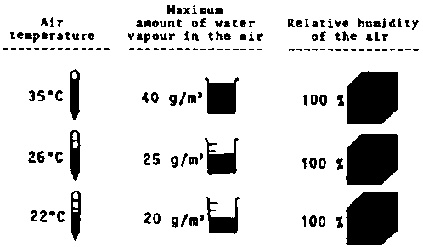
Figure 4
On sunny days, the absolute humidity will remain more or less constant. What will then occur if the temperature fluctuates?
If the air gets warmer, its ability to absorb moisture increases, i.e. the saturation moisture content will be higher. If the amount of moisture in the air remains constant, the degree of saturation will then drop. The relative humidity will fall.
If the air gets cooler, its ability to absorb moisture decreases, i.e. the saturation moisture content will be lower. If the amount of moisture in the air remains constant, the degree of saturation will go up. The relative humidity will rise (see also section 2.2.3).
This means that on days without rain, the relative humidity is at its highest in the early morning, and at its lowest shortly after midday when the temperatures are highest, increasing again towards the evening as the air cools down.

Figure 5
2.2.3 Condensation
If the air cools strongly down, a relative humidity of 100% and thus saturation point (dew point) may be passed. This means that there is now more moisture in the air than it is able to contain at this low temperature. Condensation occurs, which means that the excess vapour appears as liquid water on cool surfaces.
Condensation occurs in stores primarily when there are great differences in the temperatures inside and outside the store. A typical example is when the outside walls become hotter or colder in consequence of temperature fluctuations between day and night. Imbalances in temperature thus cause the air in the stored produce to circulate.
If the outside walls of a store are warmed up by sun radiation, the inside air close to the walls will also be heated. The increase in its temperature will cause the relative humidity to drop. The air is thus able to absorb additional moisture from the stored produce. If this air then comes into contact with colder surfaces, it will cool down. The drop in its temperature will cause the relative humidity to rise, possibly even passing saturation point. Condensation will occur. The same applies if the outside temperature is lower than the temperature inside the store.
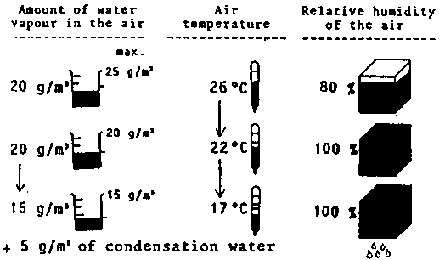
Figure 6
Condensation occurs particularly in silos, but also in warehouses, mainly close to the walls and roof from where it drops down onto the stored produce. Sometimes it is also found under the tarpaulins of stacked commodities. This often leads to mould developing and sometimes even to germination of the stored produce.
Condensation may also occur if there is a high insect infestation at certain points in the stored produce. The respiratory activity of the insects leads to an increase in the temperature and the humidity. "Hot spots" are formed. If the temperature in one of these "hot spots" passes 40°C, it becomes too hot for the insects and they will move to cooler surroundings. The "hot spot" thus spreads.
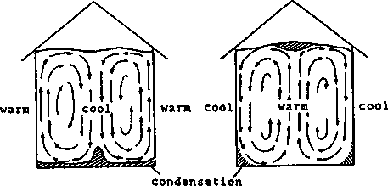
Figure 7
2.2.4 Relative Humidity and Moisture Content of the Stored Produce
The moisture content of the stored produce and the relative humidity of the surrounding air in the store attempt to find a state of equilibrium. Depending on the prevailing relative humidity, the stored produce either releases moisture into the atmosphere (drying) or absorbs moisture from the atmosphere (moistening) until an equilibrium has been reached.

Figure 8
Controlled ventilation of the store (aerating the store when the relative humidity is low, and closing it when the relative humidity is high) allows further drying of the produce during storage (see section 5.2.4.2).
2.2.5 Safe Moisture Content of Stored Produce for Long-term Storage
When the stored produce is moist, there is a danger of fungi and mould development. Fungi start growing at an r.h. of above 65-70%. The safe moisture contents for foodstuffs for long-term storage are therefore those which provide an equilibrium at a r.h. of 65-70%.
In many publications the water activity (aw) is used in this connection. Water activity means the equivalent to equilibrium relative humidity expressed as a decimal. Thus a water activity of 0.70 corresponds to an equilibrium relative humidity of 70%.

Figure 9
The values for the safe moisture content vary with the differences in the chemical composition of the various types of stored produce. Seeds with a high lipid content (fats, oils) will, for example, have a much lower equilibrium moisture content than cereals, which are composed largely of starch.
2.2.6 The Effect of Climatic Conditions on the Growth of Pests and Micro-organisms
Pests and micro-organisms, like all living beings, are dependent on specific climatic conditions for survival. Certain temperature and humidity ranges generally exclude the possibility of life, in particular in extremely cold, hot and dry zones. Some pests are very adaptable in terms of climate, while others are subject to very strict limitations.
|
Produce |
Safe moisture content |
Produce |
Safe moisture content |
|
maize |
13% |
cowpeas, beans |
15% |
|
wheat |
13% |
groundnuts |
7% |
|
millet |
13% |
cocoa |
7% |
|
sorghum |
13% |
copra |
7% |
|
paddy |
14% |
palm kernels |
5% |
|
rice |
13% |
coffee |
13% |
Stored product pests generally find the best conditions for development at temperatures between 28 and 33°C and relative humidities between 60 and 80%. Near to these perfect conditions, a rapid sequence of generations will lead to mass reproduction (see section 7.4).
Mould will begin to develop at a relative humidity of 65-70%. The higher the relative humidity, the better the conditions for the development of fungi and mould. The range of temperatures within which fungi will develop varies according to the particular species. This also applies to the emission of highly toxic metabolic products, known as mycotoxins, which can be observed in connection with fungus infestation (see section 6.2).
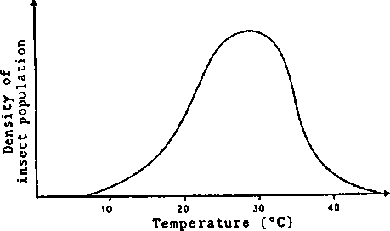
Figure 10
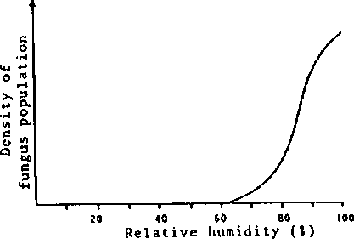
Figure 11
2.2.7 Summary of the Effects of Climatic and Biotic Factors on the Quality of Stored Produce
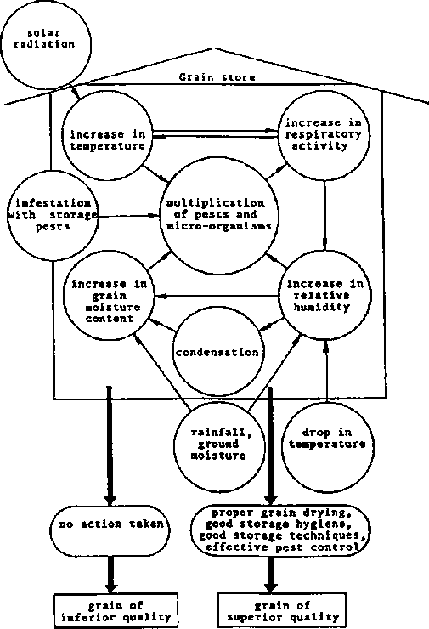
High temperatures, high relative humidity and high moisture contents of stored produce are favourable to the development of pest organisms. The respiration of pests (and of the stored produce) releases moisture and heat, which further improves the living conditions and leads to an increase in the pest population.
Rainfall, ground moisture and a drop in temperature increase the relative humidity. Rainwater and ground moisture may be absorbed directly by the grain.
High relative humidity leads to a rise in the moisture content of the stored produce and under certain conditions to condensation. If no measures are taken to counteract this, considerable losses are likely to occur. Only when the necessary steps are taken, which include drying of the produce, good storage hygiene, controlled ventilation and pest control the quality of the stored produce can be maintained.
Low, even temperatures and low relative humidity are favourable for maintaining the quality of the stored produce.
Therefore:
Figure
12
2.3 Further literature
ANONYMOUS (1983)
Food Storage Manual, FAO/WFP, TDRI, London,
263 pp.
ANONYMOUS (1988)
Conservation des Grains en Regions Chaudes,
CEEMAT, Minist�re de la Cooperation et du Development, Paris, France, 529 pp.
ANONYMOUS (1985)
Prevention of Post-Harvest Food Losses: A
Training Manual, FAO Training Series No. 10, FAO, Rome, 120 pp.
APPERT, J. (1985)
Le stockage des produits vivriers et
semenciers, Vol. I et 2, Maisonneuve & Larose, Paris, 112 et 225 pp.
CHRISTENSEN C.M., ed. (1982)
Storage of Cereal Grains and
their Products, American Association of Cereal Chemists, inc., St. Paul,
Minnesota, USA, 544 pp.
HALL, D W. (1970)
Handling and Storage of Food Grains in
Tropical and Subtropical Areas, FAO, Rome, 350 pp.
MULTON, J.L., ed. (1982)
Conservation et stockage des grains
et graines et produits derives, Lavoisier, Paris, Volume 1, 576 pp.
MULTON, J.L., ed. (1988)
Preservation and Storage of Grains,
Seeds and their By-Products, Lavoisier, New York, 1095
pp.
|
| |||||||||||||||||||||||||||||||||||
Manual on the Prevention of Post-harvest Grain Losses (GTZ)
3. Post - harvest losses
Causes, Effects and Countermeasures
Post-harvest losses may occur in the following areas:
· during harvesting
· during
transportation
· during drying
· during threshing
·
during processing
· during storage
This manual is concerned primarily with losses which occur during storage. Such losses do not only result from the effects of moisture, heat and pests. The following factors are also of importance:
· The previous history of the stored produce as well as the
growing conditions before harvesting, any field infestation with pests or fungi
or any heat damage which may have occurred during the drying process.
·
Genetic differences, i.e. differences specific to certain varieties and species
with regard to tolerance against storage
pests.
3.1 Losses in quantity
Losses in quantity of the stored produce result from grain being spilt or running out from damaged bags, from theft or from the grain being damaged by pest organisms. Losses in weight may also result from changes in the grain moisture content during the storage period. Due to the following reasons it is generally difficult to evaluate the exact extent of losses in quantity:
· There is no method of calculating losses which is simple,
quick, reliable and generally applicable at the same time.
· The exact
amount of harvested produce is often not known, particularly in small farm
storage, so that losses may be registered at a later date but not
quantified.
· in the case of infestation with insects, the loss in
weight in no way corresponds to the difference in weight before and after
infestation. When weighing the produce, left-overs, frass, webbing, pest
carcasses and rodent droppings are also weighed. Assuming that this filth cannot
be separated from the produce, the actual losses are higher than those
calculated.
3.1.1 Estimating Losses
The most simple method of establishing losses in the store is to record the amounts entering and leaving the store (weigh-in, weigh-out method), even though the results achieved using this method are not always satisfactory for the reasons and shortcomings mentioned above.
It is also possible to make use of other methods of estimating losses, out of which the count and weigh method (C&W) is fairly easy to apply in small farm storage.
By establishing the number and weight of damaged and undamaged grains of a composite sample (e.g. 1000 grains) at monthly intervals, changes in the weight of stored produce can be determined over a period of storage.
The loss in weight in per cent is calculated using the following equation:

Wu = weight of
undamaged grains
Nu = number of undamaged grains
Wd = weight of damaged
grains
Nd = number of damaged grains
Shortcomings in this count and weigh method become apparent particularly:
· when there are large variations in grain size
·
when grain is so heavily infested, that kernels cannot be counted any more
because of complete destruction
· when infestation inside the grains
occurs which cannot be detected so that at tacked grains are classified as
"undamaged".
Other applicable methods for the estimation of storage losses
are the Thousand
Grain Mass Method (TGM) and the Standard Volume Weight
Method
(SVM)
3.2 Losses in quality
Losses in occur in various forms:
· changes in colour (e.g. yellowing of rice)
·
changes in smell
· changes in taste
· loss in nutritional value
(degradation of proteins and vitamins)
· loss in cooking, milling or
baking quality
· contamination of stored produce with mycotoxins or
pathogenic agents
· loss of germination power in seeds
Often several qualitative changes occur at the same time, usually also in connection with weight losses. Losses in quality are much more difficult to assess than losses in quantity, as they cannot always be easily recognised (e.g. loss in nutritional value). Additionally in many countries there is a lack of quality standards and quality changes may be assessed differently by individual consumers.
3.3 Sources of losses
3.3.1 Mechanical Damage
Causes
- incorrect harvesting methods
- Poor handling, threshing,
shelling, cleaning, sorting or drying
- Bad transport and loading practices
(e.g. use of hooks)
Effects
- Losses in weight
- Losses in quality (germination power,
nutritional value)
- increased vulnerability to infestation from insect
pests, fungi and rodents
Countermeasures
- Pay attention to maximum temperatures when drying
- Use
safe techniques in harvesting, transport, processing and storage
- Take care
when handling bags
- Repair or replace damaged bags
- Do not use hooks
to carry bags
- Repair pallets (e.g. protruding nails!)
3.3.2 Heat
Causes
- Unsuitable storage structures (false location, insufficient
shade and ventilation facilities, lack of heat insulation)
- Mass
reproduction of storage pests and fungi
- Lack of aeration of store
- High
moisture content of the grain
Effects
- Losses in weight
- Losses in quality (nutritional value,
germination power)
- Good conditions for pest development
- Condensation
with subsequent development of fungi
Countermeasures
- Build suitable storage structures (see section 5.1.1)
-
Provide shade for stores or silos (e.g. by means of wide eaves or shading
trees)
- Keep temperatures as low as possible (aerate storage facility)
-
Conduct treatments for pest control
- Store bags on pallets in order to
improve aeration
- Maintain spaces of I m around all bag stacks
3.3.3 Moisture
Causes
- insufficient drying before storage
- High
relative humidity
- Constructional faults and damage to the store (unsuitable
materials, unsealed floor, walls and roof, holes, gaps, etc.)
- imbalances in
temperature (e.g. day/night) in storage facility with subsequent
condensation
- Produce stored on the floor or touching the walls
- Mass
reproduction of pests
Effects
- Losses in quality
- Losses in weight
- Development of
fungi and formation of mycotoxins
- improved conditions for the development
of pests
- Swelling and germination of seeds
- Damage to storage
structures
Countermeasures
- Dry produce sufficiently before storage
- Repair and seal
storage facility
- Keep relative humidity as low as possible in storage
facility (perform con trolled ventilation)
- Store bags on pallets
-
Maintain spaces of I m around all bag stacks
- Conduct pest control
treatments
- Avoid temperature fluctuations (day/night) in store by means of
shade and ventilation
3.3.4 insect Pests
Causes of infestation
- introduction of infested lots
- Cross infestation from
neighbouring lots or stores
- Migration from waste or rubbish
- Hiding
places in stores (cracks, fissures)
- Use of infested bags
Effects
- Losses in weight
- Losses in quality (impurities such as
droppings, cocoons and parts of insects, reduction of nutritional value,
reduction in germination power)
- increase of temperature and moisture
Countermeasures
- Harvest at the right time
- Choose tolerant varieties
-
Keep means of transportation clean
- Remove infested cobs, panicles or pods
before storage
- Ensure that produce is dry before storing
- Prevent pest
introduction by checking for infestation before storing
- Clean the store
daily
- Keep the temperature and relative humidity as low as possible
(perform controlled ventilation)
- Prevent any pest infiltration by sealing
the store (windows, doors, ventilation facilities; e.g. with the use of insect
gauze)
- Repair any damage to the store immediately
- Store old and new
lots separately
- Clean empty bags thoroughly and treat them against insects
if necessary
- Perform pest control treatments
- Rotate stocks: 'first in
- first out'
3.3.5 Micro-organisms
Causes of infestation
- High moisture content of stored produce
- High relative
humidity in store
- Condensation
- Humidity and moisture produced by
insects
Effects
- Loss of quality (smell, taste, colour, nutritional value,
germination power)
- Formation of mycotoxins
- Slight loss of weight
(mould)
- Further increase in temperature and moisture
- Further
condensation
Countermeasures
- Dry produce sufficiently before storage
- Keep relative
humidity as low as possible in storage facility (perform controlled
ventilation)
- Store bags on pallets
- Maintain spaces of I m around all
stacks
- Conduct pest control treatments
3.3.6 Rodents
Causes of infestation
- Penetration through badly closing doors, windows, ventilation
openings, holes
- Lack of barriers
- Lack of hygiene in store and
surrounding area (possible hiding and breeding places)
Effects
- Loss of weight
- High losses in quality due to
contamination of produce with faeces and urine
- Contamination of produce
with pathogenic agents (typhoid, rabies, hepatitis, plague, etc.)
- Damage of
material and facilities (bags, doors, electric cables)
Countermeasures
- Prevent entry of rodents by sealing store rat-proof
- Keep
store and surrounding area clean
- Place traps
- Carry out rodent control
measures
3.3.7 Birds
Causes of infestation
- Open or broken doors, windows, ventilation openings or roofs
Effects
- Losses in weight
- Damage to bags
- Contamination of
stored produce with droppings and pathogenic agents
Countermeasures
- Bird-proof stores (carry out repair work, fit grilles or
nets)
- Remove any nests of granivore birds from the store and surrounding
area
3.4 Further literature
ANONYMOUS (1985)
Prevention of Post-Harvest Food Losses, FAO,
Rome, 121 pp.
BOXALL, R.A. (1986)
A critical review of the methodology for
assessing farm-level grain losses after harvest, TDRI, Slough, 139 pp.
HALL, D.W. (1970)
Handling and Storage of Food Grains in
Tropical and Subtropical Areas, FAO, Rome, 350 pp.
HARRIS, K.L. & C.J. LINDBLAD (1978)
Postharvest Grain
Loss Assessment Methods, American Association of Cereal Chemists, St. Paul,
Minnesota, 193 pp.
PANTENIUS, C.U. (1988)
Etat des pertes dans les syst�mes de
stockage du ma�s au niveau des petites paysans de la region maritime du Togo,
GTZ, Hamburg, 83 pp.
PROCTOR, D.L. & J.G. ROWLEY (1983)
The Thousand Grain
Mass Method (TGM): A basis for better assessment of weight losses in stored
grain, Tropical Stored Product information 45, 19-23, TDRI, Slough
REED, C. (1986)
Characteristics and limitations of methods
to estimate losses in stored grain, Special Report No. 16, Kansas State
University, Food and Feed Grain institute, Manhattan, Kansas, 23
pp.
|
| |||||||||||||||||||||||||||||||||||
Manual on the Prevention of Post-harvest Grain Losses (GTZ)
4. Farm and village level storage
4.1 Farm storage methods
Farmers traditionally store their grain in an unthreshed state. This is first because they often do not have the time to thresh the grain after harvesting, and secondly because they rely on the lower susceptibility of grain stored in husks to infestation from pests. The storage period on farm level generally lasts 6 to 1 2 months.
After harvesting, the grain is kept in a variety of different traditional storage containers which are in general perfectly adapted to the existing social, economic and climatic conditions and require only locally available materials. Three basic forms of small farm storage can be distinguished: open, semi-open and closed storage systems.
4.1.1 Open Storage Systems
In unfavourable hot and humid climatic conditions almost only open storage systems are used because the stored produce is still moist when it is put into storage. Platforms resting on wooden stakes are very widespread, on which cobs or panicles are stacked in layers. A straw roof affords protection against the rain.
Crops are also occasionally to be found hung up in frames or under the roof of houses. In the latter case, the fire underneath is used to dry them and to repel insects.
Open systems are generally very simple constructions where storage hygiene is difficult to practise
Advantages:
- The strong natural ventilation enables the produce to continue
drying in storage.
- The development of fungi is restricted by the continuous
aeration.
Drawbacks:
- insects, rodents and birds have unrestricted access to the stored produce.
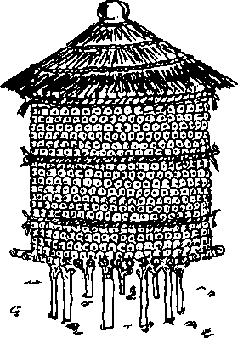
Figure 13
4.1.2 Semi-Open Storage Systems
Semi-open storage structures are particularly widespread in semi-arid regions. They include containers made of woven twigs or straw as well as wooden frames with a straw mat on which the commodities are placed. Crops are generally stored in an unthreshed state, i.e. in cobs or panicles. Contact to the ground is prevented by means of stone foundations so that ground moisture cannot penetrate into the store. A straw roof affords protection against the rain.
Semi-open storage systems give better protection against weather conditions as open ones but reduce aeration and provide no obstacle for pest entry.
4.1.3 Closed Storage Systems
In arid regions, for the storage of sorghum, millet, pulses, paddy and peanuts, use is made primarily of closed storage containers made of mud, often mixed with chopped straw, which is known as "banco". The crops are generally stored in a threshed state. Problems with moisture or condensation are virtually unknown due to the low moisture content of the stored produce and the excellent insulation capacity of the mud used. These "banco" containers are to be found in all shapes and sizes. They are usually closed with a lid and protected against rain with a straw roof Large stones serve as a foundation and prevent any ground moisture from entering.

Figure 14
Calabashes, clay pots, wooden containers and clean oil drums are also in use and have often proved to be of good effect in small farm storage, especially for seeds and grain legumes.
In closed storage systems, condensation may occur especially in metal containers (e g. oil drums). Particular attention must be paid to maintaining constant storage temperatures by means of providing shade.

Figure 15
Advantages of closed storage structures:
- Usually good protection against penetration by pests.
-
Cool and dry microclimate, particularly in mud constructions.
- Closed
containers allow airtight conditions where oxygen is used by the respiration of
pests and grains leading to the self-destruction of pests. The remaining oxygen
is sufficient to maintain the germination power of seeds.
Drawbacks:
- Mud constructions are not very resistant to rain making
regular repair work or rebuilding necessary. Cracks provide ideal hiding places
for insects.
- There is a danger of condensation, particularly in metal
containers.
Small farm-storage in underground pits is a special form of a closed storage system and has been repeatedly referred to in the literature as a promising method of storing grain. There are no doubts as to the advantages of such a largely airtight and cool form of storage not affected by any fluctuations in temperature.
If the pit is kept satisfactorily air- and watertight the development of insects and mites as well as the growth of moulds can be reduced to a minimum. A suitable site must be chosen with the right type of soil. The entry of both ground and rain water must be prevented and the pit walls should be waterproof in areas with a sufficient dry climate underground stores are a recommendable alternative to the known small farm storage systems.
4.2 Village level storage
Food storage on village level in form of cereal banks has developed since the beginning of the seventies, particularly in Africa Cereal banks are managed by co-operatives or groups of farmers. They try to assure food security to the village community and to provide farmers with the opportunity to sell their surplus when they can obtain better prices.
These stores with a capacity of between 10 and 50 t often have constructional features which do not allow low-loss storage. Essentially the same principles as for the construction of large stores apply for building the smaller cereal banks (see section 5.1. I).
The GTZ Post-harvest Project has developed an improved type of a village store with a capacity of around 25 t, which can be extended as required. The walls are made of cement bricks, the domed roof of reinforced concrete.

Figure 16
The advantages of this type of store ale as follows:
- Easily to be built by the village community in self-help with
expert supervision (see also section 4.5)
- Best storage hygiene
possibilities
- Favourable temperature conditions as a result of the material
and shape of the roof (in contrast to the usual corrugated iron roofs)
- Good
sealing and thus fumigation possibilities
- Ventilation openings operable
from the outside
- Safe against penetration by insects or rodents
-
Durable construction
Another type of construction which can be recommended for storage on a village community level is the use of air-dried mud bricks. The walls are plastered with cement mortar. A suitable supporting structure enables the roof to be built of bitumen and mud up to a certain store capacity.
4.3 Drying
4.3.1 Sun Drying
Products must be dried to the safe moisture content before storage. This is particularly difficult in humid areas. The traditional methods make use of sun and wind or fire. The produce is placed on the ground, on platforms or on special drying racks. When drying in the sun directly on the ground, the produce must be protected from absorbing any soil moisture by using sheets or mats. The thickness of the layer of cobs, panicles, pods or grains must not exceed 5 cm in order to ensure good and even aeration The produce must be turned over regularly in order to dry it evenly.
In the evening, the produce must be put in a pile and covered.
On special drying places there is always the risk of pest contamination. It is thus absolutely essential to keep these places clean.
Heat damage may result from too much exposure to the sun radiation or when drying the produce above a fire (grains cracking, losses in germination power).

Figure 17
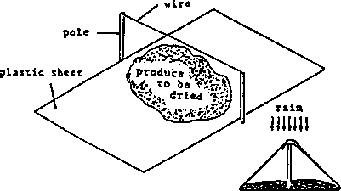
Figure 18
Care should be taken not to exceed the following maximum drying temperatures:
Beans: 35°C
Cereal seeds: 43°C
Cereals for
consumption: 60°C
4.3.2 Cribs
A drying frame or crib, developed in Nigeria, has proved to be of exceptional value, particularly in drying maize cobs. The crib consists of a wooden or bamboo frame with walls made of wire mesh or wooden slats and a thatch roof it has a maximum width of 60 - 80 cm. This guarantees good aeration and drying, even in humid regions. The cobs are left in the crib for up to 3 months, depending on weather conditions, and thereafter put into the store. In some areas these cribs also serve as stores.

Figure 19
4.3.3 Solar dryers
Solar dryers are based on the principle of conducting air heated by a sun collector through the produce.
The advantages of solar dryers as compared to the traditional method of sun drying in the open air are:
- Temperature control is possible
- Protection of produce
from adverse weather conditions and from infestation by pests
- Low running
costs
The drawbacks are:
- Relatively high purchase costs
- Very limited capacity
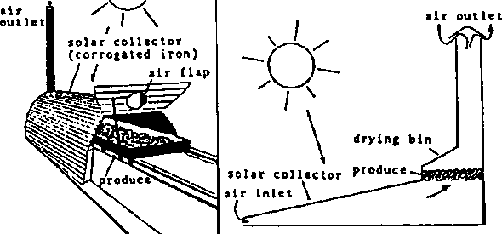
Figure 20
Unfortunately, solar dryers have not yet been established to the desired extent due to socio-cultural, technical and financial reasons. In addition, cloudy skies at the time when the crops are harvested in many regions limit the use of solar energy.
The technical problem of creating a sufficiently strong current of air in the dryers has not yet been fully solved. This air stream is necessary in order to evacuate the saturated air after having passed through the produce. Otherwise condensation or mould can occur. Simple solar systems which take into account the demands of the users are nonetheless likely to gain in importance in the future.
4.3.4 Bush Dryers
Bush dryers are constructions built in the form of a tunnel made of mud or metal drums, and through which hot air is conducted with the aid of an open fire. The produce, spread out on a platform positioned above the tunnel, is dried by heat radiation. Adequate drying can, however, only take place if the produce is spread out in layers no thicker than 2 - 3 cm. As there is generally no possibility of regulating the heat, overheating and damage to the produce may easily result.
Bush dryers are easy to build and very effective. They are run on wood or charcoal as well as crop remainders. The use of bush dryers is, however, not undisputed because of the resources needed to fuel them.
4.4 Pest control on farm level
Preventive measures with regard to storage hygiene are of decisive importance for pest control and in maintaining the quality of the stored produce. By the term storage hygiene, we mean the use of all technical measures without the application of chemicals.
Perfect storage hygiene is the basic prerequisite for successful storage and for the effectiveness of all on-going measures, such as the use of insecticides. All hygiene measures are very simple, particularly effective and cheap, and can thus be performed by any farmer with little effort.

Figure 21
4.4.1 Traditional Methods
Traditional methods of pest control will certainly continue to play a role in small farm storage in the future. They cause little cost, but their effect is limited, which excludes the possibility of any general application of such measures. Traditional pest control is largely based on the following methods:
· Preventive measures taken before harvesting (see section
4.4.1. I)
· The addition of various substances to the stored produce
(see section 4.4.1.2)
· Physical methods (see section 4.4.1.3)
A departure from traditional methods of pest control in favour of modem storage techniques has in the past often led to considerable errors due to insufficient examination of the new methods under practical farmer's conditions. Generally speaking, farmers will accept small, easily-comprehensible and low-cost alterations to their storage methods with the aim of reducing losses. They are, however, for various reasons reluctant to make any radical alterations to the traditional storage systems to which they are accustomed - and often correctly so.
4.4.1.1 Preventive Measures Taken before Harvesting
The following methods contribute to preventing pest infestation from the field into the stores:
· Crop rotation and mixed cropping
· Selection of
less susceptible cereal varieties (e.g. maize with hard seed coat and husks
covering the cob completely)
· Choice of the time of harvesting
Do
not harvest too early nor too late!
Watch out for the signs of physiological
maturity:
|
Crop |
Signs for maturity |
Moisture content |
|
Maize |
Cob almost dry, husks yellow, grains hard and vitreous, black spot at the base of the grains |
23 - 28% |
|
Sorghum |
Stem and leaves dry, grains hard and relatively vitreous (depending on variety) |
20 - 25% |
|
Rice |
Panicle benching down, husks yellow, grains complete, neither green nor shrivelled |
22-28% |
|
Beans |
Pods ripe and yellow, but still closed |
30 - 40% |
|
Groundnuts |
Leaves yellow, pods dry, hull (testa) separates |
30 - 35% |
The indicated moisture content at the time of maturity does not mean that the crop is fit for storage. Drying is necessary after the harvest until the moisture content is reduced to values mentioned under section 2.2.5
· Selection of store location (removed from any potential
sources of infestation)
· Thorough cleaning repairing of the
granary
· Prevention of pest introduction by checking for infestation
before storing
· Removal of infested cobs, panicles or pods before
storage
4.4.1.2 Addition of Substances to the Stored Produce
4.4.1.2.1 Admixture of Mineral al Substances
There are a variety of different materials which can be added to the stored produce. The three most frequently used types of mineral substances are presented in the following table:
|
Method |
Effect |
Remarks |
|
Wood ash from the kitchen stove or from special trees like Khaya senegalensis, Eucalyptus and others, added in proportions of 30 to 100 vol. % to the stored product. |
Good effect on pests liv-tog outside the grain. Inhibition of insect development and limitation of locomotion. Ashes cause desiccation due to small wounds and impede the respiration of insects. |
Because of the consider- able quantities required only suitable for small lots. No reduction of germination ability. Ideal for seeds. Effect varies according to the type of ash. |
|
Inert dusts (laterit, clay dust, quicklime, etc.), added in proportions of 0.1 - 50 vol. % or as a protective top layer. |
Similar effect as wood ash on all kind of stored product insects. |
Quantities depend on particle size. If used for food grain cleaning is required before consumption. |
|
Fine sand, added in proportions of 40 to 100 vol. °/0 or as a top layer 2 to 7 cm thick. |
Limits the locomotion of stored cereal insects and bruchids and causes death through desiccation. |
Prevents immigration of pest insects. Because of the big quantities required limited to small lots (seeds) |
4.4.1.2 2 Admixture of Substances of Plant Origin
Traditionally many different types of plants are used against stored product pests. Although promising results have often been achieved in laboratory tests with plant material (botanicals), the effectivity under practical storage conditions varies a lot. Most methods have a limited effect but some provide satisfactory protection of the stored product when they are applied properly. In the following tables substances are listed which are commonly used and have shown sufficient potential. Methods of application are manifold and techniques which are not mentioned in the respective table may occur locally. Plants which are not listed at all may nevertheless be of local importance and may have a good effect.
Green plant parts and powders made of dried green parts:
|
Method |
Effect |
Remarks |
|
Fresh or dried leaves of different species of Annona added to the commodity in layers (sandwich method). |
Strong repulsive and insecticide effect during 3 to 4 months on bruchids and sorghum and millet pests. |
Very widespread in Africa and to be recommended because of the proven effect |
|
Entire or powdered leaves of Hyptis spicigera, either added in layers or mixed to the grain at a rate of 3 g powder/kg |
Good insecticide effect on bruchids and action on oviposition and larval development. Also used against termites. |
Useful against bean bruchids as well as against the groundnut seed beetle Caryedon serratus. |
|
Crushed Lantana parts added in sandwich technique or as a top layer. |
Repulsive effect on bruchids of grain legumes acting up to 6 months. |
The Siam weed Lantana camara is extremely widespread in Africa and thus readily available. |
|
Dry or powdered Neem or Melia leaves mixed to the grain or applied in layers. |
Insecticide and repulsive inhibition of development. Acts mainly on stored product beetles up to one year. |
Well-known multiple- use plant originating from India. Seed powder oil or extracts have a better effect. |
|
Ocimum canum (hoary basil) leaves entire or as powders applied in sandwich technique. |
Insecticide effect on beetles in gram legumes and |
Very good immediate effect but insufficient persistence for long-term storage |
|
Mint (Mentha spp.) leaves. added to the grain at 0.5 to 2 weight % |
Insecticide effect sup- posed acts on pests of cereals. |
Quick effect on Sitophilus oryzae, which is a pest rather difficult to control |
|
Bark and root powders: | ||
|
Bark powder front Khaya senegalensis (African Mahogany), added at a rate of 50 to 100 g/kg grain. |
Probably insecticide action on bruchids in grain legumes up to three months. |
Especially used to control Bruchus maculatus in cowpeas. |
|
Powder of dried rhizomes of Acorus calamus (added at a rate of 0.2 to 1 weight %). |
Insecticide, repulsive effect and inhibition of development against many pests for more than 6 months |
The powder can be stored for 2 months without any loss of effect. There are some doubts concerning adverse effects on humans in high doses. |
|
Flower, fruit and seed Powders: | ||
|
Pyrethrum powder applied to storage structures and commodities. |
Good initial insecticide and repulsive action on all stored product pests. |
The active ingredient de grades rapidly, especially when exposed to the light. |
|
Entire or powdered fruits of Red pepper (Capsicum spp.) mixed with the commodity. |
Insecticide and repulsive effect against many pests during several months. |
Attention: irritation eyes possible during application! Influence on the taste of the commodity. |
|
Entire or powdered fruits of Black pepper (Piper spp.) added to the commodity |
Comparable to Red pepper effect lasts for 3 months. |
Cf. Red pepper! |
|
Neem kernel powder added at a rate of 0.5 to 4 vol. %. |
Effects as described for leaf preparations, but stronger. |
Neem kernels have the highest content in active ingredients. |
|
Annona grain powder added at a rate of 0.5 to 2 weight % |
The same effects as described for the leaves. |
Attention: the powder has an irritant effect on the eyes! |
|
Aqueous extracts: | ||
|
Sprinkling of commodity with Pyrethrum extract |
Comparable to the action of the powder. |
High initial effect, but poor persistence. |
|
Neem extract (25 to 50 g /1 of water) sprinkled in a rate of 0.5 to 5% on the grain. |
Effects comparable toe neem kernel powder. |
Neem extract is more concentrated than powder formulation. |
|
Sprinkling of commodity with extract of Black pepper. |
The same effect as the respective fruits or powder. influences the taste! |
Used in grain legumes and rice. |
|
Sprinkling of a 2.5% extract of Annona roots |
Effect like described for the leaves. | |
|
Vegetable oils: | ||
|
Peanut oil (5 ml / kg) |
Toxic effect on embryos inside the eggs of bruchids. The oviposition is heavily disturbed. Up to 6 months active. |
Simple and cheap method. Peanut oil does not turn rancid quickly. No influence on germination power |
|
Coconut oil (5 to 10 ml / kg) |
Similar to peanut oil. |
Cf. peanut oil. |
|
Palm oil (5 to 10 ml / kg) |
Cf. peanut oil. |
Palm oil changes the appearance of the commodity because of its deep red colour. |
|
Sesame oil (5 ml / kg) Neem kernel oil (used for grain legumes and cereals in a rate of 2 to 3 ml / kg) |
Cf. peanut oil. In addition to the effects described for the leaves, neem oil acts like other vegetable oils. |
Cf. peanut oil. Neem oil has a bitter taste and turns rancid during storage. Recommended for seeds. |
|
Shea butter is melted and applied at a rate of 5 ml / kg to cereals and grain legumes. |
Acts like vegetable oils, especially on beetles. The effect persists during 4 months |
Remains from the production of shea butter can also be used for the same purpose |
Vegetable oils are added in small quantities to the commodity and mixed thoroughly. They are especially useful for the protection of stored grain legumes against pulse beetles (bruchids). The oils are active against eggs and larvae and disable females to oviposit. The protective effect is generally satisfactory in particular if the grain is still uninfested at the time of treatment.
When plant material is used for the protection of stored products, care should be taken that species with high human toxicity like Datura or Solanum species are not used for cereals destined for human consumption. The same applies to plants which strongly alter the quality of the stored product like some distinctly bitter tasting species. Nevertheless, such substances can be highly useful for the protection of seeds.
4.4.1.2.3 Use of Substances of Animal Origin
The admixture of substances of animal origin does not play any great role in pest control. Cow or goat dung is, however, used for coating the walls of small farm mud silos against hidden pests. The effect is not proven in tests and doubtful. Because of hygienic considerations this kind of treatment should be discouraged.
4.4.1.3 Physical Methods
Physical methods of pest control are applied both preventively and curatively. Processing may contribute to an increase in storability. Refer to section 10.1 for further details.
4.4.1.3.1 Mechanical Methods
· Removal of pests, infested grain or cobs by
hand
· Sieving
· Winnowing
· Moving the grain
(shaking, restacking)
When using methods which merely separate the pests from the stored produce and do not result in their death (e.g. sieving), care should be taken to ensure that the pests removed from the produce are killed to prevent reinfestation.
4.4.1.3.2 The Use of Heat
· Spreading out the produce in the sun (larvae living in
the grains will be killed, the adult insects which are sensitive to heat and
light will flee).
Avoid overheating!
· Heating in water
(parboiling)
· Smoking or burning out storage containers (e.g. mud
silos)
· Storage of grain above the kitchen fire (heat and smoke will
chase the pests)
· Smoking with dried hot pepper (Capsicum sp.)
has a very good immediate effect, but changes the taste of the grain.
4.4.1.3.3 Airtight Storage
Scaled storage is ideally suited to control insect and mite infestation in dry grain without the use of pesticides. I he principle of the method is namely the elimination of the oxygen that insects and moulds require for their growth as well as an increase of the CO2 level (see section 4.1.2). This is due to the respiration of the pests and grain. In this context the importance of a good, sound construction or container cannot be overstressed. Good thermal insulation is essential.
Airtight storage is particularly applicable for long-term storage in warm dry areas. It might be advisable, however, not to store seed grain for more than a few months under these conditions.
In tropical countries, where the relative humidity is at the optimum for mould growth, airtight storage is generally not recommended. Potential dangers with this storage method can be reduced by careful management, by storing well dried commodities only and particularly by ensuring a more or less even temperature in the store which exclude the risk of condensation.
4.4.2 Biological and integrated Means of Pest Control
Biological and integrated means of pest control are dealt with in greater detail in chapter 10. The use of natural enemies (predators, parasites), of specific micro-organisms, as well as food traps and varieties more tolerant to storage pests will grow in importance in small farm storage in the future.
With regard to biological control of stored product pests first experience with the release of an antagonist of the Larger Grain Borer (Prostephanus truncatus) have shown promising results in storage on farmers level (cf section 10.3).
Another approach of integrated stored product management for small-scale farmers is based on dividing the harvest with the aim of reducing the quantities of insecticide necessary for adequate prevention of post-harvest losses. Tests carried out in Tanzania as well as surveys in West Africa have shown that during the first three to four months of storage pest insects generally do not produce economic losses which justify treatments with synthetic insecticides.
Considering this fact it has been concluded that the harvest can be divided in one part destined to consumption in the first three to four months after harvest and another part intended for storage over a longer period. The first part can be stored without chemical treatment, whereas cereals determined for later consumption or for sale are to be treated. This procedure allows the farmer to save insecticide and money without negative economic consequences.
4.4.3 Chemical Methods
For centuries, farmers have relied on the protective effects of husks or pods and have selected traditional varieties with a low susceptibility to storage pests. 1 his confidence is by all means justified. Therefore any interference in the farm storage system in order to avoid the drawbacks of traditional methods by an increased use of insecticides must be carefully examined with regard to social and economical effects.
As the traditional means of pest control do not seem adequate to protect the increasing stored quantities all over the world, efforts are being made to introduce changes to traditional storage systems. These efforts are generally centred around the use of insecticidal dusts which are mixed with the produce. The introduction of chemical stored product insecticides on farm level, however, has caused a number of problems which could not be satisfactorily solved in spire of the considerable efforts made by the respective extension services.
Surveys done in West Africa in recent years have shown, for instance, that inadequate choice and application of chemical insecticides and fumigants on farm level is very common. In the investigated cases it resulted, that correct application is only practised by a minority of the farmers. The following mistakes are particularly widespread:
- choice of an inadequate product
Among the chemicals used by farmers for the protection of stored food grain frequently products for seed and soil treatment or insecticides against hygiene pests like mosquitoes or cockroaches have been indicated. Some of these products contain active ingredients with high mammalian toxicity in high concentrations. The health hazards of these practises for the consumers are evident.
Obsolete compounds like chlorinated hydrocarbons are still applied in Africa for purposes like control of mosquito larvae and end up rather often as grain protectants in food granaries.
- application of degraded or inadequately formulated insecticides
In many cases where farmers complained about the insufficient effect of recommended stored product insecticides, chemical analysis has shown that the active ingredient had degraded due to overstorage or storage under unfavourable climatic conditions. Especially dustable powder formulations degrade rapidly under hot and humid climatic conditions.
In some circumstances, however, it could be proven that errors of formulation from the local factory was the cause of the failure. There have been cases where the content in active ingredient was zero from the day of production.
- inadequate application
Errors in dosage calculation or uneven distribution occur frequently and result either in overdosage with the respective risks for the consumer or in underdosage. Underdosage means insufficient stored product protection and the promotion of development of insecticide resistance in storage pests.
Fumigants are readily available in many rural West African markets. Dealers sell even single tablets wrapped in paper. Surveys have proven that whenever fumigants are applied by small-scale farmers in Africa the conditions for gas tightness are not fulfilled. This means that the treatment does not have the desired effect and there is a considerable risk of human intoxication.
The reason of the above listed problems is mainly the inadequate information of the farmers. Dealers selling products are not well informed to advise the farmer on the correct application or they are not interested in discouraging farmers to buy an unsuitable product. Labelling is frequently not sufficient to prevent misuse, especially as there arc rarely labels in local languages. The high proportion of illiterate farmers poses additional problems concerning the transfer of special technical informations. And last, but not least, many extension or plant protection services are not in the to provide the necessary knowledge where and when it is needed.
Unless an efficient extension / information system on correct insecticide application particularly for African farmers is installed, the best solution seems to be the reduction of insecticide use for post-harvest protection purposes to the absolute minimum. Hygiene including all kind of preventive measures has proven to be the most effective, the most economic and the safest approach to post-harvest loss prevention on farm level. Some of the traditional methods based on substances of plant origin, minerals, etc. show sufficient action on stored product pests to compete with synthetic insecticides, in particular if such products are applied by farmers without the necessary skills (see section 4.4.1).
In most African countries dustable powders are the most widespread formulations for stored product protection on farmers' level. This is due to the fact that the application of dusts is comparatively easy and safe, although spray applications may be more effective under certain conditions. Therefore this section deals exclusively with the application of dust formulations on farmer's level. More detailed information on the possibilities and limitations in the use of chemical insecticides, the choice of suitable insecticides, safety aspects and others is provided in chapter 8.
The following points must be taken into account when using chemical means of pest control:
· Toxicity of the insecticide / user protection (see
section 8. 1.7).
· Economic viability of an insecticide treatment.
Experience has shown that the treatment of cobs of maize in husks is not always
economically viable, particularly in cases when the maize has already been
heavily infested in the field. This also applies to the treatment of stored
produce which does not remain in the farmer's storage container for longer than
3 to 4 months (see section 4.4.2).
· Availability of the correct
insecticide at the right time and in the right place
· Suitable, i.e.
small package sizes with labels bearing instructions for correct use (in common
or in local language)
· Farmers' knowledge in dealing with insecticides
based on appropriate extension measures
Therefore chemical insecticides can only be propagated when these facts are assured and a functional supply system and competent extension service is available.
There are two areas of insecticide application in small farm storage:
- Space treatment of stores (dusting, spraying, smoking)
provides good preventive pest control.
- Treatment of the stored produce with
insecticide dust either by mixing it with the stored produce or applying it in
layers as well as treatment by spraying or by smoking.
Attention: in order to avoid residues above the admitted level (see section 8.1.8), the admixture of an insecticide to stored product can be done only once per season even after a prolonged period of storage.
4.4.3.1 Dusting
4.4 3.1.1 Dust Formulations
Dust formulations of insecticides are sold ready for use and contain 0.1 to 5% active ingredient. The formulations contain additives which increase the adhesion to the stored produce. Dust formulations are suitable for mixing with grain and for applying in layers in the stored produce (sandwich method) as well as for surface treatment of individual bags, bag stacks and stores. The most common insecticides at present in use are:
|
Active ingredient Organophosphorous compounds: |
Commercial product (c.p.) |
Application rate (ppm) |
Application rate |
|
Fenitrothion |
Folithion 1% D |
10 |
100 |
| |
Sumithion 1% D |
10 |
100 |
|
Pirimiphos-methyl |
Actellic 2% D |
10 |
50 |
|
Chlorpyrifos-methyl |
Reldan 2% D |
10 |
50 |
|
Methacrifos |
Damfin 2% D |
10 |
50 |
|
Malathion |
Malathion 2% D |
8-12 |
40-60 |
|
Pyrethroids: | |||
|
Deltamethrin |
K-Othrin 0.2% D |
1 |
50 |
|
Permethrin |
Permethrin 0.5% D |
2.8 |
55 |
|
Fenvalerate |
Sumicidin 1% D |
5 |
50 |
|
Cyfluthrin |
Baythroid 1 % D |
2 |
20 |
Information on the correct choice of active ingredients and on the properties of the listed products is provided in section 8.1.6.
4 4.3.1.2 Dusters
Dust formulations are applied by means of a duster. There are very cheap and effective models which can easily be made locally or are available on the market:
4.4 3.1.3 Application of lnsecticide Dust: Admixture with Grain
This method applies in storage of small quantities of loose grains. The dust is mixed with the grains as follows:

Figure 22

Figure 23

Figure 24

Figure 25
1 Pour the grain in a heap on the floor
2 Evenly distribute
the required amount of insecticide on the heap
3 Carefully mix together
insecticide and grain using a shovel
4 Check that the powder is evenly
distributed

Figure 26
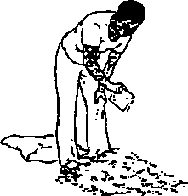
Figure 27

Figure 28
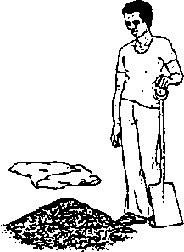
Figure 29
Bag and store the treated grain or place it in a suitable container.
With larger amounts of grain (more than two bags) it is advisable to mix the dust with the entire heap by reshovelling it a number of times
4.4.3.1.4 Application of Insecticide Dust: Sandwich Method
The sandwich method is suitable both in the storage of maize cobs as well as for other cereals. The stores must be thoroughly cleaned before storing.
Storage and the application of insecticide may then commence:

Figure 30

Figure 31

Figure 32
1 Sprinkle the inside walls and floor with a fine layer of
insecticide
2 Put in a layer of maize cobs (no thicker than 20 cm)
3
Sprinkle dust evenly over the layer of cob
4 Put in more layers of cobs and
dust each layer

Figure 33

Figure 34
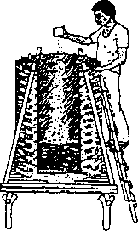
Figure 35
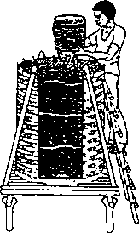
Figure 36
5 Finally dust the top layer thoroughly:
The degree of field infestation of maize depends largely on the close cover of cobs provided by the husks. Studies have shown that storage of cobs fully protected by the husks can be as effective in preventing losses as a treatment with insecticide. Removing the husks before applying any insecticide can, however, be of considerable advantage in cases of previous field infestation as insects already inside the cobs will then come in contact with the insecticide.
4.4.3.1.5 Dosage Calculations for the Application of Dust Formulations
Application rates for dust formulations are given either in g commercial product per 100 kg of grain or in ppm (parts per million). The indication ppm refers to the amount of active ingredient (a i.) in the grain.

Figure 37
A value of 10 ppm means there are 10 weight parts active ingredient contained in 1 million weight parts of the stored produce. As 1 kilogram contains 1 million milligrams, 10 ppm means 10 tug of a.i. per kg of grain.
Determination of the quantities of insecticide Just required for the treatment:
- Application rate given in g/100 kg
Informations required for the calculation:
· Weight of the produce to be treated (in kg)
·
Recommended application rate (in g/100 kg)
The amount of stored produce to be treated (in kg) is multiplied by the application rate (indicated in g/100 kg).
Example: 500 kg of maize are to be treated.
The recommended application rate is: 50g/100 kg
Calculation: 50g / 100 kg × 500 kg = 250 g
250 g of the dust formulation are thus required to treat 500 kg of maize.
- Application rate given in ppm
Informations required for the calculation:
· Weight of the produce to be treated (in kg)
·
Active ingredient content of insecticide (in %)
· Recommended
application rate (in ppm)
The calculation of dosage is performed in four steps with the aid of the ppm table at the end of this section:
- The top row in the table lists various recommended application
rates in ppm. Find the column referring to the given application rate of the
insecticide being used!
- The column on the left in the table lists various
active ingredient concentrations in %. Find the row applicable for the
insecticide being used!
- Find the point where the applicable row and column
cross! The figure stated there is the amount of the dust formulation (commercial
product) in g which is necessary for the treatment of 100 kg of stored
produce.
- Calculate the required amount of dust formulation for the actual
amount of produce being treated.
Example: 300 kg of grain are to be treated.
The selected insecticide is a 5% dust formulation.
The recommended application rate is 10 ppm.
The point where the 5% row crosses the 10 ppm column shows the required amount of the insecticide for 100 kg of grain: 20 g.
This figure is converted for 300 kg of produce:
20g / 100 kg × 300kg= 60g
60 g of the 5% dust formulation are thus required to treat 300 kg of grain.
- Dosage calculation for the sandwich method
In the sandwich method, the same dosage is applied as for an admixture of insecticide with the stored produce. The total amount is thus calculated on the basis of the quantity of stored produce in kg as described above.
For each layer with a maximum thickness of 20 cm the corresponding amount of insecticide is calculated according to its weight. Care must be taken to have layers of the same thickness.
It is recommended to retain a part of the calculated quantity of insecticide to treat the floor, walls and the top of the storage container during filling. When storing the produce on platforms, retain a part of the insecticide from each layer to dust the outside of the stack once al I the produce has been put into storage.
Example: Maize cobs are to be treated using a dust formulation.
The recommended application rate is 50 g/100 kg.
2 baskets of maize cobs make up one layer. The average weight of the baskets is 60 kg. The overall weight of the first layer is thus:
2 × 60kg= 120 kg.
50 g / 100 kg × 120kg = 60g
of the dust formulation must be used for the treatment of the first layer including floor and part of the wall.
2 baskets of maize cobs and 60 g of insecticide should also be used for each subsequent layer including the final coverage.
There are sometimes difficulties for farmers in calculating the weight of produce being treated. It is best to weigh the produce before storage or count the number of bags or baskets emptied in the store. The average weight of one bag or basket must then, however, be determined.
Table for the calculation of the amount of dust needed to in treat 100 kg of grain
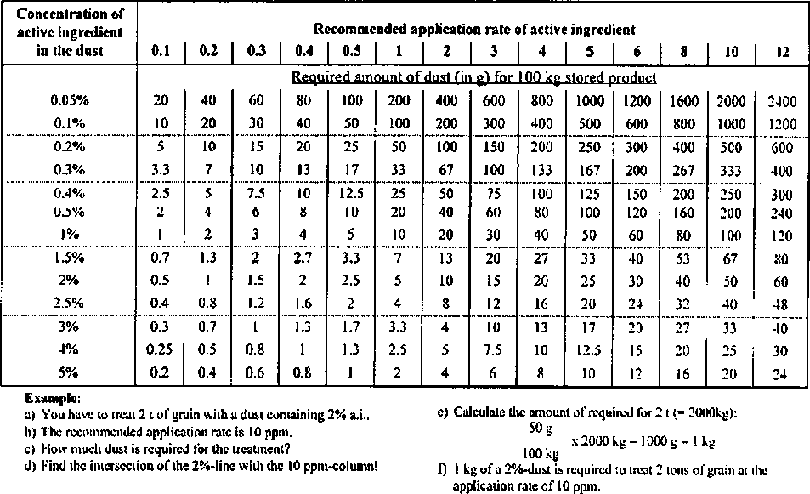
Figure 38
4.4.3 2 Application of Liquid Formulations
Should liquid formulations be used in small scale farm storage, please refer for application instructions and calculations of dosage to chapter 8.
4.4.3.3 Fumigation
In many areas in Africa, Asia and South America, grain is stored in sealed containers made out of mud. Some years ago fumigation of these stores seemed to be a highly promising method of pest control even on small farm level, particularly as this technique is simple, cheap and effective (when applied by well-trained personnel!) and does not leave any residue in the stored produce.
Lack of control and risks to users and people not involved in fumigation have, however, repeatedly occurred as a result of incorrect handling of fumigants by untrained farmers. As a consequence of poor sealing the desired effect has rarely been achieved. Instead men and animals are exposed to severe health hazards. Therefore fumigation on small farm level must be entirely discouraged.
4.4.4 Control of Termites
In traditional granaries or smaller warehouses made of mud termites can appear as a considerable nuisance. Often they do not cause substantial damage to the stored products, but they destroy storage structures, especially wooden parts of the construction or straw.
Termite control is rather difficult to achieve. l he best approach is prevention, as it is the case with other stored product pests, too. Several hard wood species like, for example, teak resist to termite attack. In zones where termites are frequent mud constructions without straw perform better. Poles of granaries soaked with mineral oil at the bottom end may resist during several years. There are also insecticide formulations available developed for wood protection (e.g. deltamethrin), but very often it is difficult to obtain them in rural areas of Africa. Solid constructions providing barriers against the intrusion of termites are to be recommended in exposed zones, but it must be taken into account that termites are quite successful in finding minor fissures which provide access, so that regular inspection, destruction of galleries and immediate repair of damage to storage structures is necessary under all circumstances.
Some of the plants used for traditional stored product protection are said to have termite-deterring effects. One of these plants is Hyptis spicigera (cf. 4.4.1.2.2). However, these effects are not yet well studied.
4.5 Further literature
ANONYMOUS (1985)
Prevention of Post-Harvest Food Losses, FAO,
Rome, 121 pp
ANONYMOUS (1981)
Post Harvest Problems, GTZ, Eschborn, 258
pages plus appendix.
ANONYMOUS (1981)
Probl�mes de post-r�colte, GTZ., Eschborn,
242 pages plus appendix.
ANONYMOUS (1975)
Seminaire ouest-africain sur le role des
volontaires dans le stockage des grains au niveau de la ferme et du village.
GTZ. Eschborn, 267 pp.
APPERT, J. (1985)
Le stockage des produits vivriers et
semenciers, Volume I + II, Maison-neuve et Larose, Paris, 225 pp.
DICHTER, D. (1978)
Manual on improved Farm & Village
Level Grain Storage Methods, GTZ, Eschborn, 244 pp.
HALL, D.W. (1970)
Handling and Storage of Food Grains in
Tropical and Subtropical Areas, FAO, Rome, 350 pp.
HARNISCH, R. & S. KRALL (1986)
Instructions for Building
a Fumigable Warehouse for Small-Scale Grain Storage at Village Level; Directives
pour la construction d'un magasin fumigable pour le stockage en petite �chelle
au niveau du village, GTZ, Hamburg, 106 pp.
KAT, J. & ALIOU DIOP (1985)
Manual on the establishment,
operation and management of cereal banks. FAO, Rome, 99 pp.
LINDBLAD, S. & L. DRUBEN (1976)
Small Farm Grain
Storage, ACTION/Peace
Corps/VITA
|
| ||||||||||||||||||||||||||||||
Manual on the Prevention of Post-harvest Grain Losses (GTZ)
5. Central storage
As a result of extensive social and economic changes (e.g. expansion of trade with basic foodstuffs, supplies of food aid, increase in urbanisation), central stores have grown both in number and importance in all countries. These stores have usually been run under state control by cereal offices. Structural adjustments in many countries led to substantial retrenchments of food quantities stored for emergencies, but still storage in medium- and large-scale facilities plays a vital part in the provision of the population with staple foods.
5.1 Storage facilities
It is quite apparent that a number of the storage facilities set up in tropical and sub-tropical countries are unsuitable for storing goods without a reduction in quality and considerable losses.
Although appropriate warehouse designs have been provided as far as suitable construction material, ventilation facilities and favourable constructional properties are concerned, little use is made of these. This can be observed even in recently-built stores.
The storage structures described in the following paragraphs can frequently be found in hot climates. The potential for the use of each type and their main shortcomings are highlighted in the text.
- Corrugated iron halls
Easy-to-erect corrugated iron halls made of prefabricated parts may be justifiable for short-term storage in case of emergencies. Buildings of this kind are unsuitable for long-term storage due to the poor control of climatic conditions and condensation problems.
- Flexible plastic silos
Under arid climate conditions, instant erection flexible plastic silos can be used for bag storage of locally produced grain as a pan of maintaining security reserves. To avoid condensation problems it is a precondition that the produce is absolutely dry (about 10% moisture content) at the moment of storage.
In the case of supplies of foodstuffs coming from temperate areas or produce with higher moisture content, flexible plastic silos can only be used as emergency stores for a short period as the same problems may be anticipated as for corrugated iron halls. Fumigation can easily be performed in silos of this kind. Flexible plastic silos are not suitable as transit stores due to the longer filling procedure and their fragility.
- Bag storage in warehouses
Assuming that the basic storage requirements are adhered to, the system of bag storage in well-designed warehouses is most suitable in tropical or sub tropical areas. This system is easy to manage, cheap, and efficient and well adapted to the existing infrastructure in most countries. It involves little risk in particular as far as long-term storage of security reserves is concerned.
- Bulk storage
Bulk storage in warehouses and silos is a system whose strengths lie particularly in rapid and labour-saving turnover of produce. The system enables relatively simple and efficient pest control measures and may considerably simplify transport tasks. The transit silos found in ports are typical of this usage. The relatively sophisticated bulk storage system demands, however, a high degree of management qualities, in particular with respect to loss prevention as a result of moist grain and condensation problems.
Successful bulk storage in silos requires adequate funds being made available for the relatively high overheads (maintenance, service, energy). in general operating costs are higher for bulk storage than for bag storage. Setting up silo units demands also considerably higher investments and capital costs than for the comparable warehouse capacity for bag storage. A minimum annual turnover is necessary to justify these investments, thus making silos uneconomical for long-term storage. In the Federal Republic of Germany, for example, the rough figure for the economic operation of a silo plant is an annual turnover of 13 times.
In developing countries the bulk storage system may gain importance in the long term if the conditions in terms of infrastructure and management permit the introduction of such a system.
- Open-air storage
Open-air storage is a short-term emergency measure. The produce must always be stored on pallets in order to avoid any ground moisture being absorbed. Tarpaulins spread on the ground, or concrete platforms, afford also protection, and must be present in any case for fumigation. The stacks also have to be covered with tarpaulins against adverse weather conditions.
A decision in favour of one system or the other must take into account all the pros and cons of the systems and the framework conditions in the country in question. Moreover, storage must be seen only as one element in the entire chain of food supply from the producer to the consumer, and any particular storage system must become an integrated, well adapted part of the existing structures.
5.1.1 Instructions for the Construction of Warehouses
As many serious mistakes are made in the construction of medium-sized and large warehouses, instructions are given here for the basic design of stores which provide optimum conditions for the storage of grains and other foodstuff
5.1.1.1 Siting and Orientation
· A raised site and good drainage ensure that there is no
stagnant water in the vicinity of stores.
· Setting up the store with
its longitudinal side on an East-West axis (less sun radiation on the building)
or exposed to the main wind direction creates balanced temperature conditions,
thus reducing the danger of condensation.
· Firm soil and good road
connections enable easy delivery and transportation of produce.
5.1.1 2 General Constructional Features
· Not more than four corners and a simple and effective
spatial design without any more angles, pillars, beams, windows or doors than
necessary make work and especially cleaning easier and make it more difficult
for pests to enter or find a hiding place.
· Offices and sanitary
facilities which are separate from the warehouse enable fumigation and pest
control measures to take place without any danger to staff.
·
Pesticides, fertilizers and other material which are stored separately prevent
any damaging effect on the stored produce and improve storage hygiene.

Figure 39
5.1.1.3 Flooring
· A floor at a height of I m above the ground with a ramp
prevents ground moisture to penetrate the store, protects the walls and doors
from being damaged by vehicles and simplifies loading and unloading of
trucks,
· A vapour barrier stops ground moisture from rising. A suitable
method is to insert polyethylene foil of at least 0.2 mm thickness, or a 5 cm
layer of bitumen in the floor and in the first 25 cm of the walls.
· A
concrete floor hard enough to bear the load expected prevents cracks.
·
A smooth surface without any cracks or holes is easy to clean and does not
afford insects any place to hide.
5.1.1.4 Walls
· Roof - bearing pillars integrated into the walls
facilitate storage hygiene.
· A smooth surface without any cracks ether
inside or out affords no hiding-places for pests. Even the smallest of holes
must be filled in.
· A white, water-resistant and, if possible,
plastifying outer coat of paint reflects the sun radiation and prevents
penetration by moisture.
· Corrugated iron walls are unsuitable due to
temperature variations inside the store.
5.1.1.5 Roofing
· Eaves overhanging the walls by at least 1 metre ensure
that the store is kept in the shade and its walls are protected against
rain.
· Eaves overhanging by at least 2-3 metres at the doors enable
vehicles to be loaded and unloaded when it is raining.
· Properly sealed
connections from roof to walls prevent any insects or birds from entering.
· Insulation under the roof in case of corrugated iron sheets reduces
the effect of the sun radiation and creates better storage temperatures.
Insulating material does, however, have the danger of being an ideal hiding
place for pests and also makes it more difficult to maintain good storage
hygiene.
· Aluminium sheets or fibre concrete roofing do not become as
hot as corrugated iron and create better storage temperatures.
· Gutters
linked to a drainage system prevent the outer walls and the foundation becoming
wet in case of rain.
5.1.1.6 Doors
· One door at each gable end is normally
sufficient.
· Tight-sealing hinged doors prevent rodents from entering.
Sliding doors always leave a gap between door and wall, A gap of 6 mm is
sufficient to enable a mouse to enter. Roll-up doors rust and often become
defect when older.
· Metal doors are most resistant against any damage
by rodents. Wooden doors should be fitted at the bottom with a panel of sheet
steel of half a metre in height.
5.1.1.7 Ventilation Openings
· Ventilation openings with flaps which can be regulated enable controlled ventilation and the evacuation of heat from the store.
Ventilation openings should have a size of:
0.5 m²/100 m² storage area for incoming air (lower ventilation openings) and 1.5 m²/100 m² storage area for outgoing air (upper ventilation openings).
The lower ventilation openings should be situated approx. ½ metre above the floor, the upper ones approx. ½ metre below the roof on both sides of the store.
· Tightly-sealing ventilation openings permit fogging with
insecticides.
· Wire gauze and grilles in the ventilation openings
prevent insects, rodents and birds from entering.
Roofing over the ventilation openings prevents any penetration by rainwater.
5.2 Store management
The proper management of the store should be assigned to one person, the storekeeper. The responsibility for the several tasks listed in the following section must be clearly defined in a written job description. For the job description of a storekeeper see section 5.2.3.2.
5.2.1 The Storekeeper's Job
The storekeeper is responsible:
- for the maintenance of the warehouse (small repairs) and its
equipment (fumigation sheets, spraying equipment, etc.)
- for the correct
handling and storage of the commodities and the products for pest control
-
for the performance of any measures necessary to maintain the quality of the
stored produce (hygiene measures, application of insecticides, fumigation,
rodent control, controlled ventilation)
- for the correct use of chemical
products and the safety of the staff
- for regular controls of the storage
facilities and the stored produce for keeping correct records of all movements
of stored produce and of all activities in the store including stack cards
-
for giving support and guidance to the staff under his supervision
- for
writing regular reports for his superiors.
5.2.2 Storage Hygiene
Preventive measures with regard to storage hygiene are of decisive importance in maintaining the quality of the stored produce and avoiding losses. By the term storage hygiene, we mean the use of all technical measures with the exception of the application of chemicals. Perfect storage hygiene is the basic prerequisite for successful storage and for the effectiveness of all on-going measures, such as the use of insecticides or fumigants.
All hygiene measures are very simple, particularly effective and cheap, and can thus be performed by any storekeeper with little effort.
Hygiene requires knowledge, attentiveness, diligence, surveillance, responsibility and thoroughness on the part of the storekeeper.
A few basic principles determine the success of storage:

Figure 40
- Always keep the store and its surroundings clean: the broom
is the most effective and economic instrument in storage!
- Always
keep grain cool and dry!
- Always keep the store in good
condition!
5.2.3 Measures to Maintain the Quality of the Stored Produce
5.2.3.1 Influence on the Part of the Storekeeper
From the delivery of the produce to the end of the storage period, the storekeeper has to make decisions and initiate actions with the aim of keeping the produce in good condition.

Figure 41
5.2.3.2 Activities to Prevent Losses in Storage
Note before storage:
- Check the storage conditions using the store check list
provided in section 5.2.5.4 and deal with any faults you discover!
- Ensure
that any damage to the warehouse is repaired (root leaks; walls and floor:
cracks and crevices; doors: gaps; ventilation openings damaged gauze and
grilles, broken glass)!
- Thoroughly clean the store's floors, walls, roof,
doors and ventilation openings!
- Clean the area surrounding the store and
remove any left-overs of grain, rubbish, birds' nests, grass and bushes within a
minimum of 5 m around the store so as not to give pests any shelter or the
chance to develop!
- Collect rubbish in a bin (e.g. old oil drum)! Dispose of
it immediately by burning or, in case of non-inflammable material, by
burying!
- Repair any damaged pallets (pay particular attention to nails
sticking out)!
- Treat the empty store, if necessary, and al! pallets with a
contact insecticide (see chapter 8)!
- Draw up a storage plan for each store!

Figure 42

Figure 43

Figure 44

Figure 45
Note before accepting delivery:
- Carry out quality control! Take representative samples
following the instructions in section 5.2.4.3!
- Check the smell and the
appearance of the produce delivered!
- Measure the moisture content of the
produce from individual bags of any particular vehicle (see section 5.2.4.3)!

Figure 46

Figure 47
If the moisture content is too high, ensure further drying or refuse to accept delivery!
- Check whether the produce is infested by taking samples (see section 5.2.4.3)1 Pay particular attention to cracks and gaps in vehicles where insects may hide!
If the produce is infested, ensure it is stored separately (quarantine) and treated in order to prevent the pests infesting uncontaminated produce. In case of heavy infestation refuse to accept delivery!
- Check the degree of impurity!
If the degree of impurity is too high according to the respective standards, have the produce cleaned or refuse to accept delivery!
Note when storing:
- Avoid infested produce coming into contact with uncontaminated
produce!
- Handle the bags carefully in order to avoid any damage! Do not use
bag hooks!
- Make sure that any damaged bags are replaced and/or
repaired!
- Make sure that the bags are stacked correctly and safely on
pallets (see section 5 2.4 1)!

Figure 48

Figure 49

Figure 50
Note during storage:
Daily:
- Sweep the floor of the store! Pay particular attention to
corners and edges where dirt and pests may gather!
- Clear the walls, the
ventilation openings including the gauze and grilles and the stacks of
bags!
- Brush the roof beams as insects may hide and survive there!
-
Clean equipment after use in order to remove grain left over in inaccessible
places I
- Dispose of any waste immediately after cleaning by burning or
burying it!
- Check the store for damage and ensure reparation
immediately!
- Look for the presence of any flying or crawling insects!
-
Check for traces of rodents or birds!
- Carry out controlled ventilation (see
section 5 2.4.2)!
- Make sure that the store records ate kept up-to-date!

Figure 51

Figure 52
Weekly:
-Take samples of every lot and check:
- the moisture content of the produce
- the presence of pests in the stored produce by sieving the samples!
-Check the temperature of the stored produce in the stacks of bags using a grain thermometer!

Figure 53
Monthly:
-Clean the area surrounding the store and remove any herbs!
-
Draw up a monthly report and send it to your superiors!
General Principles of
Storage
- Only accept delivery of sufficiently dry, uninfested and well
cleaned produce!
- For foodstuffs:
Ensure for rotation of the produce in
store according to the "first in - first out" principle in order to prevent
overstorage!
- For seeds:
Remove any lots which ate below the prescribed
standard of germination capacity and make other use of them!
If the germination ability is in accordance with the prescribed standard, first supply the lot with the lowest germination ability! The higher the germination ability of any lot, the longer it can be stored as seed.
- Remove any waste from processing (by-products such as from
cleaning seeds) immediately! If by-products have to remain in the store, treat
them as any other stored produce. Otherwise they risk to be a constant source of
infestation.
- Stack empty bags on pallets with a distance of I m to walls.
Fumigate empty bags after use!
- Stack unused pallets tidily and treat them
with insecticide before and after use!
- Store equipment and chemicals in
separate stores!
- Remove any junk from stores!
A job description, such as in the form of a poster, in the storekeeper's office reminds him of his tasks and duties. It should be signed by him in order to prove that he has taken cognisance of his responsibilities.

Figure 54
5.2.4 Storage Techniques
5.2.4.1 Stacking Bags
- Pallets
Always stack bags on pallets! Place the pallets in a way that enables a free current of air under the stack!
The pallets should be 10 cm high in order to facilitate aeration from below. As an additional advantage rodent infestation can easily be determined. The following illustration shows a model with three base beams and cross beams of a thickness of at least 2.5 cm.
The surface area of the supporting bars should not be less than approx. 40% of the overall surface area of the pallet in order to prevent the bottom bags being damaged as a result of too much pressure

Figure 55
- Stacking the bags
The objective when stacking bags is to build up safe stacks which will not collapse. In practice, three or five bags units, depending on their size, have proved most effective whereby overlapping the bags in the different layers is essential.

Figure 56

Figure 57
Attention must be paid to the following:
- Start exactly at the edge of the pallet:
- Ears of bags
(side where the bag is sewn) should be pointing inwards the stack in order to
prevent grain spilling.
- Stack the bottom layers with larger intervals than
the top ones in order to obtain a slightly conical form of the stack which
provides stability.
- On every layer, work inwards from all four sides. If
this results in gaps occurring in the middle of the upper layers, the stability
of the stack will not be affected.

Figure 58

Figure 59
- Size of stacks
For the purpose of stability, jute bags should not be stacked any higher than 4 m and plastic bags no higher than 3 m! Plastic bags are more slippery and the stacks thus less stable.
When determining the size of stacks, take into account the store's capacity, the ratio of its length to its breadth and its height, the position of the doors and the size of the fumigation sheets available! Set the dimensions of the stacks to facilitate sealing with a single fumigation sheet! if the stacks are too large, they can no longer be effectively controlled, and if they are too small, space is wasted. Do not exceed stack sizes of approximately 250 t!
Leave a space between the top of the stacks and the roof of a least 1.5 metres in order to be able to carry out control measures.
Standardized stack sizes should be prescribed for all stores. This has the following advantages:
- It enables optimum use of space.
- It permits standardized
procedures for treatments and fumigation as well as for taking samples.
- It
simplifies controls.
- It enables the purchase of perfectly-sized fumigation
sheets.
- Positioning of stacks
All stacks of bags must be freely accessible at all times order to carry out controls, surface treatment and fumigation Leave a minimum space of I m between stacks and between the stacks and the walls!
Mark the positions of the stacks by painting a line on the warehouse floor (Drawing at in the following figure)! if the sizes of the stacks are not fixed, paint a line at a distance of 1 m from the walls all around the floor (b)!
Provide a site plan before storage!
- Marking the stacks
Book-keeping and routine work is made considerably easier if the individual stacks are marked with numbers or letters for easy identification These markings may be made on the walls, the floor or the roof pillars, as long as they are always clearly visible. They should also be entered on the stack card.

Figure 60

Figure 61
- Stack cards
Attach a stack card (sometimes referred to as a "bin card") in a clearly visible position to every stack of bags, containing the most important information. All controls and treatments should also be entered on the card. You will find a model of a stack card in the section on book-keeping (5.2.4.4).
Summary of Bag Stacking:
RIGHT
- A space of I m is left between stack and wall.
-
The stacks are on pallets.
- The pallets are set up allowing an optimum air
flow beneath the stacks.
- The bags are stacked in units of three
WRONG
- The bags are touching the wall.
- The bags are on
the floor.
- No aeration of the stacks is possible.
- The bags are stacked
irregularly.

Figure 62

Figure 63
Consequences:
- The stack is free of rodents.
- The stack is well aerated.
- The stack is stable.
- The stack can be controlled, treated and
fumigated at any time.
- The stack is a nesting place for rodents.
- No
aeration takes place.
- The stack may collapse.
- The stack cannot be
controlled, treated or fumigated.
5.2.4.2 Controlled Ventilation
Controlled ventilation has a positive effect on the moisture content of the stored produce and the temperature in the store,
Humid air can remoisten whereas dry air further dries the stored produce until the relevant equilibrium moisture content has been reached (see section 2.2.4). This means that the ventilation openings should be kept closed if the relative humidity is high and opened if the relative humidity is low.
Further drying of the stored produce is only possible, however, if this method is consistently practised over a certain period of thee, as the exchange of moisture in stacked produce takes place relatively slowly.
The equilibrium moisture content of the stored produce does not only depend on the relative humidity of the atmosphere, but also on the temperature, which influences the ability of the air to absorb water, The change in the equilibrium moisture contents is, however only slight within temperature ranges of approximately 10°C, so that simplifications can be made in practice.
Both of the following tables thus contain average values for the temperature ranges from 20 - 30°C and 30 - 40°C which have been calculated on the basis of various publications. The equilibrium moisture contents stated are to be regarded as guidelines. Using these tables, a thermometer a hygrometer (or a combined thermo-hygrometer) and a grain moisture meter are needed in order to determine whether ventilation is favourable or not.
Tables of Equilibrium Moisture Contents
· Equilibrium moisture contents of selected commodities at 20 - 30°C (in %)
| |
Equilibrium moisture content at a relative humidity of the air of: | |||||
|
Commodity |
40% |
50% |
60% |
70% |
80% |
90% |
|
White maize |
9.3 |
10.6 |
12.1 |
13.8 |
16.1 |
19.6 |
|
Yellow maize |
8.4 |
9.7 |
11.3 |
13.1 |
15.5 |
19.2 |
|
Sorghum |
9.8 |
11.0 |
12.1 |
13.8 |
15.8 |
18.9 |
|
Wheat |
10.0 |
11.1 |
12.7 |
142 |
16.4 |
20.3 |
|
Paddy |
9.2 |
10.4 |
11.6 |
13.0 |
14.8 |
17.6 |
|
Rice |
9.0 |
10.4 |
11.7 |
13.0 |
14.6 |
16.7 |
|
Groundnuts |
5.4 |
6.8 |
7.7 |
9.1 |
11.6 |
16.0 |
· Equilibrium moisture contents of selected commodities at 30 - 40°C (ill %)
| |
Equilibrium moisture content at a relative humidity of tile air of: | |||||
|
Commodity |
40% |
50% |
60% |
70% |
80% |
90% |
|
Yellow maize |
9.0 |
9.9 |
11.7 |
13.3 |
14.9 |
18.2 |
|
Sorghum |
10.0 |
11.6 |
12 1 |
13.0 |
14.7 | |
|
Wheat |
|
11.8 |
12.9 |
14.7 | | |
|
Paddy |
10.1 |
11.4 |
12.6 |
13.5 |
14.9 |
19.1 |
|
Rice |
| |
11.1 |
12.7 |
14.5 |
16.8 |
Procedure:
1. Measure the relative humidity and the temperature of the
outside air using a thermometer and a hygrometer! Both instruments must be fixed
outdoors and protected from rain and direct sunlight.
2. Measure the moisture
content of the stored produce using a moisture meter!
3. Determine the
equilibrium moisture content of the stored produce for the determined relative
humidity:
- Select the appropriate table on the basis of the temperature
reading!
- Find the point where the row of the produce in storage meets the
column of the relative humidity reading!
4. Compare the moisture content reading with the equilibrium moisture content determined!
- Ventilate if the moisture content of the stored produce is
higher than the equilibrium moisture content shown in the table! Further drying
will take place.
- Close the ventilation flaps if the moisture content of the
stored produce is lower than the equilibrium moisture content shown in the
table! Otherwise it is to be expected that the stored produce will become more
moist.
Example 1:
- outside temperature: 27°C
- relative humidity of
outside air: 60%
- moisture content of stored sorghum: 13.5%
In this case, the appropriate table is the one showing the temperature range from 20 - 30°C. The equilibrium moisture content for sorghum at a relative humidity of 60% is 12. 1%. The actual moisture content of the produce at 13.5% is higher than the equilibrium moisture content.
Therefore: Ventilate!
Example 2:
|
- outside temperature: |
34°C |
|
- relative humidity of outside air: |
80% |
|
- moisture content of stored wheat: |
13% |
In this case, the appropriate table is the one showing the temperature range from 30 -40°C. The equilibrium moisture content for wheat at a relative humidity of 80% is 14.8%. The actual moisture content of the produce at 13% is lower than the equilibrium moisture content.

Figure 64
Therefore: Keep the ventilation Raps closed!
Controlled ventilation is particularly necessary where the moisture content of the stored grain is close to the permissible maximum values for long-term storage (see section 2.2.6). This is generally the case in humid regions and often also in arid regions with imported grain.
If the moisture content is well below the maximum value, which is generally the case with local grain in arid regions, ventilation need only take place if condensation occurs in the store or if the inside temperature is too high.
If no thermometers and hygrometers are available, the following rules of thumb apply:
· Ventilate the store only during the daytime, using the
hours of sunlight when experience has shown that the relative humidity is
comparatively low! This is the period from 11 a.m. to 3 p.m., or longer in dry
regions.
· if it rains, keep the store closed for a number of hours or
for the entire day following the end of the rainfall.

Figure 65
5.2.4.3 Monitoring. Sampling and Quality Control
Monitoring is a constant process of control with the aim of maintaining the quality of the stored produce. A brief visual inspection is by no means sufficient, rather it is important that a systematic search for possible sources of damage is performed. Should such sources be identified, measures must be taken (see section 3.3) and the success of these measures then examined.
Monitoring comprises regular inspection of the store as well as continuously sampling of the stored produce.

Figure 66
Inspecting the Store
Inspect the store daily!
- Damage to the store
Losses in the quality of the stored produce are in many cases caused by damage to the store building.
Pay particular attention to damage to the roof to the junctions of roof and walls, cracks and holes in the walls and the floor, damage to doors, windows, ventilation openings and their gauzes and grilles! Take immediate action if you notice any damage on walls or the floor or leaks in the roof!
Keep the rainwater drainage system and gutters in good function!
- Presence of rodents and birds
Rodents betray their presence in the store by leaving various traces. Pay particular attention to droppings, footprints in the dust, holes in bags, spilled grain, damaged material and grain left-overs (see chapter 11)!
Birds also leave excrements, food prints and damage to bags.
- Presence of insect pests
Look for insect pests at dusk, as they then have an active flying phase and ate more easily detected!
Moths are generally noticeable when their population density is already considerable.
Traps using pheromones or attractants can be of great service for identifying a low population in the store (see section 10.2). Pheromone traps are available for monitoring the most important species of moths as well as the beetle species Trogoderma granarium, Tribolium spp., Rhizopertha dominica and Prostephanus truncatus (see section 10.2).
Food attractants are less specific in their function to monitor infestation (see section 10.2)!
Brush stacks of bags with a stick or a broom to disturb and discover resting moths! Lift bags in order to detect moth cocoons along the line where the bags touch one another.
When looking for beetles pay particular attention to cracks, bag seams and ears where they often hide!
Empty individual bags in a thin layer onto a sheet and examine the contents for beetles and larvae! This should be done in the shade so that the insects do not flee immediately. It is, however, more effective to sieve out ally insects present using a box sieve with a mesh of 1 - 2 mm.
Higher infestation can be noticed by an increase in the temperature of the stored produce as a result of the metabolic activity of the insects, or in certain cases by a characteristic smell (e.g. Tribolium spp.). Very important infestation can be noticed by feeding noise produced in the stack.
Identify the insects found as far as possible in order to perform the correct treatment.
- Mould
Pay attention to the mouldy smell which is noticeable in the case of fungi infestation even before any visual changes can be seen to the products!
- Moisture damage
Attention has to be made to water marks on the bags which can still be seen after the bags have dried!
Taking samples
The most reliable method to establish moisture damage, insect or fungus infestation is by examining the stored produce itself. In order to do so, it is essential to take samples. The method of taking samples presented below serves for use in routine controls:
· for infestation by pests
· of the moisture
content
· for other changes to the stored produce.
The controls should be made regularly by the storekeeper during the storage period. Regulations for laboratory examinations of samples, e.g. of seeds, remain unaffected.
Take samples of every lot in a weekly to fortnightly rhythm! Draw up a schedule for regular sampling.
Sampler
The samples are taken by means of a sampler, of which there are two different kinds:
· Bag sampler
It reaches to the centre of the bag and is quick and easy to use:

Figure 67
Use the sampler to pierce the bag from below (1), turn it in the bag so that the produce can fall into the opening and run into the recipient (2). Withdraw the sampler (3) and close the hole with its tip (4).
The right diameter of a bag sampler depends on the type of produce being sampled. The following rough values apply:
- for small seeds: 12 mm
- for cereals: 15 mm
- for grain
legumes: 20 mm
- for rough produce: 25 mm

Figure 68
· Grain sampler
It is longer than the bag sampler and is able to cover the entire cross-section of the bag. its use is more complicated and slower. The grain sampler consists of two parts; an outer and an inner tube. Turning the inner tube opens and closes the sampler.
Grain samplers are available as entirely hollow constructions or with intermediary sections. The latter enable the produce to be examined layer by layer. Grain samplers are available in various sizes. Larger ones are mostly used for taking samples from bulk produce.
Grain samplers are used as follows:
Pierce the bag with the closed grain sampler. Turn the inner tube to open and till the sampler. Then reclose it by turning the inner tube again. Shake the sampler as you do so to avoid any broken grain! Draw out the sampler and empty the sample into a recipient or on a sheet!
Representative sampling
A single sample only consists of a tiny portion of the overall amount of grain contained in a lot. Sampling must therefore be done according to certain rules and with the greatest care in order to obtain a sample which is representative of the entire stack.

Figure 69
In order to ensure this
- a sufficient number of primary samples must be taken
- the
points from which the samples are taken must be evenly distributed throughout
the entire lot
- the primary samples are put together to form a composite
sample (with the exception of those samples which serve to determine the
presence of moisture!)
- the composite sample is reduced to a standard sample
which will be thoroughly analysed.
The three types of samples involved in this procedure are defined as follows:
· Primary Sample
A primary sample is a single sample out of one bag with an approximate volume of 100 ml. In order to obtain a representative sample for the whole stack a sufficient number of primary samples must be taken following the rules given below.
· Composite Sample
The composite sample consists of the merged primary samples and should have a minimum volume of 2 l.
· Standard Sample
The standard sample has a volume of exactly 1 l of grain. It is obtained by reducing the composite sample to it volume of 1 I with it sample divider. The standard sample is the basic unit tot- pest infestation analysis
· Number of primary samples
The minimum number of primary samples depends on the size of the bag stacks. Proportionately mot-e samples have to be taken from smaller stacks than from larger ones, as in the former more hags arc placed on the outside and thus exposed to damaging influences. The number of primary samples depends solely on the number of hags, regardless of their weight.
There are several systems how to determine the number of primary samples necessary to obtain a representative sample. The following system is simple to apply:
|
Number of bags |
Number of primary samples required |
|
up to 10 |
one sample per hag |
|
11 to 100 |
10 bags* |
|
100 to 10.000 |
|
|
more than 10.000 |
|

* if the grain is very inhomogenous, the number of samples must he increased
Storage responsible who ate not familiar With square roots and who do not dispose of a pocket calculator, can also use the following scheme:
Minimum Number of Primary Samples in Stacks with a Large Number of Bags
|
Bags |
Samples |
Bags |
Samples |
Bags |
Samples |
|
50- 100 |
10 |
800- 900 |
30 |
2 500-3 000 |
55 |
|
100 - 150 |
12 |
900 - 1 000 |
32 |
3 000-3 500 |
59 |
|
150 - 200 |
14 | | |
3 500-4 000 |
63 |
|
200-250 |
16 |
1 000- 1 200 |
35 |
4000-4 500 |
67 |
|
250-300 |
18 |
1200-1400 |
37 |
4500-5000 |
71 |
|
300-400 |
20 |
1 400- 1 600 |
40 |
5 000-6000 |
77 |
|
400- 500 |
22 |
1 600- 1 800 |
42 |
6000-7000 |
83 |
|
500 - 600 |
24 |
1 800 - 2 000 |
45 |
7 000-8 000 |
89 |
|
600 - 700 |
26 | | |
8 000-9 000 |
95 |
|
700 - 800 |
28 |
2 000 - 2 500 |
50 |
9 000 - 10 000 |
100 |
When produce is delivered a primary sample should be taken out of every second bag on the vehicle.
· Distribution of the sampling points
The sampling points must be evenly distributed over the total stack surface. This means that comparatively big surfaces should have more sampling points than the smaller ones. If the total stack surface area is 120 m², for example, and the surface area of one side 40 m², 1/3 of the samples must be taken from this side. On a side with 24 m², accordingly, 1/5 of the samples have to be taken.
An experienced storekeeper will be able to estimate the approximate distribution without calculating the sizes of the single surfaces. The following picture gives an idea of the distribution of sampling points on the individual surfaces of a stack:
It is advantageous to have standardized stack sizes in the store in order to facilitate routines like determining the number of sampling points or calculating the dosages for treatments against stored product pests..
Quality control
A minimum amount of equipment must be available in every store or storage complex for quality control examinations:
· moisture meter
· sieves
· hand magnifying
glass
· Pair of scales

Figure 70

Figure 71
The samples taken are subjected to various kind of examination either, as primary samples or as a standard sample. If there is any doubt as to the quality of a certain lot, samples should be tested in a laboratory.
· Visual test and smell
Examine the composition and smell of the produce when taking the sample! A mouldy smell indicates fungi festation. Any changes in the colour of the grains may also be due to moisture damage or damage from heat because of high drying temperatures or "hot spots".
· Measuring the grain moisture content
For detecting grain moisture content primary samples have to be analysed, as increases in the moisture content of some bags resulting from condensation or leakages in the roof can no longer be recognized in standard samples
Measurement should be performed immediately after taking the sample, as the moisture content can change rapidly after the sample has been taken. This test is generally done with commercially available moisture meters. Take care that the produce is not filled into the apparatus by hand as this increases the moisture on the surface of the grain and leads to incorrect readings! Strictly observe the instructions for use of the moisture meters!
In case of exceptionally high readings, take additional measurements to determine whether the increase is limited to a certain area (e.g as a result of rainwater penetration), or whether it affects large areas of the entire stack! Take out bags for drying if necessary!
Enter all readings in the stock journal and stack card.
· Control for infestation by Insects
Examine the standard sample, as it is not of any importance where exactly the insects come from! If the level of infestation is unacceptable, the entire stack must be treated in any case.
Sieve out any insects which might be present using a single sieve with a mesh size of 1 - 2 mm or better several sieves with decreasing mesh sizes (e.g. 3, 2 and 1 mm)! Carefully examine the remains in every sieve for insects!
A number of pests, such as Sitotroga cerealella or Sitophilus spp. develop inside the grains and are thus not noticeable in controls of this kind. Hidden infestation can be discovered by means of a water test:
Place a sample of the grain in a container with water. Infested grains are lighter than healthy ones and will therefore float on the surface. Check whether they are really infested by cutting them open!

Figure 72
Identify any insects (see chapter 7) in order to decide if any action should he taken to deal with them and which kind of treatment is required!
Whether action should be taken depends on a number of factors:
· the degree of infestation
· the kind of insect
pest species (primary or secondary pest)
· the period the produce will
be in storage
· the purpose the produce will be used for (food, feed,
export)
· the quality standards demanded on selling the produce.
Example:
In Egypt the following criteria for the application of control measures are common (resulting on examination of standard sample):
- 1 living primary pest specimen (adult beetles
only)
Þ fumigation becomes necessary
- more than 4 secondary pest specimen (adult beetles
only)
Þ fumigation becomes necessary
This number of insects could be made up of different species.
· Grain temperature readings
Unusually high temperatures in a mass of grain are an indication of the activity of micro-organisms and pests, e.g. in a "hot spot" (see section 2.2.3).
Grain thermometers are available with rigid thermo-probes made of metal which are used to pierce the bags. Electronic thermometers usually have a thermo-probe with a flexible lead. This is either soldered to a rigid metal rod or is placed in a bag or grain sampler.
Empty the bags with a higher temperature and examine the contents!
Determine the extent of the damage by controlling the surrounding bags!
· Checking for impurities
An examination for impurities is particularly necessary on purchasing or accepting delivery of produce at the store.
Poorly cleaned produce has a shorter storage life than clean produce. Dust, for example, is hygroscopic and raises the moisture content of the stored produce; broken grain allows secondary pests to gain access to the stored produce (see chapter 7). in addition, impurities reduce the storage capacity and increase the storage costs due to extra weight.
Impurities are separated by sieving the sample being examined. This is performed using two sieves, one coarse and a fine one, whose mesh sizes must be suited to the produce being examined. Impurities such as stones, pieces of straw, pans of maize spindles etc. are sieved out by the coarse sieve whereas impurities such as sand, dust, insects, broken grains, etc. will pass through the fine sieve.
Impurities which are of the same size as the stored produce cannot be sieved out and must be separated individually.
Sieves sets with a lid and a bottom pan are recommendable. Sieving should be performed by shaking the set of sieves for ½ - 1 minute.
If there are no sieves available, impurities may be separated from the stored produce by means of winnowing or, if the quantity is comparatively small, simple sorting out on a bright surface.
For a quantitative assessment of the impurities, a set of scales weighing accurately to 0.1 g is necessary. This is necessary wherever:
· quality standards are prescribed
· the degree of
impurity is taken into account in the price of the produce

Figure 73
Examinations for impurity are not necessary in the course of routine control of the stored produce during the storage period.
There are special regulations for seeds.
5.2.5 Book-keeping
The storekeeper has to record the state of the store and the produce as well as of his activities. Book-keeping is based on the following elements:
· store journal
· stock sheets (where
suitable)
· stack cards
· monthly report
· warehouse
checklist
Models for these elements are presented below, along with explanations for their use.
Store journal
The store journal contains a record of all procedures carried out in the store, such as incoming and outgoing produce, results of inspections and treatments, etc. Entries should be made daily and after any activities have been performed. The store journal consists of two tables:
· Balance sheet
The balance sheet contains nil information on movements of the stored produce, the place of origin or destination, the stack number (or lot number in the case of seed) and reference to the relevant documents like invoices or receipts. These must be filed chronologically. The storekeeper confirms every procedure with his signature.
· Control sheet
The control sheet contains information on all activities in the store, such as inspections and their results, treatments, cleaning and ventilation, any repairs and weather data. An additional quality control book is required for seed stores in which the results of the laboratory tests which form a part of the essential internal quality maintenance programme are recorded.
The store journal should be firmly bound and the pages numbered. The first part should consist of the balance sheets and the thicker rear part of the control sheets. A separate journal should be kept for each store and should remain in the store.
STORE JOURNAL (PART 1):
BALANCE SHEET

Figure 74
STORE JOURNAL (PART 2)
CONTROL SHEET

Figure 75
Stock sheets
In storage centres and in seed stores, store book-keeping is composed of journals from the individual stores or lots, making it very time-consuming to calculate the actual amounts of produce present in the stores. In such cases it is practical to keep stock sheets. A stock sheet shows the current overall stock of the storage centre at any one time on a single page. The stock sheet is divided up according to the type of produce and, in the case of seed, according to type, category and state of processing.
STOCK SHEET
Entries should consist of the date of any movement, the new overall total stock and the reference to the store where the movement has taken place. This enables the details of the procedure to be checked in the balance sheets of the relevant store.

Figure 76
Stock sheets are also kept in the form of a firmly bound book.
Stack cards
Every stack is given a stack card placed where it is clearly visible, This serves to identify the stack and the produce and contains details on inspections and pest control measures performed.
Monthly report
The storekeeper's monthly report serves to inform superiors on amounts of produce and its state, on the storage conditions as well as on activities and any problems in the store. These reports should also be referred to on the inspections of the store regularly done by the superior.
Warehouse checklist
The warehouse checklist is an instrument of control. It essentially serves as a means of evaluating the tasks mentioned in the storekeeper's job description. The checklist can also be used by the storekeeper in the course of regular controls of storage conditions, the state of the buildings and the storage management.
STACK CARD
FOOD DISTRIBUTION CORPORATION

Figure 77
STACK CARD
SEED CORPORATION

Figure 78
Back of stack card
Stack dimensions (to be entered with pencil and to be corrected when changing):
|
Iength: .... m |
Surface area : .... m |
Amount of water needed for surface treatment : ... l |
|
width : ... m |
|
Amount of chemical needed to be mixed with the water : ... ml EC/g WP |
|
height: ... m |
Volume : ... m |
Number of tablets needed for stack fumigation : ... tablets |

Figure 79

Figure 80

Figure 81
WAREHOUSE CHECKLIST
|
Location: |
Name of store: |
Capacity: t |
|
Products stored: |
|
Amount stored: t |
1. Condition of warehouse surrounding
Is the surrounding of the warehouse free of:
a) accumulation
of grains, old bags, junk and trash?
b) weeds, tall grass and bushes?
c)
evidence of rodents?
d) standing water?
2. Condition of warehouse exterior
a) is the roof intact?
b) is the water drainage intact?
c) Are the walls without holes or cracks?
d) Do the doors close
hermetically?
e) Are the ventilation openings protected against the
penetration of insects, rodents and birds?
3. Condition of warehouse interior
a) Are the walls, the door and the roof undamaged?
b) is the
floor and the roof clean?
c) Is the floor free of spilled grain, dirt, and
trash?
d) Do the ventilation openings function properly?
e) is the store
free of residues of former treatments (empty phosphine tubes, phosphine
residues, rodent baits, etc.)
4. Storage practices
a) Are all empty bags stored on pallets?
b) Are all stacks
at least 1 m apart?
c) Are insecticides, fertilizer and other products
stored separately from the grain?
d) Are all bags in the stacks without
holes?
e) Are all stacks built in a safe way?
f) Are stack cards in use
far all stacks?
g) Are the stock journals kept up to date?
5. Presence of pests
a) is the store free of flying insects?
b) Are the walls and
the bags free of crawling insects, larvae and pupae?
c) is the store free of
traces of rodents?
d) is the store free of traces of birds?
6. Pest control
a) Has any pest control treatment
been done shortly before or during the inspection?
b) if so, what kind of
treatment?
c) Which pesticide has been applied?
d) in case, bait
stations against rodents are in use, are they supplied with fresh baits?
7. Recommendations
|
Inspector |
Storekeeper |
| |
|
|
Name: |
Name: |
|
Signature: |
Signature: |
|
Date: |
Date: |
5.2.6 Equipment
The following equipment is necessary in order to correctly run a store:
- Pallets
- Brooms
- Shovel
- Rubbish bin (e.g. oil
drum)
- Rake
- Bucket
- Sampler
- Sample container
- Sample
divider
- 1 l-cup
- Magnifying glass
- Forceps
- Set of sieves (1.5
mm, 2 mm and 3 mm, plus other mesh sizes if necessary)
- Air thermometer
-
Glasses to collect insects
- Hygrometer or combined thermo-hygrometer
-
Grain thermometer
- Grain moisture meter
- Torch
- Balance to weigh
impurities of grain (down to 0.1 t)
- Decimal scales (up to 1000 kg)
-
Ladder
- Tape measure (20 m)
- Reporting form
- Tool kit, with
equipment to repair damaged bags
· Saw
· Hammer
· Screwdriver
· Pincers
· Trowel
· Nails, screws, etc.
The equipment required for pest control is listed in chapters 8 and 9.
5.3 Further literature
ANONYMOUS (1983)
Food Storage Manual, FAO, London, 263 pp.
ANONYMOUS (1984)
Improvement of Post Harvest Grain Systems,
KSU, Manhattan, Kansas
CHRISTENSEN, C.M. (1982)
Storage of Cereal Grains and their
Products, St. Paul, Minnesota, 544 pp.
HALL, D.W. (1970)
Handling and Storage of Food Grains in
Tropical and Subtropical Areas, FAO, Rome, 350 pp.
MULTON, J.L., ed. (1982)
Conservation et stockage des grains
et graines et produits derives, Paris, 2 Volumes, 1155 pp.
MULTON, J.L., ed. (1988)
Preservation and Storage of Grains,
Seeds and their By-Products, Paris, 1095 pp.
STEINKE, K & H.B. PFOST (1 978)
Development of Grain
Standards in Developing Countries, KSU, Manhattan.
Kansas
|
| ||||||||||||||||||||||||||||||
Manual on the Prevention of Post-harvest Grain Losses (GTZ)
6. Fungi and mycotoxins
Damage caused by fungi is often neglected until it has reached an advanced stage. Fungi do not only cause direct losses but also can threaten the health of both man and animals by producing poisons, so called mycotoxins, which are contaminating food and feed.
Storage fungi require a relative humidity of at least 65% (or a water activity of aw = 0.65) which is equivalent to an equilibrium moisture content of 13% in cereal grain. They grow at temperatures of between 10°C and 40°C (see section 2.2,5), Every species of fungus has its own optimum climatic requirements.
6.1 Storage fungi
Fungi found in stored food can be devided in two groups, the "field fungi" and the "storage fungi". in some cases a sharp distinction is not possible as fungi growth may start in the field and during storage. The original source of fungi is in any case in the field. Store fungi include above all species of Aspergillus, Fusarium and Penicillium. The growth of fungi in storage is governed by the following factors:
· composition of nutrients in the grain
· moisture
and temperature conditions
· biotic factors like competition or the
presence of stored product insects.
Storage fungi are much more frequent in lots infested by stored product insects, because insects generate moisture and distribute fungi spores in the commodity.
The following table shows the minimum moisture contents required in grains for the growth of some important storage fungi.
|
Fungus species |
Minimum moisture content in grain |
|
Aspergillus restrictus |
13.5% |
|
A. glaucus |
14% |
|
A. candidus |
15% |
|
A. ochraceus |
15% |
|
A. flavus |
18% |
|
Fusarium spp. |
18 - 19% |
|
Penicillium spp. |
16.5 -19 % |
Fungus development can occur if:
· grain is stored without having been sufficiently
dried
· grain has been damaged during harvest, handling, threshing or
drying
· the moisture content of the stored produce increases during the
storage
· as a result of moisture being absorbed from the air
· as a result of condensation (see section 2.2.3)
· in "hot spots" (see section 2.2.3)
· because of penetration of water (leakage)
The following damage can be caused by storage fungi:
- Loss of nutrients
- Discoloration of grain
- Reduction
in germination ability
- Caking of grains
- Increase in the temperature of
the stored goods up to spontaneous combustion
- Mouldy smell and taste
-
Production of mycotoxins
- Creation of environmental for the development of
special insect species (= indicator for low grain quality)
Attention must be paid to the following in order to avoid damage by fungus:
- Dry the produce as quickly and evenly as possible after
harvesting
- Prevent grain damage during harvest, handling, threshing or
drying -Keep the store cool and dry
- Prevent condensation (keep temperatures
in the store as constant as possible) - Carry out regular controls
- Prevent
moisture absorption as a result of incorrect ventilation or water entering the
store.
- Avoid development of high insect population (= "hot spots")
-
Arrange redrying of parts of the stack with unacceptable high moisture content
Scientific research has confirmed fungistatic effects of some of the plants used traditionally by farmers in Africa to protect stored grain against mould. An extract of dried fruits of Xylopia aethiopica (Annonaceae) and dry seeds of the pepper Piper guineense was even able to completely prevent development of Aspergillus flavus. For practical fungus control purposes, however, these effects do not seem reliable enough.
6.2 Mycotoxins
Mycotoxins are metabolic substances which are produced by various fungi remain in the stored produce as residues. Mycotoxins can be found in the stored produce as soon as 24 hours after infestation with fungus. The optimum climatic conditions for the growth of fungi and the formation of mycotoxins are often not identical and dependent on various unidentified factors. Therefore mycotoxin contamination can only be stated with certainty by means of laboratory examinations.
In the following table some important mycotoxin producing fungi are listed together with affected commodities:
|
Fungus species |
Commodities affected |
|
Alternaria alternate |
rice, sorghum, soybeans |
|
A. Iongissima |
rice, sorghum |
|
A. padwickii |
rice |
|
Aspergillus flavus |
cashews, copra, maize, groundnuts, sorghum, soybeans |
|
Fusarium moniliforme |
maize, sorghum, soybeans |
|
F. semitectum |
maize |
|
Penicillium citrinum |
sorghum, soybeans |
Among the mycotoxins identified since the first discovery of aflatoxins over 30 years ago five are of special importance in agriculture:
- aflatoxin (aflatoxin B1 is the most toxic of all known fungal
metabolites)
- deoxynivalenol (probably the most widely distributed mycotoxin
in food)
- zearalenone (an oestrogen analogue which interferes with female
mammalian hormones)
- fumonisin (a very common contaminant of maize-based
food and feed)
- ochratoxin (occurring mainly in Europe and other moderate
temperate areas).
Mycotoxins are highly poisonous to both humans and animals. If eaten, they lead to diseases known as mycotoxicoses or may cause cancer. In the following table an overview is given over mycotoxins, the fungi producing them, commodities affected and health hazards to man and animals:
|
Mycotoxin and toxin-producing fungi |
Commodities |
Health hazards |
|
Aflatoxin |
maize, |
carcinogenic, liver damage and |
|
(Aspergillus flavus, |
groundnuts, |
other adverse effects in |
|
A. parasiticus) |
oilseeds |
humans, poultry, pigs and cattle |
| | | |
|
Deoxynivalenol |
wheat, |
acute human toxicosis, internal |
|
(Fusarium graminearum |
maize, |
disorders and decreased growth |
|
and related species) |
barley |
in pigs and other effects |
| | | |
|
Citrinin |
cereals |
kidney diseases in humans and |
|
Penicillium spp.) | |
pigs |
| |
| |
|
Fumonisin | |
suspected to cause human oesophageal |
|
(Fusarium moniliforme |
maize |
cancer, diseases of |
|
and related species) |
|
equines, pigs and chicks |
| | | |
|
Ochratoxin |
barley |
cancerogenic, kidney damage |
|
(Penicillium verrucosum |
wheat |
and other adverse effects in |
|
Aspergillus ochraceous) | |
pigs and poultry |
| |
| |
|
Zearalenone |
maize, |
possible human carcinogen, |
|
(Fusarium graminearum |
wheat |
influence on pig production |
Commodities with a particular high risk of aflatoxin production are maize, rice, cashew nuts, copra, groundnuts and most other commodities with a high fat content.
Health hazards for domestic animals are well documented in many instances since the famous aflatoxin-caused Turkey X disease which killed some 100 000 turkey poults in Great Britain in 1960. Clear evidence for association of mycotoxins and human diseases, however, have only been recorded for aflatoxin, Fusarium toxins, ochratoxin A and other rare cases. This fact is due to methodological difficulties and does by no means reflect a minor risk for humans as compared to animals.
In consequence of the high toxicity and cangerogenic action of aflatoxins about 60 countries have issued regulations concerning aflatoxin contamination of food and feed. In industrialized countries aflatoxin limits (maximum residue limits = MRL) generally are fixed as follows:
|
Commodity |
Aflatoxin limits (mg/kg) |
|
human food |
5 to 30 |
|
baby food |
5 to 20 |
|
feeds for dairy and young cattle |
5 to 20 |
|
feedstuffs for pigs and poultry |
10 to 30 |
|
feedstuffs for beef cattle, sheep and goats |
20 to 300 |
The toxicity of mycotoxins is reflected in the extremely low maximum residue limits. As an example, the MRL's of Malathion and Aflatoxin B1 for human food ate given in mg per kg of grain
- Malathion 5 - 30 mg/kg
- Aflatoxin B1 0.005 mg/kg
This means that the maximum residue limit of Aflatoxin B1 is 1.000 to 6.000 times less than that of Malathion.
Mycotoxins are highly stable and cannot be destroyed by boiling, pressing or processing. This means that infested produce has to be destroyed. The problem cannot be dealt with by mixing contaminated produce with healthy grain or by feeding it to animals, as the toxins will be accumulated in their body and later consumed by people in form of milk or meat.
Note: Mycotoxins can only be avoided by preventing the growth of fungi.
6.3 Further literature
ANONYMOUS (1992)
Fungi and Mycotoxins in Stored Products,
ACIAR Proceedings No. 36,
Canberra
CHRISTENSEN, C.M. & R.A. MERONUCK (1986)
Quality
Maintenance in Stored Grains and Seeds, University of Minnesota Press,
Minneapolis, 138 pp.
HIGHLEY, E., E.J. WRIGHT, H. J. BANKS & B.R. CHAMP, ed.
(1994)
Stored Product Protection. Proceedings of the 6th International
Working Conference on Stored-product Protection, CAB international, Canberra,
volume 2, pages 969- 1083
MULTON, J.L., ed. (1988)
Preservation and Storage of Grains,
Seeds and their By-Products, Paris, 1095
pp.
|
| |||||||||||||||||||||||||||||||||||||||||||||||||||||||
Manual on the Prevention of Post-harvest Grain Losses (GTZ)
7. Important pests in storage
The greatest damage to stored grain is generally caused by insects, though this may be exceeded by rodents in some countries. A high rate of reproduction and a short development period enable insects to cause important damage by rapidly developing from a small number of individuals to a large mass.
The multiplication factor of Tribolium is 70, for example. This means that under optimum conditions one pair of Tribolium will have the following offspring: after I month: 2 x 70 = 140 after 2 months: 140 x 70 = 9 800 after 3 months: 9 800 x 70 = 686 000
After 4 months the theoretical number would be: 686 000 x 70 = 48 020 000 specimen, but by that time resources for survival and further development become scarce and concurrence for food and overcrowding limit further development.
7.1 Identification of pests
Insect species are different from one another in terms of their behaviour, their damage caused and their reaction to control measures. It is essential to identify insects found in the store and to know about their biology in order to be able to answer the following questions:
- Is it a storage pest?
Example :
Several species of Bruchus are held pests of
pulses and may be brought into the store where they cannot develop. In this
case, these insects ate no storage pests.
- Is it an important storage pest?
Example:
The Maize weevil (Sitophilus zeamais) is
for example a very important storage pest of different commodities,
especially cereals in tropical and subtropical regions, whereas the Depressed
flour beetle (Palorus subdepressus) generally plays a minor role.
- is it an insect species which reveals problems in storage?
Example:
The Black fungus beetle (Alphitobius
laevigatus) occurs mainly in mouldy stock. If this insect is found, it
indicates moist storage conditions.
- What control measures should be performed?
Example:
Bostrichidae, e.g. the Lesser grain borer
(Rhyzopertha dominica) are most effectively controlled by pyrethroids,
less by organophosphorous compounds.
There are various aids to identifying insects:
· identification keys, which are not suitable for everyday
practical use in stores
· illustrations hi the form of posters,
leaflets, brochures or books
· reference collections of storage pests
for direct comparison with the ones found.
Every storekeeper should have a hand magnifying glass with eight to twelvefold magnification.
7.2 Classification of storage pests
By far the largest group of storage pests are beetles (Coleoptera), followed by moths (Lepidoptera). There are still others including dust lice (Psocoptera) which cause little damage to stored produce but may become a hygienic problem if they occur in large numbers.
Beside insects mites (Acarina) occur as pests in grain and particularly in flour. They belong to the order of Arachnida.
7.3 Development of insects
Comparable to other insects, beetles and moths pass through several stages of development. The adult insects lay eggs from which larvae hatch. Larvae cause most damage as a result of their intensive feeding on the stored produce. Their development passes through a number of growing stages called instars followed by pupation. The adult emerges from the pupa. This development cycle is referred to as complete metamorphosis. The duration of this cycle varies from species to species and is greatly influenced by external factors (see section 7.4)
There are often also differences from species to species as to where the eggs are laid (in or on grain), where the larvae develop (inside or outside grain) and where pupation takes place (inside or outside grain).
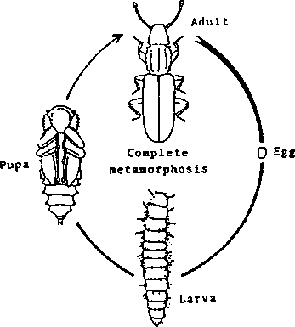
Figure
82
7.4 The effect changes in climate on development
Every species has its optimum temperature and moisture conditions for development (see section 2.2.5). individual stages of development of any particular species may also have different preferences.
The optimum temperatures lie mainly between 25 and 32°C. At temperatures of below 14°C and above 42°C development generally does not take place. Most storage pests die at temperatures of below 5°C and above 45°C.
The optimum relative humidity for most species lies at around 70°/0, the minimum being 25 - 40% and the maximum 80 - 100%. Very few species are able to survive in extremely dry conditions (Oryzaephilus spp. down to 10% r.h., Trogoderma granarium and Tribolium spp. down to 3% r.h.).
Under optimum conditions, the duration of the development cycle from egg to adult is around 18 - 25 days for beetles and 28 - 35 days for moths. Under unfavourable conditions, this period may be extended to several months.
Insects are greatly influenced in their activity and fertility by the changes in light in the course of a day. Especially moths are most active at dawn and at dusk. inspections to cheek for flying insects should therefore be made at these times. This applies also to moth control measures with fogging machines. Artificial light can help to considerably restrict the flying activity and fertility of moths.
7.5 The use of various sources of food by pests
Stored product insects have different requirements as to the composition of their food:
· Primary pests are able to teed on whole, healthy
and well-storable grains.
Examples: weevils, lesser grain borer
(Rhyzopertha dominica). Angoumois grain moth (Sitotroga
cerealella)
· Secondary pests can only attack broken grain,
moist, and thus soft grain, grain damaged by primary pests or processed
products, e.g. flour.
Examples: flour beetles
· Mould indicating pests live partially or entirely
on fungi and their presence reveals problems with moisture.
Examples:
Black fungus beetle (Alphitobius diaperinus), Foreign grain beetle
(Ahasverus advena)
· Scavengers live largely on dust, the excrements of
other insects or dead insects. They do not usually feed on the stored produce
itself but often pose a serious hygienic problem.
Examples: dust lice
· Predators live entirely or partially on insects,
mostly on eggs and larvae (see section 10.2).
Examples:
Teretriosoma nigrescens, Wheat beetle (Tenebroides
mauritanicus)
Some storage pests also prey mm the larvae of other species.
Their use in reducing infestation is, however' far less than the damage they
themselves cause by feeding on the stored produce.
Example:
Tribolium castaneum
Whether an insect can make use of stored produce as a source of food depends on a number of factors:
Most storage pests are able to penetrate a stack of bags far more quickly and thoroughly than bulk produce because of the gaps between the bags. The size, the surface texture and nutrients in the grain influence the ability of the pest to attack the commodity. This applies also for packaging material and the state of the store itself
7.6 Morphological features of insects
The body of an insect is divided into three parts:
1. The head, which bears the eyes, the antennae and the
mouthparts
2. the thorax, which consists of three segments (prothorax,
mesothorax, metathorax) carries three pairs of legs and the wings or the elytra,
respectively
3. the abdomen, where the reproductive and digestive
organs are located.
In the case of beetles, the forewings (elytra) are thickened and hornlike and protect the abdomen.
Moths have two pairs of membranous wings densely covered with pigmented scales.
Beetle larvae have three pairs of legs. However, in some species which develop inside the grain (e.g. weevils) they are lacking.
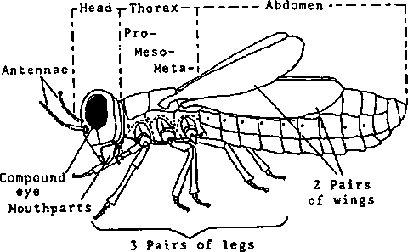
Figure 83

Figure 84
Moth larvae have three pairs of thoracic legs and additionally four pairs of prolegs, located at the 3rd, 4th, 5th and 6th segment of the abdomen. The final segment of the abdomen has a further pair of prolegs.
7.7 Storage pest species
- Pictorial key for the most important stored product beetles
The following key only refers to the most frequently found stored product beetles and is not a comprehensive tool for determination. Any identification should be confirmed by comparing with other illustrations, descriptions or specimens from reference collections.
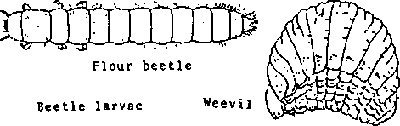
Figure 85
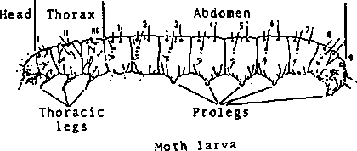
Figure 86

Figure 87
Sitophilus oryzae
Common name: Rico weevil
Family: Curculionidae
Description
size: 2.5 - 3.5 mm
shape: more or less cylindrical
colour: black-brown with four reddish spots on the elytra
recognition:
well defined snout: elbowed and clubbed antennae; circular punctures on the
prothorax; can fly
Distribution: cosmopolitan
Life history
range of temperature: 17 - 34°C
optimal temperature:
28°C
range of rel. humidity: 45 - 100%
optimal rel. humidity: 70%
eggs laid: up to 150 separately deposited inside the grain
life cycle:
35 days at optimum
110 days at sub-optimal conditions
Damage
Adults and legless larvae are primary pests of cereals, rice and dried cassava. Larvae spend their lives inside the grain.
Similar species
S. zeamais (Maize weevil): larger, but almost
indistinguishable externally; with similar distribution, biology and behaviour.
Good flyer.
S. granarius (Granary weevil): without spots on
elytra, punctures on prothorax oval-shaped. A pest of cereals (especially wheat
and barley) in temperate regions.

Figure 88
Tribolium castaneum
Common name: Rust-red flour beetle
Family:
Tenebrionidae
Description
size: 3 - 4 mm
shape: elongate body, more or less parallel
sided
colour: red brown - dark brown
recognition: antennae are inserted
under the sides of the head (frontal ridge) and form a three-segmented club;
elytra with finely punctured lines
Distribution: throughout the tropics and the subtropics
Life history
range of temperature: 22 - 40°C
optimal temperature:
35°C
range of rel. humidity: 1 - 90%
optimal rel. humidity: 75%
eggs laid: up to 500
life cycle: 20 days under optimum conditions
Damage
Larvae and adults are secondary pests and attack cereals and cereal products, groundnuts, nuts, spices, coffee, cocoa, dried fruit and occasionally pulses. Infestation leads to persistent disagreeable odours of the products.
Similar species
T. confusum (segments of antennae gradually broaden towards the tip), cosmopolitan.

Figure 89
Rhyzopertha dominica
Common name: Lesser grain borer
Family:
Bostrichidae
Description
size: 2 - 3 mm
shape: slim, cylindrical
colour:
red-brown to black-brown
recognition: head concealed beneath prothorax
(typical for the Bostrichidae); prothorax bears marginal rows of teeth; elytra
with well defined rows of punctures
Distribution: mainly in tropical and sub-tropical regions
Life history
range of temperature: 18 - 38°C
optimal temperature:
34°C
range of rel. humidity: 25 - 70%
optimal rel. humidity: 60 -
70%
eggs laid: 300 - 500 life cycle:20 - 84 days
Damage
Primary pest of cereal grains, other seeds, cereal products, dried cassava, etc. Damage is done by adults and larvae, which develop within the grain.
Similar species
Dinoderus spp. bearing two slight depressions at the base of the pronotum. Found on dried cassava and incidentally on other commodities.

Figure 90

Figure 91
Prostephanus truncatus
Common names: Larger grain borer
Greater grain borer
Family: Bostrichidae
Description
size: 3 - 5 mm
shape: cylindrical
colour: dark brown
recognition: similar to Rhyzopertha, but elytra apically flattened,
steeply inclined, curved ridges at the sloping part; elytra look like cut off:
Distribution
Central America, accidentally introduced to East and West African countries
Life history
range of temperature: 18 - 40°C
optimal temperature:
32°C
range of rel. humidity: 40 - 90%
optimal rel. humidity: 80%
eggs laid: up to 400 life cycle: 27 days at optimum
Damage
Primary pest.
Adults and larvae attack maize as well as dried
cassava and yams. Causes severe losses of farm-stored maize in African
countries.

Figure 92

Figure 93
Trogoderma granarium
Common name: Khapra beetle
Family: Dermestidae
|
Description |
adult |
larva |
|
size: |
2 - 3 mm |
5 mm |
|
shape: |
oval |
spindle-shaped |
|
colour: |
dark brown, often with blurred, reddish markings |
yellowish brown to golden brown |
|
recognition: |
body covered with fine hairs |
reddish-brown hairs with two tail-like tufts |
Distribution
In hot, dry areas, especially in the near and middle east and Africa
Life history
range of temperature: 22 - 41°C
optimal temperature: 33
- 37°C
range of rel. humidity: 2 to 50%
optimal rel humidity: 25%
eggs laid: 50 - 80 life cycle: 25 days at 37°C and 25% r.h. larval
diapause up to 4 years
Damage
Primary pest
Damage is done only by larvae on cereal grains
and products, oilseed cakes, nuts, pulses, etc.

Figure 94
Oryzaephilus surinamensis
Common name: Saw-toothed grain beetle
Family:
Silvanidae
Description
size: 2.5 - 3.5 mm
shape: slender
colour: dark brown
recognition: six toothlike projections along each side of the prothorax
Distribution: cosmopolitan
Life history
range of temperature: 18 - 37°C
optimal temperature: 30
- 35°C
range of rel. humidity: 10 - 90%
optimal rel. humidity: 70 -
90%
eggs laid: up to 150 life cycle: 20 - 80 days
Damage
Secondary pest of cereals and cereal products, also on copra, spices, nuts and dried fruit. Damage is done by larvae and adults.
Similar species
O. mercator in the warmer temperate and tropical regions. Less tolerant to extremes of temperature and humidity than O. surinamensis. More common on oilseeds, also on copra, spices, nuts and dried fruit.

Figure 95
Cryptolestes ferrugineus
Common name: Rust-red grain beetle
Family:
Cucujidae
Description
size: 1.5 - 2.5 mm
shape: tiny, flat and slender, elongate
colour: reddish brown
recognition: head and prothorax account for half
of the body length: prothorax bearing two longitudinal ridges; antennae without
club and half the length up to the length of the body
Distribution: cosmopolitan
Life history
range of temperature: 21 - 43°C
optimal temperature: 33°C
range of rel. humidity: 50 - 90%
optimal rel humidity: 70%
eggs laid: 100 - 400
life cycle: 17 - 100
days at optimum conditions; mean duration of life cycle: 23 days
Damage
Secondary pest on all types of grain and grain products, also on nuts, dried fruit. oilseed cakes, cocoa and cowpeas. Adults and larvae attack stored products and are often causing "hot spots".
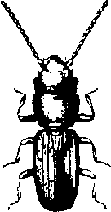
Figure 96
Callosobruchus chinensis
Common name: Cowpea weevil
Family: Bruchidae
Description
size: 3 - 4.5 mm
shape: mote or less triangular
colour:
pale brown with blackish patches on the elytra
recognition: body clothed in
short hairs; last abdominal segment visible; antennae slightly serrated: each
hind femur bears a tooth; large emarginated eyes
Distribution: throughout the tropics and subtropics
Life history
range of temperature: 18 - 35°C
optimal temperature:
30°C
range of rel. humidity: 25 - 90%
optimal rel. humidity: 80%
eggs laid: up to 100 glued to surface of pod or seed life cycle: 23 days at
optimal conditions
Damage
Larvae, which develop within the seed, feed as primary pests on cowpeas, pigeon peas, lentils and other pulses. Infestation begins in the field.
Similar species
C. maculatus (originated in Africa, now
distributed throughout the tropics and subtropics)
Caryedon serratus
(Groundnut seed beetle, size 4 - 7 mm)

Figure 97
Acanthoscelides obtectus
Common name: Dried bean weevil
Family:
Bruchidae
Description
size: 3 - 5 mm
shape: oval
colour: grey and reddish
brown with yellowish and dark brown patches of hairs on the elytra recognition
hind femur with one large tooth and two small teeth; elytra do not completely
cover the abdomen; antennae serrated
Distribution: cosmopolitan
Life history
range of temperature: 17 - 35°C
optimal temperature:
30°C
range of rel. humidity: 30 - 90%
optimal rel. humidity: 70%
eggs laid: 40 - 50 laid on ripening pods or among stored seeds life cycle:
21 days at optimum conditions
Damage
Larvae are primary pests of common beans. Infestation may begin in the field.
Similar species
There are various other species of Bruchidae attacking pulses, which cannot easily he identified

Figure 98
Ephestia cautella
Common name: Tropical warehouse moth
Family:
Pyralidae
|
Description |
adult |
larva |
|
size: |
15 - 20 mm (wing span) |
15 - 20 mm |
|
colour: |
grey; fore wing greyish-brown with an indistinct pattern |
white, sometimes pinkish or greyish |
|
recognition: |
|
setae (hairs) arising from dark brown pigmented spots |
Distribution: throughout the tropics; less common in arid areas
Life history
range of temperature: 10 - 33°C
optimal temperature:
30°C
range of rel. humidity: min. near 0%
optimal rel. humidity: 40
- 75%
eggs laid: 200 - 500 life cycle: 30 days at optimum conditions
Damage
Larvae are found as primary pests in a wide range of commodities, especially cereal flours and other milled products, but also in whole grains, mainly feeding on the germ. Webbing and frass produced in infested products are nuisance factors.
Similar species
E. kuehniella (15 - 25 mm wing span, mainly in countries with temperate climate)

Figure 99
Plodia interpunctella
Common name:
lndian-meal moth
Family: Pyralidae
|
Description |
adult |
larva |
|
size: |
14 - 20 mm (wing span) |
up to 17 mm |
|
colour: |
basal third of the fore wing cream coloured, rest of the wing copper with dark grey markings |
yellowish-white, sometimes reddish or greenish |
|
recognition: |
|
base of setae without pigmented spots |
Distribution: cosmopolitan
Life history
range of temperature: 16 - 36°C
optimal temperature: 28
- 32°C
range of rel. humidity: 30 - 90%
optimal rel. humidity: 75%
eggs laid: 60 - 400 life cycle: 27 days at 30°C and 70% r.h.
52 days
at 20°C and 70% r.h.
Damage
Larvae are primary pests of cereal grain and flour, groundnuts and dried fruit. Webbing and frass produced m the infested commodities are nuisance factors.

Figure 100
Corcyra cephalonica
Common name: Rice moth
Family: Pyralidae
|
Description |
adult |
larva |
|
size: |
15 - 25 m (wingspan) |
15 mm |
|
colour: |
fore wings mid-brown; uniformly coloured |
yellowish-white |
|
recognition: |
|
spiracles thickened on their posterior rims: |
Distribution
Throughout the humid tropics
Life history
range of temperature: min. 18°C
optimal temperature:
30- 32°C
range of rel. humidity: min. 20%
optimal rel humidity: 70%
life cycle: 26 - 27 days at optimum conditions
Damage
Larvae are primary pests of cereal grain and flour, nuts, groundnuts, dried fruit, cocoa, copra and many other commodities. The dense white cocoons of the pupae, which are very tough are often seen attached to the bag surfaces. Infestation is characterized by aggregations of kernels, frass, cocoons and dint caused by webbing

Figure 101

Figure 102
Sitotroga cerealella
Common name: Angoumois grain moth
Family:
Gelechiidae
Description
|
size: |
10 - 18 mm (wing span) |
|
colour: |
fore wings buff often with a small black spot in the distal half, hind wings greyish |
|
recognition: |
hind wings with a long fringe of hairs, sharply pointed at the tip |
Distribution: cosmopolitan
Life history
range of temperature: 16 - 35°C
optimal temperature: 26
- 30°C
range of rel. humidity: 20 - 80%
optimal rel. humidity: 75%
eggs laid: up to 200 life cycle: 28 days at 30°C and 80% r.h.
Damage
Larvae are primary pests of whole cereal grains as paddy, sorghum, maize and wheat. Larval development takes place inside the grain. Damage is very similar to that caused by weevils.

Figure
103
7.8 Further literature
DELOBEL., A. & M. TRAN (1993)
Les Col�opt�res des
denr�es entropos�es dans les regions chaudes. CTA/ORSTOM, Paris, 424 pp.
DOBIE, P., C.P. HAINES, R.J. HODGES & P.F. PREVETT (1991)
Insects and Arachnids of Tropical Stored Products Their Biology and
Identification, TDRI, Slough, 273 pp.
FREEMAN, P., ed. (1980)
Common insect Pests of Stored Food
Products, BMNH, London, 69 pp.
SCOTTI, G. (1978)
Les insectes et les acariens des c�r�ales
stock�es, AFNOR/ITCF, Paris, 238 pp.
WEIDNER, H. & G. RACK (1984)
Tables de determination des
principaux ravageurs des denr�es entrepos�es dans les pays chauds, GTZ,
Eschborn, 148
pp.
|
| |||||||||||||||||||||||||||||||||||||||||||||
Manual on the Prevention of Post-harvest Grain Losses (GTZ)
8. Pest control using insecticides
In pest control there are two kinds of treatment which complement each other: preventive and curative measures. The preventive measures, which consist above all in suitable storage buildings and the careful observance of all hygiene measures, form the basis of all pest control. Without these, any other measures are bound to be of no effect arid uneconomic. Preventive pest control is described in detail in section 5.2; section 3.3 also contains relevant information.
The most important curative measure in stored-product pest control is the application of chemicals. A distinction is made between insecticides and fumigants (see chapter 9).
The parts of this chapter concerned with the use of insecticides apply only to central storage. section 4.4.3 deals with the application of insecticides in small farm storage. The remaining parts of this chapter are equally relevant for both types of storage.
8.1 Insecticides
General Principles
· Insecticides are always used as a supplement to hygiene
measures and can never substitute them.
· A high level of infestation
makes control with insecticides more difficult. Care should therefore be taken
to perform control of any pest infestation in time.
· The choice of the
correct products is made by taking into account the following
aspects:
· insect species present (sensitivity, resistance)
· Method of storage (bags, bulk)
· Climatic conditions (decomposition of the products by moisture and high temperatures)
· Stored commodity
· Legal restrictions (Use only approved products. If the country has no legislation, refer to the FAO/WHO code of conduct)
· Availability and price.
· Insecticides must not be stored for longer than the
indicated shelf life. Buy only quantities which will certainly be used within
one storage season (also see section 8.4) in order to avoid overstorage and
decomposition of the product.
· Prevent the development of resistance by
changing the active ingredient (if possible) annually.
· The safety
regulations for handling of insecticides must always be followed. Attention must
be paid to any warning signs on packages which draw the user's attention to
particular dangers in the use of the insecticide concerned (see also section
8.4.2).
8.1.2 Scope of Application in Central Storage
Good store management and high standards of hygiene are the basic requirements for successful pest control.
In central storage, i.e. in warehouses, the following scopes of application for insecticides apply:
Surface treatment of empty warehouses
This is an efficient curative control method to clean up warehouses before intake of new stocks. Attention must be paid to the use of suitable insecticide formulations. On surfaces the activity of EC formulations is generally very poor. WP formulations tend to perform better. All insecticides are more persistent on smooth, concrete surfaces than on rough and alkaline (white washed) ones. In extensive laboratory tests conducted in Germany the active ingredients tetrachlorvinphos, deltamethrin and phoxim showed the best overall performance.
During the last years it has been proven in several tests that residual spraying of surfaces like store walls and floors is not economic because the residual activity of most insecticides is very short under these circumstances. On absorbent surfaces like limewash, whitewash, cement, and bricks the activity of insecticide residues tends to be very short, irrespective of the active ingredient or formulation. Pyrethroids form an exception, being considerably more persistent. For residual surface protection inert dusts seem to offer considerable potential (cf. section 10.2).
It goes without saying that insecticides are much more effective on clean surfaces than on dirty ones. The cleaning of empty stores before any surface spraying should be an indispensable standard practice.
Surface treatment of bag stacks
For a long time it has been common practice to protect bag stacks from becoming infested by means of treatment with long-term contact insecticides. However, this method is unsatisfactory as the pesticides decompose too rapidly. On non-absorbent bag surfaces like polypropylene insecticide activity is better than on the highly absorbent jute bags.
As a conclusion it can be recommended to practice surface spraying of bag stacks only as non-residual application at the time of stack fumigation. Continued surface spraying could multiply resistance because of the repeated exposure of stored product insect populations to sublethal dosages.
It would be more effective to treat the individual layers of bags during stacking. Anyway, this is regarded as being less practicable.
An alternative to surface treatment consists in covering the stack of bags with light cotton or nylon sheets which provide a barrier to crawling or flying insects. Impregnation of the sheets with repellent substances (e.g. neem oil, see section 4.3.2.2) increases the effect of keeping the stored commodity uninfested. However, regular observation of the stack becomes more difficult and the costs must be considered.
Space treatment of warehouses
Space treatment is best done by fogging. It requires a tightly sealable store. This method is particularly suited for curative control of flying pests.
Evaporation strips hanging up in a well closed store serve for preventive moth control.
All kind of treatments in stores must be followed up in order to check the success.
8.1.3 Formulations
The insecticides sold on the market by manufacturers are referred to as commercial products. They contain one or more active ingredients as well as carriers and special additives. The latter improve the adhesion of the active ingredient on the surface treated and the stability, act as synergists or simply colour the insecticide as a warning agent.
Depending on the formulation, the commercial products either have to be mixed with a liquid, which is generally water, to form a spraying mixture or are sold ready for use.
The most common formulations are listed below. Abbreviations are in accordance with the FAO specifications.
- Dust formulations (DP) to be mixed with the stored
produce or for surface treatment. They contain between 0.1 and 5% active
ingredient and are ready-for-use. They are mainly applied in small farm
storage.
- Emulsifiable concentrates (EC) for admixture to the produce
or for surface treatment. They contain between I and 100% active ingredient and
are mixed with water, giving a stable emulsion, and primarily used in
warehouses,
- Wettable powders (WP) for surface treatment. They
contain between 10 and 50% active ingredient. They are mixed with water, giving
instable suspensions, which have to be constantly stirred as the powder will
otherwise settle.
- Flowable concentrates (SC) for surface treatment.
These are liquid concentrates which are relatively stable and similar to the EC
formulations. They are not yet commonly used in storage pest control.
-
Hot fogging concentrates (HN). The so called 'FOG'-formulations contain up
to 100% active ingredient. They are either ready-for-use or must be diluted with
diesel or kerosene. Some heat resistant EC formulations can also be used for
fogging.
- Aerosols as evaporation strips (VP) or in the form of
smoke tins (FD) or smoke cartridges (FP) for use against moths.
They are ready-for use. Smoke cartridges are also used to a certain extent in
small farm and village storage They have a good knock-down effect on adult
insects.
- ULV formulations (UL) for surface treatment. They are
ready-for-use and applied with special ULV applicators. Their utilisation in
storage is very limited.
8.1.4 Requirements for insecticides in Storage
While there is a great number of products against agricultural pests there are only few products available which meet the special requirements of pest control in storage.
Insecticides for stored product protection should meet the following requirements. None of the existing products, however, will entirely fulfil all of them:
· Good effect against most storage pests (broadspectrum
effect)
· Long persistence
· Stable under various climatic
conditions
· Low toxicity to warm-blooded animals
· Low tendency
to create insect resistance
· No harmful residue left in stored
produce
· No influence on the smell or taste of the stored
produce
· No chemical reaction with the ingredients of the stored
produce (proteins, fats, etc.)
· Simple to use
· Low price
It is pan of the user's responsibility to select the correct insecticide meeting most of his specific requirements. The following information is intended as an aid for the right choice.
8.1.5 Groups of Active ingredients in Storage Pest Control
There are two main groups of active ingredients used in stored product protection, organophosphorous compounds and pyrethroids:
Organophosphorous compounds
They are effective against most storage pests, although less against the Bostrichidae (Rhyzopertha dominica, Prostephanus truncates, Dinoderus spp.). Some of these compounds are sensitive to hot and moist conditions. The following products are commonly used:
|
Active Ingredient |
Brand names |
|
Pirimiphos-methyl |
Actellic |
|
Fenitrothion |
Folithion, Sumithion |
|
Chlorpyrifos-methyl |
Reldan |
|
Methacrifos |
Damfin |
|
Dichlorvos (DDVP) |
Nuvan, Vapona |
|
lodofenphos |
Nuvanol |
|
Tetrachlorvinphos |
Gardona |
|
Phoxim |
Baythion |
|
Malathion |
Malathion, Malagrain etc. |
Pyrethroids
They are very effective against Bostrichidae, though less against other species of beetles. They also provide a good moth control. The most common are:
|
Active ingredient |
Brand names |
|
Deltamethrin |
K-Othrin |
|
Permethrin |
Permethrin |
|
Fenvalerate |
Sumicidin |
|
Cyfluthrin |
Baythroid |
Combined products
Combined products, also known as "cocktails", containing an organophosphorous compound and a pyrethroid have been used as broadspectrum insecticides for some years and have performed very well in cases of mixed infestation. The following preparations are commonly found on the market:
|
Active ingredients |
Brand names |
|
Pirimiphos-methyl + Permethrin |
Actellic Super |
|
Pirimiphos-methyl + Deltamethrin |
K-Othrine Combi |
|
Fenitrothion + Cyfluthrin |
Baythroid Combi |
|
Fenitrothion + Fenvalerate |
Sumicombi |
Other groups of active ingredients
Chlorinated hydrocarbons which were used for a long time in storage pest control are today no longer admissible due to their high persistence and health hazard.
In the group of carbamates, carbaryl ("Sevin") is used to a limited degree in storage pest control. It is quite effective against Rhizopertha dominica.
8.1.6 Choice of insecticide with Respect to the Species and the Properties of the Surfaces to be Treated
· In the case of infestation with beetles other than
Bostrichidae organophosphorous compounds should be applied.
·
Where Bostrichidae predominate (Rhyzopertha dominica, Prostephanus
truncatus Dinoderus spp.) pyrethroids are recommended.
· In
the case of mixed infestation with Bostrichidae and other species of
beetles, a combined insecticide may be used provided this is permitted by
local regulations. Otherwise an organophosphorus insecticide and a pyrethroid
may be applied alternately.
· Against moths, the organophosphate
dichlorvos (DDVP) gives good control. The most effective application is by
fogging, otherwise by surface treatment or by using evaporation
strips.
· For the treatment of whitewashed walls (rapid
decomposition of most insecticides under alkaline conditions), iodofenphos
and tetrachlorvinphos are the most favourable.
The following applies in general for insecticides sprayed on surfaces:
- Their effect is better
- on clean than on dirty surfaces
- on smooth than on rough surfaces
- The persistence is better
- on woods and metals than on concrete or alkaline paint
- with WP formulations than with EC formulations
In the following two tables results of laboratory tests on the persistence of stored product insecticides under tropical climate conditions are presented. These tables provide information for the choice of appropriate insecticides according to climatic conditions. For each pest insect species the maximum period with at least 90% control effect is indicated. Under practical conditions we have to suppose a shorter residual effect.
Effect Or Stored Product insecticides under Arid Conditions (Temperature: 36°C; relative humidity: 50%)

Figure 104
Effect of Stored Product insecticides under Humid Conditions (Temperature 28°C: relative humidity: 75%)

Figure 105

Figure 106
* per 100 kg of grain (according to manufacturers' instructions)
The following pages provide a summary of the most commonly used insecticides in storage pest control and their properties, as well as notes on their application. For each active ingredient, the following data are provided (for definitions refer to sections 8.1.7 and 8.1.8):
· Toxicity, indicated as oral LD50 in mg active ingredient
kg of body weight
· Maximum residue limit (MRL) for cereal grains in
ppm as recommended by the FAO/WHO Joint Codex Committee on Pesticide Residues
· Recommended dosage rate for admixture to cereals in ppm
·
Recommended concentration of spray mixture for surface treatments in %
· Recommendations for space treatments in stores
· General
remarks
- Organophosphorous compounds:
Chlorpyrifos-methyl
LD50: 1630 -
2140 mg/kg
MRL: 10 ppm
Dosage rate (admixture to cereals):
10 ppm
Dosage rate (surface treatment): 0.5 - 1%
Remarks:
Insecticide with contact, stomach and vapour
action it has a moderate persistence and controls a wide spectrum of stored
product pests (except
Rhyzopertha dominica). Resistances have been
repotted repeatedly for several insect species.
Dichlorvos (DDVP)
LD50: 56 - 108 mg
/ kg
MRL: 2 ppm
Dosage rate (admixture to cereals): 2
ppm
Dosage rate (surface treatment): 0.250/D
Space treatments:
dilute with diesel to up to 1% (I - 2//1 000 m³); preventive: 1
strip/30m³
Remarks:
Insecticide with a high vapour pressure and
strong "knock down" effect. It is efficient against most stored product pests;
especially against larval stages within the grain (high penetrating effect) and
also against moths. Short residual stability. Recent tests proved DDVP to be
potentially carcinogenous, so that restricted use or ban can be expected for the
future.
Fenitrothion
LD50: 800 mg /
kg
MRL: 10 ppm
Dosage rate (admixture to cereals): 10
ppm
Dosage rate (surface treatment): 0.5%
Remarks:
Fenitrothion has a broad-spectrum effect
against all species, though it is not fully effective against Rhyzopertha
dominica Good stability for more than 12 months. Suitable for use under
traditional storage conditions as dustable powder.
lodofenphos
LD50: 2 100
mg/kg
MRL: no recommendation
Dosage rate (surface treatment):
1 - 2%
Remarks:
lodofenphos is only used for surface
treatments. It has a wide range effect against stored product pests, though less
effective against Rhyzopertha dominica and Trogoderma granarium.
It is often used for pest control on cement surfaces in warehouses as it
shows relative good stability under alkaline conditions. The persistence is
lower than that of fenitrothion.
Malathion
LD50: 2 800 mg/kg
MRL: 8 ppm
Dosage rate (admixture to cereals): 8 ppm
Dosage rate (surface treatment): 2%
Remarks:
Malathion has been widely used for over 20
years what has led to marked resistances of stored product pests world-wide. In
the United States the production has been stopped since 1991, partly in
consequence of studies proving that intolerably high residues are very common in
foodstuff in countries, where this cheap and generally efficient insecticide has
not been intensively applicated in the past and resistances are not usual, it
can still be used in small farmers' storage as dustable powder. Malathion has a
weaker effect than most other organophosphorous insecticides and degrades
comparatively quickly under hot and humid and alkaline conditions.
Methacrifos
LD50: 678 mg/kg
MRL: 10 ppm
Dosage rate (admixture to cereals): 10 ppm
Dosage rate (surface treatment): 0.5%
Space treatments: 5%
as fog-solution (1l/1 000 m³)
Remarks:
Methacrifos acts as contact, vapour and
stomach poison against all important storage pests and their larval stages
within the grain. It is effective against many malathion-resistant insects. It
has a pronounced "knock-down" effect and controls also Rhyzopertha dominica.
It degrades significantly at high temperature and humidity.
Phoxim
LD50: 1975 mg /
kg
MRL: no recommendation
Dosage rate (surface treatment):
0.2% in empty stores
Space treatments: 5% as fog-solution (I - 2//1
000 m³)
Remarks:
Phoxim is mainly used for surface and space
treatments in empty warehouses and concrete silos. It has a broad spectrum of
activity with stomach and contact action. Phoxim is a short-term insecticide
with a "knock-down" effect. It shows cross resistance to malathion-resistant
insects.
Pirimiphos-methyl
LD50: 2050 mg/kg
MRL: 10
ppm
Dosage rate (admixture to cereals): 10 ppm
Dosage rate
(surface treatment): 0.5%
Space treatments: dilute with diesel to
up to 5% (1 - 2 l/1 000 m³)
Remarks:
Pirimiphos-methyl is a fast acting wide range
insecticide with contact and vapour action. It has long lasting effect to a wide
range of stored product pests, but it is not sufficiently effective against
Rhyzopertha dominica. The effect is comparable to that of fenitrothion
and chlorpyrifos-methyl, but pirimiphos-methyl appears more potent to
malathion-resistant strains. In the last years pirimiphos-methyl-resistances
have already been occasionally reported.
Tetrachlorvinphos
LD50: 4 000 tug
kg
MRL: no recommendation
Dosage rate (admixture to cereals):
15 ppm
Dosage rate (surface treatment): 1 - 2%
Remarks:
This insecticide has shown to be effective
against many species stored product pests. It has a good persistence on alkaline
surfaces and is therefore used for structural treatments of warehouses and
concrete silos.
- Pyrethroids:
Cyfluthrin
LD50: 500 mg /
kg
MRL: 2 ppm (in Australia)
Dosage rate (admixture to cereals):
1 - 2 ppm
Dosage rate (surface treatment): 0.4 - 0.8%
Remarks:
Cyfluthrin provides reliable protection of
stored products against crawling and flying insects. It controls insect strains
resistant to organophosphorous compounds. It has a long residual activity also
on alkaline surfaces.
Deltamethrin
LD50: 135 - 5 000 mg /
kg
MRL: 1 ppm
Dosage rate (admixture to cereals): 1
ppm
Dosage rate (surface treatment): 0.1 - 0.1 5%
Space
treatments: dilute with diesel to up to 1% (1 l/1 000 m³)
Remarks:
Deltamethrin is one of the most potent active
ingredients of the synthetic pyrethroids. It is effective against most storage
pests (exception: Sitophilus spp.), in particular against all species of
the family of Bostrichidae such as Rhyzopertha dominica and
Prostephanus truncates. It shows a delayed but long lasting action.
Fenvalerate
LD50: 451 mg/kg
MRL: 2 ppm
Dosage rate (admixture to cereals): 2 ppm
Dosage rate (surface treatment): 0.5%
Remarks:
Fenvalerate has shown to be effective against
Rhyzopertha dominica It acts as a contact and stomach poison against most
insect species and has an adequate stability.
Permethrin
LD50: 430 - 4 000 mg/kg
MRL: 2 ppm
Dosage rate (admixture to cereals): 2 ppm
Dosage rate (surface treatment): 0.25%
Remarks:
Permethrin is effective against a wide range
of stored product pests, particularly against Rhyzopertha dominica and
Prostephanus truncates, but it has only weak action on species of
Tribolium. It is most valuable when used in combination with
organophosphorous insecticides and has a long stability.
- Combined products:
The following dosages apply for the admixture of combined products formulated as dustable powders to stored cereals:
|
Fenitrothion + Cyfluthrin: |
8 + 0.2 ppm |
|
Fenitrothion + Fenvalerate: |
5 + 1 ppm |
|
Pirimiphos-methyl + Deltamethrin: |
5 + 0.5 ppm |
|
Pirimiphos-methyl + Permethrin: |
8 + 1.5 ppm |
For combined products MRL are not yet defined by FAO/WHO, as it is difficult to assess synergistic effects which may occur.
8.1.7 Toxicity of Insecticides
Insecticides are not only poisonous to the target organisms but also in varying degrees to humans, animals and the environment.
The "LD50" of an insecticide is used to assess its potential danger. LD stands for Lethal Dose. The LD50 is stated in milligrams (mg) of the relevant insecticide per kilogram body weight of test animals, usually rats. The LD50 is the amount of an active ingredient which will lead to the death of 50% of a group of test animals after a single application. As the toxicity of an insecticide also varies according to the kind of contact with the body, a distinction is made between LD50 (oral) and LD50 (dermal).
Insecticides are classified according to their toxicity as follows:
|
Classification |
LD50 for rats (mg/kg body weight) |
|
| |
oral |
dermal |
|
Extremely hazardous |
under 25 |
under 50 |
|
Highly hazardous |
25 - 200 |
50 - 400 |
|
Moderately hazardous |
200 - 2 000 |
400 - 2 000 |
|
Slightly hazardous |
over 2 000 |
over 2 000 |
The LD50 applies to the pure active ingredient of an insecticide although the concentration as well as the type of formulation and application also play a role. Insecticides with a high LD50 have a relatively low acute toxicity. This does not affect, however, possible long-term (chronic) dangers to health.
In order to estimate the long-term effects of an insecticide, the "no effect dose" is used. This dose is generally referred to as NOAEL (no observed adverse effect level). This refers to the highest concentration of an active ingredient in mg kg body weight of test animals administered daily in long-term tests without causing any symptoms of poisoning.
This value is divided by a safety factor, usually of 100. The result is the maximum amount of an active ingredient (in mg/kg body weight) which a person can consume daily over the complete lifespan without any damage to her or his health according to the present state of knowledge. This value is called the ADI (acceptable daily intake). Regrettably, adequate data are still lacking today in many respects, particularly as far as the combined effect of a number of chemicals is concerned.
8.1.8 Residues
Contamination with insecticide residues takes place first and foremost by eating contaminated produce. Insecticides and their decomposition products can still be found as residues in the produce treated a fairly long period ago. If the insecticide concerned has a high acute toxicity, immediate illness may result (see section 8.4.3).
Active ingredients which are chemically very stable and thus decompose slowly (i.e. which have a high persistence) may have a long term effect. Even with lower acute toxicity they may lead to chronic poisoning as a result of their accumulation, particularly in fatty tissue. This is the case, for example, with DDT and other chlorinated hydrocarbons. Regrettably, these are still used in stored product pest control, even though they are no longer officially permitted in most countries.
"Maximum residue limits" (MRL) have been laid down for all insecticides to protect consumers. MRL refer to the relevant foodstuff As a large amount of the insecticide is decomposed in processing, higher residue limits are permitted in primary products (e.g. raw grain) than in processed products (e.g. flour). it is assumed that people eating foods containing insecticide residues not exceeding the MRL will not reach the amount stated in the ADI value (see section 8. 1.7).
As it may occur that produce treated, e.g. grain, will be eaten soon after treatment, the amount of insecticide applied must not exceed the admissible maximum residue limits. Attention is paid to this requirement in the recommendations of the FAO/WHO Joint Codex Committee and in national legislations.
In the last years preoccupation with human health has brought forth new approaches to the toxicological evaluation of insecticides. Therefore the TMDI (theoretical maximum daily intake) has been introduced, which is based on the multiplication of the MRL of staple items of national diets by their estimated daily consumption.
As it is practically impossible to predict the TMDI it has been proposed by FAO/WHO to use the estimated maximum daily intake (EMDI) for a more realistic assessment of health hazards for consumers. A further refinement is the estimated daily intake (EDI). Calculation of these factors is, however, only possible for countries with reliable databases, so that their practical value is rather limited.
In order to keep the intake of insecticides as low as possible, the following measures should be taken:
- Only use active ingredients and formulations which are
officially approved for use in stored product pest control!
- Exactly observe
the recommended application rates!
- Treat stored product only once and avoid
local overdosages!
- Avoid any unnecessary insecticide treatment!
- Do not
treat the produce shortly before it is sold or eaten!
8.1.9 Resistance
Resistance means that the target pests are no longer controlled by the originally recommended application rate of an insecticide. Resistance develops as a result of a selection process. In a pest population there are always individuals which react less sensitively than the majority to any insecticide treatment. They have a chance of surviving and of reproducing. If they succeed they pass on their insensibility to the next generation. Thus, over a period of time, a process of selection of resistant insects takes place.
Insect species with a high rate of reproduction (short generation periods, large number of offspring) build up resistance more rapidly than others. The climate in the tropics and the resulting short generation periods are particularly favourable to the development of resistance. The process of resistance development is speeded up, if
· the same active ingredient is used over a long
period
· the insecticide is partly degraded due to overstorage
·
the insecticide is underdosed
· the insecticide is partly degraded due
to overstorage
· the active ingredient is unevenly distributed
·
insecticide applications are performed frequently
· bad hygiene
conditions exist.
An insect population may become resistant to two different insecticides, even if they have only been treated with one of them. I his phenomenon is called cross resistance and may even occur if the two insecticides belong to two different chemical groups.
When insects show resistance against different active ingredients as well as against different groups of insecticides multi-resistance exists.
A distinction is made between various forms of resistance:
- Physiological resistance: the insects have the ability
to neutralize the active ingredient in their metabolism before it can take toxic
effect.
- Morphological resistance: the insects have adapted their
physical structure, e.g. wax layer or hairs to avoid penetration of the
insecticide into the insect's body.
- Behavioural resistance: the
insects actively avoid coming into contact with the insecticide.
The following measures should be taken to prevent resistance:
- Change the active ingredient regularly (if possible once a
year)!
- Use insecticides only under perfect hygiene conditions!
- Ensure
that dosage and application are correct!
- Do not use insecticides unless
necessary!
Increasing the amount of insecticide is no solution as it promotes further resistance. I his approach is also uneconomical and not permitted because of let al stipulations of maximum residue limits.
Note: As a result of the intensive application of malathion in recent years, resistance to this insecticide has developed world-wide. It is therefore no longer possible to generally recommend it for pest control in storage. Malathion-resistant insects frequently exhibit cross resistances to newer organophosphorous compounds.
Attention should be paid to the fact, that resistances against chorpyrifos-methyl are already rather widespread and first resistances against pirimiphos-methyl have already appeared in countries, where it is applied frequently. Resistant insect strains may be world-wide distributed by the trade.
8.2 Application techniques
8.2.1 Surface Treatment Using Sprays
Sprays for storage pest control are prepared of EC- and WP-formulations (see section 8.1.3). They are used for surface treatment of both storage rooms and stacks of bags. They may also be used to spray produce during its transportation on conveyor belts into silos.
8.2.1.1 Sprayers
Depending on the height and size of the area being treated, manually operated or motor-driven knapsack or mobile pump sprayers with a capacity of between 10 and 100 litres are used The latter are particularly recommendable for the treatment of the roof area in large stores illustrations of some of the most
The operating instructions must be carefully observed when using the sprayers in order to avoid any incorrect treatment, health damage or damage to the sprayers. Regular care and maintenance of the sprayers is a matter of course. Thorough cleaning after use is particularly necessary.

Figure 107
8.2.1.2 Preparing the Spraying Liquid
The spraying liquid should always be prepared in a bucket and not directly in the sprayer. This ensures a thorough mixing.
For the preparation of EC formulations pour the required amount of water in a bucket (1), add the calculated amount of insecticide with a measuring cup (2) and thoroughly mix using a stick (3). The mixture should then be filled into the sprayer through the filter located on the insecticide tank (4) in order to avoid the clogging of the nozzle by din. EC liquids for spraying are stable mixtures (emulsions) which do not separate even after longer periods.

Figure 108
For the preparation of WP formulations weigh the necessary amount, mix it to a thick paste with a little water and then dilute by slowly adding the remaining water. Stir thoroughly with a stick. WP mixtures for spraying are instable suspensions and must be continually stirred while being applied to avoid the powder settling on the bottom of the spray tank.
8.2.1.3 Application of the Spray
Treatment should start immediately after the mixture is ready. If any liquid is left in the sprayer for a while, it should be mixed again before being applied.
It is important that the amount calculated and prepared for the area being treated (see section 8.3.2.1) is applied evenly. This requires some experience on the part of the user. In case of remaining or not sufficient spraying liquid quicker or slower operation should be performed the next time in order to treat the intended area.
When treating surfaces it is important to proceed systematically. On walls, even distribution is achieved by proceeding like shown in the following illustration:
In doing so, markers such as joints, beams or patches should be used as orientation points to avoid leaving any spaces or treating other parts twice. The standing distance from the wall should be chosen so that the spray covers the wall with the smallest possible droplets. This means in practice that it is necessary to stand closer to the wall when treating the upper parts and further away when treating the bottom:
Standing too far away from the wall will mean that the insecticide spray only partly reaches the surface of the wall. Standing too near to the wall means that a large amount of insecticide will be concentrated on a small area, causing the liquid to run down the wall. Both of these faults must definitely be avoided. The roof can be best treated from the bag stacks if no motor operated high pressure pump sprayer is available.

Figure 109

Figure 110
When treating bag stacks, the upper surface should be treated first, followed by the sides. Particular attention should be paid to the spaces between the bags in order to prevent untreated places.
The area underneath the pallets should be sprayed as far as the range of the sprayer being used permits.
The floor of a store is treated last working from the back of the store towards the doors.
Any remaining spray can be used for areas of particular risk, such as edges and gaps or empty pallets where insects may hide.
After treatment, the sprayer must be rinsed immediately using clean water. Special care should be given to the nozzle.

Figure 111
8.2.2 Fogging
Fogging is performed using FOG (HN) formulations which are ready-for-use or suitable (heat resistant) EC-formulations mixed with diesel oil. They are applied using a thermal fogger. This method is particularly suited for dealing with flying pests, particularly with moths.
FOG formulations do not penetrate the stored produce. Therefore, fogging is of no use against infestation with beetles or larvae.
It is advisable to repeat fogging after about a fortnight in order to deal with any moths which have hatched in the meantime. The necessity of this procedure has to be checked before doing so.
The basic requirement for the success of fogging is that the active ingredient acts for at least 12 hours. This means that the store must be adequately sealed. If the fog is able to escape through holes, gaps, ventilation openings, doors etc. the treatment will not be very effective.
Application is simple. The FOG formulation has to be filed into the insecticide tank of the fogger. Place the machine in the ajar door of the store and start it.

Figure 112
Switch off any electric lights in the store before treatment as explosion might occur. Keep attention that the tube of the fogging machine is not too close to the bag stack as fire is possible. When fogging stops remove the machine and lock the door. Remember to put up warning signs!
In very large halls, it is advisable to enter the store with the fogger, switch it on and slowly move backwards to the exit in front of the cloud of fog. Wear a mask!
It is advisable to fog during the weekend when nobody is working. After treatment, ventilate the store well for several hours before entering.
Commercial smoke cartridges may be used if no thermal fogger is available.

Figure
113
8.3 Calculating the dosage of insecticides in stored product pest control
Great care should be paid in calculating the amount of insecticide to be used, because:
- if the dosage it too low, it
means:
· lack of efficient control
· waste of money
· promotion of resistance
- if the dosage is too high, it
means:
· danger to users and consumers
· uneconomic usage
Only the correct dosage guarantees optimum pest control whilst also keeping all risks to a minimum (see sections 8.1.5 and 8.1.6). The details as to the recommended application rates and to the active ingredient content are to be found on the label of the container in which the insecticide is sold.
Stored produce which is to be treated directly must be weighed.
Surface areas to be treated must be measured and calculated.
For organizations with a number of stores, it is advisable to introduce standardized stack sizes and issue technical instructions for treatments. These must include the following details on making up spray mixtures:
· Amount of water per standardized stack (in
litres)
· Specification and amount of insecticide per standardized stack
(in ml for EC formulations and g for WP formulations)
This simplifies carrying out treatments and avoids wrong dosages being made.
8.3.1 Calculating the Dosage for Surface Treatment Using Dust Formulations
Recommended application rates given in g/m²
(=
g commercial product/m² surface area)
Details required for calculation:
- surface area to be
treated (in m²)
- recommended application rate of insecticide (in
g/m²)
The calculated surface area to be treated (in m²) is multiplied by the recommended application rate of the insecticide.
Example: A stack of bags has a surface area of 120 m². It is to be treated with a 5% dustable powder formulation. The recommended application rate is 10 g / m².
10 g/m² × l20m² = 1200g
of the 5% dust formulation is thus required to treat the stack.
8.3.2 Calculating the Dosage for Surface Treatment Using EC and WP Formulations
Two questions have to be answered in order to calculate the dosage for EC and WP formulations:
1. How much spray mixture is required to treat the surface area?
2. How much insecticide is required for the correct amount of spray mixture?
8.3.2.1 Amount of Spray Mixture for Surface Treatments
Details for calculation:
· surface area to be treated (in m²)
·
recommended application rate of spray mixture (in l/100 m²).
The following basic principle applies: The smoother the surface, the less spray mixture will be required.
The following amounts are recommended for surface treatments of:
smooth walls: 3 - 51/100 m²
rough walls: 6 - 8//100
m²
jute bags: 8 - 101/100 m²
plastic bags: 3 - 5//100 m².
To calculate the required amount of spray mixture, the recommended application rate is multiplied by the actual surface area to be treated.
Example: A stack of jute bags has a surface area of 160 m². The recommended application rate is 8l/100 m².
8l/ 100 m² × 160 m ²= 12.8 l
of spray mixture is thus required to treat the stack.
8.3.2.2 Calculating the Amount of insecticide Required for the Spray Mixture
- Recommended application rate given in ml/l (EC) or g/l
(WP)
(= ml or g of commercial product/l of spray
mixture)
Details for calculation:
· amount of spray mixture (in l)
· recommended
application rate of insecticide (in ml/l for EC or g/l for WP formulations)
The recommended application rate of the insecticide is multiplied by the amount of spray mixture calculated.
Example: 12.8 l of spray mixture is required to treat a stack of bags
a) it is to be treated with an EC formulation with 50% active ingredient. The recommended application rate is 20 ml/l.
20 ml/l x 12.8 l = 256 ml
of the EC formulation is thus required.
b) it is to be treated with a WP formulation with 40% active ingredient. The recommended application rate is 30 g/l.
30 g/l x 1 2.8 = 384 g
of the WP formulation is thus required.
- Recommended application rate of insecticide given in %
(= % of active ingredient in spray mixture)
Details for calculation: · Amount of spray mixture required (in 1) · Active ingredient content of the insecticide (in %) · Recommended application rate of the insecticide (in %)
In this case, the amount of insecticide required can be seen from the following per cent table by means of the concentration of active ingredient in the commercial product and the recommended rate of the active ingredient in the spray mixture. The amounts of insecticide listed are in ml/l for EC and g/l of spray mixture for WP formulations. The dosage can be calculated in four steps with the aid of the % table:
1. The top row shows various application rates in %. Find the correct column for the amount stated!
2. The left column shows various concentrations of active ingredients in insecticides in %.
Find the correct row for the concentration of the active ingredient stated on the label of the insecticide used!
3. Find the intersection of the chosen row and column! The figure listed there is the amount of EC or WP formulation in ml or g required for 1 litre of spray mixture.
4. Calculate the amount of insecticide to prepare the actual amount of spray mixture required!
Example: 12.8 litres of spray mixture are required. A SO EC insecticide is to be used (concentration of active ingredient = 50%). The recommended application rate is 0.25% (concentration of active ingredient in the spraying mixture).
The point where the 50% row crosses the 0.25% column shows the amount required for 1 litre of spray mixture: 5 ml of the EC50 formulation.
5 ml/l × 12.8 l = 64 ml
of the insecticide are thus required for 12.8 litres of spray mixture.
The increase in volume of the spray mixture resulting from adding the insecticide to the water can be disregarded. Calculations of WP formulations are made as for EC formulations.
Table for the calculation of the amount of insecticide needed for 1 litre of spray mixture

Figure 114
8.3.3 Calculating the Dosage for Fogging
The dosage of a togging concentrate depends on the volume of the free space in the store. It is thus necessary to first determine the total volume of the store and deduct the volume of the stacks from this figure.
Recommended application rates of ready-to-use fog formulations are generally stated in ml/100 m³ volume.
Example:
A store which is 40 m long, 15 m wide and 8 m high contains 10 stacks of bags of the same size, all measuring 5 m x 5 m x 4 m. Infestation with moths is to be dealt with using Dichlorvos, a ready-to-use commercial fog formulation. The recommended application rate is 100 ml/100 m³
Calculation of the volume of empty space in the store:
Store: 40 m x 15 m x 8 m = 4 800 m³
Stacks: 5 m x 5 m x
4 m = 100 m³ x 10 = 1 000 m³
Free space: 4 800 m³ - 1000
m³ = 3 800 m³
100 ml/100 m³ x 3 800 m³ = 3 800 ml = 3.8 l
of the fog formulation are thus required.
8.4 Precautionary measures
Insecticides constitute greater or lesser dangers to humans and to all other living organisms. In order to minimize the risk of damage being caused, precautionary measures must be strictly adhered to when dealing with insecticides. Even apparently inconsequential violations of safety regulations may have serious results, many of which will not be immediately recognizable.
8.4.1 Storing Insecticides
When storing insecticides, it is imperative:
- that any danger to humans, animals or the environment be
excluded
- that the insecticides remain effective as long as possible

Figure 115
The following points must therefore be observed:
- Keep insecticides locked away so that no unauthorized persons
have access to them! For small amounts, a poison cabinet in a well-ventilated
room will suffice; a pesticide store will be necessary for larger amounts.
-
Store insecticides away from other commodities and never in offices or other
rooms where people often spend time!
- Store insecticides only in their
original packaging in order to prevent any possibility of confusion! Never fill
insecticides into empty bottles or tins!
- Store insecticides in cool, dry
and shadowed places!
- Purchase only amounts which can be expected to be used
up in a single storage period. Especially dustable powders degrade fast under
tropical climate conditions and loose their effectivity. Additionally this
practice allows to change active ingredients regularly in order to prevent the
development of resistance.
- The 'first in - first out! 'rule must always
apply to insecticides.

Figure 116
8.4.2 Handling insecticides
When treating produce with insecticides, it is particularly important that the user is protected. Due to the great responsibility connected to this activity, treatment must only be performed by people who are sufficiently familiar with techniques and possible dangers. When less-qualified personnel apply insecticides, they must be instructed and supervised by a qualified technician.

Figure 117
The following rules must be observed:
- Always read the label and follow the manufacturer's
instructions!
- Pay attention to the warning signs on the packaging and take
them seriously! Highly toxic products bear the "skull and crossbones" symbol.
Less toxic ones bear a cross:
- Simple graphic designs without words
(pictograms) have been devised to communicate key safety informations to people
of varied levels of literacy. Their meaning is shown on the next page.
-
Preplan for emergencies: inform a nearby doctor about chemicals used, be aware
of first aid measures and always have plenty of water and soap and medical
charcoal at hand!
- Check that the equipment used for applying the
insecticides is in good condition (dusters, sprayers, fogging machines)!
-
Mix spraying liquids in the open air, not in the store!
- Avoid any contact
with the insecticides!
- Do not inhale any insecticide vapours!
- Never
use your hands to mix insecticides! Always use a clean stick!
- Never use
your mouth to blow into blocked nozzles!
- Always wear protective clothing
when mixing and applying insecticides!

Figure 118

Figure 119
Protective clothing consists of:
· Overall (made of light cotton material in the tropics) or
trousers and long-sleeved shirt
· Hat (preferably with a rim)
·
Respirator or a face shield with a fine dust filter
· Rubber
gloves
· Wellington boots or firm leather footwear (no sandals)

Figure 120
- Do not drink, eat or smoke when working with insecticides
-
Do not drink any alcohol either directly before or directly after insecticides,
as this accelerates the body's intake of toxic substances.
- Use buckets
solely for mixing insecticides and never for any other purpose, not even if they
have been thoroughly cleaned!
- Never spill any left-over spray mixture!
-
Only mix up as much spraying liquid as required in accordance with the
calculated dosage. Small left-over amounts of the mixture can always be used for
places in the store which are particularly endangered or for treating empty
pallets.
- Dispose of all empty insecticide packages! They still contain
traces of the insecticide even after being thoroughly cleaned.

Figure 121
The safest way of disposing is by destroying them (crushing cans, cutting up plastic containers, breaking bottles). Bury them in waste land, far away from wells, settlements or cultivated areas.
It is not advisable to burn them, as dangerous toxic gases may be produced on doing so.

Figure 122

Figure 123
- Thoroughly clean all material and machines used! Rinse
spraying equipment, buckets, measuring cups, etc. using plenty of water.
-
Wash protective clothing with sufficient soap (or washing powder) and water!
Wash separately from other clothes!
Take care that wells or other water
sources do not become contaminated when you wash your clothes!
- Take a shower or wash thoroughly after using insecticides for
treatment!
- Always put on clean clothes after washing!
- If necessary,
fix warning signs (e.g. after fogging) and lock buildings which have been
treated to prevent any danger to other persons!
8.4.3 Poisoning and First Aid
If insecticides are used correctly, poisoning is not likely to occur. Most accidents are due to carelessness and disregarding rules and regulations.

Figure 124
Contamination with insecticide will take place:
- by swallowing (oral contamination)
- by absorption through
the skin (dermal contamination)
- by inhaling the fumes of insecticides
(respiratory contamination).
In addition, insecticides may directly enter the bloodstream through open wounds.
A distinction is made between two types of poisoning:
· Acute poisoning, when symptoms can be seen after
absorbing the insecticide a single time.
· Chronic poisoning, when
symptoms do only become apparent after absorbing the insecticide a number of
times. Chronic poisoning may not be detected in some cases until years later.
Depending on the type of contamination, the toxicity, the amount absorbed, the insecticide formulation and the constitution of the person affected, the following symptoms may appear in varying degrees:
Should any of these symptoms occur, even slightly, first-aid treatment should be given immediately and the person concerned should be taken to the nearest doctor as soon as possible. Note that severe acute poisoning can lead to death!
The following first-aid measures should be carried out without any delay in the case of poisoning:
|
Slight poisoning |
Moderate poisoning |
Severe poisoning |
|
Dermal contamination: irritation, perspiration, headache, nausea, dizziness, fatigue, weakness |
excessive perspiration, rapid pulse, fatigue, nervous distress, slurred speech, confusion |
convulsions, loss of consciousness, loss of pulse, respiratory failure |
|
Eye contamination: irritation, watering |
blurred vision, widened or narrowed pupils | |
|
Ingestion: diarrhoea perspiration, loss of appetite, irritated vomiting, trembling and mouth and throat |
nausea, stomach cramps, extreme salivation, loss of pulse, twitching of muscles |
convulsions, respiratory failure, loss of consciousness respiratory failure, |
|
Inhalation: difficulty in breathing, of coughing |
convulsions, loss chest pain |
pulse, loss of consciousness |
Skin contact:
- Remove any contaminated clothing!
- Wash the affected part
of the body with plenty of water and soap!
- Should there be no water
immediately available, wipe the insecticide off using a cloth and look for
water!
- if the insecticide has come into contact with the person's eyes,
rinse under

Figure 125

Figure 126
Inhalation or swallowing:
- Put the person affected in a shady place, open any tight
clothing and lay him in a comfortable position until there is a possibility of
taking hint to a doctor!
- If the person affected is unconscious, lay him on
his side and take care that he is able to breathe freely (clear the respiration
tract if necessary)!

Figure 127

Figure 128
- Make any affected person who is not unconscious vomit (by
putting his fingers down his throat or giving him salt-water to drink (I
teaspoon of salt in a glass of water) in order to remove any toxic substances
still in his stomach!
- Apart from water and, if available, activated carbon,
do not give the affected person anything to eat or to drink! Water will dilute
any toxic substances ingested (important for caustic substances) and activated
carbon will absorb most toxic substances.
Never offer affected persons eggs, milk, alcohol, etc! All of these substances accelerate the body's intake of toxic substances.

Figure 129

Figure 130
- In every case of poisoning or suspicion of poisoning, visit a
doctor, even if the symptoms are not present! Symptoms often do not appear until
several hours later, and important time may be lost for treatment.
- Take the
packaging or the label of the insecticide with you in order to provide the
doctor with all necessary
details!
8.5 Equipment
Equipment for the use of insecticides includes:
- Application equipment (dusters, sprayers, fogging
machines)
- Buckets
- Measuring cups (1 - 2 litre, 100 ml)
-
insecticide scale
- Stirring stick
- Tape measure
- Approved
insecticide
- Clean water
- Protective clothing, consisting
of:
· light overall
· headwear
· respirator or face shield with dust mask
· goggles
· rubber gloves
· boots
8.6 Further literature
ANIONYMOUS
Problems of Pesticide Residues in Stored Grain,
GASGA Executive Seminar Series No. 3, 24 pp
APPERT, J. (1985)
Le stockage des produits vivriers et
semenciers Maisonneuve et Larose et A.C.C.T., Two
Volumes, tog. 225 pp.
BAUR, F.l., ed. (1984)
Insect Management for Food Storage and
Processing, St. Paul, 384 pp.
CHAMP, B.R. & C E. DYTE. (1976)
Report of the FAO Global
Survey of Pesticide Susceptibility of Stored Grain Pests, FAO, Rome, 297 pp.
CHAMP, B.R. & E. HIGHLEY (1985)
Pesticides and Humid
Tropical Grain Storage Systems, ACIAR Proc. No. 14, Manila, 364 pp.
DAVIES, J.E., V.H. FREED & F.W. WHITTEMORE (1978)
An
Agromedical Approach to Pesticide Management, USAID, Washington., 320 pp.
GOLOB, P. (1977)
Mixing insecticide Powders with Grain for
Storage, TPI, London, 14 pp.
JOURDAIN, D. & E. HERMOUET (1989)
Regional Agro-pesticide
index Asia, Pacific, Africa, CIRAD, Bangkok, 3 volumes, 566, 548 and 498 pp.
OUDEJANS, I.H. (1982)
Agro-Pesticides: Their Management and
Application, Bangkok, 205 pp.
ROBBE, P. & G. MAURIN (1988)
Index Phytosanitaire
Afrique, Paris, 255 pp.
SNELSON, I.T. (1987)
Grain Protectants, ACIAR, Canberra, 448
pp.
THEISSEN, J.-G. & R. PIERROT (1994)
Food Crop Protection
in West and Central Africa, MCP, Paris, 525
pp.
|
| ||||||||||||||||||||||||||||||||||||||||||||||||||
Manual on the Prevention of Post-harvest Grain Losses (GTZ)
9. Pest control using fumigants
The fumigants used in pest control are given separate attention in this book due to their properties and the special application techniques required. The main area of use of fumigation lies in the control of insects, their eggs, larvae and pupae in the stored produce. As the fumigants are highly toxic to mammals, treatment also has a useful side effect on rodents.
This also means, however, that fumigants are extremely toxic to humans and that therefore fumigations is only allowed to be carried out by well-trained staff
Correctly applied, fumigants are entirely successful. The tiny gas molecules easily penetrate large stacks right into the individual grains, reaching and killing all stages of development of the pests.
Fumigants do not have any long-term effect due to their high volatility.
9.1 Areas of application for fumigants
The most important areas of application for fumigants are the treatment of bag stacks in stores or bulk grain in silos. Additionally fumigants are used in sealed buildings, chambers and on ships, in gas-tight containers or wagons to disinfect produce.
When fumigating a bag stack, it is necessary to cover the stack with a gas-tight sheet and hermetically seal it, thus ensuring that the required concentration of gas is maintained for the entire exposure period.
Treatment of an entire warehouse can only be carried out when the structural conditions enable the store to be tightly sealed. Most stores do, however, have gaps or cracks in critical places, such as along the joint between the roof and the walls, making space fumigation impossible. There are only very few fumigable stores in the world. A fumigable store for village use has been presented in section 4.4.1.
Special fumigation chambers are excellently suited for the treatment of smaller amounts, but these are often not available on the spot. Stack fumigation therefore is the most practicable and convenient method in most cases. Particular attention is therefore given to this type of fumigation below.
9.2 Fumigants
Mainly two fumigants are used in pest control:
Phosphine (PH3) and Methyl Bromide (CH3Br).
Apart from this Hydrogen Cyanide (HCN) is applied especially in case of fumigating mills.
In the last years the use of fumigants has been more and more called in question. This refers especially to methyl bromide, but also to phosphine. The problems are mainly related to adverse environmental effects, the possibility of carcinogenicity and increasing development of resistance in target pests.
Methyl bromide is a potential ozone-depleting substance and in some countries it is classified as a product which causes with "reasonable suspicion" human cancer. The most disturbing problem with phosphine is the increasing resistance indifferent insect pest species, particularly in the Indian subcontinent. Resistance has been caused by poor fumigation practices, especially inadequate sealing. This limits the possibilities of application of phosphine severely.
Alternatives for phosphine and methyl bromide are extremely scarce. Carbonyl sulphide (COS) seems a rather promising alternative for methyl bromide. This naturally occurring gas can control all stages of stored product insects, with Rhyzopertha dominica being the easiest beetle species to control and Sitophilus oryzae the hardest. At a concentration of 25 mg / l and an exposure time of 24 hours it kills most species of storage insects. The flammability is within the range of methyl bromide and phosphine and it is said to be environmentally safer than both gases. Because of its good suitability it has been patented for fumigation purposes in Australia.
As far as phosphine is concerned, new methods of application may contribute to a reduction of the quantities required for treatment and improve its performance Among the technologies which have been developed, mixtures with CO?, combination with heat or the constant flow system which improves gas distribution seem promising. Due to the higher technical standard required the immediate application of these methods in developing countries is not feasible.
9.2.1 Phospine
9.2.1.1 Properties
- Very good penetration into stored produce. Phosphine even
penetrates brickwork.
- it spreads well in enclosed spaces.
- Rapid
dispersal on ventilation after fumigation.
- Phosphine has generally no
negative effect on germination capacity.
- It leaves no gaseous residue after
ventilation.
- It has carbide or garlic-like smell which serves as warning
agent. This smell is not always noticeable, however, for persons frequently
dealing with Phosphine or after passage of masonry. Therefore commercial
products develop ammonia as a pungent smelling warning gas.
- Phosphine acts
relatively slowly.
- It is self-igniting if present in the air in higher
concentrations than 1.8% vol
- It corrodes copper e.g. electrical cable and
contacts.
9.2.1.2 Toxicity of Phosphine
- Phosphine is effective against all stages of development of
insects (eggs, larvae, pupae, adults).
- Phosphine is highly toxic to
warm-blooded animals, and is thus very dangerous to human beings.
- There
have been no known cases of chronic poisoning as a result of repeated intake of
sub-lethal doses.
9.2.1.3 Formulations and Forms of Packaging
Phosphine is available as Aluminium Phosphide (AIP) and as Magnesium Phosphide (Mg3P2). Magnesium Phosphide liberates phosphine more completely and more rapidly at temperatures below 20°C than aluminium phosphide does. Since it does not generate ammonia as well - which may influence the taste of products with a high water content - it is applicable e.g. for fruits and vegetables and can replace Methylbromide in several cases. Both formulations are available in various forms and packs, as follows:
· Tablets (round or flat): Each weigh 3 g and yield
1 g of PH3. They are sold in various sizes of packs.
· Pellets:
They weigh 0.6 g and yield 0.2 g of PH3. They are also sold in various sizes of
packs.
· Bags (only as aluminium phosphide): They contain 34 g of
preparation and yield 11.3 g of PH3. They are sold individually, in belts (4
connected bags), bag chains (10 connected bags) or in bag blankets (with 100
bags).
Belts are designed to be probed into bulk commodities. Bag chains are well suited for stack and space fumigations, whereas blankets are ideal for large scale fumigations.
The bags are ready for use - never open them!
· Plates (only as magnesium phosphide): They weigh 117 g and yield 33 g of PH3. They are sold individually or in strips containing 20 plates.
All phosphine formulations are ready-for-use in the forms described above.
9.2.1.4 Generation of Gas
Phosphine (PH3) is generated as a result of temperature and moisture (in the air) reacting with the solid aluminium or magnesium phosphide.
In the case of fumigation bags the generation of gas is slowed down because of the absorption of humidity by the bag itself This should be borne in mind when determining the duration of the exposure time (see section 9.2.1.5). Recent improvements led to a product with delayed decomposition packed in bags made of polyethylene fleece, which is permeable to water vapour and phosphine, but resistant to liquid water,
The generation of gas starts immediately when the container holding the fumigant is opened. Concentrations which are likely to be dangerous to humans, however, are not reached until at least one hour later. This period may be even longer if the temperature and the relative humidity are low.
The decomposition of the phosphide formulations is never complete. Only approximately 98% of the Phosphine is liberated during fumigation. The powdery residue still contains about 2% of unreacted aluminium phosphide (or 0.2% in the case of magnesium phosphide) and must be collected after fumigation. Tablets and pellets therefore should be placed on a sort of tray or piece of cartboard. The powder is disposed of by pouring it into water mixed with a detergent, thus fully liberating the gas. This should be done in the open air in order to avoid the inhalation of the gas!
The generation of phosphine is described by the following chemical reactions:
|
AIP + |
3H2O |
=> |
Al(OH)3 + |
PH3 |
|
Aluminium + |
Water |
Þ |
Residue + |
Phosphine |
|
phosphide |
| | |
|
|
Mg3P2 + |
6H2O |
=> |
3 Mg(OH)2 + |
2PH3 |
|
Magnesium + |
Water |
Þ |
Residue + |
Phosphine |
|
phosphide |
| | |
|
9.2.1.5 Factors Influencing Success of Fumigation
The success of fumigation depends mainly on the right dosage of the fumigant the strict adherence to the minimum exposure time and, in first place, on quality of sealing.
Recommended application rates
The recommended application rates for phosphine are as follows:
|
Application |
Tablets |
Pellets |
Bags |
|
Fumigation |
3 - 6/t or |
15 - 30/t or |
1 bag/2 - 6 t or |
|
under sheets |
2 - 4/ ml |
10 - 20/ m³ |
1 bag / 1.5 - 4 m³ |
|
Fumigation of silos and air-tight containers |
2 - 5 / t |
10 - 25 / t |
1 bag /2 - 6 t |
The concentration of gas initially established first leads to the insects being narcotized before they are finally killed. The resulting reduction in their respiratory activity means that they take in less of the gas. Should the gas concentration drop rapidly as a result of insufficient sealing or damaged tarpaulins, the pests will reawaken after a certain period without having received a lethal dose. Good sealing is the most important element when fumigating as this will lead to excellent success.
Exposure Time
The minimum exposure time depends on the temperature, the relative humidity and the formulation used, and on whether there is any resistance against phosphine. The following minimum periods should be adhered to under all circumstances:
|
Air temperature |
Tablets |
Pellets |
Bags |
|
10 -15°C |
6 days |
5 days |
8 days |
|
16 - 25°C |
5 days |
4 days |
6 days |
|
over 25°C |
4 days |
4 days |
5 days |
With a relative humidity of below 60%: at least 6 days
In
case of resistance: at least 3 days more in each case
When mites are present:
10 days
The lower the temperature and/or the relative humidity, the slower the chemical reaction to generate phosphine and the longer-the exposure times required will be. Fumigation is ineffective if the relative humidity is below 30% or if the temperature is below 5°C.
Under arid climate conditions the relative humidity under a sheet may be raised by placing bowls of water beneath the pallets or by sprinkling water underneath the pallets. However, under no circumstances must the fumigant come into direct contact with the water.
The following principle applies: the longer the gas is able to act, the better is the success. This, however, presupposes that the stored produce is perfectly sealed during the entire fumigation.
Sealing
The most important prerequisite for the success of fumigation is the quality of the fumigation sheet and the sealing in order to maintain the necessary concentration of gas for the entire exposure period.
- Fumigation sheets
A fumigation sheet has to meet specific
· high gas-tightness (including any seams)
·
sufficient resistance to tearing
· low weight
· high
resistance to ultraviolet light and temperature
Many plastic materials do not fulfil these requirements as they are either not sufficiently gas-tight and resistant to mechanical damage or to heavy for handling. Therefore the following specifications should be made when fumigation sheets are purchased:
- Gas tightness: the diffusion rate must not exceed 1 mg PH3 per m² and day and 50 mg CH3 Br per m² and day.
If the sheet is composed of several strips, they should be welded together and the edges of the sheet additionally reinforced to prevent them from tearing apart. Sheets with glued seams are not always able to withstand tropical weather conditions. Stitched seams cause gas loss due to the holes made by the needle on sewing.
- Resistance to tearing must be at least 900 N in both
directions of the fabric
- The weight should not exceed 200 - 250
g/m²
- Resistance to ultraviolet light is satisfactory in 3%
UV-stabilized material
- Resistance to temperatures should be guaranteed for
up to 80°C.
If possible, the size of the sheet should be selected so as to enable fumigation of one stack with a single sheet. Standardized stack sizes are of considerable advantage.
- Care of fumigation sheets
Good storage and careful handling prevents damage and extends the life of fumigation sheets. They should be folded together neatly and stored on pallets. If the sheets are carelessly thrown in a heap in the corner of the store, rodents may use them as nesting sites and severely damage them.
When placing the sheets over the stacks, care should be taken to avoid any holes or tears. Do not drag sheets along the ground or over pallets, but carry them instead! Do not walk on the sheets when folding them up, as small stones will make holes in the sheets.
The sheets must be checked regularly. Any holes or tears must be repaired immediately. Small tears can be sealed using insulating tape on both sides of the sheet, and larger ones by sticking a piece of sheet material over them. A special adhesive may be required for this.
- Material for sealing the fumigation sheet to the floor
Even the best quality sheets are of no use if they are not well sealed to the floor. The sealing technique is described in section 9.2.1.7. The best-proven method is to use sand snakes, which has a number of benefits:
· high flexibility (good adaptation to the floor)
·
sufficient softness (no damage to sheets)
· sufficient weight (to keep
the sheet pressed to the floor)
· easy to produce
The following materials are required to make sand snakes:
- old grain bags cut in half or thirds lengthways and stitched
together at the cut edges:
- old fumigation sheets or tarpaulins cut into
suitably-sized pieces and stitched together in a sausage shape
- hose foil,
which is supplied in running metres and can be cut into suitably-sized sections.
The ends are knotted or welded.
Sand snakes should have a diameter of at least 10 cm and be 1 - 1.5 metres in length. Fill them with just enough sand to enable them to bend and to adapt to any uneven areas of floor. Never fill sand snakes tightly as they will get to rigid to fulfill their purpose. Sand snakes should be placed so that they overlap by at least,/+ of their length.
Stones, palettes, wooden beams or other similar materials are unsuited as they are not flexible enough and may damage the sheets. Never use bags filled with stored produce for sealing purposes as they may be infested and provide a starting point for reinfestation.

Figure 131
A further method of sealing is the use of paper and paste. A prerequirement for this type of application is a smooth and well cleaned floor. Mix a thick paste of water with wheat flour. Wallpaper paste is even better if it is obtainable. Spread a coat of paste in those areas where the sheet will be laid on the floor. Lay strips of paper (e.g. old newspapers) 15 - 20 cm wide on top of this coat and cover them as well with paste Place the sheet along the centre of the paper strips, coat it again with paste and place a further layer of paper on top of it. Finally give the upper layer of paper a further coat of paste. When the paste dries, you will have a lasting, gas-tight seal.
This method does not apply to the corners of stacks where folds form. Sand snakes have to be used here.
Application
It has already been mentioned that for safety reasons residue from tablets, pellets and bags must be collected after fumigation. While this is a simple matter with bags, there are difficulties involved in collecting the powdery residues from tablets and pellets. Tablets and pellets must therefore be placed on trays or pieces of cardboard and never simply distributed on the stacks. Egg-boxes provide ideal trays, as a single tablet can then be placed in each segment.
Place the trays/cardboards under the pallets or directly at the side of the stack before sealing. It is indicated to put the tablets or pellets needed for the fumigation of 500 t on six trays which should be evenly distributed.
As there is a danger of self-ignition with large concentrations of phosphine, tablets and pellets should not touch each other.
Chains of bags should be used in preference to single bags. These are then attached to the stack by wedging the first bag of the chain between two bags of grain in the stack.
At the beginning of the fumigation the concentration of phosphine in the sealed space is considerably higher than required. By and by it drops even when sealing is done according to high standards. This observation has led to the proposal to split the required amount of fumigant in three single dosages applied on days one, two and three of the fumigation process, respectively. In tests this method has given perfect results. The difficulty lies in the procedure which requires above-average organization capacities and perfect safety conditions for the persons doing the work. Under the circumstances prevailing in most stores, however, the preconditions for practising dosage splitting do not seem to be given.

Figure 132
Ventilation
At (be end of the fumigation process, the fumigant must be thoroughly removed from the stored produce and the store by means of extensive ventilation before the store can be released again for general access (see section 9.3). The minimum ventilation period for phosphine is three hours. Where aeration is reduced due to a lack of ventilation facilities, the period must be extended to at least six hours. If there is no gas detector available (see section 9.3), the ventilation period should be extended to 6 - 12 hours in order to avoid any risks.
9.2.1.6 Resistance to Phosphine
Correct execution of fumigation will lead to complete control of storage pests so that there is generally no possibility of resistance developing. Poor fumigation practices have, however, led to resistance against phosphine to alarming proportions world-wide, and the tendency is increasing. Resistance to phosphine was first discovered in countries in which space fumigation was performed in stores which were not gas-tight.
Today it is an undisputed fact that the development of resistance in storage pests is particularly favoured by poor sealing and the resulting loss of gas. When the gas concentration drops too rapidly the pests have the chance to survive and to reproduce.
The following measures should be taken
- Good store hygiene and management
- Correct dosage and
application of fumigant
- Complete sealing of the stored produce or store to
be fumigated
- Sufficient exposure time
9.2.1.7 Fumigating a Stack of Bags with Phosphine
Fumigation work must only be performed by trained staff. For each fumigation, one person is responsible as head of the fumigation team from preparing the fumigation to the release of the store for general access. The head of the fumigation team is responsible for the success and safety of the fumigation. The fumigation of bag stacks can be divided into 5 steps:
1. preparations
2. application of the fumigant and
sealing
3. controls during fumigation
4. ventilation and release of the
store
S. cleaning up work
The safety regulations (see section 9.4) and the instructions provided by the fumigant manufacturer must be followed during the entire fumigation process. The activities involved in the 5 steps are described in detail below.
Preparations
- Inform all people who work in the store and all those who live
in the vicinity of the store about the forthcoming fumigation!
- Ensure that
there is no danger to residents!
- Clean the store!
- Measure the length,
breadth and height of the stack:
Example:
Length (L)= 6 m
Breadth (B) = 4 m
Height (H) = 3 m
- Calculate the volume of the stack:
L x B x H = 6m x 4 m x 3 m = 72 m³
- Calculate the number of tablets, pellets or bags in accordance with the recommended application rate, e.g. 2 tablets/m':
2 tablets / m³ x 72 m³ = 144 tablets
- Round the number up or down according to the size of the packs
in order to use up all open tubes
(with 30 tablets tube use 5 tubes of 30
tablets = 150 tablets).
- Check the folded sheets for damage!
- Spread the
fumigation sheet over the stack as follows:
· Place the folded sheet on the stack (1) !
· Unfold the sheet over the sides of the stack (2) !
· Pull the sheet over the stack so that at least ½ m is on the floor on all sides (3) !
- When covering the stack with more than one sheet:
· Roll the sheets together so that they overlap by at least ½ ml
· Keep the rolled part together with clips or with sand snakes on top and adhesive strips at the sides!
- Distribute a sufficient number of sand snakes around the stack!
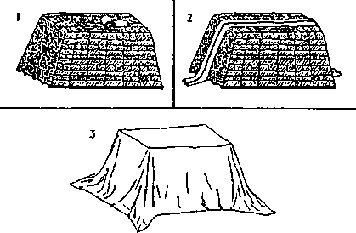
Figure 133
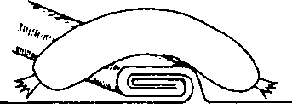
Figure 134
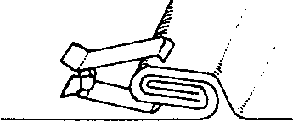
Figure 135
Example: Stack circumference: 6 m + 4 m + 6 m + 4 m = 20 m
Required overall length of sand snakes: 1.5 x 20 m = 30 m
- Evenly distribute the closed fumigant containers around the
stack so that they are at hand; e.g. I tube with 30 tablets next to each
tray/cardboard
- Keep a breathing mask with a new filter ready in case of
emergency!
Application of the fumigant and sealing
- When using tablets or pellets:
- Open the containers, tubes or flasks one after another and
distribute the tablets or pellets on the trays/cardboards without touching each
other !
- Lift the side of the sheet and push the trays/cardboards under the
pallets !
In case that pallets are not available for any exceptional reason, place the trays/cardboards on the floor next to the stack.
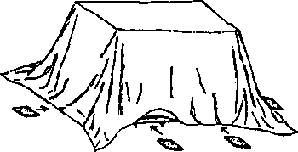
Figure 136
- When using bag chains:
- Open one tin of bag chains after another and fix the bag
chains at regular intervals by pushing one bag between two bags of grain in the
stack (see illustration in section 9.2.1.5, Application)!
· Unfold the fumigation sheet smoothly over the stack (I)
· Place a sand snake as shown in (2)
· Fold the sheet over the edge of the stack (3, 4)
- Ensure that the sheet is lying flat on the ground!
-
Distribute the sand snakes on the sheet around the stack so that they overlap
for ¼ of their length!
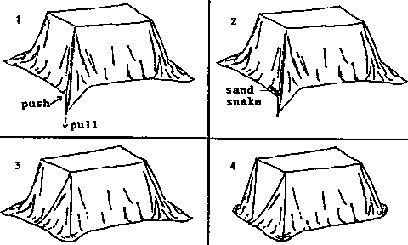
Figure 137
- All work has to be performed in order to be finished within
one hour due to the ensuing generation of gas.
- If the stack is built on a
porous or sandy floor, a sheet must be already placed underneath in the moment
of stacking to prevent the gas from escaping into the ground. Fasten it to the
sheet covering the stack at the side as shown above in the section on
preparations for fumigation.
- Attach warning signs to the stack and to the
door of the store!
- Lock the store!
Controls during fumigation
- Make regular checks of the seals!
- Ensure that no
unauthorized persons enter the store during the entire fumigation period!
-
Only allow the most essential work to be performed in the store and care for
good ventilation when work is taking place! Measure the concentration of the gas
from time to time in order to ensure that there is no danger to staff (see
section 9.3) !
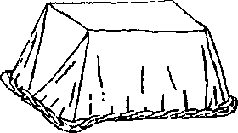
Figure 138
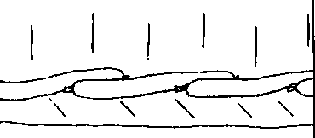
Figure 139
Ventilation and release of the store
- Open doors and windows to ventilate the store!
- Wear a
mask with a new filter (Type B) for phosphine !
- Remove the sand
snakes!
- Turn up the sheet at the corners of the stack!
- Leave the store
and ventilate for at least one hour (the longer the better)!
- Remove the
fumigation sheet from the stack completely (wearing mask)!
- Ventilate for at
least a further two hours (the longer the better)!
- Measure the phosphine
concentration (see section 9.3) in the store wearing a mask and release the
store for general access if the reading is below 0.1 ppm, or continue
ventilating if the concentration is still above this level I
Cleaning up work
- Collect the residues of the tablets, pellets or bags!
- Dip
the powdery residue of tablets and pellets into water mixed with a detergent and
take care not to inhale the gas!
- Rinse out empty phosphide containers
(cans, tubes, bottles) with water, destroy them to prevent reuse, and bury
them!
- Bury used fumigant bags or bag chains!
- Check the sheet for
damage and repair it if necessary!
- Fold the sheet together properly!
-
Store the folded sheet on a pallet!
- Remove the warning signs from the
doors!
9.2.1.8 Fumigating Silos Using Phosphine
Silos can best be fumigated during filling. Care must be taken to seal all openings with kraft paper and paste, or with impermeable coverings. The fumigant is added to the produce on the conveyor belt at regular intervals or thrown into the silo from above through a hatch during filling. This is done in line with the quantity of loaded grain.
Example:
A silo with a capacity of 500 tons is to be filled completely. This is being carried out at a rate of 20 t/h. With a dosage of 3 tablets/t, 60 tablets would have to be added every hour. It would be practical to add 5 tablets every five minutes to ensure good distribution of the gas. If an automatic dispenser is available, it should be set at I tablet per minute. Automatic dispensers are available both for tablets and pellets.
As the filling of a silo takes a considerable time, the staff may be endangered by the generation of gas. Therefore masks must be Used when the fumigant is applied manually.
If a silo is not being filed completely, additional fumigant must be applied in line with the remaining silo capacity (volume in m').
The residues of the fumigant must be removed from the stored produce before it is forwarded:
· Bags are collected at the grain outlet by being caught in
a large-meshed screen
· Tablet and pellet residue is removed using an
aspirator.
9.2.1.9 Fumigation of Bulk Produce with Phosphine
Bulk grain can also be treated under a fumigation sheet. Fumigation should be performed in line with the instructions given in section 9.2.1.7.
If the height of the bulk produce is less than 2 metres, tablets, pellets (on trays) or sachets may be distributed onto the stored produce at regular intervals and collected again after fumigation Blankets (I blanket for each 100 - 300 t) are particularly well-suited for this purpose.
If the height of the pile is over 2 metres, then tablets, pellets or narrow bags must be probed into the produce at regular intervals. This requires good preparation and a good team, as it should take no longer than one hour from opening the first container with fumigant to the final seal being made.
The residue can only be taken out in such cases by means of mechanically cleaning the bulk produce when it is removed from the store (see section 9.2.1.8).
9.2.2 Methyl Bromide
9.2.2.1 Properties
- Excellent penetration into stored produce
- Quick
action
- Methyl bromide volatilizes relatively quickly on ventilation
- it
is neither inflammable nor explosive
- it is liquid at temperatures of below
4°C and normal atmospheric pressure
- Methyl bromide is three times as
heavy as air and thus settles
- Reduction of germination ability is possible
in particular in seeds with high moisture content
- Methyl bromide may leave
residues particularly in stored produce containing fats and be detrimental to
their smell. Stored produce containing fats must therefore only be fumigated a
single time with methyl bromide.
9.2.2.2 Toxicity
- Methyl bromide is effective against all stages of
insects.
- Methyl bromide is highly toxic to warm-blooded animals and is thus
very poisonous to humans. It may be absorbed both by inhaling and through the
skin, meaning that it is absolutely essential to wear protective clothing when
dealing with this fumigant.
- Repeated intake of even the smallest amounts of
methyl bromide in the human body leads to accumulation of bromide and ultimately
to chronic poisoning with possible lethal outcome.
It is absolutely essential when fumigating with methyl bromide that the work is only performed by well-trained, responsible staff incorrect application is extremely dangerous both for the user and for persons nearby.
The use of methyl bromide has been severely restricted in industrialized countries since the beginning of 1995, because of its ozone-depleting and carcinogenous potential. The prospects for the continued use of this fumigant appear generally poor. In the USA a general ban by the year 2010 is to be expected. But the discussions are going on and a further prolongation of the application up to the year 2010 or longer is possible. As quarantine and pre shipment fumigations seem to be the only fields of application in the next future, we have shortened the section on fumigation with methyl bromide in this edition of our manual.
9.2.2.3 Forms of Packaging
Methyl bromide is supplied in liquid steel cylinders of various sizes and in cans. The choice of the form of packaging by the user depends on the amount required.
9.2.2.4 Generation of Gas
Methyl bromide is gaseous at temperatures of above 4°C, but is kept in a liquid state under pressure in gas cylinders in a similar form to butane or propane. If the valve is opened, the methyl bromide is released and volatilizes in the air to become effective as a fumigant. It is important that sufficient space is available to enable the gas to disperse, as condensation of the methyl bromide will otherwise ensue.
9.2.2.5 Factors influencing the Success of Fumigation
Sealing, control measures during fumigation, ventilation, release of the store and cleaning up work are the same as for fumigation with phosphine (see section 9.2.1.7). The only differences are in the preparations (calculation of the required amount of gas) and in the application.
Recommended Application Rates
The recommended application rate in the fumigation of grains and grain legumes in stacks of bags under a fumigation sheet is 20 - 40 g m³.
It is essential that the recommended application rate is adhered to, as the success of treatment will be inadequate if the dosage is too low. This will further encourage the development of resistance. If the produce is properly covered and sealed, the recommended dosage will be perfectly adequate. If the amount of methyl bromide is too high, the maximum residue limit may be exceeded.
For effective fumigation of silos, devices for the recirculation of the gas are necessary, as it will otherwise settle at the bottom of the silo.
Exposure Time
Methyl bromide acts more rapidly than phosphine. The exposure time is generally 24 hours. Due to the danger of bromide residues being left in the fumigated produce, this period should not be exceeded.
Quality of Sealing
The same criteria for sealing apply as for phosphine described in section 9.2.1 5.
Application
Wear a full face mask with a new type AX breathing filter (brown coloured ring)! in contrast to working with phosphine, this mask must definitely be worn in any case on applying methyl bromide.
Methyl bromide is applied from steel cylinders using a polyethylene tube ending in a nozzle. Simple rubber tubes are not suitable for this purpose. Most convenient are tube systems with several outlets, as they enable application of the fumigant at more than one point at the same time. There should be one point of application for every 9 m² on the top surface area of the bag stack. Nozzles should be spaced about 3 m from each other and at least 1.5 - 2 m from the edges of the stack. In order to have approximately the same pressure on all nozzles, the endings of all branches of the system must be at equal distances from the cylinder.
Methyl bromide will settle on the bottom of the stack as it is heavier than air. Application must therefore be made to the top of the stack in order to allow the gas to penetrate the produce. In order to prevent any condensation of the gas (due to cooling as a result of the methyl bromide evaporation), air ducts or pits (one pit per nozzle) must be provided by restacking the bags in the top layers. This allows rapid air and heat exchange. The ducts and pits should be lined with sheets or empty bags in order to prevent the methyl bromide to drop onto the stored produce.
The dosage is controlled by observing the weight of the cylinder during the application. The cylinder must thus be placed on a set of scales.
For safety reasons the application must be finished within 10 - 15 minutes. This necessitates a perfect preparation and organisation before starting the operation.
Ventilation
The ventilation period for methyl bromide is at least 6 hours. In poorly ventilated rooms this period should be extended to at least 12 hours.
9.3 Measuring the gas concentration in the air
Before the store can be entered without danger, the gas concentration must be tested. For this purpose a gas detector is used, consisting of a bellow pump and an insertable glass tube:
The tubes are specific for certain types of gases. To take a reading, break open a tube at both ends and insert it into the pump in the prescribed direction indicated by an arrow. Then hold the detector in the air to be measured and draw it into the tube by pressing and releasing the suction rubber. The number of strokes needed to take a reading is stated in the instructions. The gas concentration can be directly seen by the change of colour in the calibrated tube:
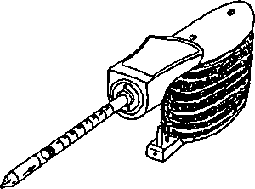
Figure 140
The maximum admissible levels of gas in the air are 0.1 ppm (= 0.15 mg/m³) for phosphine and 5 ppm (= 20 mg/m³) for methyl bromide. Only if the values are below these limits the store can be released for access.
The presence of methyl bromide can also be tested using a halide lamp. This is particularly useful for tracing leaks in the sealing for fumigation. A halide lamp consists of a small burner which is run on commercially-available propane or butane gas. The flame produces an air current inside a fixed tube. Move the end of the tube along any potential areas of leakage (wearing a mask!). If methyl bromide is leaking out anywhere, the flame will take on a different colour (flame with a slight green coloured border => 50 ppm; flame changes more and more to an intensive green colour => 50 - 1 000 ppm; flame with a poor blue colour => more than 1 000 ppm). It becomes clear that the halide lamp can not be used to measure the maximum admissible level of gas. Be sure to follow exactly the manufacturer's instructions for the use of halide lamps.
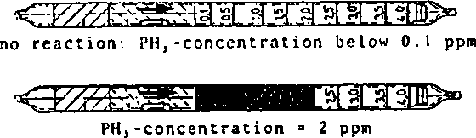
Figure
141
9.4 Safety regulations
A number of the safety regulations listed in section 8.4 equally apply to fumigants. The stipulations for storing insecticides stated in section 8.4.1 are applicable without exception to fumigants. Attention should essentially be paid to the general introductory rules given in section 8.4.2. Also take note of the details concerning protective clothing, safe application as well as the correct disposal of empty packages and residue. Additional attention should be paid to the following points when dealing with fumigants"
- Always work in pairs, never alone!
Should an accident occur during fumigation, it is important that someone is present to immediately remove the victim from the danger area.
- Always have a gas mask with a new filter available in case of emergency!

Figure 142
- Inform a doctor about the used and provide provide him with
manufacturer's information (leaflets, label)!
- Exclude the possibility of
danger to other persons! This means: inspect the store and its surroundings
carefully before application to ensure that there are no unauthorized people in
the danger area!
- Never fumigate stores which are directly adjacent to
living quarters! The distance to any neighbouring houses or offices must be at
least 10 metres.
- Lock the store once the fumigant has been applied and put
up a warning sign (see next page) on every door, stating the type of fumigant
used, the date of treatment, the name of the person in charge of fumigation and
the place where he can be reached.
- All keys to the store must be in the
hands of the person in charge of fumigation.
- Never touch phosphide tablets
or pellets with your bare hands!
- Always wash your face and hands thoroughly
after using fumigants!
- Monitor the gas concentration and pay attention to
the maximum admissible level!
Due to the high toxicity to mammals, the maximum levels in the air of 0.1 ppm for phosphine and 5 ppm for methyl bromide must not be exceeded. If the readings show the levels to be higher access to the store is not allowed without mask.
Notes on the use of gas masks and breathing filters:
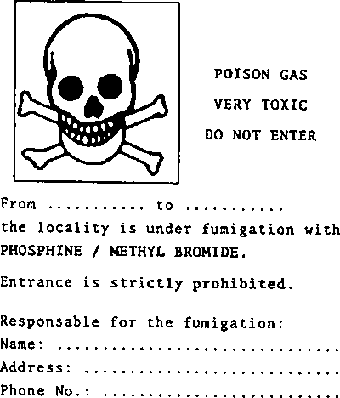
Figure 143
- Only wear gas masks in connection with breathing filters! Breathing filters are screwed into the masks. Always check that the mask is air-tight:
· Put on the mask with the filter screwed in !
· Close the opening of the filter by covering it with your hand!
· Breathe in and hold your breath for a moment! If a vacuum persists the mask
· is air-tight.
· People with beards should not execute work which necessitates wearing
· breathing masks, as the masks are not sufficiently air-tight in this case.
- Select the correct filter:
· For phosphine, only use type B filters with a grey coloured label,
· For methyl bromide, only use type A filters with a brown coloured label.
- Never use a type B filter for phosphine for longer than 20
minutes effective breathing time! Do not reuse it for another fumigation, even
if the limit of 20 minutes has not been reached.
- Replace the type A filter
for methyl bromide after every fumigation! it can be used for the application
(10 - 15 minutes) plus ventilation.
- Never use a
filter:
· if the expiry date is already past!
· if it is damaged!
· if it has already been opened!
- Do not open new filters until you are about to use them!
-
Clean the mask using soapy water after every usage and store together with the
breathing filters in a dry, dust-free place (Under no circumstances in the
insecticide store)!
- Destroy and bury used
filters!
9.5 First aid
Poisoning as a result of fumigants has similar symptoms to insecticide poisoning:
Nausea, vomiting, diarrhoea, headache and stomach ache, dizziness, impaired vision, breathing difficulties, cramps and fatigue may occur, sometimes with considerable delayed reaction.
If there is any suspicion of poisoning, the person affected must be taken out of the working area immediately. He should be carried if possible, as any kind of physical exertion must be avoided. Ensure that he has sufficient oxygen supply and that he does not become cold! in case of contamination of the eyes or the skin, act as described in section 8.4.3!
Consult a doctor immediately!
9.6 Equipment
The following equipment is needed for fumigation and must be hi stock at all times:
- Fumigant
- Gas-tight fumigation sheets
- if necessary,
special clips to join two sheets together
- Sand snakes, sufficient in
number
- Adhesive tape, pieces of sheet material and special glue to seal and
repair the sheets
- Gas detector with detector tubes for phosphine or methyl
bromide
- Halide lamp to check for methyl bromide leakage
- Gas mask (full
face mask)
- Breathing filters AX or B. depending on the gas used
-
Protective clothing and equipment (see section 8.4.2)
- Pieces of cardboard
(e.g. egg boxes) on which to place phosphide tablets or pellets
- For
application of methyl bromide: tubes with nozzles and fittings and a set of
scales on which to place the methyl bromide cylinder
- Warning signs
-
Tape measure
- First-aid equipment
Have available the phone number of the
nearest
9.7 Further literature
ANONYMOUS (1990)
Fumigation and Controlled atmosphere
Storage of Grain, ACIAR Proceedings No. 25, Canberra
ANONYMOUS (1989)
Suggested Recommondations for the
Fumigation of Grain in ASEAN Region, Pan 1: Principles and General Practice,
ASEAN AFHB and ACIAR, 131 pp.
ANONYMOUS (1986)
GASGA Seminar on Fumigation Technology in
Developing Countries
ANONYMOUS
Detia Degesch manual for safe practices in handling
and use of phosphine fumigants, Detia Degesch GmbH, Laudenbach, 29 pp.
BAUR, F.J., ed. (1984)
Insect Management for Food Storage and
Processing, St. Paul, 384 pp.
BOND, E.J. (1984)
Manual of Fumigation for insect Control,
FAO, Rome, 432 pp.
GRAVER, J.S. VAN & P.C. ANNIS (1994)
Suggested
Recommondations for the Fumigation of Grain in ASEAN Region, Pan 3: Phosphine
Fumigation of Bag-Stacks Sealed in Plastic Enclosures: An Operating Manual,
ASEAN AFHB and ACIAR, 79 pp.
ROBBE, P. (1989)
Index Phytosanitaire,
Paris
|
| ||||||||||||||||||||||||||||||||||||||||
Manual on the Prevention of Post-harvest Grain Losses (GTZ)
10. Integrated pest management
In order to prevent and control stored product pests, hygiene and chemical measures are used in the first place. The proportion and the importance of physical and biological pest control methods has been increasing, however, during the last decade. The reasons for this trend are the restrictions being placed on chemical treatment of grain in many countries as well as the ever increasing demand for "residue-free" products which comes especially from consumers in industrialized countries.
Whereas biological methods today still have a rather limited practical importance, some physical methods already have become routine in several countries. In some instances the cost of application still limits the practical use of alternative techniques. The increasing demands related to the safe use of insecticides and fumigants make these methods gradually more complicated and thus more expensive, too, so that the cost relation gently swifts in favour of environmentally sound physical and biological methods.
In developing countries technical standards still remain limiting factors for the application of methods that require special apparatus and equipment or, for example, above-average gastightness of storage structures.
10.1 Mechanical methods
These ate generally methods which aimed at separating the pests from the stored produce. While the main mechanical methods in small farm storage ate sieving, picking out, or winnowing, use is made in larger scale storage of various cleaning installations. It is important to destroy any insects found in the by-products or left-overs immediately. Larvae living inside the grain are only inadequately eliminated.
10.1.1 Packaging
Pests can be prevented by packing the still uninfested stored produce well. This is, however, only the case if the material used is strong enough to resist any attack by the pests. It will often be difficult to obtain packaging material which meets this demand. Jute and artificial fabric sacks, plastic foil, paper or containers made of wood or cardboard are in general use. They often do not afford any mechanical protection against pests.
Packaging material can only be attacked by pests which have sufficiently strong mouthparts or teeth. This applies e.g. to the following pests:
· Rhizopertha dominica
· Sitophilus
spp.
· Lasioderma serricorne (Cigarette beetle)
·
Stegobium paniceum (Drugstore beetle)
· Plodia
interpunctella
· Rodents
10.1.2 Processing
Processing has outstanding importance in preserving perishables. As far as staples foods are concerned the manifold traditional cassava products for long-term storage of this highly perishable commodity should be mentioned. In cereal grains, however, processing is restricted to special cases, because the living grain with its rather low moisture content constitutes a commodity which generally has extraordinary storage features.
In some cases grain is even stored traditionally as it is harvested, without any threshing or shelling. Some examples are:
· storage of unshelled rice (paddy)
· storage of
maize cobs with husks
· storage of sorghum and millet in panicles
· storage of pulses and groundnuts in pods.
These practices have in common that the grains remain in their natural protective shells which cannot be penetrated by some of the stored product pests. There are some exceptions, however, like those pests that can already attack the commodity in the field or the Larger grain borer which bores holes through the husks of maize and even prefers maize on the cob to shelled one. With these storage techniques there is no risk of bruising the grain before storage during threshing which makes grain susceptible to attack by secondary pests.
The importance of proper drying should be highlighted under this section. Drying is dealt with in detail in chapter 4.3.
The only important examples of processing in cereals in order to improve storability are treatments involving heat and moisture like the preparation of bulgur from wheat in Arab countries or the widespread parboiling of rice which is particularly frequent in Asia. Both techniques change the structure, density and hardness of the grains, so that certain storage pests find the processed product less attractive than the raw grain.
Parboiling involves steeping the paddy in cold or warm water for varying periods (up to three days), steaming and drying. During this process starch cells gelatinize and heal the cracks that may be present in the grain. Advantages of parboiling include reduced insect attack, less breakage during milling, improved retention of nutrients and vitamins and an overall improvement of storability. Careless parboiling may result in unwanted colour changes and unpleasant smell in particular if husks were strongly infested by fungus as a result of insufficient drying after the harvest.
10.2 Physical methods
10.2.1 Airtight Storage
Airtight (or hermetic) storage prevents any pests from entering and causes the death of insects left in store due to a lack of oxygen and an excess of carbon dioxide. The most important prerequisites. for airtight storage are gastight facilities.
Airtight storage has been successfully practised in small scale using well sealed clay jars and pots or demijohns for seed storage. Underground pits are traditional hermetic storage structures known since prehistoric times. In particularly arid climates empty oil drums stored in-room have proven their suitability and have become rather popular in certain regions of West Africa. These recipients have in common that the stored grain must be very dry and protected from extremes in temperature in order to avoid condensation and mould growth.
Larger-scale applications of airtight storage are known from the time of the Second World War in Argentina and from Cyprus where in the fifties concrete lined conical bins have been constructed which were covered by concrete dome-shaped roofs. These "Cyprus bins" have been introduced to Kenya in order to store the national grain reserve.
In recent years various types of silos, warehouses and flexible structures have been sealed hermetically with flexible plastic liners. Experience has shown that there are materials which resist to tropical climate conditions, but there are still a number of aspects that require further improvements before this technology can become commonly available as an alternative. Some of the problems which are not yet entirely solved concern monitoring, grain quality maintenance, moisture migration and condensation.
10.2.2 inert Cases
Storage in an atmosphere of inert gases (carbon dioxide and/or nitrogen) gives insects no chance of survival. When using nitrogen (N2), a concentration of 97-99% must be maintained in order to guarantee a successful treatment. The oxygen content must be kept below 1%. In case of carbon dioxide (CO.) a concentration of around 60% provides good control. Methane (CH4), which is produced in bio-gas plants, can also be used for this purpose.
There are three essential prerequirements when using inert gases:
1. Availability of CO2 (from flasks or as a product of the
combustion of propane or butane).
2. Gas-tight stores (or bag stack seal)
which allow to maintain the concentration for several weeks.
3. Low moisture
content of stored produce, as otherwise condensation is likely to occur.
Detailed procedures have been developed for large permanent grain stores, sheeted bag stacks, shipping containers and small-scale packaging. The major constraints for wide use in developing countries are the high cost and availability of the gas and the lack of storage structures which retain the gas sufficiently. Carbine dioxide can be generated on the spot by using burner gas systems Depending on the gas and the application technique used, the minimum exposure time varies from 14 to 21 days
Carbon dioxide has a special potential to replace methyl bromide for quarantine purposes. When applied under normal atmospheric pressure, the exposure time must be 10 days or more in order to obtain complete insect control. With high concentrations (98%) under high pressure (up to 30 kg/cm²) however, exposure periods of 5 to 20 minutes are sufficient to produce complete mortality. The high cost of this technique (autoclaving) restricts the use to high value commodities for the moment.
The future perspectives of inert gases will certainly not only depend on costs, but also on the fate of fumigants like methyl bromide which are still widely used but probably phased out sooner or later. The use of inert gases can also provide an alternative to the use of insecticides in the future for a number of developing countries.
10.2.3 inert Dusts
Since the last ten years inert dusts (mainly amorphous silicas) have been applied commercially in increasing quantities in Australia. The following three types of use are common:
- admixture of dusts with the commodity, generally in a
proportion of 1 g/kg
- structural treatment on walls and floors with either
dry dusts or aqueous slurries
- addition of dusts to the surface of grain
bulks.
When used as an admixture to grain the protective effect of inert dusts lasts normally at least twelve months which is comparable to conventional chemicals. The effect of different products varies considerably and some of them cannot provide sufficient control as compared to chemical insecticides. It has also become evident, that some insects like Sitophilus granarius are not very susceptible to this kind of treatment. The admixture of dusts has the drawback of increasing the dustiness of the grain. When applied to surfaces, however, inert dusts are by no means inferior to residual insecticides.
A promising approach in large-scale storage consists in treating the surface of grain bulks with dusts in combination with another method of pest containment like cooling or fumigation. In the first case the dust supplements ventilation with cool air and kills insects in the top layer where they tend to congregate. When applied together with a fumigant inert dusts act as a gas barrier and help to provide adequate concentrations near the surface.
There is some potential for the use of inert dusts in on-farm stored product protection. This technique is comparable to the traditional use of dusts and ashes and has the advantage of a considerably reduced dosage. Whereas traditional mineral admixtures are generally effective in concentrations of 40% or more, inert dusts containing amorphous silicas are applied at rates of I to 2 weight %. Among other pests Prostephanus truncatus and bean bruchids could be controlled in laboratory trials for up to six months. In cases where the protective effect is not considered to be sufficient, a combination of inert dusts with reduced dosages of conventional insecticides may also offer a solution for the future.
In any type of storage the use of inert-dusts is only effective when the grain moisture is kept below 12% and the relative humidity of the air is rather low. In the humid tropics inert dusts would clump rather quickly and thus loose their effect, but semi-arid and arid regions provide ideal climatic conditions for this type of treatment.
10.2.4 Use of High Temperature
It is a general rule that temperatures of above 40°C at-e lethal for most stored food pests within a short time. Traditional sun-drying of the hat vest makes use of this effect. Distinction is made between heat treatments under wet and dry conditions. The considerable amount of energy and equipment requited for heat treatments at a large scale is a drawback. This process cannot be used for seeds because it endangers the germination capacity.
10.2.5 Use of Low Temperatures
The effect of low temperatures ranges from reducing feeding activity and mobility to complete stop of development and to death. Extensive technology is required in order to achieve low temperatures in the store and the costs of the energy are very high. It may be necessary in individual cases to store valuable seeds in cold stores. As grain has a low temperature conductivity it is difficult to cool large stacks or bulks of grain. In addition, there is the danger of condensation during cooling procedures.
10.2.6 Treatment using Short-wave Radiation
Stored product insects can be killed by exposing them to short-wave (g-) radiation. The radiosensitivity of pest species varies. Cereals can be disinfected with a dose of 0.5 Kilogray (kGy), pulses at below 0.2 kGy. Eggs and larvae are the most sensitive insect stages. At the prescribed dose no alteration of physical, chemical and organoleptic properties of the treated product is reported. There are some commercial applications of this method, especially in potatoes and vegetables which have remained limited up to now. Around 40 countries have introduced registrations for this kind of treatment in certain products.
The advantages of irradiation include:
- no residues
- uniform penetration into grains
- no
development of resistance to be expected
- instantaneous treatment.
Inconvenience of irradiating stored products are:
- higher cost than chemical treatments due to high initial
investment
- irradiation means an additional handling step
- need for
centralised facility
- limited capacity of irradiators
- slow acceptance
by end user.
As there are [TO residues, the treatment can be applied to the final package of food. There is no residual effect, so that irradiated food must be protected from new infestation by means of suitable packaging or other methods. because of the technical facilities required, the cost involved and the lack of acceptance by the consumers it does not seem probable that y-irradiation will soon gain much importance for the treatment of grains.
10.3 Biological control methods
Every living organism has natural enemies or diseases. They ensure the equilibrium of the population. Biological control makes use of such natural antagonists of pest species. The main advantage of biological control methods lies in the fact that they are in most cases toxicological safe. Before they are used, however, any ecological side-effects must be precisely investigated and taken into account. Practical application of biological control methods against stored product insects is still very limited because of some special features of the storage environment:
- in industrialized countries there is generally a zero
tolerance concerning any kind of "filth" in food including beneficial
insects
- antagonists of stored product pests are naturally very susceptible
to the commonly used broad-spectrum insecticides
- antagonists do not find
very attractive living conditions in larger storage facilities like silos (e.g.
low humidity, lack of nutrients for adult parasitoids, etc.)
Pests can be kept at a low level using biological methods but cannot be eradicated, As storage pests are tolerated up to a certain level in small farm storage, there are excellent possibilities for the use of such control methods in this kind of stores.
Furthermore, increasing restrictions concerning the use of fumigants and synthetic insecticides have made the application of biological agents in stored product protection more attractive. It should also be kept in mind that the tolerance for contamination with any kind of "filth" may vary. In traditional granaries generally small numbers of insects are tolerated. The same applies to feed grain. It is also evident that there are stages in the production cycle where standards need not to be as high as for finished goods or grain for export.
The following antagonists are promising biological control agents due to breakthroughs in research and practical work during the last years.
10.3.1 Predators
With the release of the histerid beetle Teretriosoma nigrescens against the Larger grain borer (Prostephanus truncatus) in Togo and Kenya a milestone has been set in biological control of stored product pests affecting granaries at the small-scale farmer level. The Larger grain borer had been accidentally introduced to Africa at the end of the seventies, spread rapidly and caused losses which had never been observed before (up to 30% after six months of storage). All previous efforts of containment of the new pest had rather poor results or were not easily accepted by the farmers, so that GTZ and the Natural Resources institute (NRI) set up projects in order to investigate the possibility of biological control.
Out of several investigated agents the antagonist T. nigrescens (like the Larger grain borer a native of Central America) turned out to have the highest potential for this purpose. After a thorough research of the predator's impact and safety aspects, T. nigrescens was introduced to Togo and released in early 1991
The monitoring of the release showed a substantial loss reduction due to the antagonist in the field. These findings encouraged the set-up of national control programmes in other countries where releases and follow-up work are still continuing. The procedures for breeding of the predator, introduction, release and monitoring have been well documented and published, so that interested governments can easily adopt this technique.
The Larger grain borer problem has not been entirely solved in Africa by the release of T. nigrescens but the pest can now be contained rather efficiently by means of suitable integrated pest management measures. Unfortunately T. nigrescens has no or only a very low impact on other storage pests e.g. Sitophilus spp. or Tribolium spp.
Some other predators like the anthocorid bug Xylocoris flavipes are frequently encountered antagonists in traditional granaries which show a good potential to reduce pest populations provided that they are not suppressed with broadspectrum insecticides. Even if they are not purposely used as control agents they can naturally contribute to loss reduction within the framework of integrated stored product control in a pesticide-free environment and thus deserve special protection.
10.3.2 Parasitoids
Recent investigations have opened perspectives for the use of tiny parasitoid wasps in cereal stores. These species are generally very specific to certain stored product pest species as hosts. Special mention should be made of Trichogramma species which parasitize the eggs of moths. Some strains have been identified that perform well in storage conditions. The use of Trichogramma requires repeated (inundative) releases in certain intervals of time in order to insure a long-term effect.
As far as bruchids in grain legumes are concerned the specialized egg parasitoid Uscana lariophaga offers some perspectives due to its strong impact on Callosobruchus maculatus in stored cow-pea in West Africa.
A number of larval parasitoids like Anisopteromalus calandrae, Choetospila elegans and others are frequently found in traditional granaries which are not treated with chemical insecticides. Their impact can be considerable and they should be taken into account in integrated pest management concepts for small scale storage.
10.3.3 Pathogenic Agents
Pathogenic agents (bacteria, viruses, protozoa), which are specific to certain species, have proven their potential to provide satisfactory control of pest populations in the field. Bacillus thuringiensis is the most widely used of all biological control agents. In storage conditions it has the following advantages:
· it has a highly toxic effect on storage moths
·
it remains effective for several months
· a surface treatment is
sufficient.
The pyralid moths Plodia interpunctella and species of Ephestia are particularly sensitive against this bacterium. Unfortunately, pronounced resistance has already occurred in several instances, so that the future value of B. thuringiensis as an alternative to synthetic insecticides cannot be easily estimated. There is a variety called B. thuringiensis tenebrionis with a certain potential in controlling stored product beetles, especially Rhyzopertha dominica, which requires still further research.
Other pathogens like fungi, viruses and protozoans have been under investigation but none of them has gained importance in cereal stores up to now due to their limited lethal effect or their toxic side effects (mycotoxins) warm-blooded beings.
10.4 Biotechnical methods
These methods involve more than other control methods the pests to be controlled actively in their own destruction. Use is made of the natural reactions of storage pests to stimuli from the environment.
10.4.1 Baiting
The use of baits has been in practice for centuries. Food is mixed with poison and offered to the target animals. Baiting is the best and environmentally safest method if all necessary precautions are taken.
Occasionally this technique is used to attract and control insects. The main use of baiting is, however, still in dealing with rodents (See section 11.7).
10.4.2 Pheromones
Pheromones are natural stimulants emitted by insects to establish a kind of communication system. Sexual attractants (mostly issued by the female) as well as aggregation pheromones (which have an equal effect on both sexes) have been synthesized from storage food pests. Pheromones are in most cases not really used as control agents, but rather serve in the following tasks:
· Studies of the species composition
· Recognizing
infestation (monitoring)
· Estimating the population density
·
Defining the date for the application of control measures
· Checking the
success of control measures
Pheromones have been isolated and identified from more than 30 species of stored product insects. The most common applications are pheromone-baited traps for survey, detection and monitoring of pyralid moths, Cigarette beetles and dermestids related to processed foods. Mass trapping of male moths has proven not be cost efficient. Among others pheromones are commercially available for the following important stored product pests:
Beetles:
Lasioderma serricorne (cigarette
beetle)
Prostephanus truncatus (Larger grain
borer)
Rhyzopertha dominica (Lesser grain borer)
Stegobium
paniceum (Drugstore beetle)
Tribolium castaneum (Rust-red flour
beetle)
Tribolium confusum (Confused flour beetle)
Trogoderma granarium
(Khapra beetle)
Moths:
Sitotroga cerealella (Angoumois grain
moth)
Ephestia cautella (Tropical warehouse moth)
Ephestia
kuehniella (Mediterranean flour moth)
Plodia interpunctella
(Indian-meal moth)
Males of the pyralid moths E. cautella, E. kuehniella and P. interpunctella can even be captured with the same compound which renders monitoring comparatively economic in this case.
Pheromones can be excellently used in combination with traps. There are a number of different trap designs according to pest species and purpose. The most convenient and frequently used moth trap is the delta trap which consists of waxed cardboard folded twice to form a three-sided prism open at both ends. The three inner surfaces are covered by a sticking material. The bottom surface is provided with a capsule containing the pheromone. The flying insects are attracted by the pheromone and become stuck to one of the adhesive surfaces. There are also more complicated and thus less economic designs like funnel or wing traps. Small glue traps are used to locate moths in difficulty accessible places.
The range of flight traps is rather limited. Inside warehouses insects respond in a distance of up to 10 m. In order to provide an effective grid of coverage, traps must be placed approximately 10 m from each other. Outdoors tests with the
Larger grain borer have proven a maximum attraction of nearly 500 m which is dependant on wind conditions.
For flying beetle species (e.g. P. truncatus) similar trap designs exist. Crawling beetles can be captured with grain probes which are inserted vertically into bulk produce and work even without pheromones catching insects that pass by. It goes without saying that luring beetles with pheromones enhances specific catches. There are also corrugated cardboard traps containing a pheromone capsule and treated with an insecticide (e.g. for T. granarium). These traps, as well as window traps make use of the stored product beetles' tendency to enter hiding places. For T. granarium a vertical wall mount trap has been devised which uses the wall-climbing behaviour of this species. There are still other designs available for certain species.
Pheromone traps for crawling insects operate over even shorter distances than flight traps. The maximum distance for most designs is about 1.5 m, so that a complete coverage can hardly be achieved. It is recommended to concentrate such traps on vulnerable points at the entry of storage facilities or at places where insect congregations are likely to occur.
10.4.3 Attractants
Food attractants, which act on the sense of smell, draw storage pests over a greater or shorter distance. They can be used in practice like pheromones. In some cases, as for T. granarium pheromones may even be combined with food lures in order to improve the attraction.
10.4.4 Repellents
Some plant extracts have the effect of repelling stored product pests. This applies e.g. for Neem, which has been mentioned in section 4.4.1.2.2. Tests results have shown that the application of these substances is limited under practical conditions.
10.4.5 Growth Regulators
Attempts have been made to use substances which interfere with the insects' complicated mechanism of development and moulting. By using these substances, it is possible to disturb development to such an extent that no progeny capable of reproduction are born. In this context substances with a structure resembling juvenile hormones (juvenile hormone analoga) should be mentioned. Their application leads to the development of intermediate forms in the larval or pupal stages which cannot survive.
Common growth regulators and juvenile hormone analoga include methoprene, fenoxycarb and diflubenzuron. They are sufficiently persistent in stored grain, but have a rather poor effect on Sitophilus species. Growth regulators still cannot be used effectively enough in most circumstances to make them a viable alternative to insecticides. A potential exists, however, for the application of methoprene against Cigarette beetles or organophosphorus resistant strains of Rhyzopertha dominica and Oryzaephilus surinamensis. Tests have also proven a potential use of methoprene in combination with an organophosphorus compound.
10.4.6 Crop Varieties Tolerant to Storage Pests
A larger number of high-yield varieties coming on the market in context with the "green revolution" have proved to be more susceptible to infestation by storage pests than the local varieties. The following criteria may be responsible:
· reduced hardness of the seed coat
· change in
compounds like higher protein content
· more attractive smell due to the
change in composition of the grain
· maize husks which do not completely
cover and thus protect the cob
Making use of the differences between varieties can be seen as an excellent prophylactic means of control, providing the tolerant varieties meet the necessary quality standard. Varieties with tolerance against stored product pests should therefore have priority in breeding programmes.
With few exceptions like the use of inert dusts for structural treatments, none of the methods listed in this chapter can at present be regarded as being a viable alternative to the use of insecticides. They represent, however, parts of integrated control strategies against stored product pests and can contribute to a considerable reduction of the application of chemicals in future.
10.5 Literature
ANONYMOUS (1990)
Fumigation and Controlled atmosphere Storage
of Grain, ACIAR Proceedings No. 25, Canberra
ANONYMOUS
La conservation du ni�b� (haricot) avec l'huile de
neem. Fiche Technique de la Protection des V�g�taux, Lom�-Cacaveli, 26 pp.
ANONYMOUS (1980)
Post Harvest Problems, GTZ, Eschborn, 258
pp. + 32 pp. appendix.
HIGHLEY, E., E.J. WRIGHT, H. J. BANKS & B.R. CHAMP. ed.
(1994)
Stored Product Protection. Proceedings of the 6th International
Working Conference on Stored-product Protection, CAB international, Canberra, 2
volumes, together 1274
pp.
|
| ||||||||||||||||||||||||||||||||||||||||||||||||||||||||||||||||||||||
Manual on the Prevention of Post-harvest Grain Losses (GTZ)
11. Rodent pests
Rodents belong to the most important pests of stored produce. In a number of countries they cause as much if not more damage than insect pests. Rodents have an exceptional ability to adapt themselves to different environmental conditions and an incredible potential for reproduction One pair of rats can theoretically have 350 million offspring within the space of three years. Estimates state that over 3.5 million rats are being born daily.
11.1 Characteristic features of rodents
Rodents are characterised by their teeth. They have a pair of incisor teeth in the upper and lower jaws, separated from the molars by a large gap (diastema).
The incisors are curved inwards and have an extremely hard anterior coating The softer inside layer is worn down much more rapidly than the hard, outer layer. This means that the teeth are continually kept sharp, enabling them to damage even materials such as masonry and electric cables. l he incisors do not stop growing. This means that the animals are forced to gnaw steadily in order to wear them down.

Figure
144
11.2 Rodents as storage pests
Rats and mice (Muridae) are mainly causing damage to stored produce. Additionally some squirrels (Sciuridae) can also cause losses. The three most important rodent species are to be found all over the world:
· Black rat or House rat (Rattus rattus)
·
Norway rat or Common rat (Rattus norvegicus)
· House mouse
(Mus musculus)
There are also a number of species which are of great importance in specific regions:
· Multi-mammate rat (Mastomys natalensis) in Africa
and the Middle East;
· Bandicoot rat (Bandicota bengalensis) in
Southern and South East Asia;
· Pacific rat (Rattus exulans) in
South East Asia, also occurring in Southern
Asia
11.3 Damage and losses
Rats and mice cause losses in a number of ways:
- Feeding on stored produce
Rats eat an amount of food equivalent to 7% of their body weight daily, i.e. a rat with a body weight of 250 g will eat around 25 g daily, amounting to 6.5 kg of grain a year.
Mice eat a daily amount equivalent to around 15% of their body weight, i.e. a mouse weighing 25 g will eat between 3 and 4 g a day, amounting to 1.4 kg of grain a year.
It should, however, be borne in mind that the actual losses are much higher than the amount of produce eaten by the animals, as they contaminate the stored produce with urine, faeces, hair and pathogenic agents. As it is difficult or even impossible to remove filth produced by rodents from the stored produce, infested batches often have to be declared unfit for human consumption or written off as total losses.
There are around 50 diseases which can be transferred to man by rodents, including typhoid, paratyphoid, trichinosis, scabies, plague and haemorrhagic fevers like ebola. In addition, rodents may be vectors of a large number of diseases affecting domestic animals. The problems and costs resulting from these diseases are not normally taken into account when assessing infestation by rodents.
As rodents prefer food rich in proteins and vitamins and feed mainly on the embryo, they cause particular damage to the nutritional value and germination ability of seeds.
- Damage to material and equipment (e.g. tarpaulins, bags, pallets, sprayers) and to the store itself (cables, doors).
These often lead to subsequent damage:
· Produce leaking out of damaged bags or storage containers
· Bags stacks collapsing due to damage to the lower layers
·
Short circuits leading to sparks or fire from cables being chewed
·
Silos and warehouses may subside or even collapse as a result of being
undermined
· Drainage canals around a store may be
damaged.
11.4 Biology of rodents
11.4.1 Distinguishing Features
Correct identification of rodents in the store is of great importance for the success of control measures as differences in the behaviour of the individual species must be taken into account when selecting the correct strategy for treatment.
Distinguishing features of species are the size and shape of the body, the colour of the fur, the length of the head and body in relation to the tail, the size of the hind feet, the relative size of ears and eyes and the shape of the snout. The size and colour of the animals can vary greatly 50 that they arc not sufficient to provide an adequate means of identifications. It is of practical use to catch a number of animals using traps, for example, in order to be able to identify them clearly. In many countries plant protection services or institutes have departments specialized in rodents which can be consulted if necessary.
The characteristic distinguishing features of the most important species of rodents are listed in the following tables and illustration
Colour and general characteristics of stored product rodents
|
Rodent species |
Description |
|
Rattus rattus |
Back black or grey, ventral side lighter coloured; smooth fur. Long and thin tail, sparsely haired. Large eyes; thin, translucent and hairless ears; pointed snout. 5 pairs of teats. |
|
Rattus norvegicus |
Back brown-grey, ventral side light grey; harsh and shaggy fur. Thick, bi-coloured tail. Small eyes; small and thick ears with tine hairs; blunt snout. 6 pairs of teats |
|
Rattus exulans |
Colour similar to R. norvegicus; tail uniformly dark. 4 pairs of teats. |
|
Mus musculus |
Colour variable. Large ears; small eyes; pointed snout. 5 pairs of teats. Back brown grey, ventral side grey or white, soft fur. |
|
Mastomys natalensis |
Large ears; small eyes; pointed snout. 7 to 12 pairs of teats. |
|
Bandicota bengalensis |
Back dark brown, ventral side grey. Feet and tail black. Relatively small ears and eyes, 6 pairs of teats |
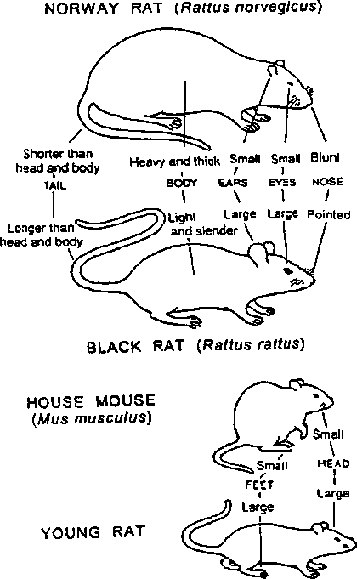
Figure 145
Measurements of rodents harmful to stored products
|
Rodent species |
Length of head and body (mm) |
Length of tail (mm) |
Length of hind foot (mm) |
Length of ear (mm) |
Adult weight (g) |
|
R. rattus |
150-220 |
180- 240 |
32 - 40 |
22 - 27 |
150 - 250 |
|
R. norvegicus |
180 - 250 |
150 - 220 |
35 - 45 |
17 - 23 |
150 - 400 |
|
R. exulans |
110 - 130 |
120 - 150 |
22 - 26 |
15 - 17 | |
|
M. musculus |
70 - 110 |
60 - 110 |
16 - 21 |
12 - 15 |
15 - 30 |
|
M natalensis |
90 - 150 |
90 - 150 |
20 - 30 |
16 - 24 |
25 - 70 |
|
B. bengalensis |
- 250 | |
- 44 | | |
11.4.2 Reproduction
Rodents have an important reproduction ability. They reach full sexual maturity very soon after birth, have a number of litters a year and a large number of offspring per litter:
|
Rodent species |
Number of litters per year |
Number of offspring per litter |
Gestation period (days) |
|
R. rattus |
6 - 8 |
4 - 12 |
21 - 23 |
|
R norvegicus |
3 - 7 |
6 - 10 |
20 - 24 |
|
R. exulans |
2 - 6 |
2 - 5 |
20 - 21 |
|
N. musculus |
7 |
4 - 8 |
20 - 22 |
|
M. natalensis |
up to 12 |
9- 13 |
23 |
|
B. bengalensis |
up to 11 |
6 - 8 |
22 - 26 |
Mastomys natalensis has by far the highest reproduction rate of the six species listed here.
11.4.3 Senses
Rats and mice are animals which are most active at night or at dusk. Their vision is thus quite poor. They are very sensitive to light, but they cannot see clearly and are colour-blind.
Their poor vision is compensated for by their excellent senses of hearing, feeling, smell and taste. Rodents are able to sense ultrasound. Their sense of smell enables them to find food, identify other beings and recognize runs and territorial limits. Their excellent sense of taste makes them fastidious. This is an important fact to be borne in mind when selecting bait. Their whiskers serve as feelers.
11.4.4 Behaviour
Rats are exceptionally cautious and intelligent creatures. Changes in their environment, such as newly laid bait, are initially regarded with suspicion and only accepted hesitatingly after several days of becoming accustomed to their presence. This is known as "new object reaction". it has important consequences for control measures.
11.4.4.1 The Black Rat (Rattus rattus)
The Black rat lives in loose colonies and Usually in the roof area of stores, where it generally builds its nest. Therefore it is often called "Roof rat". it is an excellent climber, can jump heights of up to 1 m and squeeze through an opening of only 12 mm in diameter. Black rats rarely use established runs as Norway rats do.
11.4.4.2 The Norway Rat (Rattus norvegicus)
The Norway rat lives in colonies or groups outdoors, only entering stores for food. It lives in burrows which it digs near stores or beneath foundations. Norway rats are good runners and swimmers, but cannot climb as well as Black rats. They can jump about 60 cm and squeeze through openings only 12 mm wide. They tend to use established runs and normally return to a food source once they have accepted it.
11.4.4.3 The House Mouse (Mus musculus)
The House mouse lives in fixed families, primarily in buildings or stores, and its preferred source of food is grain. It can survive for long periods without water, being able to make use of the grain moisture and water produced by its own metabolism.
Its radius of activity is very small, not exceeding a space of 10 x 10 m. It is capable of spending its entire life within the confines of a single pile of stacks.
This makes its detection particularly difficult. House mice are good runners and climbers, and can jump heights of up to 30 cm. Their small size enables them to squeeze through openings only 6 mm wide. House mice are very curious animals; the paths they follow are irregular, nibbling here and there, and they do not regularly return to specific food sources.
11.4.4.4 The Multi-mammate Rat (Mastomys natalensis)
These animals live in colonies in burrows outdoors, but enter stores to obtain food. They live largely from plant substances, but do also eat insects and meat. They are excellent climbers, jumpers and swimmers. Due to the small size of these animals, they are referred to in many countries as mice.
11.4.4.5 The Bandicoot Rat (Bandicota bengalensis)
The Bandicoot rats often live on their own outdoors where they dig elaborate burrows. The entrances are marked by noticeable piles of earth. The burrows comprise a number of chambers, where the rats store up to 10 kg of grain. They use established runs, which may well be sprinkled with odd grains they have dropped in transporting food. They are excellent swimmers.
11.4.4.6 The Pacific Rat (Rattus exulans)
These animals live outdoors, building their nests above ground in branches, bushes or niches in rocks. They feed largely on plant substances. They are very active and are good runners, jumpers and climbers. Occasionally they enter houses and stores.
11.5 Signs of rodent infestation
When signs of rodent infestation are seen, it is absolutely necessary to conduct a thorough investigation of the store, its immediate surrounding area and possibly even neighbouring land. In order to be able to perform measures to effectively control rodents, it is necessary to know what rodent species you are dealing with, where the nests are, how they enter the store and which runs they take.
There are a large number of clear signs of rodent infestation:
- Live animals
Rodents are mainly active at night. If animals are nonetheless seen during the daytime, this is a sign of an already advanced stage of infestation.
- Droppings
The shape, size and appearance of droppings can provide information as to the species of rodent and the degree of infestation.
The droppings of Norway rats are around 20 mm in length and are found along their runs.
The droppings of Black rats are around 15 mm long and are shaped like a banana.
Mouse droppings are between 3 and 8 mm in length and irregular in shape.
Droppings are soft and shiny when fresh, becoming crumbly and matt black or grey in colour after 2 - 3 days.
- Runs and tracks
Runs, such as those of Norway rats, are to be found along the foot of walls, fences or across rubble. They virtually never cross open areas of land, but always pass through overgrown territory, often being concealed by long grass.
Runs inside buildings can be recognized by the fact that they are free of dust. The animal's fur coming into contact with the wall leaves dark, greasy stains. Even Black rats, which do not have any fixed runs, can leave similar greasy stains at points which they pass regularly, e.g. when climbing over roof beams.
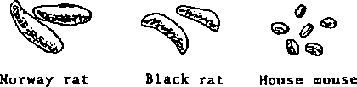
Figure 146
- Footprints and tail marks
Rats and mice leave footprints and tail marks in the dust. If you suspect there might be rodent infestation, scatter some sort of powder (talcum powder, flour) on the door at several places in the store and later check for traces. The size of the back feet serves as an indication of the species of rodent:
· Back feet larger than 30 mm: Black rat, Norway rat,
Bandicoot rat.
· Back feet smaller than 30 mm: House mouse,
Multi-mammate rat, Pacific rat.
- Tell-tale damage
Rats leave relatively large fragments of grain they have nibbled at (gnaw marks). They generally only eat the embryo of maize. Sharp and small leftovers are typical for mice.
Rodent attack can further be detected by damaged sacks where grain is spilled and scattered. Small heaps of grain beneath bag stacks are a clear sign. These should be checked for using a torch on regular controls.
Attention should be paid to damaged doors, cables and other material.
- Burrows and nests
Depending on their habits, rodents either build nests inside the store in corners as well as in the roof area or in burrows outside the store. Rat holes have a diameter of between 6 and 8 cm, whereas mice holes are around 2 cm in diameter. These holes can be found particularly in overgrown areas or close to the foundations of a store.
- Urine
Urine traces are fluorescent in ultraviolet light. Where available, ultraviolet lamps can be used to look for traces of urine.
11.6 Preventive measures
The most essential factors for the occurrence of rodents are:
· sufficient supplies of food
· protected places
in which to build burrows and nests
· hiding places
· access
to produce
Good store management and preventive measures taken as part of an integrated control programme can help to deal with these factors.
The information given in sections 5.2.3.2 (Activities to Prevent Losses in Storage), 5.2.4 (Storage Techniques) and 5.1.1 (Constructional Features of Stores) applies here.
11.6.1 Storage Hygiene and Technical Measures
- Keep the store absolutely clean! Remove any spilt grain
immediately as it attracts rodents!
- Store bags in tidy stacks set up on
pallets, ensuring that there is a space of I m all round the stack!
- Store
any empty or old bags and fumigation sheets on pallets, and if possible in
separate stores!
- Keep the store free of rubbish in order not to provide the
animals with any places to hide or nest! Bum or bury it!
- Keep the area
surrounding the store free of tall weeds so as not to give the animals any
cover! They have an aversion to crossing open spaces.
- Keep the area in the
vicinity of the store free of any stagnant water and ensure that rainwater is
drained away, as it can be used as source of drinking water.
11.6.2 Keeping Rodents Out
The requirements of preventive rodent control must be taken into account whenever new stores are being built. Particular attention should be paid to doors, ventilation openings, brickwork and the junctions between the roof and the walls. Repair any damage to the store immediately! This applies especially to the doors.
11.7 Control measures
Despite taking all preventive measures, it will not always be possible to avoid infestation with rodents. Control measures are a basic requirement in keeping damage down to a minimum. The sooner control of rodent pests is undertaken, the better are the chances of success. Before any control measures are taken it is necessary to make a situation analysis.
11.7.1 Situation Analysis
In order to achieve the greatest possible success with measures to combat rodents, the following questions must be answered:
· What species of rodent are causing damage to the
produce?
· What is the approximate degree of infestation (loss
estimation)?
· What is the extent of the infestation? If necessary, work
must be performed in conjunction with neighbours.
· Where exactly are
the rodents particularly active?
· Where are the runs, burrows and
nests?
· in what condition are the store and the surroundings?
Correct planning of control measures can only be performed once these questions have been answered.
Depending on the degree of infestation, the following control measures can be used:
- Low degree of infestation:
· Traps
· Cats
· Use of chronic poisons
- High degree of infestation:
· Use of acute poisons
11.7.2 Application of Non-Chemical Control Measures
11.7.2.1 Traps
The use of traps is only worthwhile if the degree of infestation is low. There are different kinds of traps. Distinctions are made between killing traps and arresting traps. When using traps, attention should be paid to the following:
- Place the traps along walls, on runs or in other places
frequented by the rodents!
- Control the traps daily! Remove any dead animals
and clean the trap!
11.7.2.2 Cats
Cats can make a contribution towards rodent control. It should be mentioned, however, that cats themselves may become a hygiene problem in stores if care is not taken.
11.7.3 Use of Chemical Means of Rodent Control
The use of rodenticides is only effective under good storage conditions and in particular good storage hygiene. Before the application of rodenticides, all preventive measures must be taken to ensure that no reinfestation takes place.
There are two groups of rodenticides:
· acute poisons
· chronic poisons
Acute poisons are used only in the case of high rodent population with the aim of reducing the degree of infestation to a low level within a short period. Subsequently, chronic poisons or other methods must be used for further control.
11.7.3.1 Acute Poisons
- Properties
Acute poisons have a rapid effect due to their high toxicity, meaning that poisoned rodents die immediately. In control campaigns using these poisons the bodies of dead rodents can be found in and around the store. These must be collected and burned.
Acute poisons do not, however, work selectively. This involves a risk for other living beings. Therefore great care must be taken in applying acute poisons.
They must not be used in the same place again until at least six months have passed, as it will take this long for the rodents' bait aversion to be overcome (see section 11.7.3.5).
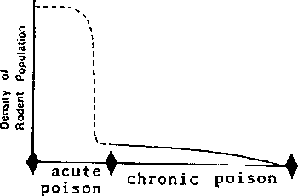
Figure 147
- Products
Zinc phosphide is the most common acute poison in use all over the world. It is comparatively cheap and has a good and fast effect it applied correctly. Zinc phosphide is mixed in bait in a concentration of 2.5%.
There are a series of other acute poisons, all of which, however have disadvantages compared to zinc phosphide and which are prohibited in many countries due to their side effects.
- Application of acute poisons
When applying zinc phosphide, follow all safety measures (see section 11.8) and proceed as follows:
- Draw up a sketch of the area and of the store and mark the
settings of the bait!
- Make sure you have an adequate amount of receptacles
(bait boxes)!
- Make sufficient amounts of untainted bait for prebating (see
sections 11.7.3.4 and 11.7.3.6)1
- Fill the receptacles or bait boxes with
untainted bait and set then out at the planned points! Offer it until it is
fully accepted.
- Control the bait daily and refill if necessary!
- If
the bait has not been accepted alter a number of days, change the food base or
the bait positions!
- Replace all untainted baits with poisoned ones at the
same time!
- Mix zinc phosphide with freshly broken grain or meal at a ratio
of 1:39, i.e. each kg of poisoned bait will consist of:
975 g best quality grain + 25 g zinc phosphide
Before mixing add approximately 1% edible oil in order to prevent dust developing! (Never mix water with zinc phosphide!). Mix the bait by shovelling from one side to the other!
- Attach warning signs to the doors of the store and at the
entrance to the property drawing attention to the control campaign in progress,
the poison used and the dangers involved, and lock the stores!
- Control the
baits daily!
- Note on the control sheet how much bait has been eaten (see
example in section 1 1.7.3.7)!
- Refill any bait which has been eaten!
-
Stop the campaign after 5 days at the latest, as bait aversion will occur!
-
Collect all receptacles (bait boxes) !
- Thoroughly clean all materials which
have come into contact with the bait and store them in a safe place!
- Burn
or bury any dead bodies of rodents found!
- Further measures
Continue the control campaign using chronic poisons or by putting out traps
11.7.3.2 Chronic Poisons
- Properties
Chronic rodenticides have a delayed action. The rodents will die without feeling pain. They will thus not become suspicious of the poisoned bait and no bait aversion will ensue. Prebaiting is therefore not necessary. Poisoned animals normally die in their nests or hiding places. The bodies of dead rodents are therefore not usually found during the course of treatment.
- Products
· Anticoagulants
Anticoagulants prevent clotting of the blood. Animals that have been poisoned will die from internal bleeding. There are two different groups of these poisons:
"First generation" anticoagulants
These are rodenticides which only lead to death after repeated ingestion (up to 7 times). They are referred to as "first generation" anticoagulants because they were the first to come on the market. They include the following products:
|
Active ingredient |
Most common brand names |
|
Warfarin |
Warfarin |
|
Difacinon |
Ramik, Difacin |
|
Chlorfacinon |
Caid, Raviac, Quick |
|
Coumatetralyl |
Racumin |
|
Coumachlor |
Tomarin |
|
Coumafuryl |
Fumarin |
|
Pindane |
Pival |
"Second generation" anticoagulants
These are rodenticides which kill the animals after a single ingestion. These products are thus also categorized as "acute poisons with delayed effect.'. They include the following products:
|
Active ingredient |
Most common brand names |
|
Brodifacoum |
Talon, Klerat, Ratak Super |
|
Difenacoum |
Ratak |
|
Bromadiolon |
Rodine, Mak |
|
Flocoumafen |
Storm |
Bromadiolon is particularly used against mice.
An antidote in the case of poisoning with anticoagulants is Vitamin K', contained in plants. As rodent pests often eat weeds, the effect of the poisons may be neutralized. This encourages the development of resistance. Resistance is already present in a number of countries to Warfarin and other rodenticides. As all anti-coagulants work in essentially the same fashion, cross-resistances have developed even between the first and second generation anticoagulants.
· Rodenticides with hypercalcaemic effect
Calciferol (= Vitamin D2) works by triggering off a rapid calcification of the animals leading to quick death. One or two ingestions of the poison suffice for a lethal dose. Calciferol is very effective against mice and less so against rats. It can also be used in combination with other active ingredients, such as Warfarin.
There are rodenticides which have different :nodes of action. These include Bromethalin which incapacitates the animals' energy metabolism.
- Application of chronic poisons
When applying chronic poisons attention has to be paid to the safety measures in section 11.8. Proceed as follows:
- Draw up a sketch of the store and its surrounding area and
mark the settings of the bait!
- Make sure you have an adequate amount of
bait stations (see section 1 1.7.3.5)!
- Make a sufficient amount of poisoned
bait if there is no ready-to- use bait available!
Example for the preparation of a bait:
18 parts (900 g) of broken grain (premium quality)
1 part (50
g) of poison
1 part (50 g) of salt or sugar
- Set out the bait stations at the predetermined points!
-
Fill the bait stations with the required amount of bait (see section
11.7.3.5)!
- Attach warning signs to the doors of the store and at the
entrance to the property drawing attention to the control campaign in progress,
the poison used and the dangers involved!
- Control the bait stations every 2
- 3 days!
- Note on the control sheet how much bait has been eaten at each
bait station at every inspection!
- Refill any bait which has been eaten!
- If the bait is not accepted change the food base or the bait
positions!
- Stop the campaign if it is seen on 2 - 3 inspections in
succession that the bait is no longer eaten!
- Collect all bait stations or
prefabricated baits which have been set out!
- Thoroughly clean all materials
which have come into contact with the bait and store them in a safe place!
Further measures
- Make daily inspections in and around the store in order to
detect signs of new rodent infestation at time!
- Do continuous control with
traps!
- Start the next control campaign immediately at the first sign of new
rodent infestation using chronic poisons!
11.7.3.3 Formulations
There are various formulations of both acute and chronic poisons:
- Dust formulations
They are mixed according to the recommended application rate with a suitable feed such as cereal, to form a bait.
- Ready-to-use baits
Ready-to-use or prefabricated baits are available in various forms and compositions. They are used especially in the application of chronic poisons. The most common are:
· Grain poison: mixtures of grain or grain meal with
poison
· Wax blocks: pressed bait on a wax base with nutrients and
poison
- Tracking powder
This formulation is scattered on runs, in rat or mouse holes or other places frequented by rodents. When the animals run through the powder, some of it will stick to their feet and fur. Rodents clean themselves several times a day by licking their fur whereby the poison is taken in. Tracking powders can be used in combination with poisoned bait.
- Water-soluble powder
This poison is dissolved in water in the ratio of I part poison to 39 parts of water and offered to the animals as watering place. It is only recommended for use in arid regions where rodents are dependent on any sources of water they can find.
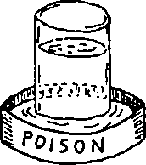
Figure 148
11.7.3.4 Bait
There is naturally no lack of food for rodent pests in a grain store. Bait has to compete with the other food sources. Attention should therefore be paid to the following remarks:
- Only use premium quality grain for making bait! Poor quality
bait, as processing left-overs or sweepings will not be accepted by the rodents
and will make the success of treatment dubious.
- Take only feed to which the
rodents are used (no maize in a rice growing area!).
- Bait made of freshly
broken grain or meal is better than bait made with whole grains.
- Moist bait
is preferred to dry. Bait must, however, never have a musty smell or be
mouldy.
- Adding sugar or salt makes the bait considerably more
attractive.
- Experiment with various kinds of grain in order to make the
best possible bait! A number of types of grain have proved very successful, and
so have mixtures. Rodents also accept fruit, tuberous and root plants. These,
however, have the drawback of going mouldy more rapidly.
- Mice prefer
small-sized seeds, such as millet.
- Do not make any more bait than can be
used before it goes mouldy!
- Keep any bait made for stock locked away!
11.7.3.5 Setting out Bait
When working with rodenticides, danger to people, domestic and other non-target animals cannot be excluded. The following basic rule must always be observed:
Never set out bait in the open!
That means that bait must always be protected under some cover. This is in line with the rodents' preference for concealed places. Planks of wood, crates or bamboo tubes can be used. More suitable, however, are specially made bait boxes.
Bait boxes can be made from a variety of materials available locally. They should have an entrance and an exit on the opposite site as rodents do not like to enter dark spots. The openings should be approximately 6 - 8 cm in diameter for rats; 2 - 3 cm suffice for mice.
Care should be taken that the bait does neither absorb any moisture nor dry out. Bait boxes for placing outdoors should have legs and a waterproof roof in order to protect them from ground moisture and rain. A number of examples of bait boxes are shown in the following illustration:
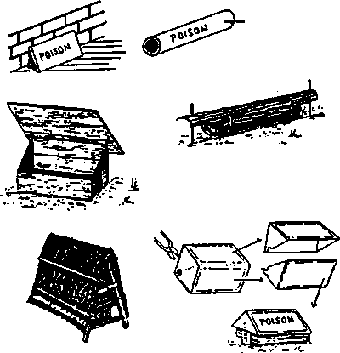
Figure 149
When setting out bait, attention should be paid to the following points:
- Ensure that the bait is safe from children and animals!
-
Set out bait in places frequented by rodents, e.g. on runs!
- Place bait
boxes so that their entrance and exits are close to the wall or exactly on the
run of the rodents, which will then pass straight through the bait box!
-
Note behaviour specific to different species:
With rodents living outside the store (e.g. Norway rats, Bandicoot rats) place bait close to the inside walls of the store near the door and on runs outside the store! One bait station every 200 m² will generally be adequate. Around 300 g of bait should be used for every place.
With black rats, place additional bait in the area of the roof 3 bait stations every 200 m² are recommended with an amount of 100 - 150 g bait at each point.
For mice, set out numerous baits around 2 m apart in the store! An amount of around 50 g for each point should suffice.
- Leave the bait boxes in the same place for the entire duration of the control campaign! Any change in the location of feeding places would endanger the success of the campaign due to rodents' new object reaction.
11.7 3.6 Prebaiting and Bait Shyness
Prebaiting is essential when using acute poison! Due to the rodents' new object reaction they do not accept bait immediately. First one animal of the community will taste the bait only eating a little. When this bait is already poisoned the ingestion will not be sufficient to kill this animal but to make it ill. Poisoning with acute poisons causes pain. The animals are well able to recognize the bait as having been the cause of their pain and will avoid it in future. They will also pass on this information to the community, so that poisoned bait will no longer be accepted by any rodents and the control campaign will be a failure and have to be stopped. Once rats connect their sickness with the poisoned bait they will develop bait shyness or bait aversion.
Therefore prebaiting is practised which means offering the unpoisoned (untainted) bait until it is fully accepted usually after a few days. This is the moment when the poison should be added to the bait.
11.7.3.7 Keeping Records
A record must be kept of every control activity in the store journal The details should be listed on a separate control sheet. Enter the date when baits are set out. The amount of the bait which has been eaten should be estimated during inspections. On the basis of these entries decisions on the following points can be made:
· must a control campaign be continued?
· should
control methods be changed?
· is the bait accepted?
· must any
bait location be changed?
An example of a control sheet is shown below:
Control Sheet for Rodent Control
Place:
Store No./area:
Bait Location
No./Ref.
Date of Control
Entries on the amount of bait eaten:
|
Nothing eaten: - |
Little eaten: x |
|
Much eaten: xx |
All eaten: xxx |
Person in charge of treatment:
Name:
Date:
Signature:
11.8 Safety measures
All safety measures for insecticides (see sections 8.4.1 and 8.4.2) also apply for rodenticides. Special attention should also be paid to the following:
- Ensure that children and animals cannot come into contact with
any bait that has been set out!
- Warn all people working on and living
around the treated area!
- Attach warning signs to the doors of the stores
and at the entrance to the property in order to draw attention to the rodent
control campaigns!
- Always wear rubber gloves when working with
rodenticides!
- Clearly mark bait boxes and stations with the
words:
|
"Danger" |
"Poison" |
- Inform a doctor about the active ingredients used and provide
him with a label or information sheet from the product to enable assistance in
the case of poisoning!
- The following applies when using zinc phosphide:
· Always wear a breathing mask with a P3 particle
filter!
· Ensure that zinc phosphide does not come into contact with any
moisture, as a poisonous gas (phosphine) will be
produced!
11.9 First aid measures in case of poisoning
The first-aid measures listed for insecticides (see section 8.4.3) also apply for rodenticides. Special attention should be paid to the following:
- Chronic rodenticides:
This group of poisons is regarded as having a relatively low toxicity. No symptoms or damage will normally result from a single ingestion. Nevertheless, always consult a doctor on suspicion of poisoning.
Anaemia and shock may occur with repeated ingestion of chronic poison within short time.
Vitamin K1 (5 - 10 mg) can be administered as an antidote.
A blood transfusion is necessary in serious cases of poisoning.
- Zinc phosphide
Anyone suffering from zinc phosphide poisoning must be taken to the nearest hospital immediately!
Symptoms of poisoning are catarrh of the throat, bronchitis and possibly pneumonoedema, and with serious poisoning sickness, vomiting (smell of carbide) diarrhoea, disturbance of consciousness and cramps.
The person affected should be made to vomit immediately by sticking your fingers deep into his mouth. Potassium permanganate solution (0.1%) as well as activated carbon should then be administered.
11.10 Equipment
The following equipment is required for dealing with rodents:
- Receptacles (bait boxes), e.g. sardine tins, with warning
signs
- Bait stations with warning signs and material and tools to prepare
bait stations
- Quality grain, sugar or salt and edible oil for preparing
bait
- Broom
- Shovel
- Rubbish bin
- Rubber gloves
- Breathing
mask with P3 particle filter (for zinc phosphide)
- Warning signs
- Rodent
traps
- Troughs in case of the application of water-soluble preparations
-
Rodenticides
11.11 Further literature
ANONYMOUS (1983)
Food Storage Manual, FAO, Rome, 263 pp.
ANONYMOUS (1980)
Post-Harvest Problems, GTZ, Eschborn, 258
pp. + 33 pp. appendix
BUCKLE, A.P. & R.H. SMITH, ed. (1994)
Rodent Pests and
their Control, CAB international, Wallingford, 405 pp.
POSAMENTIER, H. & A. VAN ELSEN ed. (1984)
Rodent Pests
and their Biology and control in Bangladesh, Dhaka, 111 pp.
WEIS, N., ed. (1981)
Rodent Pests and their Control, GTZ,
Eschborn