 |
| ||||||||||||||||||||||||||||||||||||||||||||||||||
Bulletin no. 9
Overseas Development Natural Resources Institute
Compiled by W. H. Parr with contributions by: B. S. Capper, D. R. S. Cox, K. Jewers, A. D. Marter, W. Nichols, D. R. Silvey, J. F. Wood
Published by ODNRI
The Scientific Unit Of The Overseas Development Administration
|
| ||||||||||||||||||||||||||||||||||||||||||||||||||
Acknowledgements
© Crown copyright 1988
This bulletin was produced by the Overseas Development Natural Resources institute which was formed in September 1987 by the amalgamation of the Land Resources Development Centre and the Tropical Development and Research Institute. ODNRI is the scientific unit of the British Government's Overseas Development Administration and is funded from the overseas aid programme. The Institute provides technical assistance to developing countries and specializes in the utilization of land resources, pest and vector management and post-harvest technology.
Short extracts of material from this bulletin may be reproduced in any non-advertising, non-profit-making context provided that the source is acknowledged as follows:
Parr, W. H. (Compiler) and contributors, (1988). The small-scale manufacture of compound animal feed. Overseas Development Natural Resources Institute Bulletin No. 9, iv+87pp.
Permission for commercial reproduction should, however, be sought from the Head, Publications Section, Overseas Development Natural Resources Institute, Central Avenue, Chatham Maritime, Chatham, Kent, ME4 4TB, United Kingdom.
No charge is made for single copies of this publication sent to governmental and educational establishments, research institutions and non-profit-making organizations working in countries eligible for British Government Aid. Free copies cannot normally be addressed to individuals by name but only under their official titles.
Overseas Development Natural Resources Institute
ISBN 0
85954-238-6
ISSN 0952
8245
|
| ||||||||||||||||||||||||||||||||||||||||||||||||||
Summaries
Summary
The small-scale manufacture of compound animal feed
This bulletin supersedes TDRI report G67 The small-scale manufacture of compound animal feed, which was first published in 1971. It retains a similar format to G67, but the text has been extensively revised and expanded in the light of numerous enquiries dealt with by ODNRI on all aspects of feed production in the intervening years. It is hoped that it will act as a technical and investment guide for those interested in initiating the production of compound animal feeds, as well as acting as a useful reference report for those already actively operating in this field. Chapter 1 describes the economic background to the industry; theoretical aspects of animal nutrition are dealt with in Chapter 2; these are related to the properties of the various raw materials used in feed production in Chapter 3. Chapter 4 describes the manufacturing process and examines the physical requirements for setting up plants at various scales of output, and Chapter 5 develops cost and return models for the plants described.
Thus the bulletin attempts to deal with all the principal factors relating to the establishment of compound feed production, and to provide the basis for full feasibility studies. The cost models, which are tabulated in great detail in the appendices, have been expressed both in physical and in financial terms. The former should facilitate the use of the bulletin in a variety of circumstances by enabling the insertion of local data into the models; the latter should give further guidance in that they provide a worked example using known costs for a specific developing country in Asia for which data were available.
It should be noted that this bulletin is concerned only with relatively small-scale plant. The earlier report dealt with plants having output capacities from 1 tonne per hour to 10 tonnes per hour. Since it was first published there has been a growing appreciation that, with certain exceptions, smaller plants may be more appropriate to many developing country circumstances. Consequently even smaller-scale operations than in the preceding report are included in this bulletin - these being more appropriate to home mixing on small livestock units or in village scale or small co-operative organizations. The largest plant considered has a capacity of 2 tonnes of meal/hour (approx 5,000 or 10,000 tonnes/year on single or double shift systems respectively), bringing it into the range of small-scale industrial production. Higher capacity plants are usually specifically designed and built for each customer's requirements. Nevertheless, much of the information contained in this bulletin can be adapted to assist in making a preliminary assessment of the likely feasibility of a larger scale plant.
More information on the composition and nutritive value of a wider range of raw materials has been included Its intention is to assist in the utilization of locally available raw materials including wastes and crop processing by-products. Experience has shown that limitations in the regular supply of raw materials of adequate quantity and quality form one of the major constraints on compound feed production in developing countries.
R�sum�
Fabrication � petite �chelle d'aliments compos�s pour animaux
Ce bulletin remplace le bulletin G67 portent la m�me titre et public en 1971. Sa pr�sentation est similaire � celle du bulletin G67, mais son texte a fait l'objet d'une vaste r�vision et a �t� compl�t� � lumi�re des nombreuses questions pos�es dans l'intervalle � l'ODNRI sur tous les aspects de production alimentaire. Le but de ce bulletin est de servir de guide technique et de conseil en investissement � ceux qui souhaitent se lancer dans la production d'aliments compos�s pour animaux, tout en fournissant un �ventail de r�f�rences utiles � ceux qui exercent d�j� dans ce secteur. Le Chapitre 1 pr�sente la situation �conomique du secteur en question . Le Chapitre 2 traite des aspects th�oriques de la nutrition de ['animal. Le Chapitre 3 �tablit les liens entre ces aspects et les propri�t�s des diverges mati�res premi�res utilis�es dans la production alimentaire. Les proc�d�s de fabrication vent d�crits au Chapitre 4; y sont �galement examin�s les besoins physiques requis pour l '�tablissement d'unit�s de fabrication � divers degr�s de production. Finalement, le Chapitre 5 expose en d�tail des mod�les de co�ts et profits pour les unit�s de fabrication d�crites dans le chapitre pr�c�dent.
On a donc tent� ici de traiter de tous les principaux facteurs li�s � l'�tablissement d'une structure de production d'aliments compos�s pour animaux et de fournir une base � toute �tude de faisabilit� d�taill�e. Les mod�les de co�ts, expos�s en d�tail aux appendices, ont �t� exprim�s en termes physiques et financiers. Les premiers devraient faciliter l'utilisation du bulletin sous de nombreux aspects en permettant ['insertion de donn�es locales dans les mod�les; quant aux derniers, ceux-ci constituent un guide suppl�mentaire en ceci qu'ils fournissent un exemple �labor� comportant des co�ts connus pour un pays donn� en vole de d�veloppement situ� en Asie et pour lequel on disposait de donn�es.
II faut souligner que ce bulletin traite seulement d'unit�s de fabrication aux dimensions relativement petites. Le rapport pr�c�dent traitait d'unit�s ayant des capacit�s de production allant de 1 tonne � 10 tonnes � l'heure. Depuis la publication de ce dernier, il a �t� constat� que de plus en plus, bien qu'avec certaines exceptions, des unit�s plus petites semblaient mieux appropri�es � bien des pays en vole de d�veloppement. En cons�quence, ce bulletin inclut des exploitations � petite �chelle que ne comportait pas le bulletin pr�c�dent, celles ci convenant mieux � la pratique de m�langes sur place pour des petite cheptels ou dans des organisations � l'�chelle du village ou dans de petites coop�ratives. La plus grande unit� examin�e dans ce bulletin a une capacit� de 2 tonnes d'aliments/heure (soit environ 5000 � 10000 tonnes/an avec une ou deux �quipes selon le cas), ce qui la classe dans la production industrielle � petite �chelle. Les unit�s de plus grande capacit� vent g�n�ralement con�ues et install�es de fa�on � r�pondre sp�cifiquement aux besoins de l'acqu�reur. Toutefois, la majeure partie des informations contenues dans ce bulletin peuvent �tre adapt�es et servir � une �tude de faisabilit� pr�liminaire d'une unit� � plus grande �chelle.
Ce bulletin contient davantage d'informations que le pr�c�dent sur la composition et la valeur nutritive d'une vaste gamme de mati�res premi�res afin d'encourager l'utilisation des mati�res premi�res disponibles localement, dont les d�riv�s des produits v�g�taux transform�s et les d�chets. L'exp�rience montre que ['absence d'un approvisionnement r�gulier en mati�res premi�res, dans les quantit�s et qualit� voulues, est l'une des principales contraintes pesant sur la production d'aliments compos�s dans les pays en vole de d�veloppement.
Resumen
Fabricaci�n de piensos compuestos en peque�a escala
Este bolet�n viene a sustituir al G67 - 'Fabricaci�n de piensos compuestos en peque�a escala' -, publicado por vez primera en 1971. Si bien retiene un formato similar, su contenido ha sido ampliamente revisado y ampliado, a la luz de multitud de solicitudes de informaci�n recibidas por el ODNRI sobre los distintos aspectos de la producci�n de piensos en dicho periodo. Confiamos que sirva a manera de gu�a t�cnica y de inversi�n pare quienes se hallan interesados en iniciar la producci�n de piensos compuestos, adem�s de ser de utilidad como informe de referencia pare cuantos se encuentran desarrollando ya actividades en este campo. En el Capitulo 1 se describen los antecedentes econ�micos de la industria. El Capitulo 2 trata de los aspectos te�ricos de la nutrici�n animal, relacion�ndolos con las propiedades de diversas material primas utilizades en la producci�n de piensos (Capitulo 3). En el Capitulo 4 se presenta el proceso de fabricaci�n y se examinan las exigencias f�sicas pare el establecimiento de instalaciones de capacidad diversa. Finalmente, el Capitulo 5 describe determinados modelos de costos y beneficios pare las instalaciones descritas.
As�, pues, el bolet�n intenta examinar todos los principales factores relacionados con el establecimiento de la producci�n de piensos compuestos, echando, al mismo tiempo, las bases pare estudios completos de viabilidad. Los modelos de los costos - que han quedado tabulados, de manera minuciosamente detallada, en los ap�ndices - han sido expresados en t�rminos f�sicos y financieros. Los primeros deber�an facilitar el empleo del bolet�n en circunstancias diversas, al permitir la inserci�n de datos locales en los modelos. Los segundos deber�an servir a manera de orientaci�n adicional, al proporcionar un ejemplo pr�ctico, utilizando costos conocidos pare un pa�s asi�tico concreto en desarrollo, pare el que exist�an datos disponibles.
Deber� tenerse en cuenta que este informe trata solamente de instalaciones a escala relativamente peque�a, mientras que el informe precedente hacia referencia a capacidades de producci�n de 1 a 10 toneladas por hora. Desde su publicaci�n original, se ha ido haciendo cada vez m�s claro que, salvo ciertas excepciones, es posible que las plantas m�s peque�as sean m�s apropiadas a las circunstancias de muchos de los pa�ses en desarrollo. En consecuencia, incluimos operaciones a escala a�n m�s reducida que en el bolet�n precedente, m�s apropiadas pare mezcla dom�stica en peque�as unidades granaderas o a nivel de aldea o peque�as organizaciones cooperativas. La instalaci�n de mayor envergadura considerada posee una capacidad de 2 toneladas de harina/hora (aproximadamente, 5.000 o 10.000 toneladas anuales en sistemas de uno o dos turnos, respectivamente), entrando as� dentro de la producci�n industrial en pequena escala. Por regla general, el dise�o y construcci�n de las instalaciones de capacidad m�s elevada se adecuan a las exigencias de cada cliente. Esto no obstante, gran parte de la informaci�n contenida en el bolet�n puede adaptarse y servir de asistencia pare la preparaci�n de una evaluaci�n preliminar sobre la probable viabilidad de instalaciones de mayor envergadura.
Tambi�n se ha incluido informaci�n adicional sobre la composici�n y valor nutritivo de una gama m�s amplia de material primas, intent�ndose con ello asistir en la utilizaci�n de material primas localmente disponibles, incluyendo desechos y subproductos de la elaboraci�n de cultivos. La experiencia ha demostrado que uno de los mayores factores restrictivos en la producci�n de piensos compuestos en pa�ses en desarrollo son las limitaciones relacionadas con el suministro regular de material primas en cantidades y con una calidad adecuadas.
|
| |||||||||||||||||||||||||
Small-scale Manufacture of Compound Animal Feed (NRI, 1988, 87 p.)
Chapter 1 - Economic background! to the industry
Introduction
In the main, the demand for animal feeds is derived from the demand for animal products as human food, and the general pattern is that this demand rises in response to increases in income and population. However, it is difficult to gauge total demand; it cannot be estimated from published trade figures since many compound feeds and their ingredients are not imported into the developing countries on a large scale because of high transport costs, their bulk being great relative to their value. While there appears to have been a rapid rise in the production of compound feeds in many countries in recent years, it is likely that the potential market is much greater, and that there is considerable room for expansion of the industry.
The greater increase in demand for animal products comes from urban areas where families living above the subsistence level are concentrated; this demand may be sufficient to justify the setting up of integrated animal production and feed compounding enterprises. In general, therefore, demand for compound feed is associated with intensification of livestock production. However, any attempt to increase productivity through the production and use of compound feeds should be made as part of a wider programme including the development or introduction of appropriate breeds of animals with good genetic capacity and of husbandry and management methods. Effective diagnosis and control of infectious diseases is a vital component of livestock production and utilization of livestock products.
Since animal products can deteriorate rapidly, especially at higher temperatures, a further requirement for the expansion of animal production industries is an efficient and hygienic system for slaughtering and the distribution of animal products. This will often involve the expense of refrigerated transport and storage, together with the deployment of skilled management and labour as well as the availability of capital.
From the point of view of the supply of compound feeds, the principal cost to the manufacturer is that of raw materials, which amount to as much as 80% of operating costs in the models described later in the bulletin. Because of high transport costs the tendency will be to use locally available materials, even in locations with good access to external transport. Although many developing countries are food-deficit areas, the supply in some countries or areas is moving into surplus largely as a result of the introduction of new high-yielding crop varieties. Some of these countries are now seeking other market outlets for the products, in order, among other things, to avert the fall in price and consequent loss of income to producers likely to be caused by a change in the market situation.
Compound feed mills may be linked to a source of raw materials, such as a wheat mill or oilseed crushing plant; to a market outlet, such as a poultry or dairy enterprise; or they may be independent. Traditionally the feed industry has been linked to the supply of the raw materials, as these were generally the by-products of other processes and of low value relative to the main product. However, certain factors have now caused a movement towards market orientation. In the first place, mainly as a result of advances in nutritional science made by enterprises controlling the raw materials, their value has improved to a very great degree. At the same time nutritional knowledge has become more widespread, so that the demand for by products has increased and their prices have risen, thereby reducing the advantages of supply orientation. Secondly, since the distribution system in developing countries is often poor, and since feeds are usually made for particular markets, sales advantages are likely to be gained from market proximity. This will also have the effect of reducing the size of feed mills compared to those in developed countries, which is reflected in the emphasis on small-scale mills in this bulletin.
Why balanced feeds?
Animal production has been taking place over a long time, with the availability of compound feed being only a relatively recent innovation. Most livestock will grow on feeding systems consisting of a small range of components, or even a single component, but production levels may be low and if the nutrient levels in the feed are not balanced, wastage of those present in excess will occur. In general, feeding costs make up 7580% of the total costs of livestock production, and monitoring and close control of this aspect is essential for profitable projects. Studies on the composition of raw materials and the formulation of feed are aimed at producing a balanced feed. This is a feed which is designed to provide the animals' daily requirement of all known nutrients, and no more, and is intended to obtain maximum levels of production with minimum wastage of nutrients and at minimum feasible cost.
For intensively kept poultry or pigs, compound feed may be the only source of feed and must therefore be balanced. In some cases, for example, dairy cattle, compound feed may be a supplement to other feeds such as forages and roughages, and in this case it should be formulated in such a way that the complete ration will be balanced.
The manufacture of compound feed is therefore a service industry, in that the end product contains only those components added in the raw materials, or as supplements and additives. It must be kept in mind therefore that the cost of production and distribution of compound feed must not exceed the increase in value of animal production from balanced feeds compared with that from unbalanced or single component feeds. If it does, then it is not providing a useful service. While it may be difficult to quantify the differences in production levels and hence the acceptable cost of compound feed production, consideration of this point emphasizes the importance of taking all possible steps to ensure optimal formulation, adequate quality control, and minimization of equipment and operating costs at all stages.
|
| ||||||||||||||||||||||||||||||||||||||||||||||||||||||||||||
Small-scale Manufacture of Compound Animal Feed (NRI, 1988, 87 p.)
Chapter 2 - Nutrient requirements and feed forms ration
Introduction
There is no attempt in this chapter to provide a detailed account of the digestive physiology of the livestock consuming manufactured feed. Professional nutritionists are conducting research on a world-wide basis for the benefit of feed manufacturers and livestock producers in order to refine published lists of nutrient requirements or to determine the levels of nutrients in particular feed ingredients. The methods employed in this research have become increasingly sophisticated and little purpose would be served by repeating here in a generalized form descriptions of the digestive and absorptive processes which are available in standard textbooks (see Appendix 6, Further Reading). There are, however, a number of practical factors which have to be kept in mind during the setting of dietary specifications for different types of livestock and in the subsequent selection of feed ingredients. Basic distinctions between ruminants and non-ruminants are of fundamental significance. It is generally accepted that the nutrient requirements of livestock can be classified in terms of energy, protein, minerals (including trace elements) and vitamins.
Energy
The primary source of energy in feeds is carbohydrate, though the overall energy content of the feed may be affected by the oils or fats and the fibre content.
Carbohydrates
Carbohydrates consist predominantly of starch as in cereals, cereal by products, and many root crops; however, they may consist of sugars as in molasses. The nitrogen-free extract (NFE) content calculated following proximate analysis of a feed provides an indication of the carbohydrate content, but in some cases, for example, poultry feed, specific analysis for 'available carbohydrate' (starch + sugar) may be preferred.
Oils, fats and fatty acids
Oils and fats are the most concentrated sources of energy in feeds, but may have an effect upon other feed constituents and digestive processes. For example, dietary oil levels of more than about 5% disturb fibre digestion in the ruminant. Although concentrates may contain high levels of oil, they are designed to be fed with fibrous roughages which are low in oil. Fat in meat of non-ruminants reflects the composition of oil fed in the diet, but ruminants saturate fatty acids during digestion so that ruminant body-fat deposits tend to be hard.
Thus when fed to non-ruminants, hard saturated oils, such as those in coconut cake, lead to hard body fat, whereas the unsaturated oils in sunflower seed cake can lead to a soft body fat which may be undesirable. Some oils are also carriers of undesirable taints, such as those derived from fish meal. A minimum level of essential fatty acids which are contained in the oil fraction, is required for adequate growth in chicks and for egg production in hens, and where unconventional diets, perhaps employing high levels of cassava or coconut cake, are used care must be taken to ensure that satisfactory amounts of linoleic acid are present in the diet. The requirements for fatty acids in fish are even more highly specific. The use of oils in feeds for poultry is of particular importance in the tropics, since it permits the increase in energy density of the diet to compensate for lowered feed intake, and also reduces heat production during digestion.
Energy values will increase by approximately 0.20 MJ of metabolizable energy (ME) for poultry or 0.25 MJ of digestible energy (DE) for pigs, per 1% increase in ether extract content. It should be noted that a 1% increase in ether extract is at the expense of protein and carbohydrate. The suggested modifications are only approximate and will vary according to the type of fat in the ether extract and the particular livestock fed.
Fibre
Domestic livestock can be divided into ruminants (adult cattle, sheep, goats and camels), which have some capacity to digest dietary fibre, and nonruminants (calves, lambs, ducks, poultry, pigs, rabbits and fish), which generally have a very restricted capacity to digest fibre. In the nonruminant, fibre acts largely as a diluent for other nutrients and to some extent non-ruminants can increase their intake of feed to compensate for such dilution, this being particularly marked in the rabbit. Ultimately, high levels of fibre will lead to reduced animal performance, because fibre reduces energy values by an amount which exceeds its diluent effect; this is most pronounced in poultry. Pre-ruminant animals such as calves and lambs also need relatively low-fibre diets until they develop the capacity to digest fibre. Feed manufacturers do not normally produce high-fibre diets for ruminants either, but formulate concentrated feeds with high levels of energy, protein and minerals designed to complement the fibrous sources of feed (hay, straw, silage, etc.) available in bulk on the farm. The only exception to this might be in the formulation of complete cattle feeds for beef production.
Energy values
Various terms for expressing the energy content of feeds may be encountered, such as starch equivalents (SE), total digestible nutrients (TDN), net energy values (for ruminants), and various feed units. Some may no longer be in common usage or are confined to specific regions or countries. In this bulletin, energy levels are expressed in megajoules (MJ) of metabolizable energy (ME) or digestible energy (DE).
The most accurate method of determining the energy value of feed is by means of animal studies, but these are not feasible on a routine basis. Various equations have been derived for calculating the energy value from the results of chemical analysis of any particular sample. Energy values in published tables (see Appendix 3) have been obtained from a mixture of such procedures. Compound feeds are normally formulated to specific energy levels, with all other nutrients such as protein, amino-acids, vitamins and minerals being included in the diet at levels which will meet the requirements of the animal at the level of energy set and the predicted feed intake at that energy level. This is the crux of balanced feed formulation and one to which further reference will be made in this chapter.
Protein
A supply of amino acids is necessary for building protein (for example, in muscle) within the animal body. Some are classified as essential (e.g. lysine and the sulphur-containing cystine and methionine). These must be absorbed from the digestive tract in the right proportions since they cannot be formed from other compounds within the animal body. For non-ruminants the amino acids must be present within the protein component of the feed, and are usually specified in addition to the protein level. Because of the relatively high requirement for such amino acids, difficulties may sometimes be encountered in meeting the requirements and the use of specific commercially available amino acids in pre-mixes may merit consideration.
In contrast to non-ruminants, ruminants have the capacity through microbial processes within the rumen to convert non-protein nitrogen (NPN) sources, such as urea, into protein which is then digested in the true stomach. Although ruminants can utilize non-protein nitrogen, care has to be exercised about the levels of non-protein nitrogen in feeds since there may be a risk of ammonia toxicity. A general, although arbitary, rule is that a maximum of 33% of the dietary protein can be derived from nonprotein nitrogen. In high-yielding ruminants, particularly the dairy cow, increased production may result from the inclusion of small quantities of rumen-insoluble protein in the diet such as that contained in fish meal.
Vitamins and minerals
Vitamins
Vitamins are usually classified according to whether they are fat-or-watersoluble. Both ruminants and non-ruminants are dependent on the feed as a source of fat-soluble vitamins (vitamins A, D, E and K). However, while ruminants are capable of extensive production of the water-soluble vitamins within the alimentary tract, especially the rumen, non-ruminants are largely dependent upon the feed as a source. The inclusion of an appropriate vitamin supplement especially in non-ruminant feeds is essential for the maintenance of good health and maximum production. The cost of these supplements forms only a small proportion of overall feed costs, and provided the supplement is of recent manufacture and has not been exposed to damp or to high temperatures, it will normally guarantee against vitamin deficiencies. Vitamin requirements of livestock are outlined in Appendix 1, Tables VII, VIII and IX. These are estimated requirements for commercial conditions to compensate for the effects of unusual feeds, disease or stress, and not minimum physiological requirements determined under laboratory conditions.
Minerals
Minerals are generally classified into macro-elements, which sometimes have to be considered individually during feed formulation and microelements, which may be supplied as a proprietary pre-mix. Macro-elements of importance in feed formulations are phosphorous, calcium and sodium. Potassium which is also required in significant quantities is generally available in excess of requirements in virtually all feed materials. A problem with phosphorous is that it is frequently poorly available from plant materials, so that generally at least 50% should be derived from animal or inorganic sources. Calcium is often present in excess in many feeds, but formulations occur where supplementary calcium is required in the form of, for example, limestone. Excess calcium may prevent absorption of phosphorus and/or other minerals. Sodium is readily provided in the form of common salt. Magnesium may be required in substantial quantities in some feeds, for example, for dairy cows, but is often considered as part of the trace mineral pre-mix. Some trace materials, for example, copper, fluorine and selenium, are required in small amounts but may be toxic at higher levels in the diets. Sheep are particularly susceptible to copper toxicity.
Medicinal additives
A wide variety of additives with a microbiological, pharmacological, preservative or hormonal action have been added to feeds in recent years to combat disease and increase production. Use of these additives is increasingly subject to veterinary and legislative control in many countries. Normally the necessary additives of this type are included in vitamin/ mineral pre-mixes. If a feed manufacturer is placed in a position of having to add a medicine directly to a feed the instructions of the pharmaceutical company manufacturing the item or a qualified veterinarian should be strictly observed since instances have occurred where people's health has been damaged by the incorrect use of additives in feeds. Owing to changes in resistance of disease organisms to medicines and to constant research, recommendations on correct medicine selection and use change frequently, and no advice is presented in this bulletin on specific items. Antibiotics and coccidiostats in pig and poultry feeds are the most common additives encountered.
Undesirable factors
Anti-nutritional or toxic factors
Feed raw materials contain a wide variety of toxic or
anti-nutritional factors which limit the extent to which they may be included in
feeds for specific classes of livestock. The levels of these factors may be
affected by the type and intensity of any treatment which the raw material
undergoes before it is included in the feed. The extent to which these factors
are important also depends upon the presence or absence of other ingredients or
additives in the feed. A list of some anti-nutritional factors and means of
reducing their effects is given in Appendix 3, Table XV. Some toxic factors, for
example mycotoxins, may be carried over into the animal products and prove
harmful to people consuming these products. Pesticide or herbicide residues have
also been implicated in production losses or found in potentially harmful levels
in animal products.
Vitamins and minerals in excess
Reference has already been made to the toxic effects of certain minerals which are useful at low levels in the diet. Even relatively harmless minerals can reduce animal performance if included at levels of more than those recommended. Some vitamins can be very damaging to livestock performance if present at levels greatly in excess of requirements. The extent to which excess minerals and vitamins can be damaging often depends upon the ingredients in the diet and the levels of other vitamins and minerals.
Pathogenic organisms
Pathogenic organisms are frequently transmitted by feeds and decisions may be taken on these grounds to exclude or restrict the inclusion of certain raw materials, particularly those of animal origin, from feeds.
Palatability considerations
Some raw materials contain factors, for example, cyanide or tannins, which as well as having a direct anti-nutritional effect, may also reduce the desire of the animal to feed. Since adequate feed consumption is important to good animal performance these factors should be minimized. Conversely, some ingredients, for example, molasses and fats, may be used to encourage feed consumption. Palatability can be dependent upon physical factors such as dustiness or feed pellet hardness and size. The presence of moulds or insects may also influence feed palatability, but even if they are absent, stale feed is less readily eaten than feed of recent manufacture. Specific flavourings may be added to feeds although evidence of their value is inconclusive.
Nutrient specification
Poultry
In developed countries intensive animal production has become commonplace, particularly pig and poultry production. Intensive systems are characterized by high capital investment, rigorous management, disease control and advanced marketing of animal products. Under such conditions maximum profit depends upon rapid turnover and maximum production levels, with the use of feeds that are formulated to make maximum use of the genetic potential of the stock. Since cereals are usually available for animal feed purposes in excess of requirements for human food needs, and high quality protein sources such as soya bean meal and fish meal can be imported or are available locally, it is comparatively easy to formulate feeds to the highest specifications. High-nutrient-density-specification feeds are also in use because of the needs of automated feeding systems and to reduce transport and handling costs. By contrast, in developing countries cereals may be unavailable, protein sources cannot be imported because of foreign exchange shortages and the material available locally may be of poorer quality. Under such circumstances attempts to formulate feeds according to 'specifications' quoted in many textbooks and journals published in developed countries is a futile exercise. A far more suitable approach is to set specifications at a level compatible with animal husbandry standards within a particular country which takes into account the need to make maximum use of locally available materials. This bulletin contains lists of high-density specifications suitable for capital-intensive production systems (See Appendix 1, Tables I, III, IV, V and VI) and appropriate density specifications for less intensive poultry systems (See Appendix 1, Table II).
The effects of reducing specifications to an appropriate level on productivity are illustrated for broiler chickens in Table 1 and for laying hens in Table 2. It should be noted that poultry will increase their consumption of lower-density-specification feed in order to maximize energy intake. This means that the intake of other nutrients from feeds of lower-density specifications may be sufficient to support production levels very near that obtainable on high-density-specification feeds. This is dependent however upon keeping a constant ratio between energy levels and other nutrients such as amino acids and minerals.
It should be emphasized, however, that there are a considerable number of tropical and subtropical countries where the range of feed raw materials is such that high-density-specification feeds can be formulated and there are capital-intensive animal production enterprises capable of making use of these feeds effectively. It should also be understood that feeds of appropriate density specification are not the same as substandard feeds where particular nutrients are lacking due to faulty formulation, inadequate raw material quality control, manufacturing errors or poor storage. It is possible to encounter high-density-specification feeds of substandard quality which will result in a lower level of animal production than appropriate density-specification feeds which have been manufactured carefully to good standards.

Table 1 - Relationships between
energy density of diets, feed consumption, live weight at 56 day, feed
conversion ratio, relative feed costs and fat content of carcasses in chickens

Table 2 - Effect of changing energy
density of diets for laying hens (2.1 kg liveweight) on feed consumption, rate
of lay and relative feed costs per egg
Pigs
The discussion above has mainly focused on poultry feeds because of their importance in nearly all developing countries. However, pigs assume similar importance in a number of developing countries. Intensive high-level output systems exist and specifications are presented in Appendix 1, Table III, which may be used to produce feed for such systems. With the exception of pig creep feeds, the specifications required for pig feeds are less demanding than those for poultry feeds; thus it is relatively easy to formulate pig feeds in developing countries from locally available raw materials. Pig production in many instances is on a semi-intensive basis using genetically unimproved stock; thus lower specification feeds may be appropriate in such circumstances.
Ruminants
In tropical and subtropical countries, the
requirements for ruminant feeds differ substantially from those in developed,
often temperate, countries. In the latter, the demand is most often for the
high-energy dairy feed to complement the nutrients provided by grass or silage
for the high-yielding dairy cow. Frequently where intensive dairy production
exists in developing countries it is at elevated altitudes, where the climate is
cooler and there may be a demand for high-specification feeds. Calf rearing
using imported milk substitutes is practiced in a number of countries and there
may be a need for calf weaner and calf rearer feeds. Generally however there is
a requirement for lower-specification dairy feeds for use with cross-bred or
village stock and for complete cattle feeds for intensive feedlot enterprises.
These enterprises operate on a very large scale in some developing countries
utilizing stock which have grown to a reasonable size on extensive rangeland
pastures, but require a period of finishing before marketing. Complete cattle
feeds could form a substantial part of the business of feed manufacturers in a
number of developing countries. Details of ruminant feeds are given in Appendix
1, Table IV.
Other livestock
Feeds may be required for a wide variety of other livestock such as turkeys, ducks, rabbits and certain species of fish. Although demand for such feeds may be relatively small in most countries, it is possible in certain instances that production of these livestock, and hence demand for suitable feed, will expand. Specifications for these feeds are outlined in Appendix 1, Tables V and VI.
Least-cost formulation
The process of formulation involves calculation of the proportions of available raw materials which have to be blended together to provide a mixture which contains the appropriate concentrations of all the nutrients required for a particular class of livestock. Whilst it is possible for simple formulations to be done by mental arithmetic or manually using a small calculator this becomes impracticable as more nutrient specifications, for example amino acids, are added. It is now common practice to use computerized linear programing which has the advantages of speed, accuracy and low cost (compared with the time spent on manual calculations). It also enables the prices of different raw materials to be taken into consideration so the proportions of raw materials in the mixture not only meet the nutrient specifications, but do so at the lowest feasible cost given the prices of the raw materials available, that is, a least-cost formulation.
The information required to carry out least-cost formulation includes details of raw materials (quality, availability and price) and nutrient specifications relevant to the livestock systems utilizing the feed. Since raw material purchase and supply forms such a significant part of the feed manufacturing process, description of feed ingredients has been assigned to a separate chapter (Chapter 3). This chapter should be read in conjunction with the foregoing description of nutrient requirements. In particular any anti-nutritional or unpalatable factors in ingredients should be given special attention. The steps involved in least-cost formulation include listing of raw materials, listing of nutrient specifications with maximum and minimum values, listing of constraints on raw material inclusion, linear programing and manipulation of formulations after linear programing.
Raw material listing
Typical nutrient values of raw materials are laid out in a manner suitable for least-cost formulation in Appendix 3, Table XIII. Analyses of raw materials actually in use may reveal differences from these typical values, and actual analytical data should always be used where possible.
Amino acid values, that is of lysine, available lysine, methionine and methionine plus cystine, should be amended according to variations in protein content if direct analyses are available. Similarly, adjustments should be made to energy values if large variations in ether extract, crude fibre and ash are noted. The precise adjustments required vary according to the ingredient. If very large differences between typical values for feeds and actual analytical data occur, a qualified nutritionist should be consulted.
In addition to nutrient values, a computer program will require the insertion of raw material prices and quantities available. One of the 'raw materials' listed would be the pre-mix.
Nutrient specifications
The principles underlying the setting of nutrient specifications have been outlined earlier in this chapter and detailed values given in Appendix 1, Tables l-IX. Limitations on raw material inclusion may be set according to those suggested in Appendix 2, Table XII. Deviations from these limits may be possible and a qualified nutritionist should be consulted on this if necessary. Minimum quantities of certain ingredients, for example, molasses as a pellet binder, may be set, and the level of pre-mix addition can be set by specifying a 'maximum' and 'minimum' level which is identical in both cases. Combined formulation constraints may be set whereby the total maximum level of a particular group of ingredients may be defined.
The linear program
A linear program is a mathematical exercise, the details of which need not be of concern here, that is directly dependent upon the information fed to the computer in terms of raw material details and nutrient specifications set. However, the exercise is not always straightforward, particularly if diets are being formulated from an unusual range or a small number of raw materials. The computer may state that the formulation is not feasible, that is, with the raw materials available the nutrient specifications cannot be met. To allow a feasible formulation may require the relaxing of some specifications, but in doing this, the effects of changing specifications on animal production responses have to be kept in view. The program normally includes a specification for 'volume' which is usually set at 100%, that is, the sum of the percentage inclusion rates of the raw materials is 100. Occasionally this may be difficult to attain, for example, with high-nutrient dense raw materials, the nutrient specifications for the finished feed may be met but the sum of the percentage inclusion rates is less than 100. This problem may be overcome by feeding proportionately less of the feed, or by introducing a low-cost low-nutrient-density filler into the formulation to bring the sum of the percentage inclusion rates to 100.
A feasible formulation will consist of a list of chosen raw materials with percentage inclusion levels. Normally an analysis of the diet is given for comparison with the nutrient specifications previously set. The computer may also provide further important information which will help the nutritionist decide on the suitability of the formula and perhaps indicate where beneficial changes might be made to improve the formula or improve the use of raw materials available to him. The information includes lists of rejected raw materials with 'shadow prices', ranging values for the formula and sensitivity assessment of costs. The significance of these values is explained below.
Rejected raw materials
The shadow price of a raw material is the price to which the raw material must fall before it can be included in the formula. The percentage level at which it would be included in the formulation if it did fall to the shadow price is also usually given. This information is of considerable value to the raw material buyer as well as the nutritionist.
Ranging
For each raw material included in the formula, information will be given on the extent to which its price can increase or decrease without altering the formula. The percentage level at which each raw material would be included at this new higher/lower price is also given.
Sensitivity
Sensitivity analyses the effects on costs of changing the constraints established during the setting of diet specifications. The constraints examined may be on nutrients or on the level of inclusion of specific raw materials. The effect of 'relaxing' or tightening constraints by one unit on the cost per tonne of feed are given. There are limits over which these price savings or increases will apply and these are normally displayed by the computer.
Manipulation of formulations
Most least-cost formulation packages allow for manipulation of the formulations after linear programing. Typically selling prices can be calculated from costs per tonne and desired margins on particular products. Costs can be recalculated using new raw material prices without reformulation if desired. A formula 'explosion' may be used to compute the quantities of raw materials required for the production of a given batch of feeds. A breakdown may also be obtained for the production of a number of batches of feed where the quantities of raw materials before production, the quantity after production and the overall cost for all raw materials used in feed production over a period of time may be given. Formulae may be 'scaled' from 100% volume to other percentage volumes to allow 'space' for the addition of pelleting agents, additives, etc. Formulae may be amended and new analyses calculated automatically.
Liaison between nutritionist and raw material buyer
Feed formulation is not just a technical exercise dependent upon nutrient requirements of livestock, but should respond to changes in raw material availability, price and quality. The nutritionist should therefore be in constant contact with the raw materials buyer. In very small feed mills the person buying the raw materials and employing or obtaining nutritional knowledge may be one and the same person. Nevertheless it is just as important to relate the formulations to raw materials in stock, raw materials available and prices. Some of the characteristics of raw materials are described in Chapter 3. The characteristics influence both price to be paid for the raw materials and the extent to which they can be incorporated into different types of feed.
|
| ||||||||||||||||||||||||||||||||||||||||||||||||||
Small-scale Manufacture of Compound Animal Feed (NRI, 1988, 87 p.)
Chapter 3 - Feed ingredients: characteristics and supplies
Introduction
Some of the factors influencing the selection of raw materials for inclusion in feeds have been described in Chapter 2. This chapter describes the characteristics of different raw materials and their availability. As well as describing their nutritional values, consideration is also given to undesirable factors, palatability and interactions between nutrients. The importance of these considerations, which may not be revealed by normal chemical analysis, has already been discussed in Chapter 2. The principal classes of raw materials are:
· cereals and cereal by-products
· roots and tubers
· Ieguminous seeds
· vegetable oil extraction residues
· animal by-products and fats
· miscellaneous ingredients including sugar industry
by-products.
Cereals and cereal by-products
A major role of cereal grains is as a source of energy in the form of starch. Metabolizable energy values of grains vary somewhat, generally in response to differences in fibre level, for example, the metabolizable energy value for poultry (MEP) is 14.2 MJ/kg for maize with 3.0% fibre but only 10.6 MJ/kg for oats with 11.0% fibre. Energy values are also influenced by differences in oil levels between cereals. Inclusion rates of cereals in poultry feeds are often high enough to result in an important contribution to essential fatty acid requirements. This is a factor which needs to be taken into account when cereals are substituted by some root crops which are much lower in oil. The energy values of cereals are influenced by the conditions under which they are grown and if, for example, rainfall is inadequate during the grain formation stage, then the energy content will be lower than normal. Because of the high levels of cereal inclusion often used in diets, these differences can be significant. Insect damage may also change the nutritional characteristics of the grain. The energy value of cereals is by no means constant, and higher than normal fibre values should be noted and used to adjust ME values downwards if necessary. Processing is often used to increase energy value. Grains are normally ground in order to improve mixing and this has a small positive effect on energy value. In the case of ruminants only very coarse grinding is normally necessary. Grains may also be flaked, rolled or heat processed. All these treatments cause the starch to be more readily available to the animals.
The protein content of grains can vary between 5% and 15%, and is to some extent dependent upon the degree of nitrogenous fertilizer used, although most values are about 10%. The effects of variations in protein content of grains on their contribution to the overall protein content of the diet may be considerable at high cereal inclusion levels. It is important therefore that such variations be closely monitored. The content of important limiting amino acids, Iysine and sulphur-containing amino acids, is generally low, similarly, levels of minerals such as calcium and phosphorus are low and often partially unavailable owing to the presence of phytates. For practical purposes the vitamin and trace mineral content of cereals can be more or less ignored.
Cereal by-products arise from dry milling (to produce flour), wet milling (for starch and glucose production) and brewing. The nature of the by products is influenced by the particular cereal concerned and the exact conditions of processing. The names given to the by-products can be very confusing, with different names being given to the same by-product in different locations, or the same name being used for rather different by products. Descriptions of the more common by-products are given below according to the original cereal.
Barley
Although a major feed grain in developed countries barley is of rather less importance in the tropics. It does however retain an importance in drier subtropical areas or at higher altitudes where whole grain is used for the supplementary feeding of sheep and goat flocks so that by-products are rarely produced. Brewing industries in developing countries often use a great deal of maize, rice and sorghum instead of barley in the production of alcoholic beverages. Barley feed and brewer's grains do occur, but only very rarely is it economical to dry the latter for inclusion in compounded animal feed.
Maize
The outer coat of the maize grain is frequently removed
during dry milling. If it does not contain the maize germ it is properly called
maize bran. Maize bran with maize germ is called hominy feed. Hominy feed
contains more oil than maize grain and thus has a similar energy value. Because
of the oil content it may cause soft carcasses if fed in relatively large
amounts in pig diets. Wet maize milling by-products are maize germ, maize bran
and gluten meal. The maize germ is usually pressed to remove the oil to form
maize germ meal. Maize gluten feed is a mixture of maize germ meal, maize bran
and gluten meal. It should be mentioned that sometimes whole maize and cob meal
are used in diets for ruminants.
Rice
The by-products of rice are most important in animal feeds in many developing countries. Rice hulls are very fibrous and contain large quantities of silica. Even after chemical or mechanical treatment they are barely suitable for inclusion in diets for mature ruminants even in very small quantities. Dehulled rice is polished to yield rice bran, rice polishings and broken rice as by-products. The broken rice has a very similar feeding value to the polished rice. 'Rice polishings' are a finer grade of rice bran containing more starch. Rice bran is a valuable raw material for use in all compounded feeds stabilized to prevent rancidity, either by parboiling the original rice or by steam treatment. The oil can cause soft fat in carcasses and may therefore be extracted using solvents to give a de-oiled rice bran which will have a reduced energy value. Unfortunately de-oiled rice bran is frequently contaminated with hulls where rice milling is carried out using small, old-fashioned, mills. The feeding value of the rice mill feed is dependent upon the content of hulls; sometimes attempts are made to remove the hulls by sieving. Rice mill feed is only suitable for ruminants, but the higher grade material may be included at low levels in the diets of pigs and poultry.
Sorghum
Sorghum wet milling by-products arise in an analogous way to those from maize and include sorghum bran, germ meal, gluten meal and gluten feed. Sorghum brewing waste also occurs in some countries but is rarely dried.
Wheat
Wheat is frequently imported into tropical countries and wheat by-products often occur in large quantities in countries where wheat is not grown. Byproducts are wheat germ meal, bran and middlings. Depending upon the level of true bran or starchy endosperm included in the dry milling byproducts, coarse bran, fine bran, coarse middlings and fine middlings are obtained. Wheat mill feed is a mixture of fine and coarse middlings.
Cereals and their by-products are relatively free from anti-nutritional factors, although scrobic millets may be toxic. With cereals, physical factors such as the awns of barley or the pasty nature of wheat if ground too fine are more important than chemical toxins.
Roots and tubers
An important tropical root crop, cassava, is being increasingly used in the dried form as a source of energy in compounded feeds in both developed and developing countries. The lower crude protein content of cassava compared with cereals necessitates an increased inclusion of protein sources. Provision also needs to be made in the formulations for an adequate level of essential fatty acids, since in more conventional cerealbased diets this is frequently provided by the oils in cereals and cereal byproducts. Cassava flour is dusty, which may reduce feed consumption so that cassava-containing diets are frequently pelleted, although molasses and small amounts of oil may be used to reduce dustiness in unpelleted diets with only moderate cassava inclusion levels. Residual cyanide may also result in reduced performance on cassava diets. Since sulphur-containing amino acids, methionine and cystine, can be involved in detoxification there may be an enhanced need for these. Unfortunately many cassava pellets or chips manufactured for trade have been found to contain high levels of ash indicating soil or other contamination.
The use of other dried root crops, with the exception of sweet and common potato meal, in compound animal feeds is likely to be very rare as root crops are highly valued for human consumption. In some cooler developing countries sugar beet pulp may be available.
Leguminous seeds
Various leguminous seeds characterized by a higher crude protein content than that found in cereals are often included in compounded feeds. Unfortunately they sometimes contain toxic factors and must then be treated, or included at low levels. Some leguminous seeds are valued for their oil content and it is often in the form of oilseed cake that these seeds are included in compound animal feed. Recently however there has been an interest in the use of full fat seeds such as soya beans as a means of increasing the energy density of diets. Examples of toxic factors are those causing haemolytic anaemia, �-amino propionitrile in Lathyrus species, alkaloids in lupine, anti-trypsin factors and cyanide in Lima beans. One of the factors determining inclusion level is price, since leguminous seeds, particularly the non-toxic ones, are in strong demand for direct human consumption.
Vegetable oil extraction residues
Vegetable oil seed residues are used to raise the protein level of diets to one that will support the desired level of performance. In this role they may be complemented by legume seeds, animal by-products and synthetic amino acids. As well as price, the major determinant of the particular oilseed residues chosen depends upon the amino acid composition of the cereal and cereal by-products incorporated in the diet. If, however, most of the energy is derived from root crops, then the oilseed residues will be required in greater quantities to contribute a higher proportion of protein.
A variety of methods may be used to remove edible oil from plant materials. Seeds may be either decorticated (hard outer coat removed), semi-decorticated or undecorticated. Subsequently the material may be hydraulically pressed, screw-pressed or solvent-extracted. Solvent-extracted meal is lower in oil content than screw-press (expeller) or hydraulic press meal and these materials may be solvent-extracted subsequently in order to obtain more edible oil. Reduction in oil content decreases energy value, but increases protein content, whereas decortication reduces fibre content of the material thereby increasing both oil and protein levels.
Oilseeds often contain toxic or undesirable factors such as gossypol in cottonseed, trypsin inhibitor in soya beans and cyanogenetic glucosides in linseed, whereas groundnuts have been noted as being particularly vulnerable to mycotoxin formation. Some of these toxic factors can be eliminated by processing and heat is often employed. The processing, particularly if heat is involved, may destroy the availability of certain amino acids or denature the protein so as to reduce protein digestibility. The extent to which different vegetable oil extraction residues can be used in particular diets depends upon the level of original toxic factors and the amount of processing required to reduce these factors and hence the quality of the final material.
Animal by-products and fats
Animal by-products are mostly useful sources of high quality protein which is generally incorporated at small levels in the diets of livestock performing at high levels, for example, starter or broiler chicken feeds, early-weaned pig starter diets, calf feeds and concentrates for very high-producing (15-20 litres of milk per day plus) dairy cows. Animal by-products may also act as sources of readily available minerals particularly calcium, phosphorus and magnesium. The disadvantage of animal by-products, particularly in hot climates, is that they can act as a carrier for a variety of animal diseases. Even if properly processed, recontamination can easily occur if the ingredients are not stored correctly. In many other cases in developing countries the quality of animal by-products is lower than that used in developed-country animal-feed industries. For example instead of fish meal, dried fish contaminated with sand may be the only material available. Obviously formulations need to be modified to take account of these problems. Fortunately animal production systems can often be geared to do without high-nutrient-density feeds employing animal by-products. For example, better results may be obtained through late weaning of piglets, rather than early weaning using high-density feeds, if the amount of capital available limits the extent of environmental and disease control. Achieving very high milk yields under hot, humid, conditions is often difficult so that there may be no advantage in the use of rumen-insoluble protein, such as that in fishmeal. Even starter broiler chicken diets can be manufactured totally without animal by-products if necessary and disease levels may indeed be reduced thereby. Provided proper regard is paid to formulation, production is not necessarily reduced. Fish by-products carry the risk of tainting the animal products in an undesirable manner.
Fats and oils have become of increasing interest in feed formulations, sometimes stimulated by high prices for cereals, but largely because research has indicated appropriate methods of incorporation in the diet and the effects of correct balance of different fatty acids on growth rate and carcass composition. Firstly there is a requirement, particularly in poultry, for essential fatty acids, such as linoleic acid. The level of linoleic acid should normally be about 1.0% of the diet for chicks and 1.5% for layers (see Appendix 3, Table XIV). Secondly, a combination of unsaturated fatty acids with saturated fatty acid sources, for example, animal tallows, can enhance tallow utilization.
Miscellaneous ingredients including sugar industry by-products
Included in this section are minerals such as dicalcium phosphate and limestone, amino acid supplements, sugar industry by-products, beverage and fruit canning industry waste, grass and forage meals, distilling byproducts, non-protein nitrogen supplements for ruminants, and straw products. There are also a large number of materials which do not fit into any of the above categories. The purpose of added minerals and amino acid supplements has already been covered.
Sugar industry by-products are often used as binders for pelleting and to increase palatability, either directly through improved taste, or indirectly by reducing dustiness. Distilling industry by-products have similar uses. Grass and forage meals have been used in the past as a source of vitamins and xanthophylls for colouring poultry flesh or egg yolks. With the availability of chemically produced carotenoids and xanthophylls at a very cost-effective price, and the increased costs of fuel for drying the meals, their usefulness in these roles is now very limited. However, in a few countries legislation prevents the use of synthetic colouring agents and under these circumstances dried grass or forage products still find a market. Many of the remaining ingredients find a place in feed formulations as fillers, that is, their small contribution to nutritive value at a very low cost is useful for complementing higher nutritive-value ingredients. In some cases, such as beverage by-products, a watch needs to be kept on palatability or toxic factors. Many of these ingredients are high in tannins which are known to affect acceptability by animals.
|
| ||||||||||||||||||||||||||||||||||||||||||||||||||||||||||||||||||||||||||||||||||||||||||
Small-scale Manufacture of Compound Animal Feed (NRI, 1988, 87 p.)
Chapter 4 - Outline of the feed manufacturing process
Introduction
The process of manufacturing animal feed is a means whereby raw materials of widely ranging physical, chemical and nutritional composition can be converted into a homogenous mixture suitable for producing a desired nutritional response in the animal to which the mixture is fed. The process is basically a physical one and chemical changes are few. It should be remembered however that some raw materials will have undergone extensive processing prior to inclusion into a mixed feed, for example, extraction of oil from oilseeds by solvent or mechanical extraction, heat treatment of soya beans or other beans to denature anti-nutritive factors, or the production of fishmeal and meat meal. These processes will not be considered here and reference should be made to Appendix 6 for further information on these subjects.
The feed manufacturing process may be considered to be made up of several unit operations which, in almost all circumstances, include the following:
· raw material, storage and
selection
· raw material weighing
· raw material grinding
· mixing of dry ingredients and addition of liquids
· pelleting of mixed feed (optional)
· blended feed bagging, storage and
despatch.
Their sequence and the size and sophistication of equipment vary with the output of feed required as well as differences in manufacturer's design. For the purposes of illustration and for the development of cost models in Chapter 5, four levels of output will be considered as follows:
|
Model |
Production level |
Typical design |
|
1 |
500 kg per day |
Shovel mixing |
|
2 |
200 kg per hour |
Cement mixer |
|
3 |
1 tonne per hour |
Farm-scale mill and mix plant |
|
4 |
2.5 tonnes per hour |
Small industrial-scale feed plant |
Selection and layout of feed milling equipment
A number of manufacturers supply ranges of feed milling equipment and will advise on the selection of suitable models if provided with full information on the proposed operation. This must include the proposed capacity of the mill, the types of raw materials available, the types of livestock feed to be produced, and the characteristics of the power supply available. The chosen site for feed production should be readily accessible to transport, as near as possible to raw material sources and to the livestock owners, free from flooding, and with suitable power and water supplies available.
There are no set specifications for the layout of a feed milling operation, each being designed according to individual circumstances. The planning of larger mills requires the services of skilled engineers and draughtsmen, but small mills can usually be assembled from modules supplied by equipment manufacturers. Several manufacturers sell 'Mill + Mix' units which can be used for meal production, provided no difficult raw materials are to be used. In recent years there has been increasing interest in the concept of 'packaged' or 'containerized' feed mills where items of machinery are assembled within a space frame and wired up to a control panel at the factory. The unit is then shipped as a whole within a container. On arrival it is placed on a level (concrete) base, and the electricity supply connected to the control panel.
Raw material, storage and selection
In most circumstances the raw materials coming into a feed process area will have been requested by the nutritionist as being necessary to meet the nutrient requirements of the diet to be manufactured. In developing countries raw materials will normally be delivered or collected from a supplier in hessian, jute, cotton, paper, or possibly loosely woven polythene sacks. A standard size of sack may not be used for each consignment and care should be taken to check-weigh as many bags as possible since, for many small-scale operations, a weigh bridge for weighing a lorry before or after unloading may not be available. Bags are often man-handled, although the use of a small sack truck (see Figure 1) will considerably ease the burden of carrying heavy materials within a feed mill area. In some circumstances, and especially with larger feed mills, raw materials may be delivered in bulk, necessitating appropriate handling and storage facilities.
In order to ensure a continuous supply of raw materials at the mill, when some may only be seasonally available on the market, and to take advantage of price fluctuations, some form of storage will be necessary. The particular method chosen for raw material storage will depend on the local circumstances, but in areas where labour is cheap and plentiful and capital funds scarce, it is likely that storage in bags will be preferable. Raw materials should arrive in good condition and in sacks which have not been used for the storage of fertilizer, pesticides or chemicals. Contamination by string, large pieces of metal, wood or stones which could cause extensive damage to machinery can normally be removed on a coarse metal grid fitted over the sack tipping-in point of the feed mill, and permanent magnets will normally remove any tramp ferrous metal which may enter the system, particularly before entering the grinder, mixer or pelleter.
Storage areas must be waterproof and well-ventilated, and provide protection against infestation by insects and vermin which can quickly cause substantial losses in weight. If materials are to be stored in bags they should be kept in a building having a concrete floor. The roof and walls need only to be lightly constructed provided that they are pest and waterproof. The bags should be stacked a few inches above floor level, for example, on wooden pallets (see Figure 1), and away from walls. Raw materials may also be stored in bulk either in silos constructed from concrete or steel or in bins formed with partitions in conventional stores. Bulk storage normally entails a greater investment in capital equipment but lower operating costs. If raw materials are to be stored in this way it is essential that the bin manufacturers are informed of the raw materials to be handled, since some raw materials which have poor flow characteristics tend to form bridges of material in the bin base thus preventing their discharge. In general, raw materials of low bulk density have poor flow characteristics and those of high bulk density have good flow characteristics. Raw materials which have poor flow properties normally require large diameter augers for their transfer.
Raw materials will vary from country to country and from region to region and will have widely ranging bulk densities (weight for a given volume). These differences in bulk density must be taken into account when determining the space required for the storage of raw materials and finished products. Appendix 4, Table XVIII lists typical bulk density values for common feed raw materials and indicates the areas required for their storage.
The proper storage of raw materials and of finished feeds is not only essential to prevent physical losses, but is also an important aspect of quality control which will be discussed in more detail later. Where the construction of stores is to be undertaken, it is recommended that advice be obtained either from relevant publications or from other appropriate sources such as the Storage Department of ODNRI.
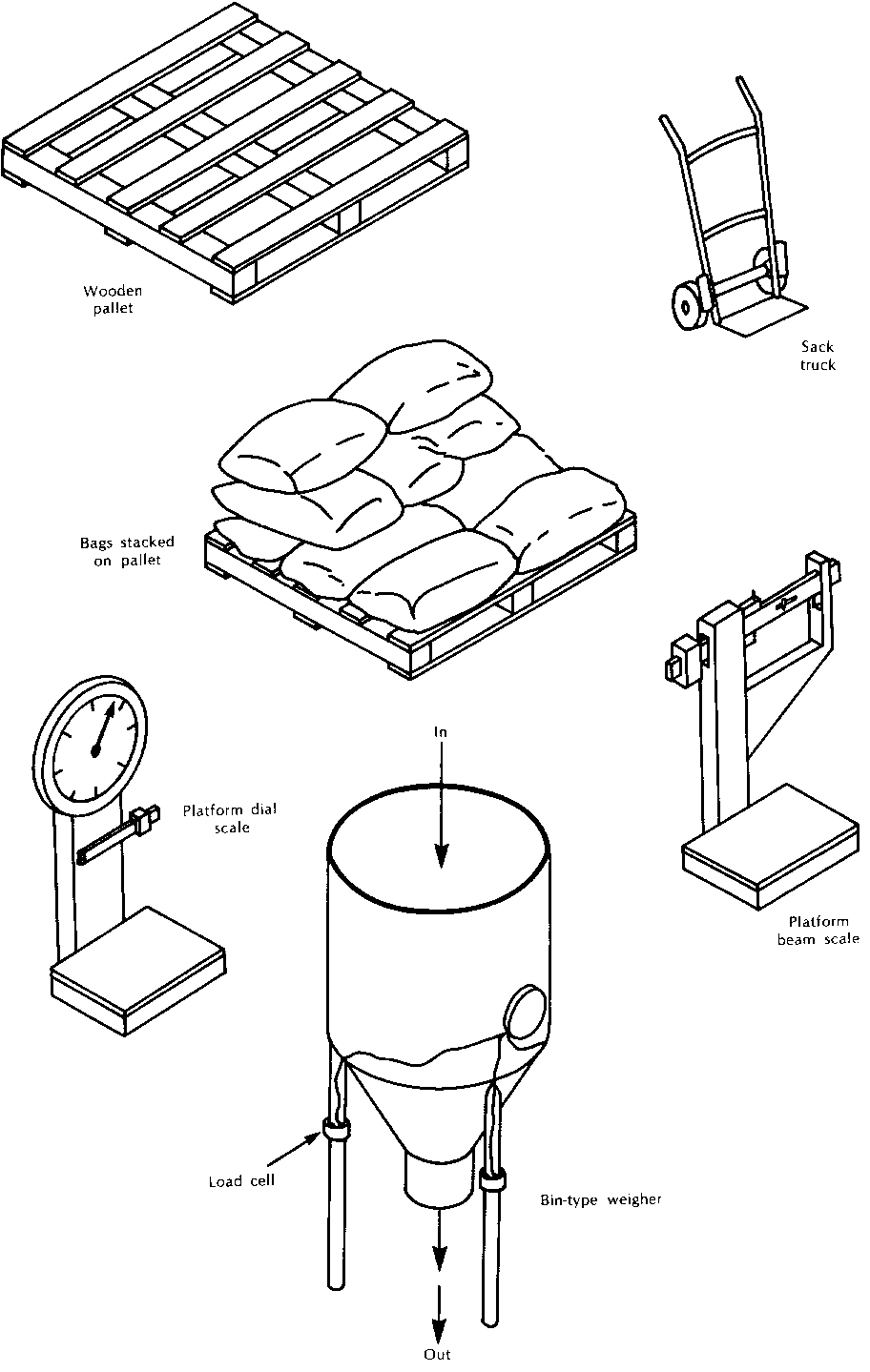
Figure 1 - Sketches of feed milling
equipment
Raw material weighing
The accurate weighing of raw materials according to the formulation for a given ration is perhaps the most important unit operation involved in feed manufacture, since no amount of mechanical processing can make up for any deficiencies in nutrients which have been omitted from the mixture. The point at which weighing occurs in the feed milling process will depend upon the design of the mill. Raw materials may be selected from store, weighed and then subjected to grinding and mixing, or materials may be pre-ground, then weighed and mixed. There are advantages and disadvantages in both approaches and their choice will depend upon the raw materials to be processed and the design considerations of machinery manufacturers. In small units, raw materials in sacks can be weighed individually on a platform scale with either a dial or lever-arm movement (see Figure 1), or if bags are known to be of accurate weight they can be counted and any excess needed for the formulation weighed on the scales. Lever-arm scales are cheaper to purchase than dial scales, tend to be more robust, but are less convenient in use. Where possible, it is advisable that all scales be fitted with an adjustable tare, so that operators do not need to make calculations when allowing for the weights of containers into which raw materials may be tipped for weighing.
Large bin-type weighers (see Figure 1) are often used for raw materials which have been pre-ground or are free flowing and discharge readily from storage bins or silos. Bin-type weighers may be mobile or stationary. Inline weighers which measure the quantity of material flowing over a small electronic sensor and volumetric dischargers are also available. Units which quantify raw material by volume tend to be more applicable to small feed units handling cereals of constant bulk density, and do not often find application in tropical countries where ingredients have diverse bulk-density characteristics. Designs of weighers are many and various but the above have been given to illustrate typical machines in use in feed mills.
The weighing of raw materials requires great care and inaccuracies must be kept to a minimum. It should be noted that errors in the weighing of small quantities of raw materials often have far greater influence on the growth performance of animals than errors in the weighing of large quantities of material, for example, the omission of say, 25 kg of bran from a mixture requiring 400 kg of bran is of much less significance nutritionally than the omission of 1.5 kg of vitamin pre-mix say from the same mixture requiring only 2.5 kg of pre-mix. It may therefore be necessary to purchase a scale to weigh small quantities, of up to 25 kg, with an accuracy of ±100g and a greater capacity scale, for example up to 500 kg with an accuracy of ± 2.0 kg. The use of accurate scales is of particular importance when handling expensive and/or potent raw materials such as vitamins and medicinal additives which are added at low inclusion rates.
Raw material grinding
In the sequence of unit operations involved in feed milling, raw material grinding may occur before or after weighing. It is a process with high power requirements which is often noisy and dusty. The design of machine most commonly found in the feed.) manufacturing industry is the hammer mill and the operation of such machines is illustrated in Figure 2. Inside the grinding chamber, hammers, which may be fixed rigidly to the central shaft, or more often swinging on steel pins, rotate at high speed. The impact of the raw material on the hammers and the continual high-velocity impact of particle on particle results in material breakdown until it is small enough in size to pass through a perforated screen. It is obvious that the smaller the screen size the more work will be required to reduce the particles to the desired size and the larger the grinder motor required. Raw materials also have different grinding properties somewhat related to their bulk density and flow characteristics. In general those of high bulk density grind more easily than fluffy, fibrous low-bulk density materials. Grinders are most efficient when they are running at maximum capacity for a given raw material and screen size.
Because of difficulties experienced in feeding certain raw materials (for example, brans, cottonseed cake) through a grinder, many feed manufacturers pre-blend ingredients before grinding in order that the more easily ground materials will act as carriers or flow aids to those offering resistance to grinding.
The grinding operation can generate considerable quantities of heat and dust and temperatures of raw materials may increase by at least 10-20°C. For these reasons the process may be a fire- or even an explosion risk particularly if the grinder is not protected against the entry of metal, stones, glass and other objects which can cause sparking. For safety reasons large grinders are often sited in separate brick-built stores on the outside walls of feed mills. If ground material is to be stored in bins or sacks before further processing it is essential that the heat generated during grinding be dissipated. Cooling normally occurs as air is drawn into the grinding chamber, and during the pneumatic conveying of ground material from the grinding screen to its point of discharge, which may be through a cyclone into a bin or mixer. Many small grinders have suction fans fitted to the grinder shaft which bring about cooling and conveying of ground material in one operation. Other grinders discharge directly into conveyors and the air drawn in during grinding is released through filter bags. Grinders may operate in a horizontal or vertical direction according to design.
If ground material is conveyed pneumatically, the air and material are separated in a cyclone (see Figure 2). This simple device, which is similar to an inverted cone, causes air to swirl around its walls depositing the ground material at the base of the cone while the air exits at the top of the cyclone through a filter. Cyclones are normally only 95% efficient at separating ground particles and air, and a cloth or other type of filter is necessary as a dust barrier.
It should also be noted that the desired fineness of grind will be influenced by the livestock to which the feed must be fed, or by other processes following grinding. Raw materials for poultry should be more finely ground than for cattle or pigs and raw materials to be pelleted are usually more finely ground than the equivalent feed as meal.
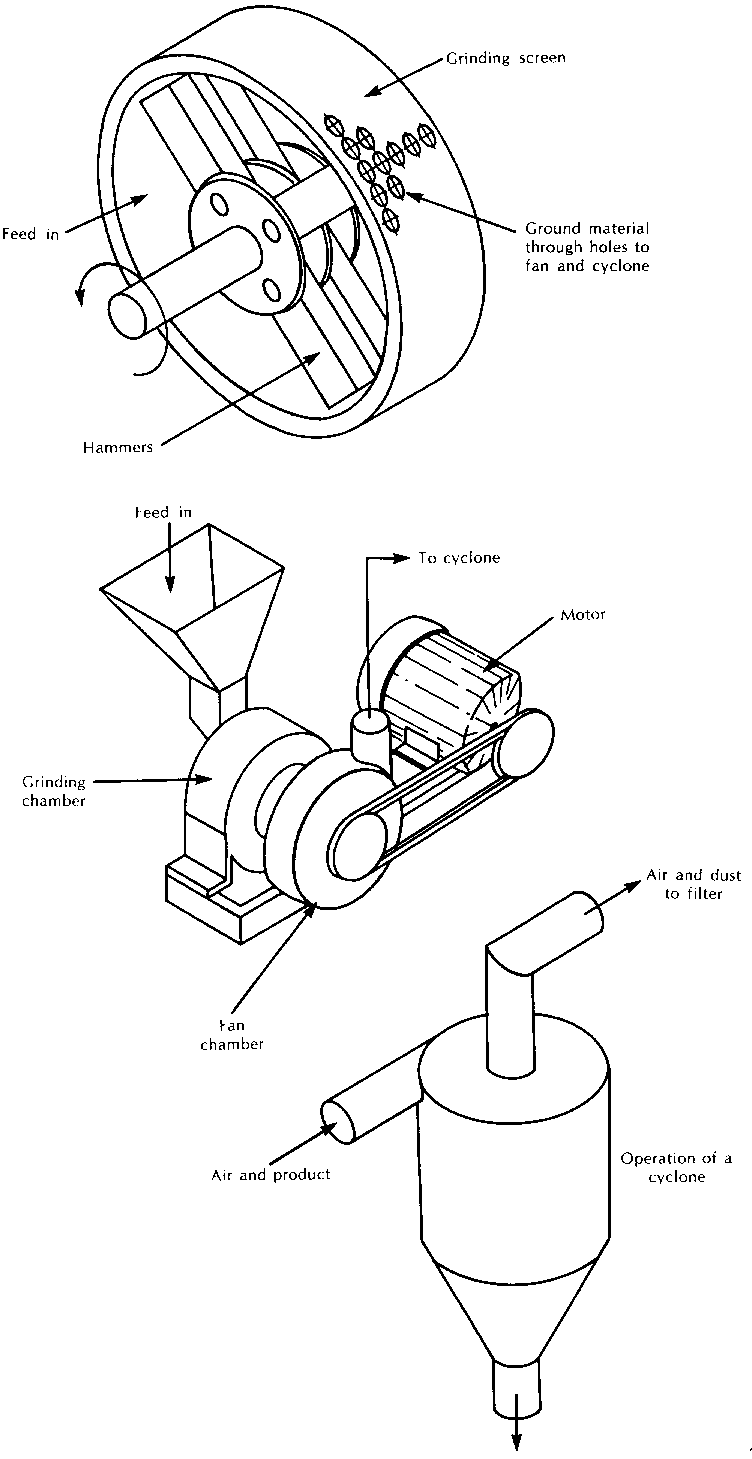
Figure 2 - Action of hammer grinder
Effect of moisture content of raw materials
The moisture content of raw materials to be ground in a hammer mill should not normally exceed 13-14%. High-moisture feeds are plastic or malleable in character with few planes of impact weakness and may clog a conventional hammer mill designed for handling dry ingredients. Hammer mills and other designs of grinders may be obtained for handling moist or wet commodities, but these would not normally be used in a conventional feed mill.
Use of pre-crusher
General purpose hammer mills for small-scale feed mills are not designed to crush large chunks of raw materials to fine particles in a single pass operation. Large, lumpy, hard materials such as dried cassava roots and expeller oil cakes should be pre-crushed in a cake breaker to a particle size suitable for the dimensions of the hammer mill intake throat. It is important therefore that when requesting information on grinding machinery from suppliers, full details of raw materials be provided. It is advisable to provide samples of the largest, hardest and most fibrous materials likely to be encountered.
Mixing of dry ingredients and addition of liquids
It is the job of the mixer to produce a homogenous blend of all the raw materials desired in a formulation, such that at each feeding period each animal receives a balanced mixture of nutrients. The smaller and younger the animals to be fed, the greater is the need for good mixing. Not only are their requirements more demanding, but the daily nutrient intakes of those eating small amounts of feed will be subject to much greater variation as a result of poor mixing. Mixing often improves feed palatability if one or more of the raw materials is unpalatable to livestock.
Shovels
Limited quantities of animal feed can be very adequately mixed (assuming the raw materials have been ground appropriately) on a concrete pad with a shovel, in a manner similar to the dry mixing of cement and sand. Raw materials should be layered one above each other and then mixed and turned to form an adjacent heap. An efficient shovelling and mixing of the heap at least three times should produce an acceptable product with the even distribution of small quantities of vitamins and minerals. Such a mix should be similar to a mixture obtained from a vertical mixer described later. The evenness of colour of the mixture will often give a fair indication as to the homogeneity of the mixed feed.
Concrete mixers
Small concrete mixers with electric or petrol engine drives are mobile lowcost machines suitable for the manufacture of mixtures of dry ingredients or mixtures of wet feeds, for example for pigs. Pre-ground raw materials should be mixed for a minimum of five minutes to achieve a satisfactory blend. For larger-scale feed mixing however it is advisable and probably cheaper to use one of the conventional feed mixers described below.
Conventional feed mixers
Two designs of mixers are most commonly found in the feed industry: the vertical (or fountain) mixer and the horizontal (or U-trough) mixer. A third less common type is the conveyor mixer. Each type is described in more detail below.
Vertical mixers
The vertical mixer is a slow action, long-dwell time mixer which relies upon the continuous tumbling and intermingling of raw materials as they are discharged in a fountain-type action from a vertically running screw of approximately 8-10" diameter as illustrated in Figure 3. Raw materials may enter the mixer either at the top, from a cyclone or auger feed from the grinder, or at the base of the screw at a sack tipping point. After mixing for a pre-determined time, normally 10-15 minutes (although this time may be shorter in some mixes), the mixture is discharged into a bag or conveyed by auger or bucket elevator to a storage bin or pelleter.
Since many raw materials are dusty it is often desirable to include materials such as molasses, oils and fats in the formulations to reduce dustiness as well as to provide a source of nutrients. Vertical mixers, because of their slow-running action, are generally less effective in distributing liquids throughout the mixture, and liquids tend to form beadlets or balls coated with fine particle material, rather than produce a surface coating on the solid material. For coarse cattle rations where large quantities of feeds are consumed per animal the need for a completely homogenous distribution of liquid is less critical than for poultry feeds or feeds to be pelleted, where it is desirable that liquids be well mixed with minimal lumping.
Vertical mixers have a general tendency to encourage particle size segregation, especially if too long mixing times are used. They are tall units which may not readily fit into buildings with low roofs or ceilings. However, they can be easily loaded manually at floor level, and are relatively low capital-cost machines widely used in feed manufacture where liquid addition is not required, or for blending raw materials prior to grinding.
Horizontal mixers
As the name suggests, horizontal mixers operate with a horizontally turning mixing shaft. The shaft may carry paddles or agitators of various designs which come in very close proximity to the wall of a U-shaped trough. Raw materials are lifted, folded and abraded against each other resulting in a relatively short mixing time, typically of the order of 3-6 minutes, though it may vary depending on the nature of the mix. The mixer is suitable for blending up to 8% liquids into a dry mix and therefore offers greater versatility if a wide range of rations are to be offered from one feed mill unit. It is preferable that fats and molasses be warmed before addition to the raw materials in the mixer and they should be added as the last ingredients. Because the horizontal mixer is a faster mixing machine than a vertical mixer, two or perhaps three mixes can be achieved in the same time as one mix in a vertical mixer. A half-tonne capacity horizontal mixer for example could possibly replace a 1-tonne vertical mixer since two halftonne mixes could be made in a horizontal machine including loading and unloading in the same time as one tonne in a vertical mixer. A horizontal mixer is more sophisticated in terms of its engineering construction and thus more expensive to purchase than a vertical mixer of equivalent capacity.
Conveyor mixers
Conveyor mixers are also available, particularly for farm use, and consist of a trapezoid metal box in which mixing is effected by slats extending almost the full width of the machine and which are carried on a pair of endless chains. Like the vertical mixer this machine is limited in its ability to blend liquids thoroughly into the mixture.

Figure 3 -
Mixers
Pelleting of mixed feed
The use of pelleted feed is often popular with farmers because it is convenient to handle and reduces dustiness (for example, in cassava-based feeds), but pelleting can have other advantages. It prevents segregation of raw materials during handling and selection by animals, especially poultry, during feeding. This may be particularly useful where less palatable raw materials are included in the formulation. Pellets also reduce feed losses during feeding, and may help to maintain, or increase, feed intake under certain conditions. The heat generated during pelleting can inactivate some pathogenic bacteria which may be present in raw materials. Finally, in some circumstances, pelleting can assist in preventing adulteration of feed by unscrupulous traders. However, pelleting increases the cost of feeds because the capital cost of pelleters is relatively high compared to grinders or mixers, the energy requirement is high, and additional care and skill is necessary for their maintenance and operation. Therefore the decision on whether to pellet has to be made in the light of individual circumstances.
Pelleting involves the compression of a mixed feed through holes in a hardened steel ring or plate (a die) by means of hardened steel rollers. The die forms the feed into pencil-like extrusions which are cut by knives into pellets of desired length on leaving the die. The principle of operation of a ring die is given in Figure 4. In a ring die pelleter, the rollers or the die may be driven but in a plate die pelleter the rollers only are driven. The die and rollers of a ring die pelleter may operate in a horizontal or vertical plane according to machine design. Pelleters with horizontally running dies are most commonly found in farm-scale feed mills. The pelleting process is very energy intensive, demanding up to 50% of the total power required for feed manufacture. The diameter of feed pellets is governed by the diameter of the holes in the die ring but the smaller the die holes the greater effort is required to force meal into these holes, hence the greater the power demand, that is, the smaller the pellet, the greater the cost of manufacture.
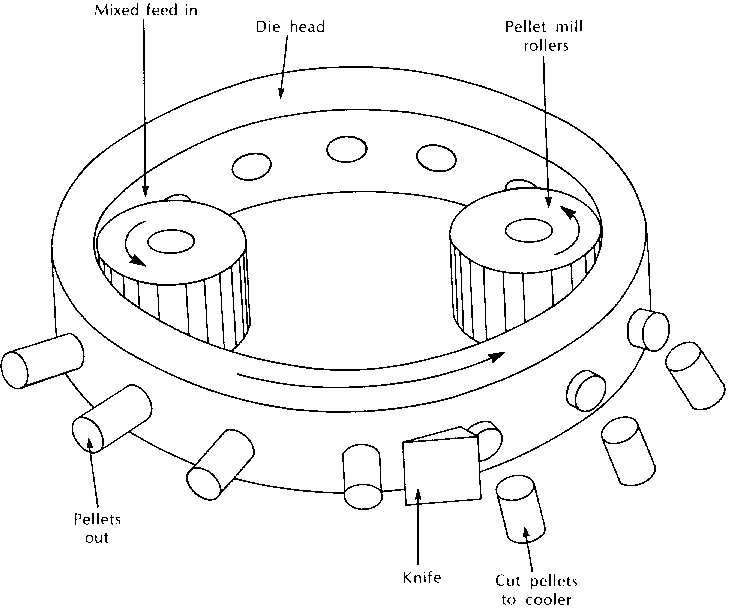
Figure 4 - Operation of a pelleter
die head
Pelleters may also be divided into two further groups according to the pre-treatment of mixed feed prior to compression or extrusion in the die head. Pelleters may be considered as cold pelleters or conditioner pelleters.
Cold pelleters
In cold pelleting, mixed feed is fed directly from a bin or auger into the die head at ambient (normal atmospheric) temperatures. Some water may be added, preferably in the mixer if the meal is too dry to bring it to approximately 15-16% moisture, but there is no heat treatment of the mixed meal before it enters the die. The frictional forces generated during pellet extrusion cause the temperature of the pelleted feed to increase from ambient to up to 60-70°C. Pellets must be cooled to ambient temperatures before storage by spreading thinly over a large area of floor, or preferably cooled in a bin fitted with a cooling fan. During cooling the moisture content is reduced to approximately 12% by evaporation in order to reduce the risk of sweating and mould growth.
Cold pelleters for farm-scale use have outputs of up to 750 kg per hour of poultry pellets, or 1 tonne of dairy pellets per hour, depending upon ration formulation, particle size and moisture content of the meal and pellet diameter.
Conditioner pelleters
The term 'cold pelleting' is something of a misnomer since a considerable amount of heat is generated during the pelleting operation, but it serves to distinguish the process from conditioner pelleting which is the usual process in industrial pelleters. During conditioner pelleting, the mixed meal is directly pre-heated with dry steam (i.e. steam which is in vapour form and does not contain suspended droplets of condensed steam) in a small high-speed mixer called a conditioner or in a slow turning mixer called a kettle or ripener.
The steam preheats or conditions the meal to the preferred temperature and moisture content for pelleting according to the formulation of the mixture, for example, 65°C and 15% moisture. During pelleting the temperature of the meal rises by approximately 10°C, hence the final temperature of pellets from a conditioner pelleter is similar to that of pellets from a cold pelleter. Coolers for these machines may be of vertical or horizontal design. Cold air is drawn through a moving mass of pellets either as they fall through the vertical machine, or as they pass along an open mesh belt through a horizontal cooler.
In terms of energy requirements for a given output, the energy required for manufacturing half a tonne per hour of pellets in a cold pelleter is approximately equivalent to the sum of energy required to manufacture the same quantity of pellets in a conditioner pelleter plus the energy required to produce the steam for the conditioner. Practical experience shows that for a given pelleter motor size, the output of the pellets will be approximately doubled if meal is pre-conditioned prior to pelleting, or, conversely a cold pelleter of say 25 horse-power will produce only half the output of a conditioner pelleter of 25 horse-power if the energy required to raise the steam is not taken into account.
Generally, the quality of pellets (that is, resistance to break-down after pelleting and during handling) of a given mixture from a conditioner pelleter is marginally better than that from a cold pelleter, but the conditioner pelleter requires a boiler and associated water treatment plant to treat the feed water for the boiler.
Pellet quality
Pellets should have a desired degree of hardness, and should also show high resistance to abrasion during handling and transport. Pellet quality depends largely on the amount and nature of starch and protein in the raw materials. Their binding effect is modified by a number of other factors including the moisture content, fibre content, oil content, and fineness of grinding of the raw materials. Various types of dies are available for dealing with different mixes. Instruments can be obtained for testing pellet hardness and resistance to abrasion.
Pellet binders
Some mixtures of raw materials do not bind well together when pelleted and require the addition of special binding agents. Molasses is often added at 2-5% to aid binding, but other binders include bentonite clays and lignosulphonates, and are added at the suppliers' recommended dosage levels, usually about 1-2%.
Augers, bucket elevators and conveyors
Augers and bucket elevators are used to move raw materials or meals from one feed mill operation to another. Augers are steel tubes containing a continuous screw which conveys meals along its length as it is driven by a motor. Various designs and diameters of augers are available, and care should be taken in their selection since augers designed for conveying materials of high bulk density may not readily convey low-bulk density materials. Augers may be used in a horizontal or inclined position, but are not suitable for the vertical movement of materials. This job is best undertaken by a bucket elevator.
The bucket elevator consists of a tall metal or wooden box in which runs an endless chain fitted with buckets. Buckets are filled at the base of the elevator and discharged at the top. Bucket elevators have a gentle lifting and tipping action and are therefore suitable for lifting pellets to a cooler, whereas an auger may well damage and break the pellets.
For the horizontal movement of large quantities of feed materials conveyors may be used. Again many designs are employed, but their action is similar to that of the bucket elevator, with the exception that the buckets are replaced by slats, chains or baffles to drag material from one process operation to another.
Bagging
Compound feeds, whether in meal or pellet form, are usually distributed in sacks in developing countries, although for on-farm use or for distribution to a large livestock unit distribution could be in bins or trucks. Bags may be filled directly from mixers or from holding bins and may be weighed on a scale balance or through an automatic pre-set weigher and bagging unit set to weigh, for example, 25 kg of meal per bag. Bags may be of jute, cotton or paper and can be hand- or machine-stitched or tied with a string or metal tie. Stitching machines do not stand up to abuse and require a constant supply of appropriate needles and thread and are therefore more applicable to the larger feed mill models in this bulletin. Polythene bags are not normally recommended for storing animal feeds because of the risk of sweating and mould growth. If old bags are re-used, care should be taken that they have not been used previously for the storage of fertilizers, pesticides, or other chemicals.
Other requirements
For the successful manufacture of compound feeds several other requirements must be fulfilled: these are discussed below.
Buildings
The buildings to house the manufacturing plant will depend to a large extent on the particular circumstances of the mill, but generally they must be capable of being kept clean, and provision should be made for keeping the dust level as low as possible since it can affect the operation of machinery. Excessive dust is also a fire and explosion hazard. In some environments, machinery can be housed in a light structure and where the climate is suitable it may even stand in the open. However, consideration may need to be given to local building regulations and to special precautions necessary for occasional adverse climatic conditions, for example, hurricanes. A concrete floor which can be swept is usual, but should be laid down to the manufacturer's plans as some pits and floor fixings may be required. Where flooding may occur, as during a monsoon period, the floor must be above the high level water mark. The machinery usually has its own supports which are supplied by the manufacturer or can be made locally to his specifications.
Power
The power to drive feed milling equipment is generally obtained from electrically driven motors. Some small-scale processes can be undertaken by hand or by using direct driven machinery. Grinders, mixers and pelleters can be obtained which are driven by petrol or diesel engines directly, or from a tractor power take off (PTO). However, for most situations, electric motors provide the simplest and most convenient method of driving machinery. If grid ('mains electricity') is not available, a diesel-generating set can be used instead so that electricity is produced independently of the grid.
Electricity supply
For small processes with a connected motor load of a few kilowatts (that is, the sum of the motor powers), operation from a single-phase electrical supply might be possible. However, it is normal for industrial/commercial premises and sometimes for agricultural premises to have a 3-phase supply. It is essential to determine the likely electrical load for the machinery and then to determine what type and quantity of electricity can be made available. If grid electricity is used, contact should be made with the local electricity supply authority. If a generating set is to be used, then it is the responsibility of the user to specify the requirements.
The characteristics of the supply which need to be known include:
· the number of phases (1 or 3)
and whether a neutral is available for the 3-phase supply,
· the nominal voltage and frequency,
· the variations in voltage and frequency,
· the maximum demand in kVA,
· the maximum starting load permissible,
· the arrangements for earthing,
· the arrangements for short-circuit protection.
Electrical equipment
Electrical equipment is designed to operate within prescribed limits of voltage and frequency, and under specific conditions. Any abnormal conditions such as high ambient temperatures, high humidities, high altitude, or dusty or wet environments, can affect the satisfactory operation of motors and equipment. These factors should be stated to suppliers of machinery as well as information on the electrical supply. If, for instance, equipment is to be used outside, it should be specified for tropical outdoor use.
All electrically operated process machinery should have a method of starting and stopping. This is usually achieved by operating pushbuttons on a starter. Some method of isolating each machine from the supply should also be incorporated to allow maintenance and cleaning to be undertaken safely. The starter and isolators (motor control gear) can be supplied with the machinery or obtained separately. Direct-on-line starting of small motors is normally used. However, with larger motors (typically 4 kW or 7.5 kW depending upon the local electricity supply undertaking) some method of reducing the current surge on starting is usually necessary such as star-delta starting. In fact many undertakings insist upon this so as to minimize voltage dips in the supply.
Depending upon the size of the installation, a main fuseboard and isolator (distribution gear) may be necessary as well as additional facilities such as lighting, socket outlets and ventilation. Sometimes it is necessary to provide power factor correction equipment.
Water
Water is required for steam raising if the feed mill has a steam conditioner, or may be added to the mixer to raise the moisture content of the meal to a level suitable for pelleting. Water supplies should be of potable quality and uncontaminated with effluent or sediment.
Cleanliness
Although feed mills are not factories for the production of human food, they should be kept as clean as practicable. Dusty conditions are unpleasant to work in and are ideal for the development of contaminating insects, micro-organisms and scavenging vermin which may introduce disease to animals and reduce animal productivity. Gross infestation by moth larvae in particular may well bring about blockage of augers, elevators or outlets to bins which are used only periodically due to excessive build-up of insect webbing.
Dusty conditions also demonstrate that quantities of expensive raw materials are being lost and wasted. Cleaning does not involve complicated procedures and can be fitted easily into the normal working schedule. Care should particularly be taken when cleaning process plant which has been used for the inclusion of veterinary compounds such as drugs since crosscontamination from one ration into another for a different species of animal may prove fatal.
Routine maintenance
All mechanical equipment is subject to wear and tear and regular maintenance should form part of the working schedule. Machinery manufacturers will give advice on maintenance programmes and a supply of spare parts should be kept in stock, a list of typical spare parts being given below.
Grinder screen and hammers Auger and elevator bearings Belts and bushes Spare motors Pelleter dies and rollers Dust filter socks Elbows and bends in ducting which may be prone to wear Miscellaneous nuts and bolts Electrical spares, etc.
It is important therefore to budget for spare parts when purchasing new equipment or when determining annual inputs for an established feed mill.
Importance of power factor
Most AC electrical machines draw from the supply apparent power in terms of kilovolt amperes (kVA) which is in excess of the useful power, measured in kilowatts (kW), required by the machine. The ratio of these quantities is known as the power factor of the load, and is dependent upon the type of machine in use. Assuming a constant supply voltage, this implies that more current is drawn from the electricity authority than is actually required.
Power factor = (true power) / (apparent power) = kW / kVA
A large proportion of the electrical machinery used in industry has an inherently low power factor, which means that the supply authorities have to generate much more current than is theoretically required. This excess current flows through generators, cables, and transformers in the same manner as the useful current. The motive power requirements are generally greater than the resistive loads such as lighting and heating. If steps are not taken to improve the power factor of the load, all the equipment from the power station to the factory sub-circuit wiring has to be larger than necessary. This results in increased capital expenditure and higher transmission and distribution losses throughout the whole supply network.
To overcome this problem, and at the same time to ensure that generators and cables are not overloaded with wattless current (as this excess current is termed), the supply authorities often offer reduced terms to consumers whose power factor is high, or impose penalties on those with low power factor. Most supply authorities insist that a power factor of at least 0.90 is achieved. Improving the power factor helps to reduce the overall consumption of electricity.
Tariffs
The charges for electricity are based on various tariffs which vary both in structure and cost from place to place. Various standing charges and a connection charge are also made. Typically, the electricity charged for will be based on:
(i) a standing charge based on the total kilowattage of the installed motors or on the kilowattage of the largest installed motor;
(ii) on the number of units consumed;
(iii) an extra charge for units when an agreed maximum level is exceeded - referred to as the maximum demand charge.
The standing charge (i) is applied irrespective of the amount of electricity consumed or of how often the equipment is used. The charge (ii) is an accumulative charge to take account of the quantity of electricity used in a particular period. Not all units are necessarily charged at the same rate. A meter is provided by the supply undertaking for this. The maximum demand charge (iii) is a penalty charge which is applied if the amount of electricity used in a specified period (usually 0.5 hours) exceeds a level which has been previously agreed between the supplier and user. It is intended to level out demand by discouraging users from consuming a large amount of electricity for just a short time. A separate meter is provided for this; it measures kVA rather than kW. Some authorities offer reduced tariffs depending upon how and when the electricity is used.
Generators
If grid electricity is not available or not suitable in some way, an alternative method of obtaining electricity is to use a generating set. Small sets of a few kVA capacity can be petrol driven, but normally they are diesel-engine driven. The size of the set required depends upon the output required and upon the starting characteristics of the various items of equipment. The supplier of the feed mill machinery can usually advise on the size most suitable for the particular installation. When the installation consists of a number of small motors, then a set slightly larger than the sum total of the motor kilowattages is usually adequate, but expressed in kVA based on a power factor normally of 0.8. If however just one of the motors is large in comparison with the total load, a larger generating set is necessary so as to prevent undue voltage dips occurring when that particular motor is started, as such dips will effect equipment already running. For satisfactory operation, the diesel engine will require regular maintenance.
Quality control
Quality control is essential at all stages in the production of compound feed if the maximum and most efficient returns are to be obtained by the feed compounder and livestock producer. In some countries the control of feed quality is regulated by government legislation, while in others there is no such provision. In either case, omission of any serious attempt at quality control is false economy in the longer term.
The achievement of good quality control is frequently difficult in developing countries. Locally available raw materials may be highly variable in composition, and for this reason routine analysis should be carried out on as many batches as possible. However, the equipment for setting up a basic quality control laboratory costs around £30,000 at 1986 prices and is therefore a relatively expensive operation, especially for small-scale feed milling operations, and suitably trained staff may not be available. In some cases it may be possible for a limited number of samples to be analysed by government laboratories or by independent chemical analysts. Not all larger laboratories will have facilities for some of the more specialized analyses for example, for amino acids, which may be required.
Fairly simple and inexpensive equipment is available for the rapid determination of moisture content and should be available in all feed manufacturing operations. If further facilities can be established, the next most basic analyses are crude protein and fibre. The microscopical examination of raw materials can provide a valuable check on their identity and the presence, or otherwise, of adulterants. The cost of the relevant equipment (microscope, etc.) is fairly modest, but some experience is necessary before individual materials can be identified with confidence. Training courses in the technique are available.
The quality of raw materials can be affected by growing, harvesting, and post-harvest handling and processing, but at the feed mill the quality control function usually begins with the receipt of raw materials. They should arrive in good condition in sacks, or other containers, which should not have been used for the storage of fertilizer, pesticides, or other chemicals. They should not be lumpy or mouldy or heavily infested with insects. The moisture content should not be excessive and should be closely monitored if the raw materials are stored. The control of moisture content is one of the most important aspects of quality control.
Moisture content
Moisture content of stored produce is closely related to ambient relative humidity. Oil-free materials such as grains have higher moisture contents than those containing oil, in equilibrium with the same ambient relative humidity. However, differences in moisture content/relative humidity relationships are small for oil-free feed materials, and it is possible to generalize for these to some extent with moisture contents which are critical for different types of biological activity. Moisture content in equilibrium with a given relative humidity varies with temperature, and for a 10°C rise decreases by 0.6-0.7% for the oil-free material.
The moisture content in equilibrium with a given relative humidity is also affected by the so-called 'hysteresis' effect. Due to this, feed materials absorbing water to achieve a given equilibrium relative humidity, have lower moisture contents than those drying out to the same equilibrium relative humidity. Biological activity both within the materials and of pests is greatly affected by moisture content. Insect pests will not develop on feedingstuffs at relative humidities outside the range 30-90%, while bacteria will only develop at relative humidities of over 90%. Fungi generally grow only at relative humidities of over 70%, while seed germination normally requires relative humidities of more than 95%. Expressing these in terms of approximate moisture contents of oil-free material stored at temperatures of 20-30°C, the following can be anticipated:
(i) up to 8% moisture (30% relative humidity): no significant biological activity;
(ii) 8-14% (30-70% relative humidity): insect infestation possible; mites can infest at relative humidities of over 60%;
(iii) 14-20% moisture (70-90% relative humidity): insect infestation and mould growth can occur;
(iv) 20-25% moisture (90-95% relative humidity): mould and bacterial growth possible;
(v) above 25% moisture (more than 95% relative humidity): bacterial growth and seed germination possible.
In practical terms, this means that moisture content should be kept as low as possible, but should not be allowed to exceed that which would be in equilibrium with relative humidities of 70% or more. Allowing a safety margin to take into account fluctuations in equilibrium equivalents, a maximum moisture content of around 1 3% for oil-free material would seem to be appropriate. Lastly it should be mentioned that moisture content can influence the degree to which certain chemical changes, which are not biologically induced, may occur. However, its greatest effect is on the biological changes already mentioned.
Mycotoxins
Almost all vegetable compound feed materials of tropical origin are liable to contamination by the aflatoxins, a group of highly toxic mould metabolites, produced by certain strains of the moulds Aspergillus flavus and Aspergillus parasiticus. The aflatoxins can be formed during the pre-and post-harvest stages of raw material production provided that a suitable environment for mould growth exists. The conditions required for mould growth are usually satisfied in tropical countries. Different commodities vary in their ability to support fungal colonization due to differences in the chemical composition of each commodity. Samples of oilseed cakes from groundnut, cottonseed, palm kernel and copra, together with cereals like maize have been found to contain high levels of aflatoxin, whereas the majority of samples of soya and fish meal which have been analysed for aflatoxin have been found to be free of the toxin.
The acute toxicity of the aflatoxins and their ability to induce liver cancer in animals varies according to the sex and age of the animal and a number of other factors. Young animals are more susceptible to aflatoxin intoxication than older animals, and males usually require a smaller dose of the toxin than females to produce a similar effect.
The aflatoxins can affect the cellular-immune system of animals and so decrease their ability to resist viral and bacterial infections. In addition, the aflatoxins have been reported to reduce the absorption of a number of essential feed constituents and drugs from the gut and this can affect animal health and productivity. Consequently, the amount of aflatoxin in the diet of animals should be restricted.
Many countries have introduced legislation to limit the amount of aflatoxin in animal feeds and some are restricting the levels of aflatoxin in compound feed ingredients imported from other countries. In the European Community (EC) the maximum level of aflatoxin permitted in a complete feed is 50 mg/kg and this is reduced to 10 mg/kg when the feed is to be given to dairy cattle because of the risk of aflatoxin derivatives reaching milk for human consumption. A variety of analytical and big-assay methods have been developed for determining the levels of aflatoxin in animal feeds. However, the efficiency of these methods is frequently compromised by the collection of an inadequate sample, or by the unsatisfactory preparation of the sample prior to analysis. Details of the methodology suitable for determining the levels of aflatoxin in animal feeds can be found in a manual prepared by ODNRI and used by trainees attending the aflatoxin training course held annually at ODNRI.
Other tests
In addition to the above factors, there are a number of other considerations to be borne in mind with specific types of materials. It is important to ensure that processed materials, particularly those of animal origin such as fish, meat and bone meal, do not contain any pathogenic bacteria which could cause diseases in animals to which they are fed. The most common pathogenic organism encountered is salmonella, and it is important that consignments, particularly from new suppliers of processed materials, be tested for this organism.
Protein concentrates which have undergone processing, for example, oilseed cake and meal and animal by-product meals which are to be included in feeds for monogastric animals, should be tested to ensure that the quality of the protein has not been reduced during processing. The most important form of damage recognized is the rendering of the amino acid Iysine unavailable for nutritional processes by excessive heating during processing. It is therefore important to test materials of this type in common usage for available Iysine content from time to time and to check any new materials which are offered.
Materials such as cottonseed cake which are prepared from seeds known to contain toxic substances (gossypol in the case of cottonseed), should be tested to ensure that they are of acceptably low toxicity for inclusion in feeds for the class of animals for which they are intended. For example, cottonseed cake should not be included in feeds for pigs or poultry unless the gossypol content is very low, whereas gossypol tolerance of mature ruminants is very much greater. Some toxicity problems may be overcome with chemical treatment, and ferrous sulphate has often been recommended for cottonseed. An indication of the various types of toxic factors which can be encountered are given in Appendix 3, Table XV.
Finished feeds
If the raw materials and processing conditions are of the correct standard, then the product should also be of the correct standard. However, variations and errors can arise in the weighing or accidental omission of an individual raw material. The omission of a small quantity of vitamin supplement may have a marked adverse effect on the health and growth rate of animals receiving the feed. For this reason, considerable care must be exercised in ensuring that the specified amounts of all raw materials are weighed out for each batch, and an appropriate system for checking this should be devised. It is important that representative samples of batches be taken for check analyses to monitor the composition of the finished feeds. If results show deviations from the required composition, the reasons for this must be sought and rectified. In some countries there may be statutory requirements for the composition of feed offered for sale.
|
| ||||||||||||||||||||||||||||||
Small-scale Manufacture of Compound Animal Feed (NRI, 1988, 87 p.)
Chapter 5 - Financial appraisal of small-scale production
Introduction
The type of analysis required to determine whether an investment should be made in a feed mill depends upon the size and complexity of the investment under consideration and on who is making the investment decision. For larger and more complex projects it is useful to distinguish between three stages in the decision-taking process, involving increasing depth and detail in the analysis. The stages are frequently labelled the 'opportunity study', the 'pre-feasibility study' and the 'feasibility study'. Such a procedure can eliminate non-viable projects at an early stage and thus save time and money. For smaller investments, the distinction between these three stages becomes blurred. In the case of most investments in small-scale feed mills it is sufficient to distinguish between two stages. In the first stage, the raw material, energy supply and demand situation is assessed in general terms together with an assessment of the conditions in the economy and of government policy measures which are likely to impinge upon the success of the project. The second stage involves a cost benefit analysis.
Preliminary assessment
A preliminary analysis of a small-scale feed mill project should give a good indication of the likely feasibility of the project without the complete assessment of costs and returns which would be required to indicate a precise rate of return on investment. It should give, in particular, an assessment of the availability, cost and reliability of the supply of ingredients, the cost and reliability of the energy supply and the demand for compound feeds with particular reference to determining the scale of operation and the product mix. In addition, attention must be given to the requirements for ancillary services, such as storage and transport facilities (both for raw materials used and for feed produced), facilities for quality control, facilities for maintenance and repair of equipment including replacement of spare parts, and requirements for training of mill operators. Inadequate consideration of these factors may lead to project failure or heavy losses. A check list of factors to be considered is given in Appendix 5.
The cost models
This section describes the development and appraisal of cost models for the four compound feed production systems discussed in Chapter 4 page 20. Methods of calculating break-even costs per tonne of compound feed are described and illustrated in detail. This information should enable the potential producer to construct his own model, with any appropriate modifications, and to estimate his own costs of production. These costs can then be compared with the prices of similar, commercially manufactured, products to see whether a proposal is financially worthwhile. Financial considerations are not the only factors which need to be taken into account, however. The quality and availability of the commercial alternatives will also be relevant.
This section consists of five parts, namely:
(i) a brief description of those aspects of the production models which are particularly significant from the coatings point of view;
(ii) estimation of basic costs for each model;
(iii) a brief description of the role of discounting in calculating break-even costs;
(iv) calculation of break-even costs per tonne of compound feed for each model, using the discounting method;
(v) model appraisal.
The models
Model 1 is of a simple system buying-in pre-ground feed ingredients and additives which are mixed by hand, without pelleting, on a concrete slab. A shed is used for storage of material. Model 2 has simple but purposebuilt, facilities. Raw materials are ground on the farm. A cement mixer is used for mixing, but compounds are not pelleted. Model 3 is more sophisticated and includes grinding, mixing (by means of a vertical mixer) and pelleting on-farm. Storage is in bulk bins. Model 4 is similar to model 3 but the machinery and equipment has greater capacity and a horizontal mixer is employed. Since, in this model only, compound feeds are manufactured for sale as well as on-farm use, accommodation is also included for office staff. Power for Models 2-4 is supplied by mains electricity. Models 3 and 4 also have standby generators.
It is assumed that all models operate for 300 days per year and that 5 days' production is retained as stocks. Daily operating periods and annual production are assumed to be as follows:
|
Model number |
1 |
2 |
3 |
4 |
|
Hours operated per working day |
1 |
1 |
3 |
8 |
|
Annual production, tonnes |
30 |
60 |
900 |
4,200 |
Only a quarter (1,050 tonnes) of the compounds manufactured
in Model 4 are retained for on-farm use. The rest (3,150 tonnes) is sold in
nonreturnable bags. Buildings and major items of machinery and equipment are
assumed to have a 15-year life in all models.
Estimation of basic costs
Methods of estimating establishment and operating costs, and working capital requirements, on a comprehensive and systematic basis, are described in detail in Appendix 5 by means of a linked series of annotated tables. The costs are projected as a series of annual cash flows. In the models presented in this bulletin all inputs are charged at realistic market rates. However, market rates can vary considerably from country to country and it should be borne in mind that neither the basic costs nor the breakeven costs estimated from them in this section are of general application. Potential compounders must substitute their own costs when carrying out appraisals.
Some of the resources required for compound feed manufacture, for example building or equipment, may already be available on site. In a project appraisal the value of these resources would normally be included in the capital costs or an appropriate rent would be charged in the operating costs. However, charges would be made for these resources only if they could be used for some other purpose than compound feed manufacture, or sold. In economic terms, such resources are said to have en 'opportunity cost.*' If they cannot be used in some other enterprise, or sold, such resources would have no opportunity cost and no value would be assigned to them in the coatings
It may not be easy to value resources which are already available, particularly buildings, even though they clearly have an opportunity cost. For example, it may be especially difficult to value well-maintained buildings which could be used for compound feed manufacture (or other activities) but which are of unnecessarily high quality for the purpose. In the absence of a better estimate of opportunity cost, a valuation might be based on the estimated cost of a new building, but only to the technical specification required for compound feed manufacture. Valuations of existing items of machinery or equipment which could be used for manufacturing compound feeds should not be particularly difficult to make since they could be based on second-hand market values or appropriately depreciated replacement costs. Any increases in labour costs resulting from compound feed manufacture should be charged to the compound feed account. However it may be possible to add a compound feed production enterprise to an existing farming system at low, or even zero, opportunity cost in cases where the existing labour force is under-employed.
By extension of the same principle, if they are saleable, any home-grown cereals used as feed ingredients should normally be costed at their farmgate market value, rather than their cost of production, since if they are used in a concentrate mix, any profit which could have been obtained by selling them is foregone.
Summaries of establishment costs and working capital requirements for the four models are presented in Table 3. Establishment costs (in £ sterling) range from £820 (Model 1) to £22,717 (Model 4). Fixed machinery and equipment costs (items 3, 5 and 6) account for over 70% of total establishment costs in Models 3 and 4 but for only 36% in Model 2, building costs being the largest single item of cost for this model. There is no fixed machinery and equipment in Model 1 and buildings make the largest contribution to total establishment costs. It is important that prospective feed compounders obtain up-to-date quotations for machinery and equipment.
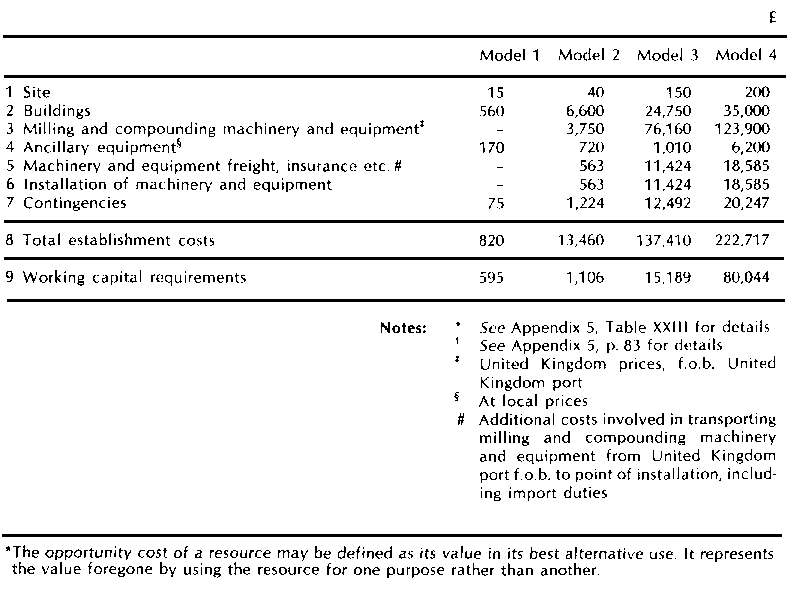
Table 3 - Summary of establishment
costs* and working requirementst
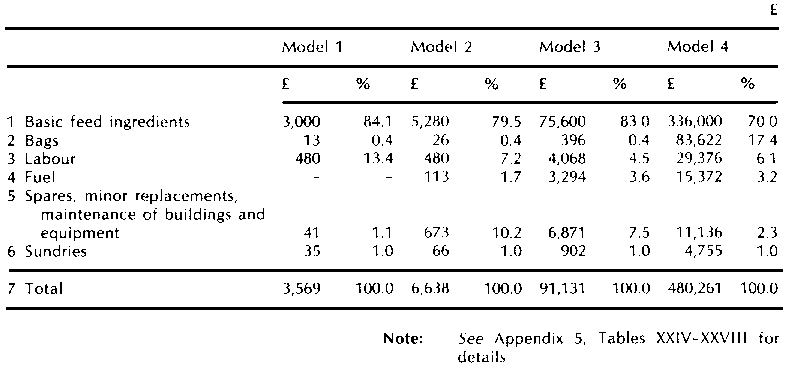
Table 4 - Summary of annual operating
costs
Working capital is required to finance the purchase of stocks of operating inputs and to cover the short-term operating costs incurred on each batch of products manufactured, prior to their sale or utilization by other enterprises. Estimated working capital requirements range from £595 in Model 1 to £80,044 in Model 4. However, working capital requirements will vary appreciably according to circumstances.
Annual operating costs are summarized in Table 4. In all cases, as would be expected, by far the most important operating cost is that for the purchase of raw materials. In Models 1-3, these costs account for at least 80% of total operating costs. In Model 4 the percentage drops to 70%, mainly because of the cost of non-returnable bags for the 75% of total production which is sold. Labour and fuel costs are relatively small. Total operating costs vary from £3,569 per year in Model 1 to £480,261 per year in Model 4.
The role of discounting
Normal investment projects can be expected to generate a series of negative and positive annual cash flows (costs and returns respectively) over a long period of time. Some of these cash flows are irregular, in particular for capital investments which can normally be expected to have a useful life of many years. In an appraisal, however, the value of a projected cash flow of a given size will vary according to its timing, irrespective of the possible effects of inflation or risk and uncertainty factors. For example, a return of £10,000 this year is clearly preferable to a similar return 10 years hence since it could immediately be invested in a new project, lent to generate interest or used to pay off a debt. At a compound rate of return of 10% per year it would be worth £25,937 in ten years' time.
For the purpose of estimating project costs, a method of discounting is required in order to convert the series of costs projected over the life of the project to a common base, namely, their Present Value (PV). In fact, discounting is essentially the compound interest calculation in reverse. For example, discounting a cost of £10,000 expected in ten years' time gives a PV cost of £3,855.
Normally, in calculating the break-even cost, the appropriate discount rate would be the market rate for loan capital. If a lower rate is chosen, the cost of borrowing capital, that is to say the interest payments which have to be made on loan capital, would not necessarily be fully recovered if the project were implemented. In the case of equity capital, choosing a discount rate below the market rate could lead to lower returns from investments in the project than would have been obtainable by lending the capital commercially.
The calculation of break-even costs per tonne of compound feed
Break-even costs per tonne of compound feed are calculated by equating the PV of total costs arising over the life of the project with the PV of total returns. Product price calculated from this equation is therefore equal to the break-even cost per tonne. The cost per tonne, when annual operating costs and annual production are constant over the life of the project, can be calculated by means of the following formula:
the sum of the PVs of discounted total capital costs (£)
divided by the annuity factor,
divided by annual production (tonnes);
plus
annual operating costs divided by annual production.
The annuity factor is the sum of the annual discount factors over the life of the project. The mechanics of the method of calculation are described in detail in Appendix 5, Tables XXIX-XXXII by means of annotated tables for all four models, assuming a discount rate of 10% per year and a project life of 15 years. Annual discount factors and the annuity factor are given in the tables for the 10% discount rate. The formula and method for estimating break-even costs when annual operating costs and annual production vary are given in the notes to the tables.
Break-even costs per tonne are summarized in Table 5. Total break-even costs, at the levels of production specified, vary from £122.96 per tonne for Model 3 to £143.32 for Model 2. The cost of the simplest system, that is Model 1, is £125.04 per tonne. It can be seen that operating costs are much higher than capital costs. They also reflect the quantity discounts for feed ingredients assumed in the basic costs (see Appendix 5, Table XXIV for details). The average operating cost per tonne for Model 4 is higher than for Model 3 because it includes the cost of non-returnable bags for the 75% of total production that is sold.
Table 5 - Summary of break-even costs per tonne, discount rate 10%
| |
Model 1 |
Model 2 |
Model 3 |
Model 4 |
£ |
|
Annual production, tonnes |
fed on farm |
30 |
60 |
900 |
1,050 |
| |
sold |
- |
- |
- |
3,150 |
| |
total |
30 |
60 |
900 |
4,220 |
|
Hours per day |
system operating |
1 |
1 |
3 |
8 |
|
Break-even costs, £ per tonne |
capital costs |
6.07 |
32.69 |
21.70 |
8.84 |
| |
operating costs |
118.97 |
110.63 |
101.26 |
114 35 |
|
Total costs |
125.04 |
143.32 |
122.96 |
123.19 | |
Note: For details see Appendix 5, Tables XXIX-XXXII
Model appraisal
The potential producer should estimate break-even cost per tonne for the model appropriate to his own particular circumstances, using the methods described above. This cost should then be compared with the cost of buying-in commercial compounds if available. This would show whether on-site production would be financially worthwhile. Other factors would probably also have to be considered. For example, commercially produced compounds might be of poor or inconsistent quality, or supplies might be erratic. In these circumstances, on-site compounding might be preferable to buying-in, even if costs were somewhat higher, as the only way of maintaining adequate supplies of high quality compound feeds.
If, on initial investigation, a model proves to have a break-even cost per tonne which is a little too high to be acceptable, it may still be possible to achieve project viability by reducing costs. Even in cases where costs are acceptable in the original estimate, it may be necessary to ensure that project viability will be maintained if conditions change in certain ways. In other words, an investigation of the sensitivity of break-even costs to possible changes in costs, level of production, etc. would normally form part of any comprehensive project appraisal, but the tests which need to be made will depend on the particular circumstances of the case. Examples are given in this section for three different situations, namely:
(i) where a reduction in costs is needed if project viability is to be achieved;
(ii) where the original model is viable, because costs of production are acceptable, but where there is a possibility that the demand for the product may have been overestimated; and
(iii) where the original model is viable but where there is uncertainty about the levels of certain future costs.
An example of the first situation is shown in Table 6 for Models 1-3. Two assumptions are made, first, that an acceptable market is available for any increased production of compounds, and second, that operating costs and working capital requirements are constant per unit of output at all levels of production. Under these conditions, total costs per tonne can be reduced by increasing production and reducing fixed, or overhead, costs per unit of product. In other words, better use can be made of installed capacity by operating the unit for longer periods. The main component of capital costs consists of the fixed establishment costs needed to purchase the site, buildings, machinery and equipment. As can be seen from Table 6, the result of doubling production is to reduce capital costs per tonne by only £2.16 in Model 1, where capital investments are low and the scope for reduction of overheads is limited, and by £15.54 per tonne in Model 2 where capital investments are high and utilized capacity is low. As a result of these changes, total costs per tonne would be reduced from £125.04 to £122.88 in Model 1 and from £143.32 to £127.78 in Model 2. Making better use of installed capacity by increasing production in Model 3 would also lead to a substantial reduction in unit costs (£12.63 per tonne). Depending on the price, quality and availability of commercial alternatives, these reductions in break-even costs per tonne of compound associated with increased production levels may be sufficiently high to ensure project viability.

Table 6 - The effect of increasing
production on capital costs per tonne
The effect on unit price of the second situation, assuming demand has been over-estimated in the original model, is illustrated in Table 7 for Model 4. If sales should prove to be lower than expected so that production had to be cut by a half to 2,100 tonnes per year, capital costs per tonne would rise by £7.17. Total costs per tonne would increase from £123.19 to £130.36 and such an increase could make the project unviable. If there is a possibility that such a situation might arise, a more detailed investigation of the market prospects for the product might be needed before a final decision can be made on the acceptability of the project.
The third situation, which is essentially concerned with the effect on break-even costs per tonne of changes in basic costs, is illustrated in Table 8 for changes in the cost of borrowing capital, that is for changes in the interest or discount rate. The effects of a fall in the interest rate from 10% to 72% per year and a rise to 12½% or 15% per year are shown for all four models. As can be seen for Model 2, where output is 60 tonnes per year and utilization of available capacity on a time basis is low (the system only operates one hour per day), capital costs at a discount rate of 10% per year are £32.69 per tonne. If interest rates fell to 72% per year, costs would be reduced by £4.46 per tonne. If, on the other hand, interest rates rose to 12½% or 15% per year, costs per tonne would rise by £4.67 and £9.54 respectively and might affect the viability of the project. Changes in cost associated with similar changes in interest rates are less dramatic in the other models. This is because capital investment is low in Model 1 and because better use is being made of installed capacity in Models 3 and 4, even though capital investments are high.
Table 7 - The effect of decreasing production on capital costs per tonne, Model 4
| |
£ |
|
Original model |
|
|
Hours per day system operating |
8 |
|
Production, tonnes per year |
4,200 |
|
(i) Capital costs, 10% discount rate, £ per tonne* |
8.84 |
|
Adjusted model |
|
|
Hours per day system operating |
4 |
|
Production, tonnes per day |
2,100 |
|
(ii) Capital costs, 10% discount rate, £ per tonne** |
16.01 |
|
Increase in capital cost, (i) minus (ii), £ per tonne |
7.17 |
Notes: *,** As for Table 6 except that revised working capital requirements are £58,404
Table 8 - The effect of changing the discount rate on capital costs per tonne
| | | | | |
£ |
| |
Model 1 |
Model 2 |
Model 3 |
Model 4 |
Source |
|
Discount rate |
| | |
| |
|
10% |
6.07 |
32.69 |
21.70 |
8.84 |
Table 3 |
|
7½% |
5.17 |
28.23 |
18.57 |
7.48 |
* |
|
12½% |
6.99 |
37.36 |
24.99 |
10.25 |
* |
|
15% |
7.92 |
42.23 |
28.40 |
11.69 |
* |
Note: * Appendix 5, Tables XXX-XXXII, column d in each table discounted
Depending upon the particular circumstances of the case, it may be necessary to carry out a number of sensitivity tests on break-even costs before a decision can be taken on whether or not the profitability of a proposal feed compounding unit is worthwhile. The sensitivity tests may indicate modifications and improvements which could usefully be made to the project as originally proposed. These tests are not difficult to carry out provided they are handled in a systematic manner, using the methods described in this section.
|
| |||||||||||||||||||||||||||||||||||||||||||||
Small-scale Manufacture of Compound Animal Feed (NRI, 1988, 87 p.)
Appendices
Appendix 1: Nutrient specifications

Appendix 1, Table I - Typical
nutrient specifications for higher density poultry feeds

Appendix 1, Table II - Typical
nutrient specification for appropriate density poultry feeds

Appendix 1, Table III - Typical
nutrient specifications for pig feeds
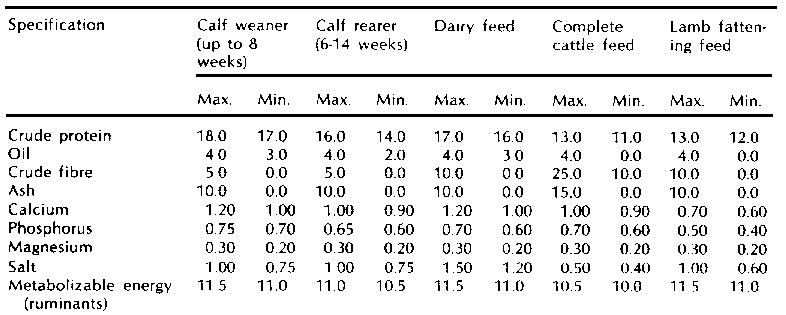
Appendix 1, Table IV - Typical
nutrient specifications for ruminant feeds

Appendix 1, Table V - Typical
nutrient specifications for duck and furkey feeds
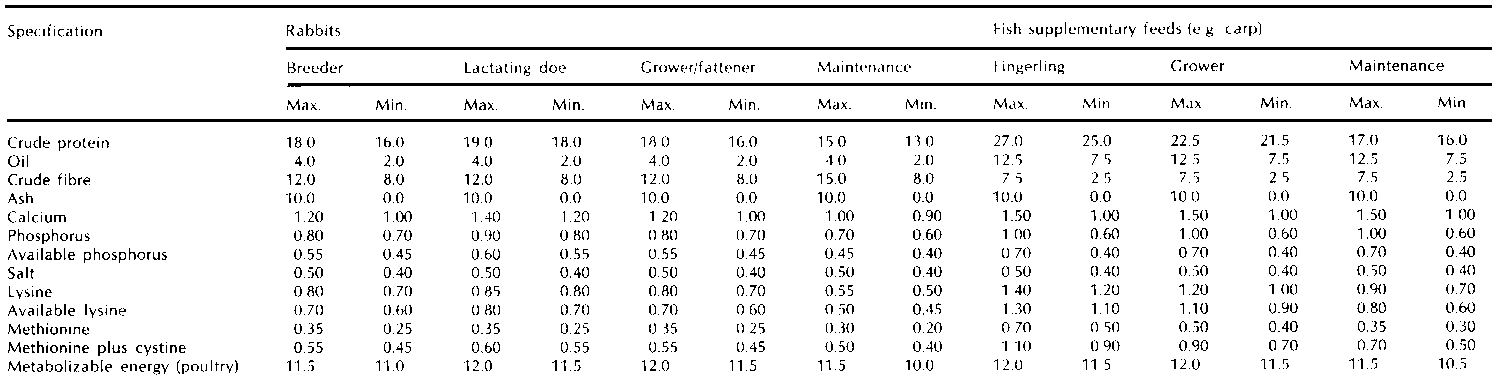
Appendix 1, Table VI - Typical
nutrient specifications for rabbit and fish feeds
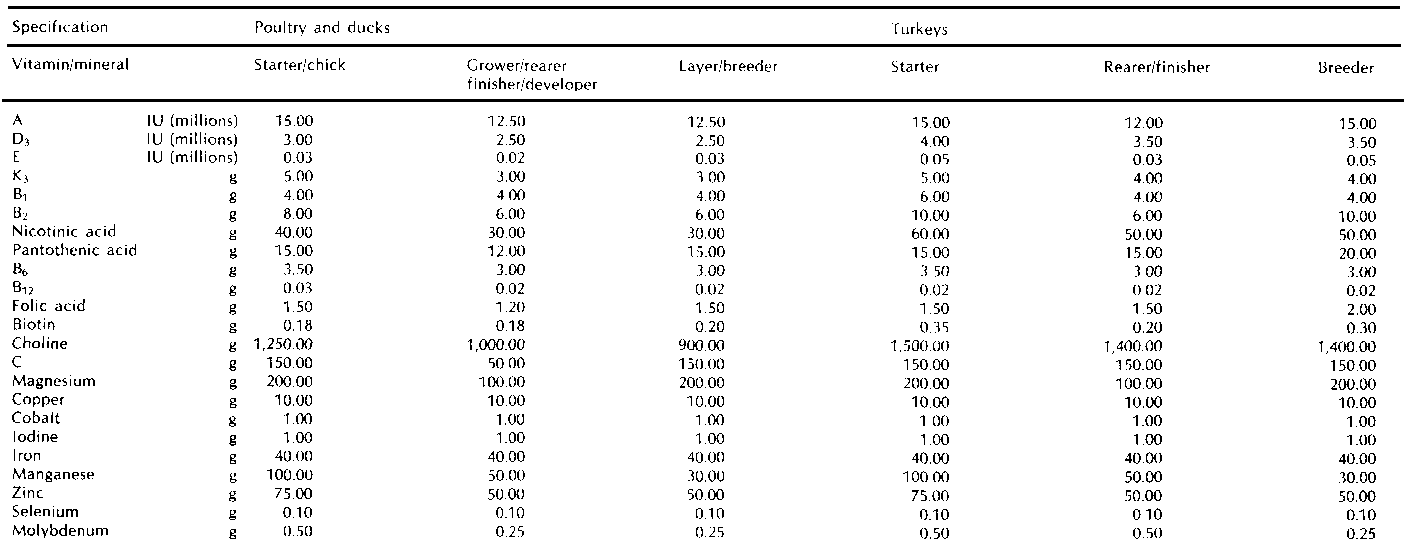
Appendix 1, Table VII Trace
mineral/vitamin specifications for poultry, duck and turkey feeds (per tonne)

Appendix 1, Table VIII - Trace
mineral/vitamin specifications for pigs and ruminants (per tonne feed)
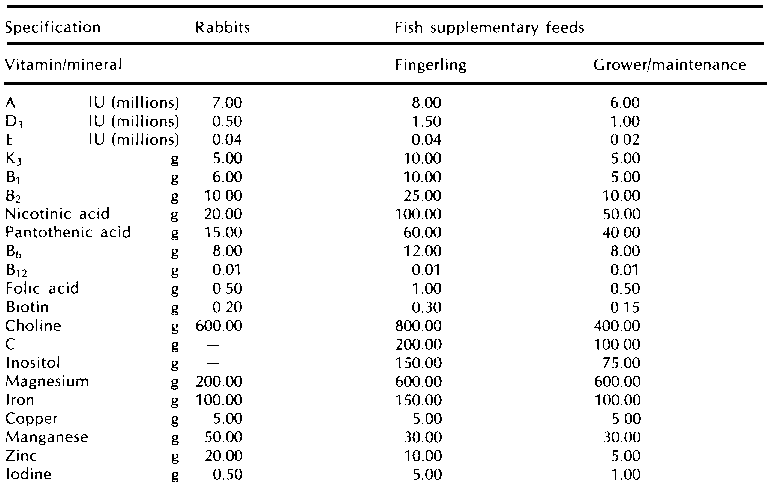
Appendix 1, Table IX - Trace
mineral/vitamin specifications for rabbits and fish (per tonne of
feed)
Appendix 2: Feed formulation
Scenario 1
Small feed mill in Asia
Assume the country has a highly organized intensive poultry industry with feed for this industry being manufactured at a number of large mills, each with a capacity of 50,000-100,000 tonnes per annum. Demand for feed continues to exceed supply however, and there is still room for the small feed producer in this rapidly expanding sector. The local pig industry operates on more traditional lines but some producers buy in feed on an irregular basis. Buffalo are used in the rice fields and dairy cows are kept on the plantations but there is little demand for ruminant feed. One growth area for the feed producer that is highly profitable is the manufacture of fish feed for the local government hatchery and surrounding producers. Ducks are also raised on the ponds.
The 2.5 tonne/hour mill works approximately 16 hours per day, 6 days per week so that annual output is 12,000 tonnes, 1,000 tonnes per month. The output of different feeds manufactured per month is given in Appendix 2, Table X together with the 29 ingredients available, their prices and the resulting formulations based on the information given in Appendix 1, Tables l-IX. A total of 16 feeds is manufactured. Five pre-mixes are purchased from an importation company, a poultry/duck starter/chick, a poultry/duck finisher/grower, a layer/duck breeder, a pig grower/finisher and a general fish pre-mix. All feeds are pelleted, in line with local requirements, except the pig feeds.
A few further adjustments might be made to the formulations in Table X before manufacture, for example, rather more cautious levels of mustard seed cake might be employed and small quantities of some ingredients, such as winged bean in chick and duck finisher, might be eliminated in favour of other ingredients in order to simplify the mixing process. Leucaena might be added to layer 11 in order to add a source of pigmenting agents if these are required.
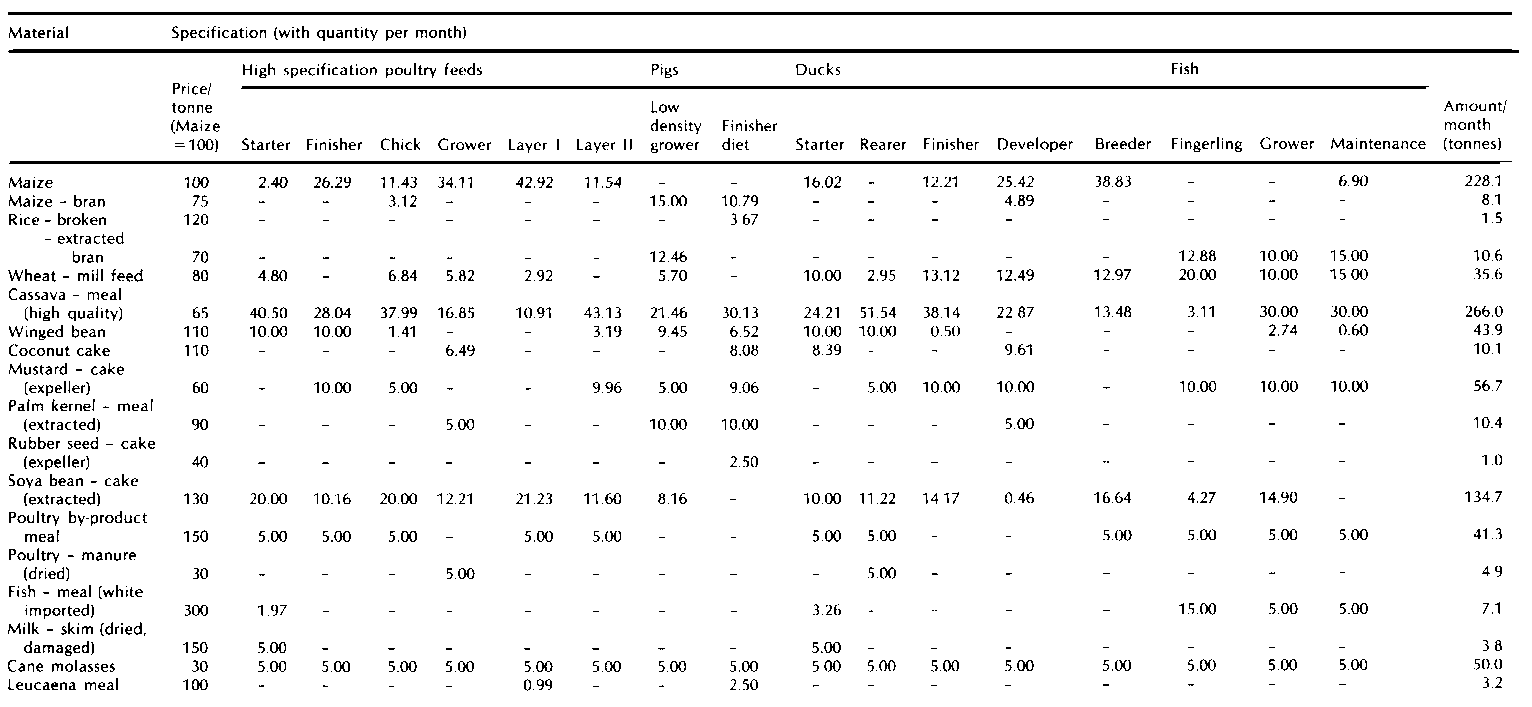
Appendix 2, Table X - Formulation for
a small feed mill in Asia
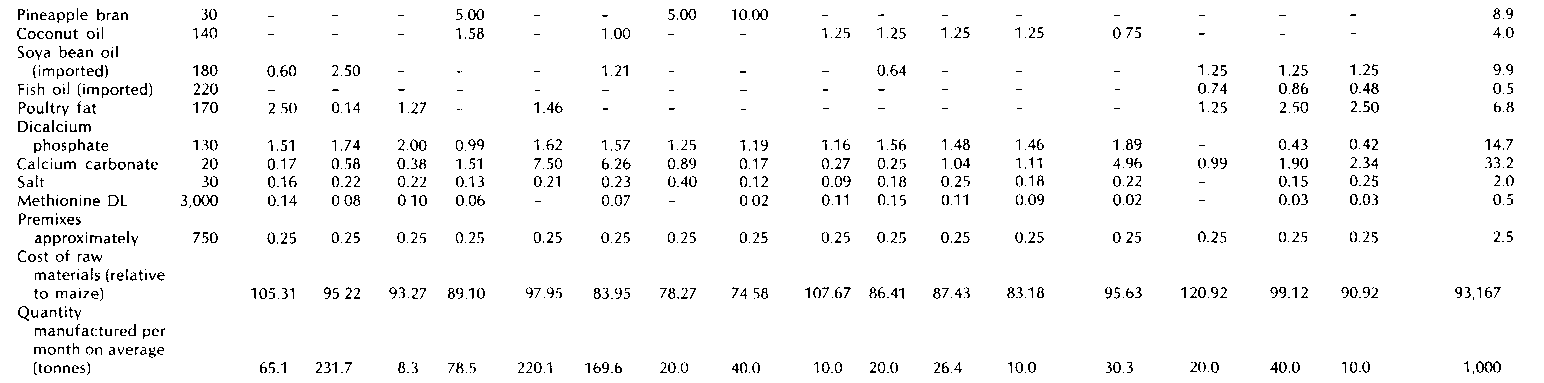
Appendix 2, Table X - Formulation for
a small feed mill in Asia (continued)
Scenario 2
Small feed mill in Africa
The major demand for feed is for village poultry production, often as a supplement to feed scavenged by the flock from the environment. There is a government beef-fattening unit which uses animals raised on traditional tribal grazing areas. The animals are set to the export abattoir and the price received for the carcasses justifies the extra cost of feeding. The local mission school has a few dairy cows looked after by the students and rabbits are also kept.
The 0.5 tonne per hour mill works 8 hours a day, 6 days a week so that annual output is approximately 1,200 tonnes, 100 tonnes per month. The output of different feeds manufactured per month is given in Appendix 2, Table Xl together with the ingredients available their prices and the resulting formulations based on the information given in Appendix 1 Tables, I-IX. A total of ten feeds are manufactured. Six pre-mixes are imported through the agricultural cooperative: a poultry starter, poultry finisher, a layer pre-mix, beef minerals, dairy minerals and a rabbit pre-mix.
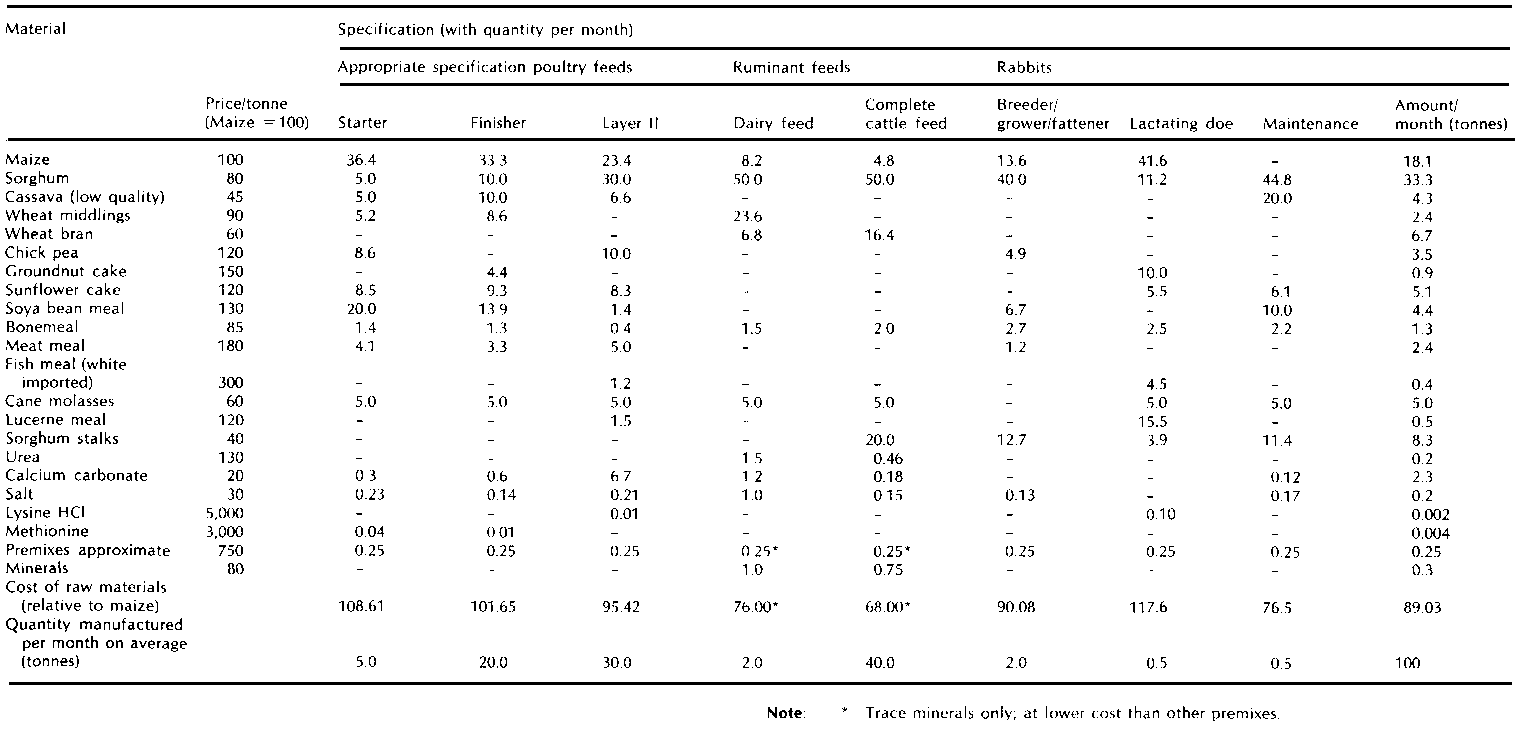
Appendix 2, Table XI - Formulation
for a small feed mill in Africa

Appendix 2, Table XII - Normal
maximum limits to ingredient inclusion (%)
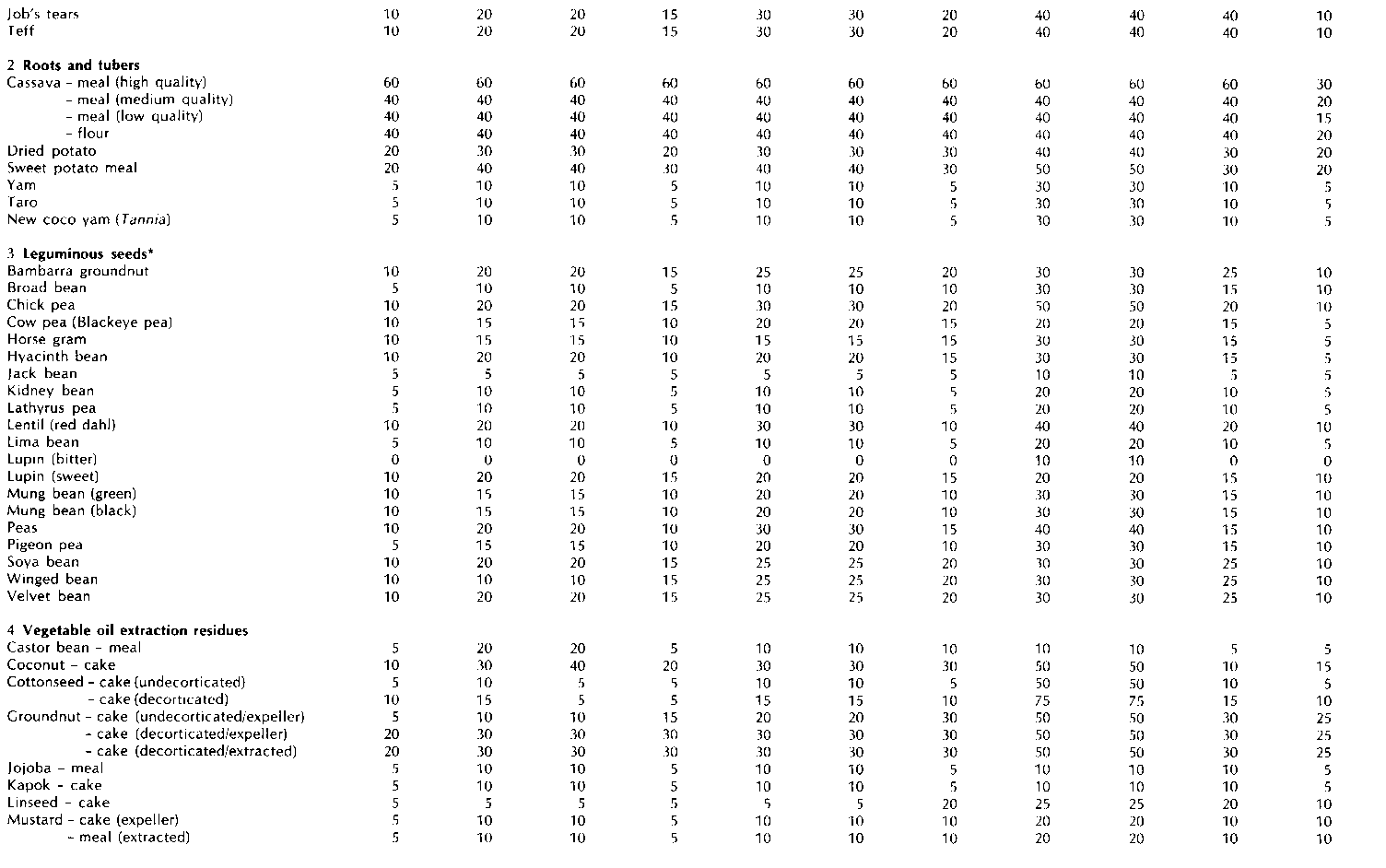
Appendix 2, Table XII - Normal
maximum limits to ingredient inclusion (%) (continued - 1)

Appendix 2, Table XII - Normal
maximum limits to ingredient inclusion (%) (continued - 2)

Appendix 2, Table XII - Normal
maximum limits to ingredient inclusion (%) (continued -
3)
Appendix 3: Composition of raw materials
Important note on Appendix 3 Table XIII
The figures presented in this table are 'typical' values for the ingredients listed. They are sometimes average values, especially in the case of major ingredients, but in the case of lesser-used or novel ingredients, the figure is simply the only one available in the literature. Figures will be affected by the origin of the sample, method of processing and analytical procedures. A number of figures are simply crude extrapolations or interpolations from data on similar ingredients. These approximations are necessary since use of zero values where precise data is not available would introduce greater errors into formulations than those resulting from approximations. Actual analytical values on the particular batch of raw material to be used are of course preferable where available. Usually where knowledge of the concentration of a nutrient is limited the ingredient is likely to be included at a very low level or would only normally be used for livestock for which the nutrient is perhaps unimportant, for example, amino acid values in relation to ingredients normally only used for ruminant feeding. Special problems occur in relation to ME and DE values as there are often enormous variations in values in the scientific literature. Mineral values are very dependent upon soil and environmental conditions.
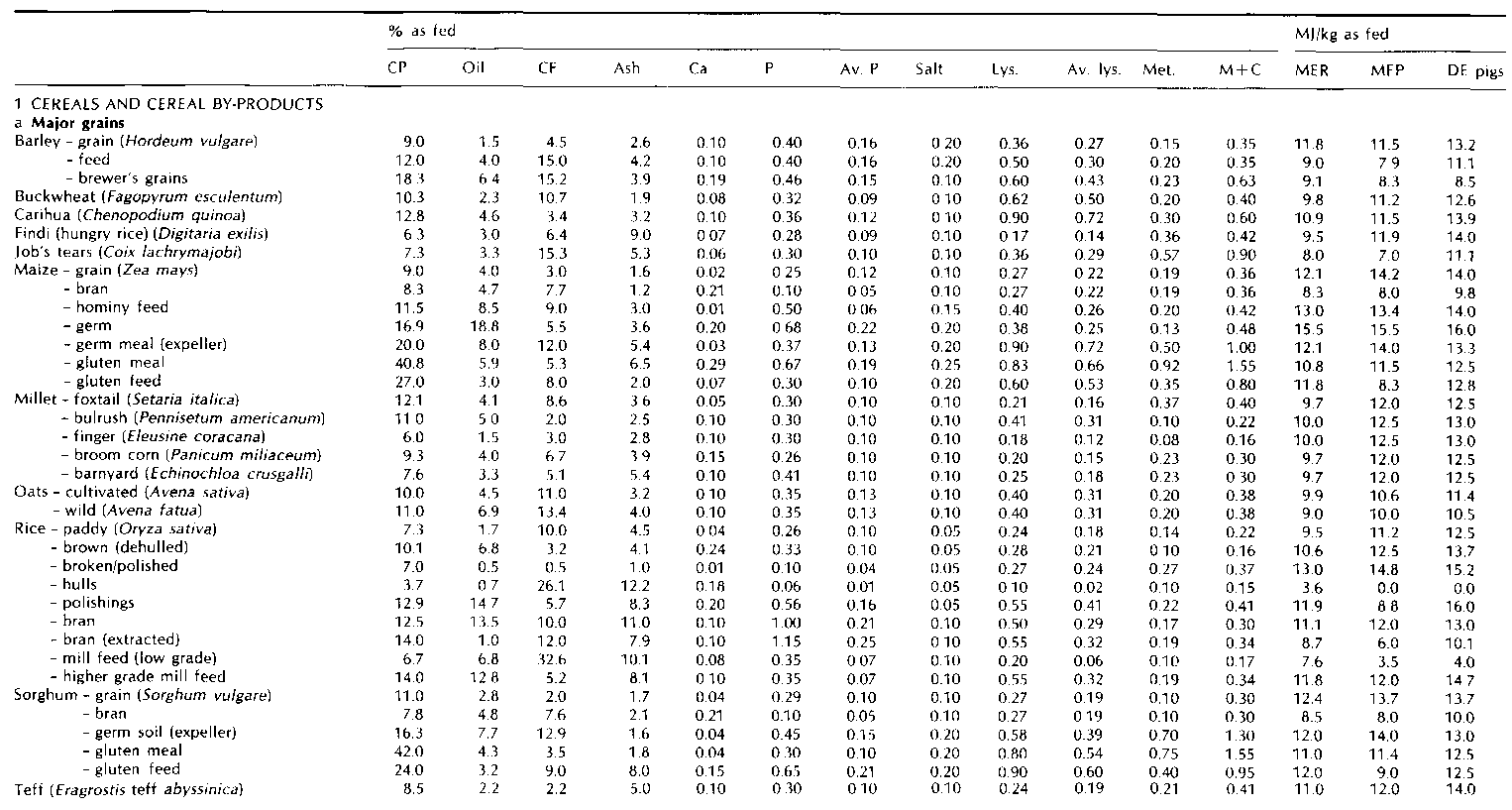
Appendix 3, Table XIII - Composition
of a number of feed ingredients
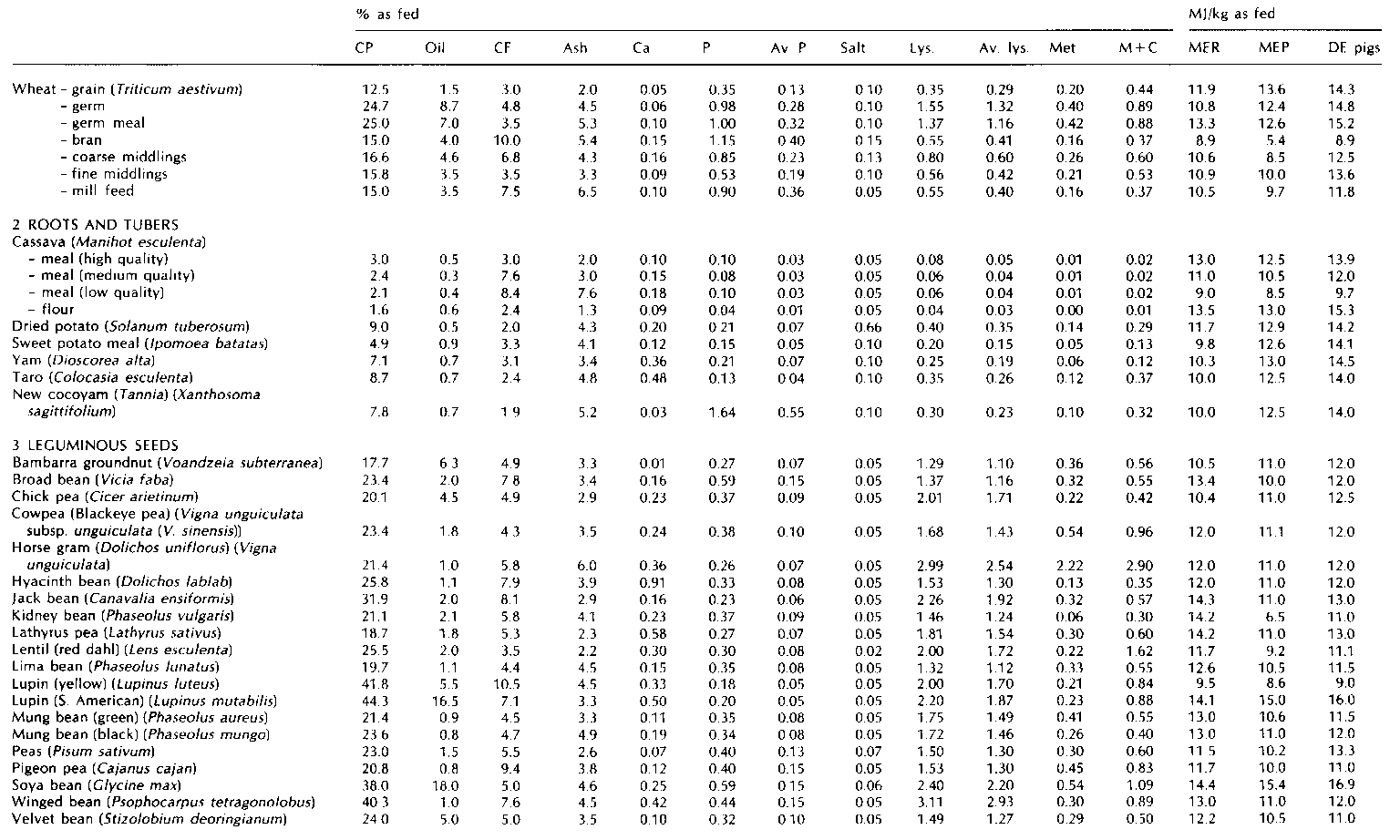
Appendix 3, Table XIII - Composition
of a number of feed ingredients (continued - 1)

Appendix 3, Table XIII - Composition
of a number of feed ingredients (continued - 2)

Appendix 3, Table XIII - Composition
of a number of feed ingredients (continued - 3)
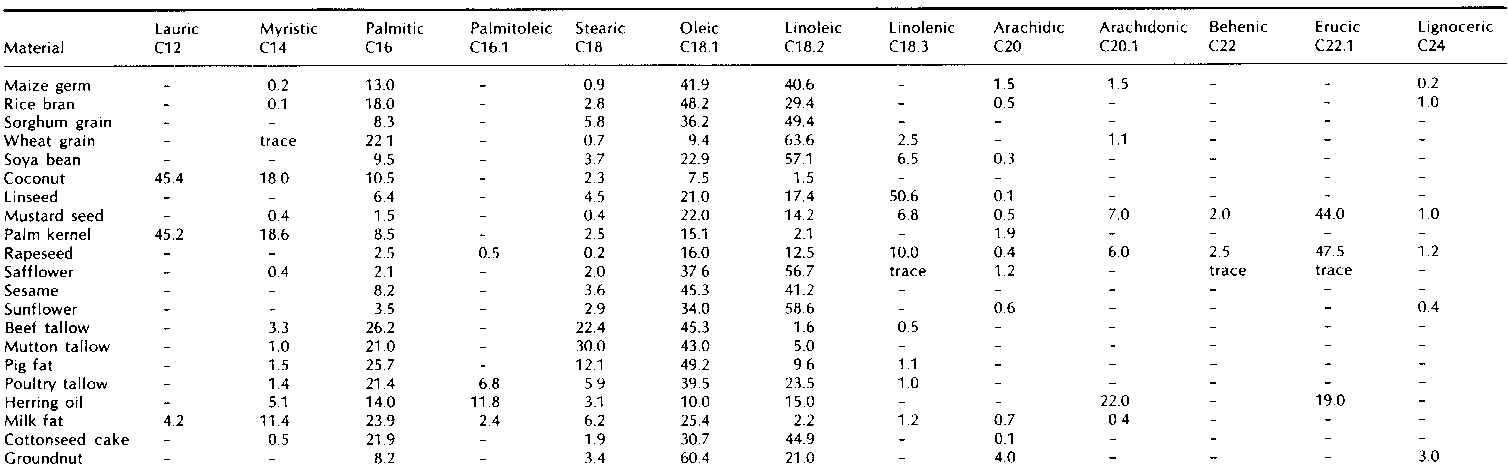
Appendix 3, Table XIV - Typical fatty
acid composition (%) of some common feed fats and oilz

Appendix 3, Table XV - Toxic or
undesirable factors in feed ingredients
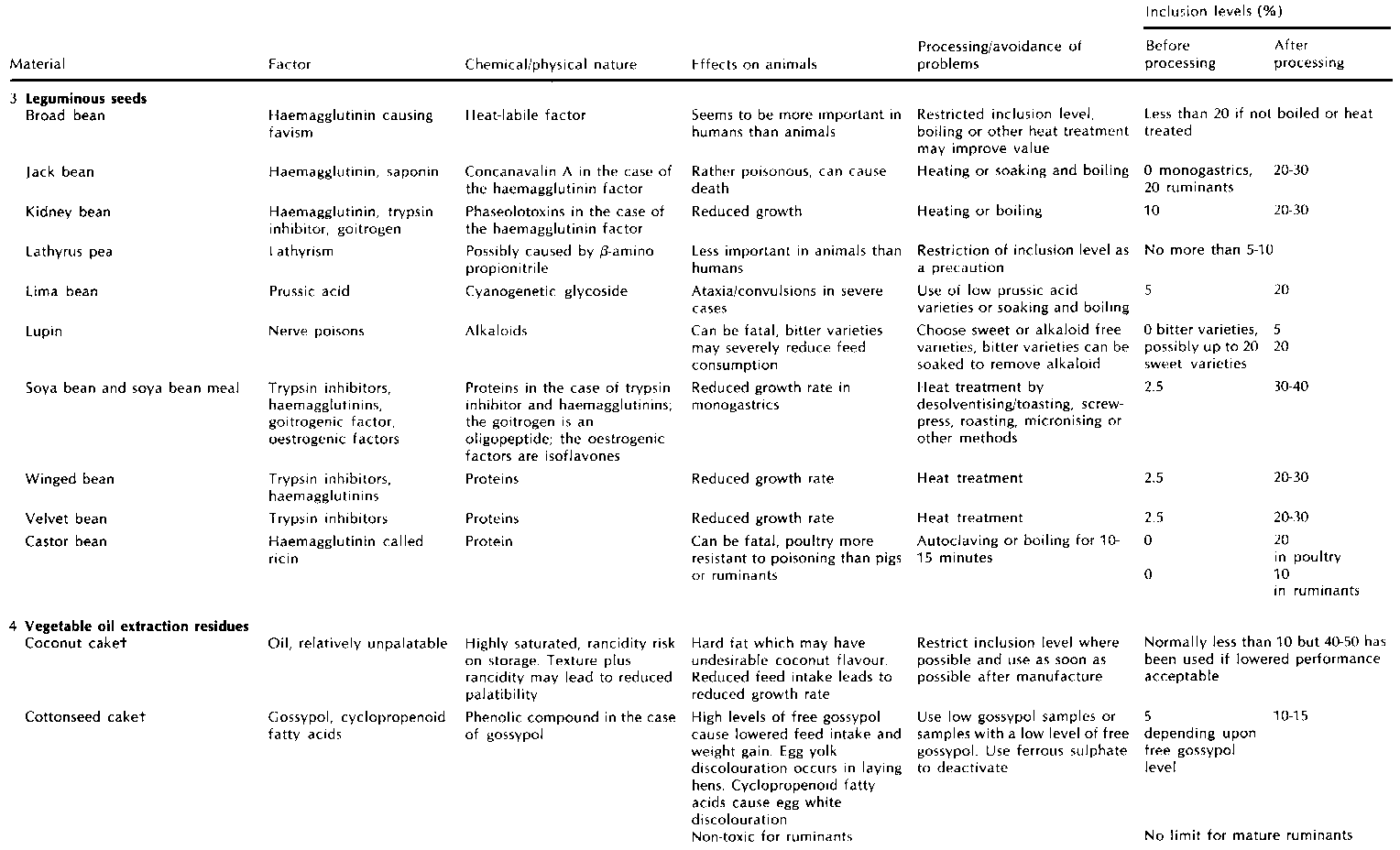
Appendix 3, Table XV - Toxic or
undesirable factors in feed ingredients (continued - 1)
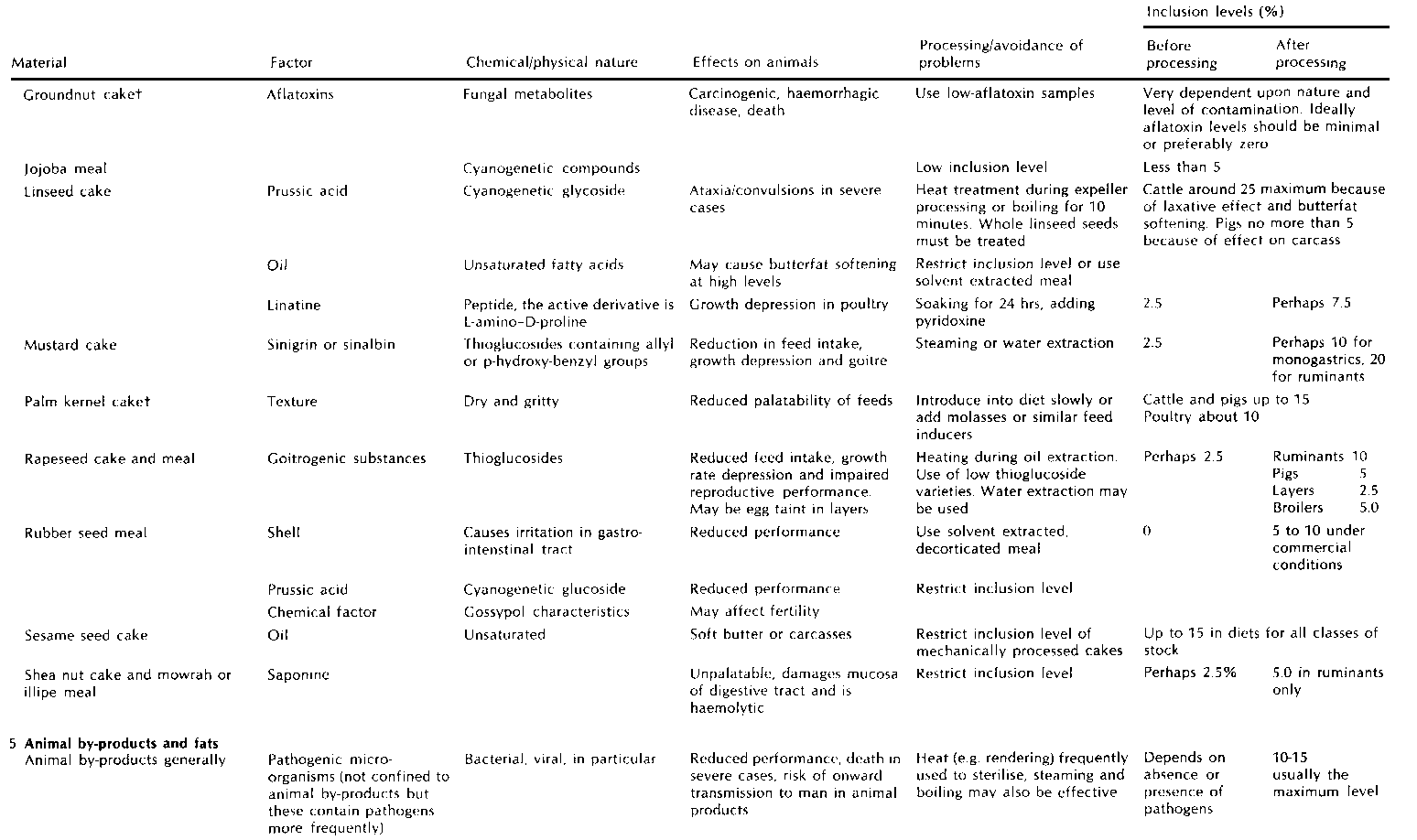
Appendix 3, Table XV - Toxic or
undesirable factors in feed ingredients (continued - 2)
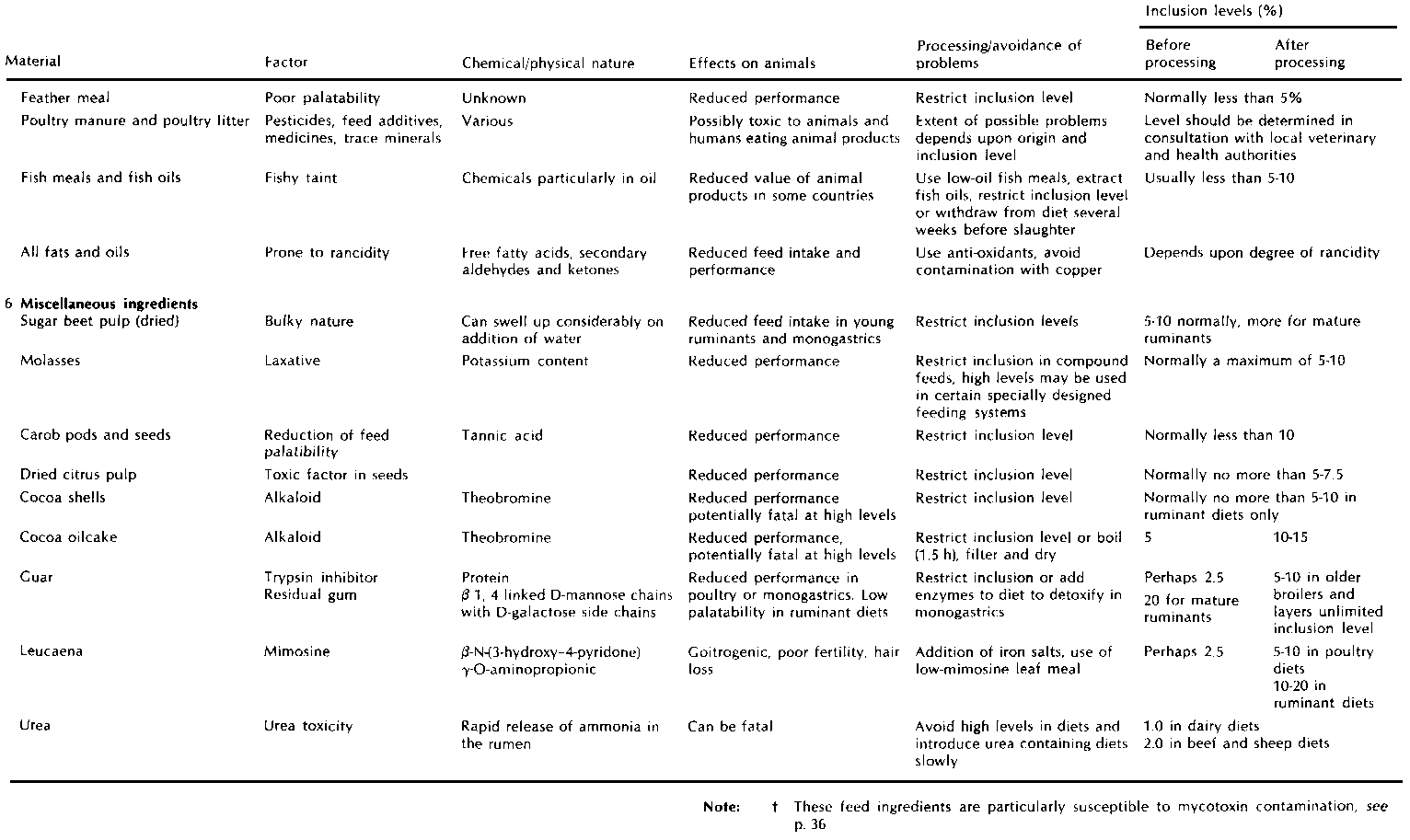
Appendix 3, Table XV - Toxic or
undesirable factors in feed ingredients (continued - 3)
Appendix 3, Table XVI - Some beneficial factors associated with certain feed ingredients
|
Material |
Beneficial factor |
|
Oils and fats |
Increased energy density of diets reduces amount of feed needed to meet requirements and heat increment associated with feed digestion This may reduce heat stress under certain conditions. Oils and fats may improve feed palatability and ease of pelleting at moderate inclusion levels (2-3% added oil or fats in addition to that normally present in feed ingredients). |
|
Fish meal and solubles |
The rumen-insoluble protein in fish meal may stimulate production in very high producing ruminants, e.g. the dairy cow yielding more than 15 litres of milk per day. Fish solubles are reported to improve growth in monogastrics but the specific mechanism does not appear to be known. |
|
Molasses |
Improves feed intake through sweet taste and by reducing dustiness of feeds; also, up to 4-5% is commonly used as a pelleting aid. |
|
Leucaena |
These materials may be included in feeds to pigment egg yolks or broiler skins if this accords with local human food preferences |
|
Lucerne meal |
Grass (dried) |
Appendix 4: Feed processing
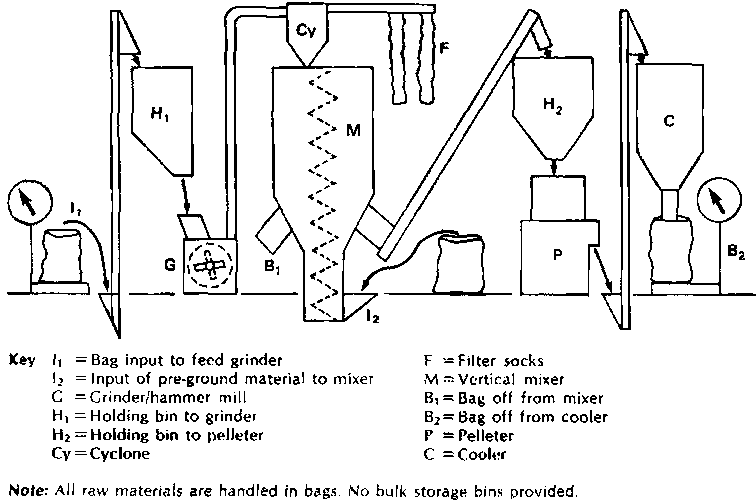
Figure 5 - Flow diagram: typical 1
tonne/hour feedmill
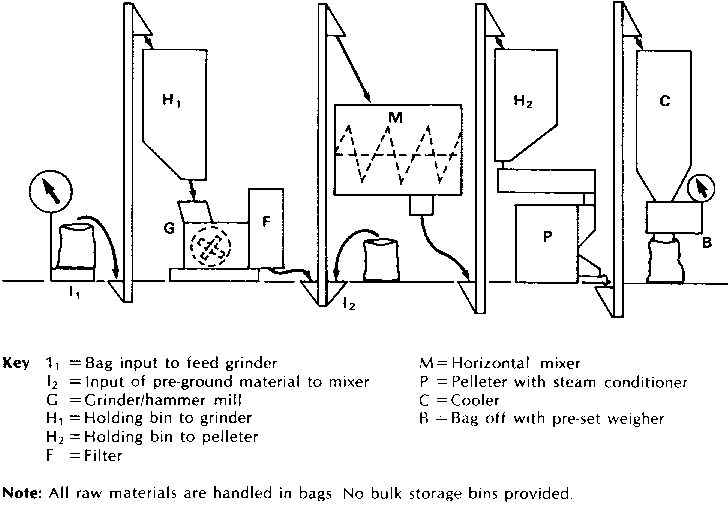
Figure 6 - Flow diagram: typical 2
tonne/hour feedmill - industrial scale
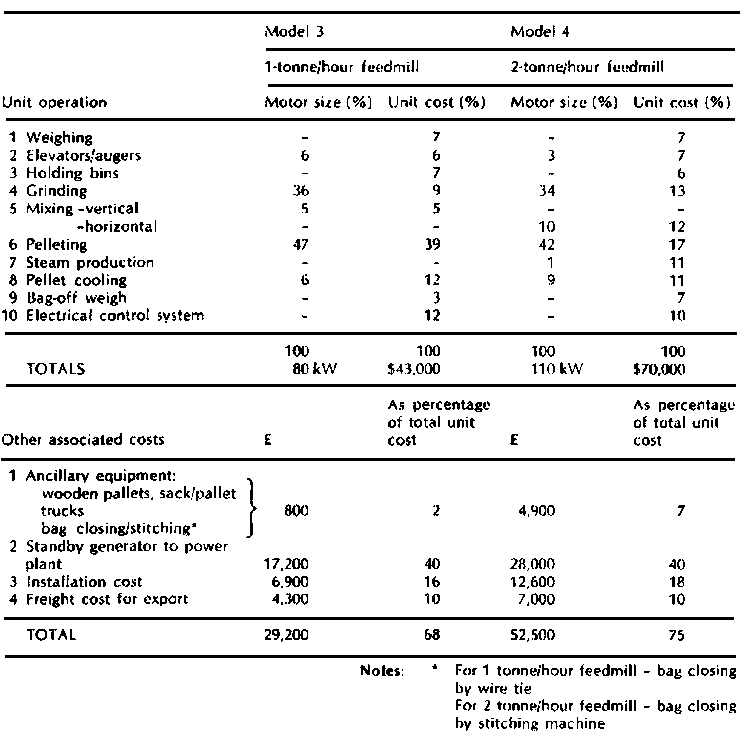
Appendix 4, Table XVII -
Proportional motor sizes and capital costs for feed milling unit operations - as
percentages of totals

Appendix 4, Table XVIII - Typical
bulk densities of raw materials

Appendix 4, Table XIX - Floor area
and bag requirement for raw material according to bulk
density
Appendix 5: Appraisal of small-scale production projects
As mentioned in Chapter 5, a preliminary assessment of a small-scale feed project should give a good indication of its likely feasibility. If the results of this appear favourable the next step would be to carry out a full financial analysis.
A check list of preliminary information required is given in the first part of this appendix, followed by detailed working tables for full financial analysis. The list is fairly comprehensive, but there may occasionally be other considerations in some local circumstances. It should be noted that a lot of this information will also be required by equipment manufacturers and suppliers in order that they can advise on, and quote for, the most suitable models.
Check list for preliminary assessment Schedule 1: Outlets
1. For which animals are the feedstuffs to be made: poultry (broilers or layers), pigs, cattle (dairy cows, beef cattle, calves), fish, rabbits, etc?
2. What numbers of each type of animal will receive compound feed and what amounts of feed are estimated to be required?
3. What proportion of planned production is to be sold? From what source do the prospective buyers obtain their supplies?
4. Are other companies active in your area manufacturing animal feeds? What are the sizes of these companies (estimated output of feed in tonnes/day). Would you consider them to be competitors for a limited market or is the demand for feed greater than the ability to supply? Is the market likely to increase? At what rate?
5. Is demand constant throughout the year or seasonal?
6. Are the buyers concentrated in one geographical area or widely dispersed?
7. Are sales likely to be subject to government price controls?
8. Is the demand for meal or pelleted feed?
9. Will manufactured feed be delivered to the user in bulk or bags?
10. If bags are used, what type will they be: paper, cotton, jute, etc?
Schedule 2: Raw materials and raw material supply
1. What are the proposed feed formulations? Have these been calculated on a least-cost basis to meet animal nutrient requirements and local feed standards?
2. What are the main ingredients to be used (including minerals and vitamins) and the source of supply for each of the raw materials? The total quantity of raw materials available must be equivalent to the proposed output of finished feed: the proportions will of course depend on the formulations.
3. Are there any problems in obtaining sufficient supplies of any of the ingredients listed? Special attention should be given to imported ingredients, particularly in countries with foreign exchange controls.
4. Will raw materials be delivered to the mill or will transport vehicles be required? If transport is required, will it be rented or purchased? If purchased, what type of vehicle?
5. Will the bulky ingredients be delivered in bulk or in bags? If in bags, will they be supplied by the seller? If not, what type (jute, cotton, paper) and what size (25 kg, 50 kg, other) will be required? Is there any problem in obtaining bags?
6. What are the storage requirements for each of the ingredients to be used?
Schedule 3: Site and energy supply
1. Has a site been selected for the mill? If yes, does the location pose any major problems of access to markets? access to supplies of bulky raw materials? access to energy supply? Would the location of the site give rise to serious humidity problems, be subject to flooding or be affected by other climate problems?
2. Are buildings already available at the site for the milling equipment and for storing both raw materials and feedstuffs? If yes, are they appropriate? If not, are there major problems concerning the construction of buildings, including problems in the supply of building materials?
3. What is the source of energy? If electricity from a national system, is it dependable? If not, is a generator or direct diesel drive engine required?
4. What are your electricity supply characteristics, i.e. phase, voltage, Hz?
Schedule 4: Operational considerations
1. Is labour readily available? Would there be any problems in operating more than one shift, if necessary, at certain times?
2. Will staff need training?
3. Considering labour costs and availability, what degree of automation is indicated: manual, semi-automatic or automatic?
4. If a more automated system were selected, is there access to trained engineers to service the machinery?
5. Can spare parts be obtained? Will foreign exchange regulations pose a problem in obtaining spares quickly?
6. Can you provide trained engineers to service the machinery or install the equipment using the suppliers manuals and drawings only? Are qualified electricians available for machinery wiring-up?
7. Is there ready access to facilities for chemical analysis of raw materials and manufactured feeds? If not, what provision is to be made for quality control?
8. If machinery is to be imported into your country, where is the nearest port of entry, and what is the distance from port to feed-mill site?
9. What is the condition of roads from port to feed-mill site?
10. Are cranes, fork-lift trucks, etc. and/or other lifting gear available at the port, and at the feed mill site for machinery erection and installation?
Schedule 5: General
1. Are there any other important problems influencing the success of an investment to produce and manufacture animal feedstuffs (e.g. changes in import licensing systems, price controls, irregular supply of day-old chicks to clients, affecting demand for feed)?
Estimation of capital and operating costs, and working capital requirements
Establishment costs (fixed capital)
Appendix 5, Table XX - Site costs
| |
Model 1 |
Model 2 |
Model 3 |
Model 4 |
|
1 Site area, square metres |
15 |
40 |
150 |
200 |
|
2 Cost @ £1/square metre |
15 |
40 |
150 |
200 |
Note: Site areas include space for access. Site areas are small. Unless services, for example, electricity, have to be specially laid on for the livestock compound feed production enterprise, site costs are likely to be negligible, in which case they may be ignored. They have been included here in order to make this example comprehensive.
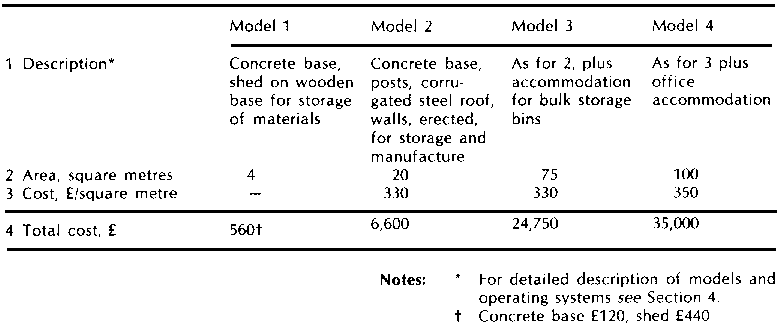
Appendix 5, Table XXI - Building
costs
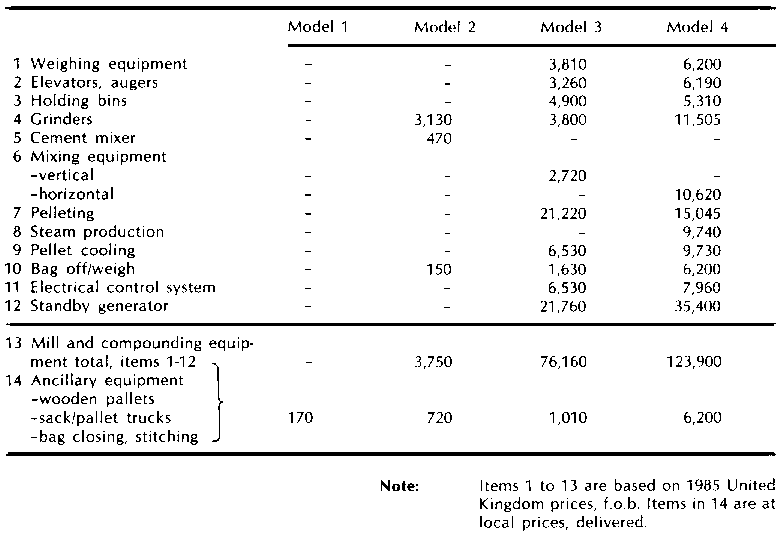
Appendix 5, Table XXII - Machinery
and equipment costs
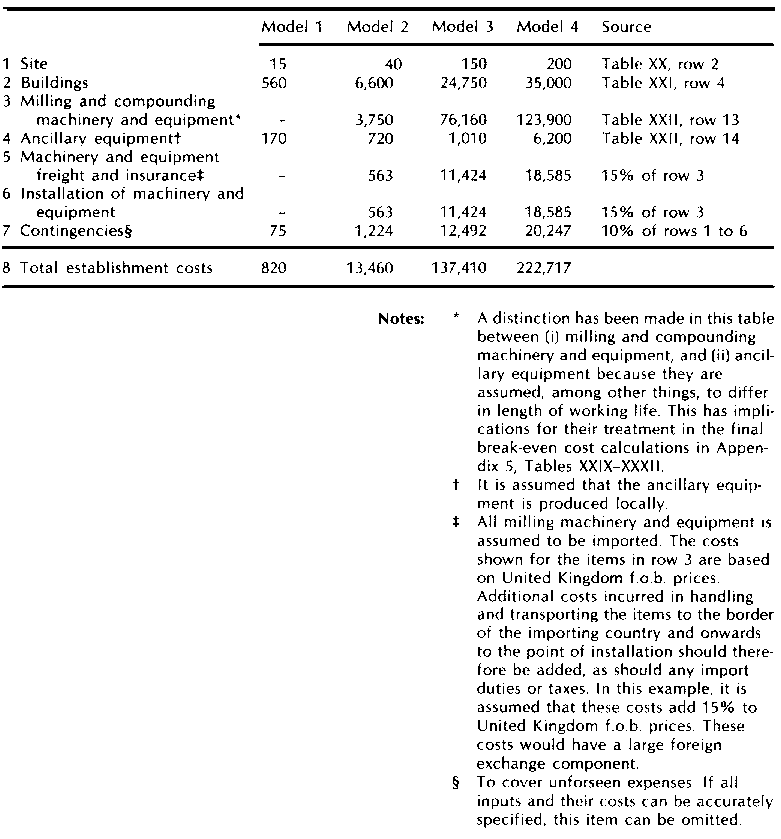
Appendix 5, Table XXIII - Summary of
establishment costs (£)
Operating costs

Appendix 5, Table XXIV - Feed raw
material costs
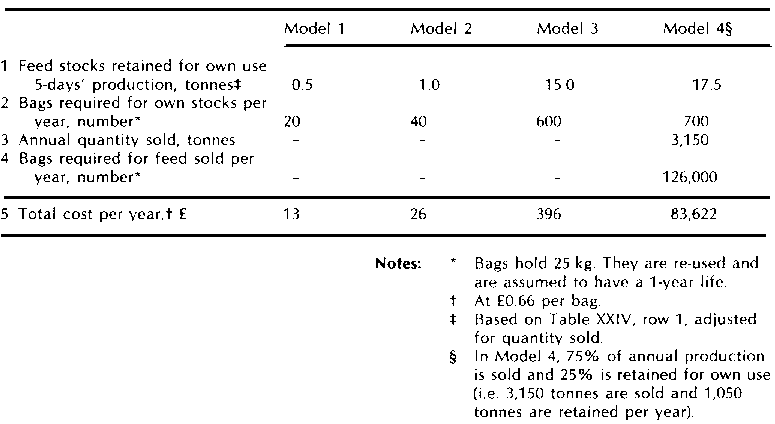
Appendix 5, Table XXV - Cost of bags
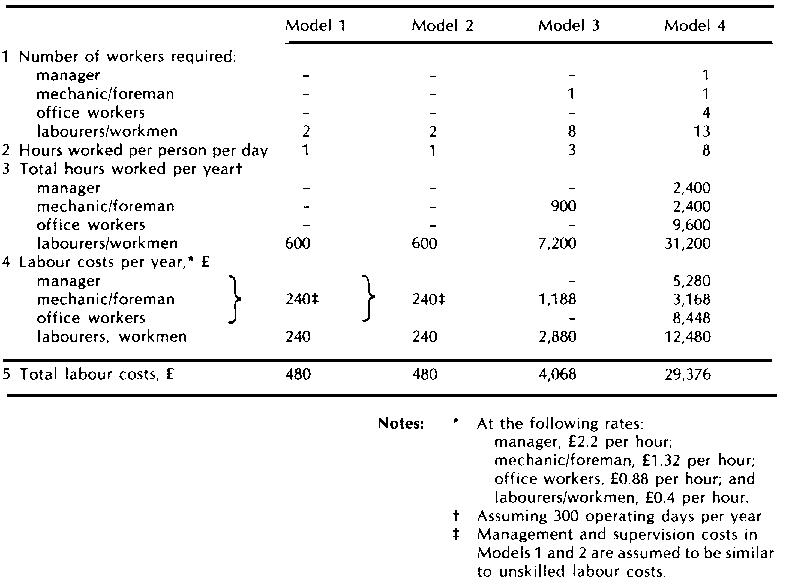
Appendix 5, Table XXVI - Labour
costs
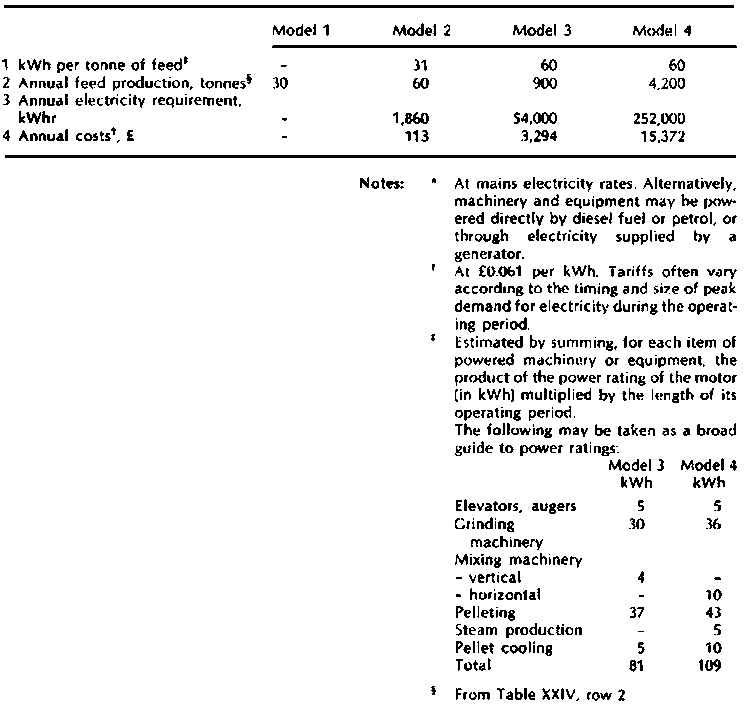
Appendix 5, Table XXVII - Fuel
costs*
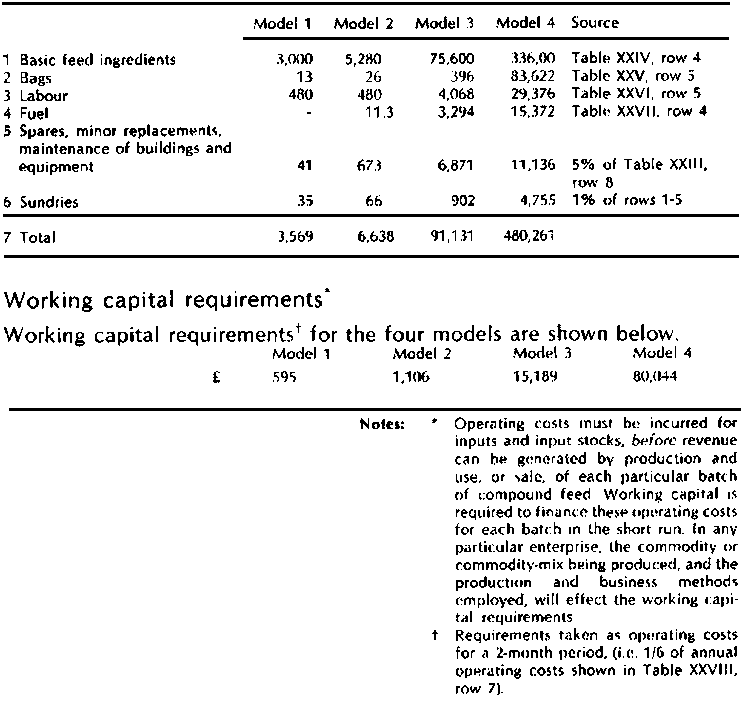
Appendix 5, Table XXVIII - Summary of
operating costs (£)
Calculation of break-even costs per tonne
The following tables show how break-even costs per tonne of compound can be calculated using the discounting procedure. Table XXIX describes the method of calculation in detail for Model 1, by means of an annotated table, using a discount rate of 10% per year. The chosen rate should normally be the market rate for borrowed loan capital. Tables XXX-XXXII summarize the cost components and the break-even cost calculations, at a discount rate of 10% per year, for Models 2-4.
(i) add two extra columns to the Table, one for annual operating costs and the other for total costs, and calculate the PV of total costs for each year by discounting. Sum the products to give the PV of total costs over the life of the project;
(ii) for each year, multiply annual production, in units, by the appropriate discount factor for that year and sum the products; and
(iii) divide the PV of total costs from (i) by the sum of products from (ii) to estimate break-even cost per tonne.
The general case method will always give the correct answer, including cases where annual operating costs and annual output are constant. For example, using the data from Table 1 above:
(i) the PV of total costs over the life of the project is £28,532.14;
(ii) the sum of the products of annual production mulitplied by the discount factor is 228.183; and
(iii) £28,532.14 divided by 228.183=£125.04

Appendix 5, Table XXIX - Calculation
of break-even costs per tonne, discount rate 10% Model 1
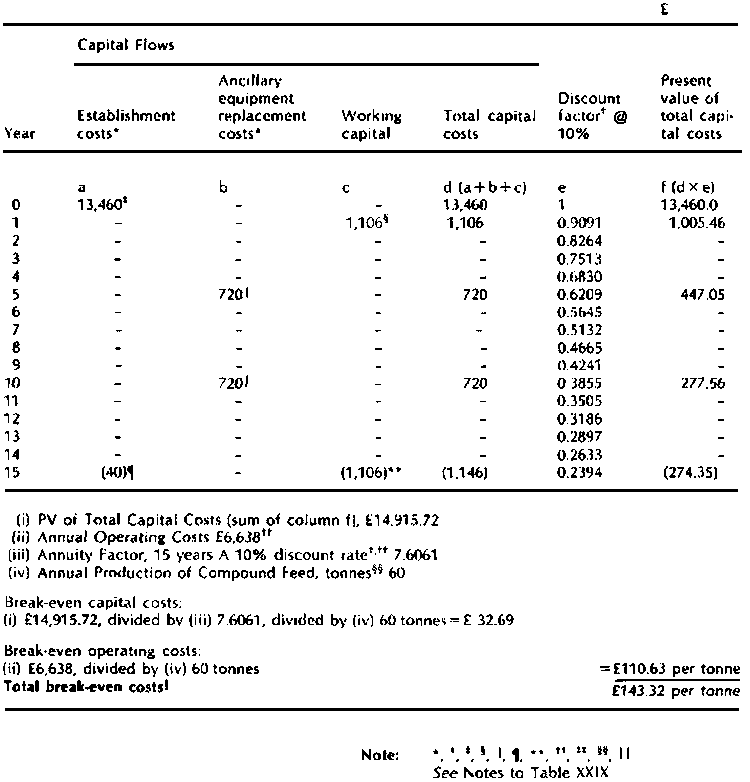
Appendix 5, Table XXX - Break-even
costs per tonne, discount rate 10%, Model 2
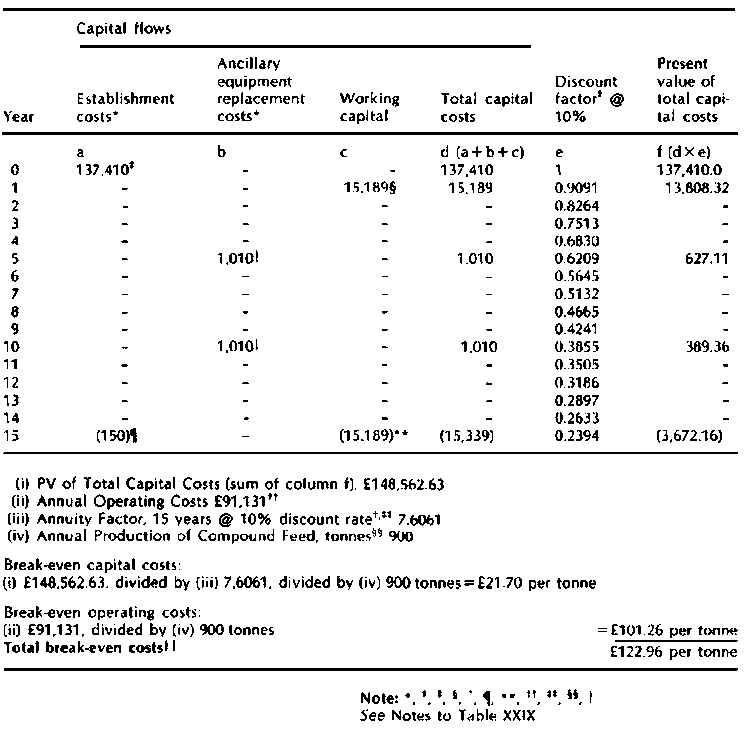
Appendix 5, Table XXXI - Break-even
costs per tonne, discount rate 10%, Model 3
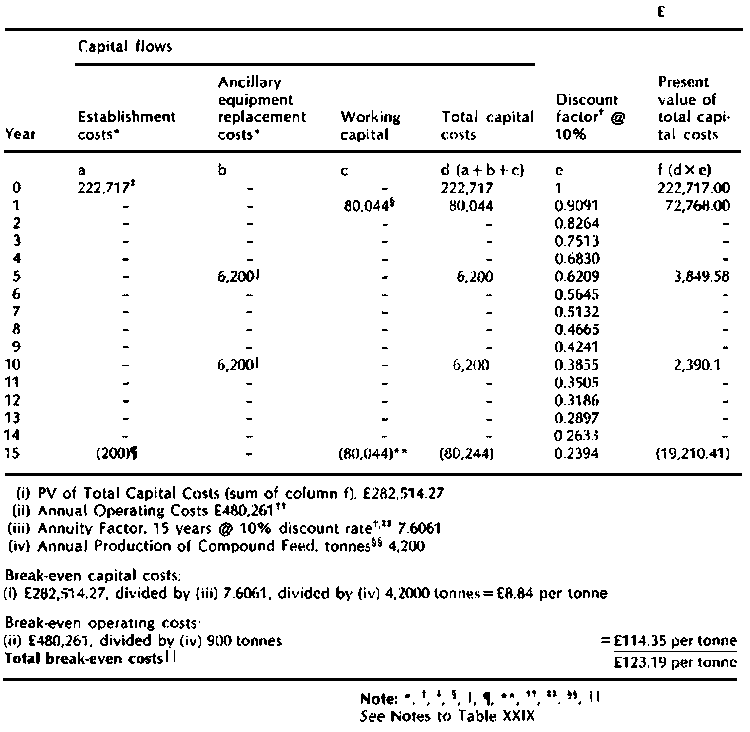
Appendix 5, Table XXXII - Break-even
costs per tonne, discount rate 10%, Model
4
Appendix 6: Further reading
CHURCH, D. C. and POND, W. G., (1974) Basic animal nutrition and feeding.
CORVALLIS, Oregon, United States: D. C. Church, vii+300pp.
COCKERELL, I., HALLIDAY, D., and MORGAN, D. J. (1975) Quality Control in the Animal Feedingstuffs Manufacturing Industry; Report of the Tropical Products Institute, G97, iv+39pp.
COKER, R. D., JONES, B. D., NAGLER, M. J., OILMAN, G. A., WALLBRIDGE, A. J. and PANIGRAHI, S. (1984). Mycotoxin training manual (Section A9), London, TDRI 25 pp.
COOKE, B. C. (1985) Prediction equations: their potential for estimating the energy content of compound animal feeds. Feed Compounder, November, PP. 7-9
GOHL, B. (1981) Tropical Feeds. Rome: Food and Agriculture Organization of the United Nations.
MCDONALD, P., EDWARDS, R. A. and GREENHALGH, J. F. D., (1981) Animal Nutrition, 3rd Edn. London: Longman.
PFOST, H. B. (Technical Editor) (1976) Feed Manufacturing Technology. Arlington, Virginia, United States: Feed Production Council, American Feed Manufacturers Association Inc.,
TYLER, C., (1964) Animal Nutrition, (2nd edn.) London: Chapman and Hall.