Cover

Ferrocement: Applications in Developing Countries (BOSTID, 1973, 89 p.)

Contents — 14 sections
  1. Section 1
  2. Section 2
  3. Preface
  4. Ferrocement: Applications in Developing Countries (BOSTID, 1973, 89 p.)
  5. II. Background Information
  6. III. Ferrocement for Boatbuilding
  7. IV. Ferrocement for Food-Storage Facilities
  8. V. Ferrocement for Food-Processing Equipment
  9. VI. Ferrocement for Low- Cost Roofing
  10. VII. Ferrocement Materials Technology
  11. Appendix A
  12. Appendix B
  13. Appendix C
  14. Appendix D
Ferrocement: Applications in Developing Countries (BOSTID, 1973, 89 p.)
(introduction...)
Preface
I. Summary and Recommendations
(introduction...)
Recommendation 1: Exploratory Research into the Full Range of Ferrocement Applications
Recommendation 2: Ferrocement for Indigenous Boats
Recommendation 3: Ferrocement for Food-Storage Facilities
Recommendation 4: Ferrocement in Food Technology
Recommendation 5: Ferrocement for Low-Cost Roofing
Recommendation 6: Ferrocement in Disaster Relief
Recommendation 7: A Coordinating Committee
Recommendation 8: Ferrocement Training Facilities
Recommendation 9: An International Ferrocement Information Service
II. Background Information
III. Ferrocement for Boatbuilding
IV. Ferrocement for Food-Storage Facilities
V. Ferrocement for Food-Processing Equipment
VI. Ferrocement for Low- Cost Roofing
VII. Ferrocement Materials Technology
Appendix A
Appendix B
Appendix C
Appendix D
Ferrocement: Applications in Developing Countries (BOSTID, 1973, 89 p.)
(introduction...)
Preface
I. Summary and Recommendations
II. Background Information
III. Ferrocement for Boatbuilding
IV. Ferrocement for Food-Storage Facilities
V. Ferrocement for Food-Processing Equipment
VI. Ferrocement for Low- Cost Roofing
VII. Ferrocement Materials Technology
Appendix A
Appendix B
Appendix C
Appendix D

National Academy Of Sciences
2101i Constitution Avenue
Washington. D. C. 20418

Office of The Foreign Secretary
February, 1973

Resumen En Espanol
R�sum� En Fran�ais

Dr. Joel Bernstein
Assistant Administrator
Bureau for Technical Assistance
Agency for International Development
Department of State
Washington, D.C. 20523

Dear Dr. Bernstein:

Ferrocement, a thin-shell concrete reinforced with wire mesh, is a high-quality construction material whose ingredients are widely available in developing countries. It can be used to build a wide range of structures, and can be worked mainly by unskilled, though supervised, labor. Throughout the world, highly satisfactory fishing boats, pleasure craft, storage tanks, housing components, and assorted agricultural and commercial facilities have been constructed of ferrocement, and its use is increasing rapidly.

With a view toward its future impact, the Ad Hoc Panel on the Utilization of Ferrocement in Developing Countries was convened by the Board on Science and Technology for International Development as part of its continuing study of technological innovations relevant to the problems of developing countries. The panel included some persons experienced in successful applications of ferrocement to land and water uses and others familiar with construction needs in developing countries. The panel concentrated on three specific tasks:

· Evaluating the current state of the art of ferrocement as an engineering material in order to identify its known properties and characteristics.
· Evaluating the principal areas of application on both land and water.
· Developing specific recommendations for promoting the use of ferrocement in a logical, effective manner.

The report considers the potential for further use of already discovered applications, such as boats and silos, and identifies promising new applications, such as roofs and food-processing equipment. The panel concludes that the potential of ferrocement in developing countries and its likely effect on their economies are much greater than previously thought.

Deliberately scant in technical language and brief in documentation, the report is detailed enough to provide a clear understanding of what ferrocement is and what it can do. In particular, this report seeks to convey a sense of ferrocement's wide-ranging potential to readers in developing countries- government officials, technical assistance representatives, and technical experts-who are becoming more curious about this increasingly discussed technology.

Sincerely yours,
Harrison Brown
Foreign Secretary

In the final stages of the preparation of this report we were saddened to learn of the death of W. Morley Sutherland. During the past 15 years he had played a preeminent role in the development of ferrocement for boatbuilding. He brought intense personal dedication and wide practical experience to the deliberations of the panel.

Ferrocement: Applications in Developing Countries (BOSTID, 1973, 89 p.)
(introduction...)
Preface
I. Summary and Recommendations
II. Background Information
III. Ferrocement for Boatbuilding
IV. Ferrocement for Food-Storage Facilities
V. Ferrocement for Food-Processing Equipment
VI. Ferrocement for Low- Cost Roofing
VII. Ferrocement Materials Technology
Appendix A
Appendix B
Appendix C
Appendix D

Preface

The National Academy of Sciences, through its Board on Science and Technology for International Development (BOSTID), has been concerned for many years with the application of science and technology to international economic development. The activities of the board have been largely supported by the U.S. Agency for International Development (AID).

Recently, at the request of AID, the Board established an Advisory Committee on Technological Innovation (ACTI) to oversee a continuing, systematic search for, and assessment of, developments in fields of science and technology that may bear particular relevance to the solution of specific problems of developing countries.

An early inquiry referred to ACTI concerned the replacement of the fishing fleet destroyed in the November, 1970, cyclone in what was then East Pakistan. AID wished to obtain information on innovations in boat-building techniques that would accelerate the reconstruction of this desperately needed resource. Preliminary investigations showed that ferrocement held substantial promise for boatbuilding and, indeed, for many other applications. To explore the broad potential of this material for both water and land uses, the board convened the Ad Hoc Panel on the Utilization of Ferrocement in Developing Countries.

This report is the result of the panel's deliberations during three 1-day meetings in Washington, D.C., and a 4-day session at Airlie House, Virginia, in the course of 1972.

During deliberations the panel often felt need of an analysis of the materials science and basic engineering of ferrocement. No such analysis exists, and the widespread fragmentation and scatter of data through the literature make conclusions and comparisons difficult. The panel recommends that a document on the materials science of ferrocement be prepared by a panel chosen for this purpose.

The panel's efforts have been greatly assisted by Mignon Cabanilla, Administrative Secretary to the Advisory Committee on Technological Innovation, and by Jane Lecht, the BOSTID editor.

Ferrocement: Applications in Developing Countries (BOSTID, 1973, 89 p.)
I. Summary and Recommendations
(introduction...)
Recommendation 1: Exploratory Research into the Full Range of Ferrocement Applications
Recommendation 2: Ferrocement for Indigenous Boats
Recommendation 3: Ferrocement for Food-Storage Facilities
Recommendation 4: Ferrocement in Food Technology
Recommendation 5: Ferrocement for Low-Cost Roofing
Recommendation 6: Ferrocement in Disaster Relief
Recommendation 7: A Coordinating Committee
Recommendation 8: Ferrocement Training Facilities
Recommendation 9: An International Ferrocement Information Service

Ferrocement: Applications in Developing Countries (BOSTID, 1973, 89 p.)

I. Summary and Recommendations

Ferrocement is a highly versatile form of reinforced concrete made of wire mesh, sand, water, and cement, which possesses unique qualities of strength and serviceability. It can be constructed with a minimum of skilled labor and utilizes readily available materials. Proven suitable for boatbuilding, it has many other tested or potential applications in agriculture, industry, and housing.

Ferrocement is particularly suited to developing countries for the following reasons:

· Its basic raw materials are available in most countries.
· It can be fabricated into almost any shape to meet the needs of the user; traditional designs can be reproduced and often improved. Properly fabricated, it is more durable than most woods and much cheaper than imported steel, and it can be used as a substitute for these materials in many applications.
· The skills for ferrocement construction are quickly acquired, and include many skills traditional in developing countries. Ferrocement construction does not need heavy plant or machinery; it is labor-intensive. Except for sophisticated and highly stressed designs, as those for deep-water vessels, a trained supervisor can achieve the requisite amount of quality control using fairly unskilled labor for the fabrication.

The following specific recommendations are based on documentation of the current state of the art and the ad hoc panel's own evaluation of selected water and land applications of ferrocement, detailed later in this report.

Recommendation 1: Exploratory Research into the Full Range of Ferrocement Applications

The panel recommends that ferrocement be subjected to a wide-ranging program of research and development to explore all its potential uses. Such R & D is likely to produce many valuable applications for the developing world.

Some applications require laboratory analysis (e.g., interactions between stored food and mortar surfaces); some, structural testing; some, demonstration and pilot trials. Other are so speculative that only studies on paper are warranted at present. Research institutions, engineering laboratories, corporations with R & D capability, technical schools, universities, or innovative individuals can engage in this work. Exploration of these ferrocement applications is exceptionally well suited for work on location in the developing world, but a role for research in industrialized nations exists. Although this report stresses less sophisticated applications, ferrocement is adaptable to sophisticated technology, too. Factory-fabricated precision components made from ferrocement may ultimately be the main use of the material. One particularly promising area for more sophisticated R & D is in replacing ferrocement with chopped-wire concrete in which randomly placed short lengths of wire, mixed in with the mortar, take the place of wire mesh.

Following is a list of individual applications the panel felt were particularly worthy of detailed investigation. Some of these applications are specifically discussed in Recommendations 2-6. They are included here to convey a sense of the range of uses for ferrocement. (See also Figures 1-5.)


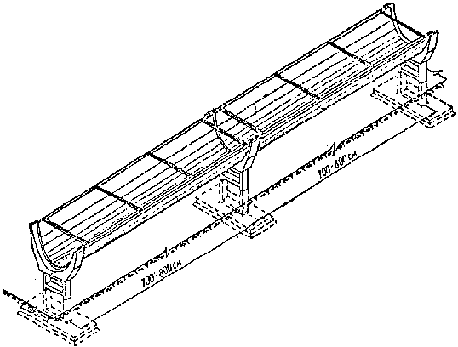
FIGURE 1: Water-conveying troughs, 20 mm thick, are mass-produced in precast ferrocement units in the USSR (Drawn from diagram in Kowalski, T.G. "Ferrocement in Hong Kong." Far East Builder. July 1971, p.29.)

POTENTIAL APPLICATIONS OF FERROCEMENT

Fishing and Cargo

Boats Grain dryers

Tugs and Barges

Copra dryers

Bridges

Greenhouse, packinghouse, and drying tables

Docks and Marinas


Permanent food-storage dumps

Pads for drying tea, coffee, cocoa, coconuts, other oilseeds, peppers, spices, etc.

Seed (vegetables, etc.) storage


Starch, flour, sugar storage


Silage storage

Cattle feeders and water troughs

Edible oil storage (olive, peanut, cottonseed, palm, etc.)

Cattle dips


Water storage (drinking or irrigation)

Grain storage (rice, wheat, corn, sorghum, millet, etc.)

Pipes and irrigation conduits


Ovens and fireplaces

Manioc-soaking vats

Slabs or shingles for roofs

Fermentation tanks for cocoa, coffee, etc.

Decorative panels and tiles


Wall paneling

Retting tanks for sisal, jute, hemp, etc. natural

Floors


Telephone and power poles

Gas tanks (for liquid and gas)

Lining for tunnels and mines


Stakes for supporting vine crops, tomatoes, beans, etc. (for termite resistance)

Cooling towers


Sewage troughs, lagoons, septic tanks, and other treatment facilities

Pothole repairs (squares of ferro- cement sized and laid in the hole)

Guttering

Timber-treatment enclosures

Leather-processing facilities

Shutters and formwork for use in standard concrete construction

Dyeing vats


Recommendation 2: Ferrocement for Indigenous Boats

The panel recommends ferrocement as a substitute for materials now used in the construction of traditionally shaped, indigenous boats. This application deserves widespread dissemination, a function that technical assistance agencies might well assume. The record of successful experiments confirms the technical feasibility, but field trials or demonstrations may be needed in some developing areas to overcome local resistance to innovation in boatbuilding.

The Food and Agriculture Organization of the United Nations (FAO) and the United Nations Industrial Development Organization (UNIDO) have taken the initiative in introducing ferrocement in developing countries and demonstrating its importance in a developing-country context. Thus far, however, these ferrocement-based technical assistance projects have been oriented toward larger, oceangoing trawlers with sophisticated western-style hulls, with the objective of increasing commercial fishing capability. Commercial fishing on this scale requires a considerable land-based organization to preserve, transport, and market the product, and the cost of large fishing boats represents an investment that subsistence-level fishermen cannot afford. In this report we are concerned with individual boatmen, whether commercial or subsistence, who would benefit from the low cost, long life, and easy repairs of small, familiarly shaped and familiarly propelled ferrocement boats.

Improving such craft will not initially have the same effect on economic development as introducing fishing trawlers. Yet, the ready acceptance of cheap, traditionally shaped boats could significantly affect economic development because of the much larger number of boats involved and the greatly increased life expectancy over their wooden counterparts.

Ferrocement's unique characteristics-low cost of materials, strength, ease of maintenance and repair-recommend themselves particularly to the fabrication of small, "native" craft. The usual curved displacement hulls of indigenous craft are appropriate for this material. Small ferrocement workboats can be built on site, by local (but supervised) laborers who are usually available and low cost. Because these boats are mainly hull, and therefore without costly fittings, the builder's savings are maximized. Never far from land and usually in fresh water, small workboats undergo less stress than deep-water vessels and require less stringent technology and quality control. Moreover, existing wooden craft are often so heavy that conversion to ferrocement sometimes yields boats equivalent or lighter in weight.

Since design improvements can be added incrementally, a traditionally shaped boat might, over the years, also be improved in design. In particular, the use of ferrocement allows all the complex curves of planked wooden boats, as well as the more complex curves that are not possible in wood but would improve the boat's performance.

Ferrocement is free from attack by teredos (shipworms), wood rot, and other hazards of the tropics. Furthermore, ferrocement boats are inherently strong enough to be powered, some comparable wooden boats are not strong enough to take mechanical power.

Recommendation 3: Ferrocement for Food-Storage Facilities

The panel believes that the urgent need to preserve grain and other food crops in developing countries justifies extensive field trials in the use of ferrocement for silos and storage bins. The existence of successful prototypes suggests that little more research is needed, other than techno-economic and design studies for given localities.

In tropical regions, high temperatures and humidity promote the growth of mold and rot on foodstuffs, destroy moisture-sensitive materials such as bagged cement and fertilizer, and encourage thermal or ultraviolet degradation of many products. Insects, rodents, and birds also take an enormous toll. Perhaps 25 percent* of each year's food crop in the developing world is rendered unfit or unavailable for consumption because of improper handling, storage methods, and facilities.

Hundreds of ferrocement boats floating on the world's waterways demonstrate that this material is watertight, and other experience has shown that ferrocement does not readily corrode in the tropics.

Experience in Thailand and Ethiopia** has shown that ferrocement grain silos can be built on site very inexpensively, using only one supervisor and unskilled labor. A simplified version of known ferrocement boatbuilding materials and techniques was used to build the silos. Measurable losses in the prototype silos are less than 1 percent per annum. Rodents, birds, and insects cannot gain entrance. Since these ferrocement silos are airtight, the inside air is quickly deprived of oxygen by the respiring grain, and insects (eggs, larvae, pupae, or adults), as well as any other air-breathing organisms introduced with the grain. are destroyed.

This safe means of storing grains and other foods such as pulses and oilseeds could help farmers in the developing world to become more self-reliant, and could contribute significantly to a country's economy and food reserves.

Recommendation 4: Ferrocement in Food Technology

In view of the properties, availability, ease of manufacture, and reliability of ferrocement, the panel recommends a serious, wide-ranging effort by research organizations to investigate the use of ferrocement to replace steel- particularly stainless steel-in manufacturing at least some units of basic food-processing equipment.

Many foods-highly perishable, irreversibly affected by temperature changes and biological and chemical contaminents-are lost to mankind because there are no rural processing plants to preserve, convey, or process food products soon after harvest. In many developing areas, high construction costs prohibit the use of even simple manufactured equipment. These costs are largely due to the traditional use of stainless steel, expensive on any account, but especially so in terms of foreign exchange when it has to be imported.

If ferrocement food-processing equipment (perhaps with an inert surface coating) can be developed, it may improve levels of nutrition and lend itself to labor-intensive, cottage-industry food processing in developing countries.

Some advantages of ferrocement for food-processing equipment are its (1) fabrication from mainly local materials; (2) structural strength and reliability, (3) ease, economy, and versatility of construction, (4) ease of maintenance and repair; and (5) easy-to-transport raw materials.

Extensive preliminary laboratory research is needed, particularly to investigate the sanitary properties of ferrocement structures and their ability to meet other specifications for food processing. Nevertheless, the panel believes that the effort is worthwhile in view of ferrocement's apparent suitability for

· Processing of fruit and vegetables for preservation.
· Fermentation vats for fish sauces, soy sauce, beer, wine, etc.
· Storage vats or tanks for fruit juices, vegetable oil, whey, or drinking water.
· Many other purposes-spray driers for milk, driers for copra, cooking stoves or ovens, dairies, freezing chambers, and slaughterhouses.

Recommendation 5: Ferrocement for Low-Cost Roofing

The panel believes that ferrocement may prove a suitable material for low-cost roofing in developing countries. Applied-science laboratories in developing countries and technical assistance agencies should seriously consider this area for field trials and techno-economic studies.

Adequate shelter is an essential human need, and a roof is the basic element of shelter. But current materials are not meeting the need for roofs. The more-than-80 developing countries in the world suffer from housing shortages resulting from population growth, internal migration, and sometimes from war and natural disaster. For most dwellings in developing countries, a durable roof constitutes the major expense. Roofs made of cheap local materials, such as scrap metal, thatch, or earth products (sand, mud, rock), are usually unsafe and temporary. A secondary problem is the need for adequate and durable supporting structures. In some areas, scarce wooden supports are weakened by decay and insect attack.

Ferrocement represents a potential solution to roofing problems because of its relatively low cost, durability, weather-resistance, and particularly its versatility. Unlike most conventional materials, ferrocement can be easily shaped into domes, vaults, extruded type shapes, flat surfaces, or free-form areas. Because ferrocement is easily fabricated, even in rural areas, by supervised local labor using mainly indigenous materials, it seems an excellent medium for on-the-site manufacture of small or large tiles (shingles) or other roofing elements. Where wooden timbers are very expensive, ferrocement beams might be made on site to replace wooden structures used to support indigenous roof coverings. Its most economical use, however, appears to be for fairly large-span roofs.

Ferrocement is not commonly used for roofing because its promise has not generally been recognized. Its use, particularly in developing countries, must be preceded by more research and experimentation in design and production techniques suited to construction by unskilled labor.

Recommendation 6: Ferrocement in Disaster Relief

The panel recommends ferrocement for careful consideration by disaster-relief organizations. This recommendation combines all the potential applications in developing countries considered by the panel.

After fires, floods, droughts, and earthquakes, the needs for food, shelter, and public health facilities are urgent. Transportation is often disrupted by destruction of roads, bridges, boats, and airstrips. Supplies of bulky conventional building materials may be stranded outside the disaster area, whereas the basic ingredients of ferrocement may be available on the site or easily transported.

The versatility of ferrocement also reduces logistical supply problems: wire mesh, cement, sand, and water can be substituted for the metal used for roofing, woods or plastic for shelters and clinics, asphalt for helipads, steel for bridges, and so on. Moreover, most ferrocement structures, though built for an emergency, will last long after the emergency is over.

In the panel's opinion, ferrocement could be used at a disaster site for many purposes:

· Transport facilities, from simple boats to barges, docks, marinas, helipads, and simple floating bridges or short footbridges-as well as road repairs.
· Food-storage facilities, quickly designed to local needs and quickly built, to preserve emergency food supplies.
· Emergency shelters such as, for example, the quonset type of roof, which is easy to erect and highly efficient.
· Public health facilities, such as latrines and clinics, built with ferrocement roofs and stucco-type walls of the same wire mesh and mortar.

To prepare for the use of ferrocement in disaster relief, demonstrations in simulated emergencies could be arranged for national and international relief agencies; and cadres of ferrocement workers could be trained in emergency applications and the supervision of local laborers at the disaster site.

Recommendation 7: A Coordinating Committee

The panel proposes that a multidisciplinary Committee for International Cooperation in the Research and Development of Ferrocement for Developing Nations be established, composed of experts from countries that have achieved high competence in using ferrocement, including the Soviet Union and the People's Republic of China. The committee might be established under the auspices of such agencies as UNIDO and FAO, which already have similar groups concerned with other technologies.* No existing group is available to agencies in developing countries who seek competent advice; yet such an international committee of experts is required at least until adequate standards and safeguards for ferrocement construction** become available- particularly for deep-water uses. Such a committee could help to avoid repetition of several hapless ferrocement enterprises of the recent past.

The proposed committee should have, as a minimum, the following responsibilities:

1. To improve communication and cross-fertilization among all the areas of expertise involved (engineering, chemistry, architecture, agriculture, food science, construction, fisheries, boa/building);

2. To convene meetings that provide opportunities for communication among the experts and technicians; and

3. To provide direction and catalysis for the ferrocement training facilities described in Recommendation 8.

By these actions the committee could further the rational and effective introduction of ferrocement technology into developing countries and encourage research and development to move in an efficient and purposeful manner.

Recommendation 8: Ferrocement Training Facilities

The panel recommends that training facilities in ferrocement technology and application be established. Otherwise, the present serious shortage of trained staff to assist or advise in ferrocement construction projects may limit the establishment of high-quality programs.

The panel strongly believes that ferrocement's potential justifies the location of such facilities in, or close to, the developing world.

Two existing programs in the South Pacific deserve attention and replication. In New Zealand, the government is funding a training school for ferrocement marine construction. UNIDO has a program in Fiji in which villagers travel to a central boatbuilding yard where they work together to build a "village" boat.
The ferrocement schools proposed by the panel should

1. Train personnel from developing countries to establish water and land ferrocement construction facilities and to supervise construction projects;

2. Prepare personnel to establish country- or local-level training schools; and

3. Produce audiovisual materials.

These ferrocement training schools could be grafted onto existing technical institutions or set up as separate establishments.

Recommendation 9: An International Ferrocement Information Service

Because of rising interest in ferrocement, the panel recommends the establishment of an international service to collect and disseminate information on ferrocement science. Such a service could prevent unnecessary duplication of research and development and ensure that an interested developing country is fully informed of relevant experience with ferrocement in other parts of the world.

This service should be particularly important for fabricators of specific products who wish to know how ferrocement will work for them. Because of the diversity of industries that are potential users of ferrocement and the tendency for individual industries to build up their knowledge independently, the availability of a centralized information service could help promote an efficient development of ferrocement technology.

The information service might well be set up at an academic or research institution already possessing competence and ongoing programs in ferrocement technology.

The information service should have at least the following functions:

1. To maintain an information bank and inquiry referral service on ferrocement;

2. To disseminate information on research and development efforts and on advances in ferrocement technology and experiences in applying it; and

3. To help developing countries identify experienced ferrocement companies and consultants, especially those with experience in developing countries.

Ferrocement: Applications in Developing Countries (BOSTID, 1973, 89 p.)
(introduction...)
Preface
I. Summary and Recommendations
II. Background Information
III. Ferrocement for Boatbuilding
IV. Ferrocement for Food-Storage Facilities
V. Ferrocement for Food-Processing Equipment
VI. Ferrocement for Low- Cost Roofing
VII. Ferrocement Materials Technology
Appendix A
Appendix B
Appendix C
Appendix D

II. Background Information

Ferrocement is a term commonly used to describe a steel-and-mortar composite material. Essentially a form of reinforced concrete, it exhibits behavior so different from conventional reinforced concrete in performance, strength, and potential application that it must be classed as a completely separate material. It differs from conventional reinforced concrete in that its reinforcement consists of closely spaced, multiple layers of steel mesh completely impregnated with cement mortar. Ferrocement can be formed into sections less than 1 inch thick, with only a fraction of an inch of cover over the outermost mesh layer. Conventional concrete is cast into sections several inches thick with an inch or so of concrete cover over the outermost steel rods. Ferrocement reinforcing can be assembled over a light framework into the final desired shape and mortared directly in place, even upside down, with a thick mortar paste. Conventional concrete must be cast into forms.

These fairly simple differences lead to other, more remarkable differences. Thin panels of ferrocement can be designed to levels of strain or deformation, with complete structural integrity and water tightness, far beyond limits that render conventional concrete useless. Ease of fabrication makes it possible to form compound shapes with simple techniques; with inexpensive materials; and, if necessary, unskilled (but supervised) labor.

HISTORY OF FERROCEMENT

The most extensively used building medium in the world today is concrete and steel combined to make reinforced concrete; familiar uses are in high-rise buildings, highway bridges, and roadways. Yet, the first known example of reinforced concrete was a ferrocement boat. Joseph-Louis Lambot's original French patents on wire-reinforced boats were issued in 1847 not long after the development of portland cement. (See Figures 6, 7.) This was the birth of reinforced concrete, but subsequent development differed from Lambot's concept. The technology of the period could not accommodate the time and effort needed to make mesh of thousands of wires. Instead, large rods were used to make what is now called standard reinforced concrete, and the concept of ferrocement was almost forgotten for a hundred years. Reinforced concrete developed as the material familiar today in fairly massive structures for which formwork to hold the fresh concrete in the wide gaps between reinforcing rods and a fairly thick cover over the rods nearest the surface are required.

Reinforced concrete for boatbuilding reappeared briefly during the First World War, when a shortage of steel plates forced a search for other boatbuilding materials. The U.S. and U.K. governments, among others, commissioned shipbuilders to construct seagoing concrete ships and barges, some of which continued in use after the war. The same phenomenon occurred in the United States during the Second World War. However, the conventional use of large-diameter steel rods to reinforce the concrete required thick hulls, making the vessels less practical to operate than lighter wood or steel ships.

In the early 1940's, Pier Luigi Nervi resurrected the original ferrocement concept when he observed that reinforcing concrete with layers of wire mesh produced a material possessing the mechanical characteristics of an approximately homogenous material and capable of resisting high impact. Thin slabs of concrete reinforced in this manner proved to be flexible, elastic, and exceptionally strong. After the Second World War, Nervi demonstrated the utility of ferrocement as a boatbuilding material. His firm built the 1 65-ton motor sailer Irene with a ferrocement hull 1.4 inches (3.6 ems) thick, weighing 5 percent less than a comparable wood hull, and costing 40 percent less. The Irene proved entirely seaworthy, surviving two serious accidents. Other than simple replastering necessitated by the accidents, the hull required little maintenance.

Despite this evidence that ferrocement was an adequate and economical boatbuilding material, it gained wide acceptance only in the early 1960's in the United Kingdom, New Zealand, and Australia. In 1965, an American-owned ferrocement yacht built in New Zealand, the 53-foot Awahnee, circumnavigated the world without serious mishap, although it encountered 70-knot gales, collided with an iceberg, and was rammed by a steel-hulled yacht. Other ferrocement boats have shown similar practicality, and their number is steadily increasing.

Recent emphasis on ferrocement as a boatbuilding material has obscured Nervi's noteworthy applications to buildings. He built a small storehouse of ferrocement in 1947 (Figure 15). Later he covered the swimming pool at the Italian Naval Academy with a 50-foot vault and then the famous Turin Exhibition Hall-a roof system spanning 300 feet. In both ferrocement is one of the structural components; the ribs and outer surface are reinforced concrete (as in Figure 8).

Nervi's work and subsequent applications presage an application of ferrocement on land that may overshadow the fresh-water applications.

CHARACTERISTICS OF FERROCEMENT

Ferrocement is a high-quality structural material whose simple constituents and formation make it usable for many construction purposes in even the most underdeveloped societies. In no way an inferior product specifically for cheap uses, it is in some respects more sophisticated than prestressed concrete. Ferrocement usually uses a freestanding frame of wire mesh that is mortared in place on site. The wire mesh is formed into the desired shape (domes, simple curves, or compound curves). Supporting framework used to outline the shape can be wood, precast concrete, or a simple jig made from steel rods or pipes. These supports are usually very rudimentary and serve only to outline the shape for the layers of wire mesh to be added next. They can eventually be removed or left in place to become part of the final structure.

The economy of ferrocement construction, compared with steel, wood, or glass-fiber reinforced plastic (FRP), depends greatly on the product being built, but ferrocement is almost always competitive, particularly in tropical developing countries where steel is expensive, frequently drains foreign exchange reserves, and requires sophisticated facilities and skilled operators. FRP is much more costly, creates a fire hazard, requires advanced technology, sophisticated materials, and skilled labor; and its ingredients are sensitive to tropical temperatures. Wood is almost nonexistent in many arid or deltaic countries. Even heavily forested countries such as Indonesia, the Philippines, and Thailand foresee serious shortages due to growing demands of an increasing world population. Furthermore, in the tropics wood is subject to rot, insects, and teredos.

The relatively low unit cost of materials may be the greatest virtue of ferrocement. Worldwide, the costs of sand, cement, and wire mesh vary somewhat; but the greatest variable in construction costs is the unit cost of labor. In countries with high-cost labor, the economics of ferrocement often make it noncompetitive. But, according to UNIDO, experience has shown that where unskilled, low-cost labour is available and can be trained, and as long as a standard type of construction is adhered to, the efficiency of the labour will improve considerably, resulting in a reduced unit cost. Under these conditions, ferrocement compares more than favourably with other materials used in boatbuilding, such as timber, steel, aluminum or fibreglass, all of which have a higher unit material cost and require greater inputs of skilled labour.*

SUITABILITY TO DEVELOPING COUNTRIES

Although the increased interest in ferrocement for water and land use is fairly recent, successful examples of innovative applications, within a wide range of construction techniques and sophistication, already promise a major impact on developing countries for the following reasons:

1. Ferrocement may be fabricated into almost any conceivable form to meet the particular requirements of the user. This is particularly pertinent where acceptance of new materials may be dependent on their ability to reproduce traditional designs.

2. The basic raw materials for the construction of ferrocement-sand, cement, and reinforcing mesh-are readily available in most countries. Sand and cement are used in building and road construction, and mesh is used in agriculture (chicken netting) and housing construction (plastering lath).

3. Except for highly stressed or critical structures such as deep-water vessels, adequate ferrocement construction does not demand stringent specifications. A wide range of meshes can be used; both hexagonal and square meshes have produced successful structures. The cement is of standard quality used in building construction. Special grades are unnecessary.

4. Little new training is required for the laborers, providing a skilled supervisor is on hand. Cement construction techniques are widely known in developing countries, and indigenous construction workers often show a good aptitude for plastering. (See Figures 9, 10.)

5. Transportation, logistics, and materials-handling are serious problems in developing countries, and ferrocement construction simplifies each one. Sand and water can usually be obtained in the region of the building site; and the quantity of cement normally required can be easily transported. Only the wire mesh may require transportation from distant production centers. Under extremely difficult conditions (such as in the roadless highlands of Nepal), wire mesh may be handloomed on site from reels of straight wire, a technique apparently already in use in rural areas of the People's Republic of China. (See Appendix A.) For simple, indigenous-type boat hulls and agricultural or construction uses, no well-developed or centralized building site is required (though it is an option for a builder). Construction can well be done on site at the riverbank, in the village, high in the mountains, or wherever needed.

6. Ferrocement withstands severe abuse. Authenticated reports tell of boat hulls wrecked on reefs and successfully surviving savage poundings. Afterwards, the ferrocement was easily and rapidly repaired on site. Only simple tools are needed to repair any damage to the mesh and only cement and sand to make a fresh mortar. Such repairs are usually good for the remaining life of most ferrocement products, though the more stringent requirements of deep-water boats may dictate that the repair be reworked by skilled labor.

This report explores these advantages in land and water uses, and summarizes the basic material properties of ferrocement. Appendices contain descriptions of specific applications.

Ferrocement: Applications in Developing Countries (BOSTID, 1973, 89 p.)
(introduction...)
Preface
I. Summary and Recommendations
II. Background Information
III. Ferrocement for Boatbuilding
IV. Ferrocement for Food-Storage Facilities
V. Ferrocement for Food-Processing Equipment
VI. Ferrocement for Low- Cost Roofing
VII. Ferrocement Materials Technology
Appendix A
Appendix B
Appendix C
Appendix D

III. Ferrocement for Boatbuilding

Ferrocement boats have been built and are now operating in, among other places, India, Ceylon, Uganda, Dahomey, New Guinea, Thailand, Samoa, New Caledonia, Fiji, Hong Kong, the Philippines, Cuba, Ecuador, the People's Republic of China, South Vietnam, Iran, Egypt, Brazil, and the Bahamas. This steady growth in application in developing countries constantly adds to our understanding of ferrocement's unusual properties and how this thin shell of highly reinforced cement can provide a surprisingly strong, yet simply fabricated boatbuilding material.

Boatbuilding applications of ferrocement can contribute to economic development and the general welfare of people in developing countries, particularly as quality timber suitable for boats becomes scarce because of housing and other demands from rapidly increasing populations. Moreover, quality timber often has a limited life: in tropical water teredos attack it, and in many coastal but arid regions (as the Red Sea region) the drying action of the sun seriously affects wooden craft pulled up on the beach. Accordingly, many boats last such a short time that owners are continually in debt-they cannot repay the initial loan before they need new loans to replace worn-out boats.

Of the two general types of ferrocement boatbuilding, one has been practiced in a good many countries around the world, and the other has found typical application in the People's Republic of China. The first involves western-style craft with hulls built with state-of-the-art technology for deep-water fishing or recreation. Often as complicated as other boatbuilding methods, this type of construction requires some skilled labor, is relatively expensive, and in developing countries is mainly suited to equipped shipyards. Experience with this approach goes back a decade. Typical examples are FAO projects in Thailand* and Uganda, UNIDO projects in Fiji, and the commercial construction of fishing vessels in Hong Kong. The panel recommends that developing countries enter ferrocement programs for such oceangoing ferrocement boats only with expert supervision, with extreme emphasis on quality control, and in a well-equipped boatyard. Under these conditions, craft can be made that contribute significantly to deep-water fisheries development.

FERROCEMENT FOR CRAFT OF LOCAL DESIGN

The second type of ferrocement application is the construction of simple, indigenous hulls designed for smooth-water use, such as the ferrocement sampans built by the thousands in the People's Republic of China. In Appendix A, these Chinese techniques are discussed, and photographs show clearly the unsophisticated conditions in which a rural commune produces fairly large and very satisfactory boats at a rate of about one per day. This experience demonstrates that unlike deep-water craft, these ferrocement boats can be built with confidence within the lesser standards attainable in rural areas of a nonindustrialized country.

Indigenous workboats (such as sampans, dugout canoes, chows, and the type of craft used on the Ganges, Nile, Zaire [Congo], and Mekong Rivers) with curved hulls 25-60 feet long are ideally suited to ferrocement's unique characteristics and take best advantage of them. Ferrocement derives great strength in curved shapes. The lack of design specifications-a worry of naval architects now working on deep-water vessels-is relatively unimportant for these craft. They require less stringent technology and quality control because they undergo far less stress and danger than deep-water vessels.

Indigenous boats are mainly hull, which allows ferrocement's cost savings to be maximized for the builder. (In a western-style boat internal fittings often account for a high percentage of costs; any saving on the hull is a small part of the total cost.) Indigenous-style boats are best built locally, by the usually available and low-cost labor supervised by a trained technician.

Indigenous craft are often unpowered, at least by an internal engine, so questions of adequate hull support for drive-shaft vibration (the lack of which caused one celebrated ferrocement failure in a developing country) are irrelevant. Yet, the boats can easily be powered externally, an important advantage where existing wooden boats are too frail to take power (as in the Ganges Delta).

Several panelists felt that the use of "long-tailed," powerpole, outboard engines should be explored in development programs for simple ferrocement hulls. Such engines are used by the thousands in Thailand because of their simplicity, lightness, and versatility.

Ferrocement, with its adaptability to curves, may improve local designs by allowing the corners required by the current plank construction to be smoothed out.

Weight is not a major factor in the displacement-type hulls of indigenous-styled boats, although they are often already so heavy that conversion to ferrocement may yield craft equivalent or lighter in weight.

BUILDING A FERROCEMENT BOAT

In industrialized countries many ferrocement boats are built in backyards far from water, but in developing countries building sites will probably be at the water's edge because of transportation difficulties. A waterfront location should be chosen with the size of craft, its draft, and its launching clearly in mind.

Although the site must be accessible for delivery of construction material, it can be located far from commercial harbors because needed equipment and tools are portable. Cement and wire mesh, as normally packed for shipping, seldom dictate choice of a site, but availability of sand may be important in areas where bulk transport is particularly difficult. Electricity may be desirable in some cases, but is not necessary. A shelter will be required to protect unused cement and improve working conditions in rainy areas. In river and coastal regions, where the need for boats may be very scattered, or in areas where flooding and terrain changes make a single building site less practical, the entire production facility could be located on a barge capable of moving to all sites, or of moving with fluctuating flood levels.

There are five fundamental steps in ferrocement boat construction:

1. The shape is outlined by a framing system.

2. Layers of wire mesh and reinforcing rod are laid over the framing system and tightly bound together.

3. The mortar is plastered into the layers of mesh and rod.

4. The structure is kept damp to cure.

5. The framing system is removed (though sometimes it is designed to remain as an internal support).

Where scaffolding equipment is not readily available, the hull may be built in an inverted, or upside-down, position, resting on a suitable base (see Appendix A). There are several ways to form the shape of a boat. One can build a rough wooden boat first, or use an existing, perhaps derelict, boat. In another method, pipes or steel rods frame the shape of the hull. A third way is exemplified by the construction of Chinese sampans (described in Appendix A): a series of frames (welded steel in this case) and bulkheads (precast in ferrocement) are erected to shape the hull. Layers of mesh are then firmly bound to the frames, which are left in place to give rigidity to the final hull.

Recent methods for outlining the hull's shape include using thin strips of wood to which the mesh and rod are stapled and which remain inside the final concrete structure. Other innovations include plastering the outside of the hull first and finishing the inside a day or two later after the frames, or supports, have been removed.

BOAT SIZE

Ferrocement boats from 25 to 60 feet long have been built to operate successfully. Above and below this range, ferrocement has not yet been used long enough for the panel to class it markedly superior in all respects to alternative materials. Yet the need to build craft less than 25 feet long from cheaper and longer-lasting materials is great because many such small craft are used in developing countries. Most important for river use in certain countries, they often provide a major means of personal transport (in the Ganges Delta and Mekong Basin, for instance).

Some small craft have been built, and some U.S. university engineering schools have competed in ferrocement-canoe-building contests and races. These isolated examples suggest that further development work could make ferrocement boats in the less-than-25-foot range practical, as well as competitive with wood, fiberglass (FRP), and metal boats.

The panel believes that developing country laboratories interested in research into ferrocement application will find challenge in concentrating on methods to produce suitable small craft. Research is also needed at the other extreme, for hull lengths over 60 feet, but this job should not be tackled without adequate facilities.

QUALITY CONTROL

Ferrocement, like conventional boatbuilding materials such as steel, aluminum, or FRP, benefits by good specifications and quality control. At each step of assembly, careful inspection should ensure a product quality consistent with its expected use. Inspection procedures deal mainly with common-sense issues and are primarily visual.

In countries proposing to engage in significant ferrocement boatbuilding activities it would be desirable for appropriate laboratories to evaluate the basic raw materials at hand: cement, sand, and water-by district if necessary. Test panels should be made to determine their properties and to establish guidelines for appropriate mixes.

Ferrocement boatbuilding supervisors should maintain a continuing quality-control program. This vital factor is one potential source of weakness in the use of ferrocement for building deep-water vessels, since workmen in developing countries may have neither an understanding of, nor a concern for, specifications and quality control. It is to teach supervisors the principles of ferrocement quality control, among other things, that the training institutions suggested in Recommendation 8 are required.

When mortar is forced through the many layers of mesh used on a deep-water boat, it is difficult to ensure complete and uniform penetration. Some construction methods aggravate this difficulty more than others. Because of this problem, boats have been built with unsuspected air holes within the ferrocement; the resulting voids cause weak points in the hull, especially if water enters and corrodes the mesh. If necessary, hulls can be drilled to find voids and then grouted (filled with more mortar). Proper application technique and adequate quality control, however, will ensure that good mortar penetration takes place. A simple vibratory tool, such as an orbital sander, usually solves most of the problem. Corrosion seldom occurs if adequate mortar cover is maintained over the reinforcement.

However, as previously suggested, the degree to which these factors are important depends upon the expected use of the vessel.

CAUTIONS ON FERROCEMENT FOR DEEP-WATER CRAFT

The panel concentrated on simple craft for inland waterways of developing countries because in this situation current ferrocement technology can be utilized with confidence, despite the many differences of available skills, boat design, climate, etc., among countries. However, ferrocement boatbuilding in technically advanced countries has, so far, emphasized pleasure craft and trawlers designed for deep-water use, and the panel feels a responsibility to reiterate the warning to developing countries that more caution is needed when they consider ferrocement for these craft.

Ferrocement meets its ultimate test at sea: the stresses are large and unpredictable, and human lives are at stake. Boat design is not a precise science, and a pressing worldwide need exists for adequate structural-design information. This need applies to other materials, but ferrocement is less widely known or understood. Because its very nature requires combinations of constituent materials, quality control is important, but the development of ferrocement has been pushed forward largely by innovative amateurs who little understood the material and, sometimes, boat design. Only now is the engineering community beginning to investigate ferrocement as a boatbuilding material. Detailed specifications and standards are still at an early stage of formulation.

Successful ocean-going boats and marine structures can be built, and have been by the hundreds. Some ferrocement boats have survived extremely rough treatment, but there have also been striking failures. In developed countries, some commercial ferrocement boatbuilding ventures have been overpromoted and have gone into bankruptcy. The panel recommends that developing countries planning to construct ferrocement trawlers and other deep-water craft should exercise great care in selecting boat designs and ferrocement expertise at this time. They should carefully investigate any company proposing to establish local operations, inquiring into the number of boats it has built, and the professional background of the company's staff (see Recommendation 9).

Ferrocement's weakest feature, compared to wood or steel, in deep-water boats is its lessened resistance to penetration by a sharp object. This penetration is called "punching" to separate it from "impact" in which a broad surface area is struck and to which ferrocement is quite resistant. Small holes can be quickly repaired, but when punching is likely to be a serious problem, some sort of surface protection might be added, or the steel content of the ferrocement could be increased.

These cautions do not contradict earlier statements on the simplicity of ferrocement construction; they stress only that techniques of design and construction are new and that for deep-water boats they must meet very stringent requirements.

OTHER APPLICATIONS ON WATER

Ferrocement could be used in the construction of floating wharfs, which can be placed (or built) in any location, thus providing access to otherwise inaccessible coastal or river areas. Tugboats seem to be ideal craft for ferrocement construction because they are heavy and highly fendered. Barges are also important applications for ferrocement, particularly the ark-shaped lighters used widely in Southeast Asia, Africa, and Latin America. Flat-sided, flat-bottomed barges are less adaptable, but an apparently successful one is operating in Thailand, carrying cement on the Chao Phya River. Reinforced concrete barges (with reinforcing rods rather than mesh and with walls several inches thick) have been operating successfully for many years in Hawaii, the Philippines, and New Zealand.

Developing countries might also take advantage of their labor resources to construct high-quality, western-style, deep-water pleasure craft for export to North America and Europe.

Other structures on water are adaptable to ferrocement construction in developing countries. They are listed below to suggest the possibilities.

Buoys

Floating and submerged oil reservoirs

Docks, including floating dry docks


Floating breakwaters

Offshore tanker terminals

Houseboats

Floating bridges

Pontoons

Floating shelters for suitable flood- prone areas (e.g., Bangladesh)

Submarine structures


Ferrocement: Applications in Developing Countries (BOSTID, 1973, 89 p.)
(introduction...)
Preface
I. Summary and Recommendations
II. Background Information
III. Ferrocement for Boatbuilding
IV. Ferrocement for Food-Storage Facilities
V. Ferrocement for Food-Processing Equipment
VI. Ferrocement for Low- Cost Roofing
VII. Ferrocement Materials Technology
Appendix A
Appendix B
Appendix C
Appendix D

IV. Ferrocement for Food-Storage Facilities

The problem of food storage in the developing countries is emerging as a major subject of attention from technical assistance organizations. Increasing supplies of food grains, such as rice, wheat, and maize, resulting from the Green Revolution have caused an unprecedented need for grain storage in developing countries, yet most production areas are still unprepared to store this new abundance adequately. Figures in the order of 25 percent indicate how much grain is lost to inadequate harvest and inadequate storage facilities and practices. In addition to grain storage, facilities are urgently needed to protect all products sensitive to temperature, humidity, rain, wind, pest animals, bacteria, or fungi. Other typical products requiring storage are peas and beans; oil crops such as peanuts and soybeans; salt; drinking water; and related nonfood items such as fertilizers, pesticides, and cement. Major needs are small-scale silos, particularly for on-farm storage.

A particular advantage of ferrocement in building food-storage facilities in developing countries is its adaptability to an almost unlimited range of curved shapes and local conditions. Ferrocement silos require little maintenance, and they offer protection against rodents, birds, insects, water, and weather. Ferrocement is watertight, and, with appropriate sealants, it can also become airtight (see Appendices B and C). In an airtight ferrocement bin, respiration of grain, or similar products, quickly removes oxygen from the atmosphere inside and replaces it with carbon dioxide.* Any insects (adults, larvae, pupae, or eggs) or aerobic microorganisms present cannot survive to damage the stored product. No fumigation is needed. Hermetic storage of this kind is "particularly suitable in the tropics for the storage of dry grain."

Methods developed for ferrocement boatbuilding can be applied to storage facilities to yield a structure of high quality. Ferrocement silos could be built in a factory, but they are particularly adaptable to on-site construction, an important consideration in remote areas without even vehicular access. As with other applications, silos require only simple artisan skills, performed by local labor with minimal supervision. In Thailand, workmen with experience acquired in the construction of a single silo have been able to supervise unskilled laborers. In many developing areas, building a food-storage facility with ferrocement is not very different from building a traditional one. In principle, the wire mesh is a substitute for bamboo or wattle mesh, and the cement mortar is a substitute for mud. Indeed, bamboo, instead of wire mesh, reinforcement might be technologically feasible if care is taken to avoid delamination caused by expansion of bamboo when it absorbs moisture.

Ferrocement can be considered for silos with curved walls, in sizes to hold 1-30 tons of grain or more. The base can be continuous with the walls, making a strong, monolithic construction (as in ferrocement boats) to prevent foundation failures and moisture damage from floods or a high watertable in the soil. Silos can be easily sealed against air or water vapor with a rubber- or bitumen-based paint.

Appendix B contains photographs of ferrocement silos developed and tested by a government research institute in Thailand for the special needs of a humid, tropical country. Bins with capacities of 4-10 tons all have sloped walls of the same height, with base and top diameters that vary in size. For larger capacity, the Thais built clusters of bins, though larger bins and connected side-by-side modifications are under consideration. Clusters have the advantage that only one bin at a time need be opened to withdraw the product while the low-oxygen atmosphere is maintained in the others. (See also Figure 1 1.)

In contrast to the above-ground Thai silo, an underground ferrocement storage unit has been developed in Ethiopia to replace the traditional unlined storage pits (see Appendix C). Also, it is reported that a similar underground storage system "has gained wide acceptance in Latin America where several millions of tons of produce are stored in these hermetic underground pits.

Where grain and similar food crops can be stored with confidence, banks can lend money for construction of silos, using the crop as mortgage collateral. Traditionally, farmers borrow money (often at high interest rates) to plant their crops, then sell the product at harvest time-when its price is lowest-to pay their debts. A silo that enables a farmer to store his harvest gives him the opportunity to sell in the off-season, usually 4-6 months after harvest, when prices may increase 40-100 percent. The farmer can also store bulk food and seed for his family's needs without the loss he faces by using traditional methods.

Appendix D describes a well-developed industry in New Zealand, building water-storage tanks of ferrocement. Figures 8 and 15 show other food-storage applications.

Ferrocement: Applications in Developing Countries (BOSTID, 1973, 89 p.)
(introduction...)
Preface
I. Summary and Recommendations
II. Background Information
III. Ferrocement for Boatbuilding
IV. Ferrocement for Food-Storage Facilities
V. Ferrocement for Food-Processing Equipment
VI. Ferrocement for Low- Cost Roofing
VII. Ferrocement Materials Technology
Appendix A
Appendix B
Appendix C
Appendix D

V. Ferrocement for Food-Processing Equipment

During the panel's deliberations on food-storage facilities, the more inclusive category of food-processing equipment as a whole emerged as an exciting possibility for ferrocement application. New to the panelists, the idea has not, to their knowledge, been studied at all in developing countries-and only slightly studied elsewhere. Though data are lacking, the subject is included in this report because the panel considers it a potentially profitable area for research.

The world food problem is caused in part by poor distribution and protection of available foodstuffs in developing countries. Most foods, especially in a raw, unprocessed state, are highly perishable; they are irreversibly affected by temperature changes and, especially, by even trace amounts of biological and chemical contaminants. All these problems are most severe in tropical climates. So, in developing countries much of the food yield deteriorates soon after harvesting because processing plants to preserve food are lacking in rural areas. Excessive costs, the absence of a suitable construction material, and lack of skilled labor prohibit the manufacture of even simple, conventional processing equipment designed to store, convey, and process bulk quantities of complex natural raw materials and their derivatives.

That most food-processing equipment is large, heavy, and awkwardly shaped constrains regions where transportation is difficult and expensive. The general lack of foreign currency in developing countries makes it difficult to pay for this equipment, which is made of steel, copper, and other metals often available only from industrialized countries.

The use of ferrocement, even on a modest scale, could influence the creation or expansion of food industries in developing countries and contribute to the improved nutrition of the inhabitants. Where transportation is difficult, ferrocement equipment can be manufactured and erected on site, by local labor, and with easily transported ingredients. It requires little foreign currency, and is uniquely suited to the fabrication of large, heavy, awkwardly shaped shell structures. It can be as strong and structurally rigid as the structures it imitates.

Extensive preliminary laboratory research is needed, particularly into the interface between a ferrocement surface and the foodstuffs it touches. This surface must be made extremely smooth, dense, and hard (for example, by techniques of multiple trowelling during the setting period). The use of coatings should be explored, such as stainless-steel foil bonded to the surface.

In addition, research must answer these questions:

· What is ferrocement's ability to meet local sanitary requirements? What methods can be used for cleaning and sterilizing?
· What are its pressure and thermal tolerances (heat transfer, thermal expansion)?
· What is the moisture-vapor transmission rate (particularly important for low-temperature applications)?

Nevertheless, a serious, large-scale effort is justifed to investigate the use of ferrocement to replace steel for the manufacture of at least some basic food-processing equipment, e.g., tanks (see Figure 12), vats, pipes, trays, drying tables, cold stores and freezing chambers,* ovens, waste-product sewage treatment facilities, butchering facilities,* and dairies.

Ferrocement: Applications in Developing Countries (BOSTID, 1973, 89 p.)
(introduction...)
Preface
I. Summary and Recommendations
II. Background Information
III. Ferrocement for Boatbuilding
IV. Ferrocement for Food-Storage Facilities
V. Ferrocement for Food-Processing Equipment
VI. Ferrocement for Low- Cost Roofing
VII. Ferrocement Materials Technology
Appendix A
Appendix B
Appendix C
Appendix D

VI. Ferrocement for Low- Cost Roofing

Rapid population growth and industrial development have created overwhelming demands on human settlements. A still greater burden will fall on cities, towns, and rural communities in the future. According to a recent U.N. estimate, the world population will double by the year 2000 to nearly 7 billion people,* while the world urban population will increase to more than 3 billion, or 51 percent of the total world population. The size of future housing requirements alone is staggering: during 1970-1980, Asia, Africa, and Latin America will need housing for 325 million people entering urban areas, at the rate of 90,000 people per day.** And these figures do not include the vast number of rural dwellings and new or modernized work places and public facilities that will be needed.

Developing countries already have acute housing shortages because of rapid population growth and, sometimes, disasters. Typical examples are Ceylon, 200,000 houses short; India, 11.9 million; Philippines, 3 million; Republic of (South) Korea, I million houses short in 1970 with demand continuing to grow at over 100,000 houses per year.

To these needs for basic housing to accommodate population increases and to improve housing quality must be added the periodic necessity to replace housing destroyed by natural disasters prevalent in the developing world. Earthquakes, typhoons, hurricanes, cyclones, floods, and fire take a vicious toll of tens of thousands of dwellings each year, as in Bangladesh, Peru, and Nicaragua.

Of the desperately needed new materials and construction methods, the most critical component is appropriate roofing. Under normal conditions in developing countries the roof of a dwelling structure constitutes the major expense, often as much as 60 percent of the total cost. For most people a long-lasting roof is too expensive. Yet, most roofs manufactured from cheaper local materials such as grass or reeds (thatch) or earth products (sand, mud, rock) are short-lived and dangerous in an earthquake, flood, or fire. Thatch is notorious for harboring vermin and insects. Furthermore, an adequate roof covering is often impractical because it needs a high-cost supporting structure. For instance, tiles make excellent roofs, but they are so heavy they require extensive supporting frames. In many regions, wooden supports decay rapidly, though the covering remains sound.

To satisfy their shelter needs, many developing countries expend scarce foreign exchange for galvanized iron and other metal roofings from Industrialized countries. However purchased, bulky metal sheets are expensive to transport within a country. In hot climates the heat absorption of metal roofs converts homes into ovens. Corrosion is also a problem, particularly where the metal is exposed to saltwater spray.

The previously described advantages of ferrocement for developing countries apply to roofing. Ferrocement appears to have decided advantages over several other roofing materials and could well play a major role in housing construction in developing countries. (See Figures 13-l S.)

Ferrocement roofing materials can be factory mass-produced in prefabricated form, a process best suited to the concentrated demand of urban areas. Though it might be more economical to mass-produce roofing in an urban factory and truck it to a rural area (should trucking be possible), ferrocement is also easily fabricated on site in rural areas, using local labor and materials.

Freer in concept and makeup than most conventional roofing, ferrocement can be shaped into domes, vaults, extruded shapes, flat surfaces, or free-form areas.

Before ferrocement can be used widely for roofing, research and experiments will be required to determine the shapes and types of roofing members to be manufactured, and to explore designs and methods for anchoring and bolting these various shapes to supporting walls.

After this research and experimentation is completed, on-thejob training centers may be required to introduce the new material and its new building techniques. Preferably, these centers should also offer programs dealing with other ferrocement applications.

Research efforts to find ferrocement modifications that prove less expensive or easier to manufacture are highly recommended. Possibly, for example, ferrocement can be sandwiched on two sides of a core of foam concrete or other lightweight material to make a less expensive and lightweight, yet still structurally strong, material.

Ferrocement: Applications in Developing Countries (BOSTID, 1973, 89 p.)
(introduction...)
Preface
I. Summary and Recommendations
II. Background Information
III. Ferrocement for Boatbuilding
IV. Ferrocement for Food-Storage Facilities
V. Ferrocement for Food-Processing Equipment
VI. Ferrocement for Low- Cost Roofing
VII. Ferrocement Materials Technology
Appendix A
Appendix B
Appendix C
Appendix D

VII. Ferrocement Materials Technology

A working definition of ferrocement is "a thin shell of highly reinforced portland cement mortar." Generally, ferrocement shells range from 1/2 inch to 2 inches in thickness, and the reinforcement consists of layers of steel mesh, usually with steel reinforcing bars sandwiched midway between. The resulting shell or panel of mesh is impregnated with a very rich (high ratio of cement to sand) portland cement mortar. (Other hydraulic cements may also be used.)

Specifications of ferrocement technology range widely according to use-from oceangoing vessels in which human lives are totally dependent on the material, to small, expendable household items. Although this chapter deals with ferrocement materials science in general, in practice the quality of the ferrocement used must be matched with the end use of the product.

REINFORCING MESH

Many different kinds of reinforcing mesh will produce successful ferrocement structures. (See Figures 16, 17.) A general requirement is flexibility. Shapes with tight curves need more flexible meshes. Chicken wire, the cheapest and easiest to use, is adequate for the structural requirements of most boats in developing countries and for all uses on land. It is not the most recommended mesh for high-performance structures, such as deep-water marine hulls.

The wire mesh could be woven on site from coils of straight wire, giving a local engineer greater opportunity to adapt the mesh size and wire diameter to any given job. Because wire coils are less bulky than mesh, this method might also save considerably on transportation costs (both ocean shipping and internal trucking costs). With less wire surface exposed to air, this method may, under corrosive tropical conditions, reduce deterioration during storage. A simple handloom could be adapted for weaving the wire into mesh.

For most purposes, the mesh need not be welded. Nongalvanized wire is excellent, though it will rust if stored in the open too long. Standard galvanized meshes (galvanized after weaving) are adequate.


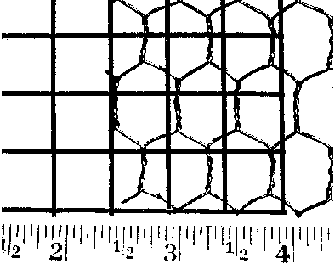
Figure 17. Types of reinforcing mesh commonly used for ferrocement (R.B. Williamson, University of California, Berkeley)

CEMENT, SAND, AND WATER

The quality of cement used is not too critical. Ordinary Type 1 or 2 portland cement is adequate; grades for more specific purposes are unnecessary even for boatbuilding. Grading the sand is seldom important, except to improve mortar workability. Current experience indicates that volcanic sands and beach sands are adequate, but sand should not have an excess of fine particles. Experiments need to be made in using coral sand as a substitute for regular sand, which is not readily available in some areas. Organic debris and silt that will not bond to the mortar reduce the strength of the ferrocement and should be washed out. Water containing these impurities should also be filtered and purified; otherwise, water quality is not critical in general practice.

CONSTRUCTION

The three major problem areas in ferrocement construction are mortar mixing, mortar application, and curing. The mortar must be dense and compact. A trained supervisor can teach the mixer operator to judge mortar quality from the way it tumbles or rolls off the mixer blades. A general mixis 1 part cement, 2 parts sand. Water is added to give the required pastelike consistency (roughly 0.4 parts water by weight). A horizontal, paddle-bladed mixer is recommended for highest-quality mixing; it is critical for deep-water boats. For land uses, experience shows that hand-mixing is also satisfactory. Determining the cement-to-water ratio can be done with adequate accuracy by observing the mortar's consistency. Sand normally does not have a fixed moisture content; even in the same sandpile, the bottom layers tend to be more wet than the upper ones.

Fingers and trowels are used for mortar placement in the mesh structure. Mortar guns are not recommended because the heavier parts of the mortar (i.e., sand) tend to separate out. A certain amount of vibration helps to produce complete mortar penetration of the mesh and assure good compaction. An orbital sander (a simple power tool used widely in woodworking) with a metal plate substituted for the sandpaper pad has been found to provide the correct amount of vibration; the vibration is localized, so already-placed mortar is not shaken out of the mesh. It is also possible to create enough vibration by using a piece of wood with a handle attached, though this not recommended for building deep-water boats.

Finally, certain conditions for adequately curing the mortar are essential. The warmth and humidity of most tropical regions is conducive to the rapid curing of ferrocement, but ferrocement must not be exposed to excessive drying action of the elements. It should be kept moist at least 7 days and protected from the sun and wind, both of which reduce the concrete's strength by drying out surface moisture.

NOTE FOR ARCHITECTS AND ENGINEERS

As in the case of conventional reinforced concrete, the mechanical properties of ferrocement depend to a large extent on the properties of the cementitious matrix and the reinforcing steel. The apparent tensile properties of ferrocement represent a significant departure from that of ordinary reinforced concrete in that the dispersed reinforcement changes the observed cracking pattern. At a microscopic level the cementitious matrix is responding in the same way, but at the macroscopic level the first tension cracks generally appear at stress levels higher than for unreinforced mortar.

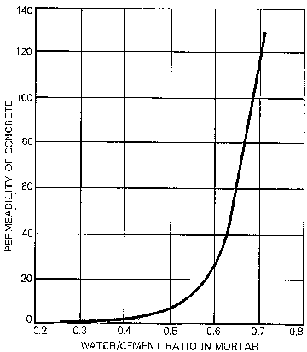
The setting of portland cement is the basic reaction in the fabrication of ferrocement. This setting process is identical to that of hardening conventional concrete, but special precautions must be taken if high levels of performance are expected. To produce an impermeable thin shell, for example, the mortar must have a low water-to-cement ratio. A proper moist-cure period is also imperative. Both of these ideals are readily appreciated by engineers and architects, but it may take special attention to achieve them in the field.


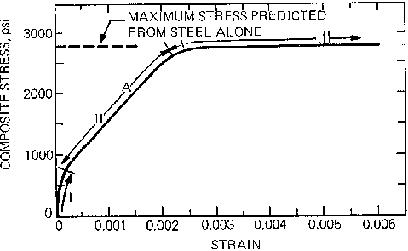
Figure 20. The three stages of typical stress-strain curve for ferrocement (Walkus, I.R. [Lodz Technical Univ., Poland], and T.G. Kowalsky [Hong Kong Univ.], "Ferrocement: A survey." Concrete [London]. Vol. 5, No. 1, Feb. 1971)

Figure 20 shows a typical stress-strain curve for ferrocement. In stage I the material behaves in a linearly elastic manner with both the reinforcement and the matrix deforming elastically. Then, as the load increases, the cementitious matrix cracks, and stage II begins where there is a change of slope in the stress-strain curve. It has been shown that the stress at the first crack can be increased by increasing the surface area of the steel exposed to the cement, by decreasing the diameter of the wire, by increasing the volume of reinforcement. These cracks are very fine and can be seen only by special lighting effects or microscopic investigation. For most purposes, the materials are unchanged by loading into this region, which constitutes ferrocement's practical working limit. Finally, stage III corresponds to the latter stages of deformation where the full load is being carried by the reinforcement. The stress limit of stage III can be predicted by considering the maximum load-carrying capacity of the steel reinforcement alone.

To put the mechanical properties into perspective, it is important to keep in mind that there is a transition from the characteristic behavior of ferrocement to that of conventional reinforced concrete and that much of the use of ferrocement in developing countries probably will fall on or near this transition. One of the important objectives in the future development of ferrocement will be a rational design system to cover the response of the structure to normal conditions, as well as the ultimate behavior of the structure. Engineering research is needed in this area.

The influence of the water-cement ratio on porosity has a great effect on the shrinkage, strength, and permeability of the final product. However, the practical upper limit of water-cement ratio for ferrocement depends on the acceptable value of permeability, since it is clear from Figure 21 that ferrocement made from mortar with a water-cement ratio of more than about 0.6 has a very high permeability.


Figure 21. Relationship between permeability and water-to-cement ratio (weight basis) for mature portland cement pastes (cement hydrated 93%). (R.B. Williamson, University of California, Berkeley)

The primary requirement for making waterproof mortar is tight control of the water/cement ratio, with the workability obtained by the gradation and quantity of sand as well as by the optional use of certain admixtures. This is also the prescription for making high-quality conventional concrete. Ferrocement is not as forgiving of careless practices as conventional concrete, and in the field it demands new degrees of control, compared to the simplicity of poured-concrete techniques.

Applying the mortar and ensuring that it penetrates the layers of mesh without leaving air pockets-a problem in ferrocement construction-is a particularly severe problem in boatbuilding.

Because ferrocement reinforcing has a somewhat different purpose from that of conventional reinforced concrete, these two considerations apply:

1. Adequate cover to protect the steel from corrosion is necessary because in almost every application of ferrocement, the durability and resistance to environmental effects depend on the thin mortar cover over the steel mesh and its ability to protect the easily corroded steel mesh.

2. It is desirable to have the mesh as near the surfaces as possible.

In a thin shell of ferrocement these considerations conflict; therefore, it is necessary to use a mesh of high-specific surface area (small-diameter wires) in the outer layers, and to use the lowest possible water-cement ratio to achieve the lowest permeability and greatest protection from reinforcement corrosion.

NOTE. Seawater places extra demands on ferrocement. Boats for marine use must be plastered with a cement resistant to sulfate attack. The surface should also be coated with paint or another sealant to further decrease saltwater penetration.

Ferrocement: Applications in Developing Countries (BOSTID, 1973, 89 p.)
(introduction...)
Preface
I. Summary and Recommendations
II. Background Information
III. Ferrocement for Boatbuilding
IV. Ferrocement for Food-Storage Facilities
V. Ferrocement for Food-Processing Equipment
VI. Ferrocement for Low- Cost Roofing
VII. Ferrocement Materials Technology
Appendix A
Appendix B
Appendix C
Appendix D

Appendix A

Ferrocement Boatbuilding in a Chinese Commune

The eight photographs herein of ferrocement boatbuilding in a commune in the People's Republic of China are the first such to be published in the West. They show a large boatbuilding program in which simple ferrocement craft are produced With unsophisticated techniques in a rural area of a developing country. The photographs were taken by Anne Keatley, of the National Academy of Sciences, who visited the People's Republic in June, 1971.

The following text includes a report by Robert Keatley, a journalist who observed the site in 1971, and an analysis by the NAS panel of a total of 26 photographs.

First, the journalist's account:

A drive from Shanghai through the nearby countryside quickly shows a visitor why small boat construction is an important activity there. The rich land is flat, nearly marshy; dry surface is so scarce that peasants use asphalt roads for drying their grain harvests-it may slow traffic, but the land itself remains too wet.

But such roads are scarce in coastal China, a land cries-crossed by rivers and canals. Thus, historically, the sampan has filled the transportation role occupied in northern China by the horse cart.

Horse Bridge People's Commune is probably more advanced economically than its neighbors; it is often singled out as a place to take foreign visitors. Yet it remains a poor place. Its 36,000 people [arm an area of only 8,000 acres, including a maze of canals and rivers, and the space alloted for buildings; and the 7 percent total given over to private plots. Its vehicle assets comprise little more than a few tractors and eight rubber-tired carts. The boat retains its importance as a means of moving goods within the commune, and outside it.

Horse Bridge Commune has more than so workers assigned to ferrocement boat construction, and they average more than one completion daily. The factory is a sideline for the commune; it produces boats according to a plan worked out by the county and sells its output to the county, which resells them to users elsewhere in the region.

The most common sizes are 12-meter boats with 6-ton cargo capacity, and 15-meter boats with 10-ton capacity. Construction began in 1964. Recently, the factory has produced a 60-ton capacity boat and plans to try installing a d*sel engine. The smaller ones are towed or poled along the still canals. Open cargo holds for carrying night soil are standard features of most, if not all, boats.

The commune sells its 6-ton boats for 750 yuan (us 5330) and charges 1,700 yuan (us $740) for the 10-ton size. It claims to realize a 7 percent profit for the commune.

Workers cite "ten superiorities" over wooden sampans, including longer life and cheaper maintenance. They claim a wooden sampan will last 20-30 years with good care; they don't know yet how long a concrete boat will last. The amount of material needed is not great; a 6-ton capacity boat needs 800 kilos of concrete and has a total weight of something over 2 tons.

DISCUSSION OF PHOTOGRAPHS

The main design change in converting wooden sampans to ferrocement boats was to make the bilge more rounded. The flat bottom and flat deck are retained, but there seems to be a slightly greater depth of hull to give more cargo space.

The boats are divided into six compartments, but only the three center compartments are used for cargo. The foremost compartment is used as living quarters for the crew of four men, who enter it through a deck hatch. The fifth and sixth compartments are living quarters for the owner and his family and are covered by an awning for shade and shelter. The vessels are propelled by sail and two yulohs (sculling oars). The stern yuloh (starboard side) is used in the conventional manner; the other, positioned over the forward bow (port side), is used also as a sweep.

Ferrocement is used to the fullest extent throughout, but wooden gunwales are used to absorb shock. The boats have a normal rudder attachment-a wooden gudgeon block bolt-fastened to the hull itself. The rudder is of a simple drop type that can be raised or lowered depending on the depth of water.

Before the Second World War, it was reported that suck vessels made approximately two trips per month, carrying night soil for fertilizer far into the countryside from the Shanghai area and often returning with vegetables for the local markets. Ferrocement boats are reported to cost only 50 percent as much as the wooden boats they replace and to have added stability and speed, apparently due to the improved hull shape allowed by the conversion from wood to ferrocement.

Although only one hull design is used (for the sake of economy), bulkheads are placed in any of several positions so that compartments can be constructed to hold different cargoes.

CONSTRUCTION

The pictures indicate an extremely interesting boatbuilding operation. In a modern building, the vessels are built upside down over a pit from which the inside of the hull can be plastered. Inside the building are several areas where bulkheads, afterdecks, and foredecks are assembled alone or in combination as subunits of the final boat. These subunits seem to be built in quantity and then used on any of several hulls.

When hull-building starts, high-tensile wires are positioned along what will become the turn of the bilge and the centerlines of the hull; they are held taut with a Spanish windlass and pass over temporary wooden spells (crosspieces which will hold in place bulkheads and frames of the hull to come). Next, the precast concrete (or welded steel) bulkheads and frames are positioned and attached to the high-tensile wires which hold them upright. The "new moon" shaped frames are spaced approximately 1 meter apart; they are approximately 1 inch thick, 2 inches wide at the ends (deck level), and 6 inches wide at the center (keel level). Once in place, the bulkheads and frames outline the hull and provide shape and support for mesh and mortar that, when added later, form the watertight skin of the hull.

Inside the precast-concrete bulkheads are reinforcing rods extending out beyond the concrete. The layers of wire mesh for the skin of the hull are maneuvered down over this protruding reinforcing until they are snug on the bulkhead itself. The bulkhead reinforcing rods are then bent over and laid alongside the hull's reinforcing, and the layers of mesh are firmly fastened to them both.

Three layers of wire mesh are used, and between the innermost layer and the outer two are placed reinforcing rods that run the length of the hull. Extra layers of mesh are placed at potential stress areas, e.g., along the curve of the bilge. The first layers are placed transversely across the hull; later ones are laid along the hull's length.

The photographs show women wiring together the layers of wire mesh. They work from the outside only and have no helper on the inside. Apparently, they use a hooking tool 5 or 6 inches long to maneuver the tie-wire in and out through the layers of mesh. This is an improved technique compared to methods used elsewhere. The wire in the hulls is stretched very tight; some parts are prewelded or precast, but there appears to be no welding during construction.

The wire mesh (square rather than hexagonal chicken wire) is irregular, with varying distances between the strands. Close inspection of the photographs indicates that the mesh itself is probably woven from single-strand wire in the commune (or at a nearby location). The ends of the mesh appear to have been looped and are not square, further suggesting that they are handwoven.

The longitudinal reinforcing rods appear to be about 1/4 inch in diameter, are spaced approximately 3 inches apart, and are securely fastened to the mesh. Apparently, there is no other longitudinal stiffening.

ORGANIZATION OF THE BUILDING SITE

An analysis of 26 photographs suggests that 9 or probably 10 boats are being built and cured simultaneously. If the ferrocement is allowed to cure for 14 days, 2 boats could be built per day, yielding 18 to 20 boats per month. It is possible to shorten the curing time on land to 5 or 6 days if the remaining cure is done under water. Though the photographs show no positive evidence, it appears quite probable that this is done.

No pictures show the actual plastering operation; however, one freshly plastered hull and two being cured are visible. Curing is done by draping wetted fiber mats (hessian or burlap) over the hull. A sprinkler system may be used to cure the interior surfaces.

The boats are launched upside down, either to be rolled over in the water or to right themselves by their buoyancy, perhaps after final curing by immersion in the water. A crane with a boom about 10 meters long is used to launch the boats. The vessels are moved from the construction shed to the canal bank on a cradle that runs on tracks. The cradle is placed under the boats easily, without need for a crane, because it can be run under the hull and accurately placed by the people working in the pit over which the boats are built. Tracks run from each building bay through a set of railroad points to the canal bank next to the launching crane. The cradle consists of two dollies approximately 1.5 meters long, each having four wheels. The dollies are placed approximately one third of the vessel's length from either end. Once in place, the boat is rolled to the canal bank, apparently by manpower alone.

The mortar-mixing shed is roofed but has open sides and is located adjacent to the main construction building. Water is piped to a standard faucet, and there is a large area for premixing the concrete. A horizontal-type rotary concrete mixer is visible.

CONCLUSIONS

The building and organization are well engineered and produce what is probably a combination (with improvements) of different types of vessels previously built by individual families. An ever increasing demand to expand the fleet of small boats to cope with population increase may have made it mandatory to devise rapid boatbuilding techniques. Possibly, too, a natural depletion of good boatbuilding timber and the allocation of any available steel to other purposes led to the use of ferrocement.

The lesson to be learned from these photographs is that with proper engineering, mass production in ferrocement is not only feasible, but practical. Standardization of design appears important.

These methods of construction indicate a considerable amount of planning and engineering skill. Precasting sections of ferrocement hulls is a significant advance in construction techniques, one that makes mass production possible. It also suggests new design considerations and new lines for basic research into ferrocement science. In most parts of the world there is considerable controversy over the method to be used to provide support and shape for the layers of wire mesh. Temporary wooden and water-pipe supports are generally used, but both suffer drawbacks, particularly during their removal after the hull is mortared. The Chinese, in contrast, provide support and shape the mesh with precast concrete bulkheads or frames that end up as integral parts of the boats. Furthermore, these precast frames and bulkheads are the key to producing uniformly shaped vessels so that standardized sheets of mesh and fittings can be employed, with resulting economies from building boats of interchangeable parts on a "production line" basis.

Much can be learned, too, from the methods the Chinese use at their urban boatbuilding factories. Photographs of the Wusih ferrocement boat factory published some years ago show 20 hulls under construction inside a modern building.* They also show an even greater refinement in subassembly than in the commune, for all subassembly is done on one side of the building, and the overall construction and plastering on the other. Both steam and air curing operations take place in the same building.

The need for a large number of new hulls forced the Chinese to seek mass-production techniques. Ferrocement has allowed them to do this.

Ferrocement: Applications in Developing Countries (BOSTID, 1973, 89 p.)
(introduction...)
Preface
I. Summary and Recommendations
II. Background Information
III. Ferrocement for Boatbuilding
IV. Ferrocement for Food-Storage Facilities
V. Ferrocement for Food-Processing Equipment
VI. Ferrocement for Low- Cost Roofing
VII. Ferrocement Materials Technology
Appendix A
Appendix B
Appendix C
Appendix D

Appendix B

Ferrocement Food-Storage Silos in Thailand

A family of cheap, airtight bins made of ferrocement, the Thai silos are sized to hold 4-10 tons of grain, other foodstuffs (e.g., peanuts, soybeans), salt, fertilizer, pesticide, cement, or 2,000-5,000 gallons of drinking water. The silos were developed over the past 4 years by a government corporation in Thailand* to fit requirements of the developing world. The designs are versatile; the storage units can be built on extremely adverse sites: where the water table is at the soil surface or in remote areas where even vehicular access is impossible. These bins require no maintenance, are easily padlocked against thieves, and protect against water, rodents, birds, insects, aerobic microorganisms, weather, and serious loss of seed germinability.

These properties are made possible by using the material and methods of ferrocement boatbuilding. This construction produces a high-quality product that can be built by local labor with minimal supervision.

The materials needed are cheap and readily available in developing countries: standard grades of cement, a wide range of wire meshes (e.g., chicken netting), and sand. (See Table B-1.)

TABLE B-1. Cost Record for first Experimental Thailo, Thailand, 1969

Inputs

Quantity

Thai Cost (in US $)

Labor

Skilled

63 man-hours (a)

$ 42

Unskilled

135 man-hours (a)

20

Total labor costs


$ 44

Materials

Cement

1.000 kg

25

Sand

1.725 kg

3

Aggregate

965 kg

3.5

Mortar plasticizer (b)

2 kg

2

Sealant for the base (b)

5 kg

2

Paint

3/4 kg

7.5

Steel

Chicken wire

2 rolls

18.5

No. 2 rod

80 m

2.5

Water pipe (b)

32 m

13

Total materials costs


77

TOTAL

121


(a) Labor figures refer to initial experiment and can be drastically decreased in practice. Construction of several Thailos at the same time also reduces labor costs because time spent waiting for sections to cure can be used productively on adjacent bins.
(b) Used to date because of availability in Thailand but may not be necessary for adequate performance of completed Thailo.

Source: R.B.L. Smith, et. al., Thai. J. Agr. Sci. 4 (July 1971): 143-155

As previously noted, the ferrocement bins are watertight and airtight. Respiration of grain, or similar product, quickly removes oxygen from the atmosphere in the bin, so that any insect (adults, larvae, pupae, or eggs) or aerobic microorganisms present cannot survive to damage the stored product. Thus, no fumigation is needed.

Thailos are easy to use. They are filled through a hatch in the top and emptied through another at ground level. The sides are sloped for firm support of a ladder (Figure 11), and the fairly low height (7 feet, or a 5-step ladder) of the entrance hatch simplifies manual filling from sacks or buckets.

As with any type of silo, it is important to dry the grain before loading; otherwise molding may occur. Tests to investigate the feasibility of on-site drying, using a fan and small engine (designed by the Tropical Products Institute*) to force warm air through the product while it is in the Thailo have been conducted successfully in Thailand.

TECHNICAL DETAILS OF THAILO CONSTRUCTION (See Figures B-1-B-3.)

The base of the Thailo is saucer shaped and, where necessary, is built on an earth pile to raise it above the water table. This gives a strong, easily constructed structure that can resist foundation failure. It consists of two layers of 5-cm-thick concrete (1 cement: 1½ sand: 2 aggregate) with mesh reinforcement and an asphalt seal between as added protection at building sites subject to flooding. The base may be easily modified to suite different ground conditions.

The walls slope inward to a central entrance hatch at the top. This truncated cone shape gives a very rigid structure, both during and after construction, and it eliminates the need for a roof structure. The walls are reinforced with 2-m-long poles (water pipe or bamboo), reinforcing rods, and one layer of wire mesh on internal and external faces. The mortar is hand-mixed and is applied as a thick paste using trowels and fingers. No formwork is required to support the mortar. The wall mortar consists of 1 part of standard cement, 1.75 parts sand with the optional addition of a plasticizer to improve workability. Water/cement ratio is approximately 0.3, and with only enough water to hydrate the cement, no voids due to excess moisture are left in the ferrocement, which becomes impermeable.

The top may be cast on site or precast and erected before cementing the walls. It consists essentially of a ferrocement lid with circles of rubber to make airtight seals. An inner lid of aluminum (trashcan lid) with a polystrene lining to insulate against heat and to prevent moisture condensation can be also used.

Controlling the water content of the mix and curing for several days under moistened sacking to avoid direct exposure to the drying effects of sunlight and wind are paramount construction considerations. On completion, the bin may be tested by filling it with water for 1 week. This is an excellent quality-control test because water is considerably more heavy than products likely to be stored and any cracks or weak sections, caused by poor workmanship, can be readily seen as leaks.

Ferrocement: Applications in Developing Countries (BOSTID, 1973, 89 p.)
(introduction...)
Preface
I. Summary and Recommendations
II. Background Information
III. Ferrocement for Boatbuilding
IV. Ferrocement for Food-Storage Facilities
V. Ferrocement for Food-Processing Equipment
VI. Ferrocement for Low- Cost Roofing
VII. Ferrocement Materials Technology
Appendix A
Appendix B
Appendix C
Appendix D

Appendix C

Ferrocement-Lined Underground Grain Silos in Ethiopia

In Harar Province, Ethiopia, underground pits are the traditional method of grain storage. It is estimated that 62 percent of the farmers use pit storage exclusively and a further 8 percent use pits in combination with other storage methods.** The basic shape of pit stores resembles that of a laboratory conical flask. The mouth of the pit is closed by strips of wood sealed with a mixture of mud and dung. The pits, if fairly well sealed and covered with a good depth of hard-packed soil, should provide a reasonably airtight storage chamber. In such a chamber any insects present in the stored grain should be killed as the oxygen is used up. However, unless the pit and grain are both dry, some mold growth is inevitable. In practice, few traditional pits are sufficiently airtight to eliminate insects, and mold damage is often considerable.

When the traditional pit is lined with ferrocement and provided with an improved airtight lid, a truly hermetic and waterproof storage chamber can be achieved.

Traditional pits in Harar Province hold from ½ to 20 tons of grain, but there are records of pits holding 50 to 70 tons. In theory, even the largest could be ferrocement lined, but to date the largest lined pit has a 7-ton capacity. This pit was approximately 3 meters deep and 4 meters at maximum width. Most lined pits hold ½-2 tons. A ½-ton pit is approximately 1 meter deep by 1 meter at the widest point; a 2-ton pit is correspondingly 1.75 meters by 2 meters.

Pit stores are built in all the major soil types of the province. Ferrocement linings have been shown to be satisfactory in even the wettest soil.

The ferrocement lining can be produced by any local laborers who are familiar with the use of cement in house building, but even local unskilled laborers can soon learn to do the work satisfactorily. After a 2-3 hour training period, unskilled laborers were able, without close supervision, to help other untrained workers with the techniques.

Although the materials needed are relatively cheap, they are sometimes beyond the reach of the small farmer. For these cases some assistance is likely to be forthcoming when the farmers' cooperatives, now in the early stages of development, become established. A factory in Dire Dawa, one of the two largest towns in the province, makes a standard grade of cement which is distributed throughout the province to even the smallest villages on a main highway or all-weather road. Wire mesh, in various grades, is available in all the major towns and in most villages served by an all-weather road. In most areas sand is available from dry riverbeds, but in some parts of the province graded and washed sand can be obtained.

Extension agents of the Imperial Ethiopian Government, Ministry of Agriculture, have been closely involved with the development of the improved pits and have received training in the use of ferrocement linings. Through this agency the general ideas of pit improvement are being disseminated to the local farming communities.

TABLE C-1. Costs on 1-Ton Ferrocement-Lined Storage Pit, 1972 (in US $) (a)

Using a bitumen lining as waterproofing barrier

Labor (skilled)

$ 3.50

Labor (unskilled farmer assisting skilled laborer)

nil

Materials

Cement

5.20

Sand

nil

Aggregate

nil

Bitumen

1.00

Chicken wire

2.20

Miscellaneous-transport, hiring tools, etc

2.10

Using bitumen emulsion ("Flintkote")

$14.00

Extra cost $6.50, therefore total

$20.50

(a) Based on average for all of Harar Province, Ethiopia. In remote areas, the price of materials is likely to be higher; in areas close to large towns, considerably lower.

TECHNICAL DETAILS OF FERROCEMENT PIT CONSTRUCTION (See Figures C-1- C-3.)

Before a pit is lined, a thorough cleaning operation is carried out: all rubbish is removed, and, when necessary, the walls are smoothed by scraping off loose soil. Evidence of termites is sought, and if found, the walls of the pit may be treated with an appropriate termiticide. A layer of hardcore is laid on the floor of the pit to a depth of about 10 cm, and a layer of concrete is laid on top. A layer of mortar 2.5-3 cm is applied by hand and trowel to the walls. The mortar consists of 1 part cement to 3 parts sand with as little water as possible. A chicken-wire mesh reinforcement is tacked onto the surface while it is still moist, and a second layer of mortar is applied on top. The lining is moist-cured for 5 to 7 days, after which a waterproofing coat is applied. The surface is prepared by brushing off loose material with a wire brush, and a priming coat of bitumen emulsion is diluted 1 volume of emulsion to 1 volume of water and applied with a stiff brush. The emulsion is scrubbed well into the cement layer. After the priming coat is dry, a bonding coat of neat emulsion is applied and allowed to dry. Finally, a cement/ emulsion mixture, using 1 volume of water to 1 volume cement to 10 volumes of emulsion is prepared and brushed over the whole surface of the lining.

Because this waterproofing method using bitumen emulsion is a relatively expensive and sophisticated treatment, a single layer of bitumen has been tested. This layer, applied between the two cement layers, has been found to be perfectly satisfactory. However, bitumen is available only in large drums and is rather difficult to apply to the sloping walls of a pit. No really easy way of applying it has yet been found.

The design of the mouth of the pit has been modified to incorporate a sloping lip, which will carry away any water that might penetrate the soil. Drain pipes can easily be included to carry the water even farther from the pit (Figure C-3).

The traditional wood-strip lid can be used with the lined pit; however, when a metal or concrete lid is used with a sealant such as bitumen, a truly airtight store can be obtained. Condensation on the inner surface of metal lids sometimes occurs, but can be avoided by use of a piece of old sacking as an inner liner.


Figure C-3. Cross-section of ferrocement underground storage pit

Ferrocement: Applications in Developing Countries (BOSTID, 1973, 89 p.)
(introduction...)
Preface
I. Summary and Recommendations
II. Background Information
III. Ferrocement for Boatbuilding
IV. Ferrocement for Food-Storage Facilities
V. Ferrocement for Food-Processing Equipment
VI. Ferrocement for Low- Cost Roofing
VII. Ferrocement Materials Technology
Appendix A
Appendix B
Appendix C
Appendix D

Appendix D

New Zealand Ferrocement Tanks and Utility Buildings

Perhaps the greatest development in farm water storage in New Zealand has been the introduction of ferrocement tanks, which retain most of the advantages of earlier tanks with few of their limitations. The cost of smaller sizes is comparable to that of other tanks, but the storage cost per gallon drops off rapidly when larger sizes are used. Paralleling this consideration is the continuing economy offered by the indefinite life of the ferrocement tank.

In most parts of the country, ferrocement tanks are available as stock items in sizes ranging from 200 to 5,000 gallons, Thus, the factory can deliver a tank ready for pipe connections directly to the prepared base. If required, tanks larger than 5,000 gallons can be constructed on site by the same system used at the factory.

The widespread availability of ferrocement tanks and the versatility of the material provide the farmer with economic water-storage facilities involving only minimum site work. Permanent materials are used throughout, and, since all work can be controlled in the factory, most manufacturers confidently offer a 25-year guarantee on their products.

Factory-produced tanks are designed for convenient handling with simple equipment. Small tanks are loaded on the truck, and unloaded by a truck-mounted hoist. Usually, tanks over 1,000 gallons (4,500 litres) are winched onto the truck.

Site preparation is a simple matter, usually calling for no more than removal of vegetation and trimming the soil roughly level. If the tank is to be placed on rock, or if it is desirable to provide a concrete base, a layer of sand must be spread under the tank. This prevents point contact, which would generate high local stresses and probably result in cracking.

The tank is then ready for pipe connections. Generally, standard pipe fittings are built in during manufacture, but special items can be provided by arrangement. If necessary, additional items may be installed on site by chipping a hole and plastering the fitting in place.

Perhaps the most obvious adaptation from water-storage tanks is to tanks of other forms, such as sheep or cattle troughs and septic tanks. Septic tanks are constructed with earthenware fittings and are supplied ready for installation. They are manufactured in various forms, with the actual details determined somewhat by requirements of local governing bodies. (See Figure 5.)

Impermeability is an important characteristic of ferrocement in its use for water retention. Since impermeability promotes hygiene, this material is frequently used where hygiene is of prime importance. Most tank producers have a range of killing sheds, dairies, and freezing chambers-all constructed of ferrocement. (See Figure 4.)

By the simple process of placing a window or door frame against the inside former before plastering, the water tank is transformed into a tool shed, site office, pump room, small laboratory, or any similar structure. When required, plumbing and electrical circuits can be embedded in plaster.

Many manufacturers have developed additional features for special circumstances. Instead of using a circular former, as for tanks, the details may be modified slightly so that the office or pump room is square or rectangular. Freezing chambers are constructed of two layers of plaster separated by insulation and vapor barriers. Usually, the freezing equipment is mounted on the roof. Toilet rooms, shower rooms, and laundries are available with all plumbing fixtures in place, so that on site it is necessary to connect only the water supply and drains.

A further advantage of small ferrocement buildings is that relocation at a later date is no more of a problem than the initial delivery from the factory.

TECHNICAL DETAILS

Tanks are constructed by applying two or three layers of plaster against an inside former until the required thickness has been built up. The reinforcing is placed at the stage appropriate to ensure correct location within the wall.

The water pressure in a loaded tank generates hoop stresses in the tank walls. The resulting tension is resisted by a continuous spiral of reinforcing wire, usually No. 8 s.w.g. The spacing of the wire is determined by the diameter and depth of the tank.

Some manufacturers prefer a woven mesh of No. 14 s.w.g. and I 1/2-in or 2-in mesh; others use a chain netting. In some instances a light welded-steel fabric is incorporated in the lower section of the walls to accommodate additional stresses that develop during handling.

The tank floor, which may range in thickness from 2 1/2 in (6.2 cm) for a small tank to 4 in (10 cm) for the largest, is reinforced with a welded grid of steel. A typical reinforcing is 3/8-in diameter rods welded into a grid at 8-in or 10-in centers (10 mm at 20-25 cm). Loops of light steel project into the wall section, and additional handling loops protrude from the edge of the floor for lifting or dragging the completed tank.

The manufacturing sequence varies from one factory to another. In some cases the floor is cast first; in others it is cast after the walls. Some manufacturers place 1/2 in (12 mm) of plaster against the former, position the steel, and then continue plastering up to a total thickness of 1 in to 1 1/4 (25 to 30 mm). At other plants the reinforcing is placed directly against the inside former, and the main body of plaster is applied. The final layer of plaster is applied from the inside after removing the form.

In all cases a strong concrete coving is provided between the wall and floor to seal and strengthen the joint.

The plaster may be applied either manually or pneumatically.

Most tanks are provided with a flat or conical roof 1 1/2 in to 2 in (38 to 50 mm) thick. The roof may incorporate a separate small header tank to provide constant pressure (Figure D-1). If a roof is not needed, the upper edge of the tank wall is thickened to give added strength.

Finally, the tank is given a cement wash inside and is painted outside with a cement-based paint or other suitable surface coating. A little water is placed in the tank, which is kept in the factory yard for some time before delivery to allow the humid atmosphere to cure the cement fully.

ESPANOL
Resumen y Recomendaciones

El ferrocemento es un tipo de hormig�n armado sumamente vers�til hecho de tela met�lica, arena, agua y cemento, que posee caracter�sticas singulares de solidez y durabilidad. Puede ser hecho con un m�nimo de mano de obra calificada a partir de materiales f�ciles de obtener. Adem�s de ser adecuado pare la construcci�n de botes, tiene muchas otras aplicaciones, tanto potenciales como ya comprobadas, en la agricultura, la industria y en la construcci�n de viviendas.

El ferrocemento conviene de modo particular a los pa�ses en vies de desarrollo por las siguientes rezones:

· Sus material primes b�sicas son de f�cil obtenci�n en la mayor�a de los pa�ses.
· Puede d�rsele casi cualquier forma de acuerdo con las necesidades del usuario; los dise�os tradicionales pueden reproducirse y a menudo mejorarse. Elaborado en la de bida forma, es mas durable que la mayor parse de las maderas y mucho mas barato que el acero importado, y puede utilizarse en sustituci�n de estos materiales con usos muy diversos.
· Las destrezas impl�citas en la construcci�n a base de ferrocemento se adquieren con rapidez, e incluyen muchas que son tradicionales en los pa�ses en vies de desarrollo. La construcci�n con ferrocemento no requiere ni instalaciones pesadas ni maquinaria; emplea una alta proporci�n de mano de obra, se prepare mejor en el propio lugar de la obra y las reparaciones pueden ser hechas con facilidad por obreros locales. Excepto proyectos muy sofisticados y sometidos a grandes esfuerzos, como es el cave de los recipientes de agua profunda, el control de calidad necesario en la preparaci�n puede �ster a cargo de un supervisor adiestrado al mando de obreros relativamente inexpertos.

Las siguientes recomendaciones especificas se basan en documentaci�n compilada sobre el estado actual de este arte y en la propia evaluaci�n del panel ad hoc de selectas aplicaciones del ferrocemento, tanto marinas como terrestres, que mas adelante se detallan en este informe.

RECOMENDACION 1: Investigaci�n Exploratoria a la Mas Amplia Escala de las Aplicaciones del Ferrocemento

El panel recomienda que el ferrocemento se a objeto de un amplio programa de investigaci�n y desarrollo a fin de explorer todos sus usos potenciales. Es muy probable que dicha I & D conduzca a numerosas aplicaciones de provecho pare los pa�ses en vies de desarrollo.

Algunas aplicaciones involucran an�lisis de laboratorio (por ejemplo, las interacciones entre alimentos almacenados y superficies de mortero); otras, pruebas estructurales; y aun otras, demostraciones y ensayos piloto. Las hay de �ndole tan especulativa que por el momento solo se justifican estudios A esta labor pueden dedicarse instituciones de investigaci�n, laboratorios de ingenier�a, corporaciones capacitadas pare llevar a cabo I & D, escuelas t�cnicas, universidades o individuos con capacidad de innovaci�n . La exploraci�n de estas aplicaciones del ferrocemento se presta excepcionalmente bien pare ser realizada sobre el terreno en los pa�ses en desarrollo , si bien corresponde a los pa�ses industrializados la funci�n de investigaci�n.

Pese a que en este informe se destacan las aplicaciones menos complejas, el ferrocemento es susceptible de adaptarse tambi�n a tecnolog�as refinadas. Y as�, en ultima instancia, bien podr�a terminarse por emplear este material en componentes industriales hechos con precisi�n. Un campo especialmente promisorio pare investigaci�n y desarrollo mas avanzados, es reemplazar el ferrocemento con hormig�n armado con pedazos de alambre, en el que pedazos cortos de alambre se colocan al azar, mezclados con la argamasa, en vez de la tela met�lica.

A continuaci�n se presenta una lista de las diversas aplicaciones que a juicio del panel merecen ser investigadas en detalle. Algunas de estas aplicaciones se discuten espec�ficamente en las Recomendaciones 2 al 6. Se incluyen aqu� con el prop�sito de tracer ver la amplia game de los posibles usos del ferrocemento.

APLICACIONES POTENCIALES DEL FERROCEMENTO

Barcos de carga y pesca
Remolcadores y lanchas
Puentes
Desembarcaderos y marinas
Dep�sitos permanentes pare almacenar alimentos
Almacenamiento de simiente (hortalizas, etc.)
Cubas de remojo de mandioca
Tanques de fermentaci�n de cocoa, caf�, etc.
Tanques de enfriamiento pare sisal , yute, abac�, etc.
Dep�sitos de gas (pare gas liquido y gas natural)
Torres de enfriamiento
Canales de aguas negras, piletas, tanques s�pticos y otras facilidades de tratamiento
Alcantarillado
Equipos auxiliares pare procesamiento de cueros
Cubas pare tenir
Secadores de grano
Secadores de copra
Invernaderos, almac�n de embalaje, y mesas secadoras
Plataformas pare se car te, caf�, cocoa cocos, otros granos oleaginosos, pimienta, especial, etc.
Comederos y bebederos pare ganado
Ba�os par ganado
Almacenamiento de f�cula, harina, az�car
Almacenamiento en silos
Almacenamiento de aceite comes tible (olive, mani, semilla de algo don, palma, etc.)
Almacenamiento de granos (arroz, trigo, ma�z, sorgo, mijo, etc.)
Dep�sitos de agua potable y de irrigaci�n
Caneria y conductos de irrigaci�n
Hornos y chimeneas
Planchas o ripias pare techos
Paneles decorativos y tejas planes
Empanelado de paredes
Pisos
Tel�fono y posses pare lineas de alta- tension
Revestimiento interior pare t�neles y mines
Estacas pare sostener plantas tipo enredadera, tales como tomates, frijoles, etc. (resistentes a las termites)
Reparaci�n de baches (cuadrados de ferrocemento a la medida y colocados sobre el agujero)
Recintos pare el tratamiento de vigas
Persianas y encofrado pare uso en construcci�n est�ndar de hormig�n armado

RECOMENDACION 2: El Ferrocemento pare Botes de Uso Local

El panel recomienda el ferrocemento como sustituto de materiales que se hen venido usando haste ahora en la construcci�n de botes de uso restringido y de l�nea tradicional. Esta aplicaci�n merece amplia difusi�n, y a esta tarea bien podr�an dedicarse los organismos de asistencia t�cnica. El elevado numero de experimentos que se hen llevado a cabo ya con �xito confirma su viabilidad t�cnica, pero es muy posible que en algunas regiones en vies de desarrollo se requieran pruebas de campo y demostraciones a fin de veneer cualquier resistencia local que pueda suscitarse respecto a innovaciones en la construcci�n de botes. La Organizaci�n de las Naciones Unidas pare la Agricultura y la Alimentaci�n (FAO) y la Organizaci�n de las Naciones Unidas pare Desarrollo Industrial (ONUDI) hen tomado la iniciativa de introducir el ferrocemento en pa�ses en vies de desarrollo y demostrar su importancia en el contexto de desarrollo de dichos pa�ses. Hasta ahora, sin embargo, estos programas de asistencia t�cnica que utilizan ferrocemento solo hen tomado en cuenta buques pesqueros de rastreo de alta mar mas grandes, con casco sofisticado de estilo occidental, con el prop�sito de aumentar su capacidad pare la pesca comercial. La pesca comercial a esta escala requiere una considerable organizaci�n terrestre pare preservar, transporter y comercializar el producto, y el costo de botes pesqueros grandes representa una inversi�n que no puede afrontar un simple pescador que trabaja pare subsisting En este informe nos referimos a los barqueros de modo particular, ya sea que se dediquen a la pesca con fines comerciales o de subsistencia, a quienes beneficiaria disponer de paquenos botes a motor, de l�neas sencillas, hechos de ferrocemento que, entre otras ventajas, fueran de bajo precio, large vida y f�ciles de reparar.

En un principio no tendria el mismo efecto en el desarrollo economico de un pais mejorar este tipo de bote que si se introdujeran buques pesqueros de rastreo. No obstante, la rapida aceptacion de botes de bajo costo de linea tradicional podr�a afectar en forma significativa el desarrollo economico debido al elevado numero de botes involucrados y al notable aumento en su duracion.

Las singulares caracteristicas del ferrocemento-bajo precio de los materiales, dureza, f�cil mantenimiento-y reparacion se prestan excepcionalmente bien a la fabricacion de pequenhos botes de uso local. Este material de construcci�n se aviene a la curvature de la parse sumergida de los cascos de este tipo de embarcacion. La fabricacion de estos pequenos botes de trabajo podrian emprenderla localmente los obreros del lugar (pero bajo supervision) quienes, por lo general, estan disponibles a salarios bajos. Adem�s, debido a que estos botes consisten mayormente en un casco y, por lo tanto, carecen de aditamentos costosos, el ahorro del constructor es maximo. Estos pequenos botes de trabajo operan por lo general en agua dulce, y en todo cave nunca lejos de sierra, por lo que sustentan menos tension que los barcos de agua profunda y requieren una tecnologia y control de calidad menos rigurosos. Por otra parse, los actuales botes de madera son a menudo tan pesados que un cambio a ferrocemento resultaria en botes de peso equivalente o mucho mas livianos.

Puesto que todo diseno admite continuas mejoras, el de estos botes de la linea tradicional puede acusar notables mejoras a lo largo de los anos. En particular, el ferrocemento se presta a las curves complejas de los botes de madera, as� como tambi�n a curves mas complejas aun que no son posibles de obtener con madera pero que mejorarian el rendimiento del bote.

El ferrocemento no es susceptible al ataque de teredos (gusanos de barco), carcoma y otros peligros de los tropicos. Adem�s, debido a su inherente solidez, los botes de ferrocemento pueden ser motorizados en tanto que muchos botes de madera comparables no son lo suficientemente solidos pare resistir elementos impulsores mecanicos.

RECOMENDACION 3: El Ferrocemento Aplicado a Instalaciones pare Almacenar Alimentos

El panel opine que la urgente necesidad de preserver granos y otras cosechas de alimentos en pa�ses en vies de desarrollo justifica emprender extensos ensayos de campo sobre el uso del ferrocemento en la construcci�n de silos y de depositos de almacenaje. La existencia de prototipos idoneos sugiere que no se precise mas investigaci�n que no sea estudios technoeconomicos y de diseno respecto a determinadas zones.

En ambientes tropicales, las temperatures elevadas y la humedad promueven el crecimiento de moho y la putrefaccion de los productos alimenticios, destruyen materiales susceptibles a la humedad, tales como el cemento y los fertilizantes, y estimulan la degradacion termal y ultravioleta de muchos productos. Tambi�n los insectos, roedores y pajaros se ven enormemente afectados. Casi un 25%* de las cosechas anuales de alimentos en los pa�ses en desarrollo se malogran o son inaprovechables pare el consumo a cause de defectos en la manipulacion, metodos e instalaciones.

Los cientos de botes hechos de ferrocemento que flotan en sodas las vies fluviales del mundo constituyen la mejor prueba de que este material es impermeable al agua , as� como tam bien la experiencia muestra que este material no se corroe facilmente en los tropicos. Adem�s, como se ha dicho ye, las estructuras de ferrocemento se hacen a partir de materiales y con mano de obra por lo general disponibles en los pa�ses en vies de desarrollo. No son necesarias ni maquinaria ni herramientas especiales.

La experiencia en Tailandia y en Etiopia muestra que se pueden construir localmente y a bajo costo silos pare almacenar granos con solo un supervisor y obreros inexpertos. Una version simplificada de las tecnica y materiales conocidos pare la construcci�n de botes se utilizo en la construcci�n de silos. Las perdidas anuales registradas en estos silos prototipo son menores que el 1%. Los roederos, pajaros e insectos no pueden ganar entrada al silo. Los silos de ferrocemento son hermeticos, y as� el aire que queda en su interior es rapidamente desprovisto del oxigeno por los granos que lo respiran, y los insectos (huevos, larvae, pupae o adultos) as� como cualquier otro microorganismo aerobio que se haya podido introducir con el grano, son aniquilados.

La seguridad en el almacenaje de cereales y otros alimentos, tales como legumbres y granos oleaginosos, puede ayudar a los agricultores de los pa�ses en vies de desarrollo a tener mas confianza en sus propios recursos y a la vez contribuir de manera importante a la economia del pais y a la reserve de alimentos.

RECOMENDACION 4: El Ferrocemento en la Tecnologia de Alimentos

Teniendo en cuenta las propiedades, disponibilidad, facilidad de manufactura y confiabilidad del cemento, el panel asesor recomienda que los organismos de investigaci�n hagan un esfuerzo serio e intenso pare investigar el uso del ferrocemento como sustituto del acero-en especial el acero inoxidable-en la manufacture de por lo menos algunas piezas o unidades de l’equipo pare procesamiento de productos alimenticios.

Muchos alimentos-deteriorables en alto grado y que resultan irreversiblemente afectados por cambios de temperature y contaminantes biologicos y quimicos-se pierden pare la humanidad por la falta de plantas rurales de procesamiento que preserver, transporter o procesen los productos alimenticios inmediatamente despues de cosechados. En muchas areas en vies de desarrollo, el costo excesivo de la construcci�n hace prohibitivo aun el uso del mas simple equipo. Una gran parse de estos costos se debe al uso tradicional del acero inoxidable que, si bien de cualquier manera resulta muy costoso, lo es aun mas en terminos de divisas extranjeras cuando se debe recurrir a la importacion.

Si se pudiera desarrollar equipo de ferrocemento (quiza pintado o barnizado), se mejorarian tal vez los niveles de nutricion y se podrian satisfacer las necesidades de pequenas plantas de procesamiento de alimentos en pa�ses en vies de desarrollo que utilizan una alta proporci�n de mano de obra.

Algunas de las ventajas del empleo de ferrocemento en equipo para procesar alimentos son su (1 ) elaboracion sobre todo con materiales locales; (2) solidez estructural y confiabilidad; (3) elaboracion f�cil, economica y vers�til; (4) f�cil mantenimiento y reparacion; y (5) f�cil transporte de las material primas requeridas.

Es necesario emprender una investigaci�n preliminar intensive en especial en lo que se refiere a las propiedades sanitarias de las estructuras de ferrocemento y a su capacidad pare llenar otros requisitos inherentes al procesamiento de alimentos. No obstante, el panel esta convencido de que vale la pena tracer un esfuerzo en este sentido en vista de que el ferrocemento se presta al parecer pare ( 1 ) el procesamiento con mires a la preservacion de frutas y legumbres; (2) cubes de fermentacion de salsas de pescado, salsa de soya, cerveza, vino, etc.; (3) tanques o cubes pare deposito de jugos, aceite vegetal, suero de la leche o agua potable; y (4) multitud de otros fines-desecadores por pulverizacion de leche, desecadores de copra, cocinas y hornos a gas, lecherias, cameras frigorificas y mataderos.

RECOMENDACION 5: El Ferrocemento pare Techos de Bajo Costo

El panel considera que el ferrocemento pue de resultar apropiado como material pare techos de bajo costo en pa�ses en vies de desarrollo. Los laboratorios de ciencias aplicadas en los pa�ses en desarrollo y las agencies que patrocinan la investigaci�n aplicada debieran considerar seriamente la realizacion de estudios tecnoeconomicos y pruebas de campo sobre esta aplicacion del ferrocemento.

Contar con un albergue adecuado es una necesidad esencial del ser humano, y en todo albergue el techo constituye el elemento basico. Pese a esto, los materiales actuales no satisfacen los requisitos inherentes a los techos. Mas pa�ses de los 80 en vies de desarrollo en el mundo padecen escasez de viviendas como resultado del aumento de la poblacion, la migracion interna y algunas veces a cause de la guerra o desastres naturales. En la mayor�a de moradas de los pa�ses en vies de desarrollo un techo durable representa el gasto principal. Los techos- techos con materiales locales baratos, como, por ejemplo, hierba o cane o productos derivados de la sierra (arena, barro, roca), son por lo general poco firmes y de poca duracion. Un problema secundario es contar con estructuras de soporte adecuadas y duraderas. En algunas zones, los escasos soportes de madera se debilitan por efecto de la pudricion y del ataque de insectos.

El ferrocemento representa una solucion potencial al problema de techos debido a su bajo costo relativo, durabilidad, resistencia a la intemperie y, en particular, por su versatilidad. En contraste con la mayor�a de los materiales convencionales, el ferrocemento puede moldearse facilmente en forma de cupulas, bovedas, perfiles extruidos, superficies planes, etc. Su f�cil elaboracion, incluso en zones rurales, por obreros del lugar bajo supervision y con materiales nacionales, lo calificaria de excelente medio pare la manufacture in situ de tejas pequenas o grandes (ripias) y de otros elementos de techar. Dondequiera que las vigas de madera fuesen costosas, se podrian tracer vigas de ferrocemento en reemplazo de las estructuras de madera que sostienen los elementos de manufacture nacional que recubren el techo. Su uso mas economico, sin embargo, pareceria ser en techos de dimension relativamente grande.

Pese a sus excelentes cualidades, no se utiliza ferrocemento con la debida frecuencia. Su uso, en especial en lo que atane a los pa�ses en vies de desarroIlo, de be �ster precedido de mas investigaci�n y de experimentos de diseno y de t�cnicas de produccion que se ajusten a circunstancias de man o de obra poco calificada.

RECOMENDACION 6: El Ferrocemento en Campanas de Socorro ante Desastres

E1 panel recomienda que las organizaciones encargadas del socorro en cave de desastre presten cuidadosa consideracion al ferrocemento. Esta recomendacion abarca sodas las aplicaciones posibles de este material consideradas por el panel pare el cave de los pa�ses en vies de desarrollo.

Es bien sabido que inmediatamente despues de un incendio, inundacion, sequia o terremoto es urgente contar con alimentos, albergues y facilidades de sanidad publica. A menu do el transporte se interrumpe a consecuencia de la destruccion de caminos, puentes, buques y pistas de aterrizaje. La zone del desastre se ve as� desprovista de los materiales de construcci�n convencionales porque estos no pueden llegar a su destino, en el cave del ferrocemento, sin embargo, el transporte de sus elementos basicos es f�cil o, en su defecto, estos pueden hallarse localmente.

La versatilidad caracteristica del ferrocemento tiende tambi�n a reducir los problemas logisticos de bastecimiento: tela met�lica , cemento, arena y agua pueden tracer las veces del metal utilizado pare reforzar techos, de cemento pare paredes, de madera o de plastico pare la construcci�n de albergues o clinicas, de asfalto pare plataformas de aterrizaje y despegue de helicopteros, de acero pare puentes y as� sucesivamente. Mas aun, la mayor�a de las estructuras de ferrocemento, si bien hechas pare remediar una situacion de emergencia, duraran haste mucho despues que esta haya pasado.

En la opinion del panel, se podr�a utilizar ferrocemento en lugares de desastre con multiples finalidades:

· Transporte, desde simples botes haste barcazas, muelles, darsenas, plataformas pare aterrizaje y despeque de helicopteros, y puentes flotantes simples o pasaderas cortas, as� como tambi�n en la reparacion de caminos.
· Almacenamiento de alimentos, en depositos de rapido diseno y construcci�n pare guarder provisiones de emergencia.
· Albergues de emergencia, como, por ejemplo, los de techo semicircular o curvado, que son faciles de erigir y muy eficaces.
· Servicios de sanidad publica, tales como letrinas y clinical, construidos con techos de ferro cemento y pare de s tipo estuco de la mism a tela met�lica y argamasa.

Con el fin de capacitar en el uso de ferrocemento en campanas de socorro, se podrian organizar demostraciones, durante simulacros de emergencies, en beneficio de organizaciones nacionales e intemacionales, y adiestrar a obreros en las aplicaciones del ferrocemento bajo condiciones de emergencia y en la supervision de trabajadores locales en la escena del desastre.

RECOMENDACION 7: Un Comite de Coordinacion

El panel propone el establecimiento de un Comite Multidisciplinario para la Cooperacion Internacional en la Investigaci�n y Desarrollo de Ferrocemento para Palses en Vias de Desarrollo, compuesto por expertos provenientes de pa�ses que hubieran logrado un alto grado de competencia en el uso de ferrocemento, incluyendo la Union Sovietica y la Republica Popular de China. El comite podr�a establecerse bajo los auspicios de organizaciones, tales como ONUDI y FAO, que ya cuentan con grupos similares respecto a otras tecnolog�as.* No existe un grupo que este a la disposici on de organism os de pa�ses en desarrollo que soliciten asesoria competente; no obstante, es necesario contar con un tal comite internacional de expertos por lo menos haste disponer de pakones adecuados y salvaguardias que reglen la construcci�n con ferrocemento*-en particular respecto a sus usos en agues profundas. Dicho comite ayudaria a evitar que se repita, como en adios recientes, el establecimiento de empresas improvisadas de ferrocemento.

El comite propuesto debiera tener por lo menos las siguientes funciones:

1. Mejorar la comunicacion y la fertilizacion cruzada entre todos los campos de especializacion tecnica involucrados (ingenier�a, quimica, arquitectura, agriculture, bromatologia, construcci�n, pesca, construcci6n de boles).

2. Convocar reuniones que propicien la comunicacion entre expertos y tecnicos.

3. Proporcionar las pautas y servir de catalizador a las facilidades pare el adiestramiento en ferrocemento descritas en la Recomendacion 8.

Mediante estas acciones, el comite promoveria la introducci6n racional y efectiva de la tecoologia del ferrocemento en los pa�ses en vies de desarrollo y estimularia el avance de la investigaci6n y el desarrollo de modo eficiente y productivo.

RECOMENDACION 8: Facilidades pare el Adiestramiento en Ferrocemento de Alcance Internacional

E1 panel recomienda el establecimiento de facilidades pare el adiestramiento en tecuologia y aplicaciones del ferrocemento de alcance internacional.

El panel esta firmemente convencido de que el aprovechamiento potencial del ferrocemento justifica que dichas facilidades se ubiquen en, o cerca de, pa�ses en vies de desarrollo. La seria escasez actual de personal adiestrado que preste servicios de asistencia o asesoria en proyectos de construcci�n a base de ferrocemento podr�a ser un factor limitativo del establecimiento de prog,ramas de alta calidad.

En la actualidad hay dos programas que se llevan a cabo en el Pacifico del Sur que merecen atenci6n y ser tomados como ejemplo. En Nueva Zelanda, el gobierno costea el establecimiento de una escuela pare el adiestramiento en construcci6n marina a base de ferro cemen to , y O NUDI ausp icia un pro grama en Fidji, mediante el cual los habitantes de una aldea se trasladan haste un taller central de construcciGn de embarcaciones y participan en la construcci�n de un bote pare la "aldea".

Las escuelas pare adiestramiento en ferrocemento propuestas por el panel deberan: (1) adiestrar personal de los pa�ses en vies de desarrollo en el establecimiento de facilidades de construcci�n, tanto marinas como terrestres, y en la supervisi6n de los proyectos de construcci�n; (2) capacitar personal pare que se encargue de establecer escuelas de adiestramiento en el campo o cualquier otra localidad; y (3) preparer materiales audiovisuales.

Estas escuelas de adiestramiento en ferrocemento podrian muy bien ser implantadas en instituciones t�cnicas ya existentes o, en su defecto, establecerse como entidades separadas.

RECOMENDACION 9: Un Servicio Internacional de Informacion sobre Ferrocemento

En consideraci6n a que el interes en el ferrocemento va en aumento, el panel recomien da el estable cimiento de un servicio intern acional encargado de compiler y diseminar informaci�n sobre la ciencia del ferrocemento. Dicho servicio evitaria una duplicacion innecesaria de investigaci�n y desarrollo, y aseguraria que to do p ais interesado en vies de desarrollo tenga cab al c onocimiento de la experimentacion relevante que se realiza con ferrocemento en otras parses del mundo.

El servicio de informaci�n podr�a establecerse en el seno de una institucion academica o de investigaci�n que ya posea competencia y programas en curve sobre la tecnologia del ferrocemento.

El servicio de informaci6n debiera tener cuando menos las siguientes funciones:

1. Mantener un banco de informaci�n y servicio de referencia de solicitudes de datos sobre ferrocemento.

2. Diseminar informaci�n sobre los esfuerzos que se realizan en investigaci�n y desarrollo y sobre los avances y aplicaciones de la tecnologia del ferrocemento.

3. Ayudar a los pa�ses en desarrollo a identificar empresas y consultores con experiencia en ferrocemento, en especial aquellos con experiencia en los pa�ses en vies de desarrollo.

FRAN�AIS
R�sum� et Recommandations

Le ferrociment est une forme de b�ton renforc�, � usages multiples, compos� de ciment, de treillis metallique, de sable et d'eau, qui poss�de des qualit�s uniques de r�sistance et d'utilit�. Sa fabrication demande un minimum de main d'oeuvre sp�cialis�e, et emploie des mat�riaux que l'on peut se procurer facilement. Utilis� avec succ�s pour la construction navale, il est ou peut �tre aussi employ� a de nombreux usages dans l'agriculture, l'industrie et la construction de logements.

Le ferrociment est un mat�riau qui convient particuli�rement aux pays en vole de d�veloppement pour les raisons suivantes:

· Les produits de base qui le composent se trouvent dans la plupart des pays.
· Il peut �tre fa�onn� en n'importe queue forme, ou a peu pr�s, selon les besoins de l'utilisateur; les formes traditionnelles peuvent �tre reproduites et souvent am�lior�es. Bien fabriqu�, il est plus durable que la plupart des bois et beaucoup moins on�reux que les aciers import�s, et peut �tre utilise a la place de ces mat�riaux dans de nombreux cast
· L'utilisation du ferrociment ne n�cessite pas un long apprentissage et ses techniques sont, pour beaucoup, des techniques courantes dans les pays en vole de developpement. La construction en ferrociment n'exige pas d'�quipement et d'outillage lourds; elle emploie une main d'oeuvre nombreuse, se fait de pr�f�rence sur place, et peut �tre facilement r�par�e par la main d'oeuvre locale. Sauf dans le cas de mod�les tr�s �labor�s ou tr�s travaill�s, comme ceux des navires hauturiers, un contrema�tre specialise peut assurer le contr�le de qualit� necessaire et utiliser ainsi pour la fabrication une main d'oeuvre assez peu qualifi�e.

Les recommendations sp�cifiques suivantes vent bas�es sur la documentation-analysee plus loin en detail-relative � l'�tat actuel de d�veloppement de cet art, et sur l'�valuation faite, par la Commission, de certaines applications du ferrociment aussi bien sur terre qu'� des usages maritimes.

PREMIERE RECOMMANDATION: Recherche concernant toutes les applications possibles du ferrociment.

La Commission recommande que le ferrociment fasse ['objet d'un programme �tendu de recherche et de d�veloppement, visant � explorer toutes ses utilisations potentielles, recherche et d�veloppement qui aboutiront vraisemblablement � un grand nombre d'applications pr�sentant un grand int�r�t pour le Tiers Monde.

Certaines applications n�cessitent des analyses effectu�es en laboratoire (par exemple, I'action r�ciproque des aliments entrepos�s et des surfaces de mortier); d'autres, des �preuves de structure; d'autres encore, des demonstrations et des essais-pilotes. D'autres applications vent de nature si sp�culative que seules des �tudes th�oriques sont justifi�es � l'heure actuelle. Des institutions de recherche, des laboratoires techniques, des soci�t�s ayant les moyens de faire de la recherche et du d�veloppement, des �coles techniques, des universit�s ou des sp�cialistes capables d'innover peuvent s'en charger. Bien que le pr�sent rapport pr�sente essentiellement les utilisations les plus simples du ferrociment, ce mat�riau peut �tre adapt� � une technologie plus complexe. Il se peut qu'en fin de compte, il soit surtout utilis� pour la fabrication de pieces usin�es de pr�cision. Le remplacement du ferrociment par du b�ton auquel aura �t� incorpor�e au lieu de treillis une armature en d�bris de m�tallique est un domaine d'utilisation plein de promesses pour des senices de recherche et de d�veloppement, � un stade plus avanc�.

Nous �num�rons, ci-dessous diverges applications particulier�s qui, selon la Commission, m�ritent tout particuli�rement d'�tre �tudi�es. Quelques-unes d'entre elles font l'objet d'une discussion sp�cifique dans les Recommandations 2 � 6. Elles figurent sur la liste qui suit pour donner une idee de la gamme des utilisations possibles du ferrociment.

APPLICATIONS POTENTIELLES DU FERROCIMENT

Bateaux de p�che et cargos
Remorqueurs et p�niches
Ponts
Bassins et marinas
Depots permanents pour l'entreposage des denr�es alimentaires
Entrep�ts pour les semences (l�gumes, etc.)
Entreposage en silos
Entreposage des huiles comestibles (olive, arachide, graines de coton, palme, etc)
Entreposage des grains (riz, bl�, mats, sorgho, millet, etc)
S�choirs � copra
Auges et abreuvoirs pour le b�tail
R�servoirs pour le bain du b�tail
Entreposage d'eau potable et d'eau pour l'irrigation
Canalisations et conduits d'irrigation
Fours et chemin�es
Plaques ou bardeaux pour les toitures
Panneaux et tulles d�coratifs
Panneaux pour le rev�tement des murs
Planchers
Poteaux pour les fils t�l�phoniques et �lectriques
Rev�tement
Cuves de trempage pour le manioc
R�senoirs pour la fermentation du cacao, du caf�, etc
R�senoirs pour le rouissage du sisal, du jute, du chanvre, etc
R�senoirs � gaz (liquide et nature!)
Tours de r�frig�ration
Cuves d'�pandage, lagunes, fosses septiques et autres installations de traitement des immondices
Goutti�res
Fosses de tannage
Cuves � teinture
S�choirs � grains
Echalas et tuteurs pour les tomates, les haricots, etc � cause de leur r�sistance aux termites
Reparation des fondri�res (cubes de ferrocimente ajust�s et pos�s dans les fondri�res)
Enclos pour le traitement des grumes
Volets et coffrage utilis� pour la construction standard en beton
Serres, conserveries et tables de s�chage, s�choirs pour le th�, le caf�, le cacao, les noix de coco, les autres graines ol�agineuses, le poivre, les �pices, etc interieur de tunnels, de galeries de mines

DEUXI�ME RECOMMANDATION: Utilisation du ferrociment pour la construction d'embarcations indig�nes.

La Commission recommande le ferrociment en tent que produit de remplacement des mat�riaux utilis�s � l'heure actuelle pour la construction des embarcations indig�nes aux formes traditionnelles. Cette utilisation merite d'�tre tr�s largement r�pandue, t�che dont pourraient se charger les organismes d'assistance technique. La longue liste des essais satisfaisants qui ont �t� fan's confirme la fiabilit� de cette application du ferrociment, mais il sera peut-�tre n�cessaire, pour surmonter la r�sistance oppos�e par les populations locales � cette nouvelle m�thode de construction navale, de proc�der � des essais et � des d�monstrations sur place. L'Organisation des Nations Unies pour l'Alimentation et l'Agriculture (FAO) et ['Organisation des Nations Unies pour le D�veloppement Industriel (UNIDO) ont pris l'initiative d'introduire le ferrociment dans les pays du Tiers Monde, et de d�montrer son importance dans le contexte d'un pays en voie de d�veloppement. Jusqu'alors, cependant, ces projets d'assistance technique utilisant le ferrociment concernaient des chalutiers de haute mer ayant des coques compliqu�es de style occidental, leur objectif �tant d'accro�tre la capacit� de la p�che commerciale. A cette �chelle, la p�che commerciale n�cessite � terre une importante installation qui permette de mettre en conserve, de transporter et de vendre le produit de la p�che, et le co�t des grands chalutiers repr�sente un investissement que ne peuvent pas se permettre les p�cheurs dont la prise est destin�e essentiellement � leur alimentation. Dans le pr�sent rapport, nous nous occupons du p�cheur individual-qu'il consomme ou qu'il vende sa prise-qui b�n�ficierait du co�t peu �lev�, de la solidit� et de la r�paration facile d'un petit bateau en ferrociment ayant la m�me forme et la m�me propulsion que ceux auxquels il est habitu�.

Cette am�lioration des embarcations traditionnelles n'aura pas, dans l'imm�diat, le m�me effet sur le d�veloppement �conomique que l'introduction de chalutiers. Cependant, I'acceptation facile de bateaux peu co�teux, aux formes traditionelles, pourrait contribuer de facon significative au d�veloppement �conomique en raison de l'importance de la flotte de p�che qui pourrait ainsi �tre constitu�e.

Les propri�t�s exceptionnelles du ferrociment-co�t peu �lev� des mati�res premieres, resistance, facilit� d'entretien-en font un mat�riau particuli�rement adapt� � la fabrication de petites embarcations indig�nes. Les coques recourb�es de ces derri�res peuvent �tre facilement reproduites avec ce mat�riau. Des petite bateaux en ferrociment pourraient �tre construits sur place par des ouvriers locaux, que l'on trouve g�n�ralement ais�ment et � peu de frais, sous la supervision d'un contrema�tre. Etant donn� que ces embarcations comprennent essentiellement une coque et n'ont pas, par consequent, d'installations co�teuses, le constructeur r�alise un maximum d'�conomies. Du fait qu 'elles ne s'�loignent jamais beaucoup de la rive et naviguent le plus souvent en eau douce, les petites embarcations vent soumises � moins d'�preuves que les navires hauturiers, et ne n�cessitent pas une technologie et un contr�le de qualit� aussi rigoureux. En outre, les embarcations en bois utilis�es actuellement vent souvent si lourdes que des bateaux en ferrociment pouvraient �tre d'un poids �quivalent ou m�me inf�rieur.

Etant donn� que le dessin d'un bateau peut �tre am�lior� progressivement, la forme d'une embarcation de type traditionnel pourrait aussi �tre peu a peu amelior�e. En particulier, l'utilisation du ferrociment permet de reproduire les courbes complexes des bateaux en planches de bois, et de produire les courbes plus complexes que ne permet pas la construction en bois, mais am�lioreraient la performance de l'embarcation.

Le ferrociment n'est pas attaqu� par les tarets, la pourriture du bois et autres fl�aux des tropiques; de plus, les bateaux en ferrociment ont une r�sistance inh�rente suffisante pour pouvoir �tre �quip�s d'un moteur; certaines embarcations analogues, en bois, ne vent pas assez r�sistantes pour cela.

TROISI�ME RECOMMANDATION: Utilisation du ferrociment pour l'entreposage des produits alimentaires.

La Commission estime que le besoin urgent de conserver les grains et autres produits alimentaires dans les pays en vole de d�veloppement justifie que l'on y proc�de sur place � des essais exp�rimentaux extensifs de l'utilisation du ferrociment pour la construction de silos ou de r�servoirs pour leur entreposage. Les prototypes efficaces d�j� construits donnent � penser qu'il suffirait, pour cela, de peu de recherche, en dehors d'�tudes techno-�conomiques et de plans d'entrep�ts pour des localis�s d�termin�es.

Dans les r�gions tropicales, les hautes temp�ratures et l'humidit� favorisent la moisissure et la pourriture des produits alimentaires, d�truisent les mat�riaux sensibles � l'humidit�, tels que le ciment et les engrais, et facilitent la d�gradation par la chaleur et les rayons ultra-violets d'un grand nombre de produits. Les insectes, les rongeurs et les oiseaux causent aussi de graves dommages. On estime que, dans le Tiers Monde, vingt-cinq pour cent des r�coltes alimentaires sont, cheque ann�e, rendus impropres � la consommation ou d�truits a cause d'une manutention, de m�thodes d'entreposage et d'installations d�fectueuses.

Les centaines de bateaux en ferrociment qui naviguent sur les voies navigables dans le monde entier d�montrent la totale �tanch�it� de ce mat�riau; d'autres essais ont prouv� que le ferrociment se corrode tr�s difficilement dans les r�gions tropicales. En outre, comme nous l'avons d�j� indiqu�, les structures en ferrociment vent fabriqu�es � 1'aide de mat�riaux et de main-d'oeuvre qui existent g�n�ralement dans les pays en vole de d�veloppement. Wile ne n�cessite pas d'equipement ni d'outils sp�ciaux.

Les experiences faites en Thailande et en Ethiopie ont montr� que l'on peut construire sur place des silos � grains � tr�s peu de frais en utilisant seulement un contrema�tre et des ouvriers non sp�cialis�s. Une version simplifi�e des m�teriaux et des techniques employ�es pour la construction de bateaux en ferrociment a �t� utilis�e pour construire les silos. Dans les prototypes des silos, la perte measurable est inf�rieure � un pour cent par an. Les rongeurs , les oiseaux et les insect es ne peuvent y acc�der. Ces silos en ferrociment �tant imperm�ables � 1'air, l'air qui y est contenu est rapidement priv� de son oxyg�ne par la respiration des grains, et les insectes qui s'y trouvent (oeufs, larves, chrysalides ou adultes), ainsi que tous autres organismes vivants qui pourraient y �tre introduits avec le grain vent d�truits.

Ce moyen efficace d'entreposer les grains et autres produits alimentaires tels que les l�gumineuses et les graines ol�agineuses, peut aider les agriculteurs du Tiers Monde � devenir plus ind�pendents, et pourrait contribuer de facon significative � l'�conomie d'un pays et permettre d'accro�tre ses r�serves alimentaires.

QUATRI�ME RECOMMANDATION: Utilisation du ferrociment dans la technologie des aliments

En raison des propri�t�s, de la disponibilit�, de la fabrication facile et de la solidit� du ferrociment, la Commission recommande ques le organismes de recherche fassent un effort s�rieux et de grande envergure pour �tudier le remplacement possible de l'acier-notamment l'acier inoxydable-par le ferrociment dans la fabrication d'au moins quelques �l�ments de base de l'equipement utilis� pour le traitement des produits alimentaires.

Un grand nombre de produits alimentaires extremement perissables, affect�s de facon irr�versible par les changements de temperature et les contaminents biologiques et chimiques, ne peuvent pas �tre utilis�s pour les besoins humains faute d'installations dans les r�gions rurales pour conserver, acheminer ou traiter ces denr�es peu apr�s leur r�colte. Dans de nombreuses r�gions du Tiers Monde, le co�t �lev� de la construction interdit l'utilisation d'�quipement manufactur� m�me simple. Ces co�ts vent dus, pour une grande part, � l'utilisation de l'acier, on�reux en tout �tat de cause, mais tout particuli�rement en terme de devises �trang�res quand il faut l'importer.

Si l'on peut construire en ferrociment (�ventuellement couvert d'un rev�tement) I'equipement pour le traitement des denr�es alimentaires, cel� peut permettre d'am�liorer le niveau de nutrition et se prefer � la petite industrie de traitement de ces denr�es dans les pays du Tiers Monde, qui utilise une main d'oeuvre nombreuse.

Le ferrociment pr�sente, entre autres, les avantages suivants pour l'�quipement de traitement des denr�es alimentaires: 1) sa construction utilisant essentiellement des mat�riaux d'origine locale; 2) sa r�sistance structurelle et sa solidit�; 3) la facilit�, le co�t peu �lev� de sa construction et sa versatilit�; 4) son entretien et sa r�paration faciles; 5) ses mati�res premieres faciles � transporter.

Des recherches extensives en laboratoires vent n�cessaires, notamment en vue d'�tudier les propri�t�s sanitaires des structures en ferrociment et leur aptitude � satisfaire aux autres conditions exig�es pour le traitement des produits alimentaires. N�anmoins, la Commission estime que l'effort m�rite d'�tre fait, �tant donn� que le ferrociment peut, apparemment, �tre utilise pour

1. le traitement des fruits et des l�gumes en vue de leur pr�sentation;

2. les cuves de fermentation pour les sauces de poisson, la sauce de soja, la bi�re, le yin, etc.;

3. les r�senoirs pour l'entreposage des jus de fruits, de l'huile v�g�tale, du petit fait ou de l'eau potable; et

4. beaucoup d'autres usages-vaporisateurs/s�cheurs pour la concentration du fait, s�choirs a copra, cuisini�res ou fours, laiteries, chambres de congelation et abattoirs.

CINQUI�ME RECOMMANDATION: Utilisation du ferrociment pour les toitures � bon march�

La Commission pense que le ferrociment pourrait senir � fabriquer des toitures � bon march� dans les pays en vole de d�veloppement. Les laboratoires de sciences appliqu�es, dans les pays en vole de d�veloppement, et les organismes d'assistance technique devraient s�rieusement envisager de faire, dans ce domaine, des essais sur place et des �tudes techno-�conomiques.

Un abri ad�quat est un besoin essentiel des humains, et un toit est l'�l�ment fondamental de l'abri. Mais les mat�riaux qu'on utilise actuellement ne permettent pas de satisfaire la demande de toitures. Les quatre-vingt et quelque pays en vole de d�veloppement souffrent tous d'une p�nurie d'habitations due � l'accroissement d�mographique, � la migration int�rieure et, parfois � la guerre ou � une catastrophe naturelle. Dans les pays en vole de d�veloppemeet, un ton' durable est le plus important facteur du co�t de la plupart des habitations. Les toits en mat�riaux locaux peu on�reux tels que l'herbe ou les roseaux (chaume) ou les produits de la terre (sable, boue, pierre) vent habituellement peu s�rs et peu durables. Un probl�me secondaire est le besoin de charpentes ad�quates et durables. Dans certaines r�gions, les rares charpentes en bois vent affaiblies par la putrefaction et rong�es par les insectes.

Le ferrociment constitue une solution possible aux probl�mes que posent les toitures, grace � son co�t peu �lev�, � sa solidit�, � sa r�sistance � la chaleur et � l'humidit� et particuli�rement � sa facilit� d'utilisation. Contrairement � la plupart des mat�riaux habituellement utilis�s, le ferrociment peut �tre facilement fa�onn� en d�mes, en arcs, en formes semblables � celles qu'on obtient avec du m�tal refoul�, en surfaces planes ou en surfaces de forme fibre. Du fait que le ferrociment est facile � fabriquer, m�me dans les r�gions rurales, par de la main d'oeuvre locale guid�e par un contrema�tre, qui utilise des mat�riaux d'origine locale, il semble qu'il soit le mat�riau ideal pour la construction sur place de petites ou grandes tulles (bardeaux), ou de tous autres �l�ments de toiture. Dans les pays o� le bois de charpente est tr�s cher, des poutres de ferrociment pourraient �tre fabriqu�es sur place pour remplacer les charpentes de bois utilis�es pour supporter les toitures de type local. Il semble, toutefois, que ce soit pour les toits � assez grande port�e que son emploi est le plus �conomique.

Malgr� les avantages qu'il semble pr�senter pour cet usage, le ferrociment n'est pas utilise de fa�on courante pour les toitures. Avant qu'il puisse l'�tre, notamment dans les pays en vole de d�veloppement, il est indispensable que des recherches et �tudes plus approfondies sur les formes et techniques de production susceptibles d'�tre utilis�es pour sa production par une main d'oeuvre non sp�cialis�e soient entreprises.

SIXI�ME RECOMMANDATION: Utilisation du ferrociment pour la reparation des dommages caus�s par les catastrophes.

La Commission recommande que les organismes charg�s de venir en aide aux sinistr�s consid�rent s�rieusement l'utilisation �ventuelle du ferrociment.

Cette recommendation combine toutes les applications possibles du ferrociment envisag�es par la Commission dans les pays en vole de d�veloppement.

Apr�s les incendies, les inondations et les tremblements de terre, il existe un besoin urgent de produits alimentaires, d'abris et d'installations sanitaires. Les transports vent souvent interrompus par la destruction de routes, de poets, de bateaux et de pistes d'aterrissage. Il se peut que les mat�riaux de construction habituels se trouvent en dehors des r�gions sinistr�es et qu'il ne soit pas possible de les amener sur place, alors que les composants du ferrociment vent plus facilement transportables ou vent peut-�tre disponibles sur place.

Les multiples possibilit�s d'utilisation du ferrociment r�duisent aussi les probl�mes de logistique; du treillis m�tallique, du ciment, du sable et de l'eau peuvent se substituer au metal utilise pour renforcer les toitures, au ciment pour la construction des murs, au bois ou aux mati�res plastiques pour les abris ou les cliniques, � l'asphalte pour les point d'aterrissage des h�licopt�res, � l'acier pour les poets, etc.. De plus, la plupart des structures en ferrociment, quoique b�ties pour parer � une situation critique, durera plus longtemps une fois la situation redevenue normale.

La Commission estime que le ferrociment pourrait �tre utilis� sur place en cas de catastrophe, � des fins multiples:

· Moyens de transport, de la simple embarcation � la peniche; entrep�ts; ports pour les petites embarcations; points d'aterrissage pour helicopteres et poets flottants ou passerelles simplex, ainsi que pour la reparation des routes.
· Entrep�ts pour les produits alimentaires, adapt�s rapidement aux besoins locaux et construits rapidement pour les denr�es alimentaires destin�es � faire face a des situations d'urgence.
· Abris provisoires comme, par exemple, les toitures du type "quonset", qui vent faciles � mettre en place et extr�mement efficaces.
· Installations sanitaires telles que latrines et cliniques construites avec des ton's en ferrociment et des murs de type "stuc", �galement en mortier et treillis m�tallique.

Pour preparer l'utilisation du ferrociment en p�riodes de catastrophes, des demonstrations dans des cas d'urgence simul�s pourraient �tre organis�es par des organismes de secours national ou international; et des �quipes de contrema�tres sp�cialis�s dans le travail en ferrociment pourraient �tre form�es, pour encadrer les travailleurs locaux sur les lieux du d�sastre, aux applications de ce mat�riau en cas d'urgence.

SEPTI�ME RECOMMANDATION: Constitution d'un Comit� de coordination ou Groupe de travail.

La Commission recommande que soit cr�� un Groupe de travail multidisciplinaire pour la cooperation internationale dans la recherche et le d�veloppement de l'utilisation du ferrociment dans les pays en voie de d�velloppement, compos� d'experts venus de pays qui ont atteint une tr�s grande comp�tence dans l'emploi du ferrociment, dont ['Union sovi�tique, la R�publique populaire de Chine, les pays d'Europe et d'Am�rique du Nord. Le Groupe de travail pourrait �tre cr�� sous les auspices d'organisations comme l'UNIDO et la FAO, qui ont d�j� des Groupes analogues pour d'autres technologies. Il n'y a pas actuellement de Groupe � la disposition des pays qui ont besoin de conseils �clair�s; pourtant, un tel Comite international d'experts est indispensable, tout au moins jusqu'a ce qu'on dispose de normes et de r�gles d' application pour la construction en ferrociment, notamment pour les utilisations en eau profonde. Ce Comit� pourrait emp�cher que se reproduise l'experience malheureuse qu'ont faite r�cemment plusieurs entreprises de ferrociment.

Le Groupe de travail devra au moms �tre charge de:

1. Assurer une meilleure communication et une coop�ration fructueuse entre toutes les disciplines interess�es (g�nie, chimie, architecture, agriculture, technologie de l'alimentation, construction, p�che, construction navale).

2. Organiser des r�unions qui permettent aux experts et aux technicians de se rencontrer, et

3. Diriger et catalyser les installations de formation aux techniques du ferrociment d�crites dans la huiti�me recommendation.

Le Groupe de travail pourra ainsi contribuer � l'introduction rationnelle et efficace de la technologie du ferrociment dans les pays en vole de d�veloppement, et encourager l'�volution efficace et �clair�e de la recherche et du d�veloppement.

HUITI�ME RECOMMANDATION: Cr�ation de centres de formation pratique � la technologie du ferrociment.

La Commission recommande que soient cr��s des centres internationaux de formation pratique � la technologie du ferrociment et � son application.

La Commission est convaincue que les possibilit�s d'utilisation du ferrociment justifient ['installation de ces centres dans les pays en vole de d�veloppement ou � proximit� de ces pays. La grave p�nurie actuelle de personnel qualifi� pour aider � �laborer et � mettre en oeuvre des projets de construction en ferrociment risque de limiter ['elaboration de programmes de haute qualit�.

Deux programmes r�alis�s dans le Pacifique Sud m�ritent d'�tre �tudi�s et r�alis�s ailleurs. En Nouvelle-Z�lande, le Gouvernement finance une �cole pratique pour la construction navale en ferrociment. L'UNIDO ex�cute a Fidji un programme par lequel les habitants de villages se rendent dans un chantier naval central, ou tous travaillent � la construction d'un bateau pour cheque village.

Les centres pratiques dont la cr�ation est propos�e par la Commission devront:

1. Former les contrema�tres des pays en voie de d�veloppement et leur apprendre � construire des chantiers de constructions, tent sur terre que navales, utilisant le ferrociment, et � contr�ler les projets de construction;

2. Pr�parer le personnel � installer des �coles pratiques au niveau national et local; et

3. Produire du mat�riel d'enseignement audiovisual.

Ces centres de formation pourraient venir se greffer sur les �coles techniques existantes, ou cr�es en tent qu'entit�s separ�es.

NEUVI�ME RECOMMANDATION: Un service international d'information sur le ferrociment.

En raison de l'int�r�t croissant que suscite le ferrociment, la Commission recommande que soit cr�� un service international qui serait charg� de r�unir et de diss�miner les informations relatives � la science du ferrociment. Ce service �viterait la duplication inutile de la recherche et du d�veloppement et assurerait que les pays inter�ss�s vent inform�s de toutes les exp�riences faites ailleurs dans le monde dans le domaine du ferrociment, susceptibles de les interesser.

Le service d'information pourrait �tre adjoins � une institution acad�mique ou de recherche qui poss�de d�j� une certaine connaissance du sujet et des cours de technologie du ferrociment.

Il devrait avoir au moins les fonctions suivantes:

1. Tenir � jour une banque d'informations et comporter un service de r�ponse aux demandes d'informations sur le ferrociment;

2. Diss�miner les informations relatives a la recherche et au d�veloppement et aux progr�s de la technologie du ferrociment ainsi qu'aux essais d'application de ce mat�riau, et

3. Aider les pays en vole de d�veloppement � trouver les soci�t�s et les consultants sp�cialis�s dans le ferrociment, notamment ceux qui en ont fait l'exp�rience dans les pays en vole de d�veloppement.

↑ Back to top