 |
| |||||||||||||||||||||||||||||||||||||||||||||||||||||||||||||||||||||||||||||||||||||||||||||||||||||||||||||||||||||||||||||||||||||||||||||||||||||||||||||||||||||||||||||||||||||||||||||||||||||||||||||
|
| |||||||||||||||||||||||||||||||||||||||||||||||||||||||||||||||||||||||||||||||||||||
National Resource Institute
Bulletin No. 41
A. P. Robinson
|
| |||||||||||||||||||||||||||||||||||||||||||||||||||||||||||||||||||||||||||||||||||||
Acknowledgements
The author acknowledges the support of colleagues, especially: George Breag who initiated and established the programme of work; Alec Hollingdale for his advice and support during the programme of work; Anthony Harker and Rama Krishnan for their assistance with the development of the unit; Abdul Tariq for advice on the collation and interpretation of the experimental data; Richard Marder for his support work associated with the suspension burner/ timber drying unit; Claire Coote for conducting the economic evaluation; and Tony Hawkes for his work on the coir residue dewatering trials.
© Crown Copyright 1991
The Natural Resources Institute (NRI) is the scientific arm of Britain's Overseas Development Administration. NRl's principal aim is to increase the productivity of renewable natural resources in developing countries through the application of science and technology. Its areas of expertise are resource assessment and farming systems, integrated pest management, and food science and crop utilization.
Short extracts of material from this bulletin may be reproduced
in any non-advertising, non-profit-making context provided that the source is
acknowledged as follows:
Robinson, A. P. (1991) The design and development of
a suspension burner system for particulate forestry and agricultural residues.
Natural Resources Institute Bulletin No. 41, v+24pp.
Permission for commercial reproduction should, however, be sought from the Head, Publications and Publicity Section, Natural Resources Institute, Central Avenue, Chatham Maritime, Kent ME4 4TB, United Kingdom.
Price £19.50
No charge is made for single copies of this publication sent to governmental and educational establishments, research institutions and non-profit-making organizations working in countries eligible for British Government Aid. Free copies cannot normally be addressed to individuals by name, but only under their official titles.
Natural Resources Institute
ISBN: 0-85954-289-0
ISSN:
0952-8245
|
| |||||||||||||||||||||||||||||||||||||||||||||||||||||||||||||||||||||||||||||||||||||
Note
Unless otherwise stated, all moisture contents are expressed on a wet basis.
|
| |||||||||||||||||||||||||
Design of a Suspension Burner System for Forestry and Agricultural Residues (NRI)
Summaries
Summary
This bulletin details research and development work by the Process Development and Storage Engineering Department of the Natural Resources Institute on combustion of particulate forestry and agricultural wastes in a cyclonic suspension burner with a process heat output of 250-500 MJ/h. An application for burning wood residues was identified and this work led to the successful development of a timber drying system. This system has now been tested overseas and is available commercially.
R�sum�
Ce bulletin d�crit en d�tail le travail de recherche et de perfectionnement effectu� par le D�partement d'ing�nierie de traitement et de stockage de l'lnstitut des Ressources Naturelles concernant la combustion de d�chets particuliers de produits sylvicoles et agricoles dans un br�leur � suspension cyclonal avec une sortie de production de chaleur de 250 a 500 MJ/h. 11 s'agissait en pratique de br�ler des r�sidue de bois et ce travail a men� avec succ�s � la mise au point dun syst�me de s�chage de bois. Ce syst�me a �t� mis � l'�preuve dans d'autres pays et il est disponible dans le commerce.
Resumen
En este boletin se presentan, de manera detallada, trabajos de investigacion y desarrollo realizados por el Departamento de Ingenieria de Almacenamiento y Procesos del Instituto de Recursos Naturales sobre la combustion de desechos agricolas y forestales particulados en un quemador por suspension ciclonal, con una salida t�rmica de 250 a 500 MJ/h. Se identific� una aplicaci�n pare la quema de residuos de madera, habiendo resultado estos trabajos en el desarrollo satisfactorio de un sistema de secado de madera, que ha sido ya probado en otros pa�ses y que puede obtenerse comercialmente.
The design and development of a suspension burner system for particulate forestry and agricultural residues
|
| |||||||||||||||||||||||||||||||||||||||||||||||||||||||||||||||||||||||||||||||||||||
Introduction
In developing countries it is common to find considerable quantities of particulate forestry and agricultural residues generated by local industries (Atchinson, 1976; Stout, 1979). The residues, a potential source of energy, are often considered to be a waste product and create problems of disposal. Paradoxically, the same industries that generate this potential source of energy are frequently burdened with high energy costs associated with their use of electricity, solid wood and fossil fuels to supply process heat.
Whilst international investigations into uses for particulate agricultural and forestry waste continue, burning probably remains the most important method of disposal. However, difficulties arise when burning these materials is attempted, as their often high moisture content and relatively low calorific values, coupled with difficulties of mechanical handling, make them an unsuitable fuel for standard solid-fired systems. In addition, discharges of black smoke are often associated with burning these materials on open-mounds and in poorly designed burner systems, and there is increasing environmental pressure to reduce these emissions.
The development of a simple and robust system suitable for adoption to burn cleanly - without smoke - a range of agricultural and forestry residues, and which would also lend itself to being easily tailored to supply process heat, would find widespread industrial application in these situations. It would offer a practical means of disposal of particulate forestry and agricultural residues with concomitant savings on other fuels - in particular, fossil fuels and fuelwood.
The Process Development and Storage Engineering Department of the Natural Resources Institute carried out a programme of work to construct and develop two suspension burner systems - a cyclonic furnace and a dual-chamber brick-built furnace - capable of burning a range of particulate forestry and agricultural residues, with a process heat output of approximately 250-1000 MJ/h for use in associated industries in developing countries. The residues tested in the furnaces were sawdust, coir dust, groundnut shells and rice husks.
This bulletin gives an account of the technical aspects of the cyclonic suspension burner which was found to be particularly suitable for burning sawdust. Details of the design and operation of the dual-chamber furnace for burning groundnut shells and rice husks, and which has potential for burning other biomass residues, are to be the subject of a separate report.
The success of the cyclonic suspension burner led to its use for the fuelling of a 16 m3-capacity timber drying system. The system was successfully field tested under commercial operating conditions in Belize. As the importance of kiln-drying timber is becoming more widely recognized in developing countries, there is increasing scope for the application of such systems.
|
| ||||||||||||||||||||||||||||||
Design of a Suspension Burner System for Forestry and Agricultural Residues (NRI)
Description of the unit
General
A diagram of the unit is given in Figure 1. The system consists of a feeder to meter particulate agricultural/forestry residues (feedstock) and a paddle fan which sucks the feedstock from the feeder and blows it tangentially into a cylindrical furnace. Inside the pre-heated furnace the feedstock travels in a cyclonic path and burns in suspension. The flue gases (and majority of ash residue) exit the furnace and can supply heat for processing, or be vented to atmosphere. For the experimental trials the flue gases were used to heat drying air via a shell-and-tube heat exchanger - flue gases on the tube-side and drying air on the shell side. A cyclone separated ash particles from the flue gases prior to exhausting to atmosphere.

Figure 1 Diagram of the experimental
system
Feeder unit
The feeder tested in the furnace trials is a turntable system consisting of a 920 mm diameter revolving turntable, above which an open-ended drum is suspended centrally. The drum is supported by an adjustable arm so that the distance between the drum and the turntable can be varied. A 12 mm-square mesh is attached to the drum to screen the feedstock.
The turntable speed is adjustable between 0 r.p.m. and 10 r.p.m. and is driven by a 0.2 kW motor through a variable speed gearbox. The material is drawn off the turntable by a 180 mm diameter suction tube attached to a 0.6 kW mild-steel paddle fan capable of delivering up to 13 m3 of air per minute.
Tests were carried out on two other feeders, a screw auger and a vibratory system, and a description of these appears on pp.6-7.
Furnace
The paddle fan is connected by ducting to a 0.3 m3-capacity cylindrical furnace. A flap valve is located in the duct to reduce the effect of any 'blowbacks' from the furnace during operation. The furnace casing, of overall dimensions 950 mm diameter by 1040 mm high, is fabricated from mild steel and has an insulated inner sleeve. The furnace chamber is lined with refractory cement to a depth of 100 mm for the wall and 60 mm for the floor. The removable furnace lid is constructed from heat-resistant ceramic boards, fixed onto an outer mild-steel sheet. The inlet and outlet ducting is manufactured from stainless steel for increased heat resistance.
Heat exchanger and cyclone
The furnace outlet duct connects to a mild-steel heat exchanger outlet pipe. The outlet pipe, which has a heat-resistant ceramic lining, leads to a shell-and-tube heat exchanger unit housing 54 tubes, each 50 mm diameter by 2160 mm long. The flue gases pass on the tube side and exhaust to atmosphere through a cyclone to remove ash particulates. Ambient air, supplied by a 1.1 kW axial-flow fan rated for 70 m3/min at NTP, passes on the shell side. The resultant heated air exits the heat exchanger through a 380 mm diameter duct.
|
| |||||||||||||||||||||||||||||||||||||||||||||||||||||||||||||||||||||||||||||||||||||
Principle of operation
A schematic diagram of the fuel/air flow is shown in Figure 2. The furnace is pre-heated by a small wood fire built on the floor of the combustion chamber. Sawdust is blown tangentially into the upper half of the furnace and the fuel/ air mixture follows a cyclonic path, spirals to the base of the furnace chamber, up through a vortex and out via a duct located at the top of the furnace. The fuel rapidly oxidizes and the majority of ash residue is carried out of the furnace by the flow of combusted gases and excess air.

Figure 2 Fuel/air flow through the
furnace
The hottest region of the furnace is approximately 1000°C. The flue gases pass through the heat exchanger, raising the cooling air temperature by approximately 60°C. The flue gases exit the heat exchanger at approximately 250°C.
|
| |||||||||||||||||||||||||||||||||||||||||||||||||||||||||||||||||||||||||||||||||||||
Experimental programme
A series of trials was conducted to:
· establish a standard lighting
and operating procedure;
· determine the
optimal operating conditions for sawdust combustion at various moisture contents
and the maximum moisture content of sawdust capable of sustaining
combustion;
· determine the system's range
and optimal energy and temperature outputs;
·
determine the combustion efficiency of the furnace and overall efficiency of the
furnace/heat exchanger system;
· gauge the
performance of the construction materials;
·
obtain data to assist with the design of a commercial unit for application in a
selected industry; and
· determine the
system's suitability for combustion of groundnut shells, coir dust and rice
husks.
Consideration was also given to:
· dewatering of coir
residue;
· the performance of different
feeder systems;
· ultimate and proximate
analysis of the feedstocks; and
· ash fusion
temperatures.
|
| ||||||||||||||||||||
Design of a Suspension Burner System for Forestry and Agricultural Residues (NRI)
Monitoring and analysis of data
Monitoring
Chromel/alumel thermocouples were connected to a multipoint recorder to measure the flue gas temperature. Corrections were made for thermocouple radiation losses. Surface temperatures of the furnace, heat exchanger and cyclone were measured using a hand-held contact thermocouple connected to a digital indicator.
A number of methods were tested to analyse the flue gases, namely:
(i) gas chromatograph analysis for hydrogen, oxygen, carbon
dioxide, methane and nitrogen balance;
(ii) infra-red analysis for oxygen,
carbon dioxide and carbon monoxide;
(iii) orsat for carbon dioxide;
and
(iv) electronic fuel efficiency monitor for oxygen.
Airflow velocity was measured with a rotating vane anemometer, calibrated against a pitot static tube.
Feedstock was weighed and turntable speed monitored to calculate rate of feed.
The flue gases from the exhaust stack were observed visually for signs of smoke. Measurements with a filtered smoke tester were made, but ash collecting on the filter obscured results.
Ambient air temperature, relative humidity and barometric pressure were regularly recorded for reference.
Analysis of data
The above data were considered for heat balance calculations. It was expected that, for given fuel feedrates, the massflow of the flue gases could be derived from: (i) airflow measurements; or (ii) flue gas analysis. However, the calculated massflows obtained by these two methods were inconsistent.
Whilst every effort was made to calibrate air flow measurement under hot and cold furnace conditions, it was not possible to conduct accurate measurements during the operation of the unit because of feedstock and ash particles fouling the instrument. Various contributive effects to explain anomalies in the gas analysis were considered as follows:
(i) small uncombusted particles were oxidizing in the sample
lines thus producing localized and erratic results;
(ii) incomplete
combustion;
(iii) egress of air into furnace or sample lines thus
diluting/contaminating the flue gases;
(iv) accuracy of measuring
equipment;
(v) stratification of flue-gases in region where gas sample is
taken;
(vi) sample too small for proper representation; and
(vii)
fluctuations in pressure in the furnace resulting in a pulsed-type flow caused,
in part, by variations in particle size, and the flap valve on the line.
Each of these was investigated during trials with the cyclonic furnace and dual-chamber furnace, but, as no firm conclusion could be drawn from any singular or combined cause, alternative means for calculating flue gas massflow were adopted.
The method adopted was based on temperature measurement and accepted physical property data of the flue gases. A procedure was adopted to calculate flue gas composition, air flow rates and true flue gas temperature from a thermal balance standpoint. To arrive at a solution, the following were considered:
· heat loss from the furnace by
natural convection and radiation;
·
determination of the inside surface temperature of the flue from considerations
of forced convection and conduction through a composite wall;
· heat gain to the flue gas thermocouple by forced
convection; and
· radiated heat loss from the
flue gas thermocouple to the flue walls.
Flue gas temperature was evaluated from the measurement reading corrected for convected and radiated heat gains and losses from the flue gas thermocouple. Air flow rate and flue gas composition were then calculated from the flue gas temperature, furnace heat losses and fuel flow rate. As some of the variables required to carry out the evaluation were not known initially, an iterative approach was used. The procedure converged in two iterations, with an accuracy compatible with the data used and uncertainties involved in the calculation procedures. To arrive at a solution the following assumptions were made:
· complete combustion of the
fuel within the furnace - for this reason the method was adopted for those
sawdust trials only where full combustion was observed;
· radiation contributions from the gases in the flue
were small - this was a justifiable assumption in view of the complete
combustion assumption above;
· conduction
losses from the thermocouple stem were insignificant compared to the radiation
losses;
· the furnace was surrounded by a
perfectly absorbing enclosure at ambient temperature; and
· the inside of the flue behaved as a black body
enclosure.
|
| |||||||||||||||||||||||||||||||||||
Design of a Suspension Burner System for Forestry and Agricultural Residues (NRI)
Results of experimental work
Introduction
The furnace trials were carried out using sawdust, rice husks, coir dust and groundnut shells. The trials were divided into three stages: (i) selecting the best method(s) of feeding the materials; (ii) determining a procedure for lighting and starting the furnace; and (iii) finding the optimal operating conditions for combusting the materials. With coir dust, which was received in a wet condition as typically found at coir factories, there was an additional stage involving dewatering trials.
Feeder trials
The three systems considered were:
· auger screw feeder; an Ajax
Standard Massflow Mark Il;
· vibratory
feeder; a Triton type TR1S electromagnetic vibrating feeder/ hopper unit;
and
· turntable feeder; NRI design.
The auger screw feeder is driven by a variable speed motor connected to a controller and adjustable by the operator. The hopper capacity is approximately 0.14 m3. The auger screw fed sawdust. groundnut shells. coir dust and rice husks well. However, sawdust at moisture contents above 12%, woodchips, groundnut shells and coir dust tended to form stable bridges in the conical shaped hopper and the hopper throat thus restricting flow. A stirrer was fitted to agitate the material in the hopper but gave limited success.
The vibratory feeder table, with a 0.3 m3-capacity vibrating hopper, successfully fed sawdust at all moisture contents, rice husks, groundnut shells and coir dust. Some feeding difficulties occurred when the feedstocks contained a large proportion of fibres or larger particles - these tended to block the feed outlet between the hopper and vibrating table. A similar problem occurred with large woodchips and woodshavings.
The turntable system described in the section on the feeder unit was considered to give the best results with feedstocks containing larger particles. However, feedstocks containing any appreciable amount of fibre tended to restrict the flow of material between the hopper and the turntable.
Lighting and starting procedures
Lighting and starting procedures were established and are described in Appendix l.
Results of combustion trials
General
Sawdust
Groudnut shells
Coir dust
Rice
husks
General
The fuel properties of sawdust, groundnut shells, coir dust and rice husks were investigated; a summary of results is given in Table 1.
The use of 100 mm-thick refractory cement for the furnace walls gave the system a very large thermal mass: this helped to even out fluctuations in furnace energy and temperature output caused by variations in flow rates and combustion properties of the material fed to the system. The furnace would retain heat for many hours after the fan and feeder had been switched off, and a typical temperature cooling curve is shown in Figure 3. The high thermal capacity of the furnace provides an added facility for automatic relighting up to 4 hours after shutdown of the system.
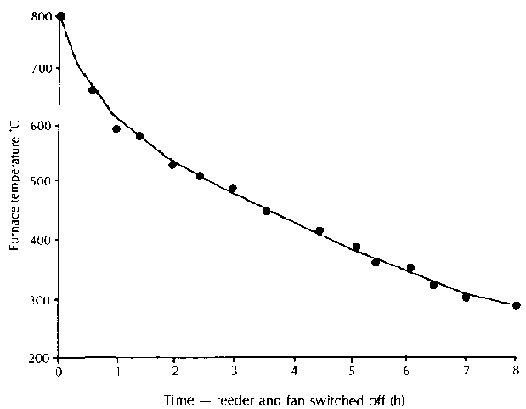
Figure 3 Furnace cooling curve

Table 1 Fuel properties
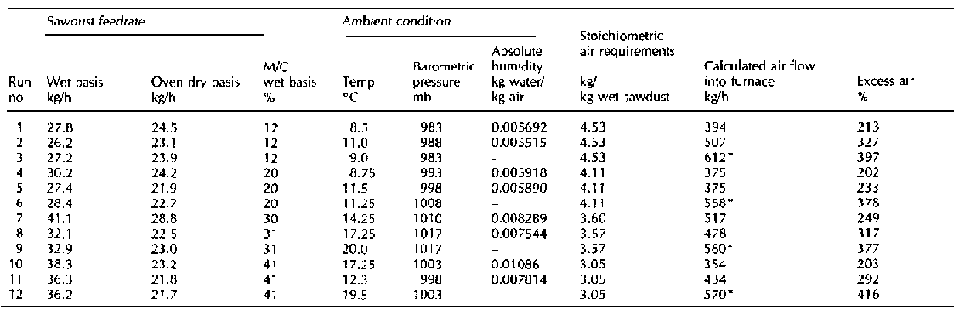
Table 2 Operating conditions during
the sawdust combustion trials
During the trials the furnace was monitored closely for signs of wear, in particular, possible stress damage caused by the high temperatures. It was noted that the section of the stainless steel outlet tube that protruded into the upper part of the furnace quickly corroded. Extended trials with the furnace showed that this section of tube was not necessary. Apart from this, no other signs of accelerated wear were noted. The outer metal structure and inner refractory cement lining remained intact and in good order.
Sawdust
At a nominal feedrate of 25 kg/in (oven-dry basis) 3 trials each were carried out at nominal moisture contents of 12% (as received), 20%, 30%, and 40%, with nominal excess air values of 300%, 400% and 500%. Trials with sawdust at 50% moisture content were also conducted. For reference, an analysis of the sawdust particle size distribution was made and the results are shown in Figure 4.
Details of operating conditions are given in Table 2, and results of the combustion trials are summarized in Table 3.
Efficient combustion was sustained and controlled at sawdust moisture contents of up to 40%. Trials at sawdust moisture contents of 50% gave poor combustion with smoky exhaust emissions. Energy balances are shown in Table 4. Radiated and convected heat losses from the furnace ranged from 3% to 5%. The energy recovered, taking into account furnace and heat exchanger radiated and convected heat losses and the energy contained in the flue gas, ranged from 46% to 54%. The lower efficiencies were experienced at the higher moisture contents.
The optimal excess air value for sawdust moisture contents in the range of 12-40% was between 200% and 300%. At these conditions the unit was observed to combust the sawdust fully and produce a clean exhaust emission.
At excess air levels of 400% and above, the increased air velocity through the furnace had a marked cooling effect, and also decreased the particle residence time in the furnace hot zone. This led to poor combustion and a smoky exhaust emission.
Groundnut shells
A series of trials with groundnut shells at a 15% moisture content (as received) were conducted at various feed rates and excess air values. Steady-state conditions were achieved at operating conditions similar to those found with sawdust at 12% moisture content. However, in all trials a blue-coloured haze was observed in the exhaust emission. This condition was considered to be associated with incomplete combustion. Unsuccessful attempts to improve this condition included operating at an elevated furnace temperature, and reducing the particle size of the groundnut shell by passing it through a 4 mm-square mesh hammermill.
Coir dust
The system was pre-heated with sawdust and when steady-state operating conditions were achieved, coir dust at 15% moisture content (as received) was fed into the furnace. A number of trials were conducted at various feed rates and excess air values, but in all trials combustion could not be sustained easily and black smoke would discharge from the exhaust. It was noted that ash from the coir dust fused inside the furnace chamber and glazed the inner surfaces. Ash fusion temperatures were investigated and these are reported in Table 1.

Figure 4 Particle size analysis -
sawdust
Rice husks
As with coir dust, the furnace was pre-heated with sawdust until steady-state operating conditions were achieved. Rice husks, at 12% moisture content (as received), were fed into the furnace and it was found that, whilst combustion was sustained for a short while, rice husk ash quickly collected in the furnace and choked the system. Because of this suppression effect by the rice husk ash, the trial was limited to a short period of time and no firm conclusion on the extent of combustion could be drawn.

Table 3 Results of the sawdust
combustion trials

Table 4 Energy
balances
Coir dust dewatering trials
A consignment of coir dust was obtained from a Sri Lankan coir fibre factory. It was typical of coir waste generated from associated coir fibre processes and consisted of pith and fibre at a moisture content of more than 86%. To process it into a more suitable feedstock for combustion, attempts were made to reduce its water content. Methods considered were: hydraulic press; screw press; centrifuge; Protessor expeller; and a Rosedown expeller. Results of the trials are given in Appendix 2. They show that at best it was only possible to reduce the moisture content to approximately 56%; this was considered to be too high for efficient combustion. Moreover the product was in the form of a compacted cake which would require significant mechanical action to break it down for suspension burner use.
The combustion trials were consequently conducted with a supply of coir dust from a United Kingdom mattress manufacturer. The manufacturer used coir fibre, imported from Sri Lanka, as a mattress filling; coir dust was a waste byproduct of the operation. The dust was relatively dry at a nominal 15% moisture content and contained little fibre. Before the dust was used for the combustion trials it was screened through a 12 mm-square mesh to remove the small amount of remaining fibre.
|
| |||||||||||||||||||||||||
Design of a Suspension Burner System for Forestry and Agricultural Residues (NRI)
Discussion of results
Feeders
Each of the three feeders tested had their individual attributes. The system chosen for the trials was the turntable feeder, but it was considered that the screw auger and vibratory feeder would have provided an equal and sometimes improved performance with some of the feedstocks. An important consideration in any choice of system is not solely its performance, but also its availability in developing countries. The vibratory feeder was a proprietary unit, manufactured in the United Kingdom. The feeder incorporates an electromagnetic vibrating table, and there may be difficulties in manufacturing this type of system locally in a developing country. Whilst the screw auger was a proprietary unit, this type of equipment is sometimes locally manufactured. The turntable feeder was an NRI design directed towards local manufacture.
Combustion trials
General
Incomplete combustion of groundnut shells and coir
dust
Removal of rice husk ash
Coir dust ash fusion
General
The unit had been designed in the interests of robustness, simplicity of construction and operation. The ease with which the unit can be started and operated was demonstrated during the various trials. The use of refractory cement as the furnace lining provided a virtually maintenance-free burner. The large thermal mass of the furnace helped provide a relatively smooth energy output. The automatic relighting capability could be an important feature when considering its industrial application.
Incomplete combustion of groundnut shells and coir dust
The blue-coloured haze and black smoke in the exhaust emissions of groundnut shells and coir dust respectively were considered indicators of incomplete combustion. Numerous trials covering variations in: furnace temperature; excess air; particle size and feed rate had limited effect on the degree of emissions. From observations made during the trials it was concluded that the particles required a longer residence time to combust fully in the furnace. Laboratory analysis (Krishnan, 1990) on the pyrolysis and combustion characteristics of these materials indicated that high levels of carbon dioxide released appear to have contributed to their poor combustion characteristics. In view of the practical difficulties, it was decided not to pursue the combustion of groundnut shells and coir dust with the cyclonic burner, where particle residence time is fixed largely by the system size and design. An alternative combustion system, as detailed in the section on the dual-chamber, brick-built furnace (see below) was considered.
Removal of rice husk ash
With feedstocks of ash contents of up to 5% the furnace chamber is effectively self-cleaning, and the bulk of the ash formed from combustion is carried away in the exhaust gases. Rice husks, however, have an ash content of the order of 19% and an ash particle size similiar to the original rice husk. These factors negated the self-cleaning effect and ash quickly blocked the furnace chamber. Because of these difficulties an alternative combustion system, as detailed below, was considered.
Coir dust ash fusion
The fusion temperature of ash (1077°C) falls within the furnace temperature operating range (1000-1100°C). This produces intractable difficulties with ash fusion and glazing inside the furnace chamber, and is a potential cause of damage to furnace linings. This is likely to be a major determining factor in the success of any combustion system burning coir dust.
Dewatering of coir dust
Although it is possible to dewater coir residue to 56% moisture content, this moisture level is considered too high for efficient combustion. Moreover, the solid cake of coir residue formed from the pressing operation is suited more to burning in solid-fired systems rather than suspension burning.
The most promising source of suitable feedstock is considered to be from the mounds of coir residue waste often found adjacent to coir fibre factories. Subject to weather conditions, the top layer of material is likely to be air dried and at a moisture level more appropriate for combustion.
|
| |||||||||||||||||||||||||||||||||||||||||||||||||||||||||||||||||||||||||||||||||||||
Dual-chamber brick-built fornace
A dual-chambered brick built furnace is planned as an alternative system for the combustion of: groundnut shells; coir dust; and rice husks. The furnace will include the following features:
· a primary combustion chamber
where the feedstock and primary/carrier air is fed;
· a secondary combustion chamber with the facility for
feeding secondary air; and
· dual ash
collection pits.
The results of this study are to be reported separately.
|
| ||||||||||||||||||||||||||||||
Design of a Suspension Burner System for Forestry and Agricultural Residues (NRI)
Suspension burner/timber drying system
Design
Following the success with the sawdust combustion trials, a commercial application in timber drying was considered for the unit. It was known that tropical countries trying to develop their timber industries are increasingly recognizing the importance of properly dried timber. The availability of timber drying facilities would assist timber producers and manufacturers in the developing world upgrade their timber products and enable them to be more competitive in foreign and domestic markets. Also, pressures on drying space and capacity of the developed countries are leading to increased interest in material dried at source. However, a major constraint in the running costs associated with many kiln designs is the amount of fossil fuel or fuelwood they consume to heat the air required for the drying operation.
Against this background, contact was made with a leading United Kingdom timber drying company, GF Wells Ltd. Sheffield, to adapt their standard 16 m3-capacity timber drying kiln for operation with the suspension burner. The suspension burner, using woodwaste as a fuel, would supply heat to the drying kiln. Adaptation proved relatively easy, and a prototype design of a timber drying system for development trials, as shown in Figure 5, was produced. The unit was designed to suit small to medium-scale sawmilling and woodworking industries processing about 500-700 m3 of timber per year.
Development trials in Belize
A site for development trials was identified in Belize. The Belize Forestry Department had commenced an ODA-supported project to establish a small-scale furniture workshop for the manufacture of a variety of wood products. The supply of kiln-dried timber to the workshop was considered to be essential. The workshop would process annually about 500 m3 of softwood and mixed hardwoods which equated approximately to the output of a 16 m3 timber drying kiln. The workshop processing operations generated some 25% waste, in the form of sawdust and woodchips, and this would be sufficient to fuel the suspension burner and meet drying requirements.
Major components of the system were manufactured in the United Kingdom and shipped to Belize. The kiln chamber was constructed on site from locally produced concrete blocks. The system was commissioned by NRI, and an Associate Professional Officer was assigned to oversee operations and monitor progress during the one-year period of the development trials. During initial trials, modifications to the system were carried out to improve the overall performance of the system. This included the replacement of the vibratory feeder, which had difficulty feeding larger woodchips and wood shavings, by a turntable system.
The results of the trials with the modified system were impressive. Full control was maintained over temperature and humidity conditions inside the kiln to achieve the optimum rate of drying with minimum timber degrade. During the trials the operational output obtained from the burner was 300 MJ/h gross, at feedrates of 17-19 kg/h of woodwaste at 10-15% moisture content. This output was well within the burner's maximum design output of 500 MJ/h at feedrates of up to 28 kg/h. The unit supplied the required heat to the kiln at a rate of 230 MJ/h net, using a heat recovery system which operated at an 80% efficiency. It was regularly shown that 25 mm- and 50 mm-thick mahogany (Swietenia spp.) boards could be dried from 25% (dry basis) moisture content to 8% (dry basis) in five days, with the minimum amount of degrade. Santa Maria (Calophyllum brasiliense) and pine (Pinus caribaea) were also successfully dried during the trials. A summary of 7 timber drying trials and details of a typical heat balance and timber drying run are given in Appendix 3 (see p. 19).
Economic appraisal
An economic appraisal of the unit was carried out and it was concluded that this technology can prove to be an attractive commercial proposition. The main operating costs were recognized as labour, and electricity for driving the kiln fans - assuming that the woodwaste used to fuel the burner has little or no value. Various financial options were considered in the Belize situation and a revenue of 39 Belize cents per board foot, an acceptable charge in Belize, gave an internal rate of return of 66% and a payback period of 1.5 years.
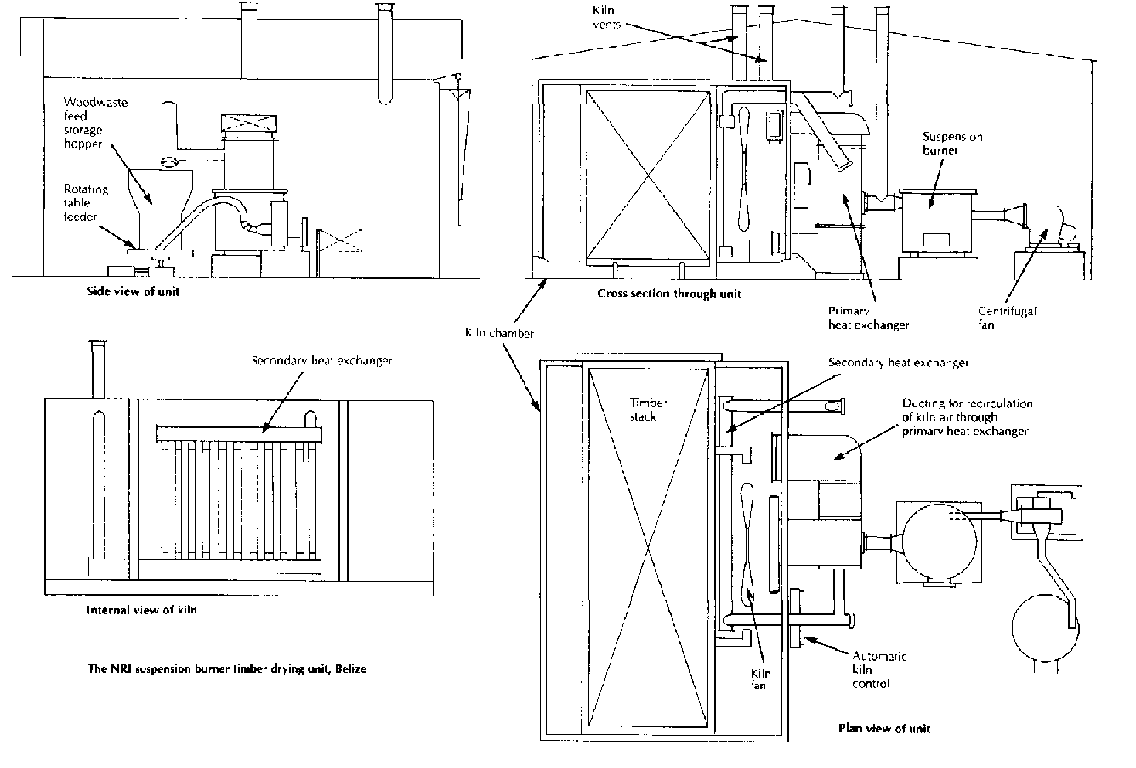
Figure 5 Diagram of the timber drying
system
Discussion
The one-year development trial gave very encouraging results. The suspension burner demonstrated its versatility in coping with, amongst other things, a range of: (i) woodwastes generated from the furniture workshop and (ii) operating conditions called upon by the various timber drying schedules. The burner required a minimum amount of maintenance and operator's attention. In the course of the developing trials the collaborating company, G F Wells, Ltd. ceased trading, and as a consequence various other avenues for the dissemination of this technology are being considered. It is planned that one option will be for a company to supply standard parts, enabling local construction and thus reducing costs.
|
| |||||||||||||||||||||||||||||||||||||||||||||||||||||||||||||||||||||||||||||||||||||
Conclusions
It is concluded that:
· a suspension burner system, to
combust particulate woodwaste efficiently at a rate of up to 28 kg/h, and
provide a heat output of approximately 500 MJ/h, has been successfully
developed;
· an alternative system for the
combustion of groundnut shells, coir dust and rice husks, such as the
dual-chamber brick-built furnace is required;
· the choice of feeder system is likely to depend on
equipment availability and the characteristics of the material to be fed;
and
· a suspension burner/timber drying
system of 16 m3 capacity using woodwaste as a fuel has been successfully
developed.
|
| |||||||||||||||||||||||||||||||||||||||||||||||||||||||||||||||||||||||||||||||||||||
References
ATCHINSON, J. E. (1976) Agricultural residues and other non-wood plant fibres: material and non-renewable resources. Washington: AAAS, 174-78.
KRISHNAN, R. (1990) Pyrolysis and combustion characteristics of sawdust, rice husks, groundnut shells and coir dust using gas chromatography. Tropical Science, 30, 223-8
MAGASINER, N. and DE KOCK, J. W. (1987) Design criteria for fibrous fuel fried boilers. Energy World, August/September 1987,4-12.
STOT, B. A. (1979) Energy for world agriculture. FAO
Agricultural Series No. 7, xxvii +
286.
Appendices
|
| |||||||||||||||||||||||||
Design of a Suspension Burner System for Forestry and Agricultural Residues (NRI)
Appendices
Appendix 1: Lighting and starting procedure
Sawdust at 12% moisture content was loaded into the turntable feeder drum. With the fan and turntable feeder switched off, a small fire was built on the furnace floor. To promote a strong fire, the fan was then switched on to supply a low volume of air. When the fire was well alight the furnace door was closed and the fan speed increased to an air-flow rate of approximately 8 m3/ min. This caused the flue gas temperature to rise quickly to about 600°C, then, as the fire subsided, the temperature started to drop. At this point the turntable was switched on at a preset feedrate of about 25 kg/in. Steady operating conditions were reached after about 10 minutes.
For all the experimental trials the unit was first run for 2-3 hours with sawdust at 12% moisture content and operating at a feed rate of 25 kg/in at an excess air value of approximately 250%.
Appendix 2: Coir dust dewatering trials
Introduction
The sample of coir residue received from a Sri Lankan coir factory consisted of pith and fibre at a moisture content of 86% (wet basis). During consideration of the potential use of this material as a fuel for a suspension burner a simple assessment was made of various methods of expelling the surface water. The results of this work and a general summary are given below.
Trials with a hydraulic press
A weighed amount of material was placed in a slotted cylinder and compacted by a hydraulic ram to extract the water. The load, sustained until the flow water ceased, was measured by a transducer and the overall moisture content of the pressed material was calculated. The pressed material was in the form of a solid cake. The results obtained are shown below:
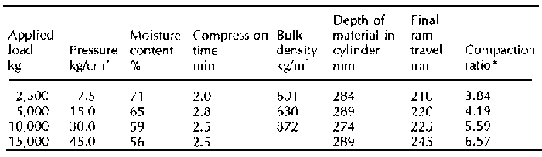
Table - Trials with a hydraulic press
Note:* compaction ratio is defined as original depth of material divided by final depth of material. Cylinder area-333 cm2
Trials with a screw press
A known amount of wet material was placed in a perforated cylinder and a load was applied through a screw (50 mm diameter, 6 mm pitch) for approximately 5 minutes. The screw was turned manually, using in the first trial a short lever and in the second and third trials a longer lever.
An estimate of the applied peak load was calculated. The pressed material was weighed and the moisture content calculated. The results obtained are shown below:

Table - Trials with a screw press
Note: Cylinder area-485 cm2
It is possible to dewater coir residue to approximately 65% moisture content using a screw press. However this should be considered a reasonable practical limit when considering the repetitive manual batch-process required.
It should be noted that assuming a 40 kg/h feedrate, a volume of approximately 0.5 m3 of wet material (equivalent to 286 kg at 86% moisture content) at a bulk density of 600 kg/m3 will be required. If the pressing area can be increased by 25% (total loading about 19 tonnes), 8 pressings per hour would be necessary. At a compaction ratio of 4, the screw travel would be 750 mm, which can only be shortened by the use of 2 or more presses as the pressing area has been maximized.
Physical characteristics of the pressed material
The pressed material is in the form of a strongly bound cake. At 65% moisture content it has a calculated net calorific value of 5.0 MJ/kg, against its gross calorific value of 19.27 MJ/kg.
Approximate sieve analysis of non-pressed material and pressed material
A sieve analysis was carried out; the results are shown below:
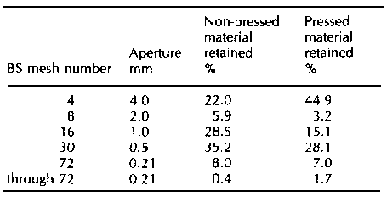
Table - Sieve analysis
The material retained on the 4.0 mm mesh consisted mainly of long fibre, together with, particularly in the case of the pressed material, lumps of matted dust. The large fractions on 16 and 30 meshes consisted of dust or discrete particles together with very short fibre. Both types of material were sieved but the pressed material had to be teased apart first.
Trials with a centrifuge
A moisture content of 75% was achieved using a small spin dryer. It is possible that better results could be obtained on a faster and more powerful machine. However any such machine may prove expensive.
Trials with Protessor expeller and a Rosedown expeller
Dewatering proved unsuccessful as it was not possible to feed the wet coir residue into the expellers.
Summary
The need in the coir fibre industry is for low cost/capacity equipment; it is therefore clear that within this framework a purpose-built screw press would be acceptable. However, the final moisture content of the product would not be less than 65% and would be in the form of a compacted cake having the dimensions of the press body. This cake has considerable stability and would require significant mechanical action to break it down for suspension burner use and further drying if deemed necessary. Given the characteristics of a screw press operation, the pressed cake's relatively large dimensions, and the significant levels of large fibres present in the product, it is clear that, whilst this amount of dewatering may be acceptable on a cost/operation basis, it would present considerable difficulties for suspension burner operations.
Appendix 3: Results of the timber drying trials
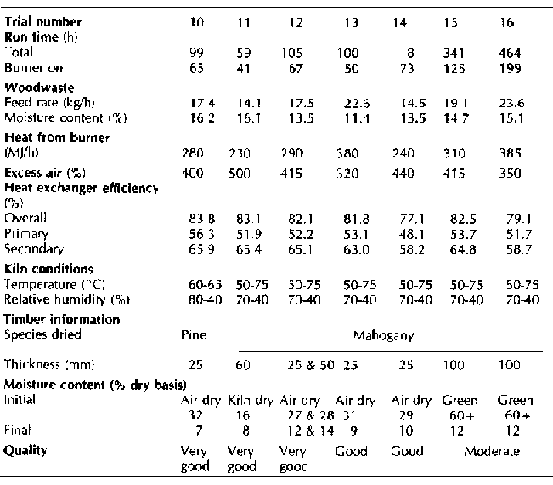
Summary of results
Typical heat balance on suspension burner/timber drying unit

Typical heat balance
Note: * ignoring heat losses from the exposed surfaces of the heat exchanger system.
A heat balance was conducted for each trial so that an assessment of the major heat losses could be made. It served to highlight that the unit is very energy efficient in terms of the transfer of heat generated from the burner to the kiln, and actual losses from the burner are small in comparison to the rest of the unit.

Basic data for typical run

Basic data for typical run (cont.)
Notes:
* Combustion gas temperature inside the burner were, in general,
100°C higher
* * Average daily ambient temperature 32°C Average
nightly ambient temperature 22°C

Calculated results for a typical run
Notes:
* gross calorific value x feedrate (dry basis). gross calorific
value taken as 20,500 kJ/kg
** net calorific value x feedrate (wet
basis)
† primary
heat exchanger efficiency =

secondary heat exchanger efficiency =
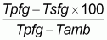
where Tcg = temperature of suspension burner combustion
gas
Tpfg - temperature of primary heat exhanger flue gas
Tsfg -
temperature of secondary heat exchanger flue gas
Tamb - temperature of
ambient air
‡ using the relationship: W=

where W = mass flowrate of air (kg/h)
NCV = net calorific
value of feed (kJ/kg)
FR = feedrate of woodwaste, dry basis (kg/h)
Cp =
specific heat of air, calculated at the suspension combustion gas temperature
(kJ/kg°C)
DT = temperature differences between suspension burner
combustion gas and ambiant (°C)
then, excess air =

where Ws = stoichiometric air requirements, taken as 4.5 kg of air per kg of wet sawdust at 15% moisture content

Calculated heat losses for a typical
run
Notes:
* ambient temperature 27°C (300 K) average
** Using the
relationship; Q=CE (Ts4-TA4)
where Q - radiated surface
heat loss (kJ/h m2)
C - Stefan Boltzman constant - 2.0142 x 10 7 kJ/h m'
K4
E - emissivity
Ts- surface temperature K
TA- ambient temperature
K
† Using the following relationships for natural convextion (IHVE Guide
1970); (a) horizontal surfaces facing up ho=2.5
(T) 0.25
(b) vertical
surfaces ho= 1.9 (T) 0.25
(c) cylindrical surfaces ho= 1.32 (T/do)
0.25
where ho= heat transfer coefficient for natural convection (kJ/h m2
°C)
T - temperature difference between the surface and ambient,
(°C)
do= diameter of cylinder

Record of kiln samples for a typical
run

Record of kiln samples for a typical
run (cont.)
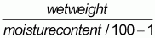
Notes: moisture content =
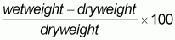
estimated dry weight =

Seasonal
quality record for a typical run
Notes:Category: 1 - no defect
2 - slight
3 - moderate
4
- severe
5 - very severe
Average timber grade: good
Additional remarks:
timber load was weighted to reduce defects; quality assessment is purely
subjective